- Home About RM Minerals
- Virtual Photo Museum Blog RM Contact
- Microscopy and instruments How to Buy Disclaimer
Copyright 2010-2026
www.rosellminerals.com



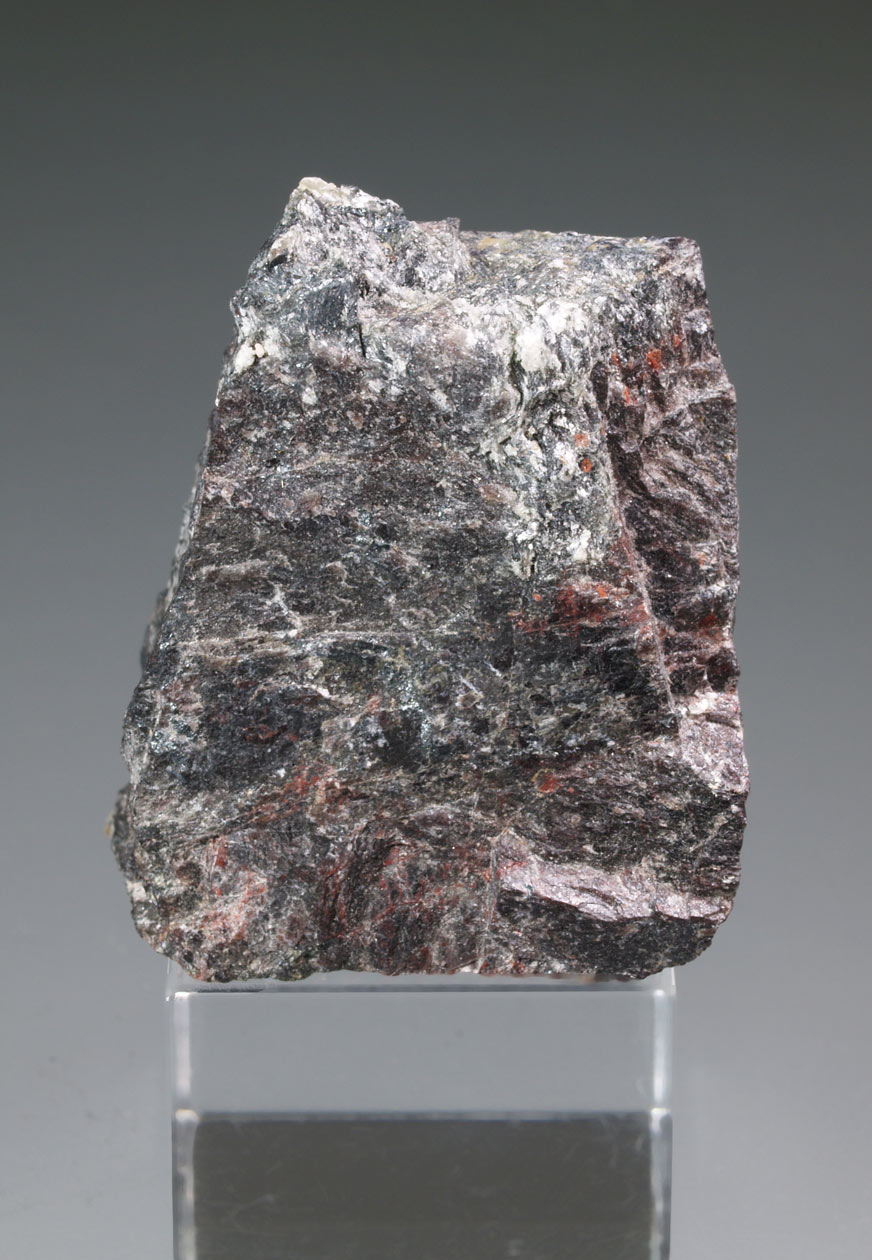
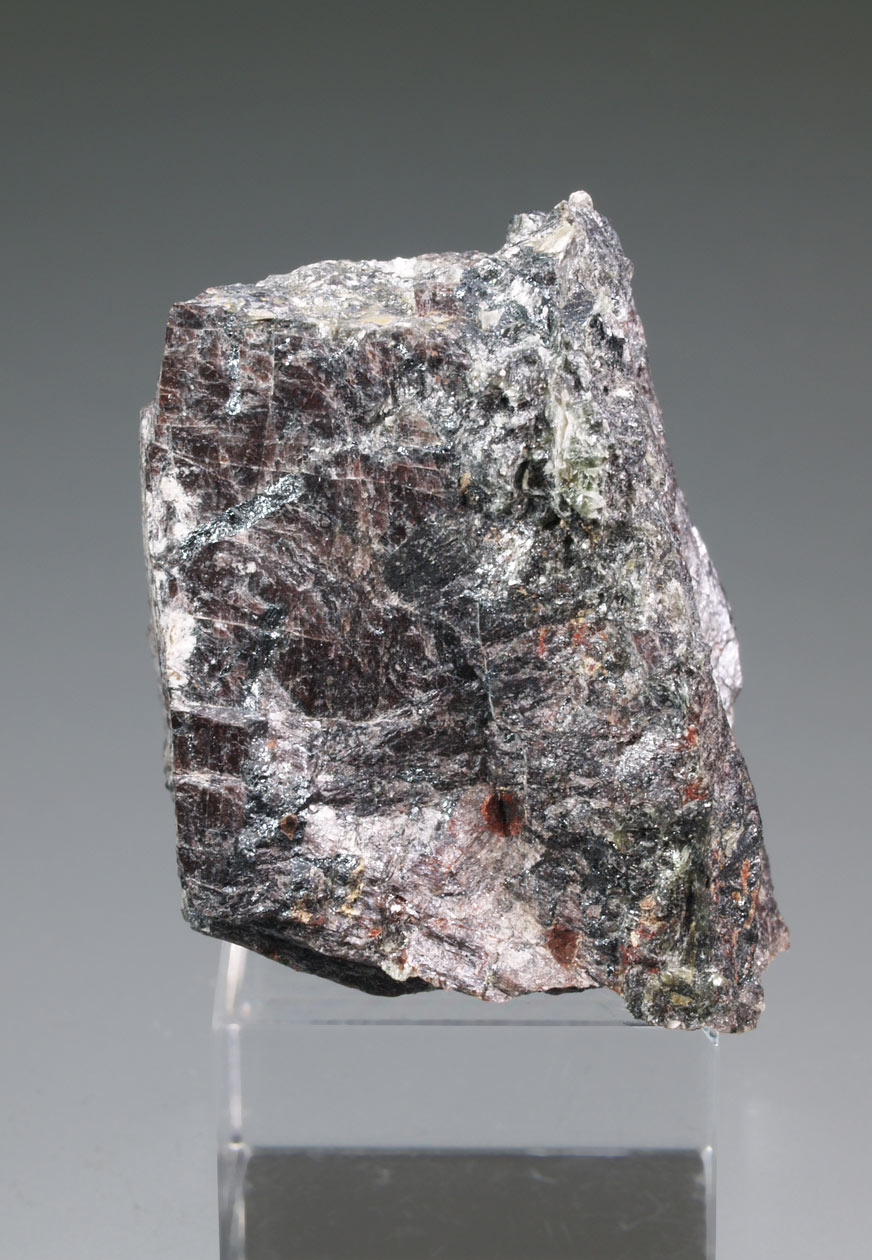
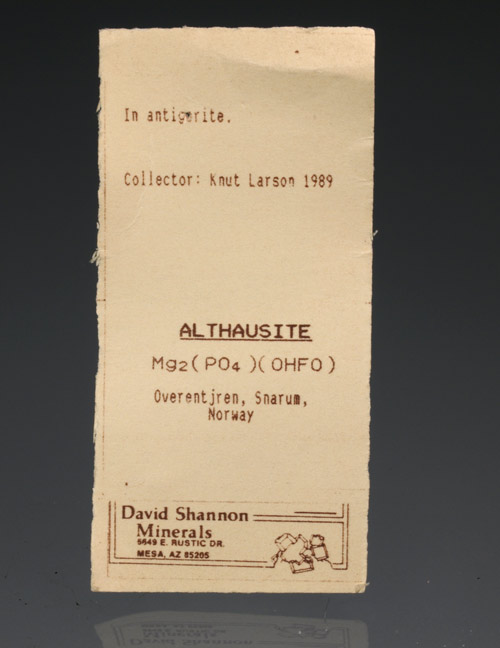
A specimen of massive maroon coloured althausite, partly altered to apatite. Althausite may alter to apatite along the cleavage planes. This is especially typical for the althausite found at the type locality and Overntjern locality. This rare magnesium phosphate was first described from serpentine-magnesite deposits in Norway. Specimen acquired from David Shannon and from the Knut Larson collection.
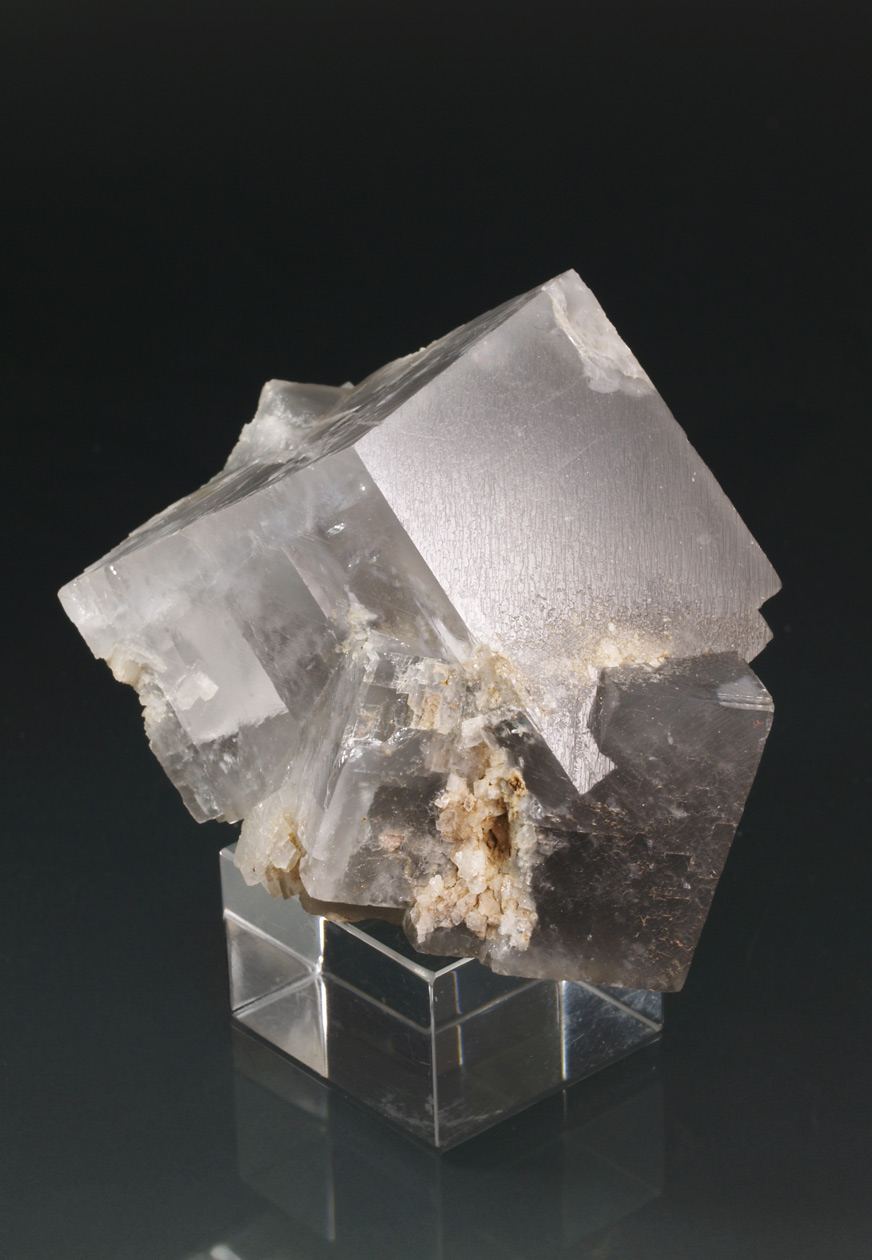
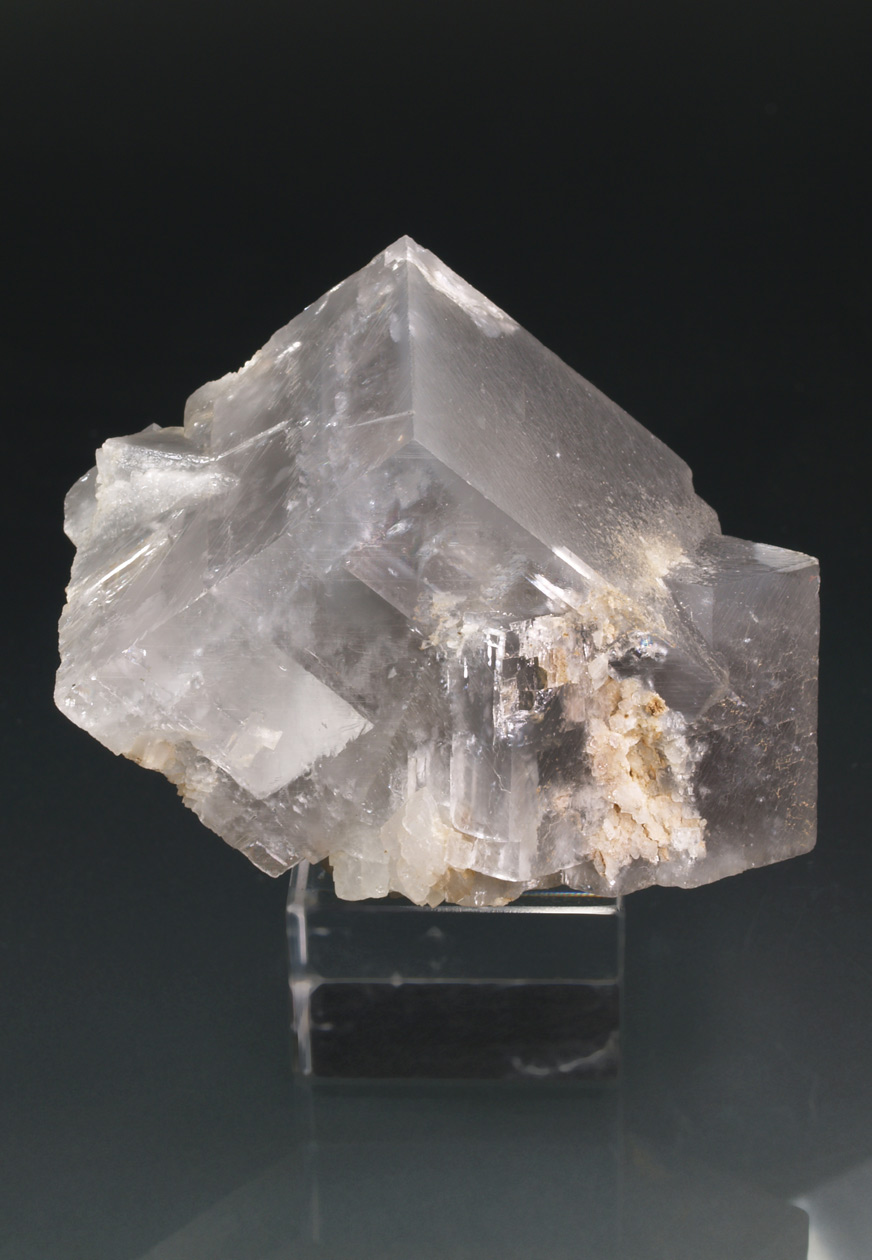
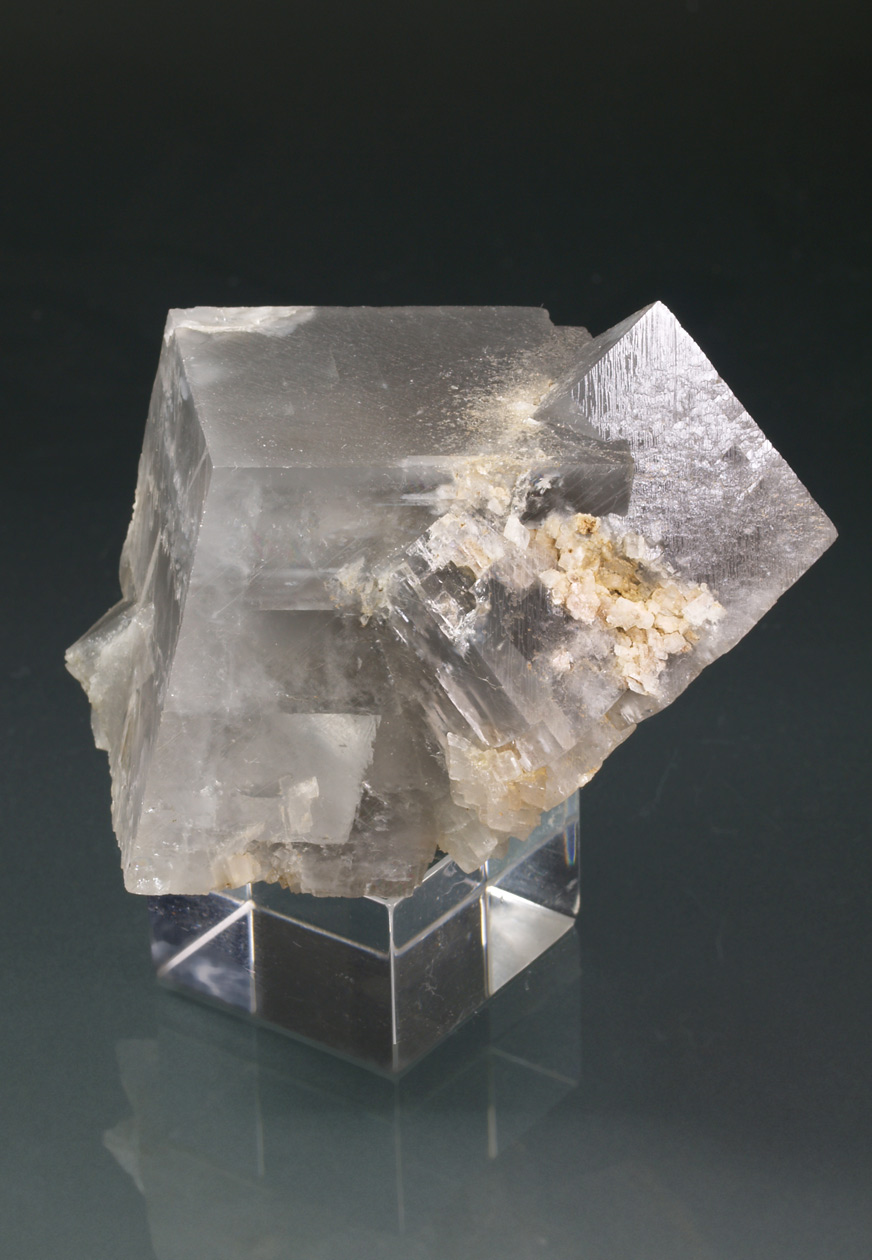
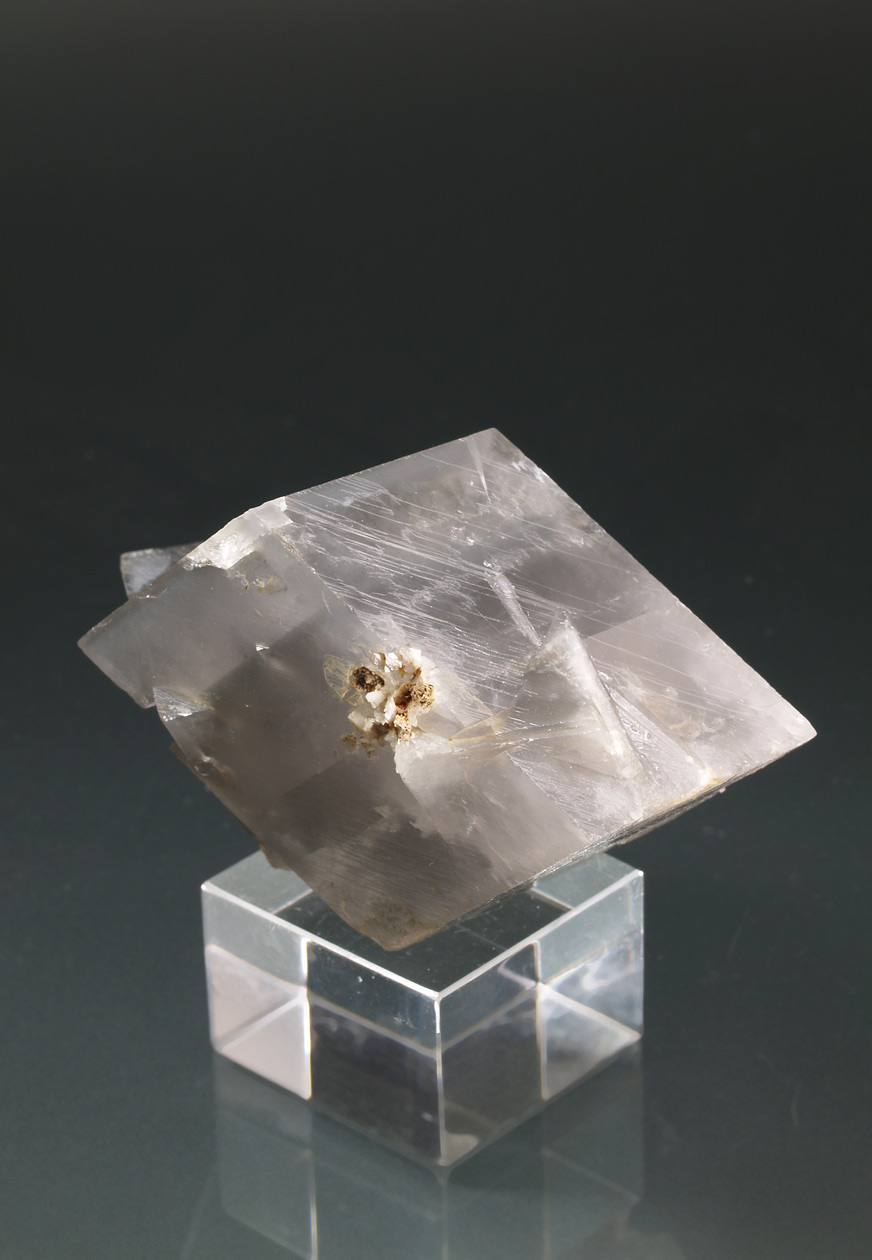
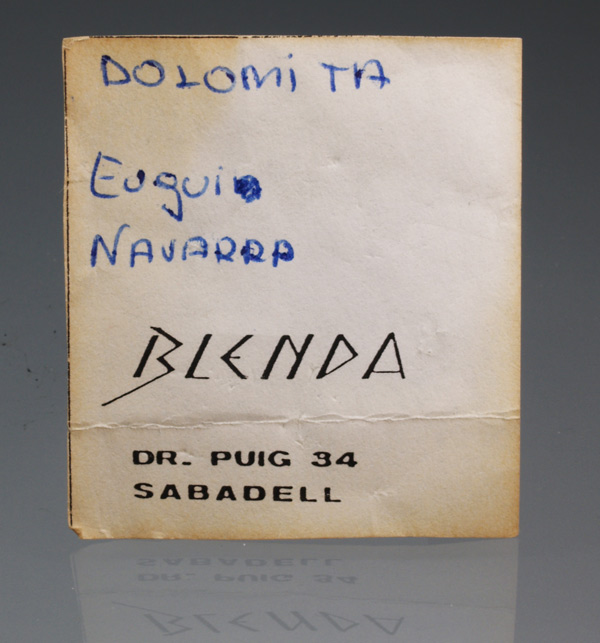
Very good-sized specimen of rhombohedral dolomite crystals, very well defined and bright. Transparent to translucent, with greyish tones. Interpenetrated crystals. With an interesting and rare label from the former Sabadell mineral dealer "Blenda".
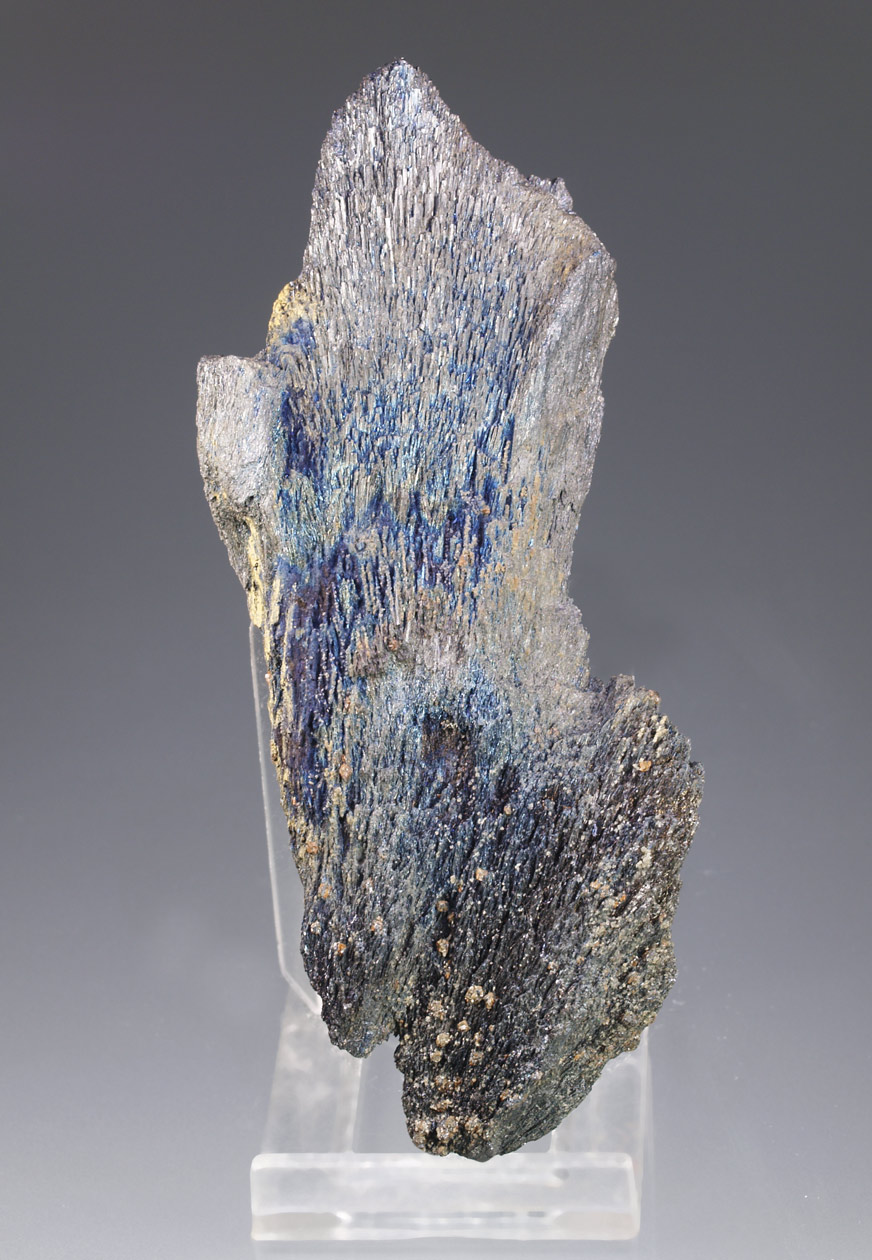
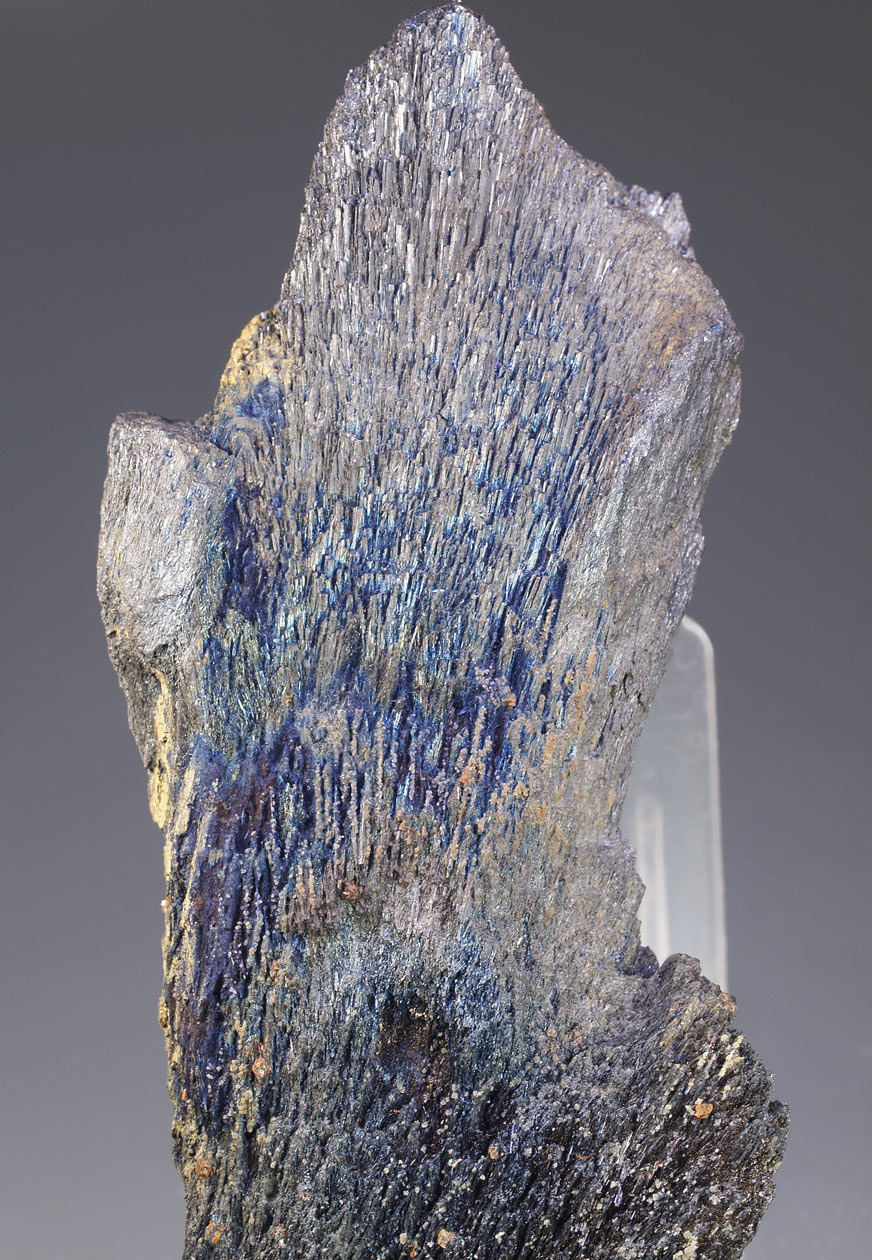
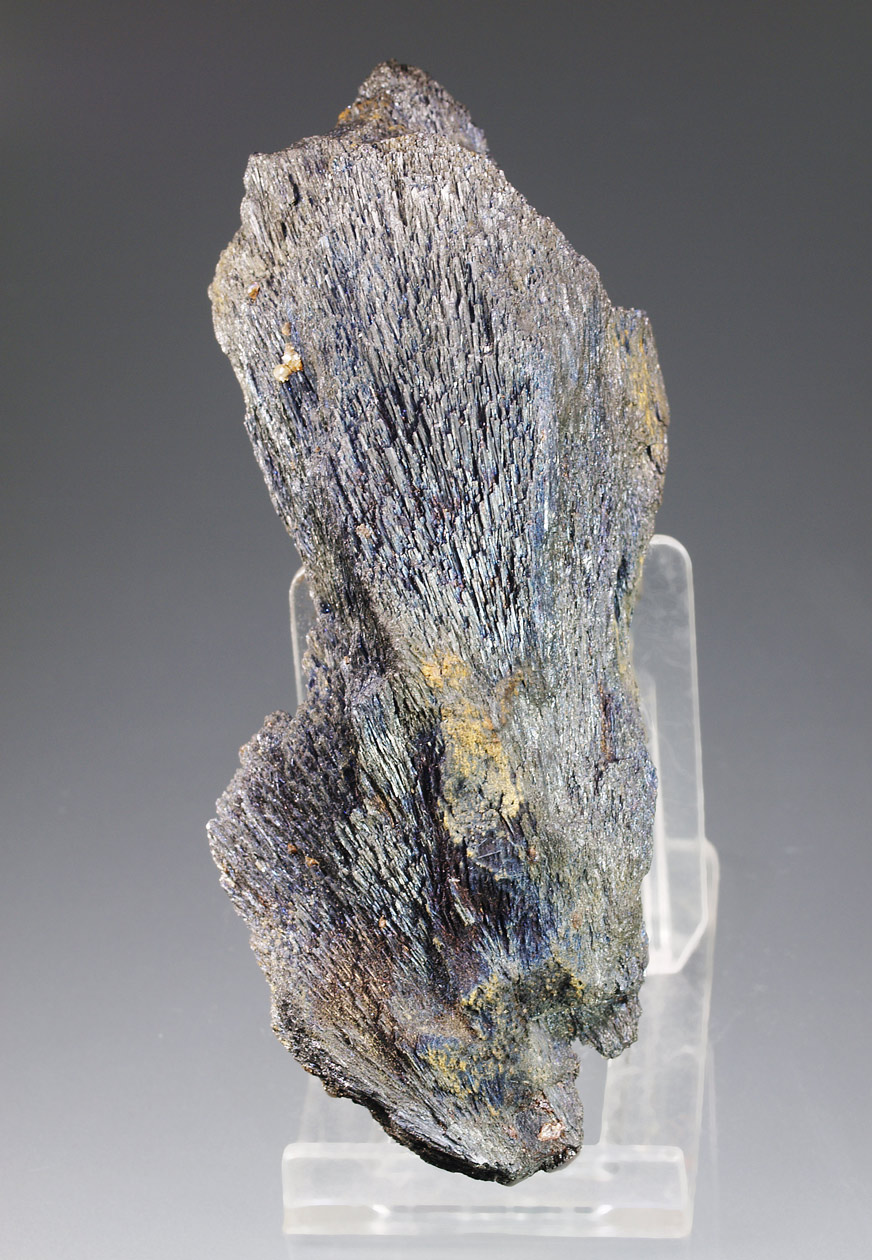
Berthierite is a rare iron antimony sulfosalt and not often found in good crystallized specimens. This piece is from the classic locality, the Baia Sprie Mine (Felsőbánya Mine) in Romania featuring dozens of acicular, silvery-grey needles of berthierite in nearly parallel growth, free of matrix. This rich specimen is beautifully accented with a variable iridescent tarnish, giving the piece much color and character. A wonderful example of this rare and classic material from a locality that was mined continuously from the 14th Century until 2006. From the collection of Julio Martínez (València).
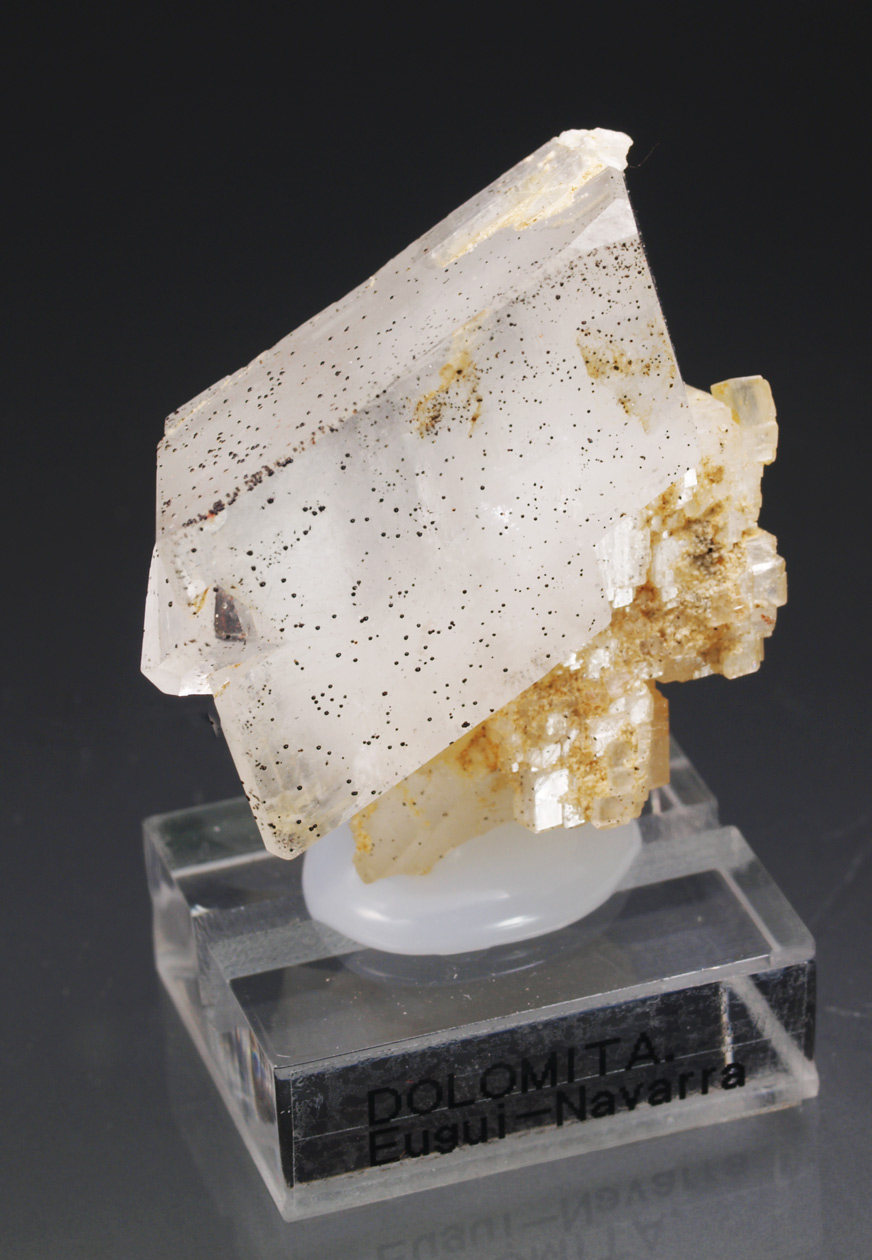
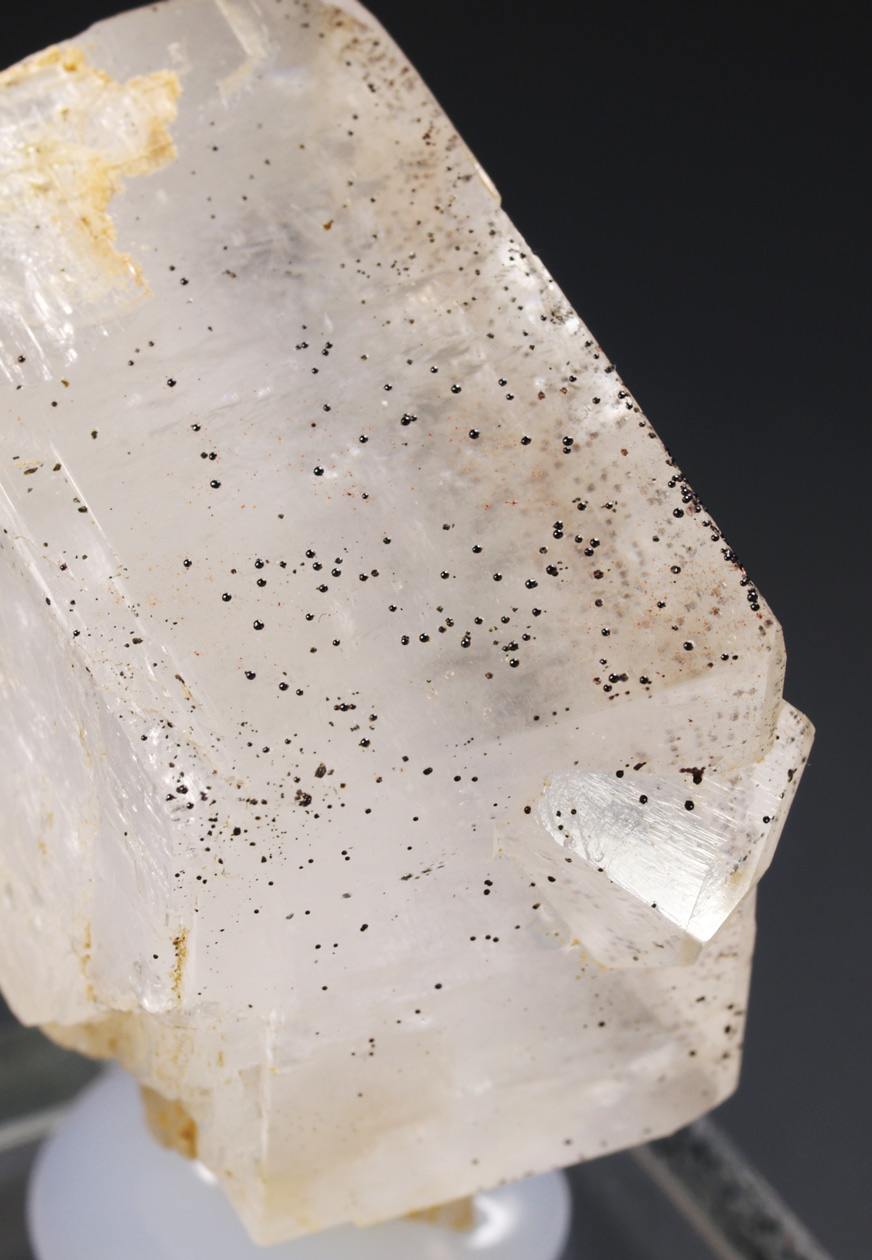
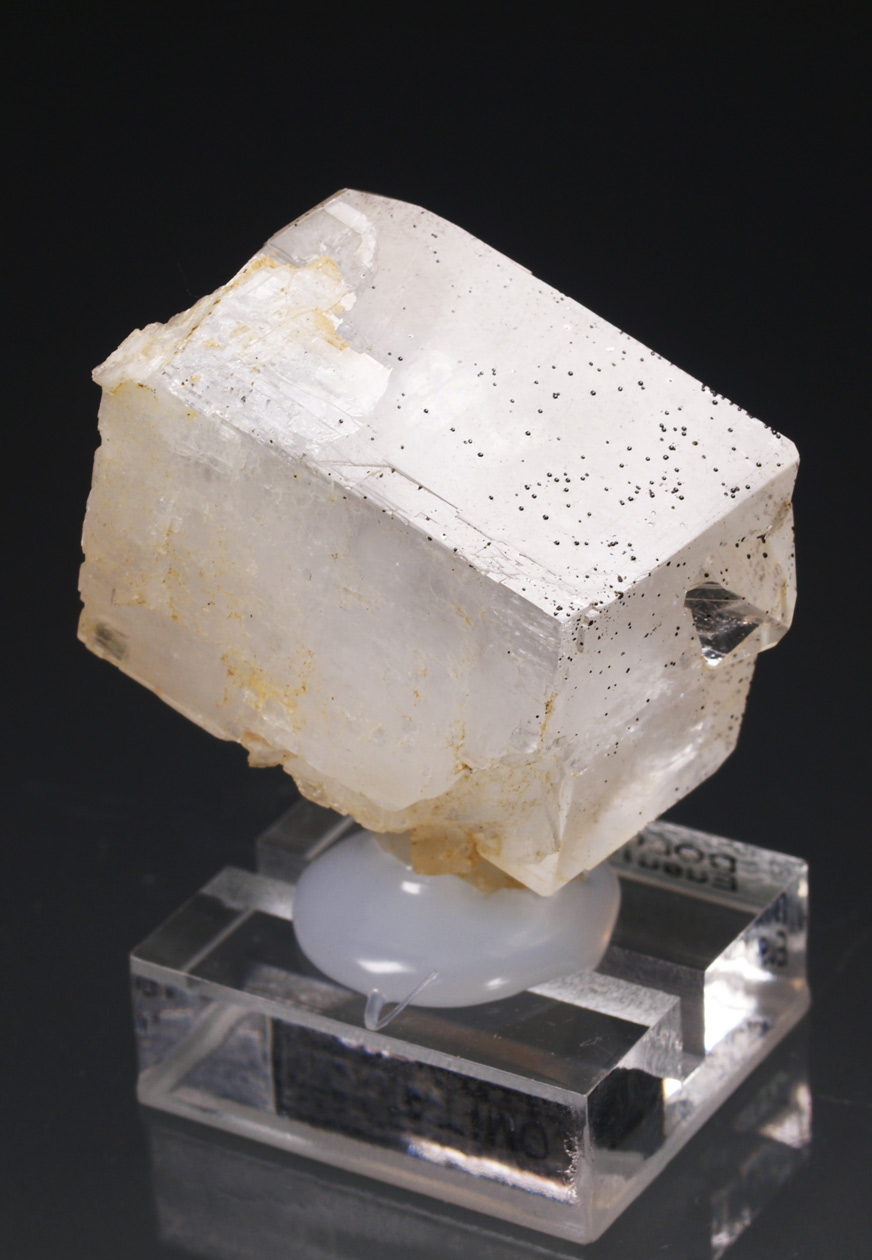
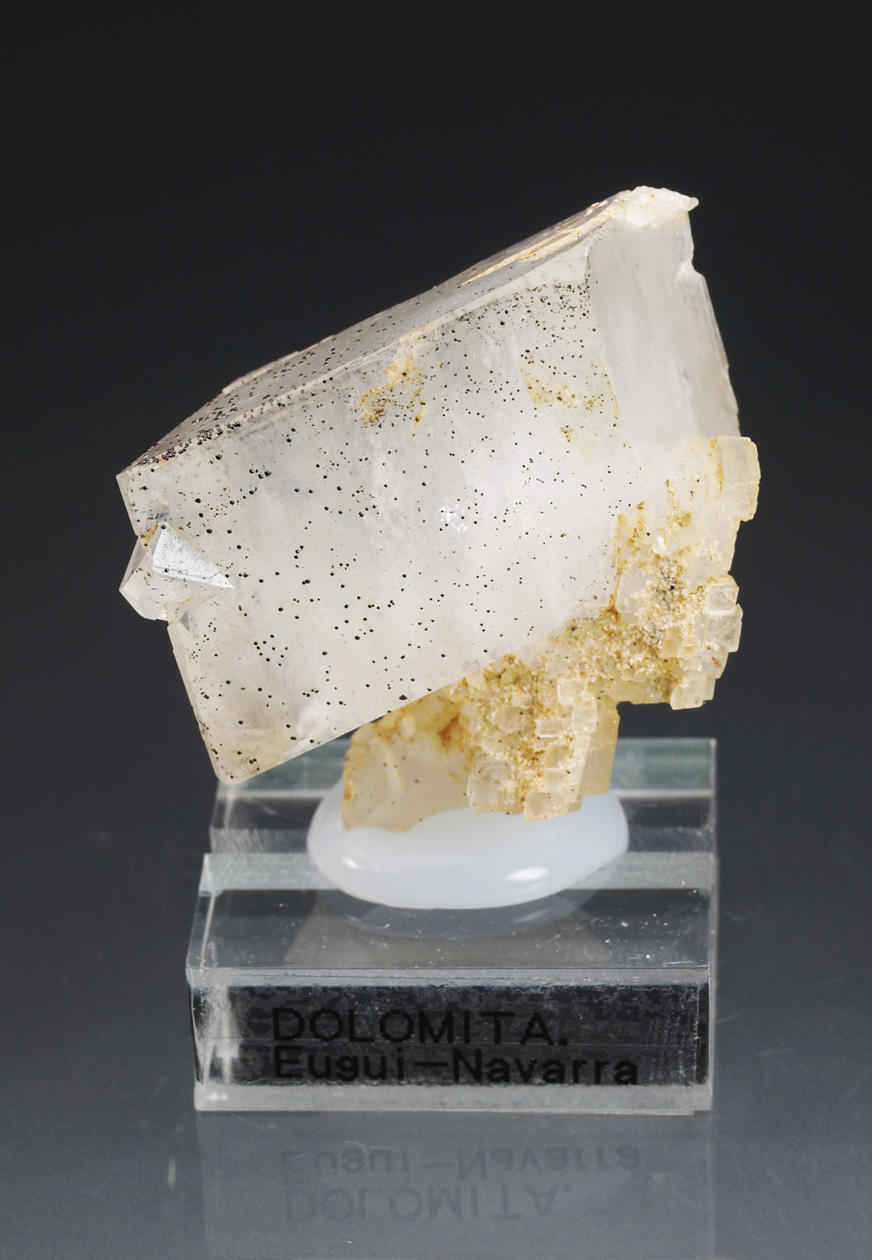
Rhombohedral dolomite crystal from this classic Navarra locality. It is disposed very aerial on a dolomite matrix. Three of the faces of the rhombohedron are dotted with small globules of goethite. A very aesthetic miniature.
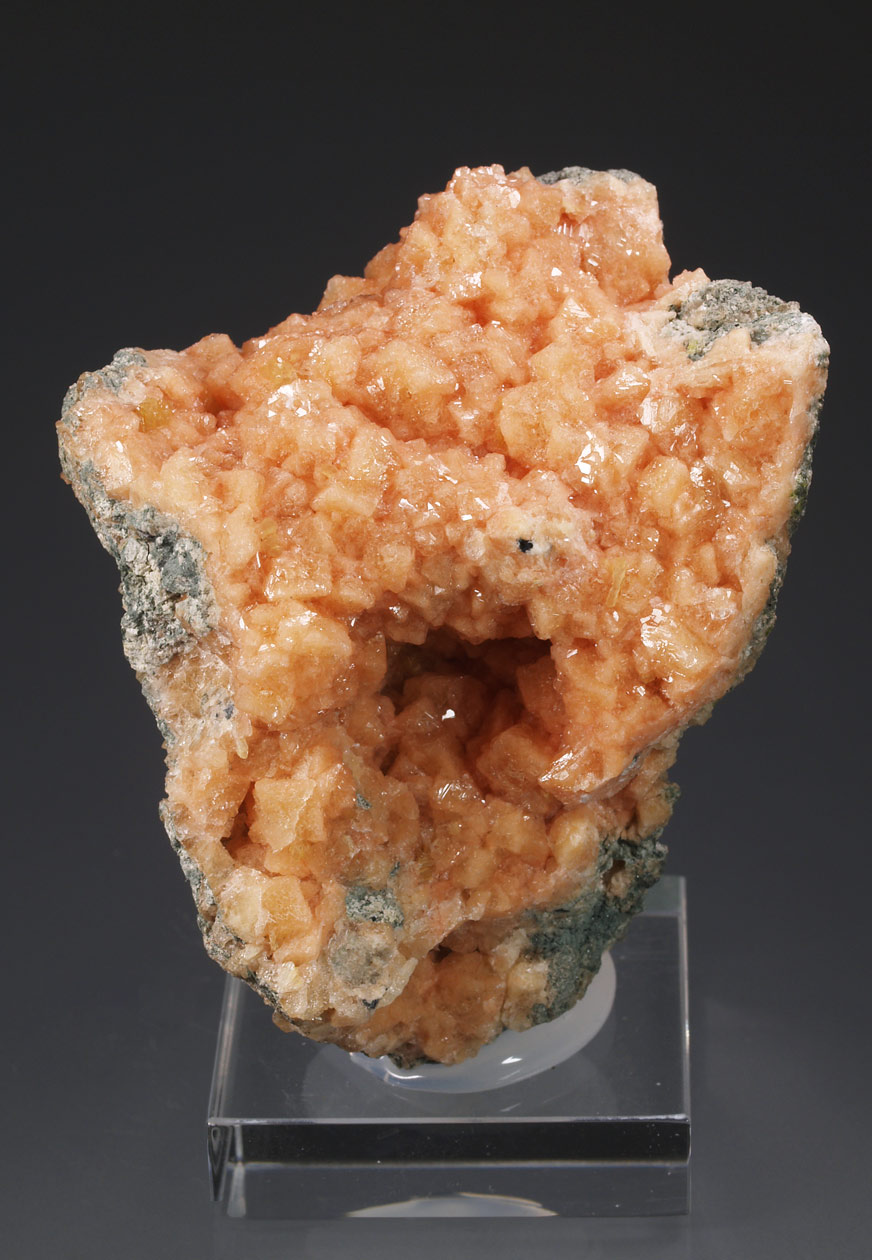
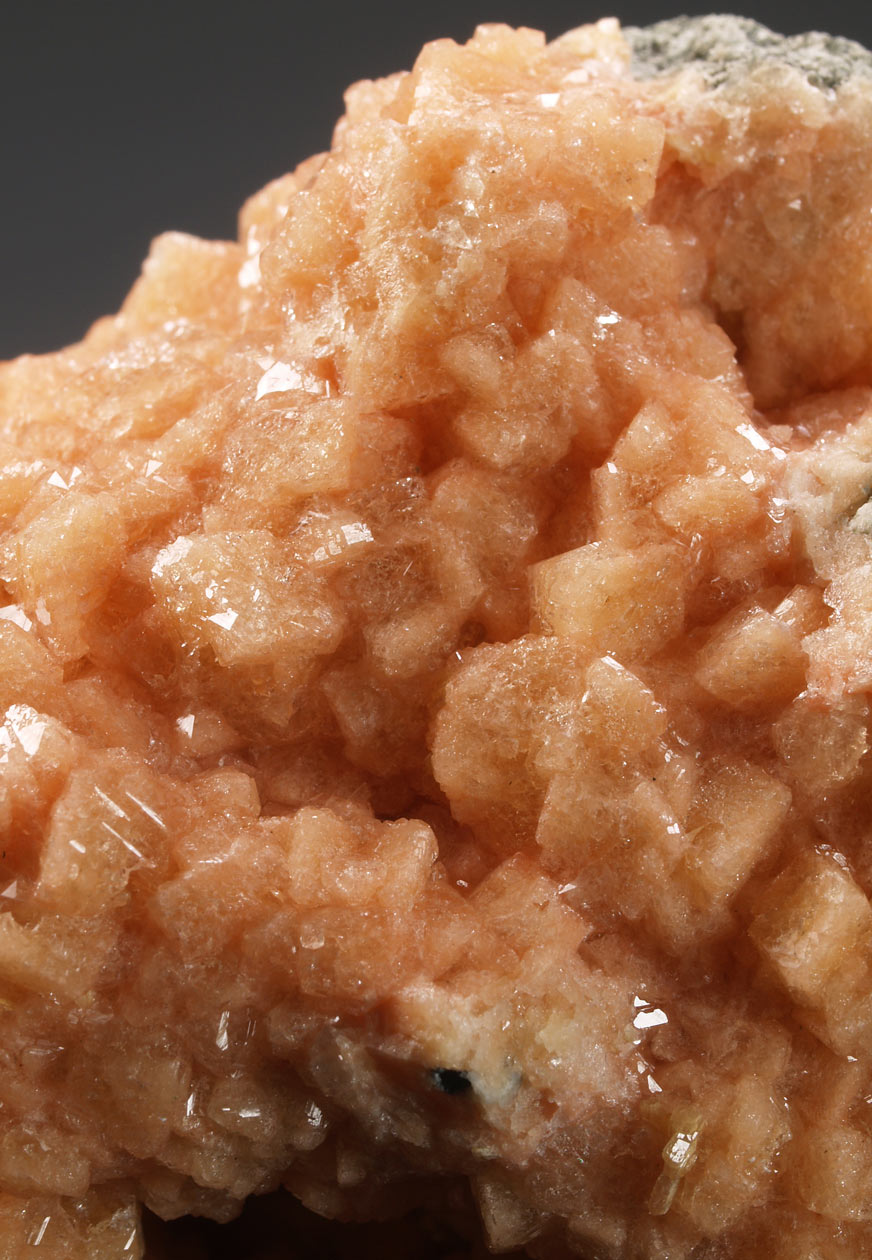
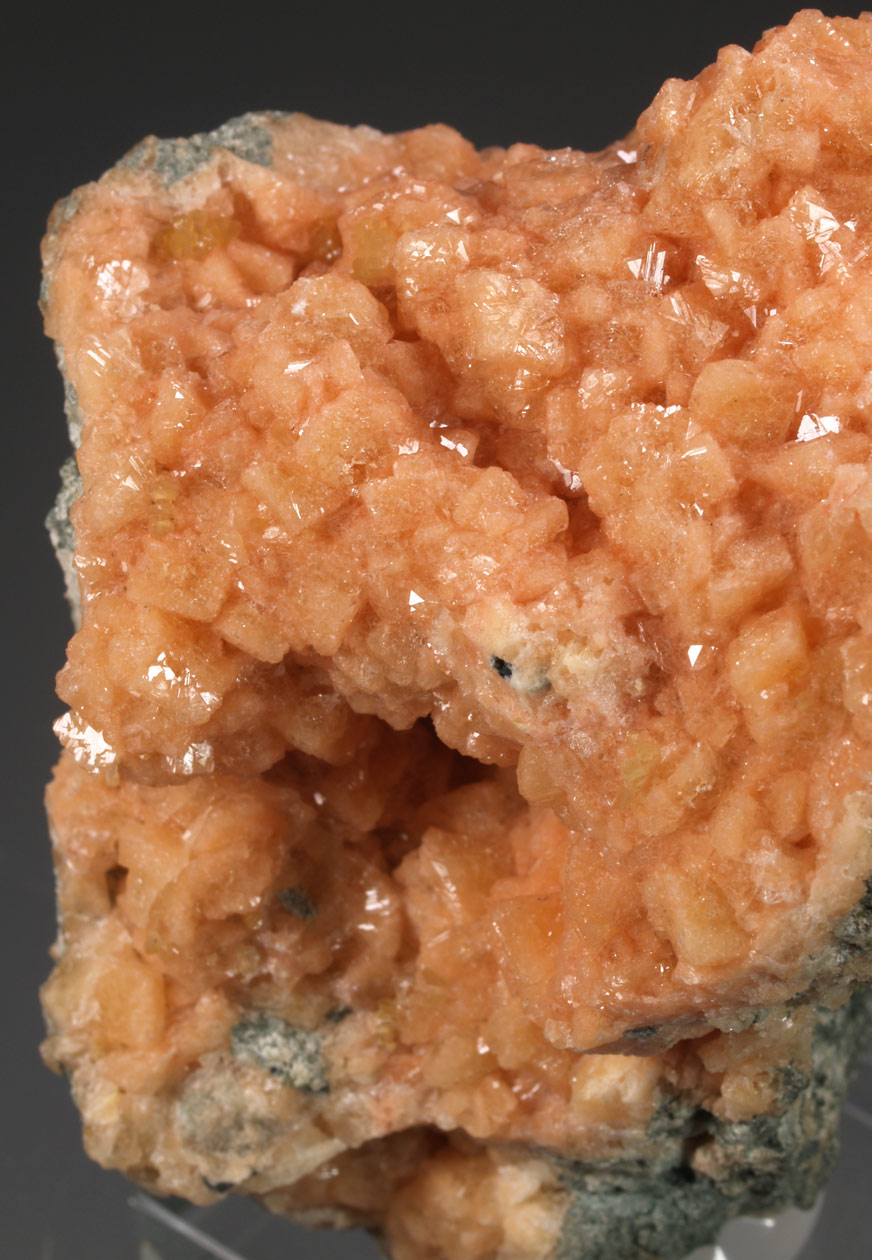
In this specimen we could observe numerous aggregates of hexagonal gmelinite-Ca crystals, colorless, shiny and with parallel growths. They are accompanied by chabasita-Ca that gives this orange color to the specimen. Very difficult to find specimens of this quality and locality.
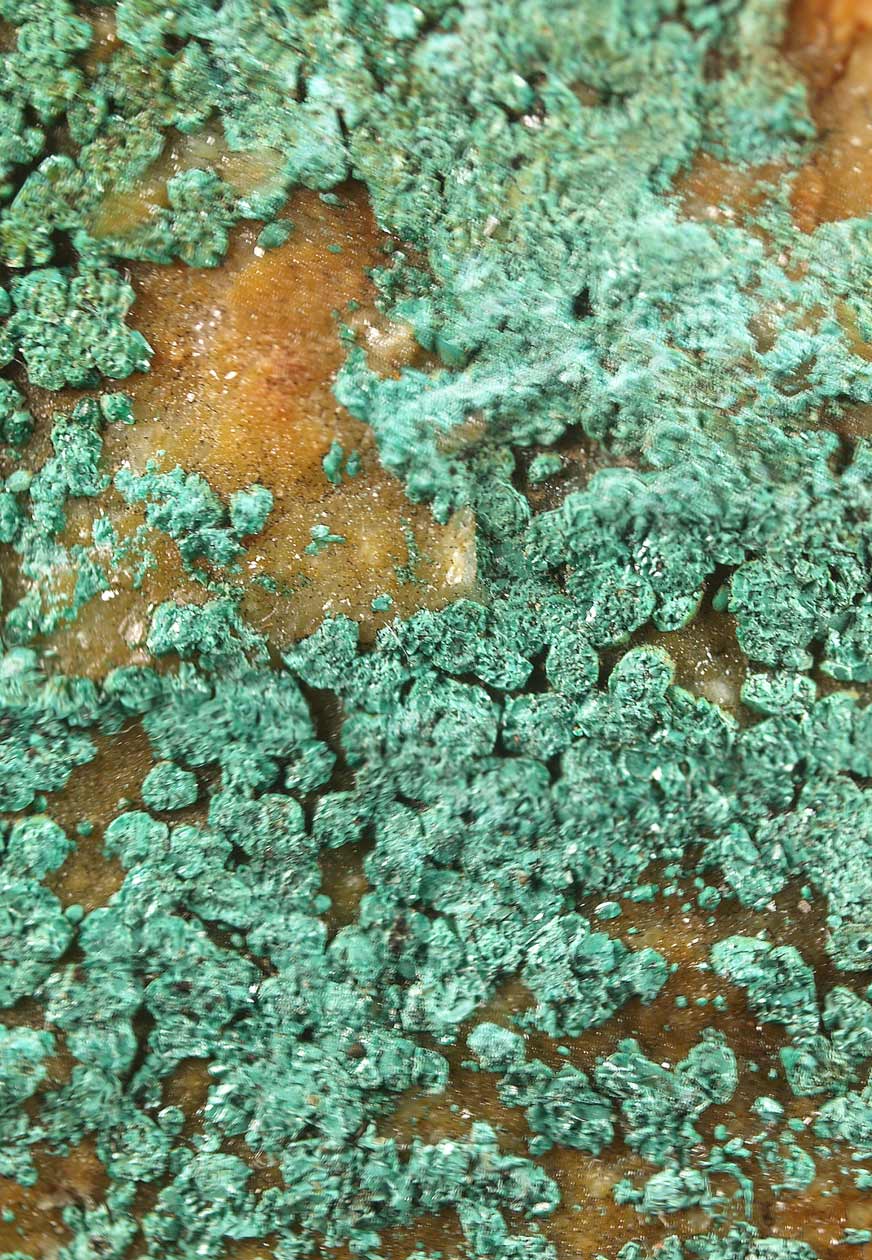
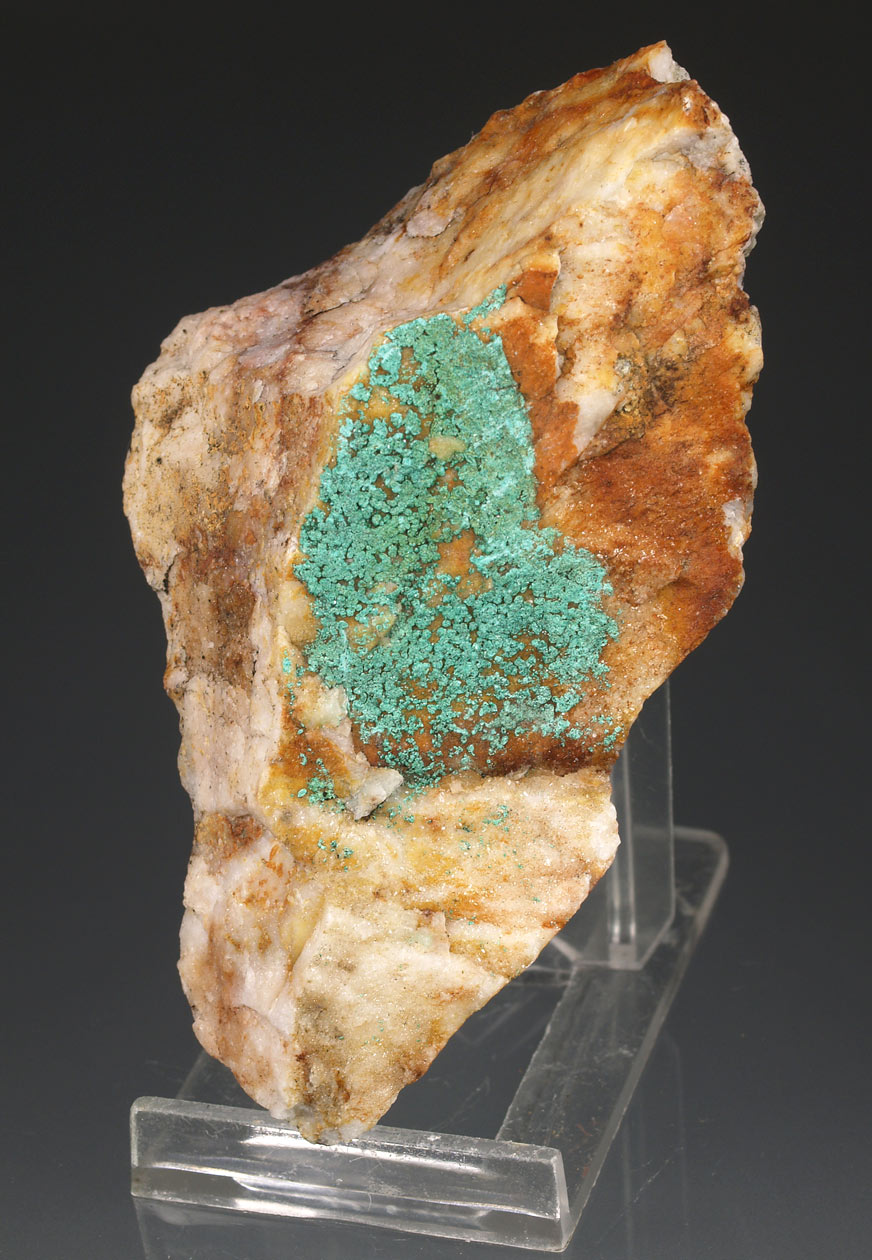
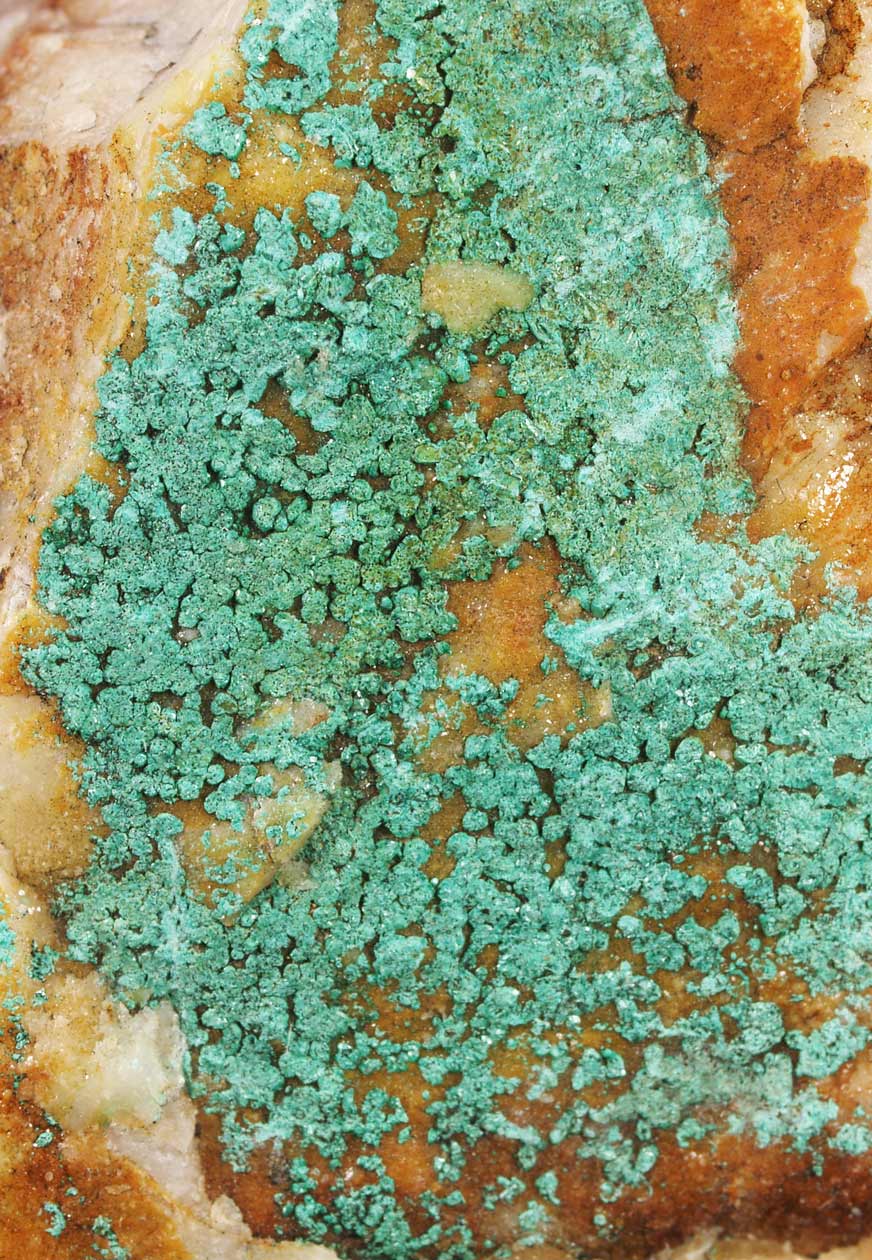
This specimen is interesting both for the species and for the locality. These are aggregates of pseudomalachite crystals that have grown in a fissure in the matrix formed mostly by quartz, in a small outcrop located on the slope of the "Cerro Viejo", near the Maidevera reservoir.
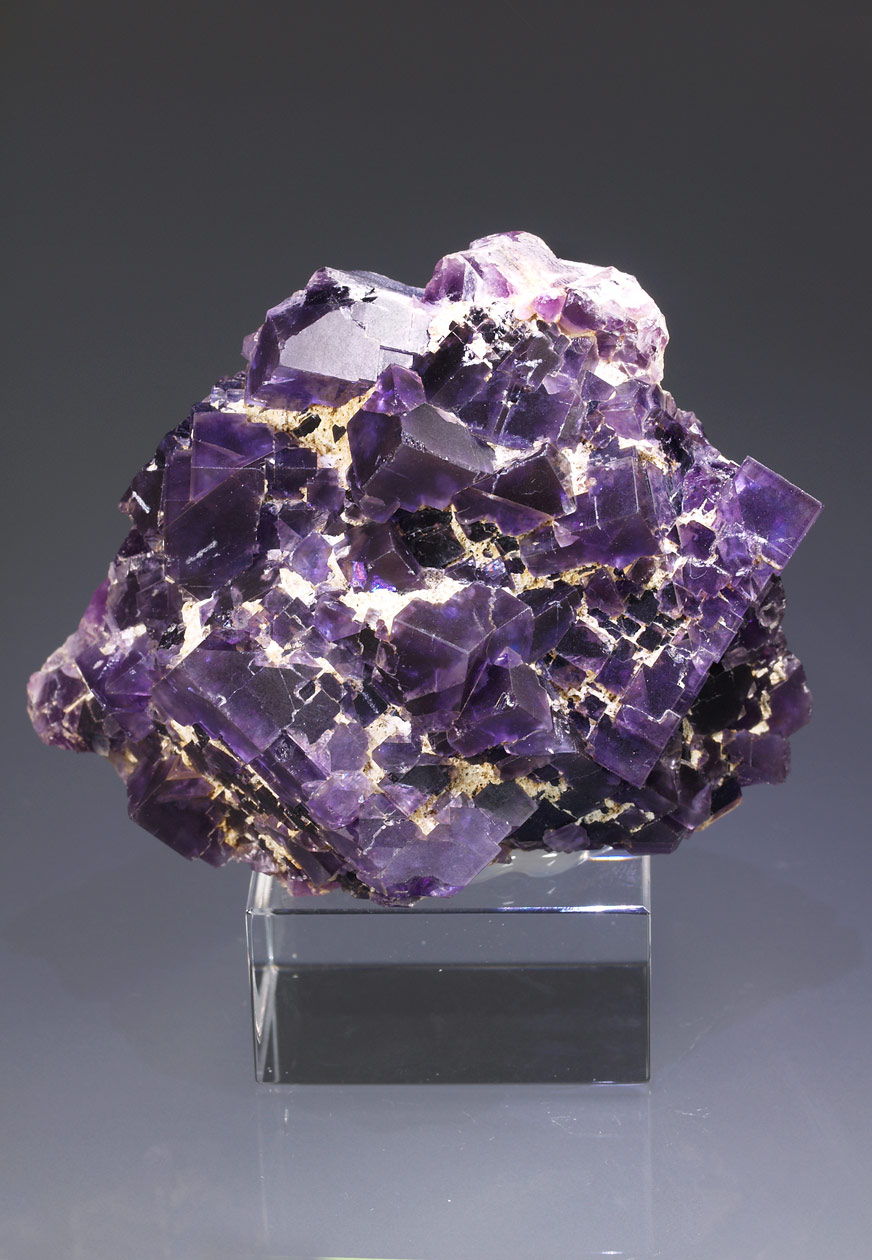
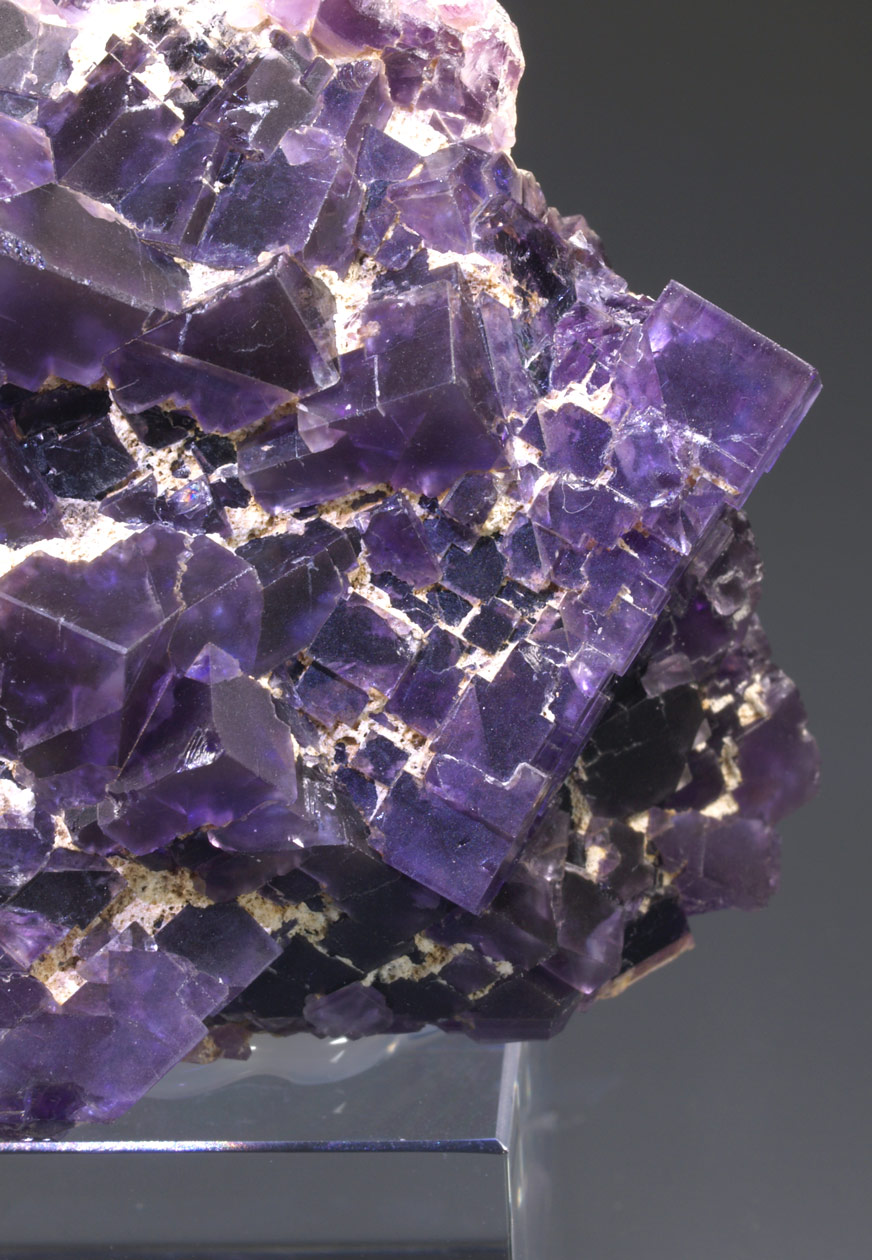
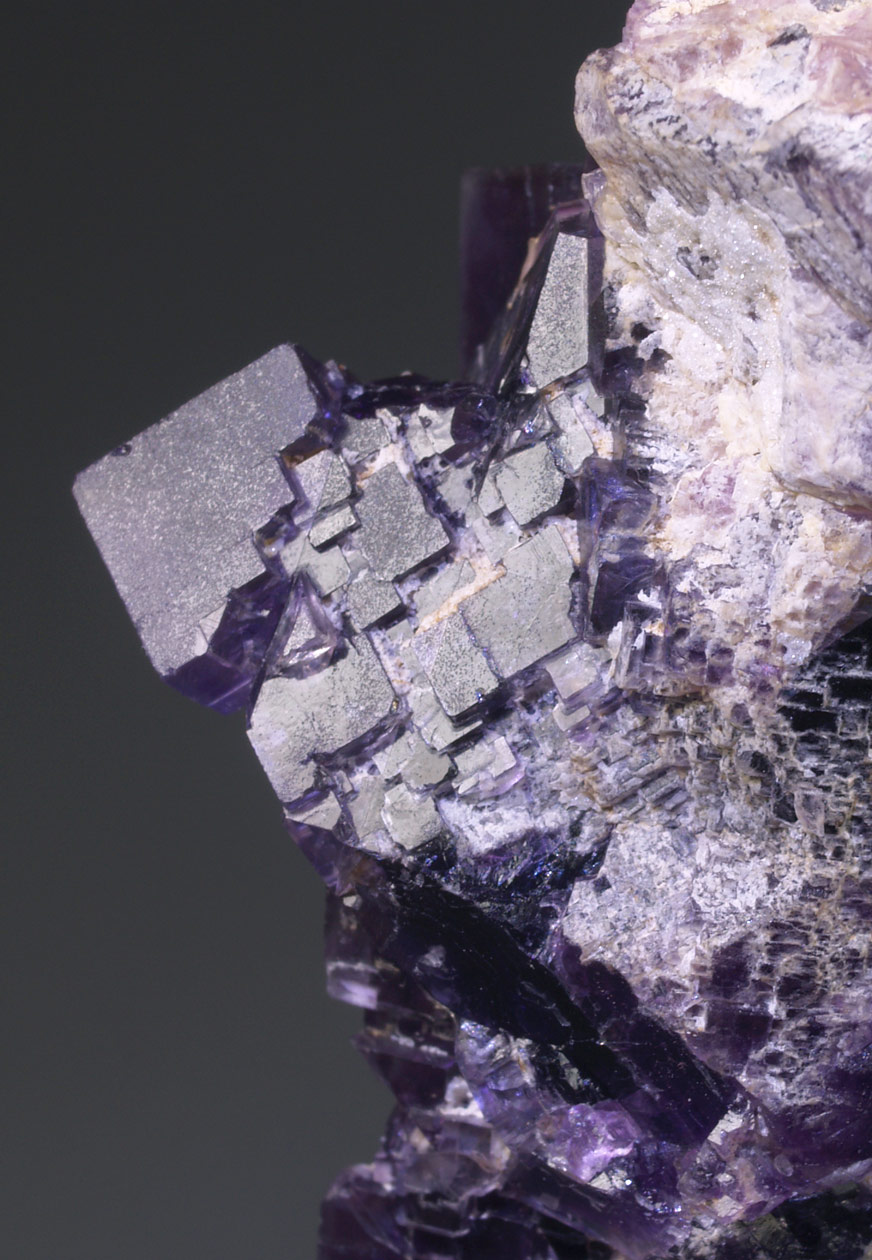
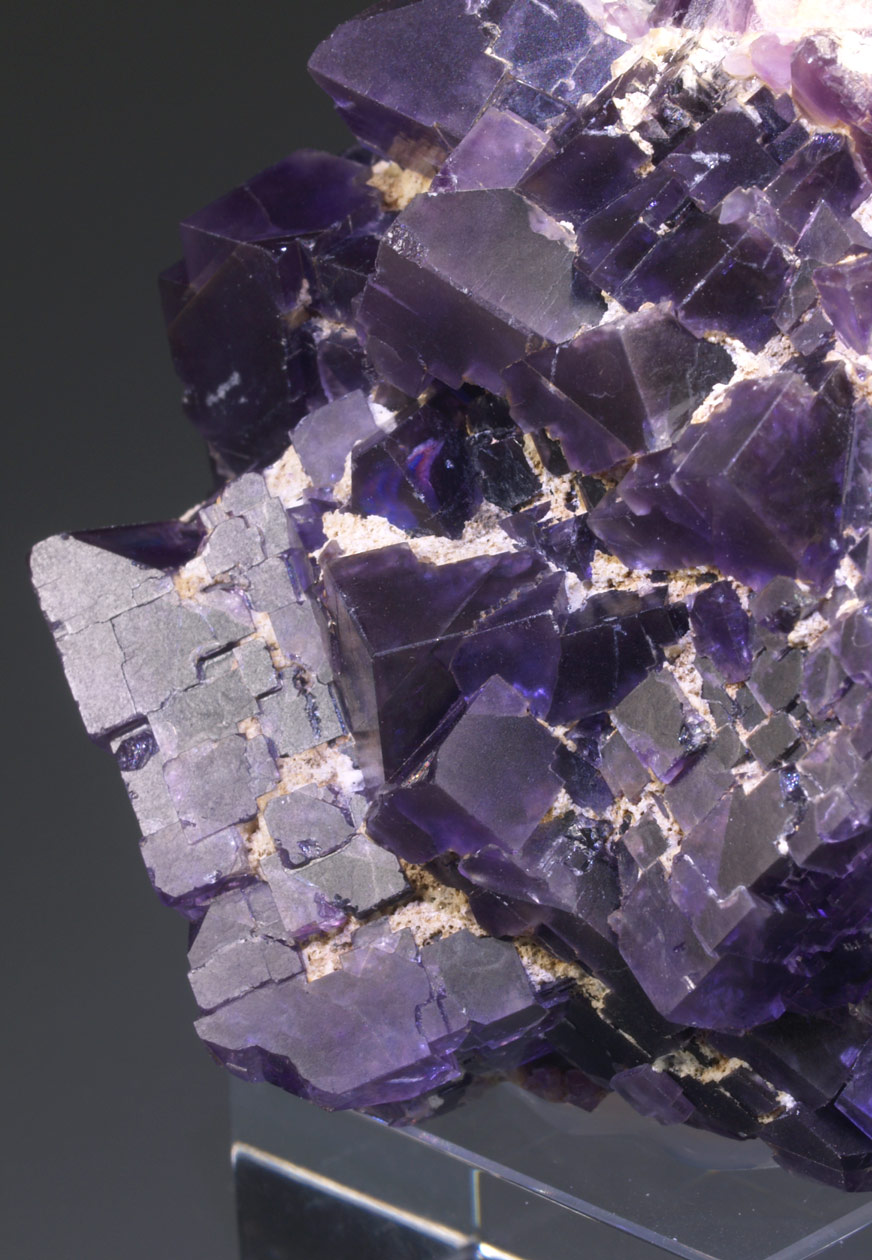
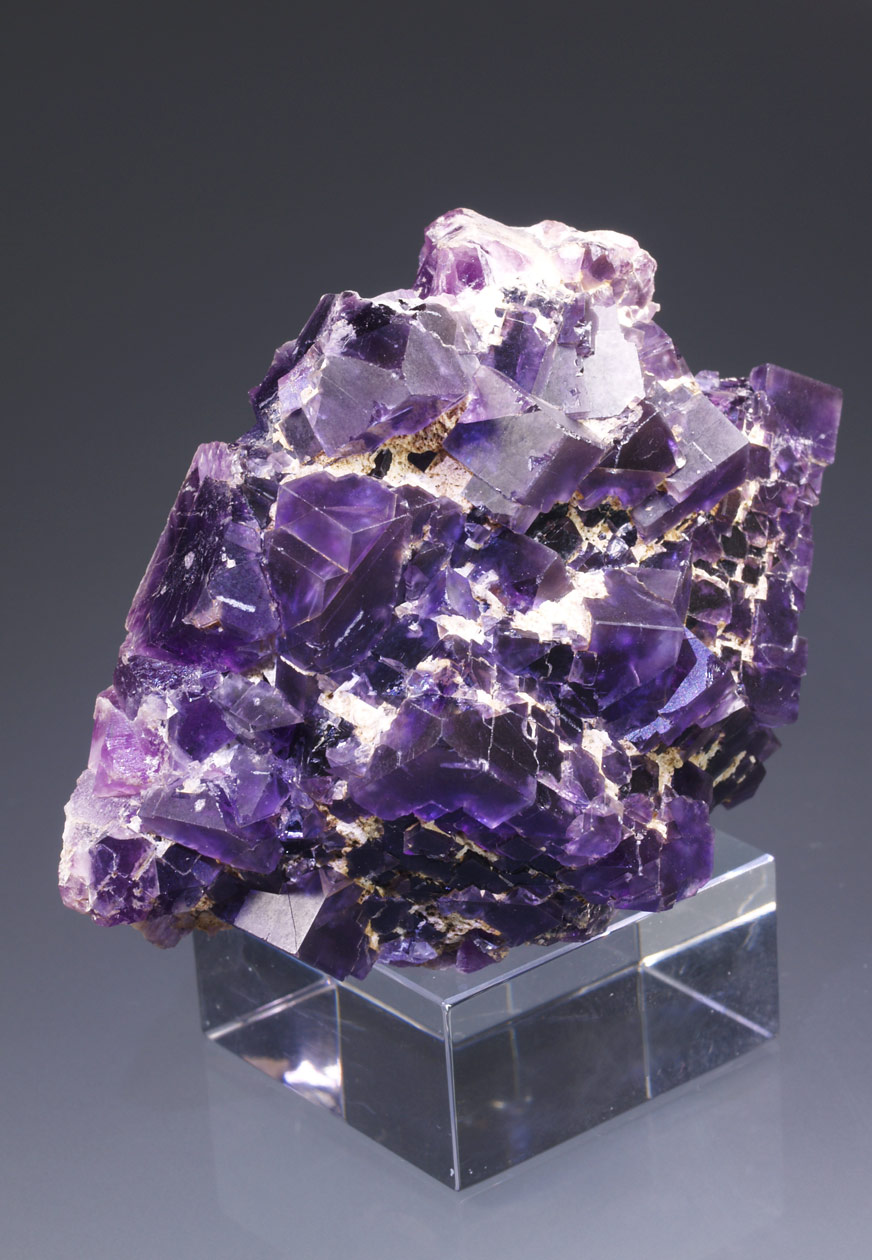
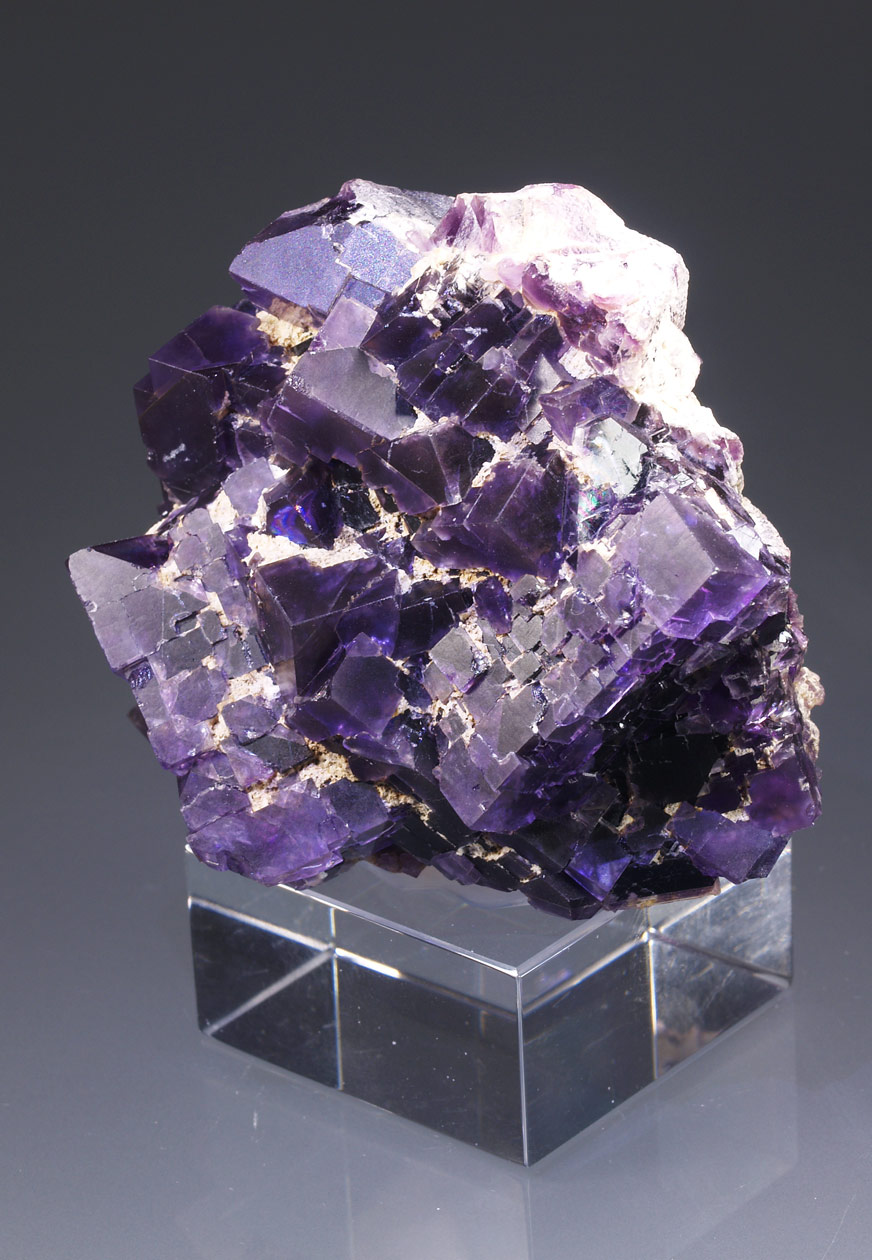
Very rich specimen formed by several cubic fluorite crystals, with polysynthetic growths on the faces and accompanied by microcrystalline quartz. Transparent to translucent. The violet to purple color is very intense and zoned. Some edges have small chips, but it is an old sample, from the mid-80s, from the collection of Julio Martínez (València).
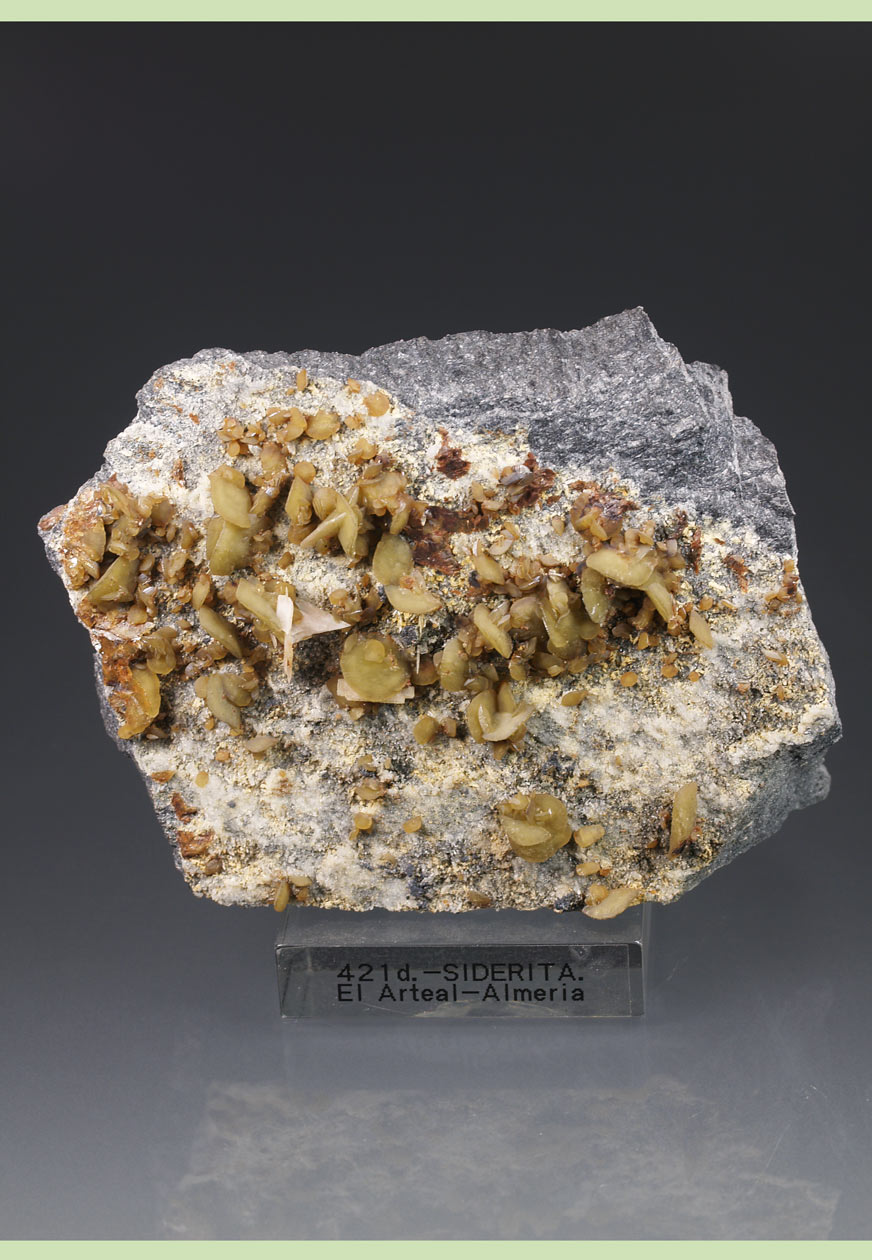
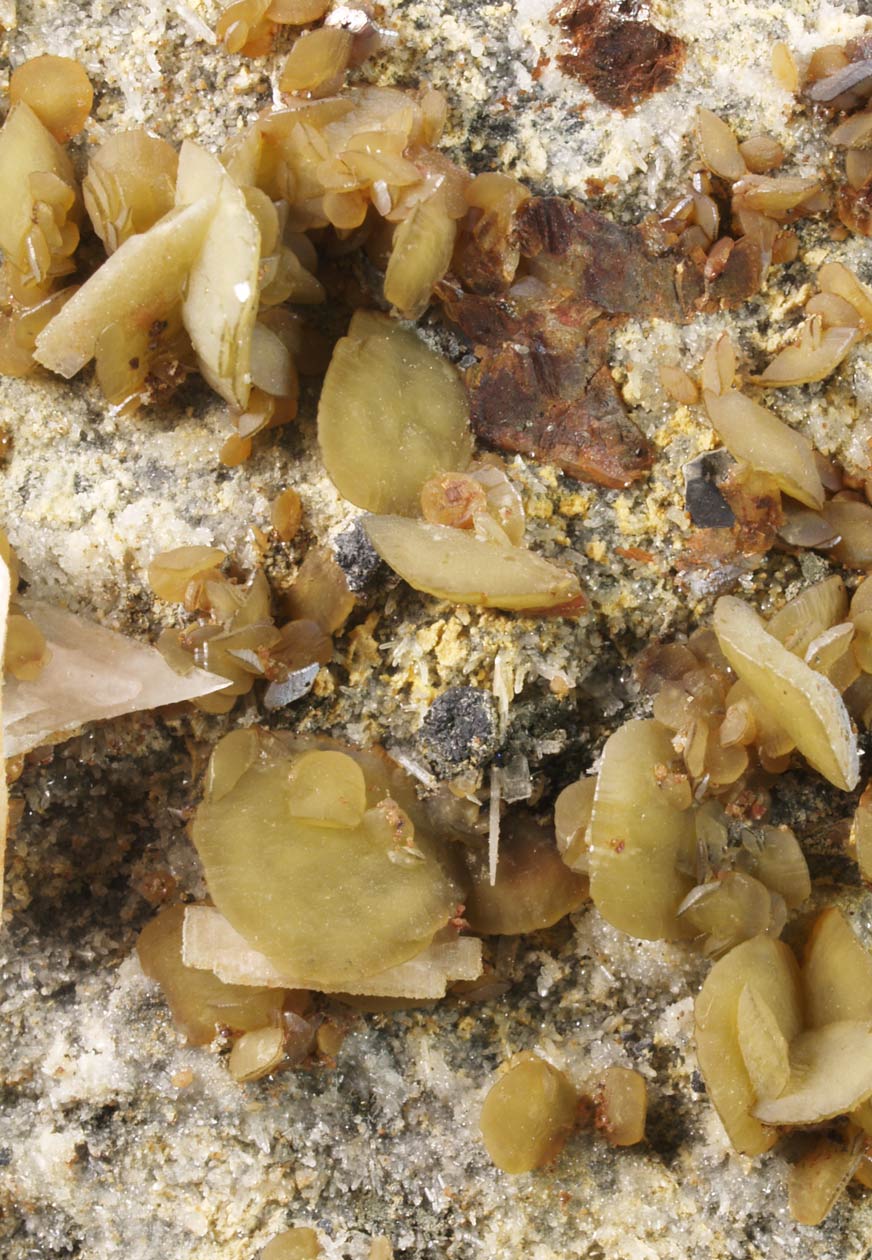
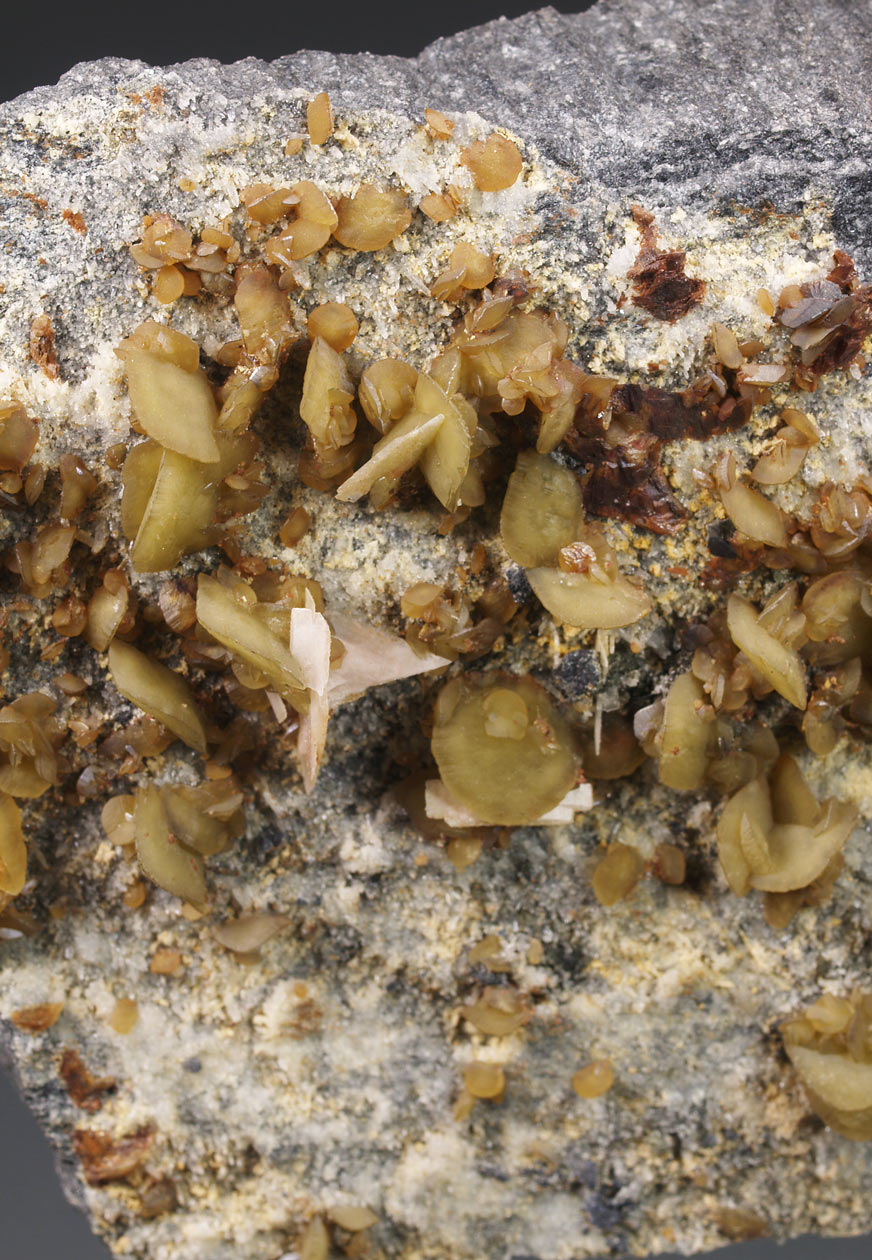
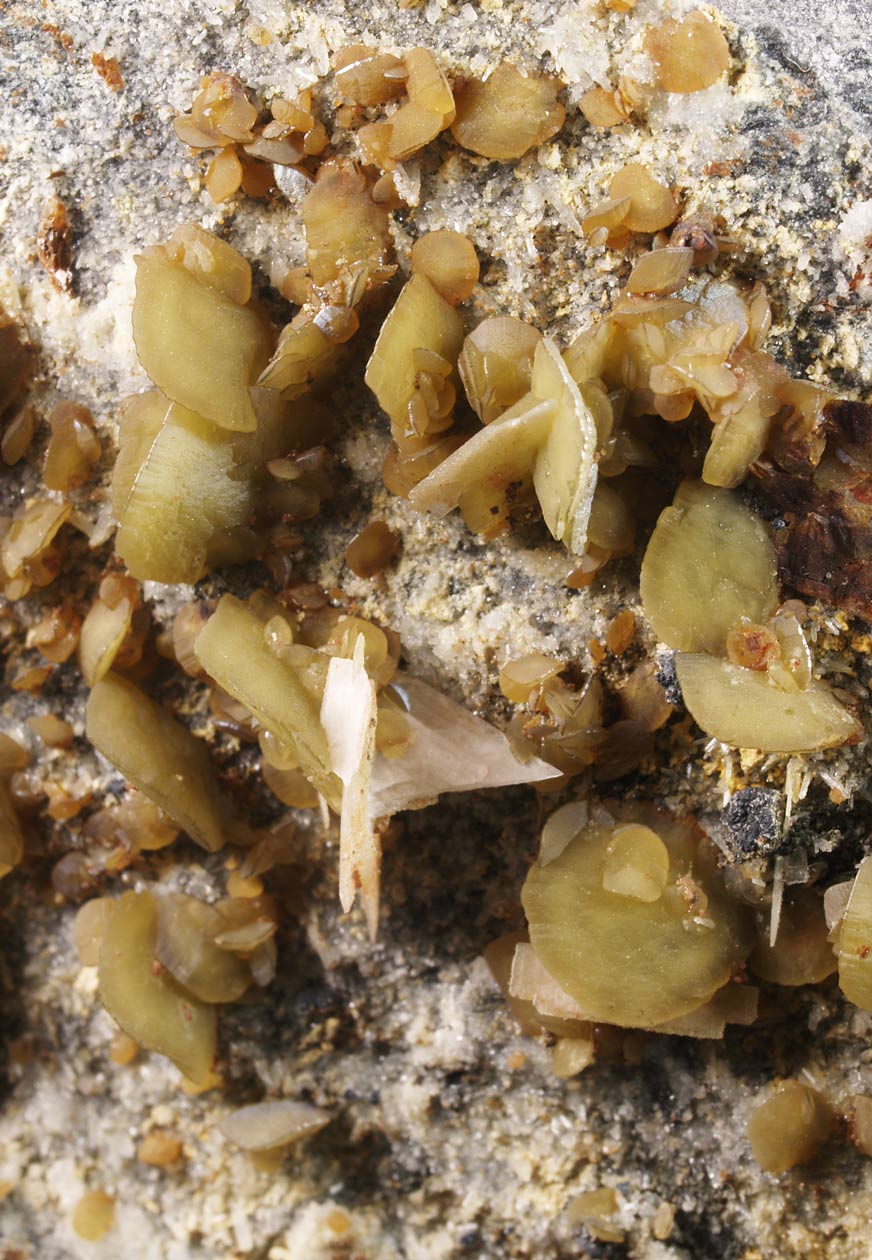
Aggregates of tabular siderite crystals, with greenish tones, which are disposed on a matrix with small crystals of quartz, galena and baryte. The sample comes from this classic Almeria mine where it is not easy to find specimens of siderite with this quality. From the Aleydis Soliveres collection.
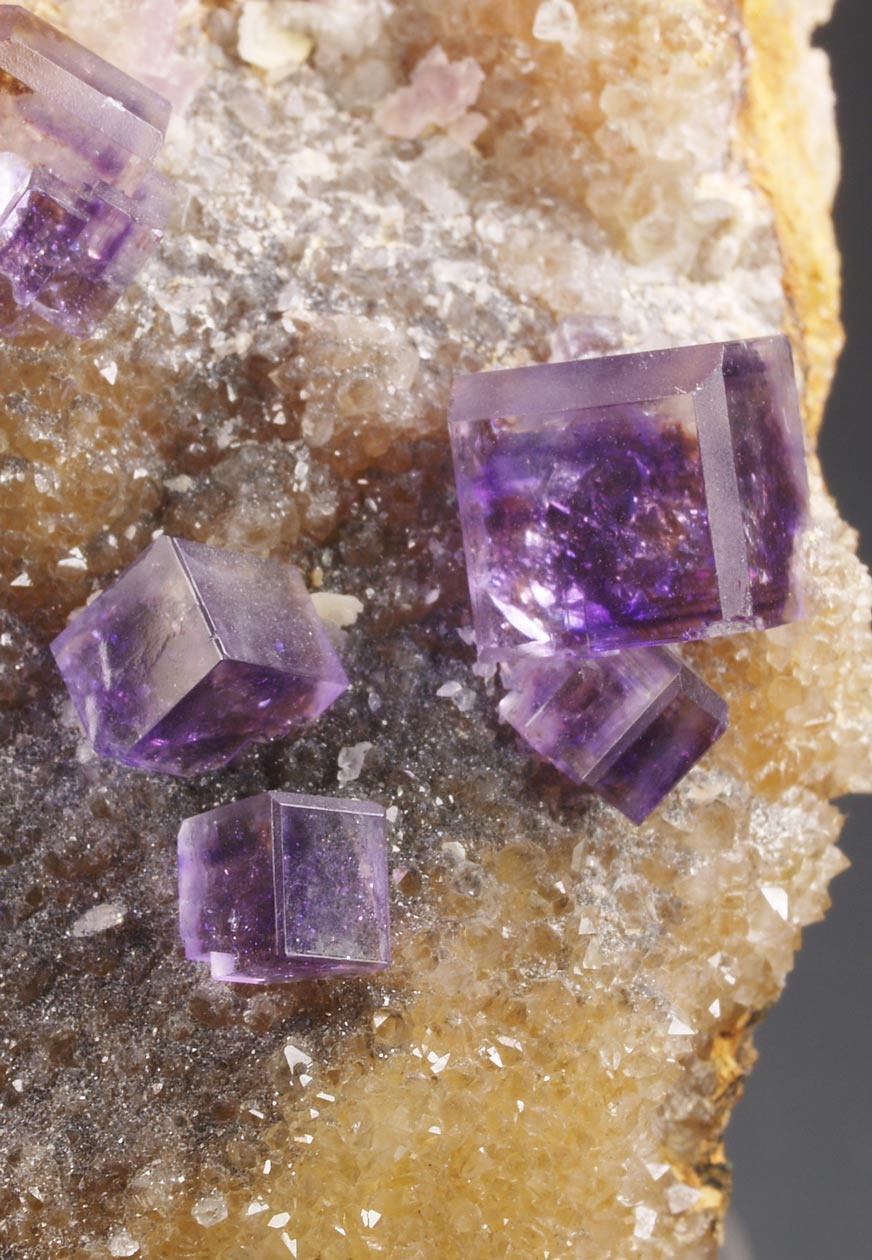
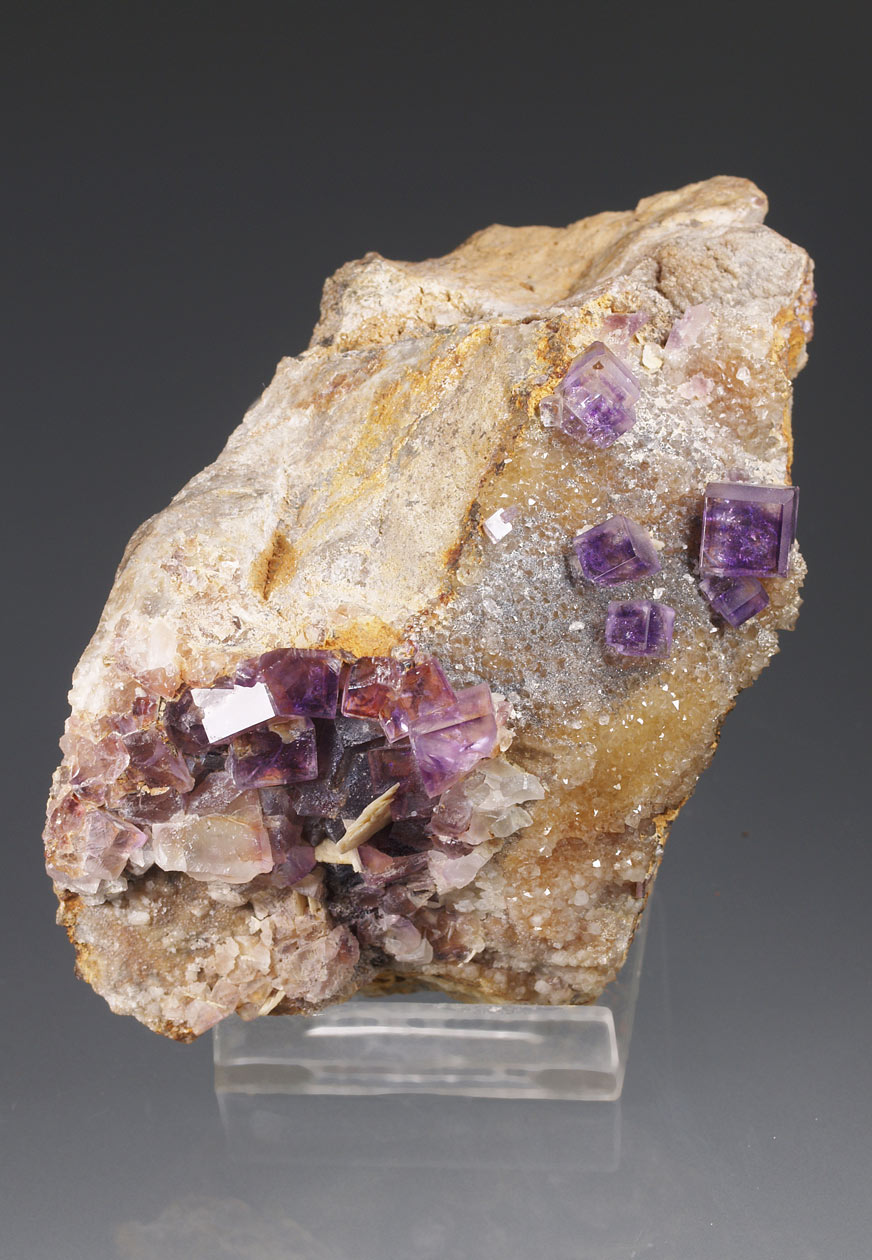
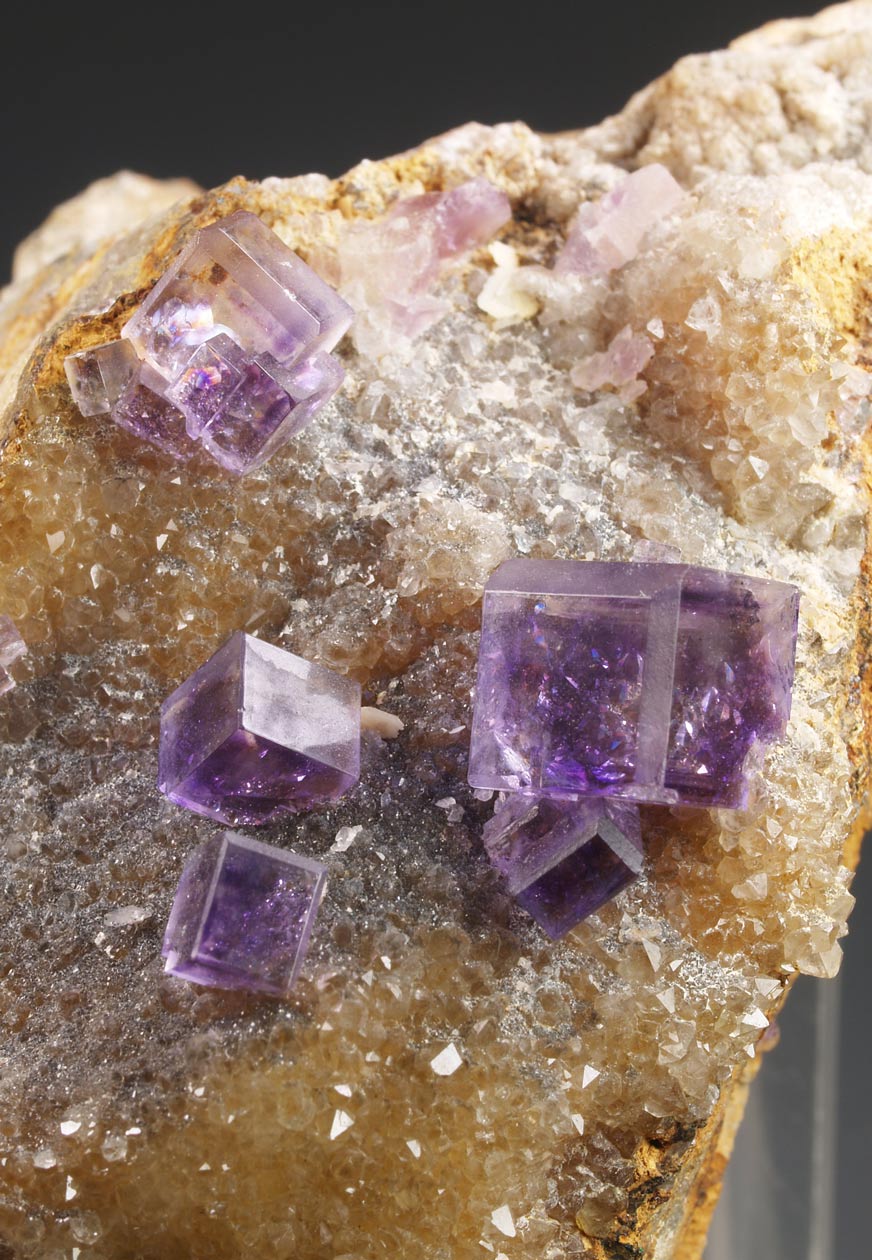
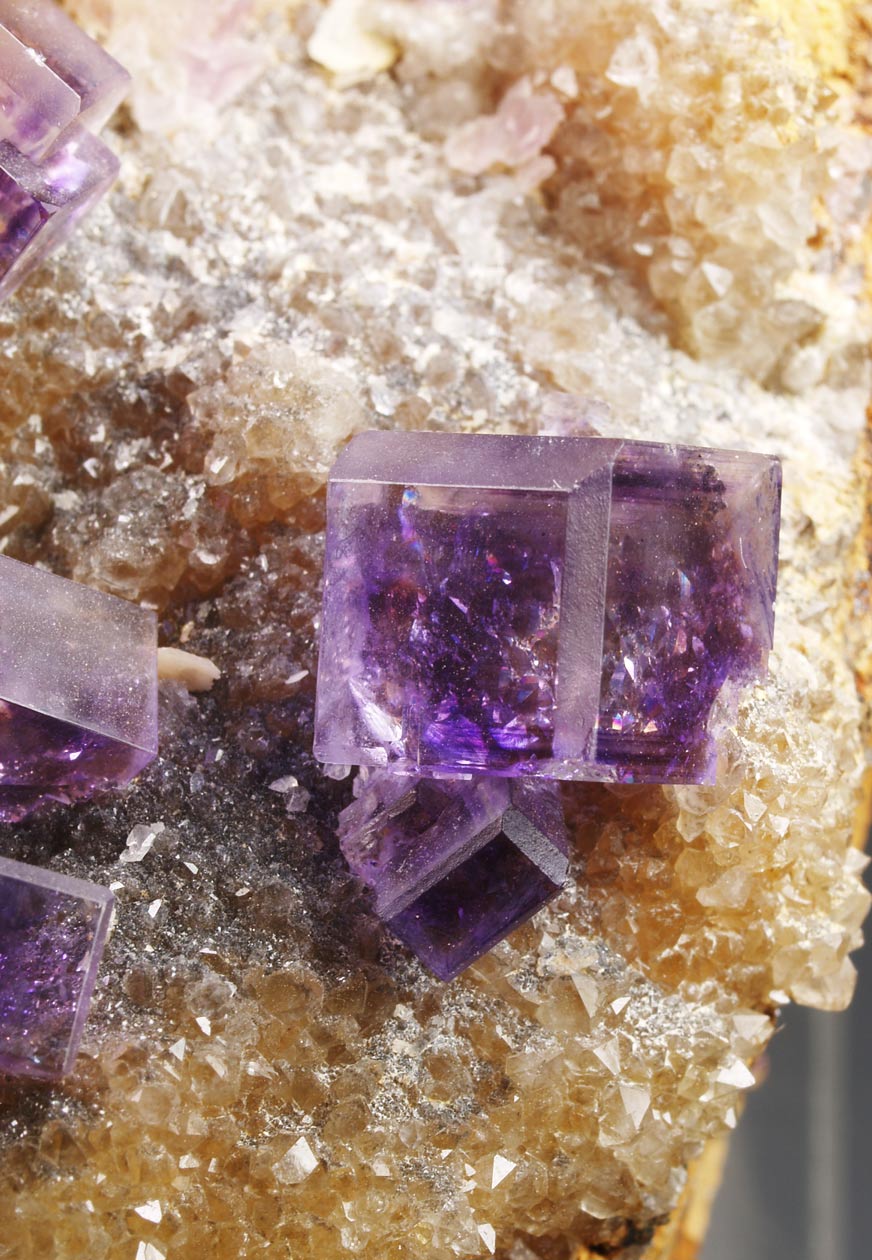
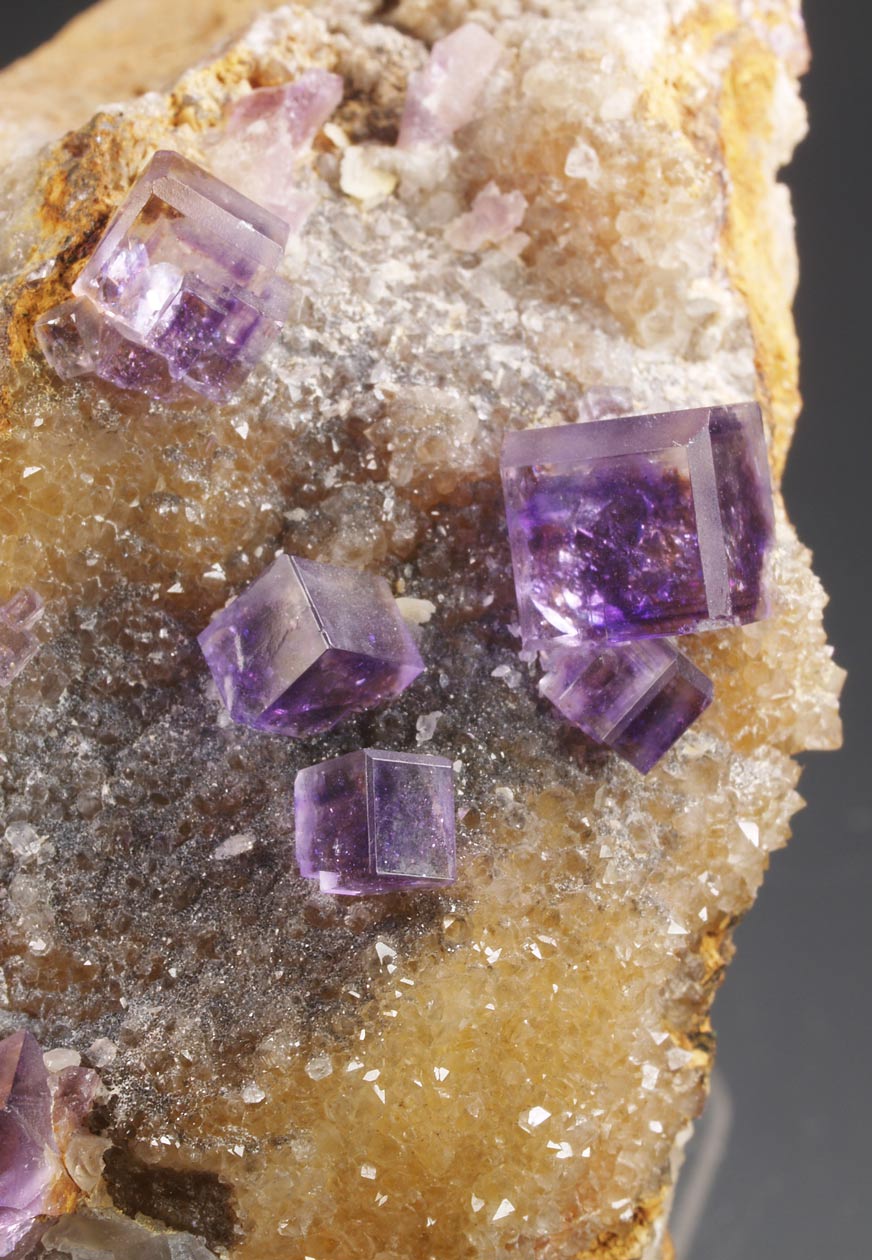
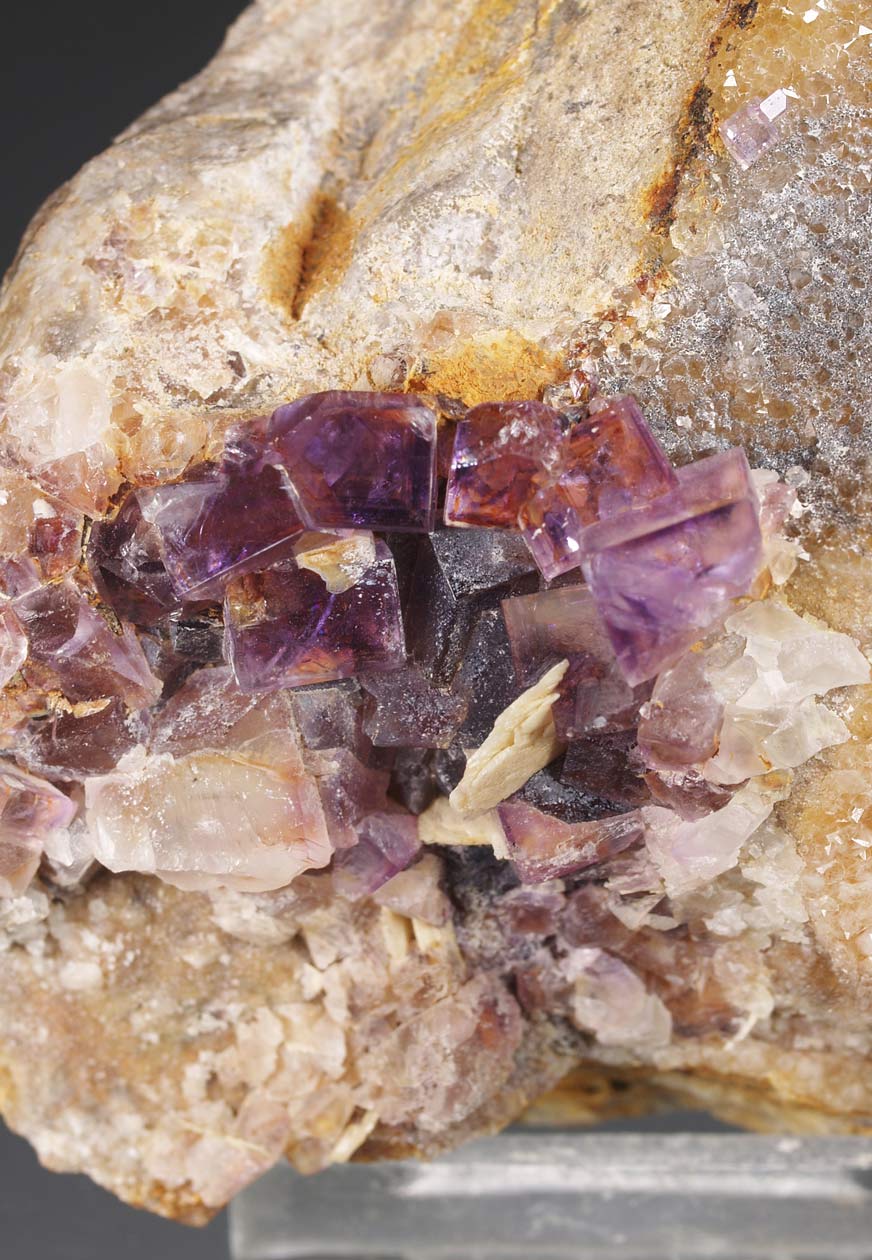
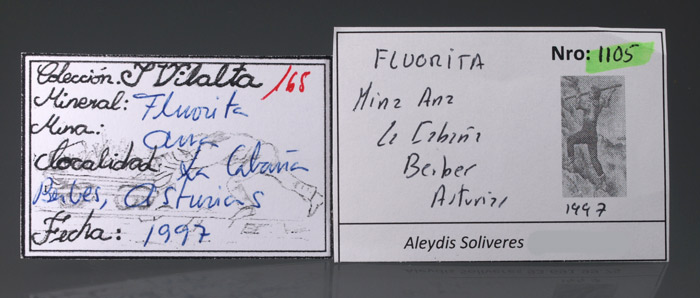
Specimen formed by a druse of quartz microcrystals on which several groups of cubic fluorite crystals have grown. They have faces that are asymmetrically beveled by the dodecahedron. Its transparency allows us to see a curious geometric zoning of color. The specimen comes from the J. Vilalta collection and the A. Soliveres collection. From a mine from which it is difficult to find pieces.
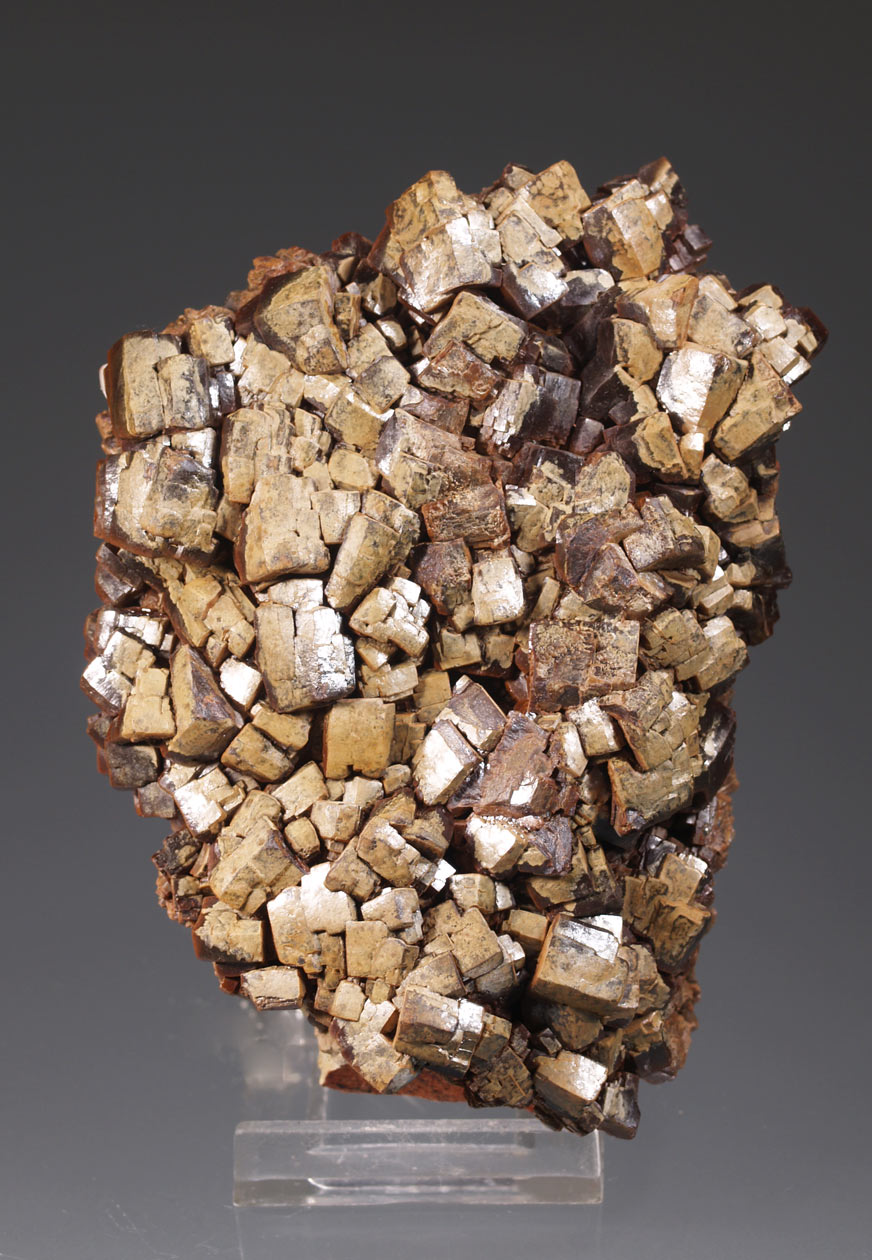
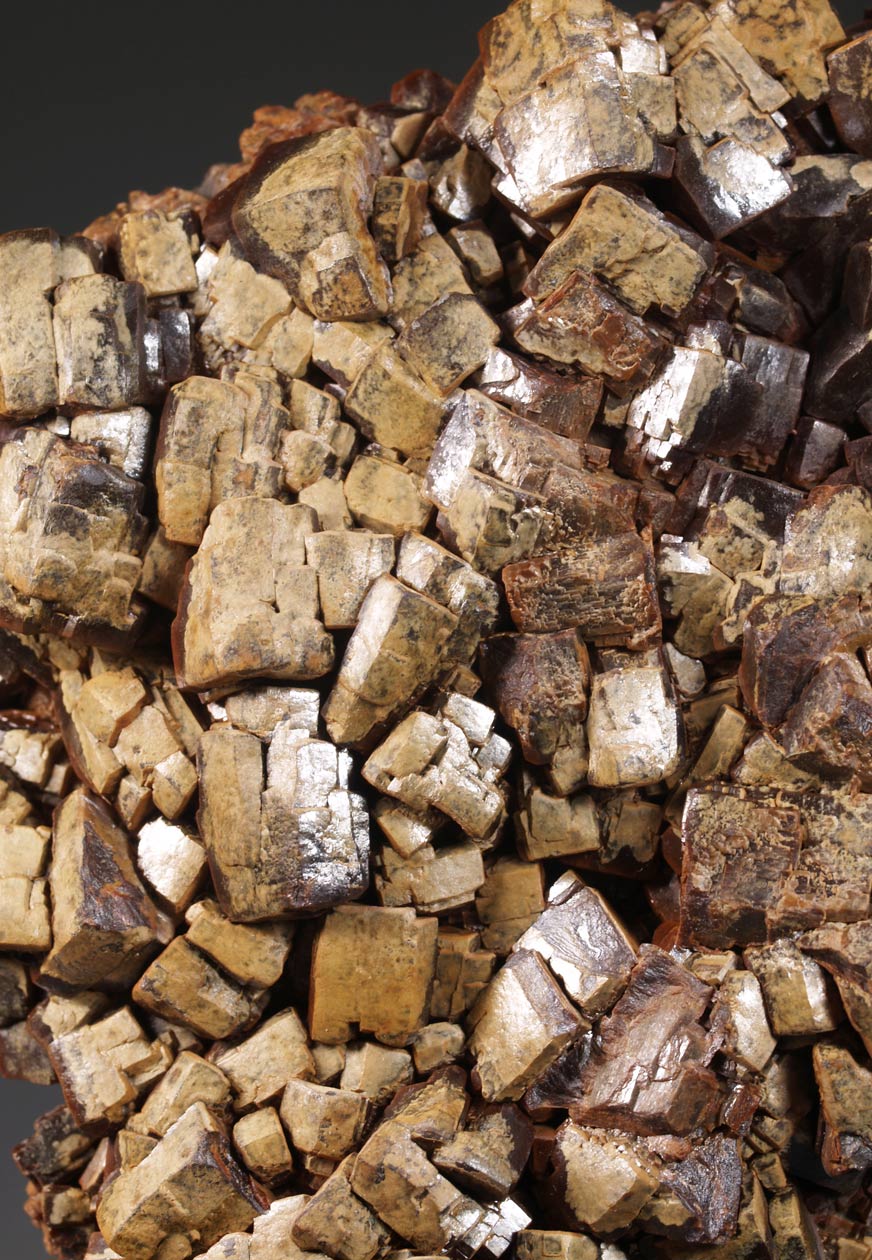
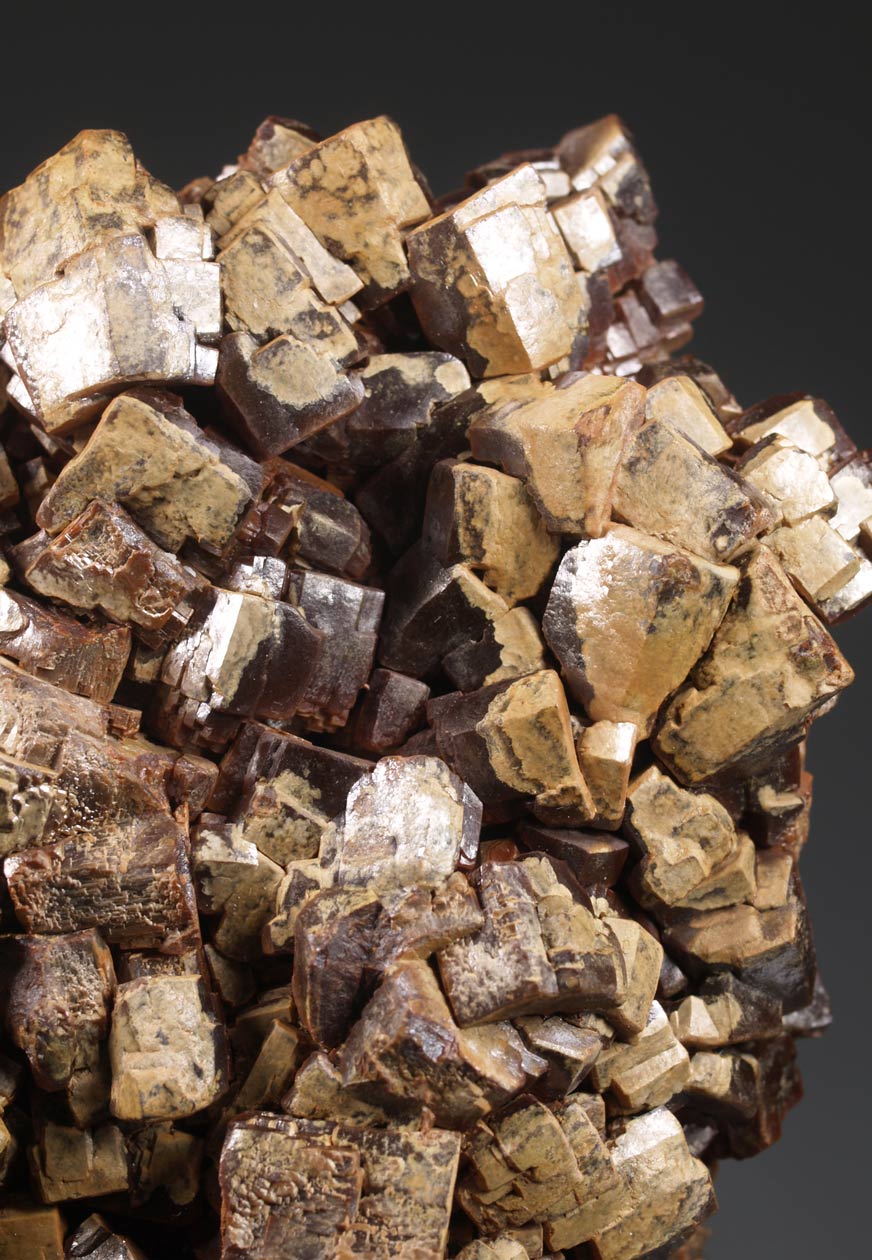
A very good sized piece of arsenatian vanadinite. Numerous crystals of very good size, interpenetrated, with good luster. A Moroccan classic not easy to find with this size, from the Cendón collection (Cerdanyola del Vallès).
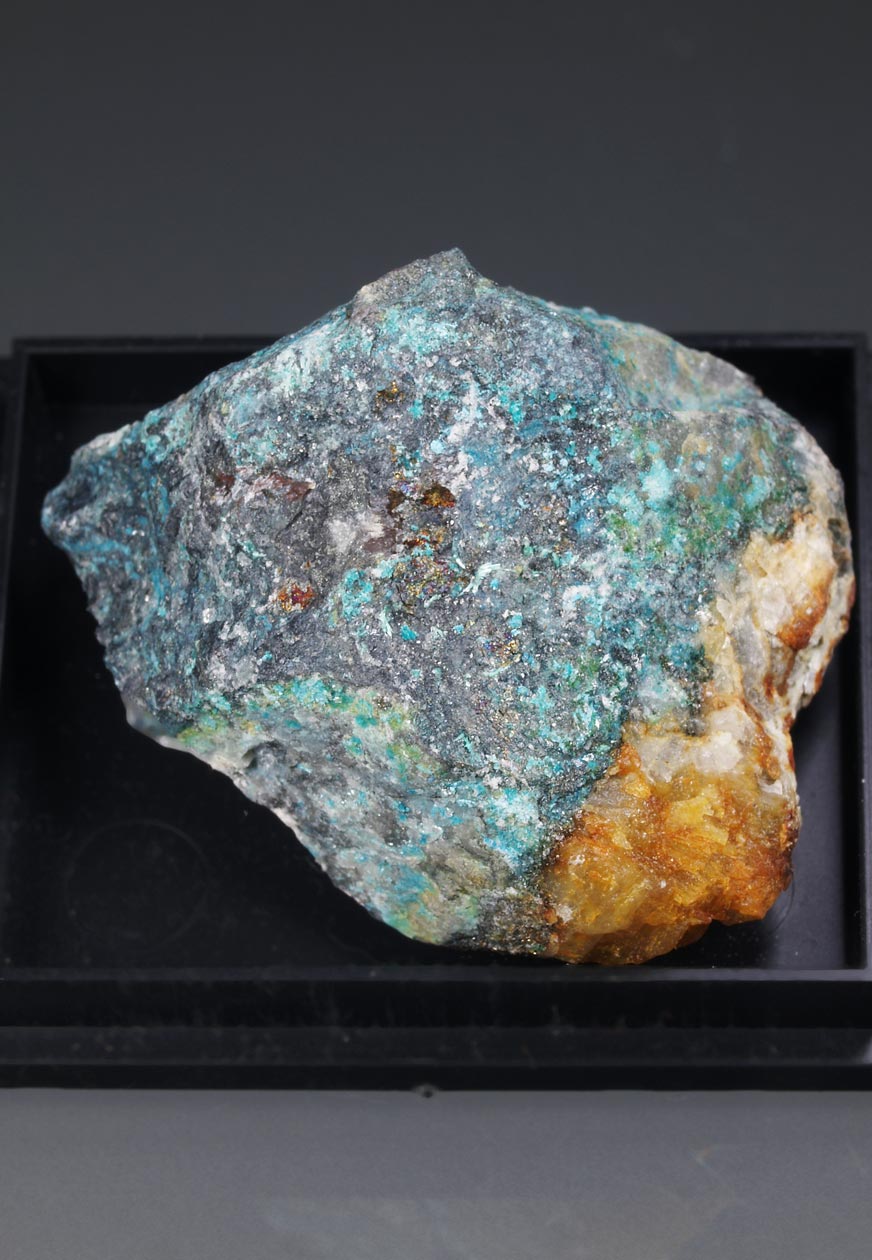
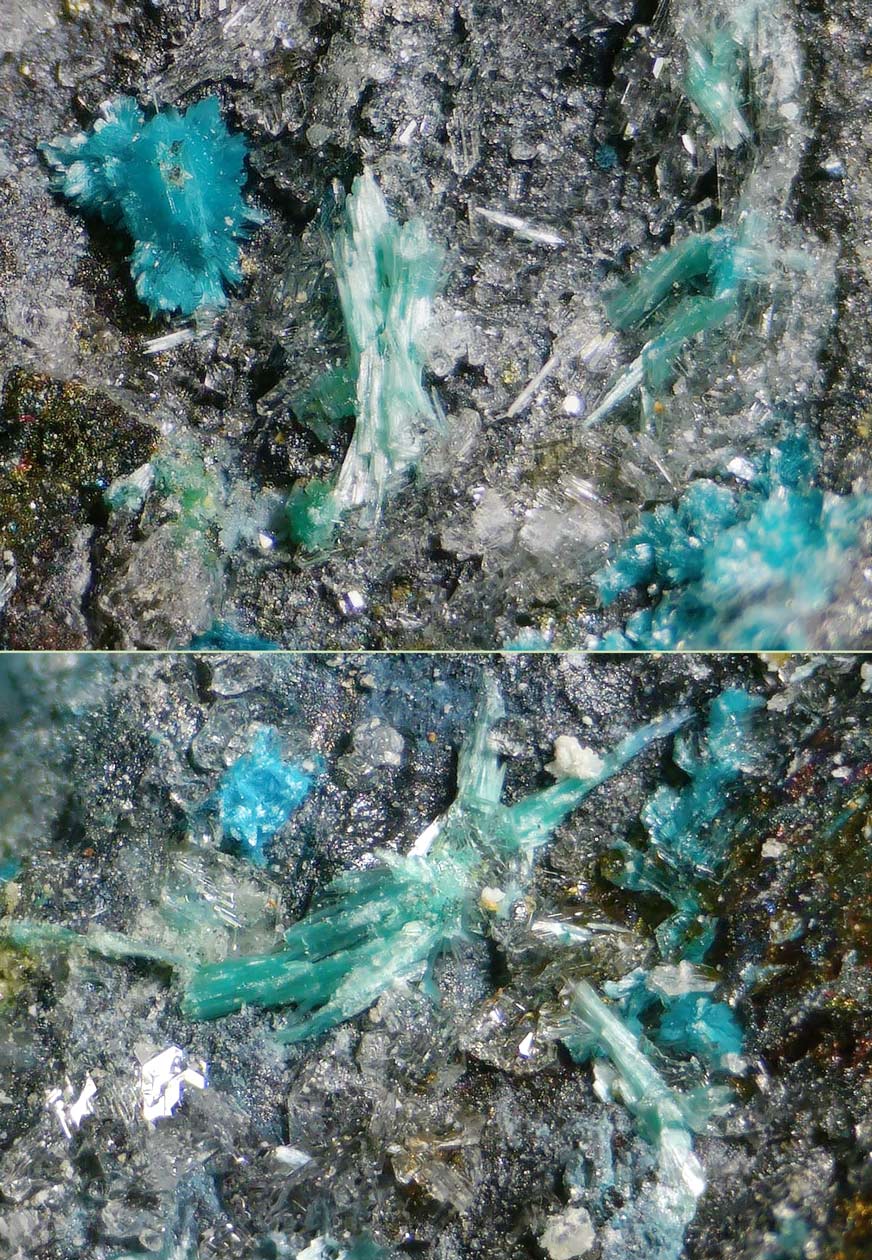
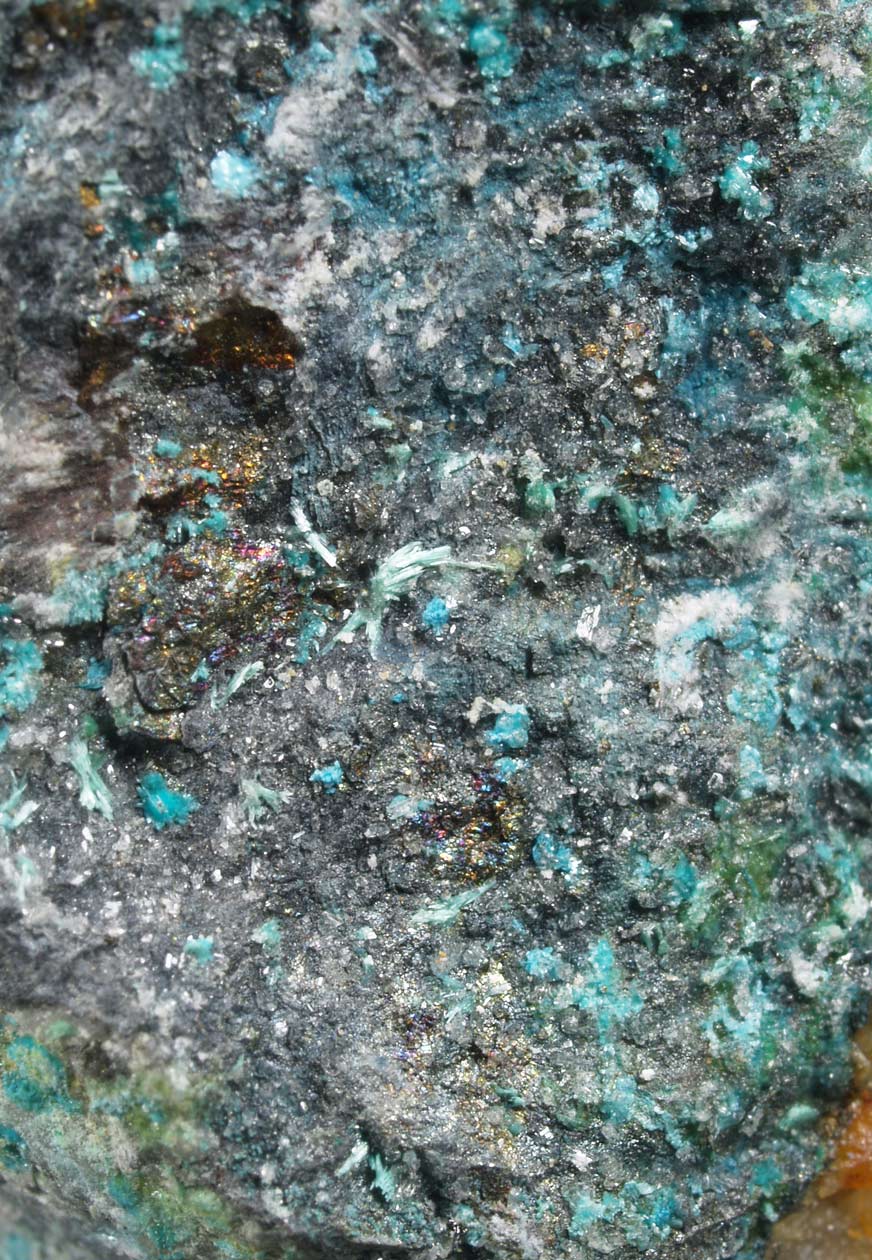
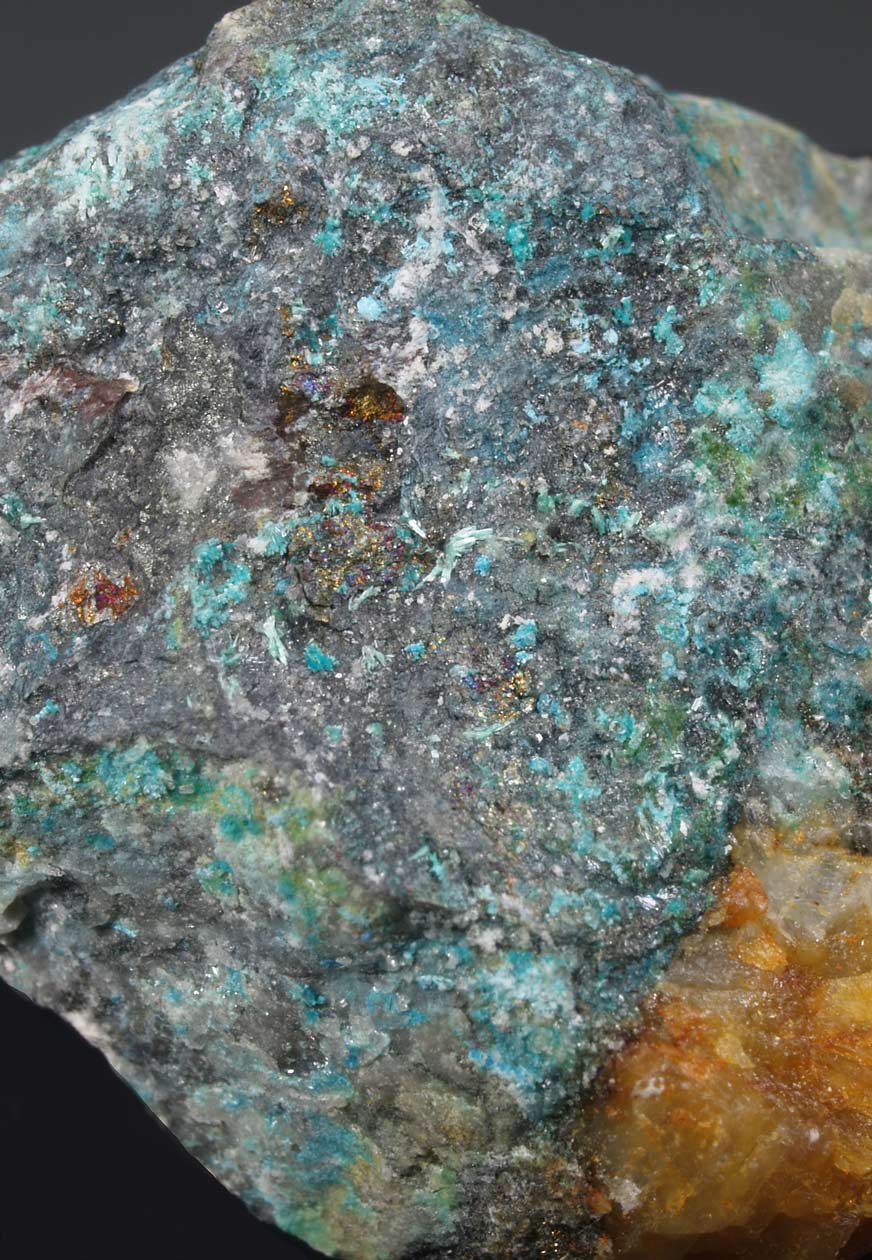
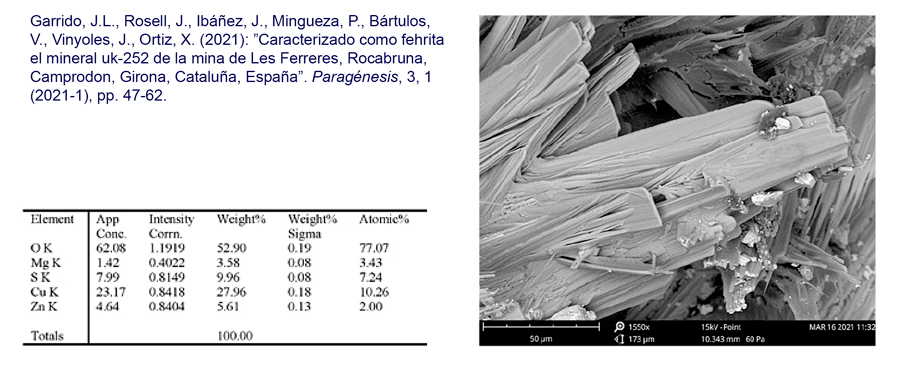
Fehrite is a recent new species found in Almeria (Spain). Some years ago (2012) we identified this species in the Les Ferreres mine (Camprodon) but unfortunatelly we didn't have enough sample to finish detrmination and structural studies. Recently we found some more samples and the characterization was carried out based on the results obtained from the application of various analytical techniques: SEM-EDS, Raman and X-ray diffraction. Les Ferreres mine is the second locality worldwide for the species. We will send all reports to the buyer.
In this Catalan mine, fehrite appears as elongated elongated tabular to fibrous crystals, with a delicate bluish-green tone, and fibrous terminations. Usually, it is accompanied by devilline (blue) and brochantite (green). It is the magnesium analogue of ktenasite.
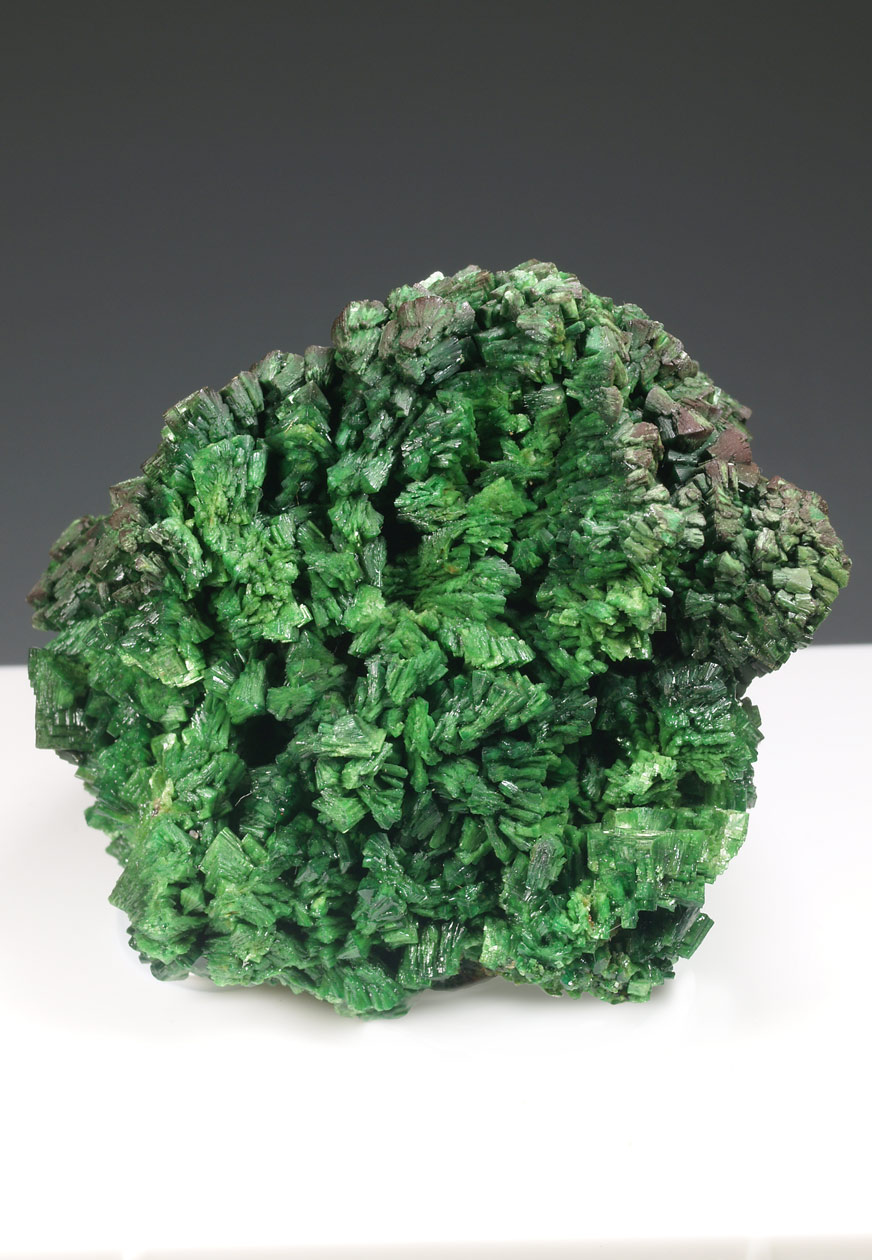
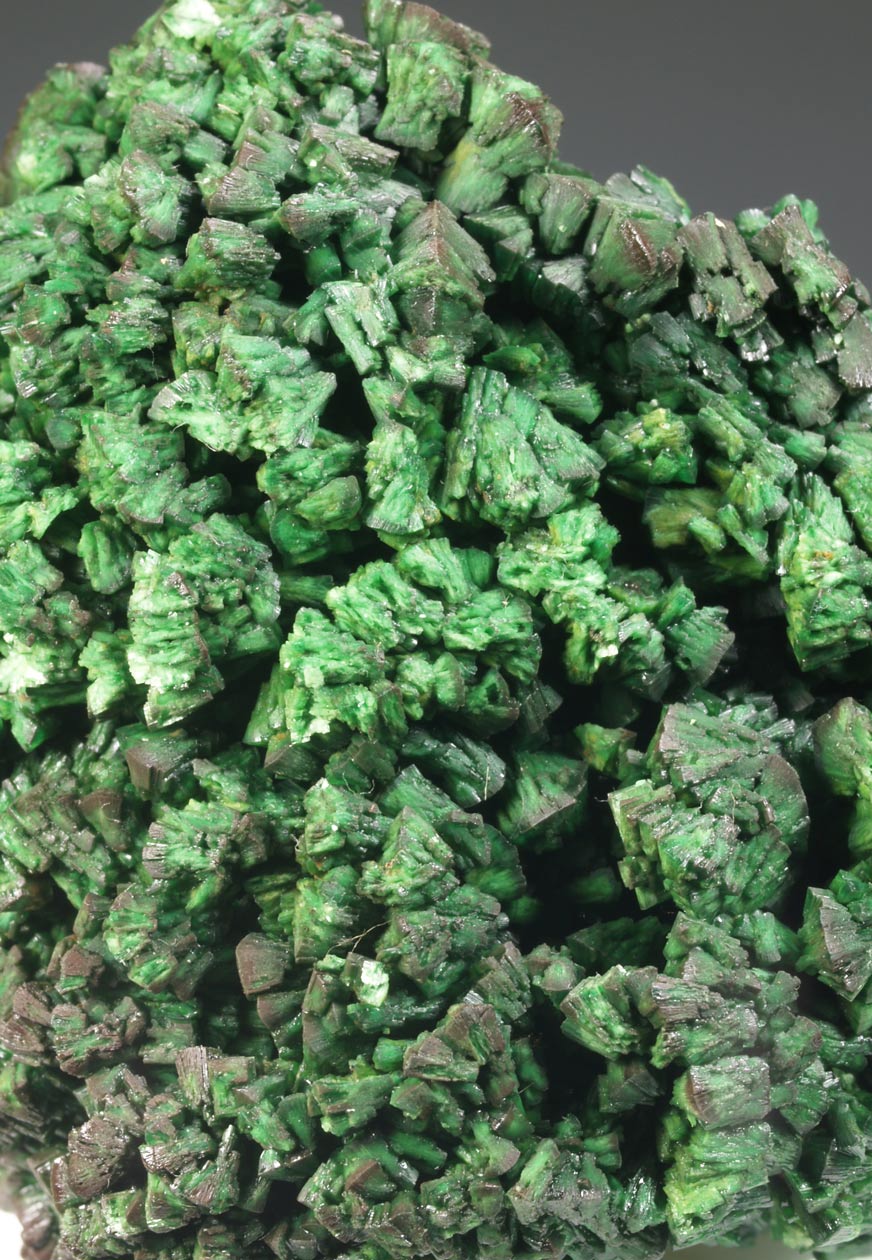
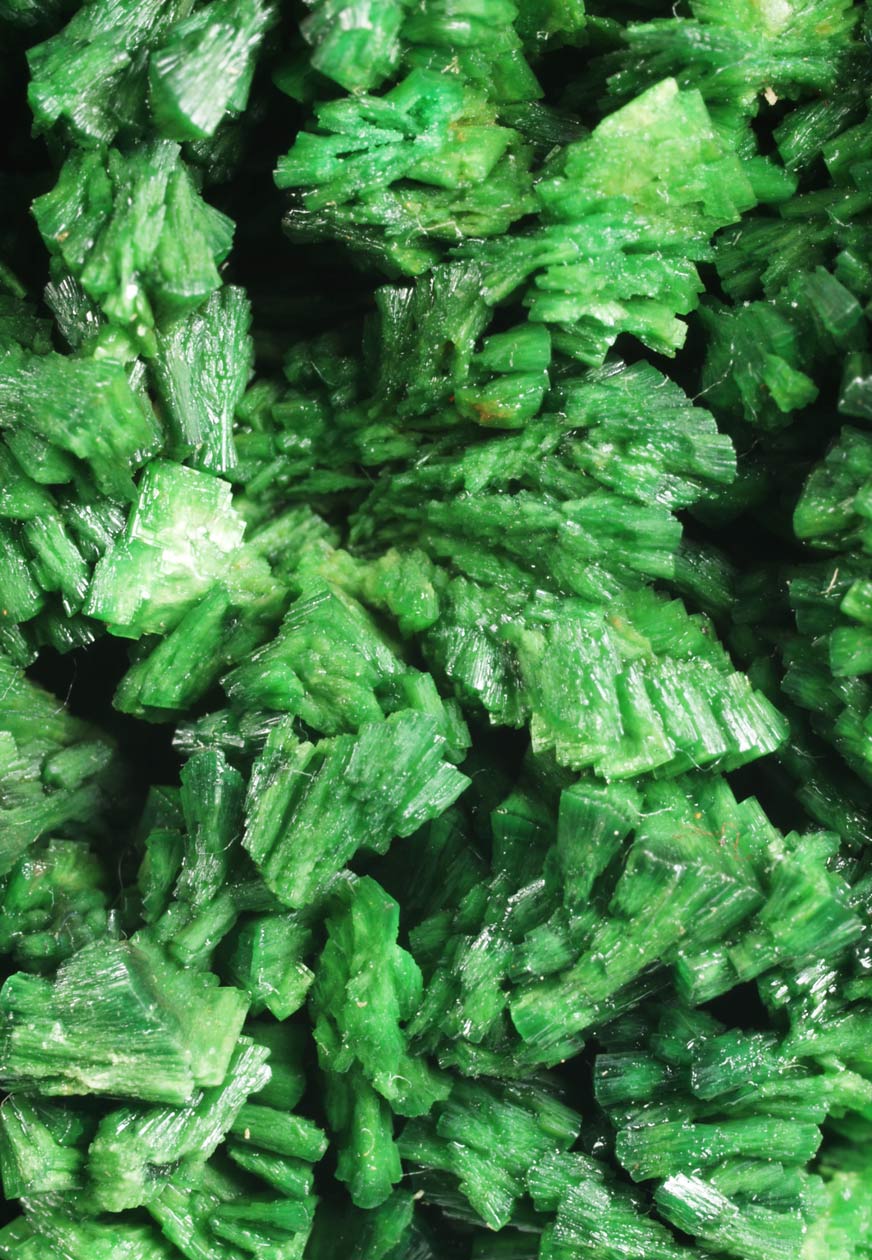
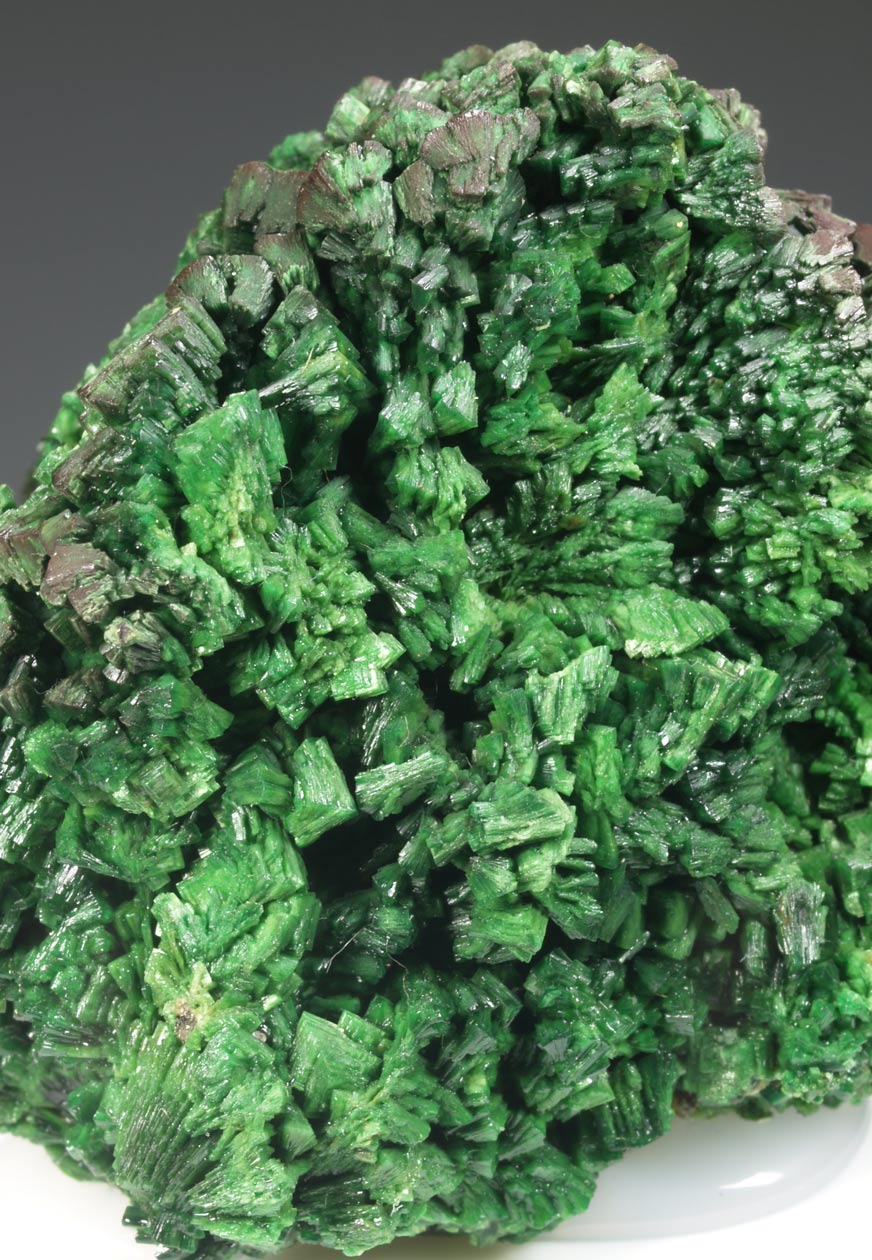
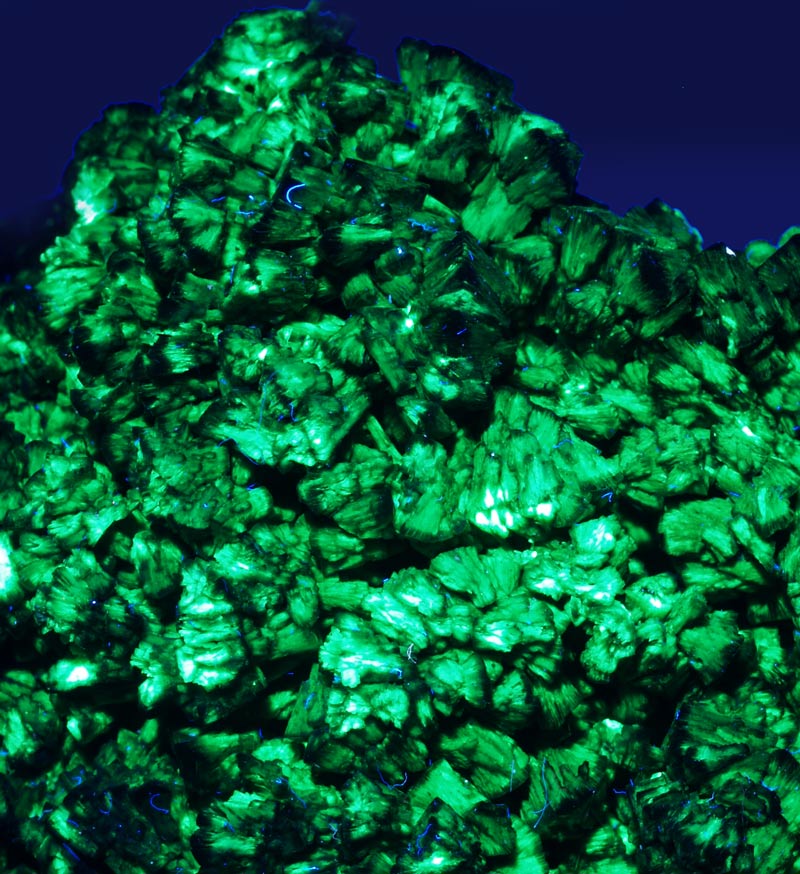
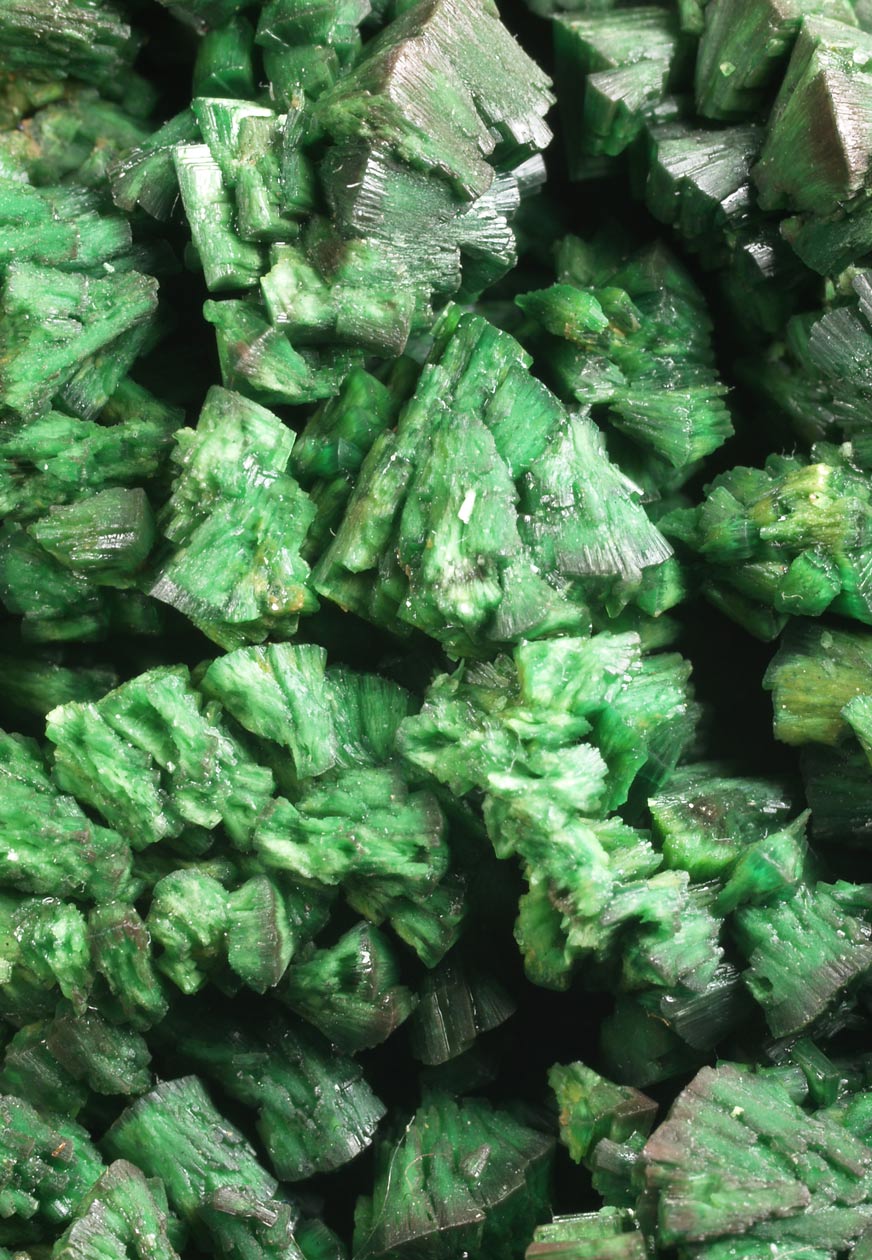
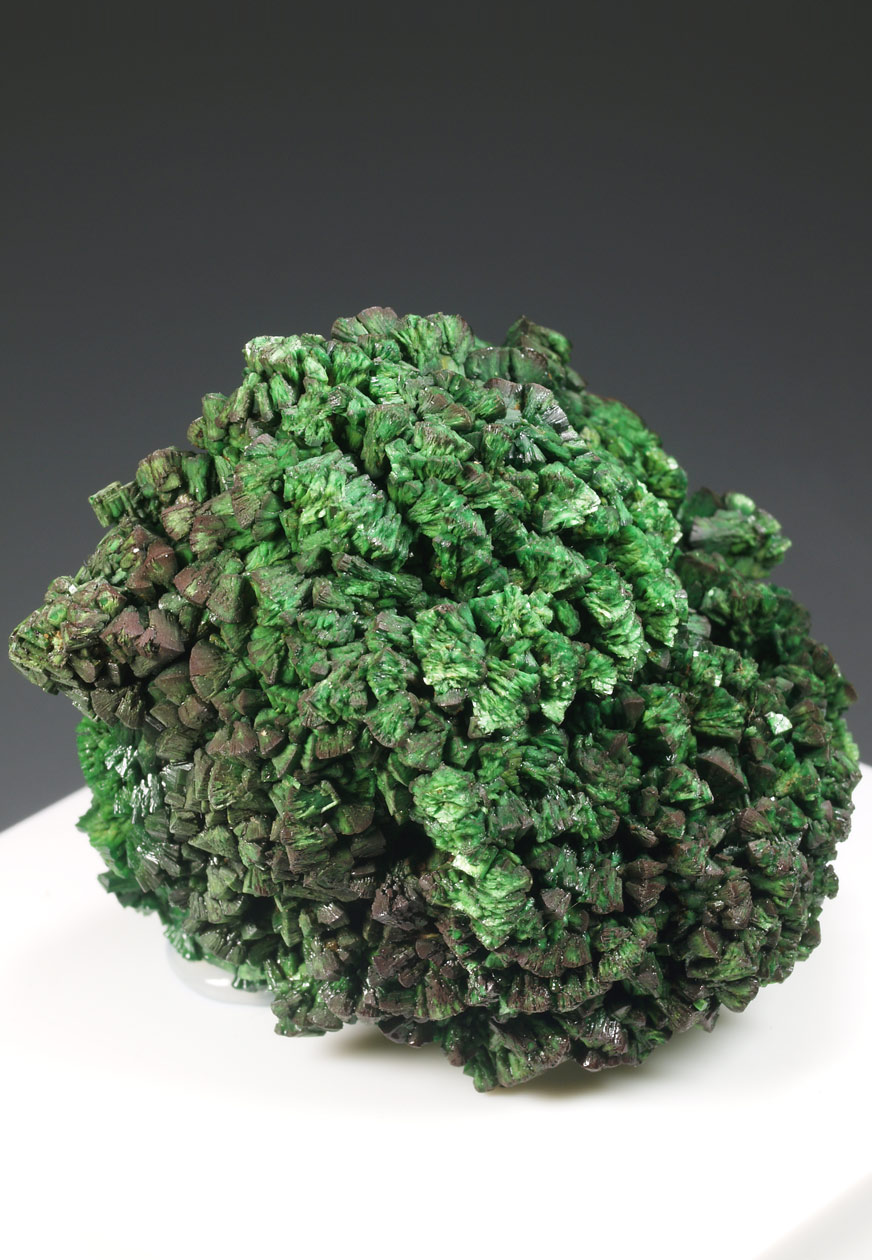
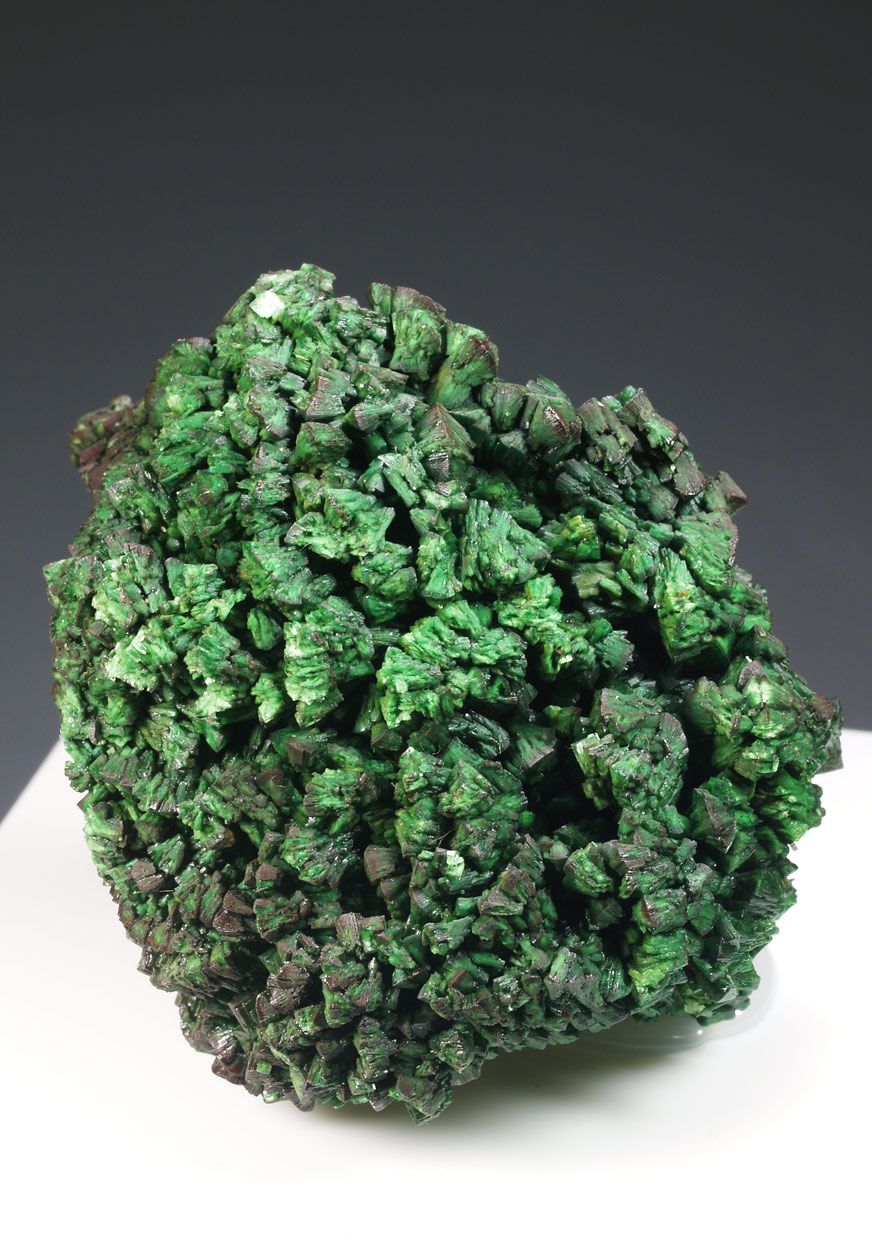
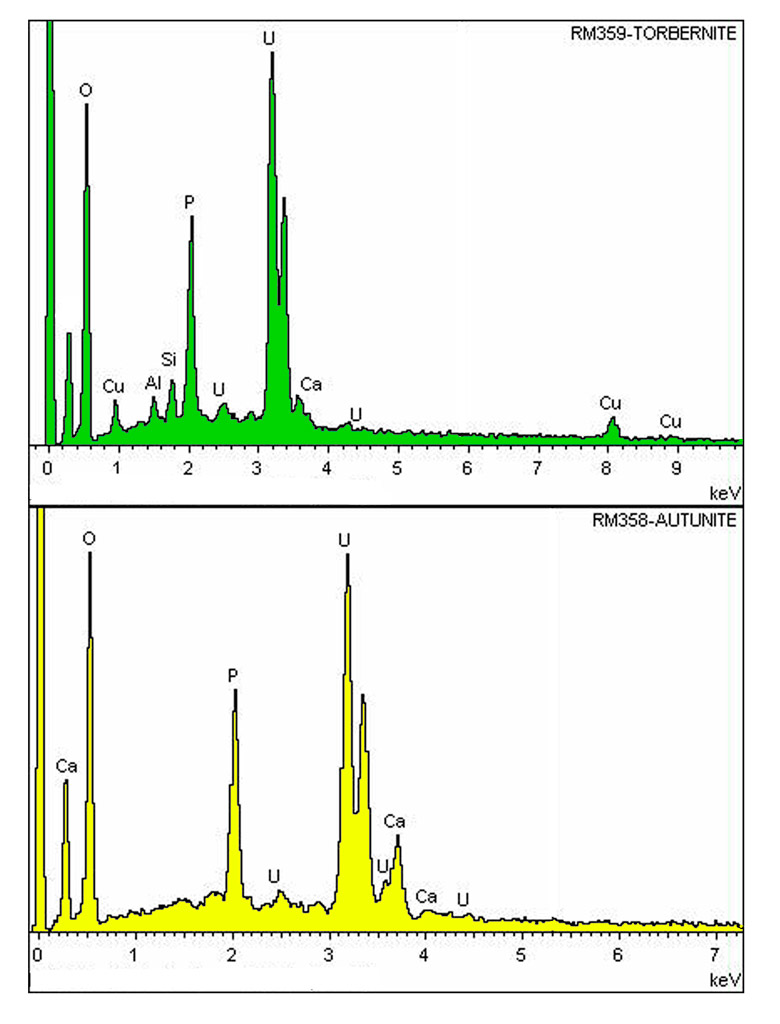
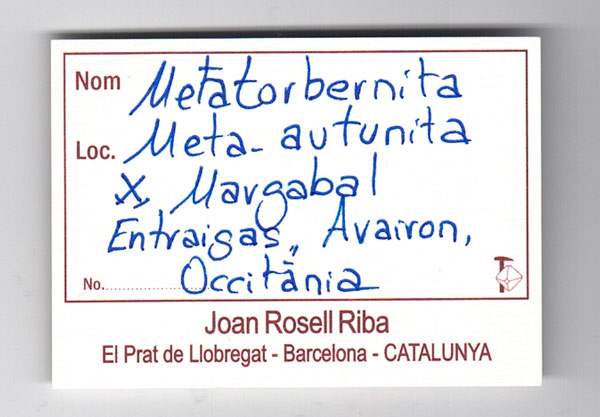
A very aesthetic specimen formed by a rich group of metatorbernite crystals. They present polysynthetic and echeloned growth of well-defined tetragonal crystals, with the characteristic green color. Under LW-UV we can observe the presence of a greenish-yellow fluorescence that indicates the presence of other species. SEM-EDS analysis have characterized this species as meta-autunite. We can say that the metatorbernite species is replacing the meta-autunite, as we can observe as a color gradation in some tabular crystals or in fresh fracture. We will send analysis to the buyer. This specimen come from late 90's finds in this classic French mine. Excol. A. Pouget, Excol Joan Rosell. The piece has a treatment that has kept it intact until today.
Both, meta-autunite and metatorbernite, are dehydrated phases of the autunite and torbernite. The loss of water molecules, those are present in the crystal structure of these species, is a common fact when the specimen is extracted from the mine.
Entraigas (Antraigas), Rodés, Avairon, Occitània, Entraigas, Rodés, Avairon, Occitània, França


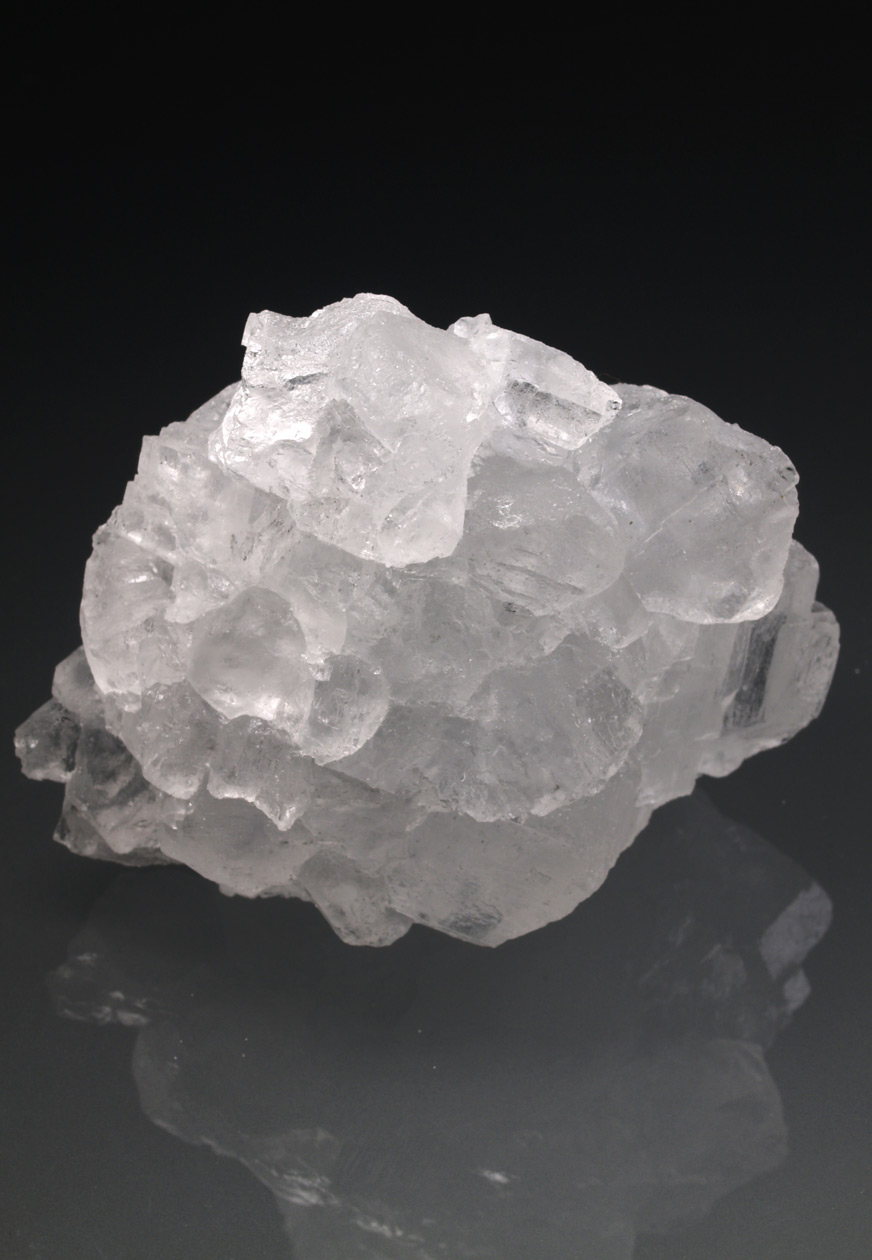
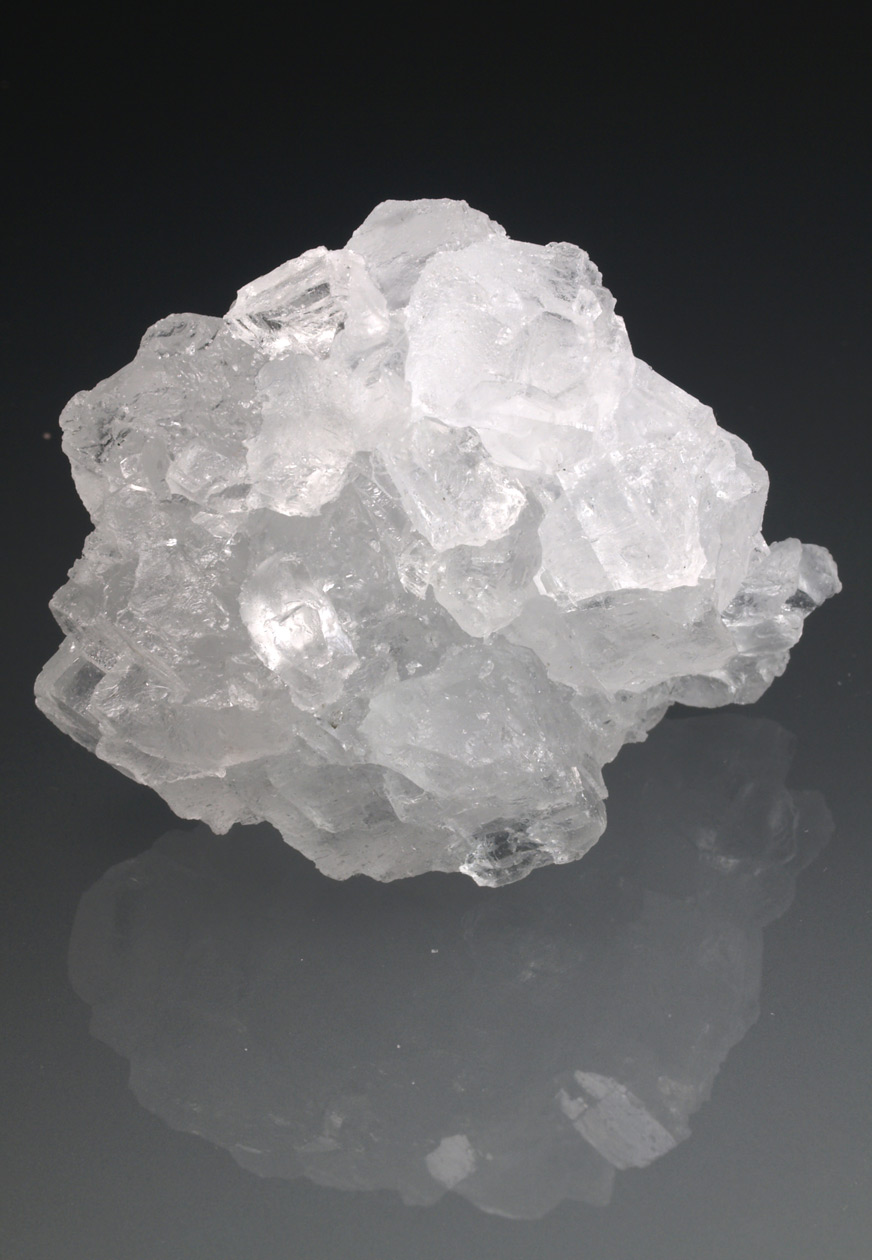
Sylvite crystalline aggregate, colorless, transparent and shiny. Specimens of such pure sylvite are not easy to find. This comes from the potassium salt works of the Catalonia basin. Analyzed samples.
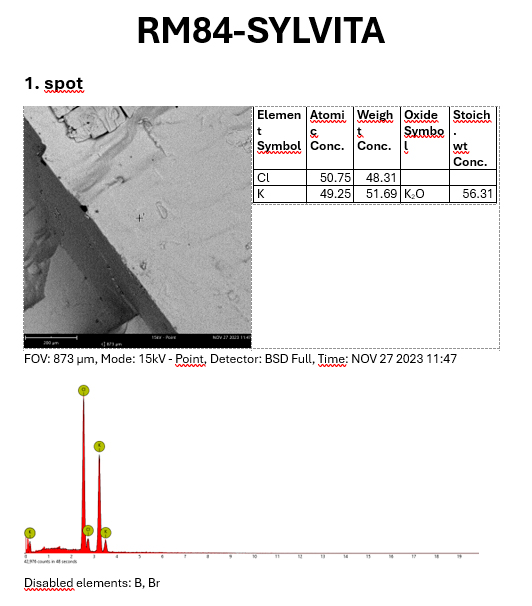
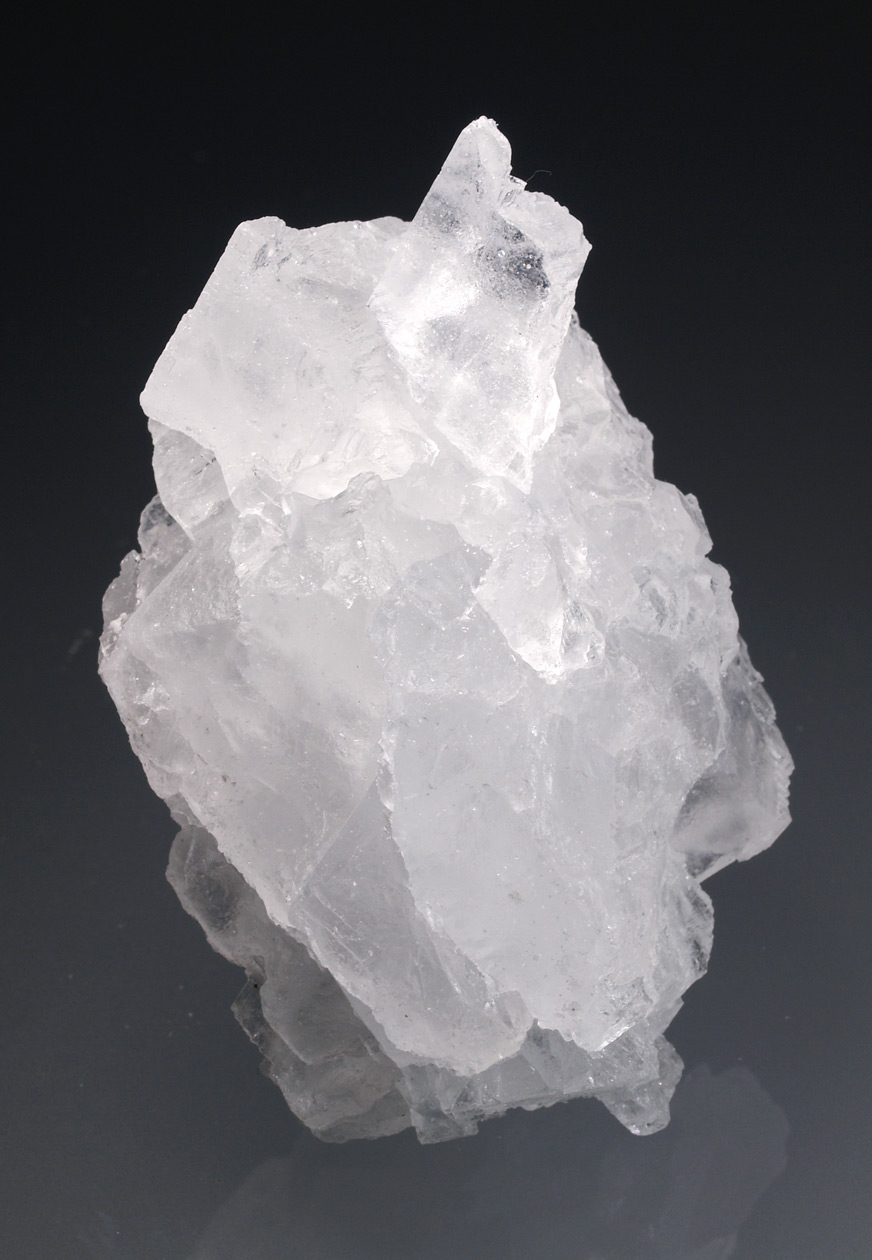
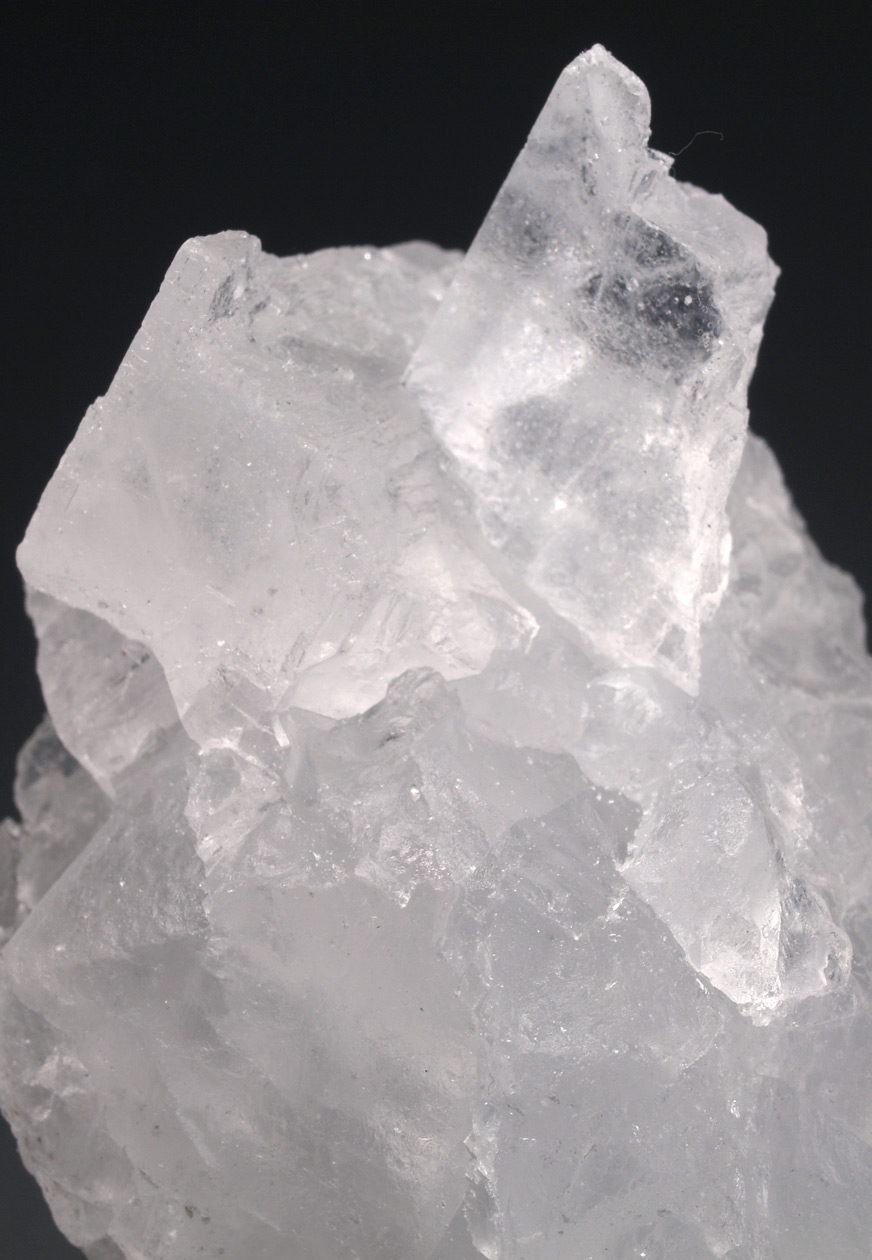
Sylvite crystalline aggregate, colorless, transparent and shiny. Specimens of such pure sylvite are not easy to find. This comes from the potassium salt works of the Catalonia basin. Analyzed samples.
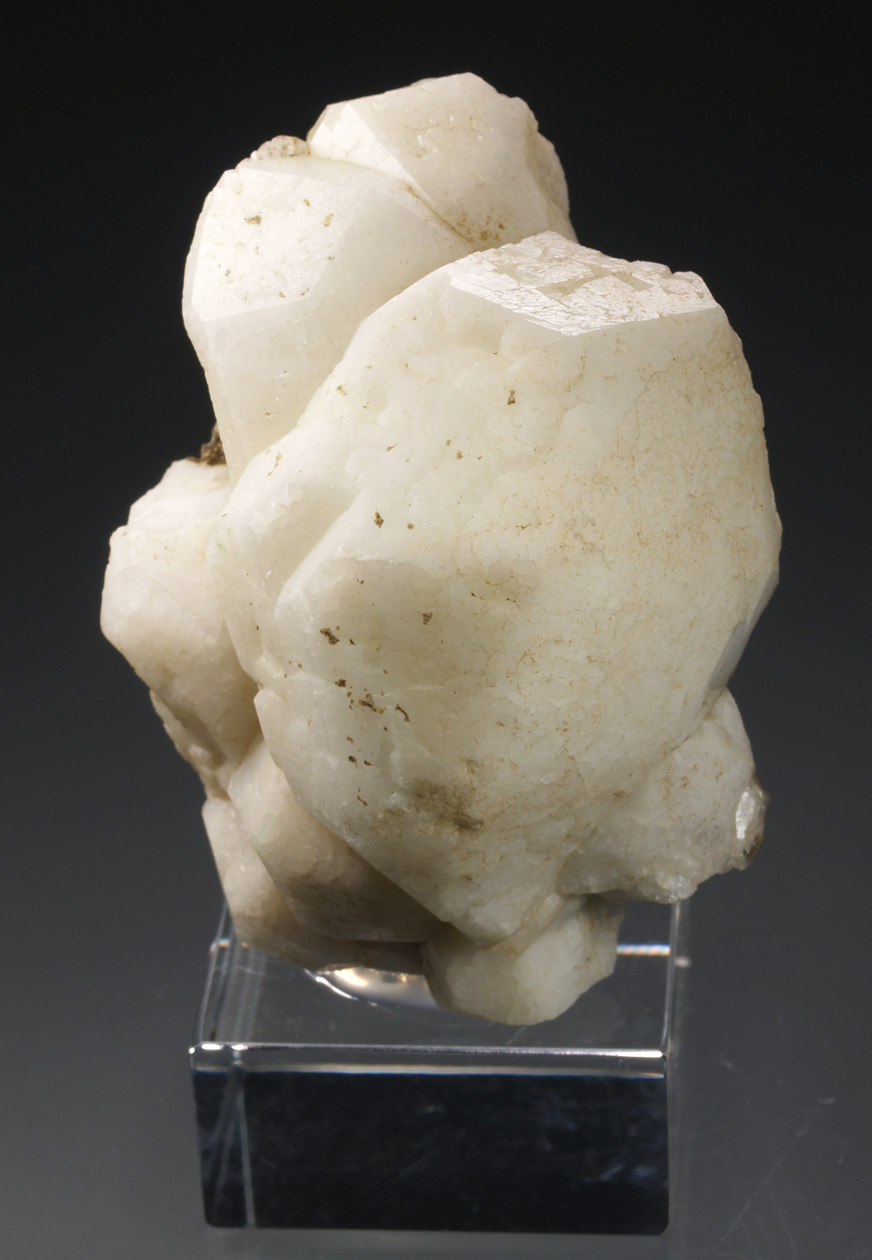
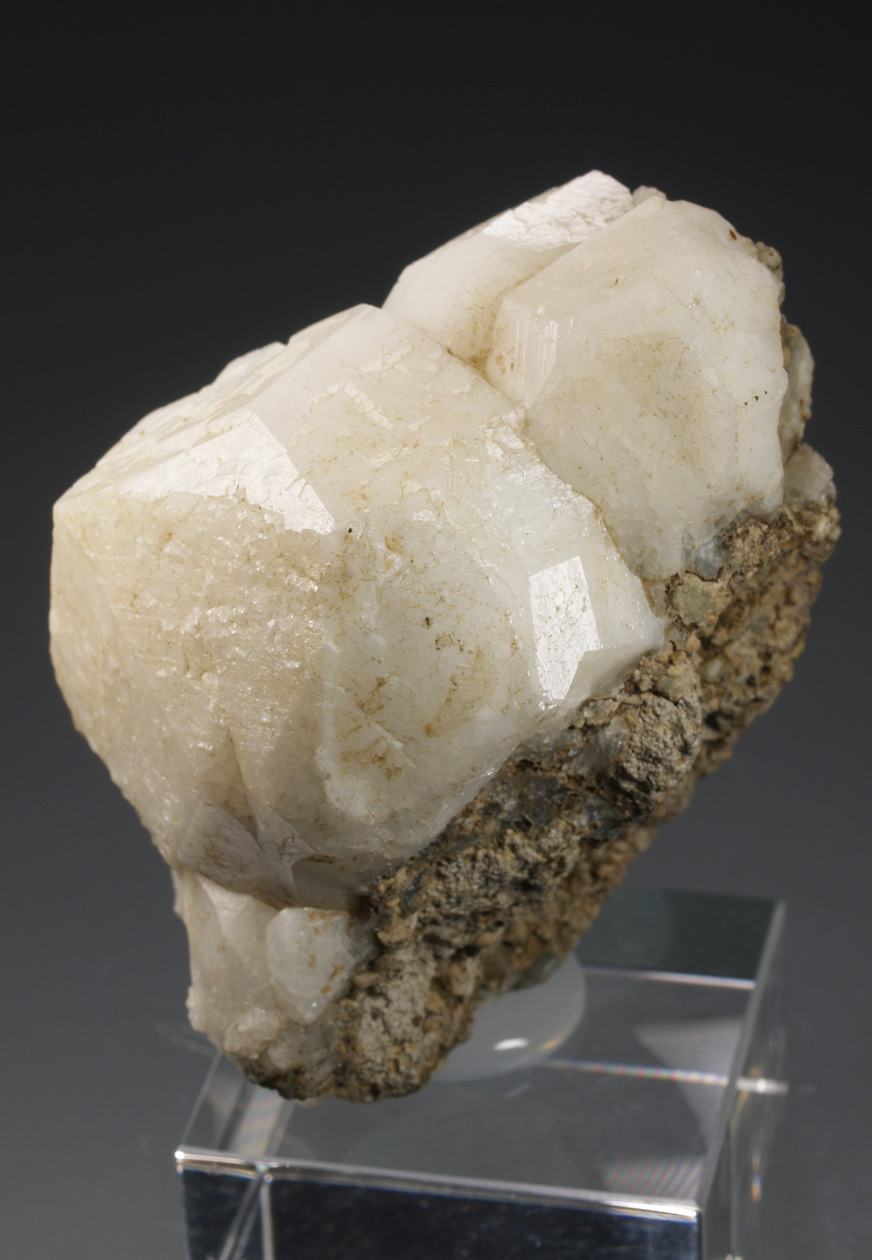
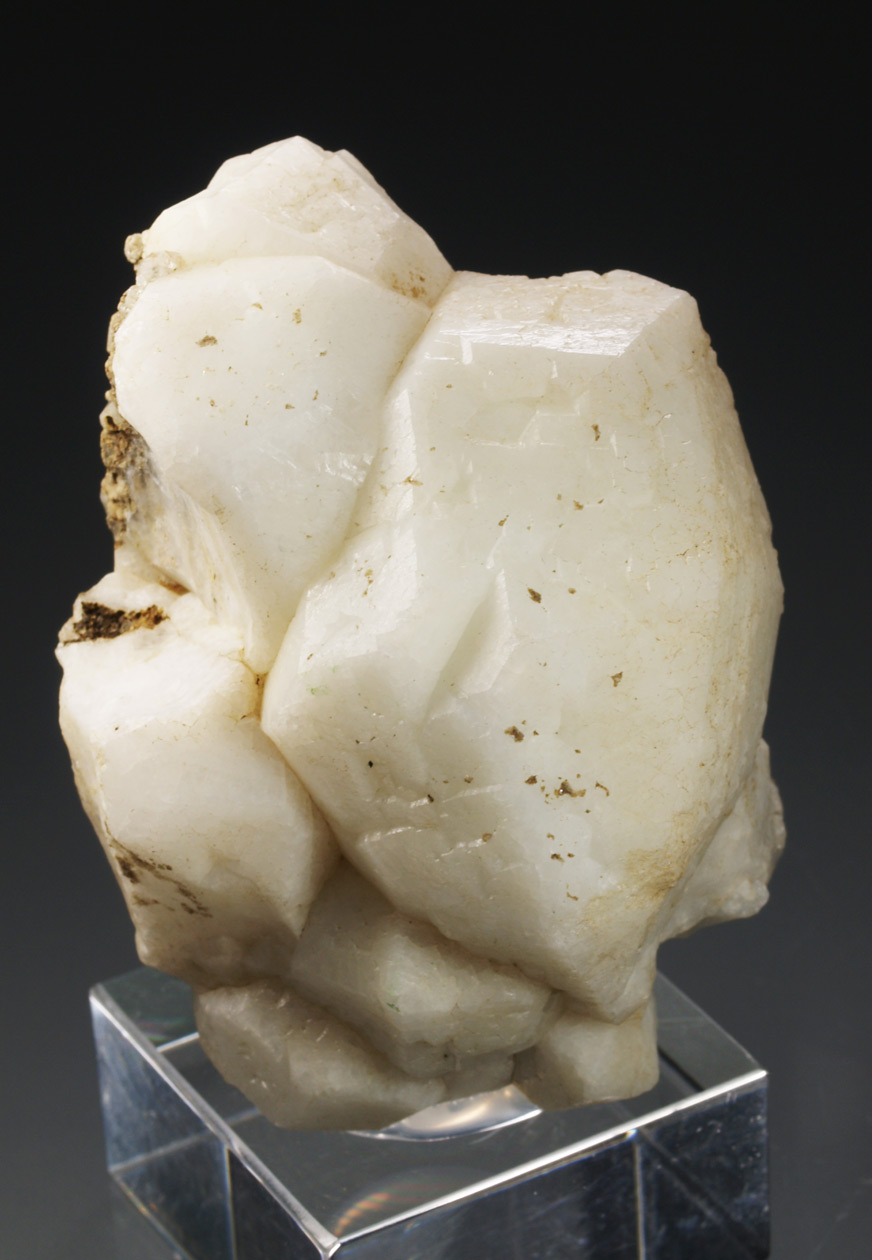
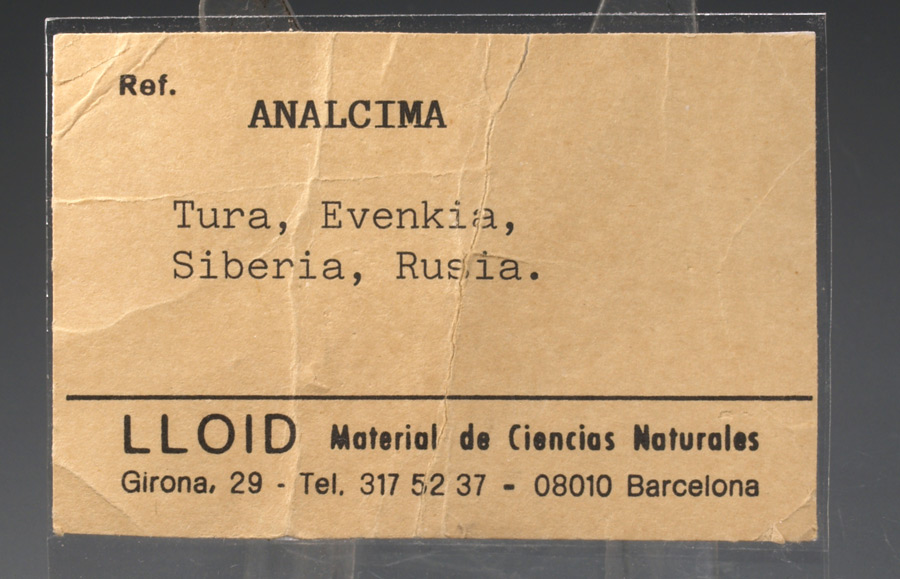
Group of analcime crystals, with exceptional size, defined and faceted, with slightly curved edges. With small matrix of volcanic rock. These pieces are very old and difficult to find today. The piece is accompanied by a Marçal Lloria label, by Lloid.
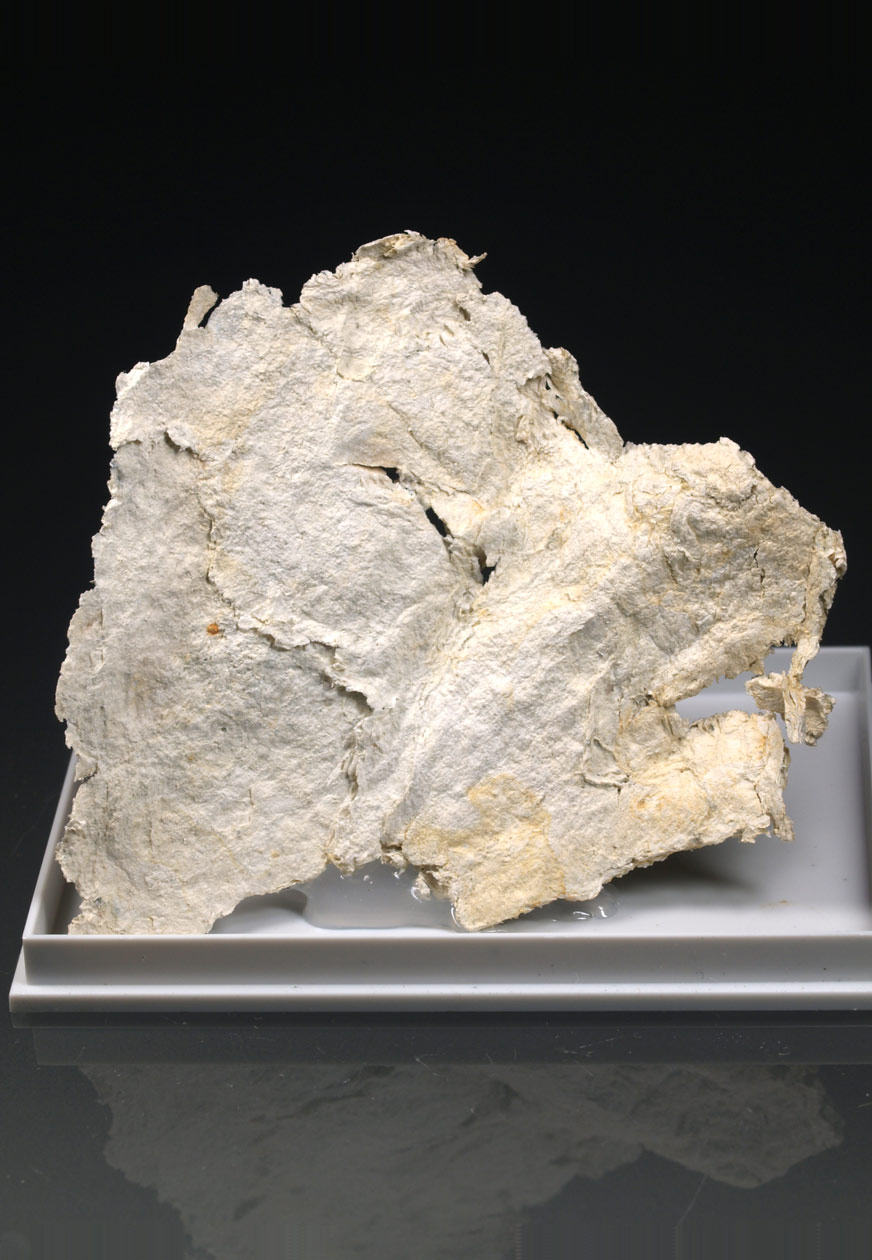
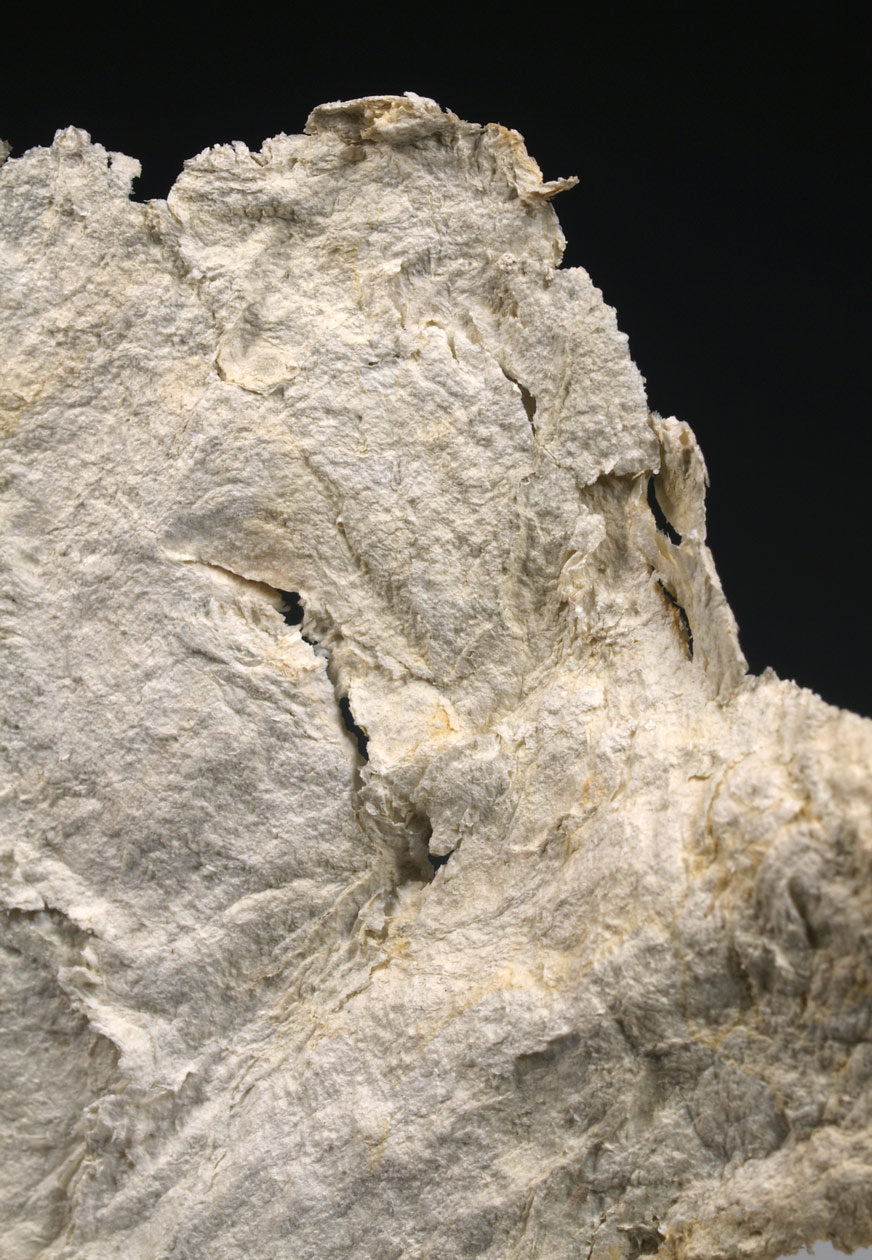
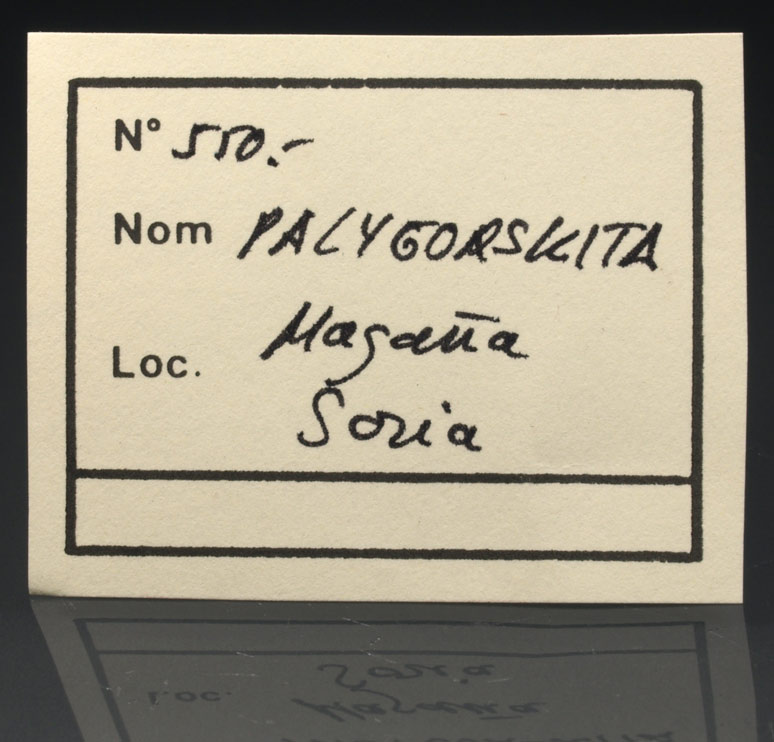
Sheet of palygorskite, fibrous, laminated, delicate and at the same time resistant, silky and soft, like no other mineral species. It comes from the Magaña area, in Soria, and was acquired by Emili Nicolau from Joan Viñals in 1999. A Spanish curiosity.
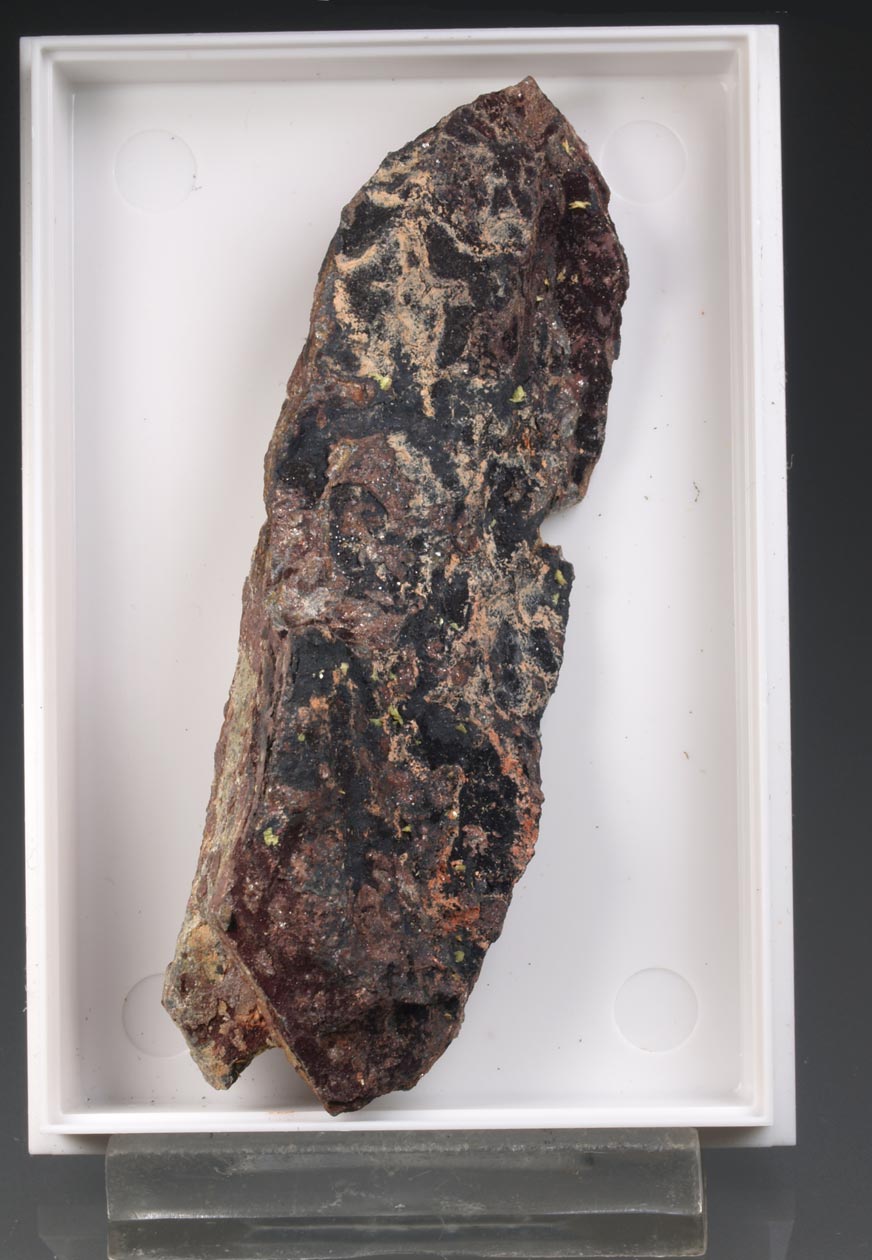
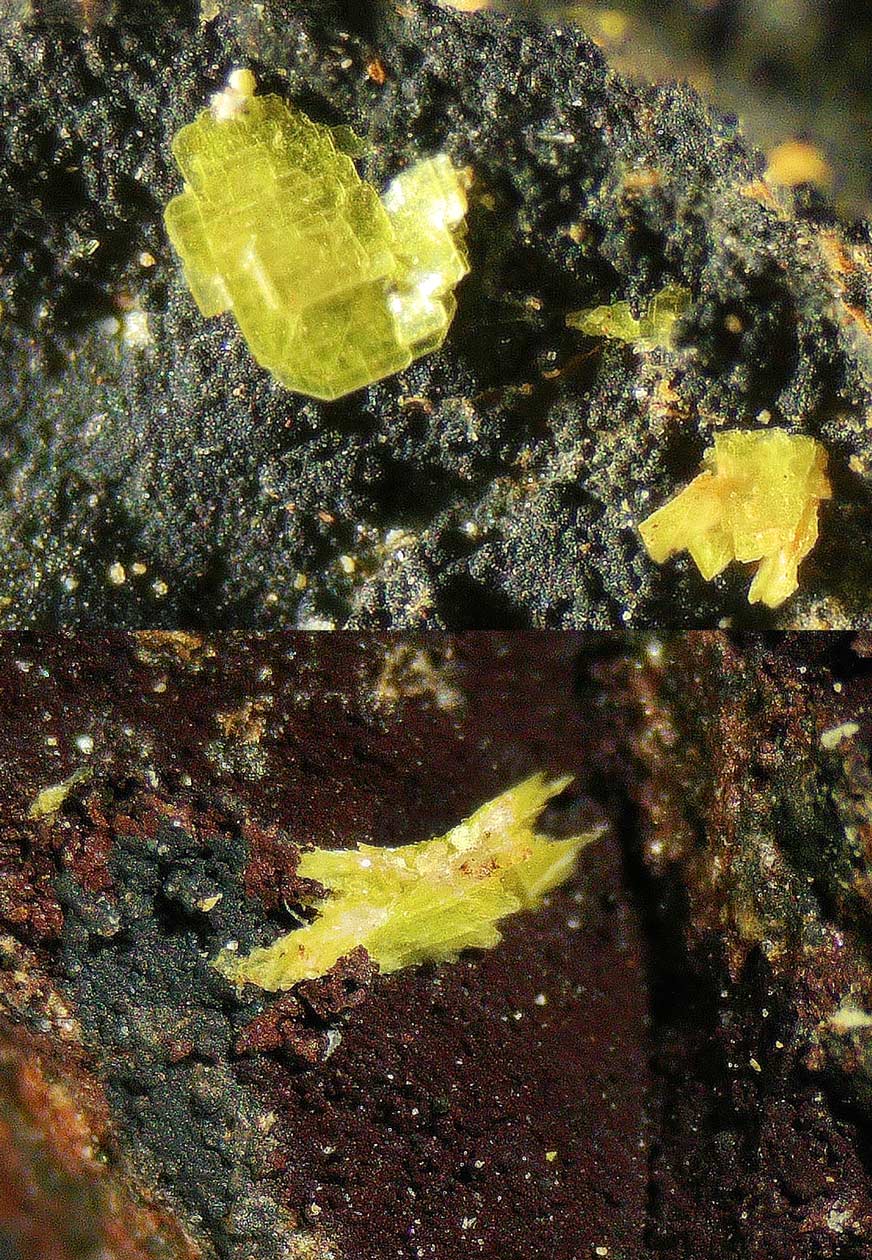
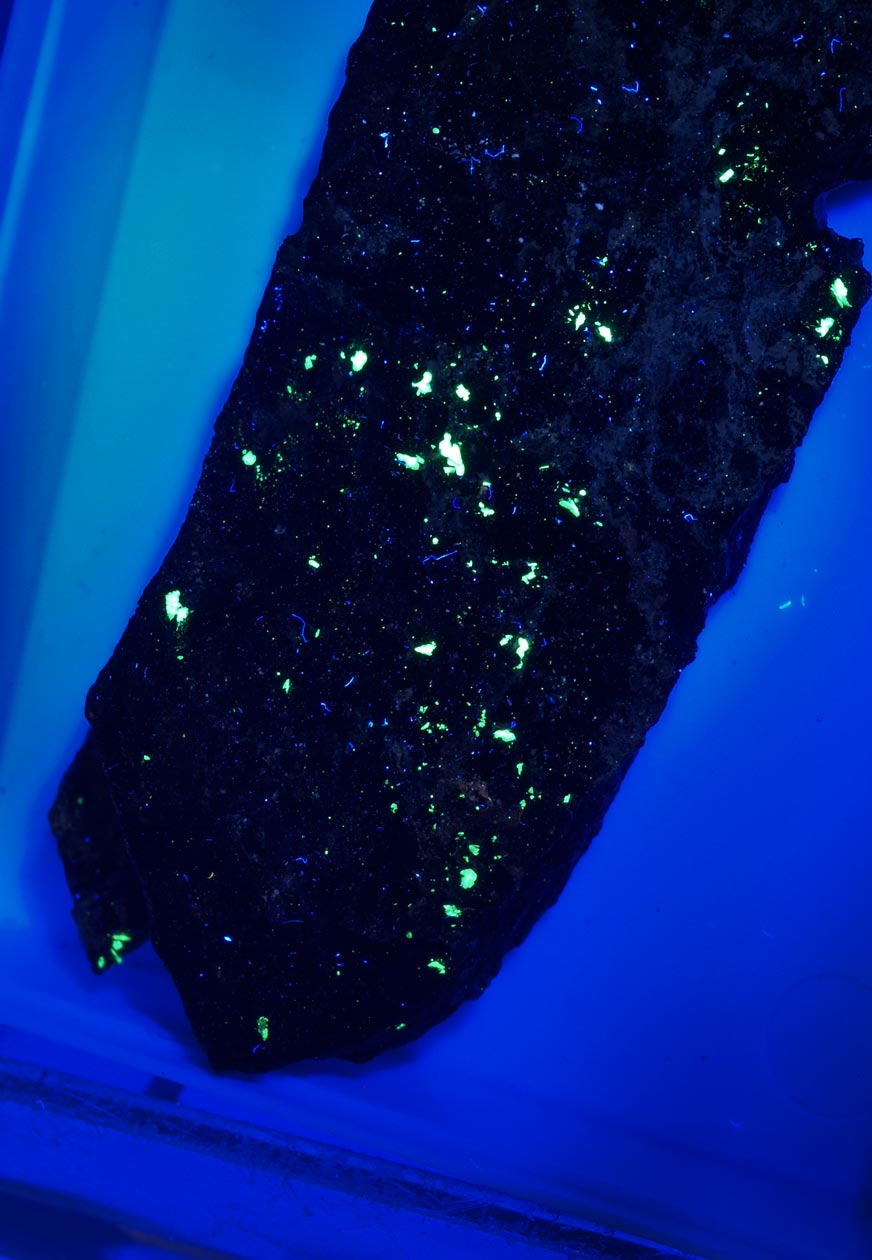
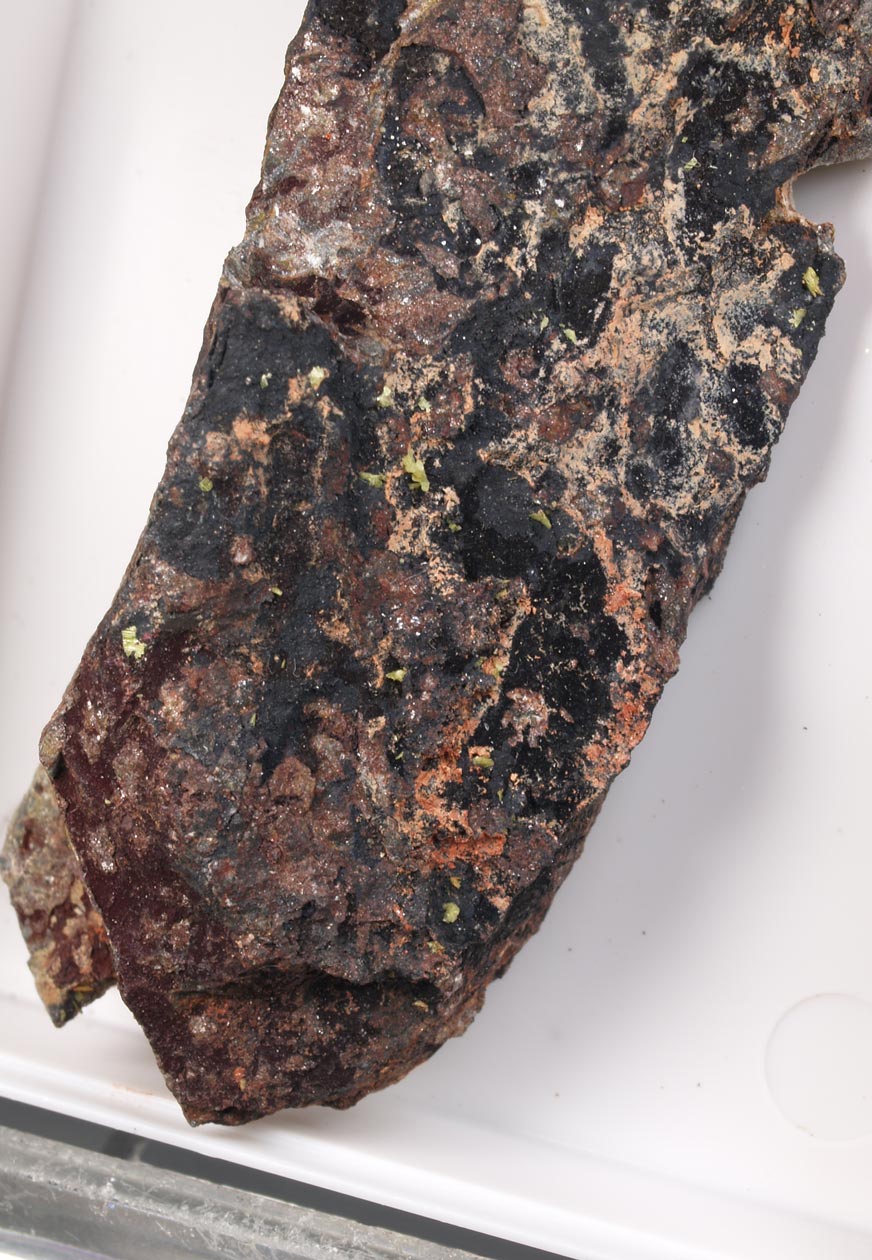
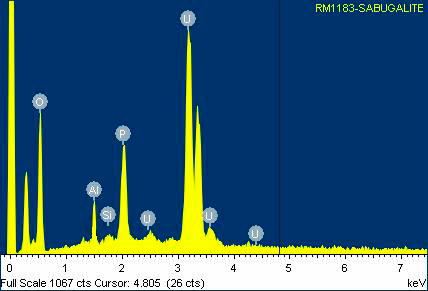
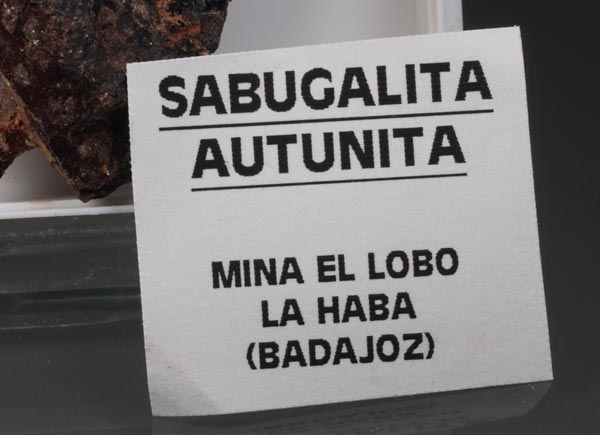
Aggregates of greenish-yellow autunite crystals along with sheets of creamy yellow sabugalite. A classic of radioactive minerals from Spain. With Manuel de Torres label.
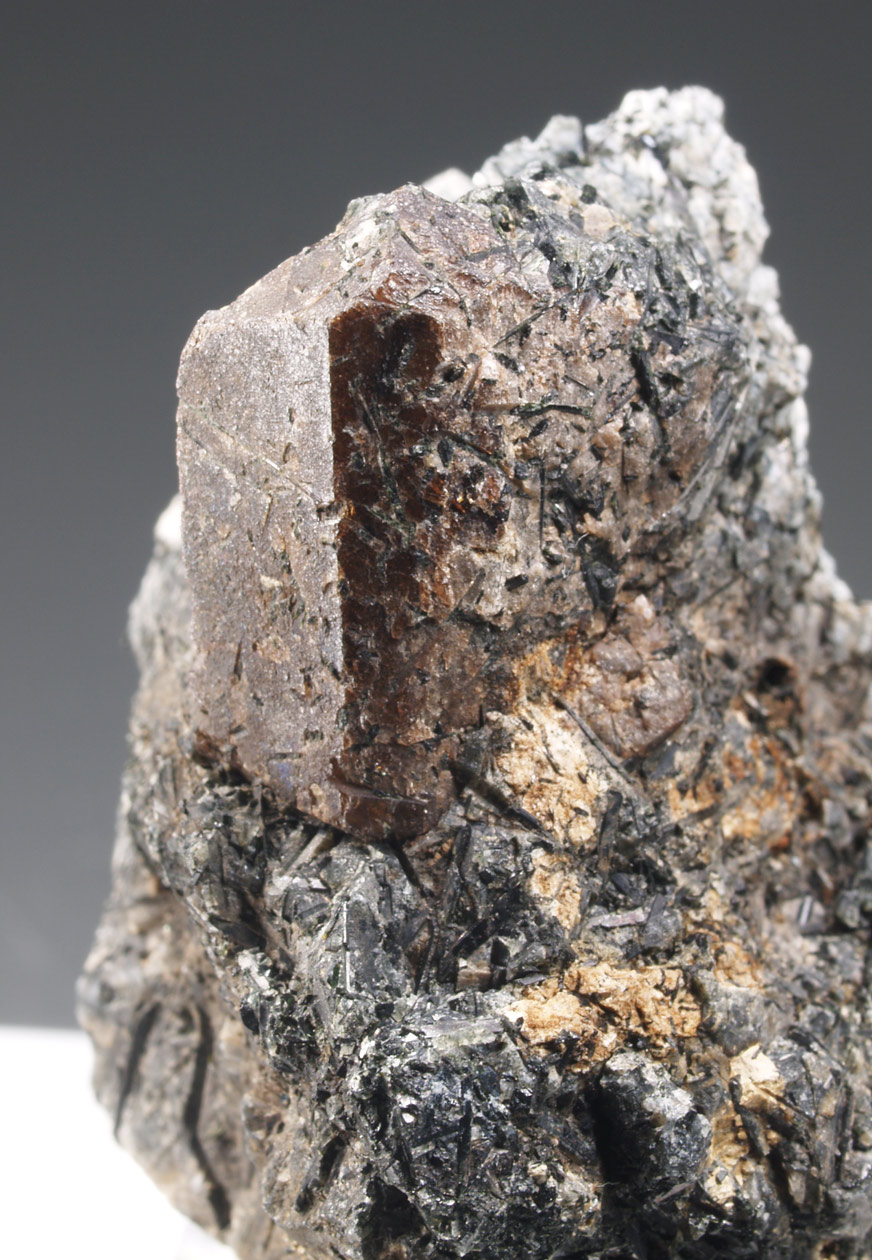
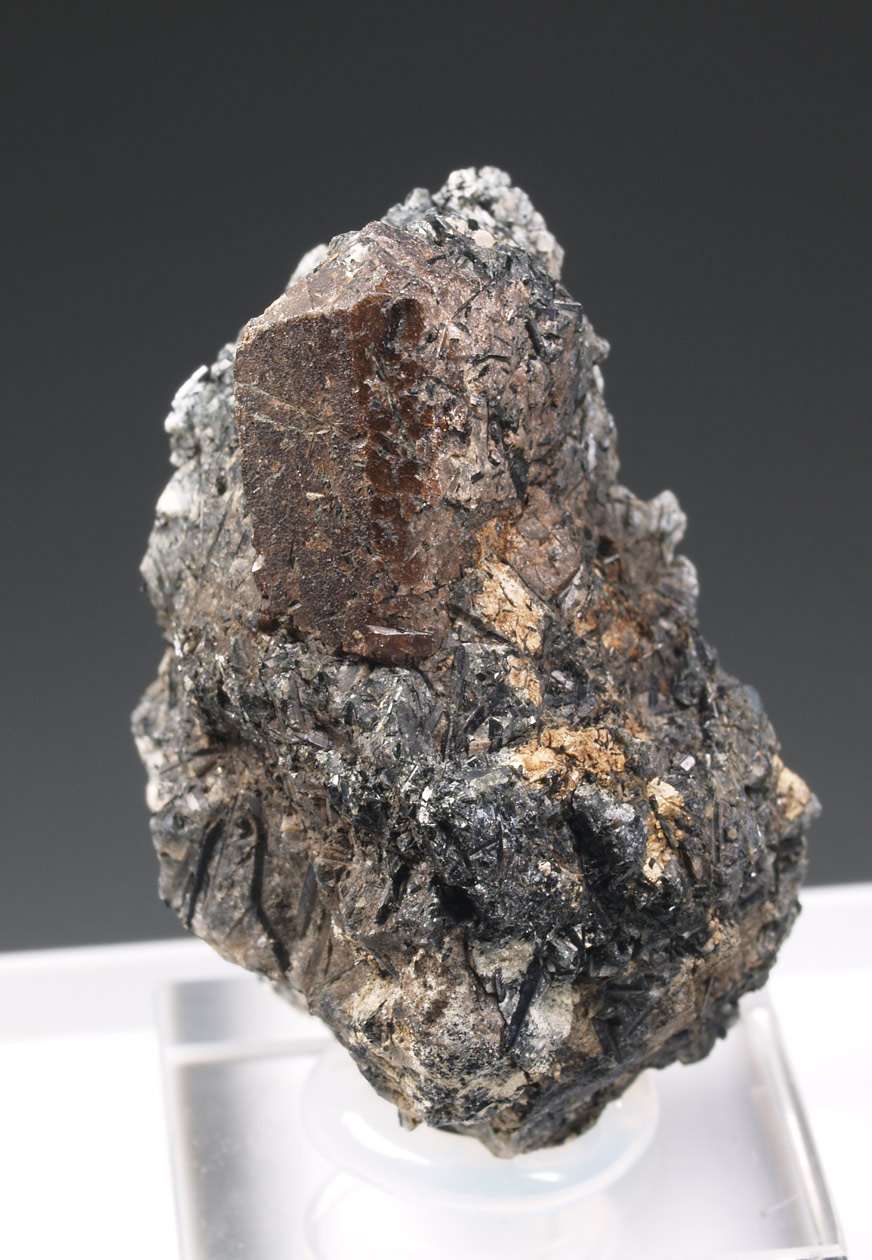
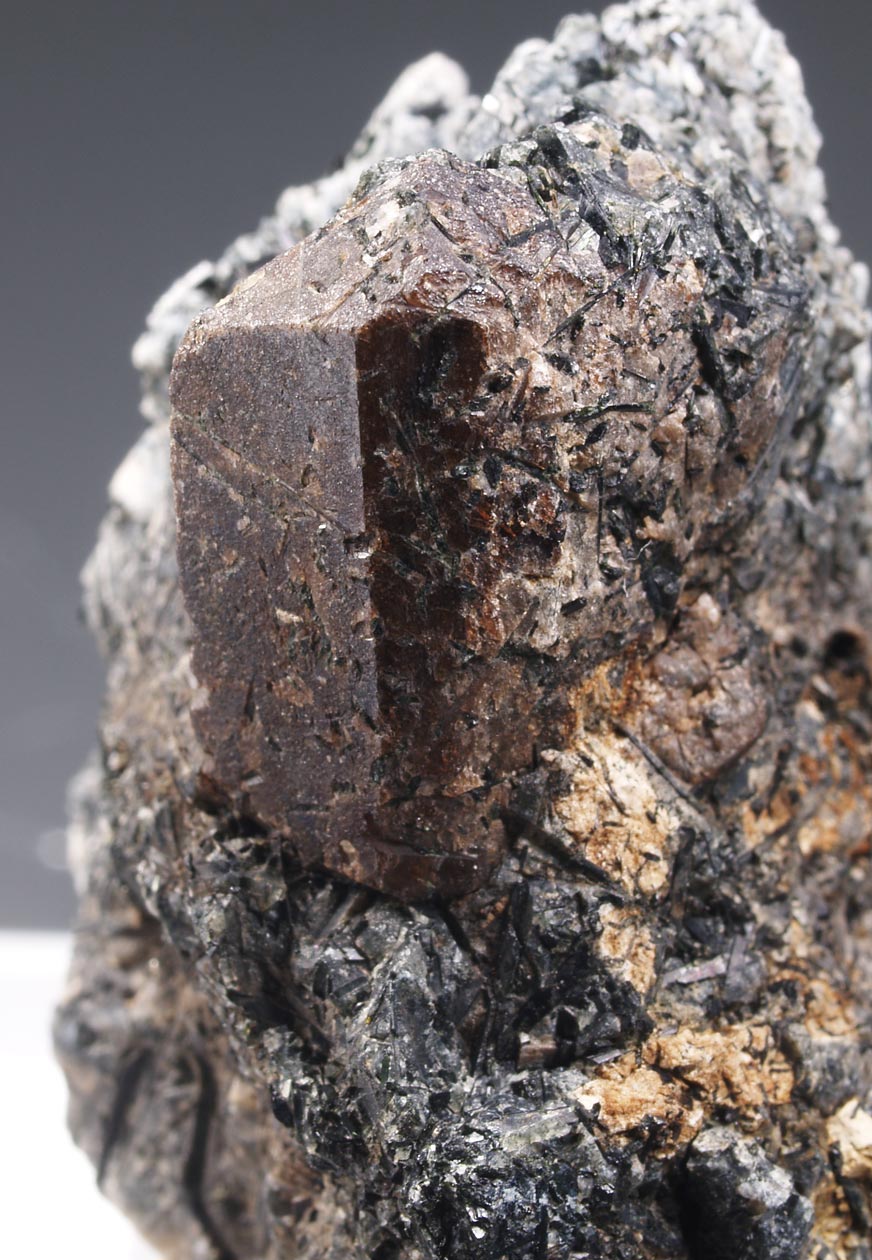
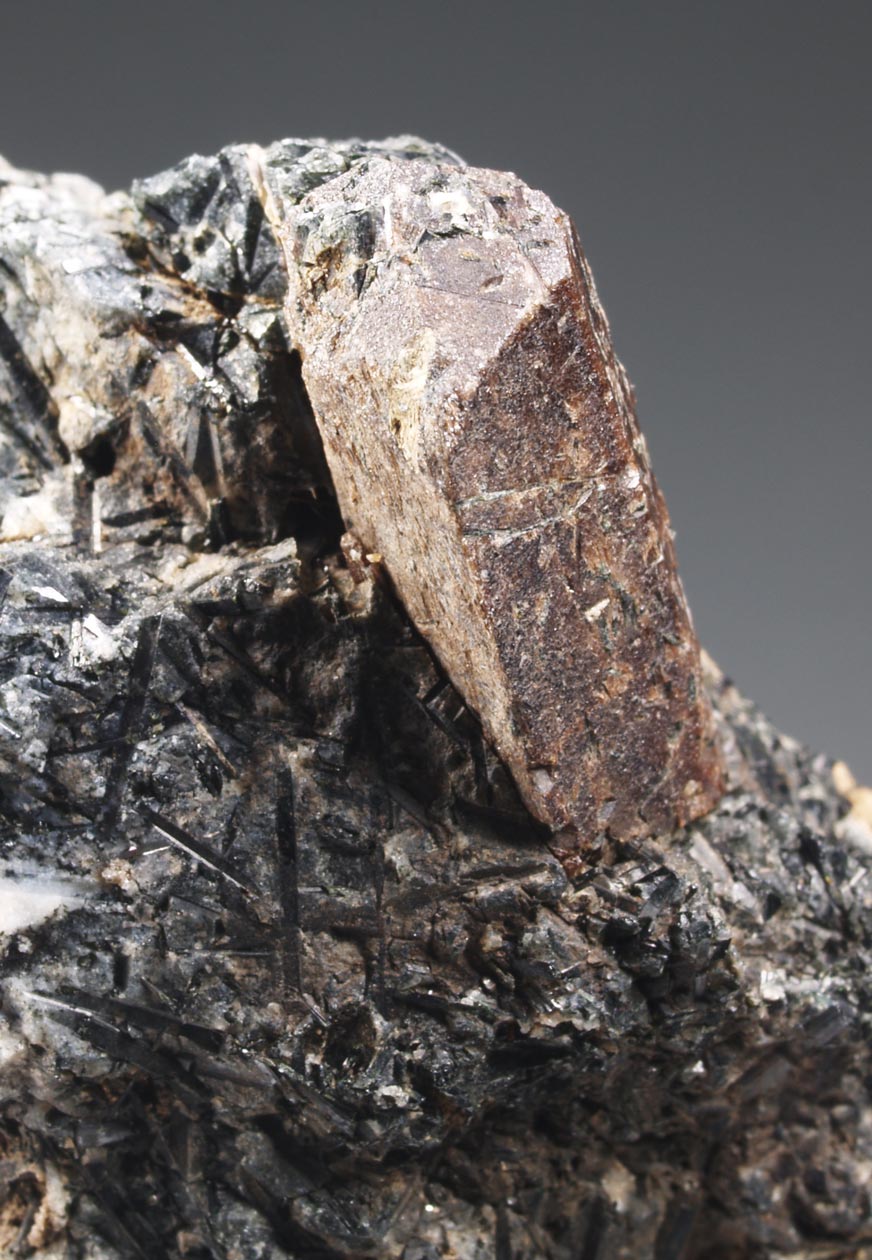
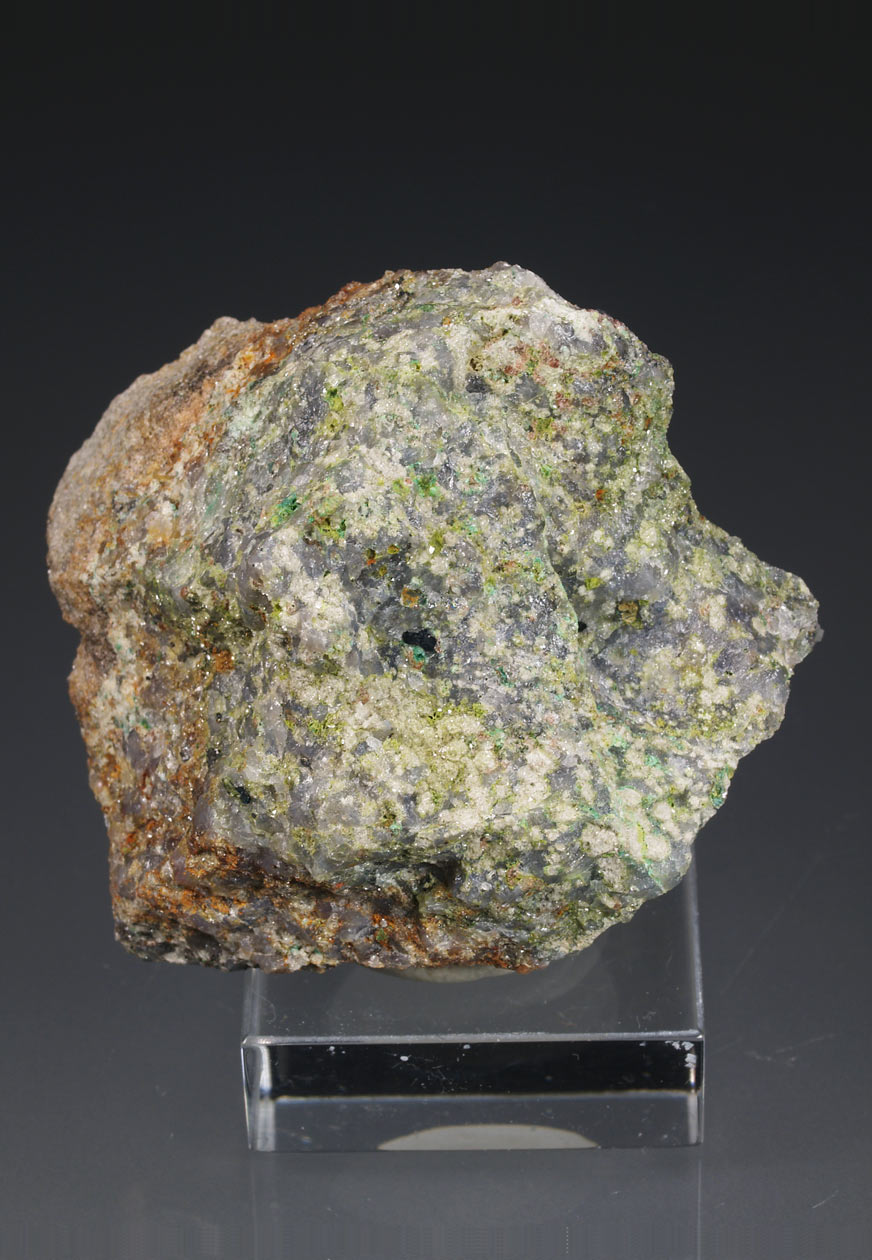
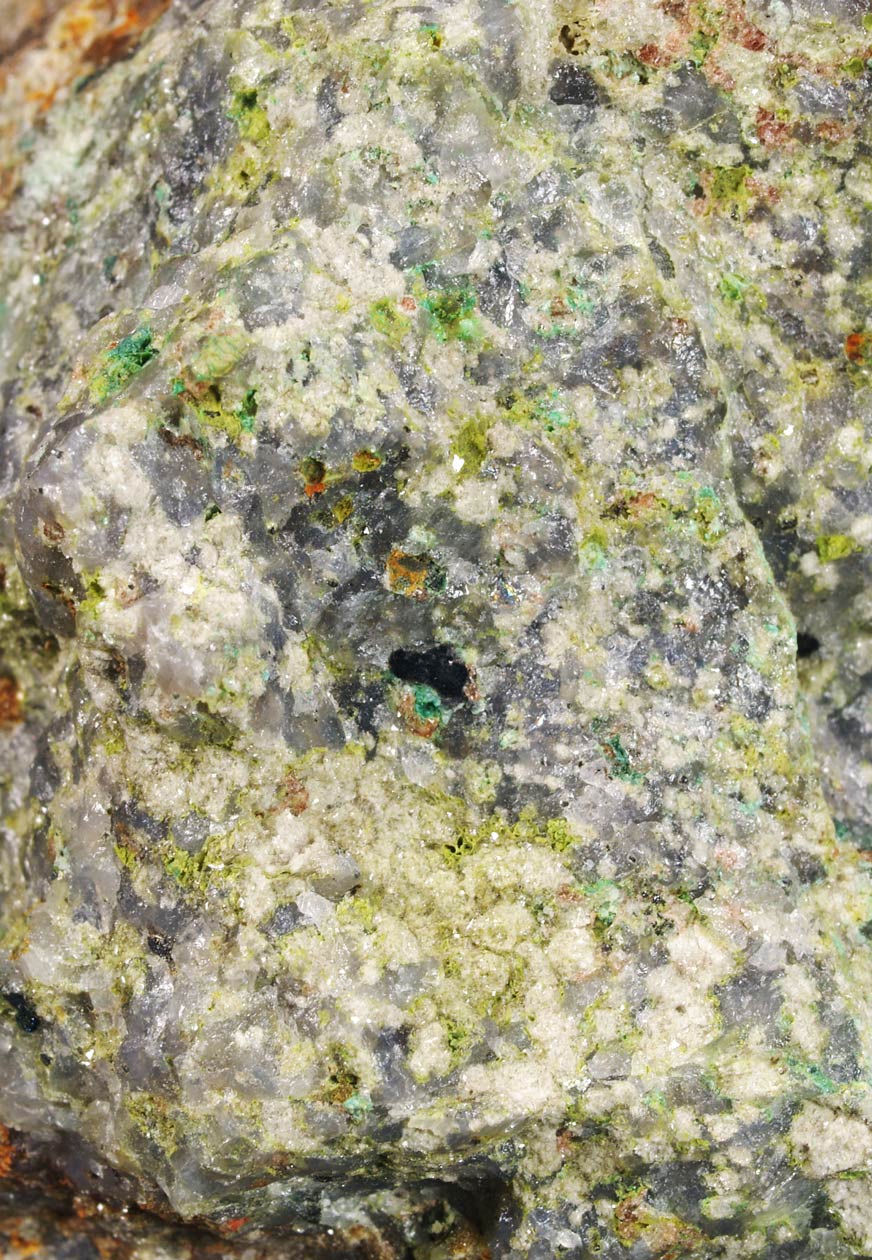
Lorenzenite is a rare sodium titanium silicate found in nepheline pegmatites and syenites. In this specimen we can see a good-sized brown crystal, shiny, defined and arranged aerially on the matrix. With aegirine needle inclusions.
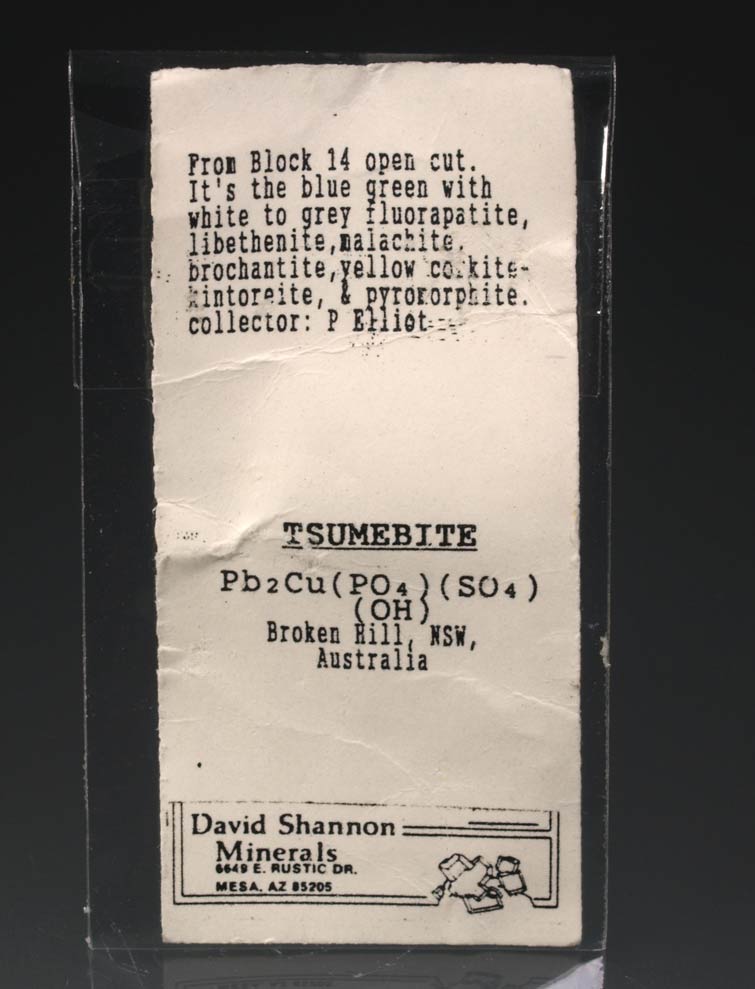
A very interesting rarity featuring blue-green tsumebite Pb₂Cu(PO₄)(SO₄)(OH) associated with yellow tsumcorite PbZn₂(AsO₄)₂·2H₂O and yellow-green corkite PbFe₃(PO₄)(SO₄)(OH)₆, from the famous locality at Broken Hill, New South Wales, Australia. This piece comes from the collection of Emili Nicolau (Barcelona) and was purchased to David Shannon.
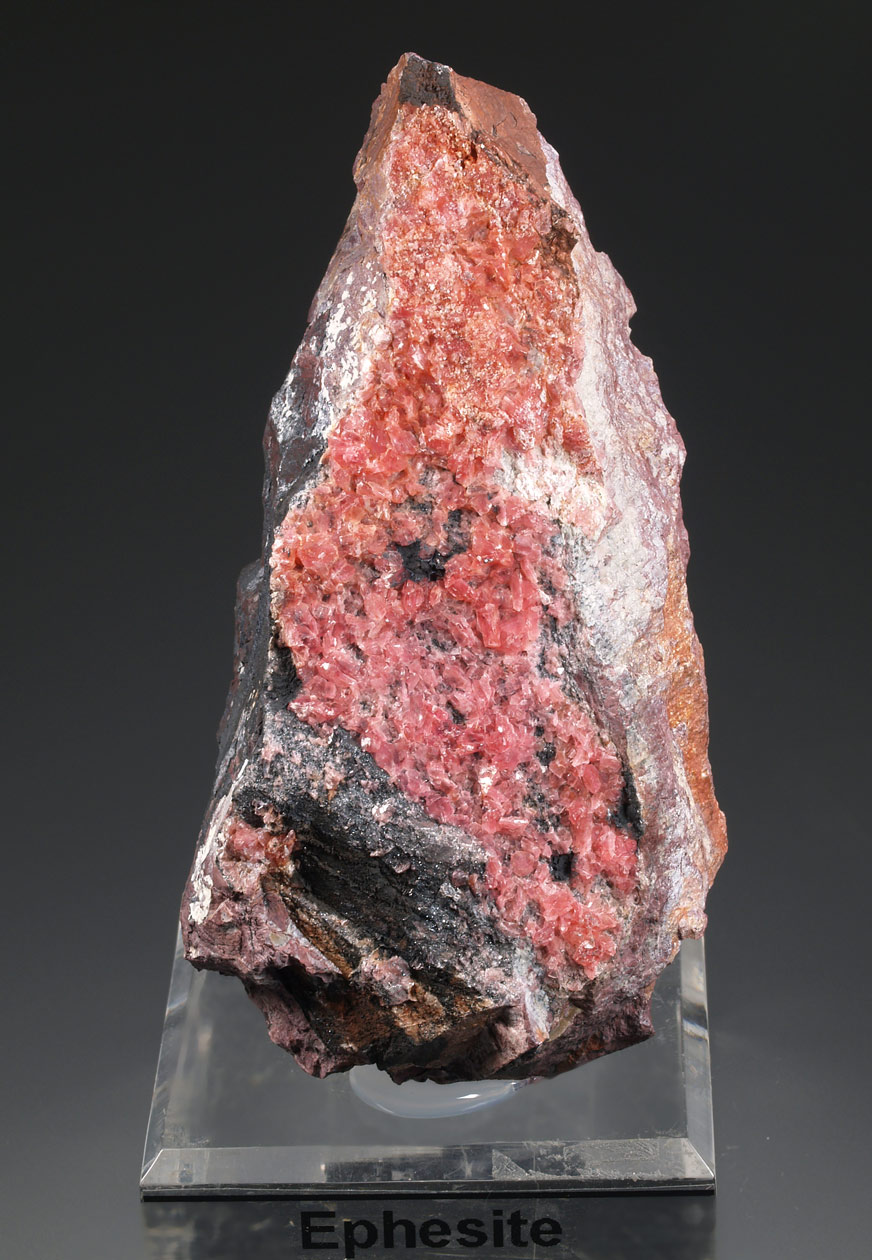
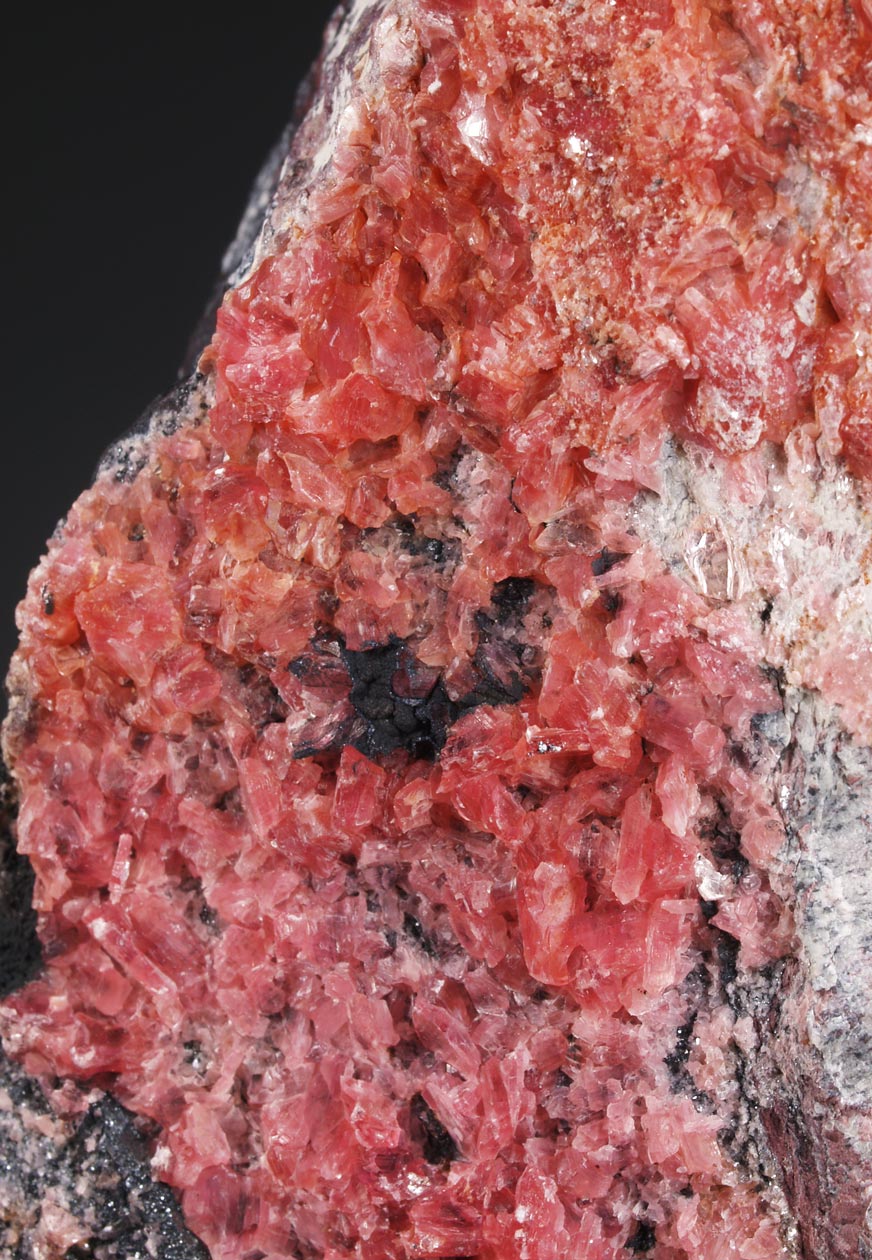
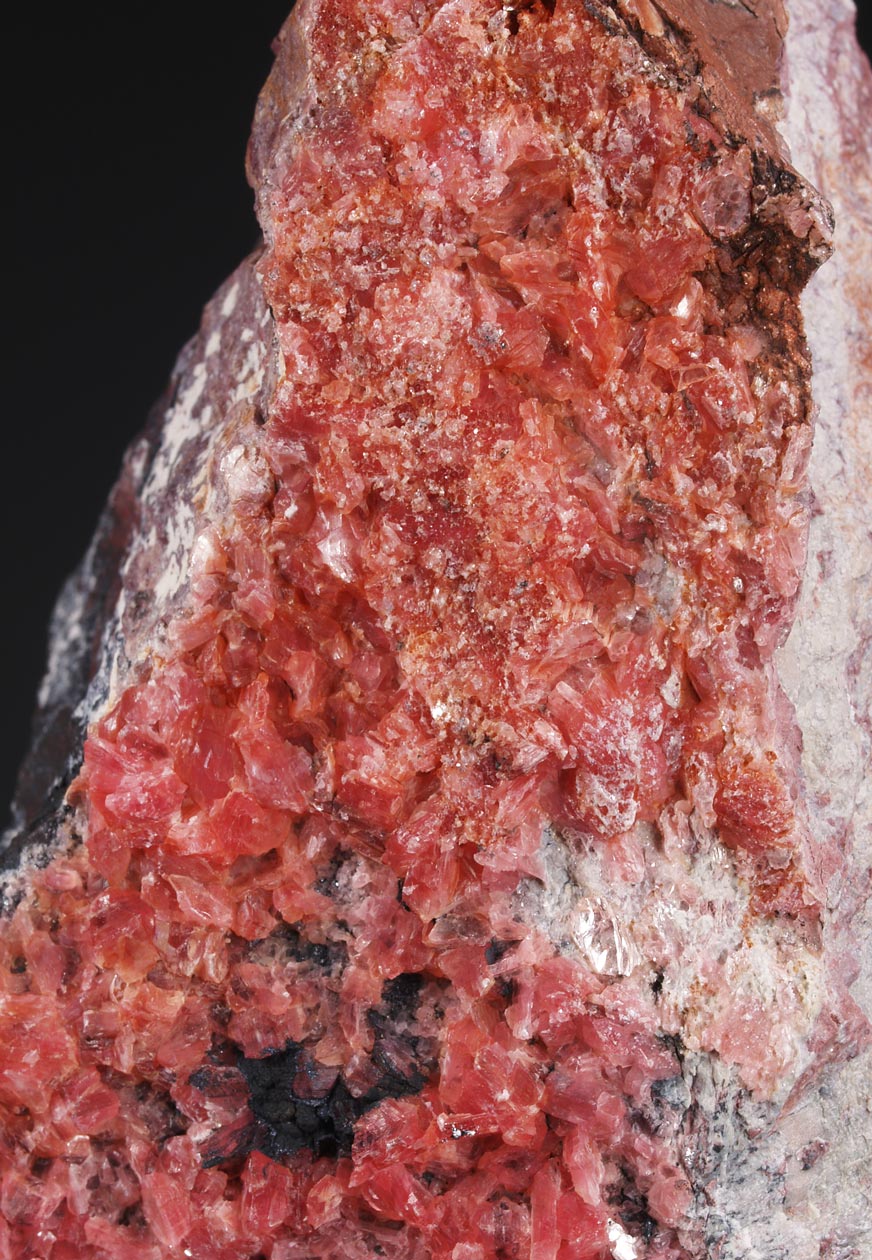
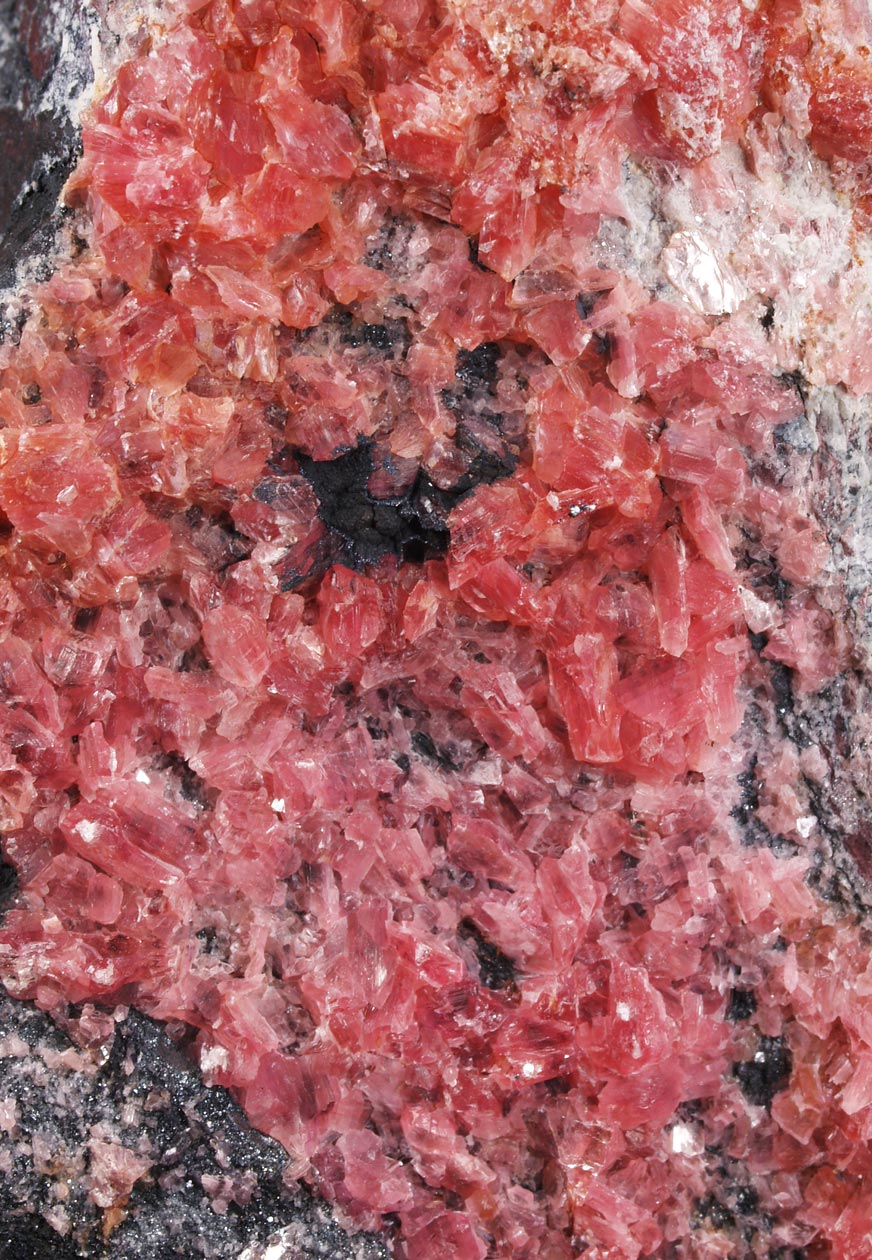
Very aesthetic lustrous and translucent crystals of this rare lithium-rich red mica, ephesite. This specimen, from the famous Postmasburg finds on a farm in the early 1980s, shows tabular micaceous shape, showing the classic hexagonal cross-section of mica. Translucent to transparent, excellent color. A good representative for the species.
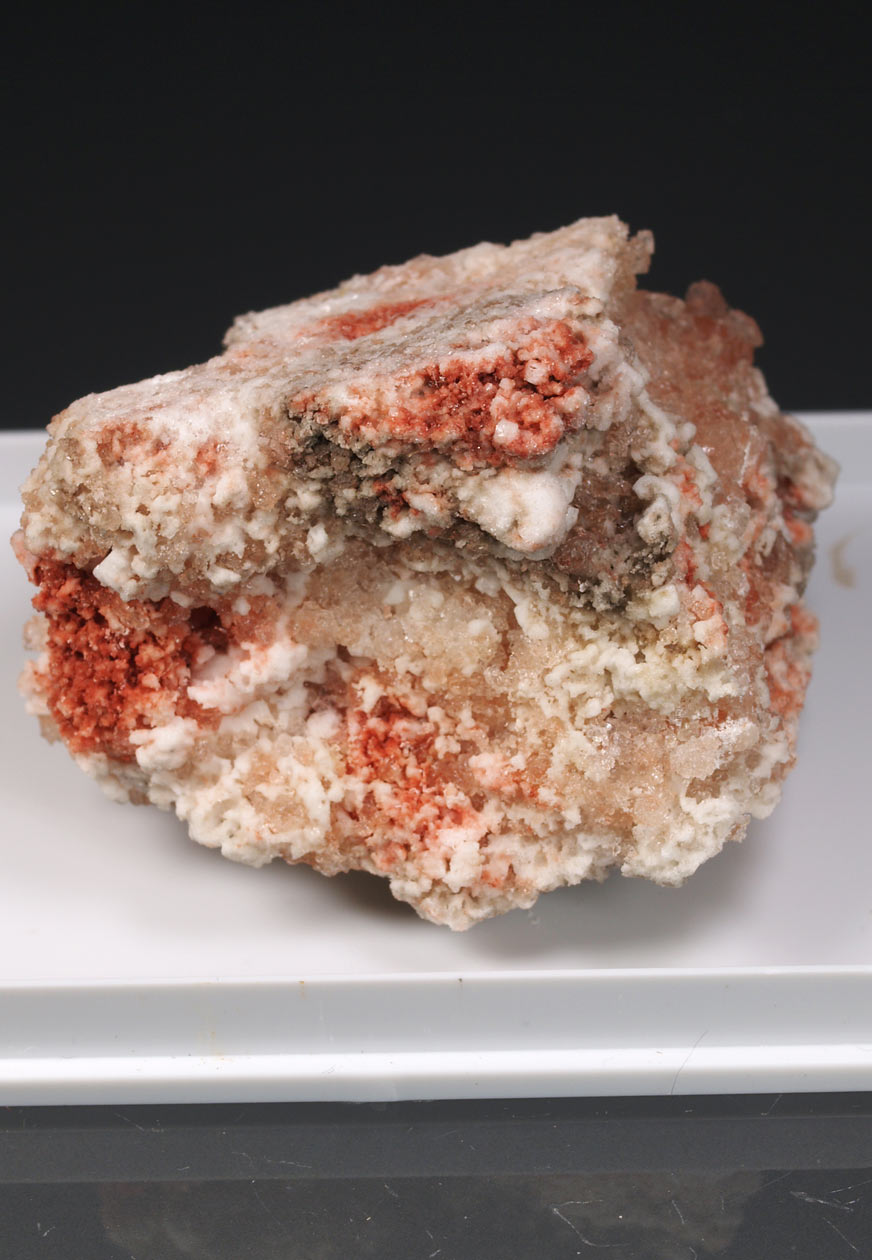
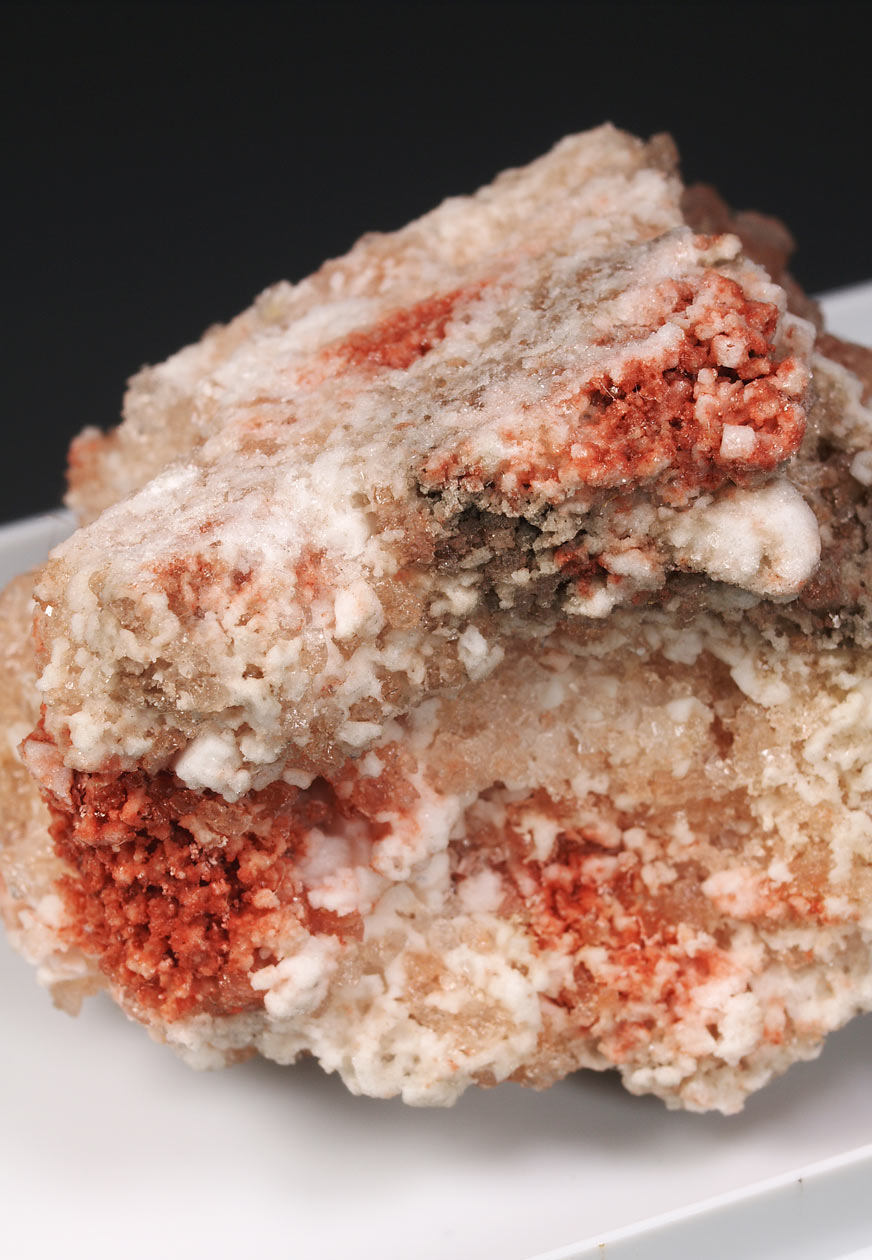
In this specimen we can observe white massive-crystalline aggregates of picromerite K₂Mg(SO₄)₂·6H₂O, along with colourless halite, with iron oxides that give red colors. This is old material so nowadays, it is very difficult to find. Comes from the Nicolau collection (Barcelona).
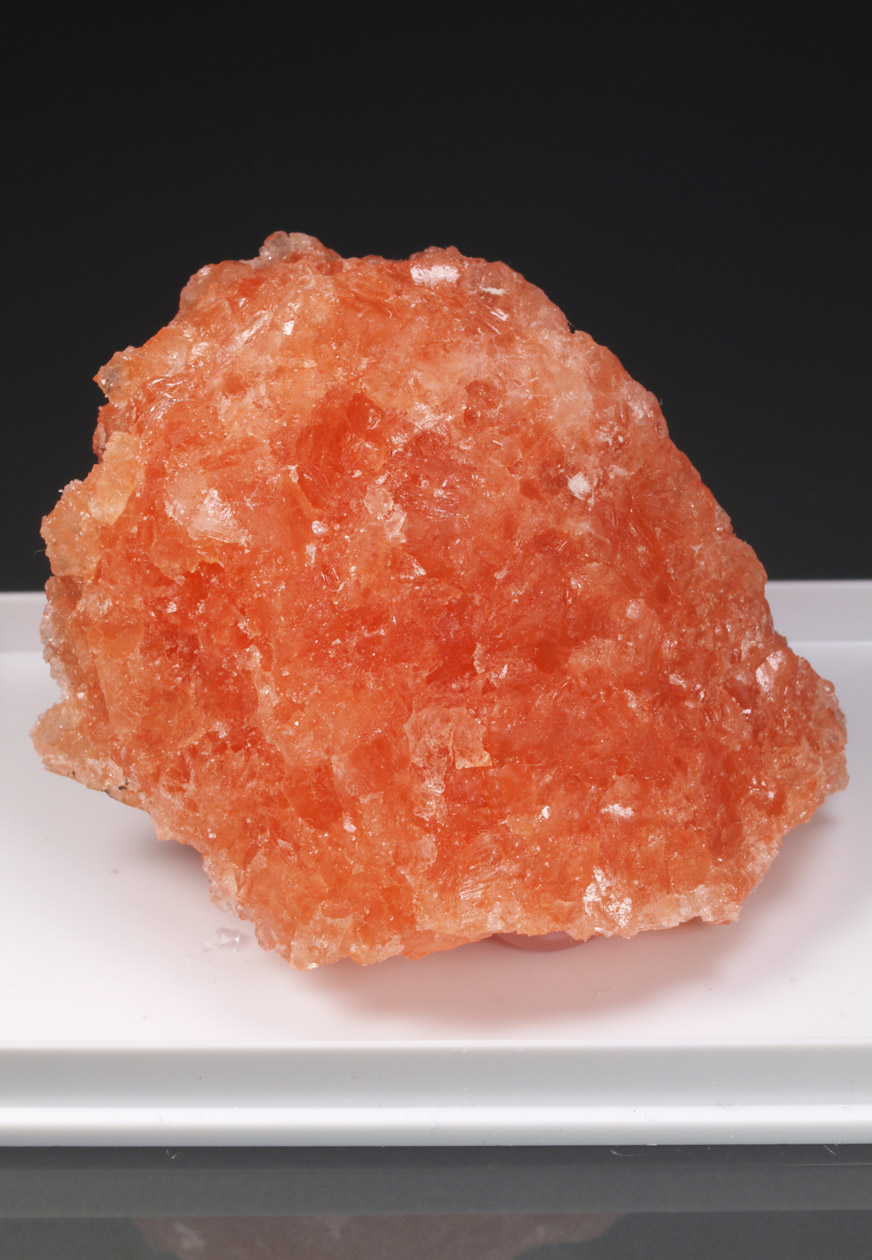
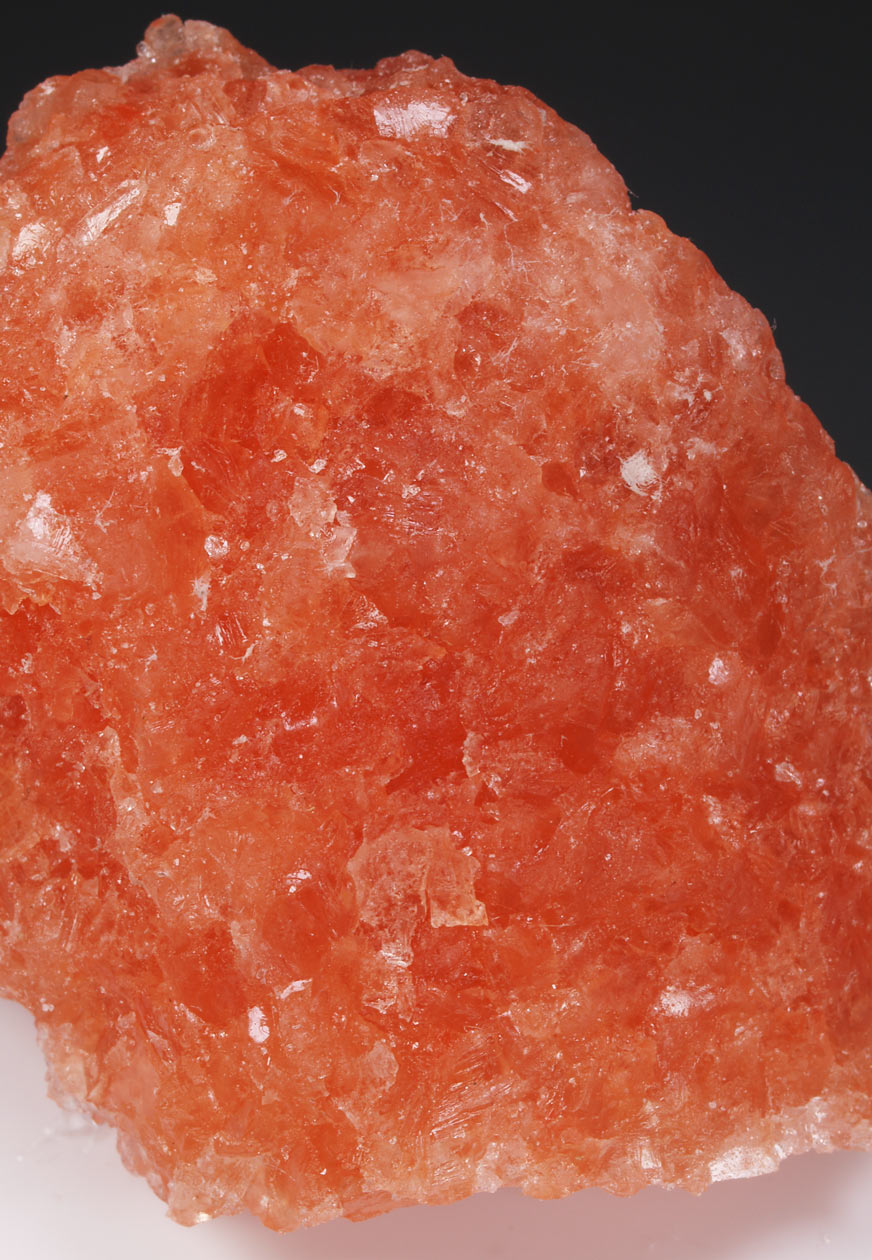
The specimens that we often see on the market as sylvite or carnallite are usually halite with inclusions of iron minerals. In this case, the specimen has been analyzed indicating that it is mainly sylvite (KCl) with some halite (NaCl) included. The red color is due to inclusions of iron oxydes (hematite). Although it is a salt long exploited in these mines in the Catalan potassium basin, it is a mineral that is sometimes missing from collections.
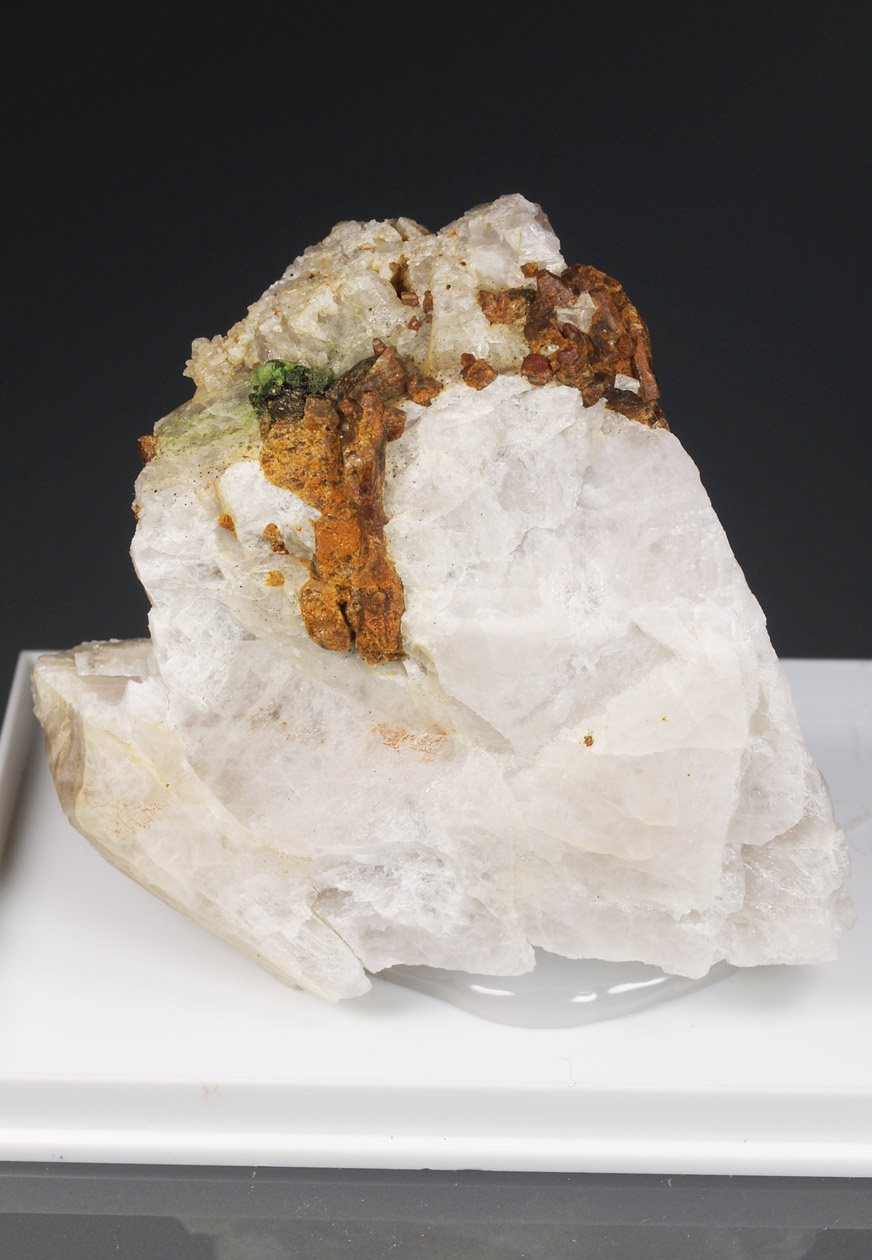
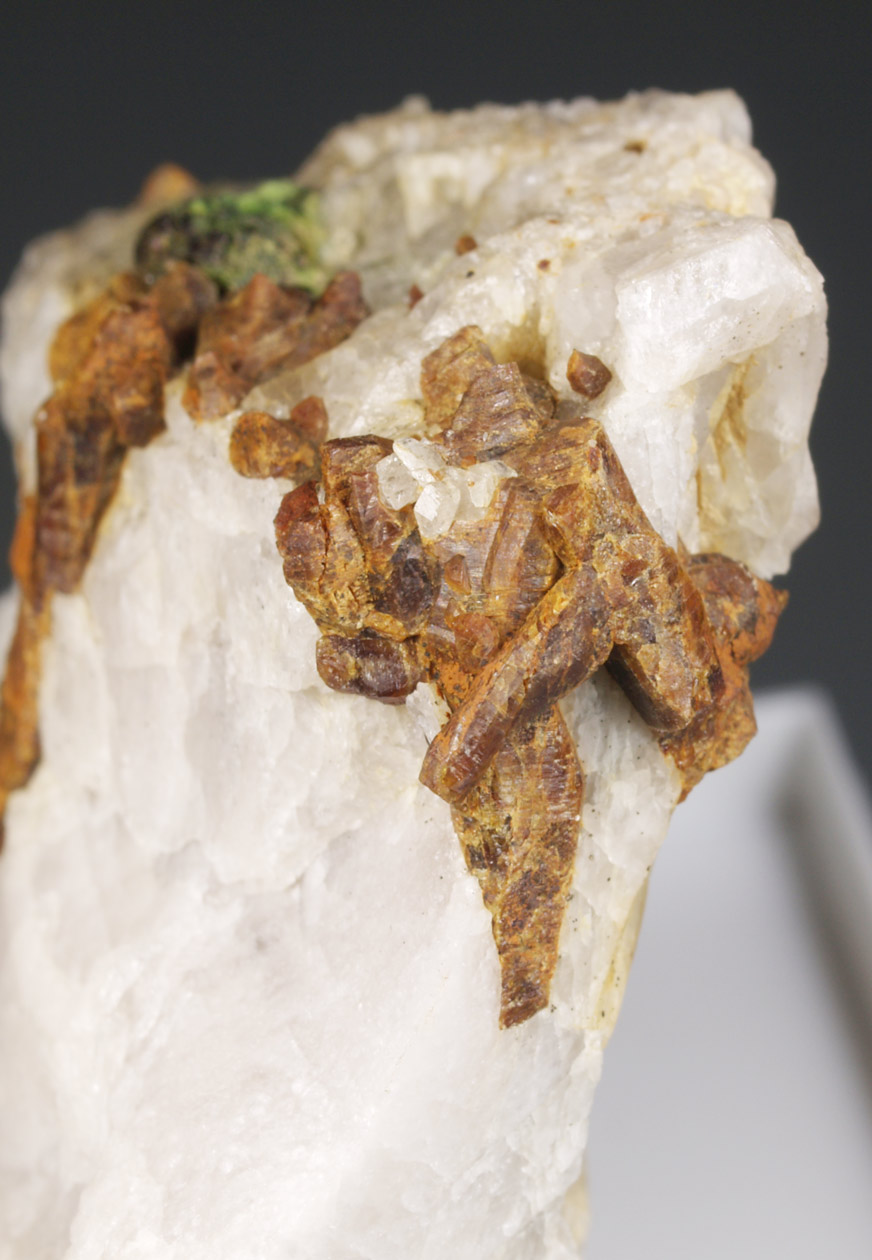
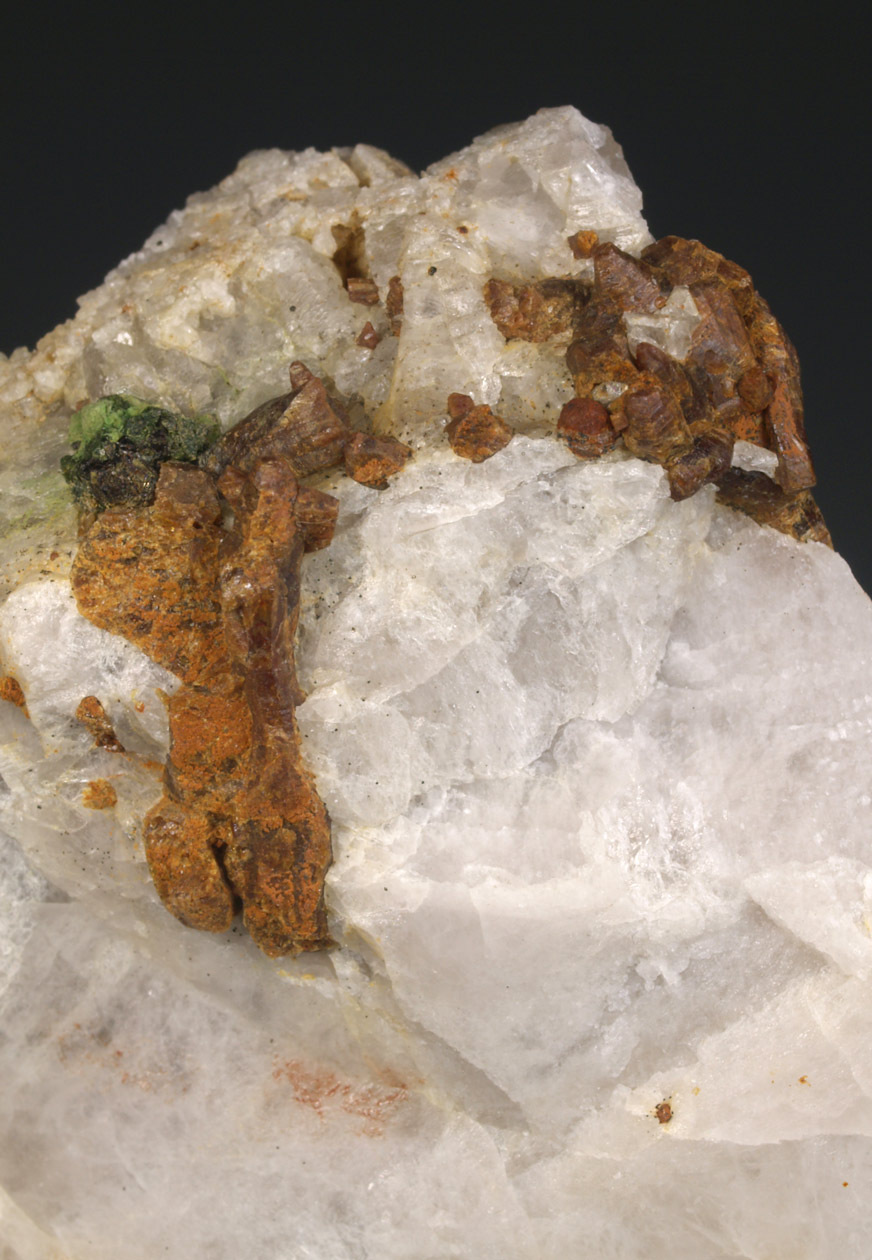
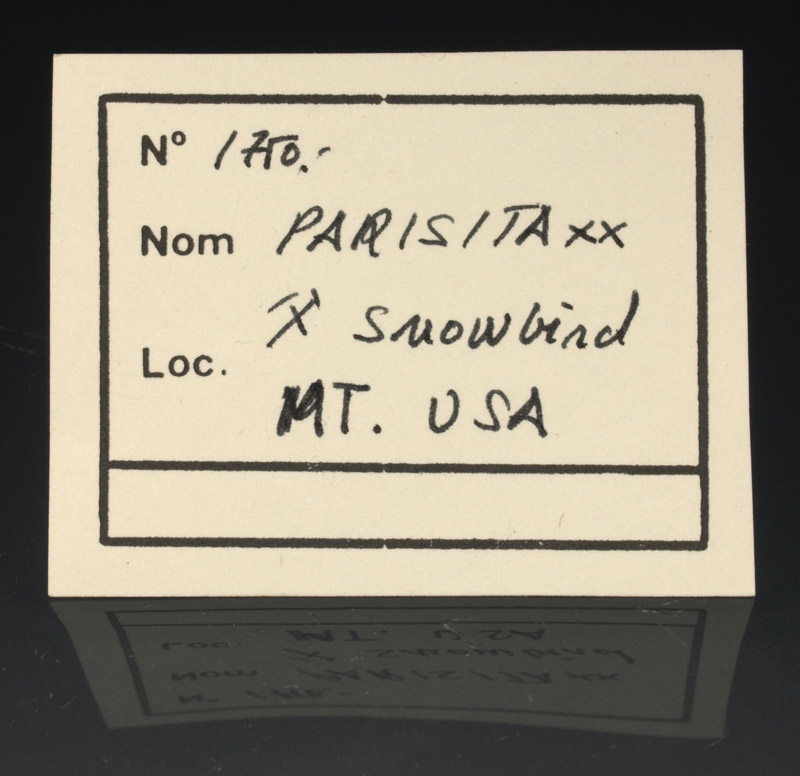
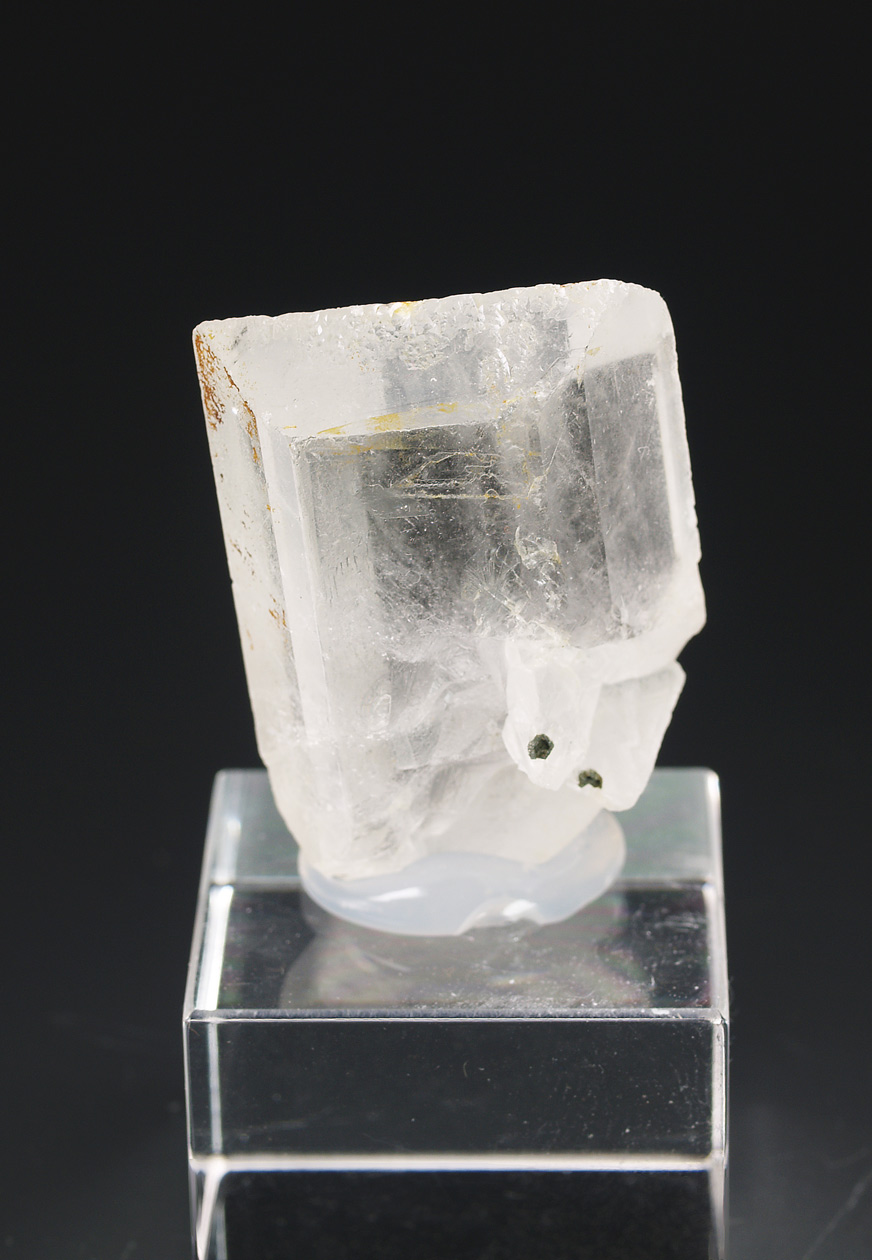
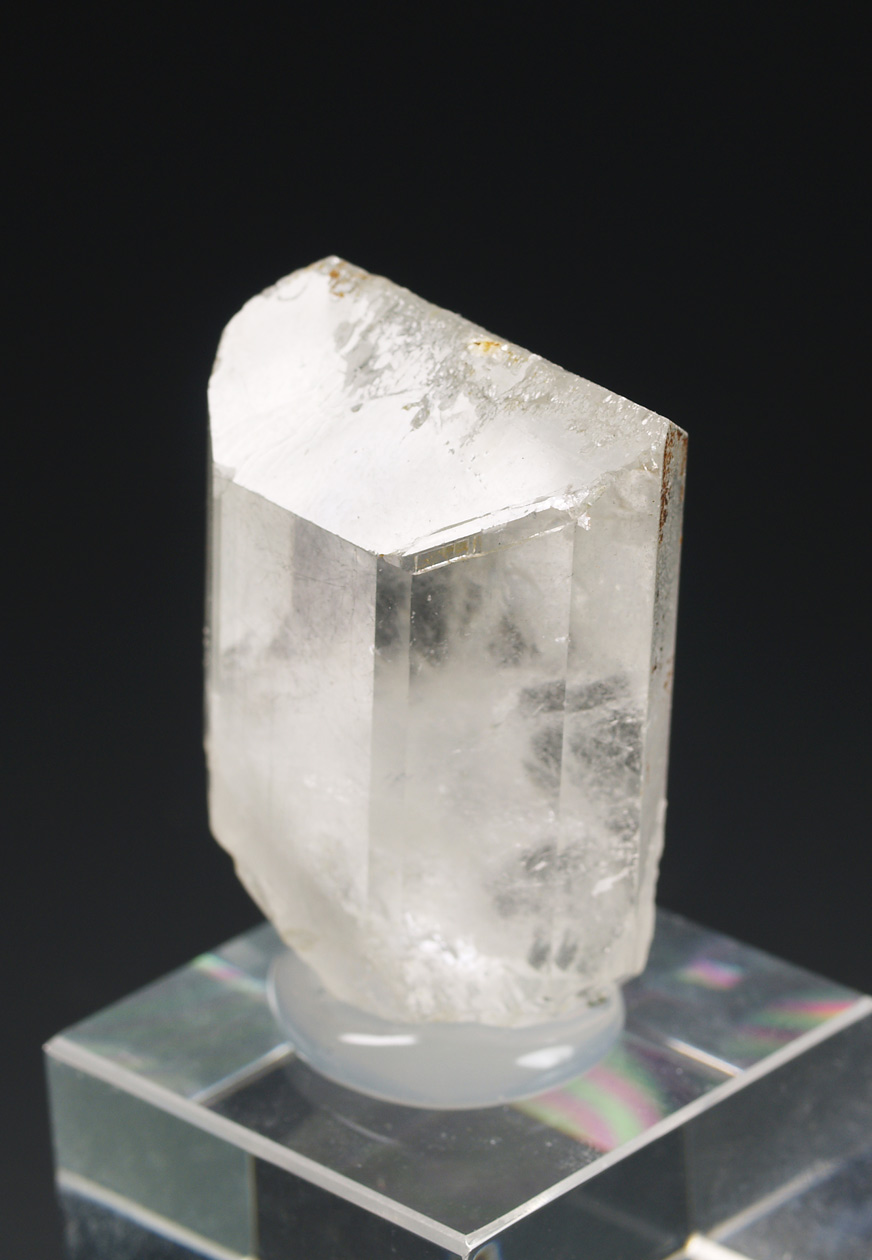
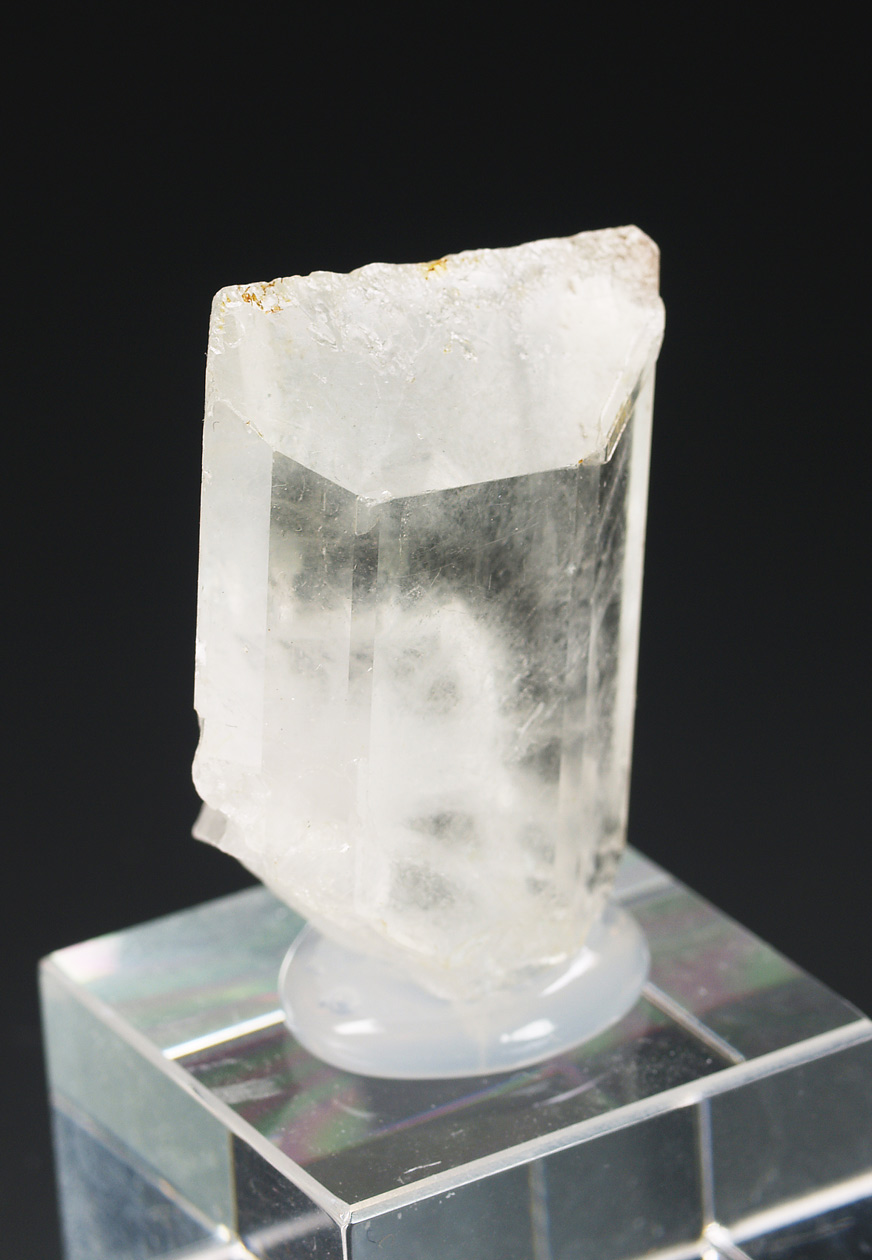
A very good representative of the rare parisite-(Ce) specimens from the Snowbird Mine in Montana. Several crystals of dark golden-brown, pseudohexagonal parisite-(Ce) with a good size are sitting on feldspar matrix. These pieces came out ca. 1955-56, and are very difficult to find on the market, more in matrix! Parisite is a rare, rare-earth carbonate and the Snowbird Mine is a rare earth pegmatite. With a cluster of gersdorffite. From E. Nicolau collection and purchased to Joan Viñals.