

- Home About RM Minerals
- Virtual Photo Museum Blog RM Contact
- Microscopy and instruments How to Buy Disclaimer
Copyright 2010-2026
www.rosellminerals.com





This specimen shows a group of twinned cubanite crystals. They exhibit excellent luster, iridescence, twin faces and striations, and is complete. The rarity of this material makes it highly desirable for collectors. It comes from the classic Canadian locality for this species.


This specimen shows a group of twinned cubanite crystals. They exhibit excellent luster, with visible faces and some natural fractures, but the rarity of this material makes it highly desirable for collectors. It belongs from the classic Canadian locality for the species.


An exceptional specimen of muscovite composed of numerous aggregates of hexagonal crystals of this member of the mica group. Its yellowish-green color is very distinctive. Specimens of this type are rare, especially at this size. It is accompanied by albite, specifically the cleavelandite variety.


This specimen consists of numerous veins of violet-colored stichtite, accompanied by veins of serpentine. Stichtite is a rare hydrated magnesium and chromium carbonate. The species is named after Robert Carl Sticht, the renowned American copper metallurgist and mine manager. At Kaapschehoop, stichtite occurs as irregular to rounded masses or as veinlets, generally less than 1 mm wide, within the serpentine.


Specimen of beryl aquamarine variety. Very transparent, delicate bluish color to colorless, with developed prism faces and with terminal faces of the dipyramid truncated by the pinacoid. With rutile inclusions. On a doubly terminated quartz crystal. A gemmy miniature.


This is a brilliant and esthetic cobaltite specimen that shows a sharp and brilliant crystal, with dominant forms of the cube and pyritohedron, included in the massive pyrrhotite matrix. Håkansboda is an old mine, opened in the 17th century and worked until 1873, with only minor mining during World War I. An European classic mine and specimen.


An excellent specimen of fluorapatite, formed by the parallel growth of two crystals, with very defined hexagonal shapes, an intense green color, and exceptional luster. From this Canadian locality, a classic location for the species.


A striking specimen composed of numerous prismatic, highly faceted cassiterite crystals with exceptional luster and translucency, displaying a honeyed hue. This is an excellent old specimen from the little-known Seal Hole mine in Cornwall. A very showy and uncommon specimen in this mine.


Marialite crystal, scapolite group, slightly greenish-yellow, with parallel growths and well-defined terminal faces. Transparent to translucent, with some very transparent areas. A gem from the Trigo collection, from Mataró, with a handwritten label.


Kunzite crystal, with striated faces, with good color and transparence. A gemmy specimen with handwritten label.


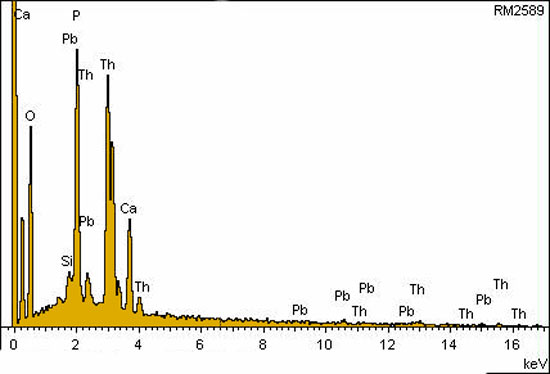
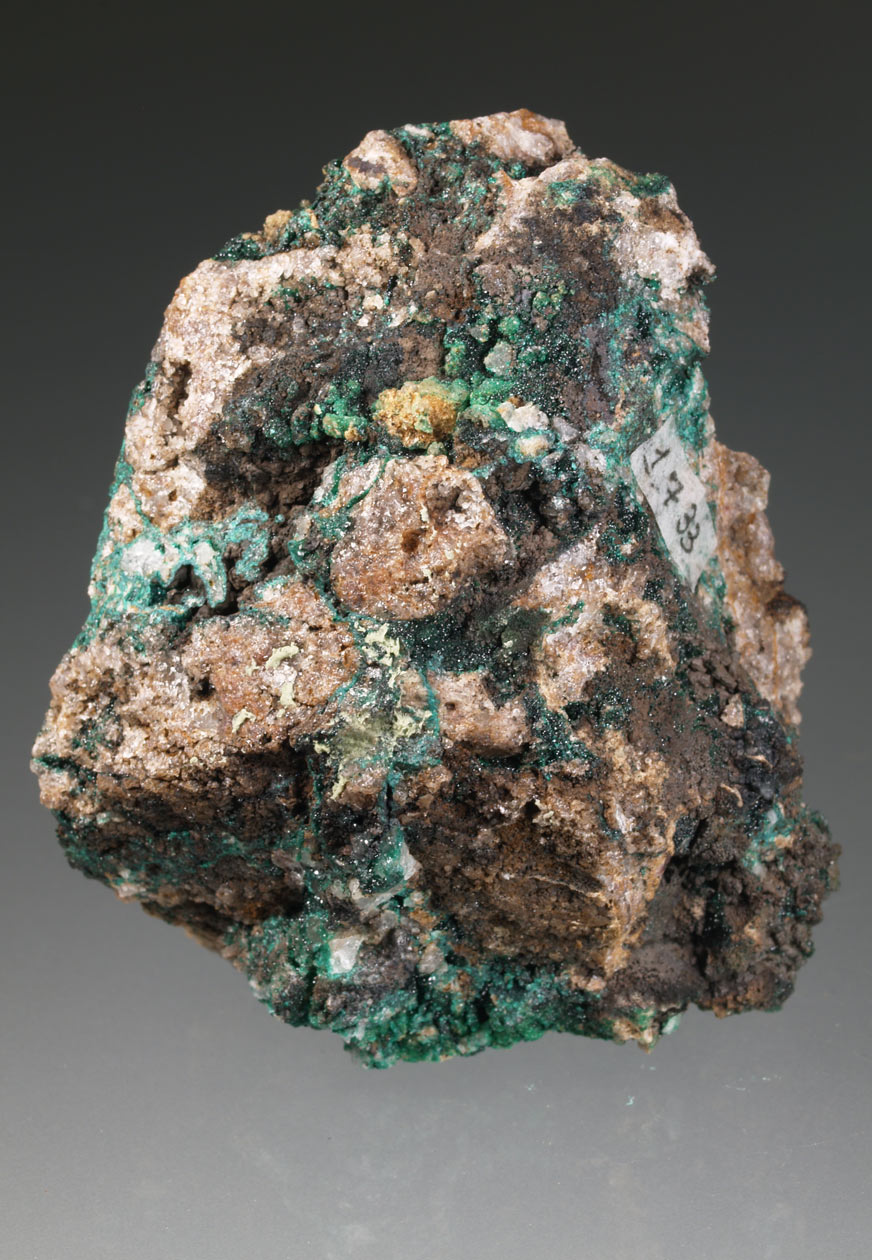
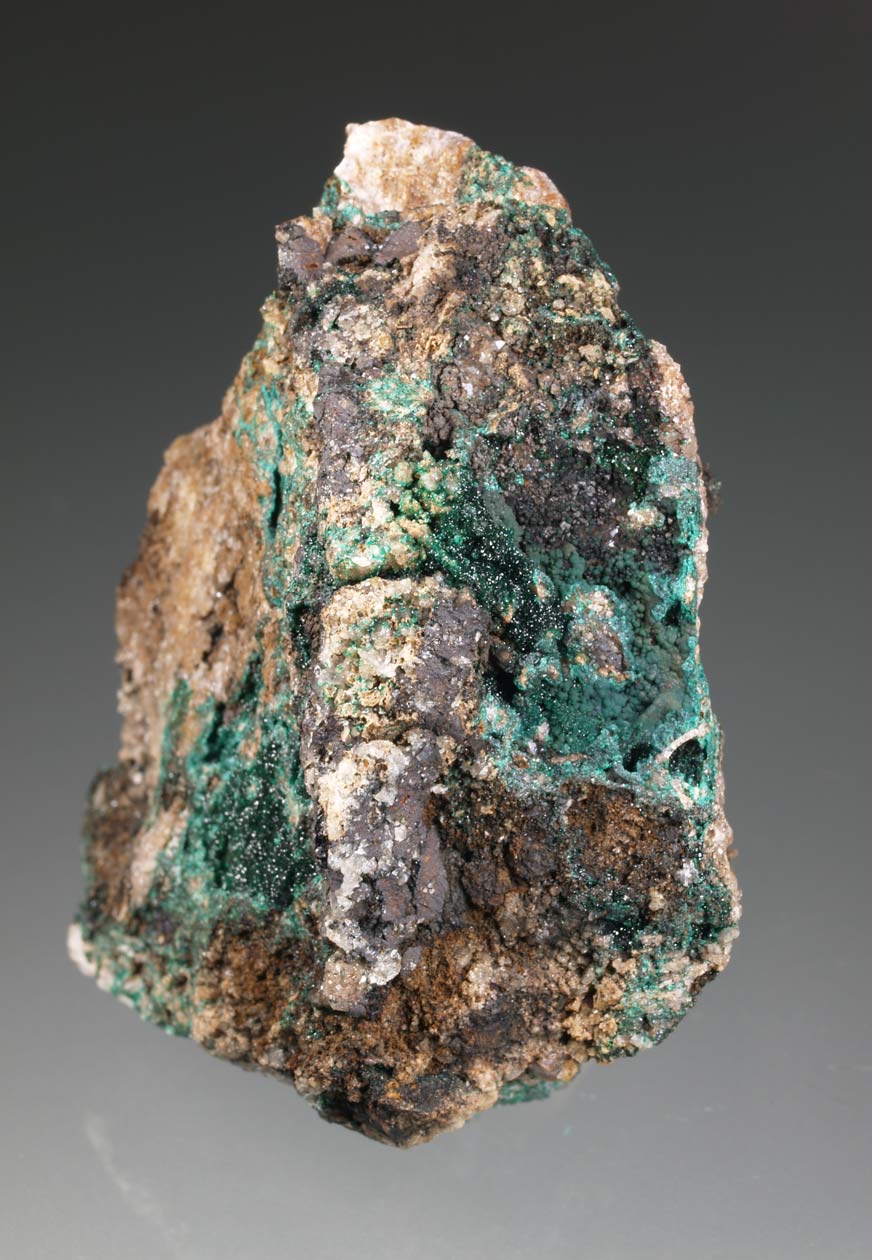
These specimens show yellowish nodules included in a feldspar matrix. First SEM-EDS analysis have yielded a phosphate of Th and Ca, with minor Pb. XRD has shown patterns of "bravantite", the old name for cheralite and brockite. The chemical base formula for these species are: grayite (Th,Pb,Ca)(PO₄)·H₂O; cheralite CaTh(PO₄)₂; brockite (Ca,Th,Ce)(PO₄)·H₂O. REE has not been found in EDS. We could say that this yellow nodules belongs from altered monazite, formed by mixed species cheralite-grayite, with minor brockite. Accompanied in matrix by meta-autunite and fluorite.
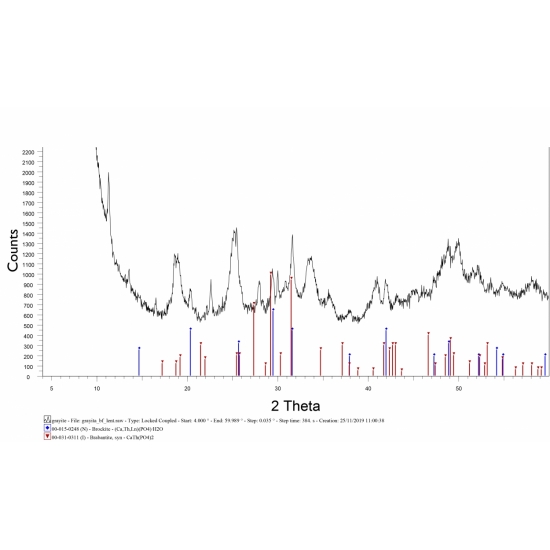


These specimens show yellowish nodules included in a feldspar matrix. First SEM-EDS analysis have yielded a phosphate of Th and Ca, with minor Pb. XRD has shown patterns of "bravantite", the old name for cheralite and brockite. The chemical base formula for these species are: grayite (Th,Pb,Ca)(PO₄)·H₂O; cheralite CaTh(PO₄)₂; brockite (Ca,Th,Ce)(PO₄)·H₂O. REE has not been found in EDS. We could say that this yellow nodules belongs from altered monazite, formed by mixed species cheralite-grayite, with minor brockite. Accompanied in matrix by meta-autunite and fluorite.


These specimens show yellowish nodules included in a feldspar matrix. First SEM-EDS analysis have yielded a phosphate of Th and Ca, with minor Pb. XRD has shown patterns of "bravantite", the old name for cheralite and brockite. The chemical base formula for these species are: grayite (Th,Pb,Ca)(PO₄)·H₂O; cheralite CaTh(PO₄)₂; brockite (Ca,Th,Ce)(PO₄)·H₂O. REE has not been found in EDS. We could say that this yellow nodules belongs from altered monazite, formed by mixed species cheralite-grayite, with minor brockite. Accompanied in matrix by meta-autunite and fluorite.


An excellent specimen formed by numerous epidote crystals, from the classic locality of Casterner. Fan-shaped crystals, they are very bright and with an excellent transparence. Samples of this area are already few. It is currently forbiden to collect in the area.


Blocky aerinite criptocristalline with fragments of dolerite included. Excellent color. Aerinite was used as a blue pigment in many Romanesque paintings in the Pyrenees between the 11th and 14th centuries. Its characteristic blue color varies from dark to pale blue. In fact, its name comes from a Greek root aerinos meaning "atmosphere" or "sky", as it was only known by that color. Obtaining these specimens of pure aerinite nowadays is almost impossible.


Blocky aerinite criptocristalline with fragments of dolerite included. Excellent color. Aerinite was used as a blue pigment in many Romanesque paintings in the Pyrenees between the 11th and 14th centuries. Its characteristic blue color varies from dark to pale blue. In fact, its name comes from a Greek root aerinos meaning "atmosphere" or "sky", as it was only known by that color. Obtaining these specimens of pure aerinite nowadays is almost impossible.


Blocky aerinite criptocristalline with fragments of dolerite included. Excellent color. Aerinite was used as a blue pigment in many Romanesque paintings in the Pyrenees between the 11th and 14th centuries. Its characteristic blue color varies from dark to pale blue. In fact, its name comes from a Greek root aerinos meaning "atmosphere" or "sky", as it was only known by that color.


Small cubic crystal of thorianite, bright and well defined. Perhaps the most interesting aspect of the specimen is that it comes from the type locality for the species, in Sri Lanka. From the C. Prieto collection (Madrid).


Small cubic crystal of thorianite, bright and well defined. Perhaps the most interesting aspect of the specimen is that it comes from the type locality for the species, in Sri Lanka. From the C. Prieto collection (Madrid).


Xenotime-(Y) crystal from a classic Norwegian locality, close to the type locality for the species. Some crystal faces can be observed. This old specimen comes from the Prieto collection (Madrid).

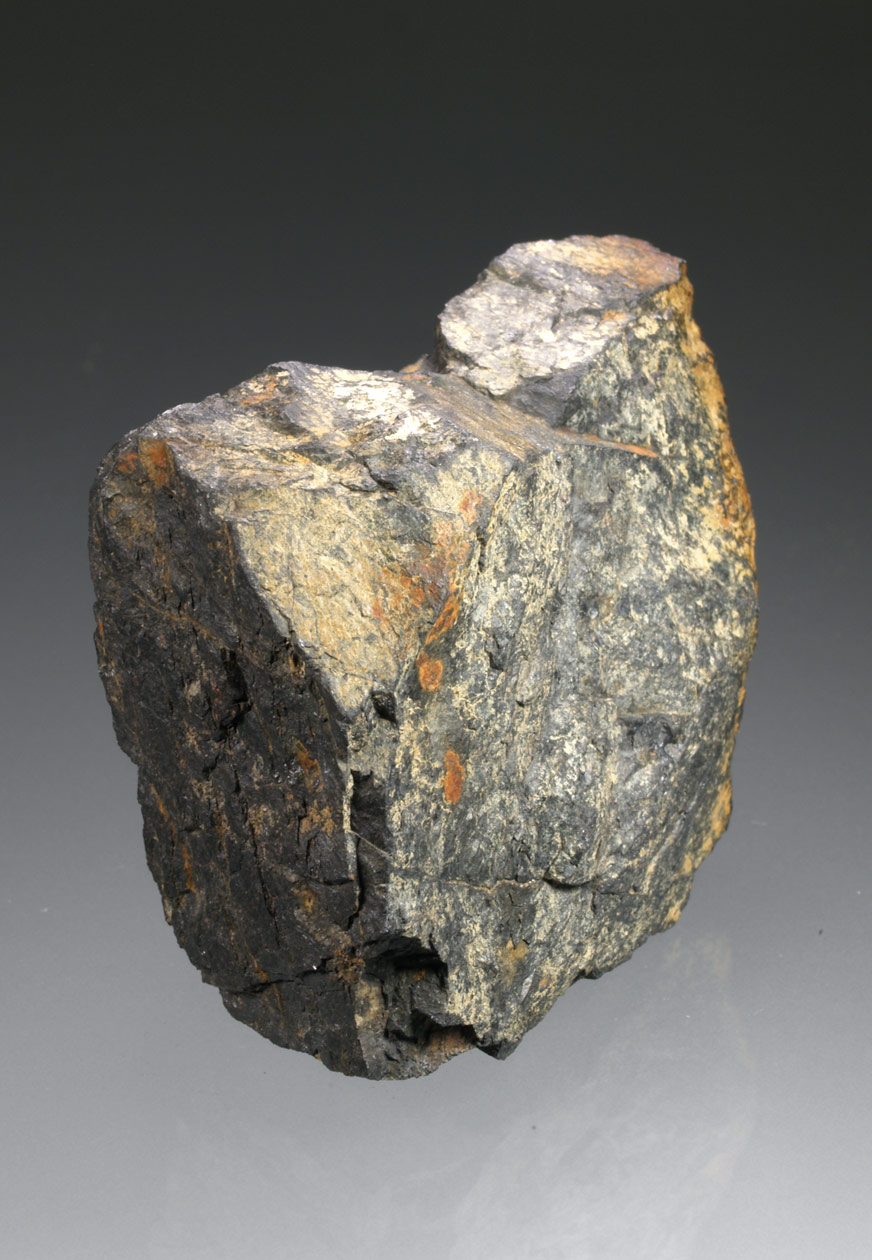
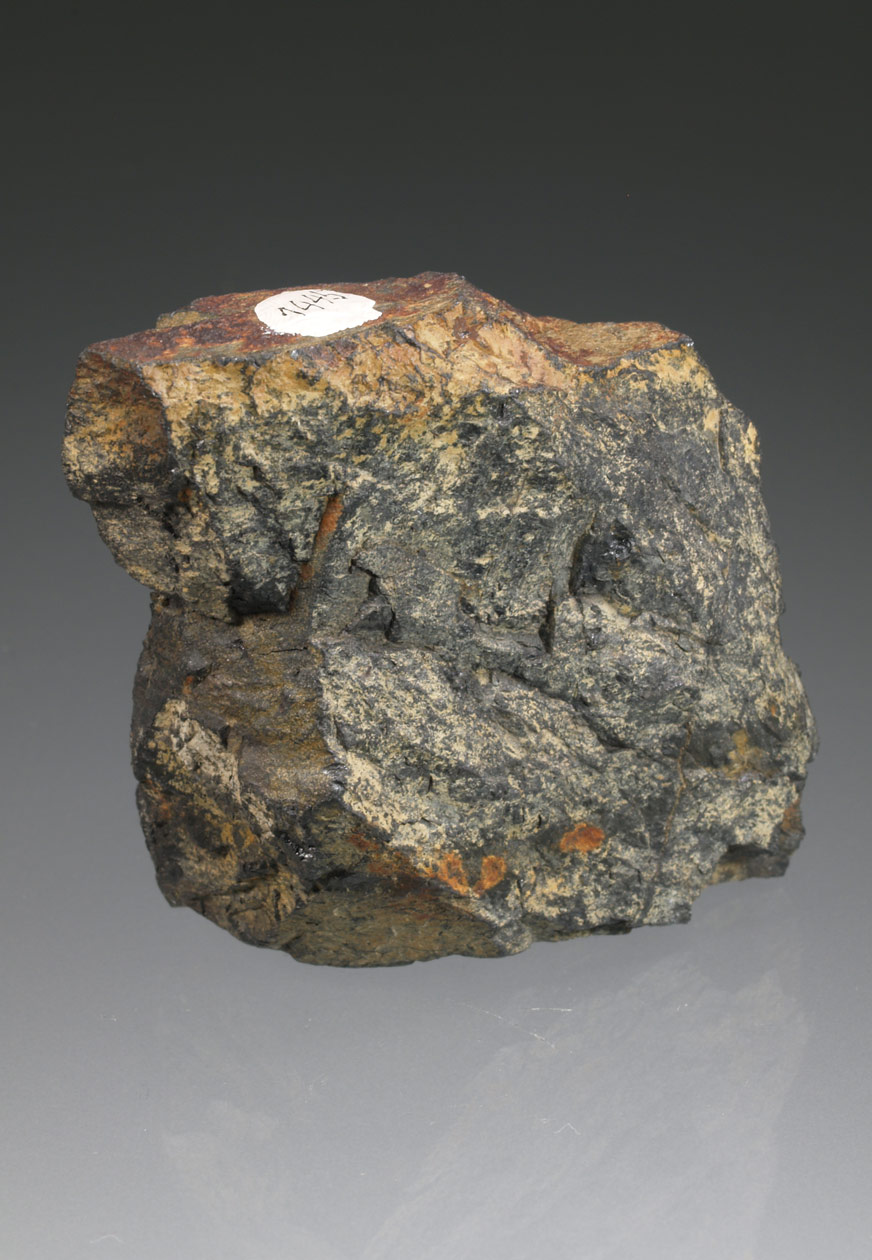
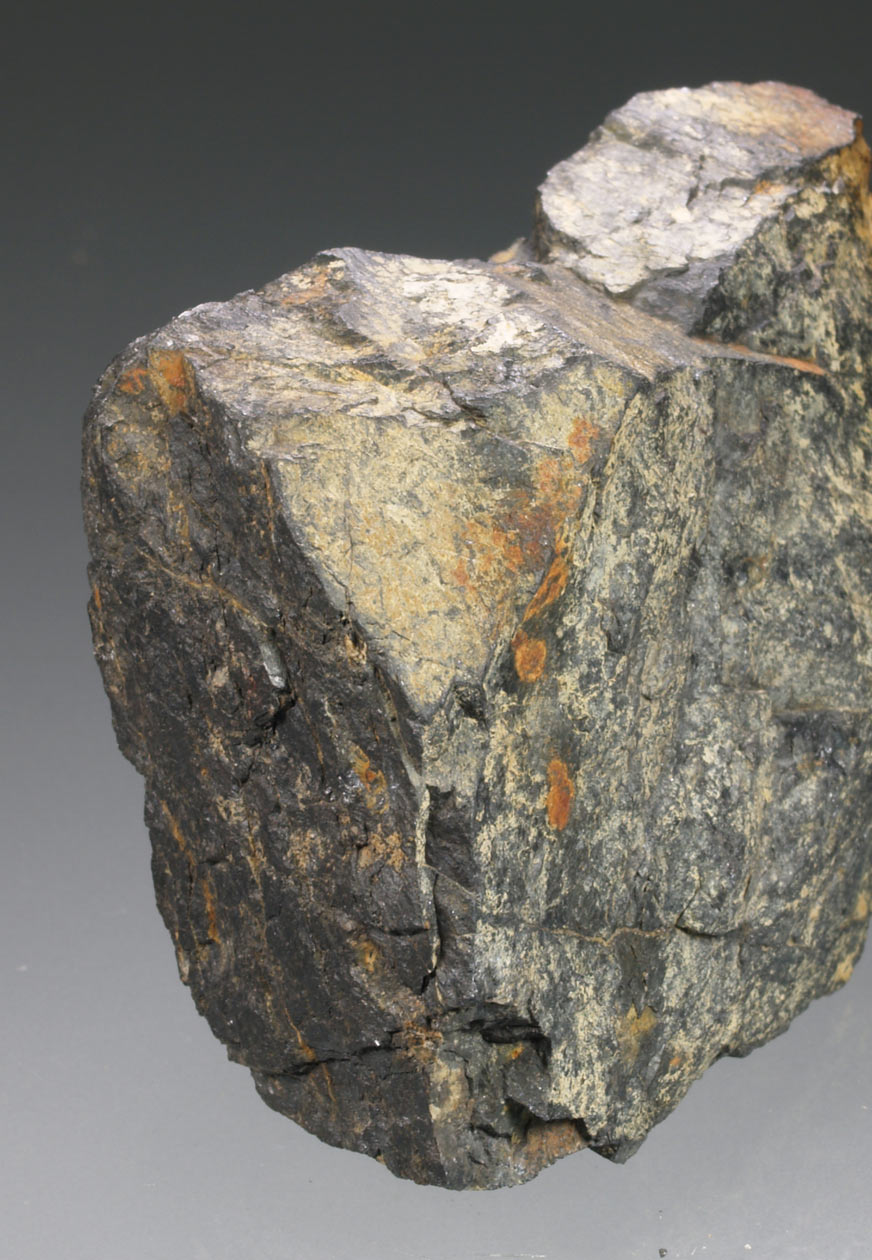
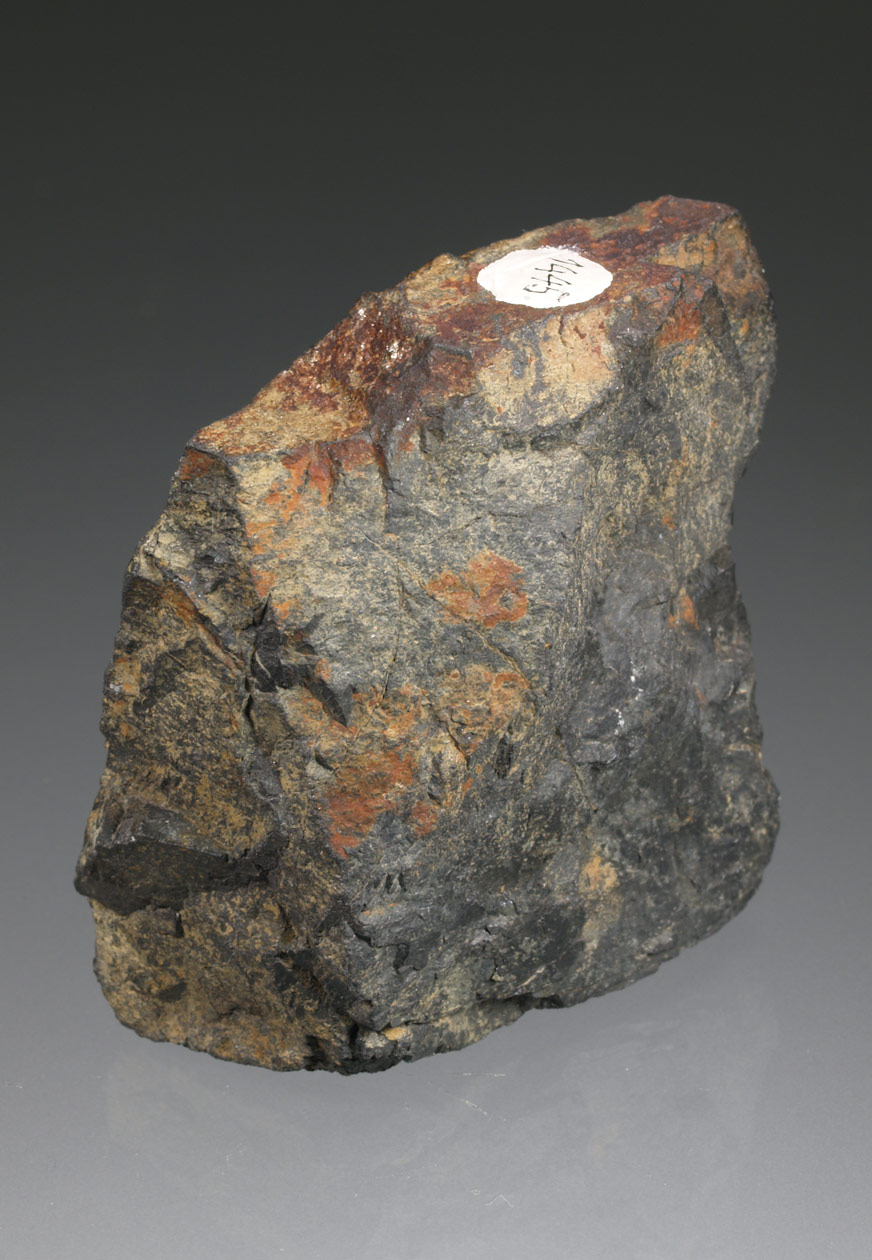
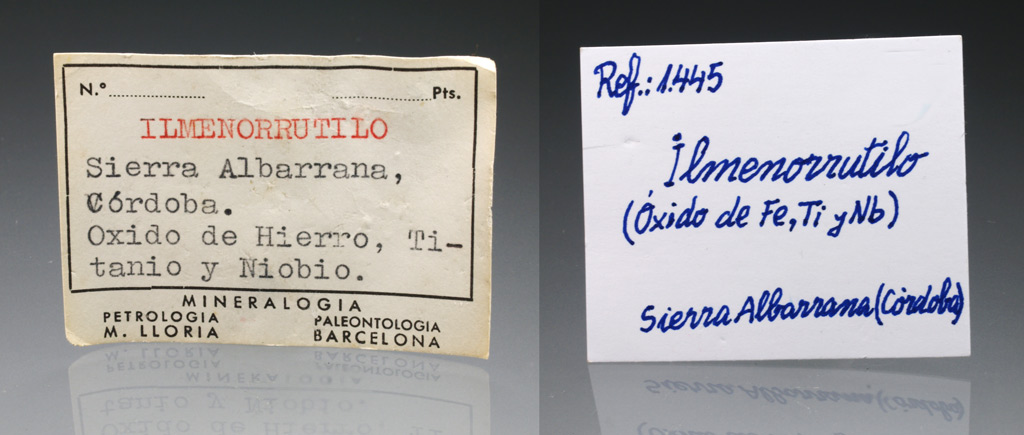
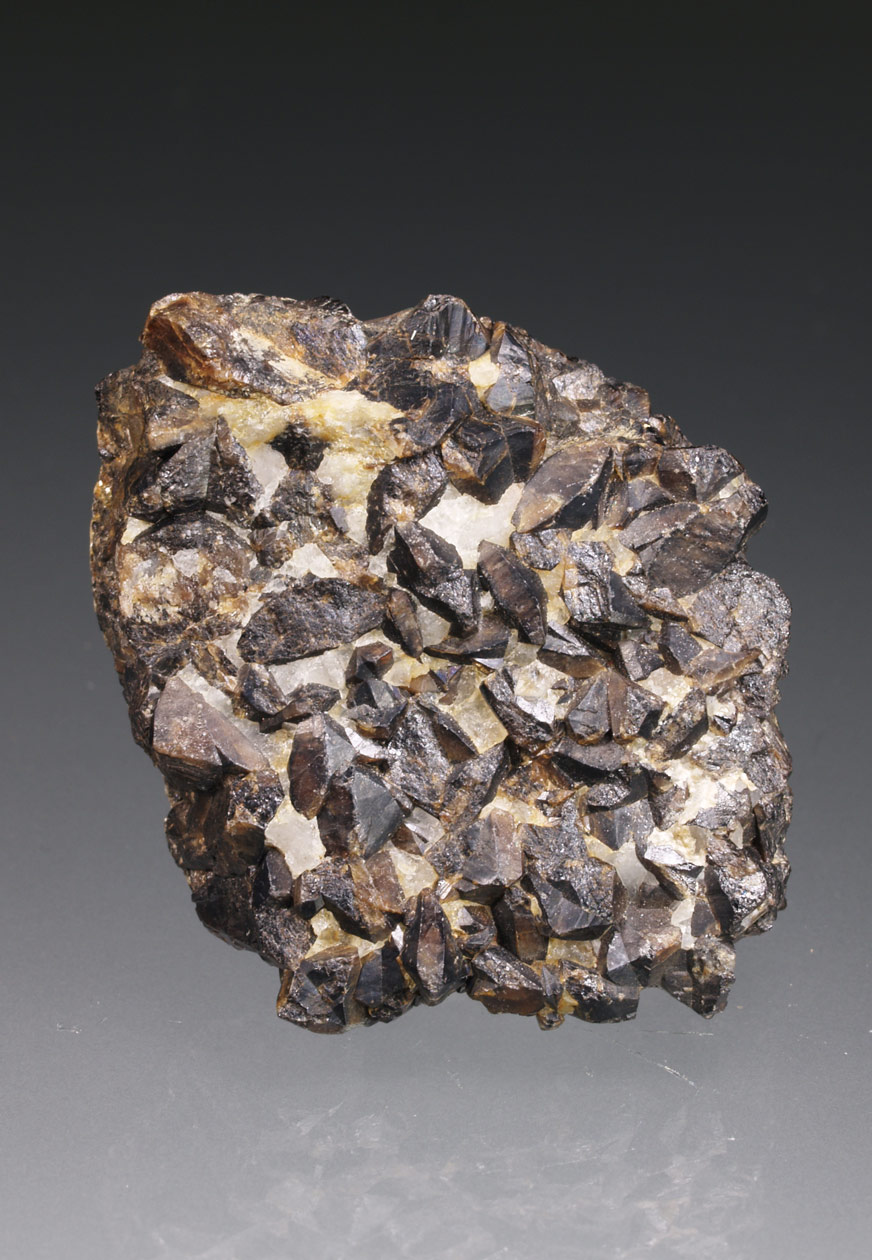
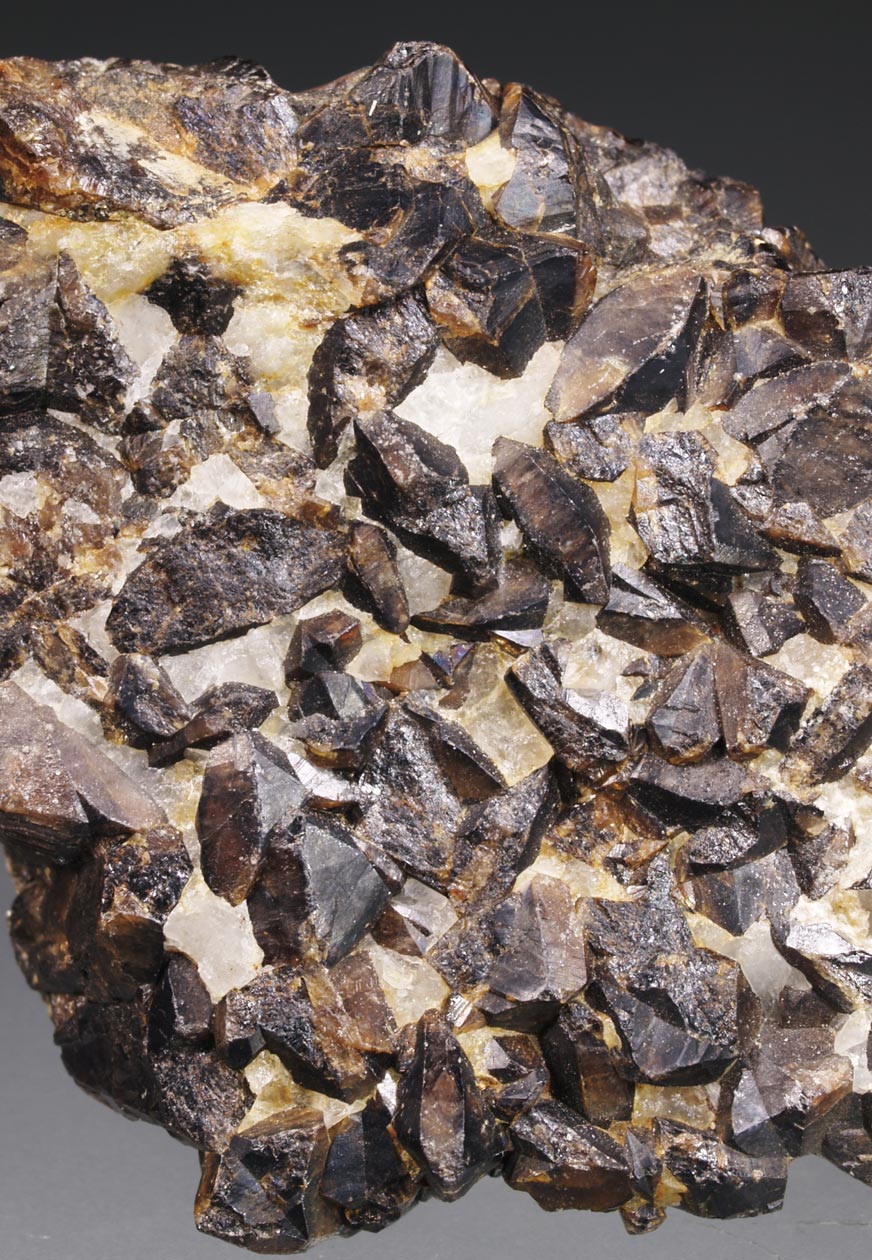
Ilmenorutile is a niobium-rich variety of rutile, with the formula (Ti,Nb)O₂. In this specimen, some crystal faces can be observed. It most likely comes from the Diéresis quarry, where, during the 1980s, masses weighing several kilograms with developed crystal faces were found, enclosed in the pegmatite. From the Vilaseca collection, acquired from the well-known Barcelona mineral dealer Marçal Llòria (Lloid).
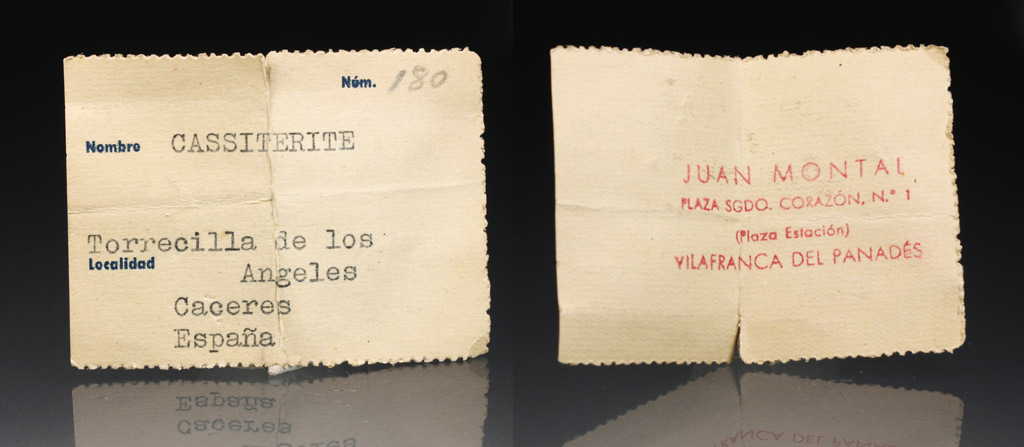
A very rich cluster of well-formed cassiterite crystals, showing twinning and bipyramidal forms. The color ranges from deep honey to lighter shades in some crystals when light strikes them. It comes from a locality in Cáceres that is poorly represented in collections. The deposit is composed of three sub-circular granitic cupolas that host Sn–Nb–Ta–W mineralization. There have been recent initiatives and applications for mining exploration permits (for example, the “Torrecilla”), covering several grid squares in the municipalities of Torrecilla de los Ángeles, Hernán Pérez, and Santibáñez El Alto, indicating interest in exploring the mineral resources. From the Vilaseca collection (Barcelona) and and old label from Joan Montal, a former Catalan dealer.
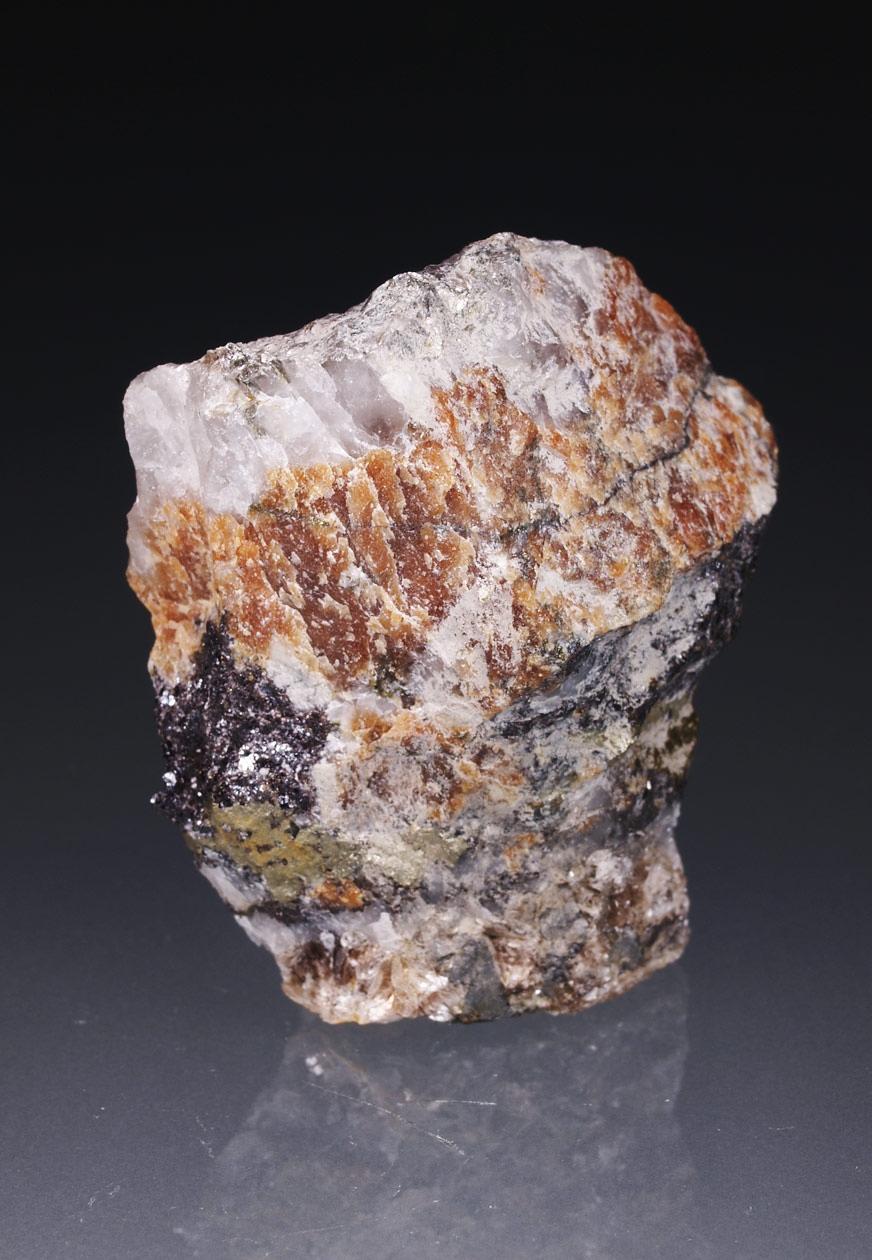


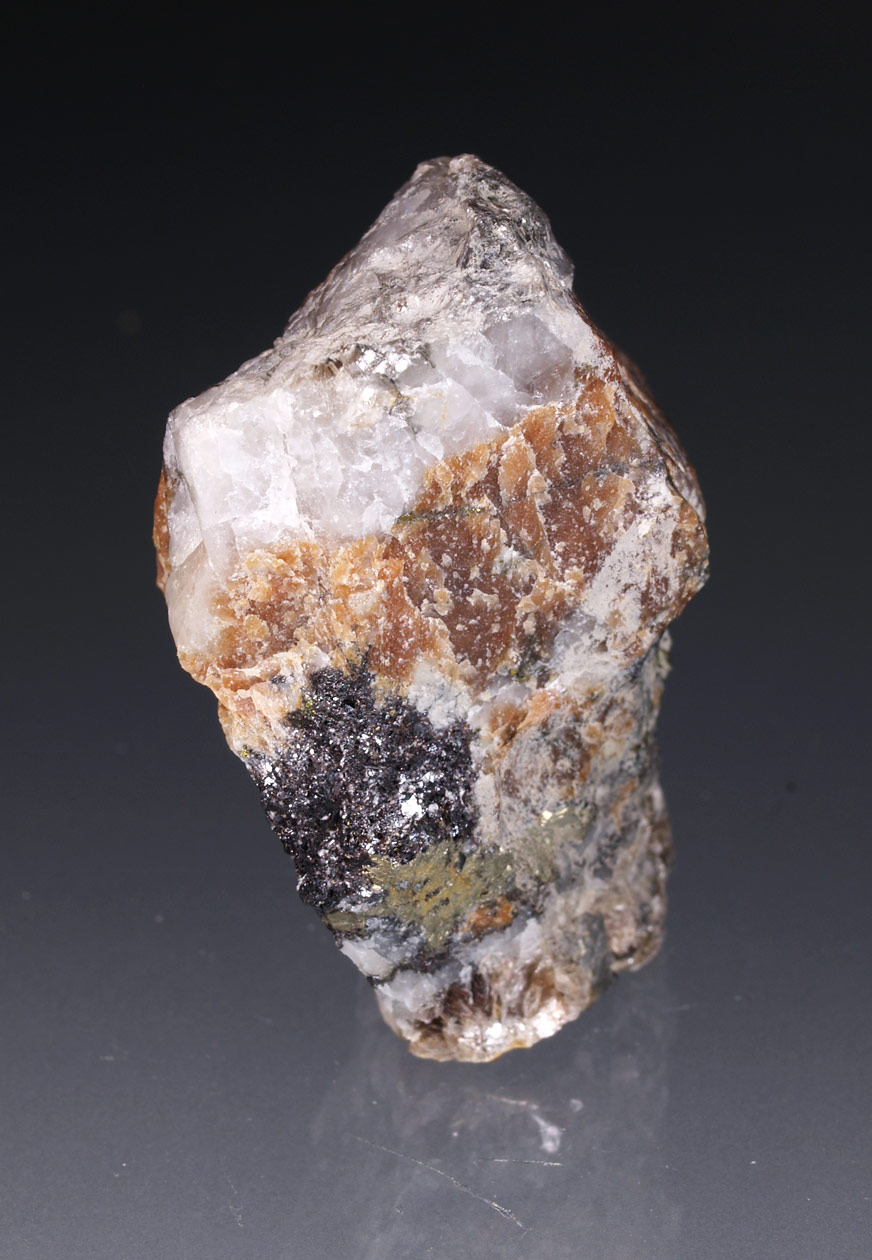
From specimens like these, this very rare species was identified: panasqueiraite. Identifying it in each sample is an almost impossible task. Panasqueiraite is a monoclinic calcium-magnesium phosphate, it would be an hydroxylated analog of isokite. In Panasqueira, its type locality, it is found as massive fine-grained aggregates together with other phosphates (fluorapatite, thadeuite, wolfeite, triplite, althausite and vivianite), with topaz, quartz and sulfides (arsenopyrite, pyrrhotite, chalcopyrite and sphalerite) in veins hydrothermal. The panasqueiraíta closely resembles the thadeuíta and the wolfeíte.
Panasqueiraite crystals are not known, but there are always exfoliation planes {010}, also for thadeuite (Caries Curto, Jordi Fabre: The Panasqueira Mines. The Mineralogical Record, January-February 2014, volume 45, number 1).