- Home About RM Minerals
- Virtual Photo Museum Blog RM Contact
- Microscopy and instruments How to Buy Disclaimer
Copyright 2010-2026
www.rosellminerals.com



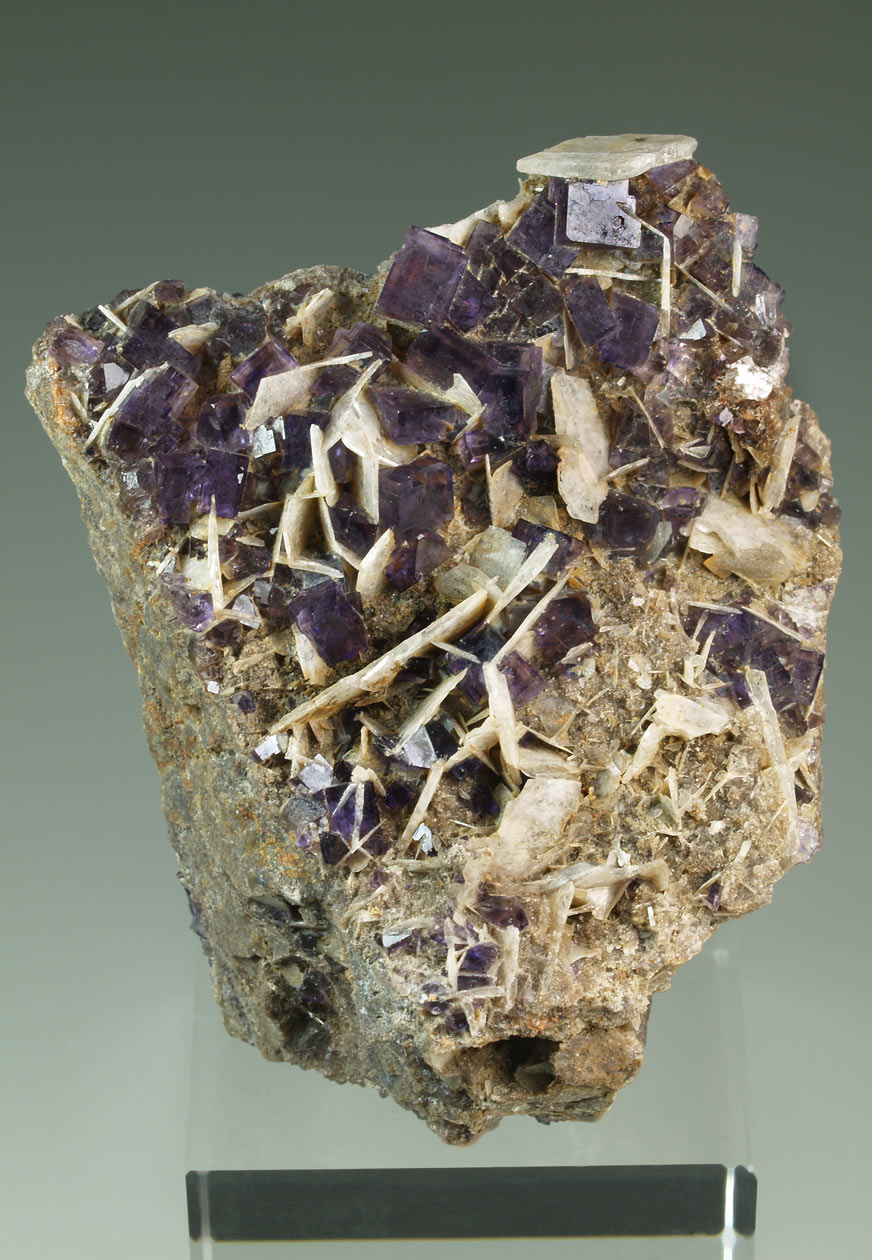
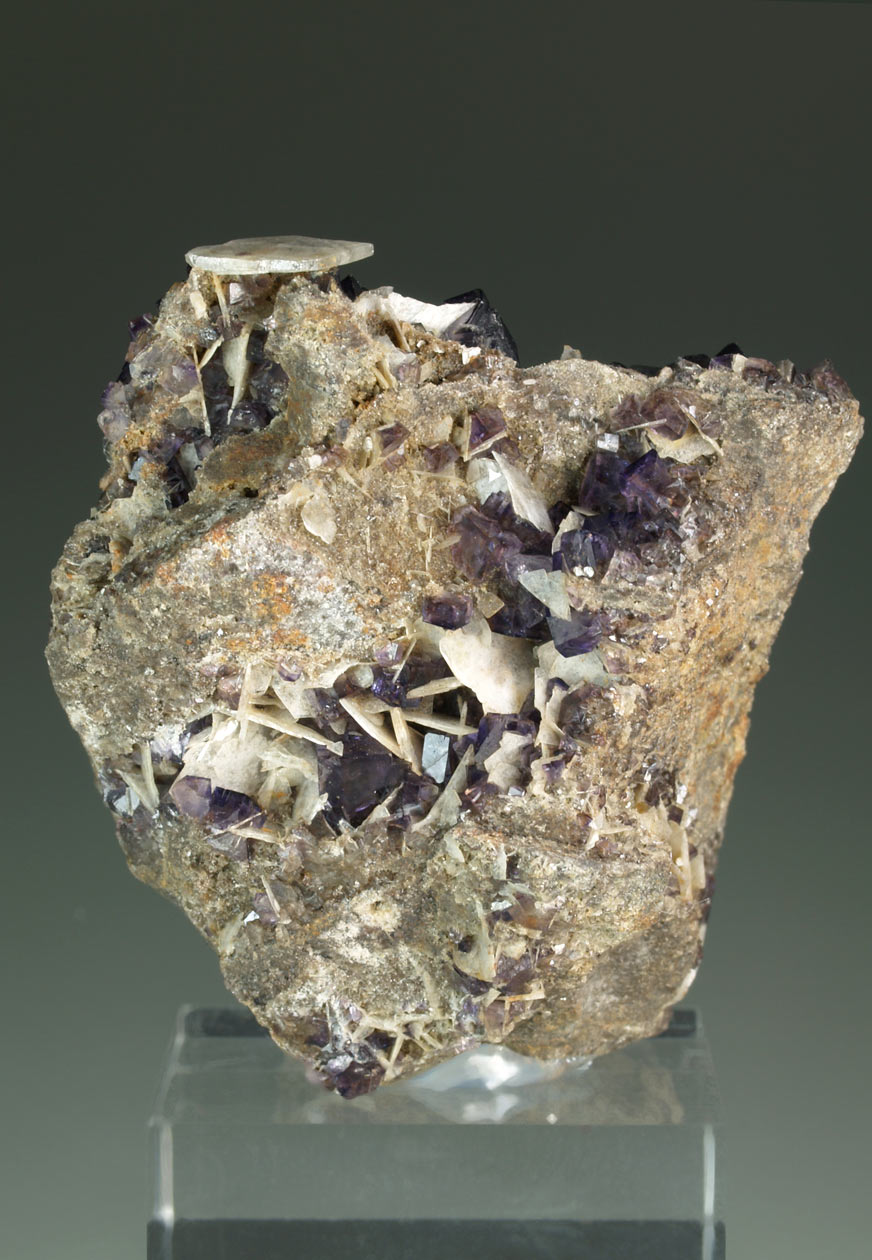
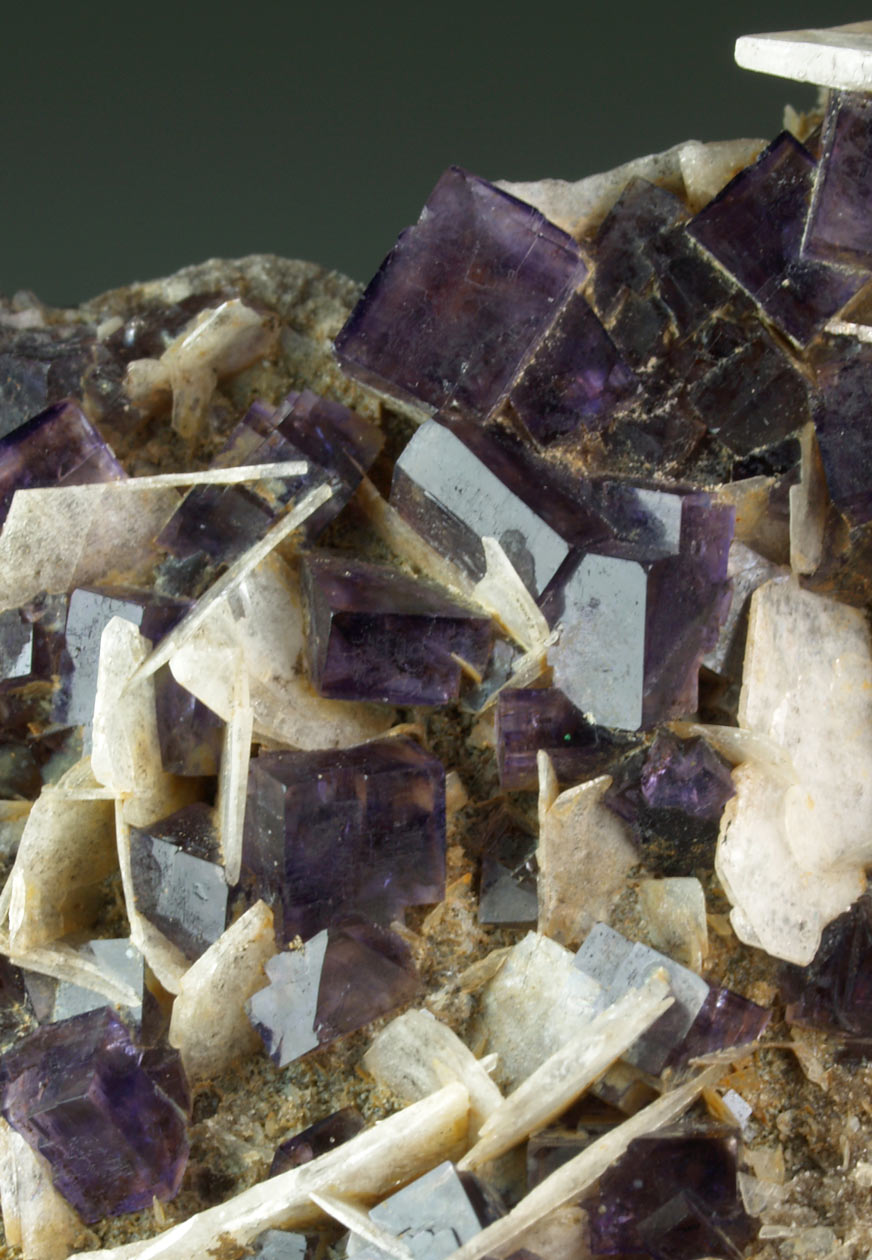
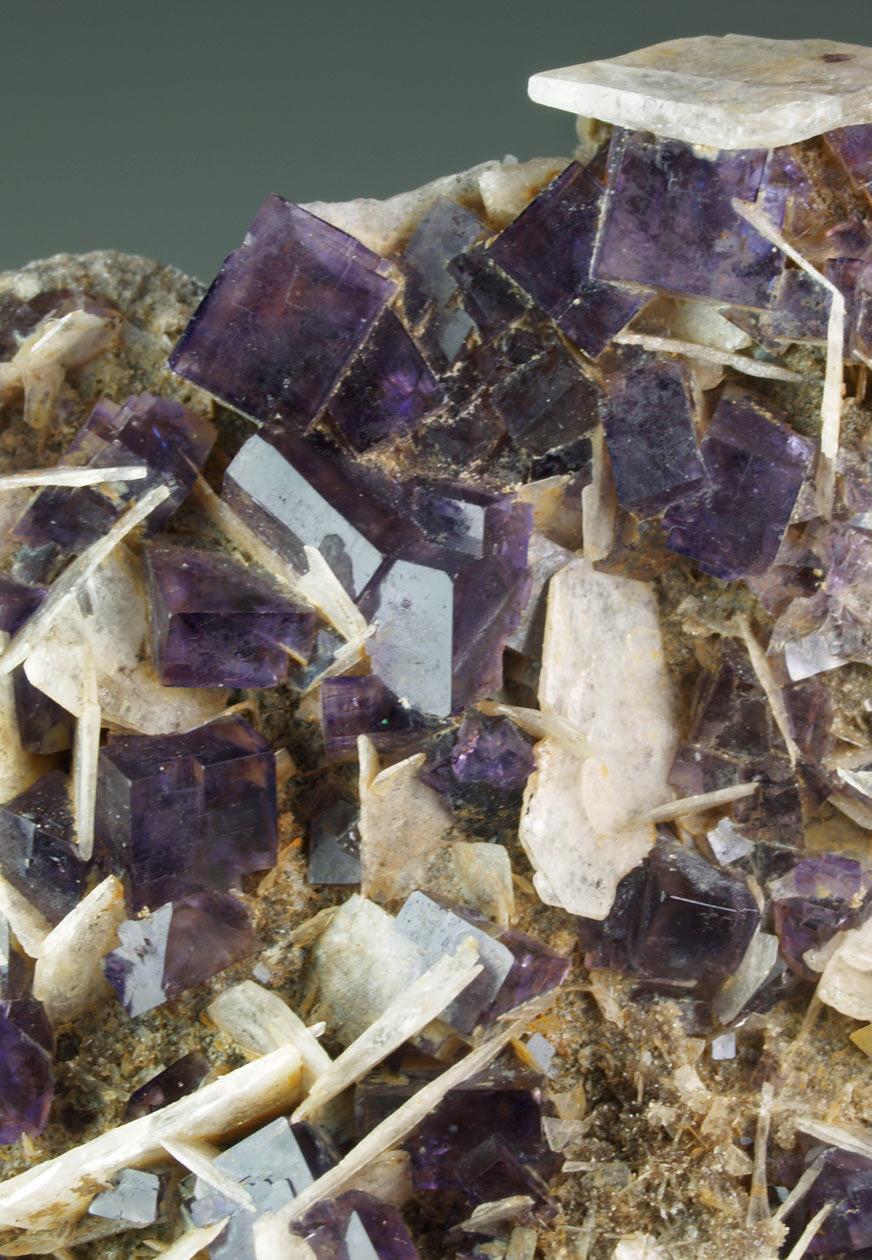
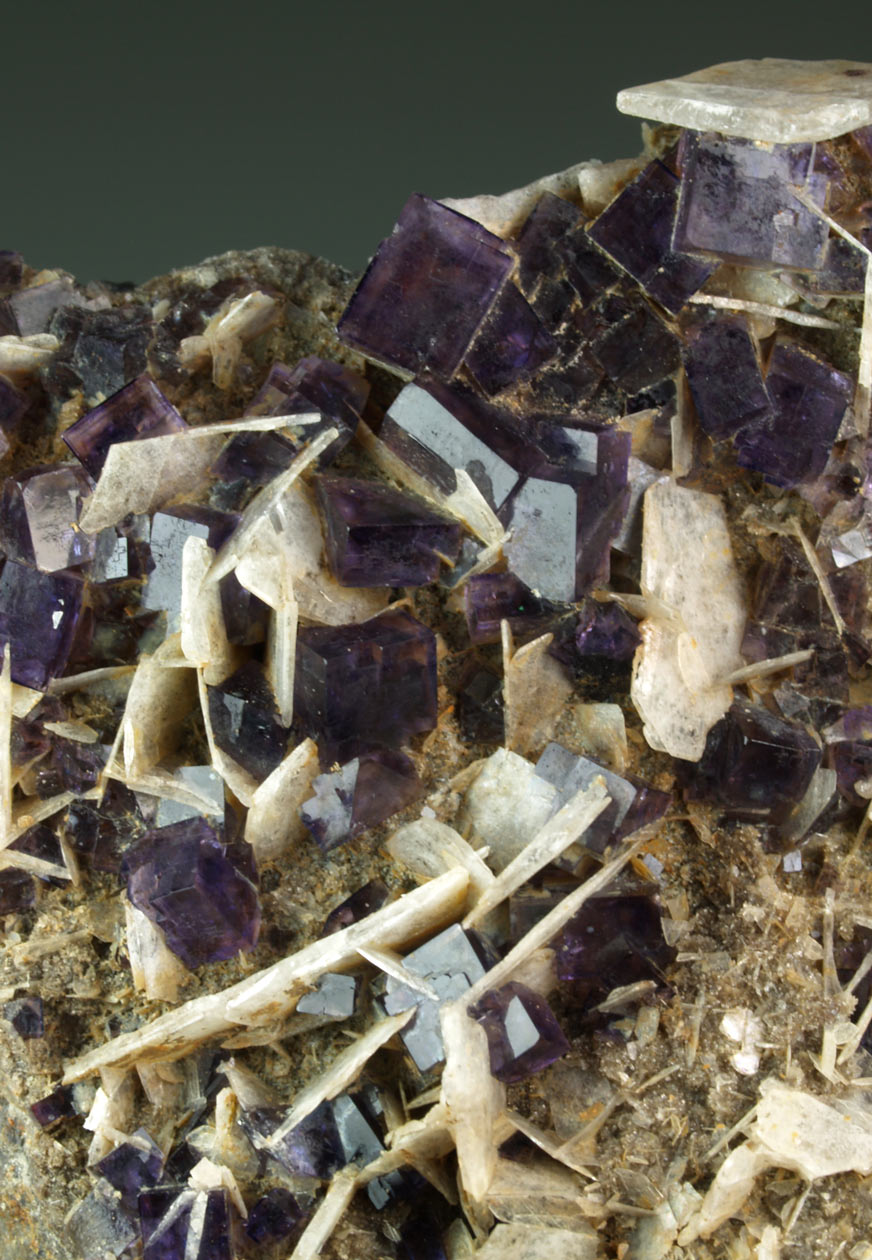
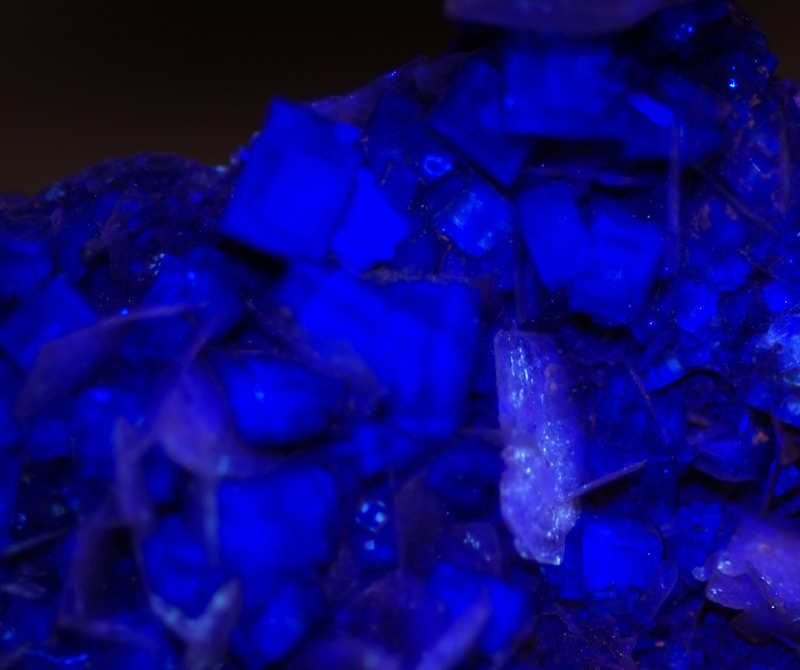
Very rich specimen formed by numerous sharp crystals of fluorite, with cubic habit, and very well defined faces and edges, good transparence, intense color between purple and violet with intense zoning. This color zoning becomes very evident when the crystals are exposed to the ultraviolet light (LW), since the fluorescence also presents this zoned cubic geometry. They are accompanied by several tabular crystals of baryte on a matrix layered by small quartz crystals.
These specimens come from the town of Bergheim, known for being on the Alsace wines route. Although fluorite crystals were already known in some of the mining works of the area, these specimens come from a work done in a "domaine" (vineyard) in 2017.
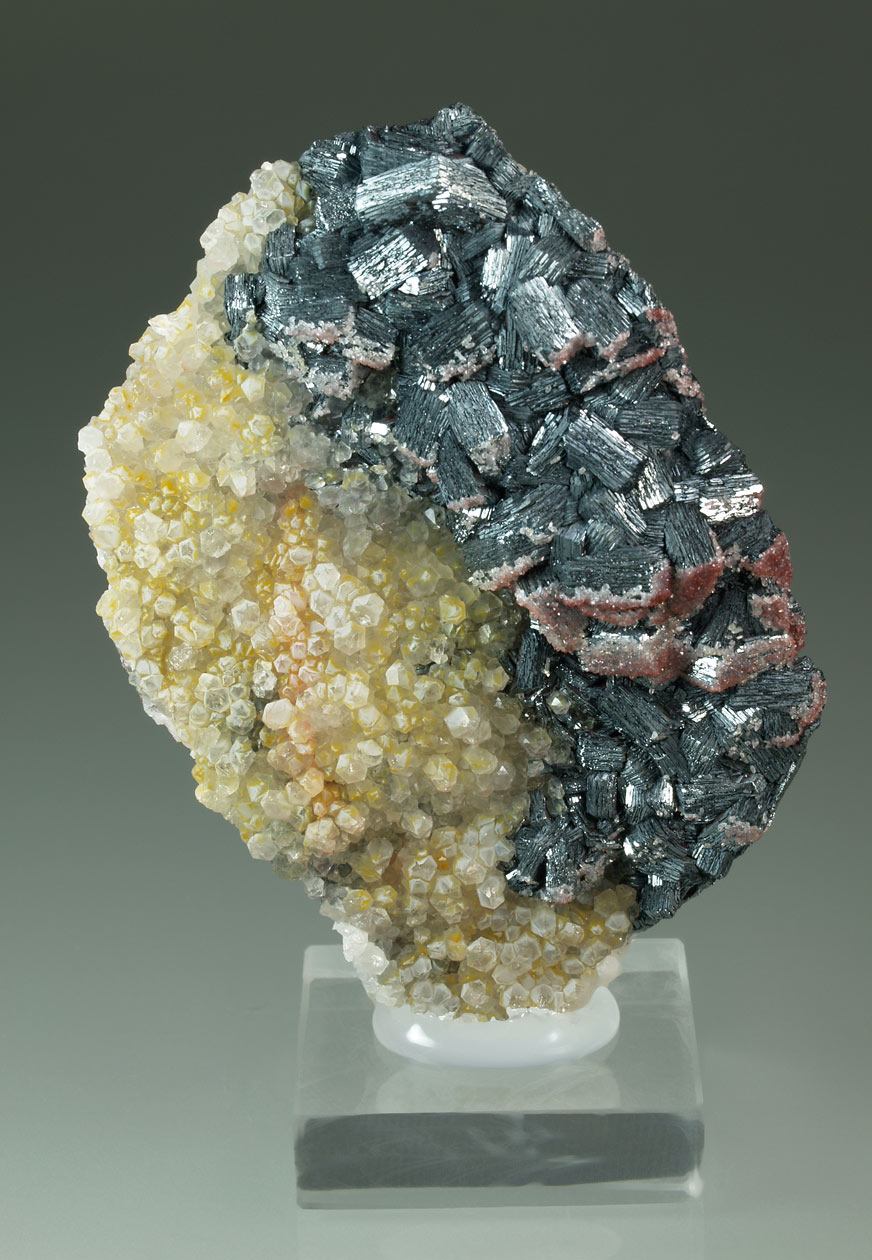
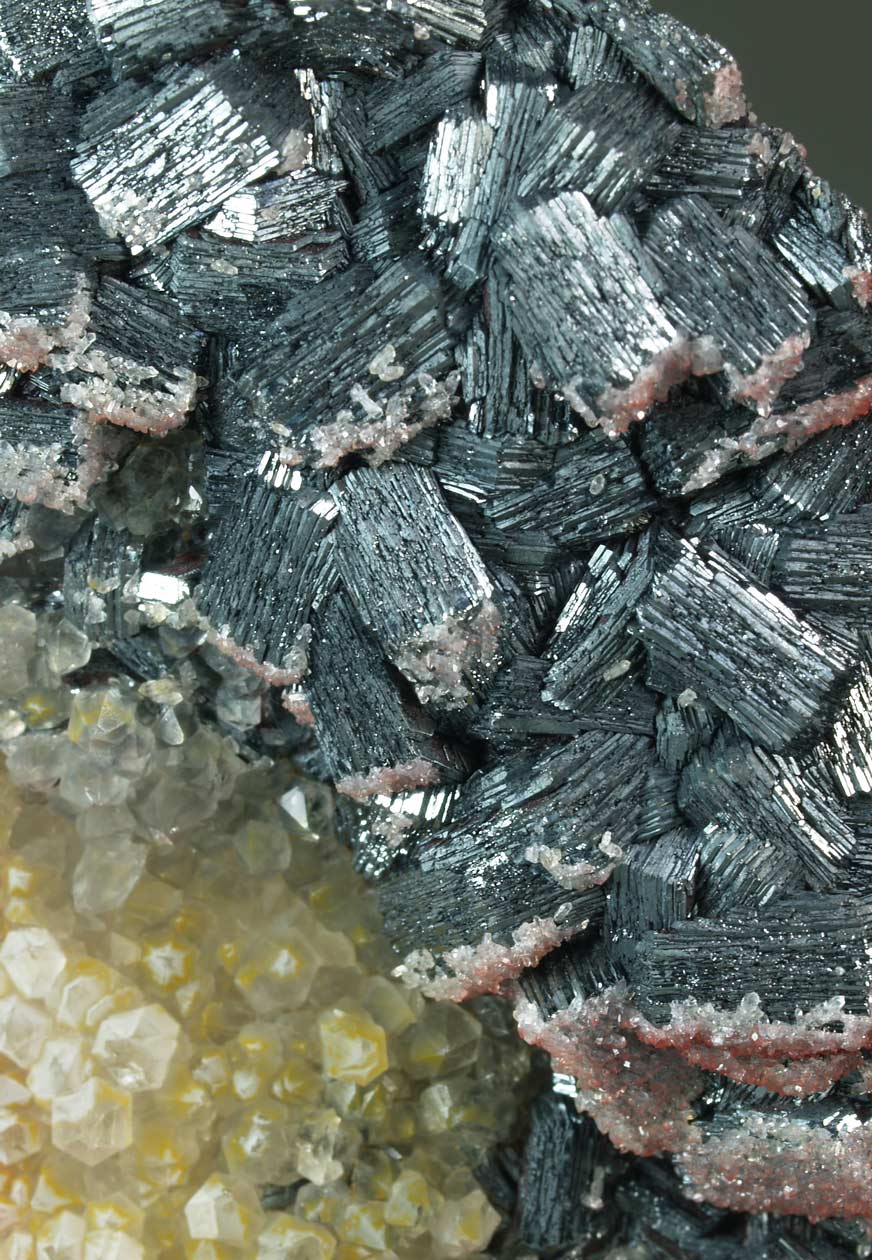
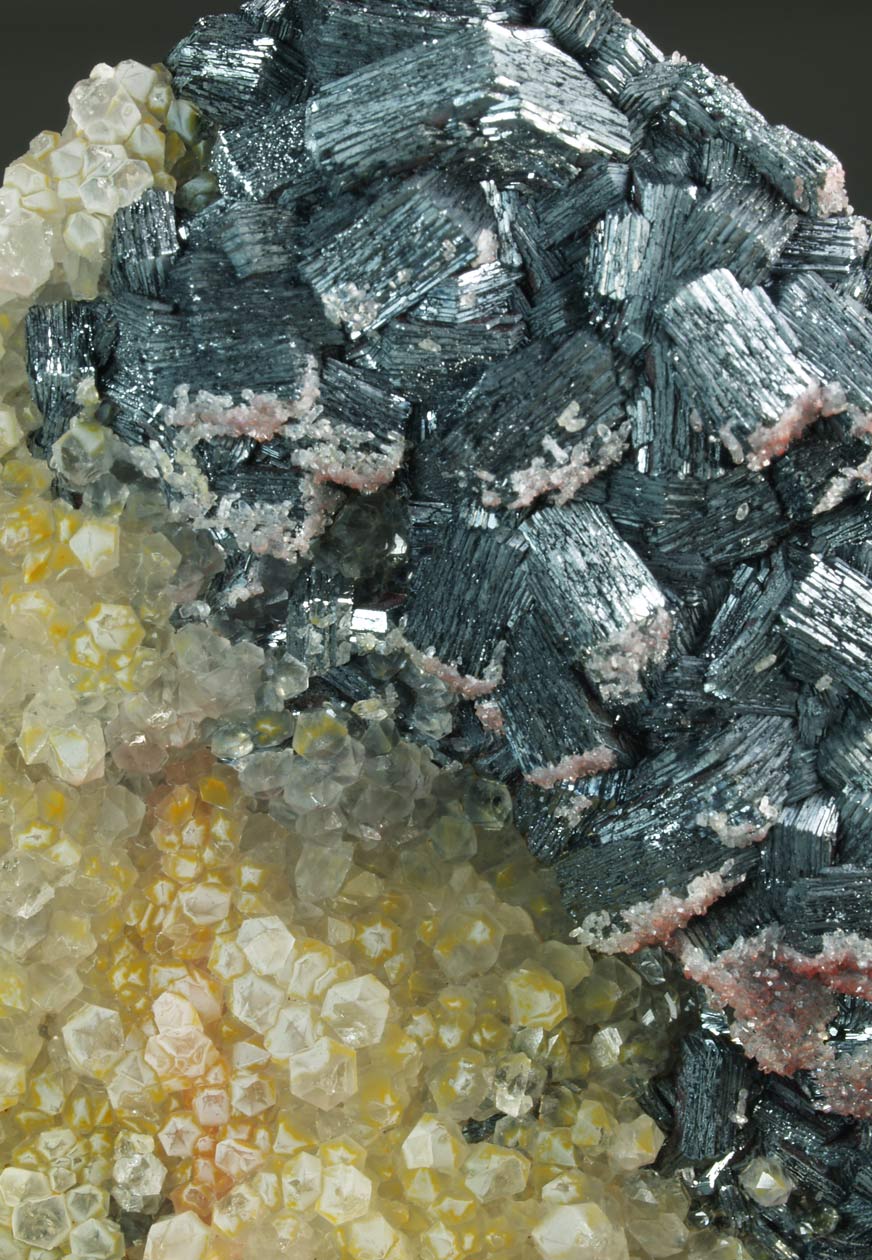
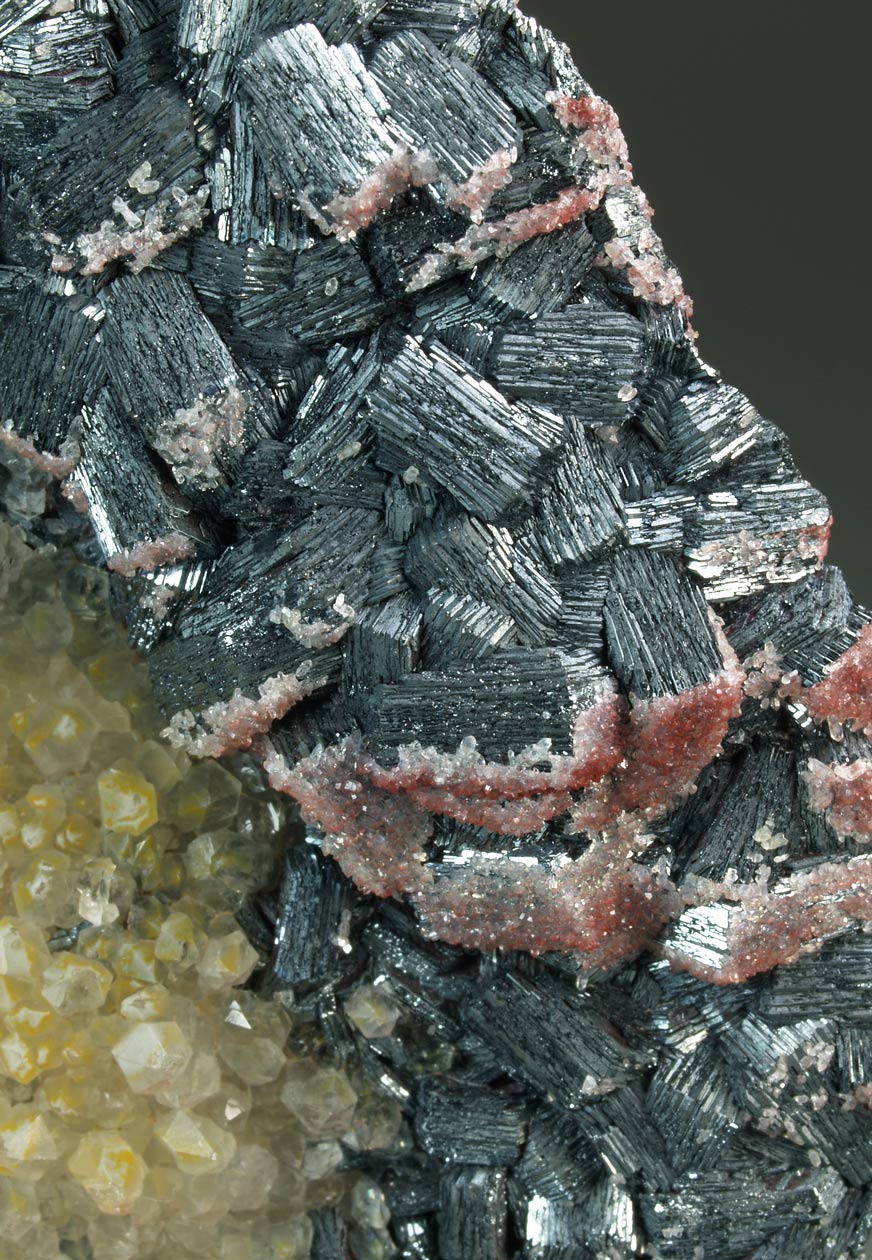
This brilliant specimen is an old time hematite from "Le Brézouard", a early 80's finding in the area of Sainte-Marie-aux-Mines. These specimens show a very characteristic hexagonal shape formed by several tabular to laminar brilliant hematite crystals forming aggregates interpenetrated and on a quartz matrix. In this specimen highlights the visibility of the quartz crystals of the matrix, unusual, and the aggregates of small doubly terminated crystals of quartz on the hematite. A very aesthetic and classic specimen for the mining area of Sainte-Marie area.
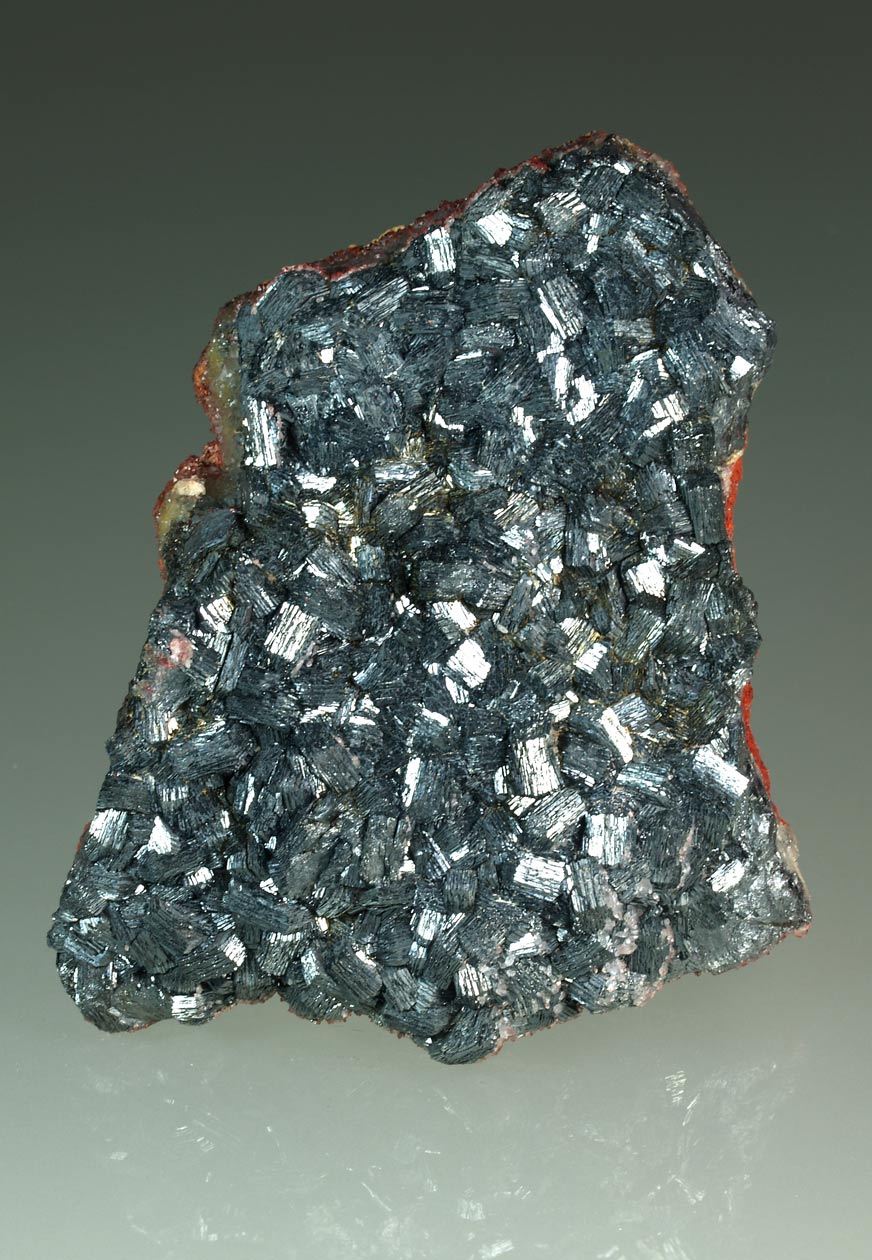
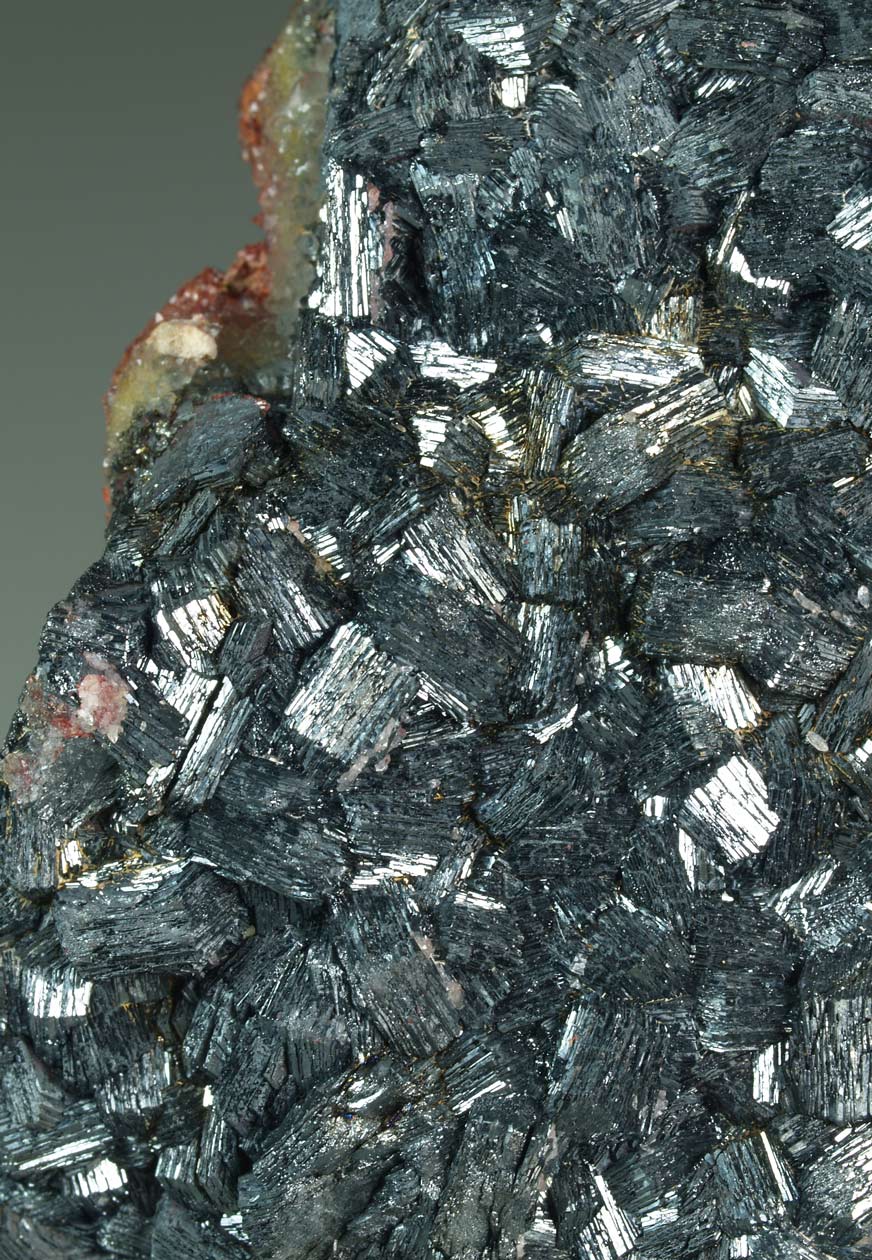
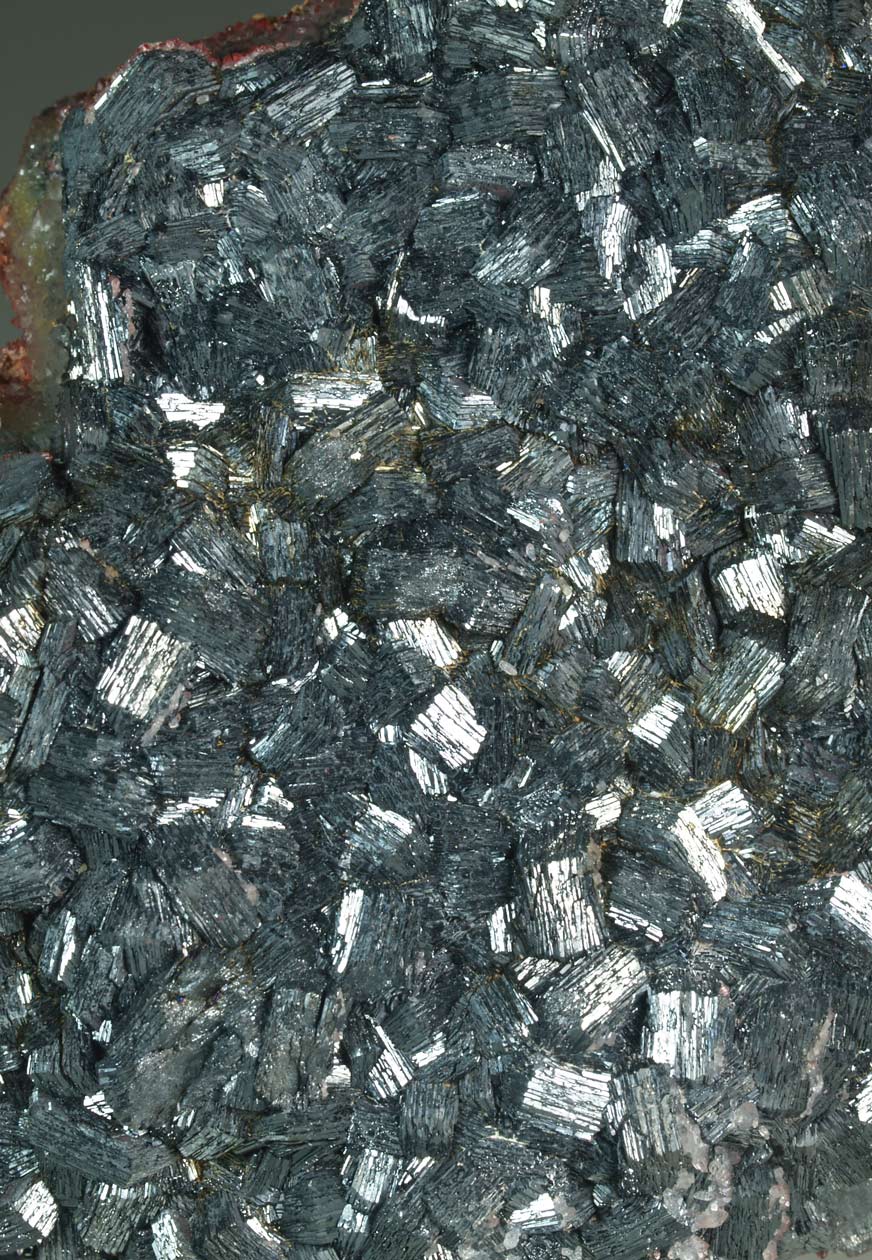
This good size brilliant specimen is an old time hematite from "Le Brézouard", a early 80's finding in the area of Sainte-Marie-aux-Mines. These specimens show a very characteristic hexagonal shape formed by several tabular to laminar brilliant hematite crystals forming aggregates interpenetrated and on a quartz matrix. A really classic specimen for French and "Sainte-Marie" mineralogy.
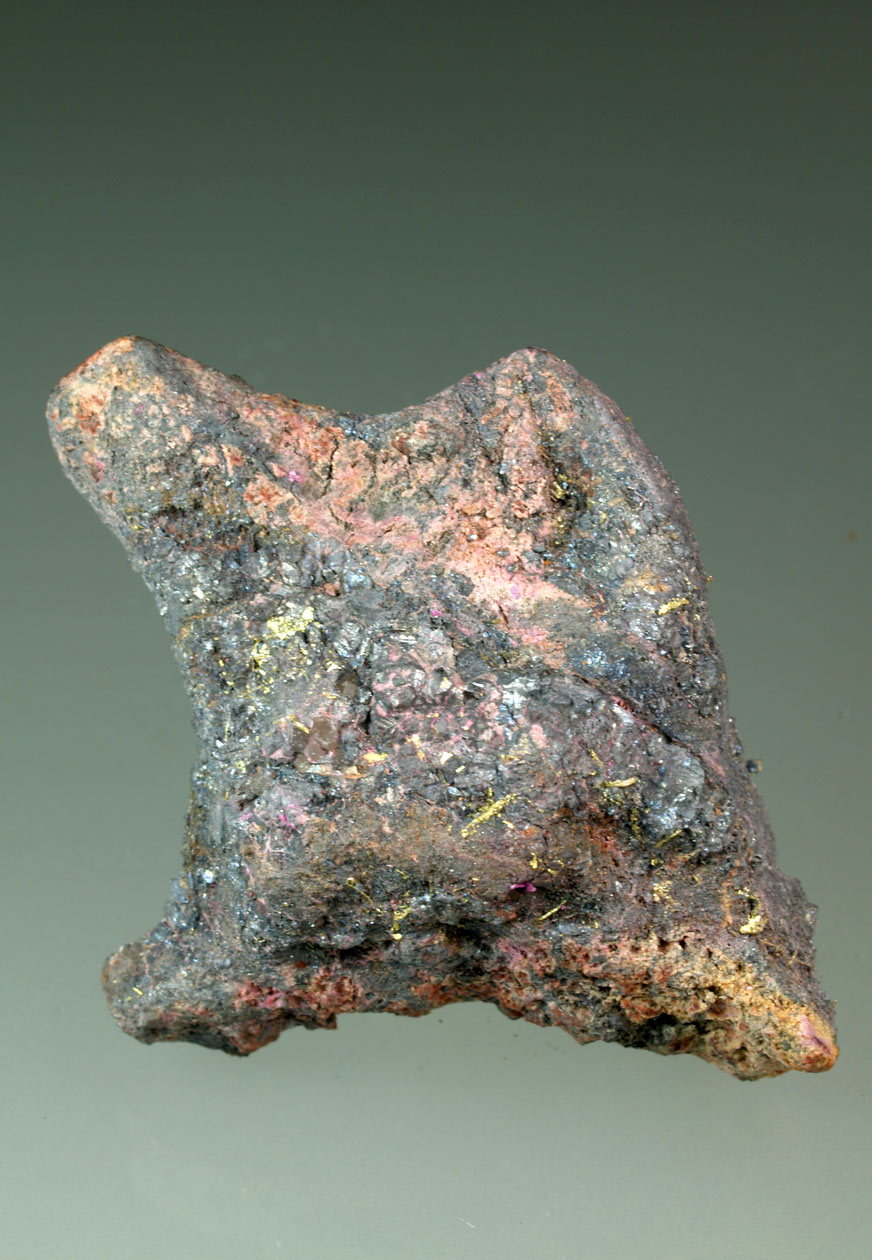
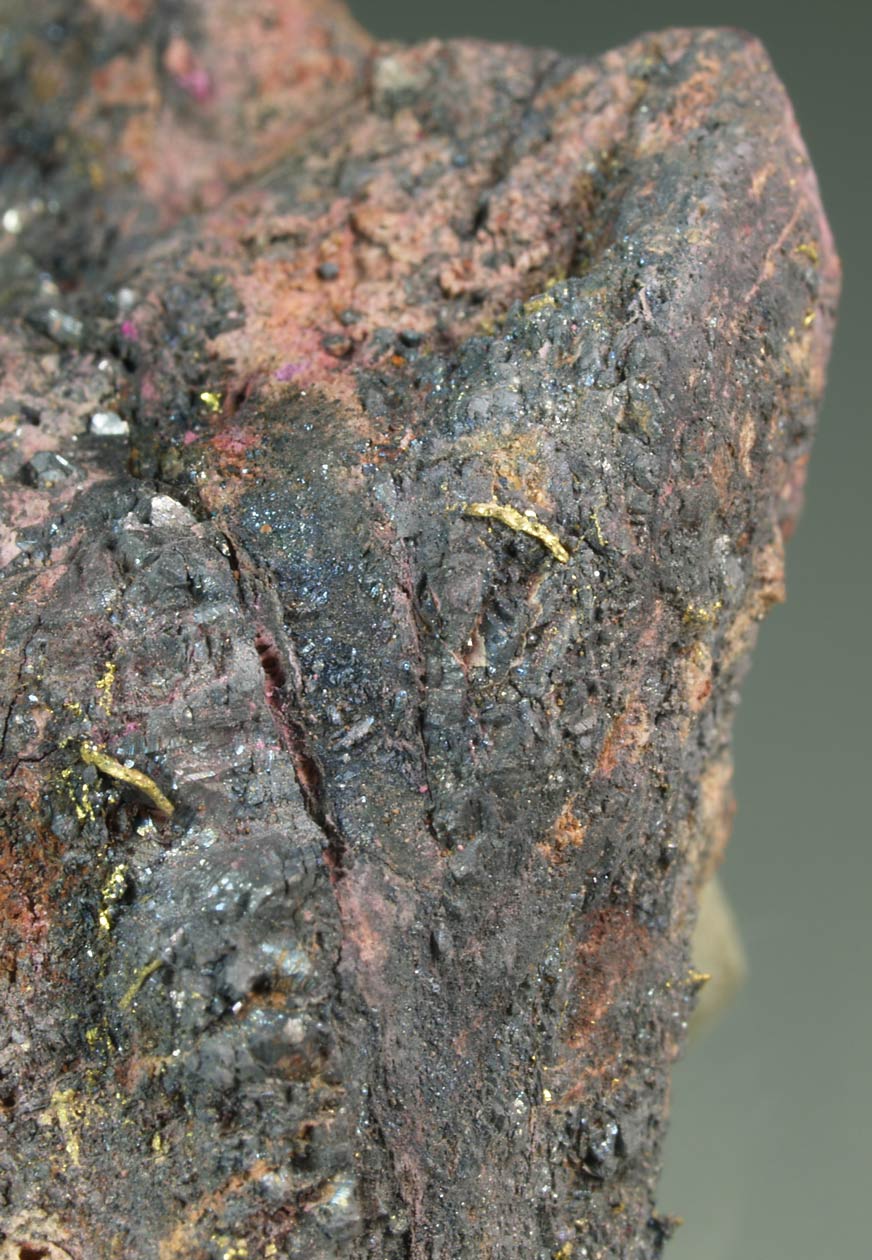
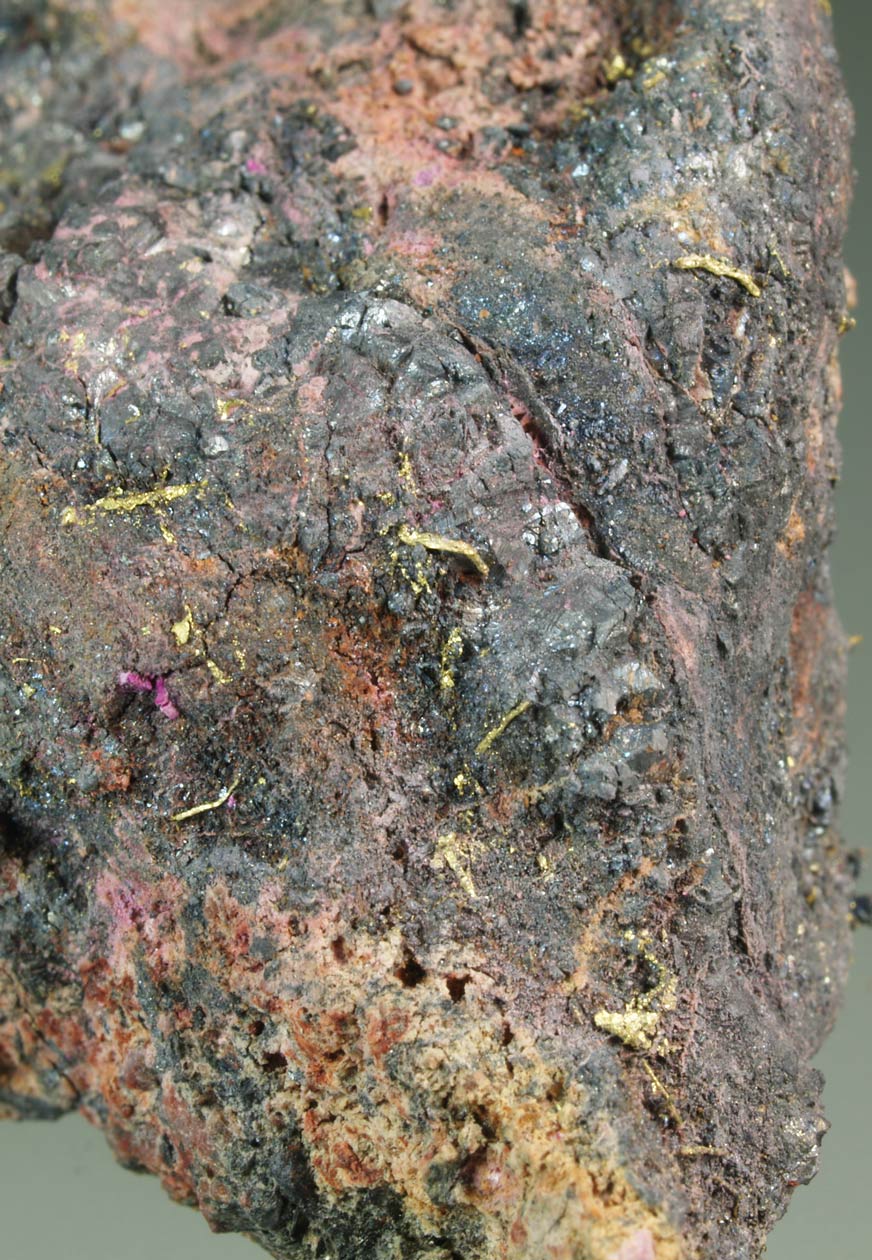
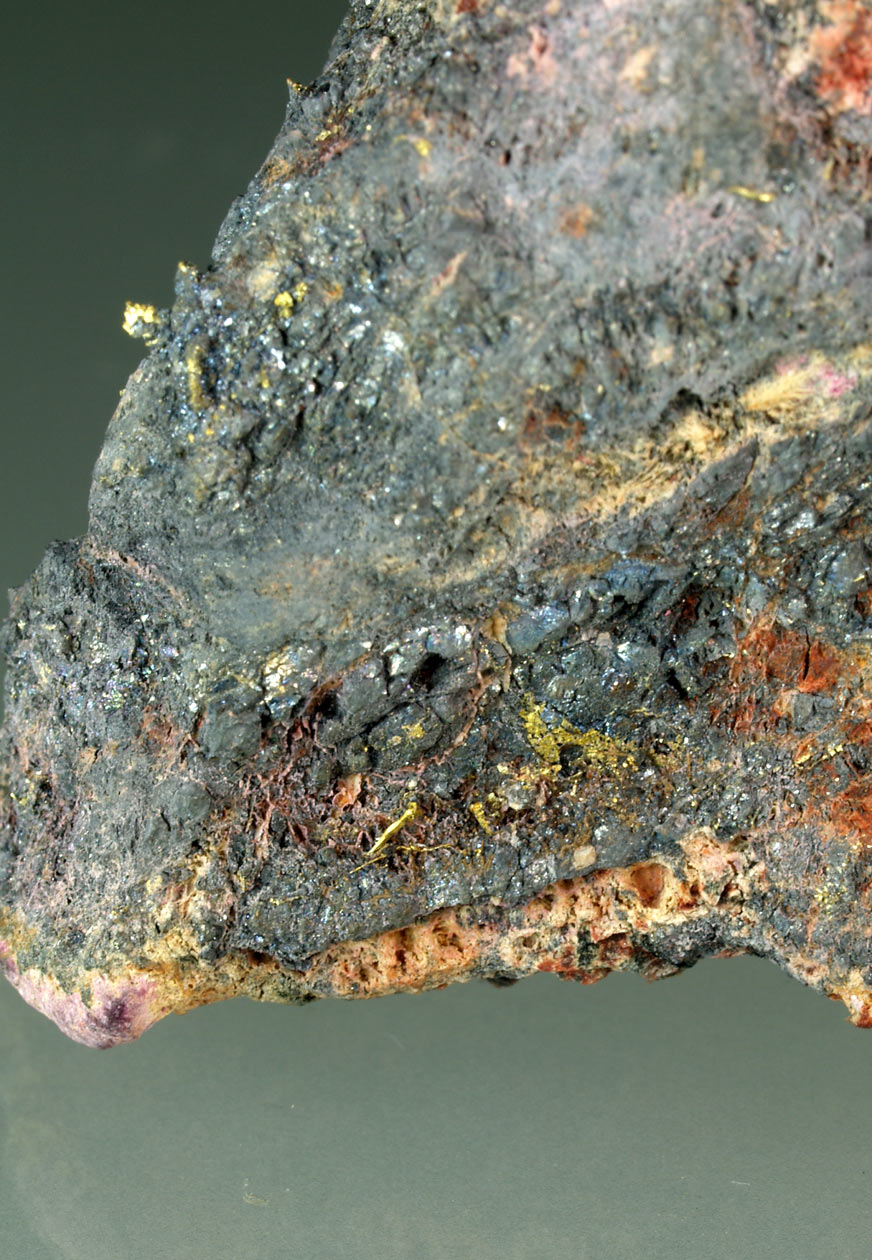
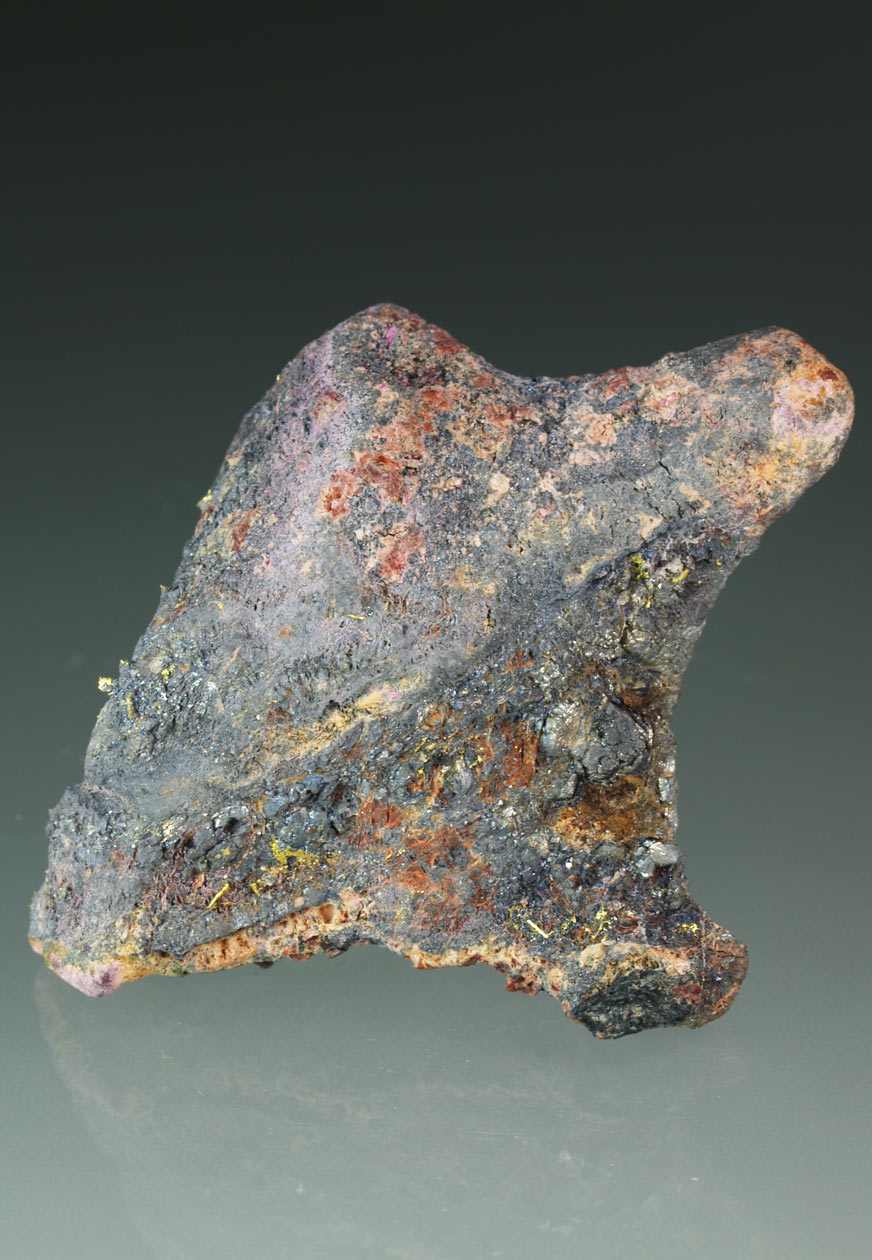
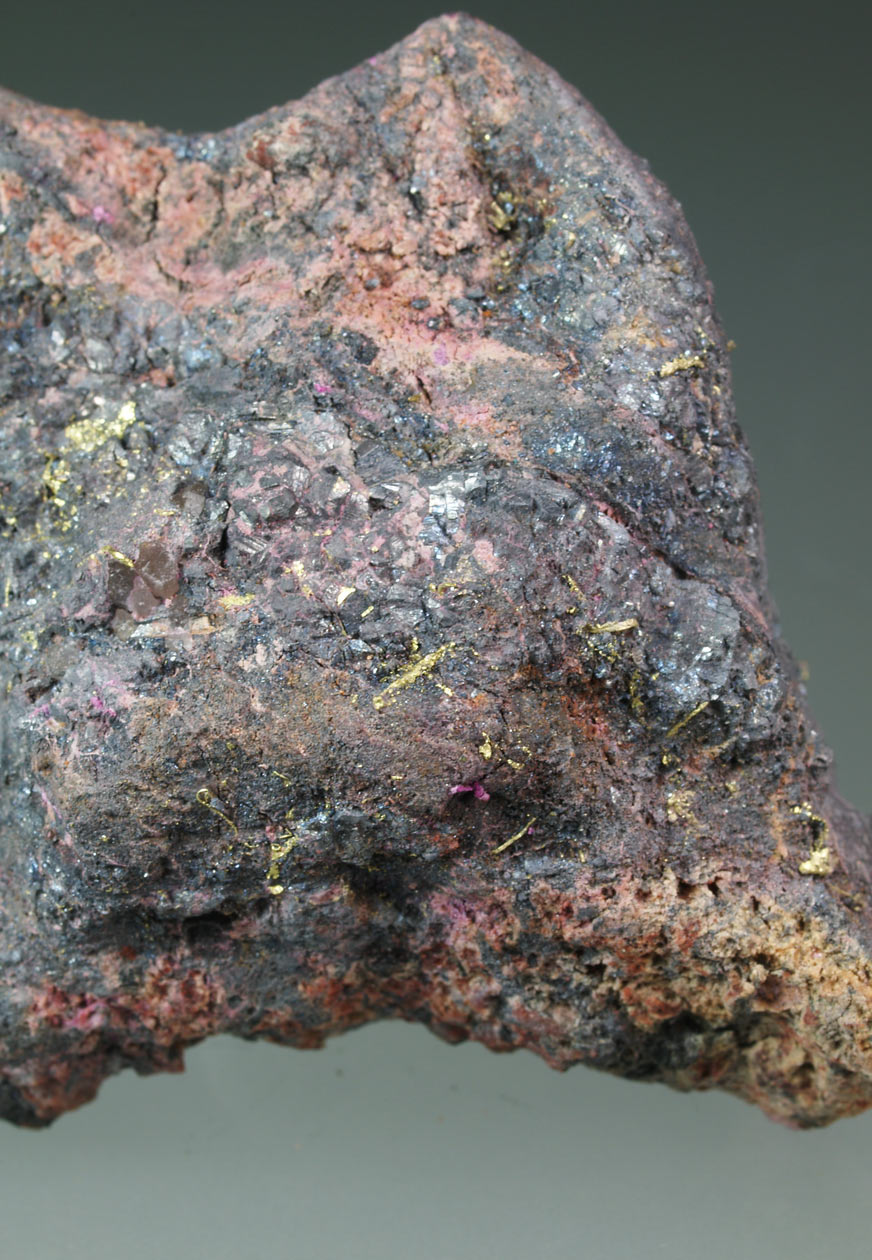
A novelty in Sainte-Marie-aux-Mines (2017). Matrix formed by sulphides, arsenites and arsenates of Co like erythrite, with some crystals, accompanied by several wire to laminar gold aggregates. SEM analysis shows that it is a rich silver gold, variety electrum, unusual. Silver content is similar in all specimens we have analyzed and varies between 20-24% weight.
Under loupe, we can enjoy that some of these gold aggregates are formed by small crystals of octahedral to cubic forms. We can theorize a secondary genesis for this gold-electrum. We have analyzed the matrix of these specimens observing that the bright metallic matrix corresponds to a mixture of cobalt arsenides, probably skutterudite, and other sulphides. We will send all analyzes to the buyer. The gold and electrum in Bou Azer was already described, but the quality of these specimens we offer surpasses what was known.
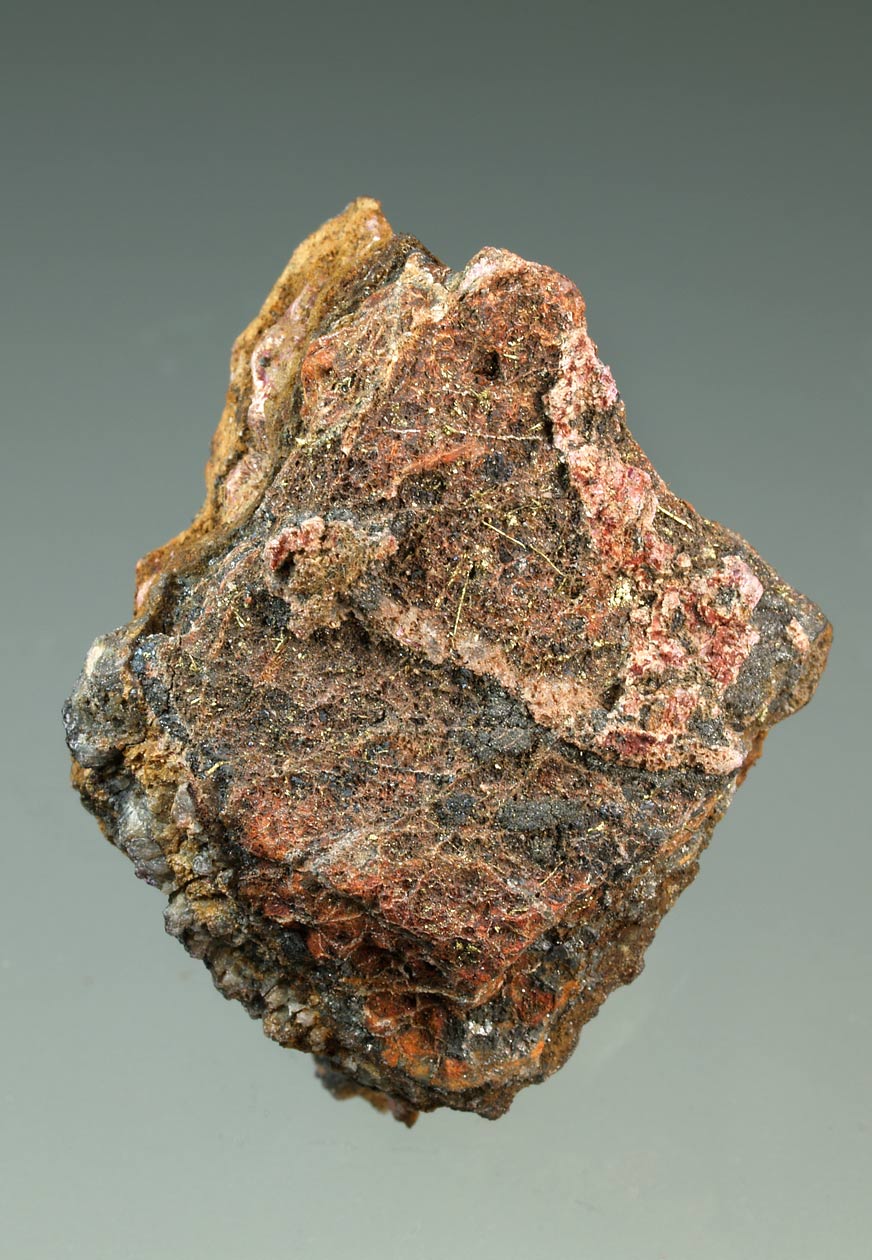
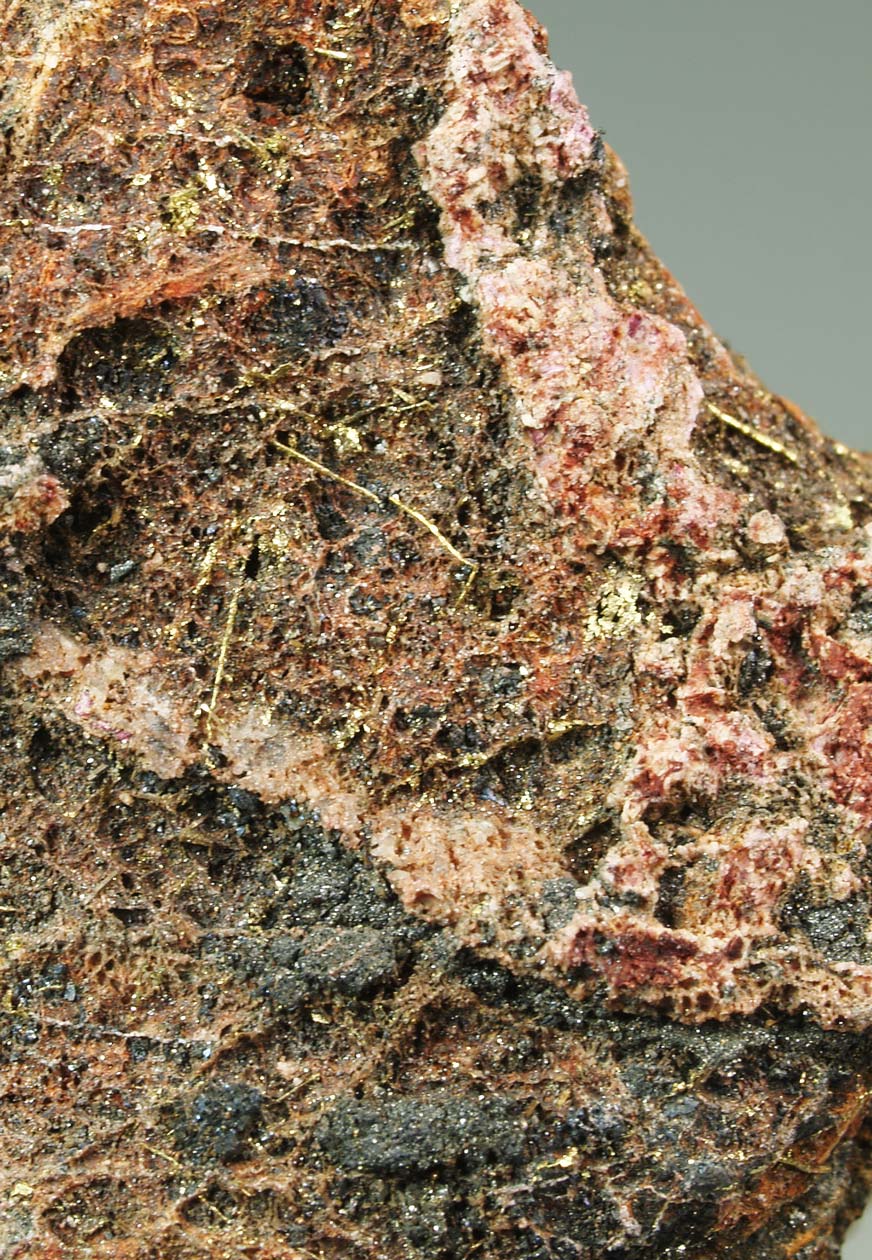
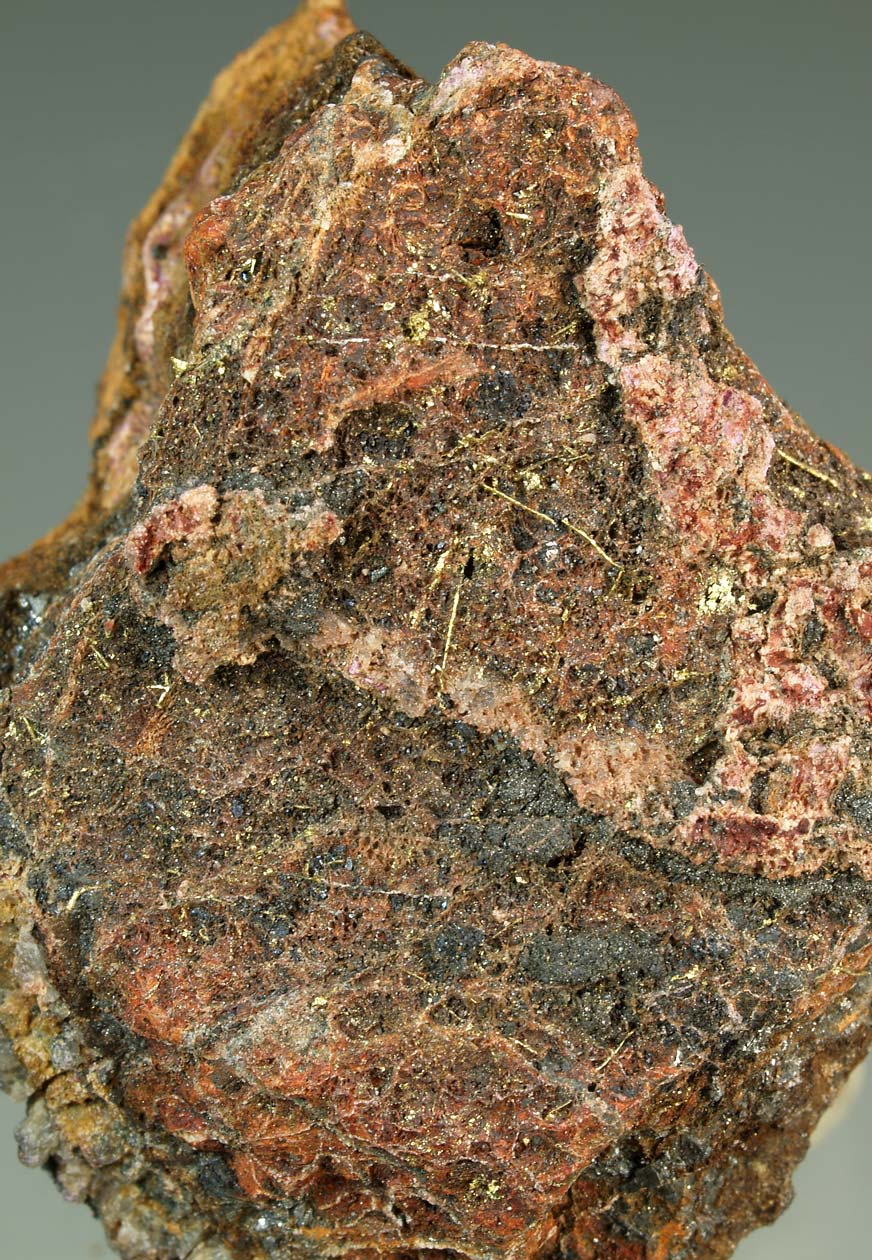
A novelty in Sainte-Marie-aux-Mines (2017). Matrix formed by sulphides, arsenites and arsenates of Co like erythrite, with some crystals, accompanied by several wire to laminar gold aggregates. SEM analysis shows that it is a rich silver gold, variety electrum, unusual. Silver content is similar in all specimens we have analyzed and varies between 20-24% weight.
Under loupe, we can enjoy that some of these gold aggregates are formed by small crystals of octahedral to cubic forms. We can theorize a secondary genesis for this gold-electrum. We have analyzed the matrix of these specimens observing that the bright metallic matrix corresponds to a mixture of cobalt arsenides, probably skutterudite, and other sulphides. We will send all analyzes to the buyer. The gold and electrum in Bou Azer was already described, but the quality of these specimens we offer surpasses what was known. A very nice miniature with several wire and laminar electrum.
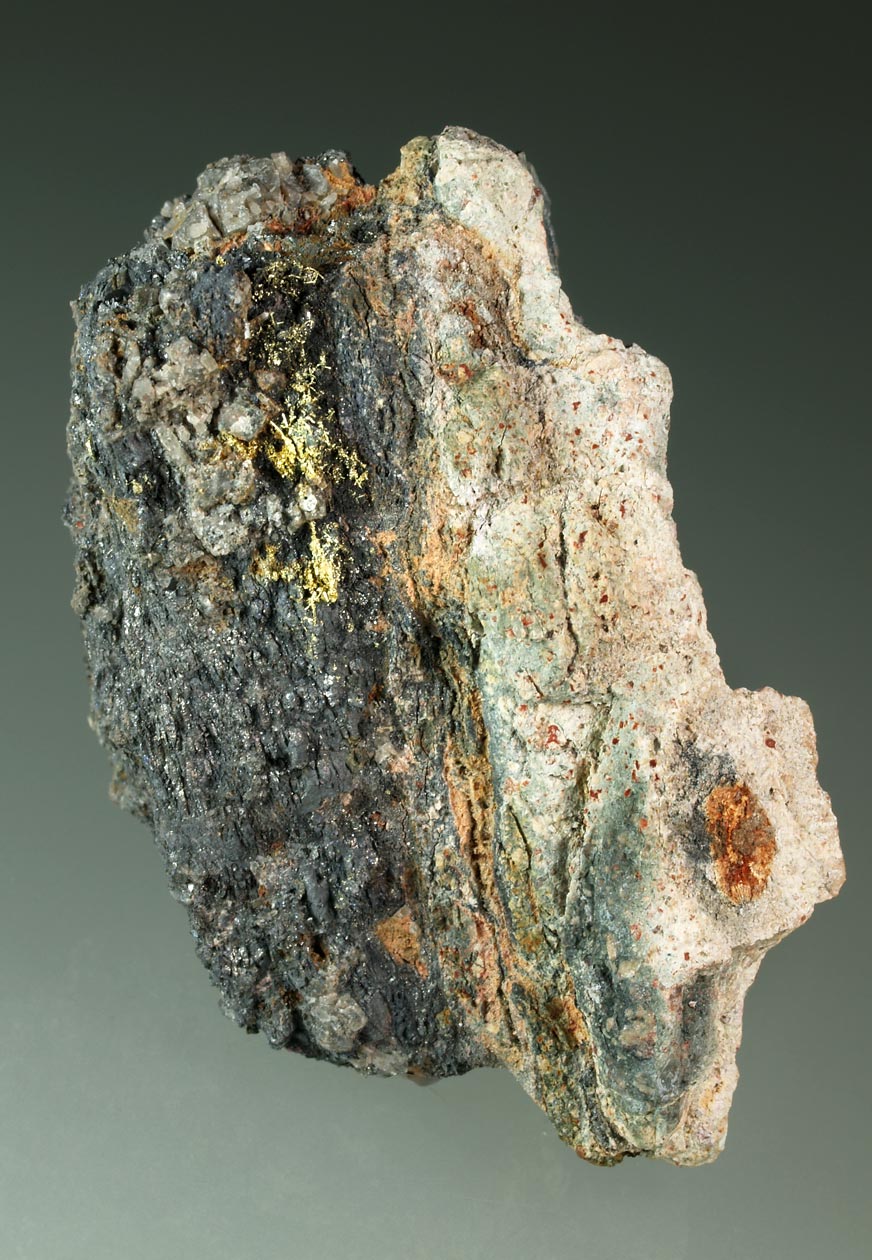
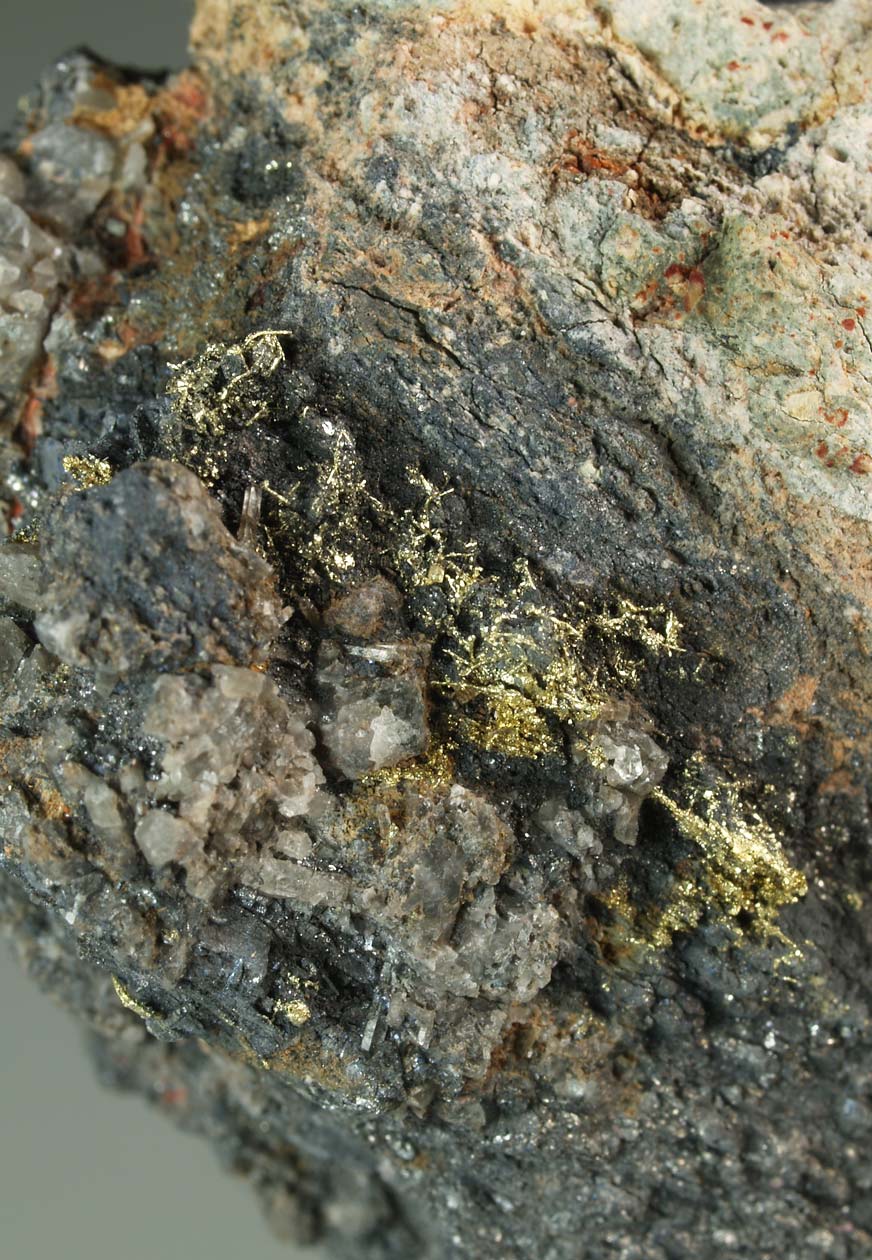
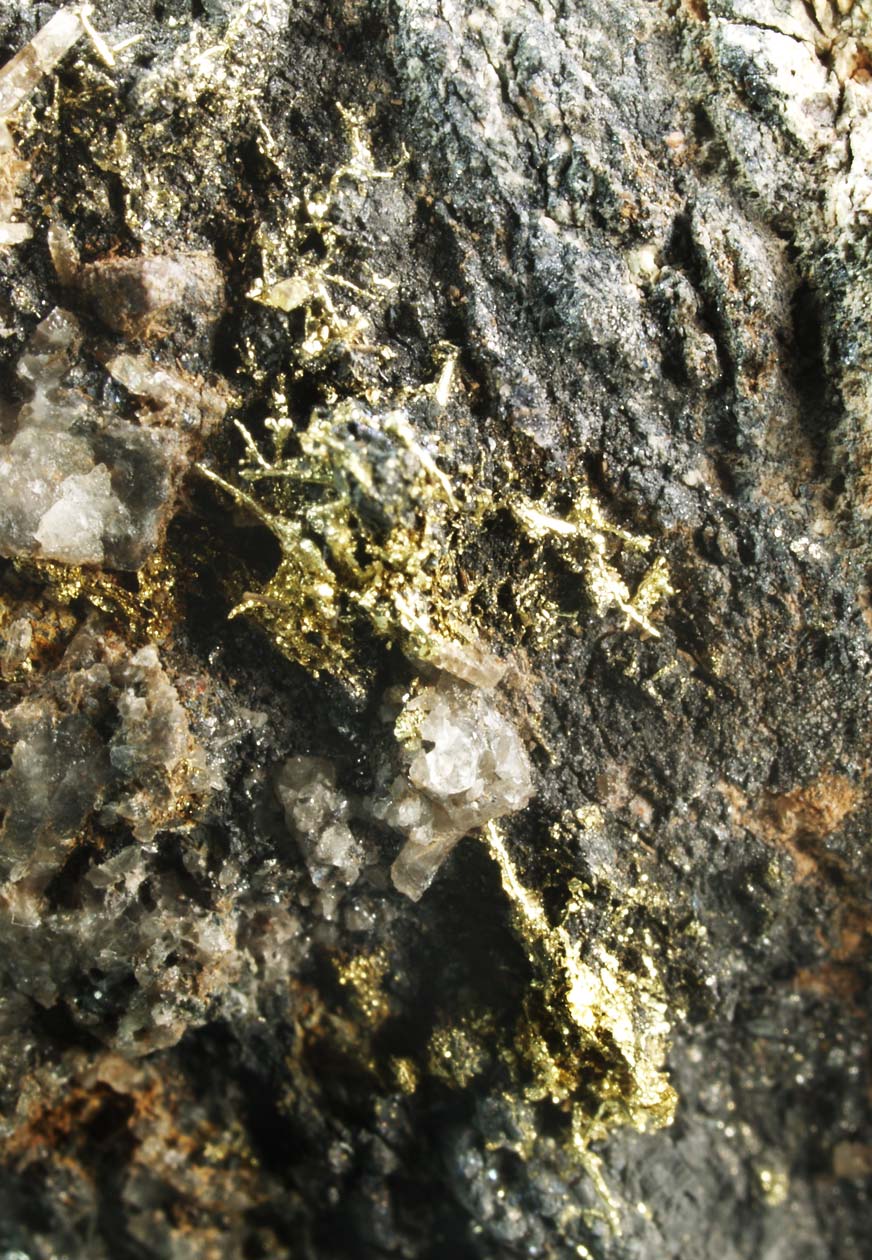
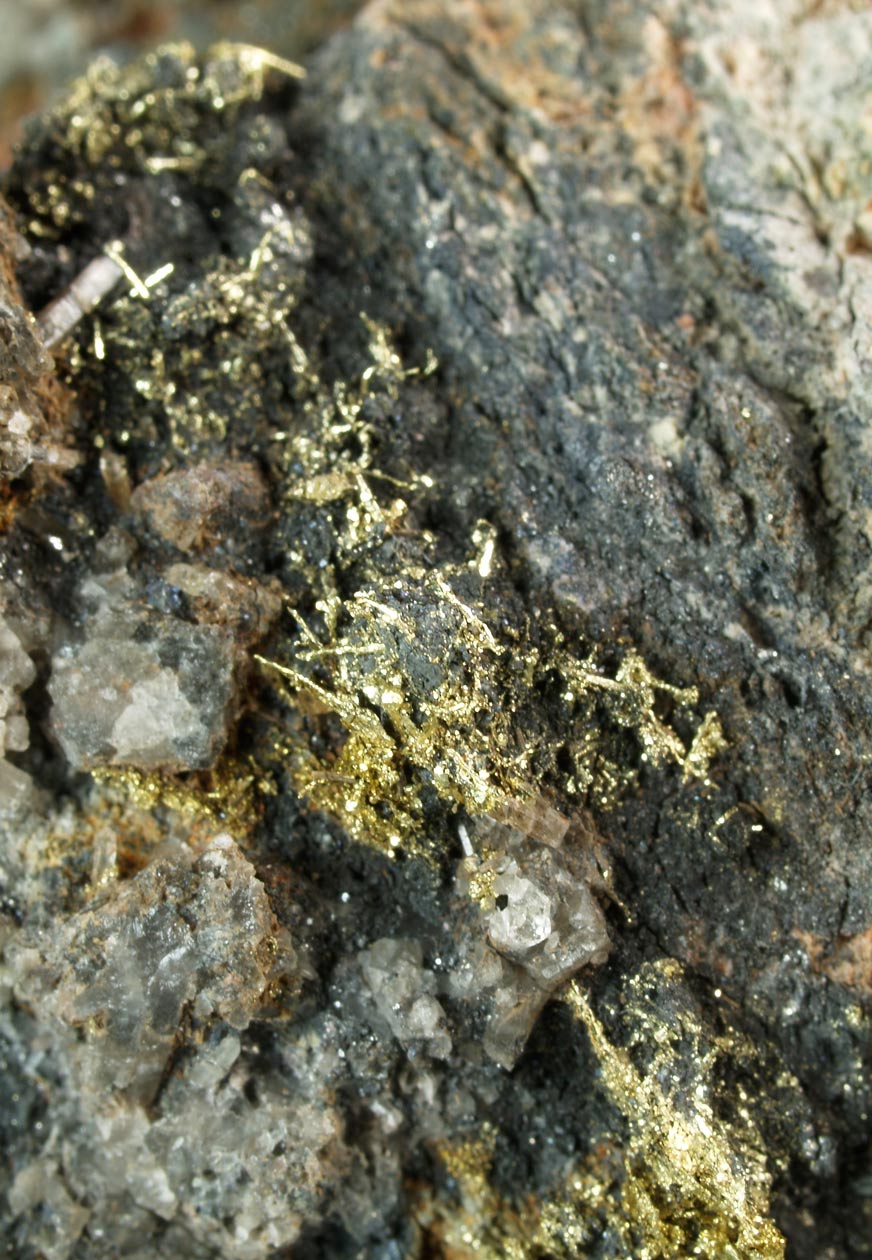
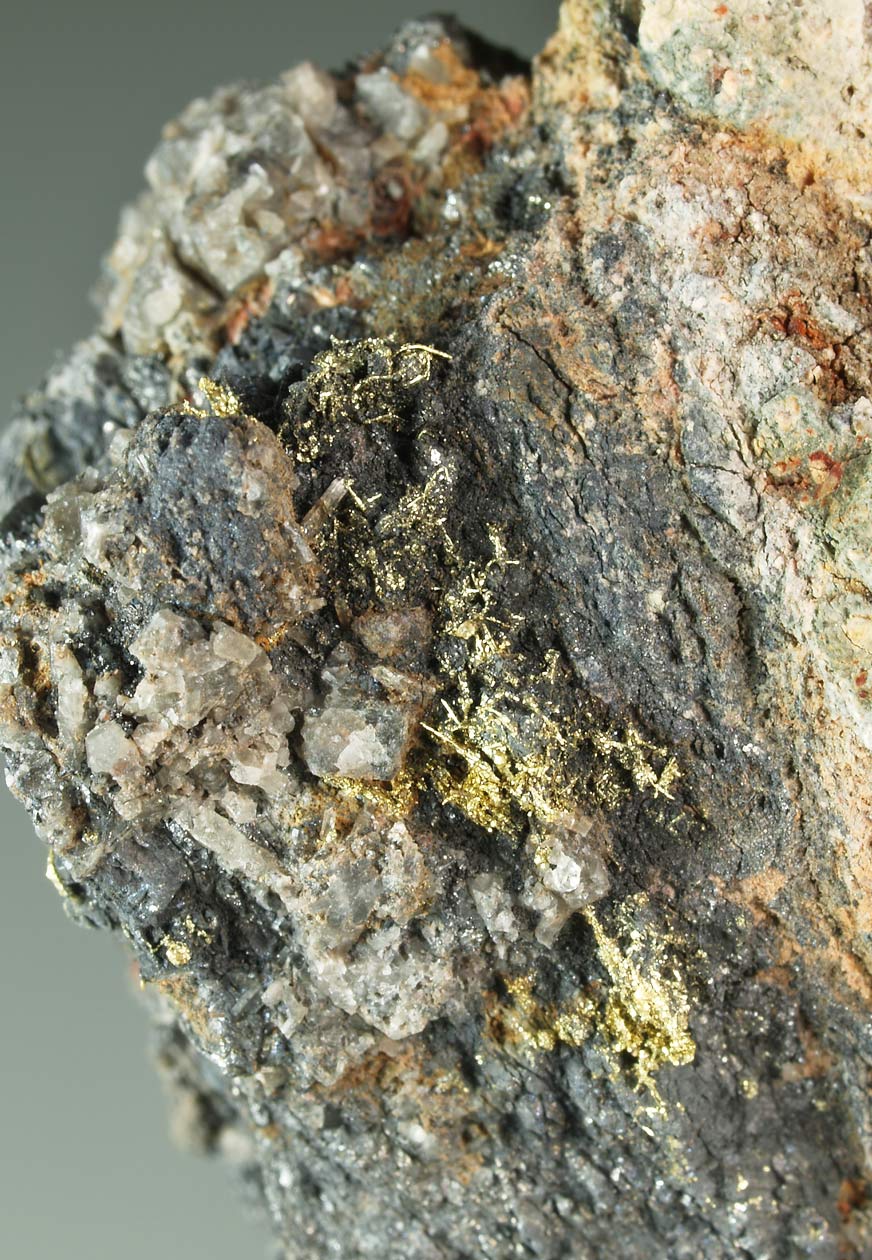
A novelty in Sainte-Marie-aux-Mines (2017). These specimens show a matrix formed by associated sulphides and arsenates of cobalt and iron. We can observe on both the presence of arborescent, filiform and laminar gold aggregates. SEM analysis has shown that this is a variety of gold rich in silver (20-24%weight): electrum. Under the loupe we can enjoy that some of these aggregates are formed by small crystals of octahedral to cubic shape of the precious metal. We can think a secondary genesis for this gold electrum. We have analyzed these specimens observing that the brilliant metallic matrix corresponds to skutterudite and other sulphides-arsenides. We will send all analysis to the buyer. The gold and electrum in Bou Azer was already described, but the quality of these specimens we offer surpasses what was known. A very rich gold specimen, with good size and aesthetic.
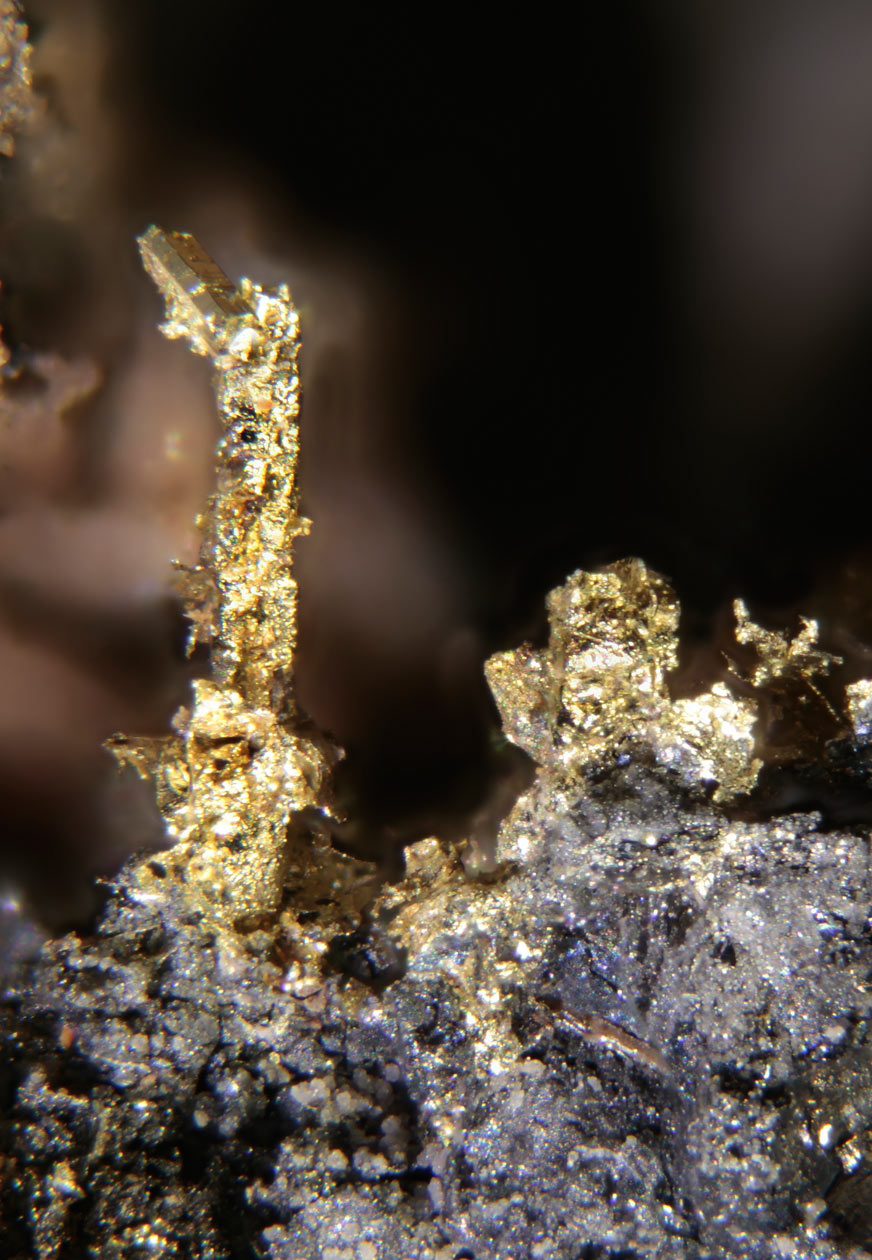
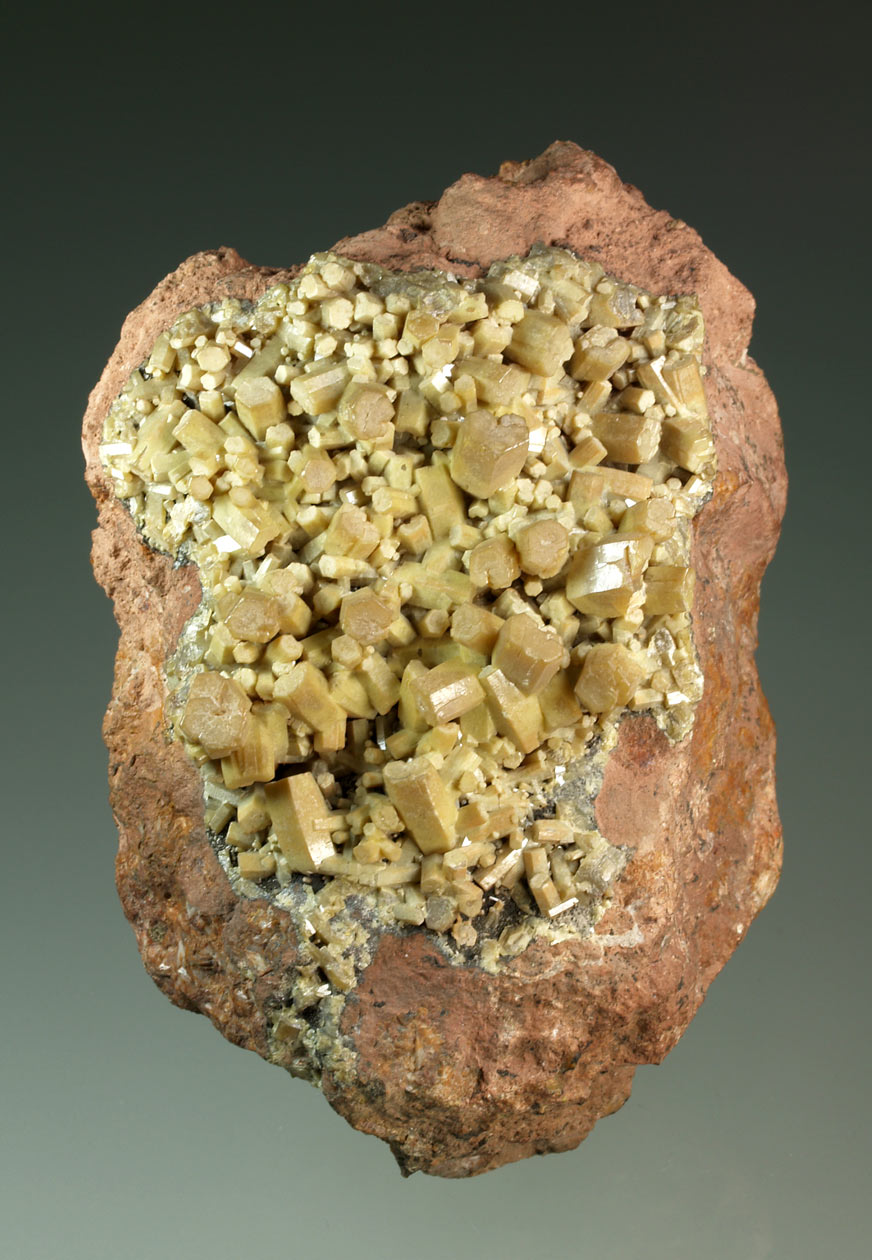
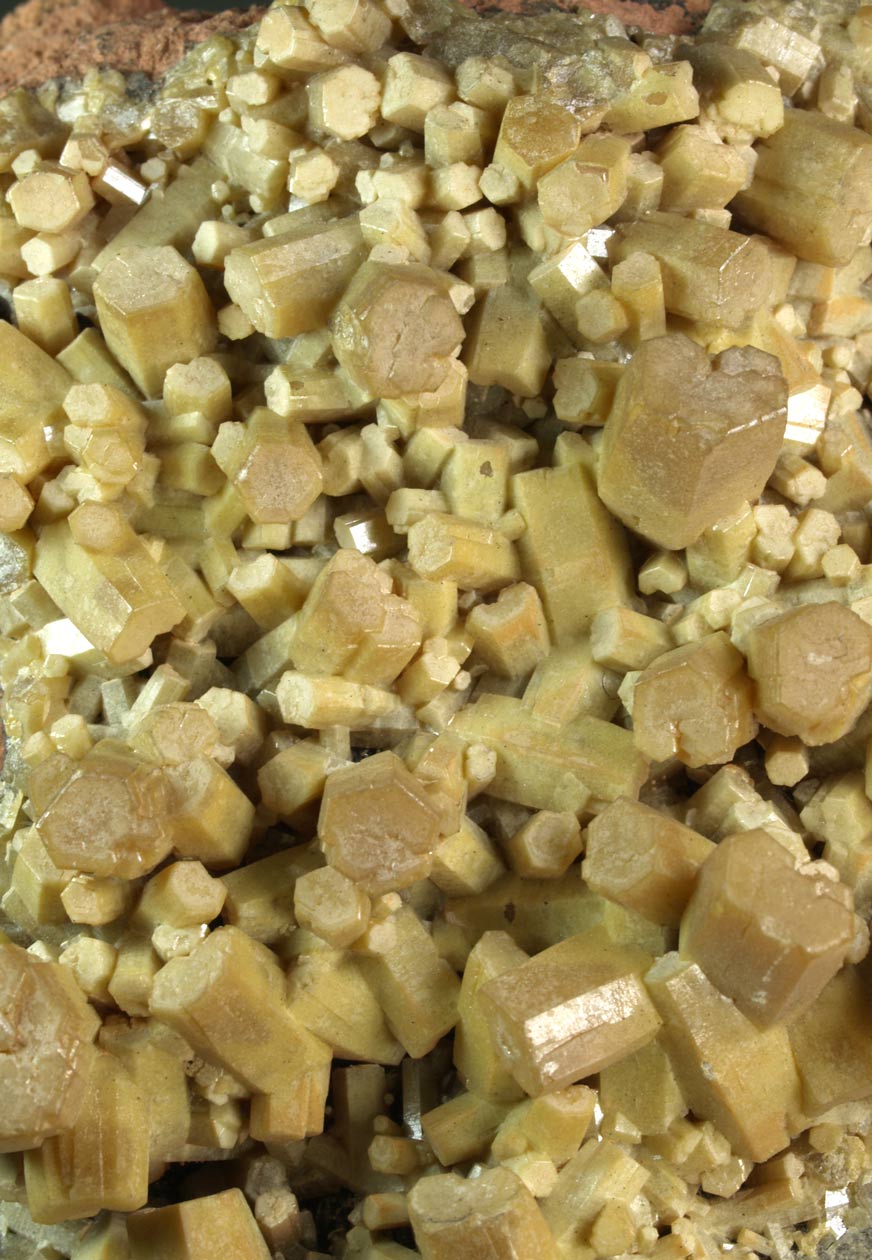
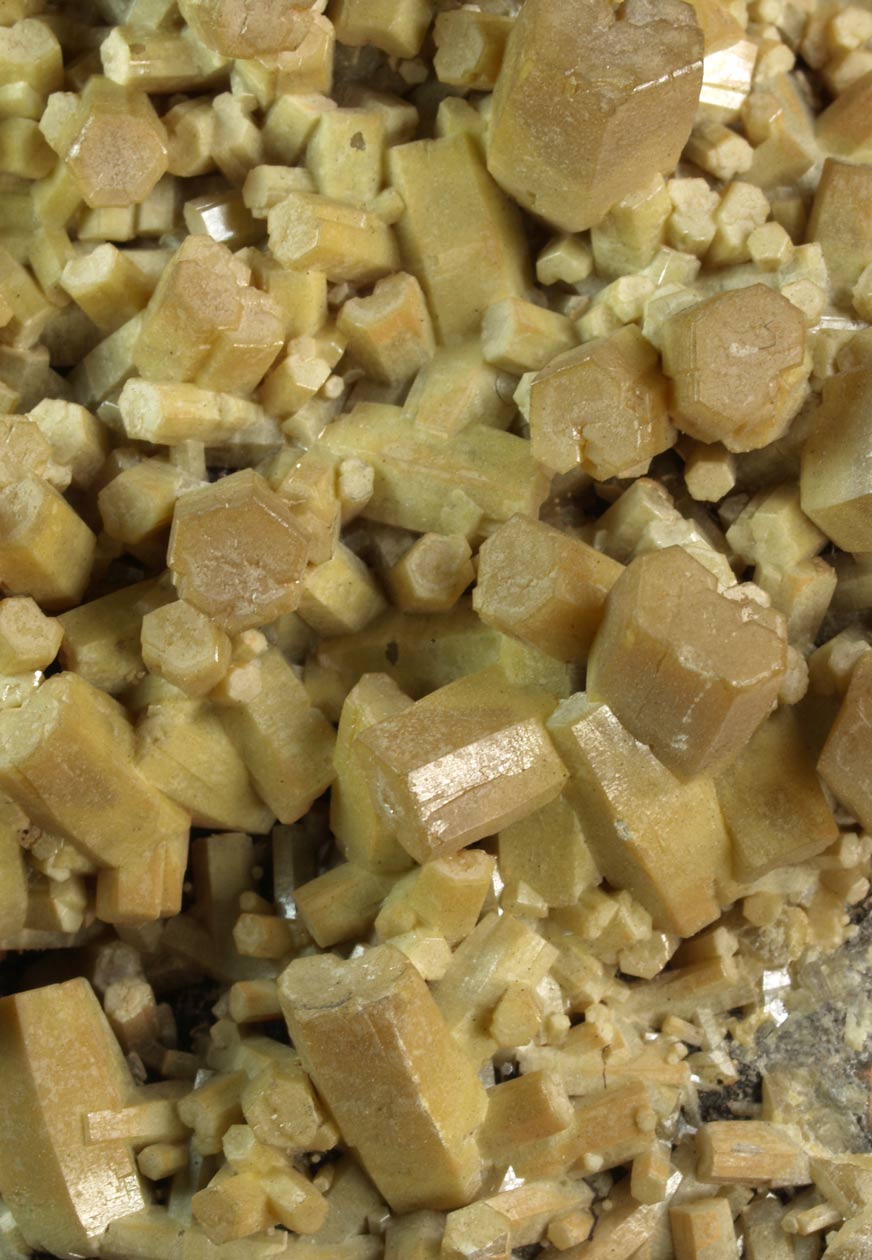
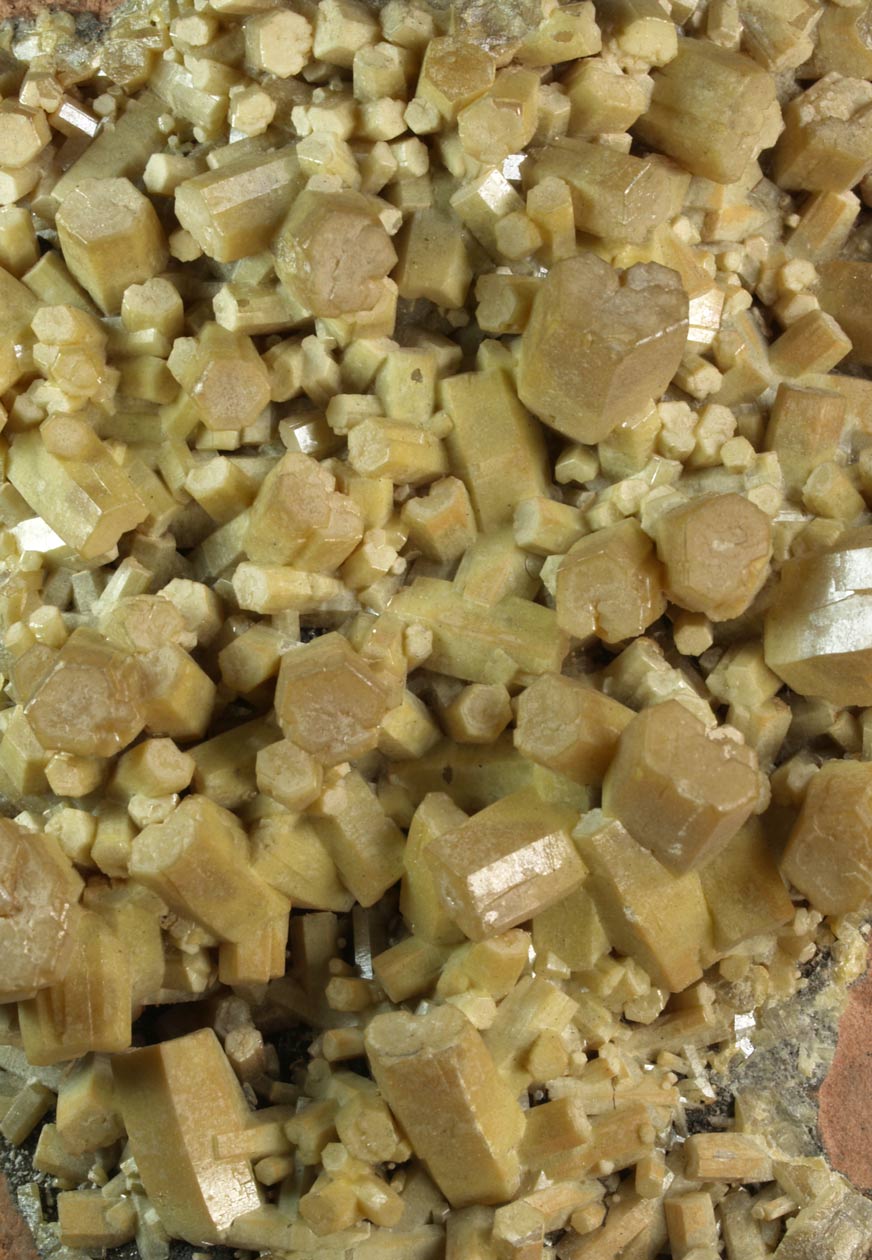
Rich group of so called arsenatian vanadinite showing defined edges and curved faces, barrel-shaped and many of them doubly terminated, with the characteristic color of this variety. These samples appeared on the market in the late 1970s as pyromorphite, until they were correctly determined by XRD and SEM-EDS analysis. This specimen has been analyzed, just for info, showing As 3.3%weight and 9% in V. Old specimen, nowadays rare to find.
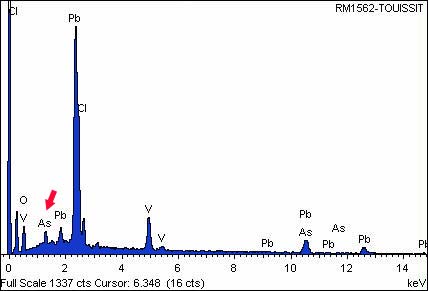
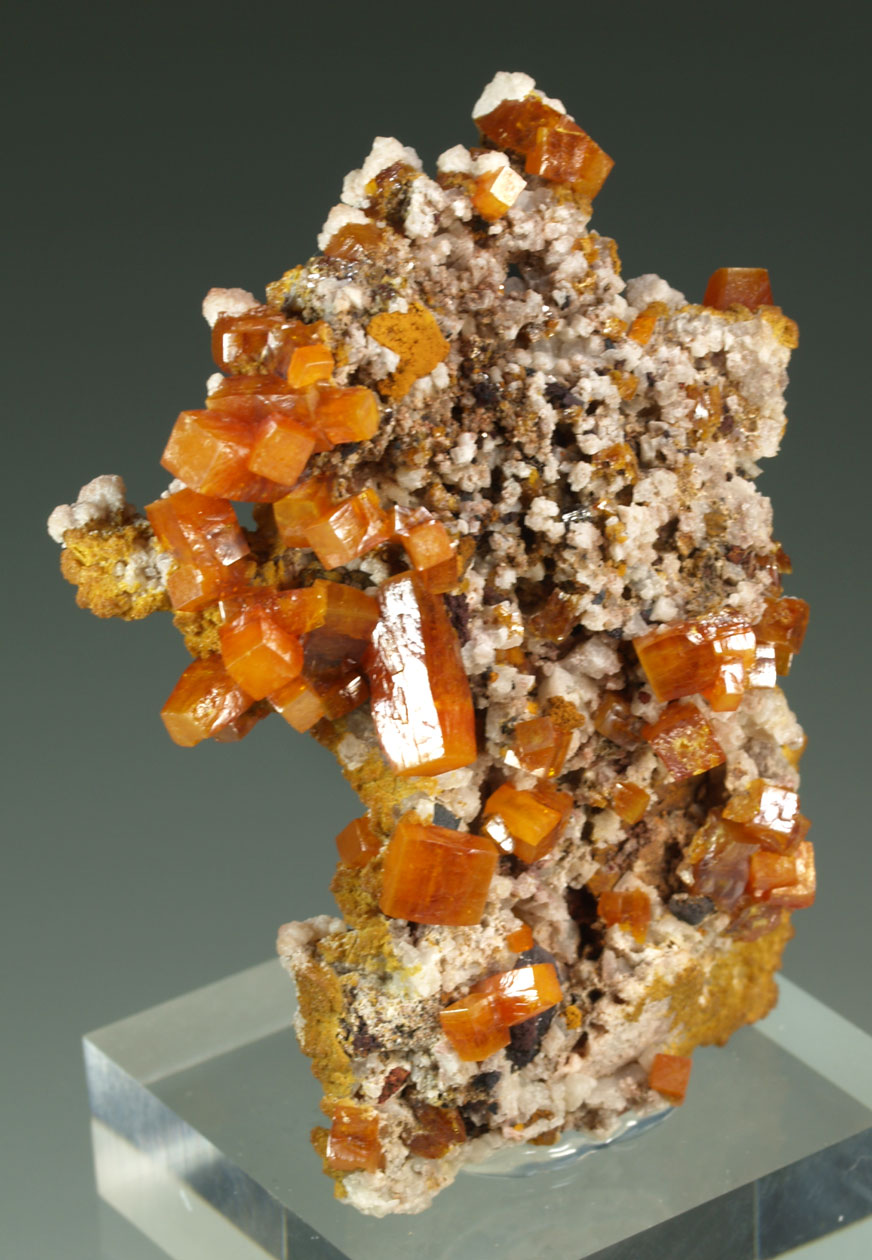
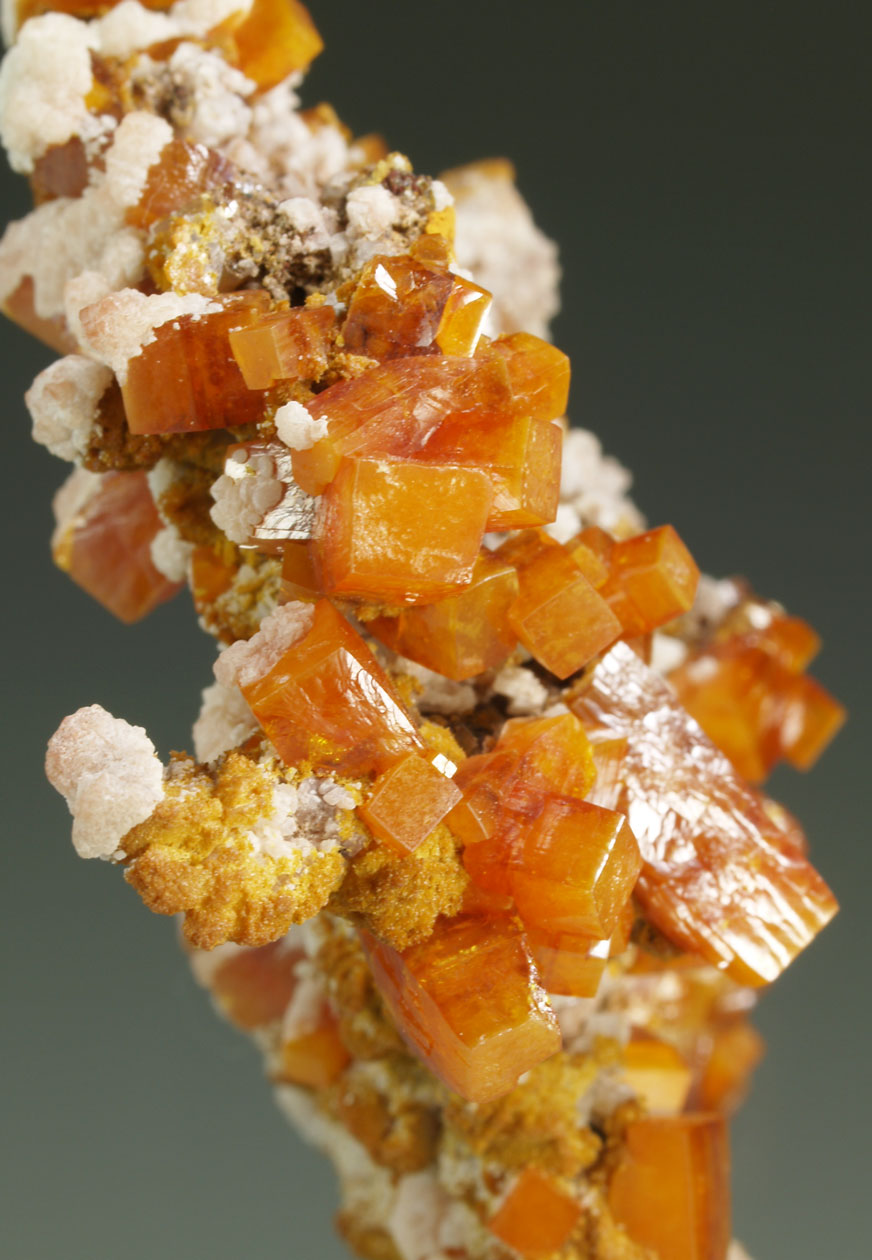
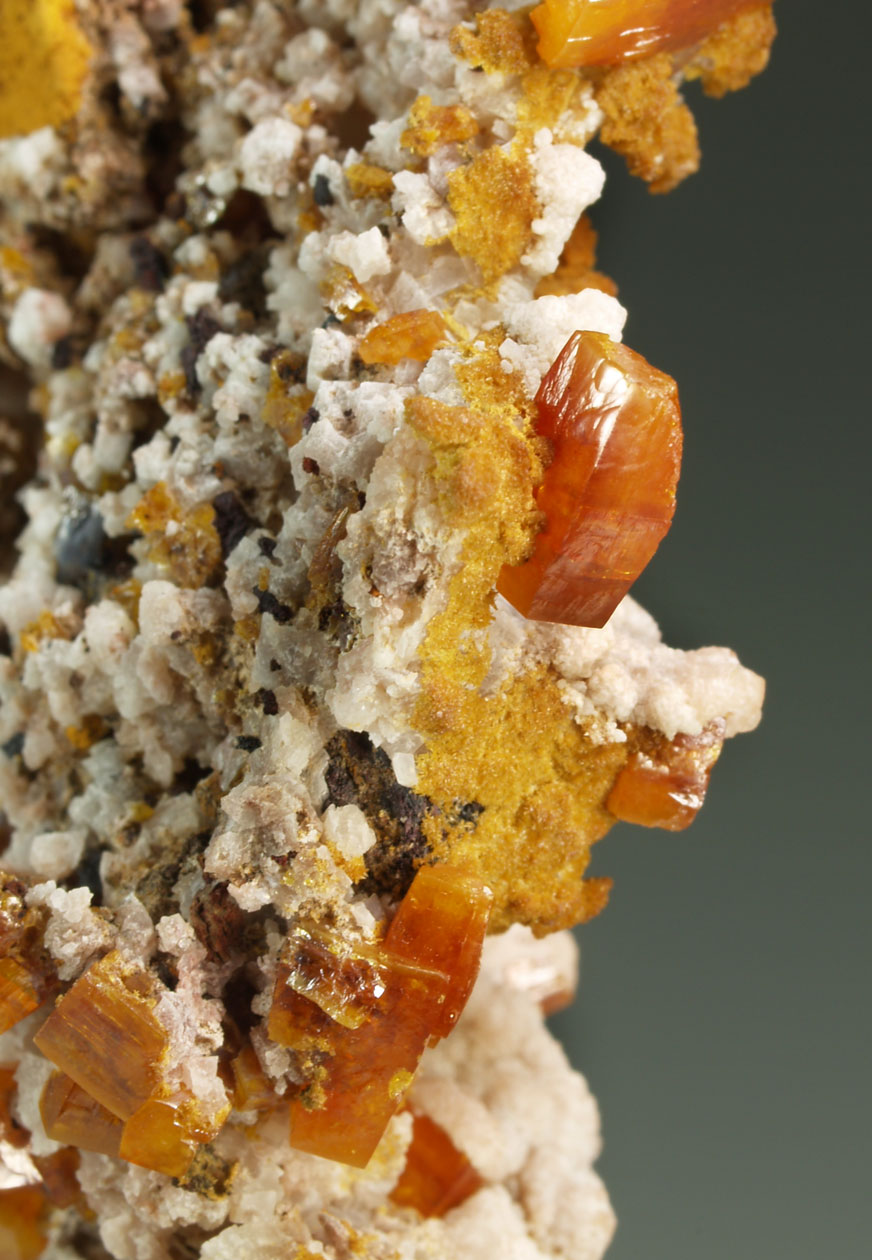
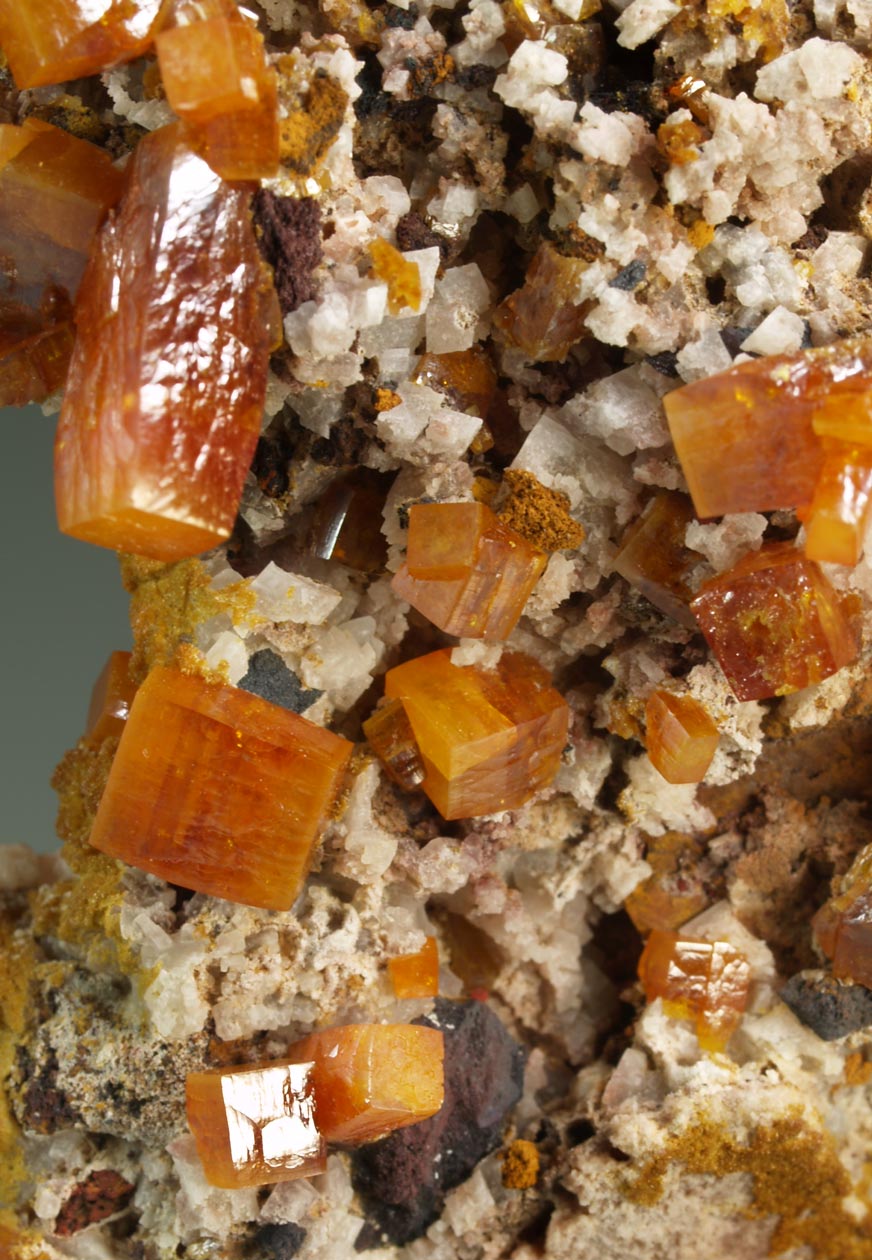
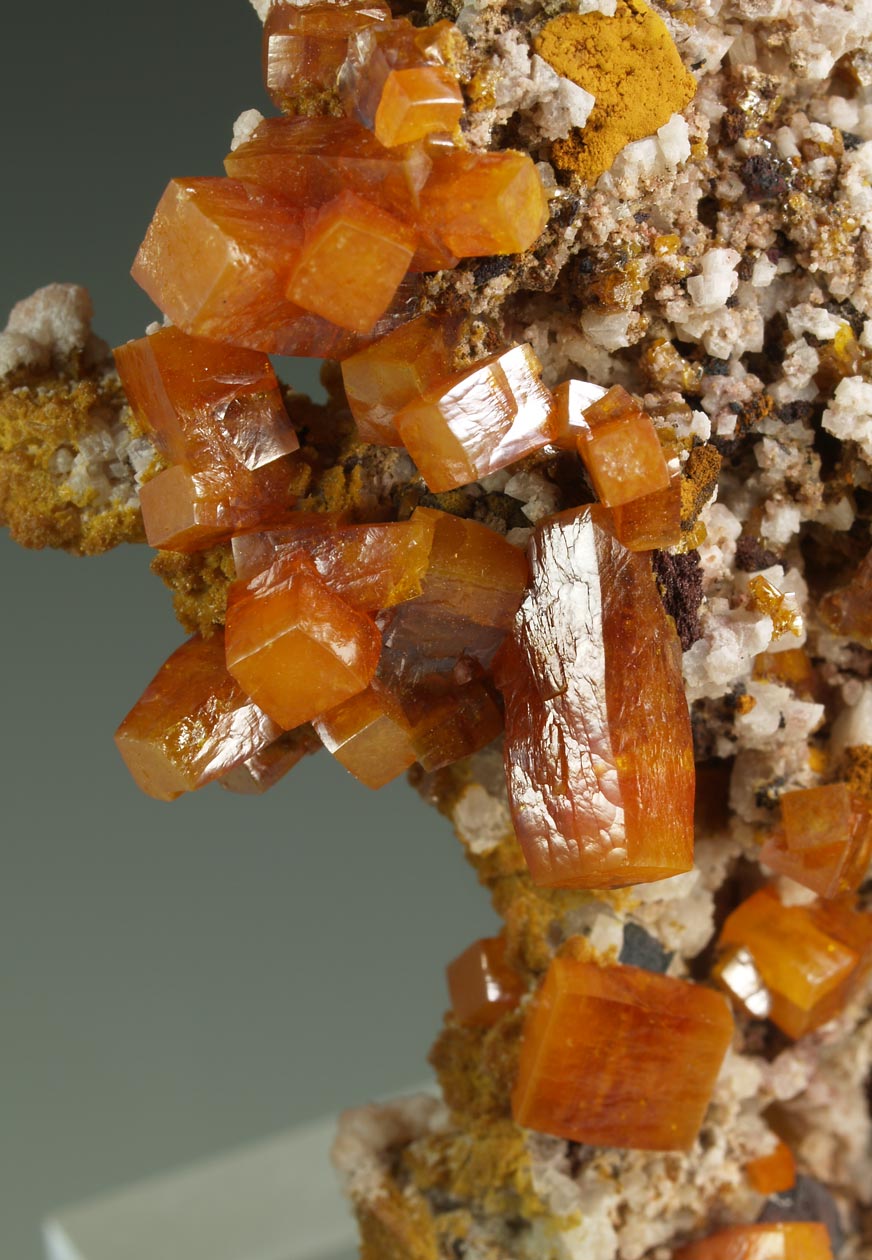
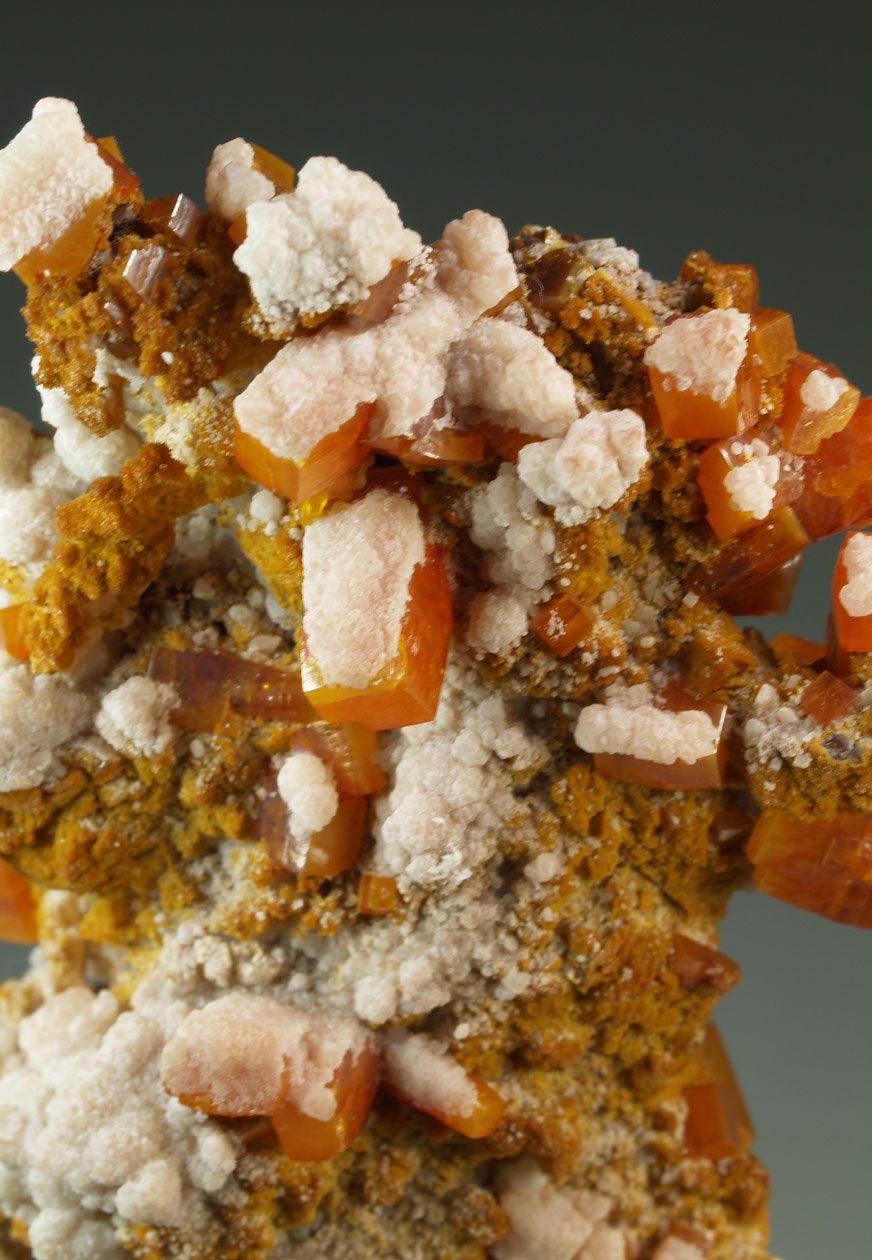
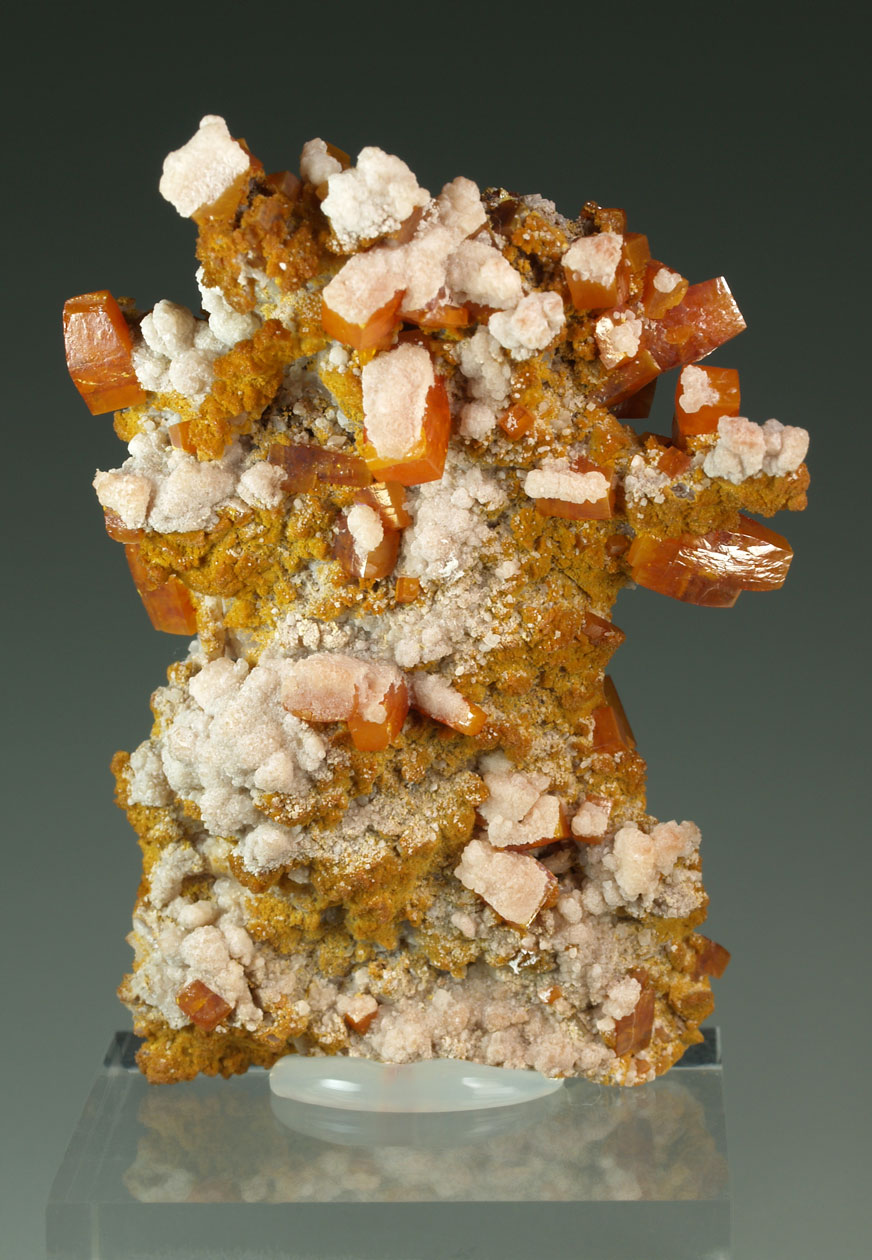
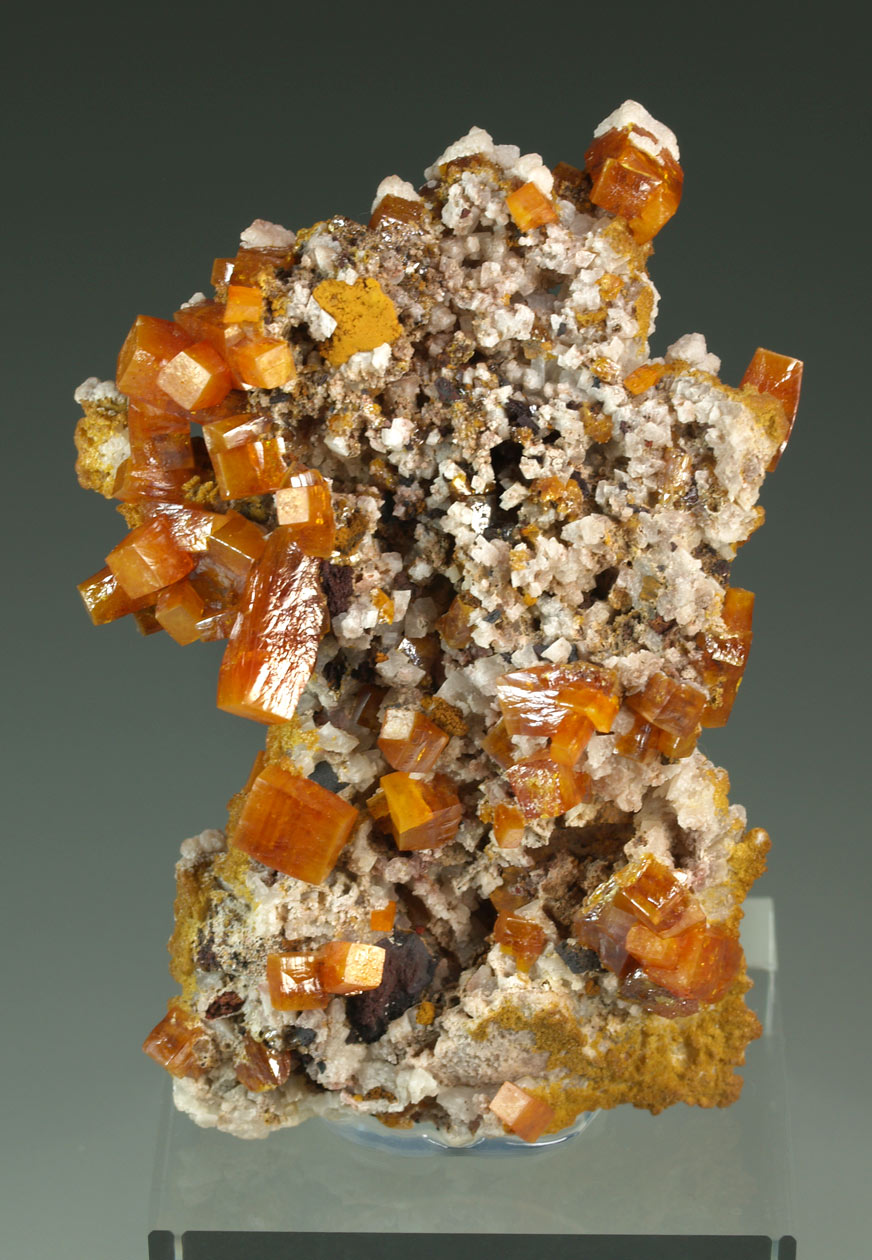
Very rich specimen formed by numerous prismatic crystals of wulfenite, with orange color zoning. They are brilliant and disposed very aerially on the matrix. It is accompanied by calcite, which in the back part of the specimen partially covers the crystals of wulfenite, with small aggregates of yellowish arsenatian vanadinite crystals, curiously close to pyromorphite. We will send the analysis to the buyer. A specimen more than aesthetic historical, fine quality and from a classic Mexican locality.
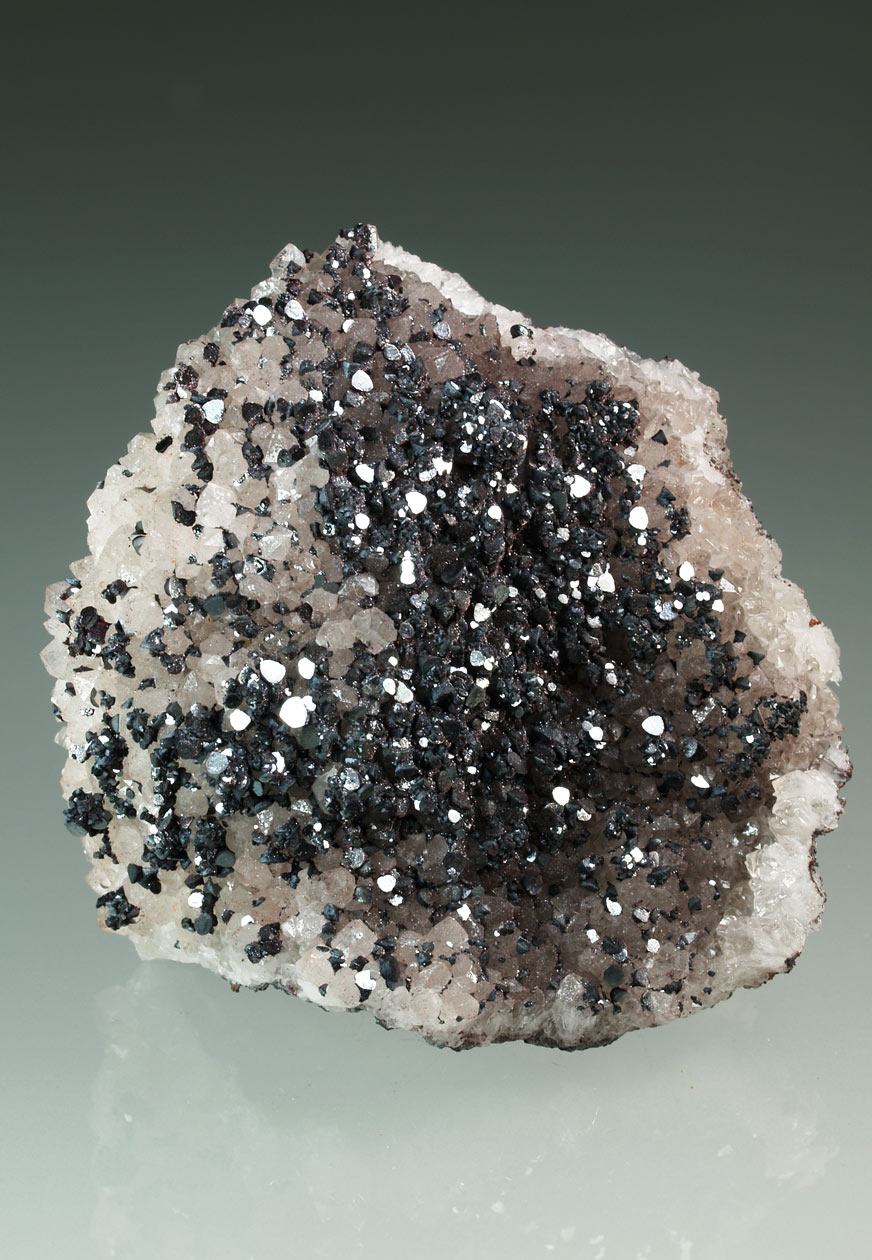
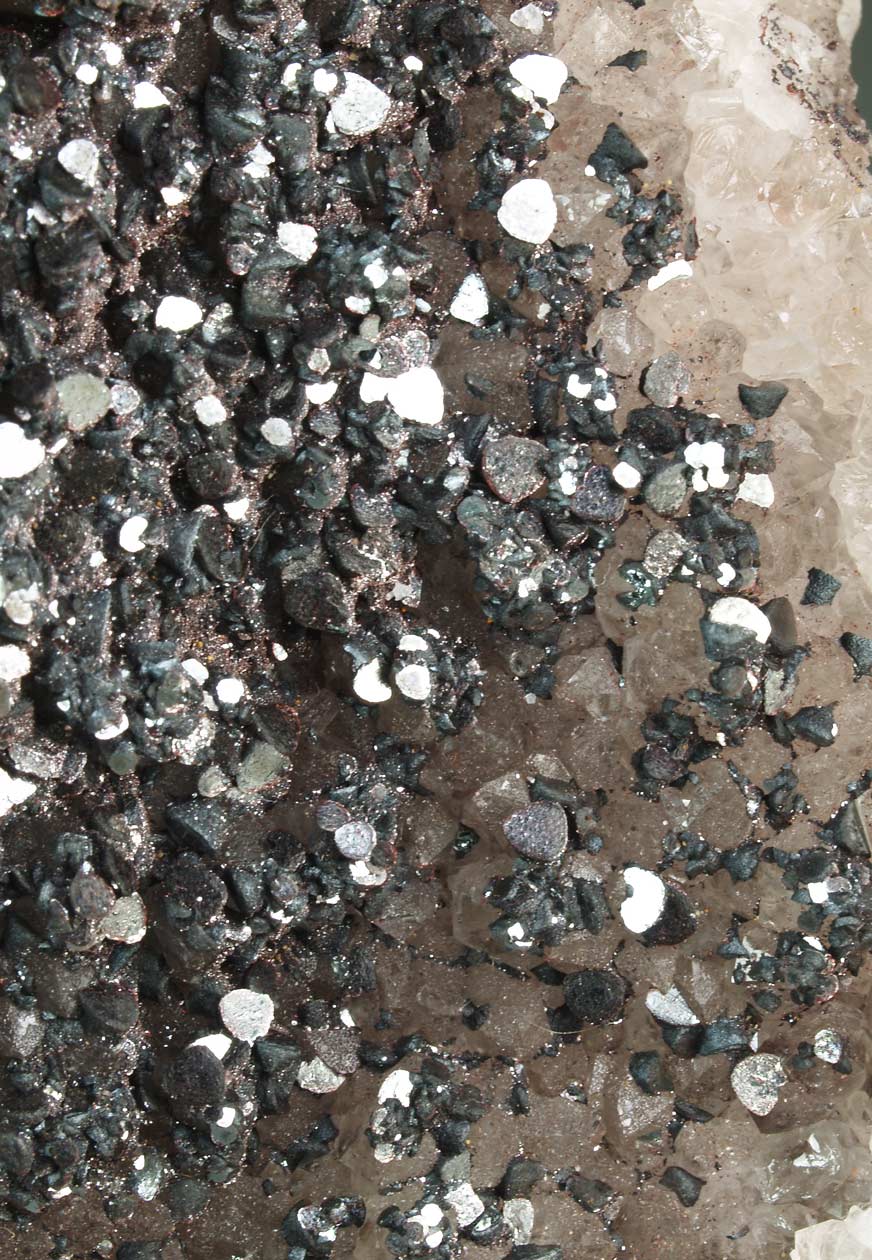
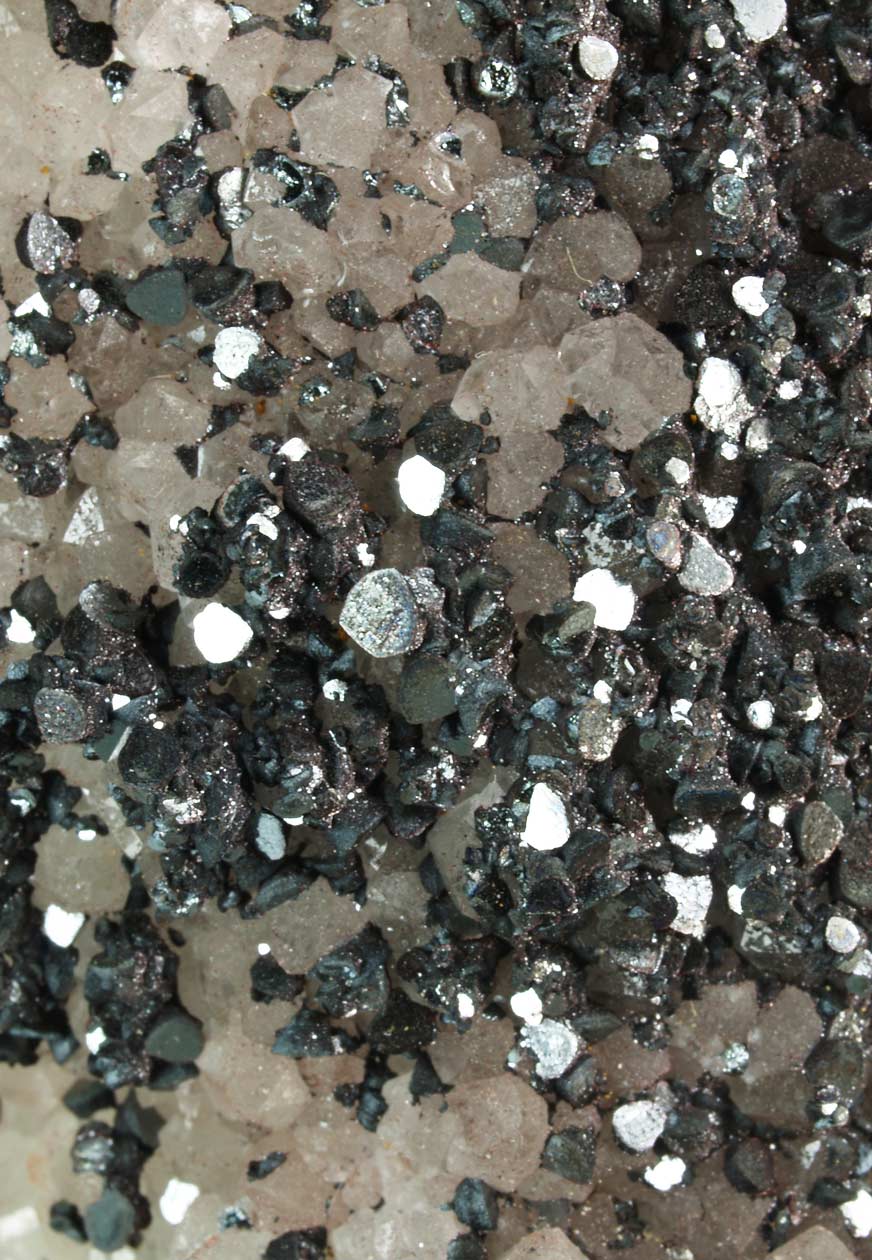
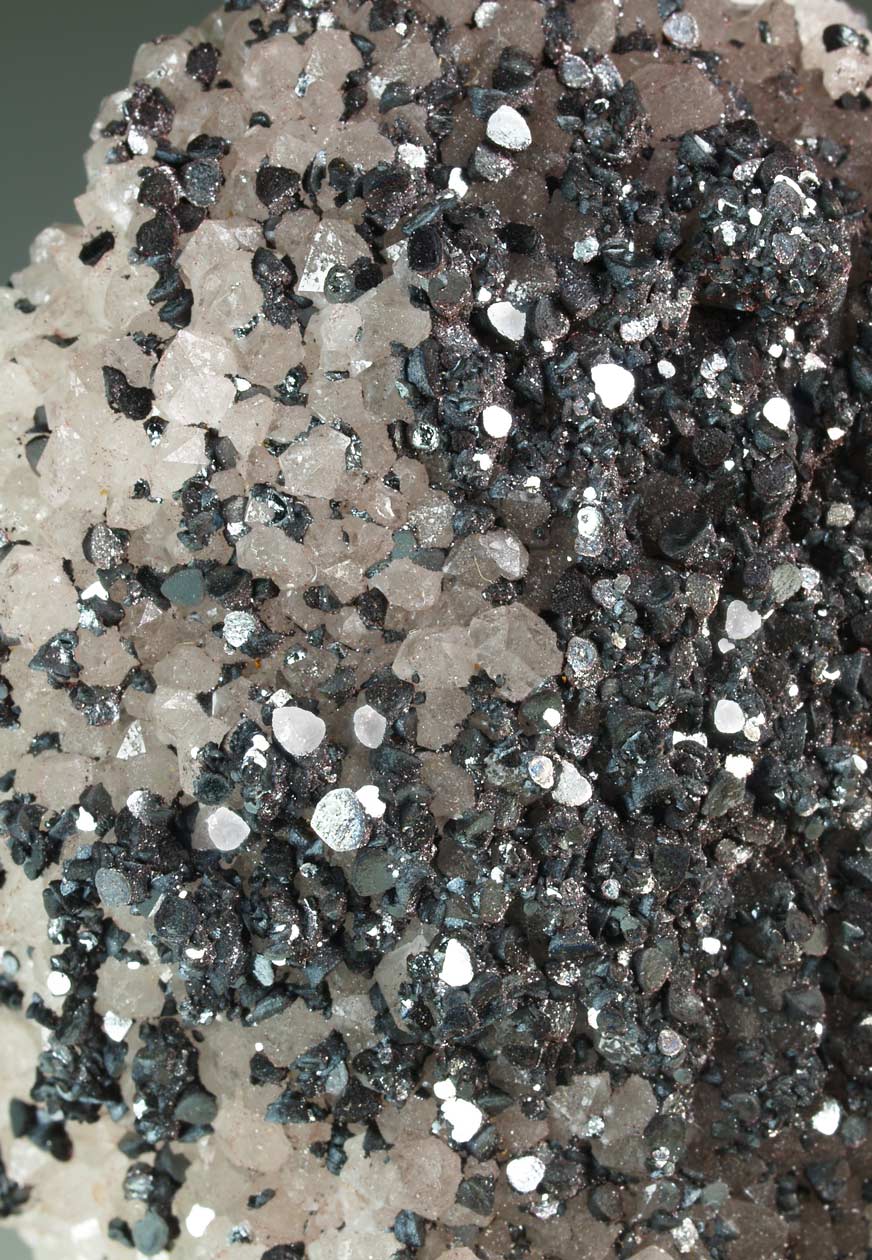
On a druse of quartz crystals we can enjoy numerous aggregates of hematite crystals with a hexagonal to rounded shape and conical growth, very curious, with brilliance and brown to reddish color. These specimens come from a fortuitous find in an area very close to the well-knoewn town of Sainte-Marie-aux-Mines. An aesthetic rarity.
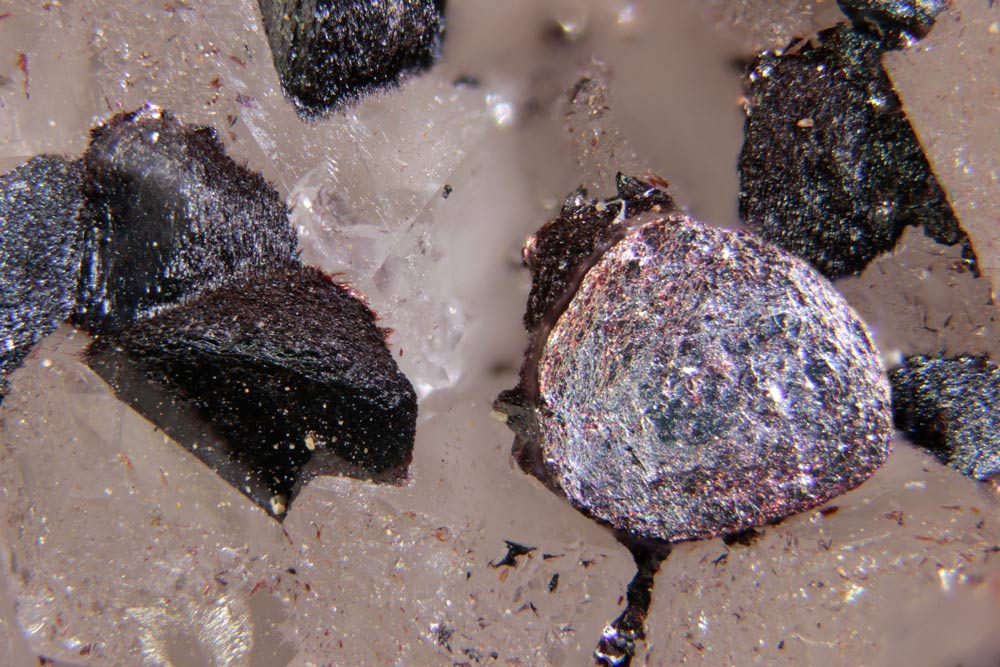
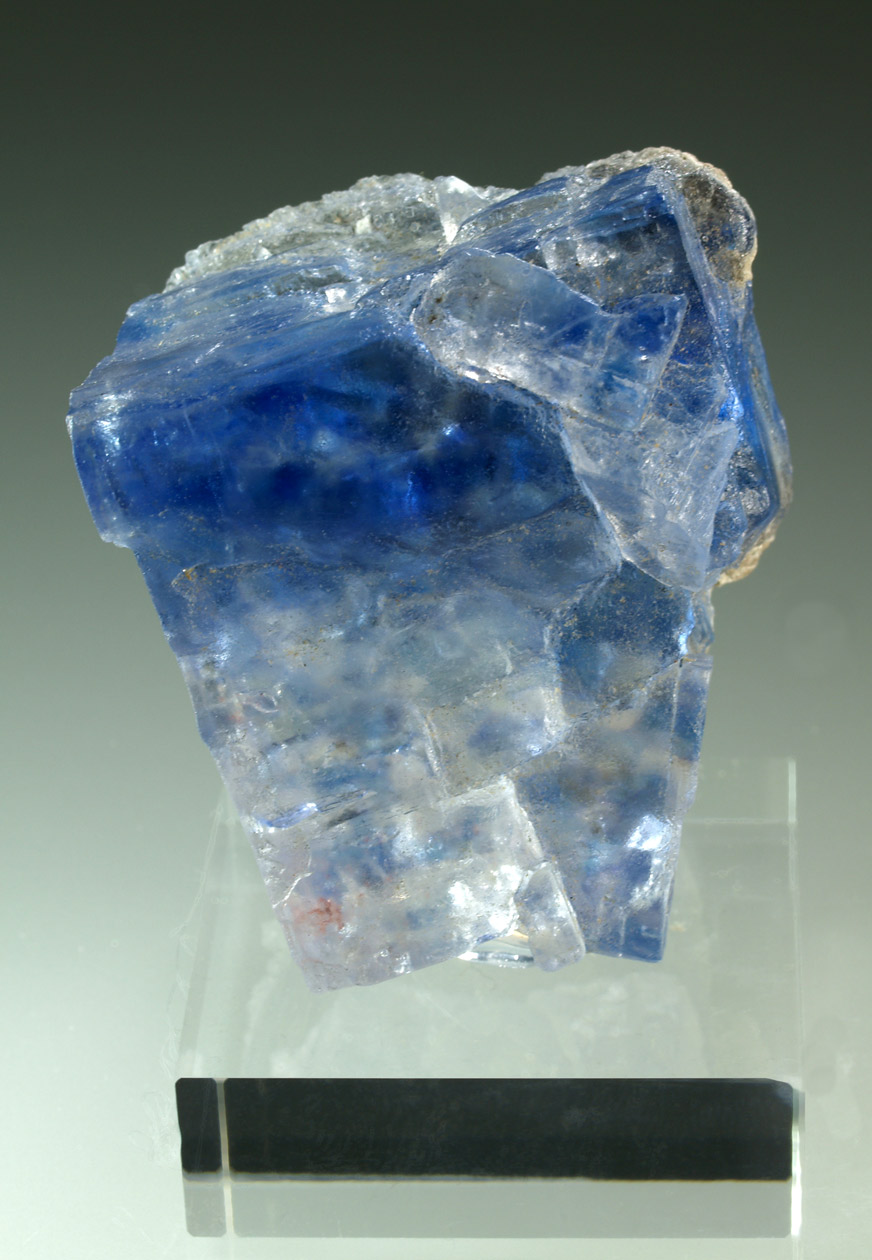
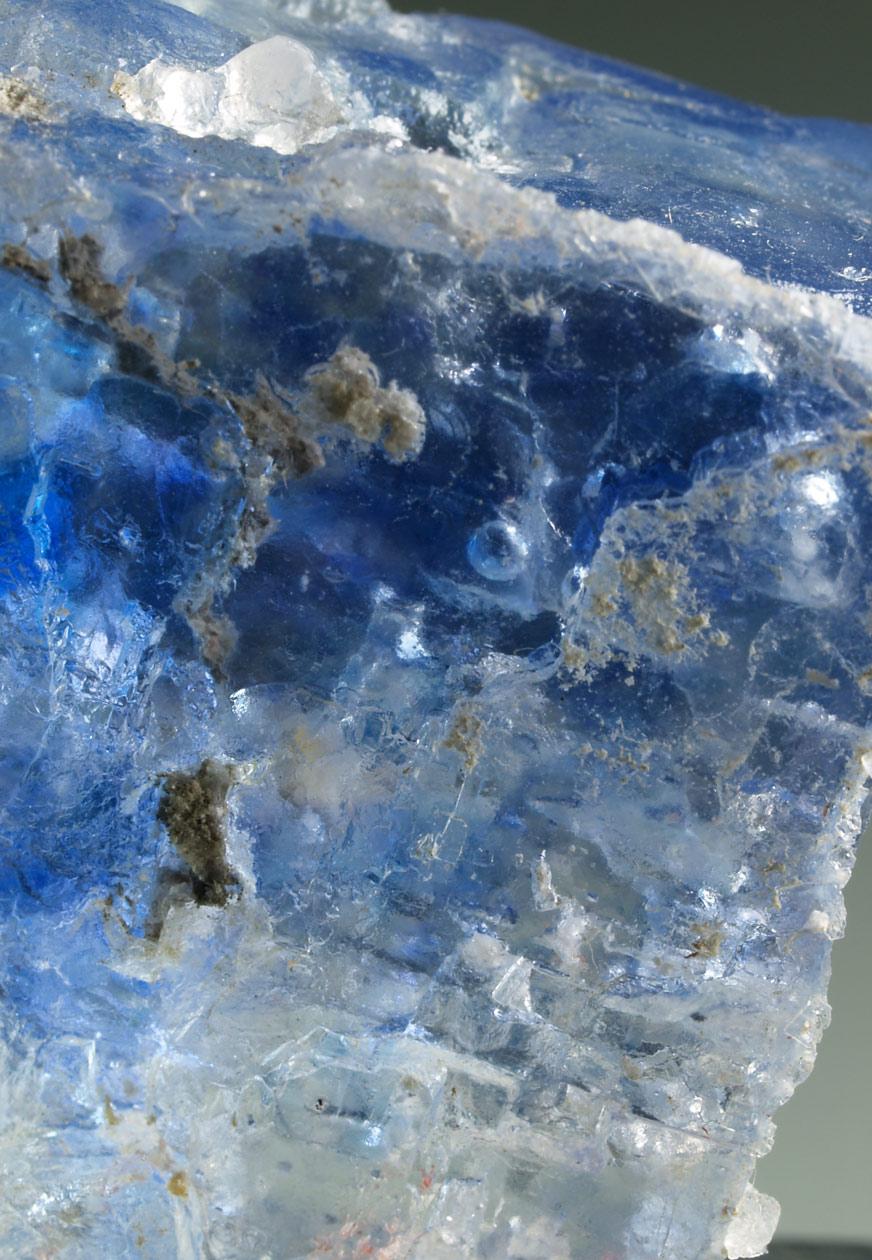
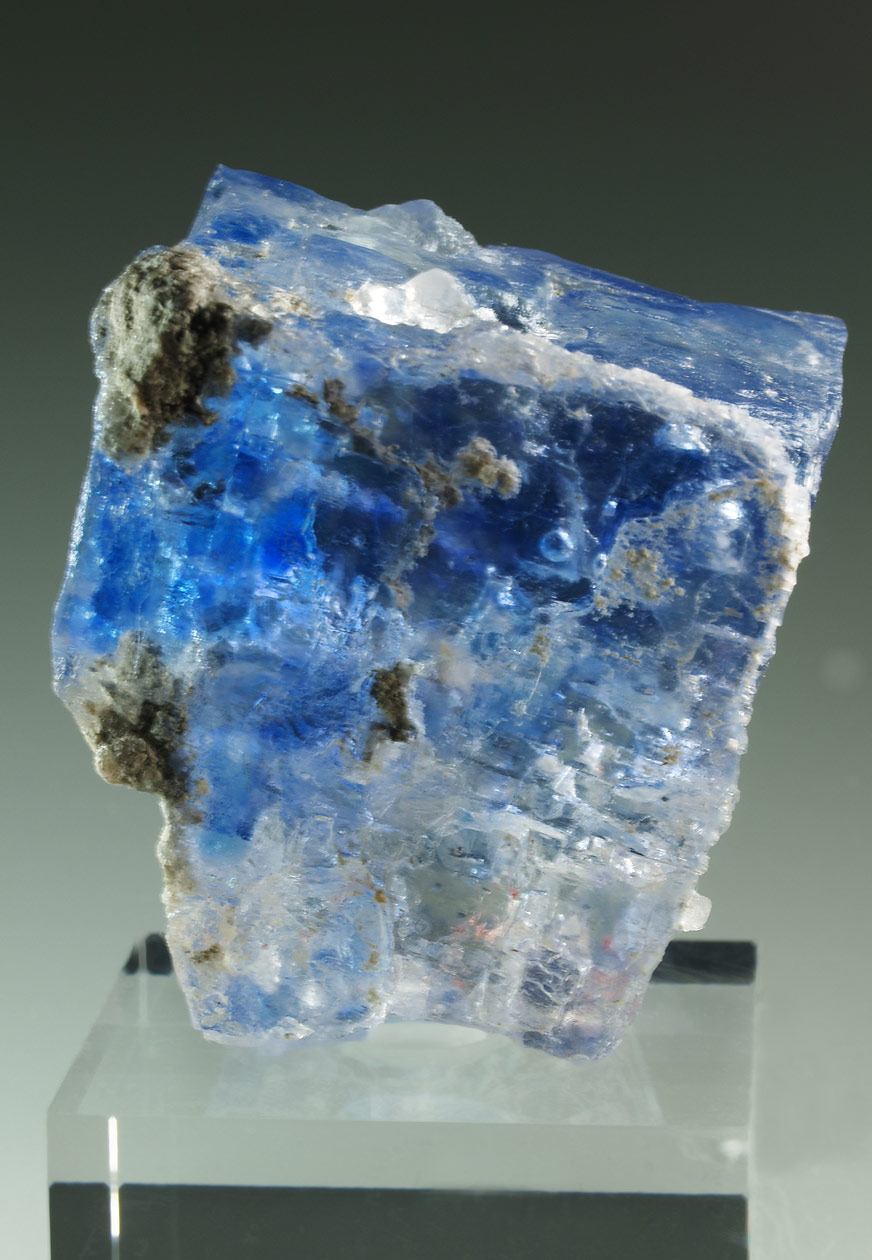
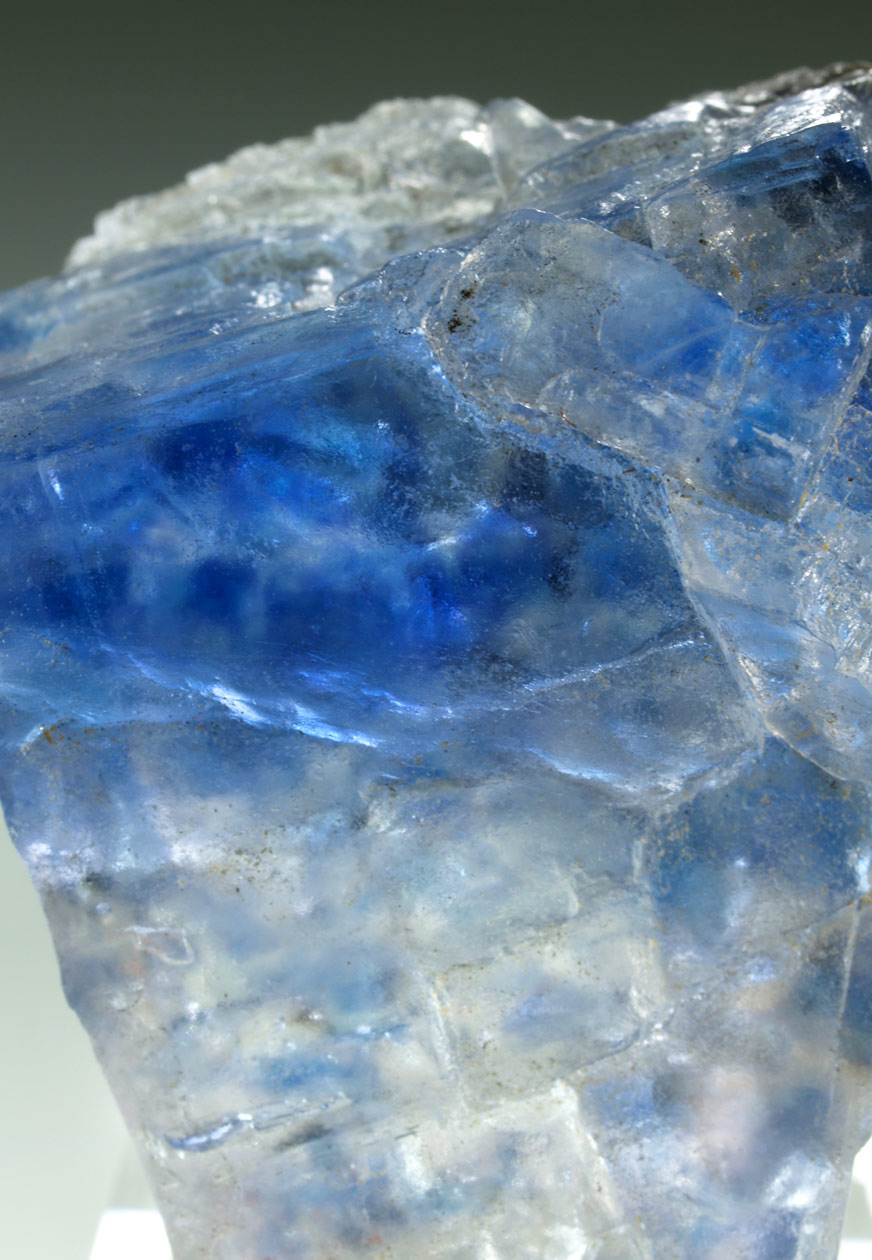
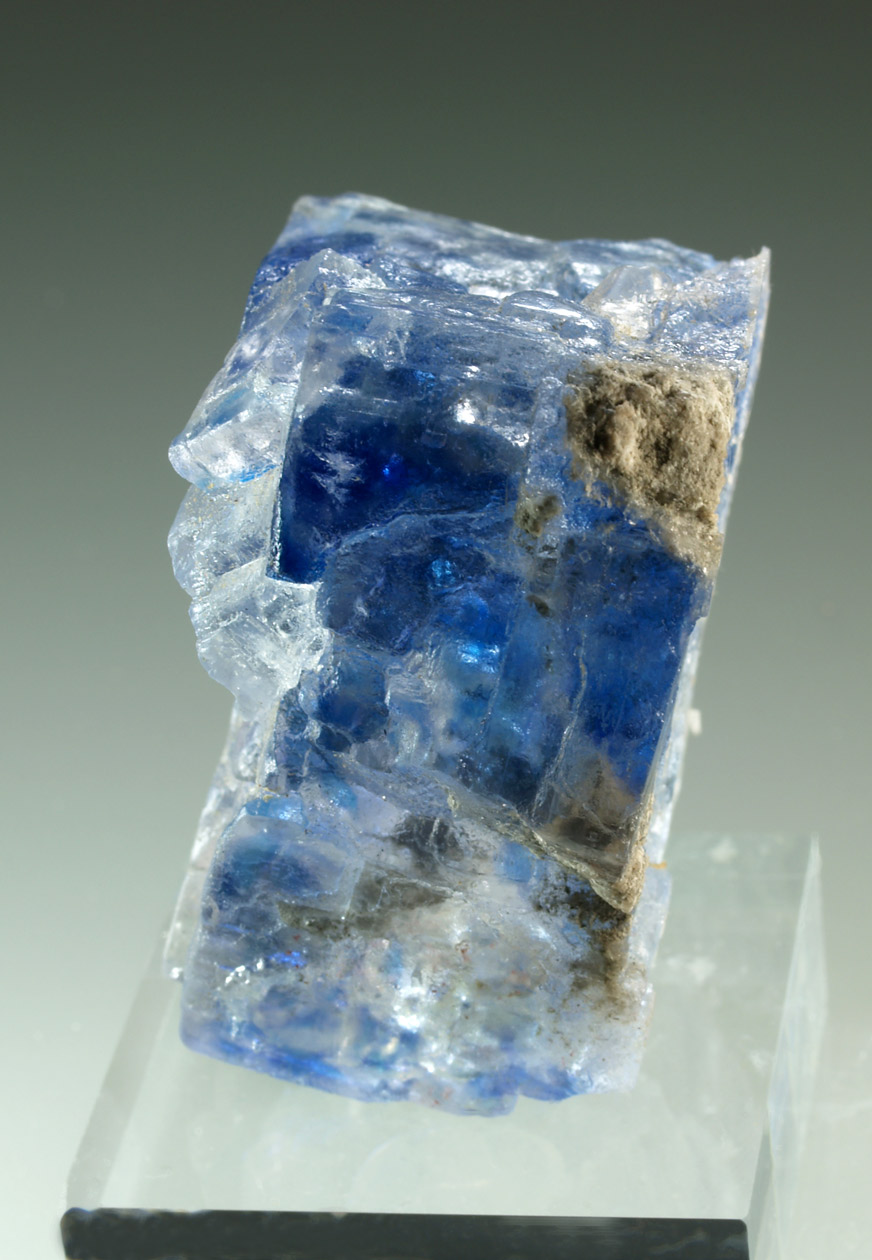
A halite crystal with an intense blue color, phantom, from an old classic German locality: Stassfurt. The startling blue tone seems unreal. Halite specimens are rarely found with these bluish colors. With an interesting spherical inclusions (see pictures). The color is due to atomic lattice defects, not due to inclusions or impurities. An old specimen.
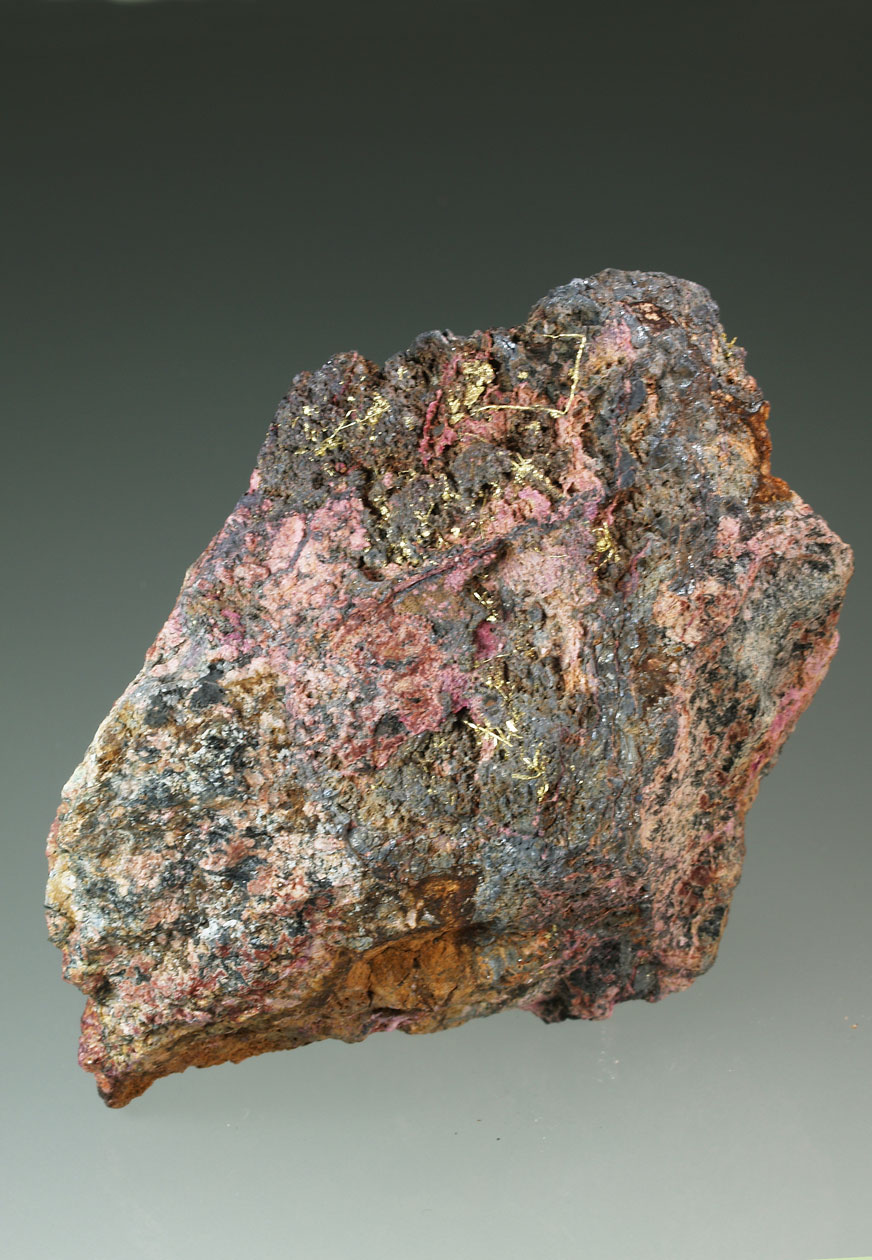
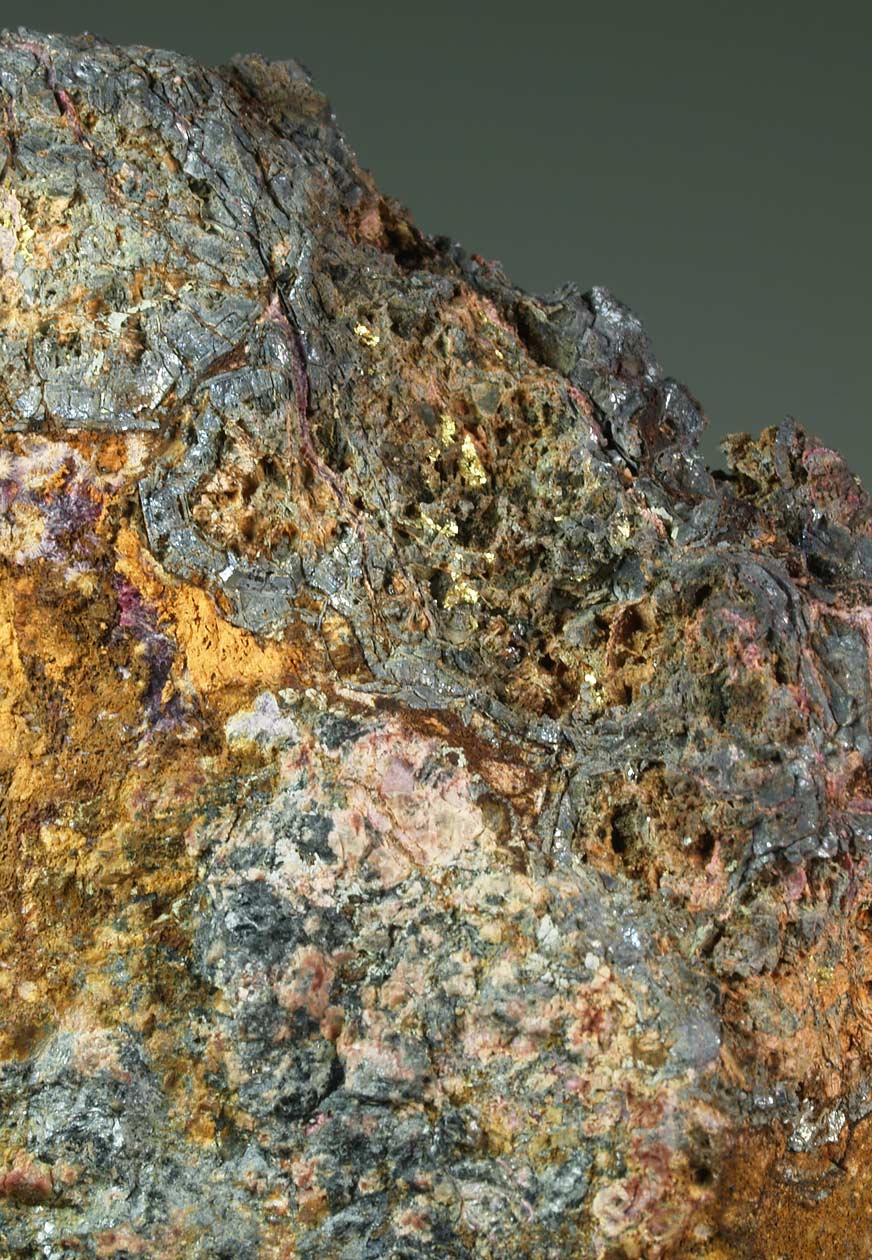
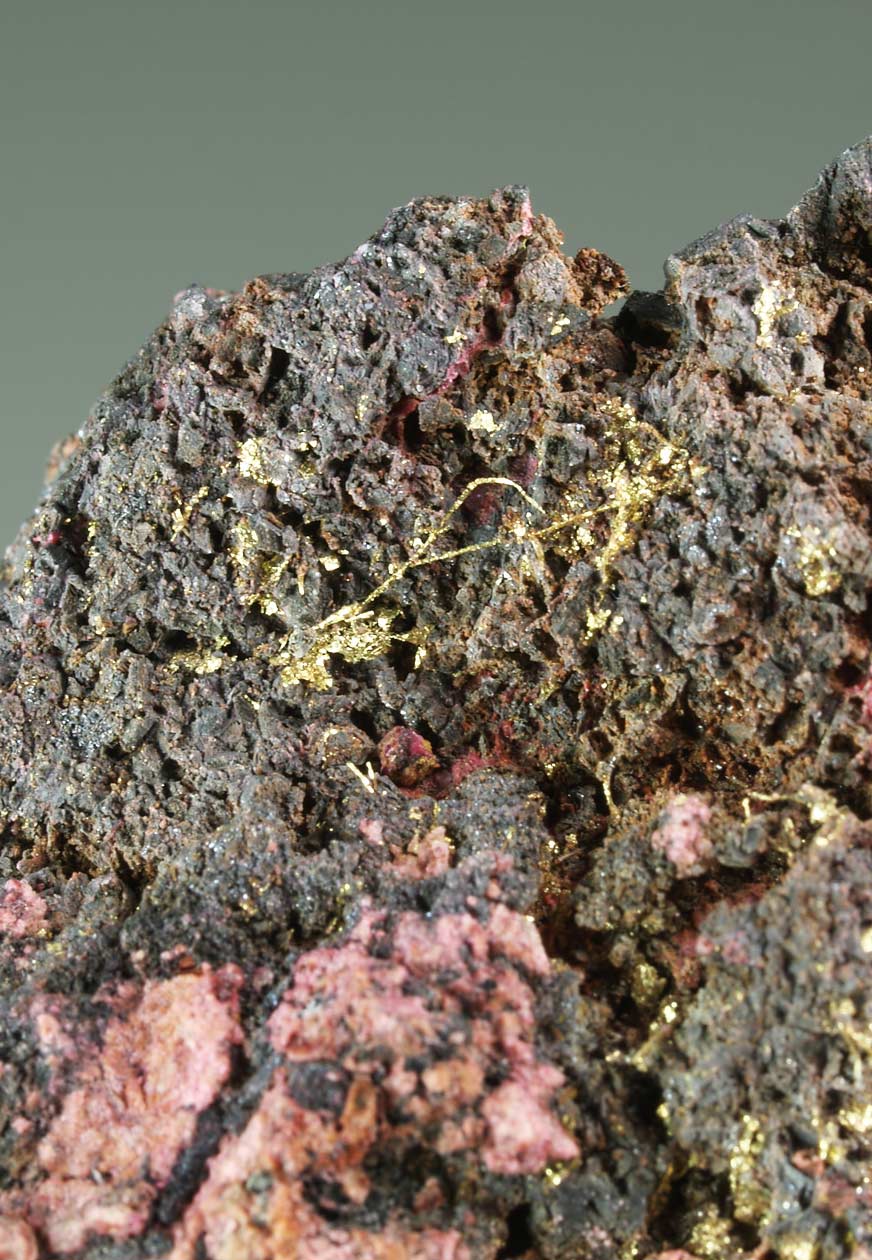
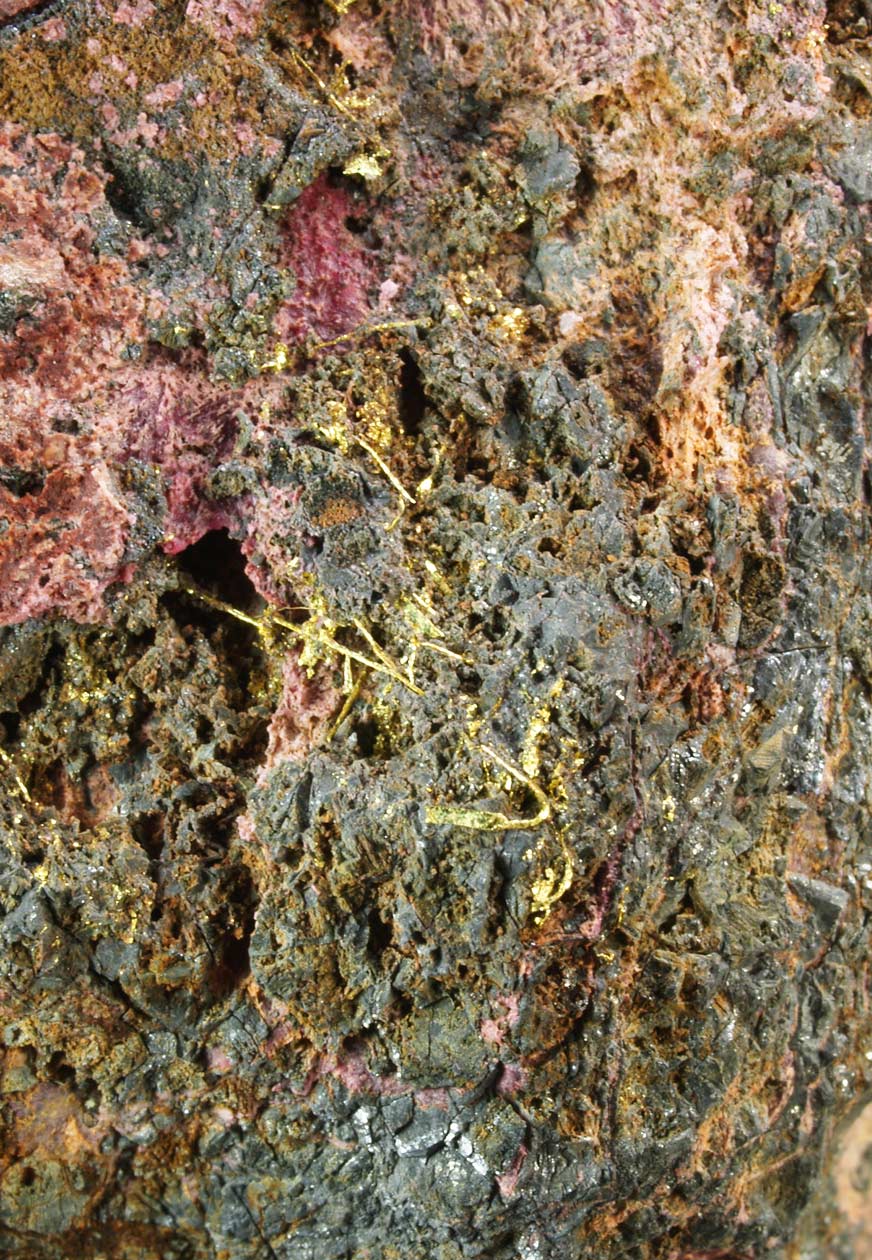
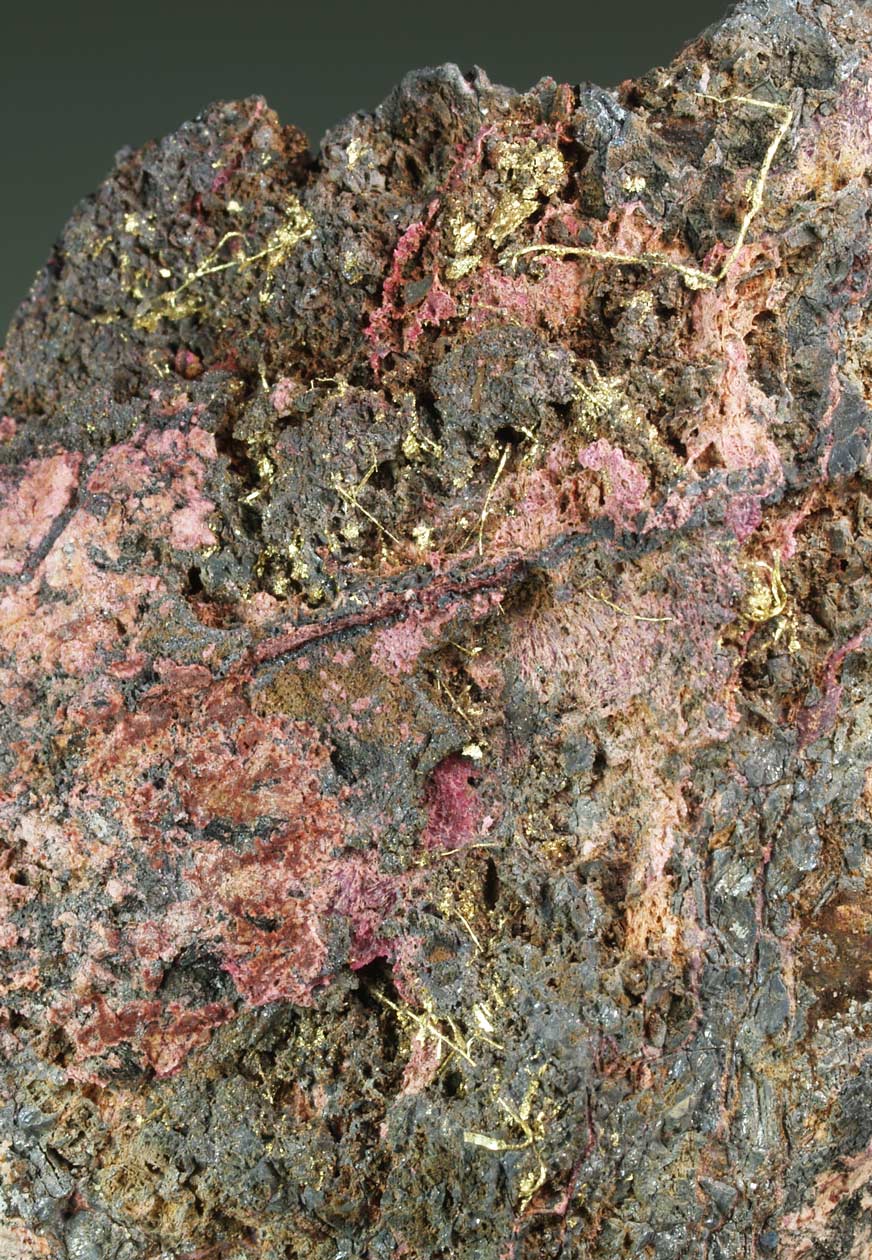
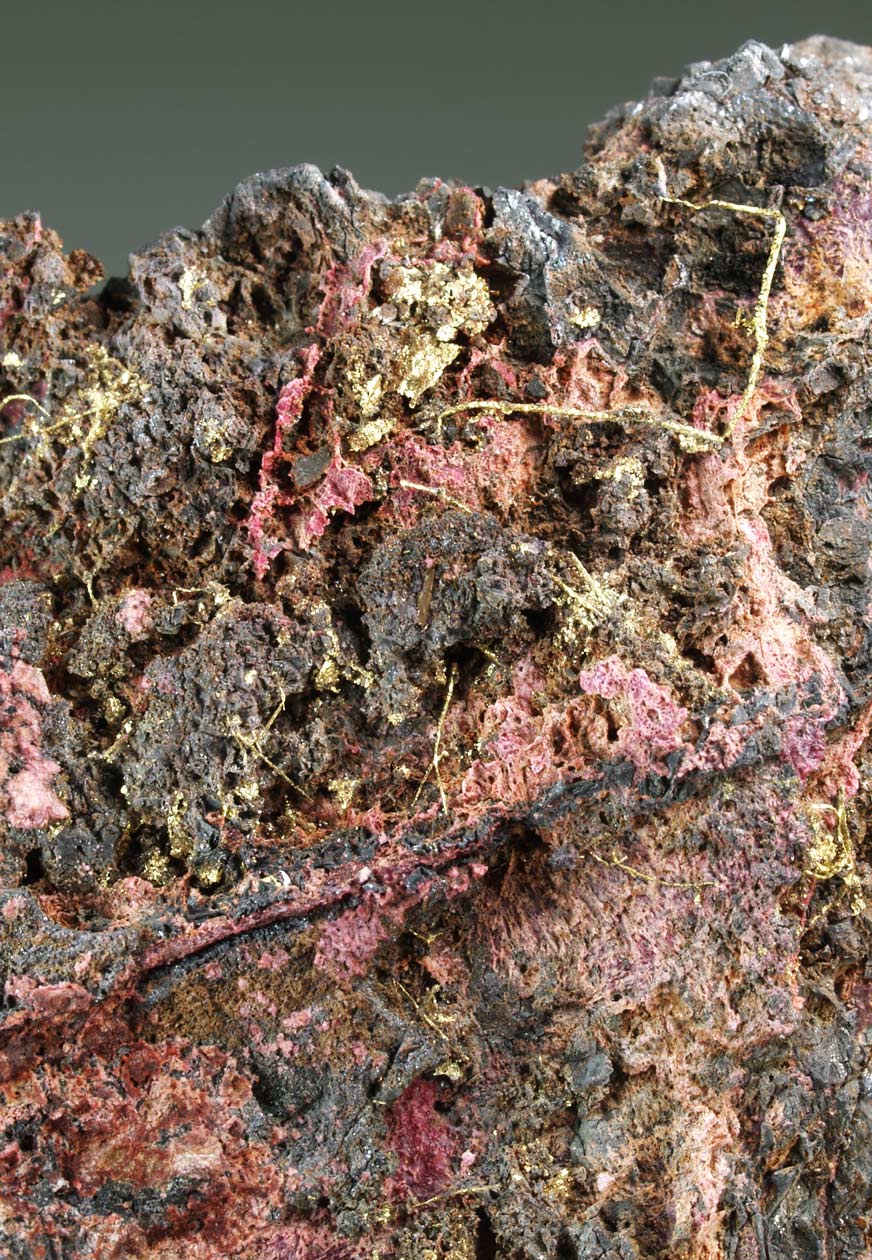
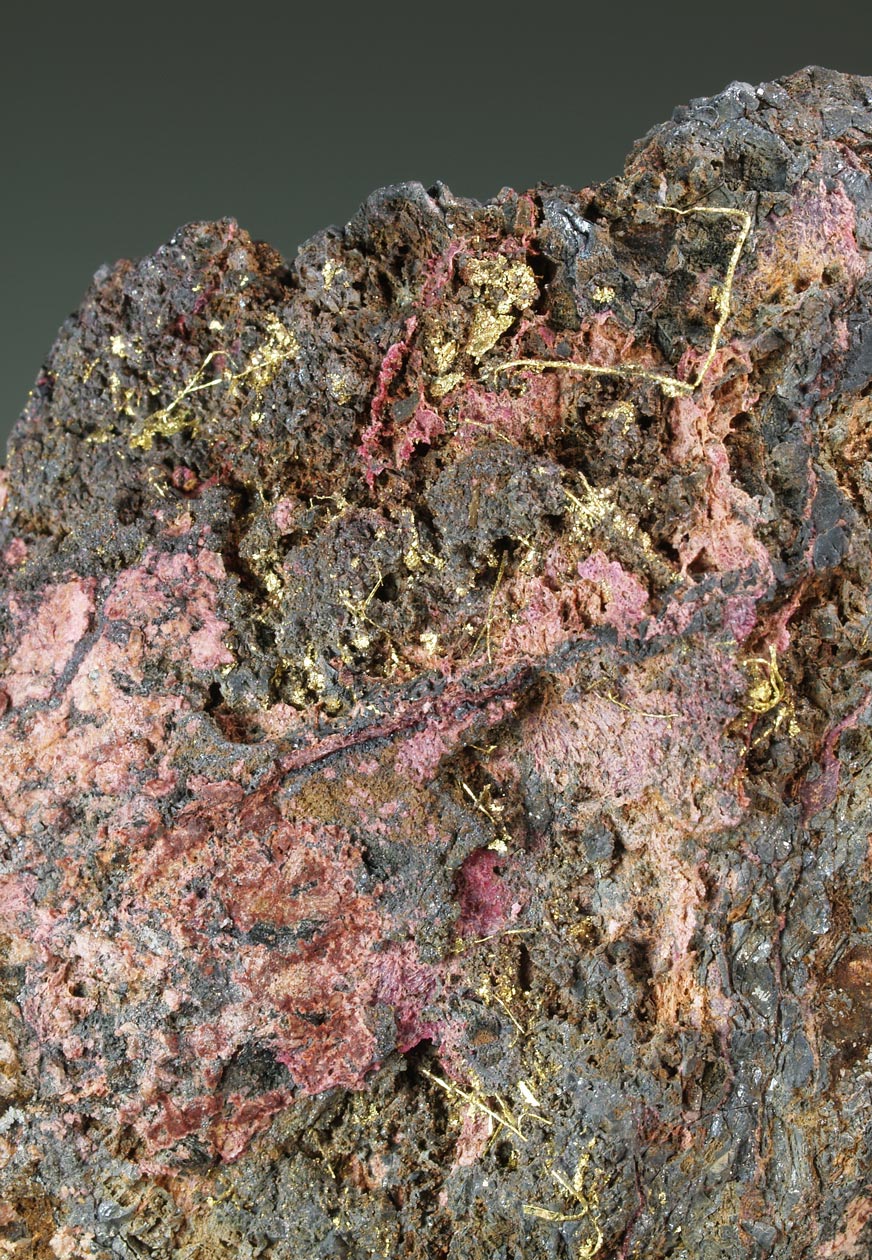
A novelty in Sainte-Marie-aux-Mines (2017). These specimens show a matrix formed by arsenates such as erythrite and associated sulphides and arsenates of cobalt and iron. We can observe on both the presence of arborescent, filiform and laminar gold aggregates. SEM analysis has shown that this is a variety of gold rich in silver (20-24%w): electrum.
Under the loupe we can enjoy that some of these aggregates are formed by small crystals of octahedral to cubic shape of the precious metal. We can think a secondary genesis for this gold electrum. We have analyzed these specimens observing that the brilliant metallic matrix corresponds to skutterudite and other sulphides. We will send all analysis to the buyer. The gold electrum in Bou Azer was already described, but the quality of these specimens we offer surpasses what was known. A very rich gold specimen, with good size and aesthetic.
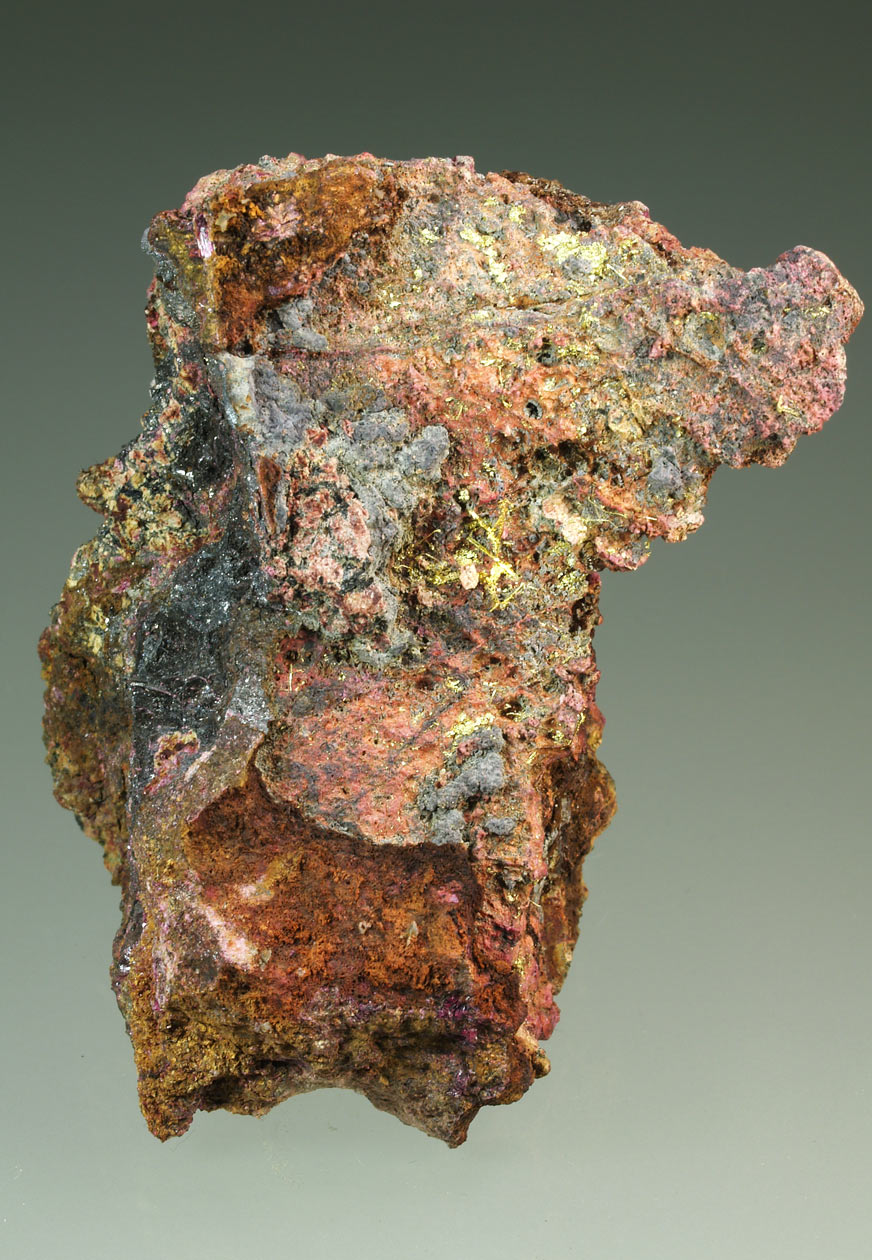
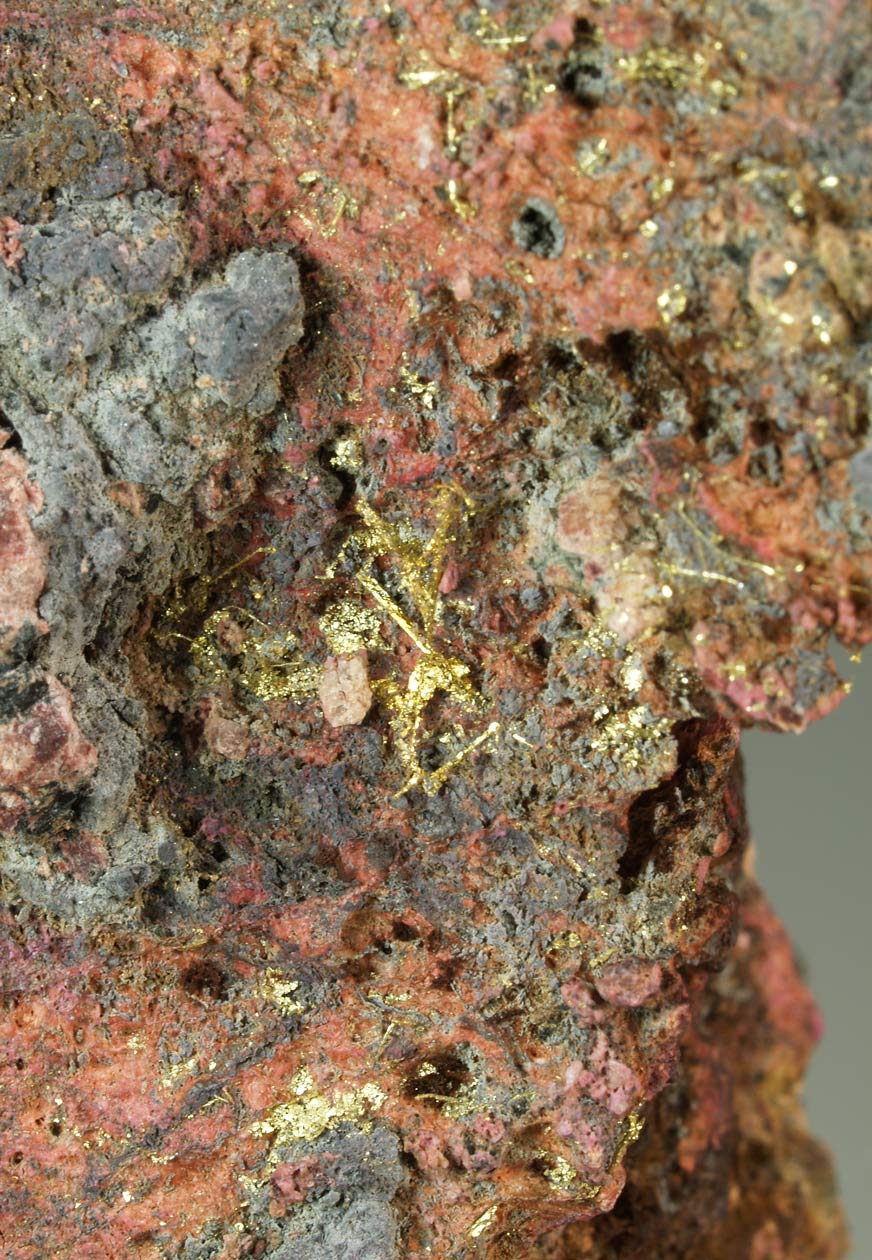
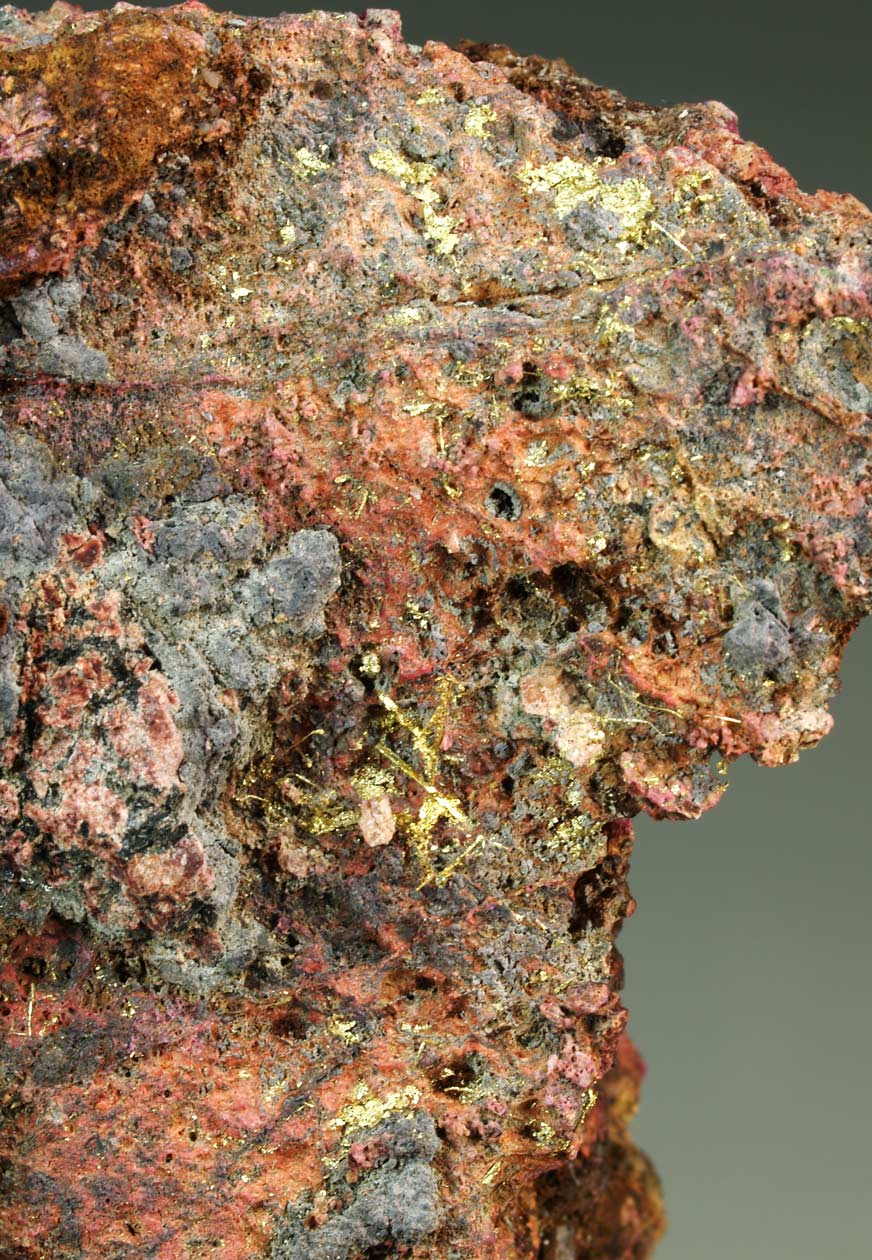
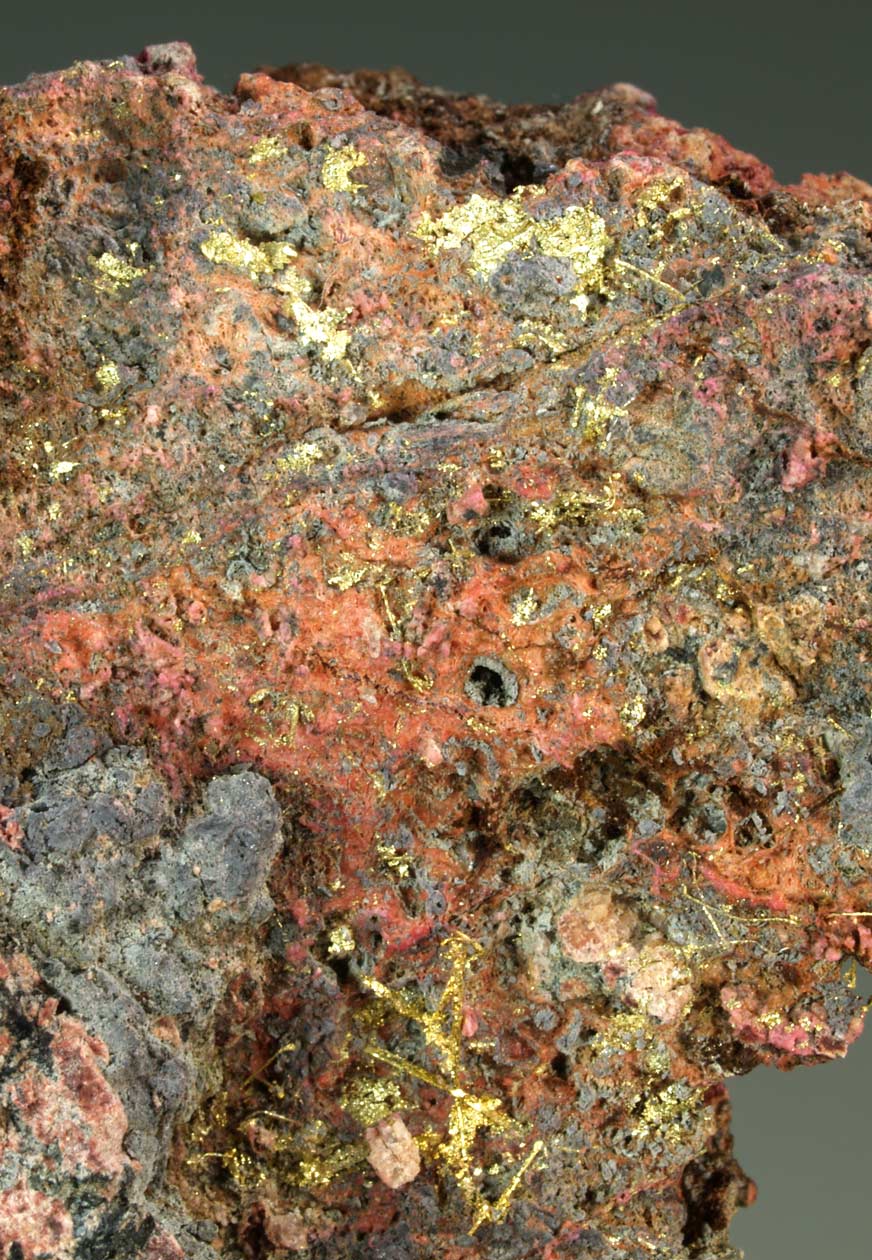
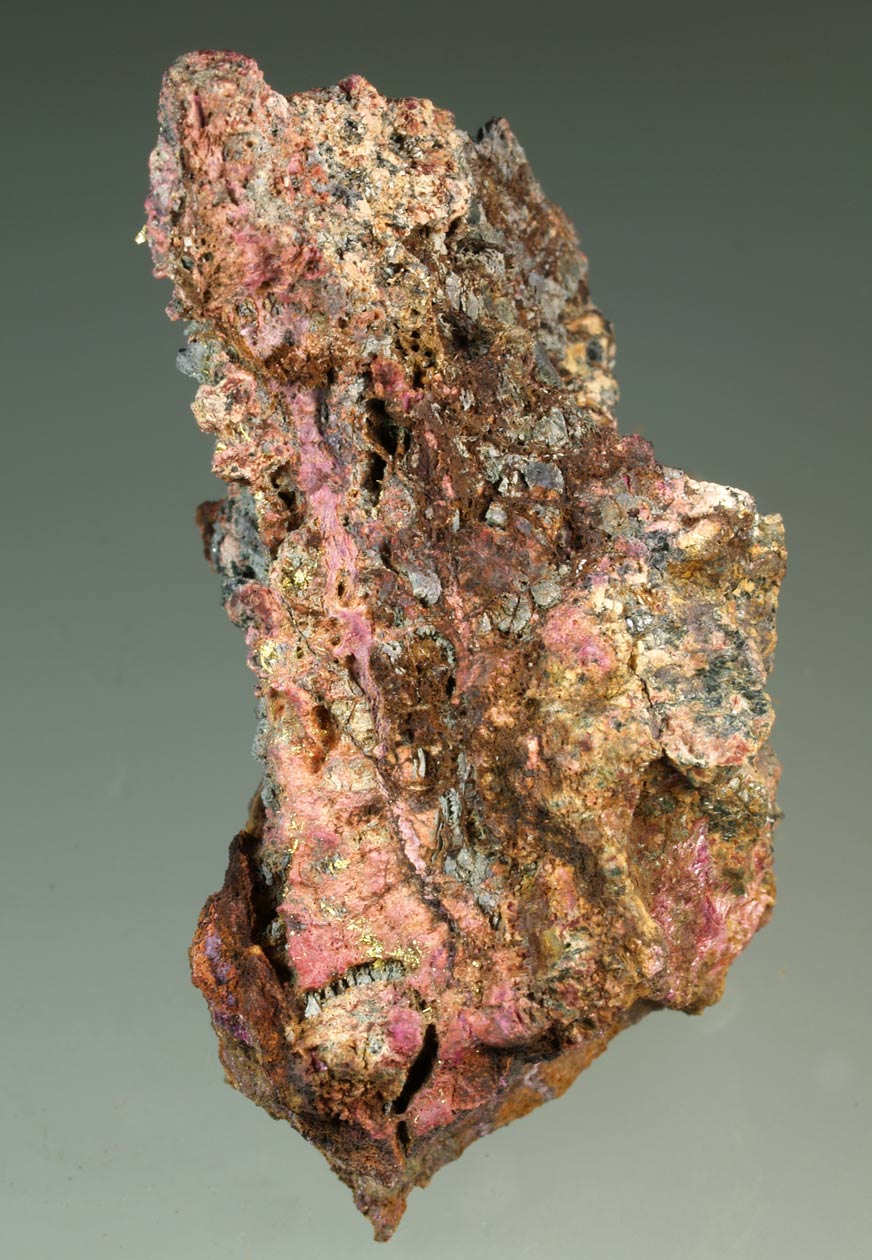
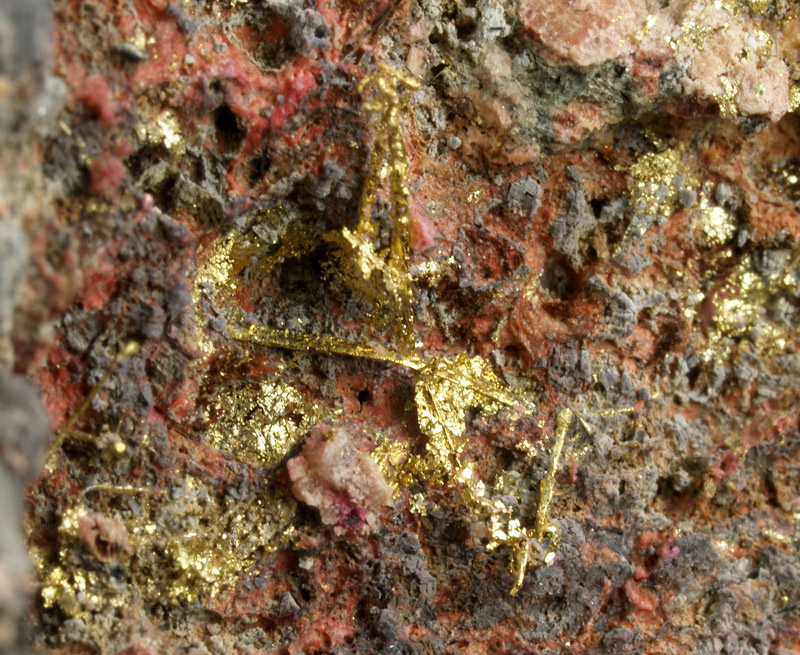
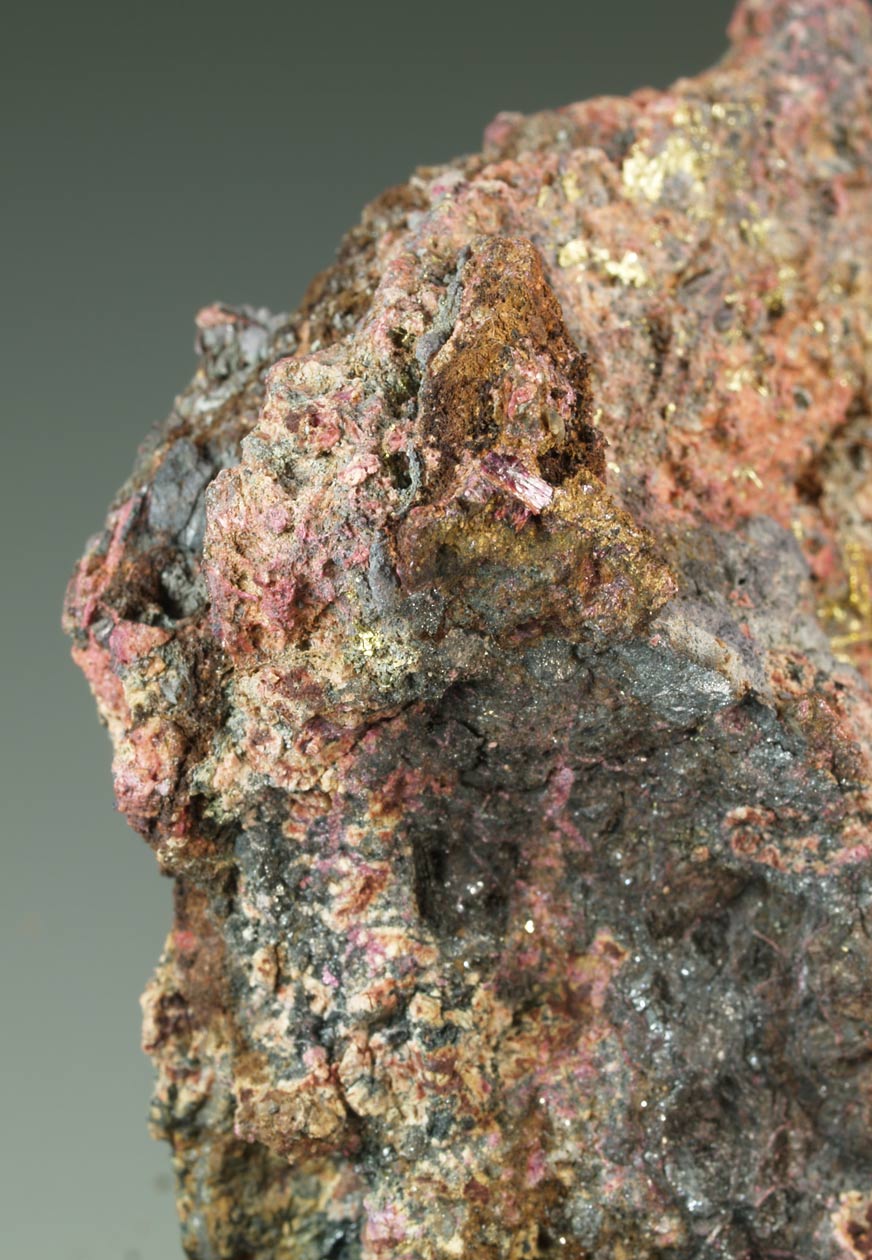
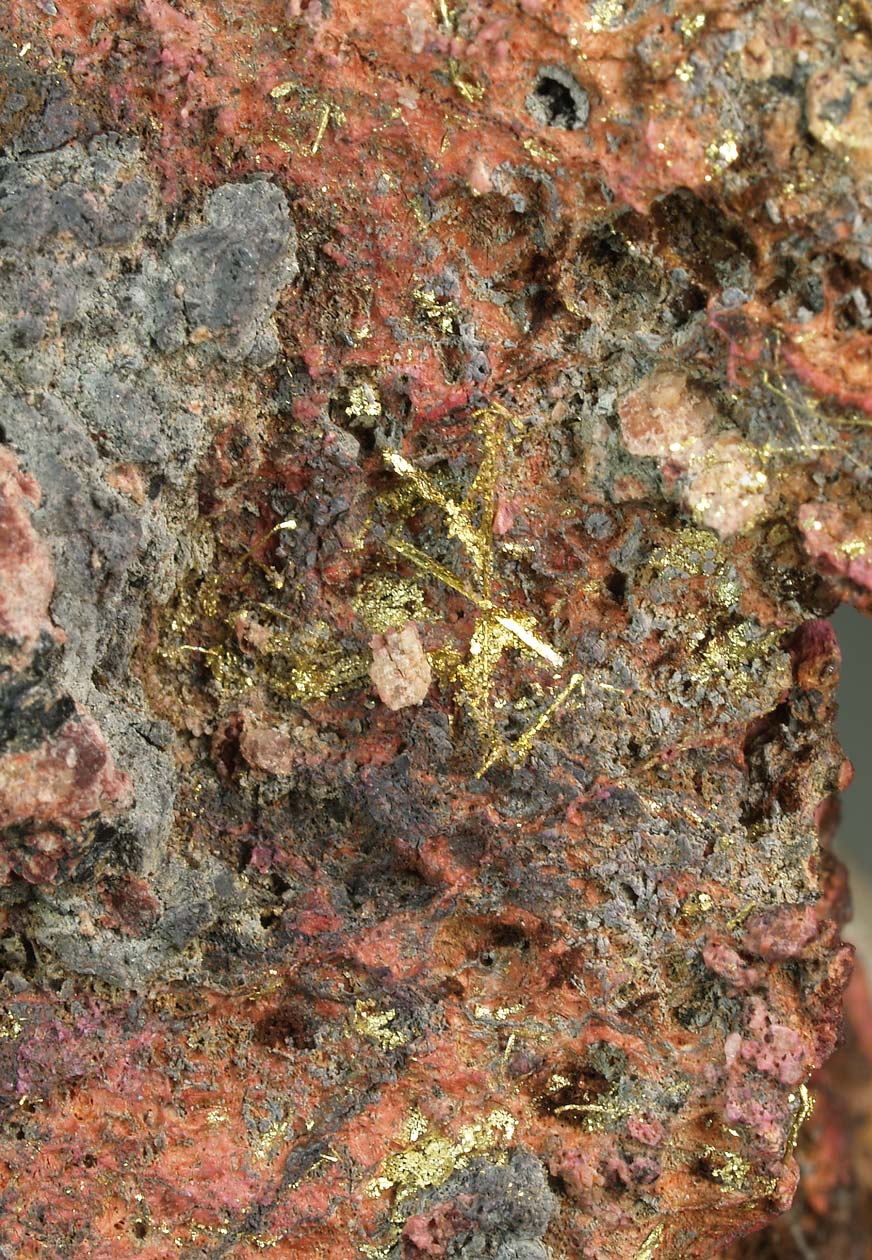
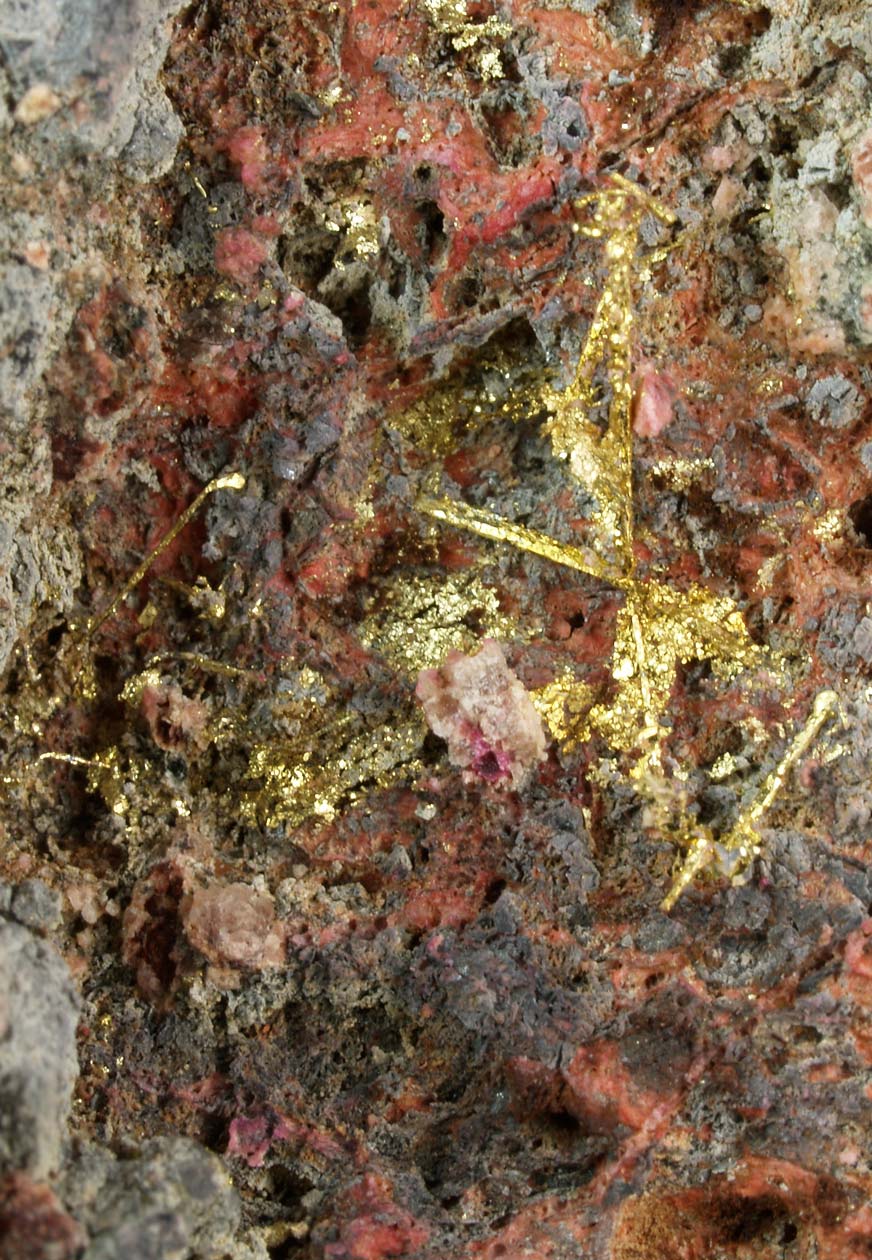
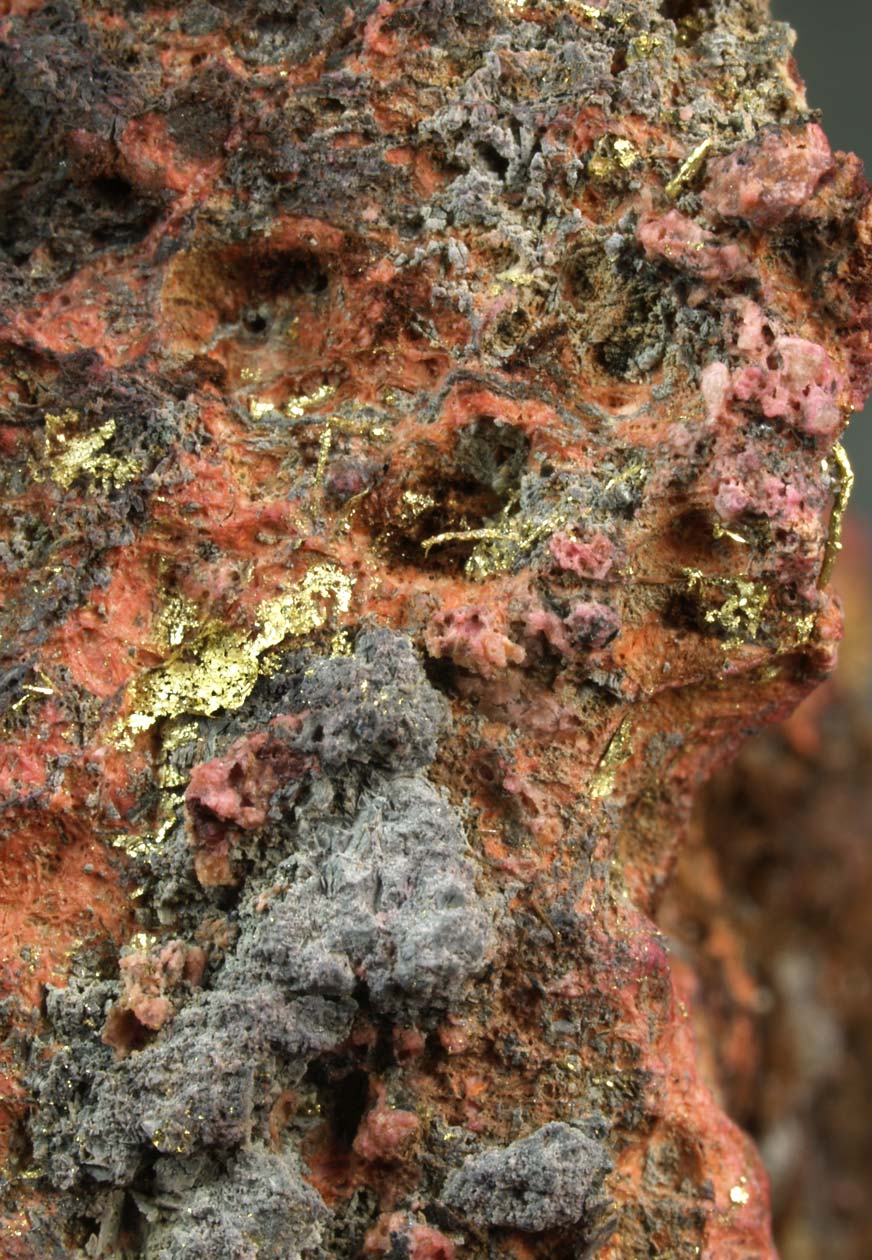
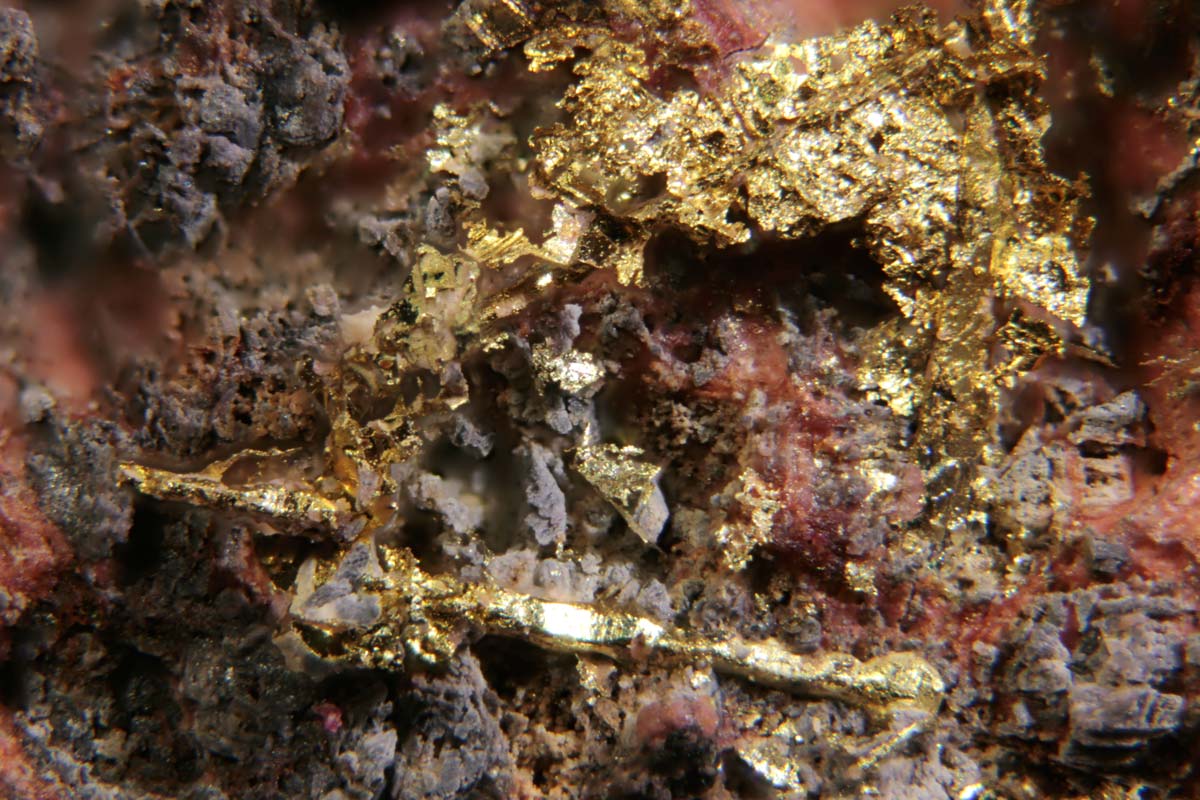
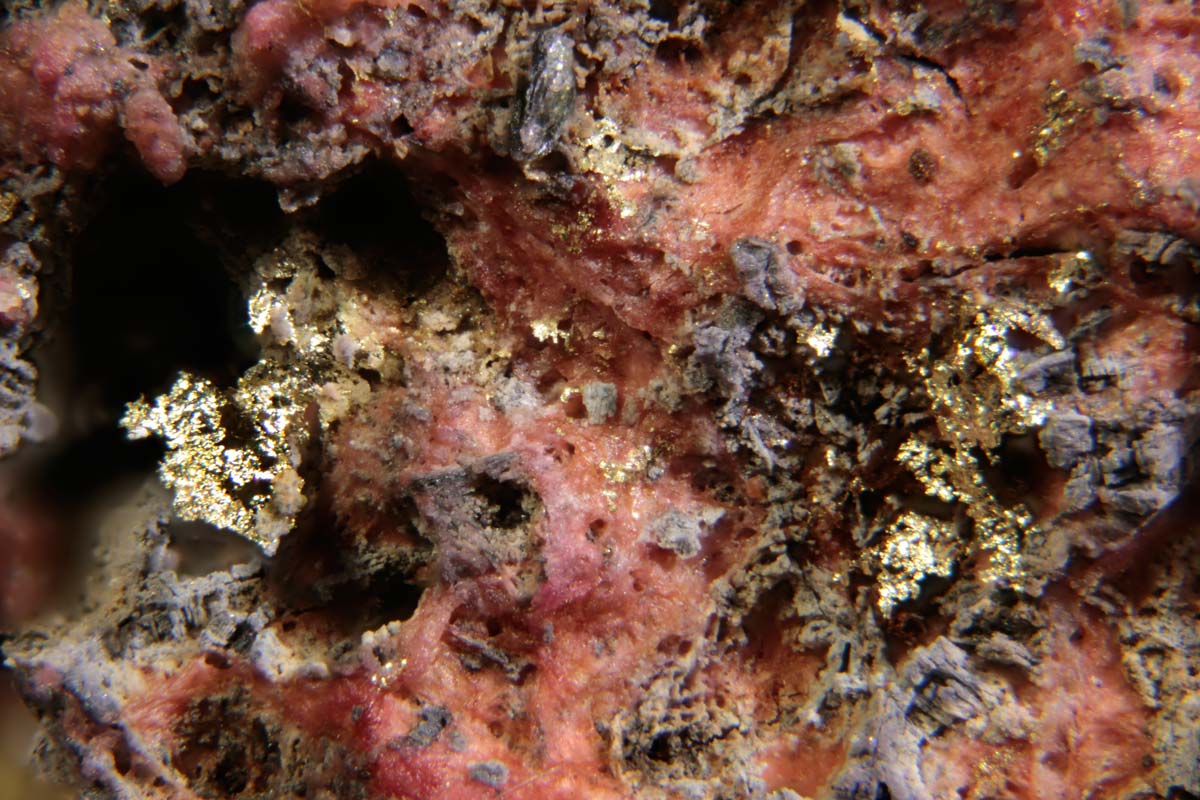
A novelty in Sainte-Marie-aux-Mines (2017). These specimens show a matrix formed by arsenates such as erythrite and associated sulphides and arsenates of cobalt and iron. We can observe on both the presence of arborescent, filiform and laminar gold aggregates. SEM analysis has shown that this is a variety of gold rich in silver (23-24%w): electrum.
Under loupe, we can enjoy that some of these gold aggregates are formed by small crystals of octahedral to cubic forms. We can theorize a secondary genesis for this gold-electrum. We have analyzed the matrix of these specimens observing that the bright metallic matrix corresponds to a mixture of cobalt arsenides, probably skutterudite, and other sulphides. We will send all analyzes to the buyer. The gold and electrum in Bou Azer was already described, but the quality of these specimens we offer surpasses what was known. A very rich gold-electrum specimen, with good size and aesthetic.
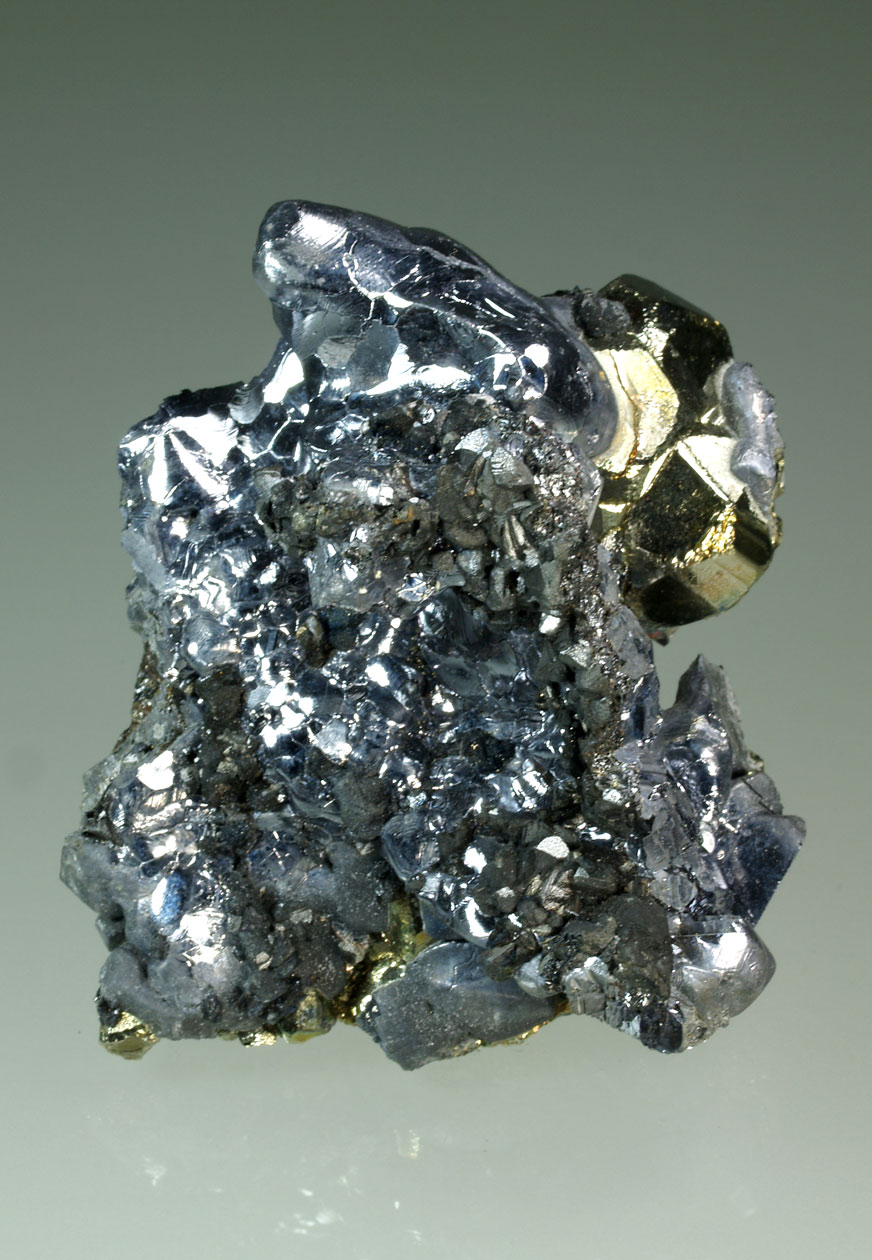
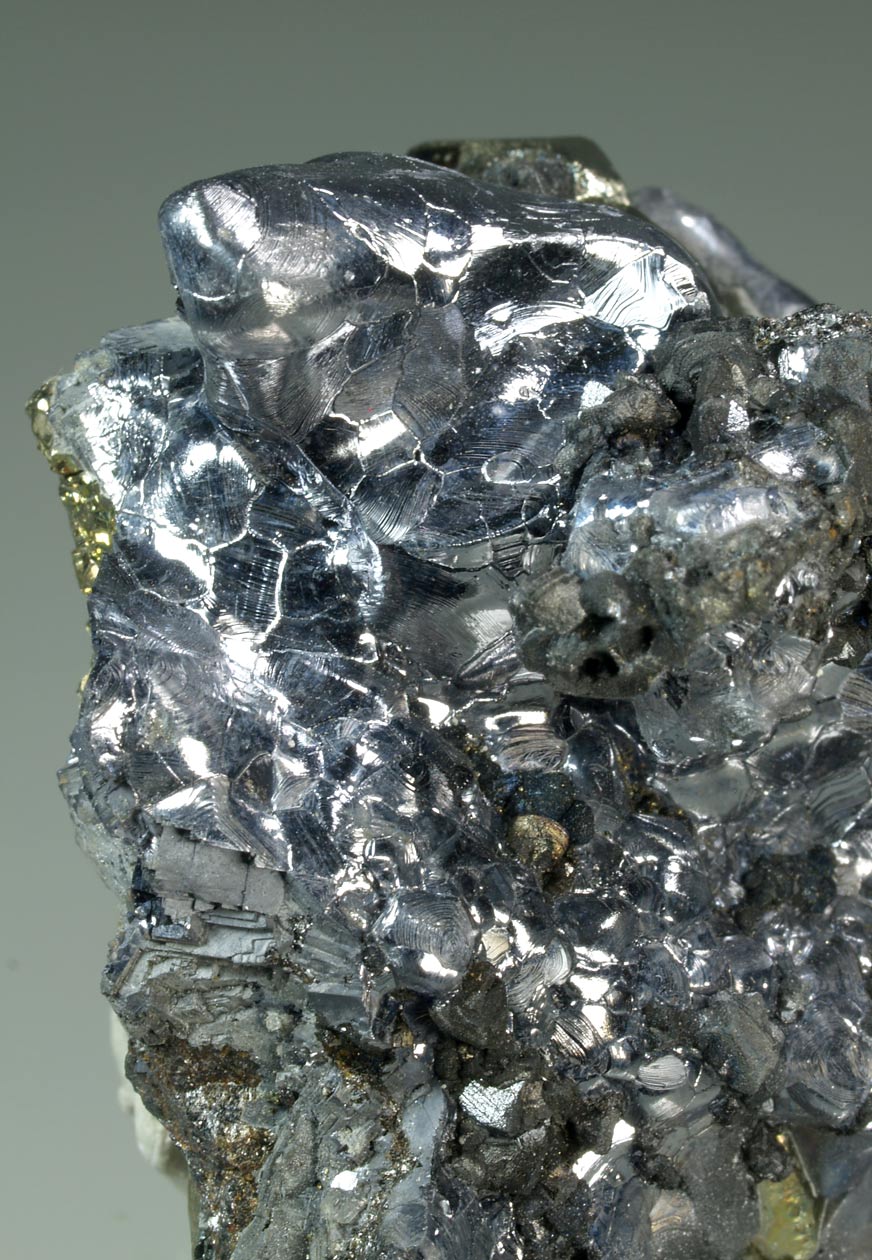
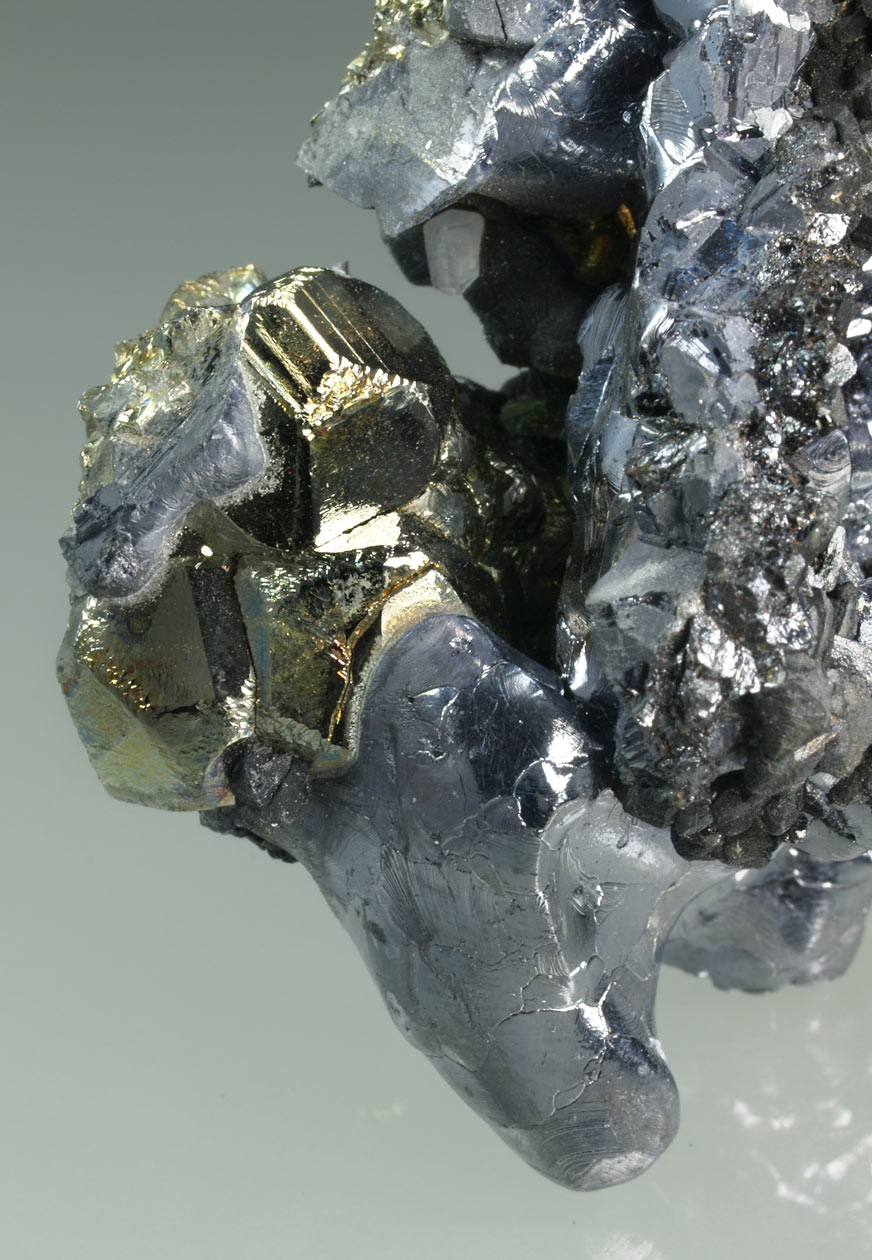
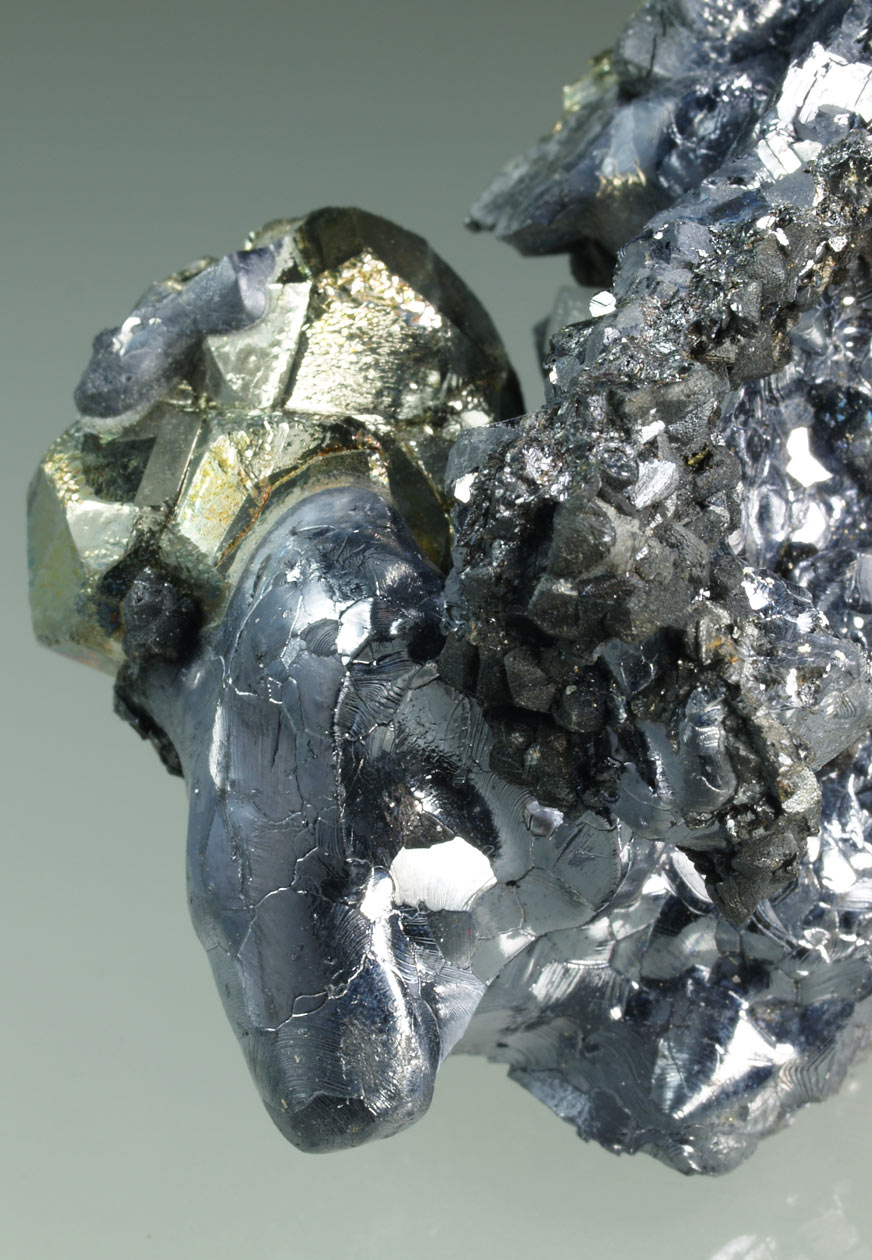
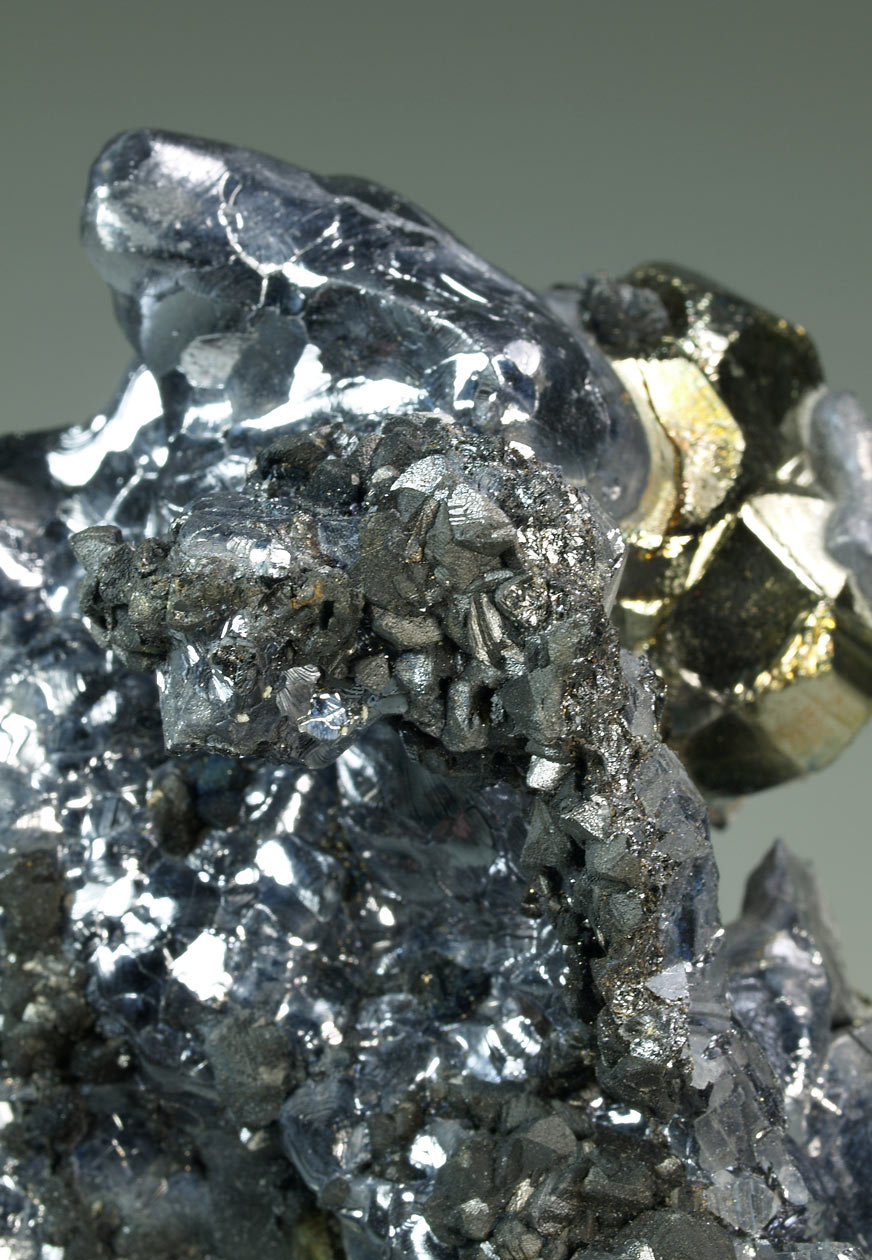
A really curious specimen that shows a matrix with well developed crystals of pyrite, partially covered by galena, very bright and with extremely rounded forms, remarkable shape! It is also accompanied by complex crystals of sphalerite. A very aesthetic, unusual and interesting sample.
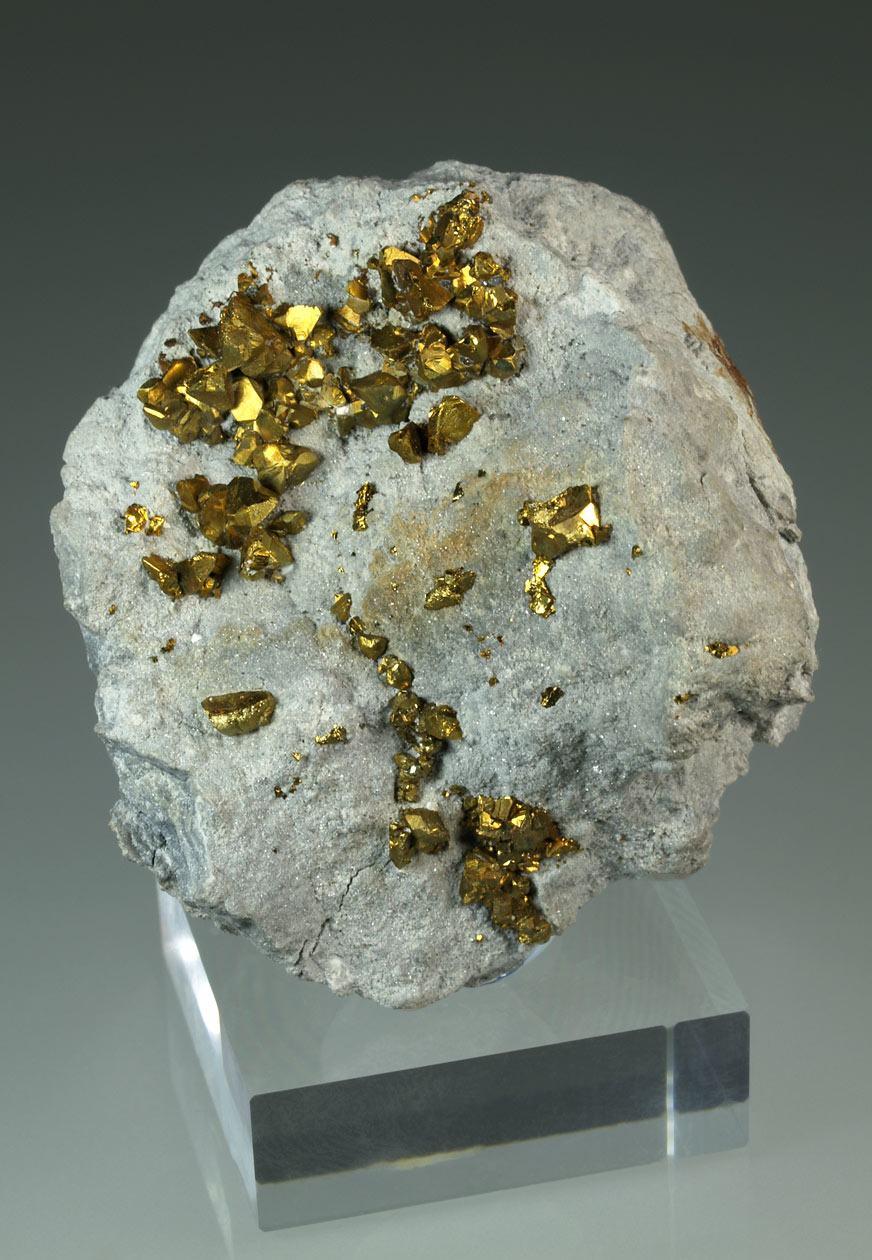
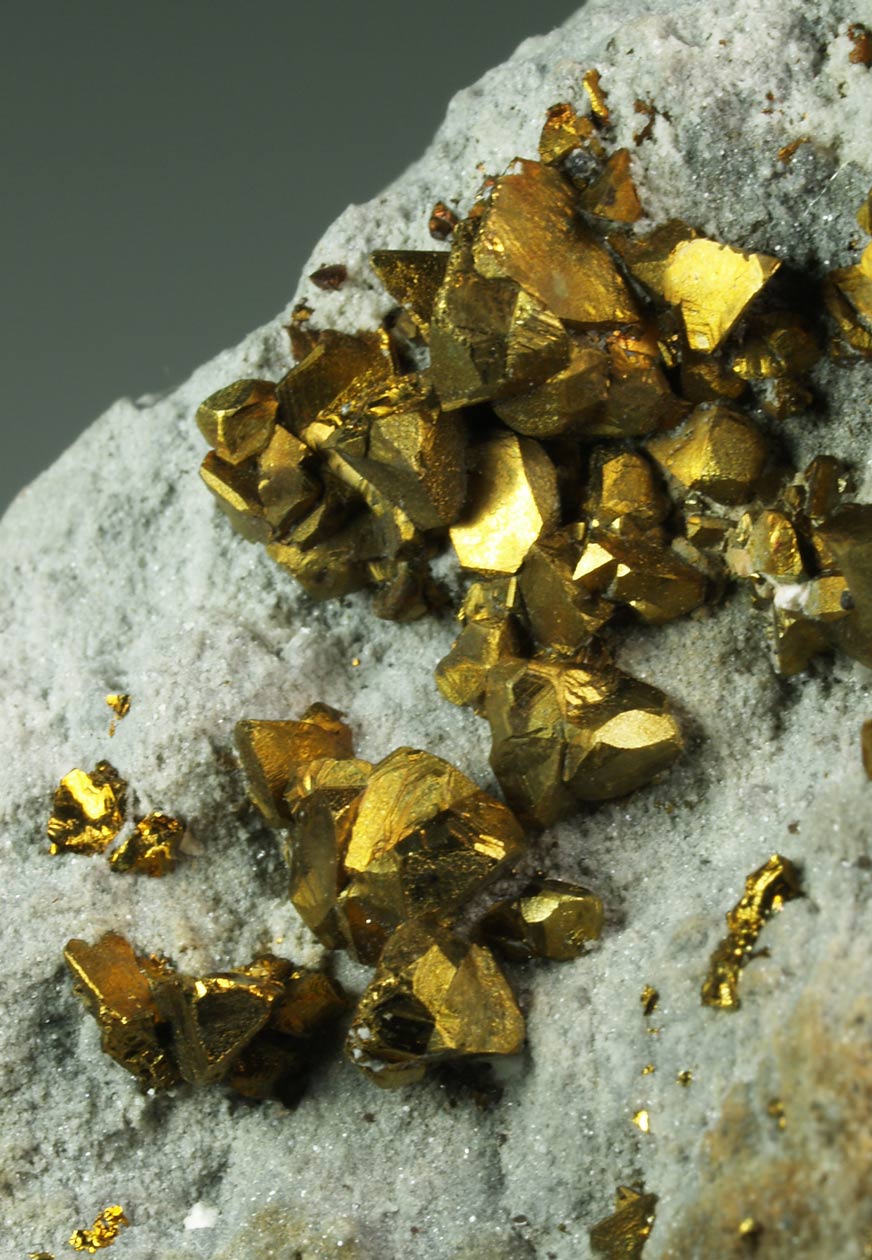
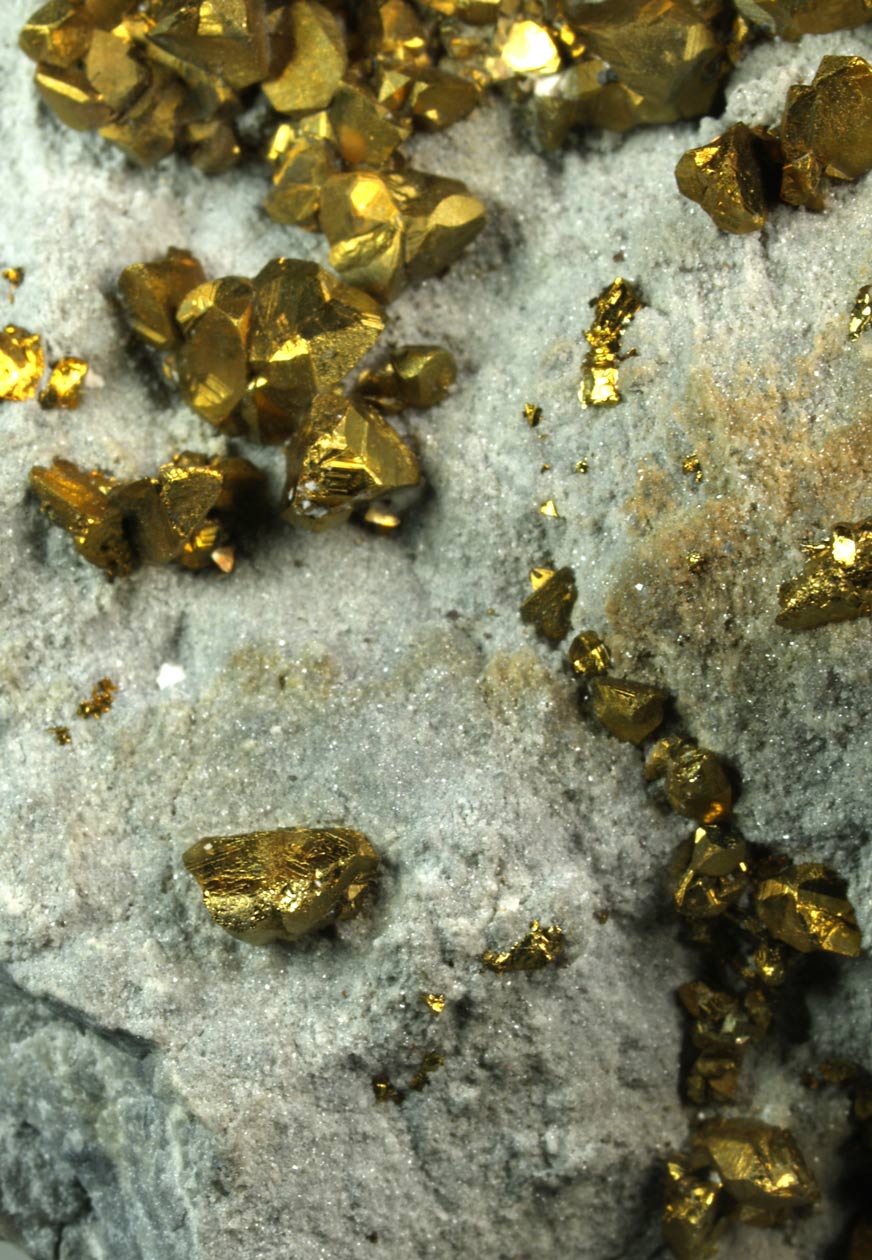
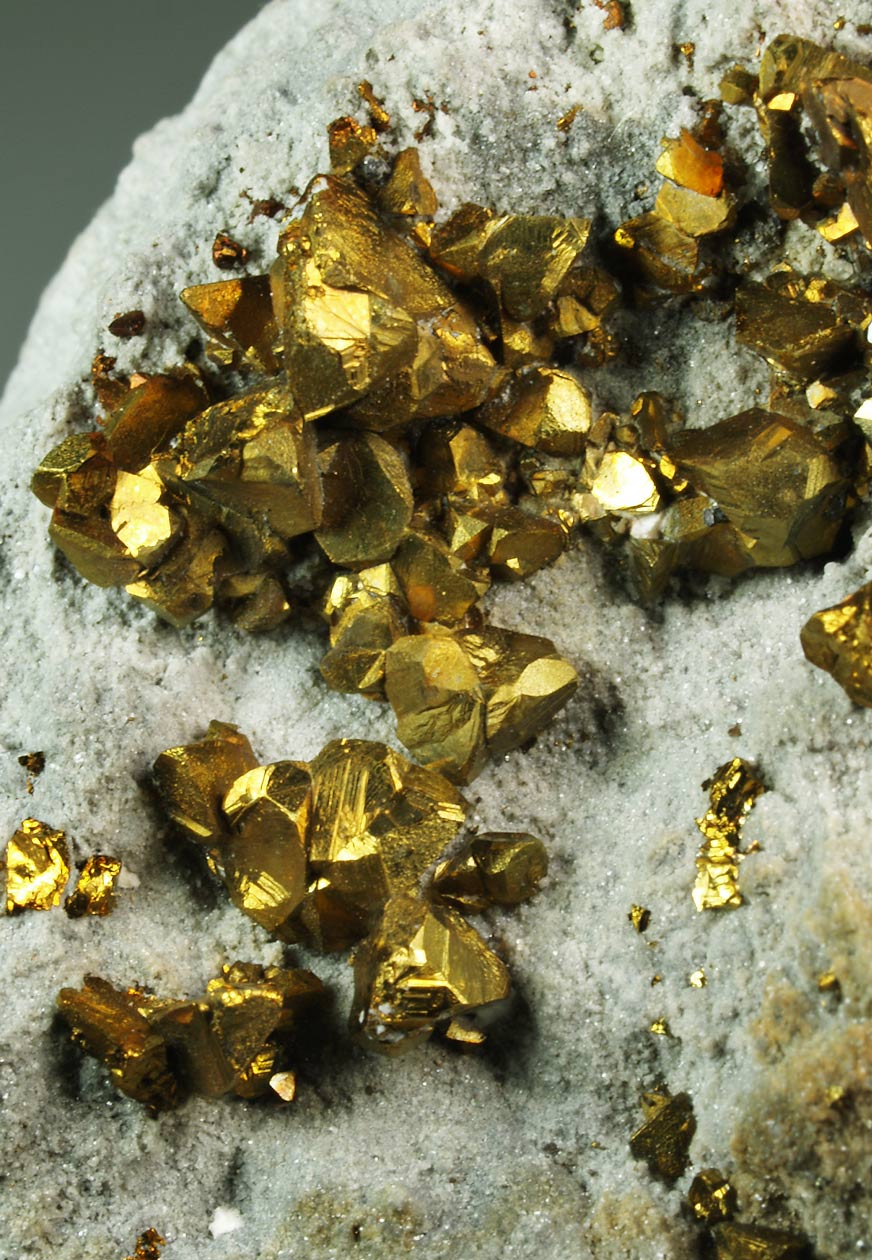
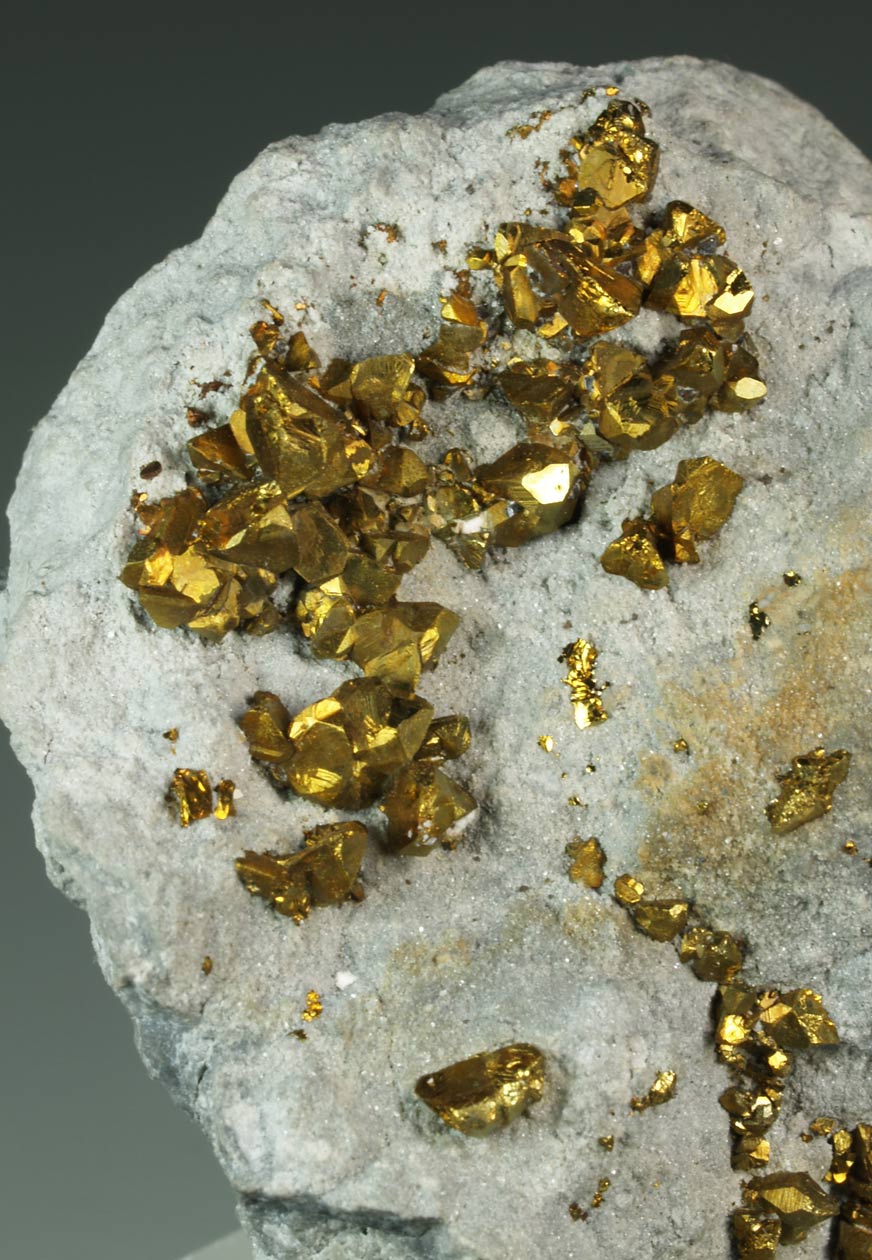
Rich group of chalcopyrite crystals, very brilliant, of intense luster and gold to bronze tones. They stand out for the richness of crystal facets, that show us very defined sphenoidal forms, some dipyramids and basal pinacoids, complex but identifiable. To enjoy crystallography... A specimen of a German locality not well represented in collections.
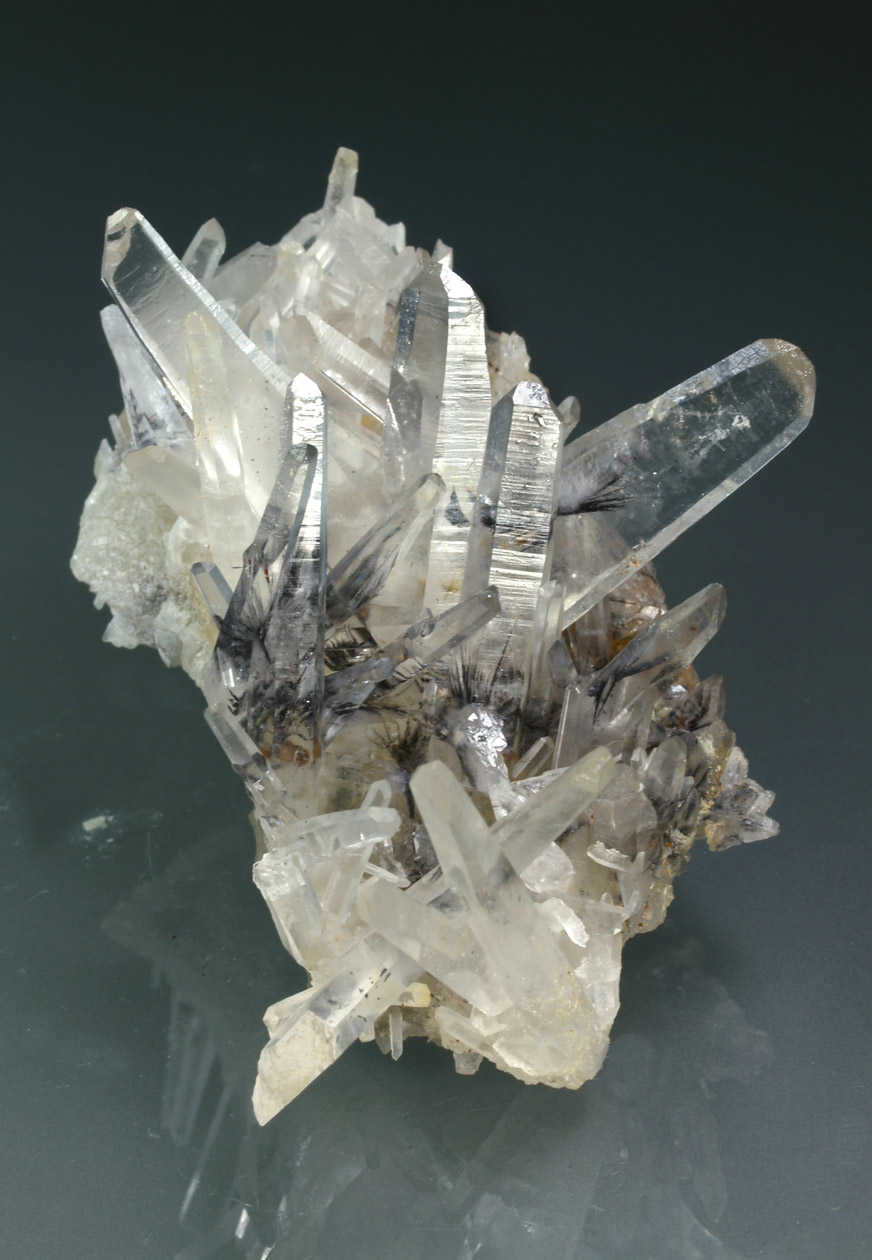
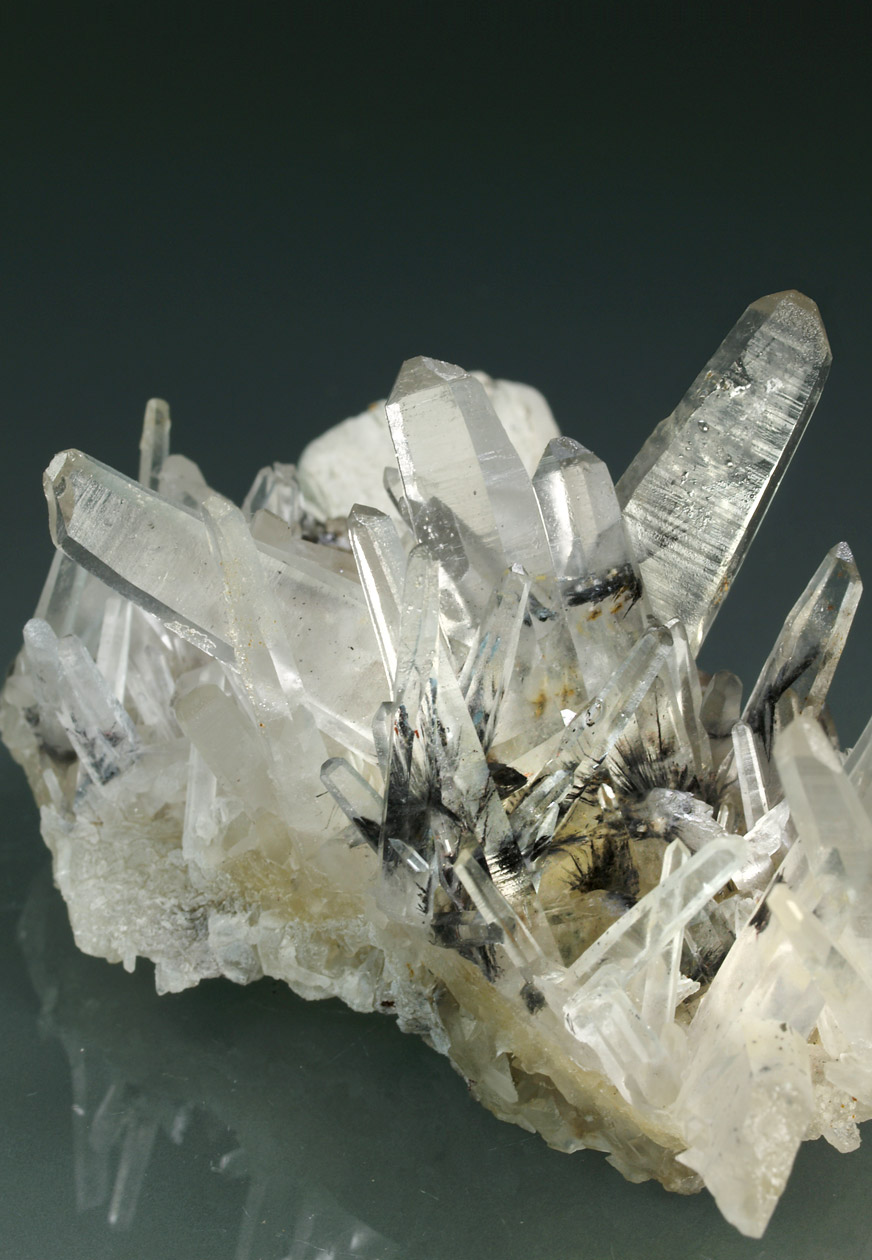
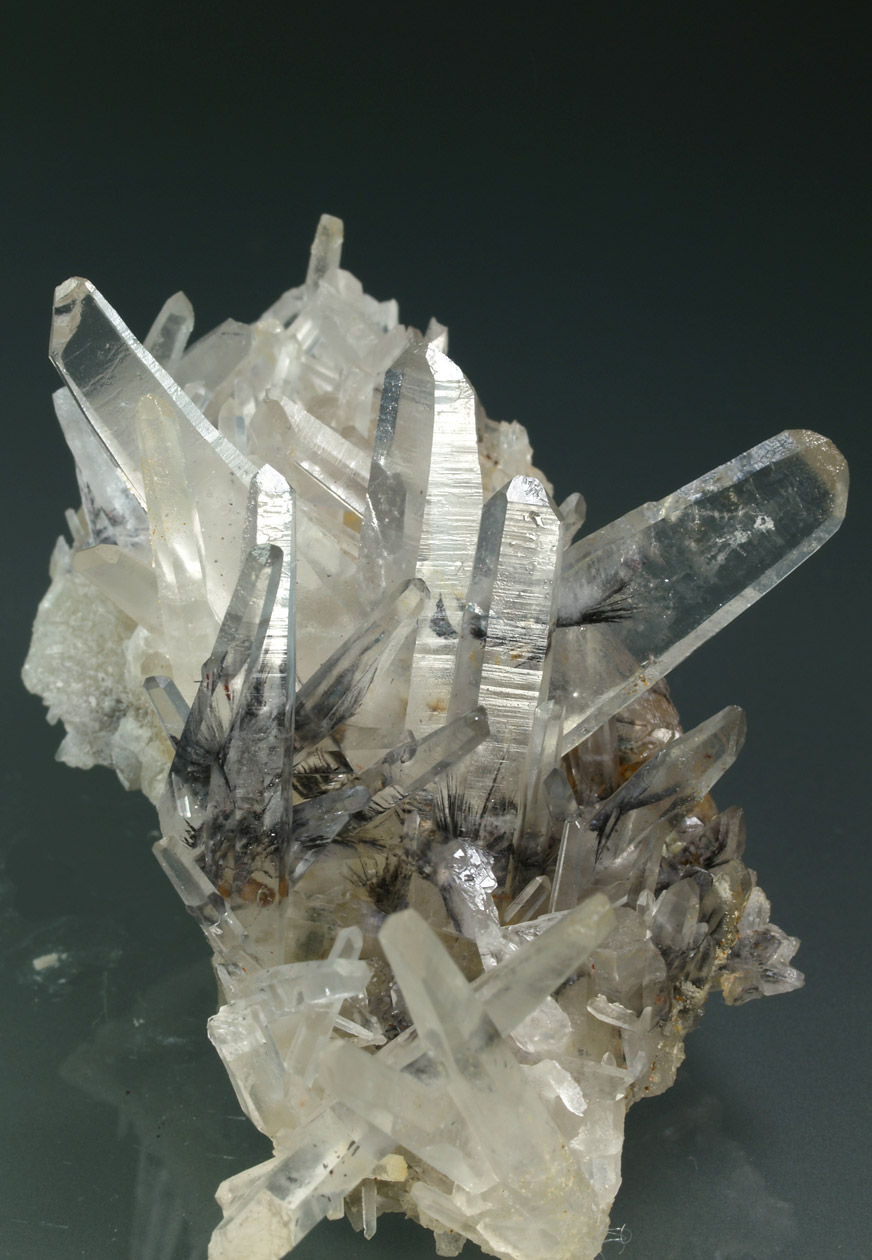
Very visible quartz Japan twin law (84°33'), formed by two well developed crystals. Transparence, perfection and with very interesting reddish acicular inclusions of indeterminate species (hübnerite?). From a classic locality very aesthetic piece.
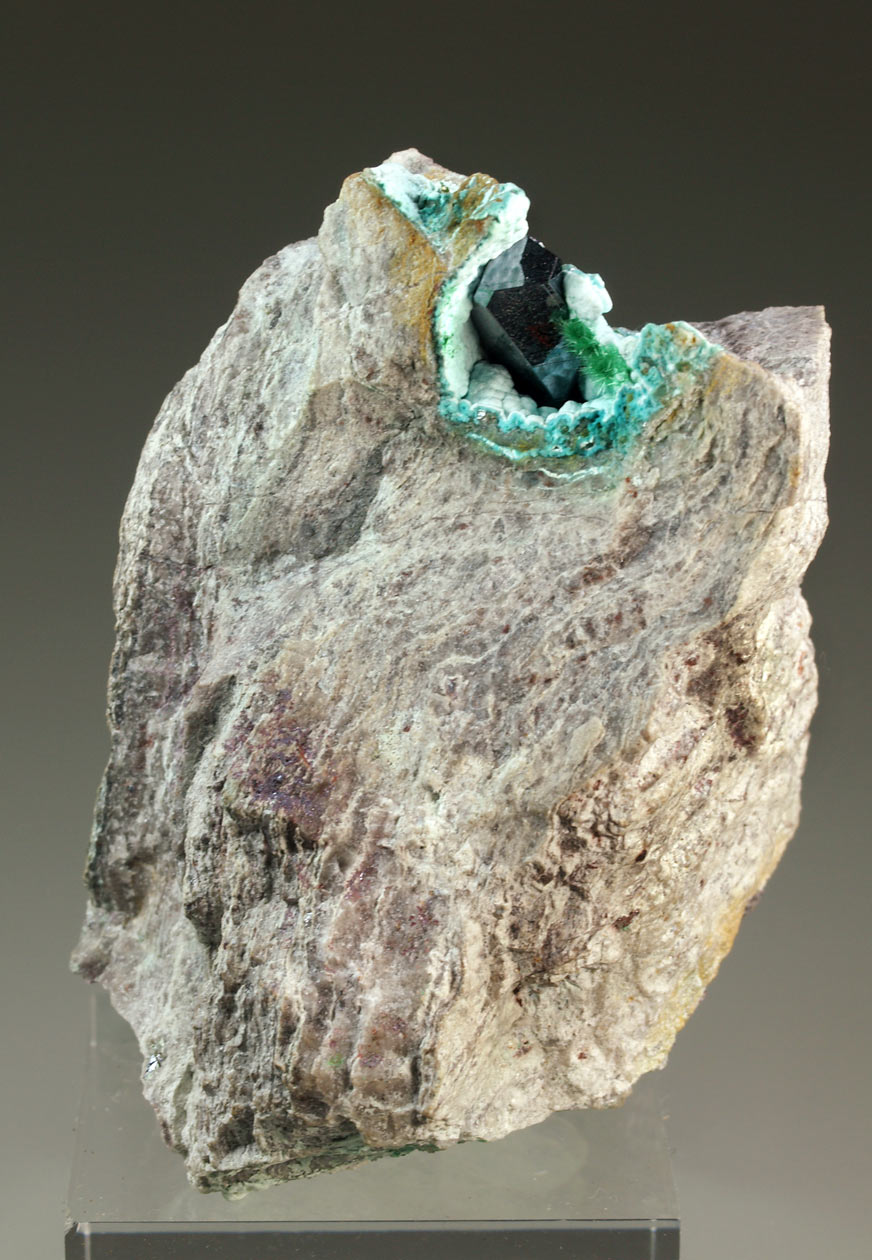
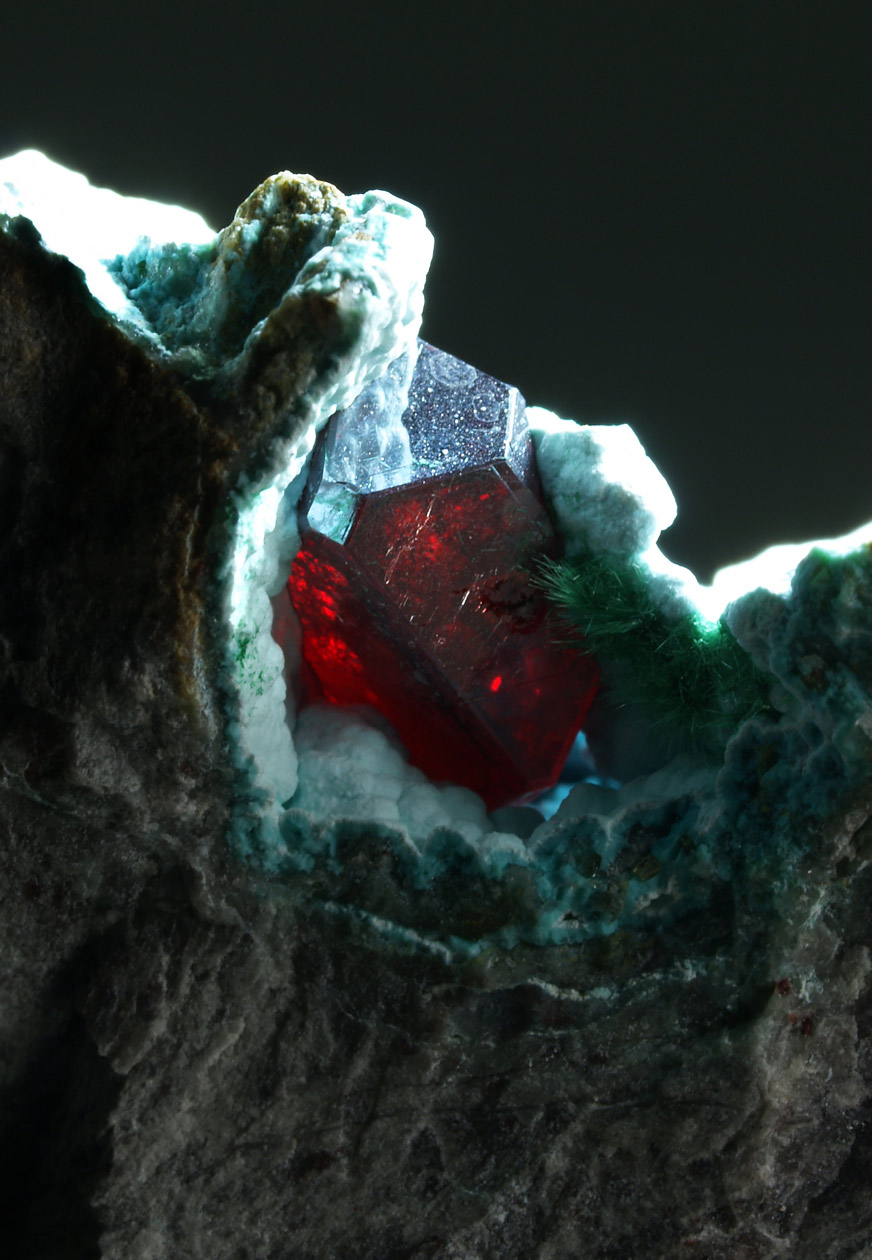
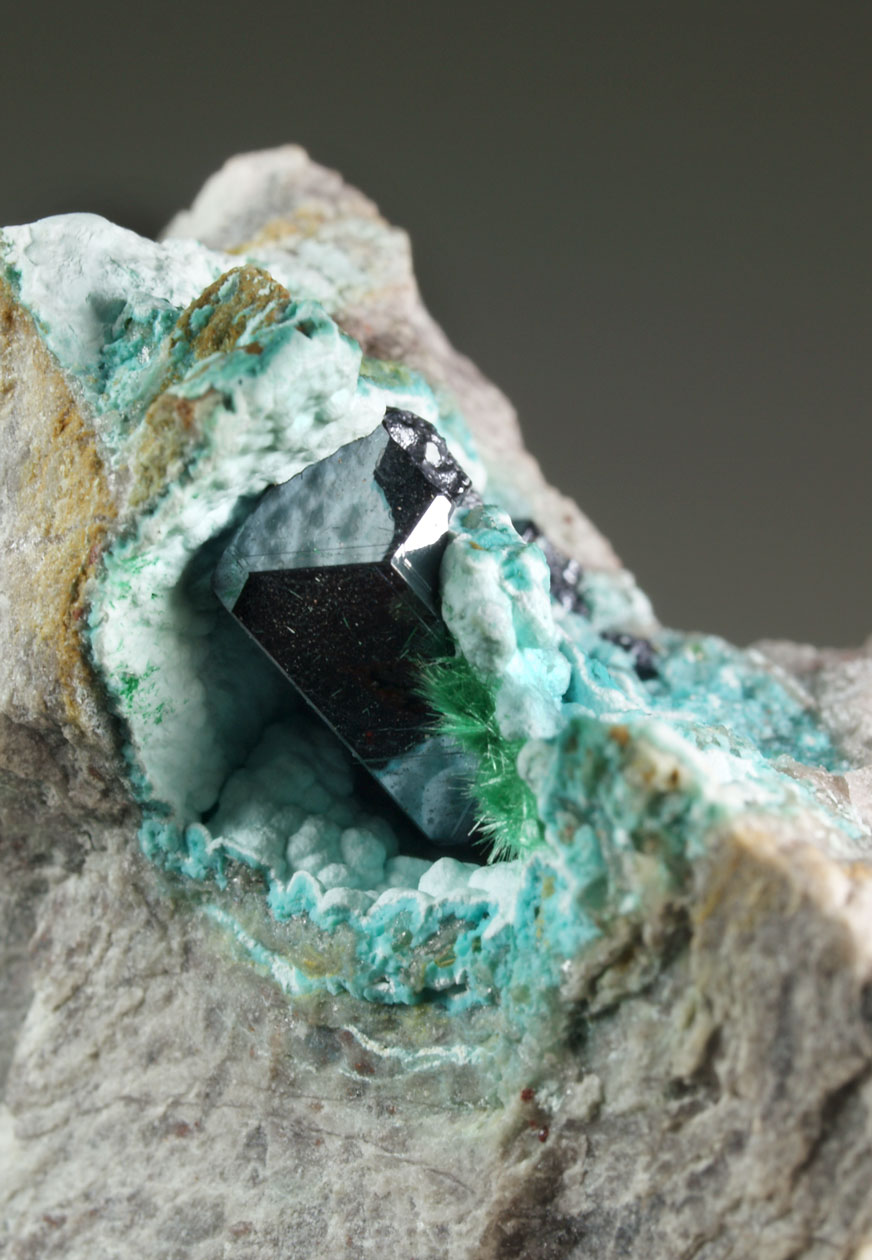
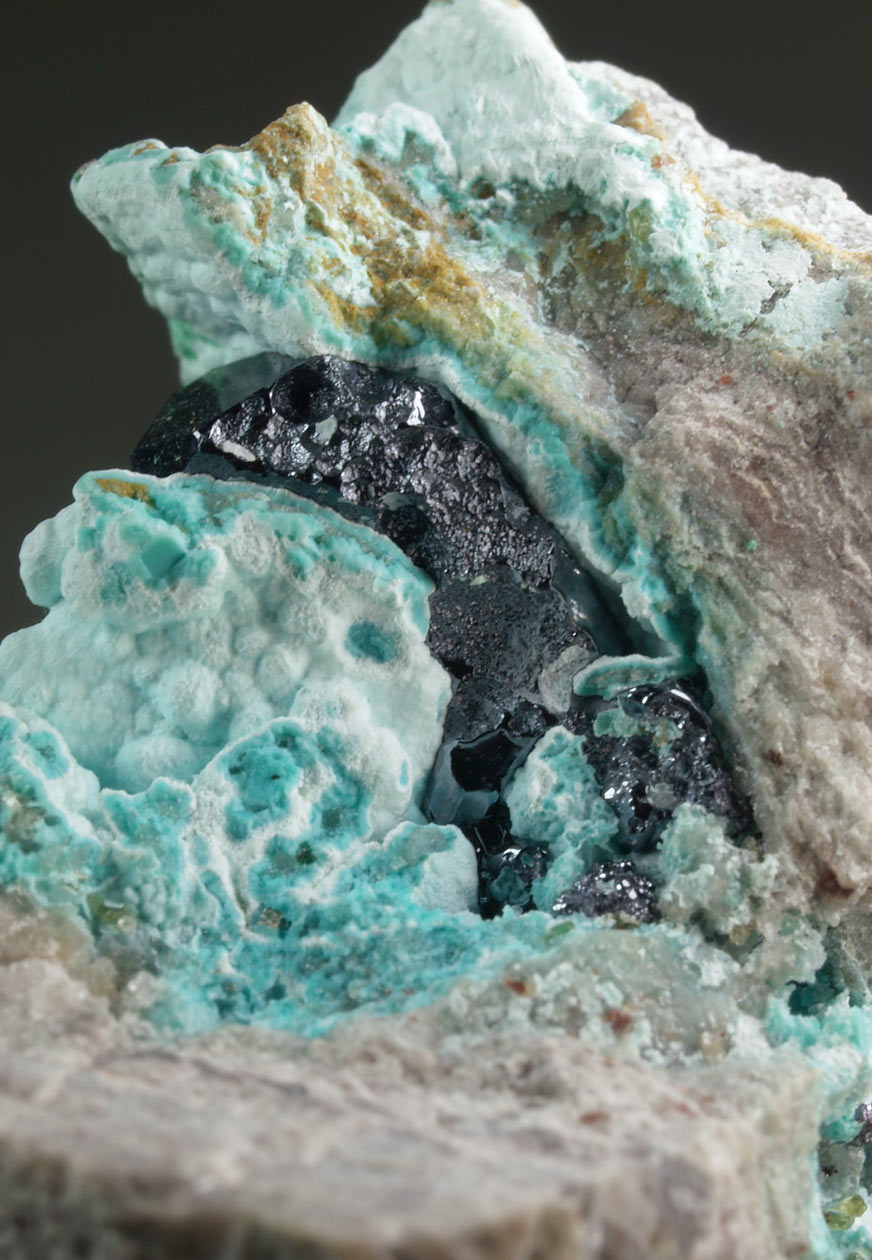
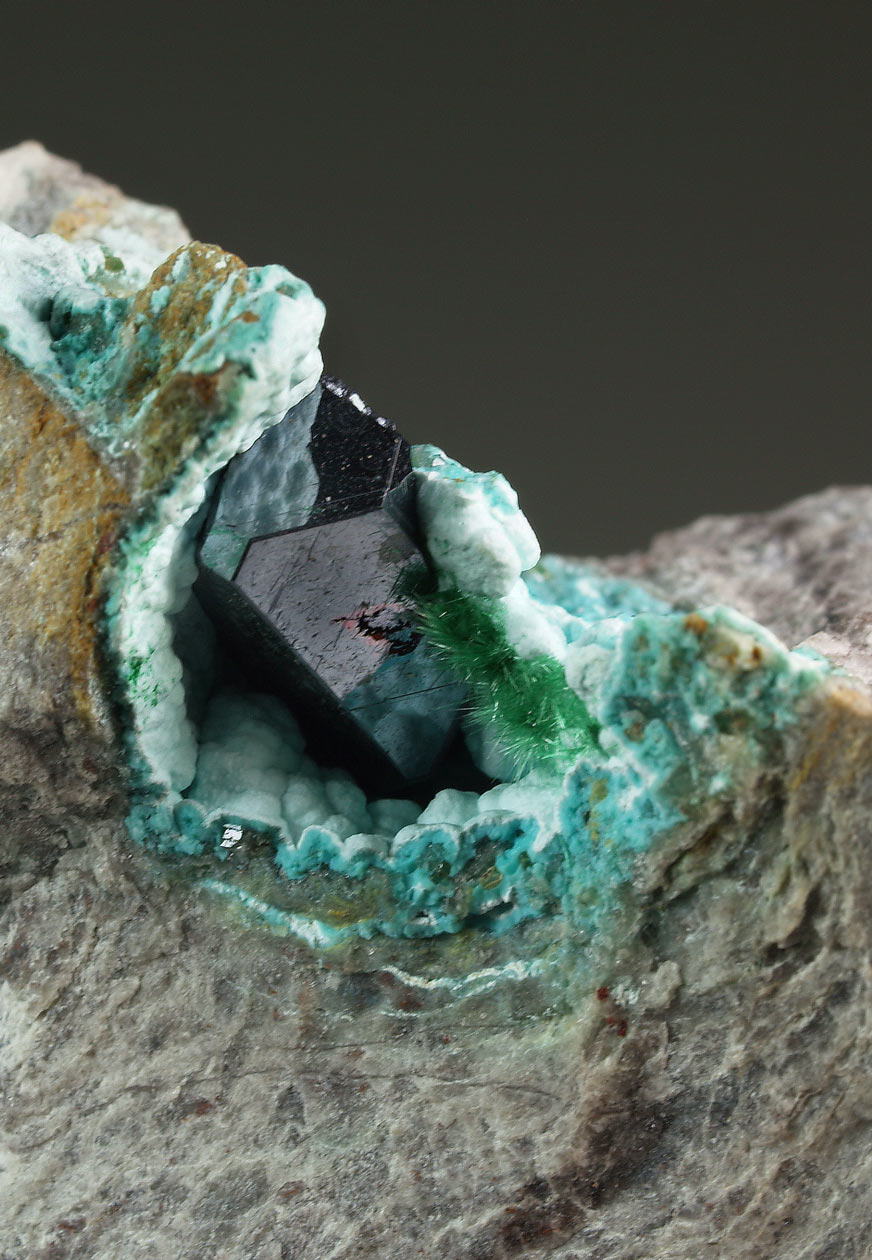
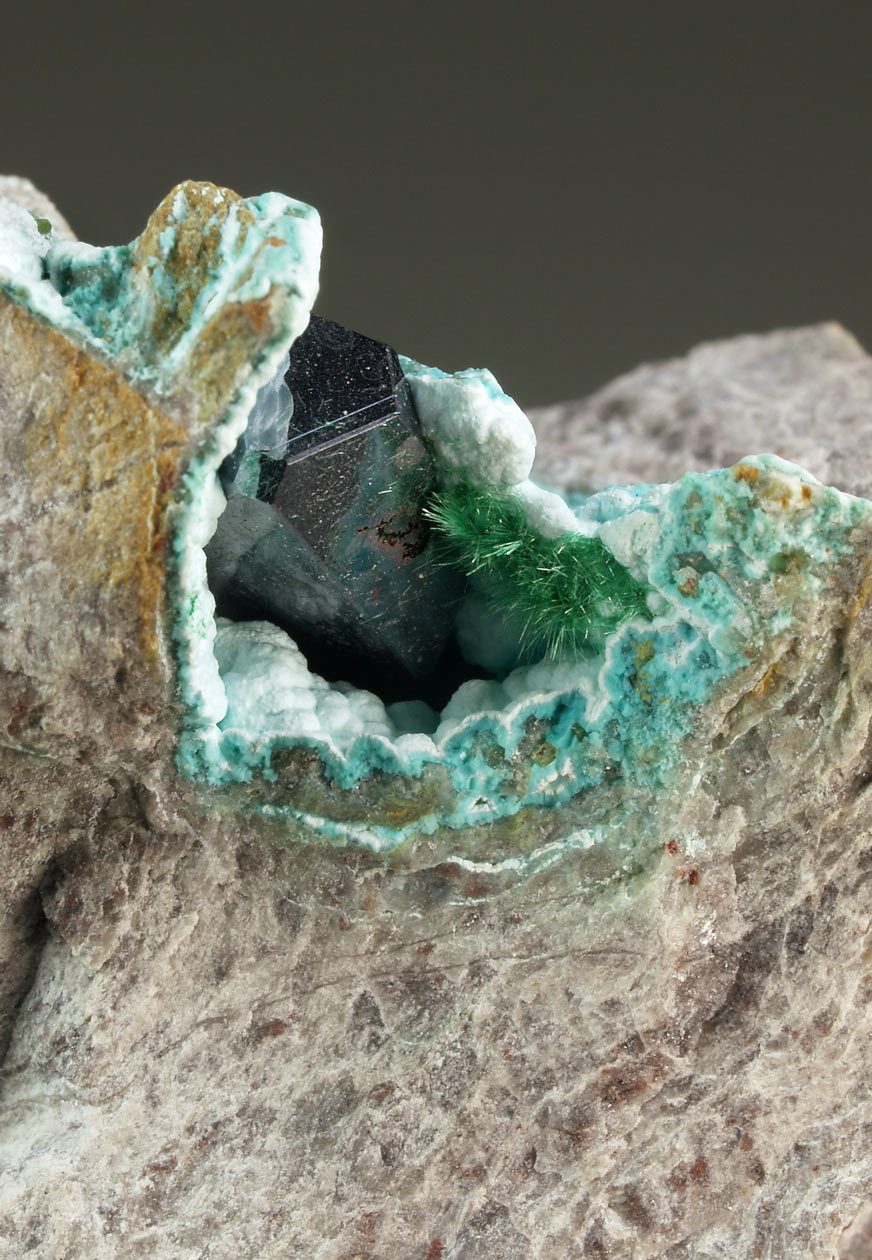
These cuprite crystals from Kolwezi mines are a classic of worldwide mineralogy. In this specimen the crystal shows defined faces and edges, with intense red color under the light. It is disposed in a cavity with needle malachite crystal aggregates. Crystal has no damage, the back side shows natural rounded forms. A very aesthetic and difficult to see specimen.
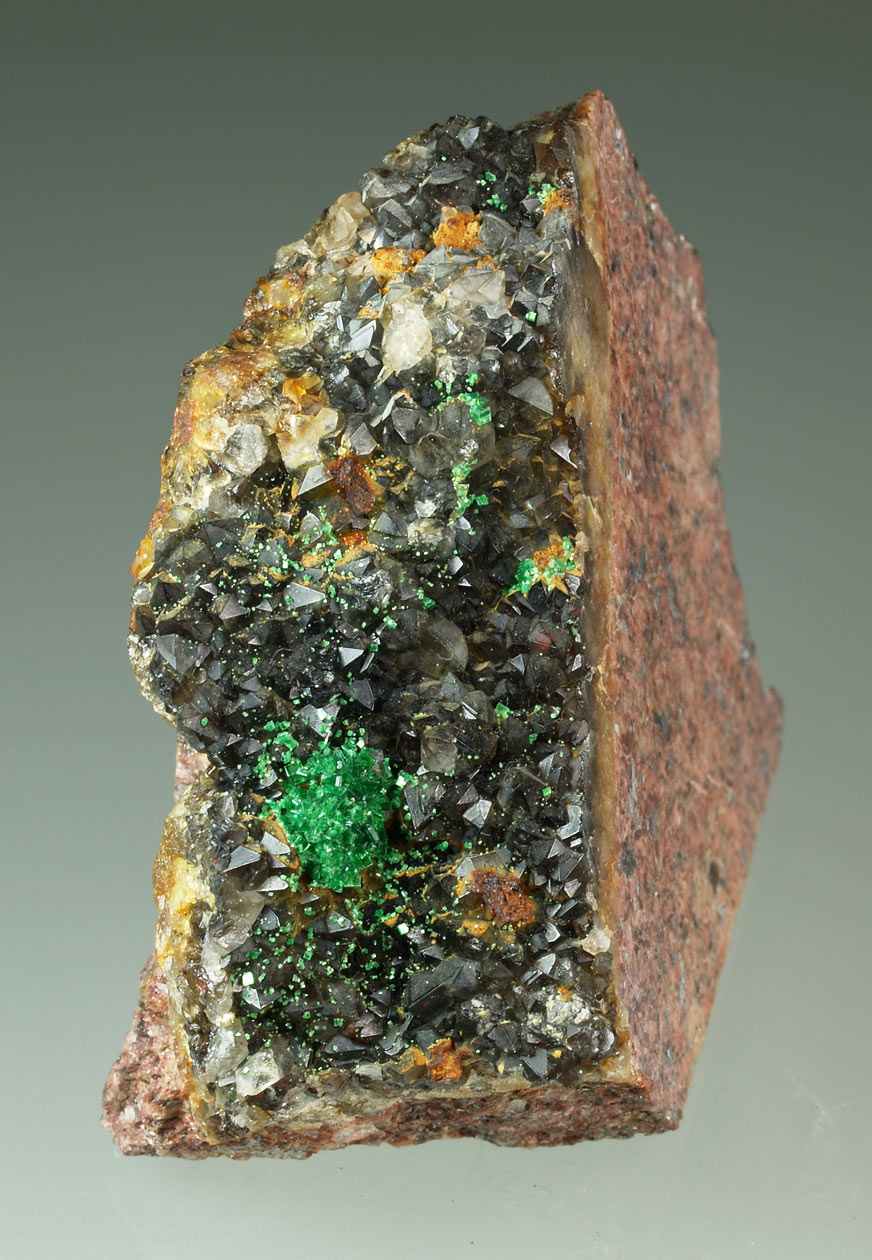
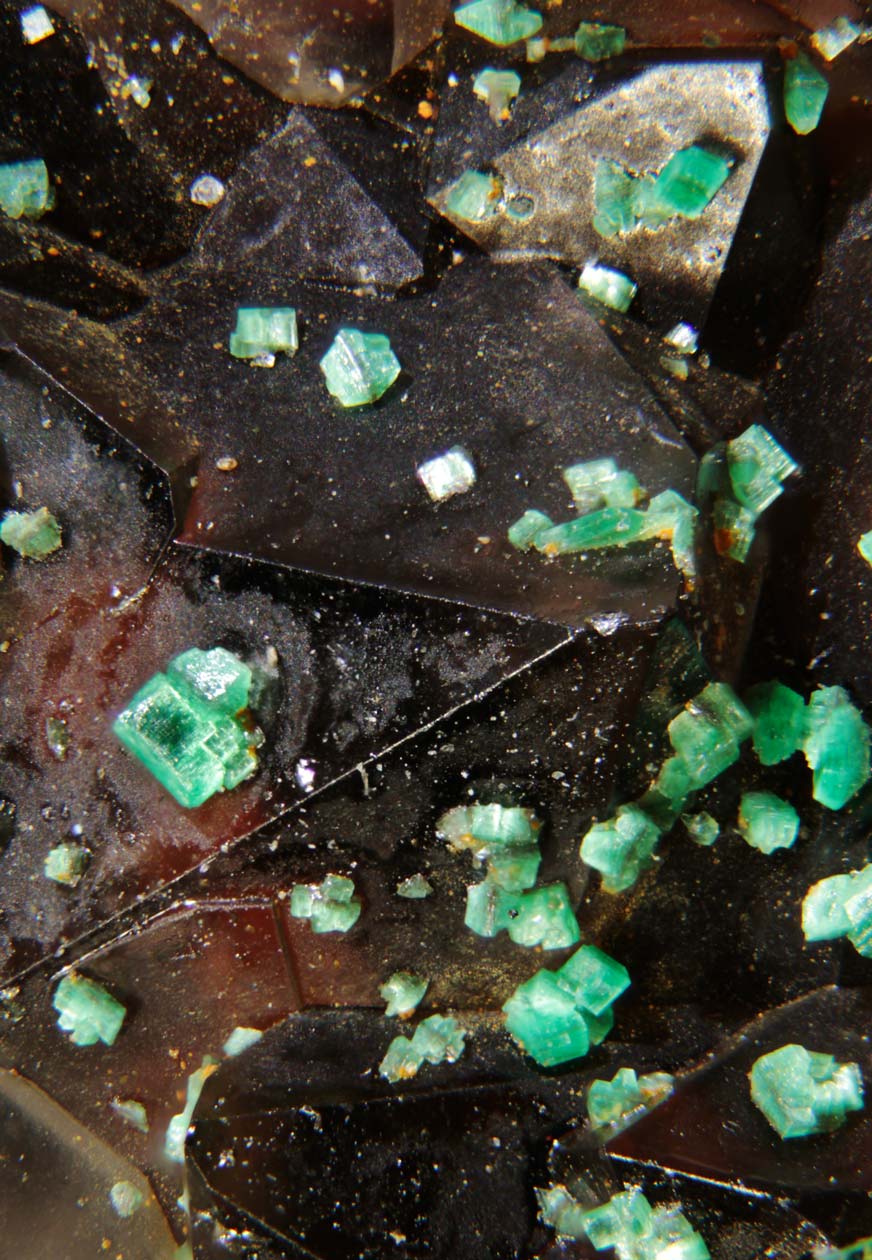
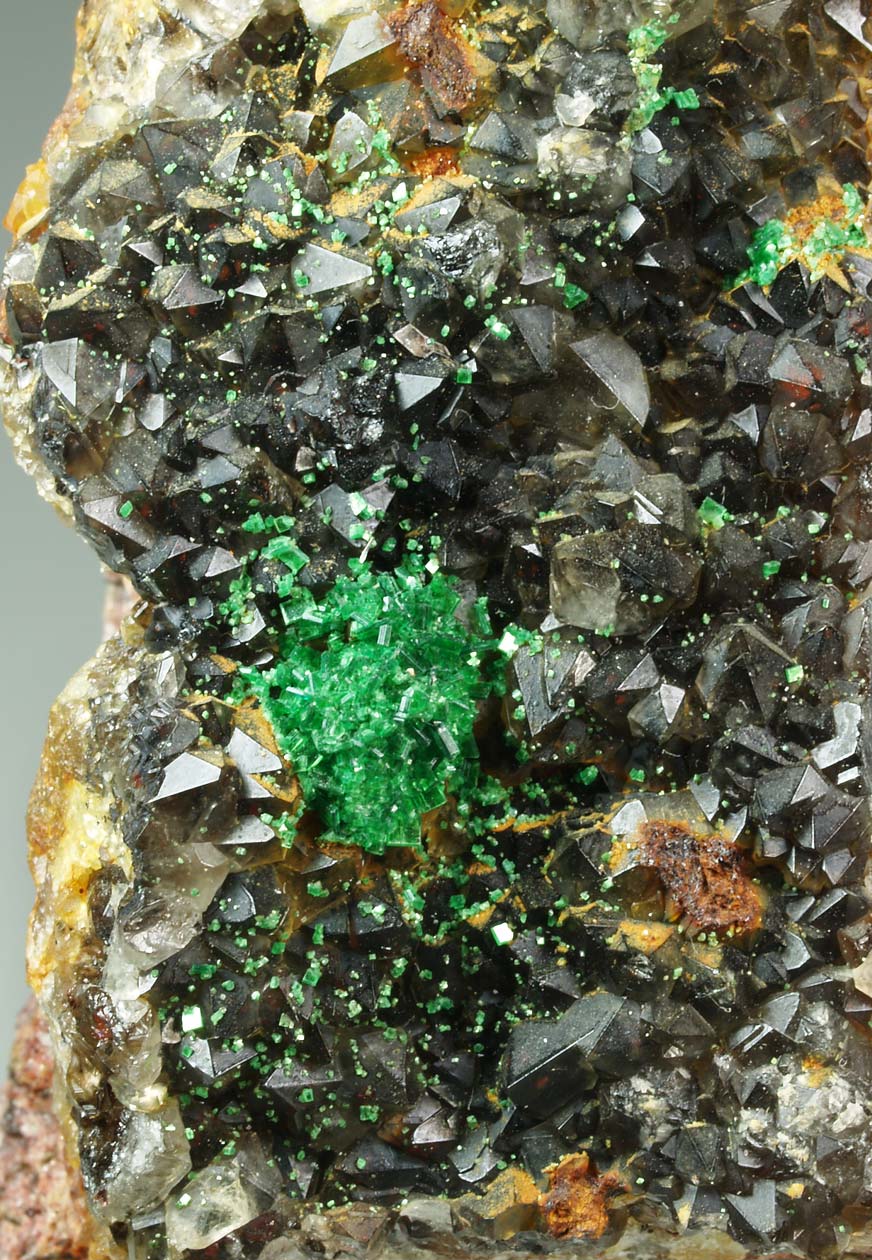
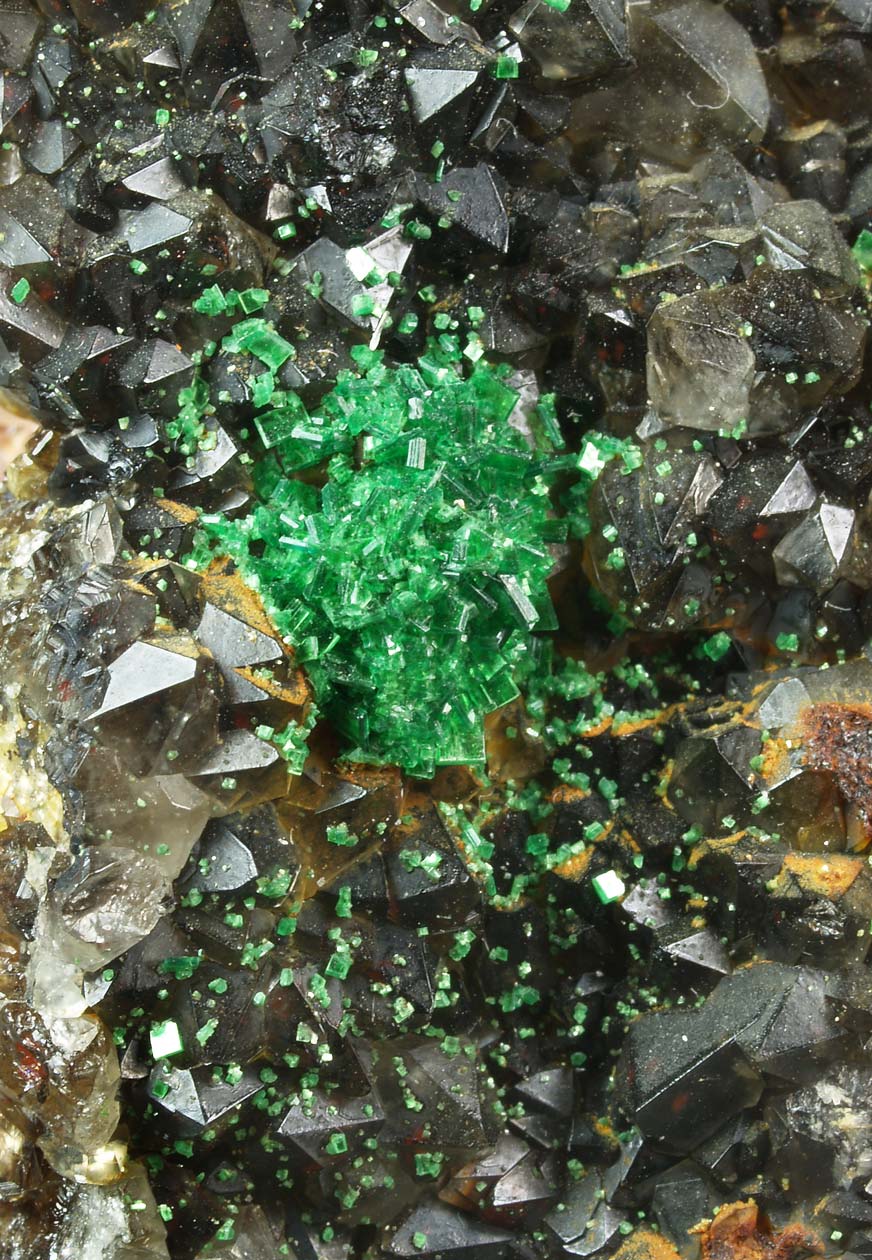
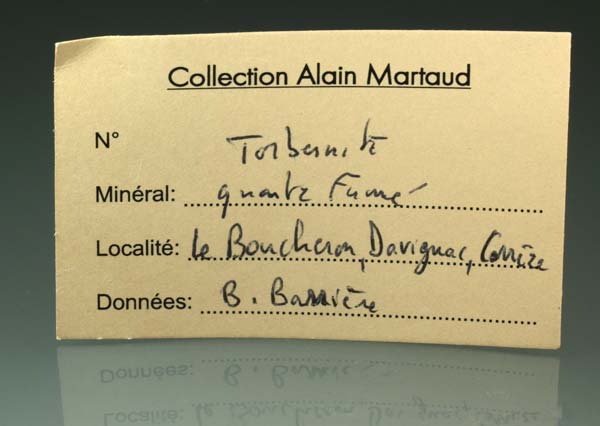
A very rich group of torbernite crystals, with an intense green color, brilliance and excellent transparence. We can observe that close to this rich group, the matrix formed by smoky quartz crystals are sprinkled with tabular and tetragonal prismatic truncated by the pinacoids crystals. An amazing specimen for close observation and a piece from a French locality not represented in collections. This mine was worhked for uranium between 1987 and 1989. Also with the quality label of the collection Alain Martaud and from B. Barrière.
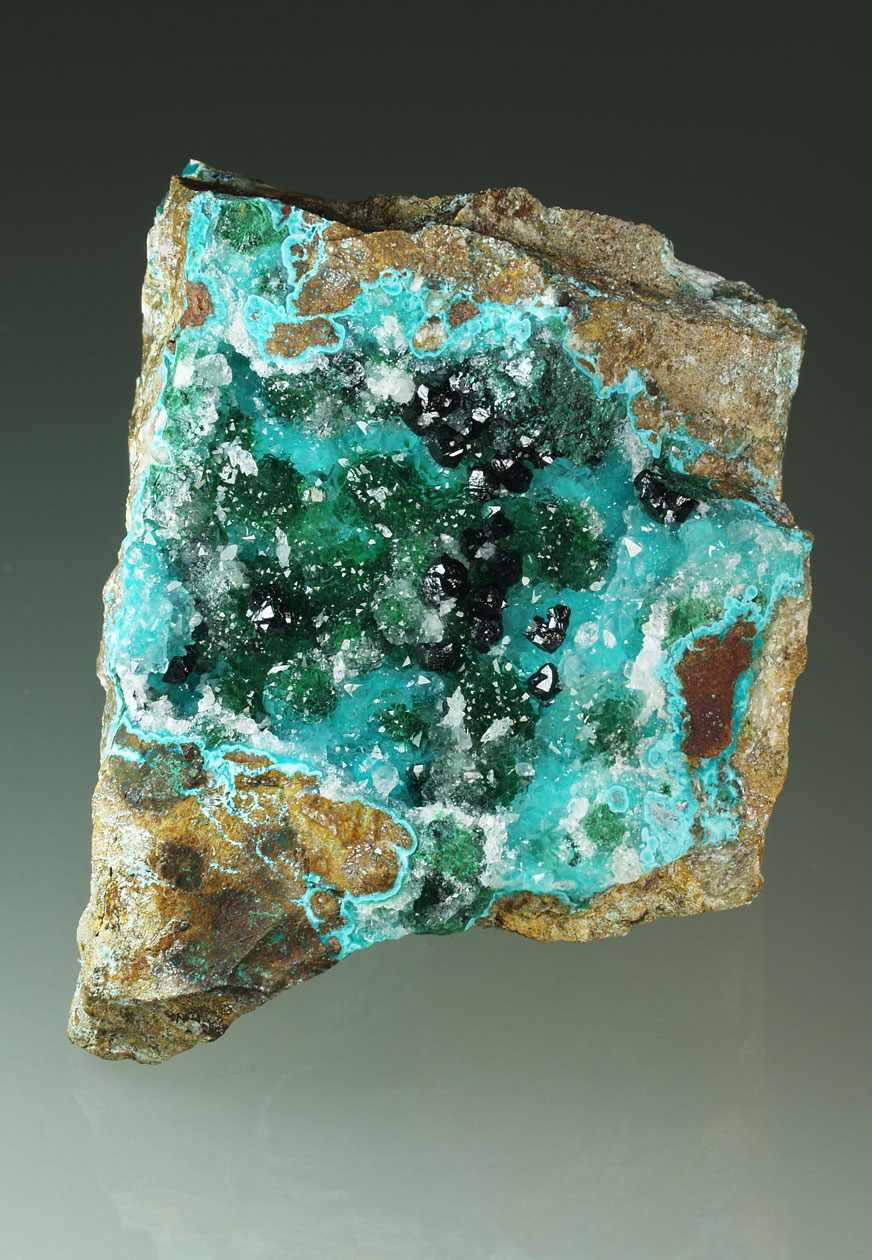
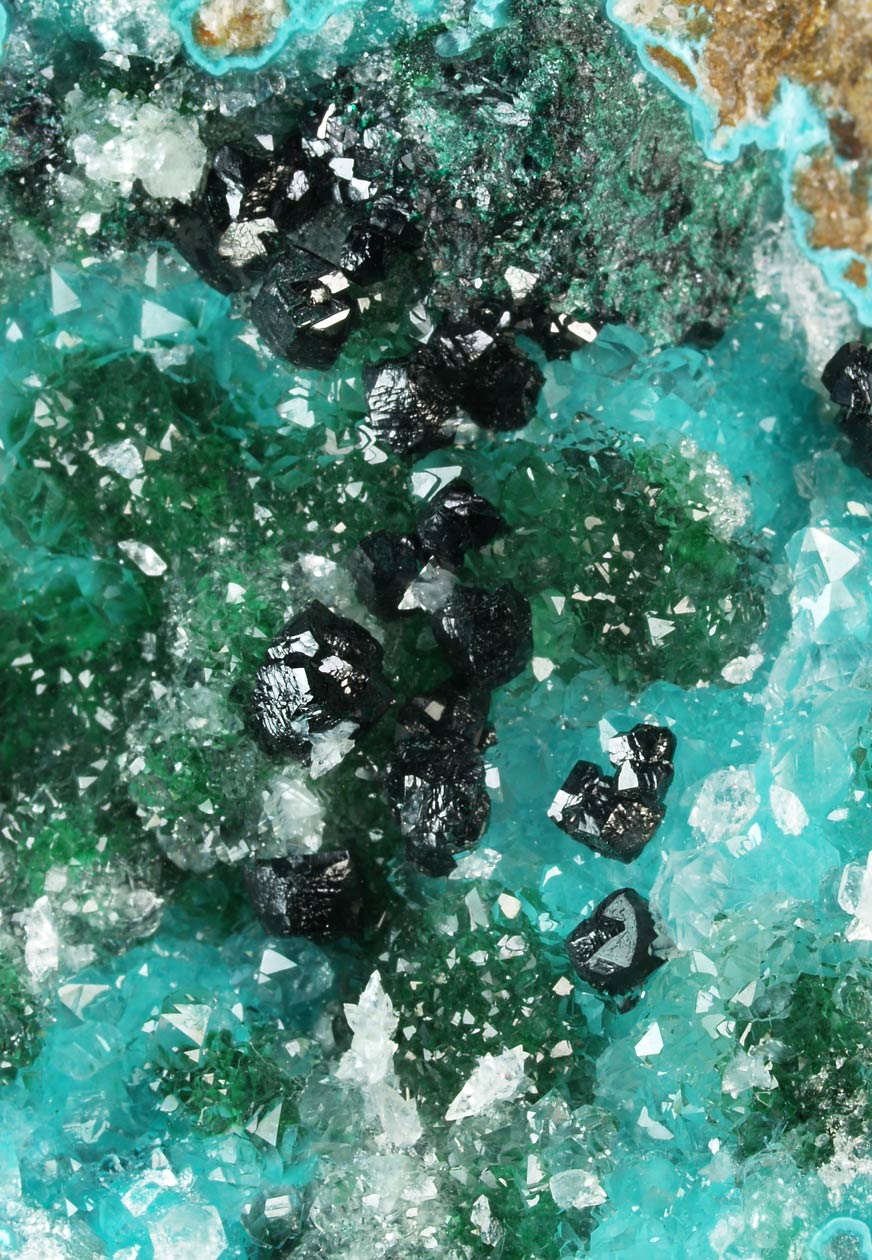
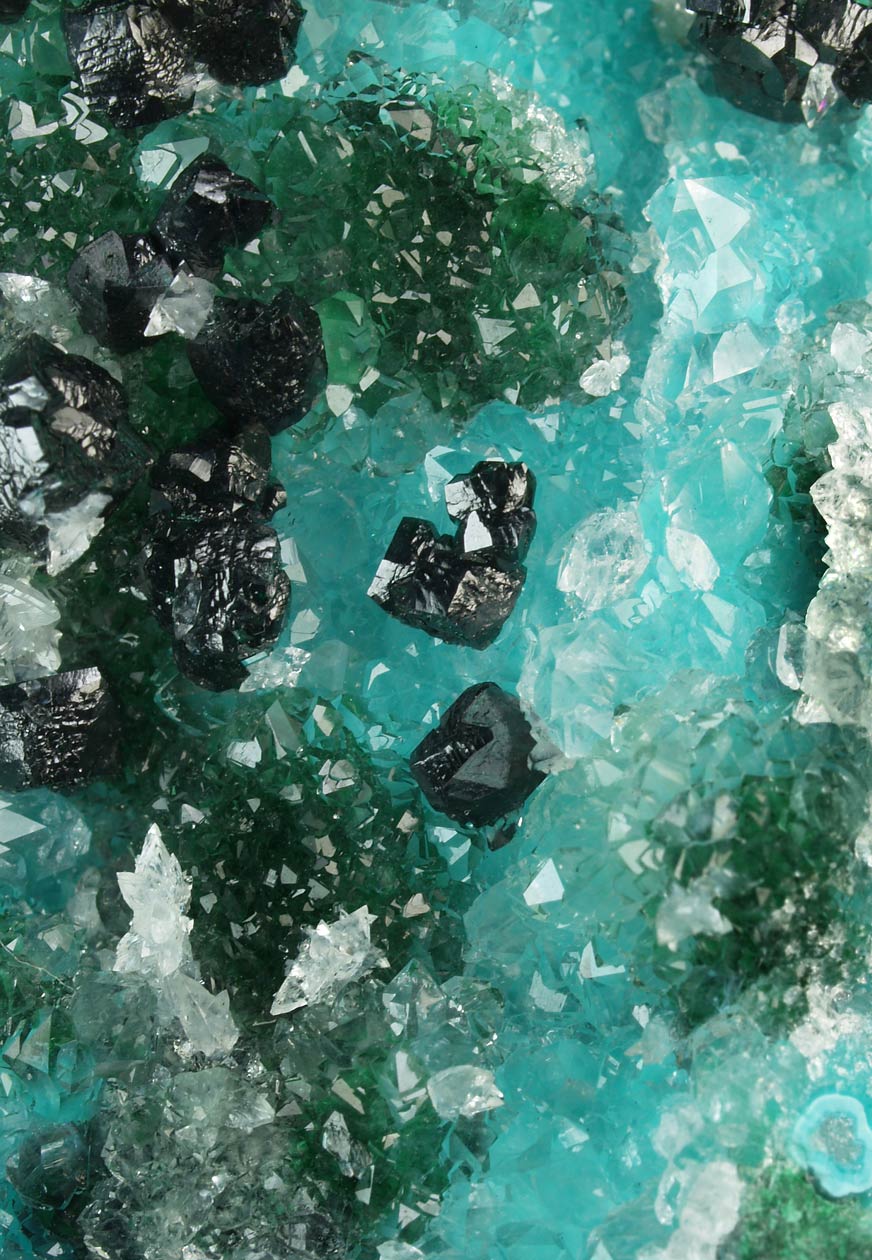
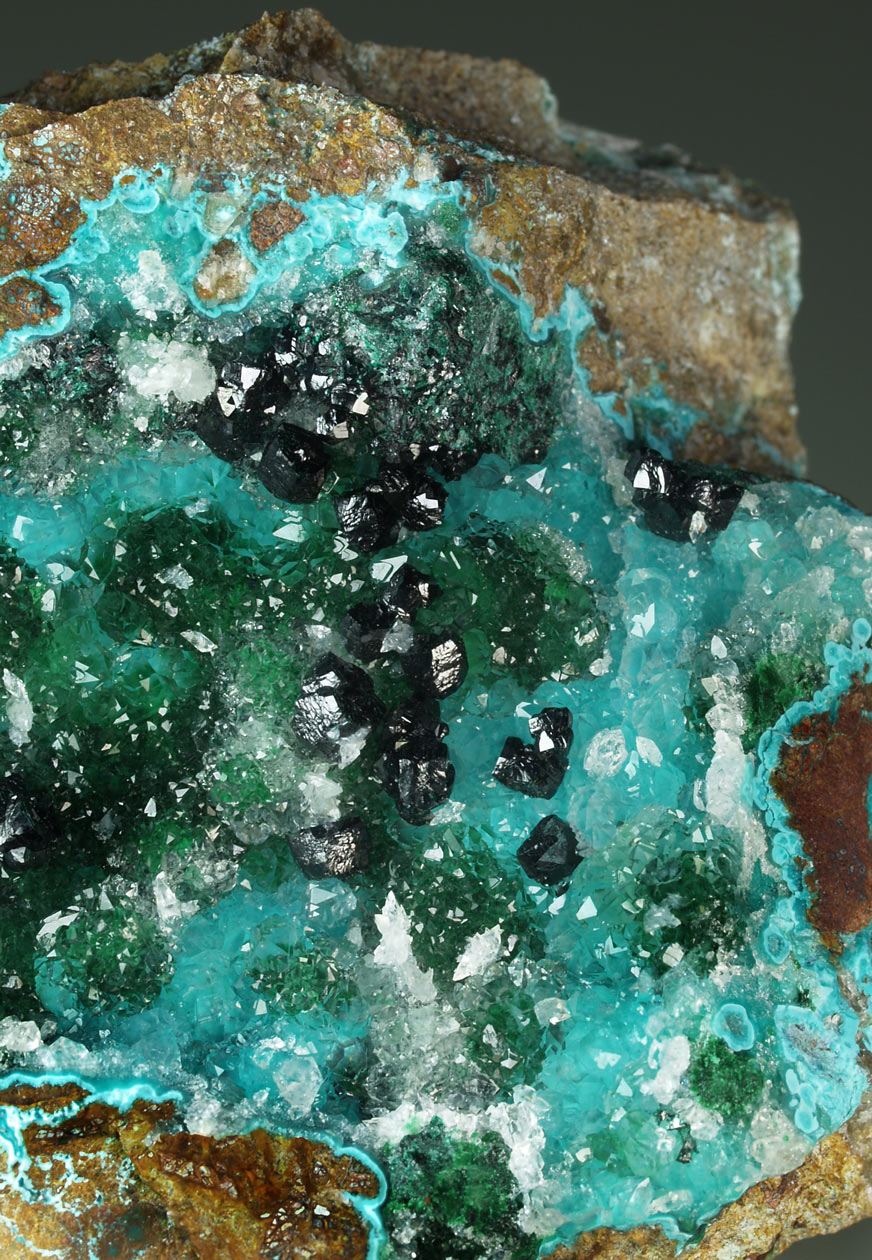
Very rich group of sharp clinoatacamite crystals, many of them isolated, very well defined faces and edges, interpenetrated, with pseudohexagonal and octahedral forms. Very brilliant and with some transparence. They are disposed on a matrix formed by brilliant quartz covering aggregates of deep green malachite crystals and chrysocolla. Peppered with scalenohedral crystals of calcite. A very aesthetic and interesting specimen of good size. I like Peruvian clinotacamite...
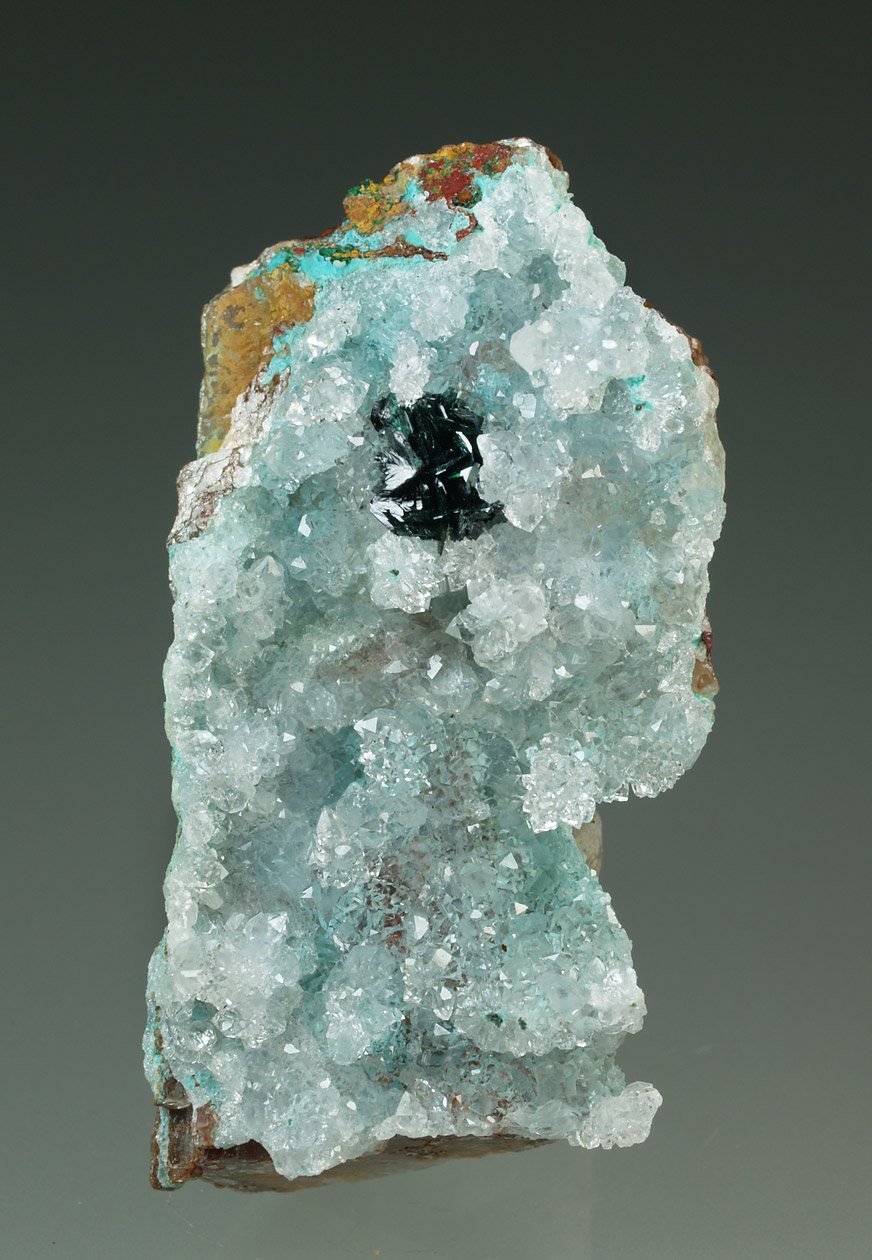
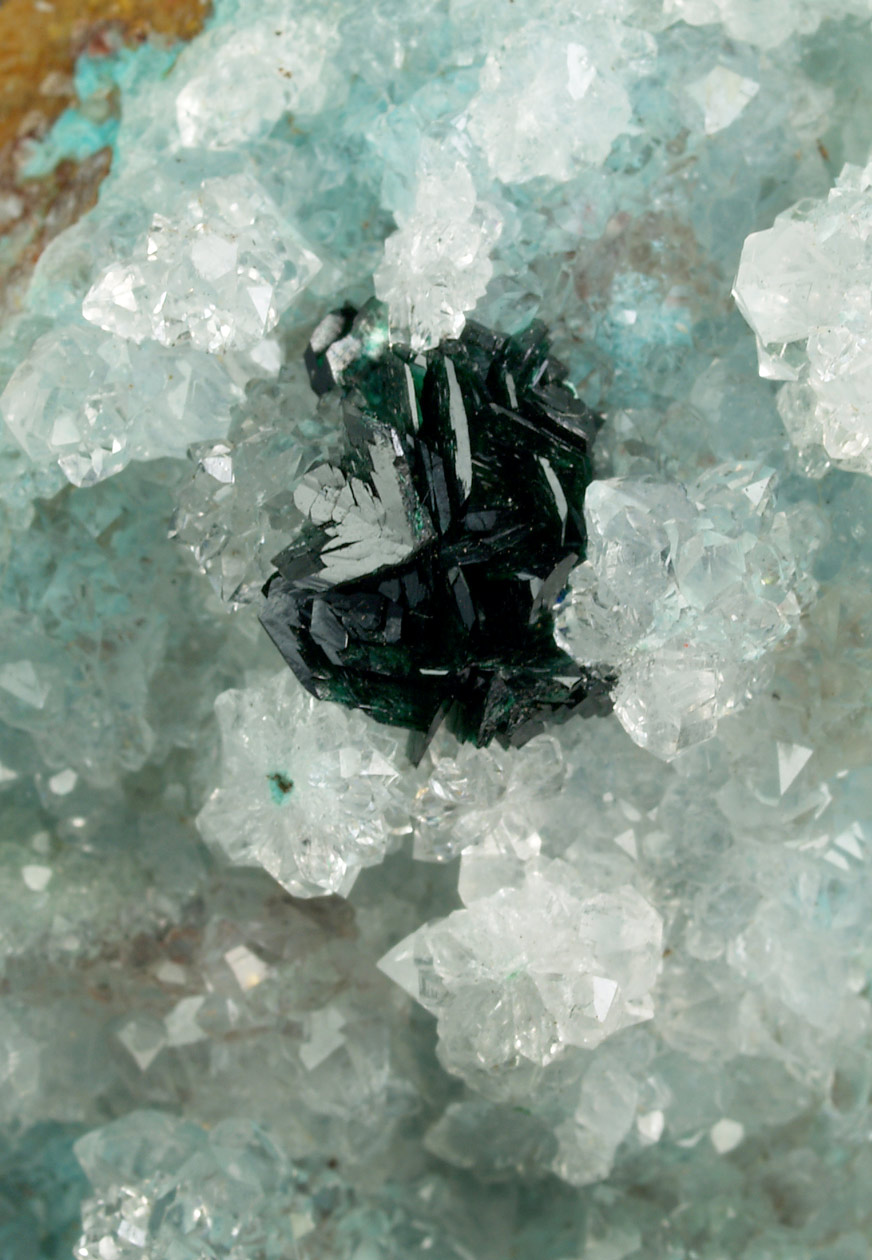
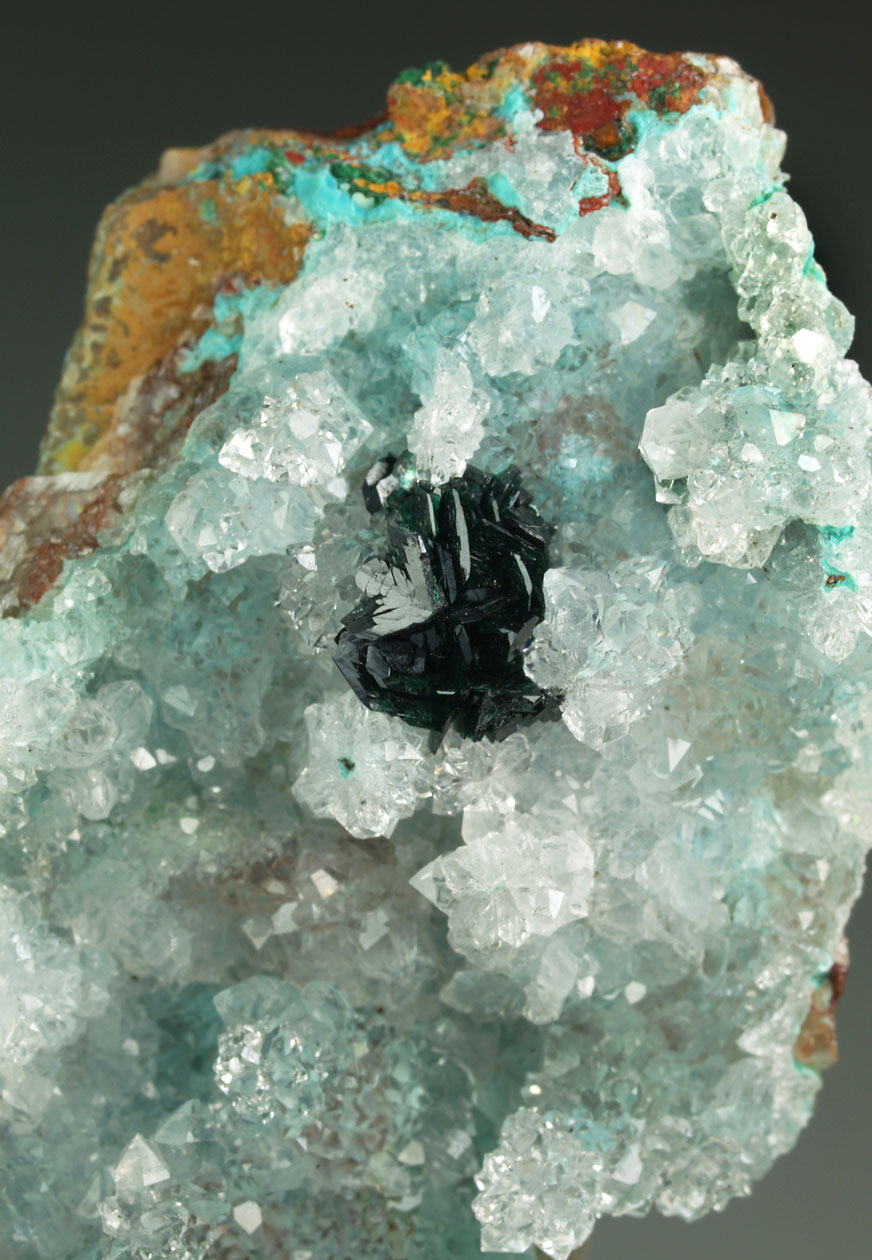
Very curious specimen formed by a sharp rossette formed by clinoatacamite crystals, with an intense green color, with pseudohexagonal forms. They are disposed on a brilliant matrix covered by quartz crystals and chrysocolla.
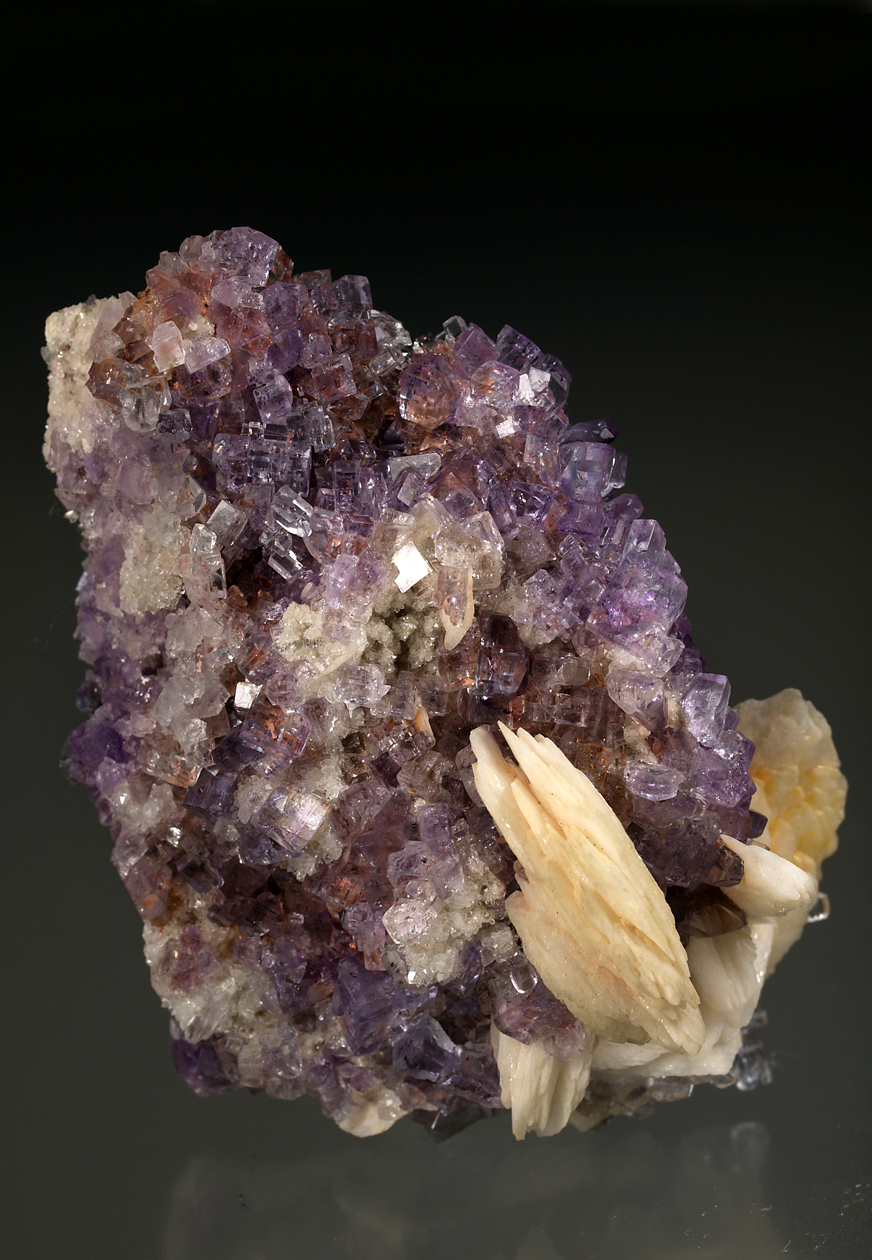
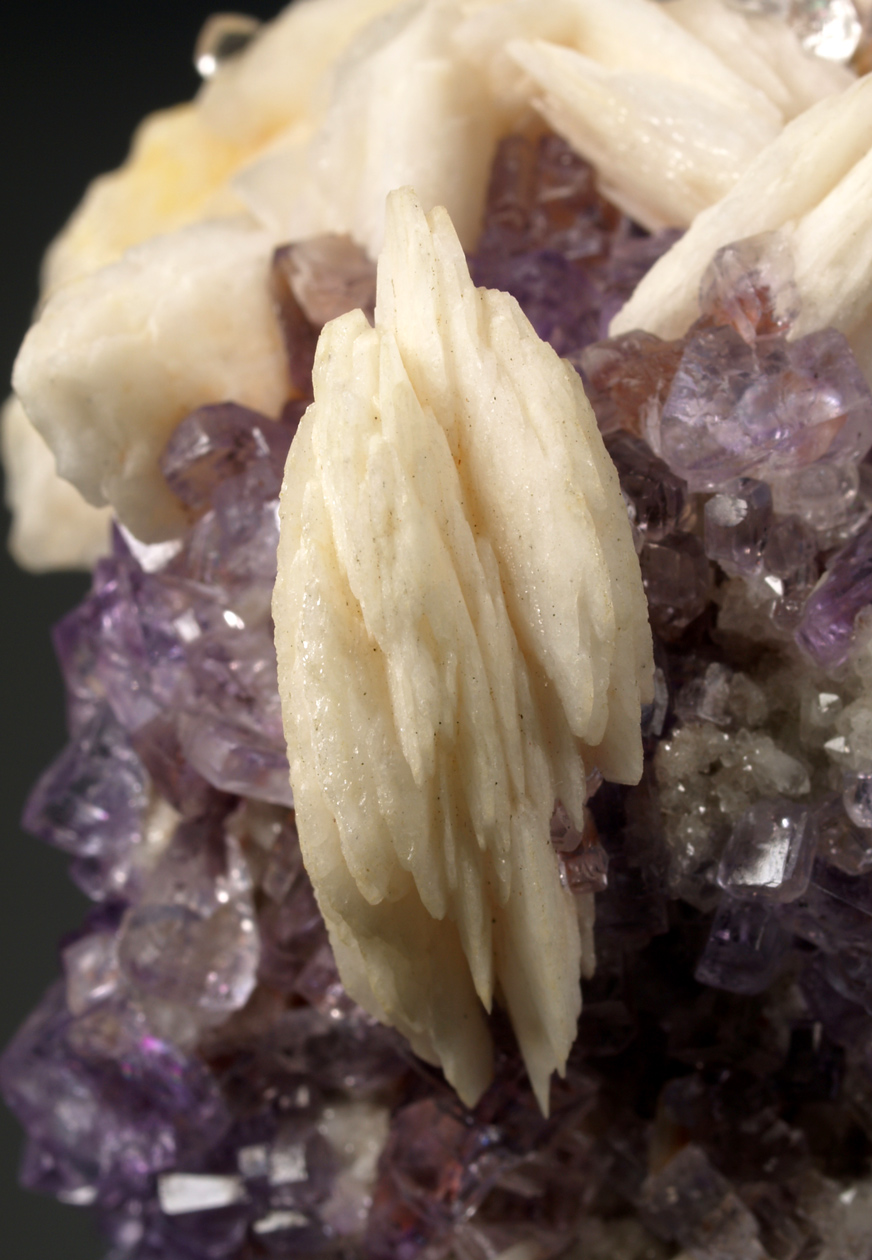
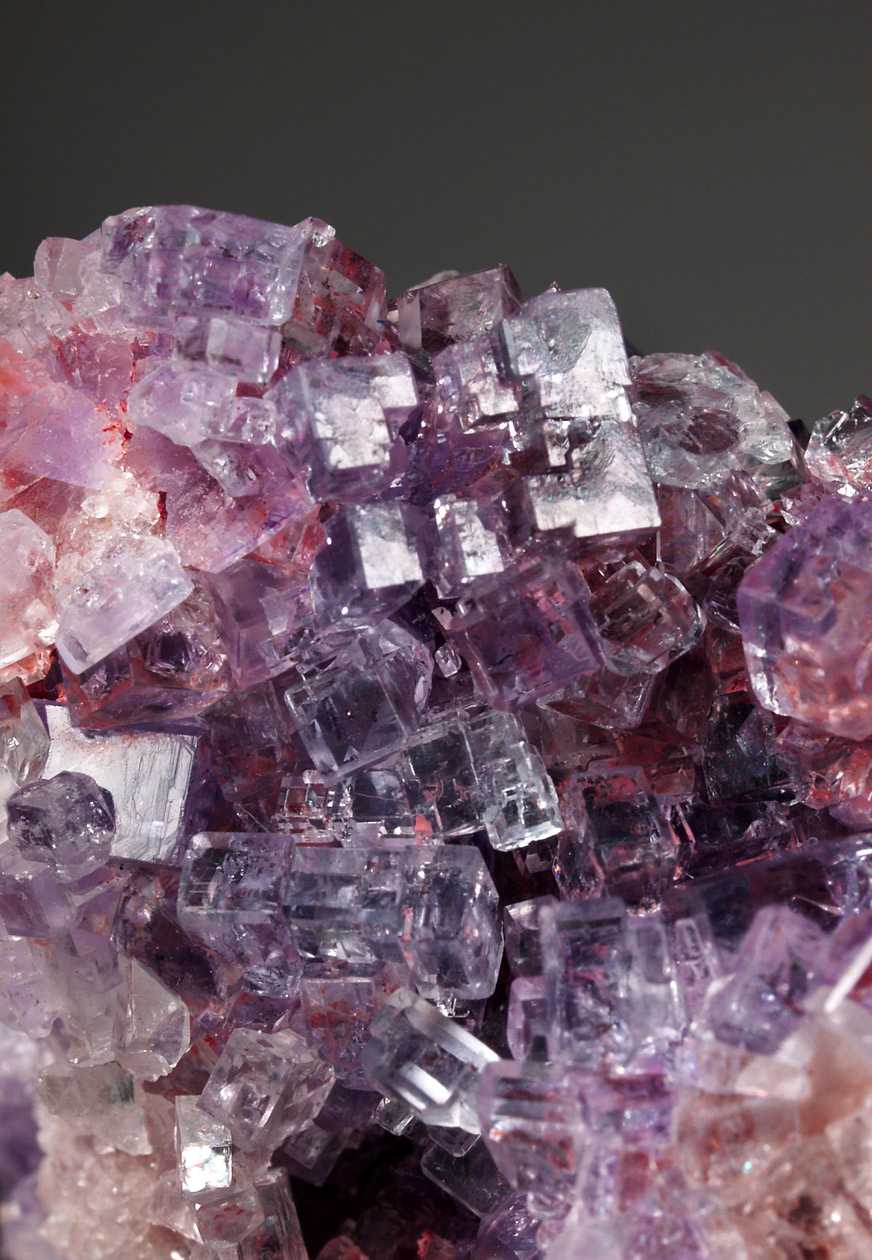
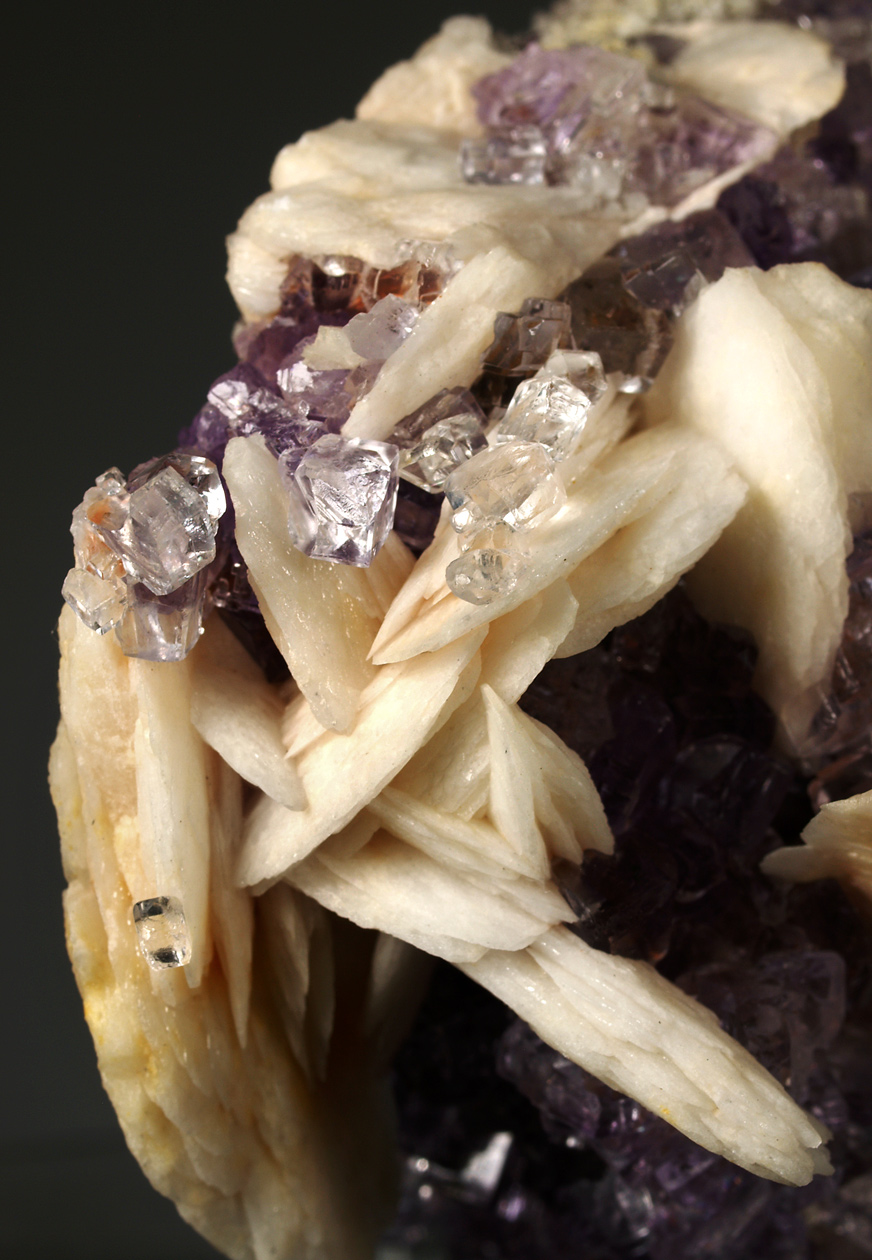
Rich group of sharp violet fluorite crystals, with an exceptional transparency and cube forms. It is accompanied by quartz and aesthetic groups of baryte crystals. From a classic Spanish locality like Berbes.
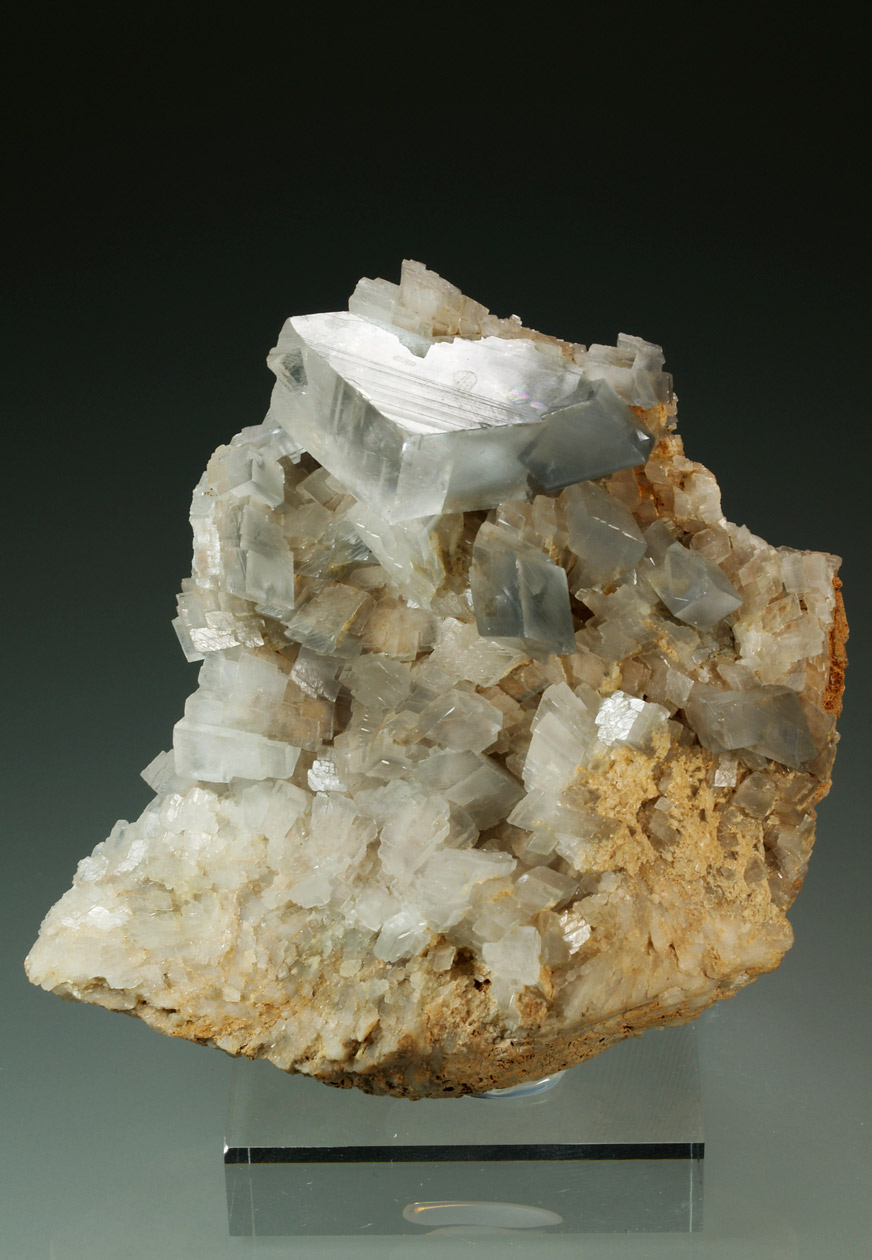
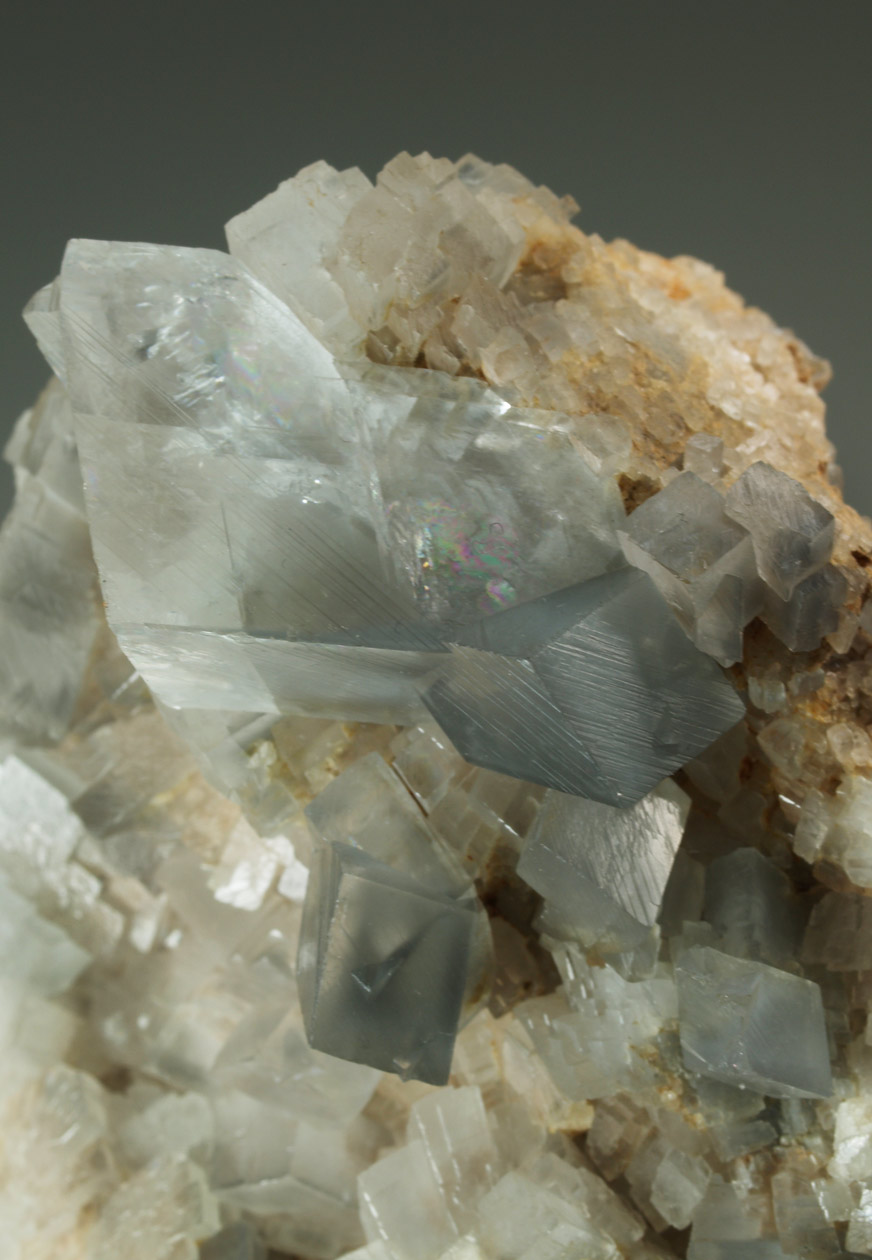
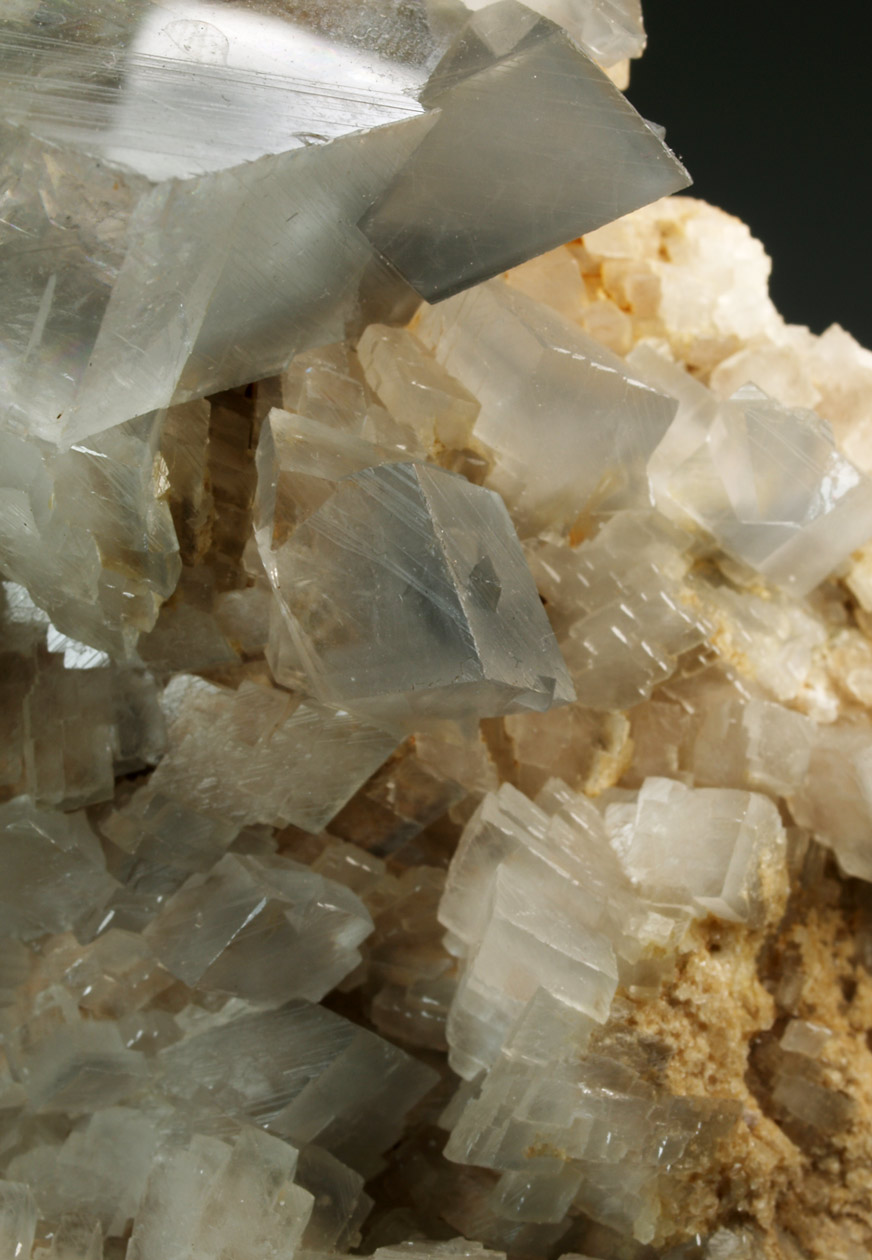
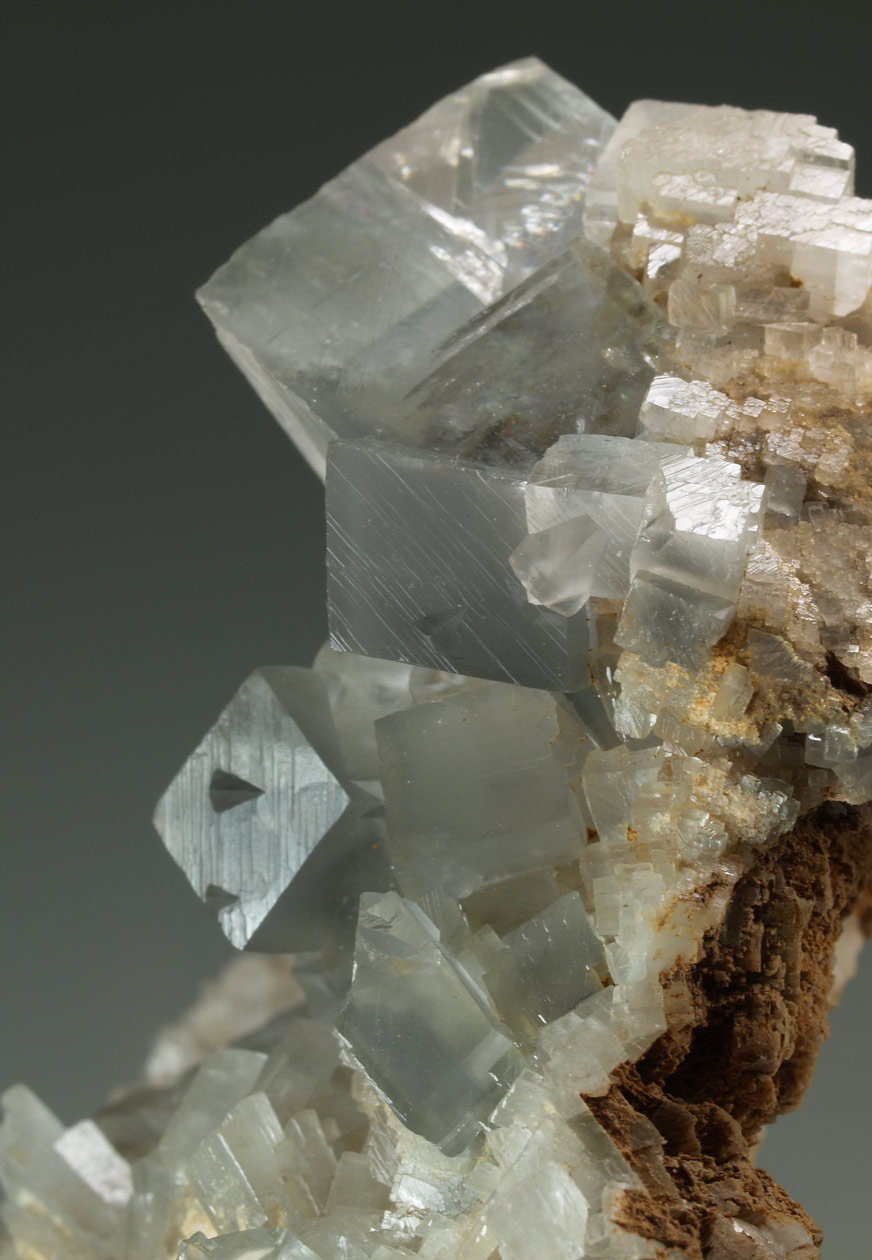
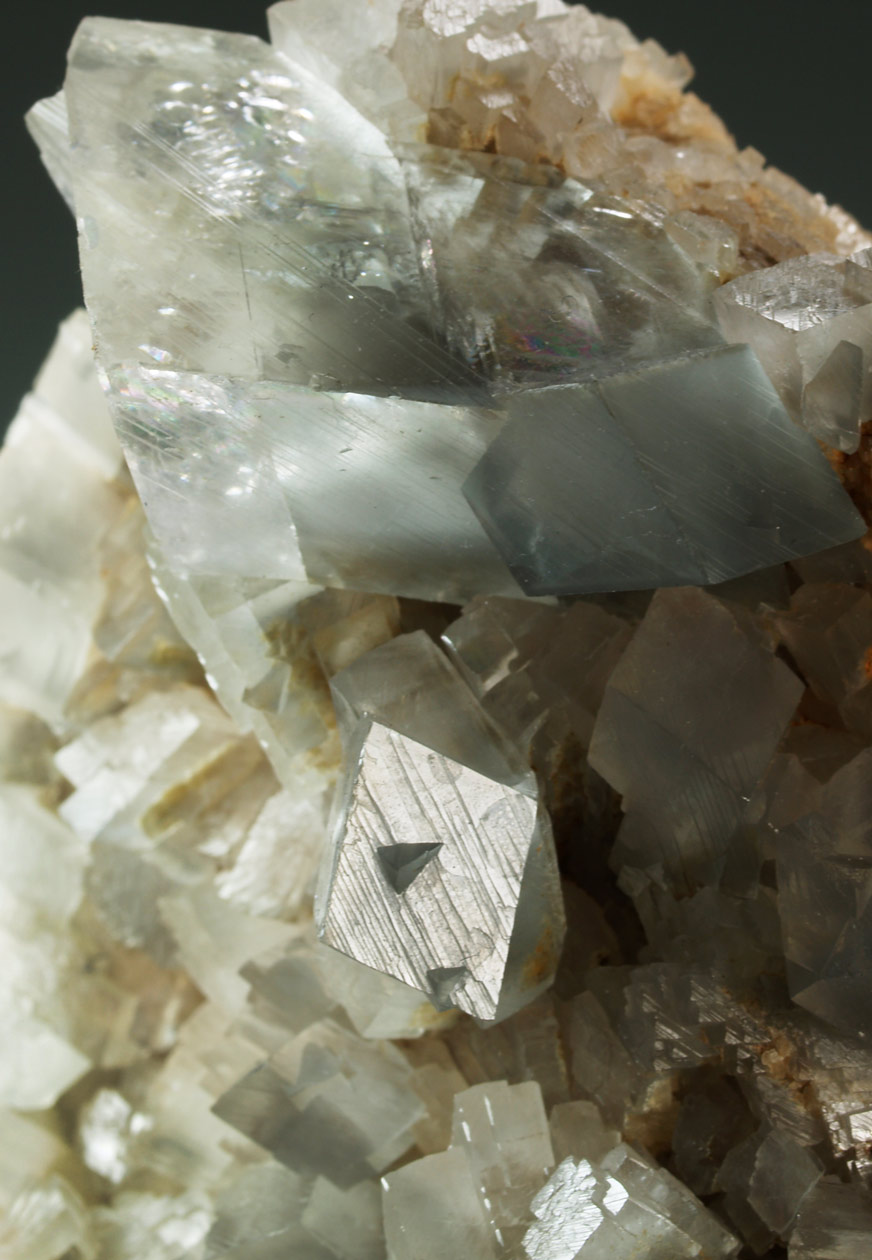
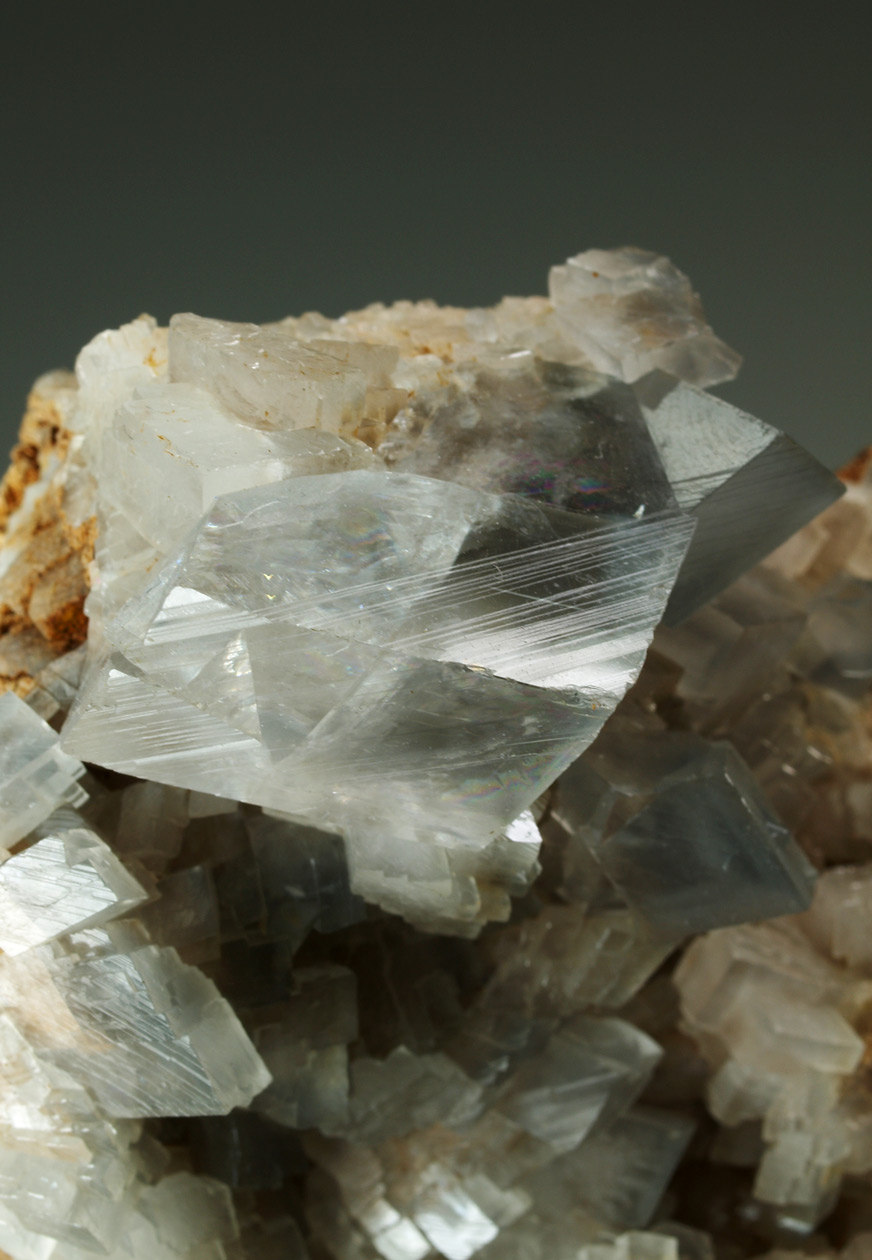
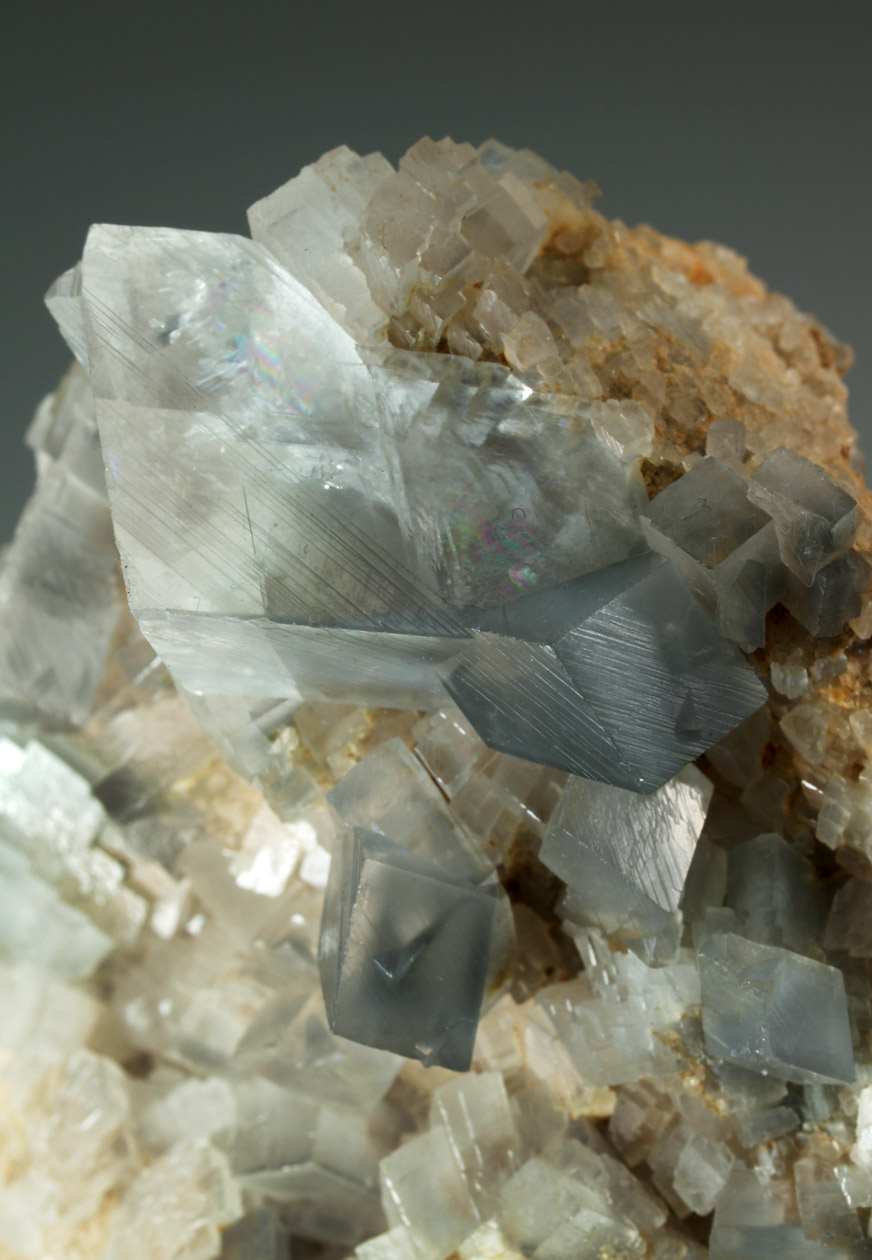
Group of rhombohedral crystals of dolomite, some of them twinned, with very defined faces and edges. They show striated faces, transparency and brilliance. With curious grayish inclusions disposed ramdomly in the crystal core. A classic specimen for the Spanish mineralogy.
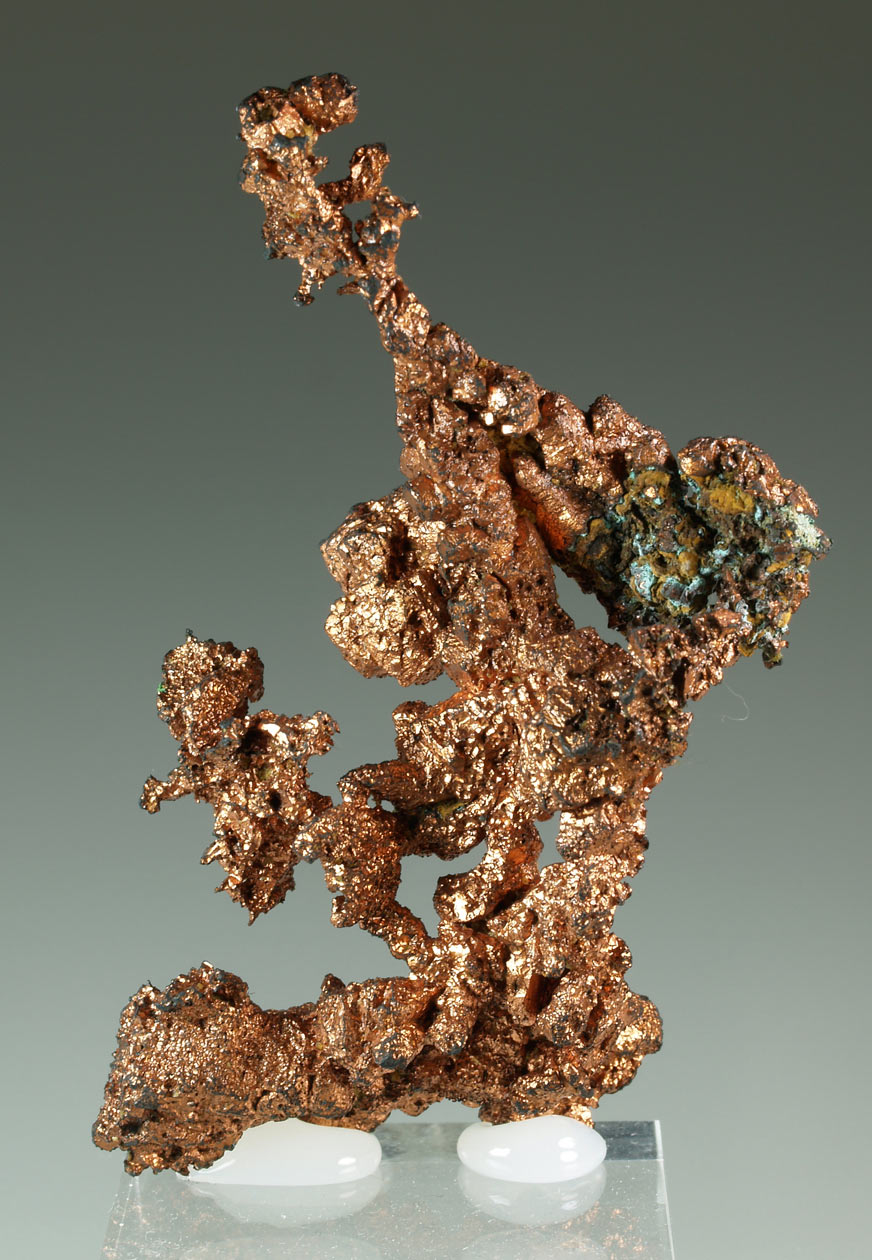
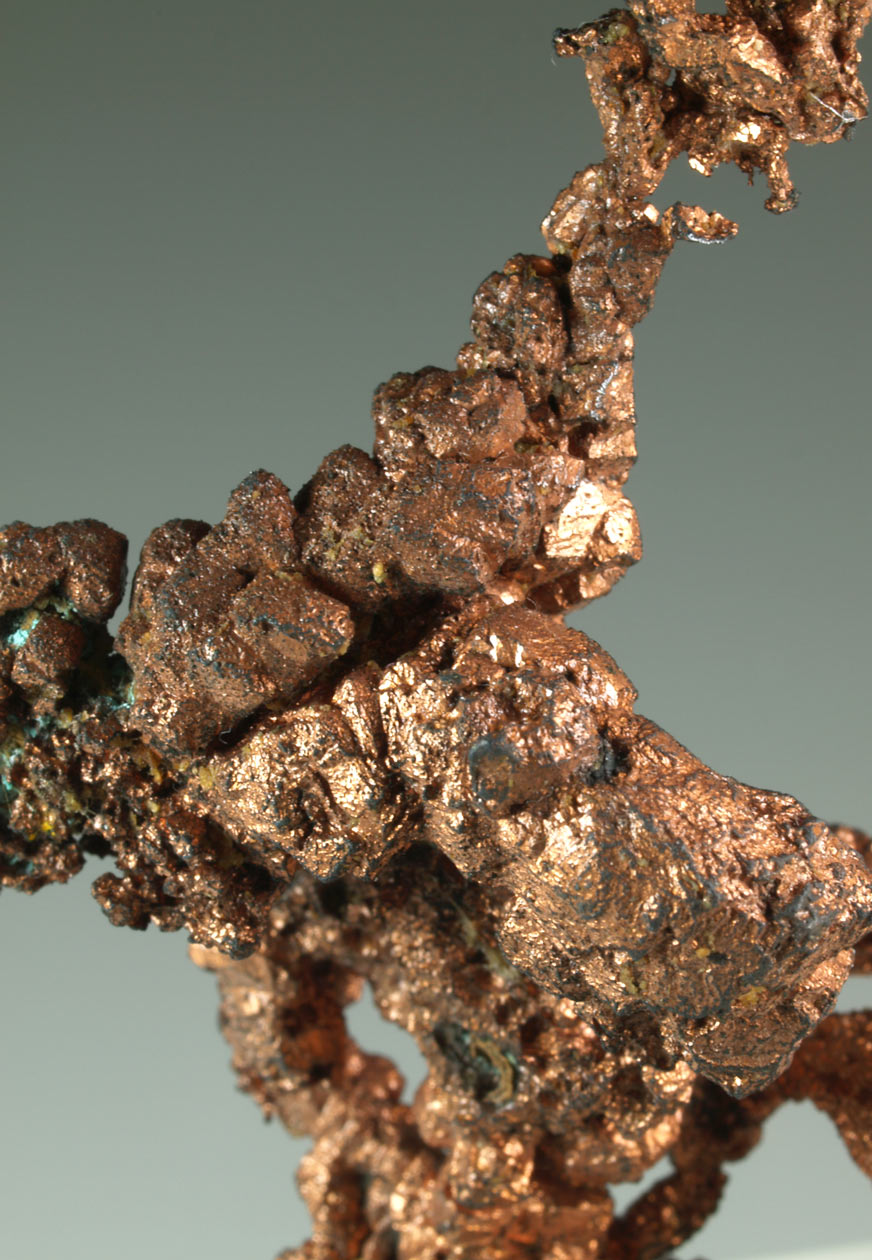
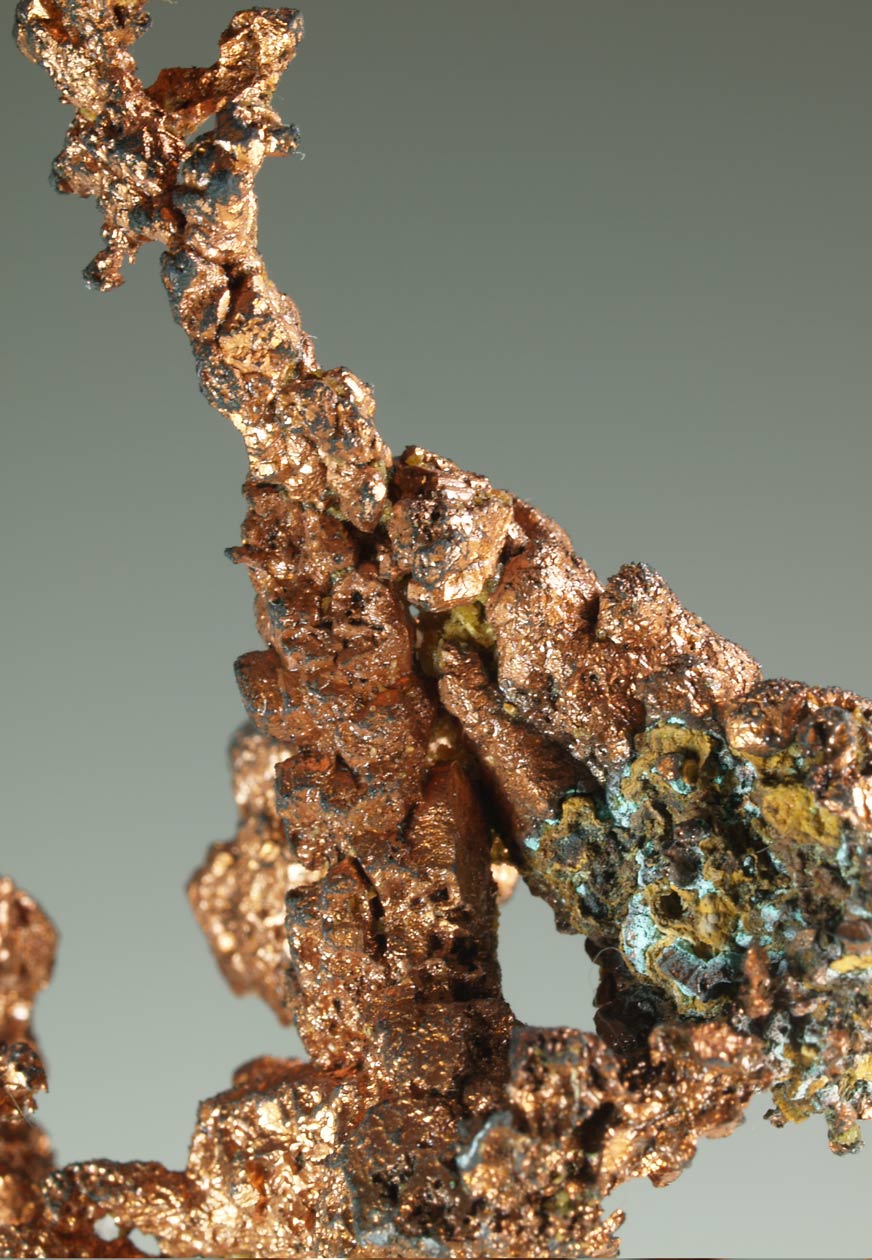
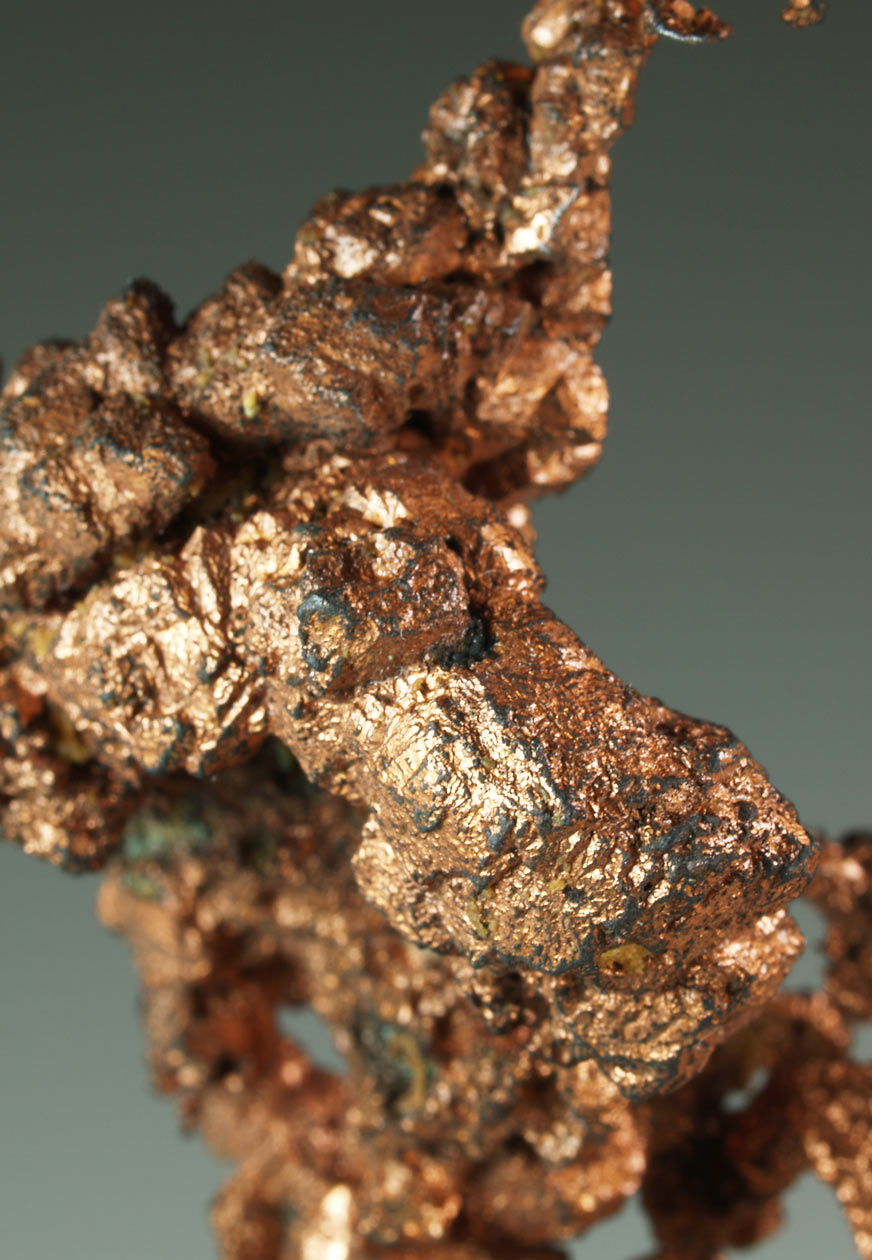
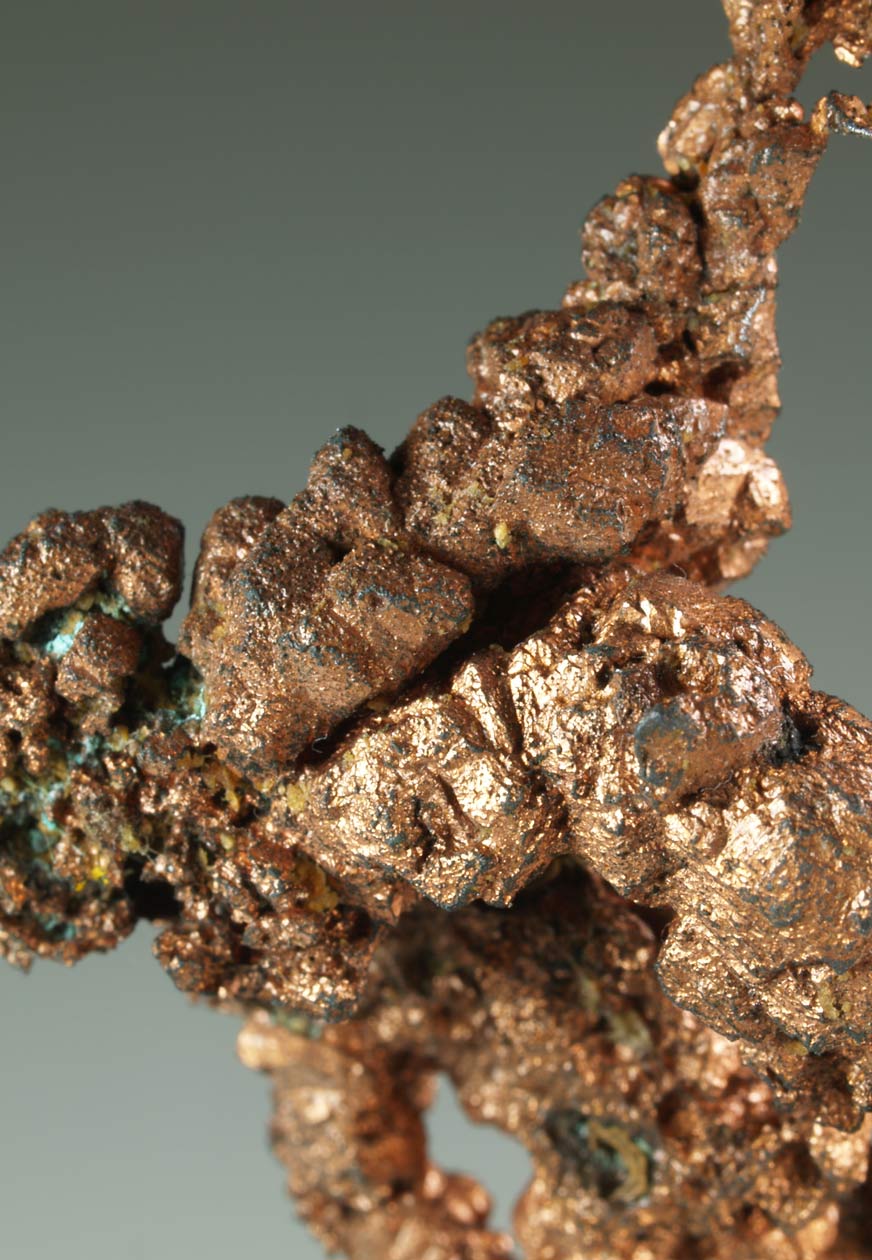
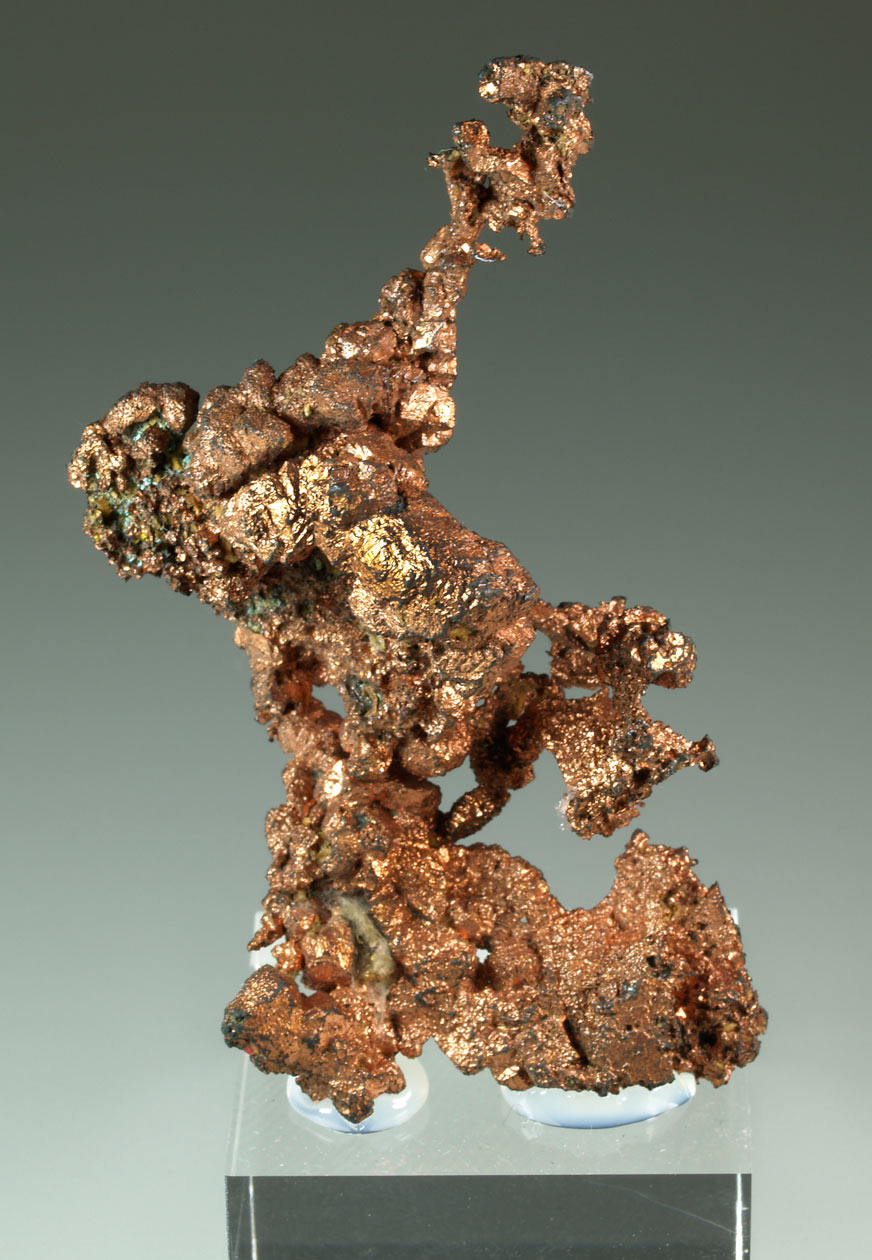
Native copper specimens are one of my weaknesses. This specimen shows arborescent growths formed by copper crystals with rounded and complex faces. It is presented in a very aerial shape, elegant and with this characteristic and metallic color. An excellent piece of the "Mother Russia". Classic locality.
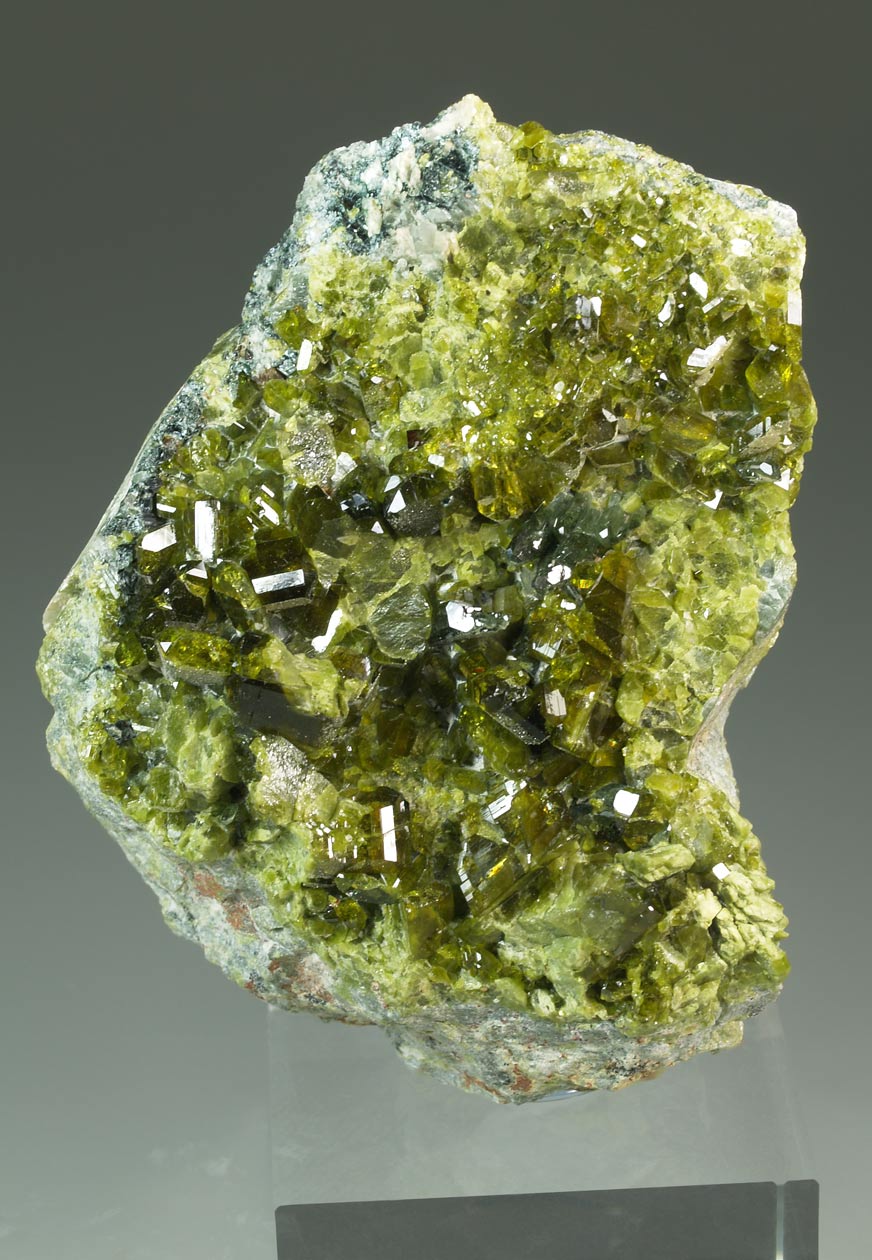
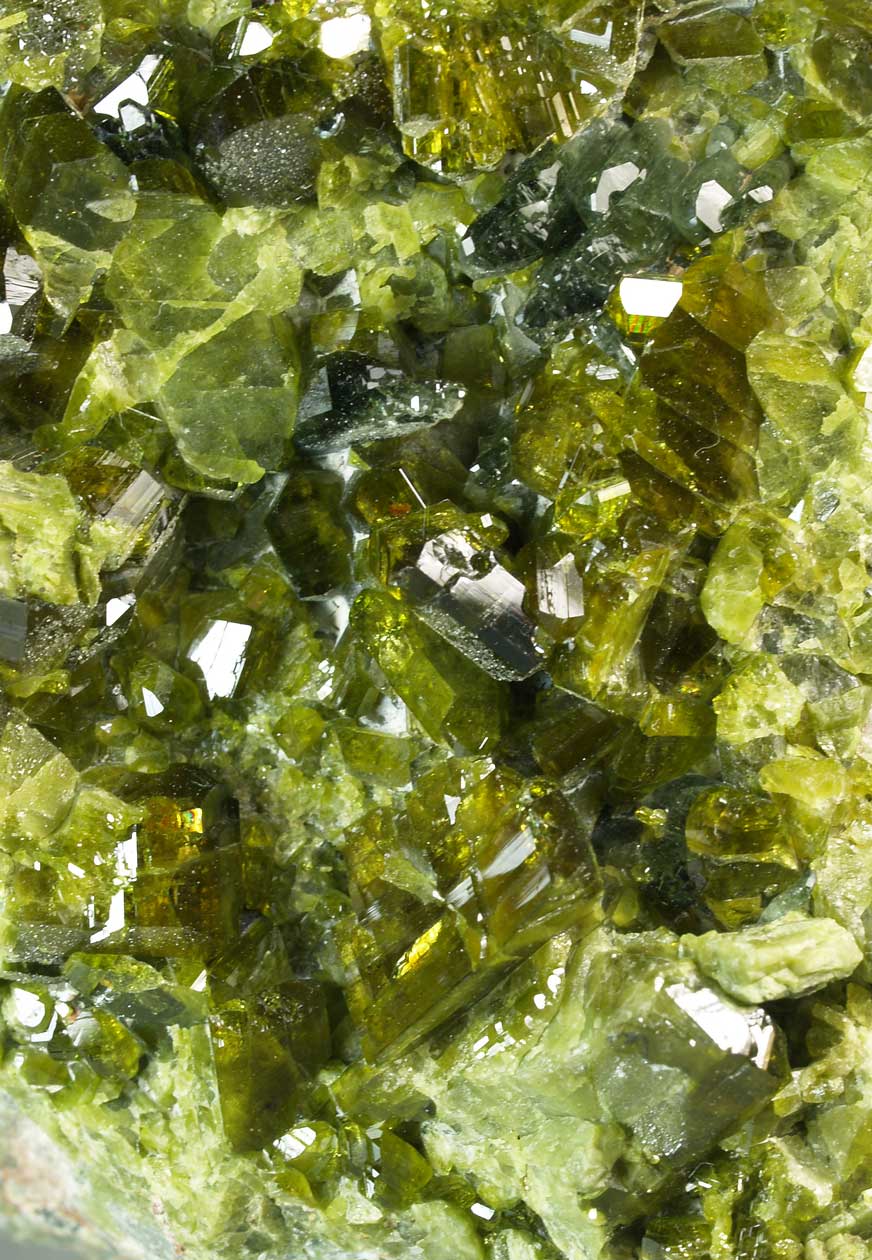
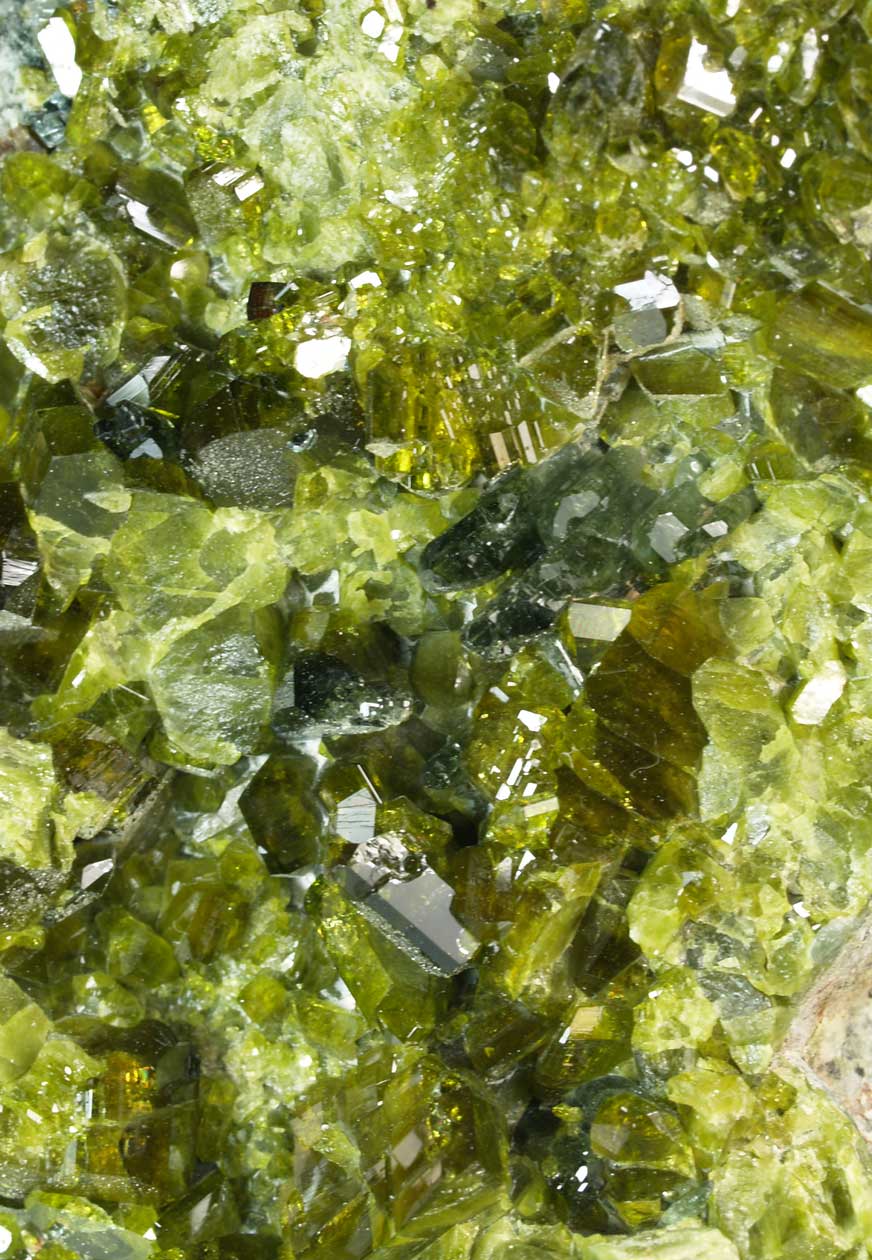
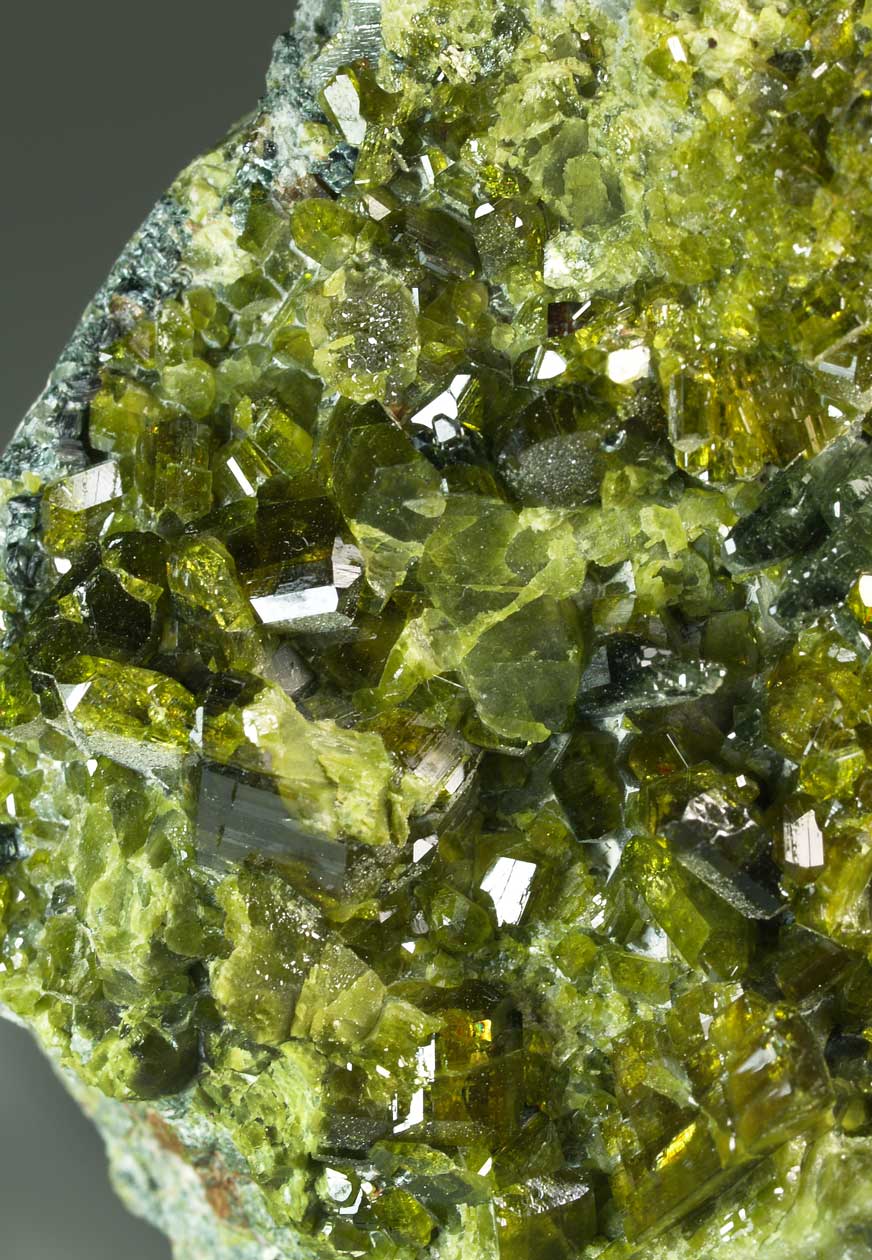
A rich specimen formed by numerous epidote prismatic crystals of gem-quality, brilliance, transparence and with an intense green color. They are accompanied by diopside crystals with a darker green tone. An aesthetic piece and full of shine.
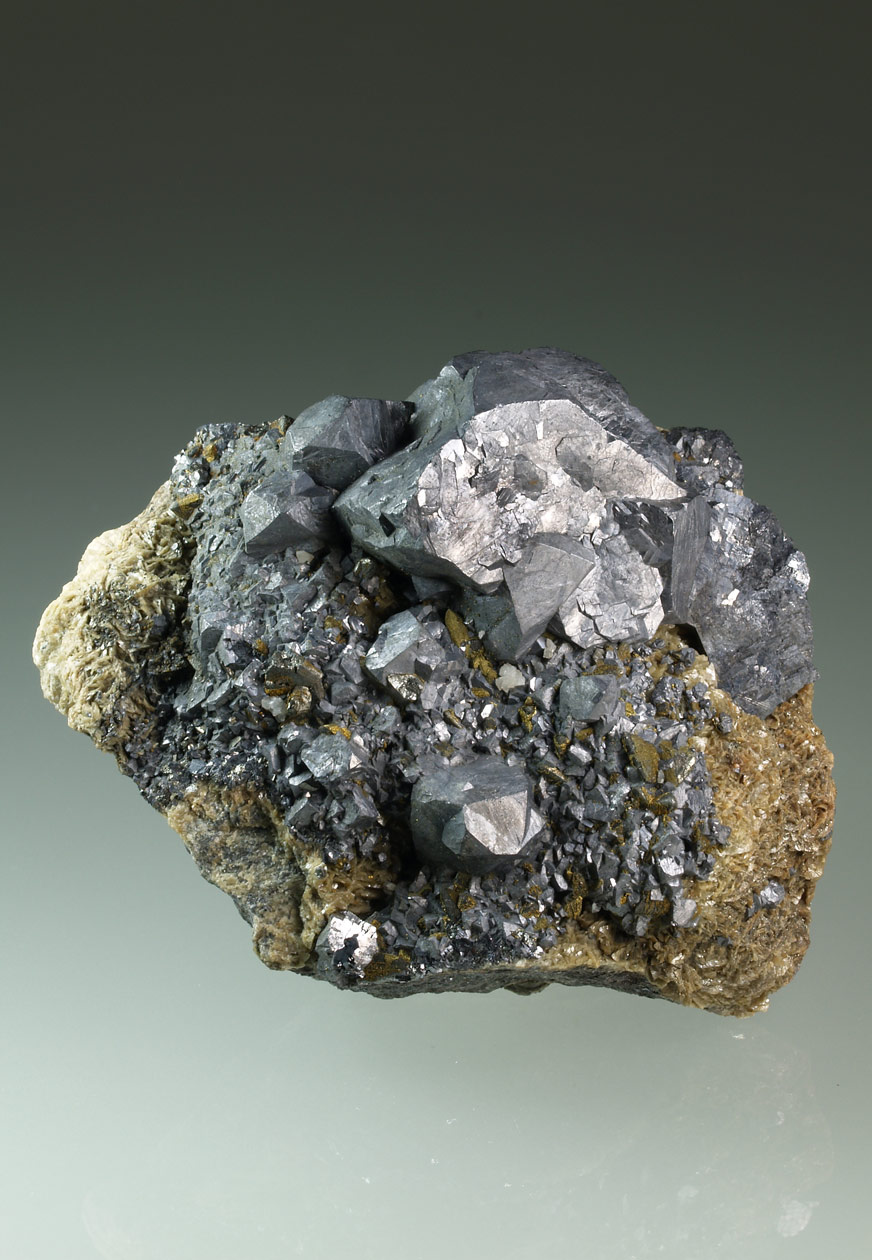
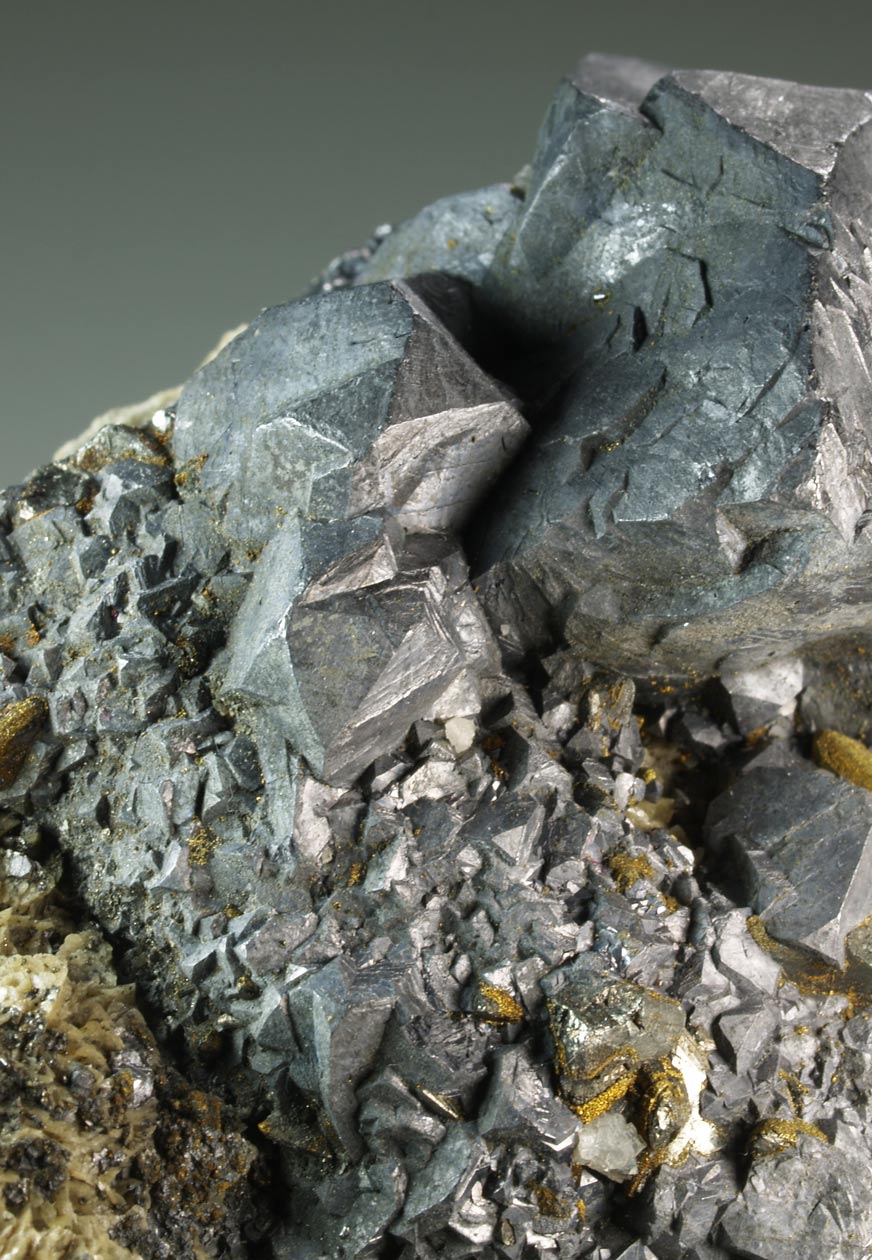
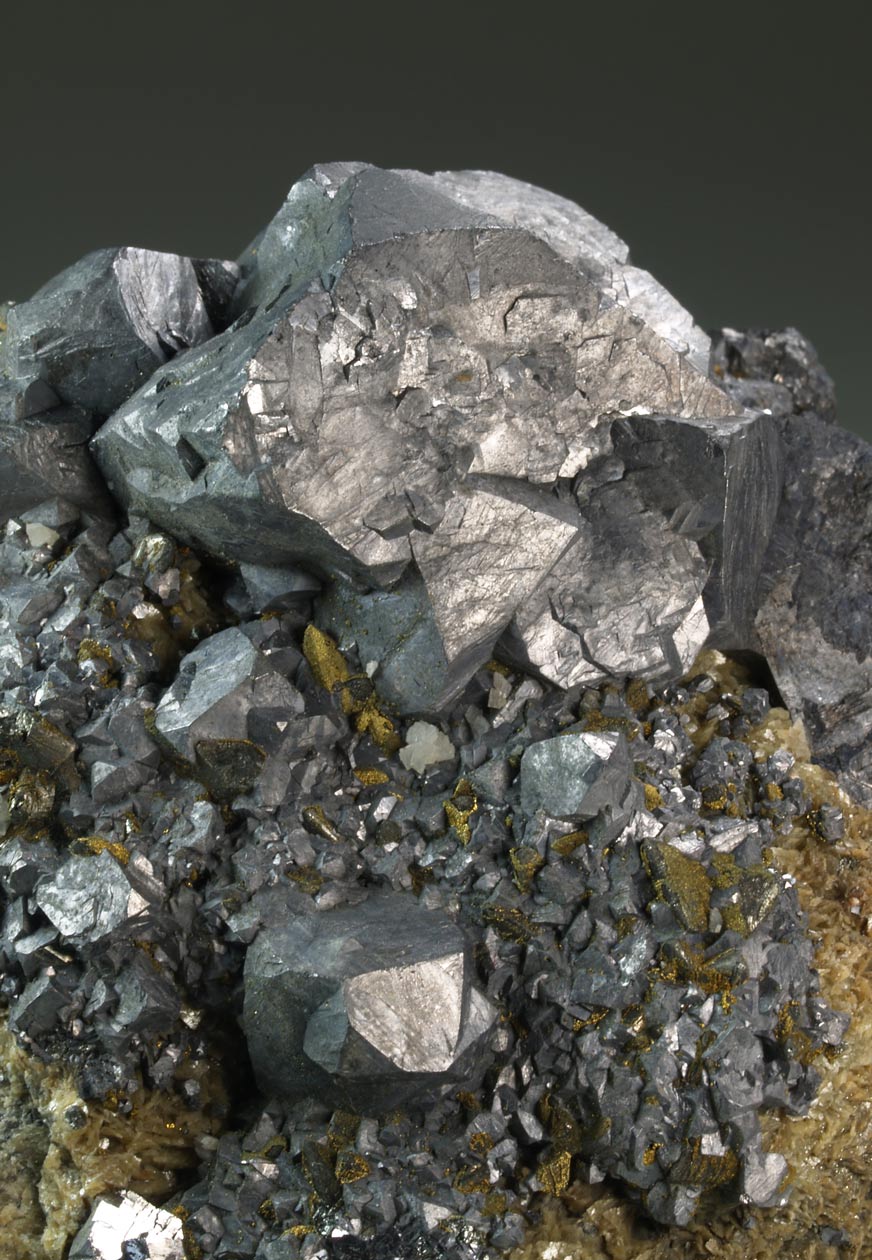
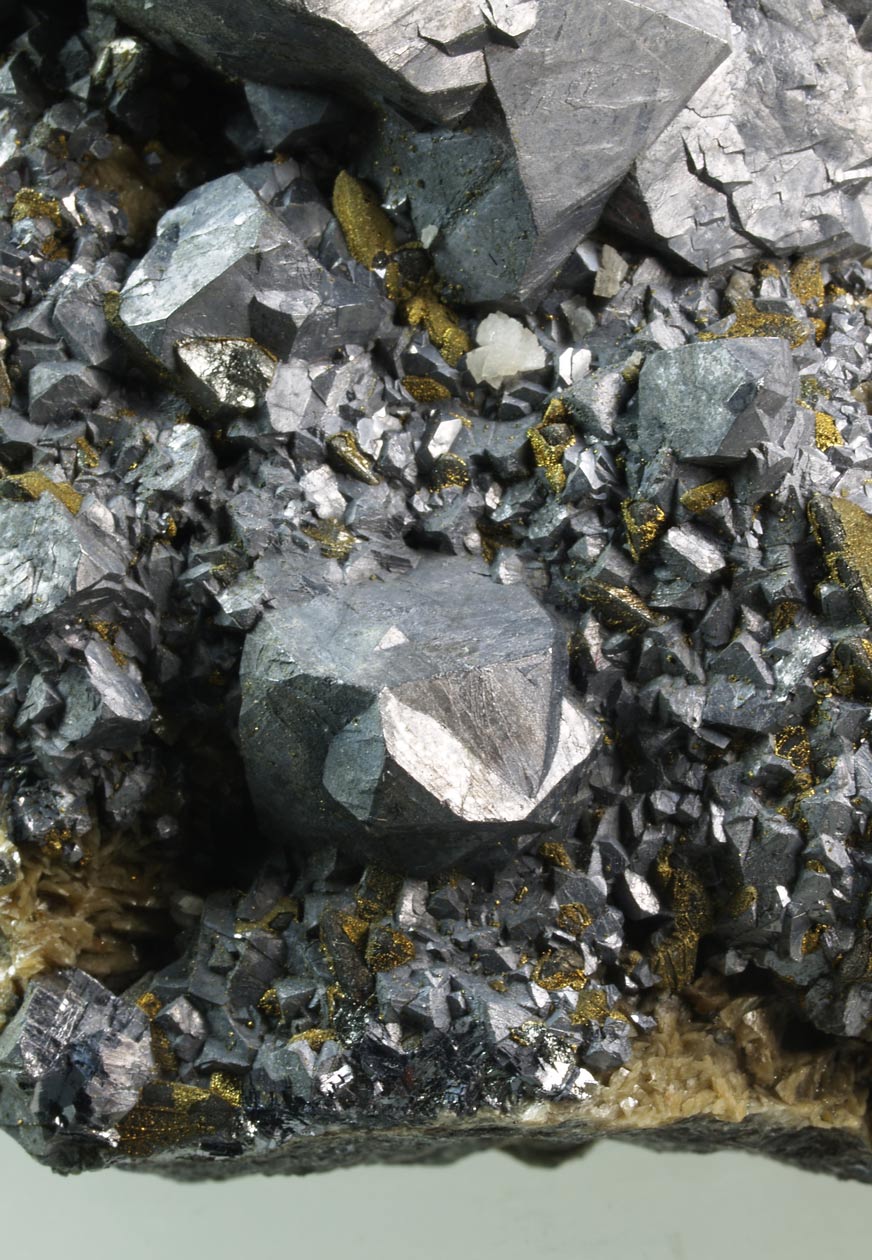
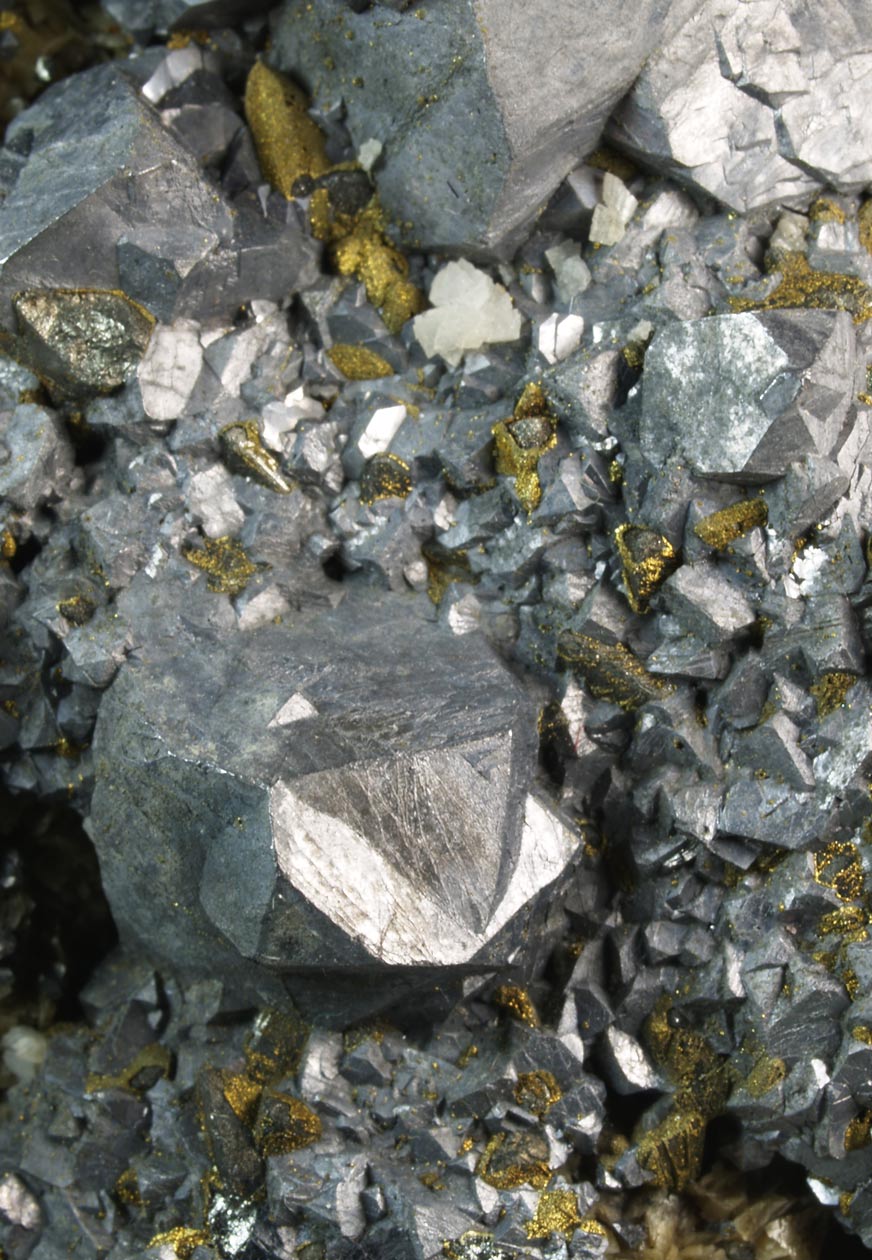
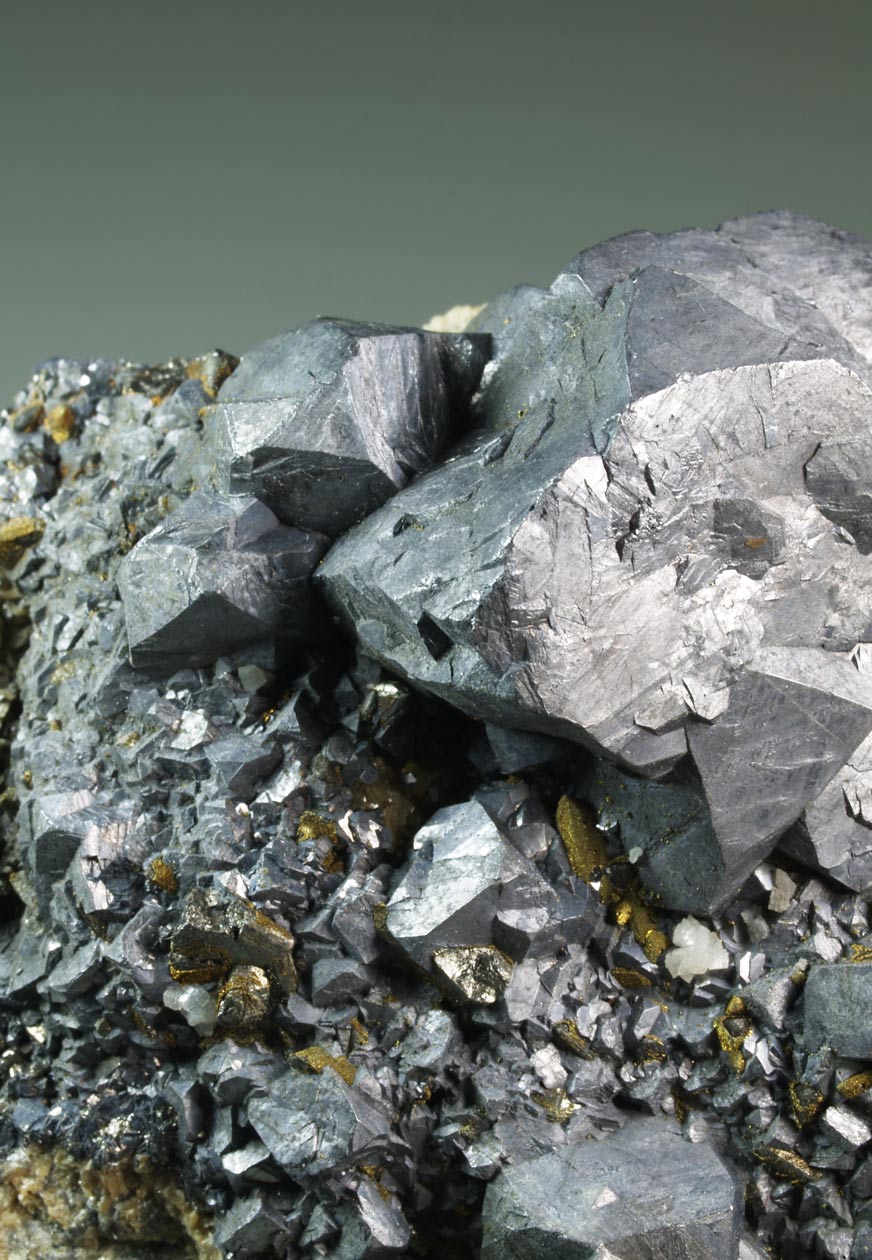
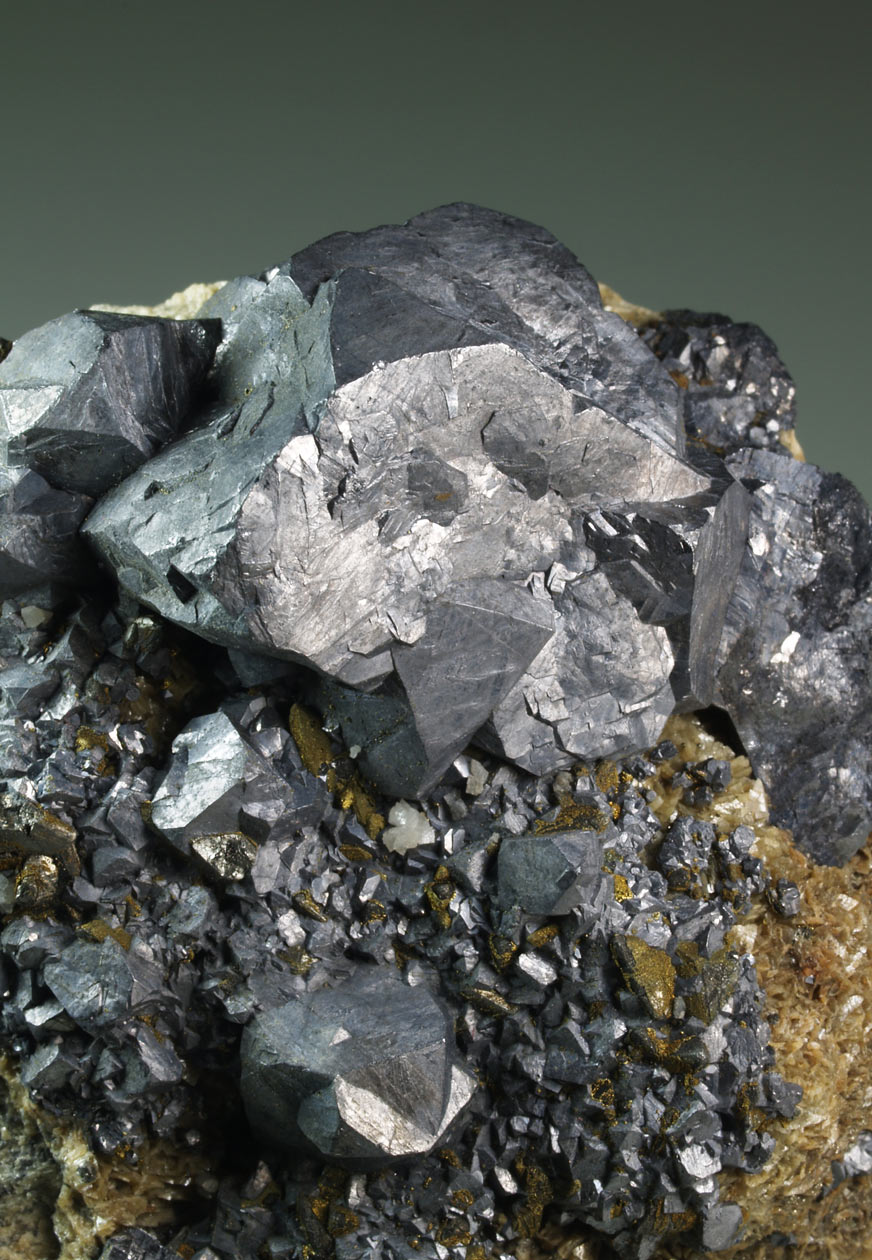
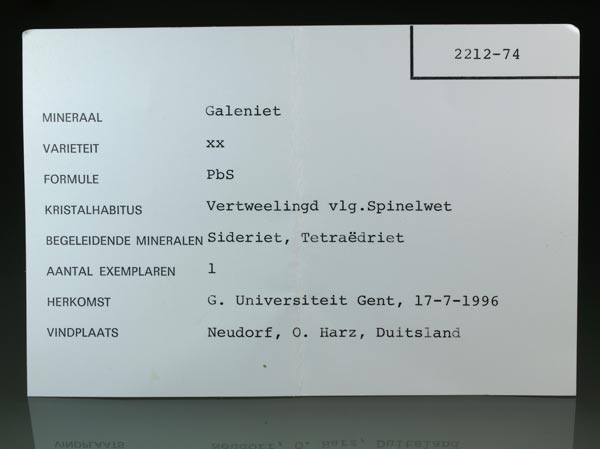
The galena specimens from this classic German mine are known for the size of the crystals and twins. In this sample both characteristics are fulfilled. We can observe interpenetrated crystals according to the spinel twin law and other crystals shoewing the cube and octahedron faces. On matrix with tetrahedrite crystals partially covered by brilliant chalcopyrite and some siderite. They stand out for their size and quality. On a matrix with pyrite and siderite crystals.
This piece is from the collection of Renaud Vochten (1933-2012), a well-known Belgian collector of mineralogical rarities and it was in the collection of the University of Gent. An unusual opportunity to get an excellent sample of this classic European mine.
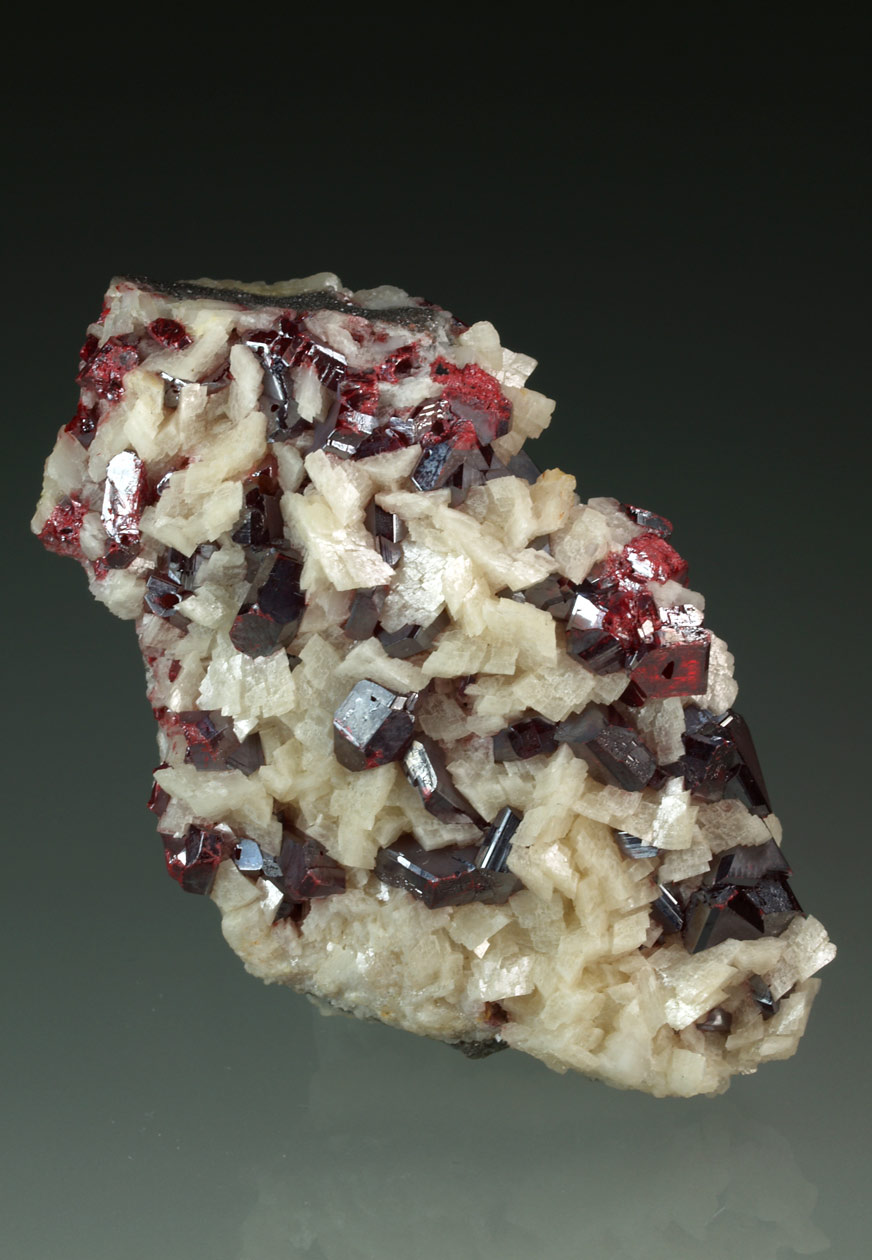
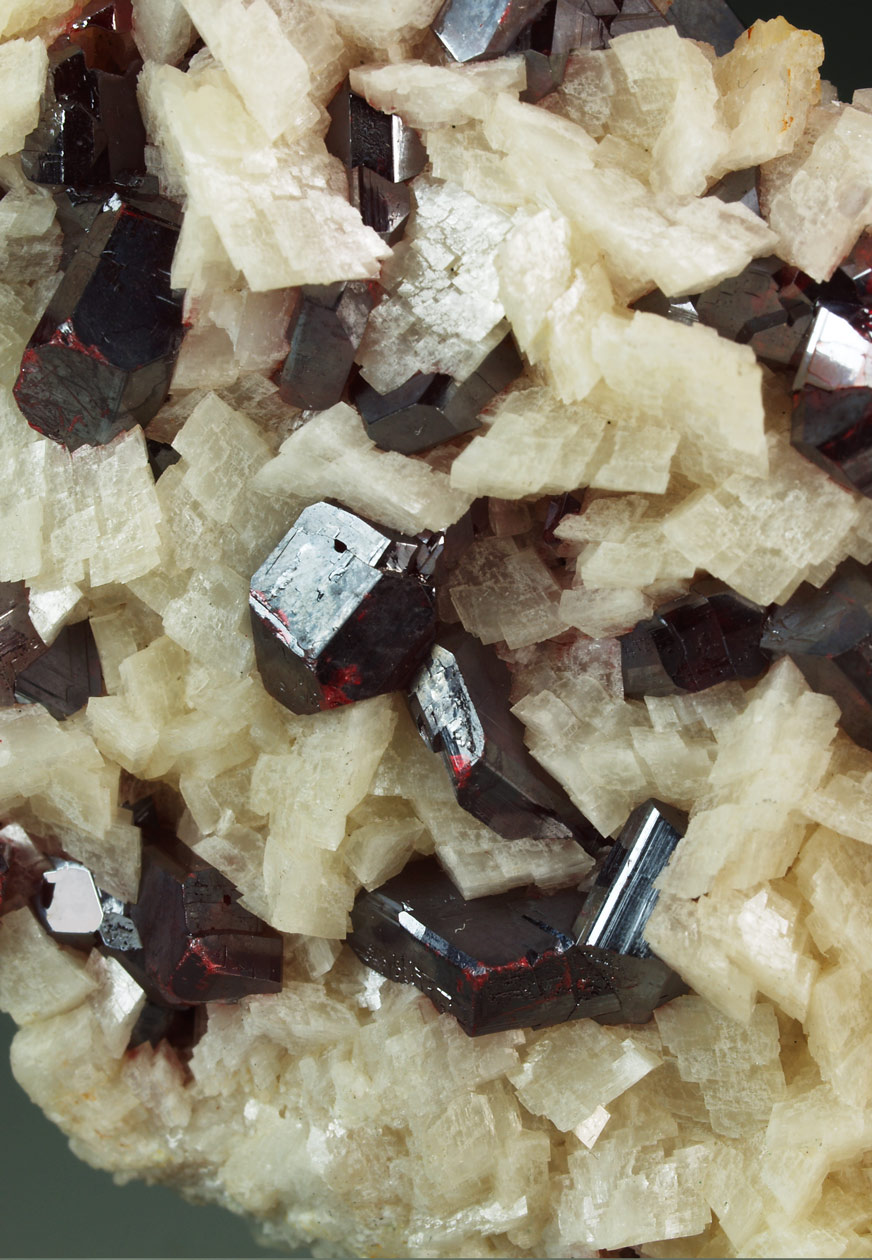
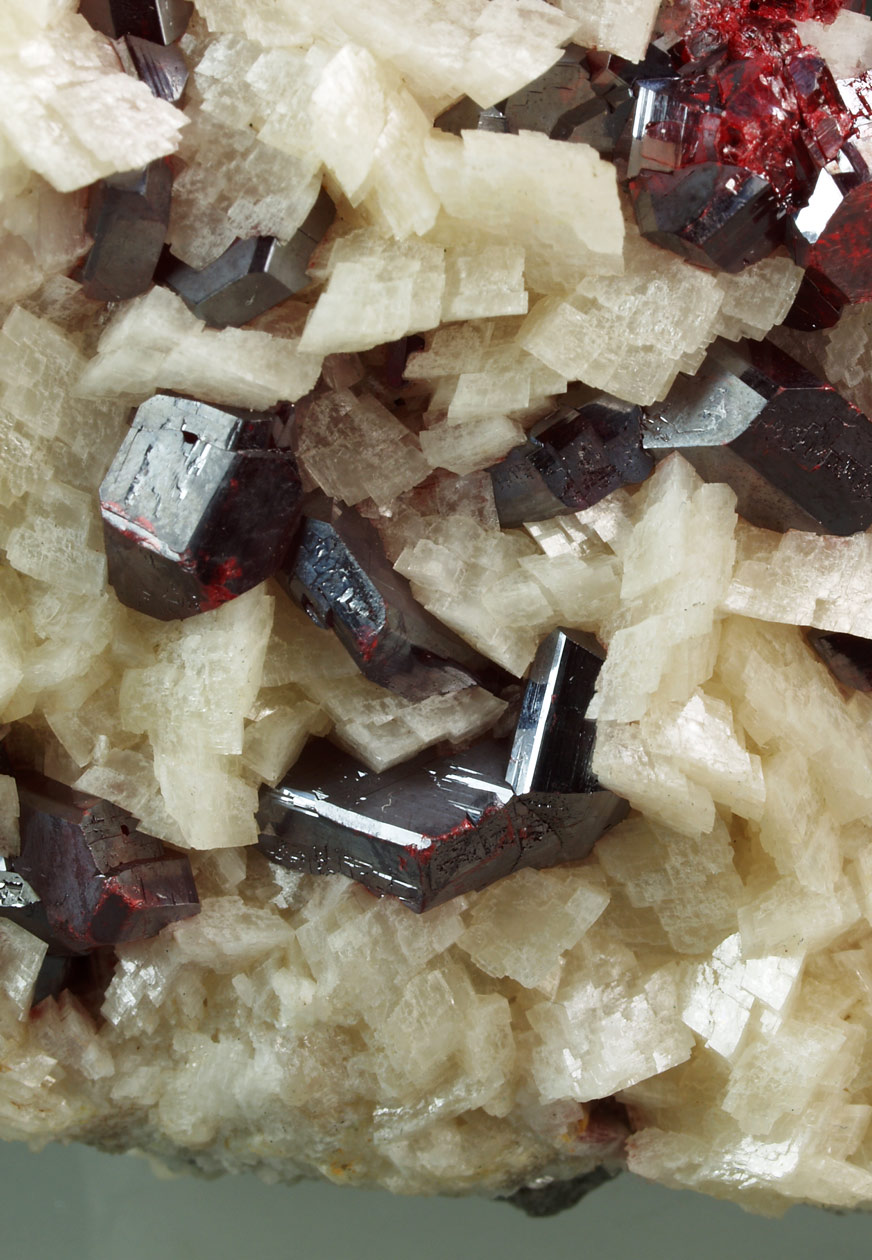
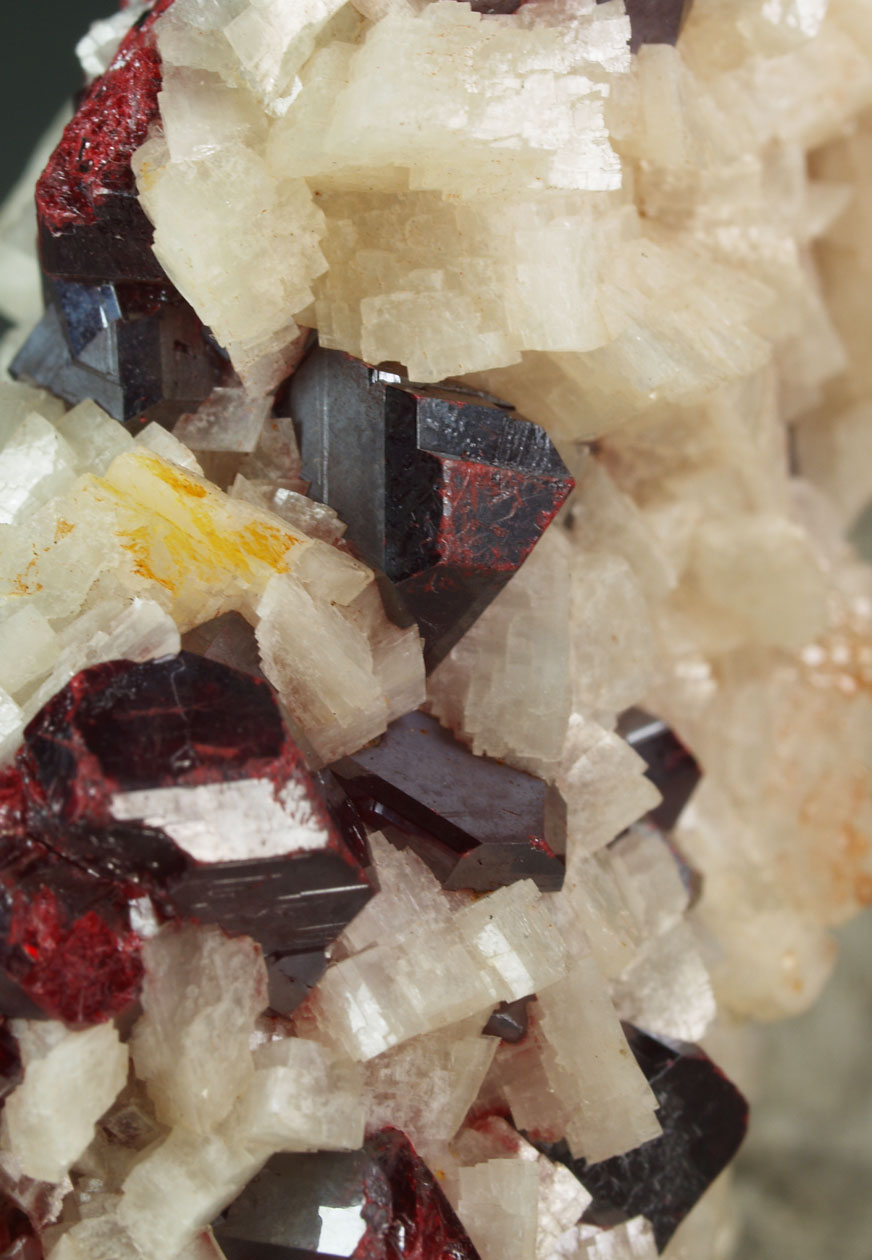
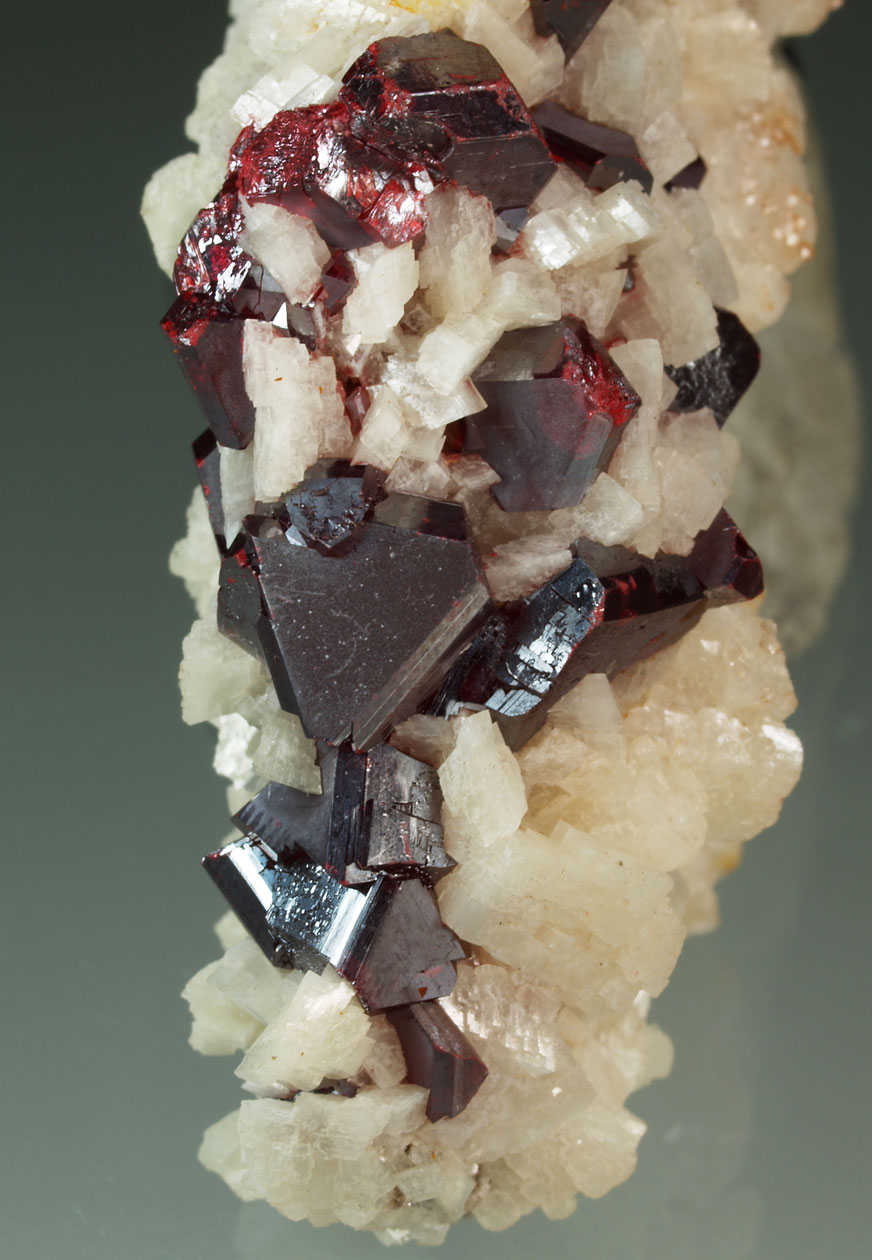
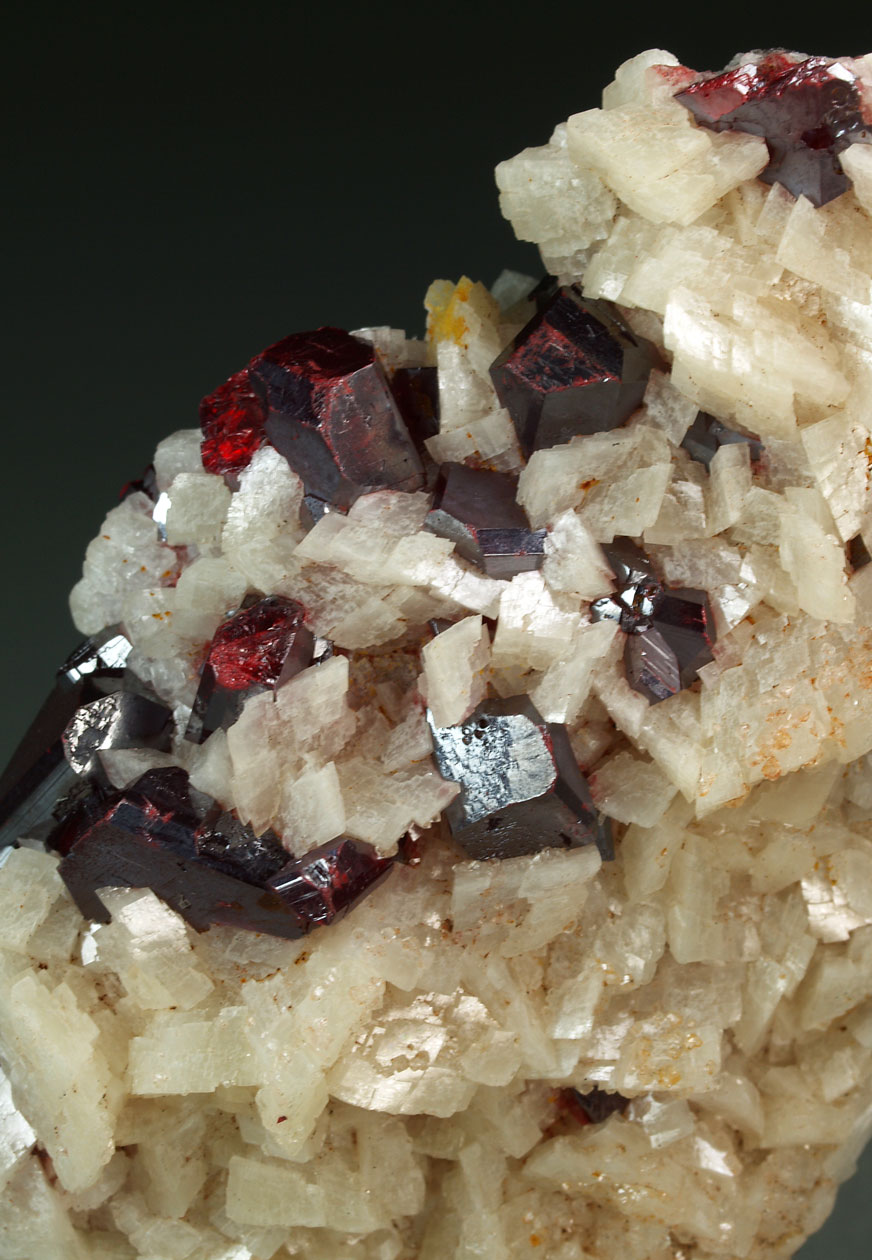
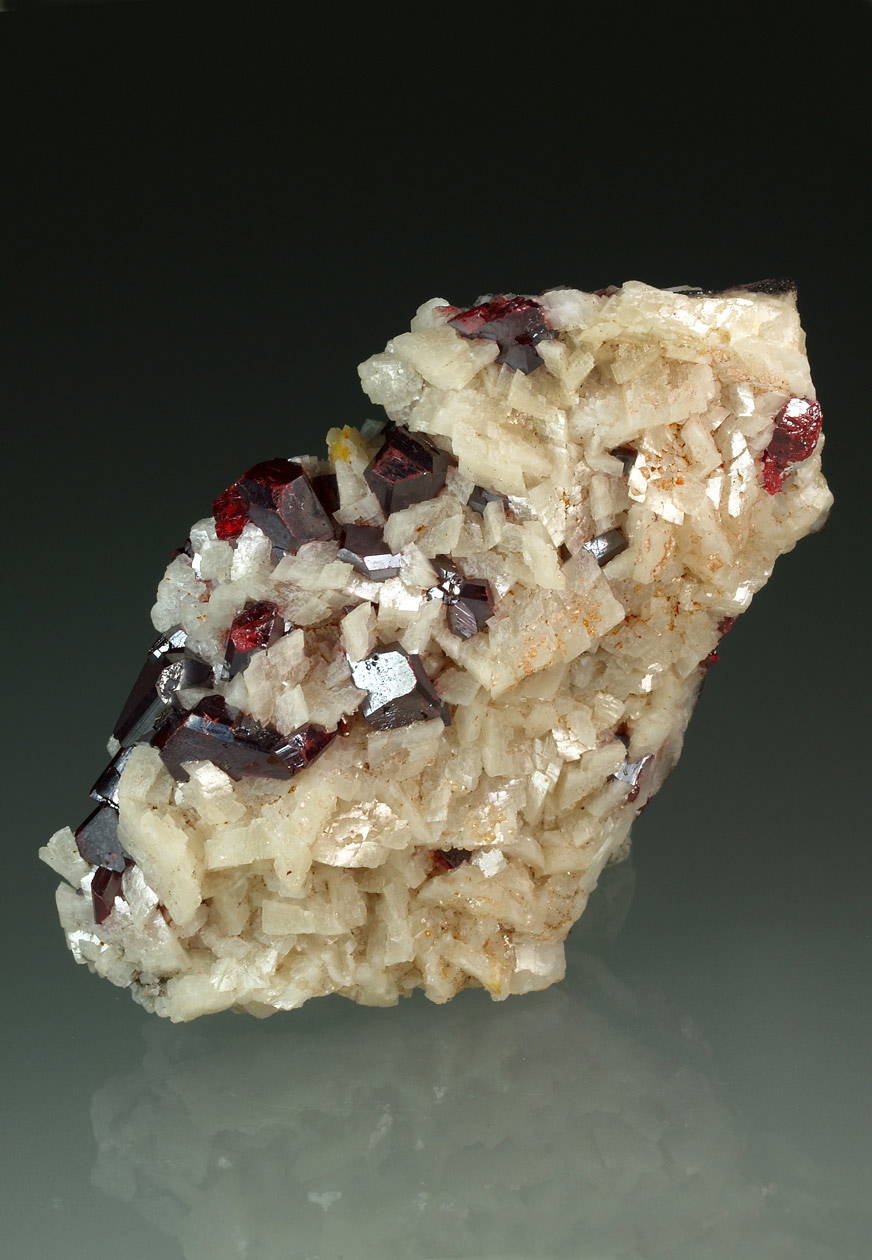
Very rich group of cinnabar crystals, well defined, rich in faces, with a really intense red color that grows when the light crosses them. They are accompanied by several crystals of dolomite. Very aesthetic specimen.