- Home About RM Minerals
- Virtual Photo Museum Blog RM Contact
- Microscopy and instruments How to Buy Disclaimer
Copyright 2010-2026
www.rosellminerals.com



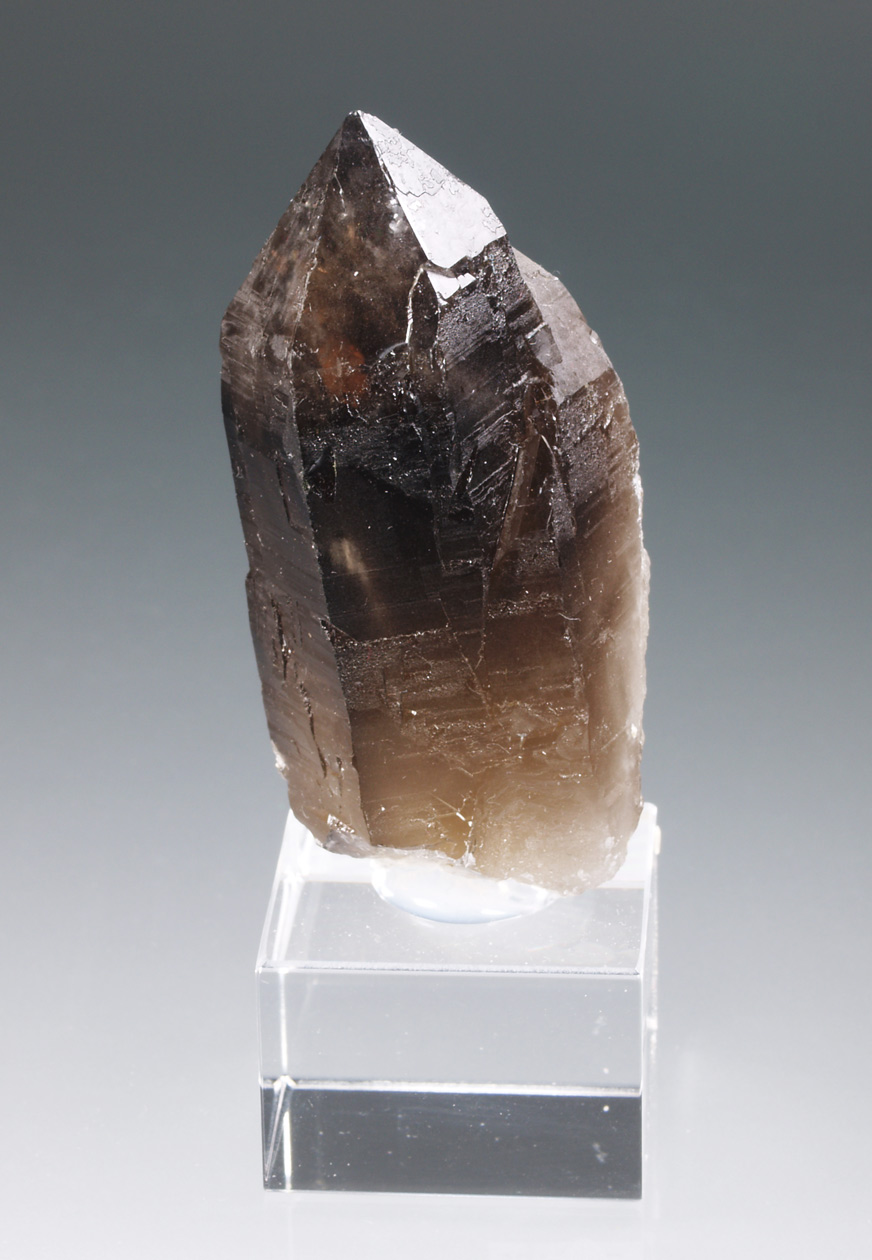
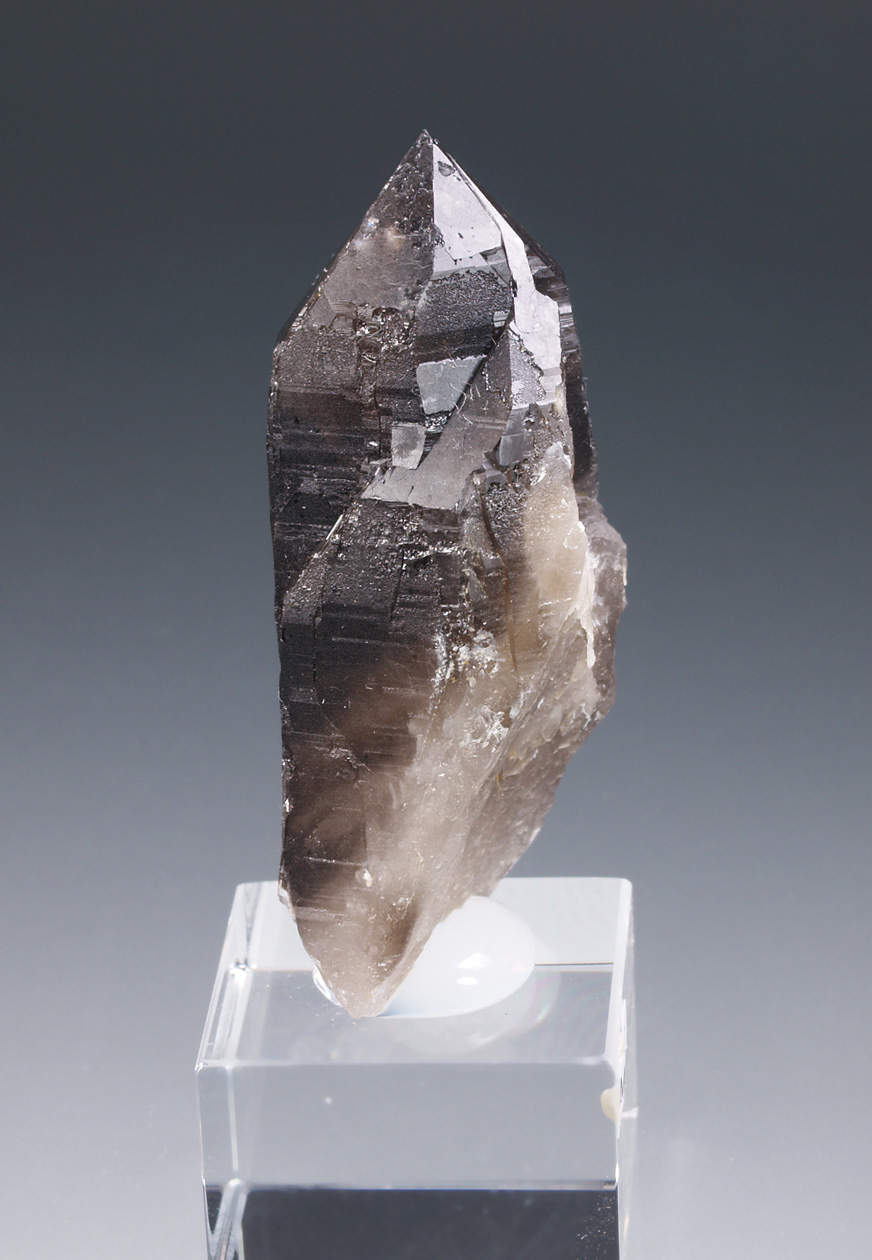
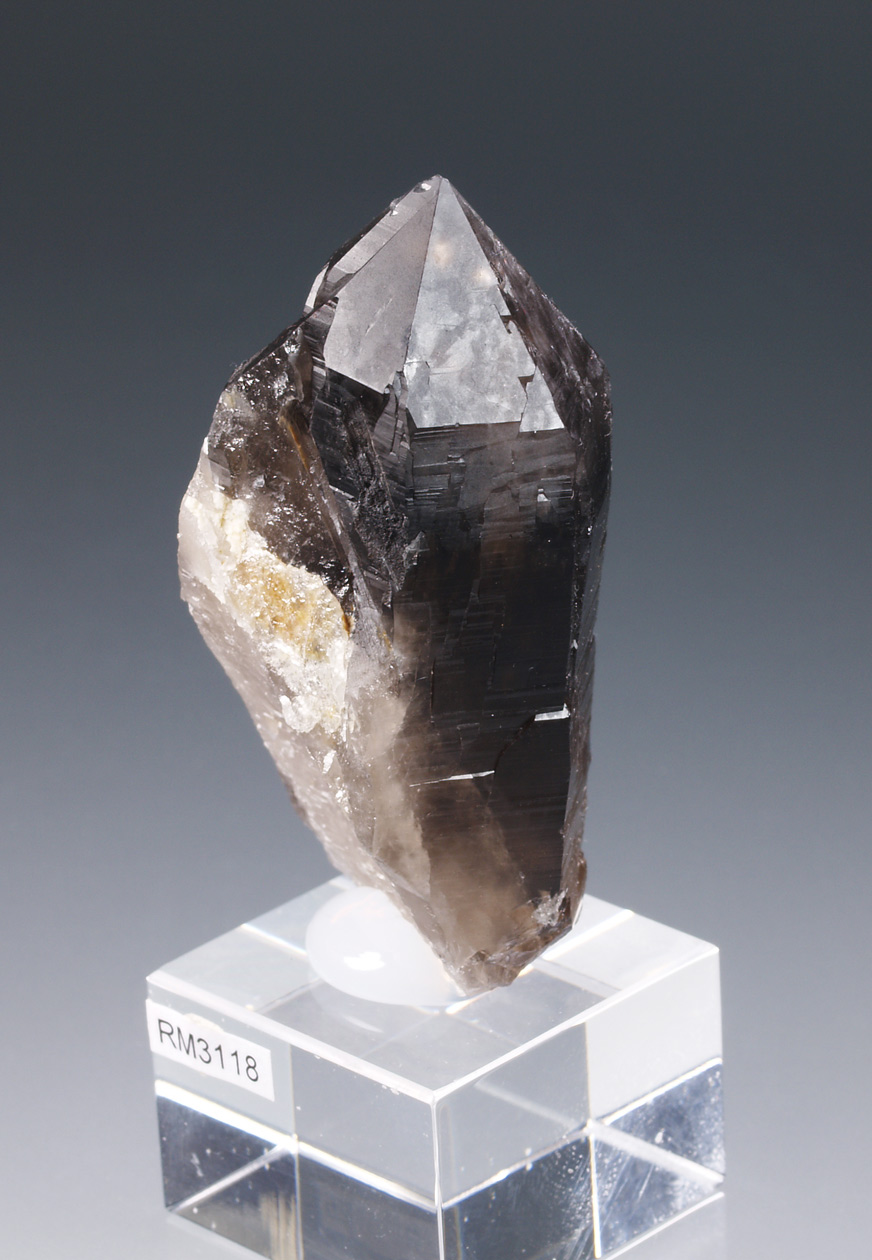
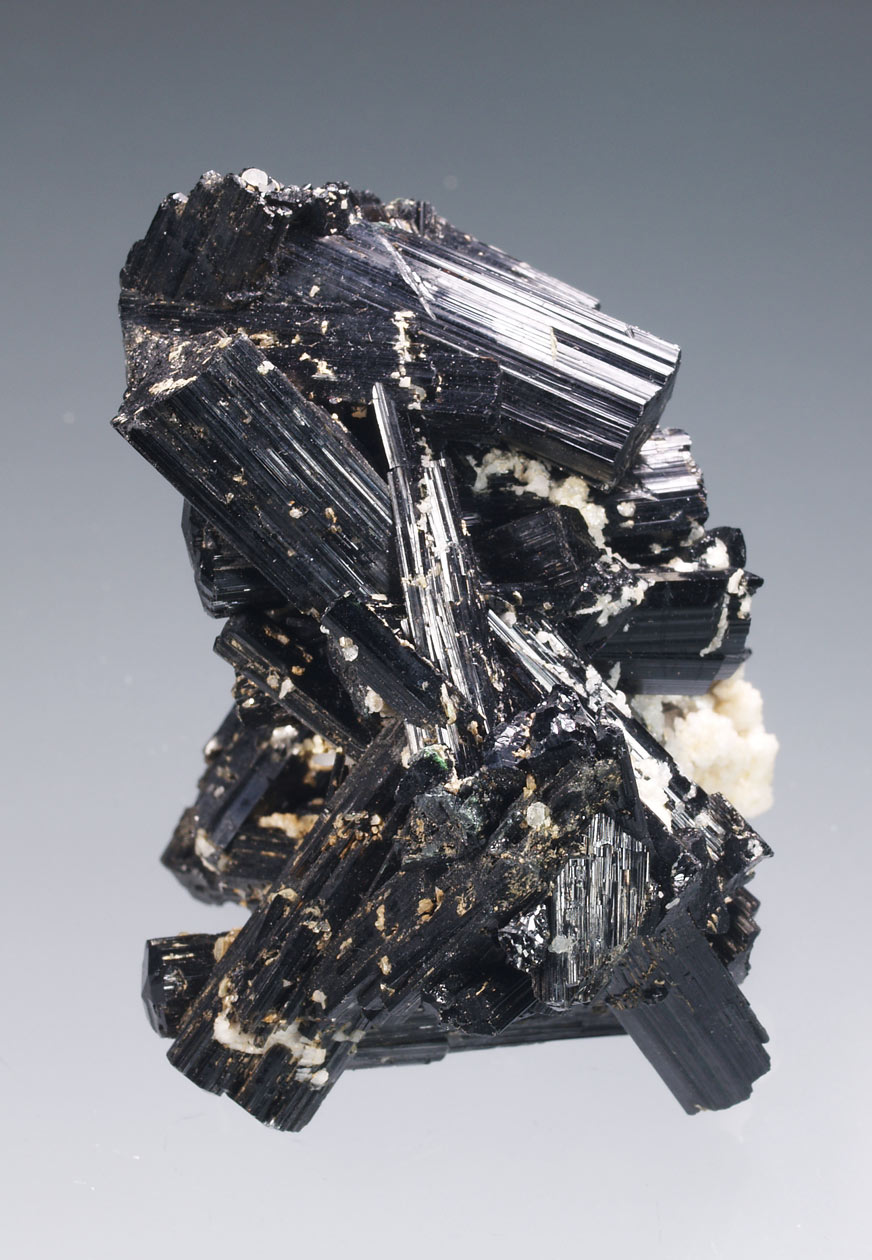
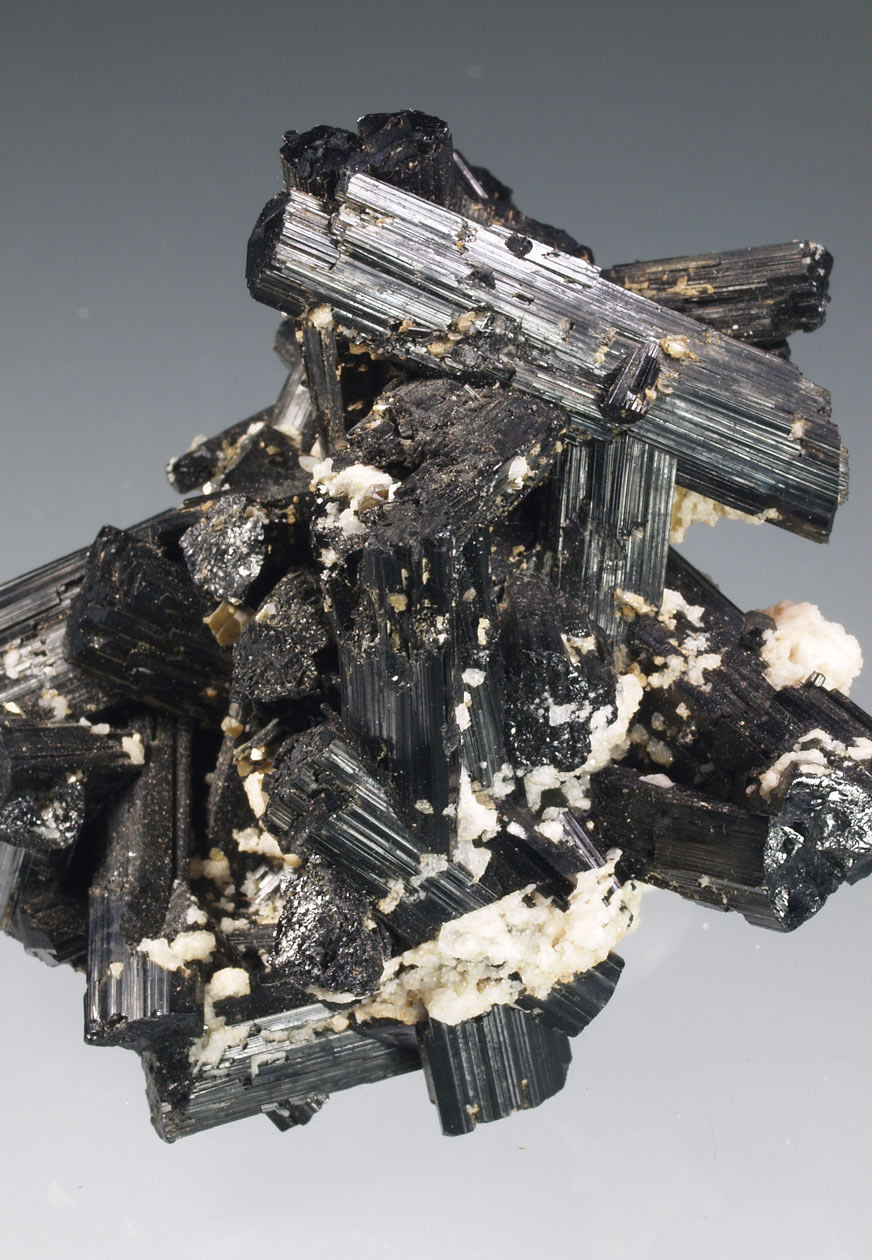
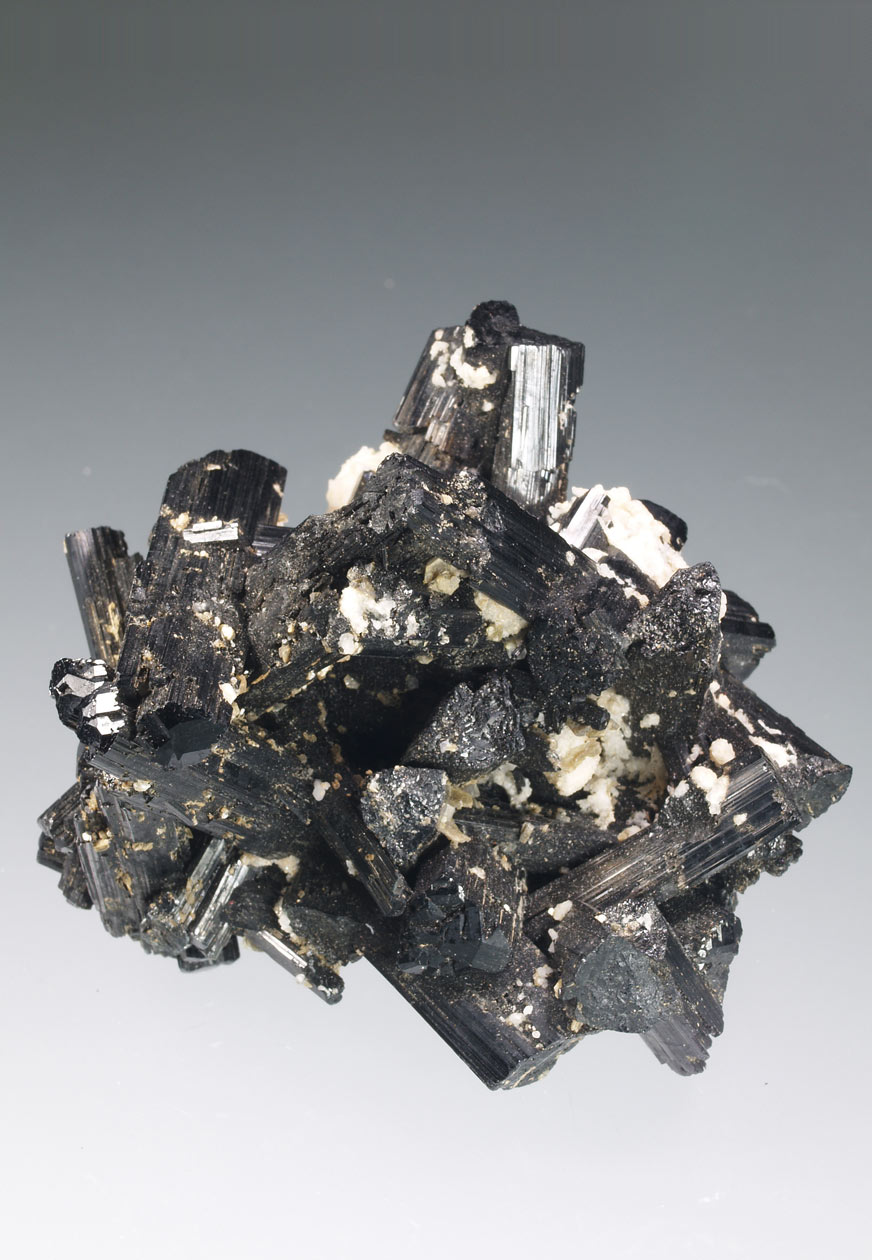
Floater crystals of smoky quartz with parallel growths. The quartz crystals from this quarry are a classic of Spanish mineralogy. Currently the quarries are abandoned and it is difficult to find new specimens.
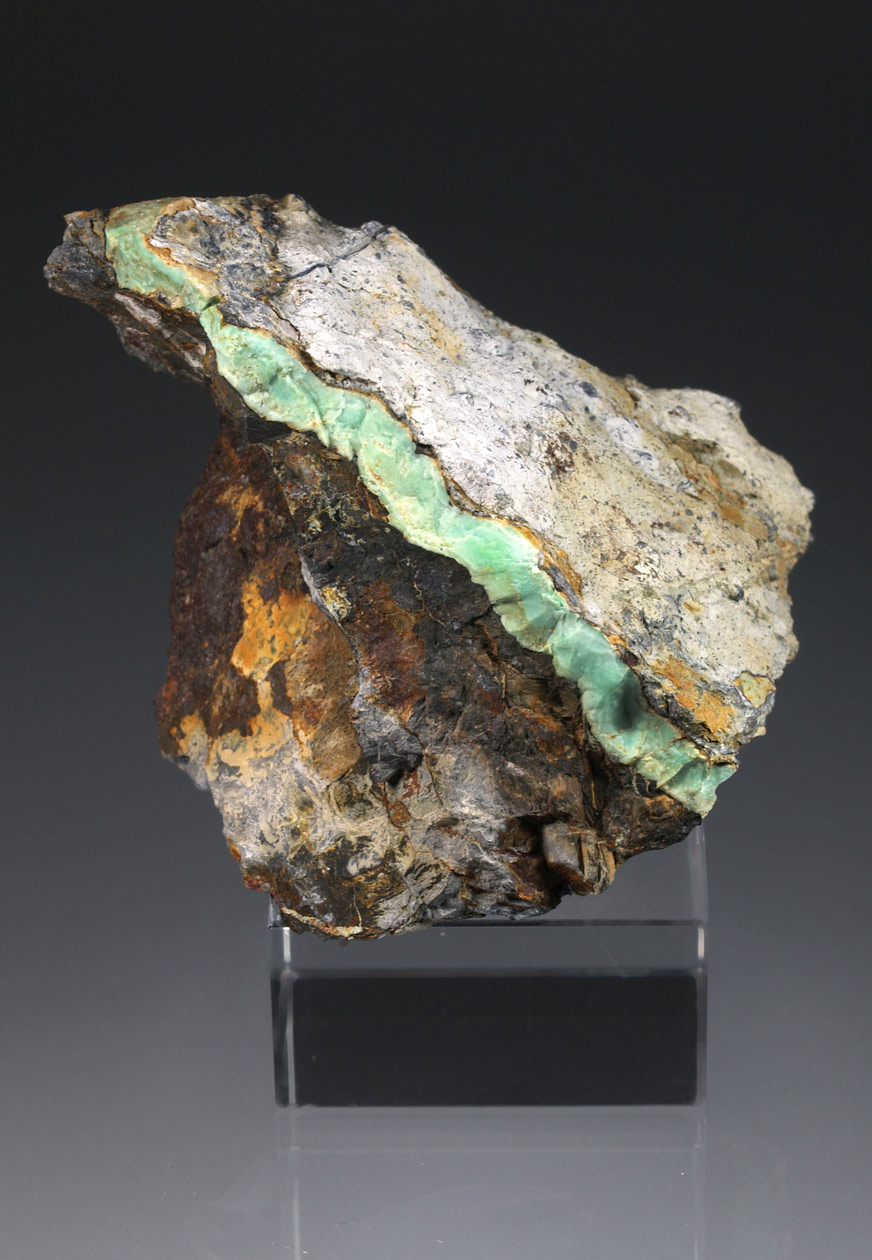
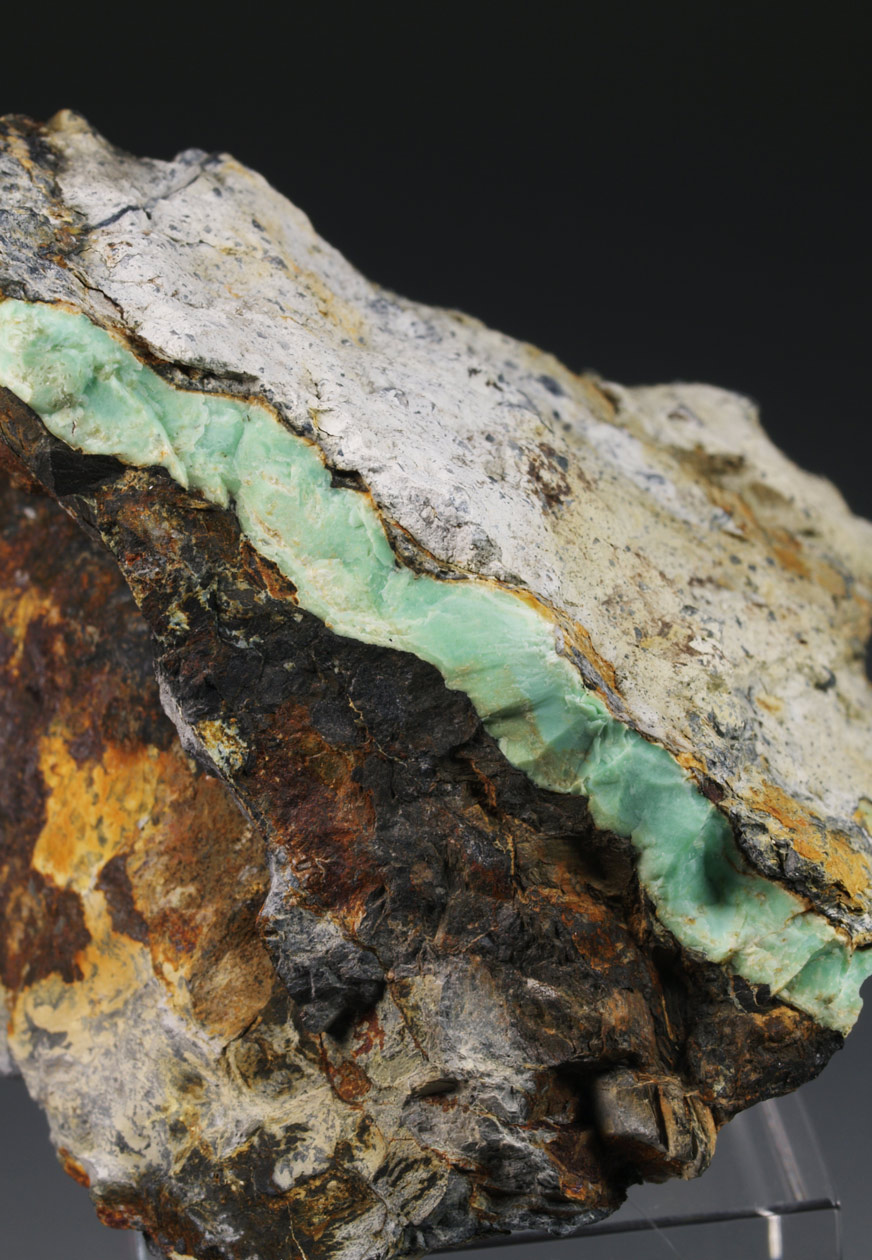
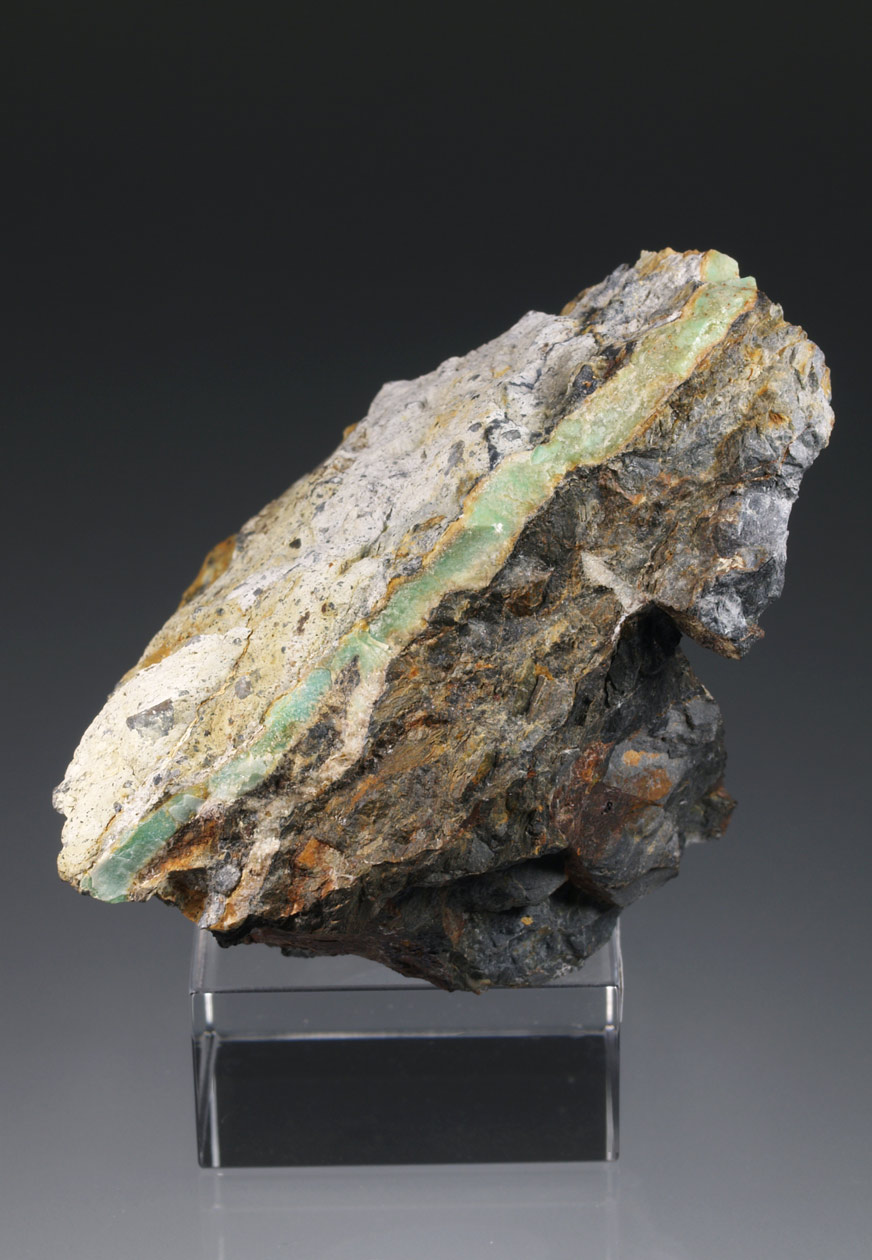
In a building works in Cal Gairal street, in the Rocabruna village (Bruguers, Gavà), a few specimens of intense green variscite were found forming veins in grey slates. Unfortunately when we were able to access these works, the exact place where these specimens were extracted from had already been filled and covered with concrete. Variscite had not been found in the Bruguers area for many decades, let alone with this quality. X-ray diffraction results indicated the presence of crandallite. We recommend the recently published book: "Mines i minerals de la serra de les Ferreres. Les mines de Rocabruna, Bruguers, Gavà" (Catalan language).
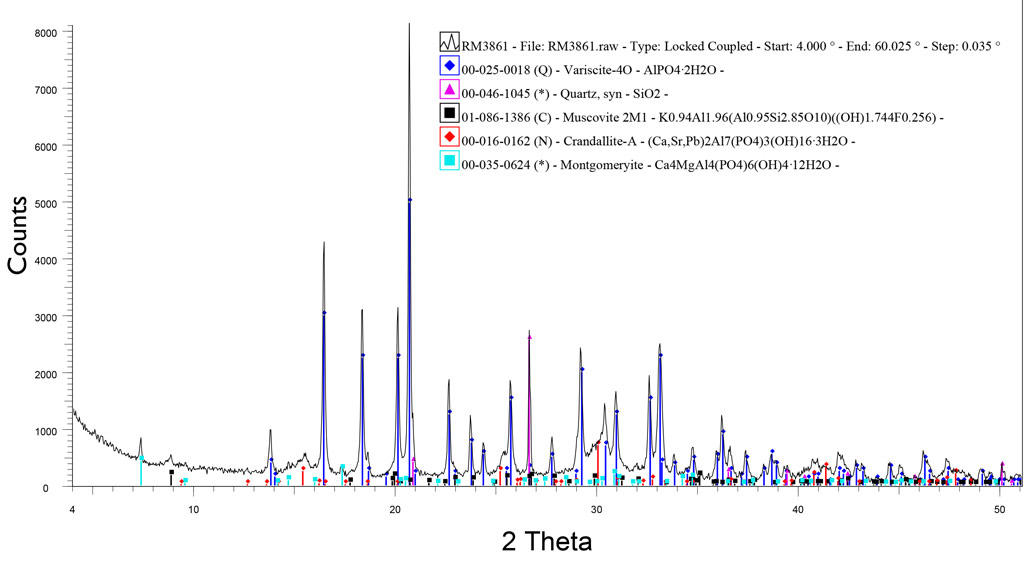
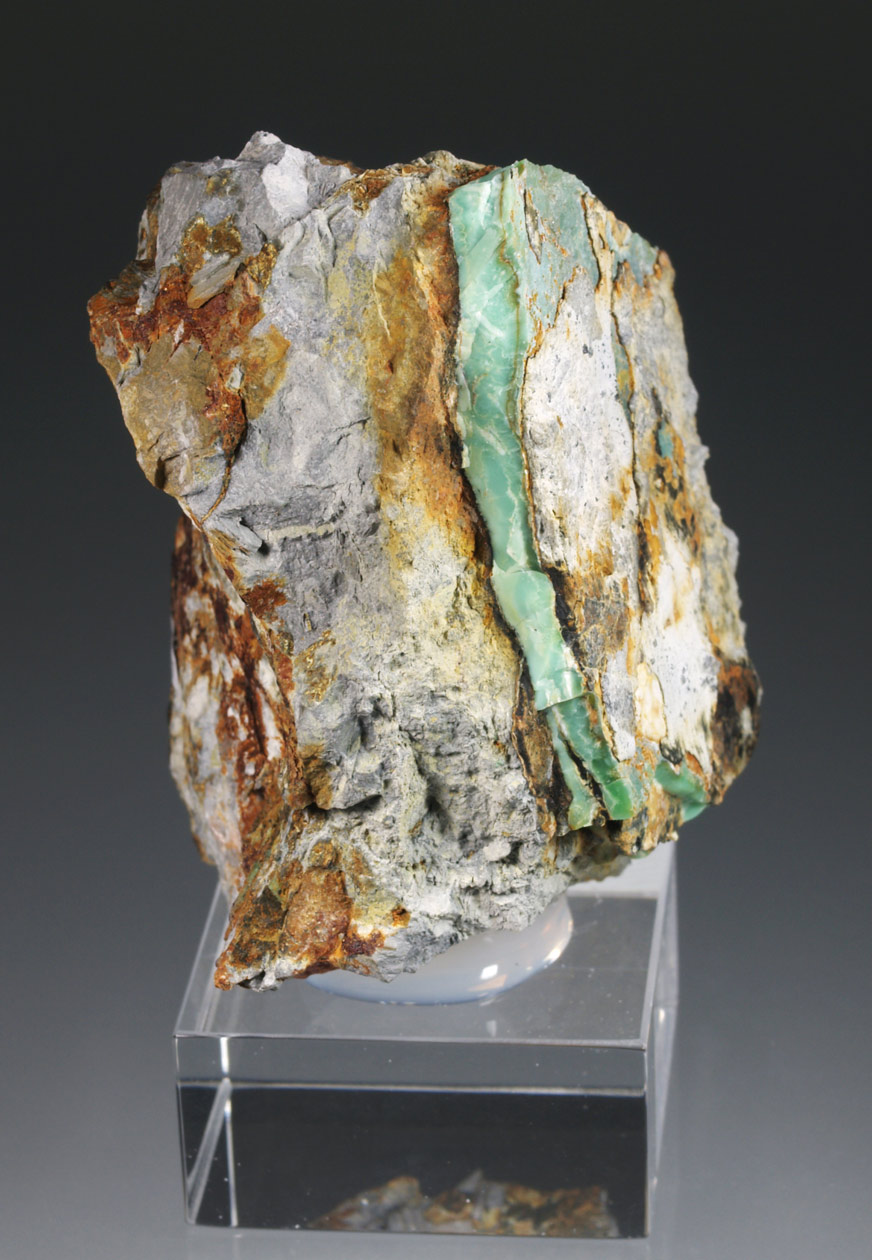
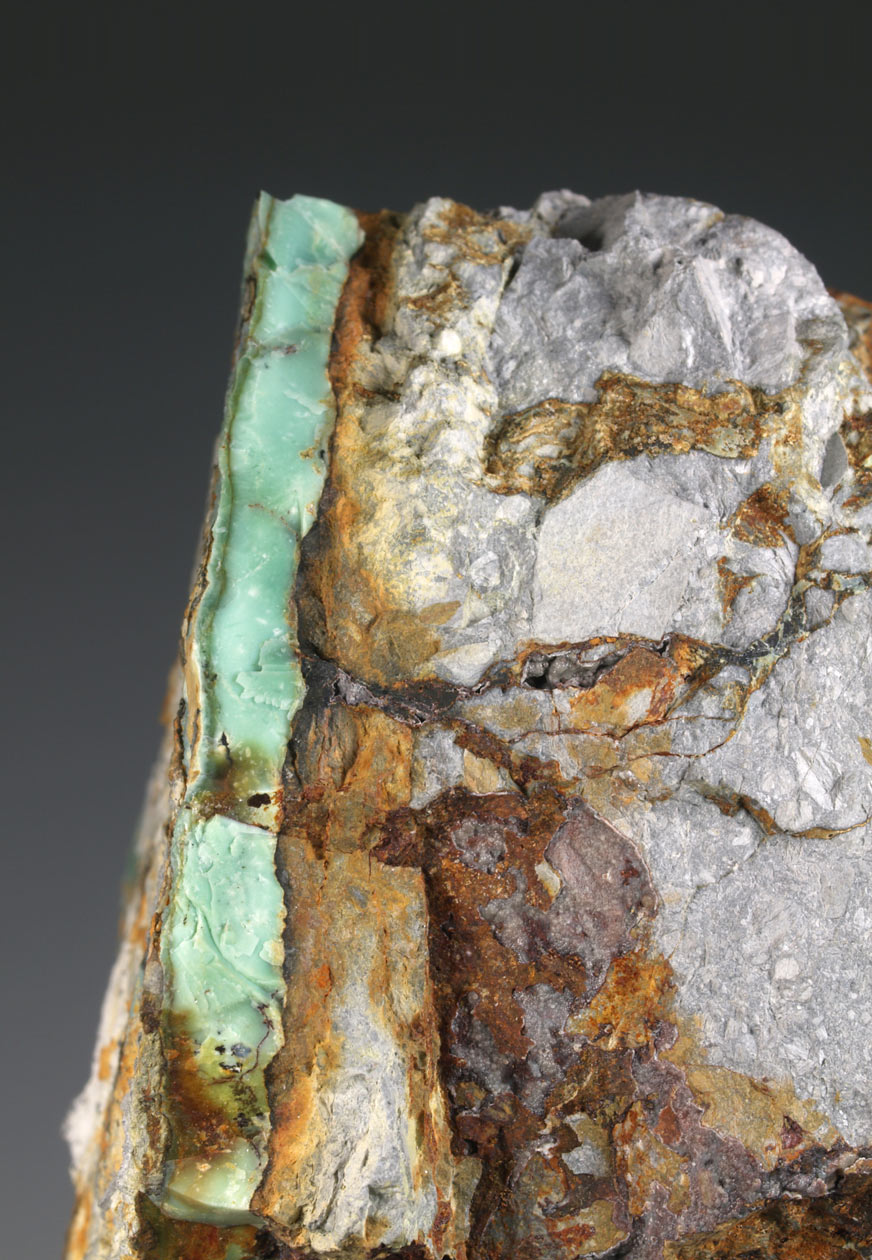
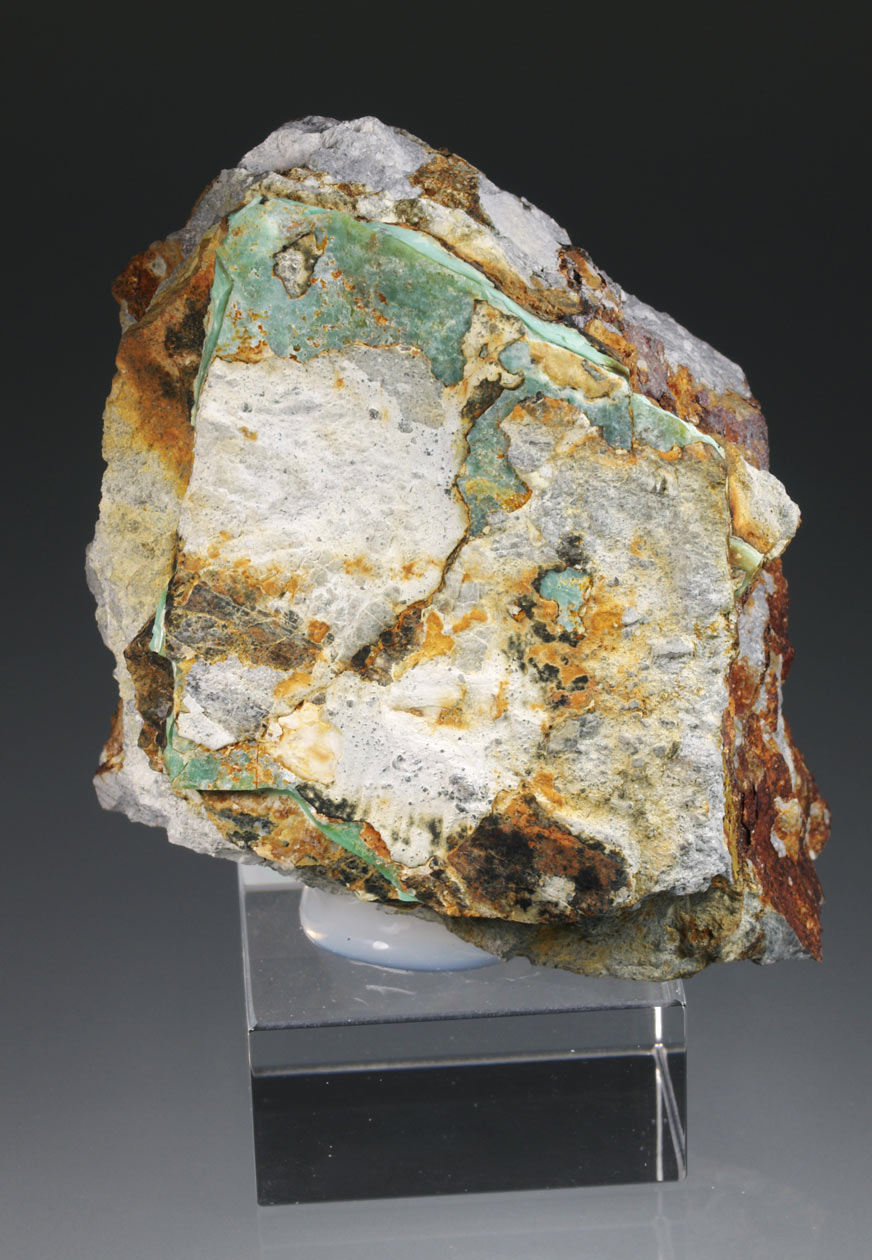
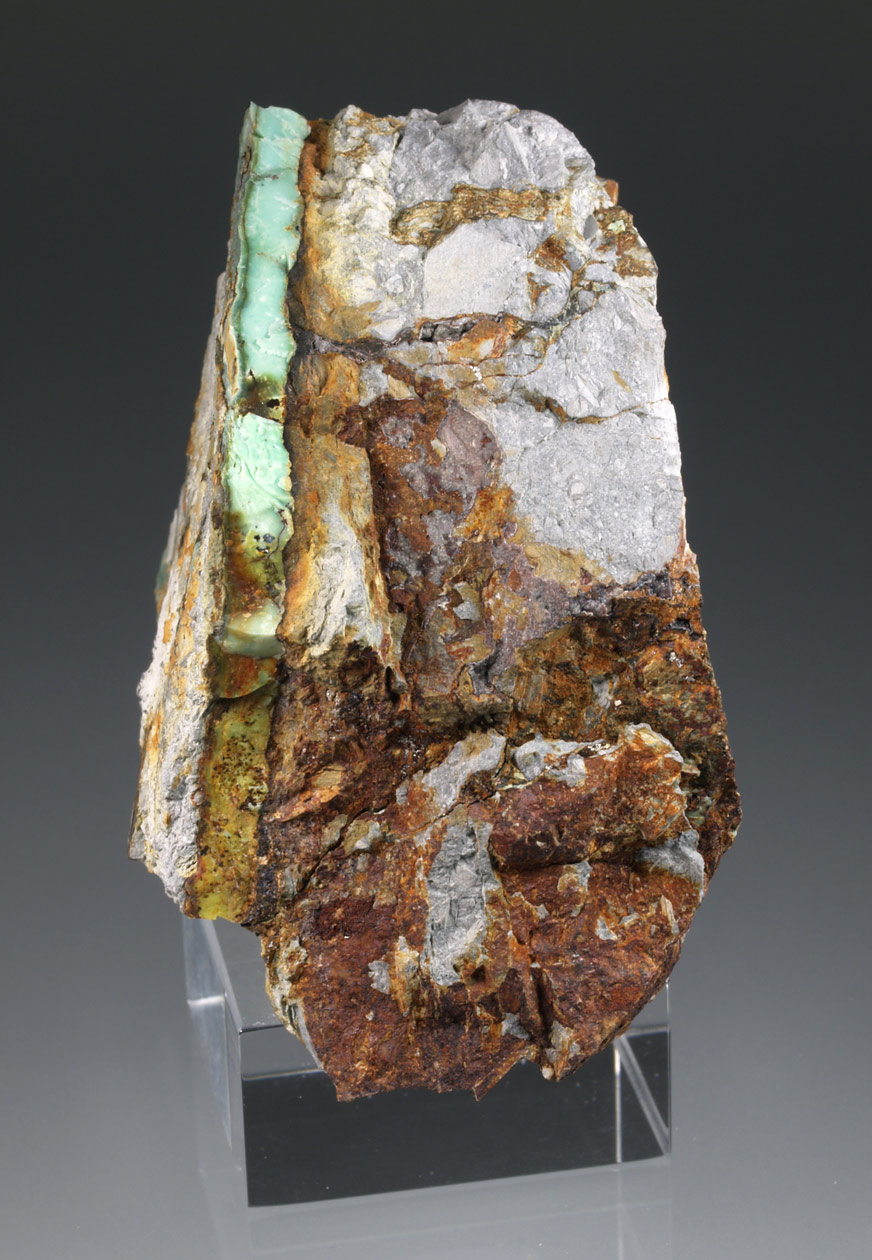
In a building works in Cal Gairal street, in the Rocabruna village (Bruguers, Gavà), a few specimens of intense green variscite were found forming veins in grey slates. Unfortunately when we were able to access these works, the exact place where these specimens were extracted from had already been filled and covered with concrete. Variscite had not been found in the Bruguers area for many decades, let alone with this quality. X-ray diffraction results indicated the presence of crandallite. We recommend the recently published book: "Mines i minerals de la serra de les Ferreres. Les mines de Rocabruna, Bruguers, Gavà" (Catalan language).
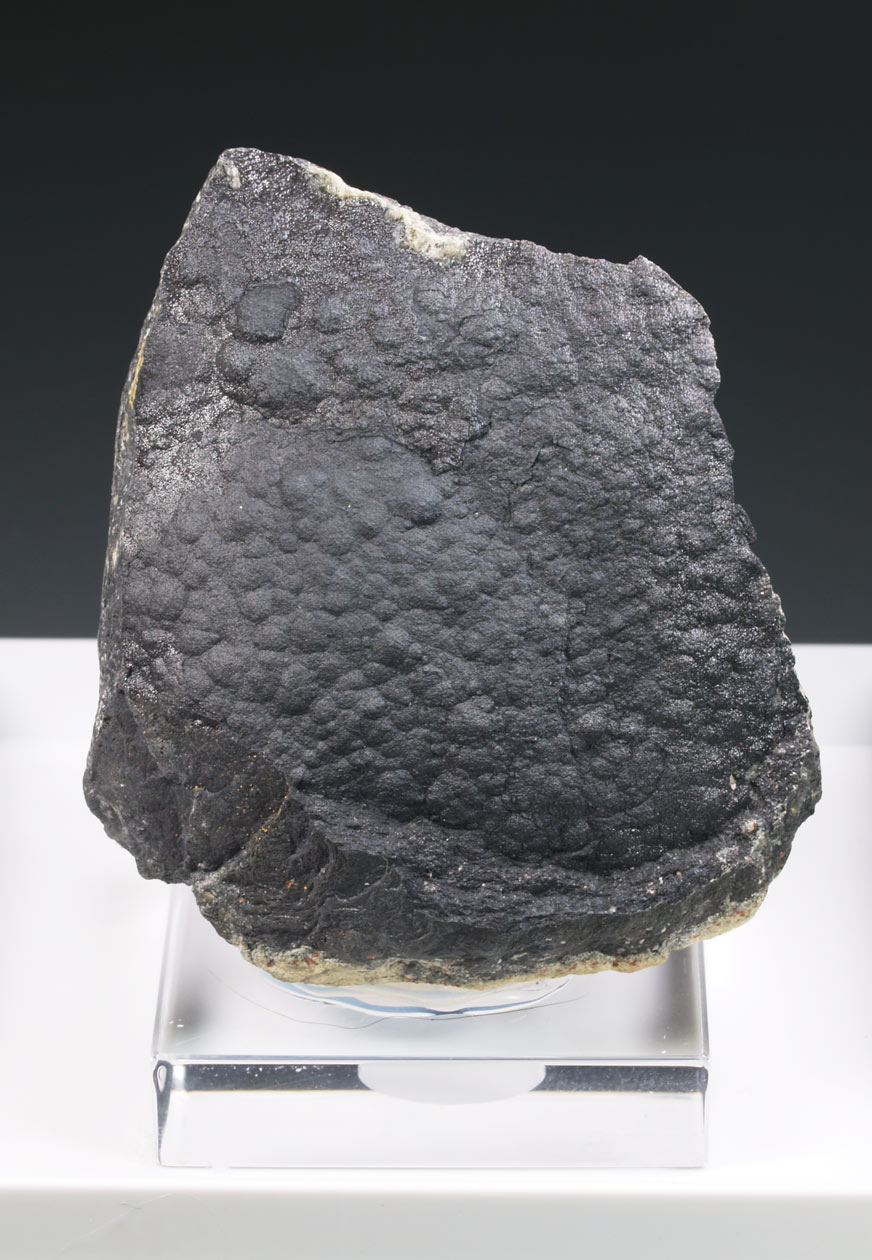
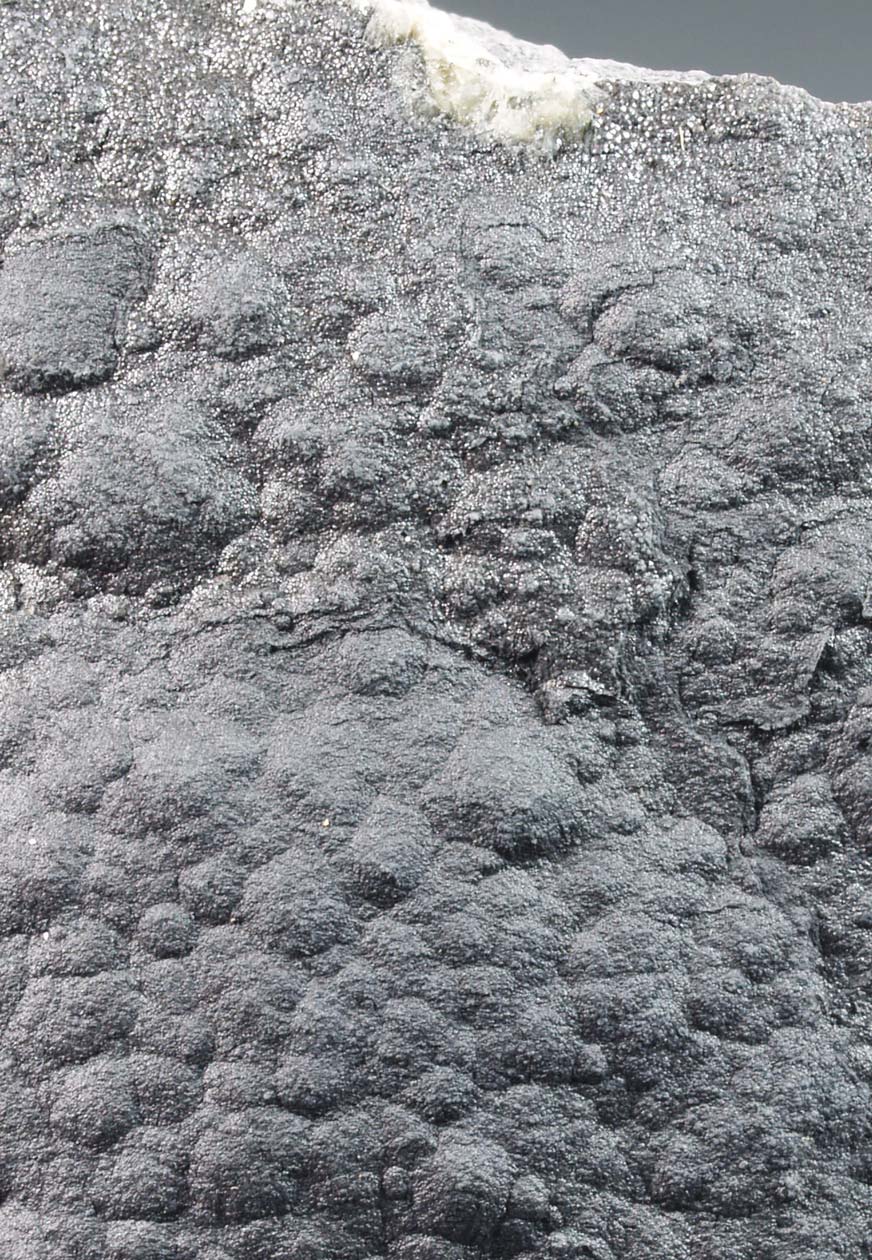
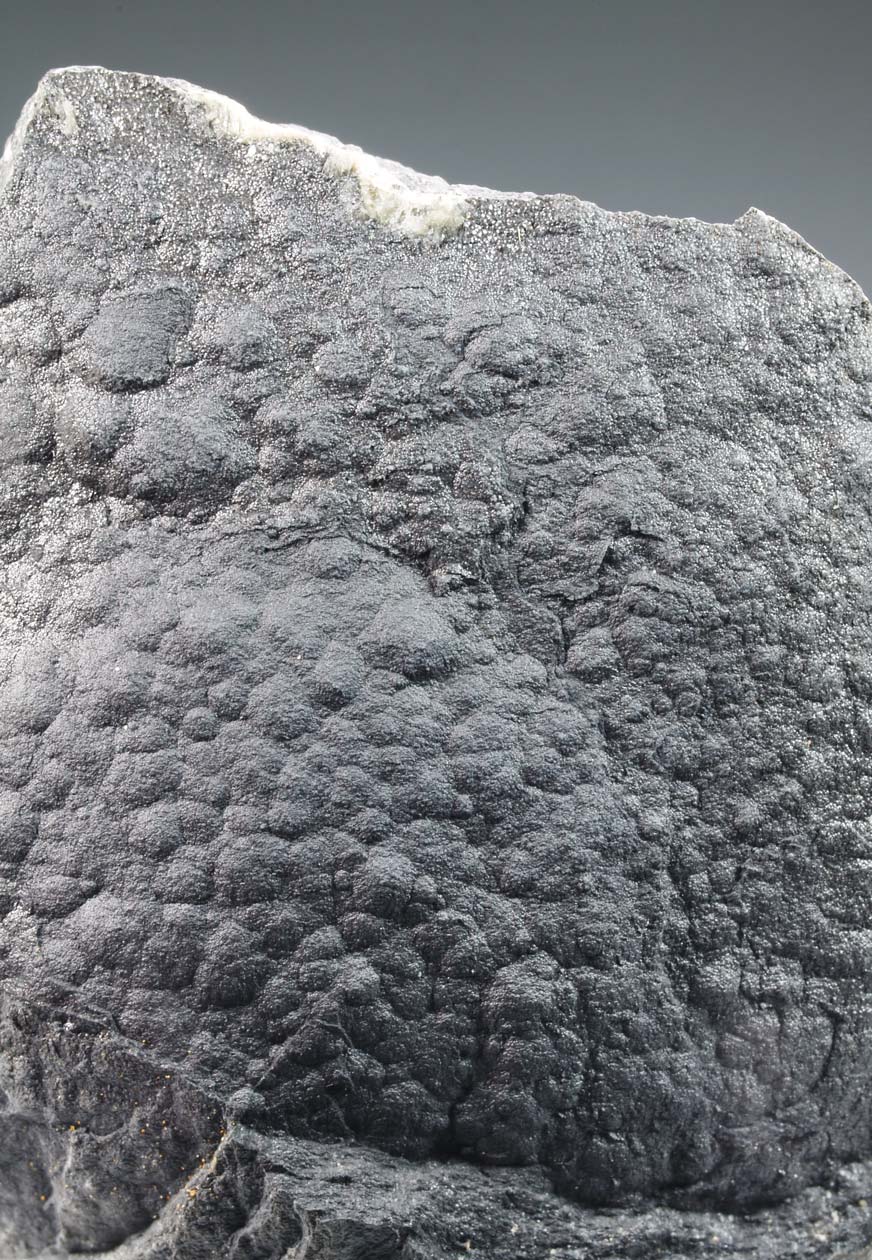
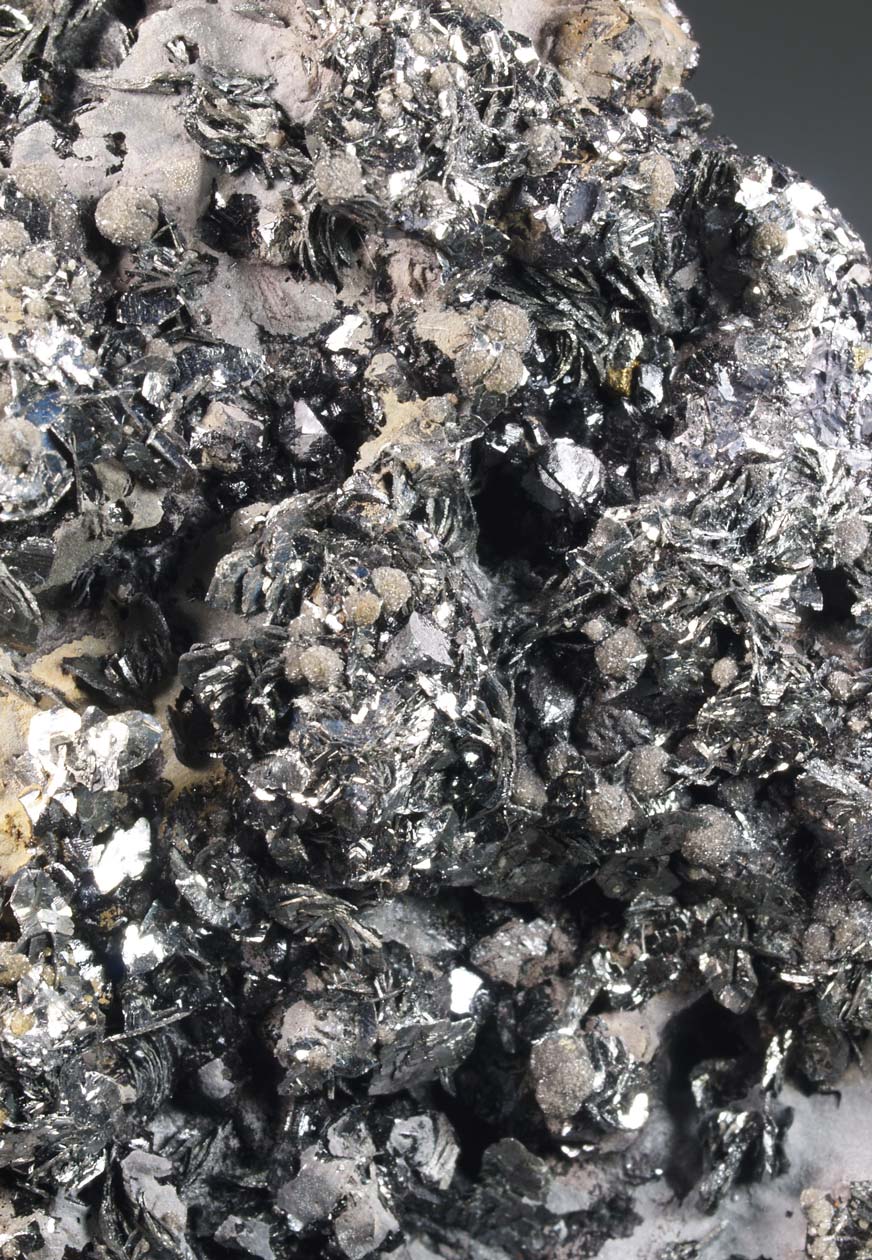
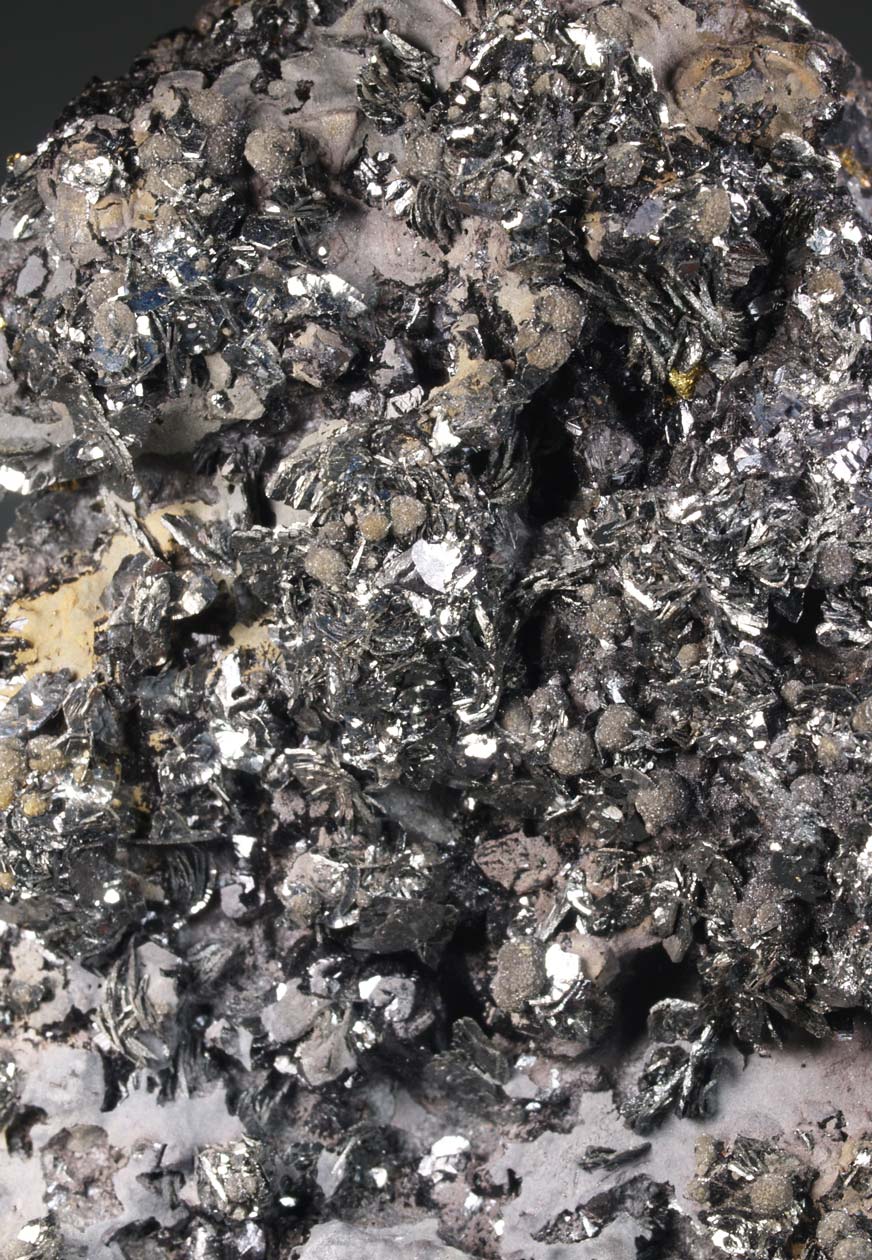
This is a really good piece of Stibarsen, a rare arsenic antimonide alloy, from this famous mineral producing region in the Czech Republic. For years, stibarsen was labeled as allemontite, which is no longer a species. The species is now stibarsen, and allemontite is an archaic/invalid term. This piece features the classic botryoidal form that is well-known from Pribram. A good representation of this classic old material. From the collection of Juan M. Casanova.
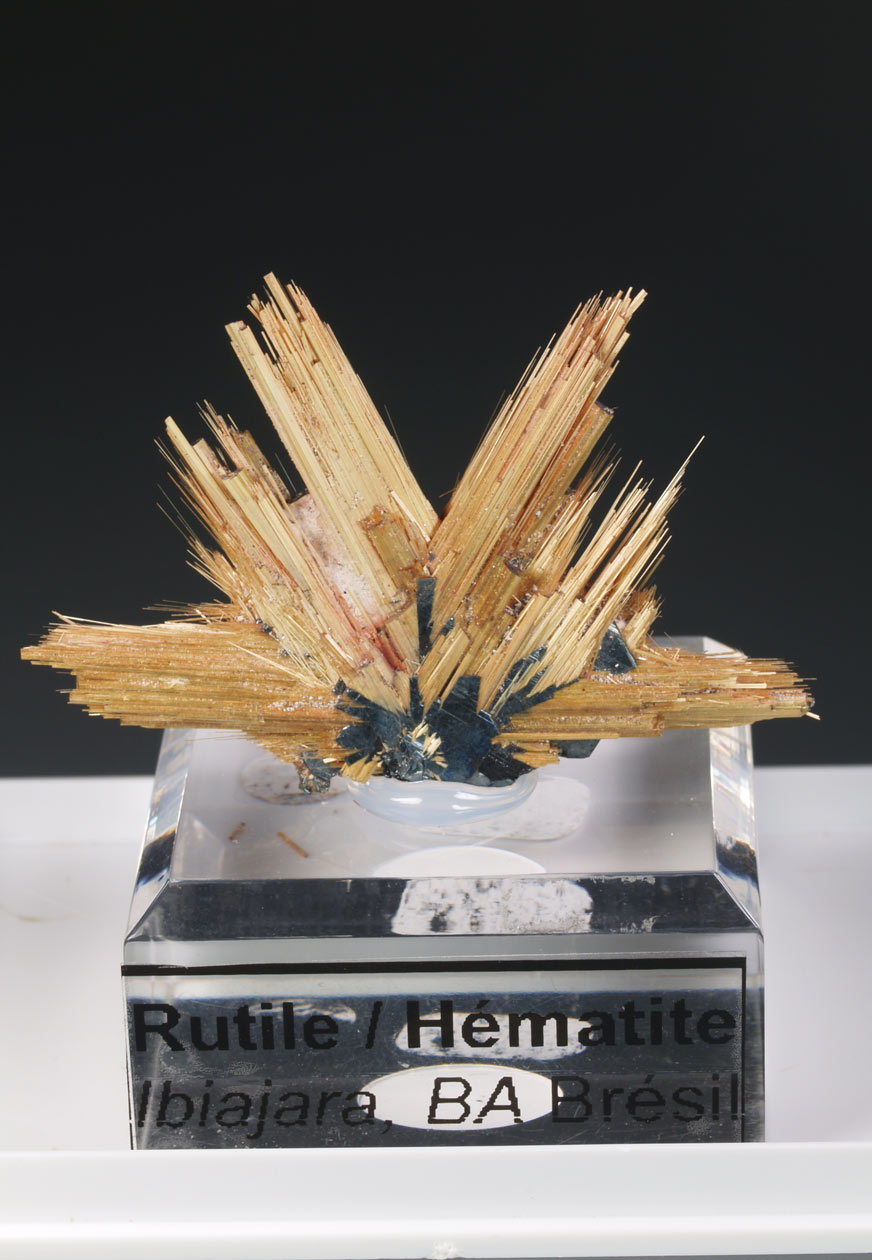
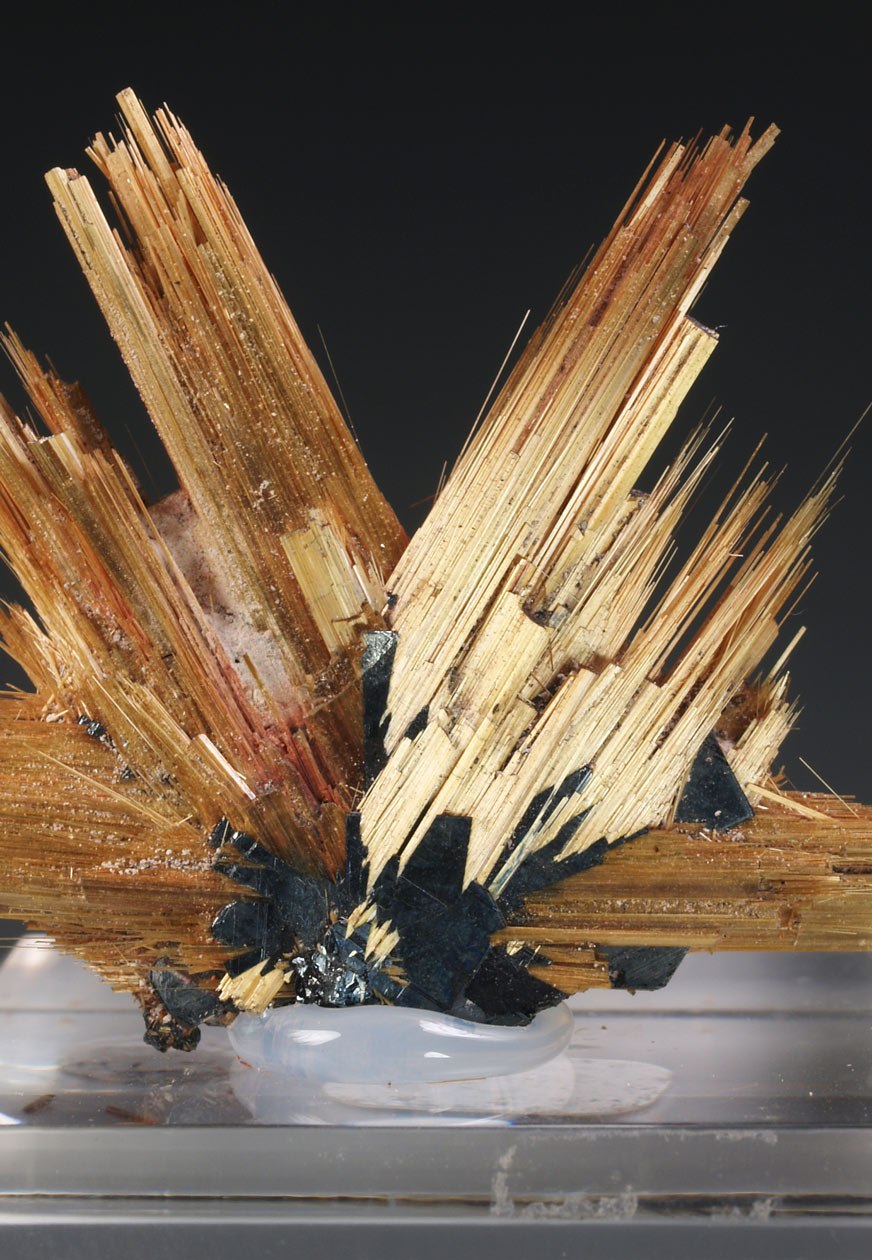
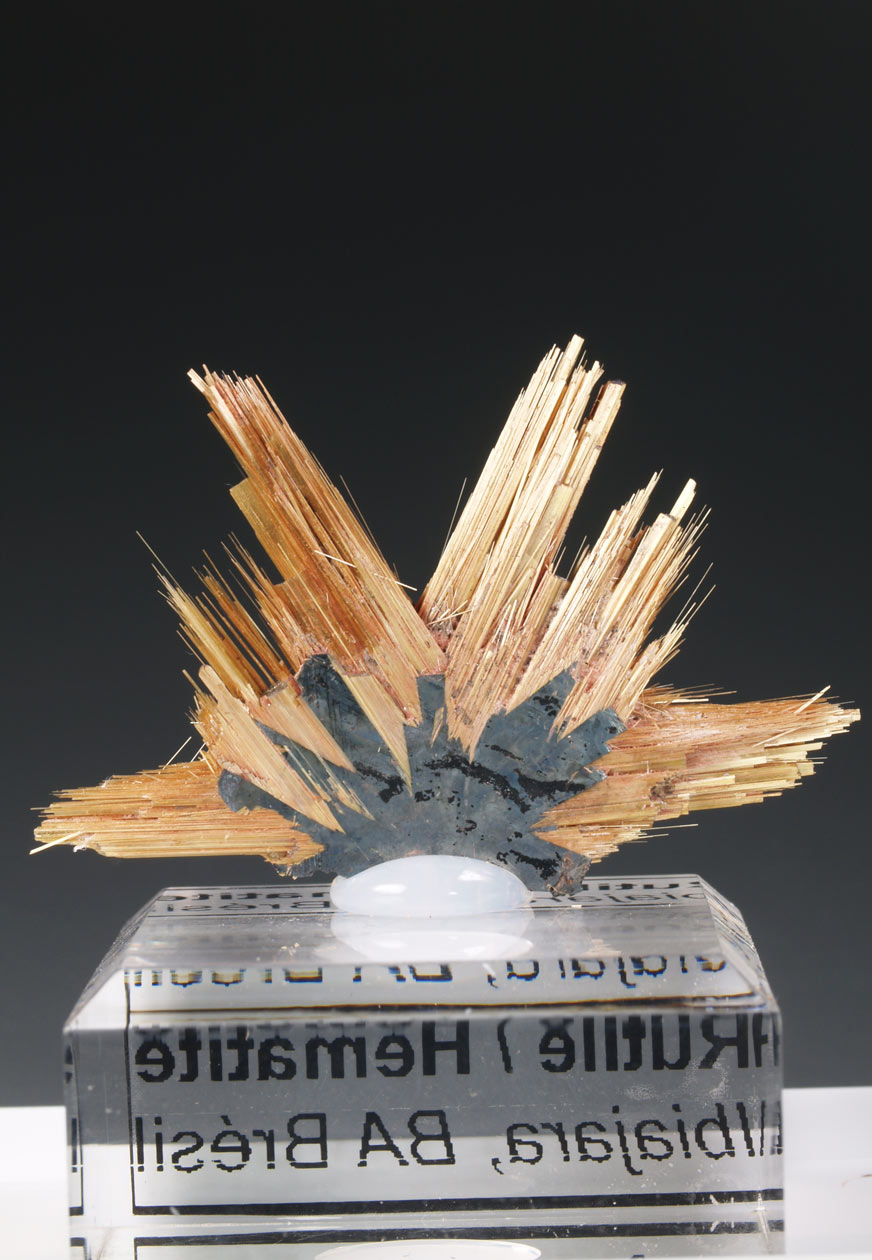
Aesthetic starbursts of very lustrous, golden rutile needles epitaxial on black hematite crystals. From the classic Novo Horizonte mines. The uneven starburst really adds character to this fine piece, which looks great from both sides.
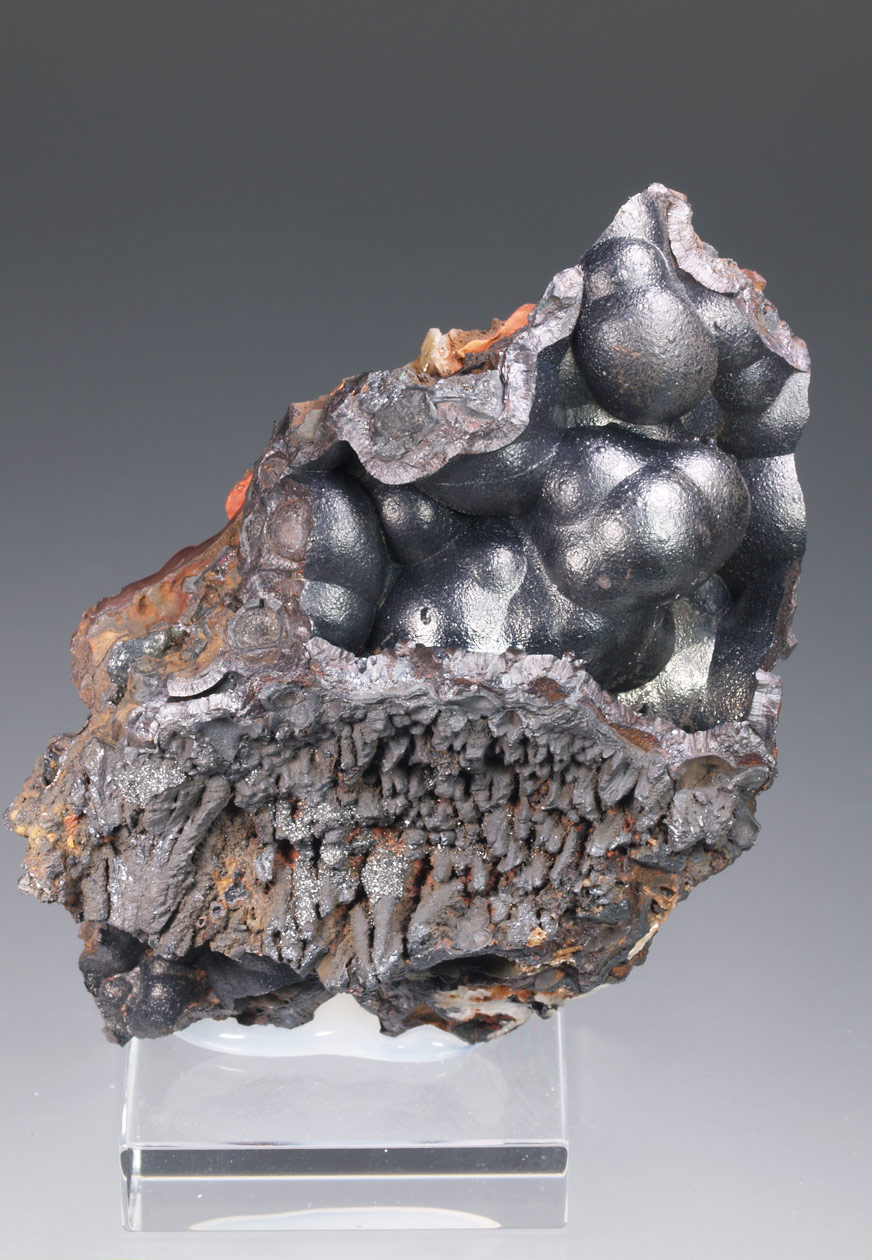
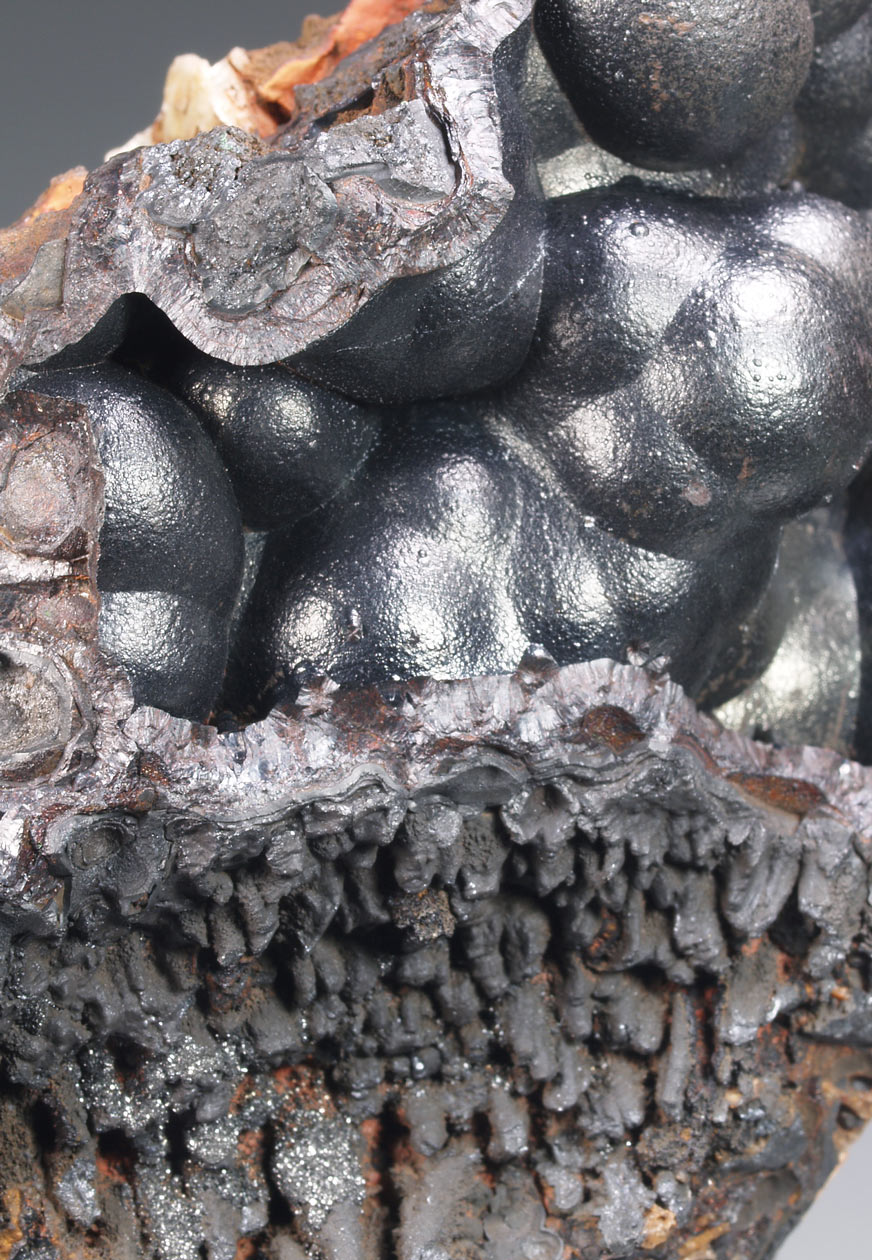
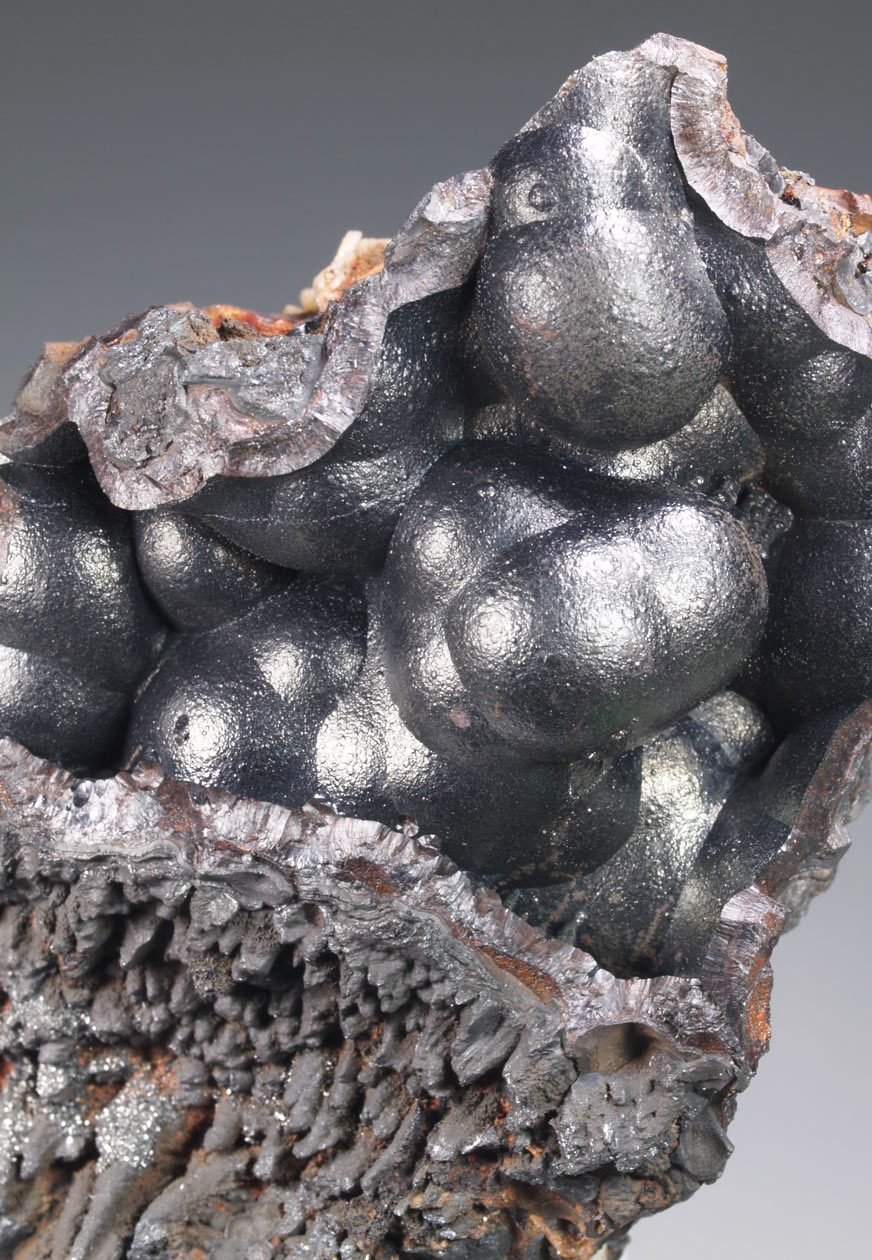
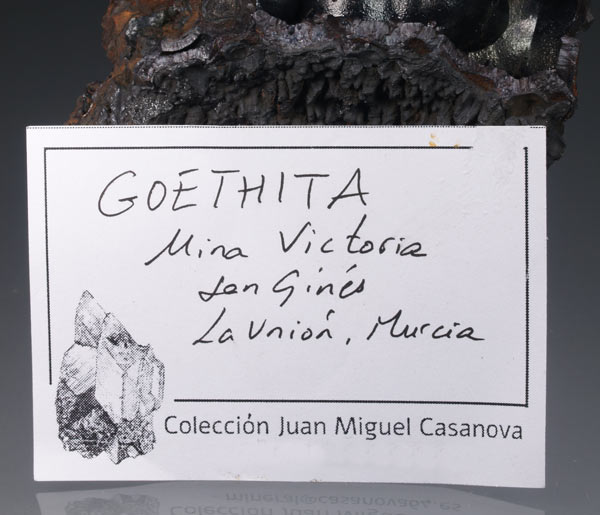
Aesthetic specimen that combines an upper part formd by goethite botryoidal aggregates, with a semi-matt luster, and a lower part with stalactitic growths of manganese oxides. They are accompanied by hematite of intense red color and baryte. A very interesting specimen from "la Sierra de la Unión".
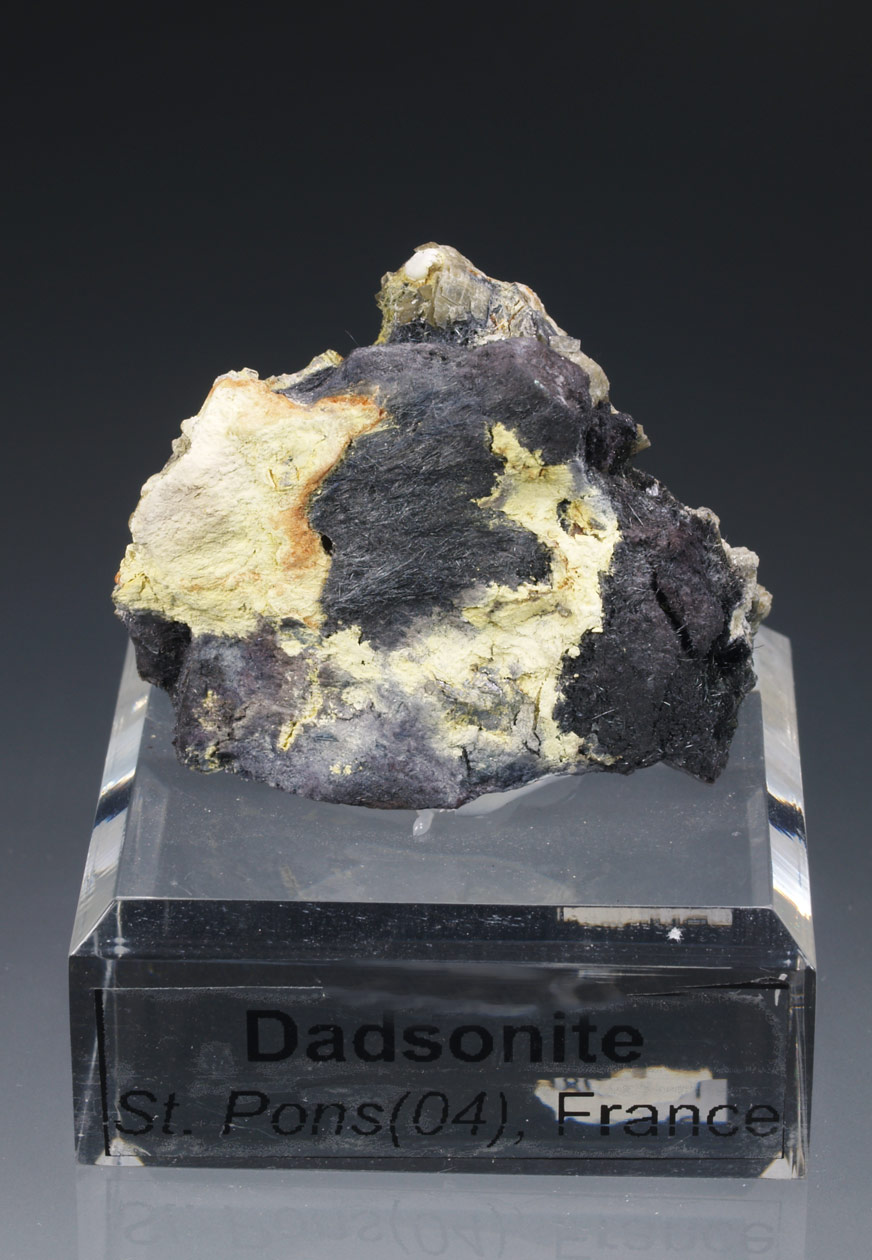
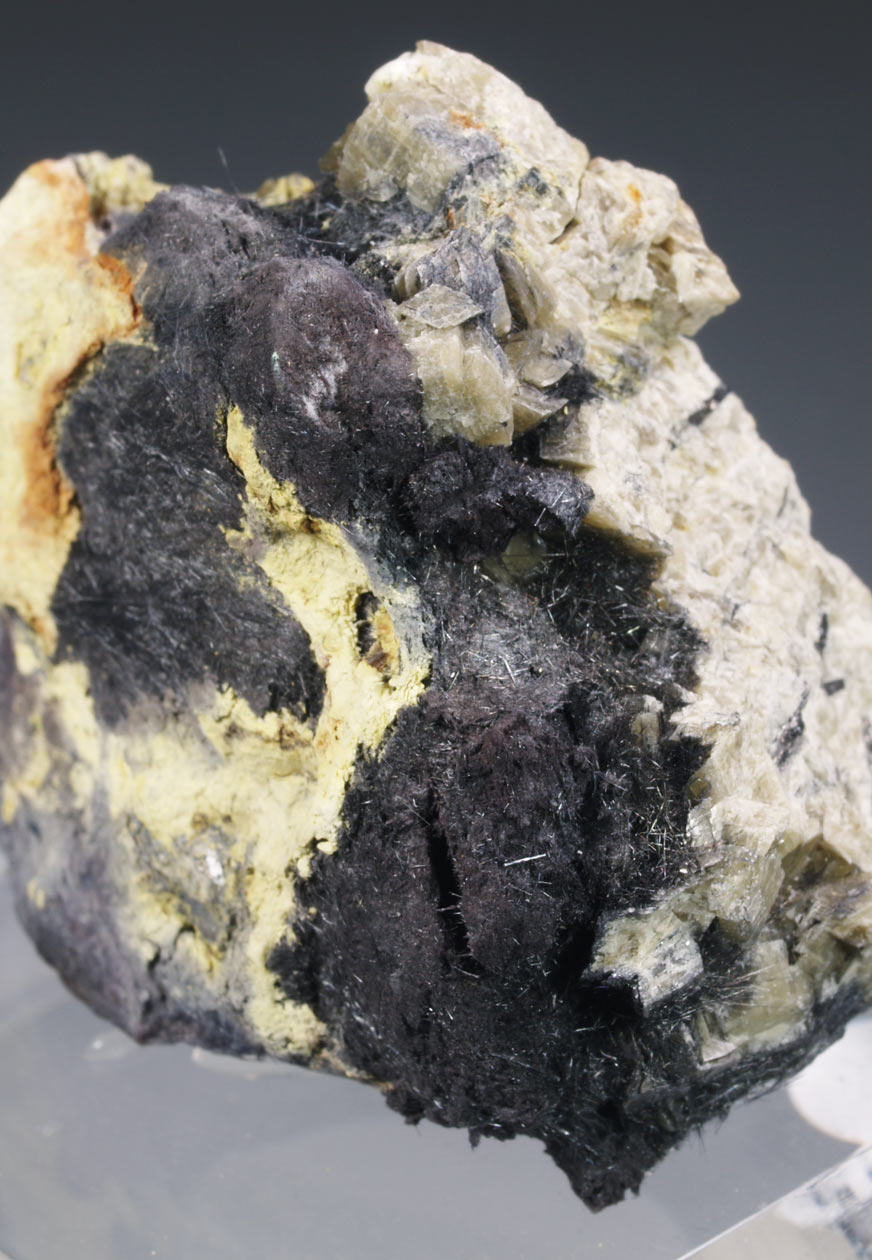
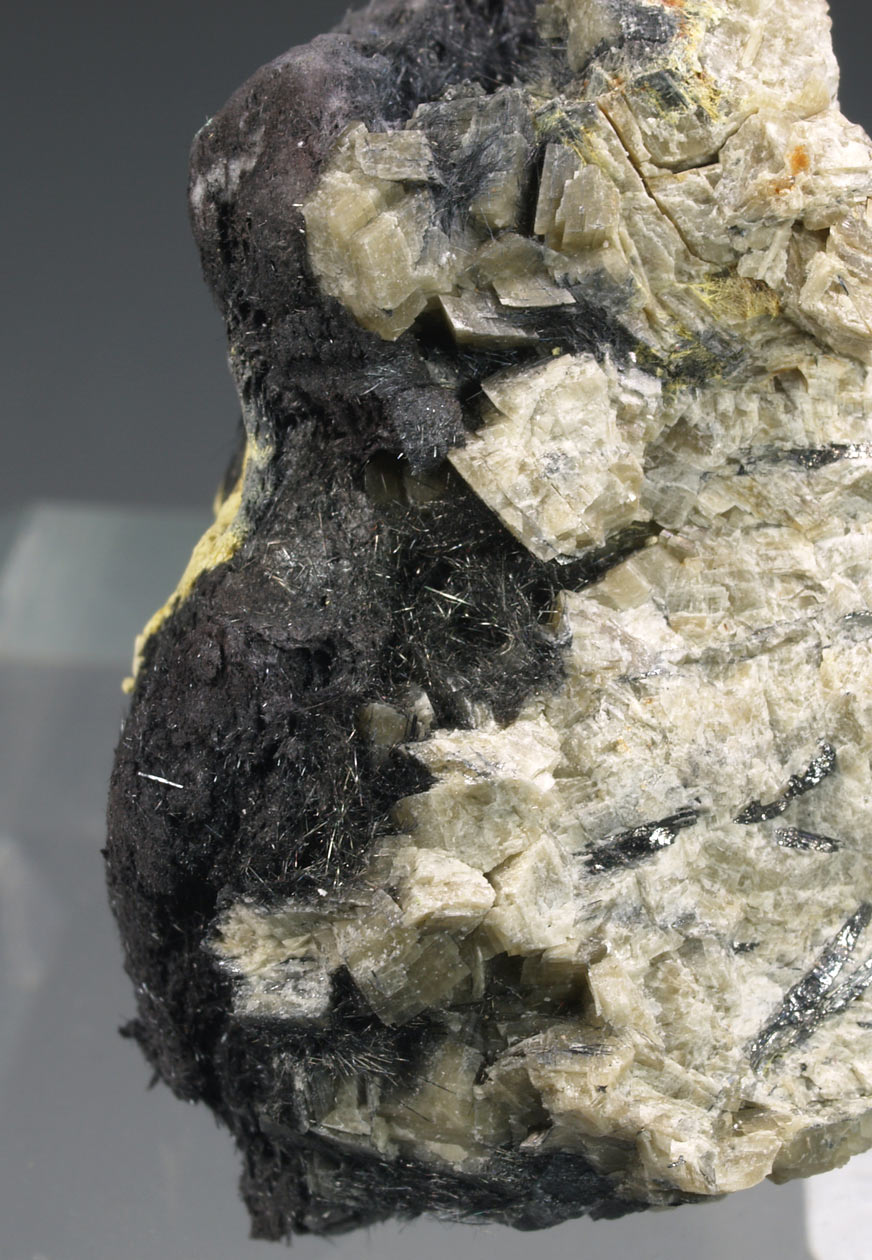
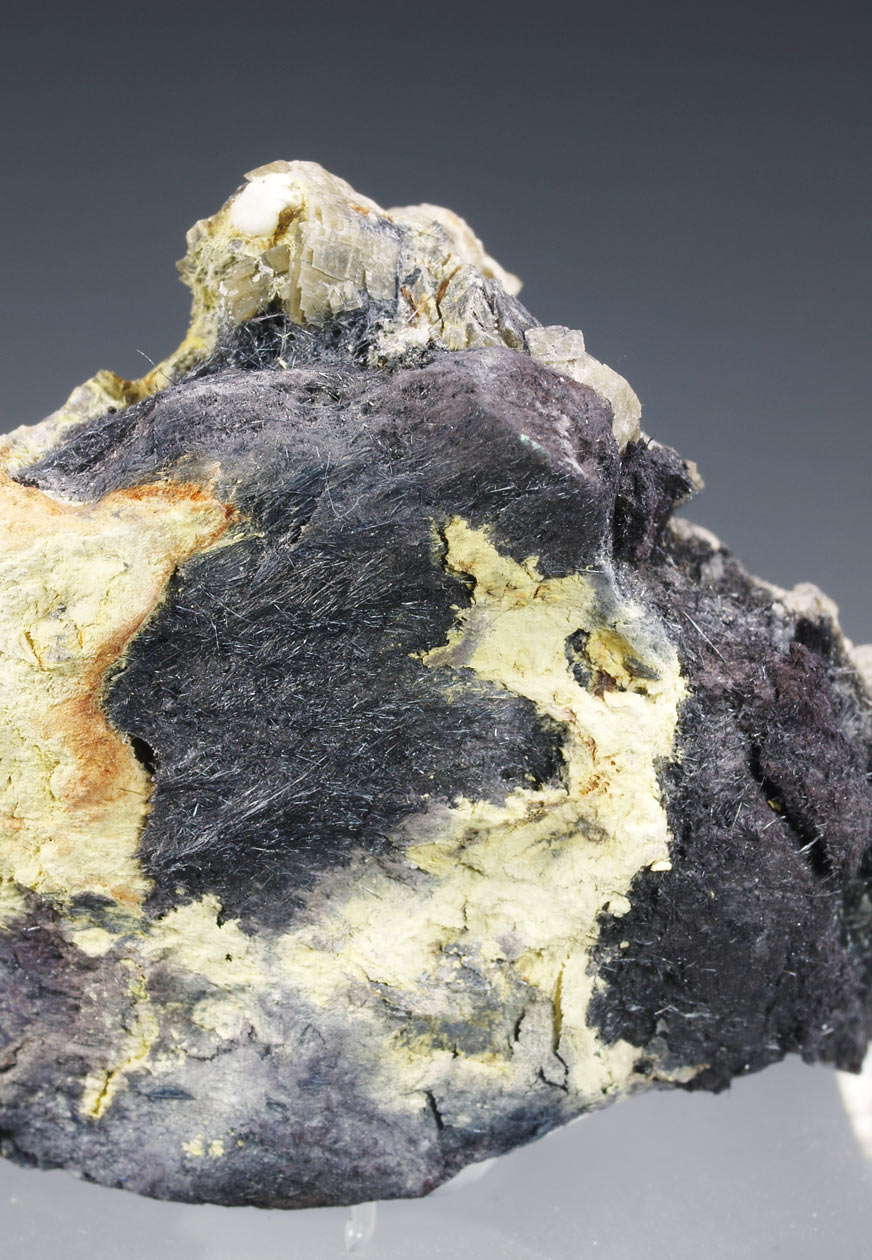
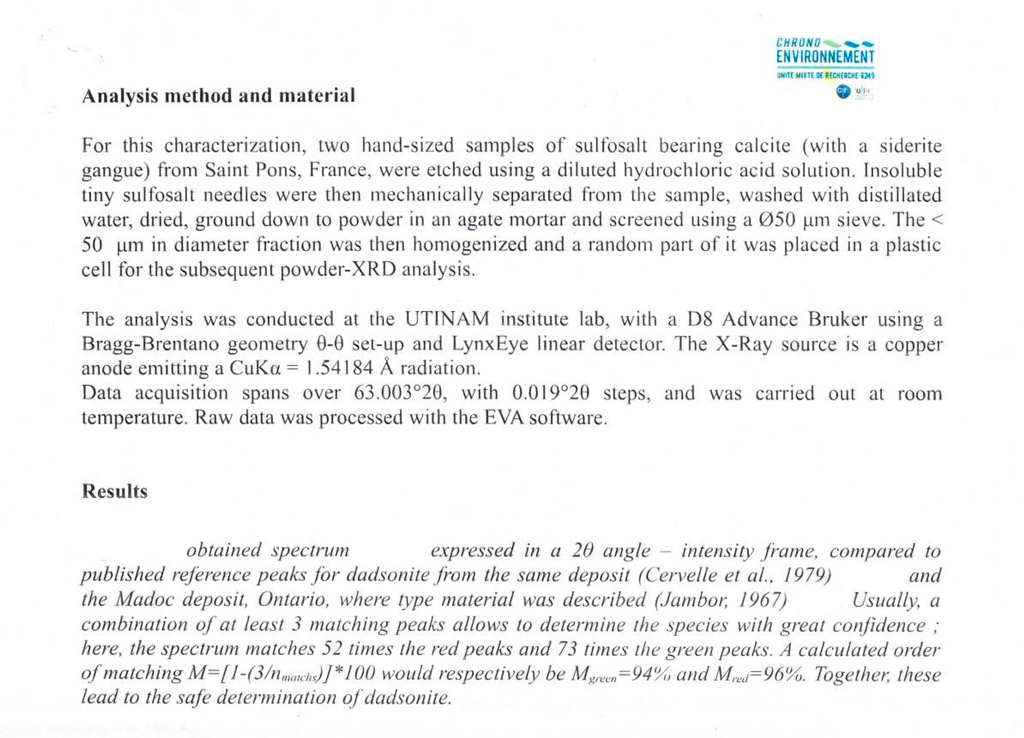
Dadsonite is a rare chloro-sulfoantimonide of lead, compositionally differing from boulangerite by this chlorine anion (1 atom of Cl for 60 atoms of S!). In the "bad-lands" area of Sant Ponç (or Saint-Pons) there are lenticular levels of siderite and calcite. The formation of this rare sulfosalt is based on the redissolution of other sulfosalts in the presence of chlorides.
The fine needles of dadsonite usually appear included in calcite with siderite, along with boulangerite. Once the calcite is removed by chemical processes, needles emerge in all their beauty. It can also be found forming radial aggregates in matrix cavities. The dadsonite from Sant Ponç can probably be considered among the best worldwide.
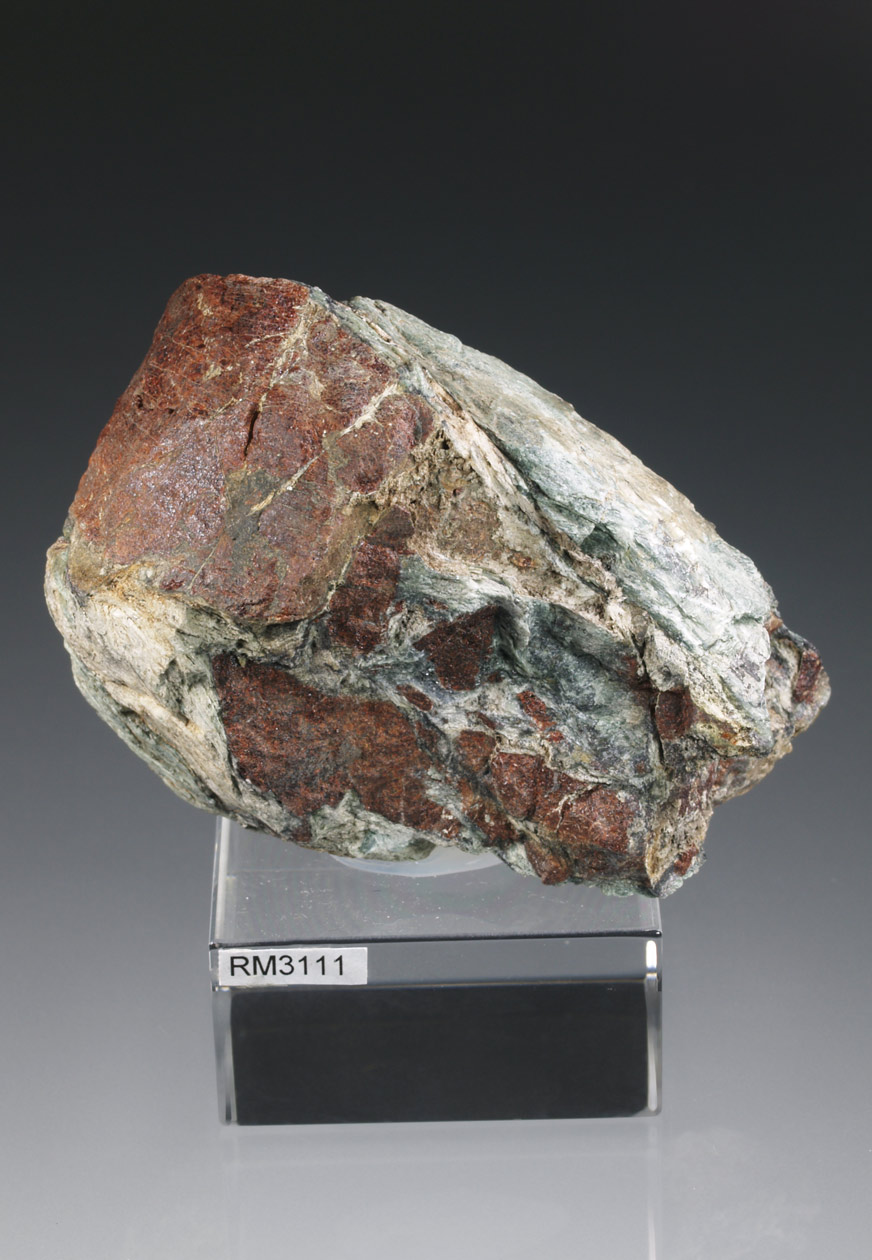
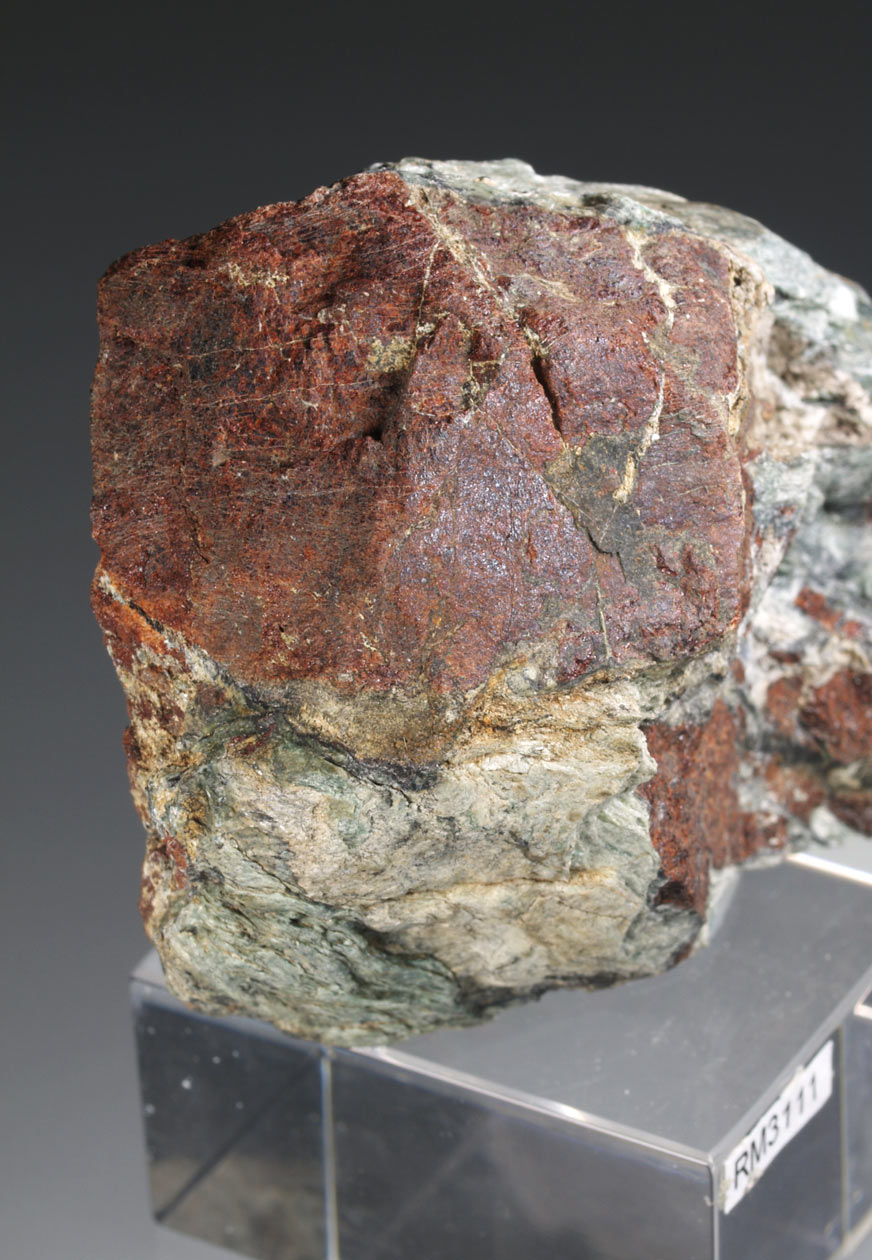
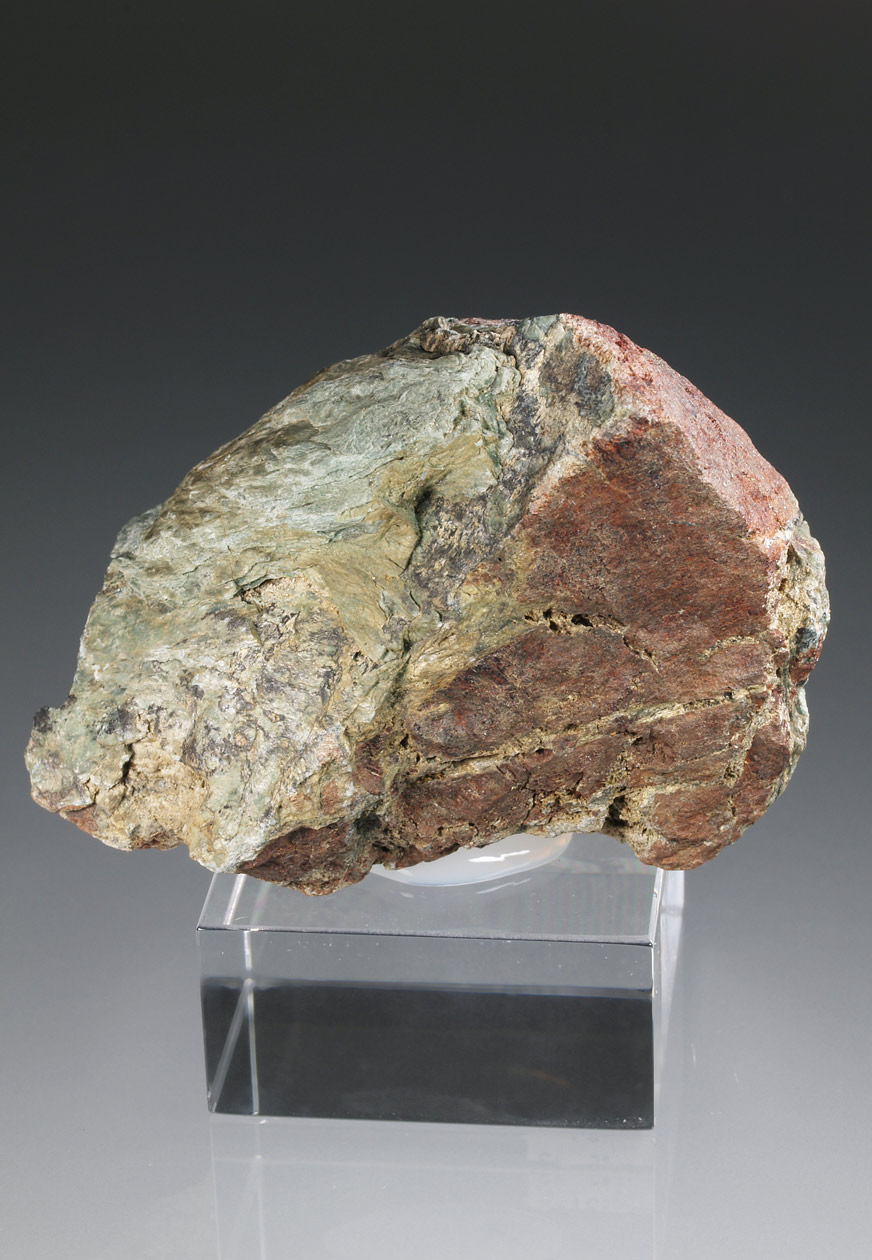
Titanian hydroxylclinohumite porphyroblasts with white-greyish diopside and antigorite serpentinite. The varietal name titanoclinohumite (older literature uses the name "titanolivine" for this variety) is commonly used to indicate Ti-bearing hydroxylclinohumite found in metamorphosed serpentinites. A very interesting specimen from unusual locality for the species.
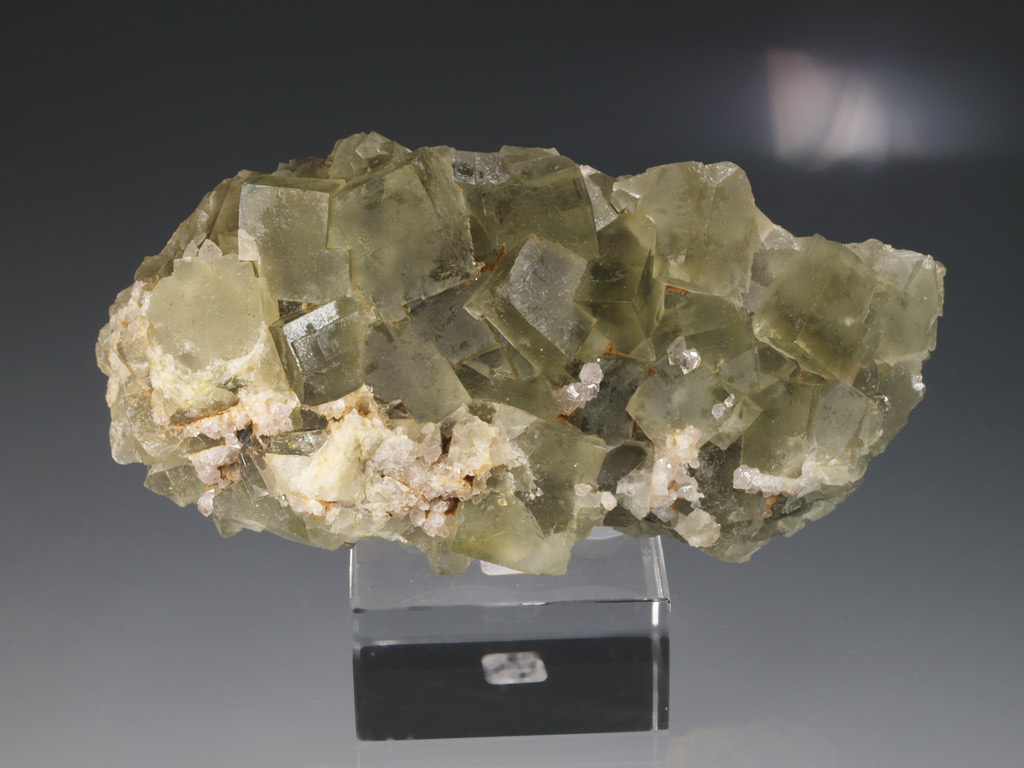
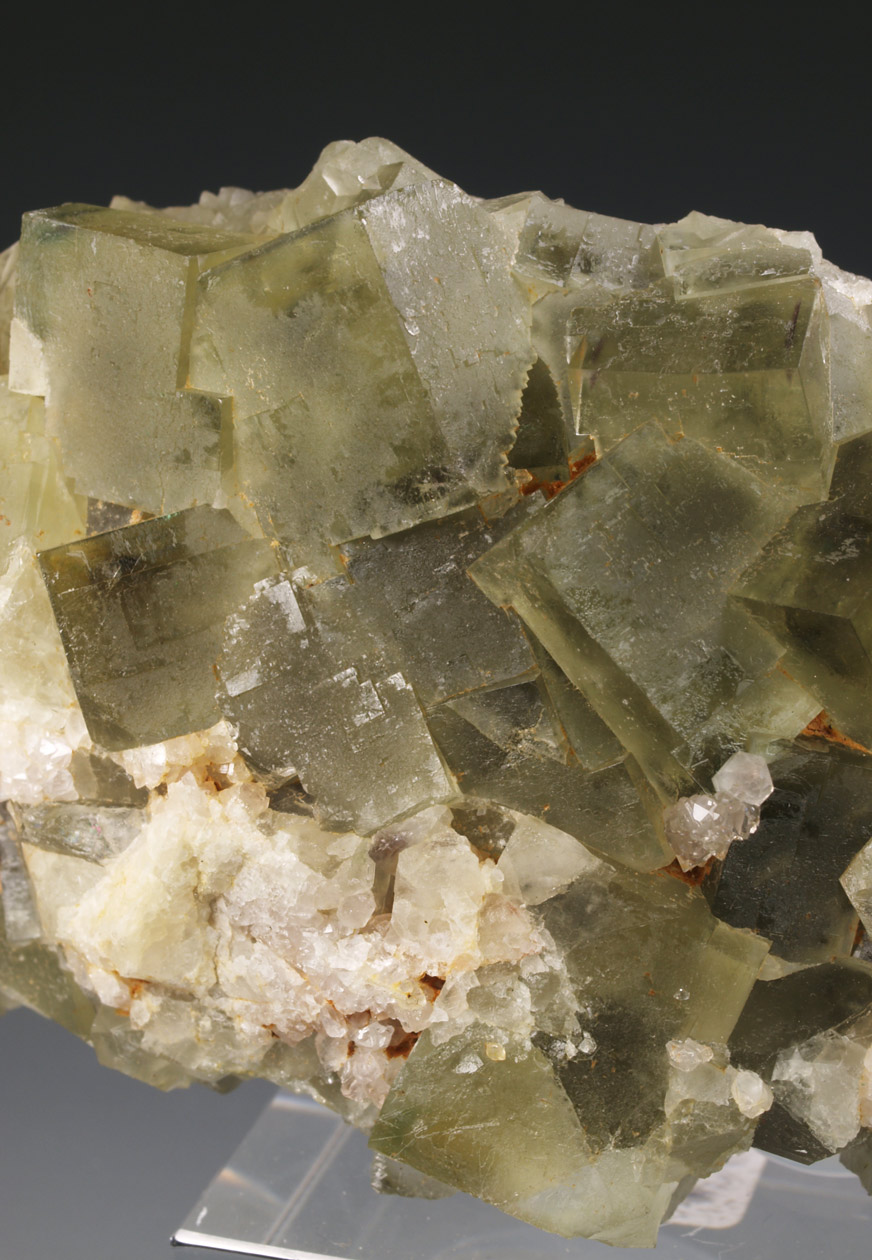
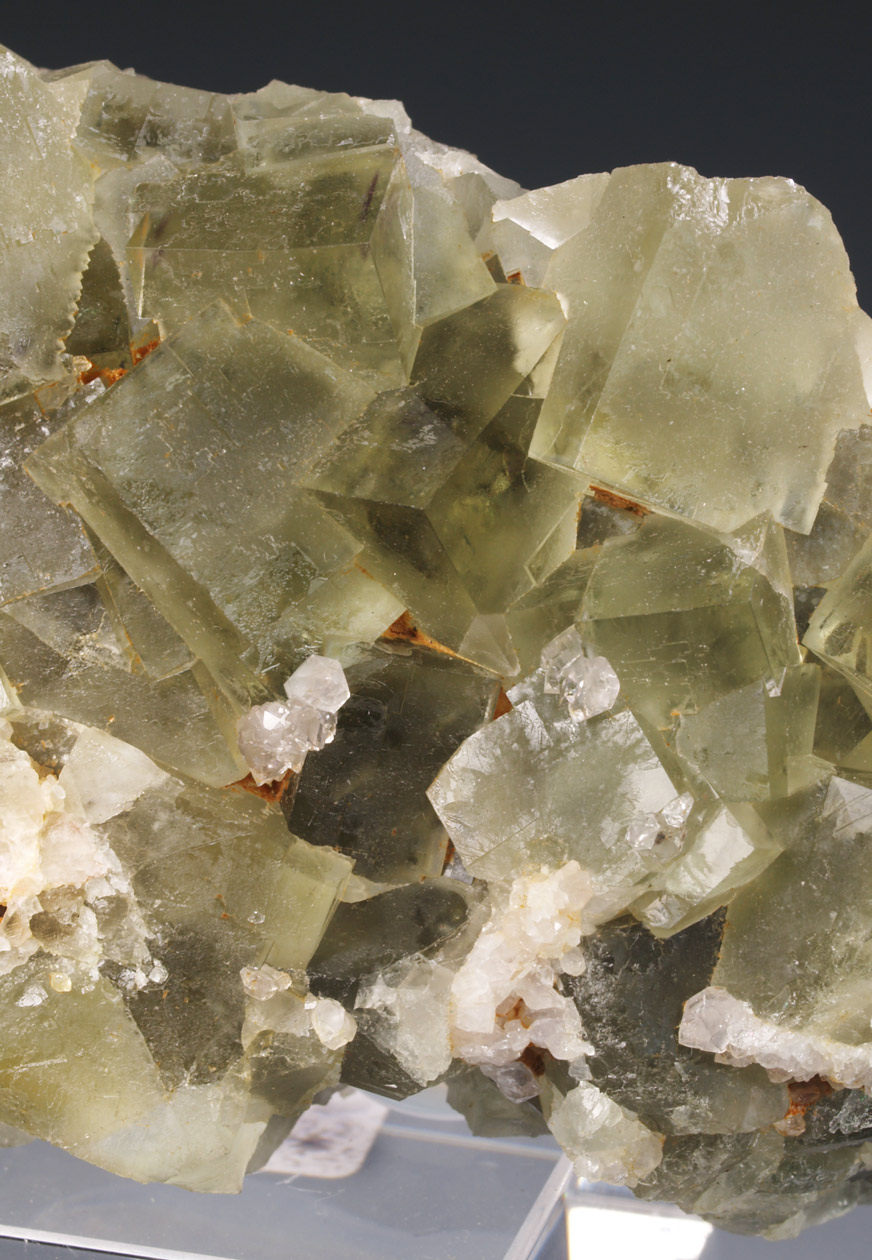
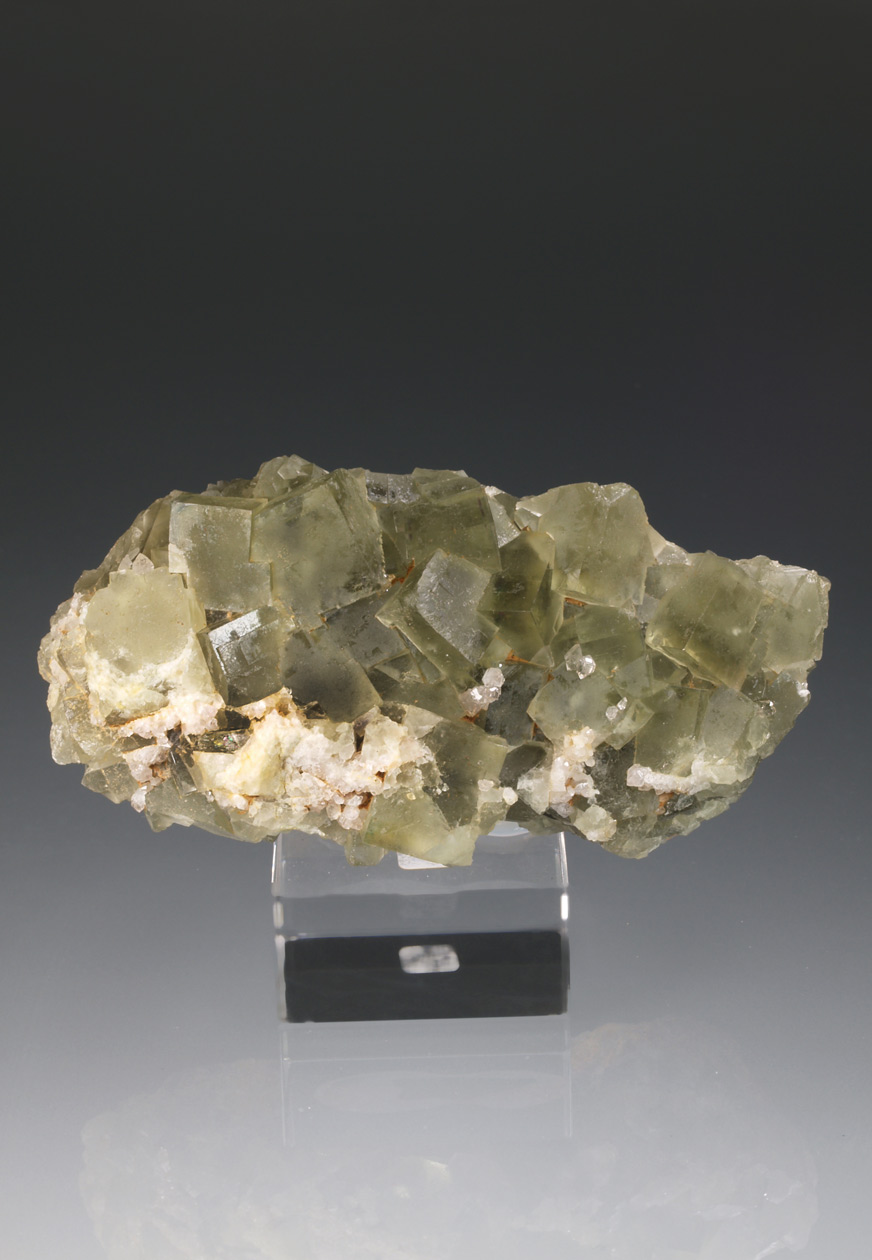
Group of very well defined fluorite crystals, between transparent and translucent, and with a yellowish-green color characteristic of this mine. Some have color zoning. They are accompanied by small crystals and hyaline quartz. These specimens that we offer were collected in the early 70s.
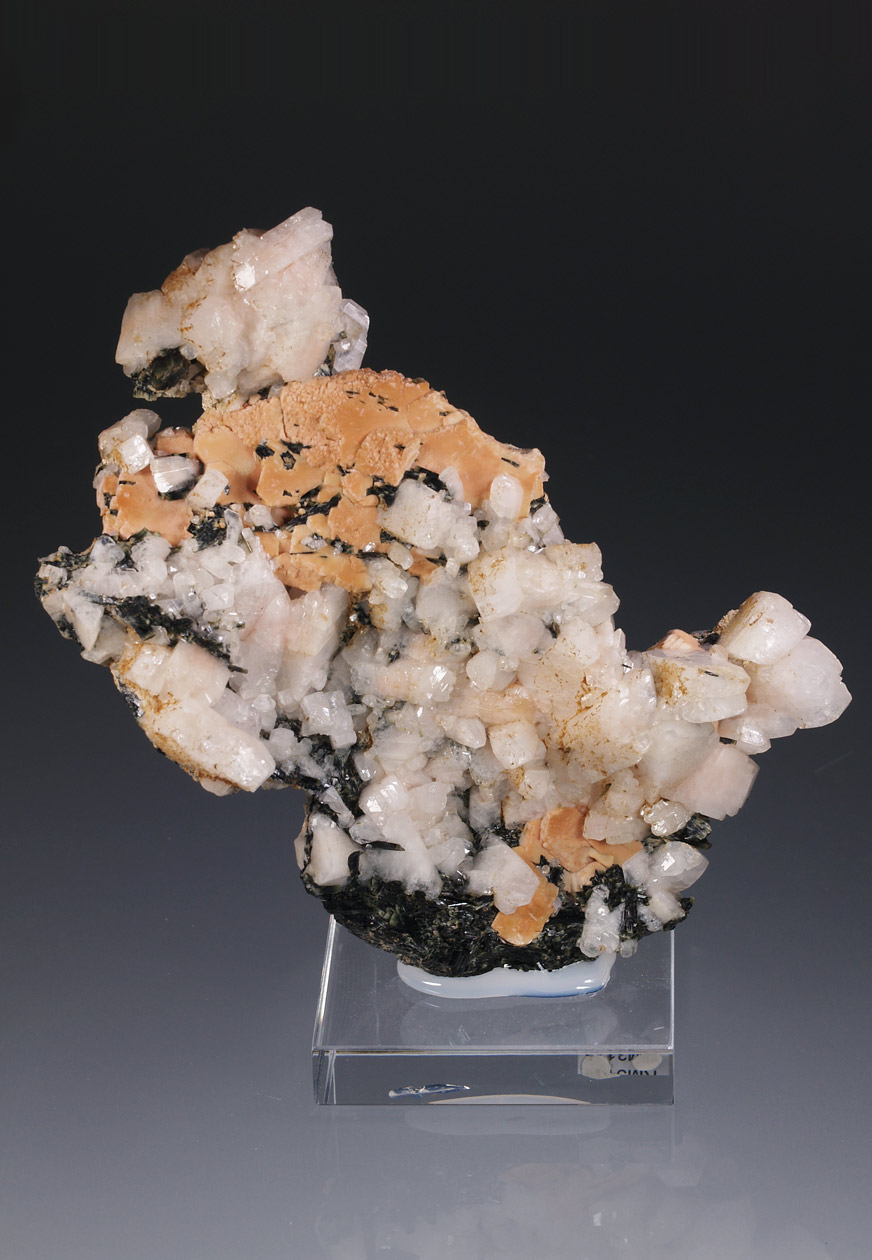
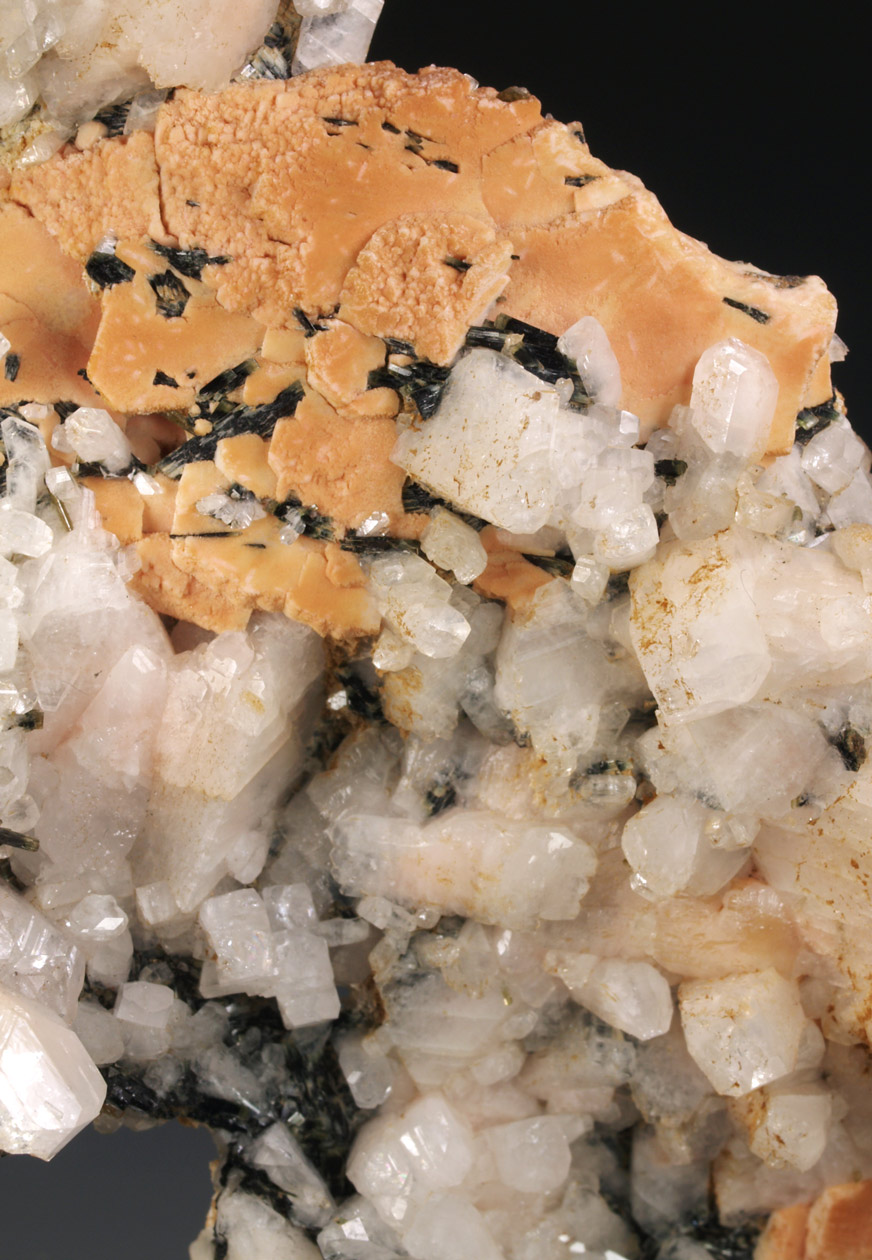
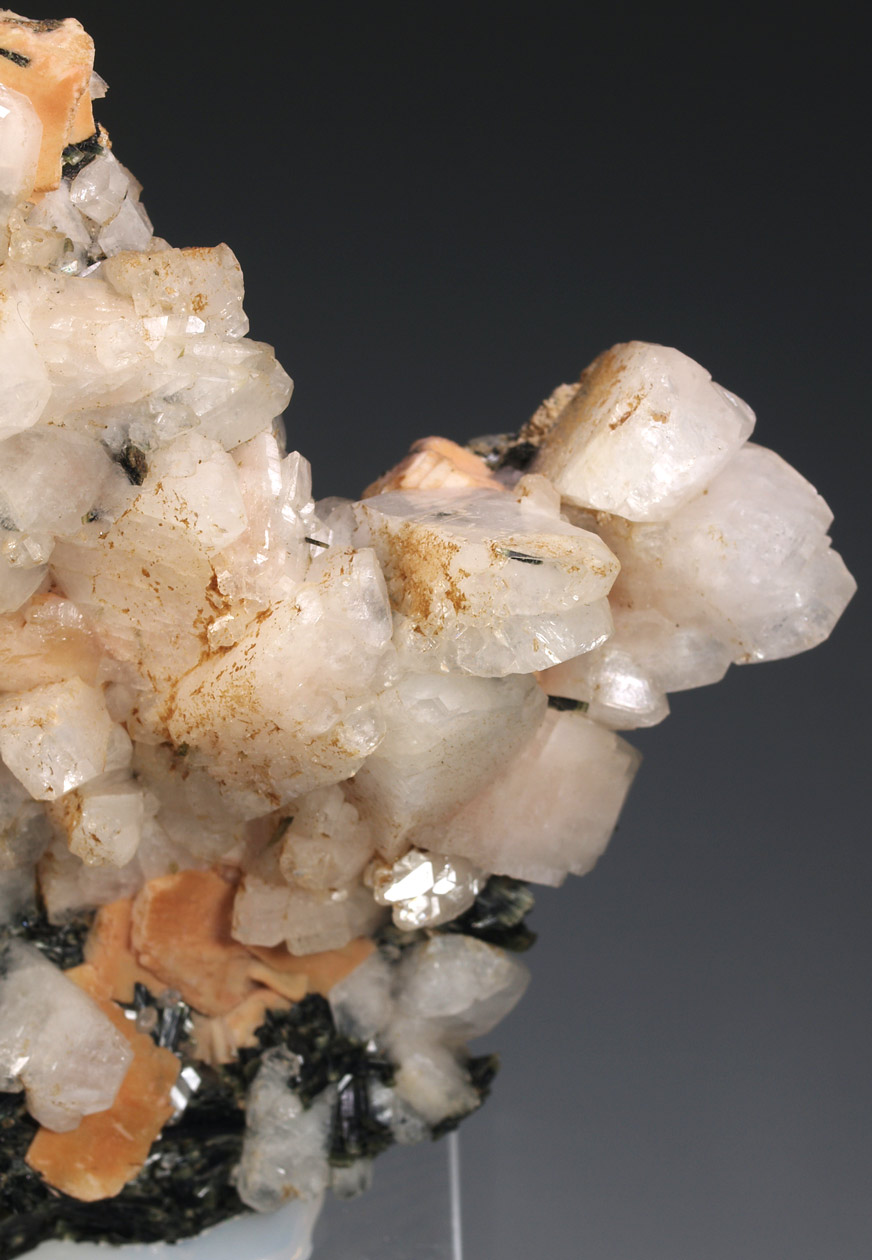
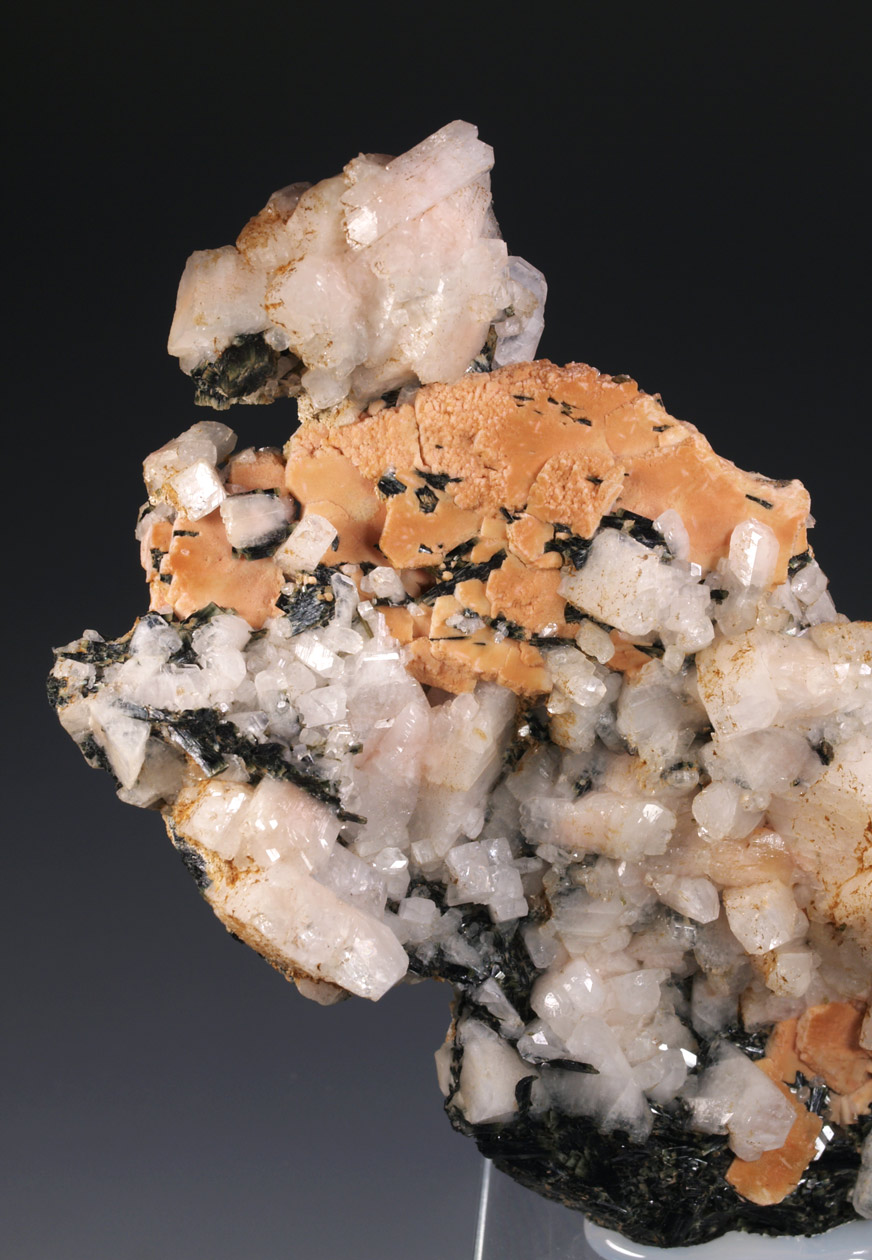
A good sized specimen formed by numerous albite crystals, pericline variety, due to its elongated prisms and white color. Well defined, bright and arranged in a matrix colored by orange microcline and schorl. This aesthetic specimen belongs from the former collection of Peter Seroka (Girona).
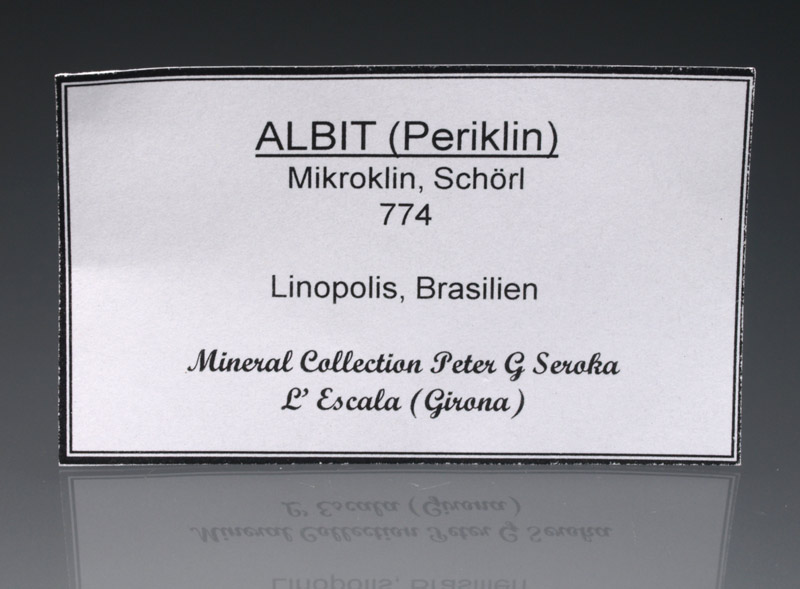
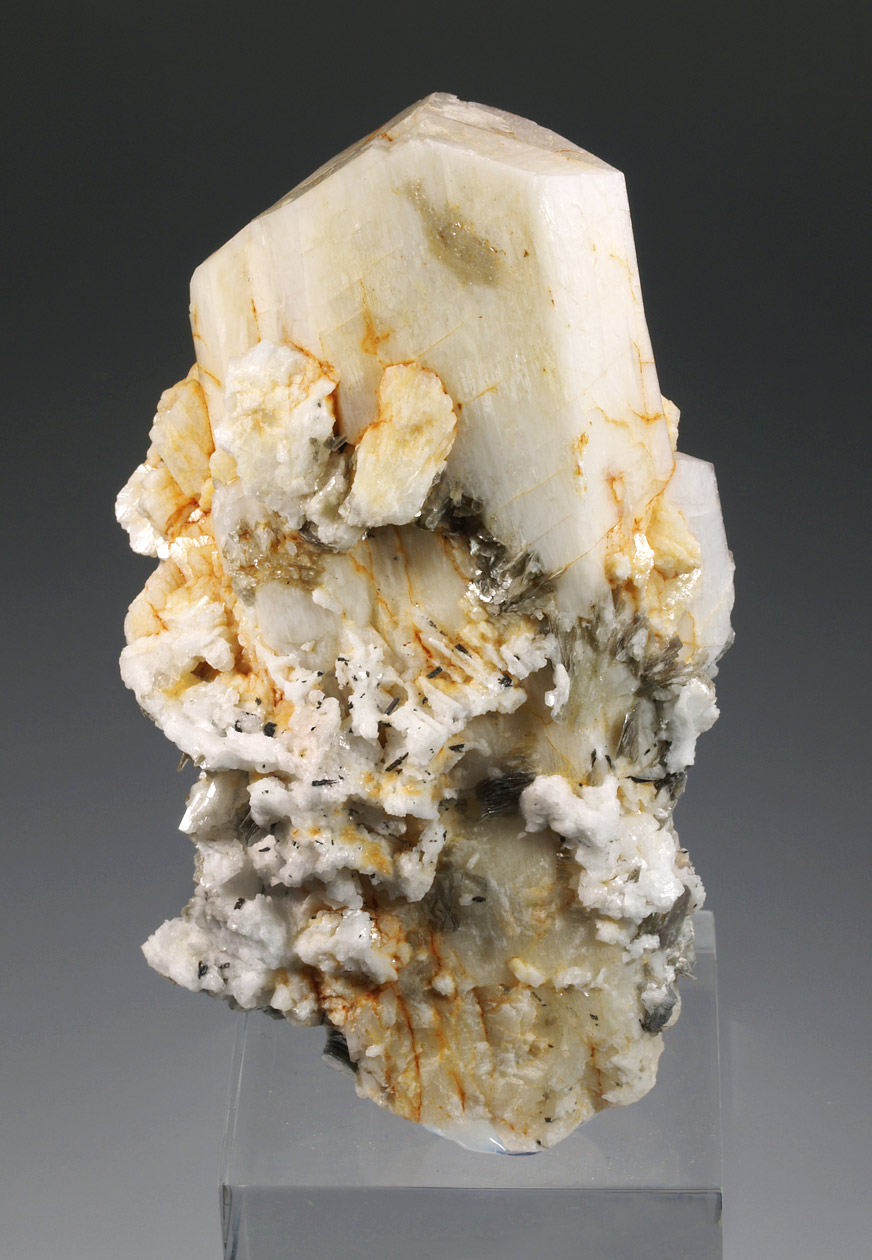
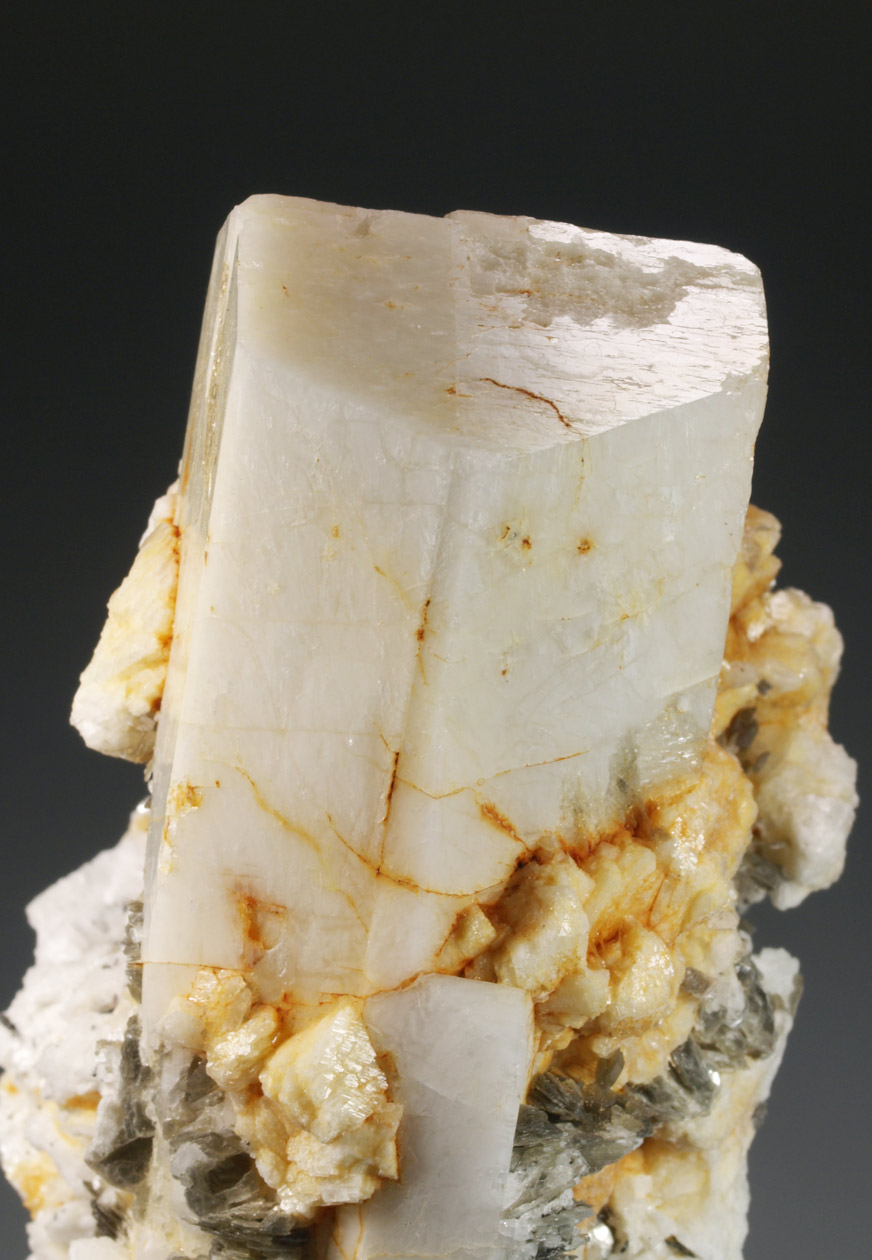
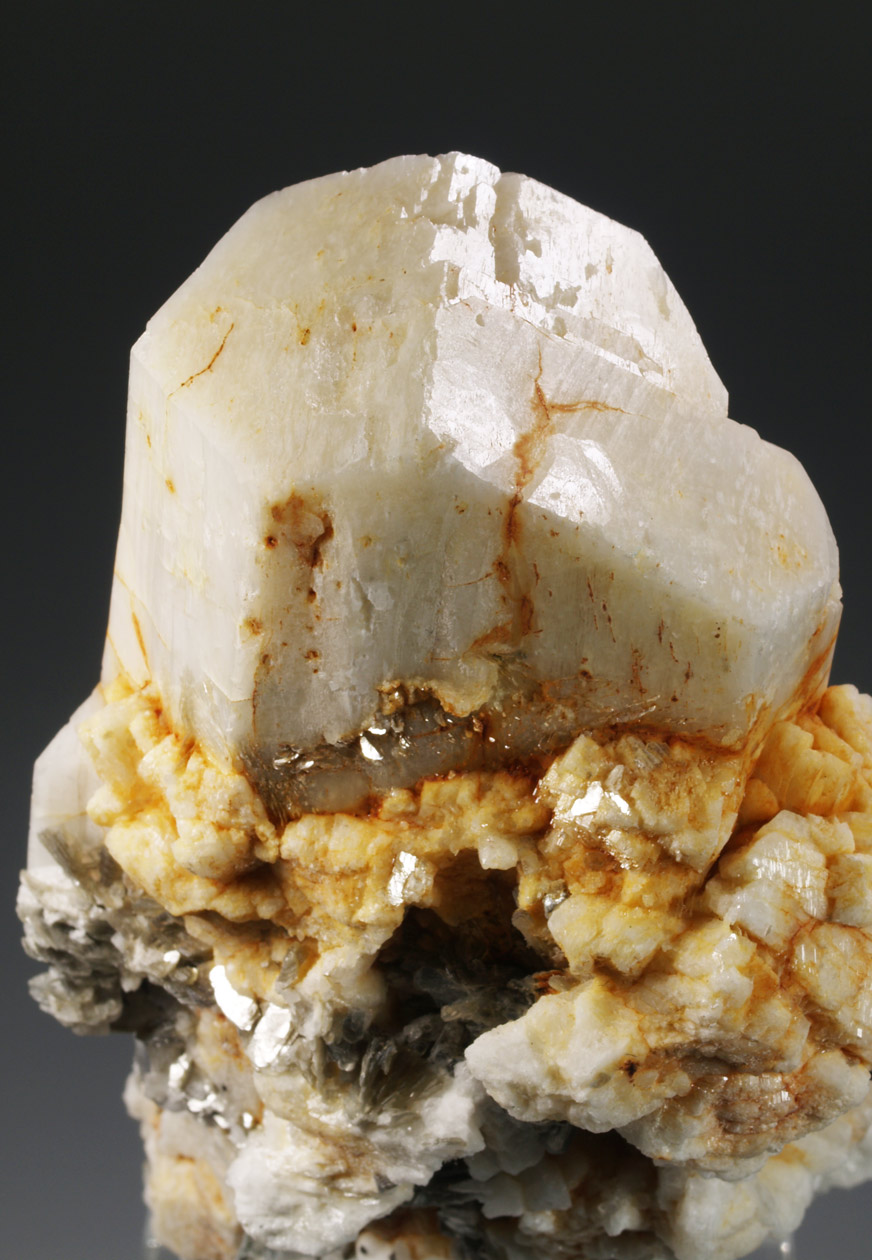
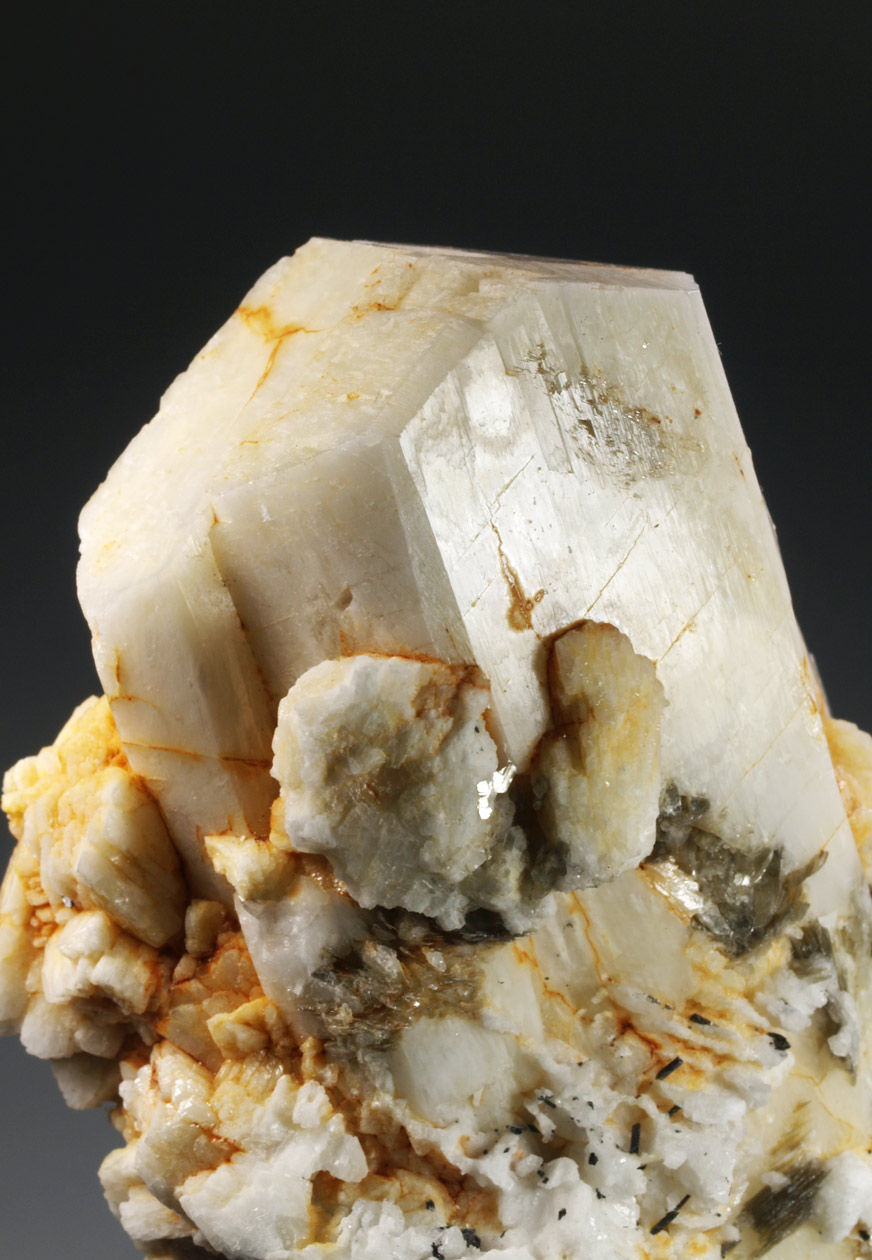
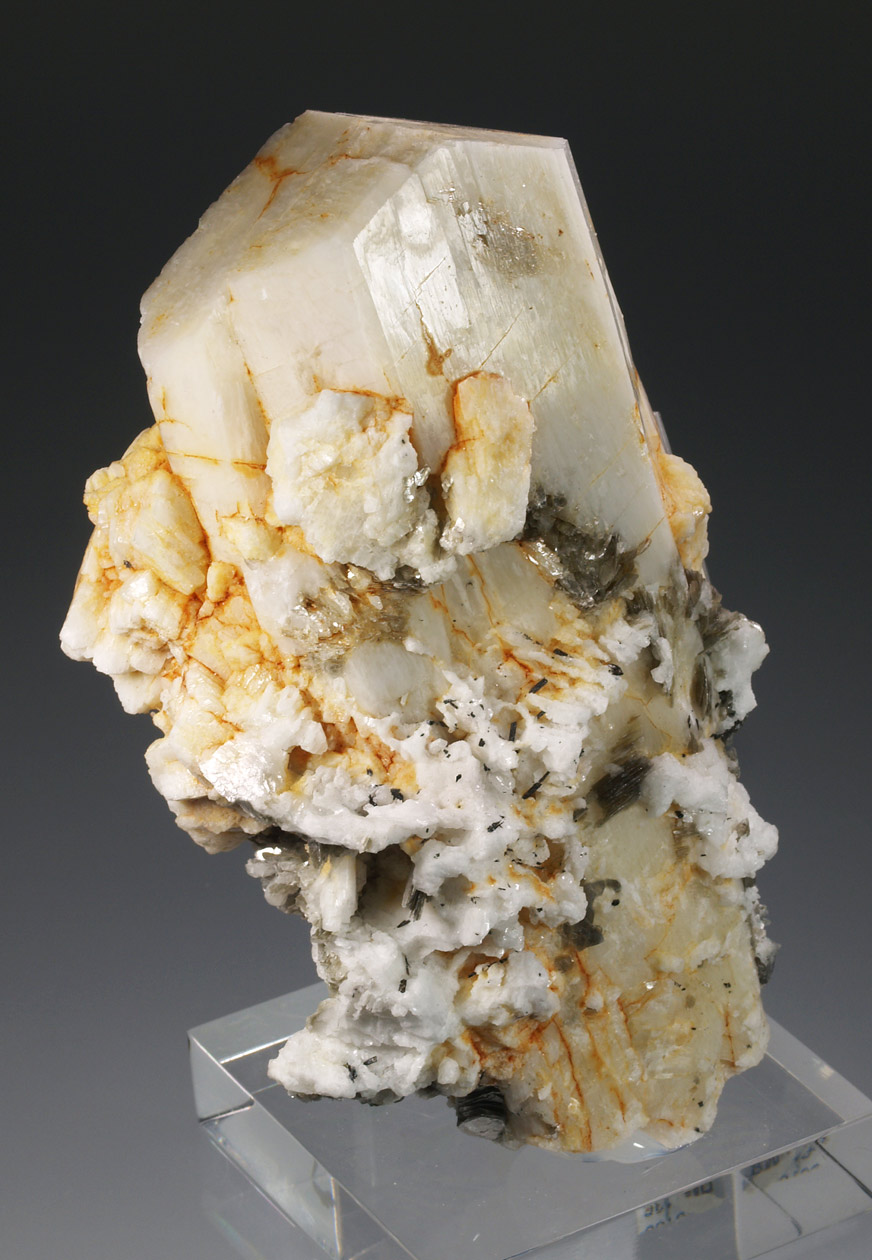
Twinned crystal of very good size from microcline, with very well defined faces, brilliant and white in color with orange stains. From what we can see, the main crystal is formed by a Carlsbad twin whose union plane is (010). It can be seen that the brilliance of both crystals is different. It is accompanied by albite (var. clevelandite) and muscovite. Microcline specimens such as this one can be considered among the best finds in recent years. It belonged to a great collector of feldspars such as Peter Seroka (L'Escala, Girona, Catalonia).
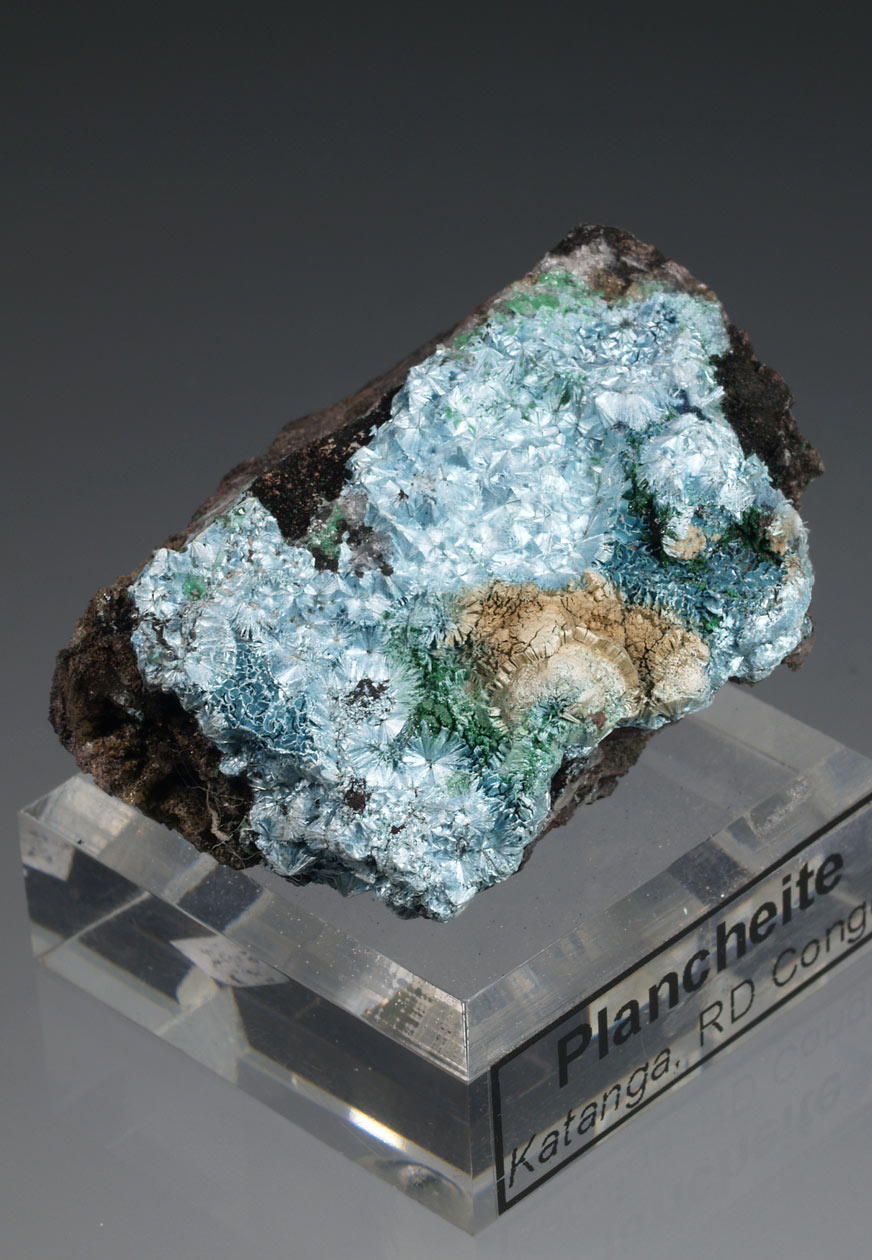
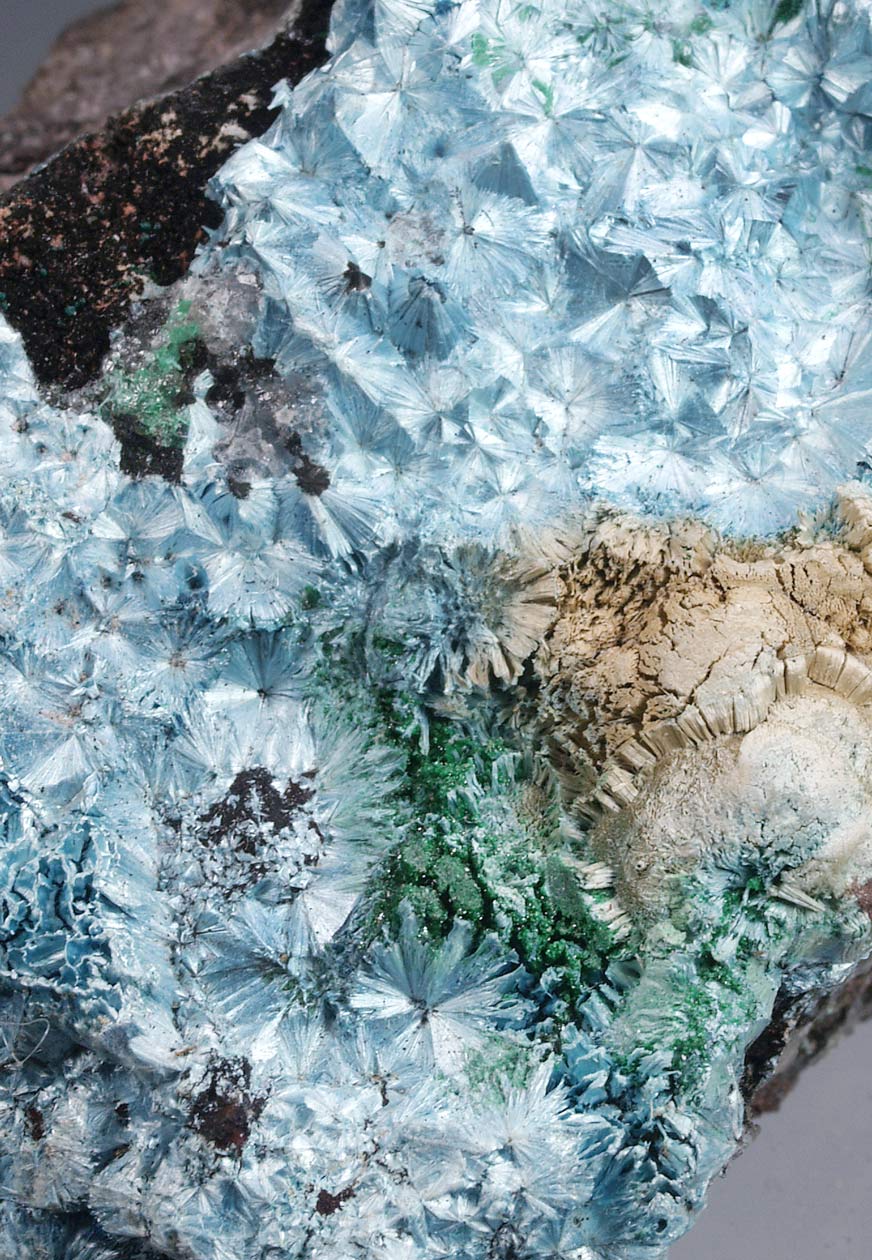
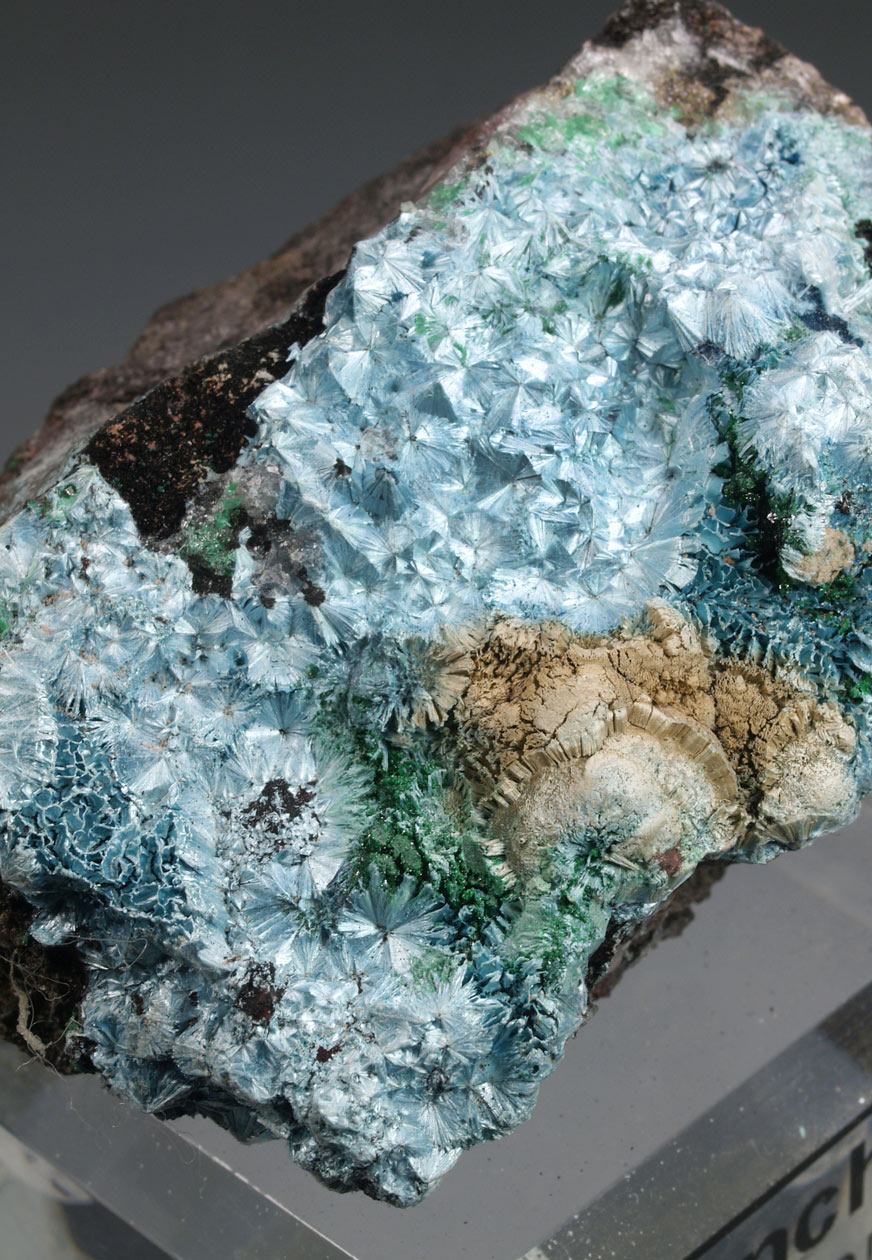
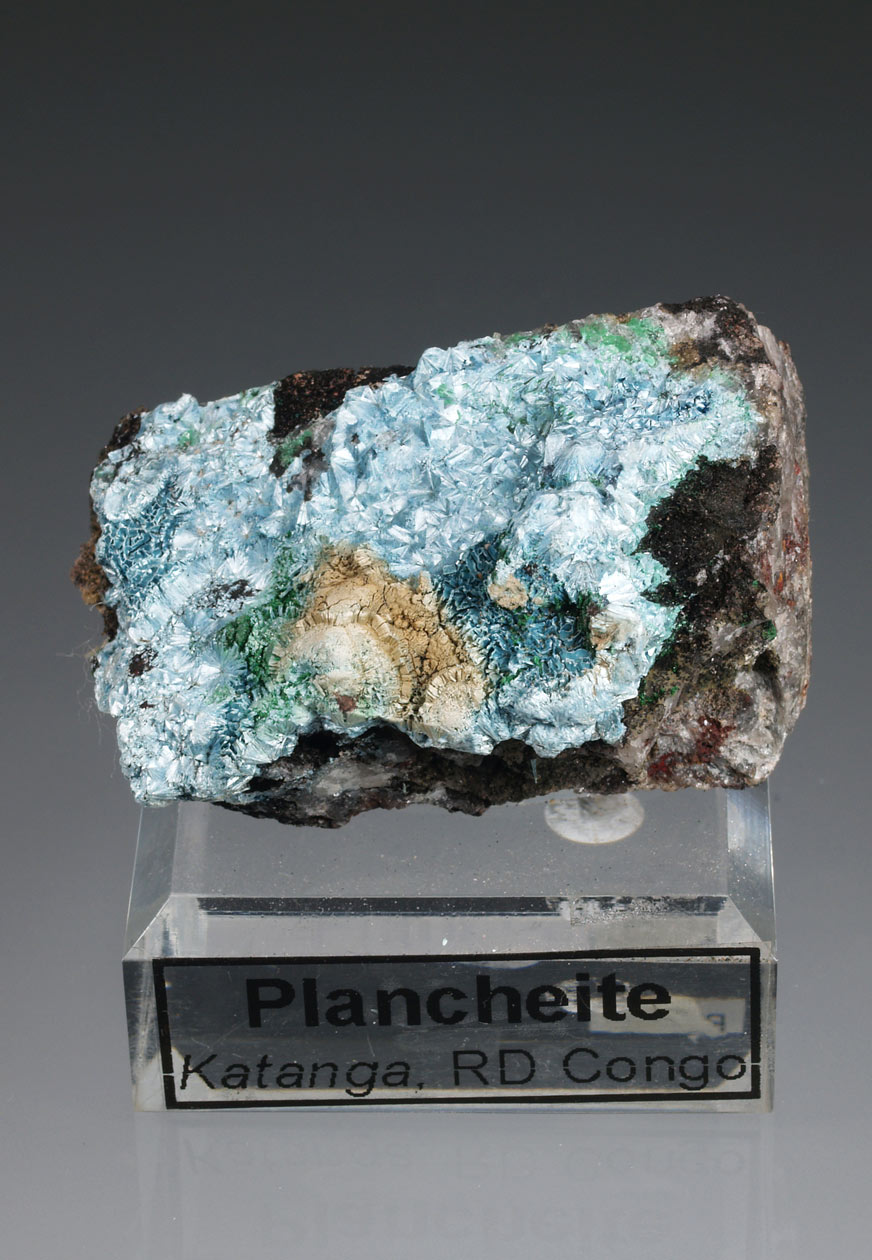
Rich specimen formed by globular aggregates of acicular crystals of light blue color, bright. They are accompanied by small prismatic malachite crystals and tiny dioptase crystals. A very brilliant and characteristic specimen for the species, rare in the market.
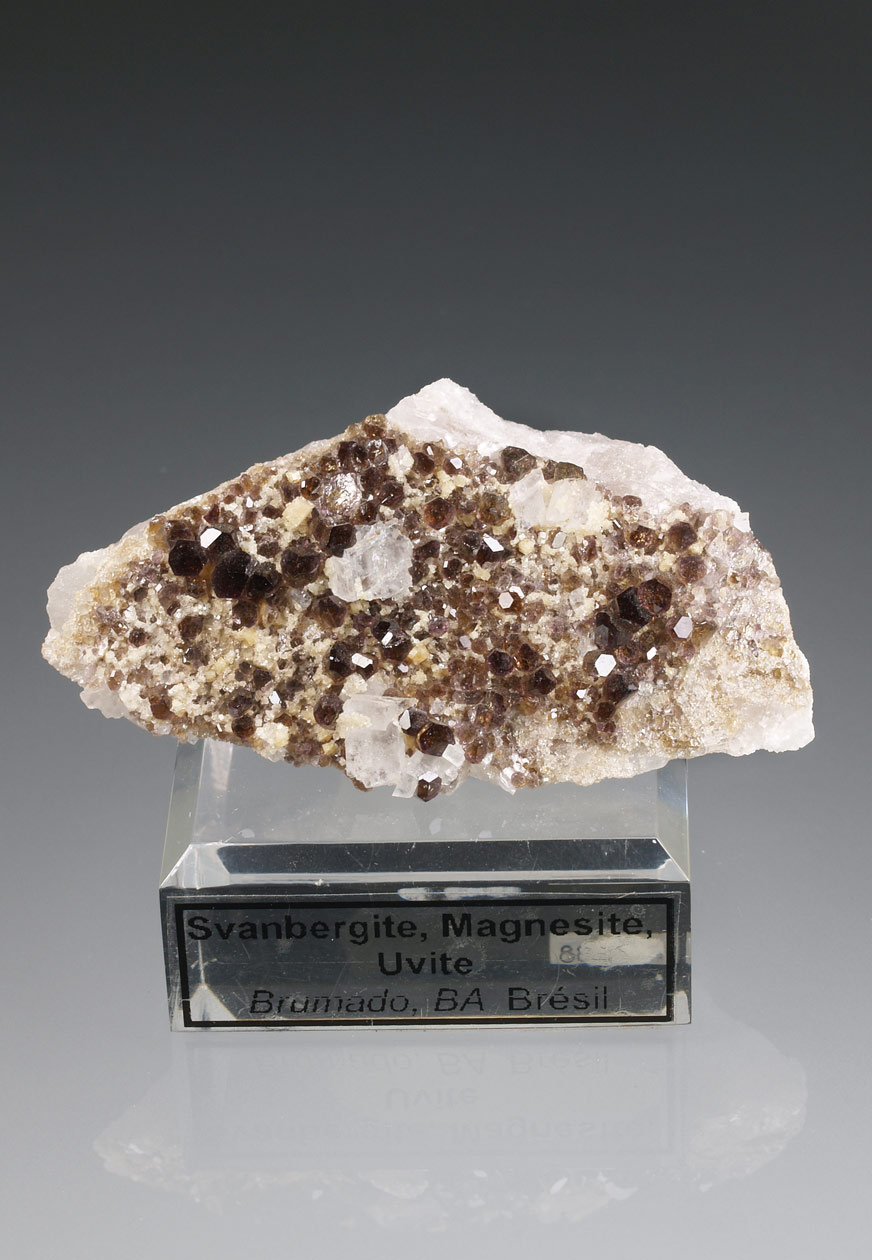
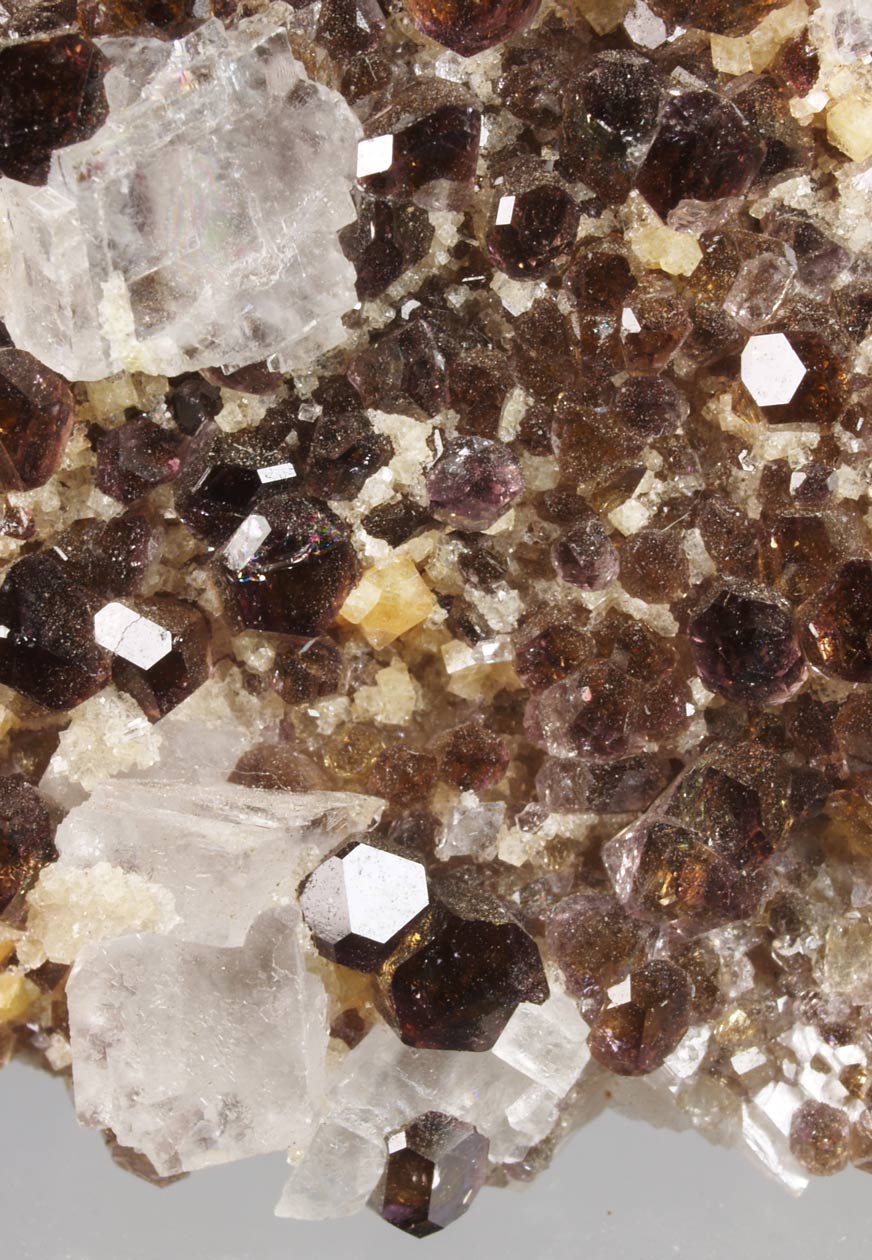
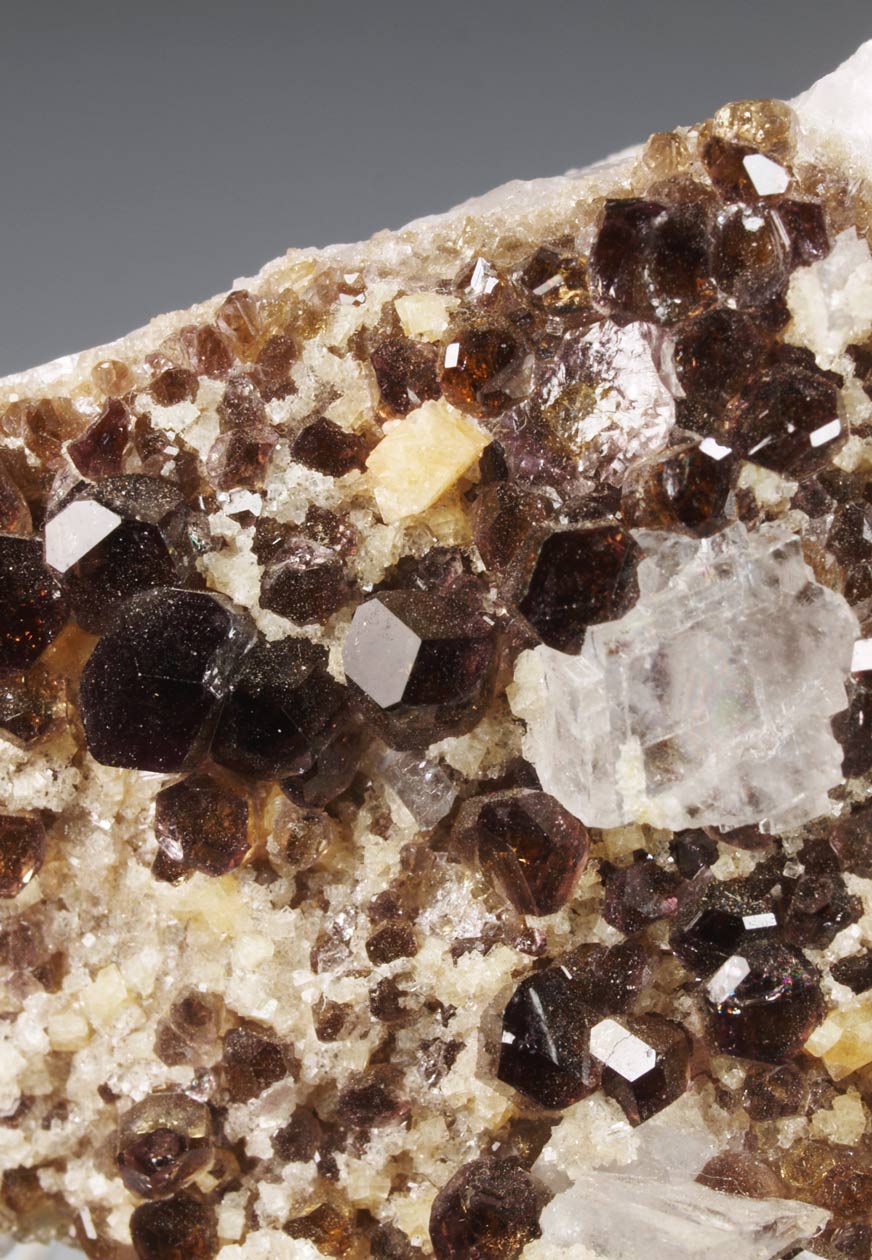
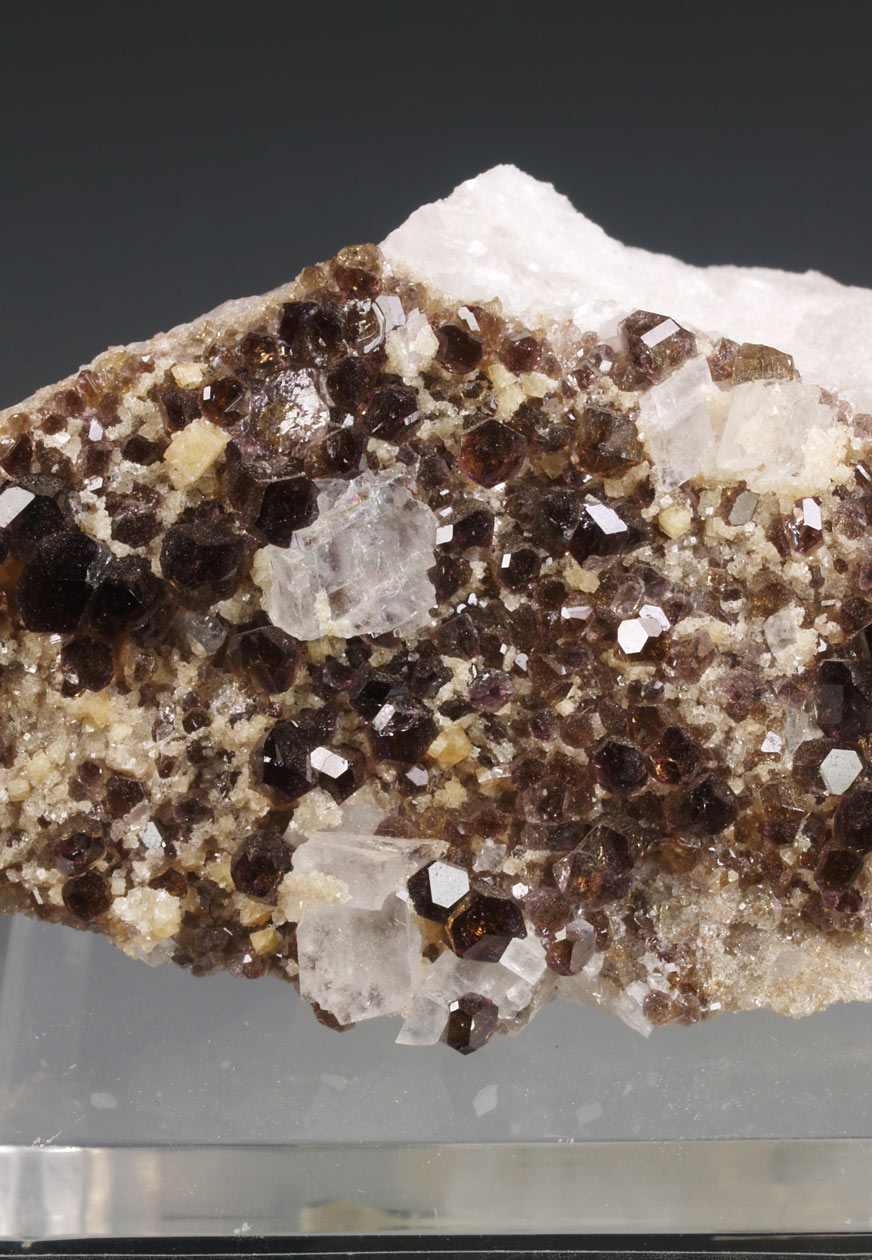
In this aesthetic specimen we can observe several small rhombohedral crystals, with an orange-yellow color, of this very rare strontium aluminum phosphate-sulphate. They are arranged on a matrix with magnesite and numerous crystals of brown fluor-uvite, very well defined and transparent.
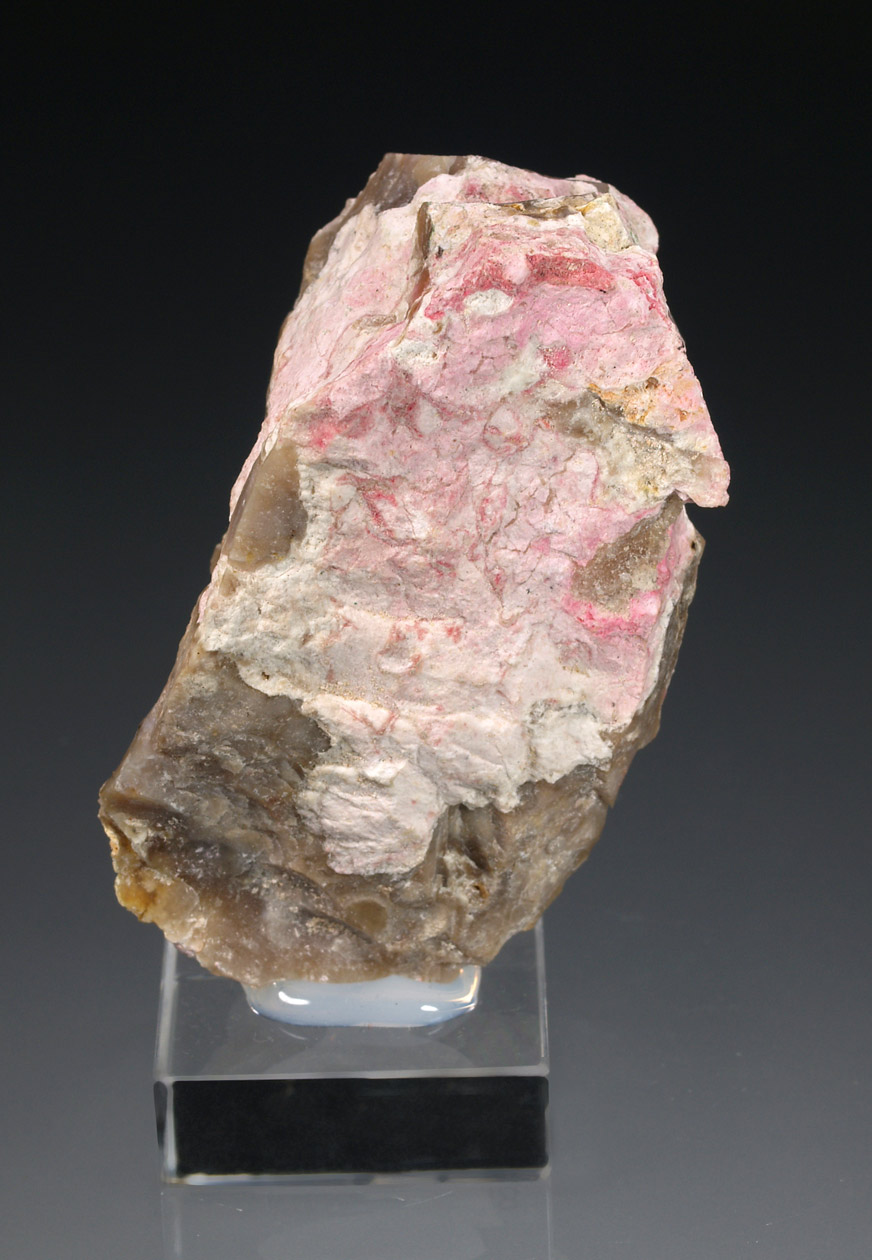
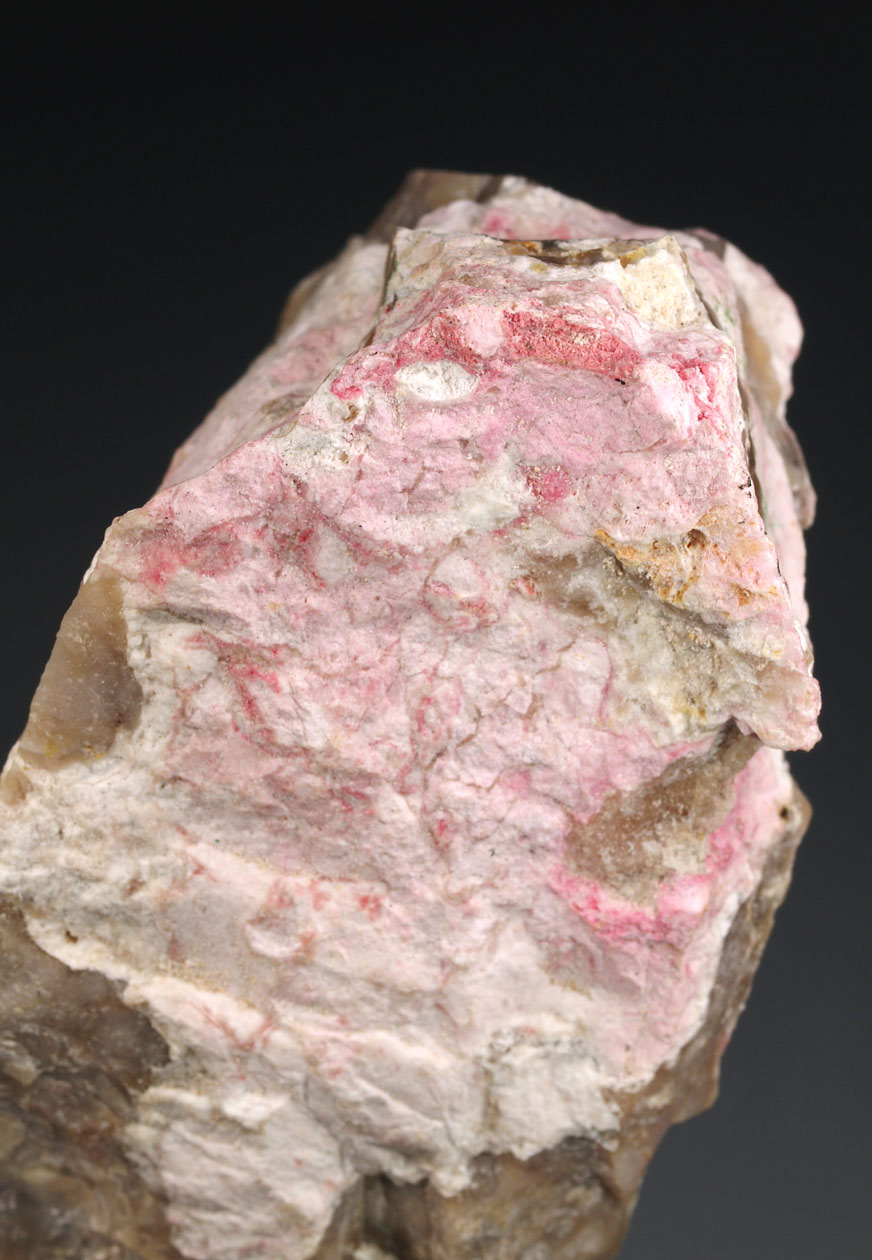
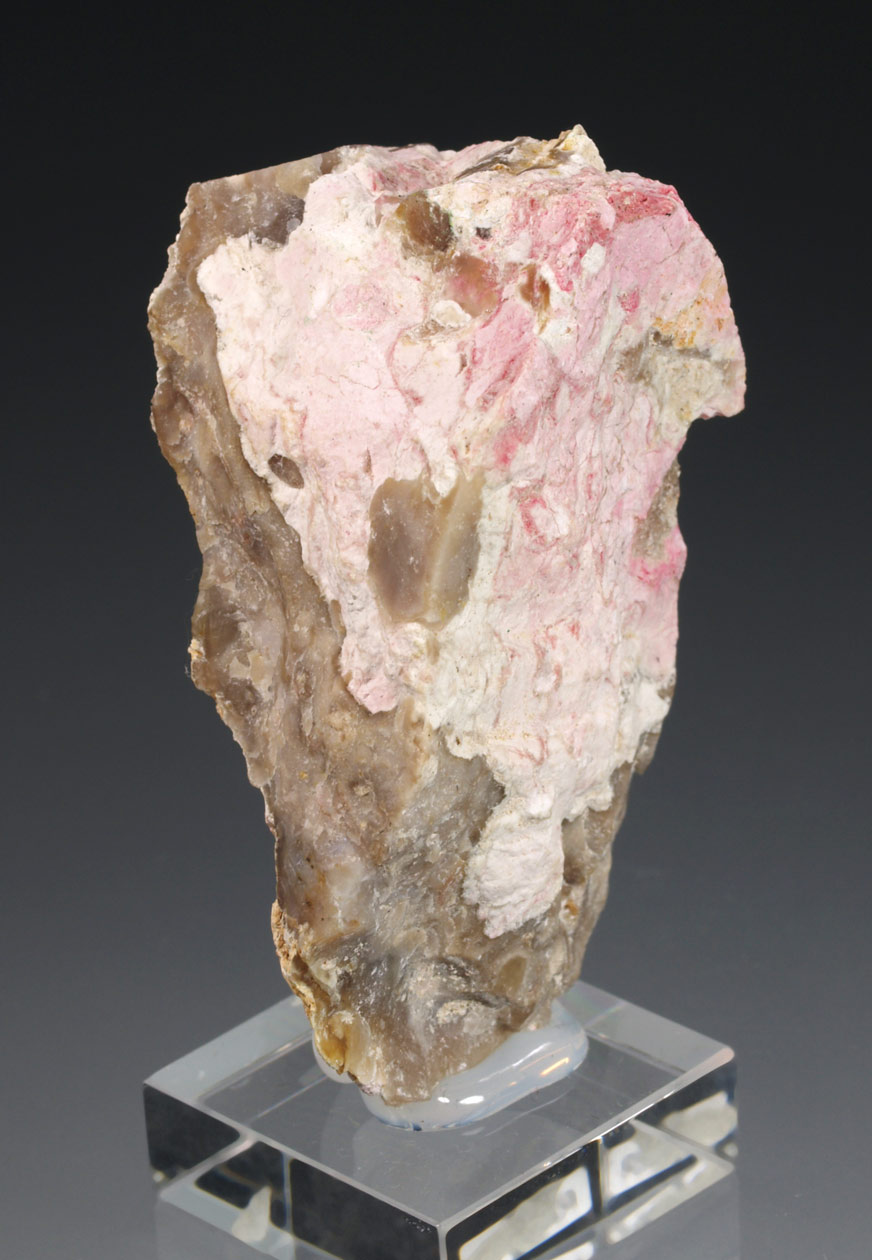
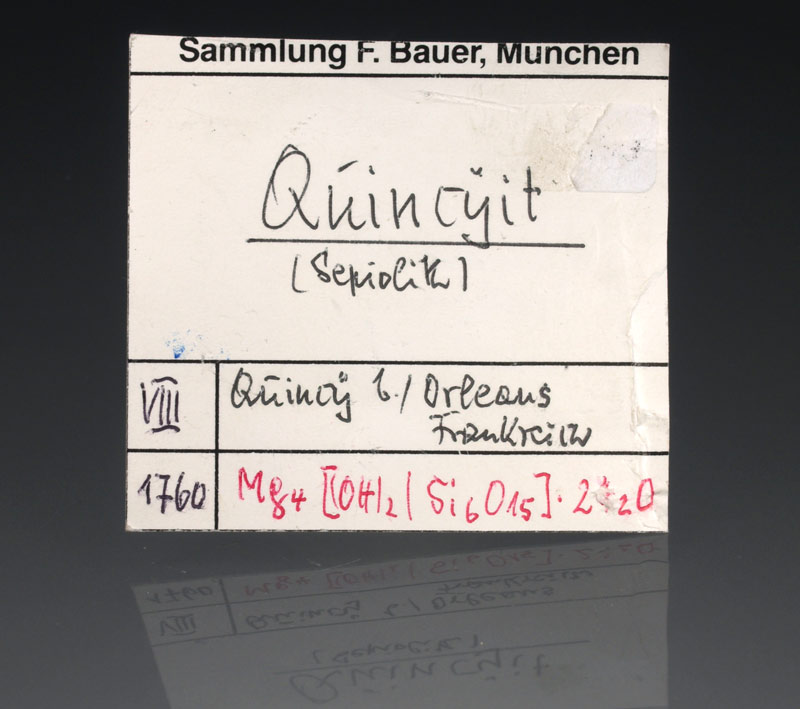
These opals are rare. It is a variety with pink tones that is usually accompanied by sepiolite. Its name "Quincyite" comes from the French locality of Quincy, near Orleans, in the heart of France. This specimen belongs from the E. Laskowski (USA) collection, but the piece has been in different collections, as the backside label says.
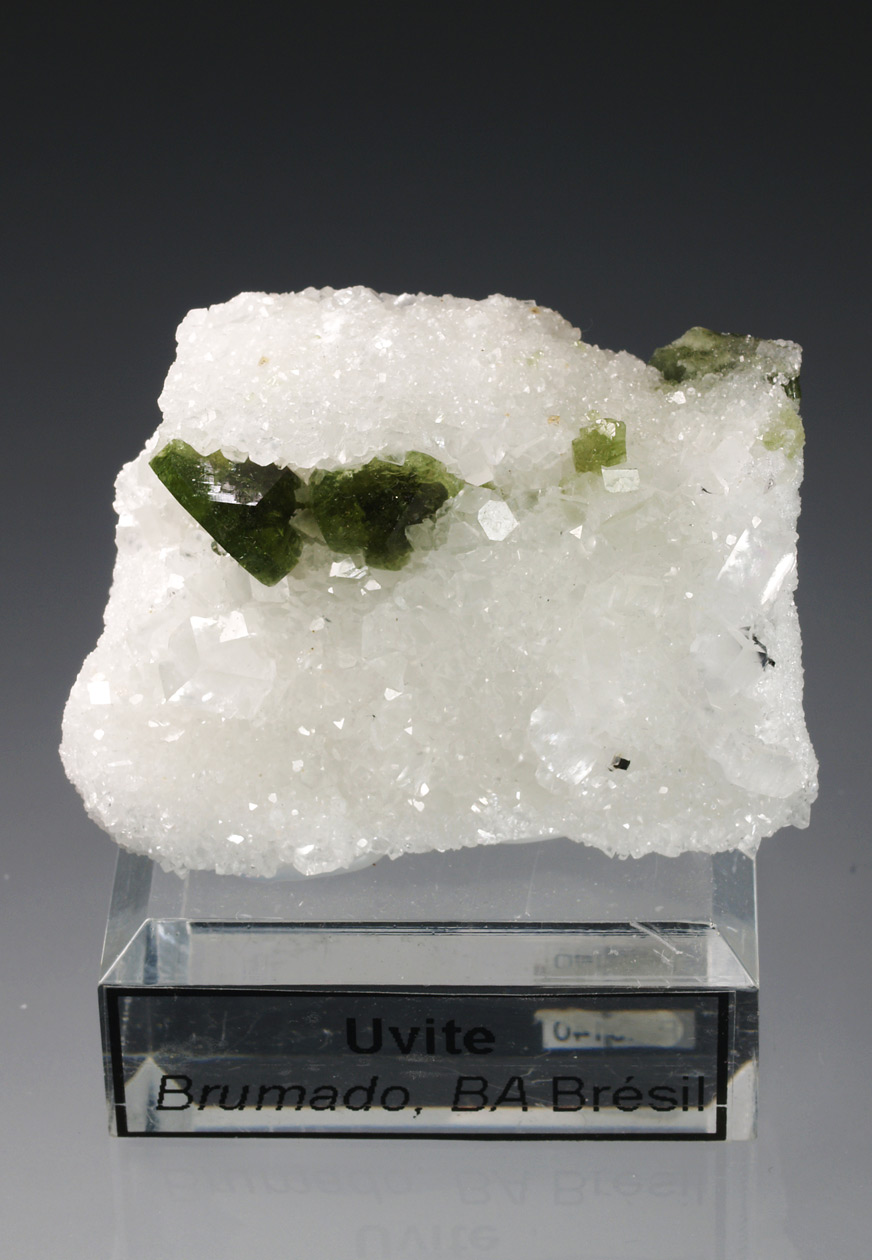
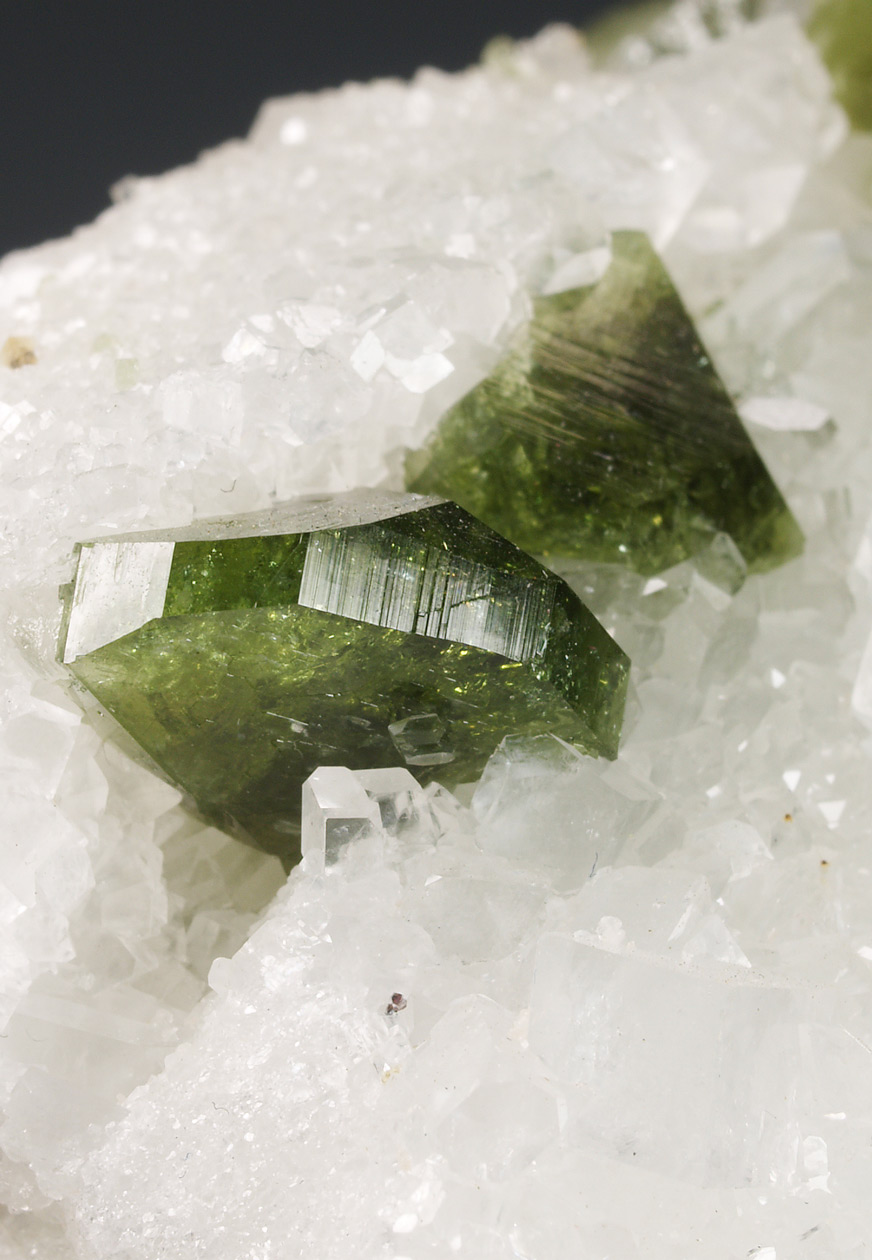
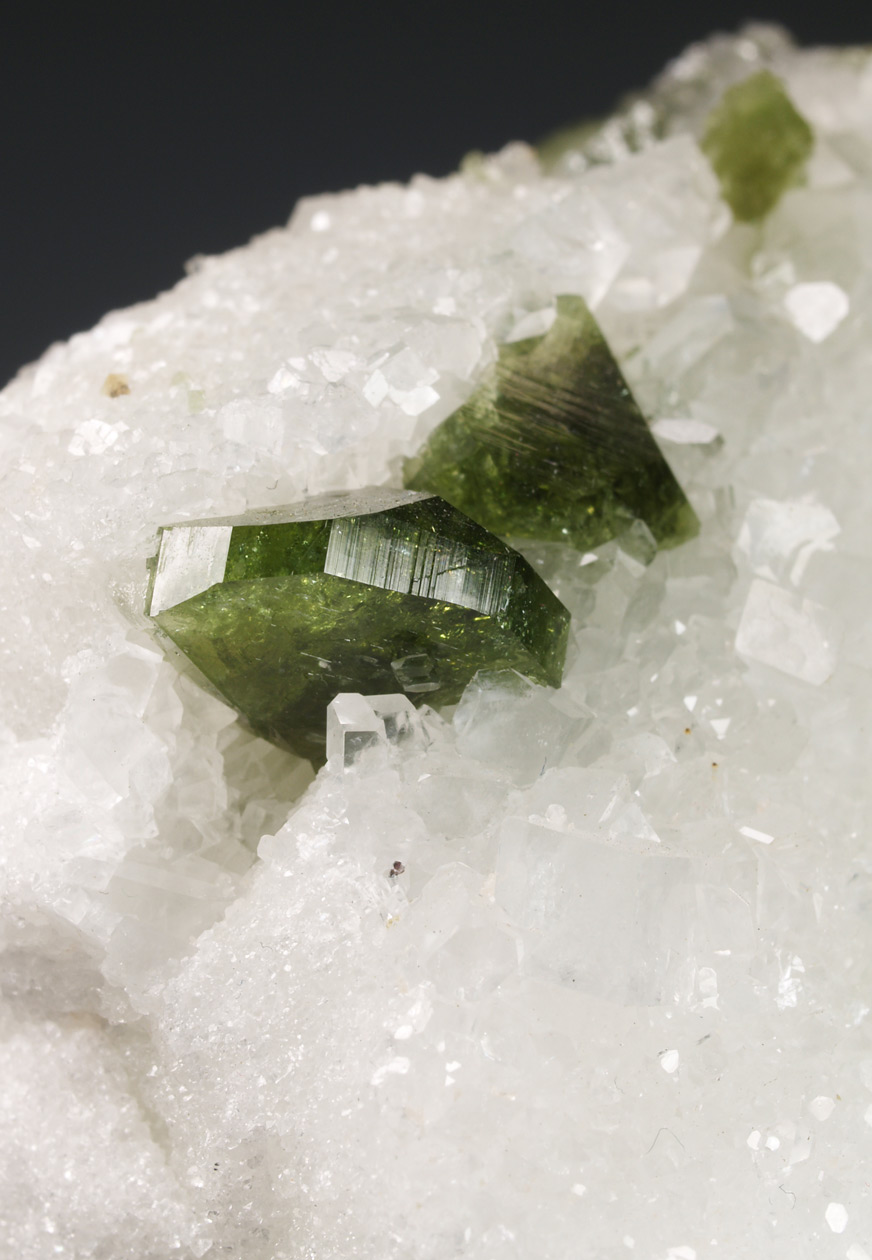
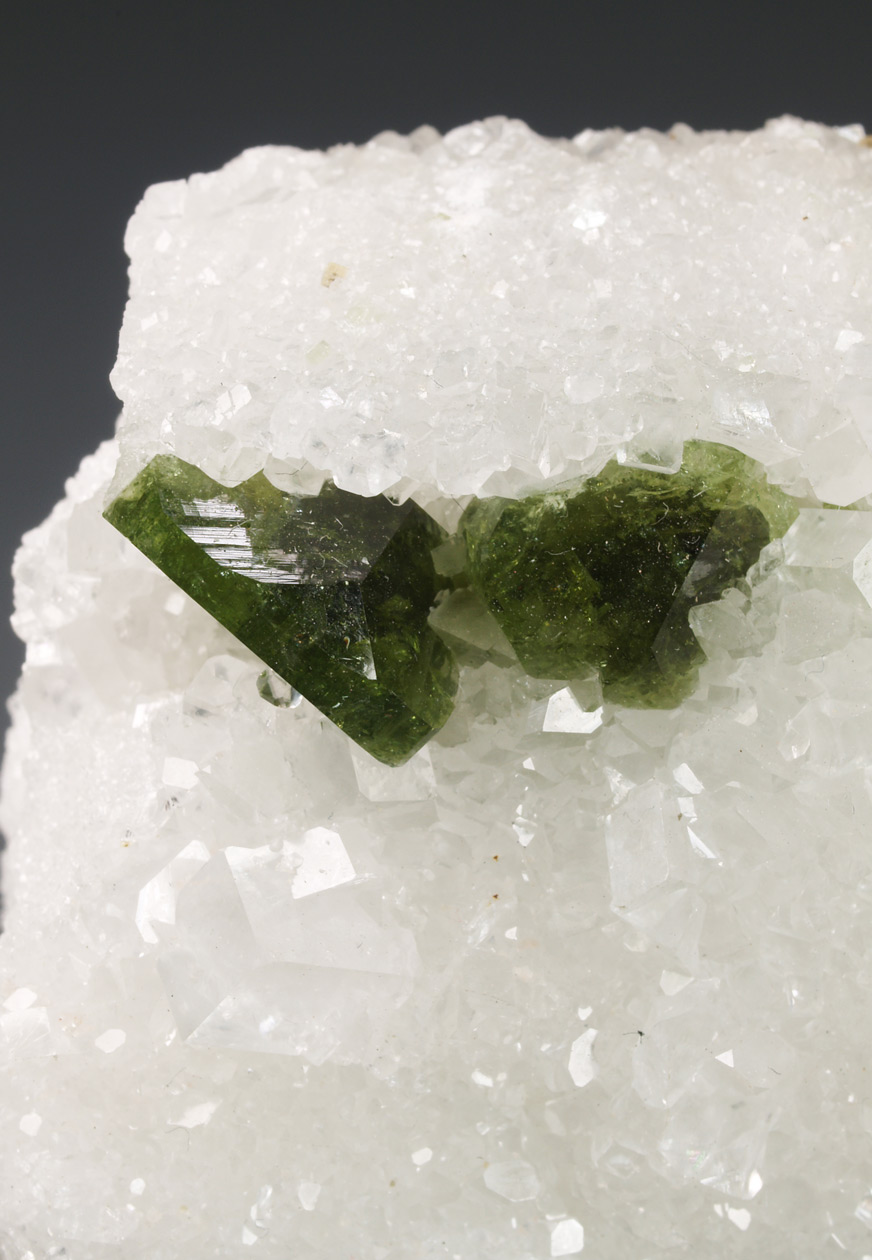
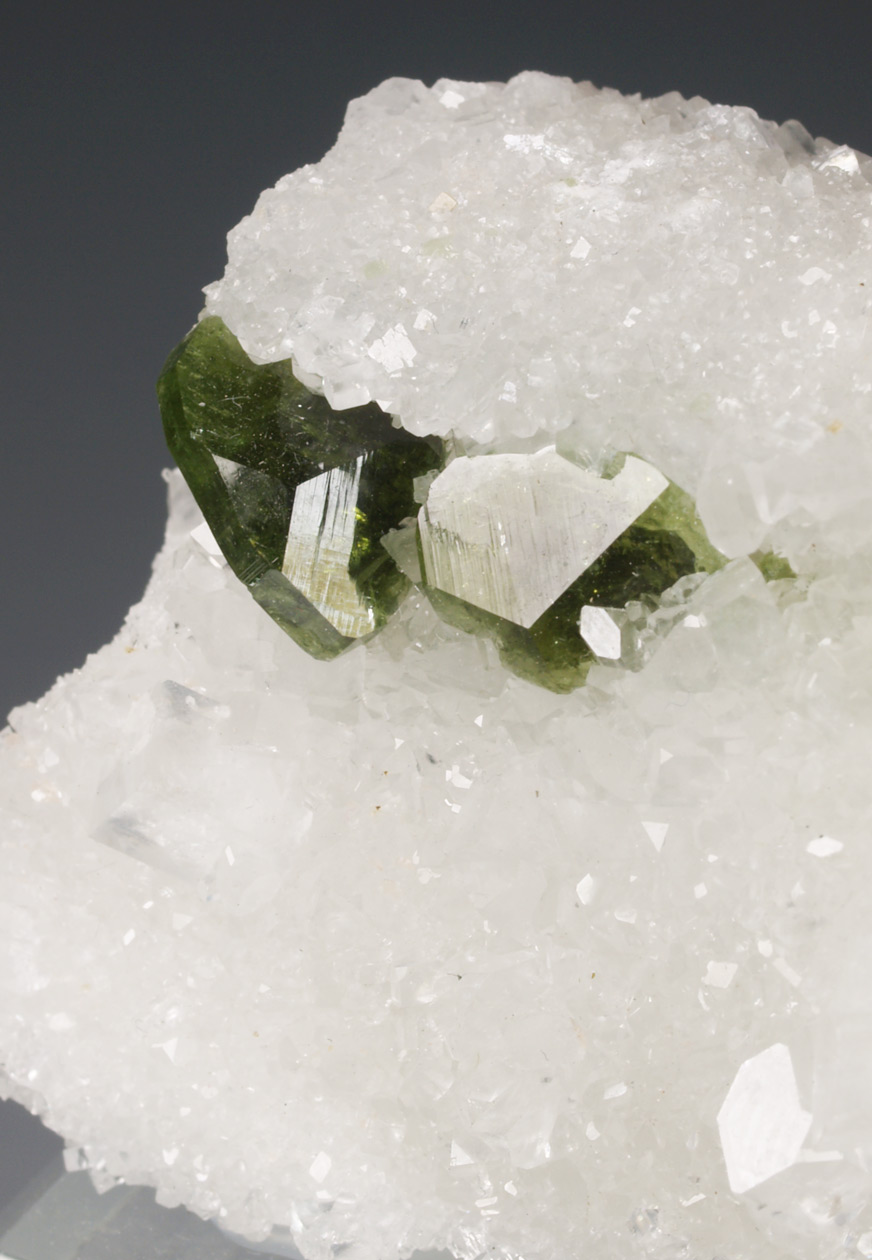
Group of very well defined fluor-uvite crystals with a characteristic olive green color, with an excellent transparence. They are disposed on a matrix formes by magnesite crystals, between transparent to translucent. The contrast with the matrix is very aesthetic. Most specimens historically designate as uvite are actually, as analyses have shown, the F-dominant end member: fluor-uvite. Those from this mine have been shown to be the fluorine phase.
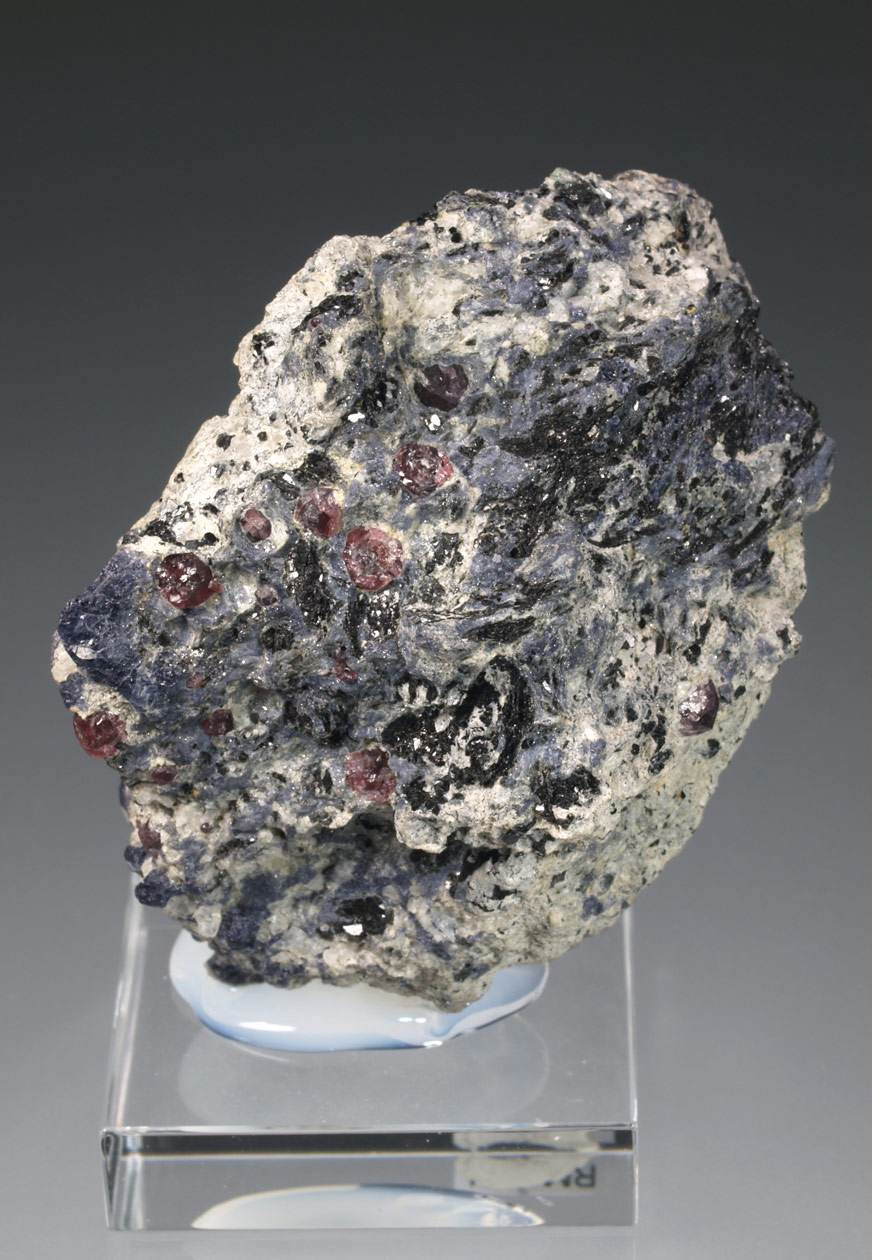
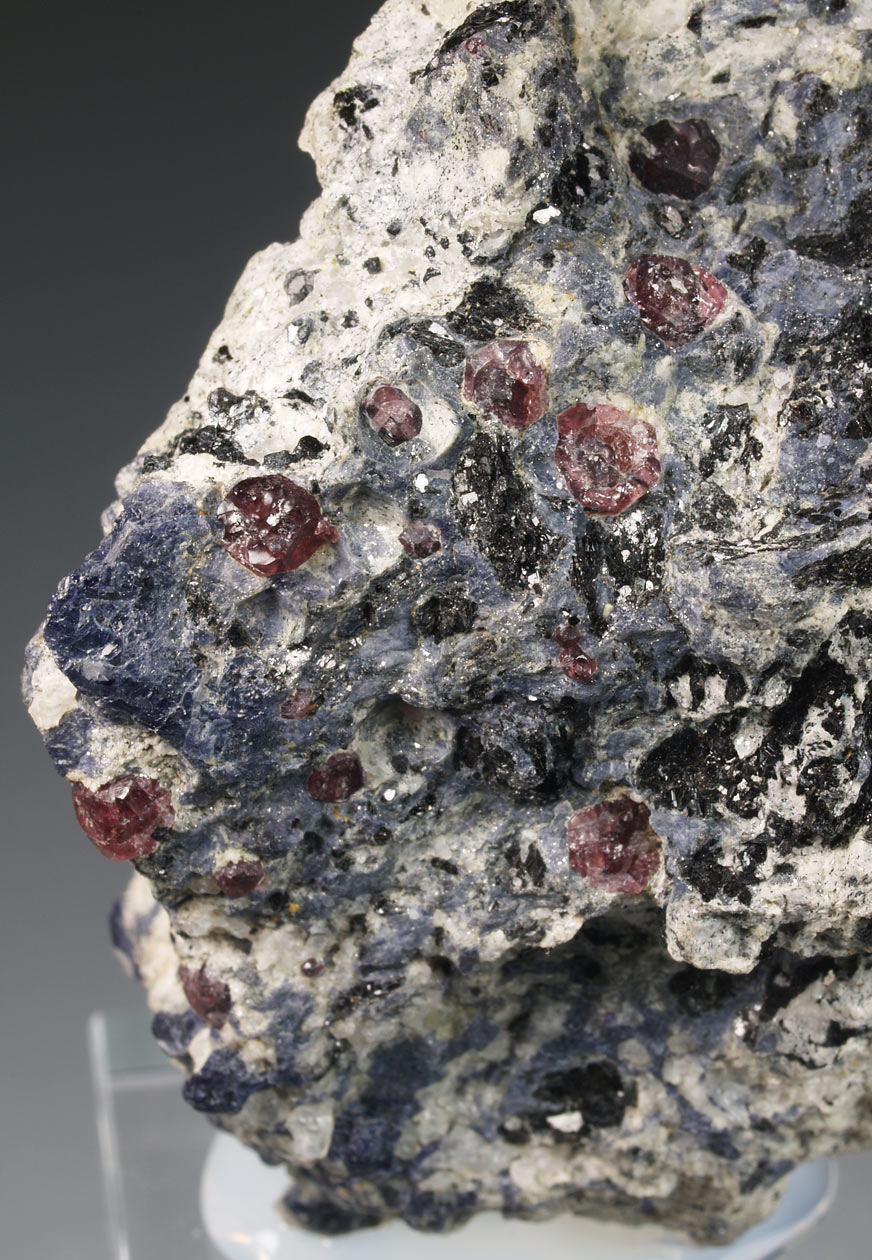
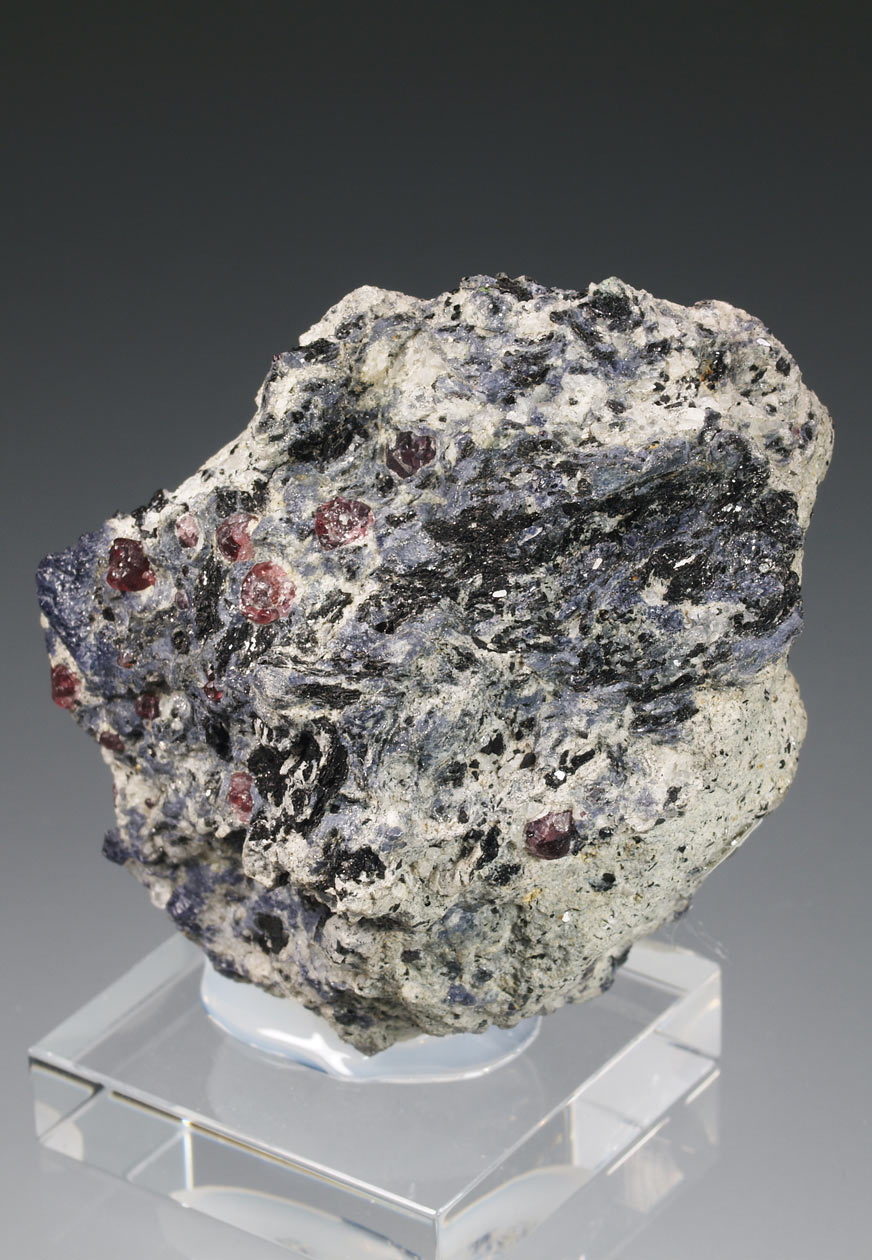
In this specimen we can observe several almandine garnet crystals included in a matrix with violet-blue cordierite crystals, the pleochroism of which can be observed on the edges. The specimen belonged to the Peter Seroka collection.
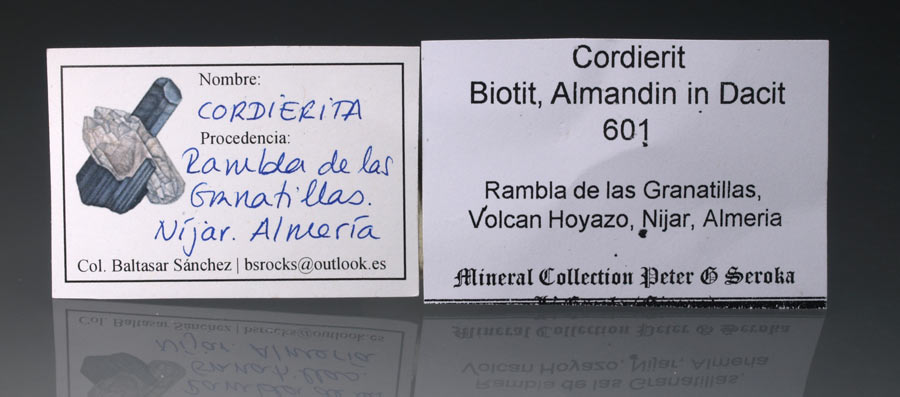
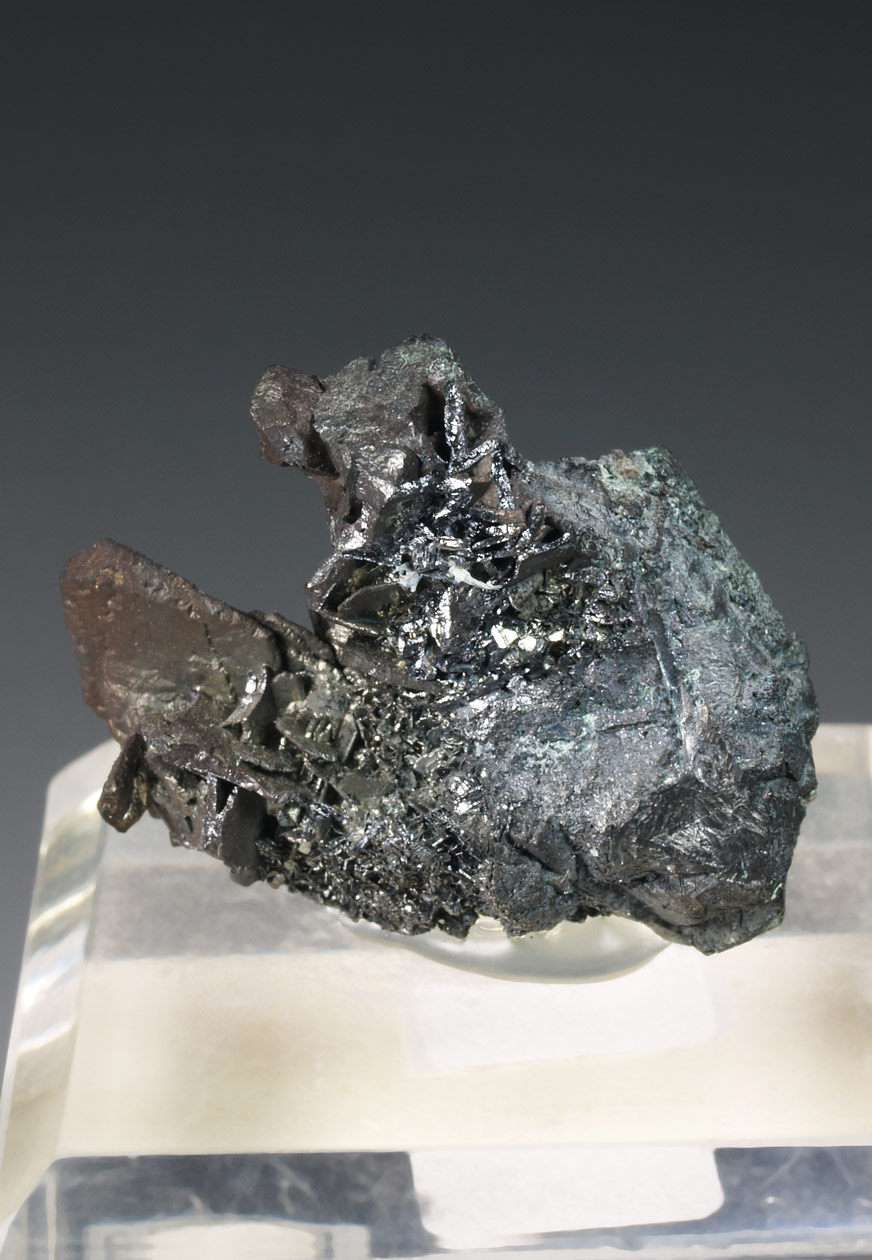
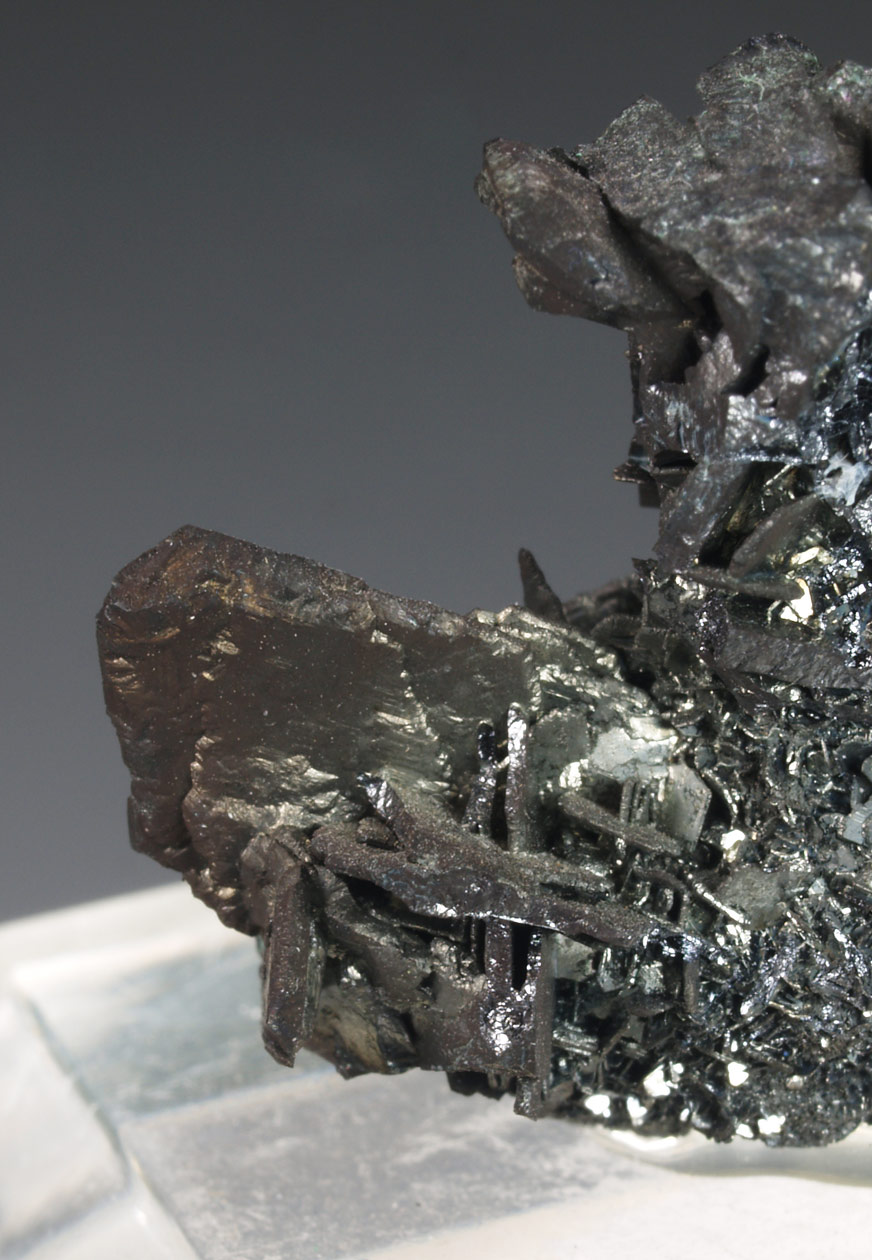
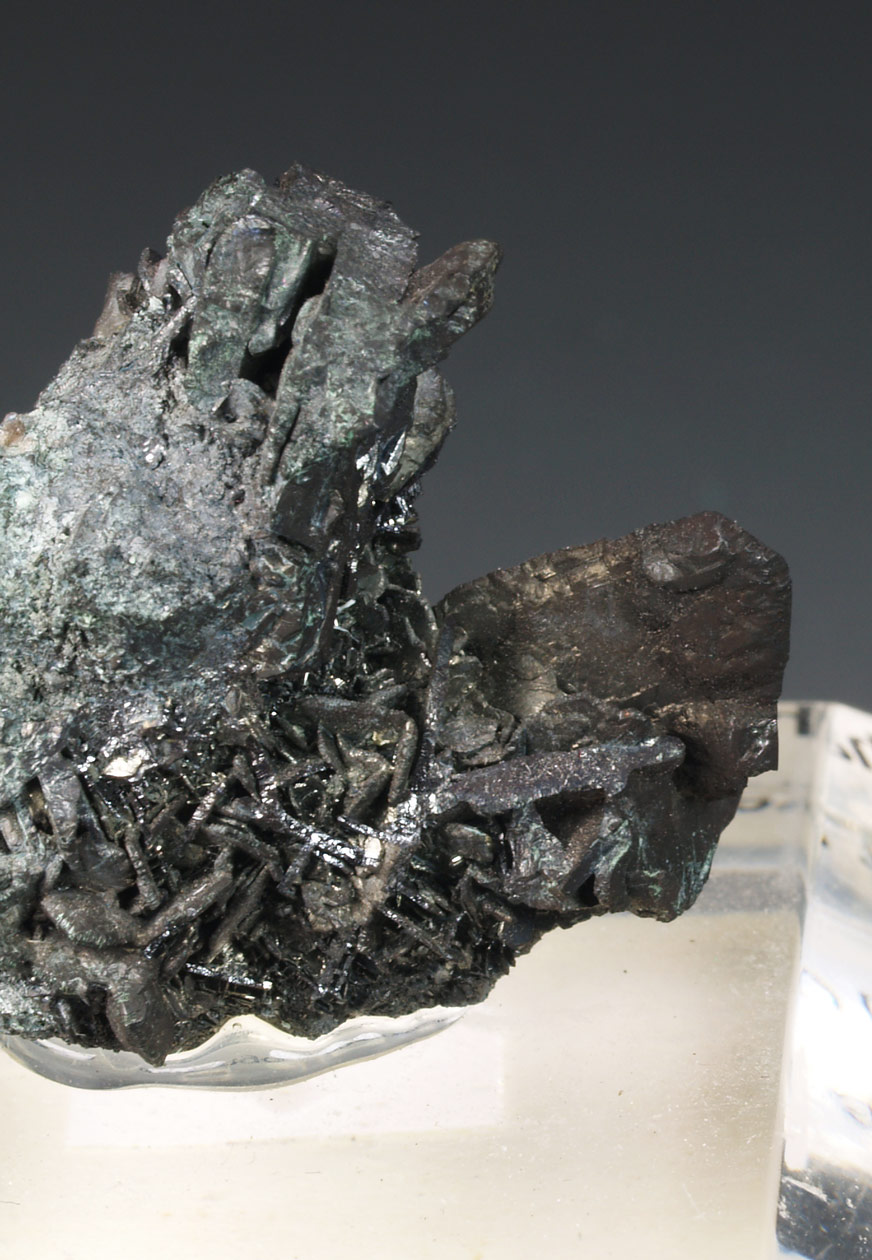
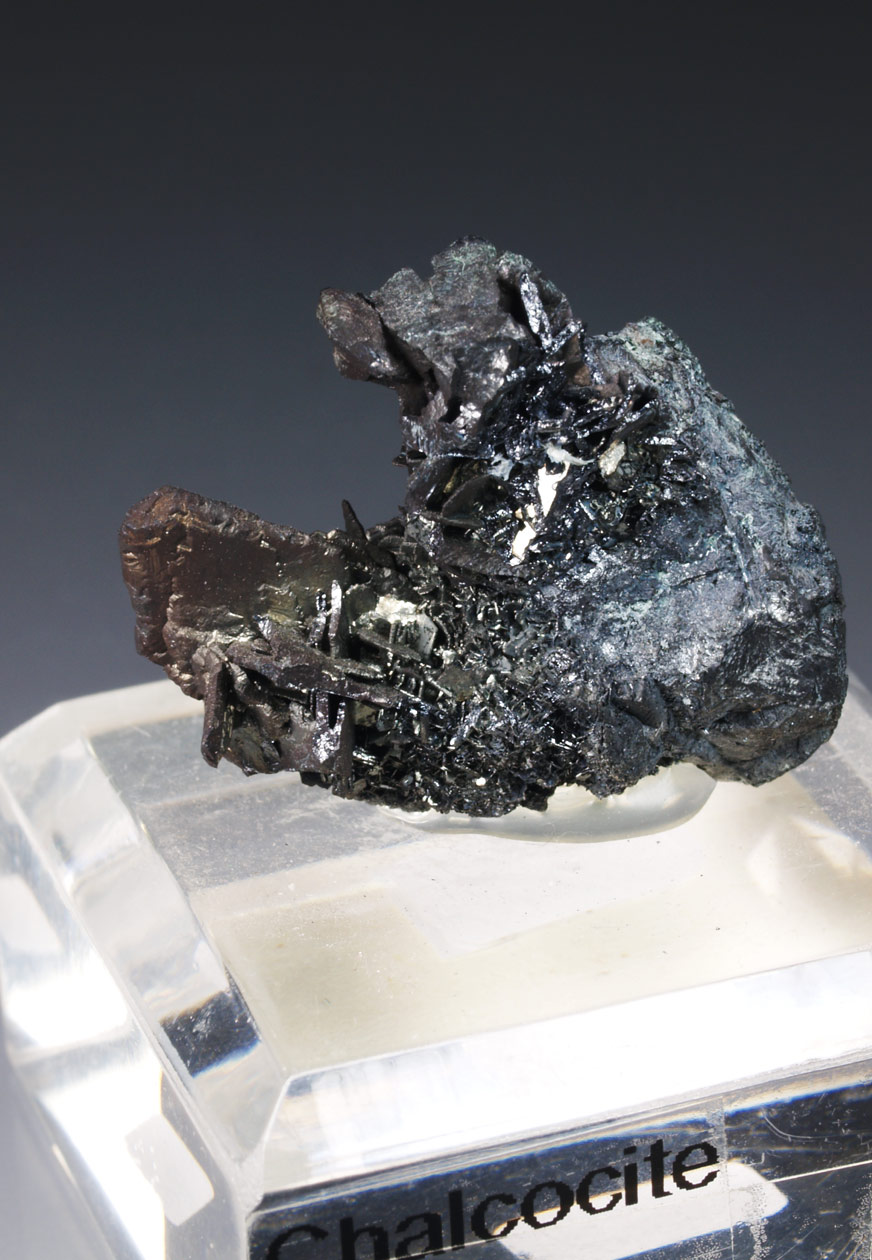
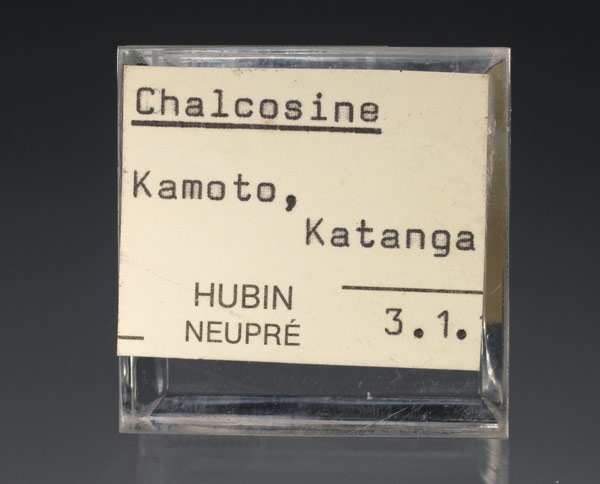
Group of tabular chalcocite crystals, well defined and with polysynthetic growths on faces. Some present fractures where we can observe the metallic luster of the species. Specimens from this mine are rare on the market. It belongs from the former René Hubin collection (Neupré, Belgium) and is accompanied by the label. Nice miniature.
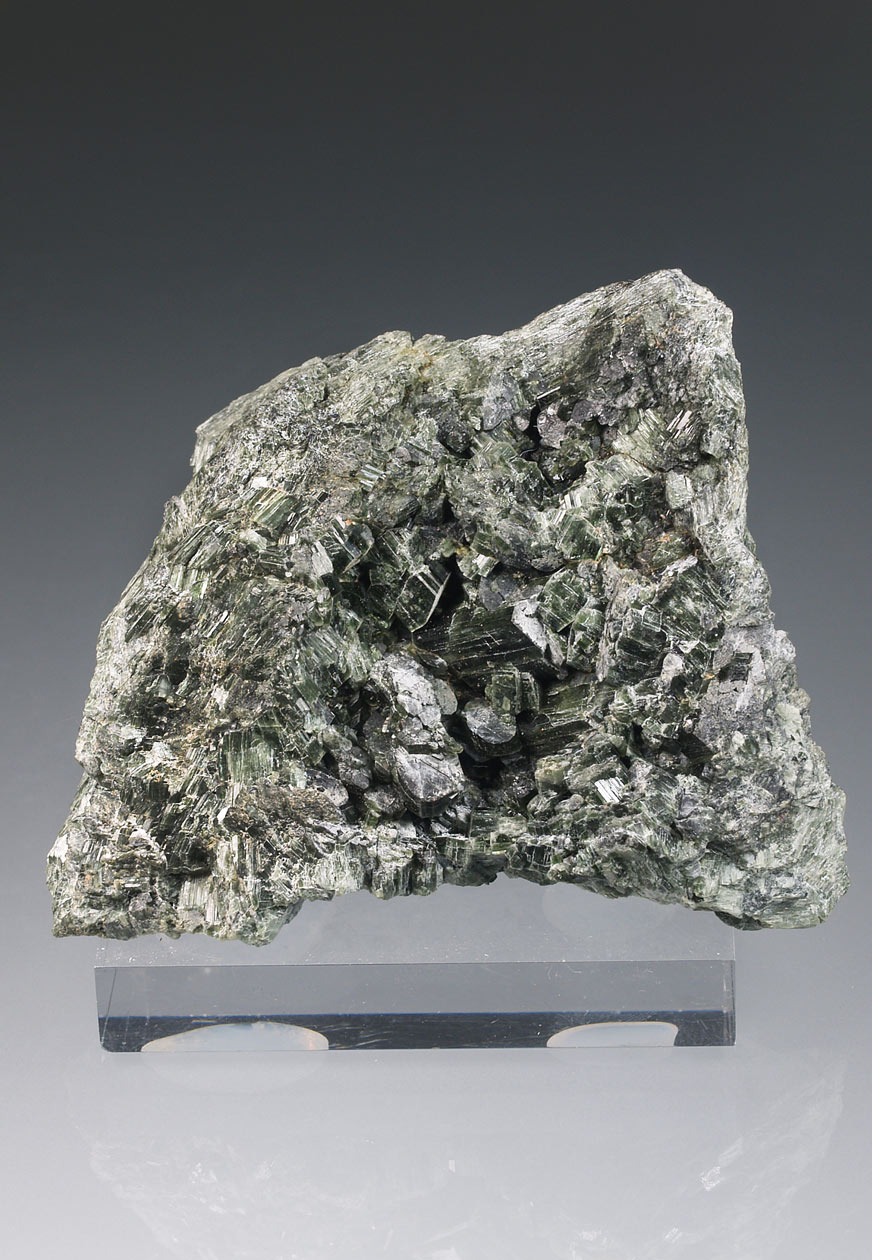
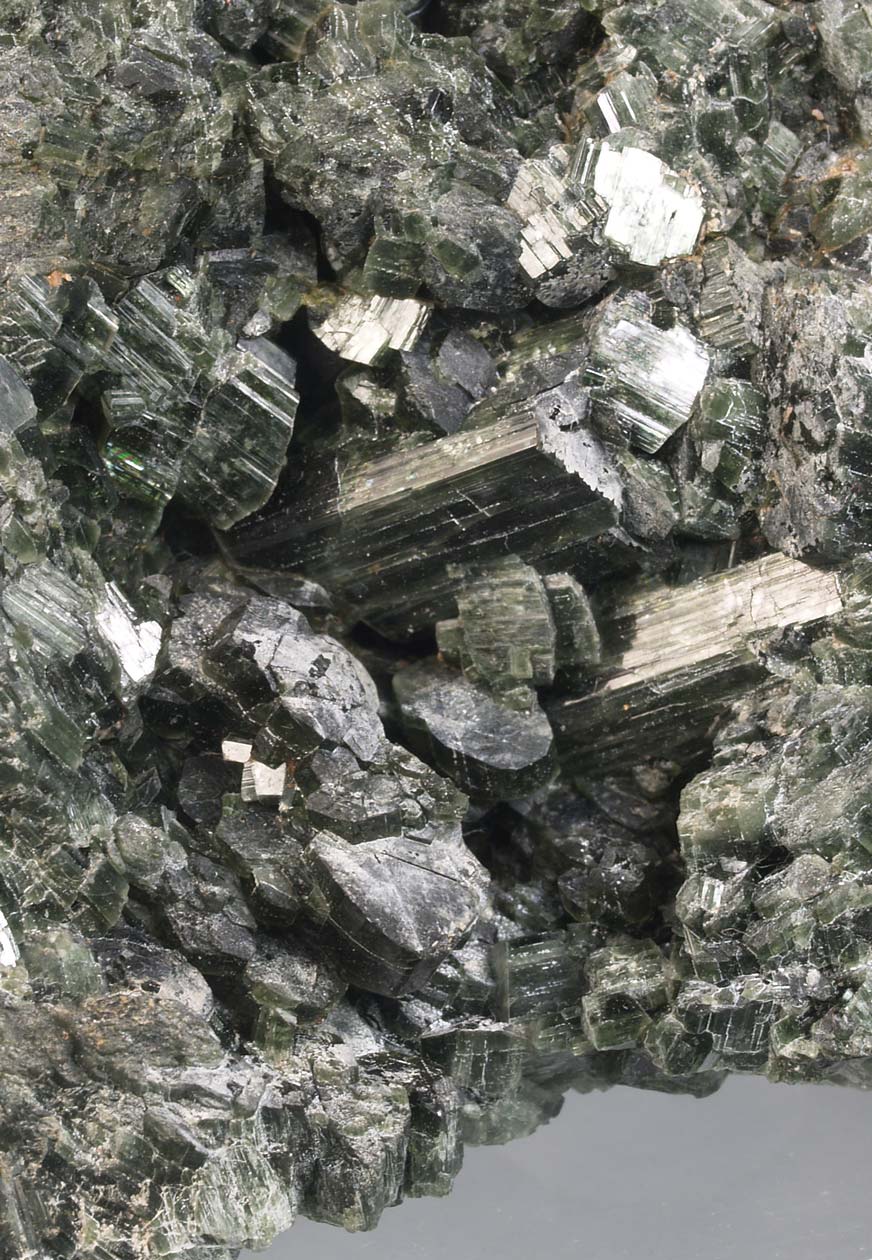
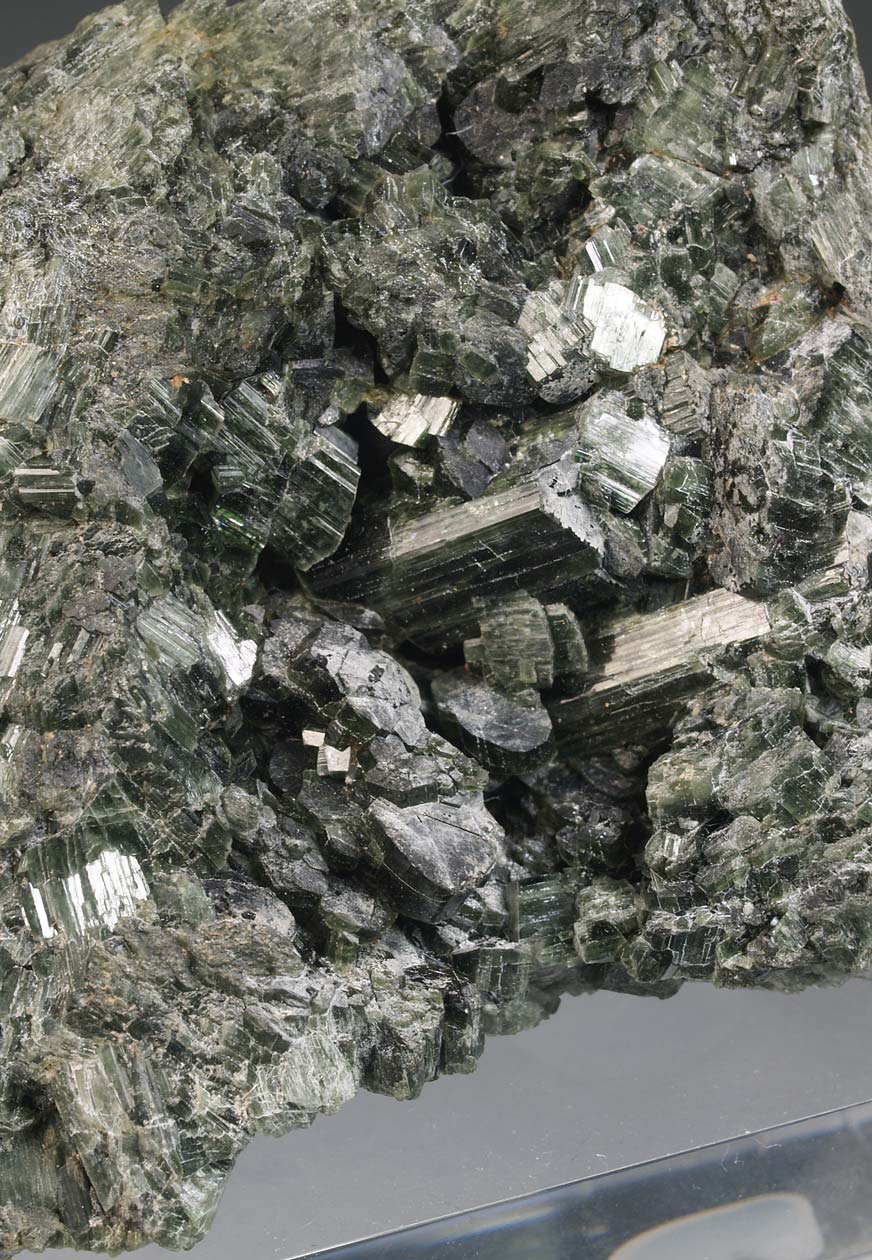
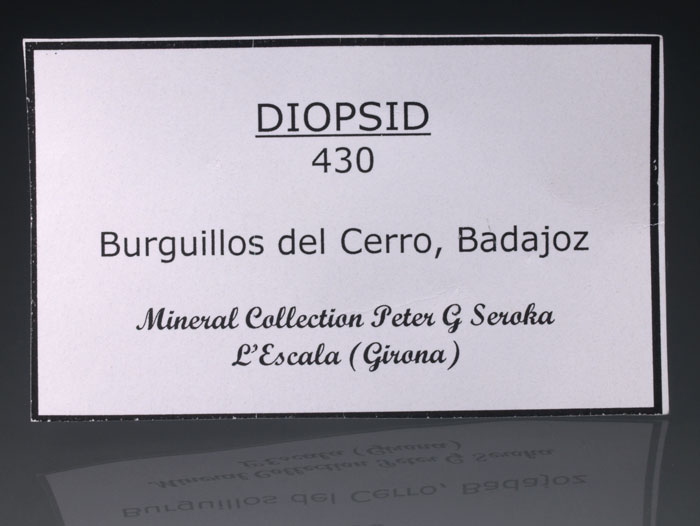
Group of diopside crystals with an intense green color, parallel growths, brilliant and translucent. A specimen of this classic Spanish locality from the Peter Seroka collection.
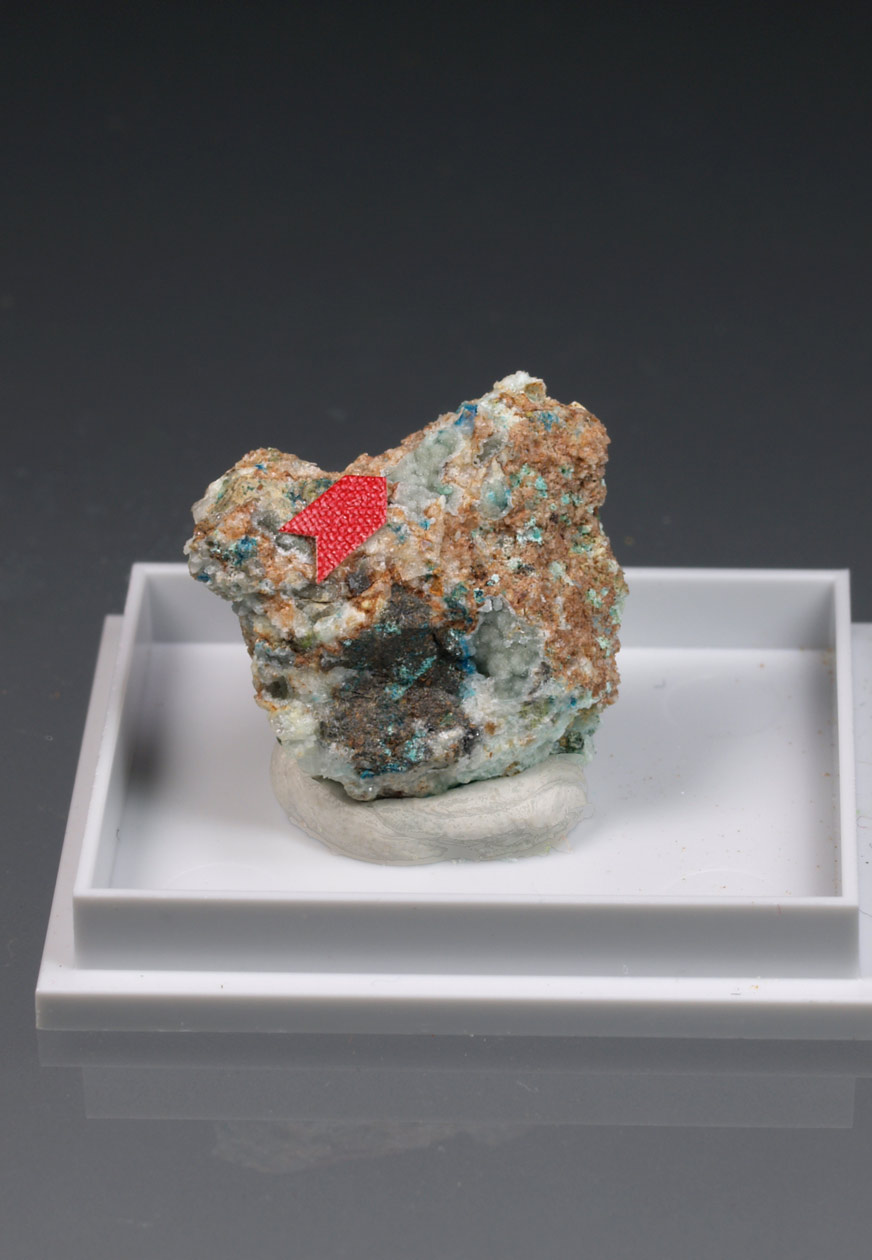
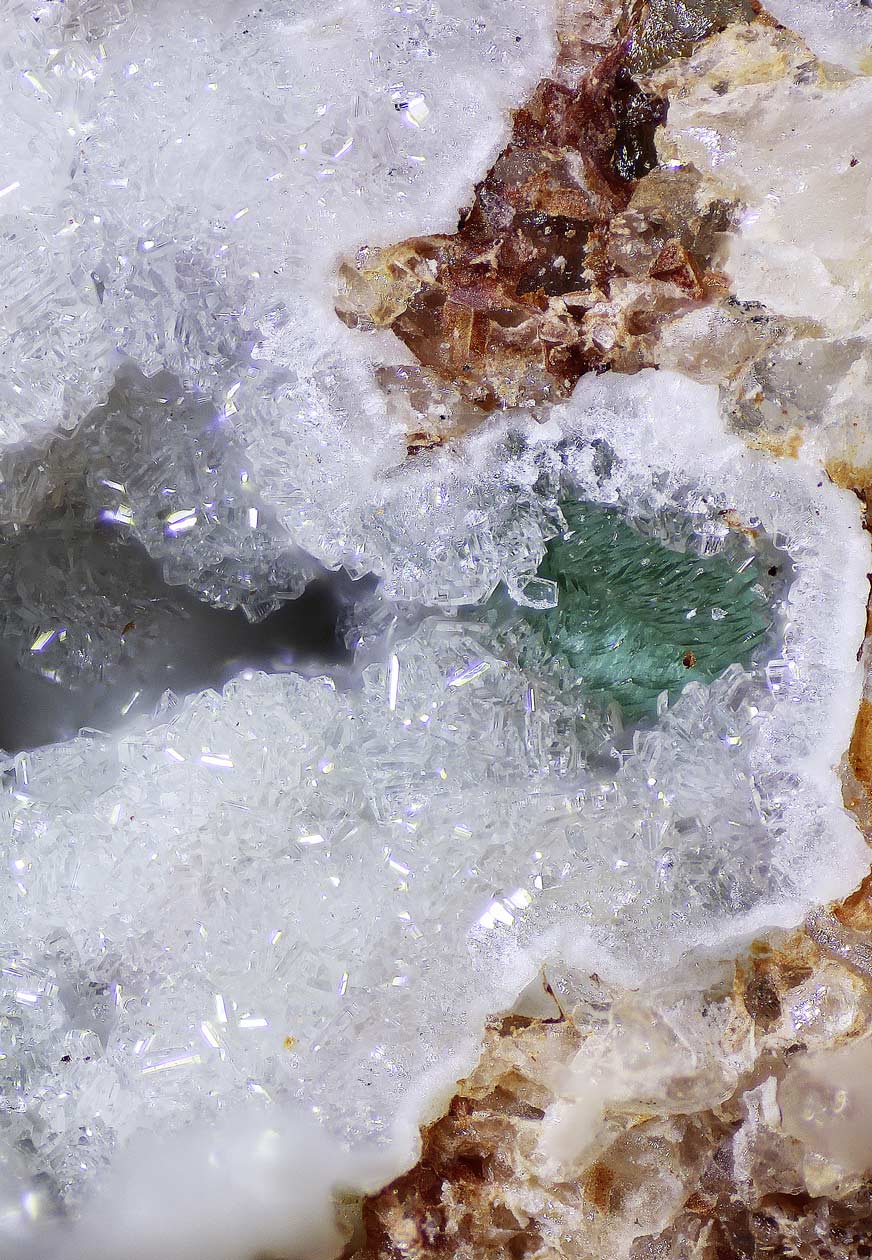
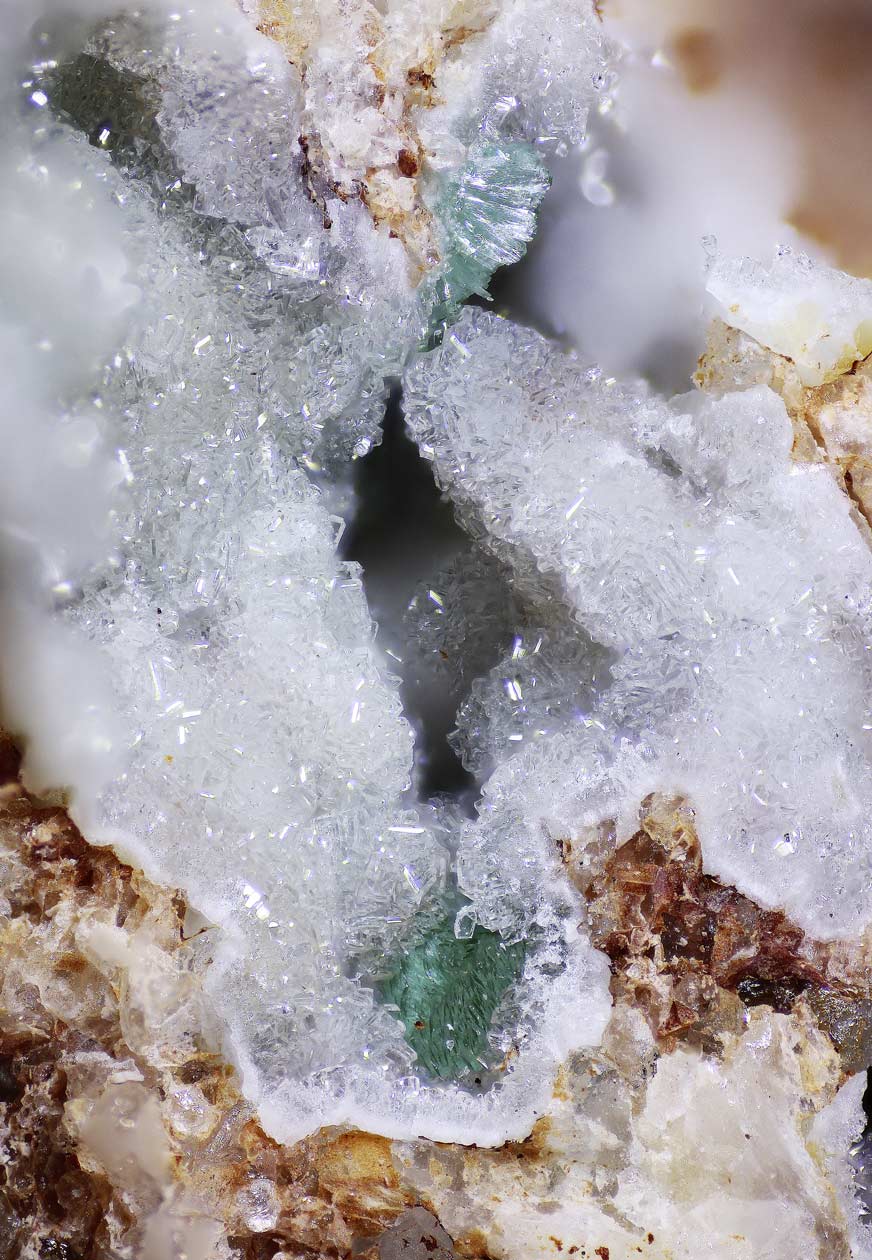
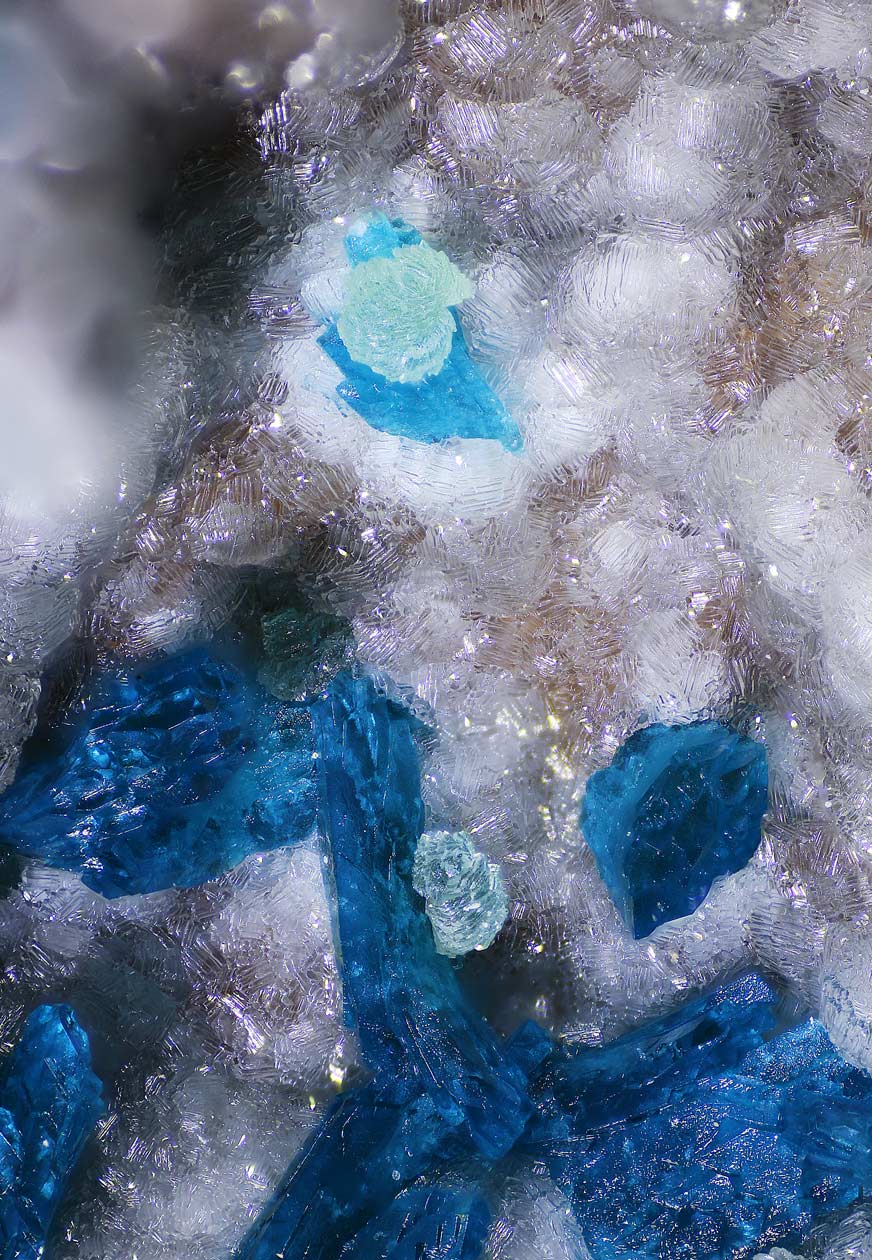
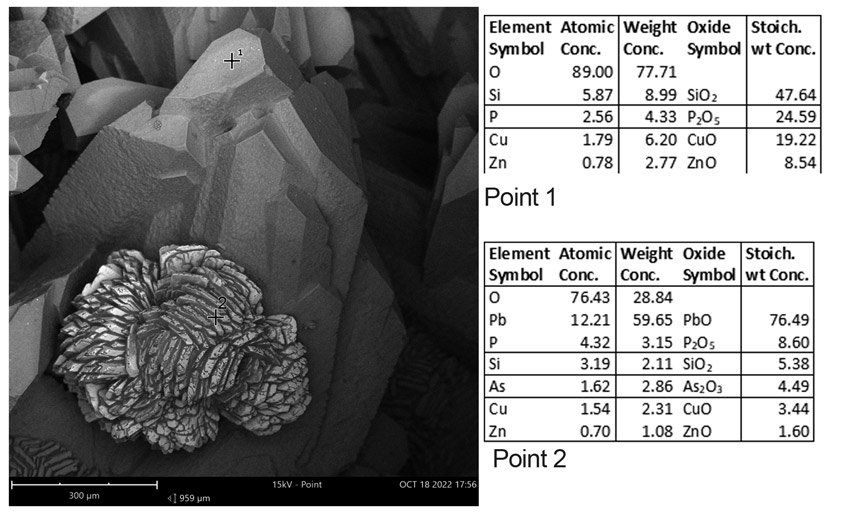
Cuprodongchuanite is a mineral species with the formula Pb4CuZn2(PO4)4(OH)2 that has been approved very recently (IMA No. 2021-065); is the copper analogue of dongchuanite (IMA No. 2021-058) with the formula Pb4ZnZn2(PO4)4(OH)2. Both species form a series and belong to the dongchuanite group, together with the zheshengite Pb4ZnZn2(AsO4)2(PO4)2(OH)2 and the cuprozheshengite Pb4CuZn2(AsO4)2(PO4)2(OH)2. Distinguishing one species from another is only possible by elemental analysis. For this reason these specimens have been analyzed by SEM-EDS.
In this specimen we have determined the cuprodongchuanite. The presence of As is detected in all the specimens studied, which would indicate that we are in a term of the series with cuprozheshengite. It would be correct to label it cuprodongchuanite-cuprozheshengite. It appears as light green globular aggregates on the colorless hemimorphite. The bluish color on the specimen is veszelyite.
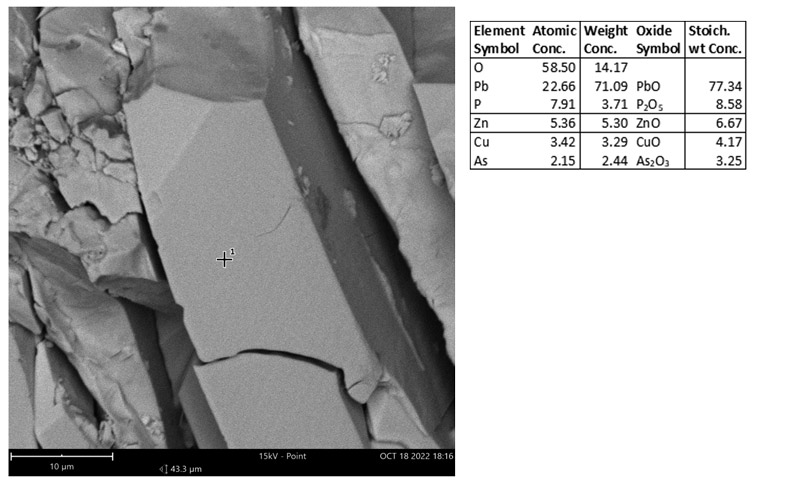
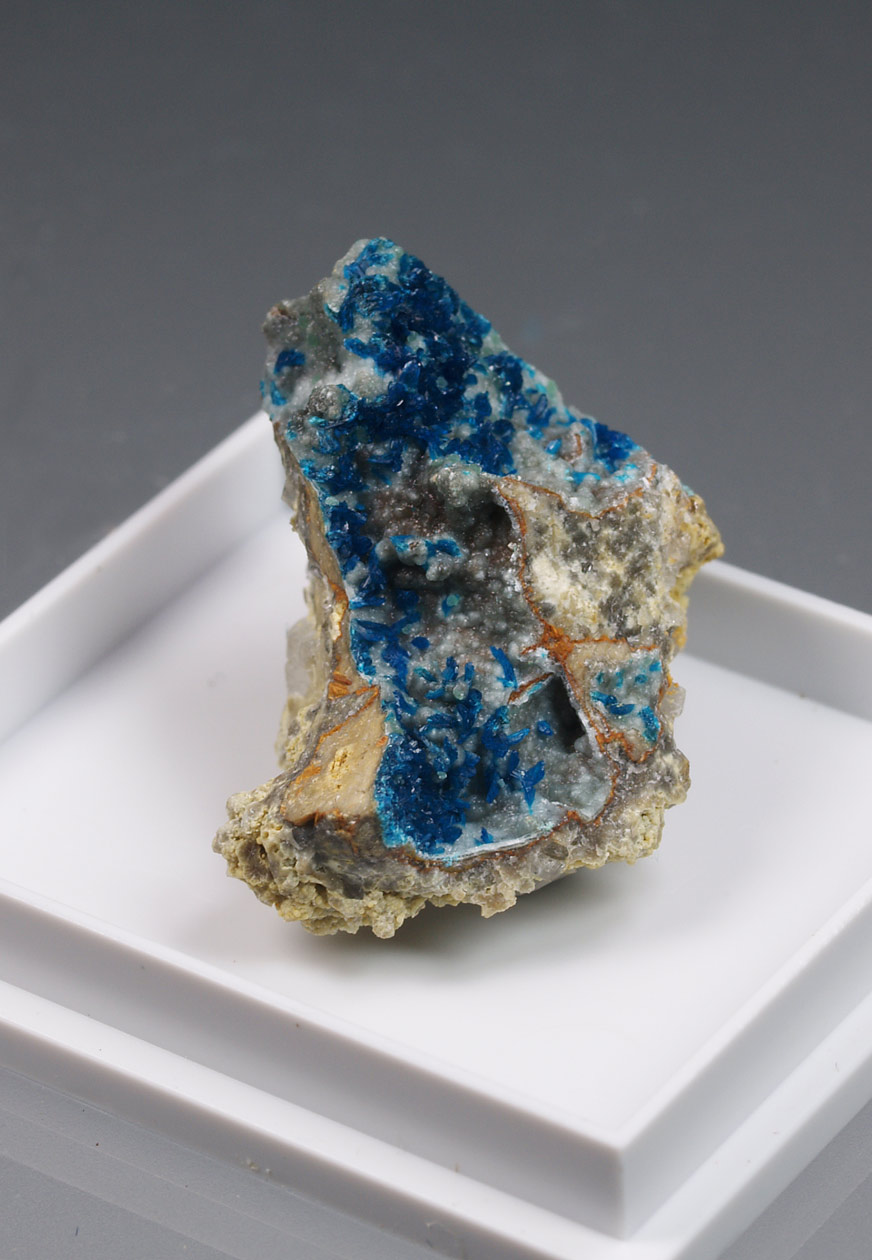
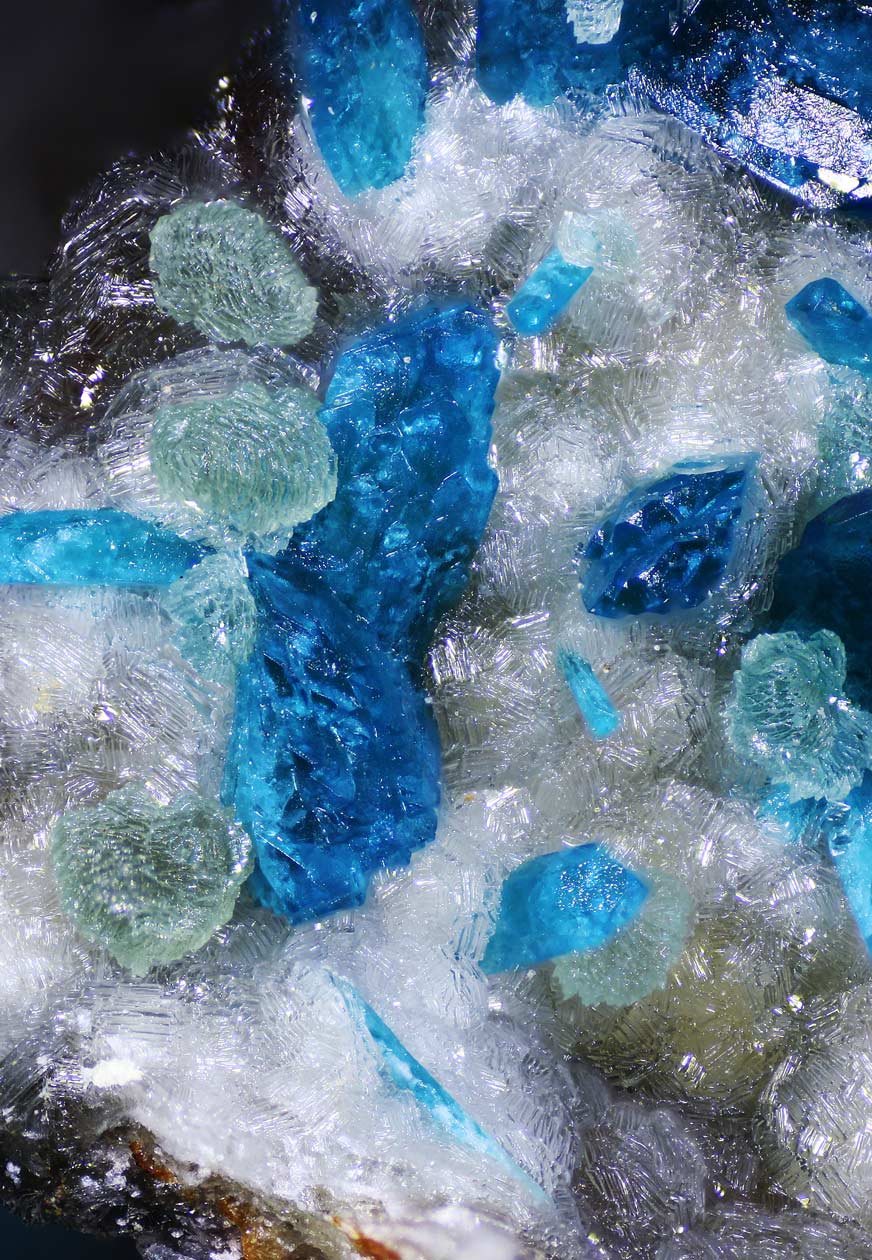
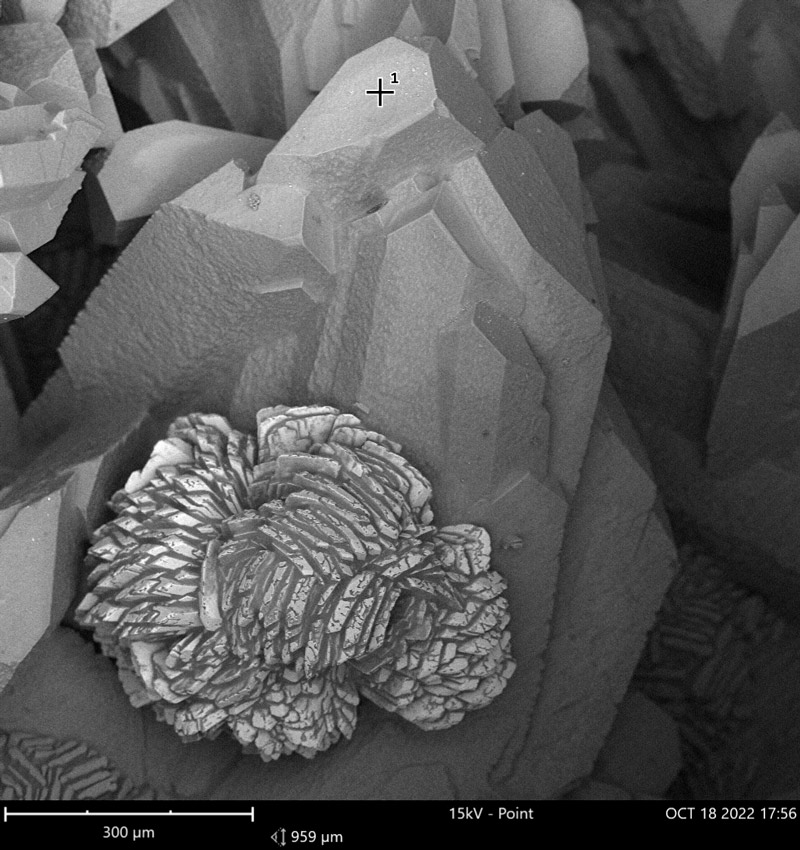
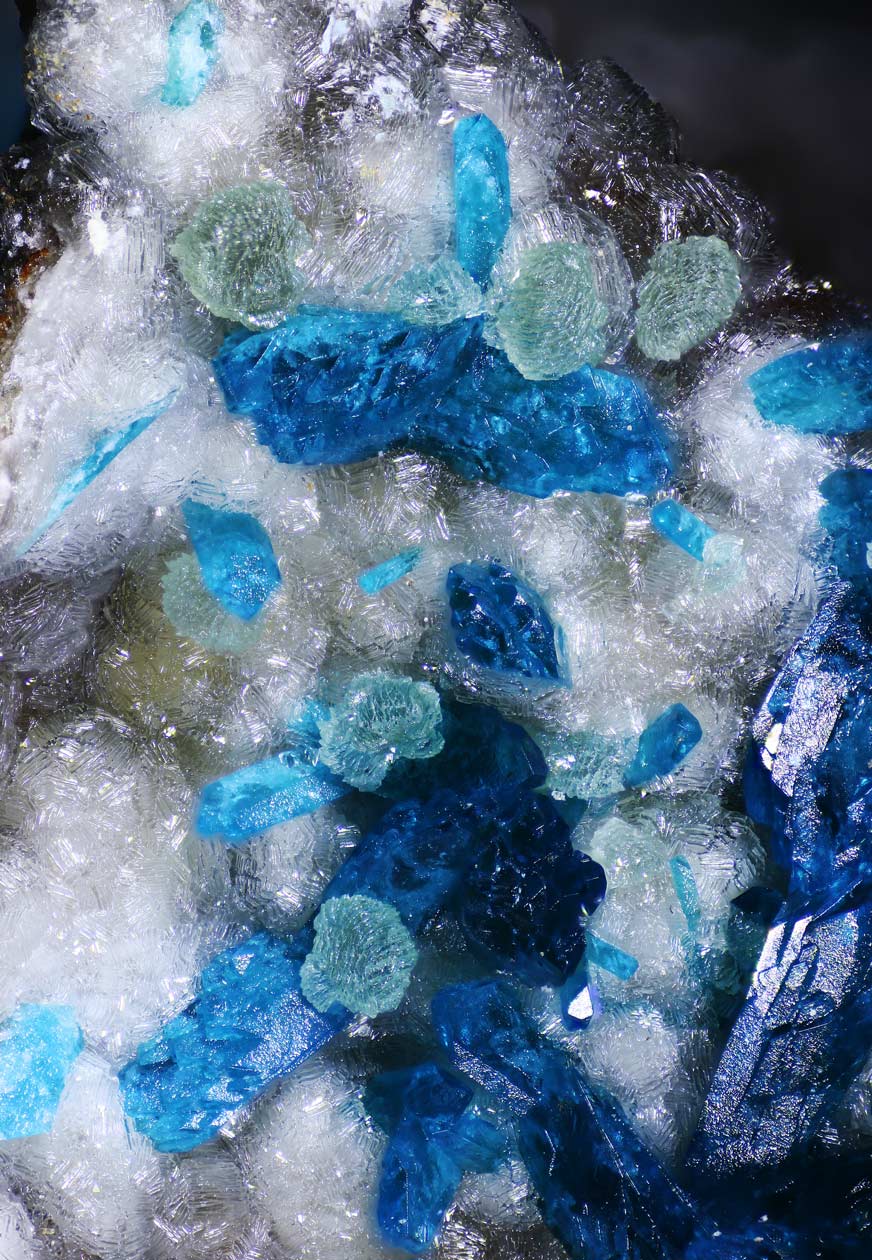
Cuprodongchuanite is a mineral species with the formula Pb4CuZn2(PO4)4(OH)2 that has been approved very recently (IMA No. 2021-065); is the copper analogue of dongchuanite (IMA No. 2021-058) with the formula Pb4ZnZn2(PO4)4(OH)2. Both species form a series and belong to the dongchuanite group, together with the zheshengite Pb4ZnZn2(AsO4)2(PO4)2(OH)2 and the cuprozheshengite Pb4CuZn2(AsO4)2(PO4)2(OH)2. Distinguishing one species from another is only possible by elemental analysis. For this reason these specimens have been analyzed by SEM-EDS.
In this rich specimen we have determined cuprodongchuanite aggregates. The presence of As is detected in all the specimens studied, which would indicate that we are in a term of the series with cuprozheshengite. It would be correct to label it cuprodongchuanite-cuprozheshengite. It occurs as light green globular aggregates on very well defined veszelyite crystals and on a matrix with hemimorphite.
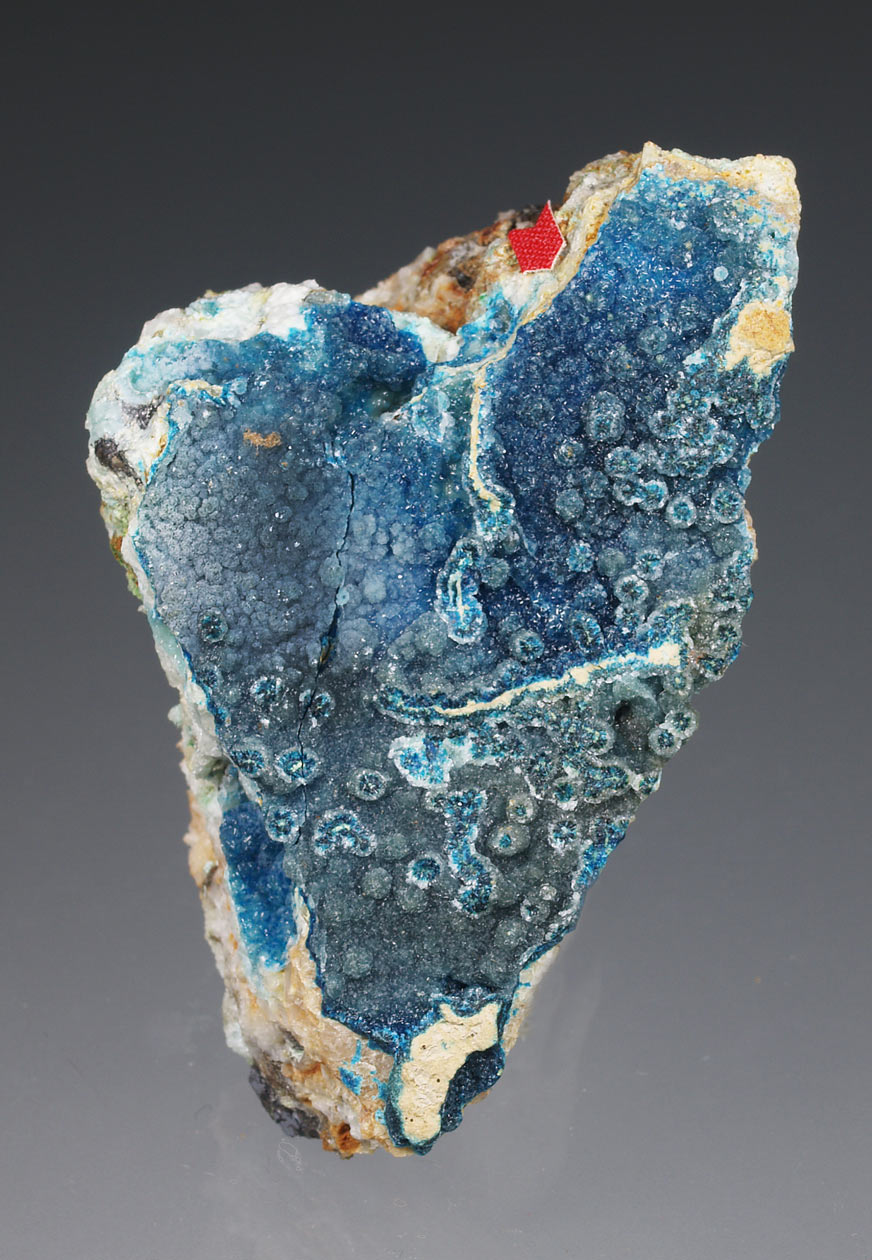
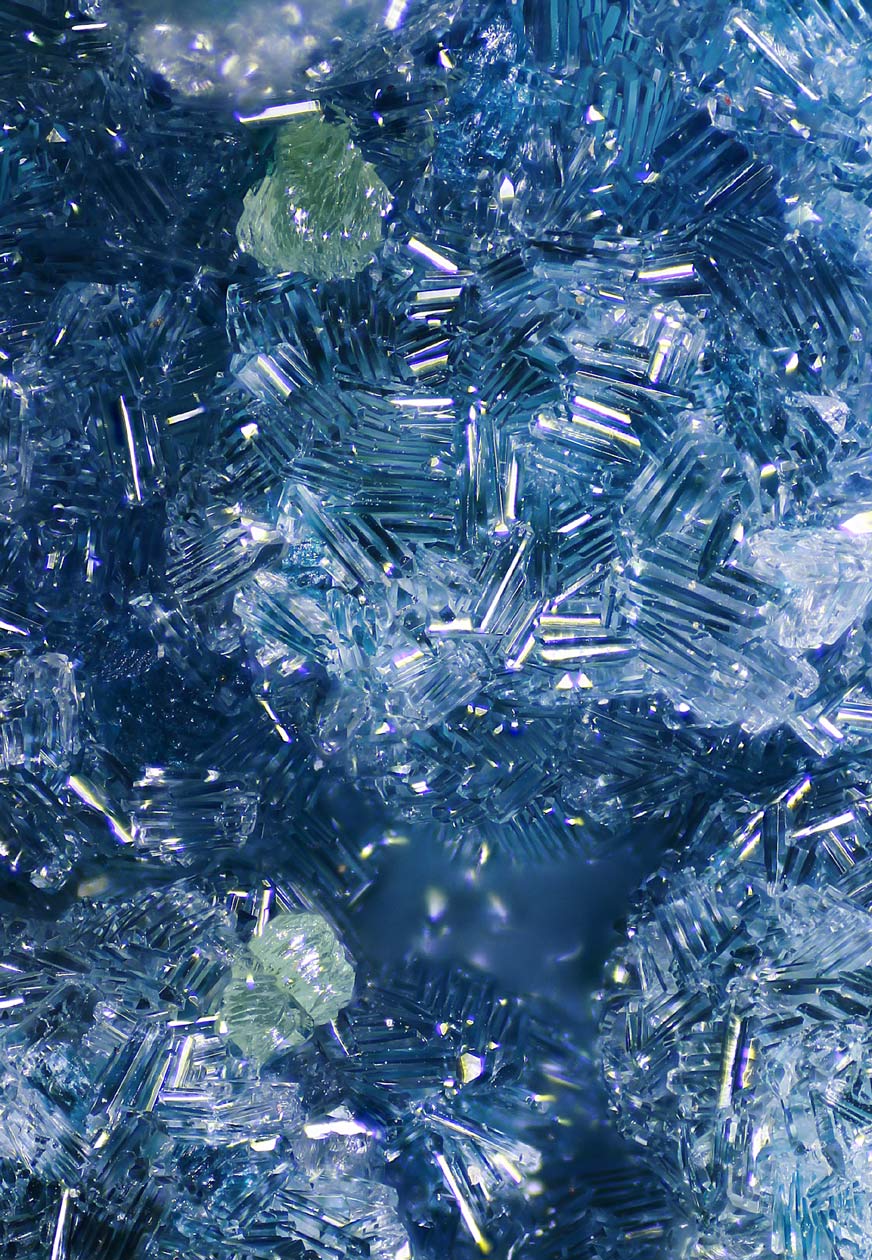
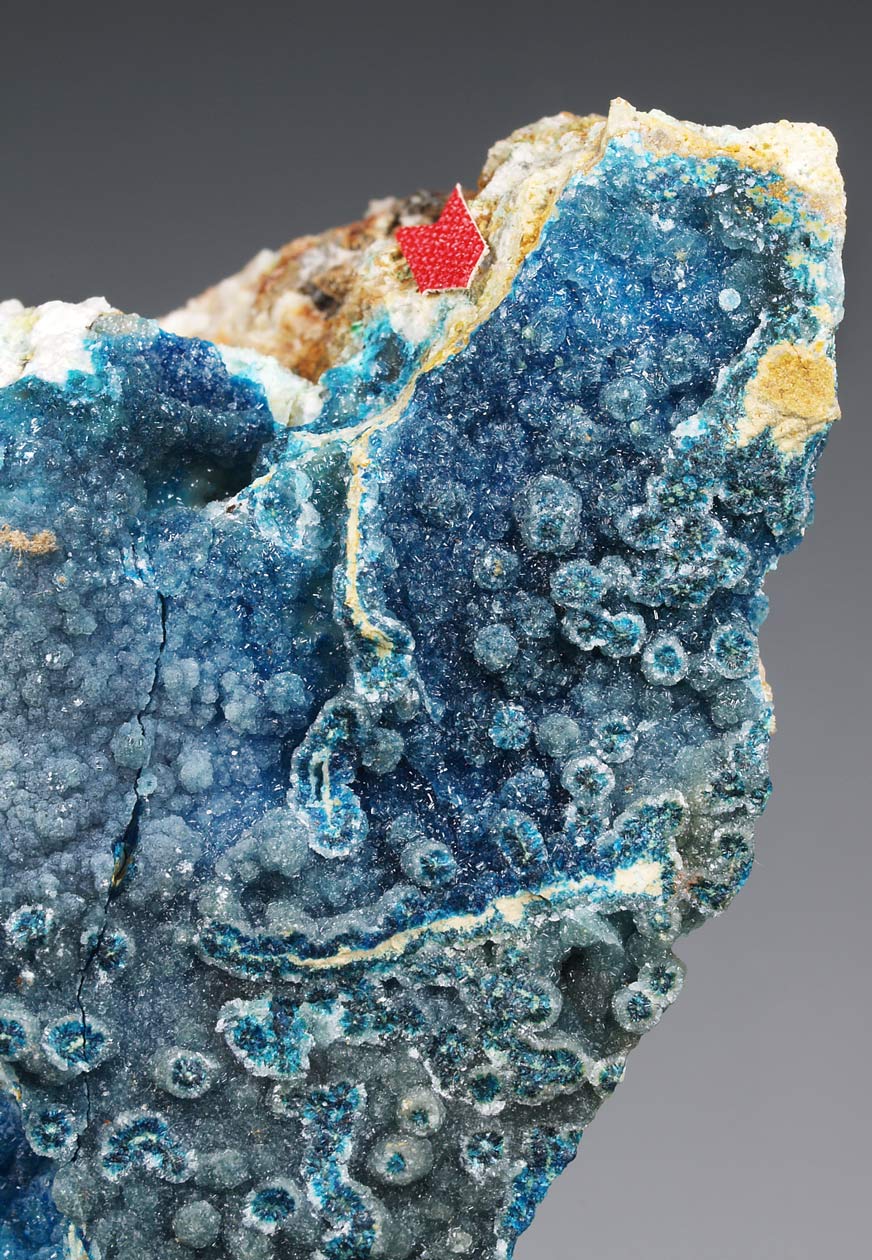
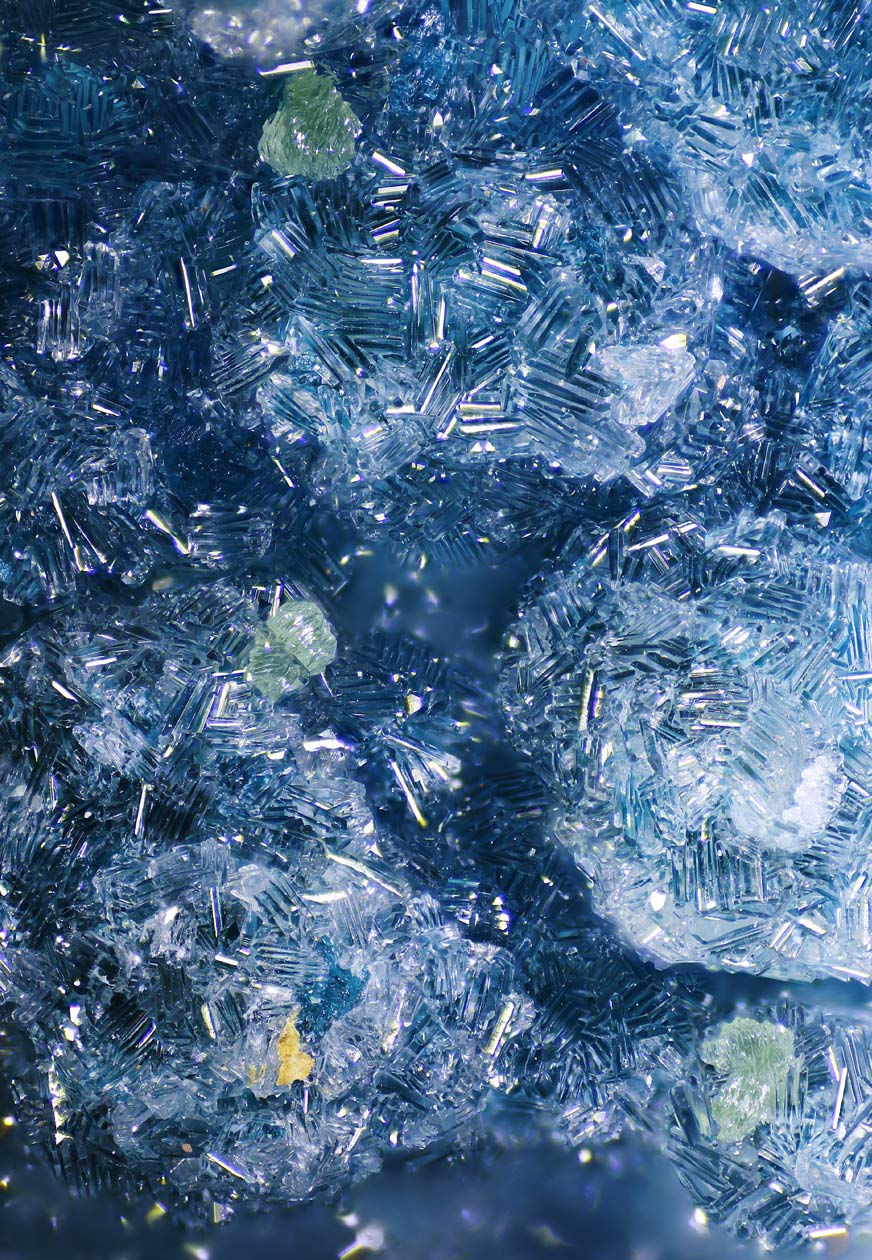
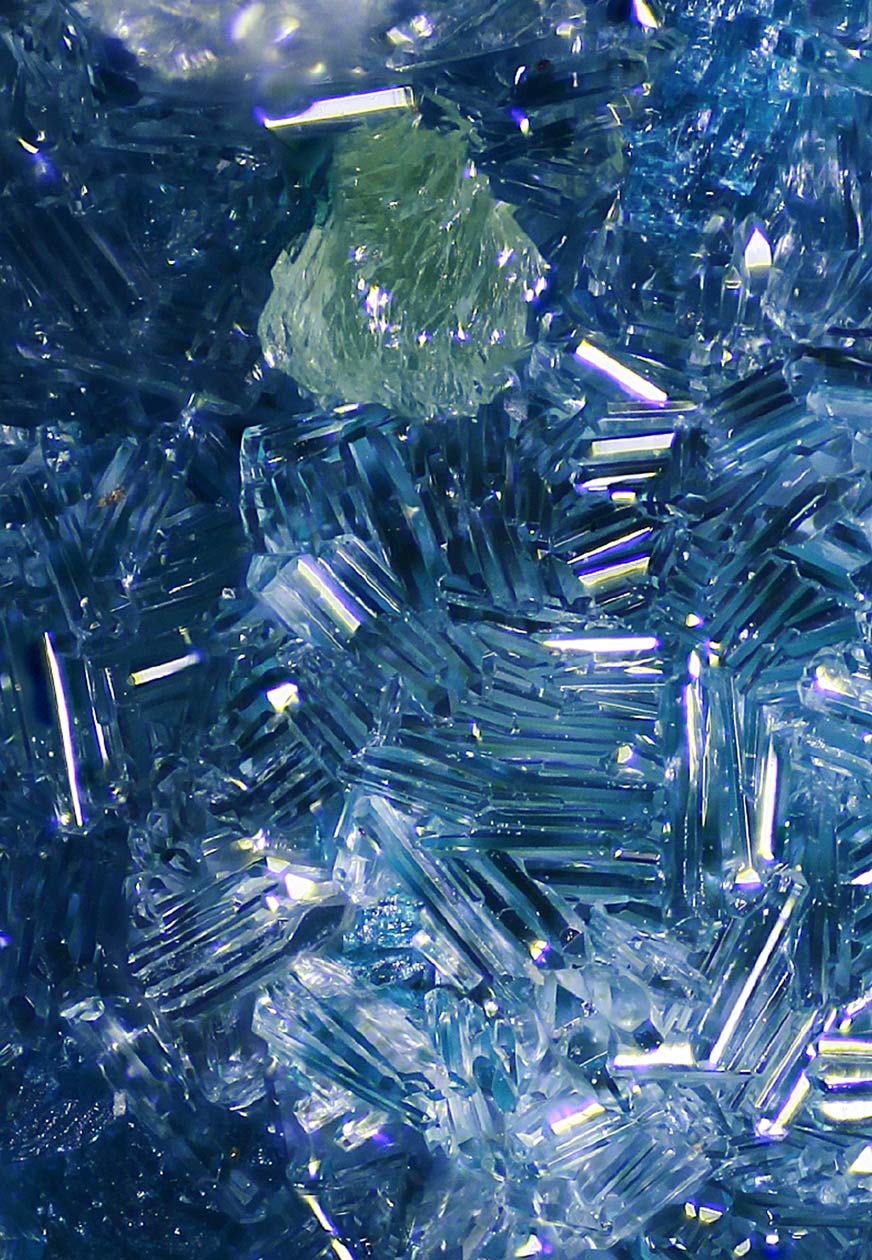
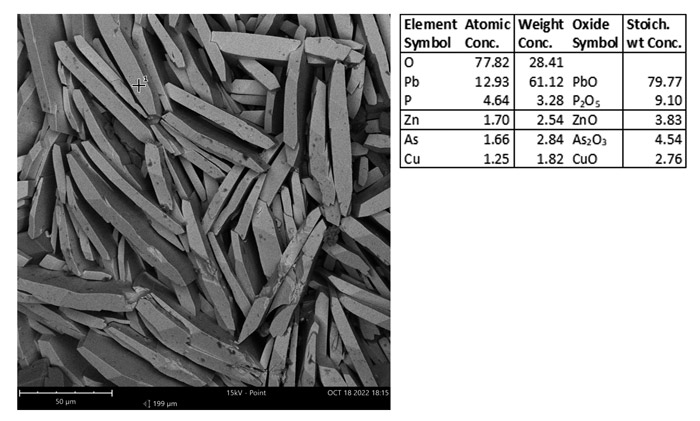
Cuprodongchuanite is a mineral species with the formula Pb4CuZn2(PO4)4(OH)2 that has been approved very recently (IMA No. 2021-065); is the copper analogue of dongchuanite (IMA No. 2021-058) with the formula Pb4ZnZn2(PO4)4(OH)2. Both species form a series and belong to the dongchuanite group, together with the zheshengite Pb4ZnZn2(AsO4)2(PO4)2(OH)2 and the cuprozheshengite Pb4CuZn2(AsO4)2(PO4)2(OH)2. Distinguishing one species from another is only possible by elemental analysis. For this reason these specimens have been analyzed by SEM-EDS.
In this specimen we have determined the cuprodongchuanite. The presence of As is detected in all the specimens studied, which would indicate that we are in a term of the series with cuprozheshengite. It would be correct to label it cuprodongchuanite-cuprozheshengite. It appears as light green globular aggregates on the colorless hemimorphite. The bluish color of the specimen is due to the fact that the hemimorphite covers veszelyite crystals.
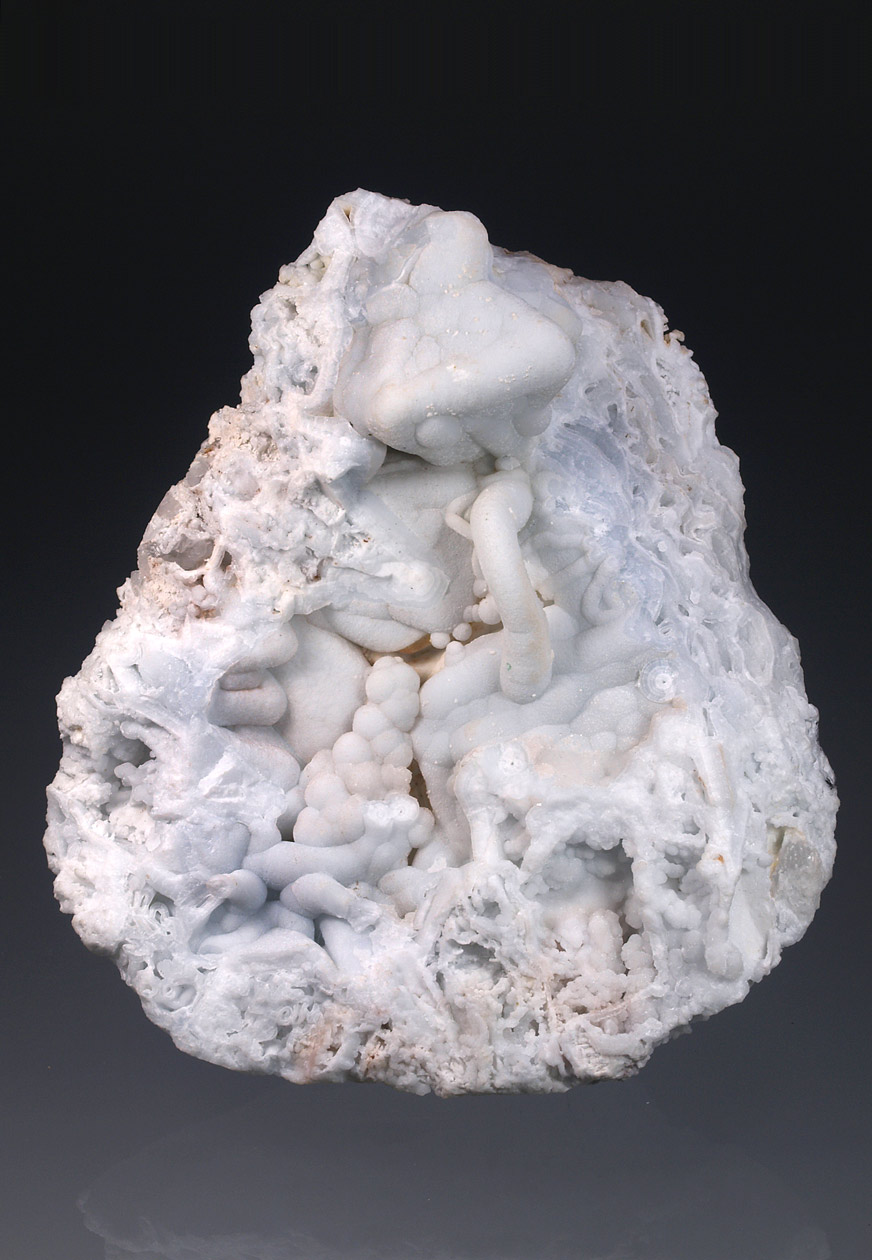
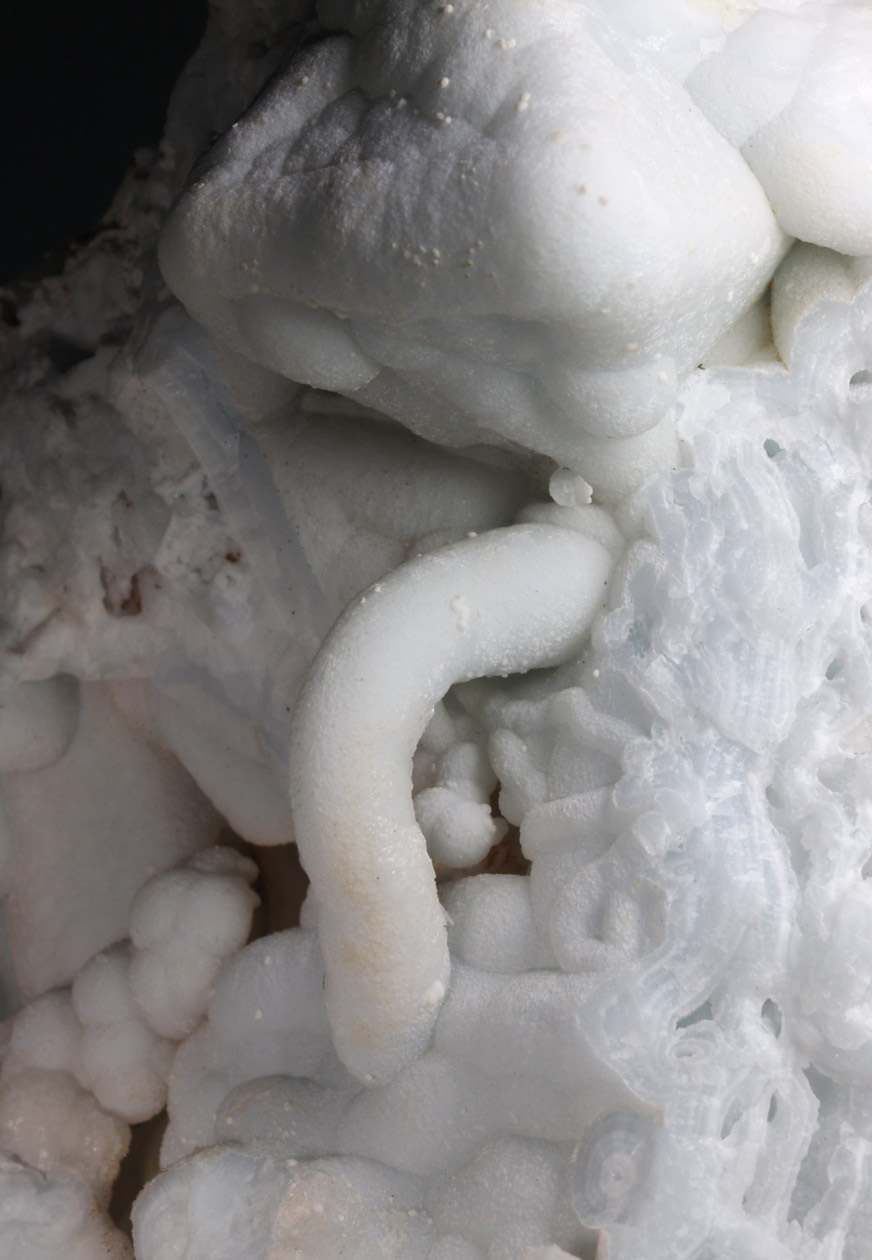
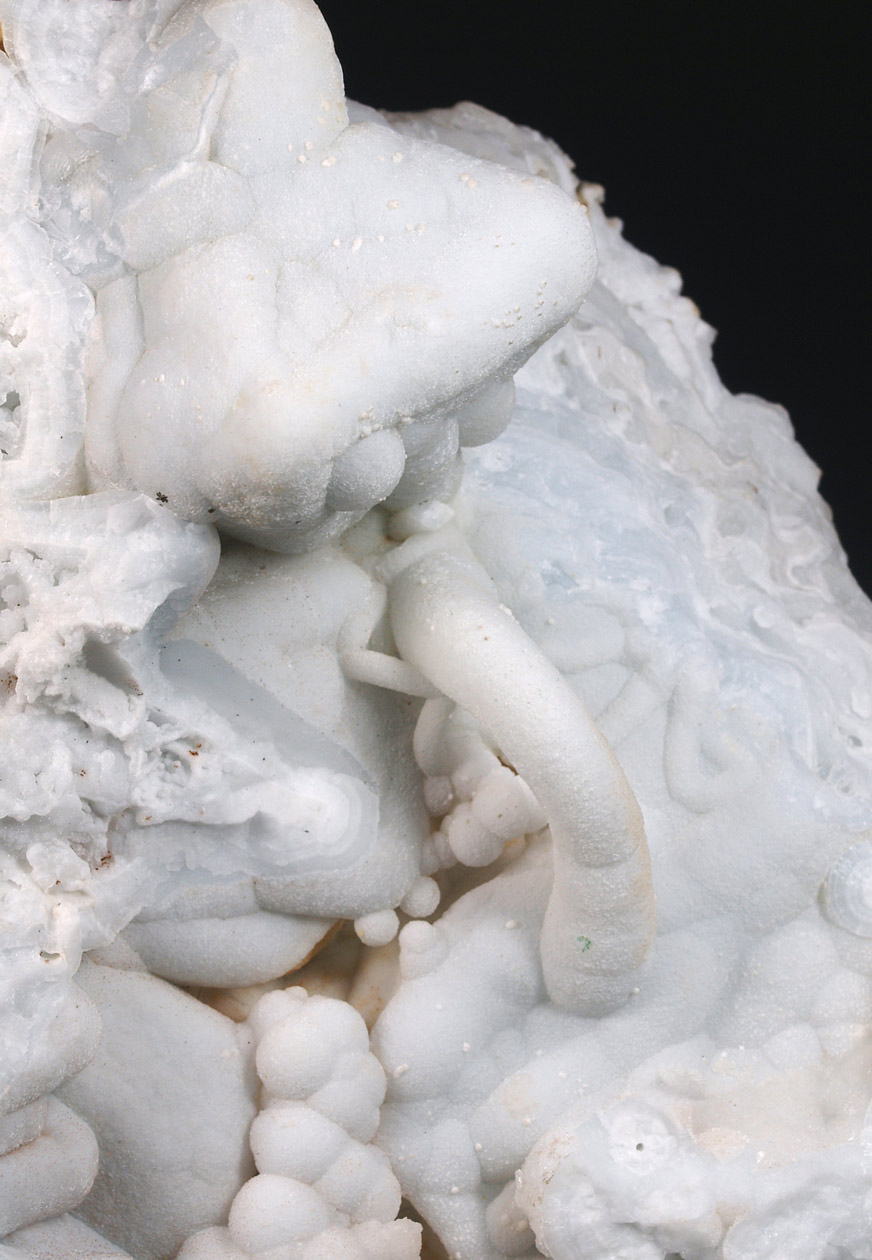
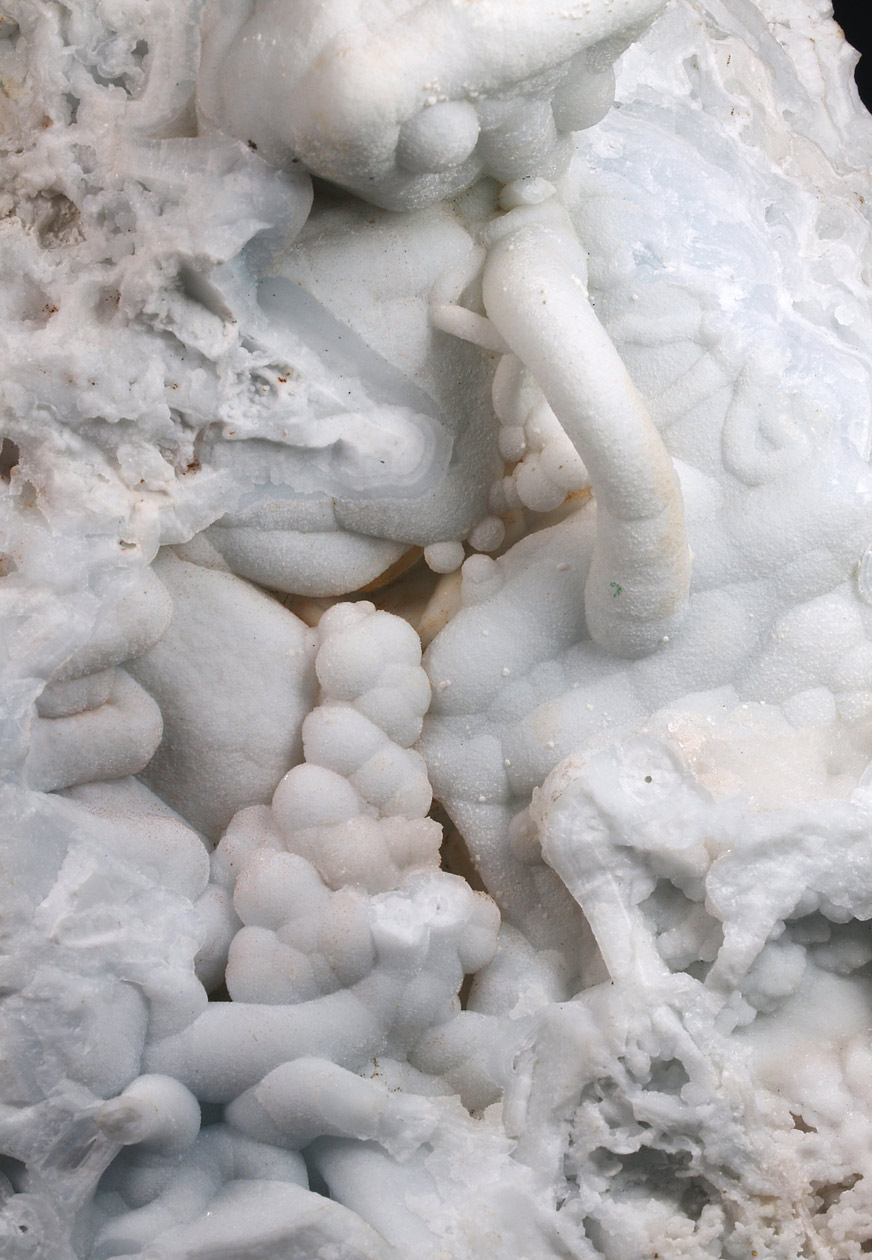
Very good size specimen of celestine from this classic Spanish locality. In this specimen we can observe various botryoidal to stalactitic forms, one of them in the form of a bridge-curl, and which cover old celestine crystals, as evidenced by the rounded prismatic shapes.
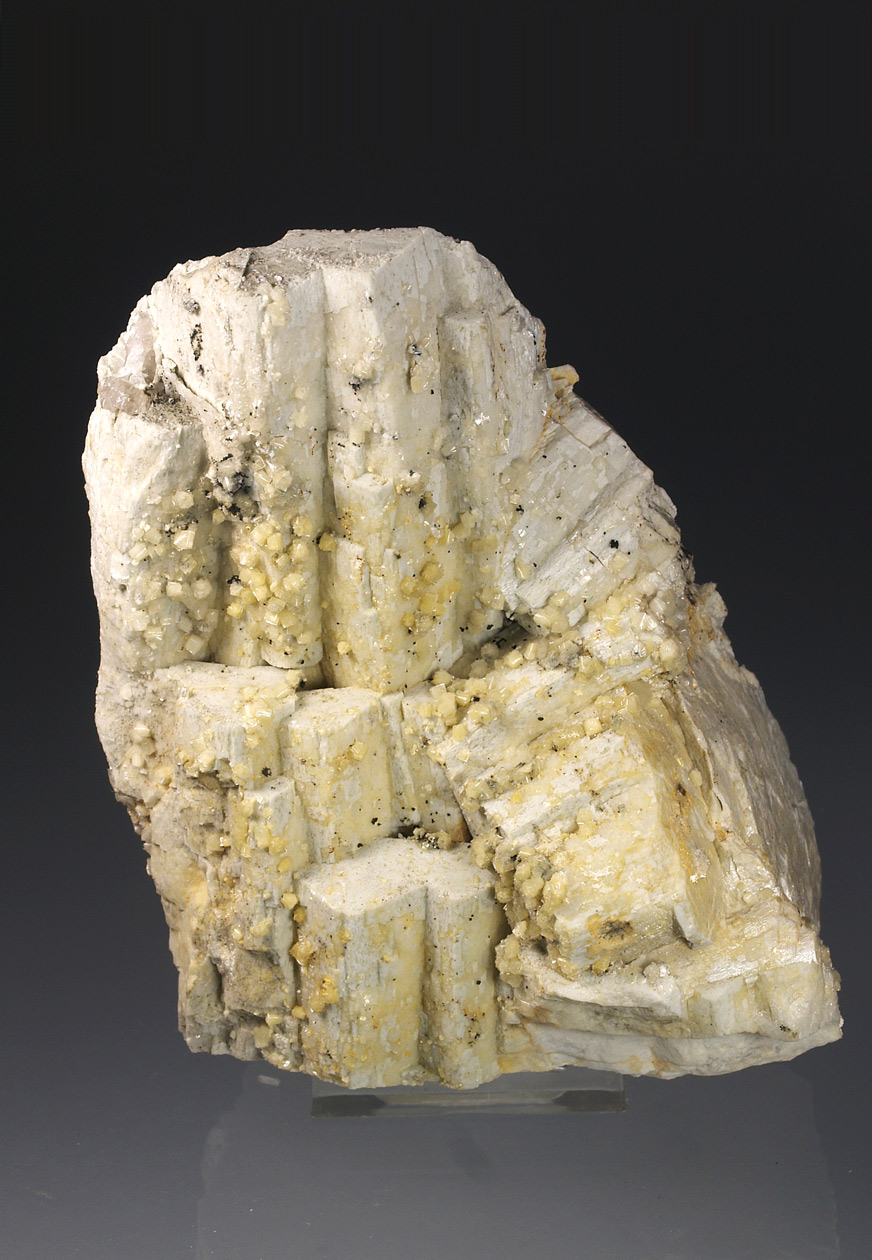
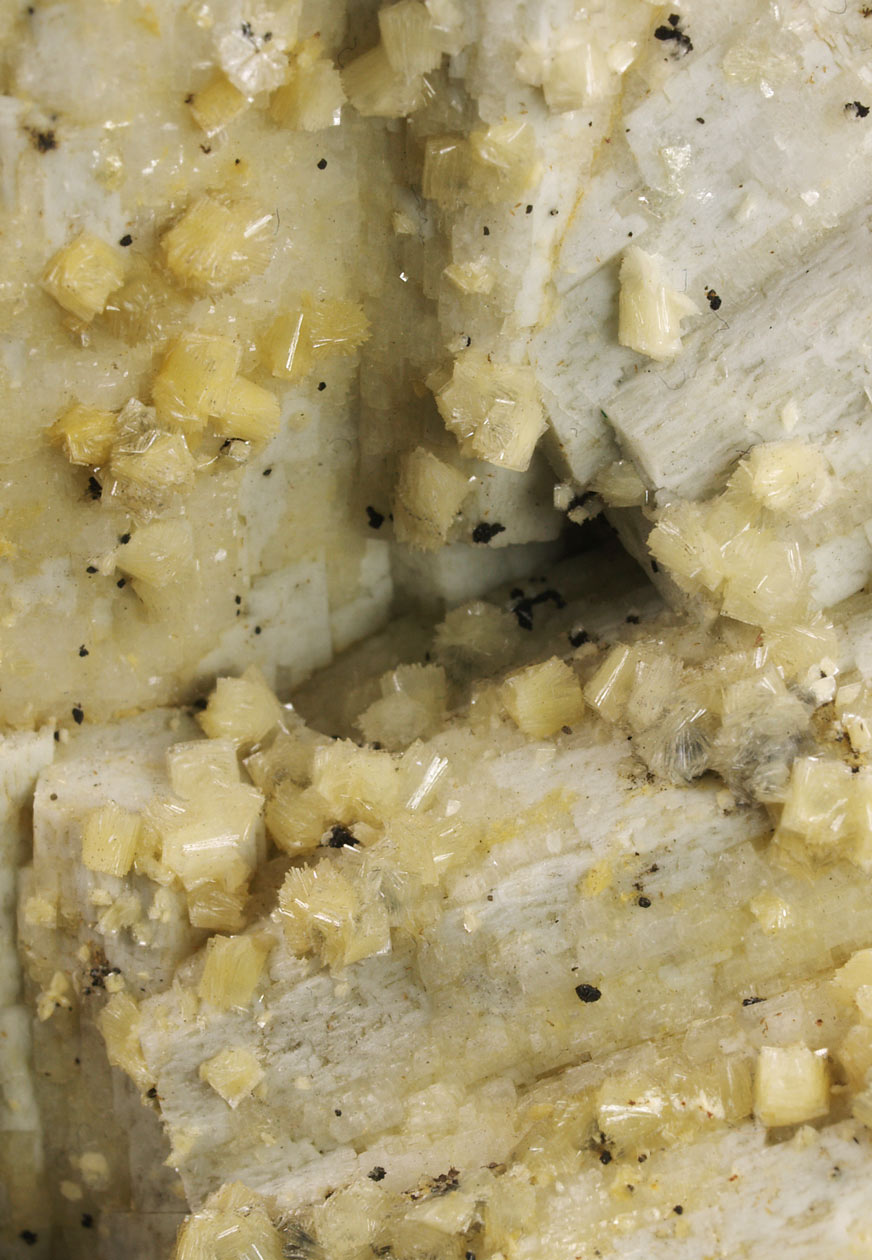
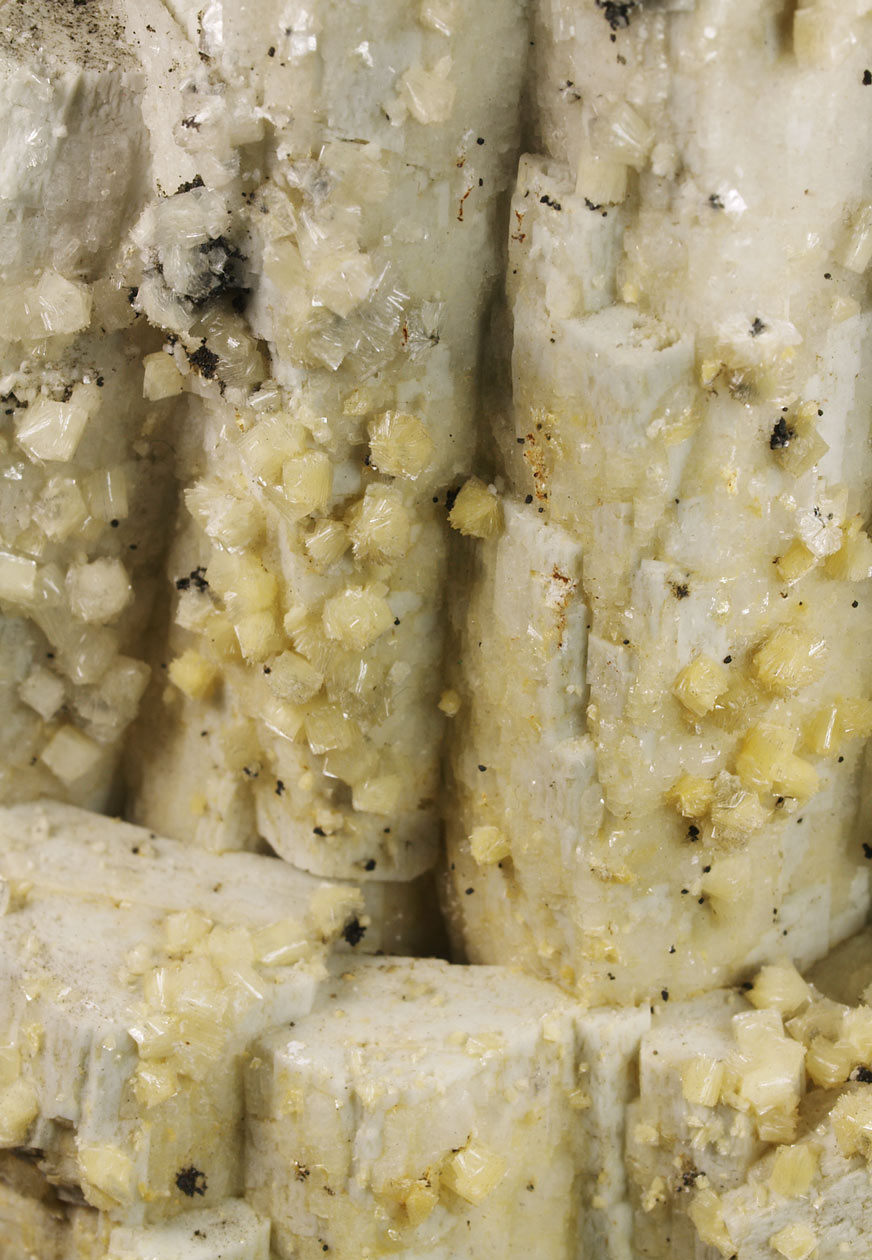
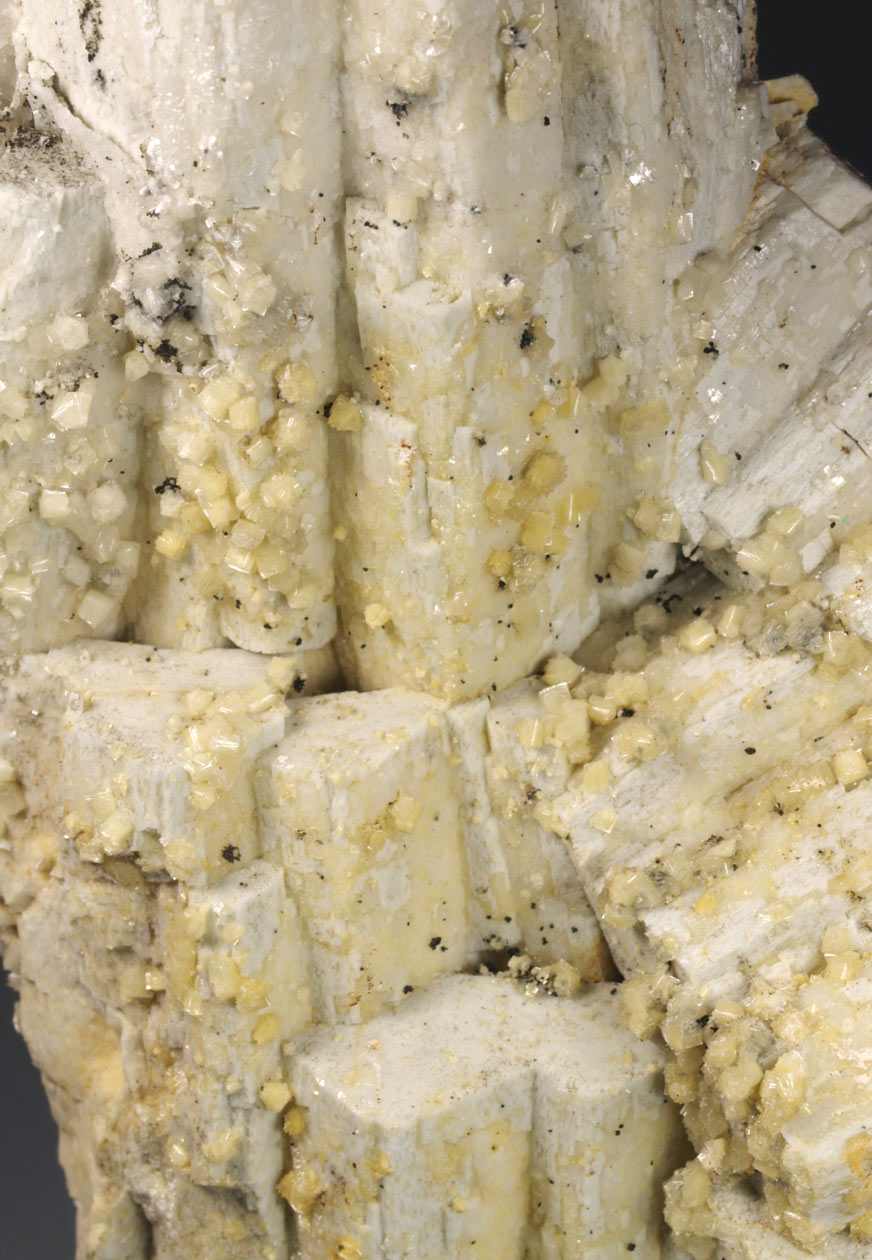
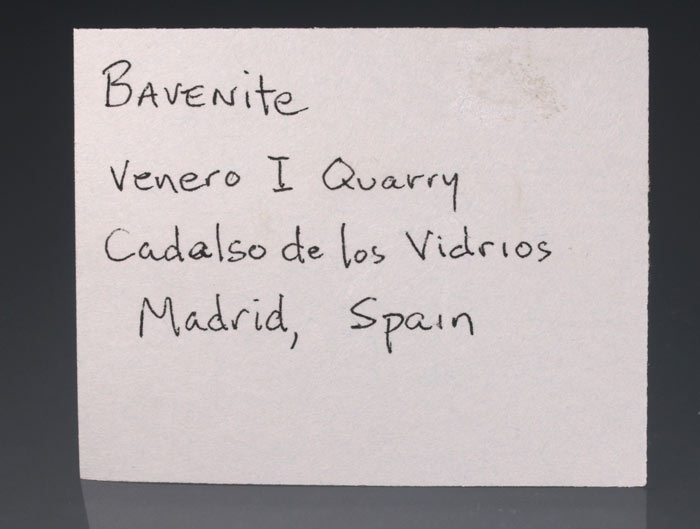
Specimens of bavenite from Cadalso de los Vidrios are a classic of Spanish mineralogy and pieces of this beryllium and calcium aluminosilicate had not been seen for quite some time. In this good-sized specimen formed by parallel growths of microcline crystals with albite, we can observe numerous rosette-shaped aggregates of tabular bavenite crystals, well defined, brilliant, and colorless to slightly yellowish. The specimen belongs to a North American collection.