- Home About RM Minerals
- Virtual Photo Museum Blog RM Contact
- Microscopy and instruments How to Buy Disclaimer
Copyright 2010-2026
www.rosellminerals.com



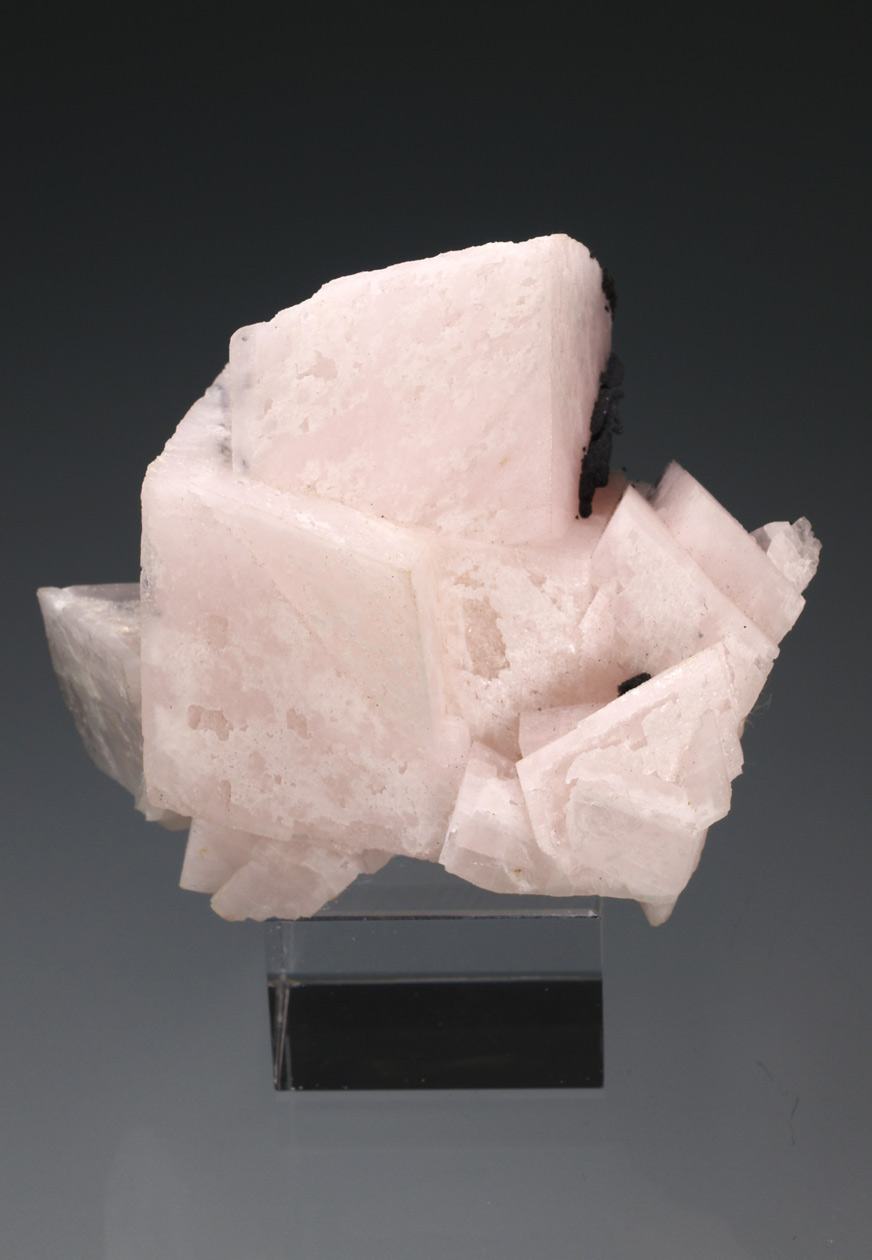
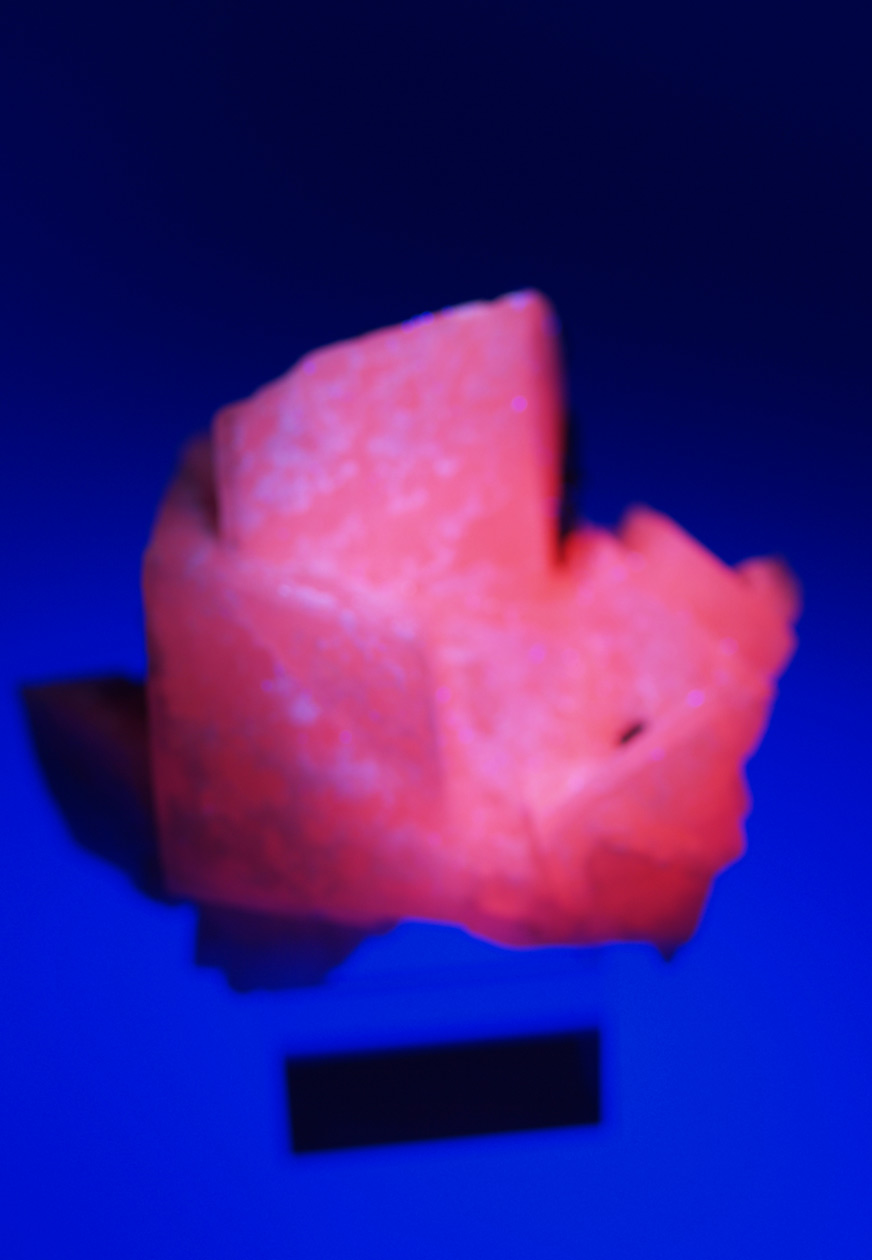
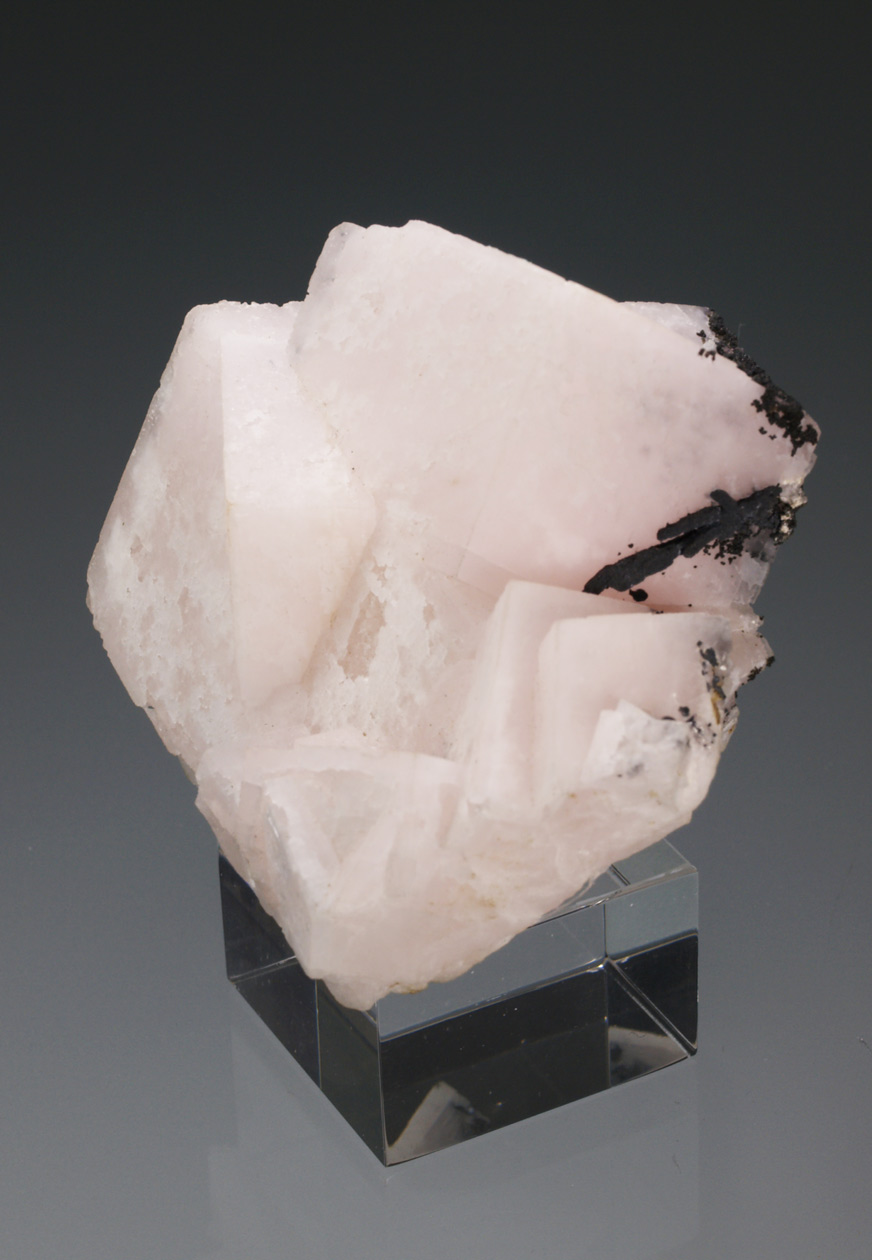
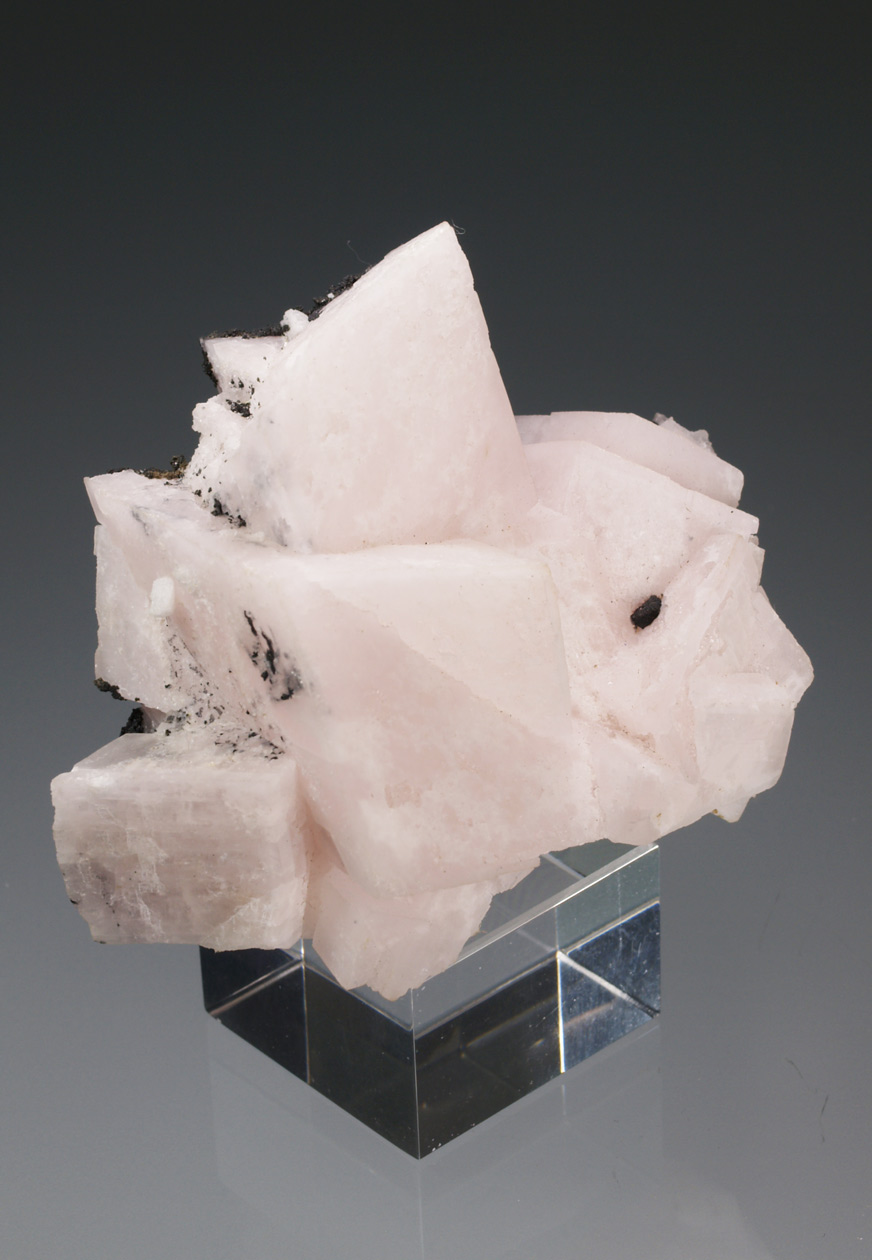
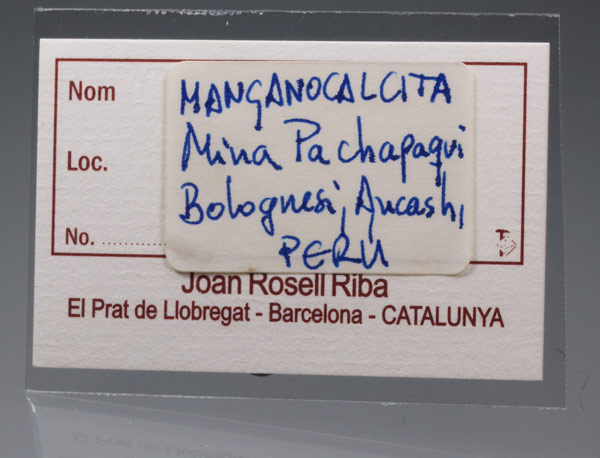
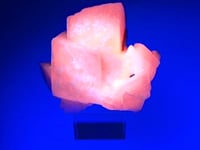
Group of rhombohedral calcite crystals of very good size, with defined faces and edges, with interpenetration twins. Slightly pinkish white in colour, matt faces. This specimen stands out for its intense fluorescence and more than notable fluorescence when illuminated with UV-LW light. It comes from the Jaime Murria collection (Barcelona).

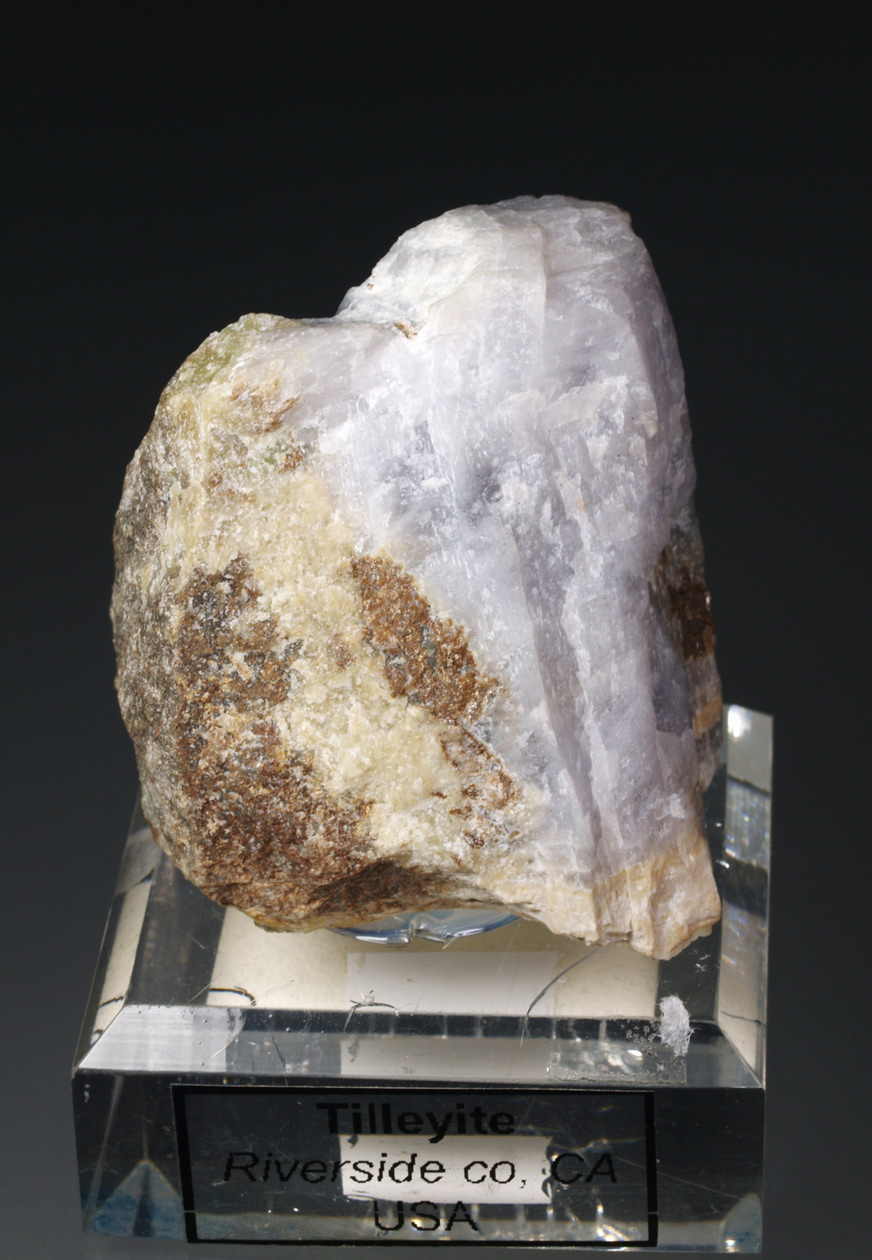
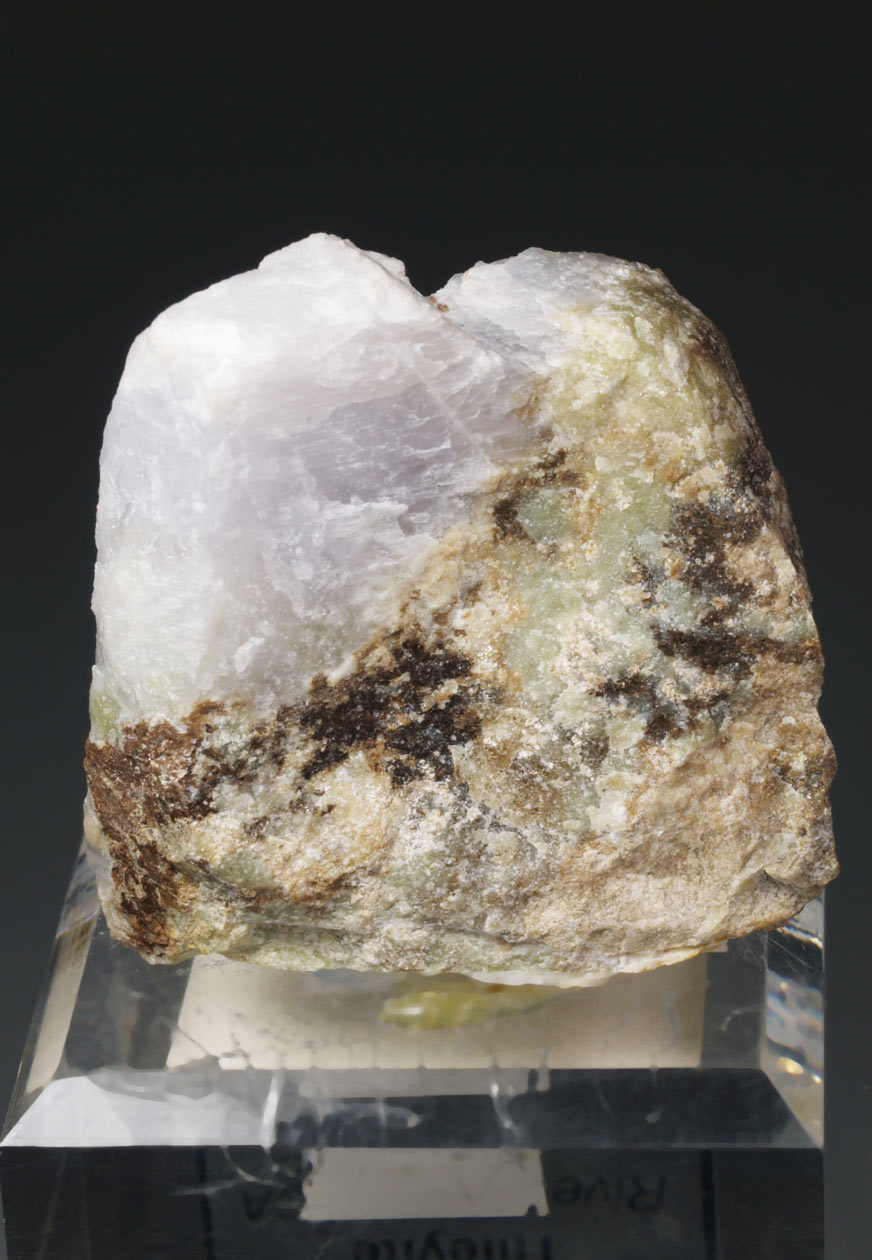
White to bluish spathic mass of tilleyte, a rare calcium carbonate silicate whose type locality is Crestmore. It is accompanied by merwintite (white), vesuvianite (bright brown), monticellite (cream-brown). Analysis will be sent to the buyer.
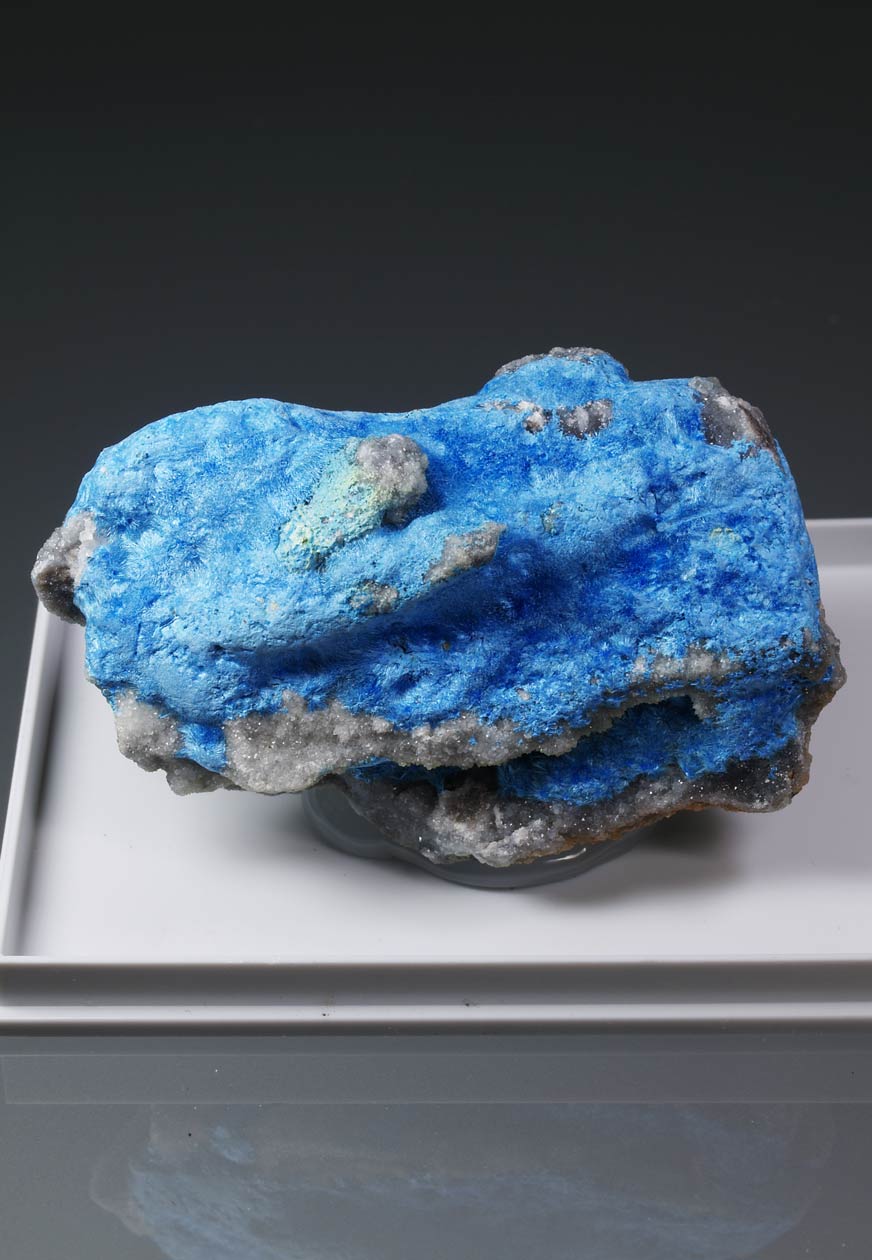
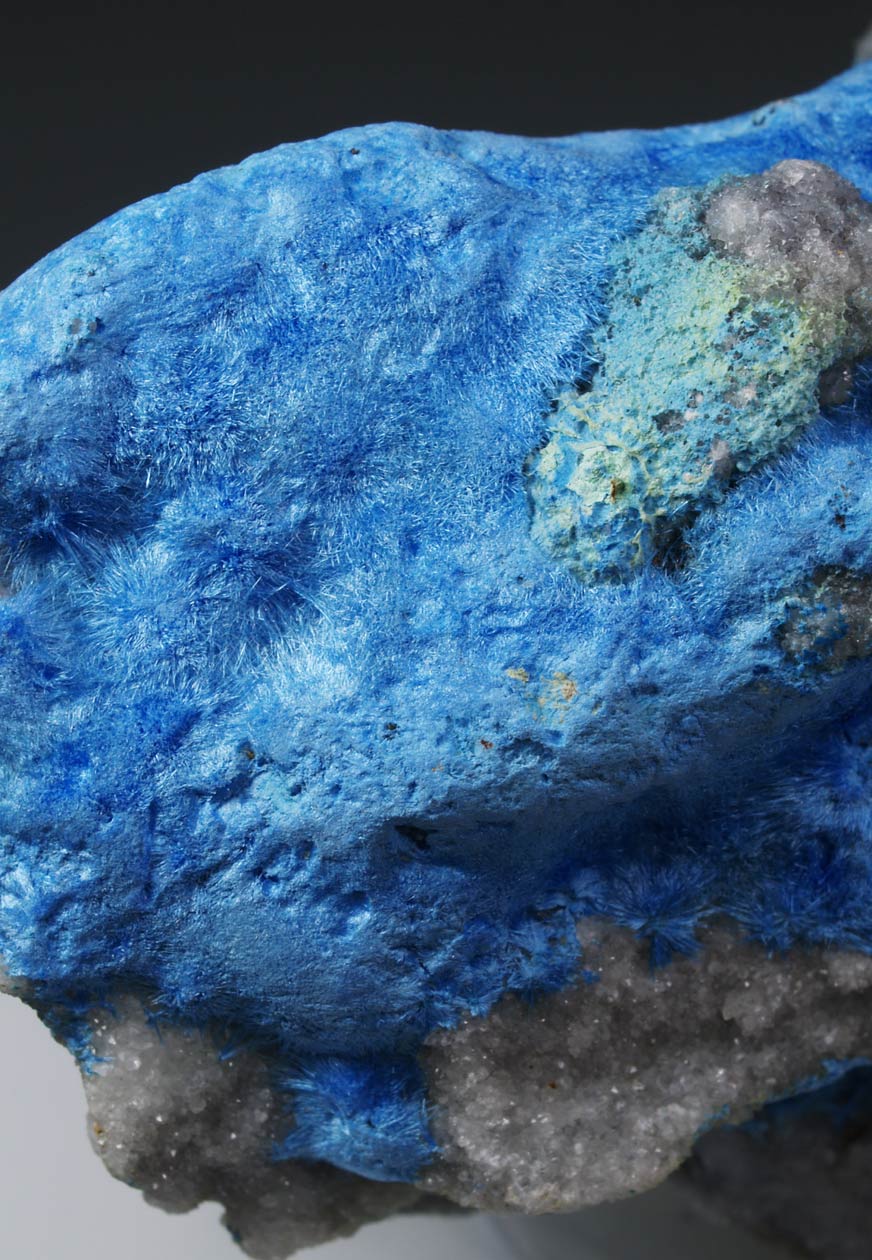
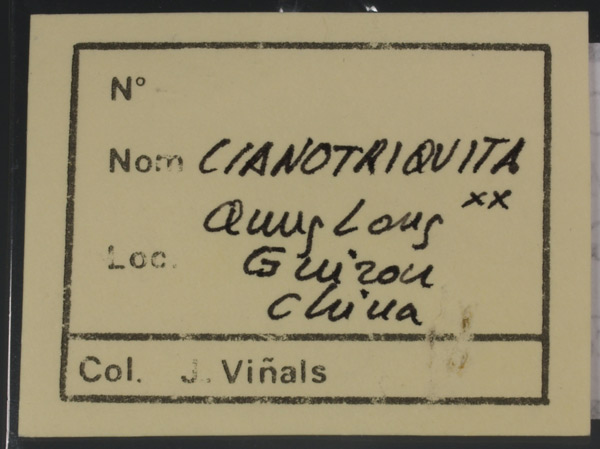
Velvety layer of cyanotricite covering the qcalcite matrix with small fluorite cubic crystals. The colour is very attractive. It comes from J. Viñals and the E. Nicolau collection (Barcelona). Very aesthetic specimen.
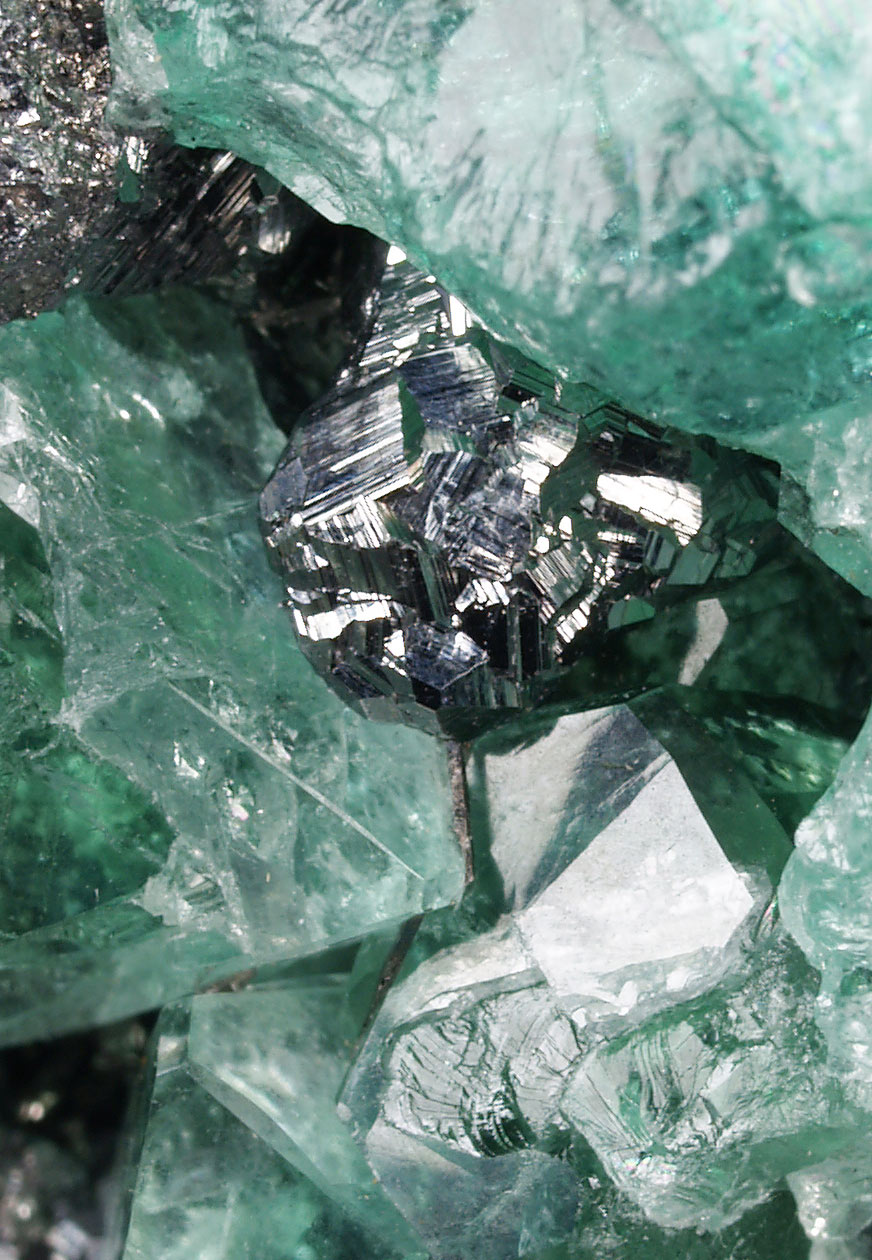
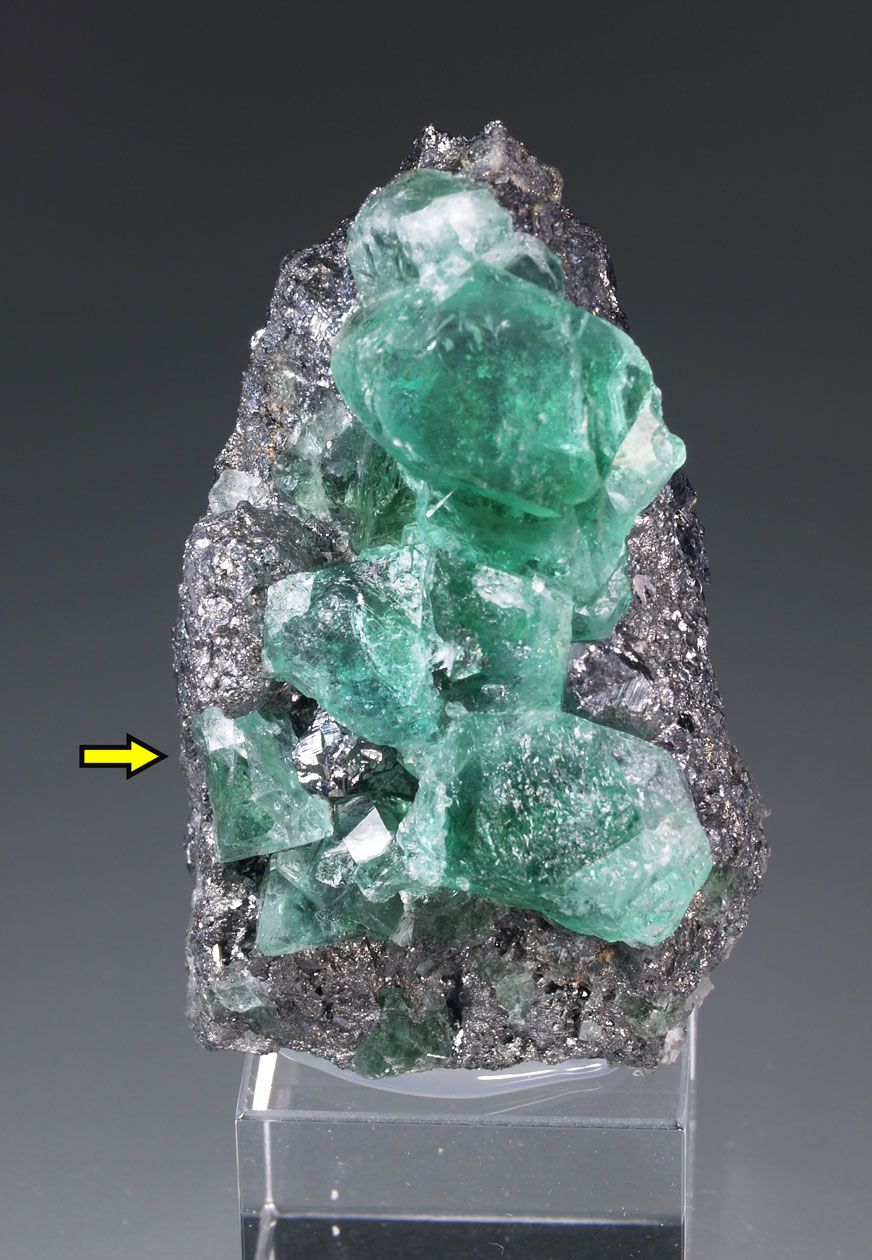
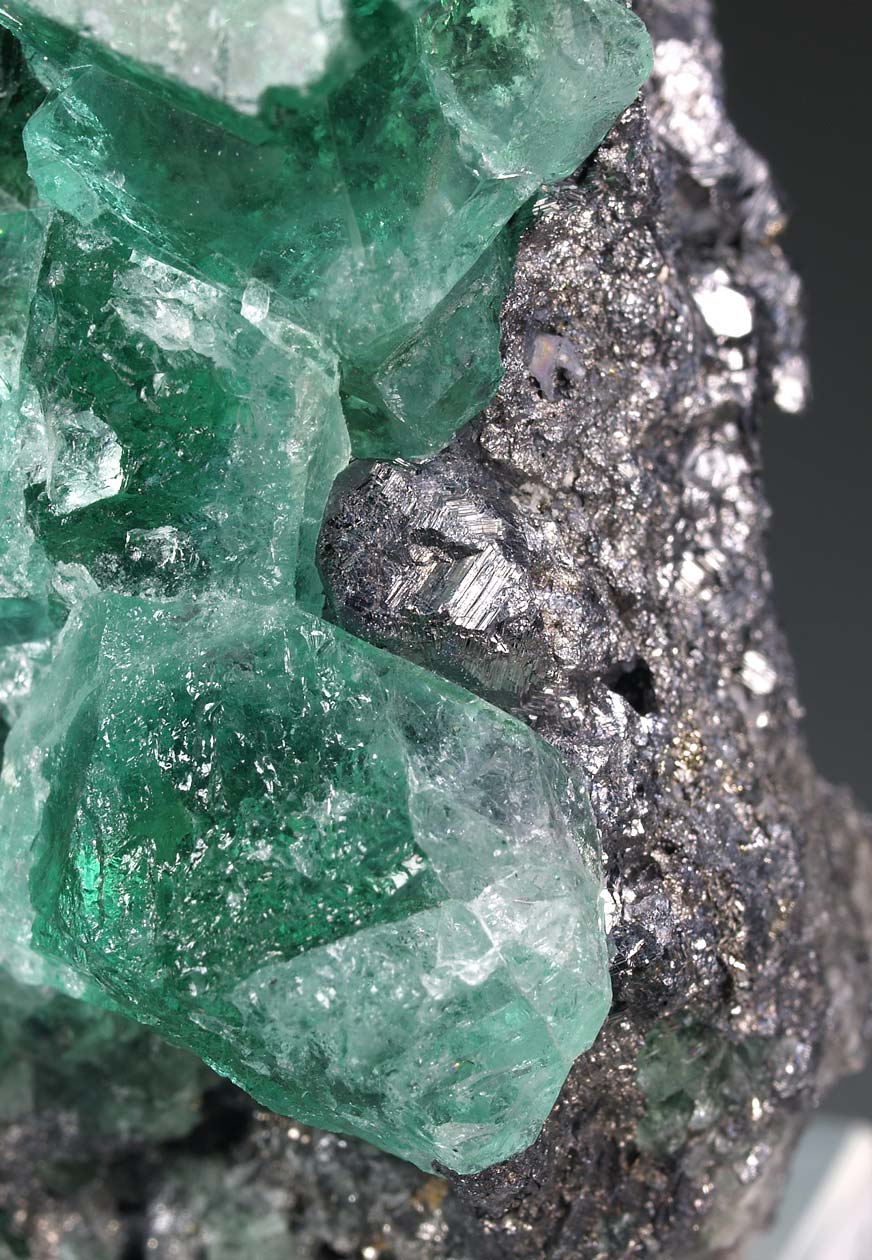
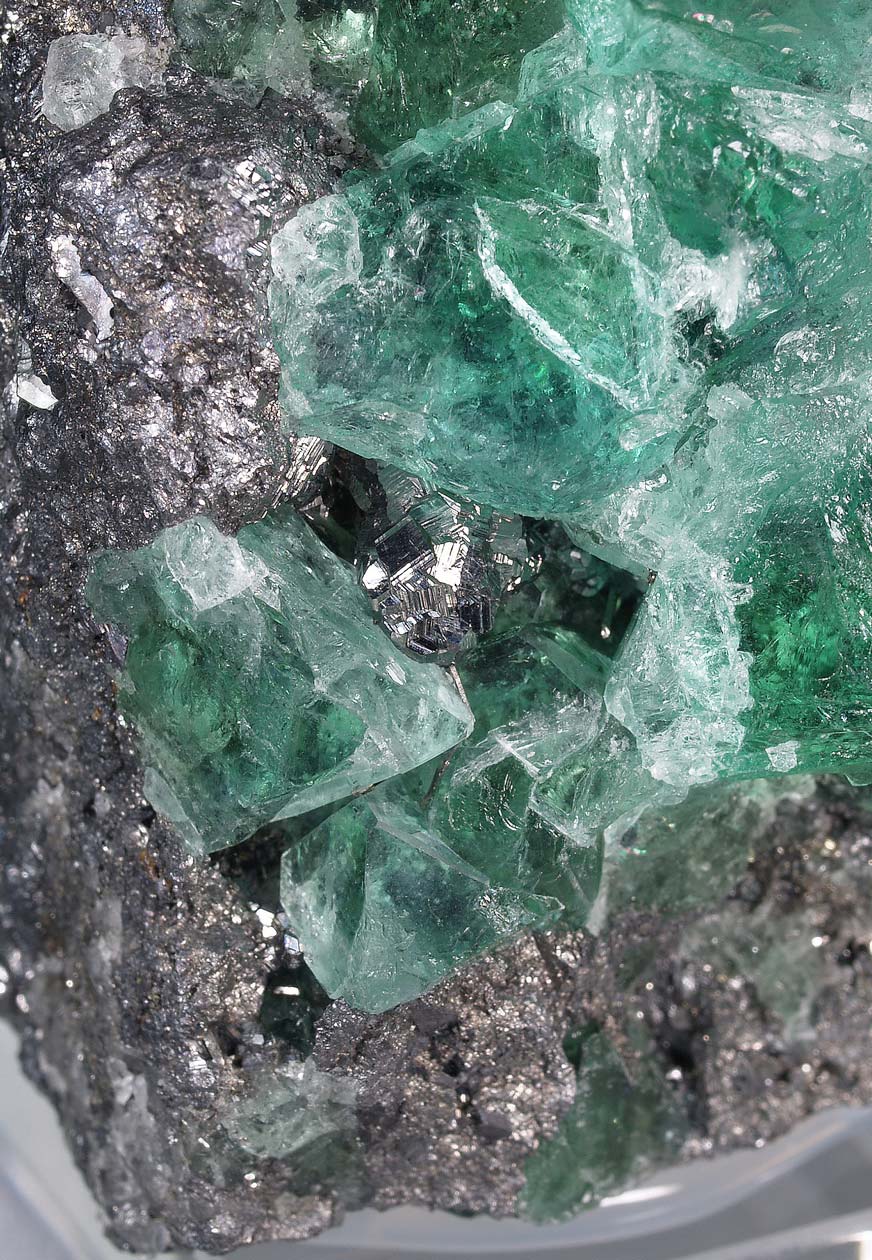
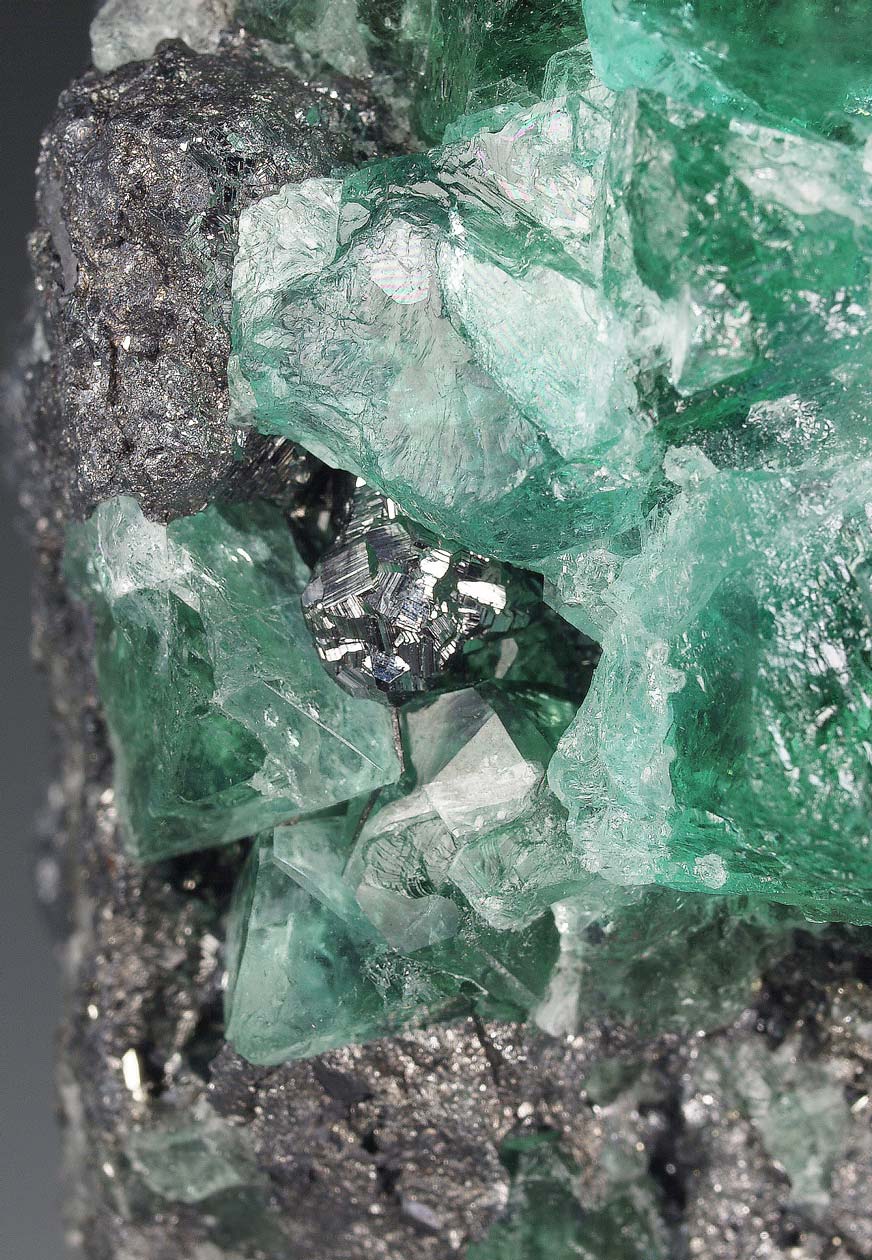
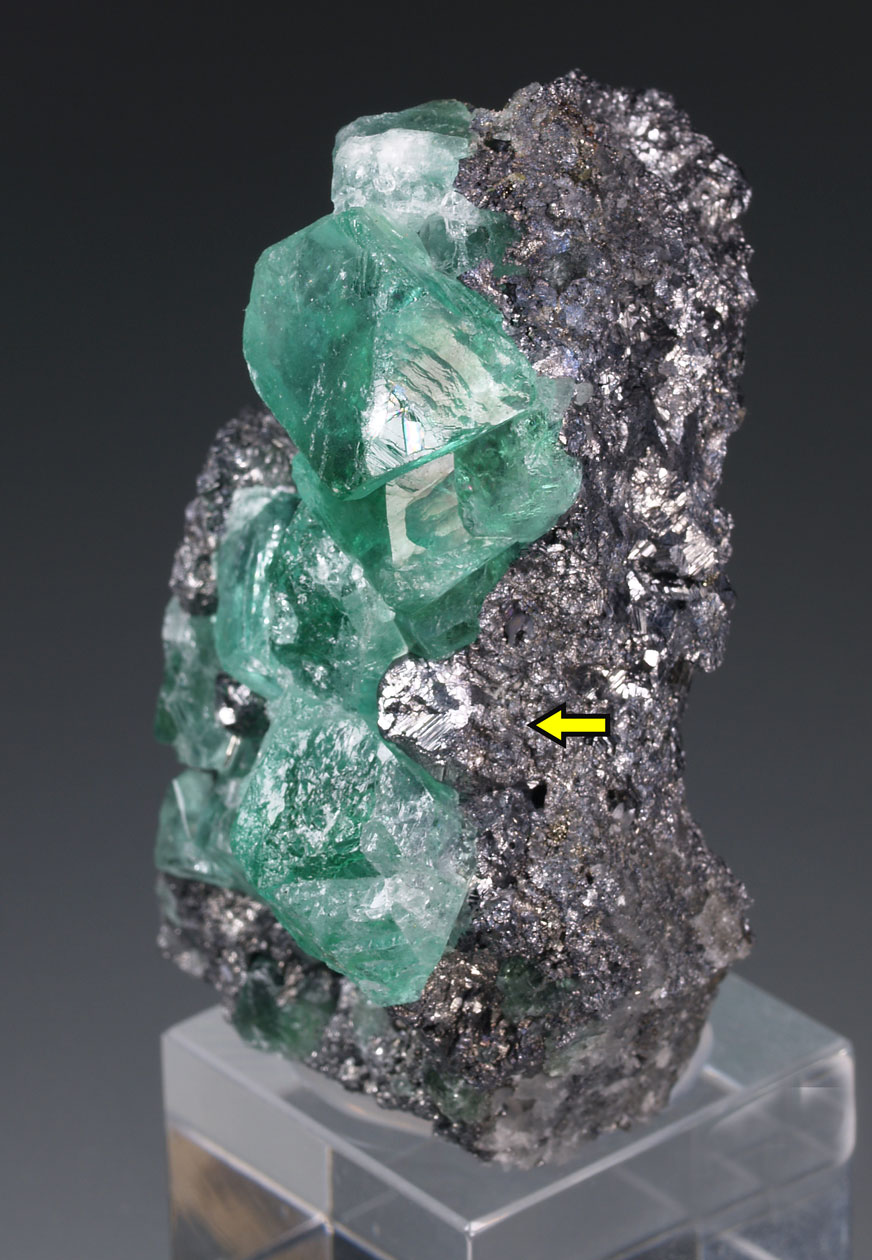
Group of geocronite-jordanite crystals, with striated pseudohexagonal shapes, very bright and rich in facets. The matrix is mainly composed of geocronite-jordanite, with various cavities where we observe striated crystalline faces.The analyzes show a correlation between geocronite-jordanite, both are isostructural and form series. Crystals analyzed show that the composition moves in the intermediate zone of the series. The geocronite-jordanite crystals are accompanied by sphalerite, galena, associated with transparent crystals of green fluorite.
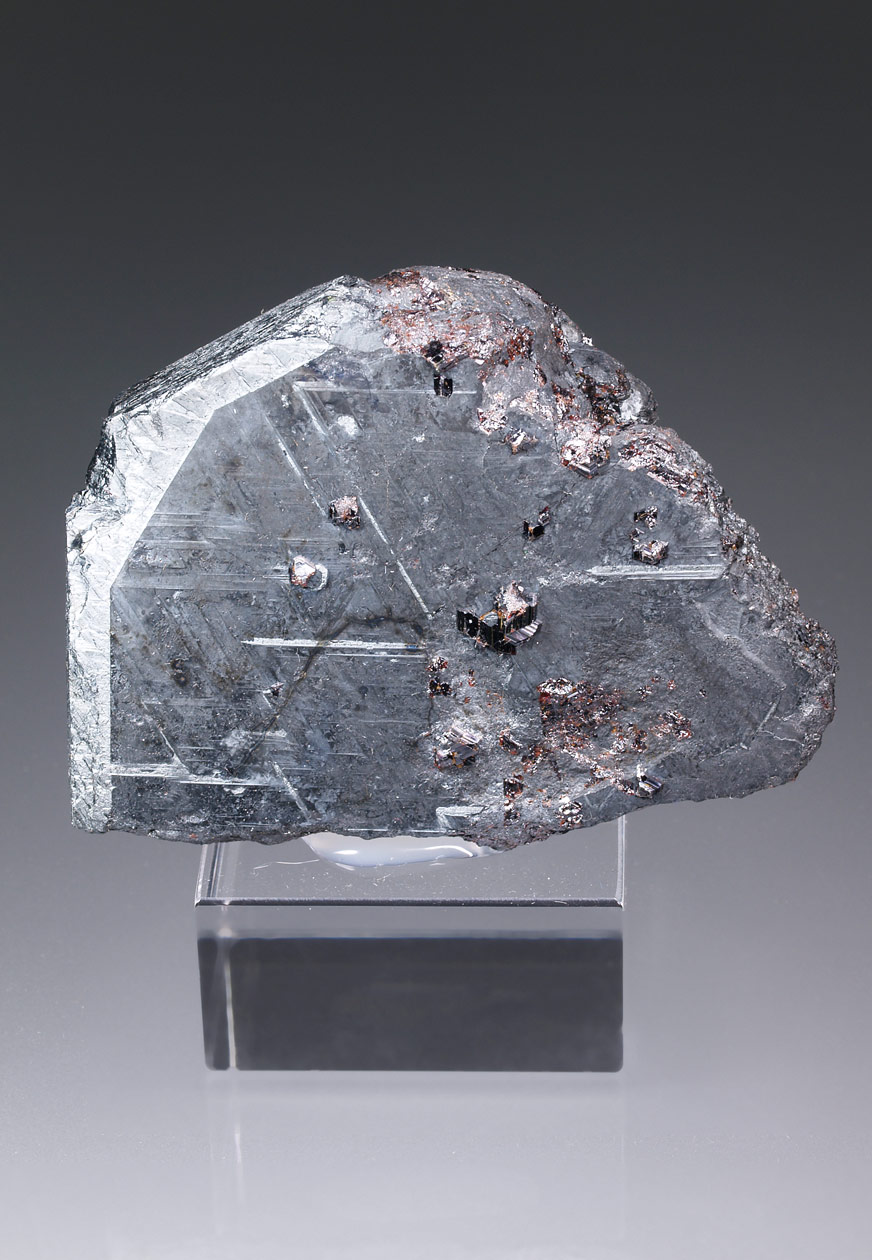
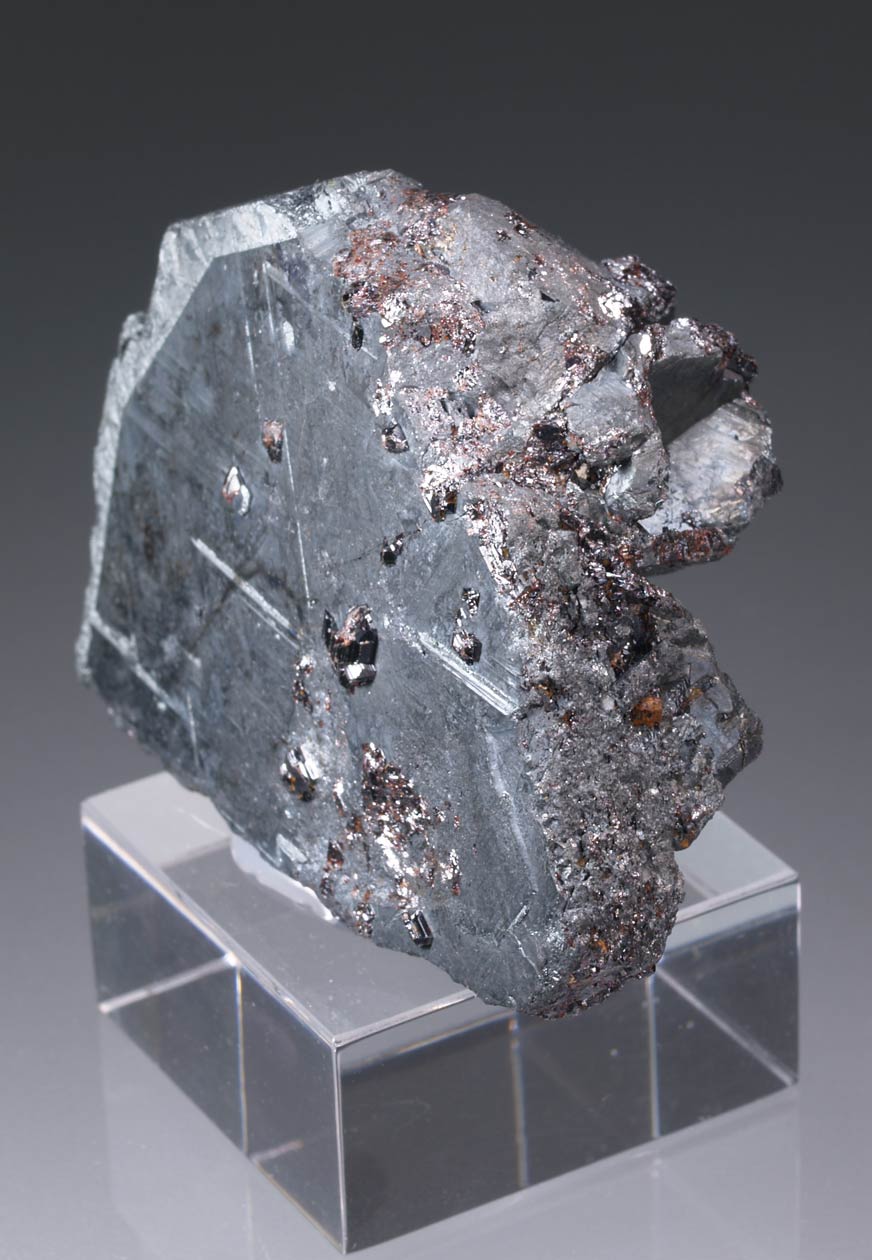
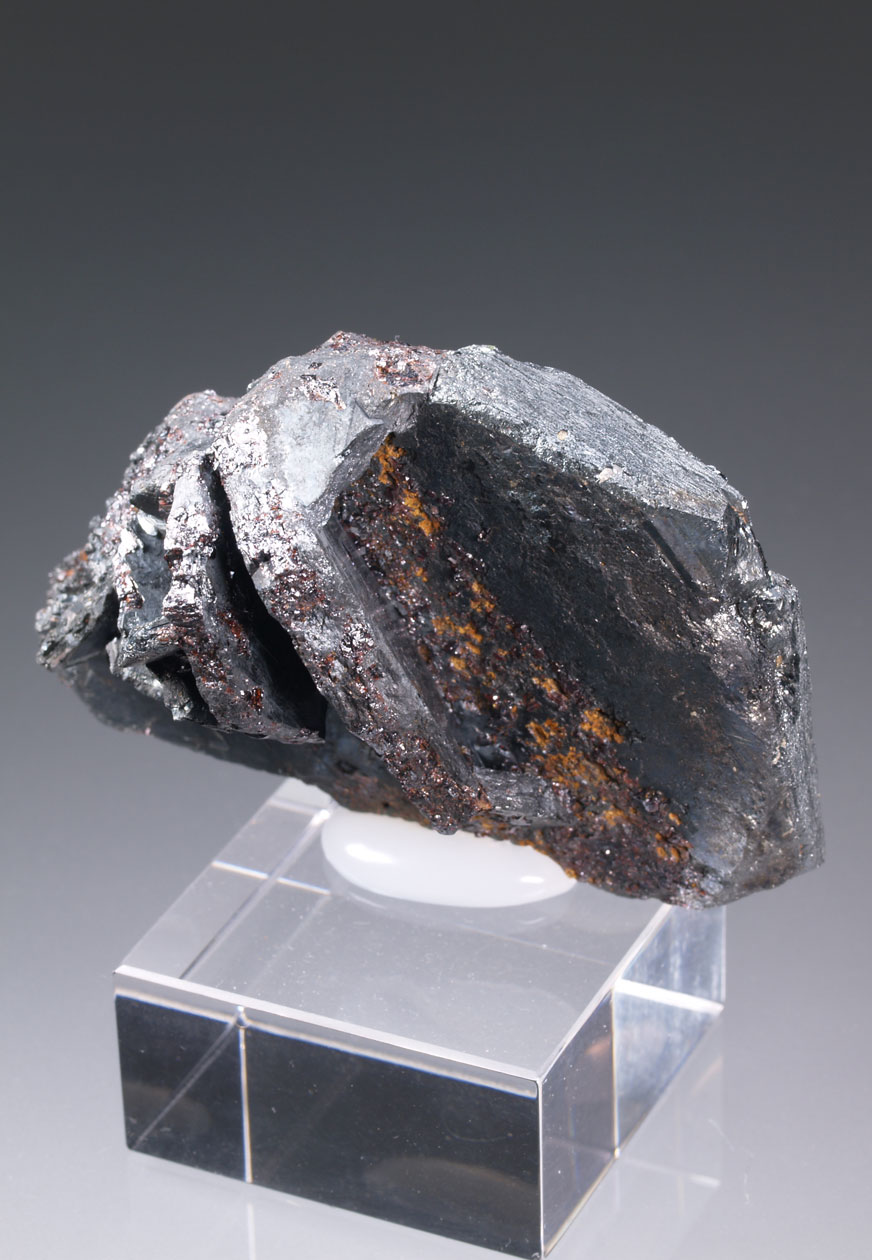
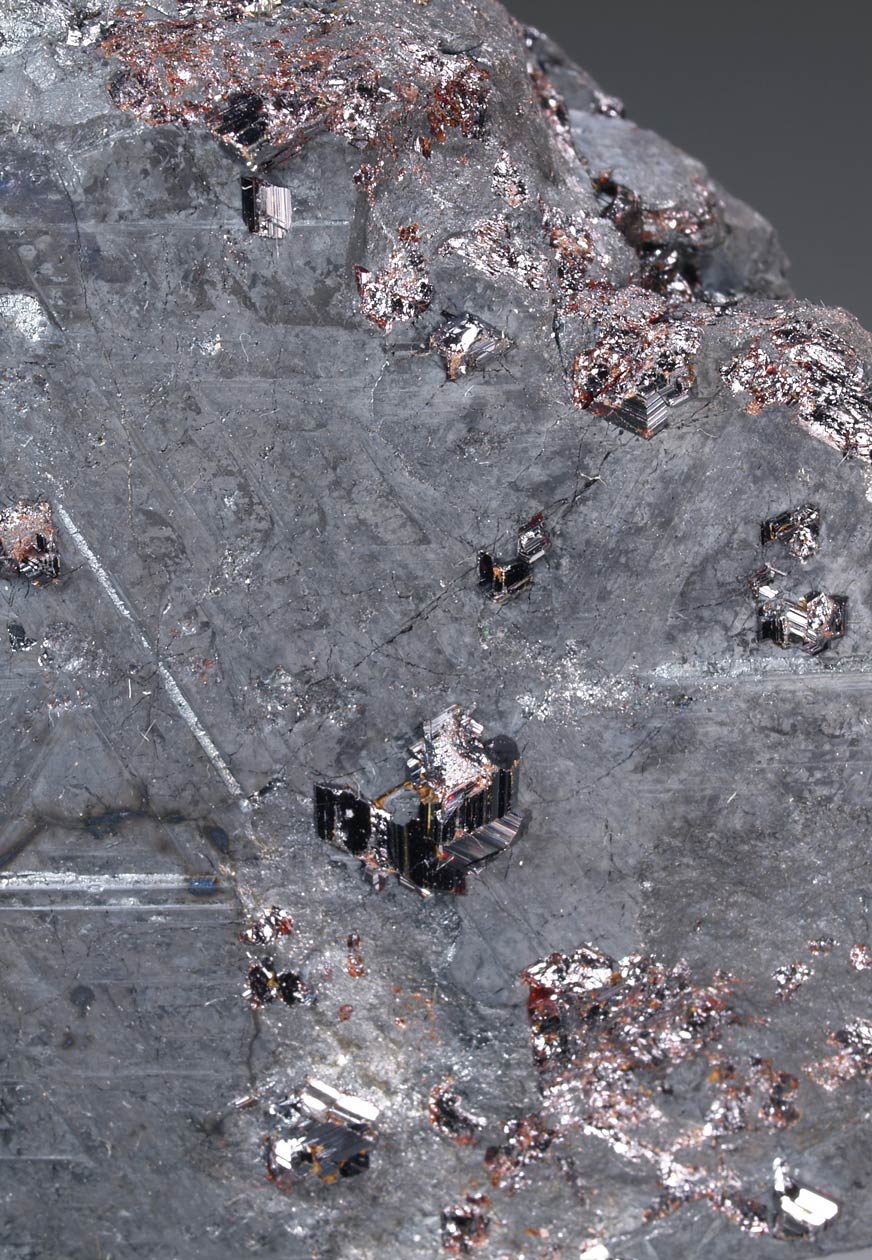
Epitaxial growths of rutile on a tabular ilmenite crystal pseudomorphized by rutile and hematite. The bright red epitaxial rutile crystals form elbow twins. The pseudomorphized ilmenite crystal has very marked geometric growth forms. Good sized and fine specimen.
Aleksander Rečnik et al. (2015) indicates that this complete transformation involves three successive exsolutions processes: (1) exsolution of ilmenite lamellae from the primary ferrian-ilmenite, (2) exsolution of rutile lamellae from ilmenite triggered by oxidation of ferrous iron and remobilization of cations within the common oxygen sublattice and (3) exsolution of hematite precipitates from Fe-rich rutile lamellae. Remnants of all three processes can still be observed in the samples (Rečnik et al., 2015, Contributions to Mineralogy and Petrology).
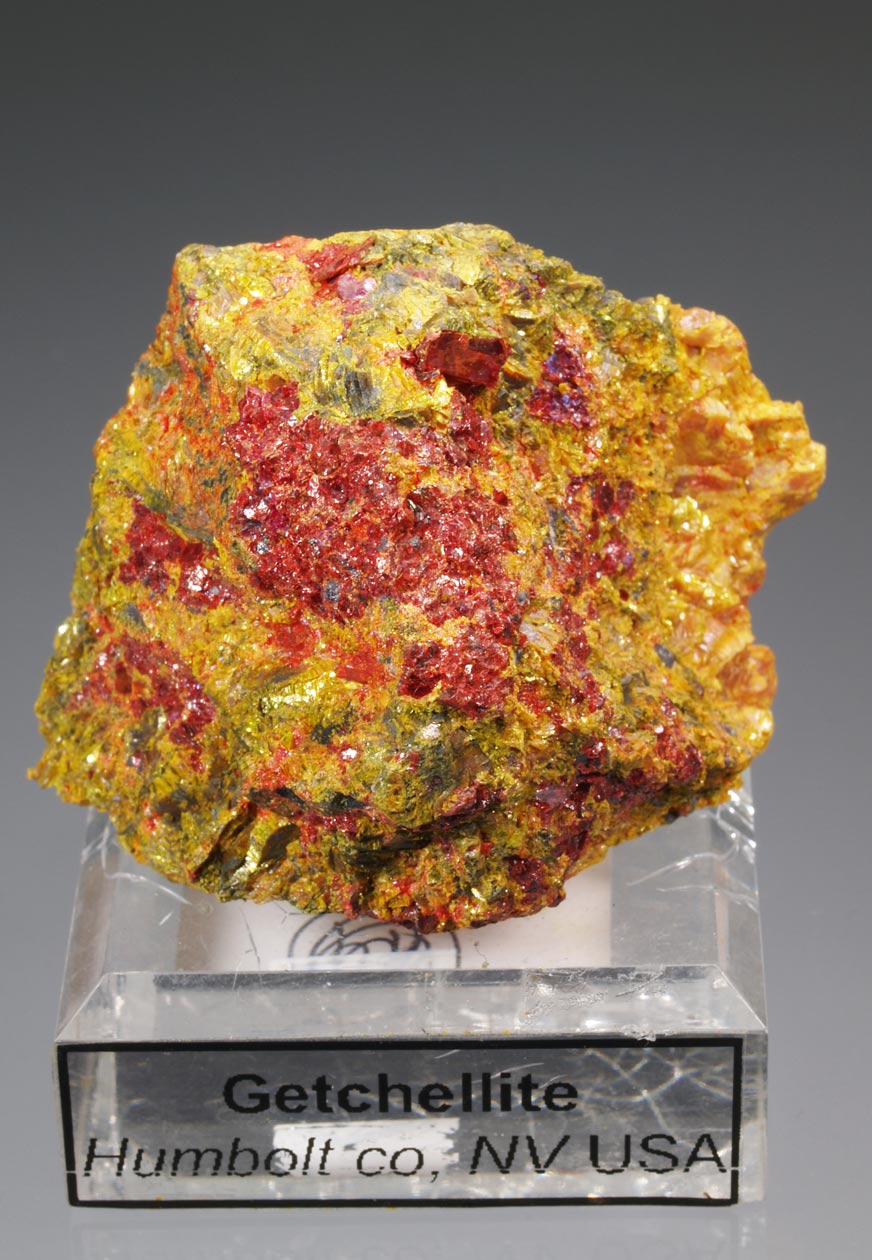
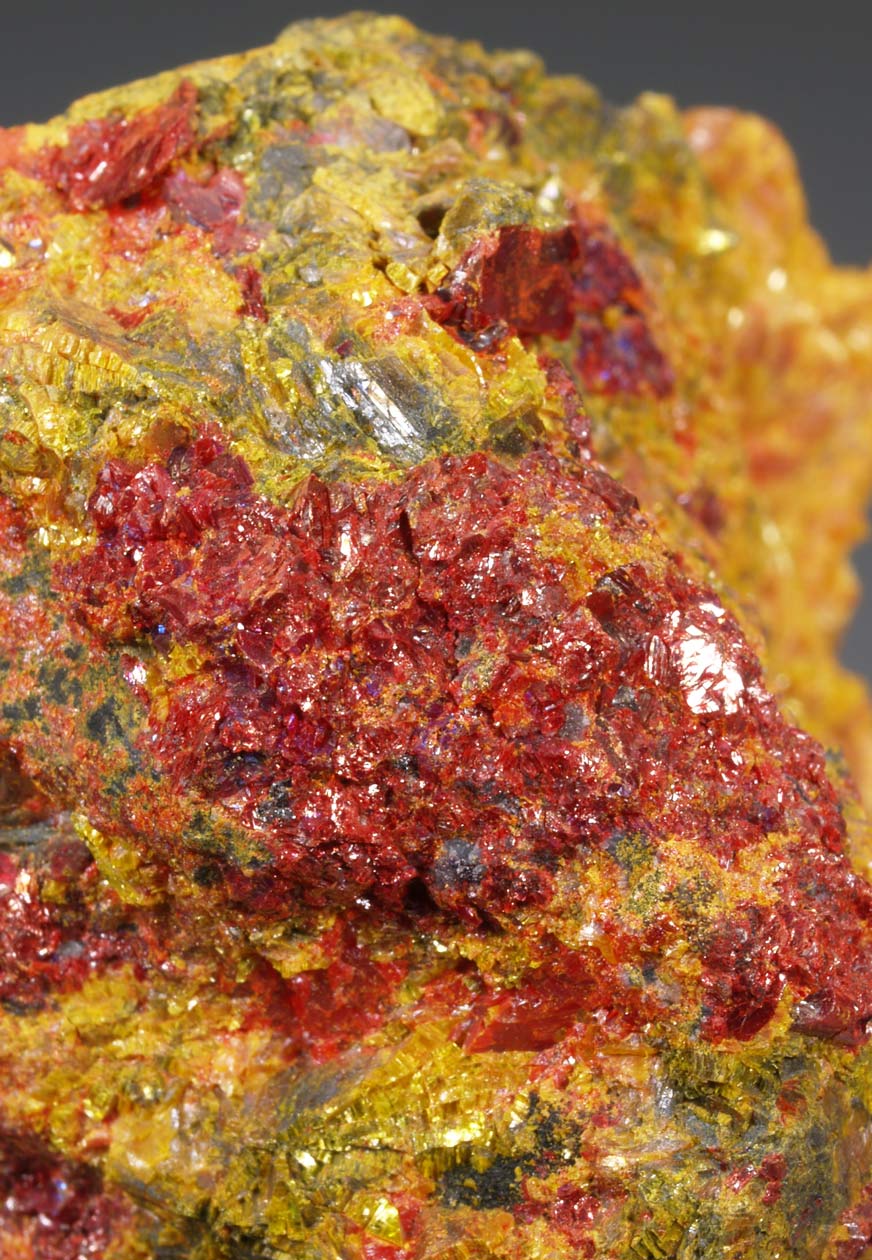
A very rich specimen of getchellite, with laminar crystals in the matrix, brilliant and with a characteristic red wine colour, which differentiates it from realgar, which is bright red. It is accompanied by yellow orpiment. The formula for getchellite is AsSbS₃, and its type locality is this North American mine. From Frank Manus col. and Shannon & Sons label.
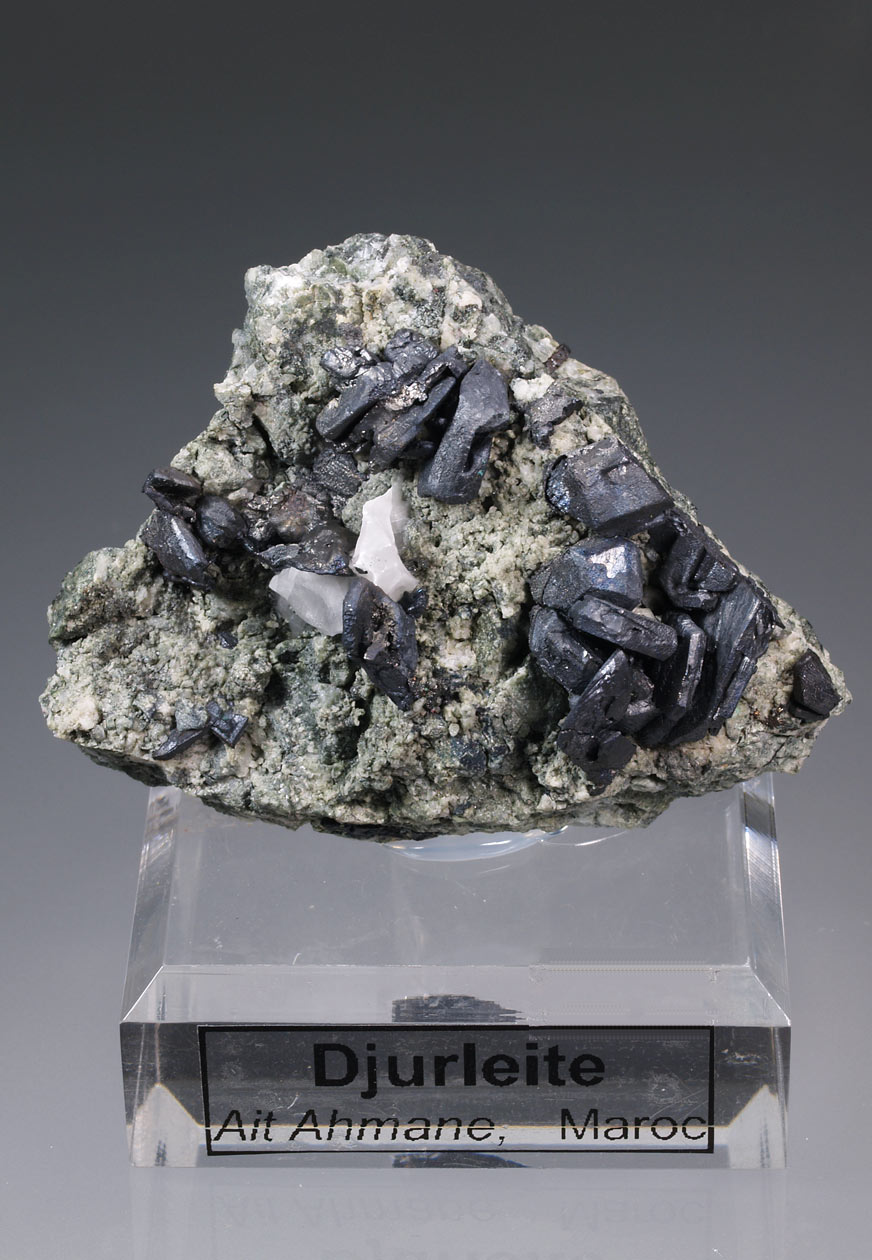
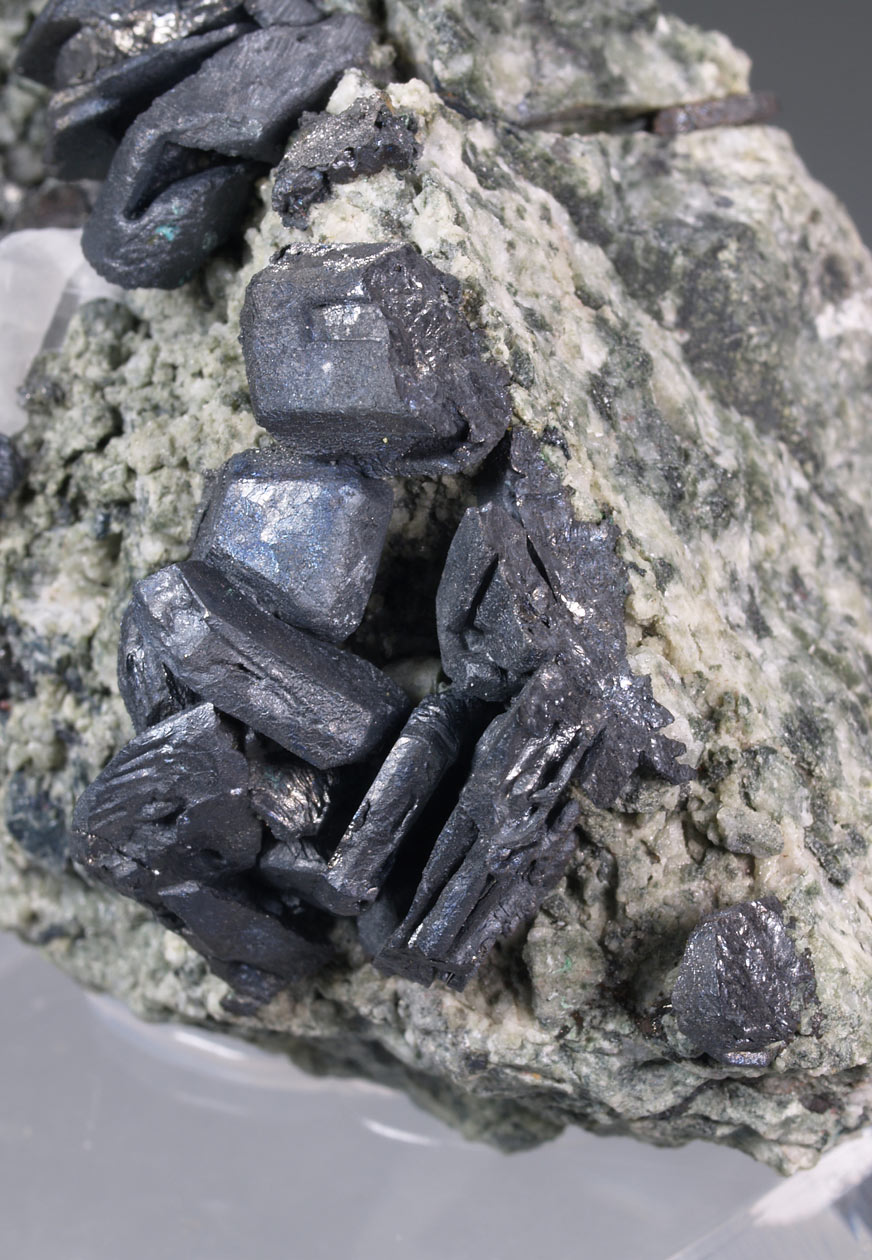
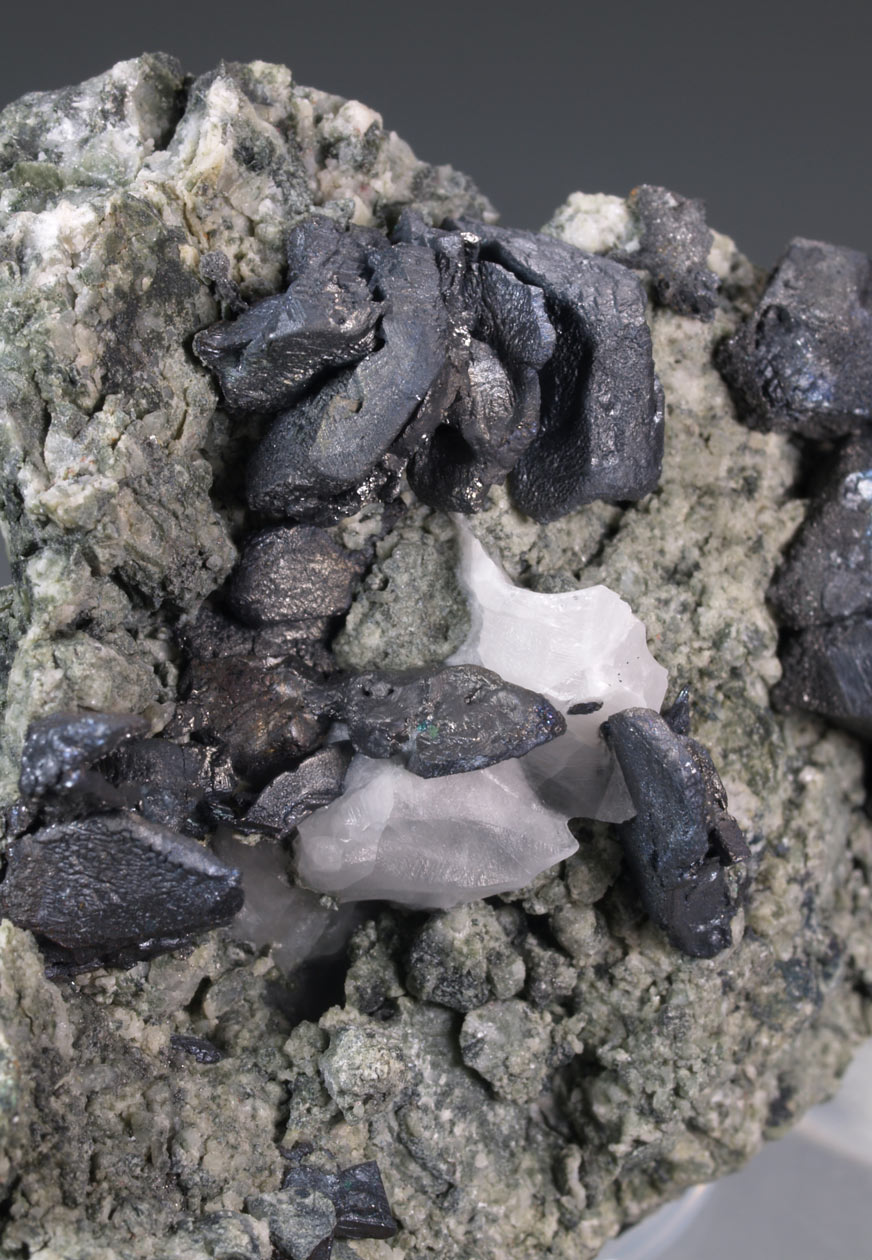
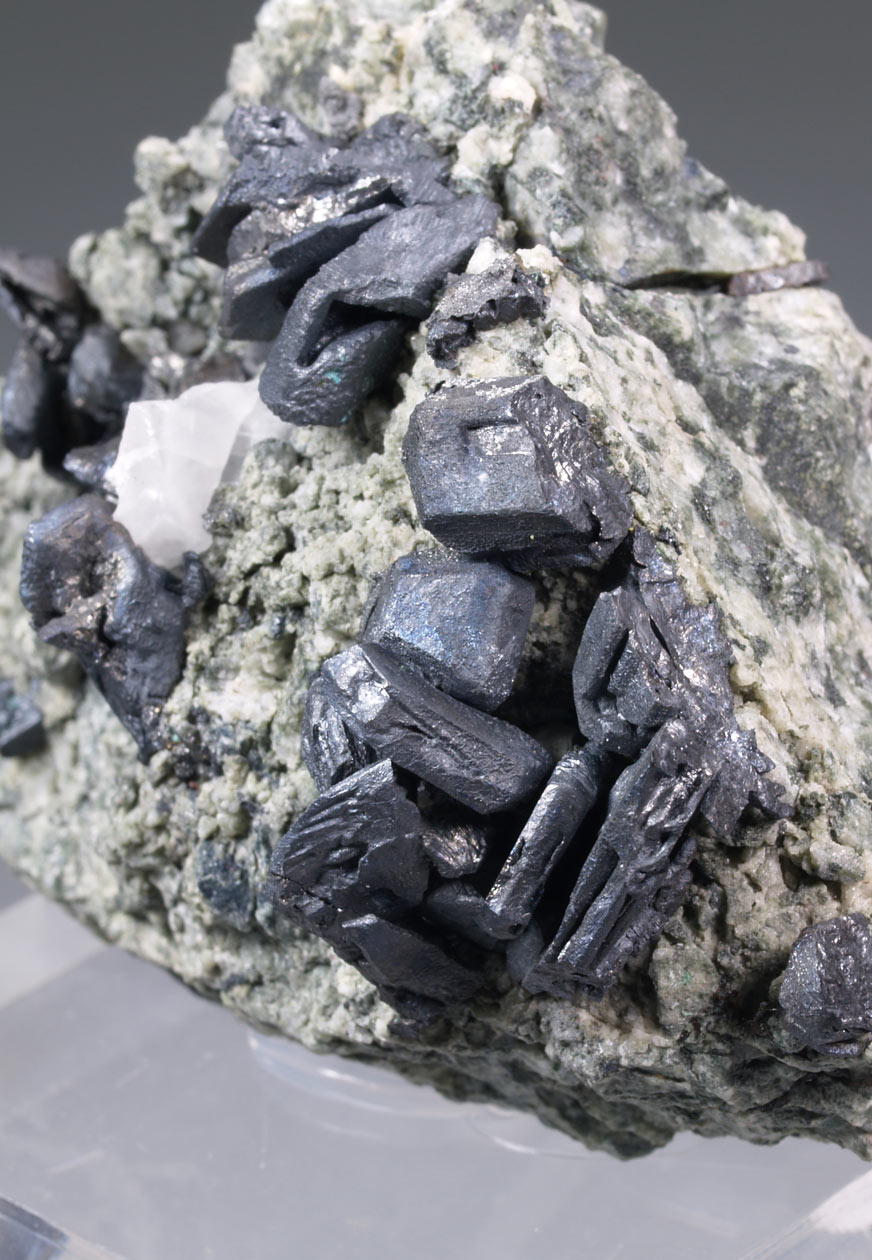
The first specimens were found in the mines of Aït-Ahmane between 2014 and 2015. The best ones reached the market around 2017. They are twinned crystals of remarkable perfection for the species, formed by intergrowths of djurleite and chalcocite. No better specimens have been found in the area and probably worldwide.
Although some relatively recent analytical results (see mindat) indicated that they were crystals of djurleite only, others indicated that they were mixtures of both species. Realistically, djurleite and chalcocite often appear together in the same crystal, and one can even transform into the other depending on the physical-chemical conditions present. For this reason I have preferred to preserve the name of both species. Interesting article: Pósfai-Buseck Amer. Min. 1994.
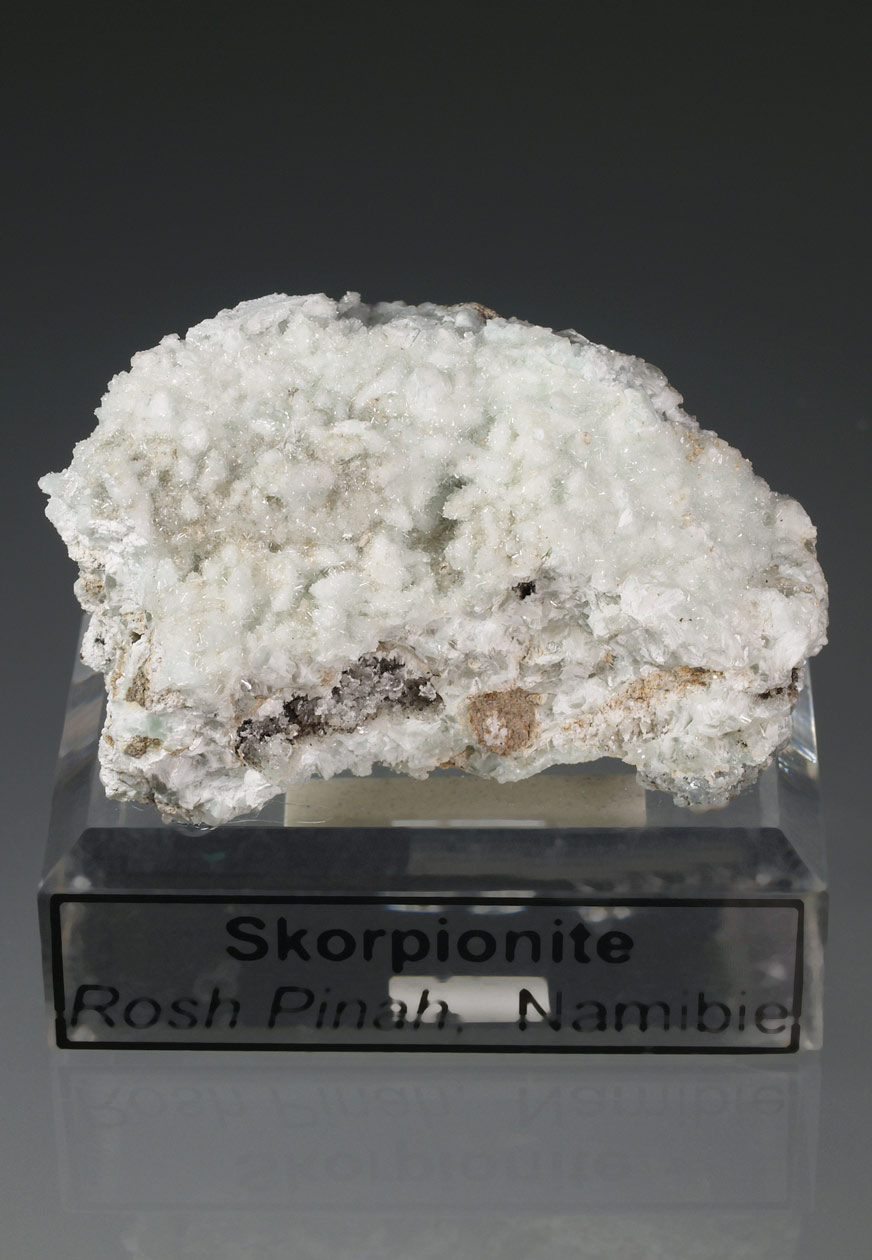
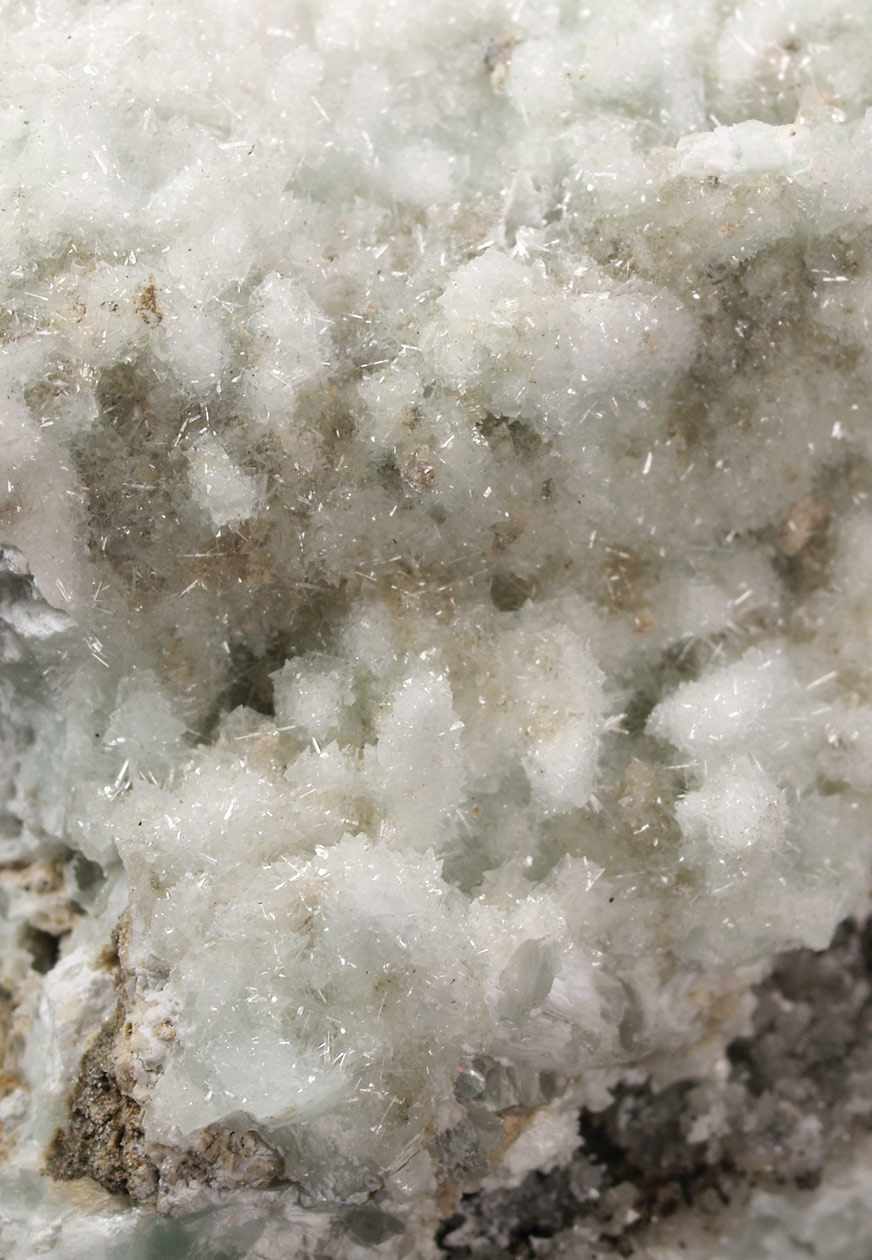
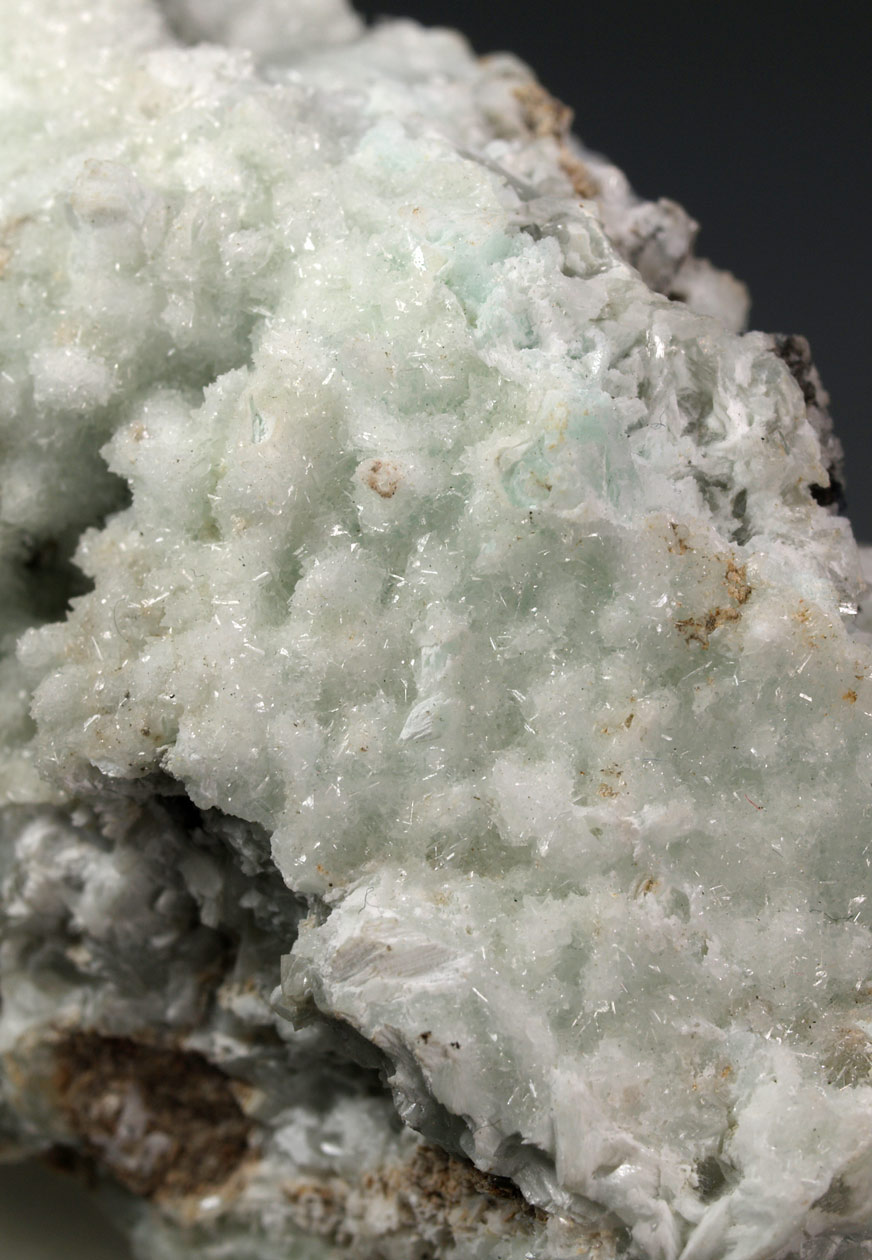
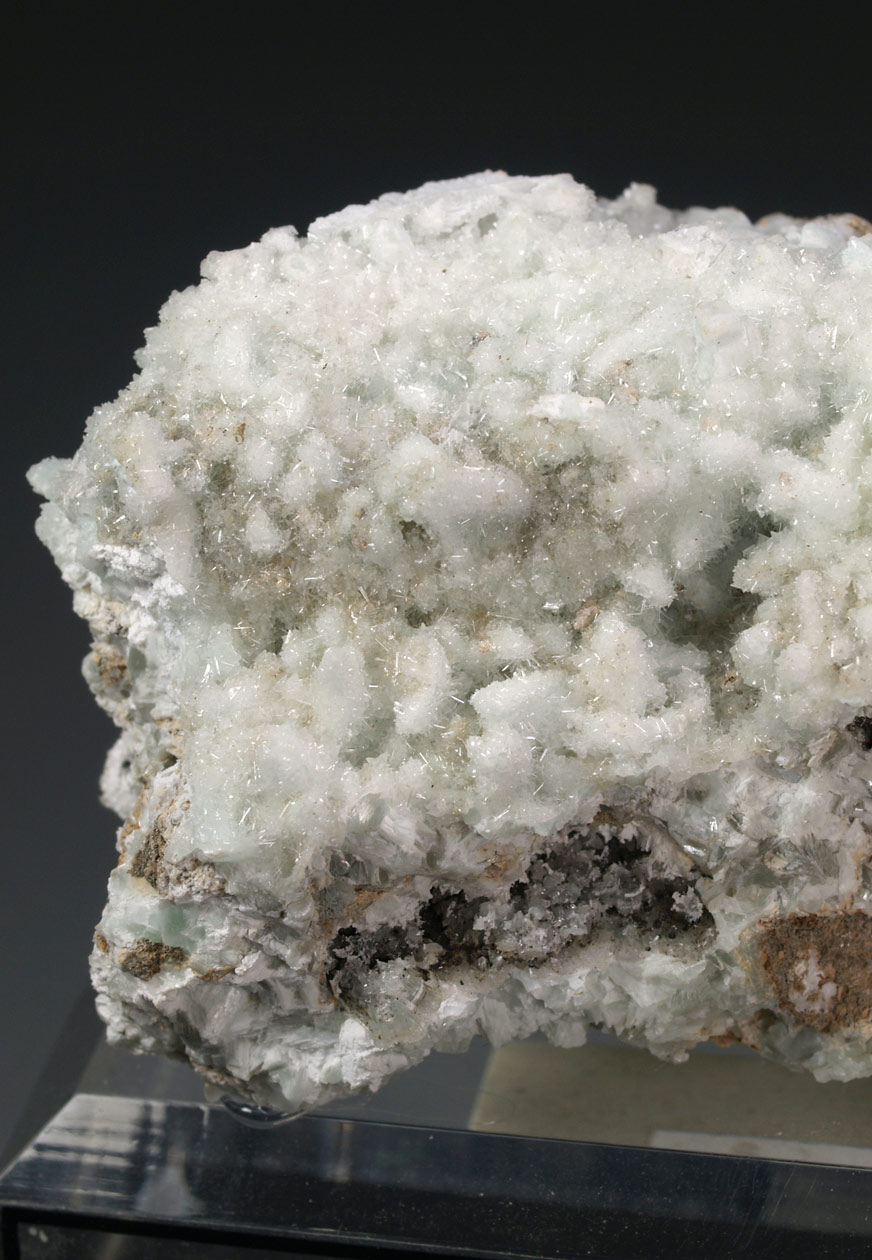
In addition to its type locality in Namibia, skorpionite has also been determined in Tsumeb, so there are only two localities in the world where this species has been found. This fine specimen shows a layer of soft greenish colored crystals of tarbuttite which are coated by tiny white "needle"-like crystals of skorpionite and rose-like groups of white hemimorphite on matrix. An excellent piece for the species, very rare to see on the market.
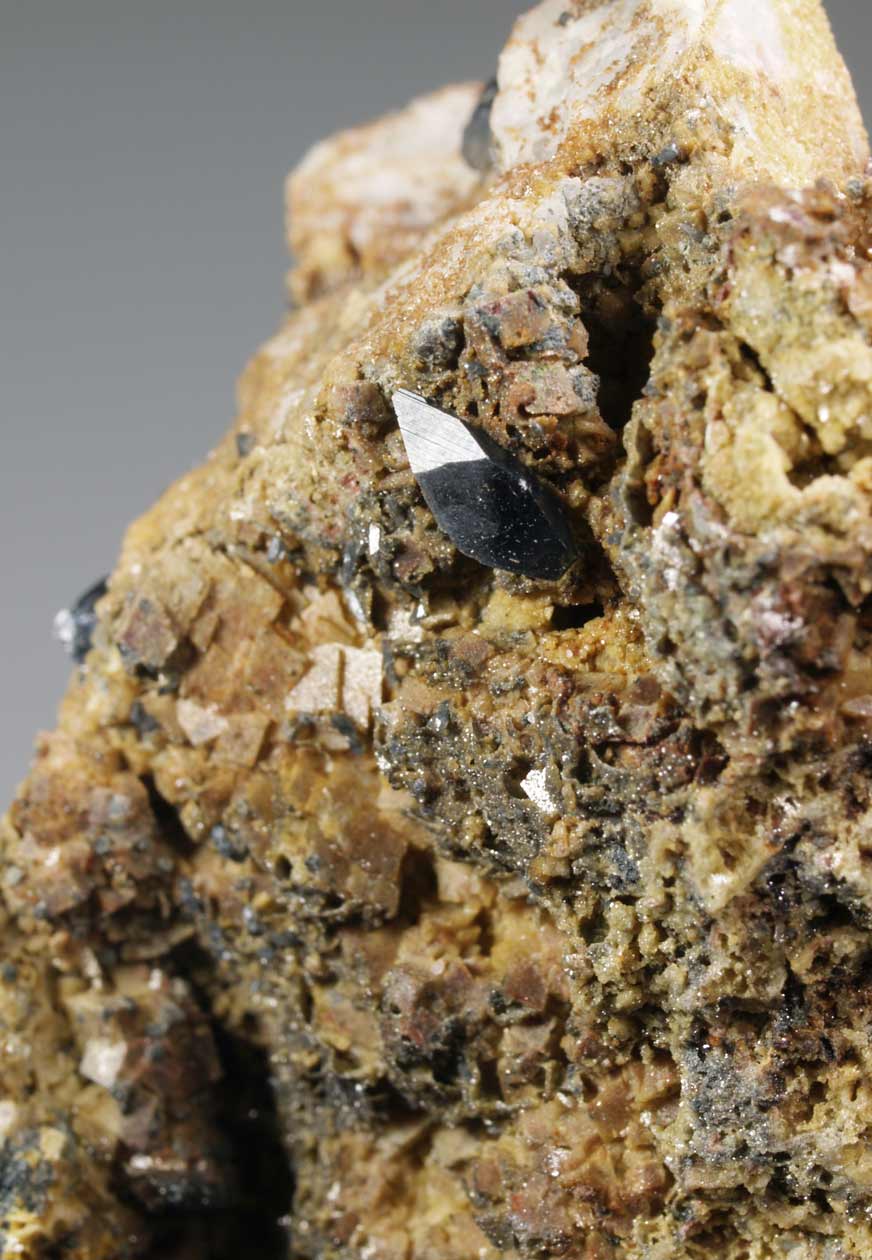
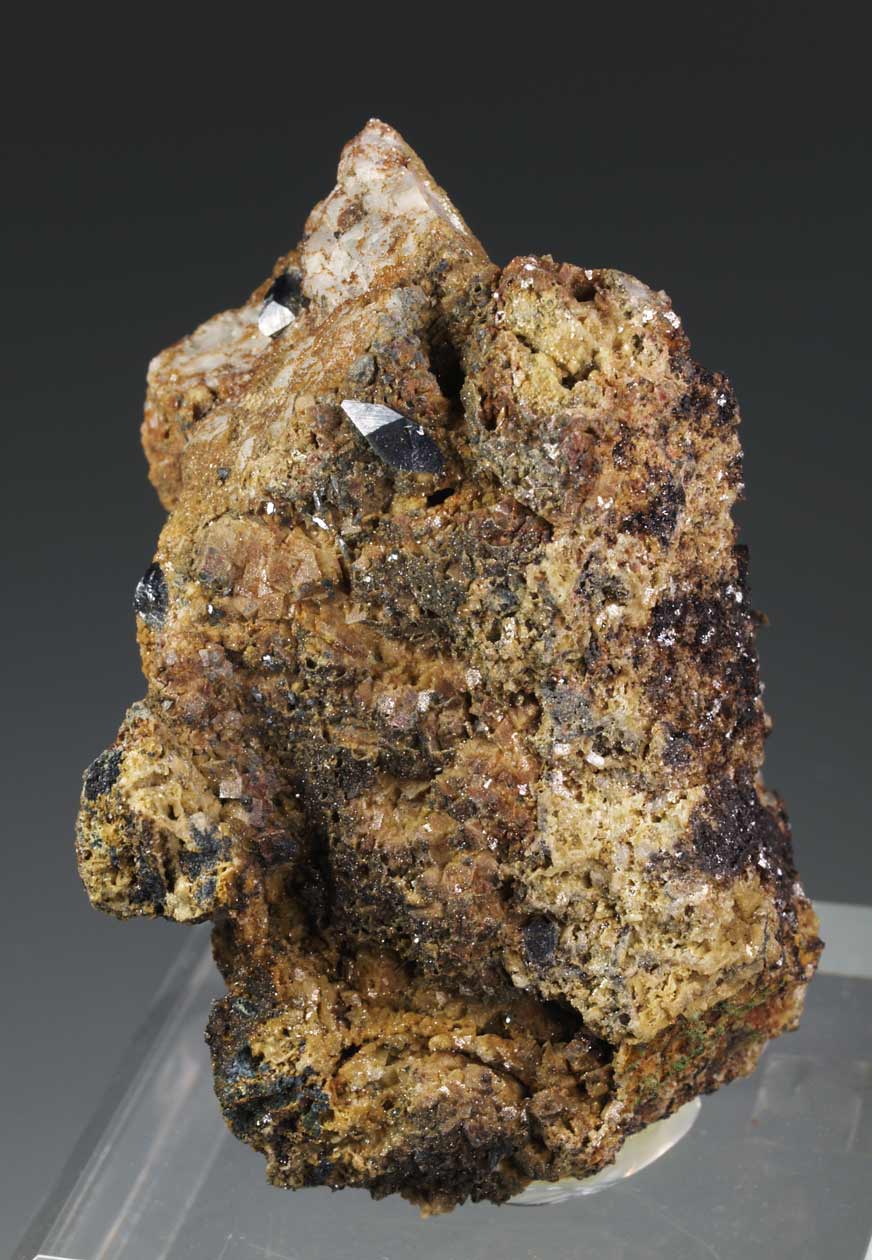
A very faceted tabular crystal of wulfenite. It stands out for its deep blue colour, which is unusual for this species. It belongs from the Bou Skour mine, where crystals of this type have been obtained, but they are usually very small, around a millimetre. This one measures 8 mm...
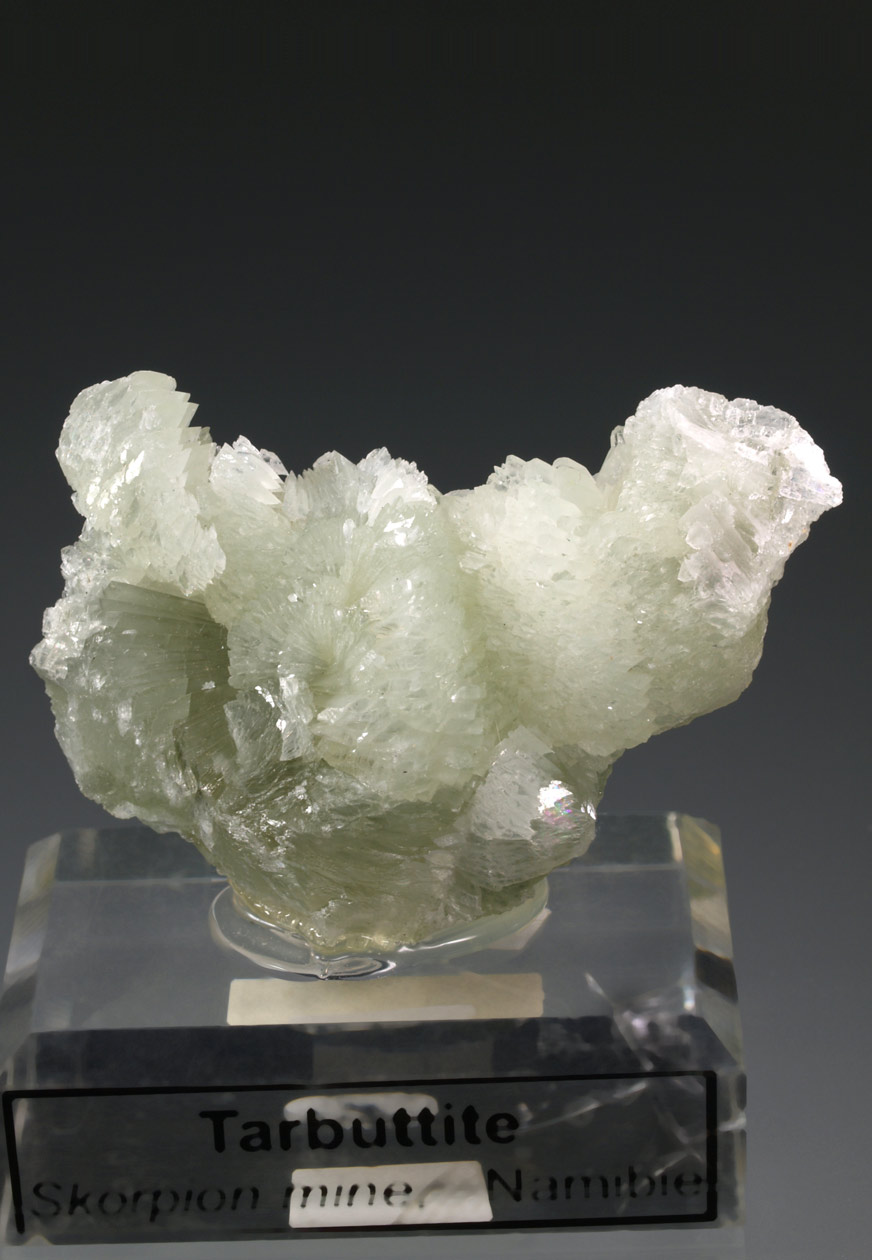
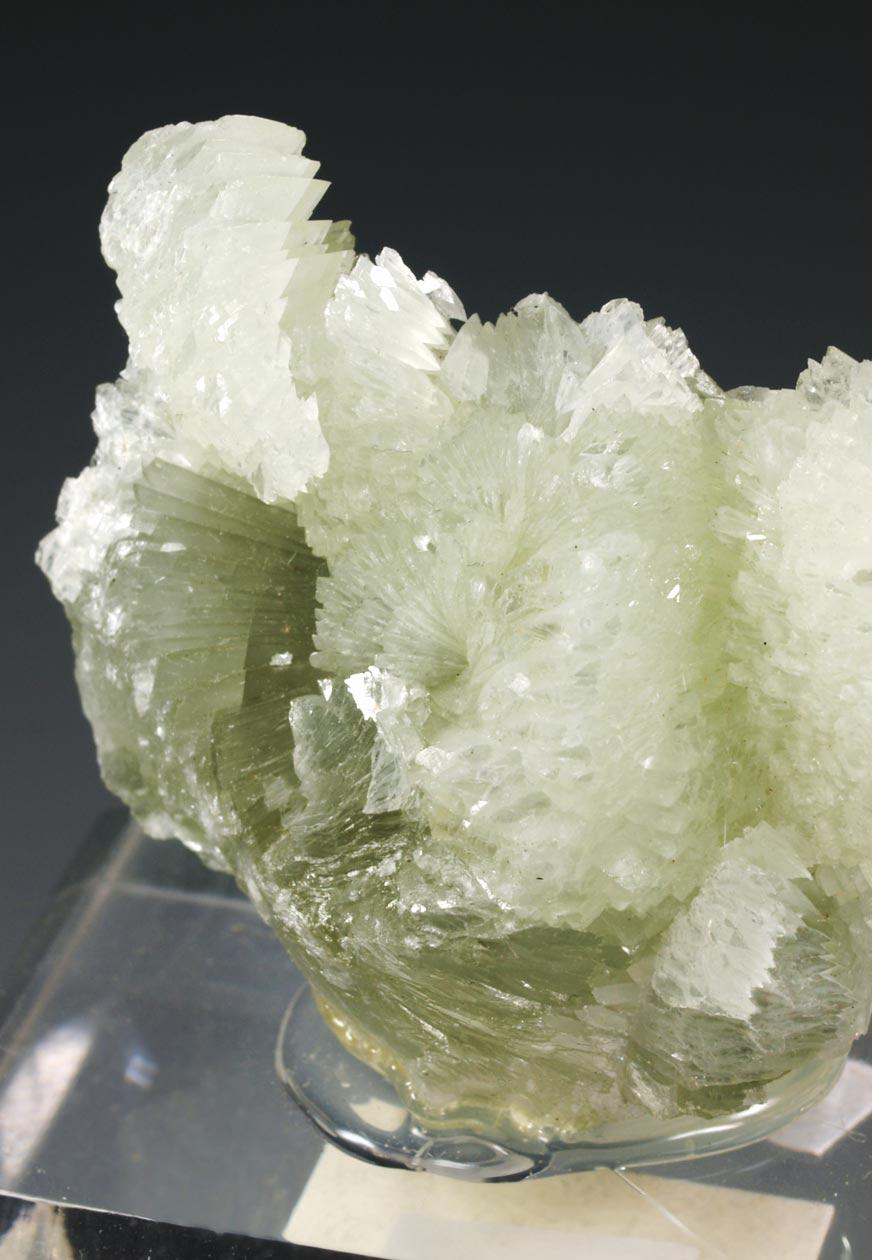
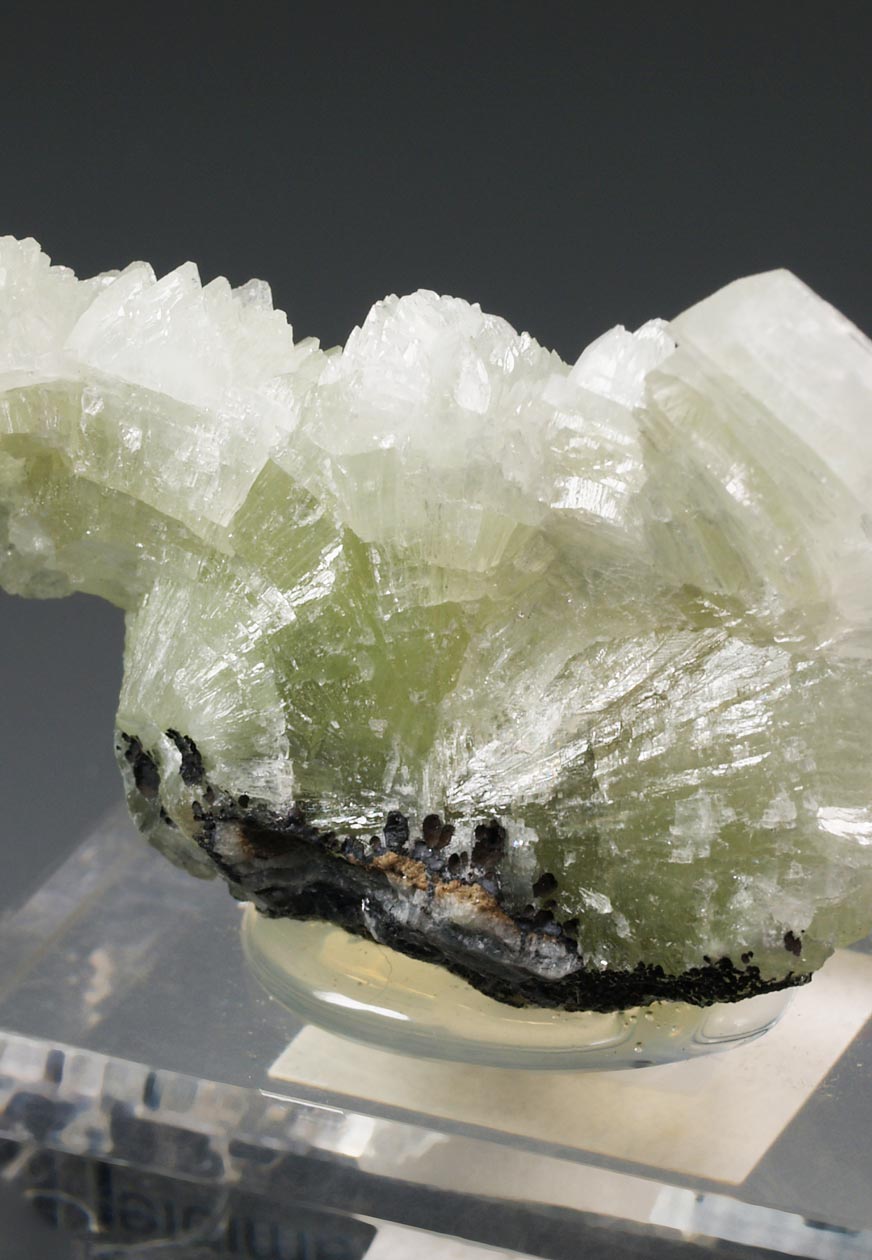
A specimen of this rare zinc phosphate formed by numerous tabular, well-defined, bright crystals with parallel and curved growths. They have a very characteristic light green colour. In the middle of the last decade, many samples of tarbuttite appeared from the Skorpion mine, but nowadays they are difficult to find.
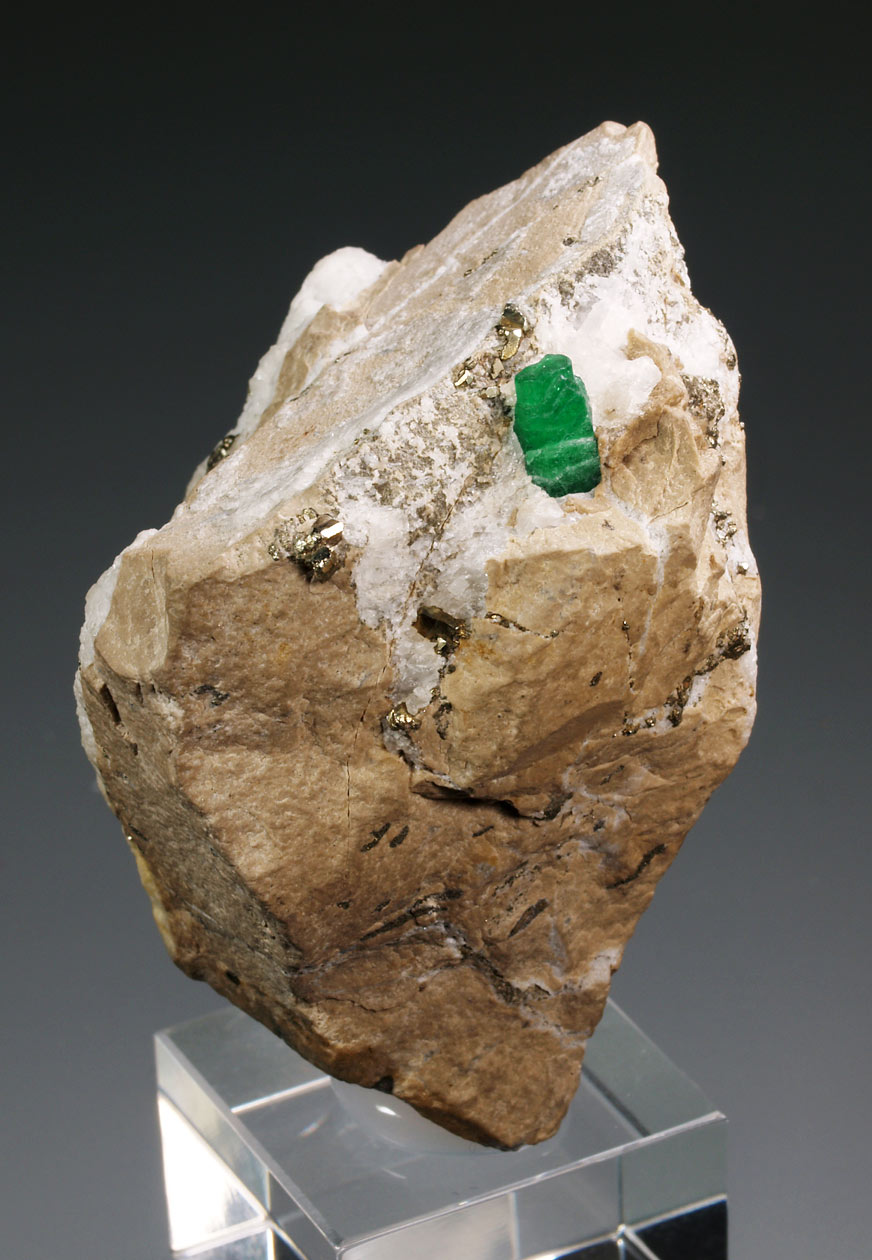
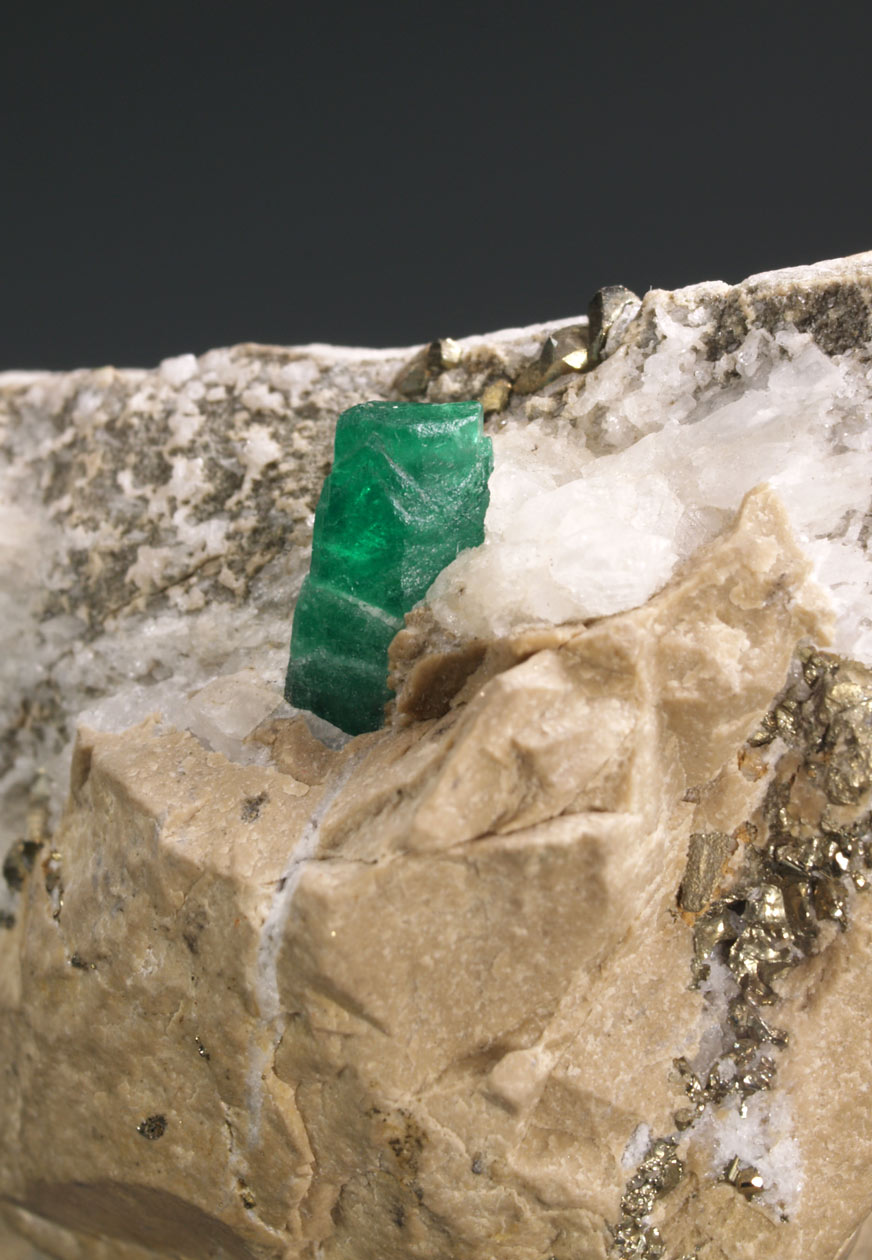
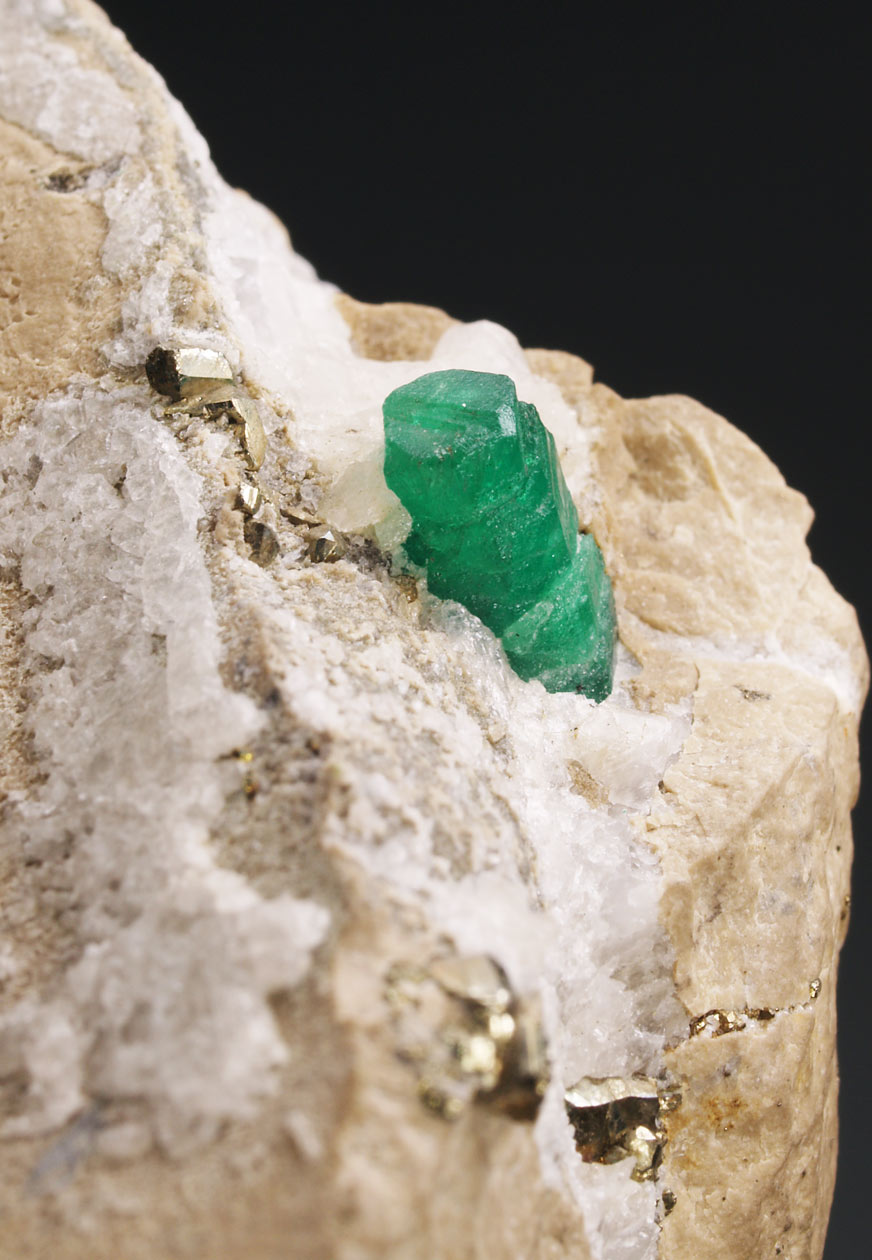
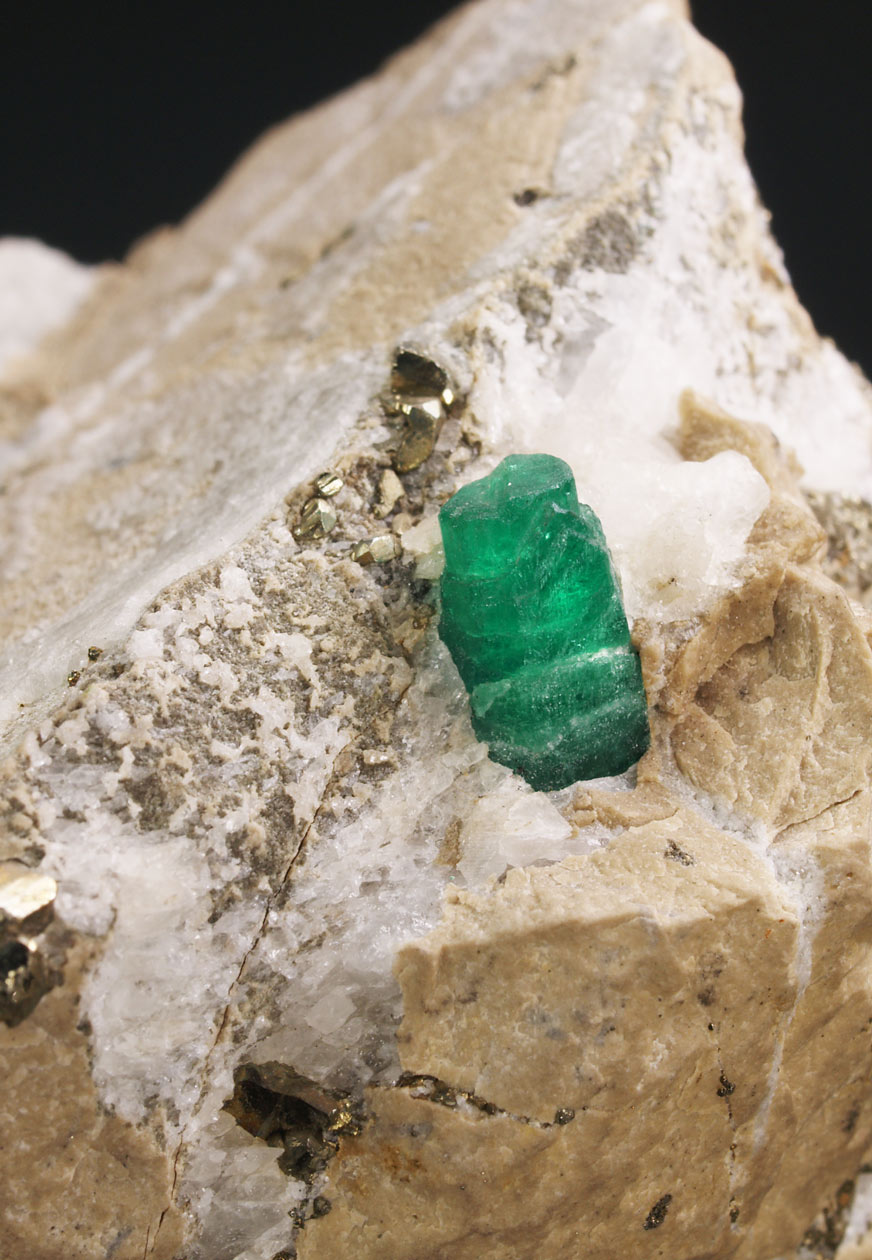
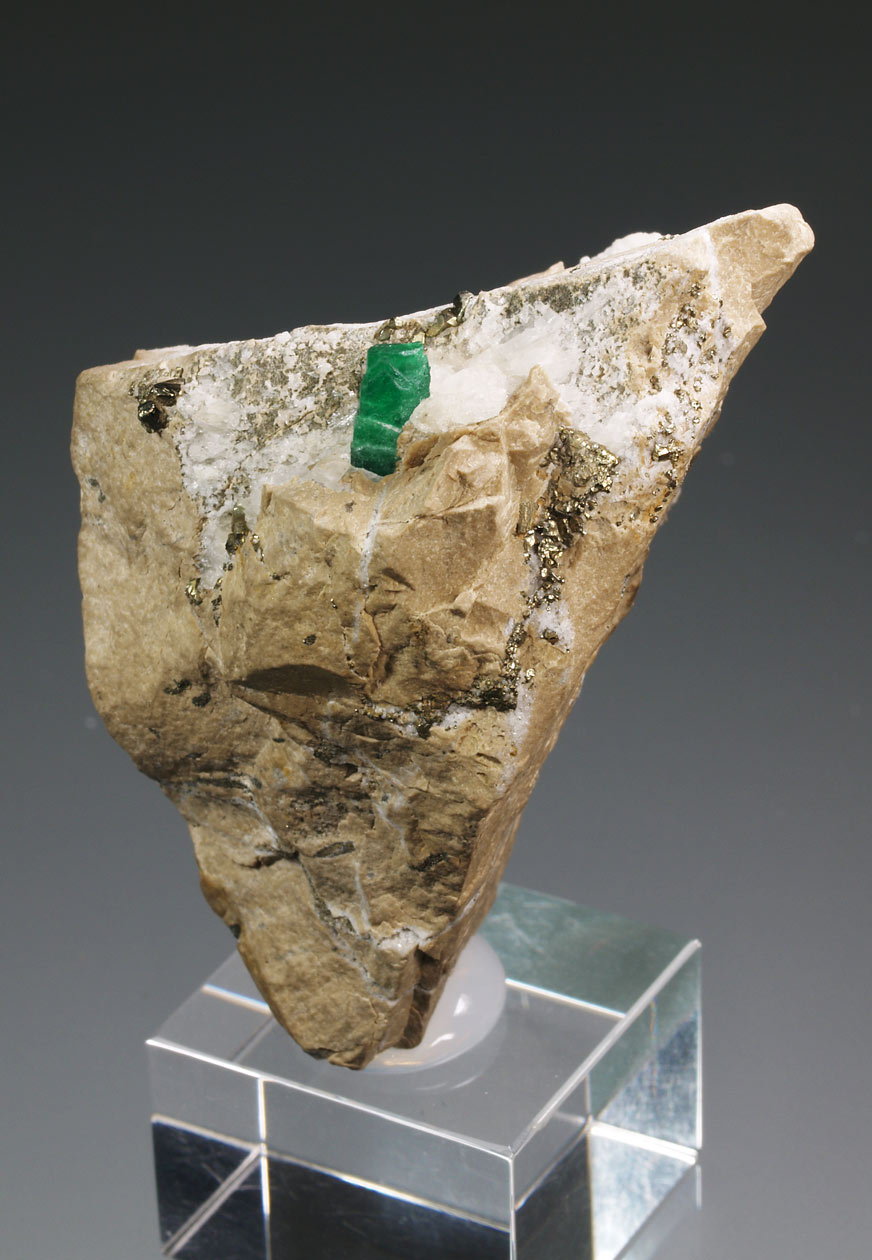
Aesthetic beryl, emerald variety, disposed very aerial on a carbonated matrix with calcite and pyrite. It is a prismatic, defined crystal, formed by axial growths and with defined terminal faces. Translucent and with an intense green colour. A fine gem.
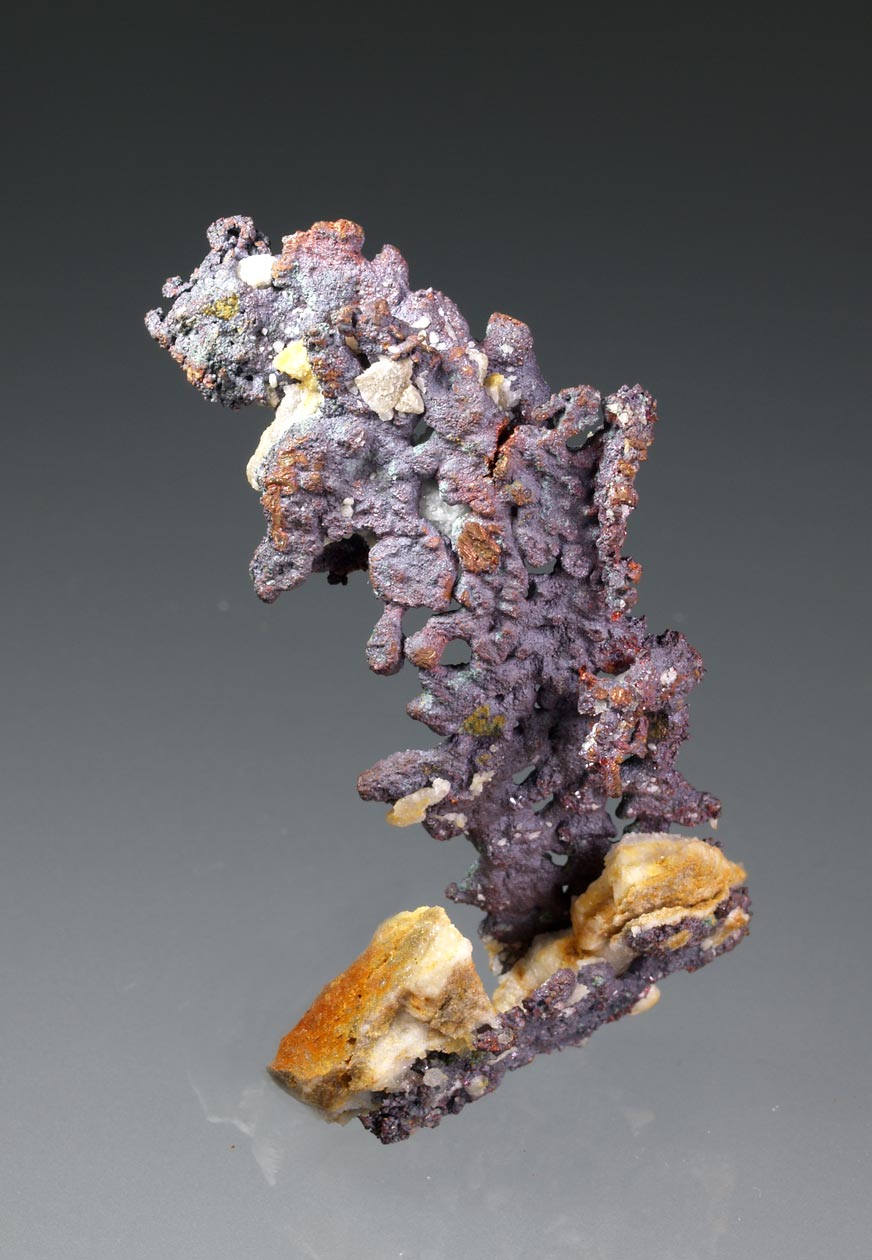
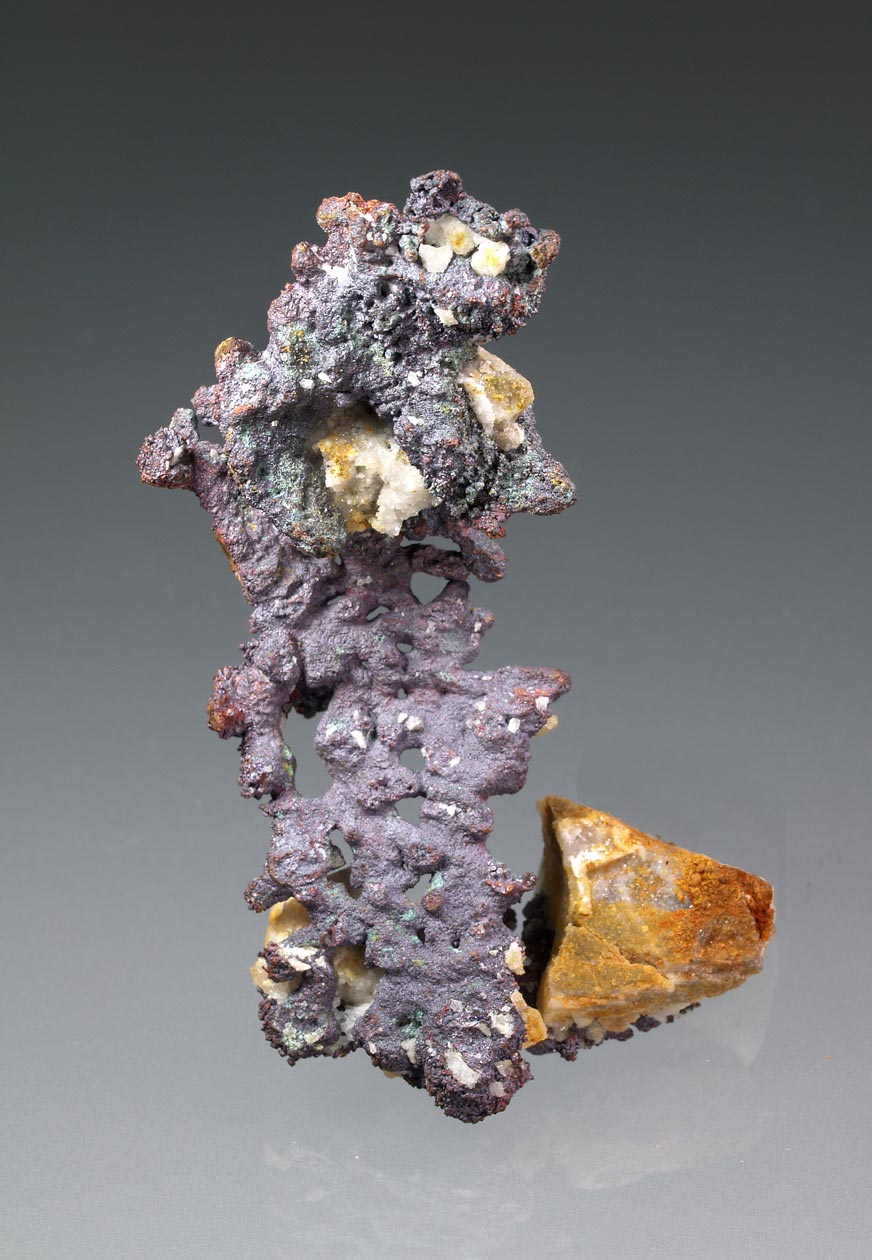
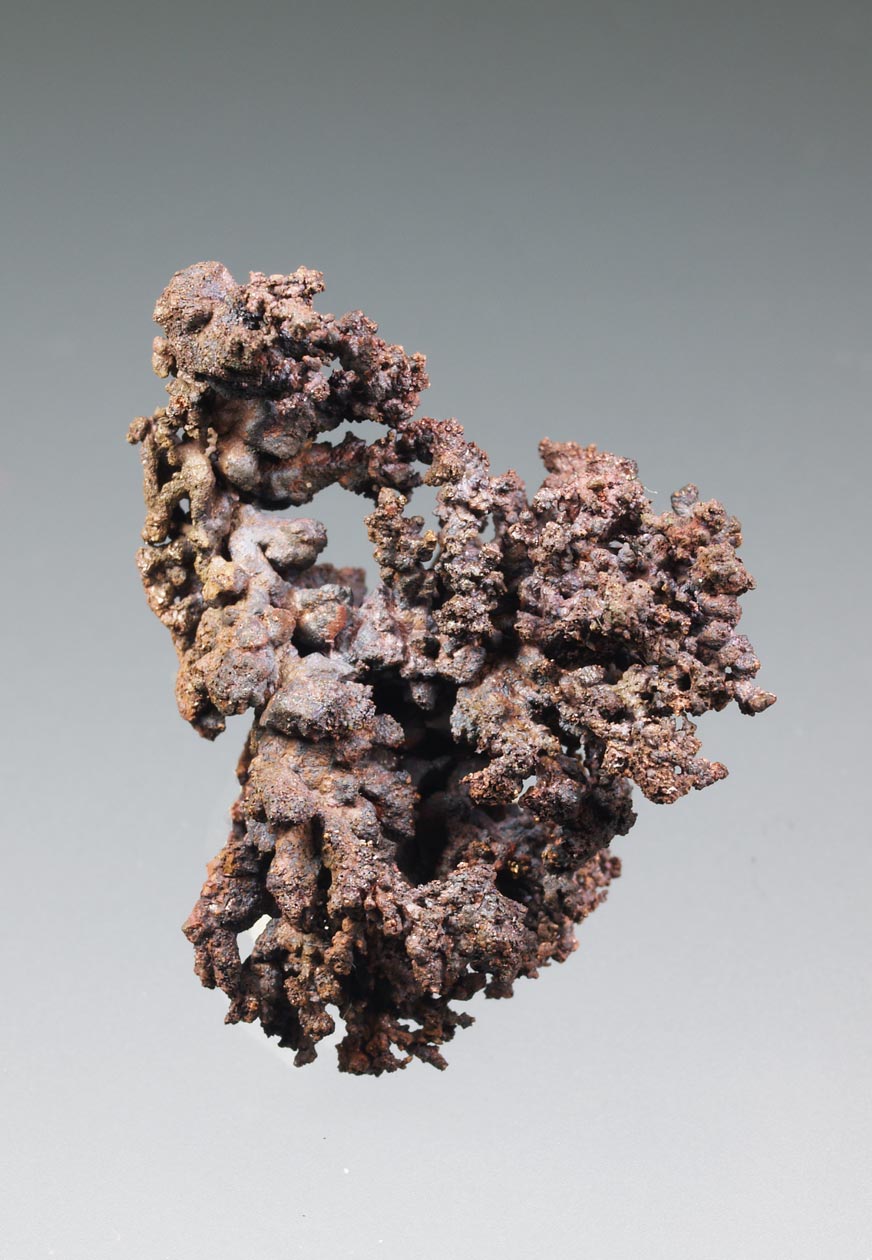
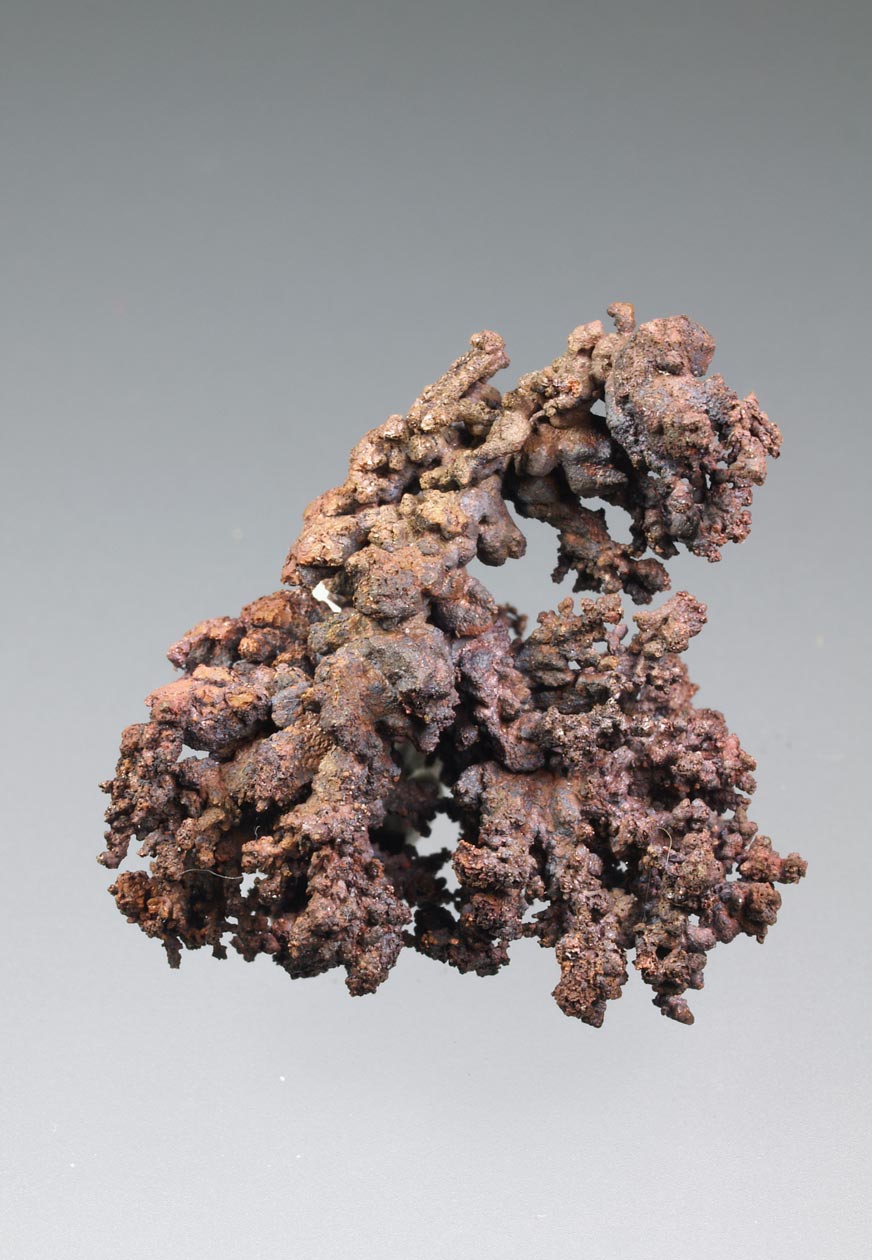
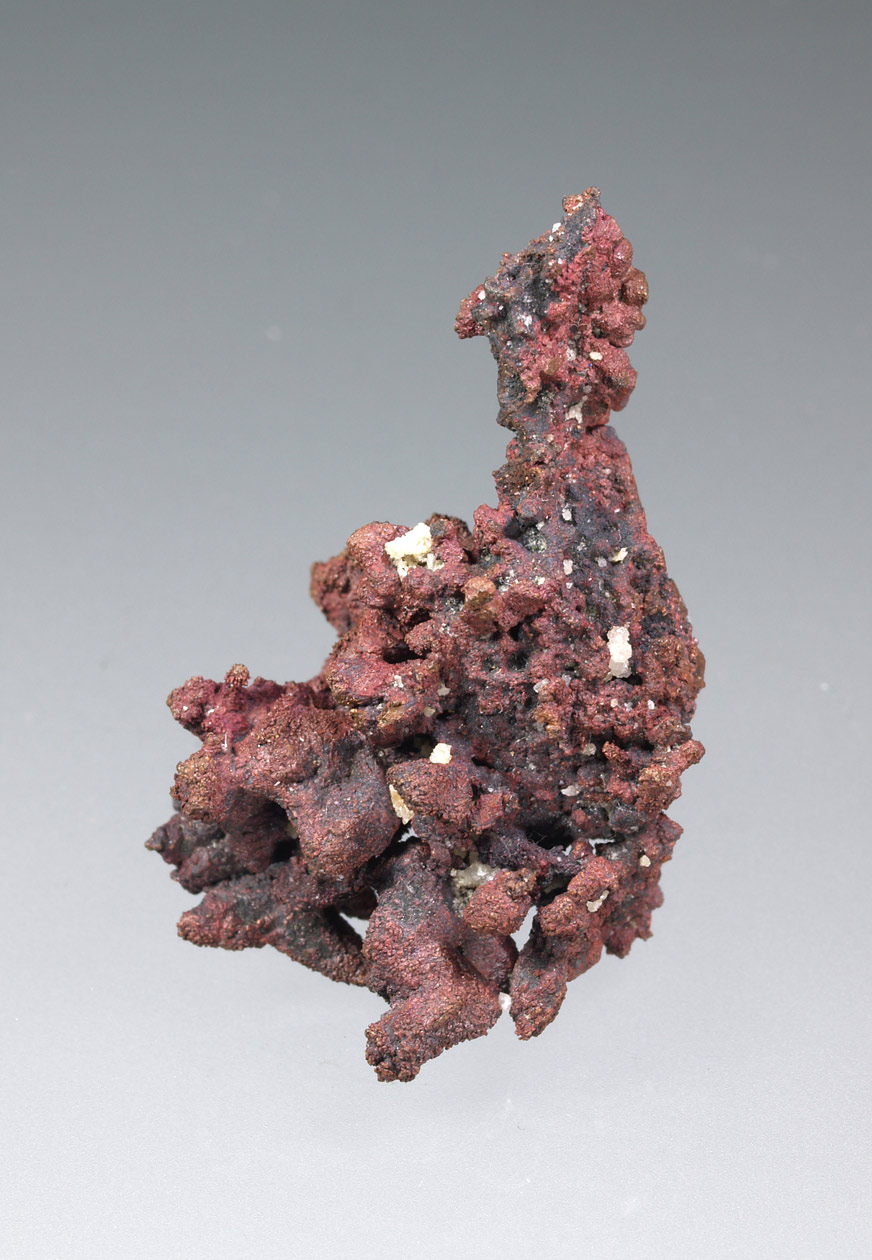
Native copper specimen formed by various rounded and flattened copper crystals, in arborescent to dendritic growths. It is accompanied by a minor quartz matrix.
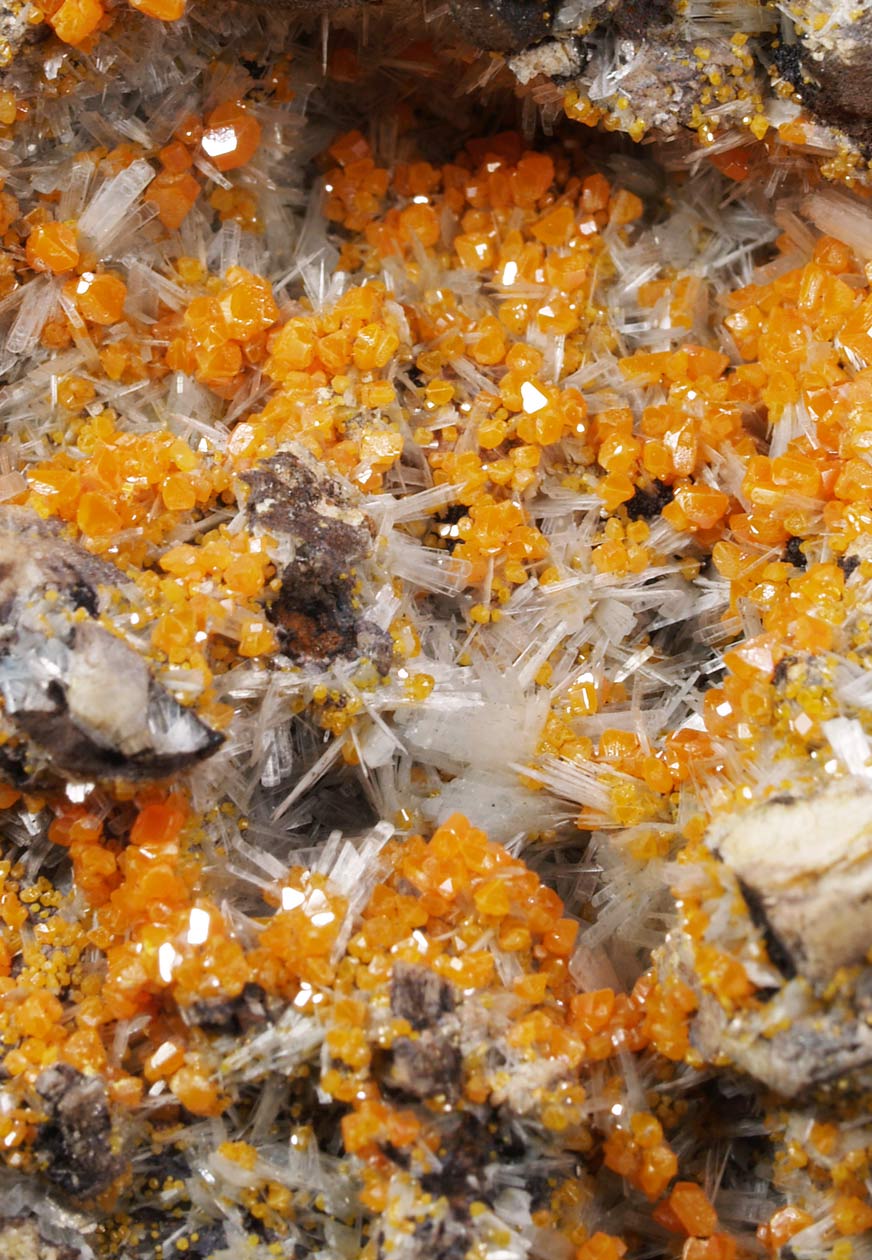
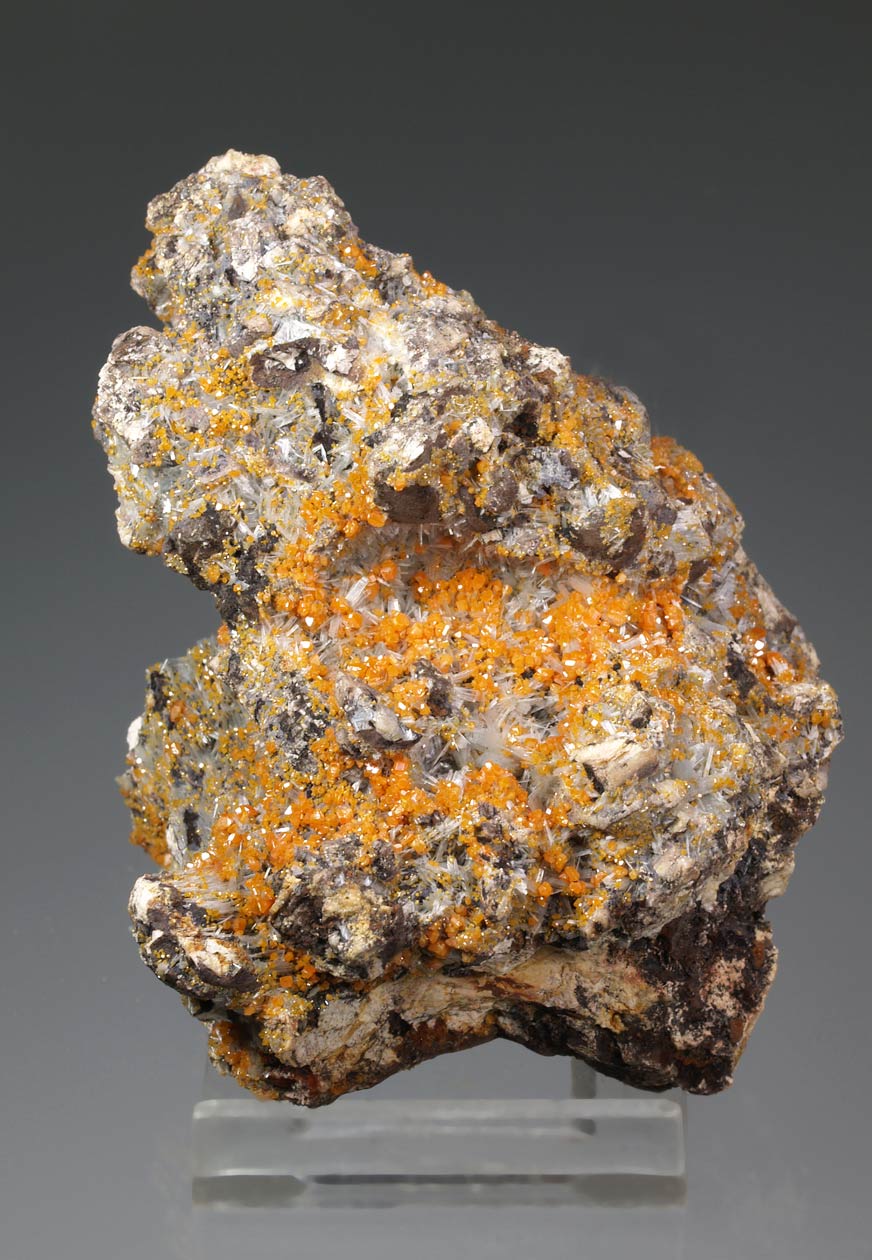
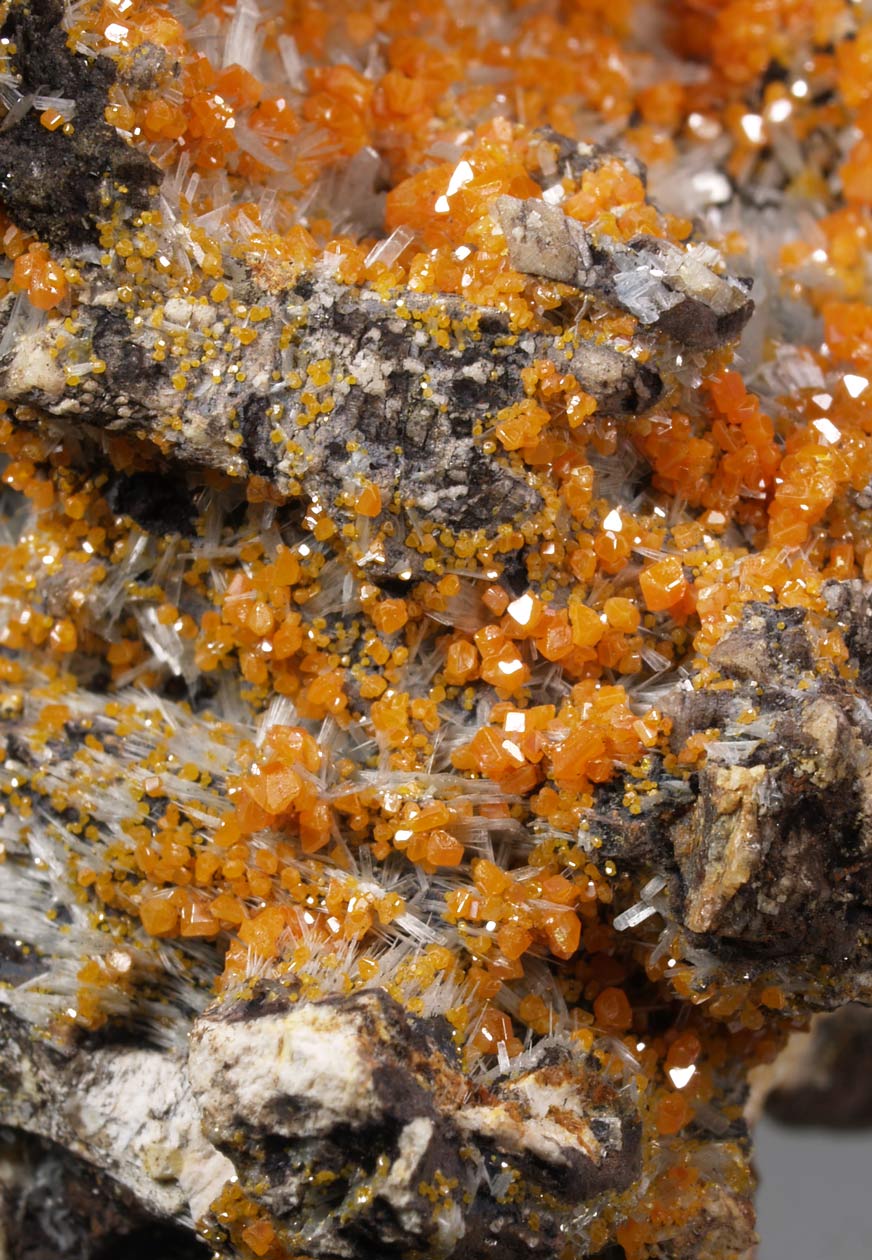
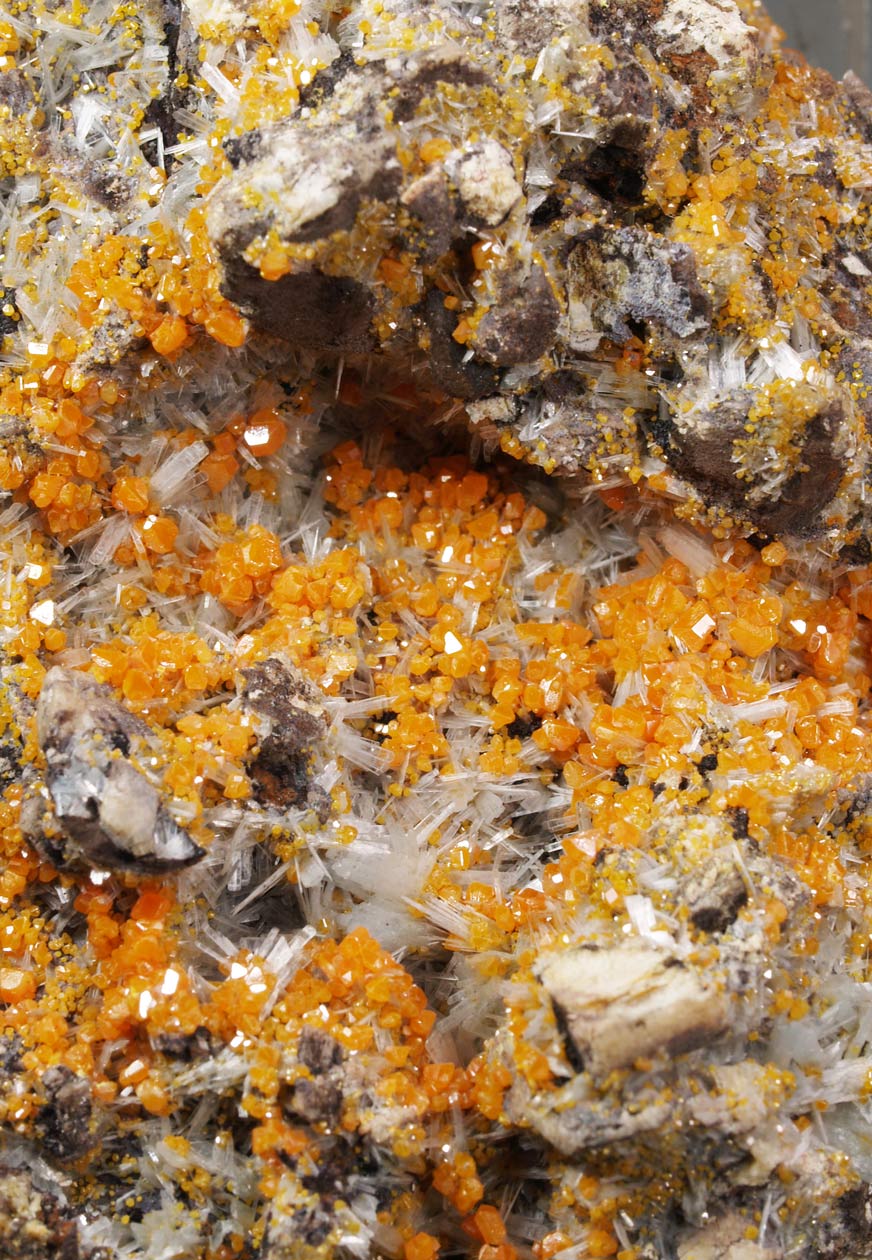
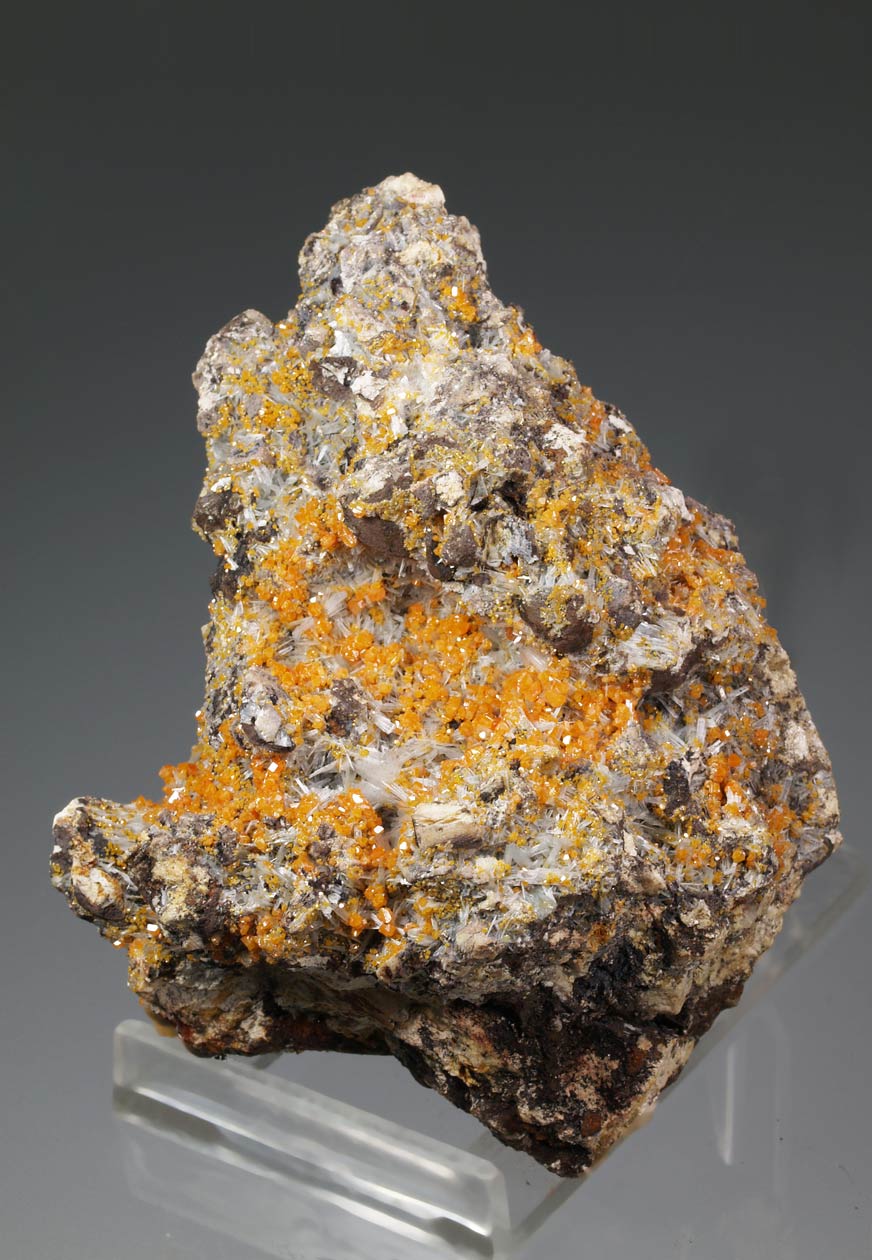
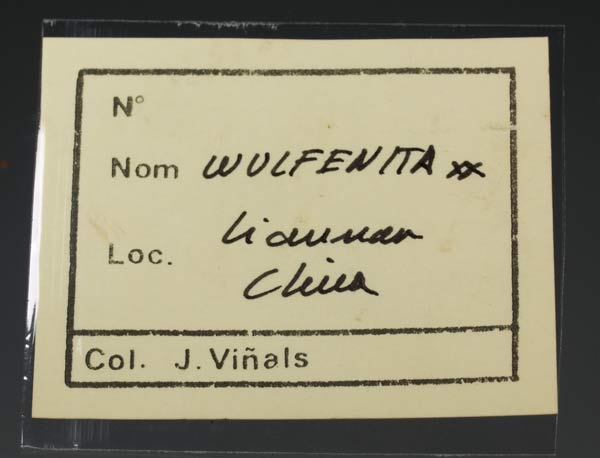
Excellent specimen formed by numerous idiomorphic wulfenite crystals, richly faceted, brilliant, between transparent to translucent and with an intense orange color. They are accompanied by curious elongated tabular barite crystals. A really fine speciemen from Joan Viñals and purchased by E. Nicolau.
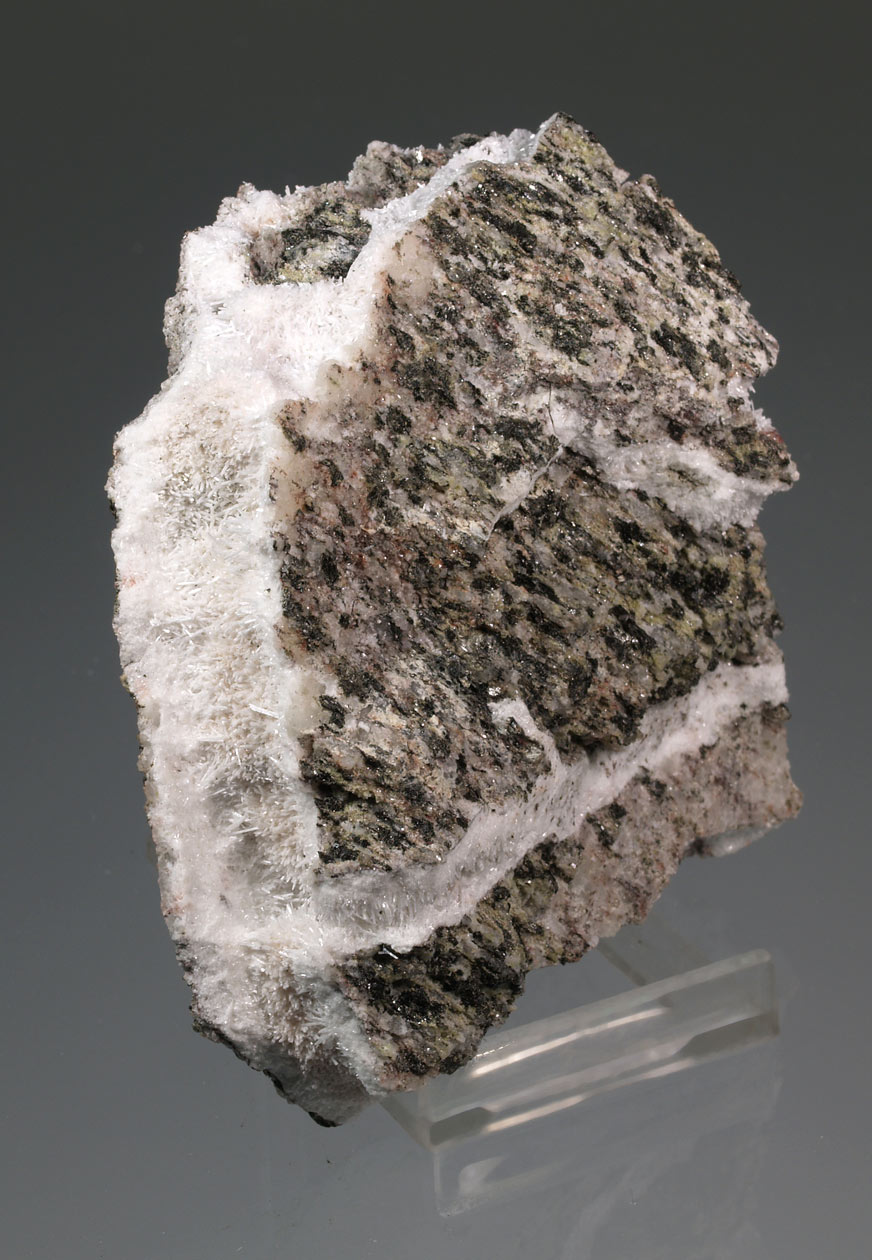
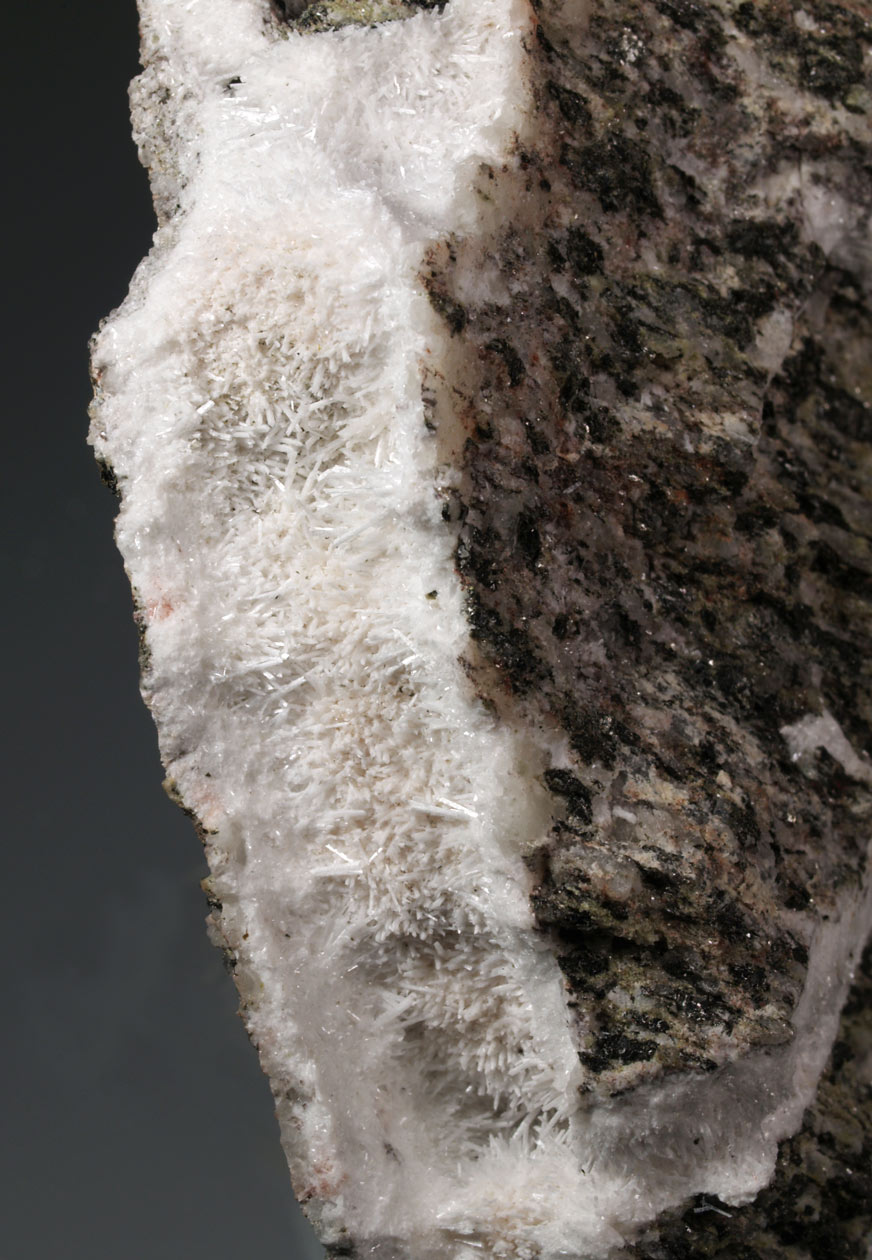
A large group of snowy laumontite crystals that have grown to cover the walls of an Alpine fissure. A rare specimen from this Swiss region.
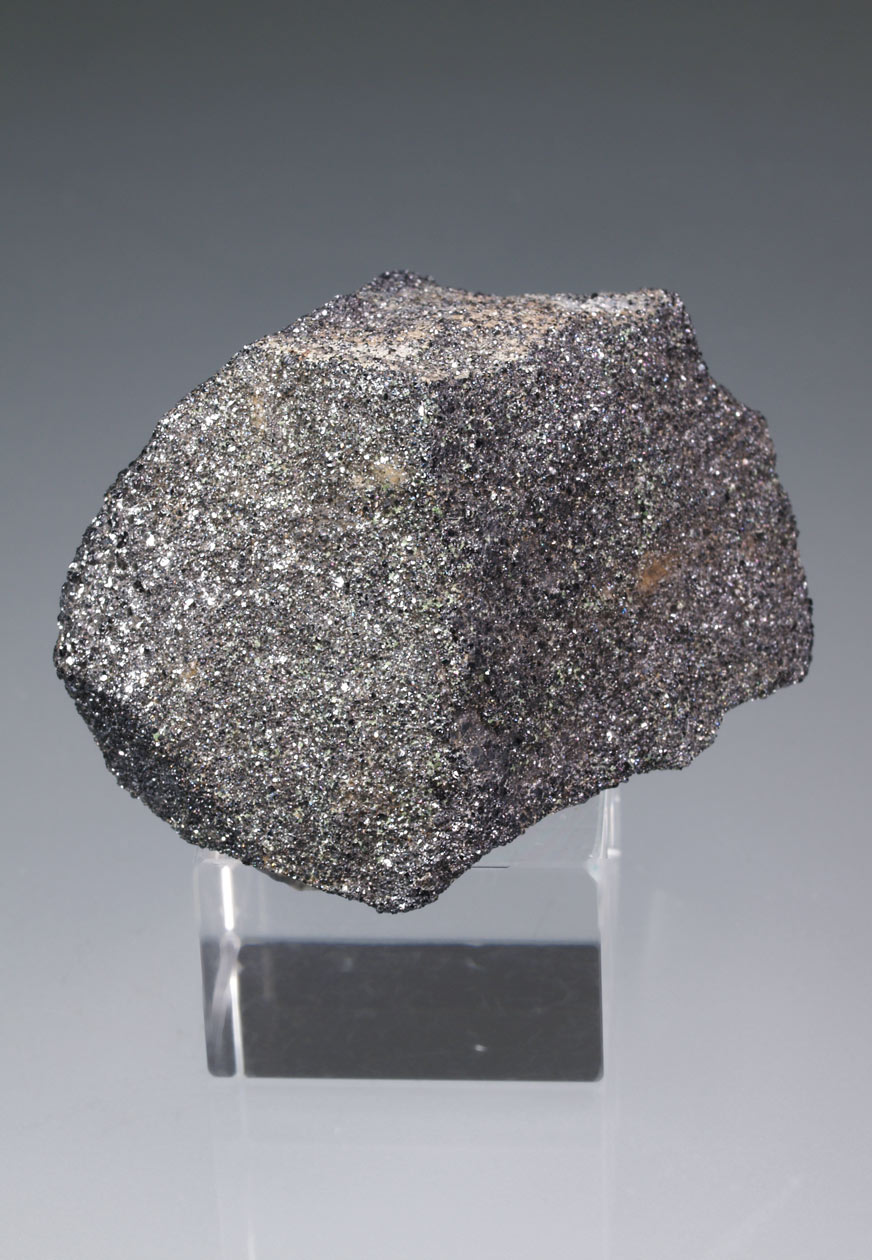
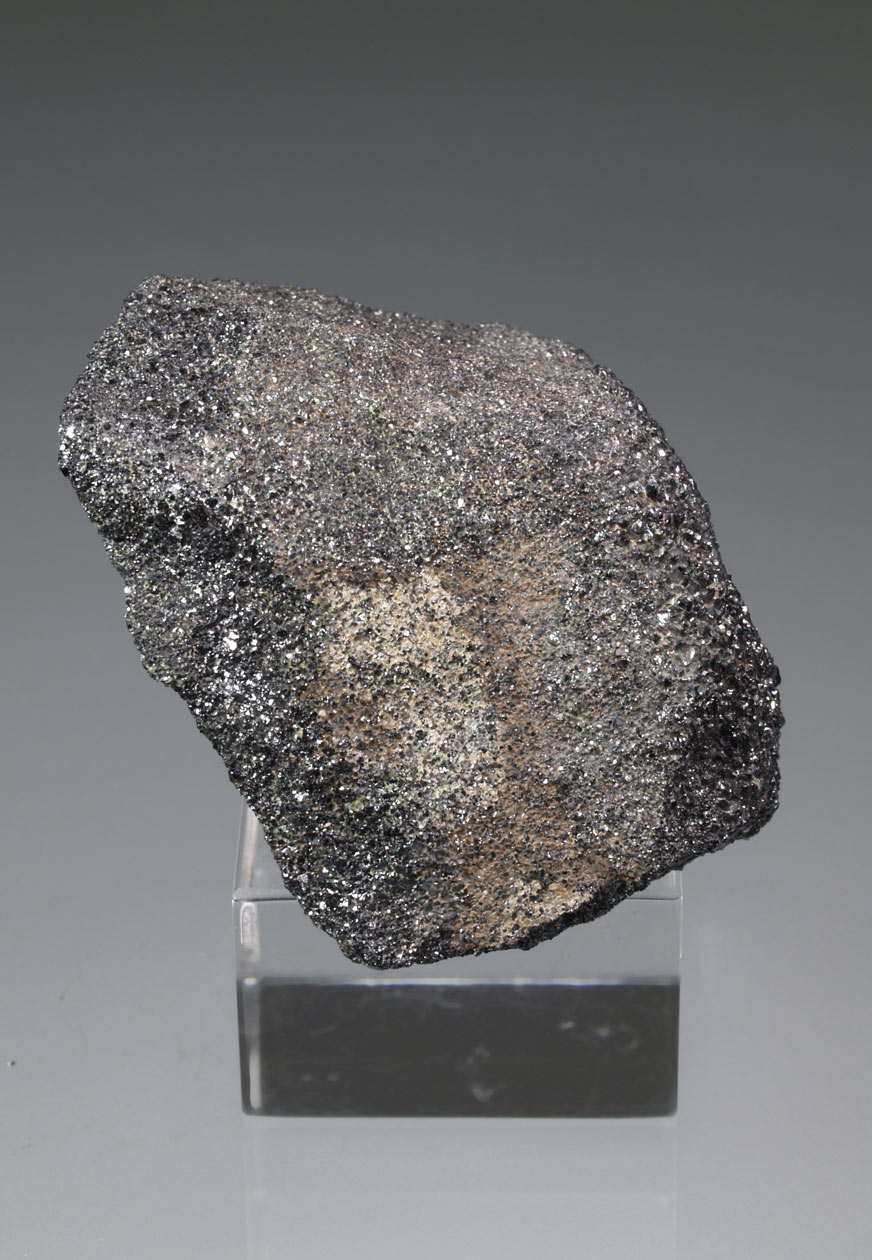
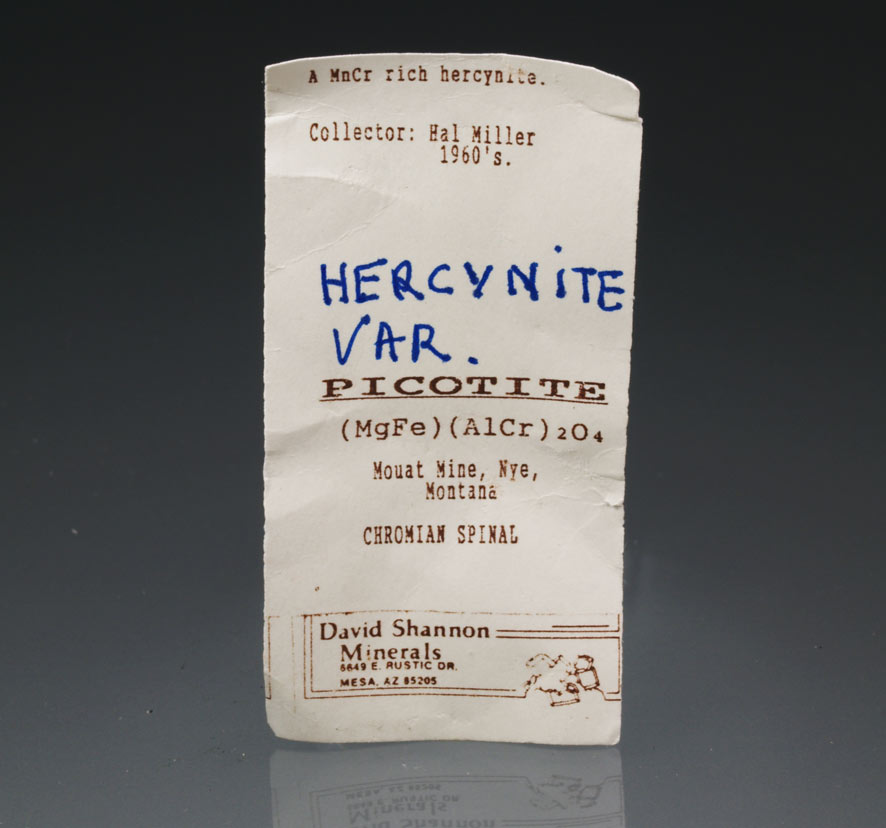
Sample formed by several crystals of hercynite, var. picotite, a Mg, Cr rich member of spinel group: (Fe,Mg)(Al,Cr)₂O₄. Collected by Hal Miller in the 1960s, via Dave Shannon. Similar samples discussed in mindat.
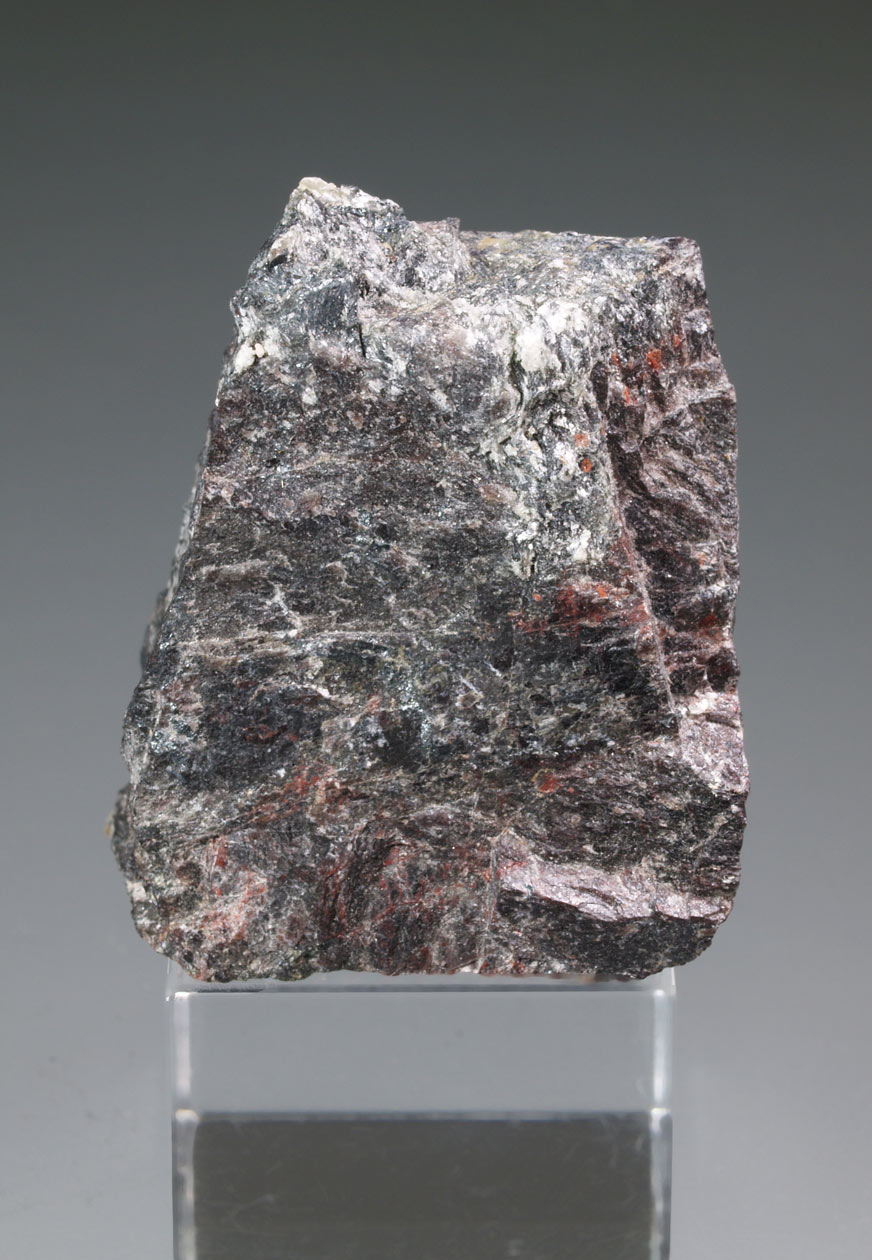
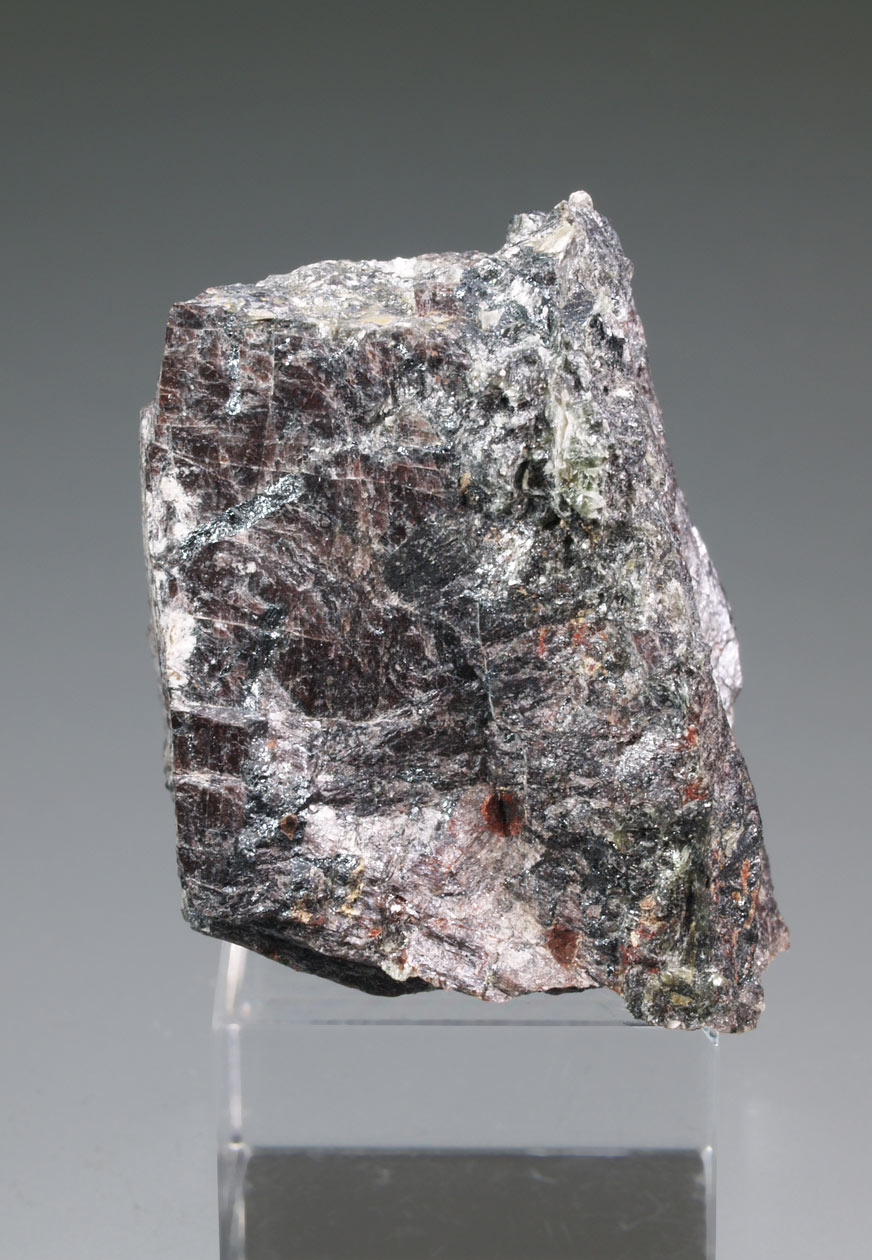
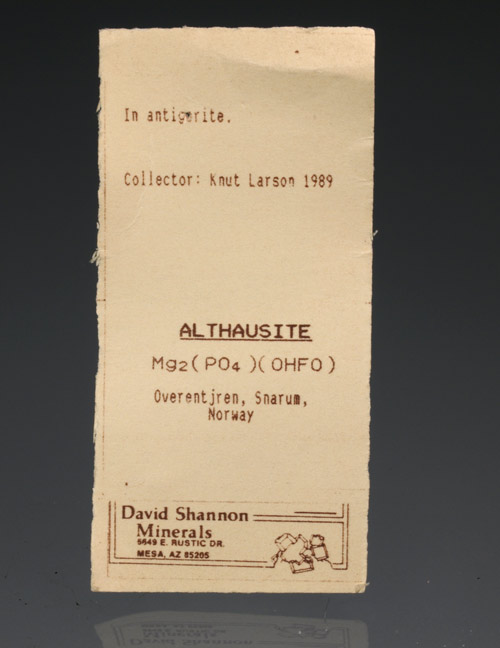
A specimen of massive maroon coloured althausite, partly altered to apatite. Althausite may alter to apatite along the cleavage planes. This is especially typical for the althausite found at the type locality and Overntjern locality. This rare magnesium phosphate was first described from serpentine-magnesite deposits in Norway. Specimen acquired from David Shannon and from the Knut Larson collection.
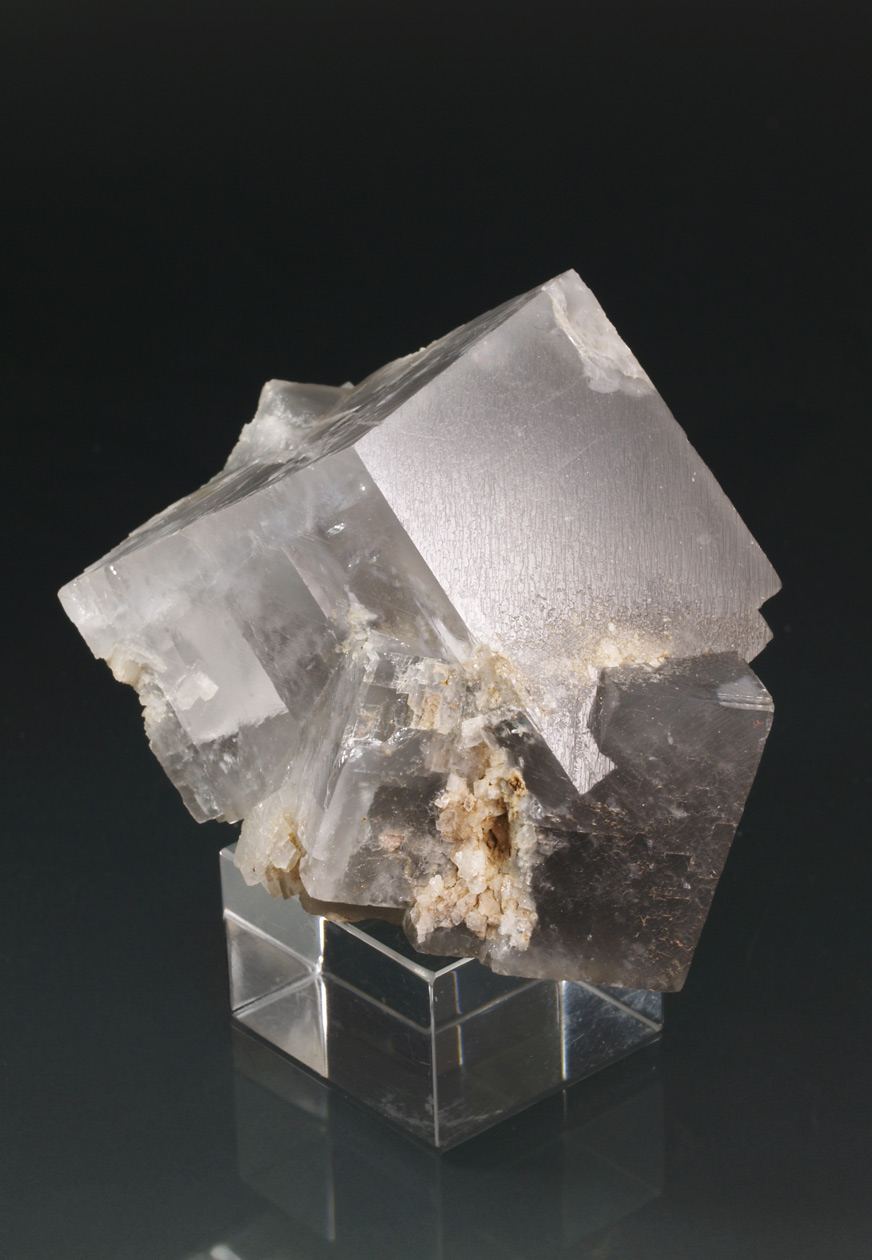
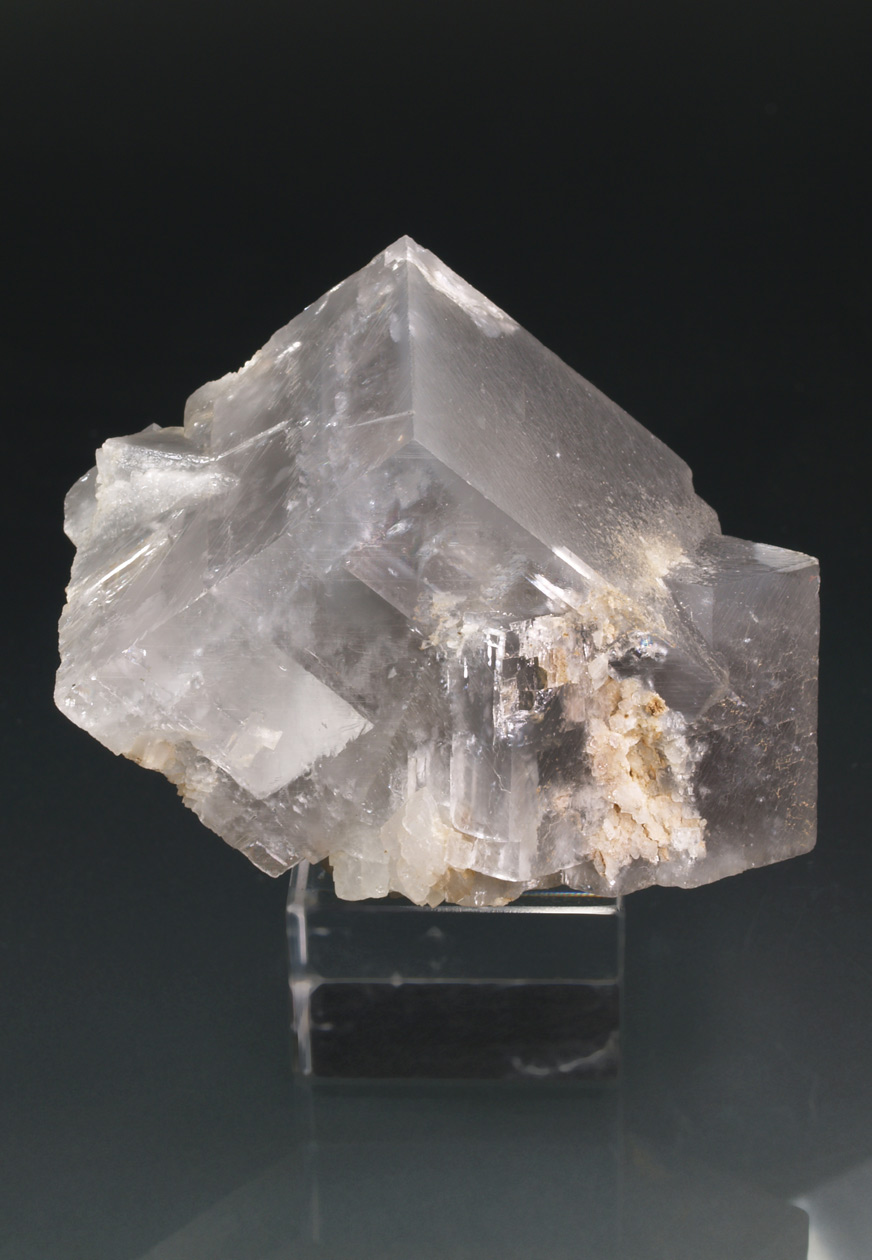
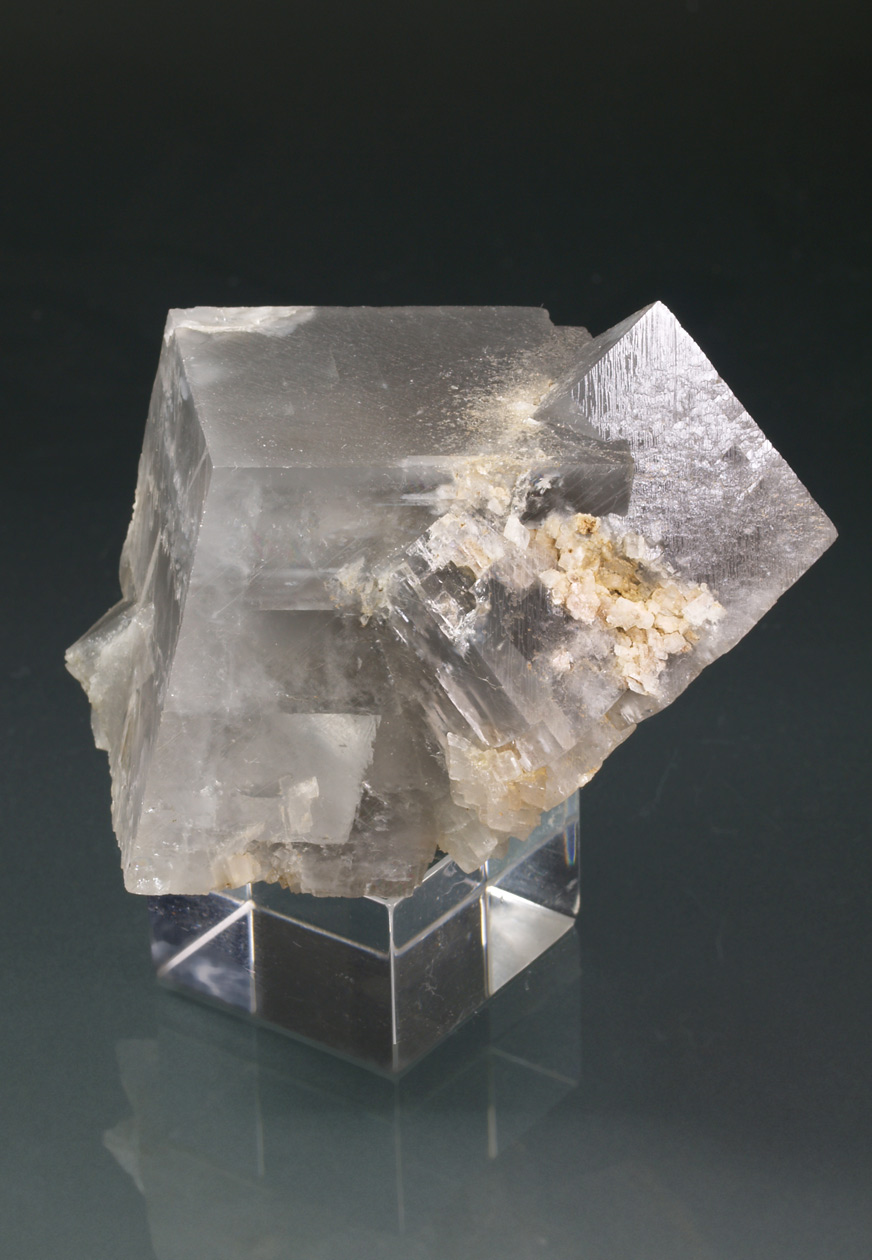
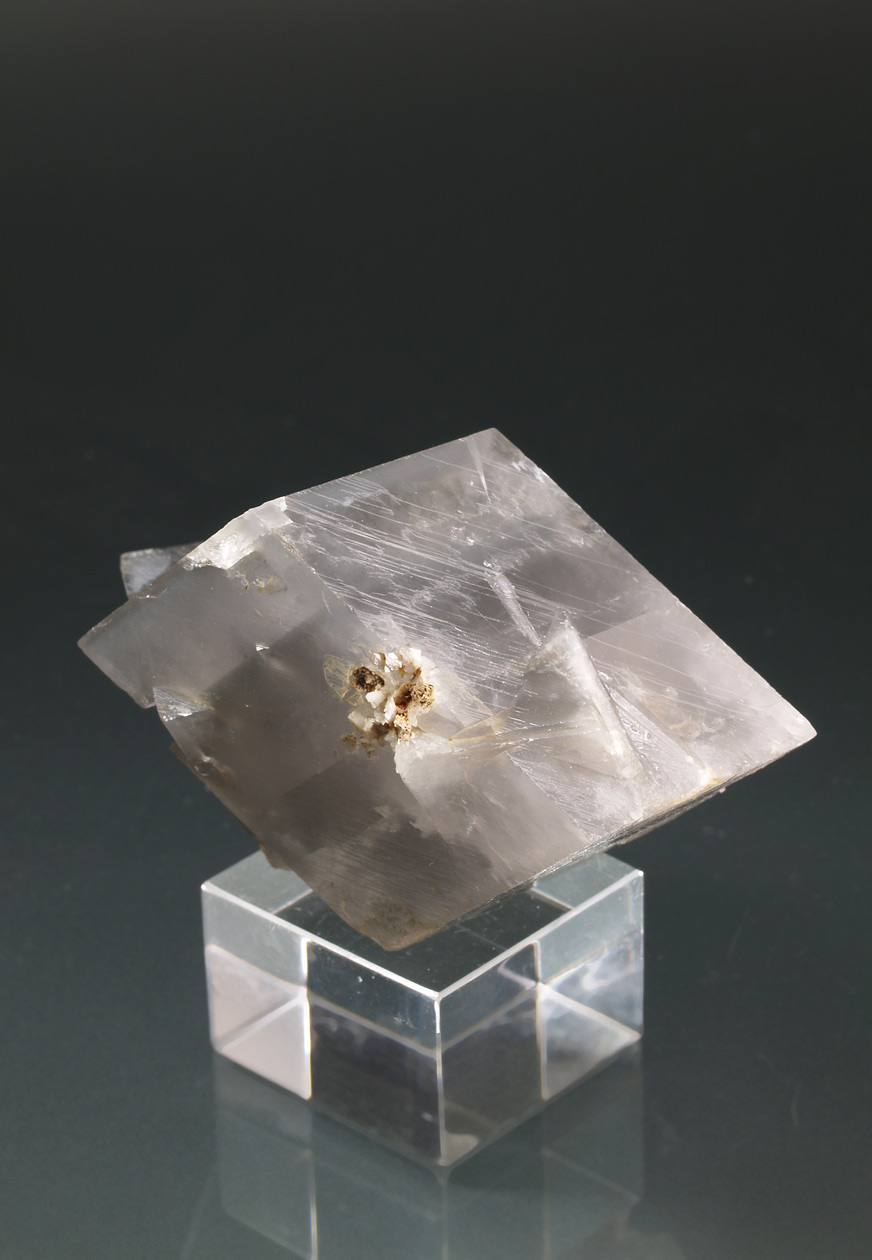
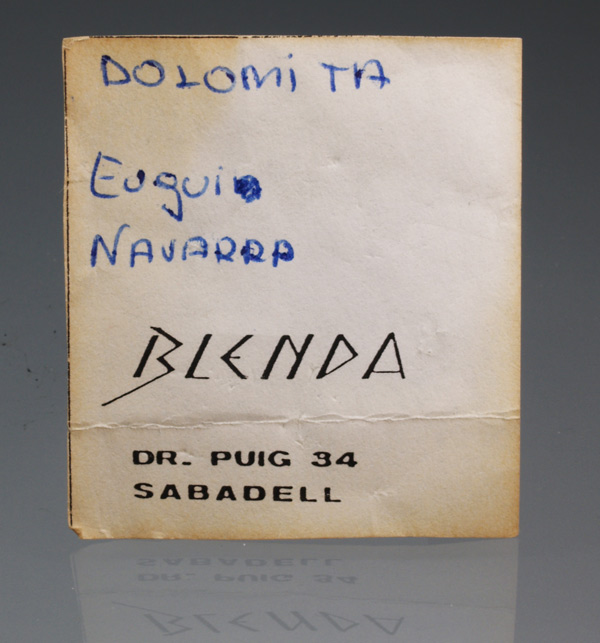
Very good-sized specimen of rhombohedral dolomite crystals, very well defined and bright. Transparent to translucent, with greyish tones. Interpenetrated crystals. With an interesting and rare label from the former Sabadell mineral dealer "Blenda".
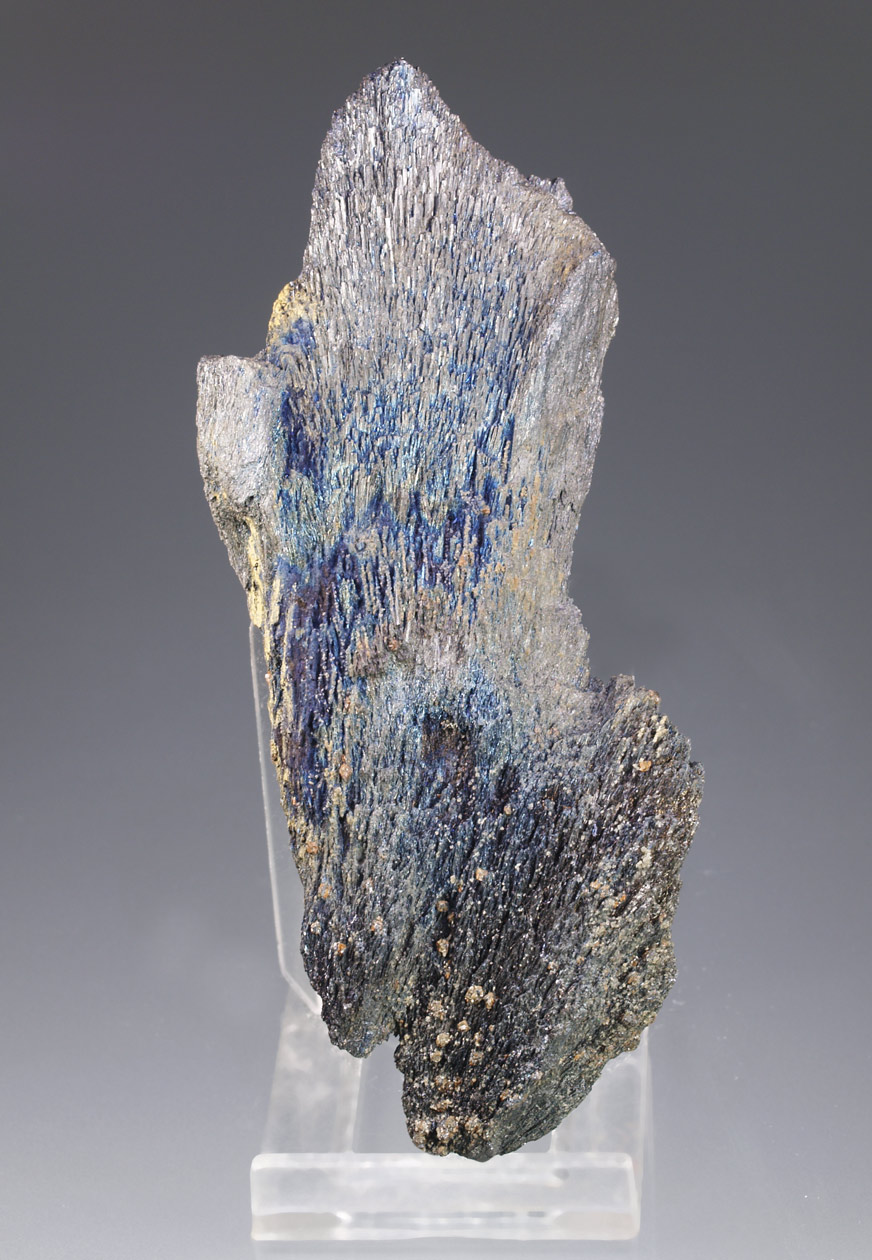
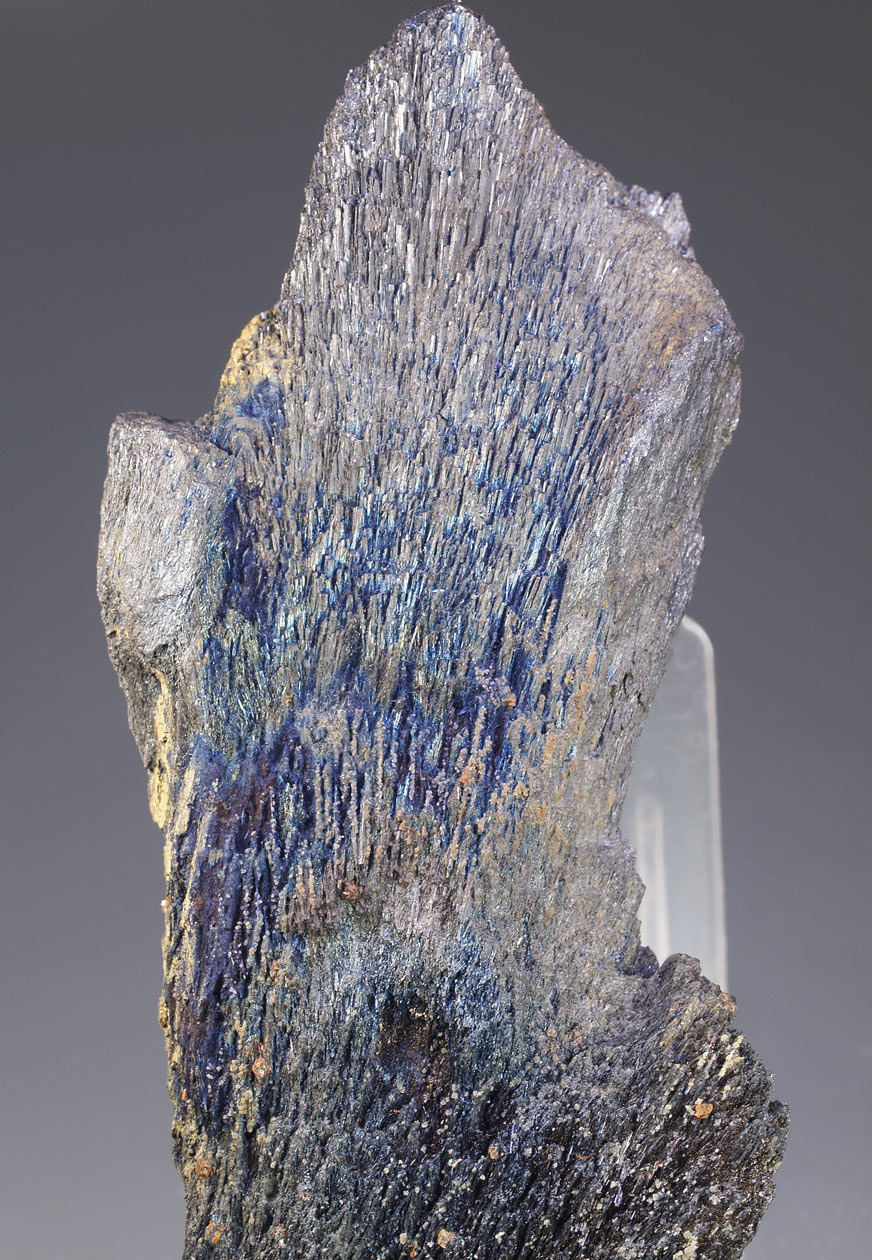
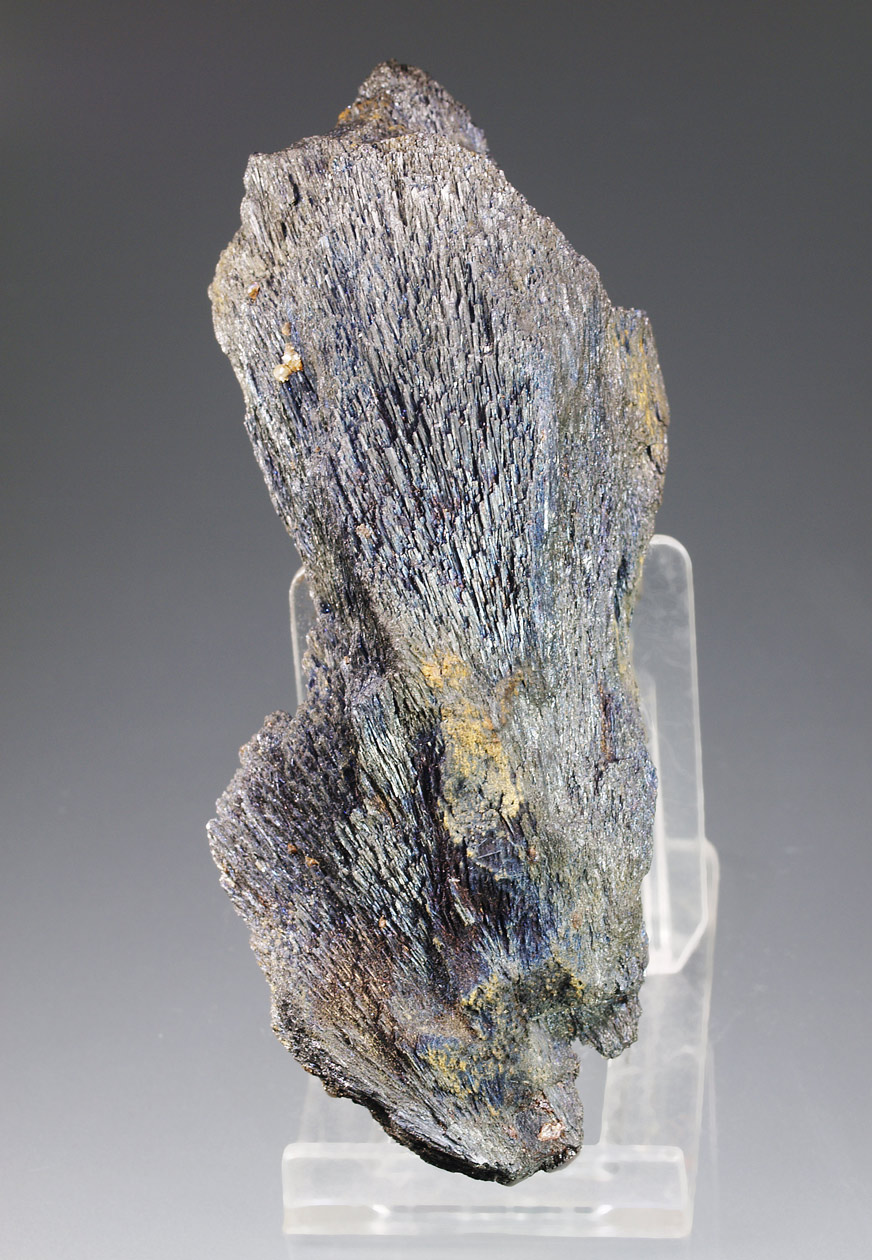
Berthierite is a rare iron antimony sulfosalt and not often found in good crystallized specimens. This piece is from the classic locality, the Baia Sprie Mine (Felsőbánya Mine) in Romania featuring dozens of acicular, silvery-grey needles of berthierite in nearly parallel growth, free of matrix. This rich specimen is beautifully accented with a variable iridescent tarnish, giving the piece much color and character. A wonderful example of this rare and classic material from a locality that was mined continuously from the 14th Century until 2006. From the collection of Julio Martínez (València).
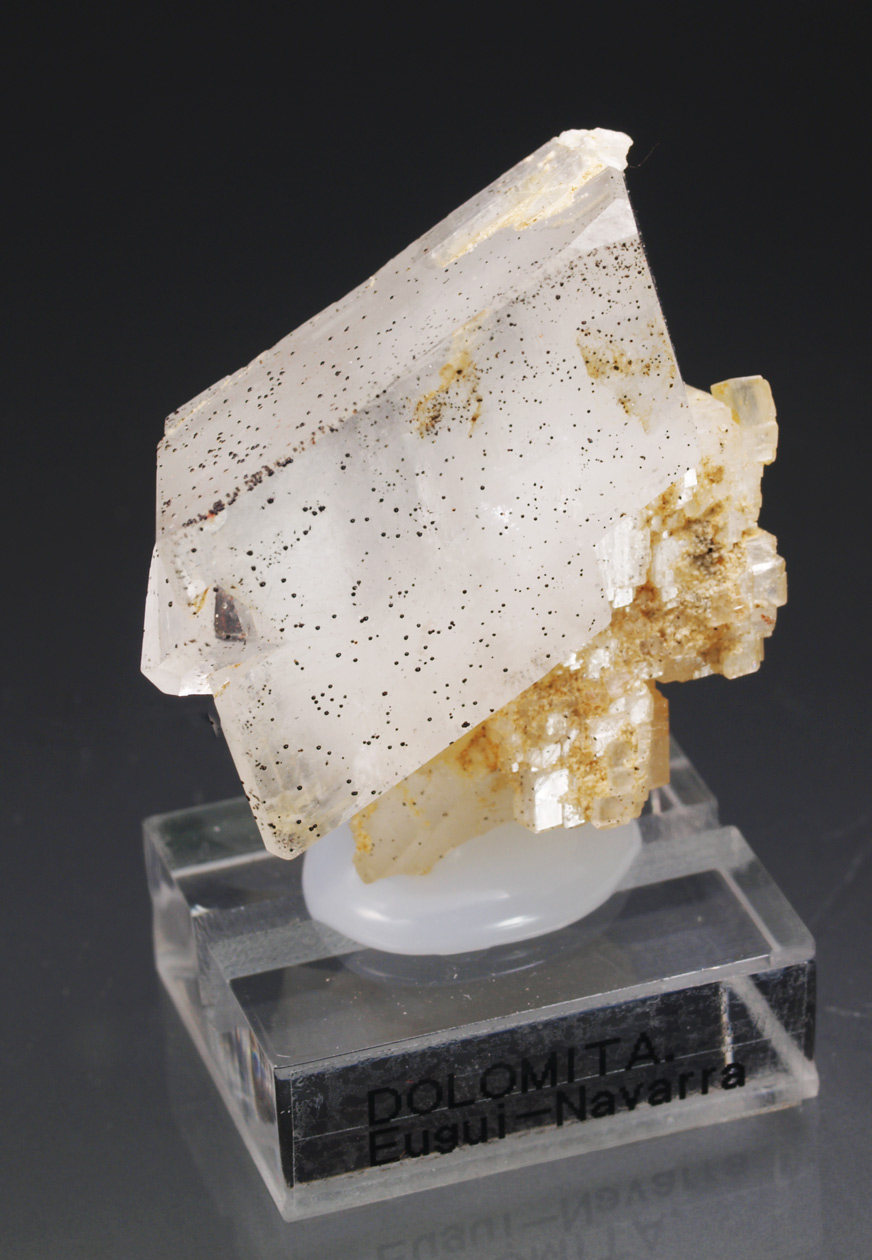
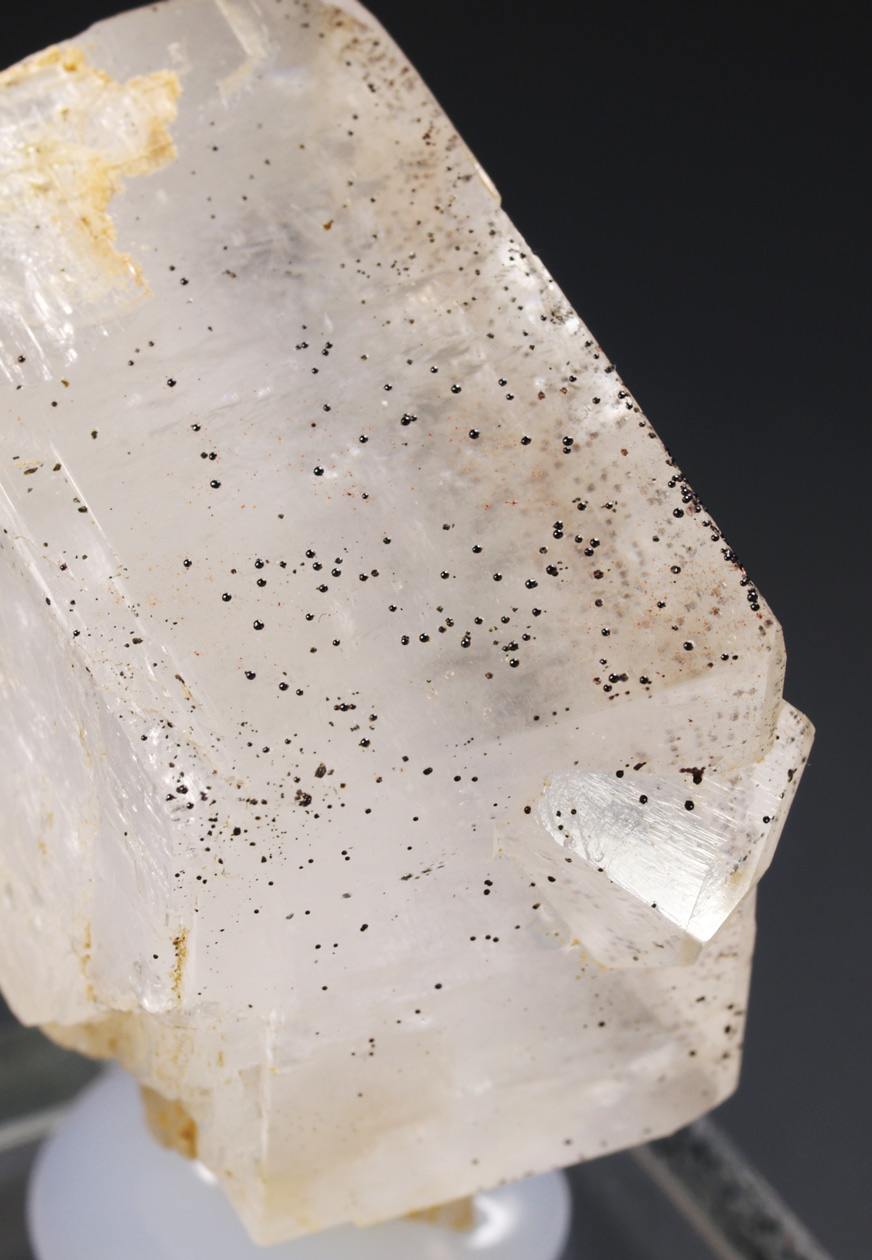
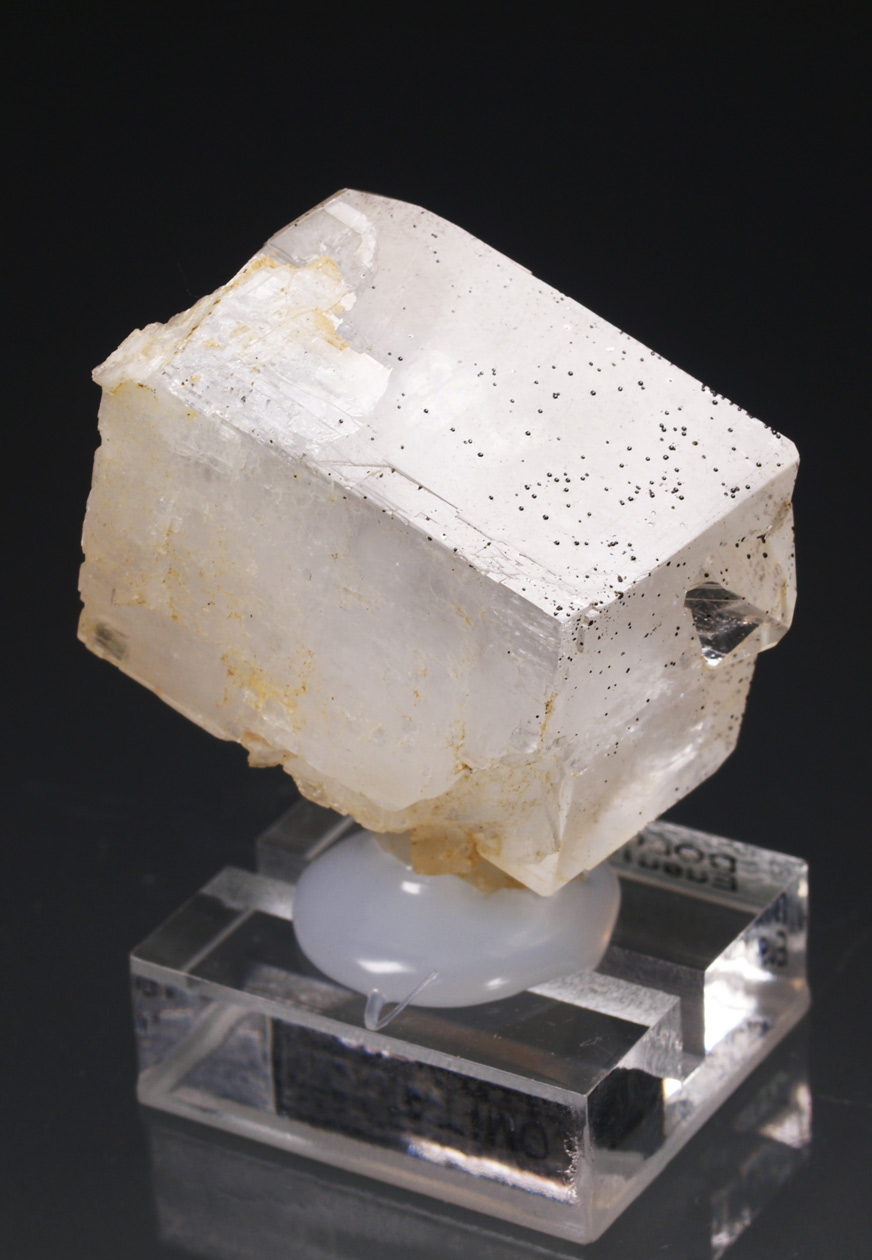
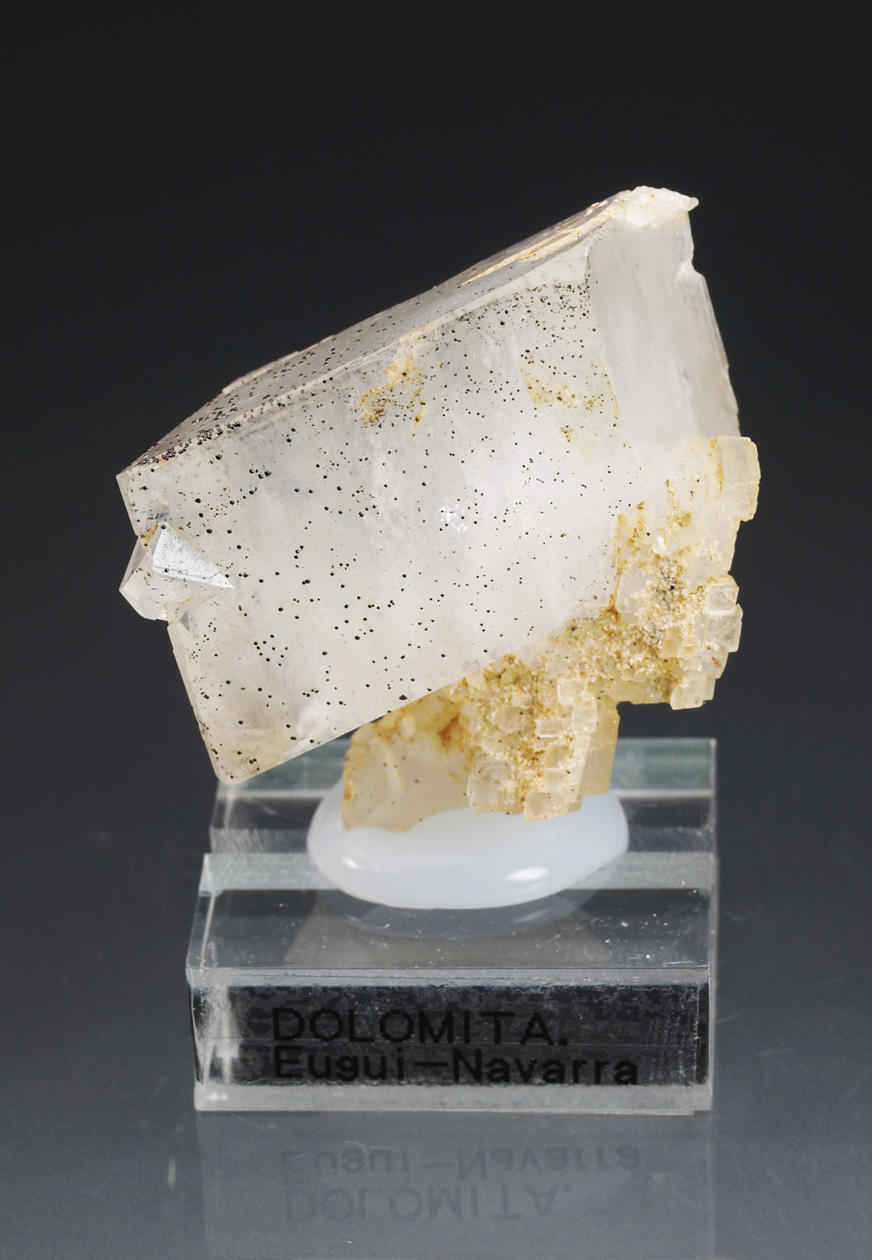
Rhombohedral dolomite crystal from this classic Navarra locality. It is disposed very aerial on a dolomite matrix. Three of the faces of the rhombohedron are dotted with small globules of goethite. A very aesthetic miniature.
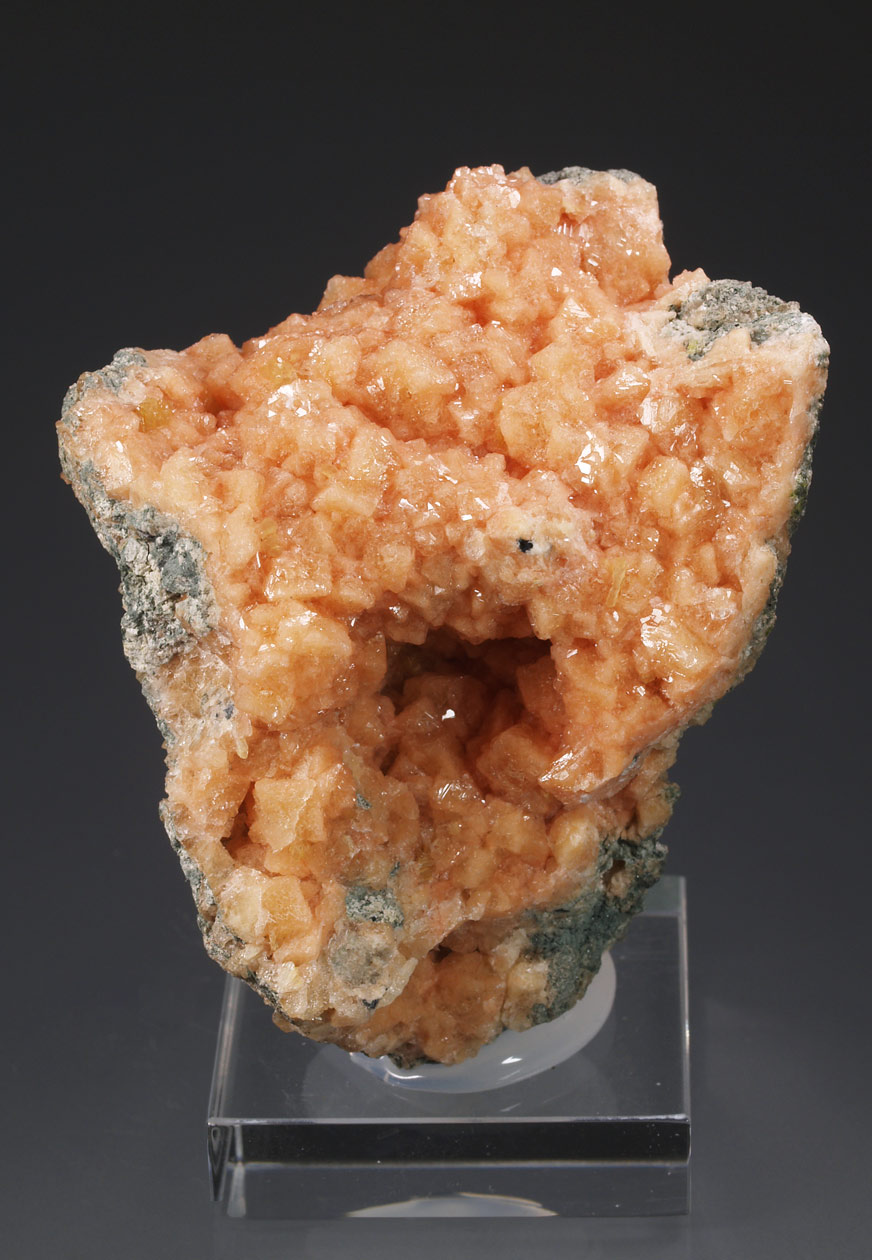
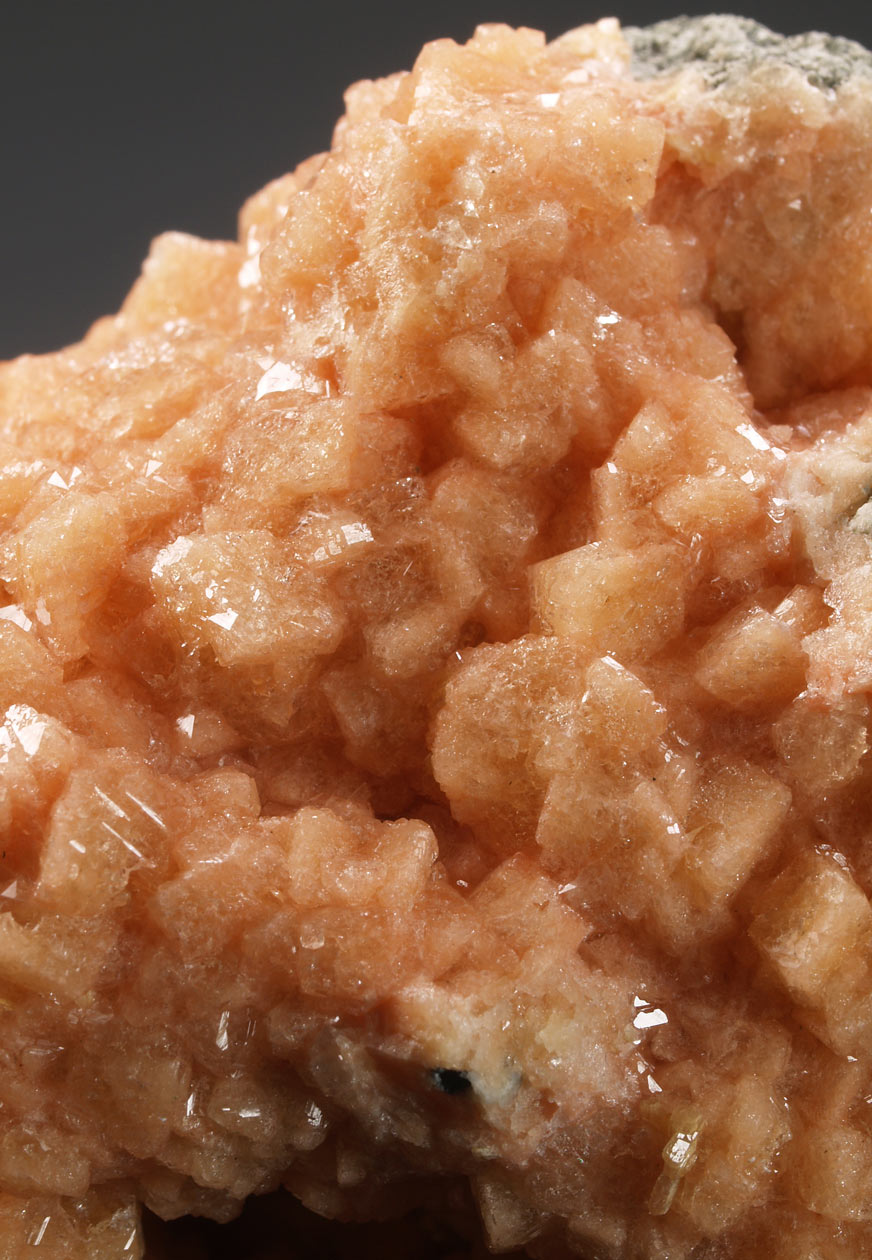
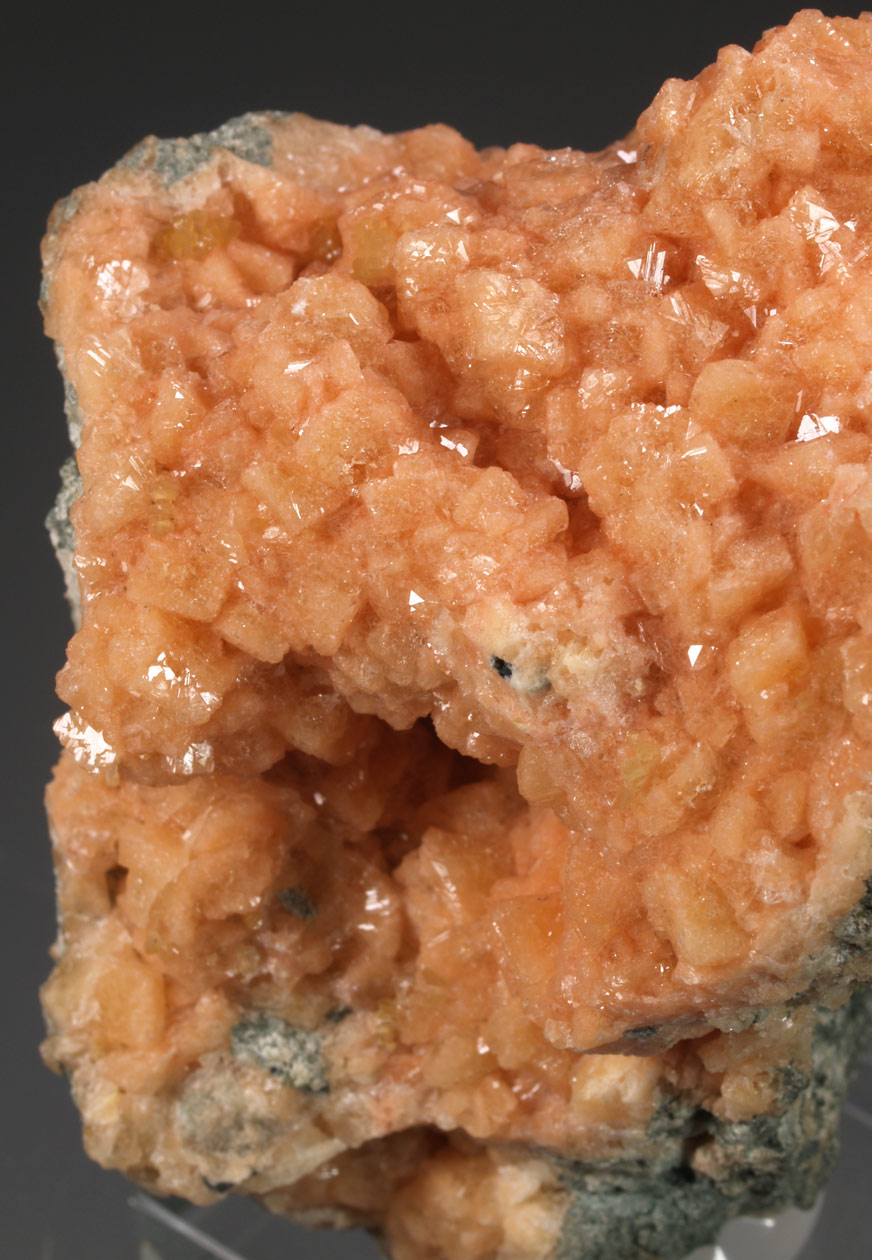
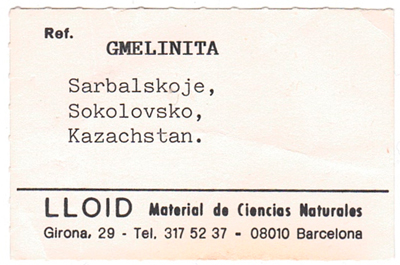
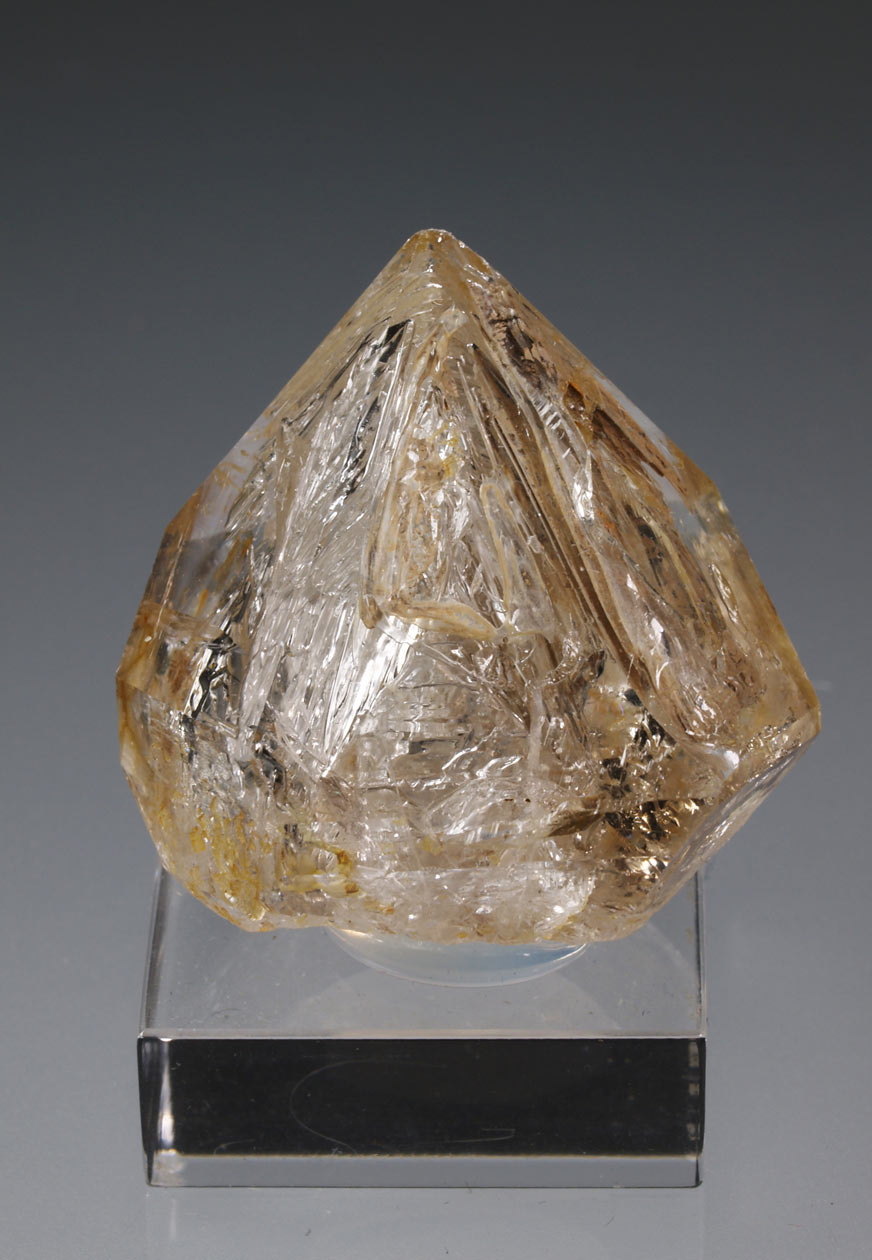
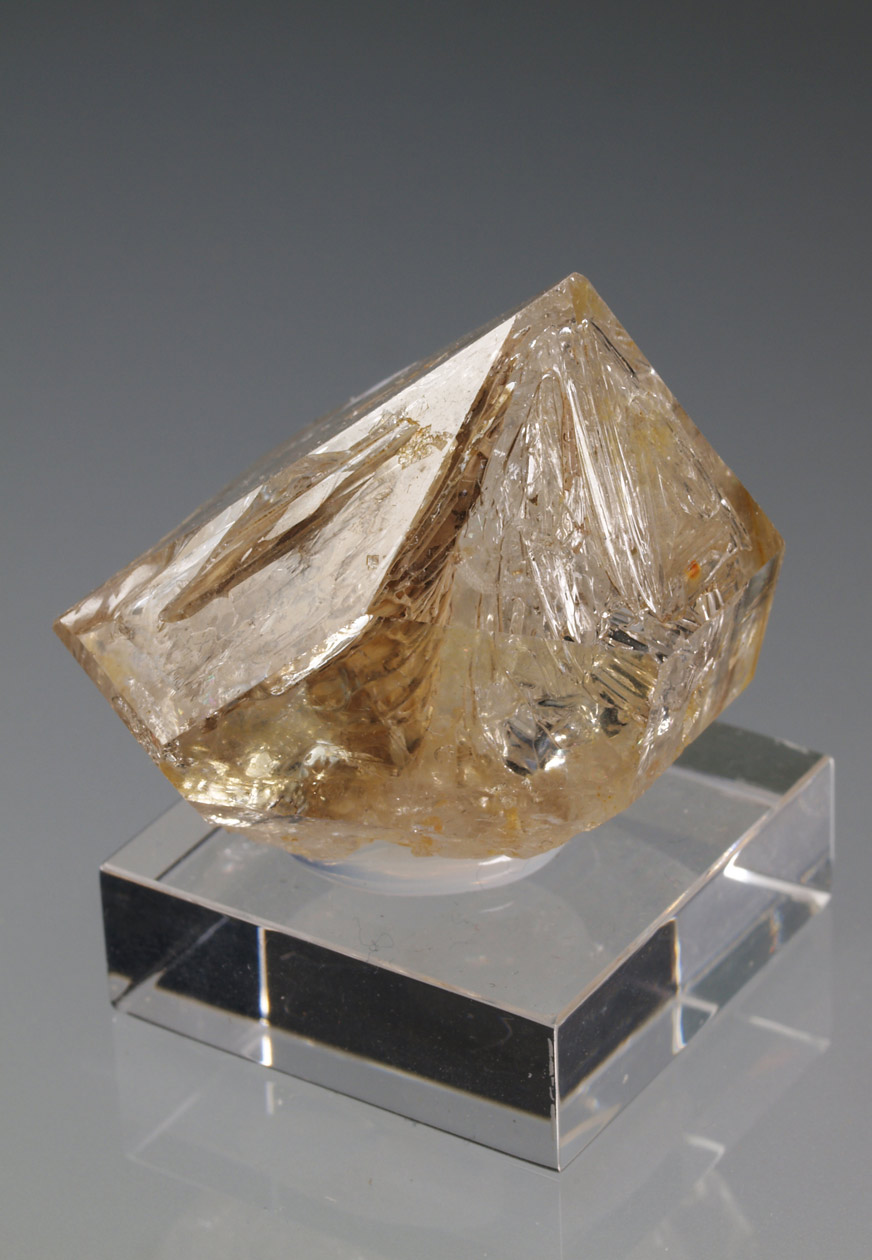
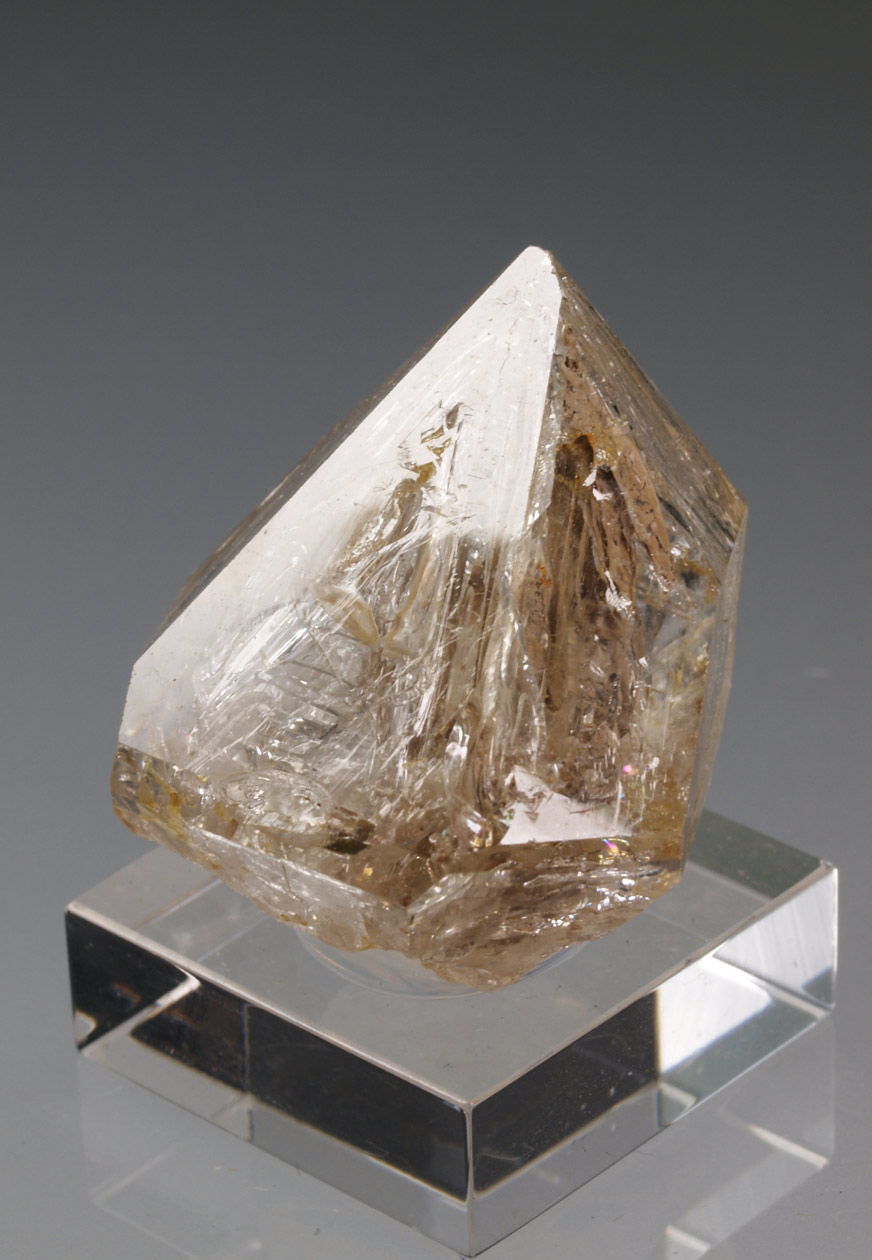
In this specimen we could observe numerous aggregates of hexagonal gmelinite-Ca crystals, colorless, shiny and with parallel growths. They are accompanied by chabasita-Ca that gives this orange color to the specimen. Very difficult to find specimens of this quality and locality.