- Inicio Acerca de RM Minerales
- Galería de fotos Blog RM Contacto
- Microscopia e instrumentos Pedidos Aviso legal
Copyright 2010-2026
www.rosellminerals.com



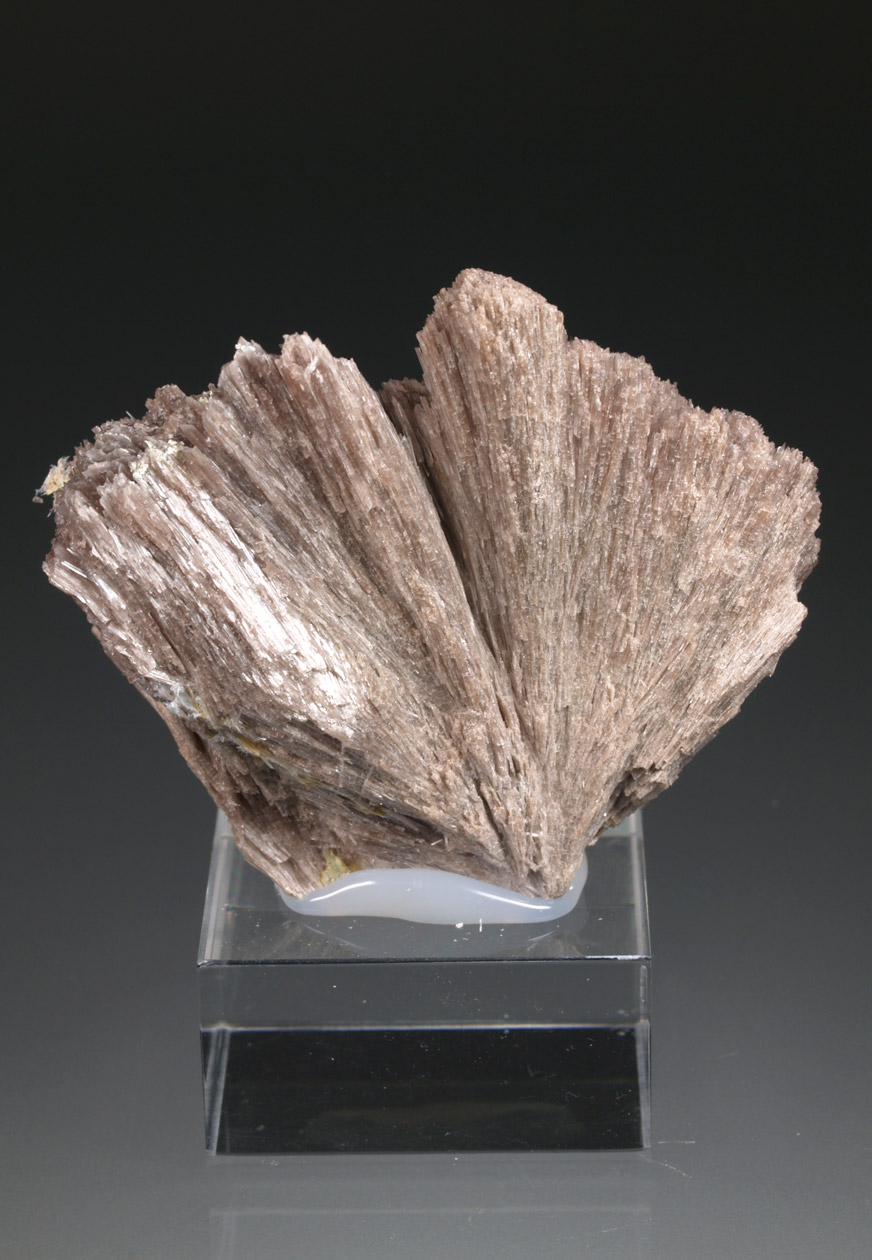
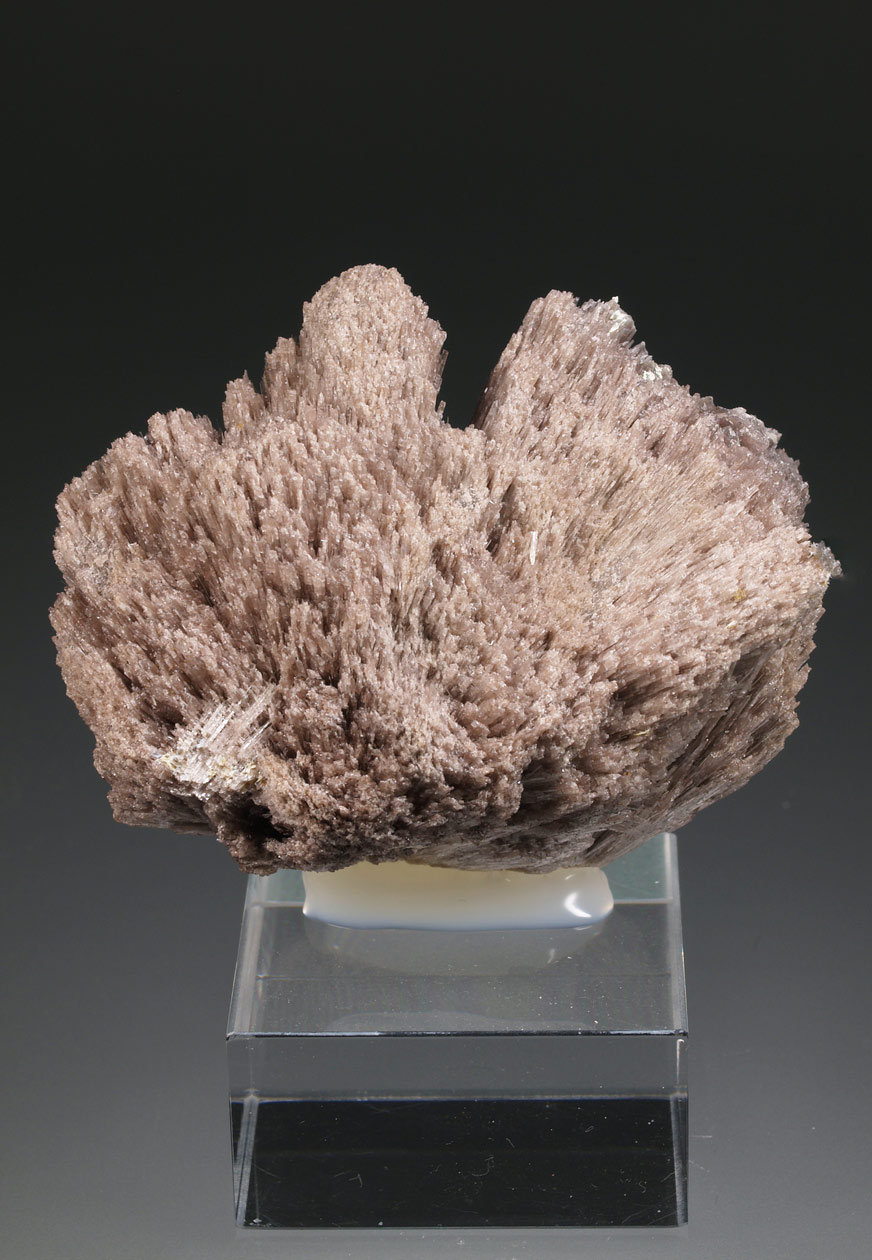

Los ejemplares de diópsido de Castellaccio son difíciles de encontrar hoy día. Se presenta como agregados de cristales prismáticos radiales de diópsido con una tonalidad lavanda debido a las impurezas de manganeso. Se trata de la especie más conocida que se halla en la rodingita (una roca metasomática) de esta cantera italiana. Diversos análisis han mostrado la presencia de Co (0,5% en peso en CoO) y Mn (1,5% en peso en MnO). Los minerales asociados incluyen perovskita, grossularia, andradita, magnetita, titanita, apatito, pirrotita y calcita (Bedognè et al., 2006).
Bedognè, F., Montrasio, A., Sciesa, E. (2006): I minerali della medio-alta Valtellina delle Orobie e della Val Poschiavo. Aggiornamenti sulle altre località della provincia di Sondrio. Tipografia Bettini, Sondrio, 255 pp.
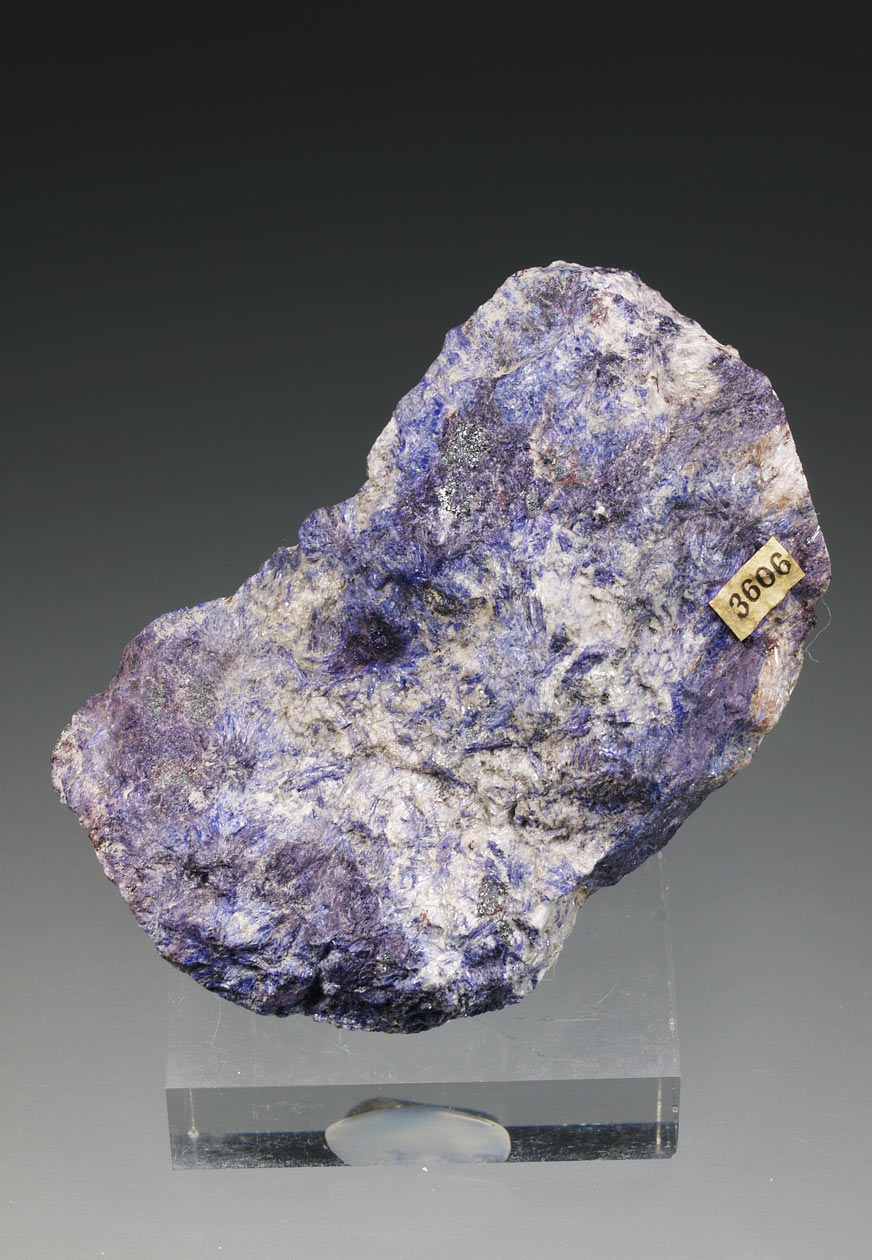
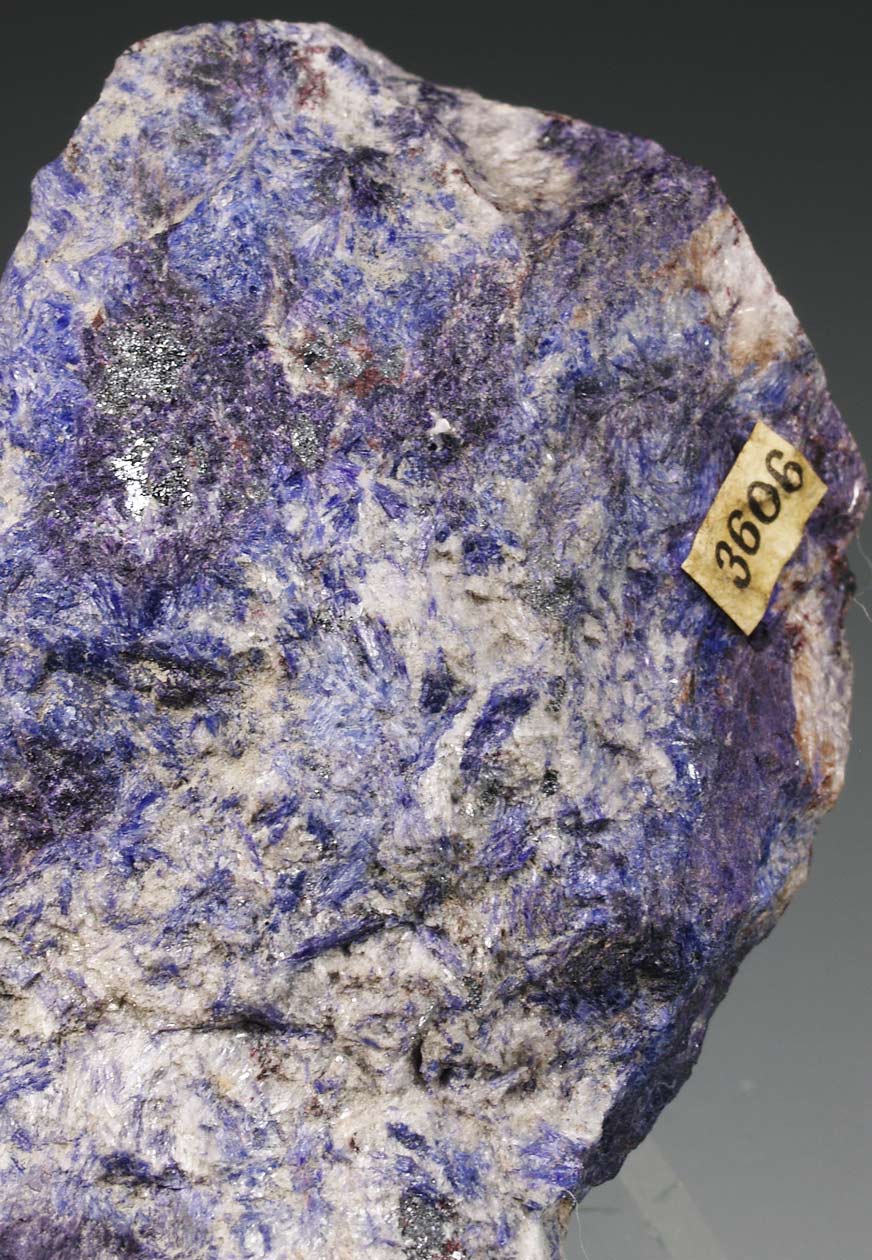
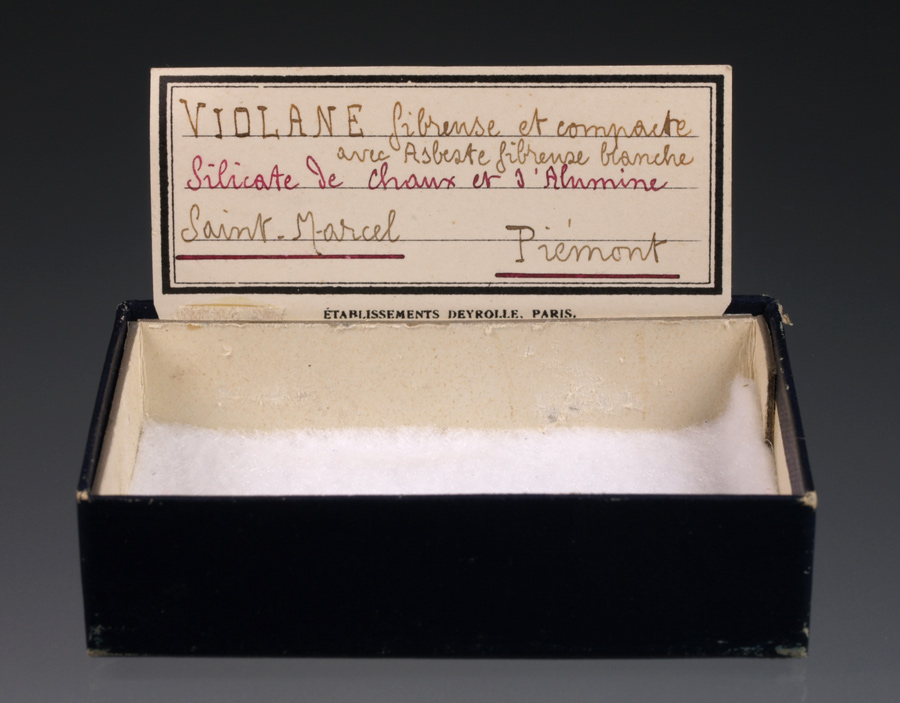
Especimen de violana procedente de la primera localidad donde se describió esta variedad de clinopiroxeno por primera vez. Se trata de diópsido, augita u onfacita de color púrpura a azul púrpura coloreado por manganeso. Este ejemplar que ofrecemos se acompaña de una etiqueta de Deyrolle (París) con el número 3606 (adherido al ejemplar). La compañía Deyrolle inició su andadura en 1831, de la mano de Jean-Baptiste Deyrolle, con la elaboración y venta de materiales relacionados con las ciencias naturales. Este ejemplar se acompaña de una elegante etiqueta manuscrita.
El nombre original es "violan", introducido en 1838 por August Breithaupt. En 1867, Thomas Allison Readwin, en su Index to Mineralogy, escribió mal el nombre con una "e" al final, pero así quedó para el futuro.
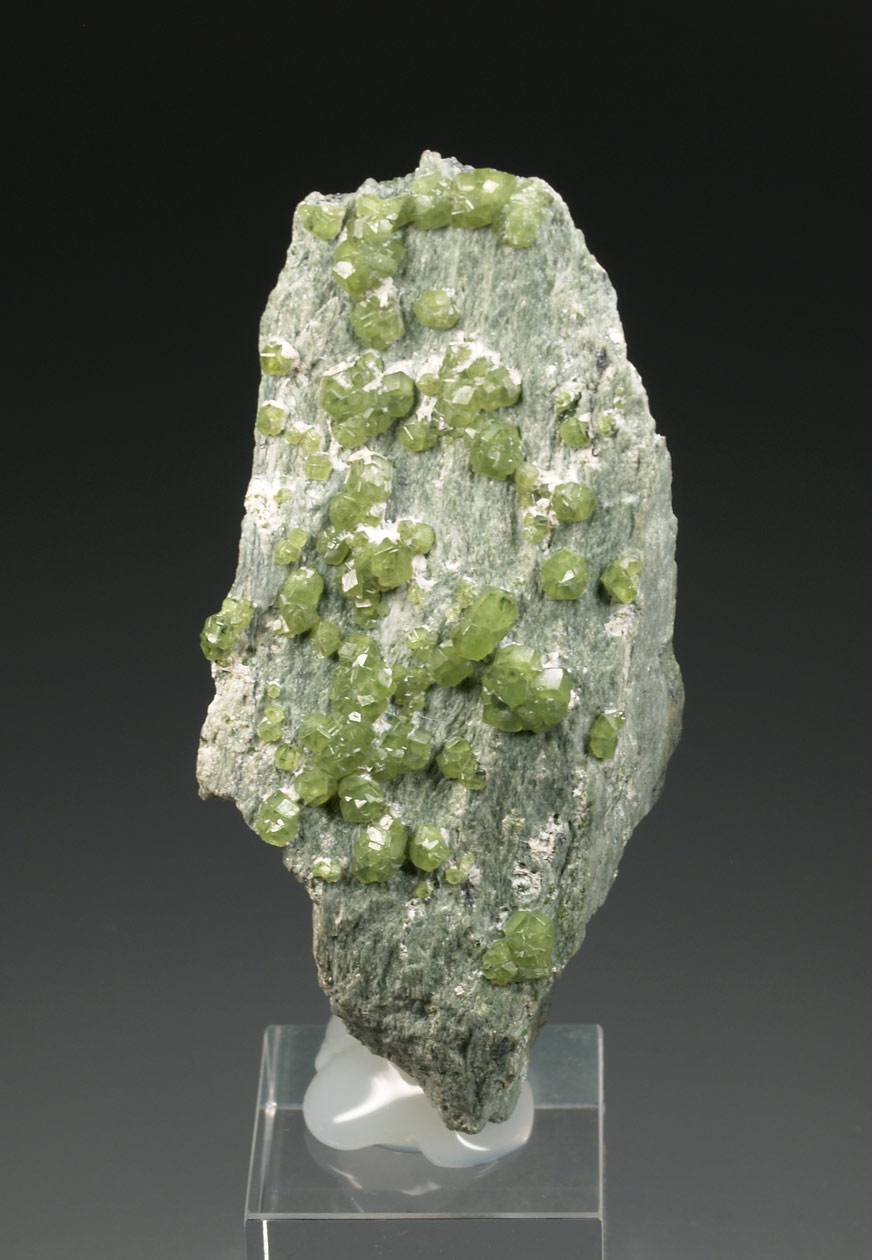
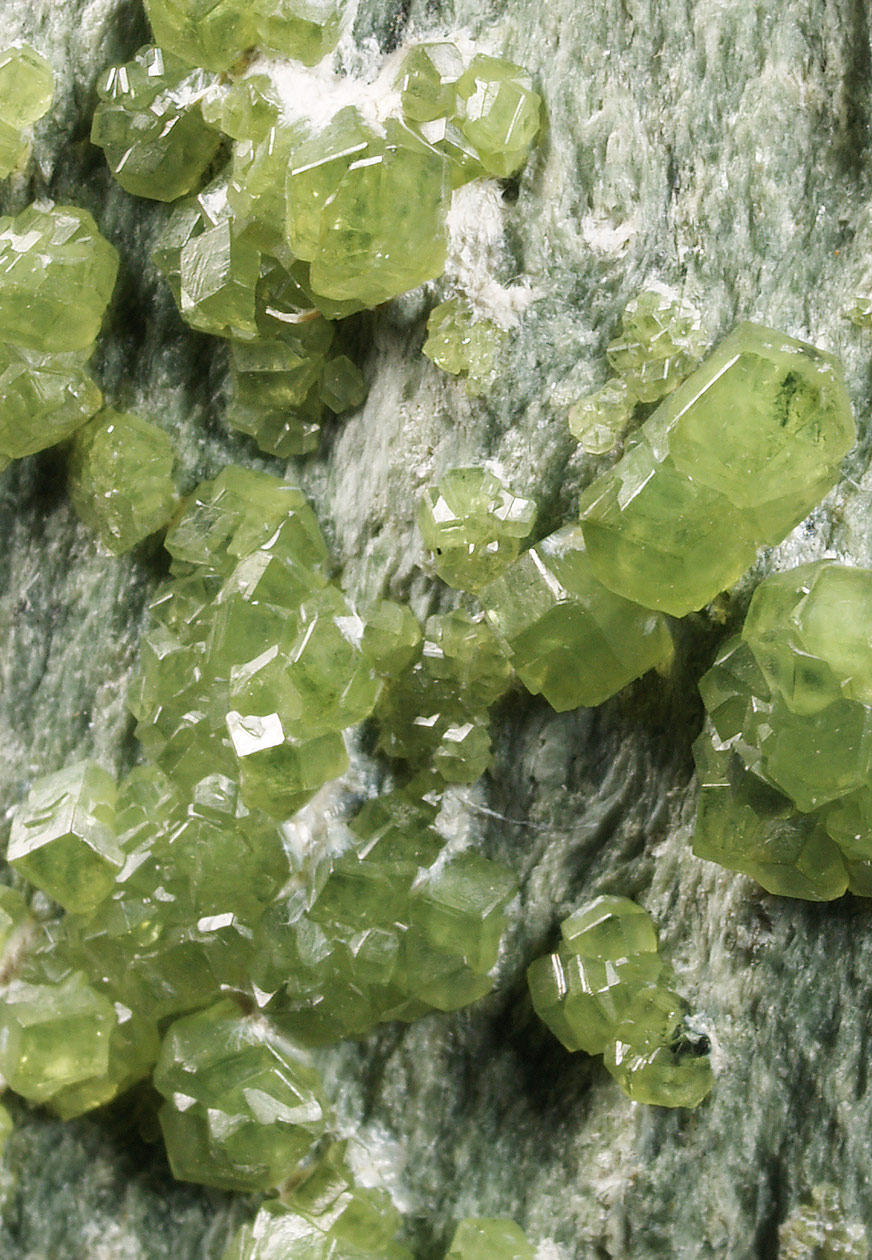
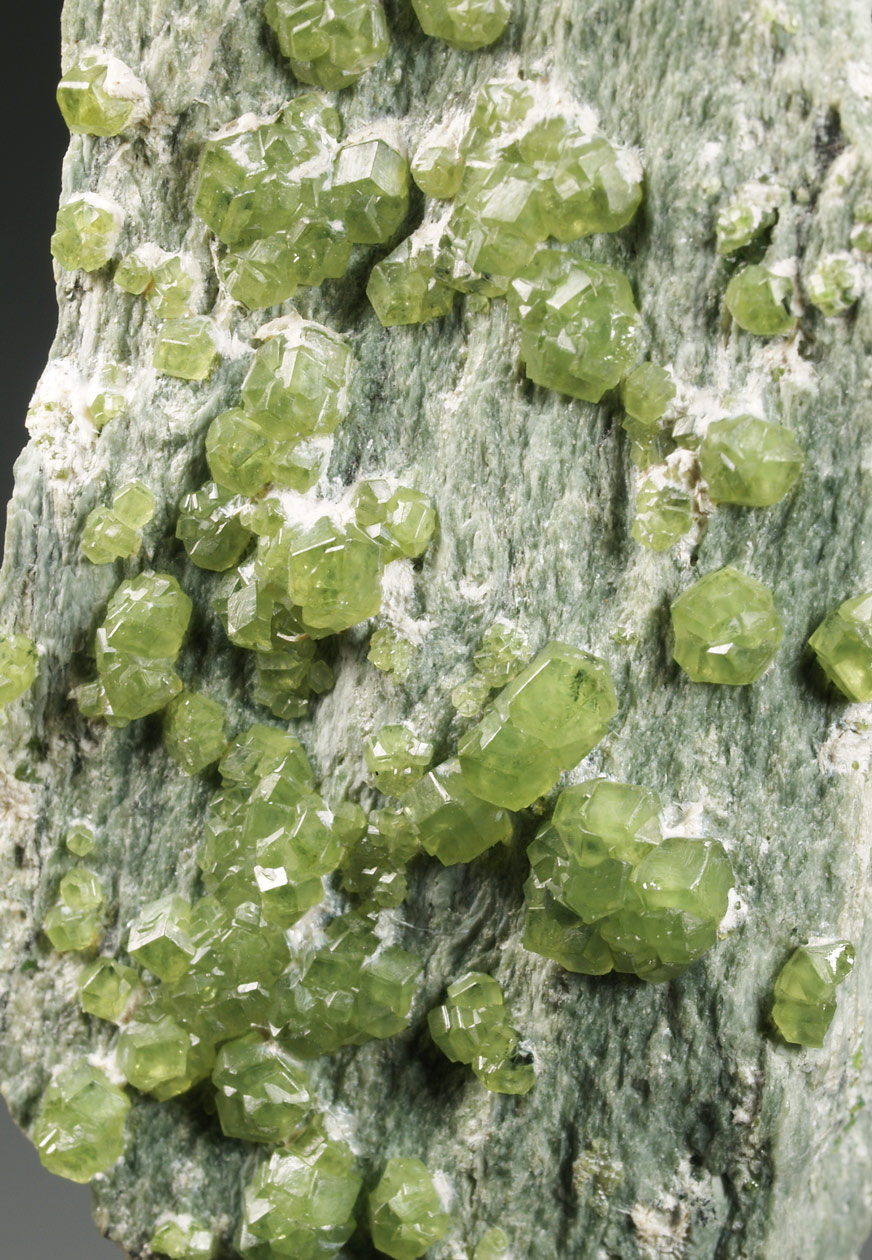
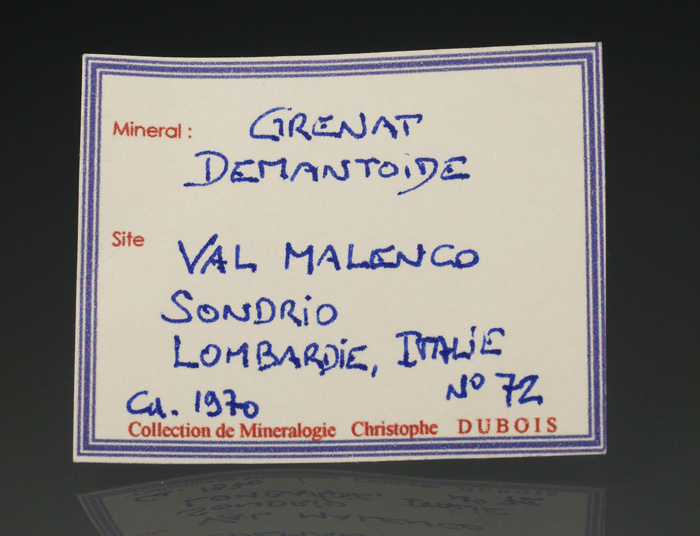
En este ejemplar podemos observar y disfrutar de numerosos cristales de andradita, de la variedad verde demantoide. Facetados, brillantes y translúcidos. Un clásico alpino. Procede dela colección Didisheim, de Suiza.

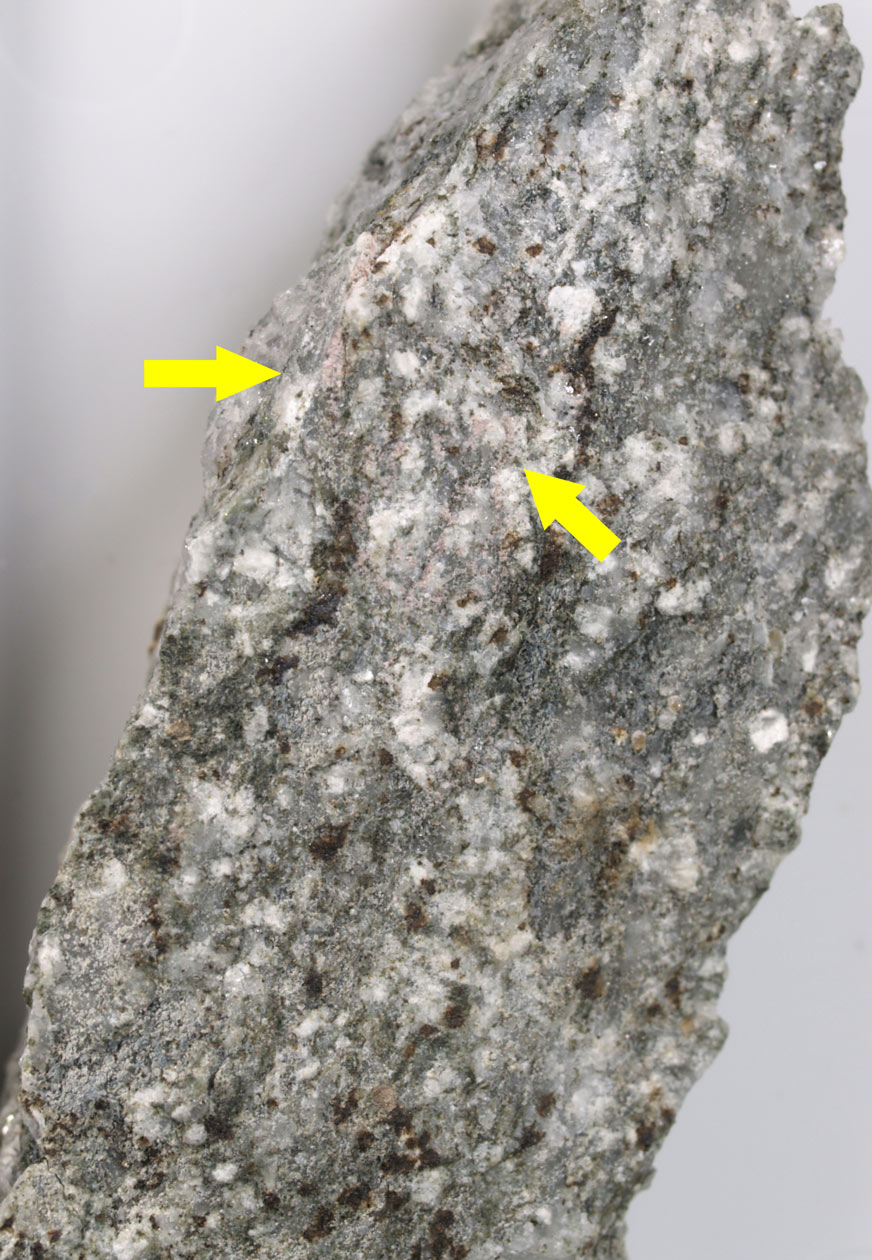
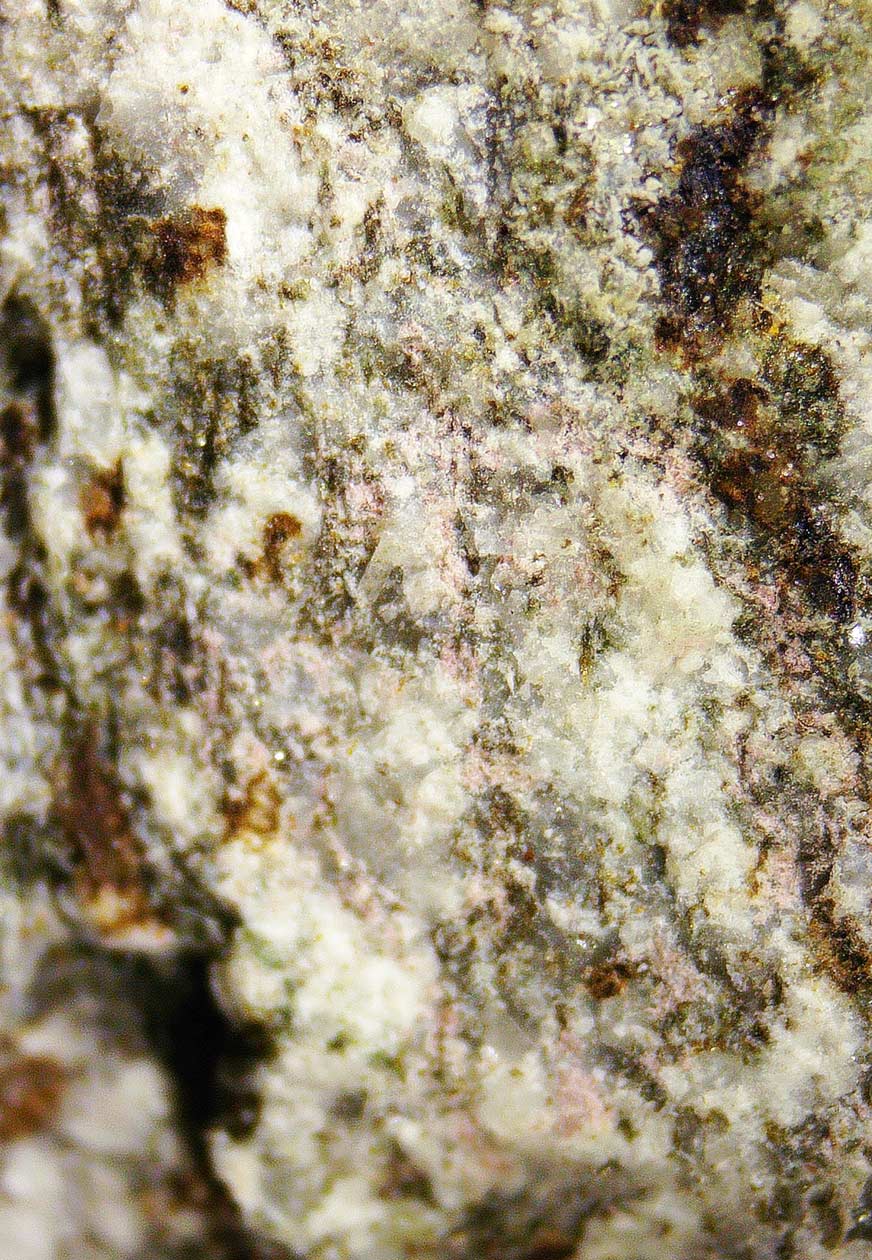
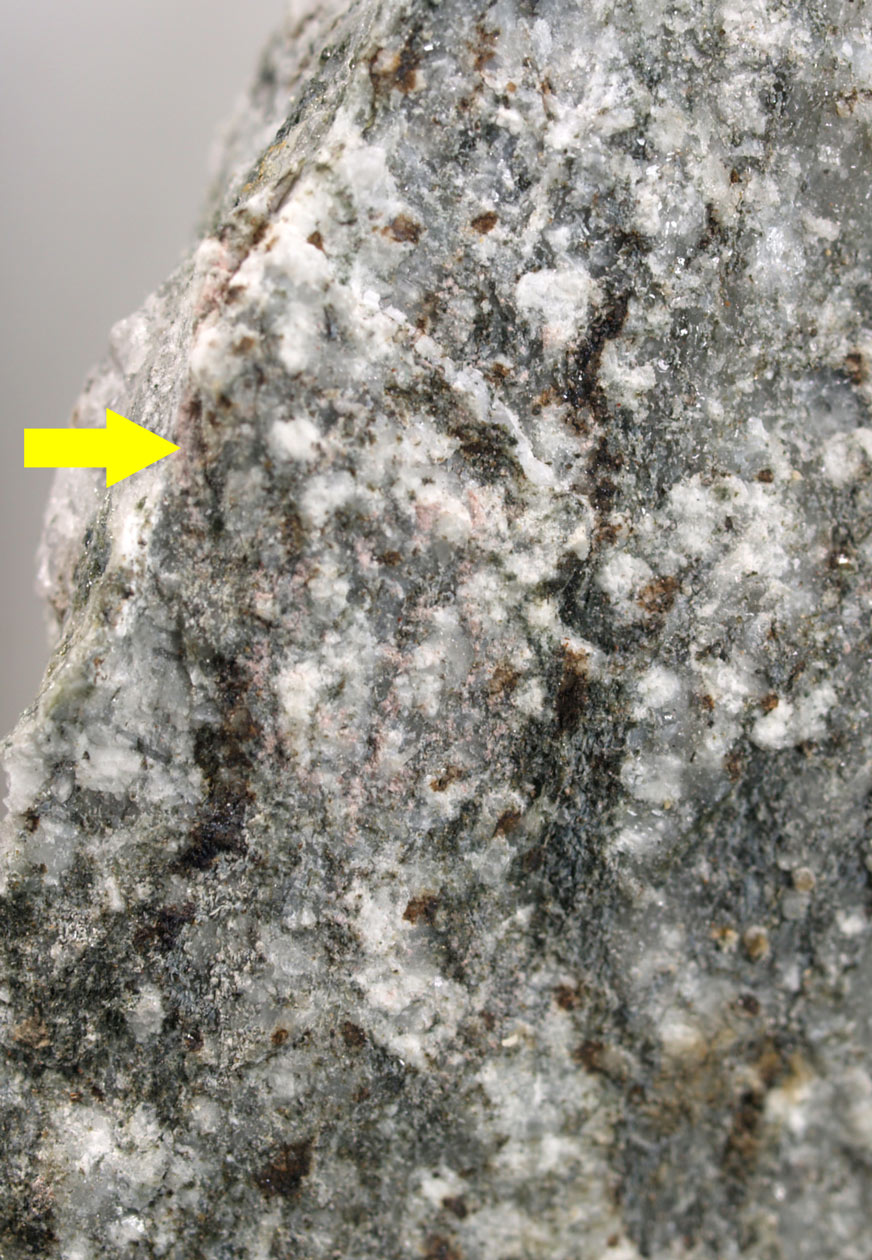
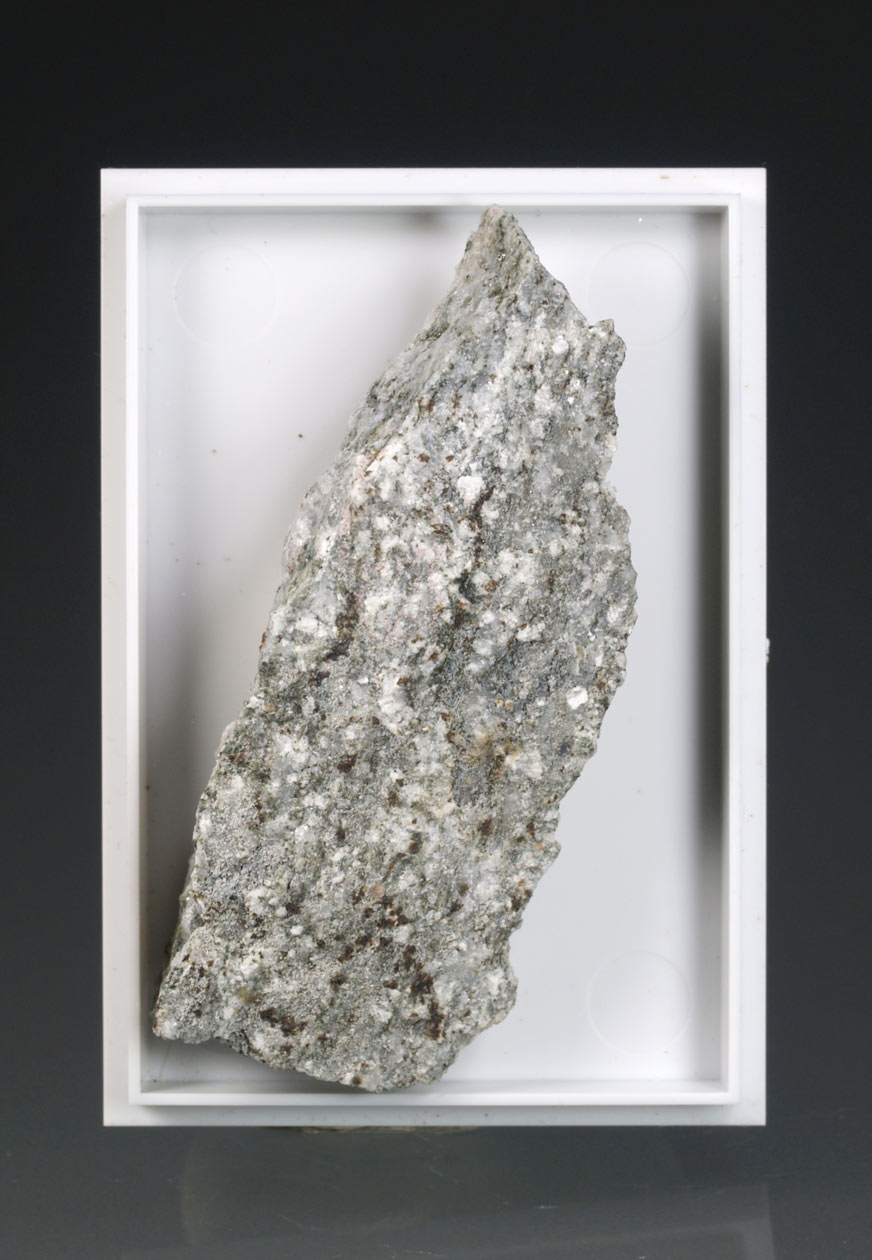
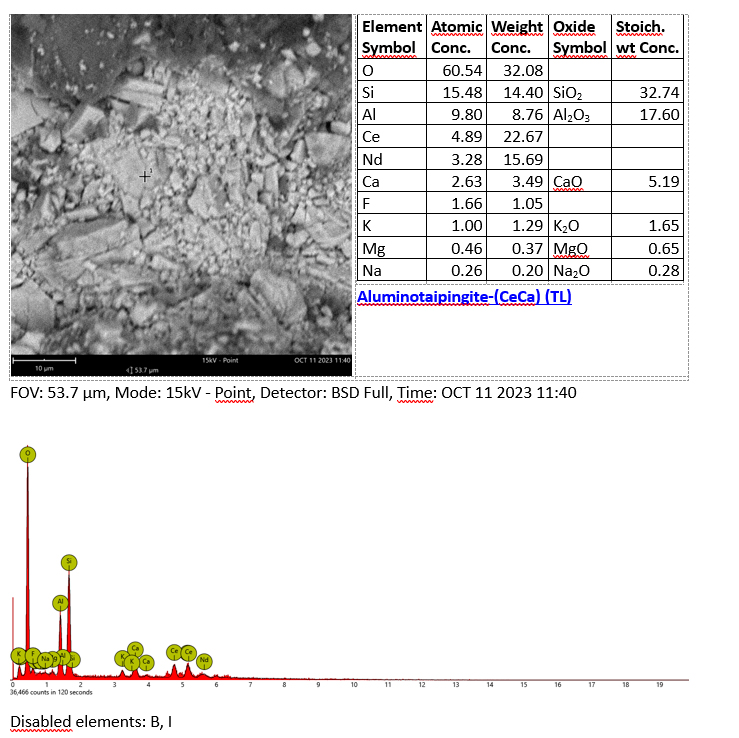
Agregados rosados de aluminotaipingita-(CeCa) sobre matriz. Se han analizado y se enviarán los resultados al comprador. Montoso es una de las zonas donde se extrae la "Pietra di Luserna" o "Piedra de Luserna", un ortogneis leucogranítico caracterizado por una textura micro-"Augen" y un color gris verdoso o localmente azul pálido.
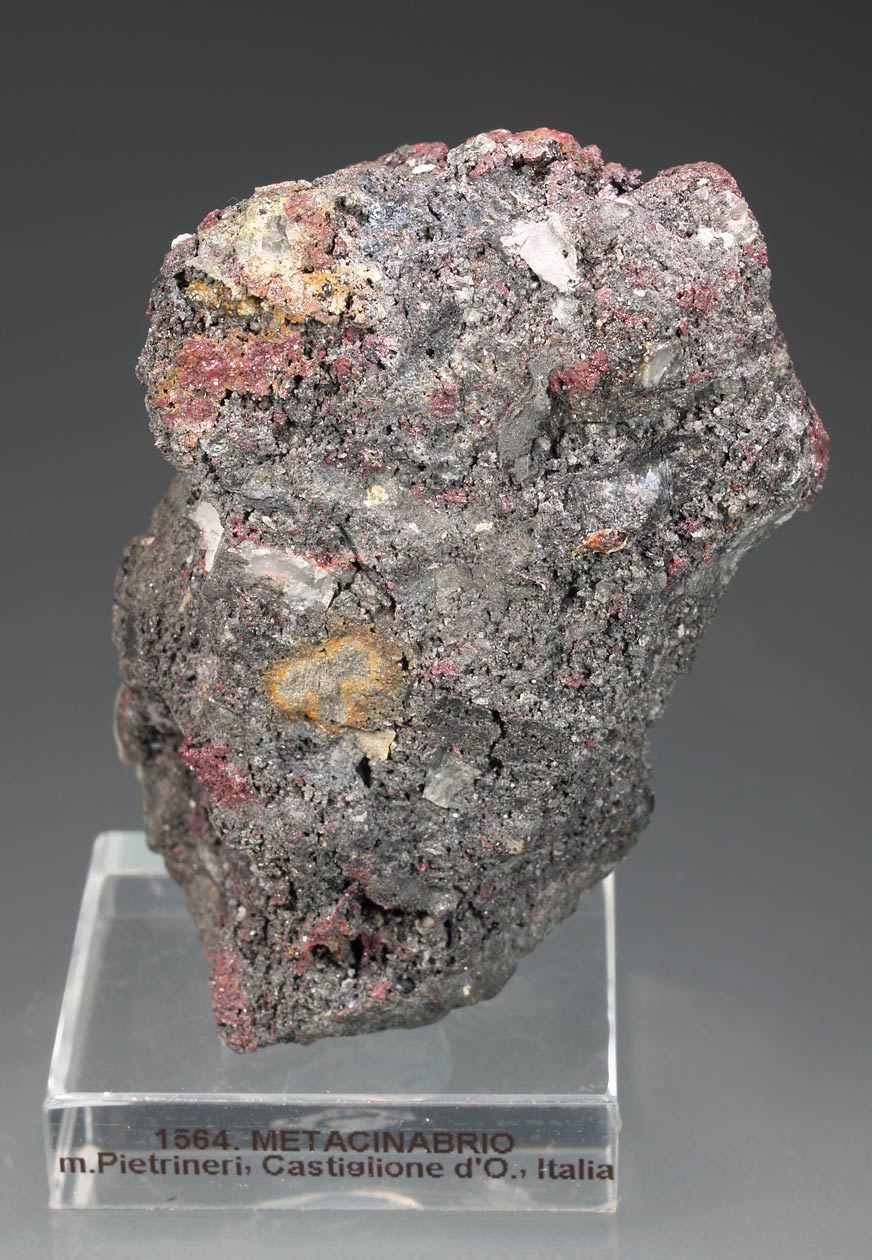
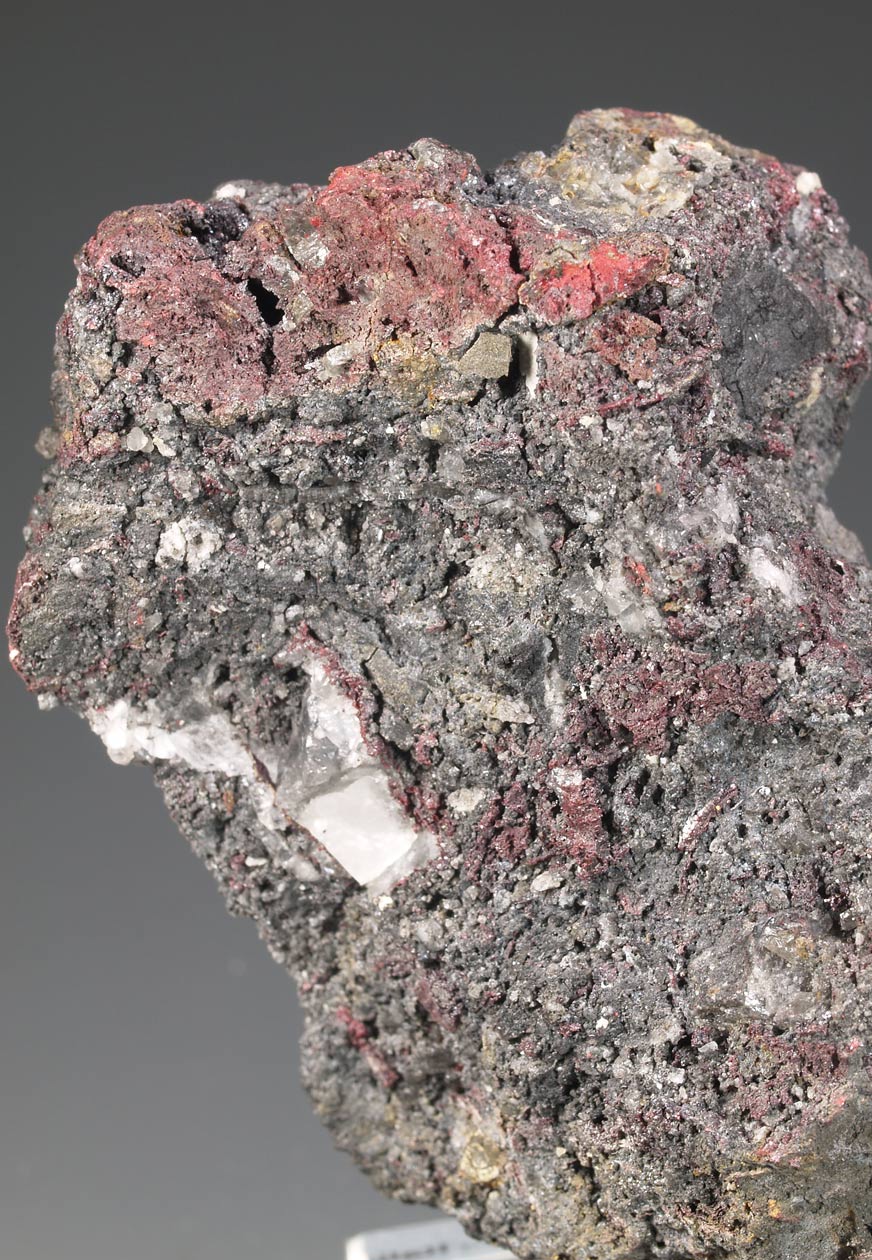
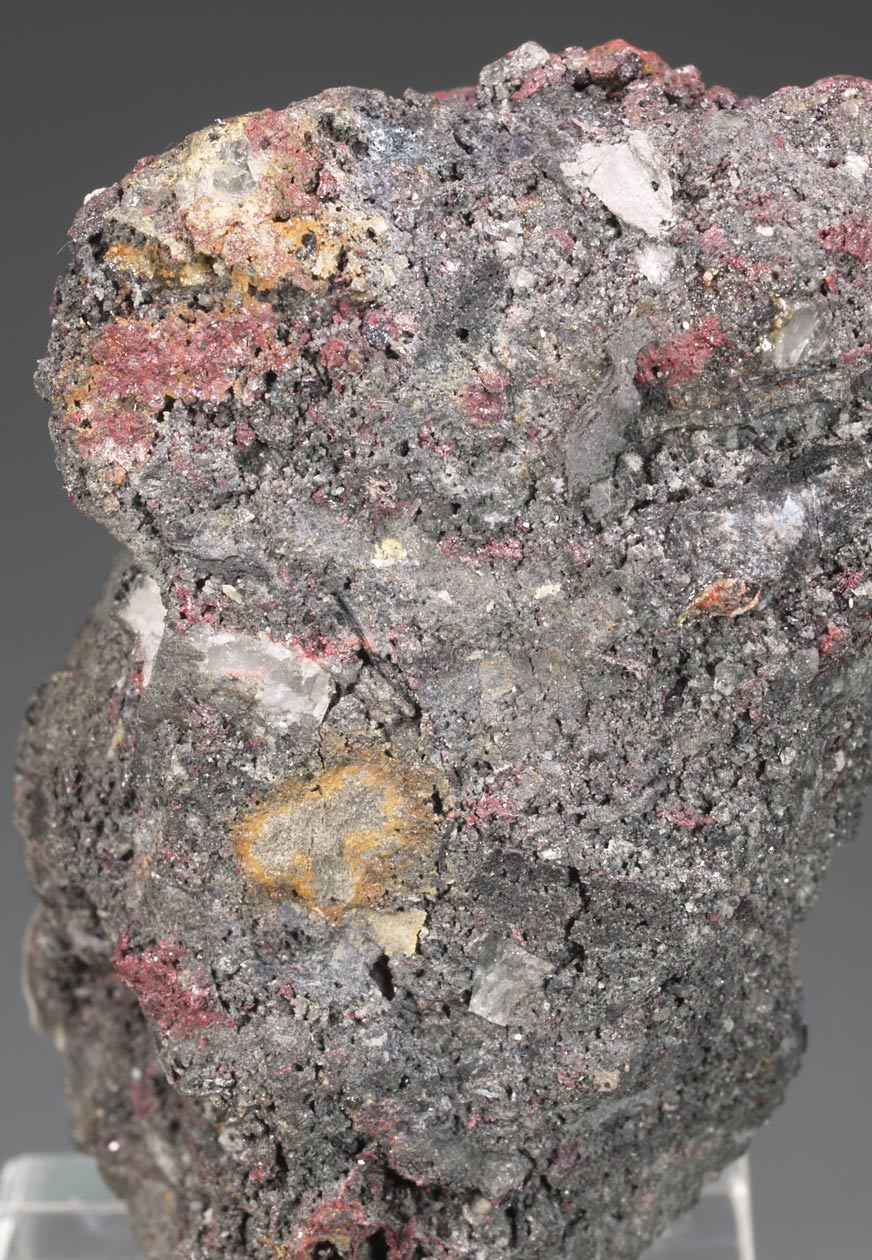
Aunque no se trata de un ejemplar estético en el sentido convencional, este metacinabrio es una pieza muy interesante y poco habitual a la venta. Procede de la mina Pietrineri, una mina de mercurio englobada en el famoso complejo de minerales de mercurio de Monte Amiata, actualmente completamente abandonado. Las operaciones mineras en Pietrineri comenzaron en 1902 i cesaron en 1979. En el espécimen podemos ver el vermellón del cinabrio junto con agregados negros de metacinabrio.
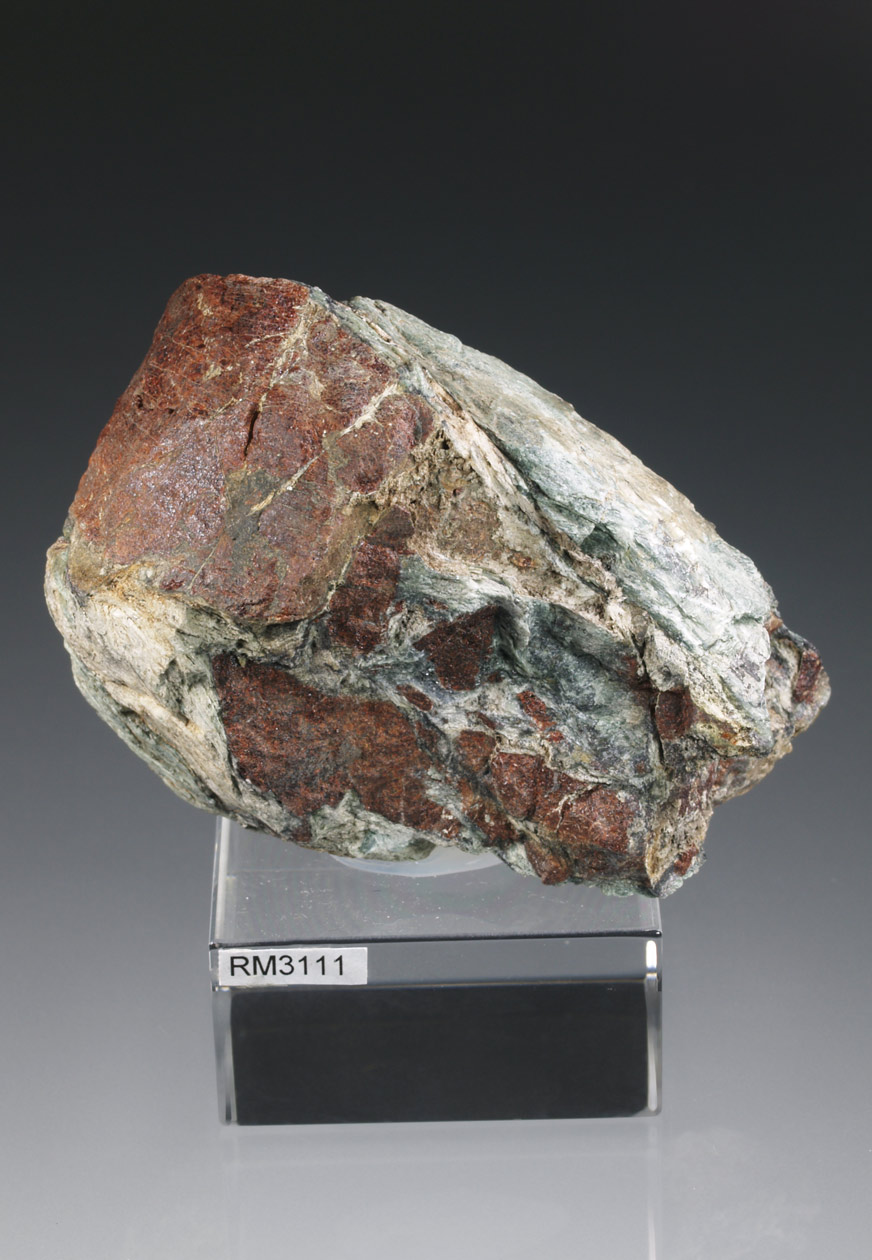
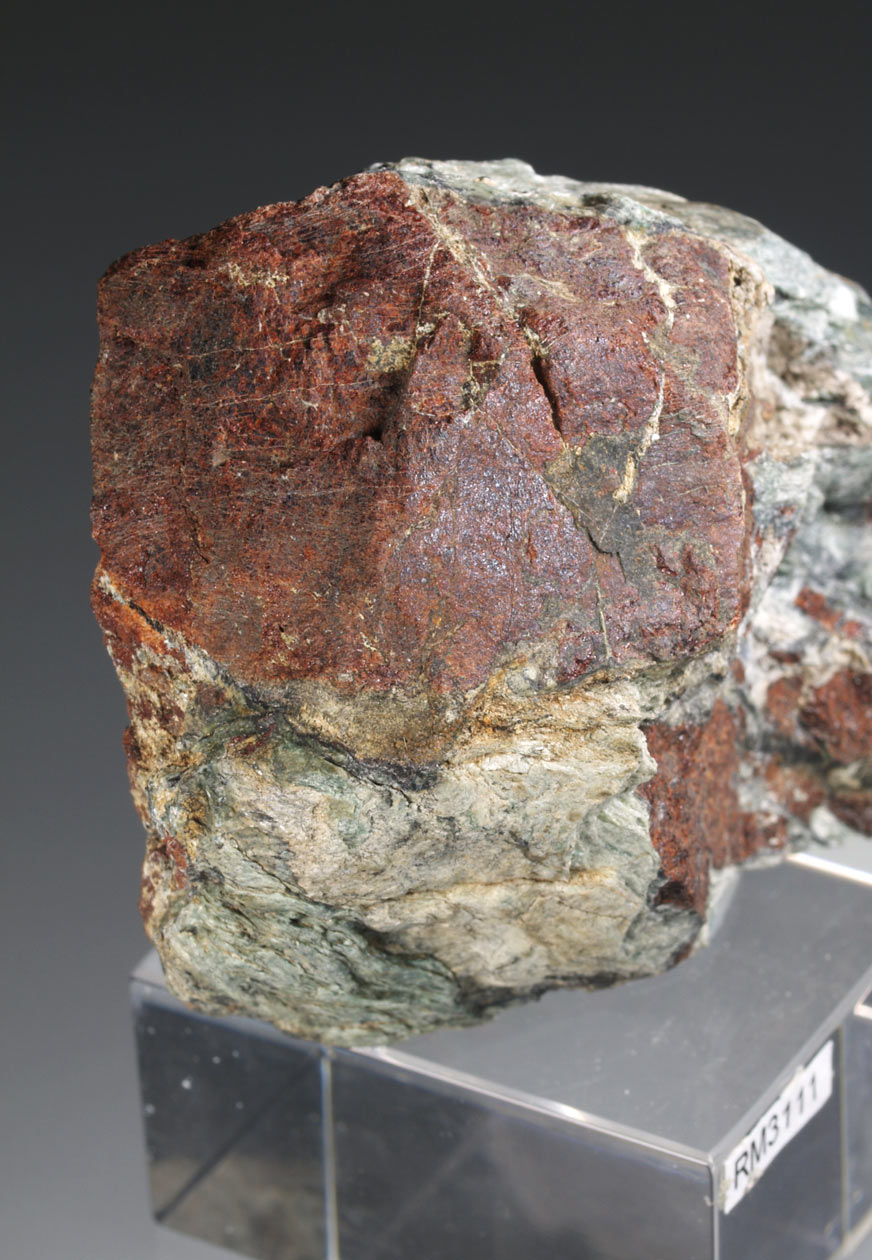
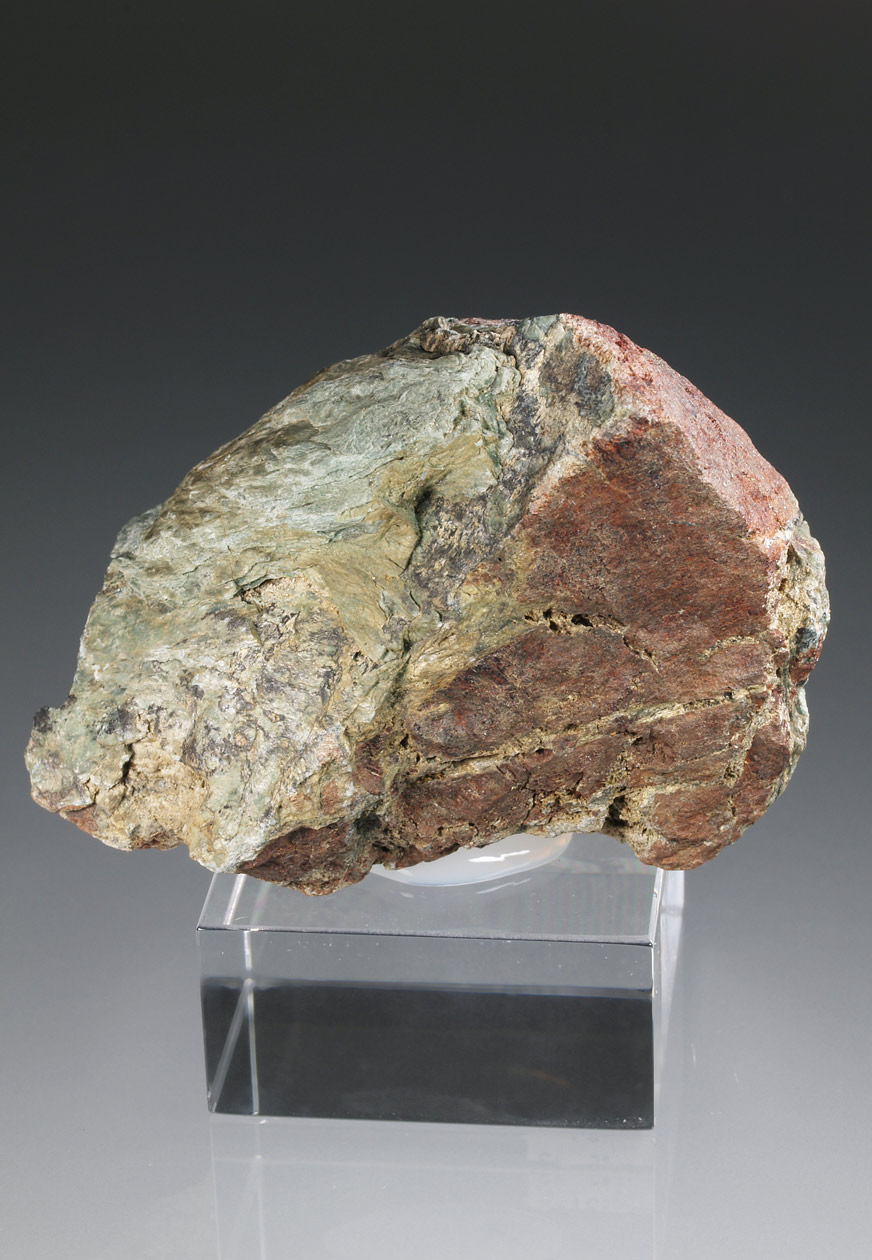
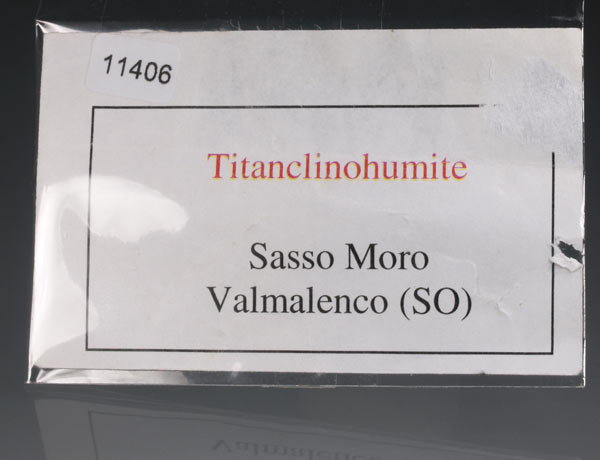
Porfiroblastos de hidroxiclinohumita titanífera con diópsido blanco-grisáceo y serpentinita-antigorita. El nombre de la variedad titanoclinohumita (la literatura más antigua usa el nombre "titanolivino" para esta variedad) se usa comúnmente para indicar que la hidroxiclinohumita con Ti que se encuentra en serpentinitas metamorfizadas. Ejemplar muy interesante procedente de localidad poco habitual para la especie.
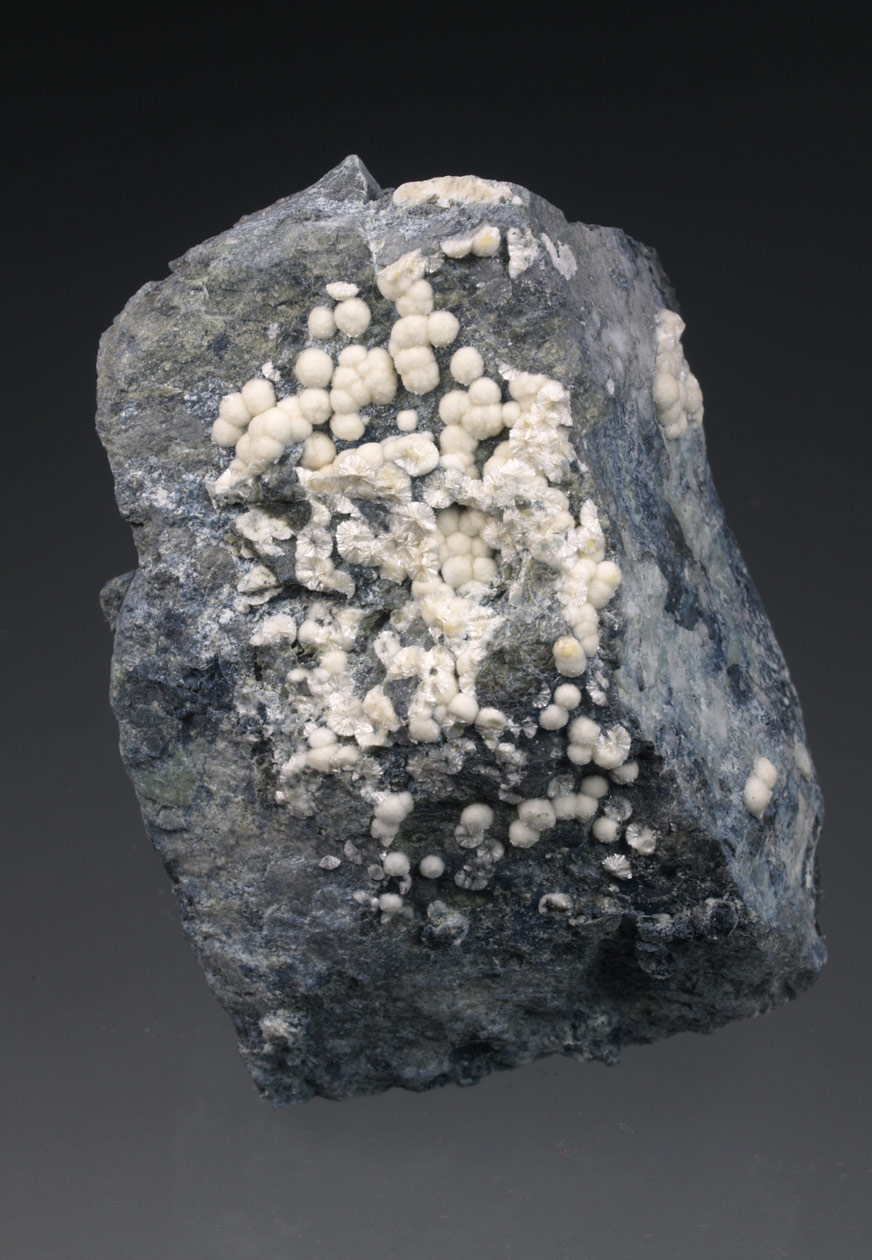
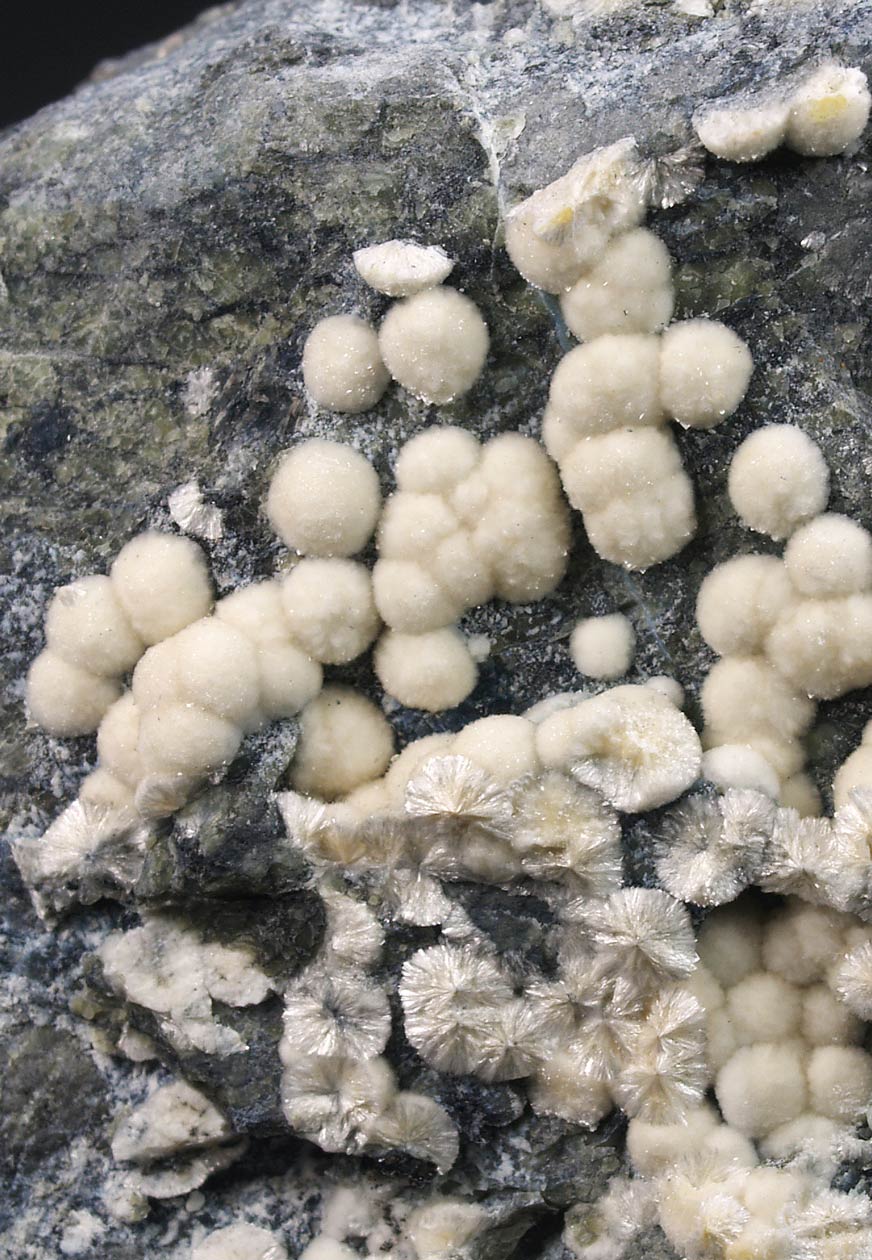
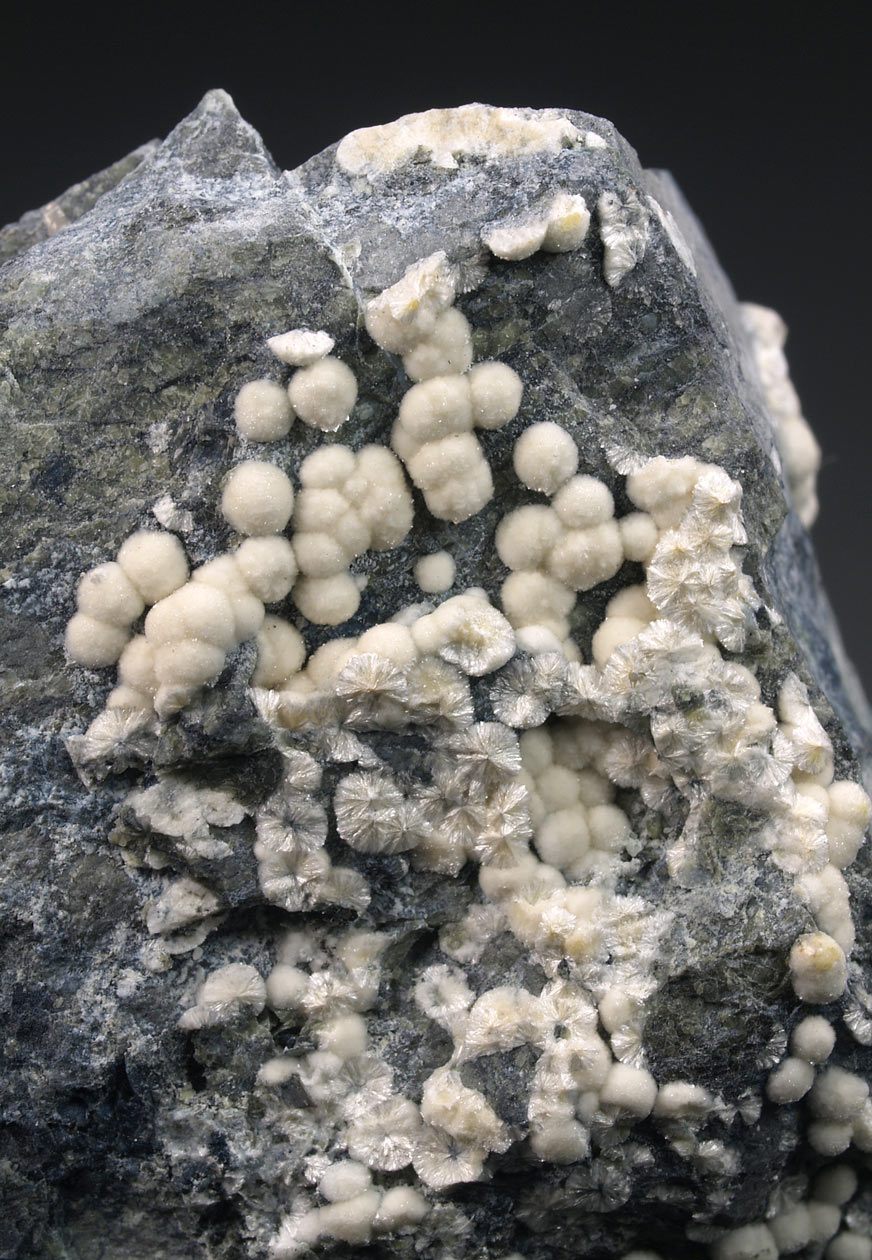
Ejemplar de hidromagnesita formado por diversos agregados globulares de cristales lanceolados y transparentes de este hidroxilcarbonato de magnesio. Destacan por su contraste con la matriz de ofita. No es muy habitual encontrar ejemplares de esta localidad.
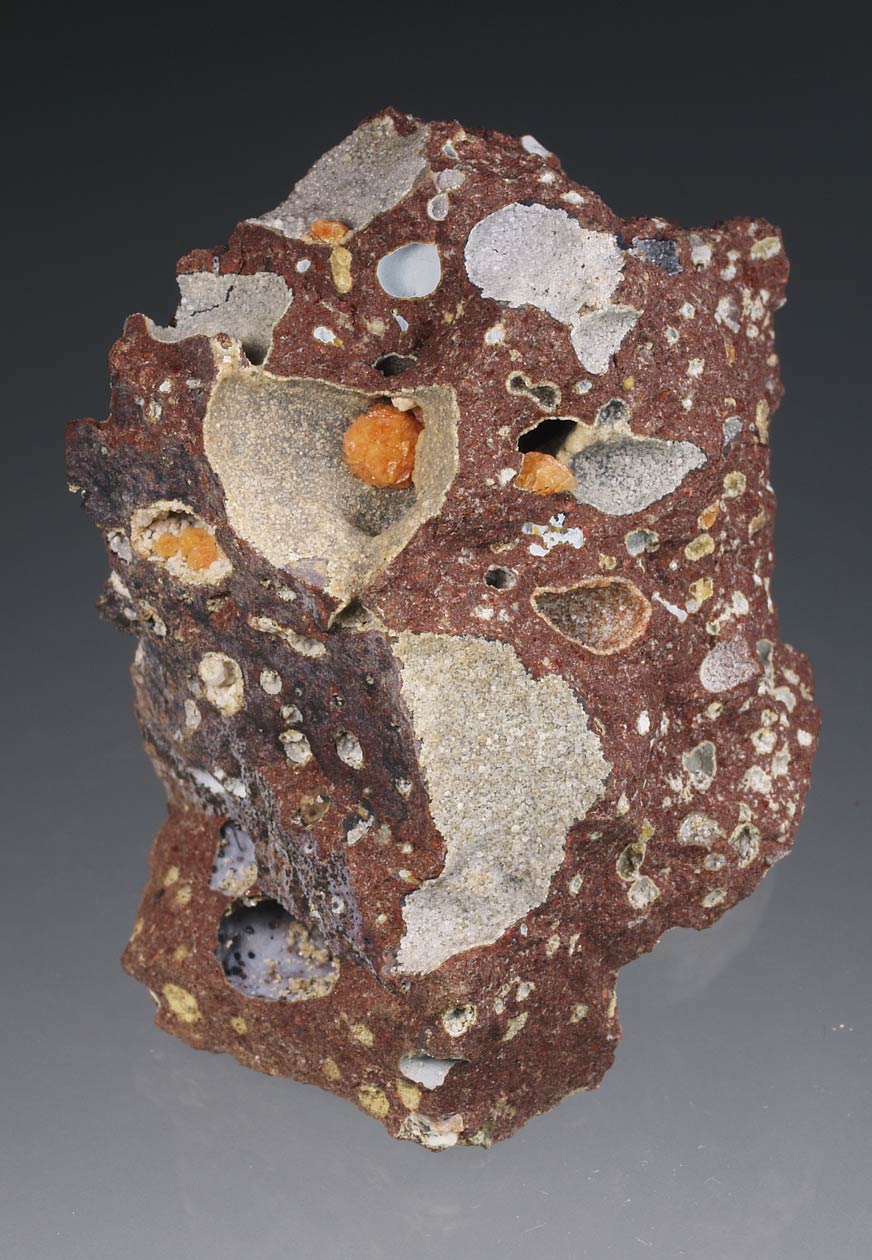
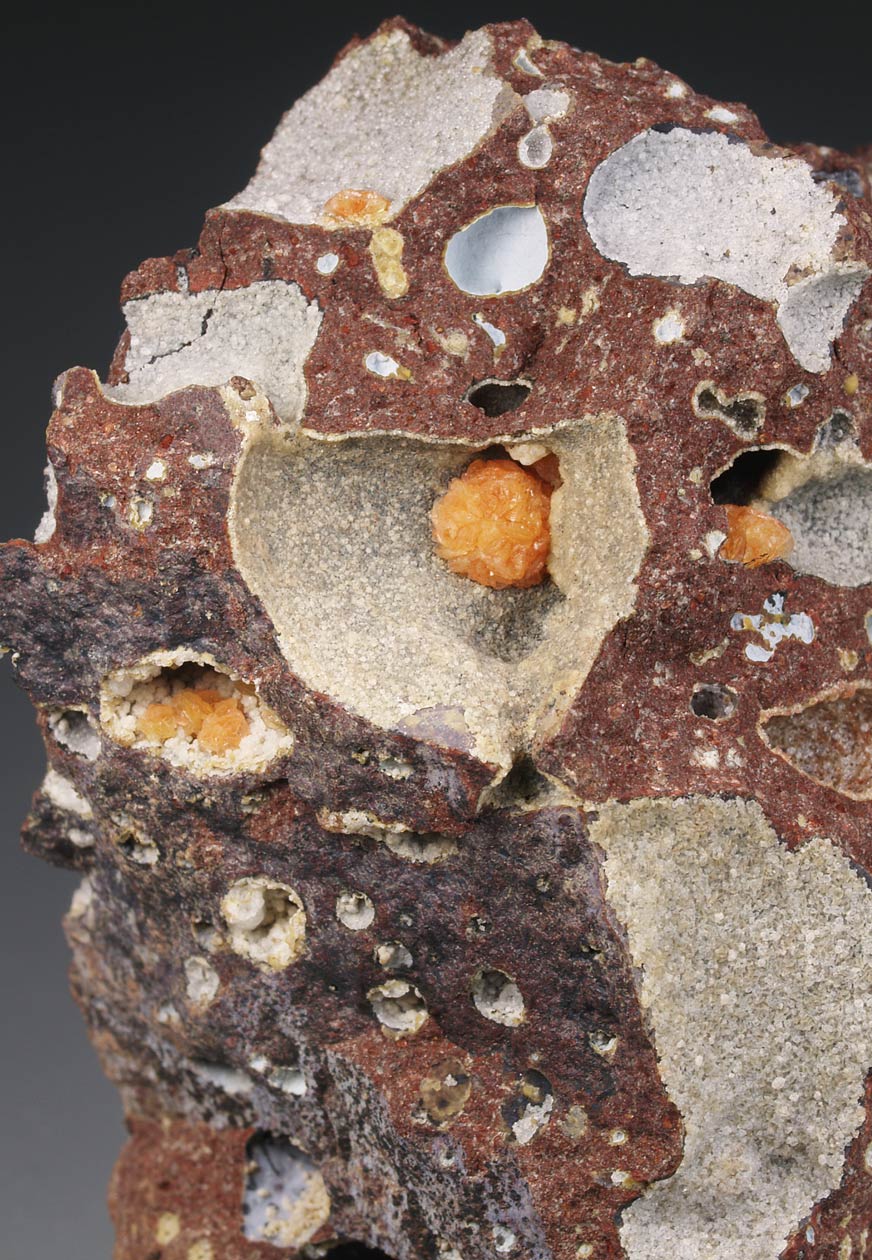
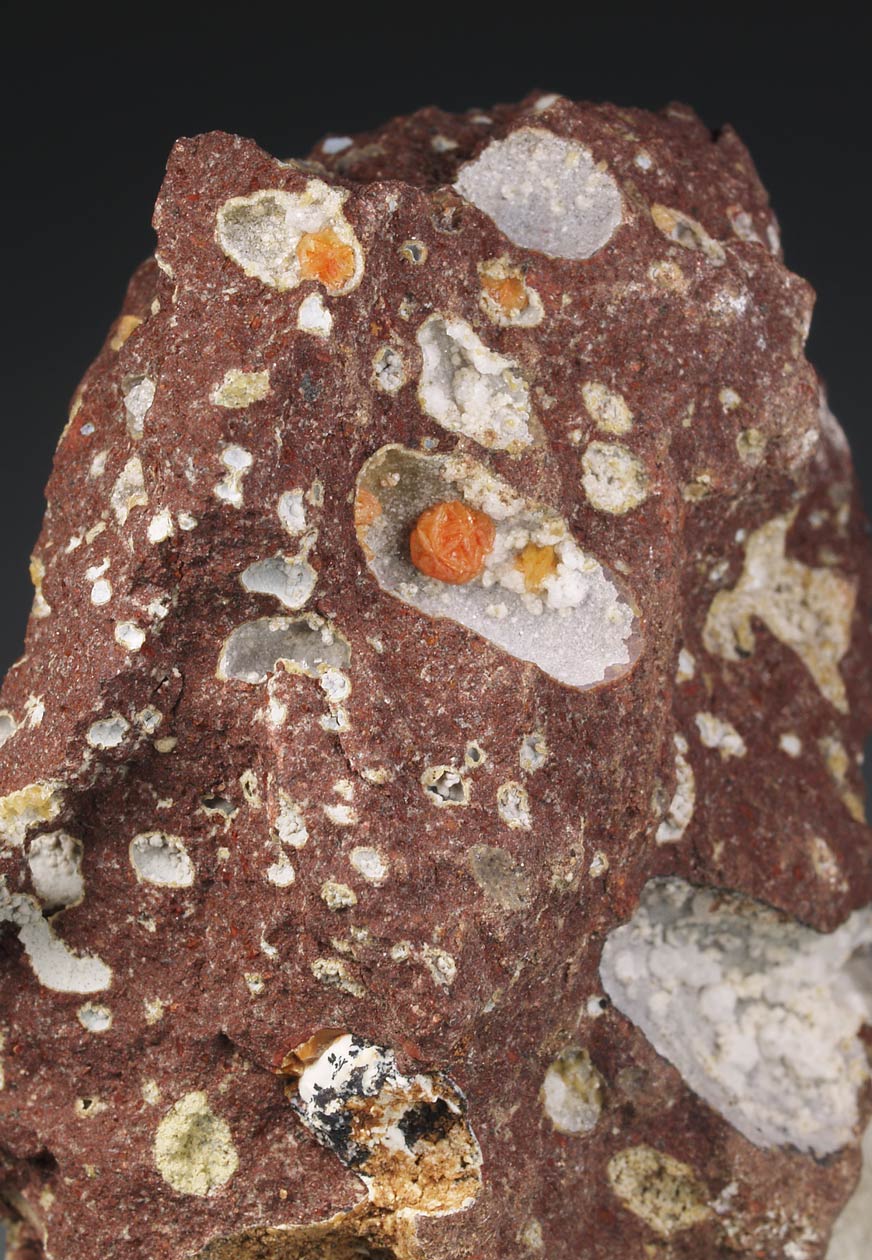
Los ejemplares de chabasita-Ca de esta localidad presentan agregados de cristales lenticulares de color naranja. La estética es muy notable al contrastar en las vacuolas de la matriz de roca basáltica. Se acompañan de phillipsita, analcima, minerales del grupo de la esmectita y calcita. Bajo aumento podemos observar las vacuolas con los diferentes minerales, un entretenimiento.
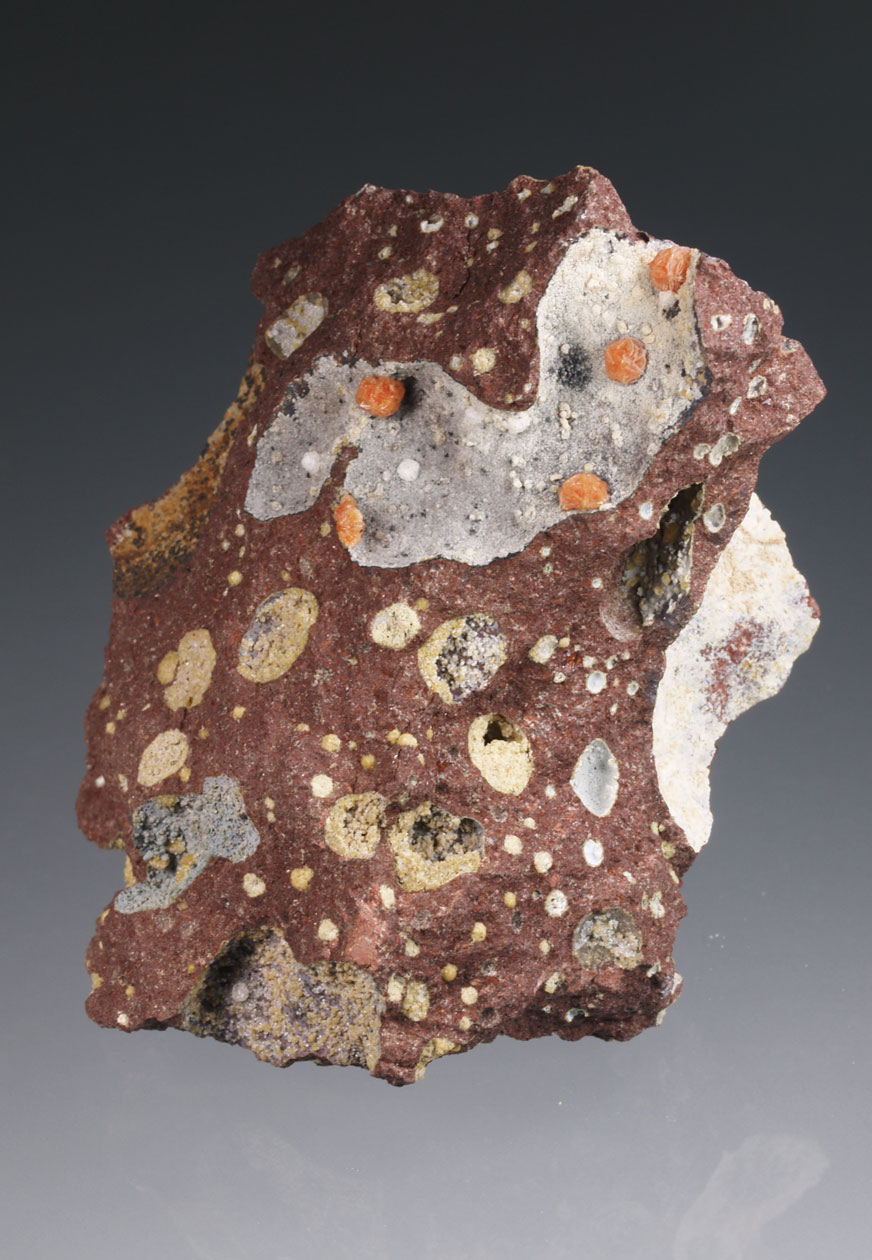
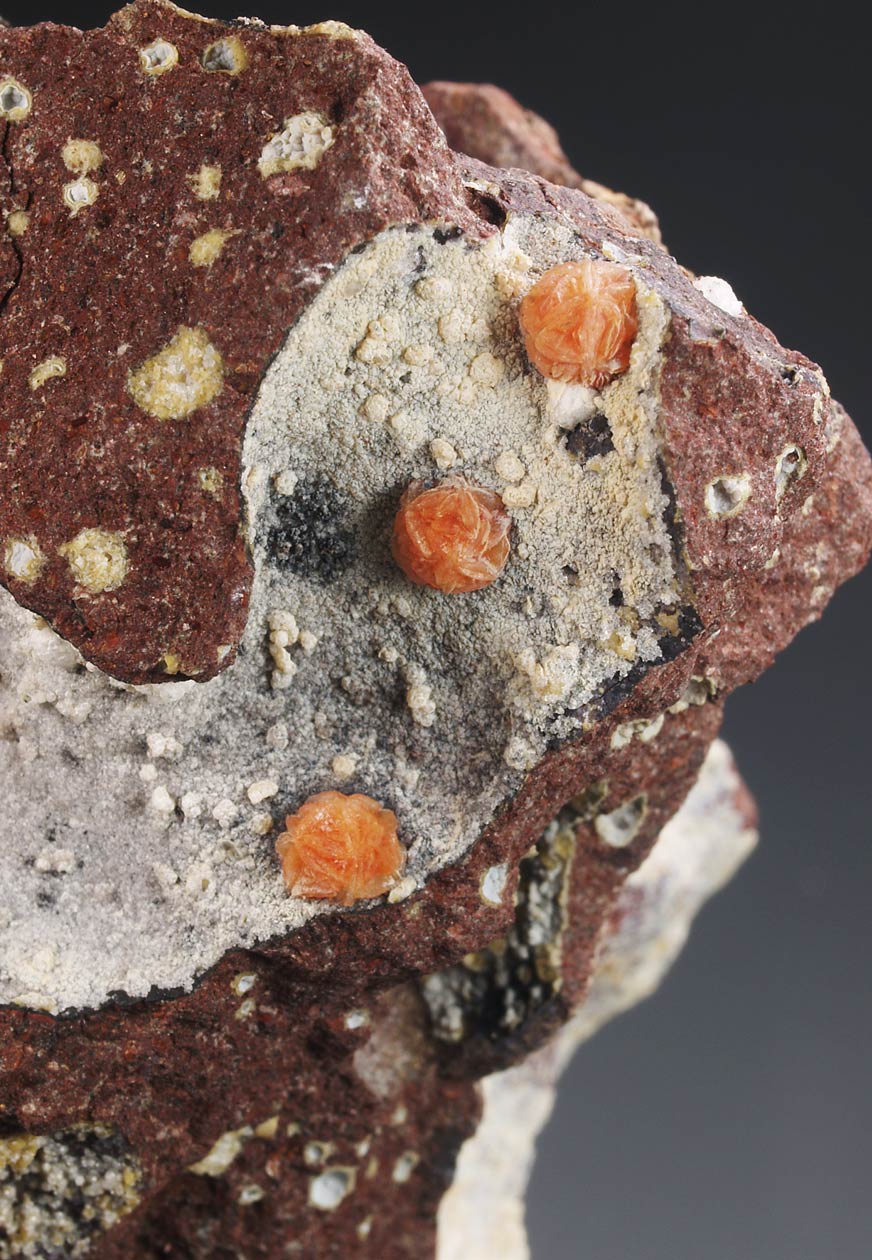
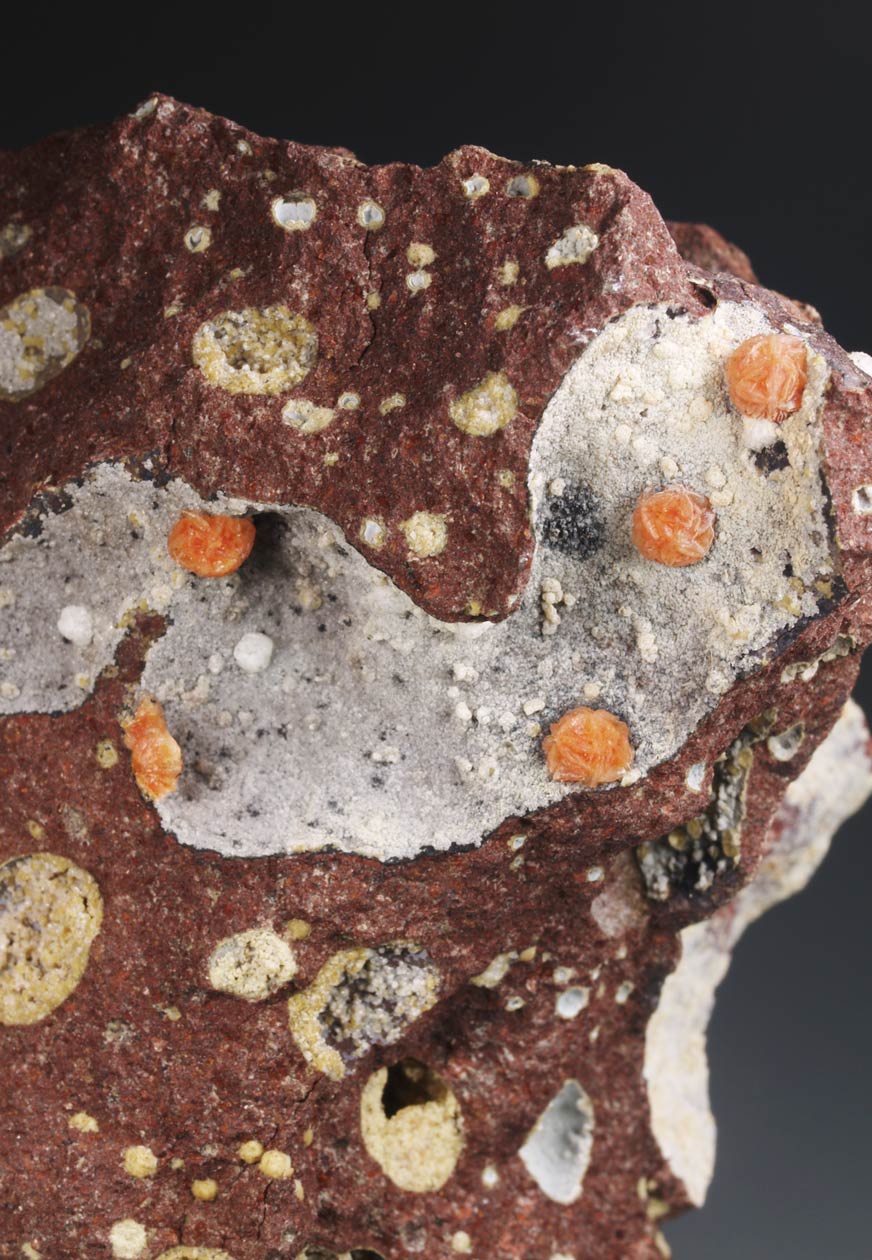
Los ejemplares de chabasita-Ca de esta localidad presentan agregados de cristales lenticulares de color naranja. La estética es muy notable al contrastar en las vacuolas de la matriz de roca basáltica. Se acompañan de phillipsita, analcima, minerales del grupo de la esmectita y calcita. Bajo aumento podemos observar las vacuolas con los diferentes minerales, un entretenimiento.
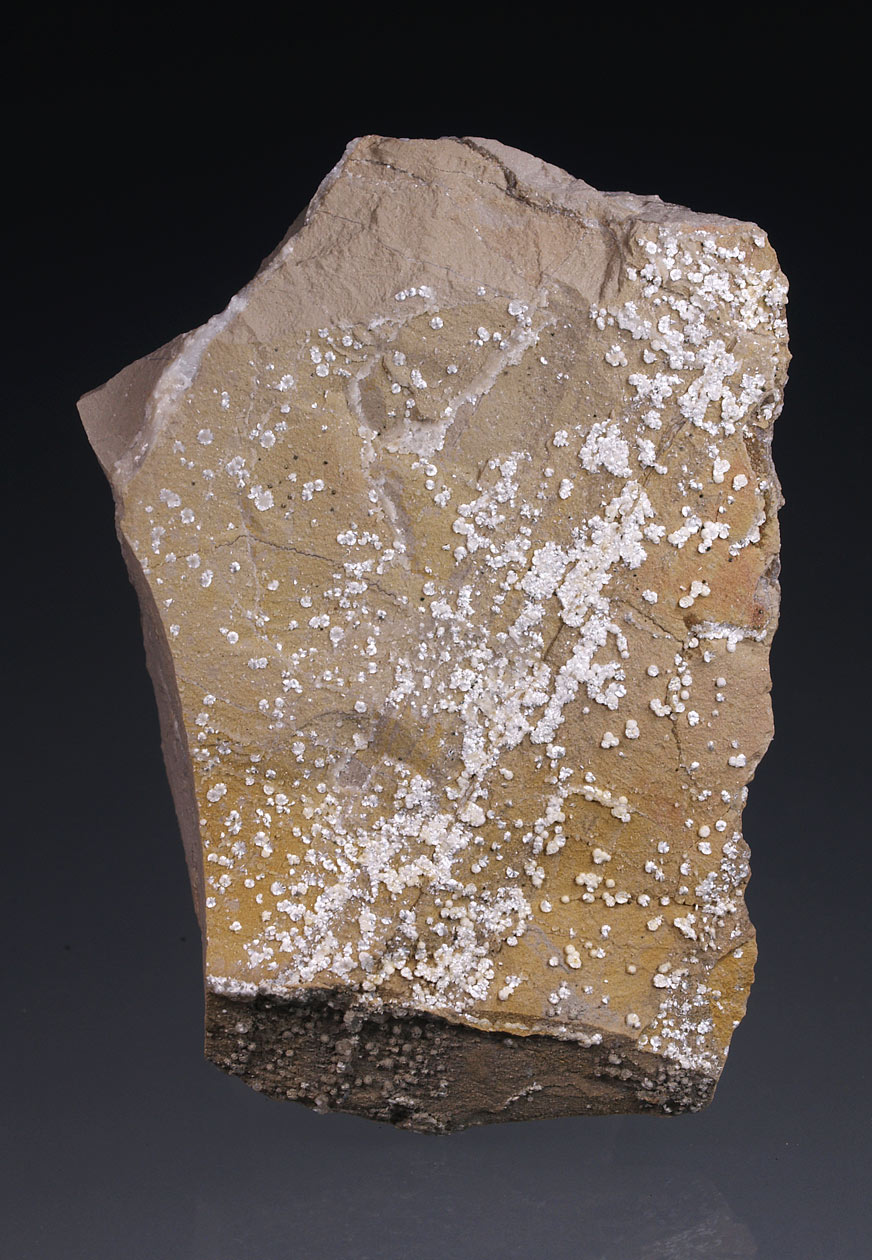
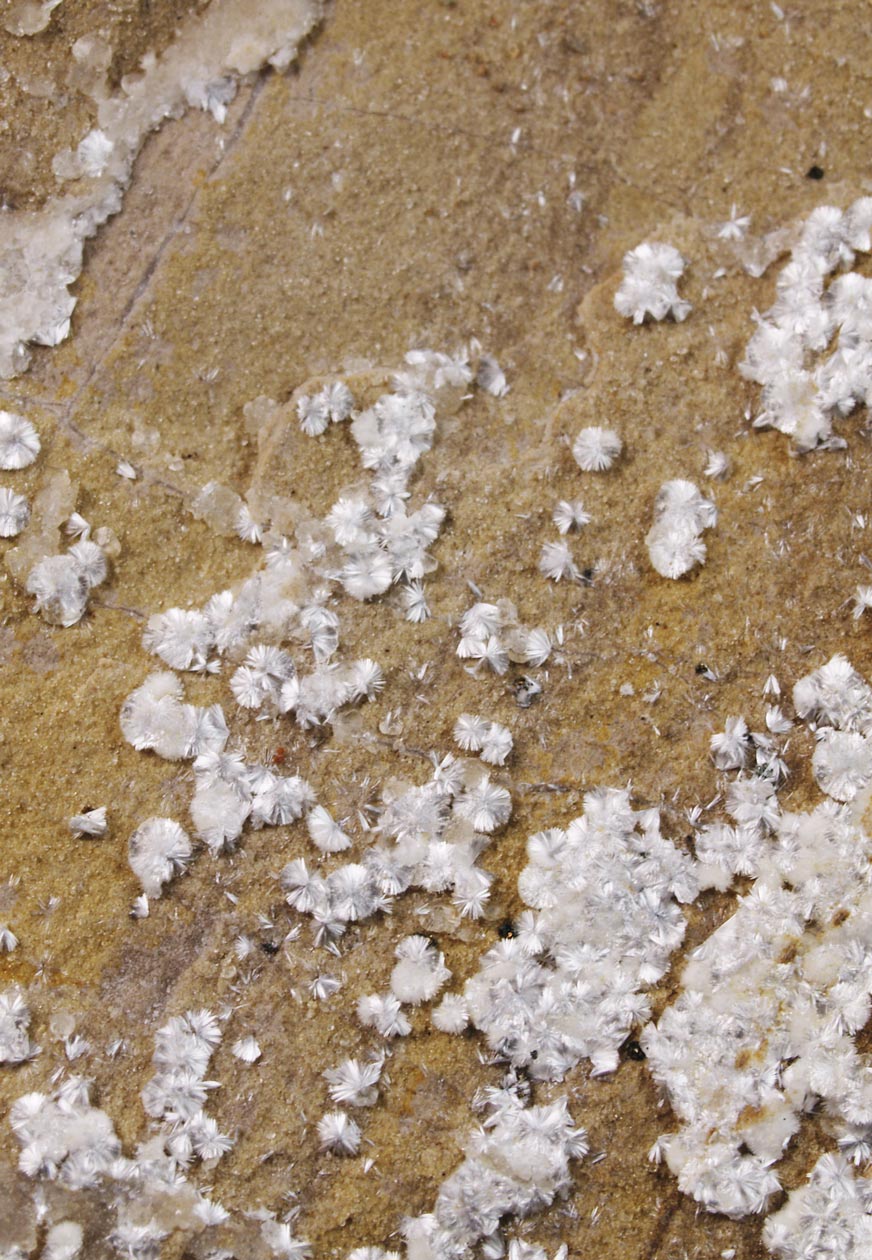
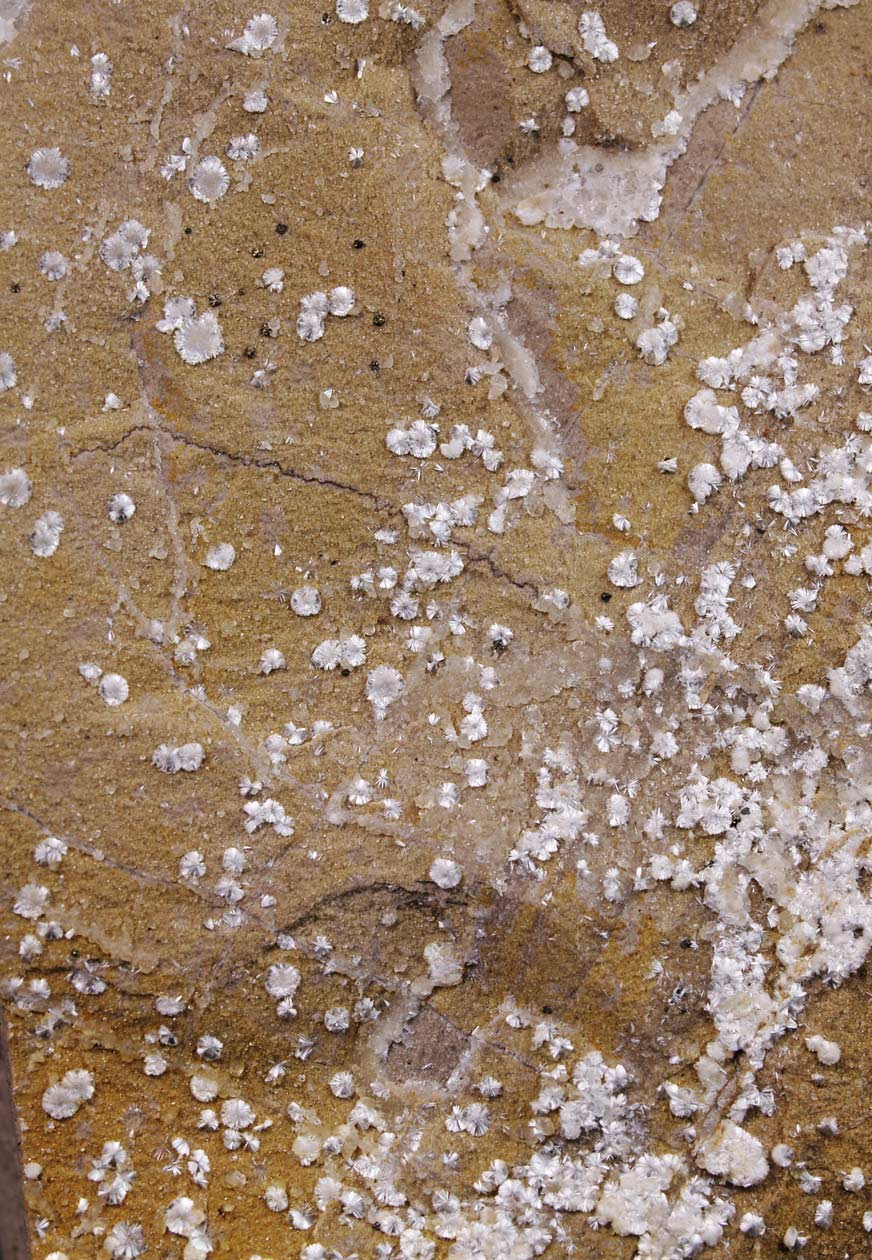
Agregados radiales de finos cristales de dawsonita, un raro hidroxilcarbonato de aluminio y sodio. Se disponen sobre una matriz de marga. Proceden de una zona conocida para la especie pero de un nuevo hallazgo.
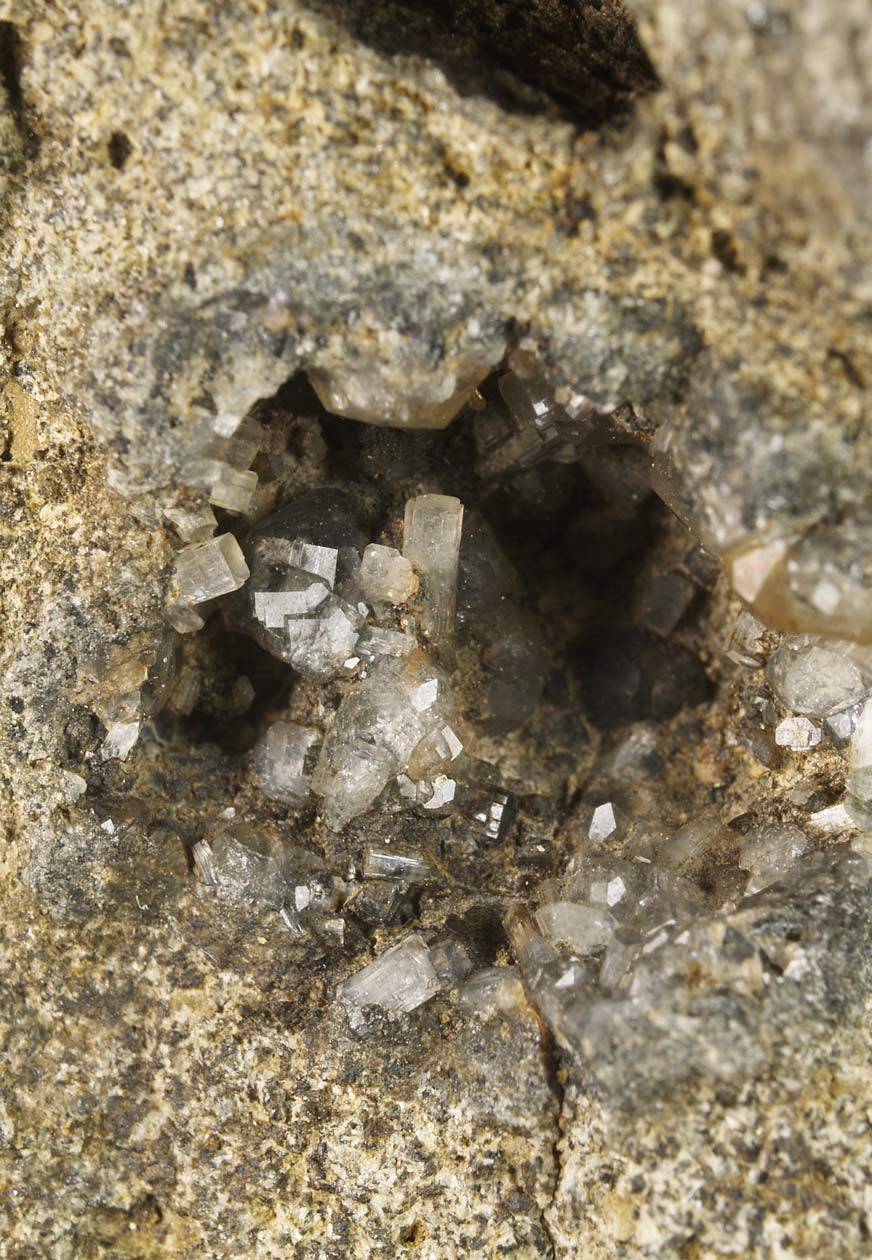
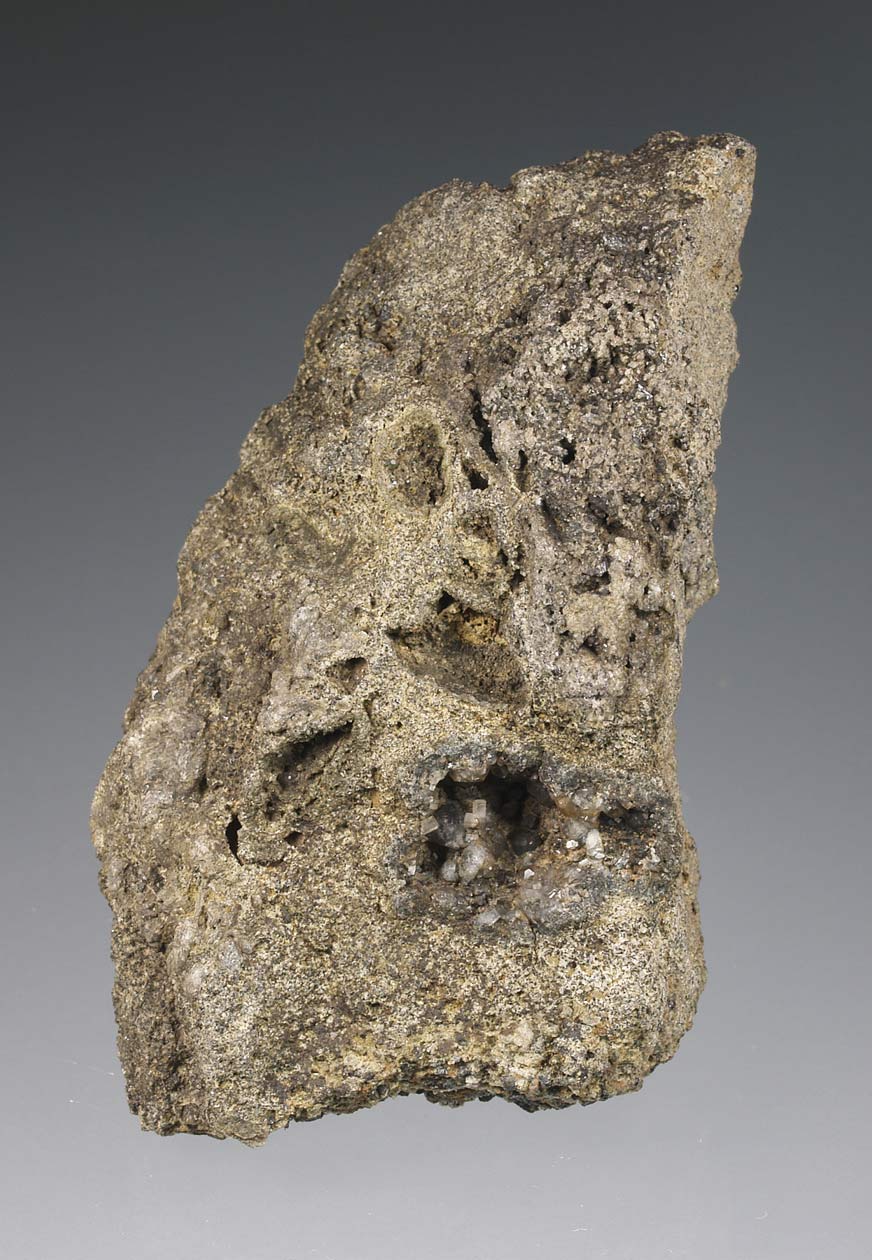
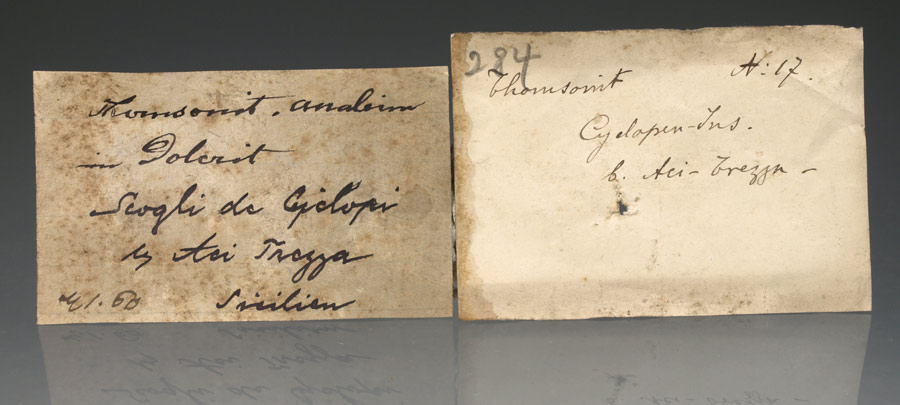
Las islas ciclópeas es un pequeño archipiélago volcánico frente a la costa de Aci Trezza, en el complejo volcánico del Etna. Son la localidad tipo para la analcima, que se encuentra en este ejemplar. Esta antigua pieza de la Freiberg Bergakademie nos muestra vacuolas con cristales idiomórficos de analcima junto con prismas de thomsonita-Ca, incoloros, bien definidos y que han crecido sobre la analcima. Las etiquetas que la acompañan dan claro testimonio de la antigüedad de la pieza. Una verdadera curiosidad mineralógica.
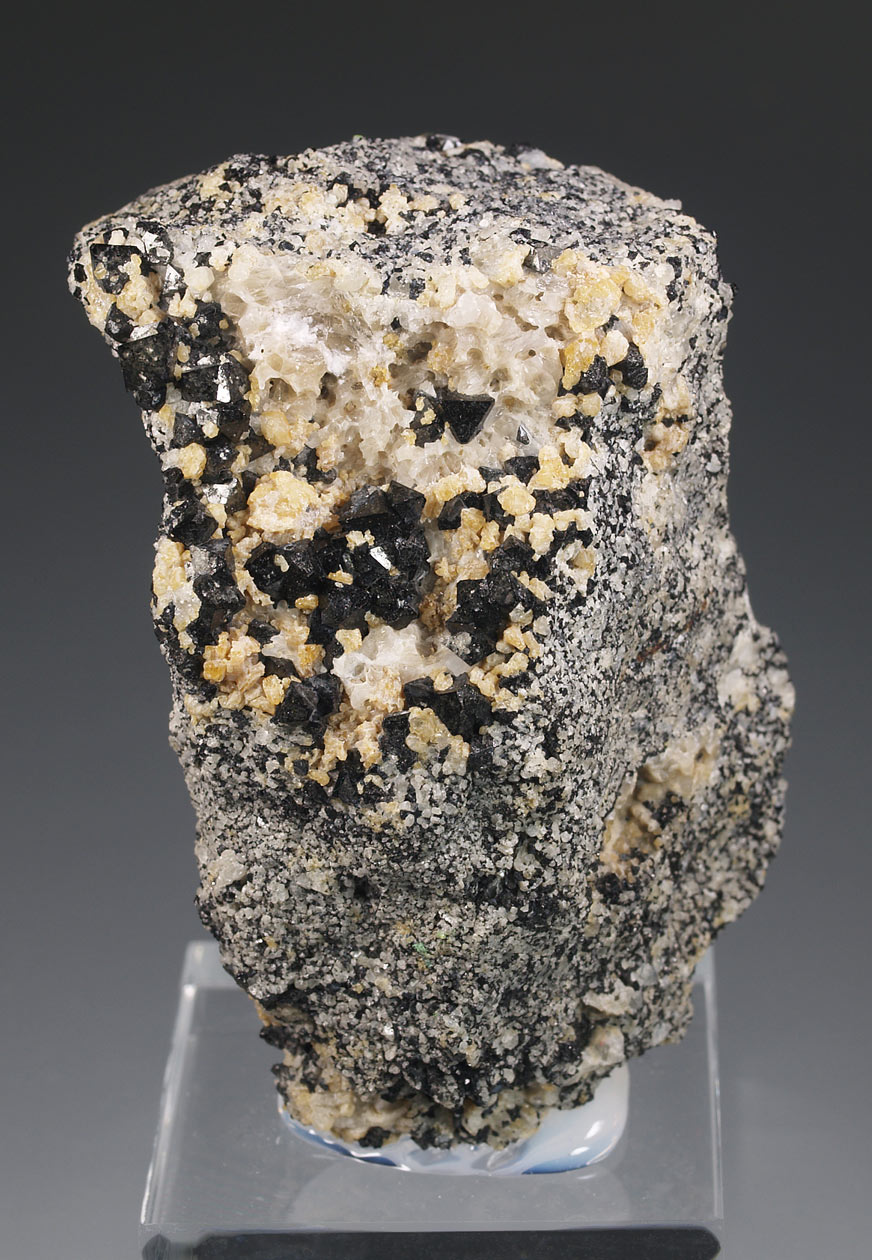
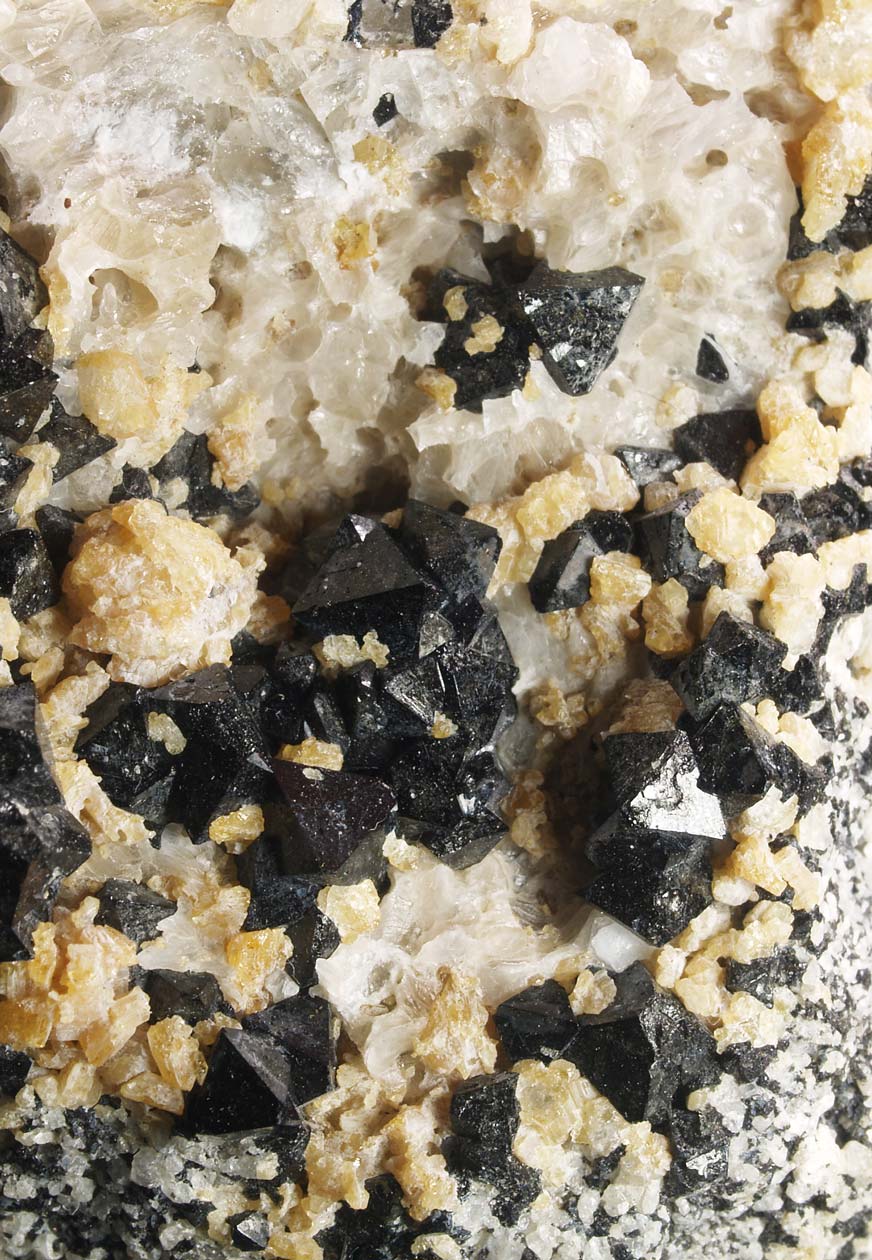
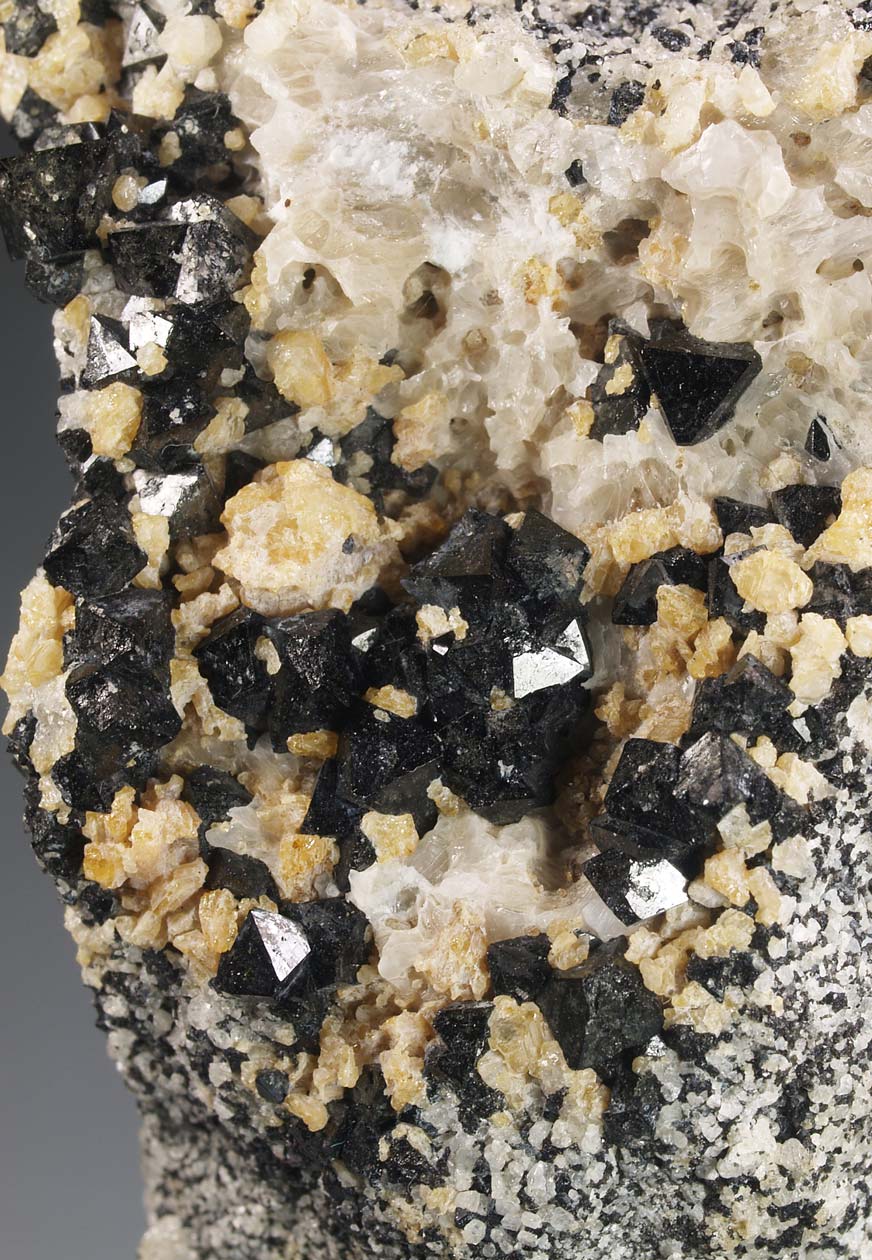
Diversos grupos de cristales octaédricos de espinela, muy definidos, brillantes y de intenso color negro. Se disponen sobre una matriz de roca volcánica con forsterita. Este ejemplar muy representativo para la especie y este yacimiento italiano procede de diversas colecciones. Buen tamaño y calidad para la especie.
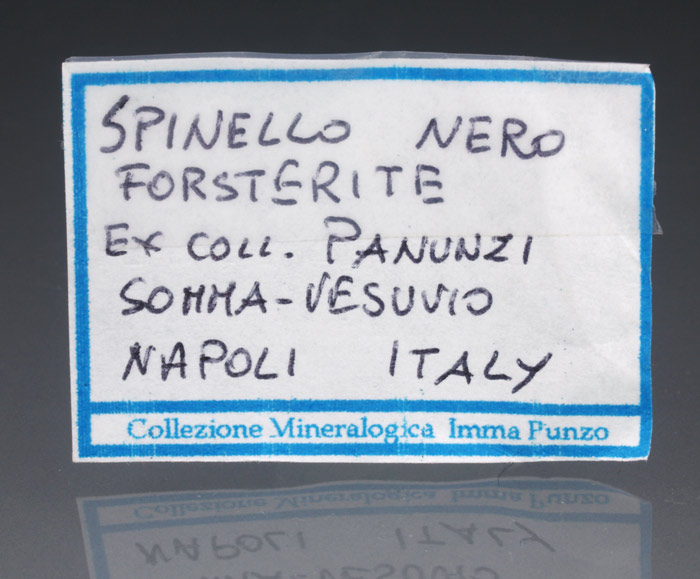
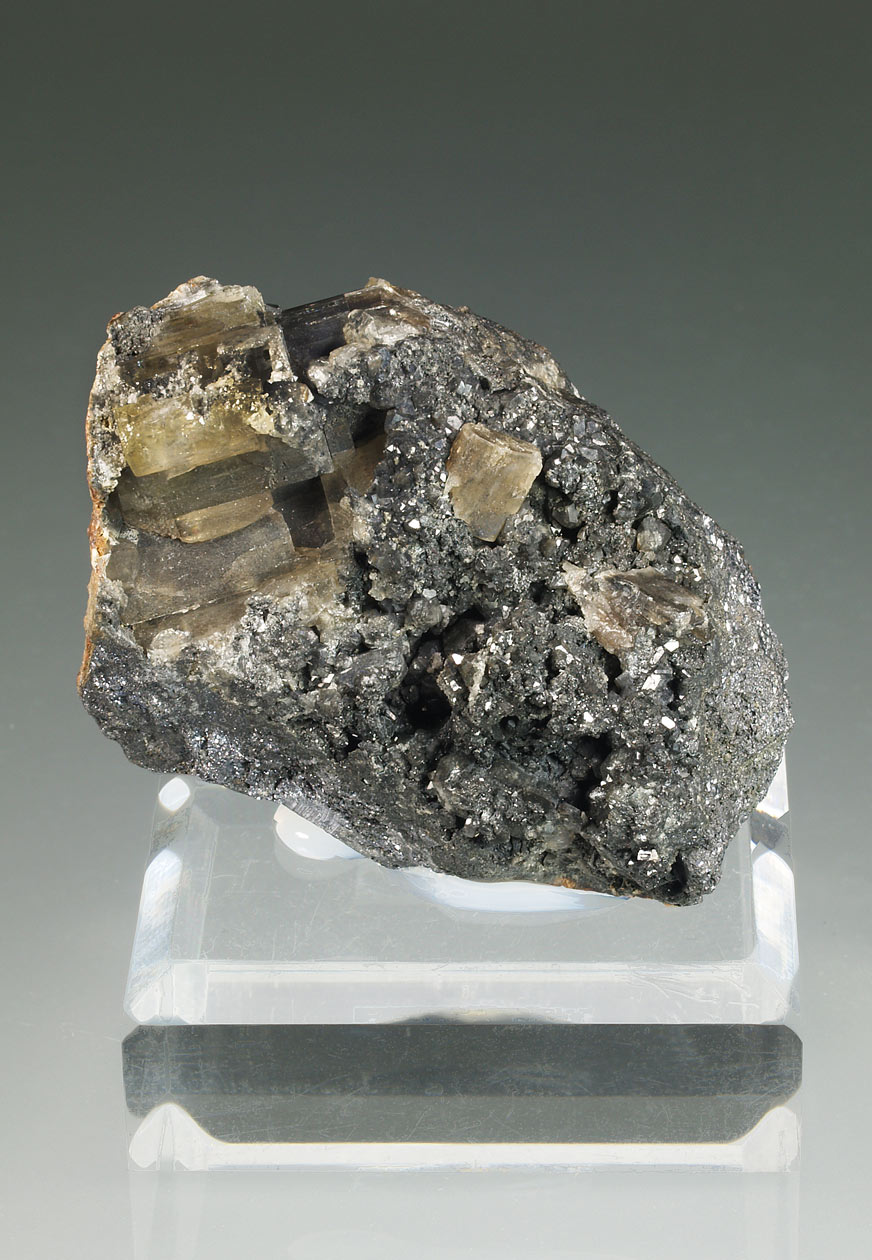
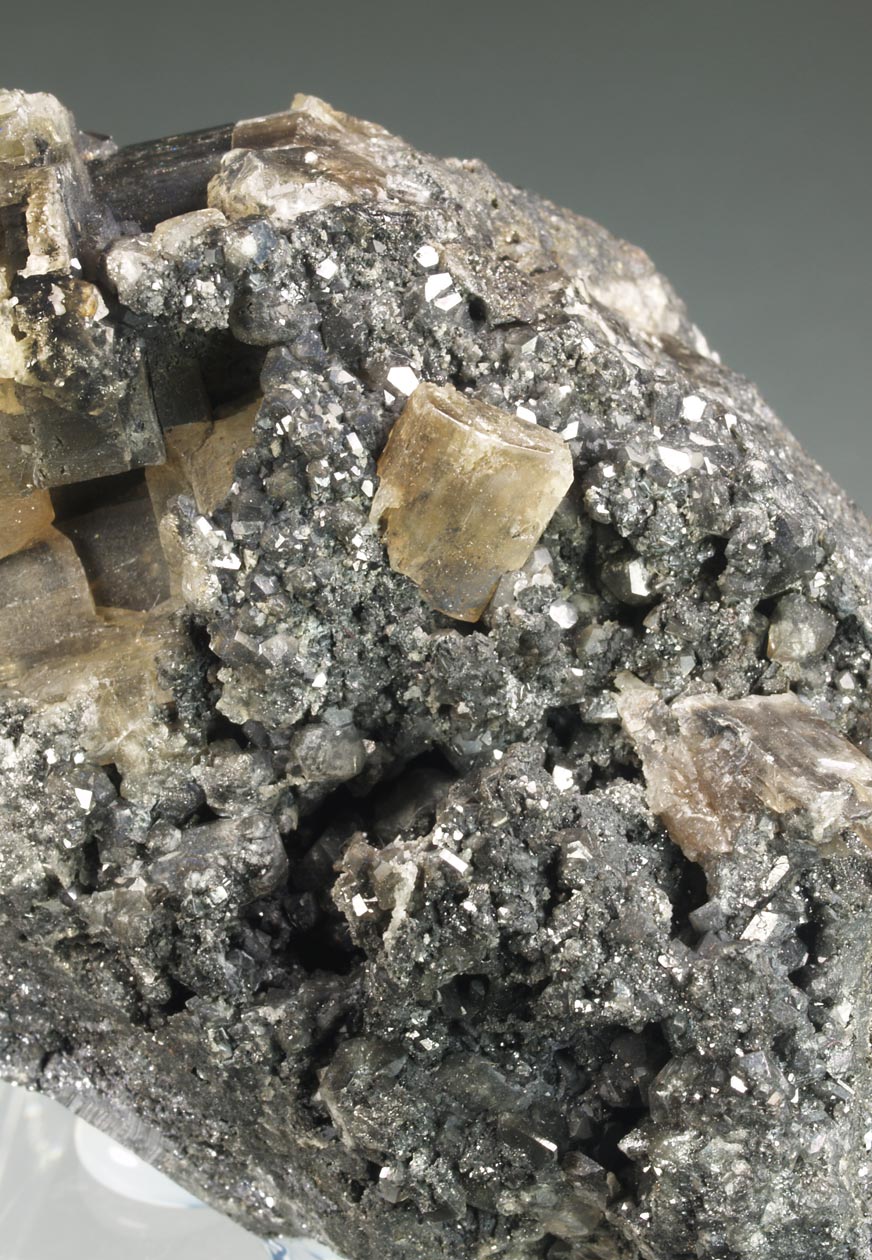
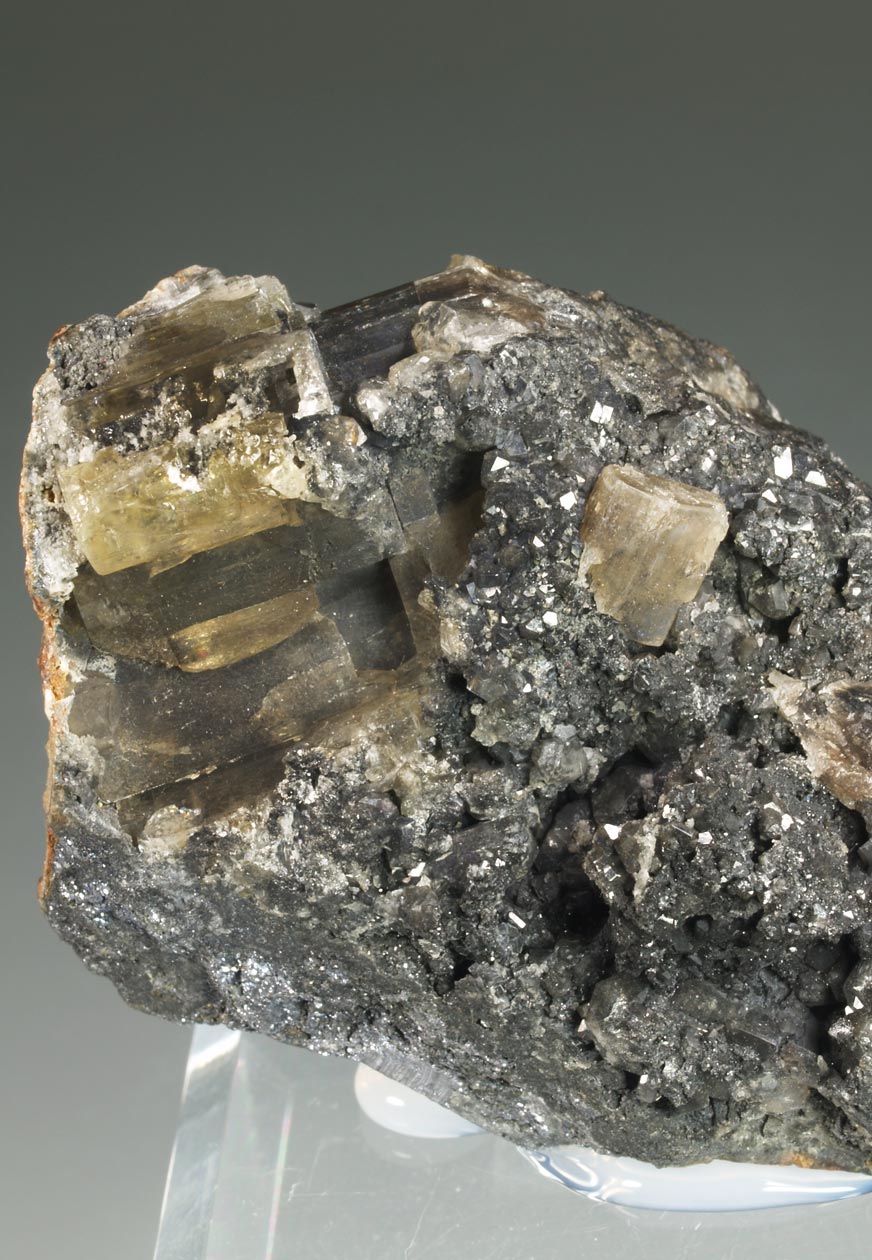
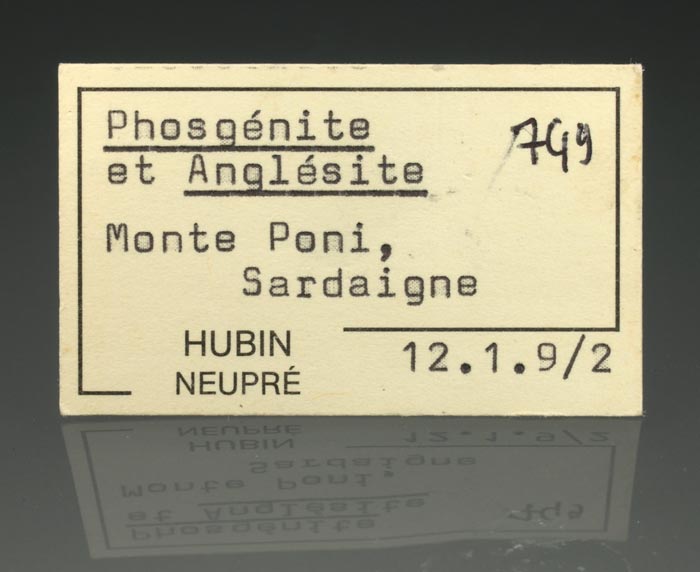
Los ejemplares de fosgenita de Monteponi son un clásico de la mineralogía europea y mundial. Este ejemplar nos muestra dos zonas diferenciadas. Una con un grupo de cristales fosgenita en crecimiento paralelo acompañados de un cristal prismático bien definido. Translúcidos y con el clásico tono gris melado. Se disponen en una matriz de galena con numerosos cristales de anglesita. Este ejemplar procede, como indica su etiqueta, de la colección de René Hubin (Bélgica).
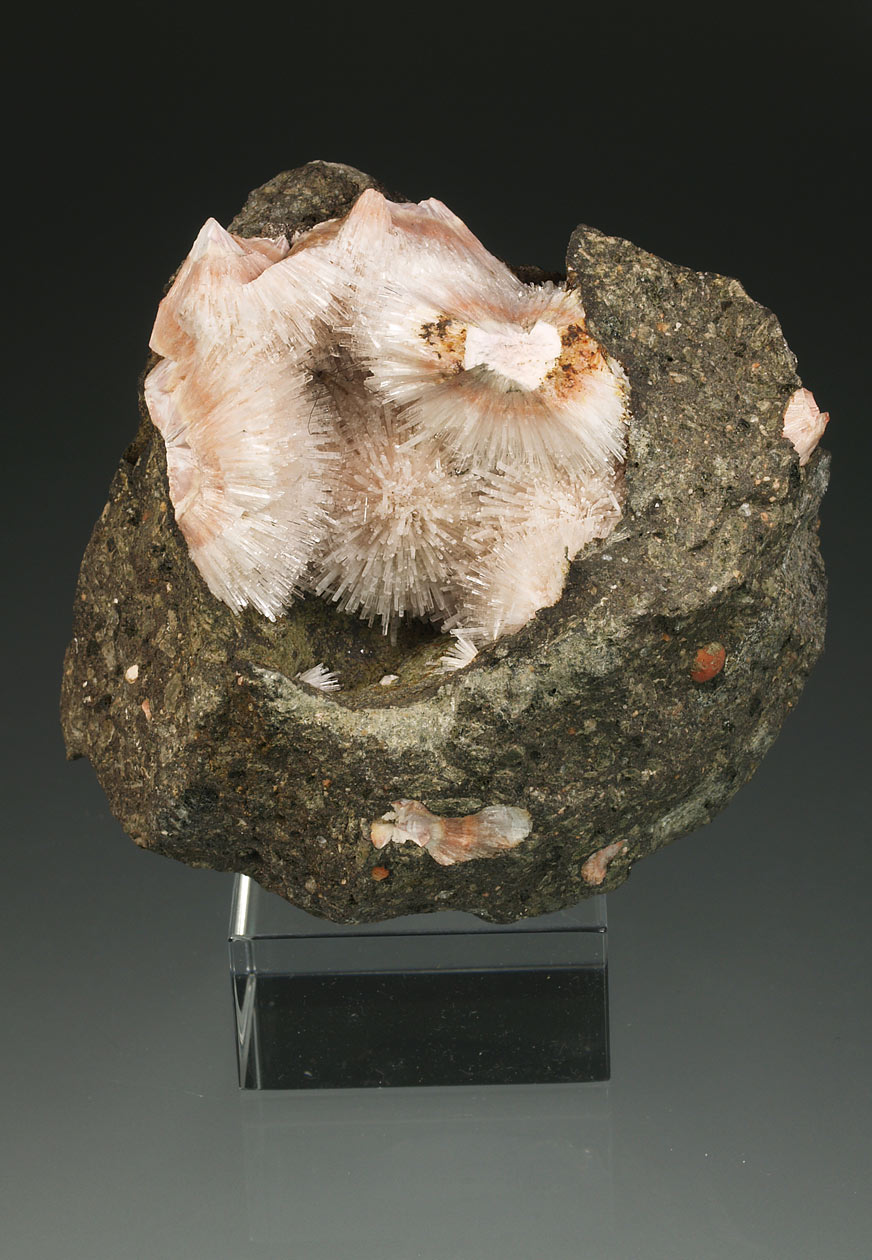
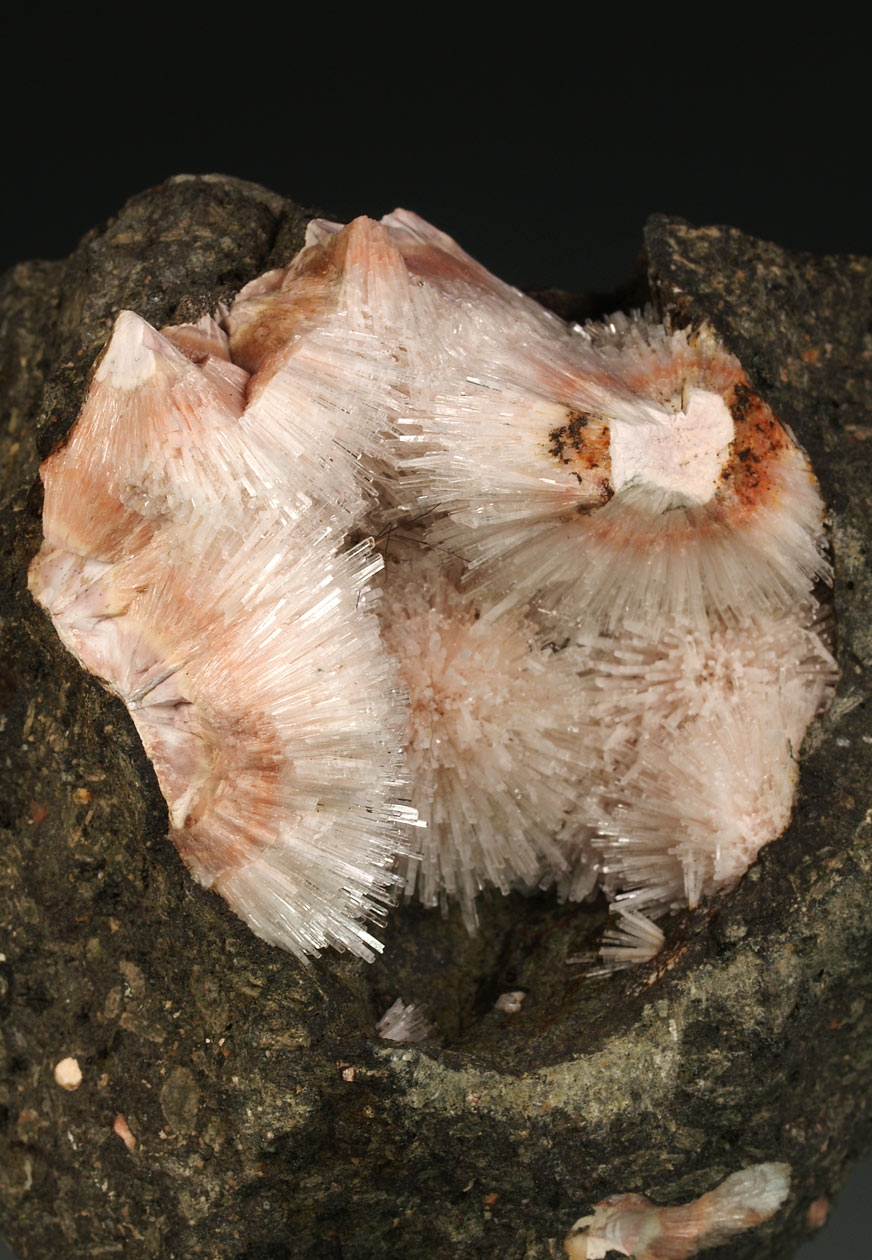
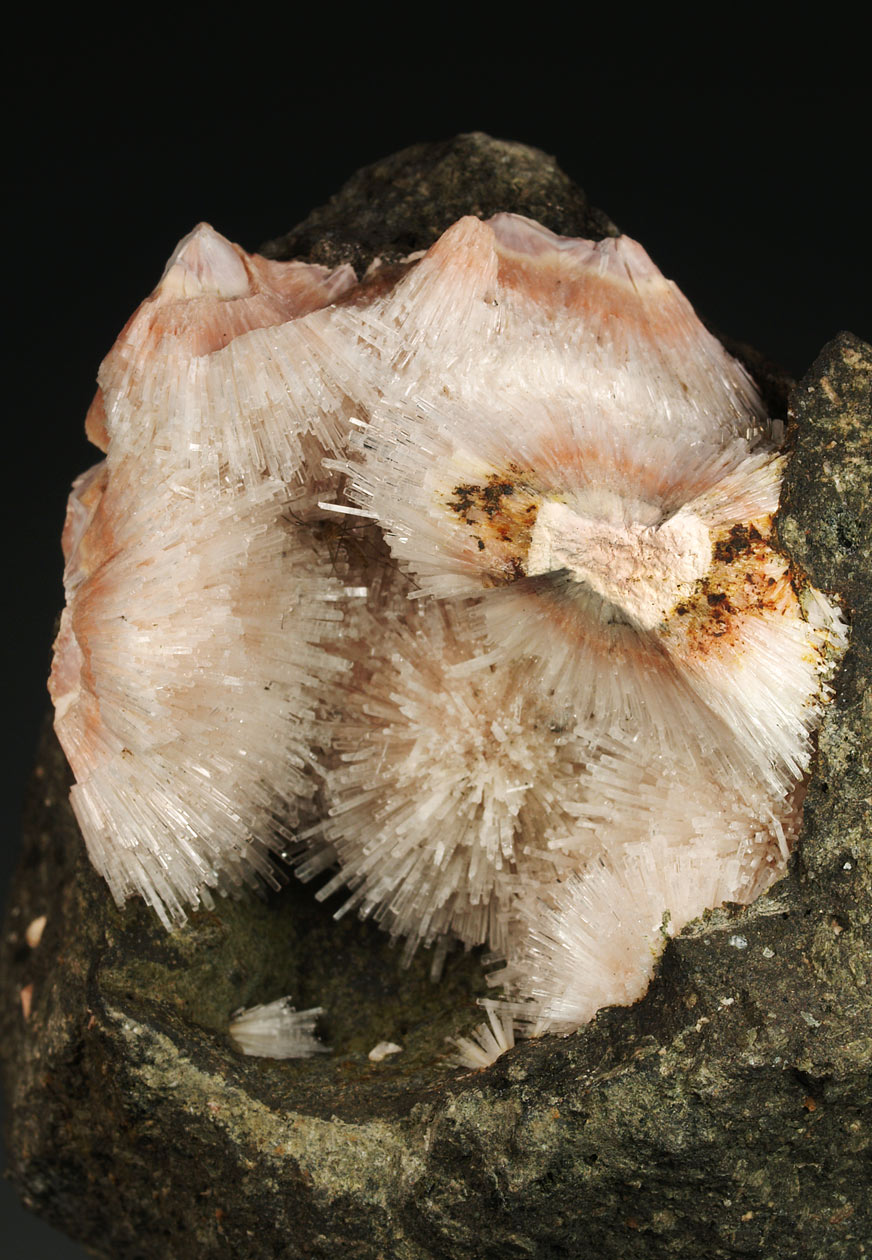
Nutrido grupo de cristales radiales de natrolita, transparentes a translúcidos, muy brillantes y que se disponen en una matriz de roca volcánica. No es fácil encontrar ejemplares con esta calidad y de esta localidad italiana. Ejemplar procedente de la colección de Rolando Gallina.
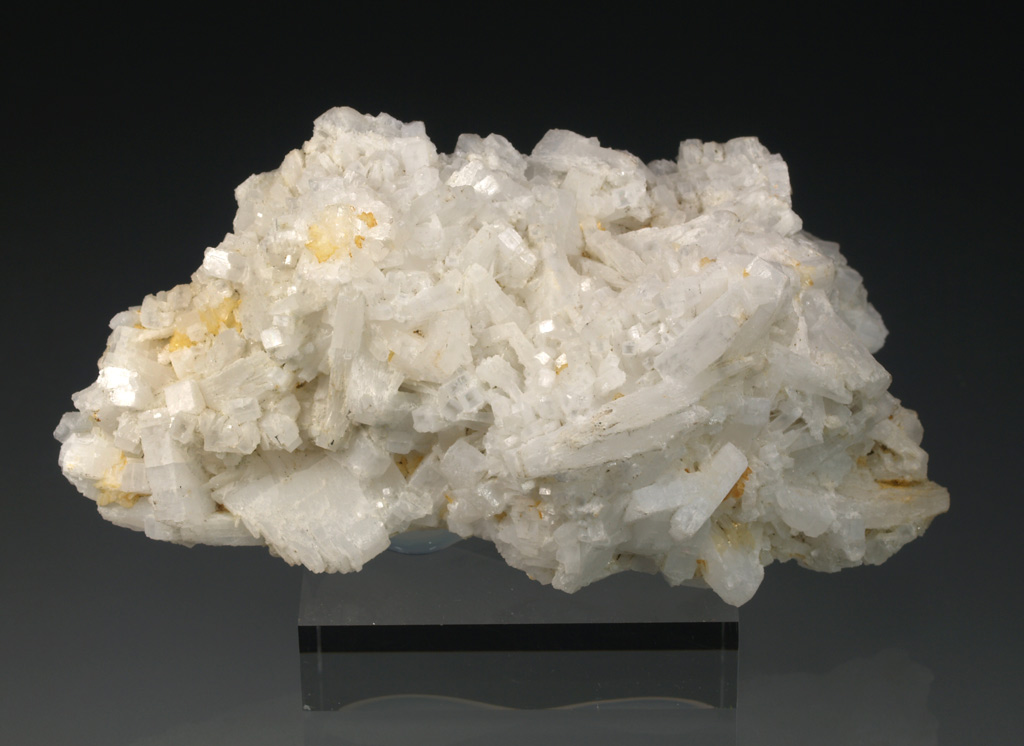
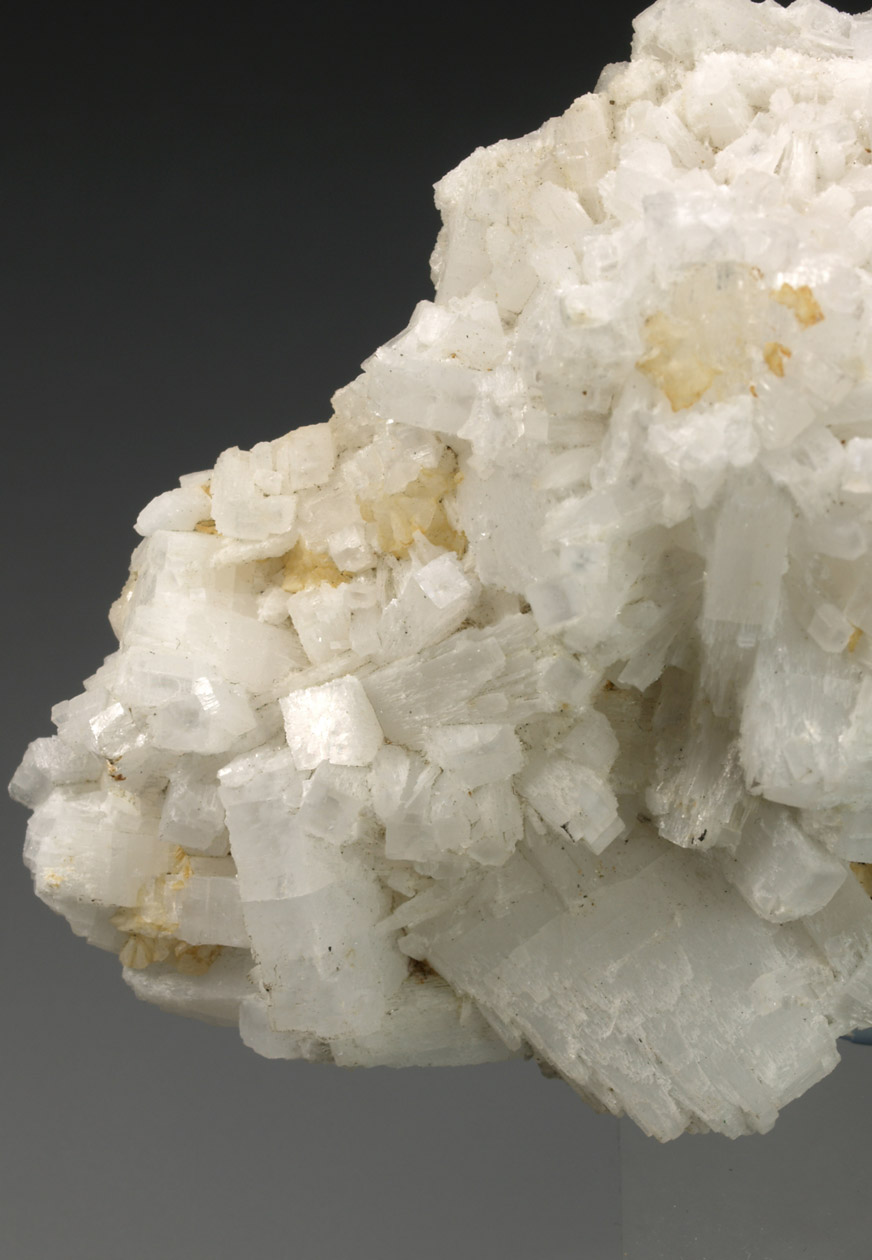
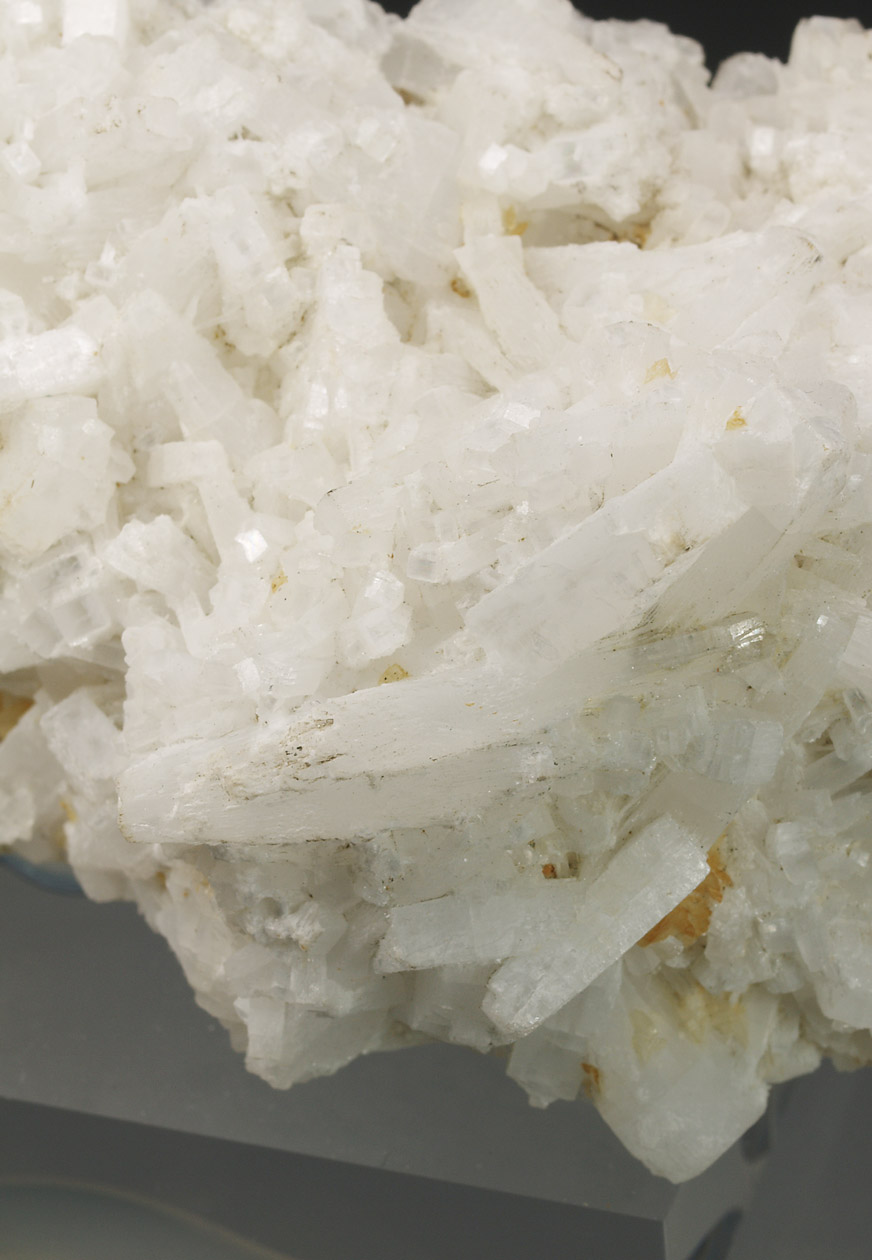
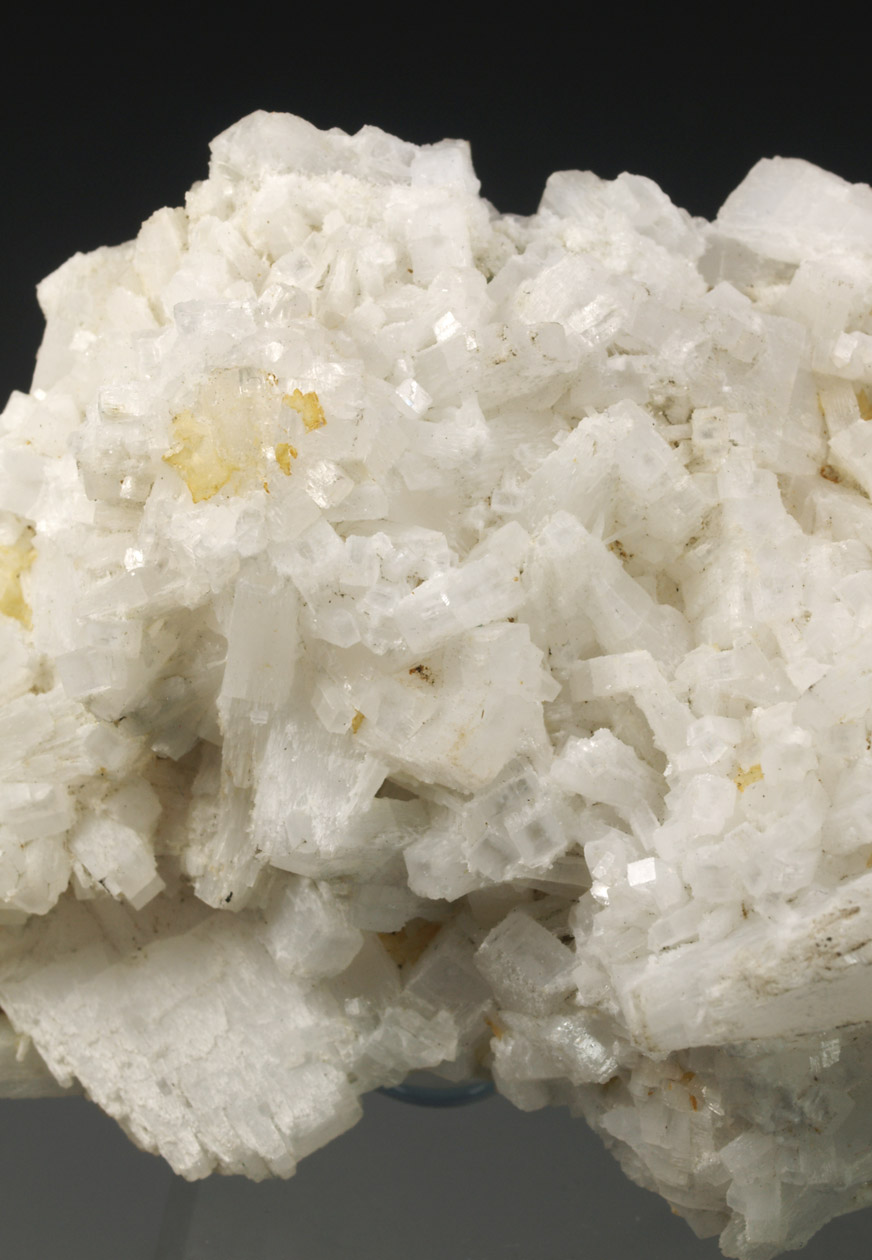
Ejemplar de anhidrita formado por numerosos cristales prismáticos a tabulares, definidos e interpenetrados. En la parte posterior podemos observar la matriz formada por dolomita y brillantes cristales de pirita. Los especímenes procedentes de esta mina italiana, situada al norte de Boccheggiano, fueron recogidos a finales del siglo XX. La mina trabajó desde principios de los años 80 hasta finales de los 90, actualmente la mina está cerrada.
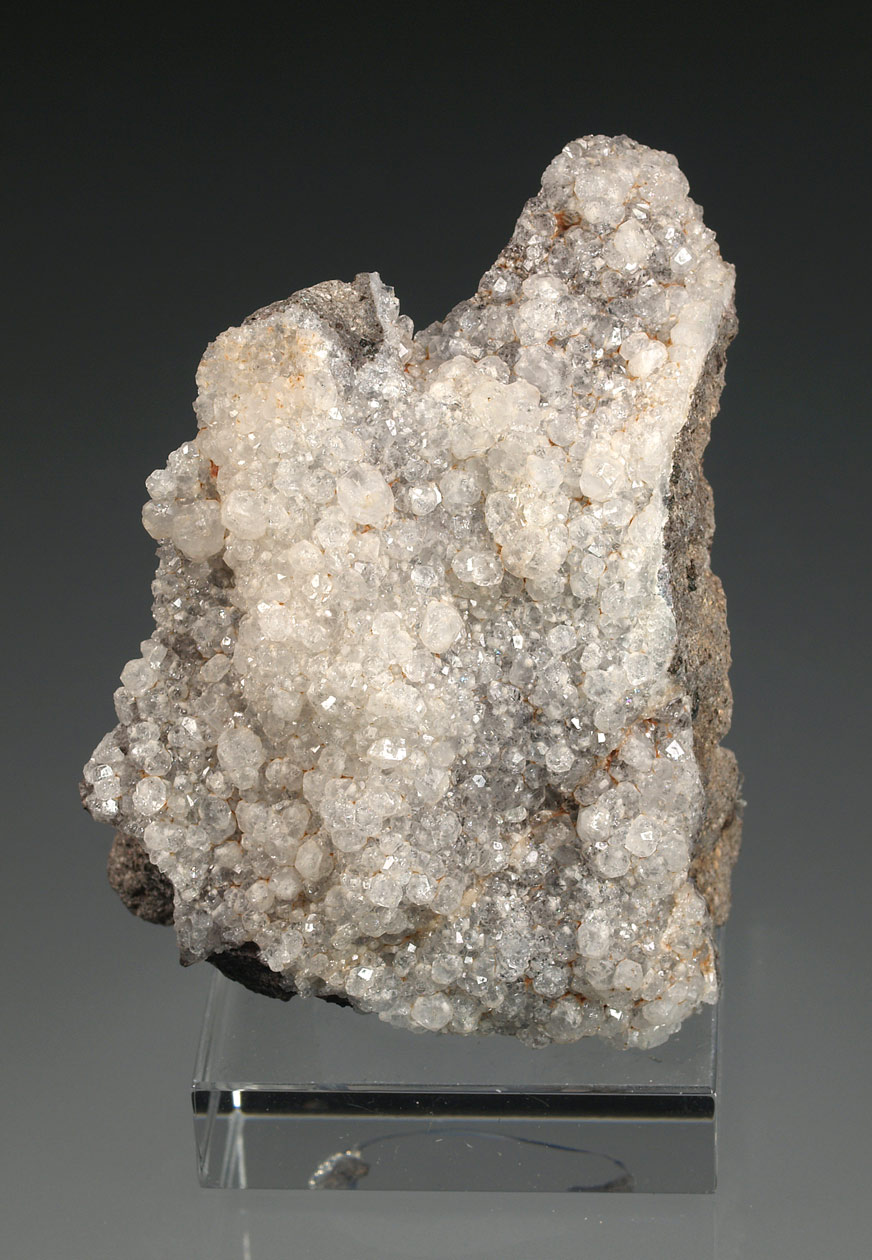
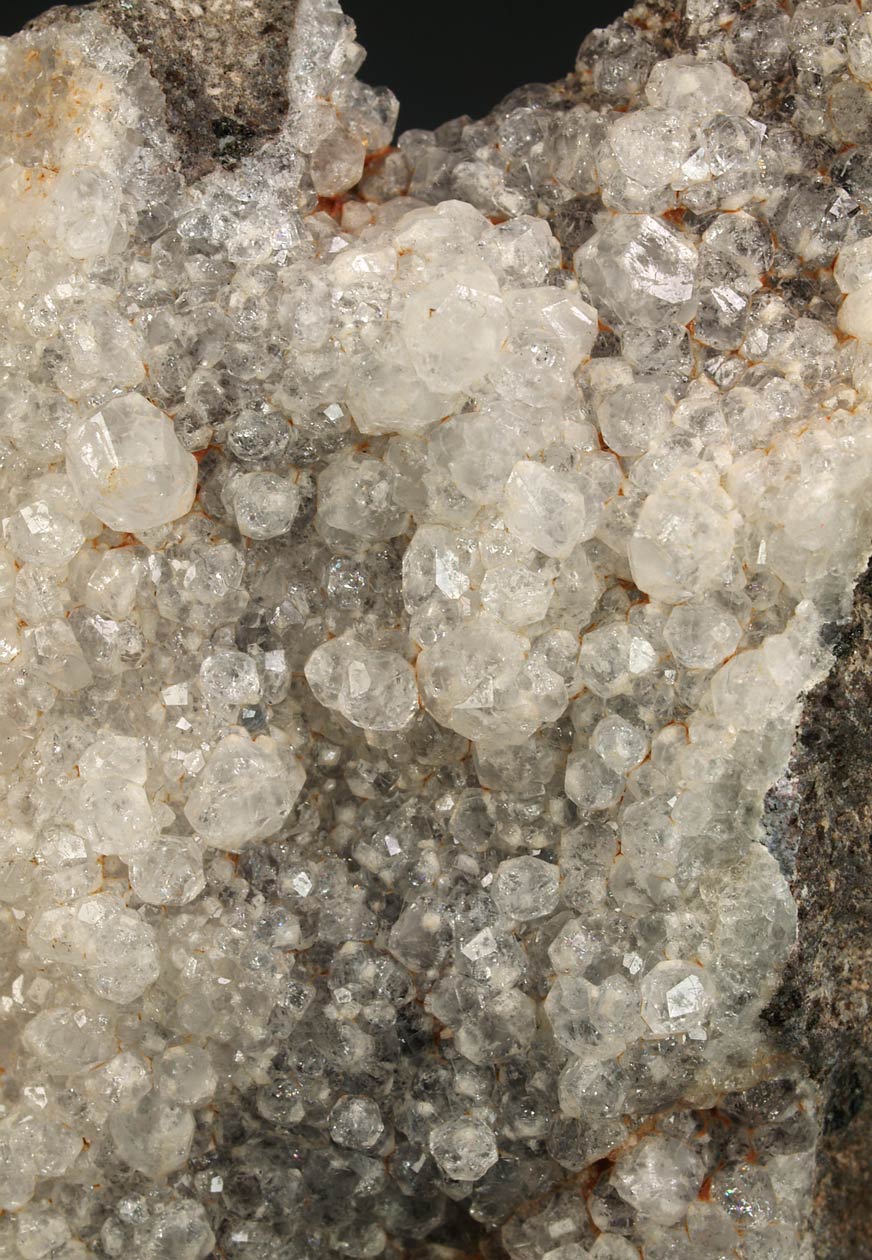
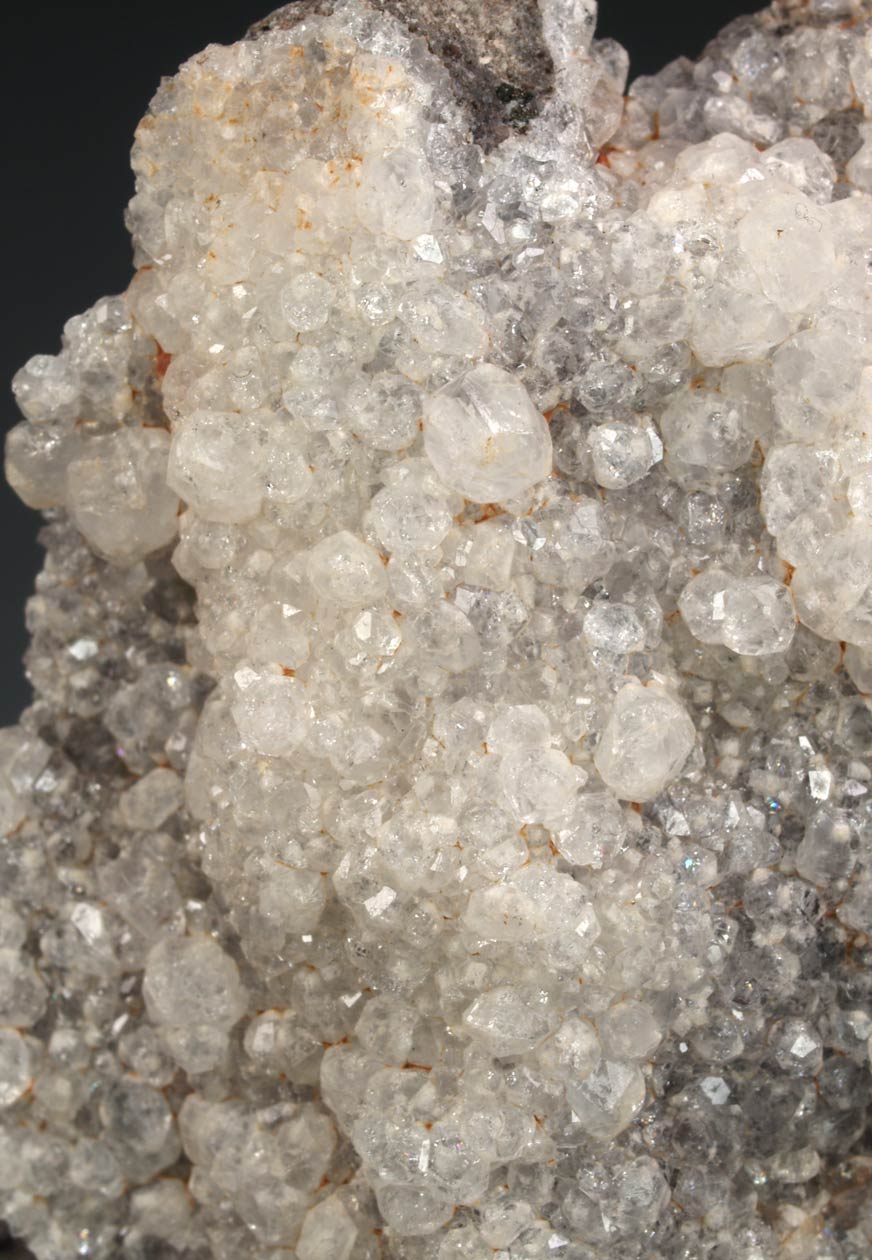
Drusa de cristales de analcima, muy brillantes, transparentes y con caras y aristas muy definidas. Un ejemplar de buena calidad para esta localidad italiana.
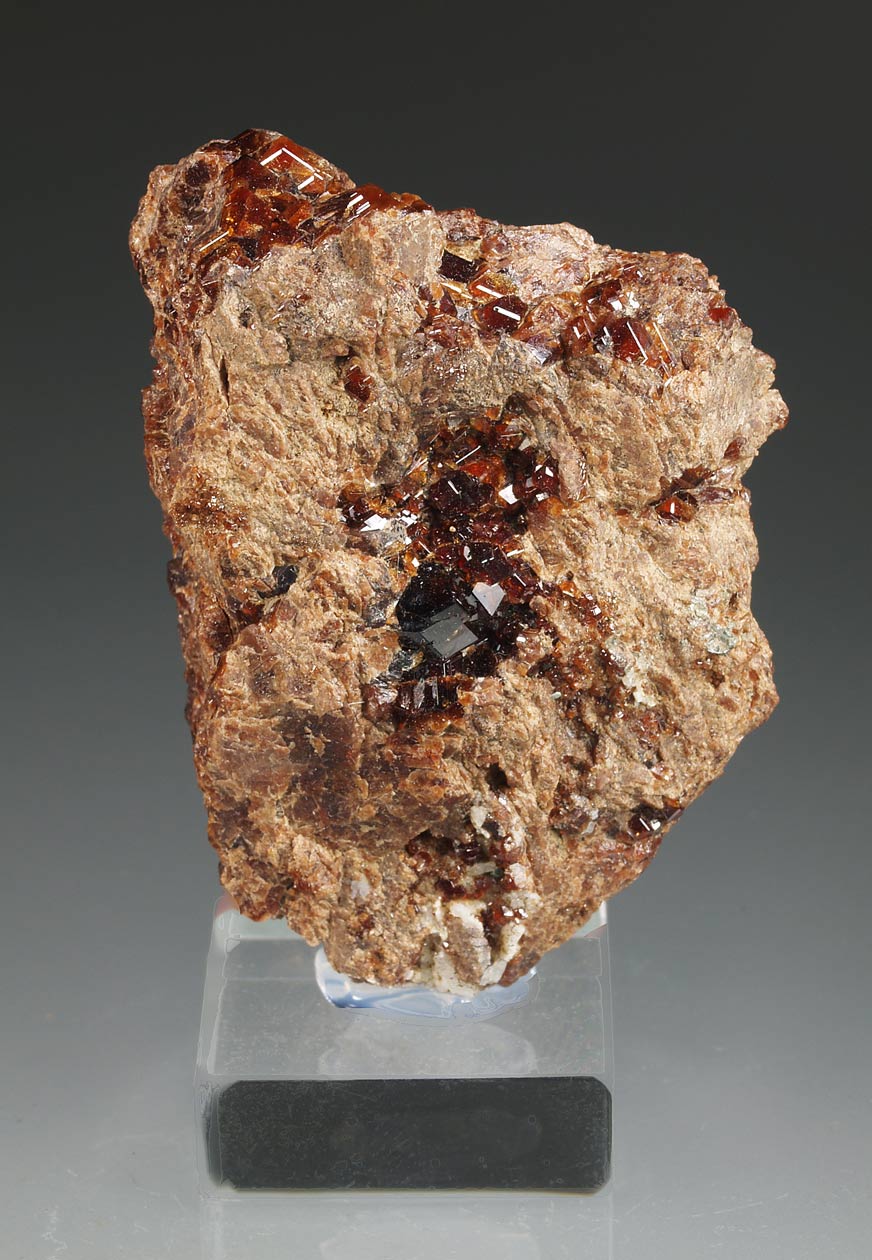
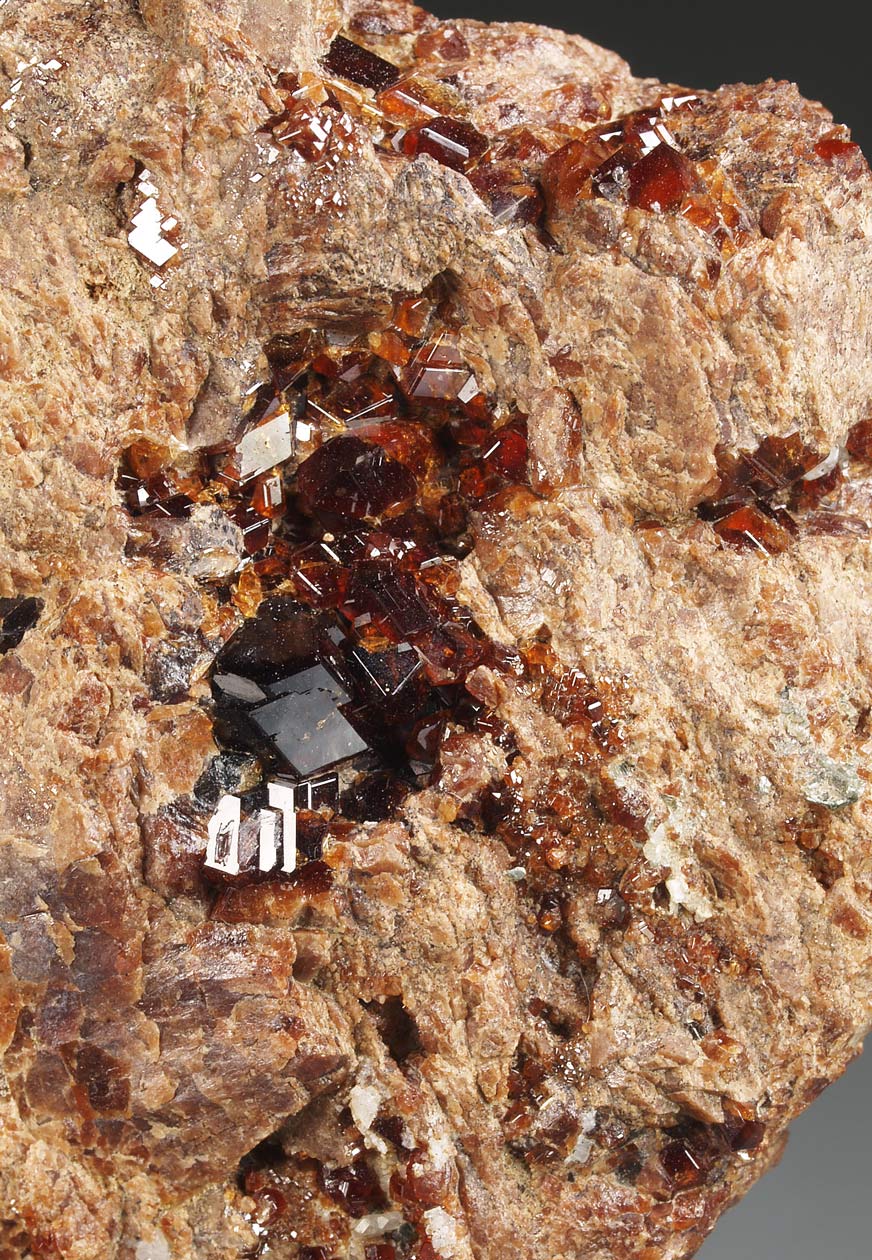
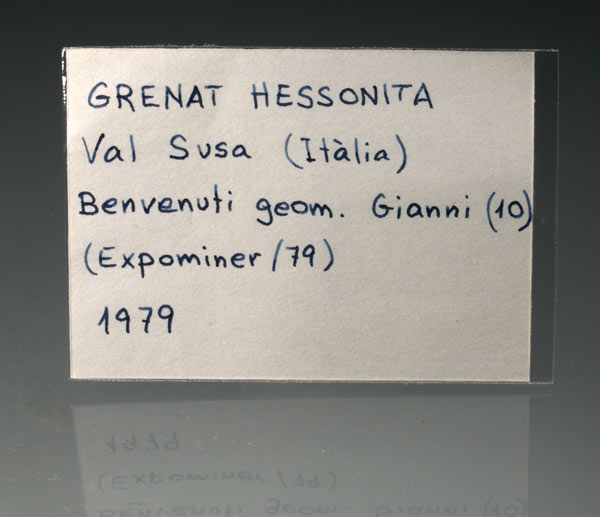
Brillante ejemplar formado por una drusa de definidos cristales tarpezoédricos de grosularia de la variedad hessonita. Intenso color, brillo y transparencia. Con la etiqueta manuscrita de la colección de Joan Astor, donde nos indica que este ejemplar fue comprado en Expominer a Benvenuti Gianni.
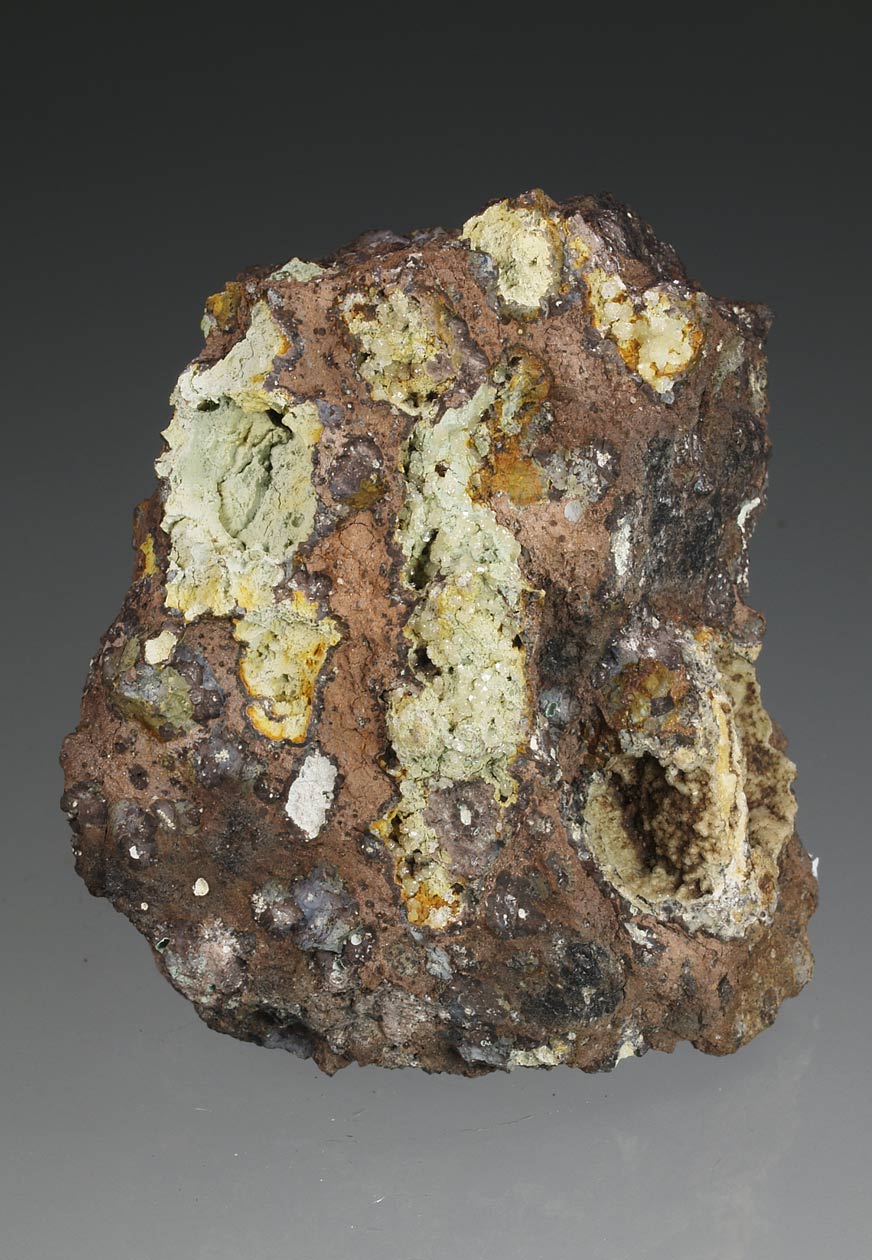
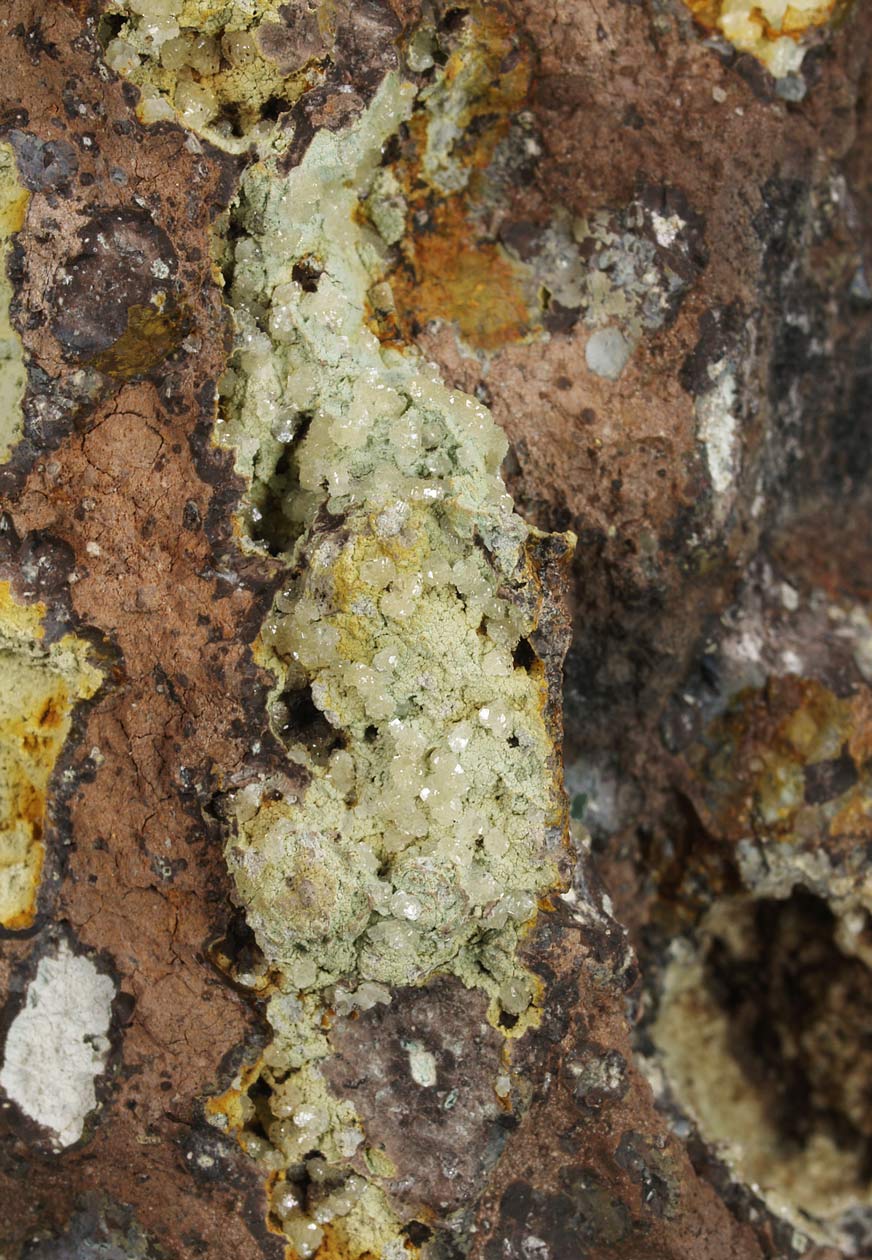
En una matriz volcánica andesítica observamos diversas cavidades que contienen agregados de cristales incoloros, brillantes de clinoptilolita. No son habituales los ejemplares de esta localidad italiana.
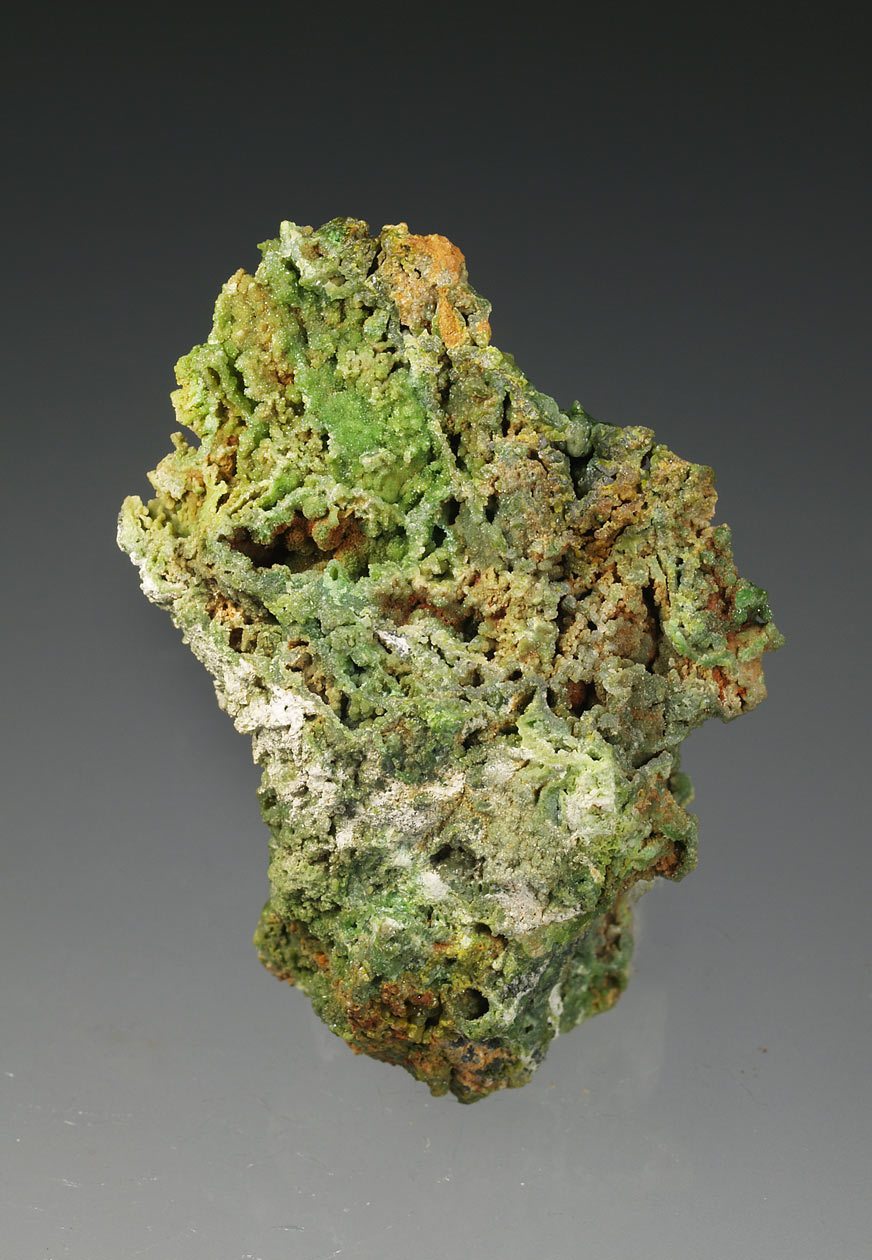
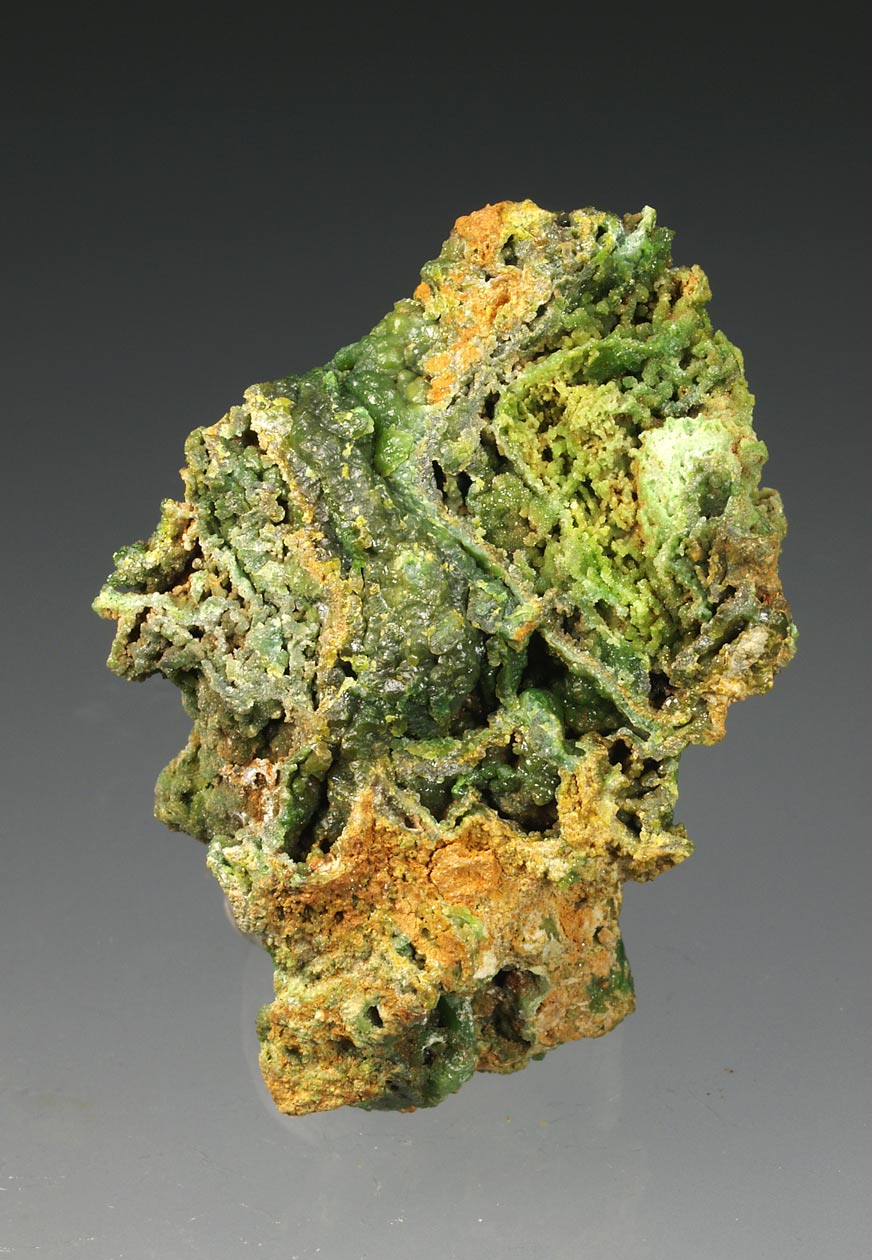
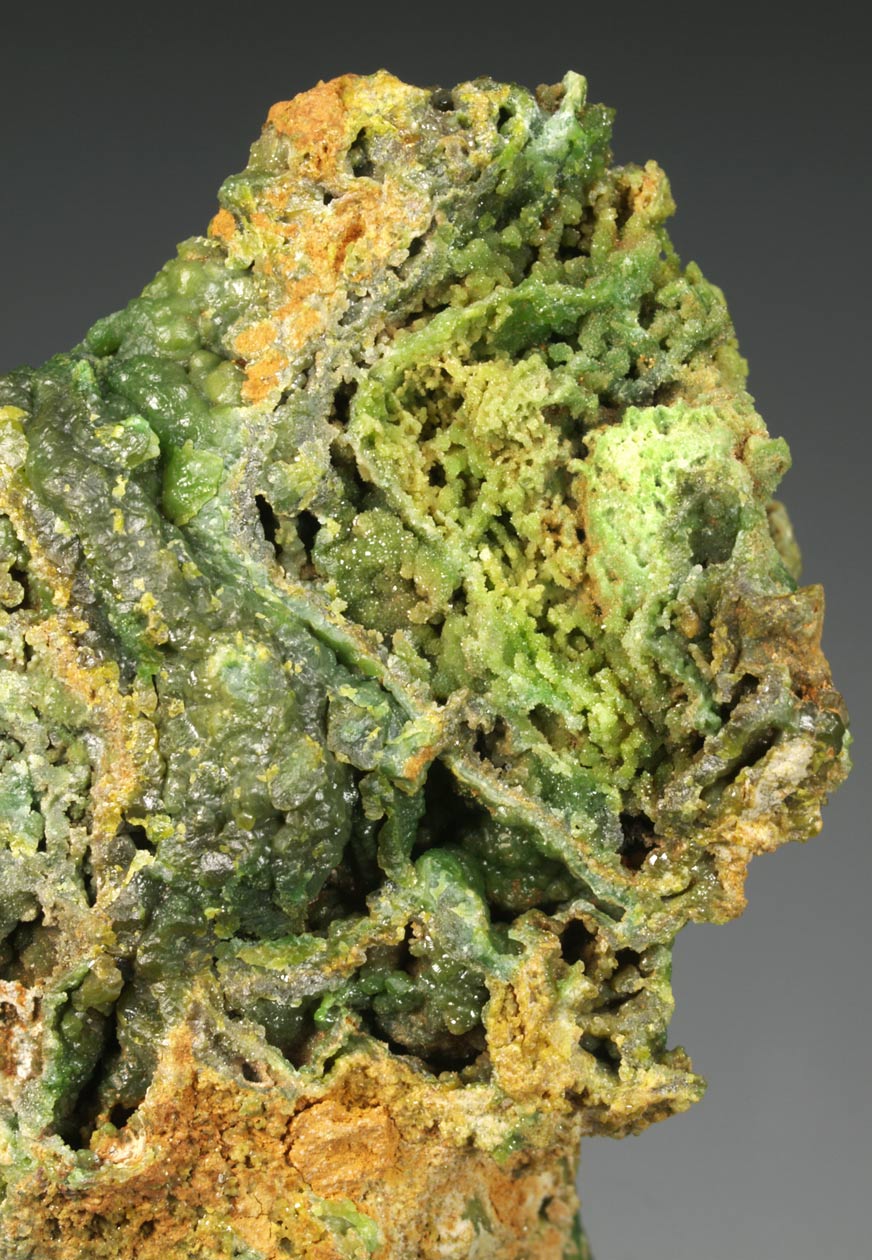
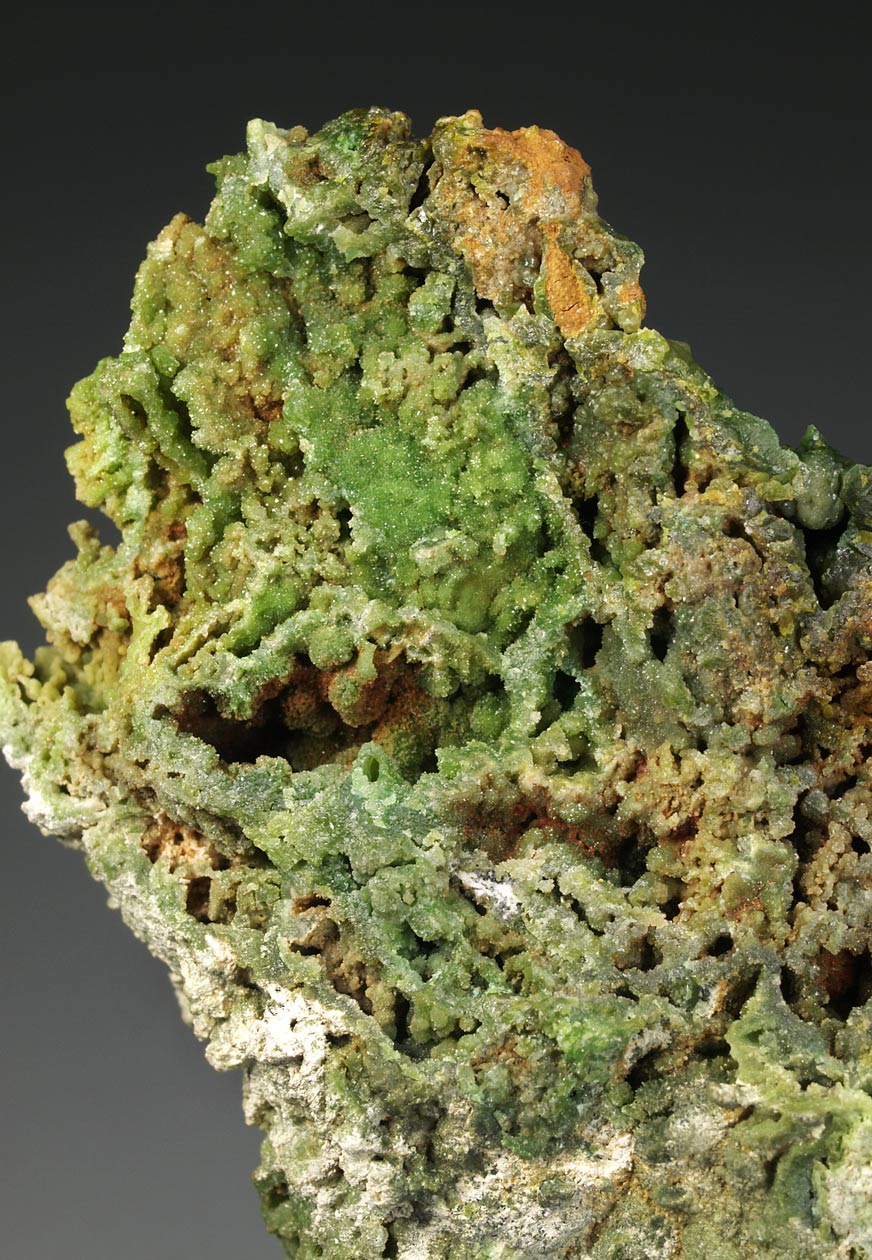
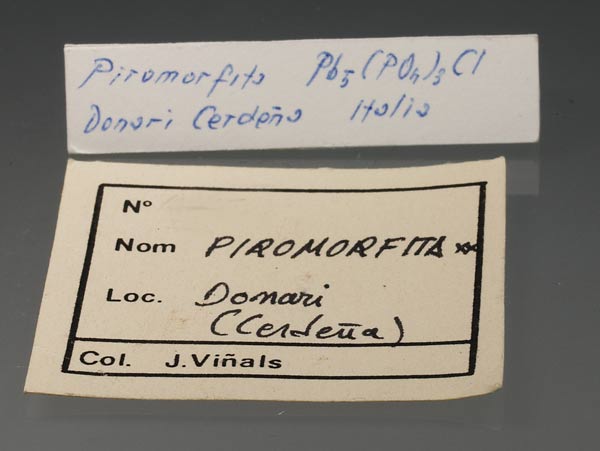
Los ejemplares de esta localidad del sur de la isla de Cerdeña son muy raros en el mercado. Este ejemplar està formado por cavidades tapizadas de cristales abarrilados a prismáticos. Intenso color verde a amarillento. La pieza procede de la colección Manchion y fue adquirido al Dr. Joan Viñals en 1989.
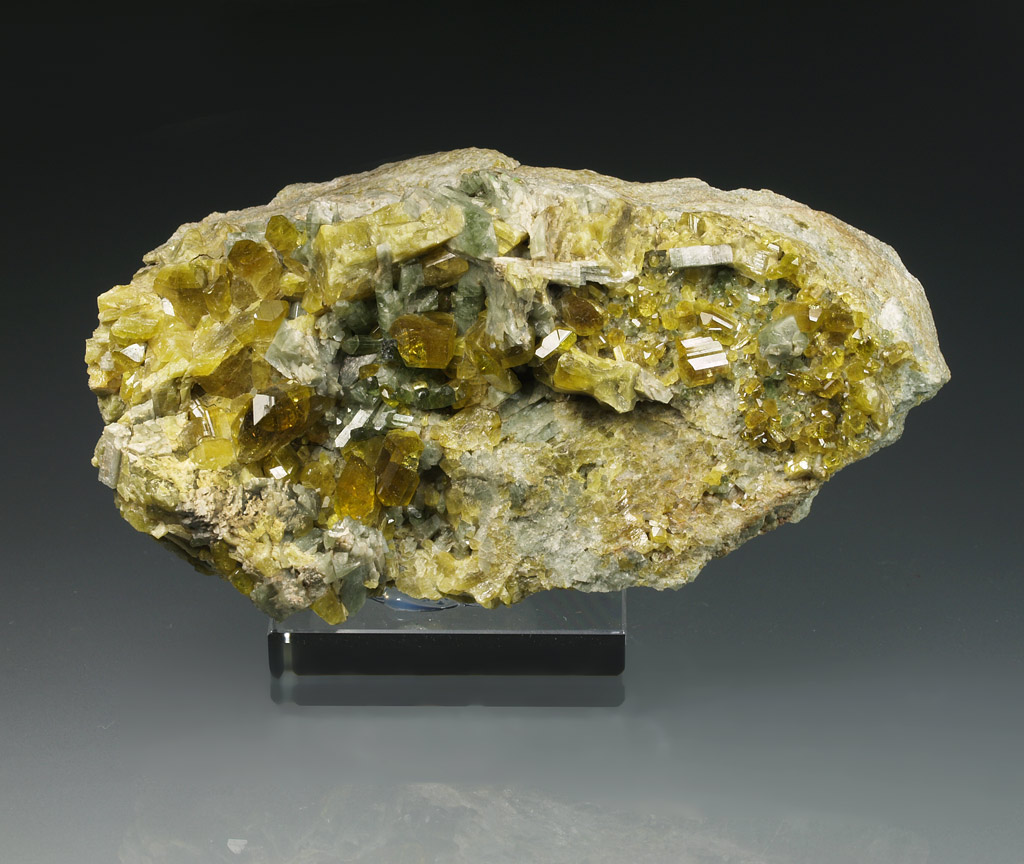
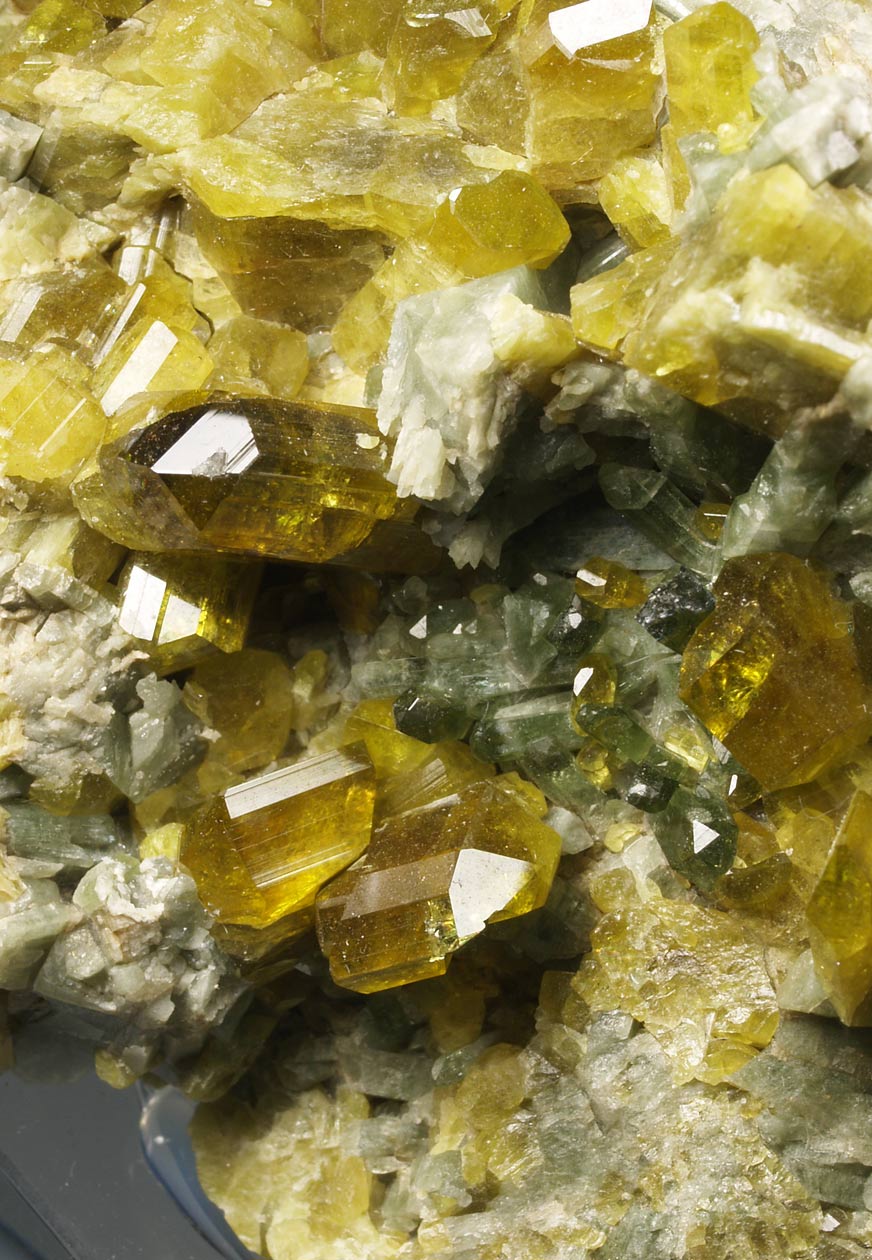
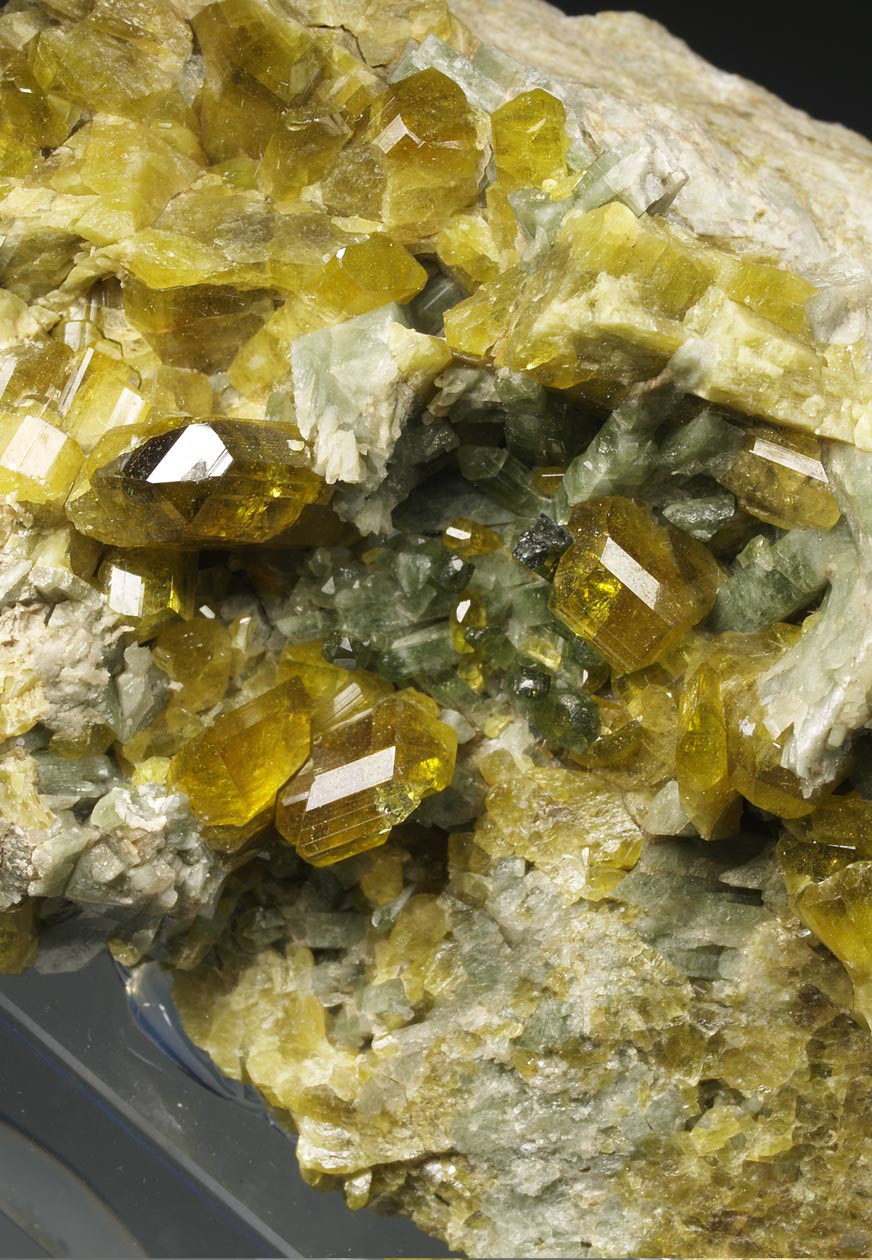
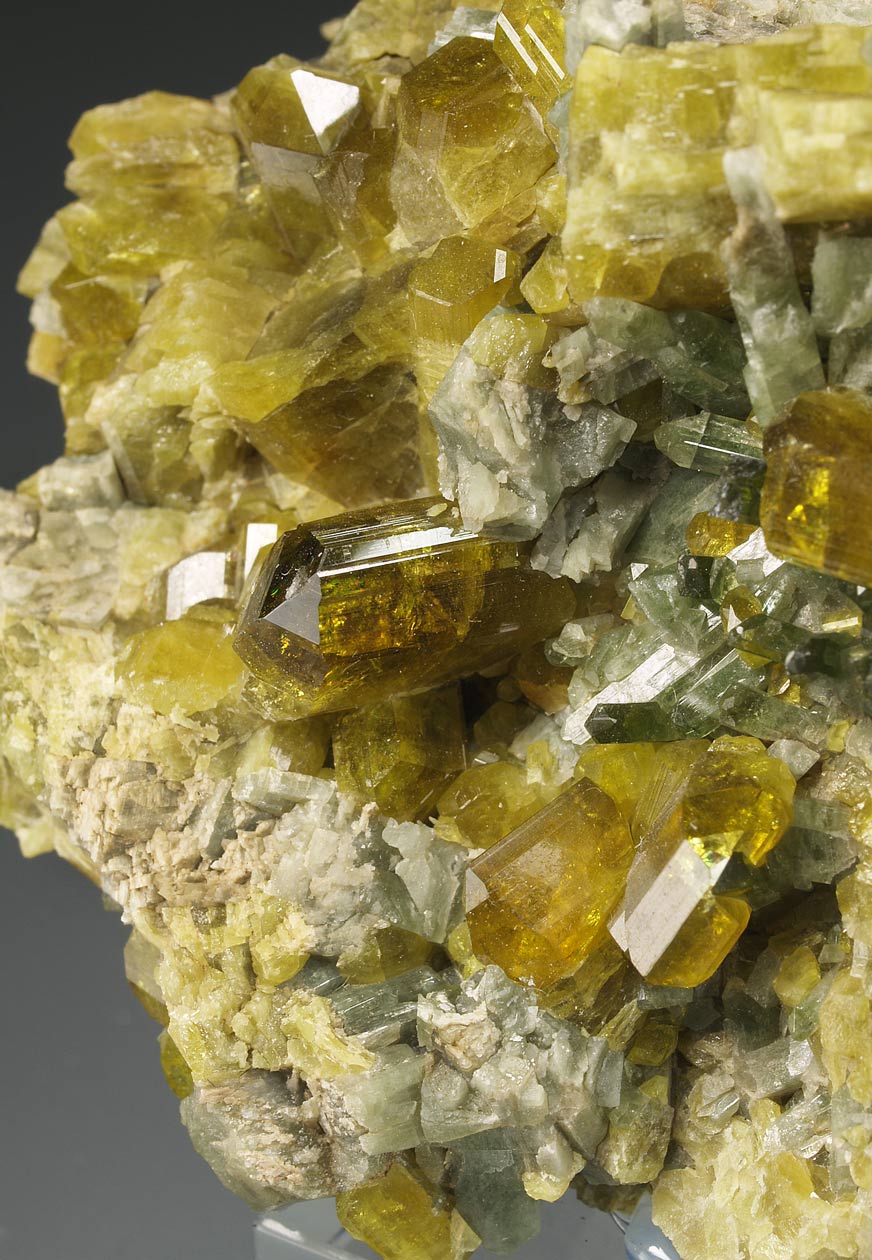
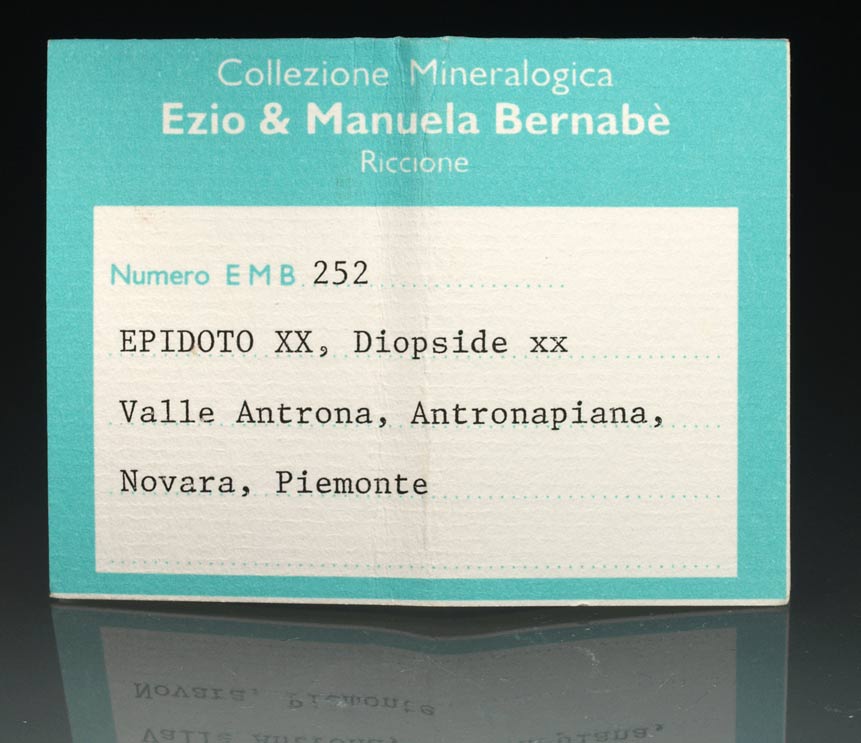
Muy buen ejemplar de epidota de esta localidad alpina clásica italiana. Diversos cristales de epidota de color verde amarillento, con transparencia y muy definidos. Se acompañan de numerosos cristales prismáticos, también muy definidos, de diópsido con transparencia, brillo y un color verde oliva muy característico. Ejemplar de buen tamaño y de calidad para vitrina. Procede de la colección de Ezio y Manuela Bernabé, con la etiqueta mecanografiada, que se enviará junto con la pieza.
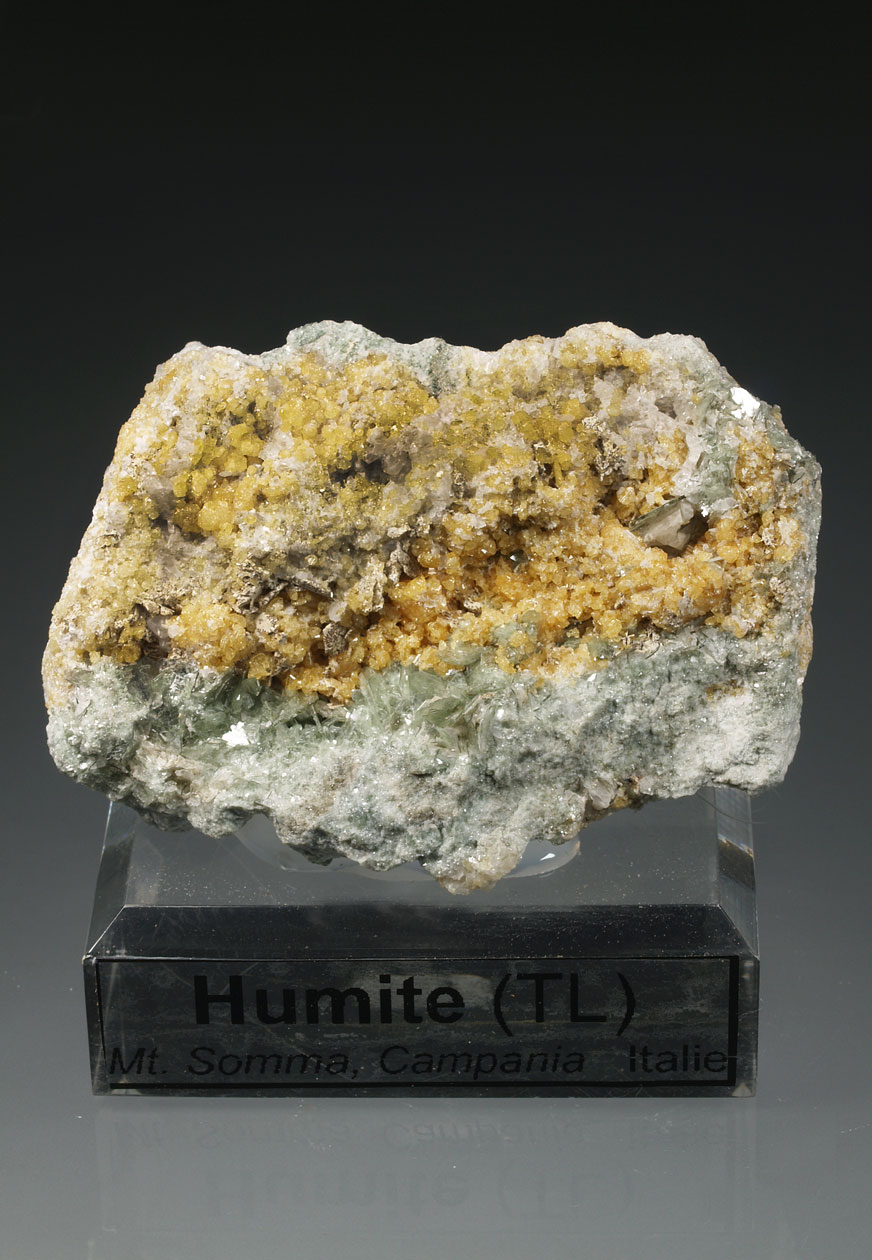
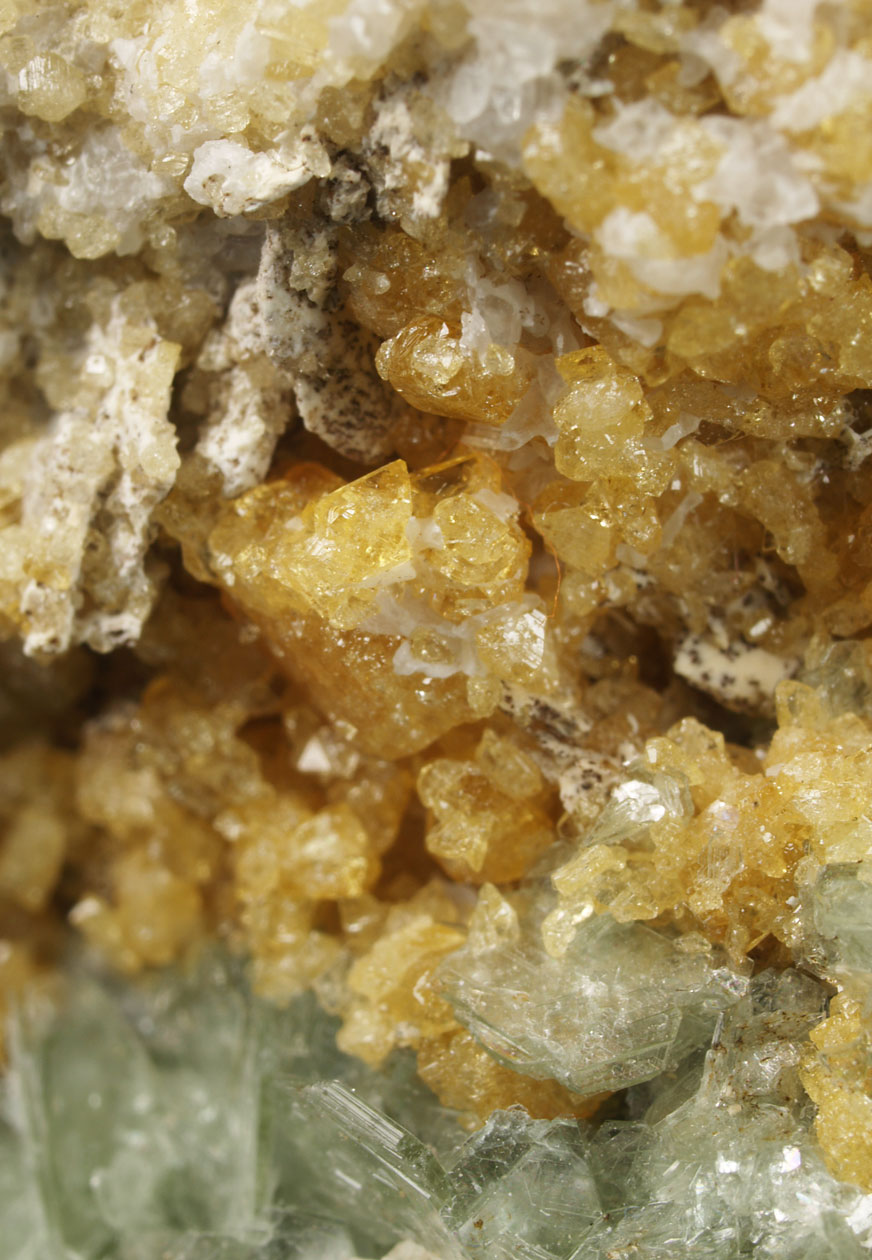
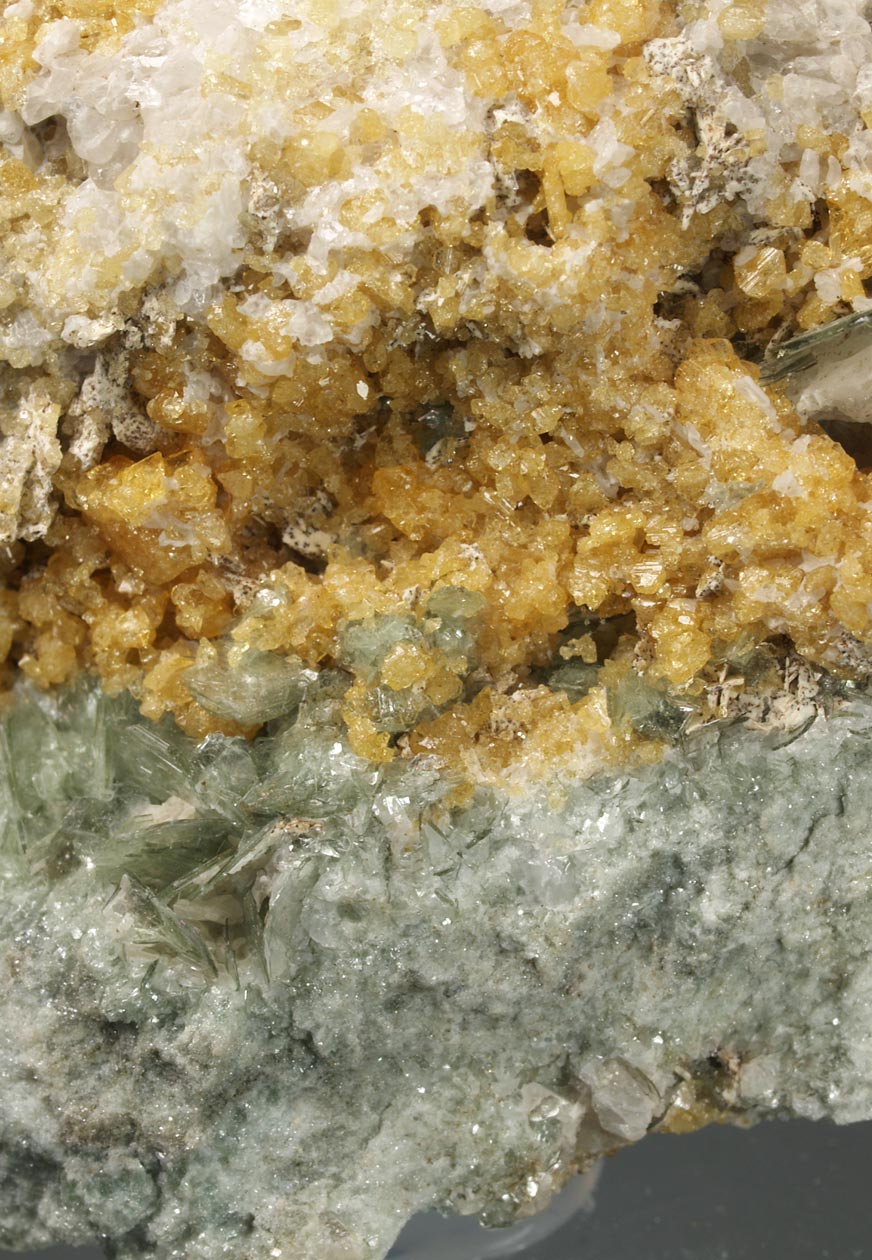
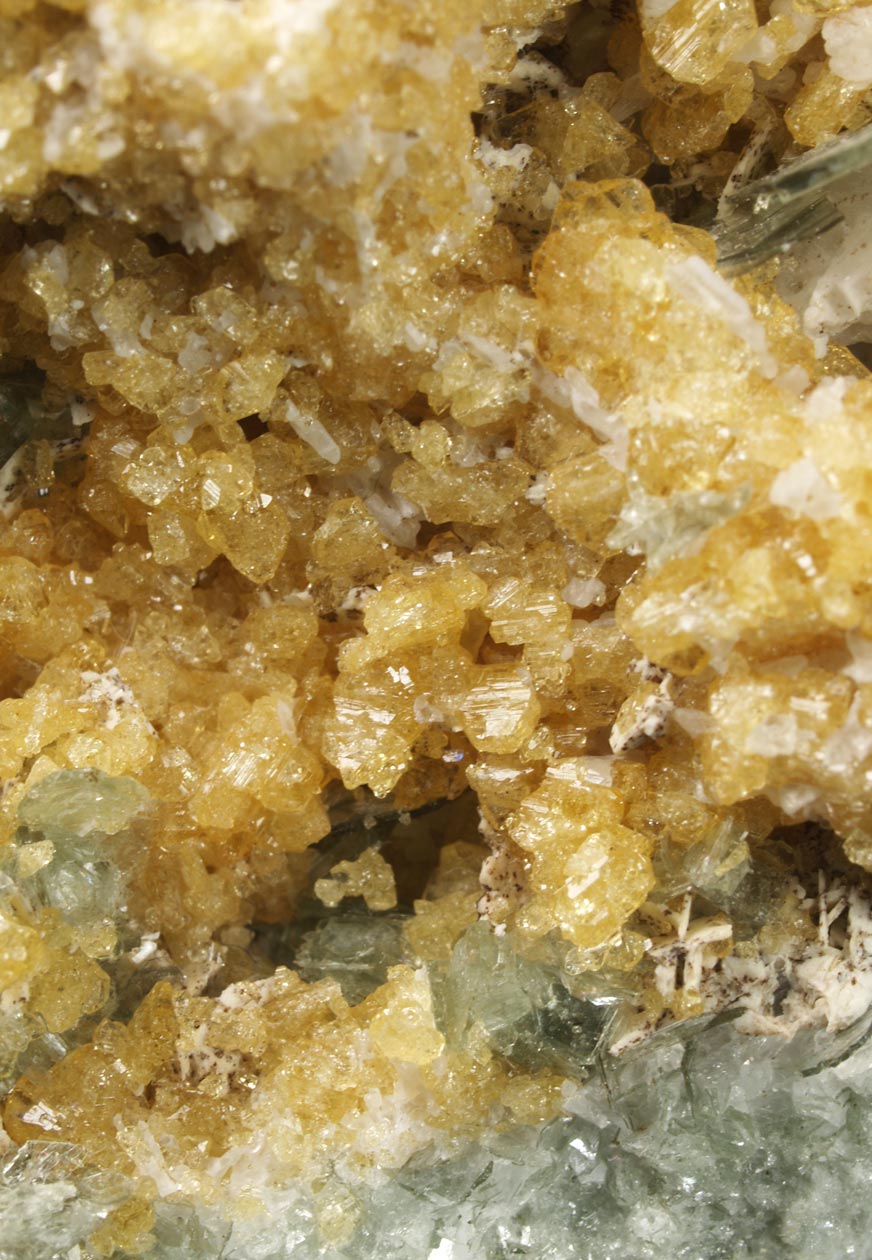
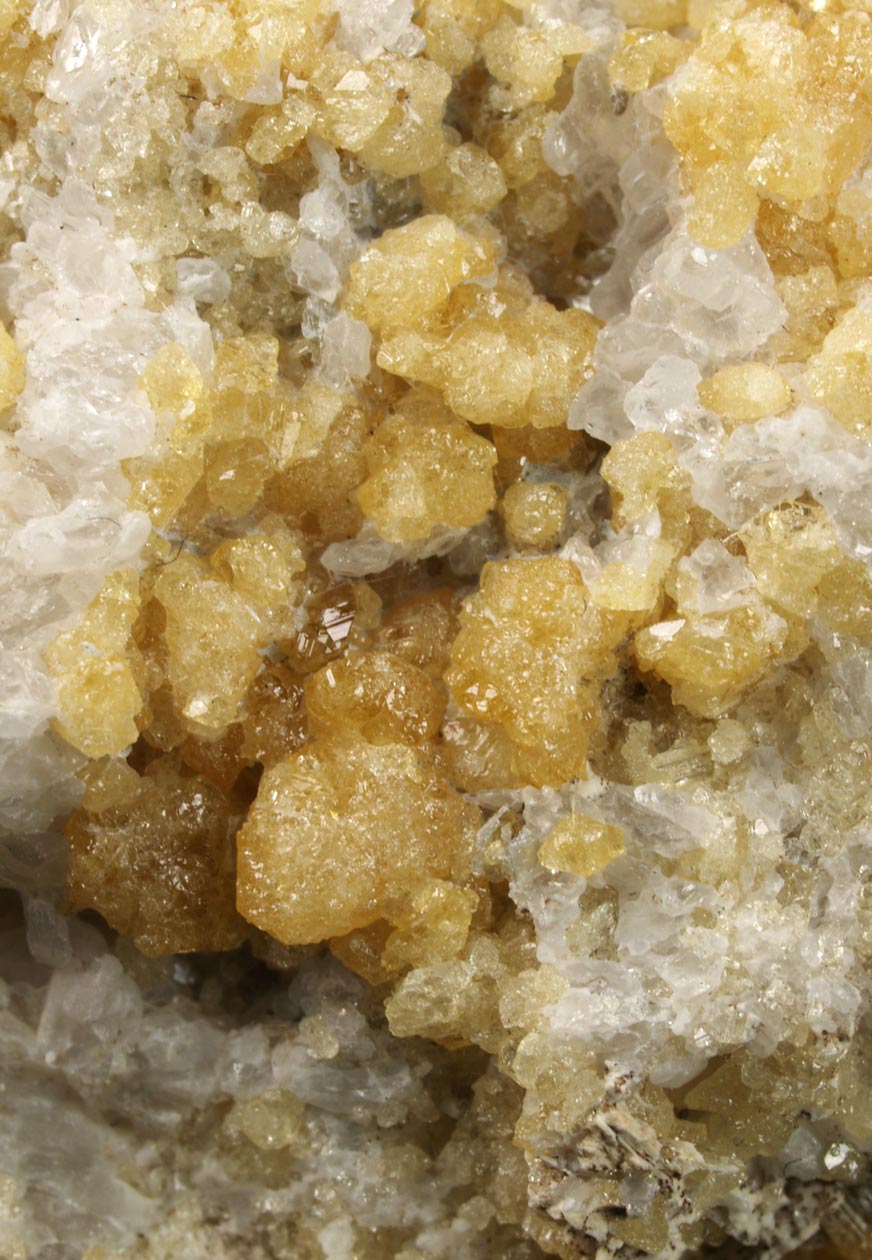
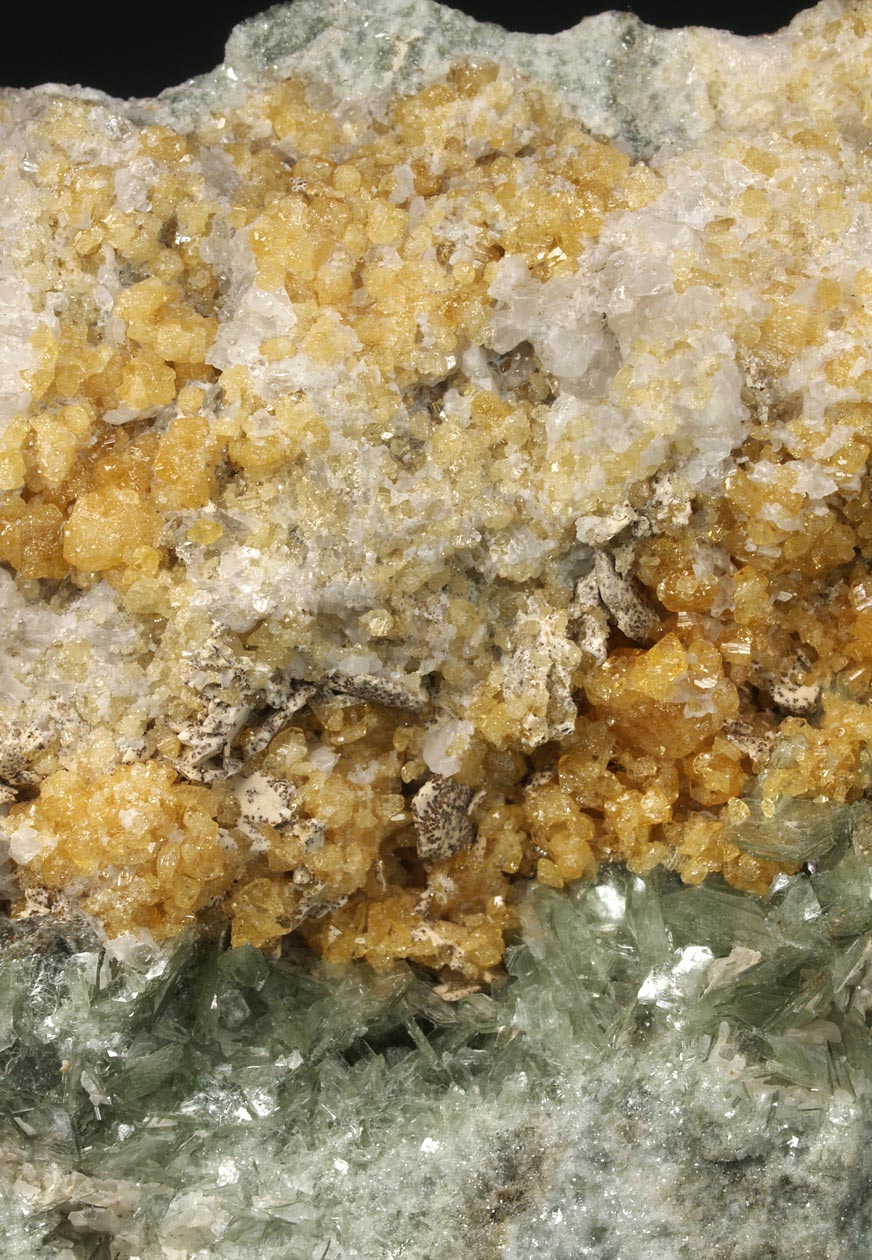
Excepcional ejemplar de muy buen tamaño de humita, un raro fluorosilicato de magnesio, procedente de la localidad tipo para la especie: el Monte Somma. En la pieza podemos observar numerosos cristales de un tono anaranjado, definidos y algunos con formas redondeadas, brillantes y con transparencia. Se acompañan de cristales micáceos de flogopita y agregados blancos de sodalita.
La humita es un mineral estrechamente relacionado y parecido a la norbergita, condrodita y clinohumita. Estos minerales son muy difíciles de distinguir. La humita parece tener un campo de estabilidad menor que la clinohumita, condrodita y norbergita. La humita a menudo se asocia con uno o más de los otros minerales del grupo de la humita, como intercrecimientos.
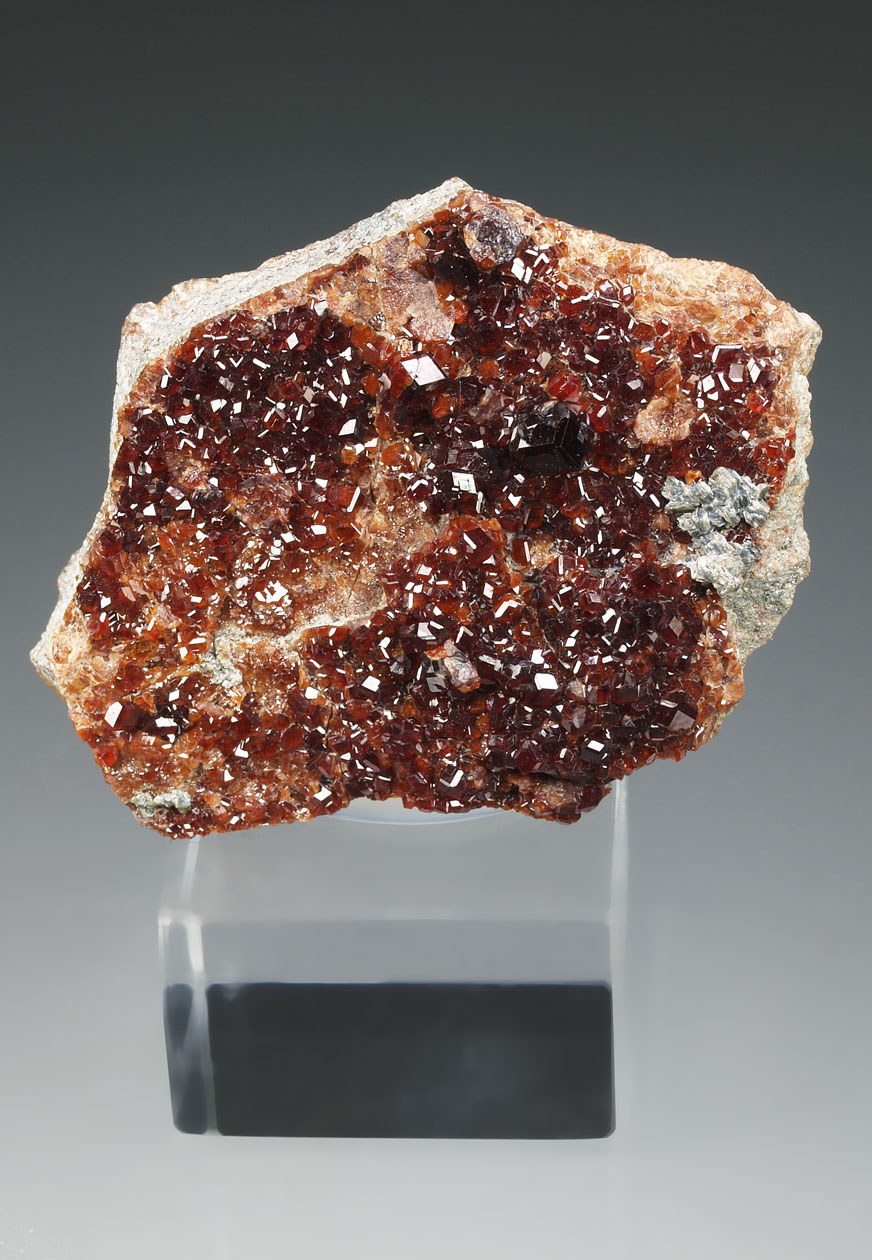
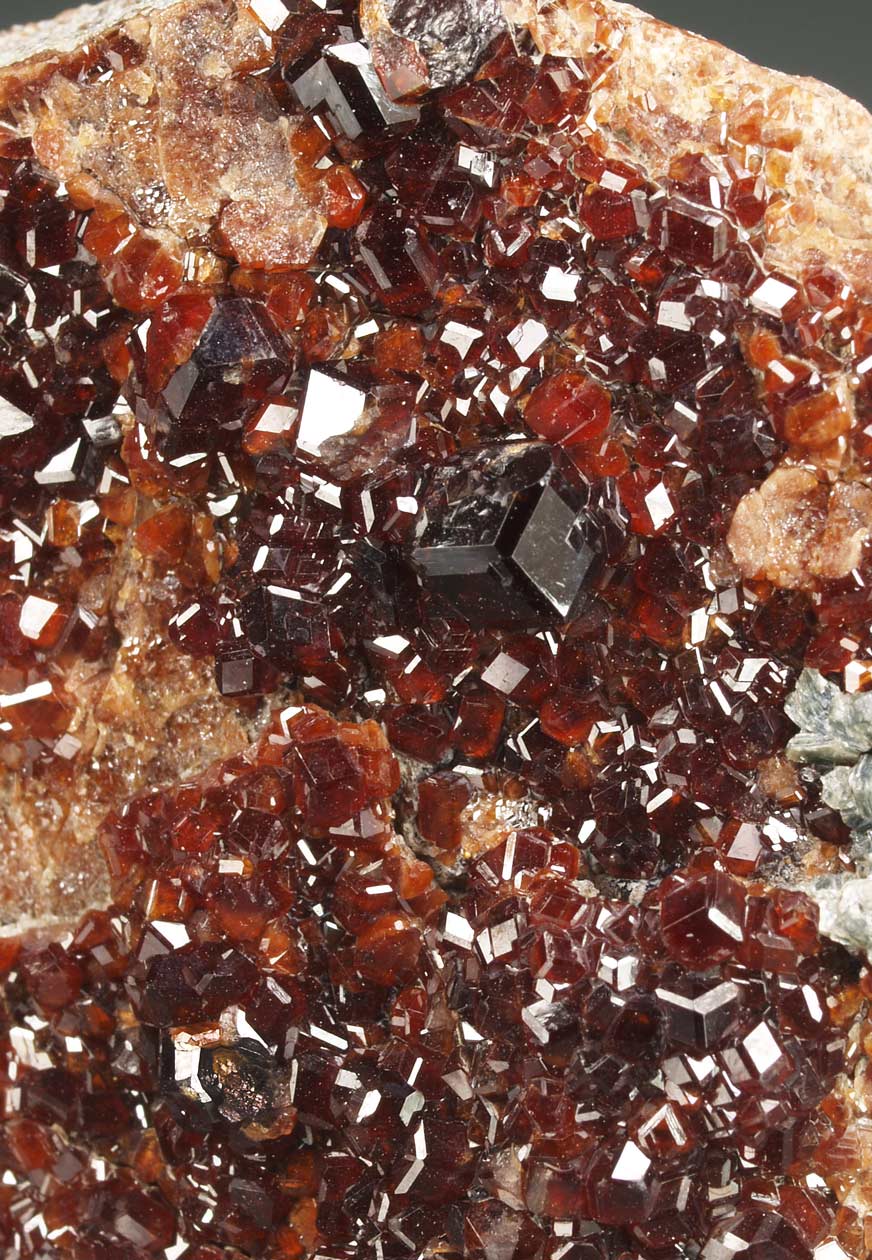
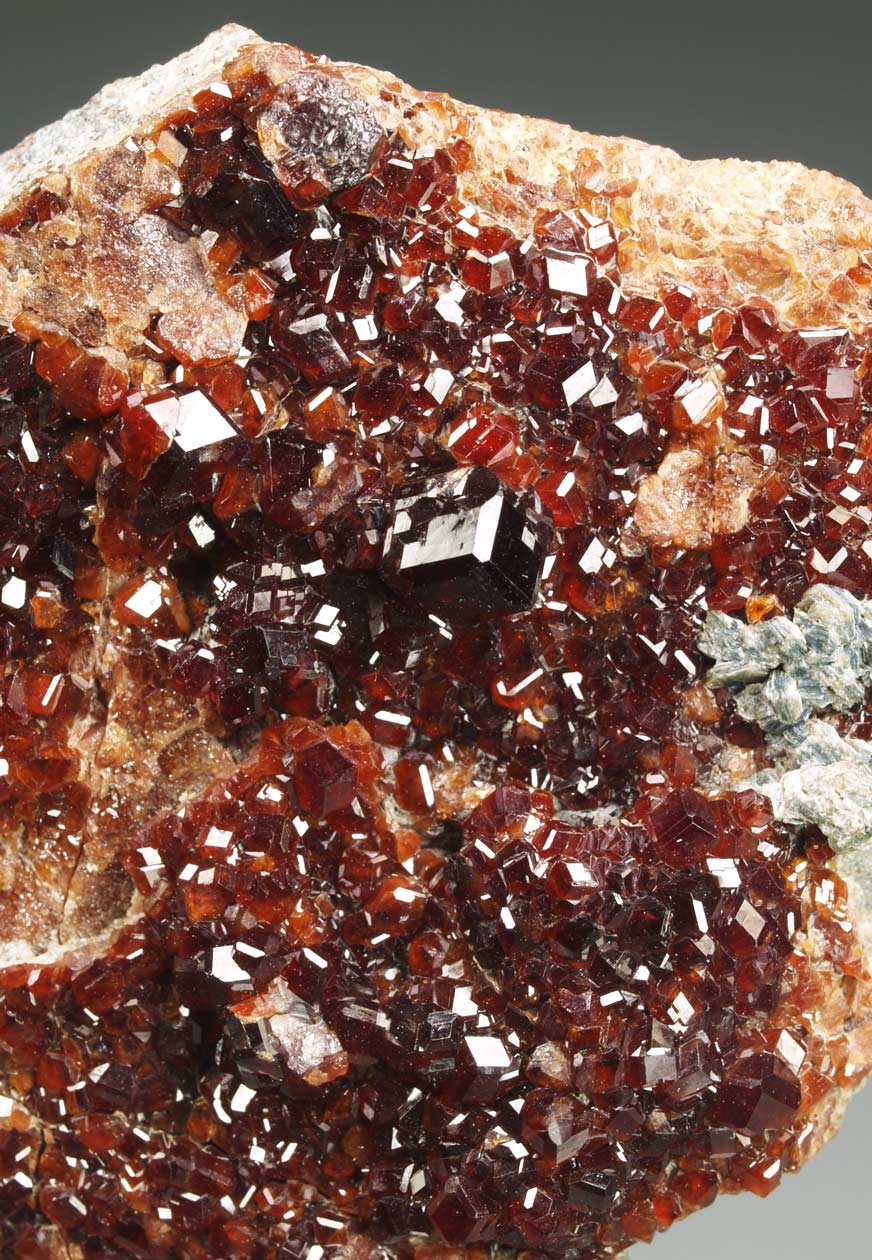
Brillante ejemplar formado por una drusa de definidos cristales tarpezoédricos de grosularia de la variedad hessonita. Intenso color, brillo y transparencia. Se acompaña de grupos de cristales de clinocloro verde.
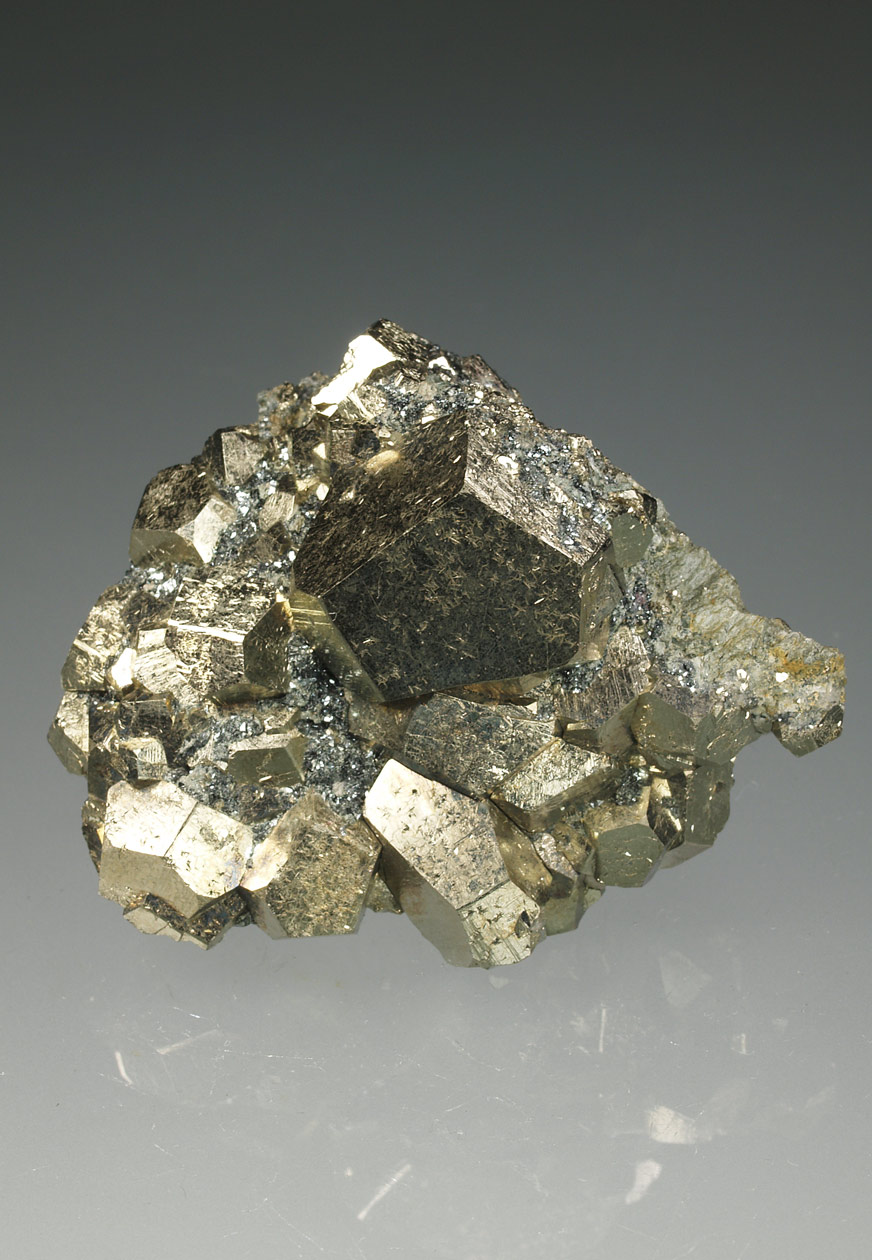
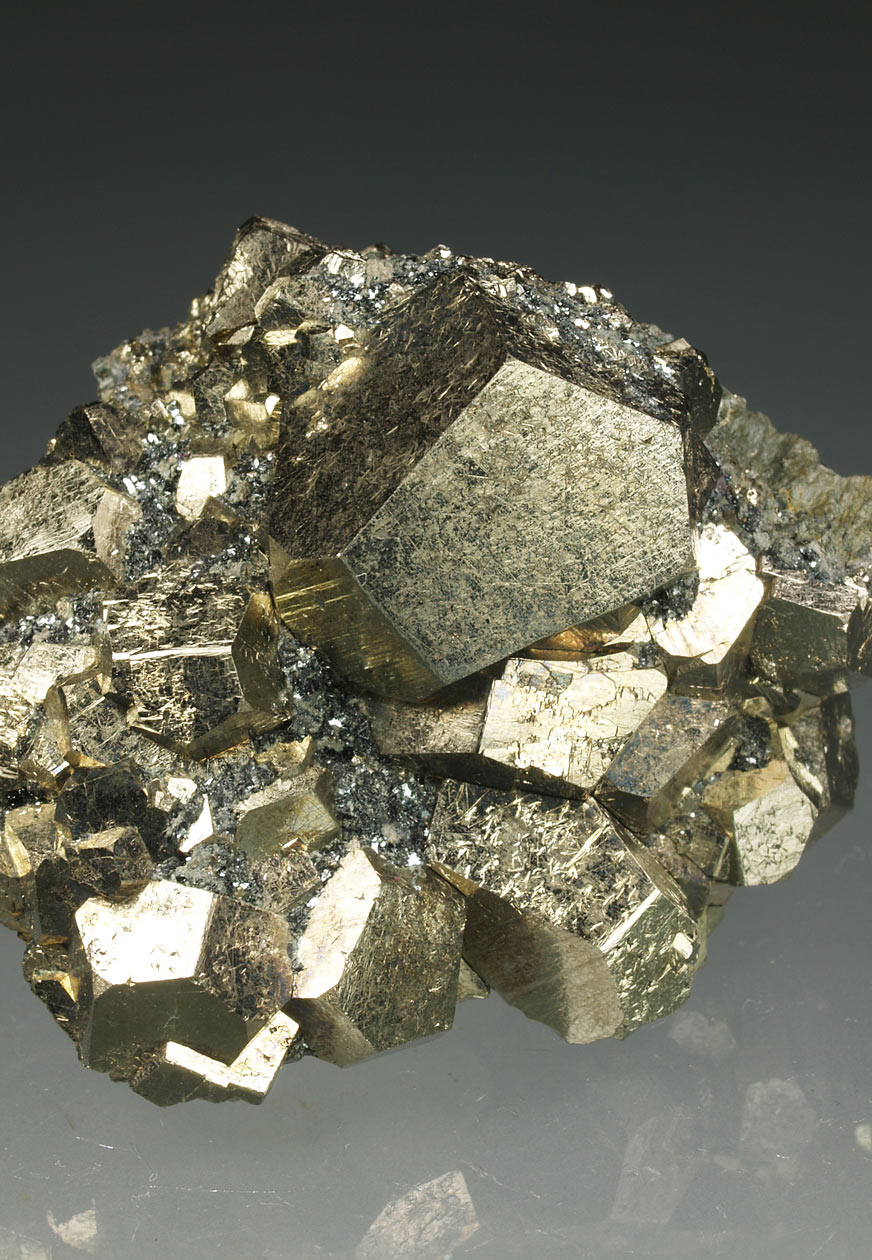
Grupo de piritoedros muy brillantes, de buen tamaño, interpenetrados y con caras y aristas definidas. Salpicados de brillantes cristales laminares de hematites. De esta localidad clásica italiana. Procede de la colección Joan Astor (Barcelona), con etiqueta manuscrita y mecanografiada.
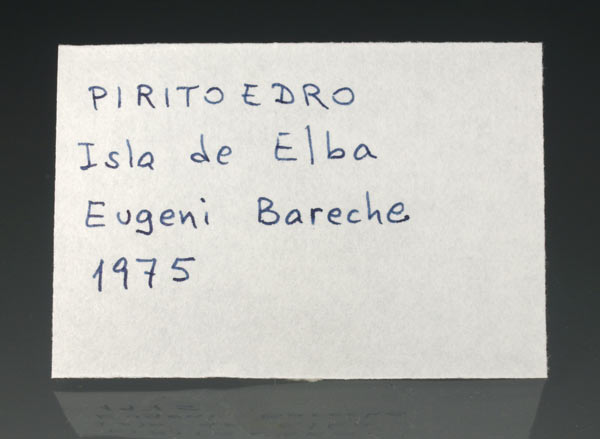
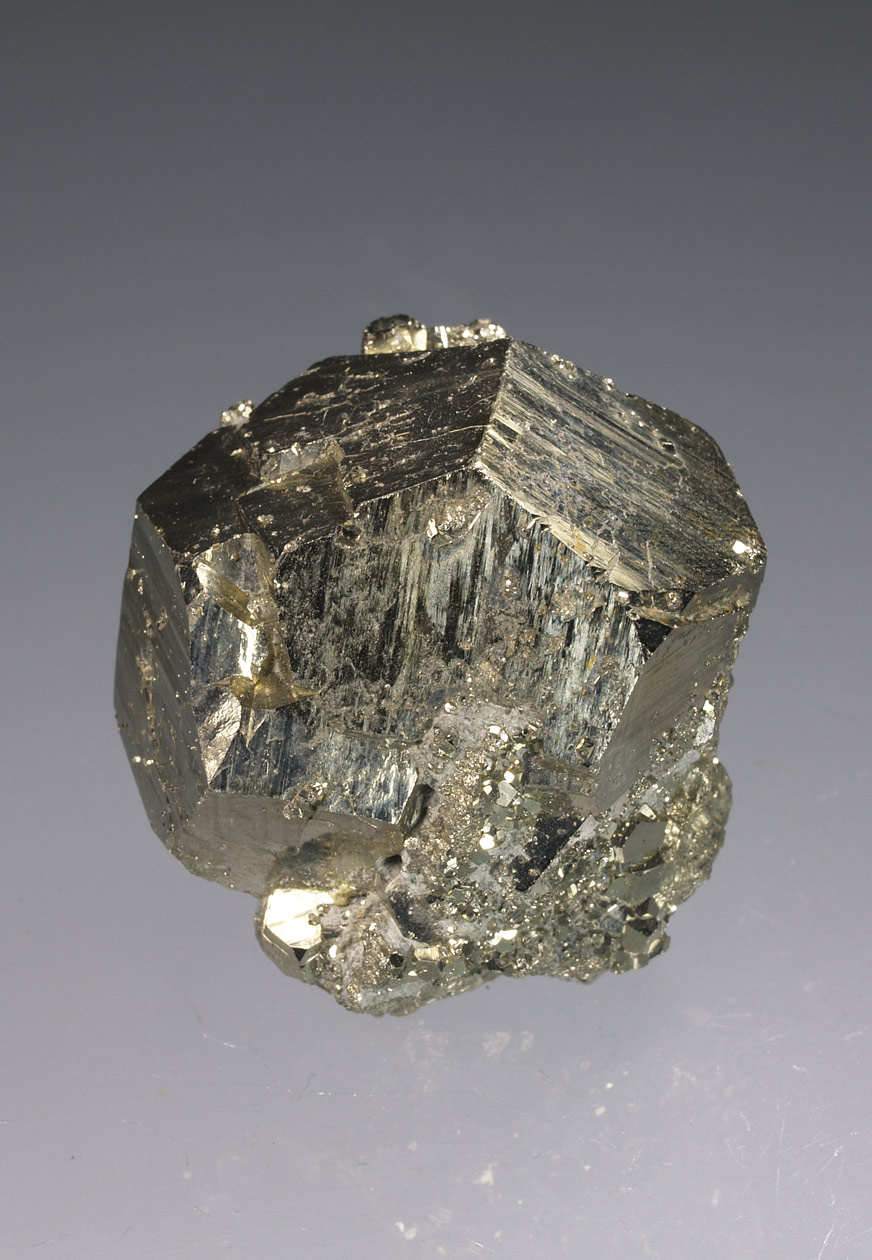
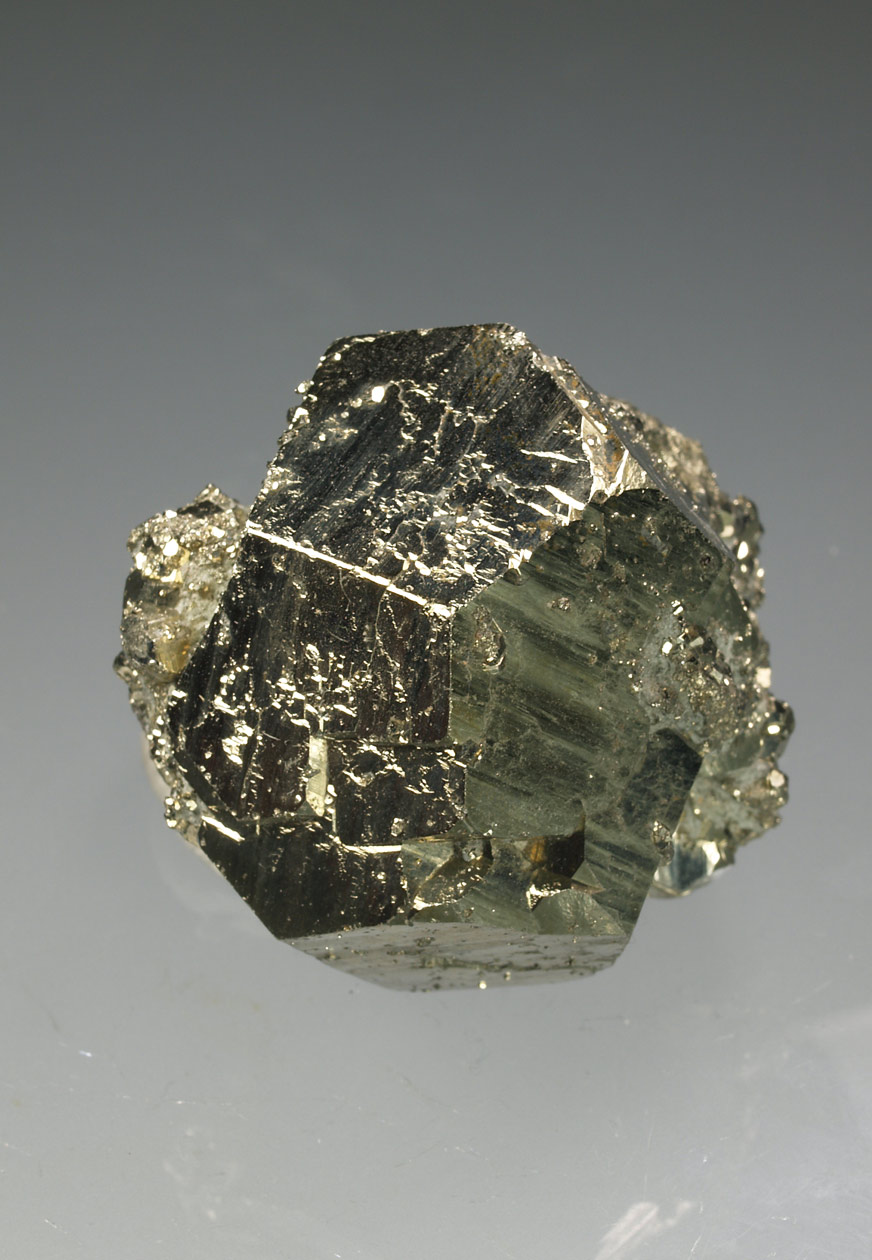
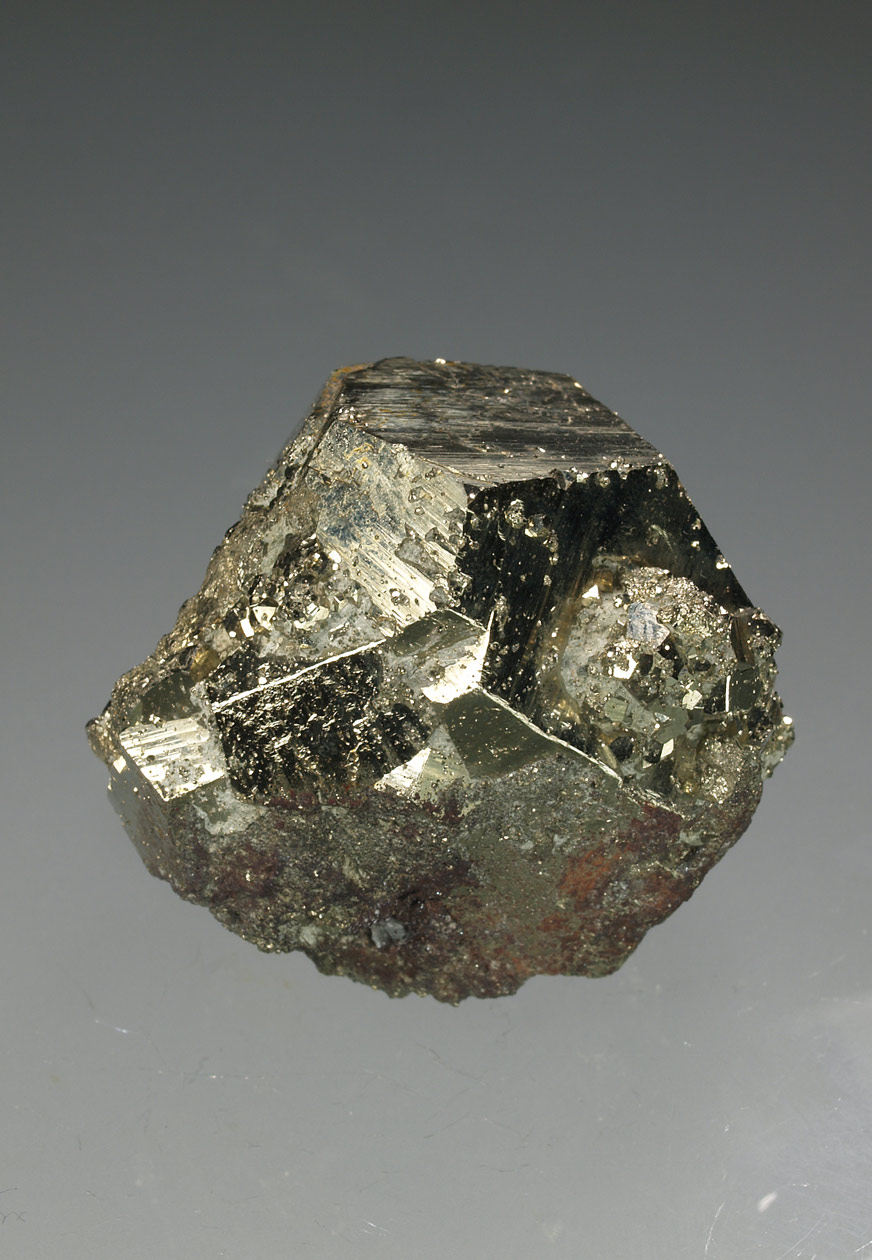
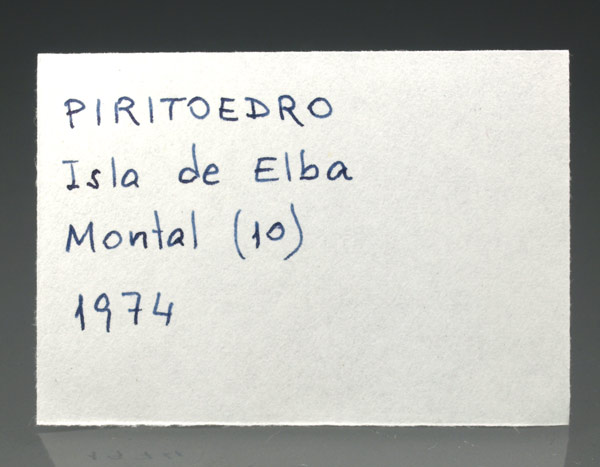
Grupo de piritoedros muy brillantes, de buen tamaño, interpenetrados y con caras y aristas definidas. De esta localidad clásica italiana. Procede de la colección Joan Astor (Barcelona), con etiqueta manuscrita y mecanografiada.
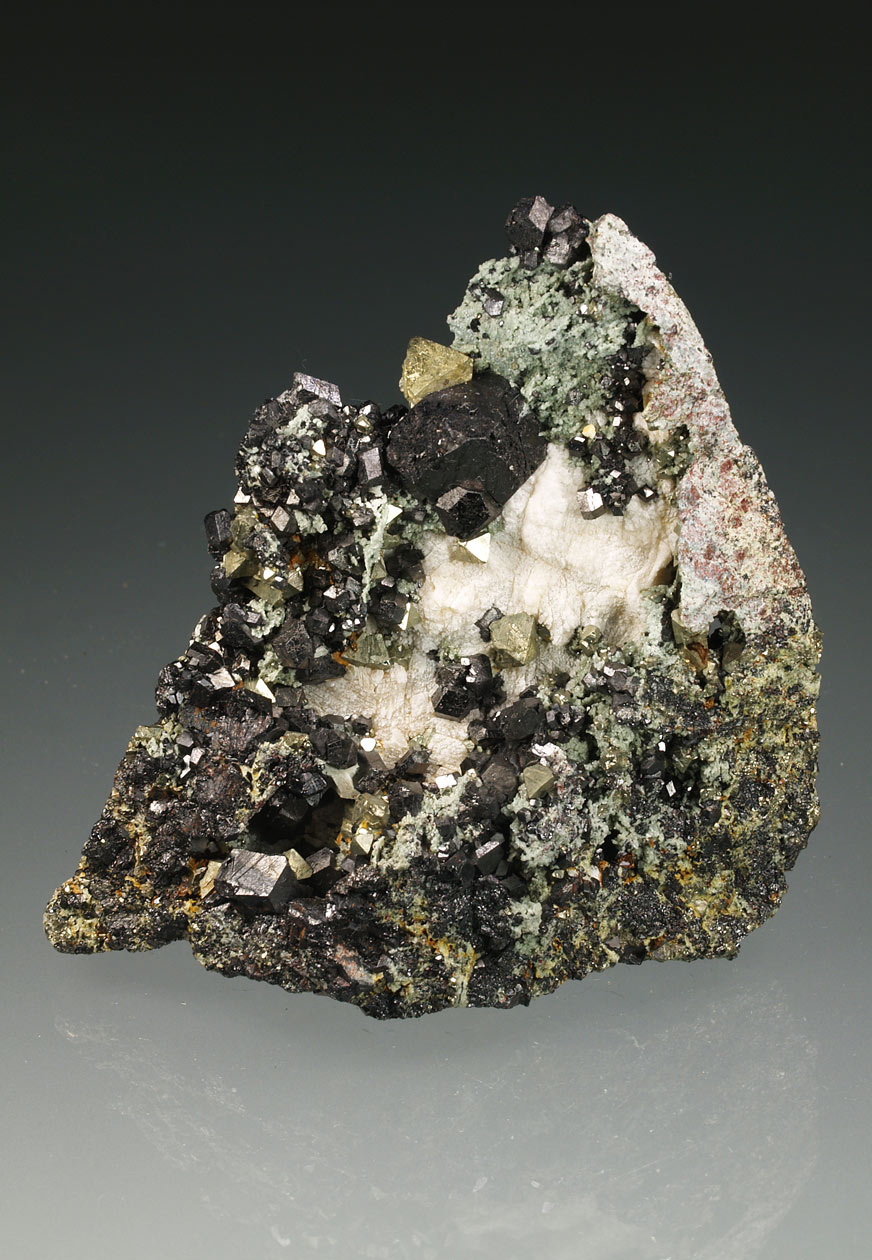
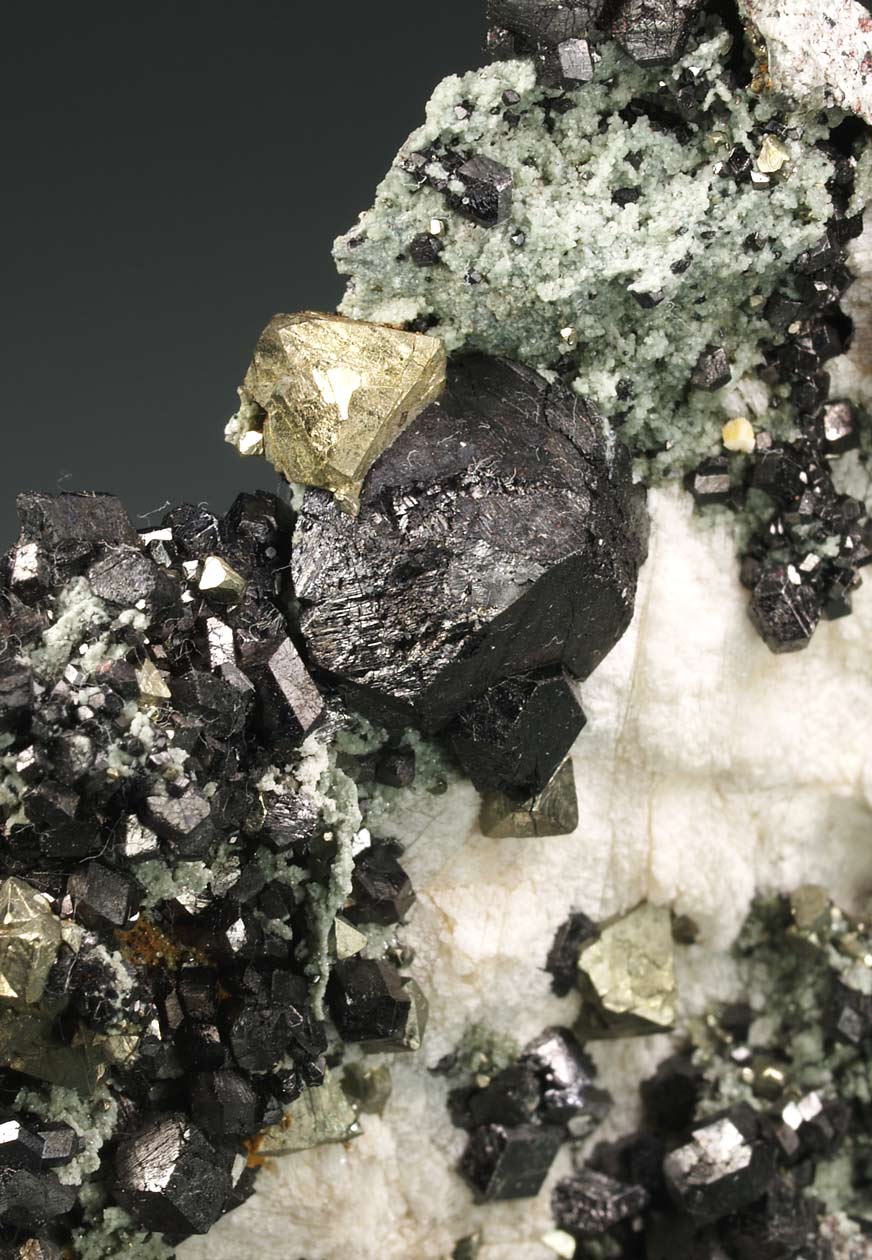
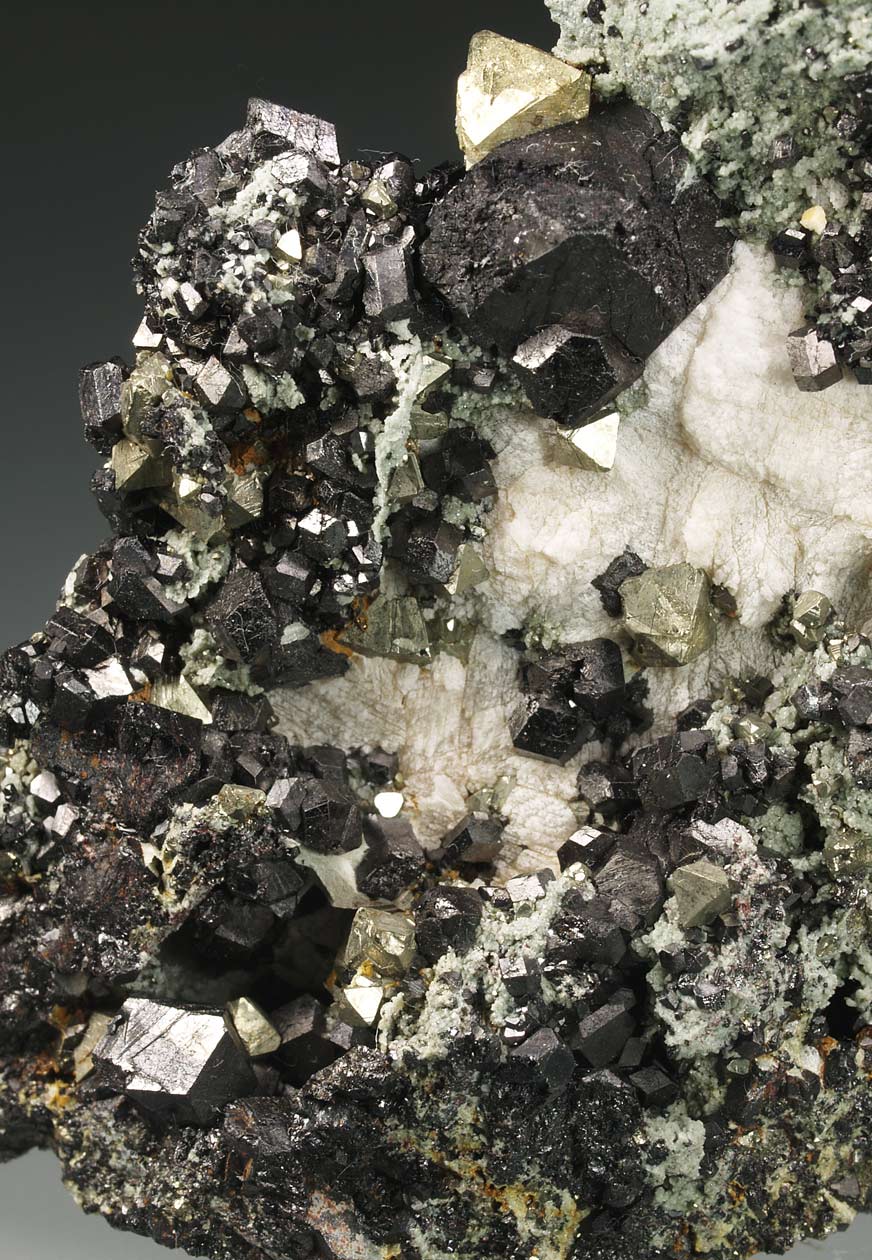
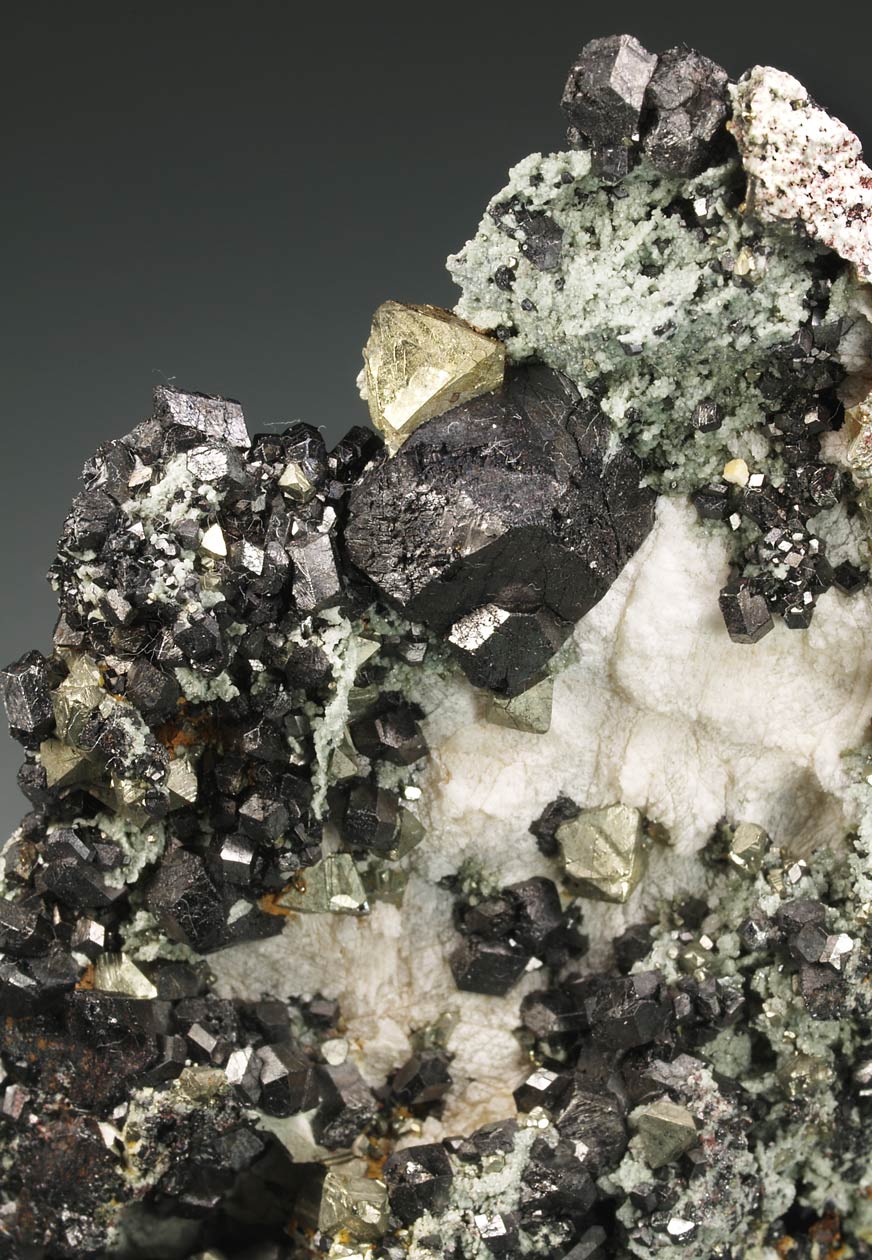
Ejemplar muy estético de esta clásica mina italiana. Numerosos cristales de magnetita con formas del rombododecaedro, algunos de ellos con una cristalografía distorsionada de forma muy interesante, con intenso brillo y muy definidos. Se acompaña de cristales octaédricos de pirita. Procede de la colección Joan Astor (Barcelona), con etiqueta manuscrita y caja mecanografiada.