- Home About RM Minerals
- Virtual Photo Museum Blog RM Contact
- Microscopy and instruments How to Buy Disclaimer
Copyright 2010-2026
www.rosellminerals.com



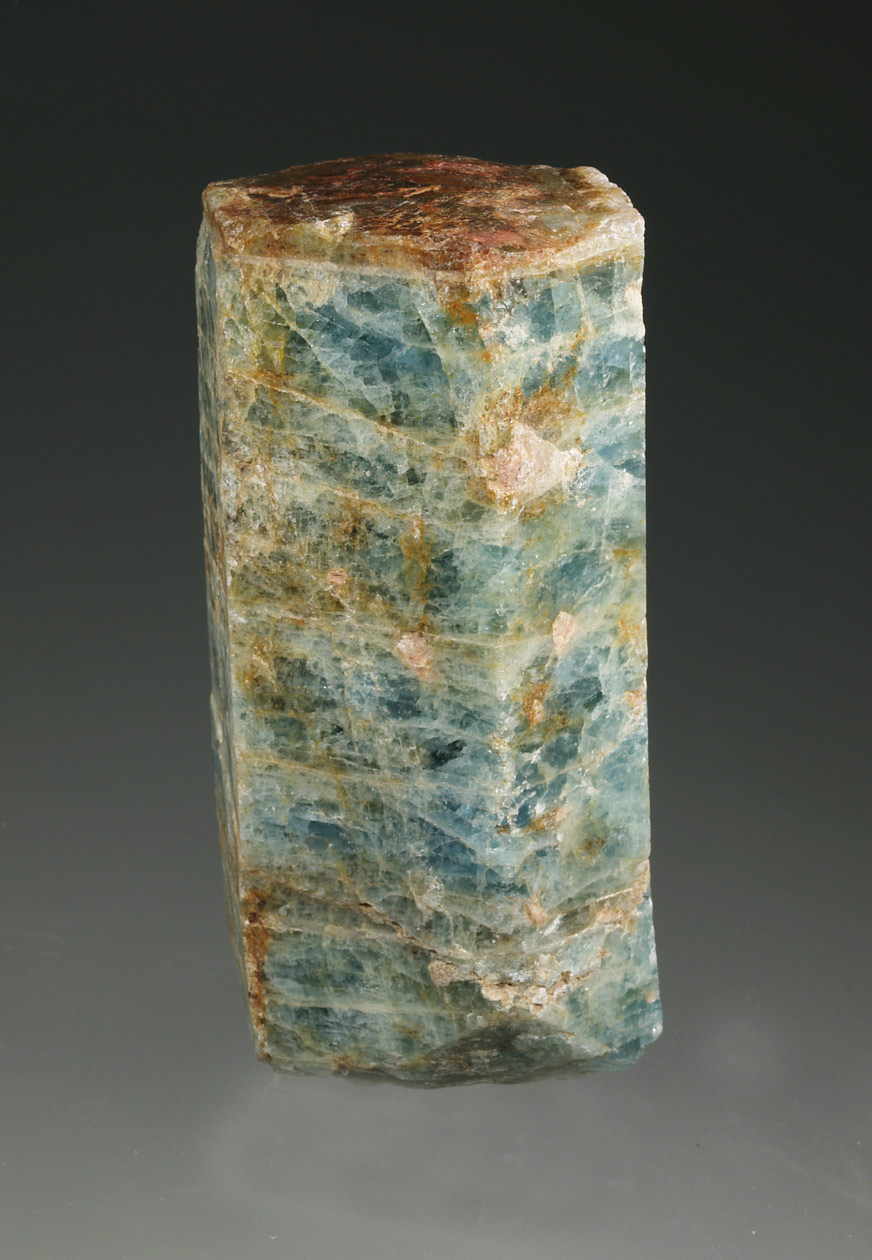
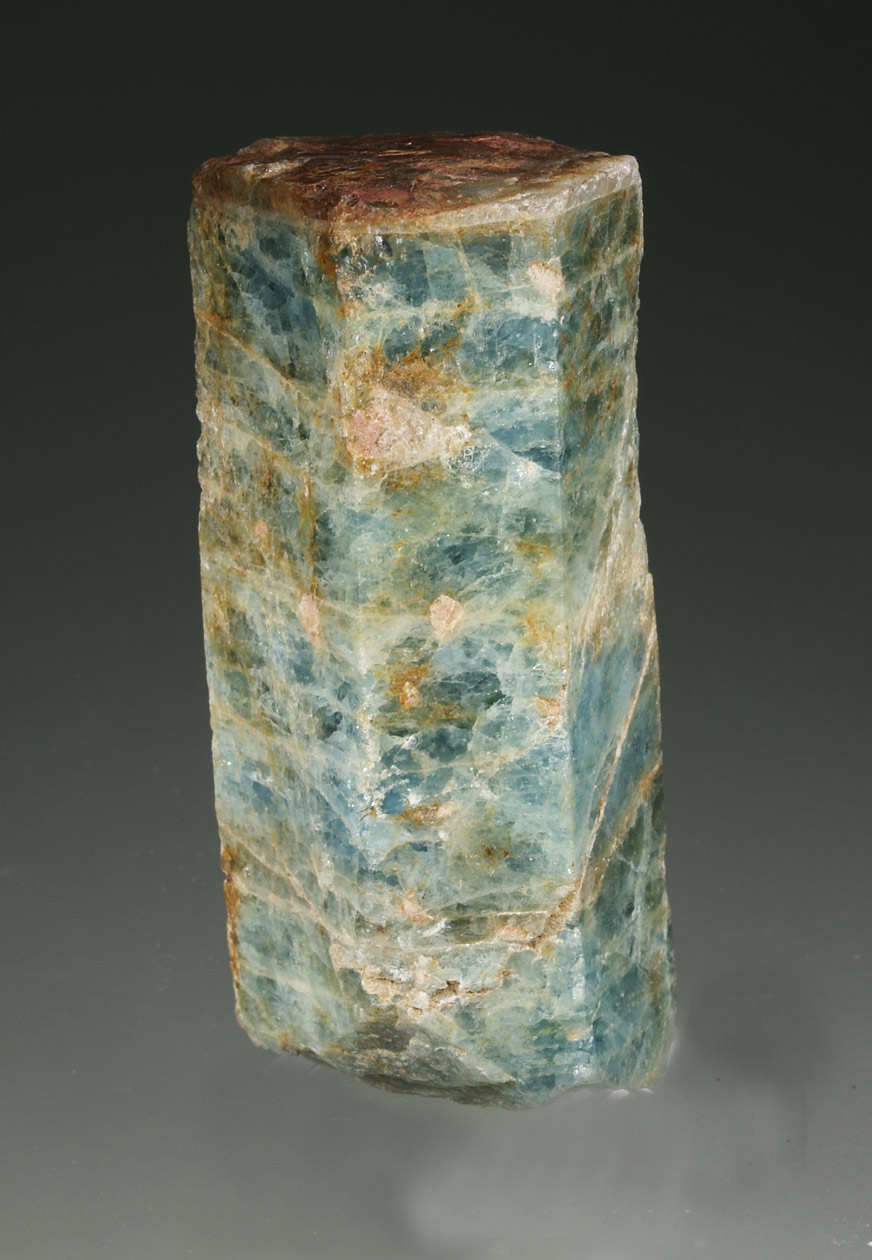
A good size beryl crystal, aquamarine variety, from those of oldtimes. It shows the faces of the hexagonal prism and terminal flat pinacoid. From the Manchion collection (Barcelona).
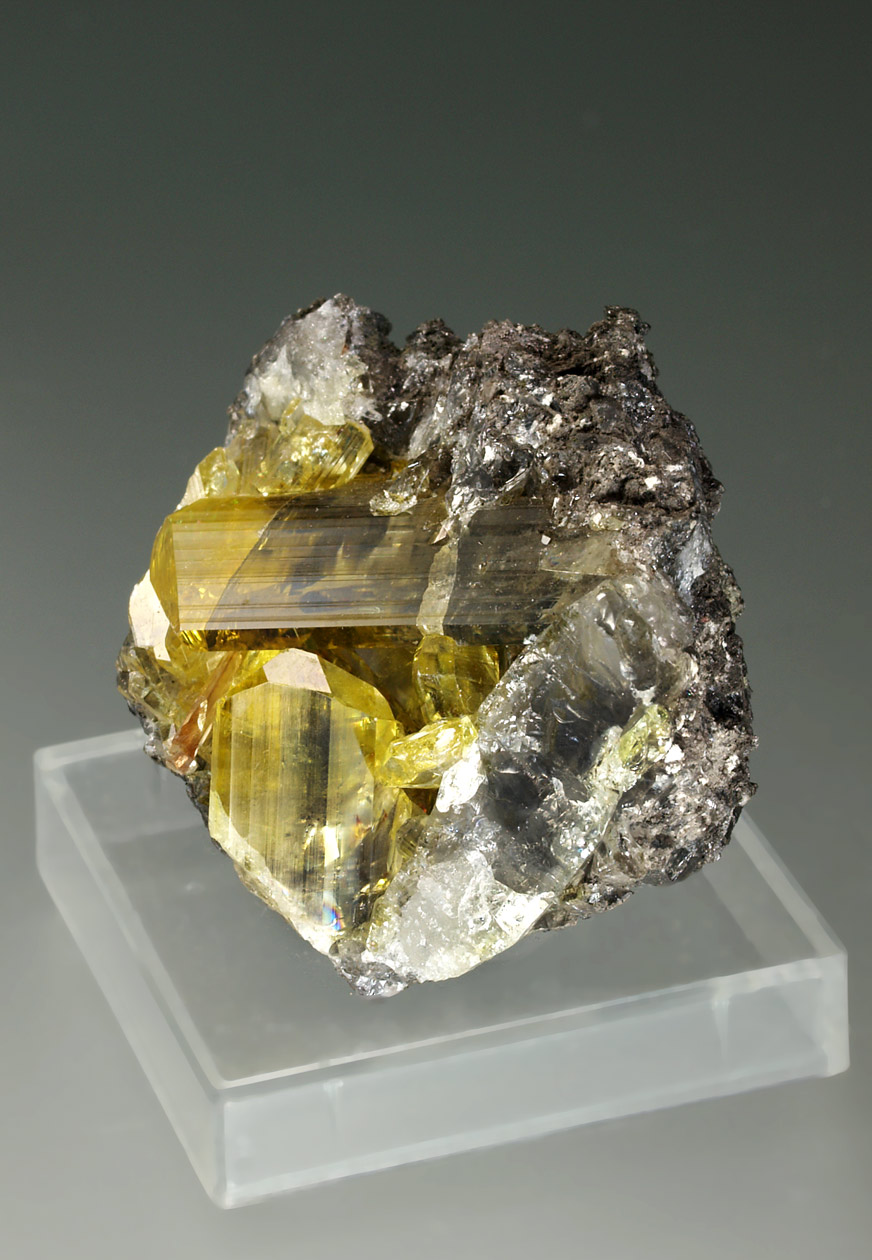
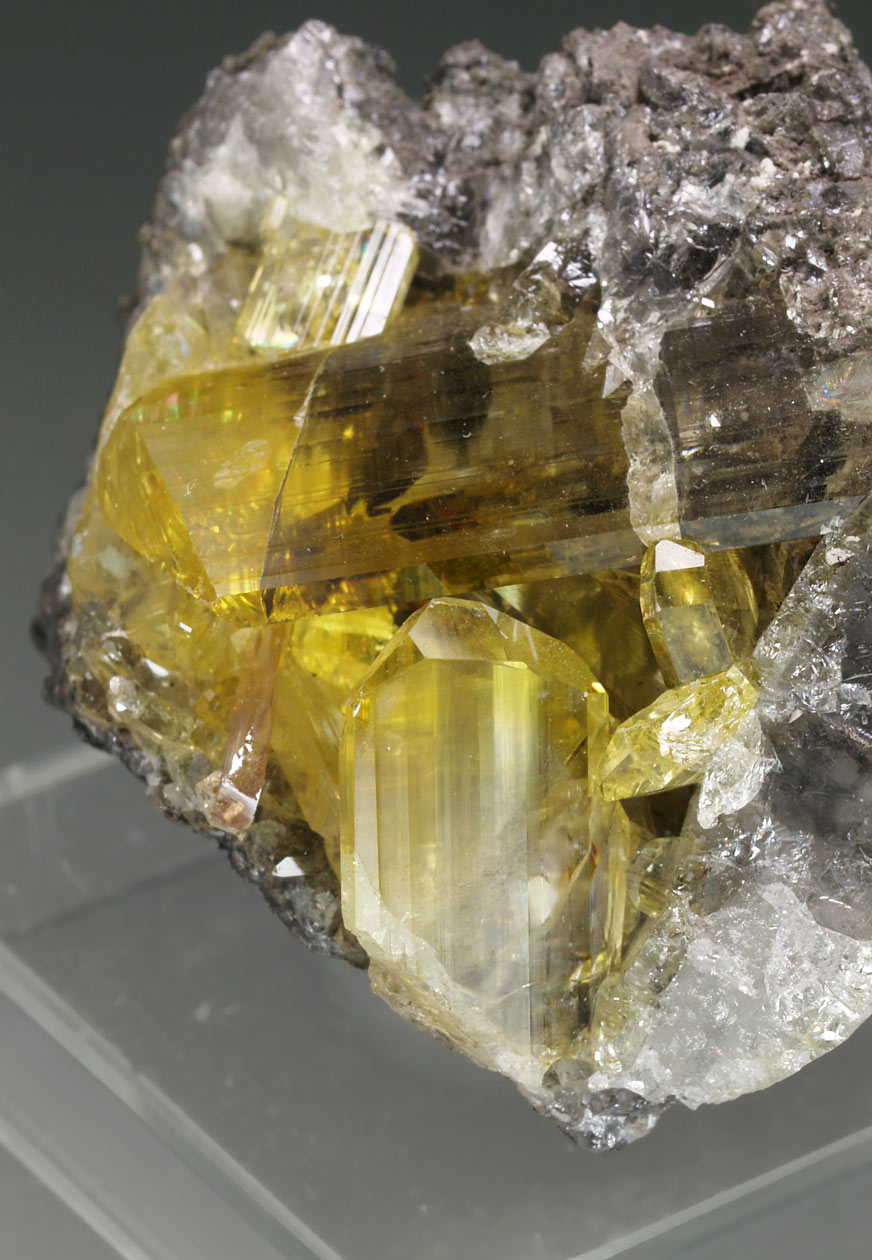
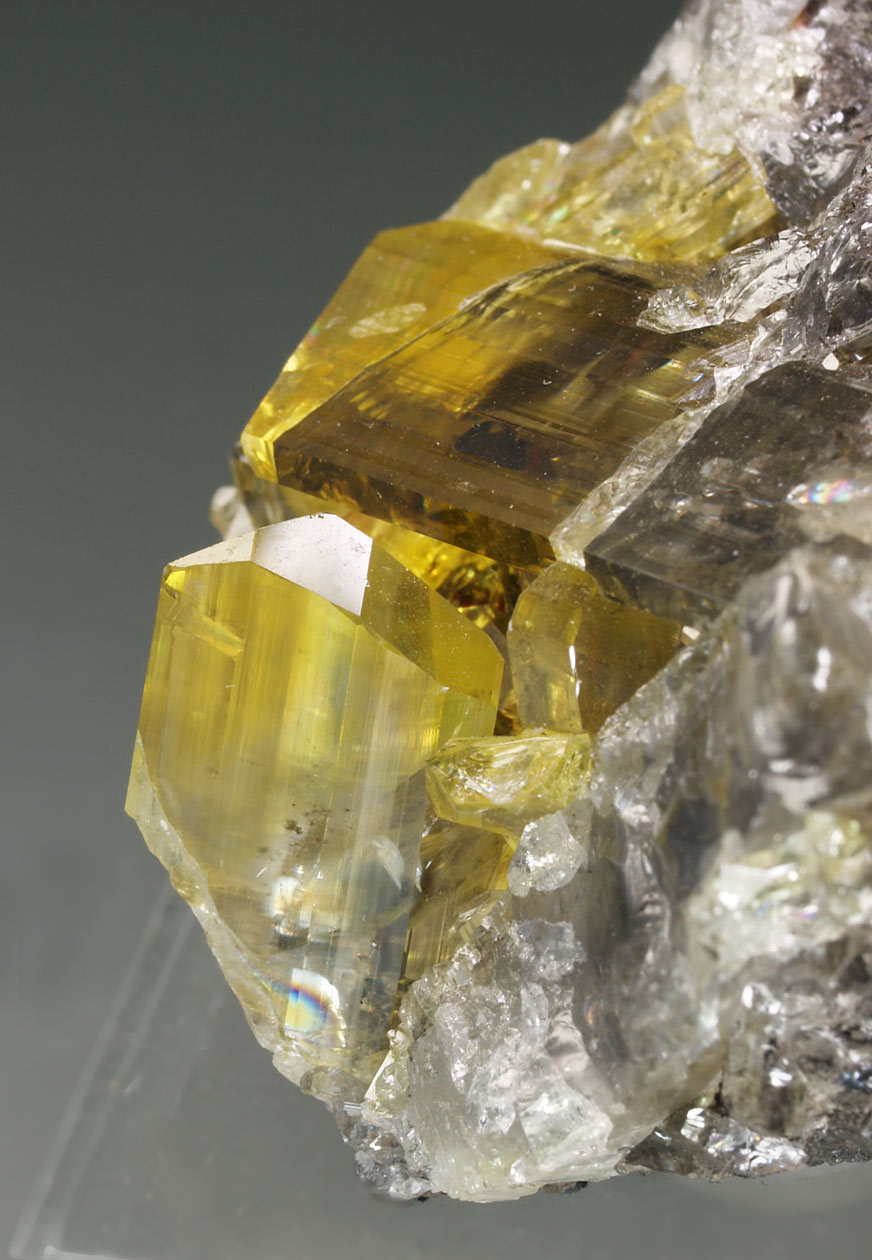
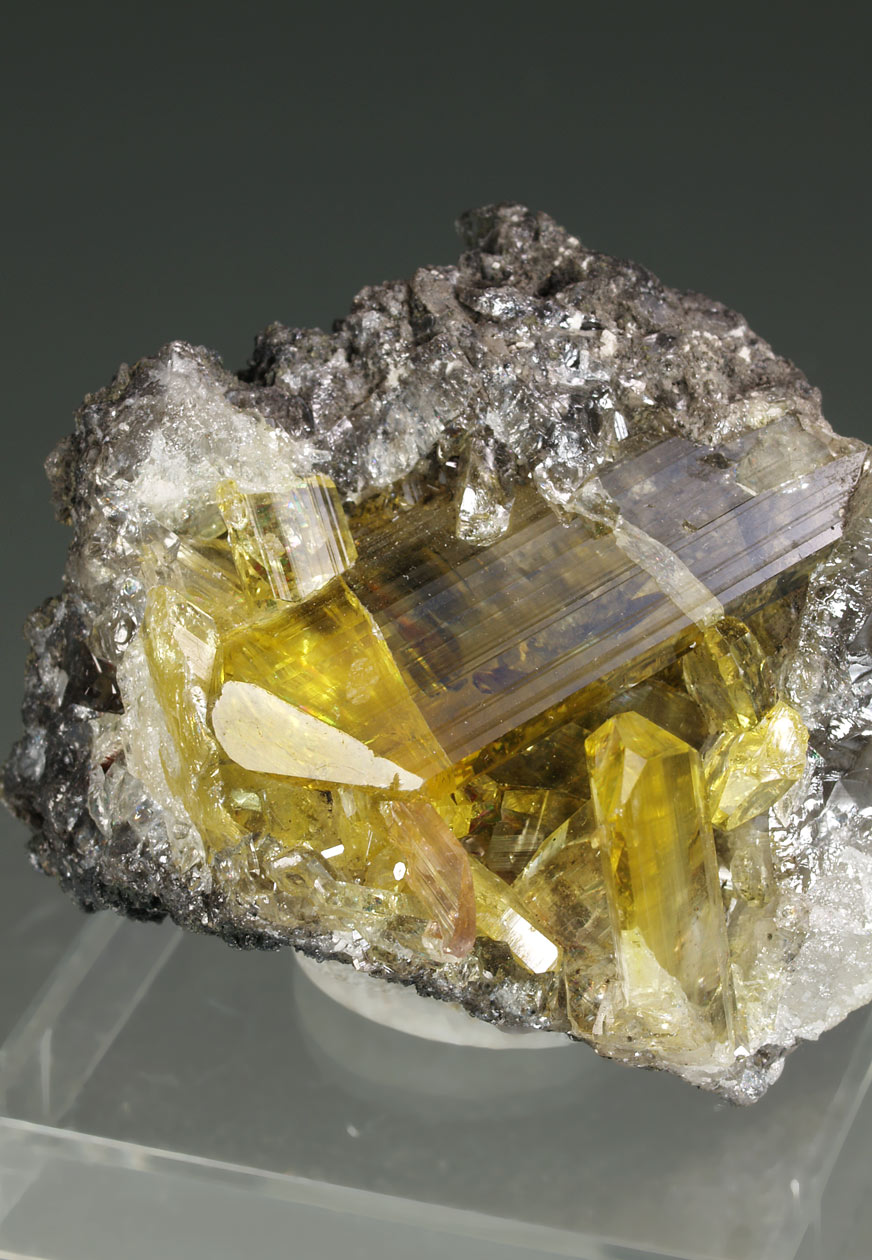
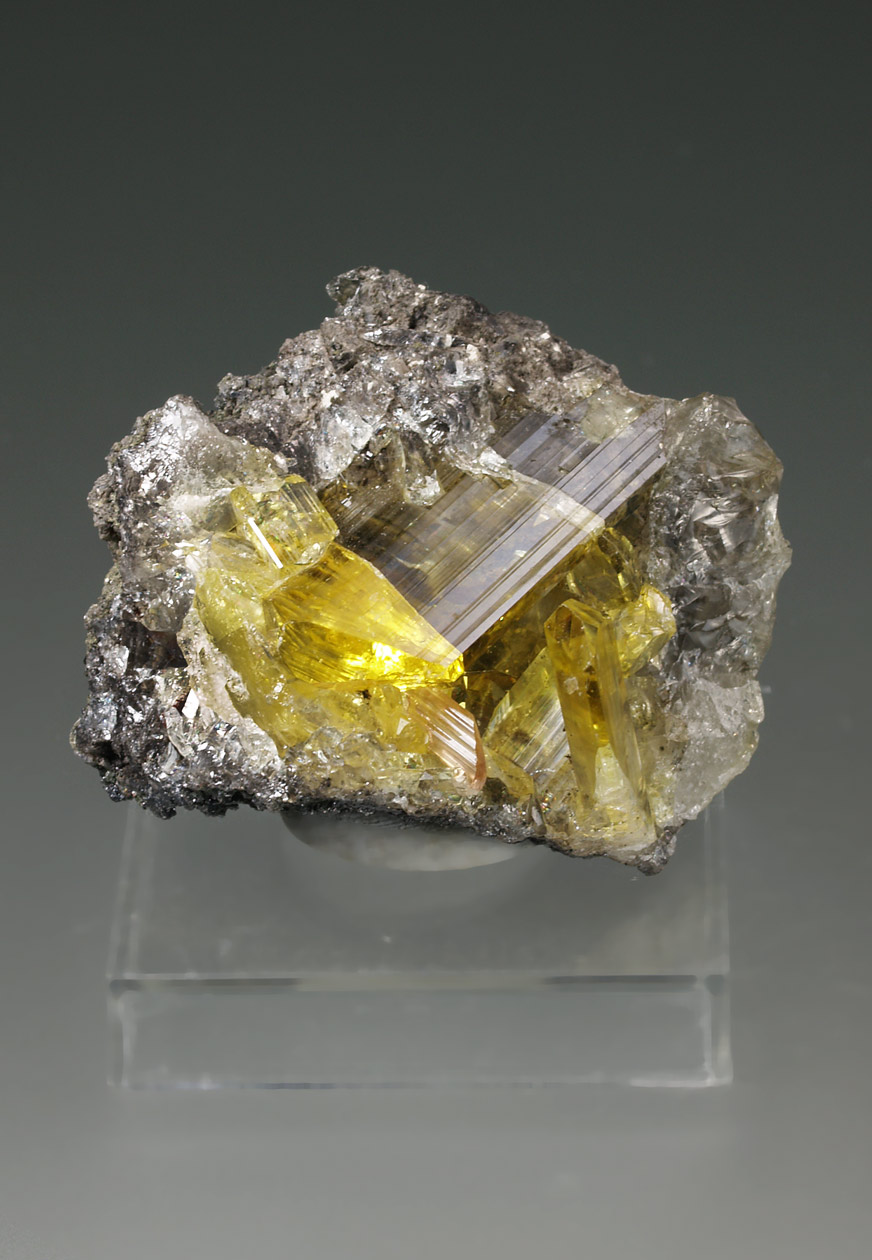
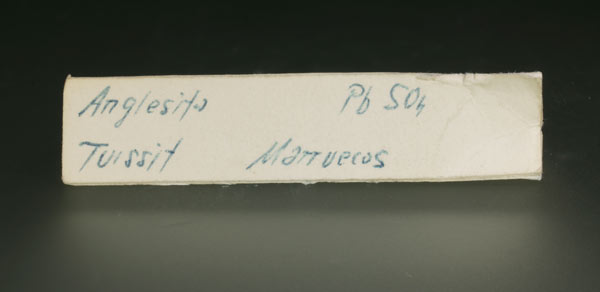
Aesthetic and gemmy anglesite specimen that shows a group of crystals with a razor-sharp chisel terminations, striated faces, characteristic for the species, very sharp and with good transparence and uniform yellow color.
This specimen date to the late 1970s and were found in the well known Moroccan mining area of Touissit. They are considered the world's finest anglesite specimens. Here we offer this "old" specimen from glorious past times.
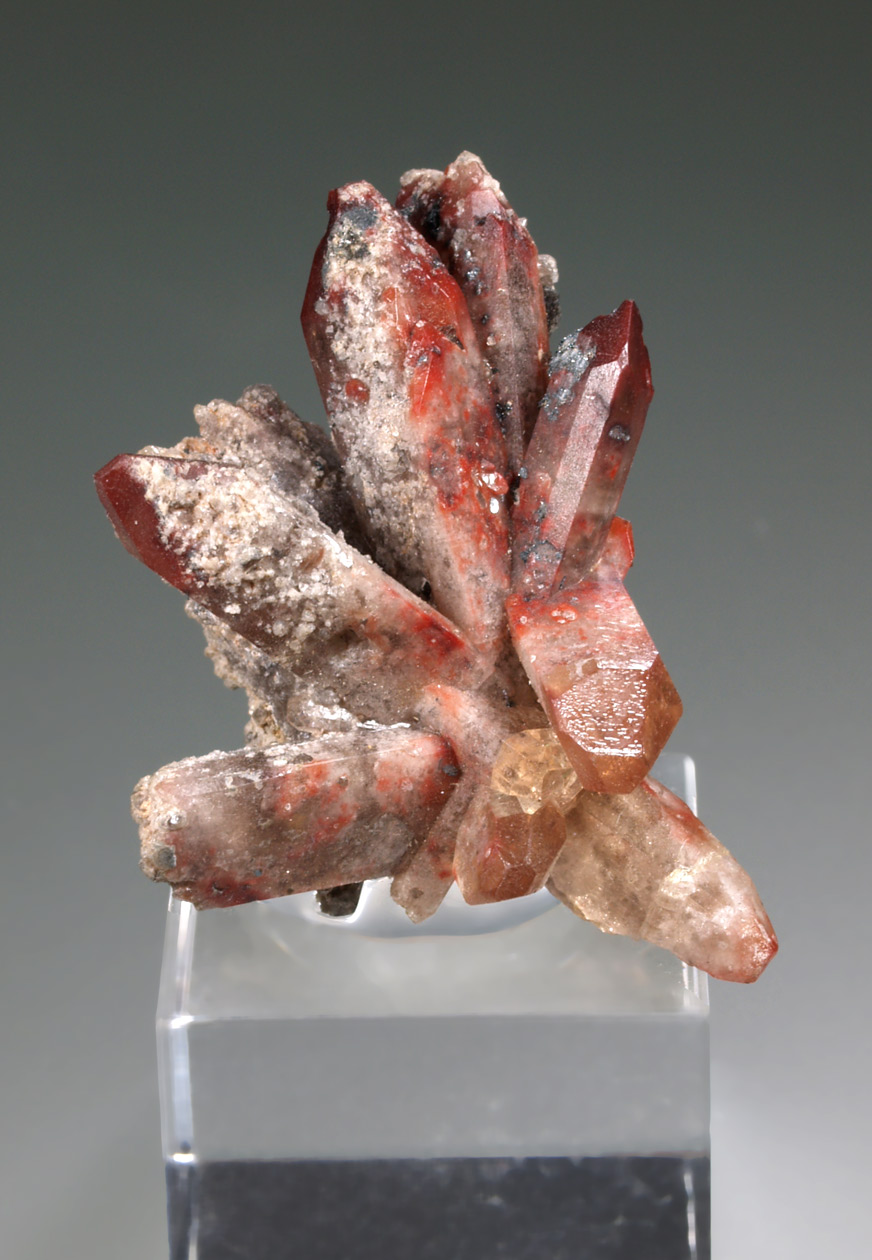
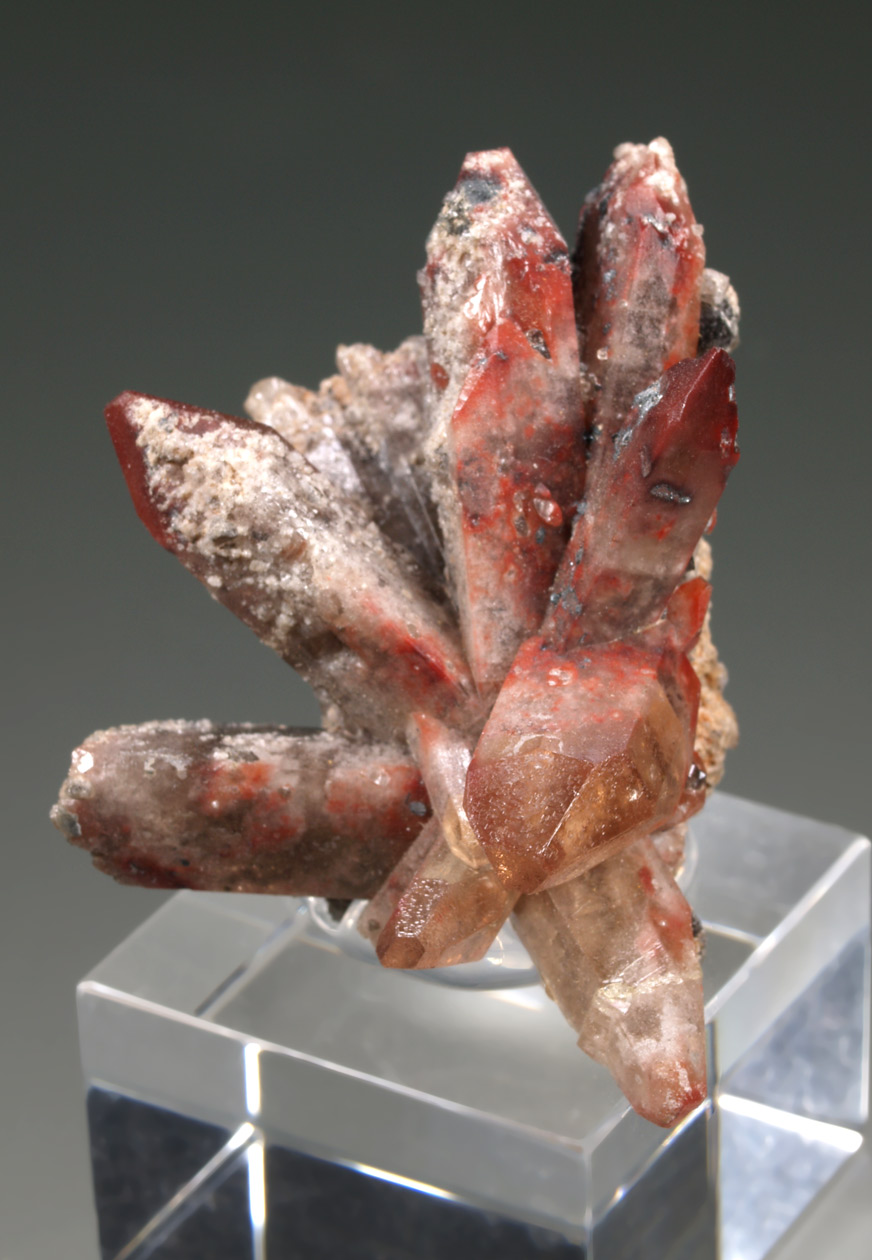
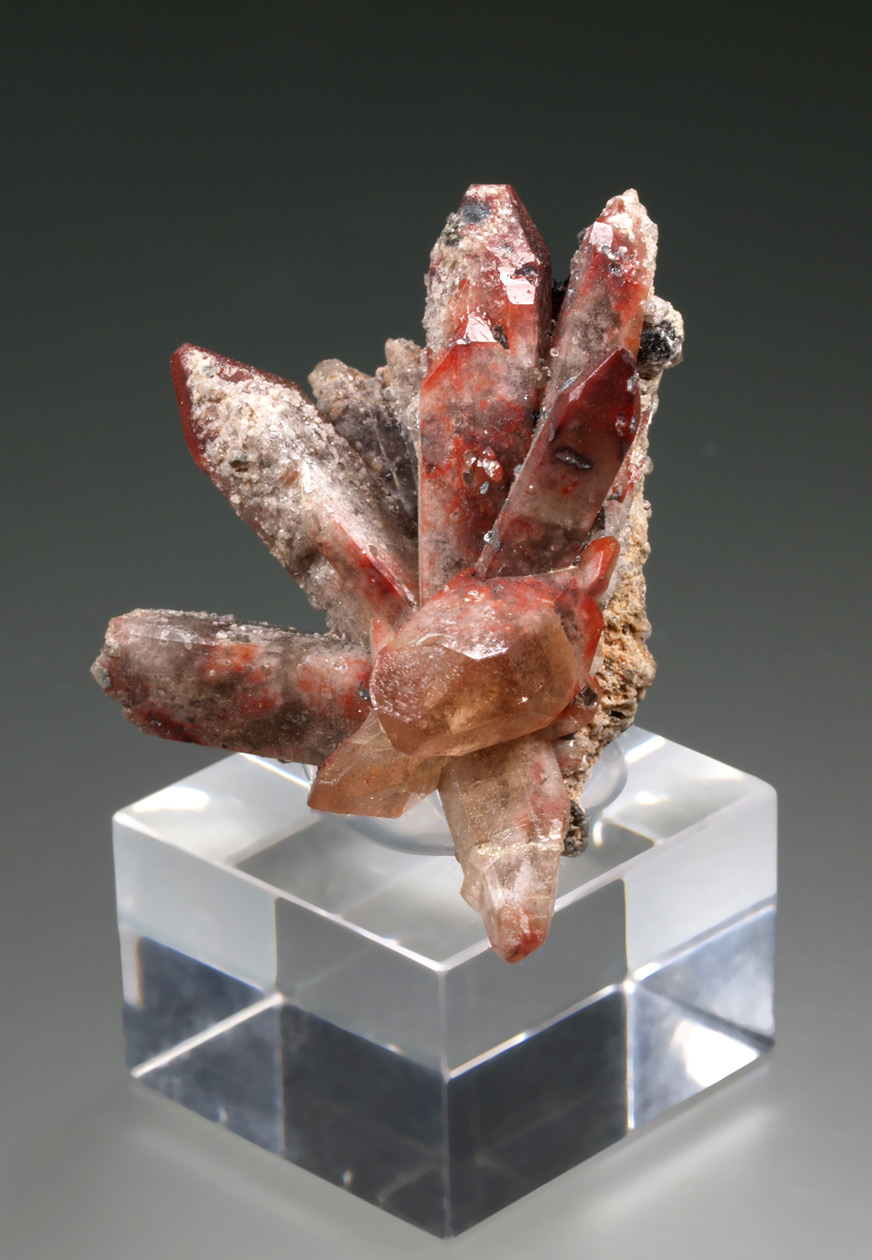
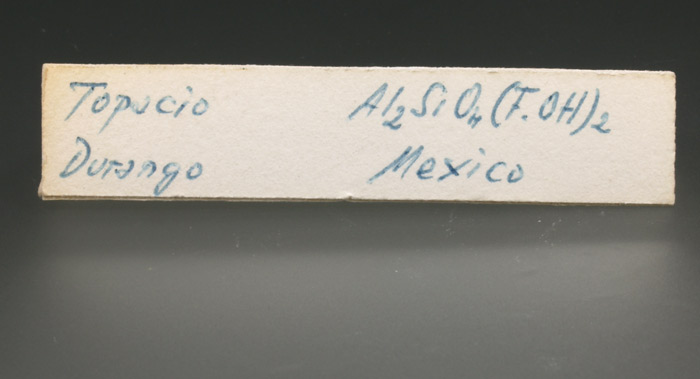
Group of topaz crystals of good size, combining vertical prisms with dipyramidal faces, and small pinacoidal forms. Between transparent to translucent, with colour zoning between the core and the terminal faces. They are on a matrix of volcanic rock with growths of opal.
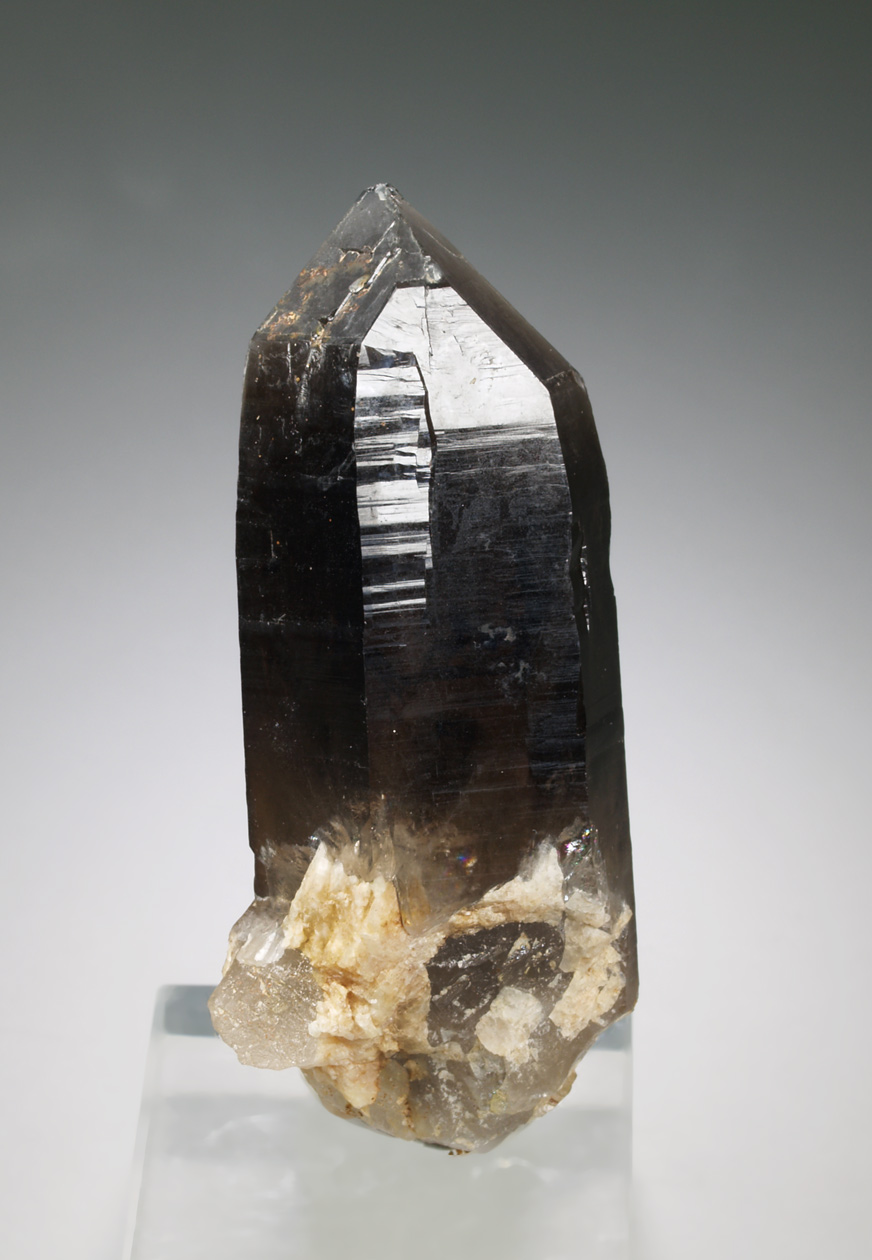
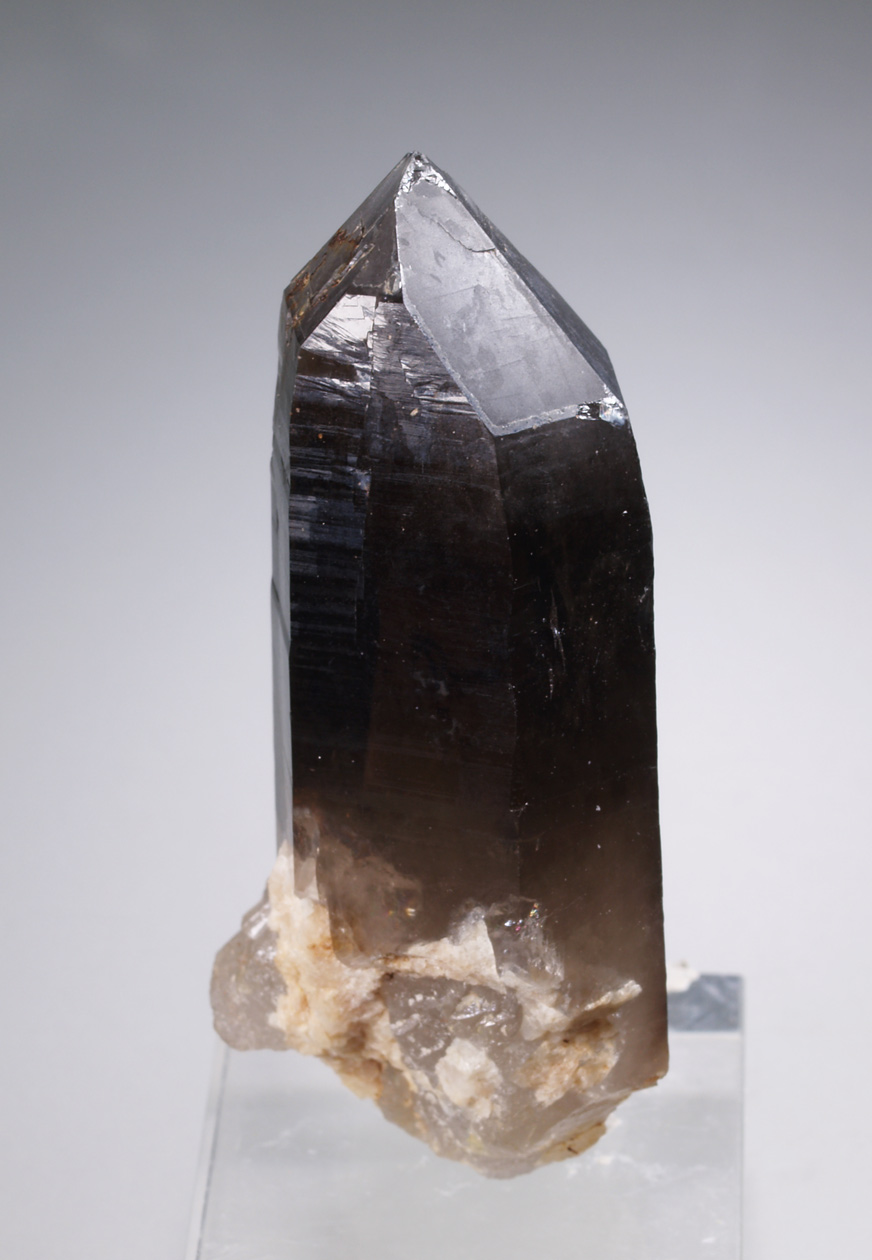
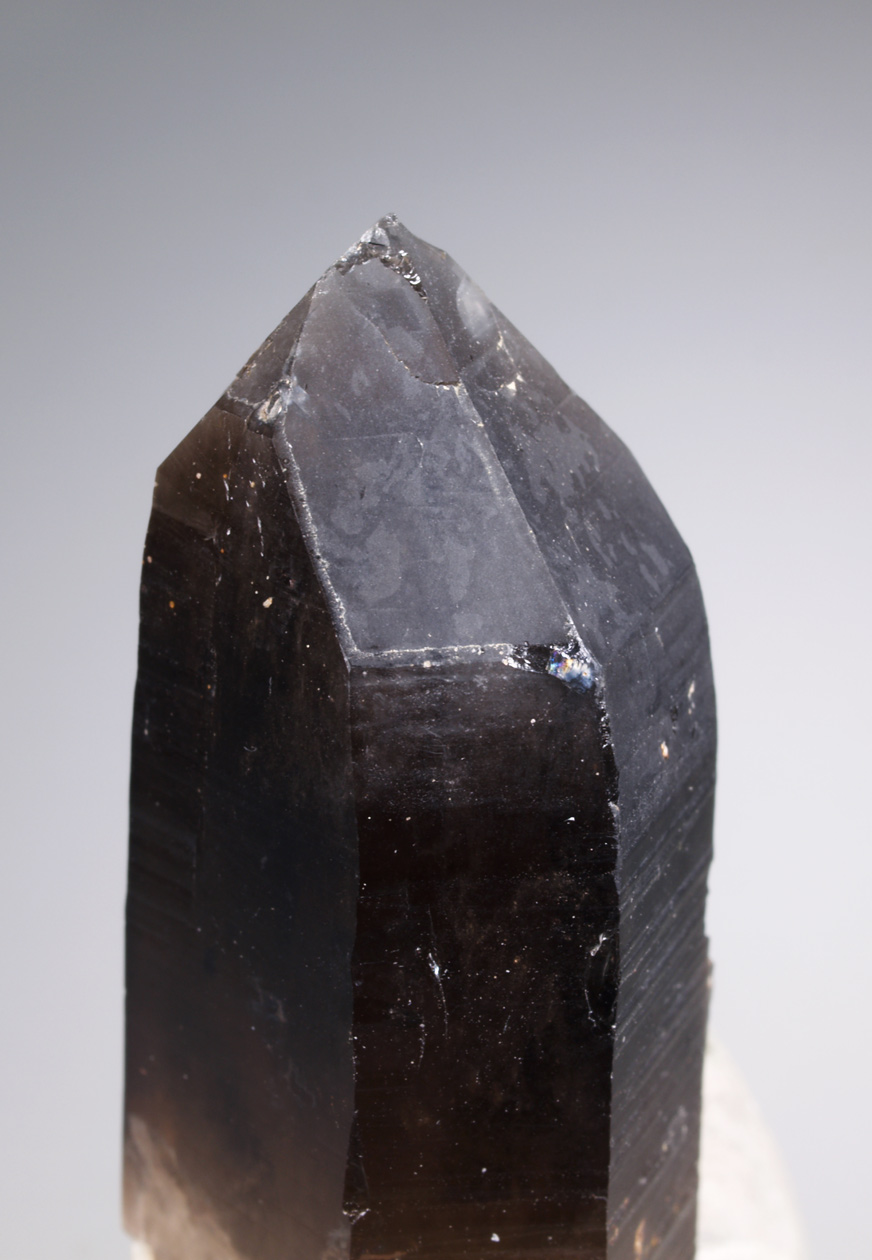
Smoky quartz crystal, good size, with defined faces and edges. It presents small nicks without affecting its aesthetics. Smoked tone, very uniform and with transparence. It comes from the formed collection Manchion (Barcelona) and in the attached information indicates that it was collected in the Montseny massif, which makes it interesting since there are not many specimens in collections from this mountains. With minor feldspar matrix.
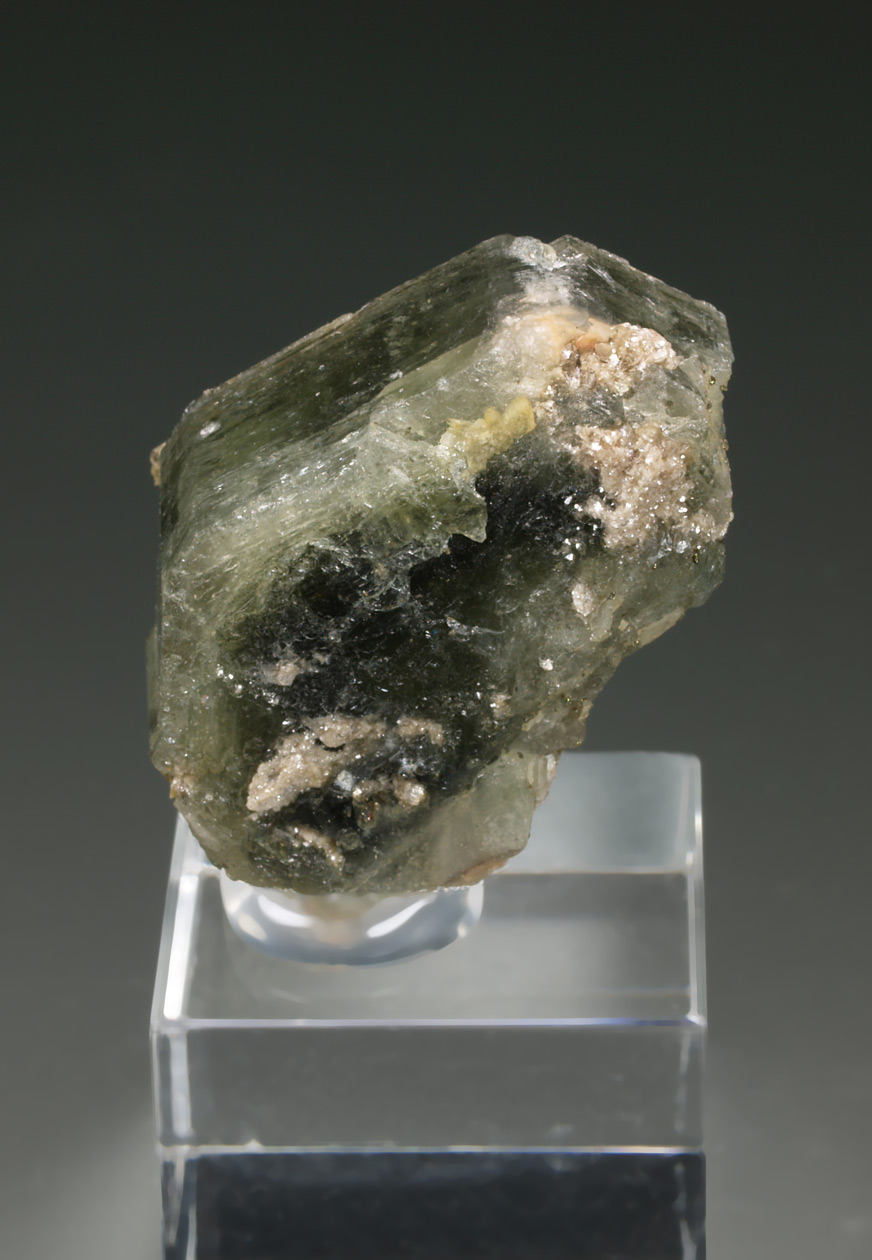
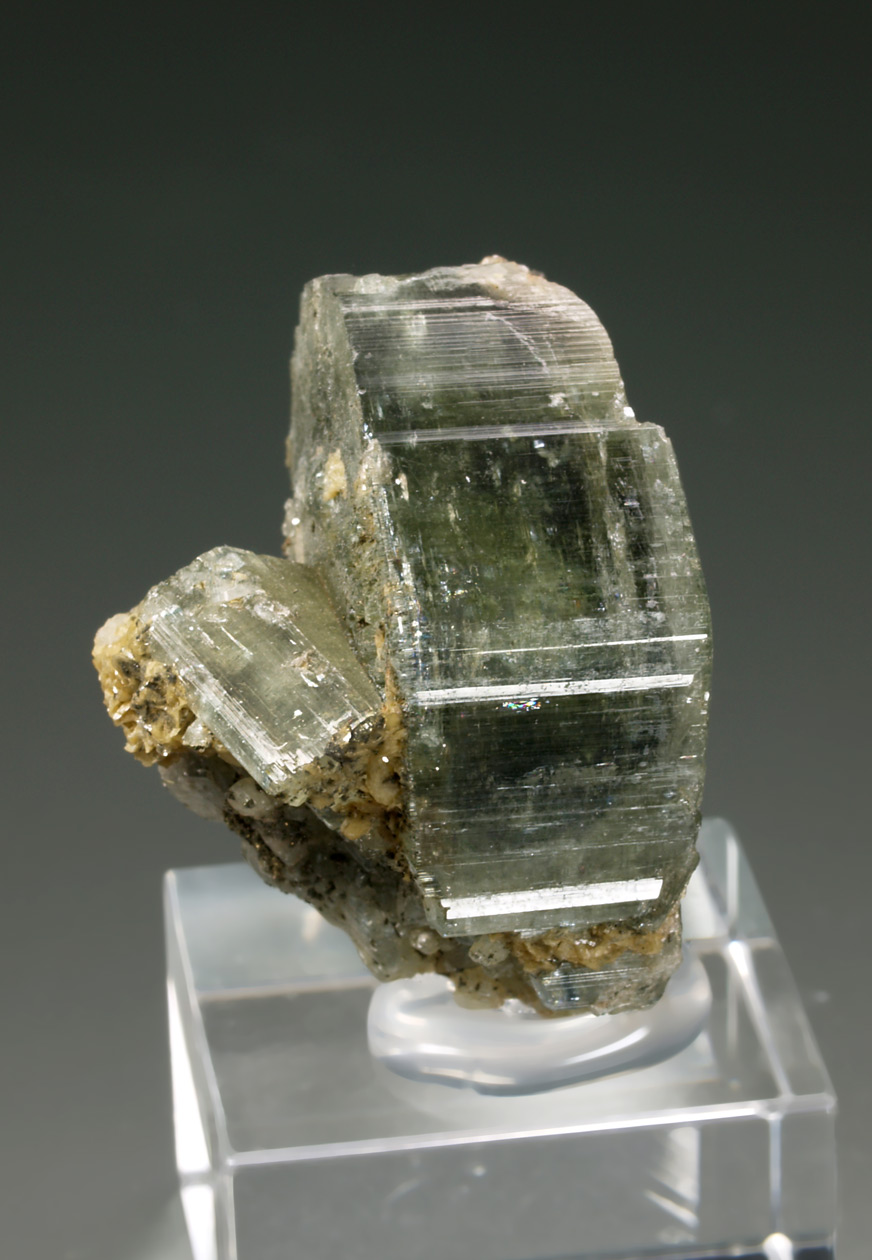
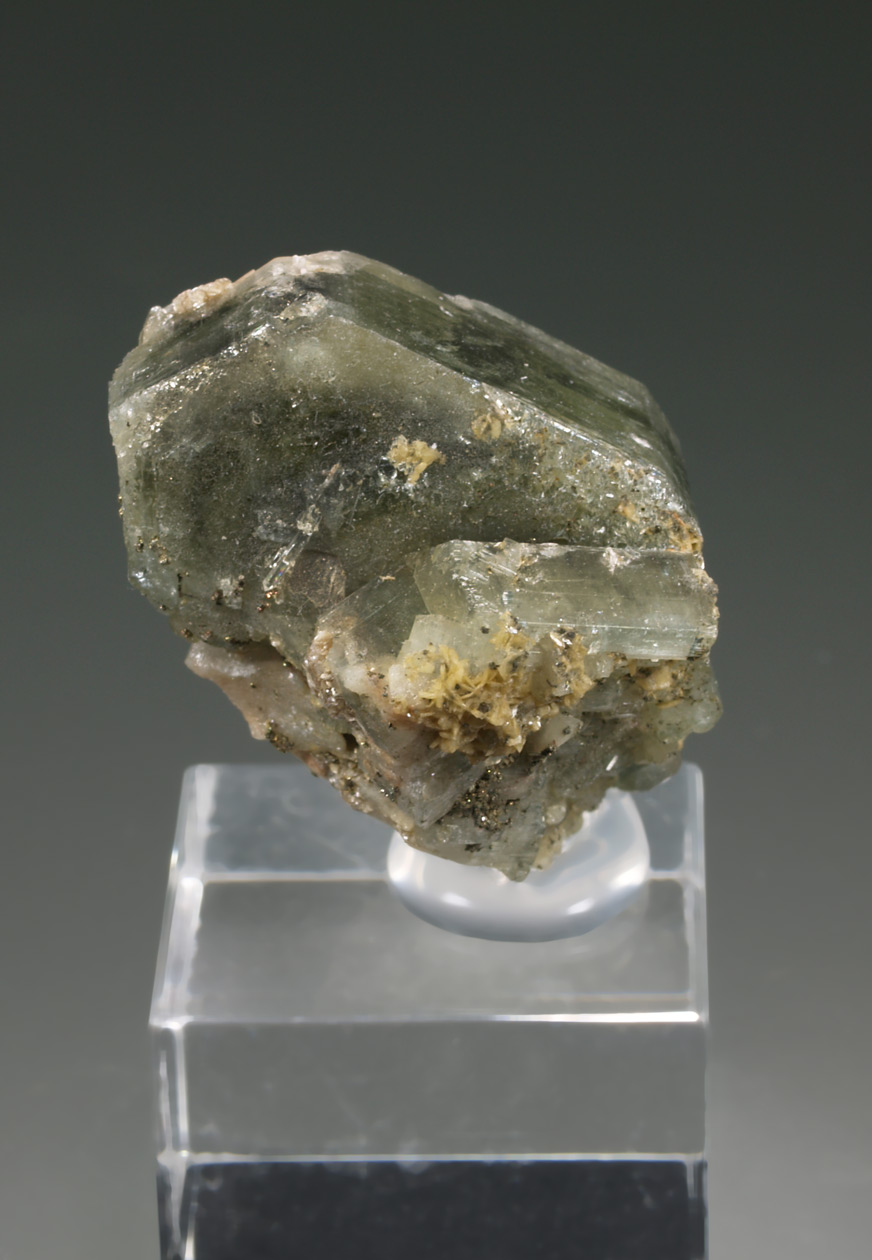
Very sharp hexagonal fluorapatite crystal, with visible colour zoning, more intense in the core area and clearer in edges. Bright and defined, with another doubly terminated smaller crystal on one of the pinacoidal faces. It is accompanied by muscovite.
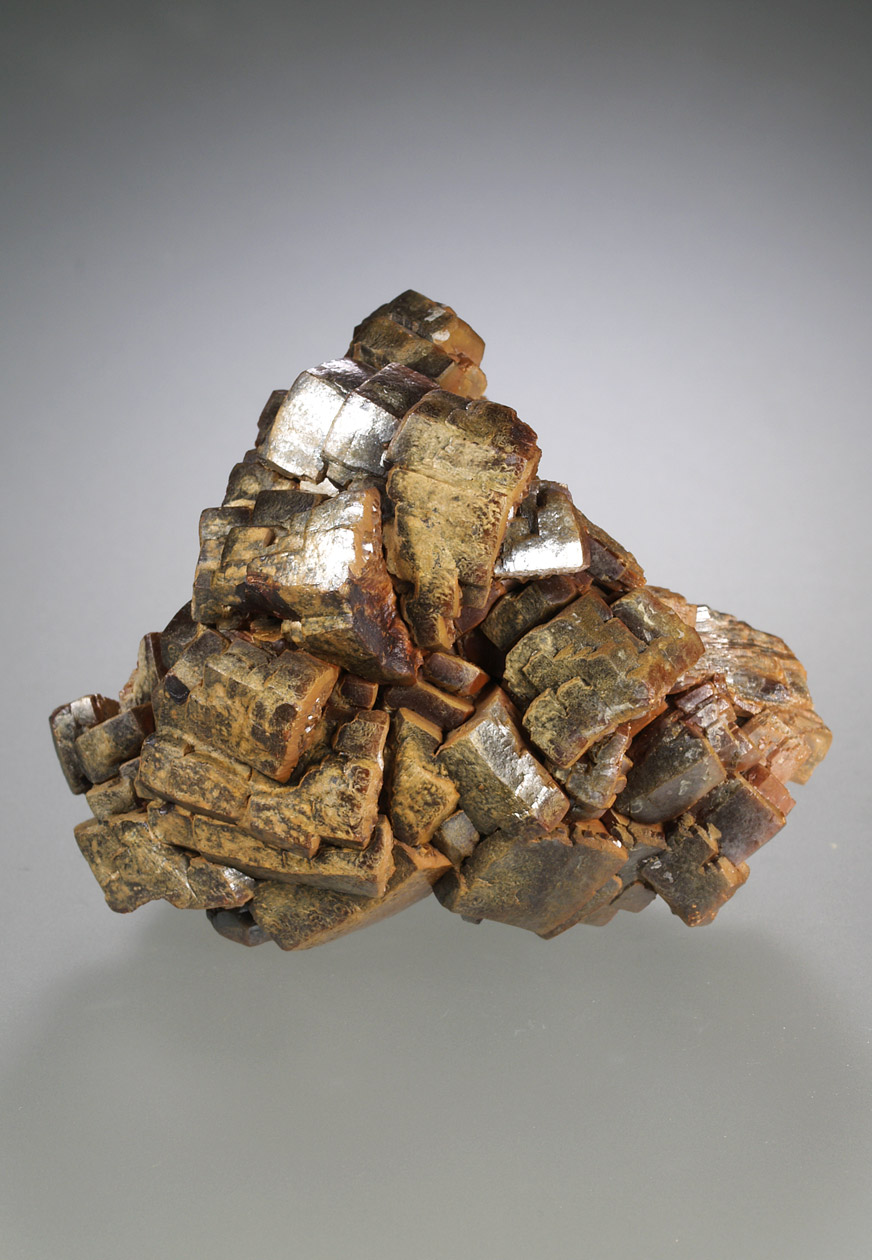
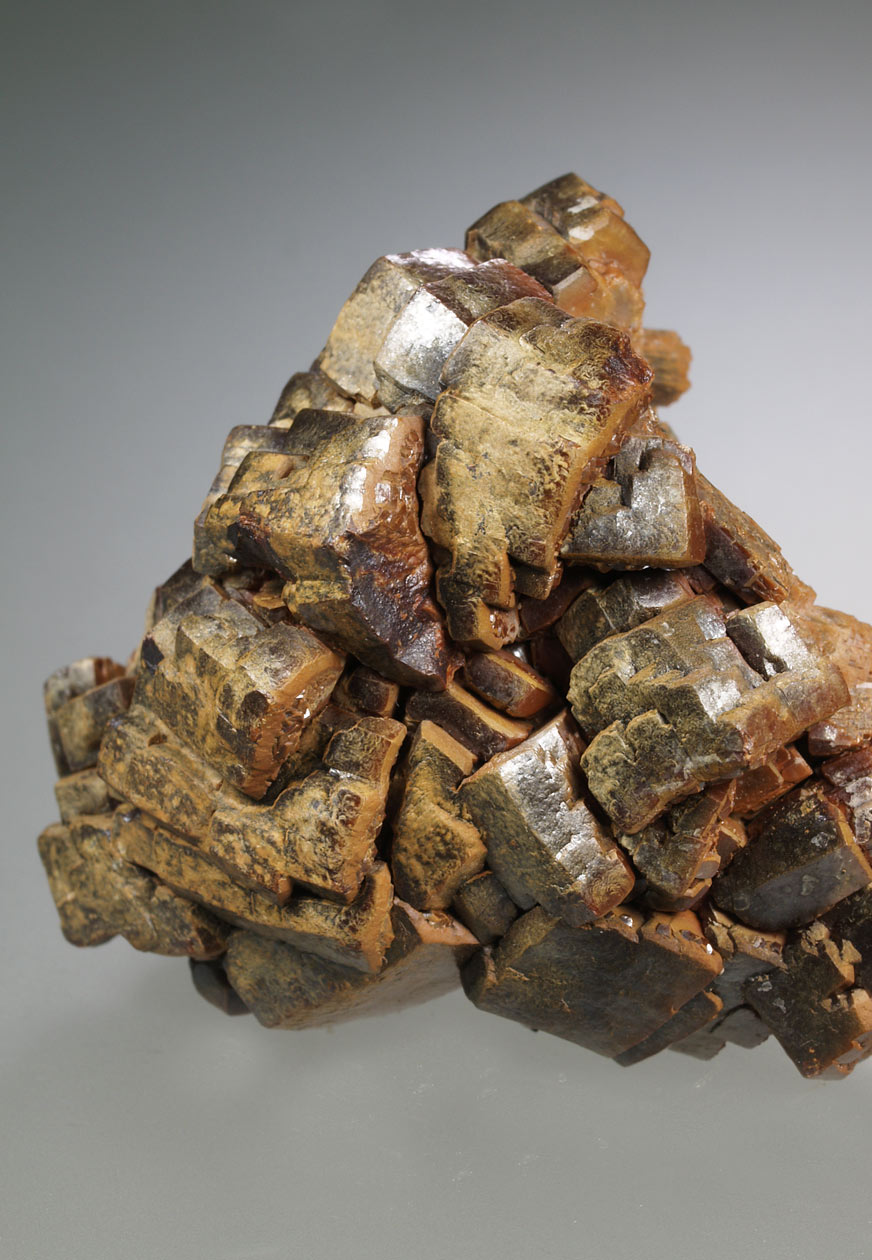
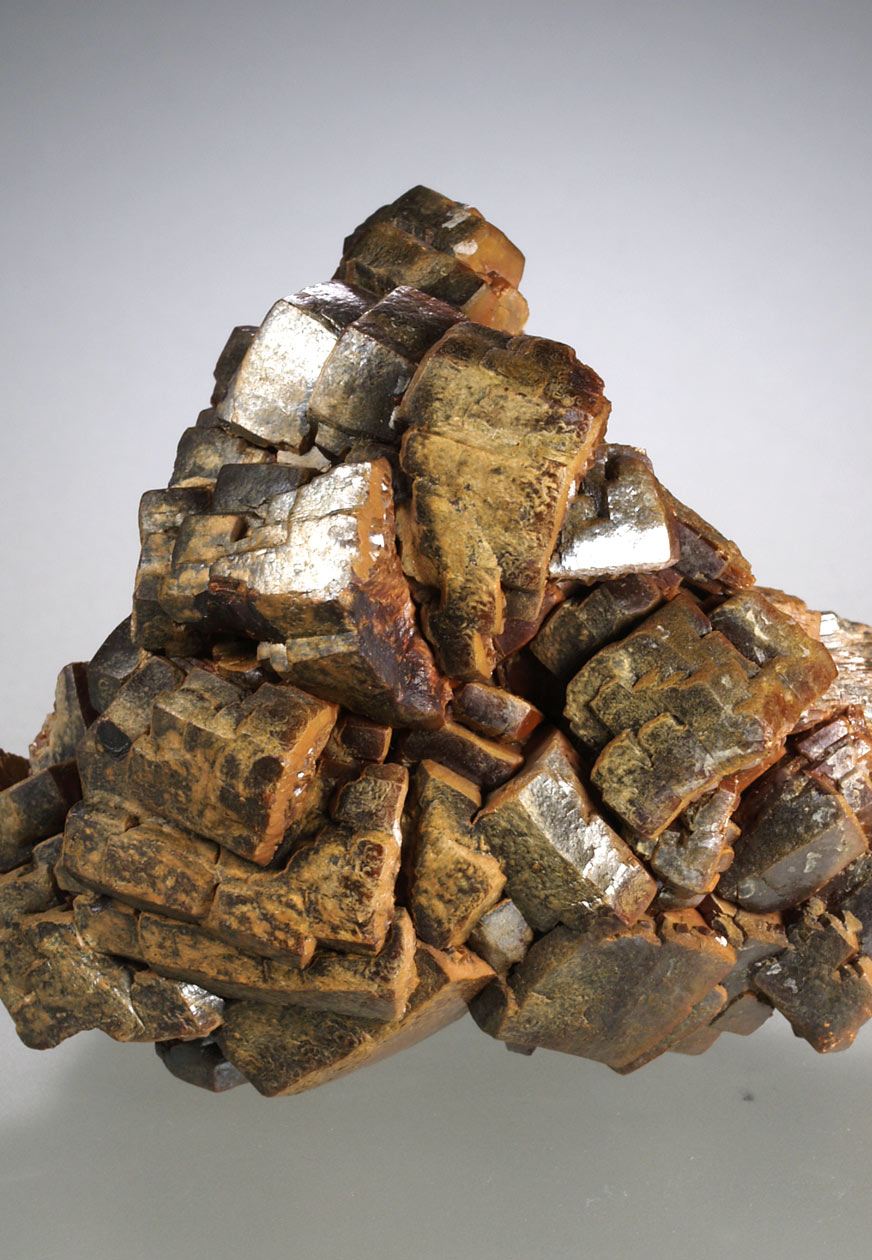
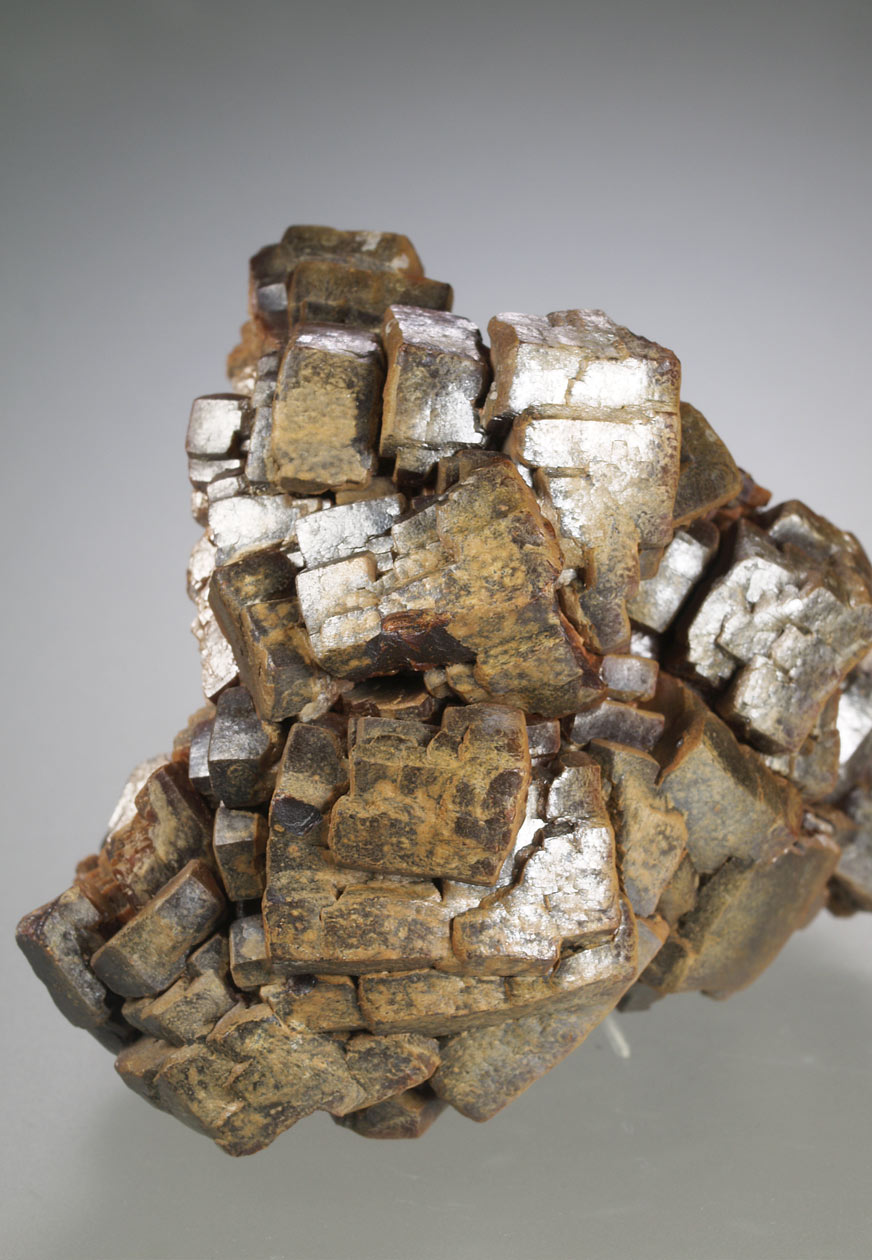
Rich aggregate of arsenatian vanadinite crystals "endlichite", with good-sized crystals, interpenetrated, curved faces and edges and good brightness. A Moroccan classic, nowadays it is not easy to find available.
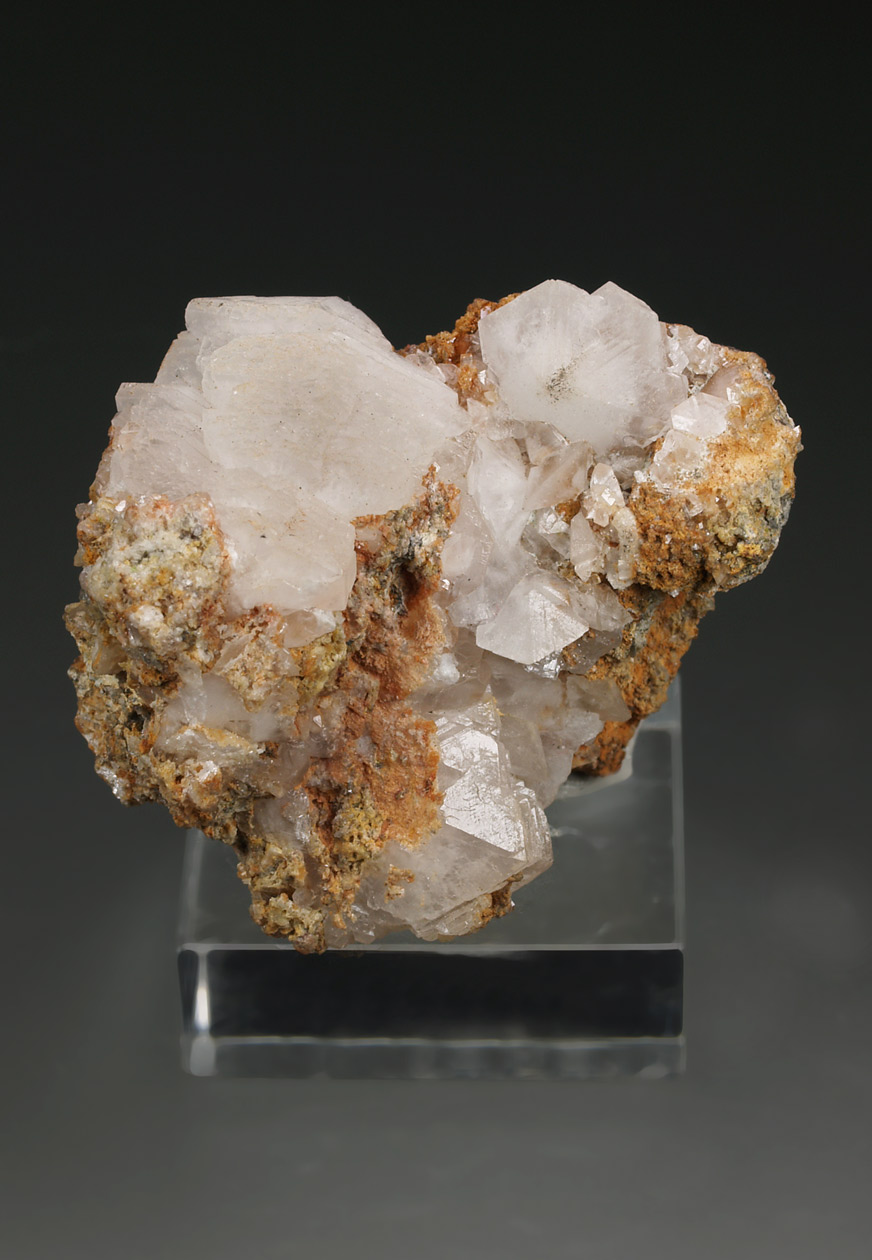
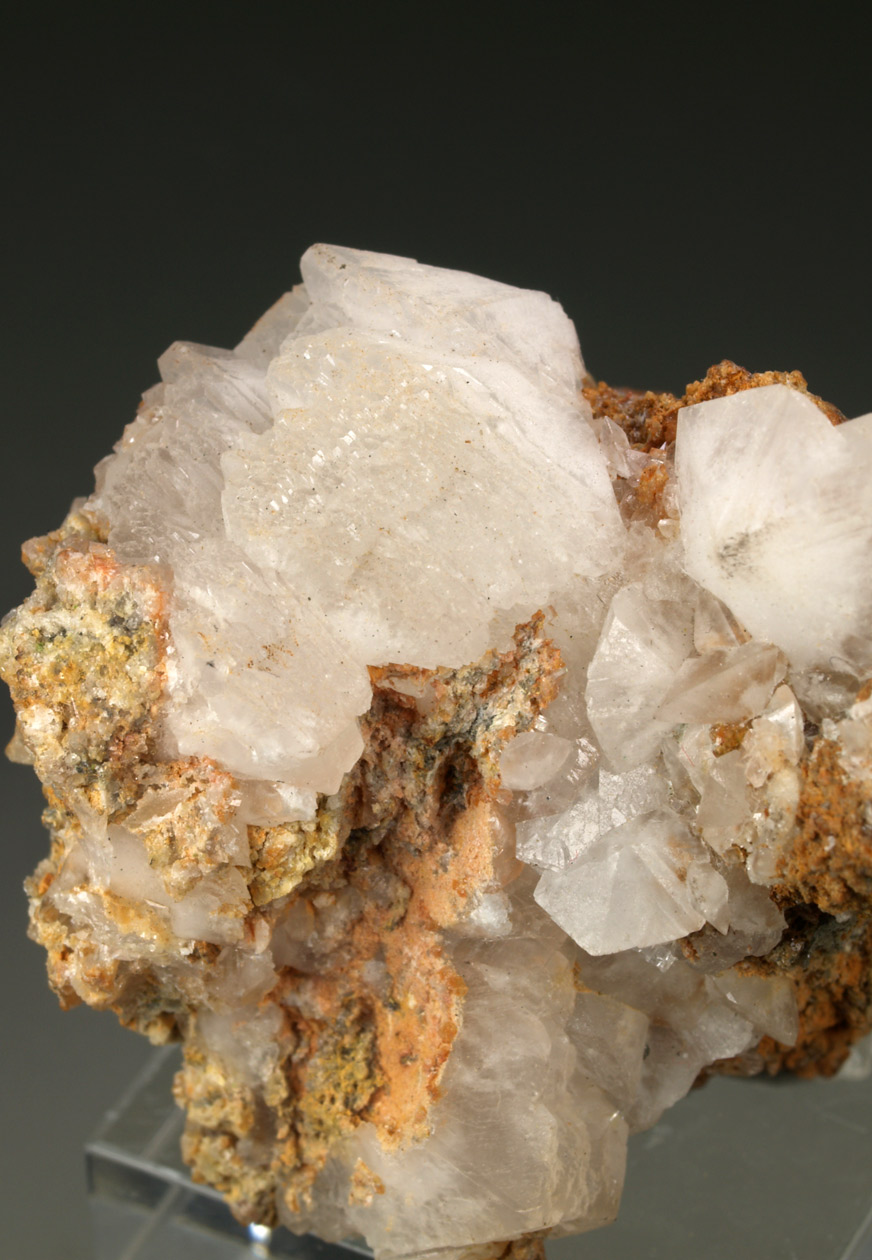
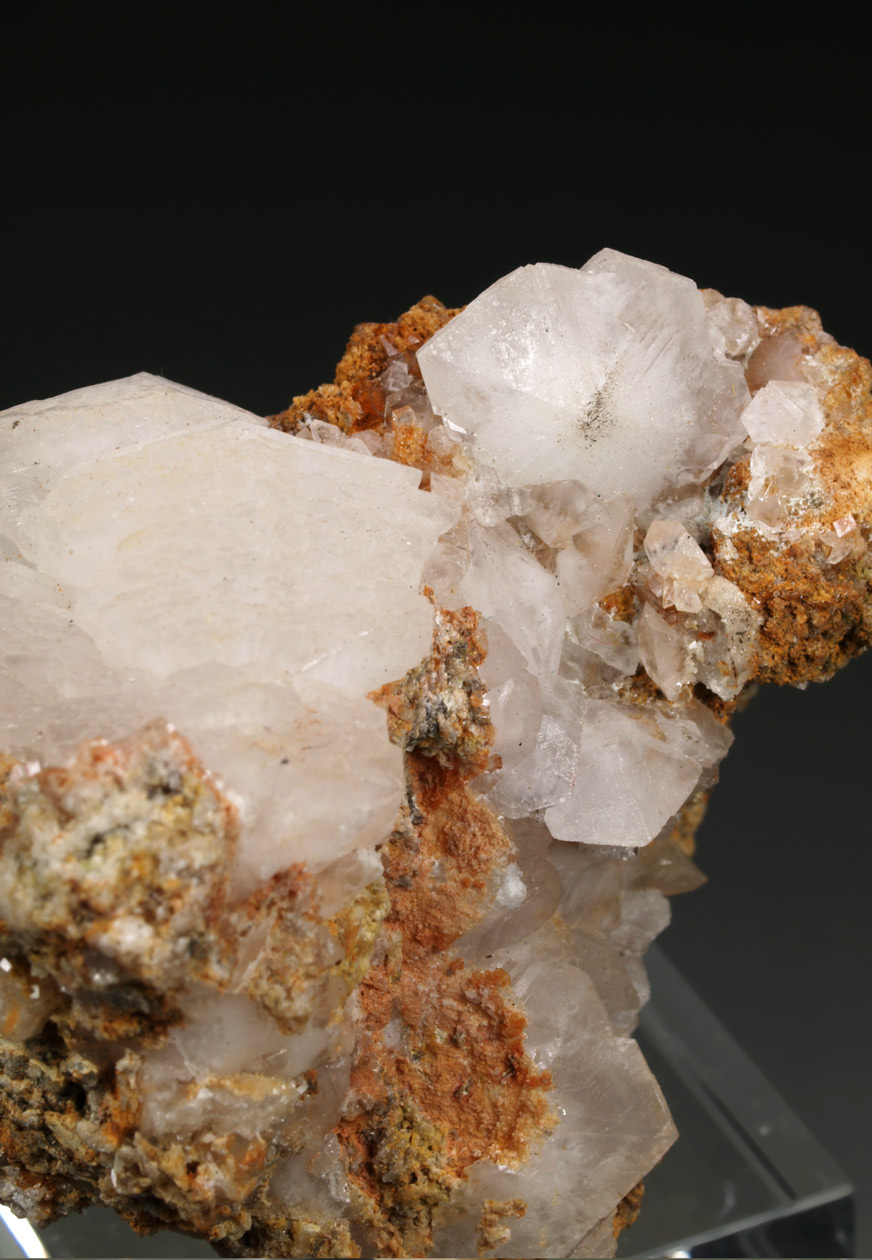
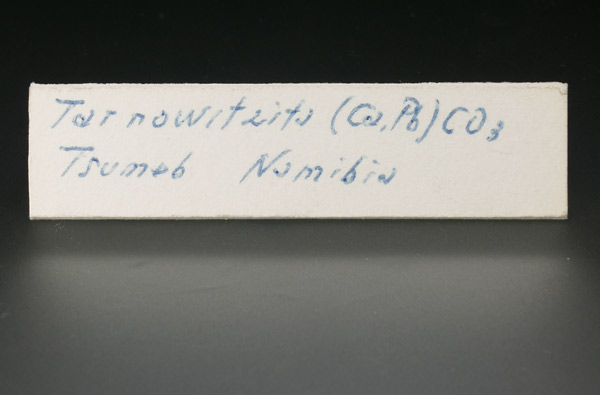
Group of tarnowizite crystals, well defined, some of them interpenetrated. Milky tone and translucent. On a rocky matrix. From this classic locality and from the former Manchion (Barcelona) collection.
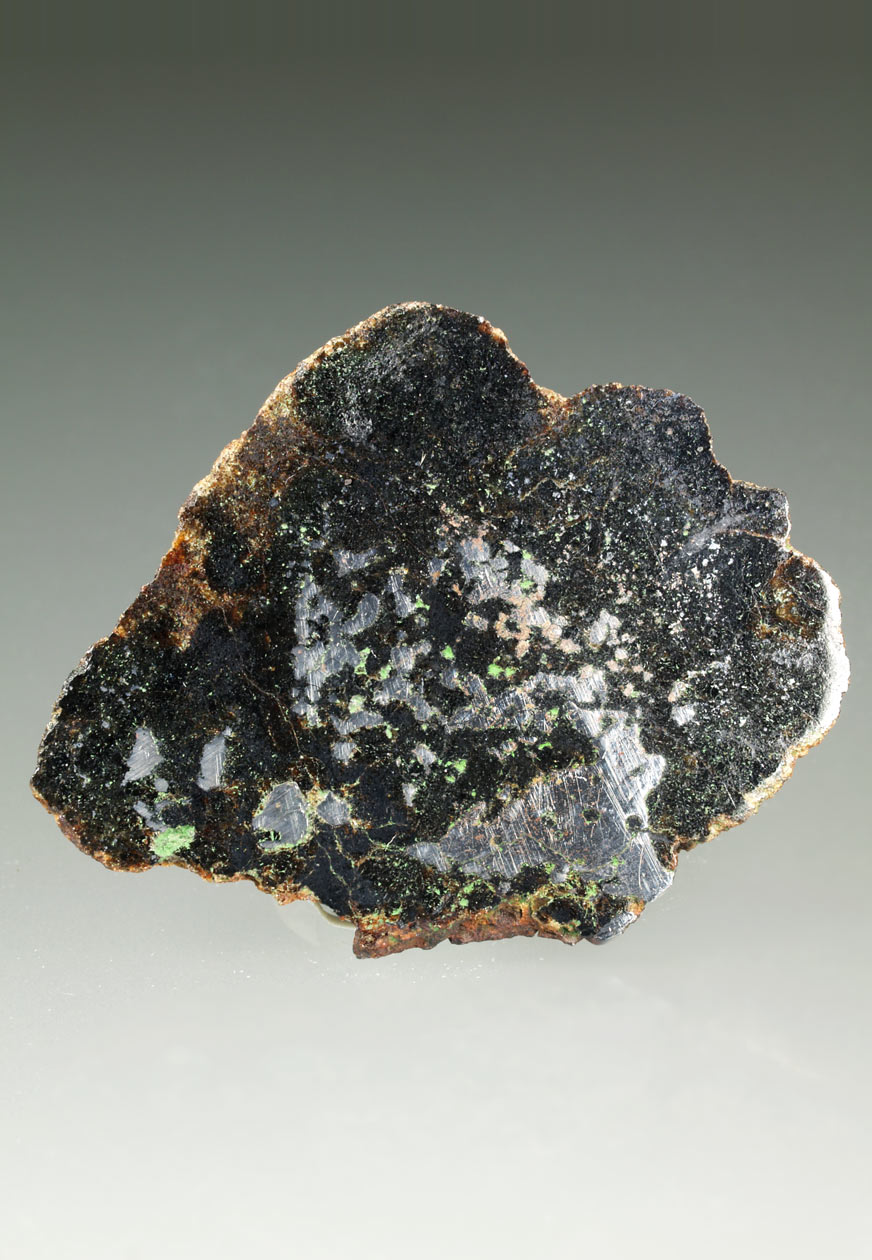
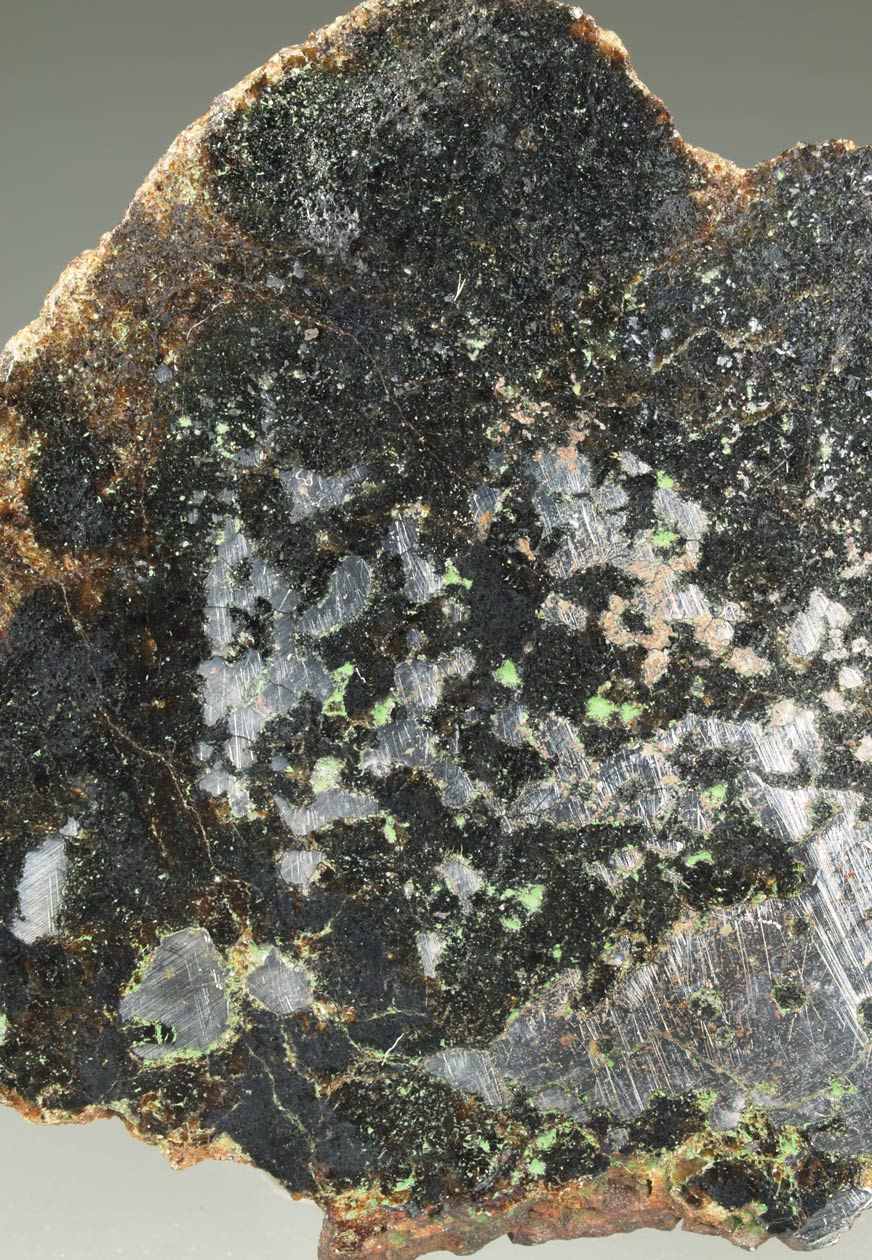
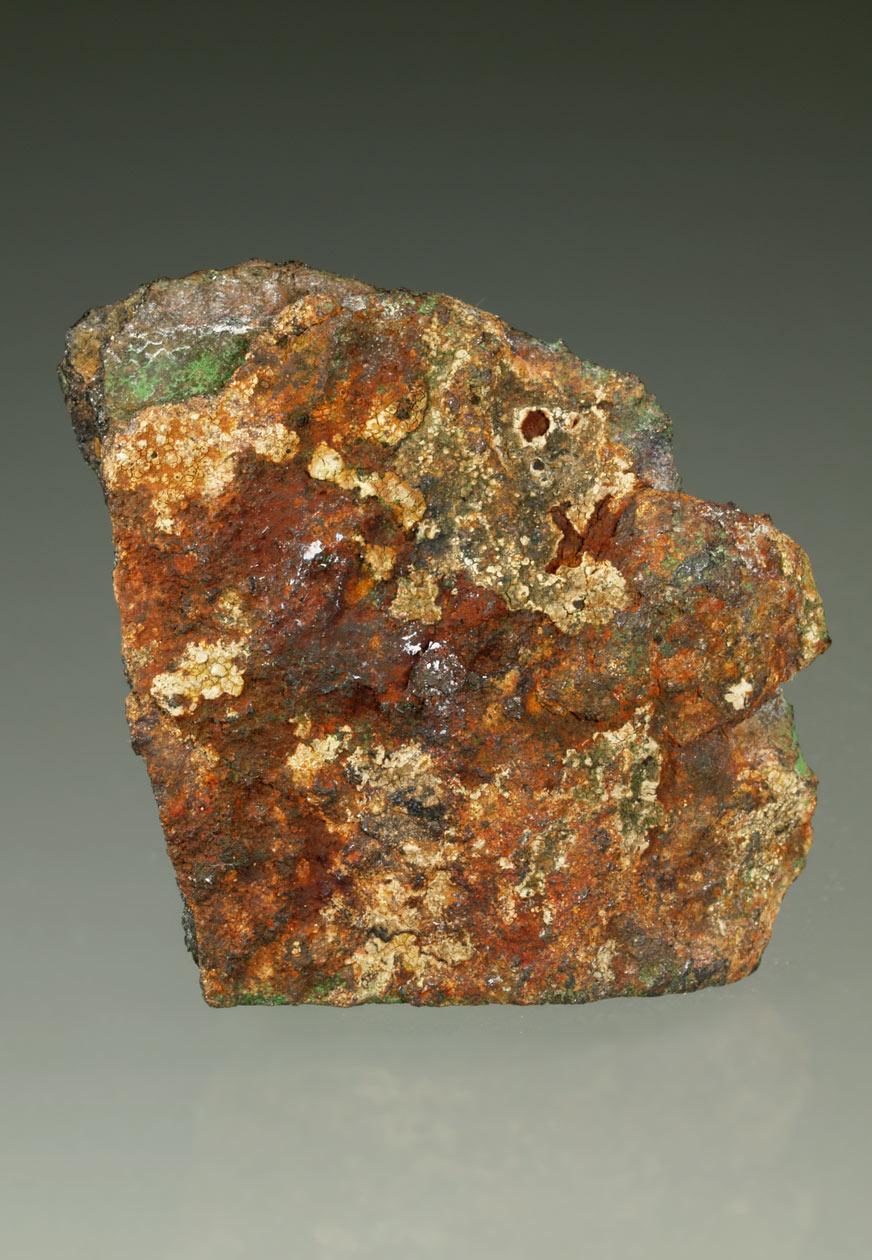
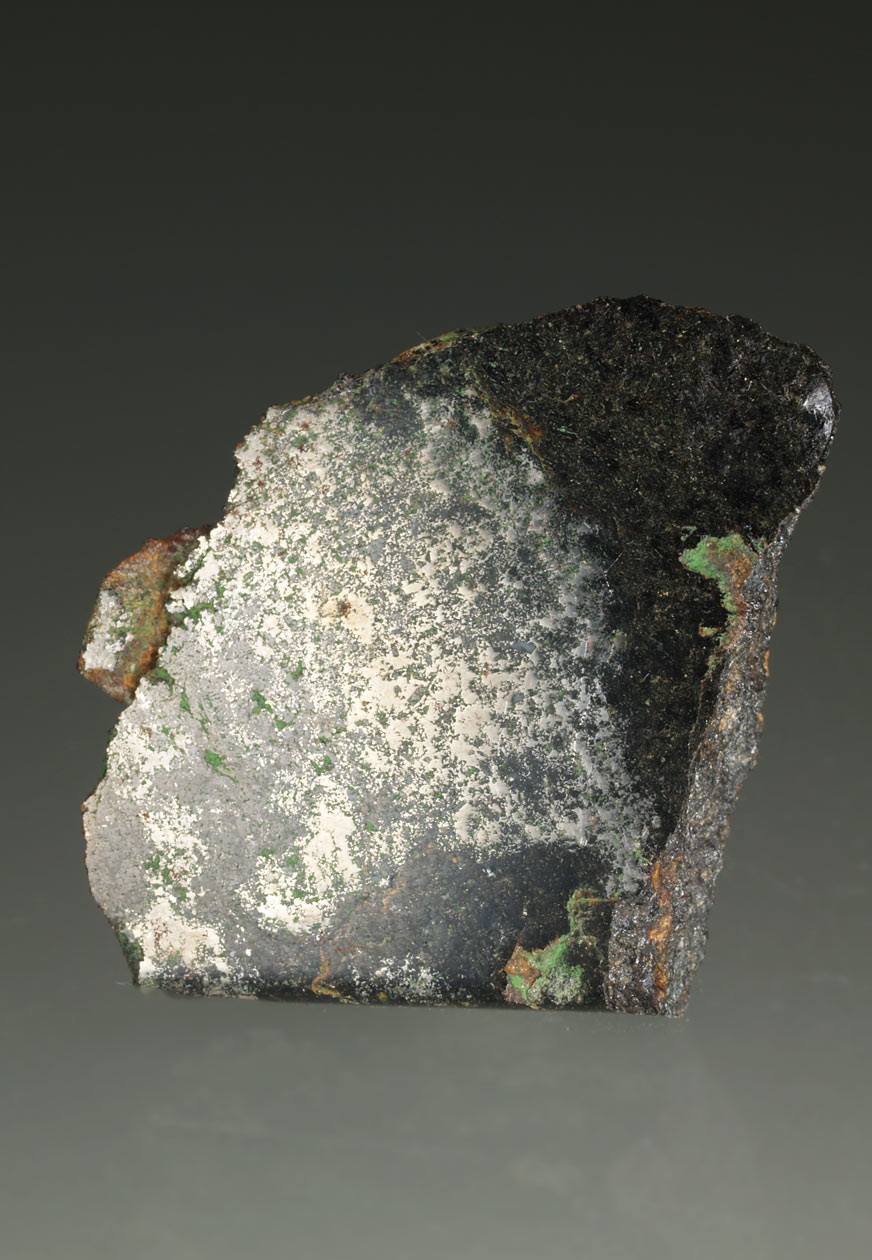
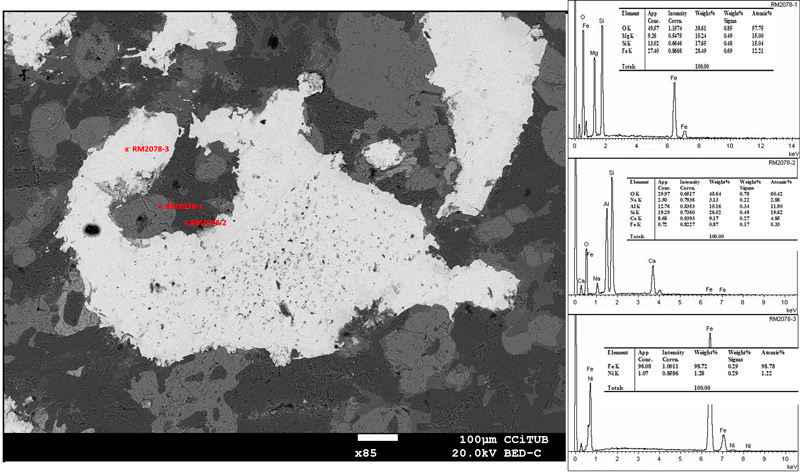
Slab of native iron in mafic matrix. Specimen is tilted so reflections of sunlight make iron stand out from matrix. This iron could be refered to kamacite variety (content in Ni, see the apple green tones). It is accompanied by fayalite-forsterite and labradorite. Probably some cohenite is present in the sample. One side polished, natural the other. Analisys will be send to the buyer.
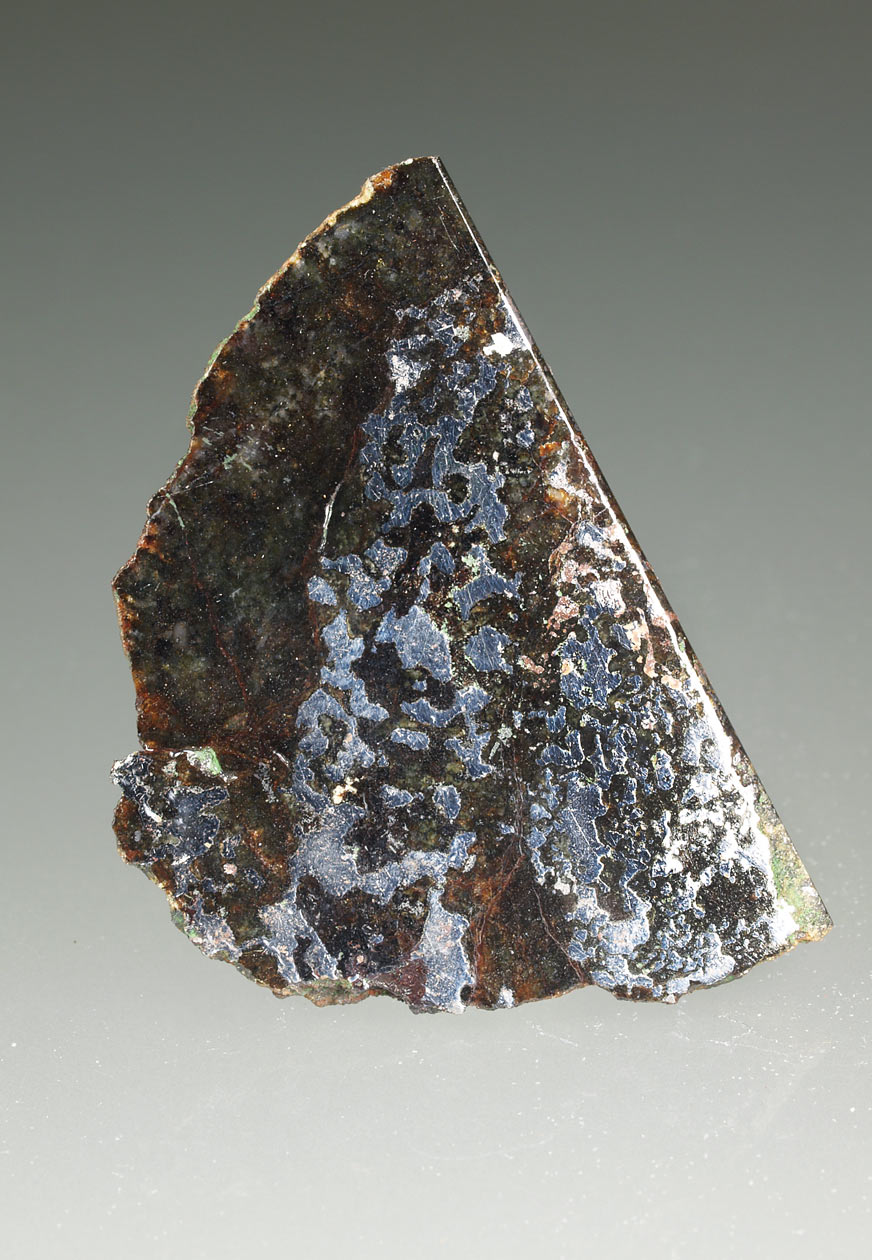
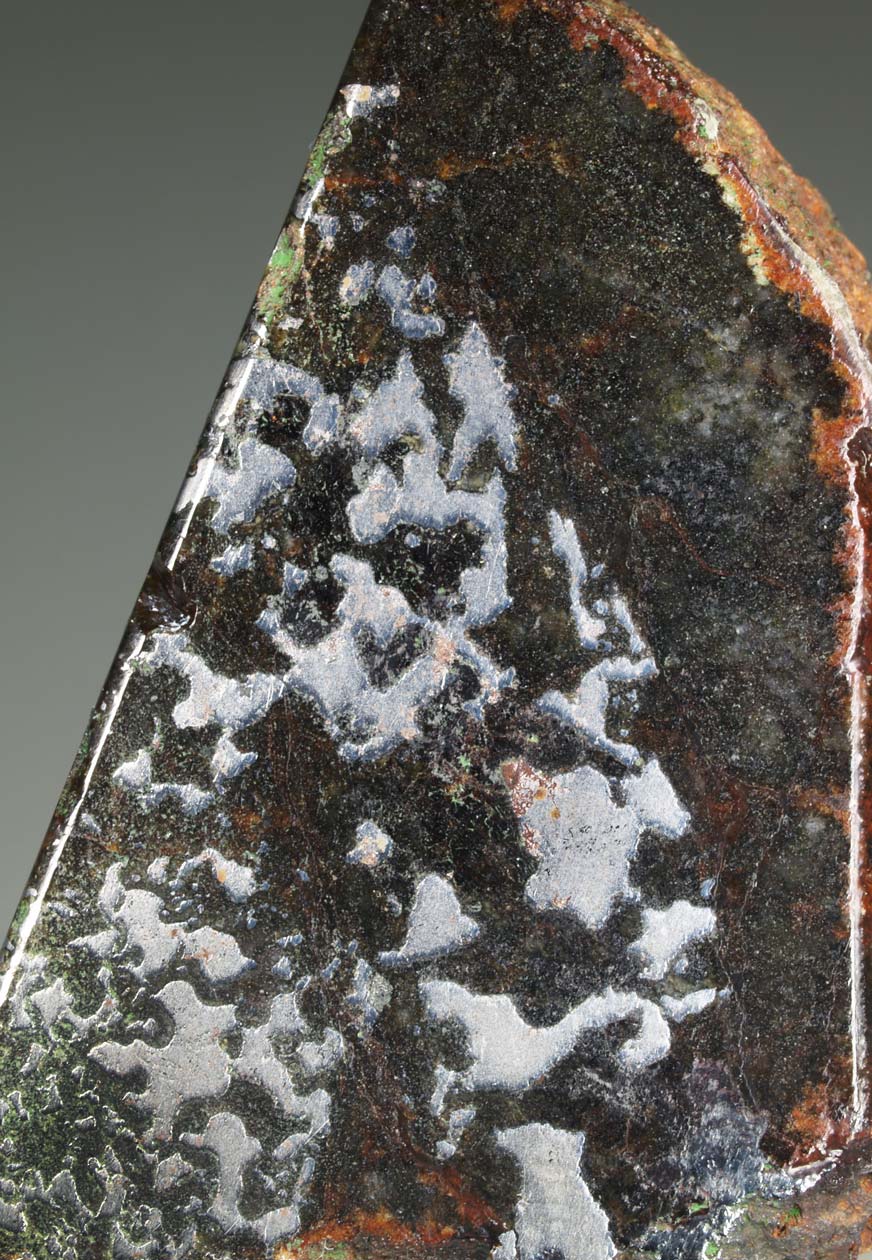
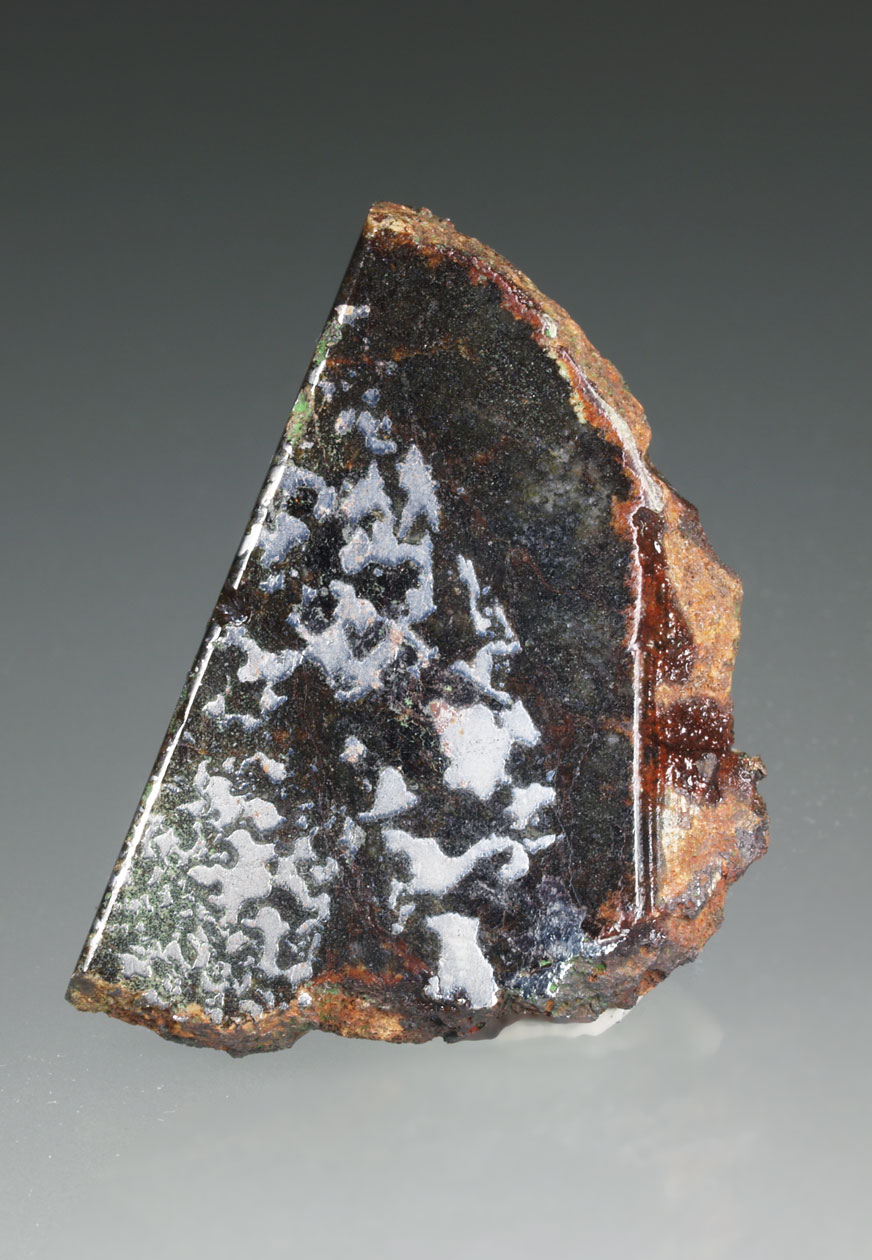
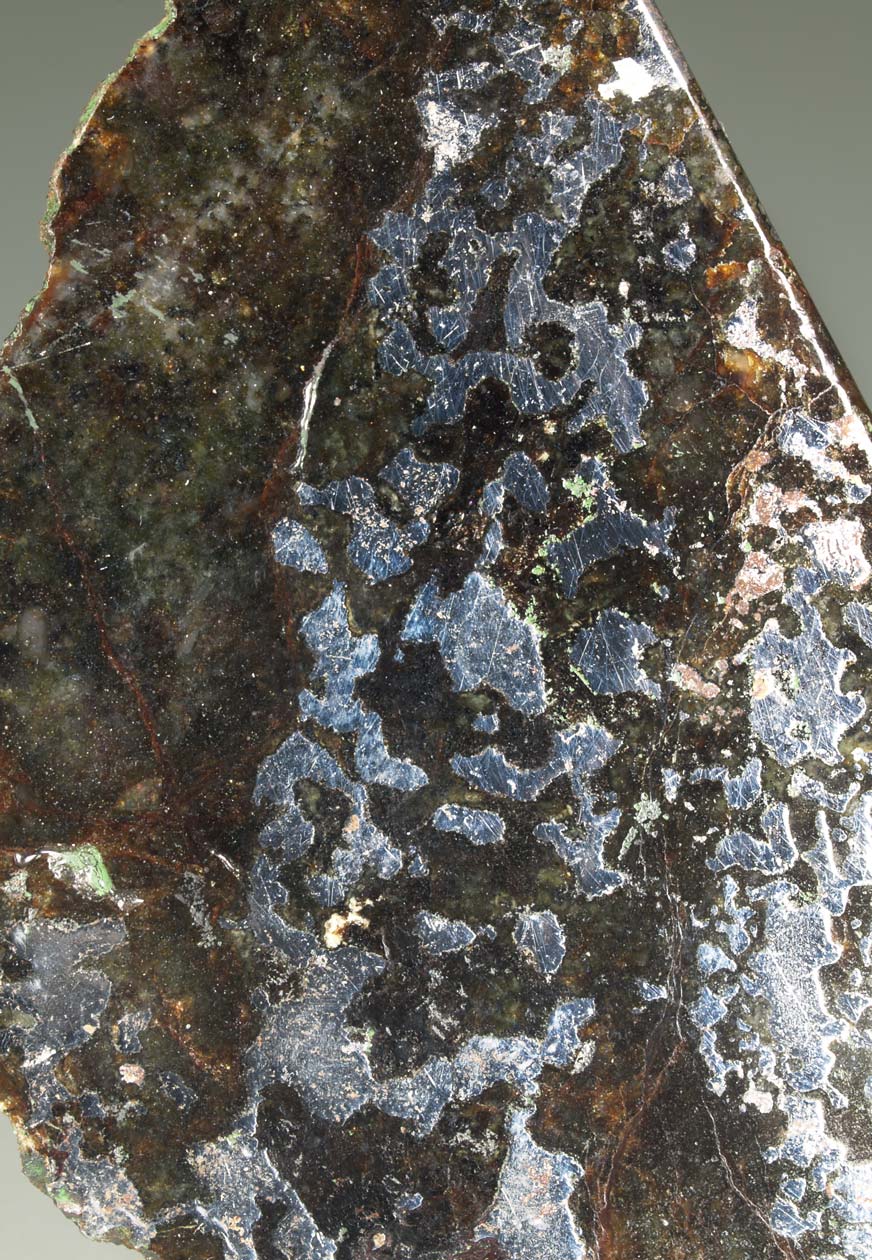
Slab of native iron in mafic matrix. Specimen is tilted so reflections of sunlight make iron stand out from matrix. This iron could be refered to kamacite variety (content in Ni). It is accompanied by fayalite-forsterite and labradorite. Probably some cohenite is present in the sample. Both sides polished showing internal structures. Analisys will be send to the buyer.
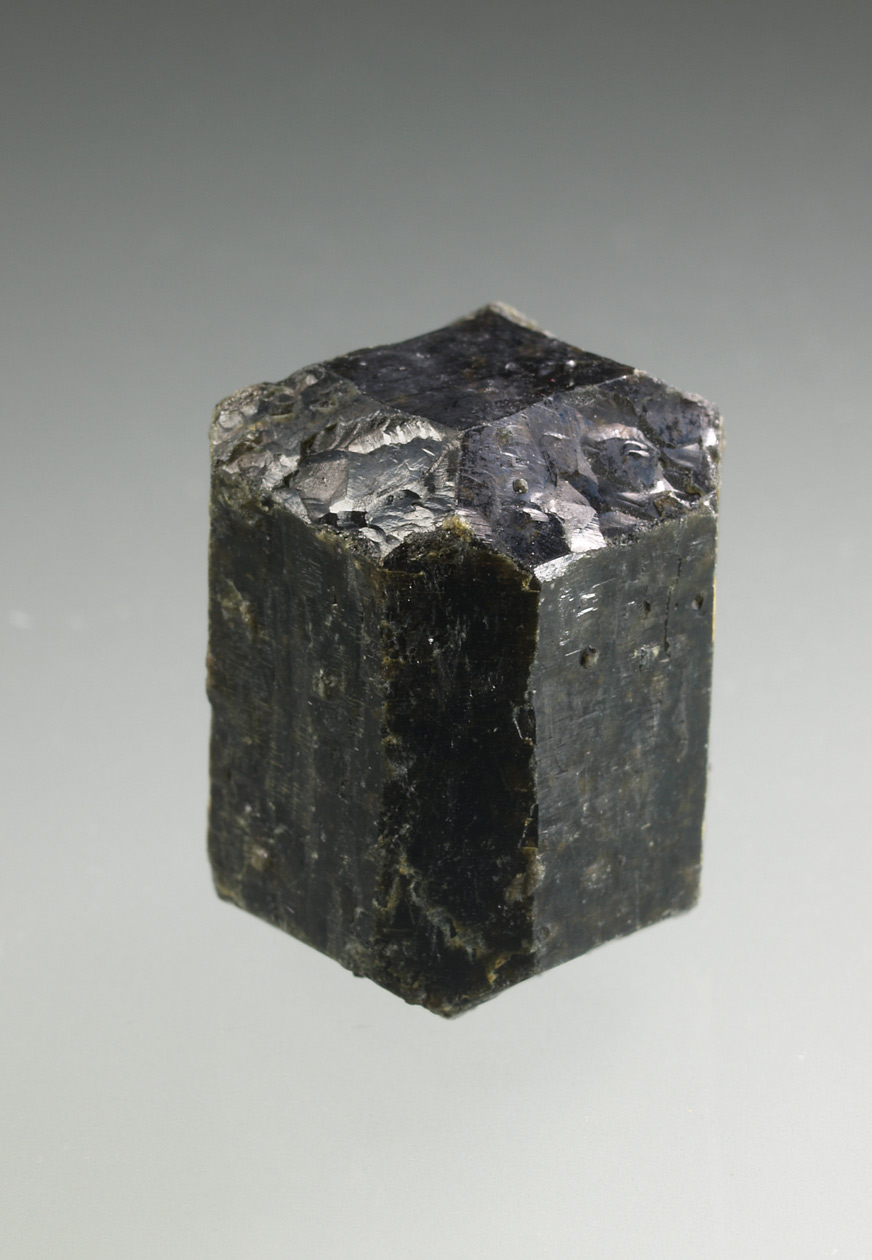
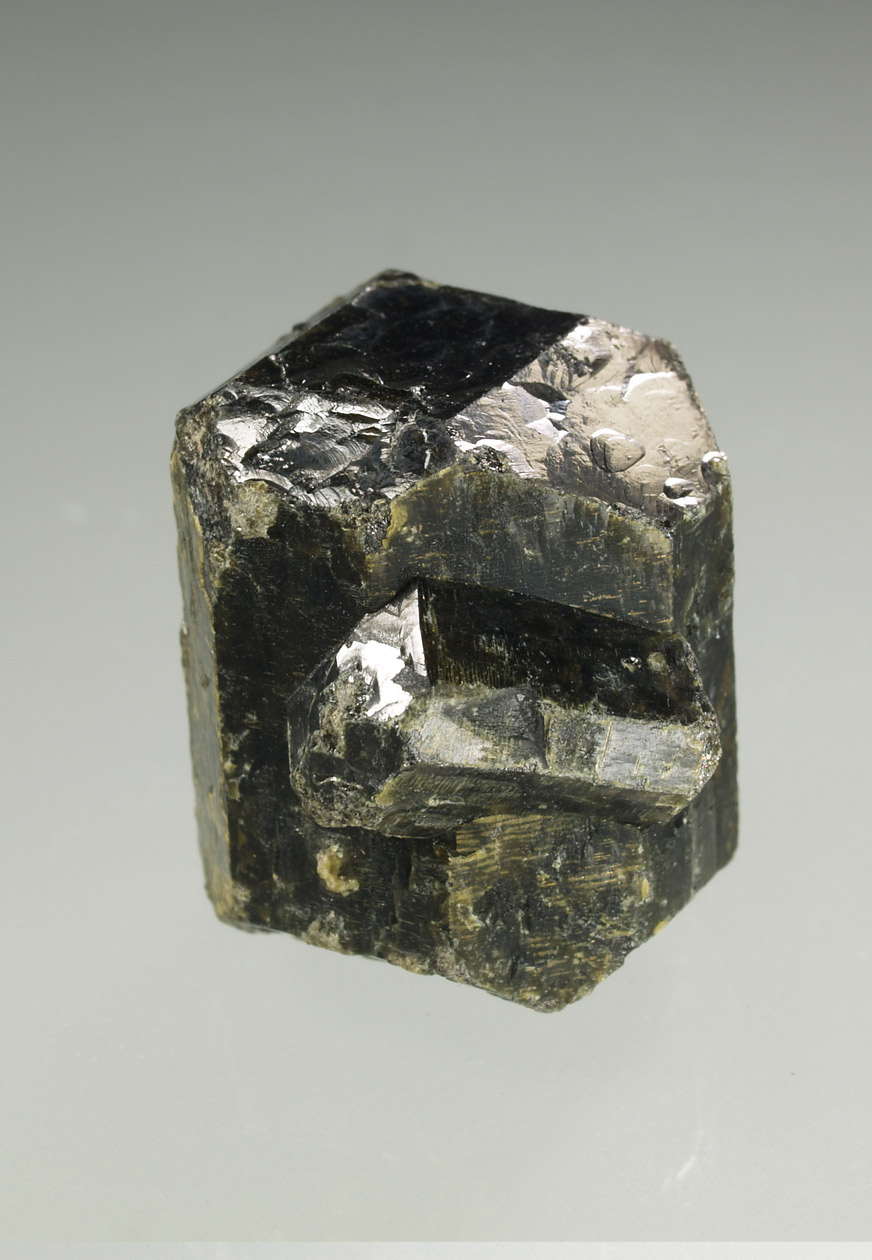
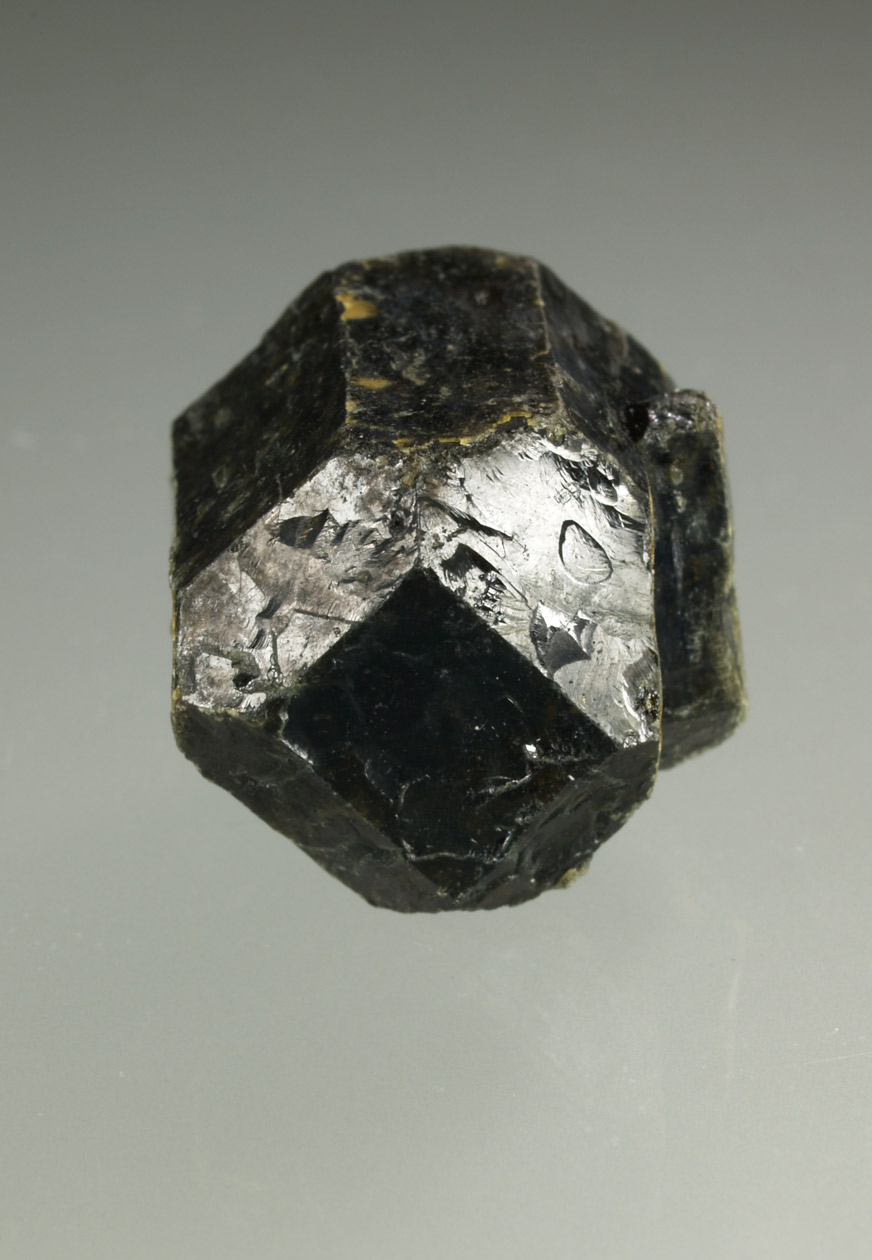
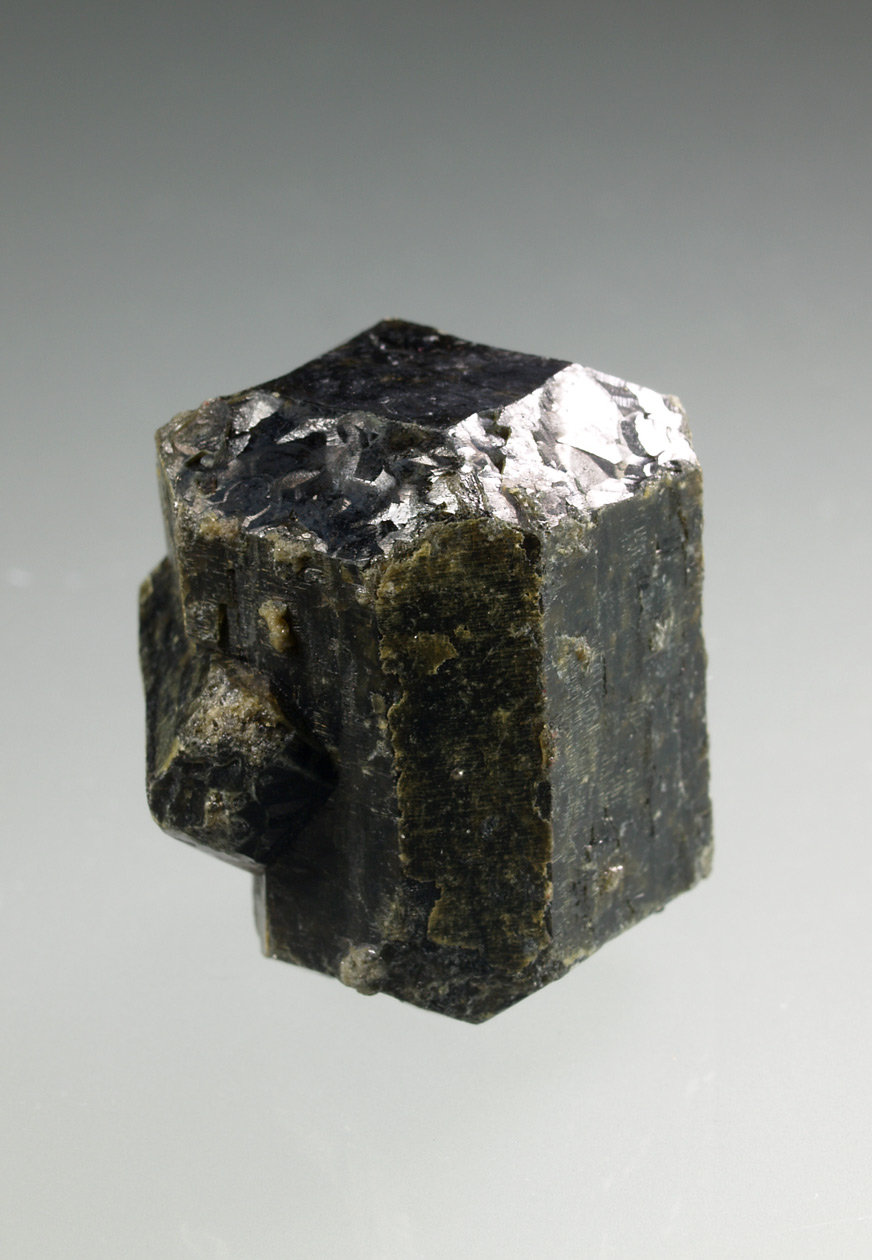
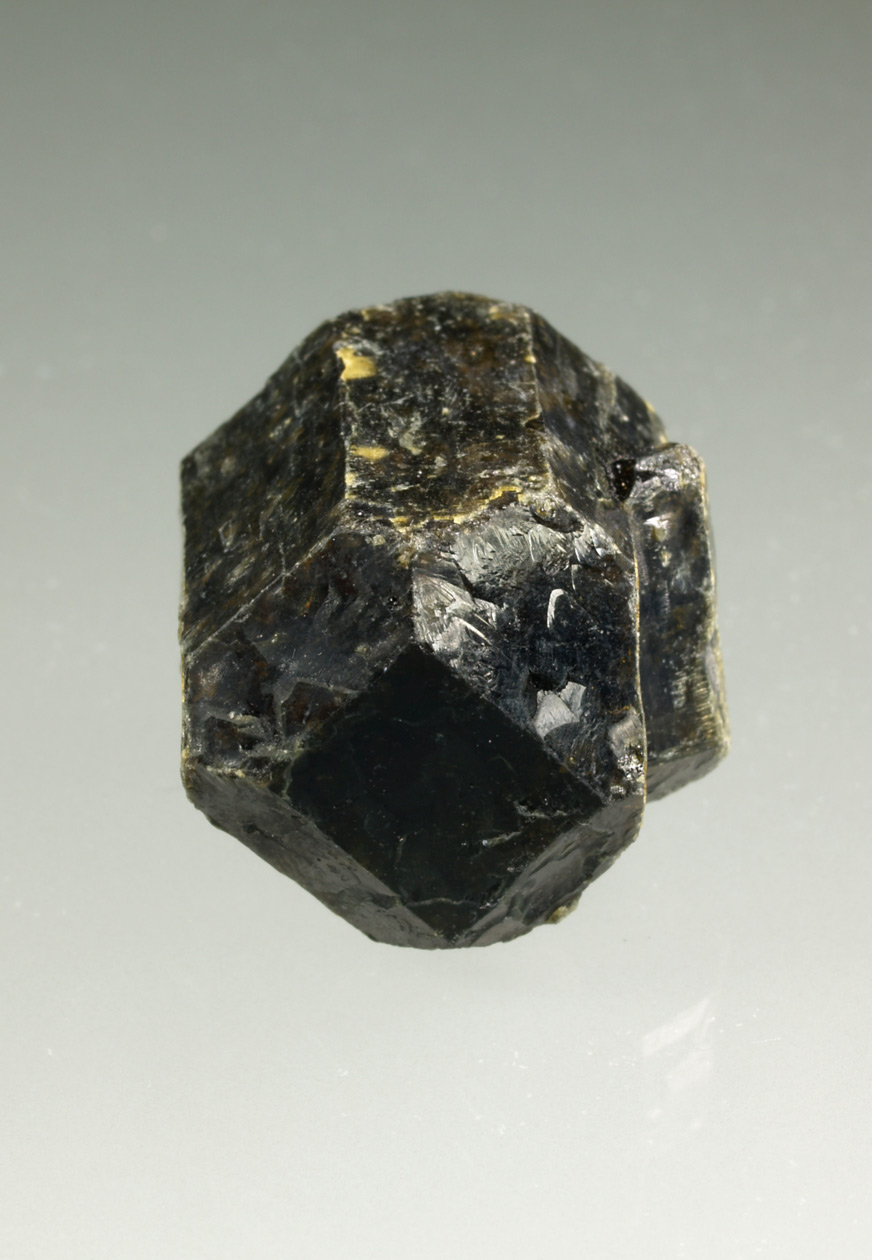
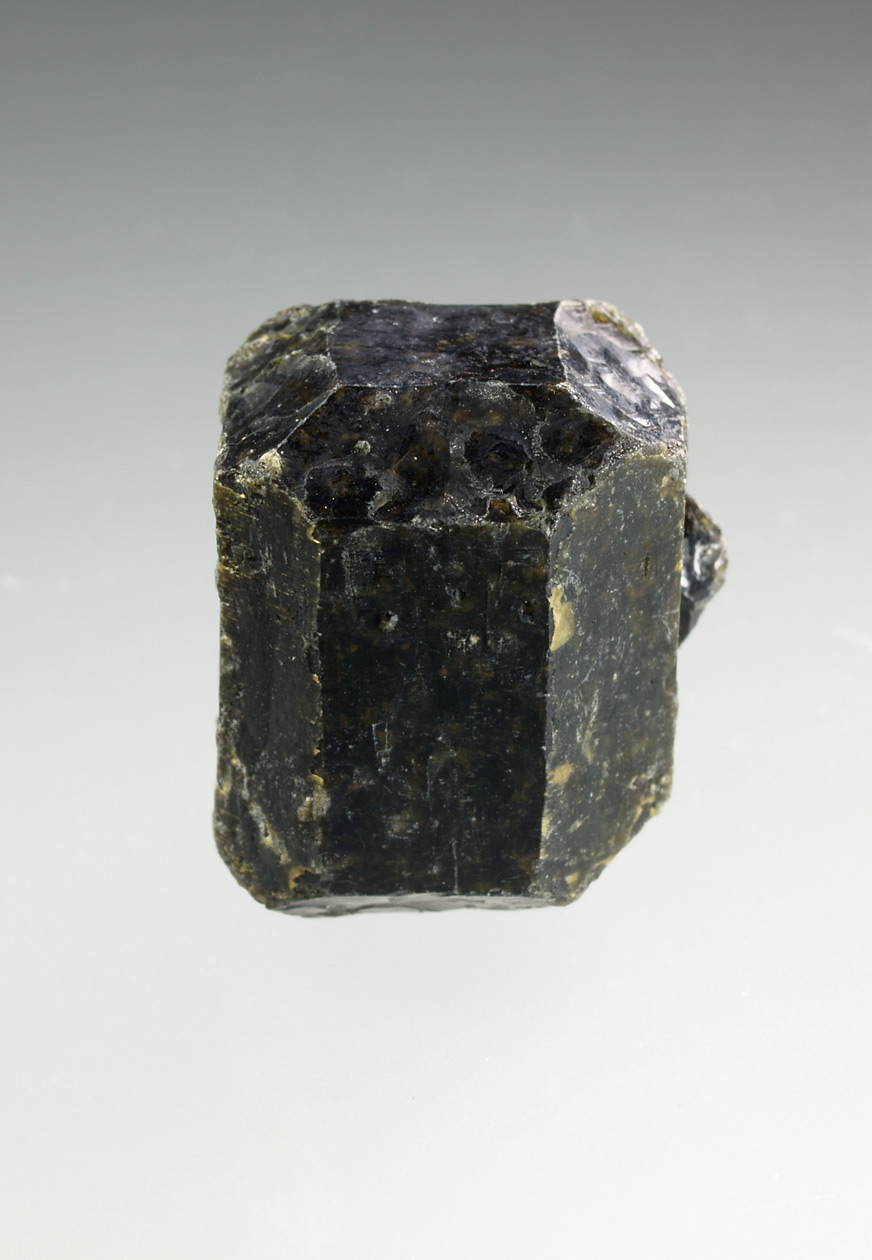
Doubly terminated wiluite floating crystal, a rare calcium, aluminum and magnesium silicate with boron. It presents two prisms of different order, the tetragonal dipyramid truncated by the pinacoid. With a interpenetrated crystal. Good size and deep green colour. Wiluite was accepted as a new species in 1997 belonging to the vesuvianite group. It comes from the type locality for the species.
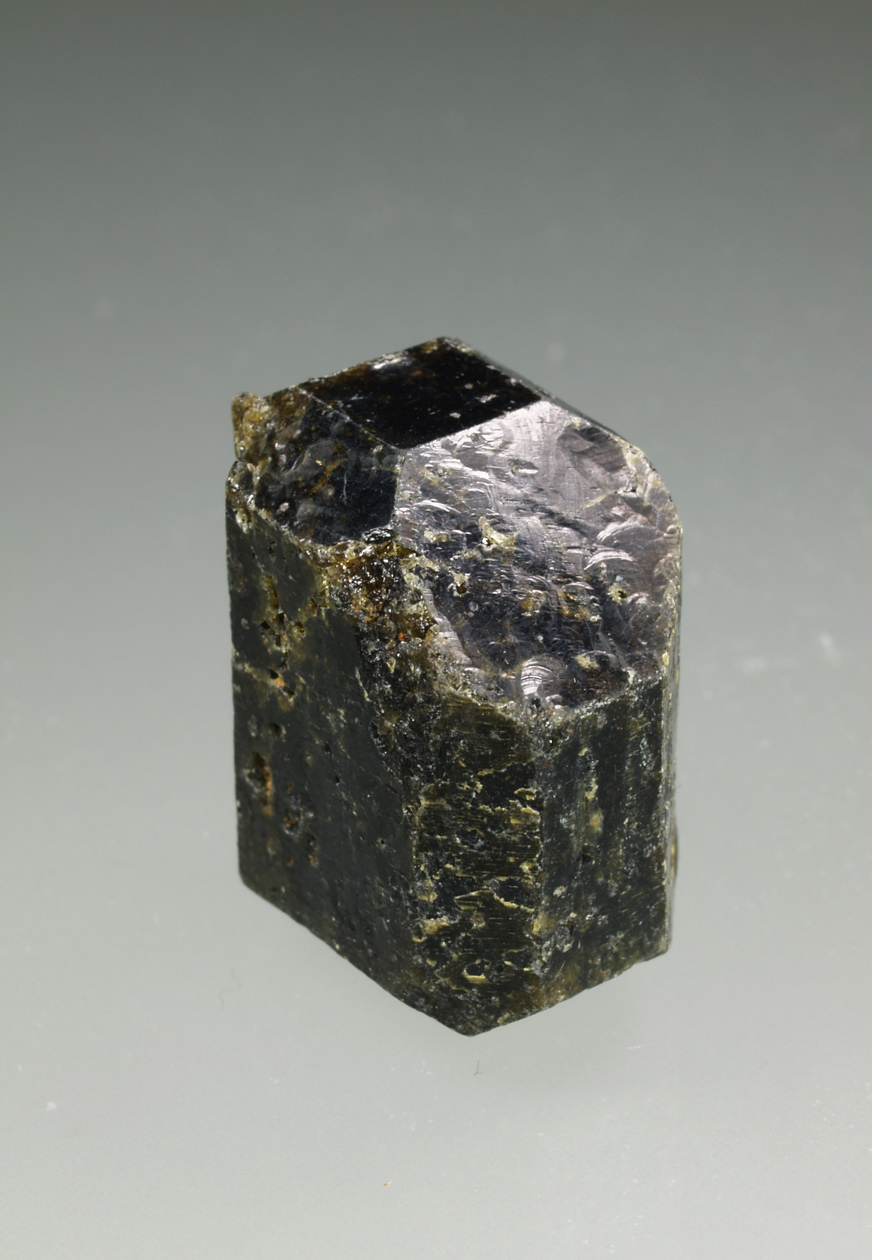
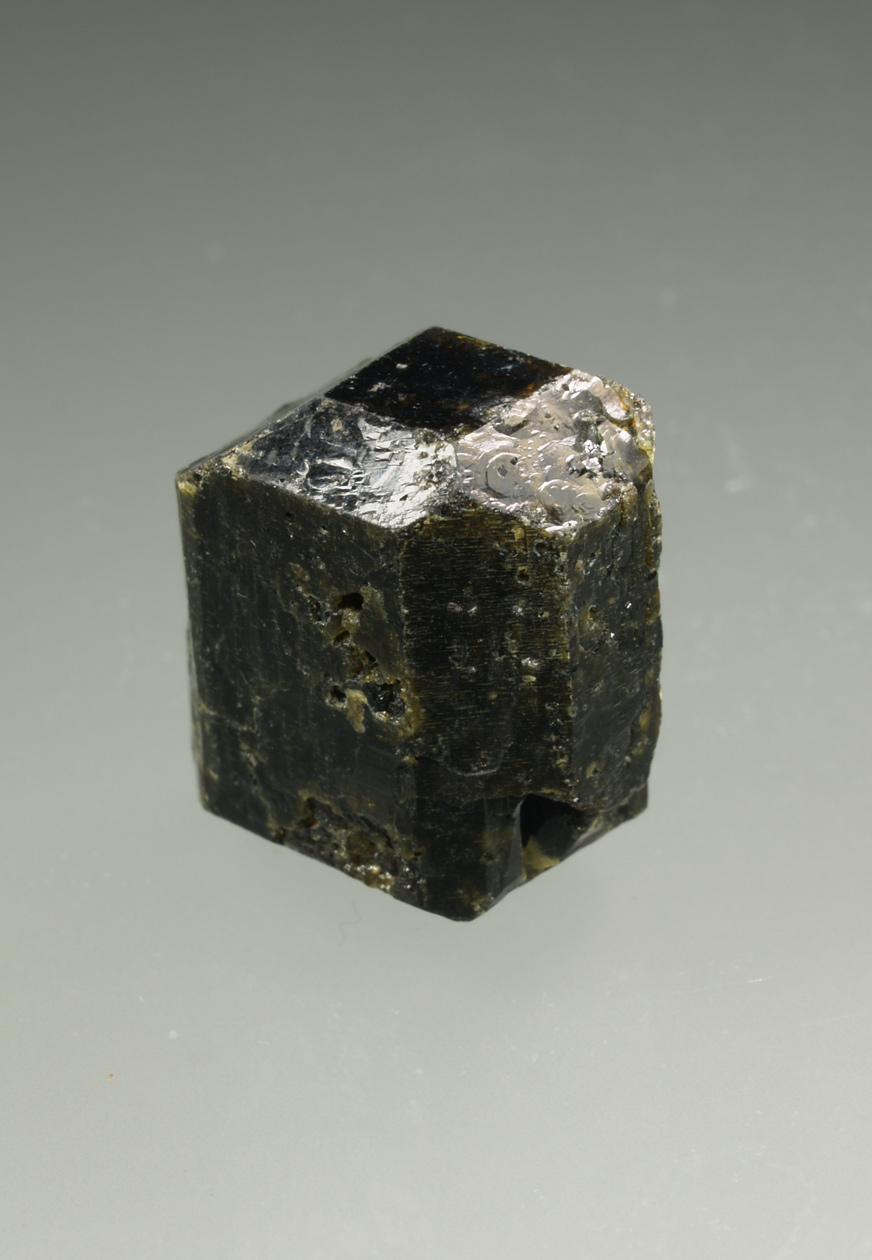
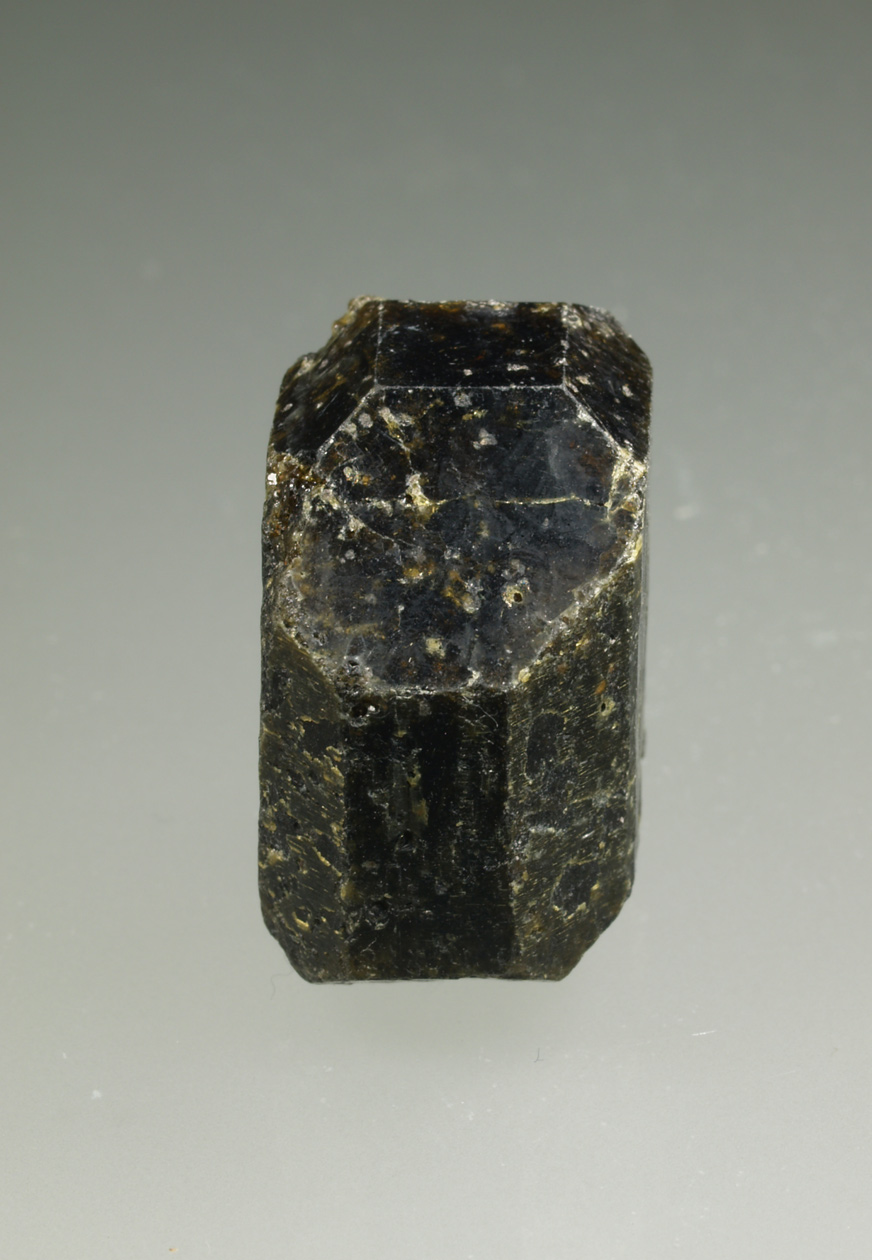
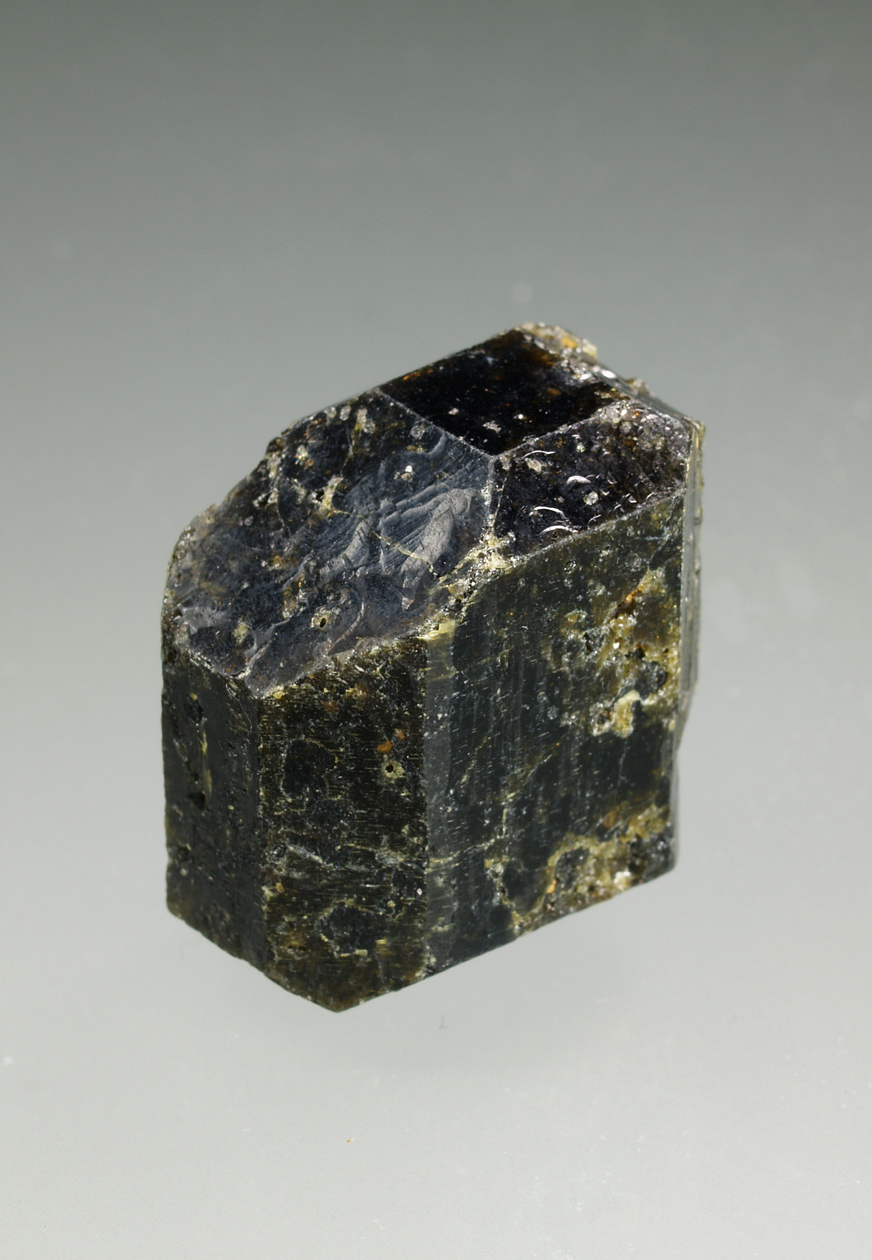
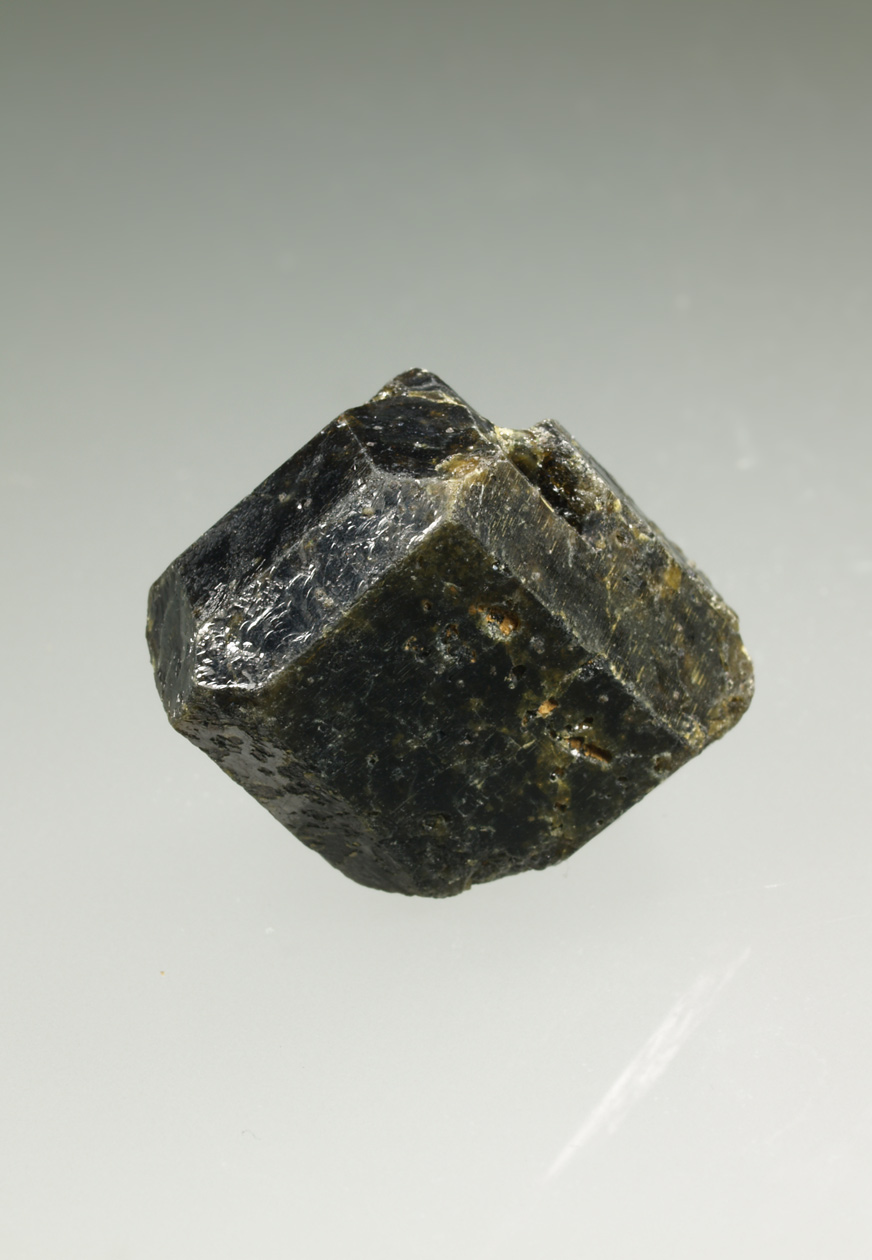
Doubly terminated wiluite floating crystal, a rare calcium, aluminum and magnesium silicate with boron. It presents two prisms of different order, the tetragonal dipyramid truncated by the pinacoid. really good size and deep green colour. Wiluite was accepted as a new species in 1997 belonging to the vesuvianite group. It comes from the type locality for the species.
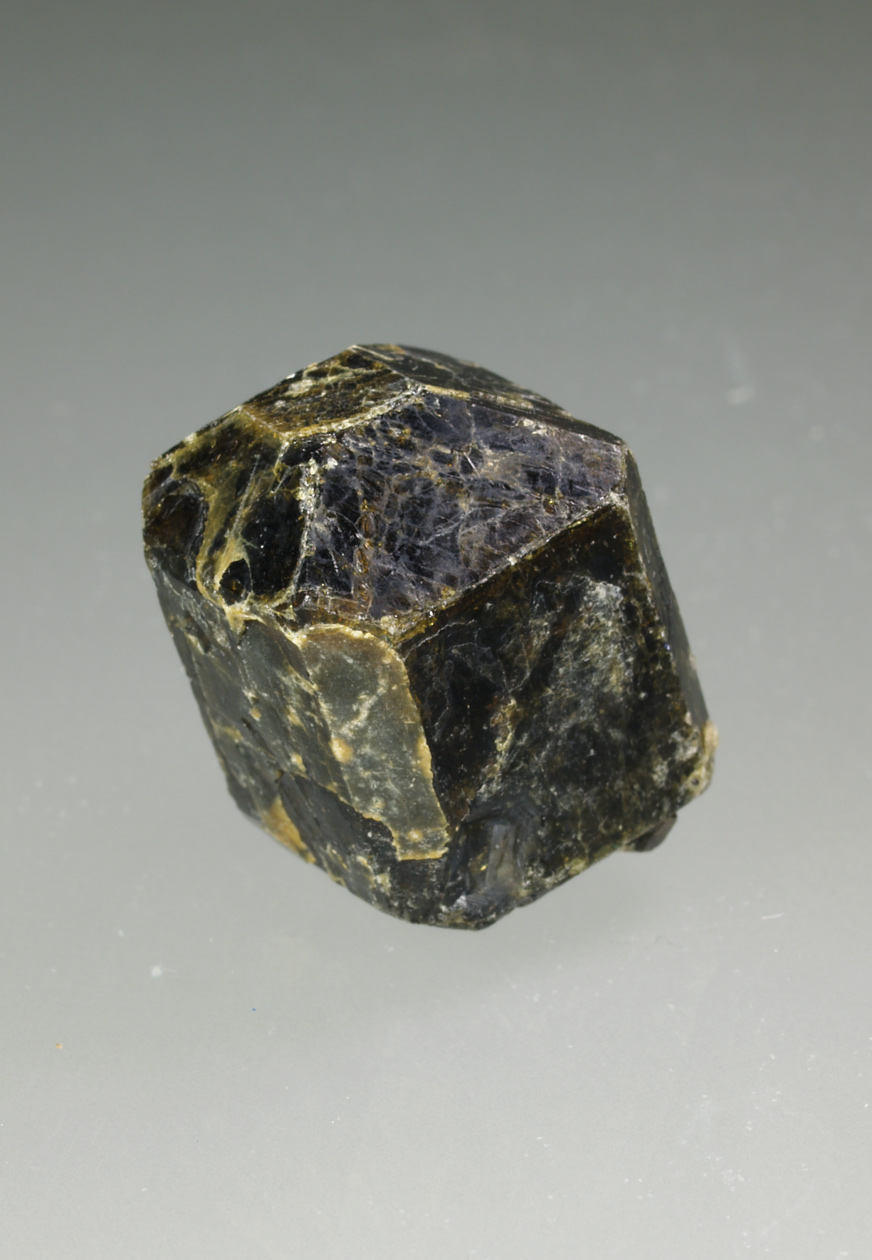
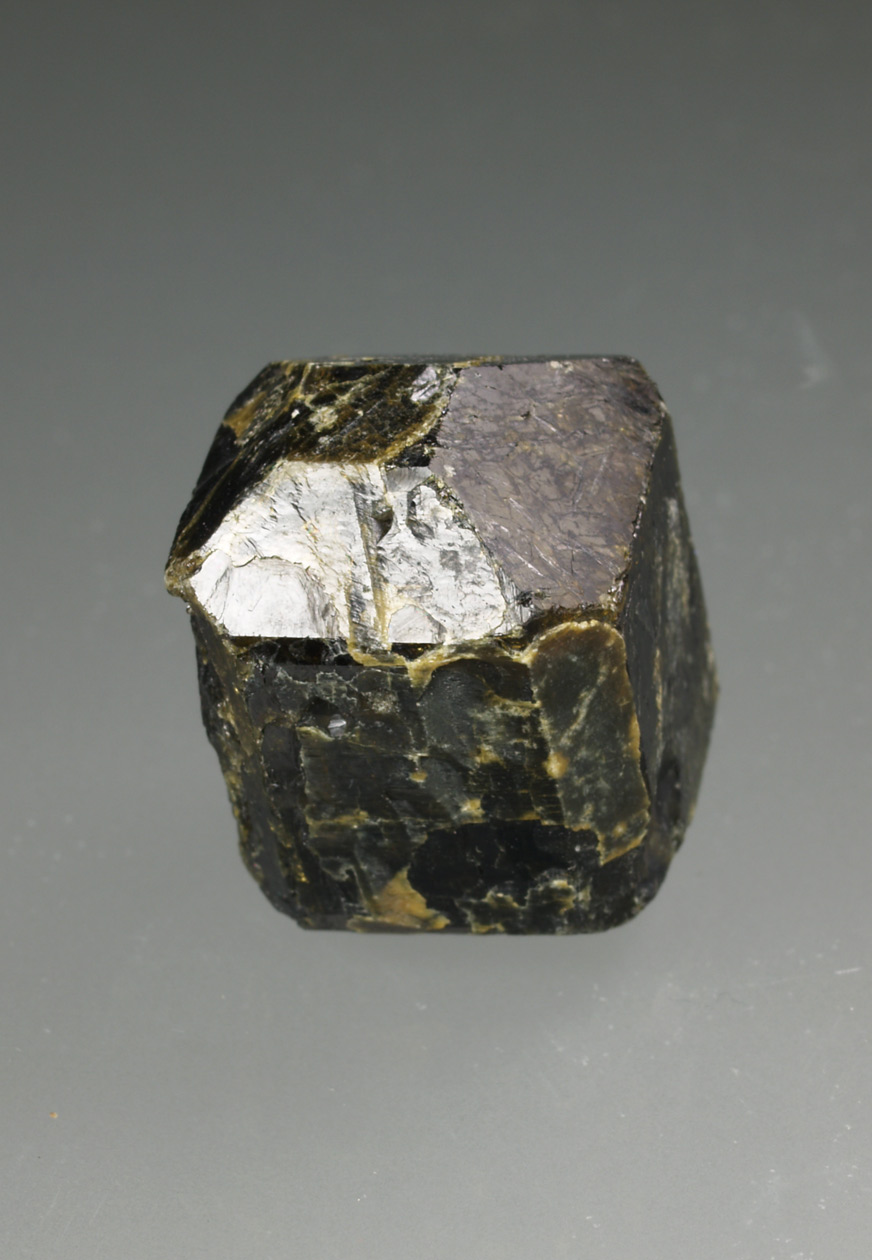
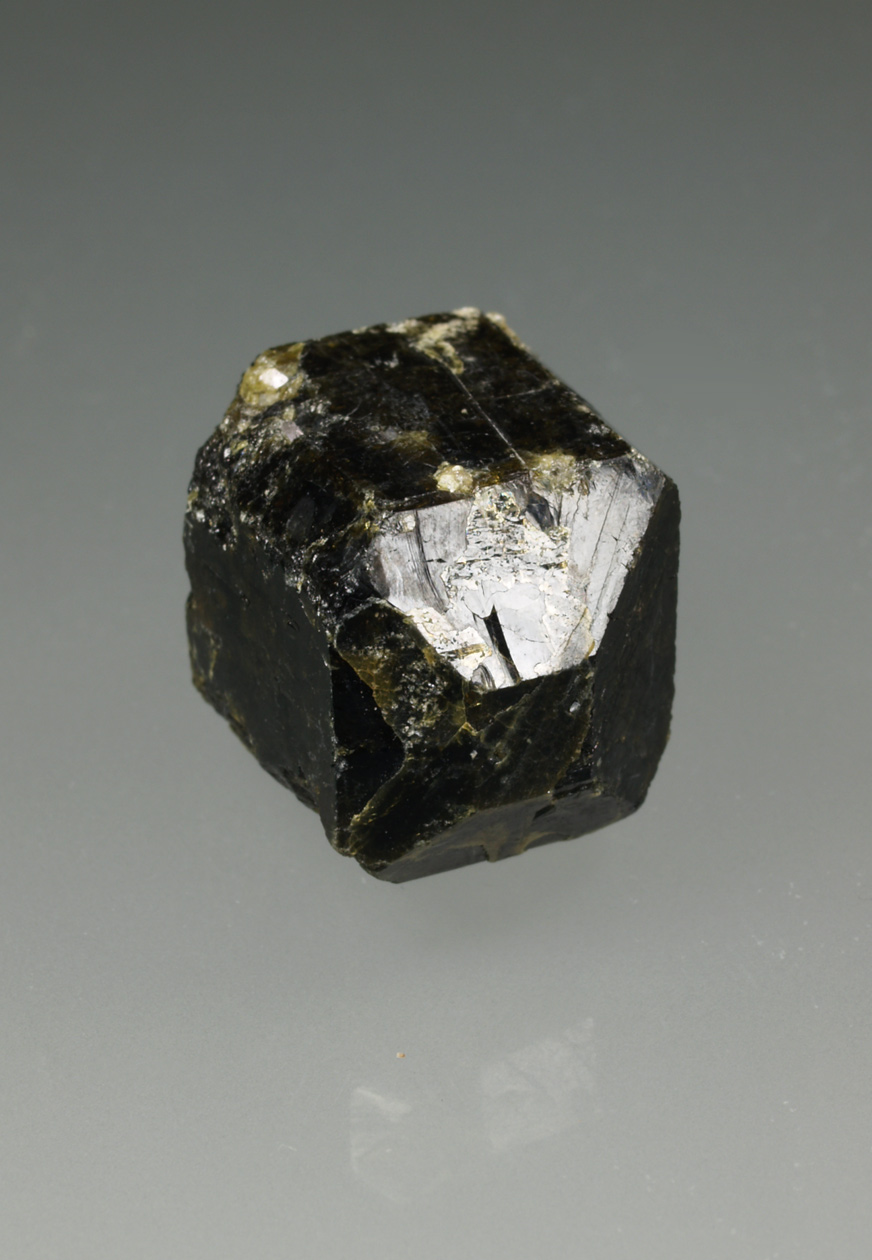
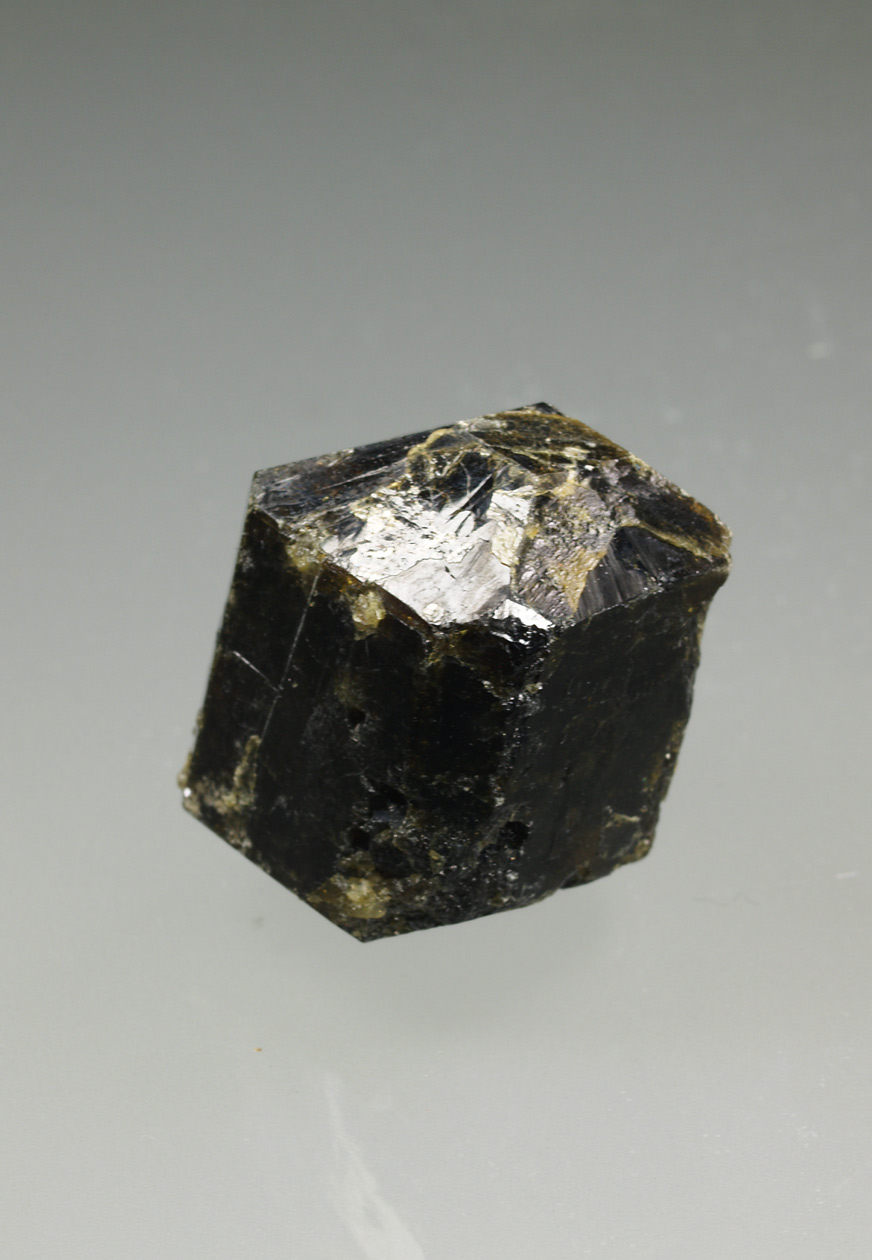
Doubly terminated wiluite floating crystal, a rare calcium, aluminum and magnesium silicate with boron. It presents two prisms of different order, the tetragonal dipyramid truncated by the pinacoid. Good size and deep green colour. Wiluite was accepted as a new species in 1997 belonging to the vesuvianite group. It comes from the type locality for the species.
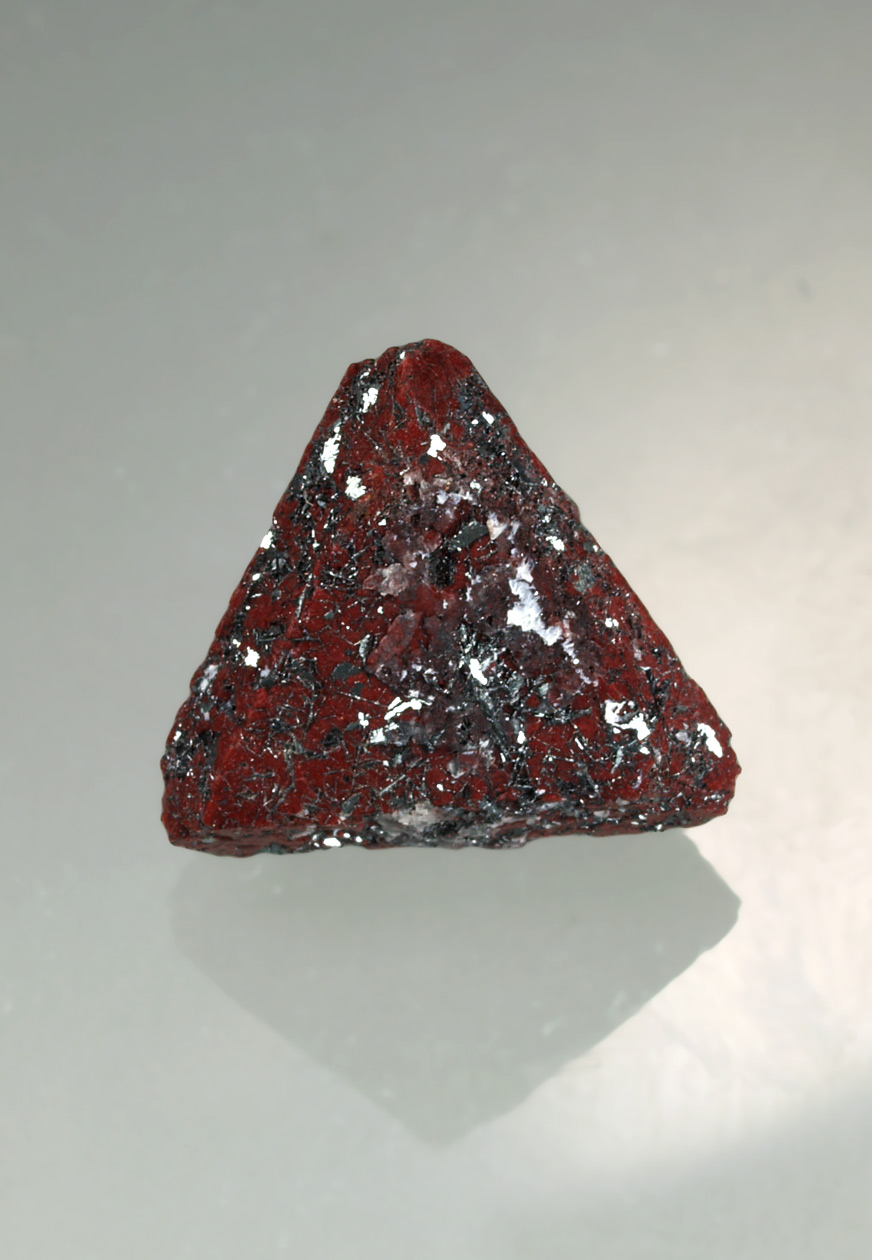
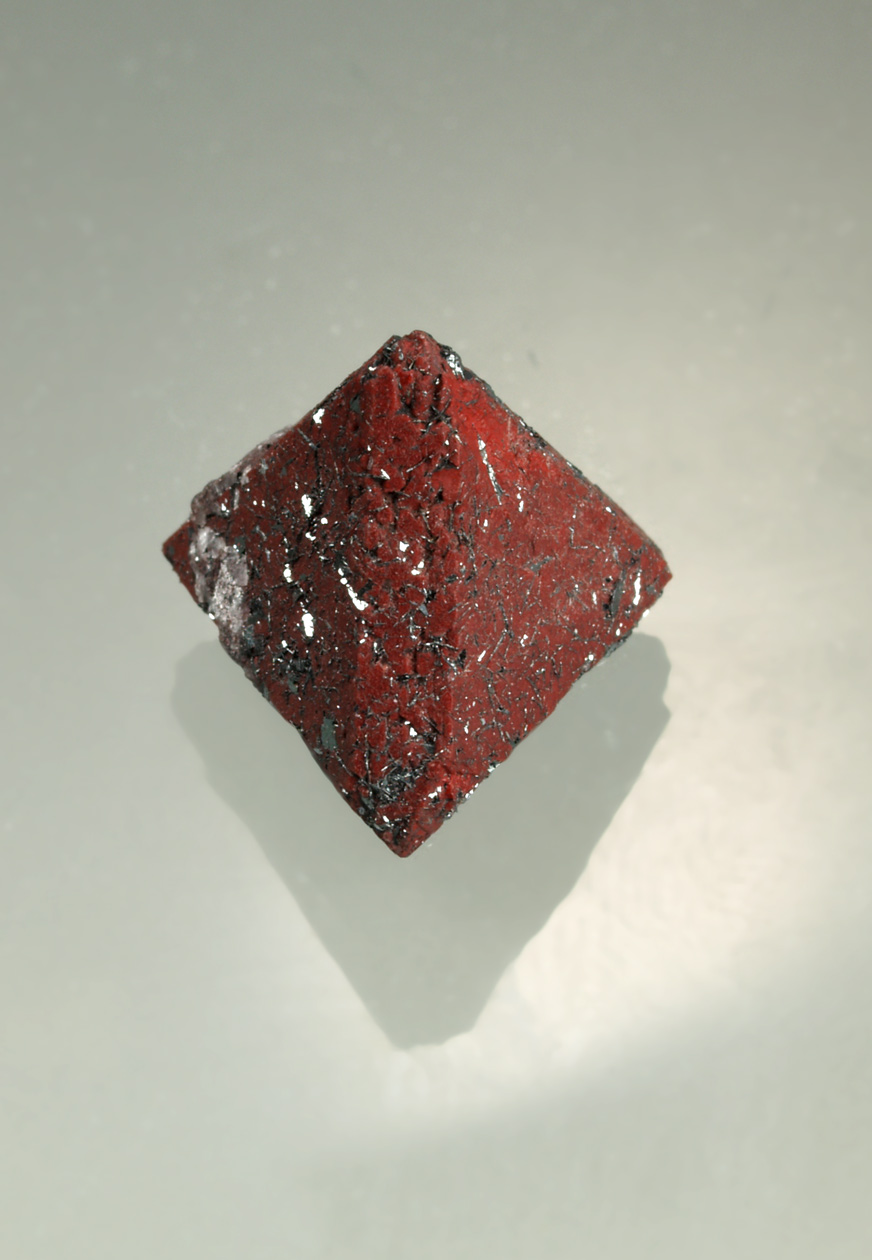
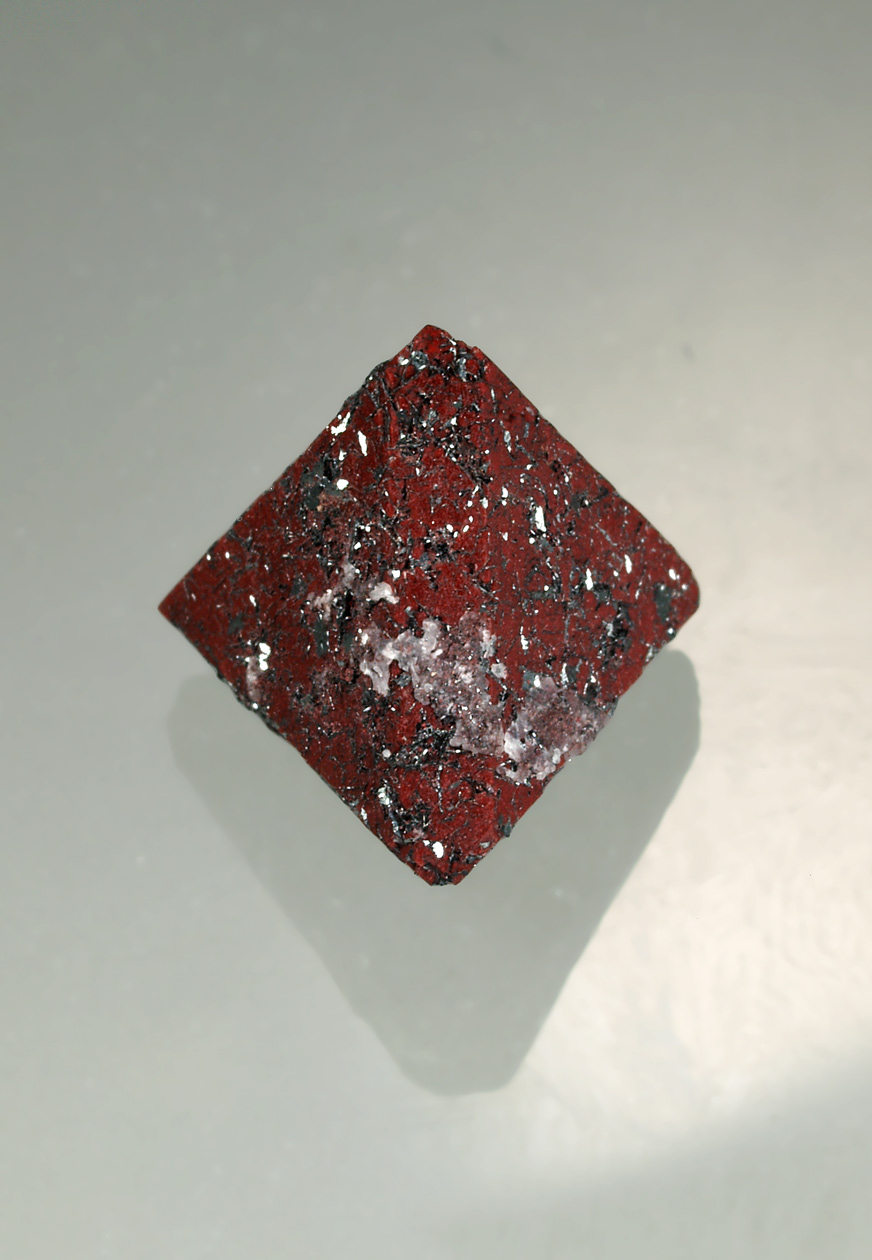
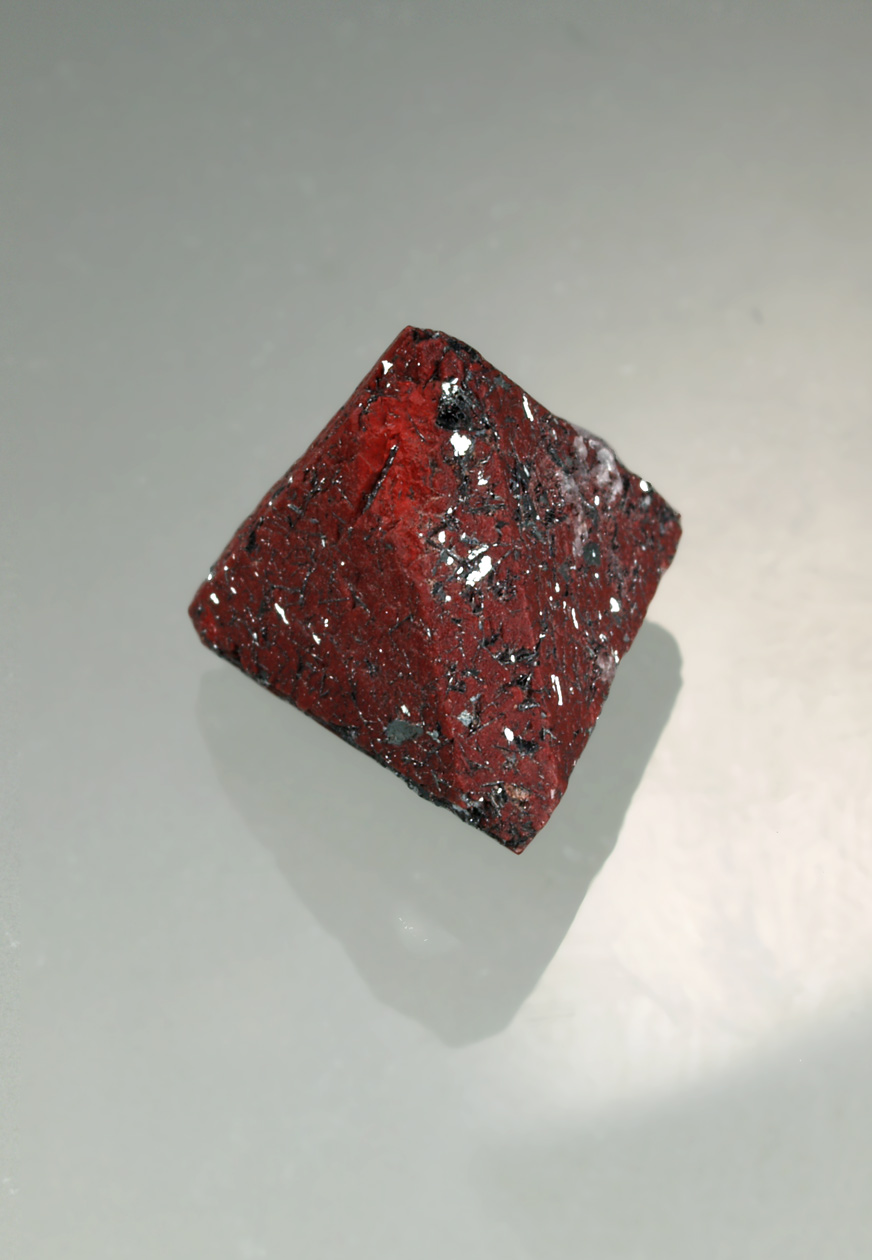
Very sharp single zunyite crystal with good luster, coloured by red hematite inclusions and with some small brilliant foliaceous hematite partially included in faces. Tetrahedron form, truncated by cubic faces. Tetrahedron edge is 16 mm. A good sized and perfect crystallographic specimen of this unusual species, a rare sorosilicate of aluminium and chlorine, with fluorine. Analized by X-ray difracction and X-ray fluorescence.
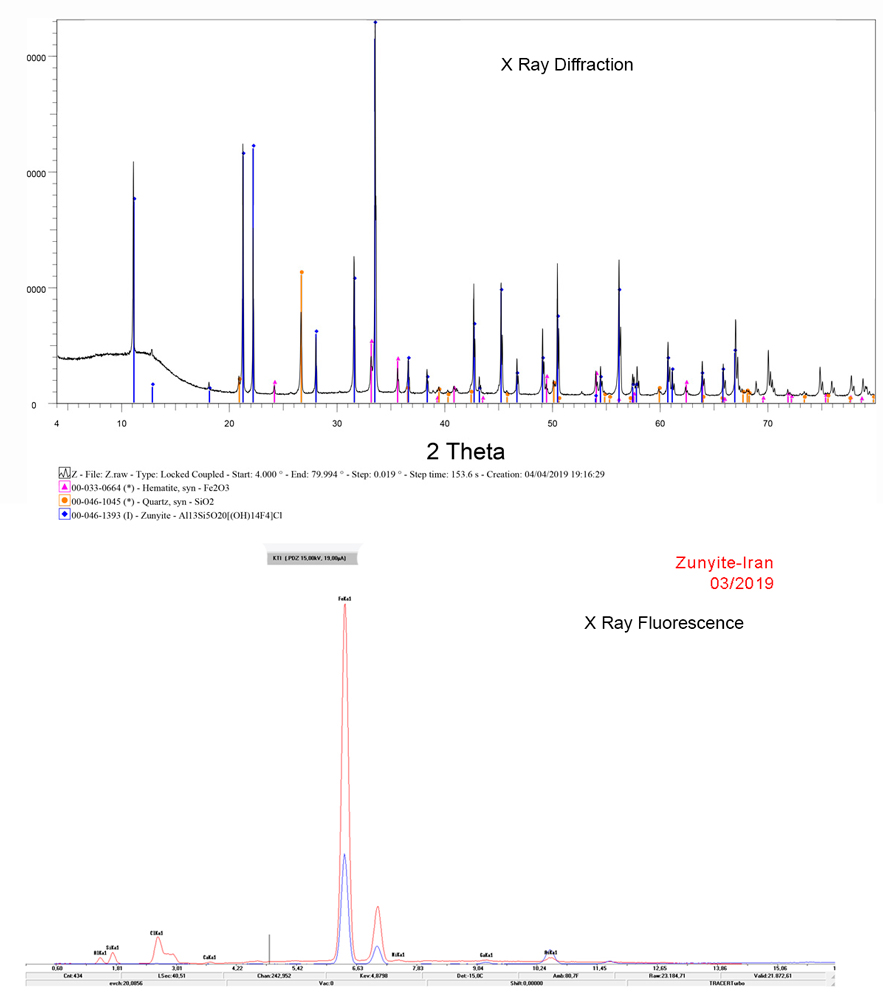
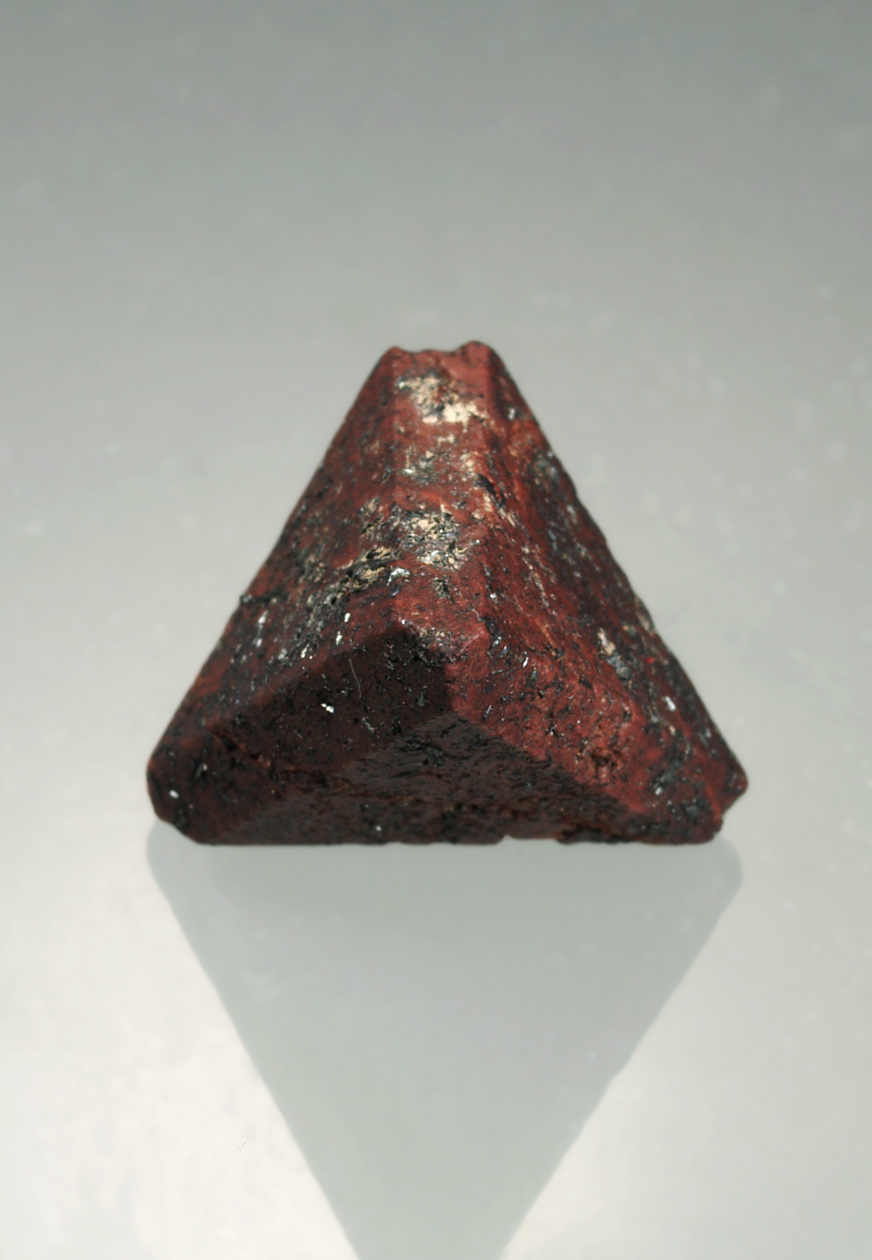
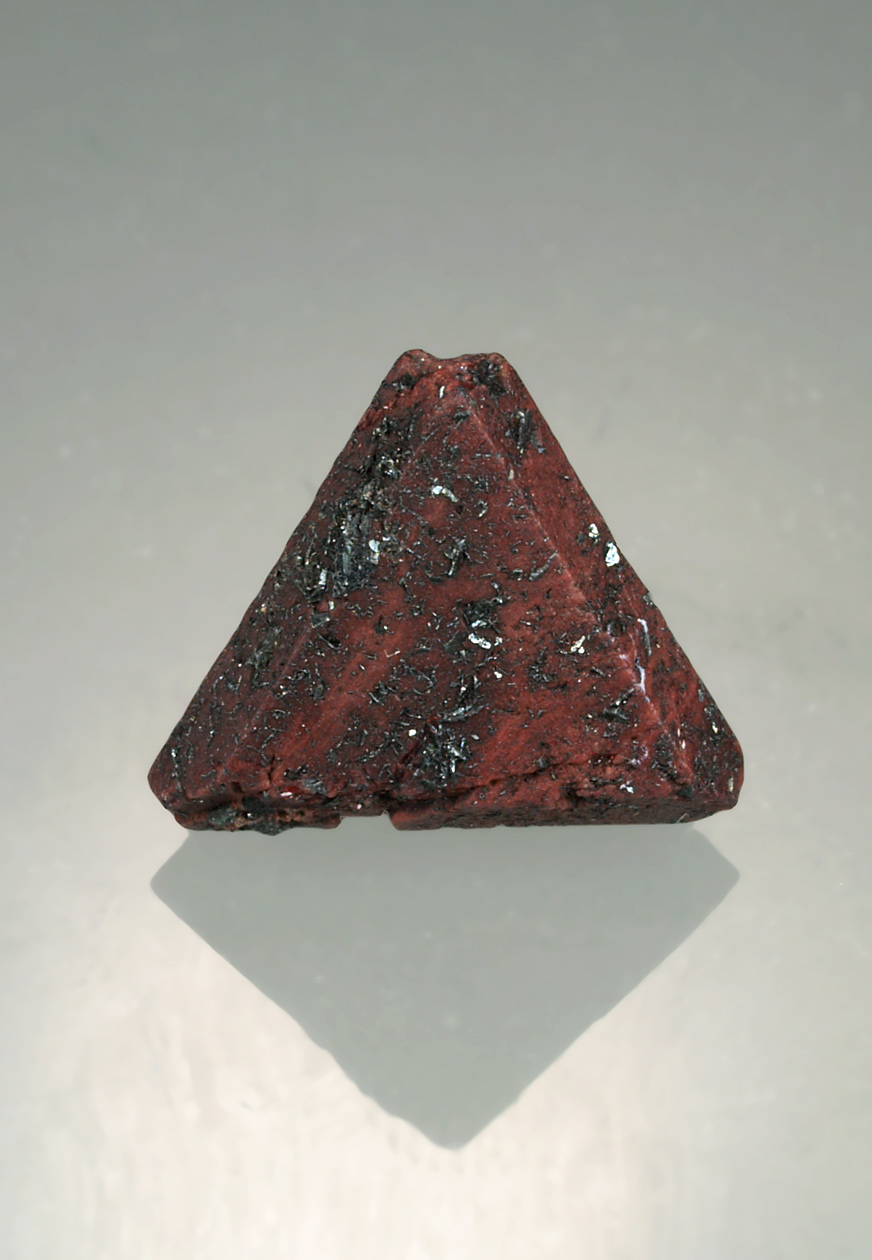
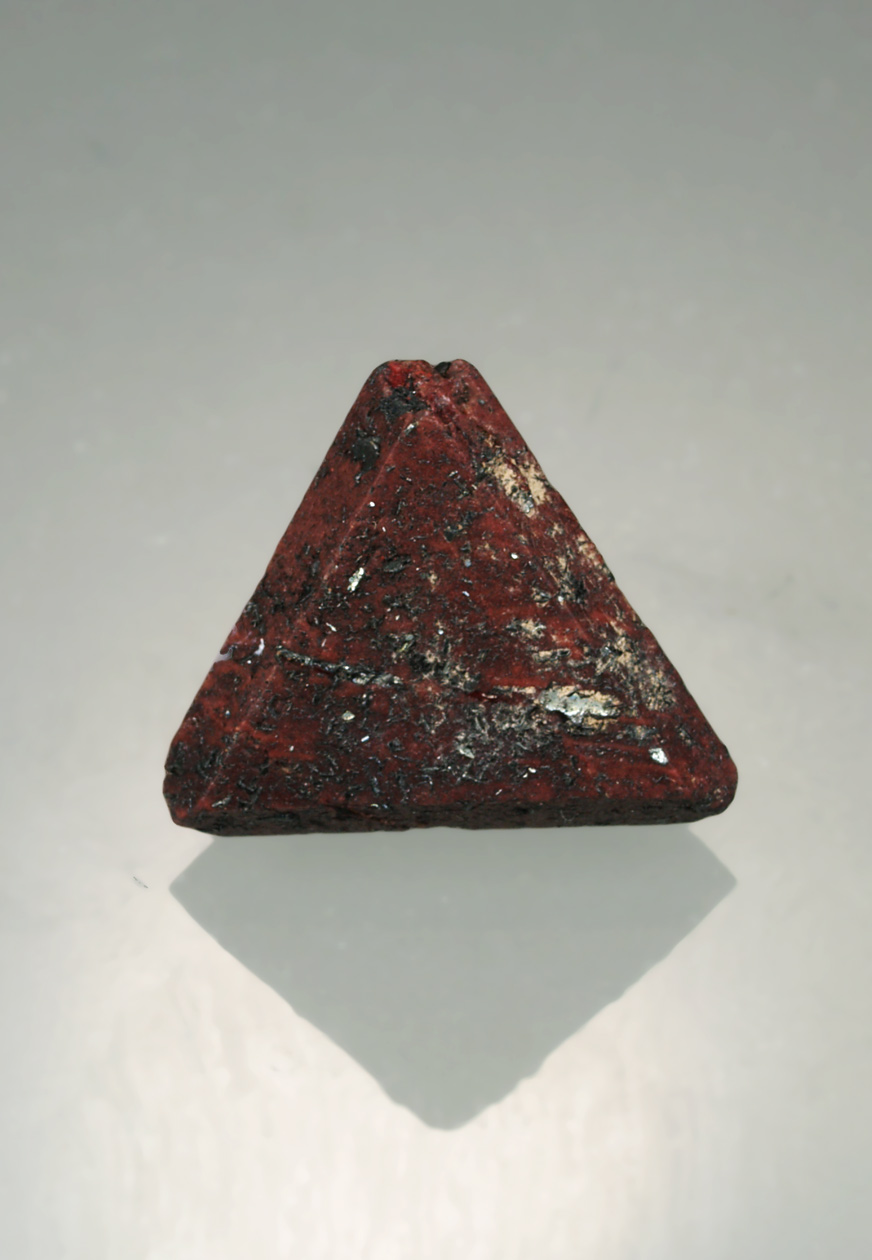
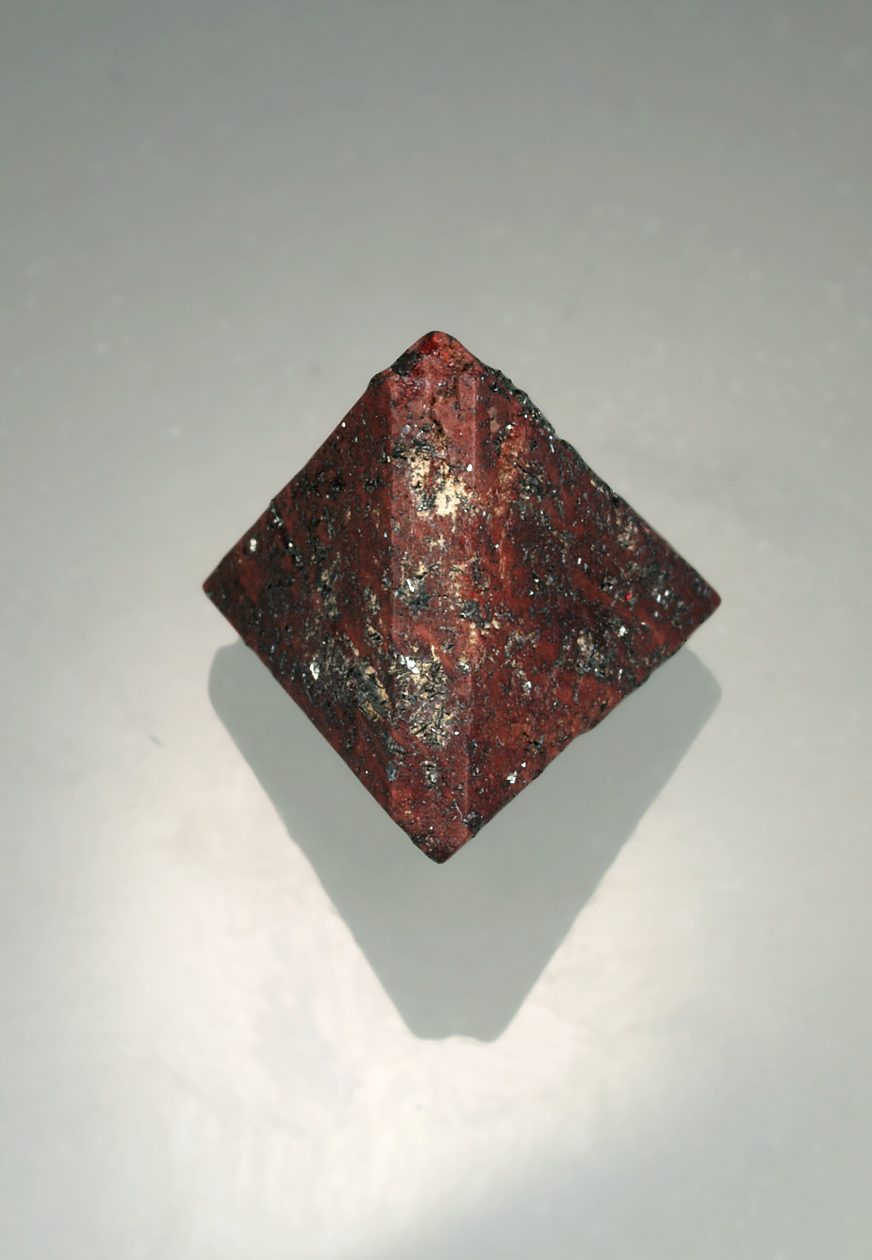
Very sharp single zunyite crystal with good luster, coloured by red hematite inclusions and with some small brilliant foliaceous hematite partially included in faces. Tetrahedron form, truncated by cubic faces. Tetrahedron edge is 14 mm. A good sized and perfect crystallographic specimen of this unusual species, a rare sorosilicate of aluminum and chlorine, with fluorine. Analized by X-ray difraction and X-ray fluorescence.
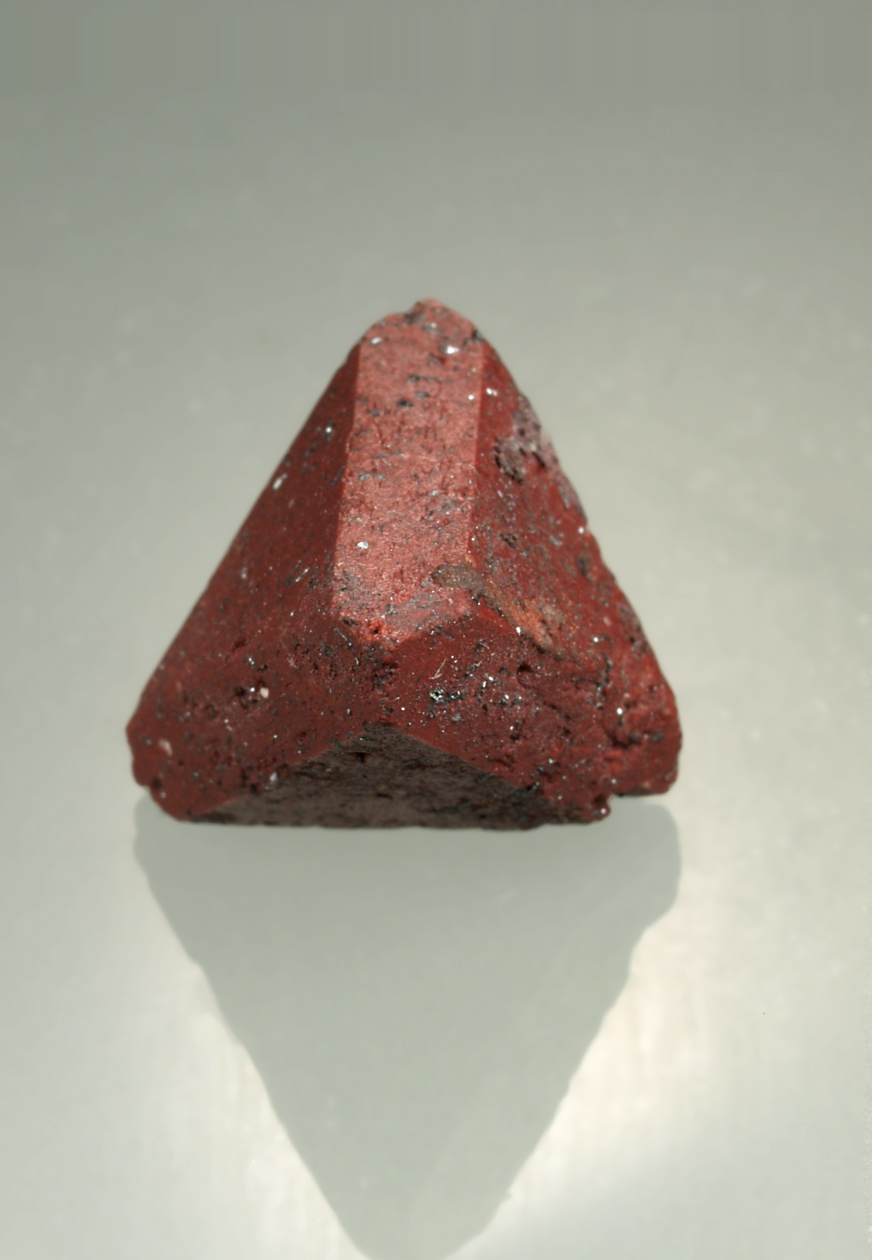
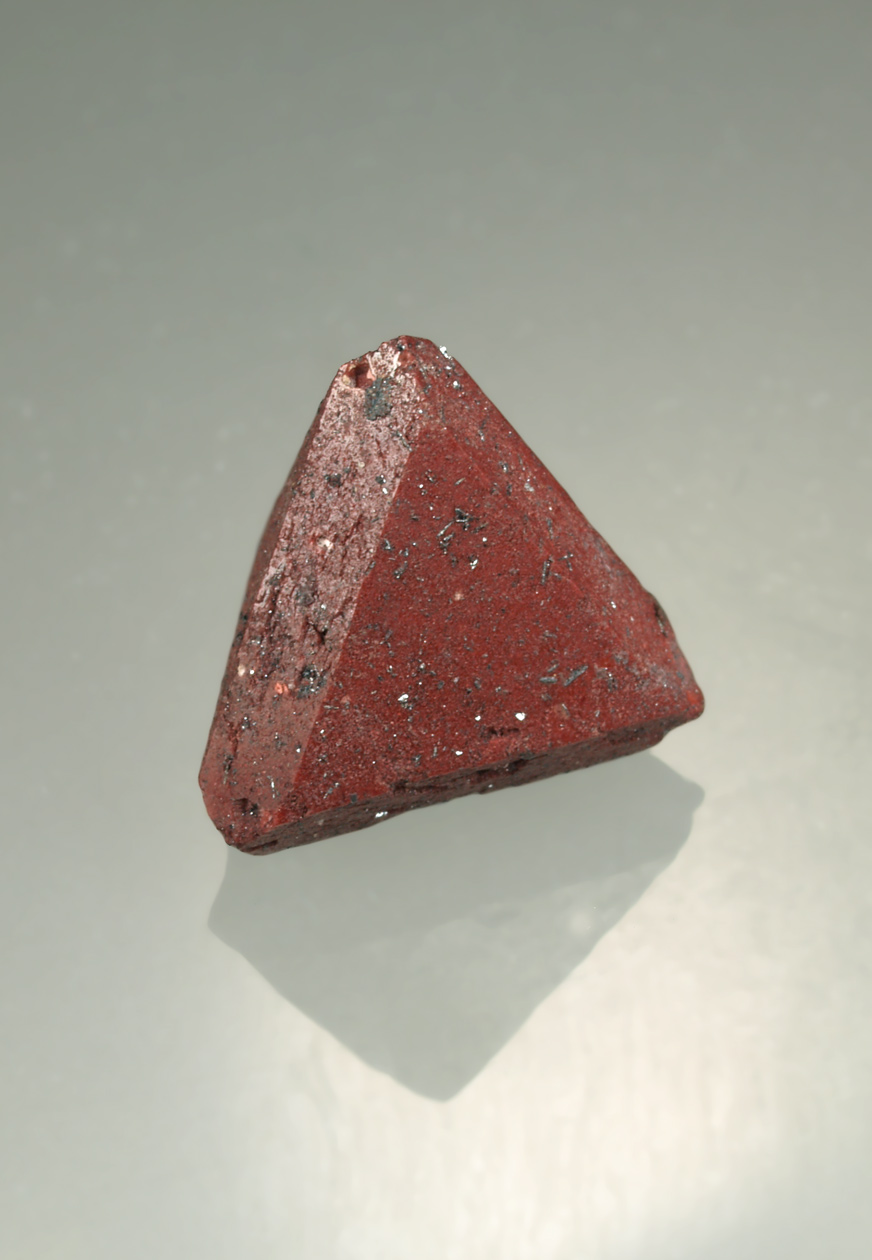
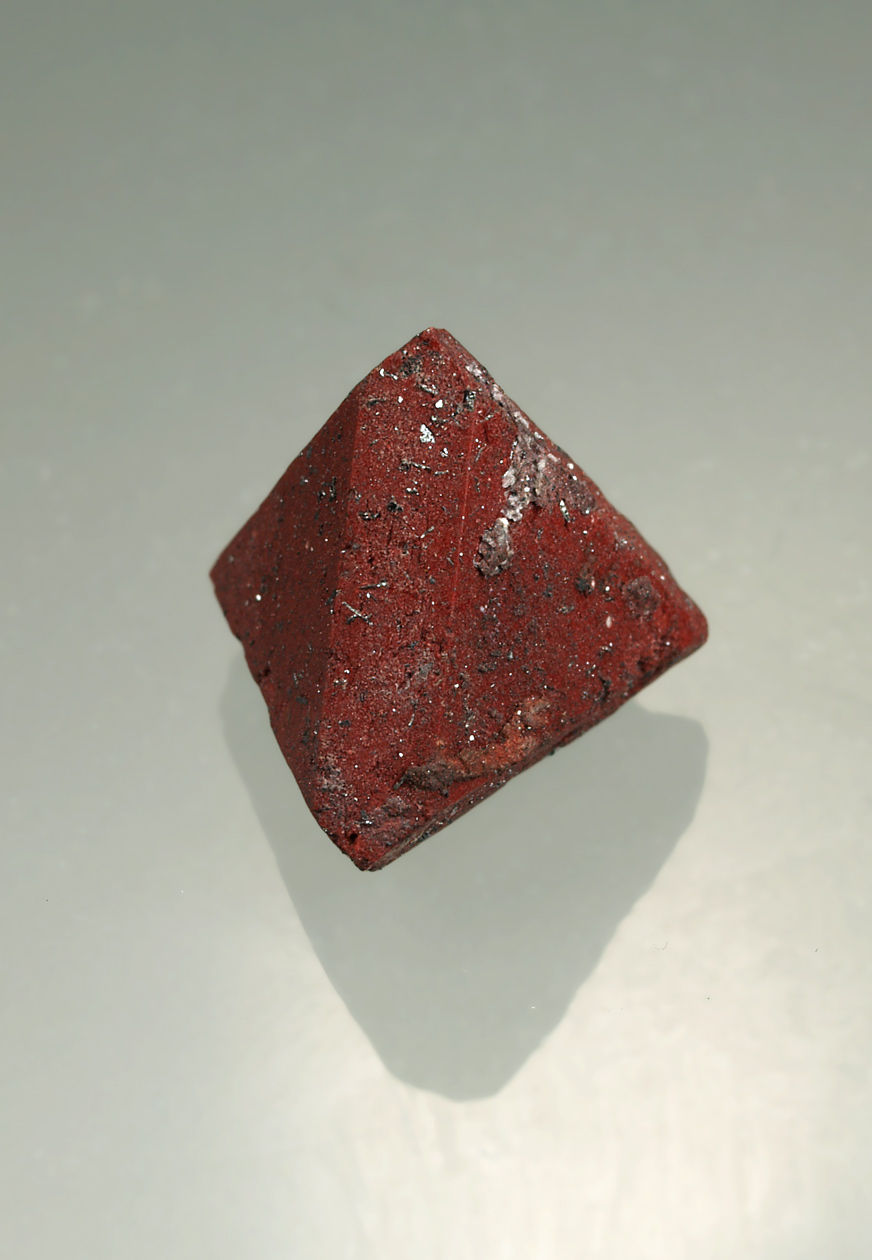
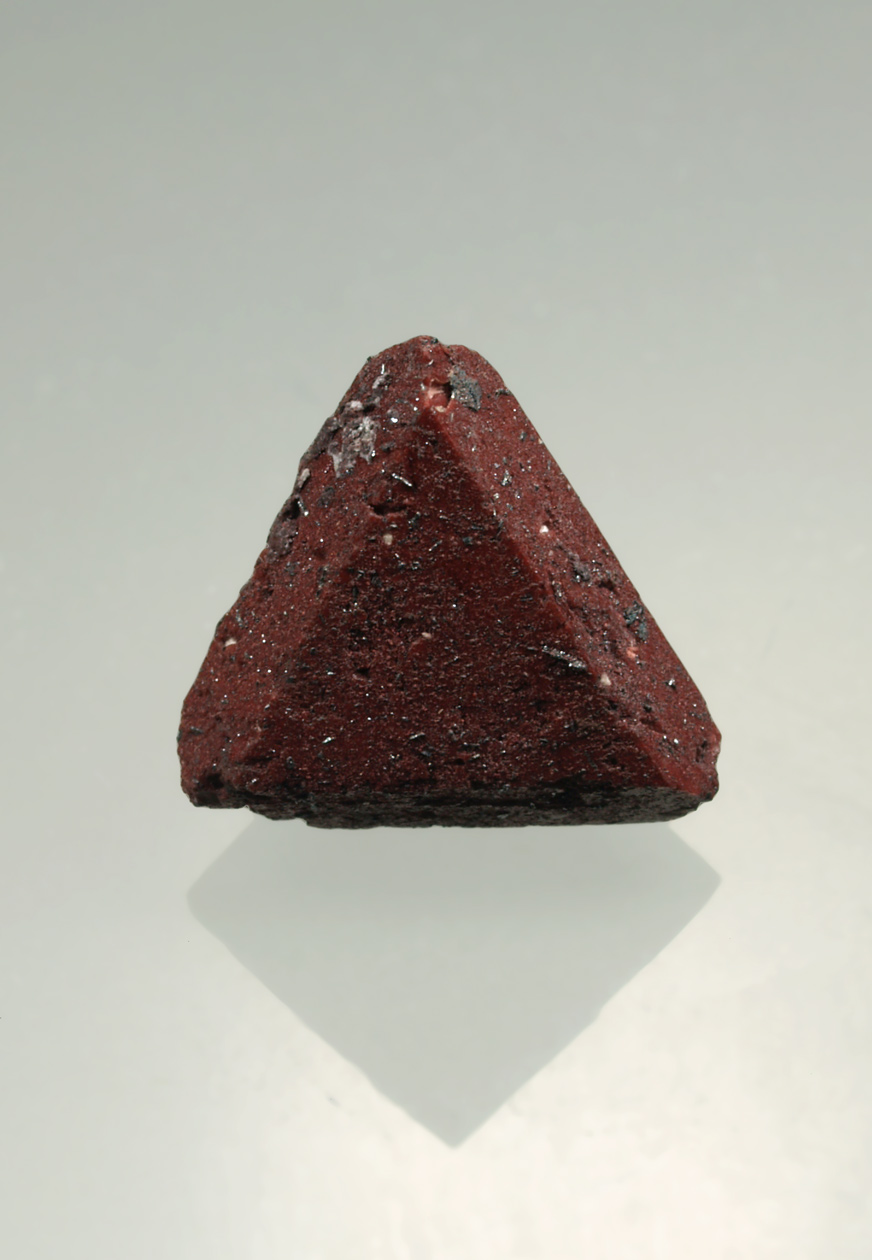
Very sharp single zunyite crystal with good luster, coloured by red hematite inclusions and with some small brilliant foliaceous hematite partially included in faces. Very clean tetrahedron form, truncated by cubic faces. Tetrahedron edge is 17 mm. A good sized and perfect crystallographic specimen of this unusual species, a rare sorosilicate of aluminum and chlorine, with fluorine. Analized by X-ray difraction and X-ray fluorescence.
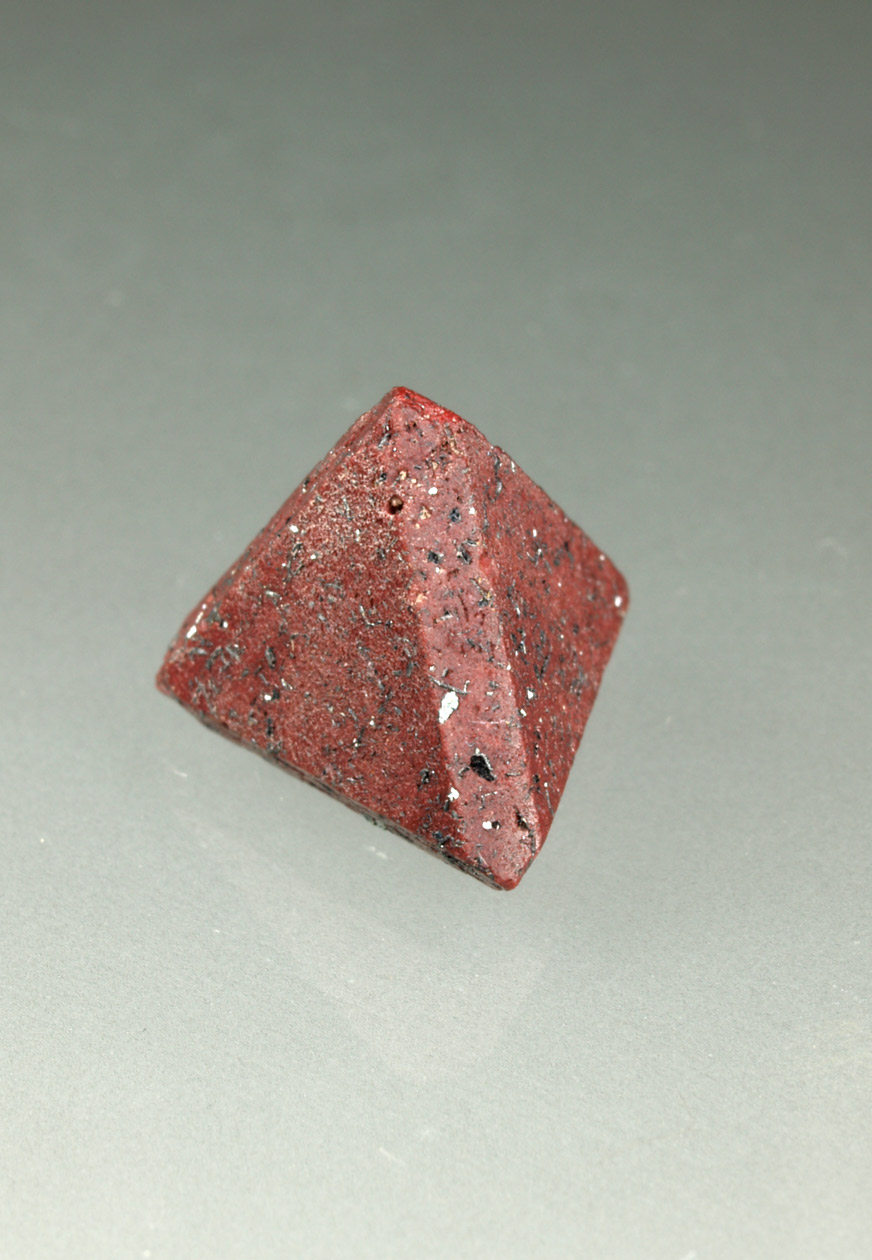
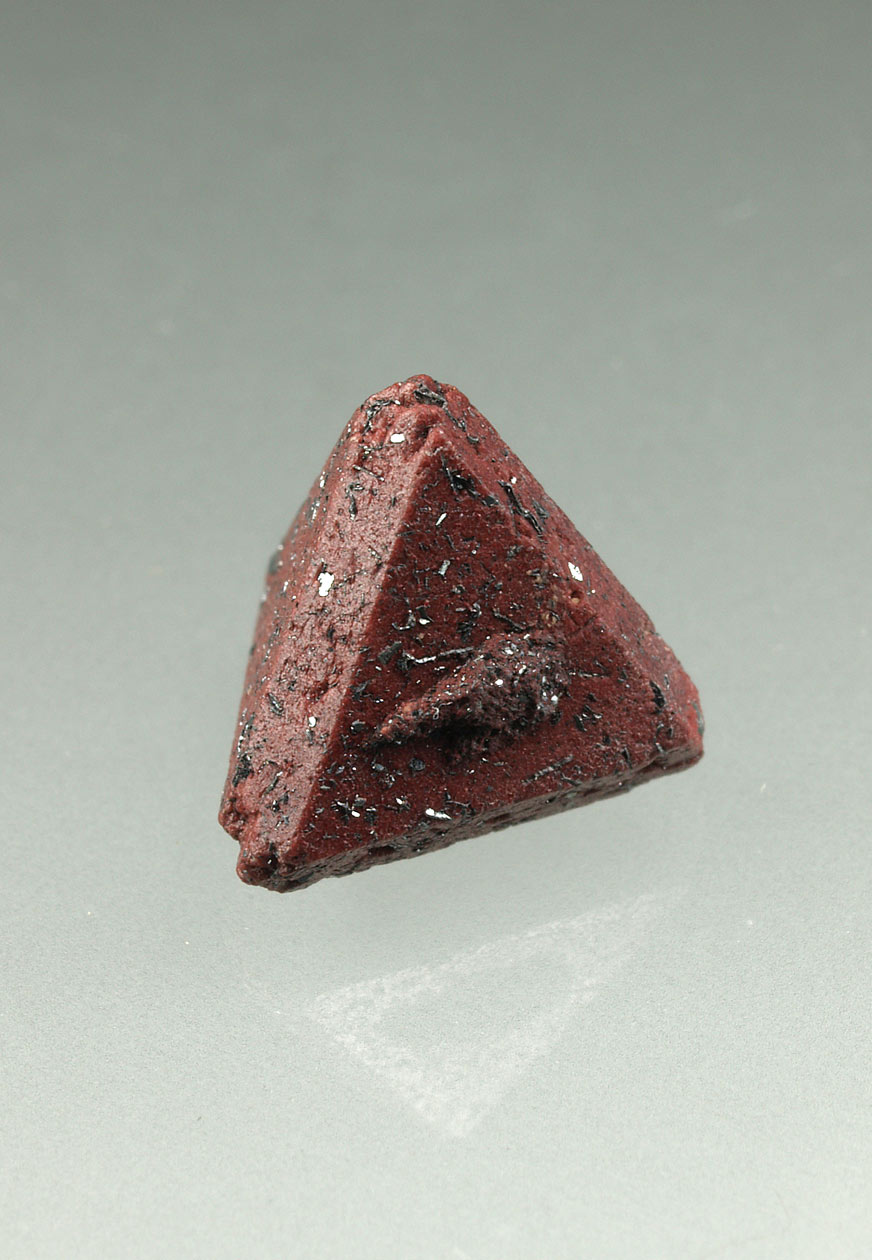
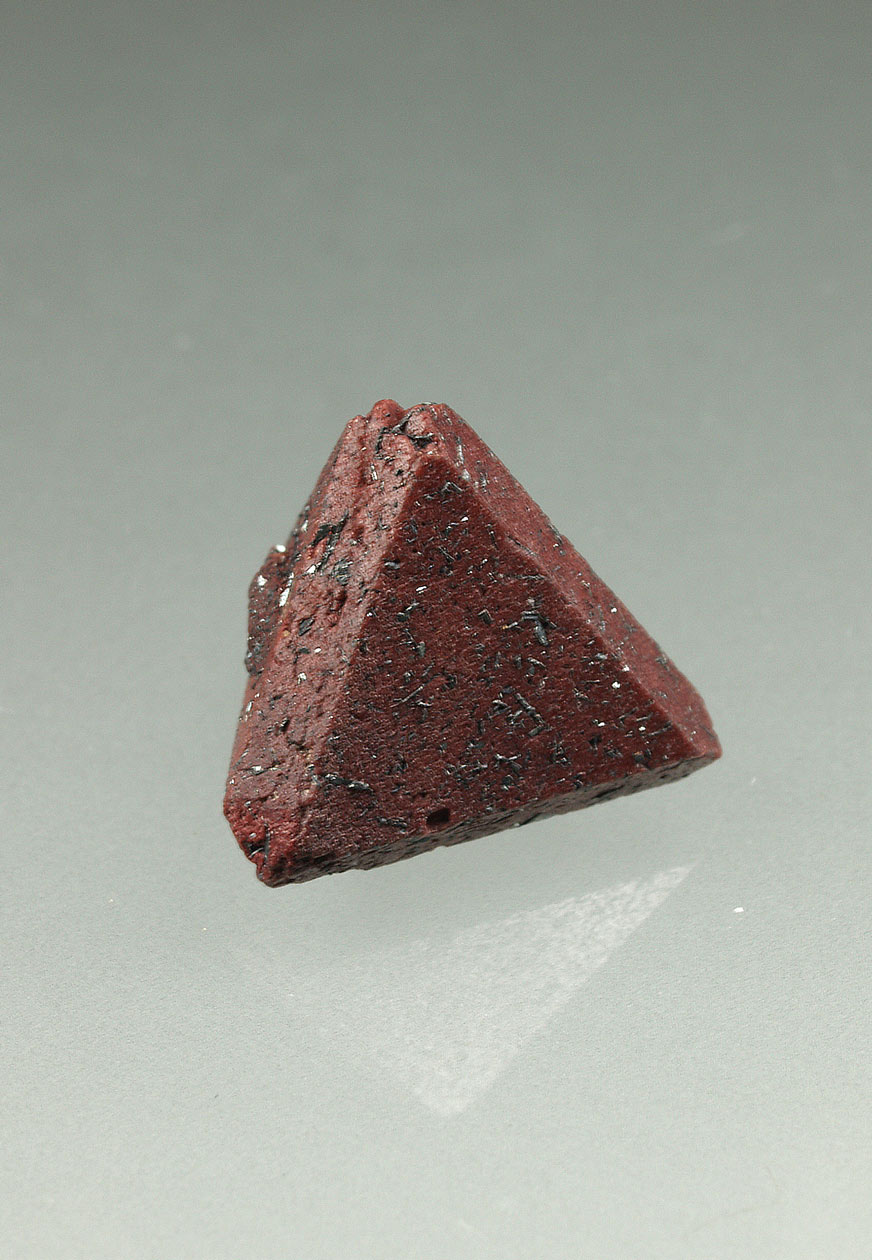
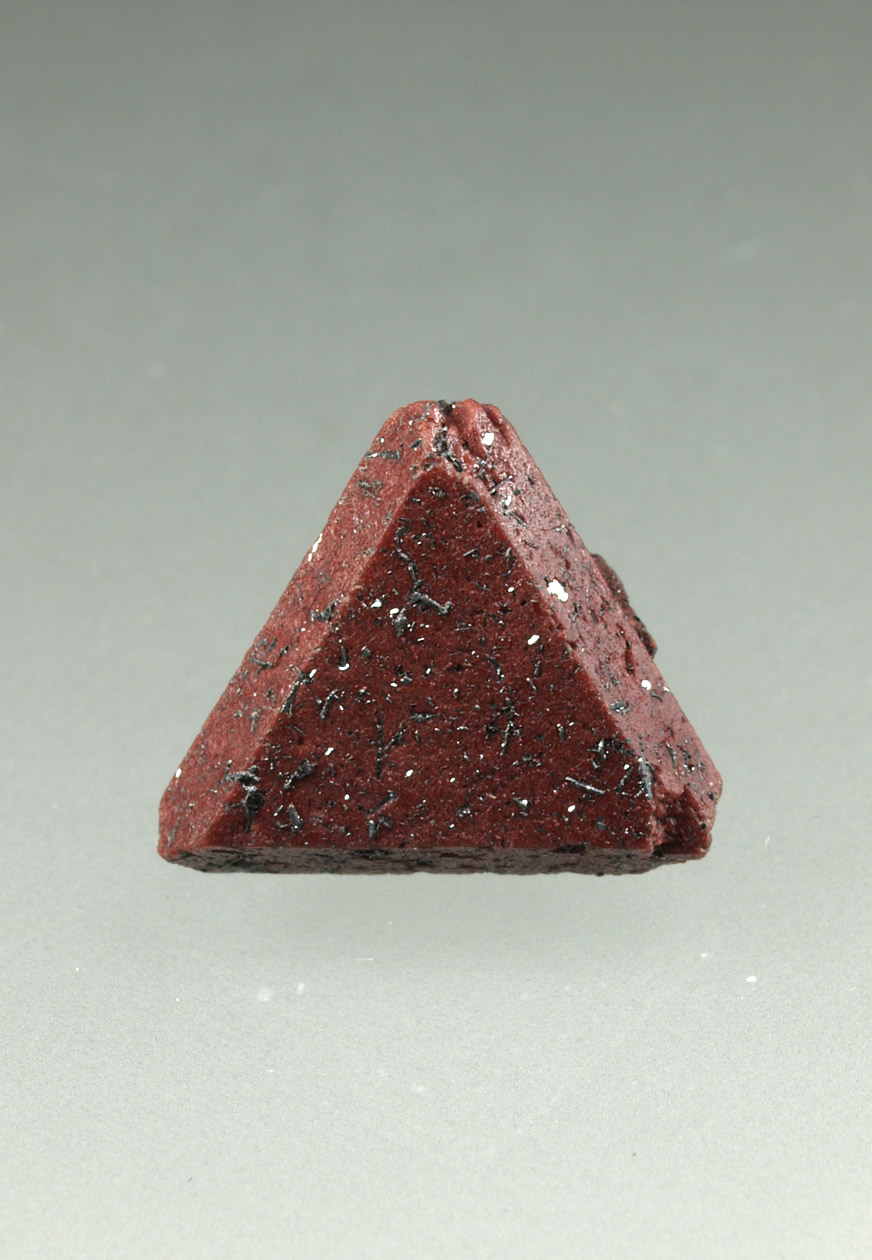
Very sharp single zunyite crystal with good luster, coloured by red hematite inclusions and with some small brilliant foliaceous hematite partially included in faces. Very clean tetrahedron form, truncated by cubic faces. Tetrahedron edge is 12 mm. A good sized and perfect crystallographic specimen of this unusual species, a rare sorosilicate of aluminum and chlorine, with fluorine. Analized by X-ray difraction and X-ray fluorescence.
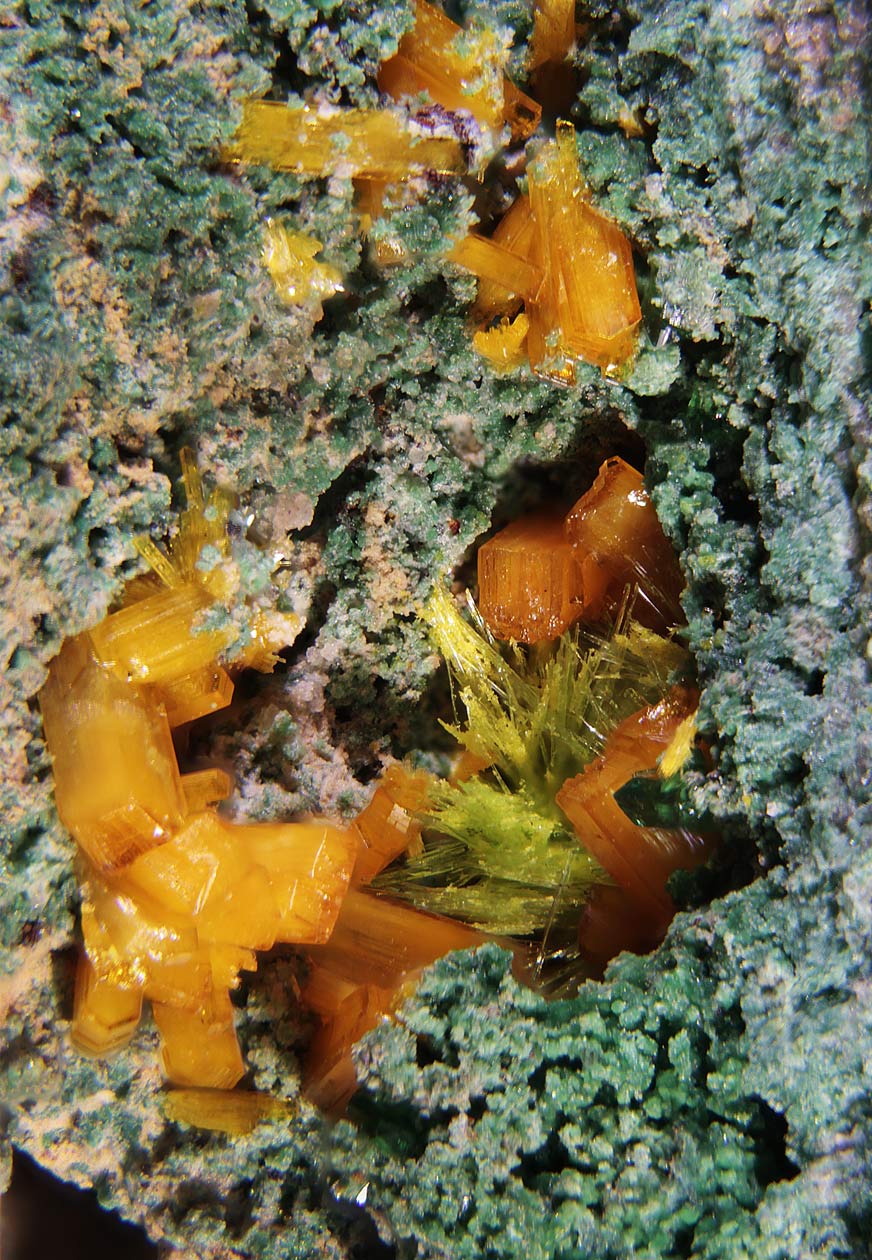
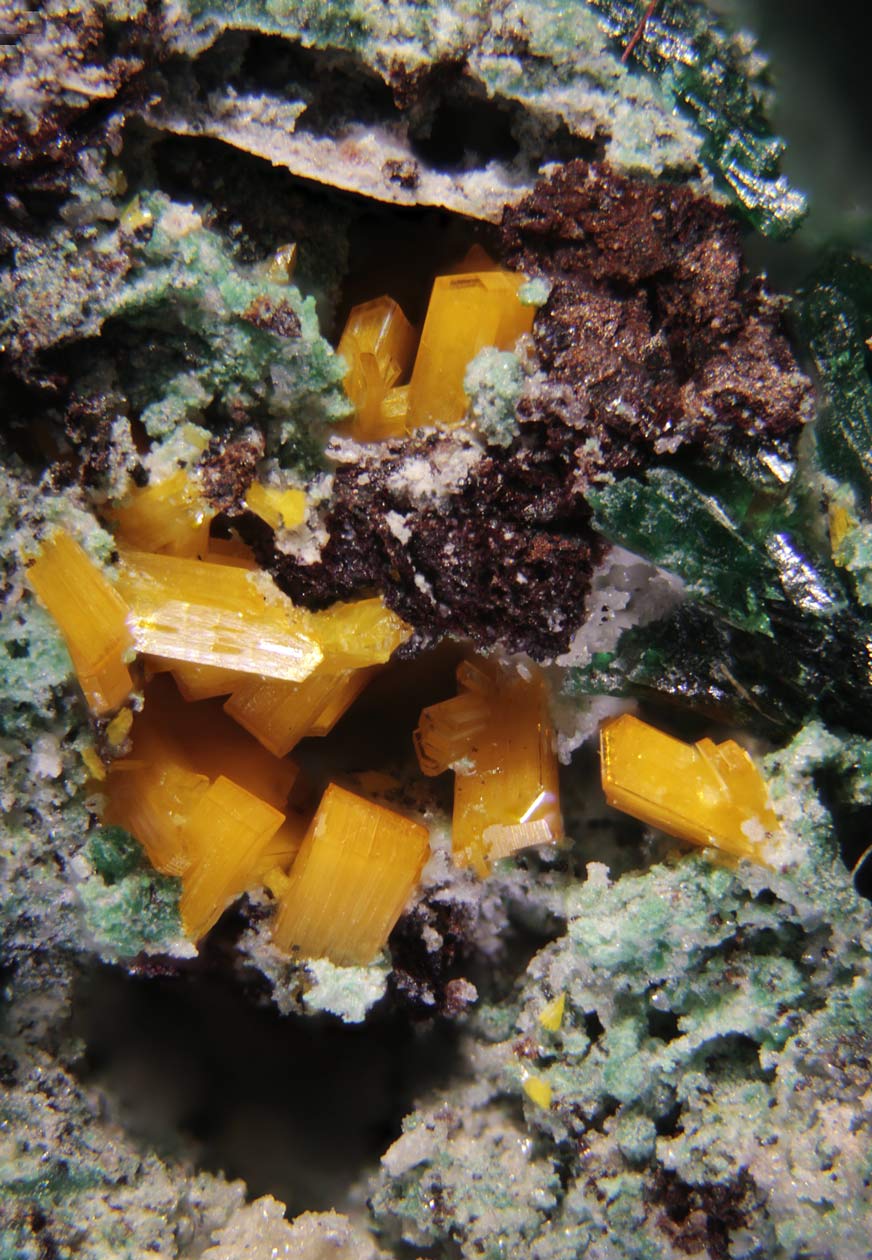
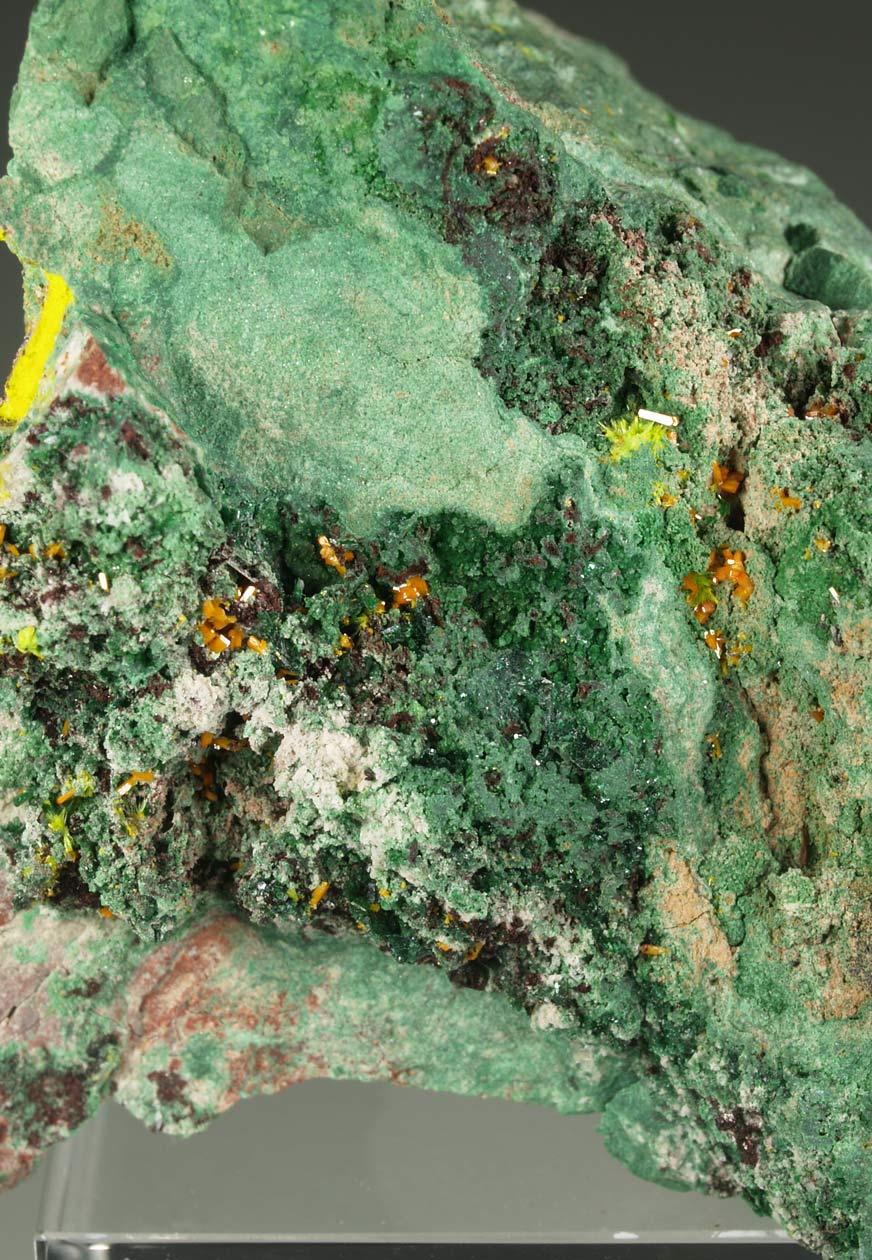
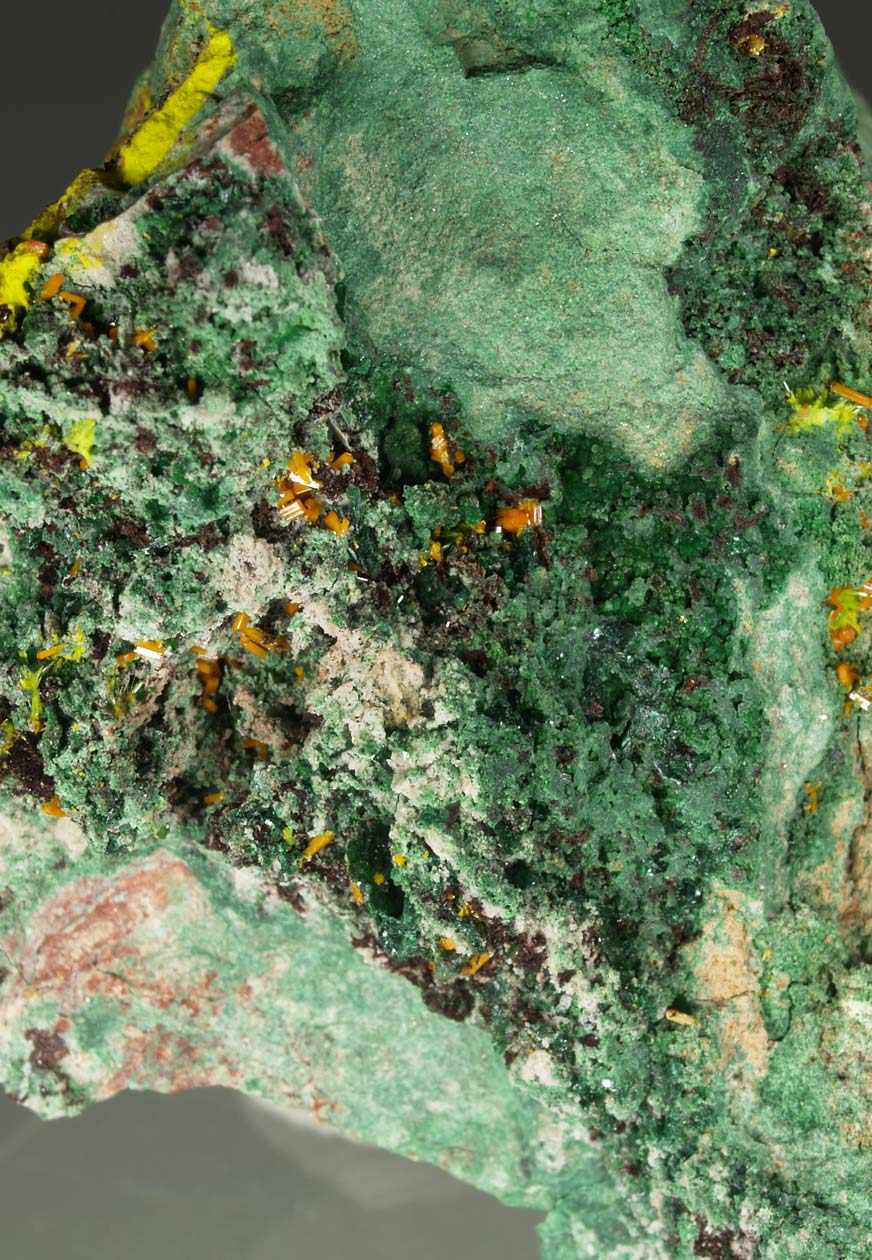
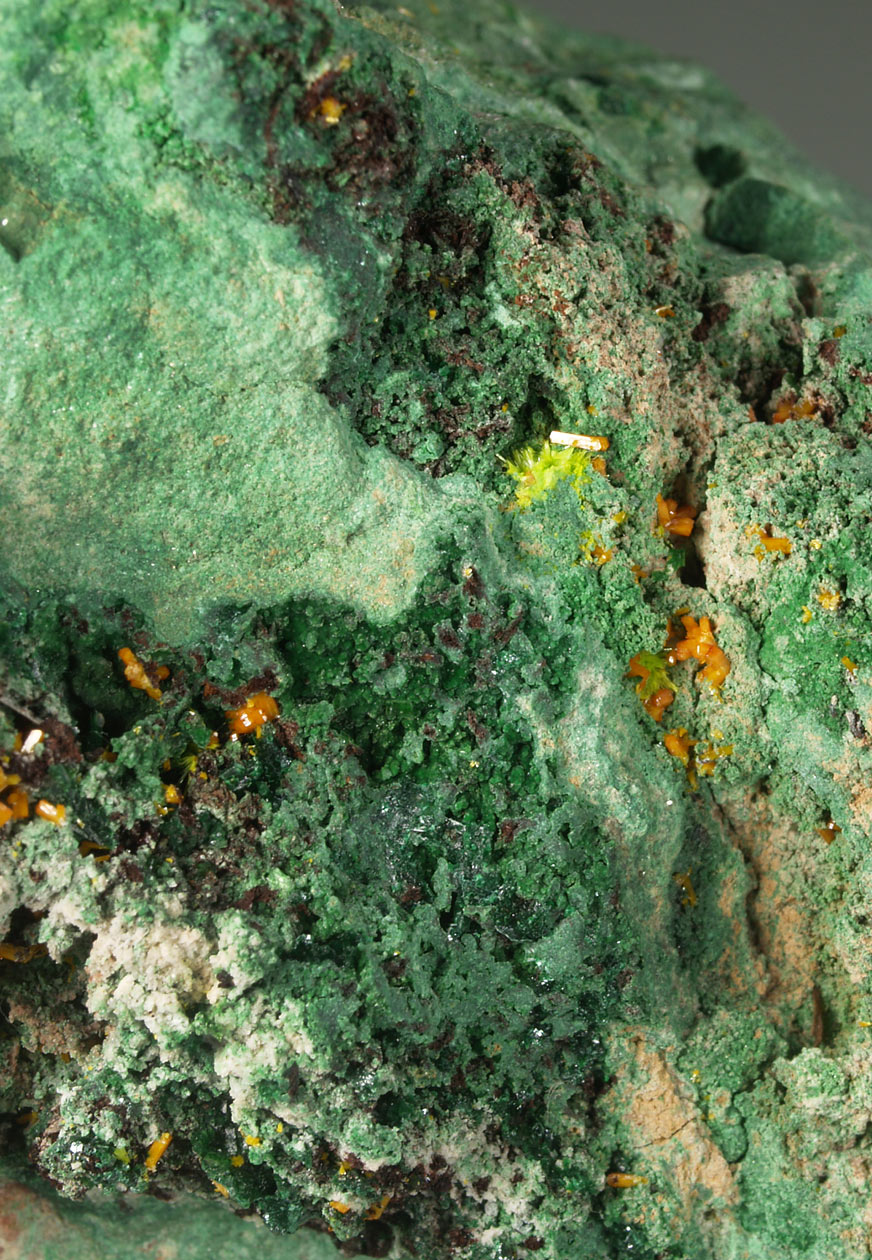
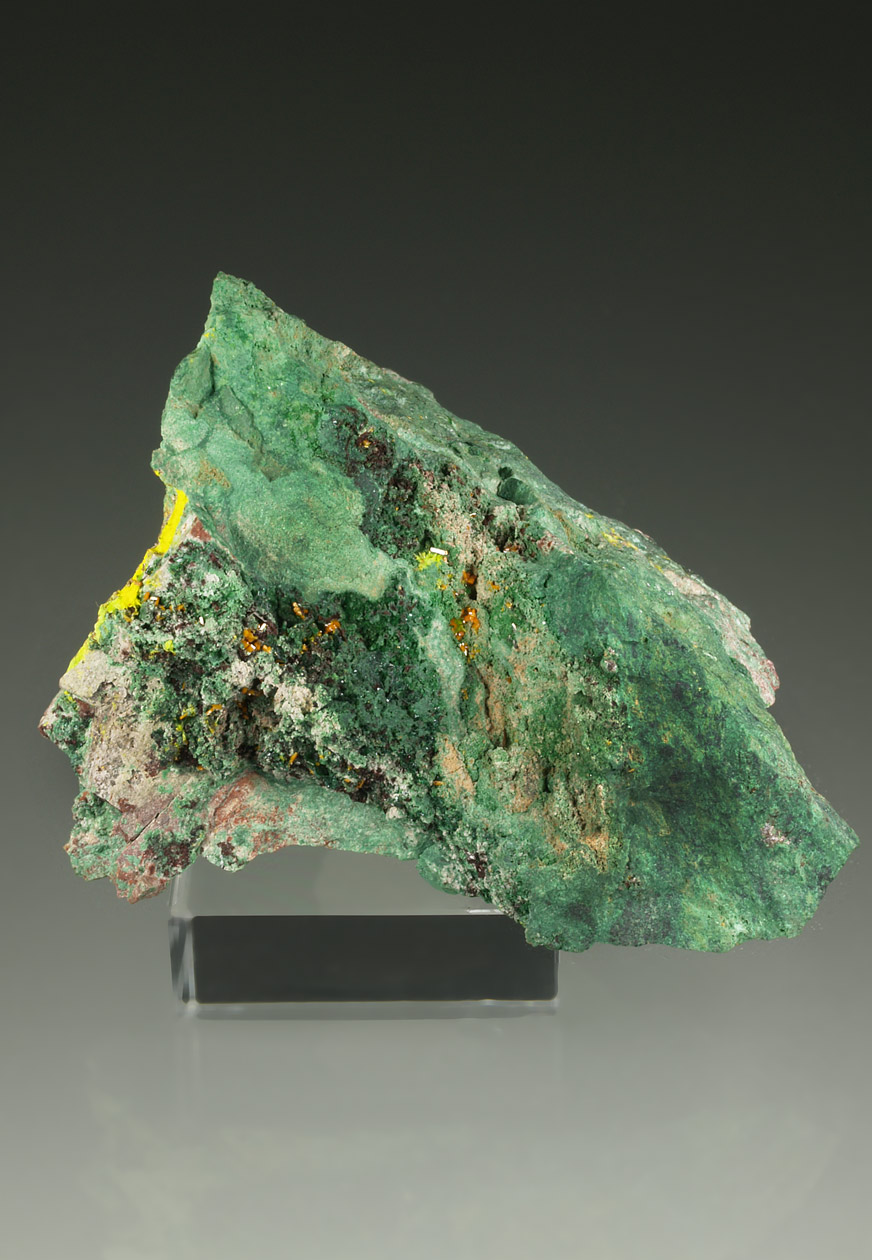
In my opinion, among all known radioactive minerals, kasolite is the most aesthetic. It presents forms of elongated to tabular prisms, very well defined and sharp, many of them doubly terminated and of intense yellow color, even with some transparency. It is accompanied by guilleminite crystals of yellowish color. The matrix is partially covered by brilliant malachite. A aesthetic sample from a classic locality, to be observed with attention.
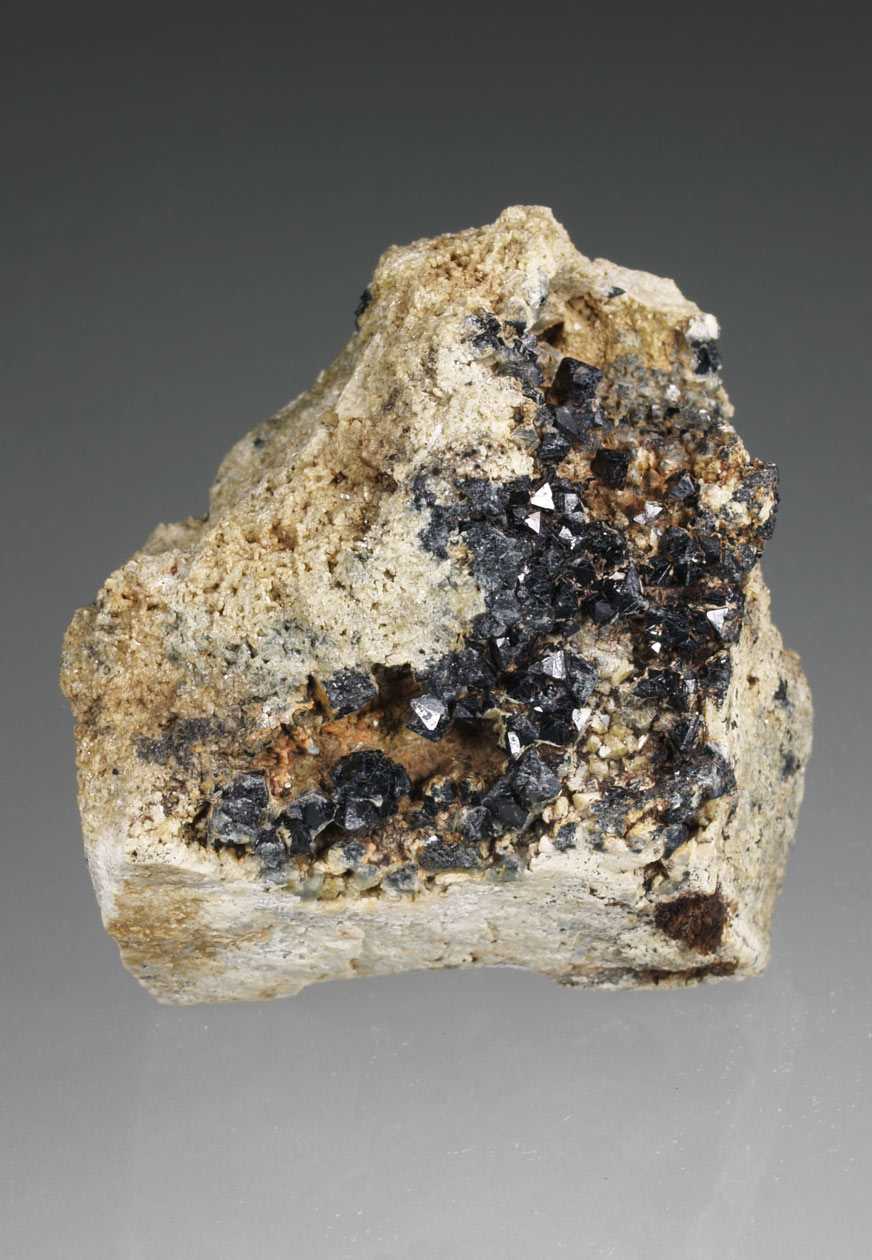
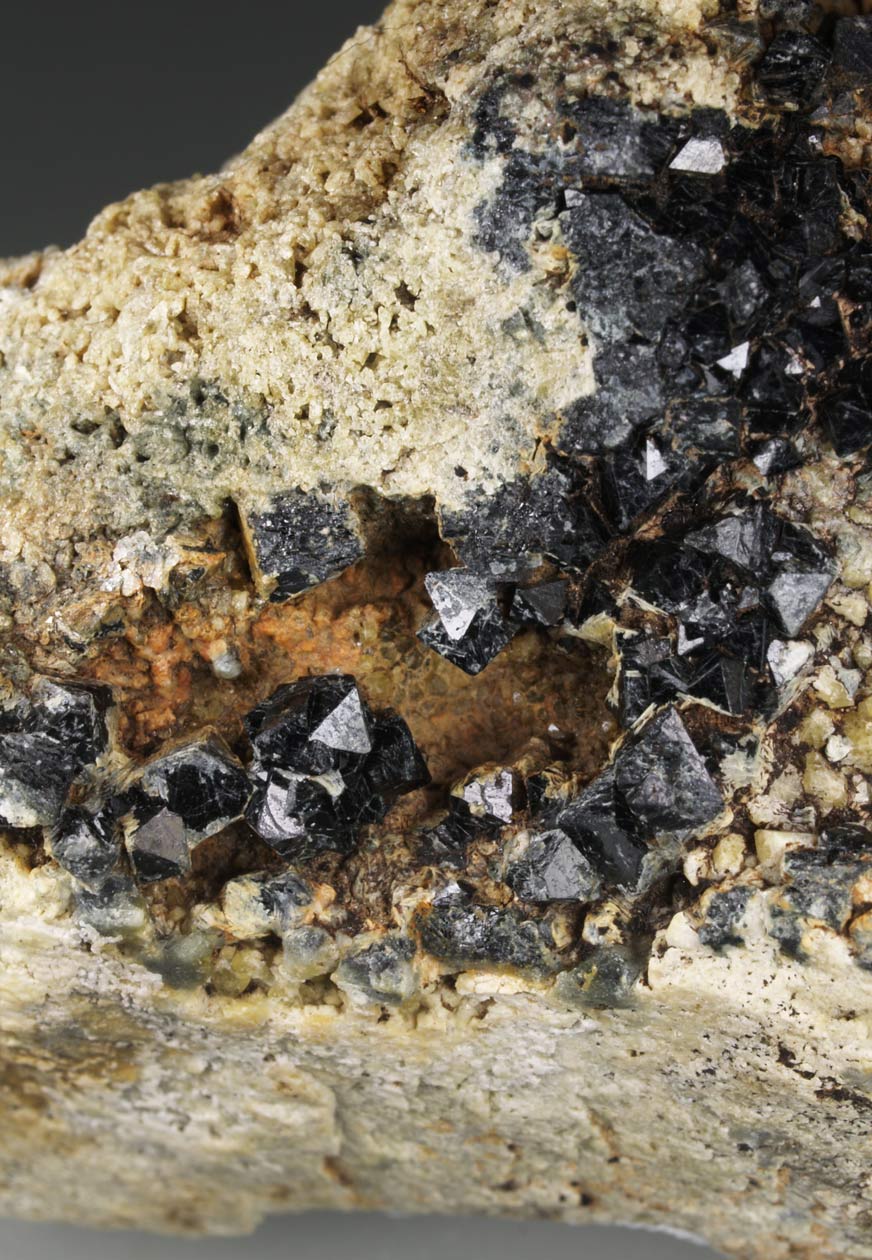
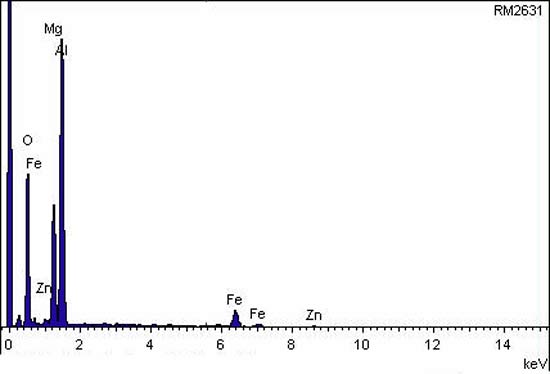
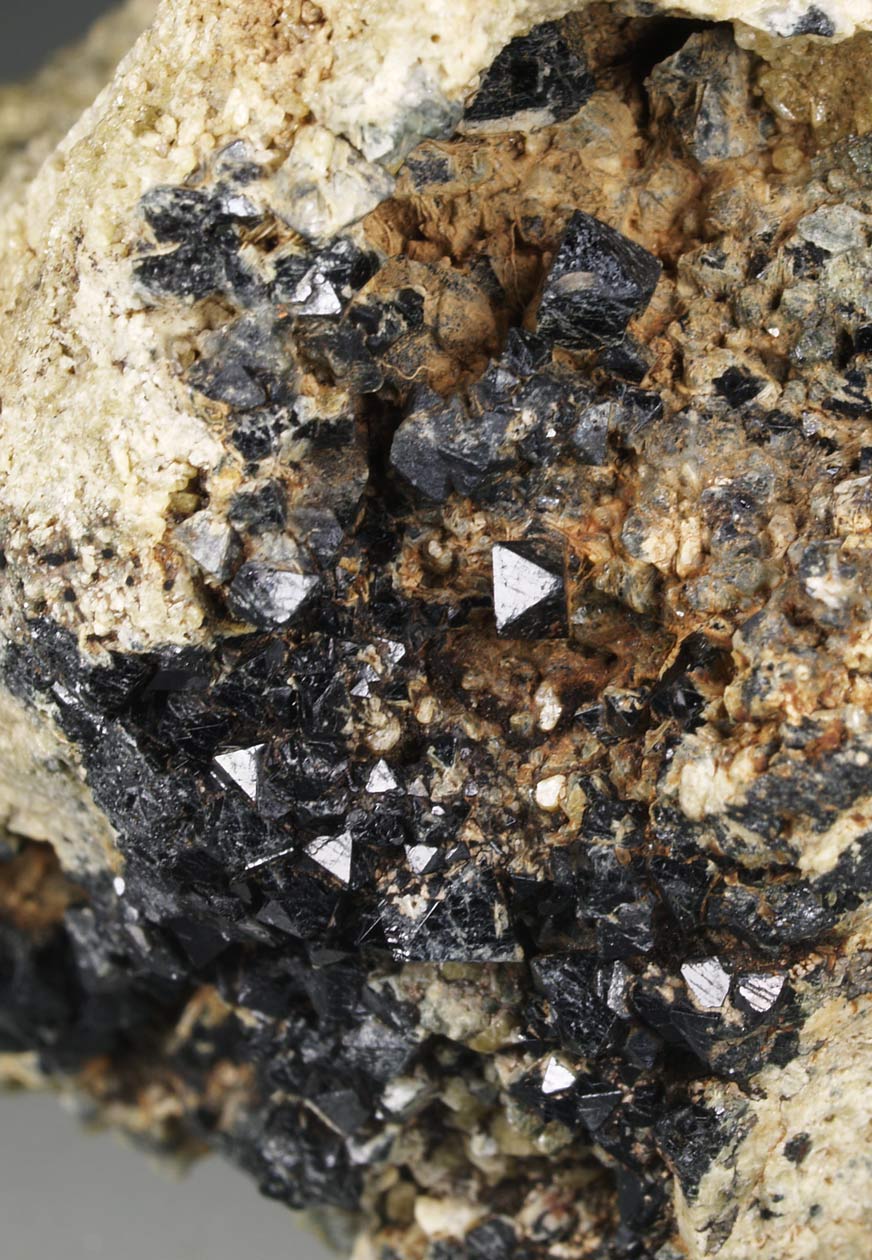
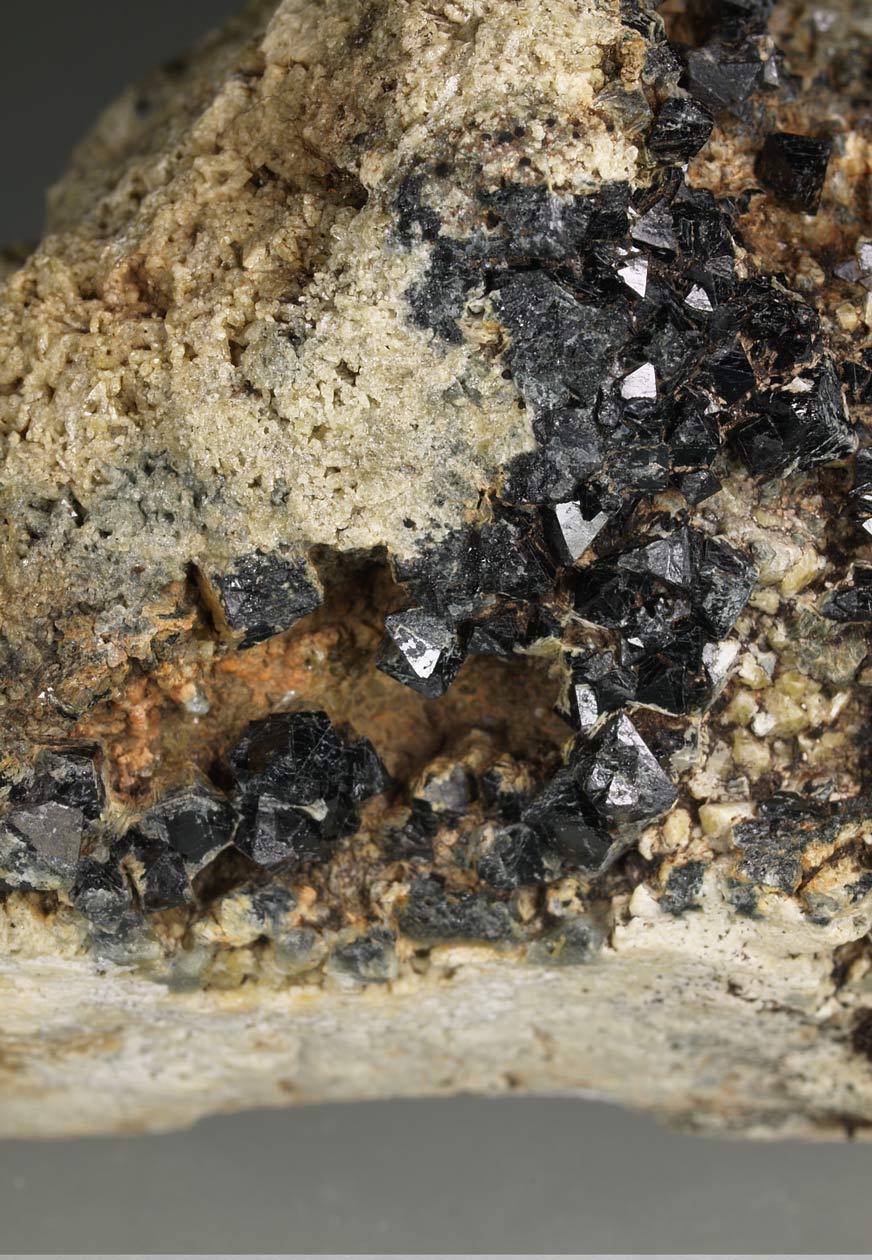
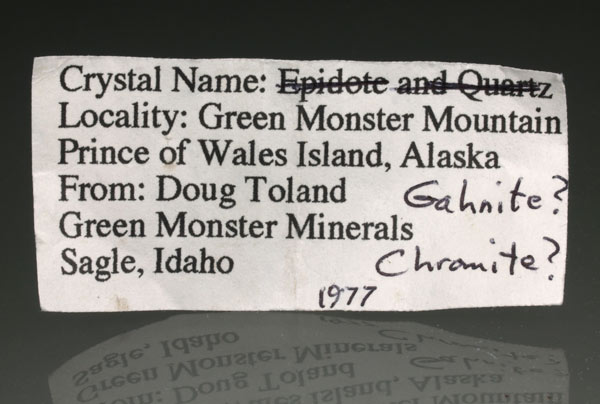
Rich specimen formed by numerous spinel crystals showing octahedral form, black colour, very brilliant and well defined faces and edges. Sample is accompanied by the label of Douglas "Doug" Toland, with notes those indicates it could be gahnite or chromite, but the semi-quantitative analysis done with SEM-EDS microscopy shows that it is spinel, not identified in the mine before. It is accompanied by probably grossular and chlorite. A good specimen for the species and for this cold locality.
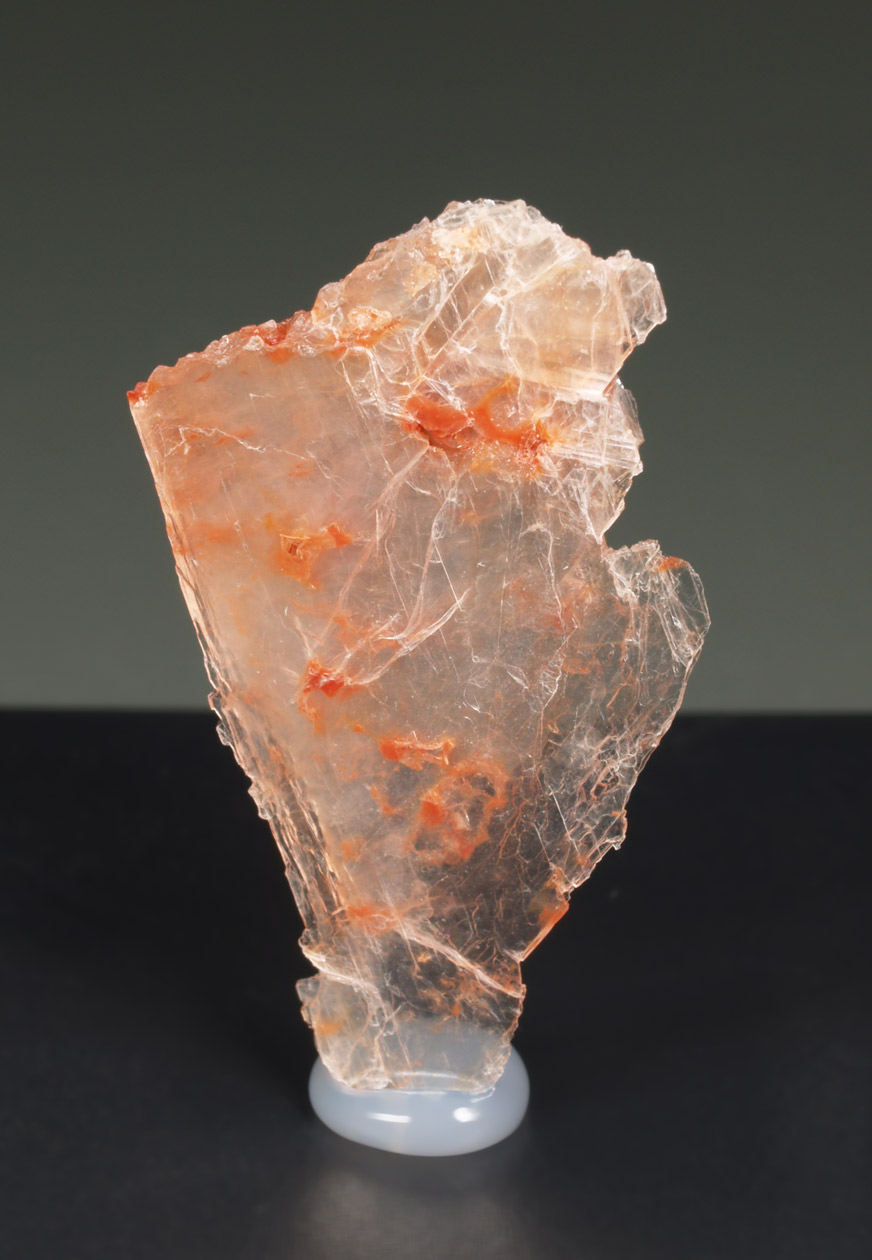
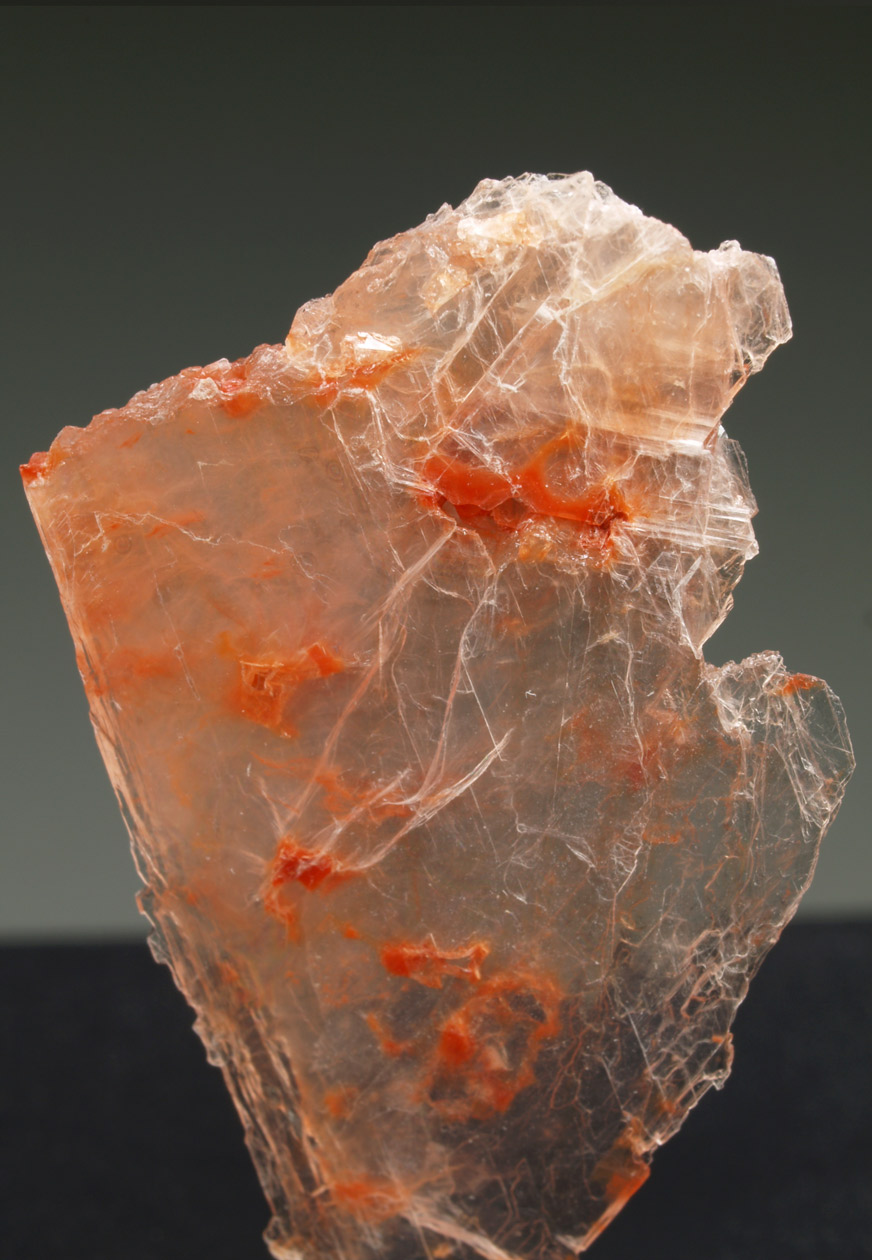
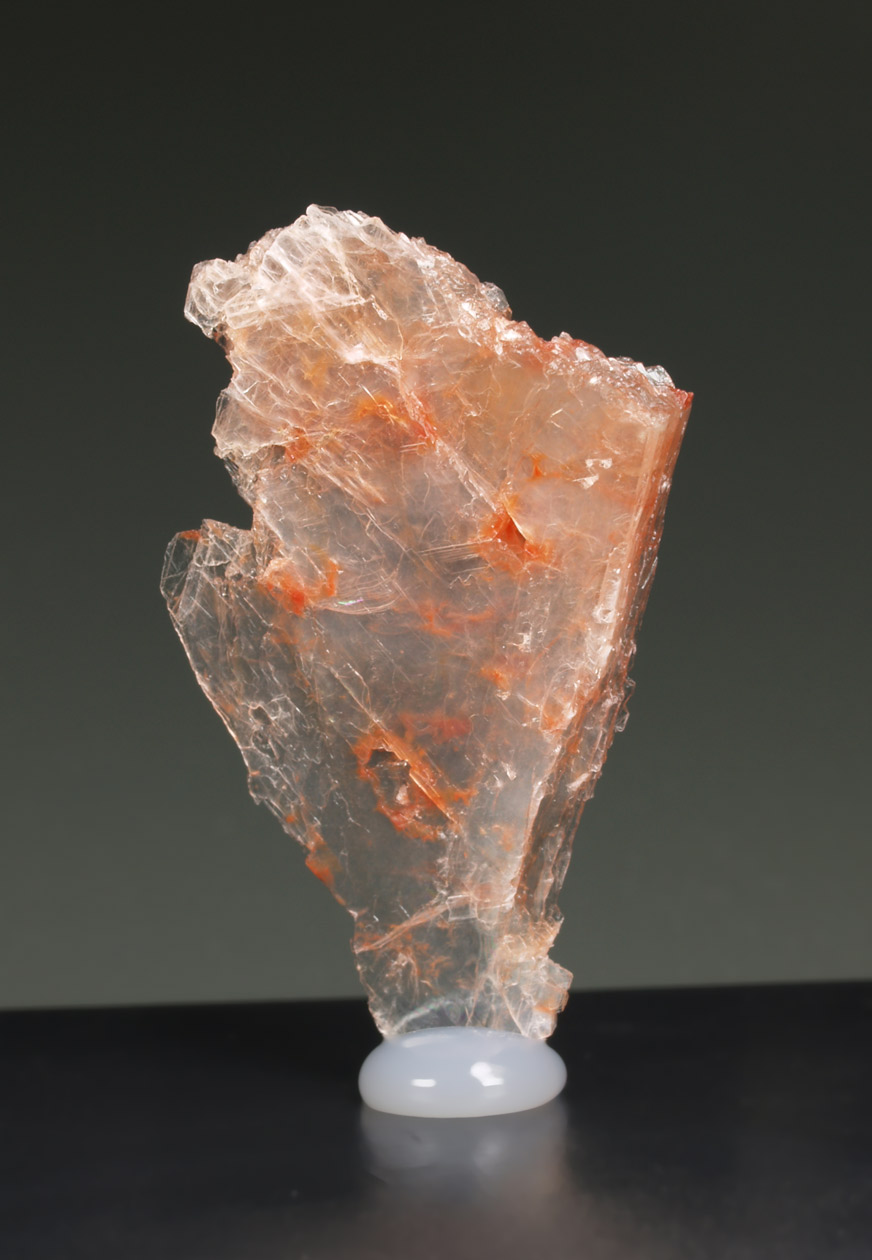
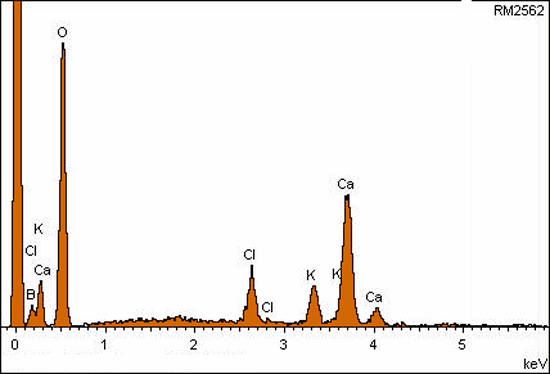
Group of volkovskite crystals in parallel growth, colorless, transparent, with inclusions of hilgardite providing a bit of red color to the edges. This specimen comes from a finding that was recovered by a worker in the mine a years ago. Volkovskite is a very rare potassium and calcium chloroborate. Specimens of this size are very rare. Undoubtedly it is the best locality. We have analyzed by SEM-EDS this sample and we will send the results to the buyer.
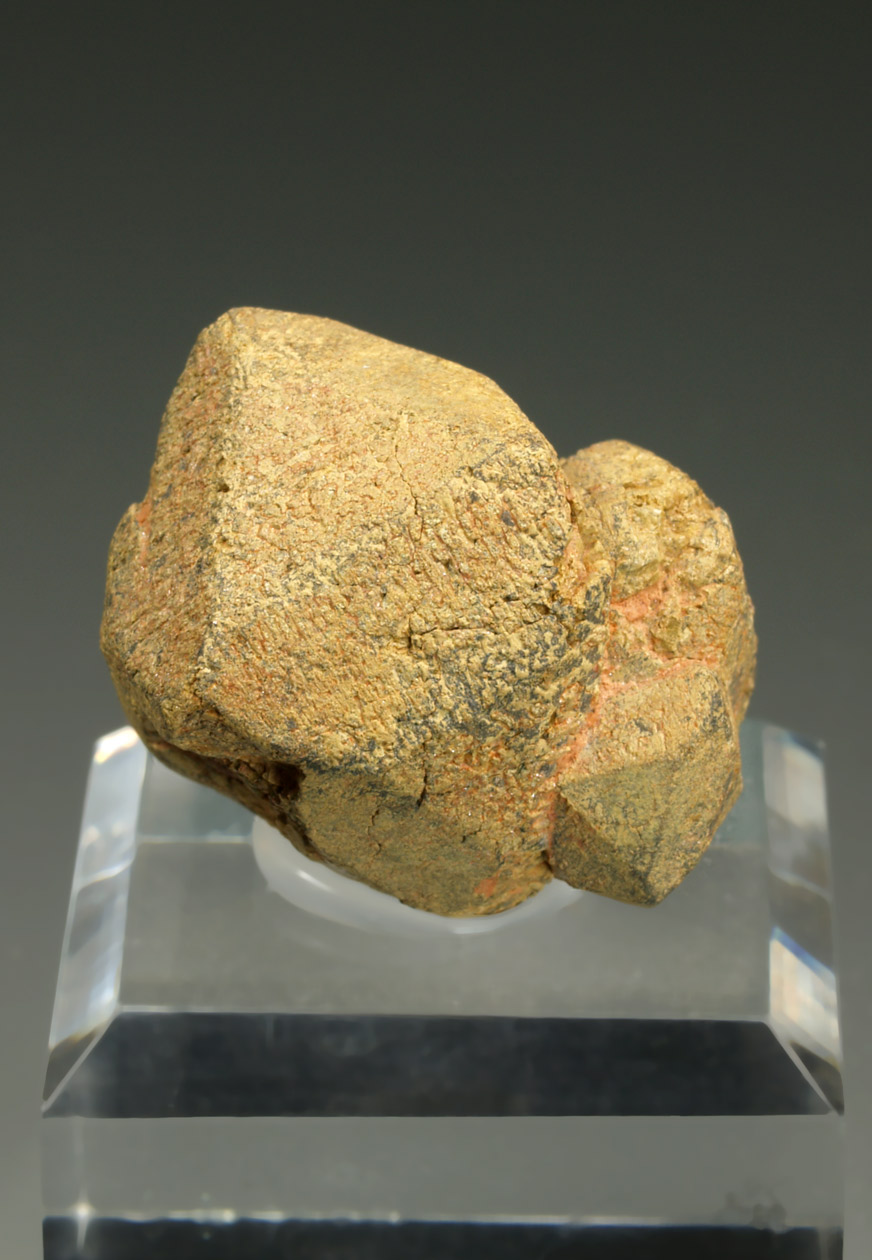
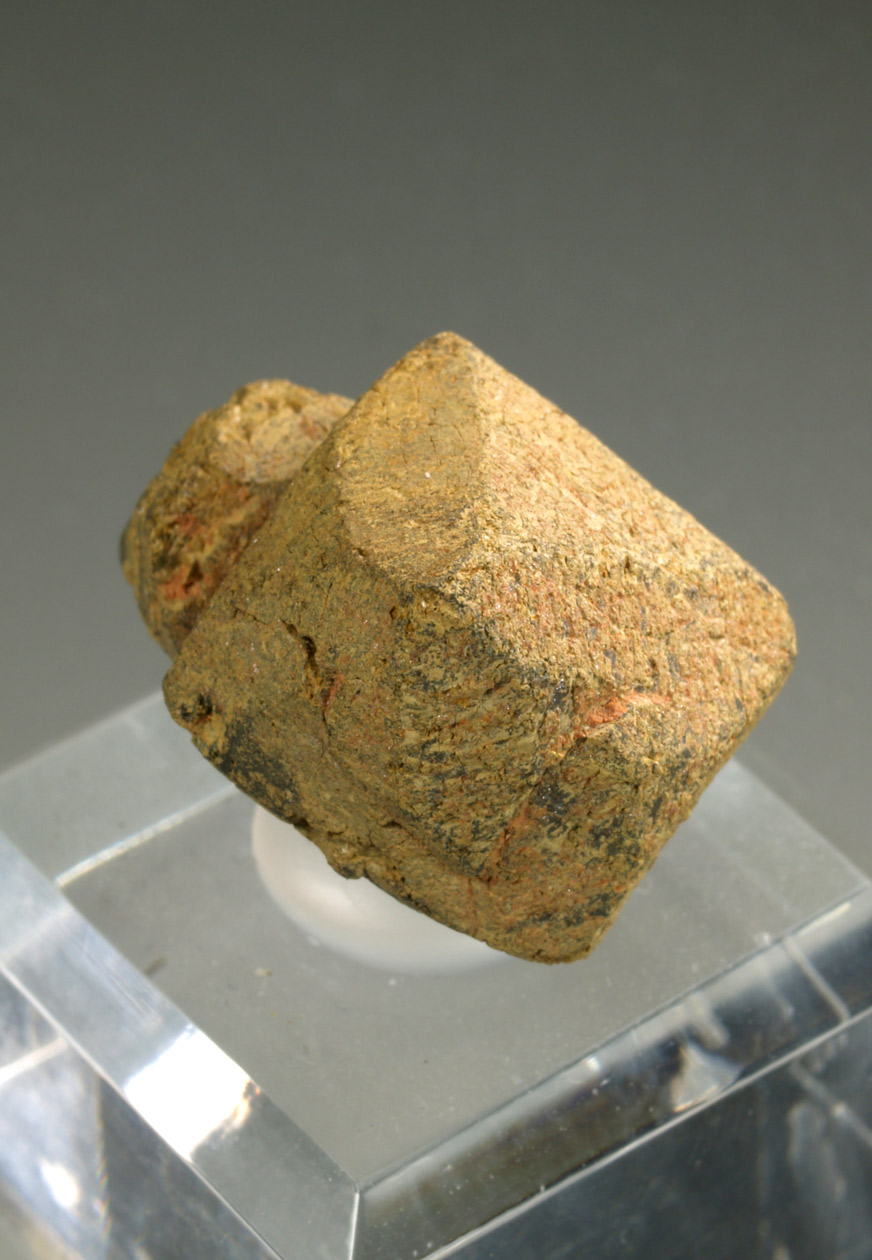
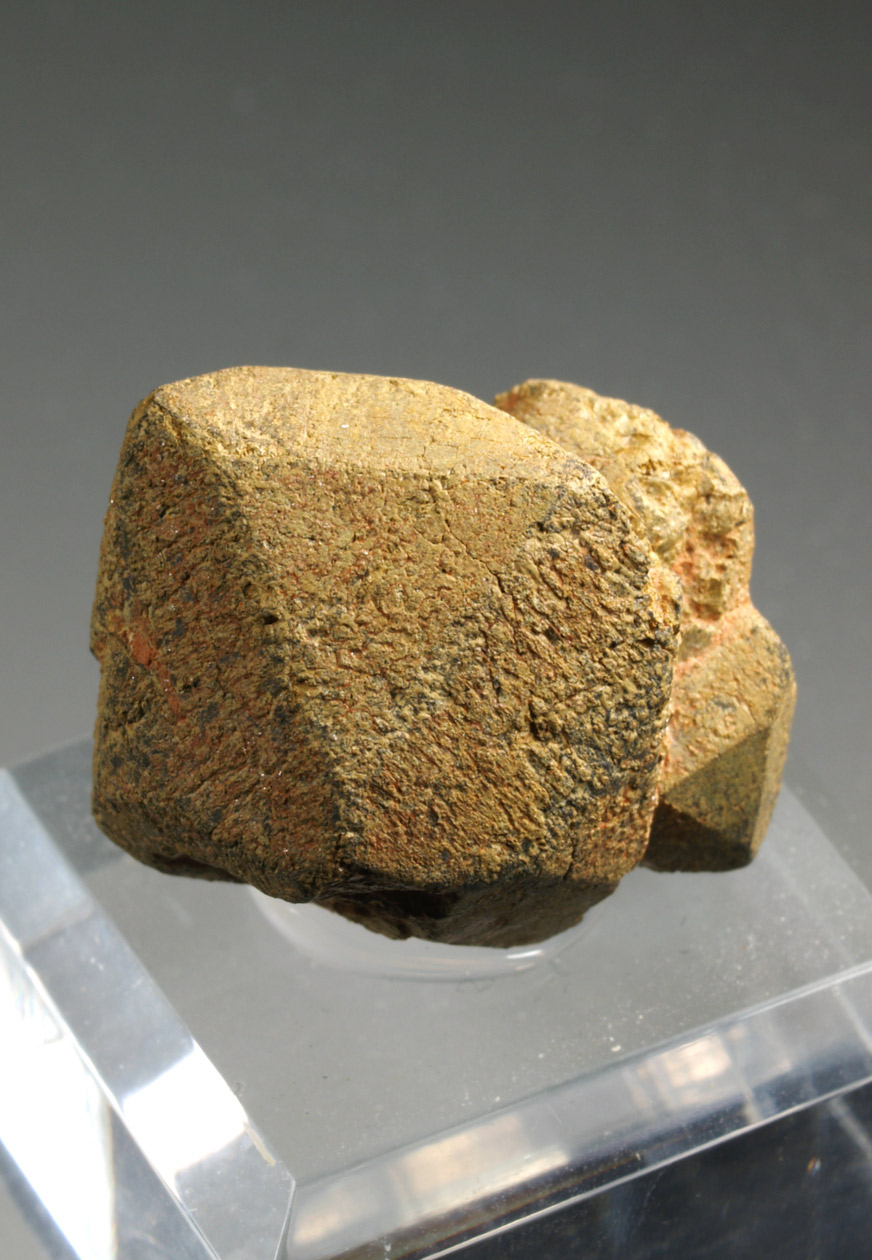
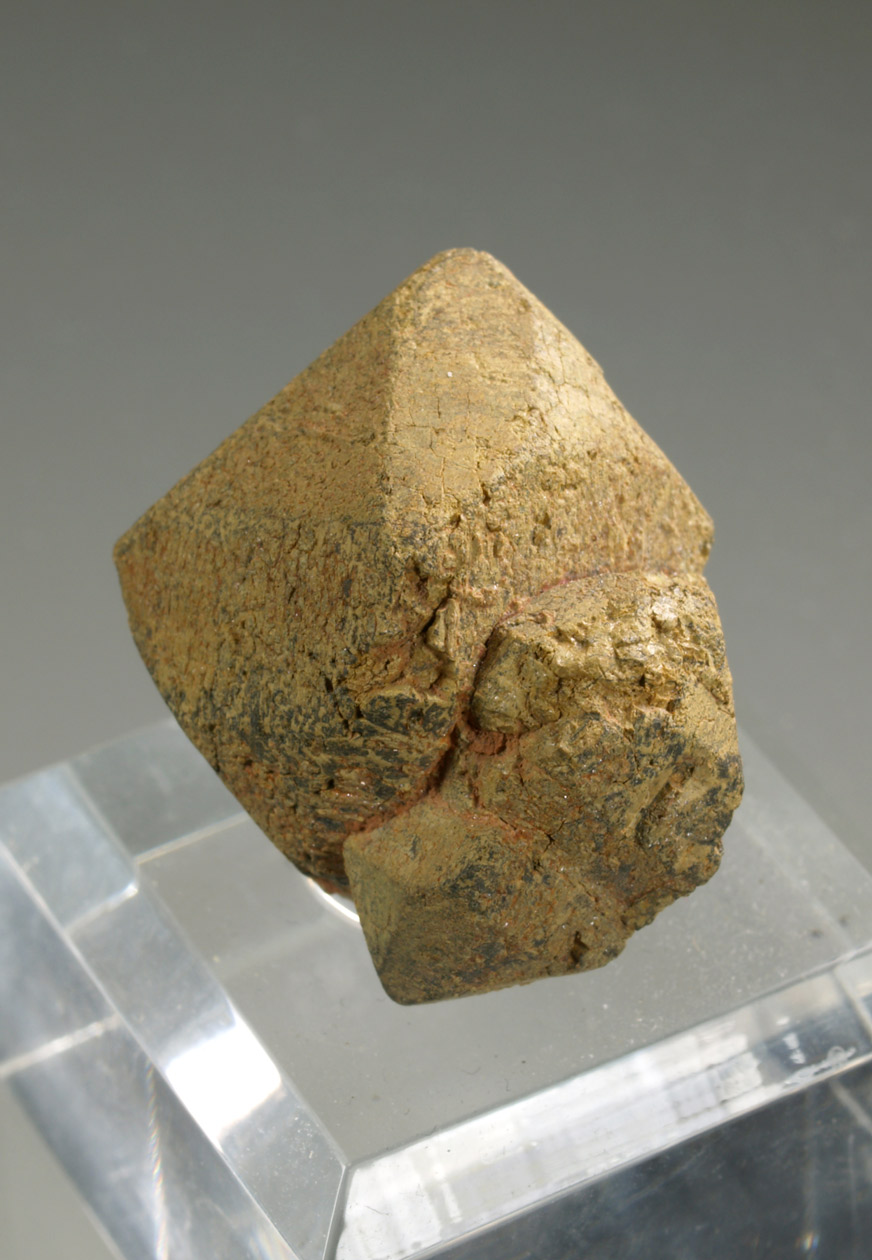
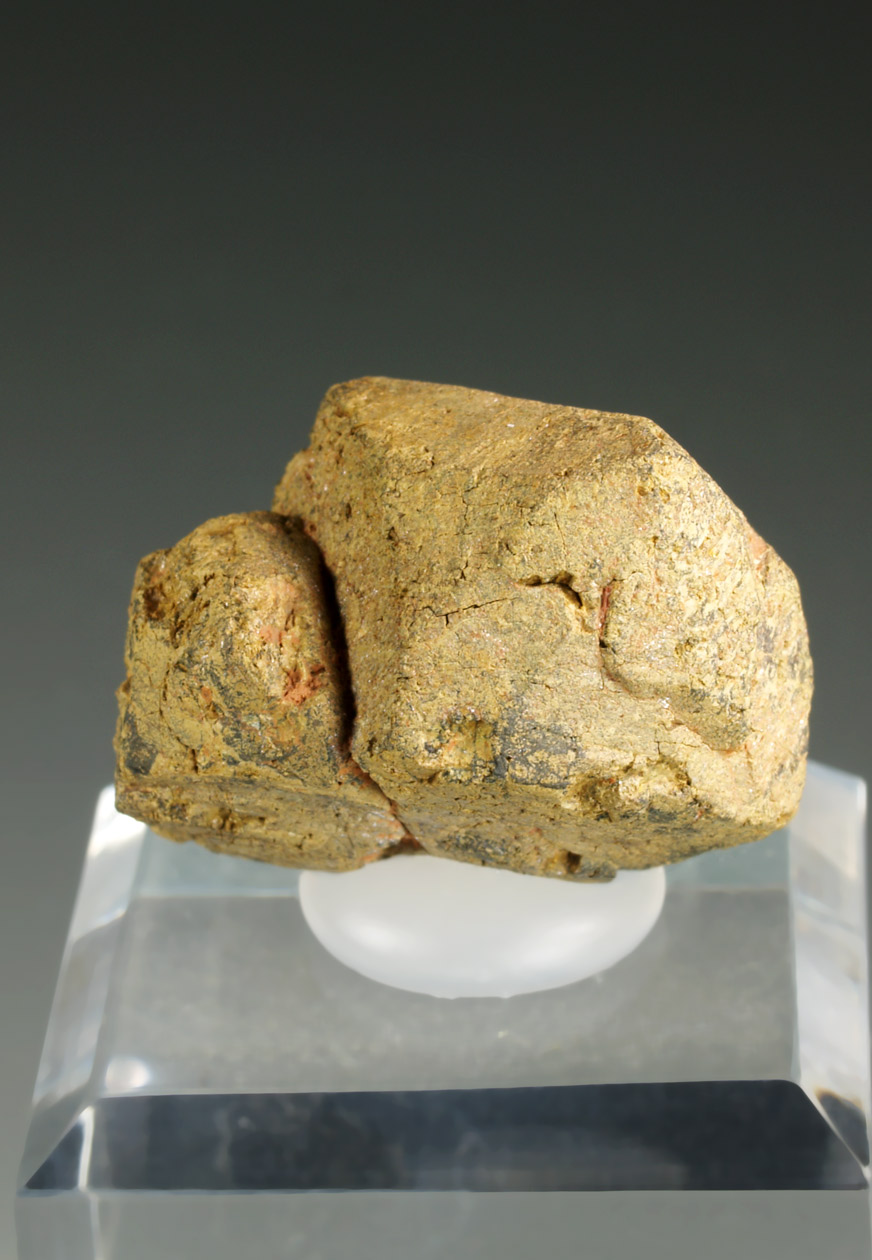
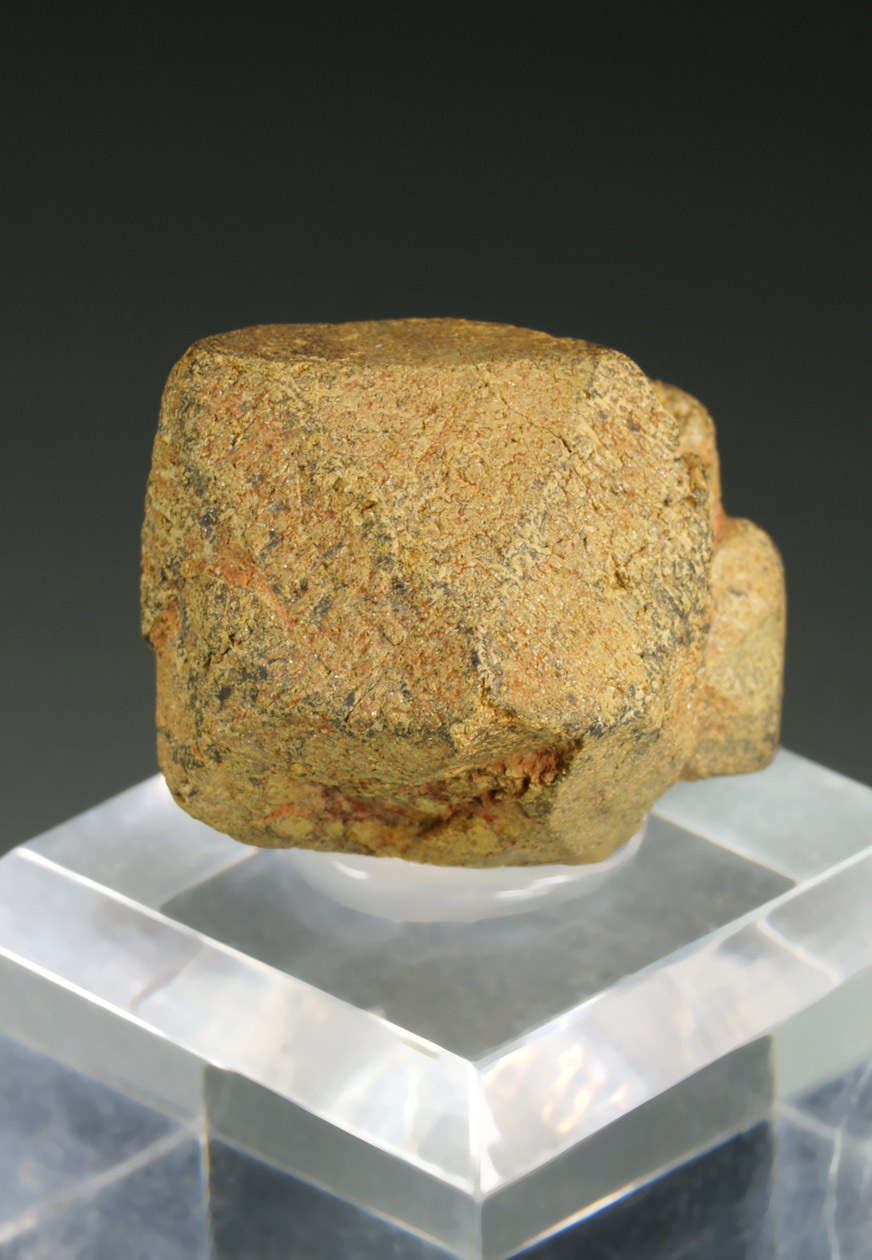
A huge size crystal of betafite showing defined octahedral faces (triangular) and developed dodecahedral ones. Very interesting for its crystallography and species. An oldie, classic and representative for the species. This specimen belonged to the collection of Peraud-Pregilbert (France).
Although the term betafite was discredited in 2010, many of us still are using this term to define this mineral when we see it. Our specimen is an uranium, calcium, titanium and niobium/tantalum oxide with radioactive activity. Currently the betafite is included as a variety within the pyrochlore supergroup. As a note, the rich uranium term has been only found in the Moon (oxyuranobetafite).
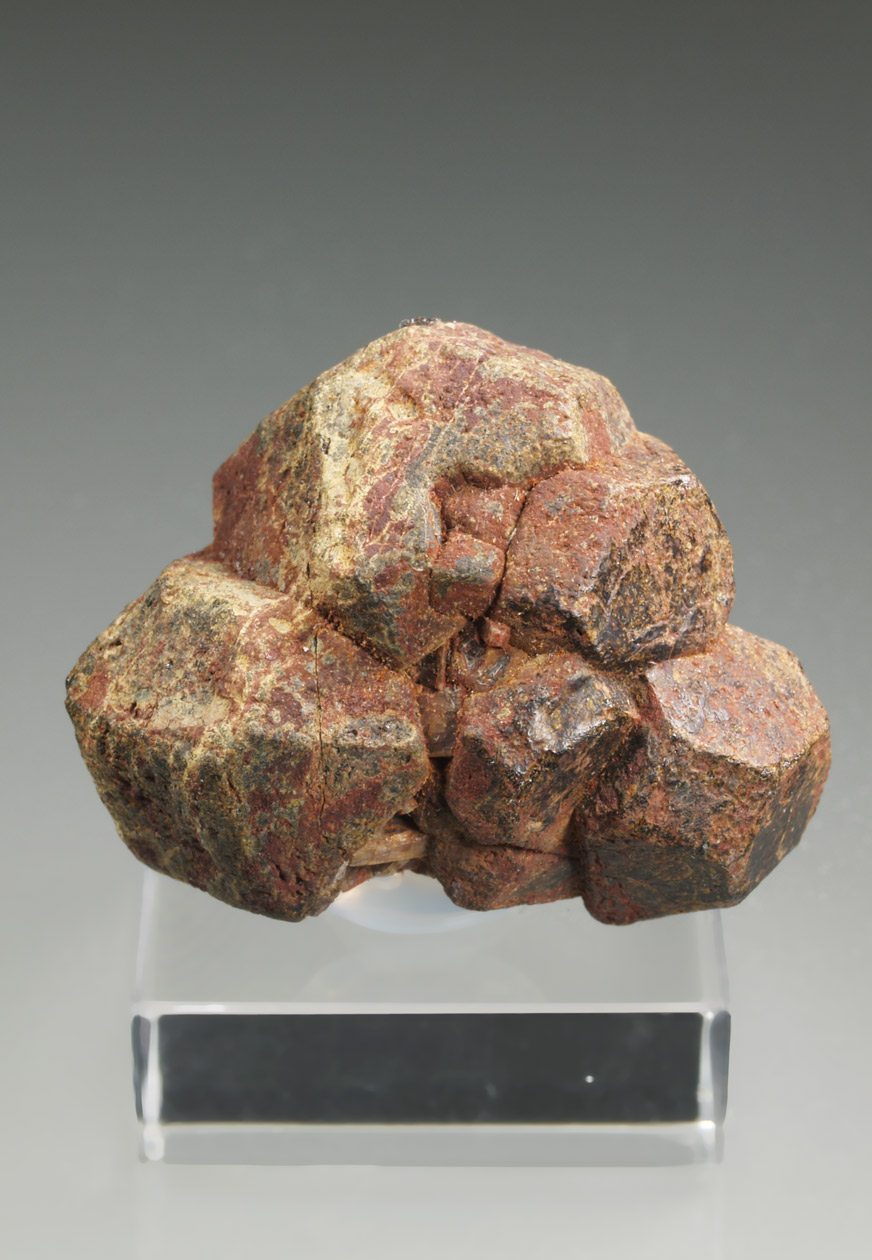
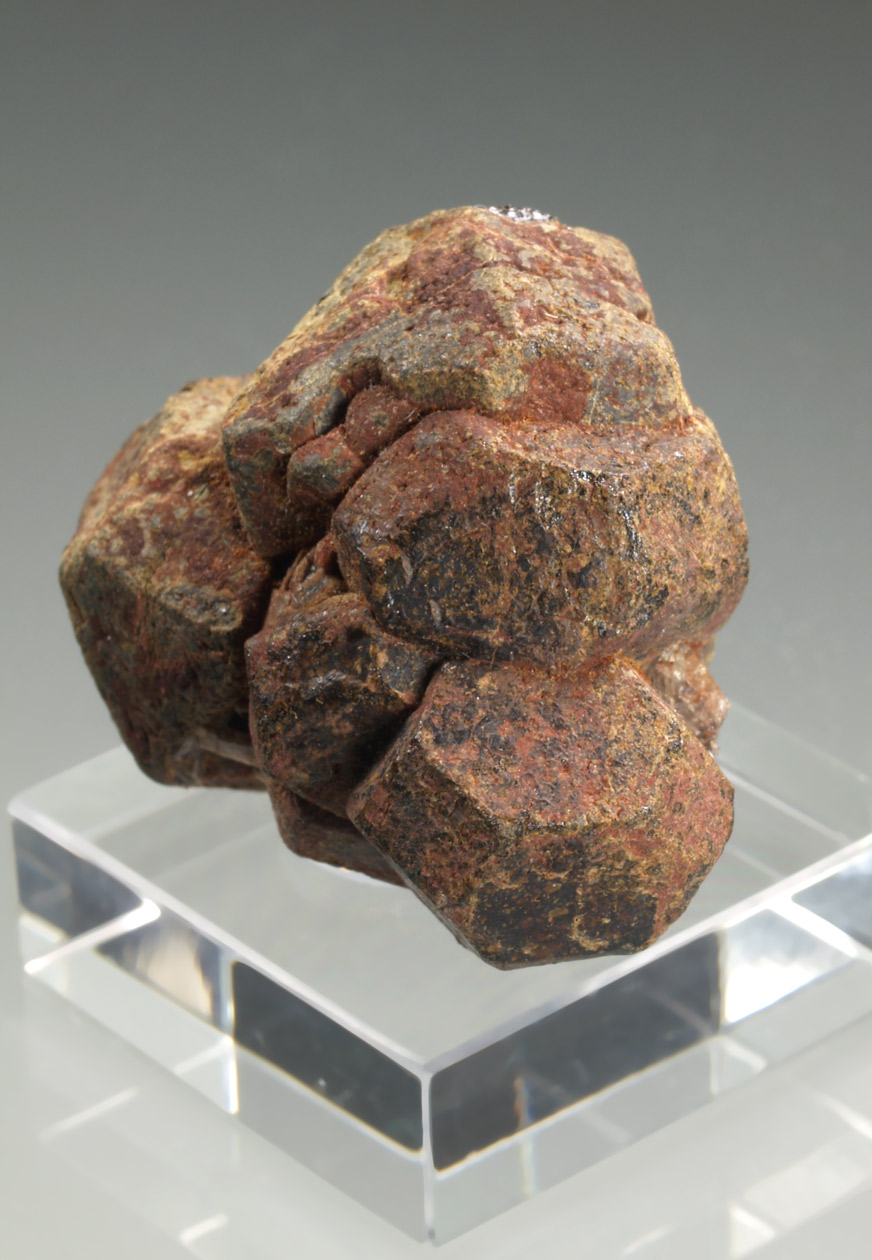
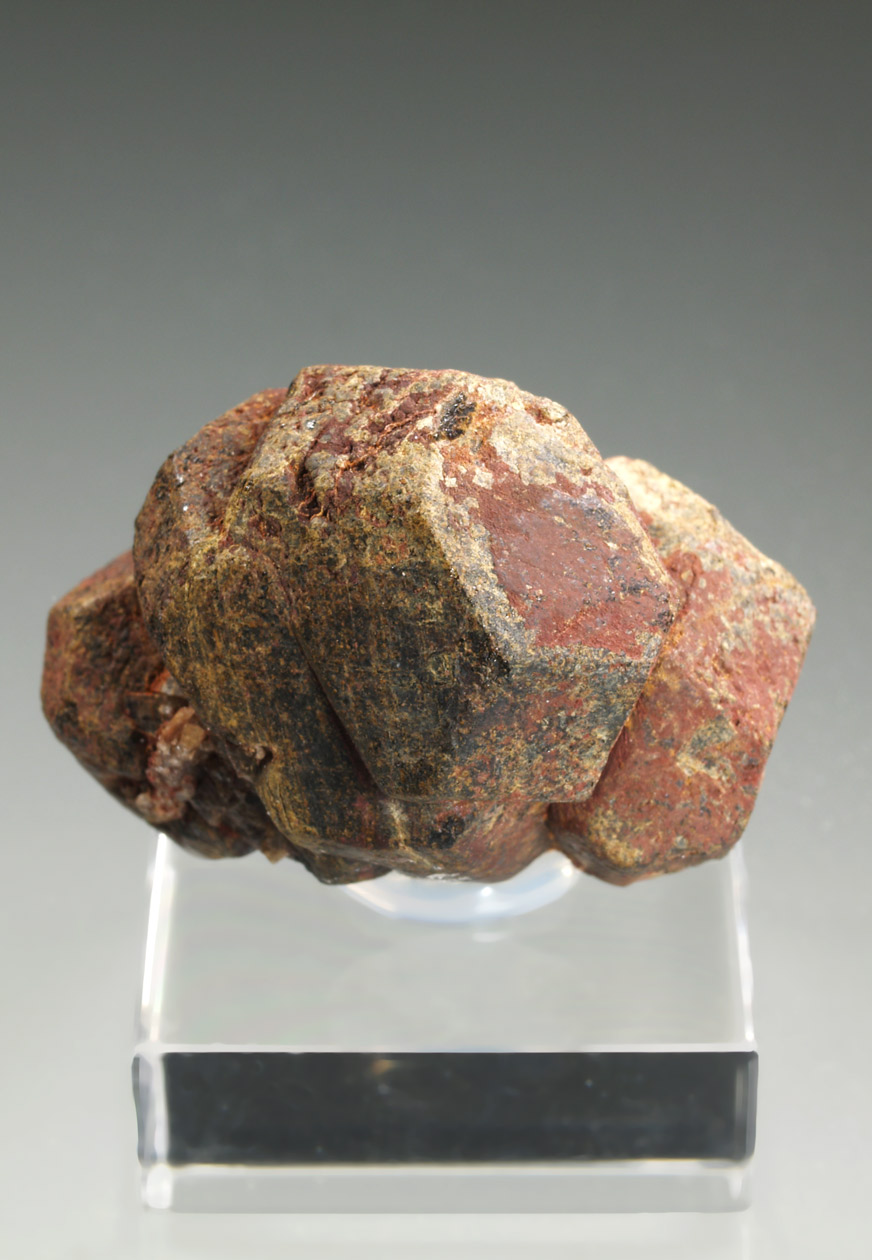
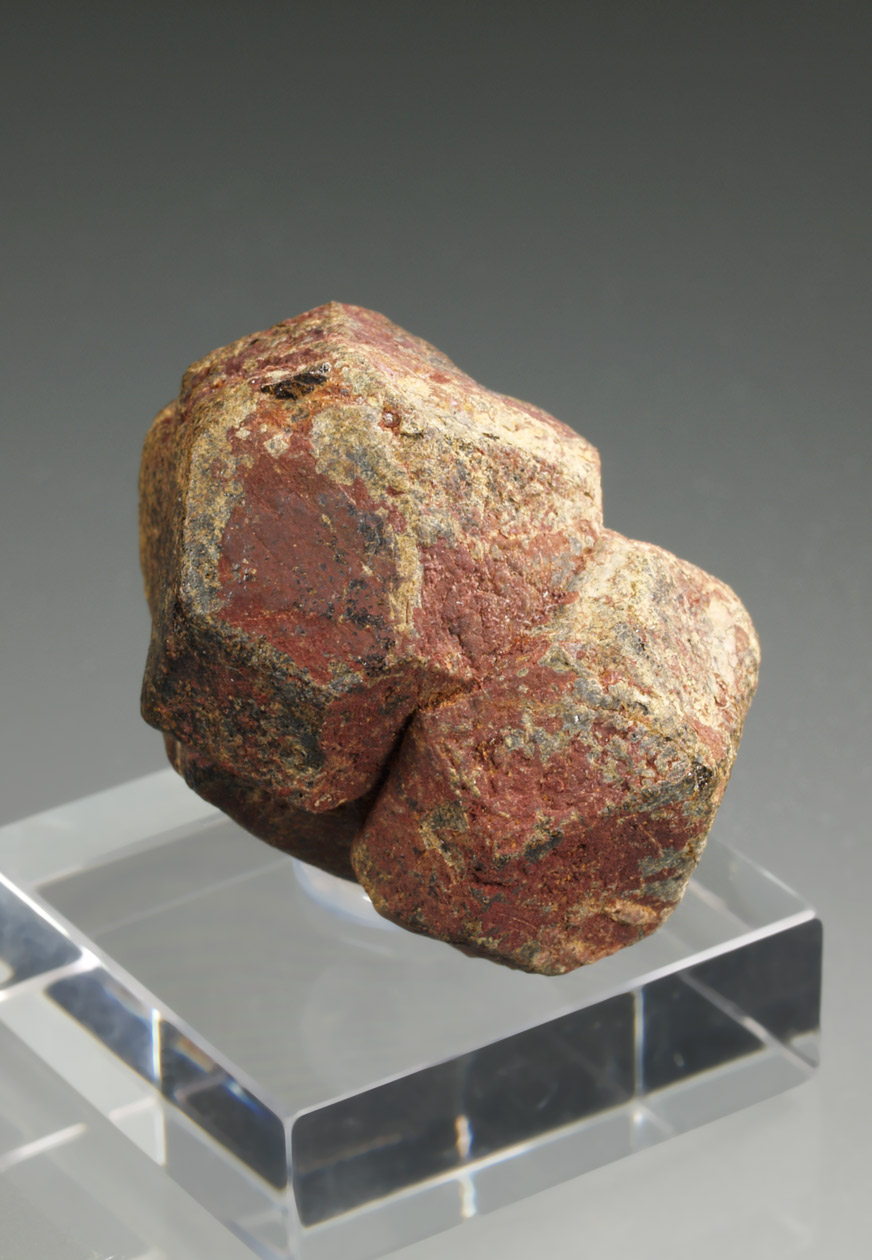
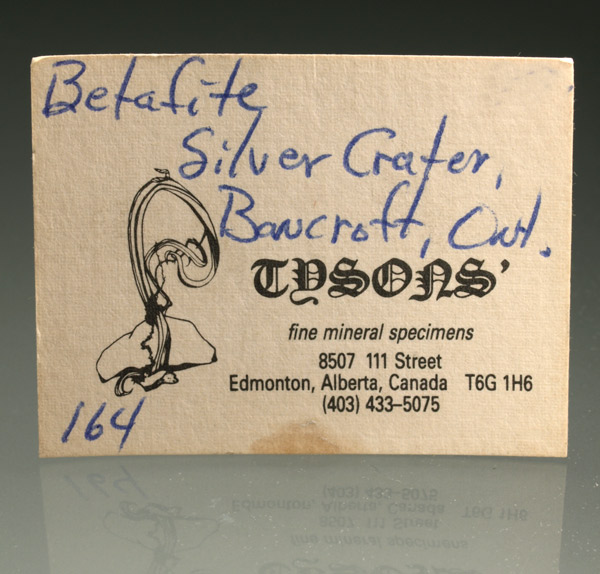
Group of interpenetrated betafite crystals of good size that show the most developed faces of the dodecahedron. Interesting crystallography. It is accompanied by zircon crystals. These mottled-brown isometric crystals are from the well-known Silver Crater Mine at Bancroft. This is an excellent and uncommon example, today. Most specimens of this quality came out in the 1950s, during the active mining period. An old, classic and essential piece in any collection. This specimen bears the label of Tysons', a Canadian mineral dealer.
Although the term betafite was discredited in 2010, many of us still are using this term to define this mineral when we see it. Our specimen is an uranium, calcium, titanium and niobium/tantalum oxide with radioactive activity. Currently the betafite is included as a variety within the pyrochlore supergroup. As a note, the rich uranium term has been only found in the Moon (oxyuranobetafite).
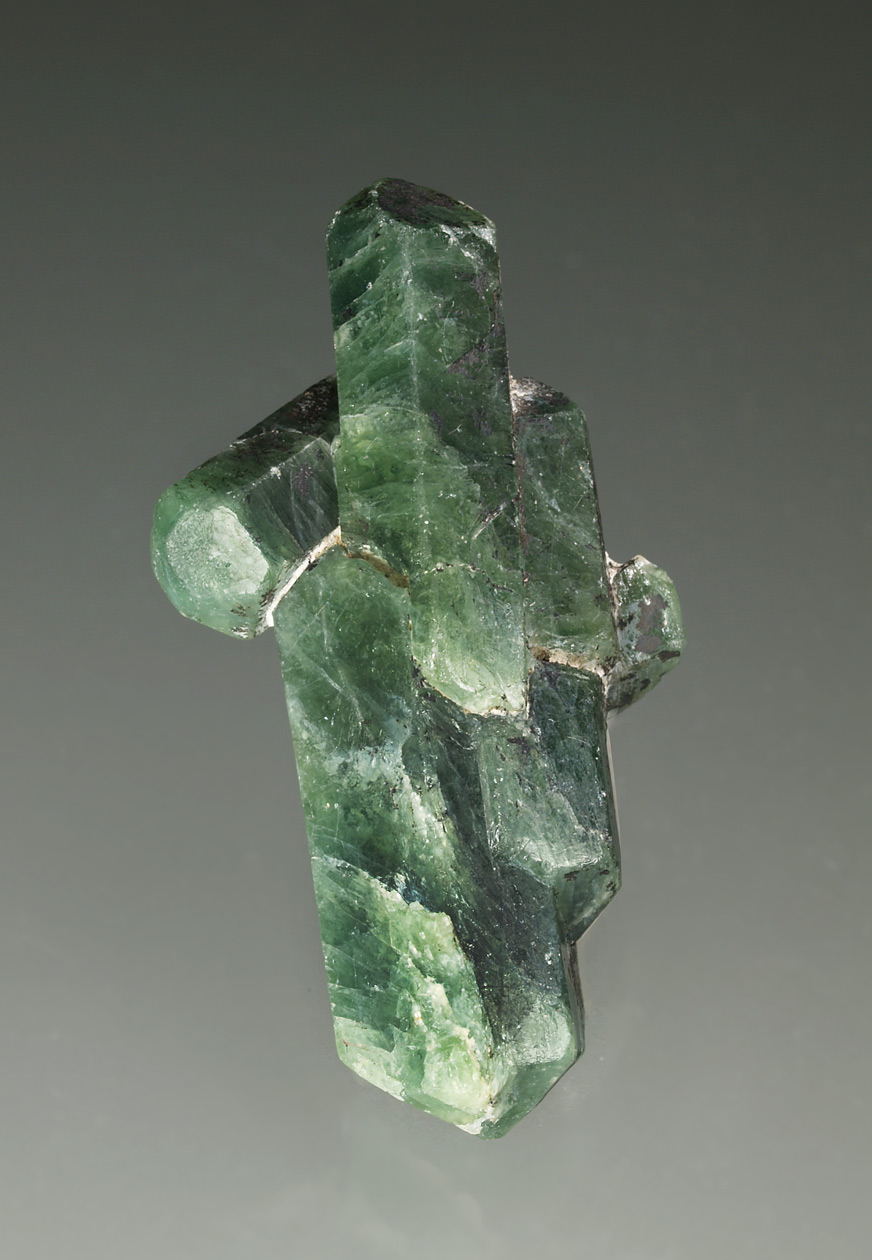
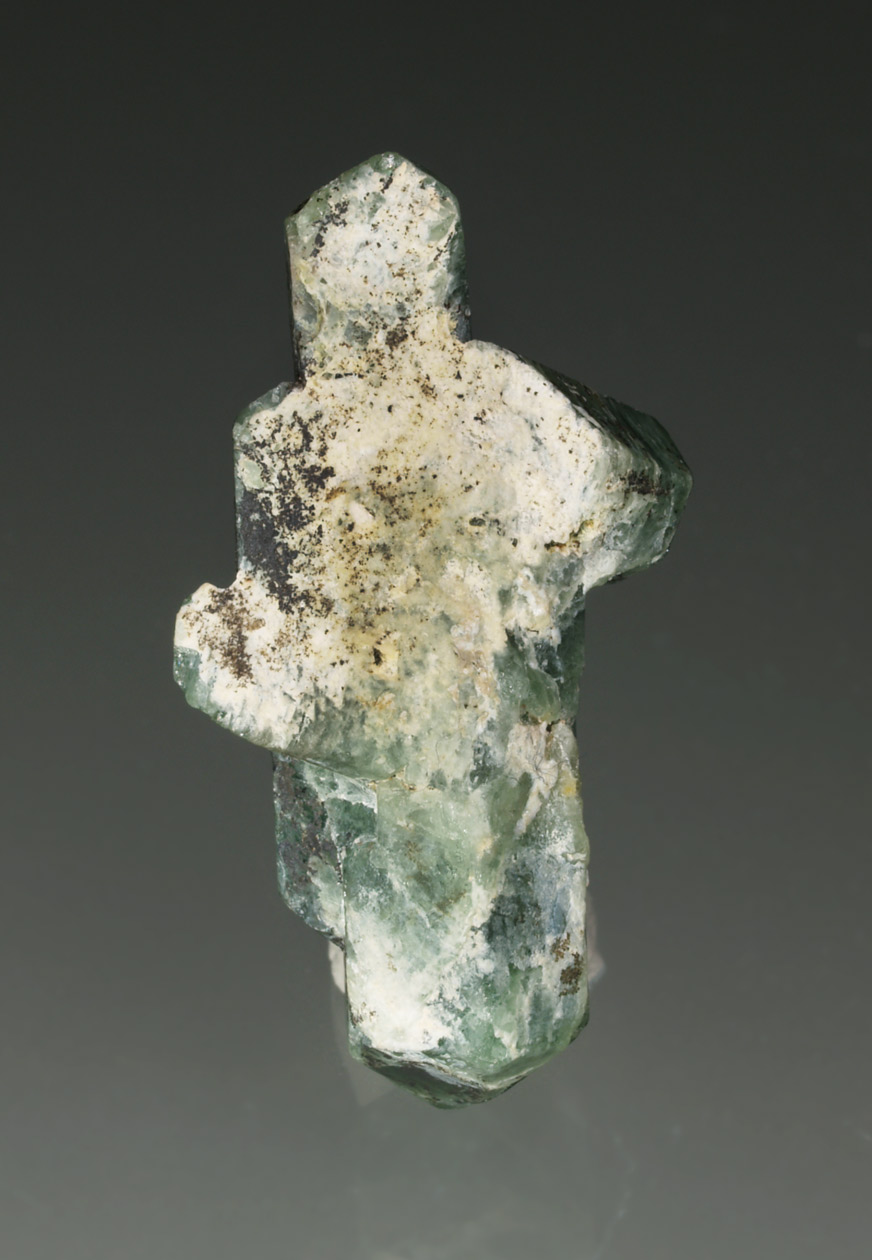
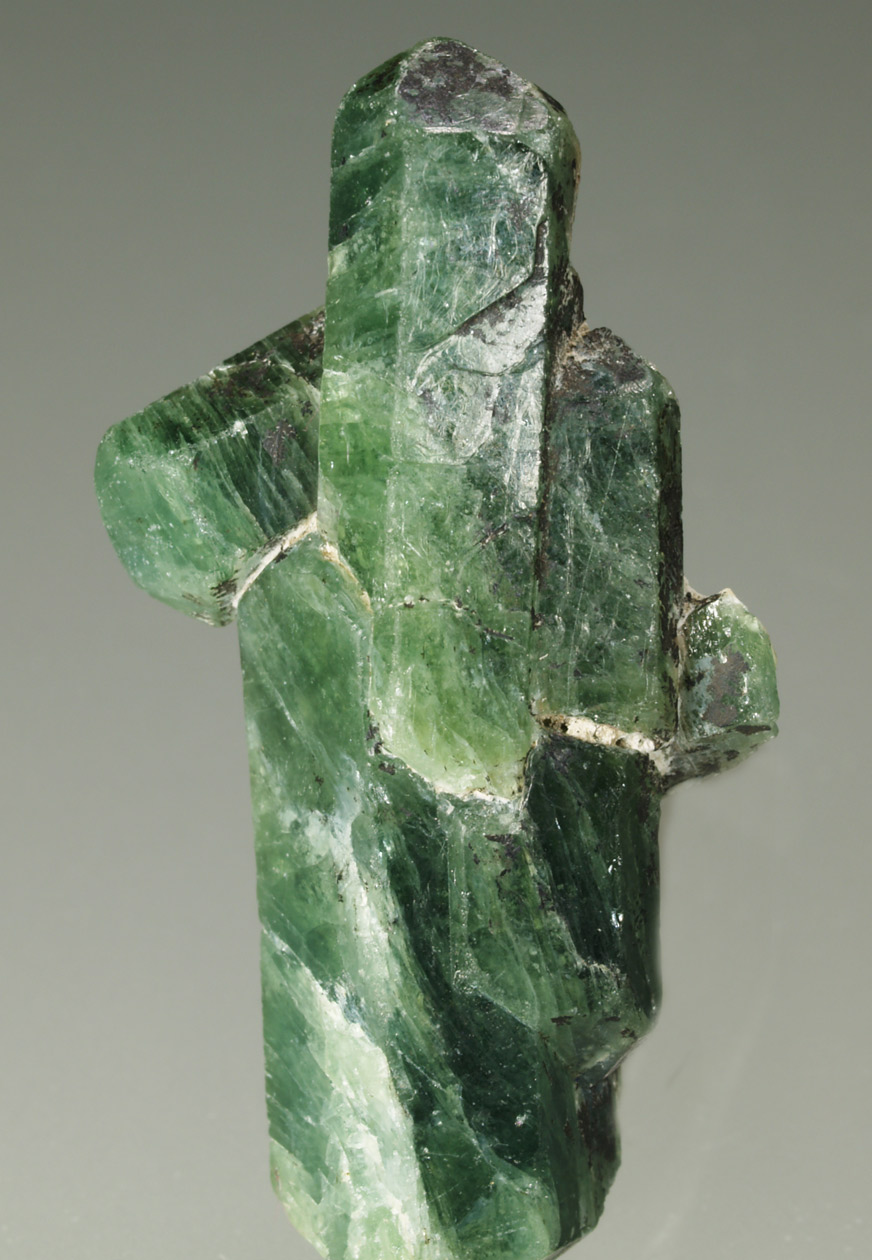
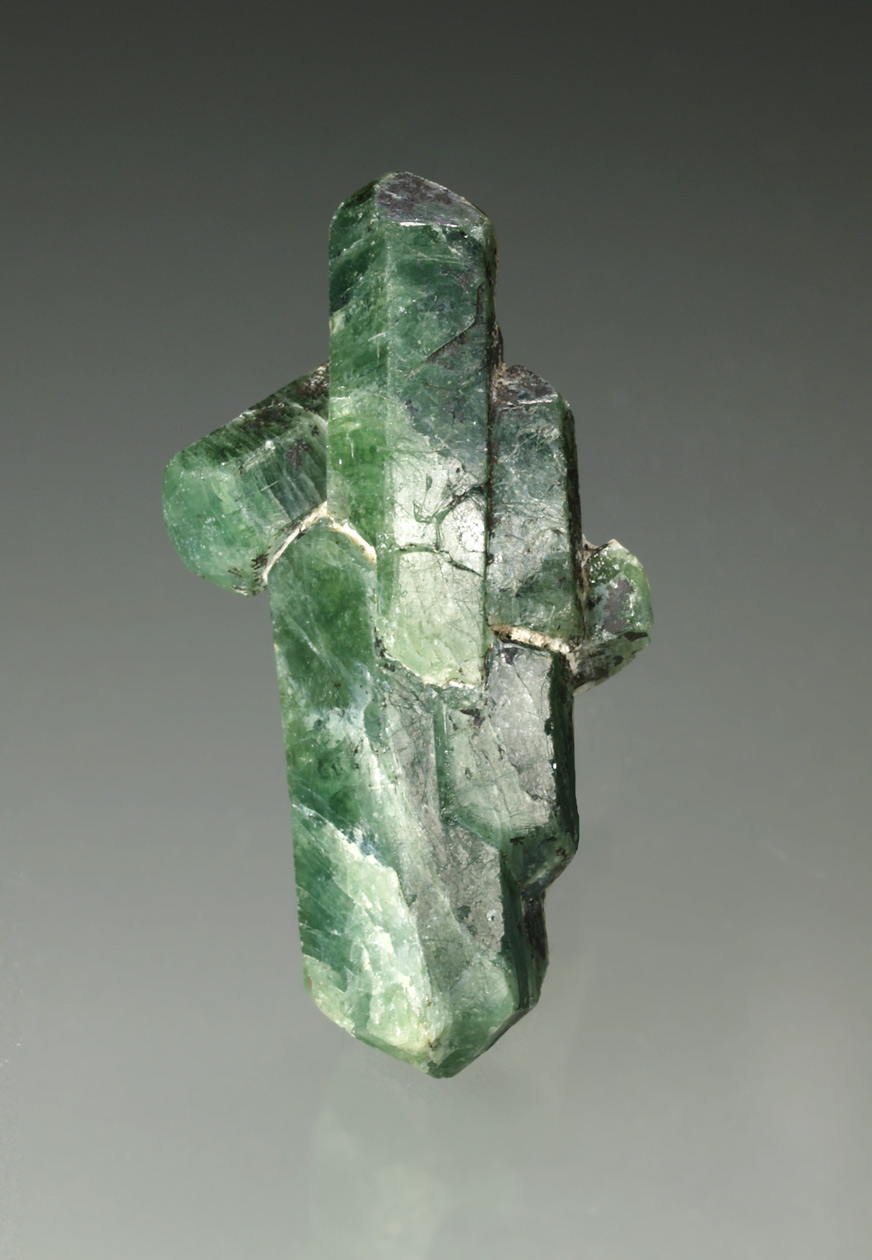
Curious group of fluorapatite crystals, of intense green color, interpertered and with parallel growths. One side is crystalized, the other not... A curiosity analyzed since we doubted that it was not a diopside.
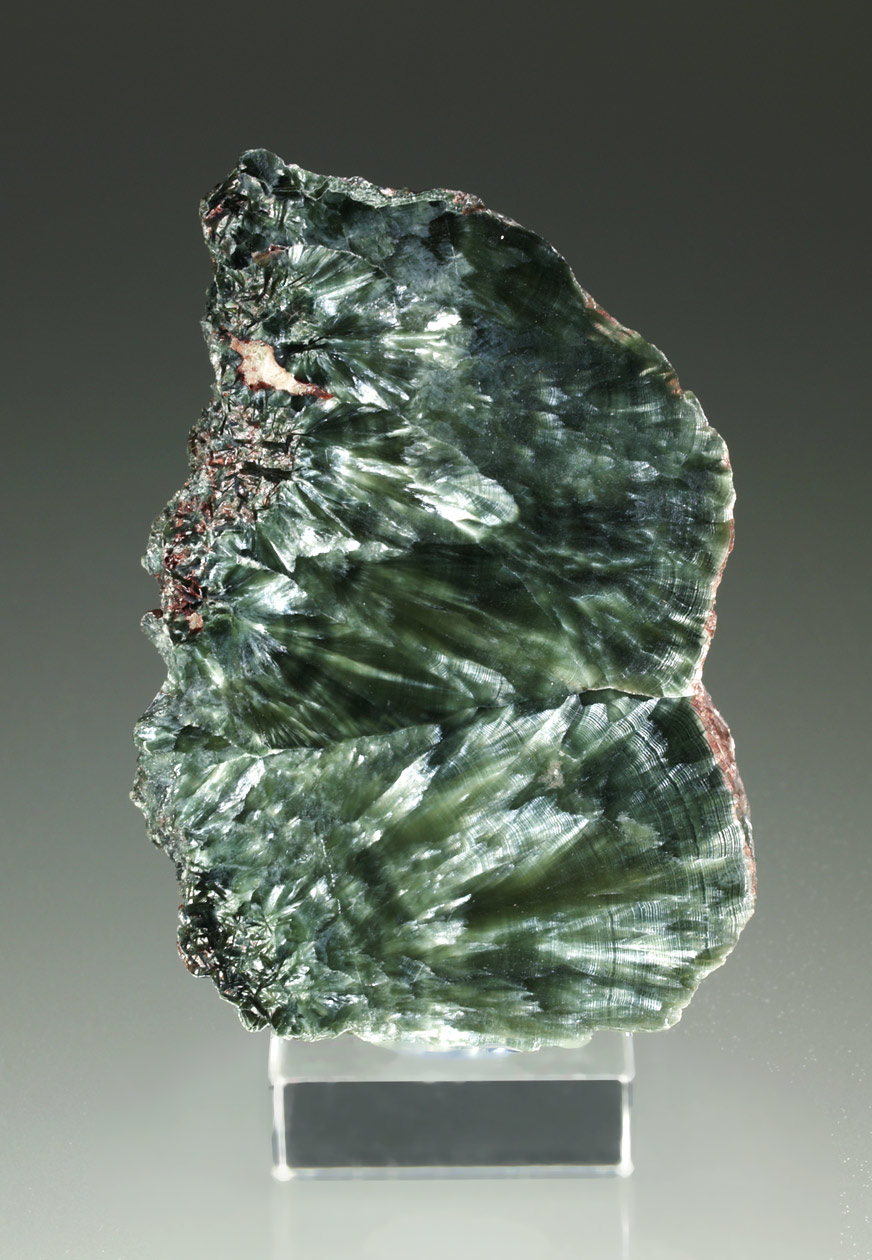
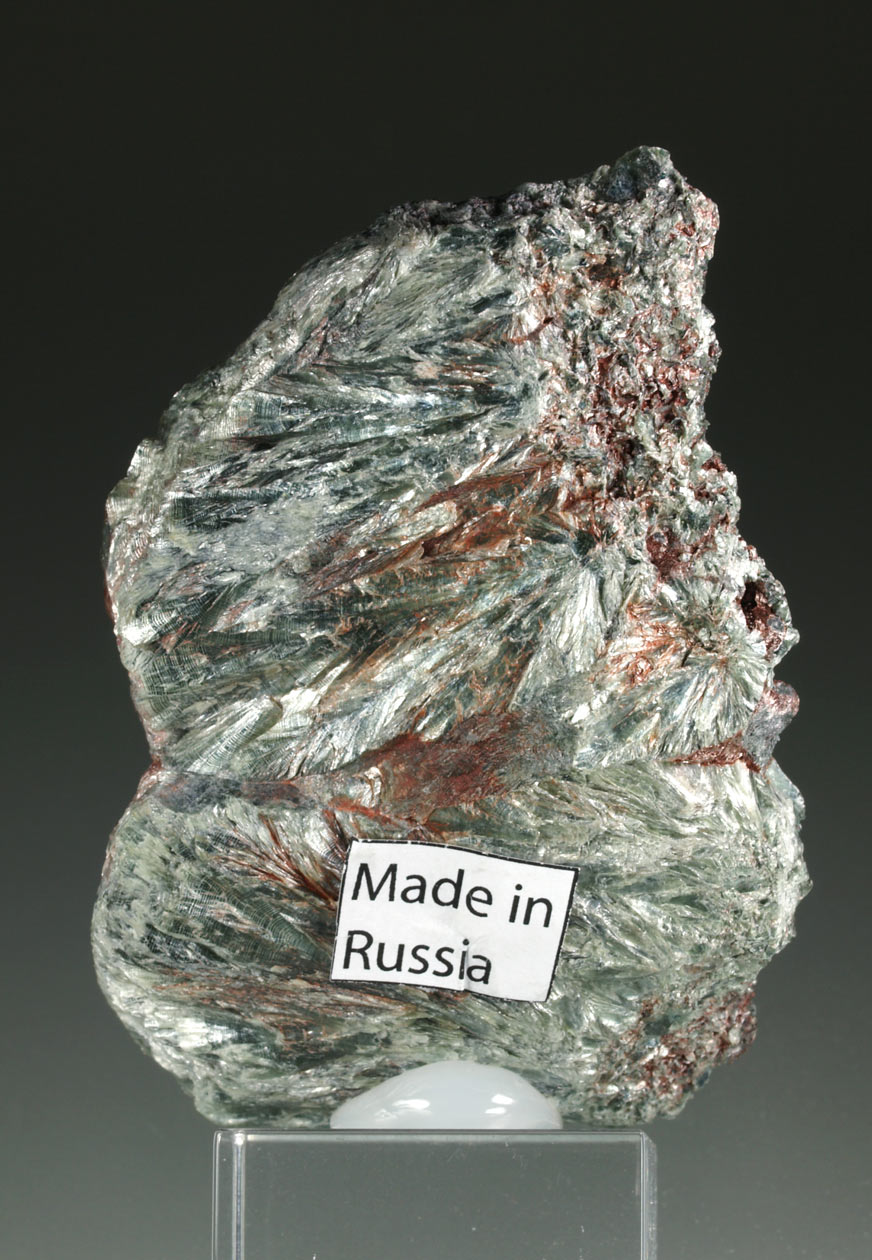
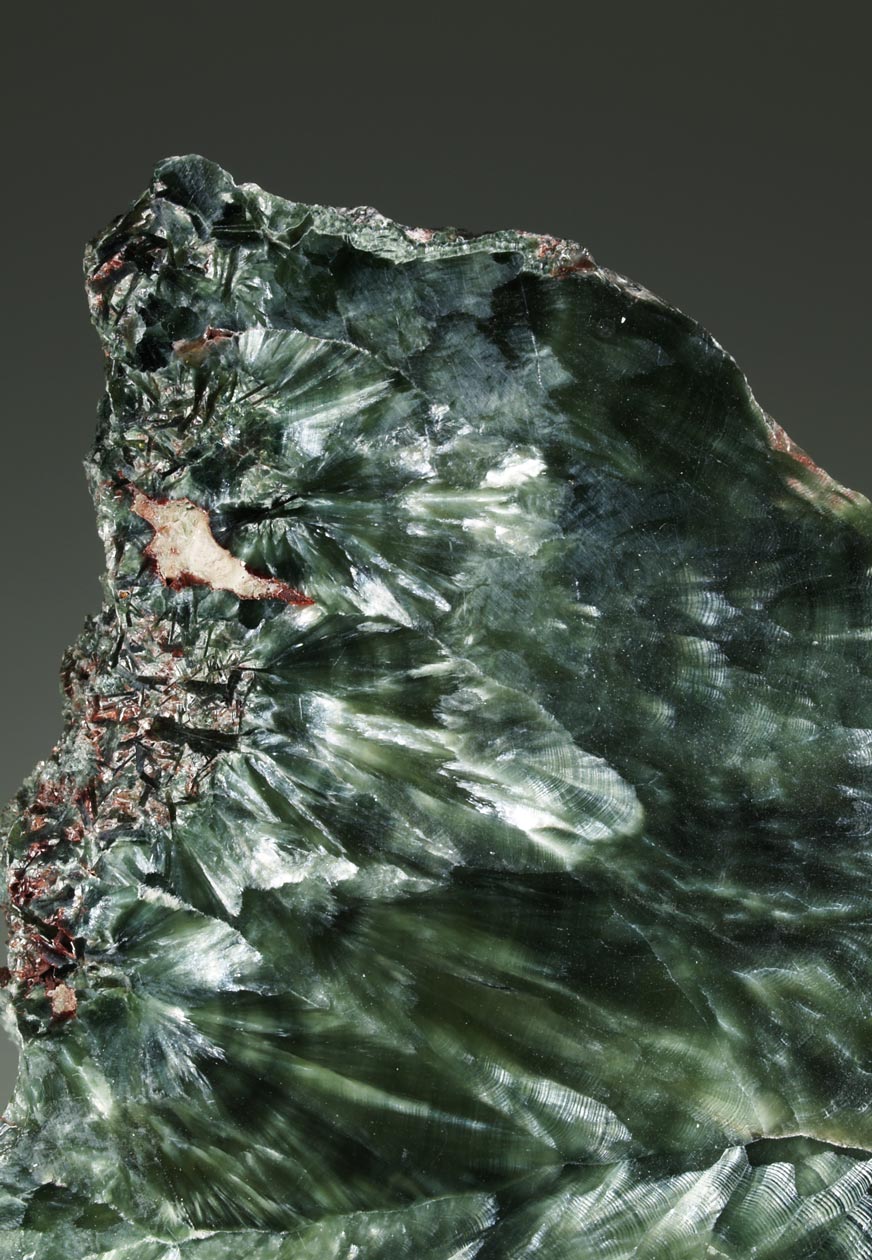
Aesthetic specimen of clinochlore, variety seraphinite, forming nodular masses of radiating crystals. Polished slabs such as this have become popular ornamental items. The varietal name seraphinite refers to Biblical angelic beings having three pairs of wings, and is a trade name referring to the fibrous, silvery crystals that compose it. One side is polished showing the internal structure; the other side is natural with this "curious" label...
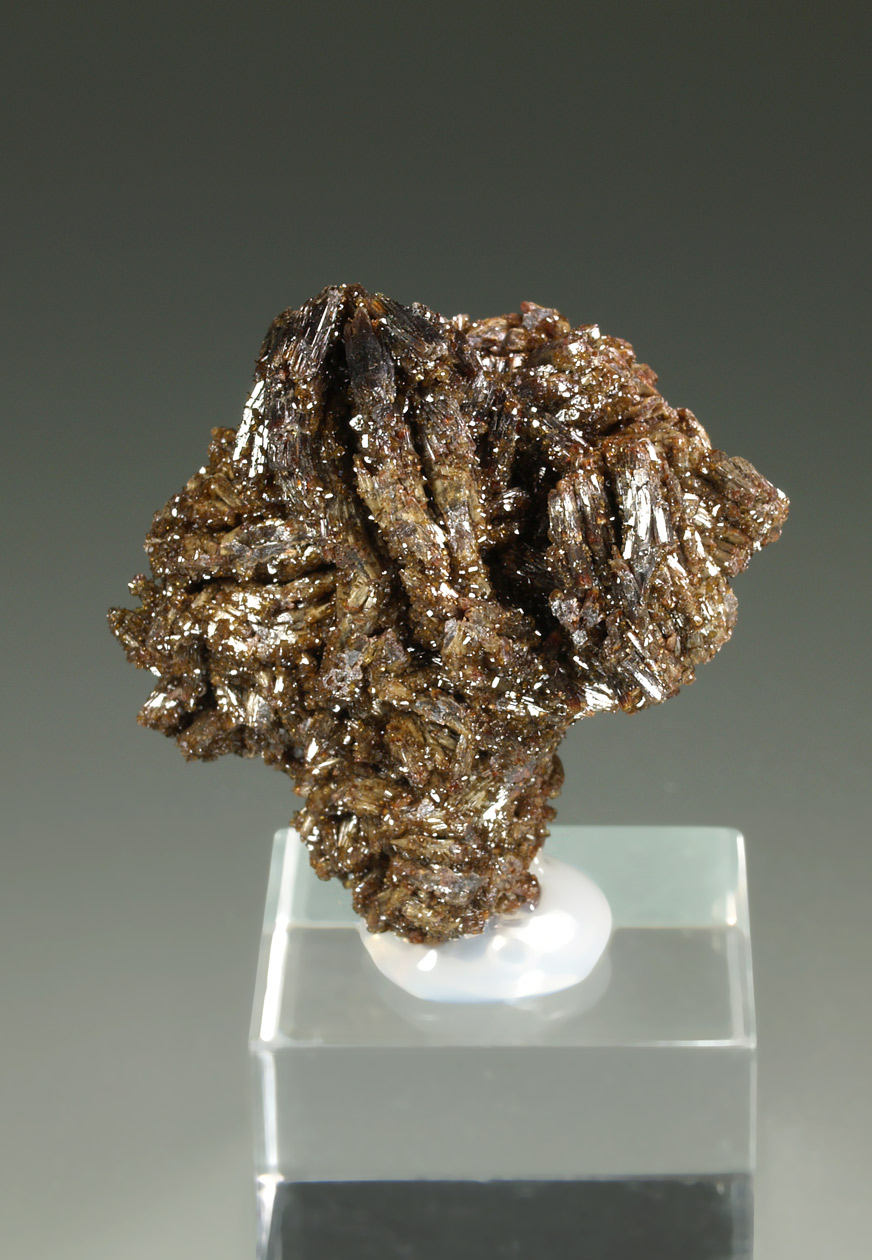
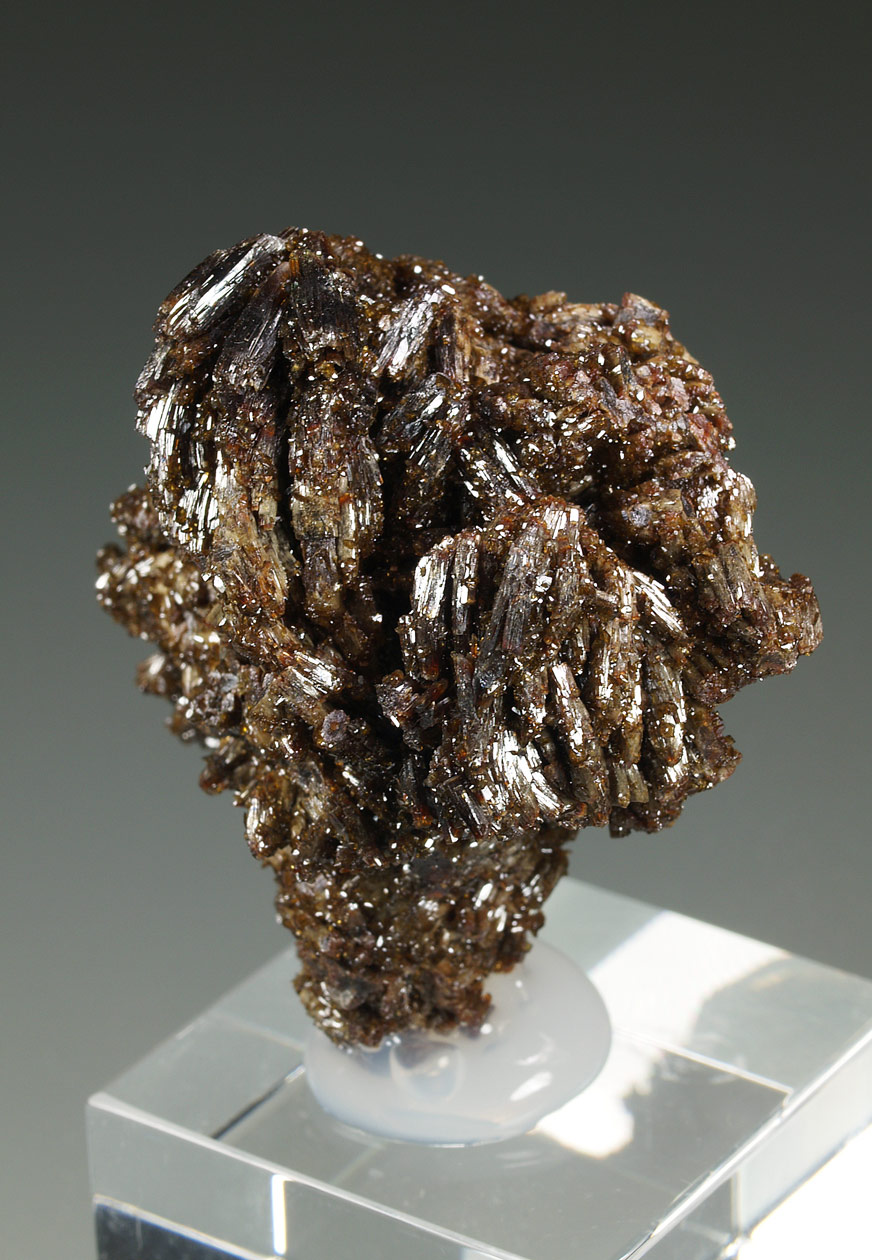
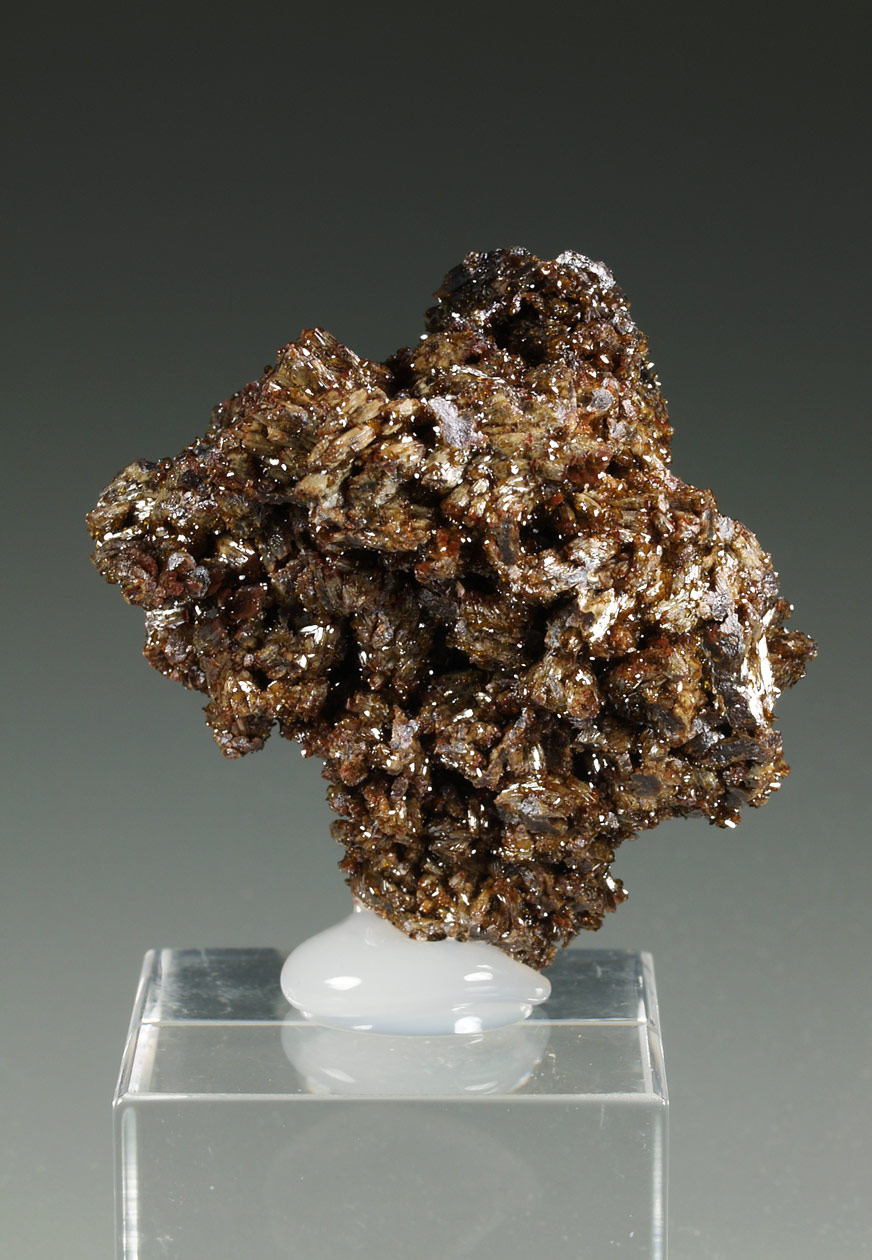
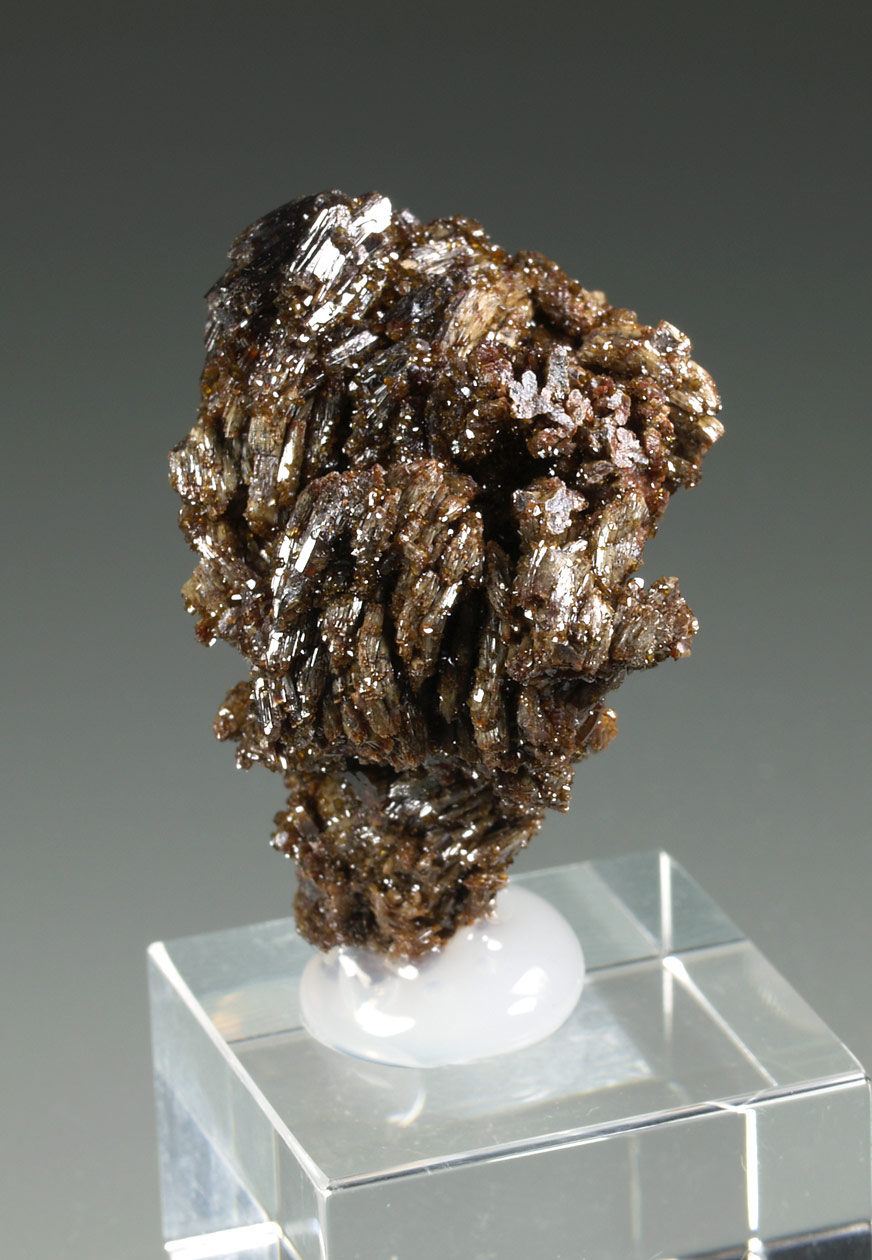
Rich group of sharp arsenical vanadinite crystals, with curved faces prisms, barrel-shaped and many of them doubly terminated, with the characteristic color of this variety. Two generations of crystals are observed, those of greater size opaque and with a brown tone, on which a second generation of transparent toasted honey tone crystals has grown, all very very brilliant. A pleasure under the magnifying glass. This mine is also known as Apex.
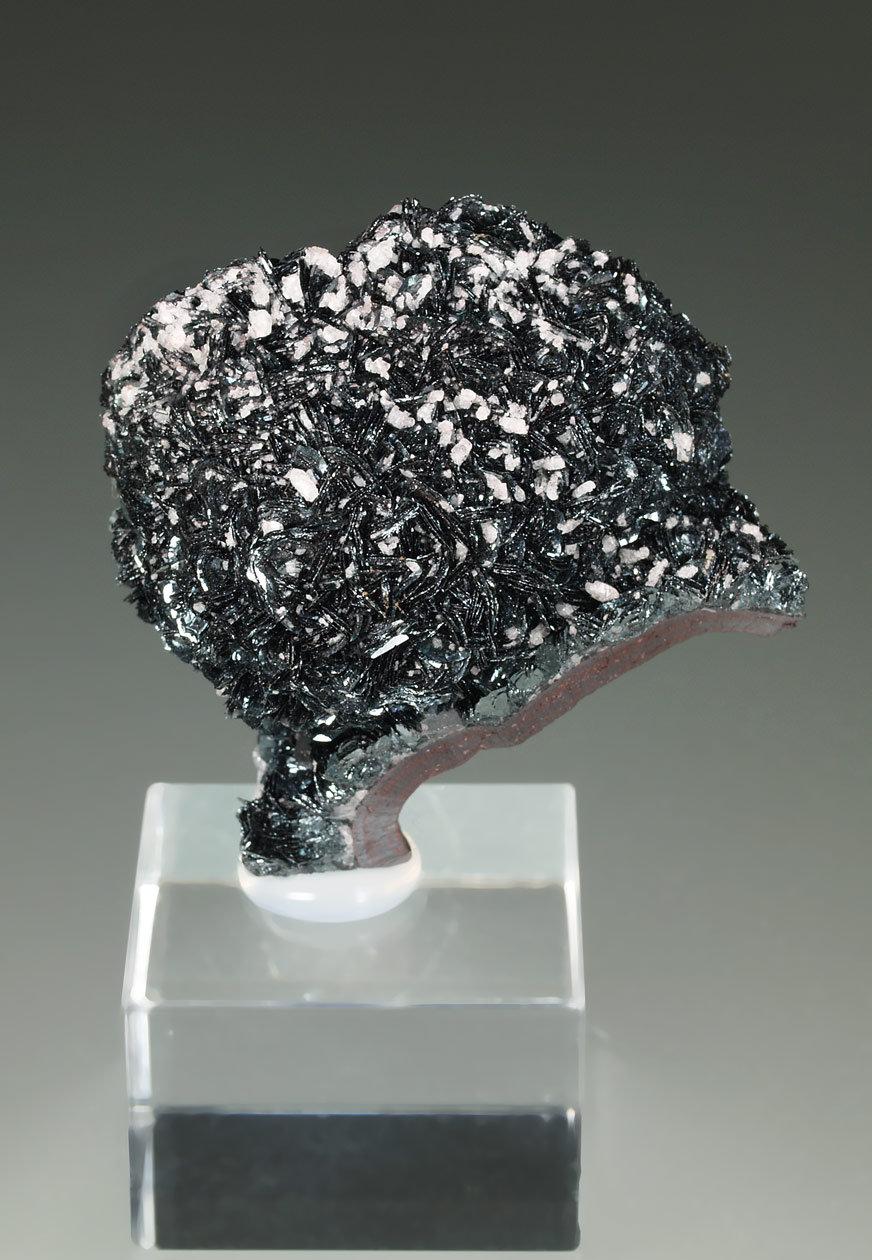
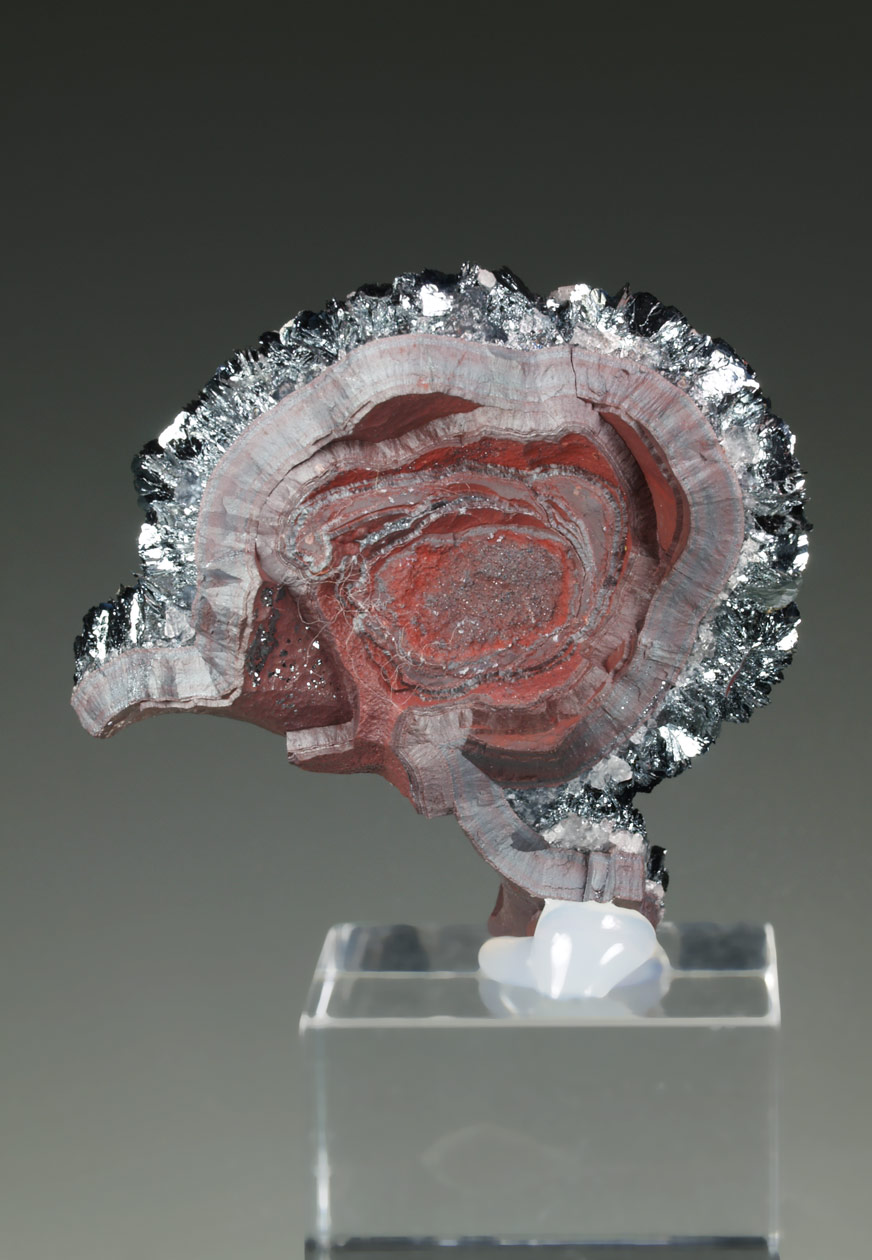
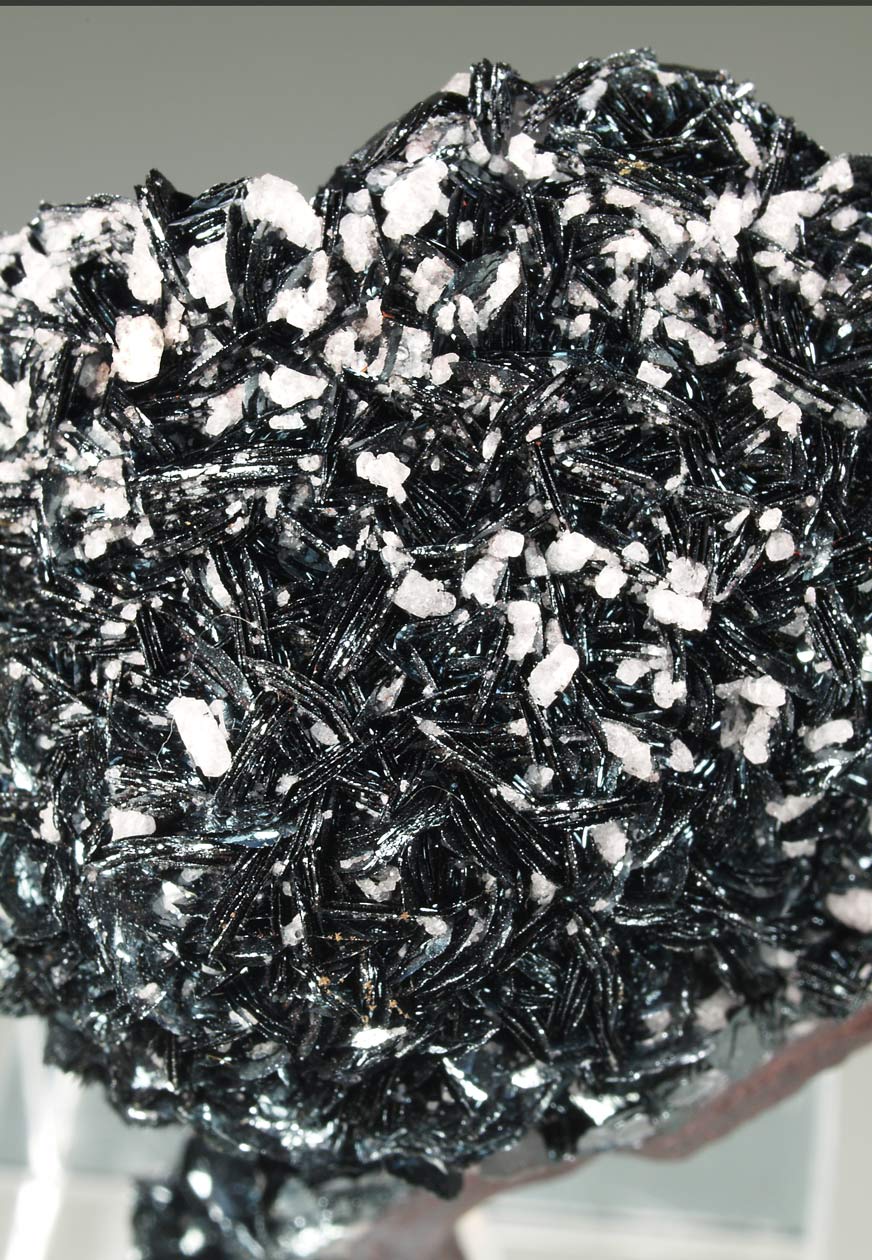
Rich group of tabular hematite crystals, very brilliant and forming very aesthetic rosettes. Pepper by small quartz crystals. They are disposed on a matrix of solid hematite. This hematite mine is located southeast of Egremont and was operated from 1903 until its closure in 1973. This aesthetic piece comes from an unidentified German collection.