- Home About RM Minerals
- Virtual Photo Museum Blog RM Contact
- Microscopy and instruments How to Buy Disclaimer
Copyright 2010-2026
www.rosellminerals.com





A spectacular specimen of fergusonite-(Y), a somewhat unusual yttrium niobate, which typically occurs massively or in small crystals. In this specimen, several crystals can be observed growing in parallel. It belongs from the collection of Jean Béhier (1903-1963), a self-taught French mineralogist who amassed a collection of over 5,000 specimens, primarily of Madagascar minerals. This collection was formed through his numerous field studies and the many exchanges he made throughout his life. A top specimen for both the species and the locality.


ATTENTION: This sample will only be sent to buyers within the Iberian Peninsula or collect personally.


Nice monazite-(Ce) crystal, rich in faces, with luster and intense brown color. Nowadays finding specimens with this quality is not easy. These specimens have been analyzed, indicating that cerium is predominant, and that it is accompanied by other REEs such as lanthanum and neodymium, together with thorium, which gives it some radioactivity. We will send the results and label to the buyer.


Nice monazite-(Ce) crystal, rich in faces, with luster and intense brown color. Nowadays finding specimens with this quality is not easy. These specimens have been analyzed, indicating that cerium is predominant, and that it is accompanied by other REEs such as lanthanum and neodymium, together with thorium, which gives it some radioactivity. We will send the results and label to the buyer.


Nice monazite-(Ce) crystal, rich in faces, with luster and intense brown color. Nowadays finding specimens with this quality is not easy. These specimens have been analyzed, indicating that cerium is predominant, and that it is accompanied by other REEs such as lanthanum and neodymium, together with thorium, which gives it some radioactivity. We will send the results and label to the buyer.


The titanite crystals from this Malagasy locality are largely unknown to collectors. They are a group of very good-sized crystals with defined faces and a brownish color, set within a matrix of calcite, scapolite, and diopside. A very interesting specimen, both for its location and for the unusual size and shape of the titanite. It was identified as coming from Fort Dauphin. The Amboasary district is famous for its numerous deposits of thorianite and phlogopite.



Monazite crystals from Madagascar are world-famous, with many representative localities. This specimen we offer is accompanied by a Deyrolle (Paris) label. The Deyrolle company began its business in 1831, led by Jean-Baptiste Deyrolle, with the production and sale of materials related to the natural sciences. This specimen is accompanied by a label handwritten on both sides. The specimen is exceptional. It consists of twinned monazite crystals, with well-defined faces and edges, lustrous, and a brown color, darker on the prisms. On one of the faces, there is a stepped growths. The size is quite remarkable. Specimens of this magnitude are not often seen...

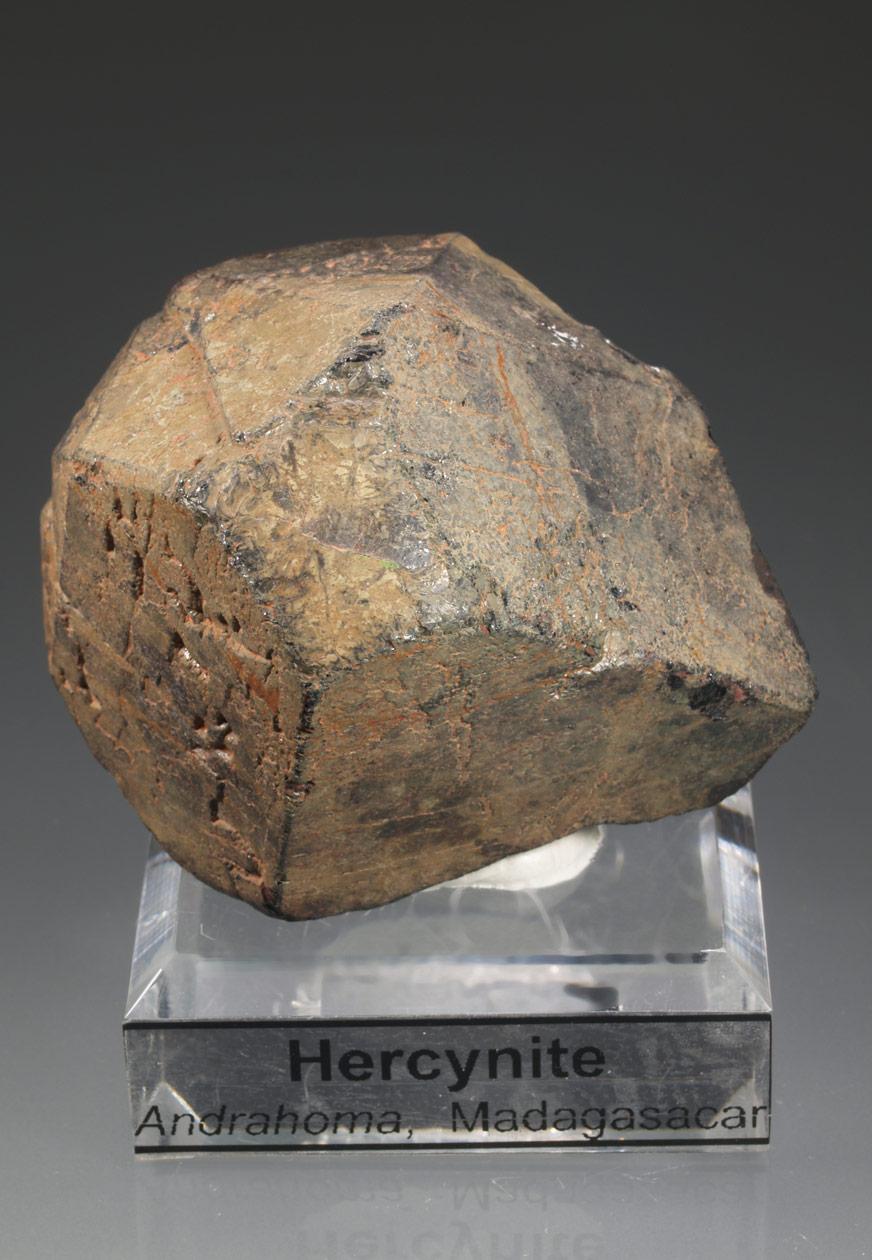
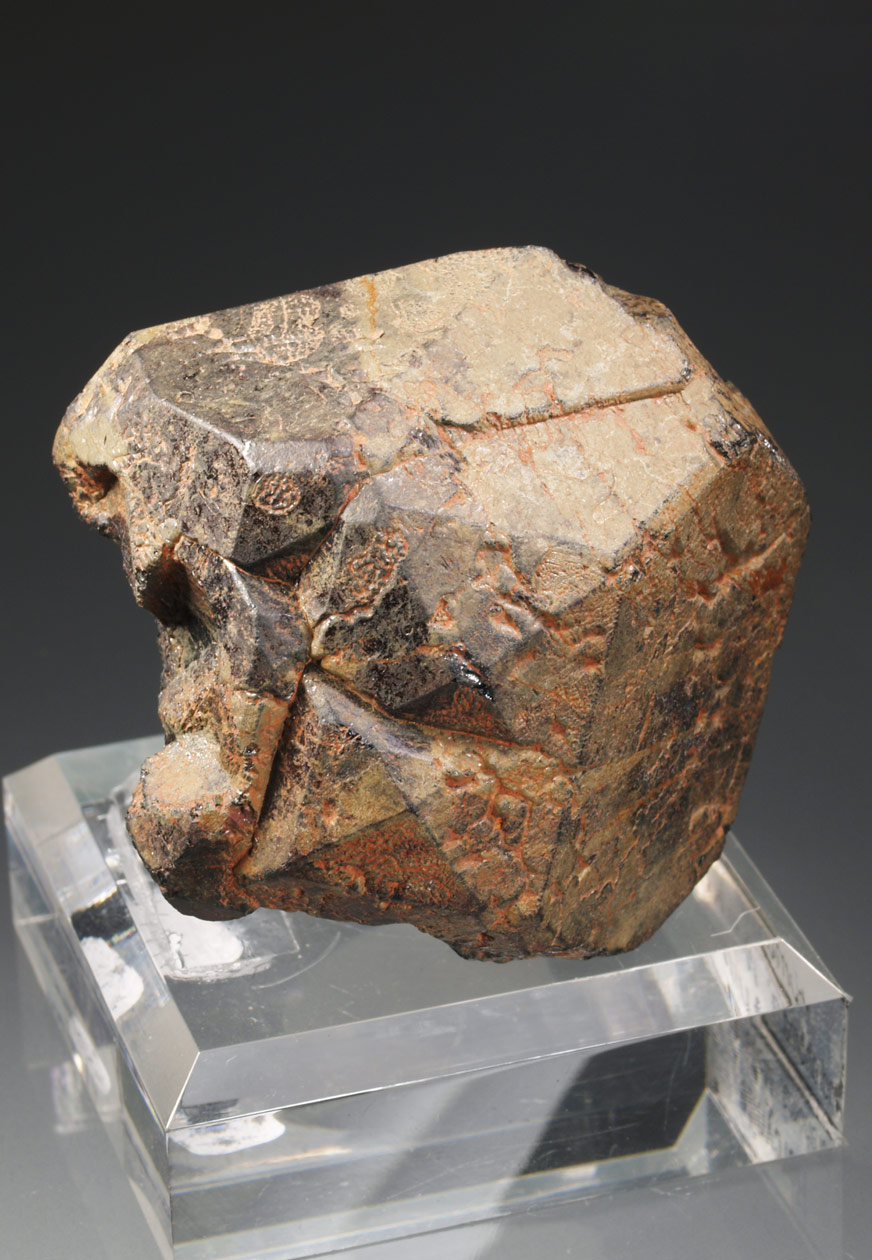
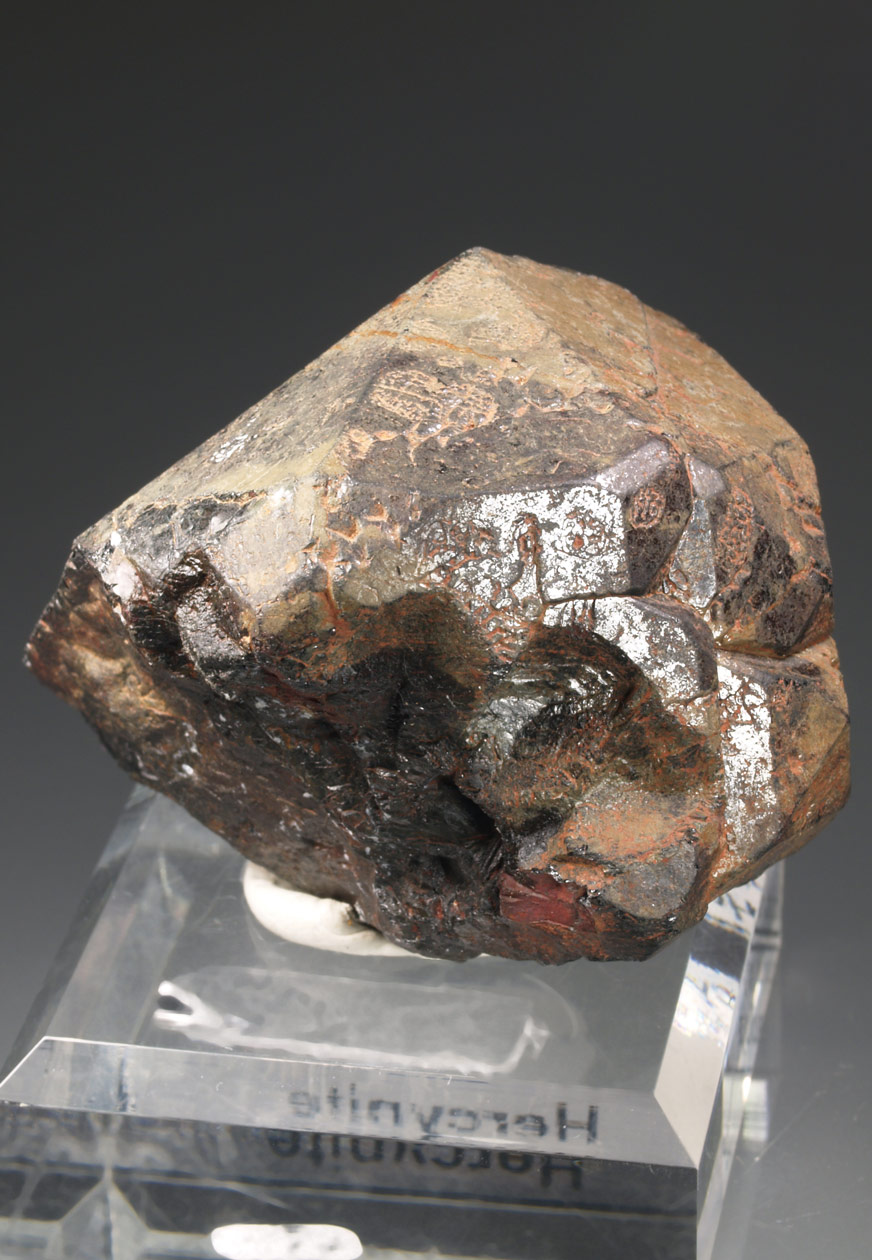
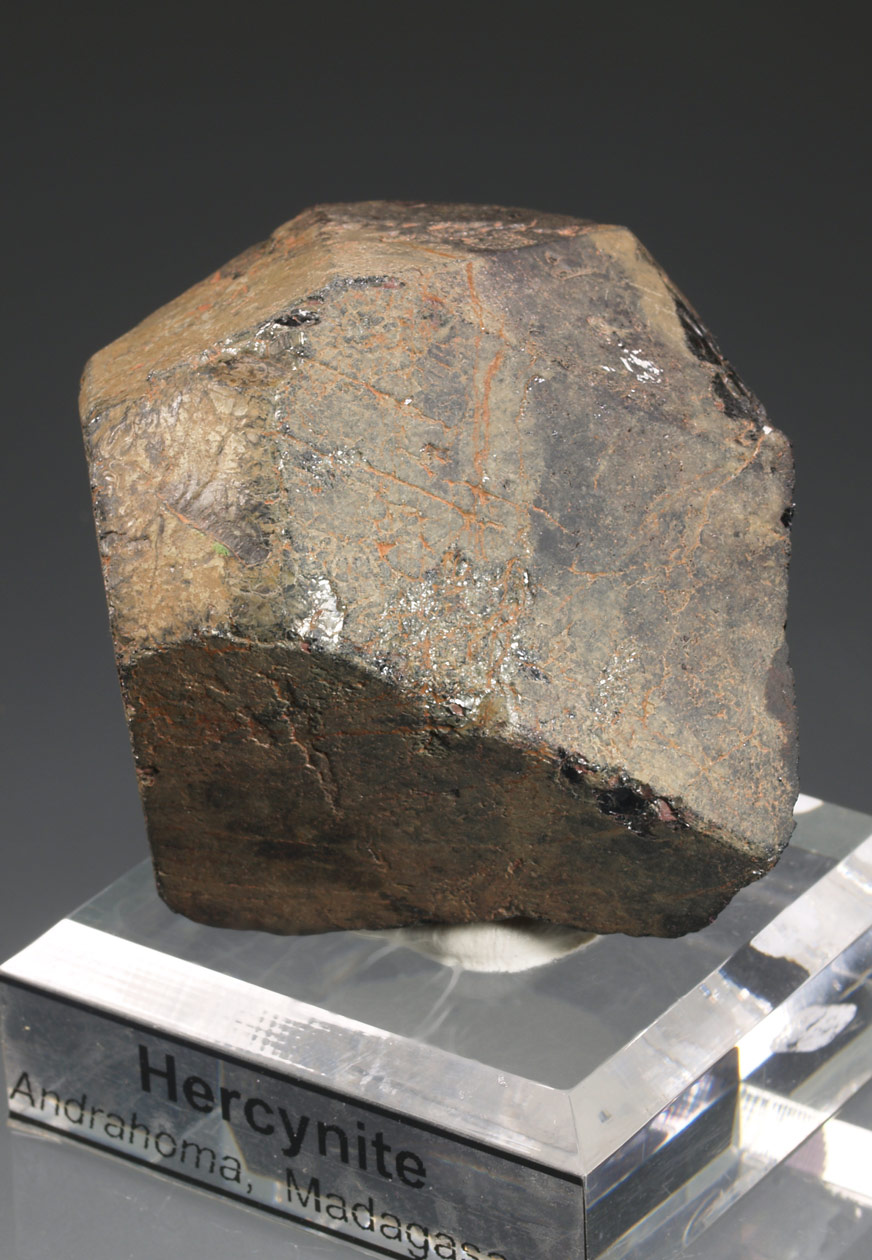
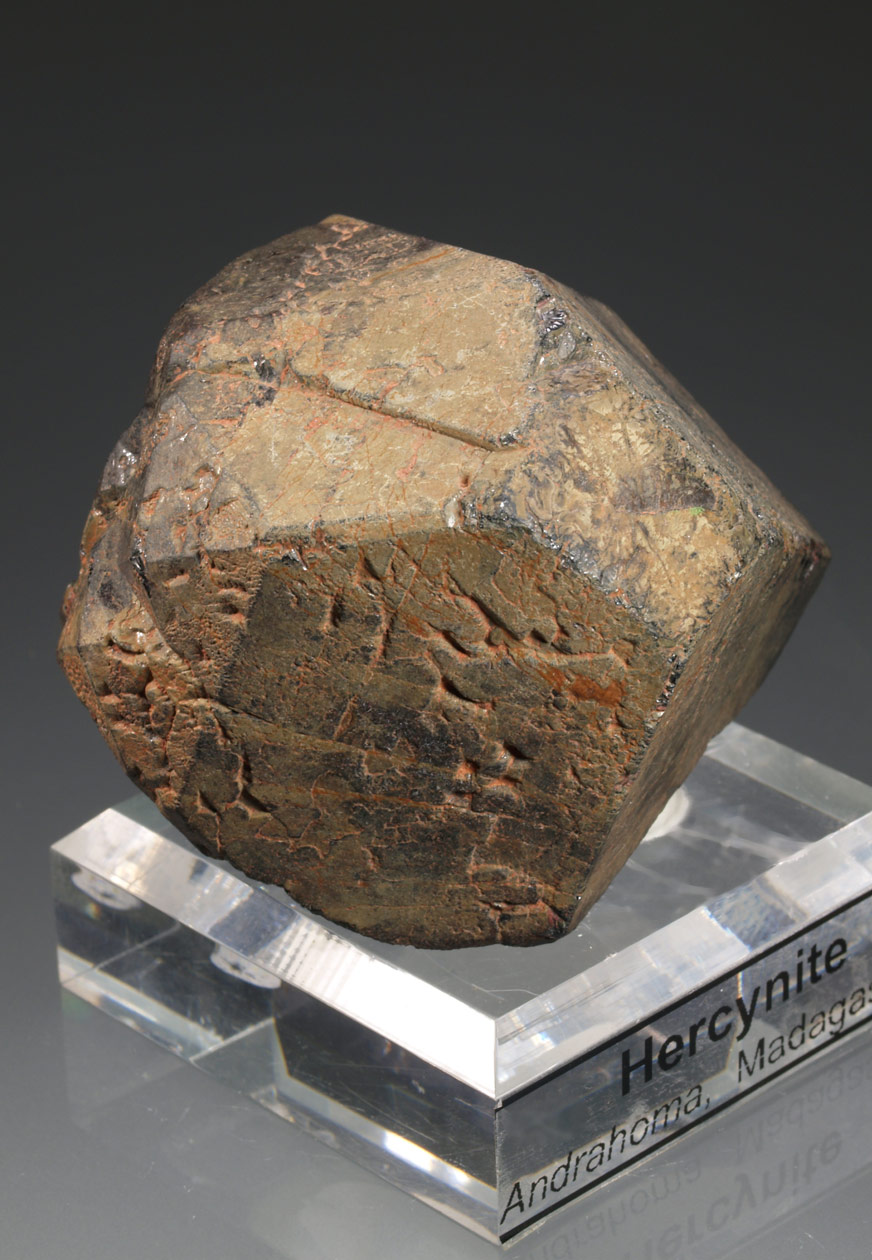
Good size crystal of pleonast, a variety of spinel containing Fe²⁺. It shows complex crystalline forms of the octahedron and combinations of the octahedron with the dodecahedron or, more rarely, with those of the cube. A museum size piece, very rare to get.
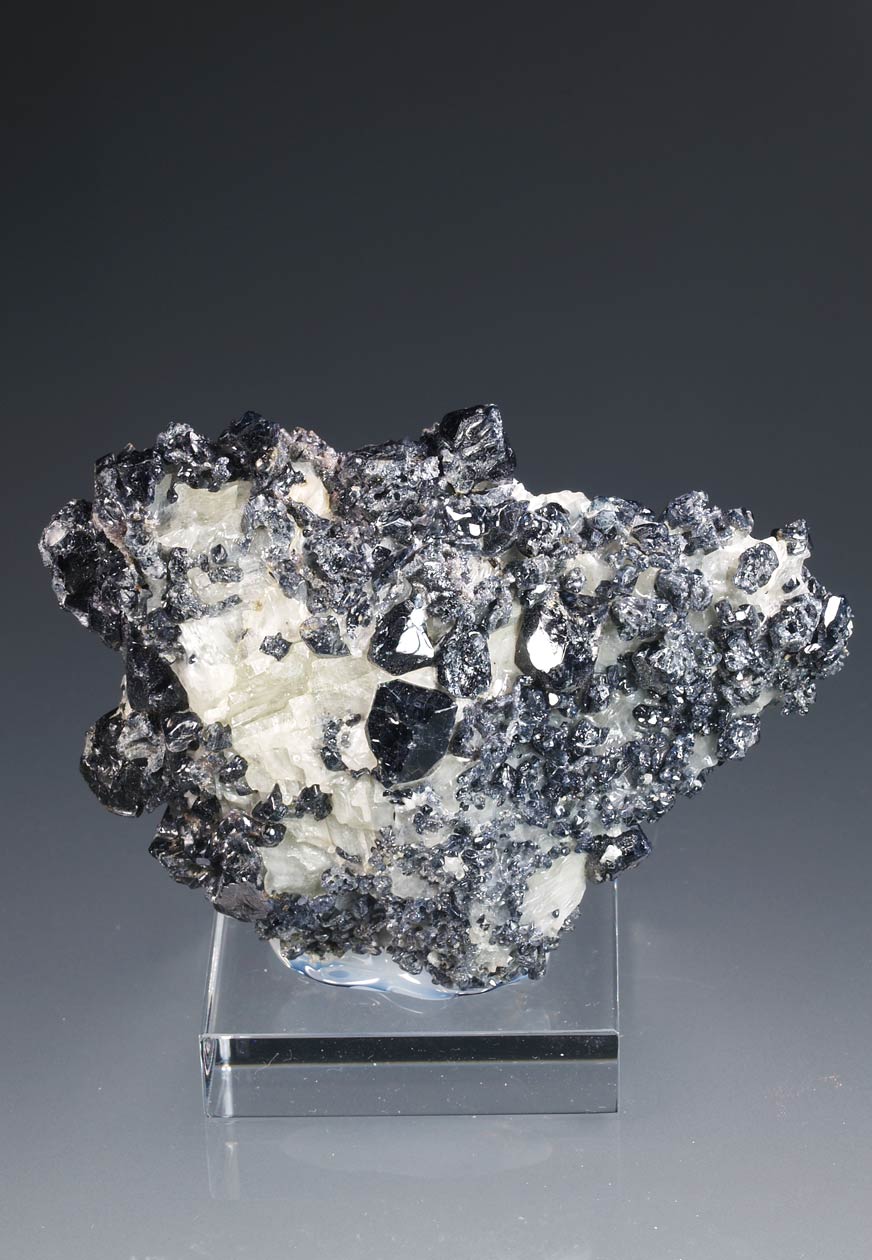
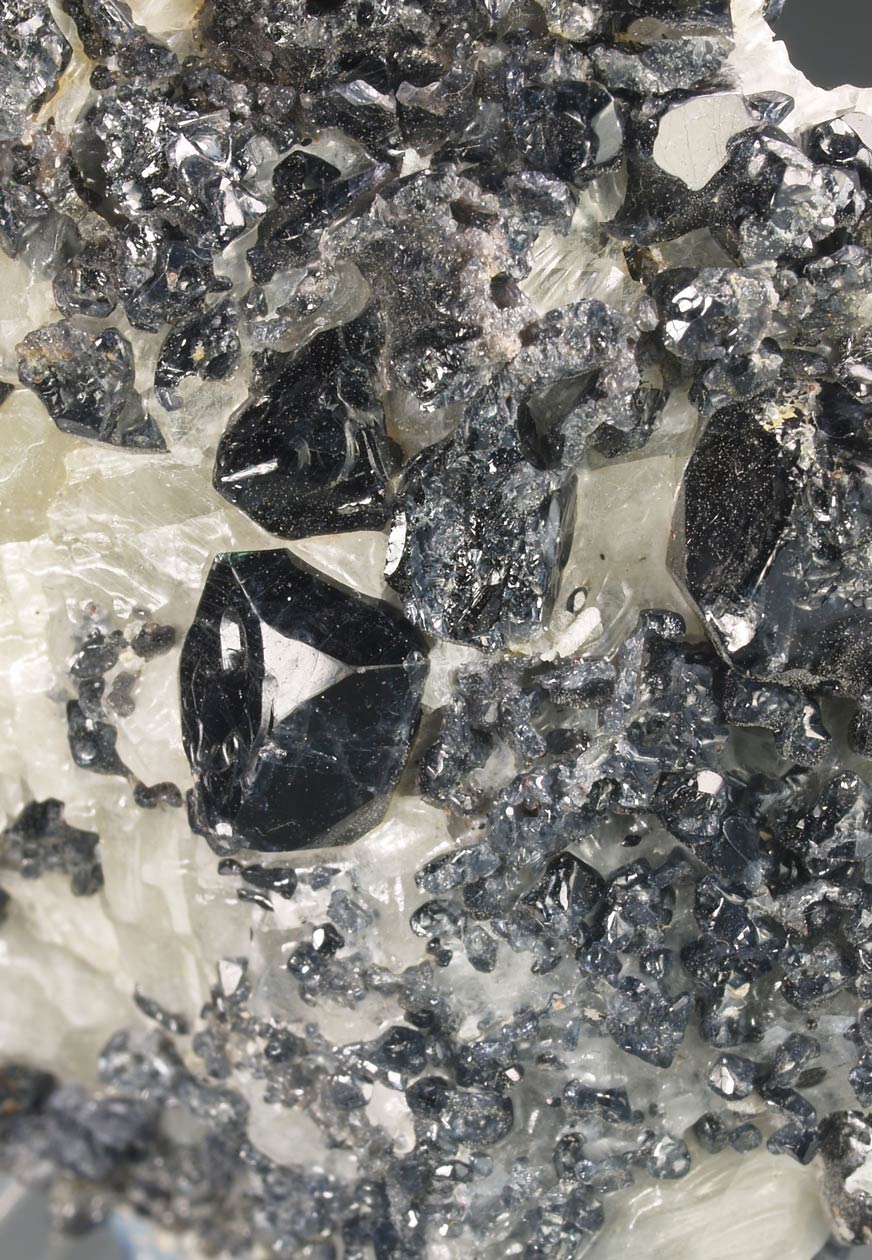
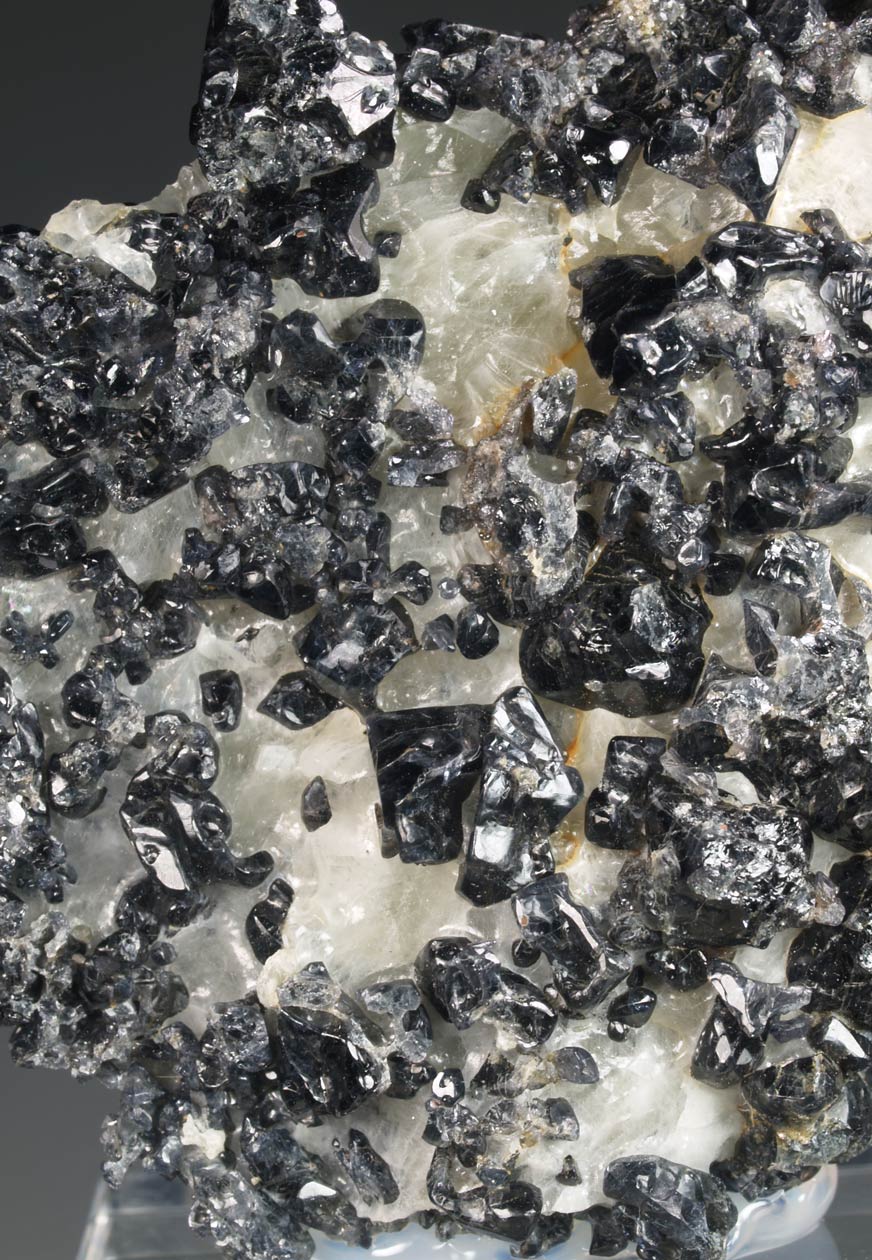
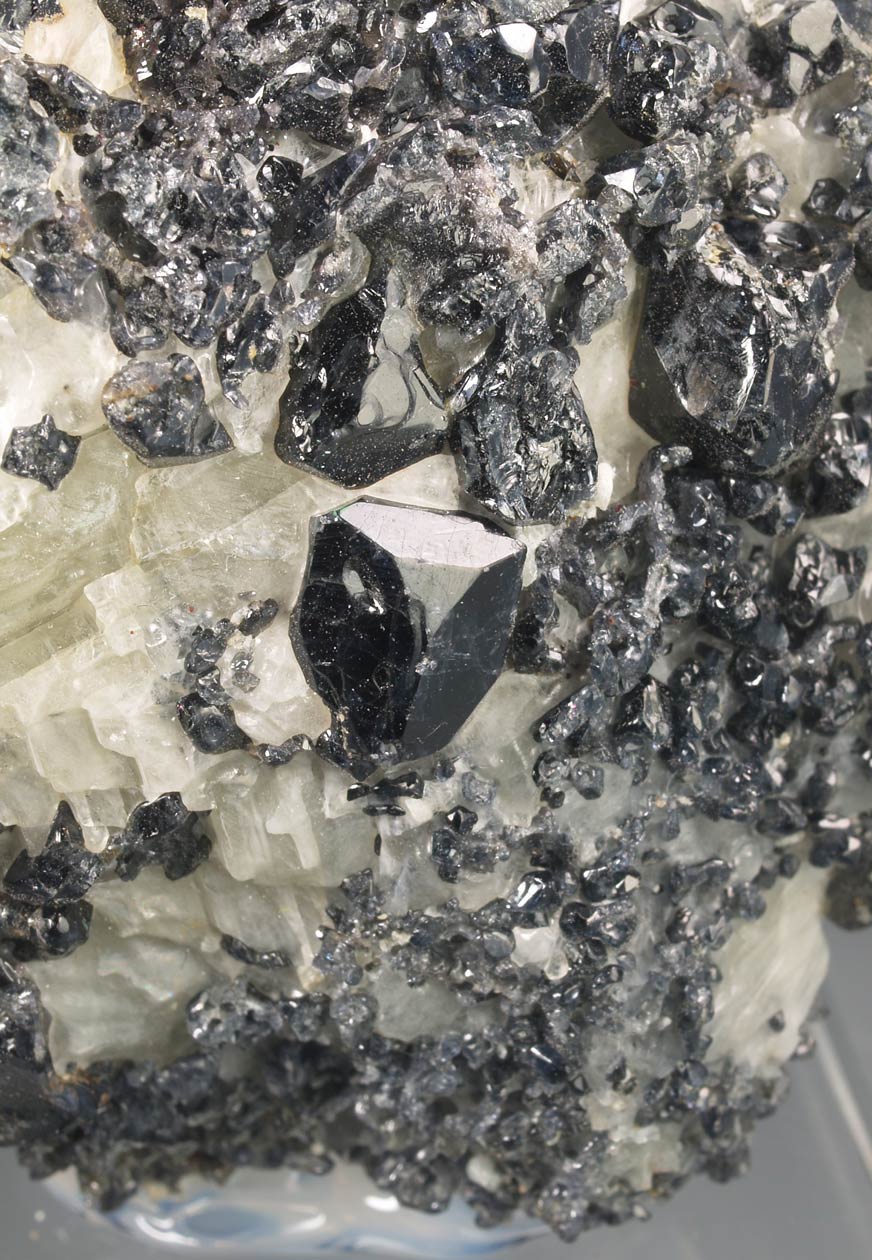
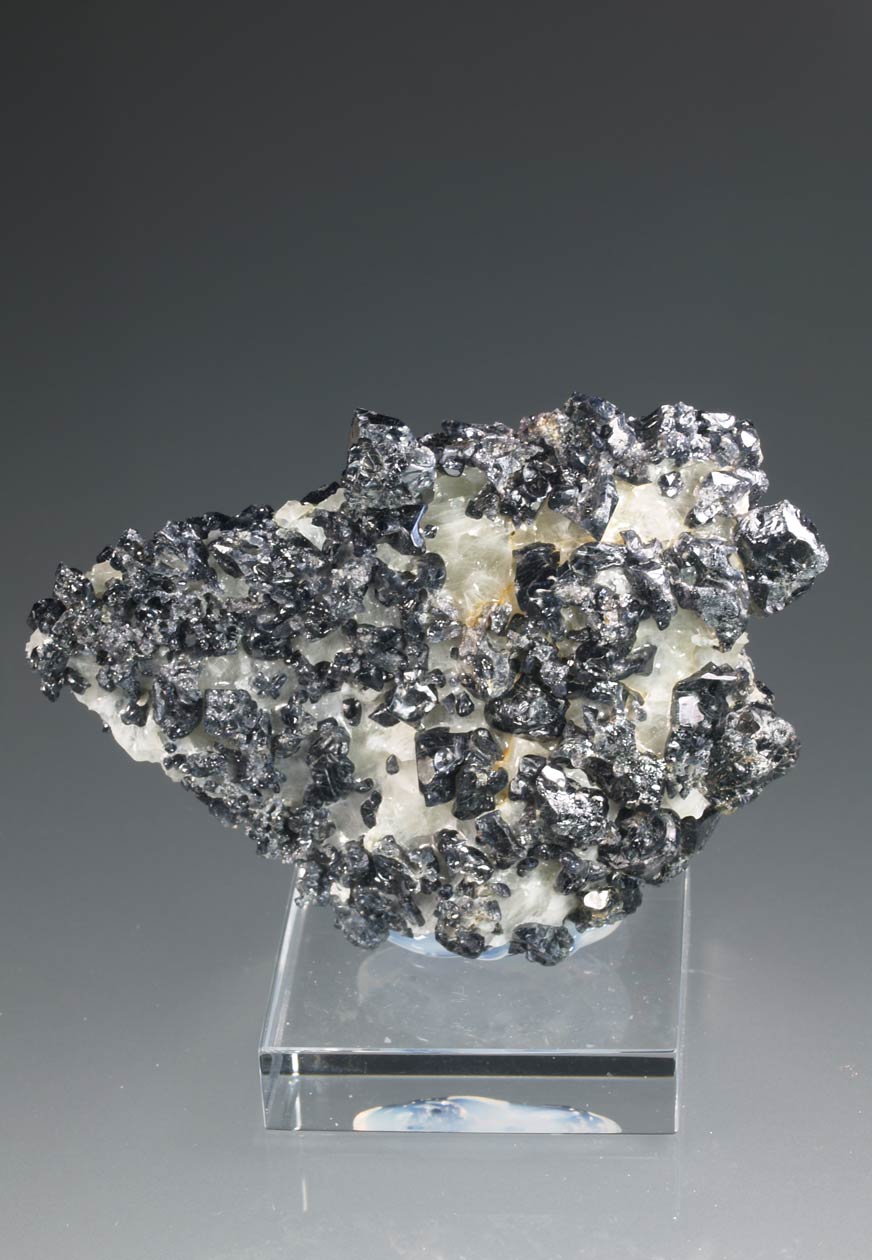
Highly lustrous, rounded faces, jet-black spinel octahedrons included in a calcite matrix from this less well-known locality. Crystals of this size and quality are rare from here and this is a fine and good sized specimen from the E. Nicolau (Barcelona) Collection.


Good size garnet crystal belonging to the almandine-spessartine series, usually with a predominance of the first one. The analyzes indicate the presence of Fe and Mn, with traces of Mg. These specimens were identified as pyrope (magnesium aluminosilicate), but the analytical results do not indicate this.


Group of garnet crystals belonging to the almandine-spessartine series, usually with a predominance of the first one. The analyzes indicate the presence of Fe and Mn, with traces of Mg. These specimens were identified as pyrope (magnesium aluminosilicate), but the analytical results do not indicate this.


Group of garnet crystals belonging to the almandine-spessartine series, usually with a predominance of the first one. The analyzes indicate the presence of Fe and Mn, with traces of Mg. These specimens were identified as pyrope (magnesium aluminosilicate), but the analytical results do not indicate this.


Group of garnet crystals belonging to the almandine-spessartine series, usually with a predominance of the first one. The analyzes indicate the presence of Fe and Mn, with traces of Mg. These specimens were identified as pyrope (magnesium aluminosilicate), but the analytical results do not indicate this.


Interesting quartz crystals with several inclusions of "petroleum" and other hydrocarbons. The petroleum in these quartz crystals from Madagascar appear brownish yellow and, as with many other petroleum inclusions in quartz, they react to long and short wave UV light with yellow to blue fluorescence. Microscopic examination reveals numerous complex fluid inclusions containing obvious brownish yellow petroleum, gas bubbles presumed to be methane, dark solids of what is likely asphaltite, and a colorless immiscible liquid that could be probably water. Microscopic inclusions in quartz are of particular interest to the collector due to their spectacular UV reaction (gia.edu).


Interesting scepter quartz crystals with several inclusions of "petroleum" and other hydrocarbons. The petroleum in these quartz crystals from Madagascar appear brownish yellow and, as with many other petroleum inclusions in quartz, they react to long and short wave UV light with yellow to blue fluorescence. Microscopic examination reveals numerous complex fluid inclusions containing obvious brownish yellow petroleum, gas bubbles presumed to be methane, dark solids of what is likely asphaltite, and a colorless immiscible liquid that could be probably water. Microscopic inclusions in quartz are of particular interest to the collector due to their spectacular UV reaction (gia.edu).


Interesting scepter quartz crystals with several inclusions of "petroleum" and other hydrocarbons. The petroleum in these quartz crystals from Madagascar appear brownish yellow and, as with many other petroleum inclusions in quartz, they react to long and short wave UV light with yellow to blue fluorescence. Microscopic examination reveals numerous complex fluid inclusions containing obvious brownish yellow petroleum, gas bubbles presumed to be methane, dark solids of what is likely asphaltite, and a colorless immiscible liquid that could be probably water. Microscopic inclusions in quartz are of particular interest to the collector due to their spectacular UV reaction (gia.edu).


Interesting scepter quartz crystals with several inclusions of "petroleum" and other hydrocarbons. The petroleum in these quartz crystals from Madagascar appear brownish yellow and, as with many other petroleum inclusions in quartz, they react to long and short wave UV light with yellow to blue fluorescence. Microscopic examination reveals numerous complex fluid inclusions containing obvious brownish yellow petroleum, gas bubbles presumed to be methane, dark solids of what is likely asphaltite, and a colorless immiscible liquid that could be probably water. Microscopic inclusions in quartz are of particular interest to the collector due to their spectacular UV reaction (gia.edu).


Interesting scepter quartz crystals with several inclusions of "petroleum" and other hydrocarbons. The petroleum in these quartz crystals from Madagascar appear brownish yellow and, as with many other petroleum inclusions in quartz, they react to long and short wave UV light with yellow to blue fluorescence. Microscopic examination reveals numerous complex fluid inclusions containing obvious brownish yellow petroleum, gas bubbles presumed to be methane, dark solids of what is likely asphaltite, and a colorless immiscible liquid that could be probably water. Microscopic inclusions in quartz are of particular interest to the collector due to their spectacular UV reaction (gia.edu).


Rich group of grandidierite crystals, on matrix. Unusually well defined and aerial for the species. Brilliant, translucent and with an intense uniform bluish-green color. We can observe prismatic crystals with terminal faces. A sample of great quality for this rare nesosilicate. With the label of the collector.
Grandidierite was discovered by the French mineralogist, Alfred Lacroix in 1902 and named after French explorer and naturalist Alfred Grandidier (1836-1912), who wrote the great natural history book: "L'Histoire physique, naturelle et politique de Madagascar". The first reported locality for the species is at the cliffs of Andrahomana, on the southern coast of Madagascar. The species is a magnesium, iron, aluminum borosilicate and although it has been found in multiple localities around the world, it's still considered exceptionally rare, especially in gem quality material (mindat).


Monazite-(Ce) crystal, floater, rich in faces, with luster and intense brown color. Nowadays finding specimens with this quality is not easy.
These specimens have been analyzed, indicating that cerium is predominant, and that it is accompanied by other REEs such as lanthanum and neodymium, together with thorium, which gives it some radioactivity. We will send the results and label to the buyer.


Very good monazite-(Ce) crystal, floater, rich in faces, with luster and light brown color. It is accompanied by a cubic crystal of columbite-tantalite embeded in. These specimens have been analyzed, indicating that cerium is predominant, and that it is accompanied by other REEs such as lanthanum and neodymium, together with thorium, which gives it some radioactivity. We will send the results and label to the buyer.


Excellent monazite-(Ce) crystal, totally floater, rich in faces, with luster and intense brown color. Nowadays finding specimens with this quality is not easy.
These specimens have been analyzed, indicating that cerium is predominant, and that it is accompanied by other REEs such as lanthanum and neodymium, together with thorium, which gives it some radioactivity. We will send the results and label to the buyer.


Hambergite is a rare mineral species, a beryllium hydroxyborate, which occurs in the tourmaline pegmatites of Anjanabonoina. This sample shows us a group of crystals of exceptional size and quality, flattened and with well-defined terminations. Transparent to translucent, with brilliance. This mineral is usually found as single crystals, rarely on matrix, and less with this size. A museum piece.


A huge size crystal of betafite showing defined octahedral faces (triangular) and developed dodecahedral ones. Very interesting for its crystallography and species. An oldie, classic and representative for the species.
Although the term betafite was discredited in 2010, many of us still are using this term to define this mineral when we see it. Our specimen is an uranium, calcium, titanium and niobium/tantalum oxide with radioactive activity. Currently the betafite is included as a variety within the pyrochlore supergroup. As a note, the rich uranium term has been only found in the Moon (oxyuranobetafite).