- Inicio Acerca de RM Minerales
- Galería de fotos Blog RM Contacto
- Microscopia e instrumentos Pedidos Aviso legal
Copyright 2010-2026
www.rosellminerals.com



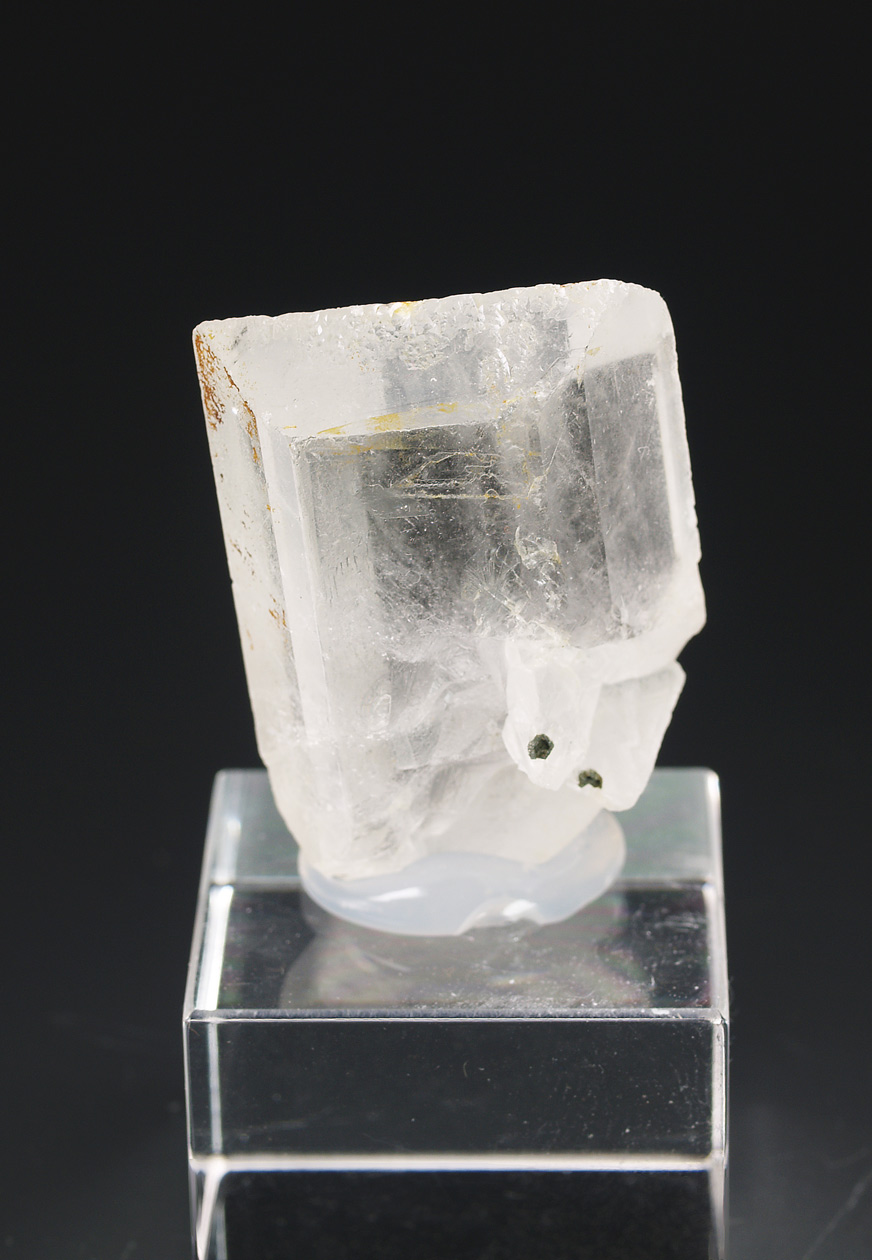
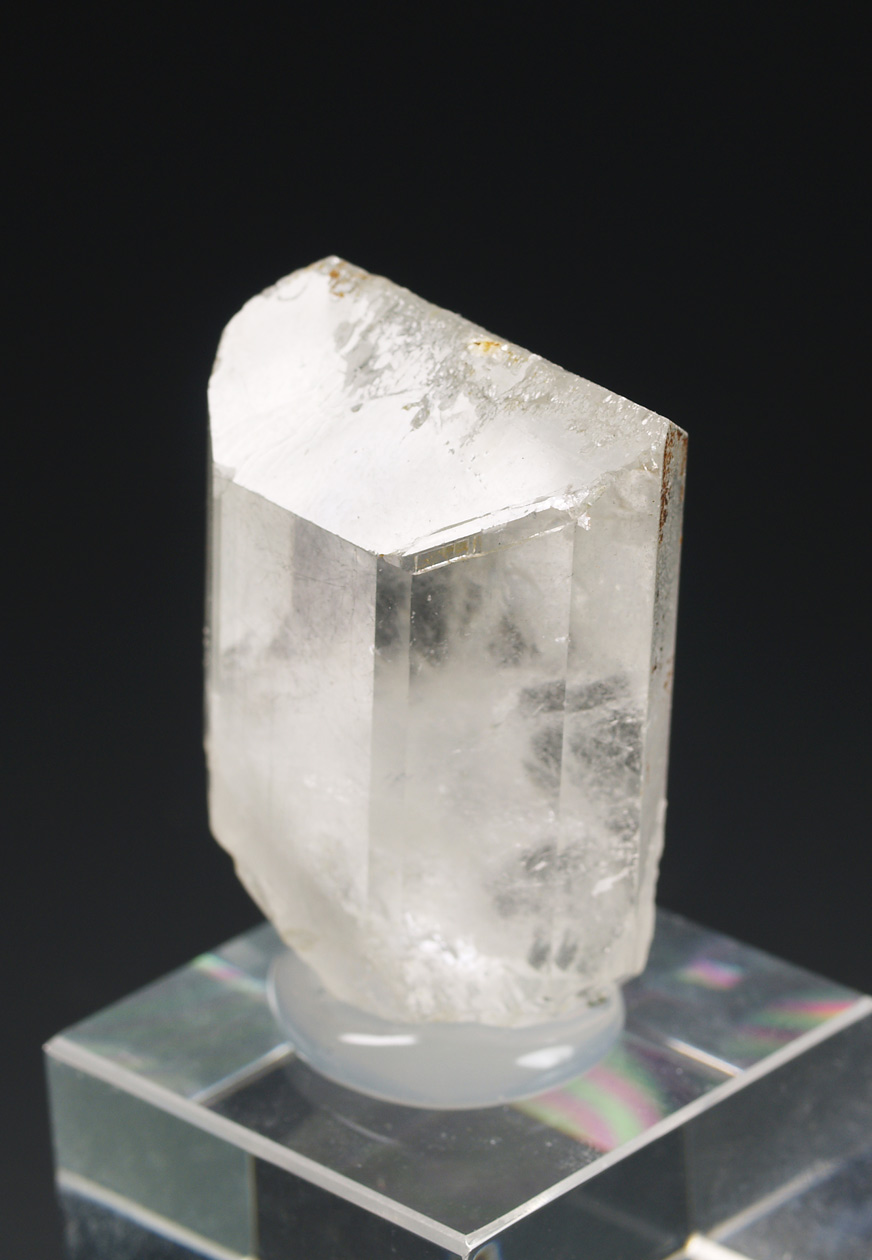
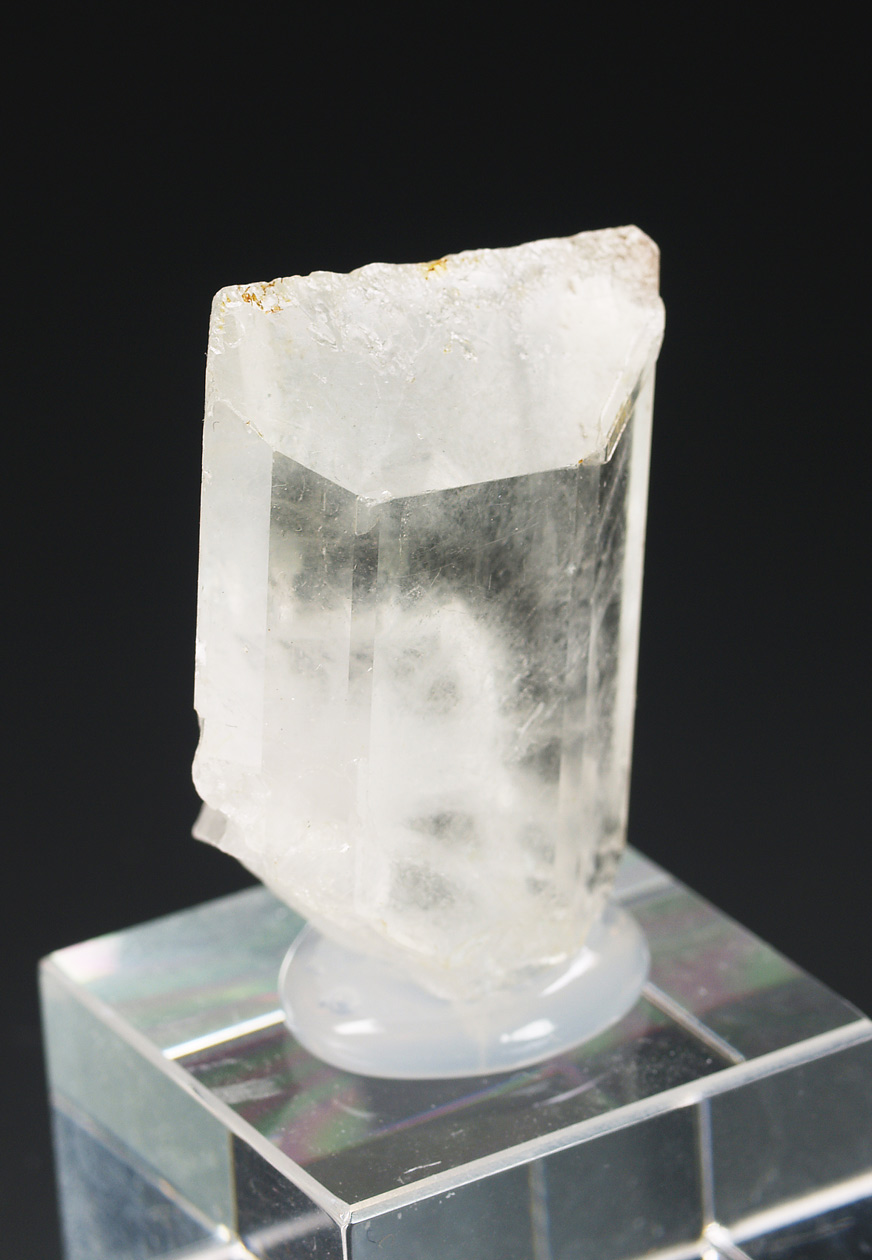
Cristal muy definido de barita, con formes de diferentes prismas ortorrómbicos truncados por cares pinacoidales. La transparencia es excelente. De esta clásica mina marroquí para los cristales de barita.
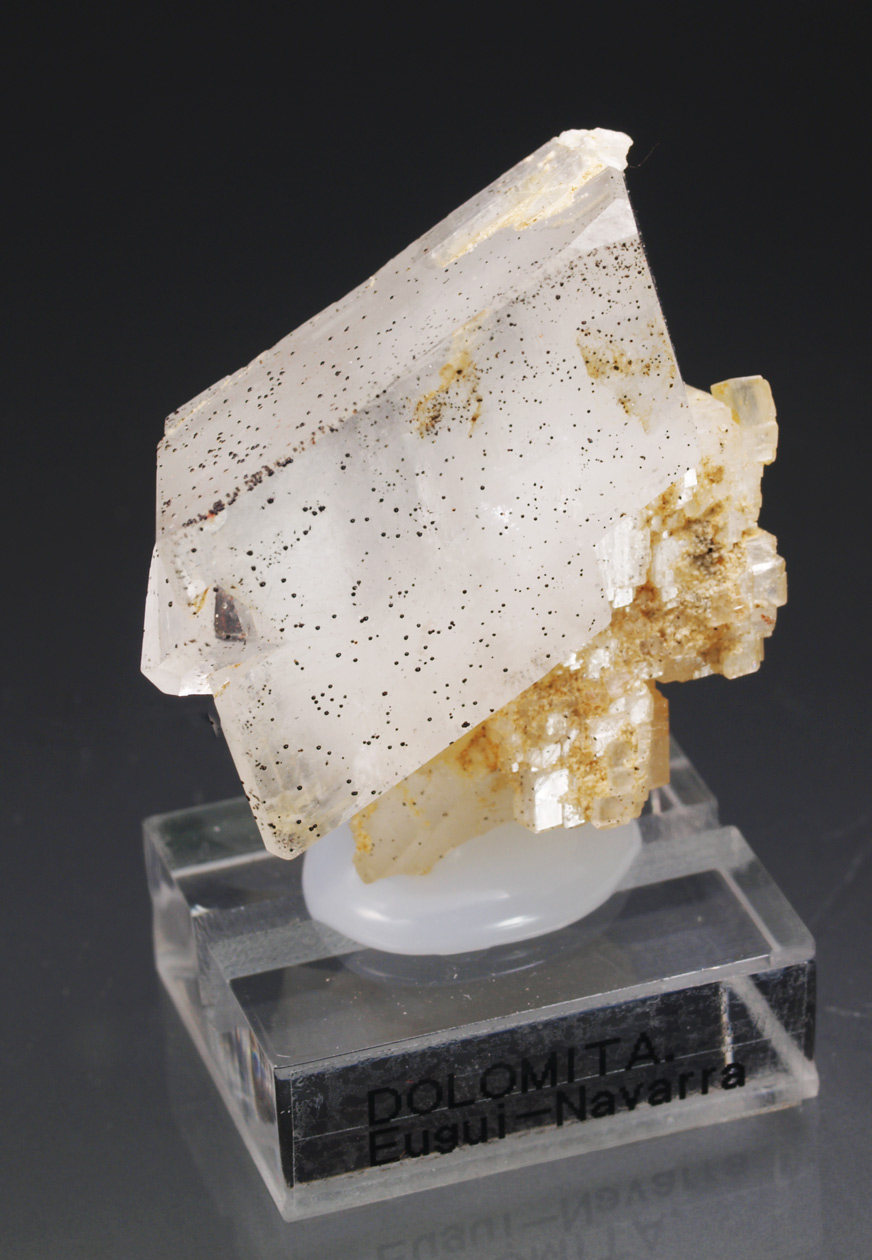
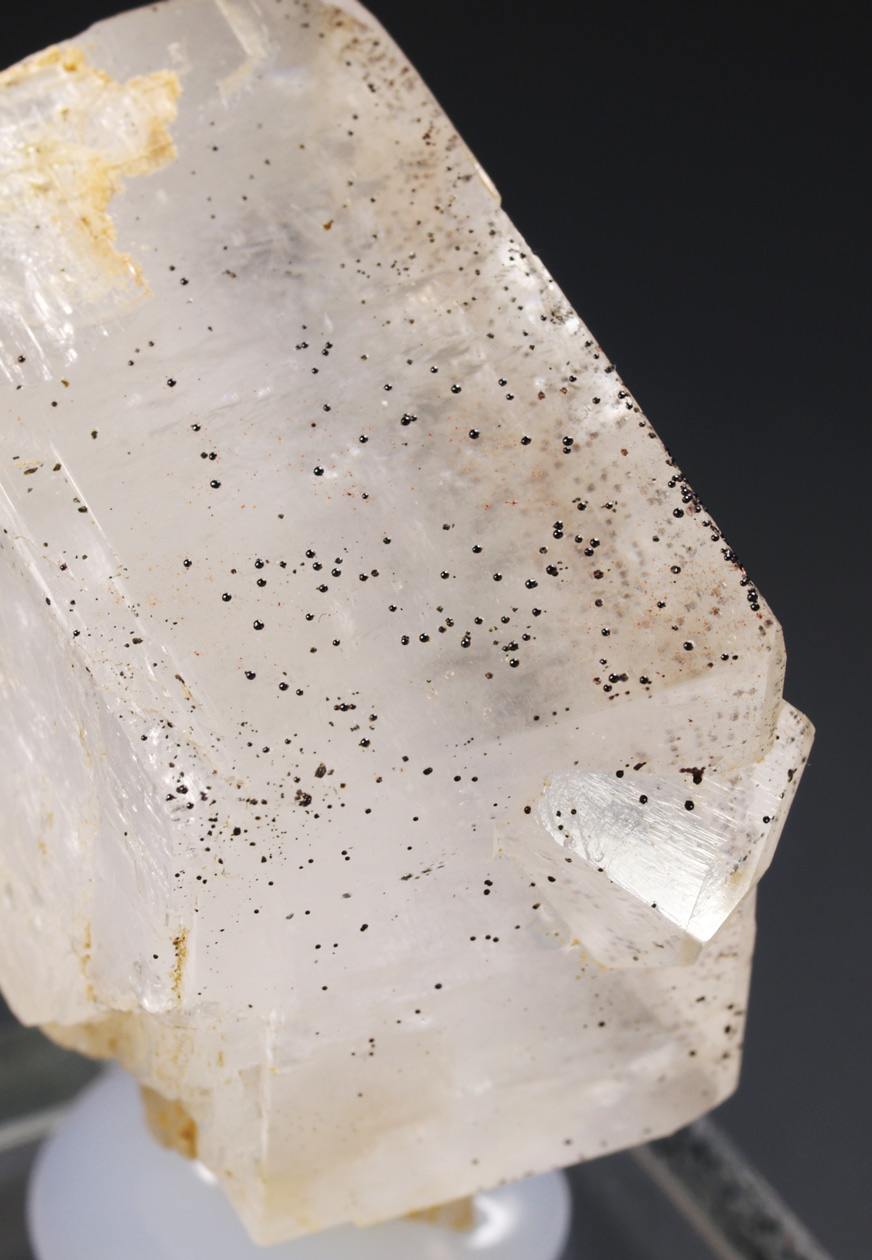
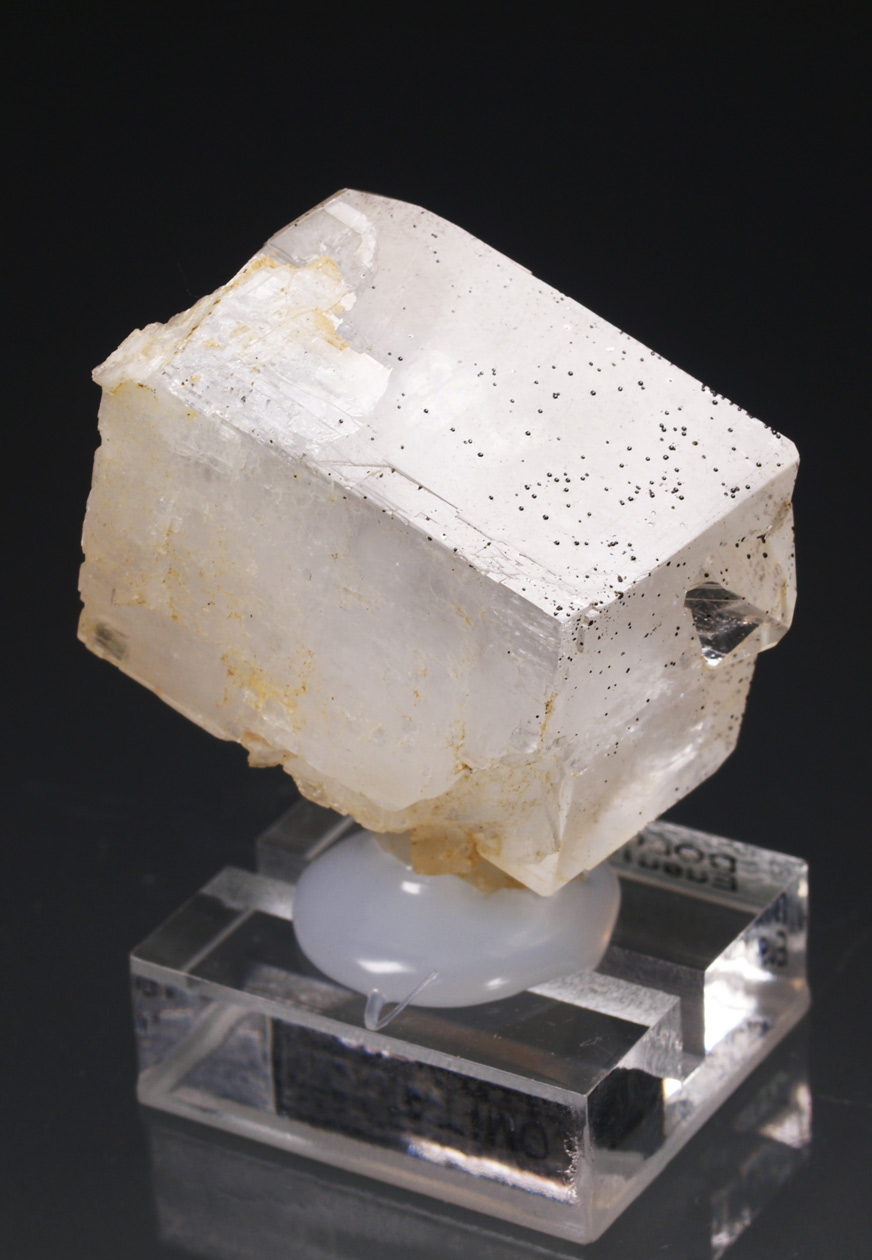
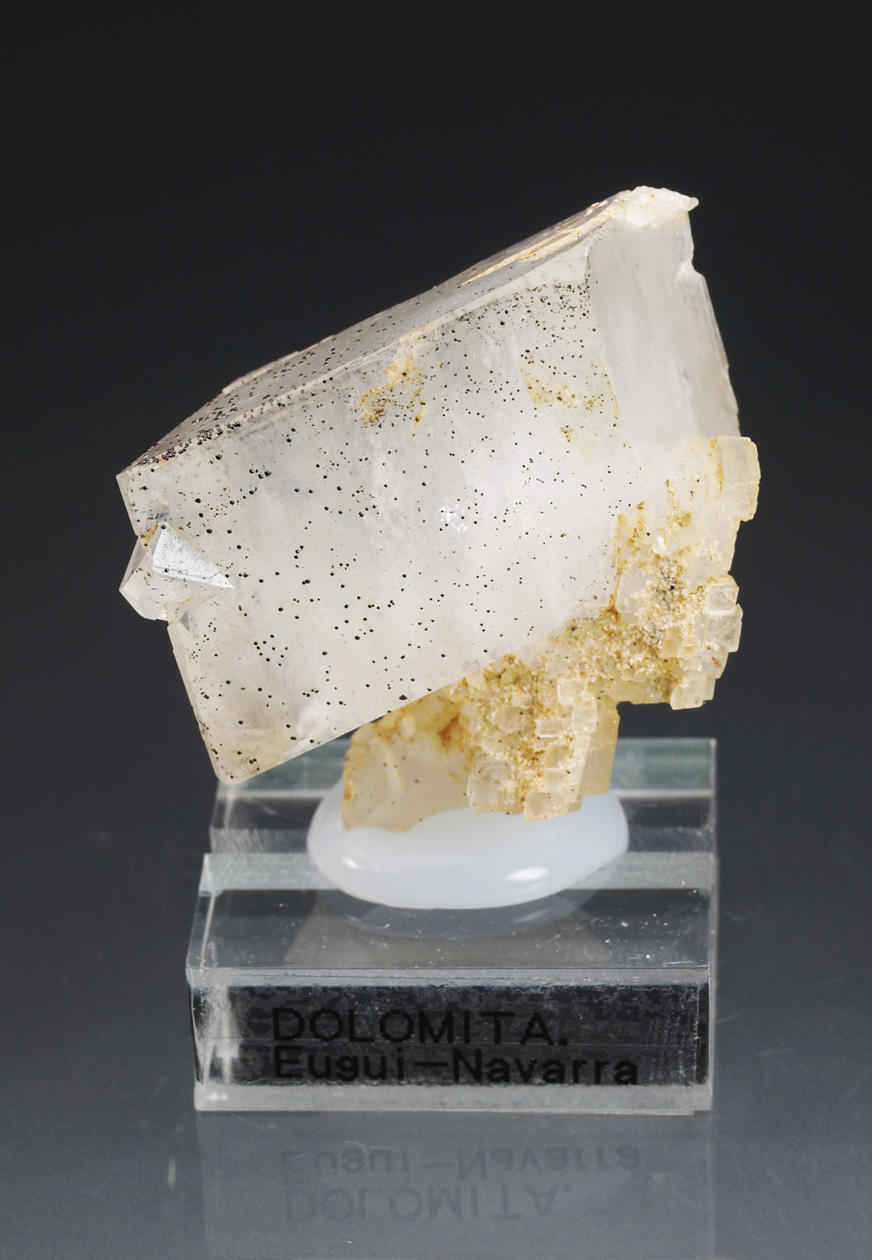
Cristal romboédrico de dolomita de esta localidad clásica Navarra. Se dispone de forma muy aérea sobre una matriz de dolomita. Tres de las caras del romboedro se hallan salpicadas de pequeños glóbulos de goethita. Una miniatura muy estética.
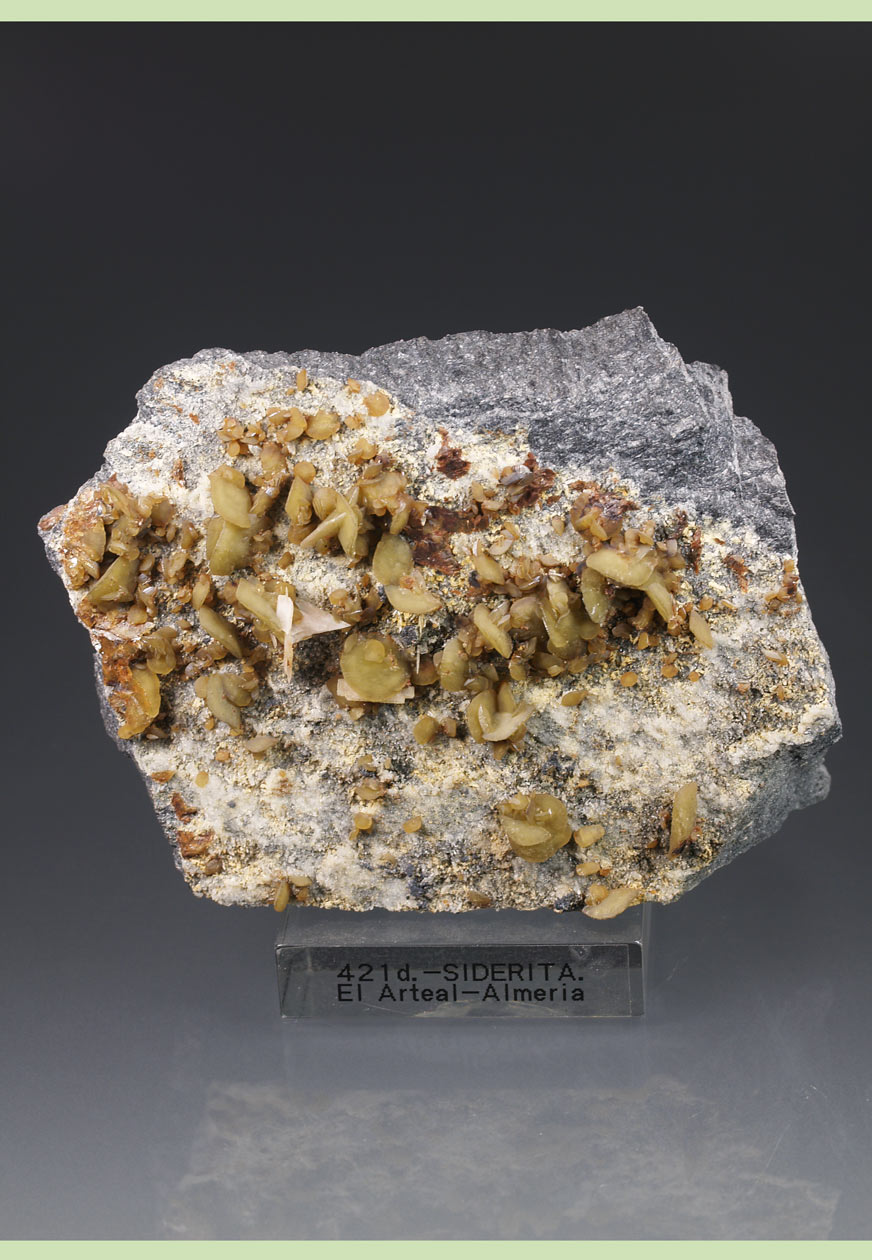
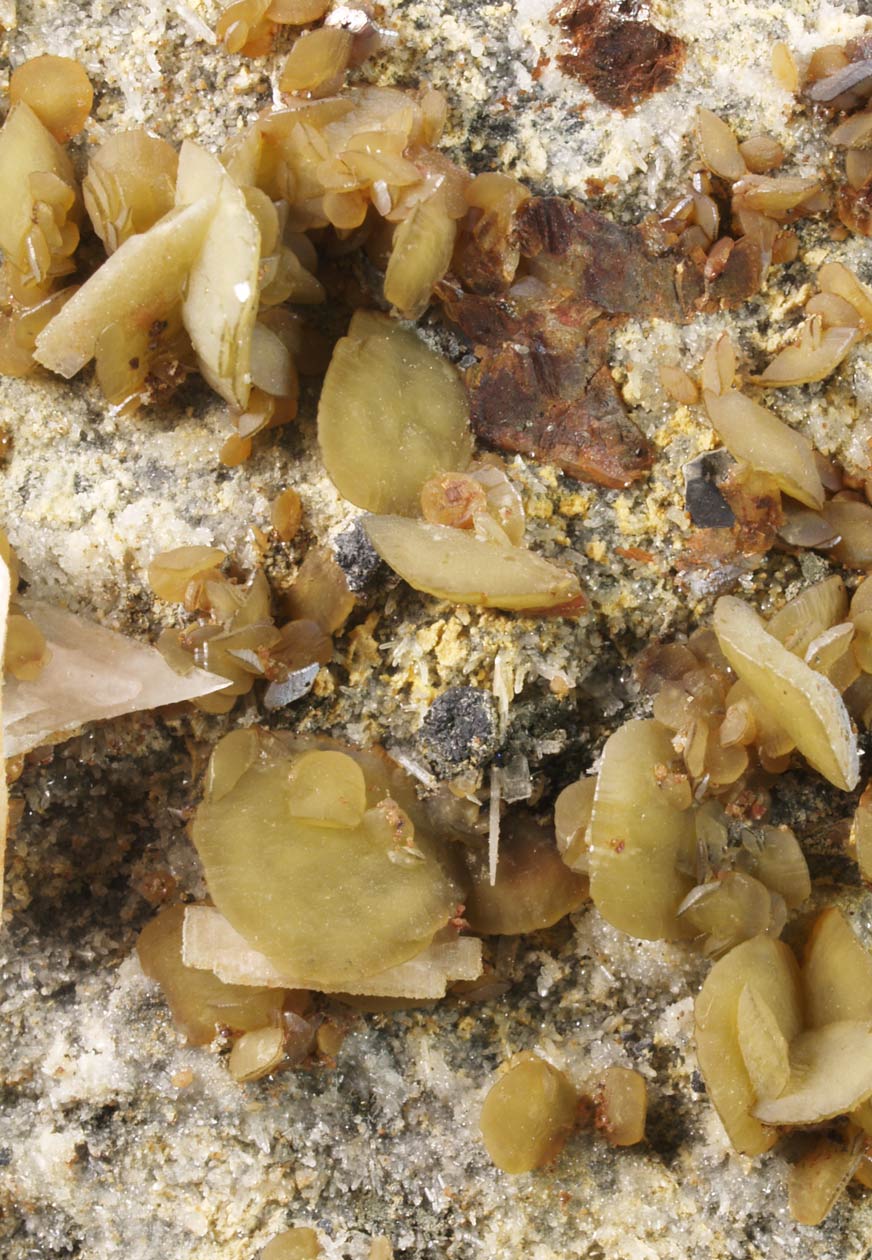
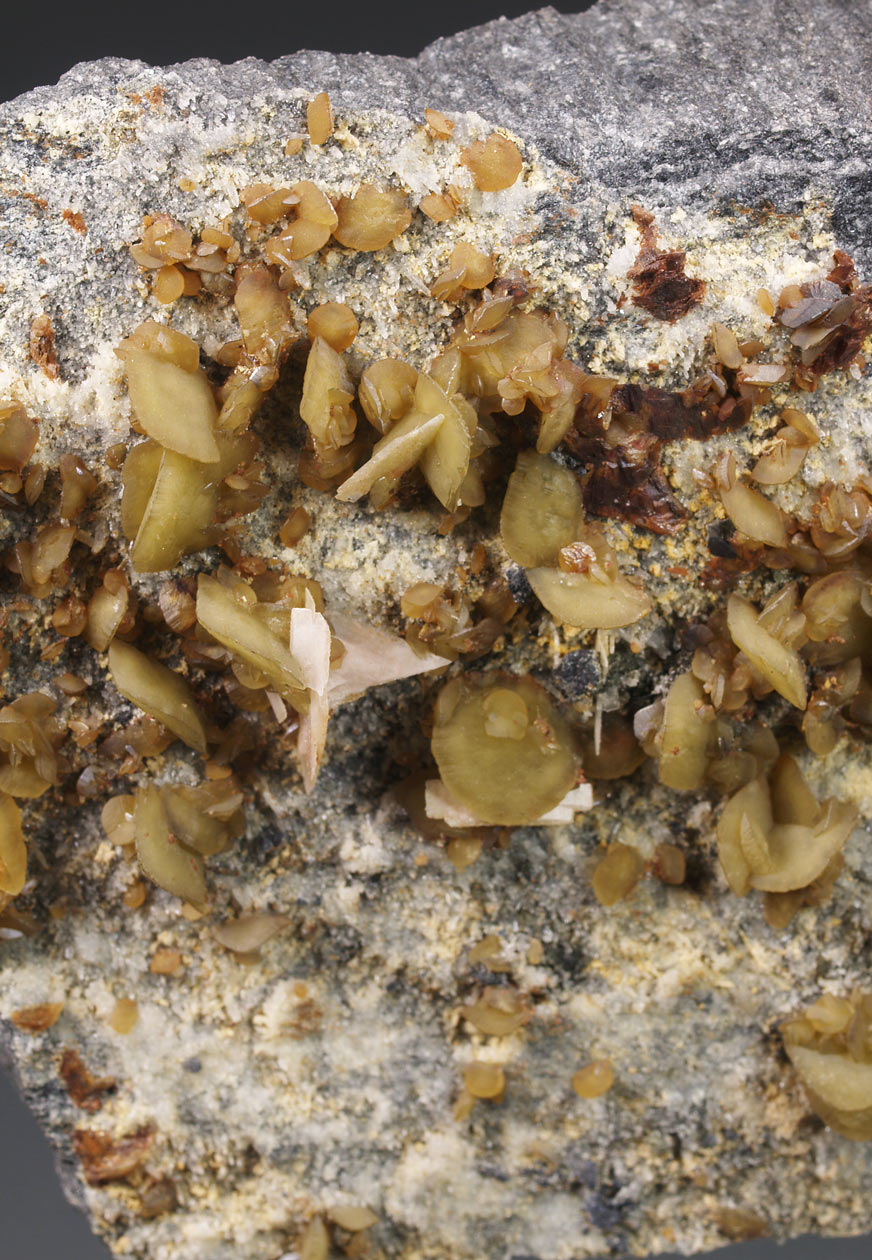
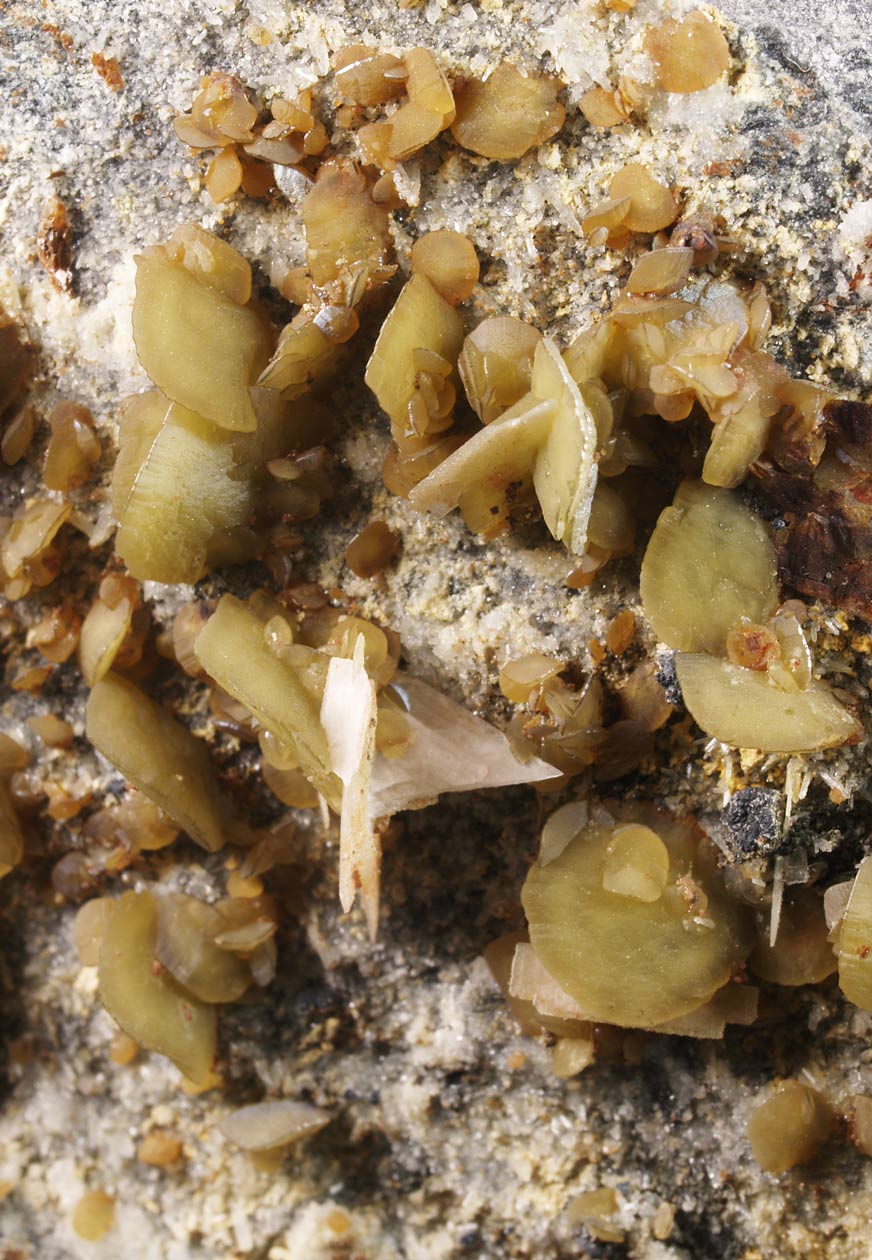
Agregados de cristales tabulares de siderita, de tonos verdosos, que se disponen sobre una matriz con pequeños cristales de cuarzo, galena y barita. Proceden de esta localidad almeriense de la que no es fácil encontrar ejemplares de siderita con esta calidad. De la colección Soliveres.
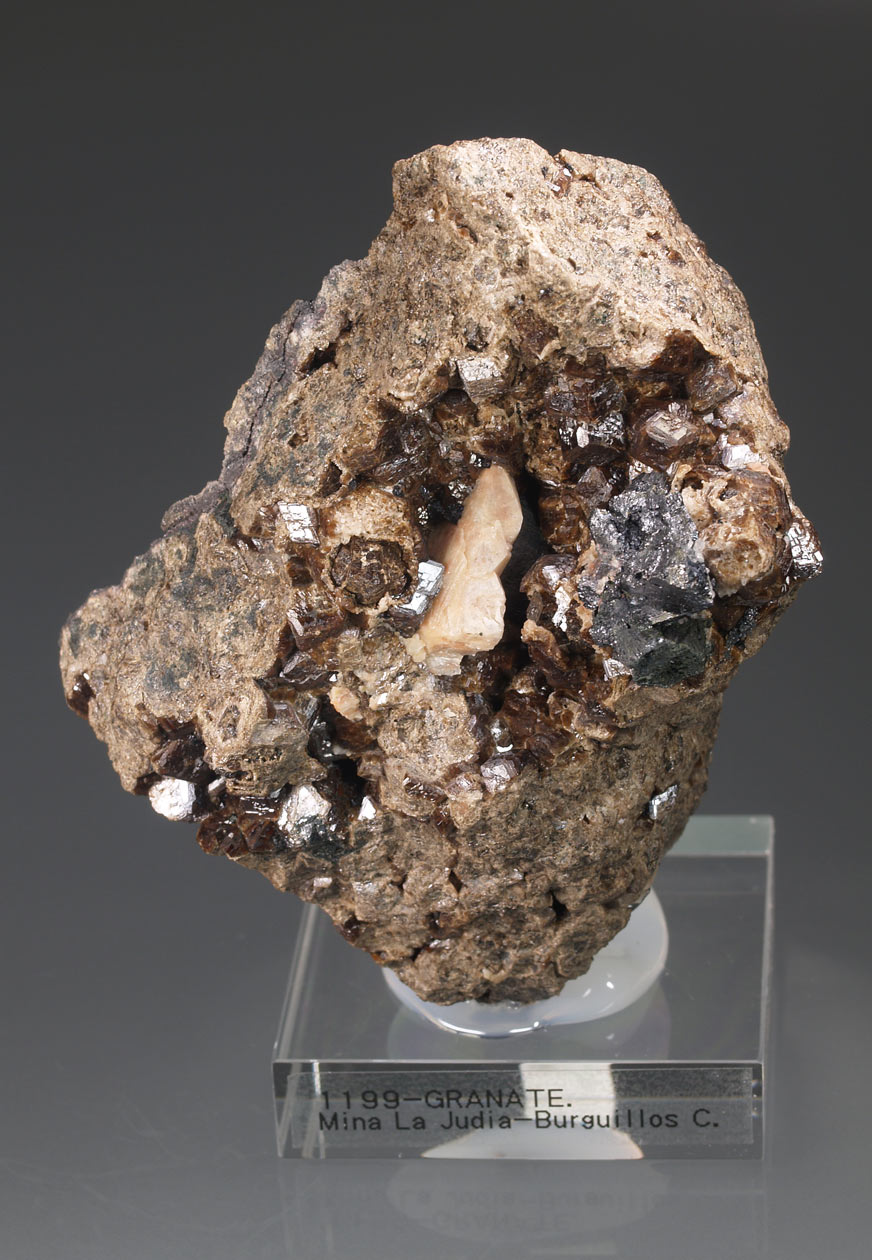
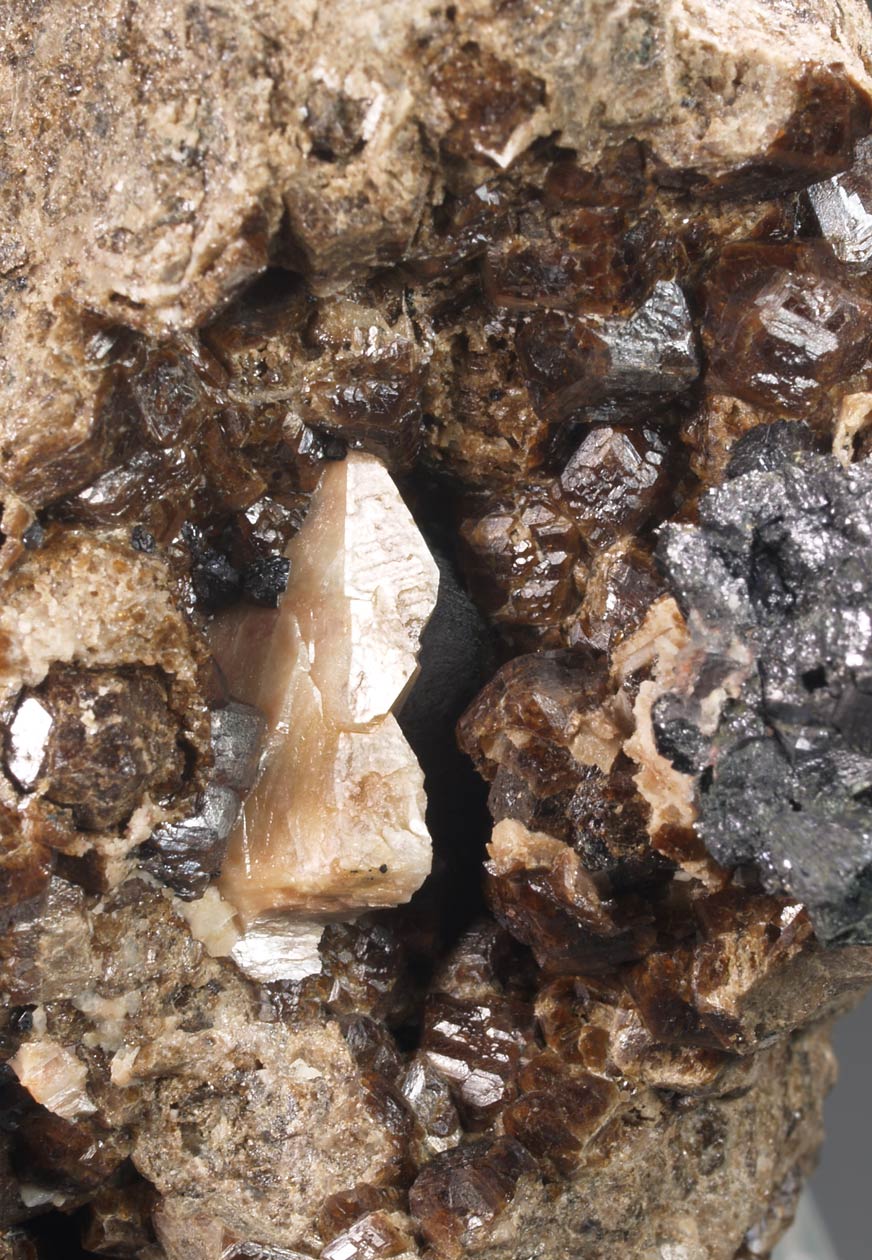
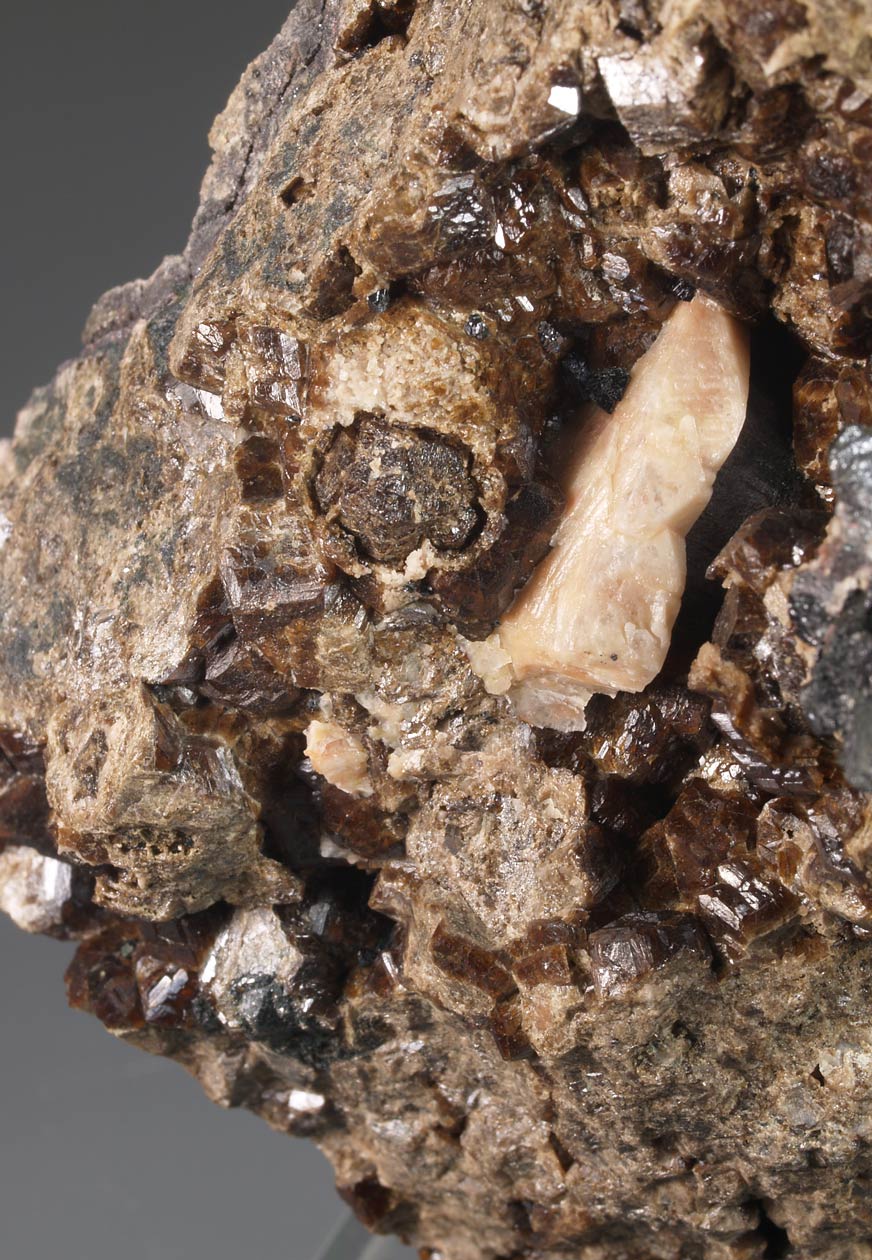
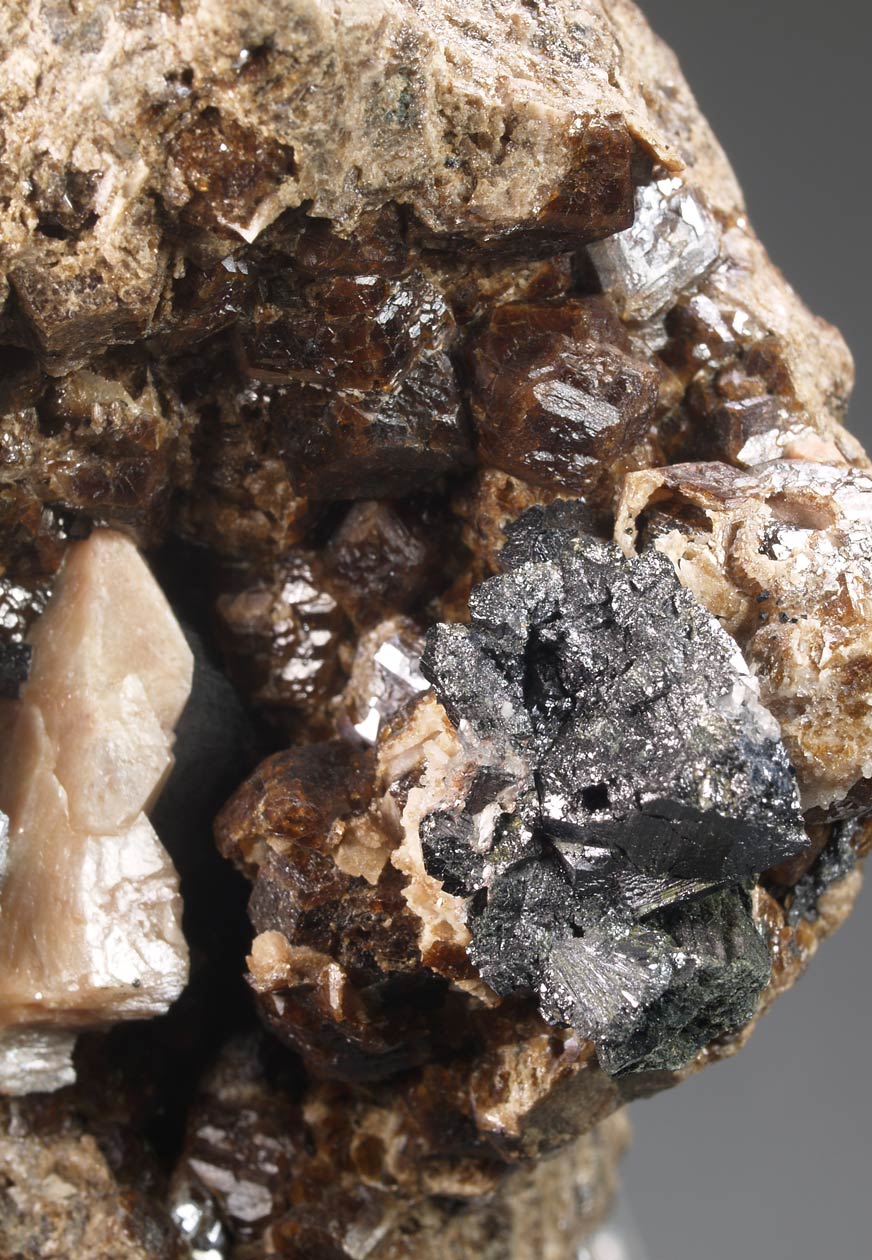
Un ejemplar de buen tamaño de esta mina extremeña formado por numerosos cristales de andradita, brillantes, con caras definidas, y que se acompañan de magnetita y un cristal de ortoclasa. De la colección Soliveres.
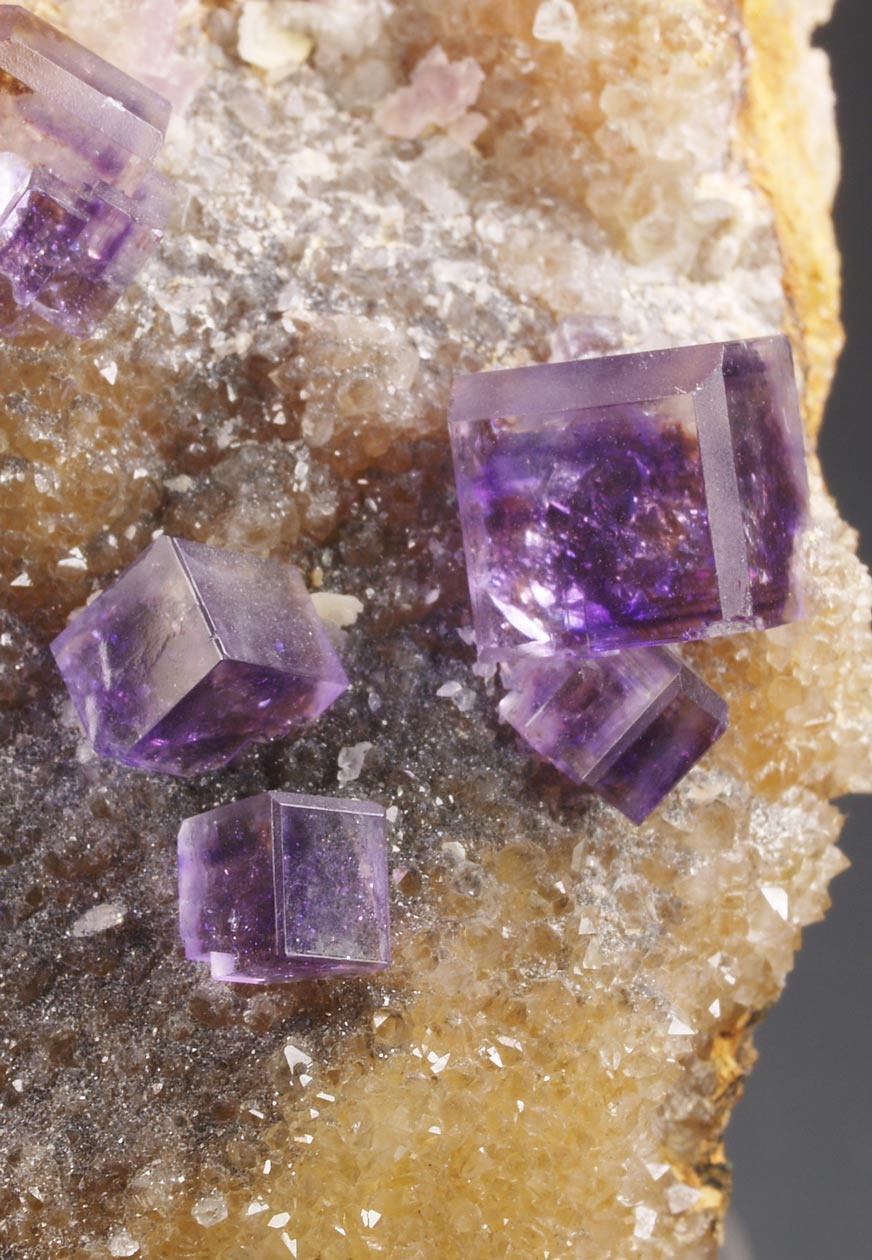
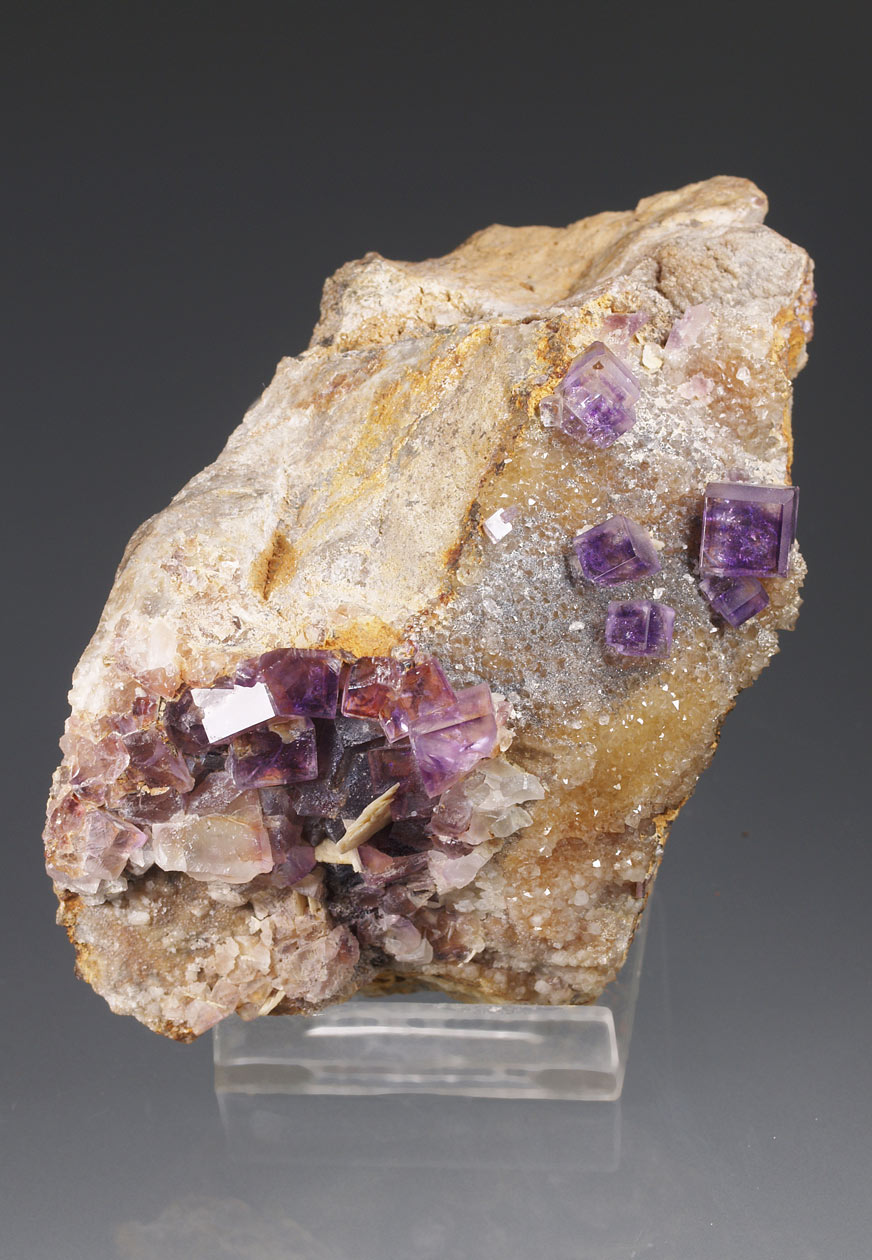
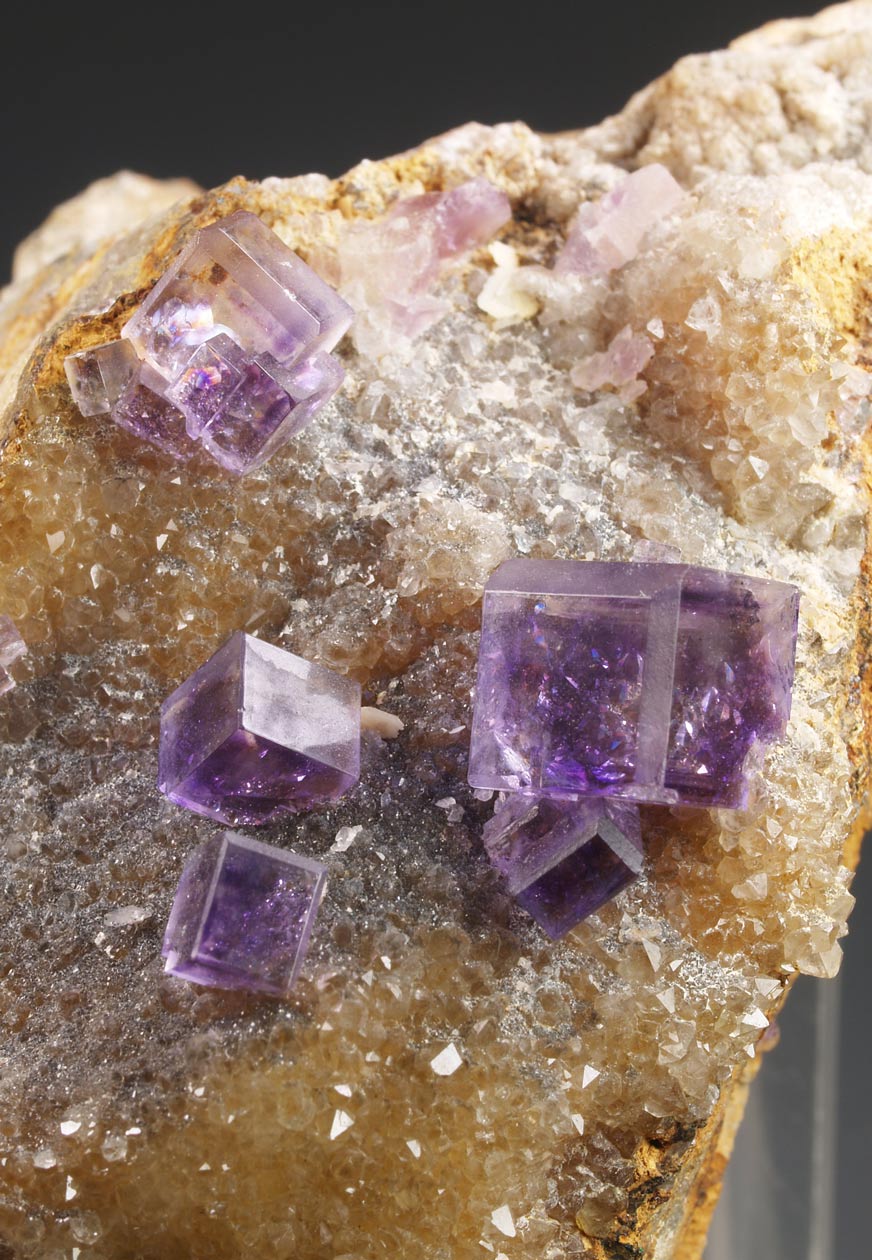
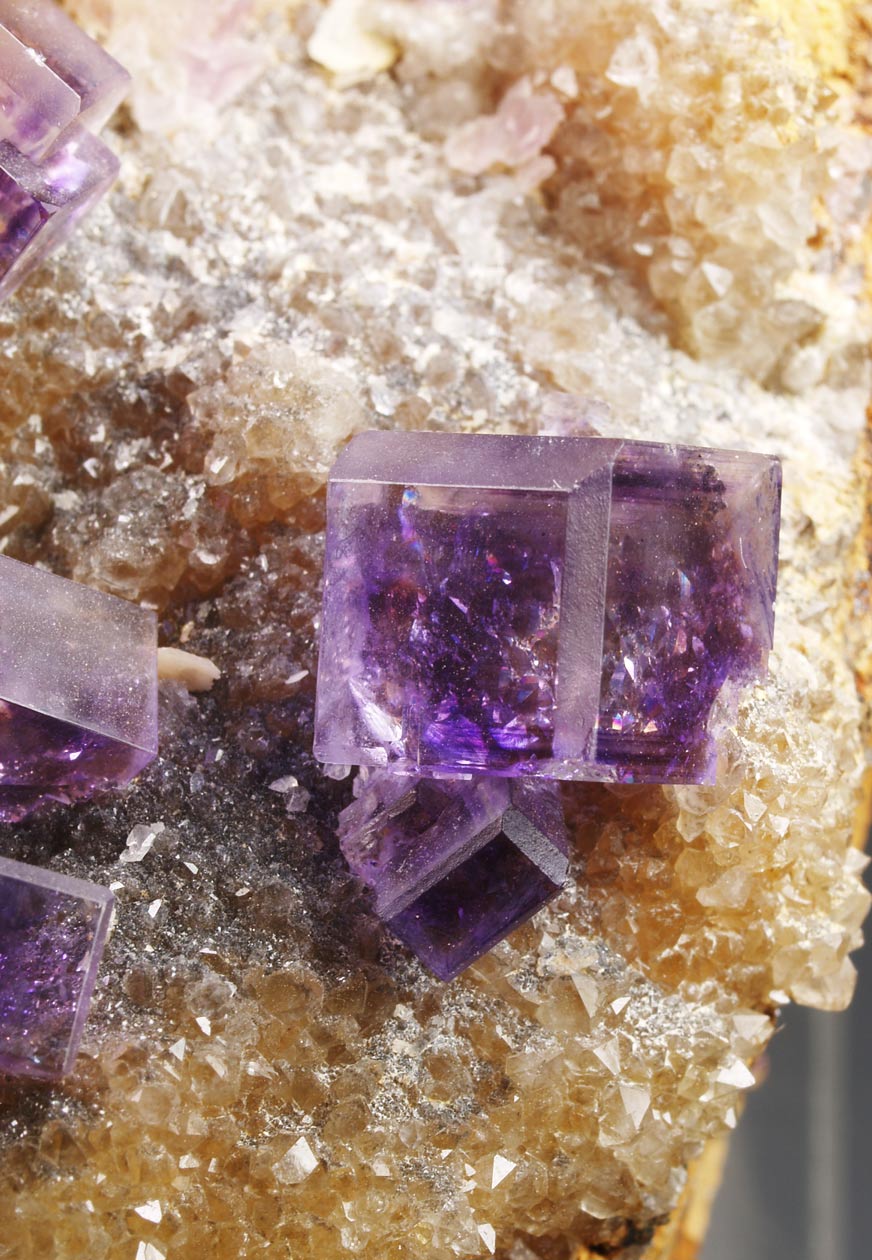
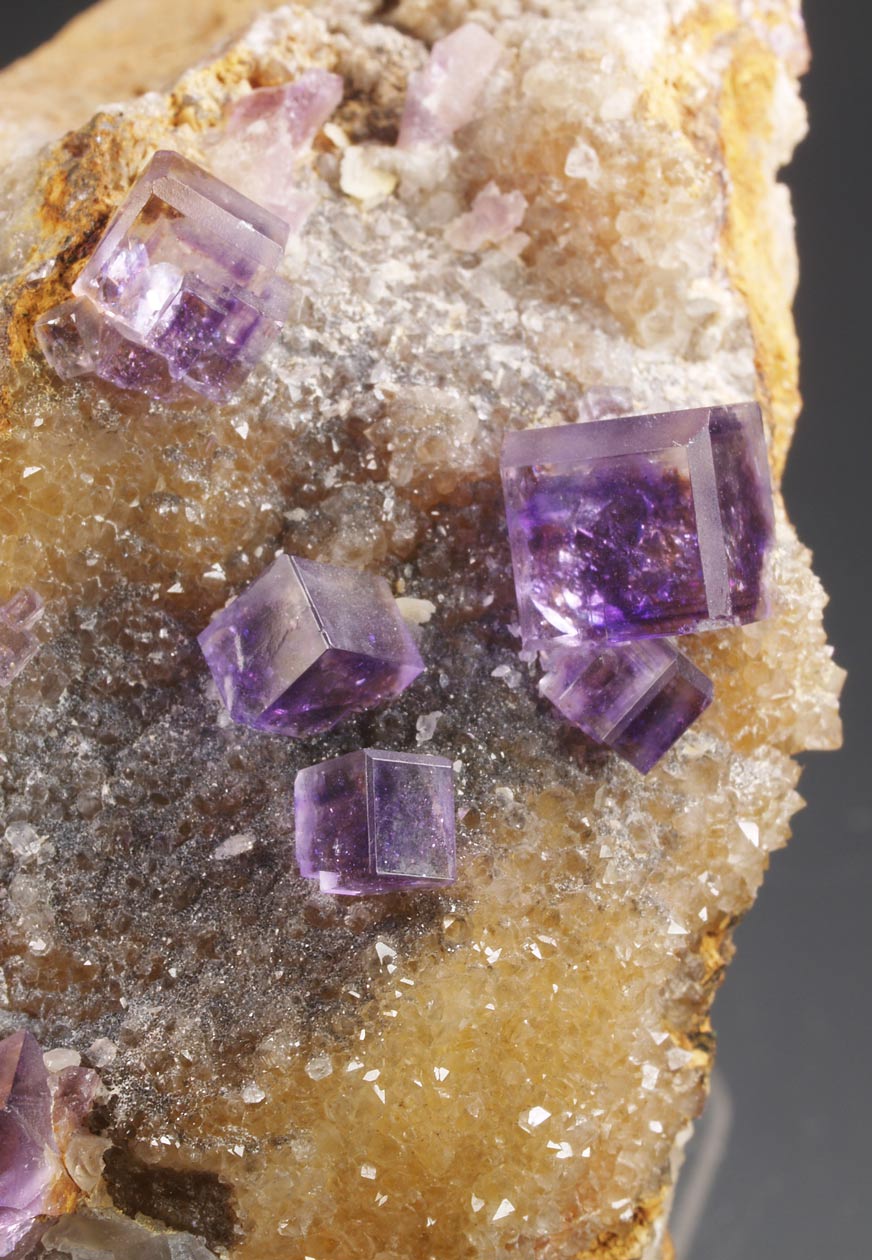
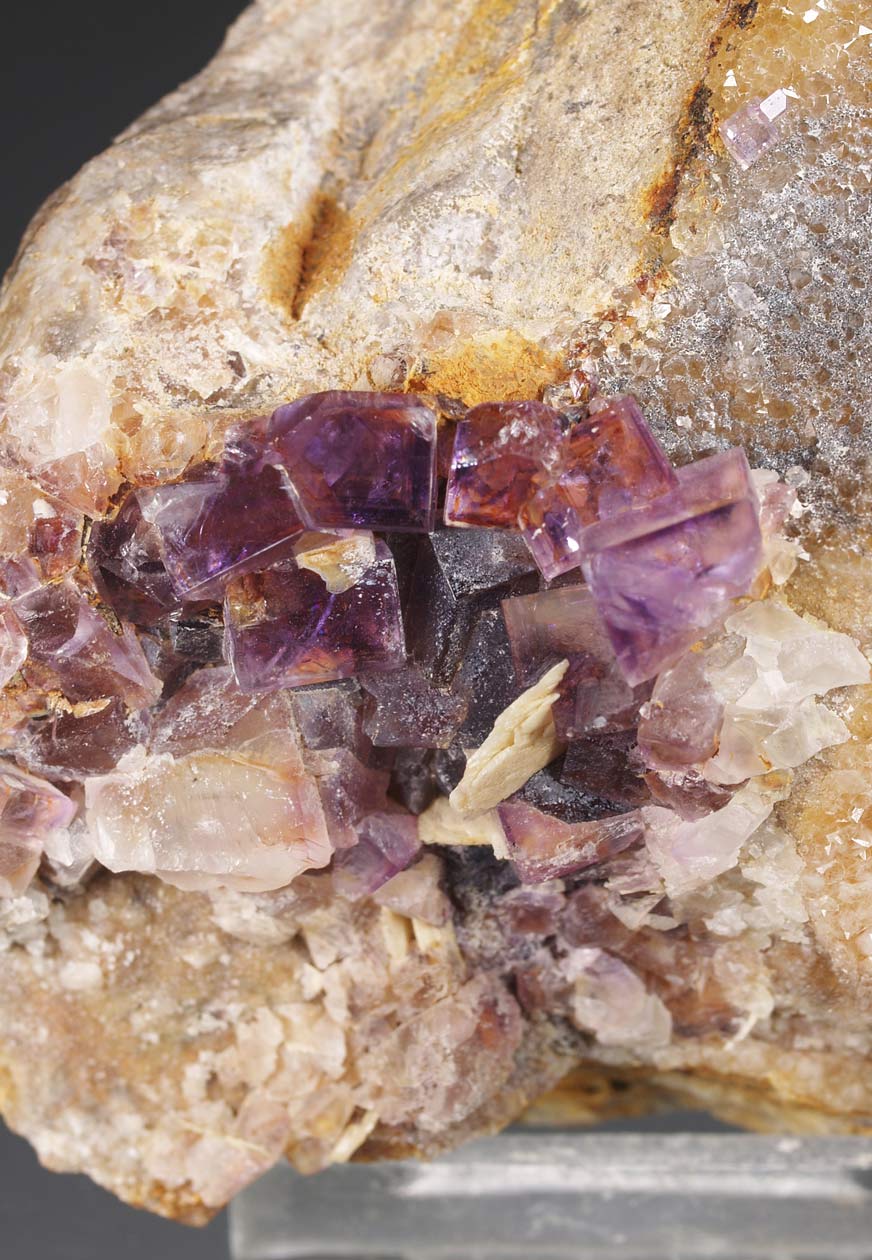
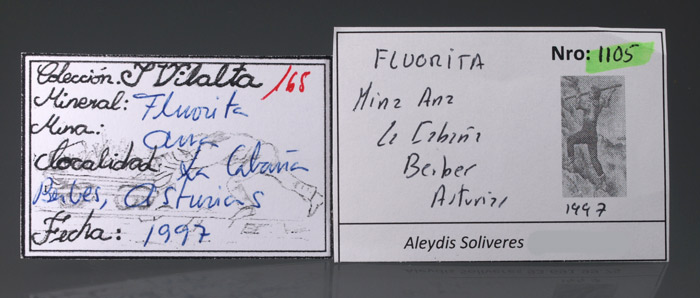
Ejemplar formado por una drusa de microscristales de cuarzo sobre los que han crecido varios grupos de cristales cúbicos de fluorita. Presentan las caras biseladas asimétricamente por el dodecaedro. Su transparencia nos permite ver una curiosa zonación geométrica de color. Procede el ejemplar de la colección J. Vilalta i de la colección A. Soliveres. De una mina de la que cuesta encontrar piezas.
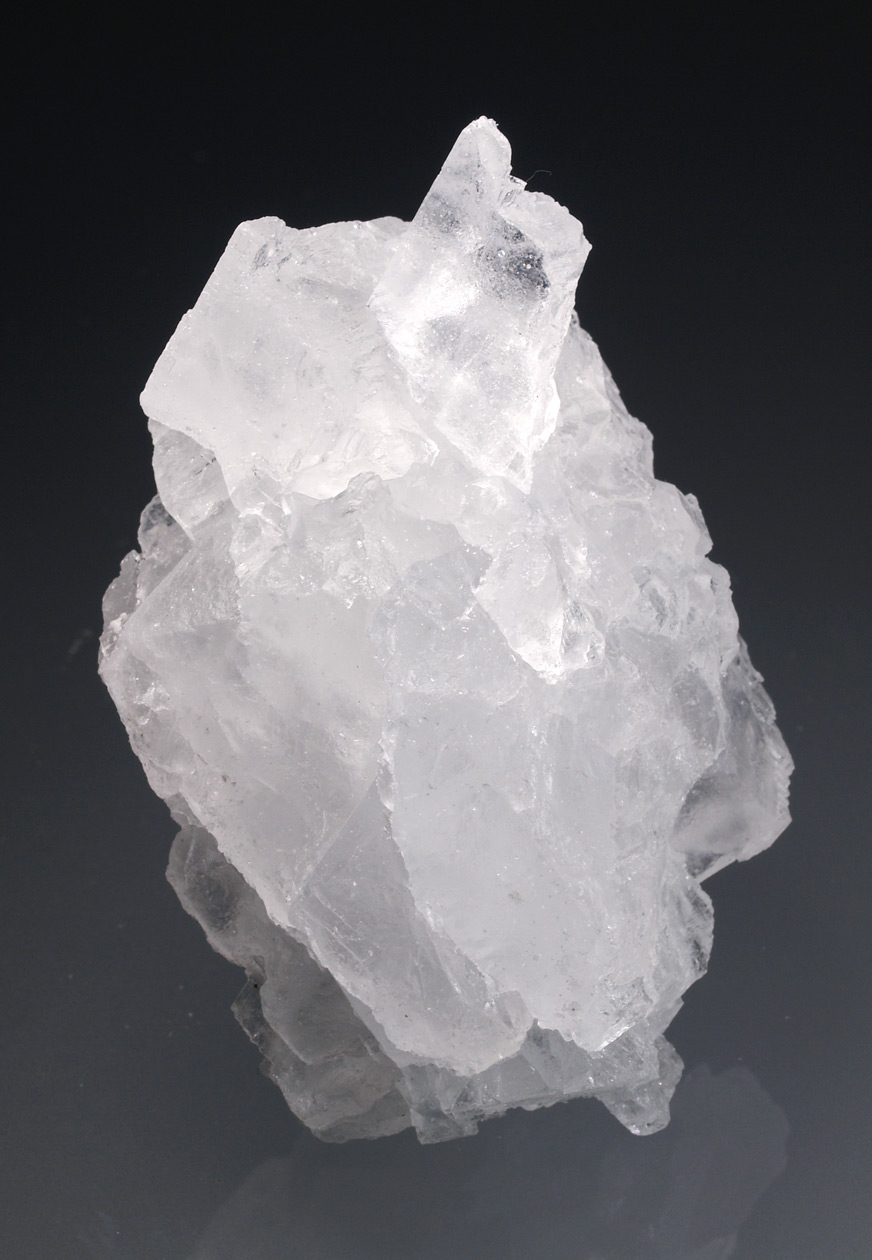
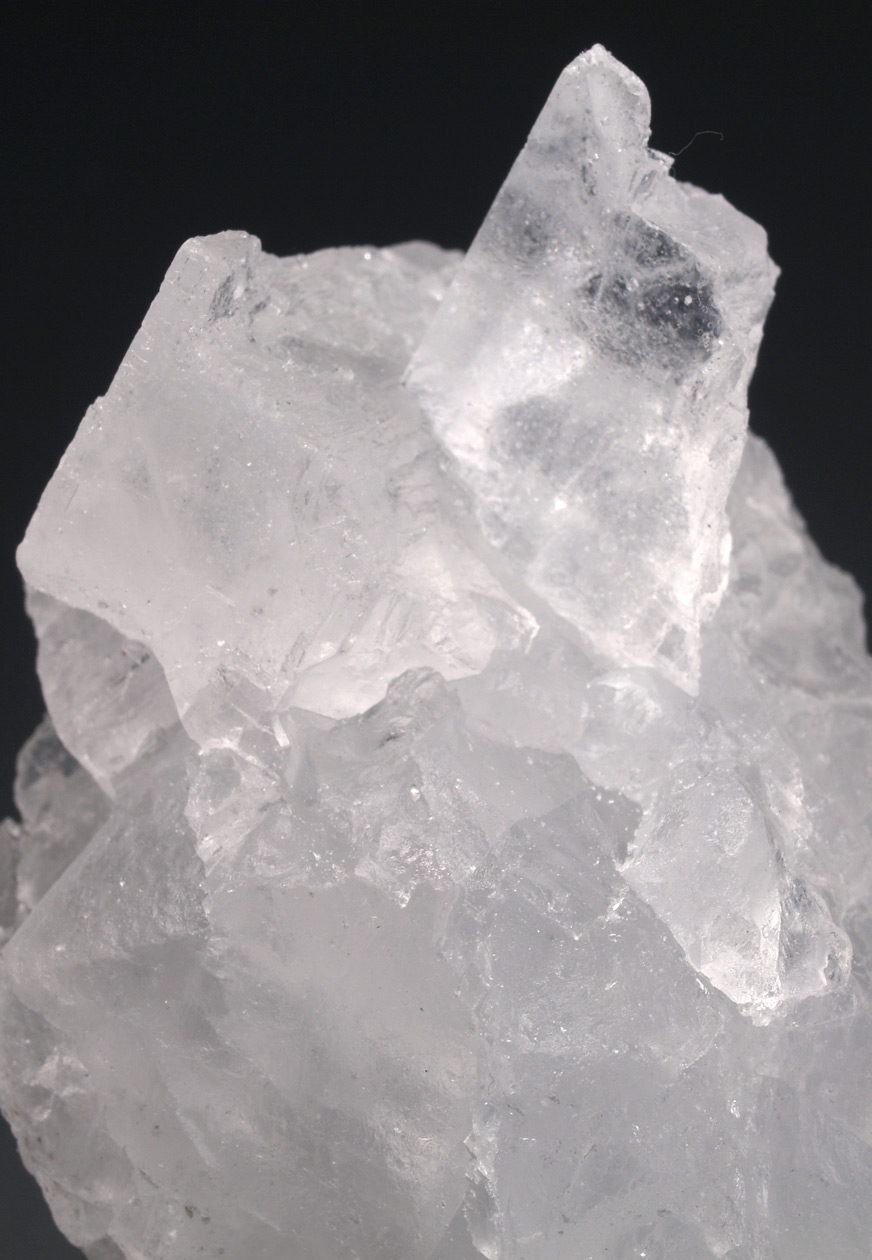
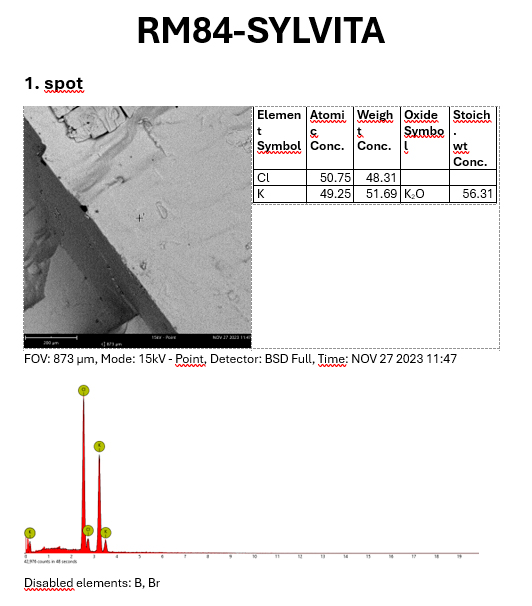
Agregado cristalino de sylvita, incolora, transparente y brillante. Ejemplares de sylvita tan pura no son fáciles de encontrar. Este procede de las explotaciones de sales potásicas de la cuenca de Catalunya. Ejemplar analizado.
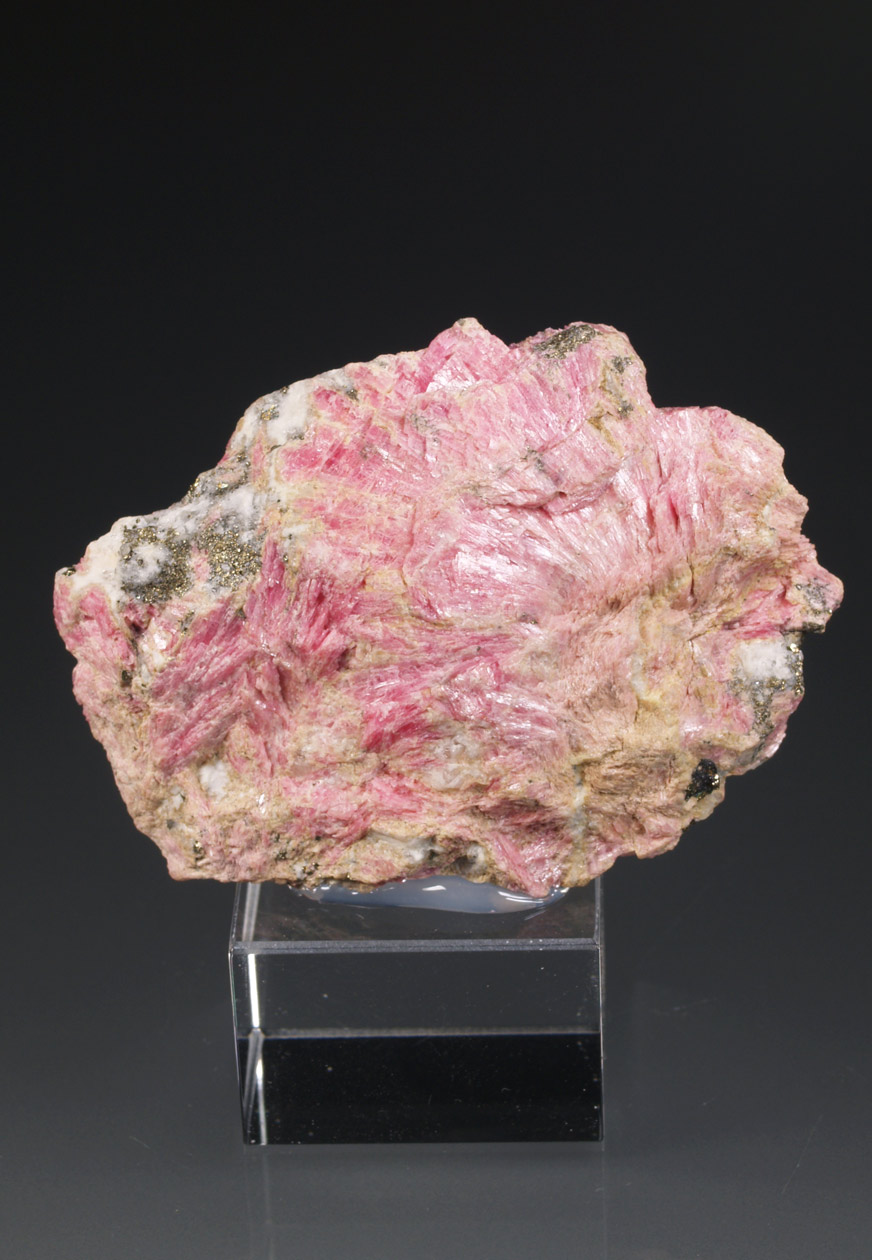
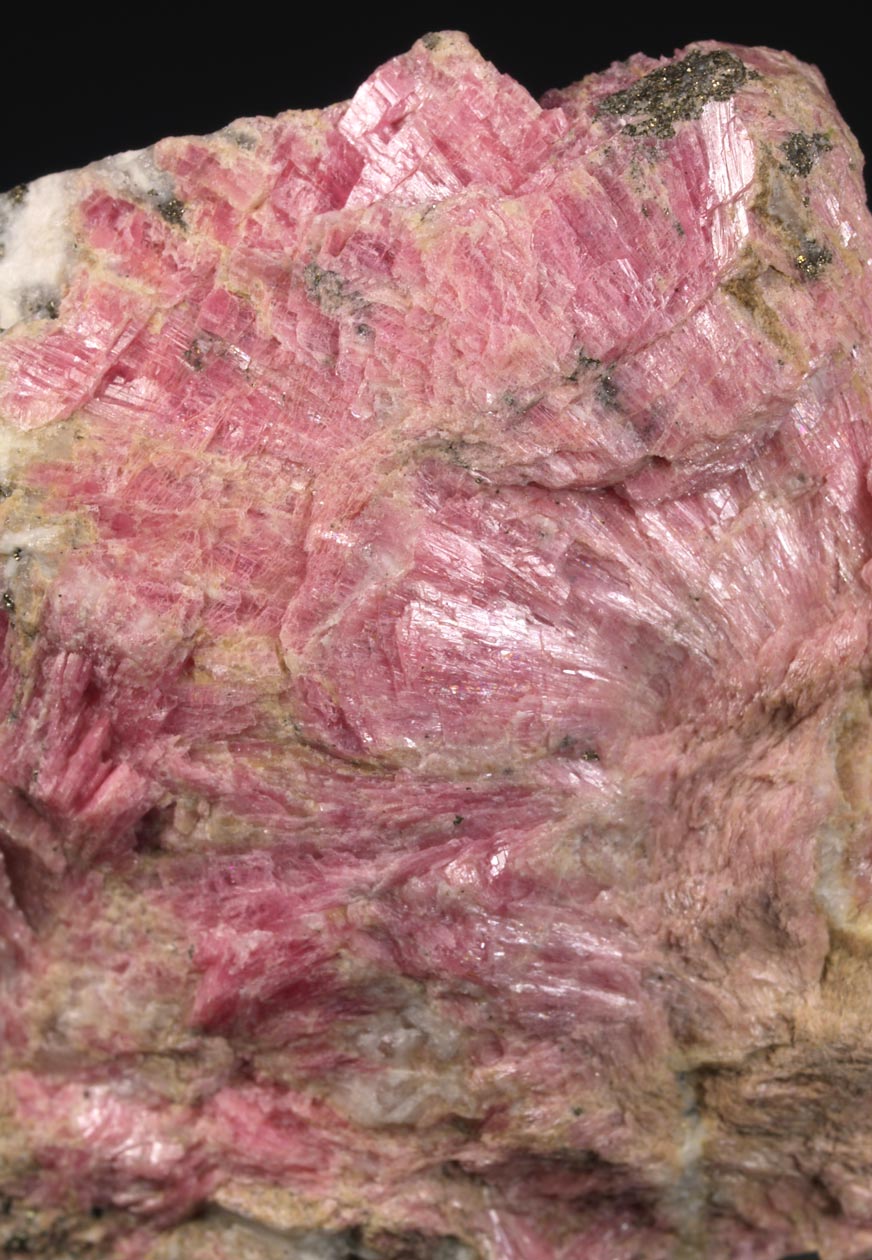
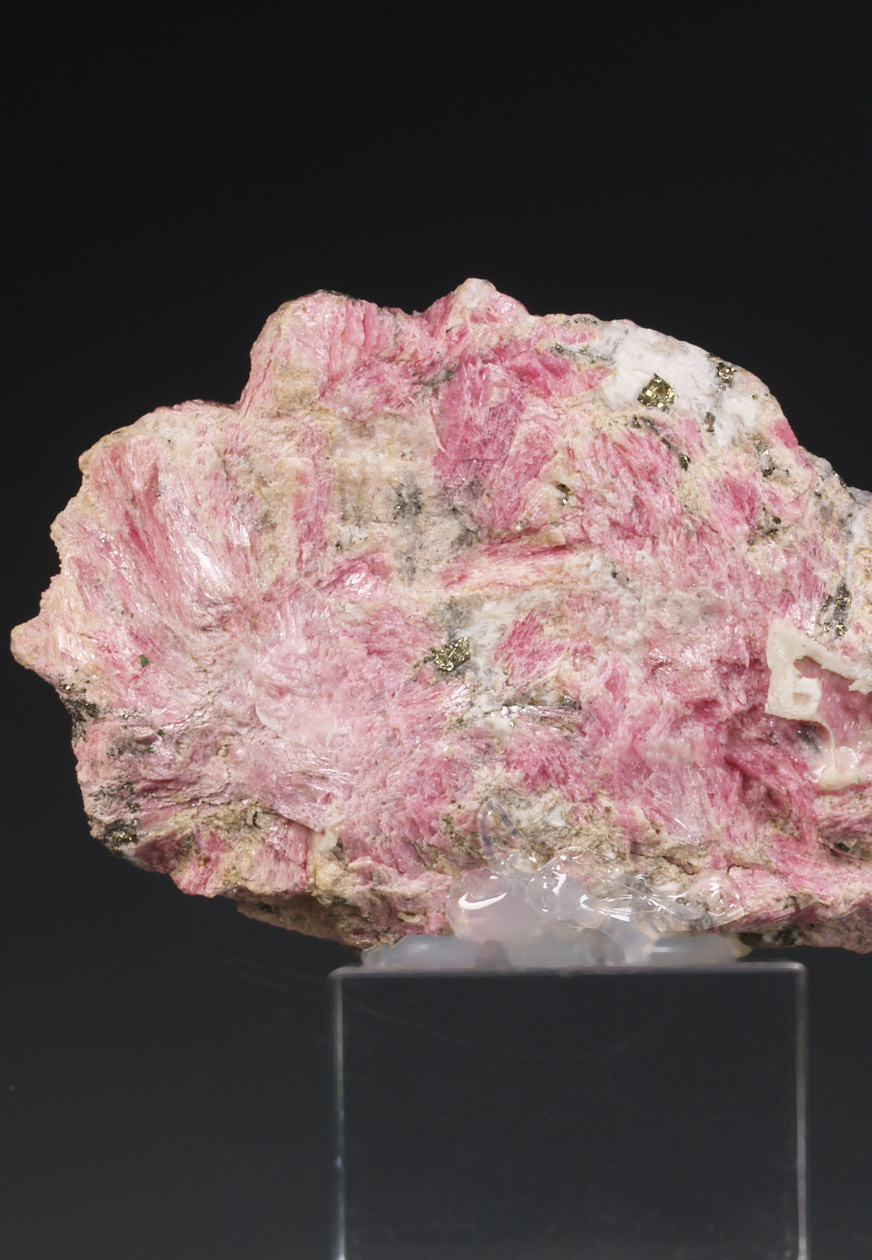
Ejemplar antiguo de rodonita procedente de esta mina peruana. Formado por crecimientos paralelos de cristales tabulares, con un color rosado suave y brillo. Con pirita en la matriz.
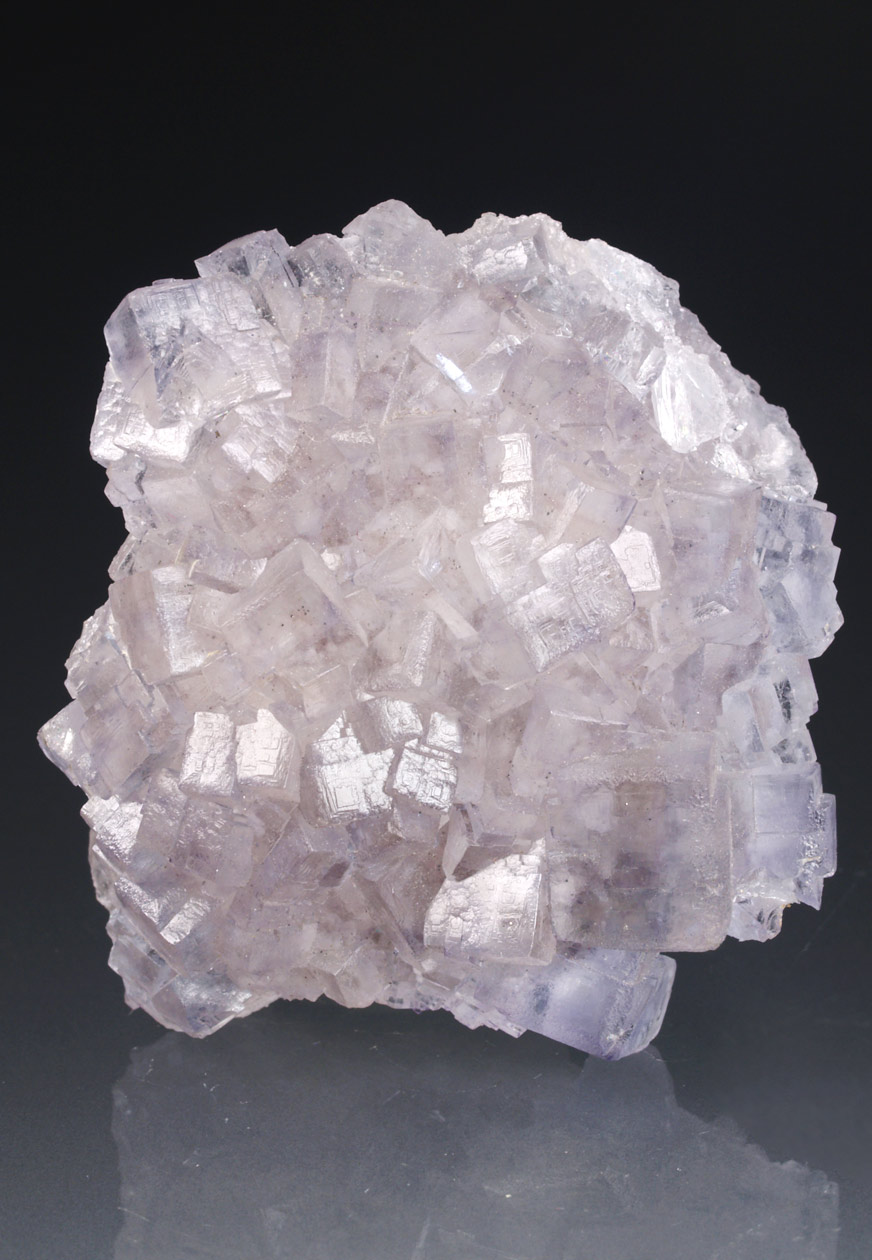
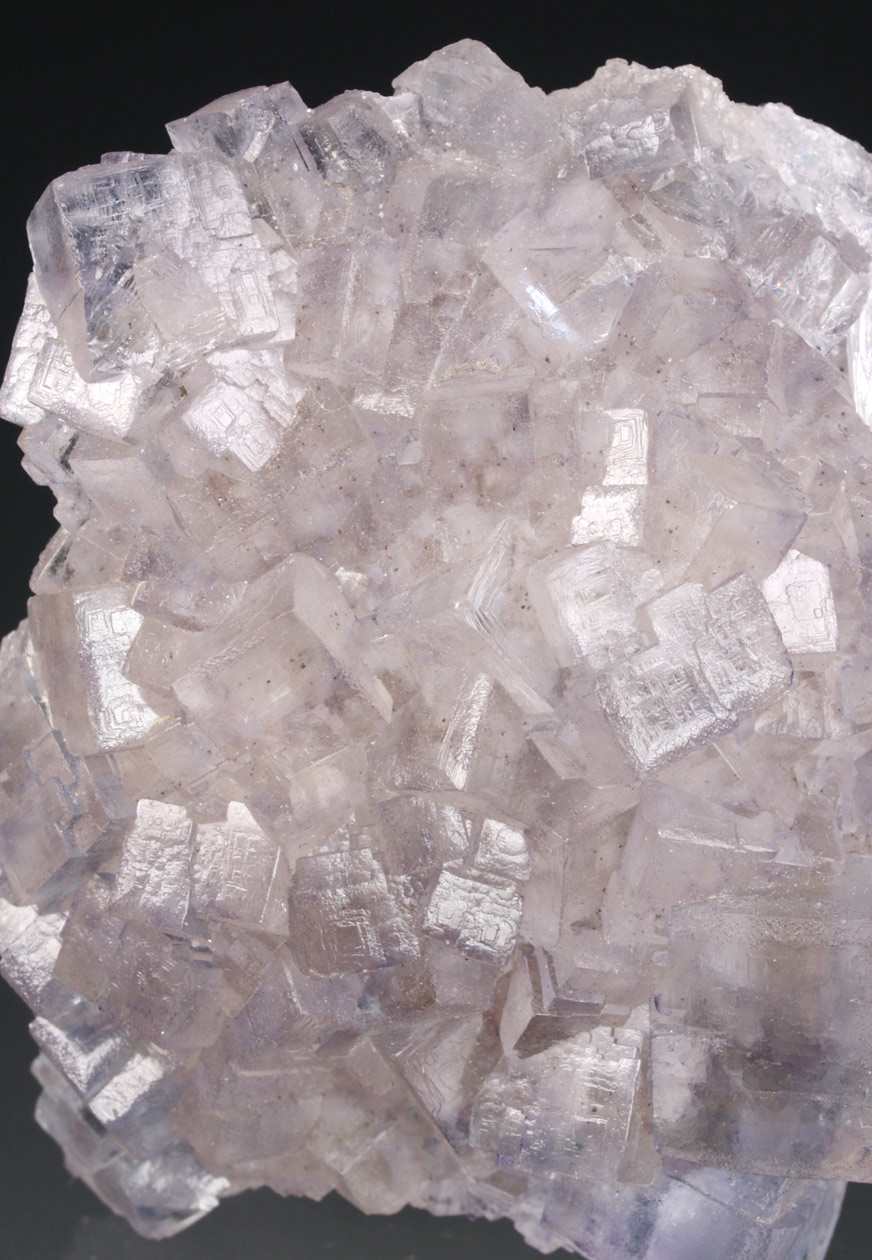
Grupo de cristales de fluorita con aristas curvas y caras con crecimientos en loseta. Transparentes a translúcidos y con una suave zonación de color violeta azulado. Una pieza antigua de esta clásica mina astur.
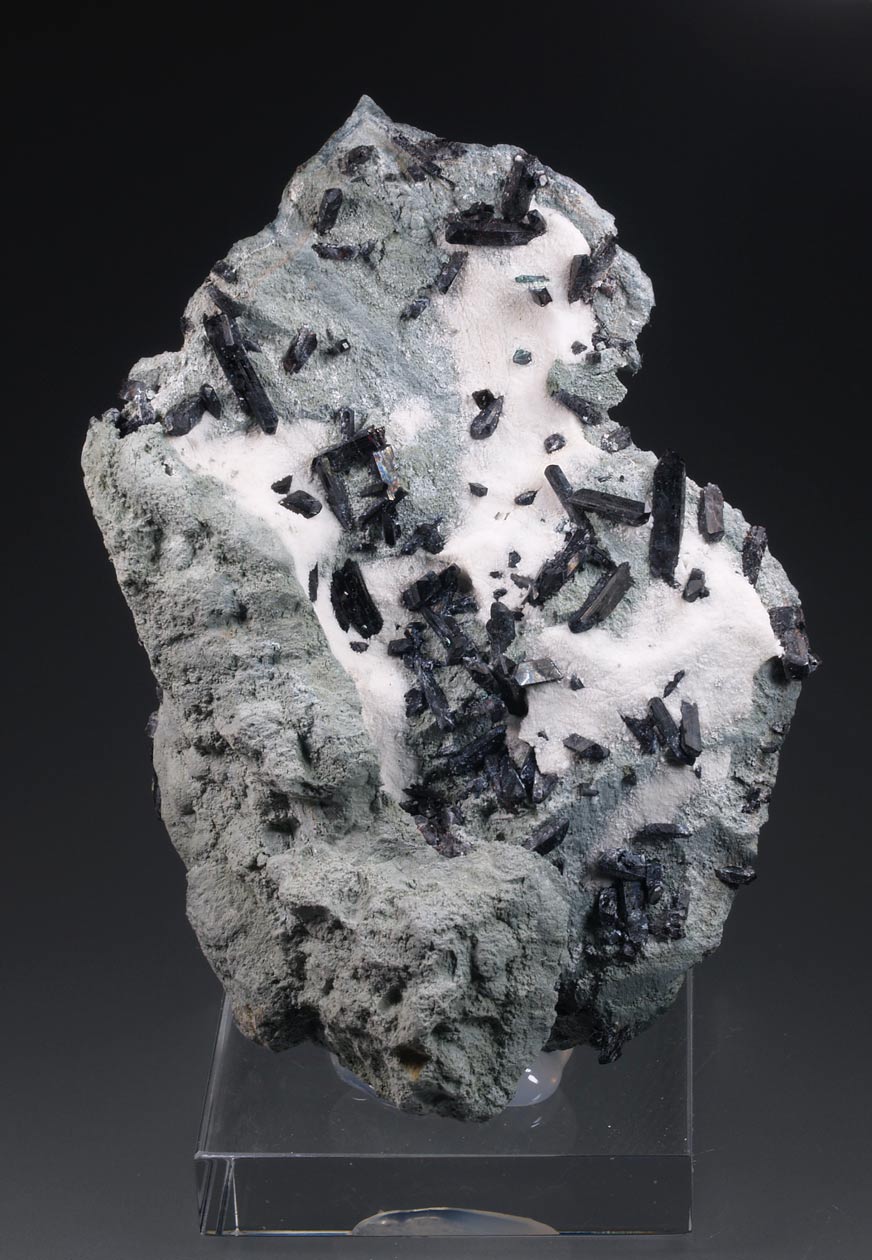
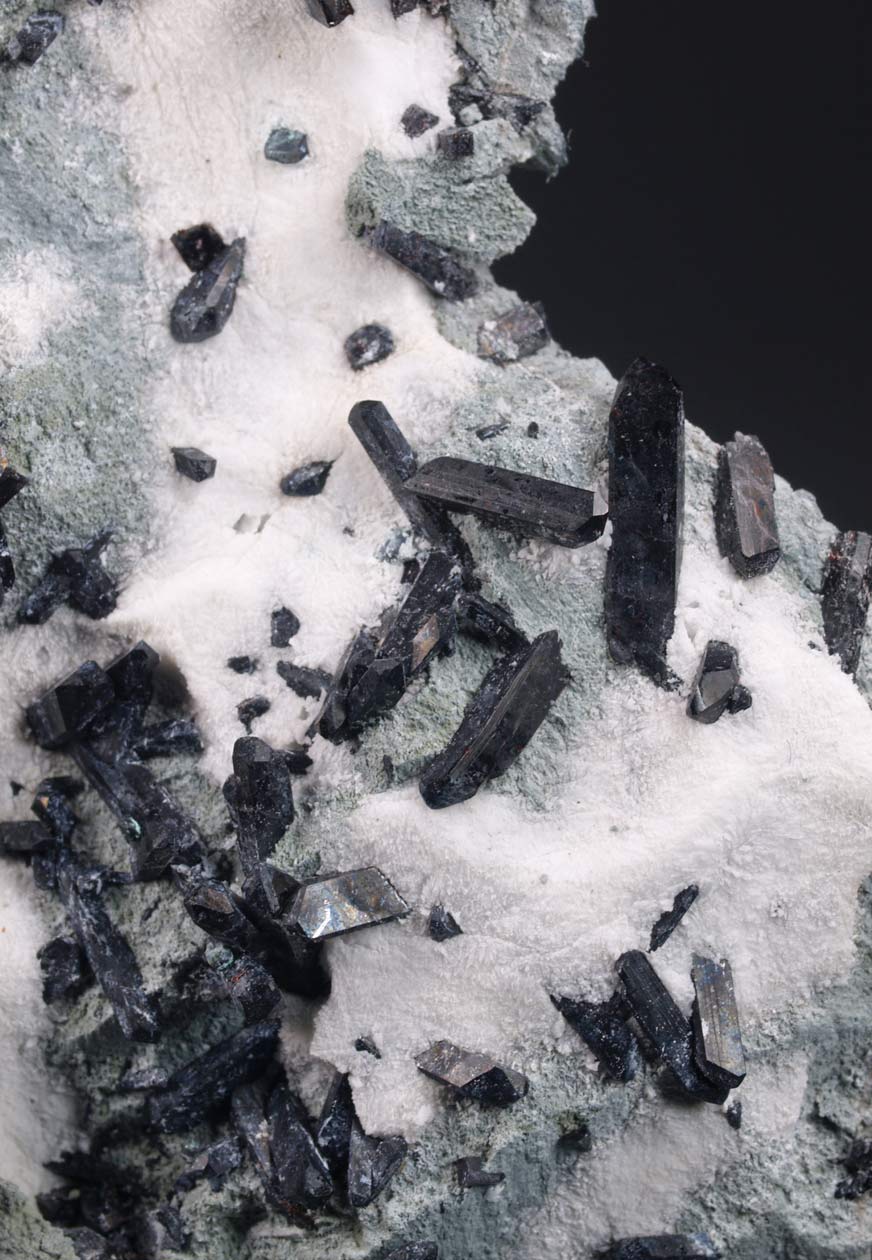
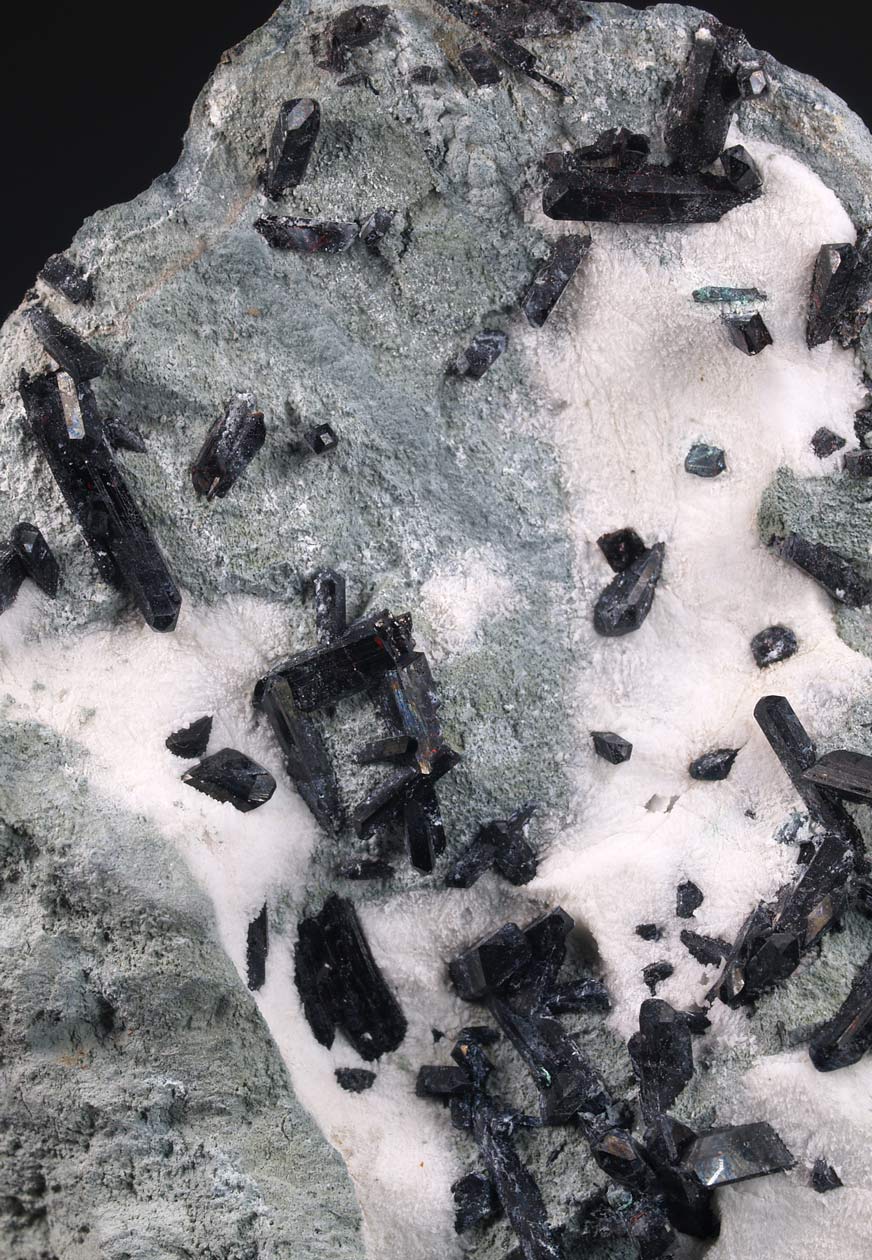
Grupo de cristales de neptunita, bien desarrollados y ricos en caras, brillantes y dispuestos sobre una matriz con natrolita blanca. El contraste es muy estético. Procede de la colección Nicolau de Barcelona. La fórmula de la neptunita nos indica su complejidad química: KNa₂Li(Fe²⁺)₂Ti₂[Si₄O₁₂]₂
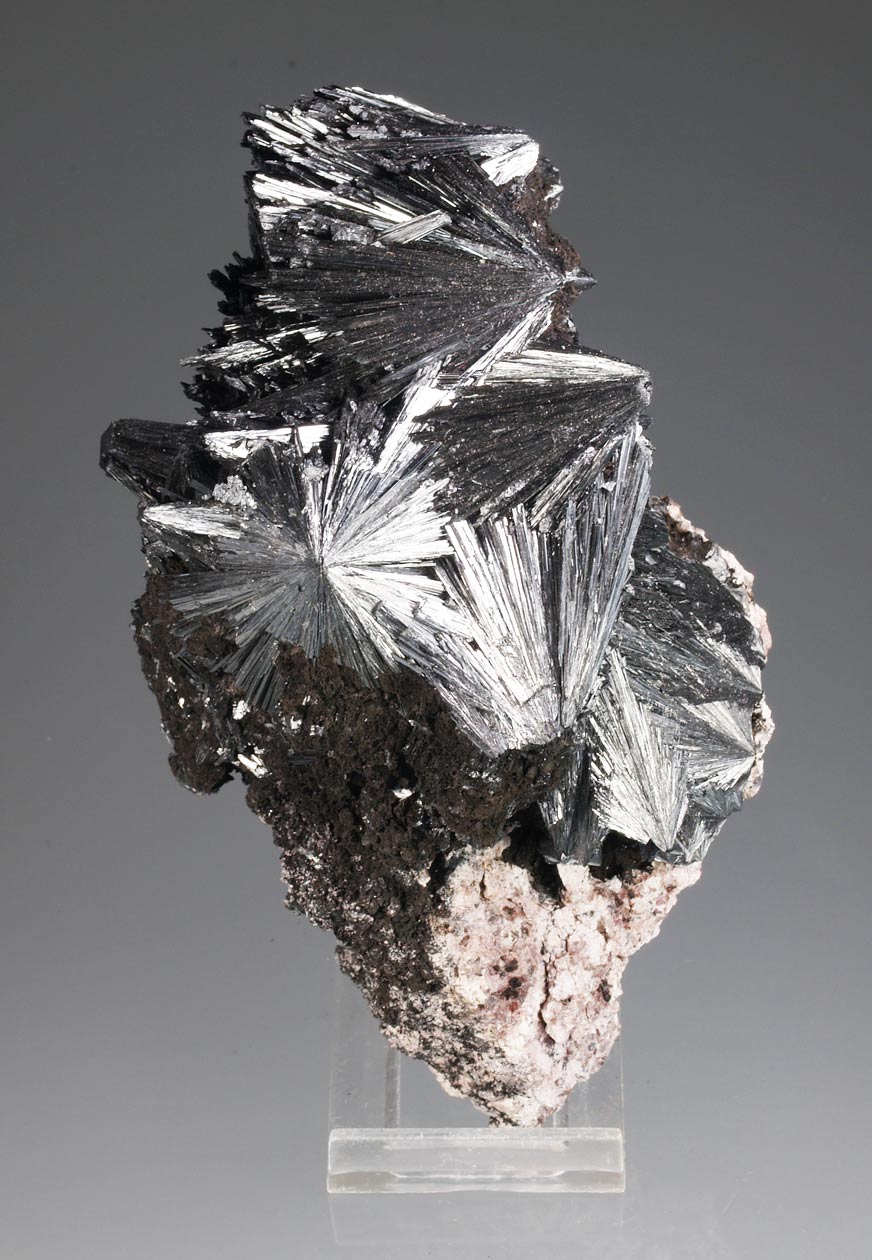
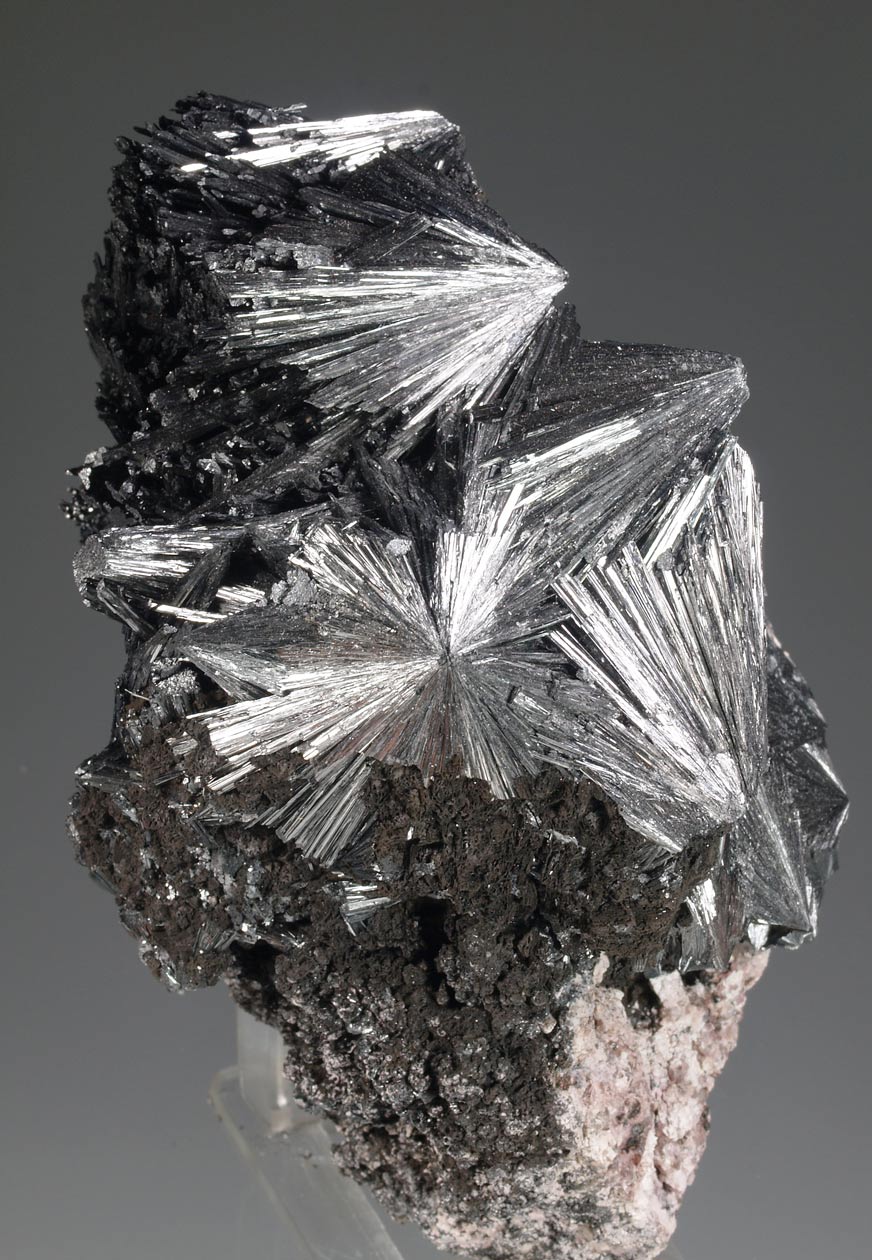
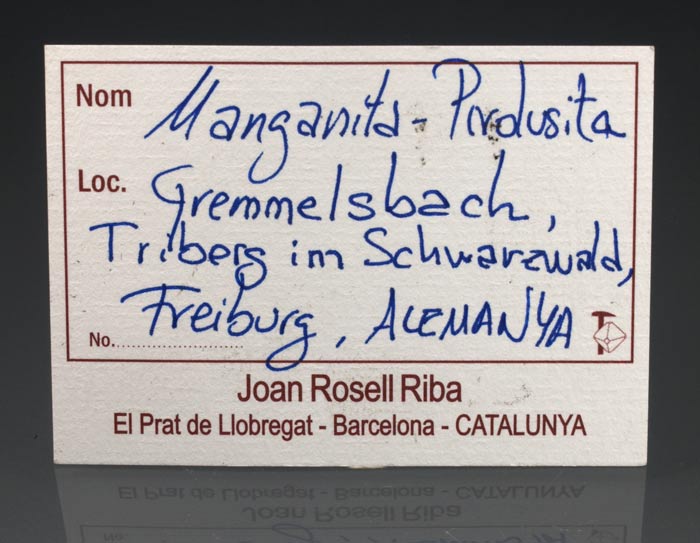
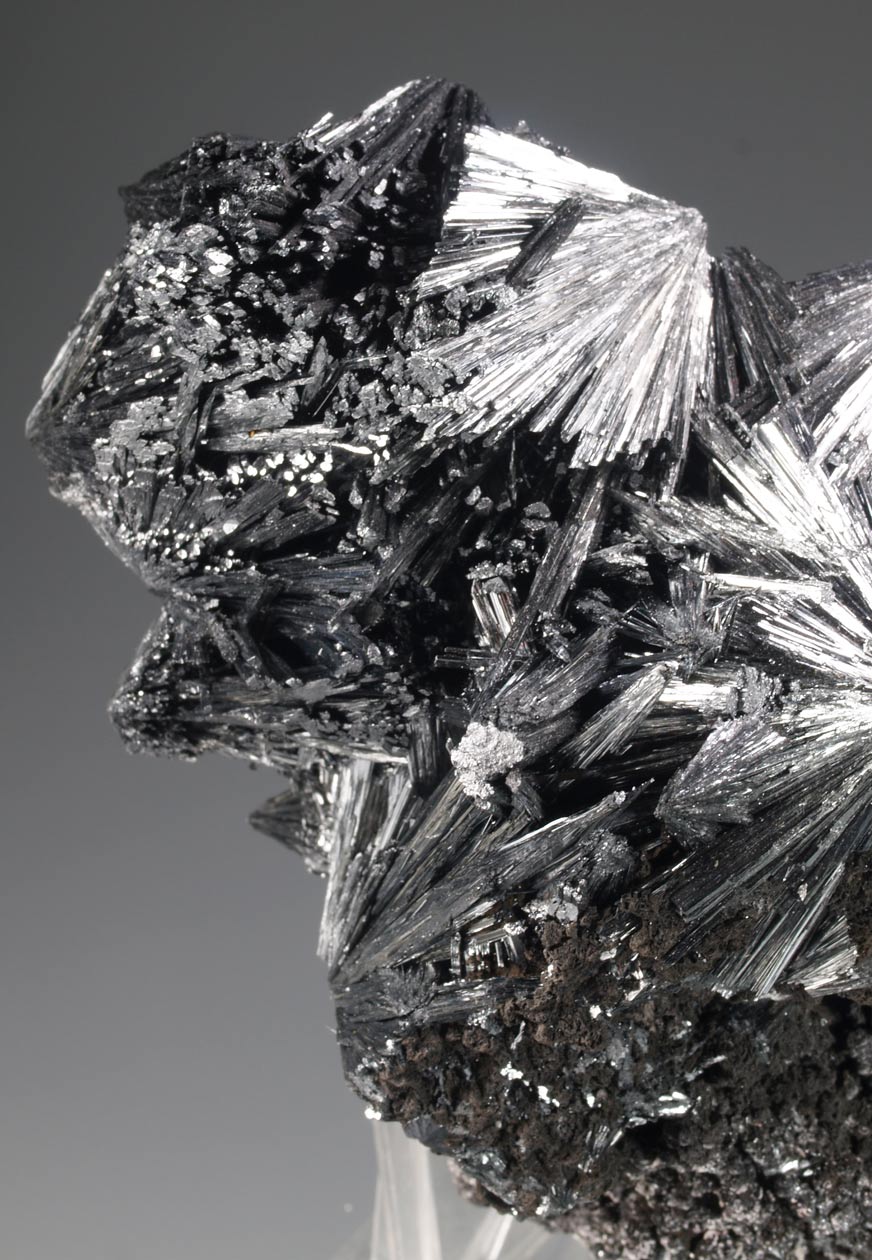
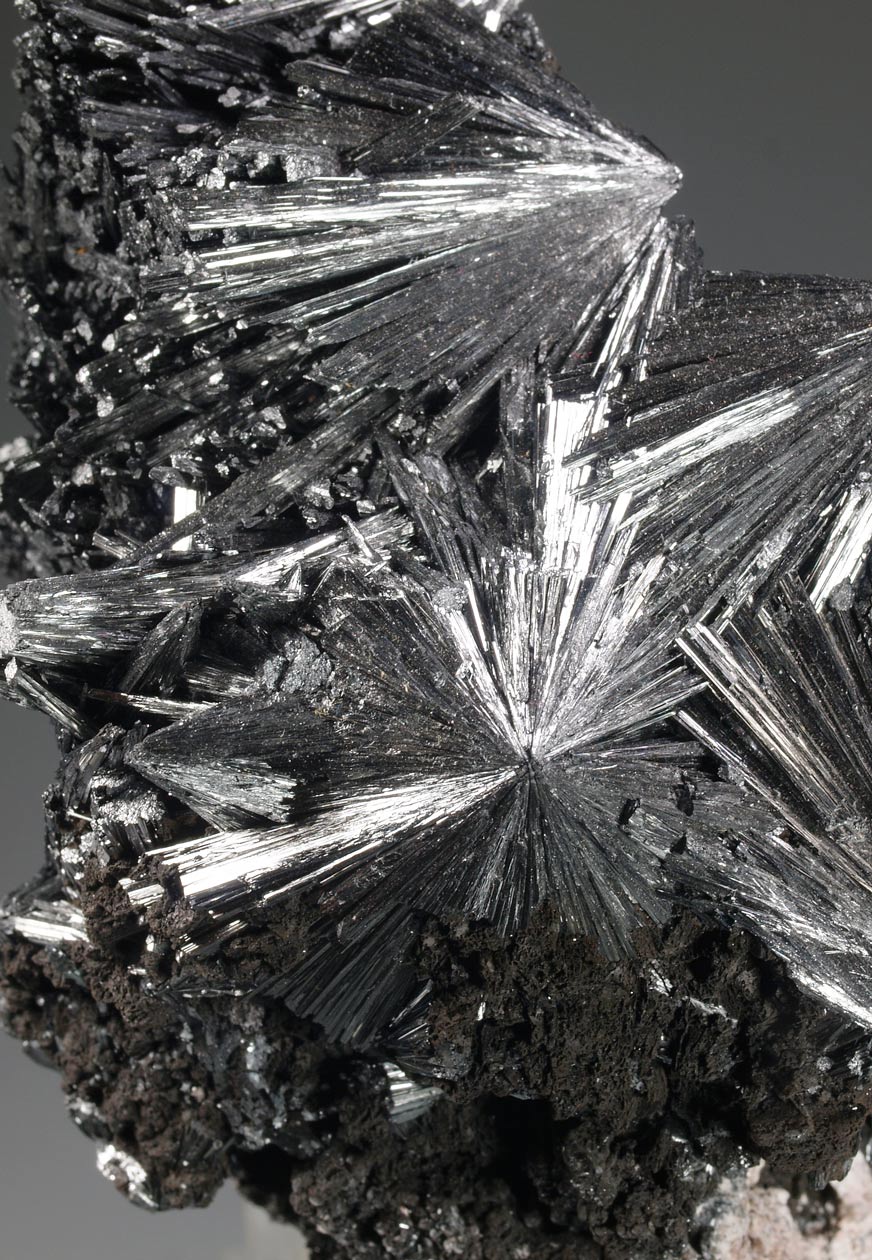
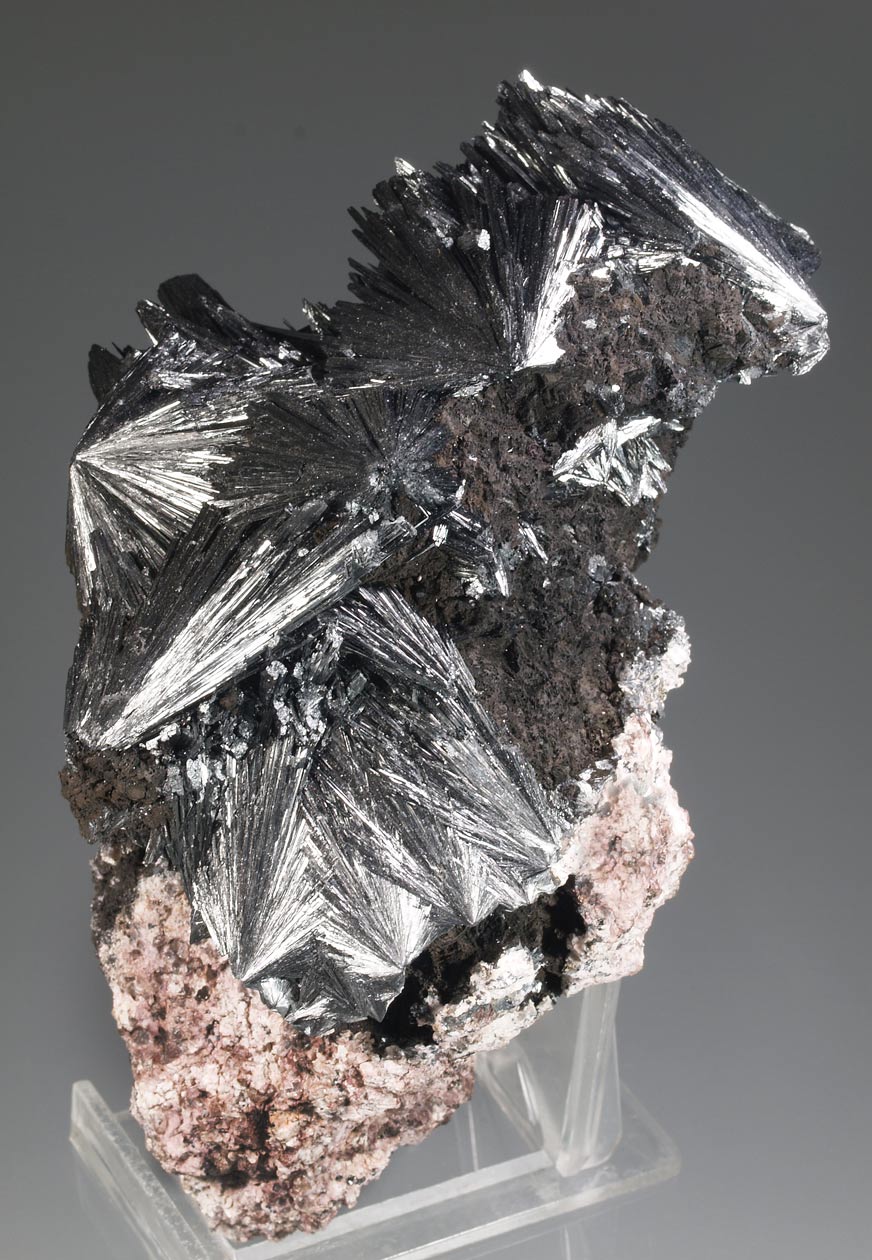
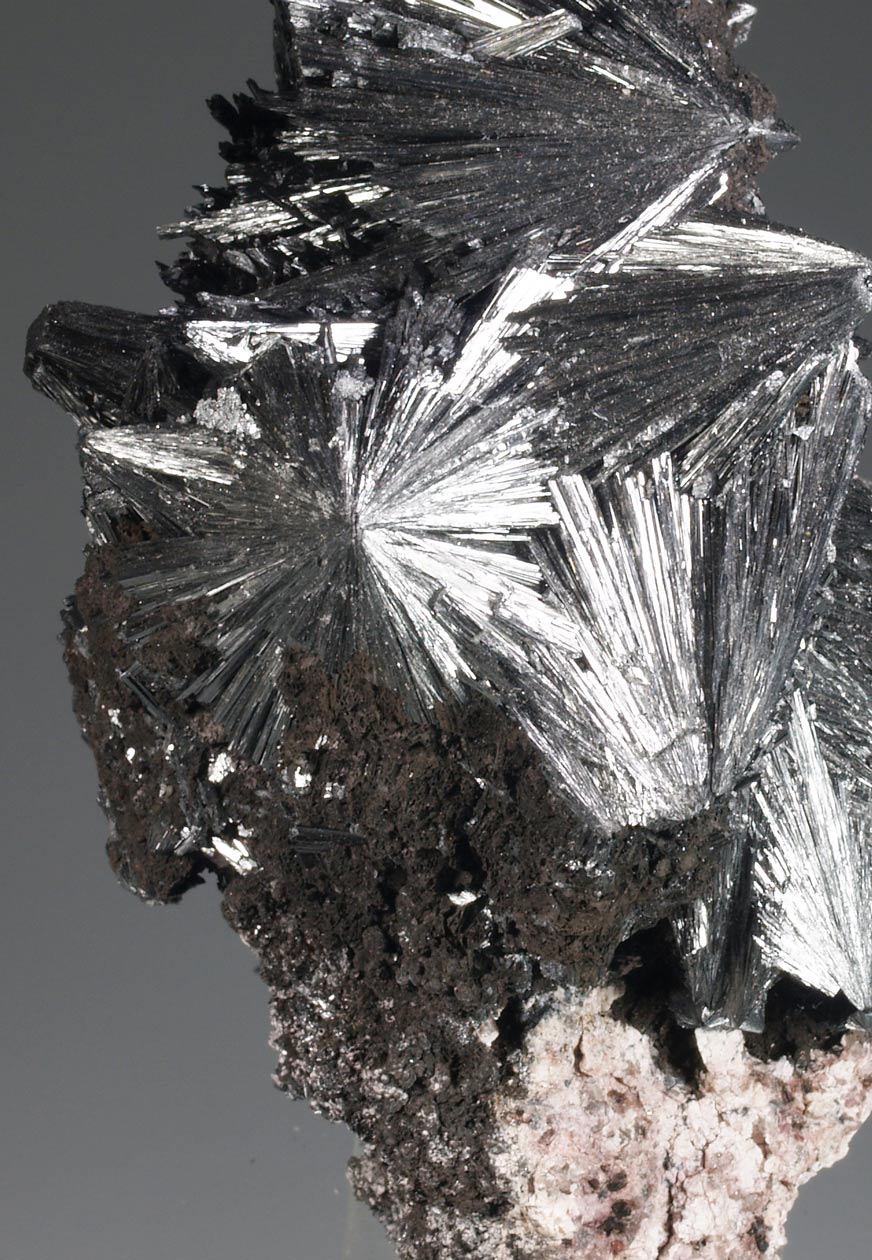
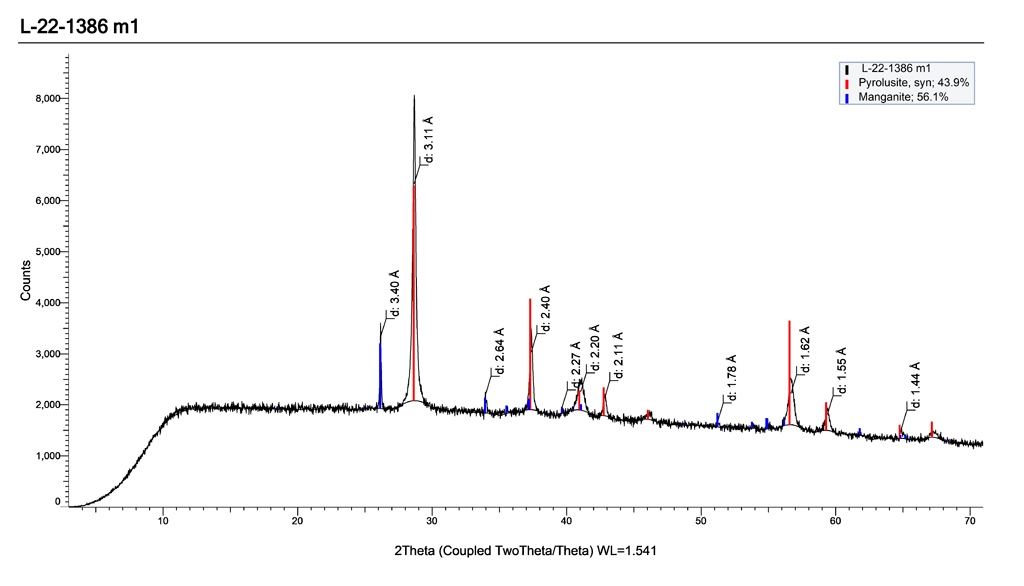
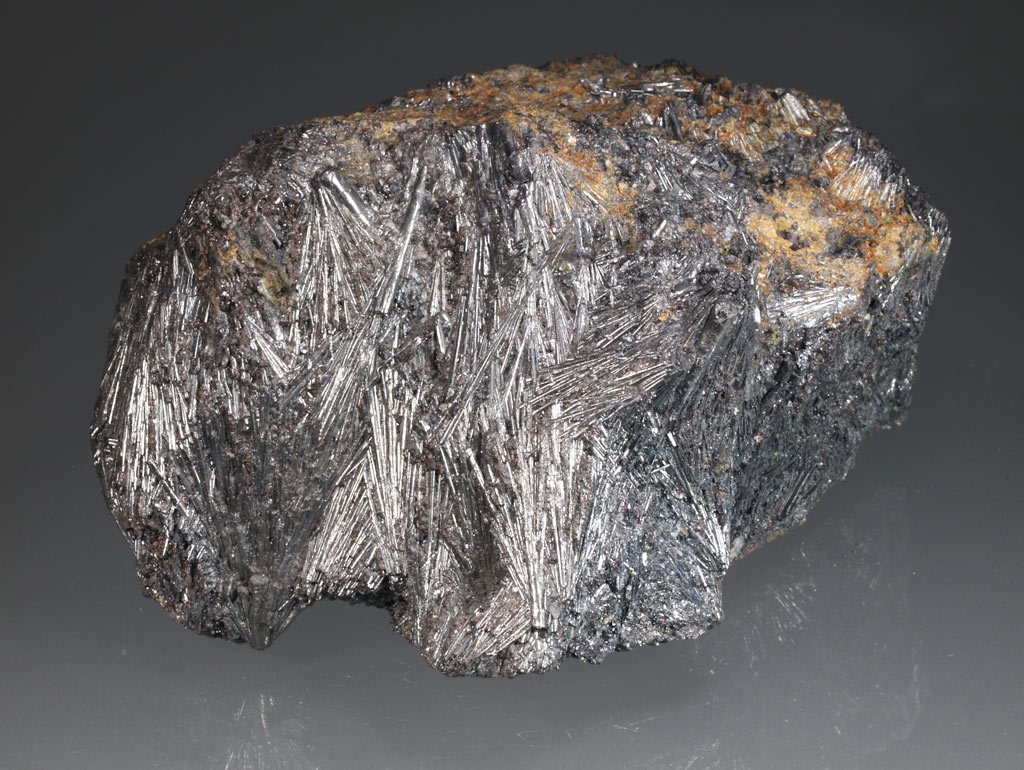
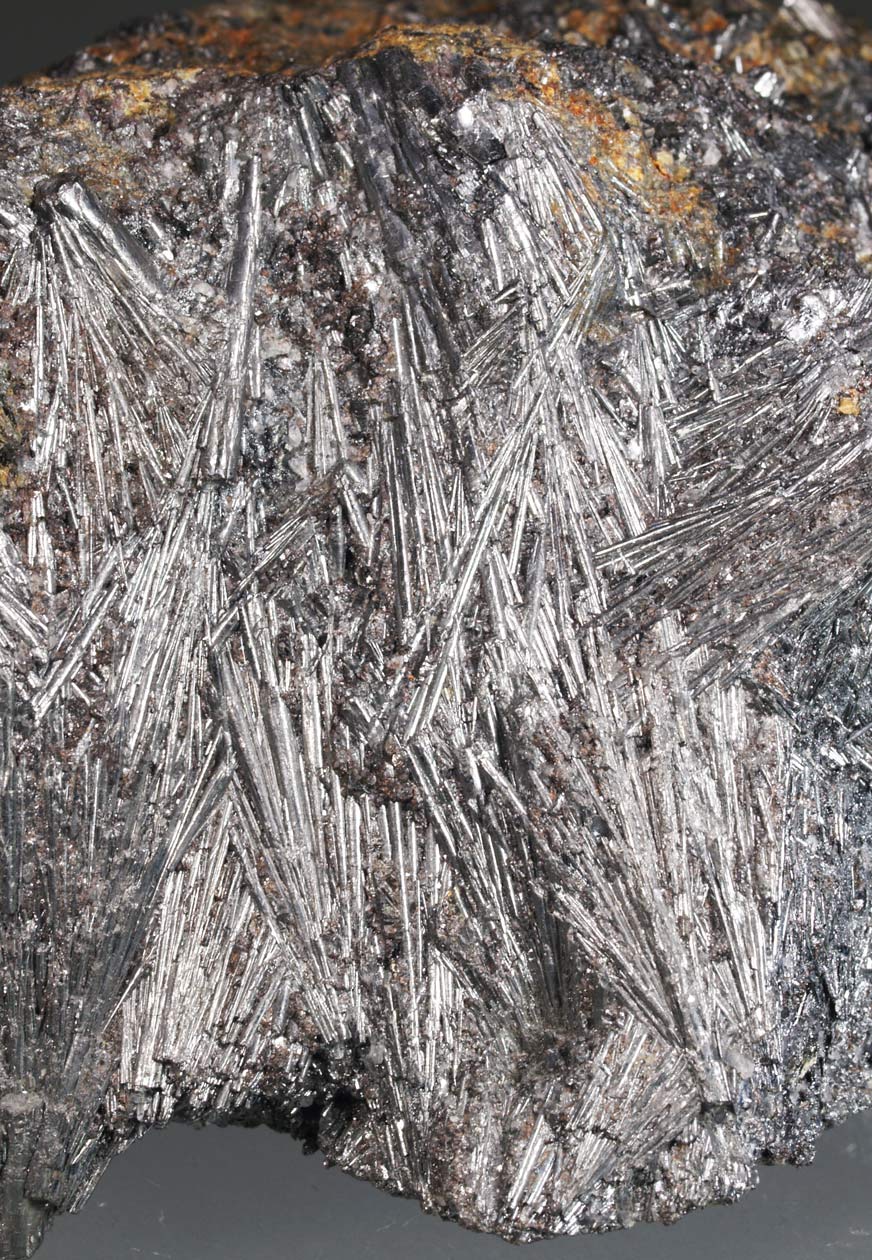
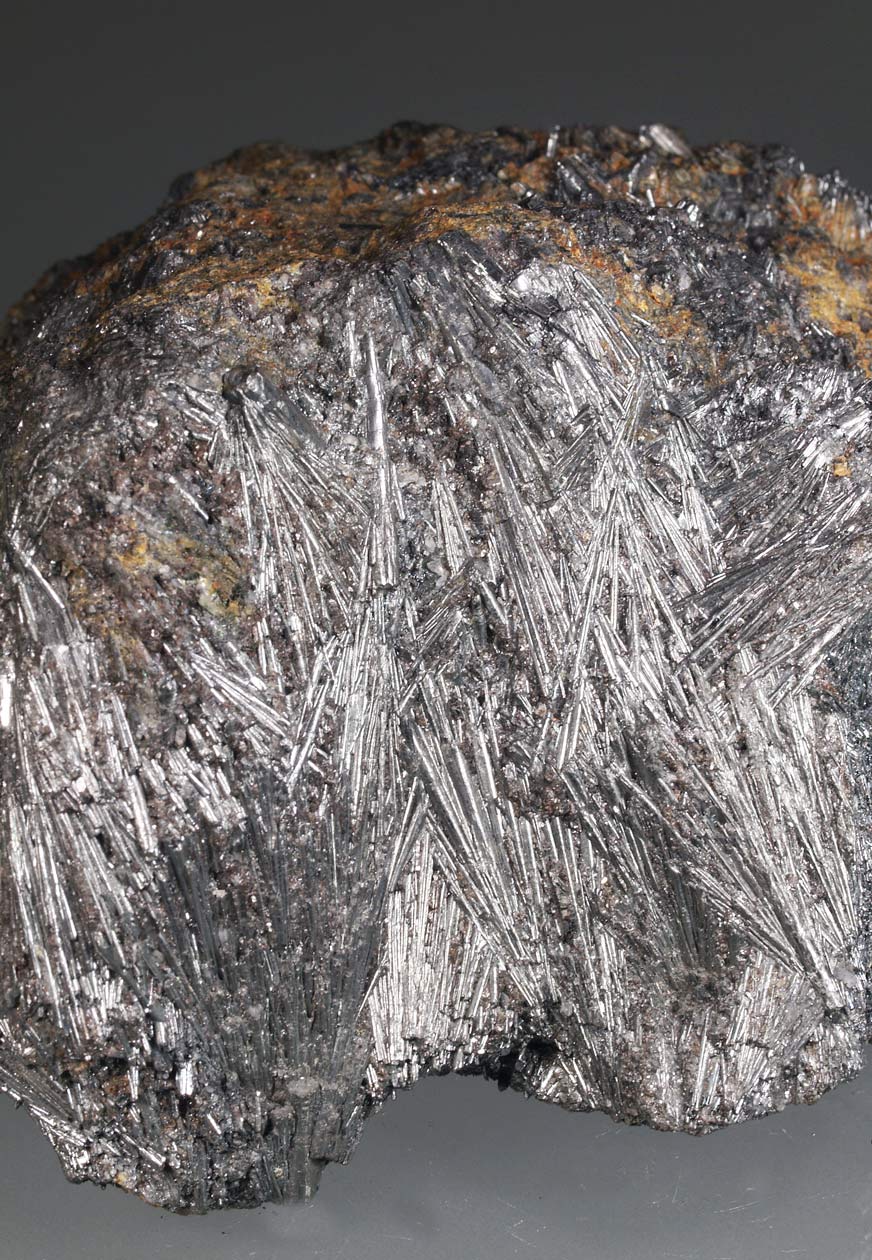
Estos ejemplares proceden de un reciente hallazgo (ca. 2022) en esta zona minera de la selva negra y que recuerdan a los encontrados hace ya décadas en esta área. Se trata de agregados radiales de cristales de pirolusita, muy brillantes, que sustituyen parcialmente manganita. Mediante difracción de rayos X hemos podido determinar la presencia de ambas especies, incluso con cierto predominio de manganita. Habitualmente se presentan sobre una matriz de granito rosado o como grupos de cristales de buen tamaño en crecimiento paralelo. En los ejemplares podemos observar las caras terminales aplanadas inclinadas. son piezas muy estéticas y que pasarán a formar parte de los mejores especímenes de estas especies para la mineralogía europea. Enviaremos al comprador el espectro de difracción.
Ejemplar muy rico y de gran tamaño de una de las especies más singulares de todo el reino mineral. La cilindrita es una sulfosal de plomo, hierro, estaño y antimonio que forma cristales en forma de "cilindro" o "tubo", de ahí el nombre. De hecho, esta especie pertenece al único grupo de minerales que forma naturalmente cristales redondeados, curvos o tubulares. Este ejemplar es especialmente interesante teniendo en cuenta la riqueza en cristales y su tamaño. La mina de Poopo es la localidad tipo de la especie. Un ejemplar de museo.
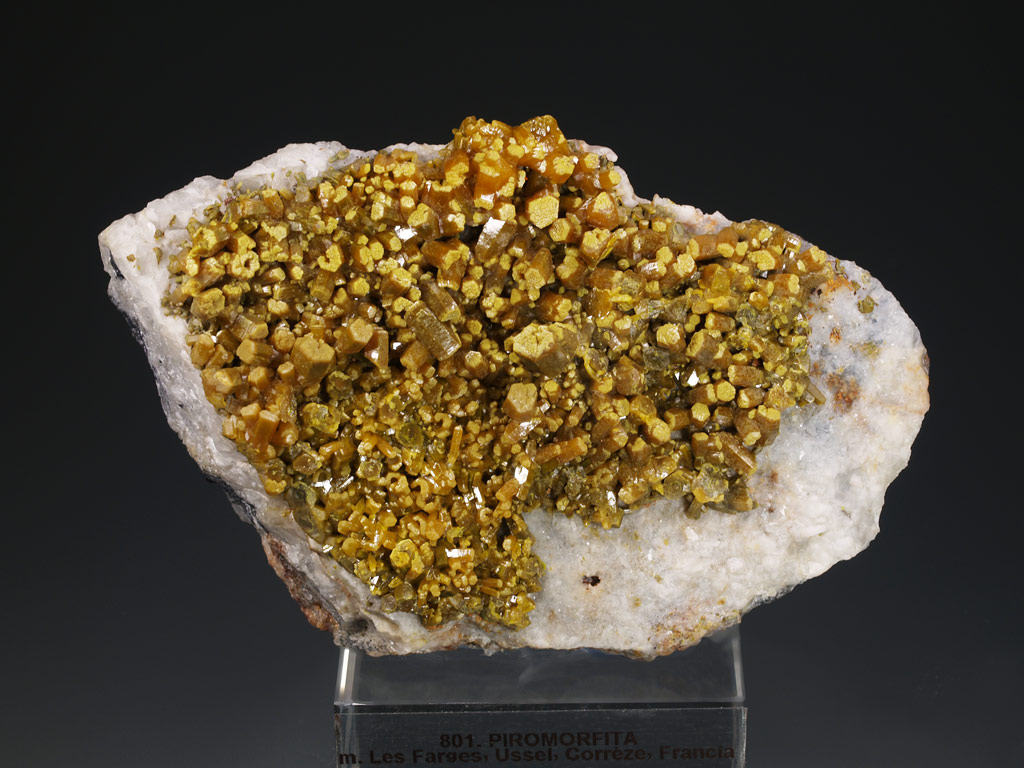
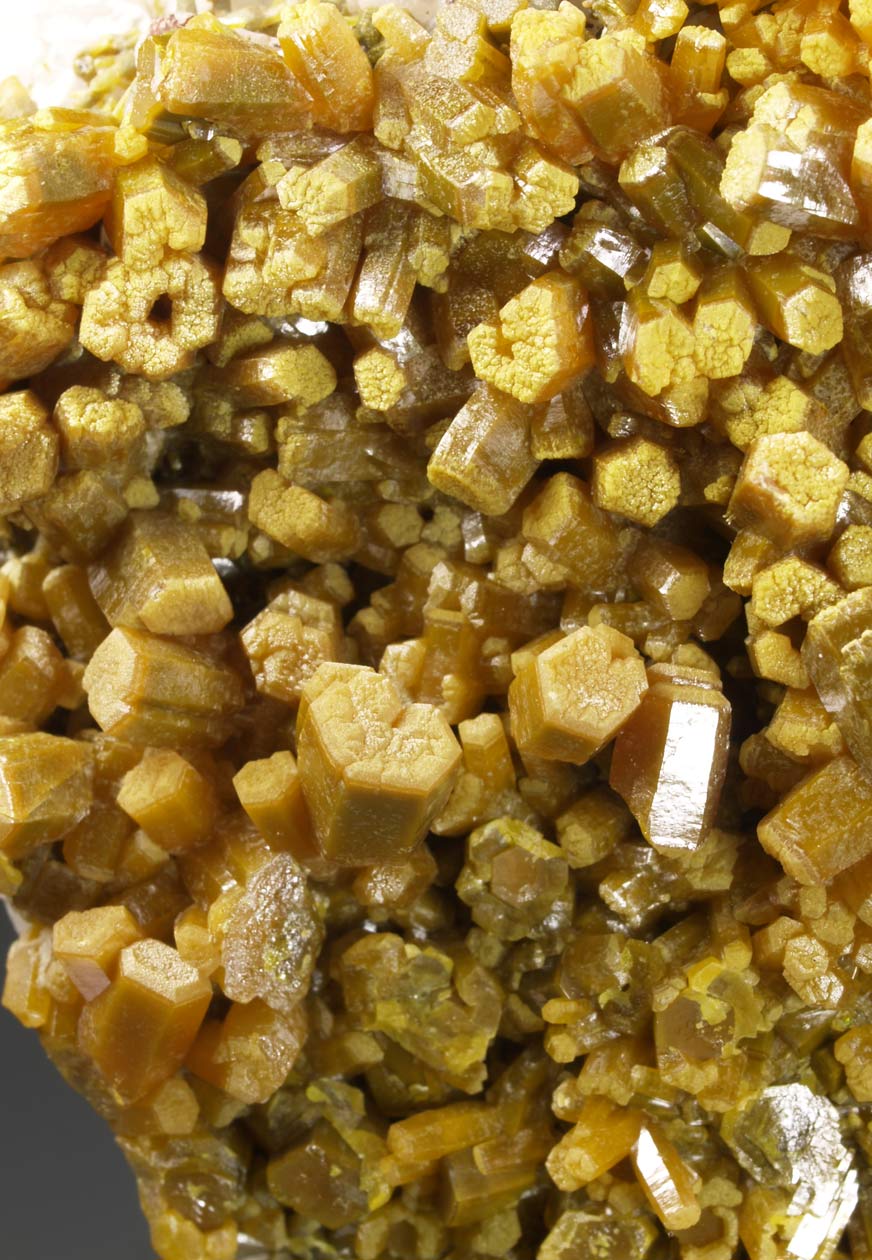
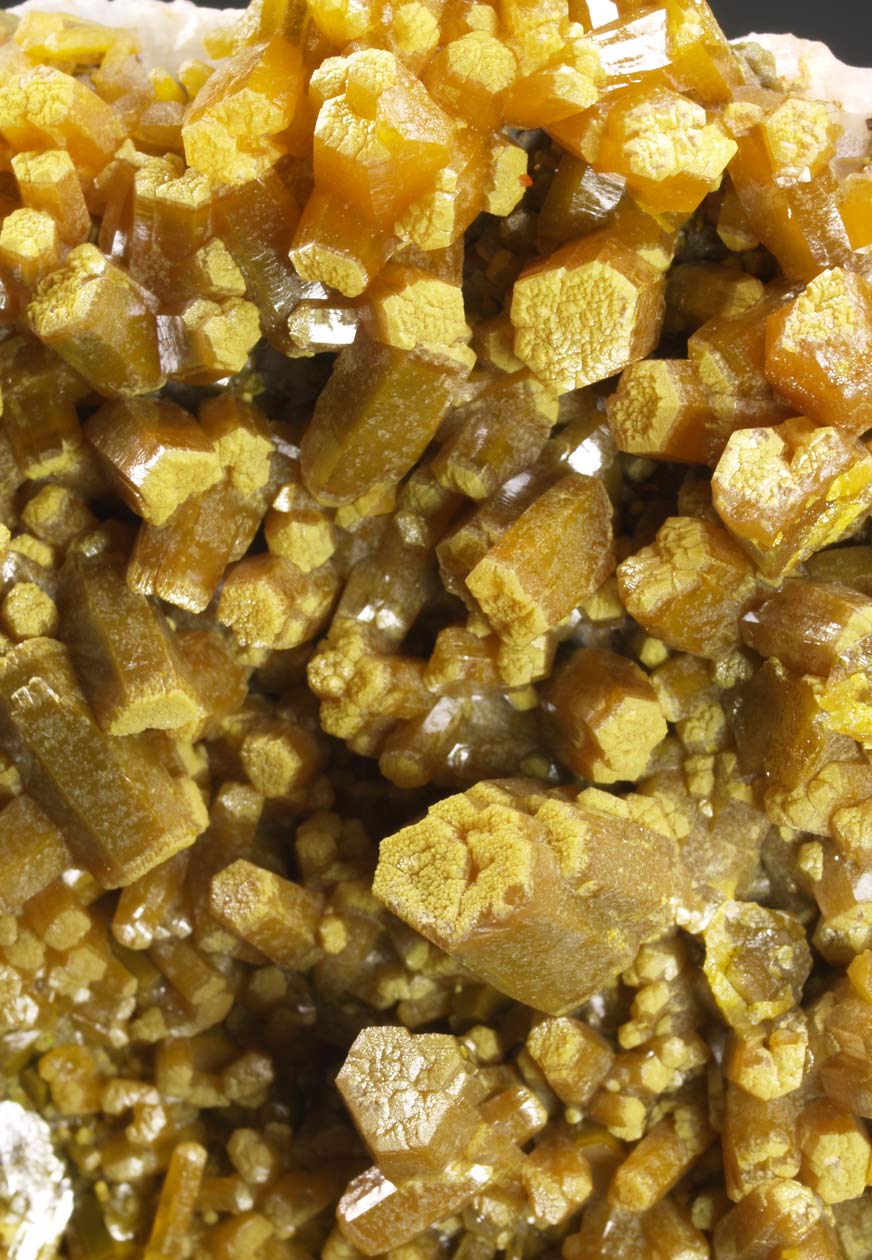
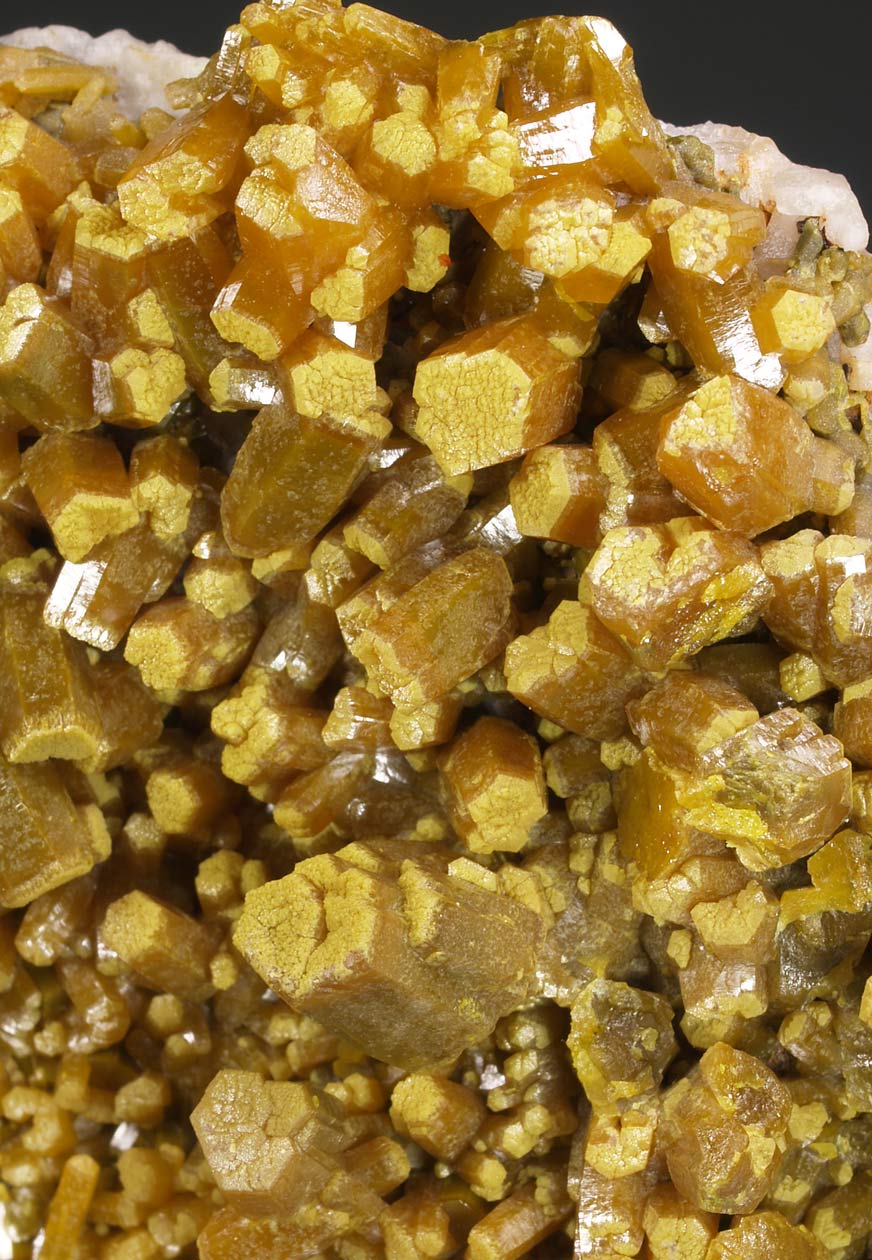
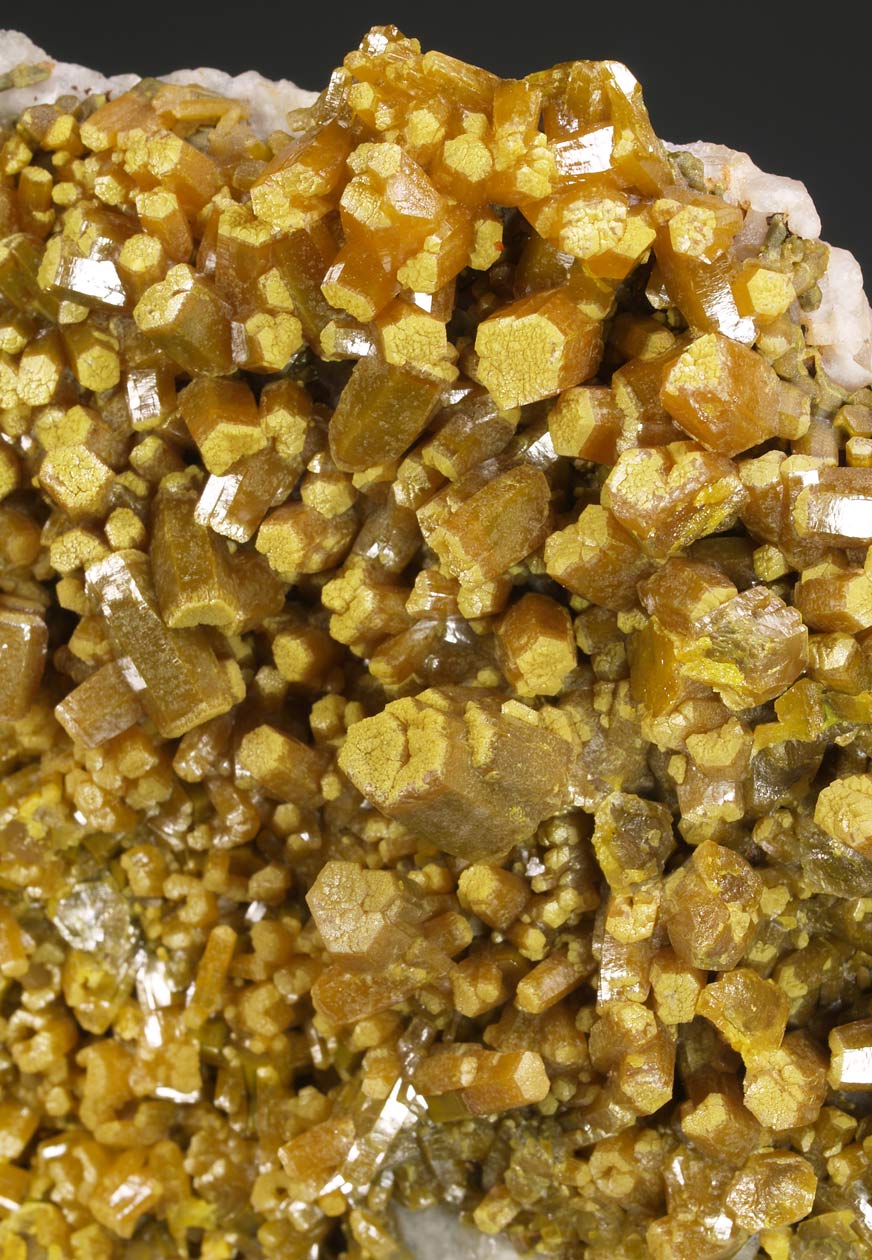
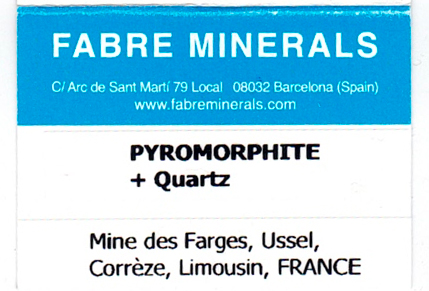
Espectacular ejemplar de piromorfita formado por agregados de cristales prismáticos en matriz de barita. Muchos de los cristales son biterminados y de buen tamaño. Presentan caras y aristas ligeramente curvadas, color verde oliva muy brillante en el prisma con puntas de color amarillo intenso. En matriz de barita con galena, no en cuarzo como reza la etiqueta. Esta forma es un clásico de Les Farges y son muy apreciados por los coleccionistas. Este clásico ejemplar francés fue adquirido por un coleccionista a Fabre Minerals.


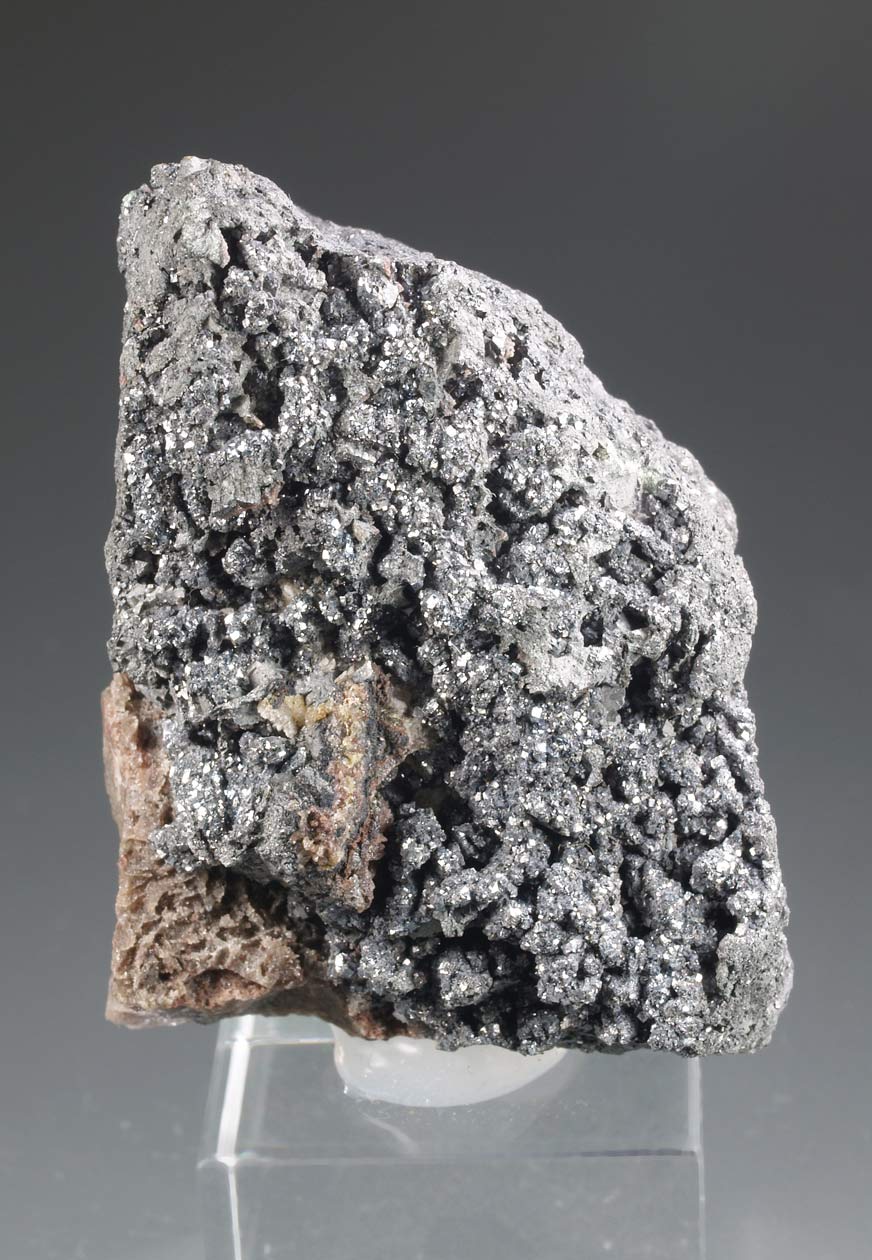
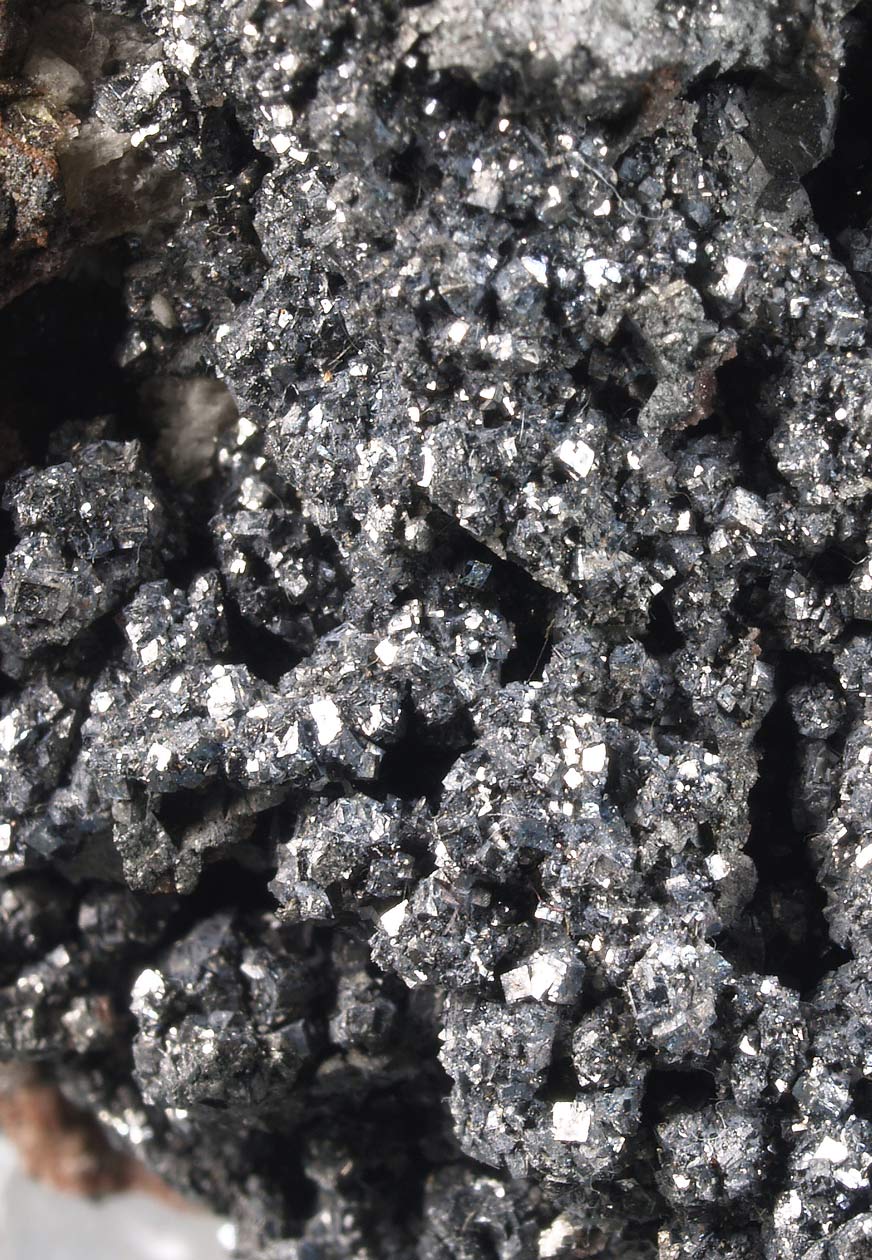
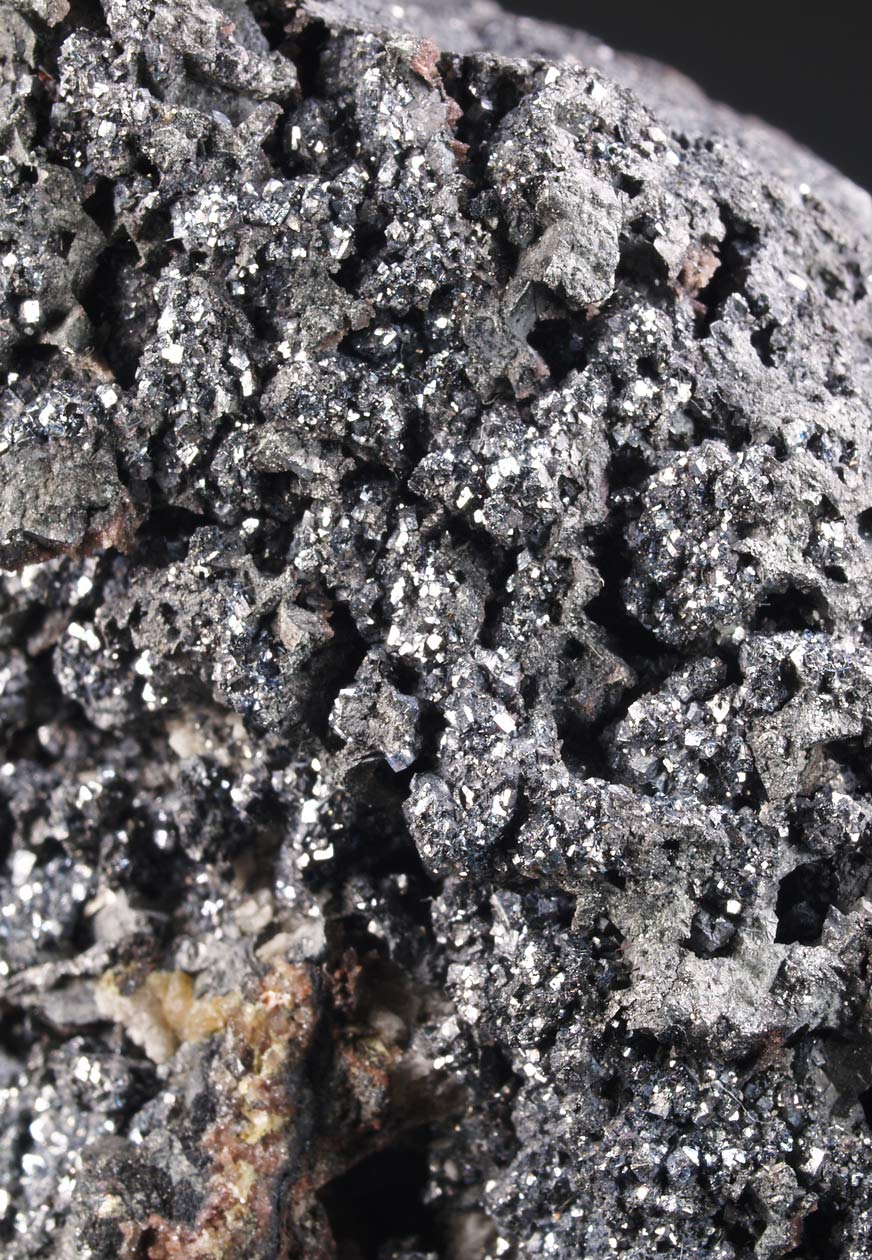
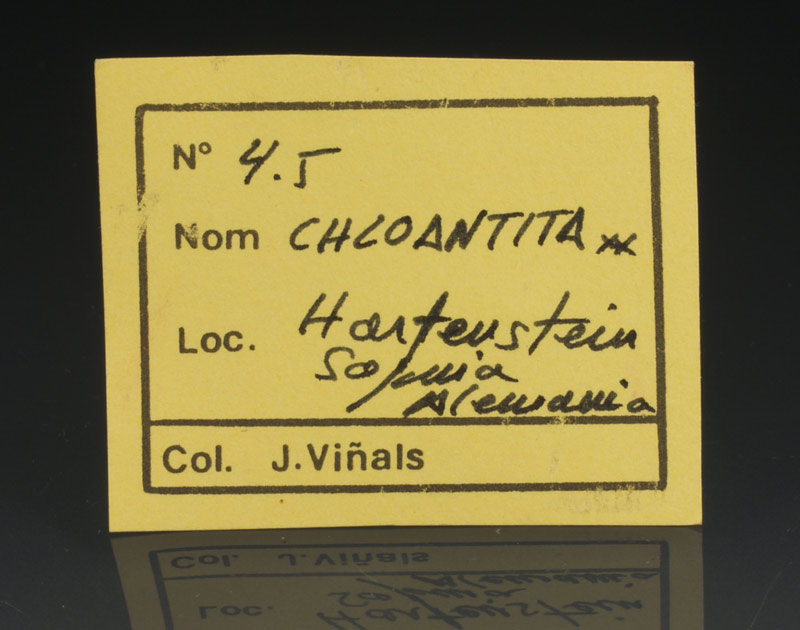
Ejemplar antiguo que nos muestra numerosos agregados de cristales de nickelskutterudita, antiguamente llamada chloantita. Brillantes agregados globulares destacan sobre la matriz metálica. Se acompaña de la etiqueta manuscrita de Joan Viñals y procede de la colección Nicolau (Barcelona).
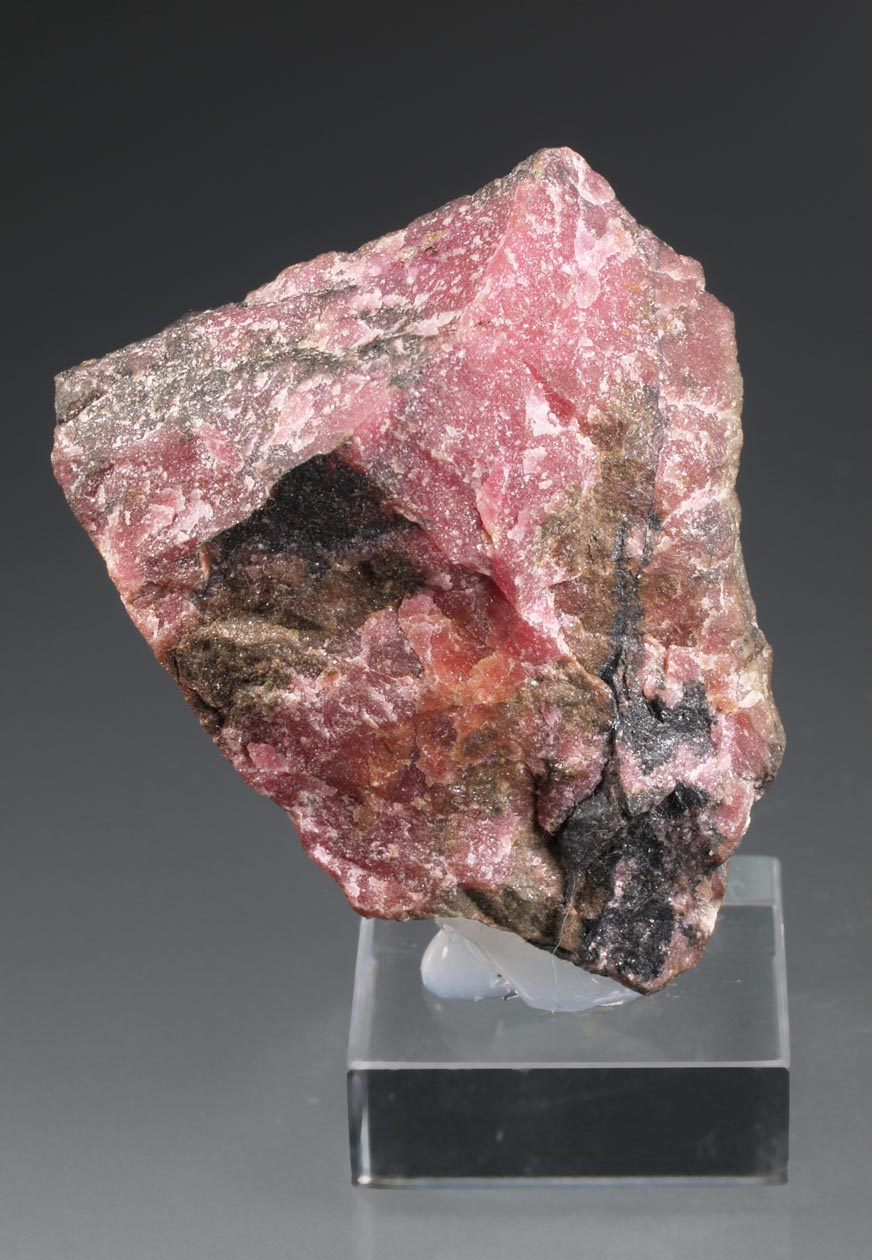
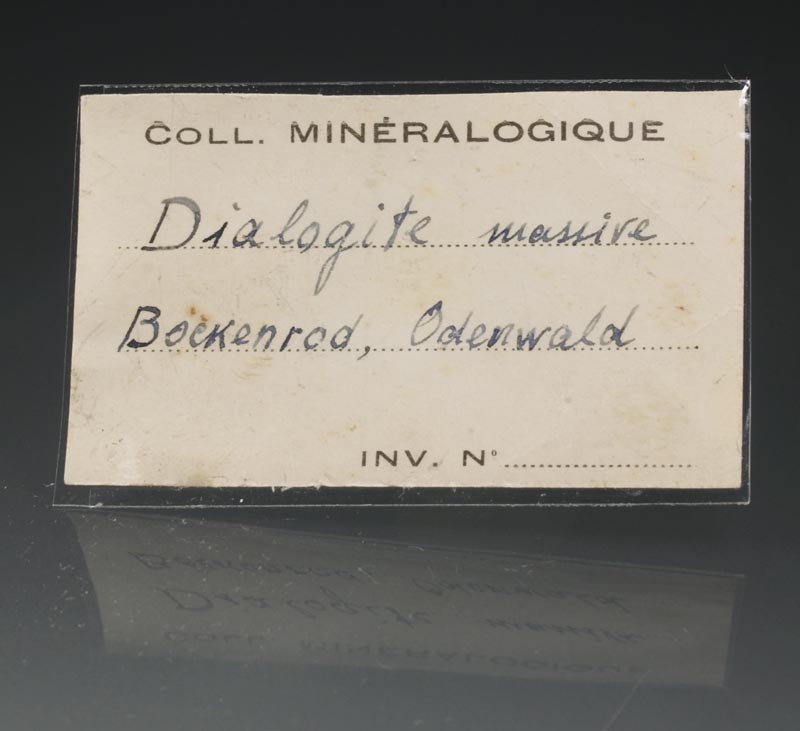
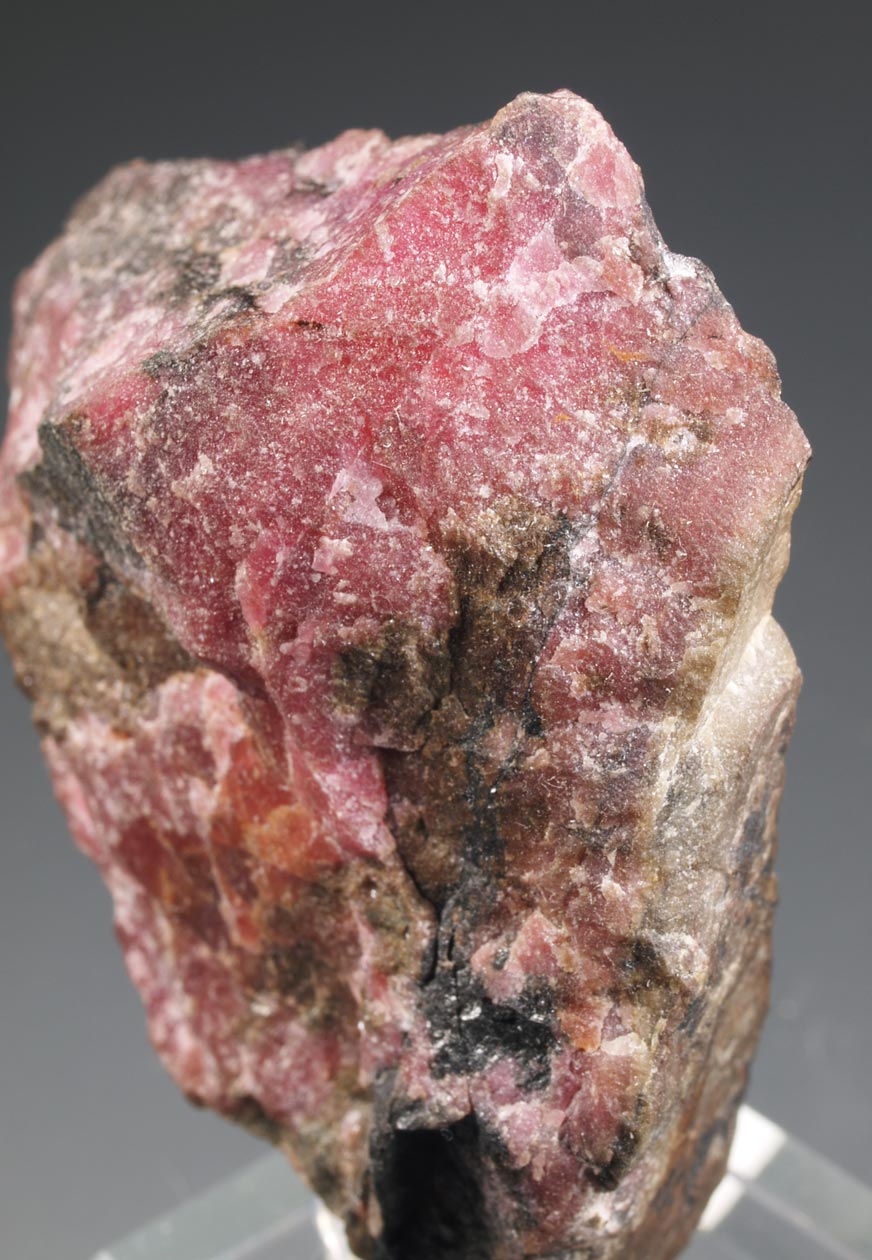
Ejemplar masivo de dialogita, nombre antiguo de la rodocrosita. Este ejemplar presenta un interés histórico junto con la etiqueta antigua que lo acompaña. Los sitios de las antiguas minas ahora están en gran parte desaprecidos, pero quedan algunas escombreras cubiertas de maleza en el bosque.
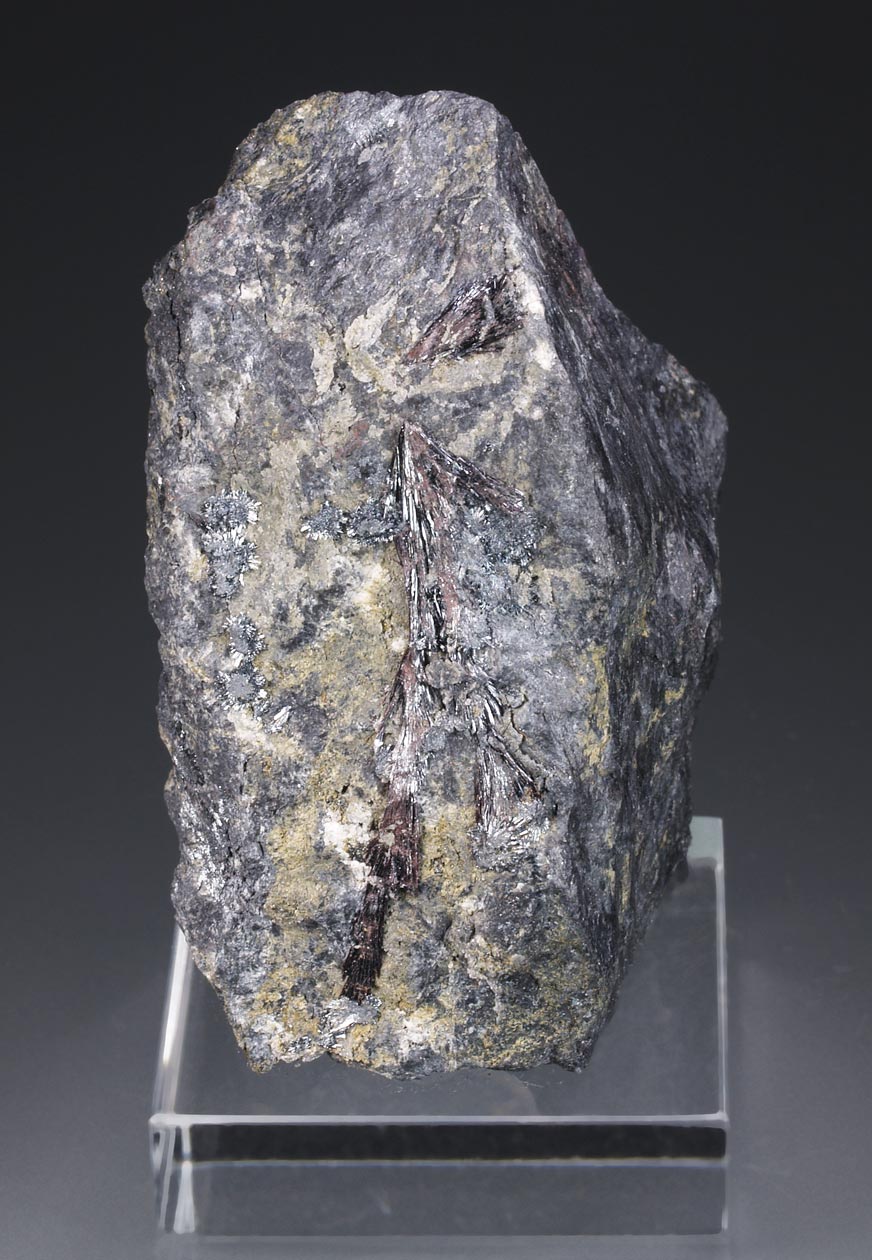
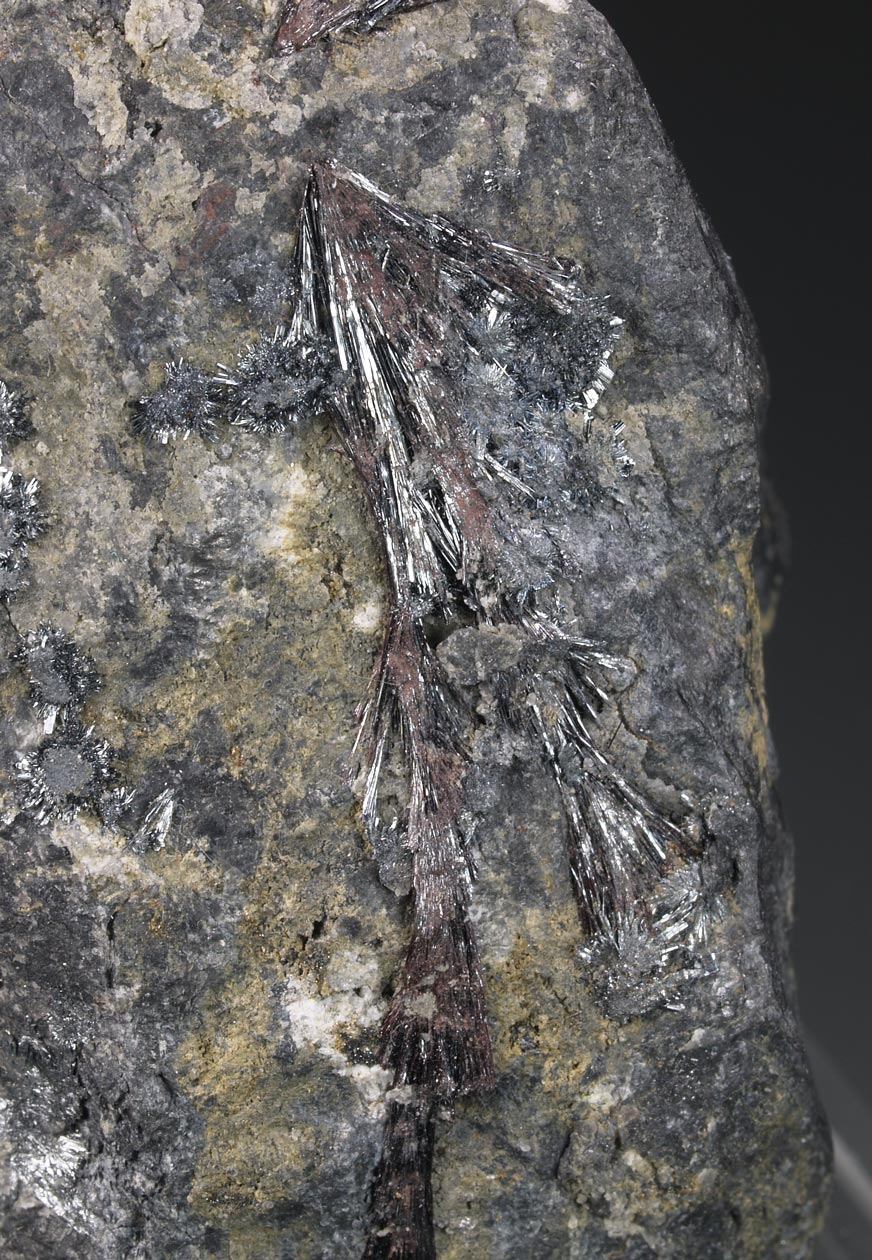
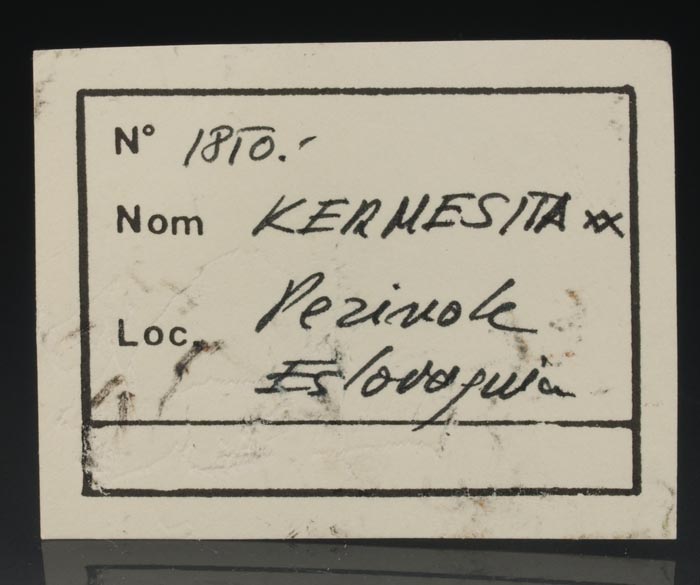
Ejemplar de buen tamaño de kermesita de esta clásica localidad eslovaca. Nos muestra los característicos agregados aciculares de kermesita, con reflejos rojizos sobre una matriz con estibnita. El ejemplar procede de la colección E. Nicolau (Barcelona) y fue adquirido a Joan Viñals.
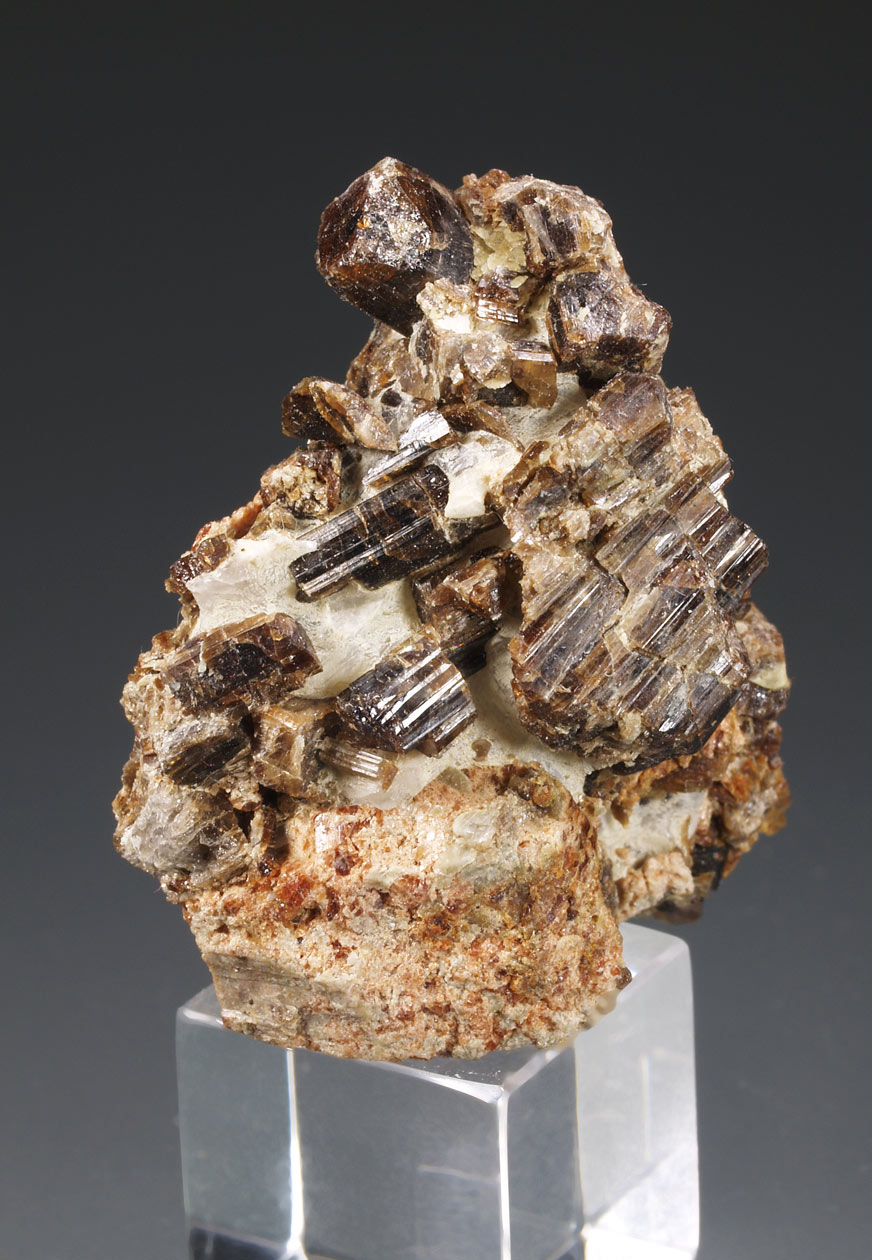
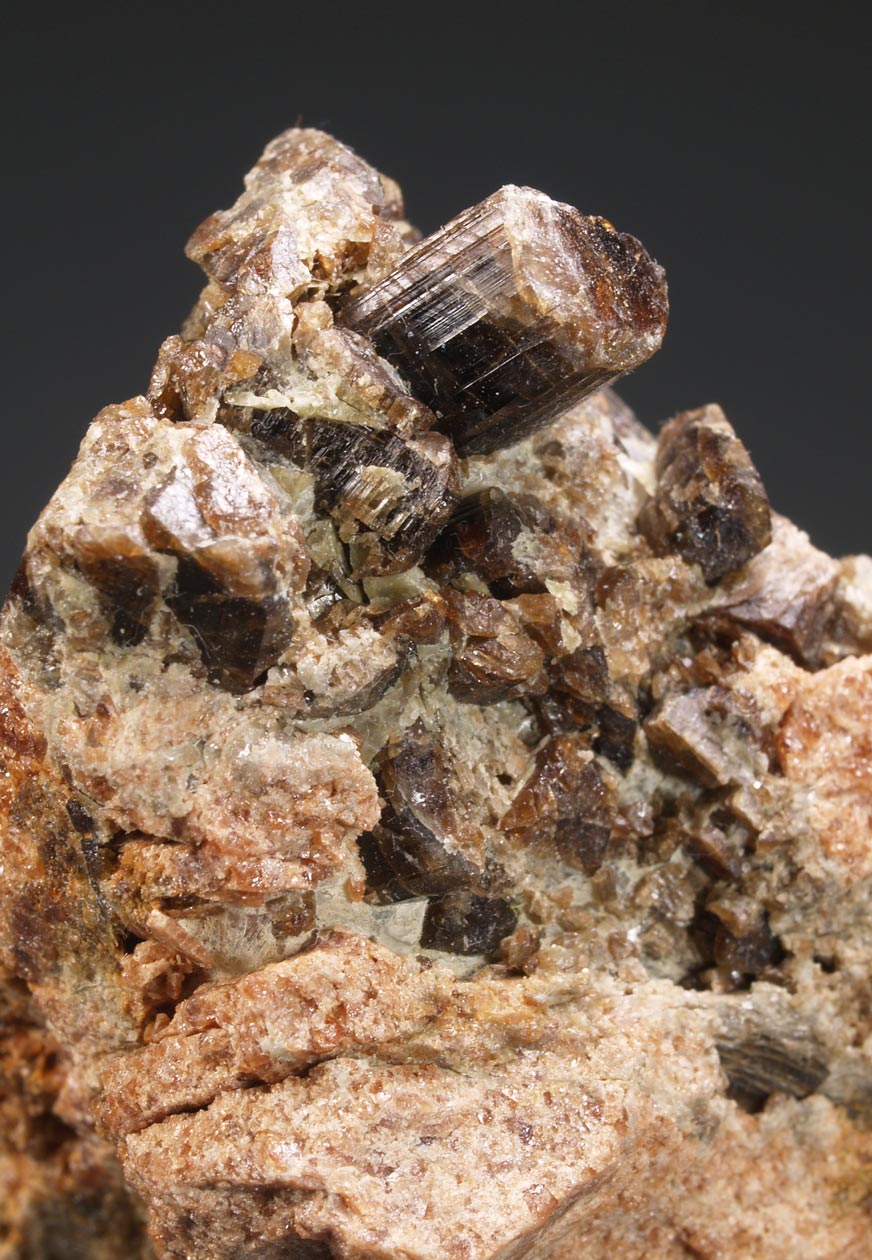
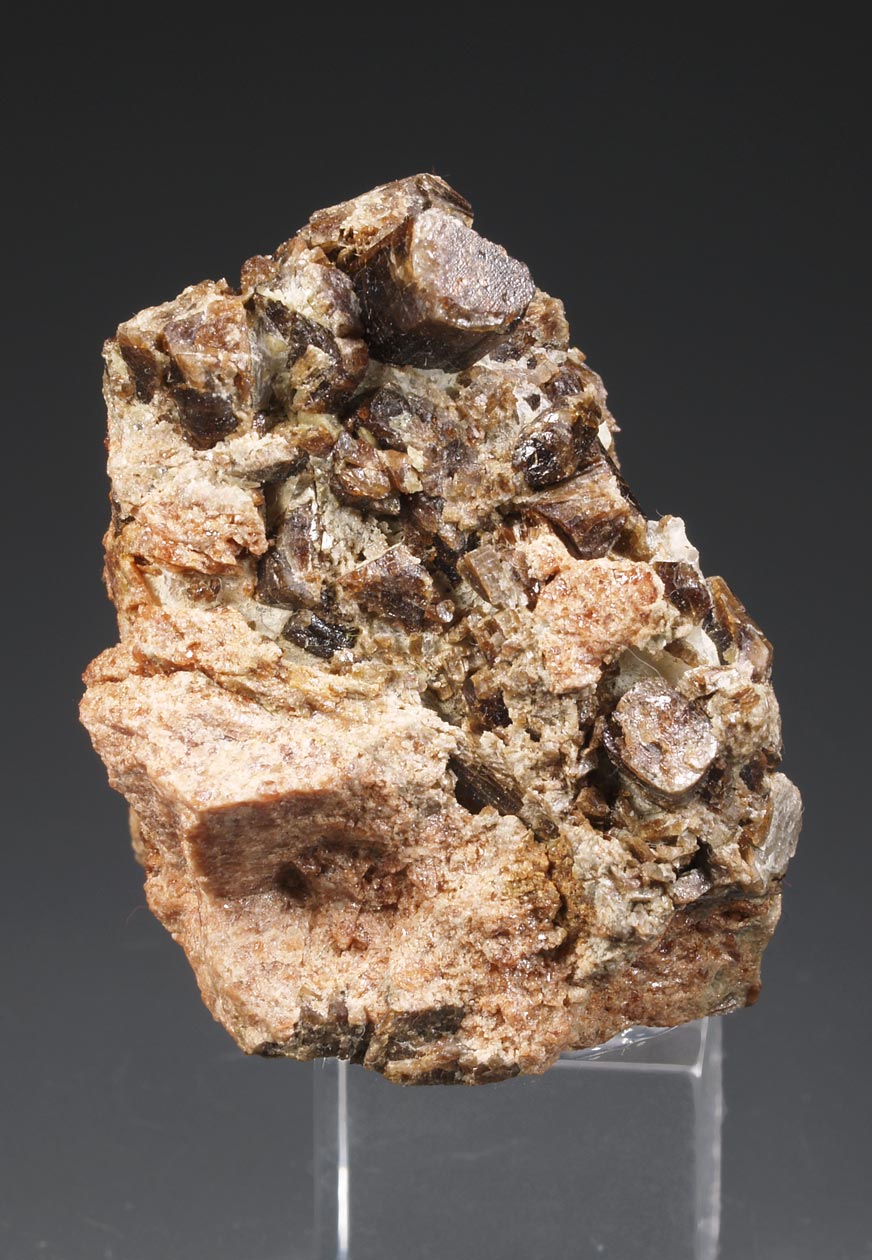
Estético grupo de cristales de vesuvianita, muy brillantes, con prismas estriados truncados por caras pinacoidales. Se disponen de forma muy aérea sobre la matriz con grosularia. De una localidad española conocida por sus minerales de skarn (skarnoide). Se han hecho prospecciones en la zona para investigar las posibilidades de explotación del tungsteno (scheelita).
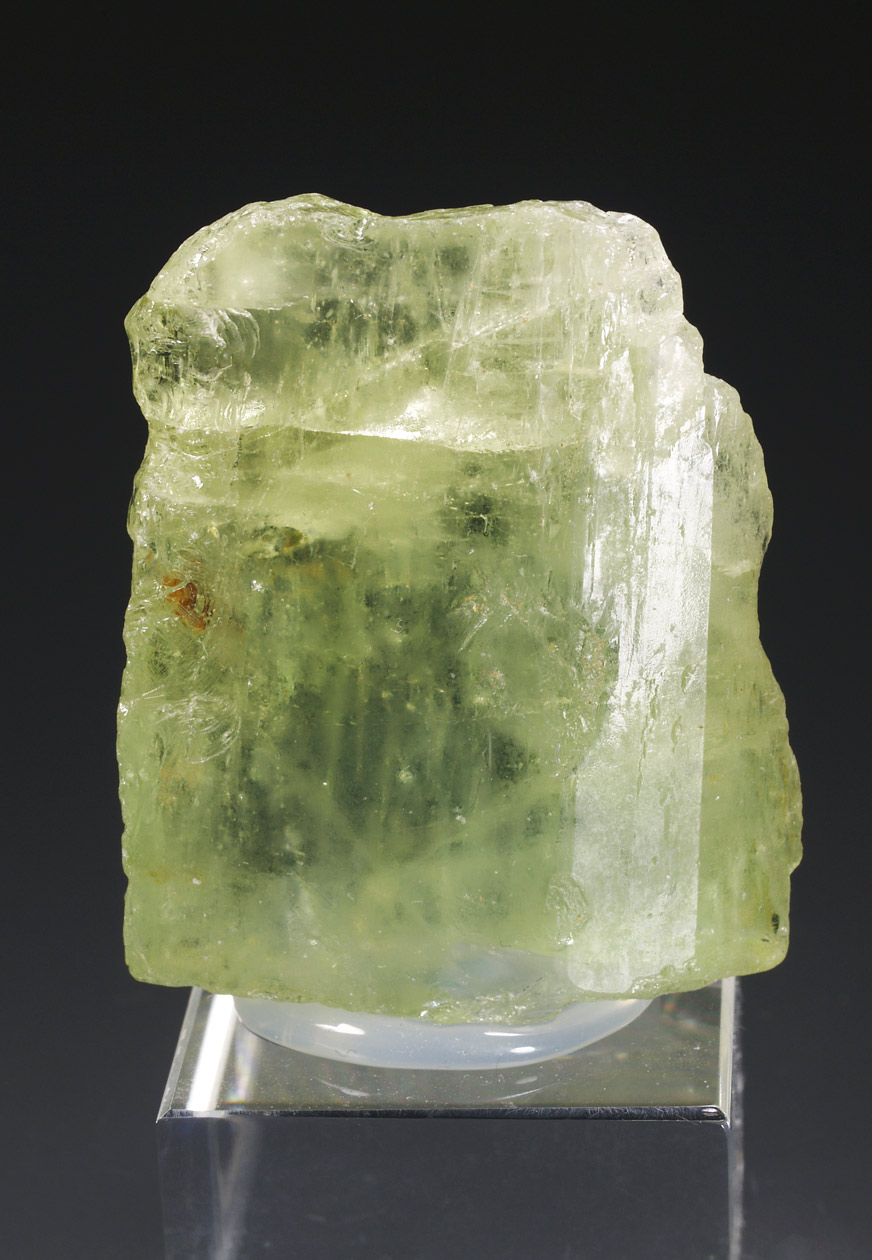
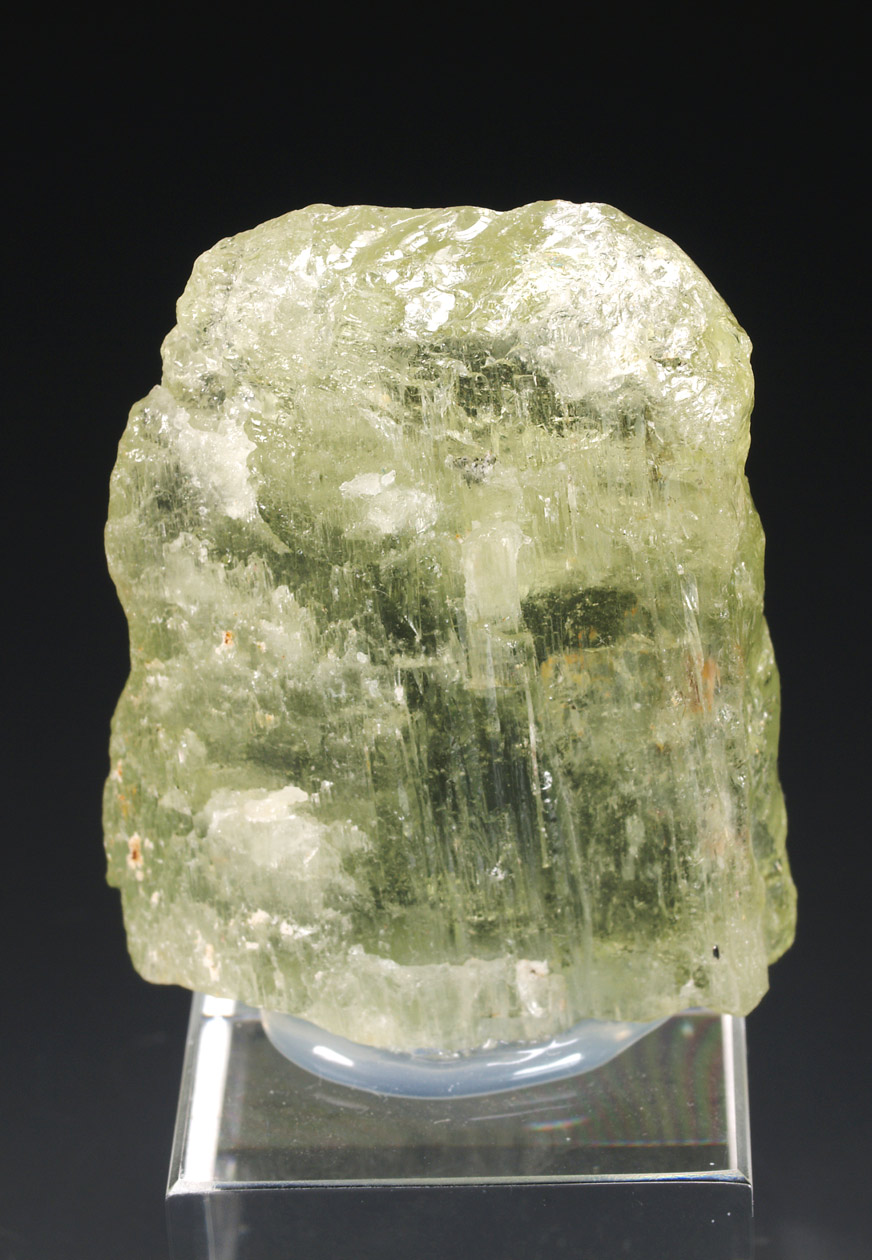
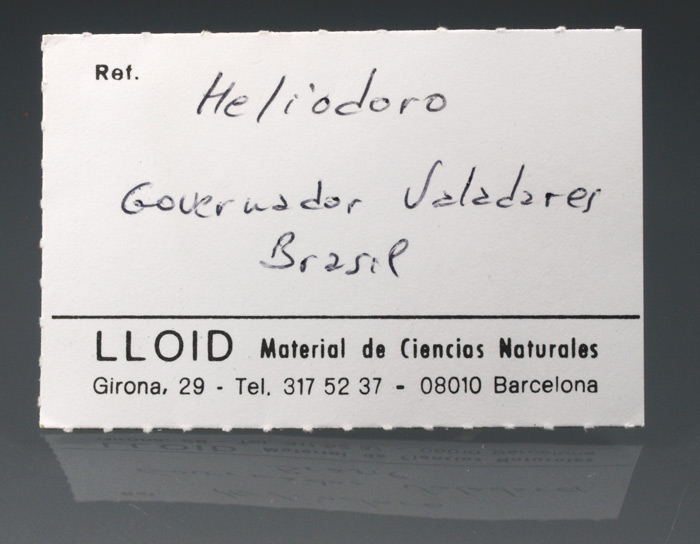
Cristal de buen tamaño de heliodoro. Con un color amarillo verdoso, transparente a translúcido, con algunas caras, algunas redondeadas y otras más definidas. Una gema con etiqueta manuscrita antigua de Lloid, de Hortensia Durán y Marçal Llòria (Barcelona). La foto no hace justicia...
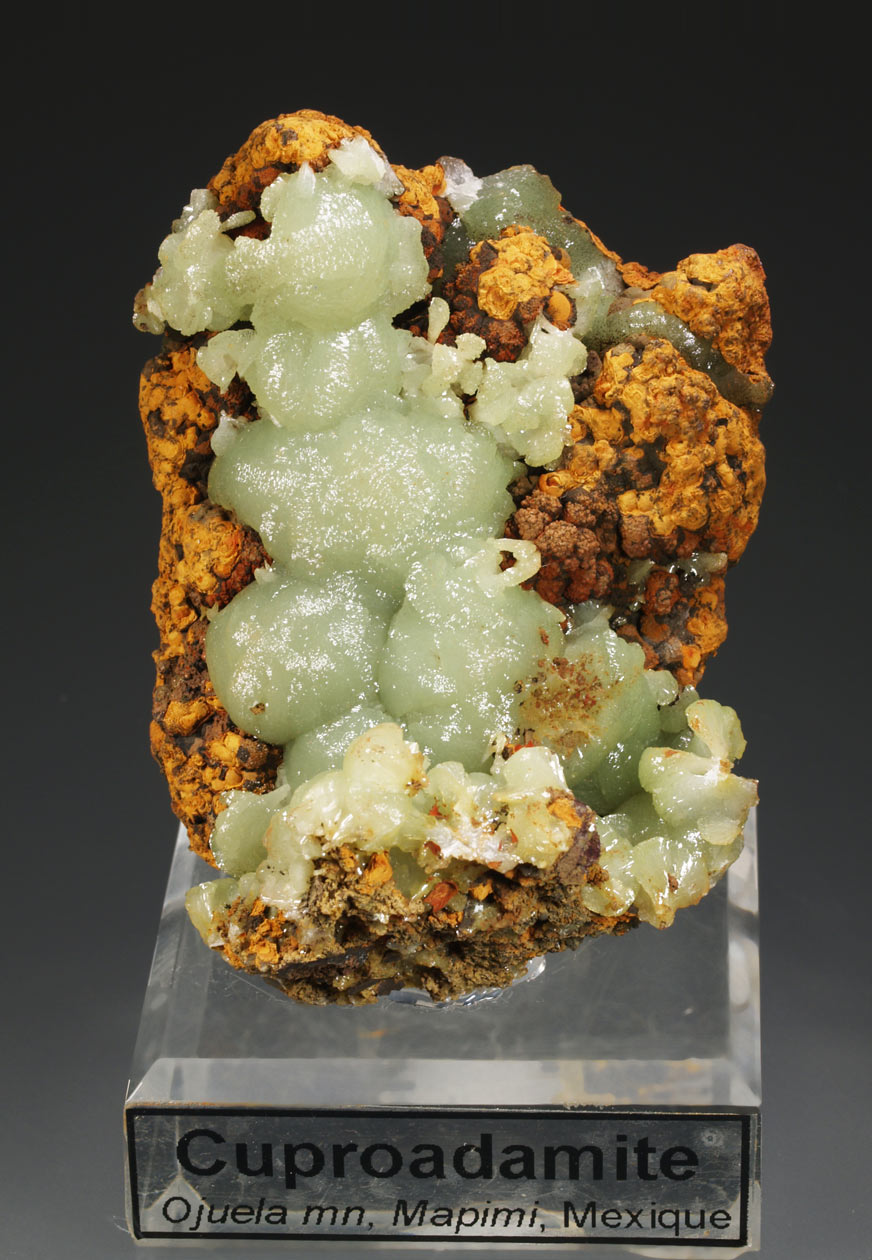
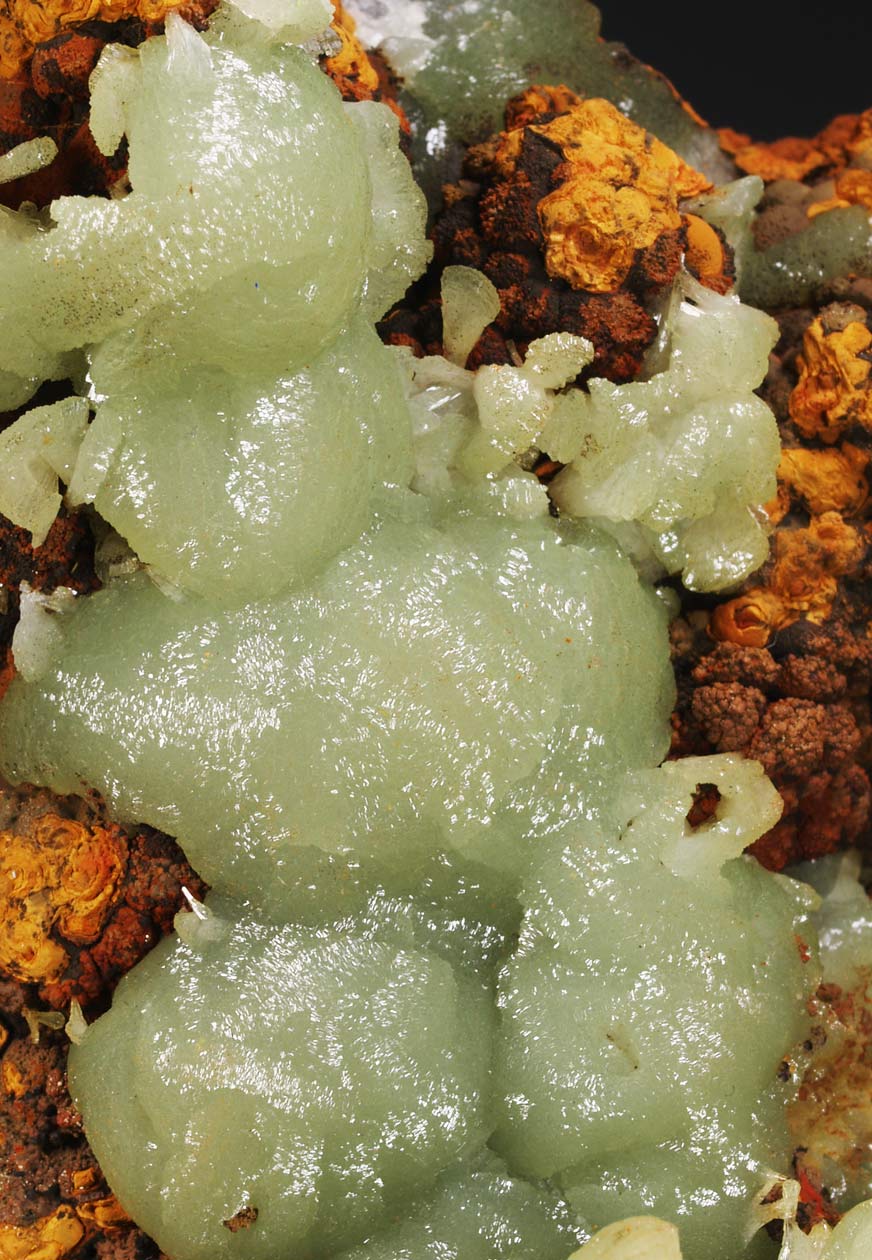
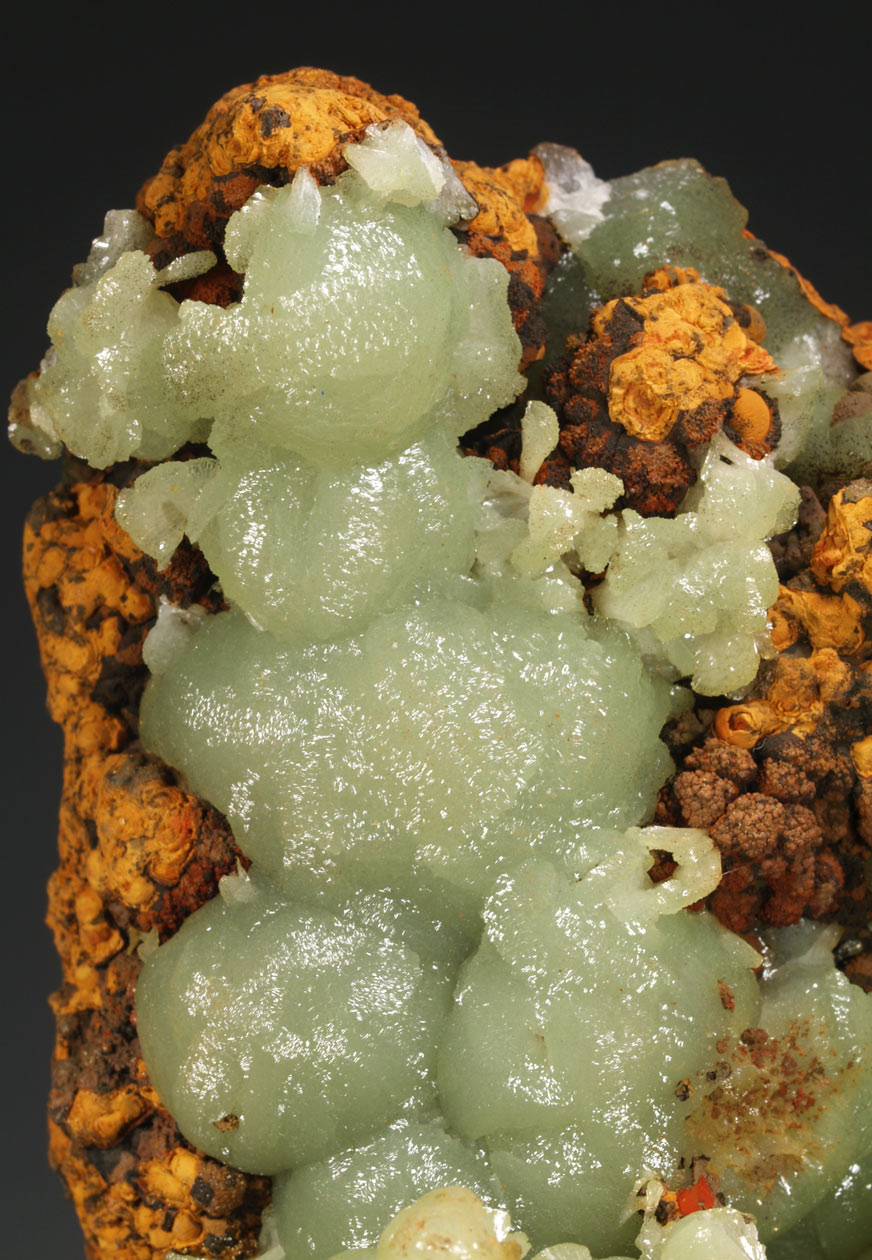
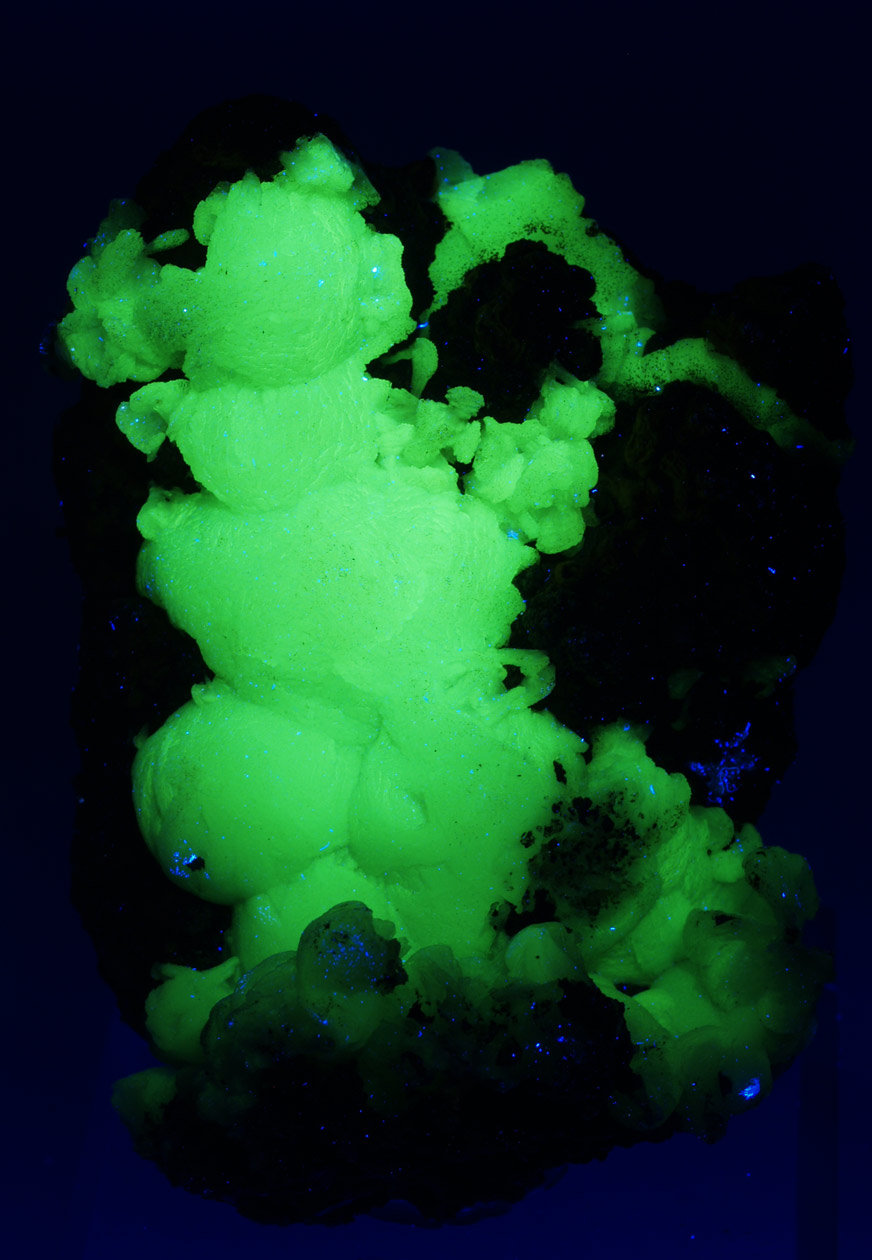
Estos ejemplares de adamita son de los más estéticos que esta clásica mina mexicana nos ha ofrecido. Agregados botroidales de adamita cuprífera, brillantes y formando también gavillas. Bajo la luz ultravioleta presentan una fluorescencia verde excepcional. Hoy día cuesta encontrar especímenes con esta calidad.
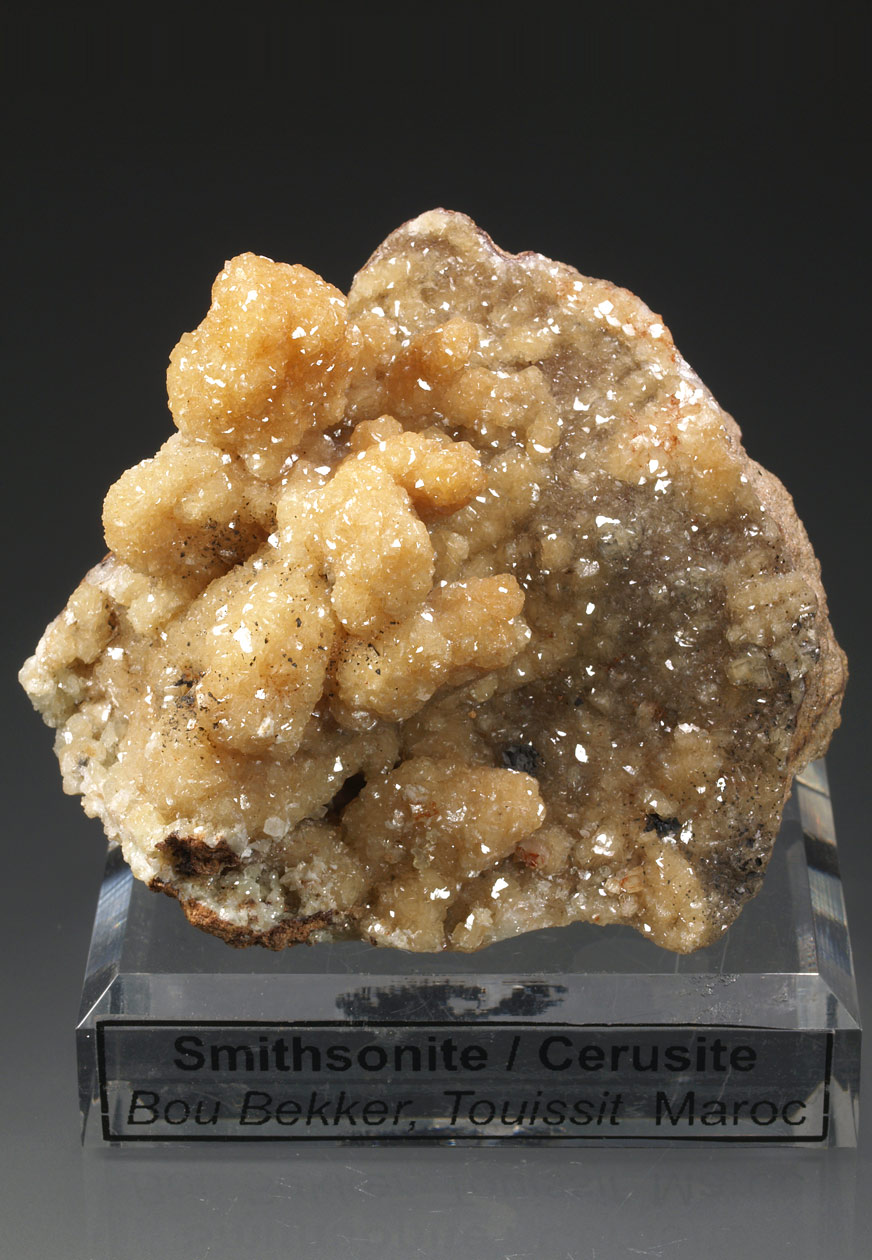
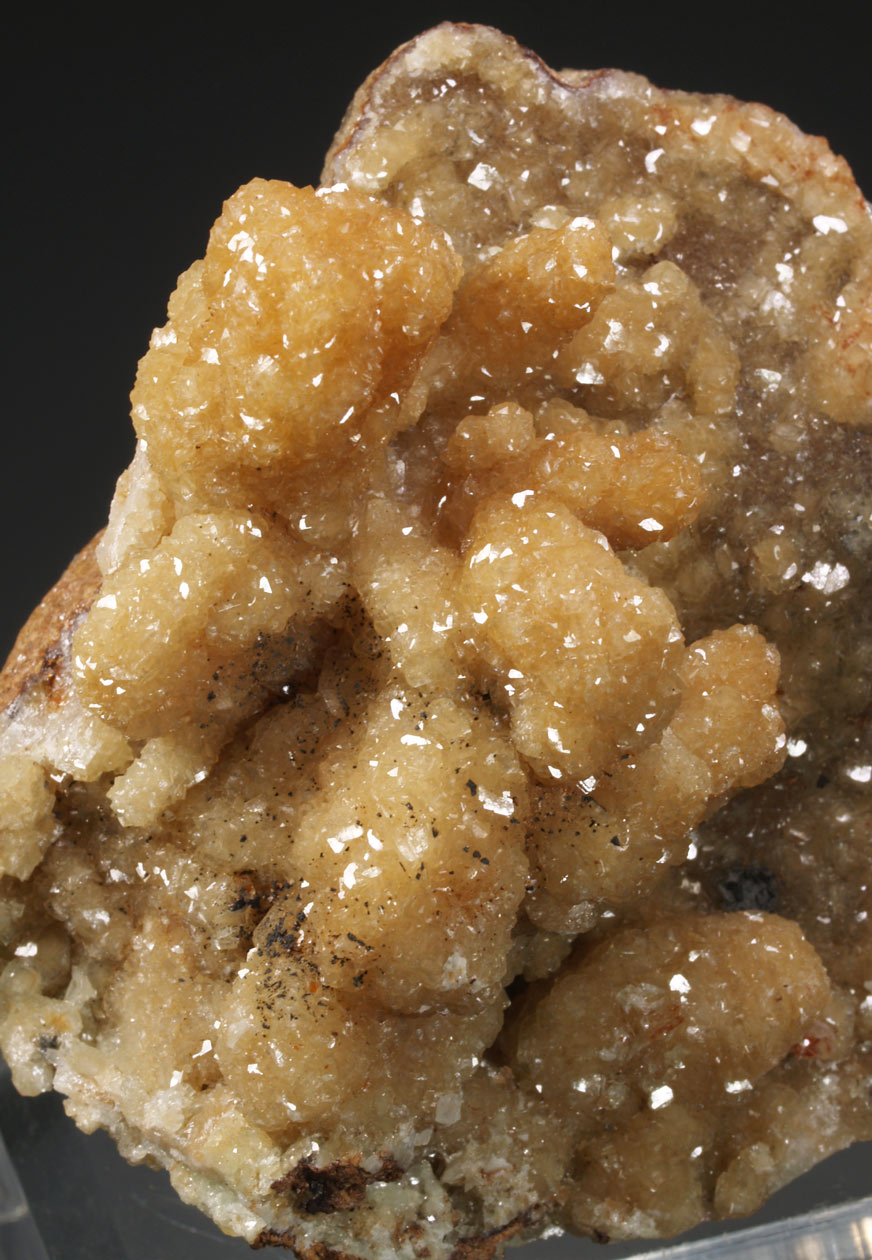
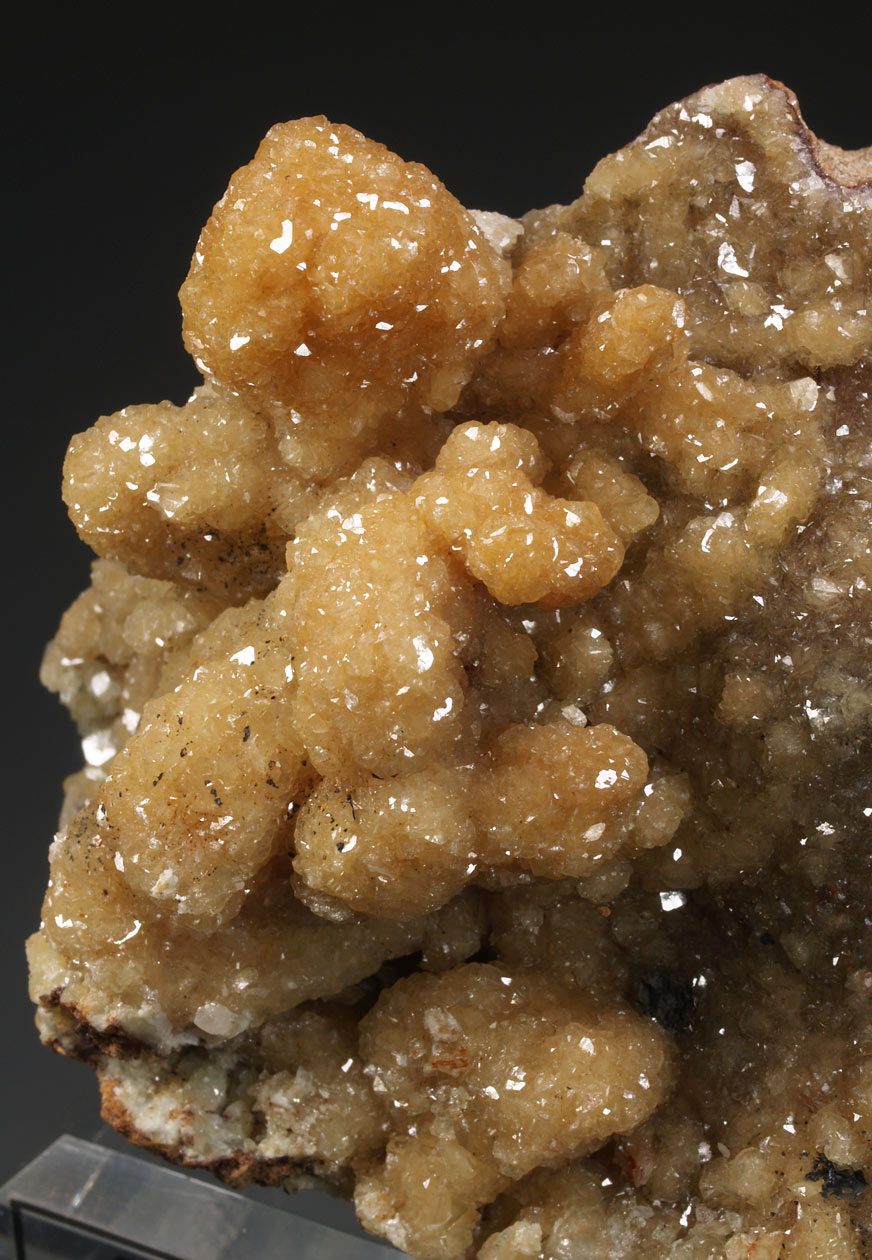
Excelente ejemplar formado por un nutrido grupo de cristales prismáticos de cerusita totalmente recubiertos por cristales de smithsonita, romboédricos y muy brillantes. Se trata de una pieza muy diferente a lo que se puede ver de esta clásica localidad marroquí. Un ejemplar de vitrina.
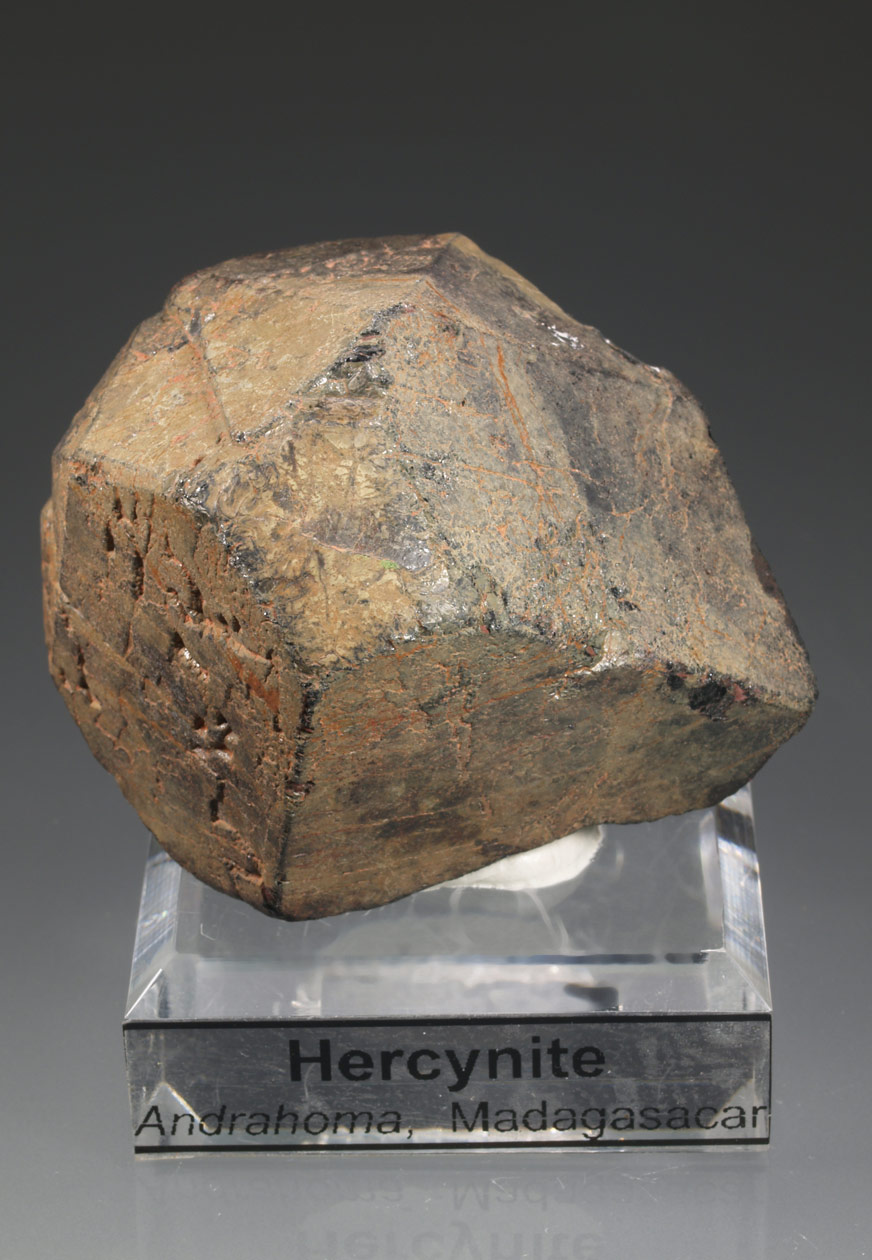
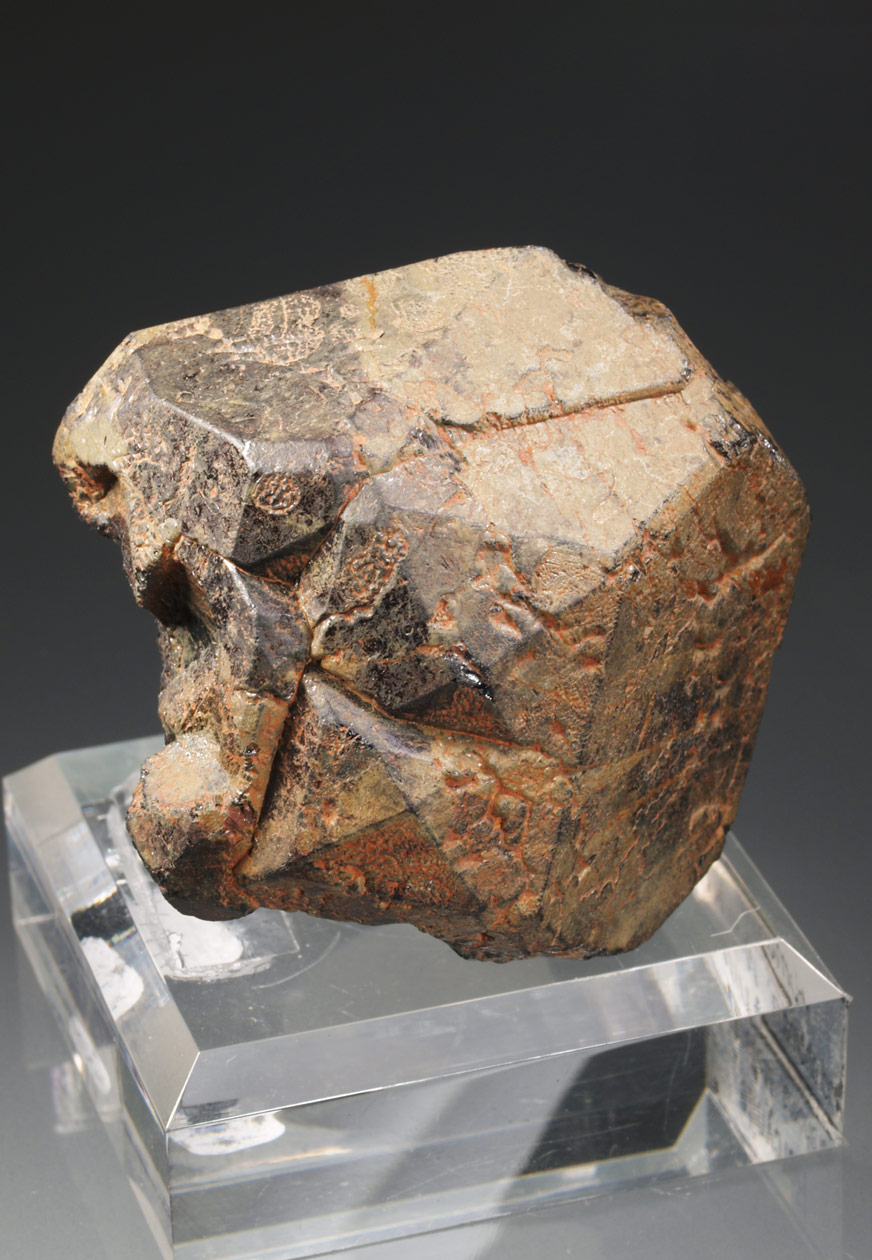
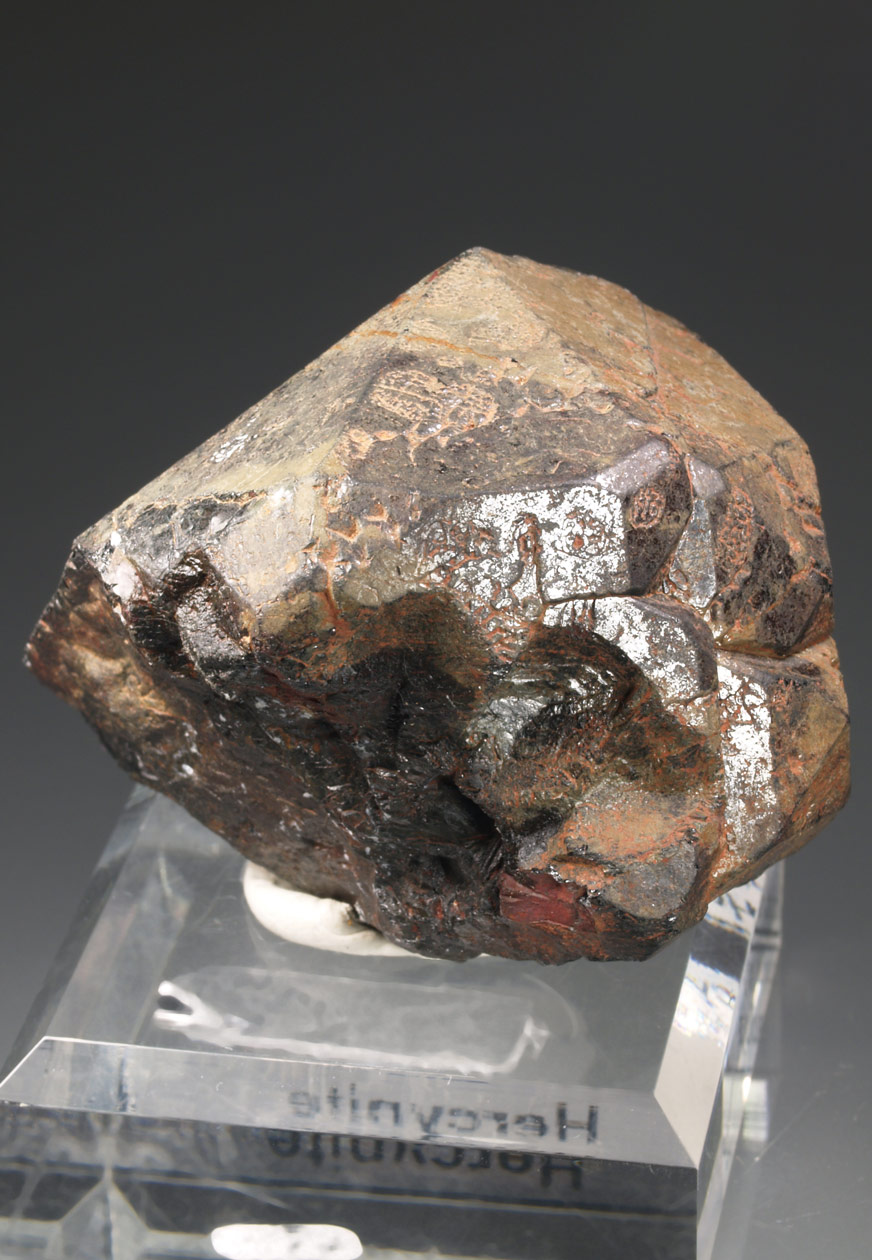
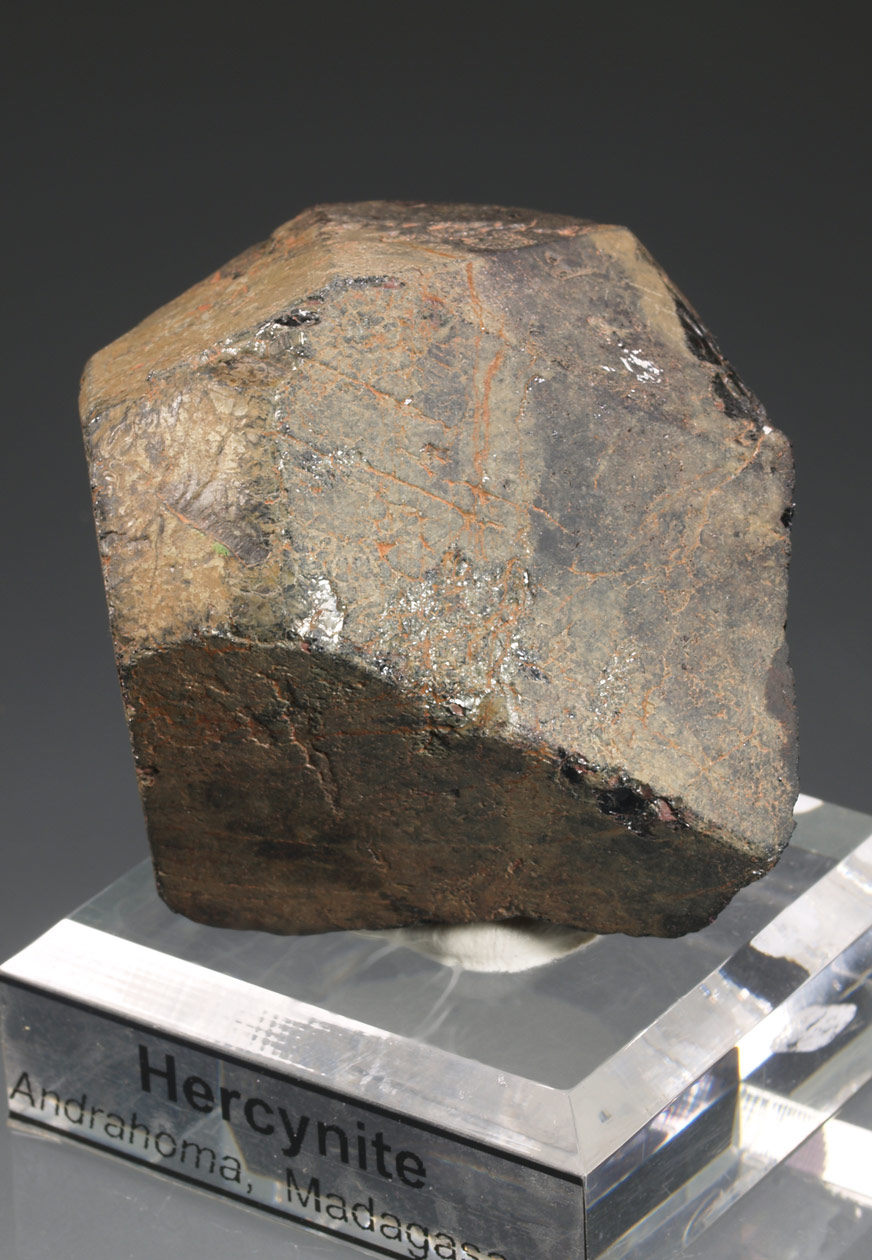
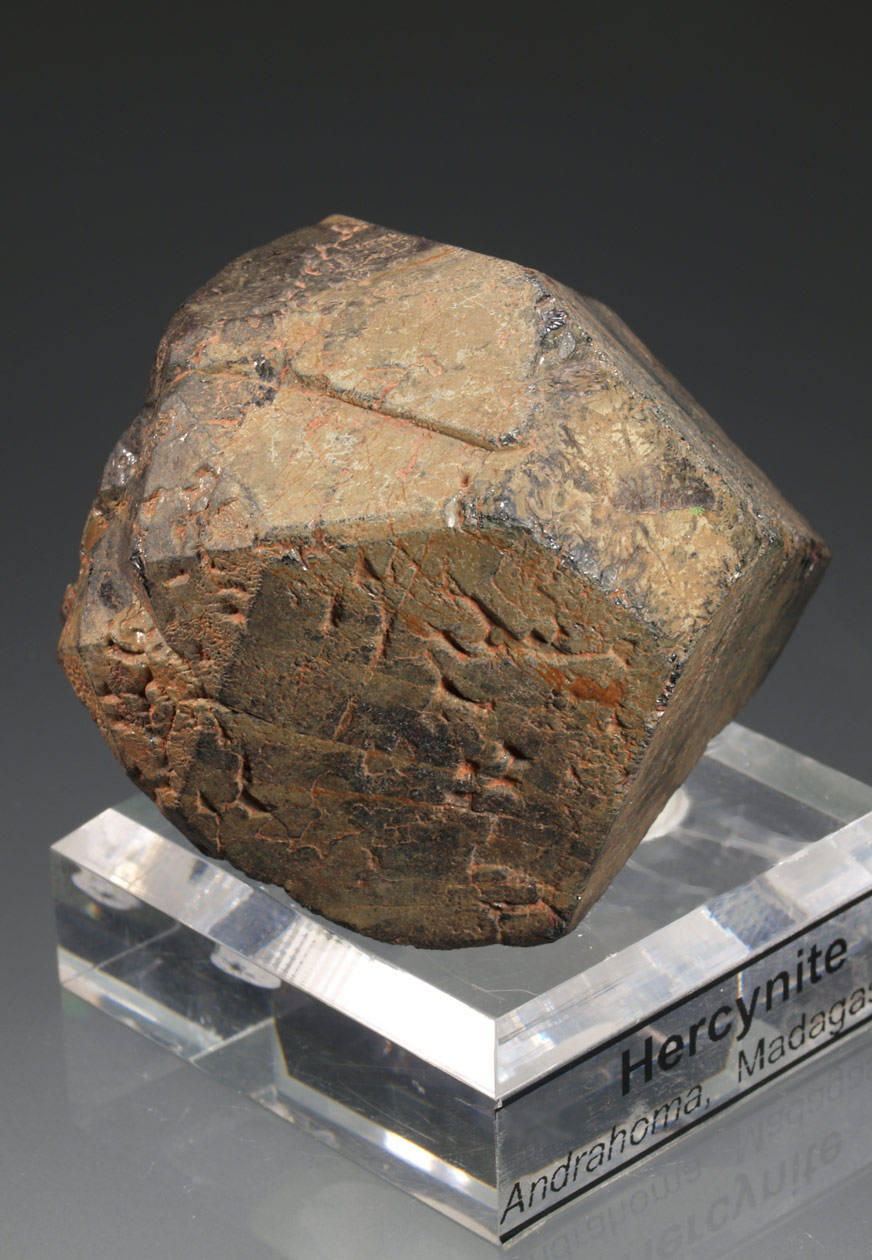
Enorme cristal de pleonasto, una variedad de espinela que contiene Fe²⁺; muestra formas cristalinas complejas del octaedro y combinaciones del octaedro con el dodecaedro o, más raramente, con las del cubo. Una pieza de tamaño museo, muy rara de ver.
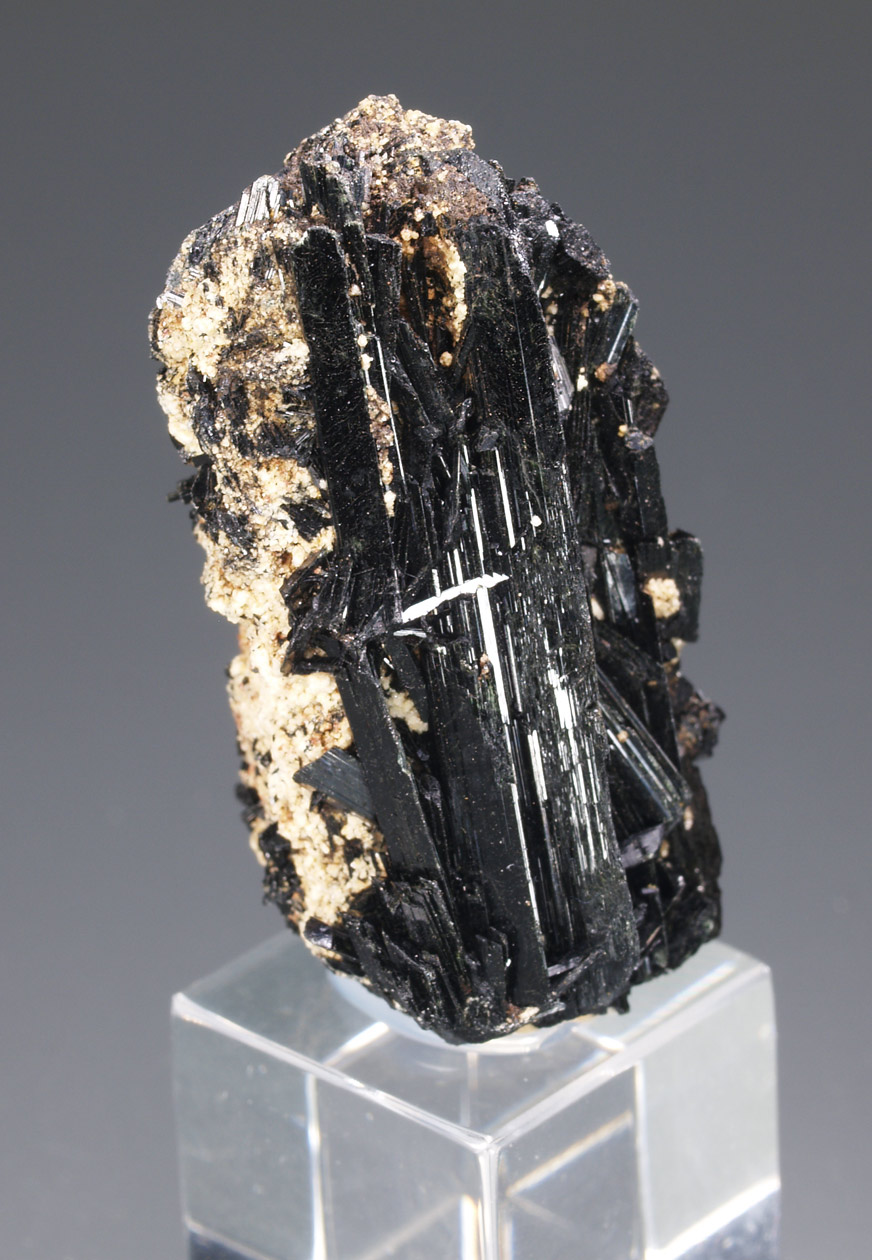
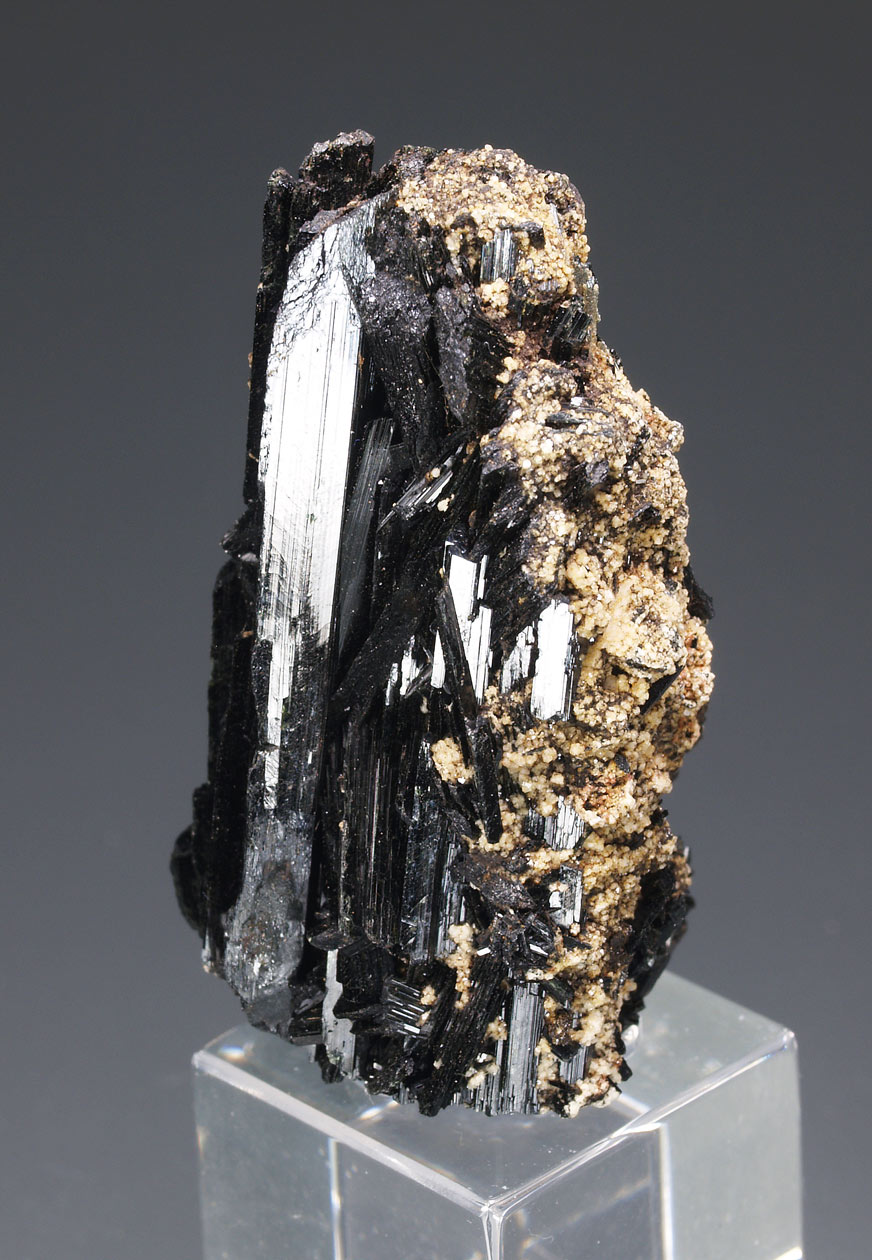
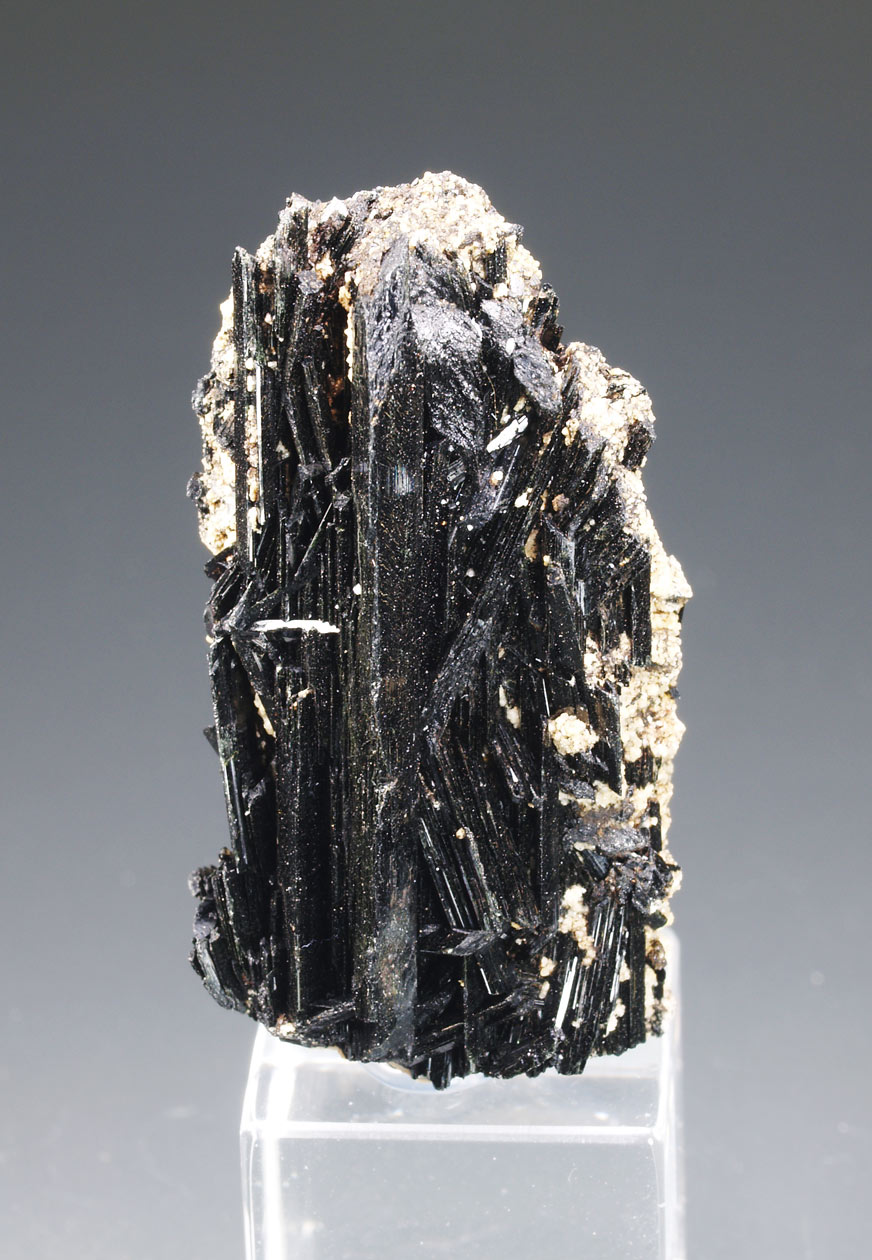
Grupo de cristales prismáticos de arfvedsonita, de crecimiento paralelo, con las caras estriadas y terminaciones policristalinas, muy brillantes y de color verde oscuro, casi negro. Acompañado de feldespato como matriz.

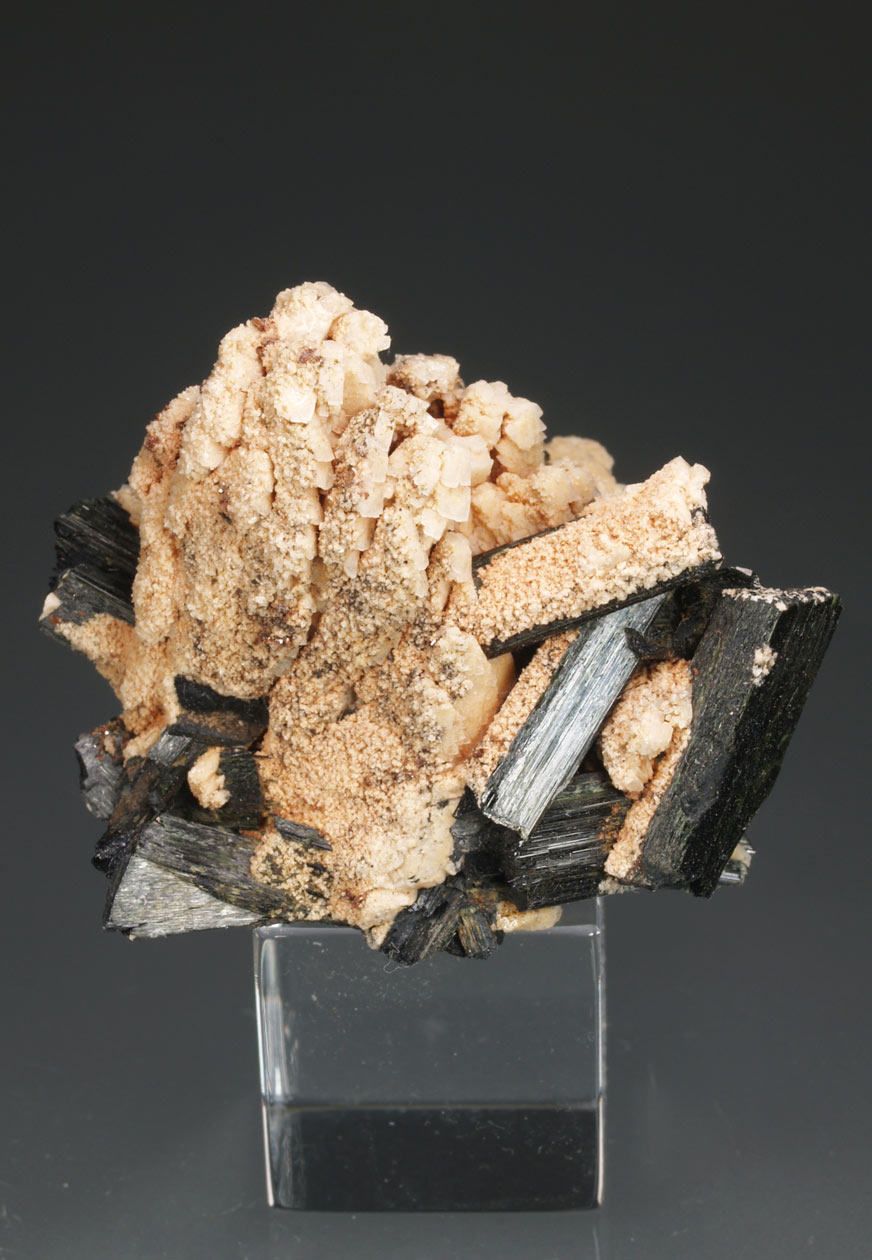
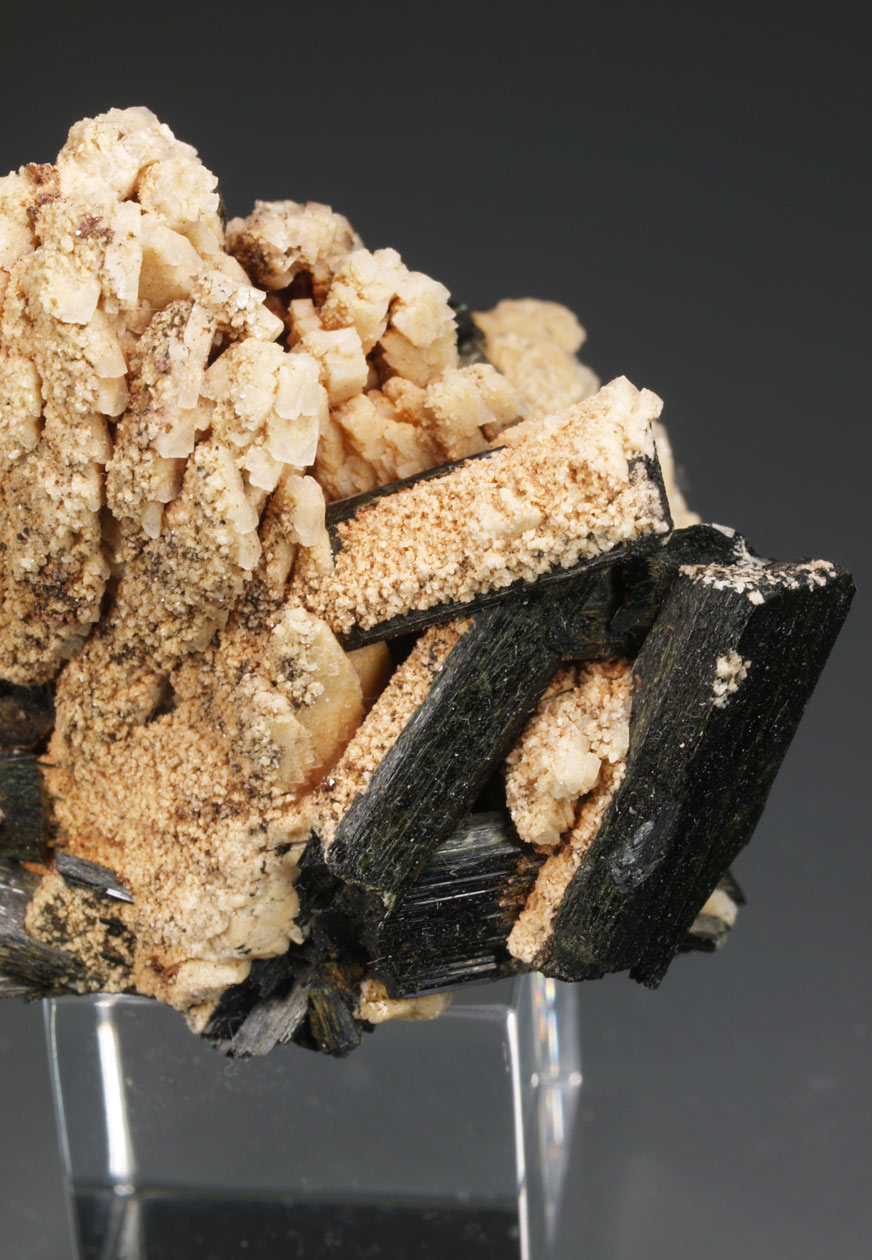
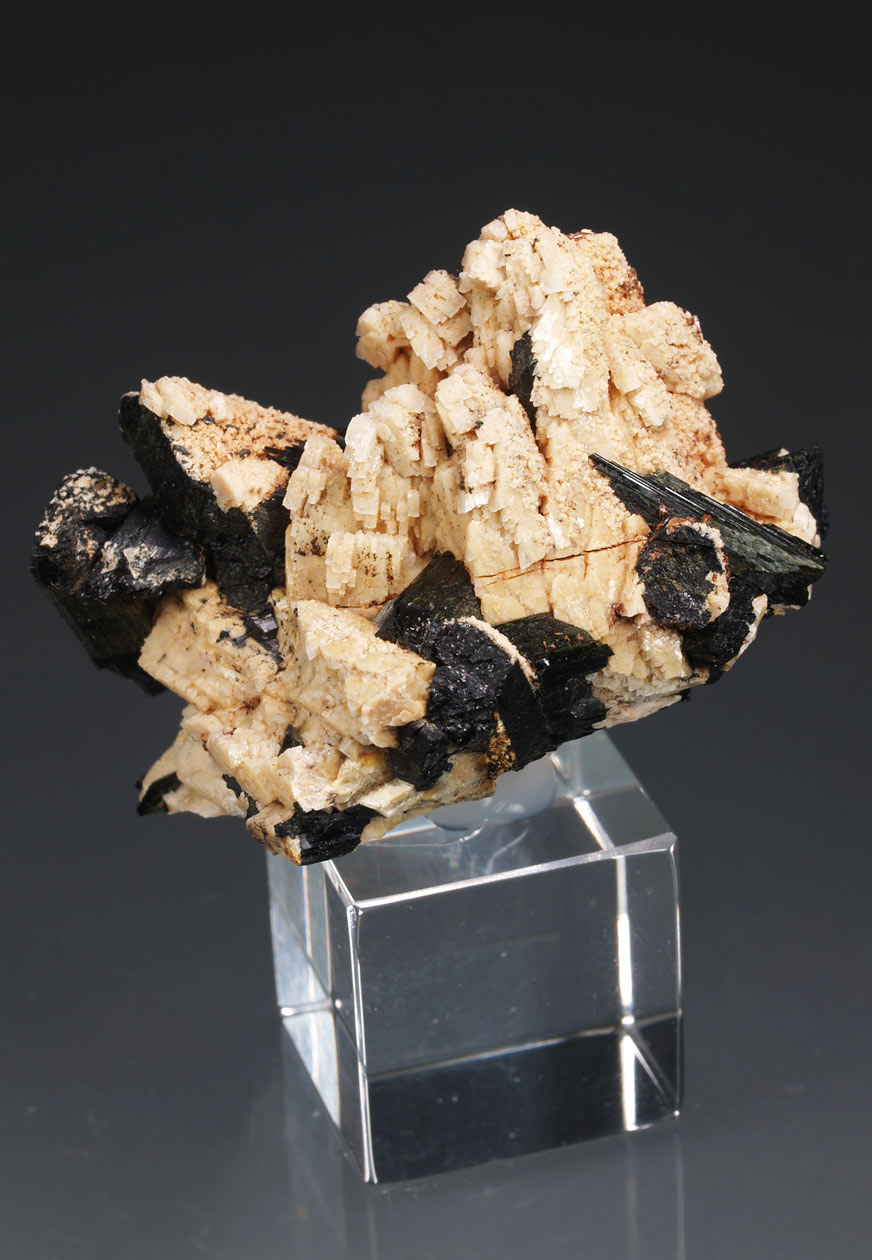
Grupo de cristales prismáticos de arfvedsonita, con crecimiento paralelo, caras estriadas y terminaciones policristalinas, brillantes y de color verde oscuro, casi negro. Se hallan parcialmente recubiertos de feldespato. Un ejemplar curioso...

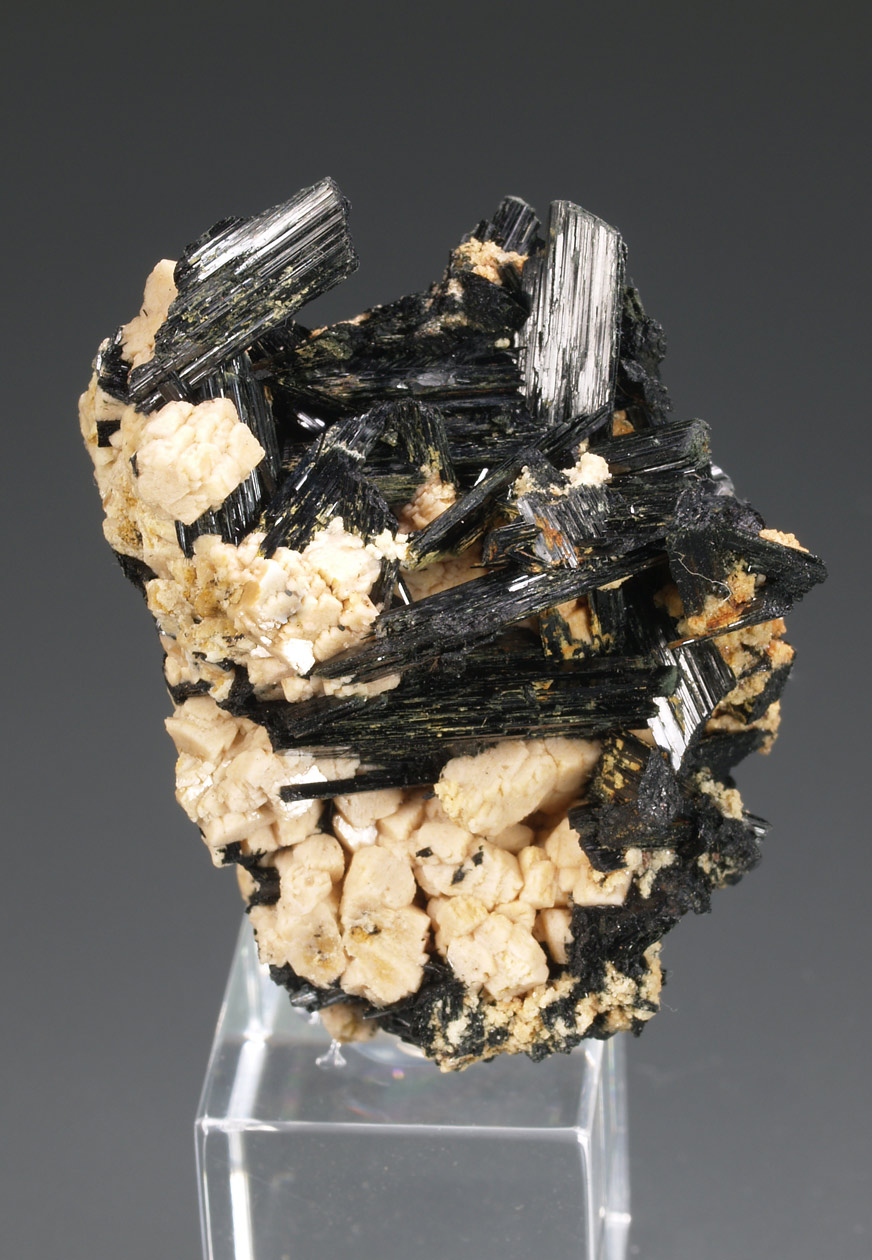
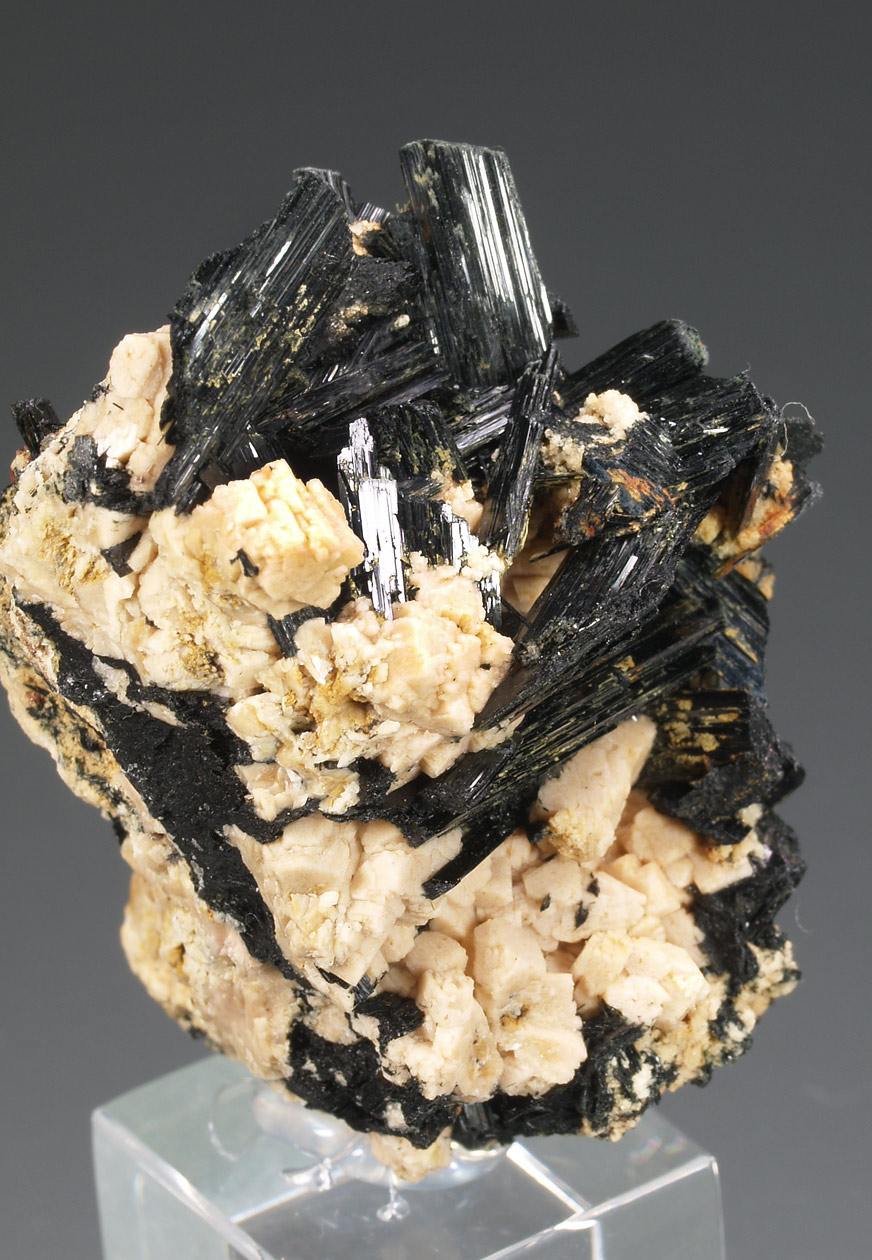
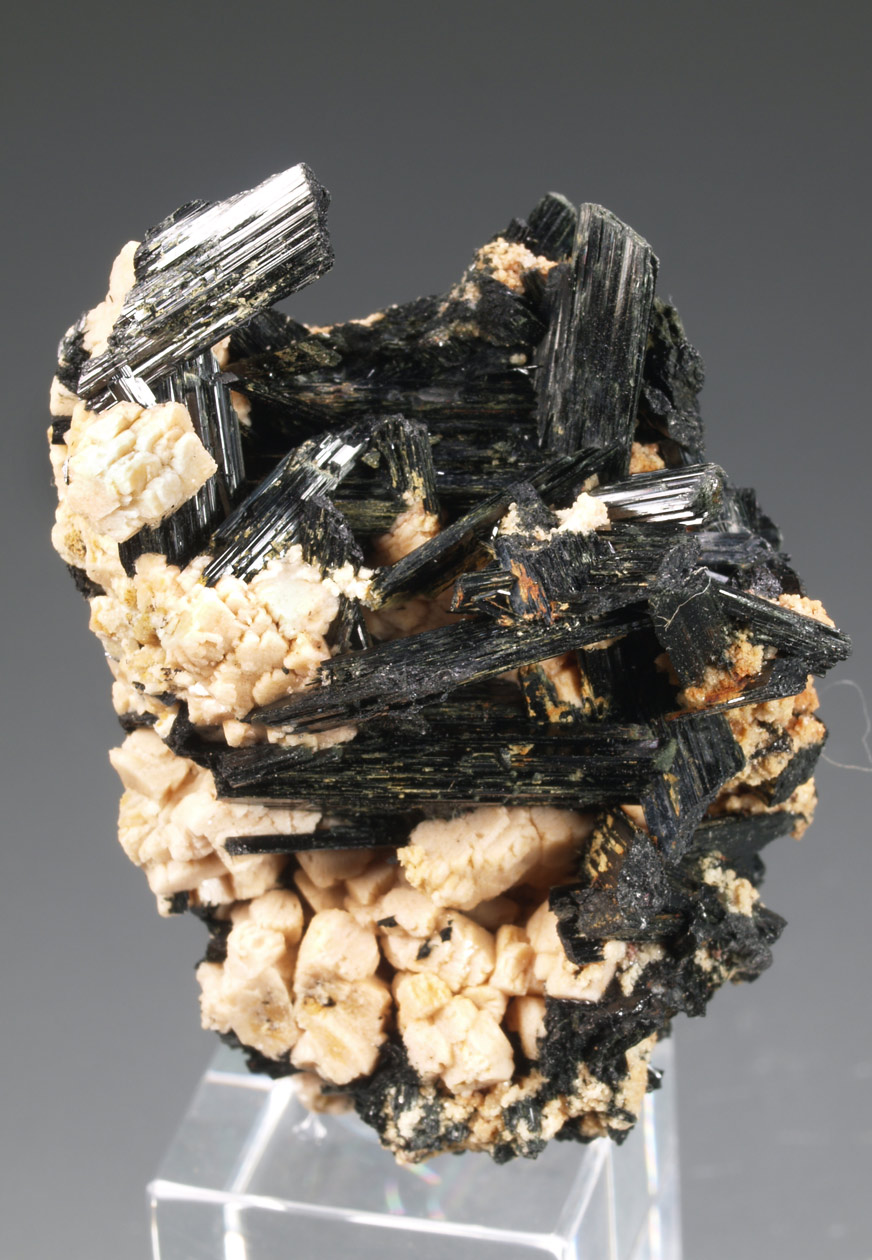
Grupo de cristales prismáticos de arfvedsonita, con crecimiento paralelo, caras estriadas y terminaciones policristalinas, brillantes y de color verde oscuro, casi negro. Sobre una matriz de feldespato.

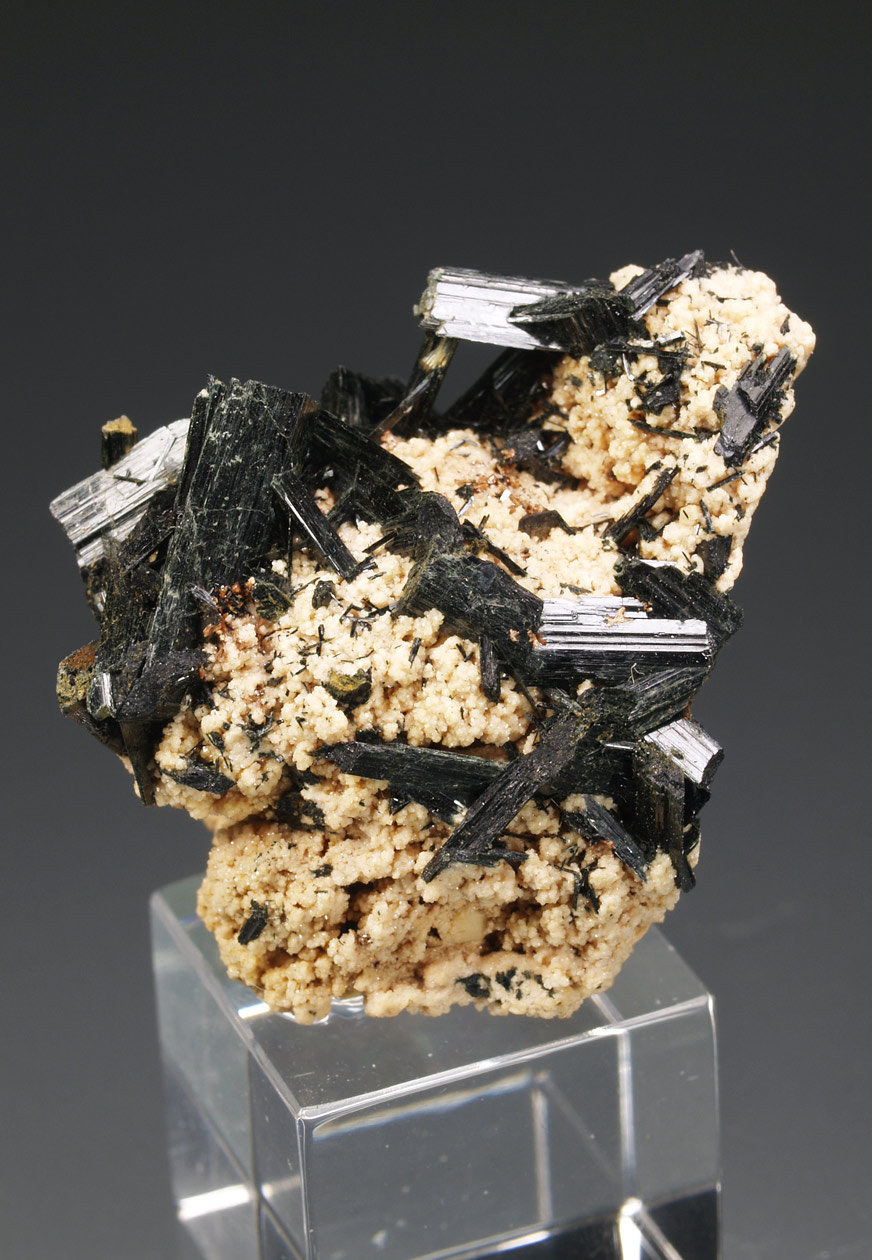
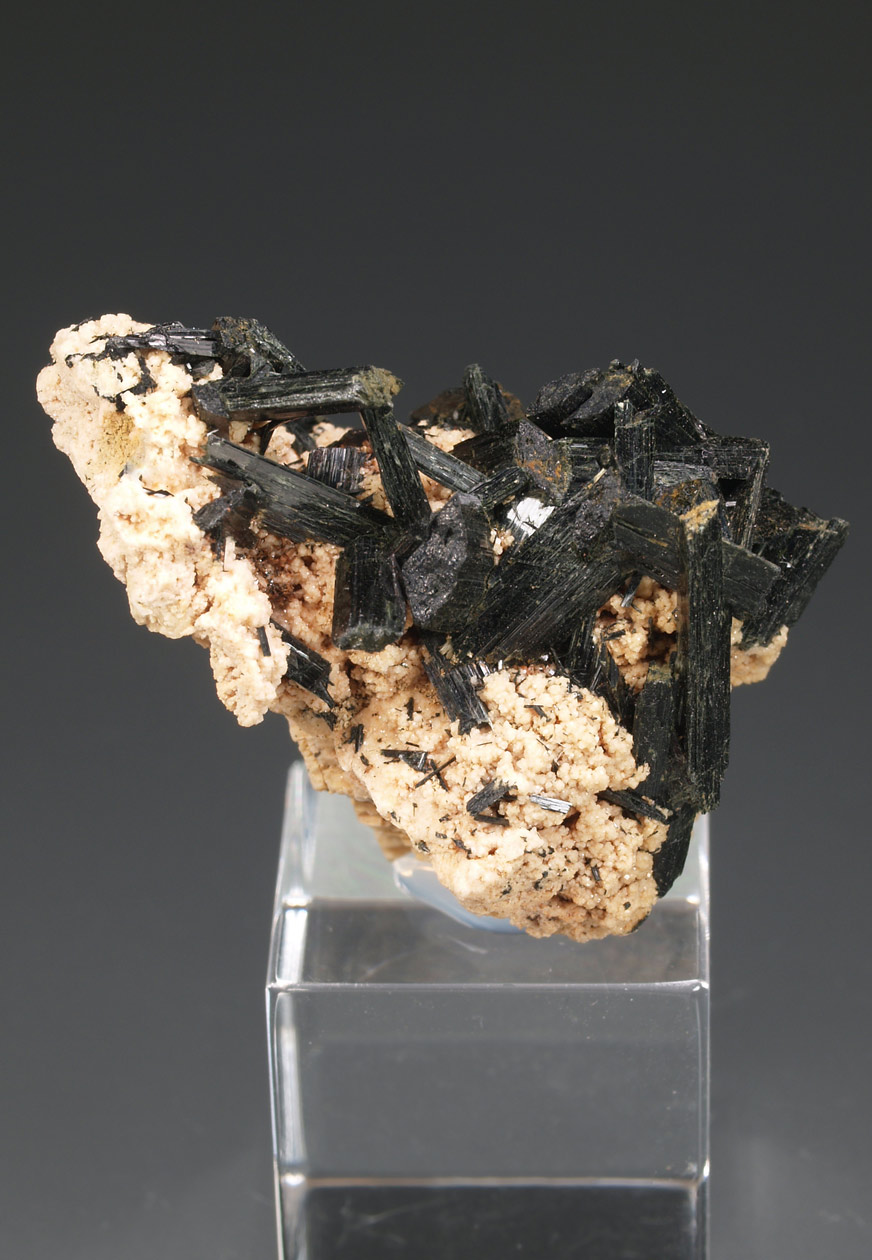
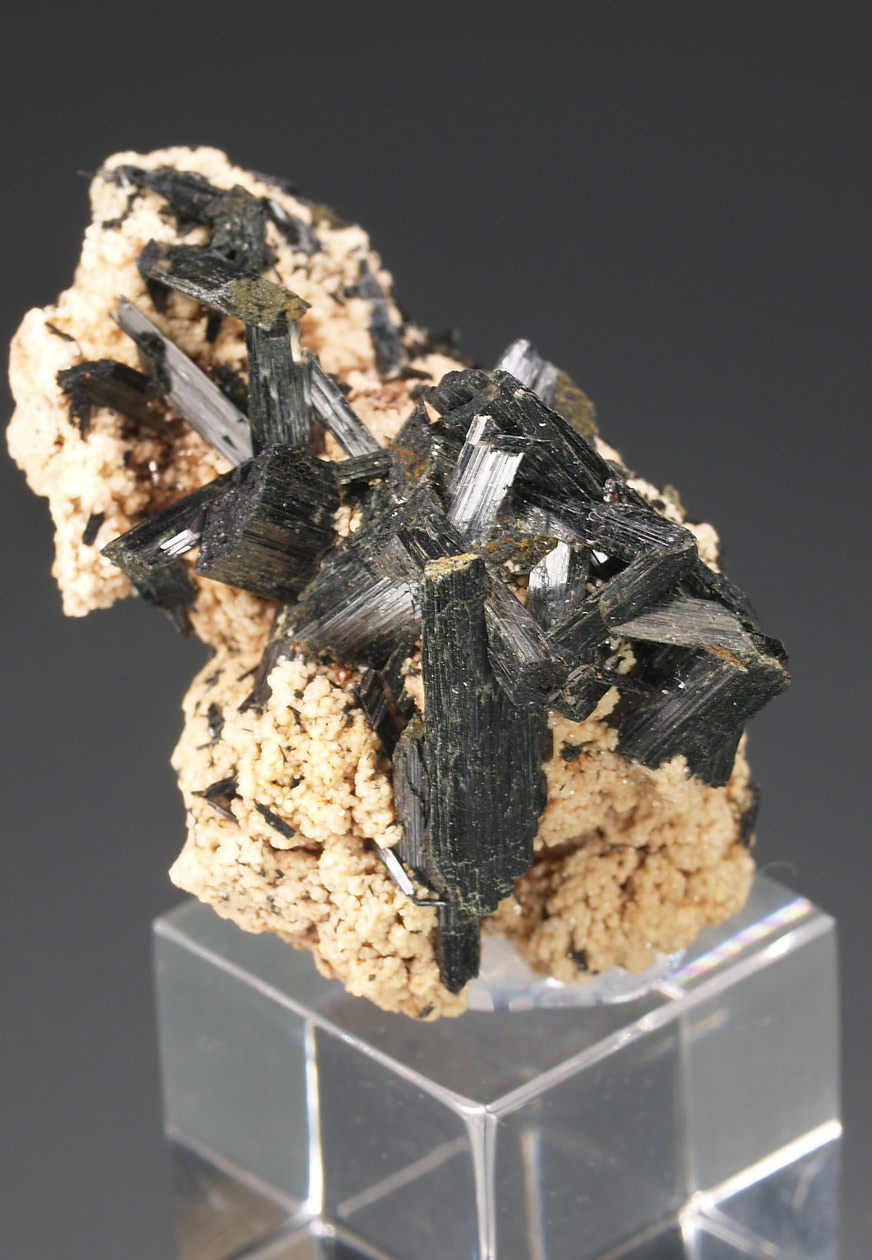
Grupo de cristales prismáticos de arfvedsonita, con crecimiento paralelo, caras estriadas y terminaciones policristalinas, brillantes y de color verde oscuro, casi negro. Sobre una matriz de feldespato.


Ejemplar formado por una matriz de goethita (limonita) con cavidades tapizadas por cristales de calcita acompañados de hemimorfita y de pequeñas agujas negras y brillantes de plattnerita.