- Inicio Acerca de RM Minerales
- Galería de fotos Blog RM Contacto
- Microscopia e instrumentos Pedidos Aviso legal
Copyright 2010-2026
www.rosellminerals.com



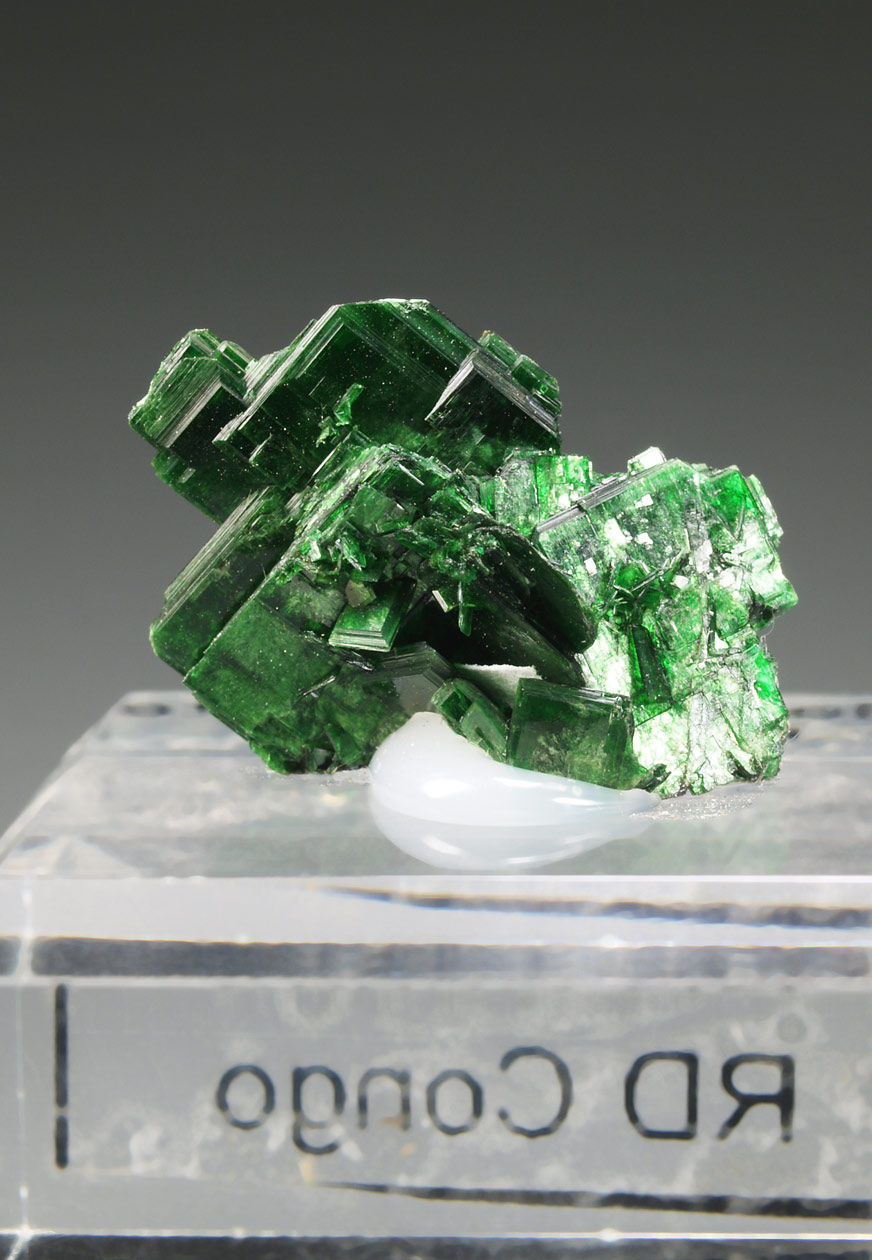
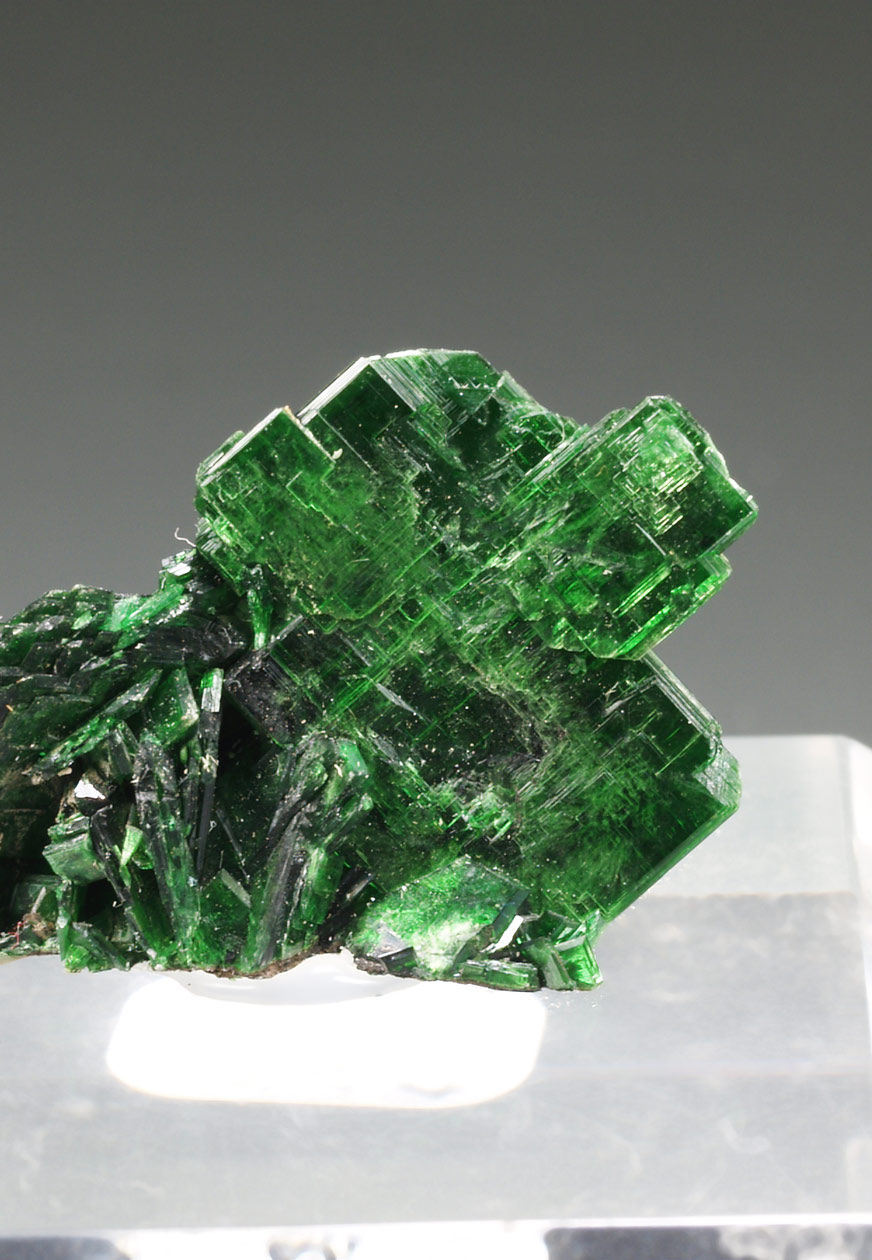
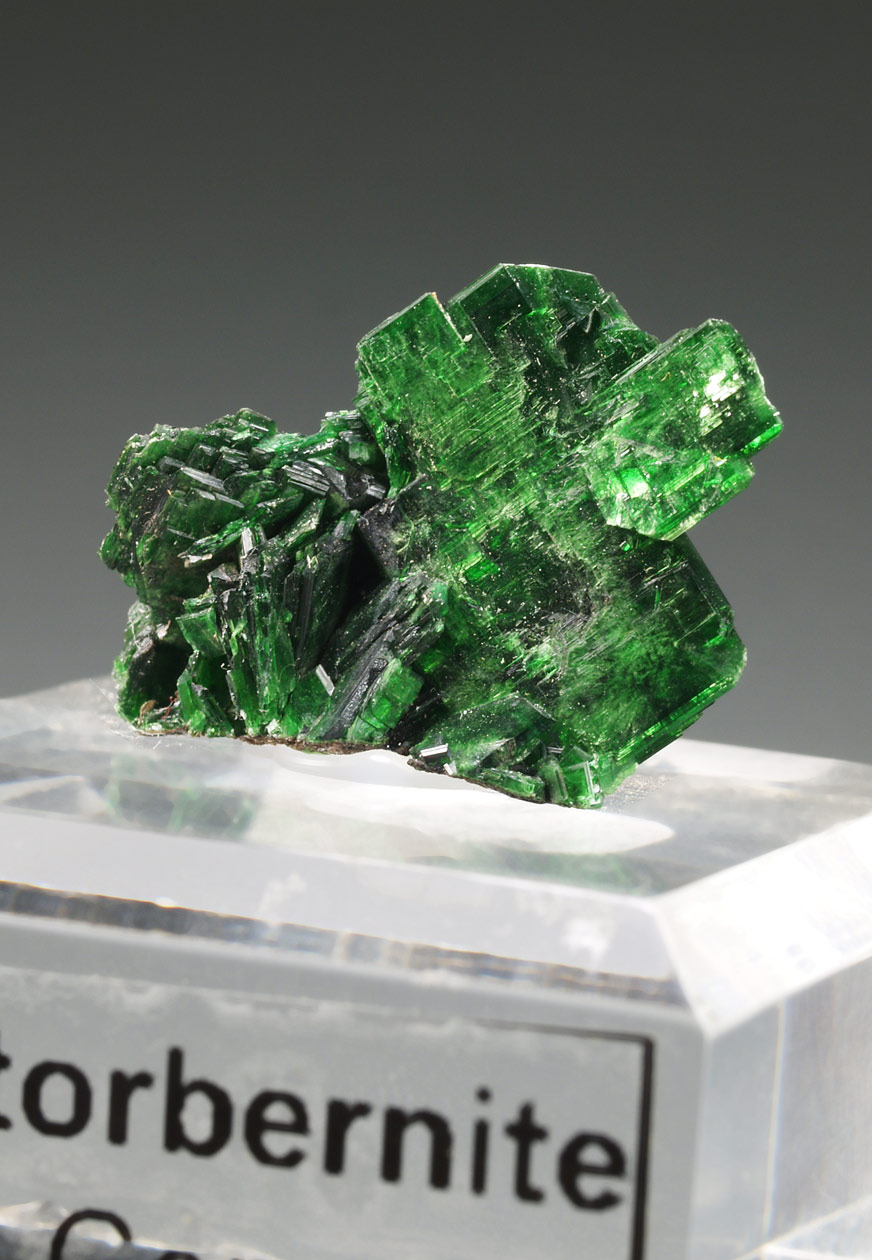
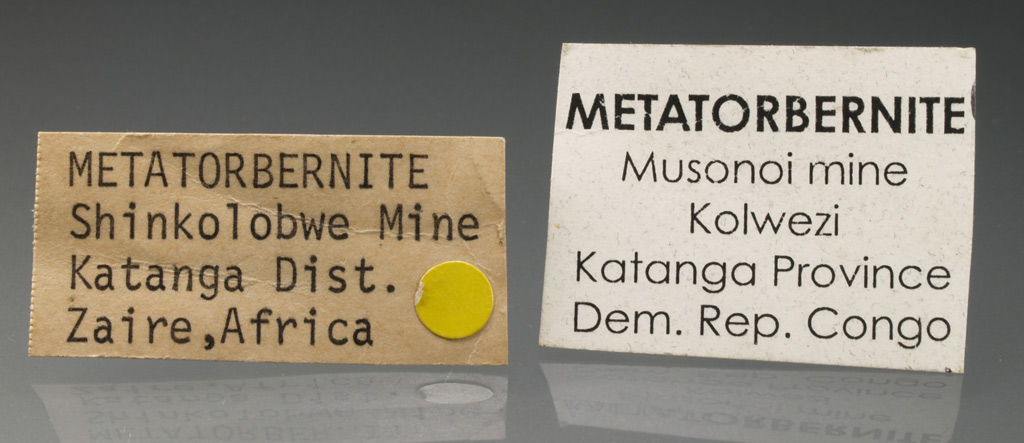
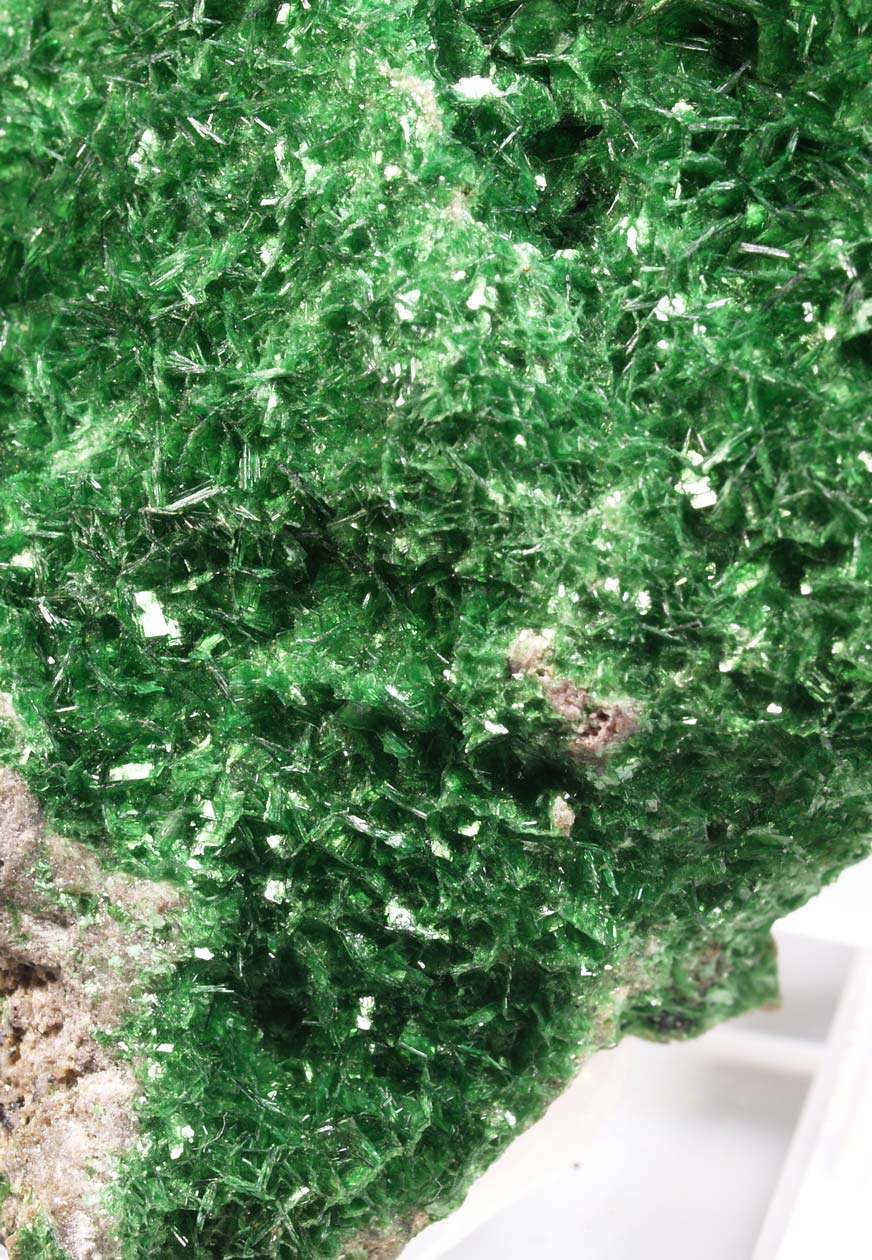
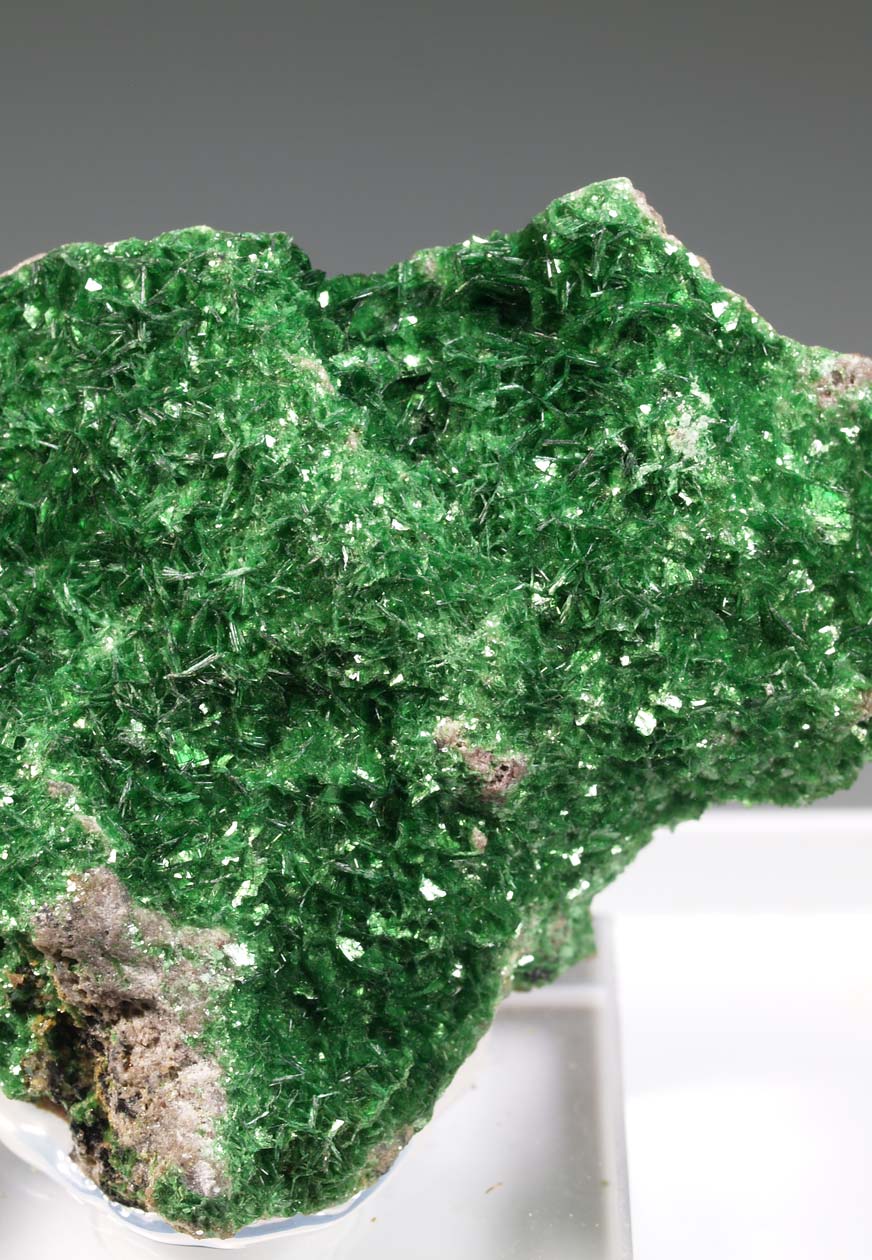
Grupo de cristales tabulares de metatorbernita (torbernita deshidratada) con un tamaño excepcional, translúcido y con mucho brillo. El color verde presenta reflejos internos muy estéticos. Procedente de esta localidad clásica en la zona de Katanga. Se acompaña d dos etiquetas antiguas. Una miniatura excepcional.
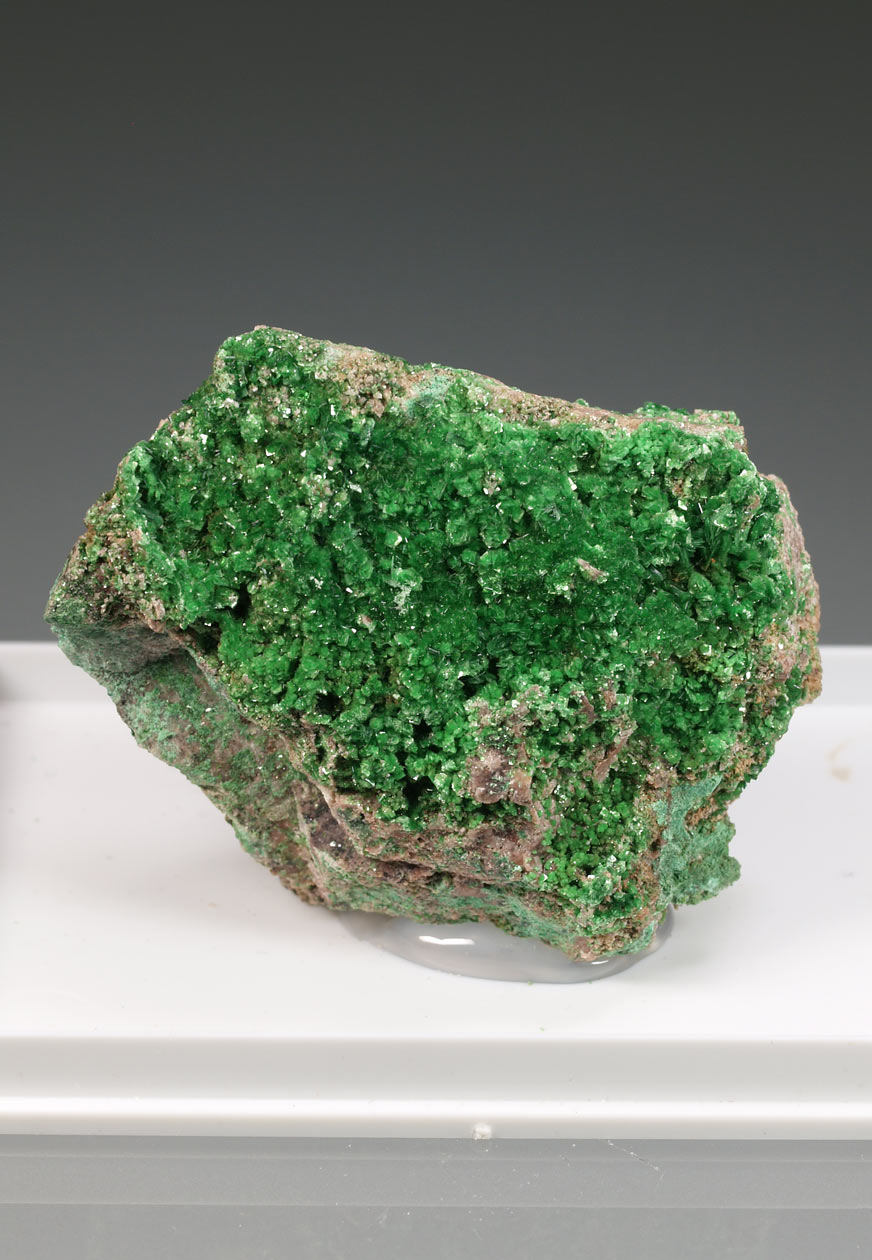
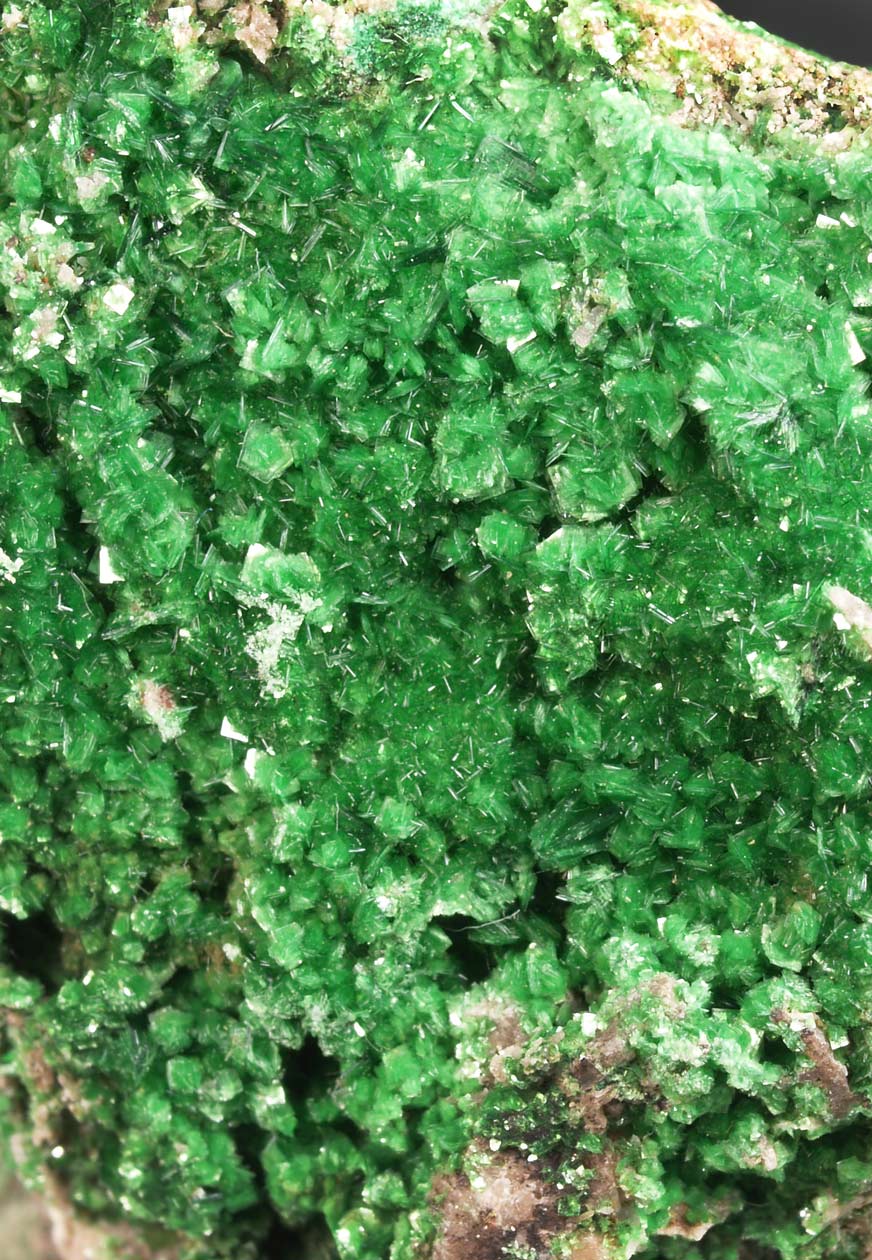
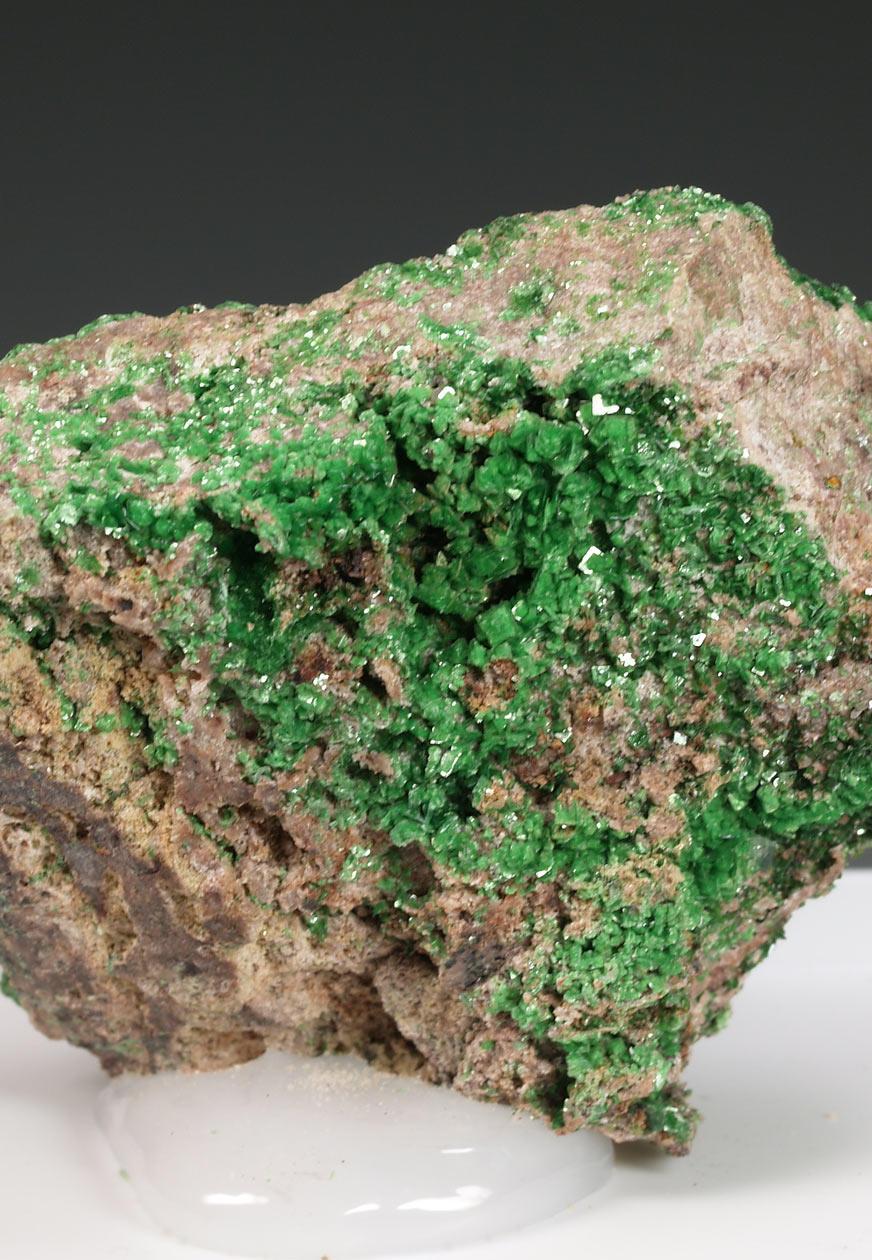
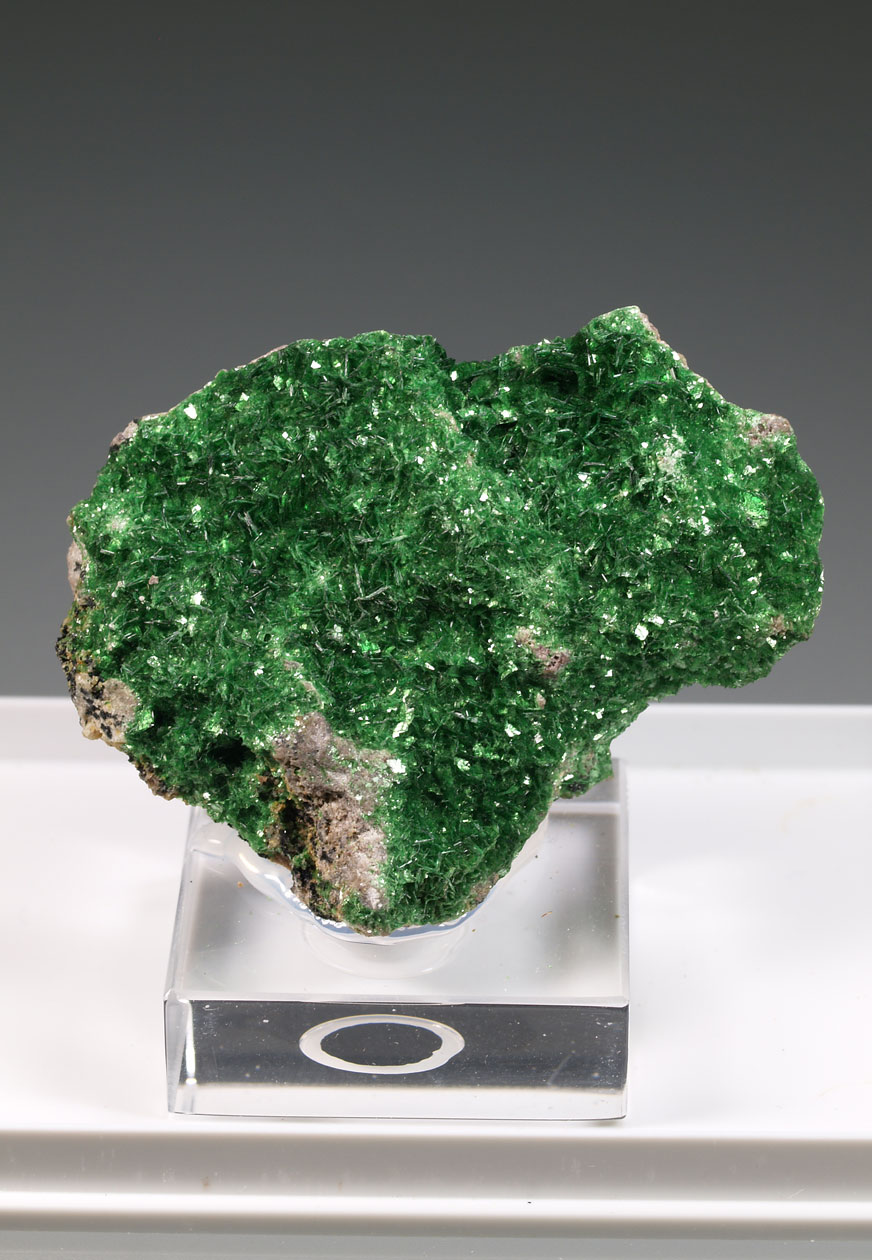
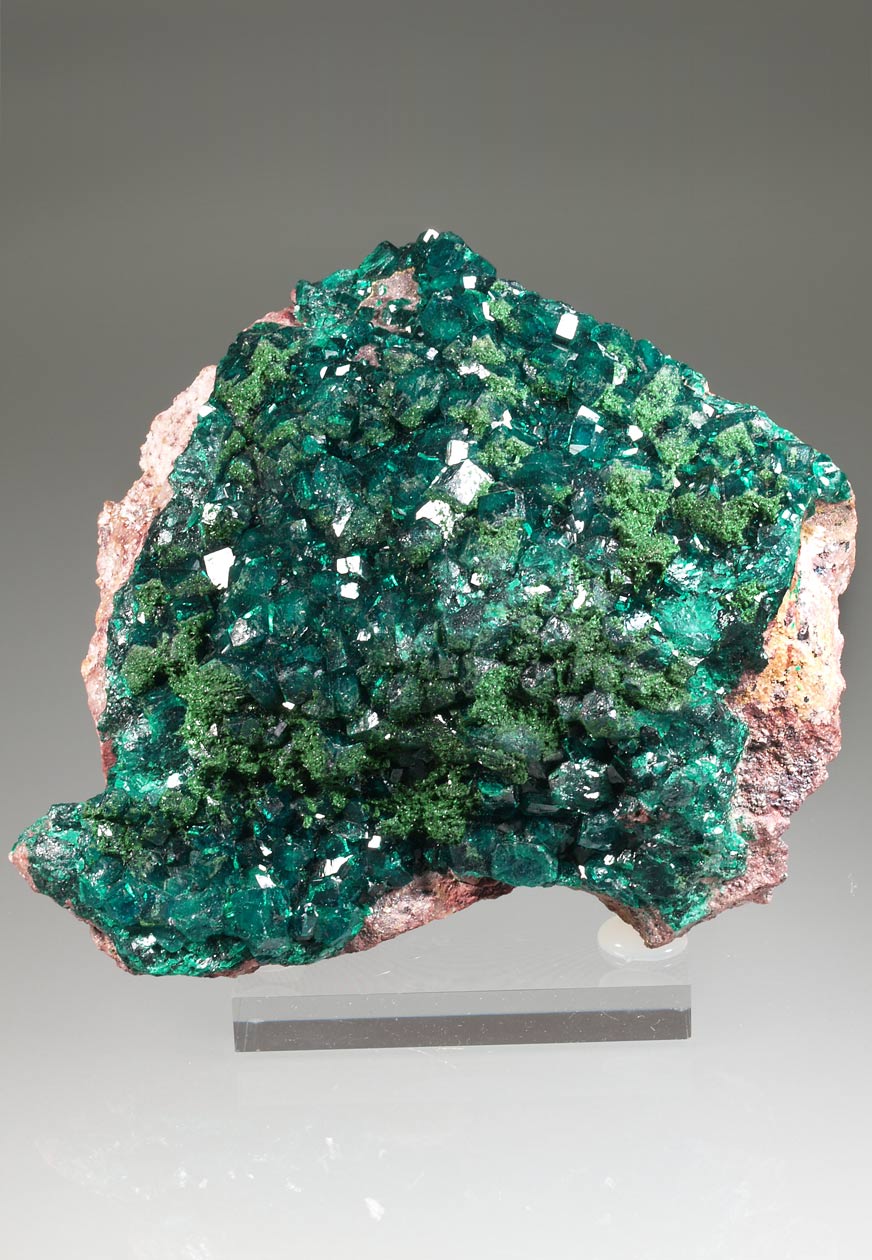
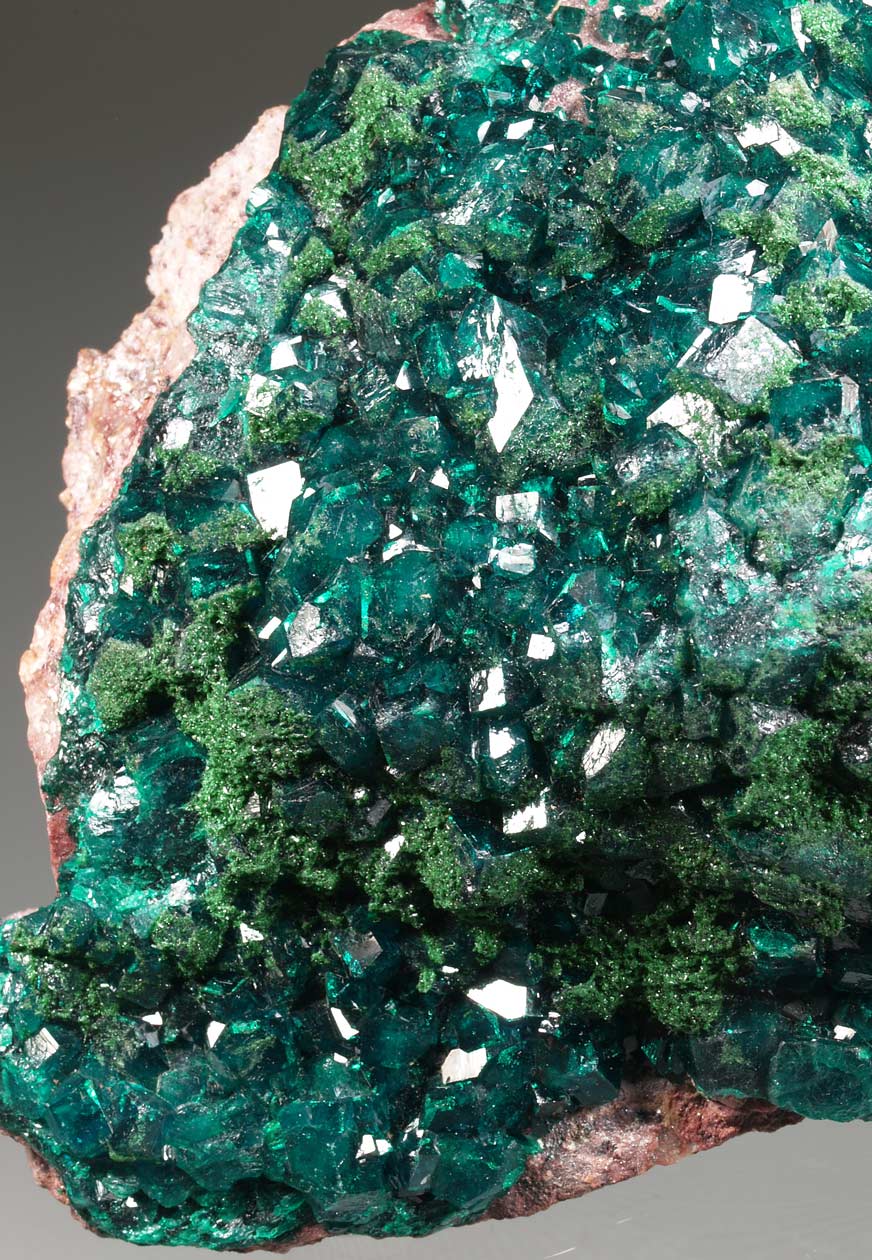
Drusa de cristales de dioptasa, con caras y aristas muy definidas, brillantes, con transparencia y dispuestos sobre la matriz con cuarzo. El color es muy característico, difícil de reproducir en fotografía. Se acompaña de pequeños agregados de cristales de malaquita, visibles por su color verde diferente. Una pieza de buen tamaño y calidad.

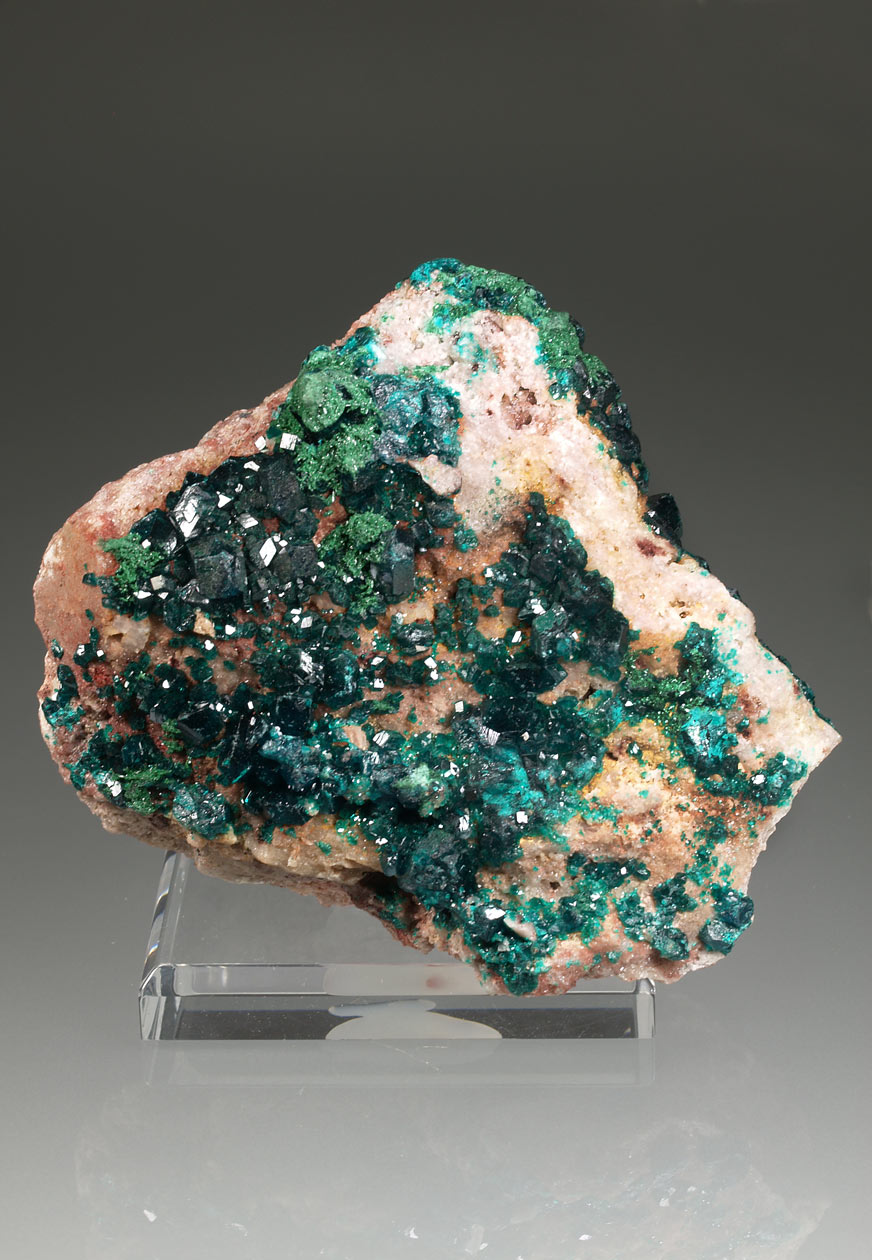
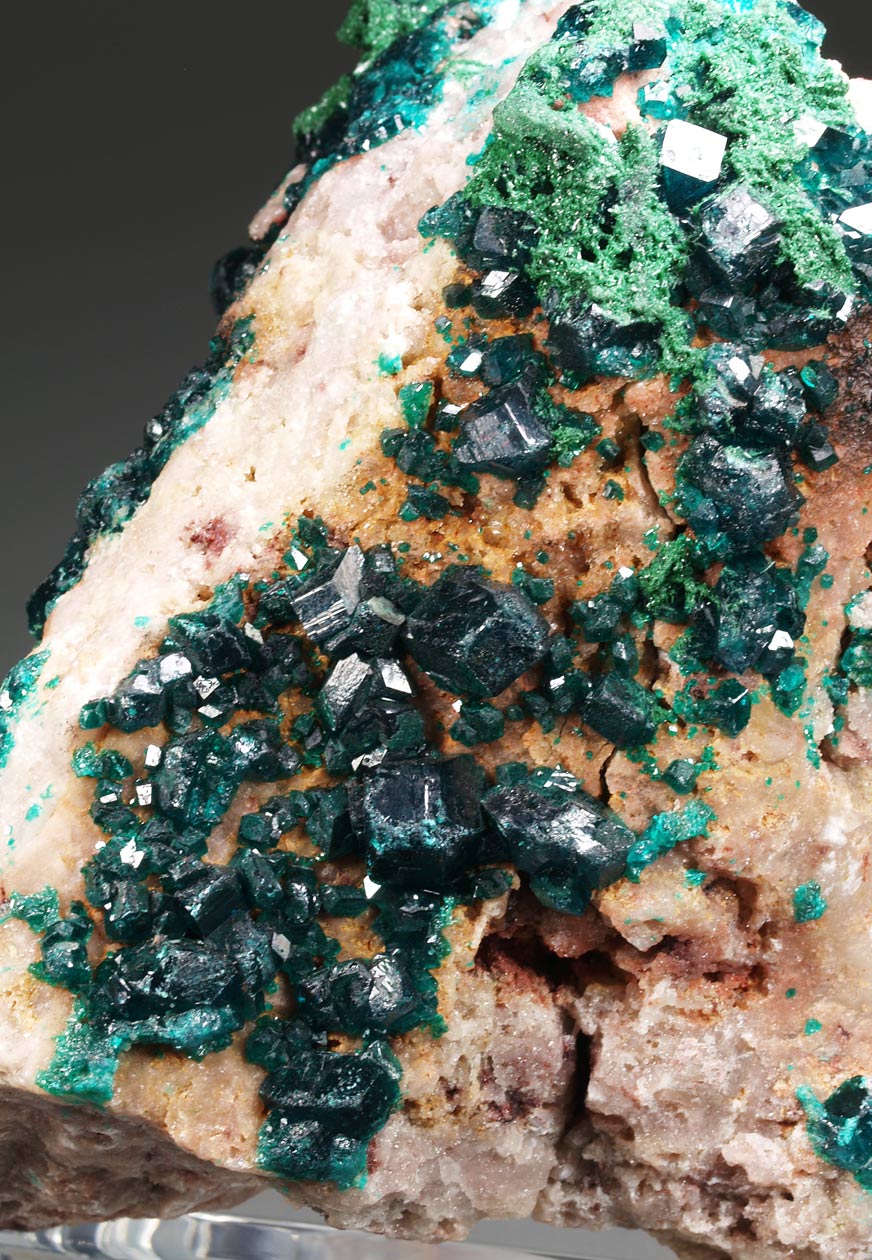
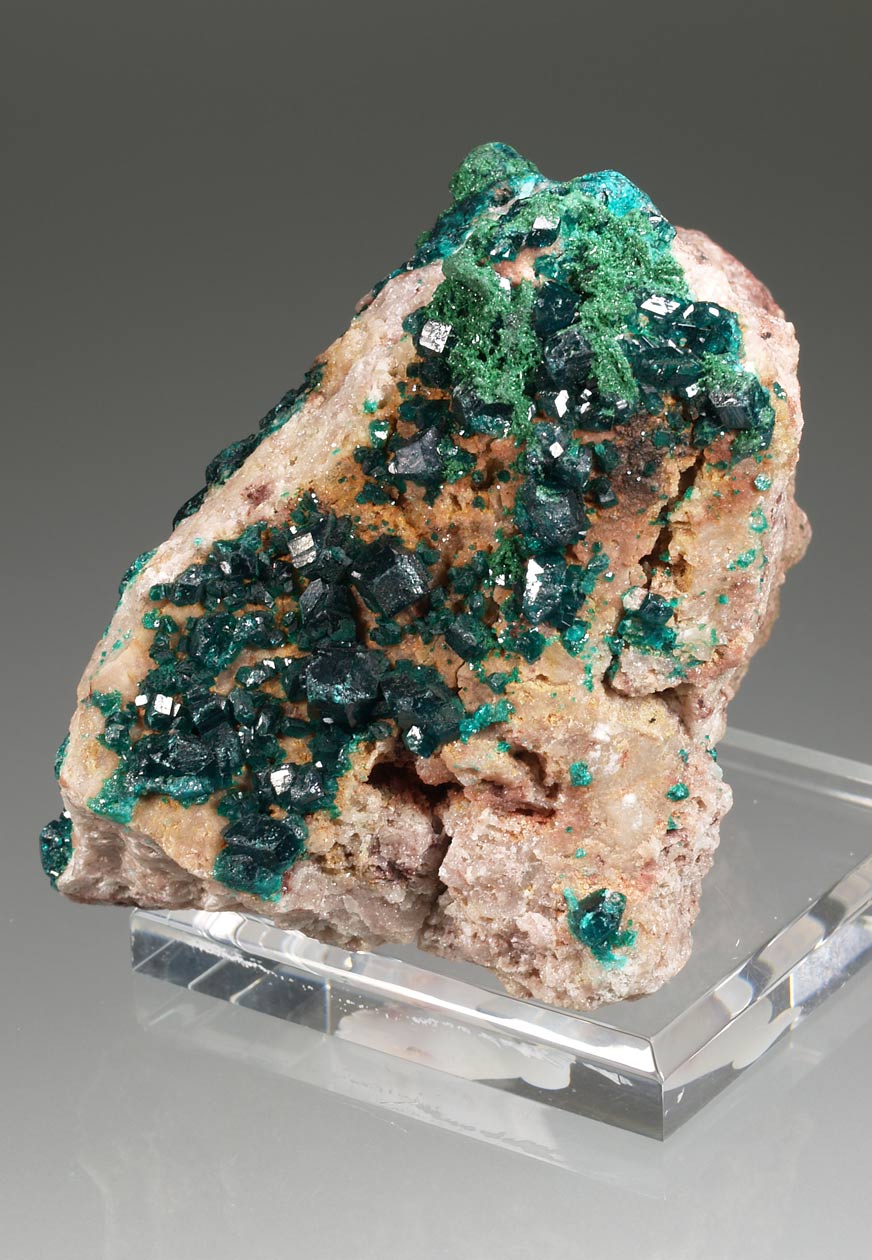
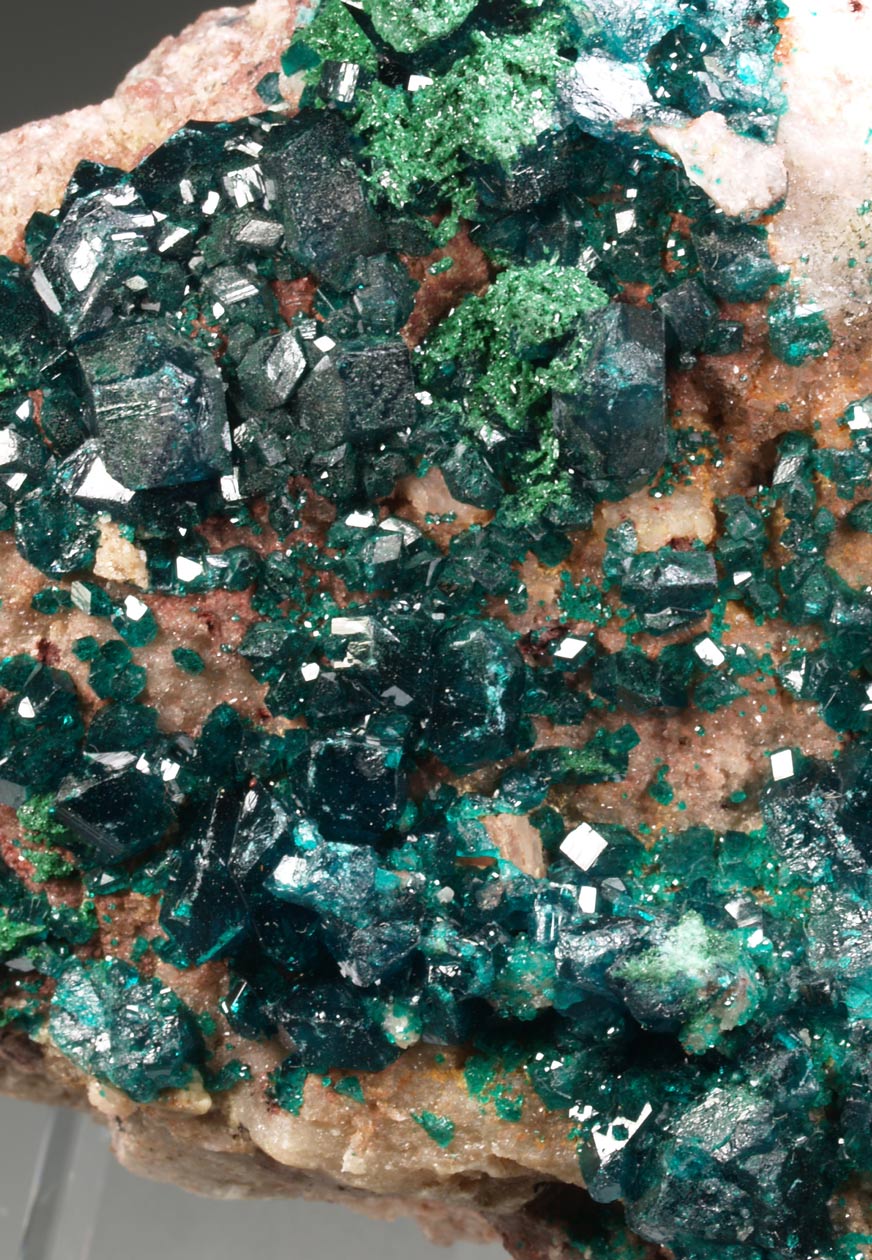
Drusa de cristales de dioptasa, con caras y aristas muy definidas, brillantes, con transparencia y dispuestos sobre la matriz con cuarzo. El color es muy característico, difícil de reproducir en fotografía. Se acompaña de pequeños agregados de cristales de malaquita, visibles por su color verde diferente. Una pieza de buen tamaño y calidad.
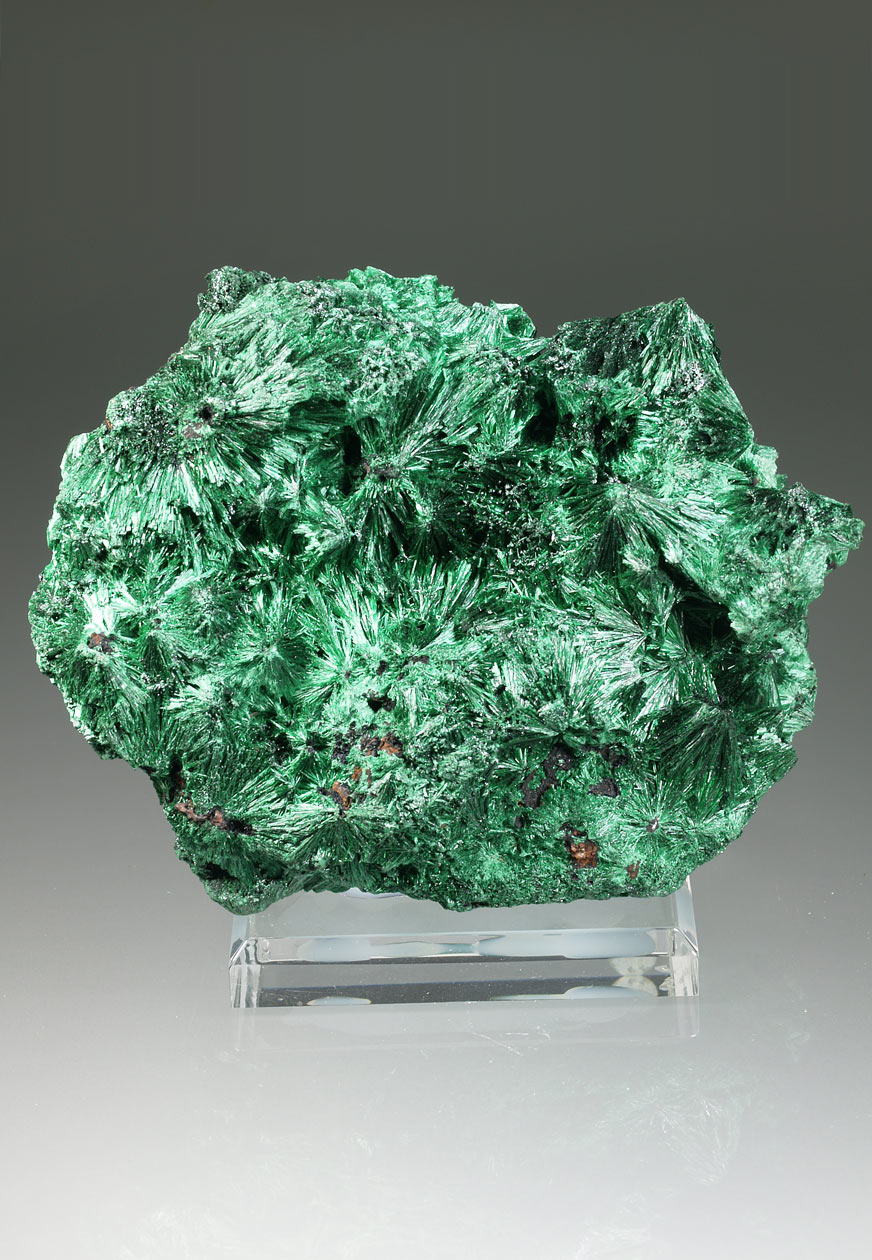
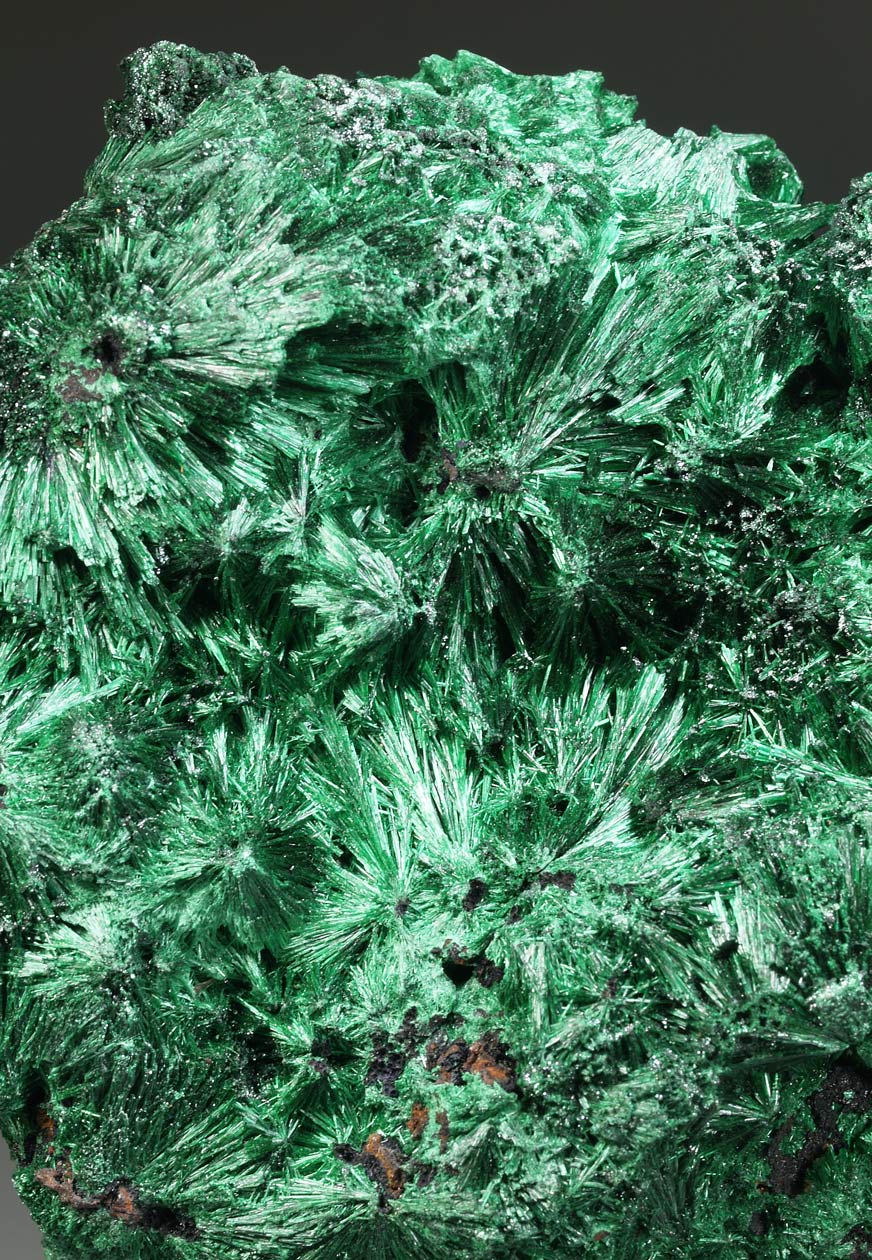
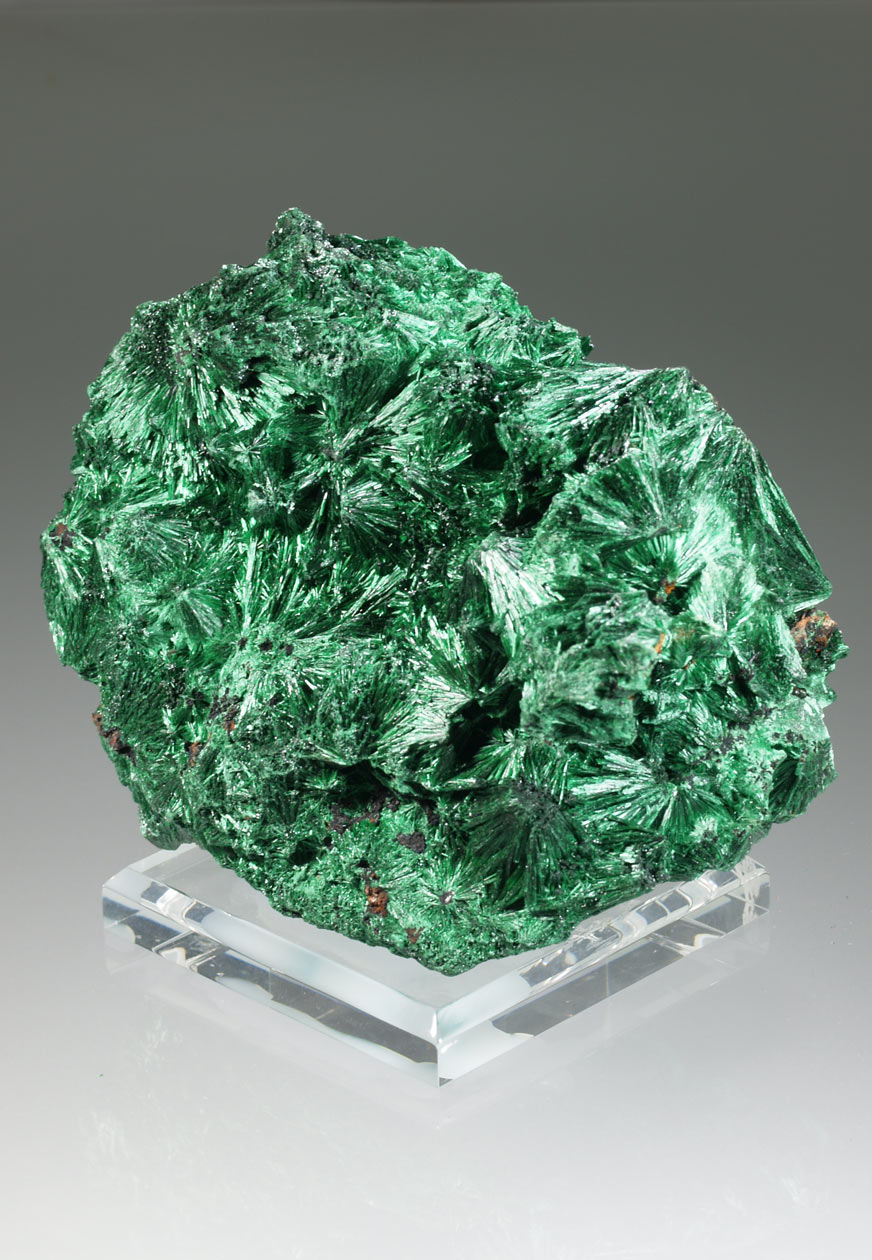
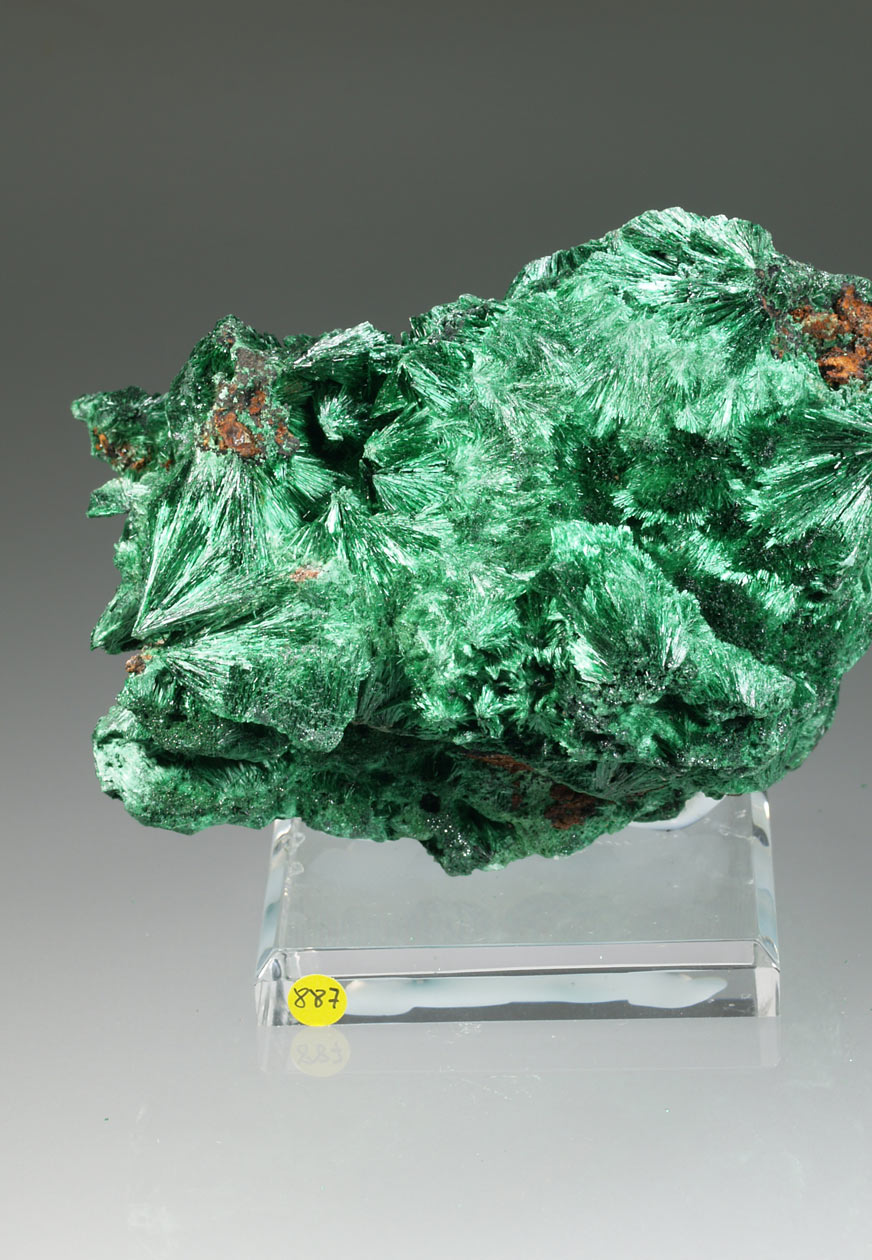
Los ejemplares de malaquita de esta mina del Alto Katanga destacan por los agregados radiales, en abanico, de finos cristales que, en conjunto, presentan un aspecto aterciopelado y un brillo excelente. Intenso color verde, buen tamaño y muy estético por ambas caras.
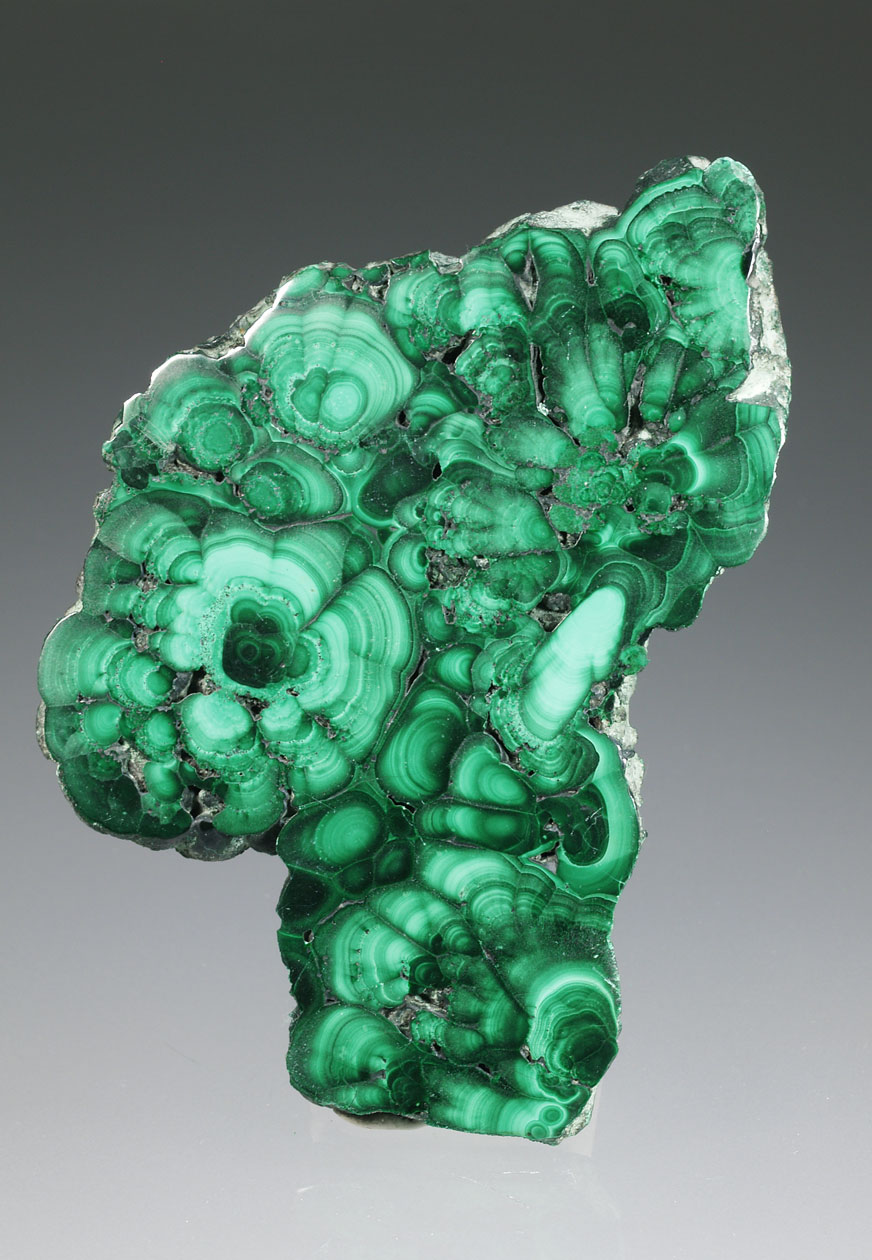
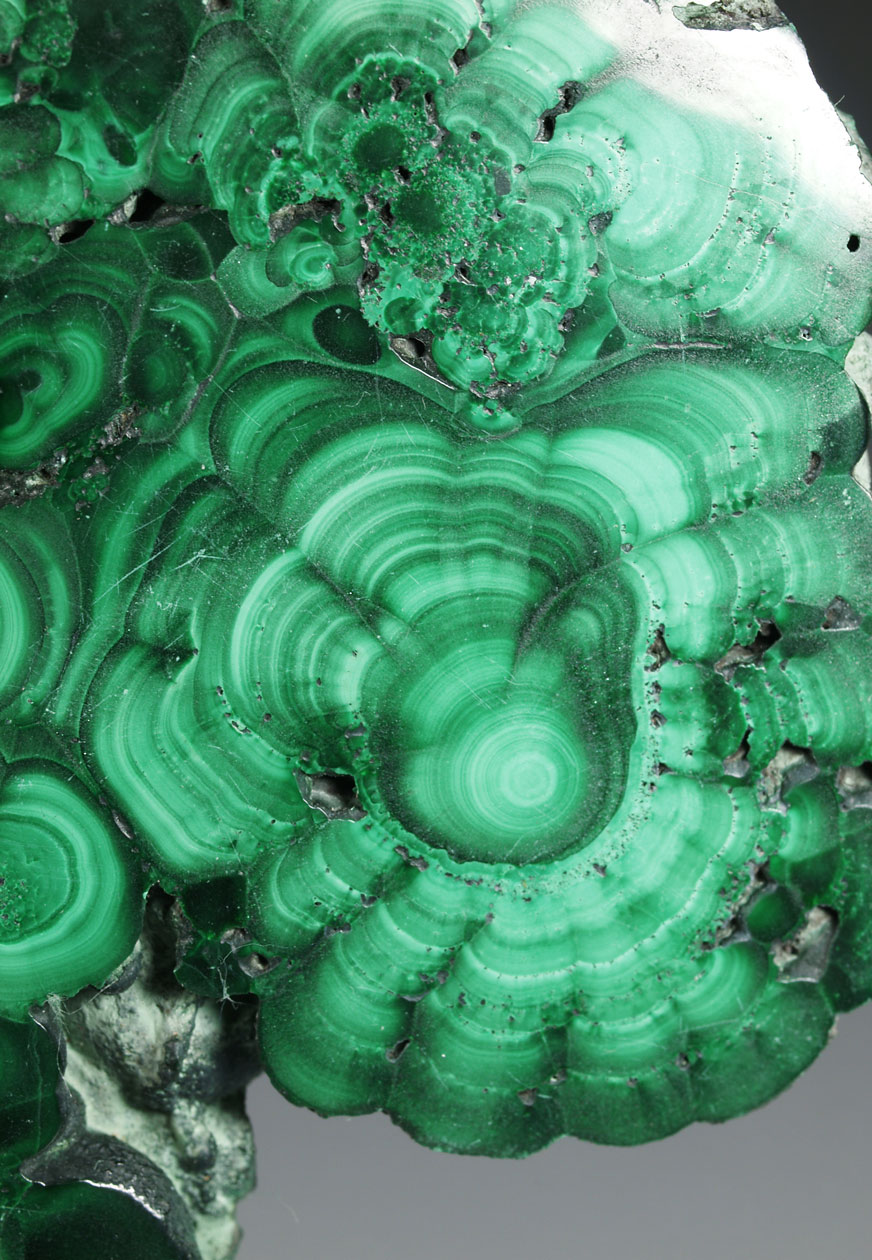
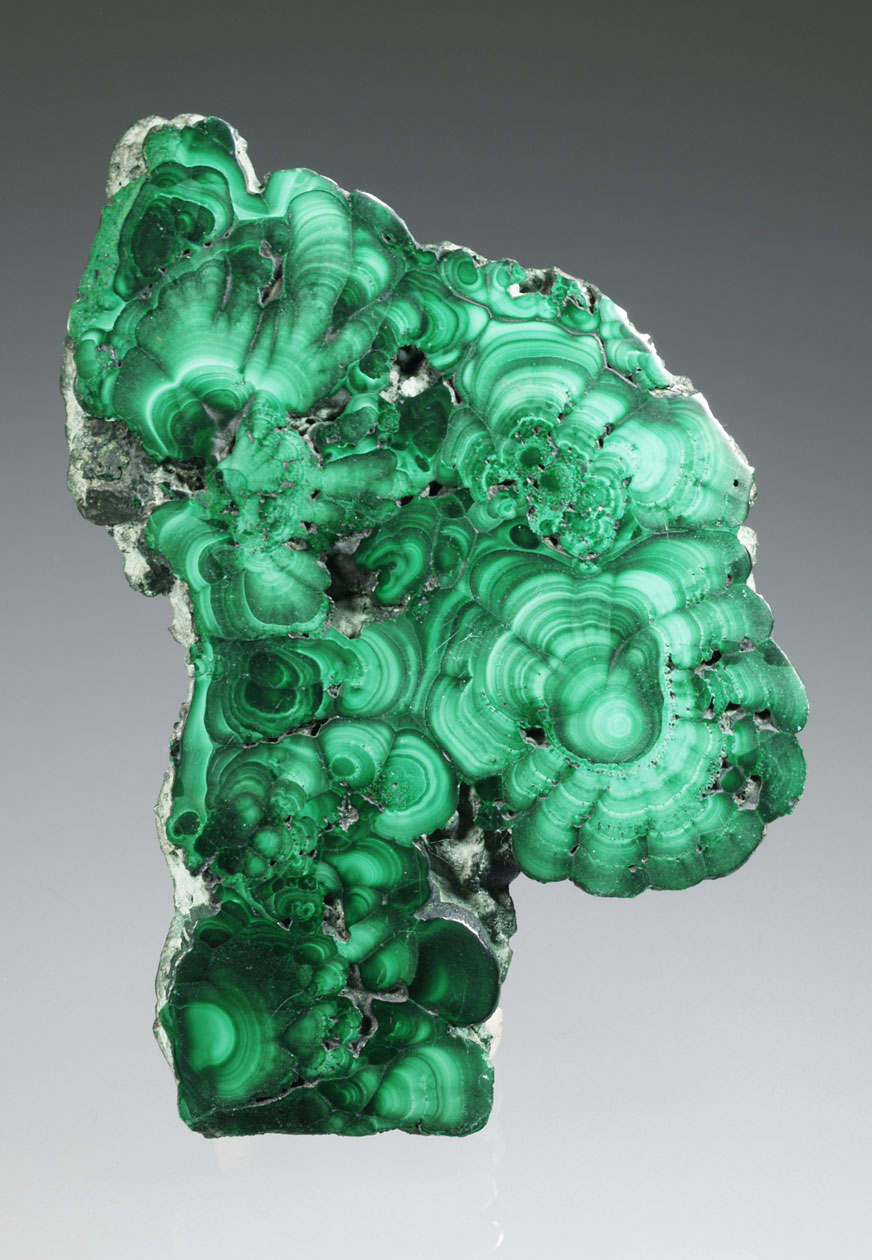
Placa de malaquita pulida por ambos lados. Ofrecemos este tipo de producto, no simplemente a nivel decorativo, sinó des de un punto de vista didáctico y científico. La sección nos permite ver las bellas estructuras de crecimiento concentricos de estas malaquitas.
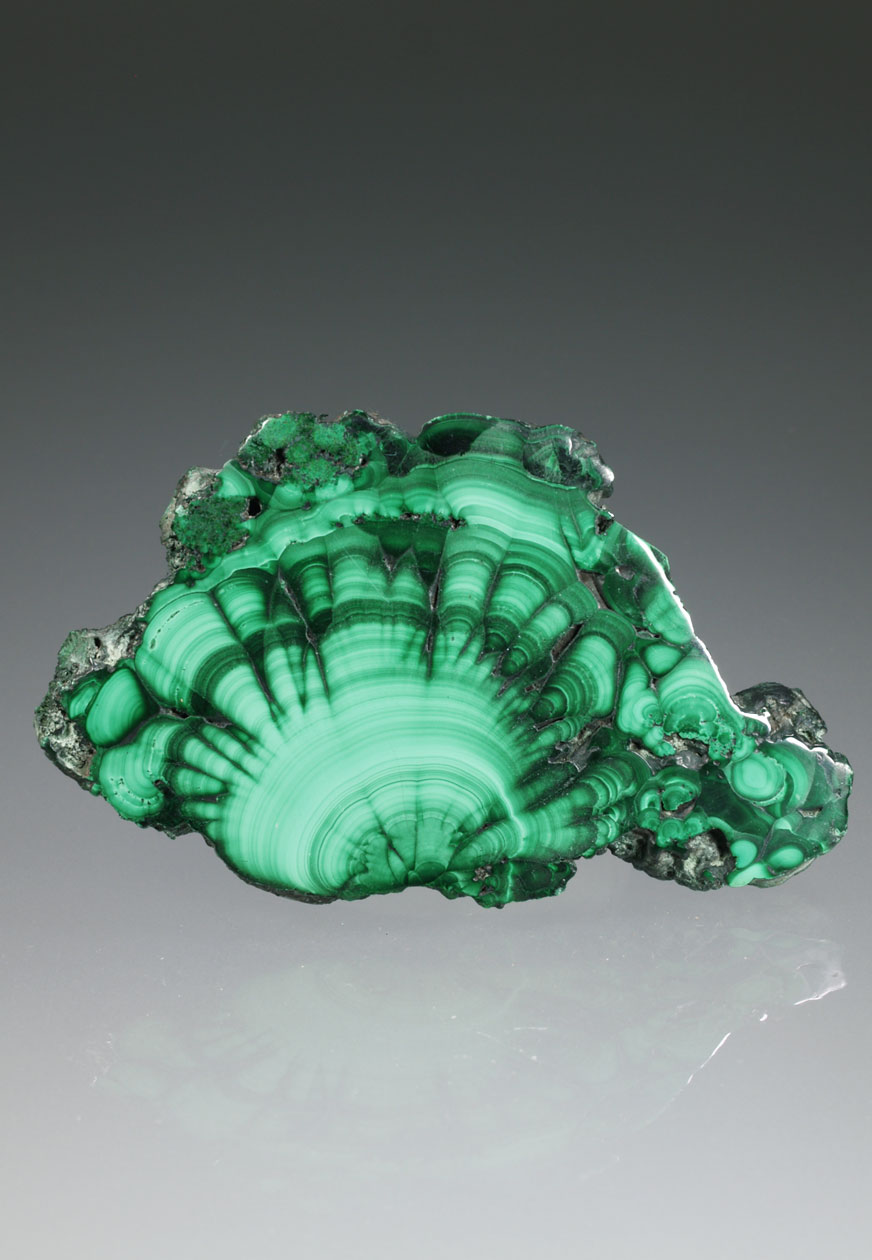
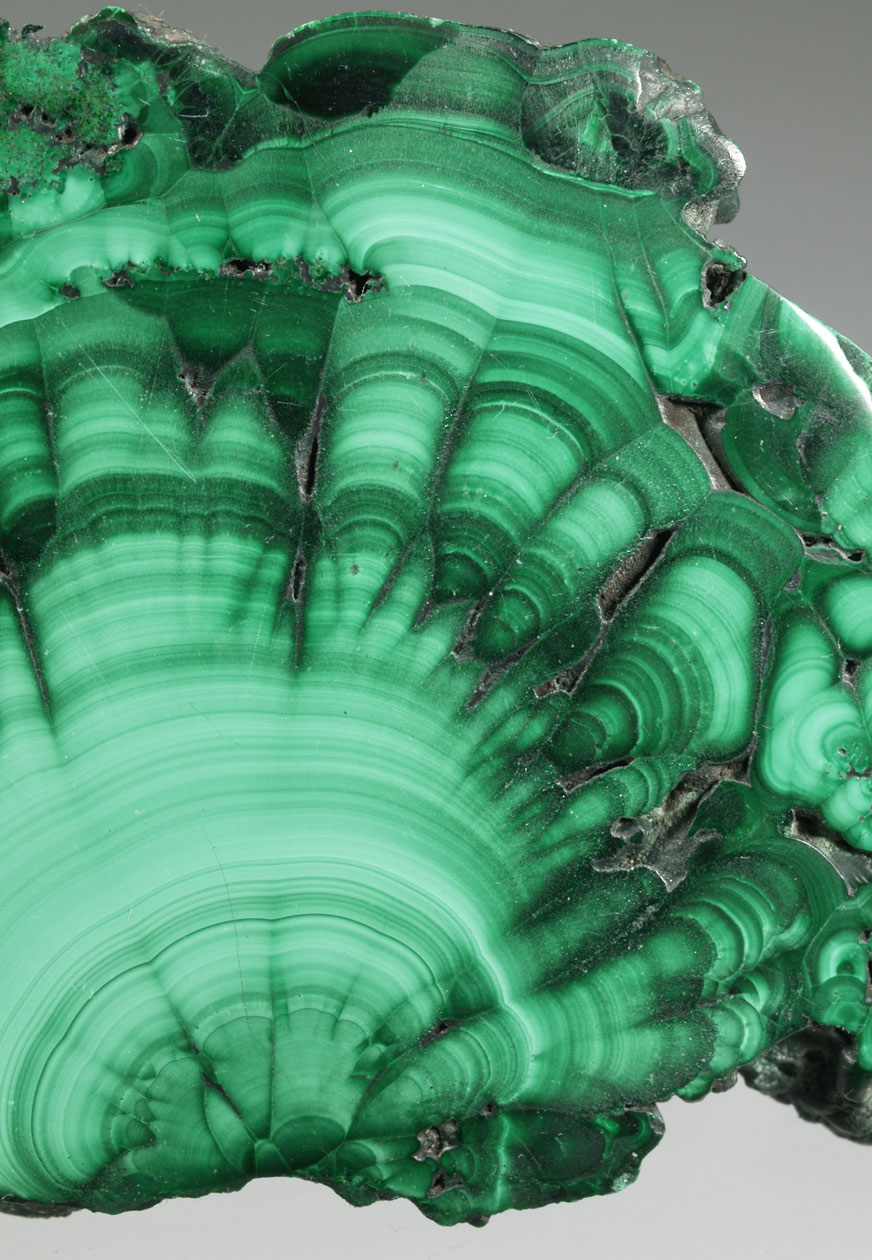
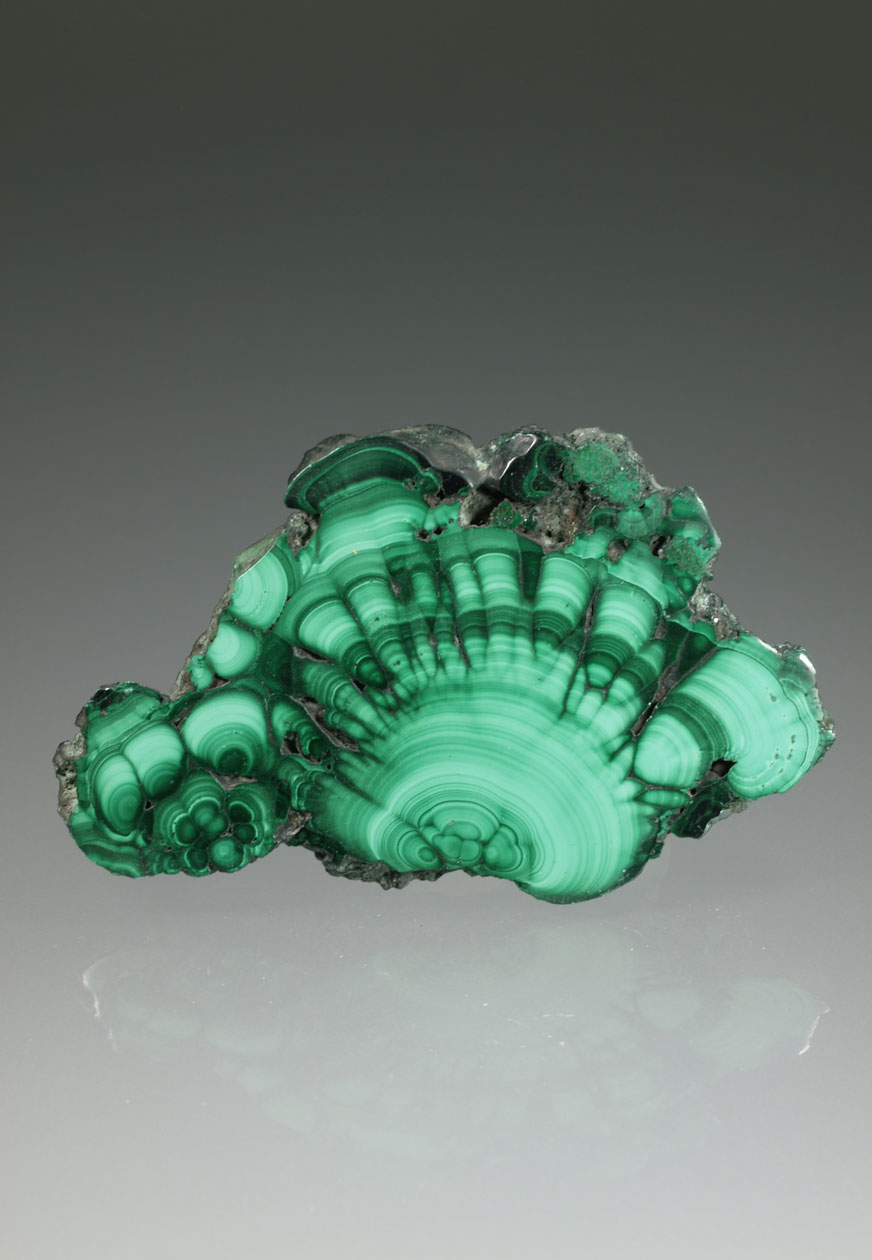
Placa de malaquita pulida por ambos lados. Ofrecemos este tipo de producto, no simplemente a nivel decorativo, sinó des de un punto de vista didáctico y científico. La sección nos permite ver las bellas estructuras de crecimiento concentricos de estas malaquitas.
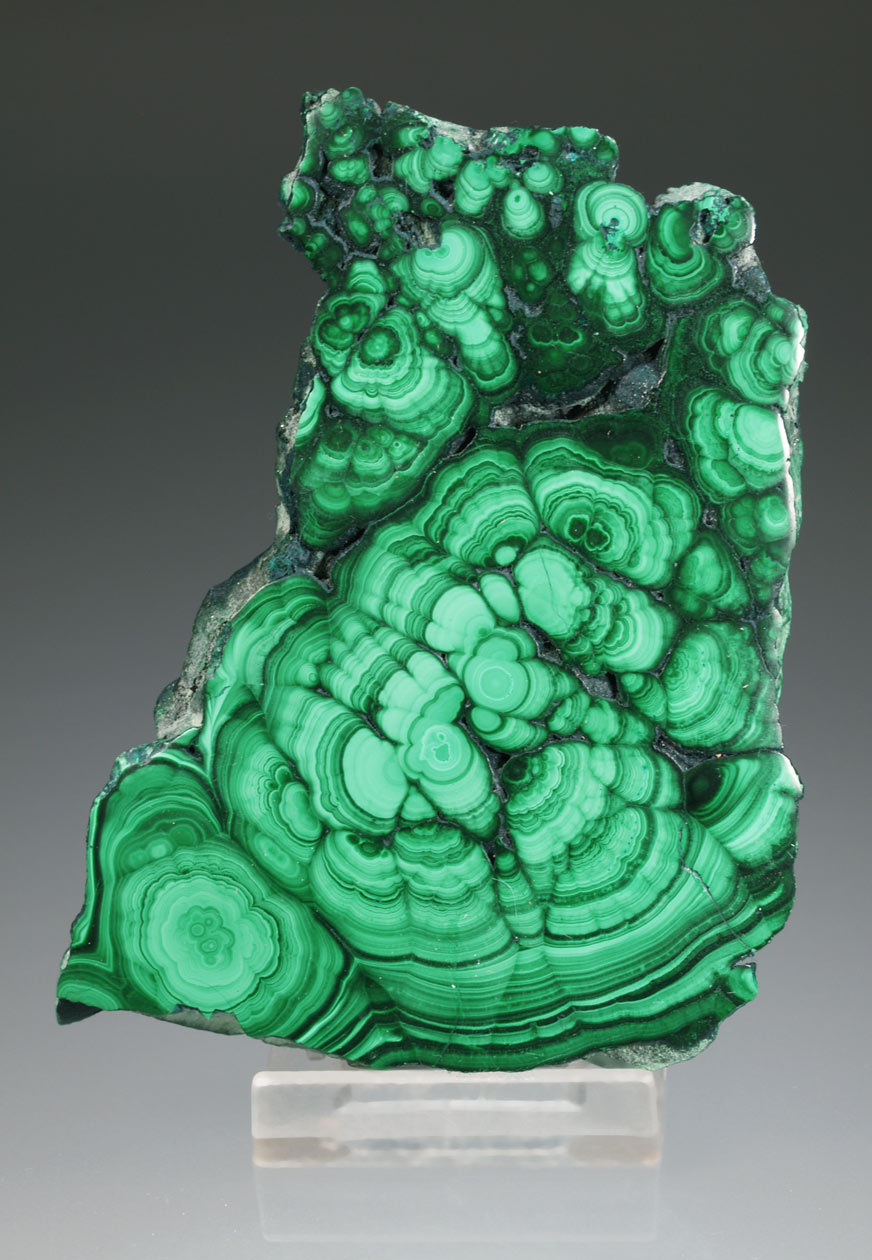
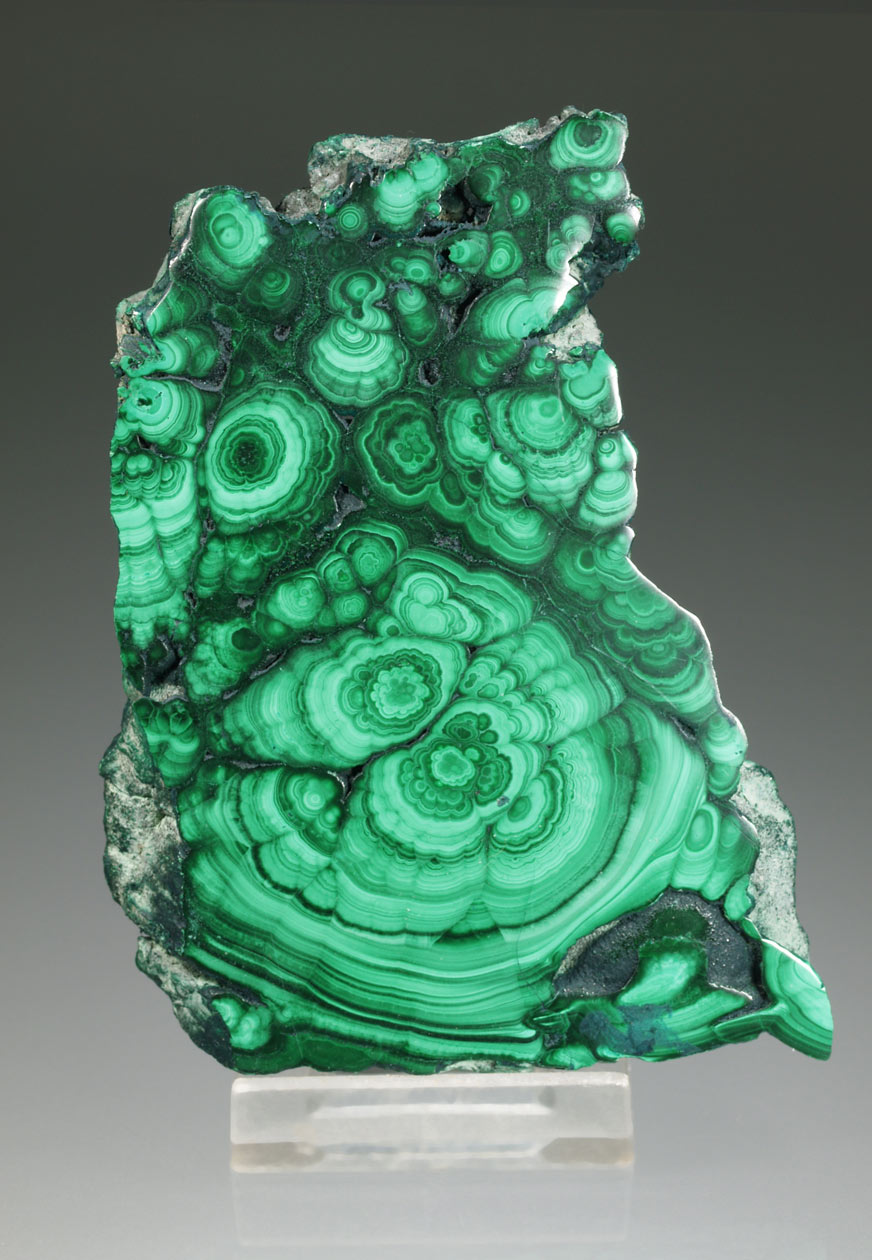
Placa de malaquita pulida por ambos lados. Ofrecemos este tipo de producto, no simplemente a nivel decorativo, sinó des de un punto de vista didáctico y científico. La sección nos permite ver las estructuras de crecimiento concentricos de estas malaquitas.
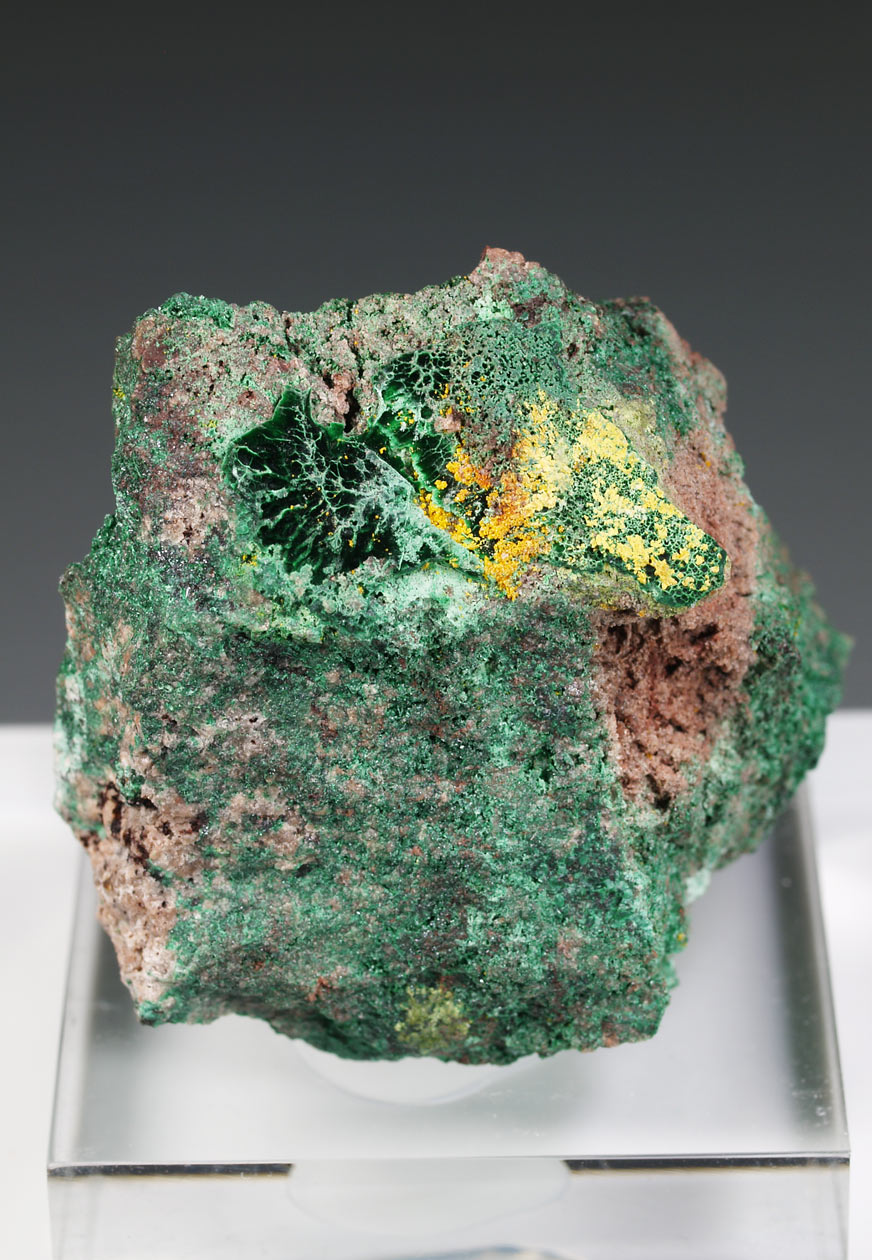
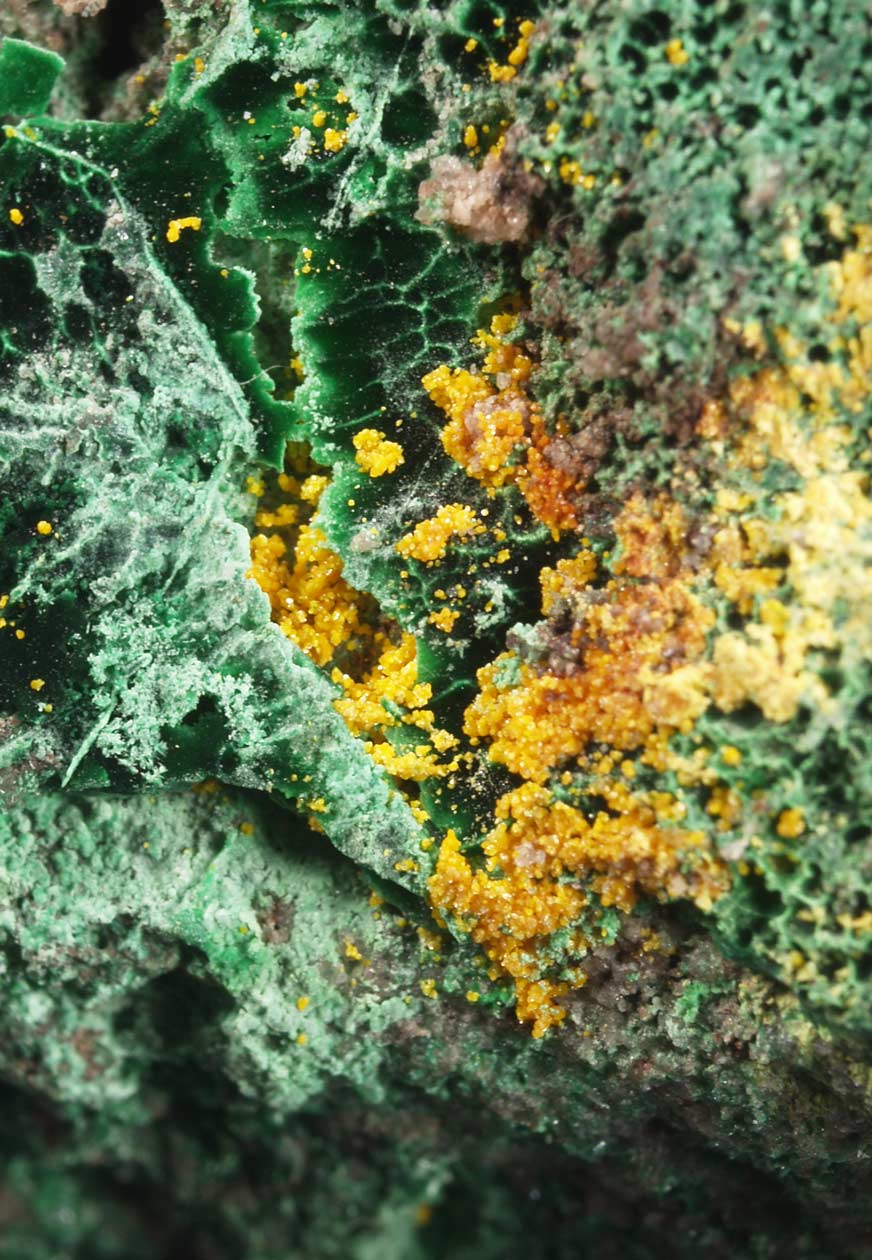
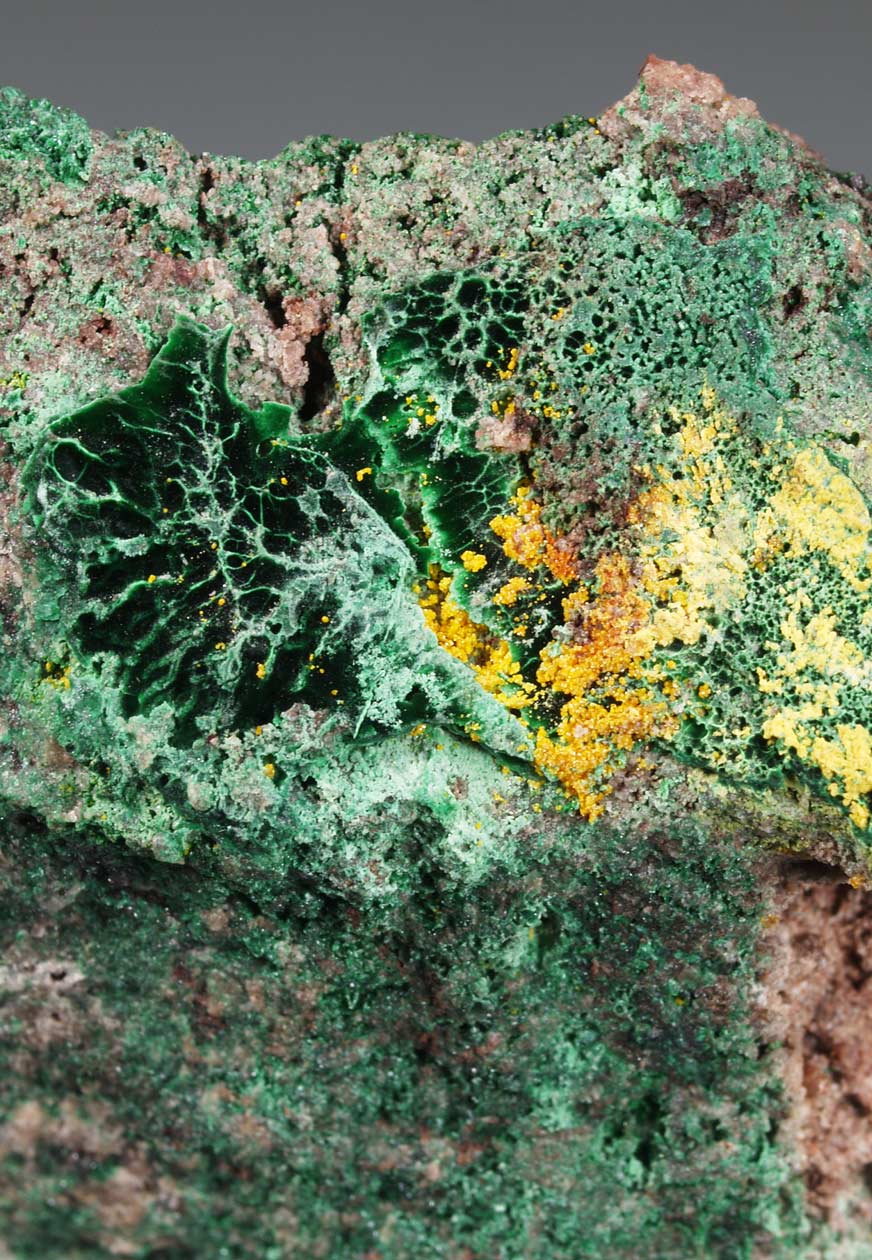
Pequeños cristales anaranjados a amarillos de kasolita, muy estéticos bajo aumento. Se disponen sobre una matriz de gres con malaquita. Un clásico de Musonoi.
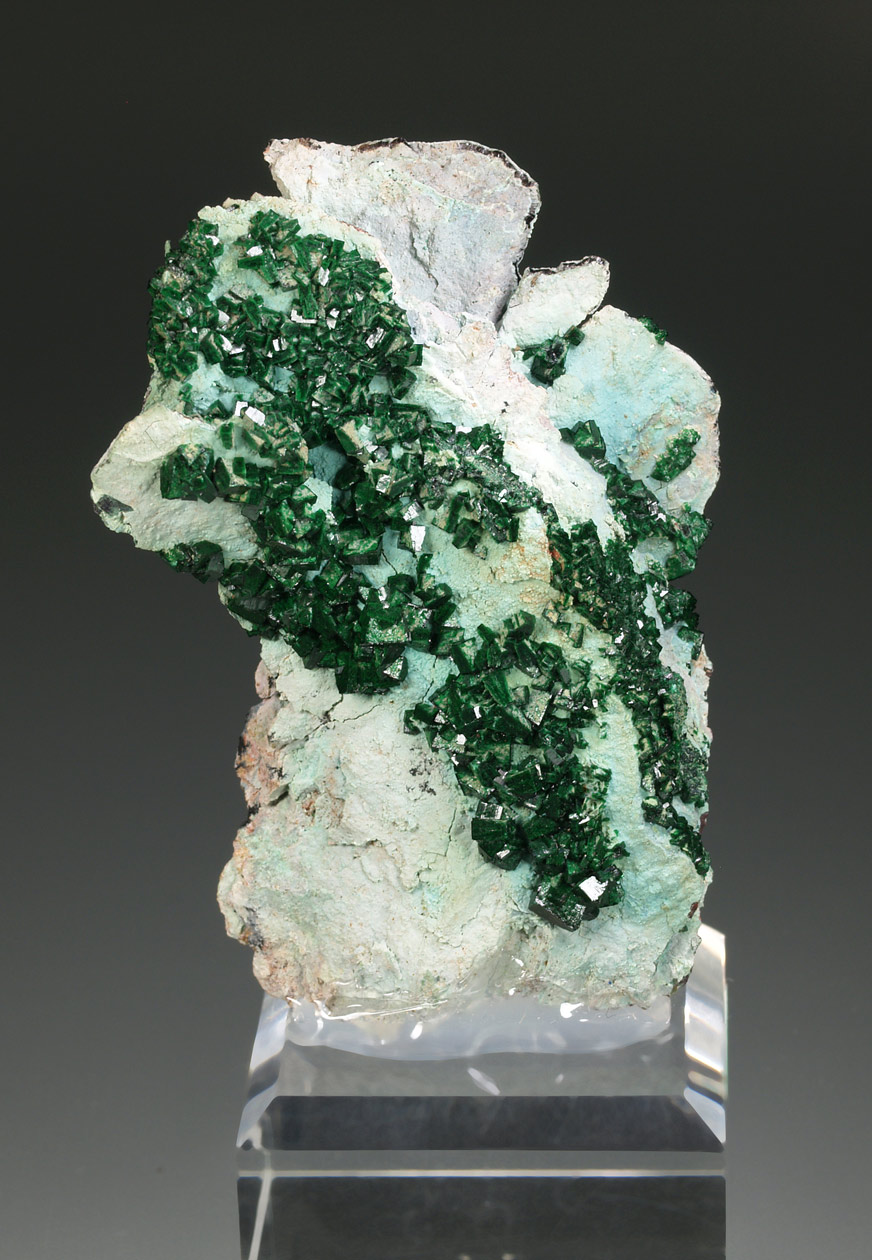
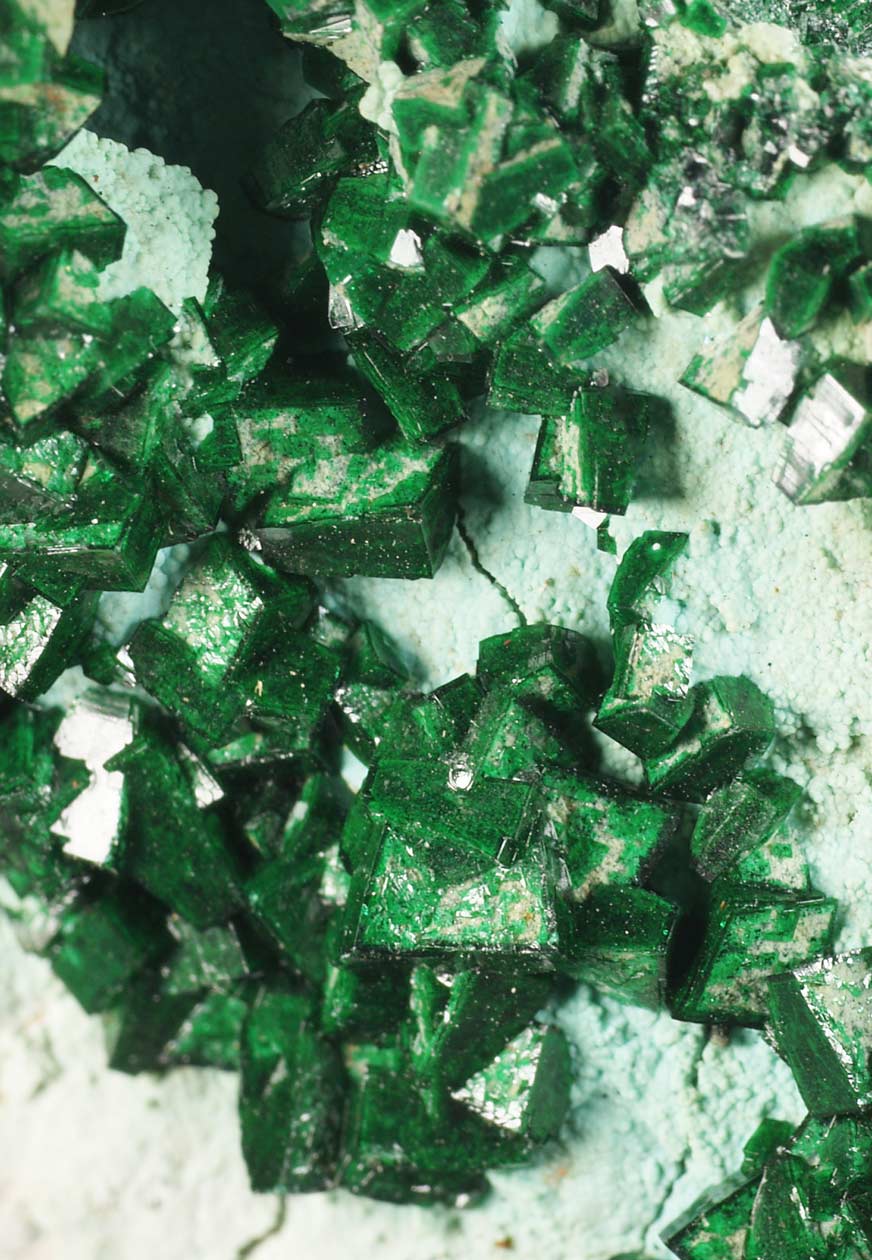
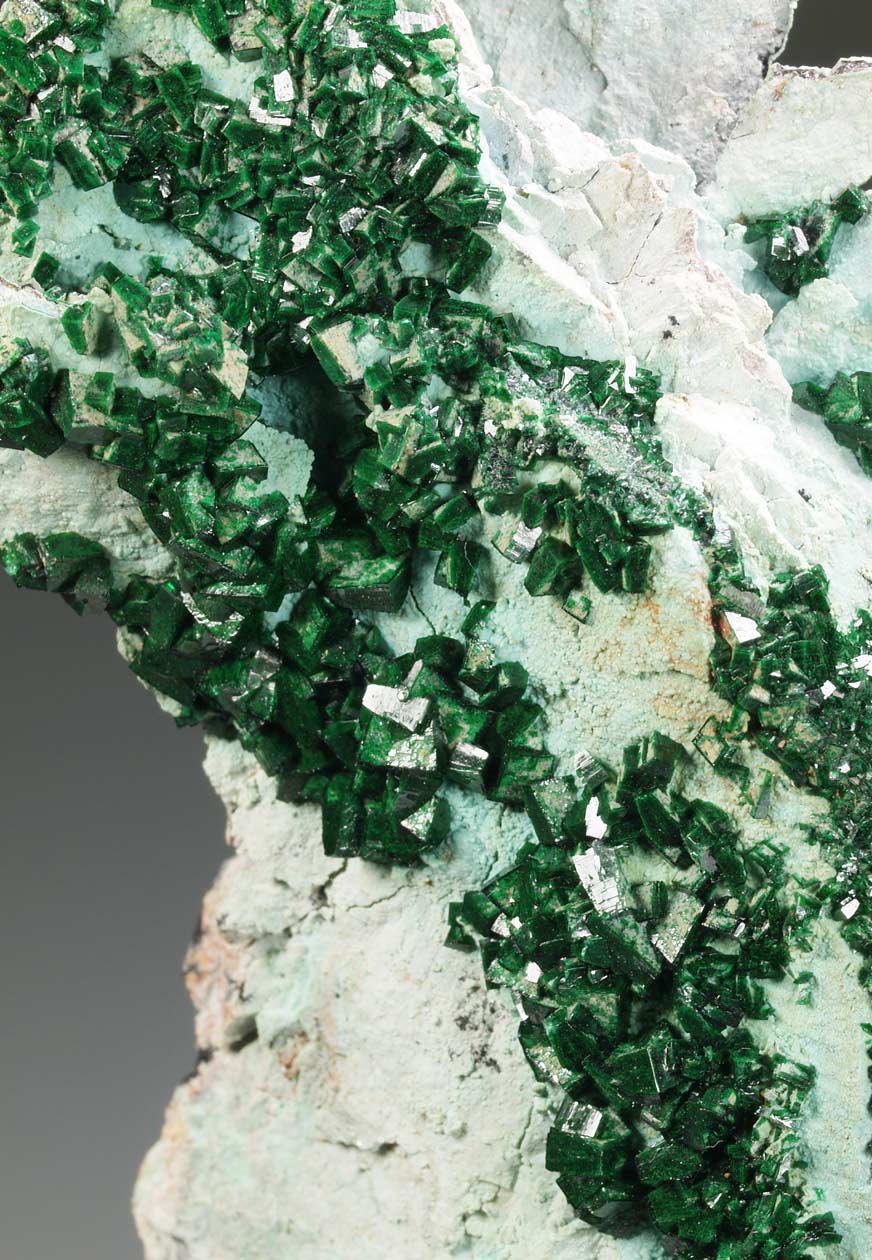
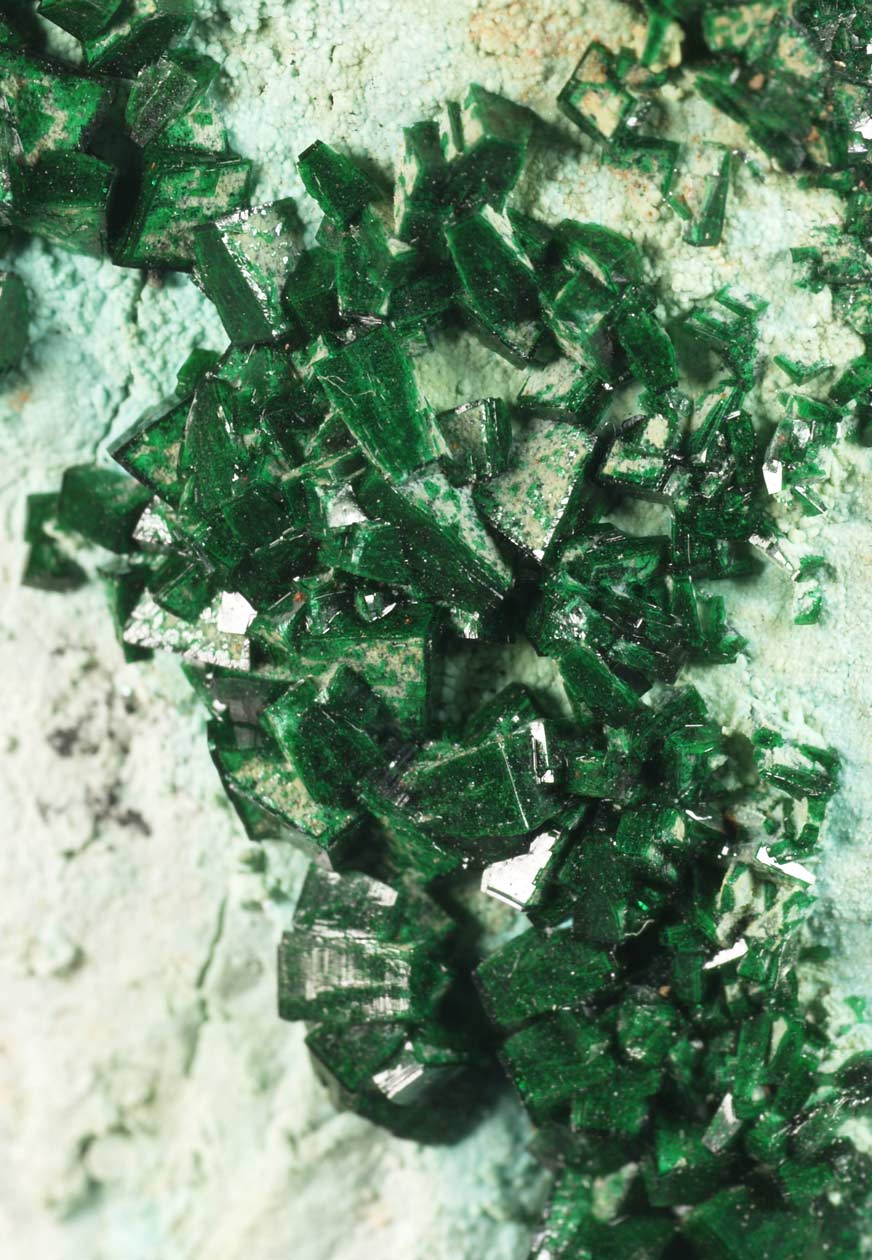
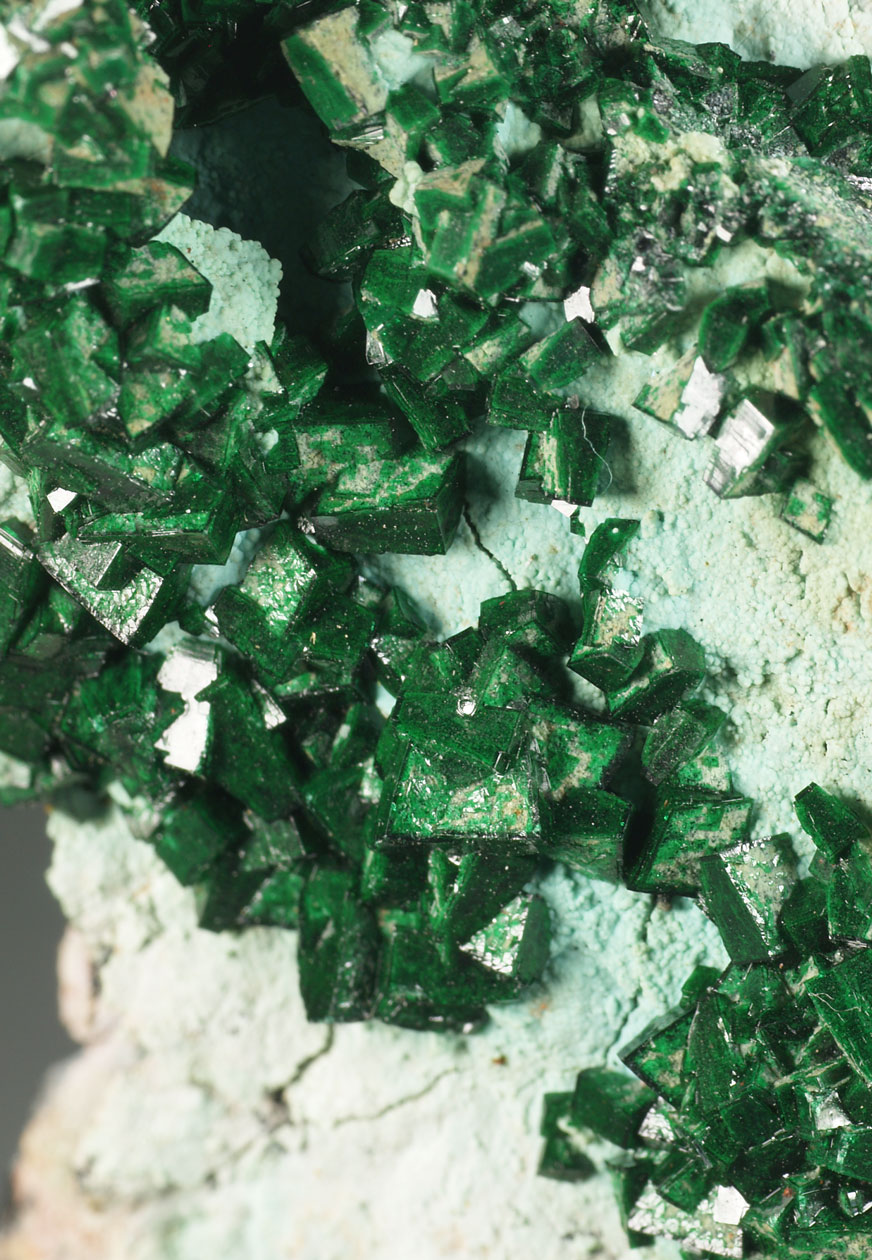
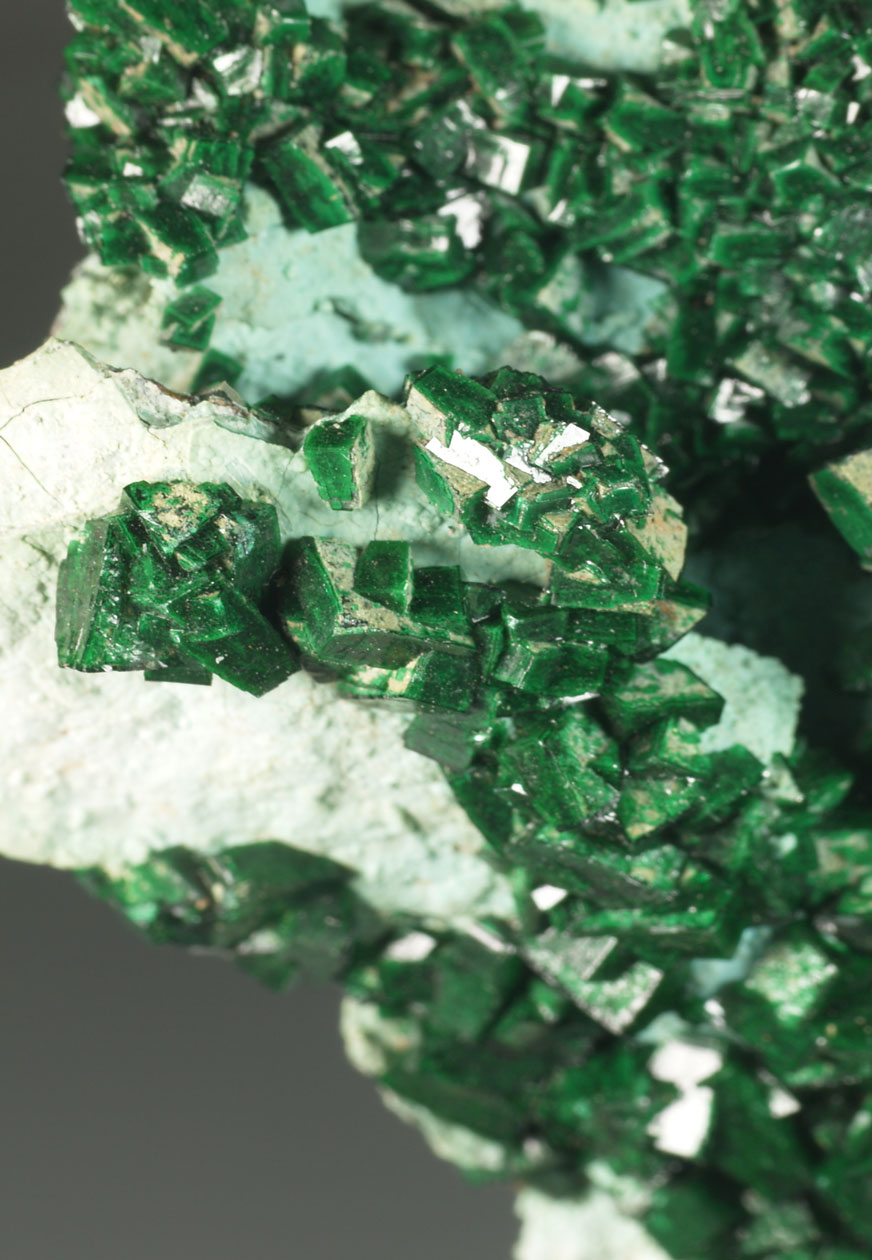
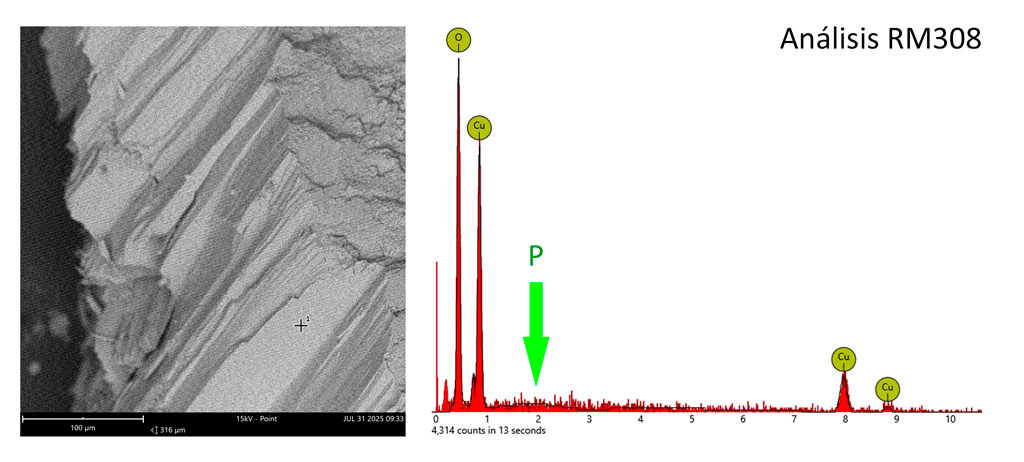
Muy estético ejemplar formado por cristales de malaquita primaria, muy brillantes y de color verde oscuro. Los cristales tienen una apariencia triangular a romboédrica debido a la forma en que se han intercrecido y presentan un verde más brillante en los bordes. Es bastante raro encontrar cristales primarios de malaquita, especialmente con cristales definidos, siendo esta mina por producir estas malaquitas. El ejemplar venía etiquetado como "libethenite" (sic), por supuesto lo analizamos (análisis RM308), aunque una gota de HCl ya hubiera servido para descartar el fosfato, pero...
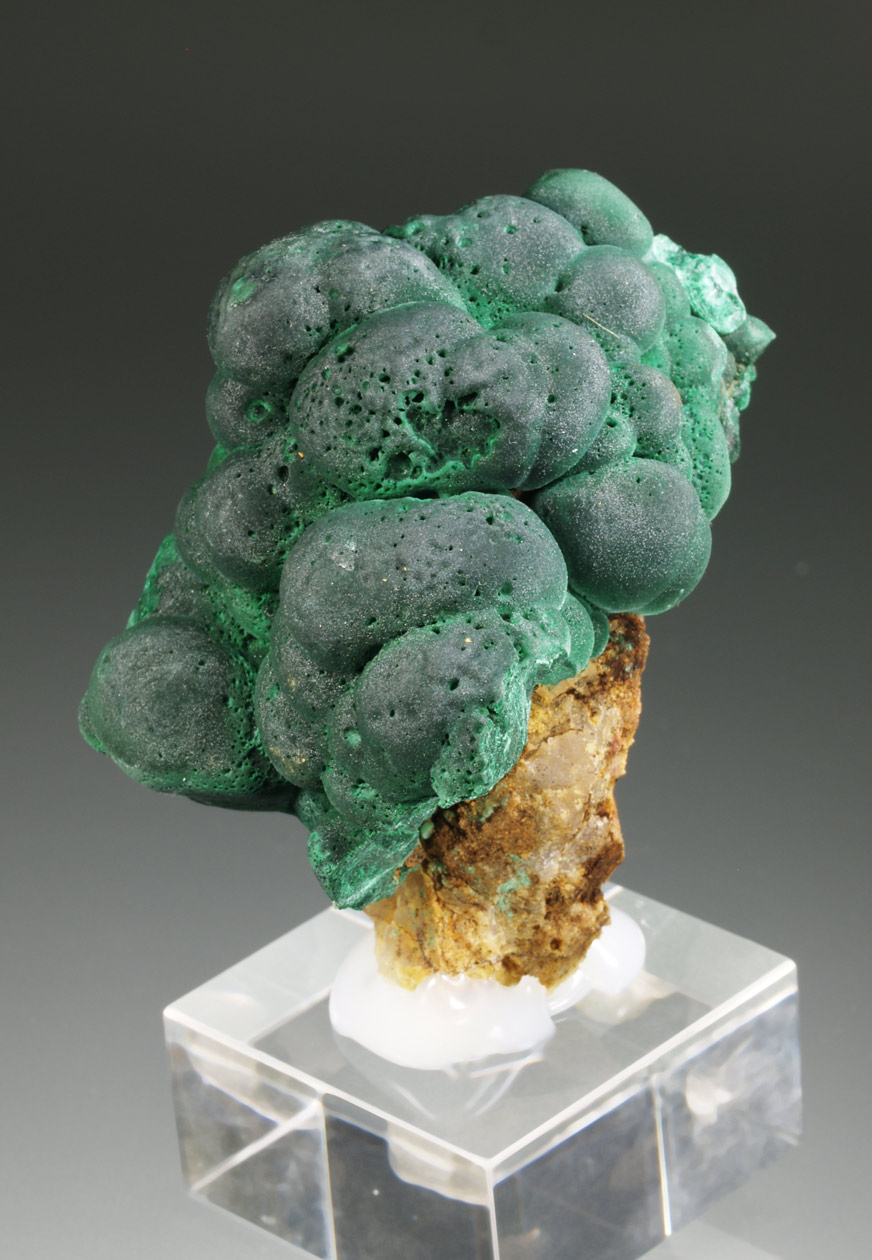
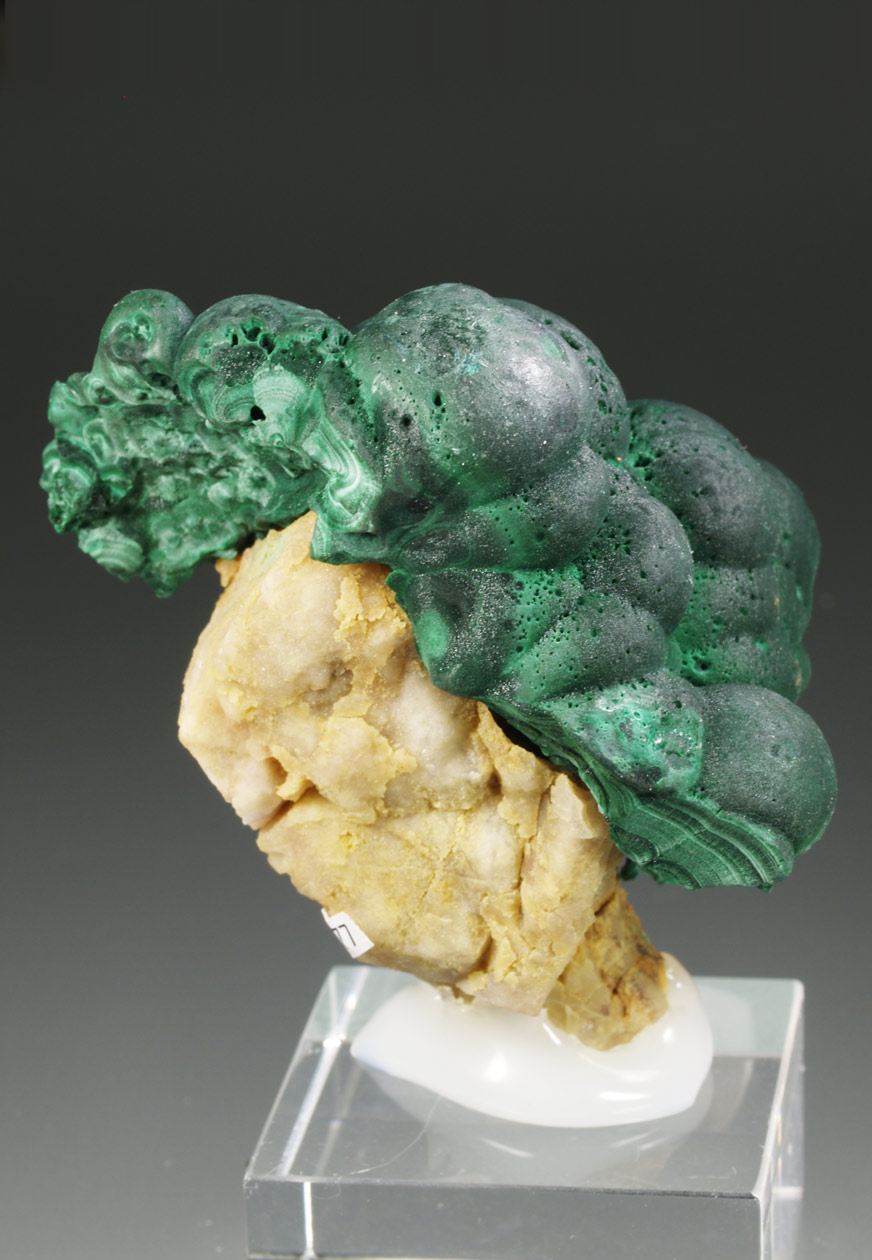
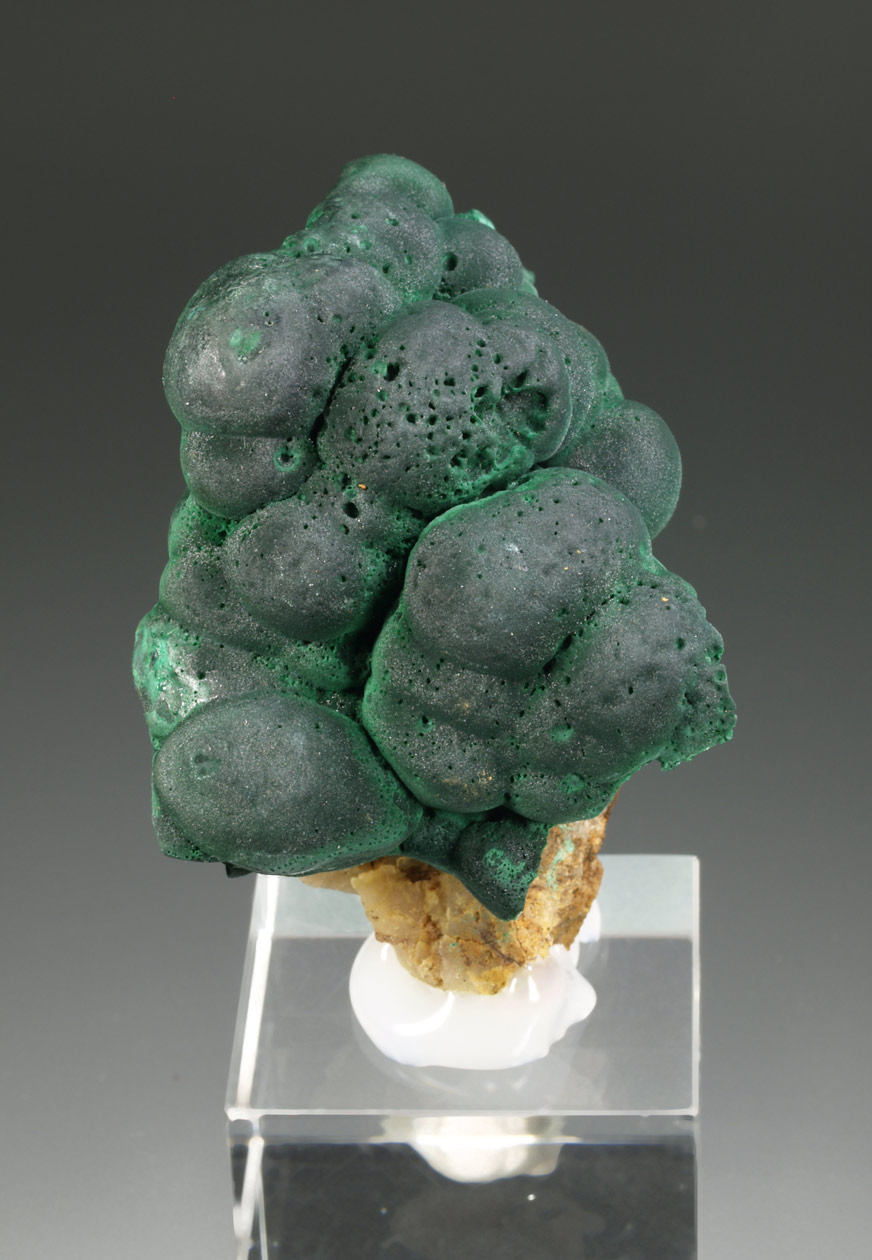
Habitaulmente los ejemplares de malaquita de esta mina aparecen sin matriz. Este ejemplar nos muestra un agregado botroidal de intenso color verde que se dispone de forma muy aérea sobre una matriz de cuarzo. Muy estético.
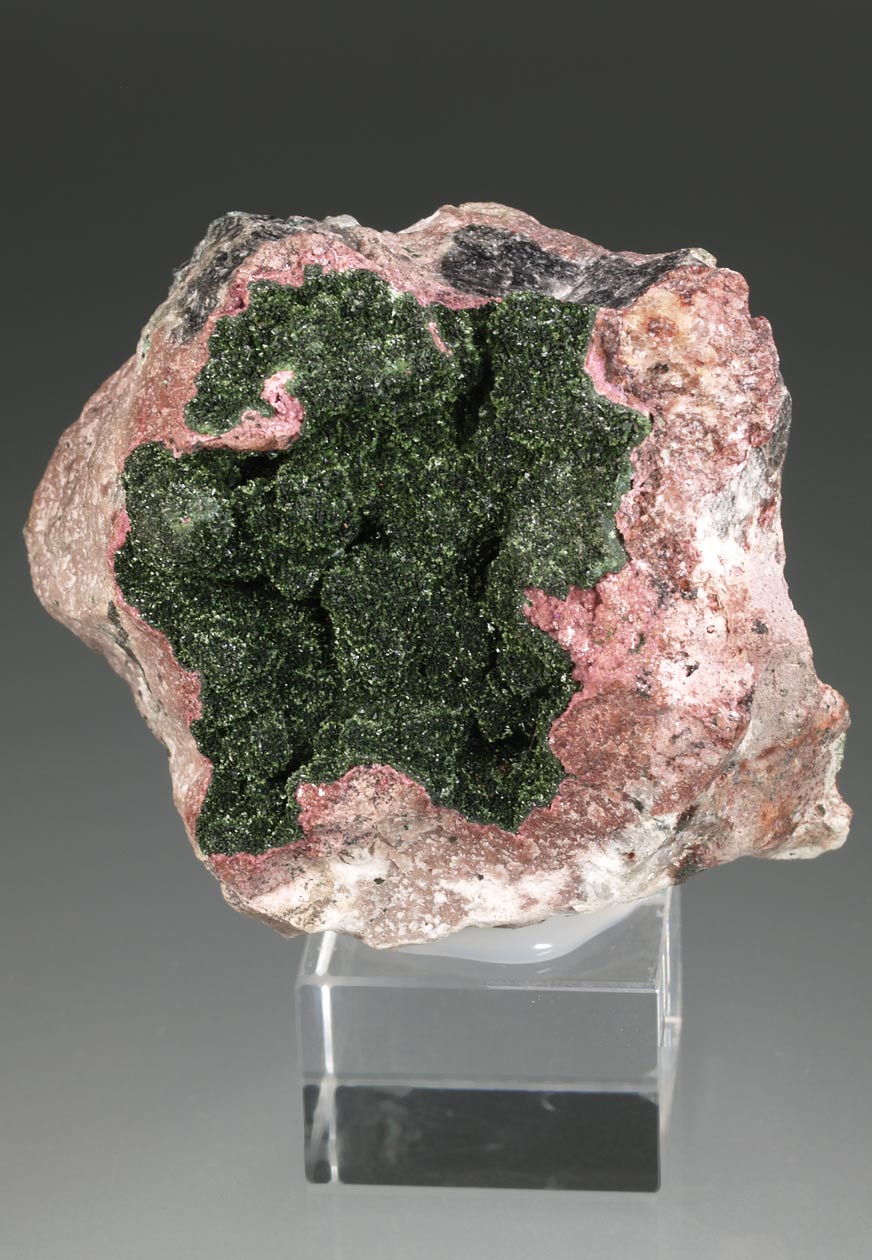
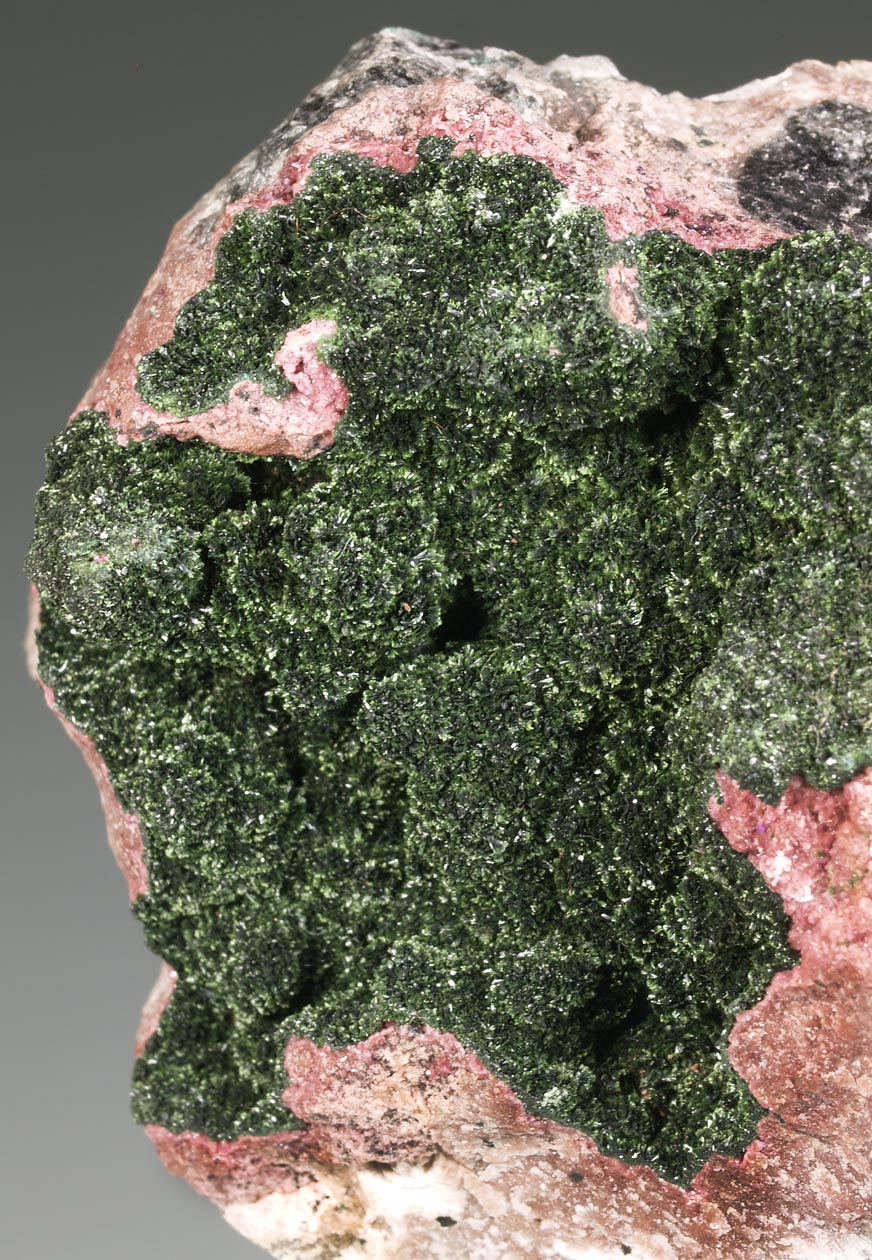
Estos ejemplares proceden de la localidad tipo para la kolwezita, un carbonato de cobre y cobalto. La mayoría de las piezas de "kolwezita" que se ven en el mercado no tienen la relación 1:1 Cu:Co, que se exige para llamarlas así, suelen tener la relación Cu:Co 2:1. De todas las que he analizado (y van unas cuantas) incluso las de color verde oliva mantienen esa relación. En este caso podemos decir, para ser honestos, que se trata de malaquita rica en cobalto. Aún así, los ejemplares son muy estéticos. Si algún día encuentro una kolwezita 1:1 Cu:Co, probablemente hallaré el grial...
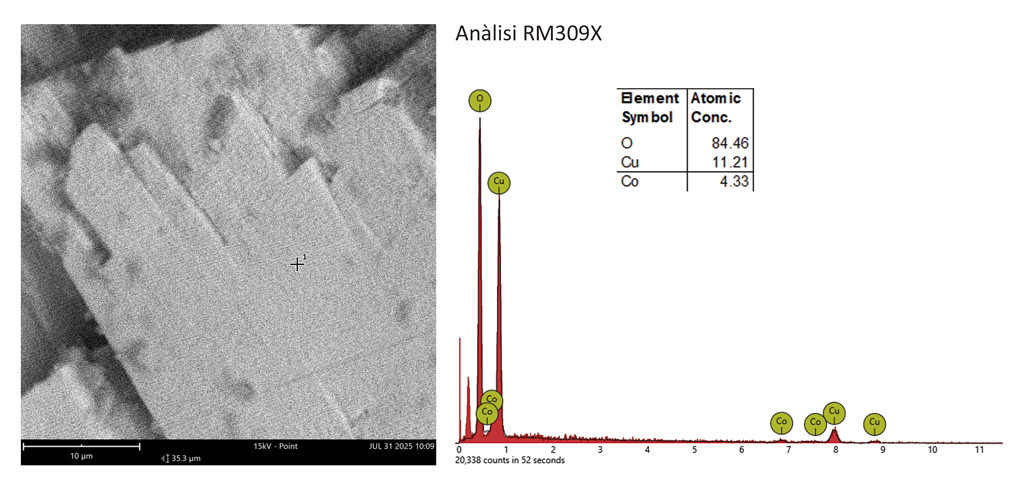
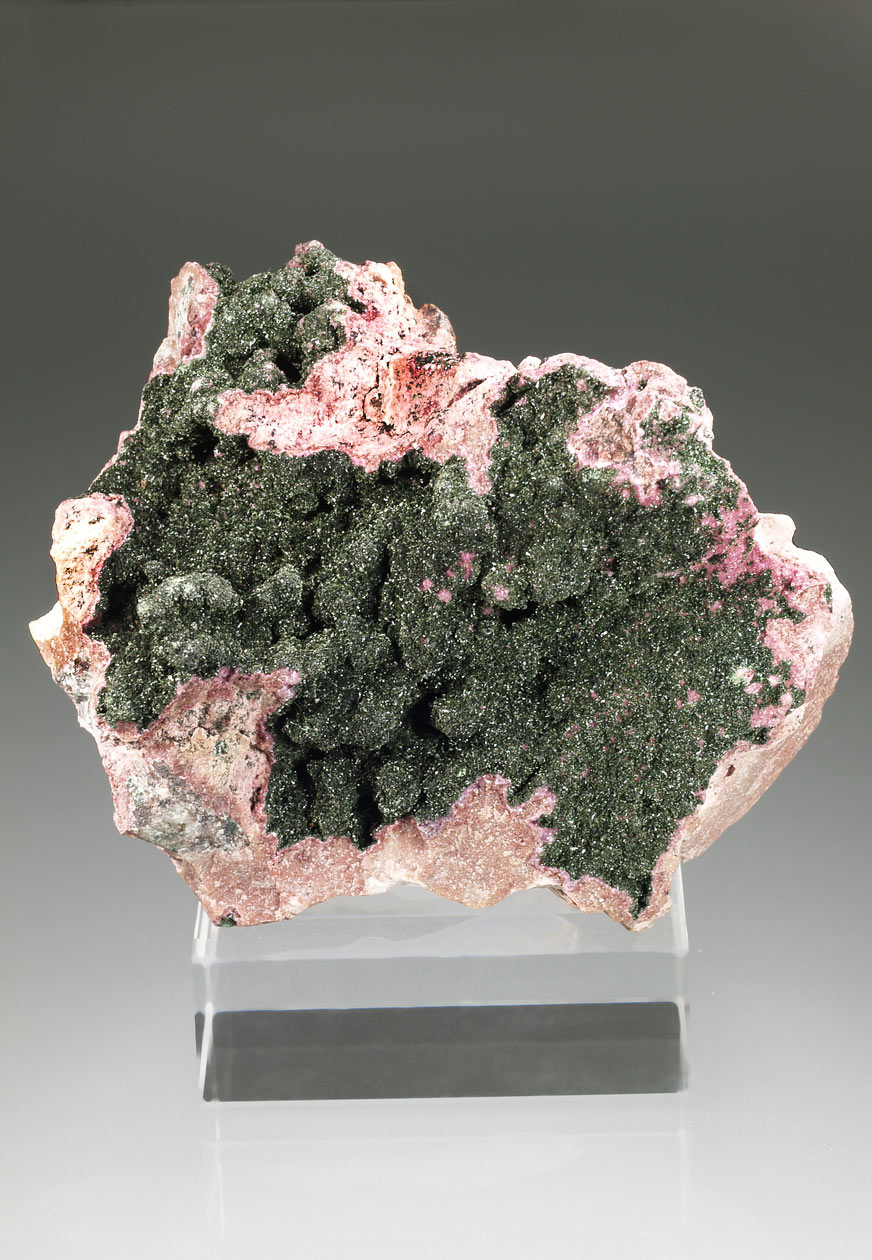
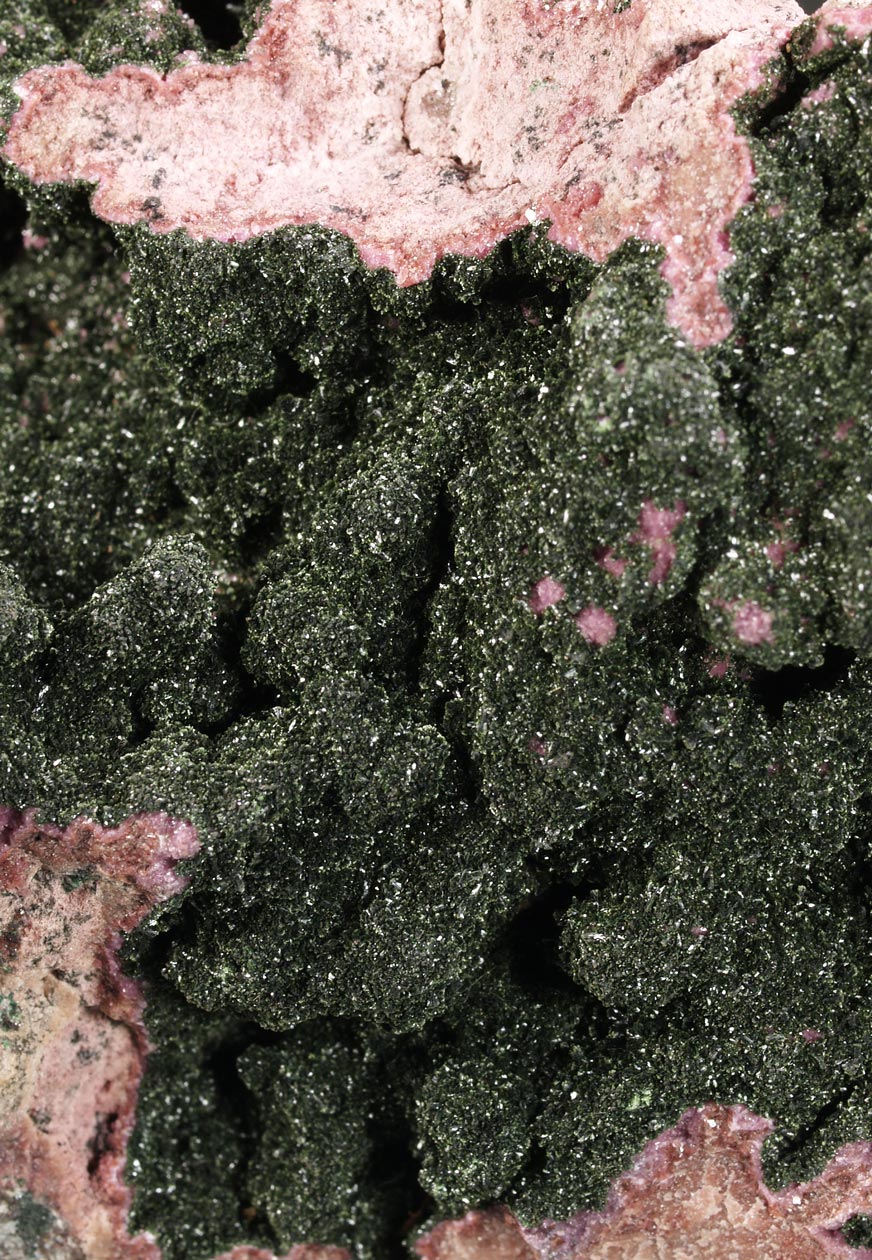
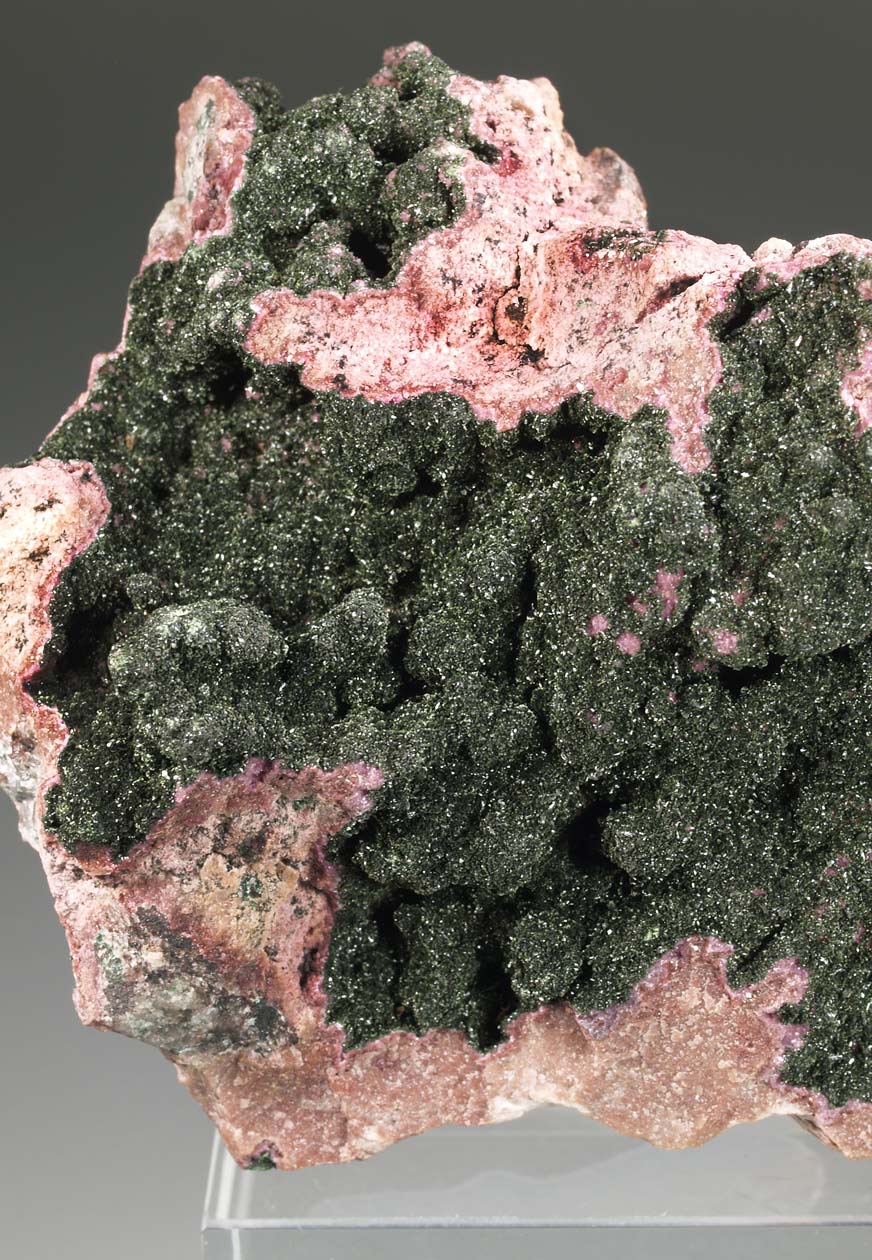
Estos ejemplares proceden de la localidad tipo para la kolwezita, un carbonato de cobre y cobalto. La mayoría de las piezas de "kolwezita" que se ven en el mercado no tienen la relación 1:1 Cu:Co, que se exige para llamarlas así, suelen tener la relación Cu:Co 2:1. De todas las que he analizado (y van unas cuantas) incluso las de color verde oliva mantienen esa relación. En este caso podemos decir, para ser honestos, que se trata de malaquita rica en cobalto. Aún así, los ejemplares son muy estéticos. Si algún día encuentro una kolwezita 1:1 Cu:Co, probablemente hallaré el grial...
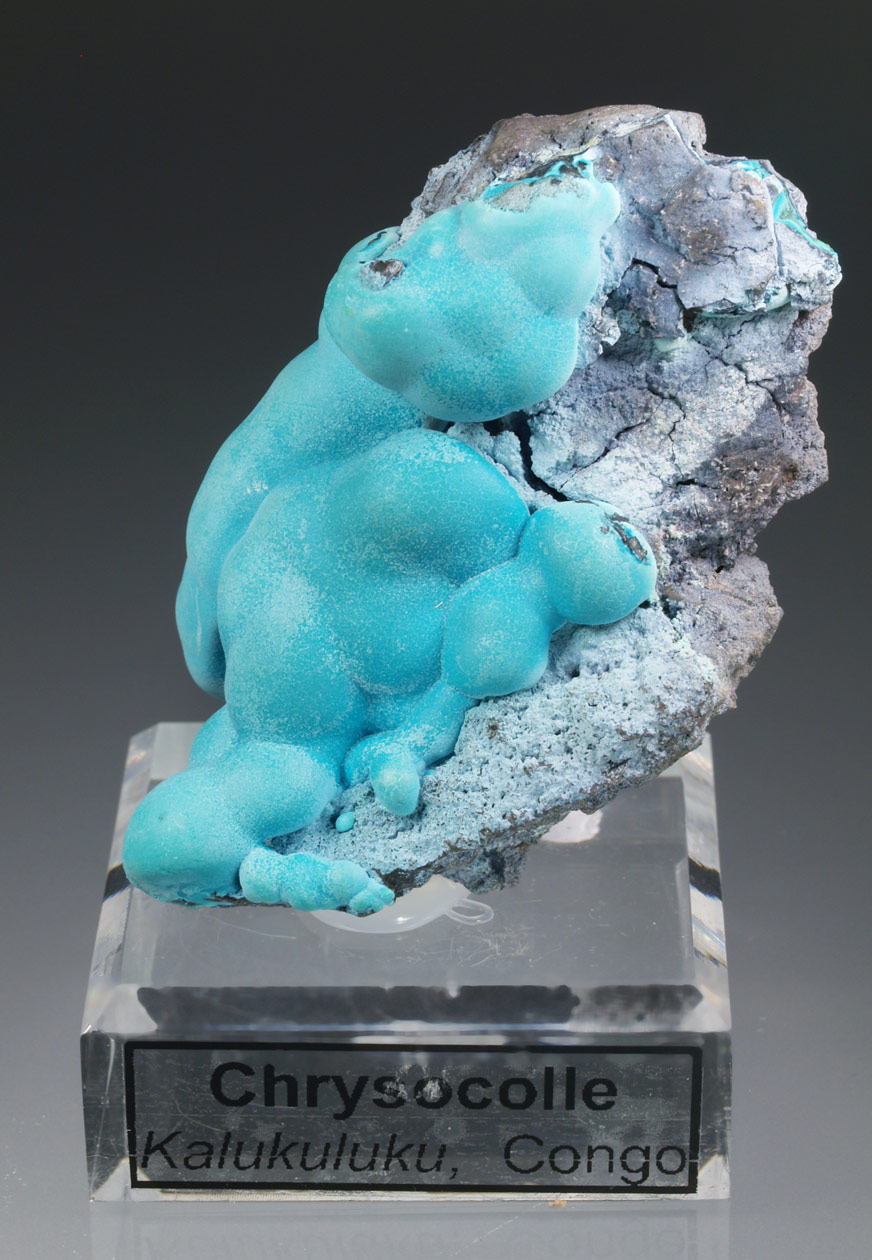
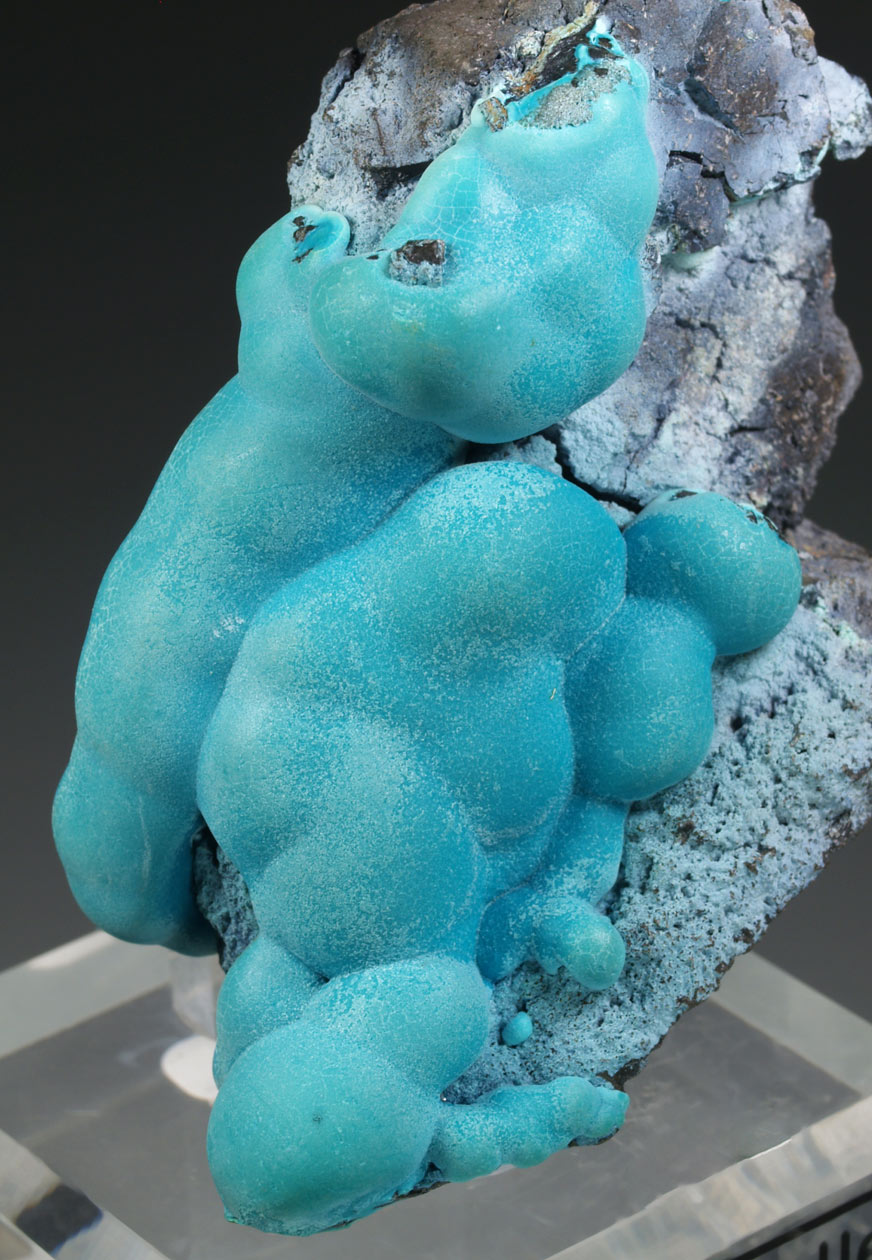
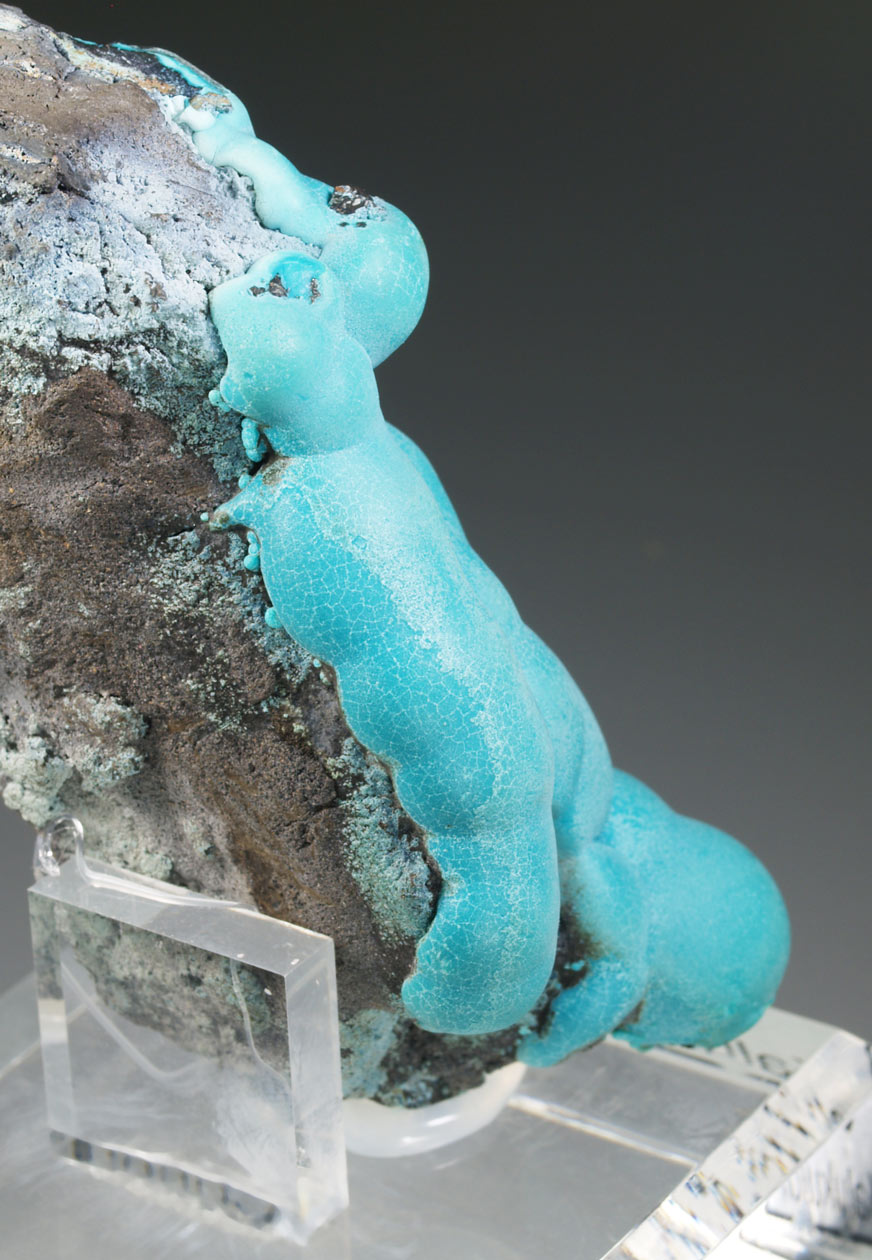
Muy estéticos agregados botroidales de malaquita totalmente recubiertos
por una capa de crisocola de un azul, ligeramente verdoso. Podemos ver
la malaquita, con crecimientos concéntricos, en alguna fractura. La
belleza de estos ejemplares los hace dignos de la mejor colección y
vitrina.
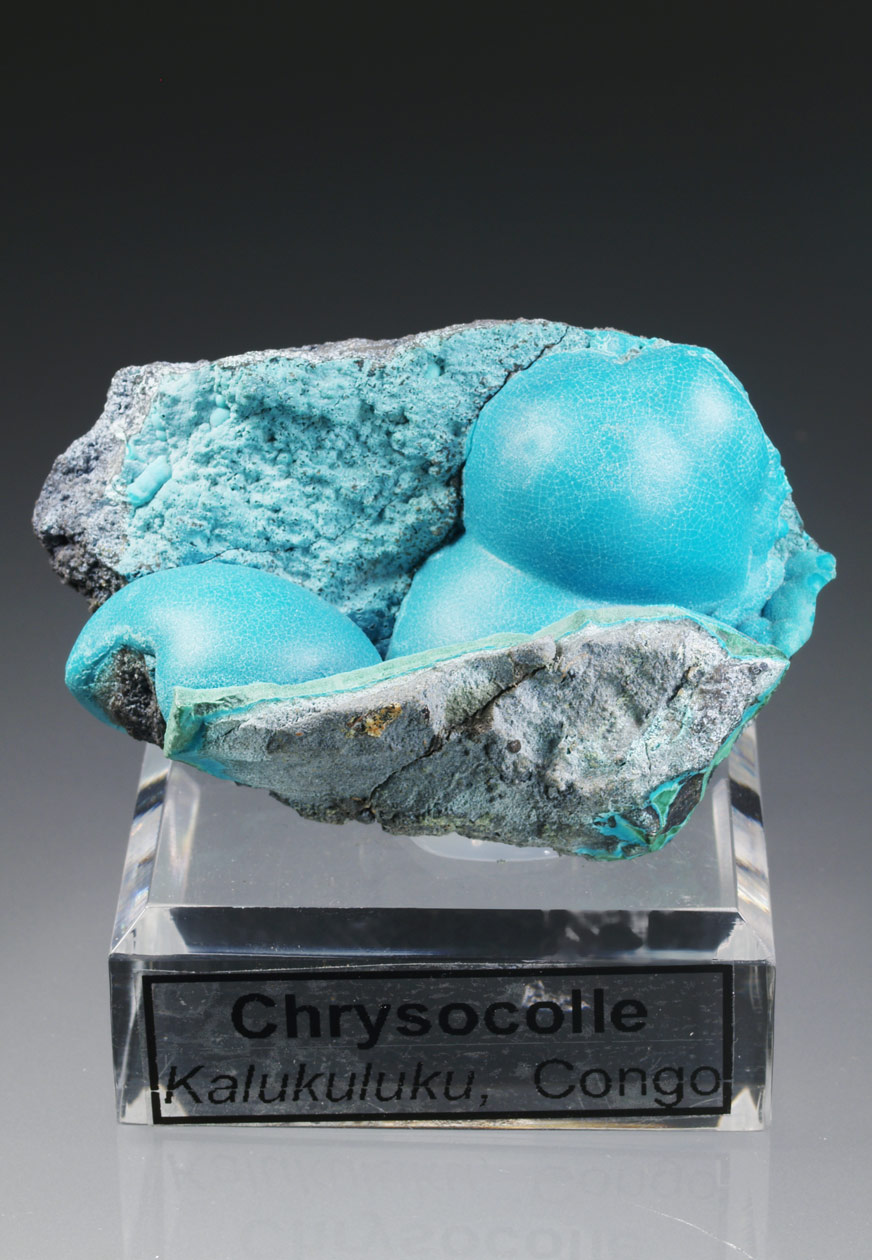
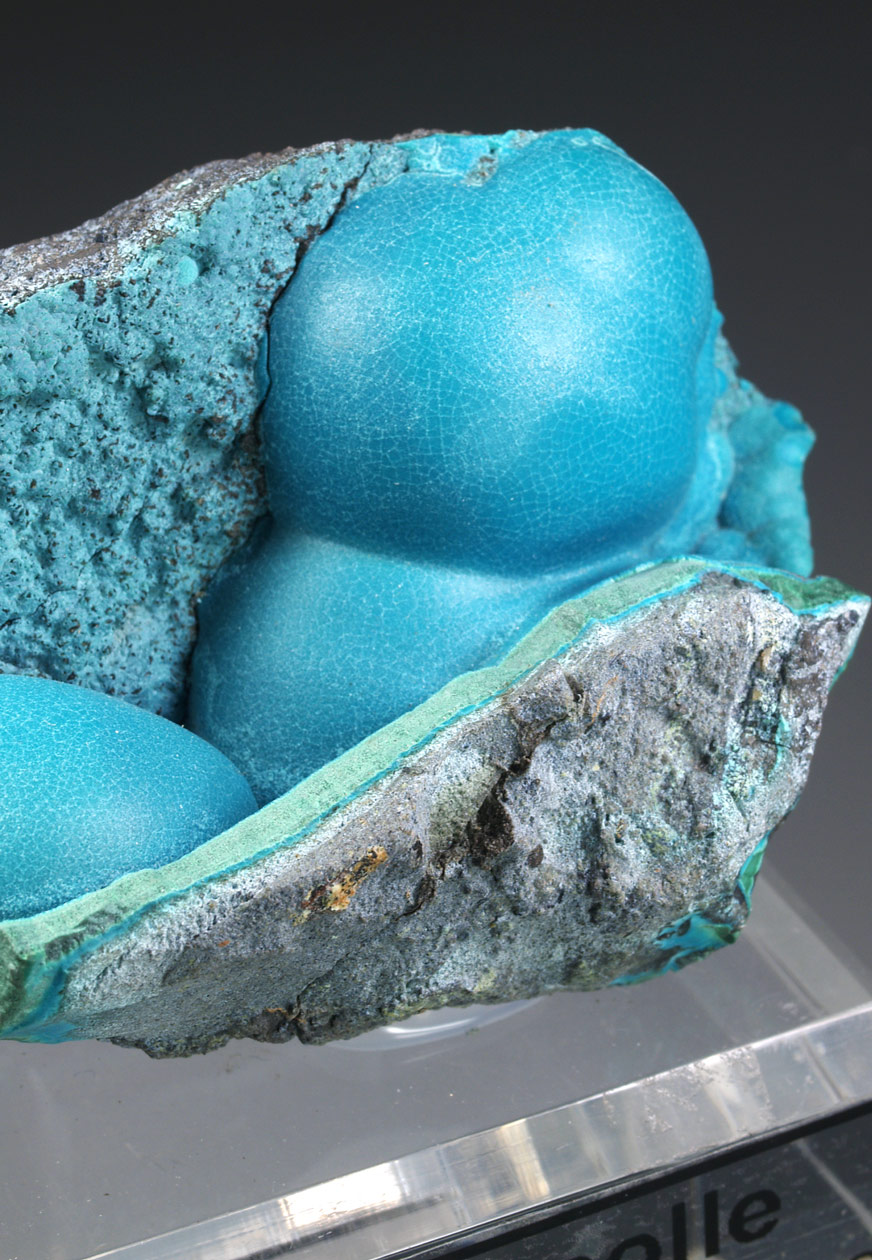
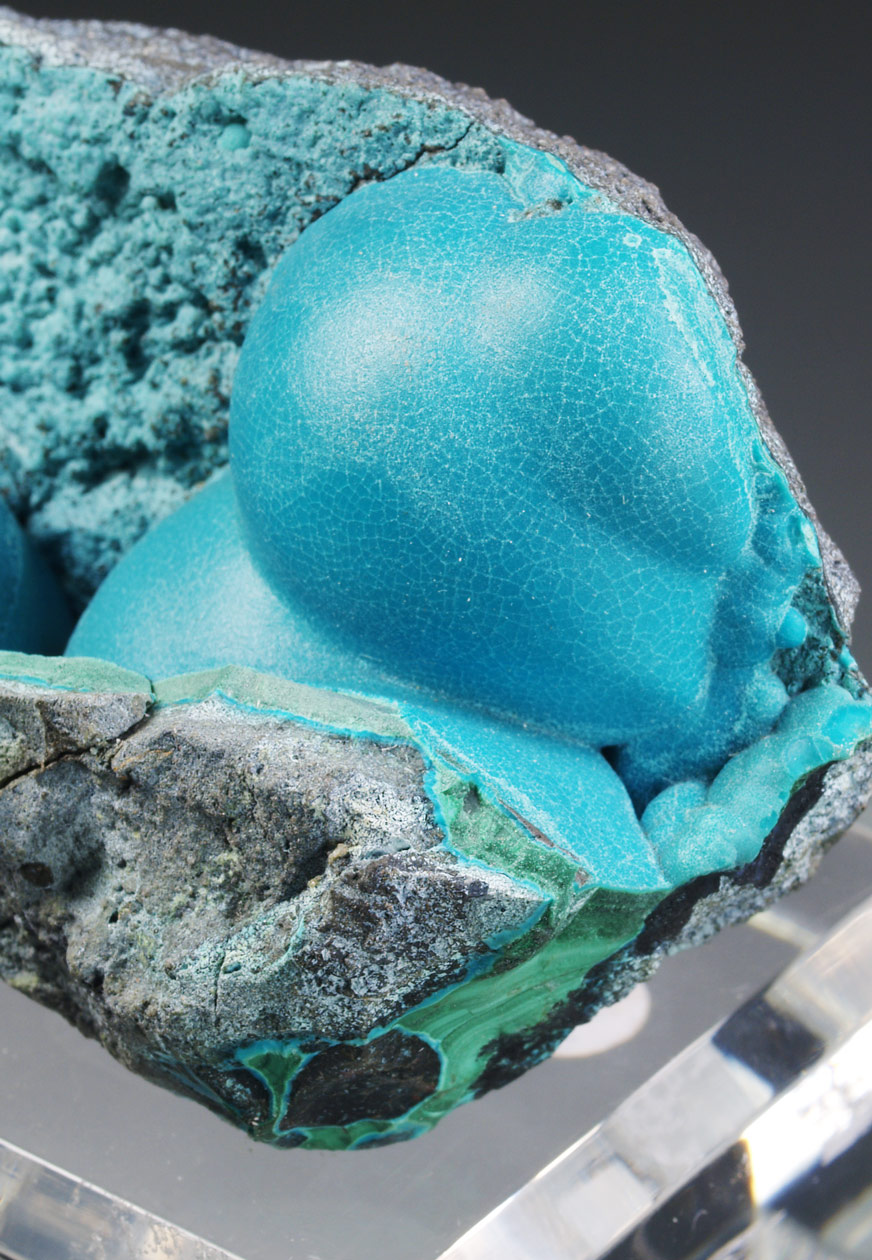
Muy estéticos agregados botroidales de malaquita totalmente recubiertos
por una capa de crisocola de un azul. Podemos ver
la malaquita, con crecimientos concéntricos, en alguna fractura. La
belleza de estos ejemplares los hace dignos de la mejor colección y
vitrina.
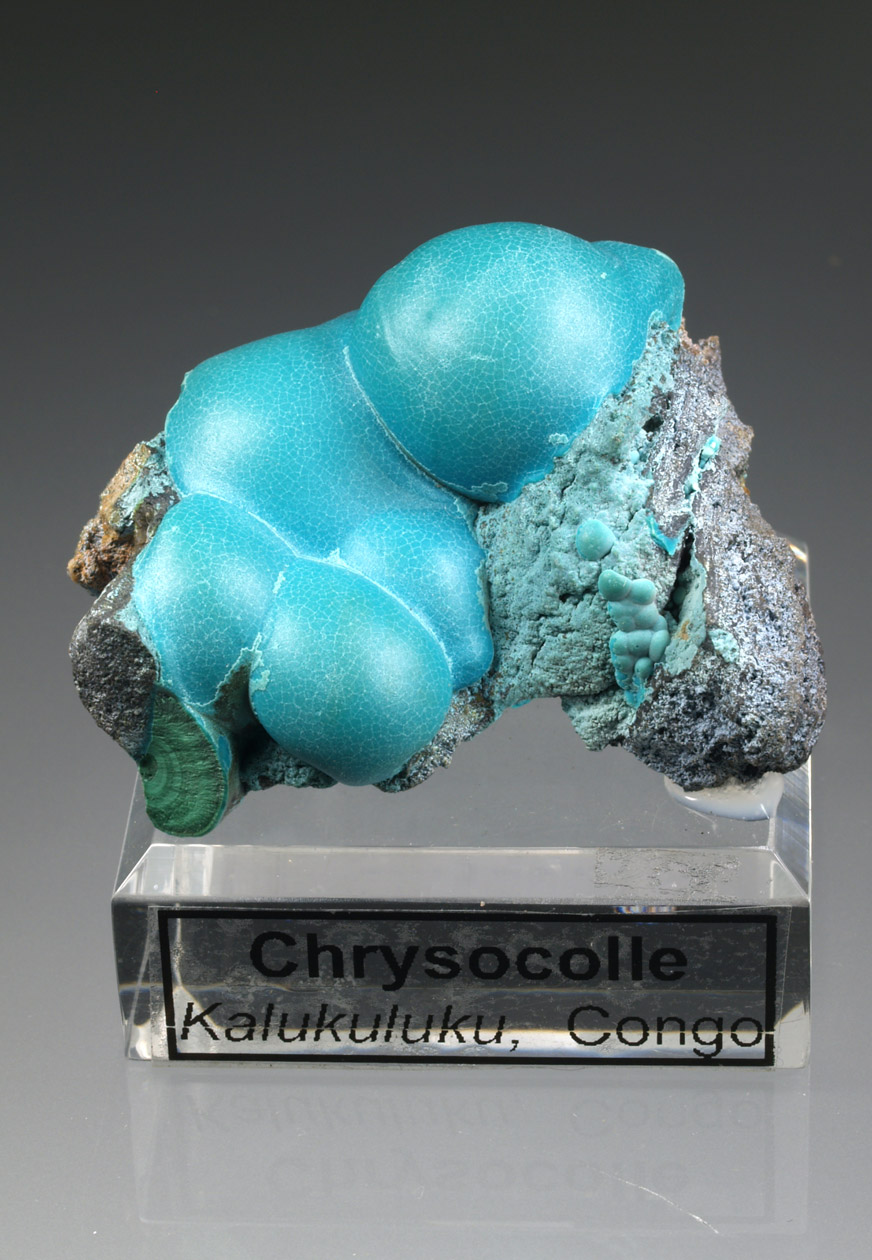
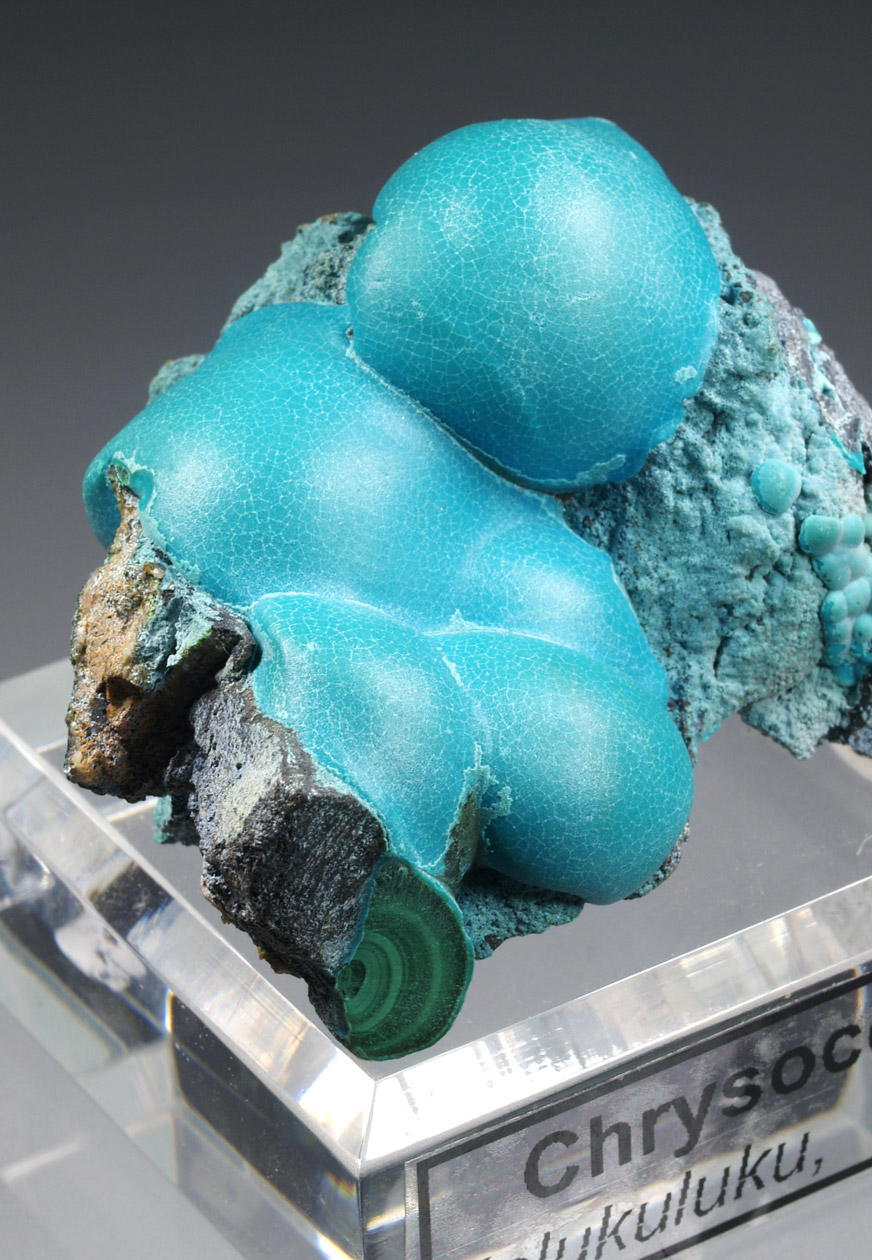
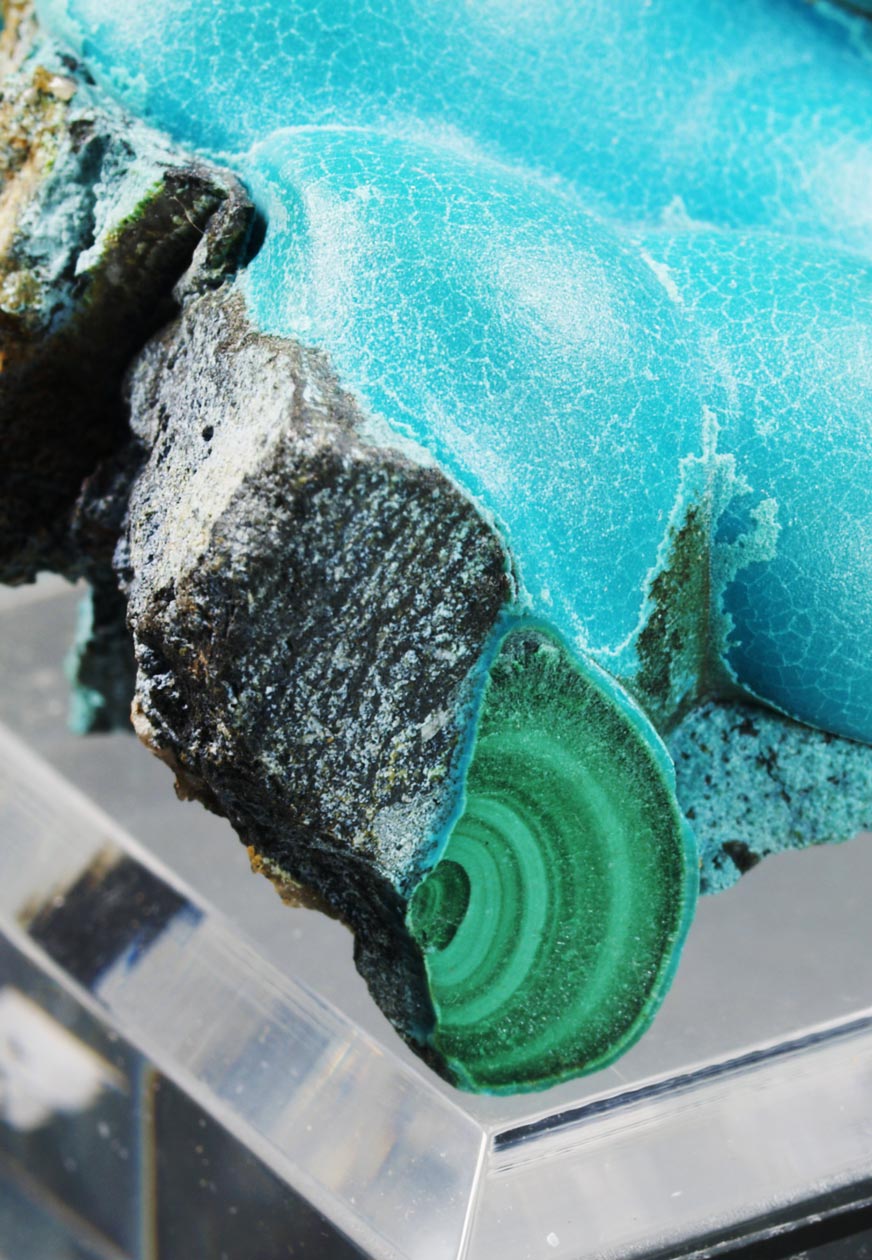
Muy estéticos agregados botroidales de malaquita totalmente recubiertos por una capa de crisocola de un azul, ligeramente verdoso. Podemos ver la malaquita, con crecimientos concéntricos, en alguna fractura. La belleza de estos ejemplares los hace dignos de la mejor colección y vitrina.
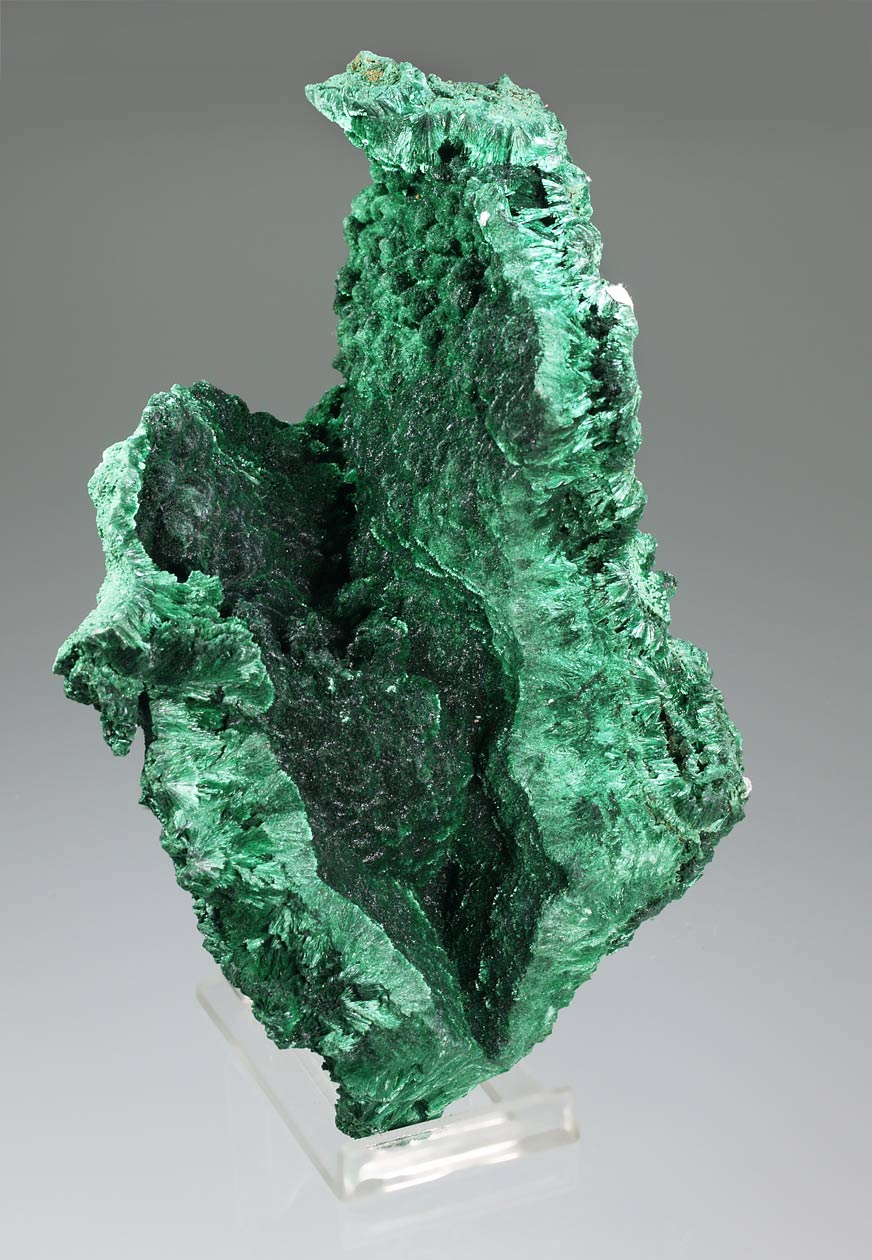
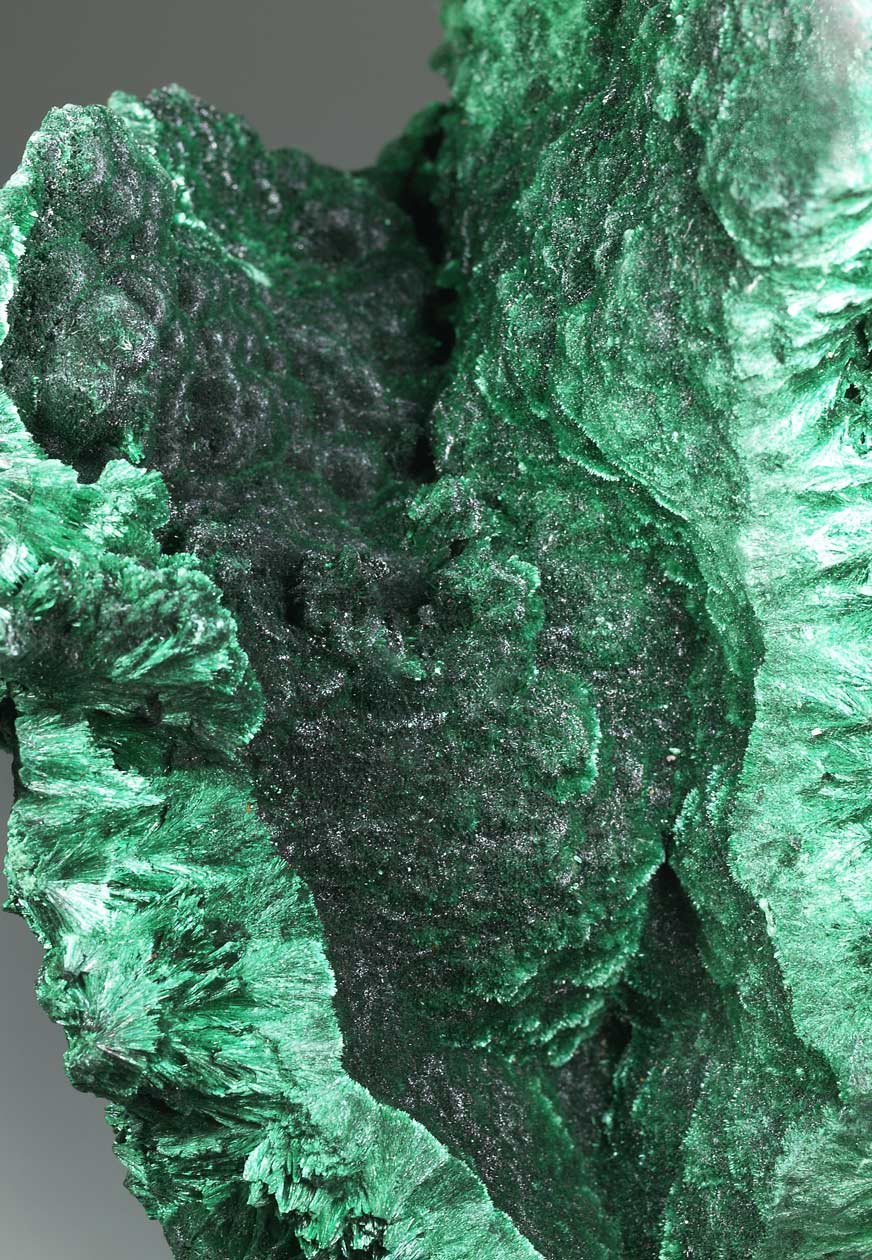
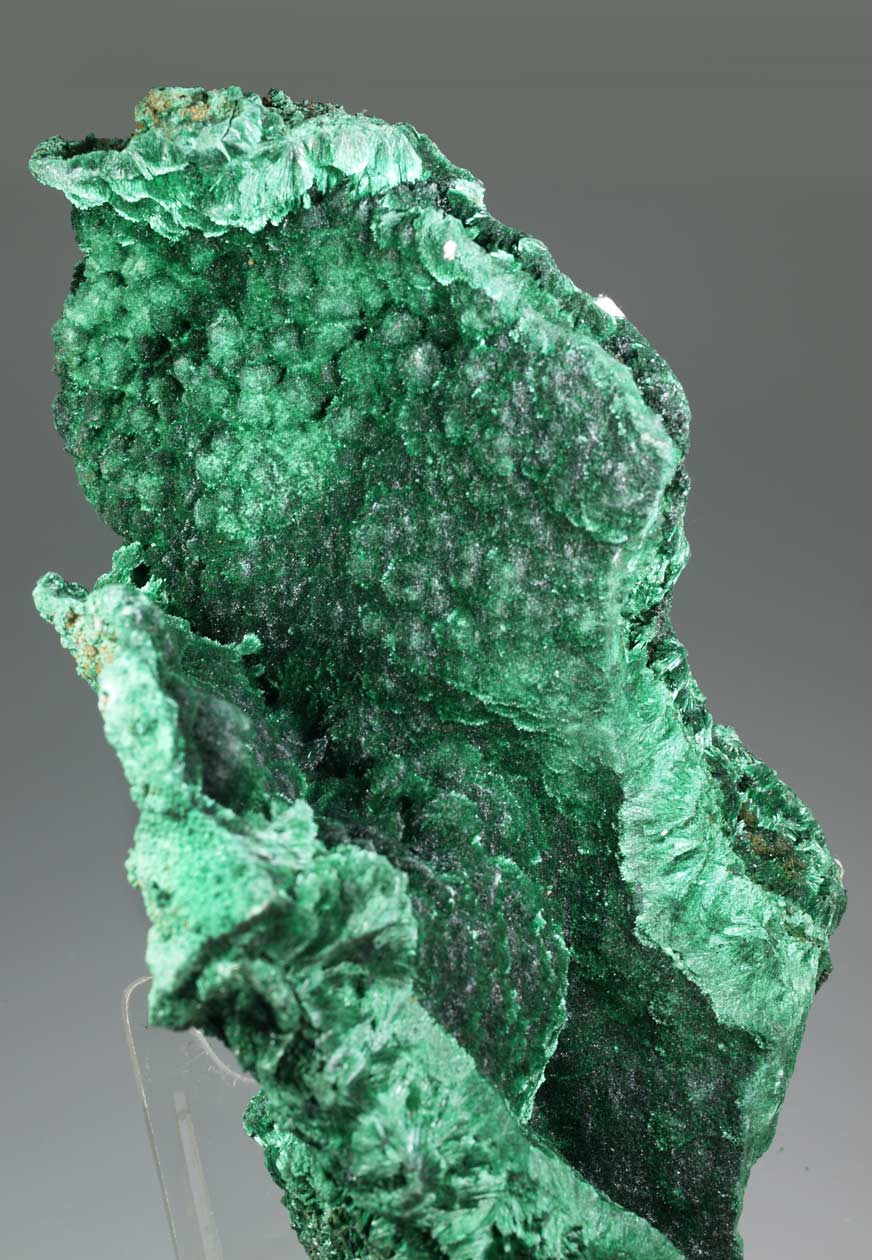
Los ejemplares de malaquita de esta mina del Alto Katanga destacan por los agregados radiales, en abanico, de finos cristales que, en conjunto, presentan un aspecto aterciopelado y un brillo excelente. Intenso color verde, buen tamaño y muy estético por ambas caras.
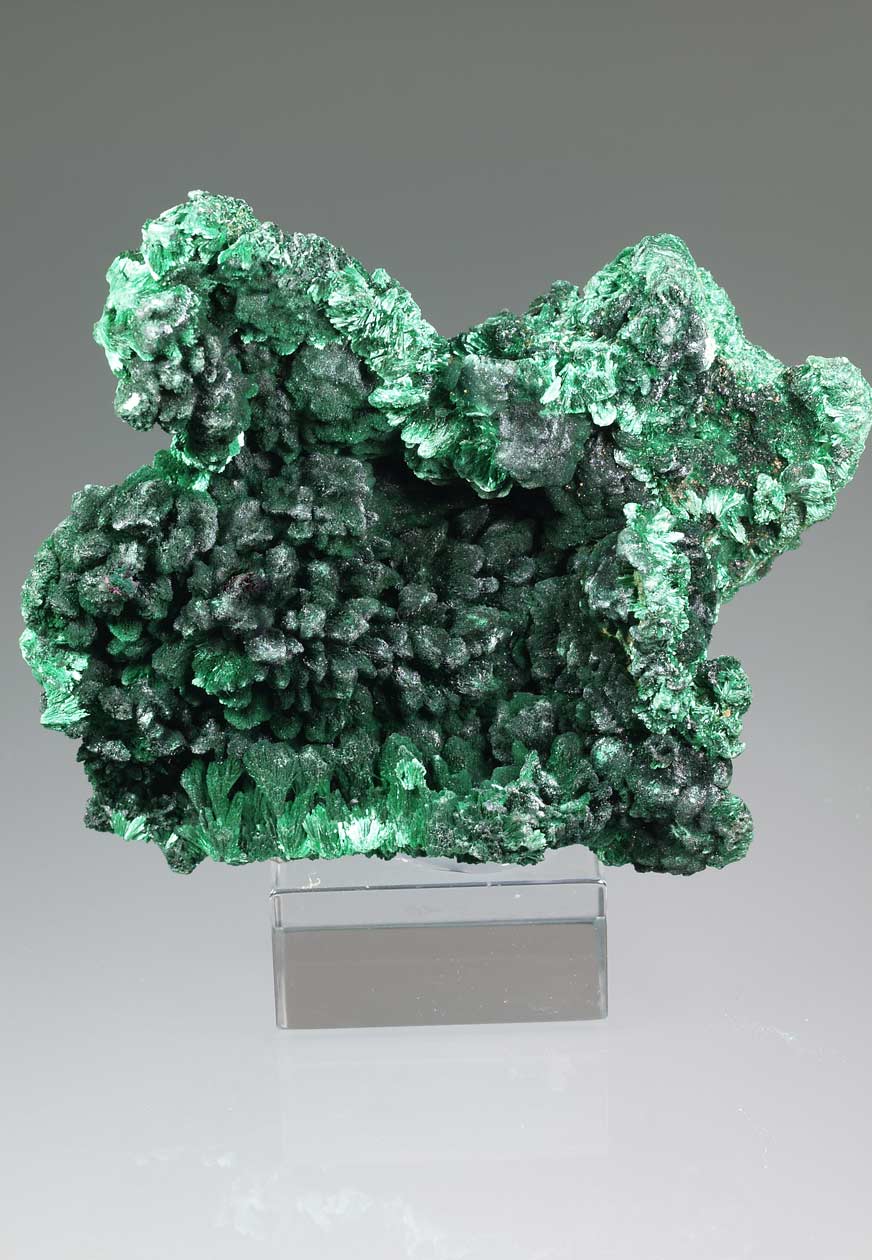
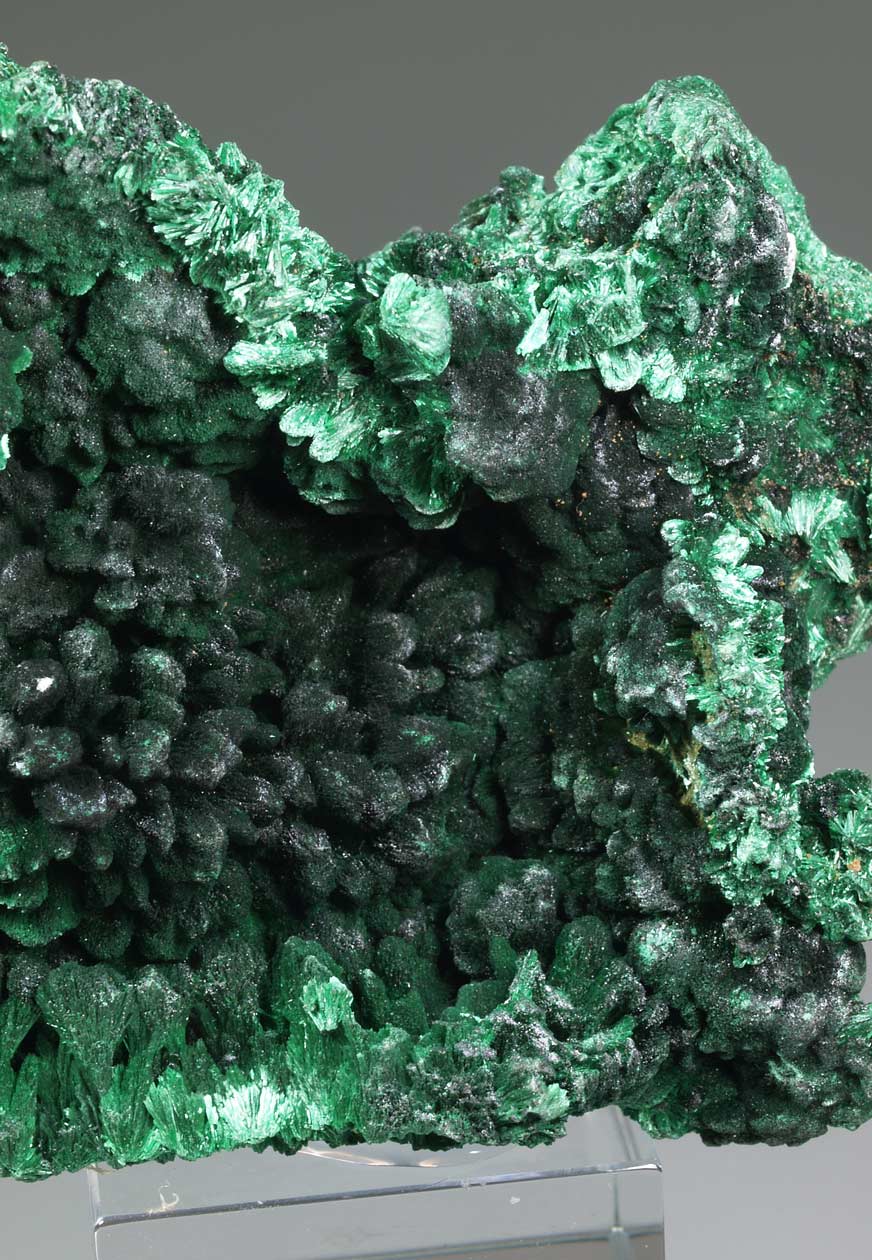
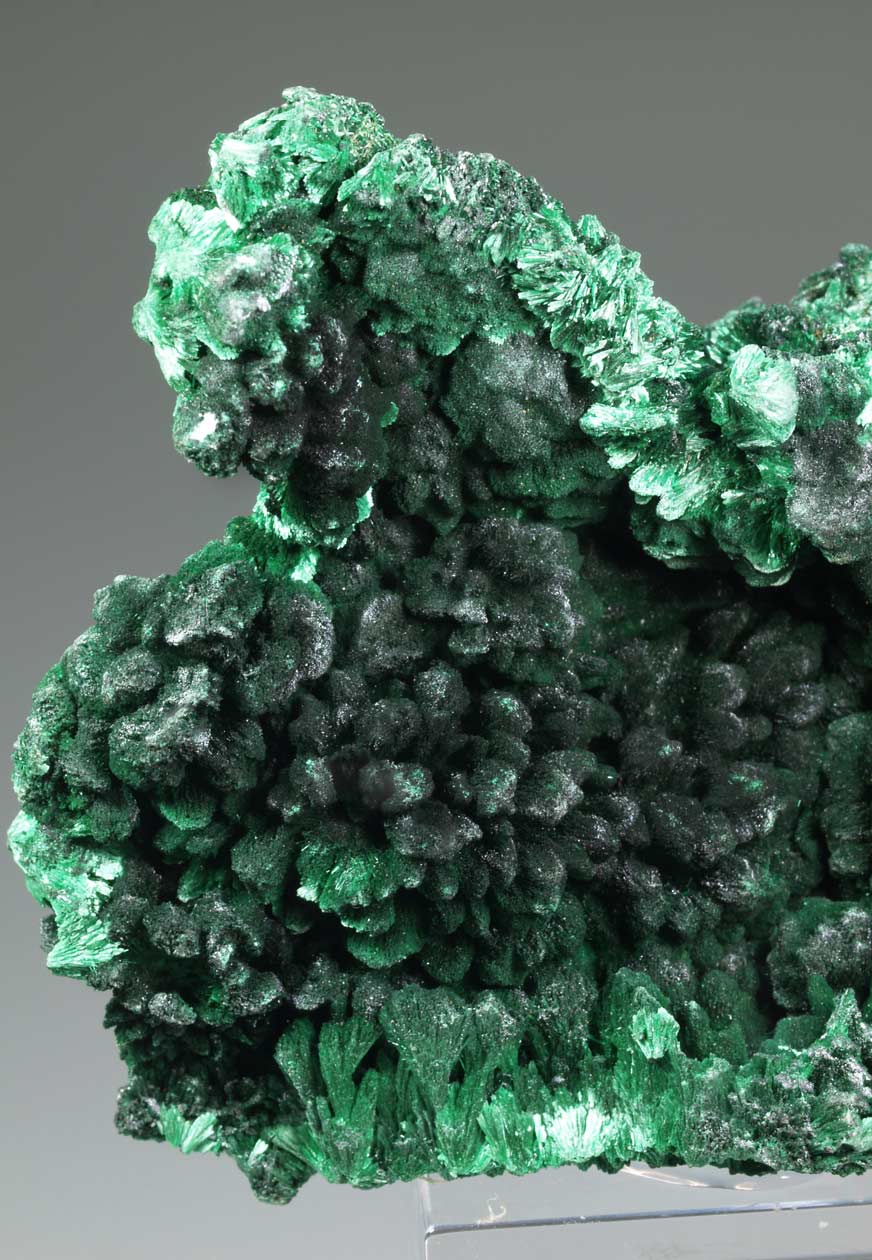
Los ejemplares de malaquita de esta mina del Alto Katanga destacan por los agregados radiales, en abanico, de finos cristales que, en conjunto, presentan un aspecto aterciopelado y un brillo excelente. Intenso color verde, buen tamaño y muy estético por ambas caras.
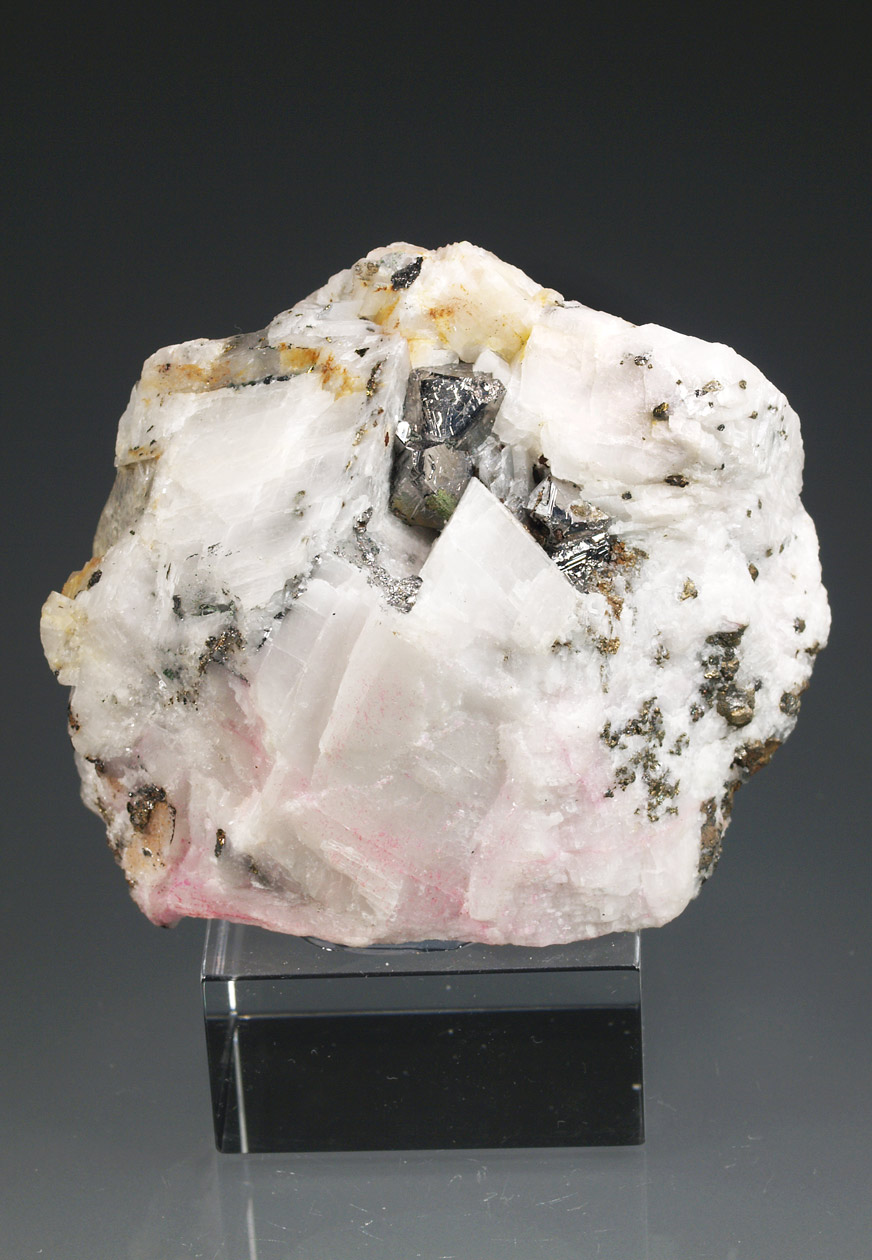
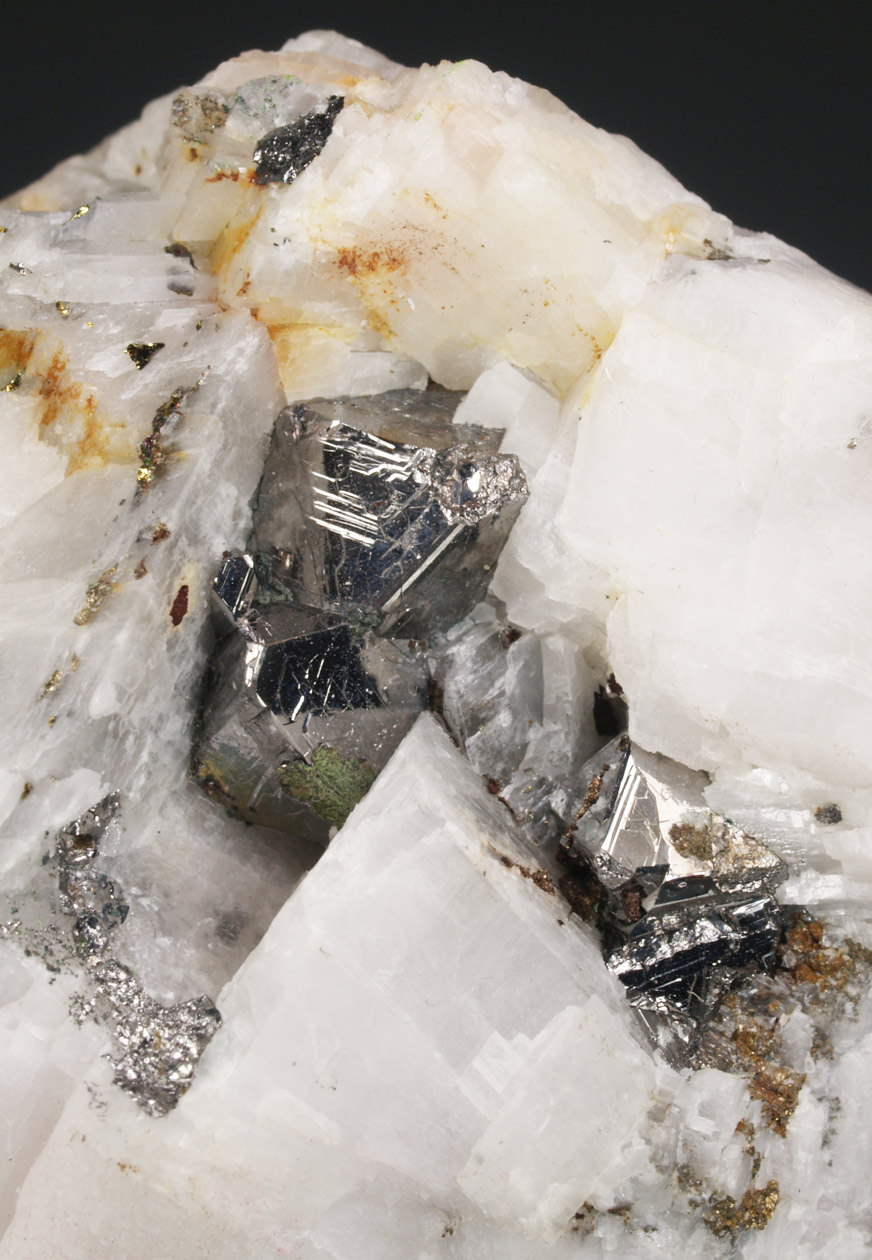
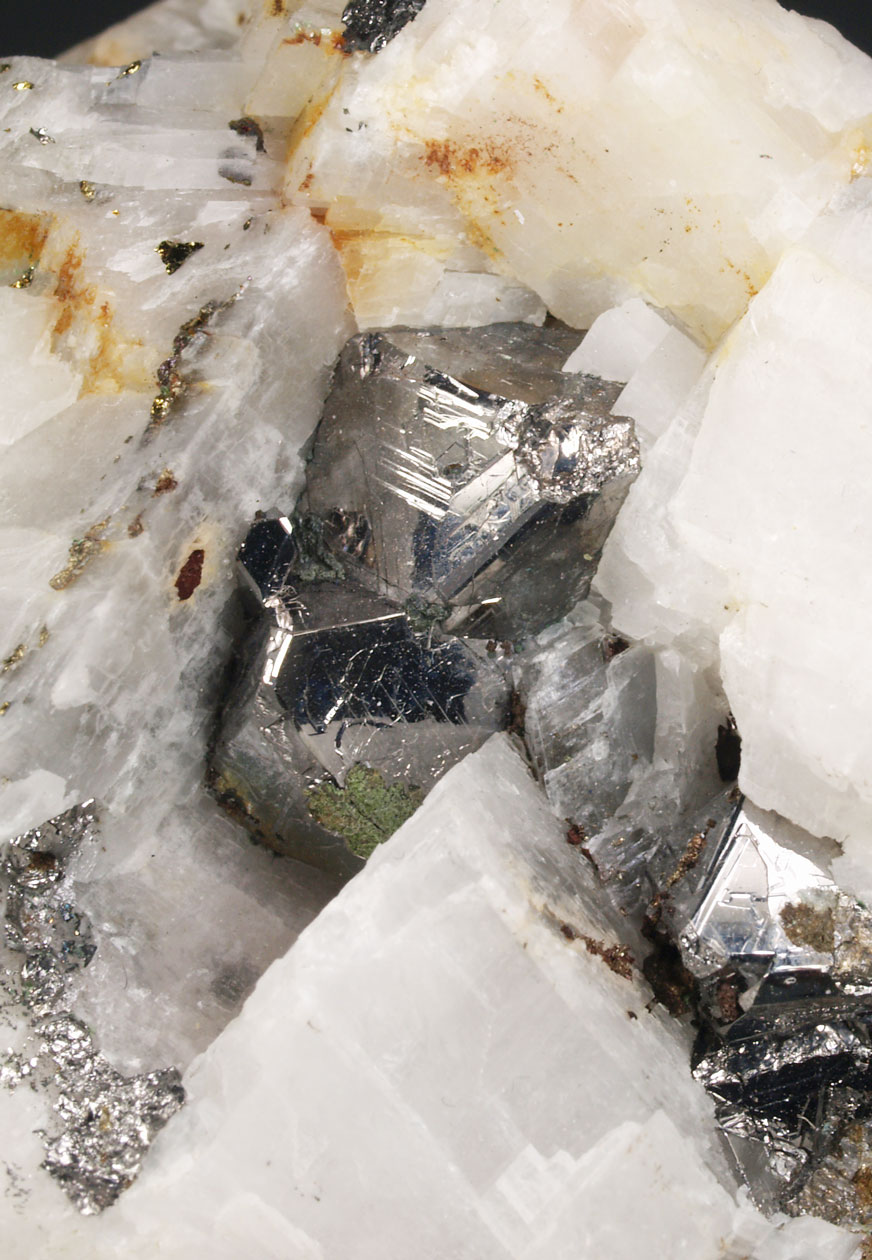
Grupo de cristales de carrollita que muestran las formas del cubo y del octaedro. Muy brillantes e interpenetrados entre sí. Aristas y caras definidas y un brillo excepcional. Muy estética.
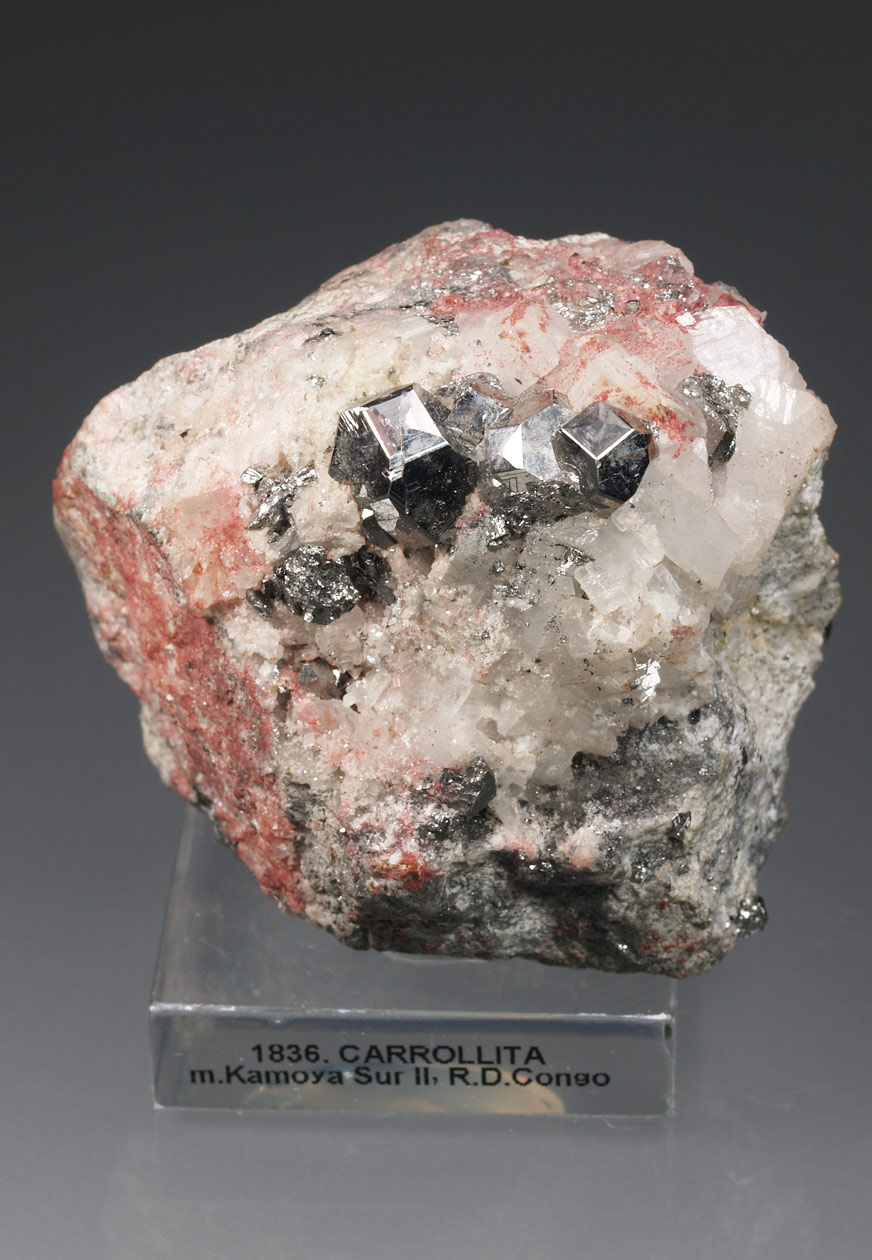
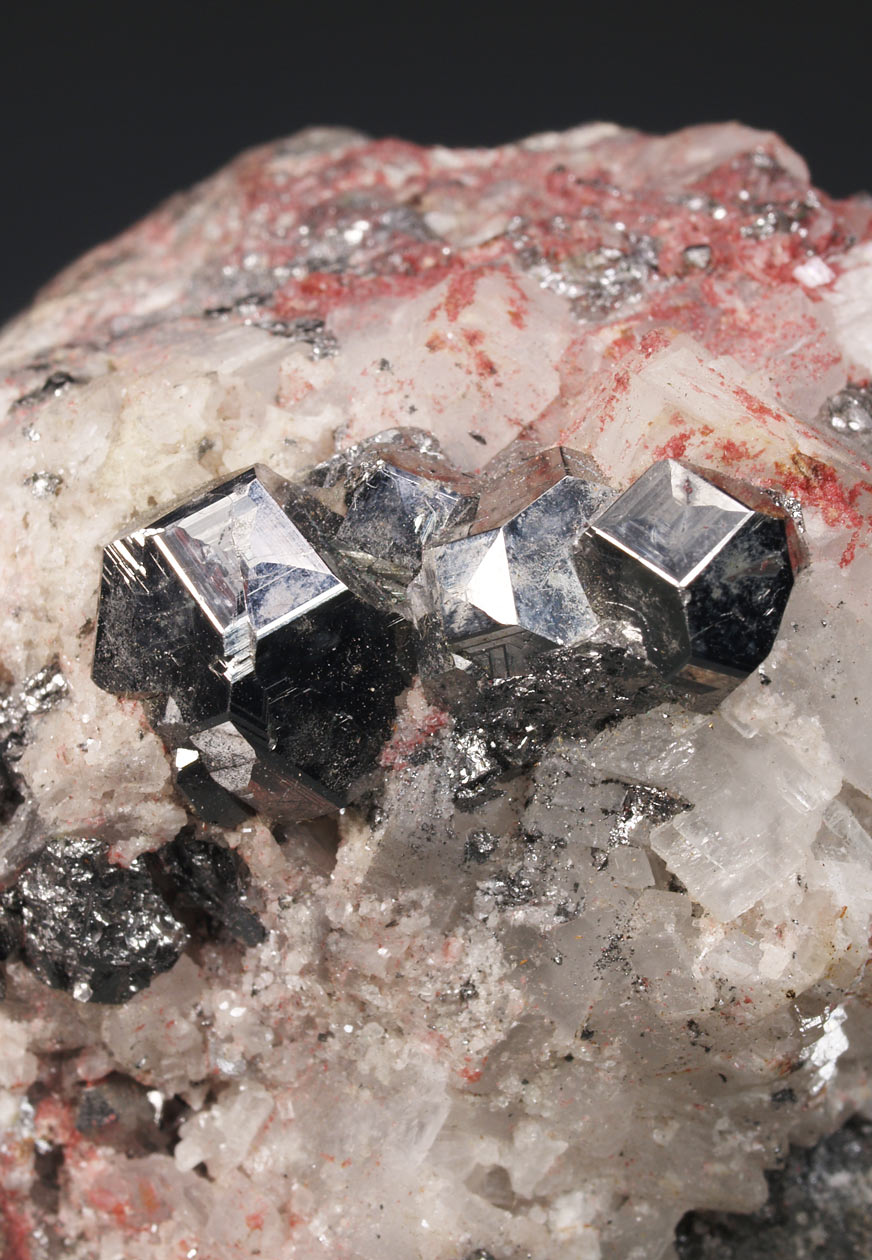
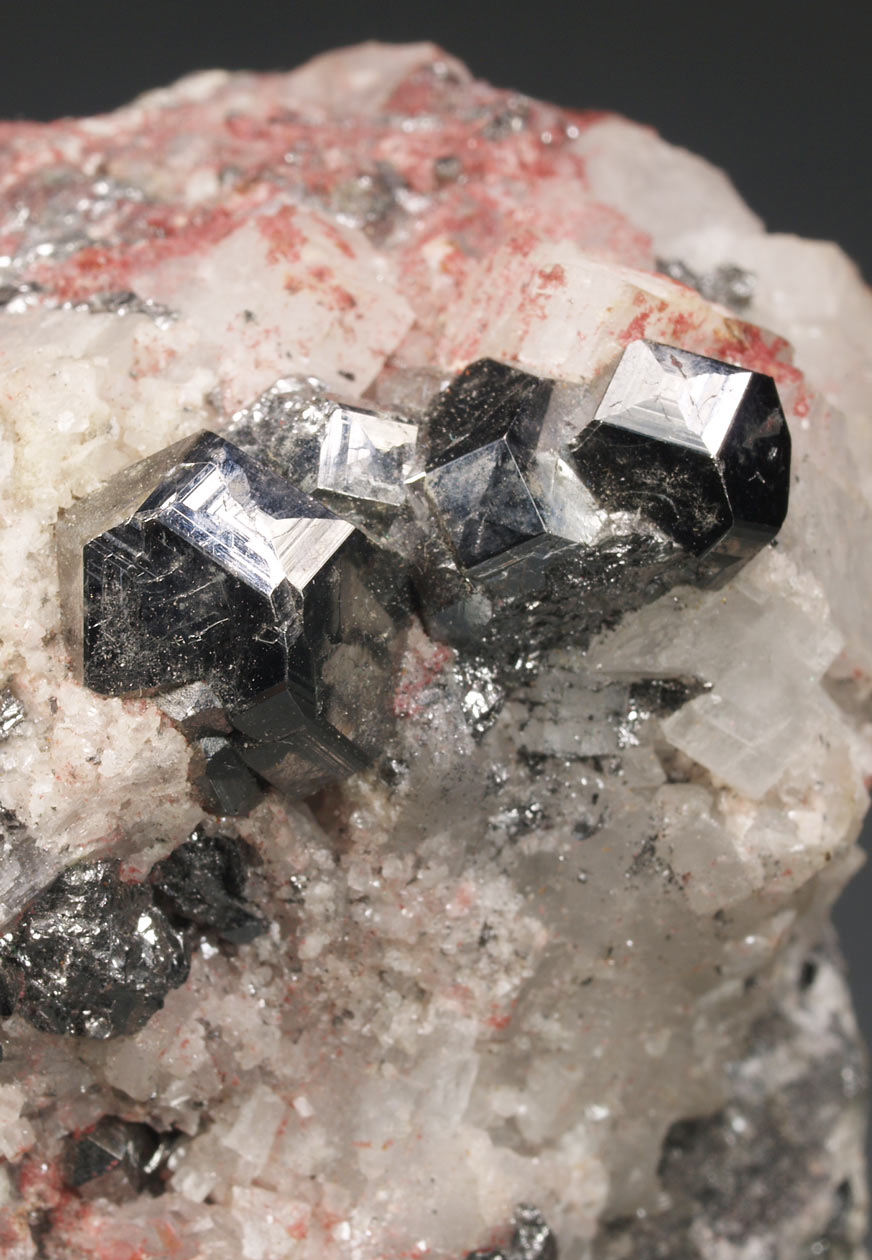
Grupo de cristales de carrollita que muestran las formas del cubo y del octaedro, junto con formas del tetrahexaedro. Muy brillantes e interpenetrados entre si. Aristas y caras definidas y un brillo excepcional. Muy estética.

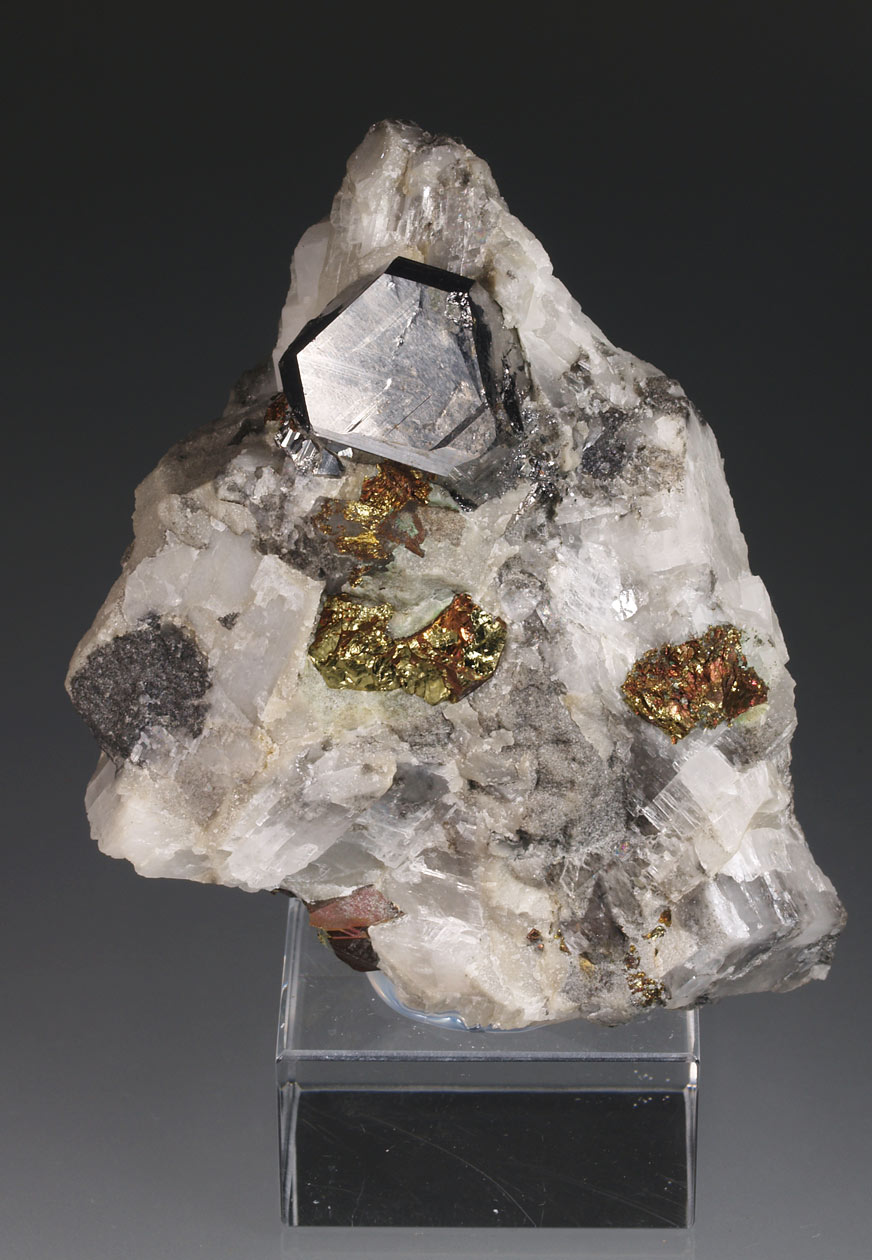
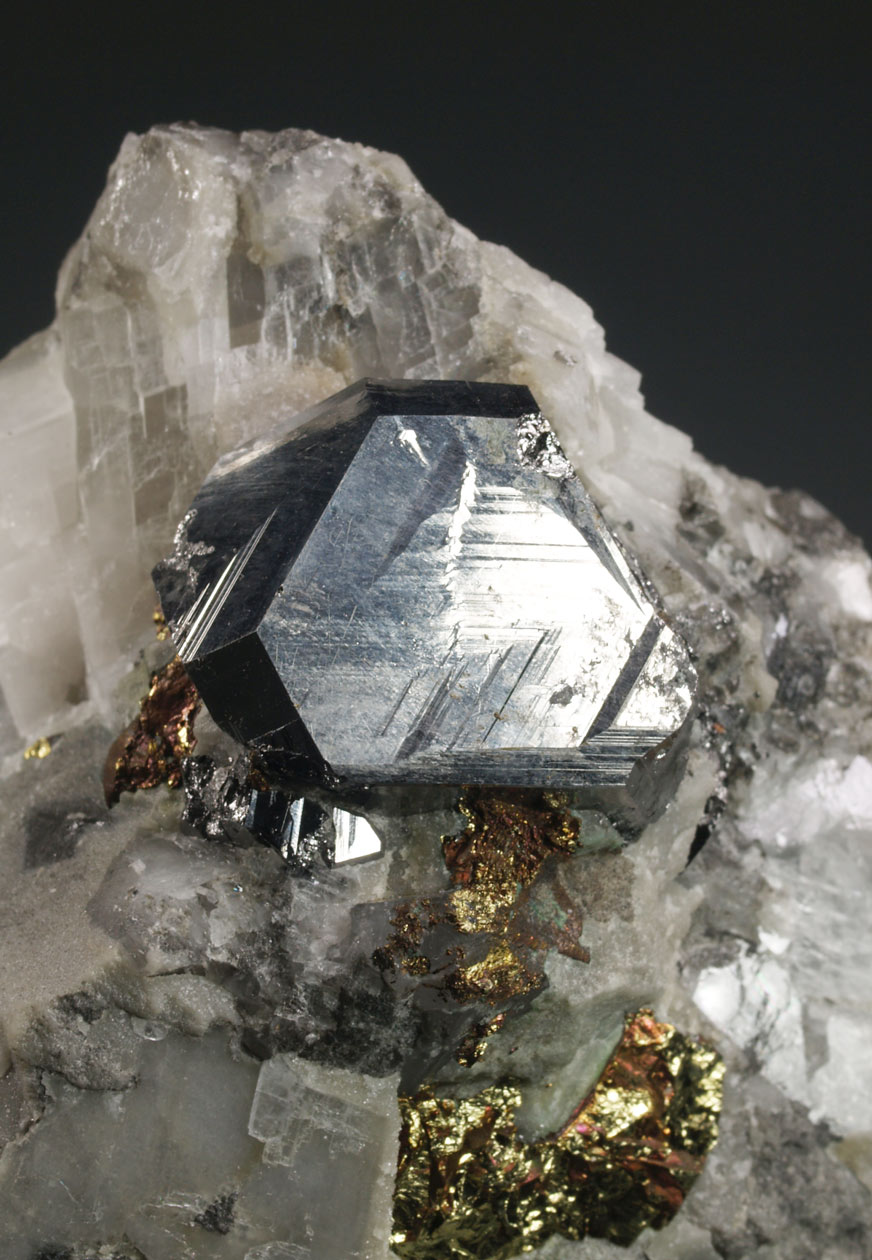
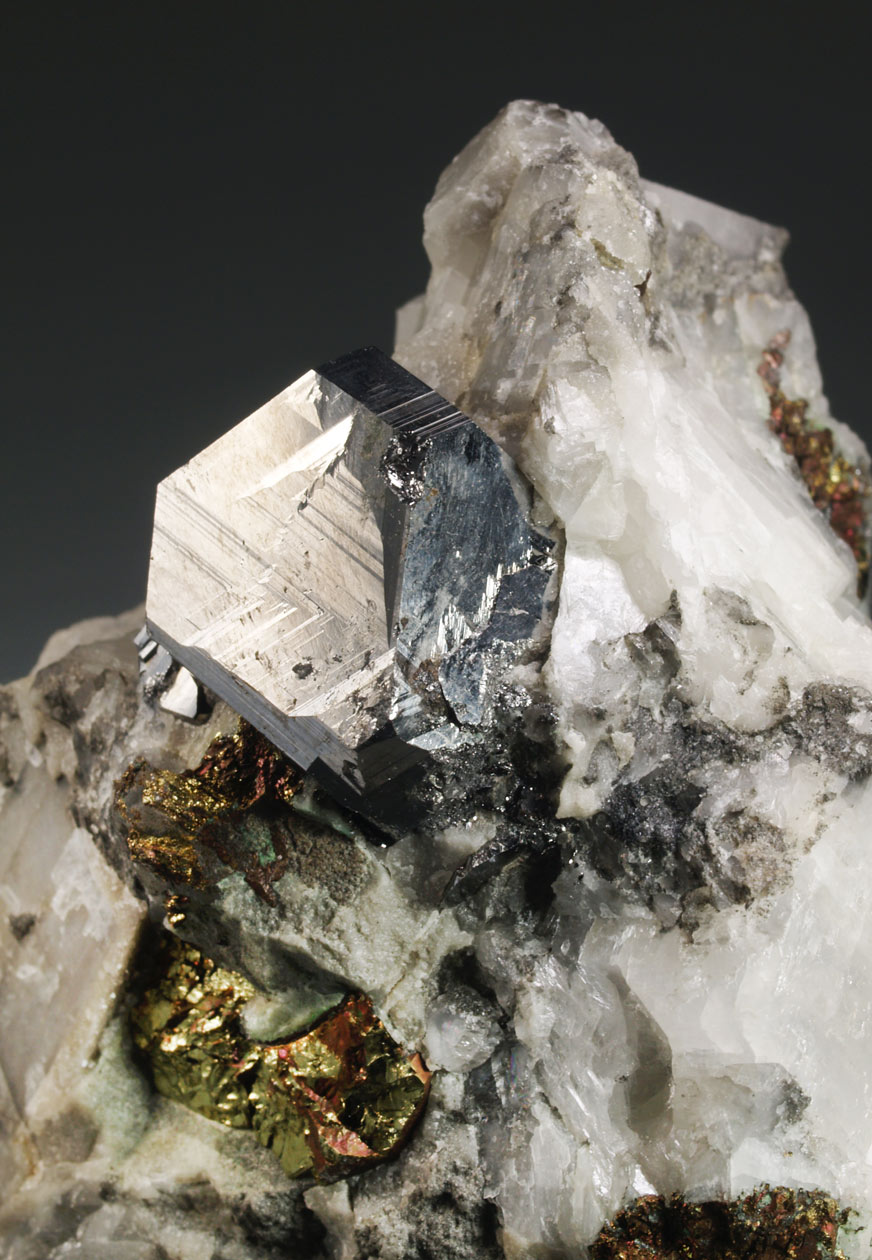
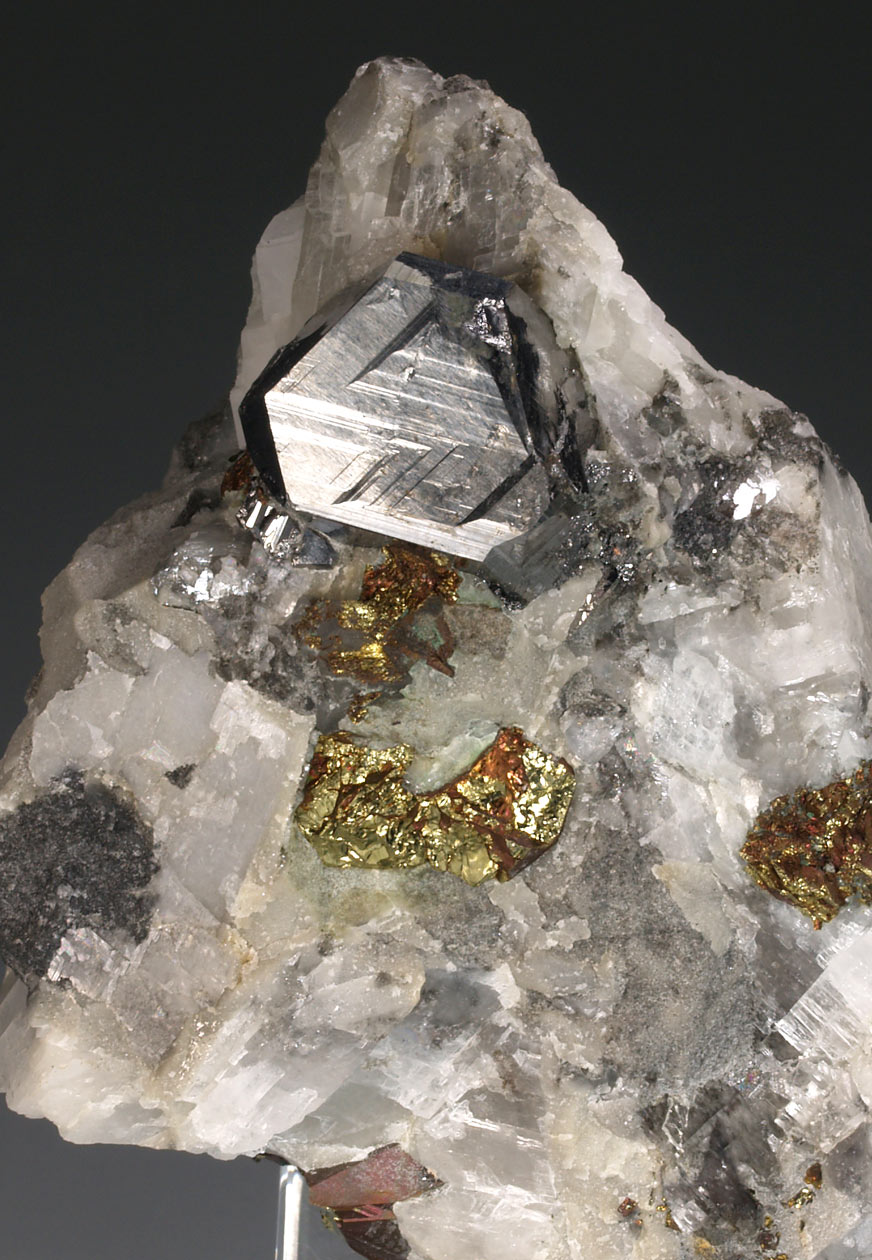
La carrolita es un sulfuro de cobre y cobalto y los ejemplares de mayor calidad proceden de la República Democrática del Congo. Este excelente espécimen está muy bien definido, con un brillo metálico excelente. El monocristal es un cuboctaedro modificado y se acompaña de cristales de calcopirita en matriz de calcita. Presenta pequeñas mellas debidas al trabajo mecánico para hacer aparecer el cristal que no afectan la estética. Tanto la disposición, el gran tamaño, como la estética hacen de este ejemplar una pieza de vitrina.

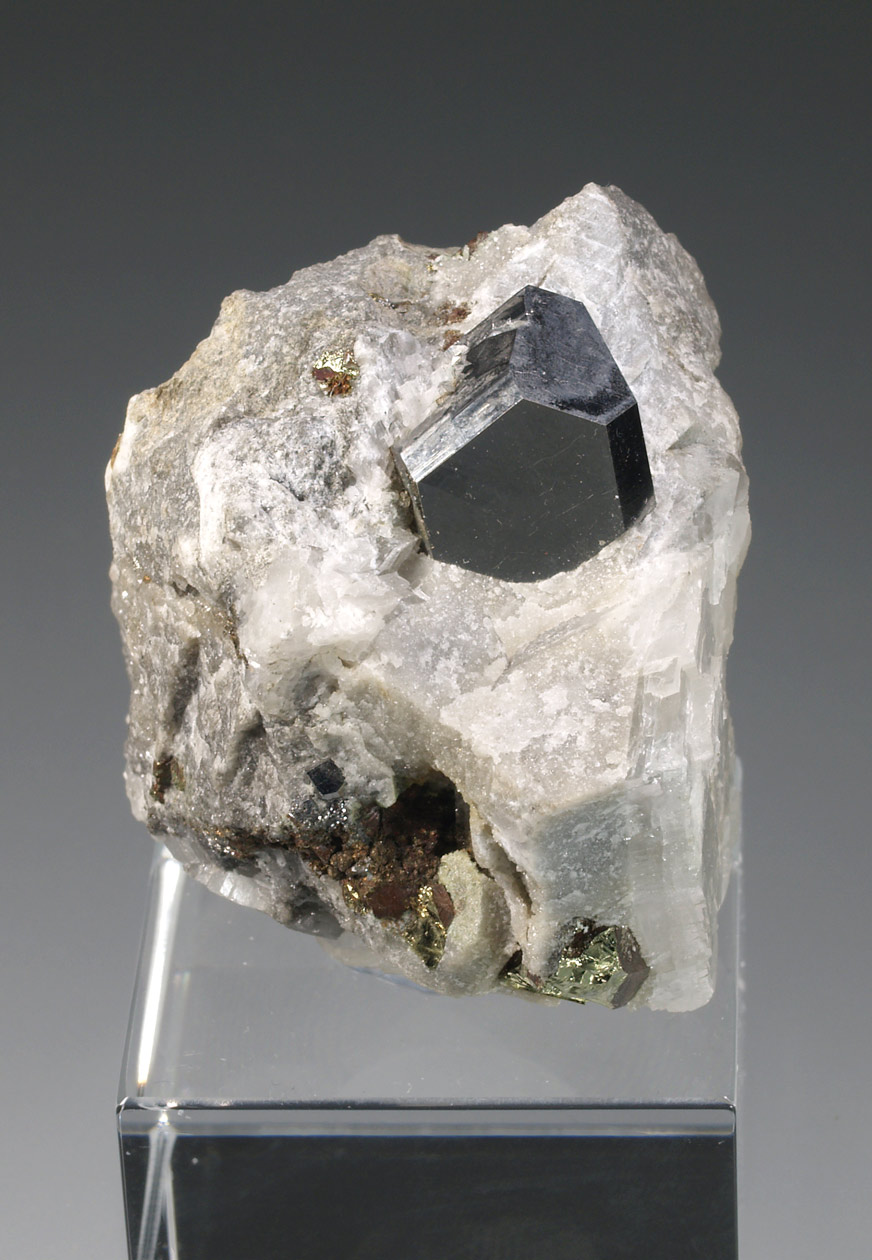
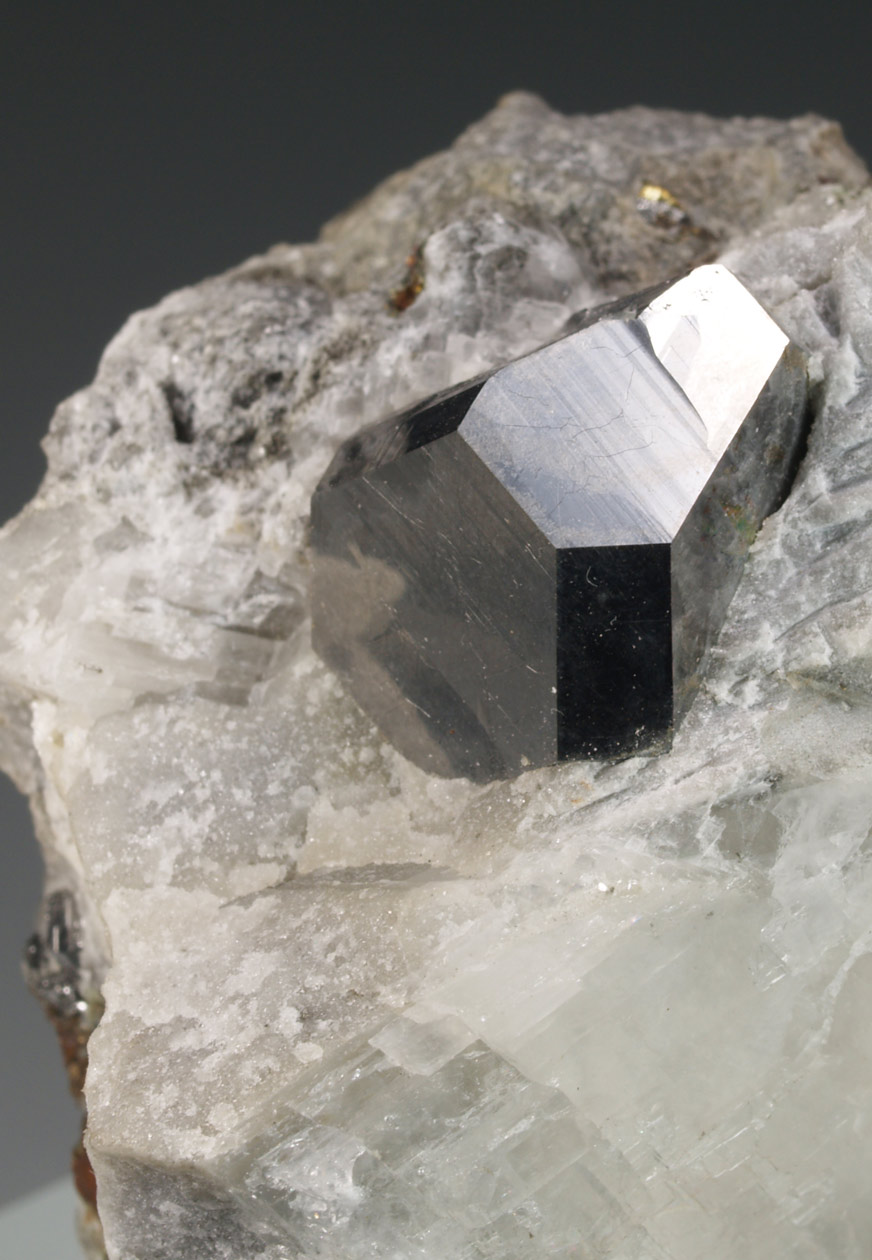
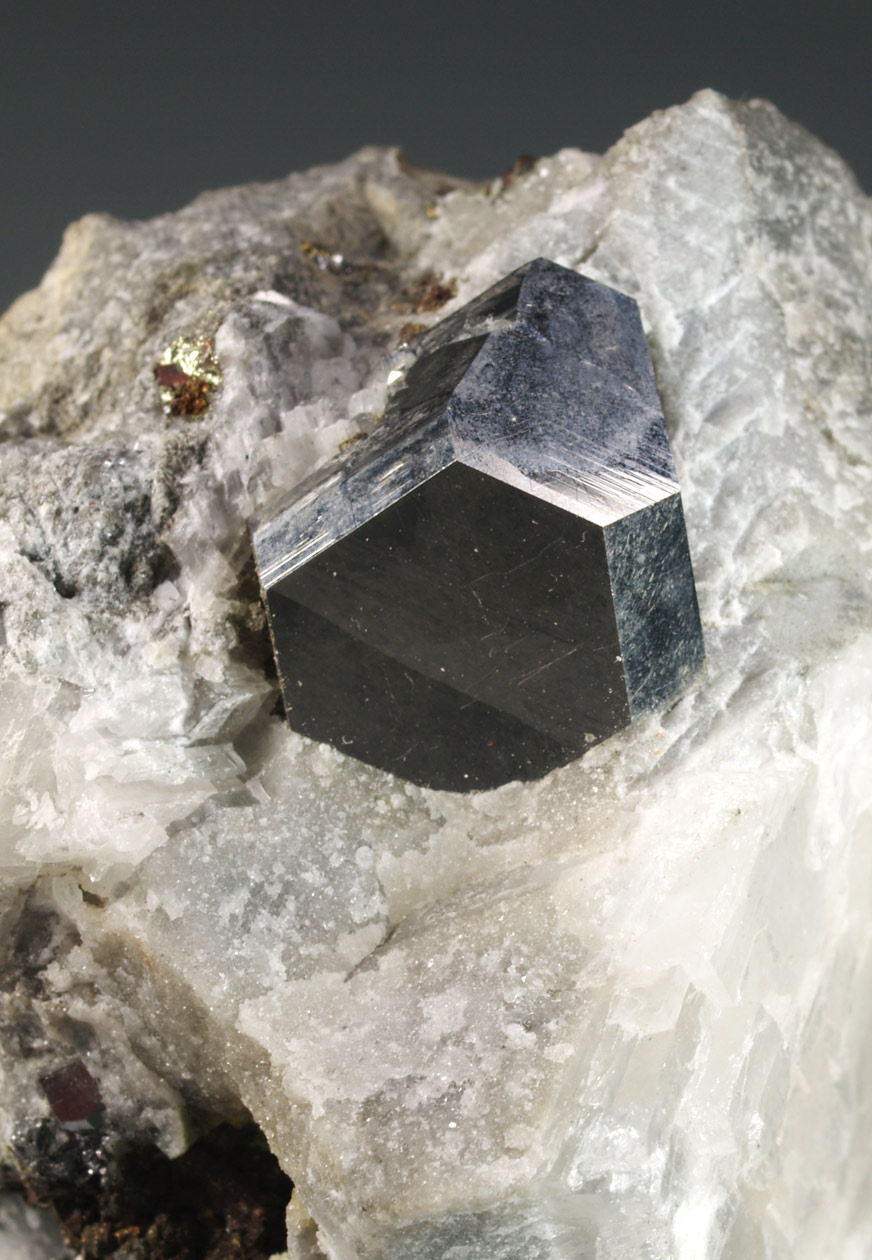
La carrolita es un sulfuro de cobre y cobalto y los ejemplares de mayor calidad proceden de la República Democrática del Congo. Este excelente espécimen está muy bien definido, con un brillo metálico excelente. El monocristal es un cuboctaedro modificado y se acompaña de cristales de calcopirita en matriz de calcita. Tanto la disposición, el tamaño, como la estética hacen de este ejemplar una pieza de vitrina.
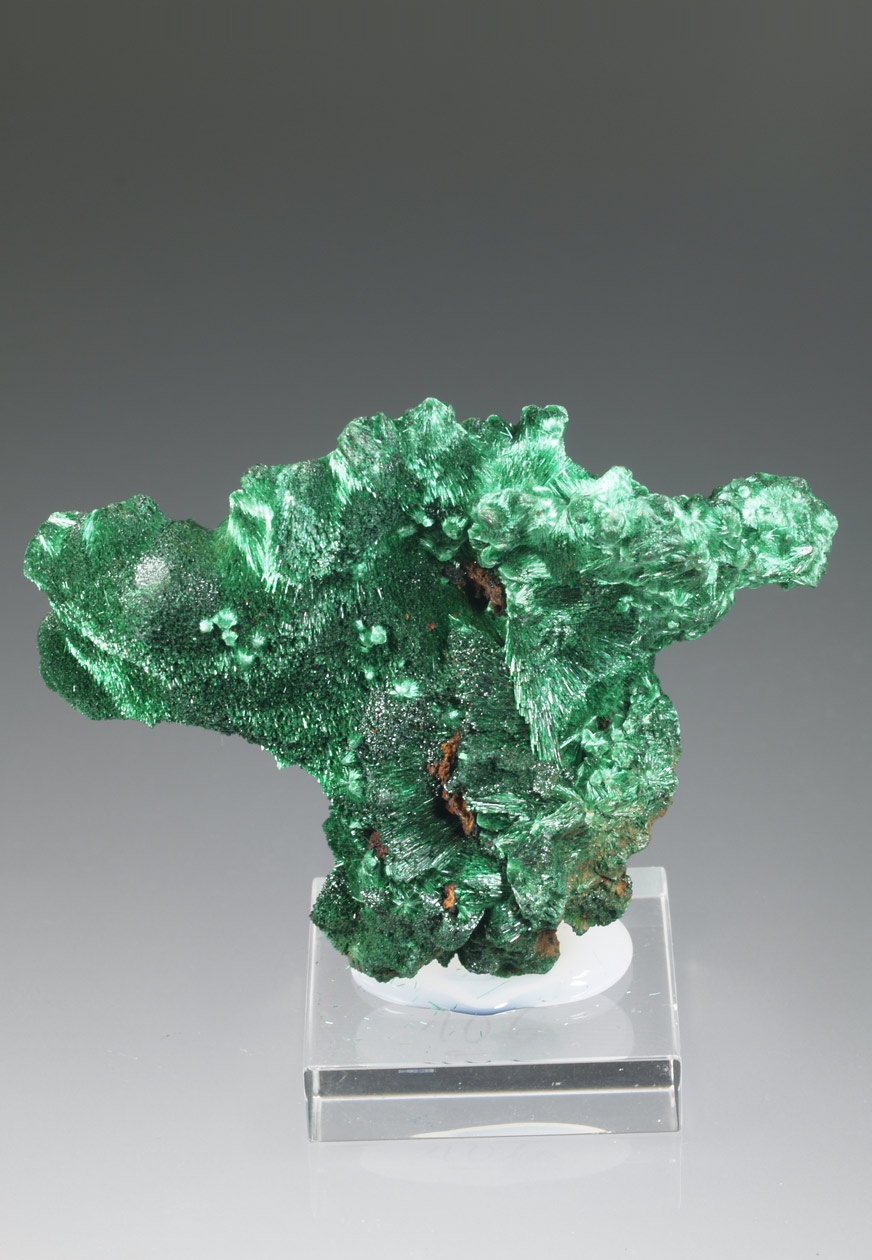
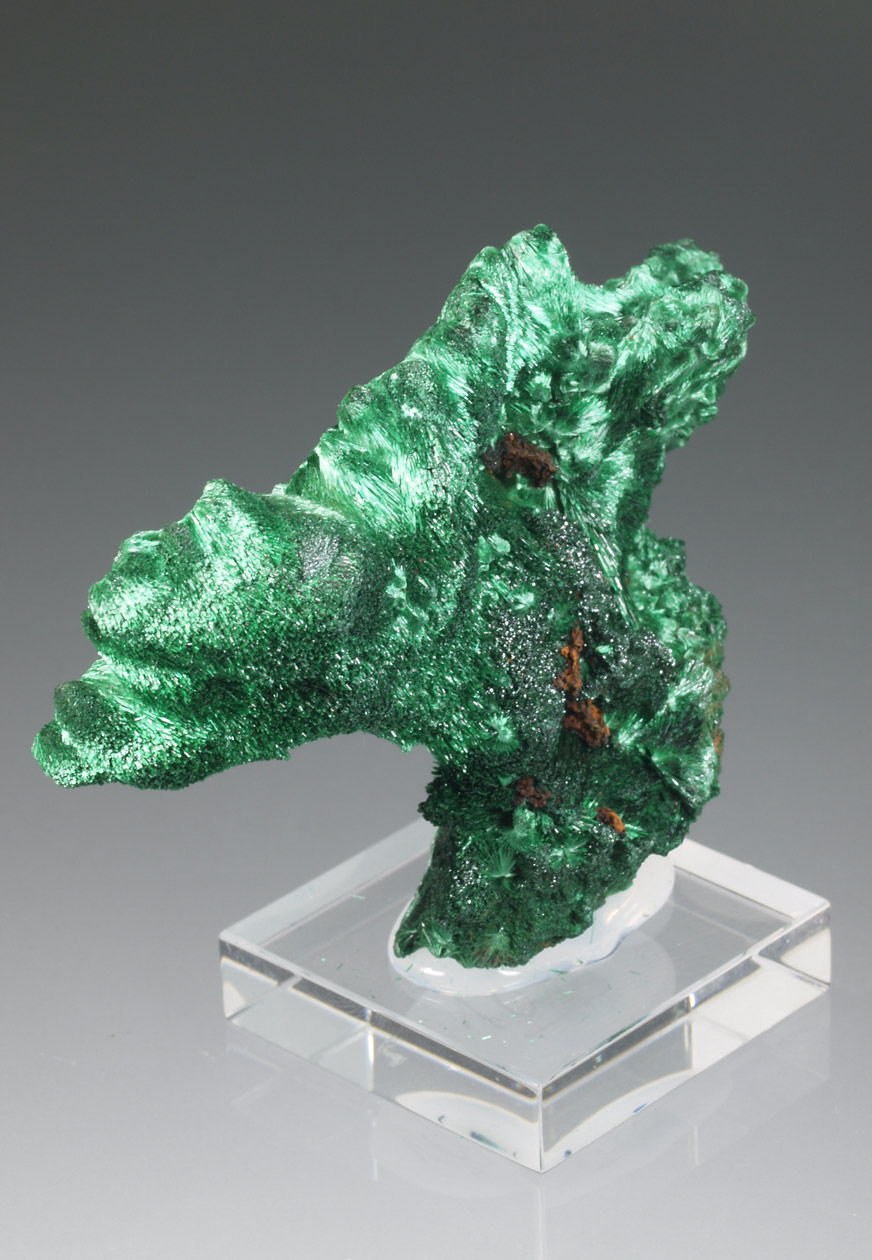
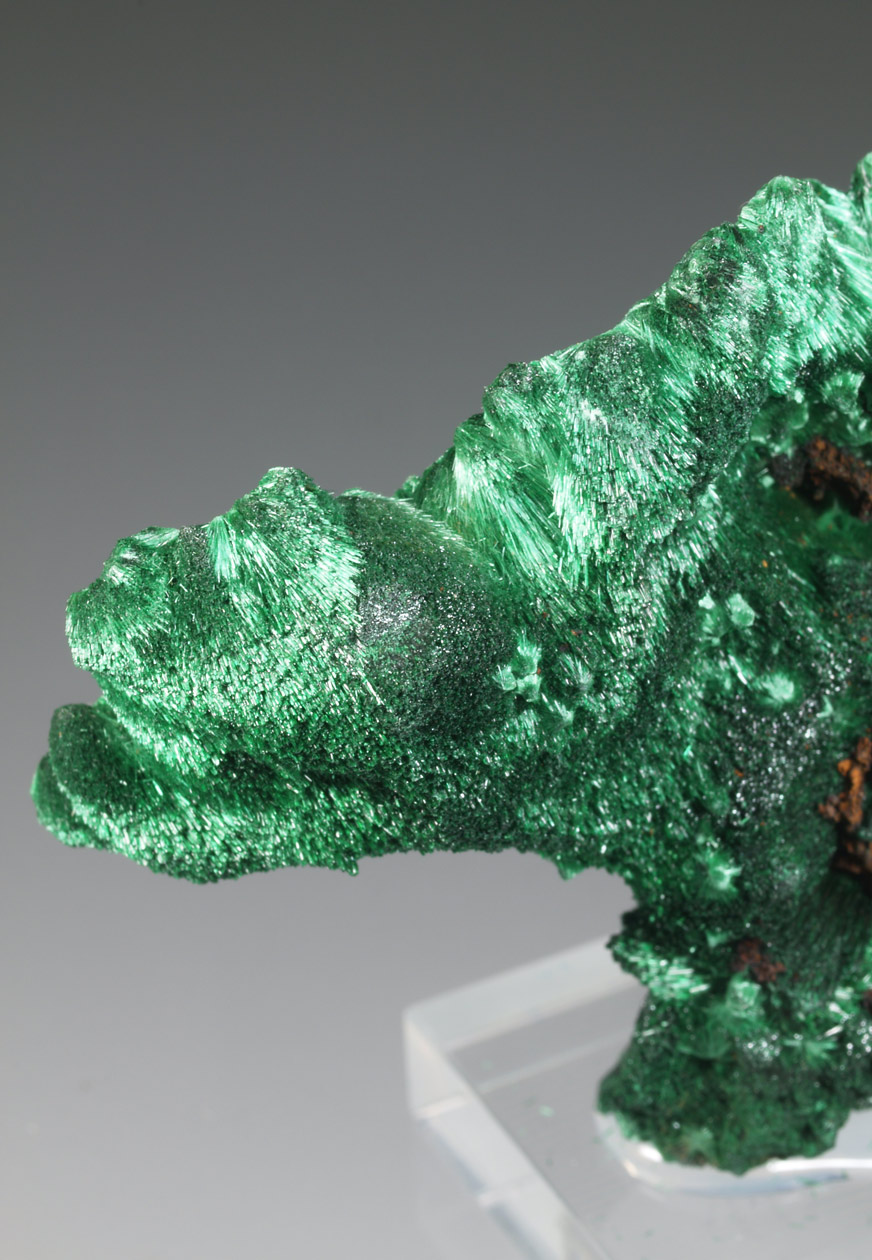
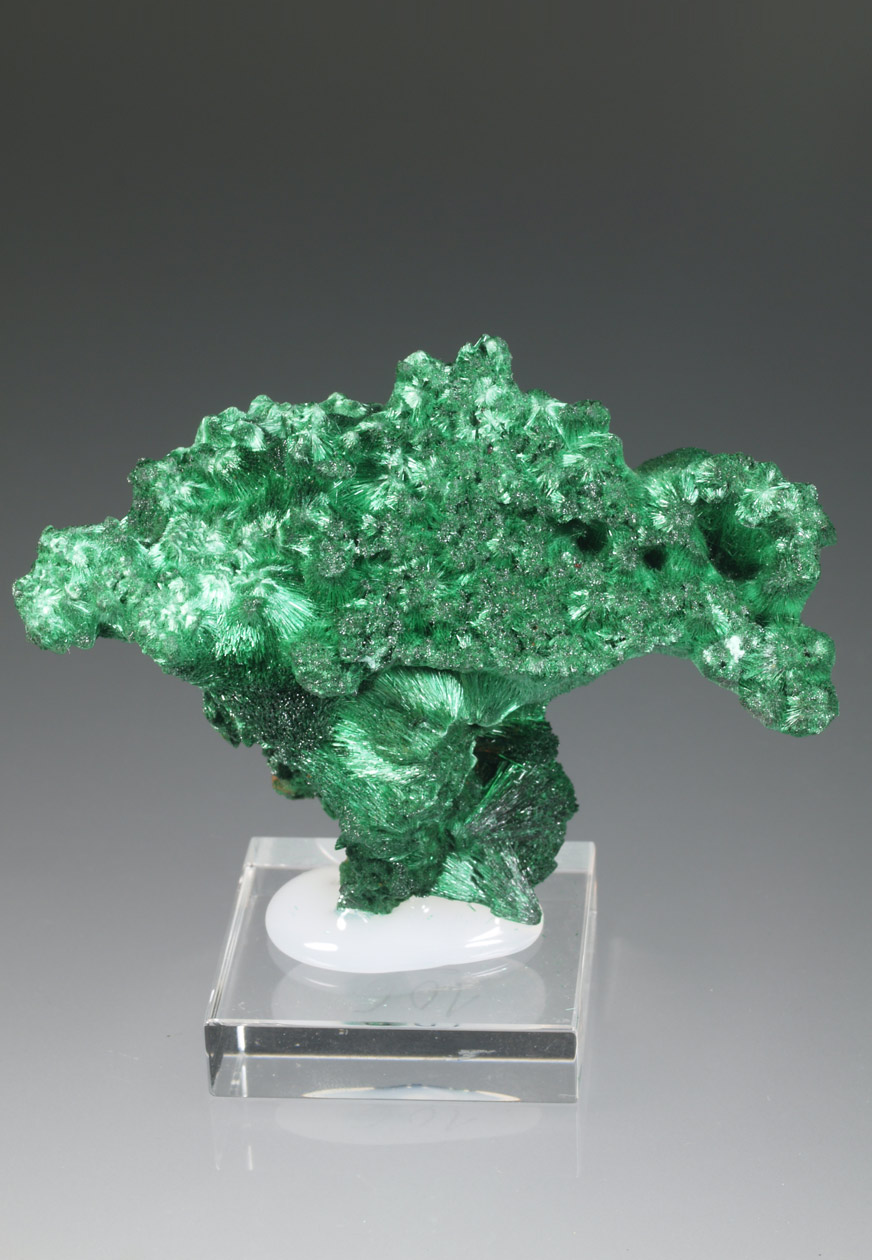
Los ejemplares de malaquita de esta mina del Alto Katanga destacan por los agregados radiales, en abanico, de finos cristales que, en conjunto, presentan un aspecto aterciopelado y un brillo excelente. Intenso color verde, buen tamaño y muy estético por ambas caras.
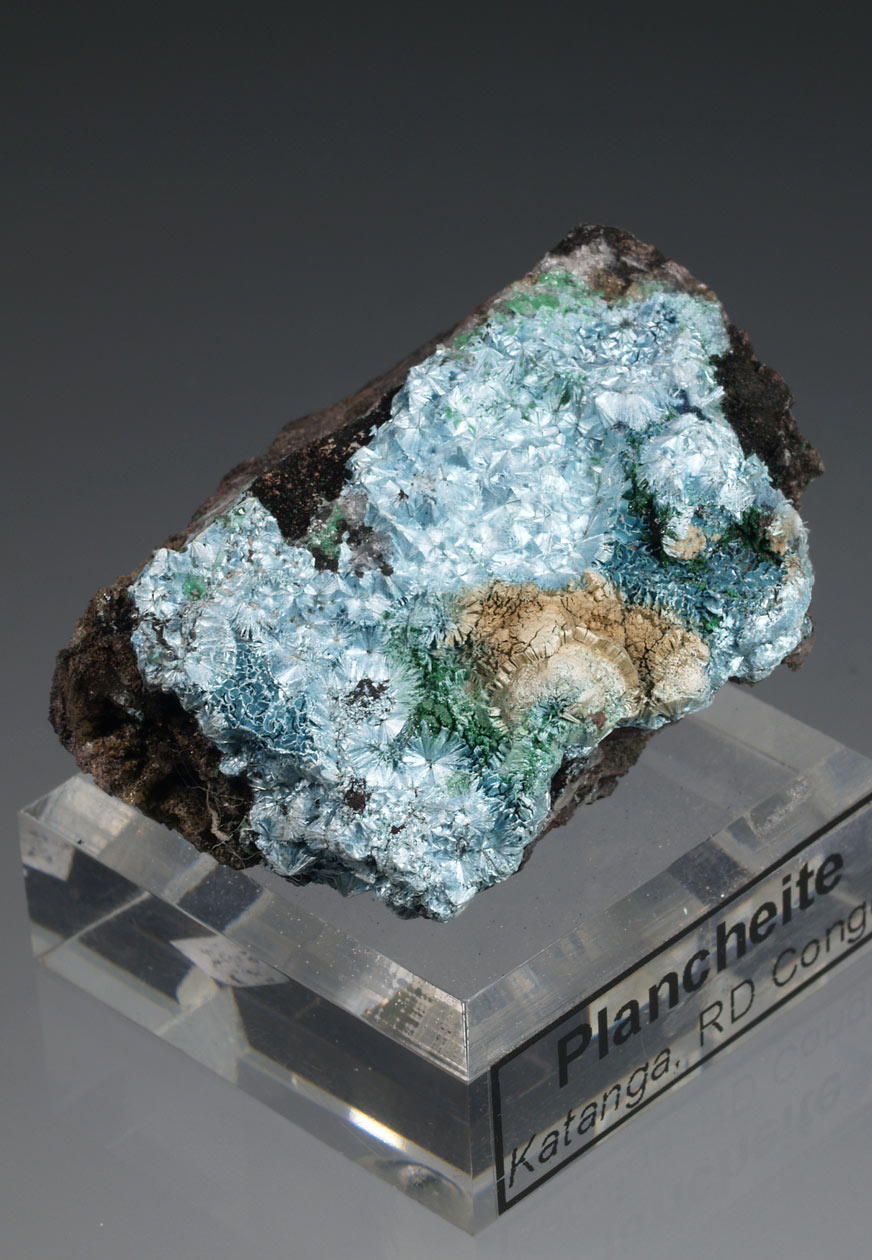
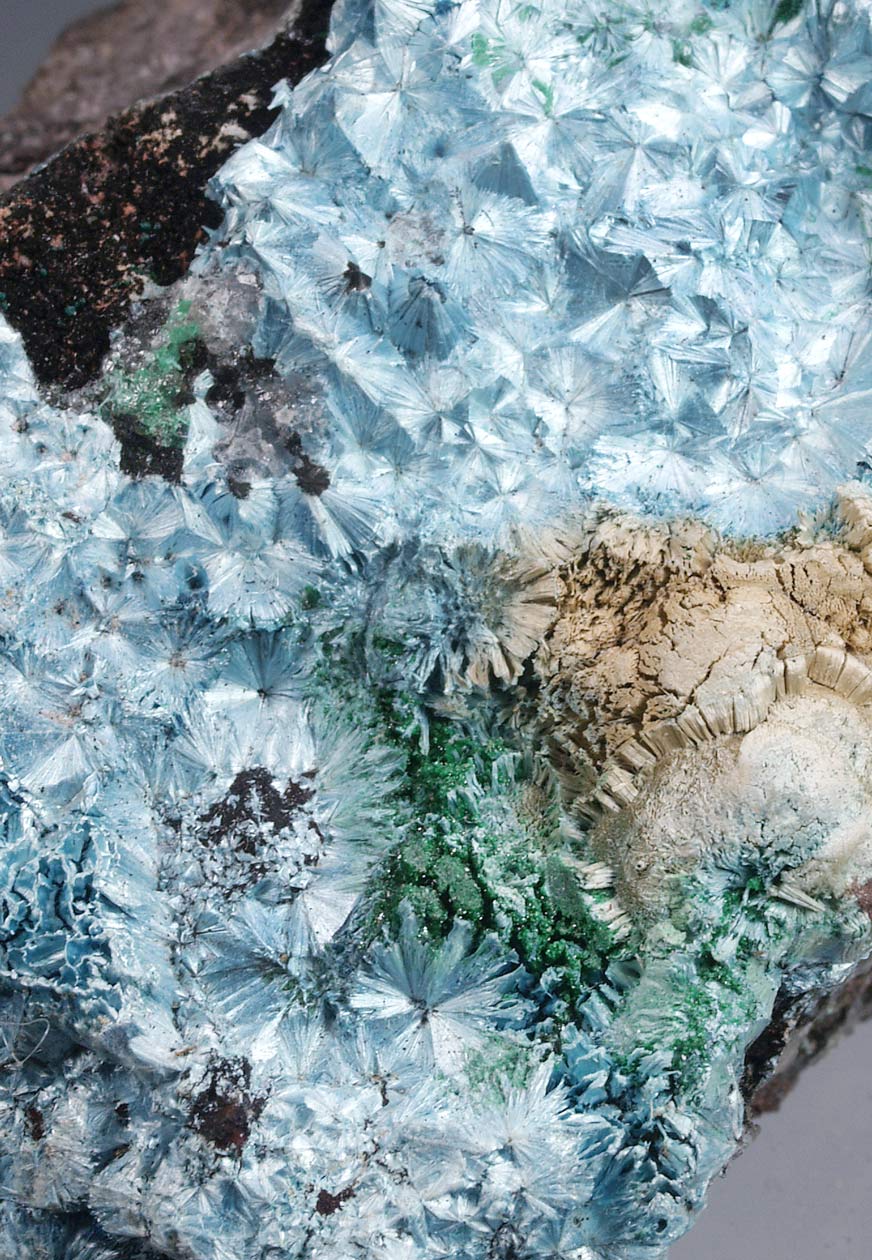
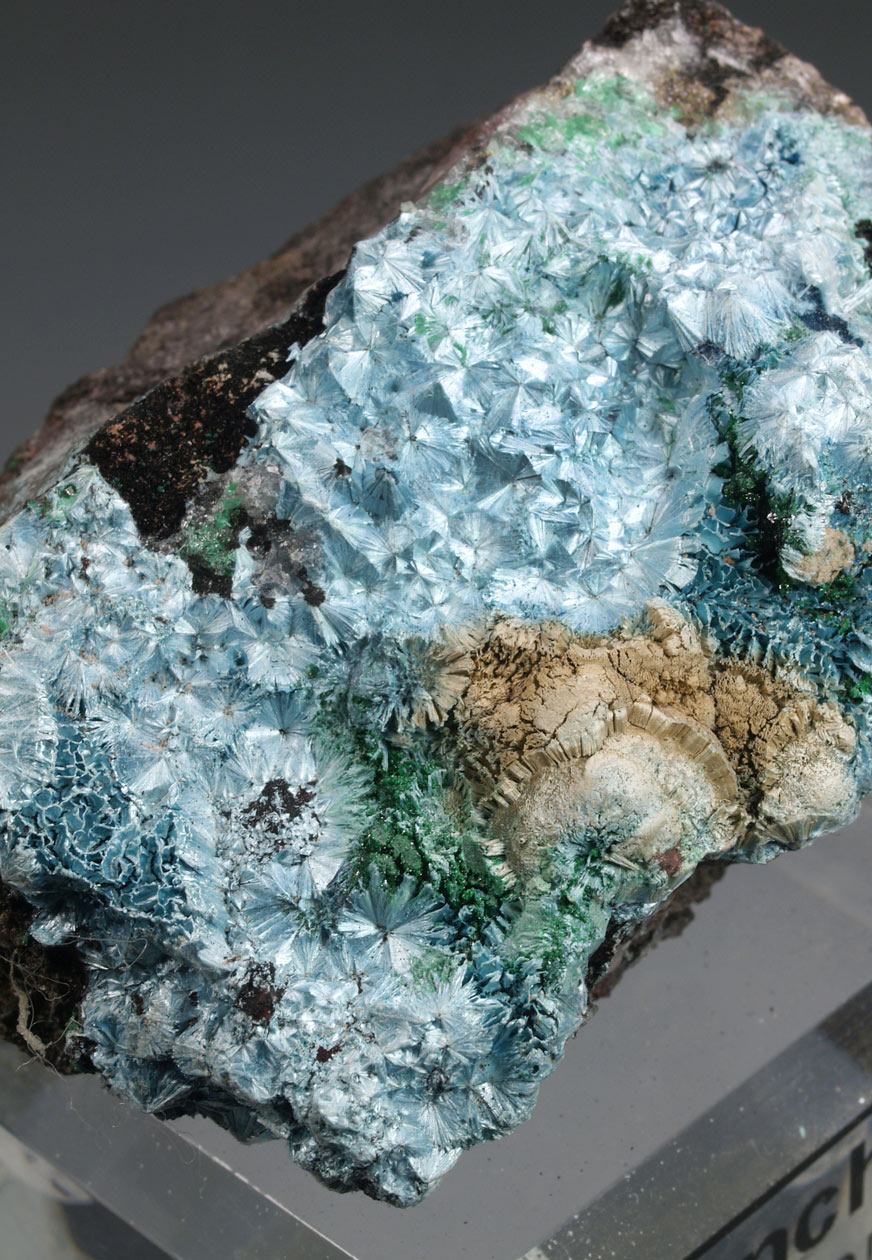
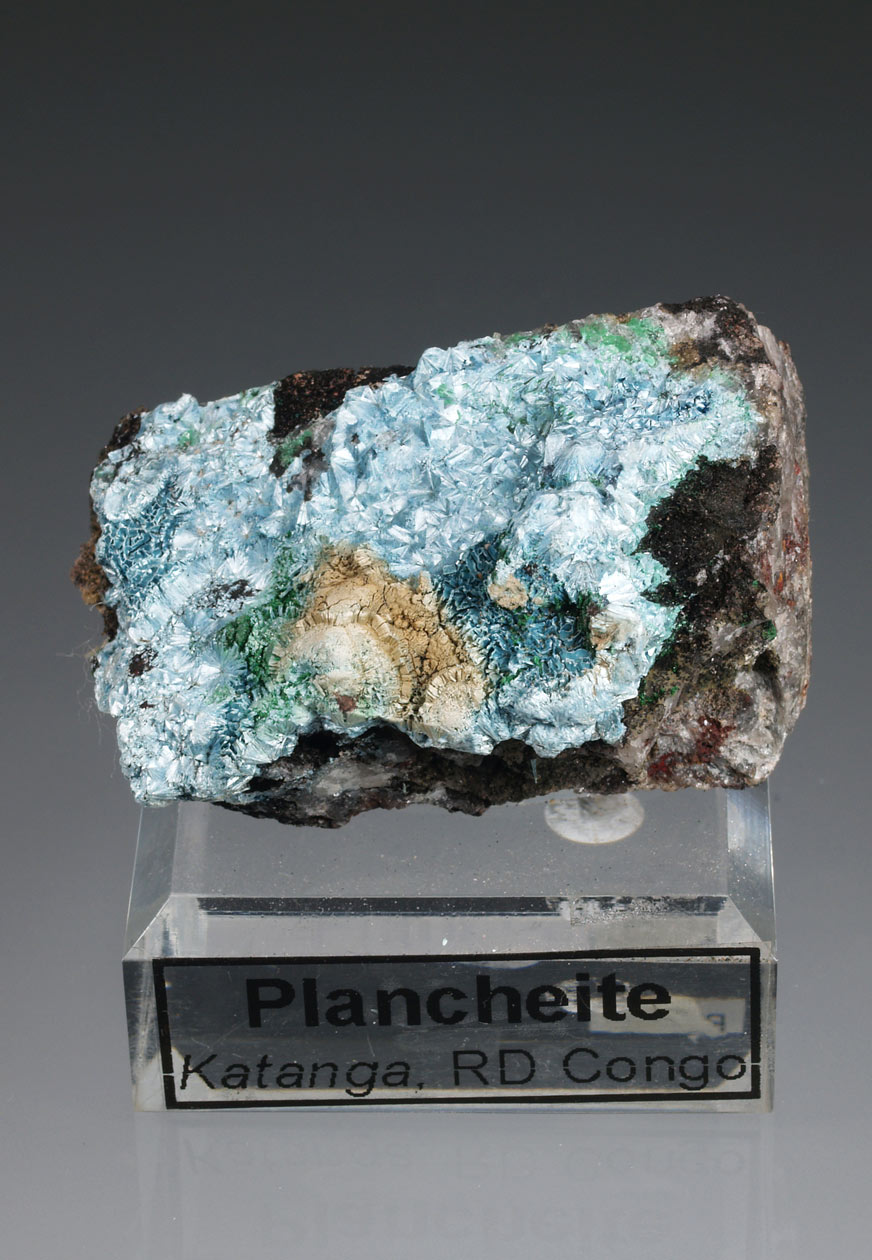
Rico ejemplar formado por agregados globulares de cristales aciculares de color azul claro, brillantes. Se acompañan de pequeños cristales prismáticos de malaquita y diminutos cristales de dioptasa. Un ejemplar muy brillante y característico para la especie, poco habituales.