- Home About RM Minerals
- Virtual Photo Museum Blog RM Contact
- Microscopy and instruments How to Buy Disclaimer
Copyright 2010-2026
www.rosellminerals.com



-Madagascar-Chadel.jpg)
-Madagascar-Chadel-a.jpg)
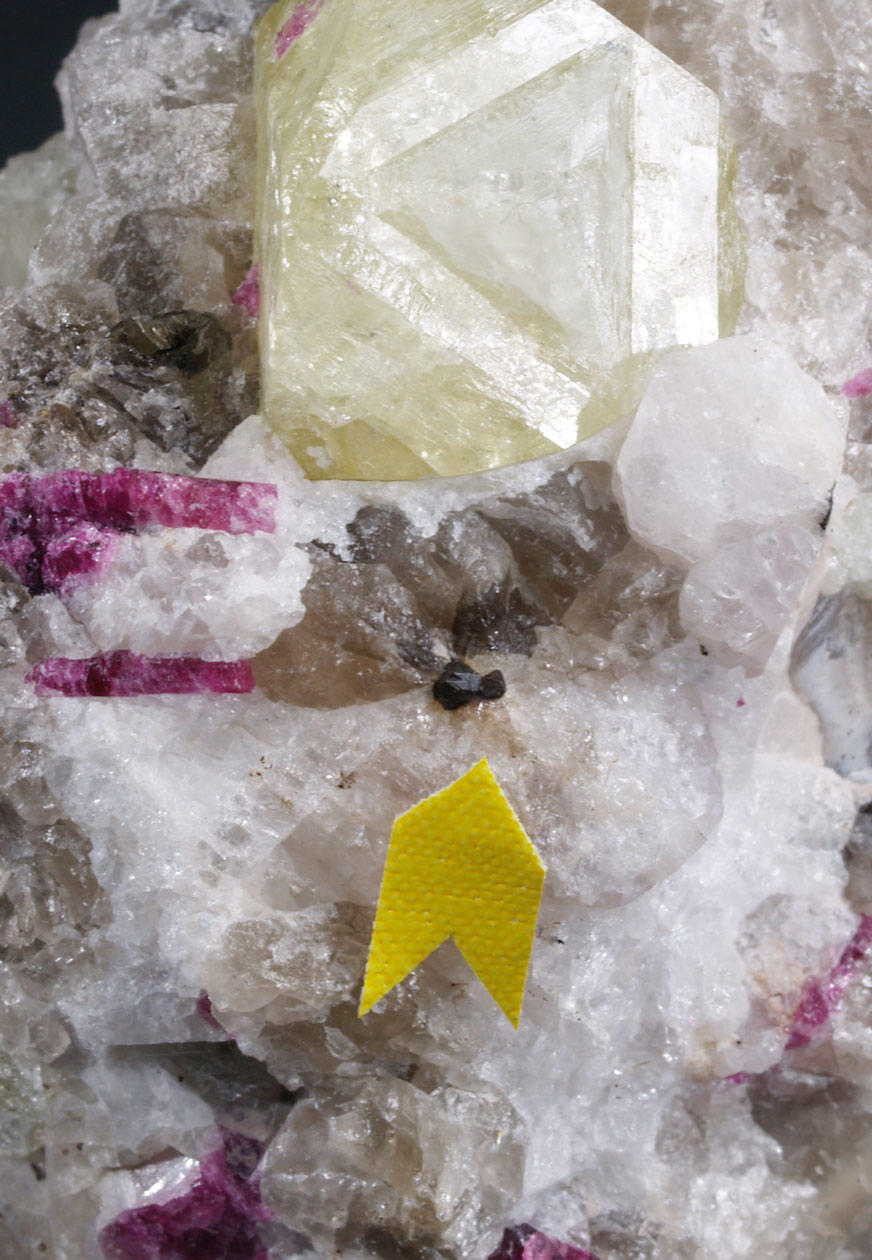
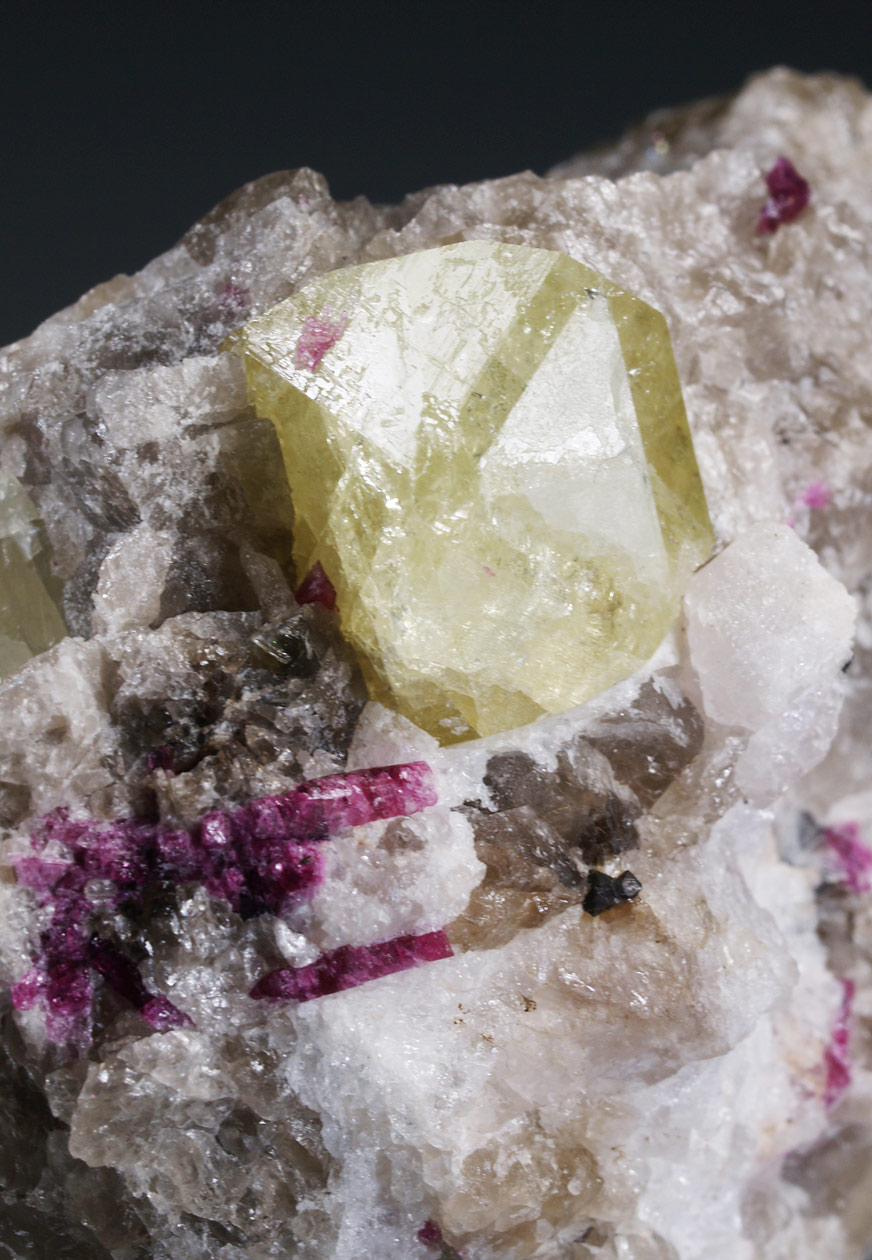
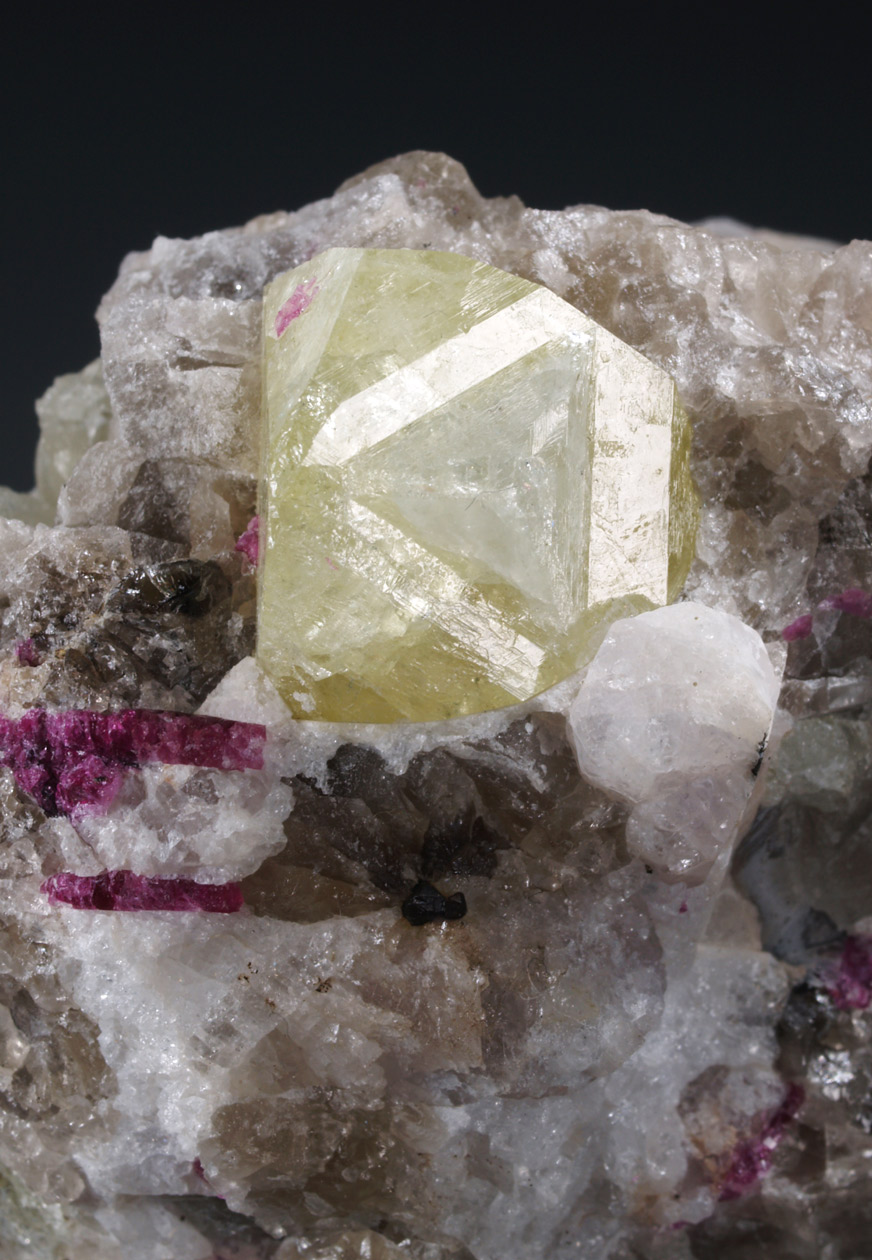
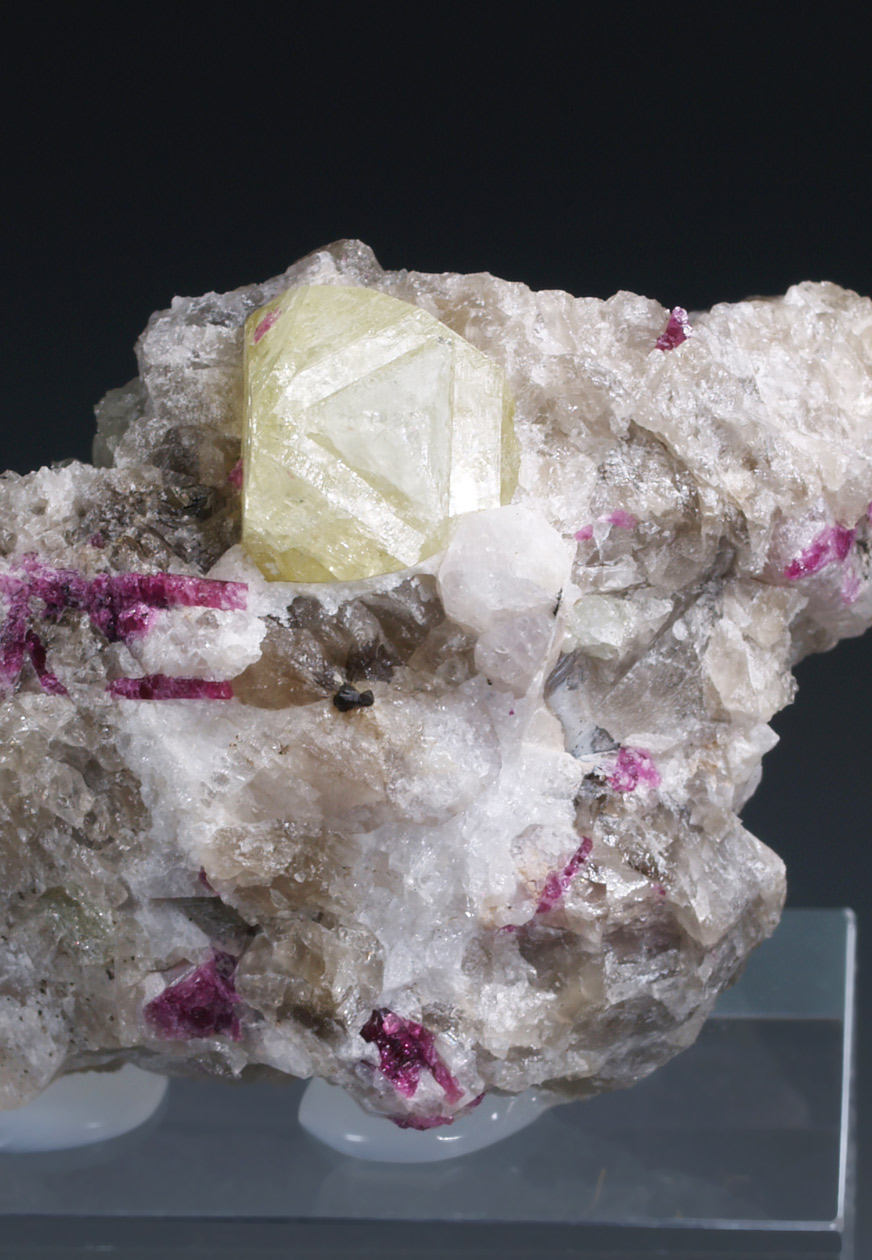
Old specimen from the Jean Chadel collection, labeled as coming from Fort Dauphin, a locality situated in southeastern Madagascar, often found on many old labels even though the original locality may have been different. It consists of several crystals embedded in a matrix with quartz and mica.
-Madagascar-Chadel-e.jpg)
-kiranomena-madagascar.jpg)
-kiranomena-madagascar-c.jpg)
-kiranomena-madagascar-a.jpg)
Exceptional specimen of samarskite-(Y) composed of several crystals, with well-defined faces and edges, and an orange patina that adds an aesthetic touch. A remarkable piece. It bears an adhered numerical label reading #459, and the classic label from Z. Gabelica (Belgium) has been preserved.
-kiranomena-madagascar-b.jpg)
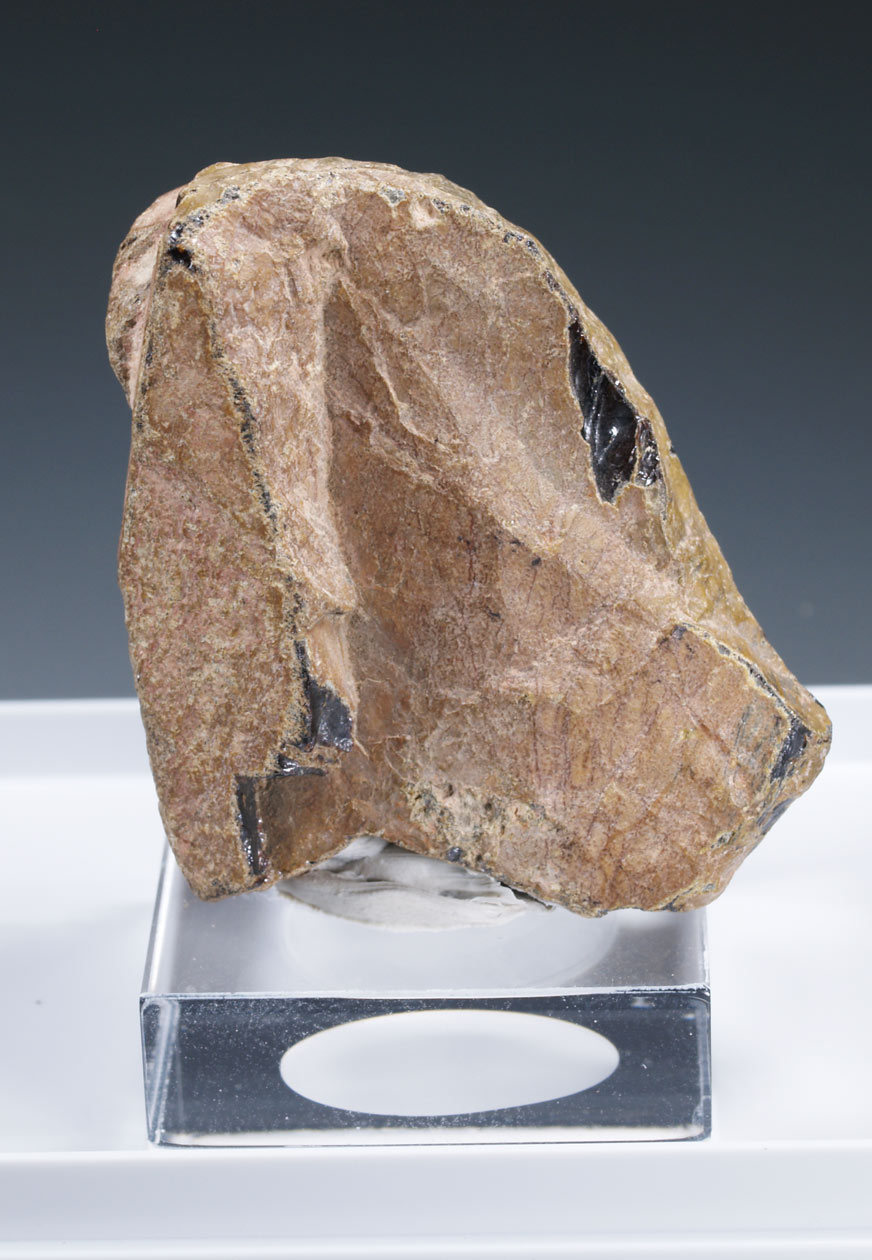
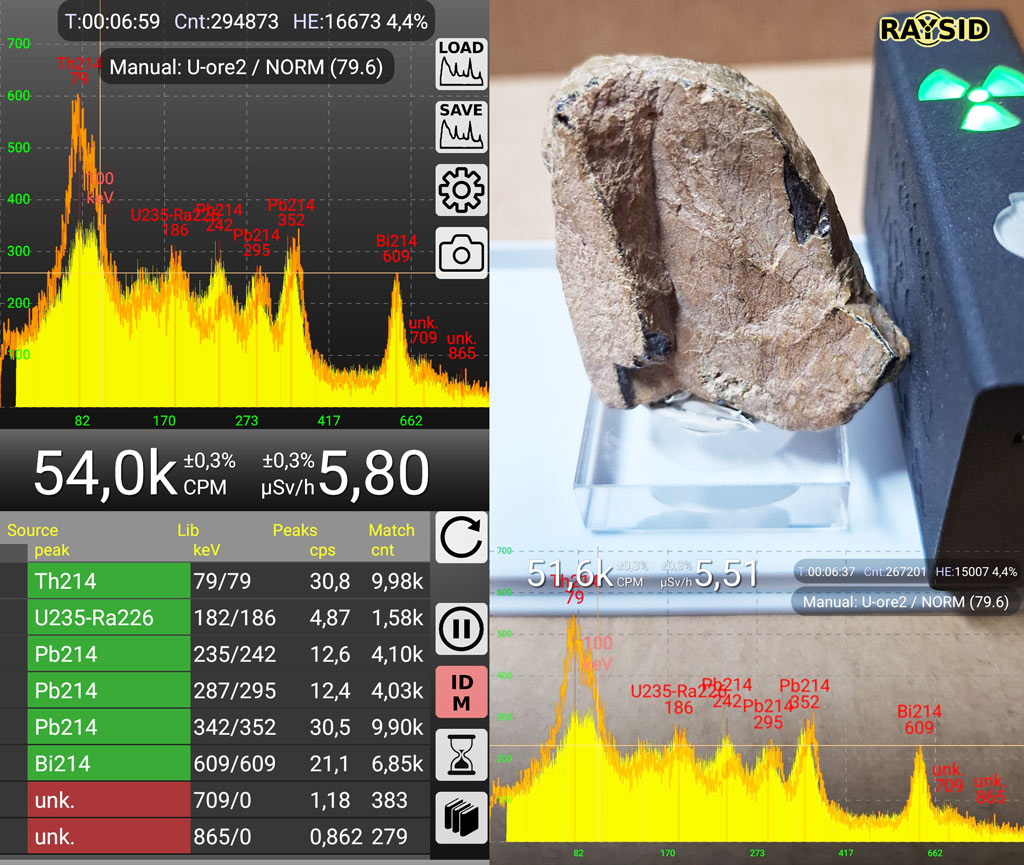
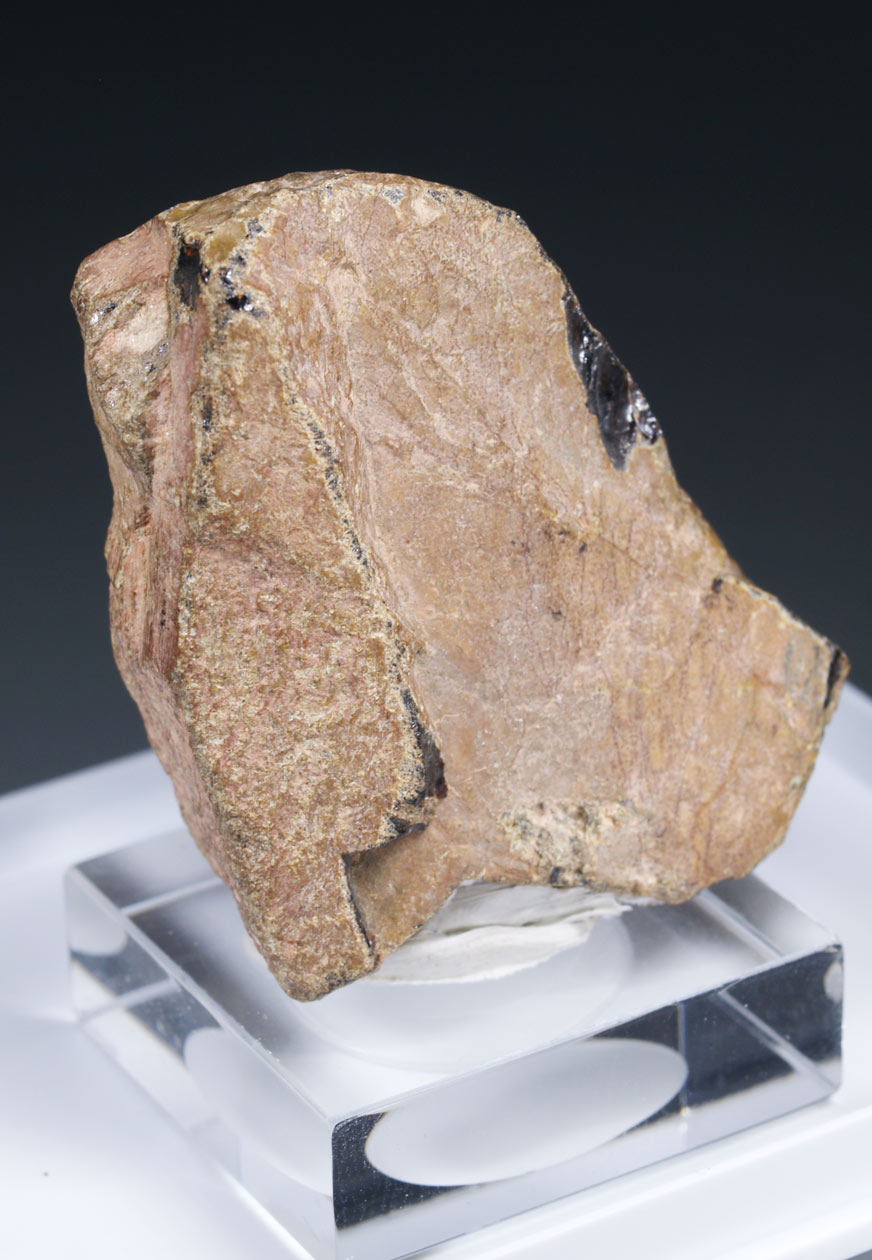
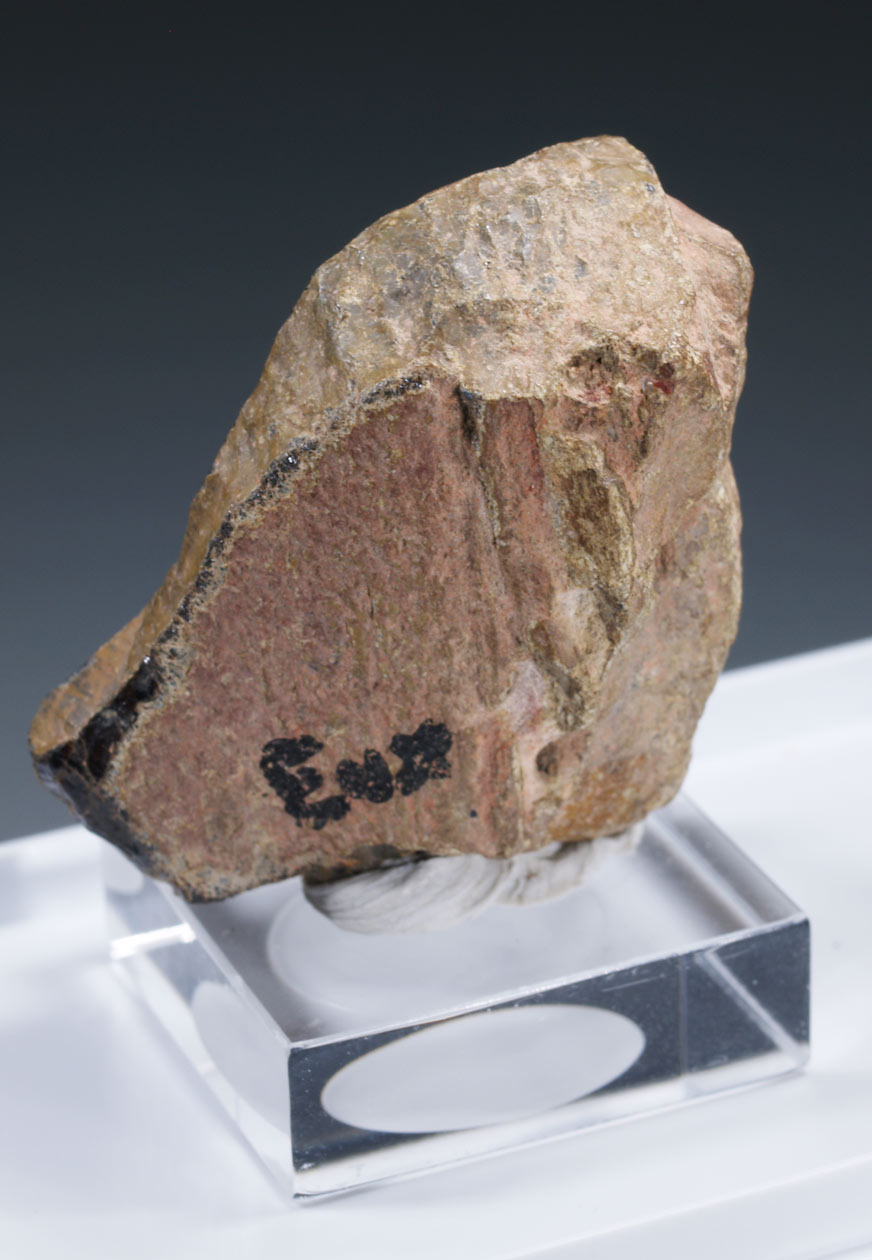
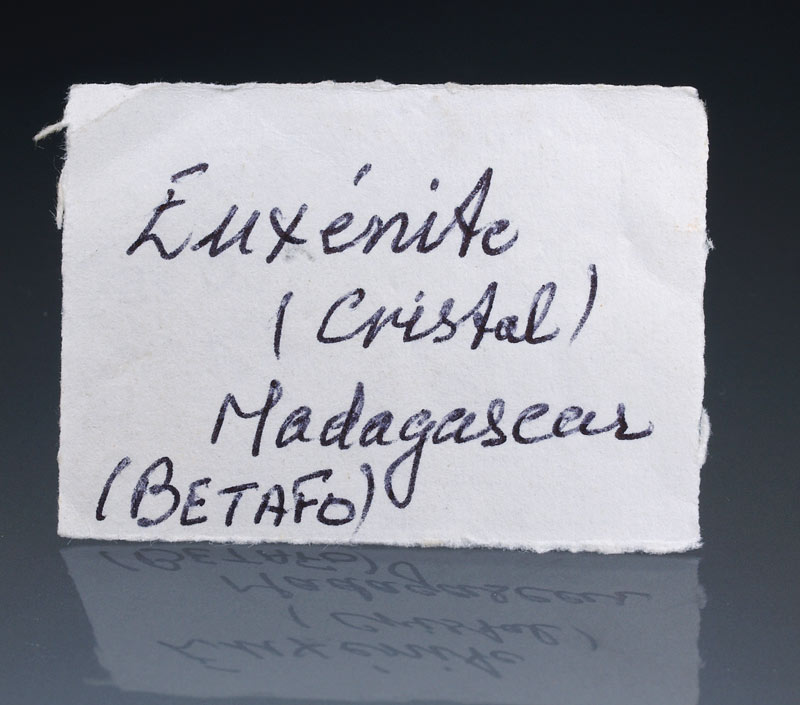
uxenite-(Y) is a niobium oxide containing titanium and tantalum, along with rare-earth elements (REE) such as yttrium and cerium, calcium, and radioactive elements like thorium and uranium, which give it detectable radioactivity. This specimen shows a group of parallel-growth crystals displaying the typical ochre-toned patina. Gamma-ray spectrometer measurements have been performed and are attached.
-anjoma-madagascar.jpg)
-anjoma-madagascar-b.jpg)
Very good specimen of samarskite-(Y) formed by several crystals, interpenetrated, showing defined faces and edges, which is quite uncommon. It is covered by a beige to light brown patina that has been identified as ilmenorutile. The original label states the locality as 'Aparaky'; however, this word is not a locality—in Malagasy it translates to 'depending on the site', indicating that the earliest label originally meant 'somewhere in Anjoma Ramartina'. It shows an adhered numerical label reading #346, and the classic label from Z. Gabelica (Belgium) has been preserved."
-anjoma-madagascar-a.jpg)
-anjoma-madagascar-b.jpg)
-anjoma-madagascar-c.jpg)
-anjoma-madagascar-a.jpg)
-anjoma-madagascar.jpg)
Very good specimen of samarskite-(Y) formed by several crystals, interpenetrated, showing defined faces and edges, which is quite uncommon. It is covered by a beige to light brown patina that has been identified as ilmenorutile. The original label states the locality as 'Aparaky'; however, this word is not a locality—in Malagasy it translates to 'depending on the site', indicating that the earliest label originally meant 'somewhere in Anjoma Ramartina'. It shows an adhered numerical label reading #347, and the classic label from Z. Gabelica (Belgium) has been preserved.
-anjoma-madagascar-e.jpg)
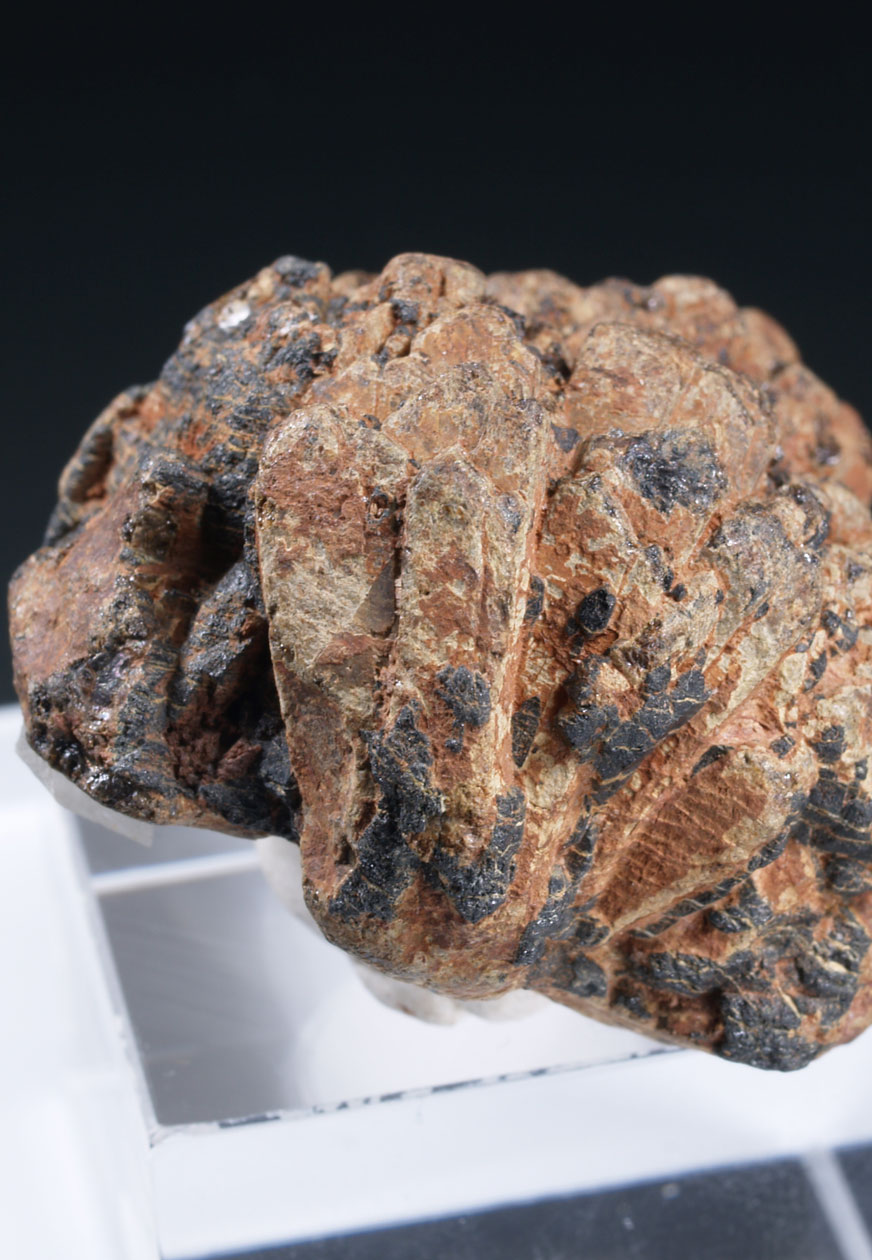
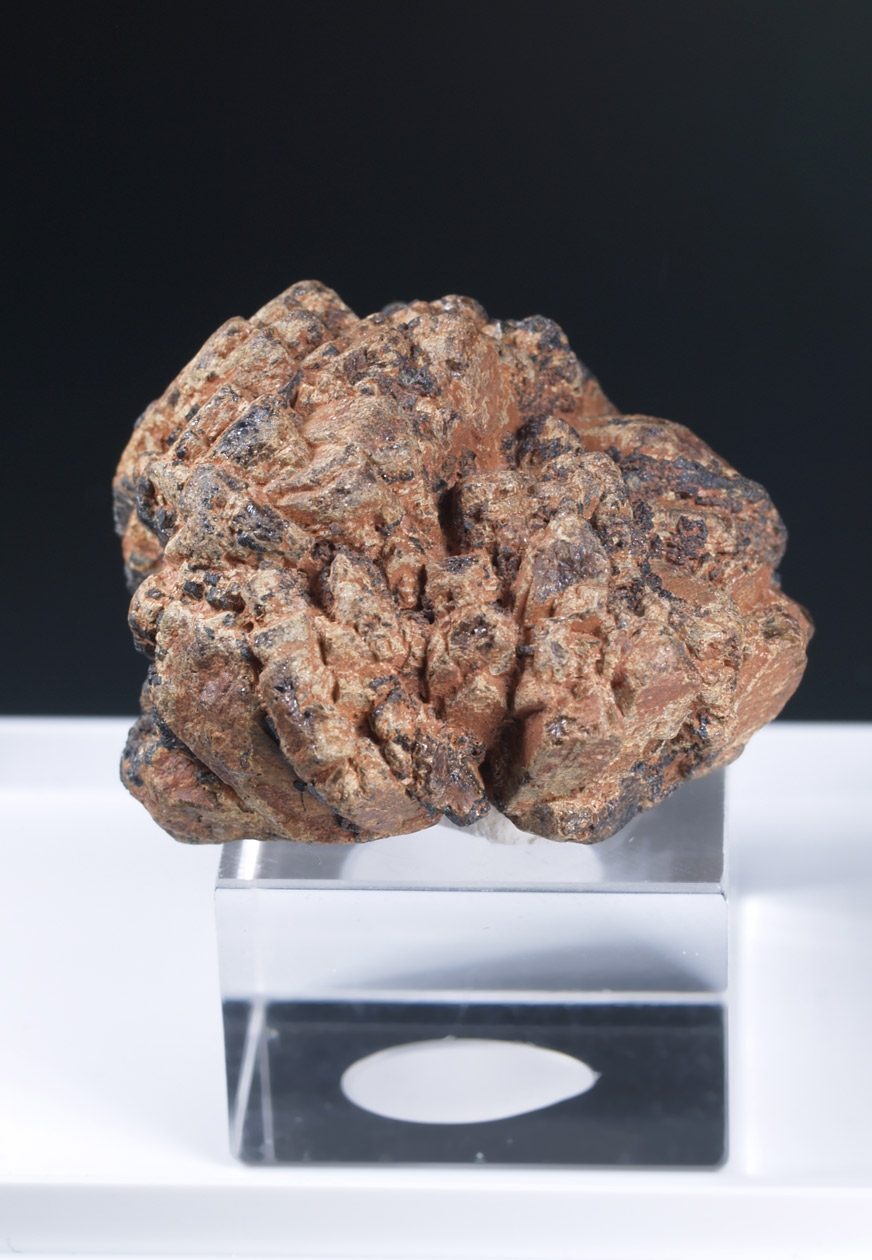
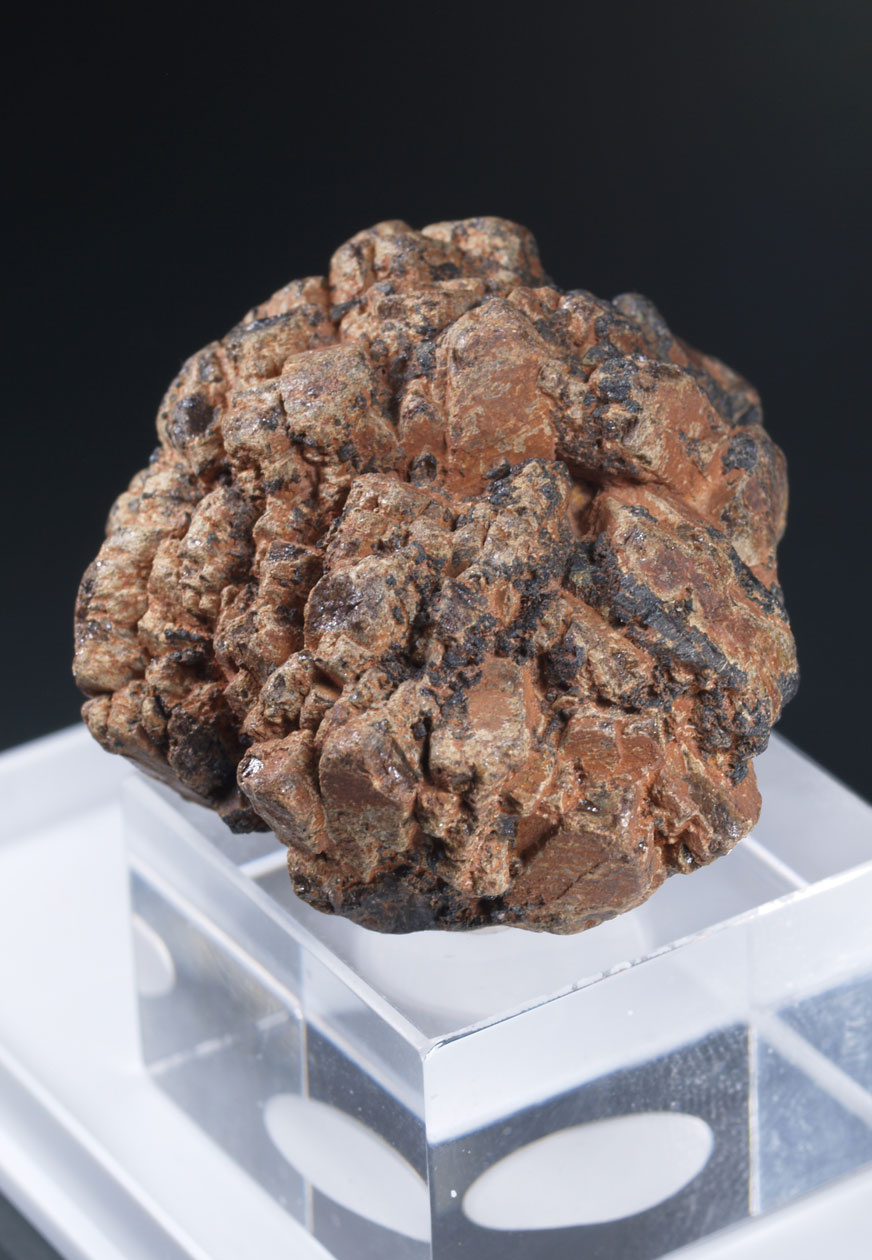
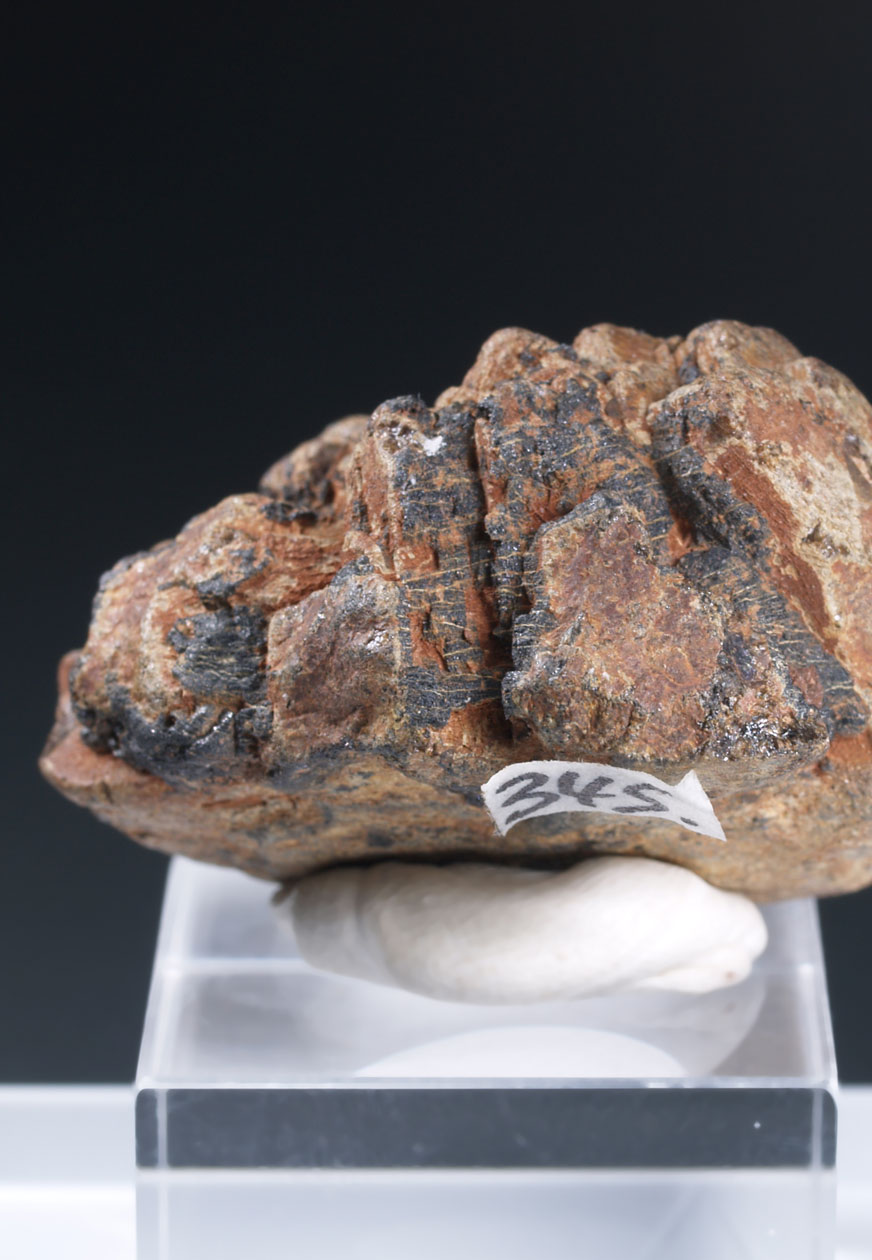
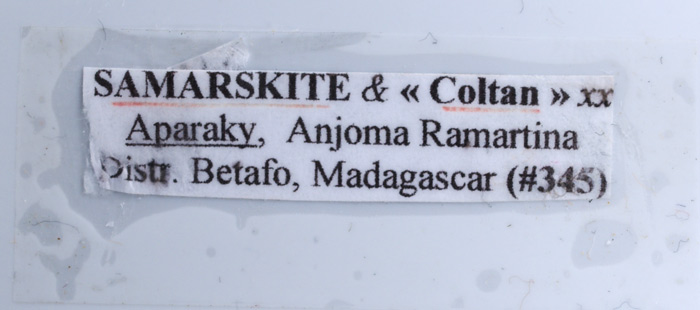
Very good specimen of samarskite-(Y) formed by several crystals, interpenetrated, showing defined faces and edges, which is quite uncommon. It is covered by a beige to light brown patina that has been identified as ilmenorutile. The original label states the locality as 'Aparaky'; however, this word is not a locality—in Malagasy it translates to 'depending on the site', indicating that the earliest label originally meant 'somewhere in Anjoma Ramartina'. It shows an adhered numerical label reading #345, and the classic label from Z. Gabelica (Belgium) has been preserved.
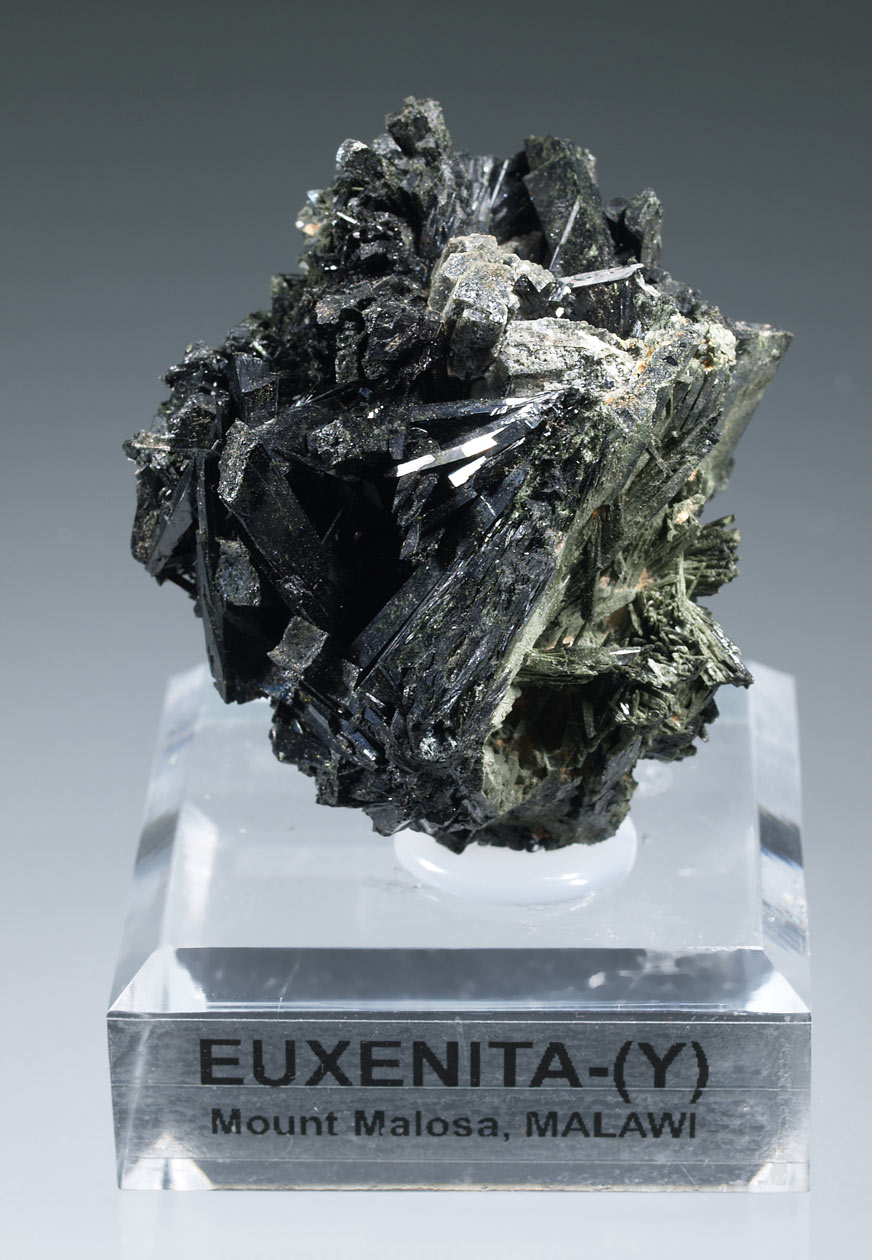
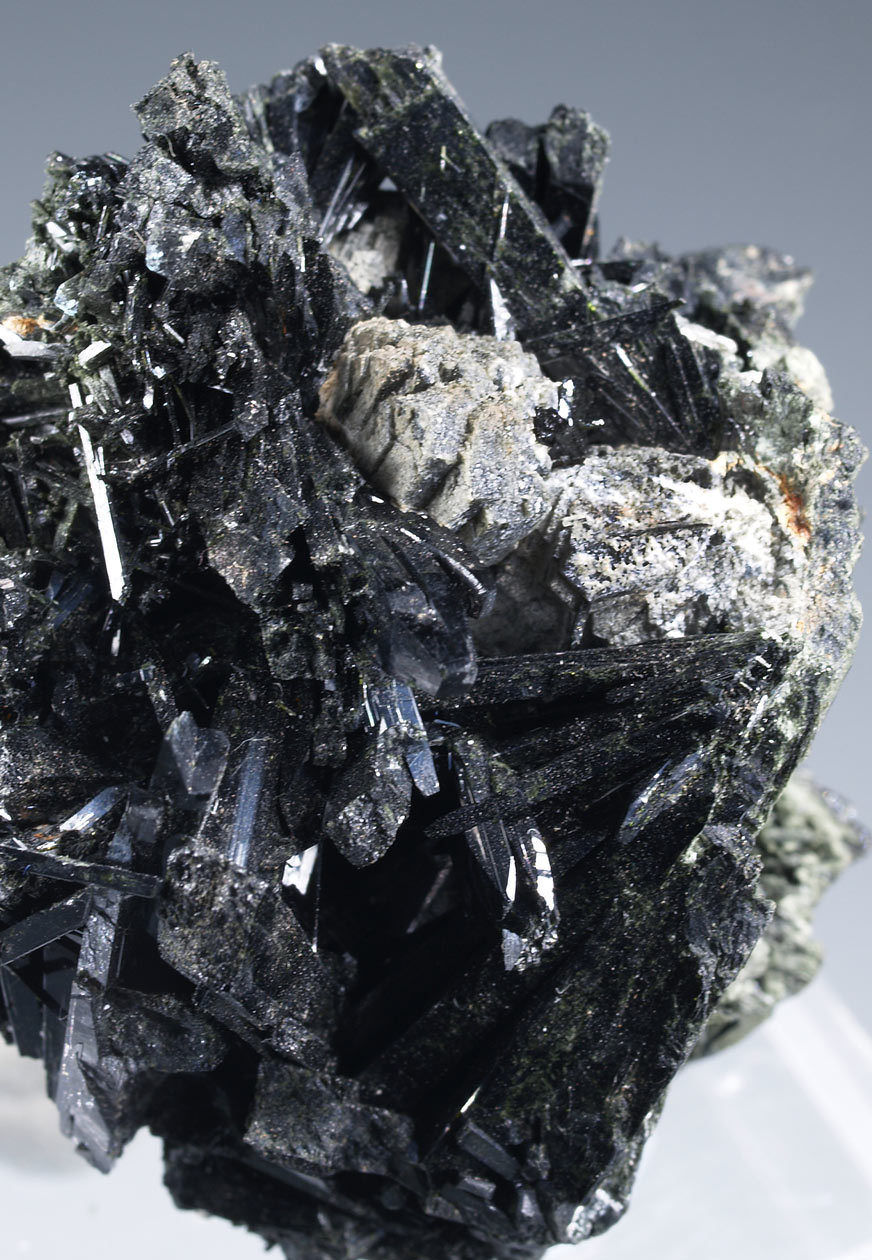
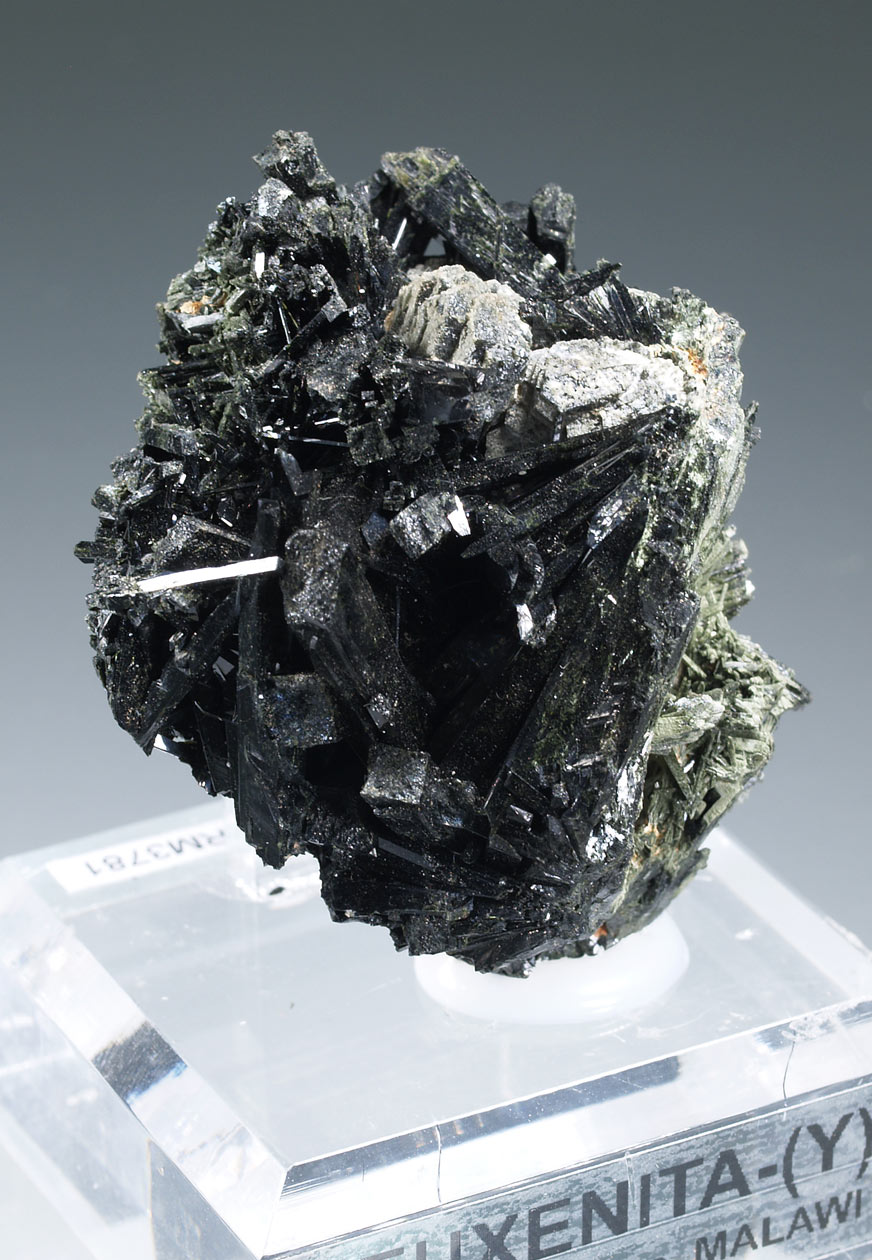
Euxenite-(Y) crystals from this classic Malawian locality are not commonly seen on the market. In this specimen, we can observe numerous prismatic aegirine crystals of an intense green color, highly lustrous, and arranged in divergent aggregates. The euxenite-(Y) crystals display a grayish color and exhibit polysynthetic growth patterns on their faces. This piece comes from the Rolando collection, and the original label is included.
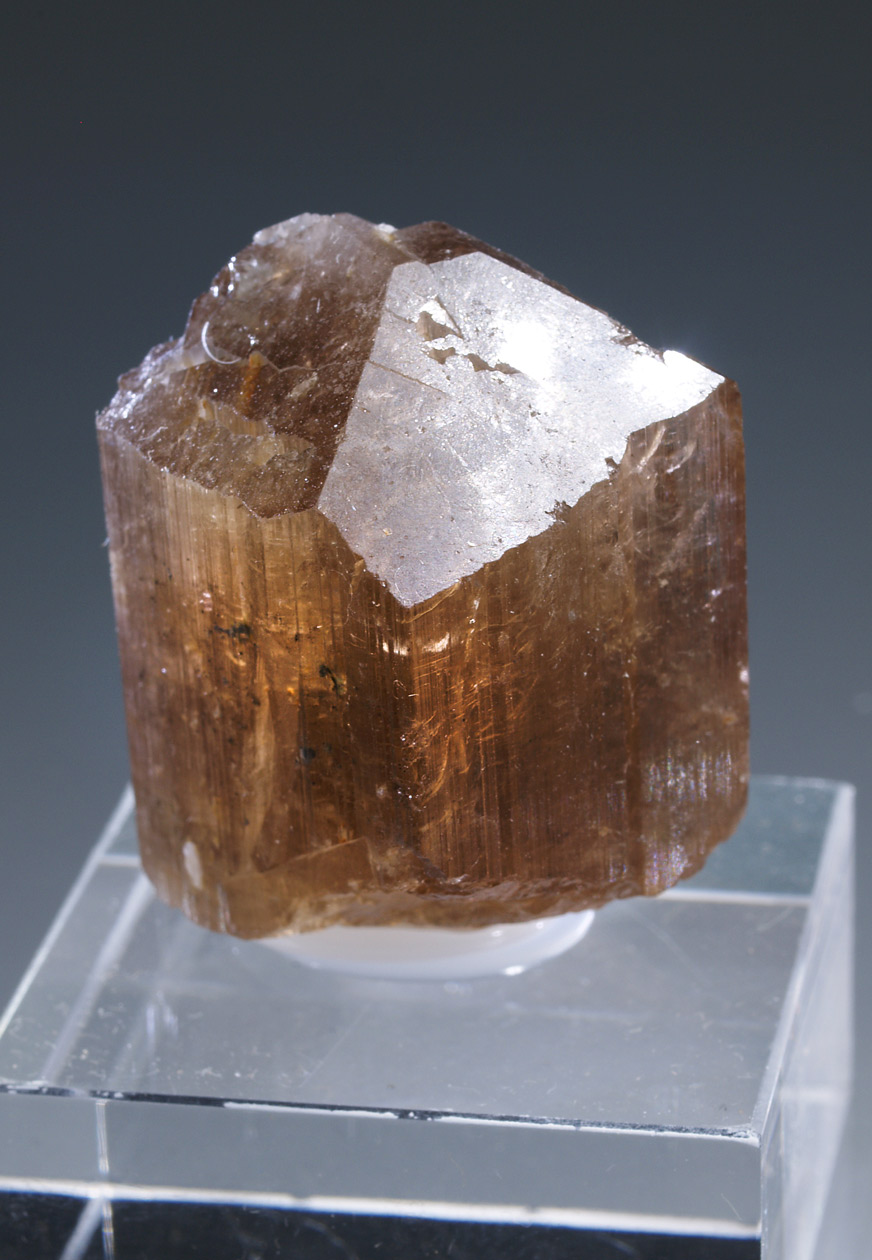
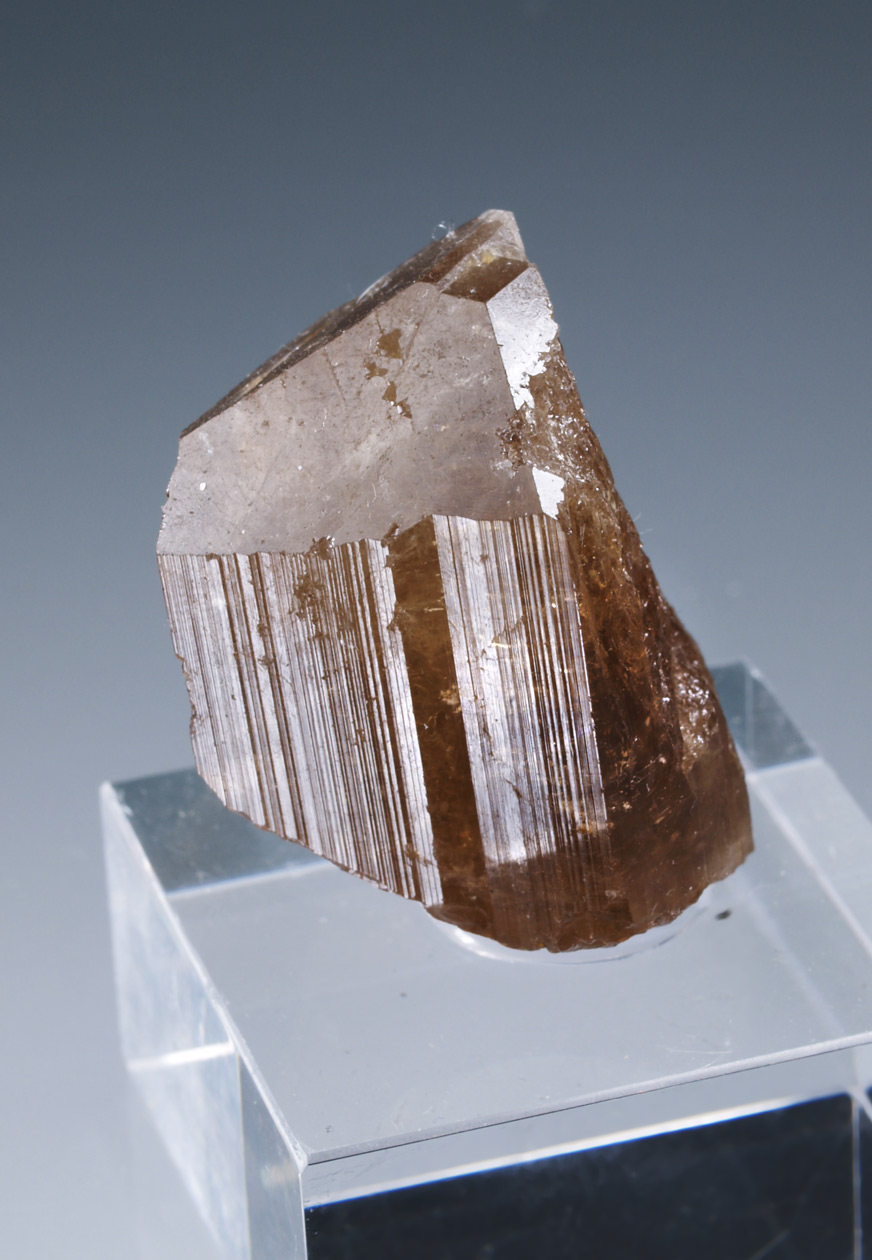
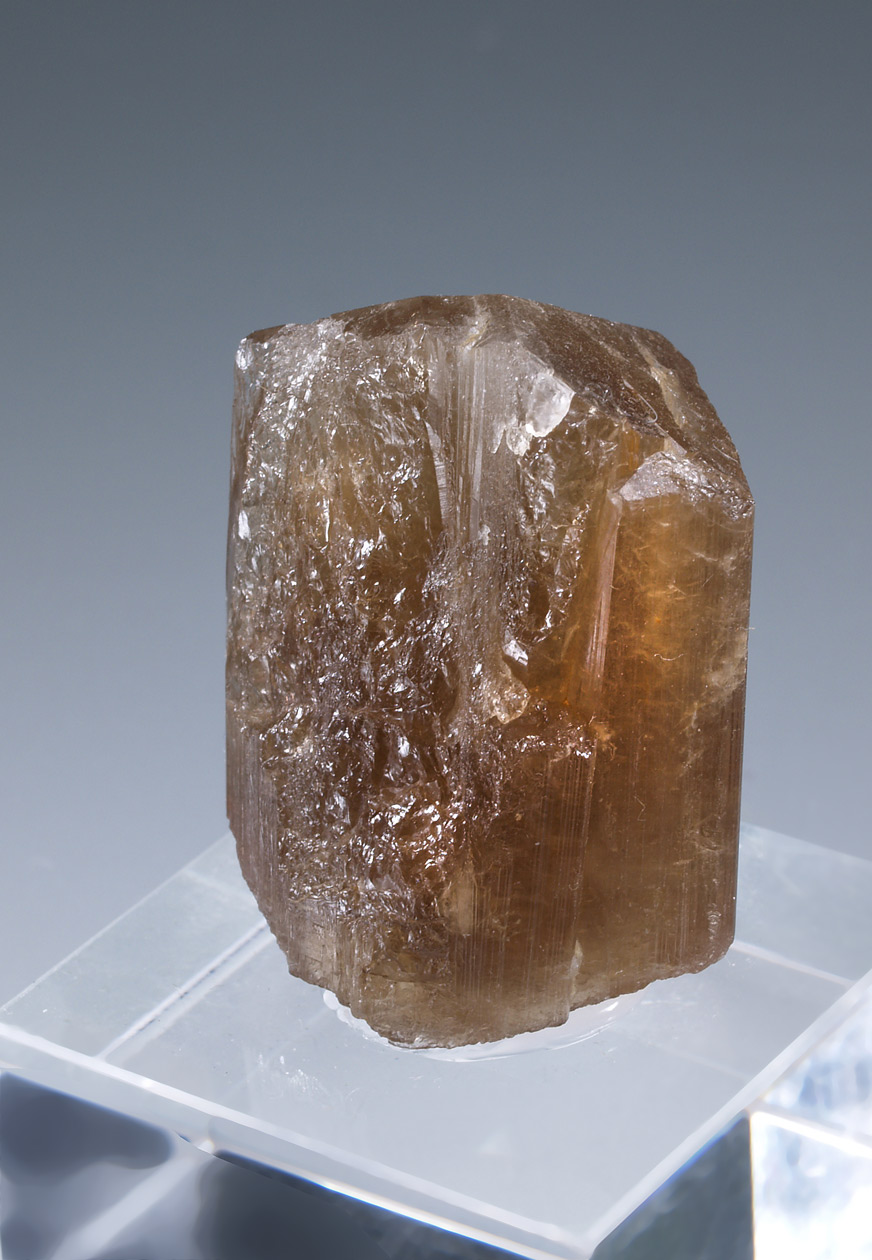
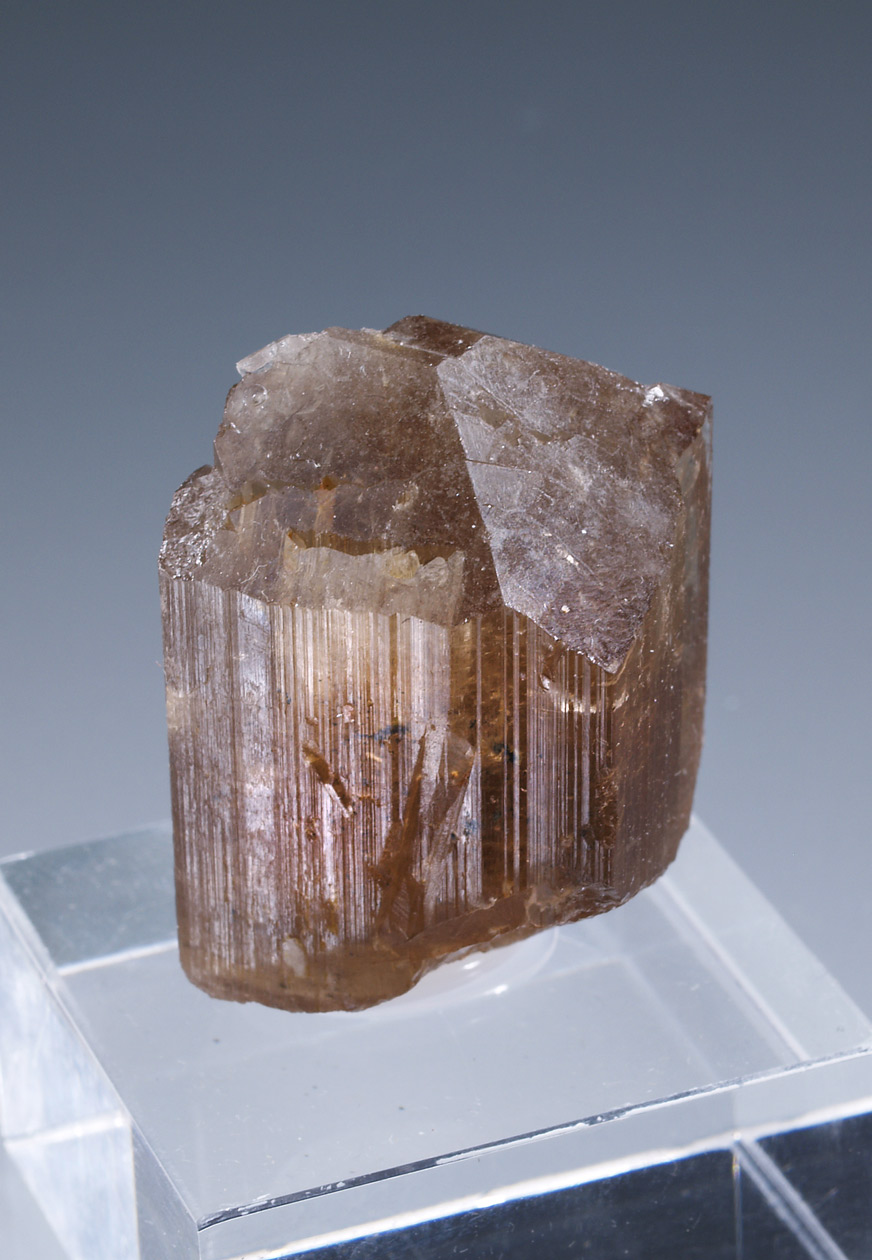
Recently, specimens of scapolite of Moroccan origin have appeared on the market. The analyses we have carried out on several specimens indicate that it is mainly marialite, since the proportion of Na (marialite, Na₄Al₃Si₉O₂₄Cl) is higher than that of calcium (meionite, Ca₄Al₆Si₆O₂₄CO₃), and the presence of chlorine is also detected. We can see that the proportion of Ca is quite high, so we are in the middle of the marialite-meionite series. Crystals appear as tetragonal prisms truncated by the basal pinacoid and the first-order dipyramid. Transparent to translucent and with some inclusions. Fluorescent under SW-UL. We will send the analyses to the buyer.
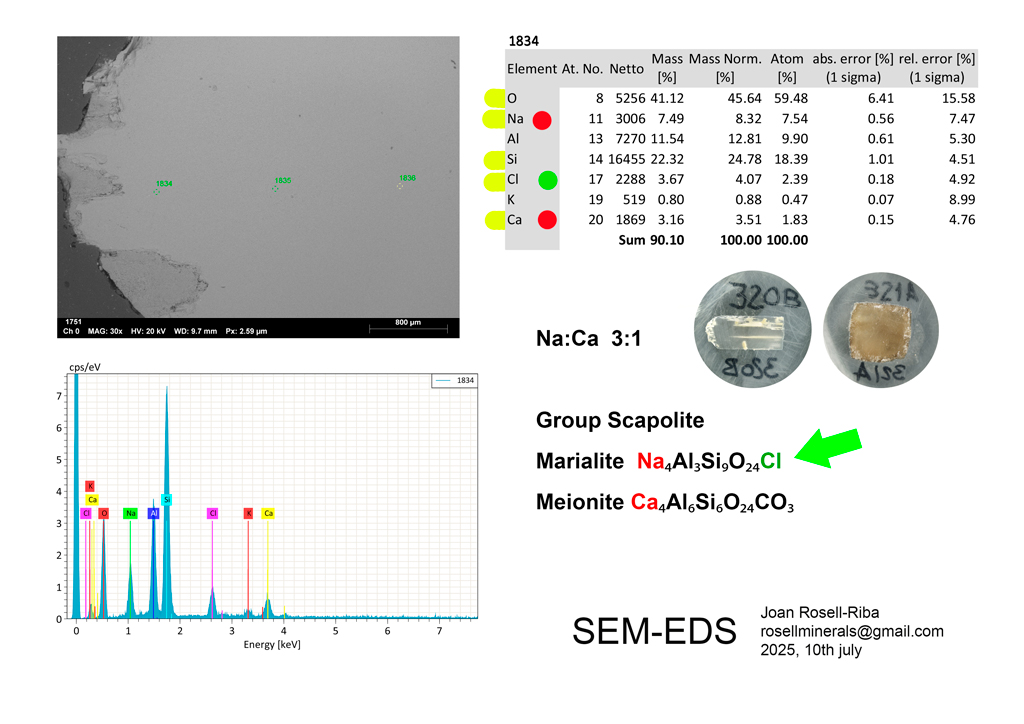
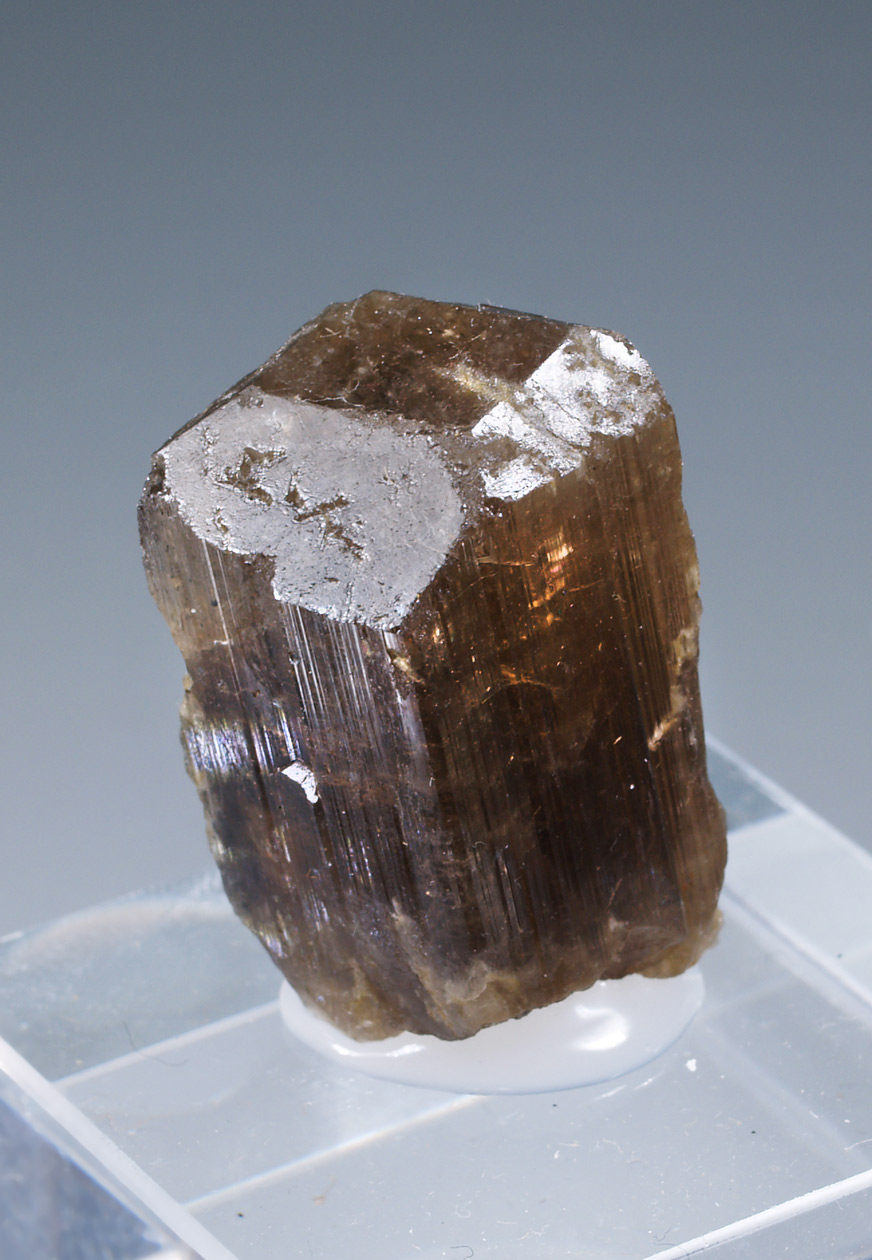
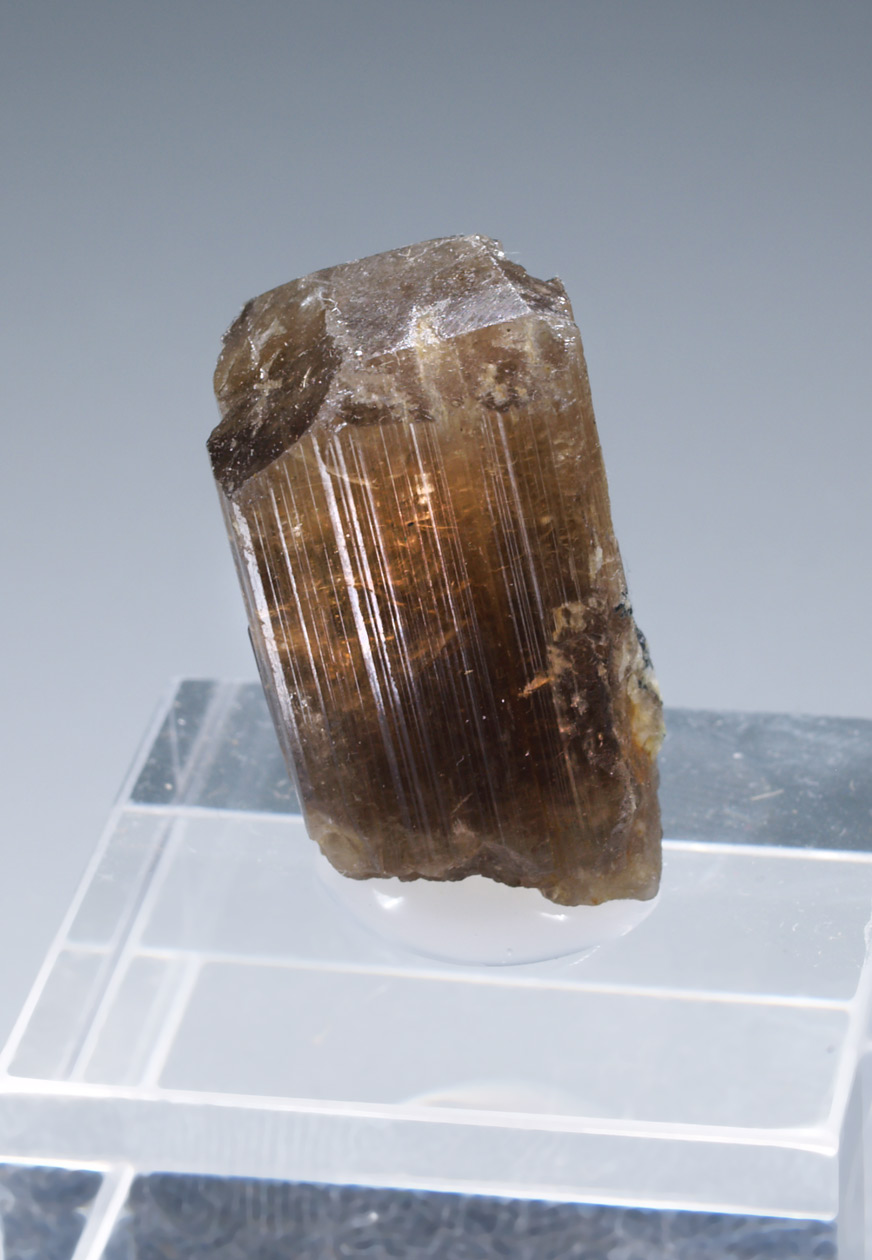
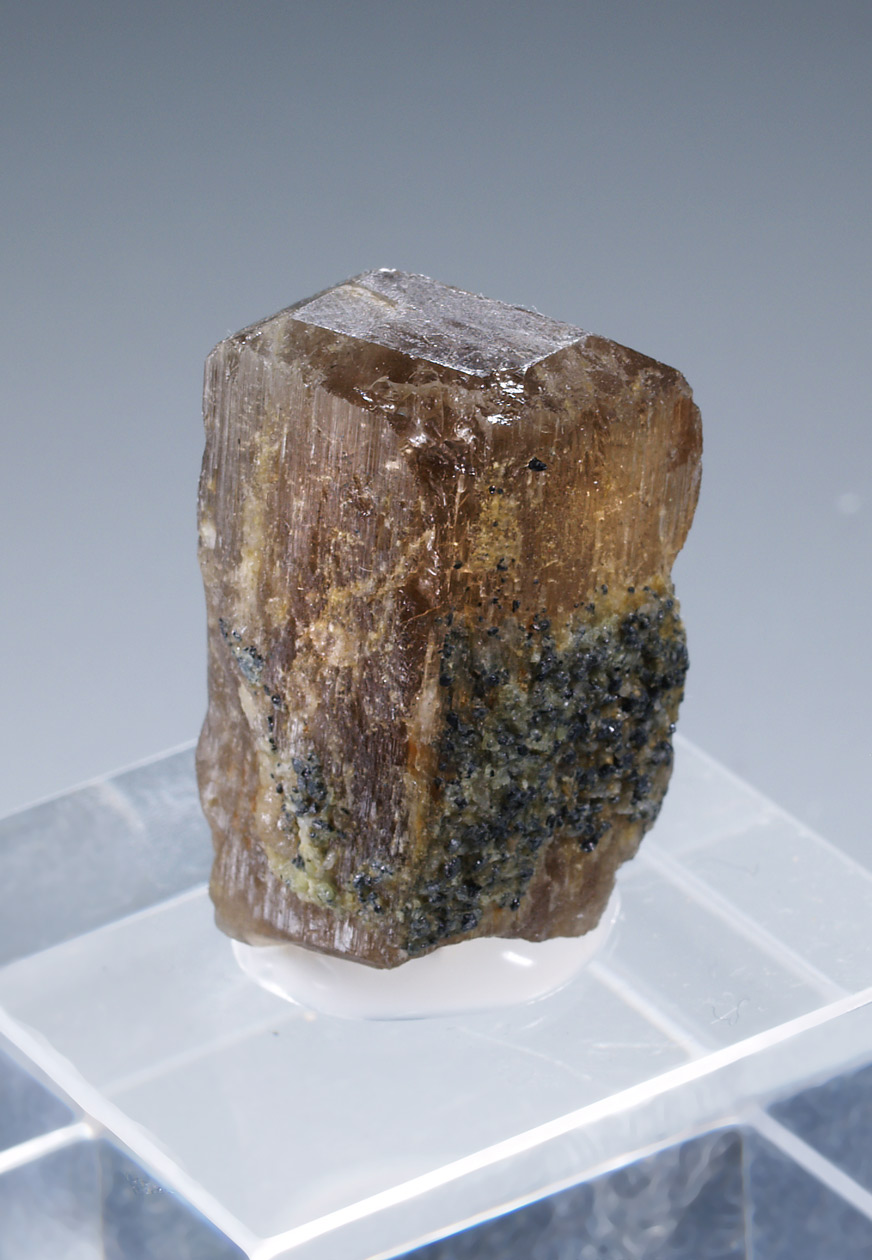
Recently, specimens of scapolite of Moroccan origin have appeared on the market. The analyses we have carried out on several specimens indicate that it is mainly marialite, since the proportion of Na (marialite, Na₄Al₃Si₉O₂₄Cl) is higher than that of calcium (meionite, Ca₄Al₆Si₆O₂₄CO₃), and the presence of chlorine is also detected. We can see that the proportion of Ca is quite high, so we are in the middle of the marialite-meionite series. Crystals appear as tetragonal prisms truncated by the basal pinacoid and the first-order dipyramid. Transparent to translucent and with some inclusions. Fluorescent under SW-UL. We will send the analyses to the buyer.
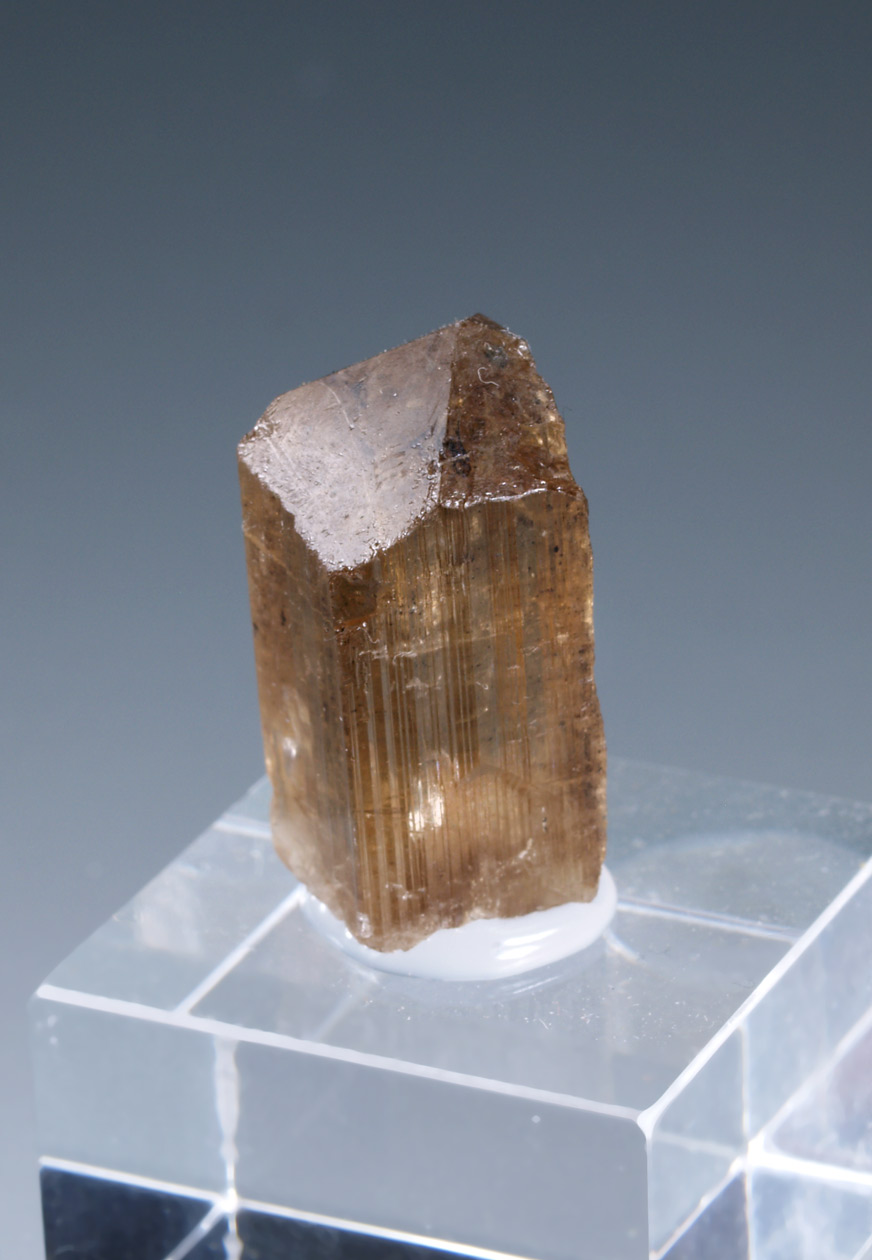
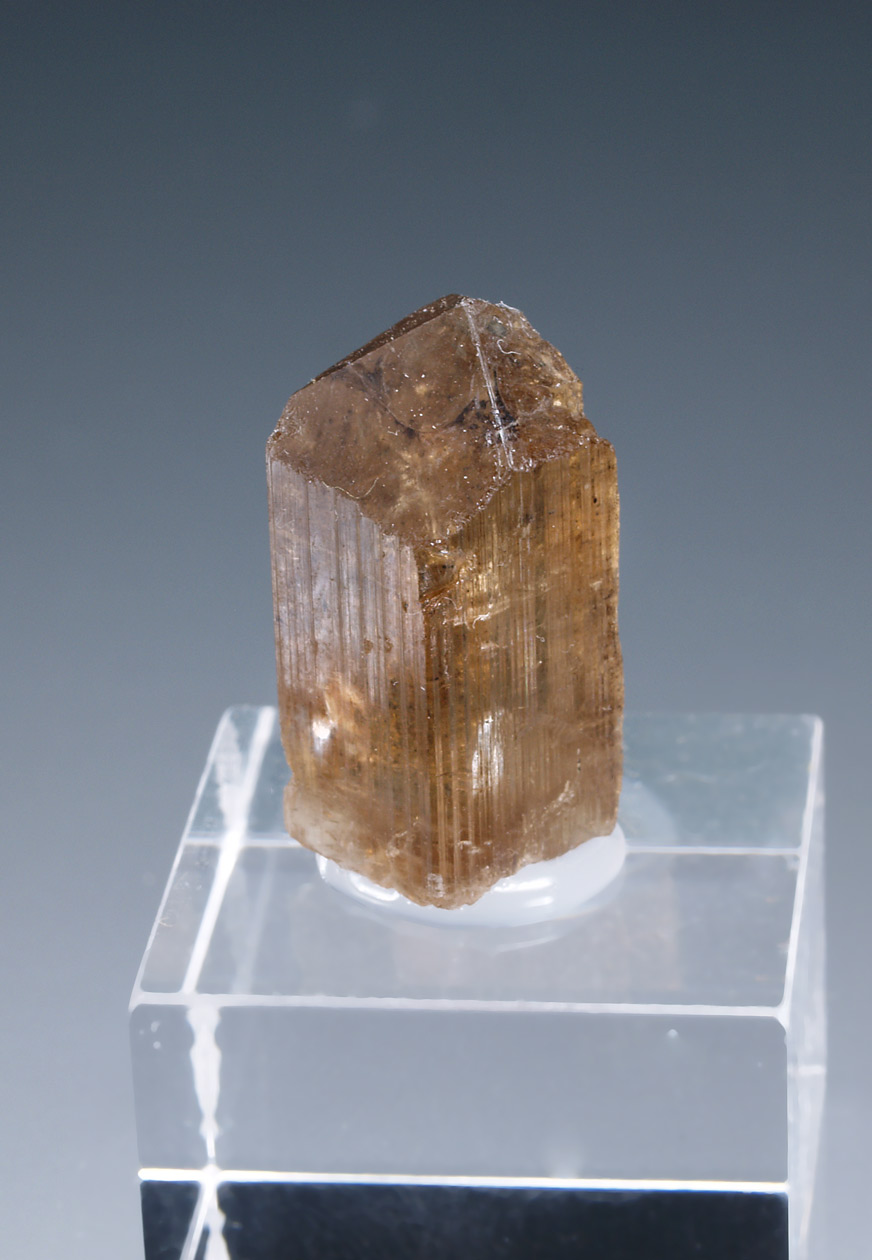
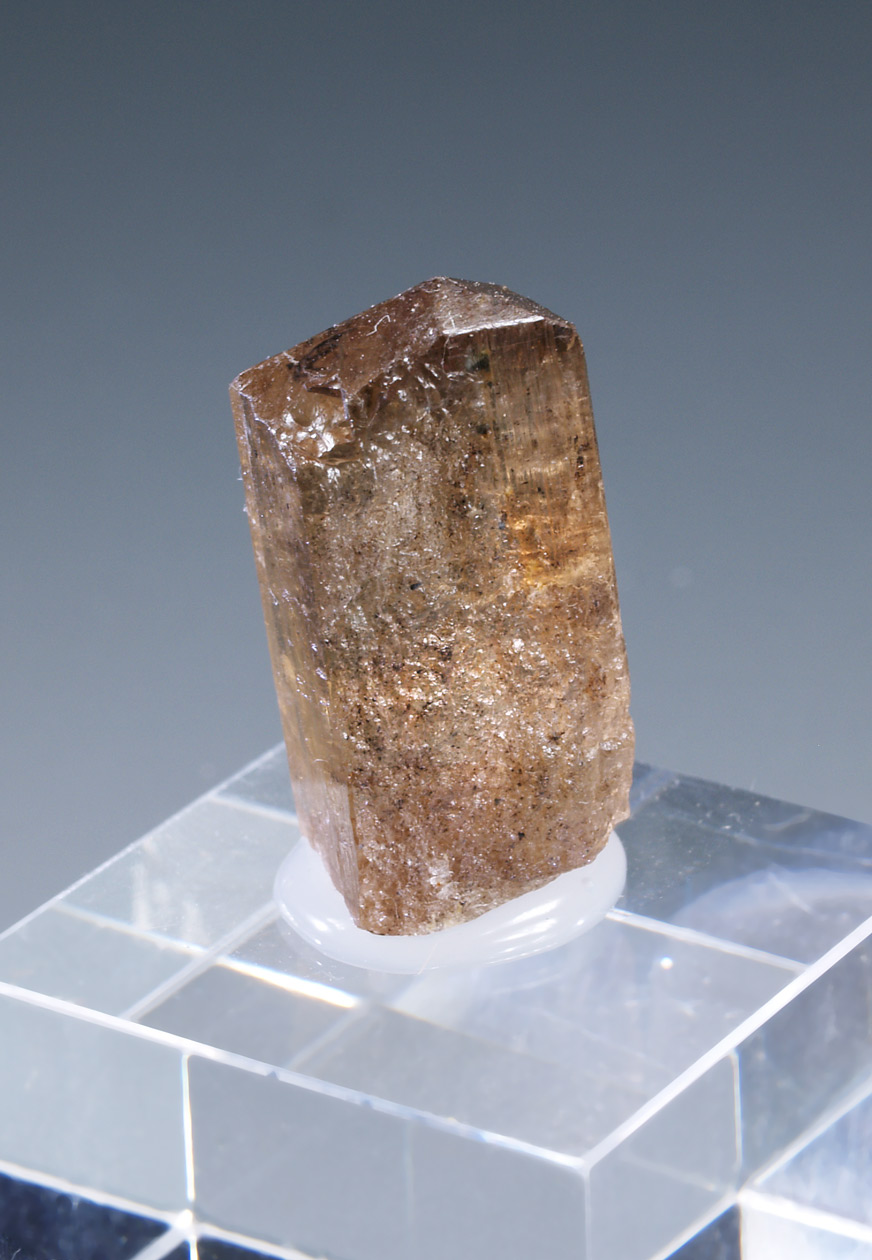
Recently, specimens of scapolite of Moroccan origin have appeared on the market. The analyses we have carried out on several specimens indicate that it is mainly marialite, since the proportion of Na (marialite, Na₄Al₃Si₉O₂₄Cl) is higher than that of calcium (meionite, Ca₄Al₆Si₆O₂₄CO₃), and the presence of chlorine is also detected. We can see that the proportion of Ca is quite high, so we are in the middle of the marialite-meionite series. Crystals appear as tetragonal prisms truncated by the basal pinacoid and the first-order dipyramid. Transparent to translucent and with some inclusions. Fluorescent under SW-UL. We will send the analyses to the buyer.
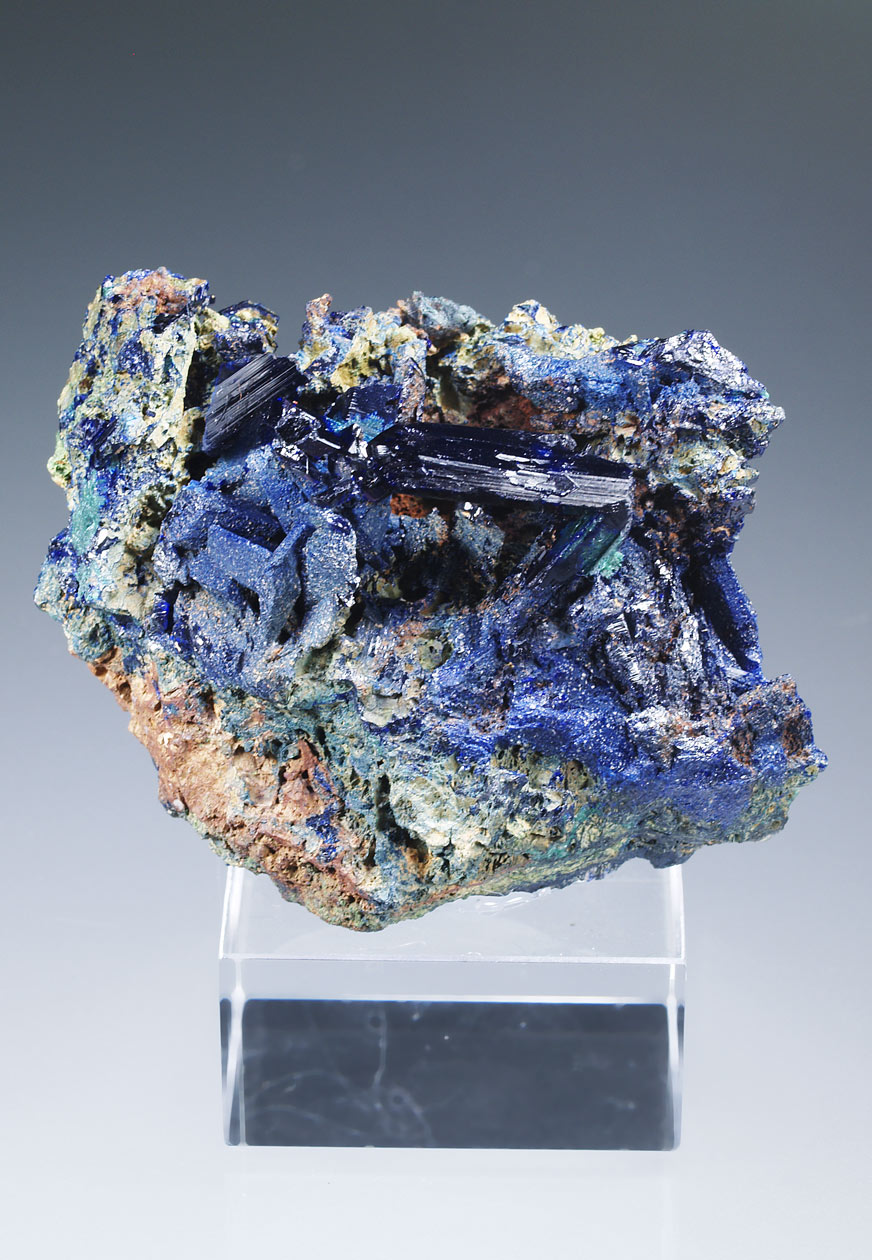
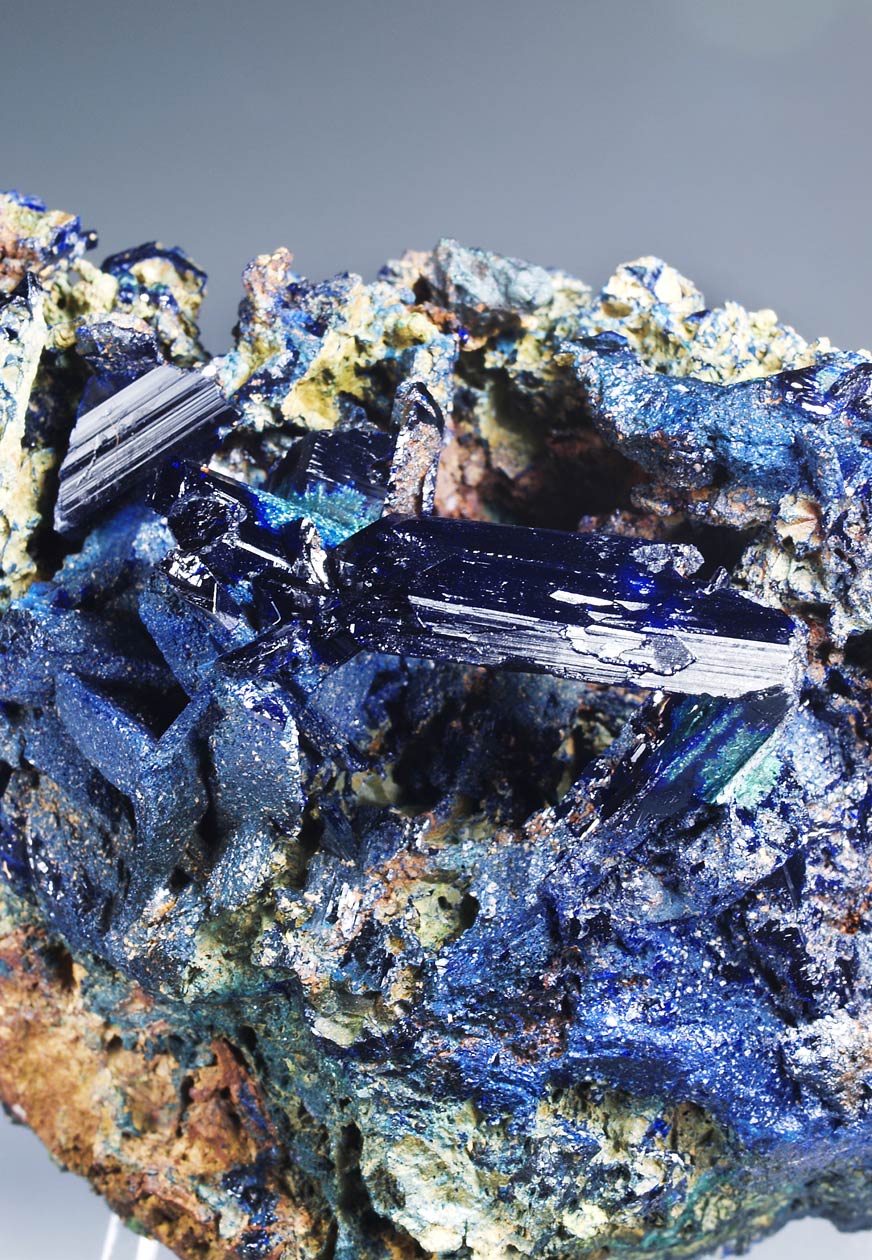
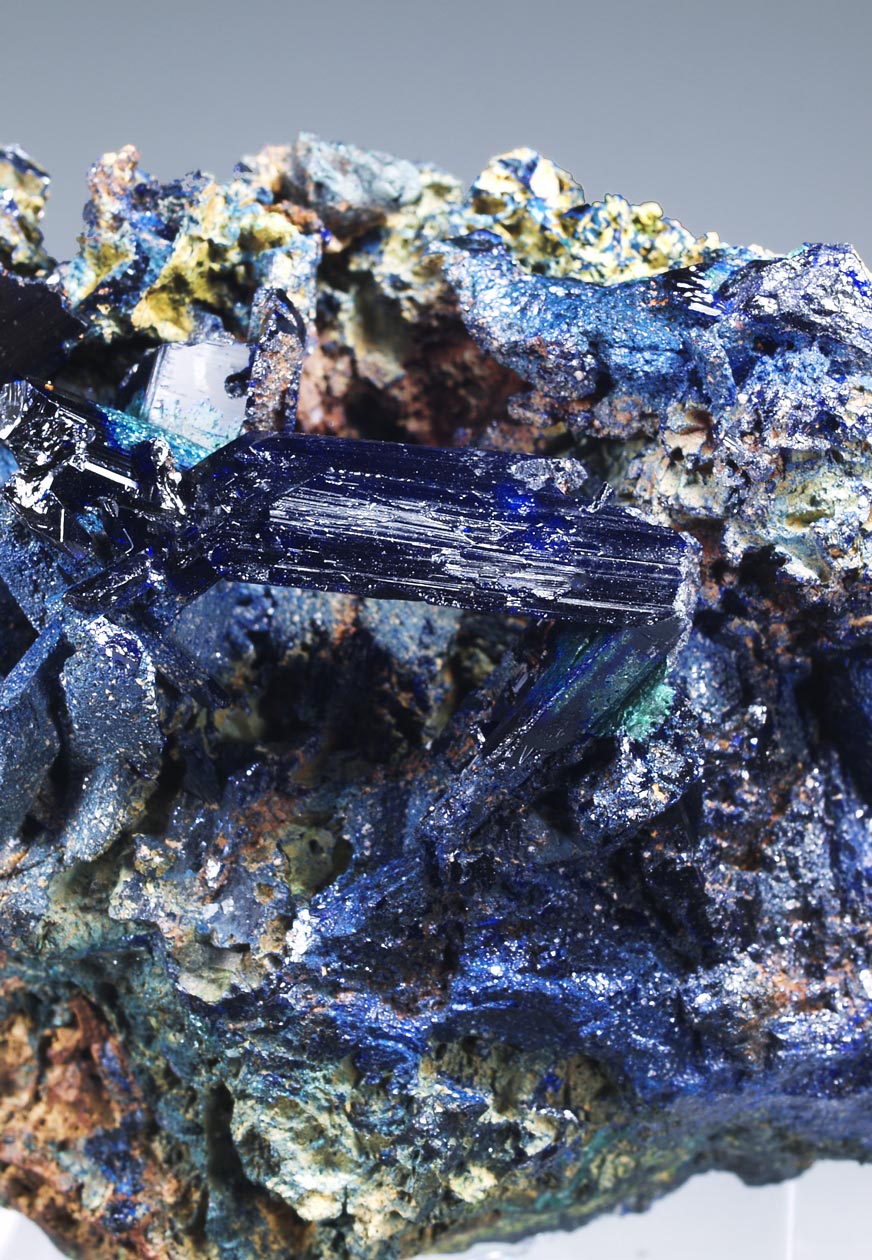
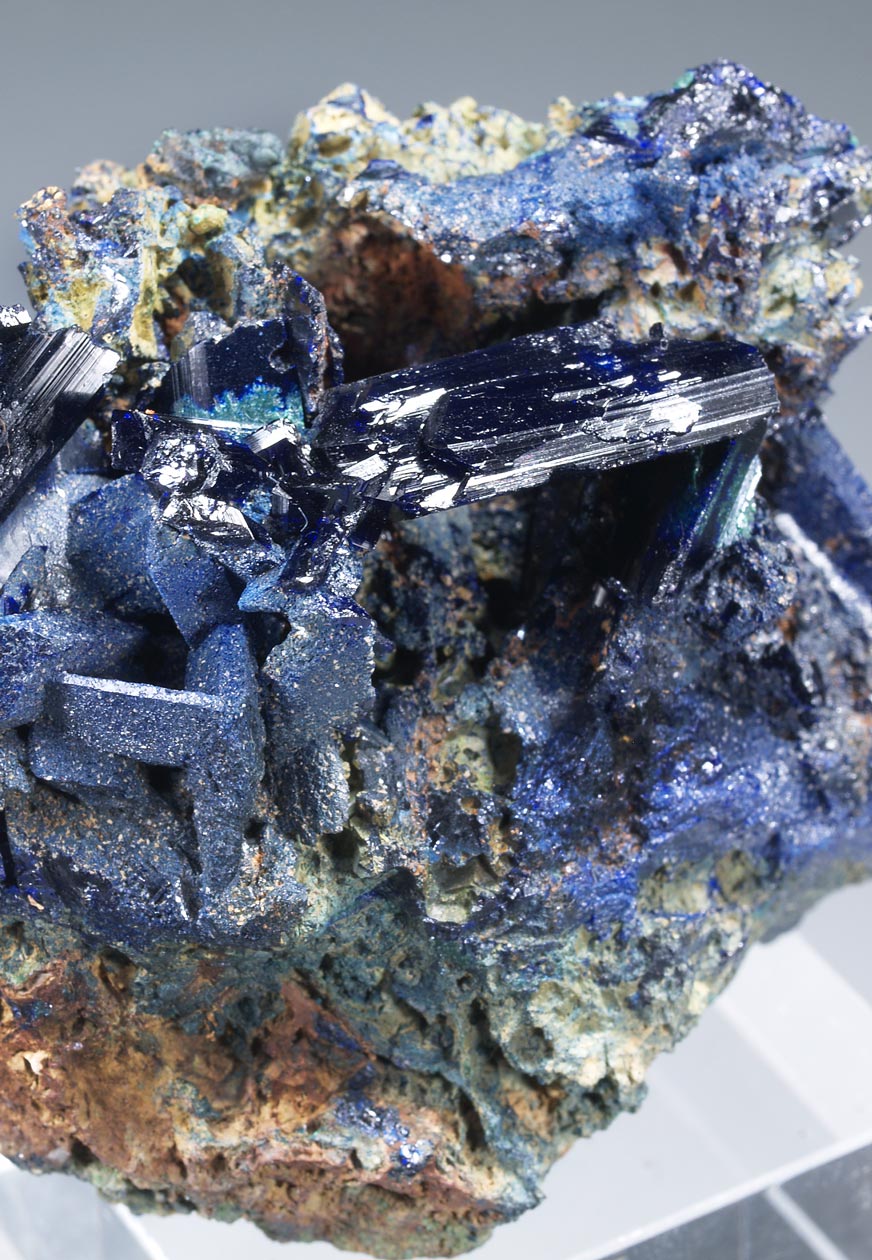
Azurite specimen from this classic Moroccan locality. It shows a group of good-sized, defined, interpenetrating azurite crystals, with several standing out for their luster and characteristic color. A very elegant piece.
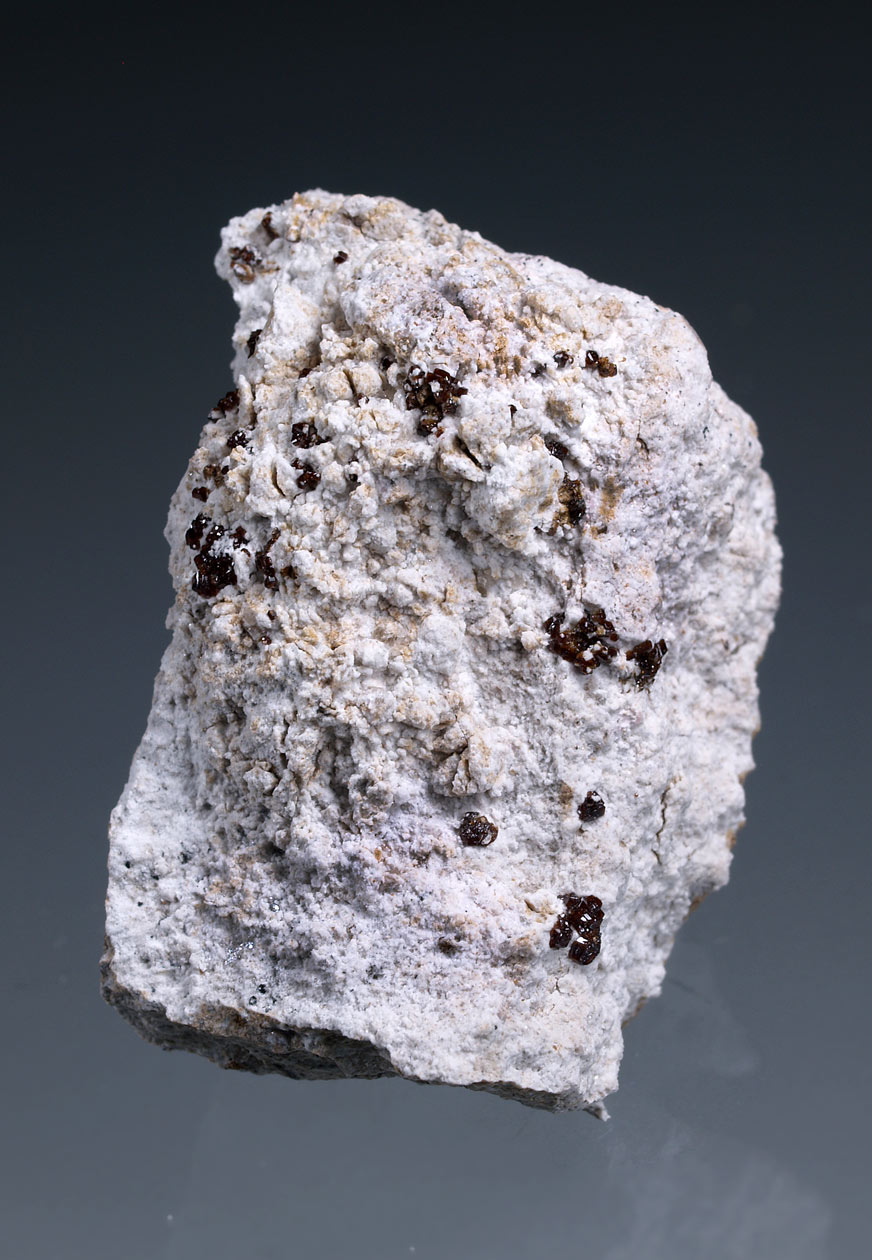
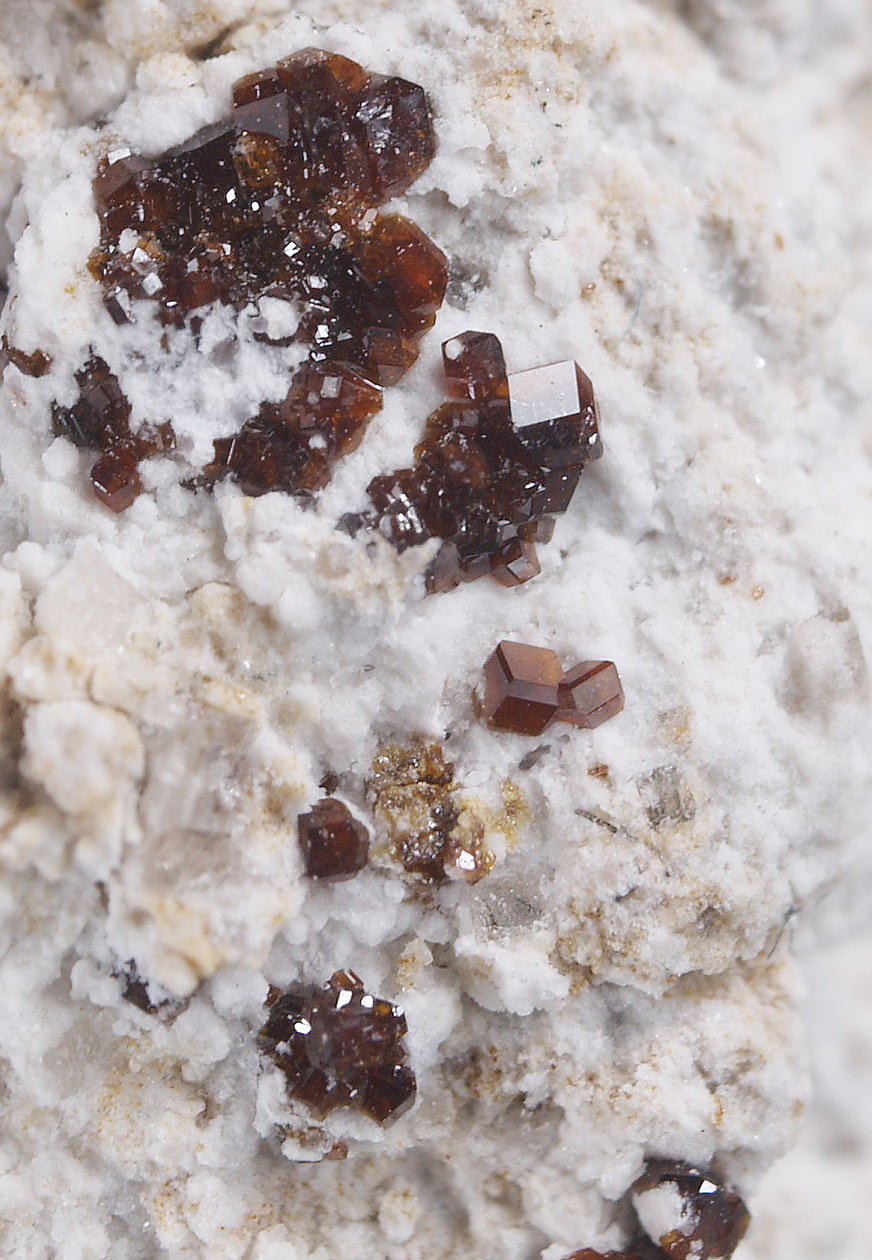
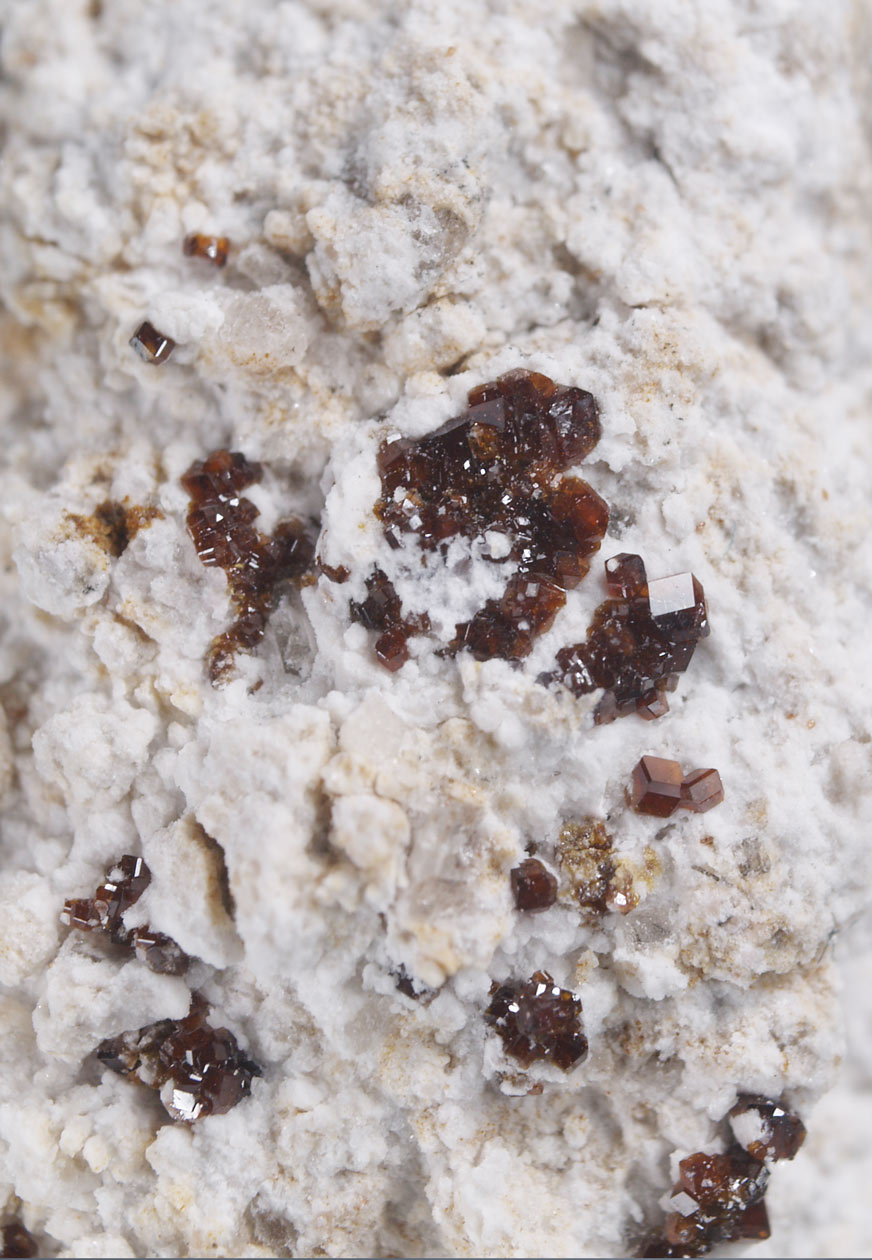
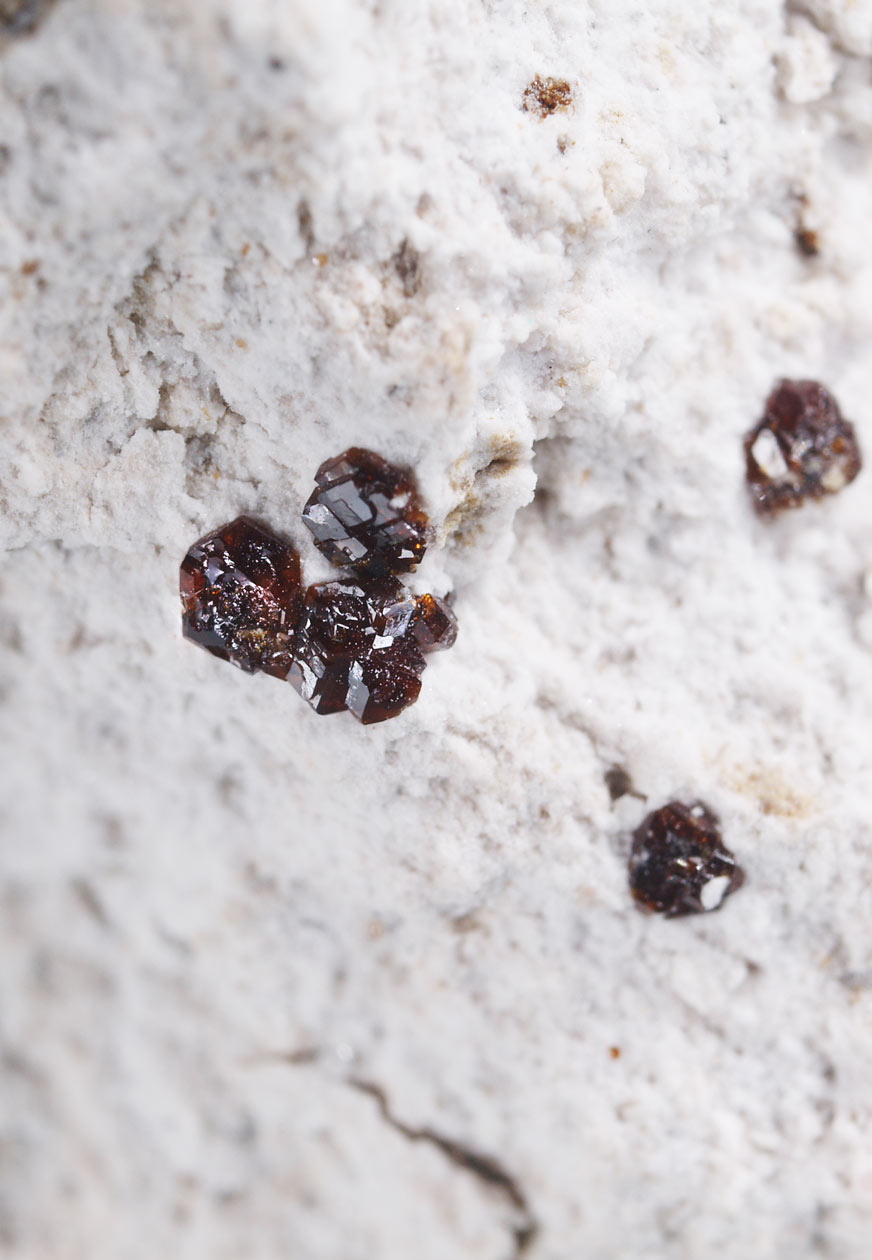
In this specimen we can observe several andradite crystals, highly lustrous, with an intense brownish-orange color, showing some transparency when examined under a loupe. What makes them remarkable is their sharp contrast against the matrix and the perfection of some of the crystals. They are accompanied by small hexagonal hematite crystals. From an area near Nador and not previously seen in collections.
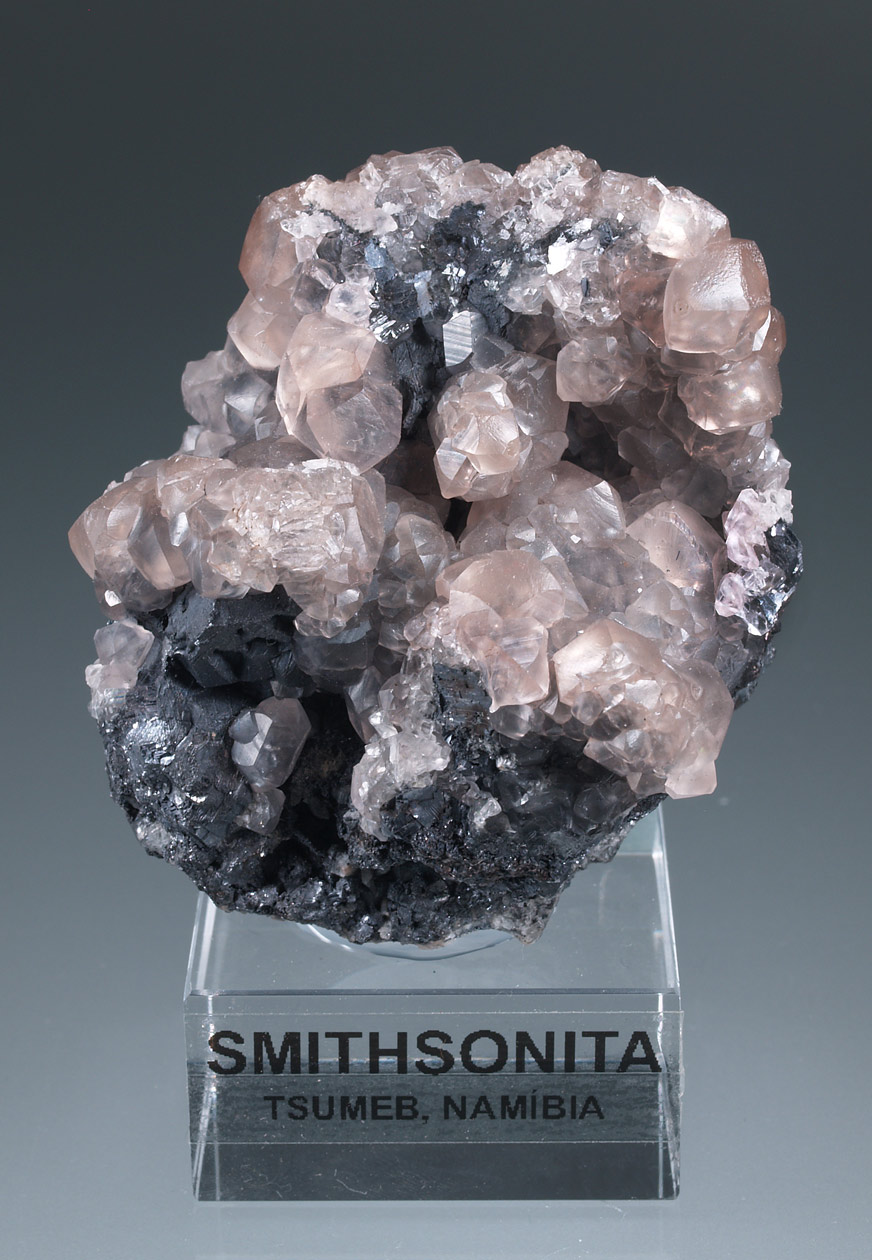
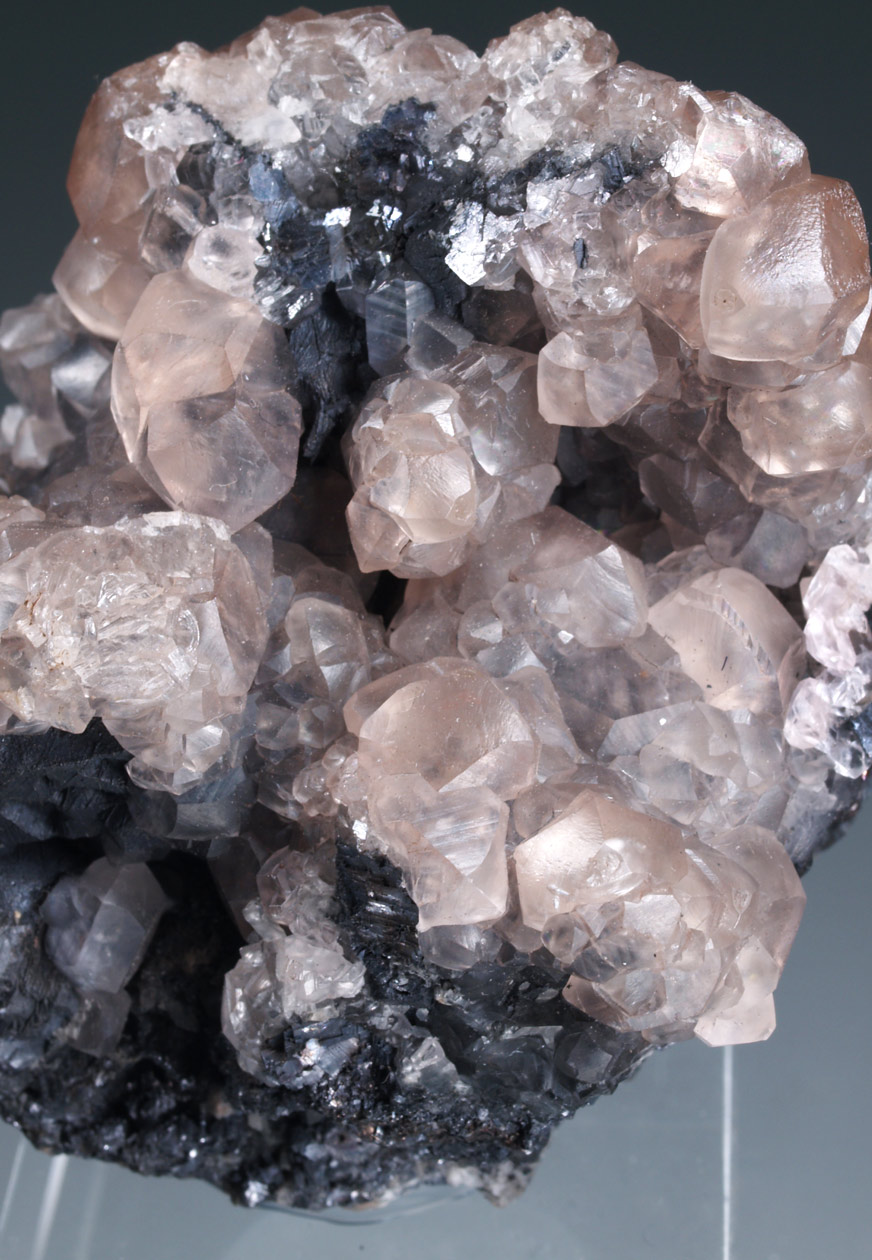
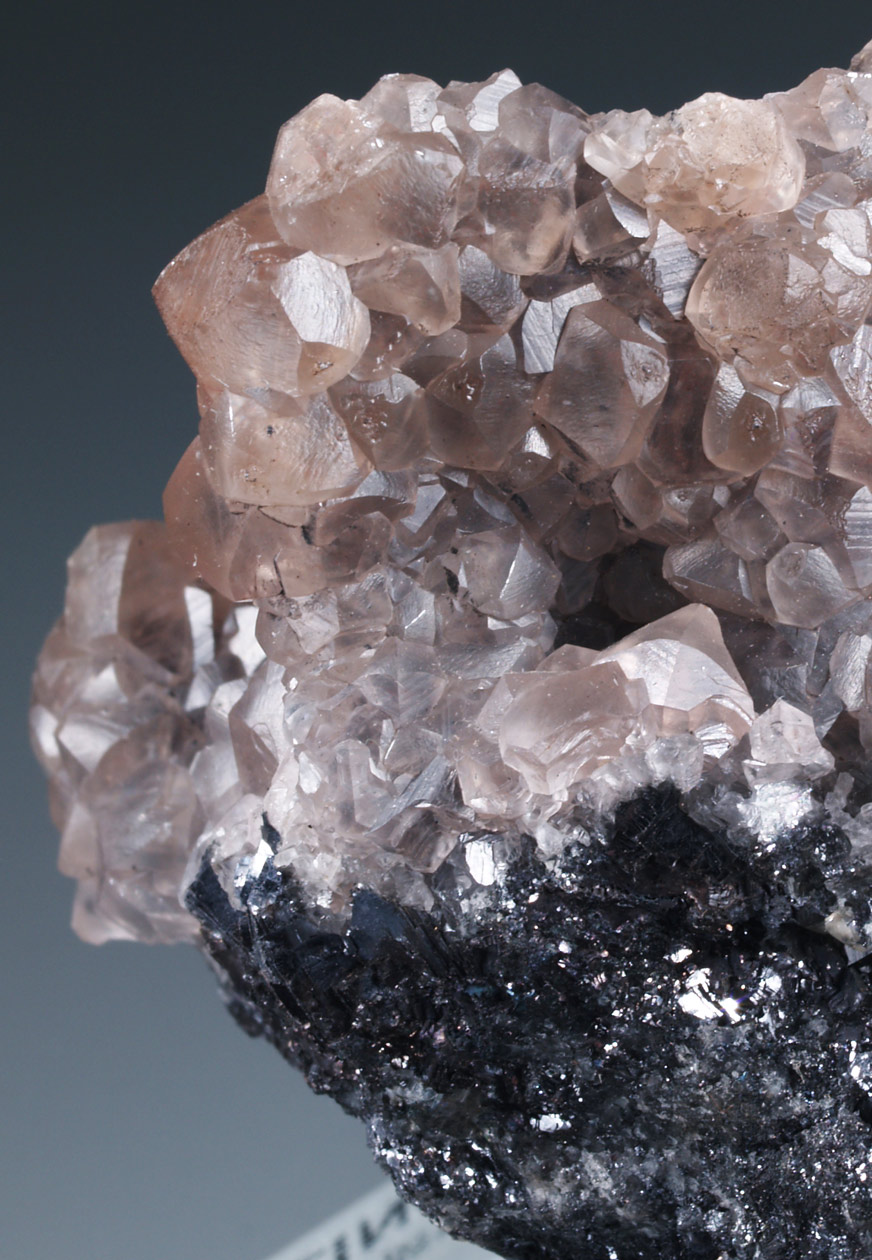
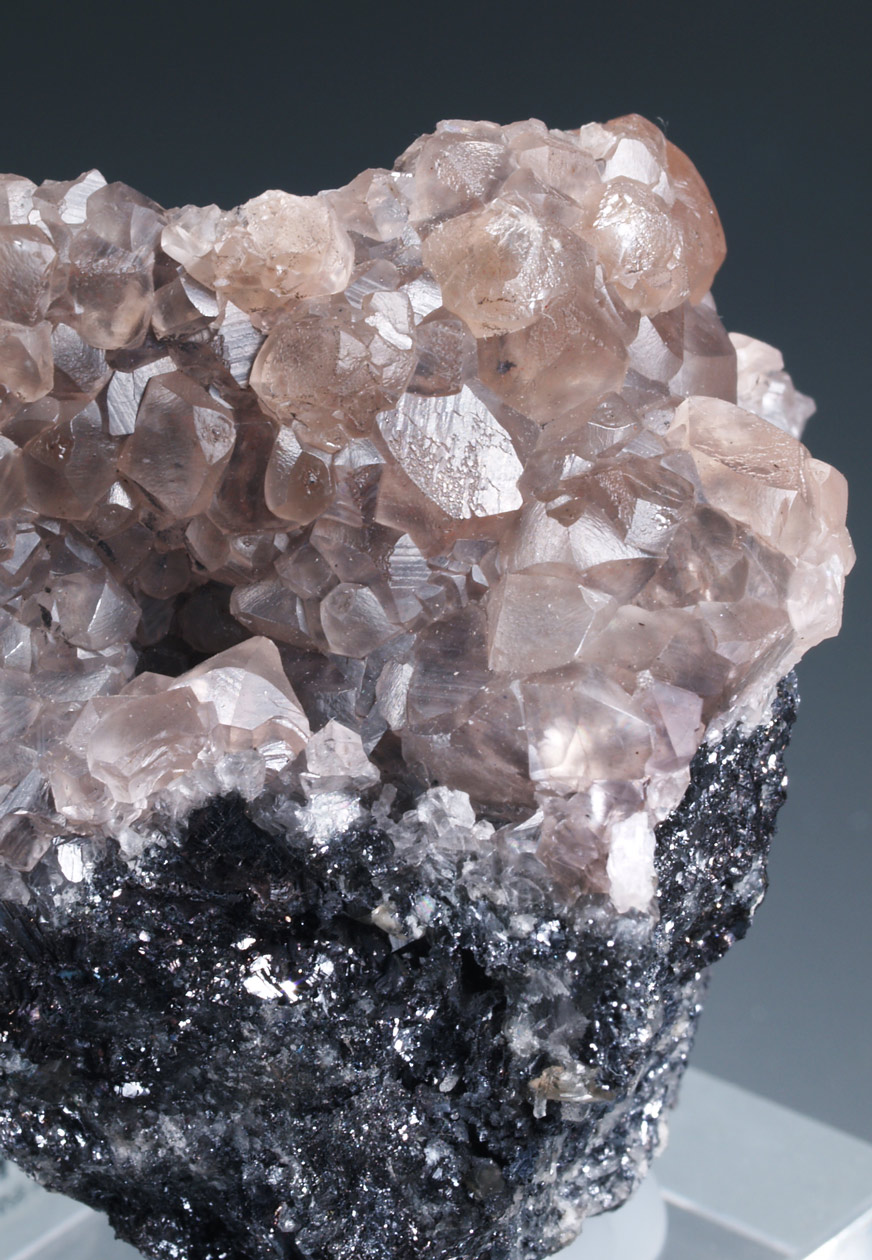
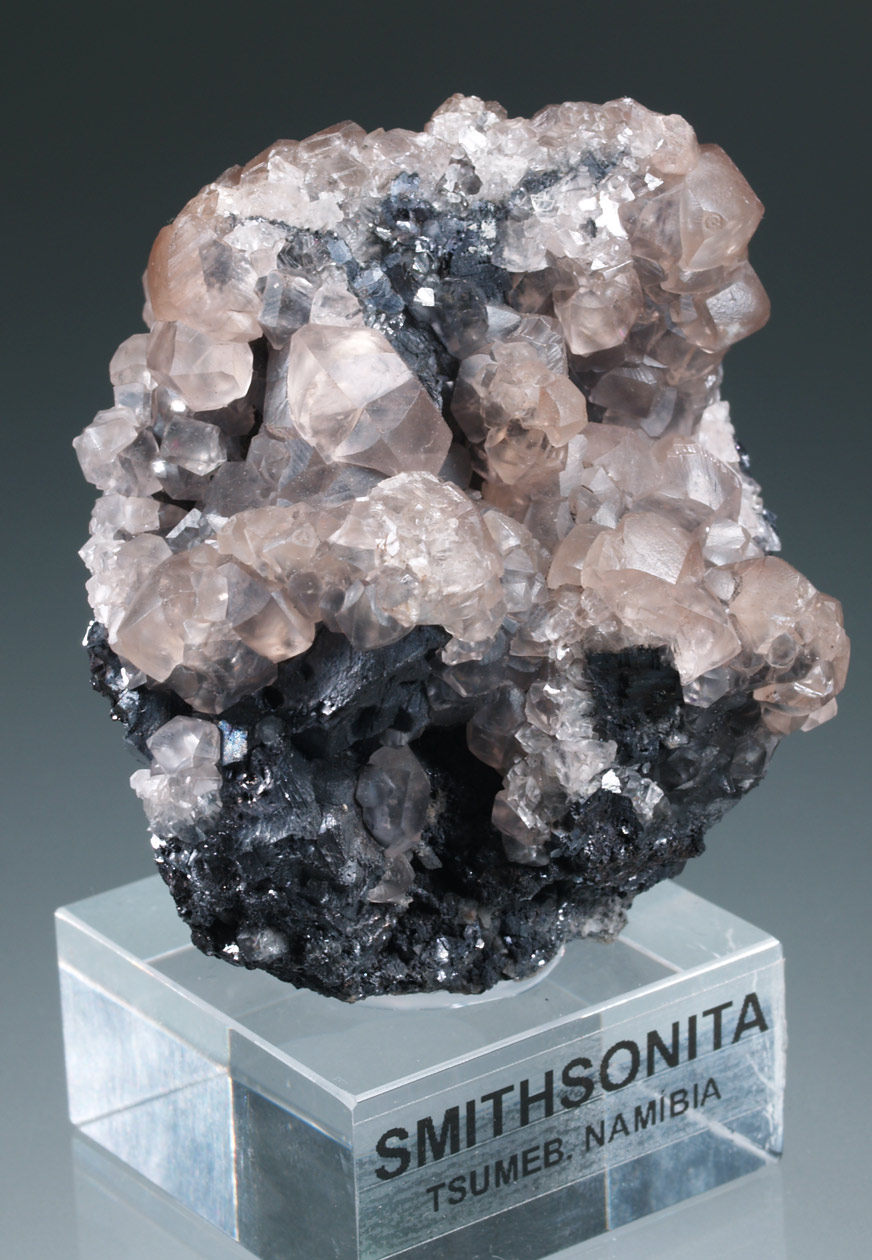
A very notable specimen of smithsonite composed of numerous well-faceted crystals, some forming elbow twins. It exhibits good transparence, luster, and a subtle pinkish hue. From the classic locality of Tsumeb. Ex Von Slooten collection (NL).
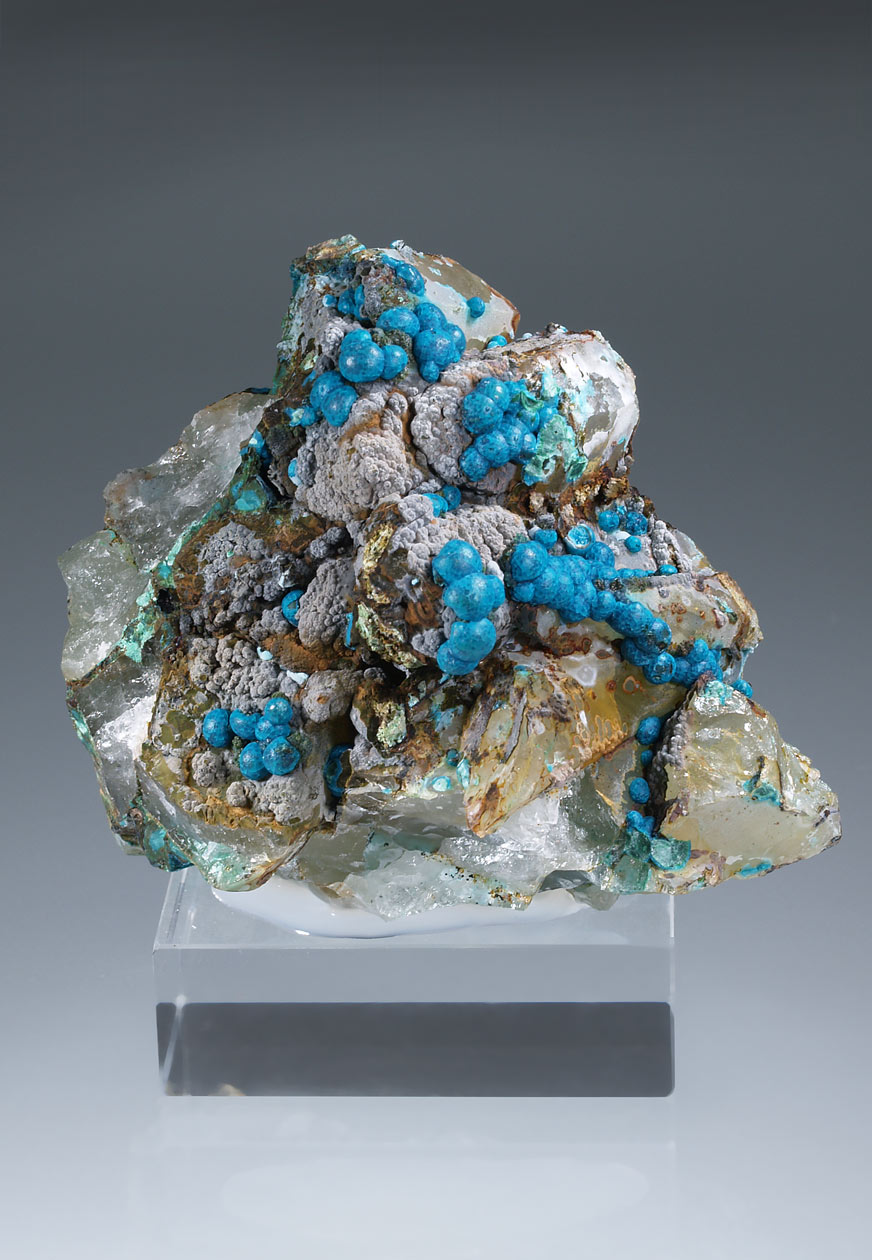
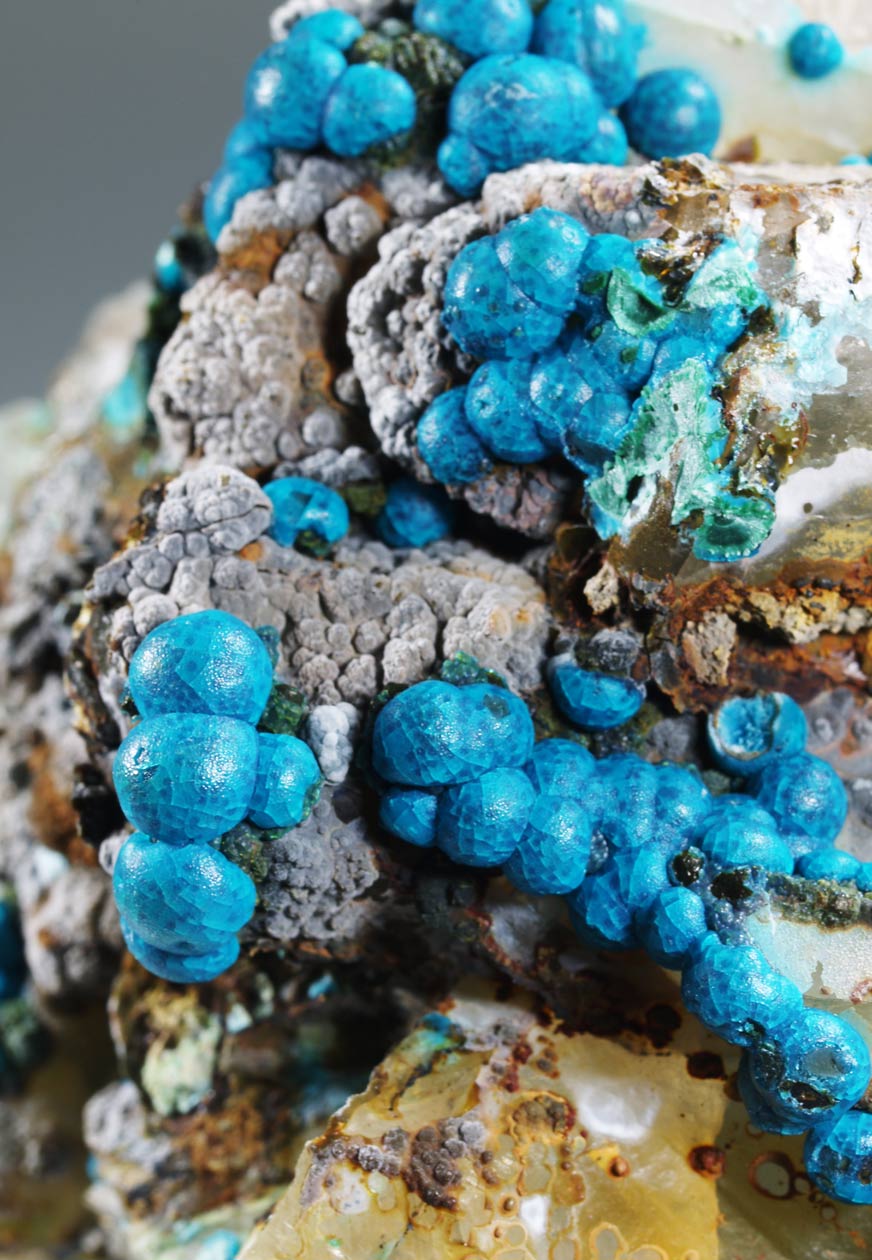
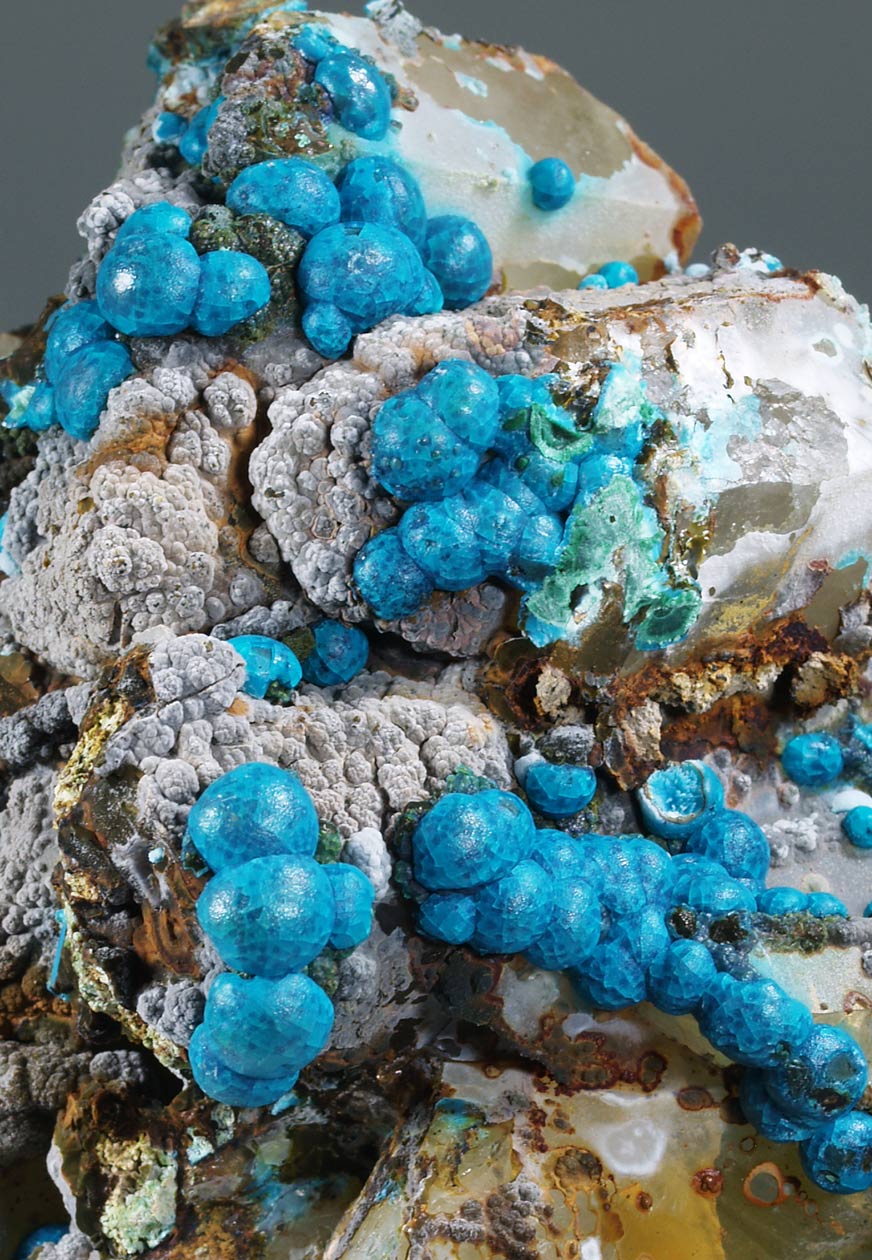
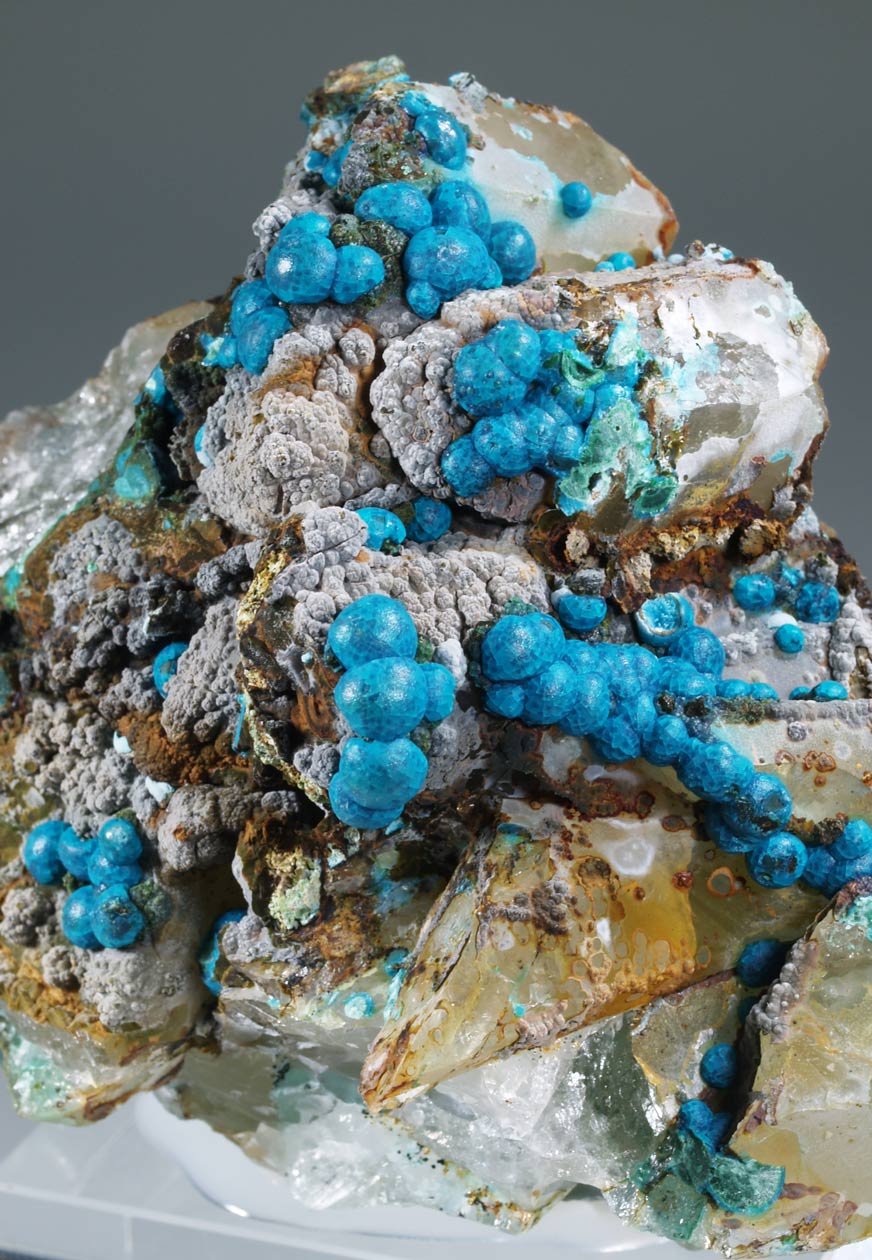
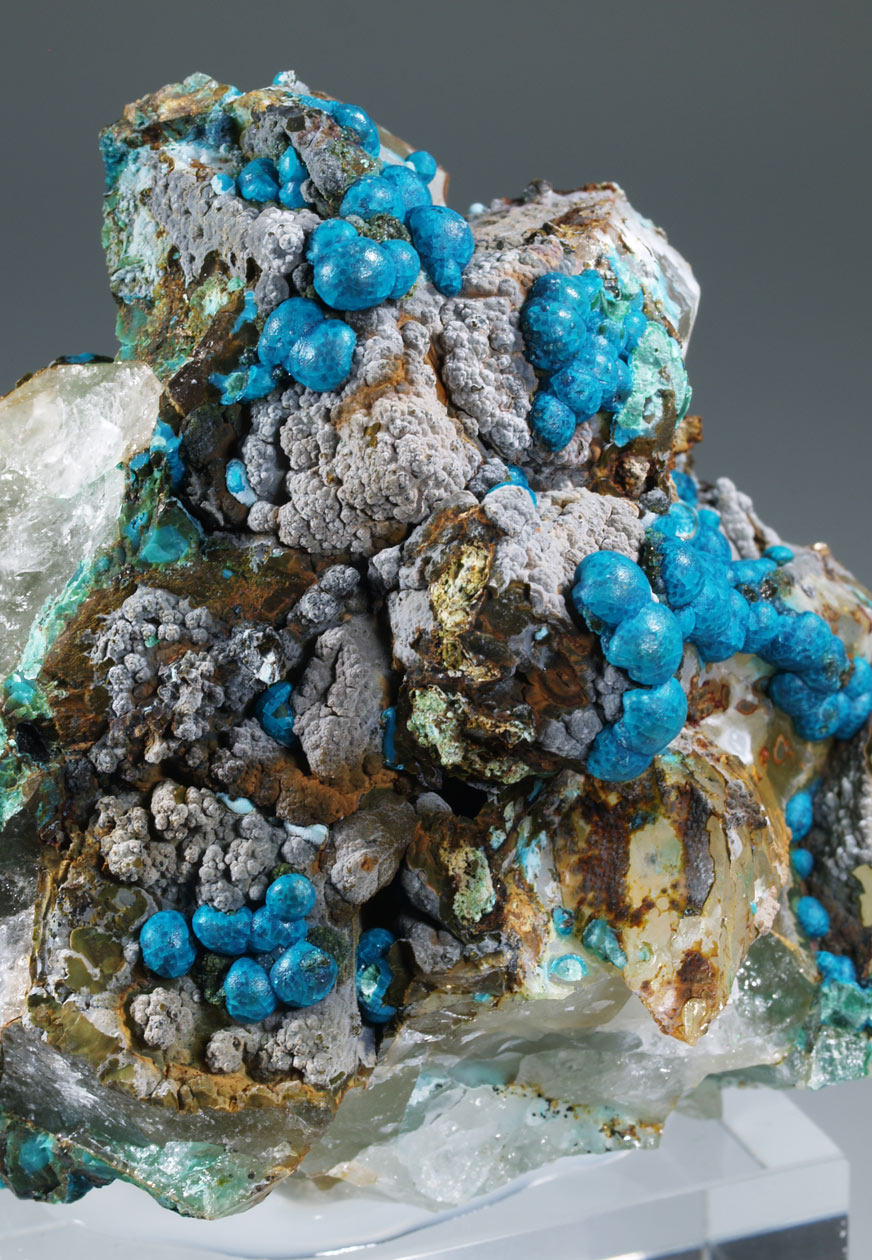
A highly aesthetic specimen composed of numerous blue botryoidal chrysocolla aggregates scattered across a quartz-rich matrix. Beneath several of these bluish spheres, radiating green sprays of malachite are clearly visible. It also features khaki-colored opaline masses with conchoidal fracture (inclusion-rich chrysocolla), providing striking contrast against the matrix.
Although similar pieces initially circulated with erroneous labels attributing them to the Tentadora Mine (Pisco, Ica), the locality was subsequently corrected and confirmed by R. Lavinstky and U. Kolitsch as originating from the Julcani mining district (Huancavelica).
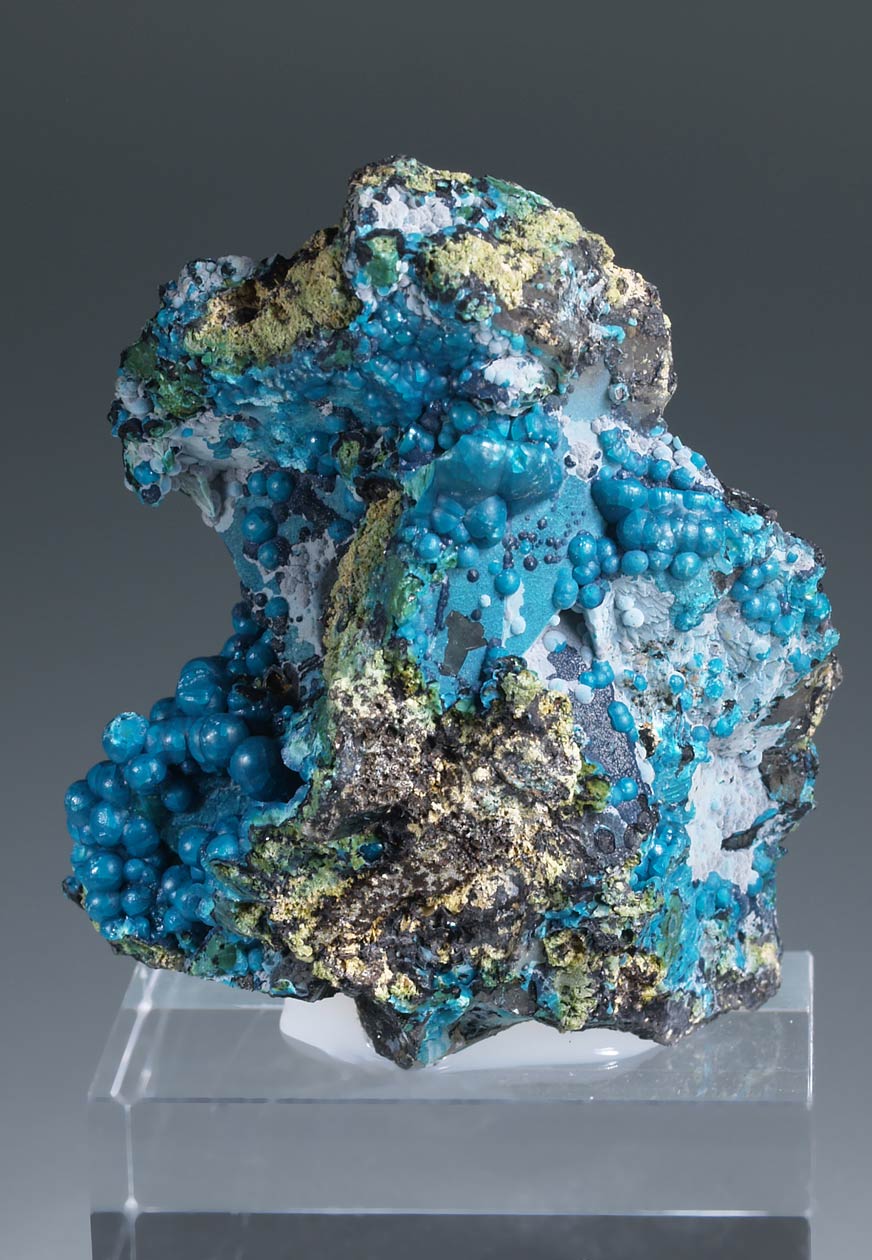
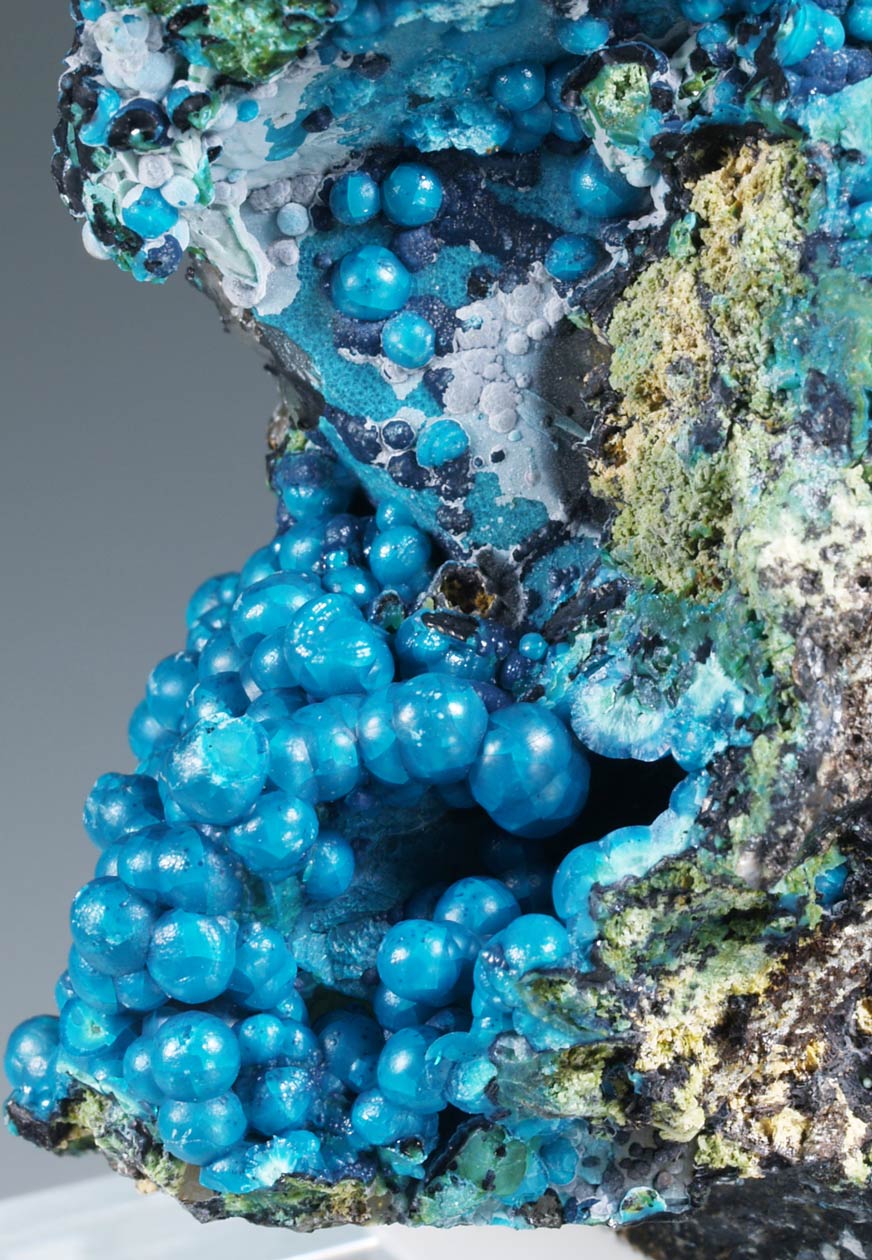
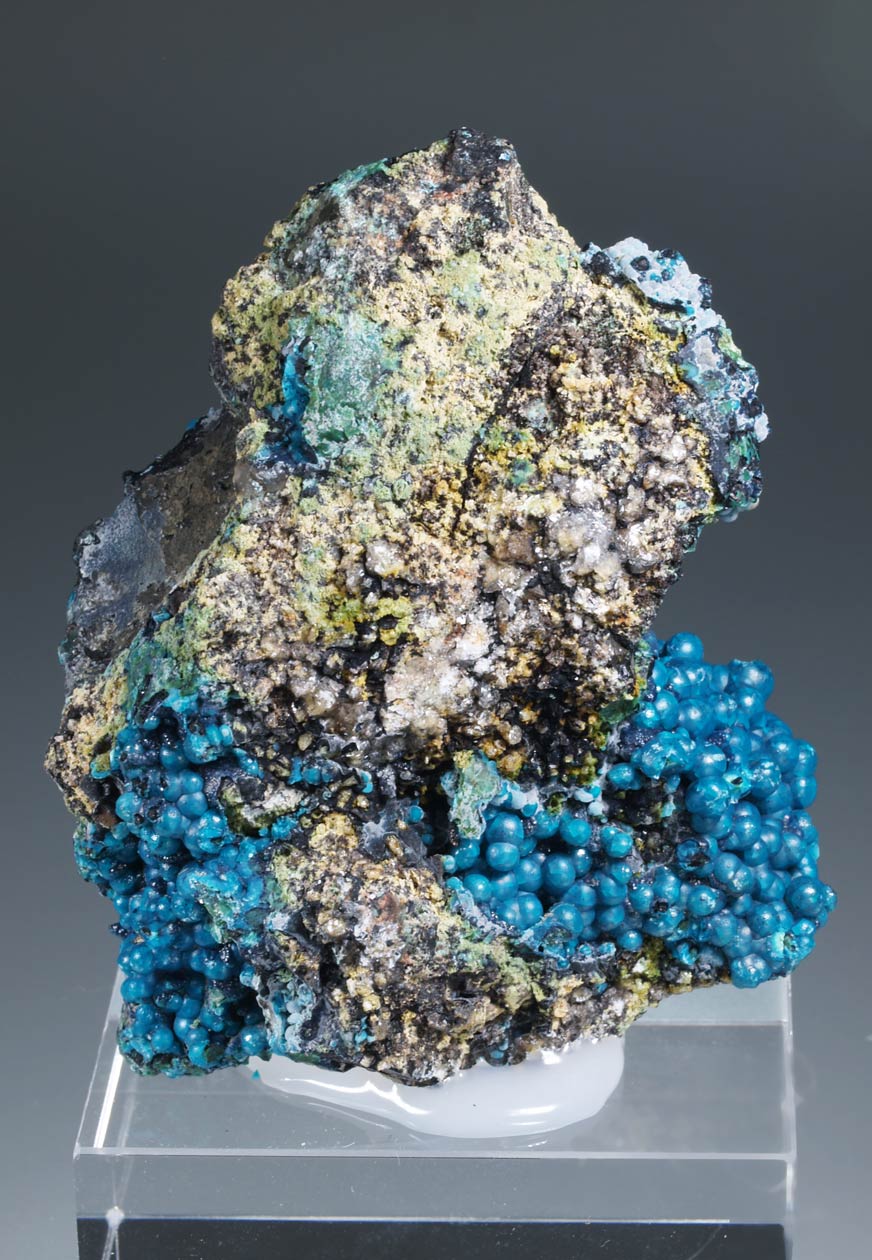
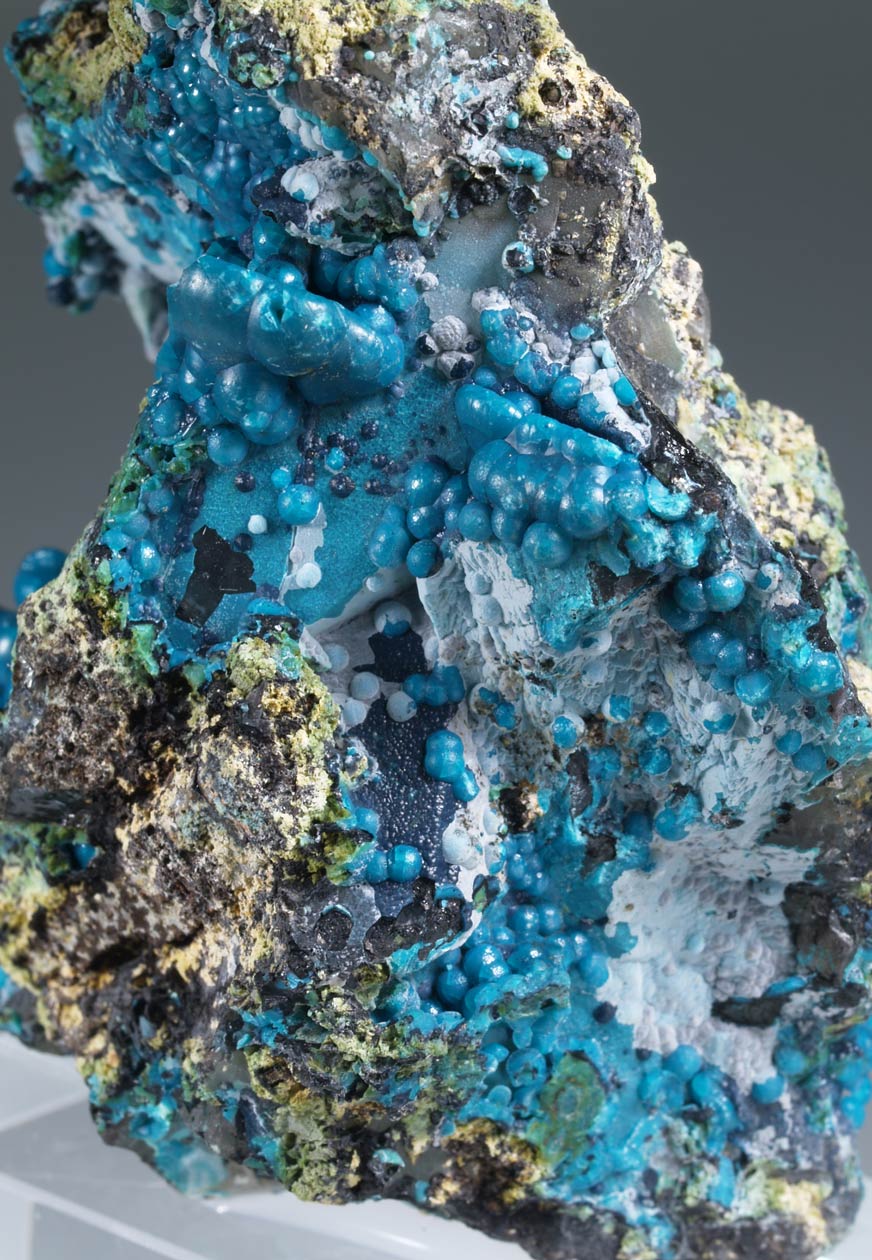
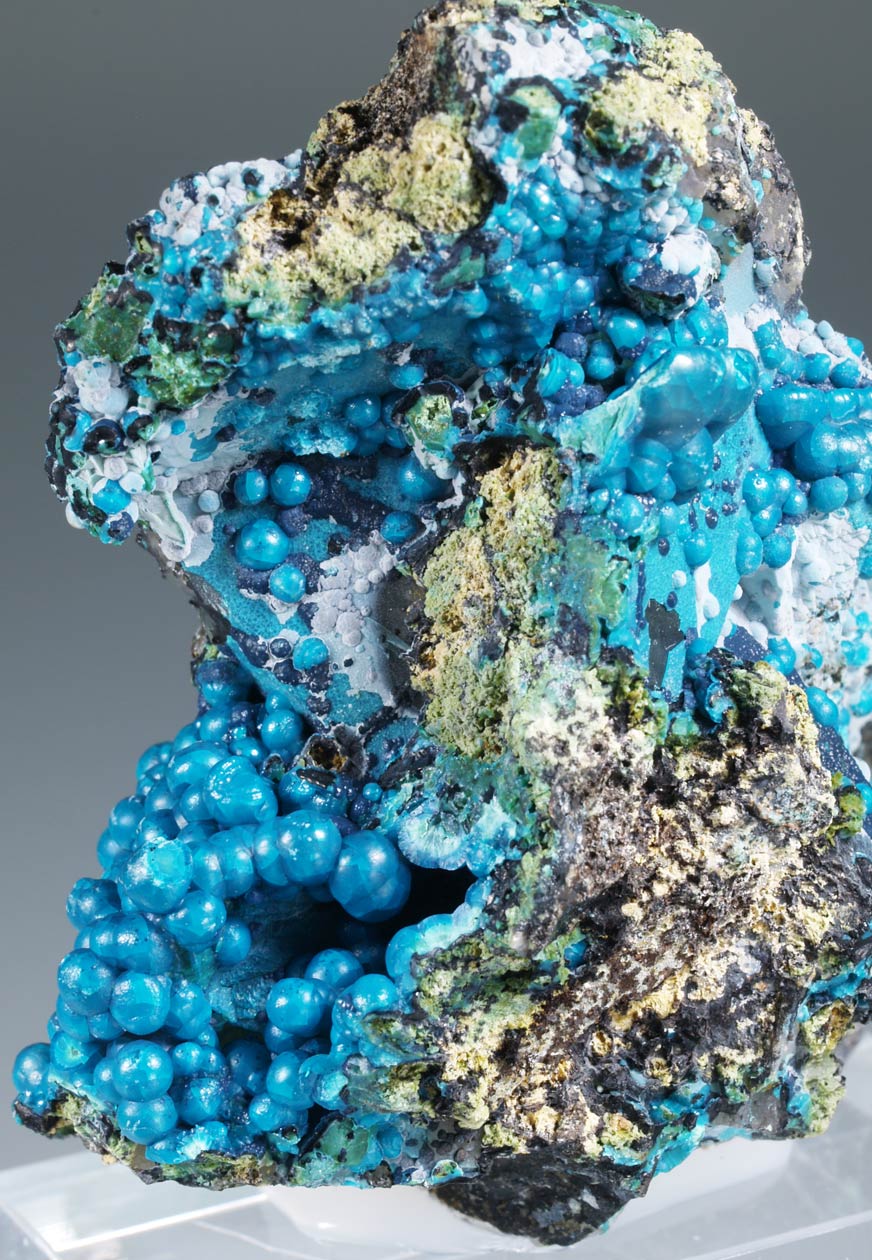
Very aesthetic specimen composed of numerous botryoidal aggregates of blue chrysocolla, scattered across a rocky matrix. Featuring green radial aggregates corresponding to malachite, along with black globules of tenorite coated by chrysocolla. The contrast on the matrix is highly striking.
Although similar pieces initially circulated with erroneous labels attributing them to the Tentadora Mine (Pisco, Ica), the locality was subsequently corrected and confirmed by R. Lavinstky and U. Kolitsch as originating from the Julcani mining district (Huancavelica).
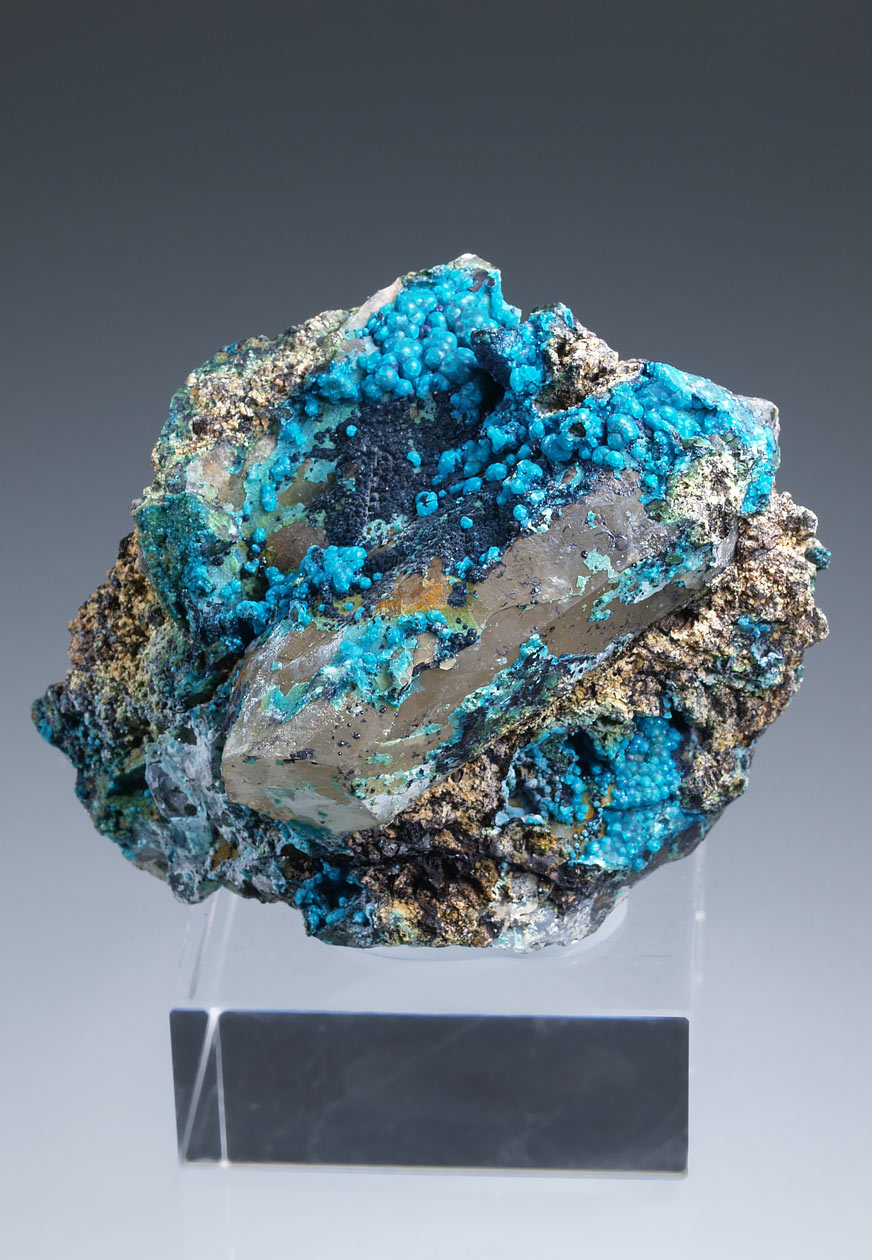
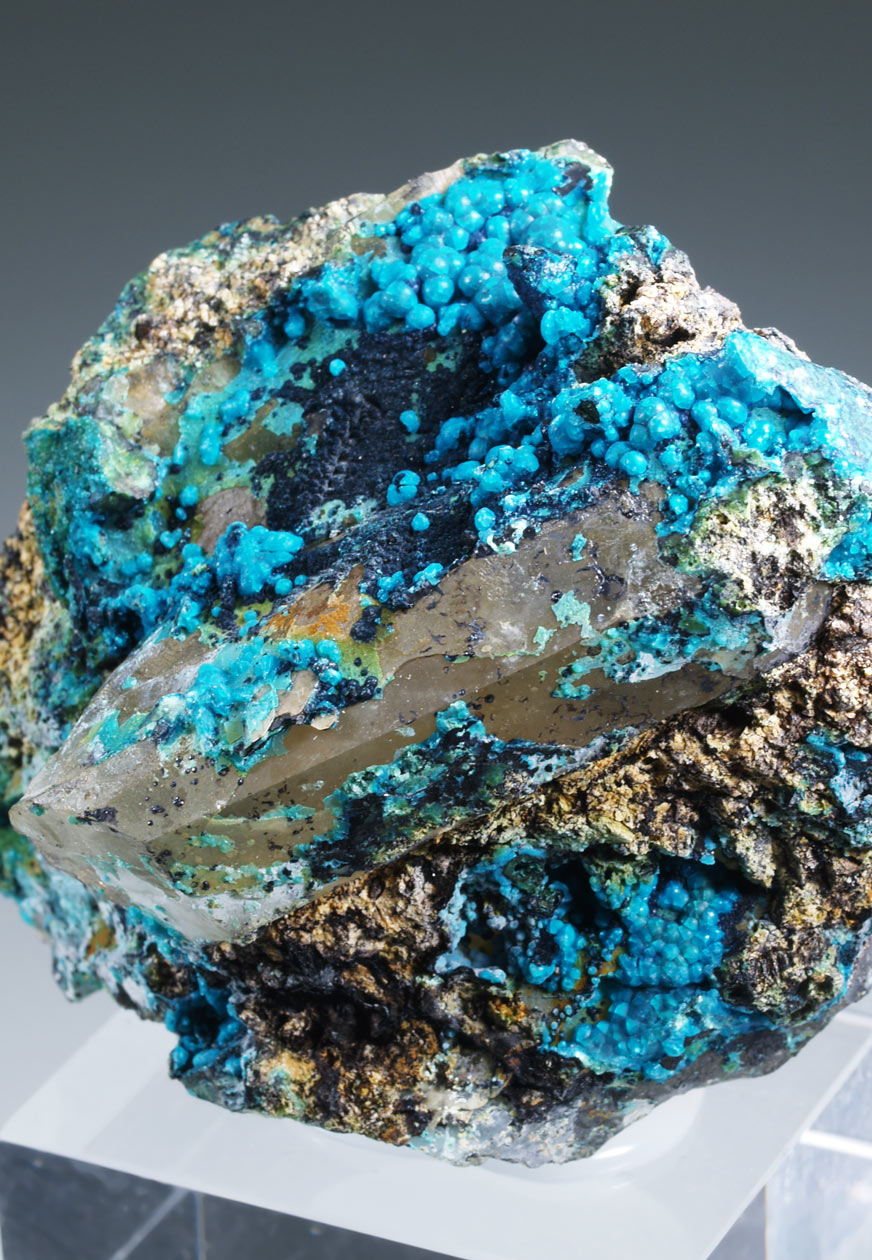
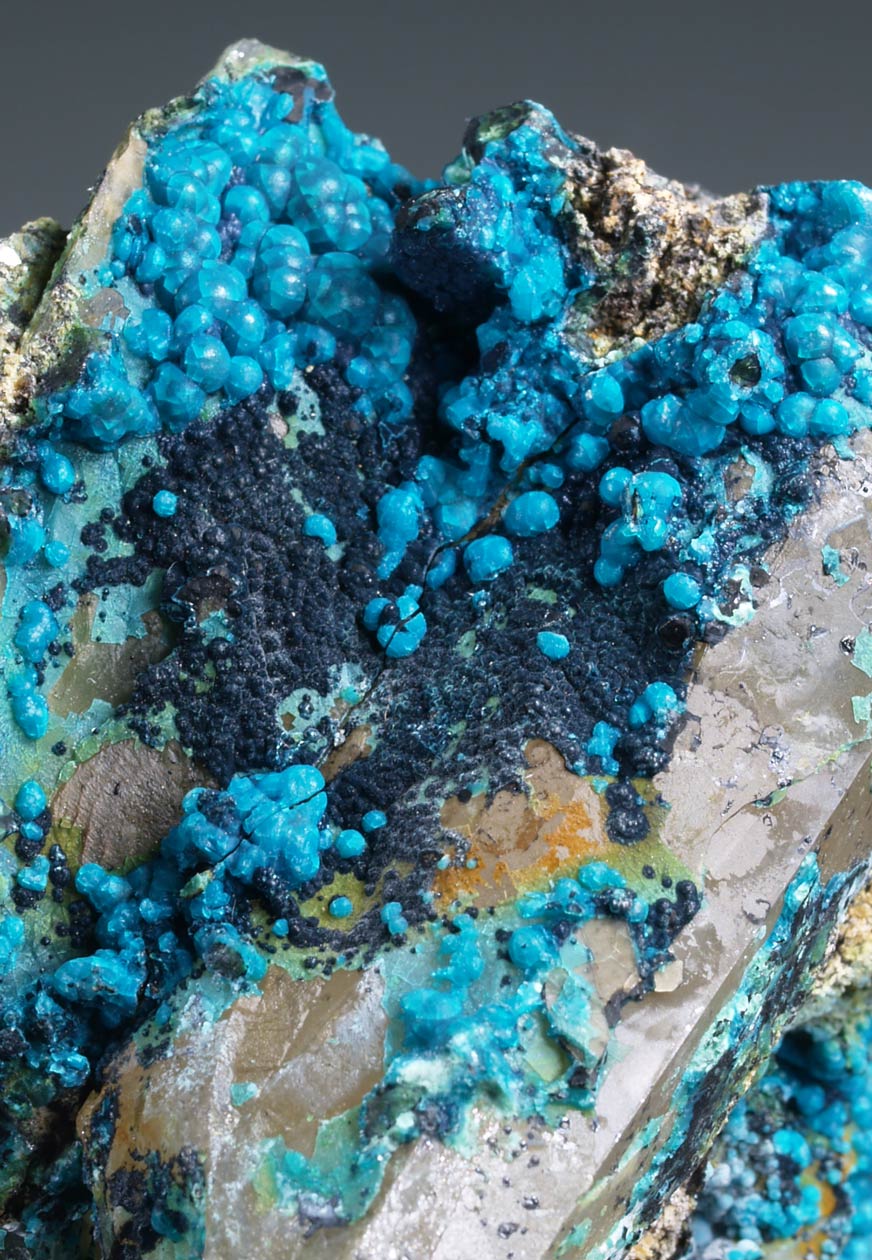
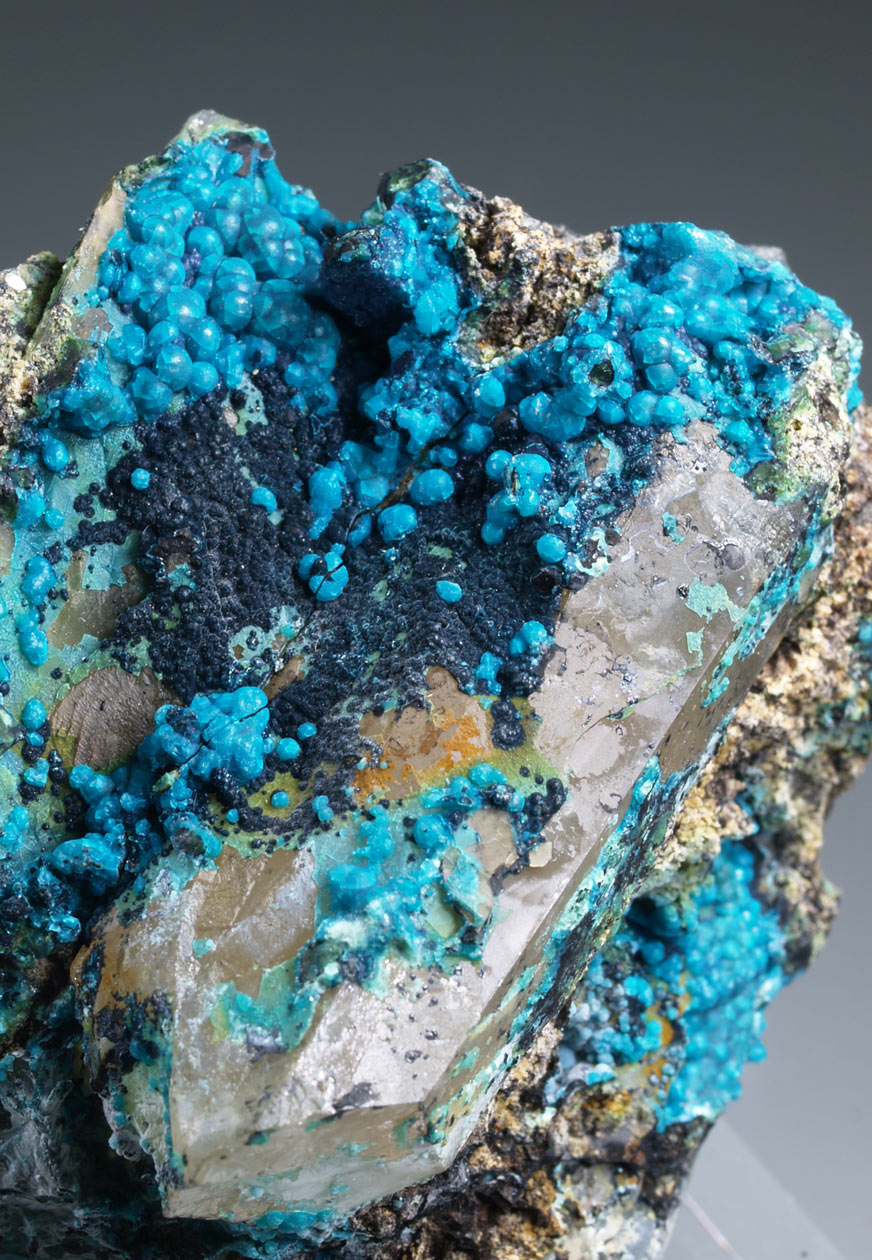
Very aesthetic specimen composed of numerous botryoidal aggregates of blue chrysocolla, scattered across a matrix primarily made of quartz, with a doubly terminated crystal. Featuring green radial aggregates corresponding to malachite, along with black globules of tenorite coated by chrysocolla. The contrast on the matrix is highly striking.
Although similar pieces initially circulated with erroneous labels attributing them to the Tentadora Mine (Pisco, Ica), the locality was subsequently corrected and confirmed by R. Lavinstky and U. Kolitsch as originating from the Julcani mining district (Huancavelica).
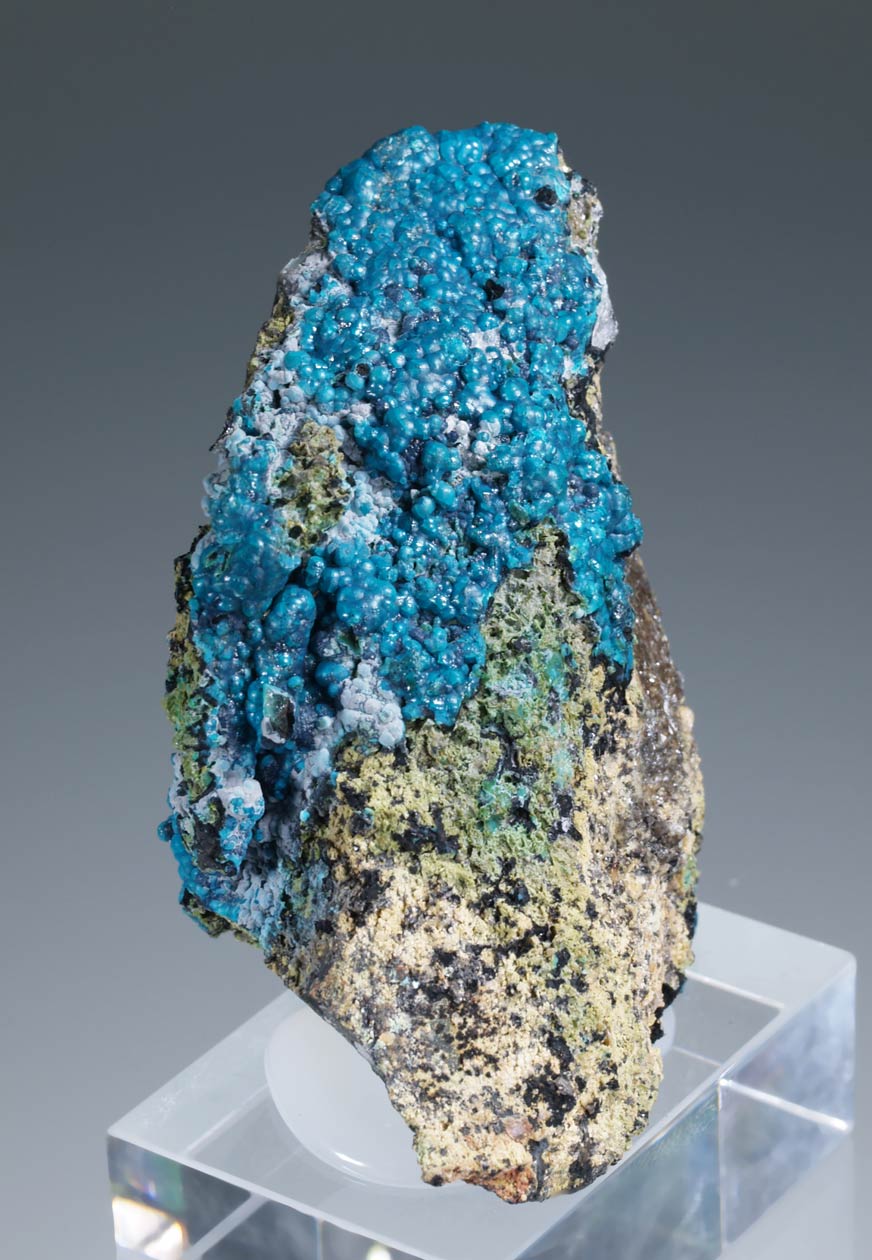
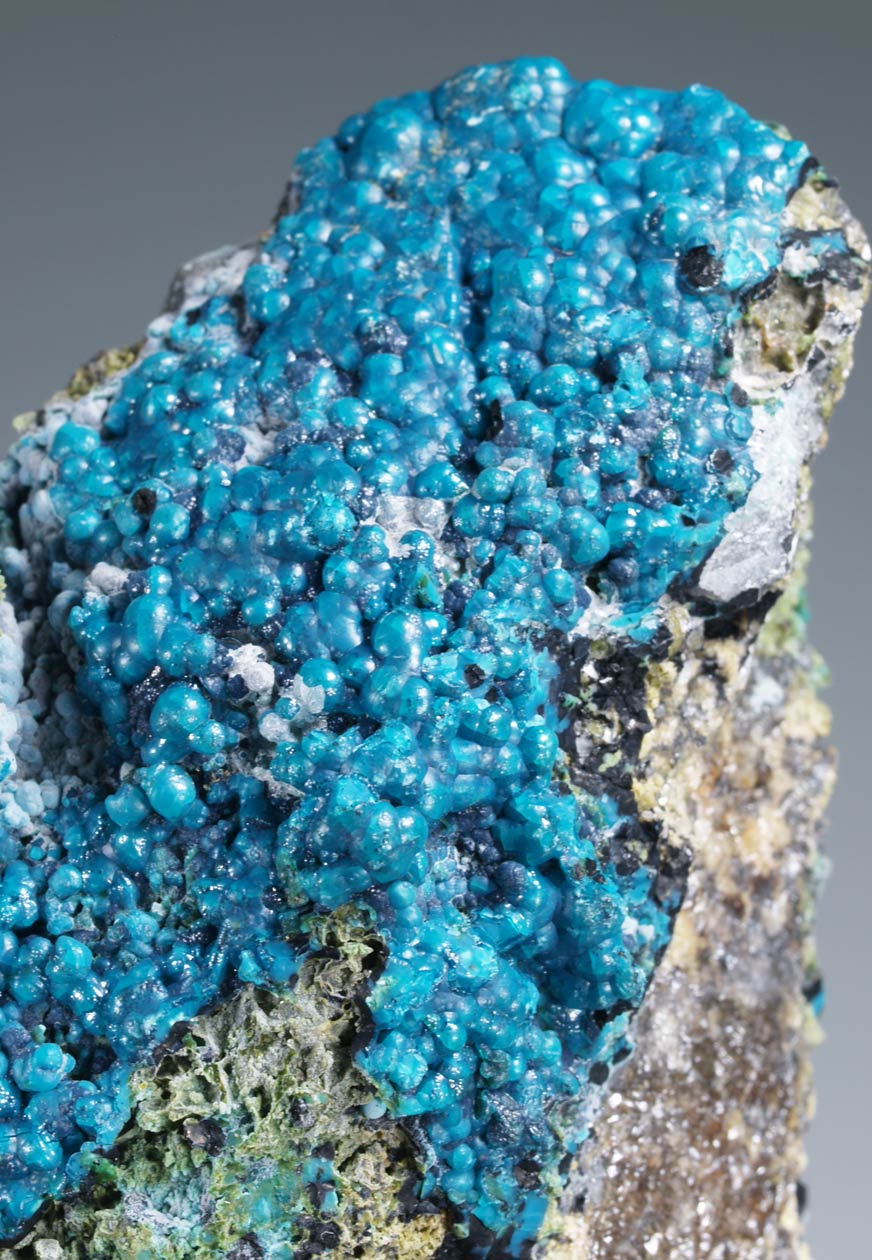
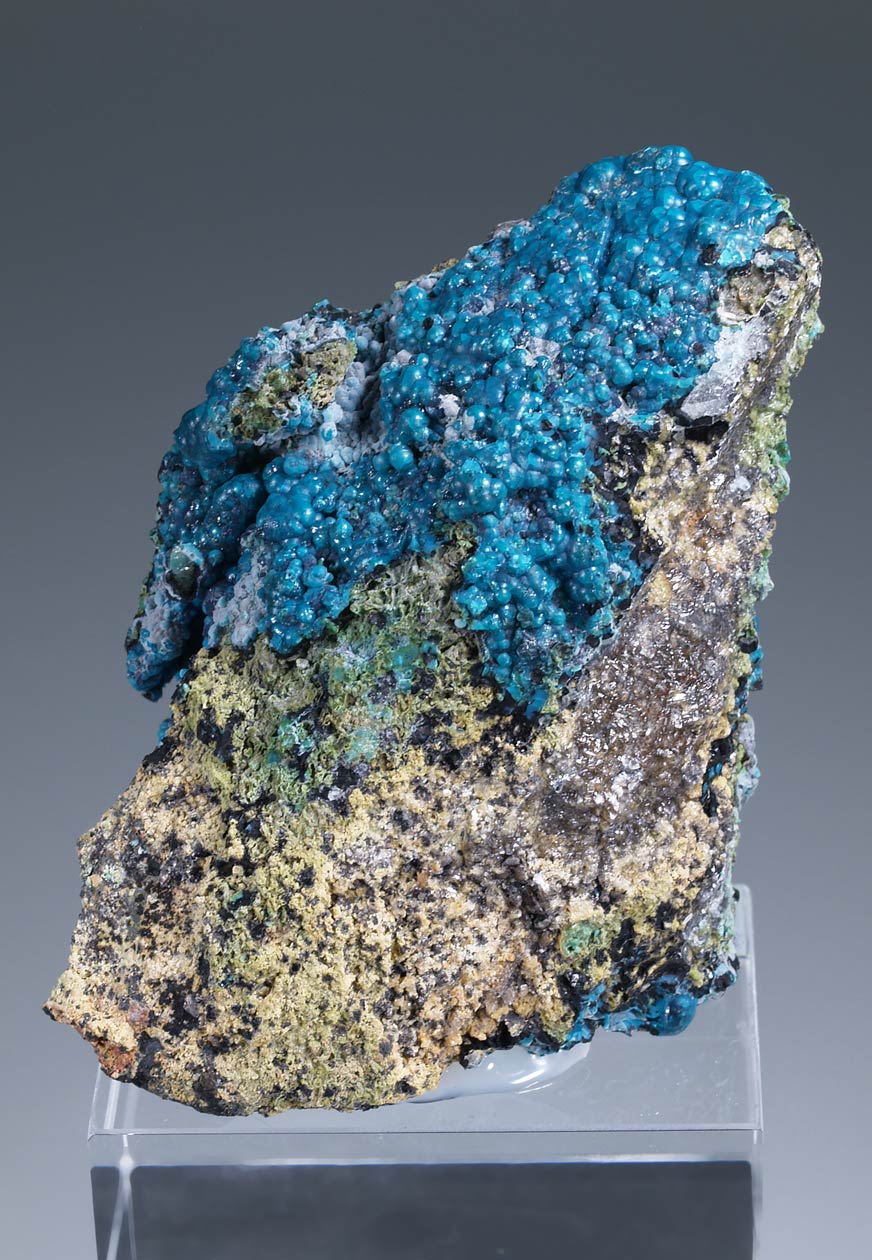
Very aesthetic specimen composed of numerous botryoidal aggregates of blue chrysocolla, scattered across a rocky matrix. Featuring green radial aggregates corresponding to malachite, along with black globules of tenorite coated by chrysocolla. The contrast on the matrix is highly striking.
Although similar pieces initially circulated with erroneous labels attributing them to the Tentadora Mine (Pisco, Ica), the locality was subsequently corrected and confirmed by R. Lavinstky and U. Kolitsch as originating from the Julcani mining district (Huancavelica).
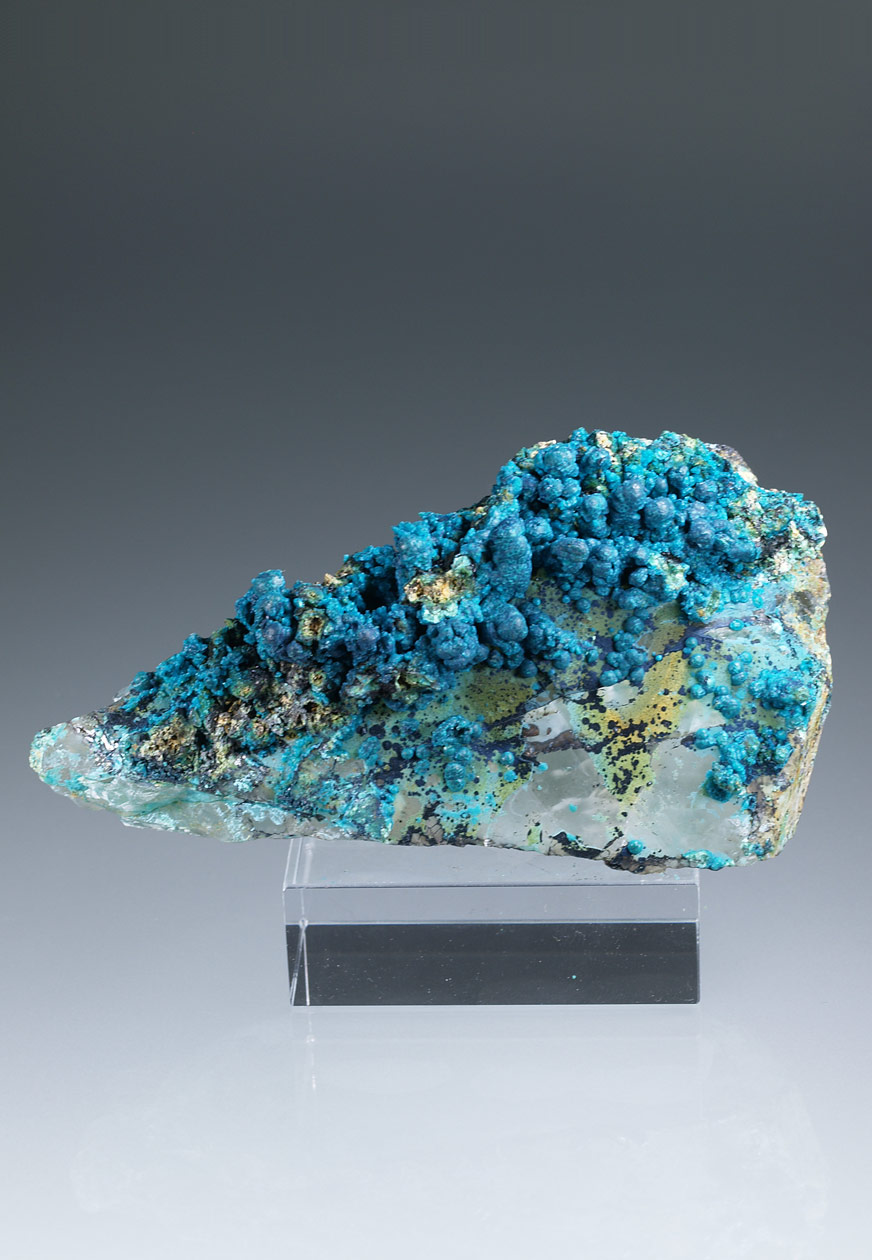
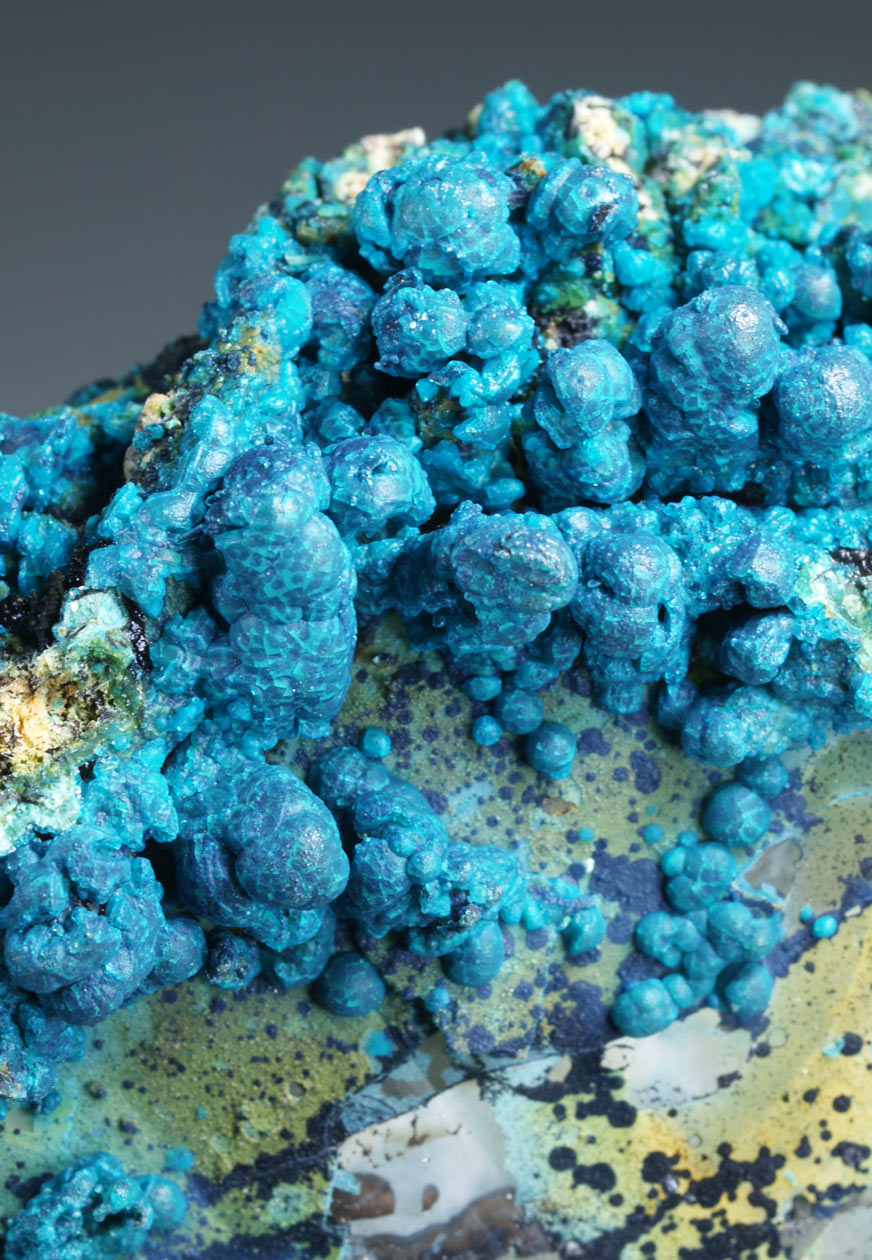
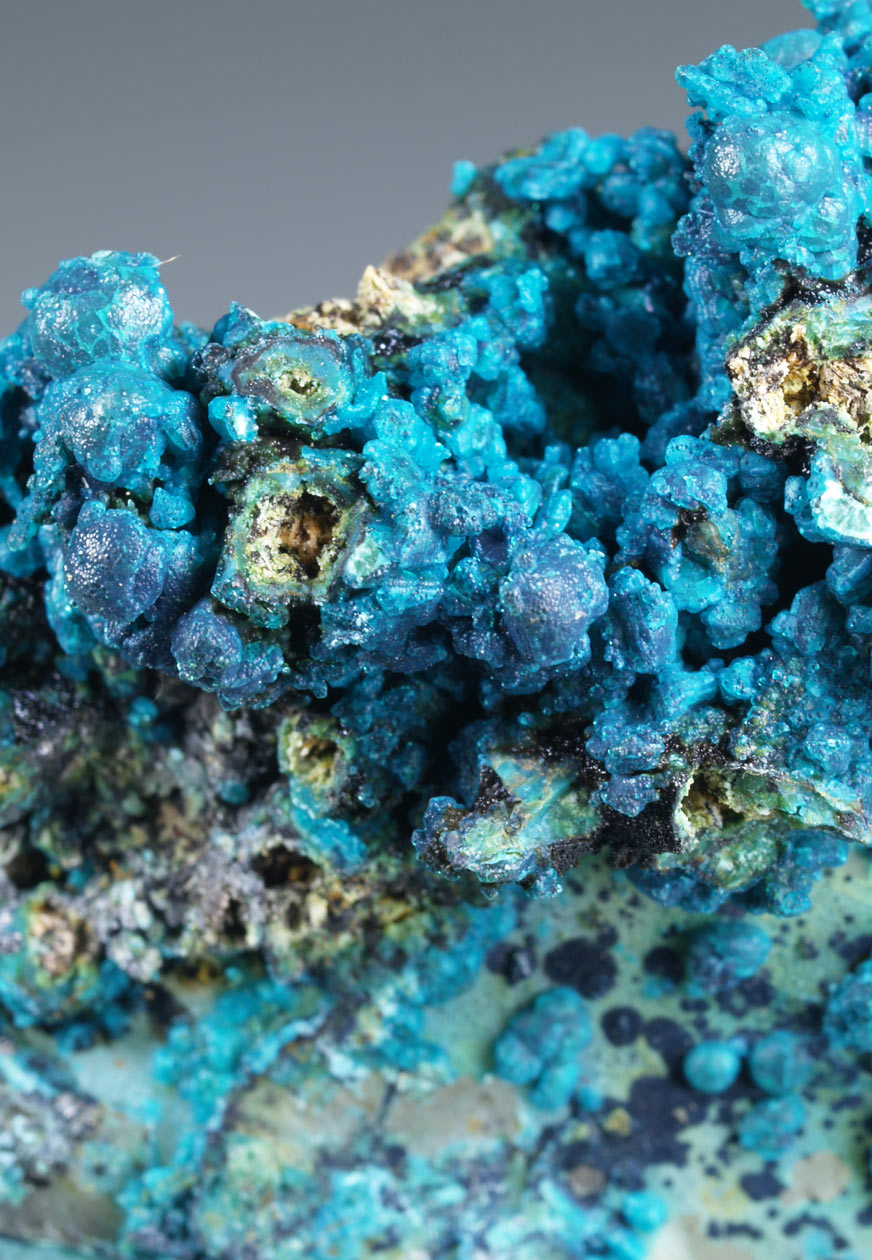
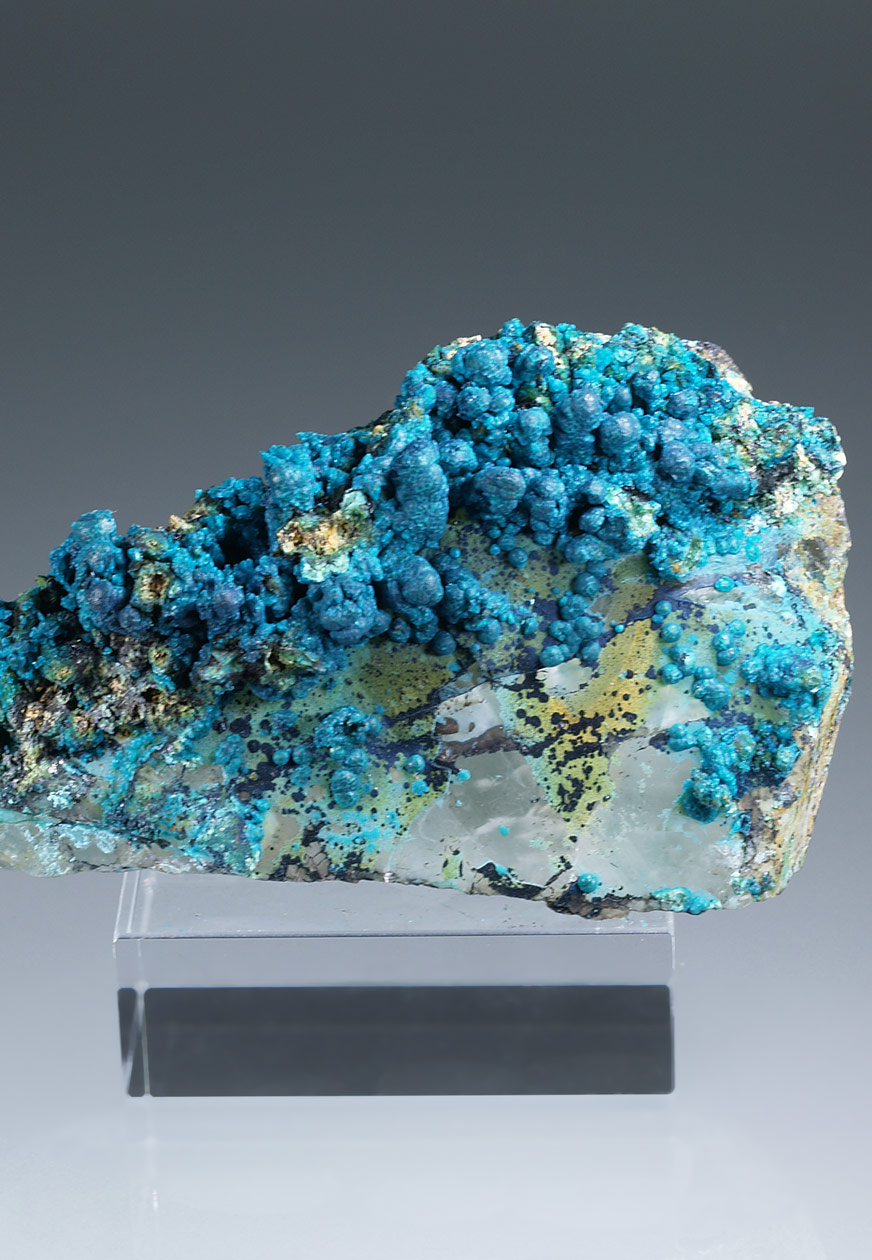
Very aesthetic specimen composed of numerous botryoidal aggregates of blue chrysocolla, scattered across a quartz matrix. With black brilliant globules of tenorite coated by chrysocolla. The contrast on the matrix is highly striking. Although similar pieces initially circulated with erroneous labels attributing them to the Tentadora Mine (Pisco, Ica), the locality was subsequently corrected and confirmed by R. Lavinstky and U. Kolitsch as originating from the Julcani mining district (Huancavelica).
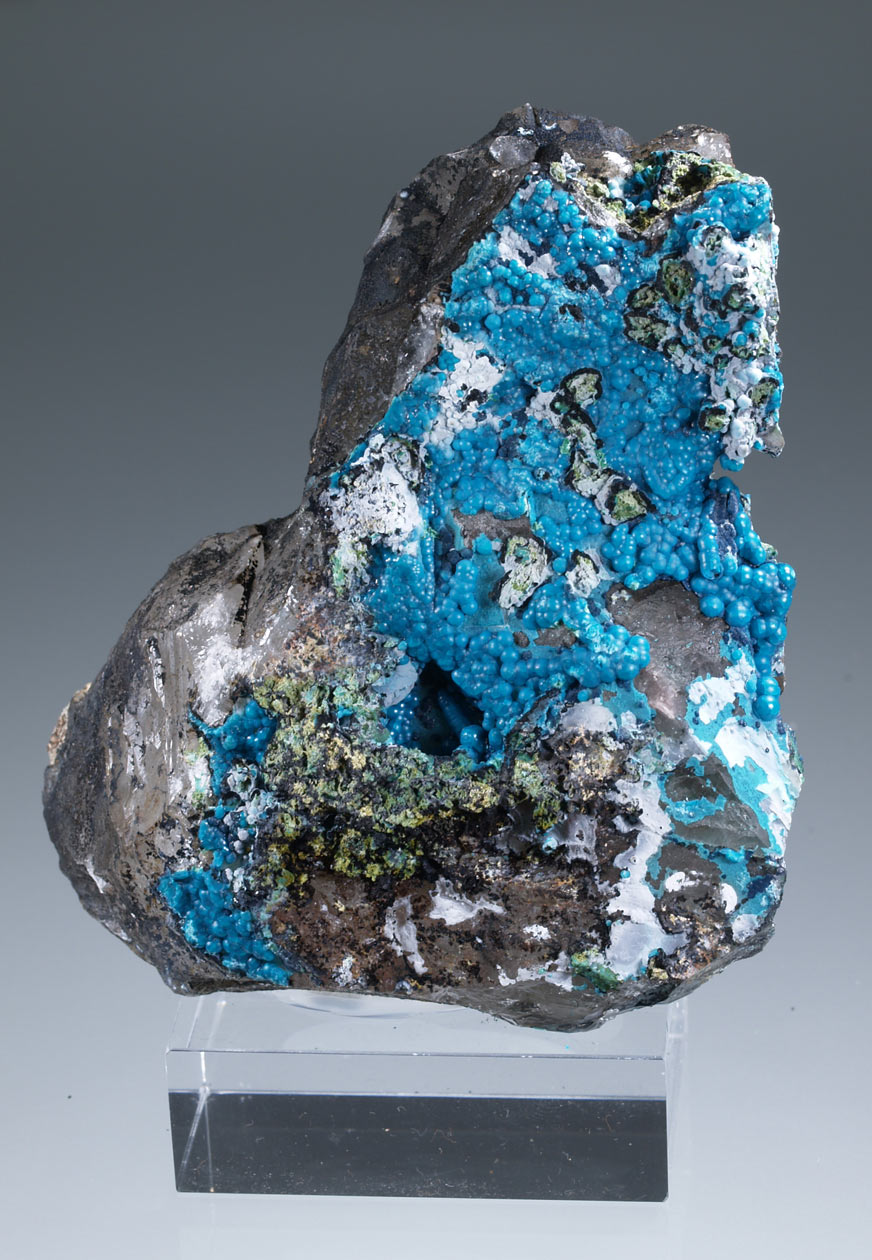
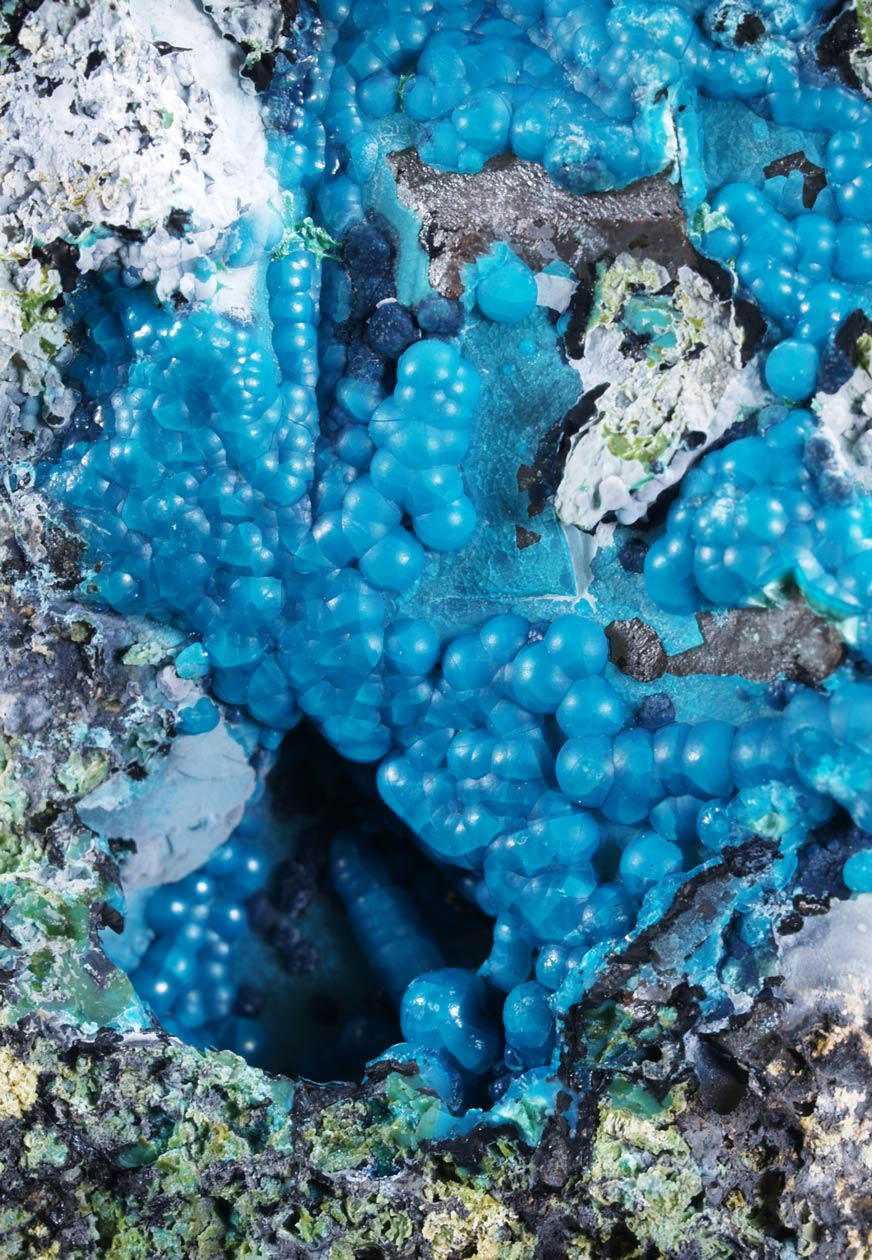
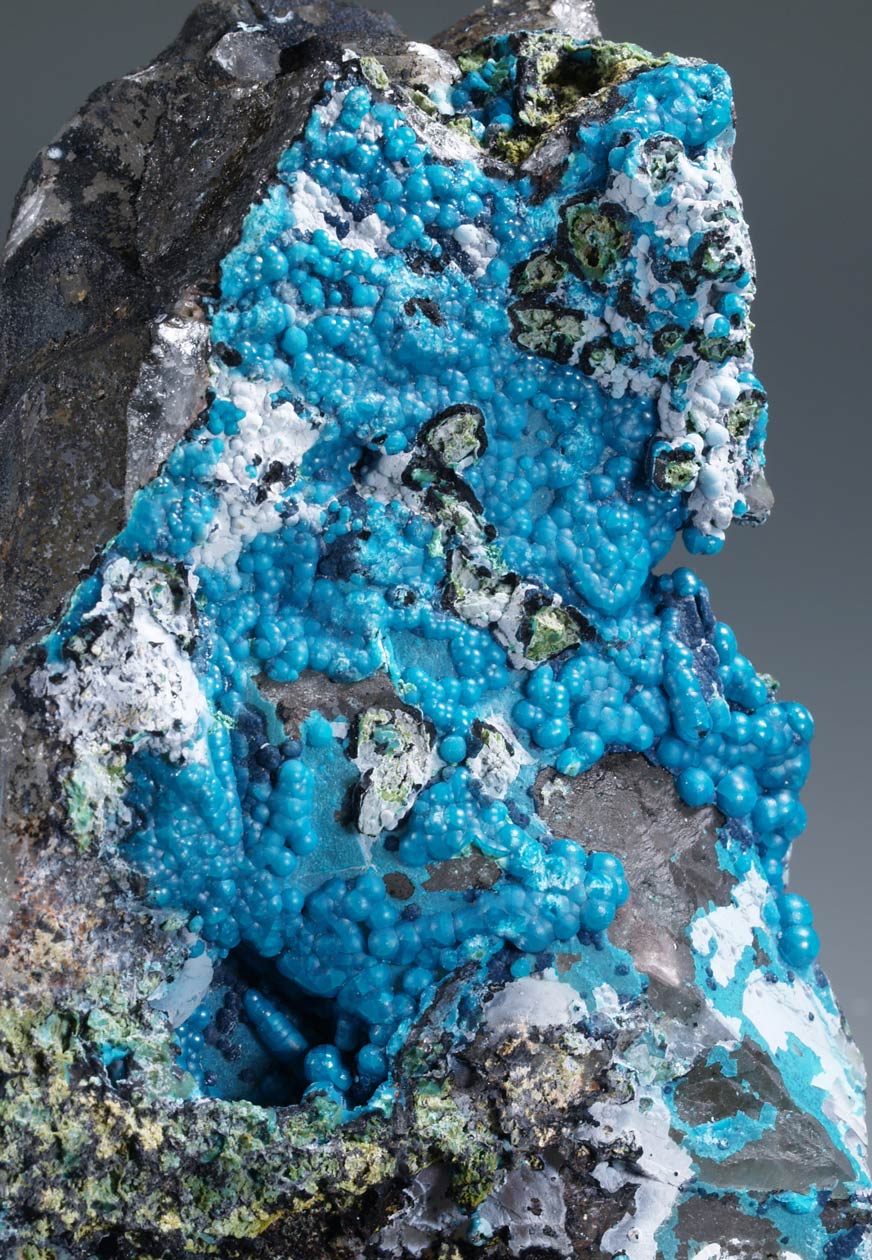
Good size specimen formed by numerous botryoidal aggregates of blue chrysocolla, scattered across a matrix primarily made of quartz. Underneath some of these bluish spheres, green radial aggregates corresponding to malachite. Tenorite is present as black globular aggregates. The contrast against the matrix is highly striking.
Although similar pieces initially circulated with erroneous labels attributing them to the Tentadora Mine (Pisco, Ica), the locality was subsequently corrected and confirmed by R. Lavinstky and U. Kolitsch as originating from the Julcani mining district (Huancavelica).
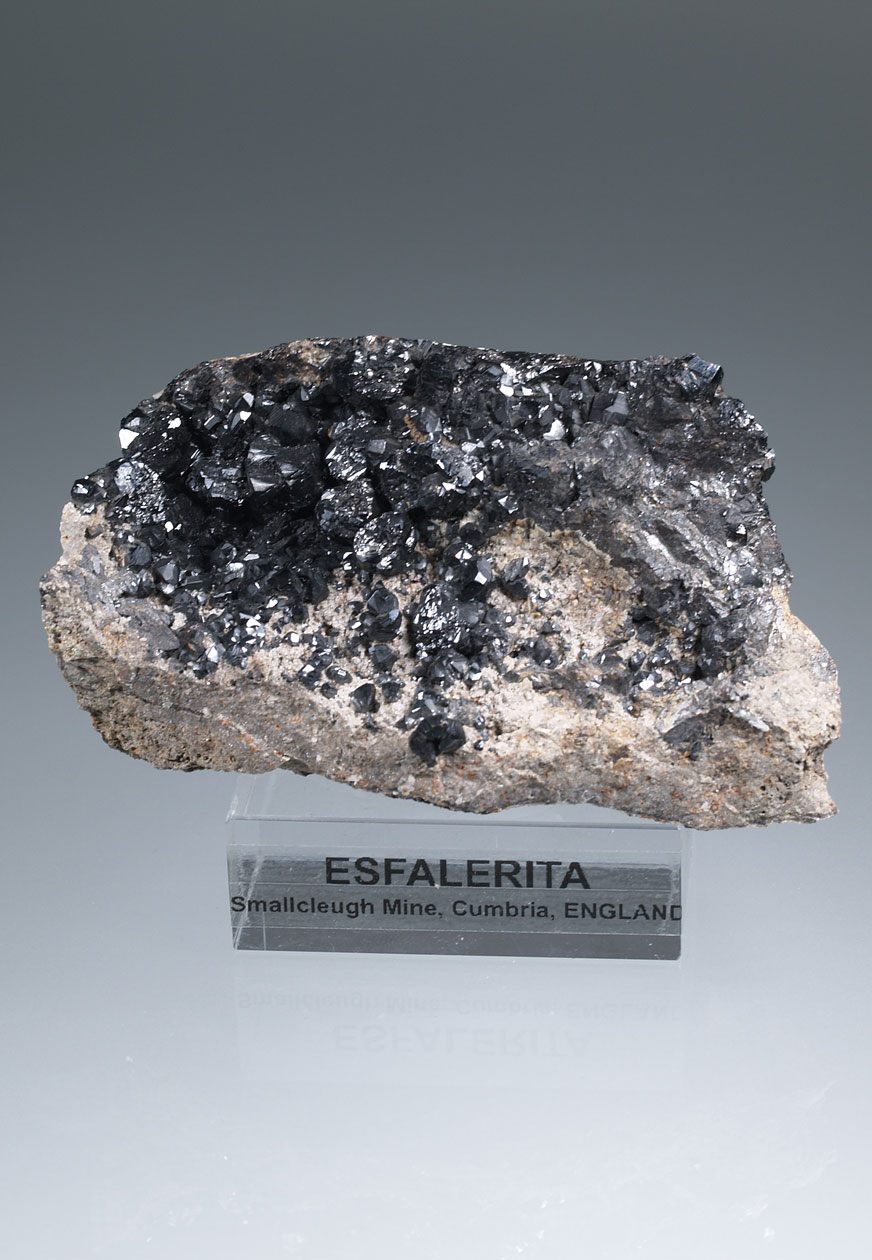
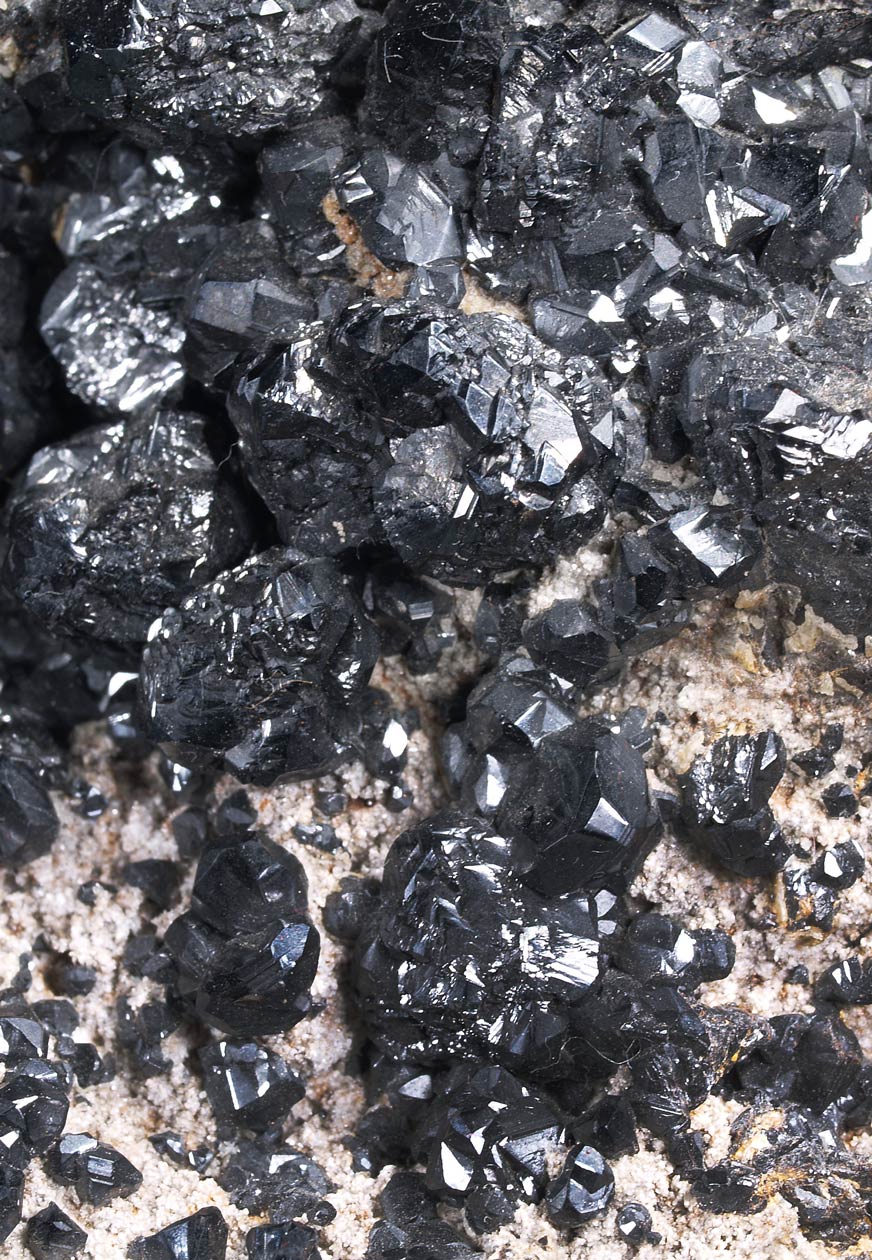
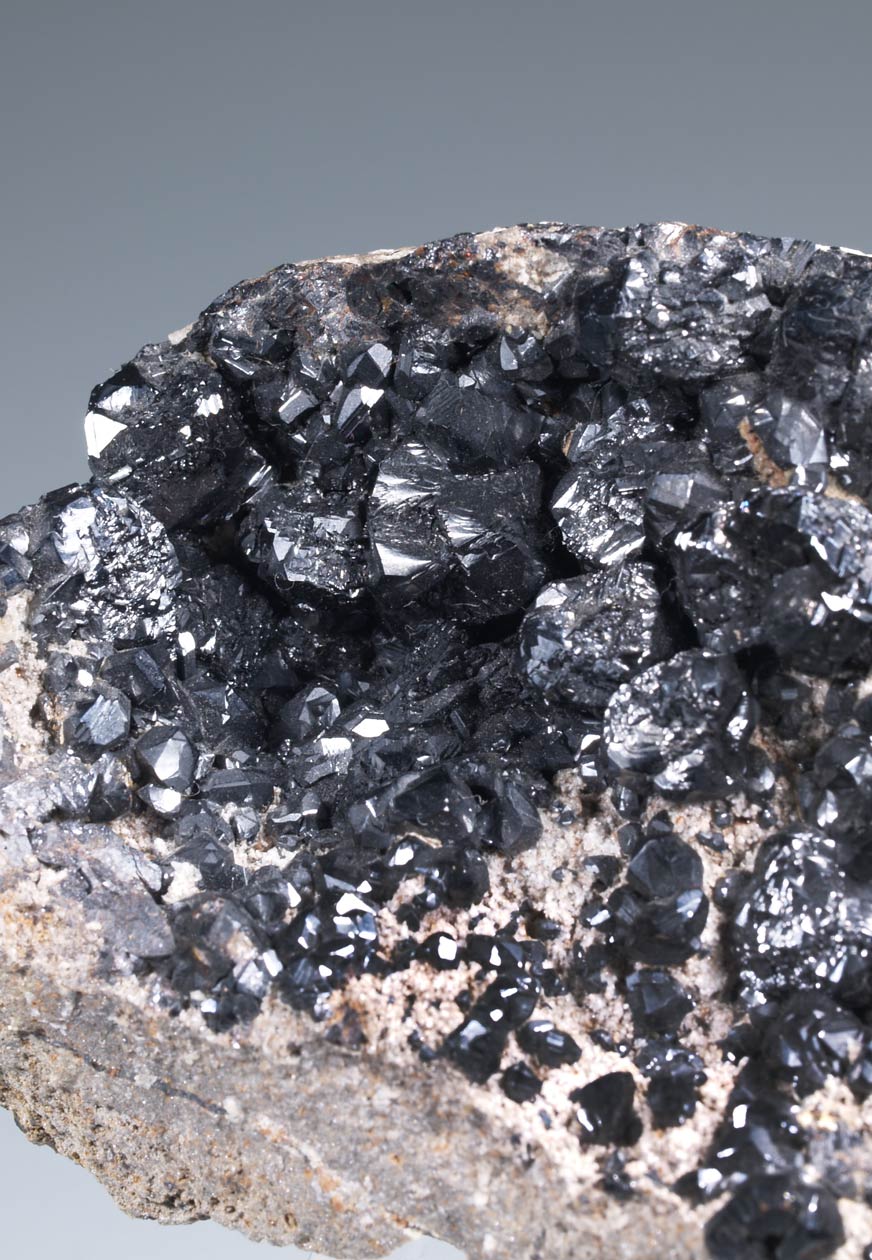
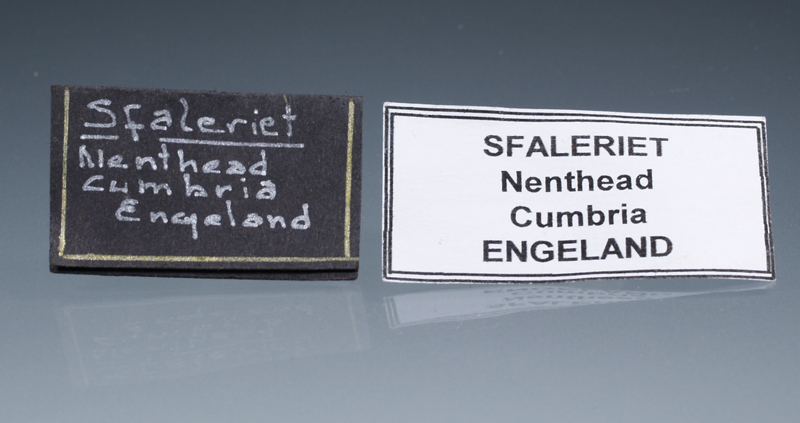
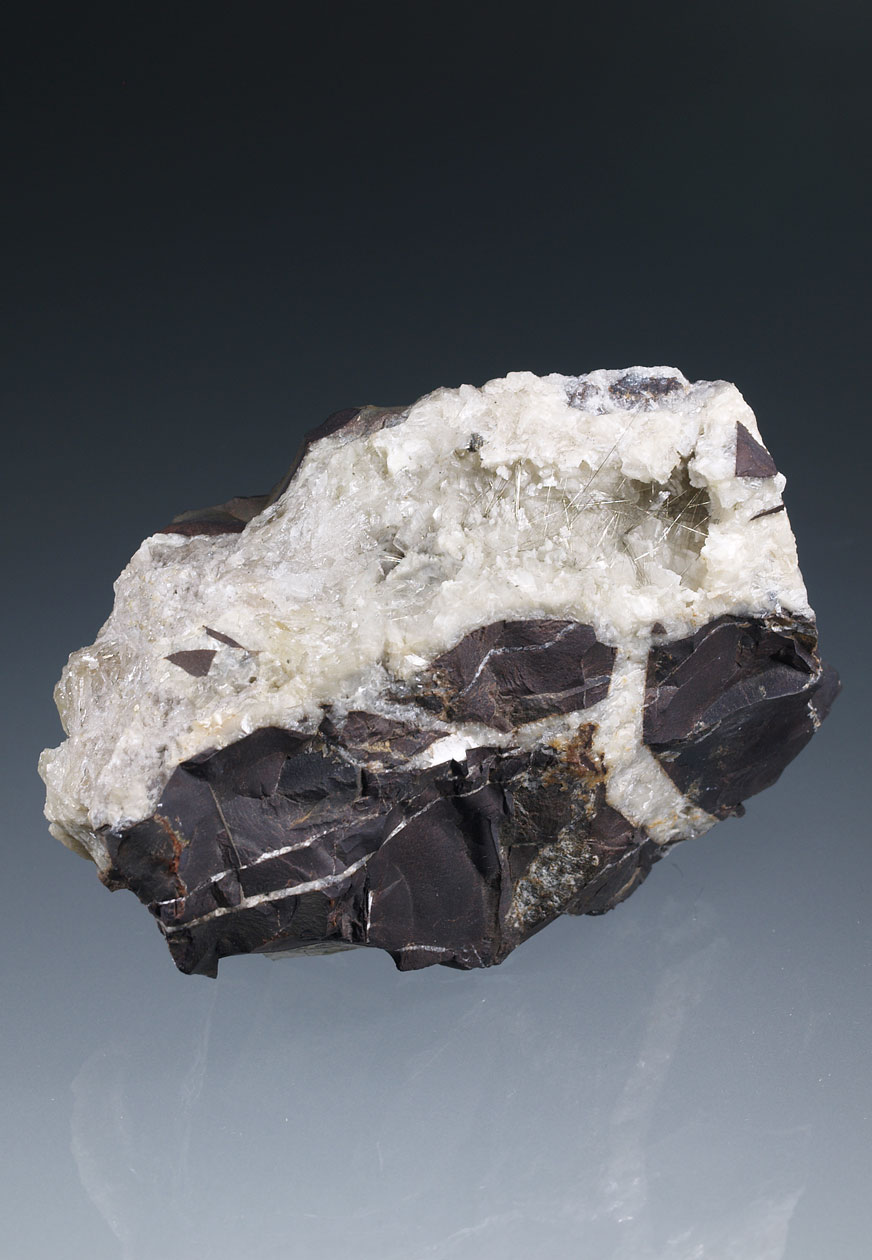
Sphalerite specimen from this classic and renowned English mine. It features a druse of faceted, highly lustrous sphalerite crystals. Good size for an English classic.
Smallcleugh mine is well known amongst British mineral collectors for its specimens of galena, sphalerite, ankerite, and calcite. The mine was first developed for a brief period starting in 1770, working a series of veins. Although it does not appear to have gotten into its stride until 1787, it operated until its closure in the early 20th century. In 1963, an unsuccessful attempt was made to locate further ore reserves. The most famous anecdote associated with the mine is the underground dinner held by the Masonic Lodge in the so-called Ballroom Flats in 1901. The first amateur exploration of the mine likely took place in the late 1960s.
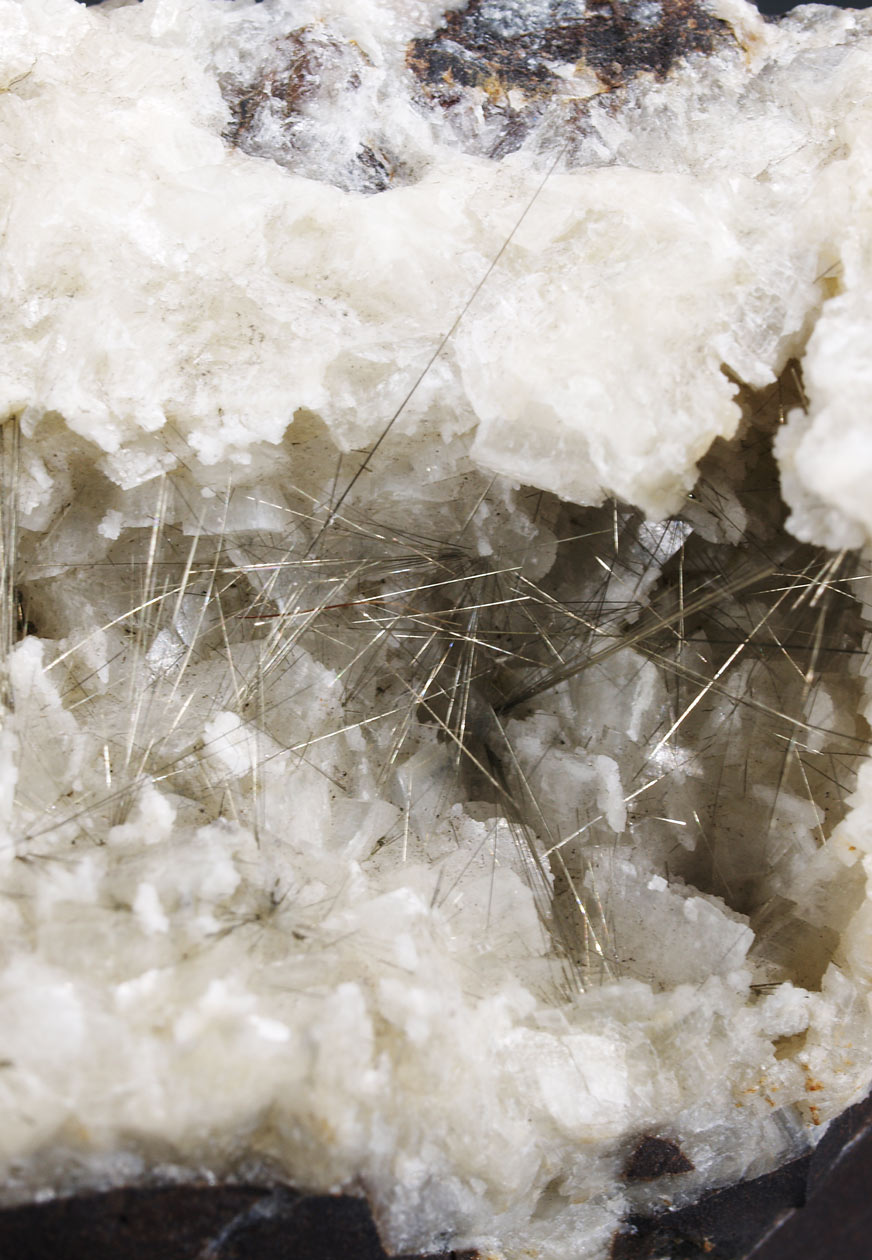
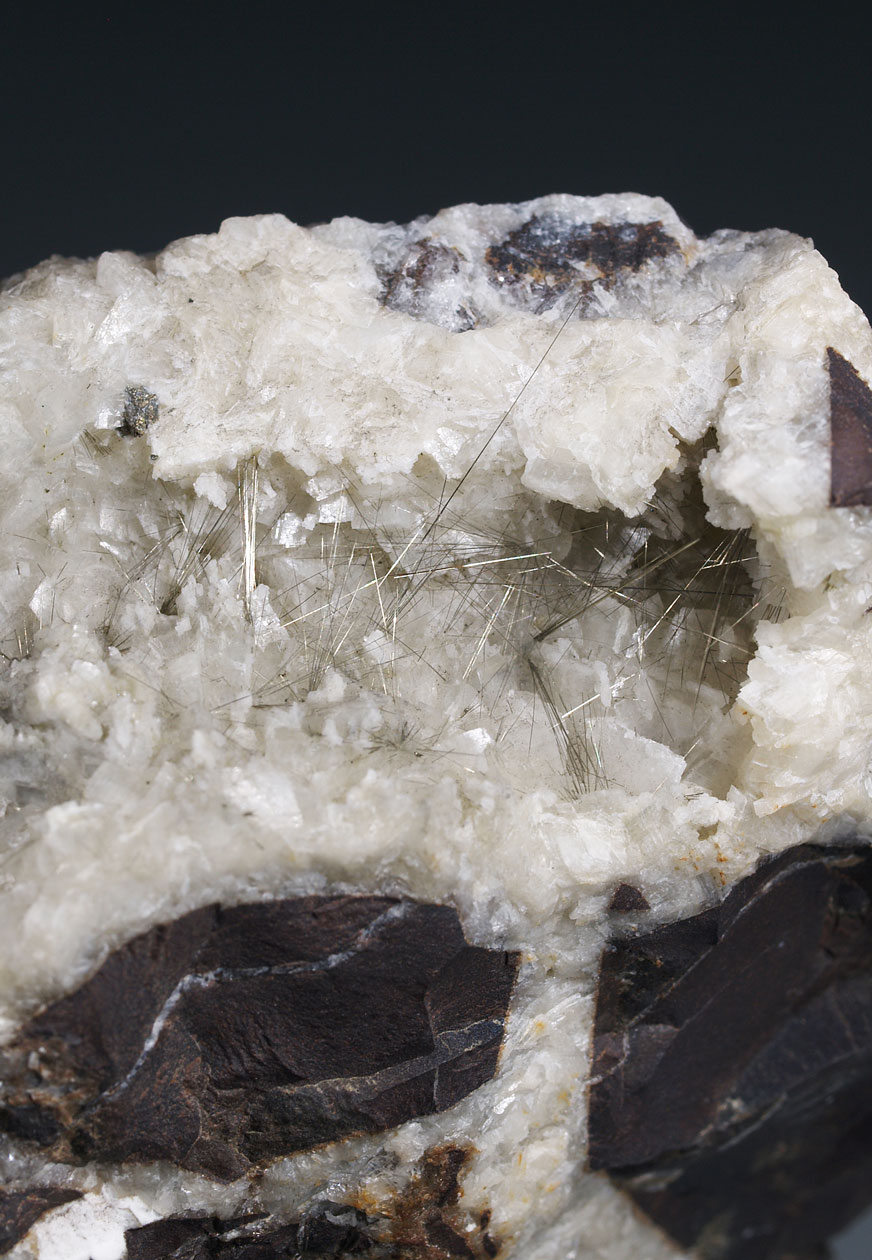
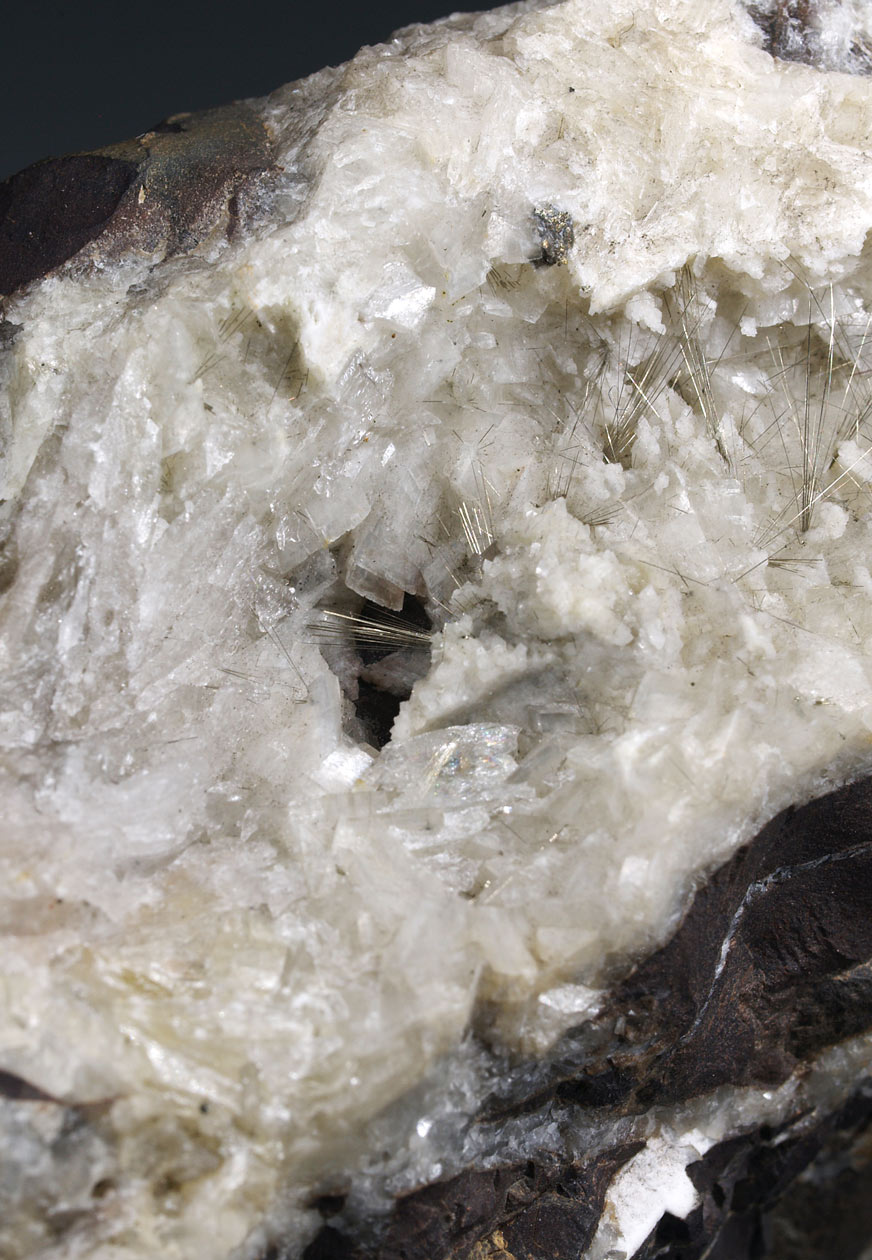
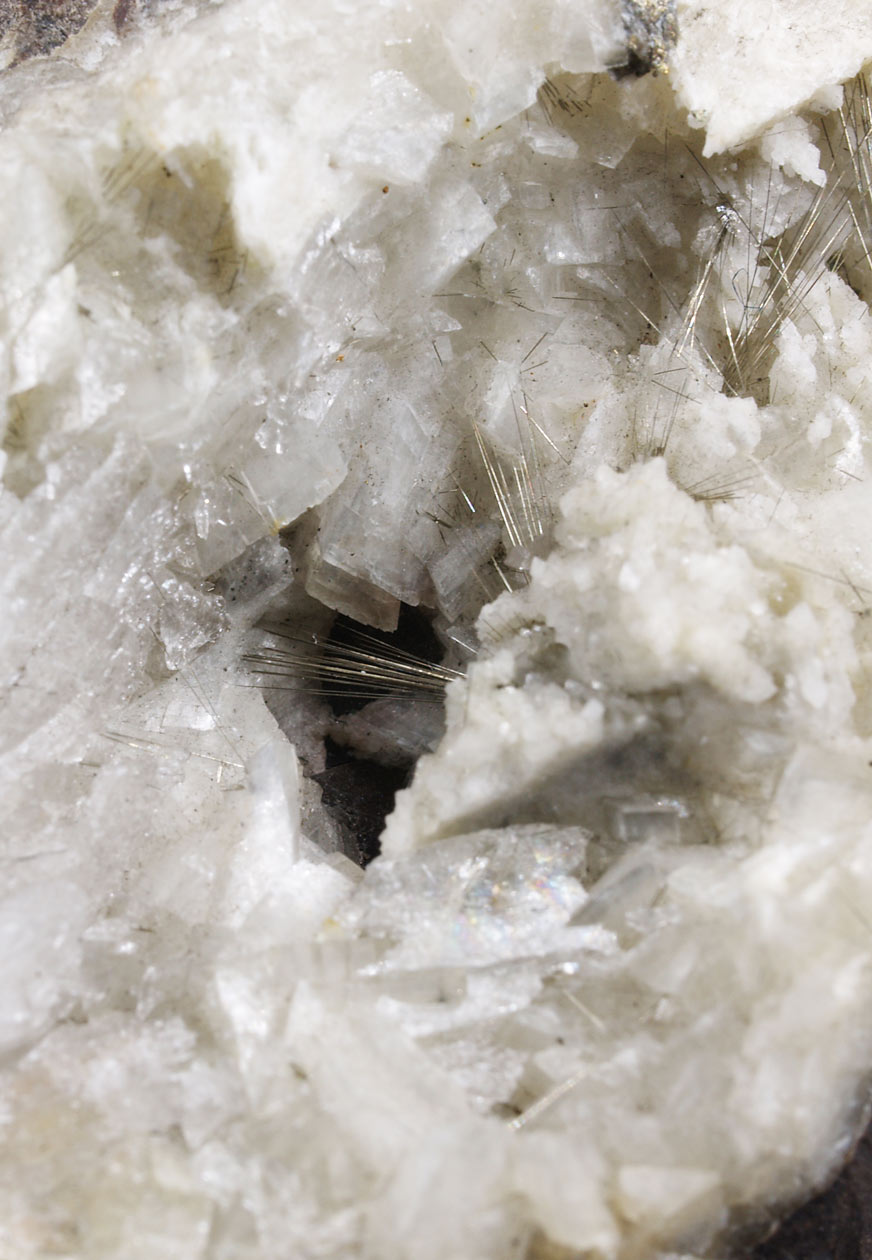
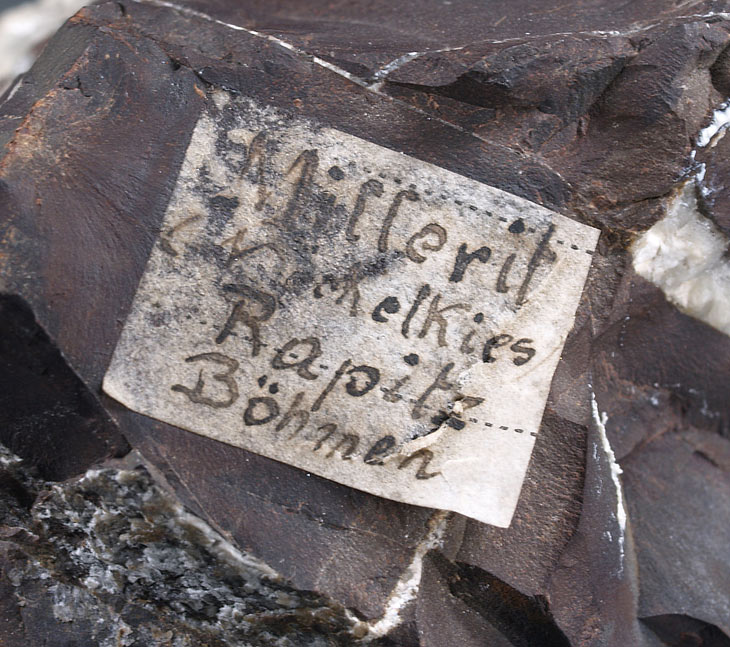
A historic millerite specimen from this classic Czech mining locality, known in German as Räpitz —as noted on the antique label affixed to the piece. On a matrix with dolomite crystals (often described as ankerite), numerous bright, acicular millerite crystals are perched, displaying their characteristic brassy-golden color.
According to the original label, this is an old-time specimen; it might have been collected in the early 20th century from what was later designated as the Gottwald III mine, though this remains conjectural. A piece steeped in history, nowadays rarely seen on the market.
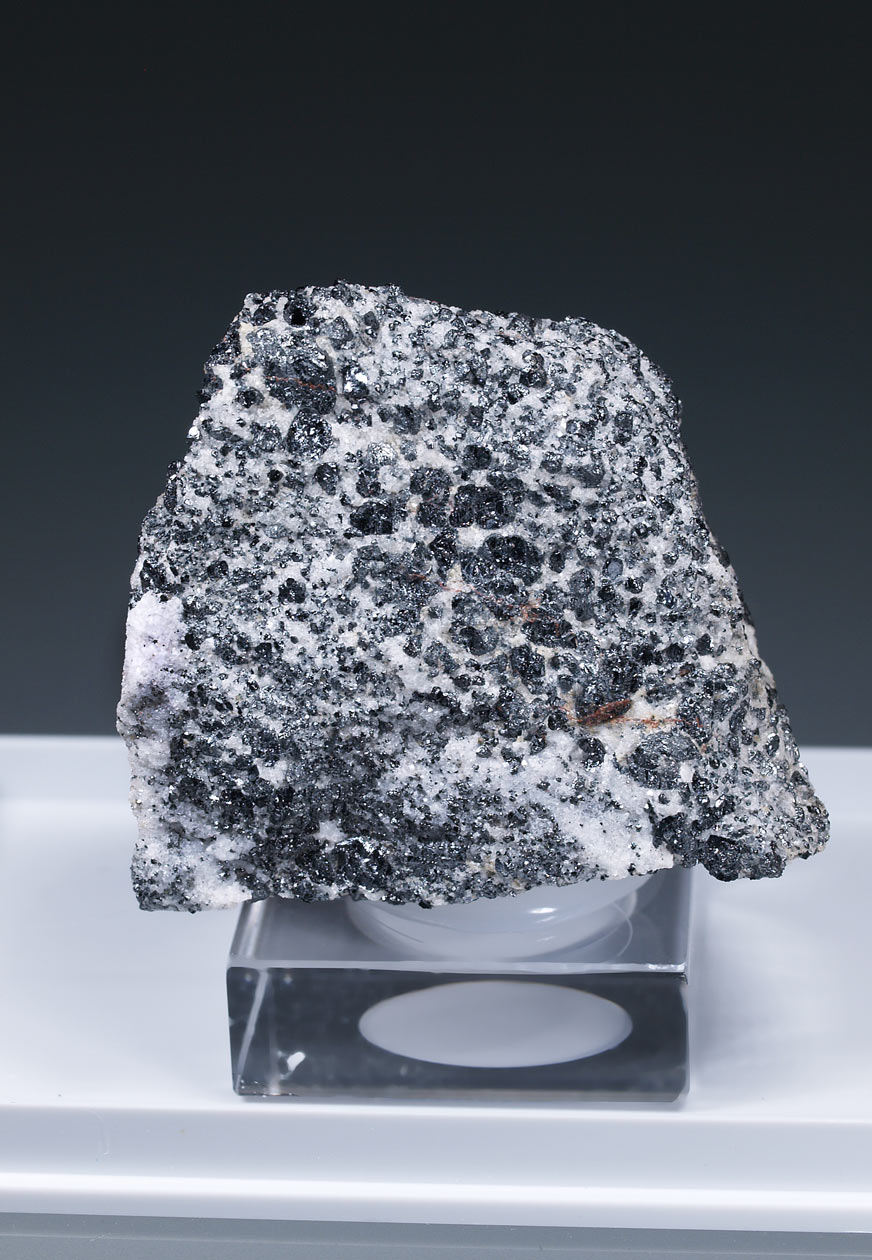
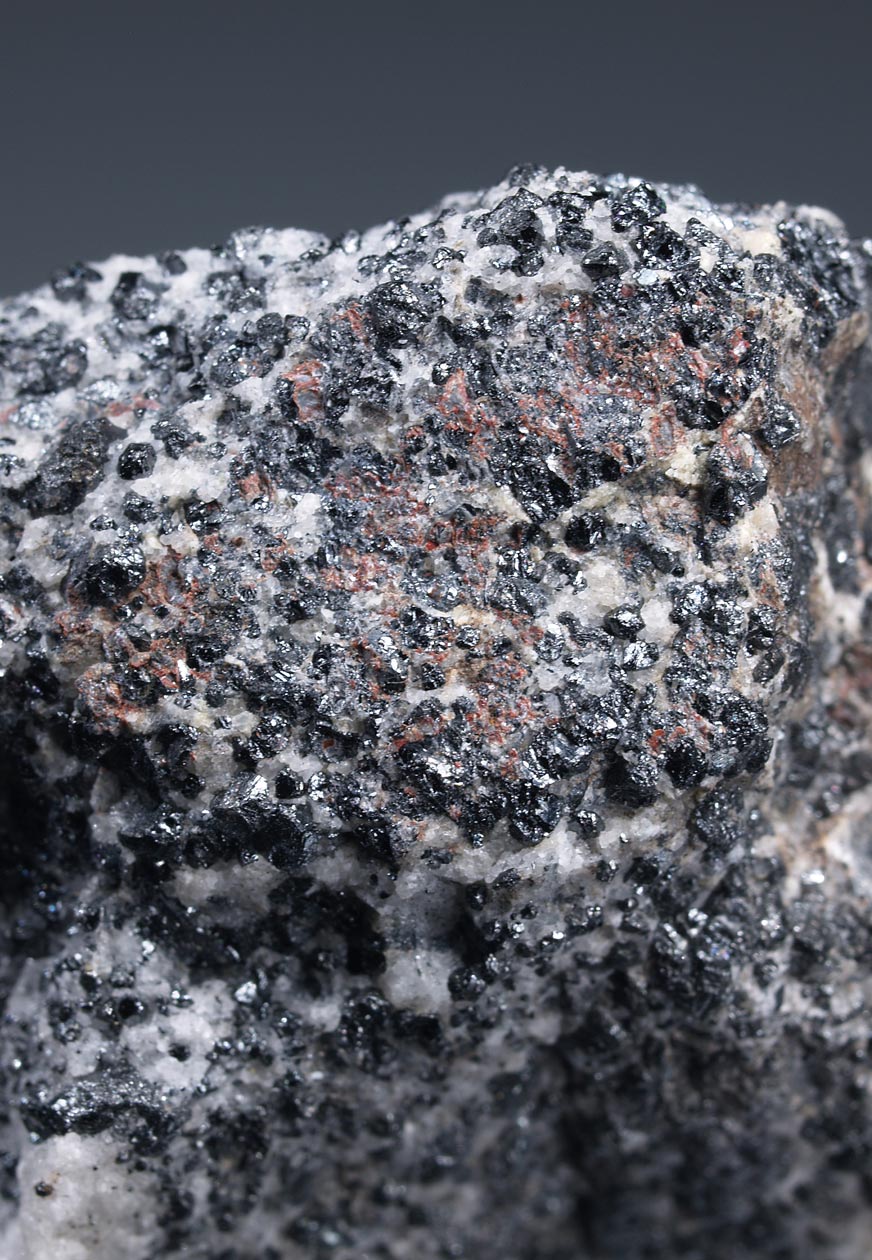
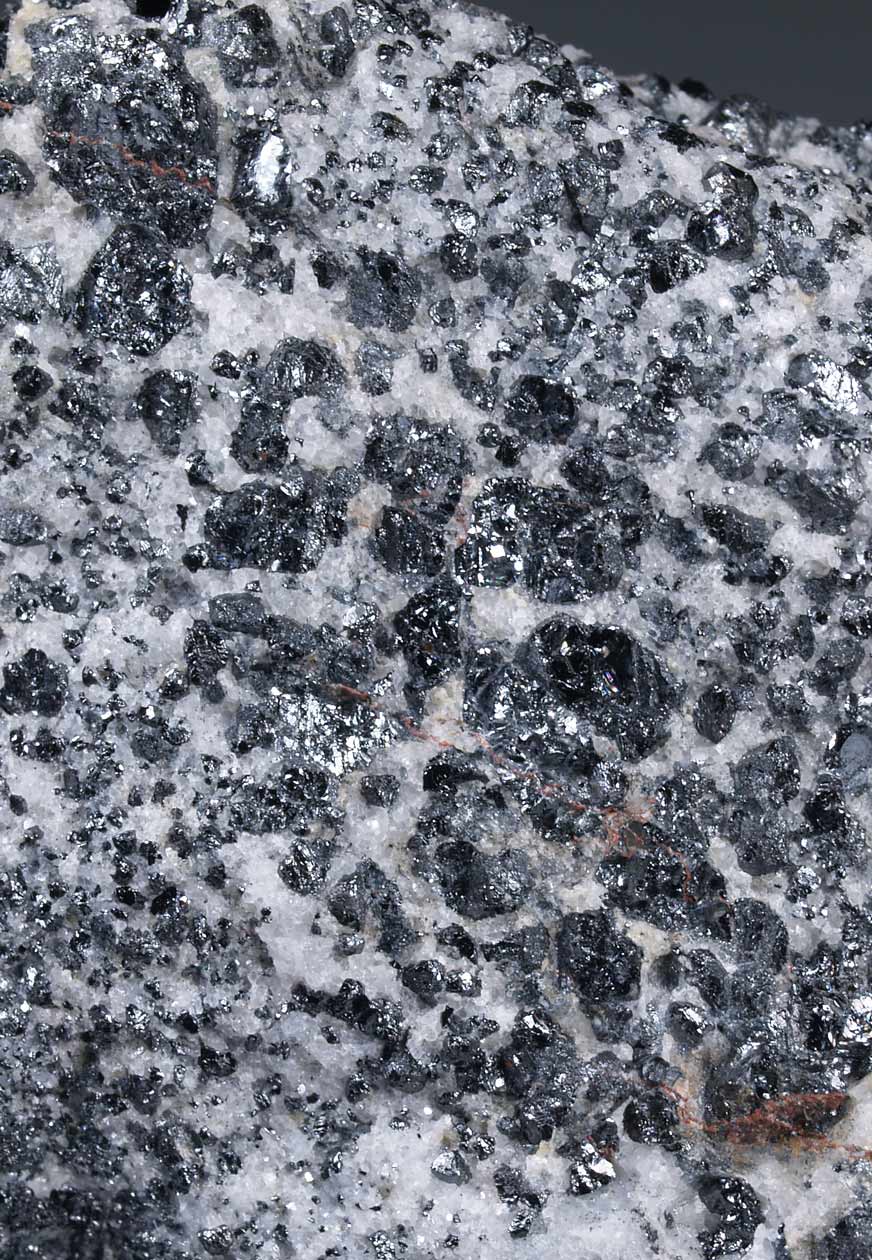
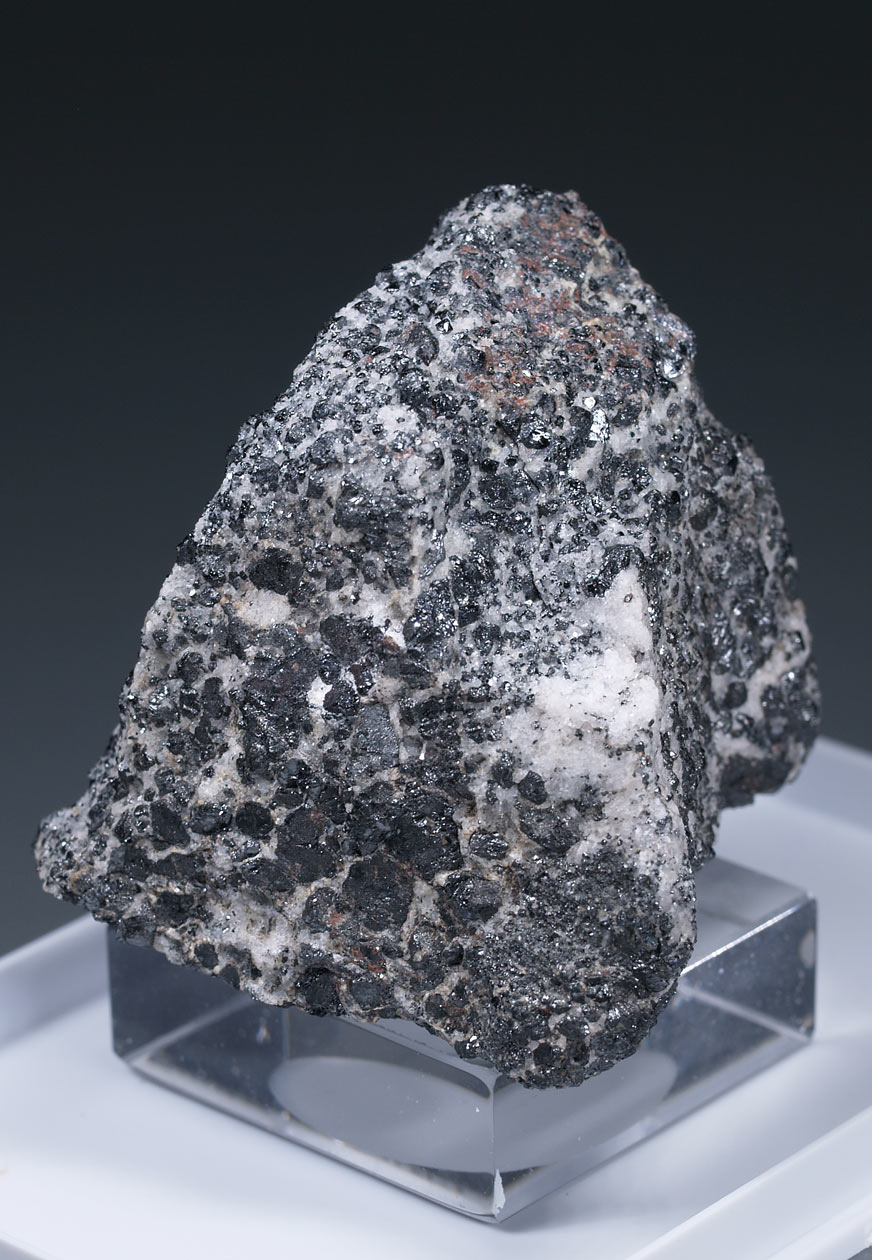
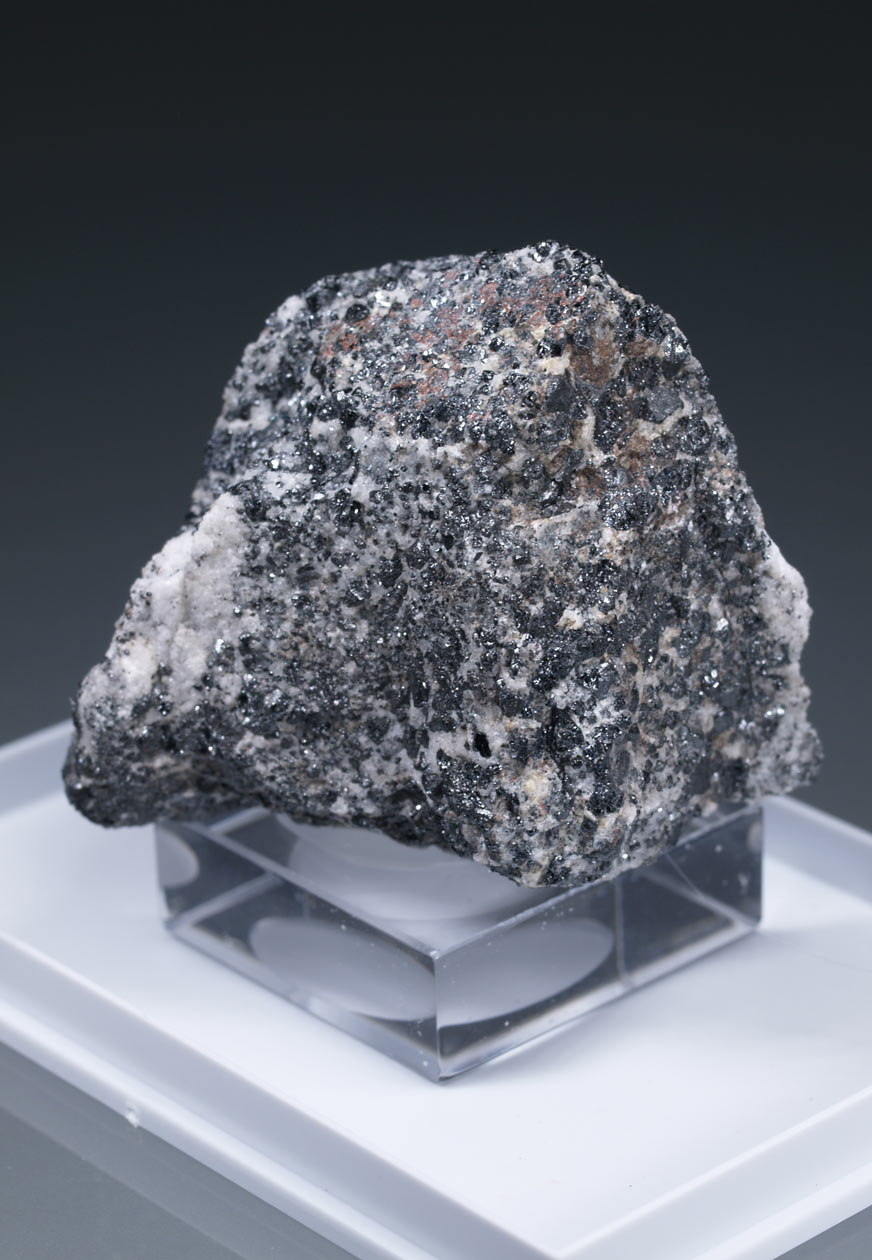
A rich cluster of magnesioferrite crystals, intensely black with a metallic luster, exhibiting octahedral forms and rounded edges. They are accompanied on the calcite/dolomite matrix by litharge, which appears as an orange to reddish microcrystalline powder. This mineral, which forms a series with magnetite, is strongly magnetic.
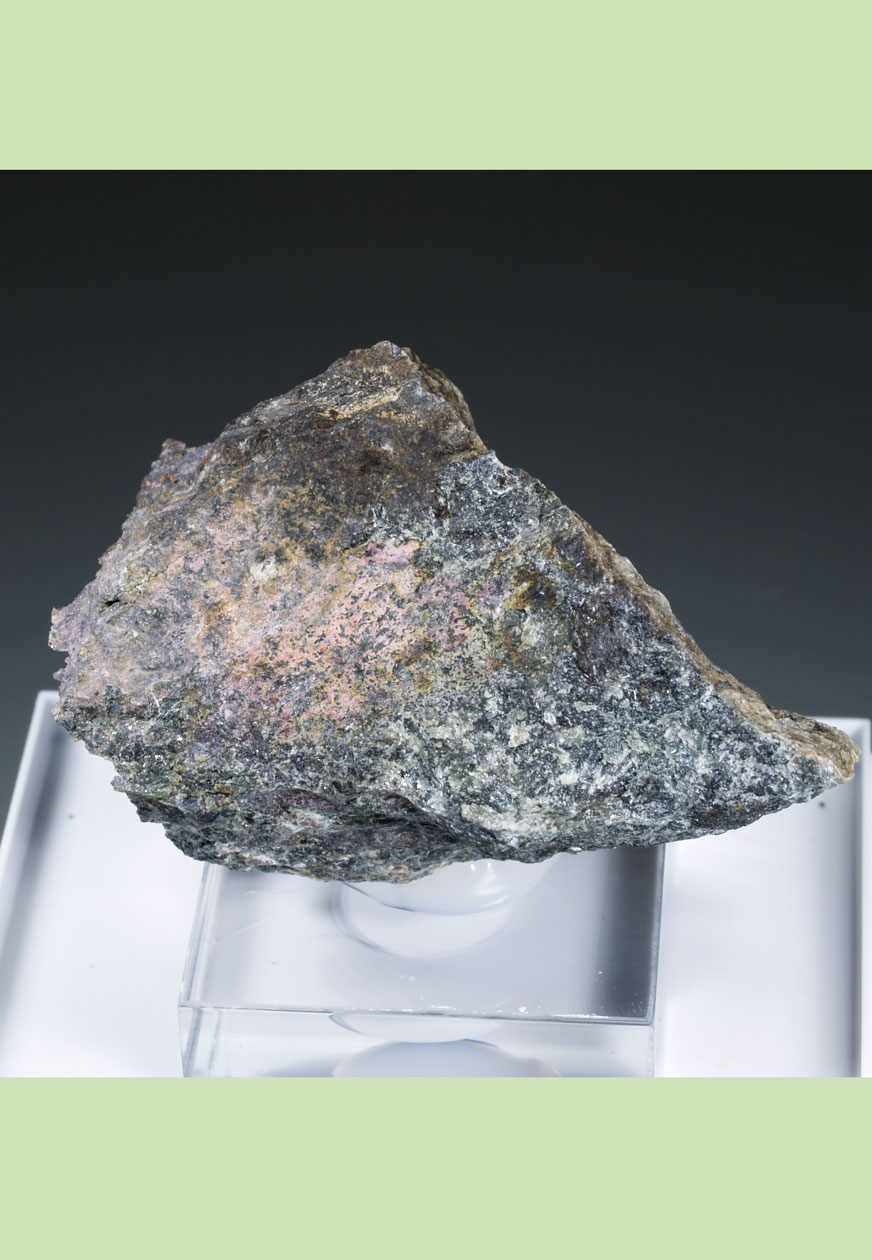
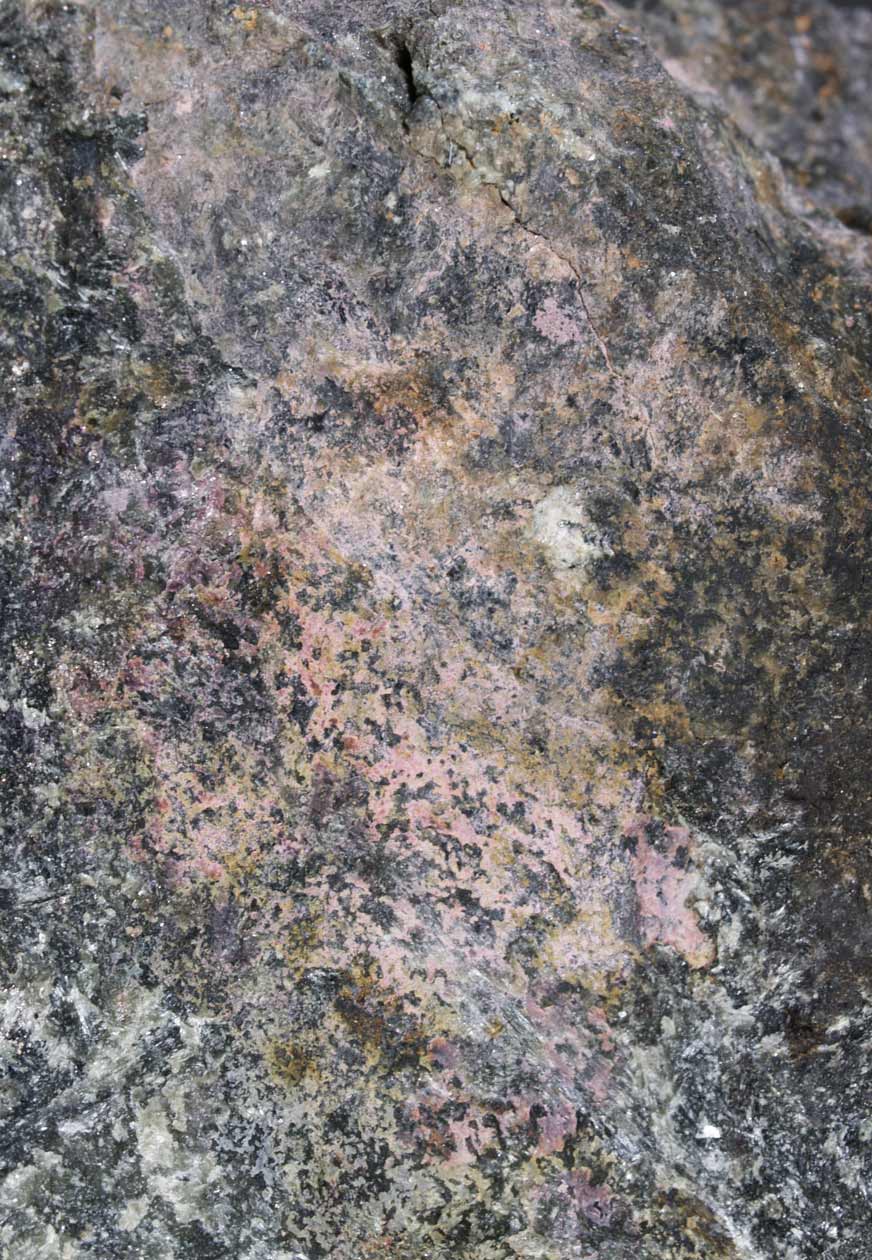
In this specimen, several surfaces are coated with pink layers corresponding to this rare cobalt sulfate. It comes from the classic Bastnäs mine, the type locality for the species.
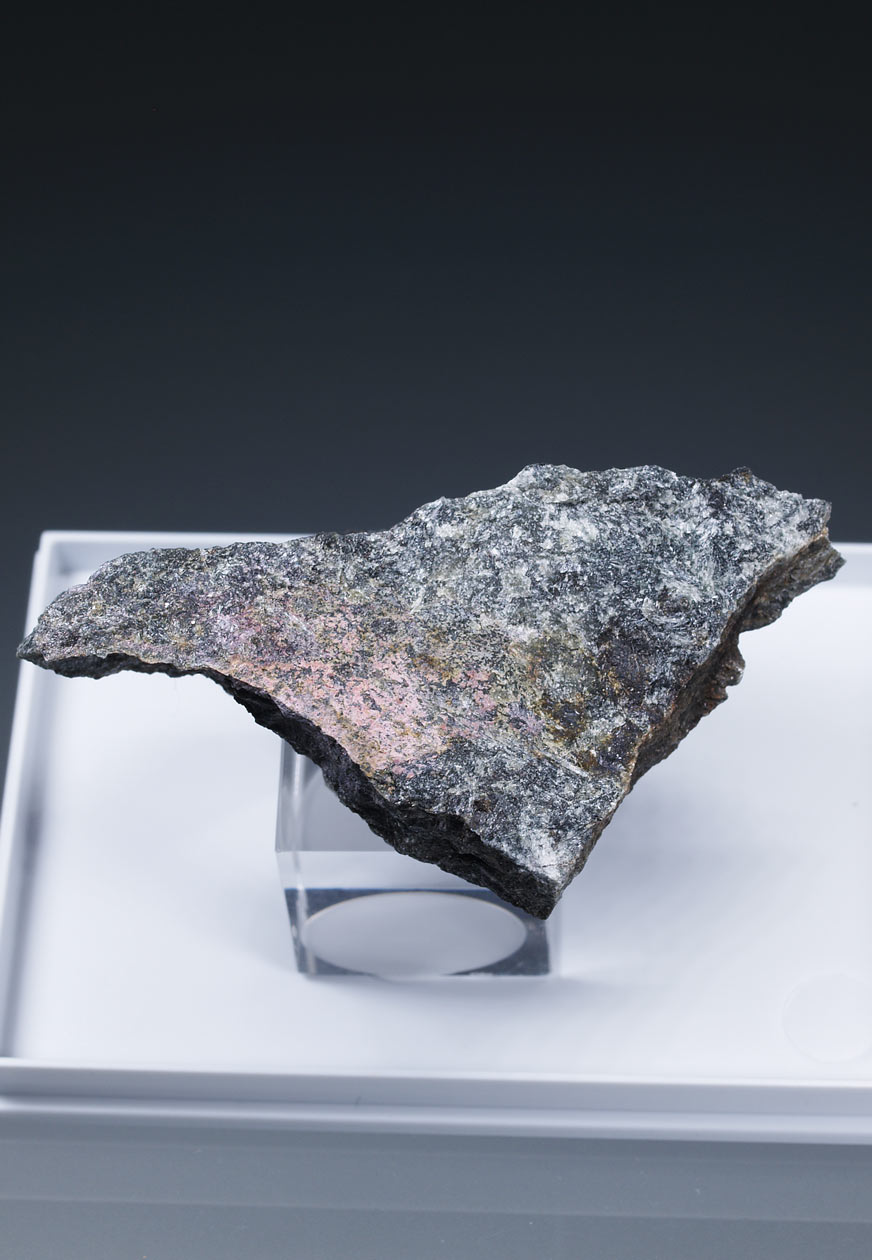
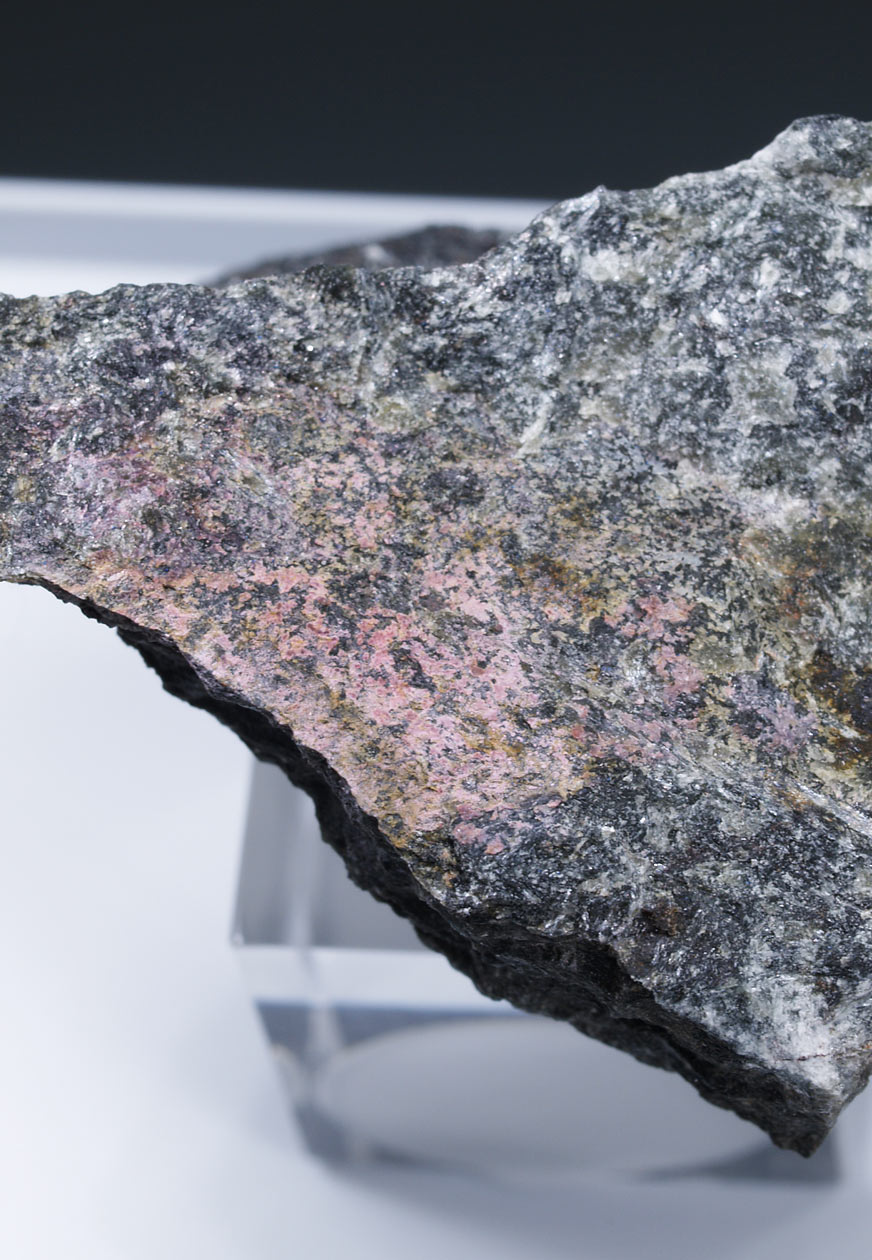
In this specimen, several surfaces are coated with pink layers corresponding to this rare cobalt sulfate. It comes from the classic Bastnäs mine, the type locality for the species.