- Home About RM Minerals
- Virtual Photo Museum Blog RM Contact
- Microscopy and instruments How to Buy Disclaimer
Copyright 2010-2026
www.rosellminerals.com



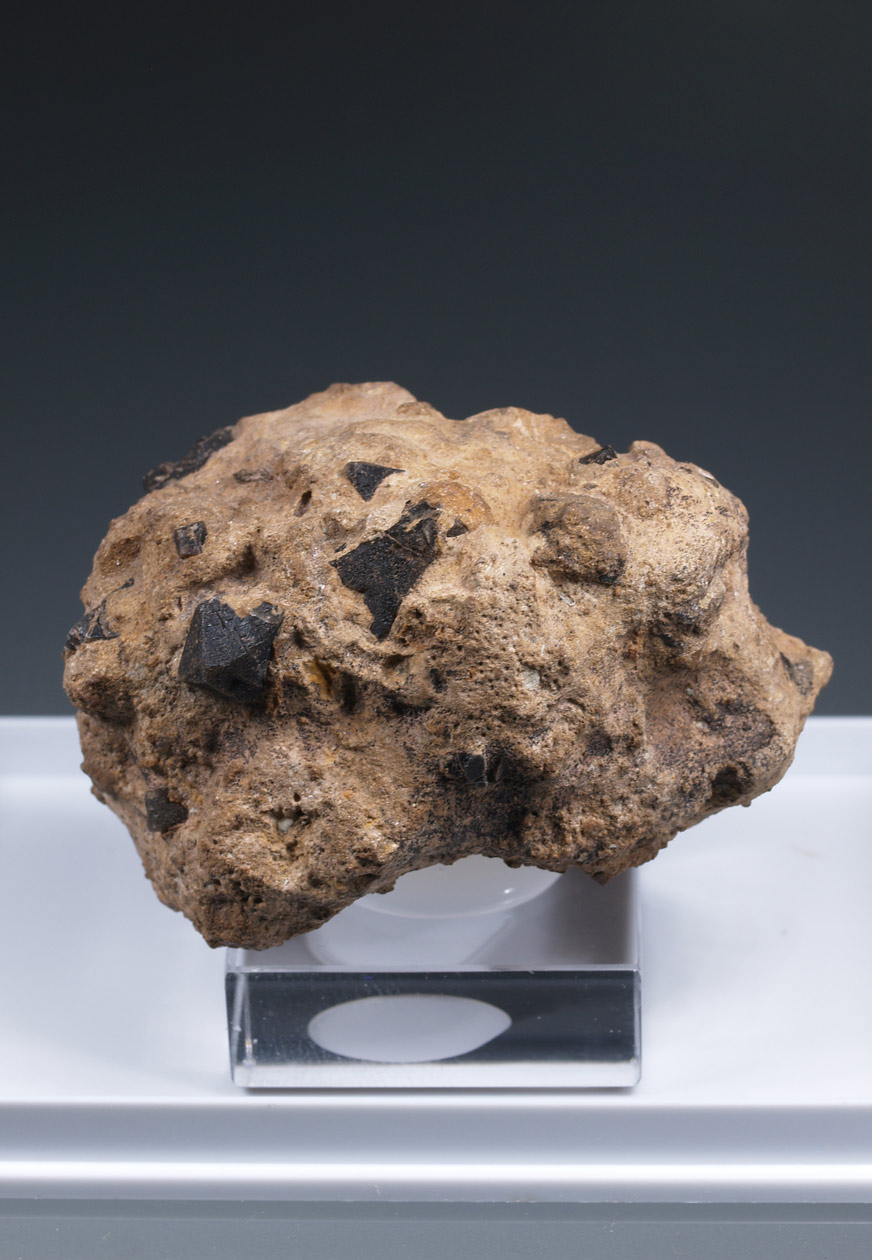
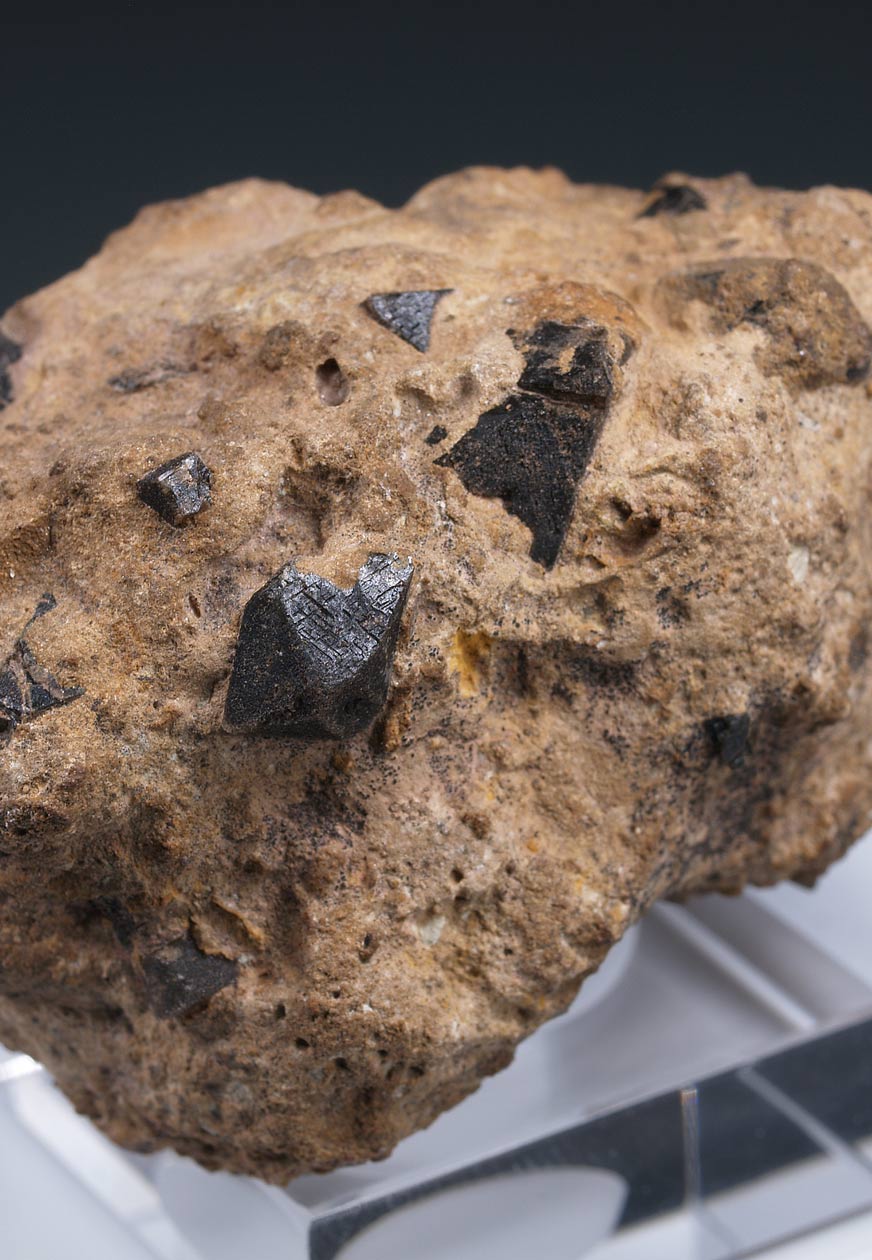
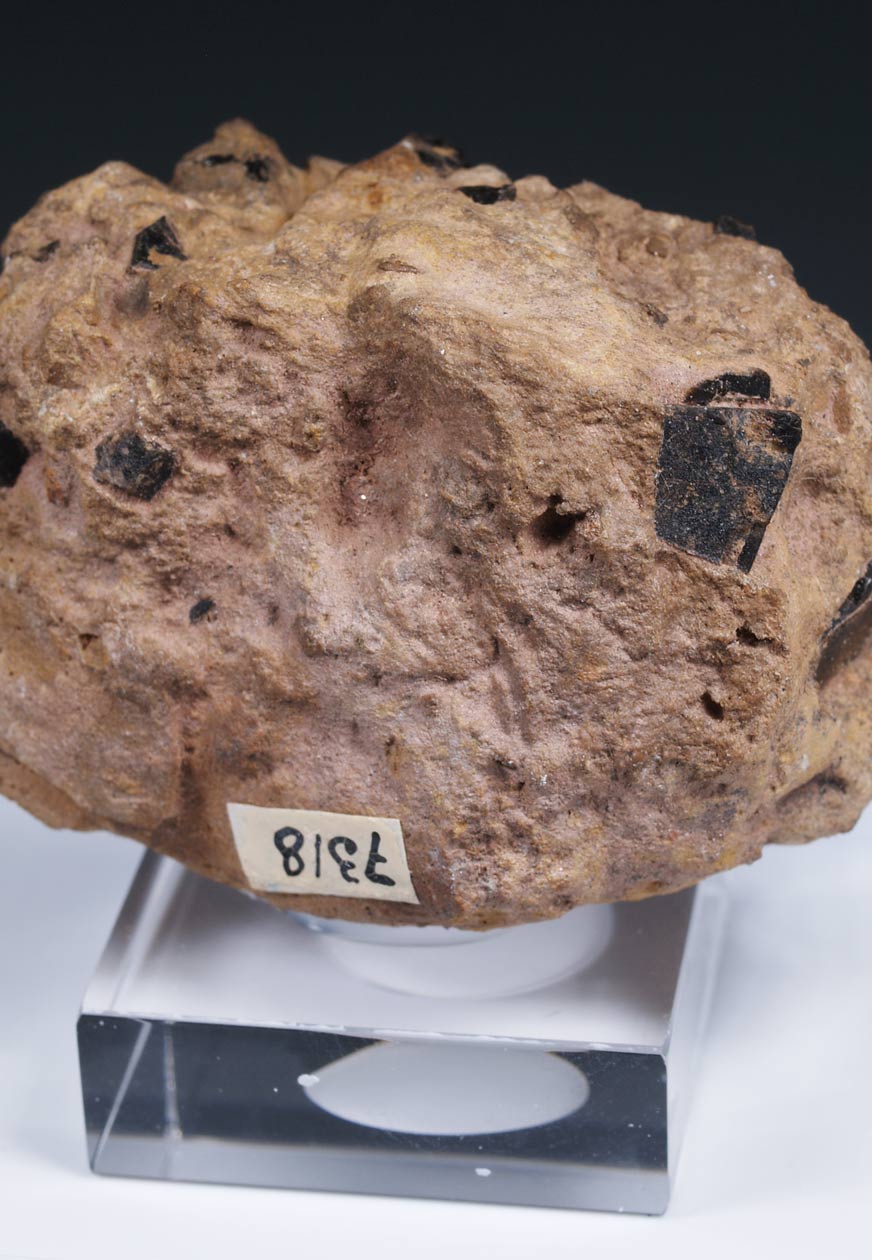
This specimen stands out for several reasons. On the one hand, it is an antique specimen of teruelite—an iron-rich variety of dolomite that was first described from this area of Teruel. The specimen displays several pseudo-octahedral crystals embedded in a detrital rock matrix.
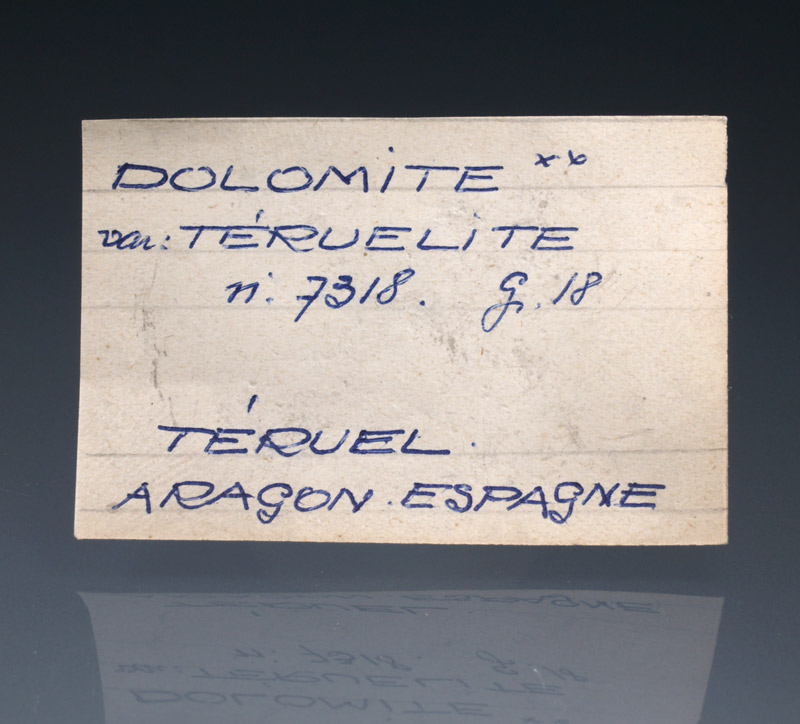
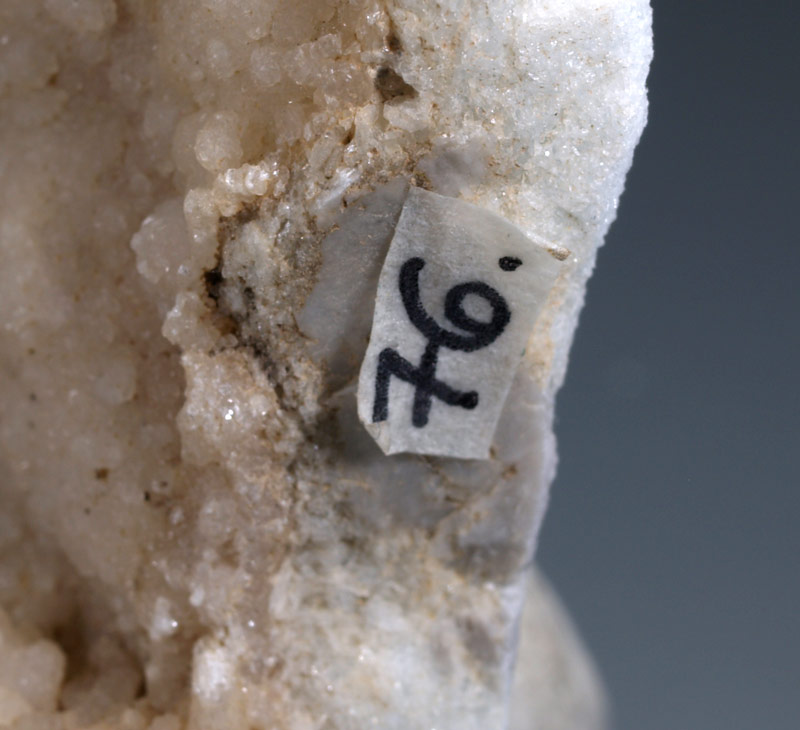
On the other hand, the piece is accompanied by a handwritten label bearing collection number #7318 and the code G.18, which we believe refers to the drawer (tiroir) where it was stored.
By comparing the handwriting style with other cataloged labels, we can confirm that this label and specimen originate from the collection of the renowned French mineral collector Jean Chervet (1904–1962).
Chervet served as head of the mineralogy department at the French Commissariat à l'Énergie Atomique (CEA) throughout the 1950s and early 1960s. He played a pivotal role in the survey and prospecting of uranium deposits in France and African territories such as Gabon and Madagascar. The mineral chervetite, discovered at the Mounana mine in Gabon and formally described in 1963, was named in his honor.
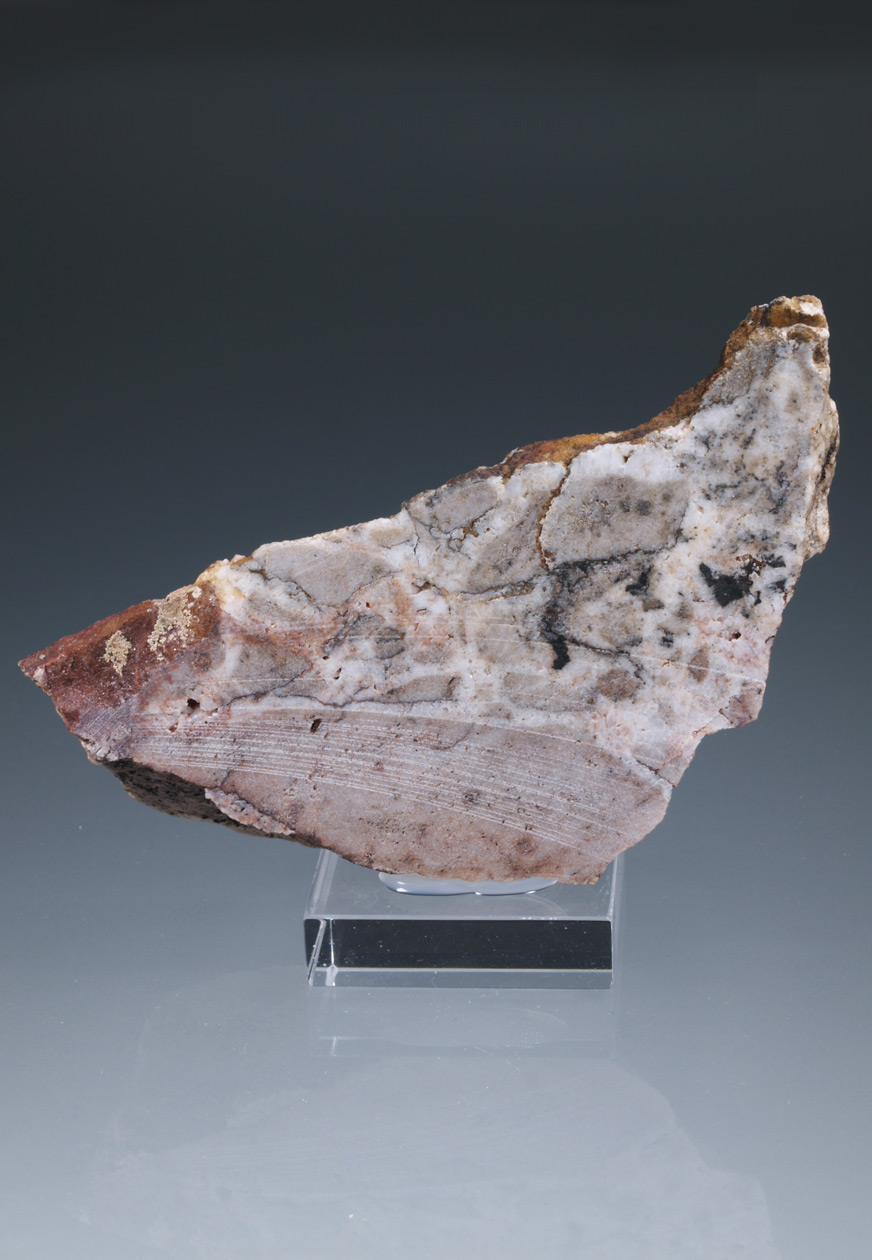
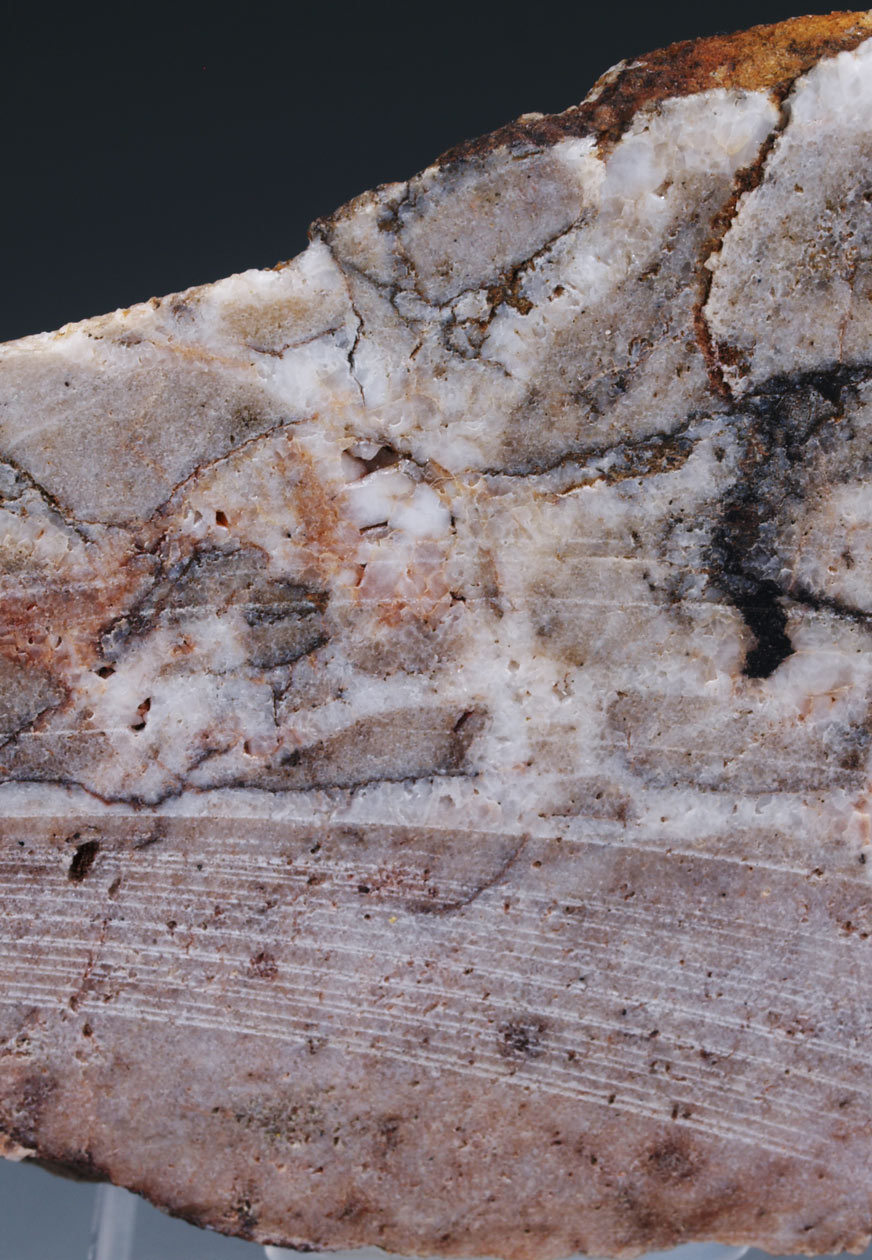
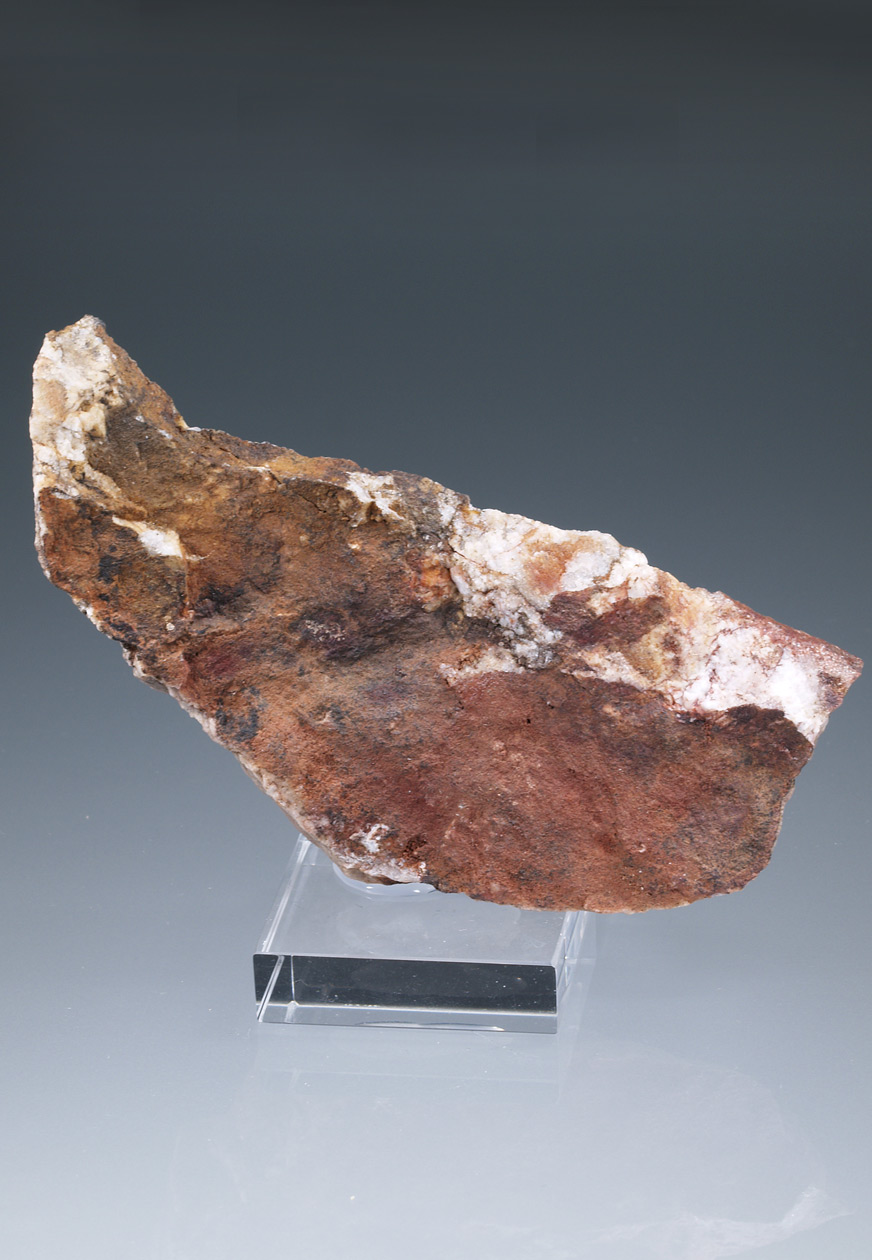
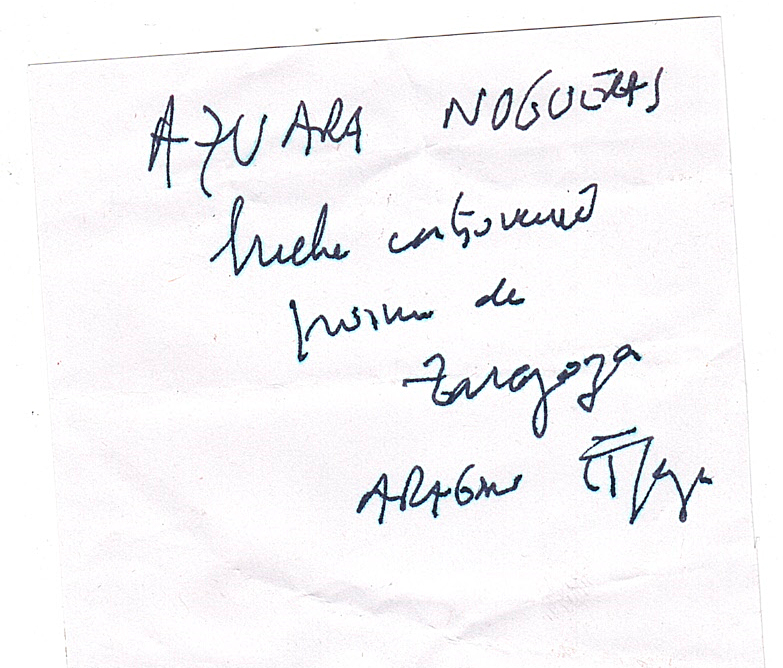
This breccia specimen, polished on one face, comes from the purported Azuara impact structure (Zaragoza province, on the border with Teruel).
This formation is at the center of one of the most intense controversies in recent Spanish geology: although proposed in the early 1980s as a meteorite impact crater, the hypothesis has been rejected by the stratigraphic, structural, and planetary science communities.
It is a piece of notable scientific interest whose exact outcrop remains unrecorded, having been acquired from a French mineral dealer.
For further information on the Azuara controversy, see Mindat link and Ernstson Claudin Impact Structures-Meteorite craters. And more...
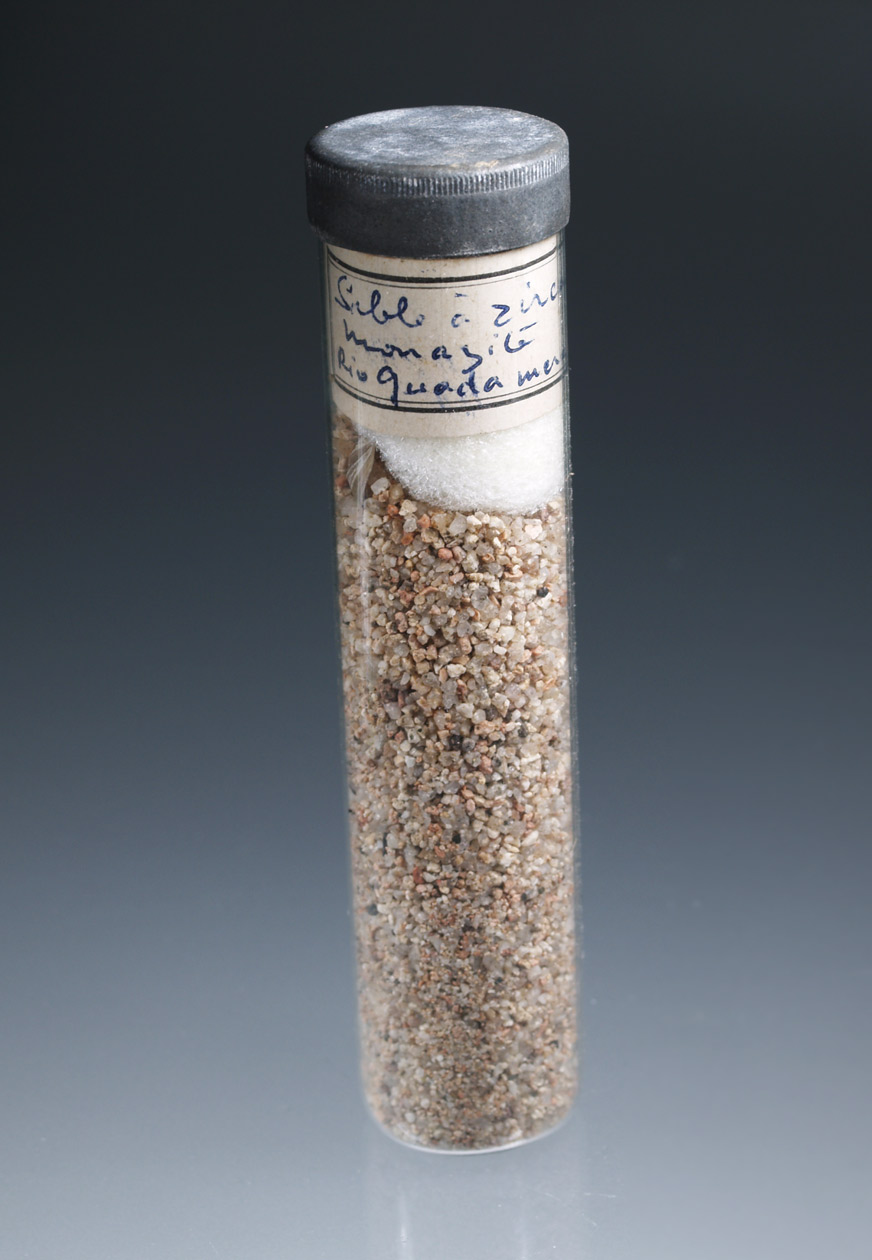
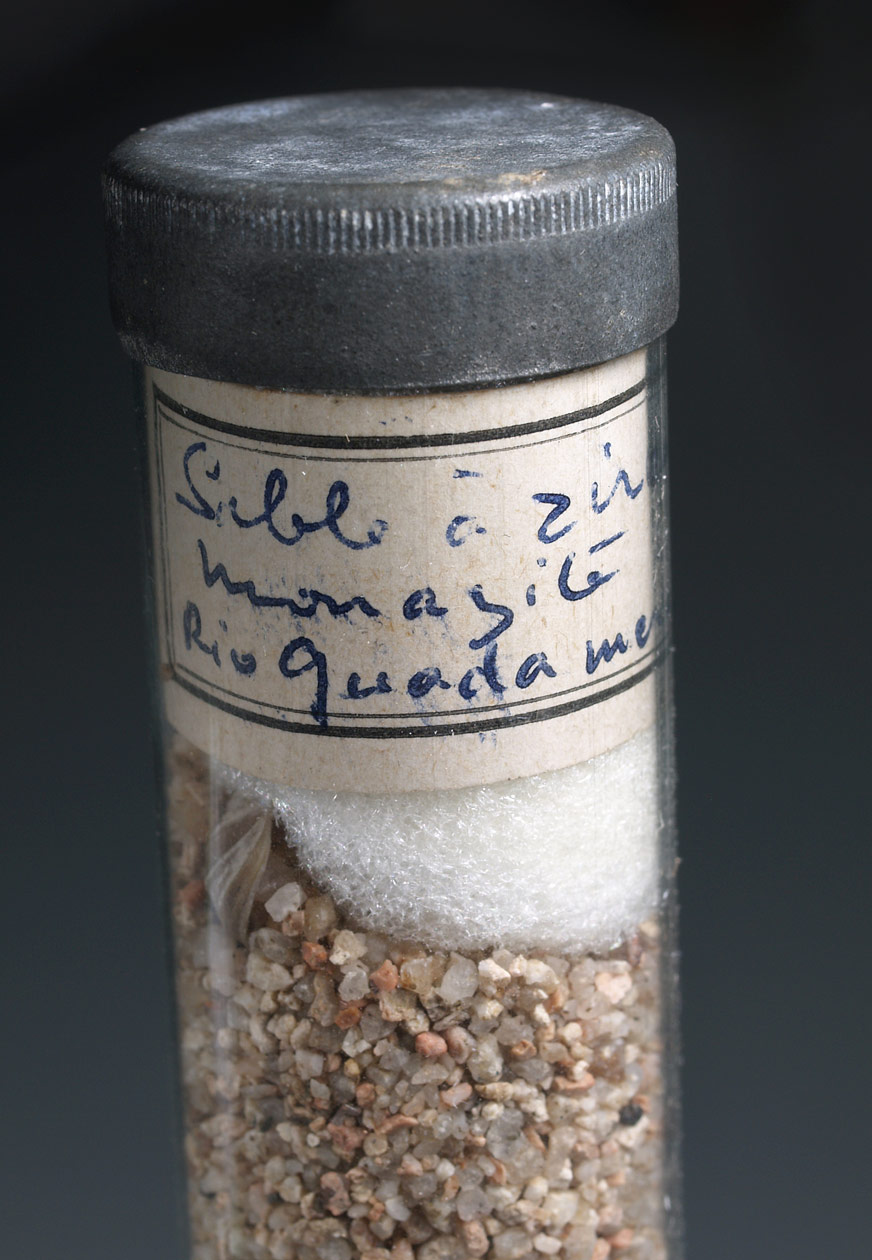
A scientific curiosity from oldtime... This is a glass tube, from a former French collection, containing sands from the Guadarrama River, although the antique handwritten label locates it in the Córdoba area (sic). These are probably samples collected in the upper reaches of the river, which flows from the Sierra de Guadarrama (Community of Madrid) and drains into the Tajo River, in the province of Toledo. An interesting Spanish piece recovered from a forgotten drawer of an old French collector or museum.


Blocky aerinite criptocristalline with fragments of dolerite included. Excellent color. Aerinite was used as a blue pigment in many Romanesque paintings in the Pyrenees between the 11th and 14th centuries. Its characteristic blue color varies from dark to pale blue. In fact, its name comes from a Greek root aerinos meaning "atmosphere" or "sky", as it was only known by that color. Obtaining these specimens of pure aerinite nowadays is almost impossible.
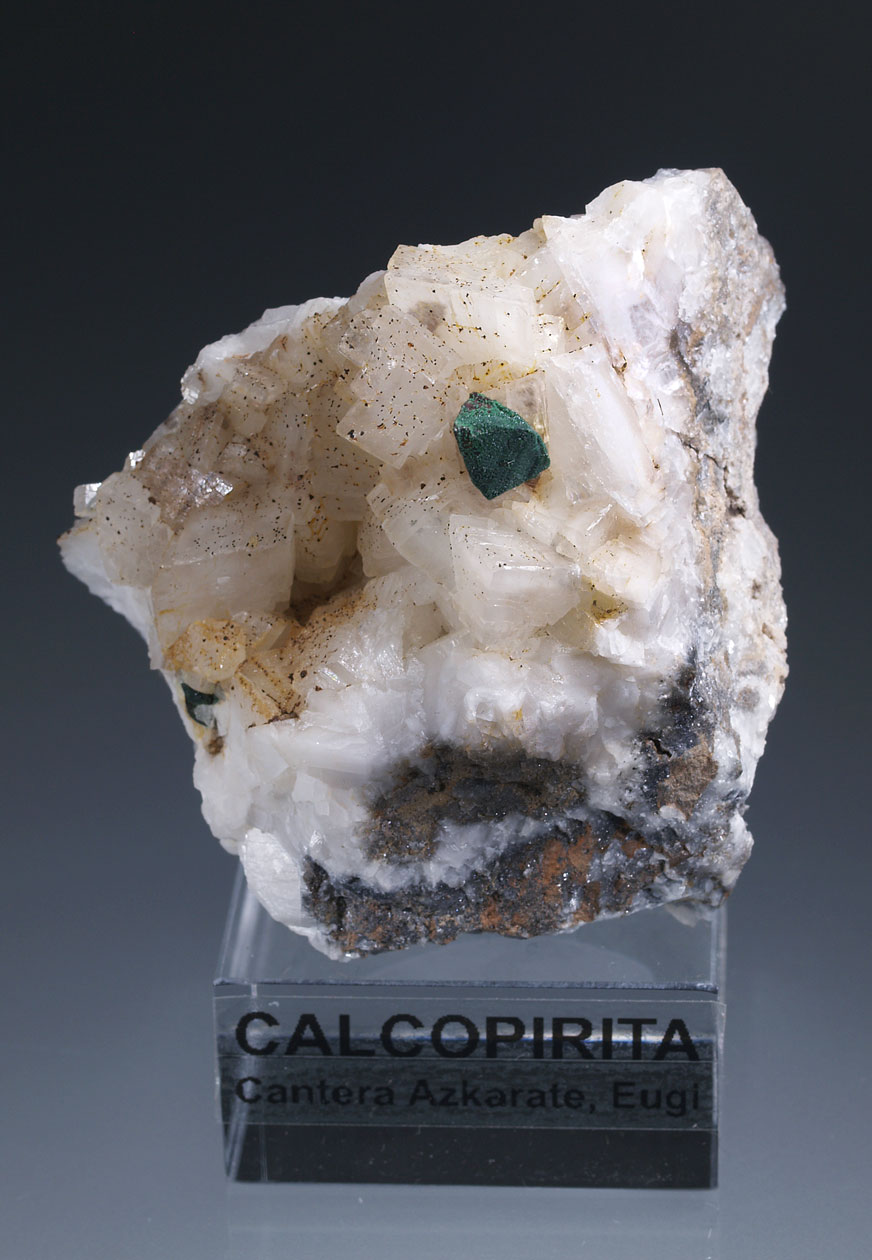
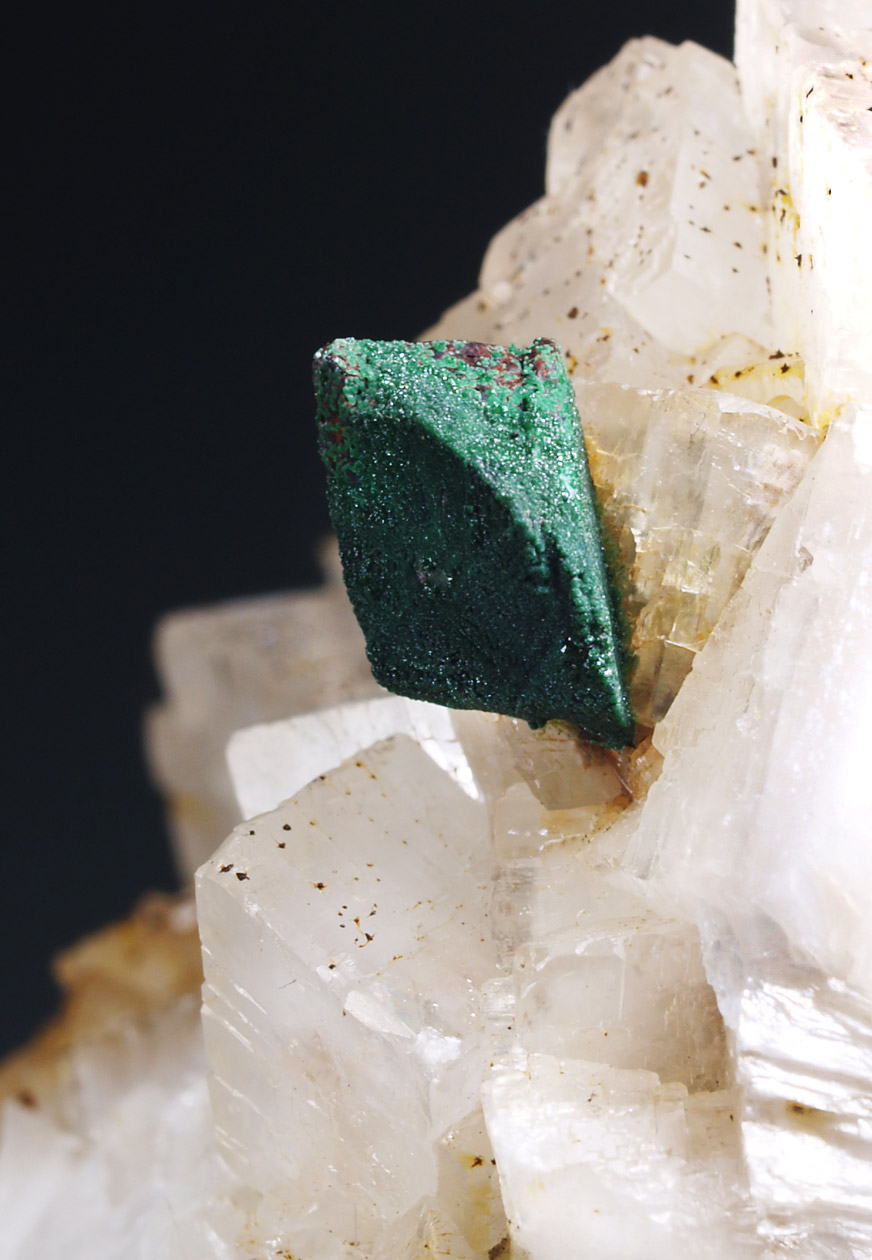
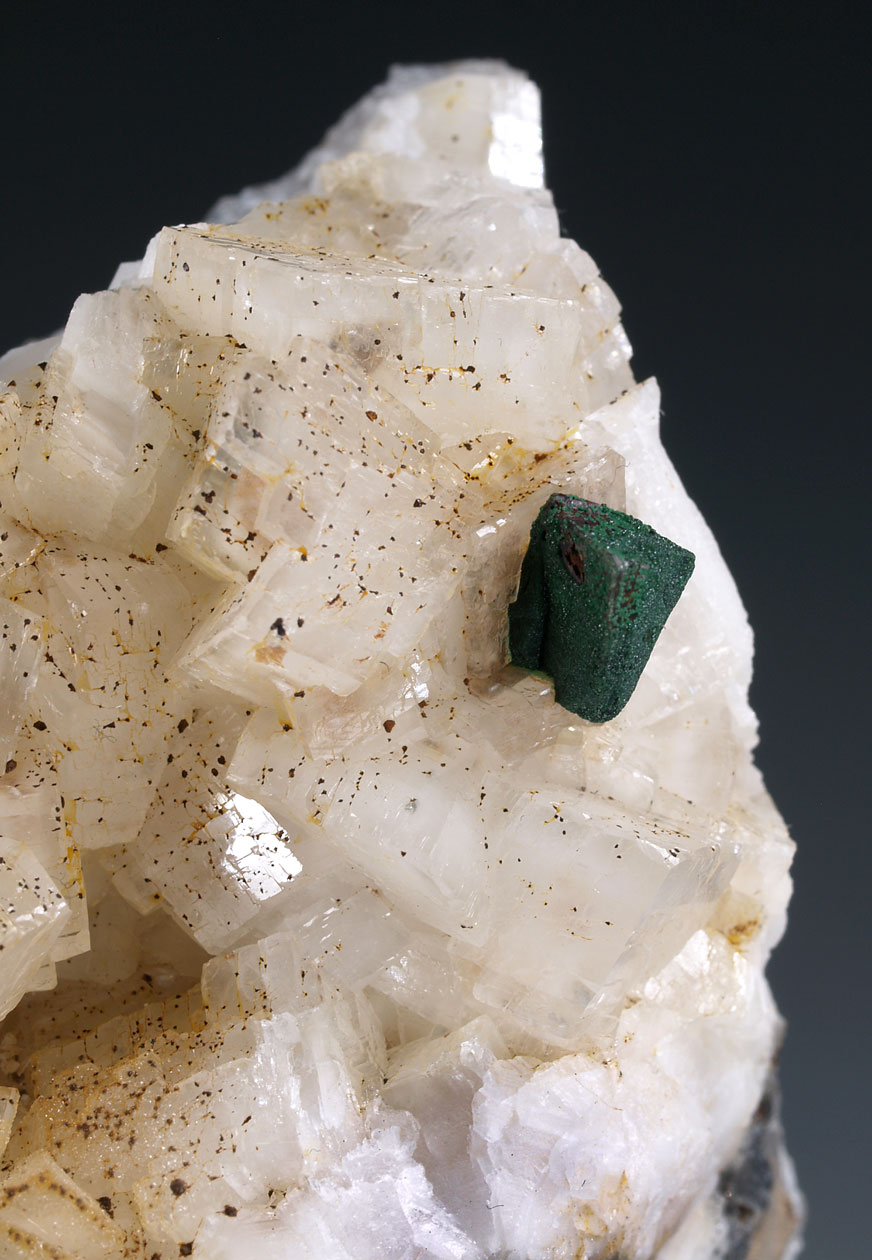
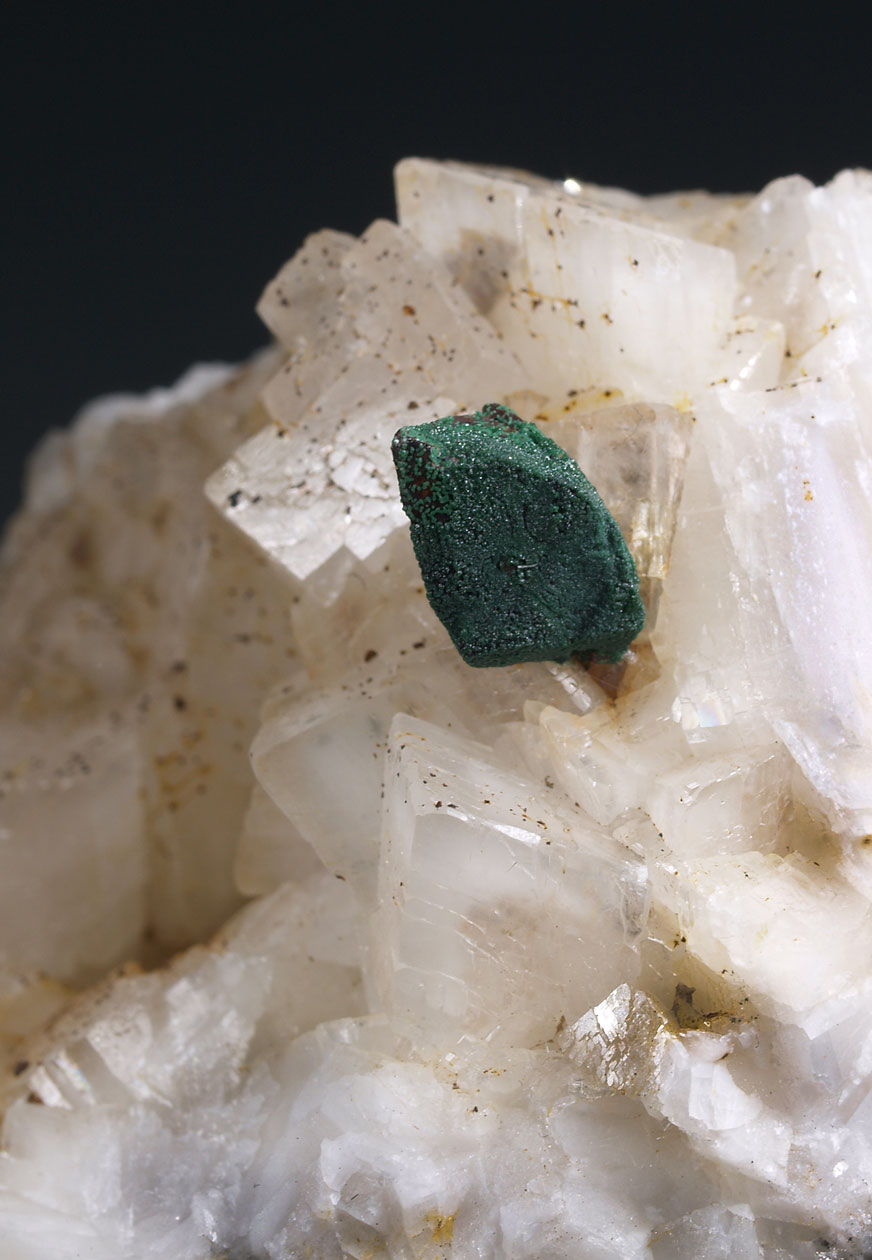
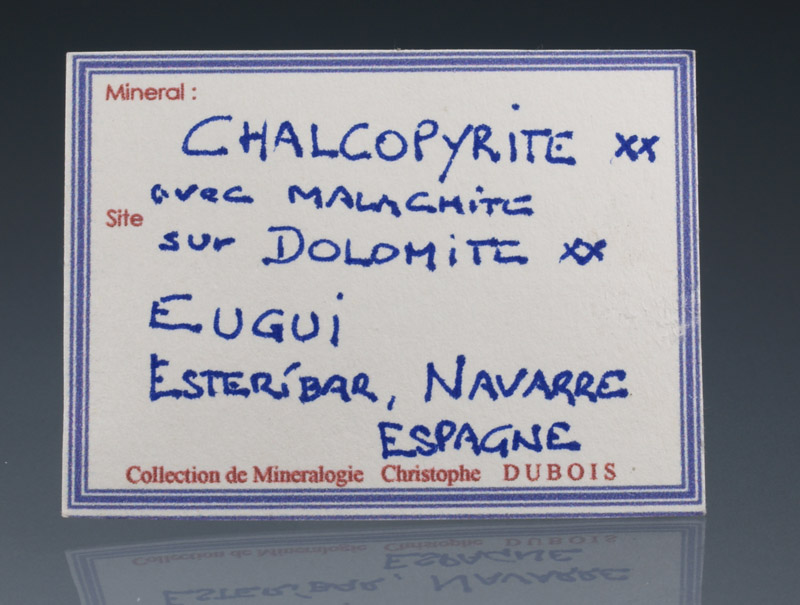
A very aesthetic chalcopyrite crystal displaying a tetragonal habit (tetragonal scalenohedron), partially covered by crystalline malachite. It is prominently perched and contrasts nicely with the matrix of dolomite rhombohedra. These specimens were found around 1995, and today it is virtually impossible to find them. A classic from Nafarroa mineralogy.
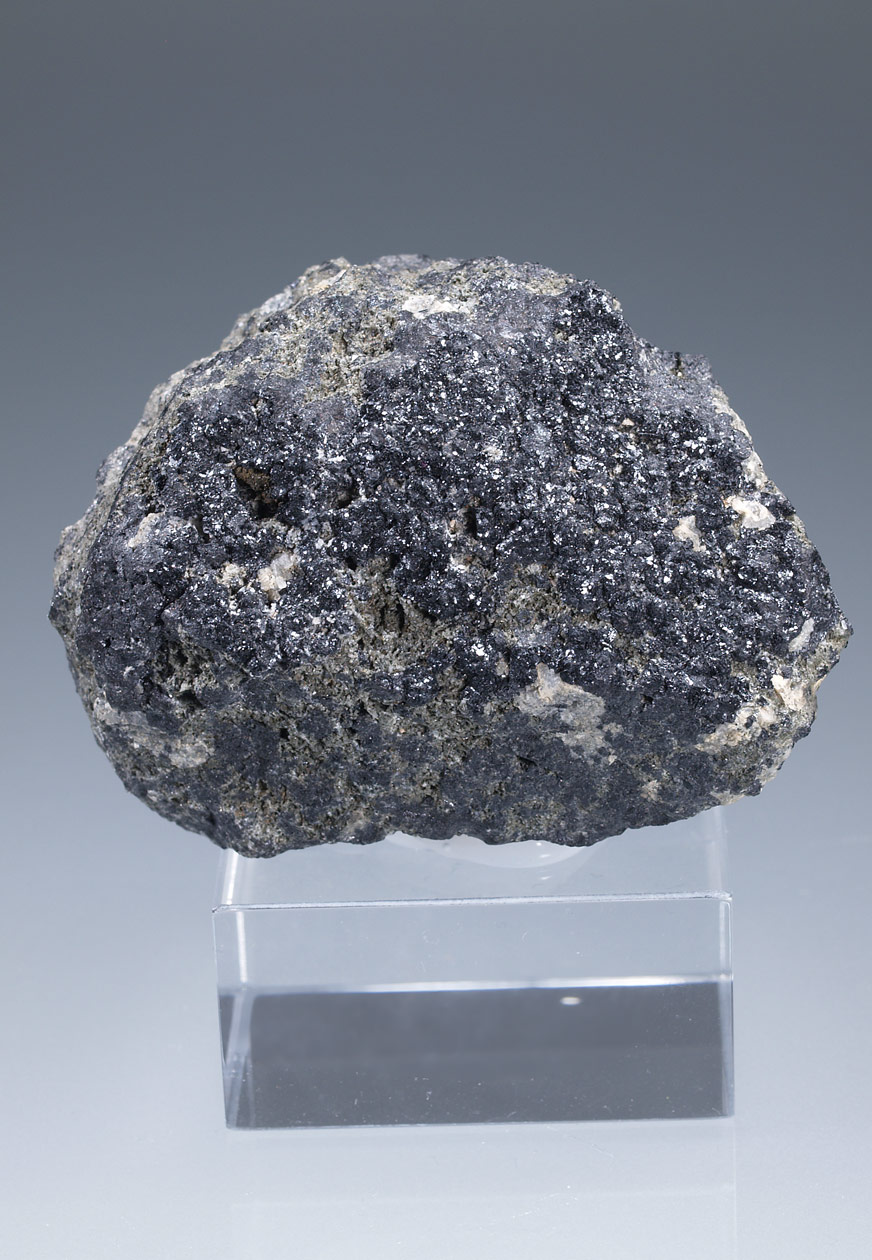
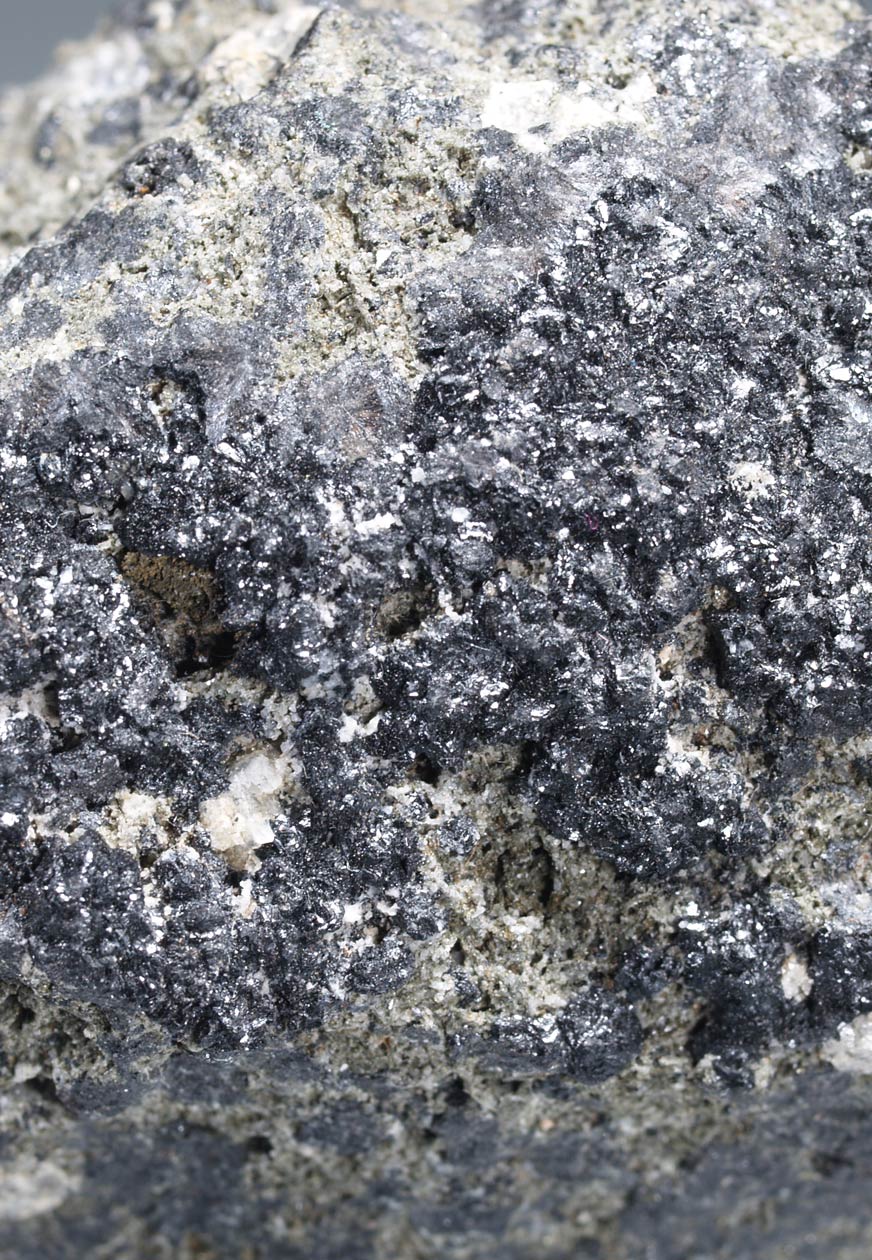
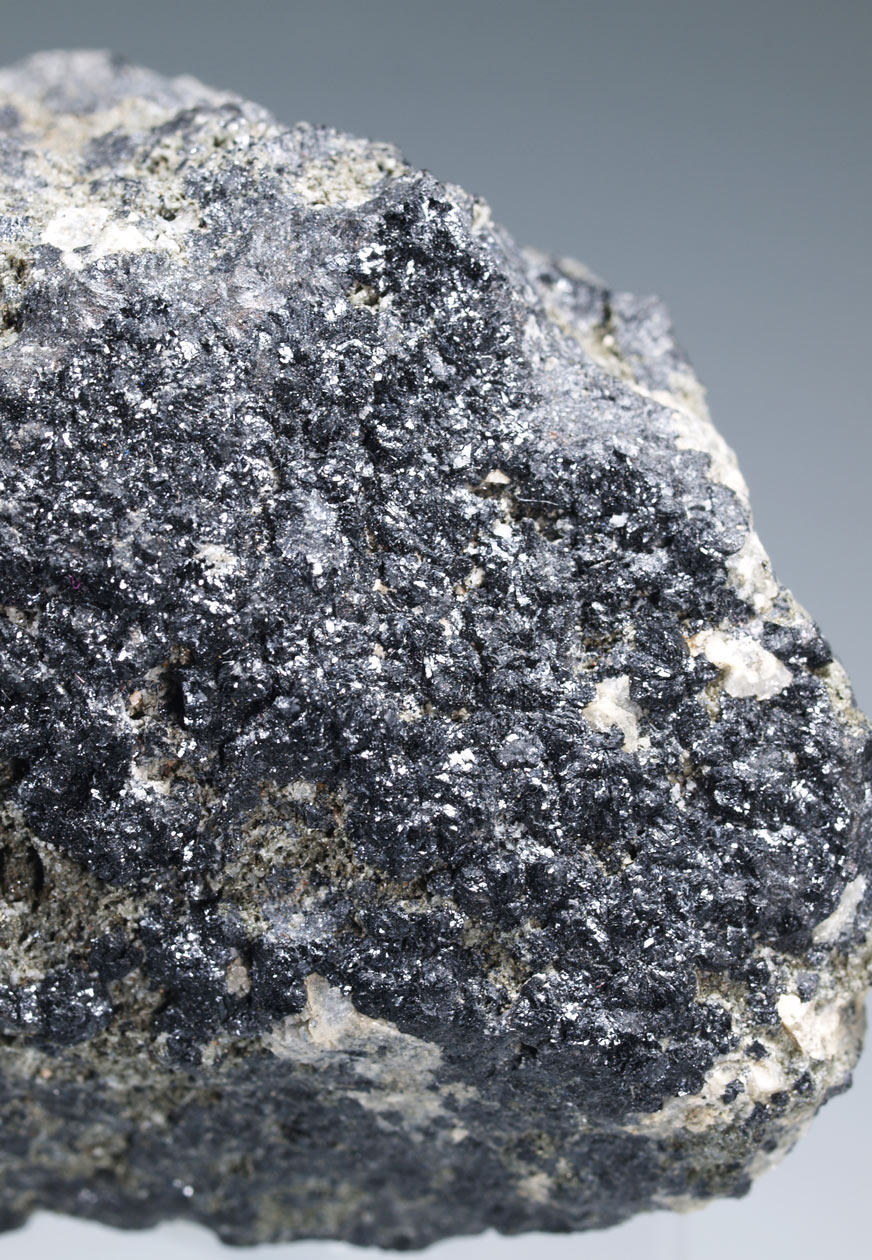
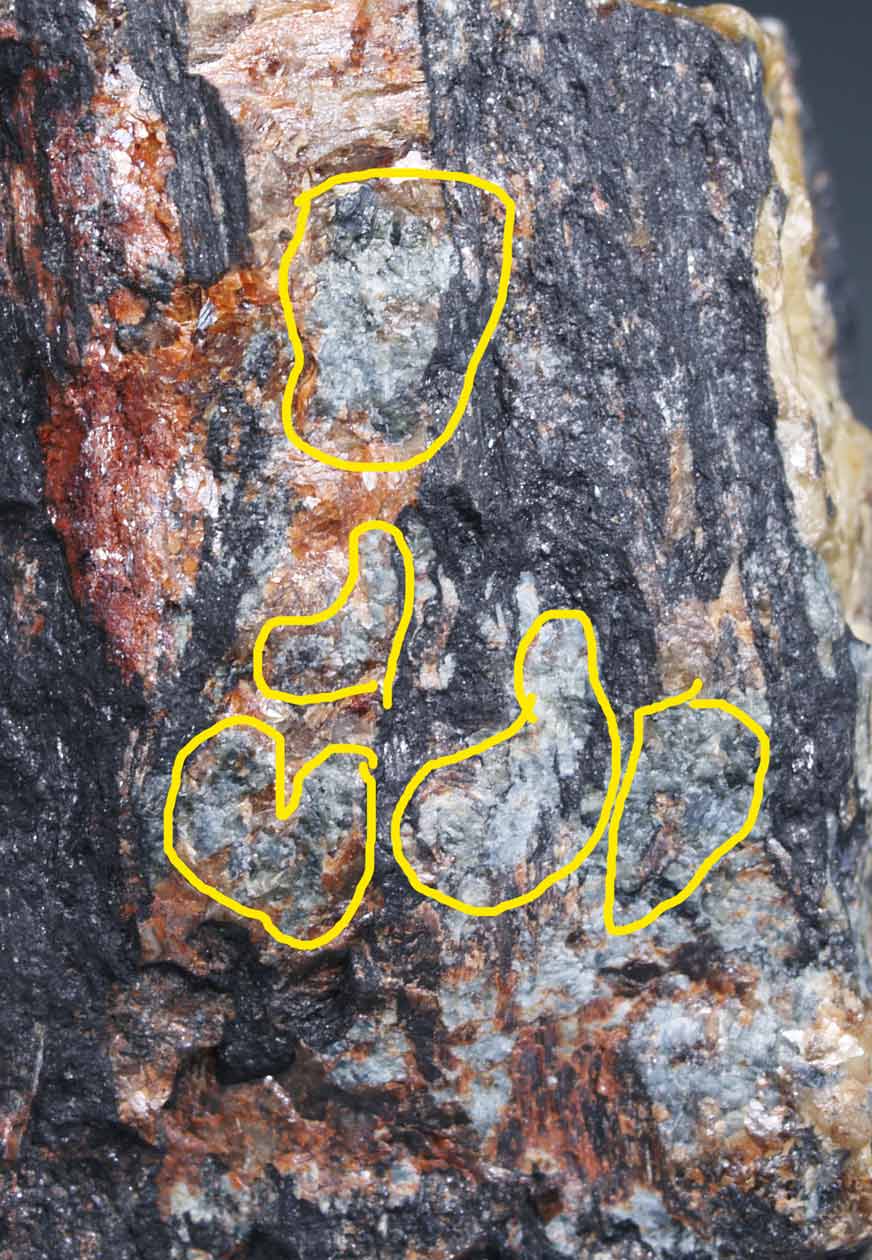
A mineral species belonging to the tourmaline supergroup, redefined by the IMA from 'ferridravite'. Very rare. It occurs as small, highly lustrous crystals of an intense black color. Specimens of this size are very unusual. Often Mina San Francisco is given in the literature as the type locality for povondraite (formerly called "ferridravite"), but that species and its associated minerals came from the Locotal Breccia, a different rock unit a few hundred metres outside the mine. This piece was acquired for his collection by Christian Dubois (ca. 1980) from Arthur Didisheim (Switzerland), who had previously purchased it from Chiara and Daniele Respino, well-known Italian collectors and book authors. A piece with a great history!
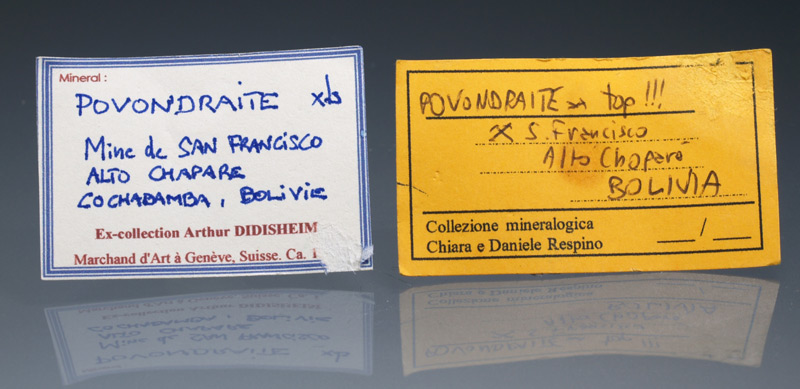
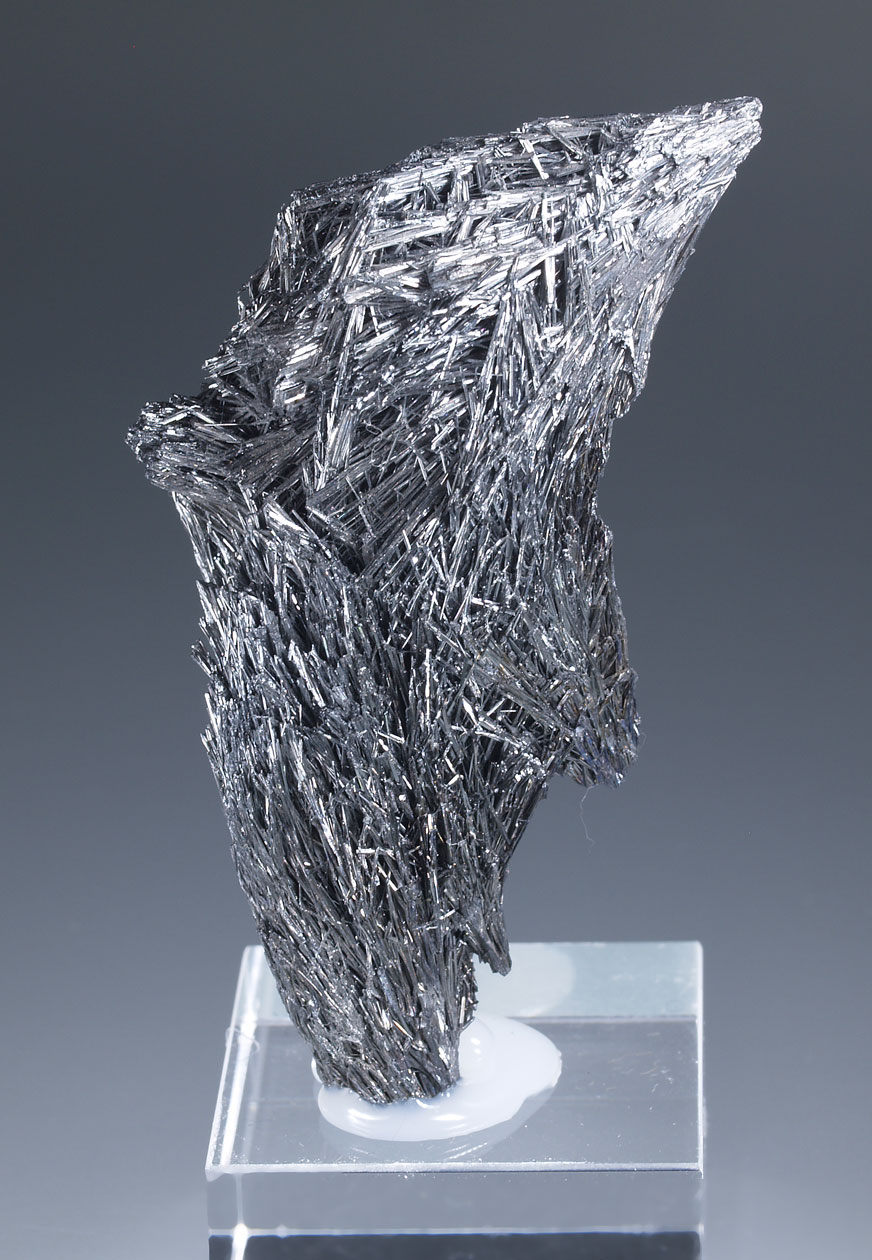
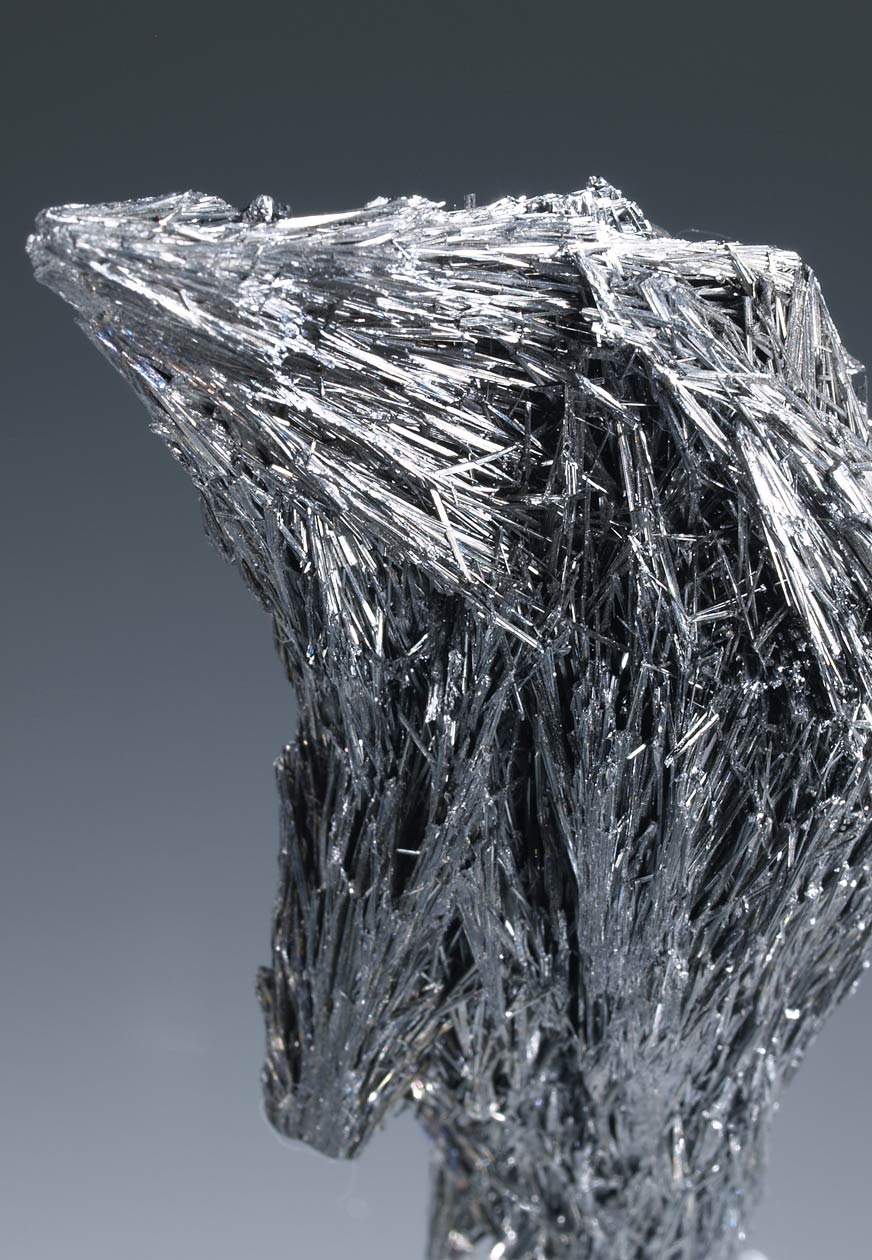
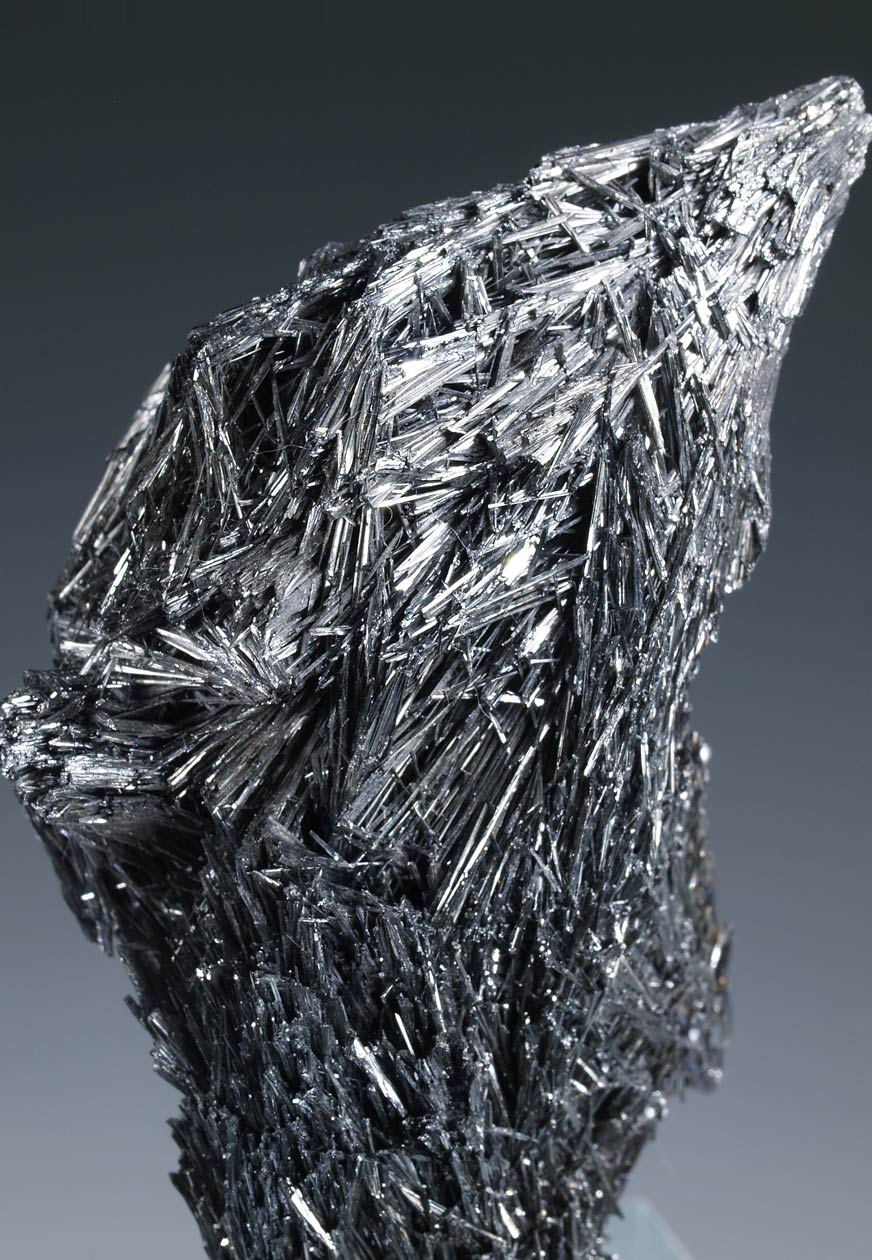
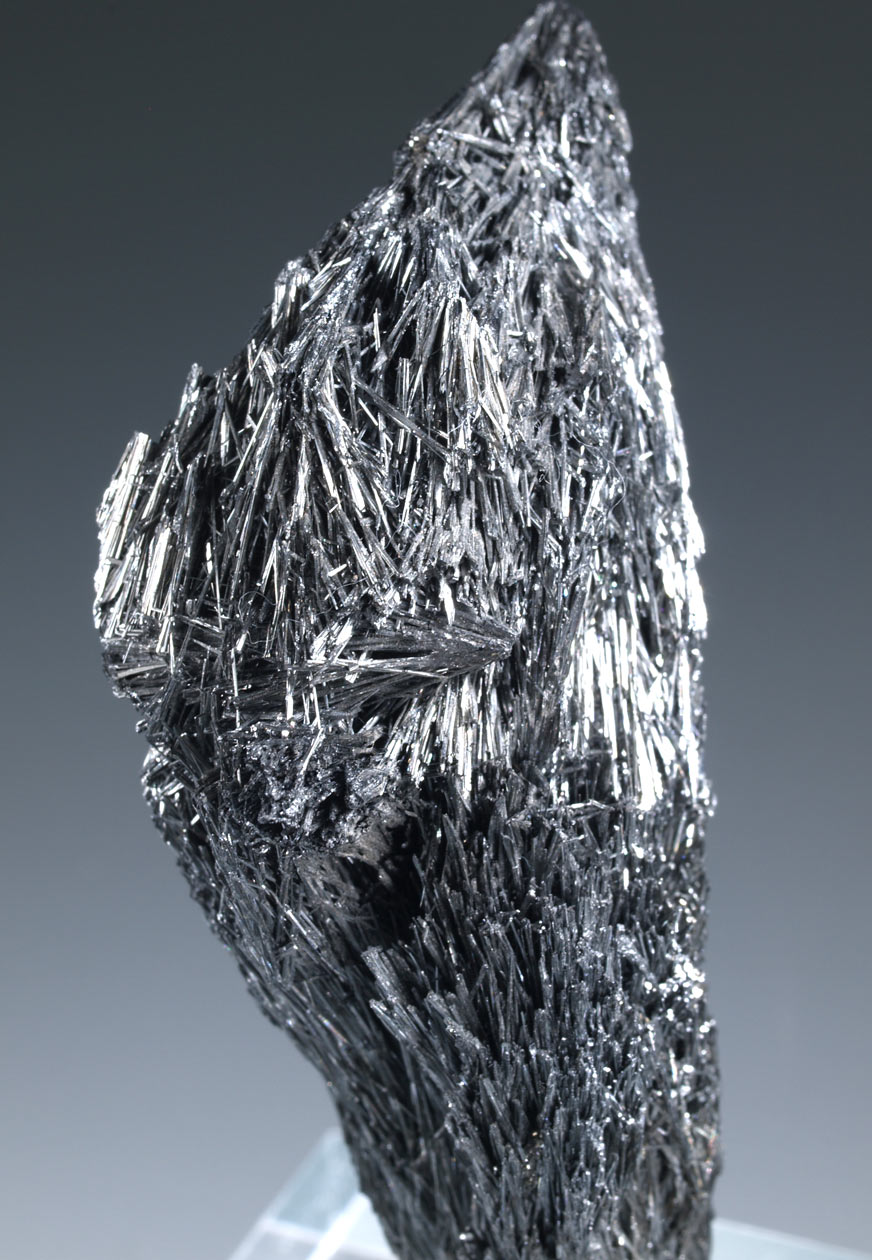
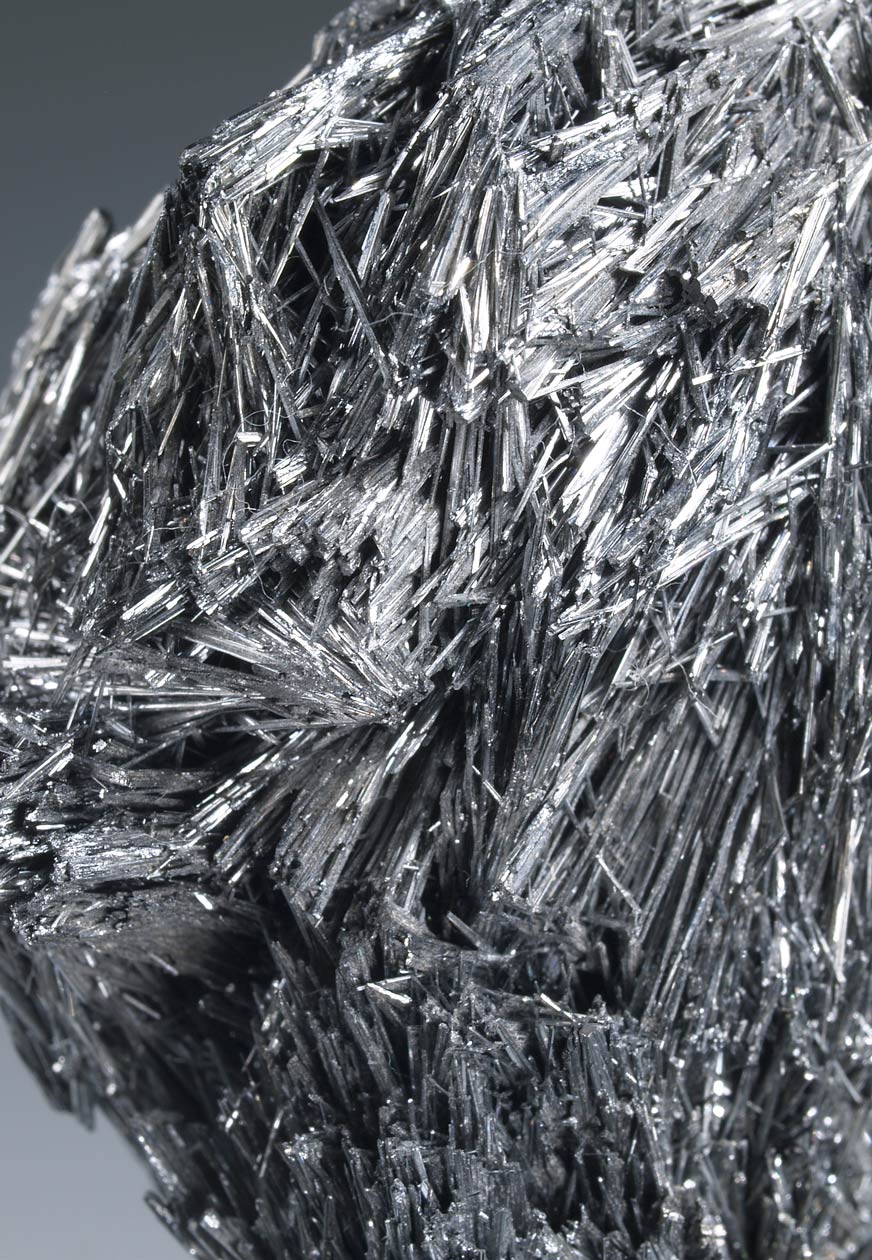
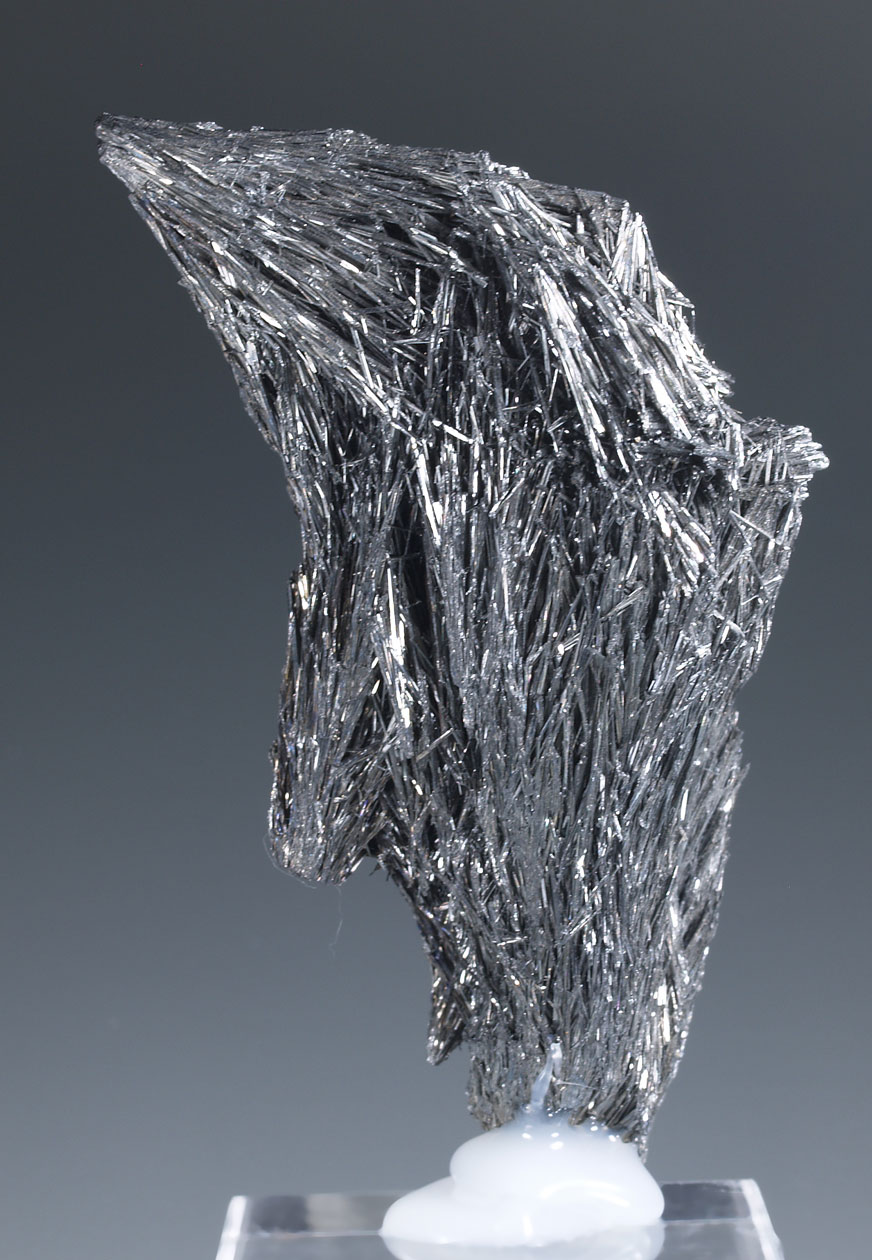
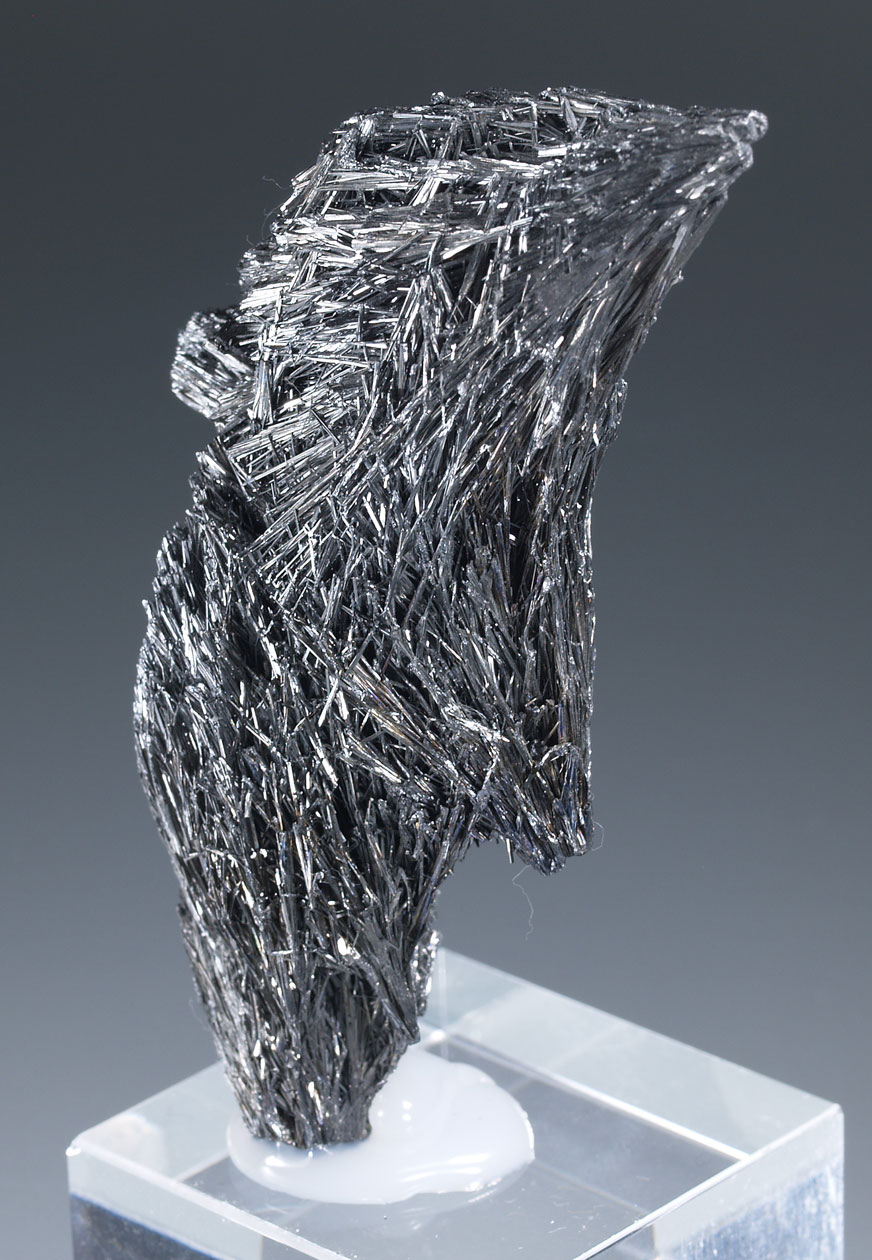
This is a superb specimen of jamesonite from the classic San José Mine in Oruro, Bolivia. Specimens from this locality rank among the world's finest for this sulfosalt. The piece features hundreds of fine acicular to prismatic crystals displaying a brilliant silvery-gray color and exceptional metallic luster.
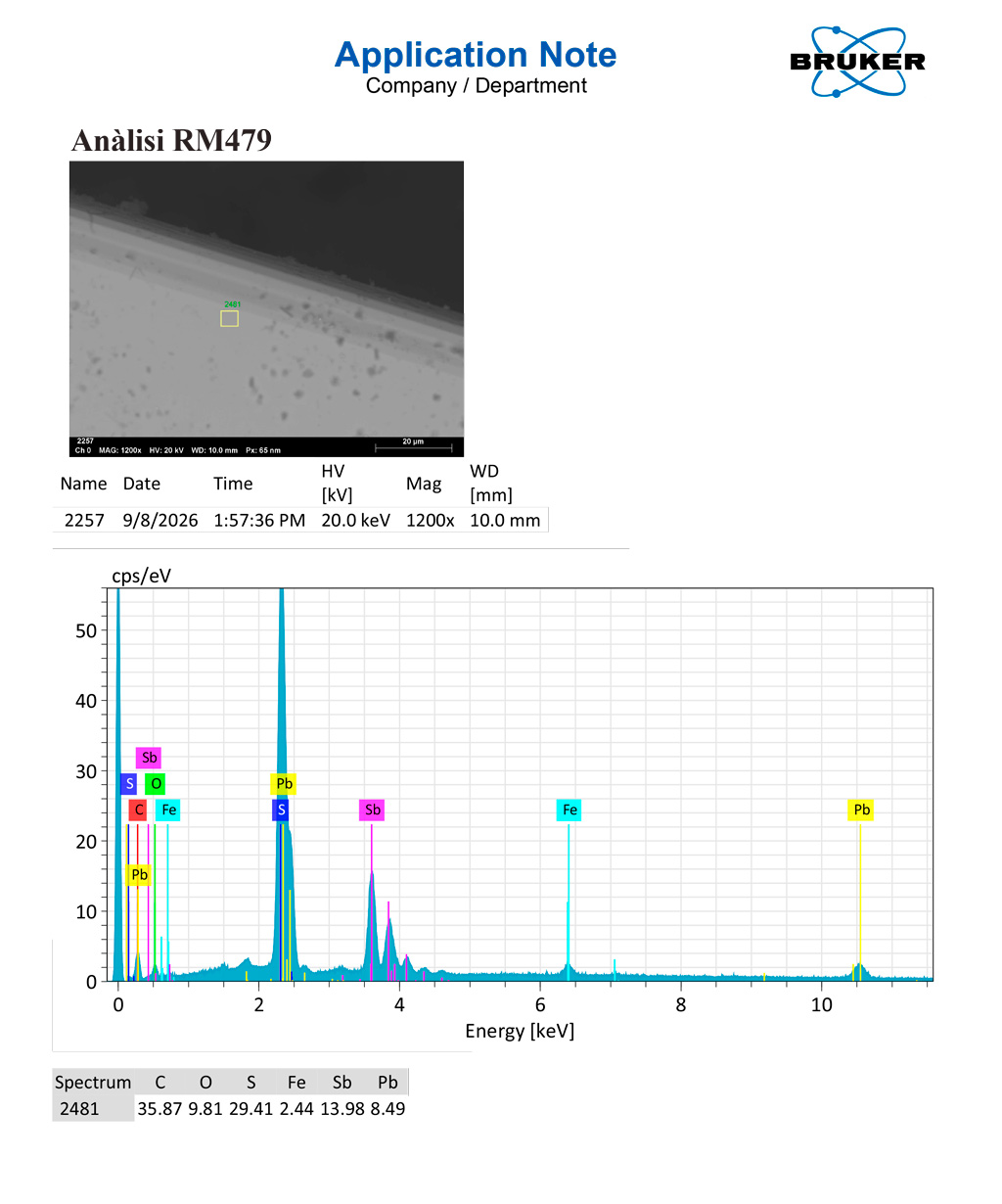
Although originally labeled as zinkenite, our SEM-EDS analysis confirmed the specimen to be jamesonite, with the stoichiometric iron content consistent with its chemical formula. Distinguishing between acicular Pb-Sb sulfosalts by sight alone often leads to mislabeling, making analytical confirmation essential, a crucial verification that is all too often overlooked in the market. The report of the SEM-EDS spectrum and analytical data will be provided to the buyer.
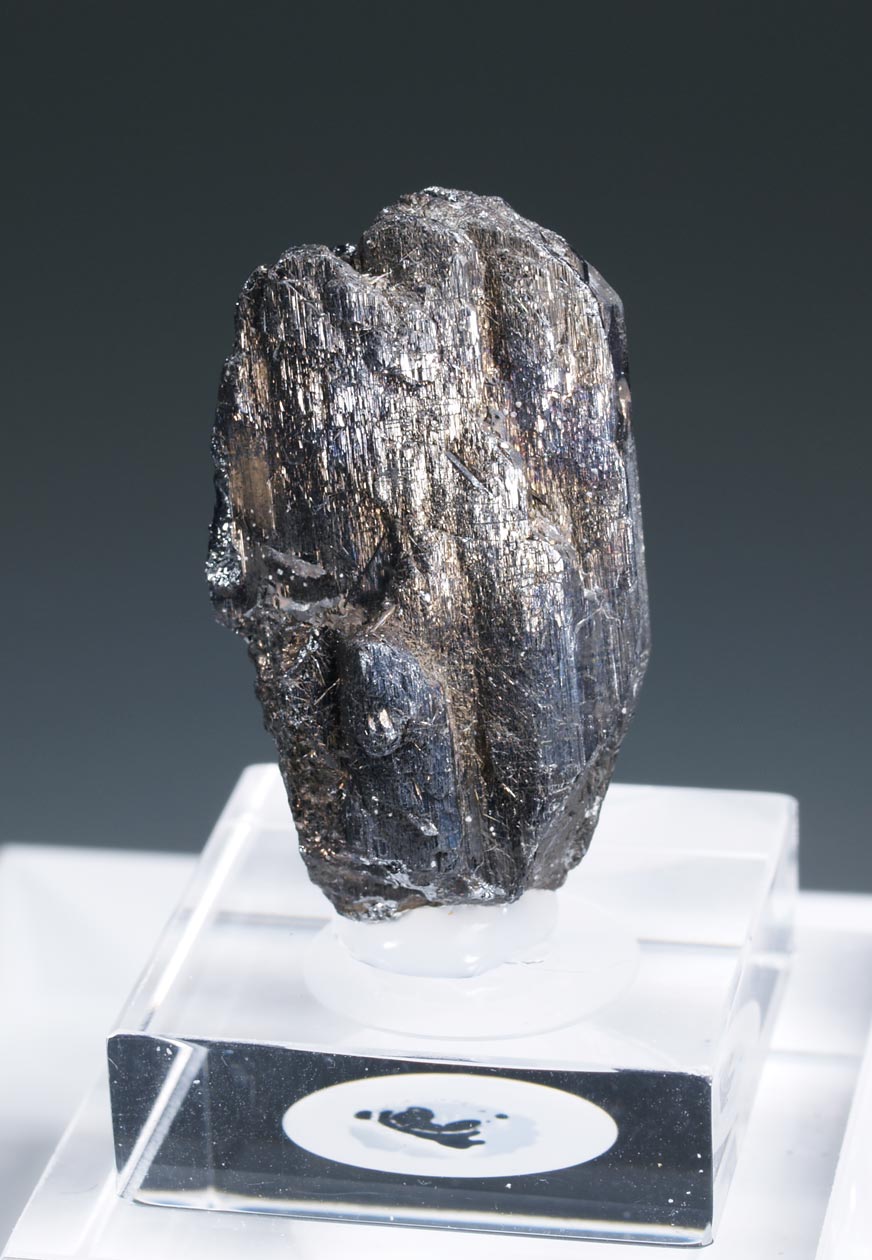
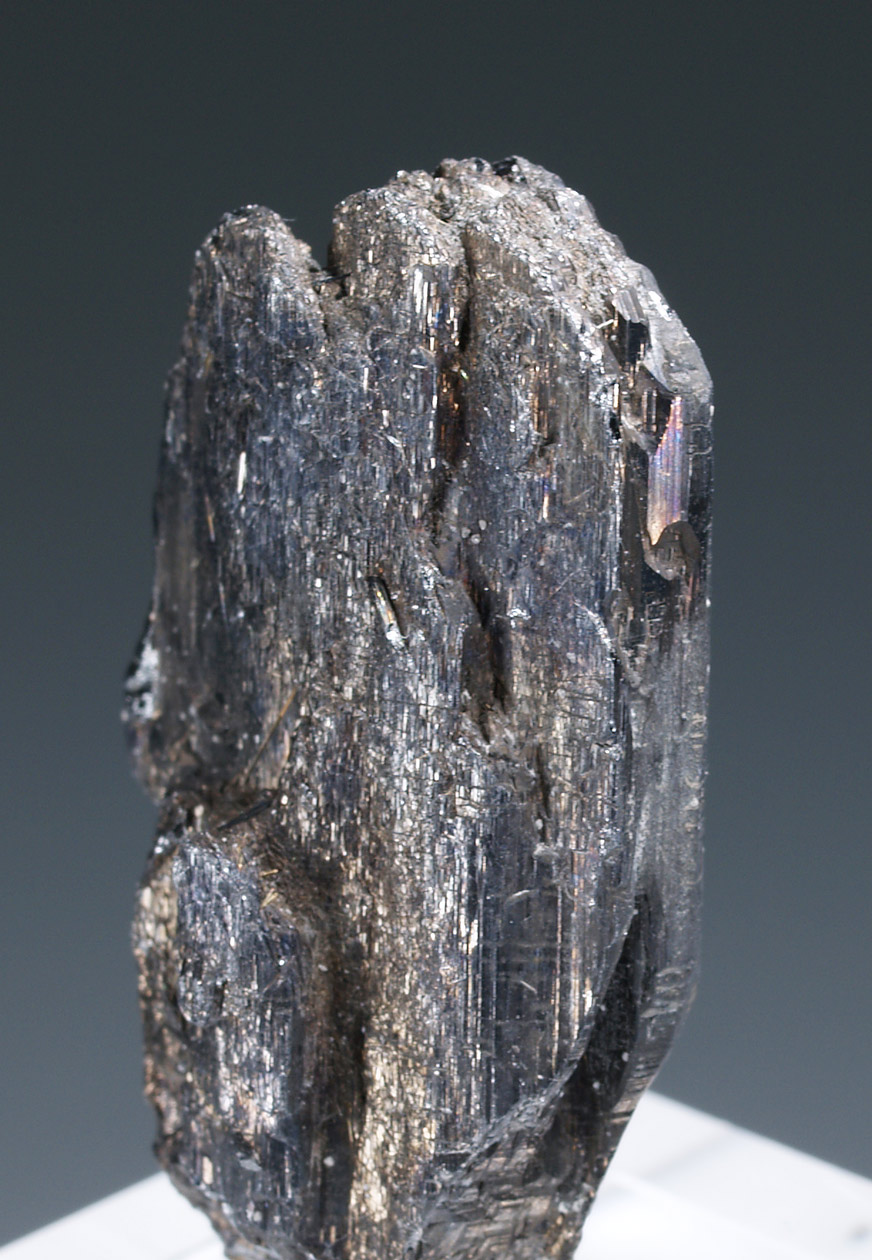
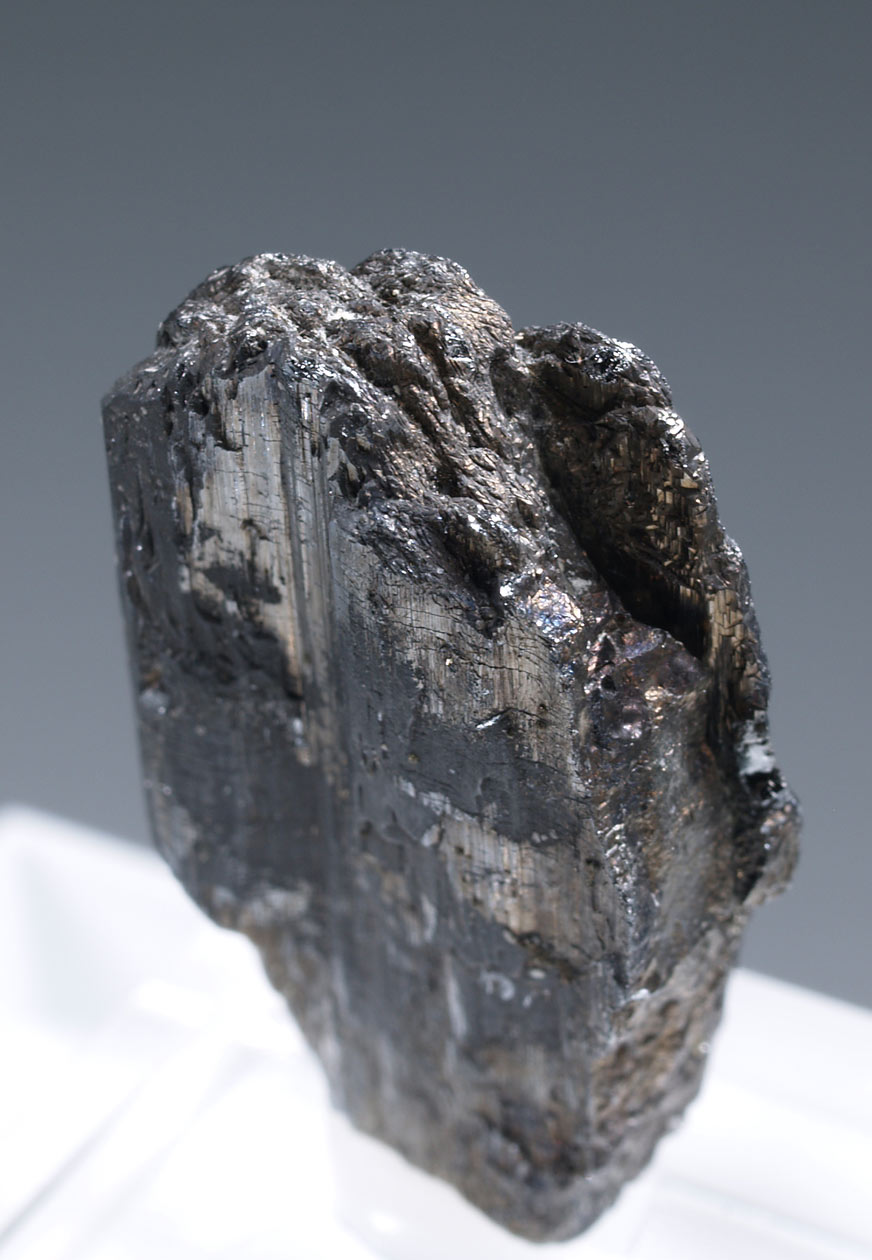
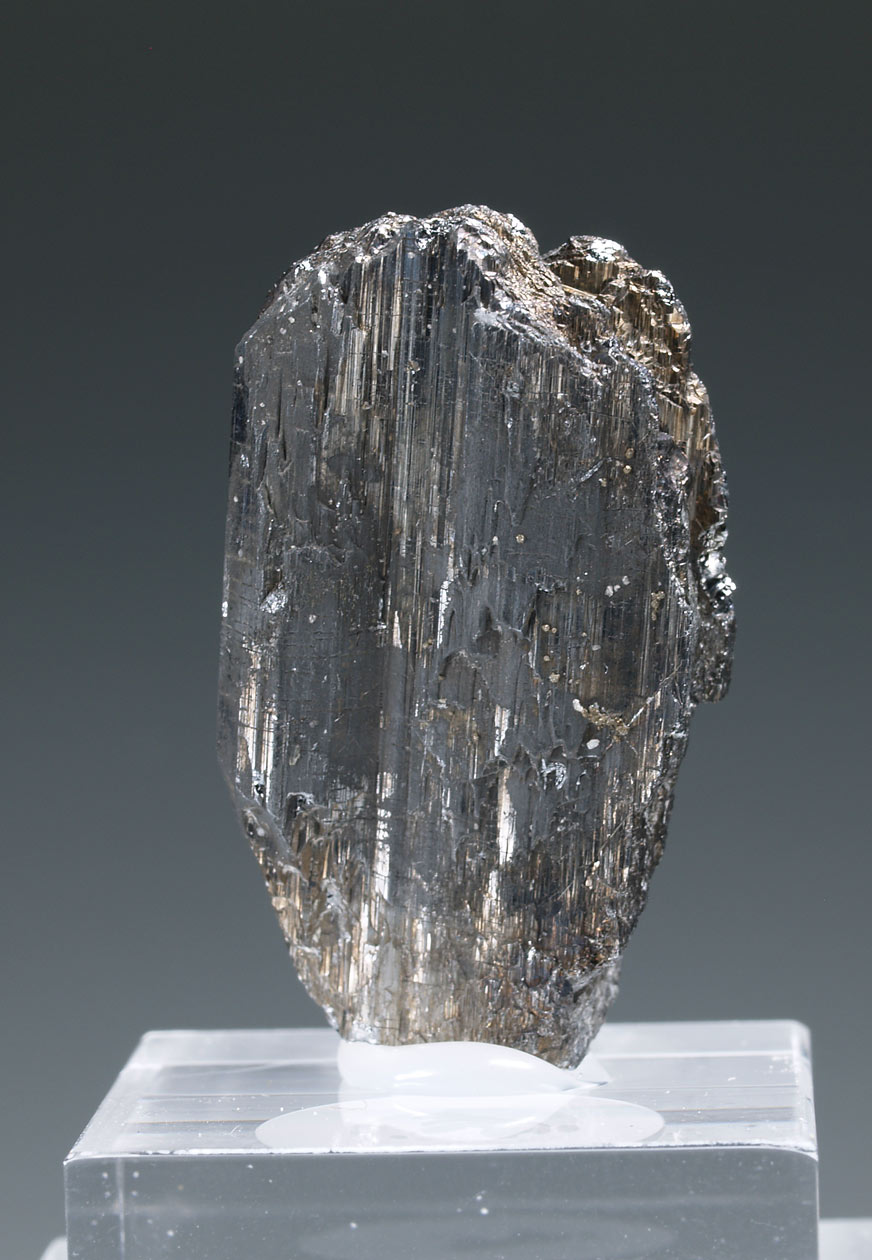
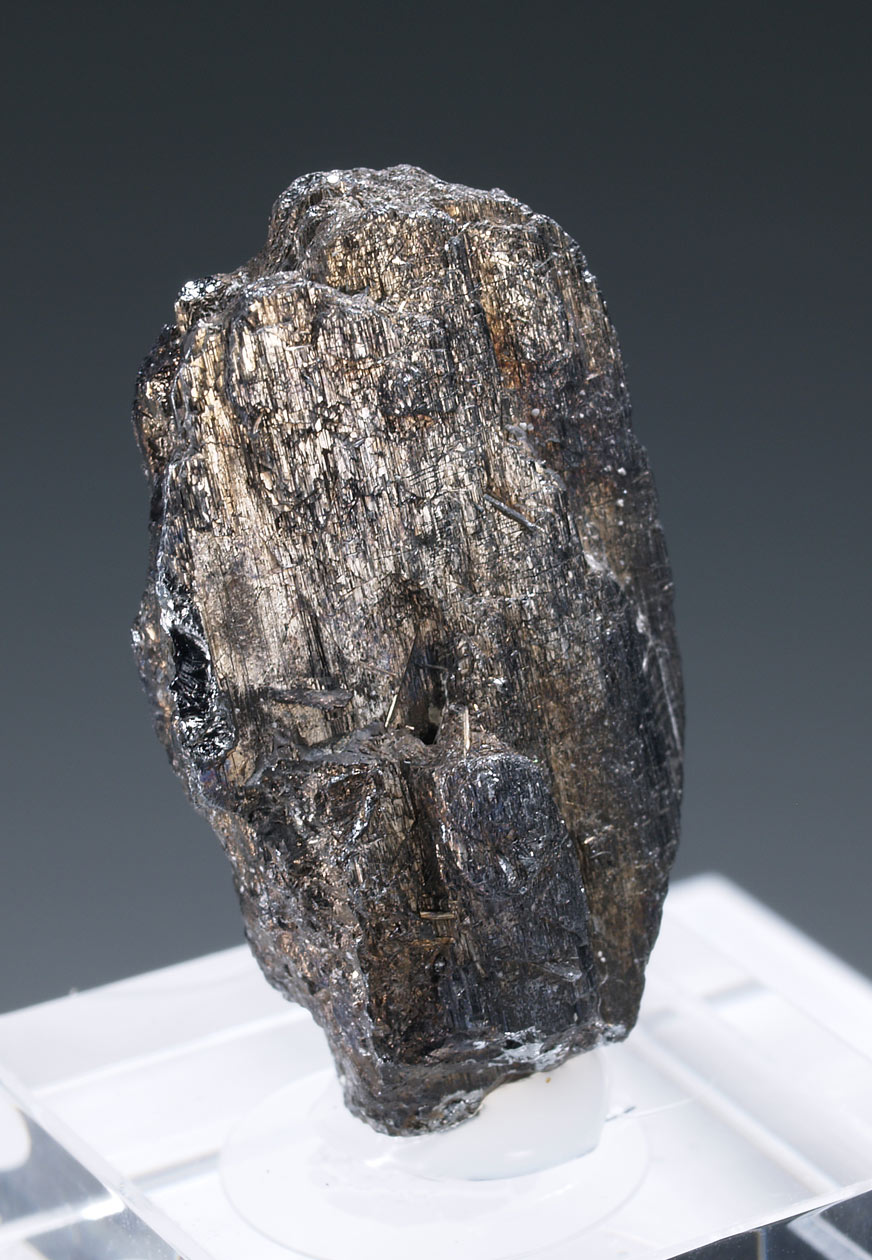
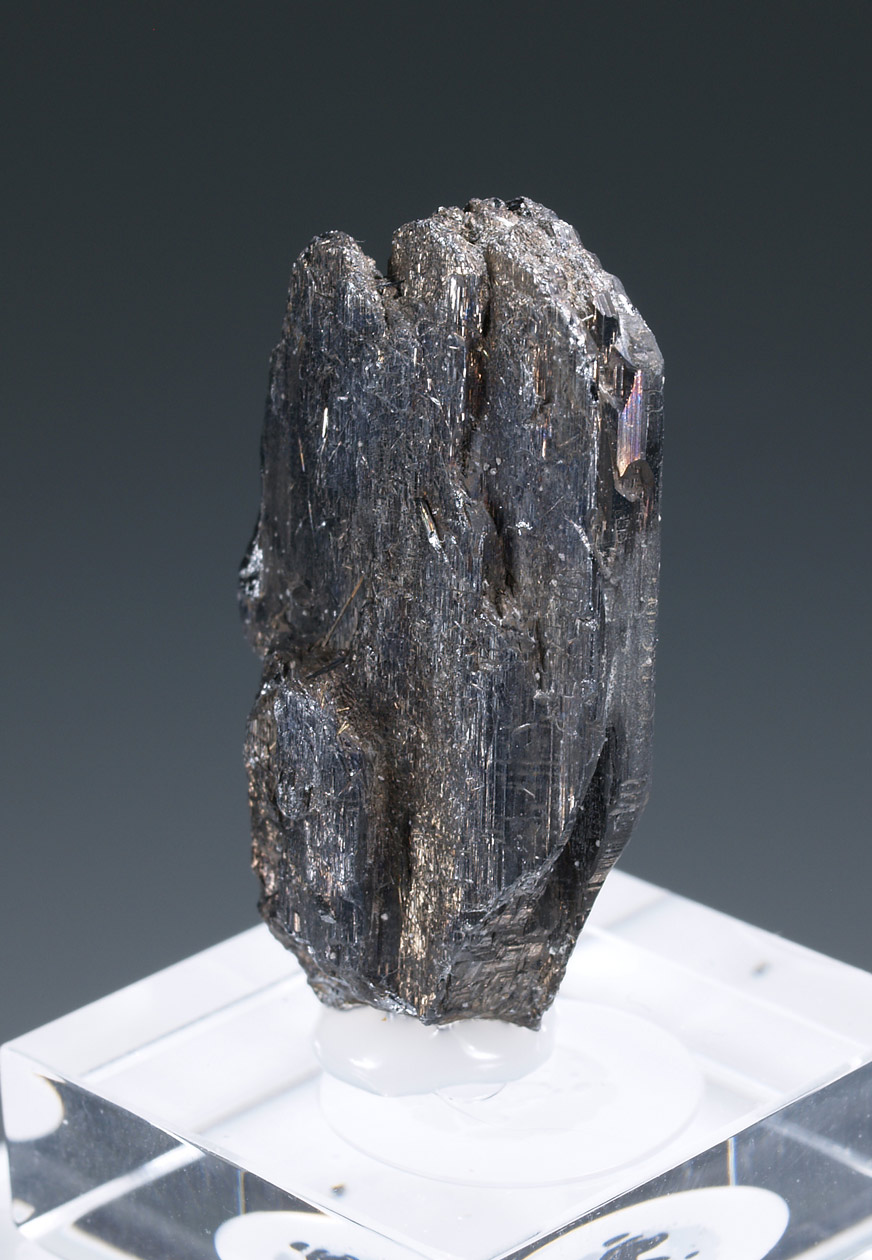
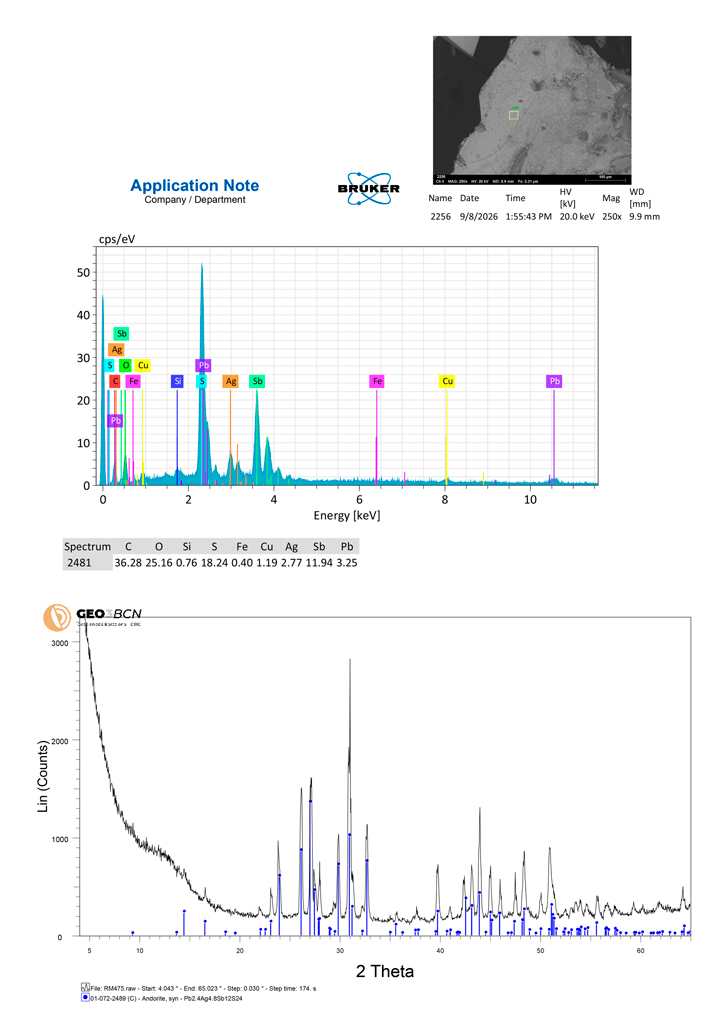
Very good-sized crystal of this Bolivian sulfosalt, with the formula AgPbSb₃S₆. Until a few years ago, it was known as 'andorite VI'. The specimen shows faces with parallel growth, striations, and a luster ranging between gray and golden. The terminal faces can be observed.
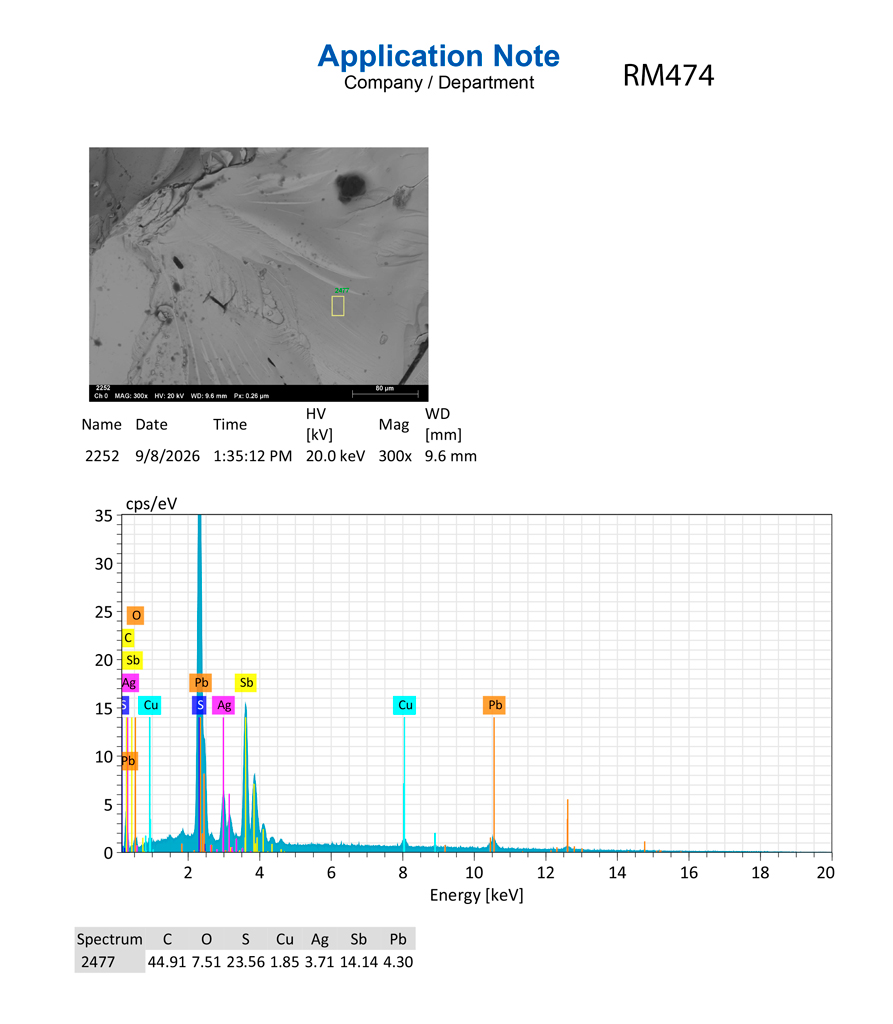
The piece was analyzed by SEM-EDS, revealing the presence of copper, which allows the specimen to be identified as cuprosenandorite: Ag₁₆Cu₈Pb₂₄Sb₇₂S₁₄₄. These specimens from the San José mine typically exhibit intergrowths of senandorite -orthorhombic- with quatrandorite, which shares the same chemical composition but is monoclinic. An exceptional crystal, from the type locality for the species!
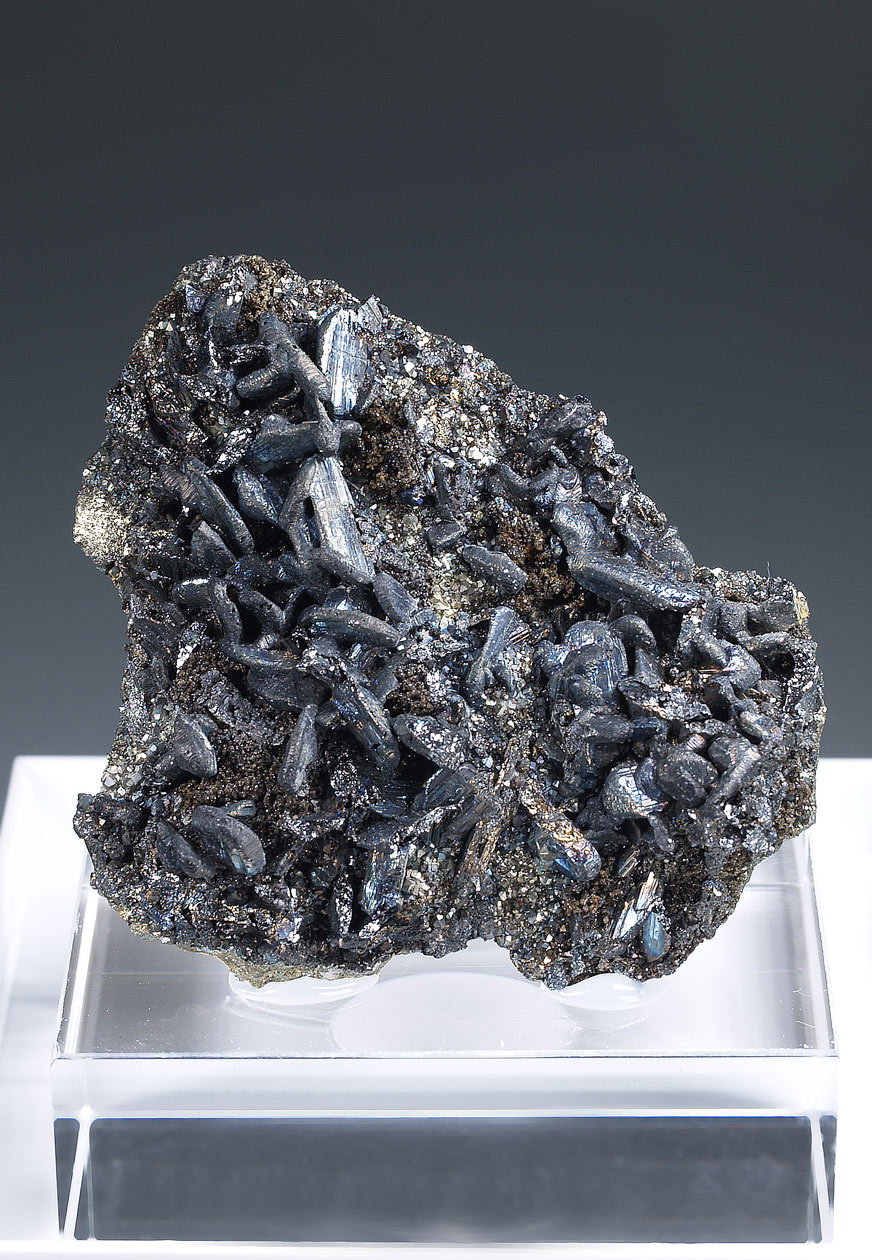
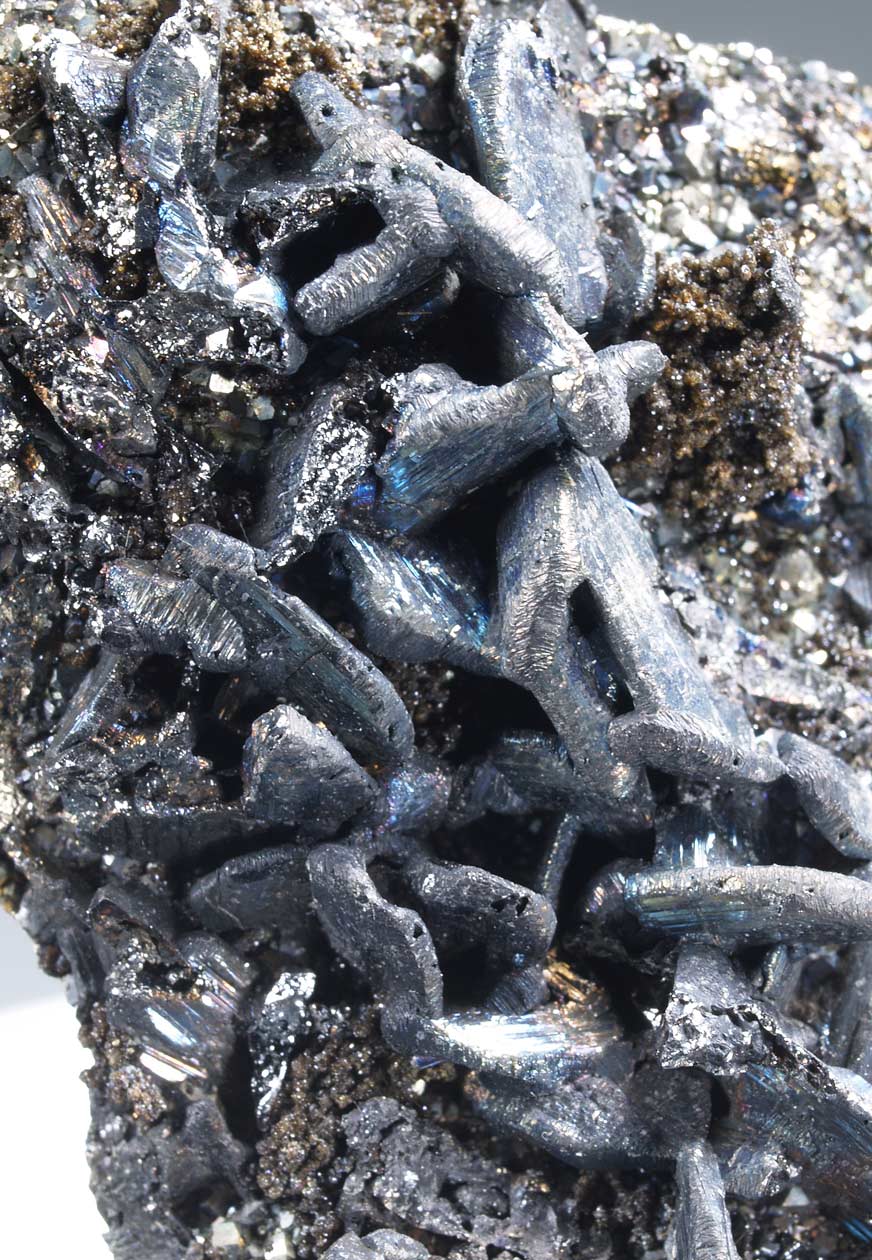
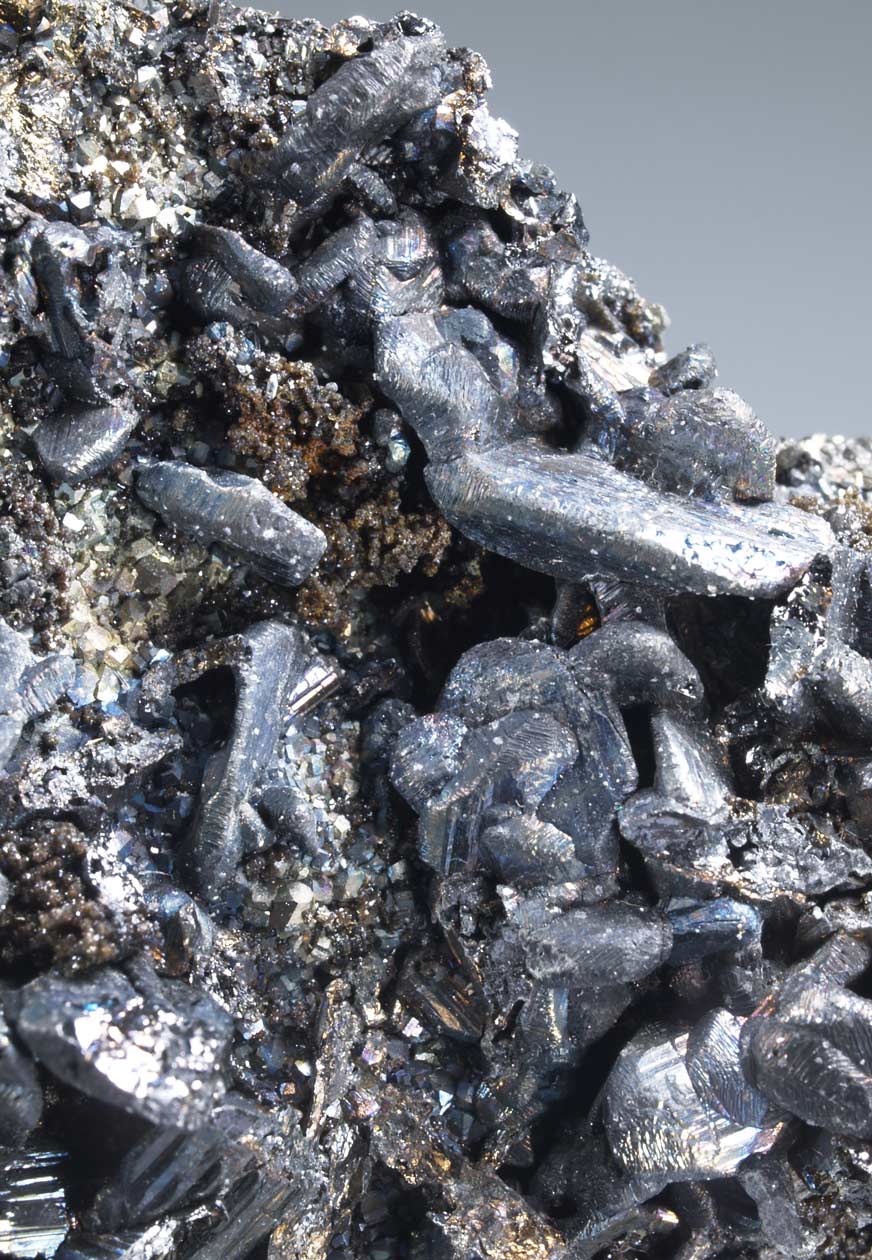
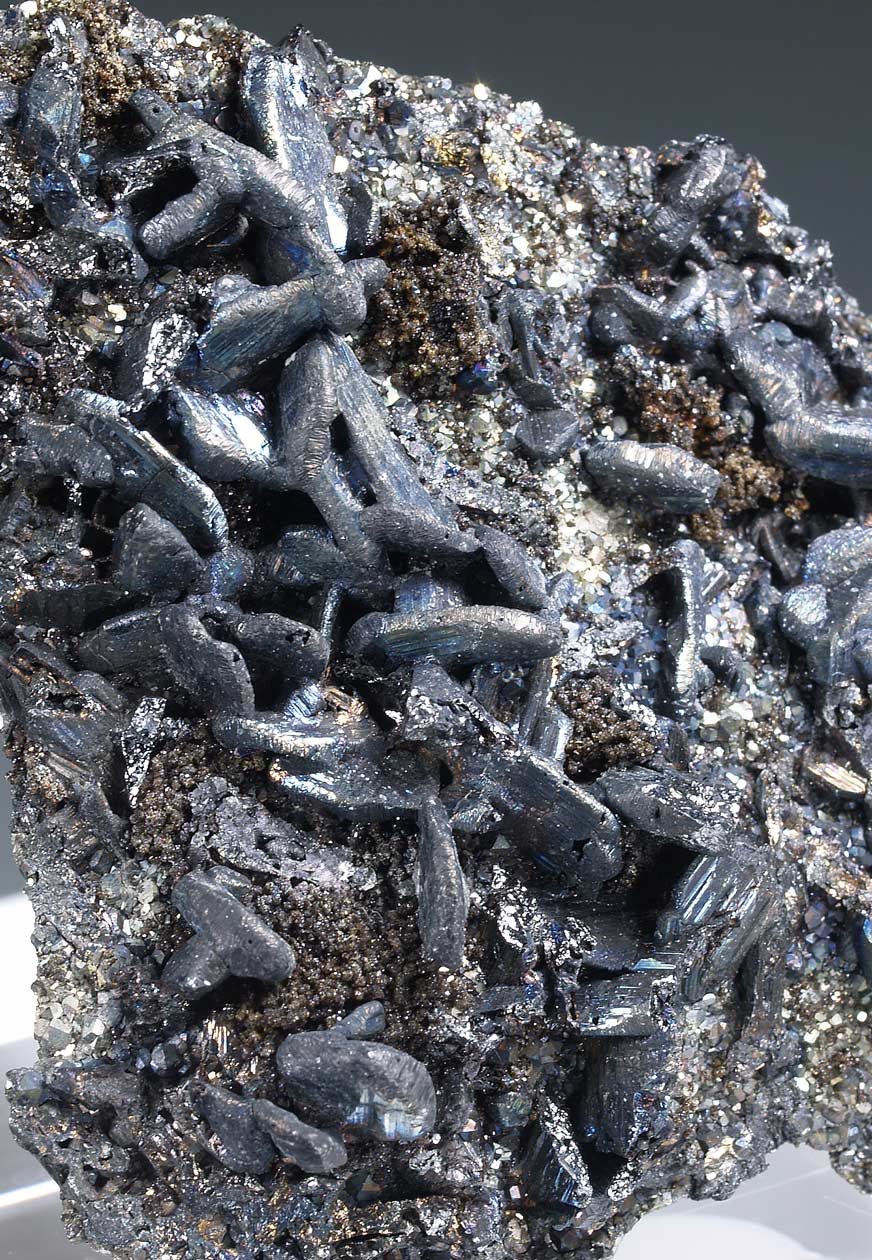
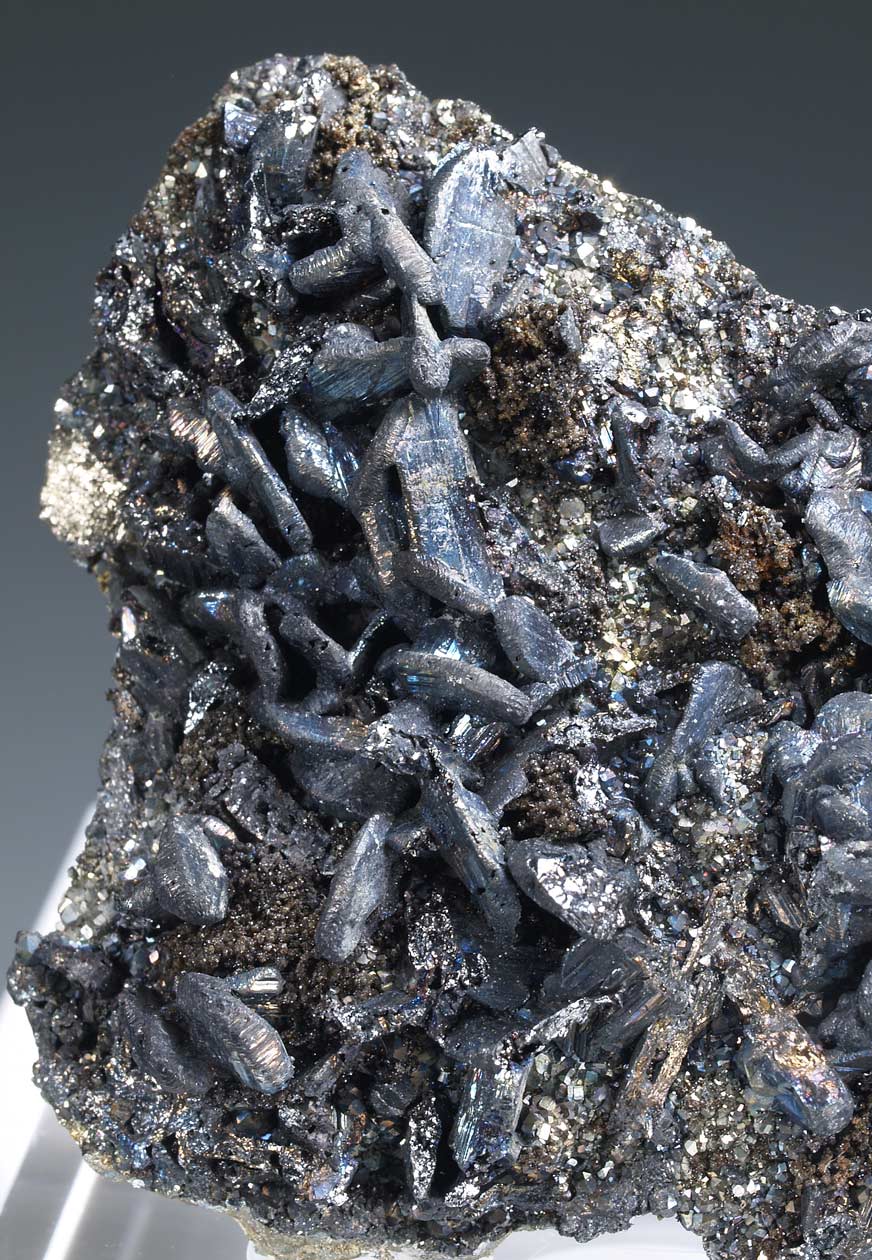
Druse of good-sized crystals of this Bolivian sulfosalt, with the formula AgPbSb₃S₆. Until a few years ago, it was known as 'andorite VI'. The specimen shows several crystals with tabular forms, rounded edges, and a luster ranging between gray and golden. They are disposed on a matrix acompanied by pyrite and cassiterite, the latter occurring as small, highly lustrous honey-tone crystals (analyzed).
The piece was analyzed by SEM-EDS, revealing the presence of copper, which allows the specimen to be identified as cuprosenandorite: Ag₁₆Cu₈Pb₂₄Sb₇₂S₁₄₄. These specimens from the San José mine typically exhibit intergrowths of senandorite -orthorhombic- with quatrandorite, which shares the same chemical composition but is monoclinic. All analytical details will be send to the buyer. An exceptional crystal, from the type locality for the species!
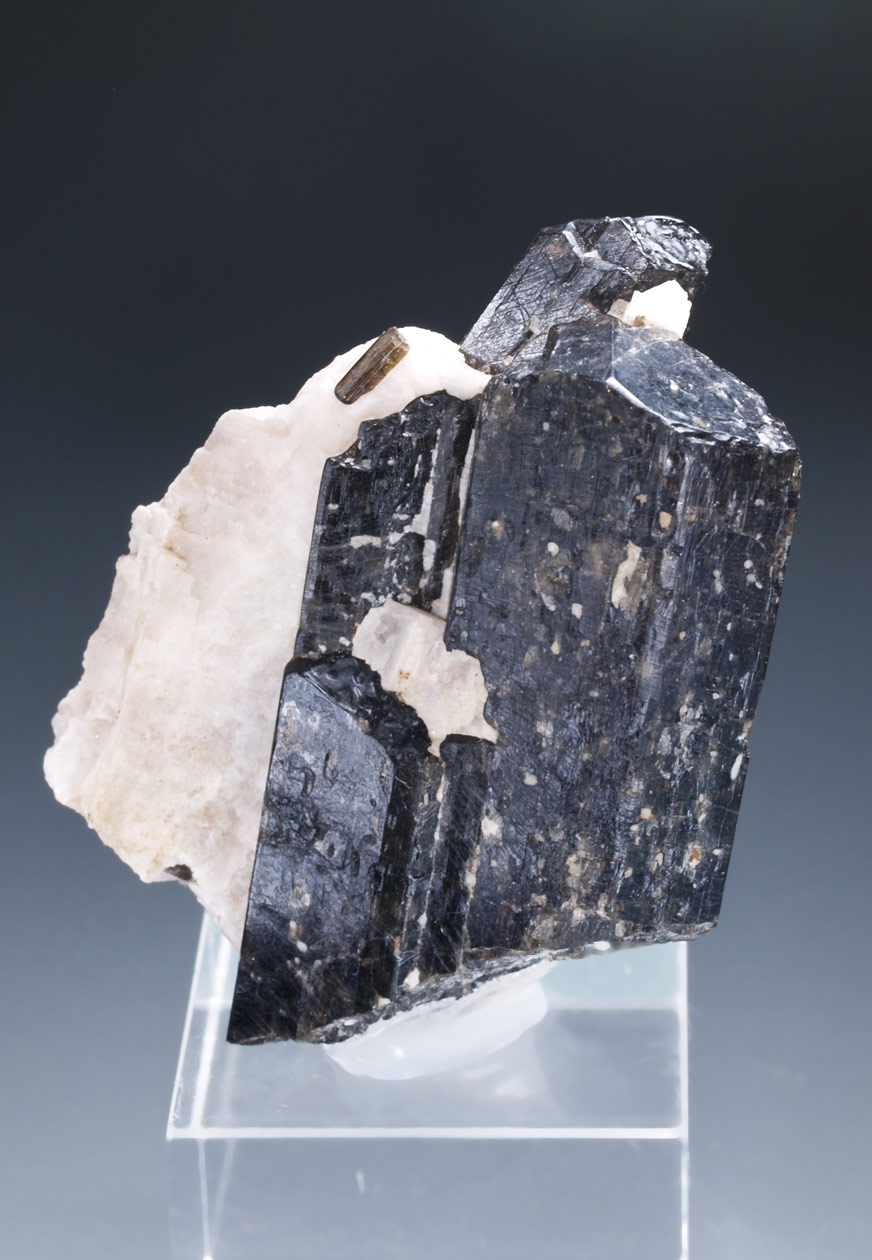
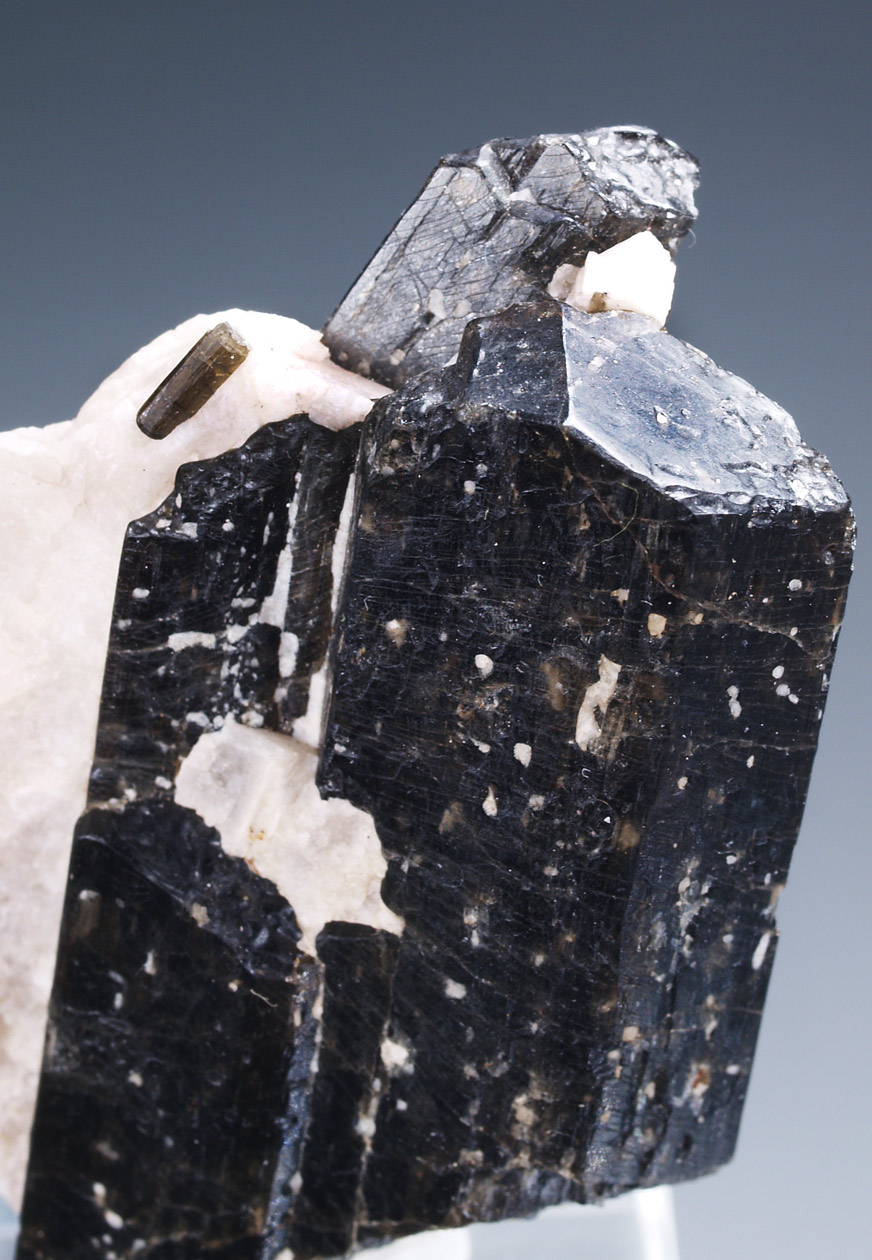
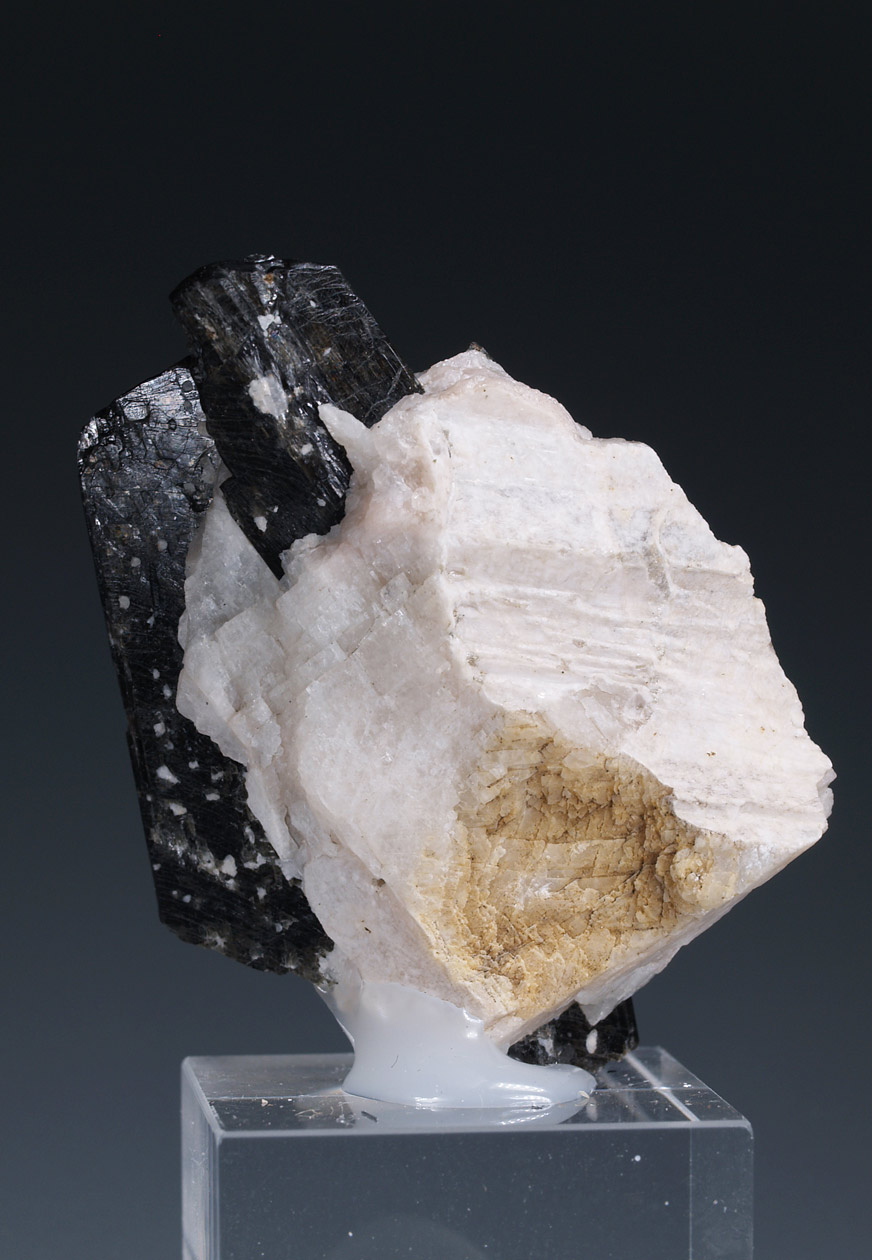
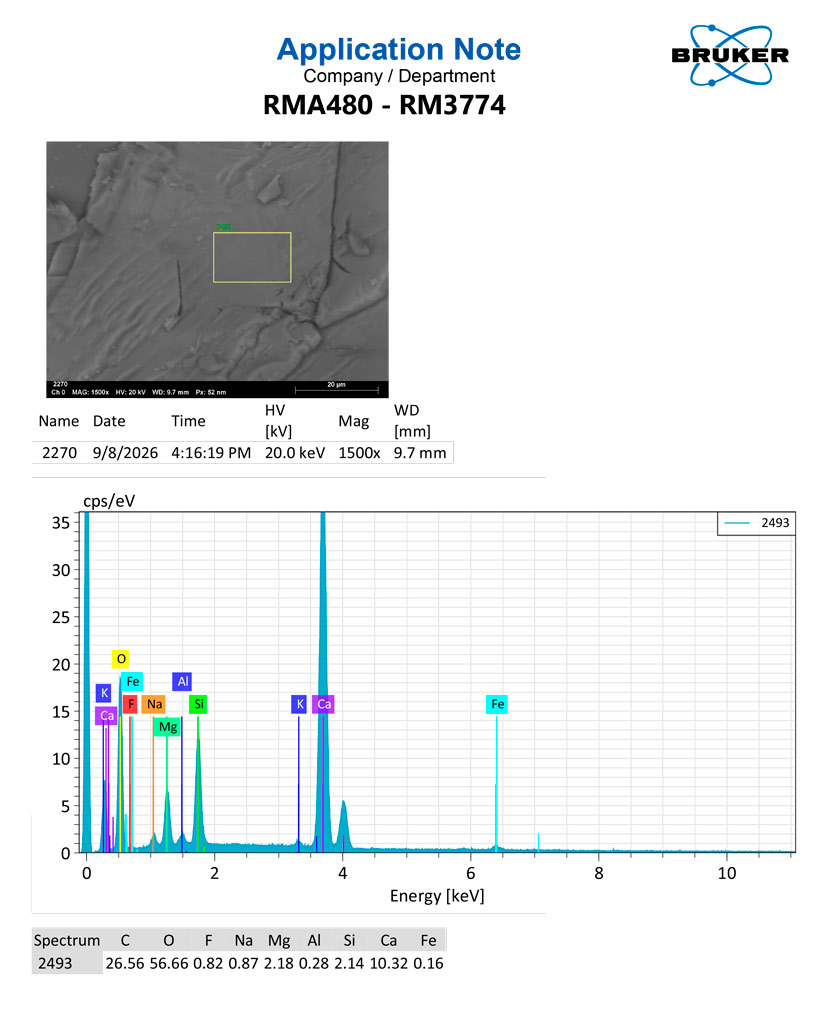
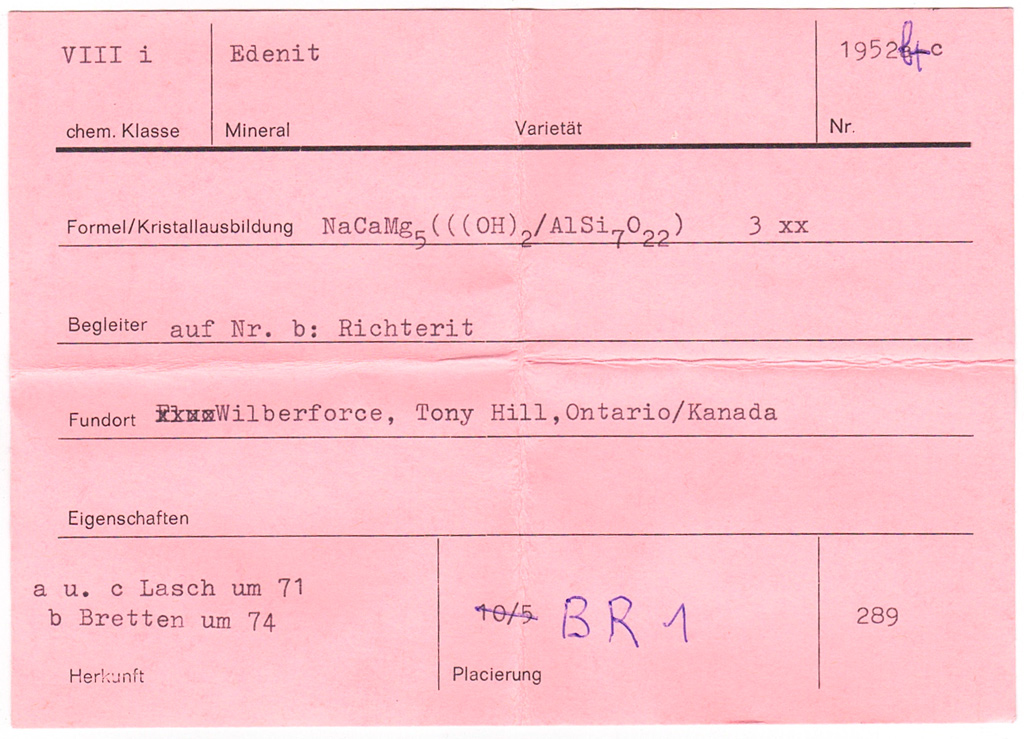
A classic fluoro-richterite specimen from this well-known Canadian locality in Wilberforce. The world's finest fluoro-richterite specimens have been collected in this area. It is a rare species of the amphibole group. On the white calcite matrix, offering a sharp contrast, several well-defined crystals can be seen. Analyzed specimen. Adquired by H. Lasch in 1971.
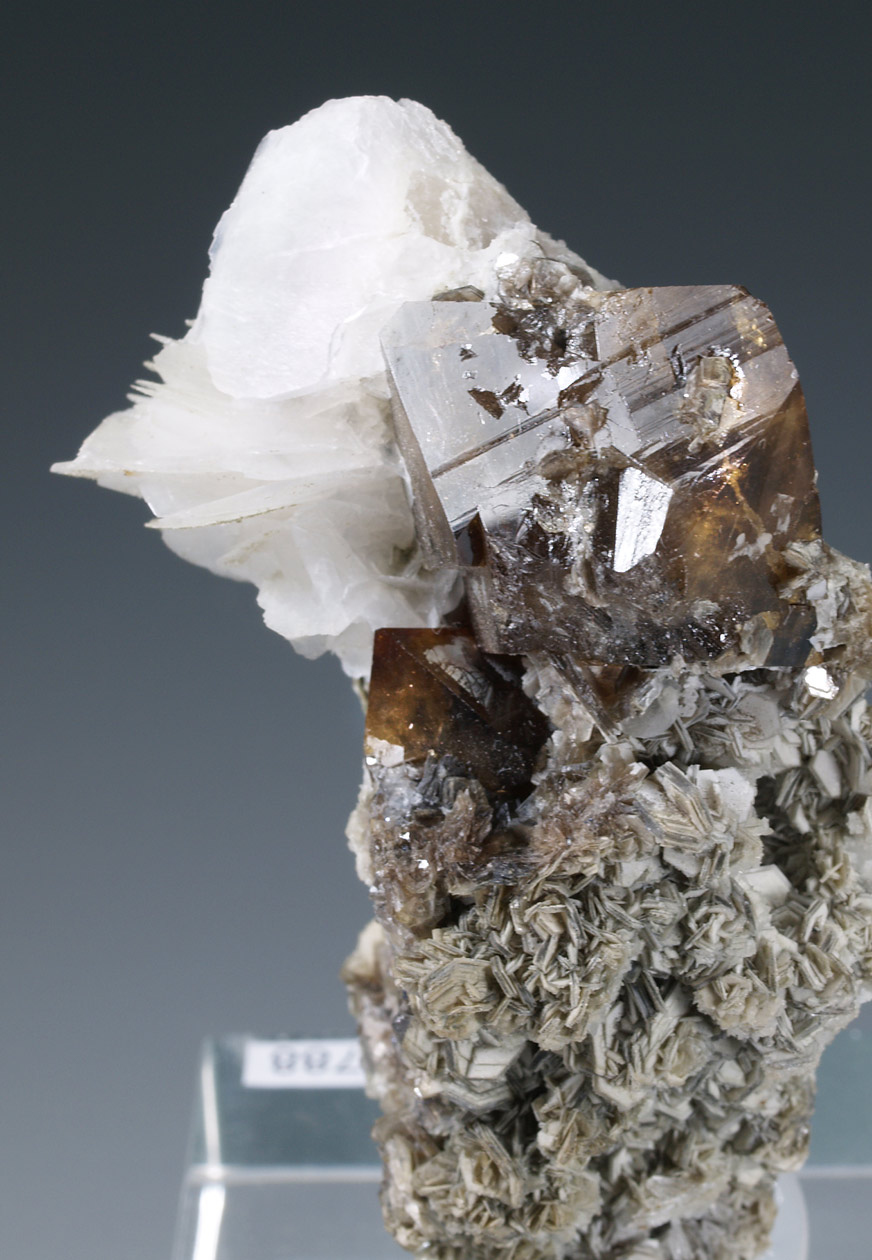
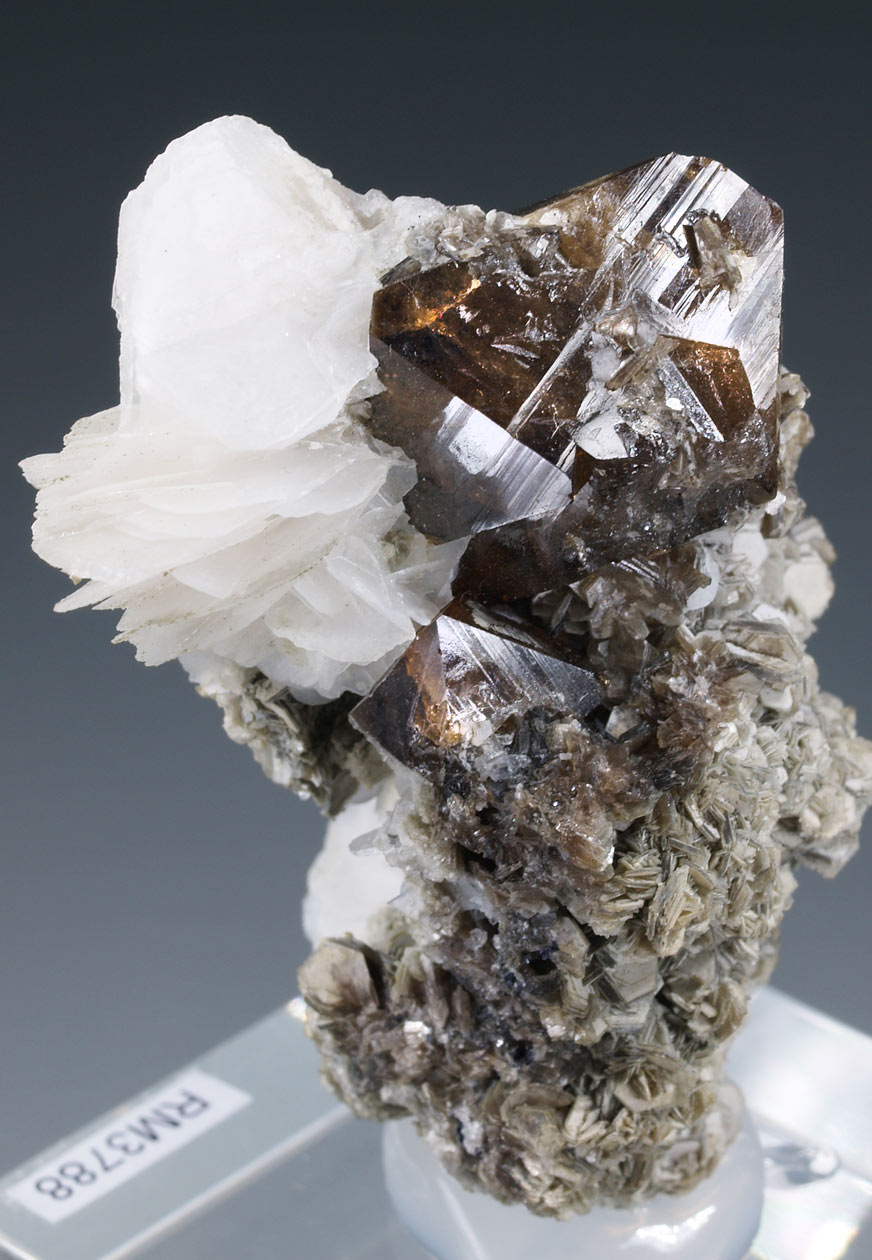
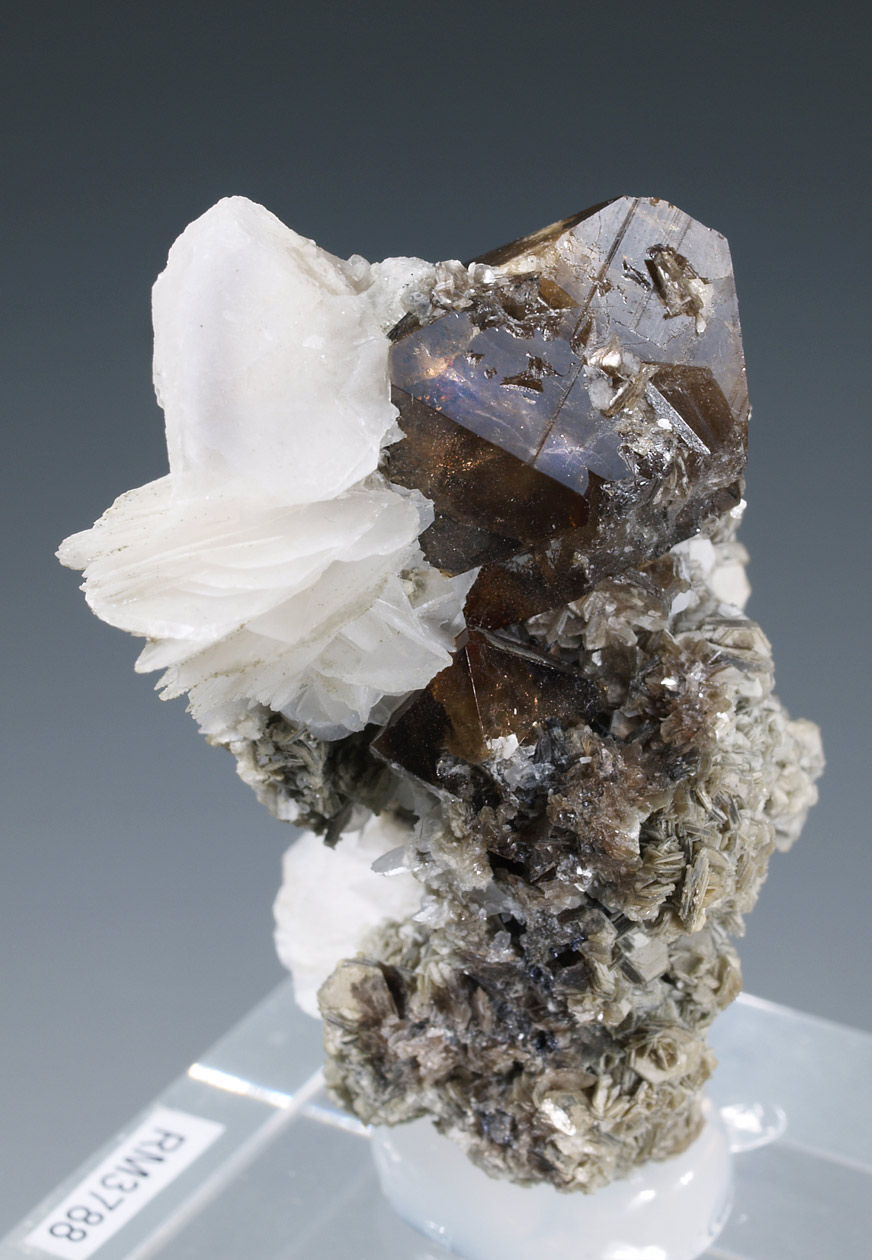
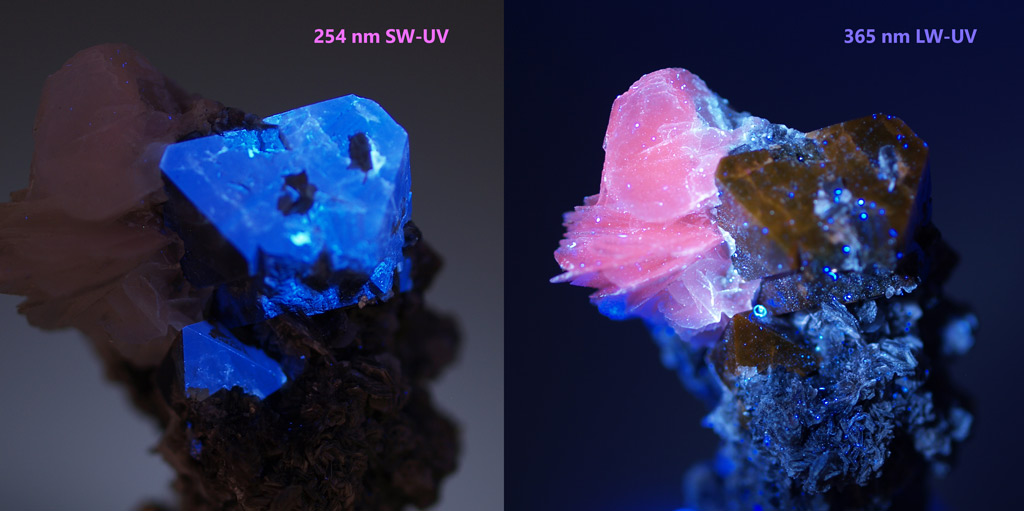
Superb scheelite specimen from this classic Korean mine. It shows two defined crystals of this calcium tungstate, exhibiting striated octahedral faces, fine luster, and a characteristic brown to honey color. Disposed prominently on a matrix with hexagonal aggregates of muscovite crystals, accompanied by lenticular calcite.
As is well known, scheelite fluoresces a characteristic bluish-white under short-wave UV light, while calcite fluoresces pink-red under long-wave UV. An outstanding piece from the A. Vaquero collection (Barcelona).
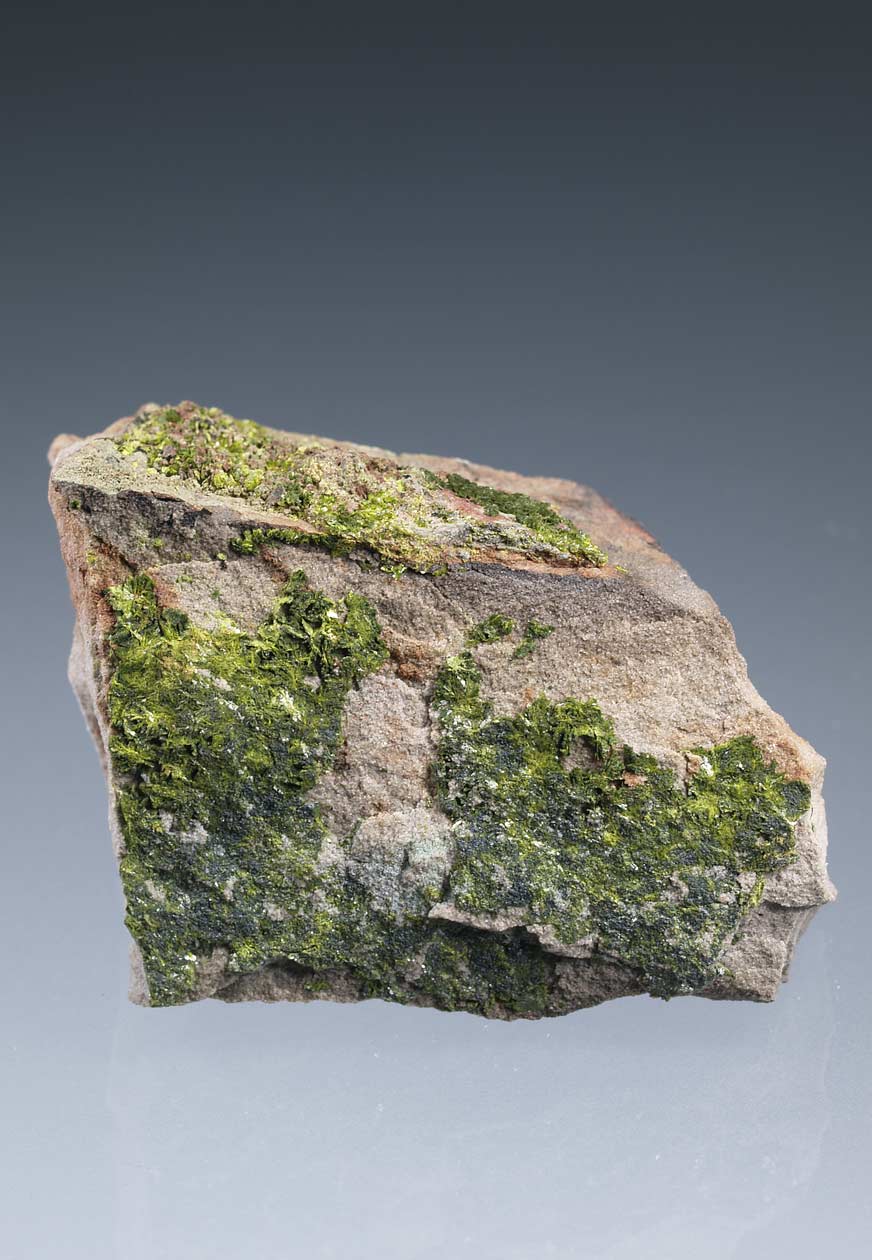
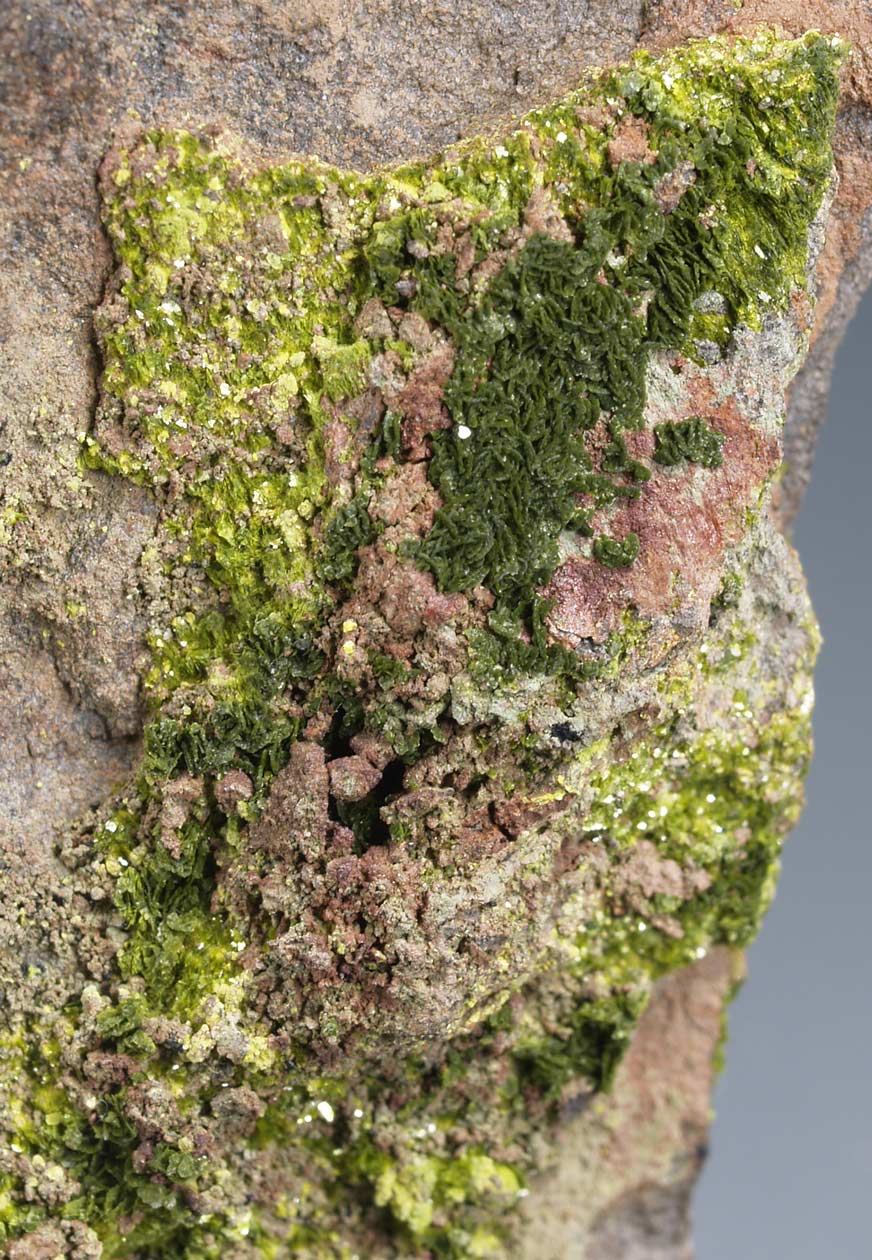
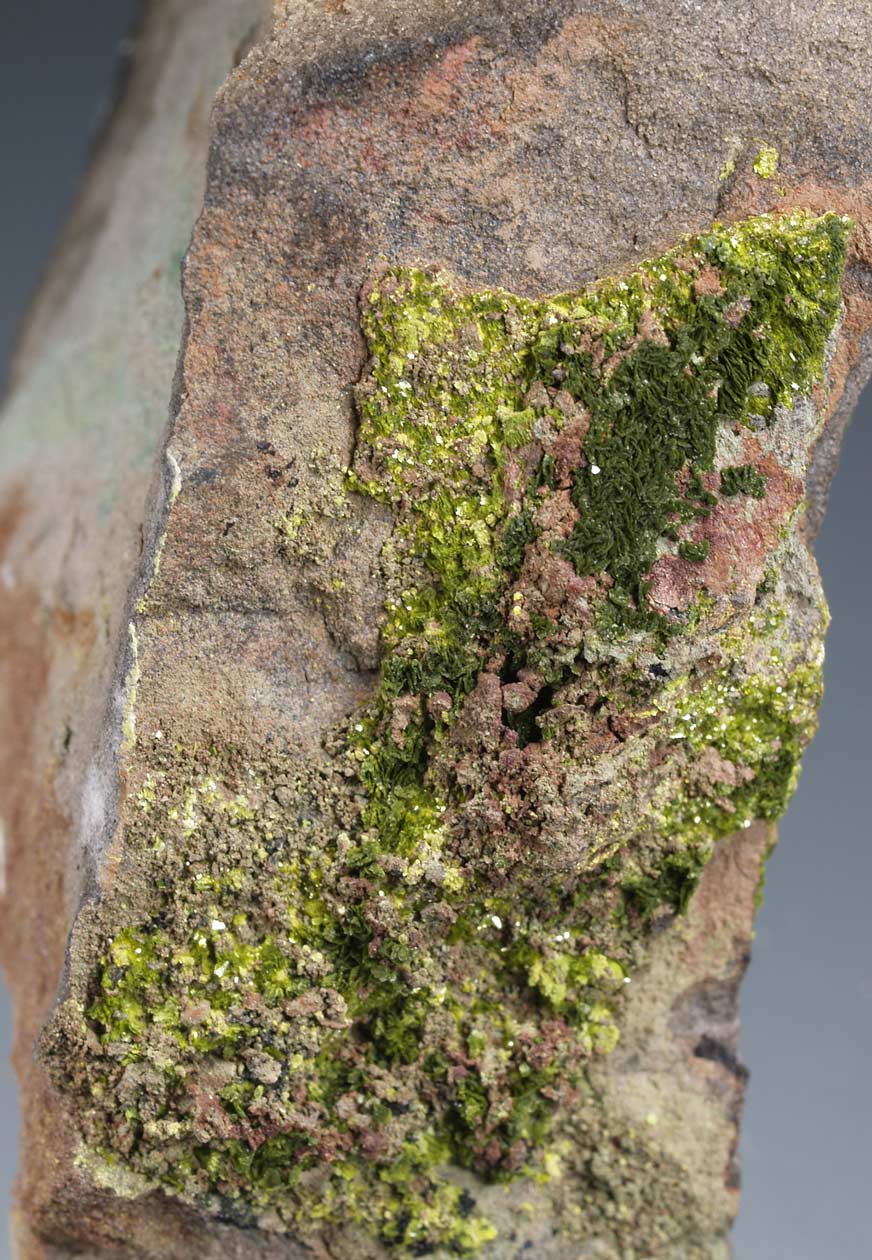
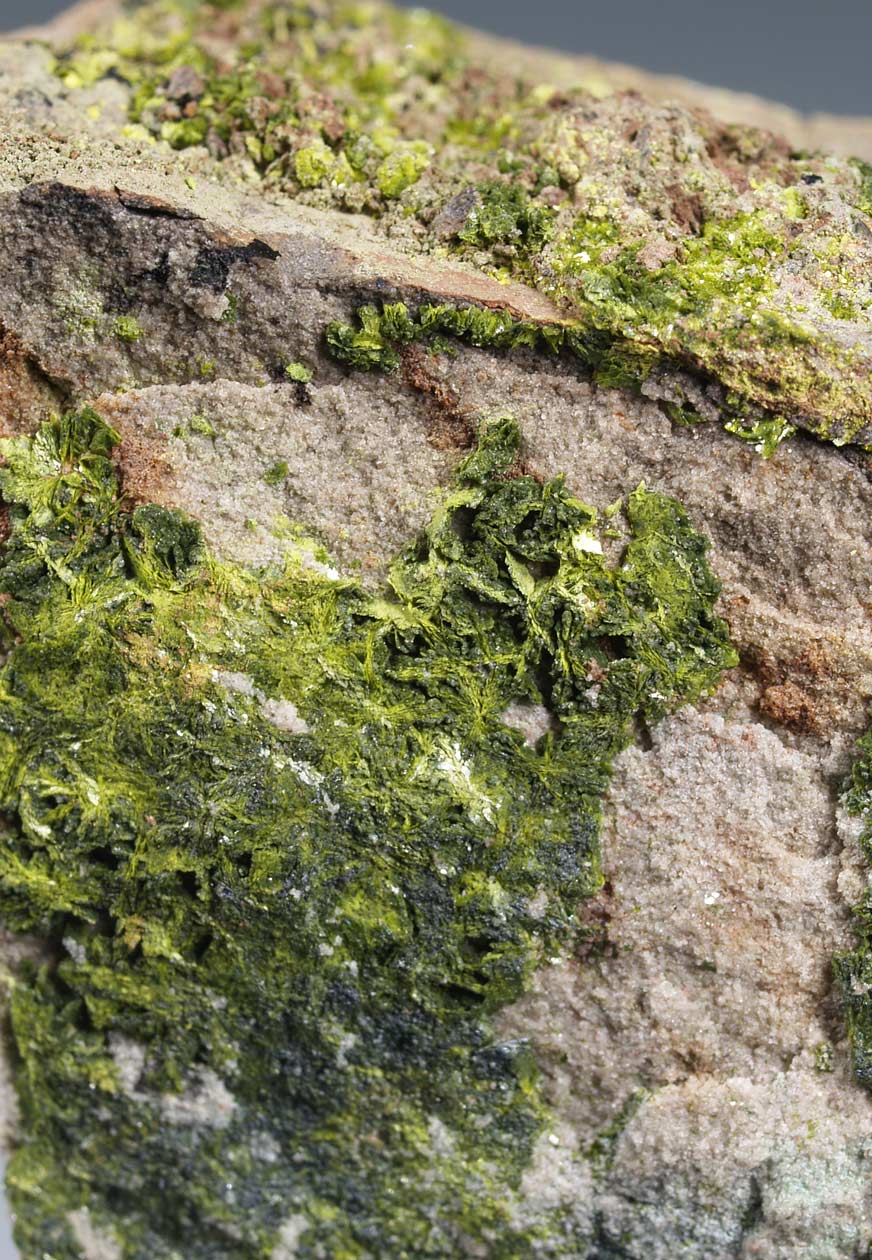
Druse of dark green tangeite crystals —a calcium copper hydroxyl vanadate—associated with lighter, yellowish-green volborthite crystals. The specimen exhibits slight radioactivity, likely due to the presence of carnotite and/or tyuyamunite within the sandstone matrix.
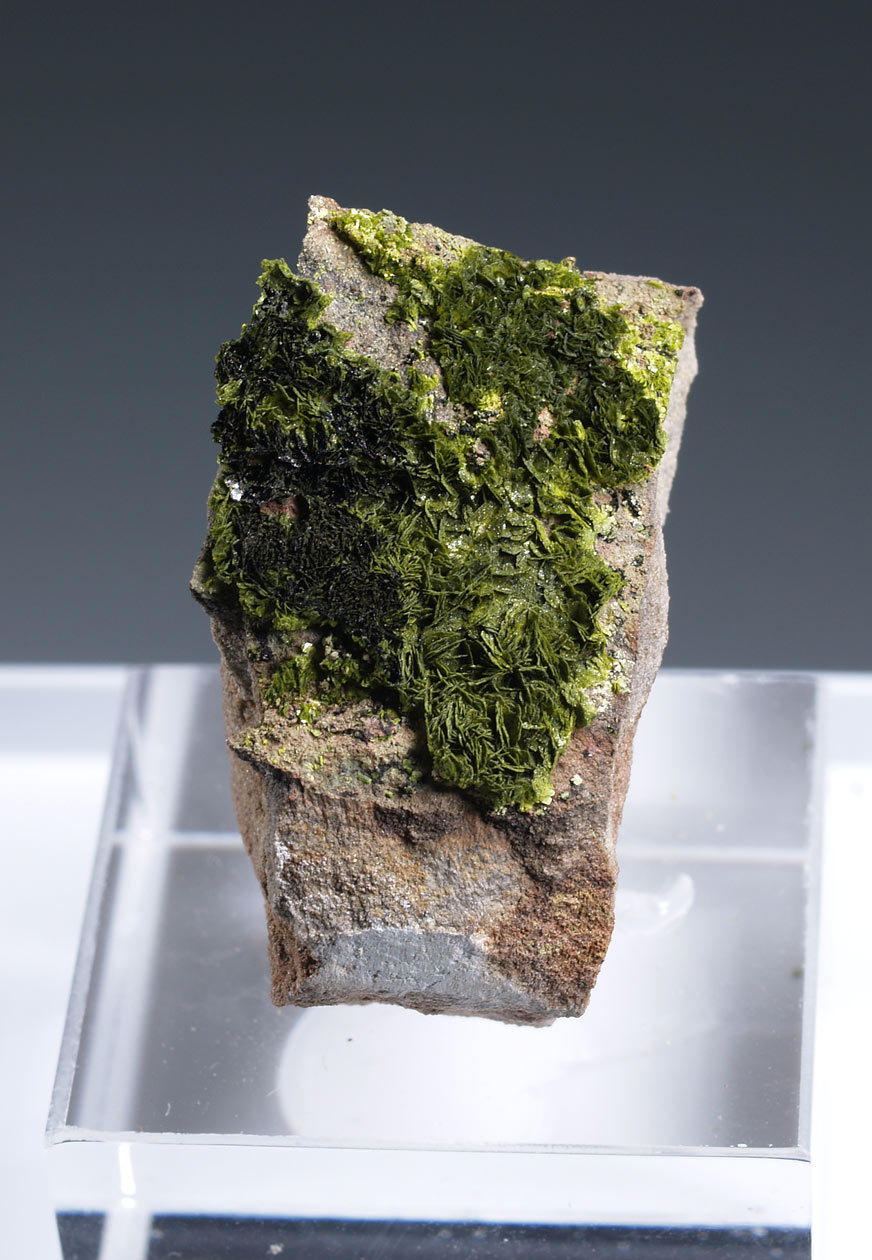
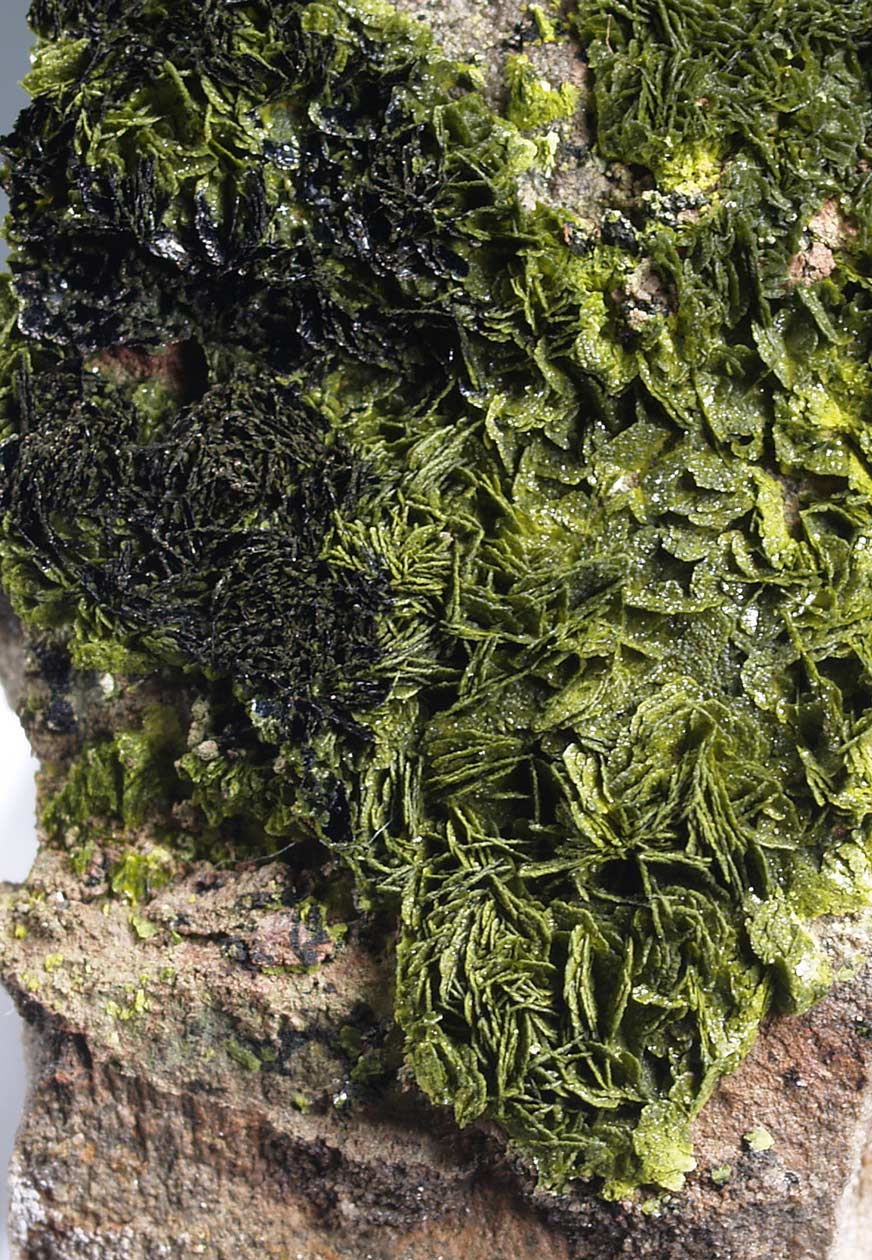
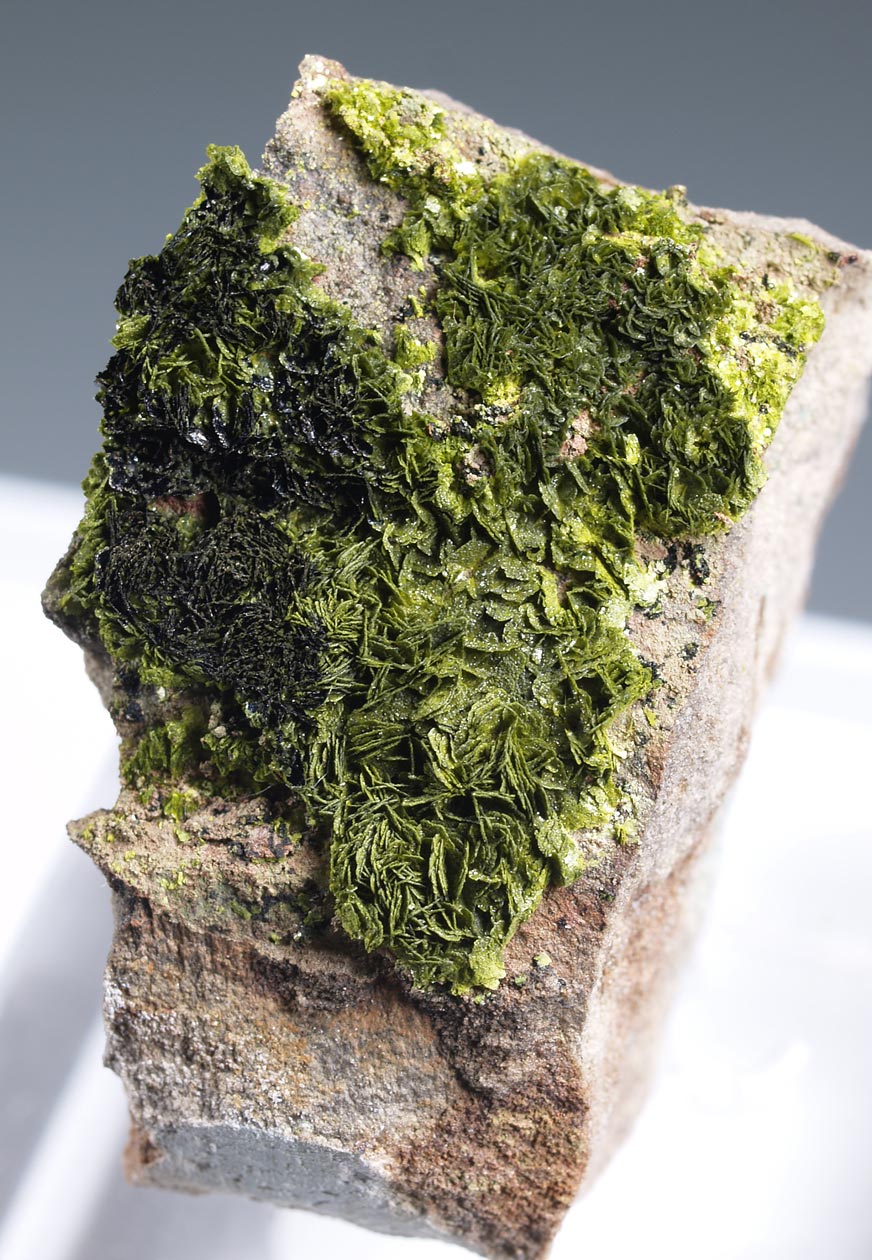
Vésigniéite is a rare barium copper hydroxyl vanadate, first discovered in Thuringia (Germany). It is named after Louis Vésignié (1870–1954), a French mineral collector and former president of the Mineralogical Society of France.
In this specimen, volborthite —occurring as light green tabular crystals— coexists with dark green vésigniéite. The sample exhibits slight radioactivity, likely due to the presence of vanadates such as tyuyamunite, Ca(UO₂)₂(VO₄)₂·5-8H₂O, or carnotite, K₂(UO₂)₂(VO₄)₂, in the matrix. Good crystal size for the species.
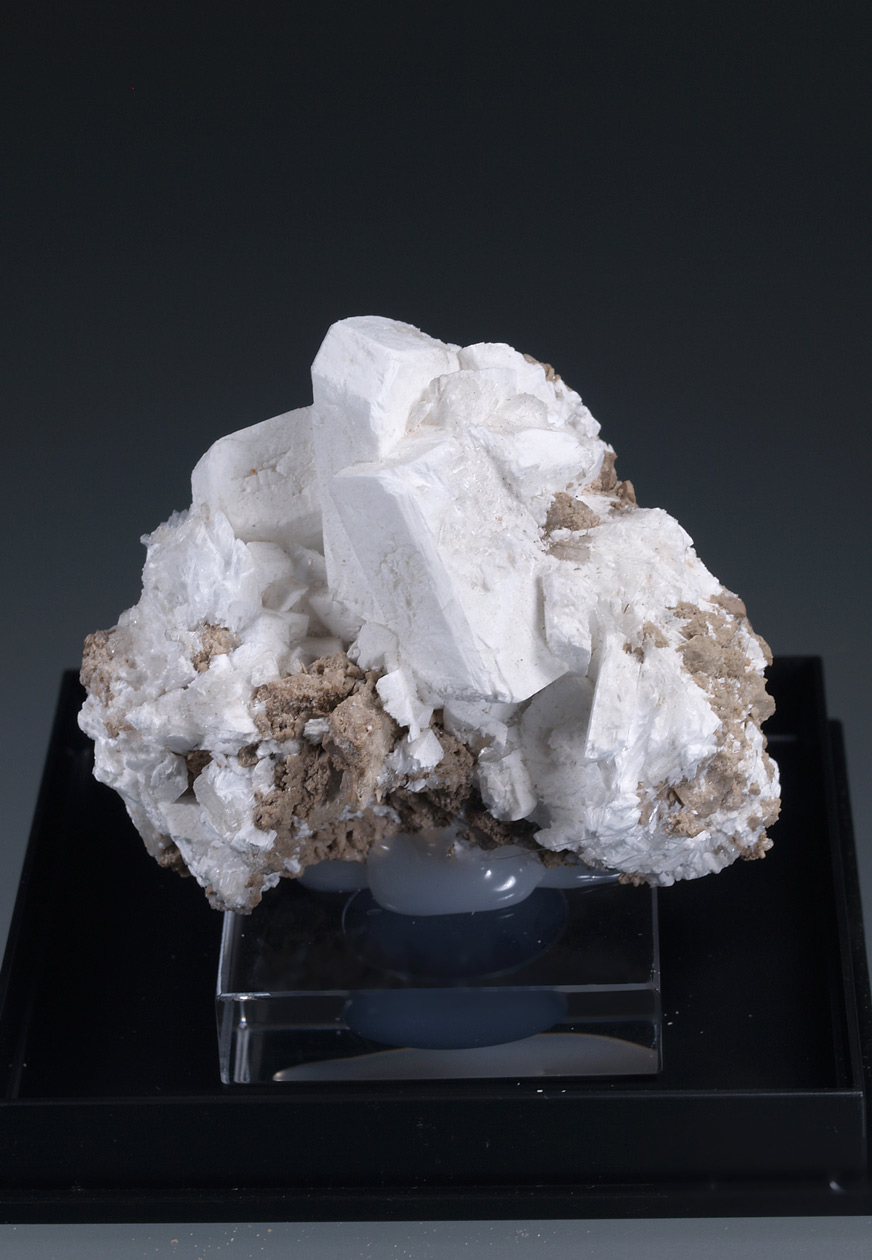
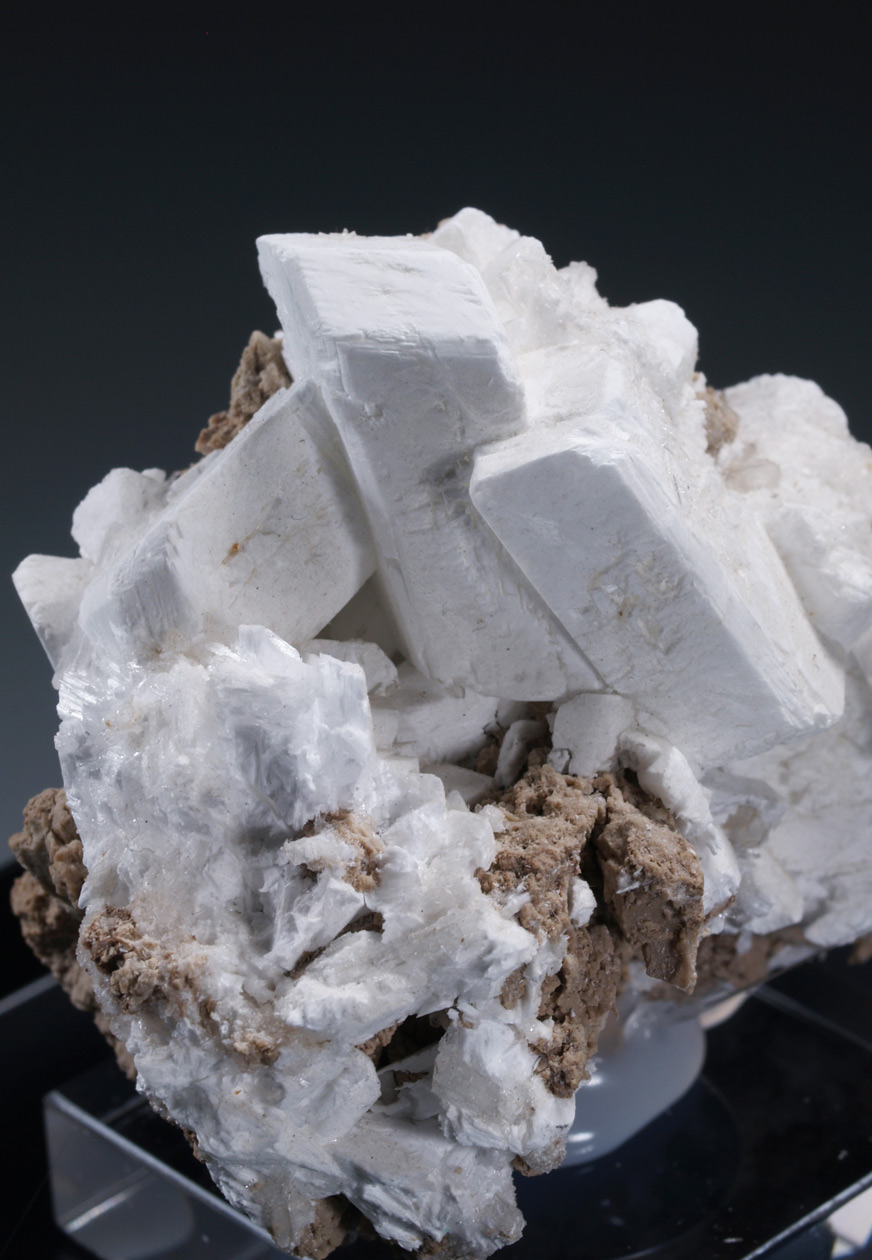
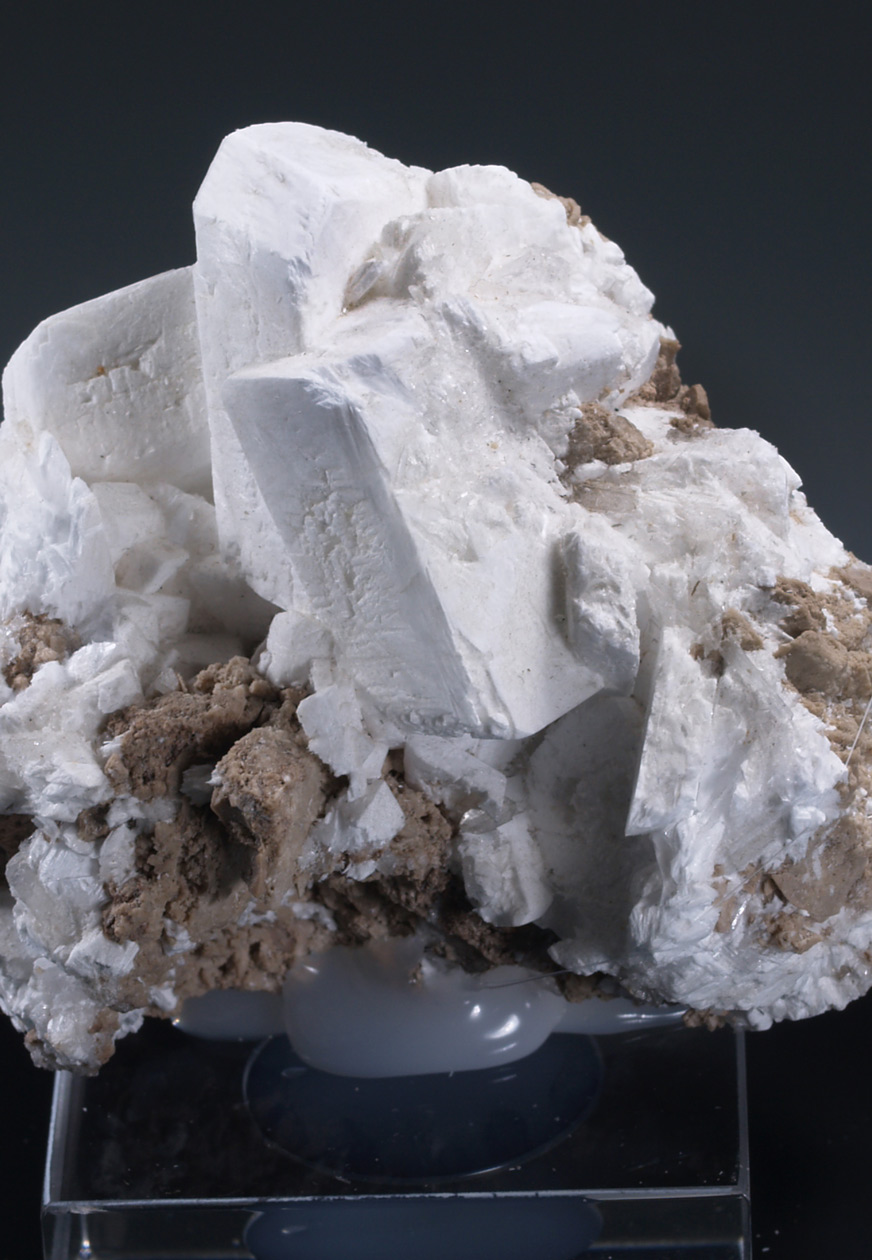
This is the type locality for both borates, meyerhofferite and inyoite. It consists of a cluster of prismatic inyoite crystals converted to meyerhofferite. It is uncommon to find this species with crystals of such size. A piece of genuine interest for collectors keen on chemical and systematic mineralogy.
It formerly belonged to the collection of our good friend Jaroslav Hyršl, one of today's leading authorities in mineralogy.
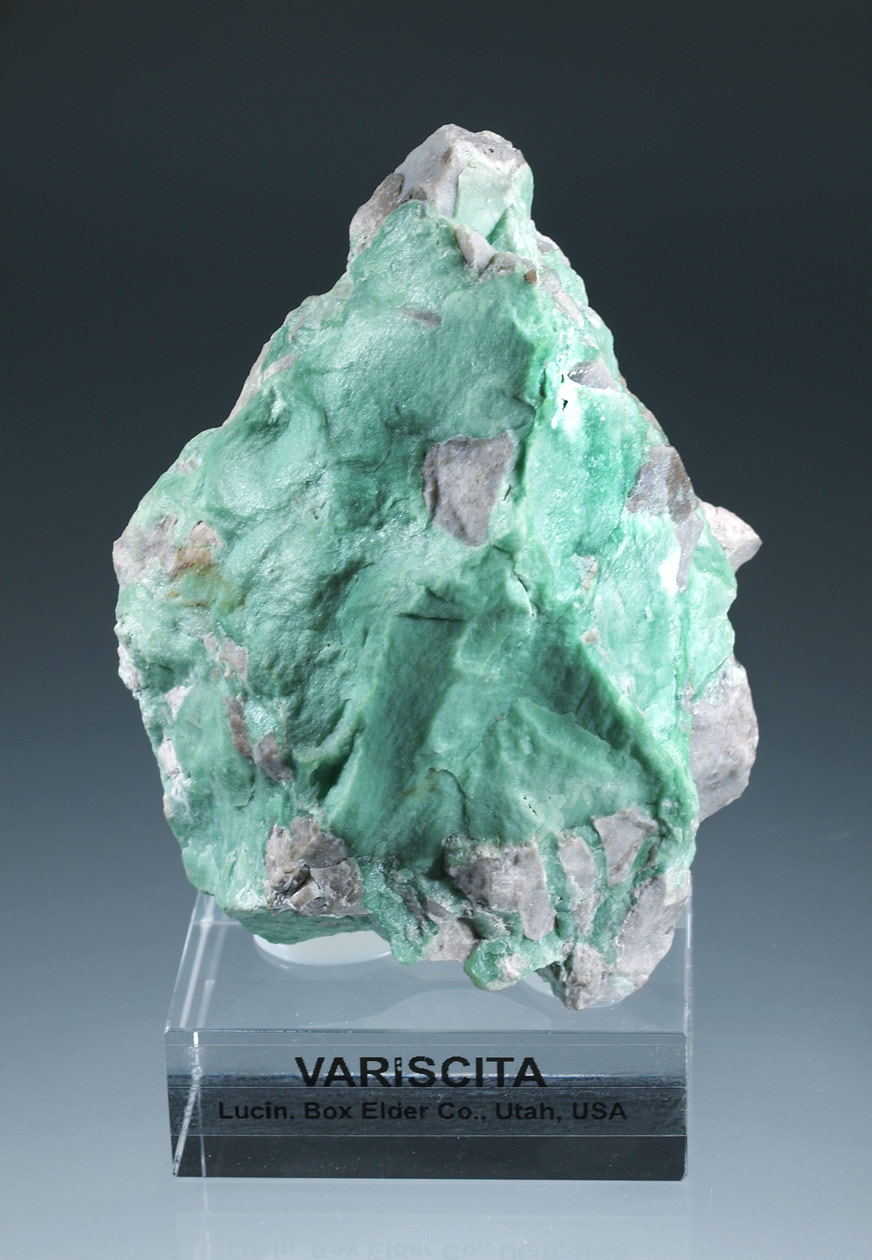
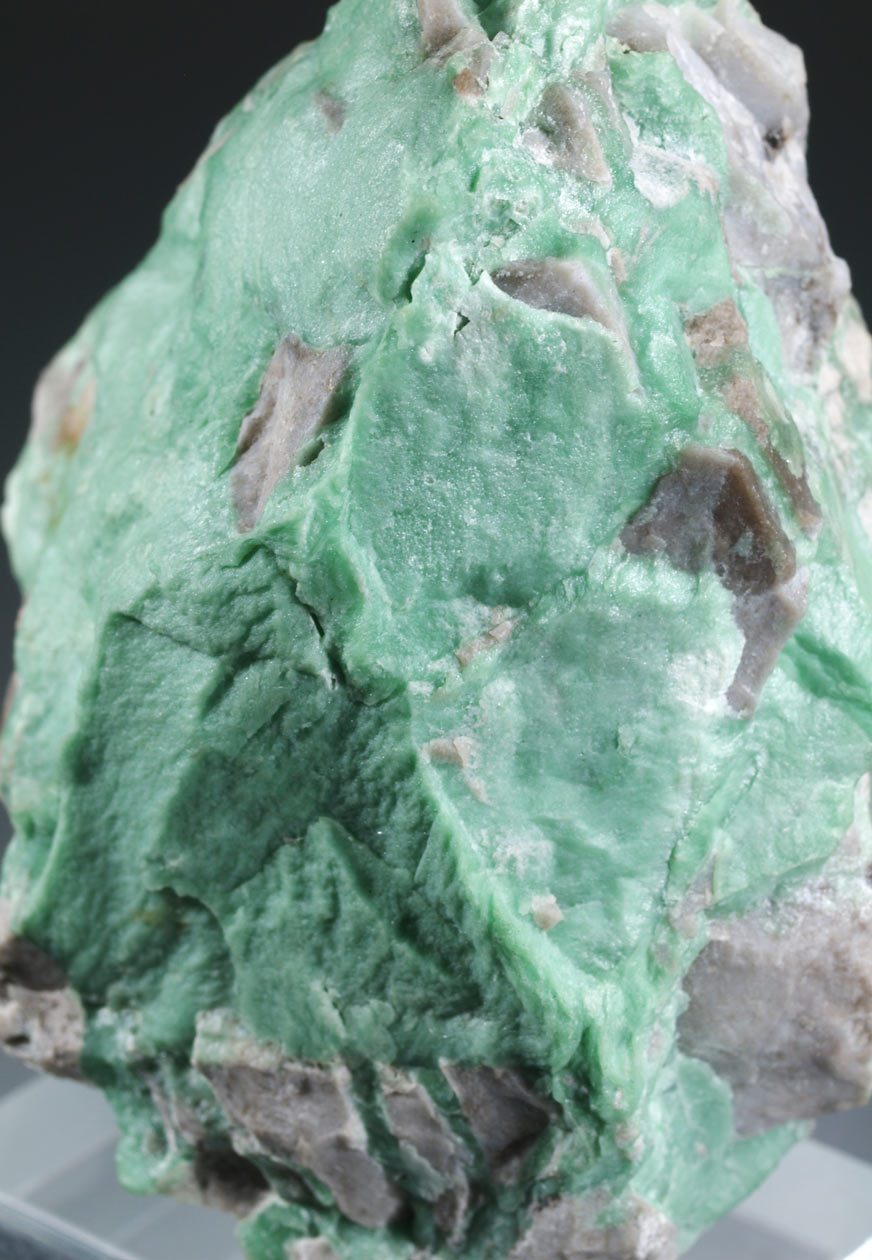
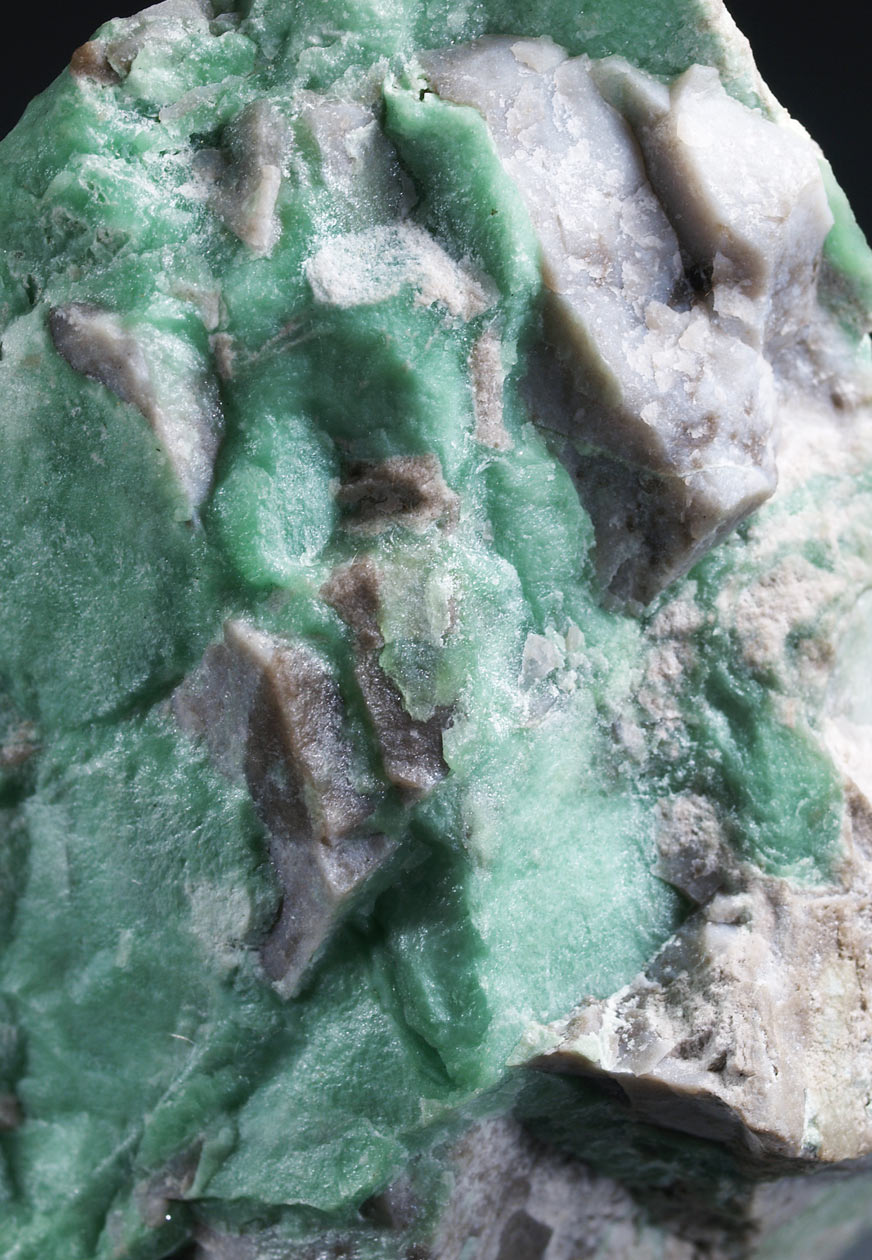
A very good-sized variscite specimen of uniform green color, nicely contrasting with the light gray quartz matrix. The Lucin area is a popular stop for rockhounds looking for an apple-green, chert-like phosphate mineral variscite, also known as 'utahlite' and 'lucinite'. Variscite is definitely one of my weak spots.
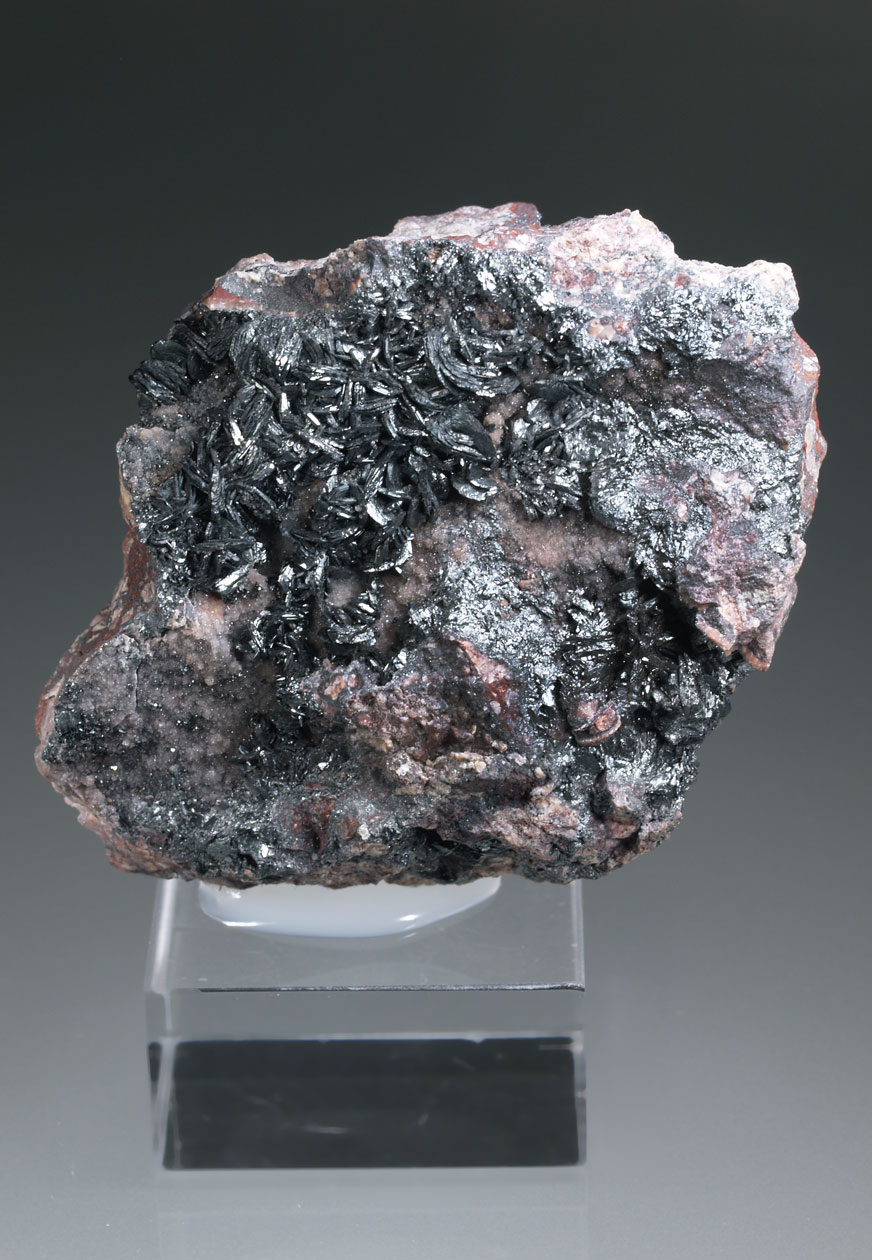
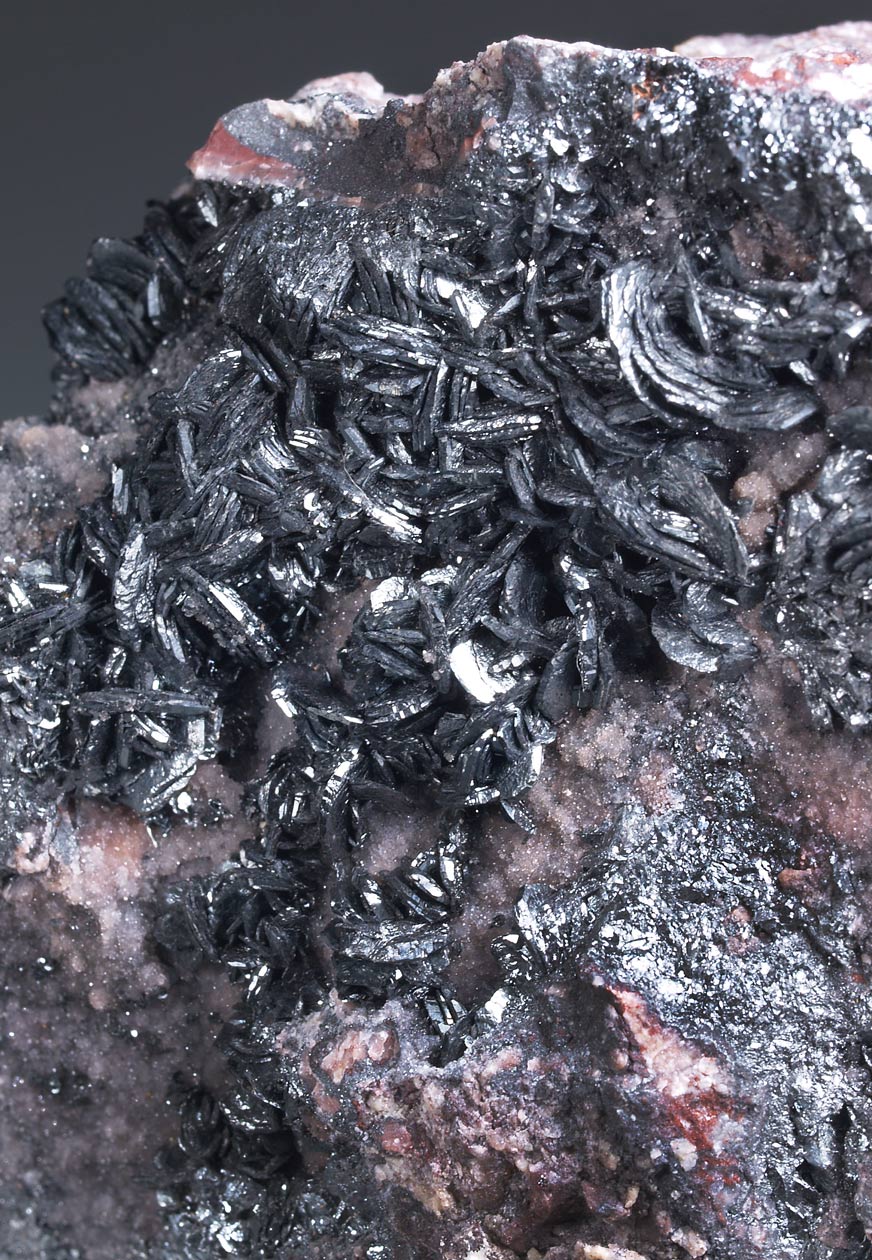
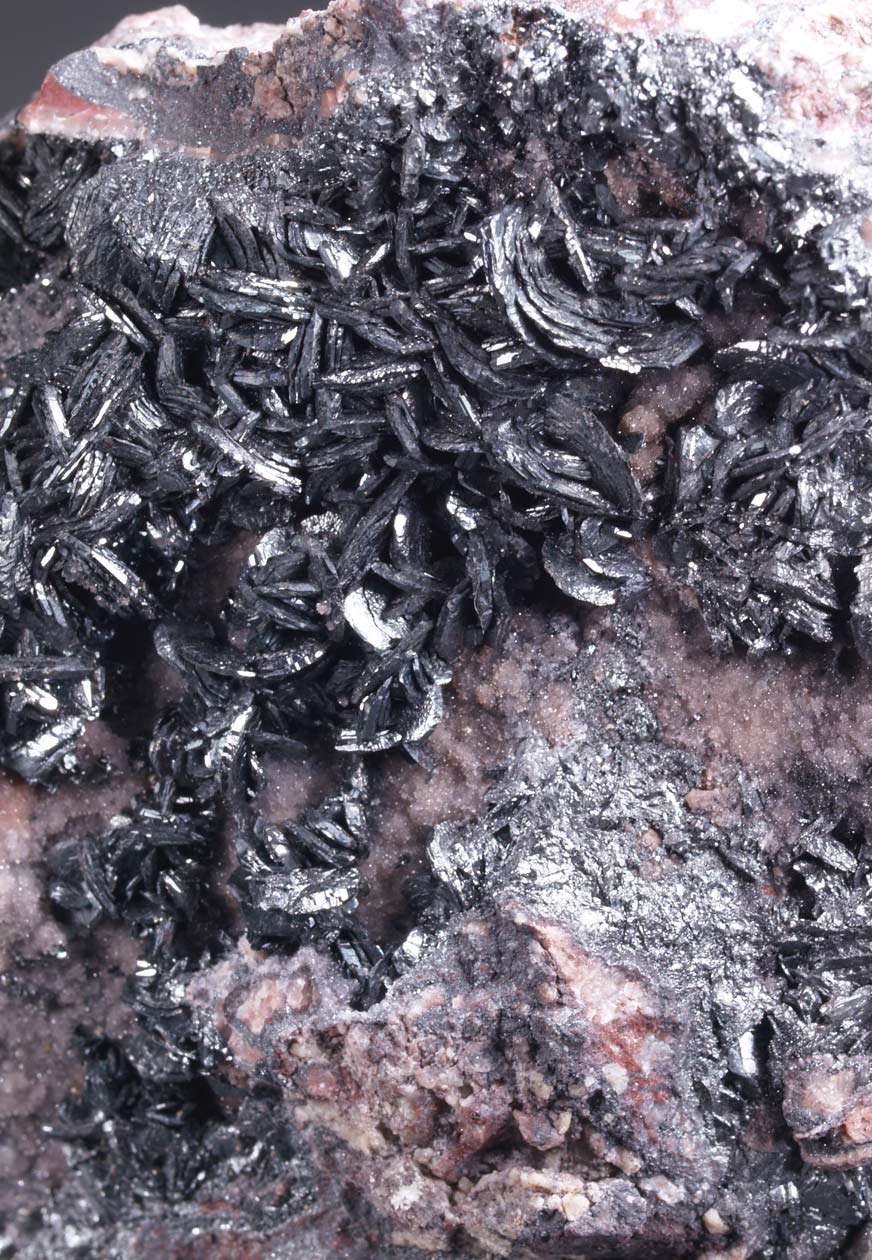
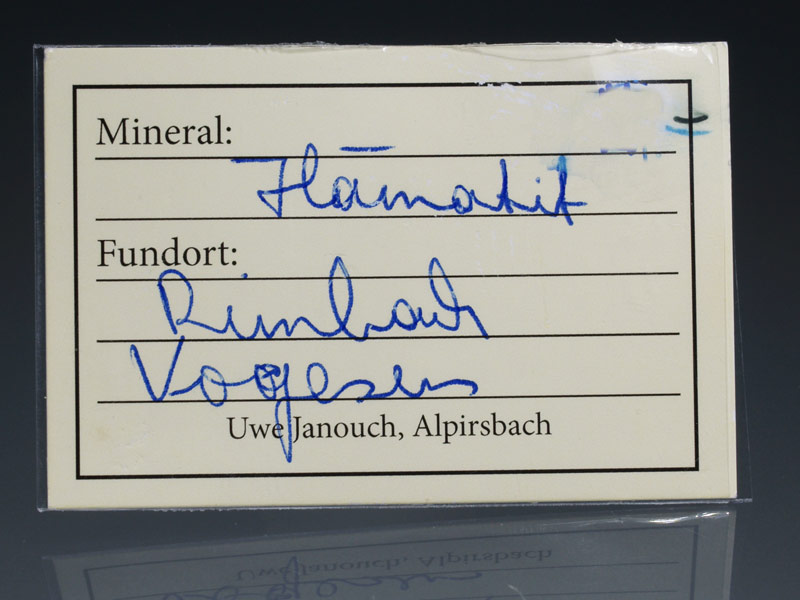
On a rock matrix, this specimen displays numerous hematite crystal aggregates forming aesthetic rosettes, highly lustrous, and with a characteristic metallic gray color. This specimen belonged to the German collector Uwe Janouch. This locality is formed by a quartz vein zone known for excellent and large tabular hematite crystals. For access to the area, one needs authorisation by AAMPEF (Association des Amateurs de Minéralogie et de Paléontologie de l'Est de la France).
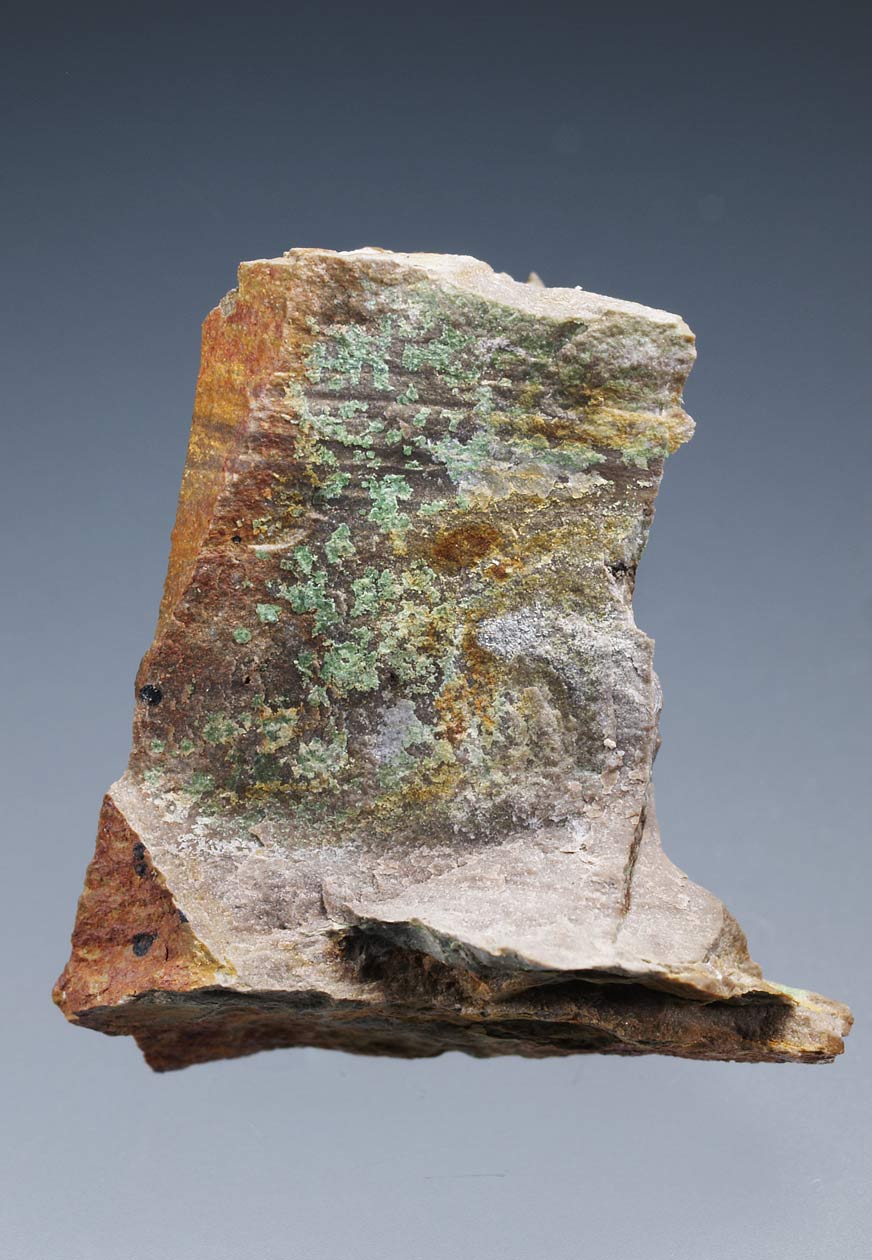
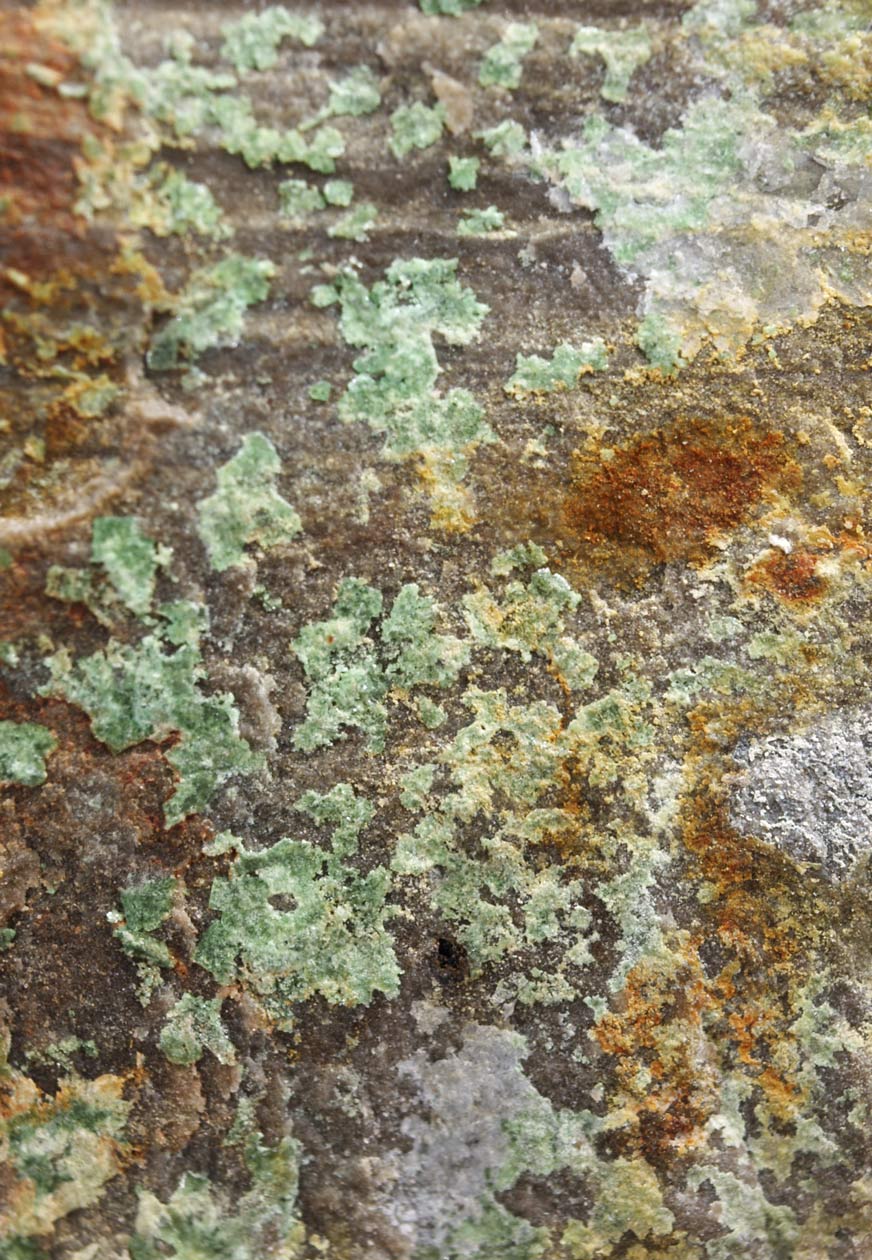
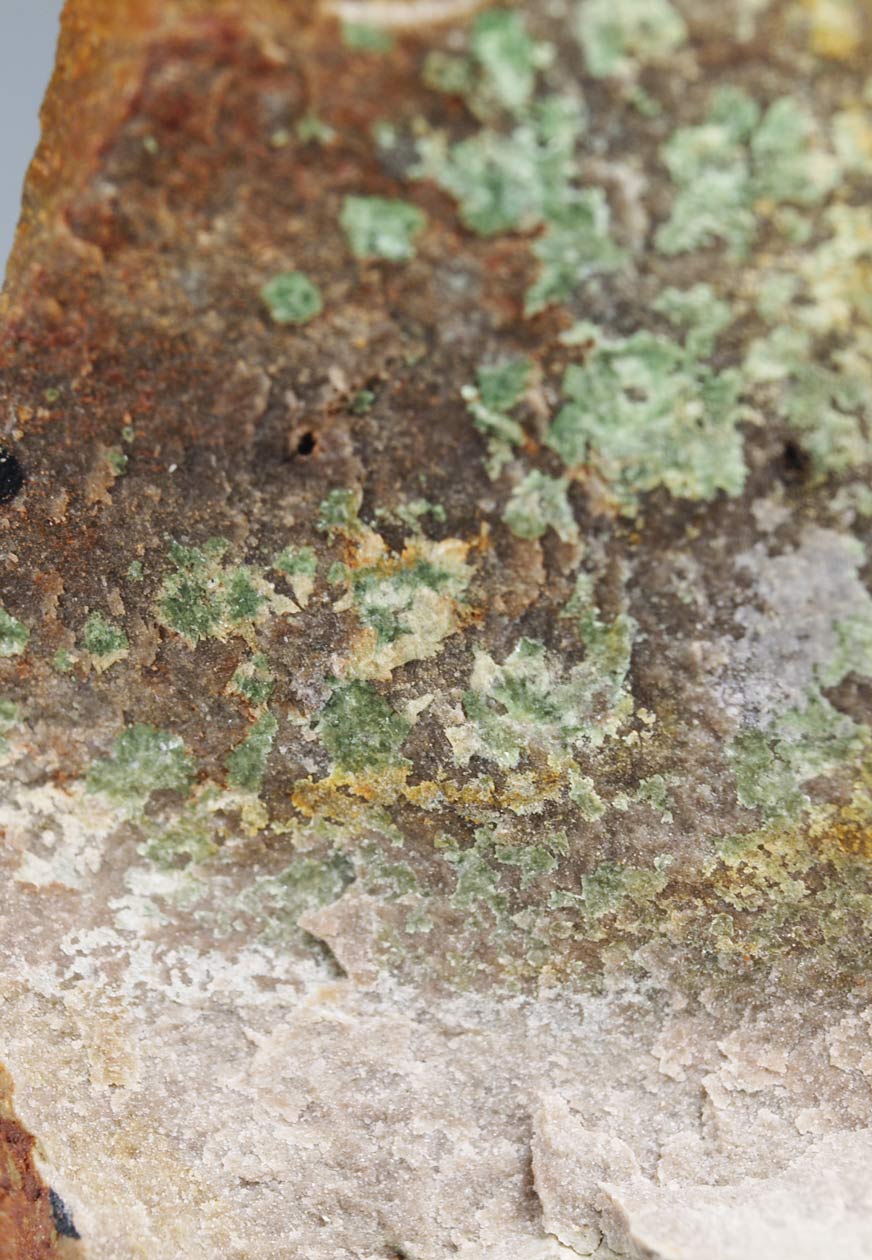
Aggregates of tabular crystals of abernathyite, a rare uranyl and potassium arsenate, exhibiting yellowish tones and surrounding a light green heinrichite core. Abernathyite belongs to the meta-autunite group. Chemically, it is the As analogue of meta-ankoleite.
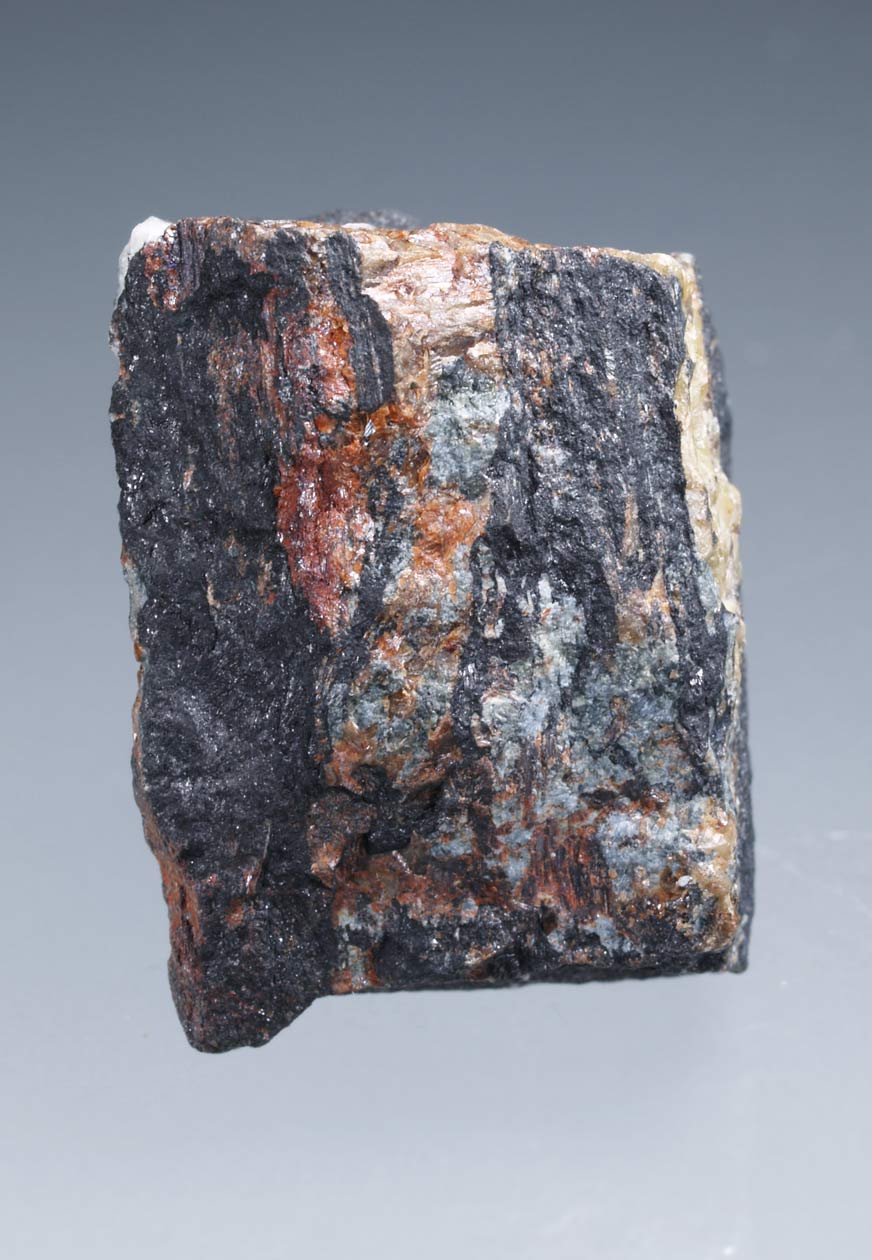
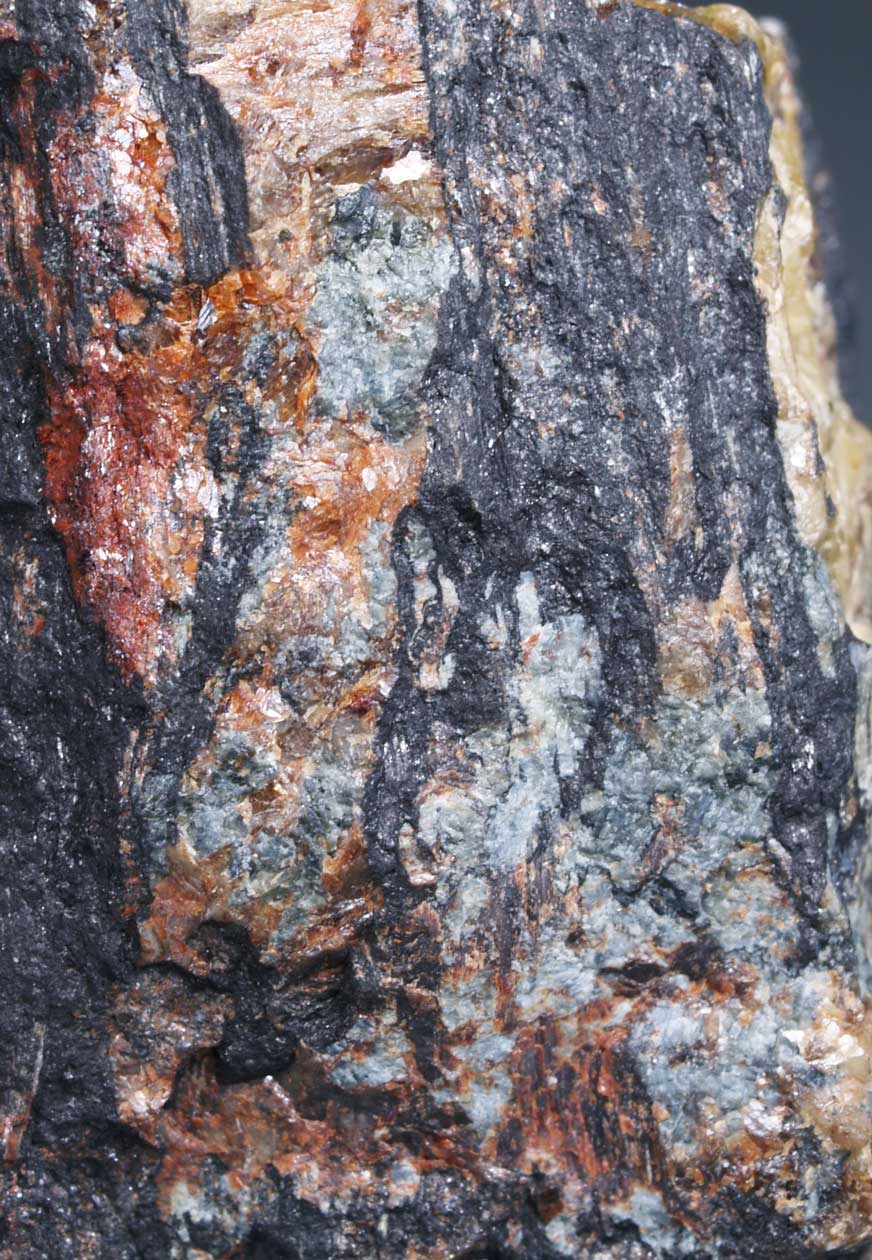
Lulzacite is a very rare complex strontium phosphate, found only in this French quarry and described in the year 2000. It is isotypic (similar to isostructural) with jamesite and désorite. Specimens are very difficult to find. Grayish-green nodules of lulzacite can be observed embedded in a matrix with quartz and siderite.
Jamesite: Pb₂Zn(Fe²⁺,Zn)₂Fe³⁺₄(AsO₄)₄(OH)₁₀
Désorite: Pb₂(Fe³⁺₆Zn)O₂(PO₄)₄(OH)₈
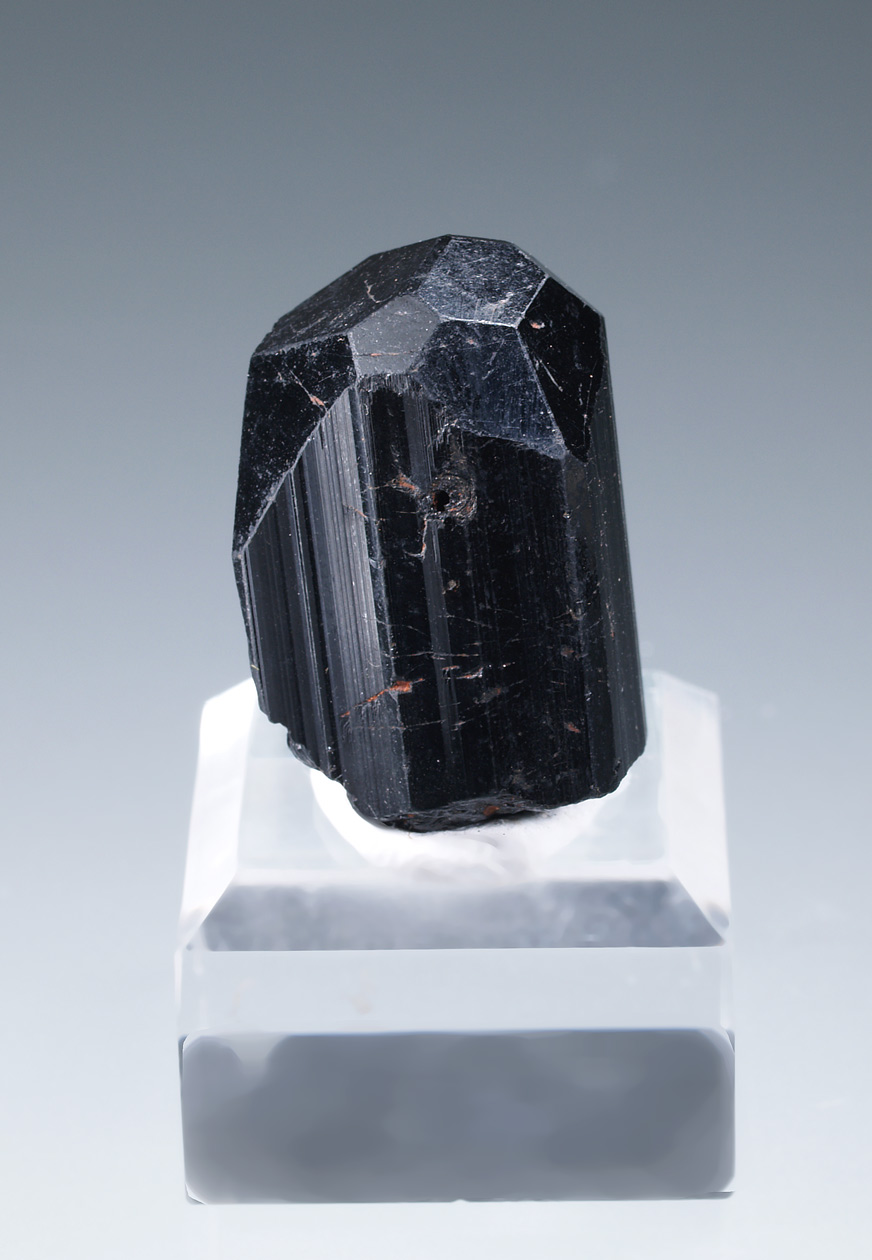
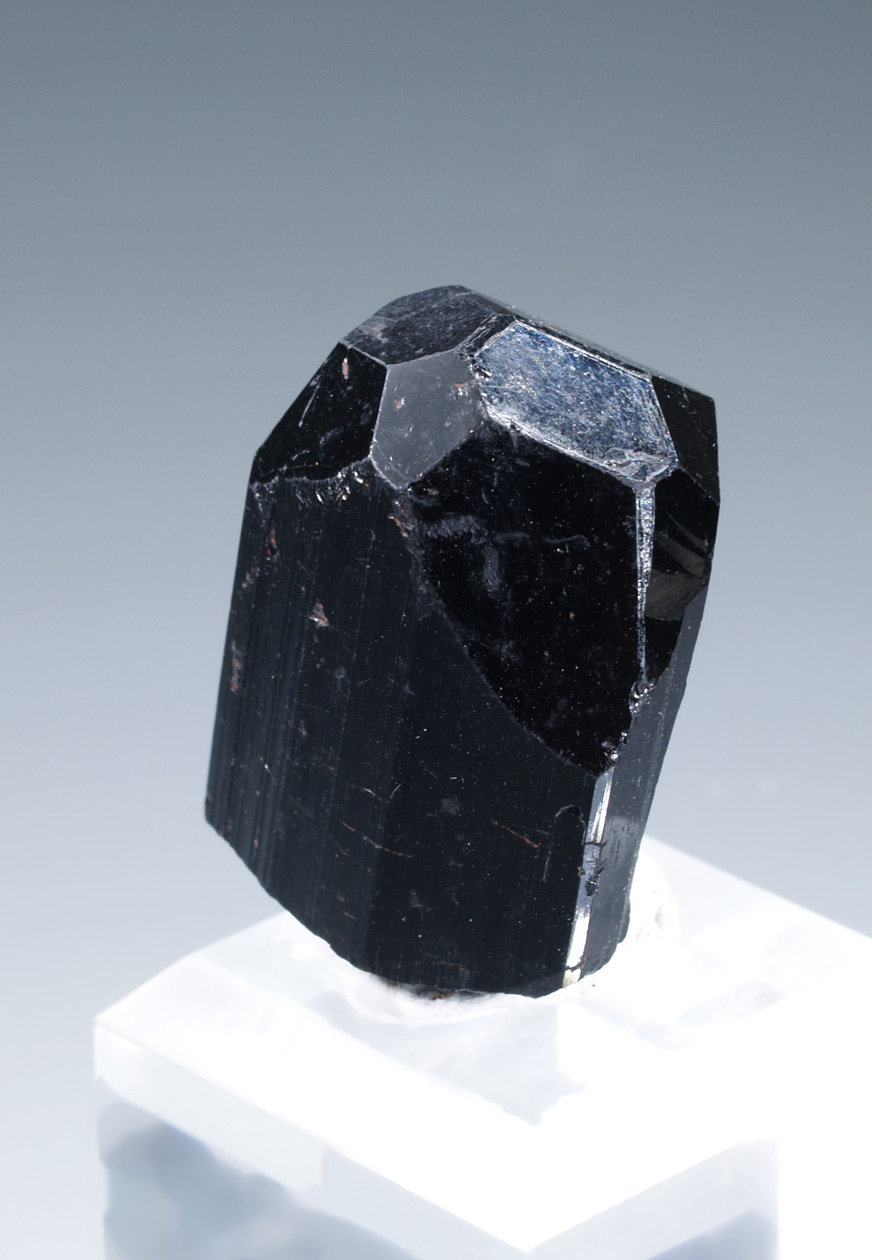
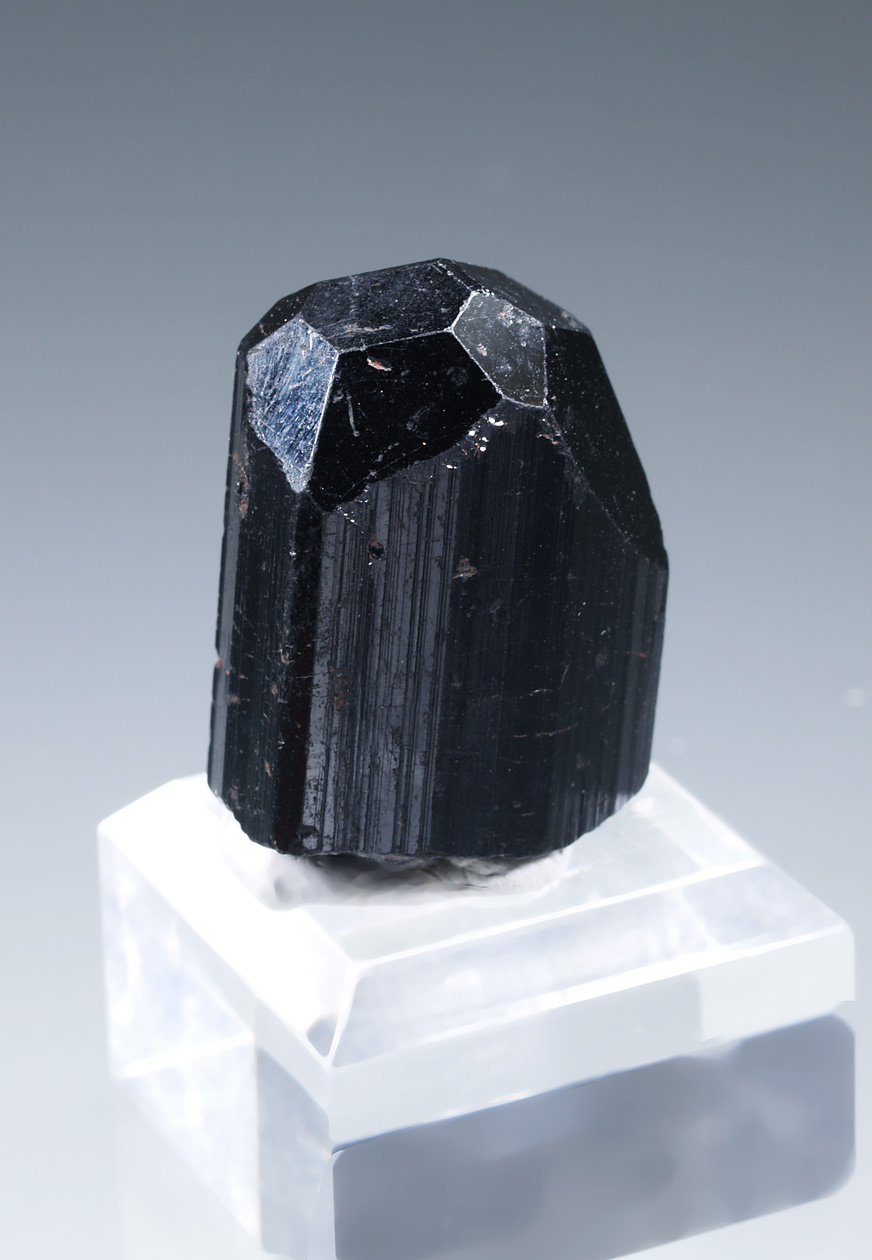
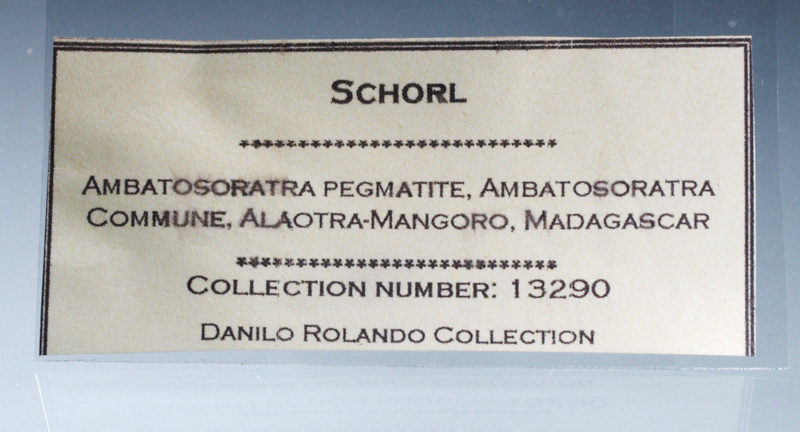
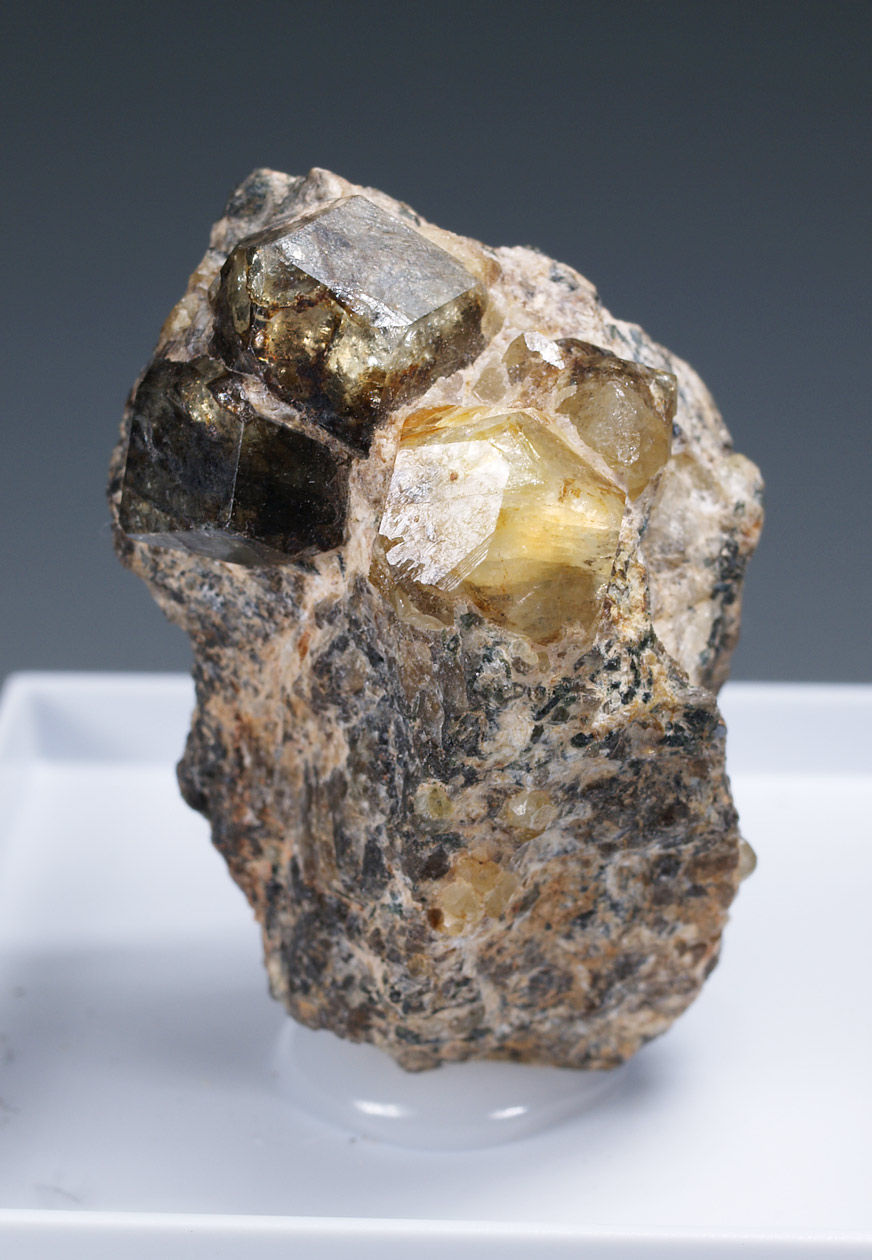
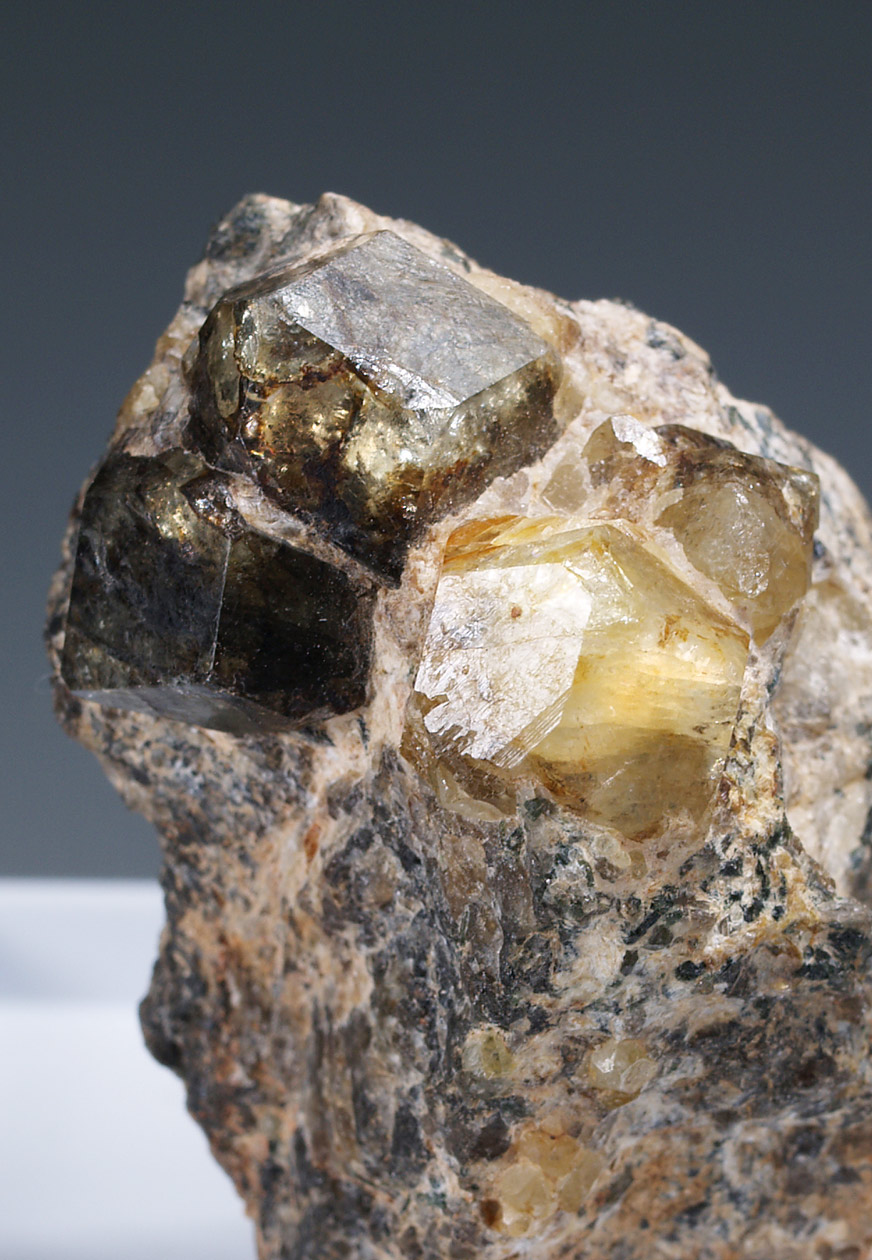
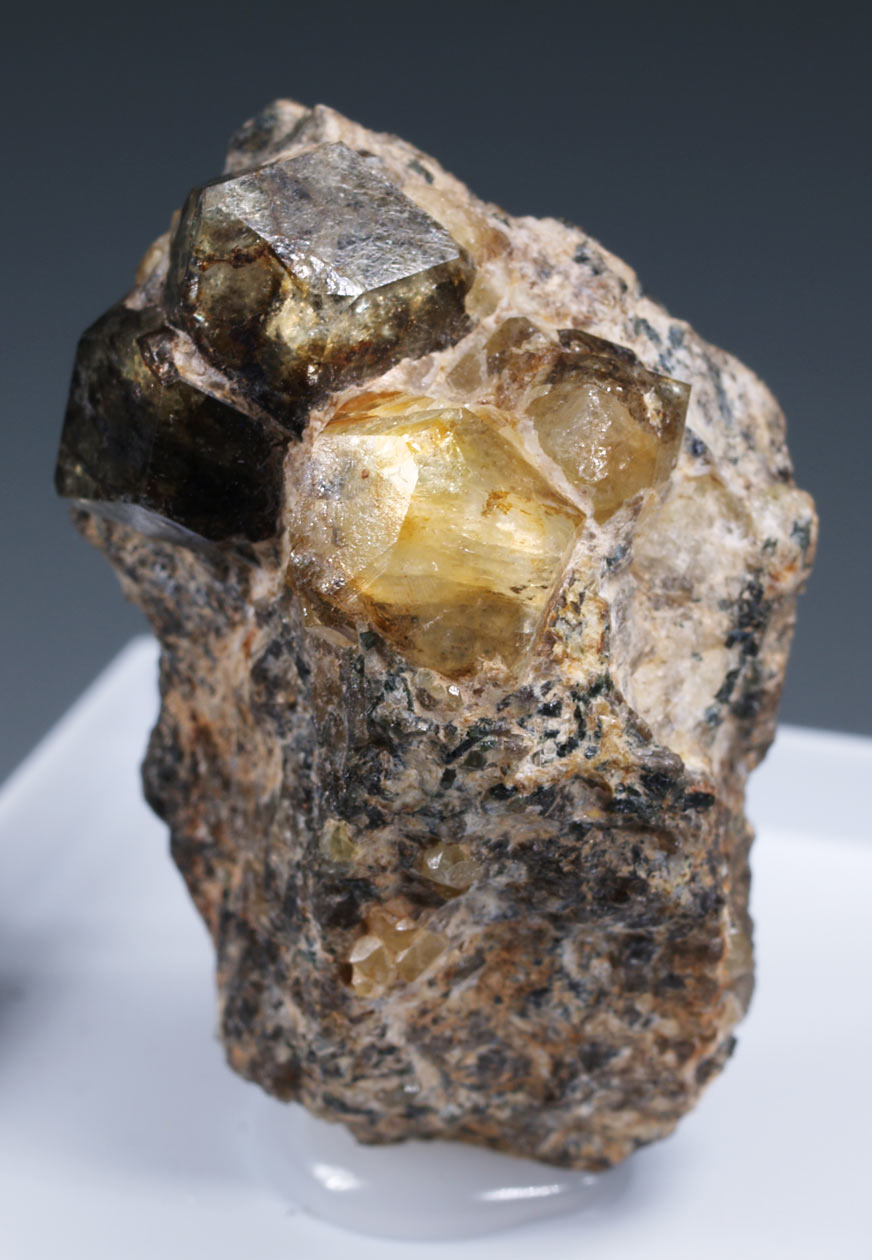
Madagascar schorls are well known for being among the finest in the world. What caught my attention about this specimen is the remarkable richness of its crystal faces. On this piece, we can observe forms of the trigonal prism and the second-order hexagonal prism, along with faces of various rhombohedrons and even a pedion. An engaging piece for crystallography enthusiasts. A granite pegmatite situated on a small hill on the eastern shore of Lake Alaotra, near the village of Ambatosoratra. The locality is especially known for its chrysoberyl crystals.The specimen belongs from the D. Rolando collection (Italy).
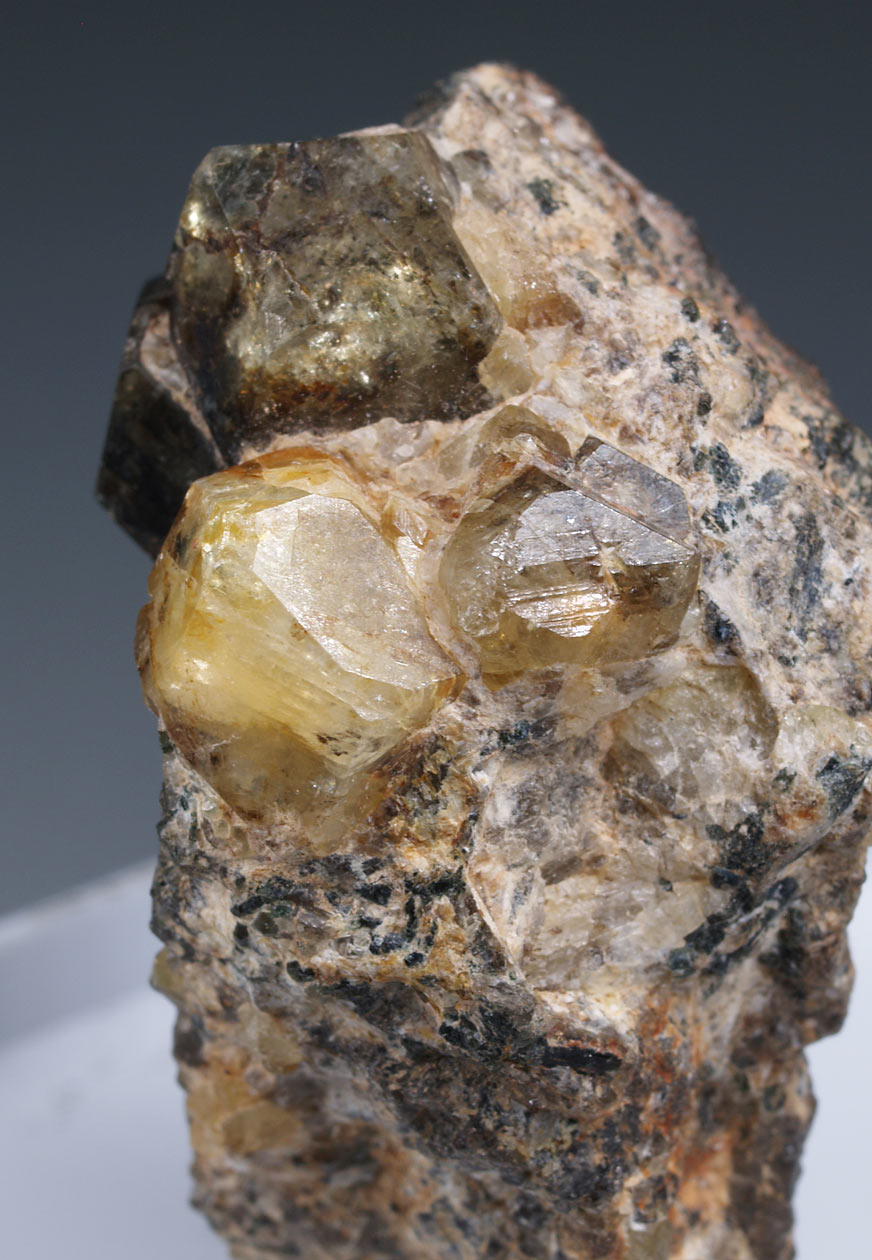
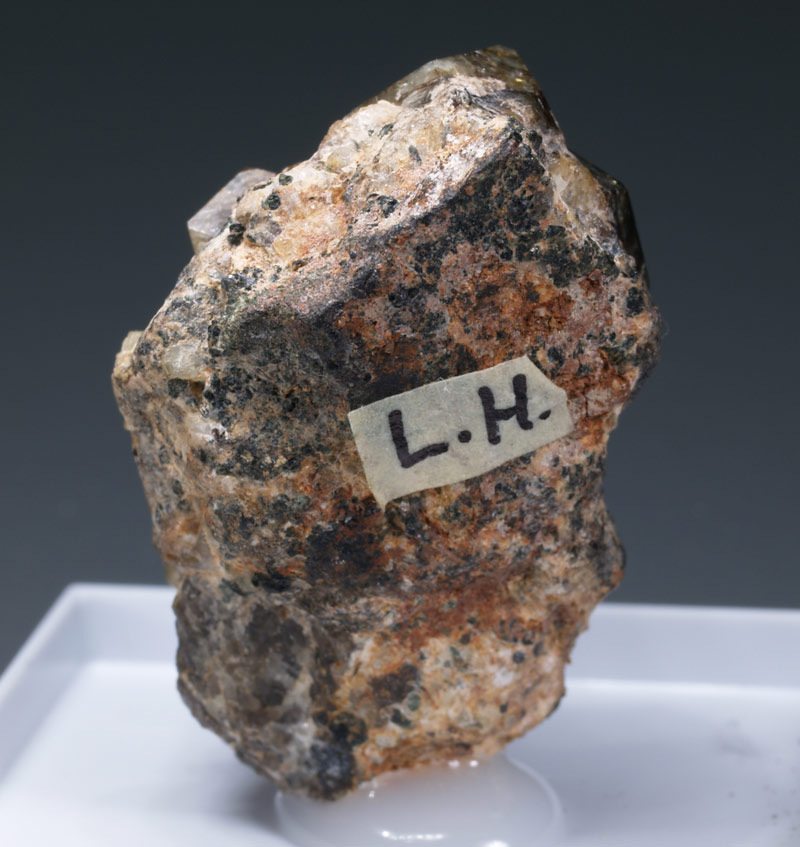
Group of londonite and rhodizite crystals, well-faceted, lustrous, and arranged on the matrix. Studies have shown that the dark crystals correspond to the londonite zone of the series. The difference between the two lies in their chemical composition: in londonite, cesium predominates over potassium. This specimen belongs from the first pieces brought from Madagascar in the 1990s and is from the type locality for the species.
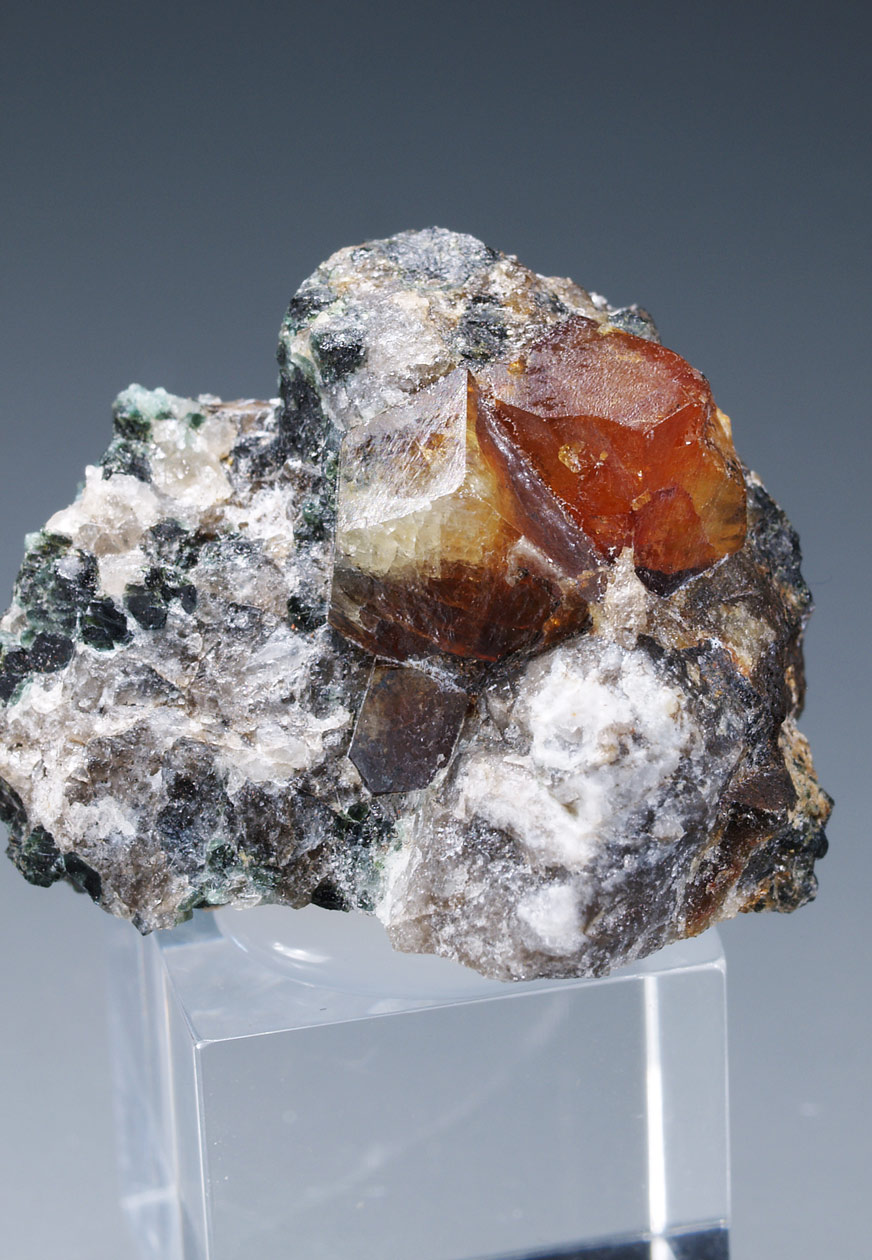
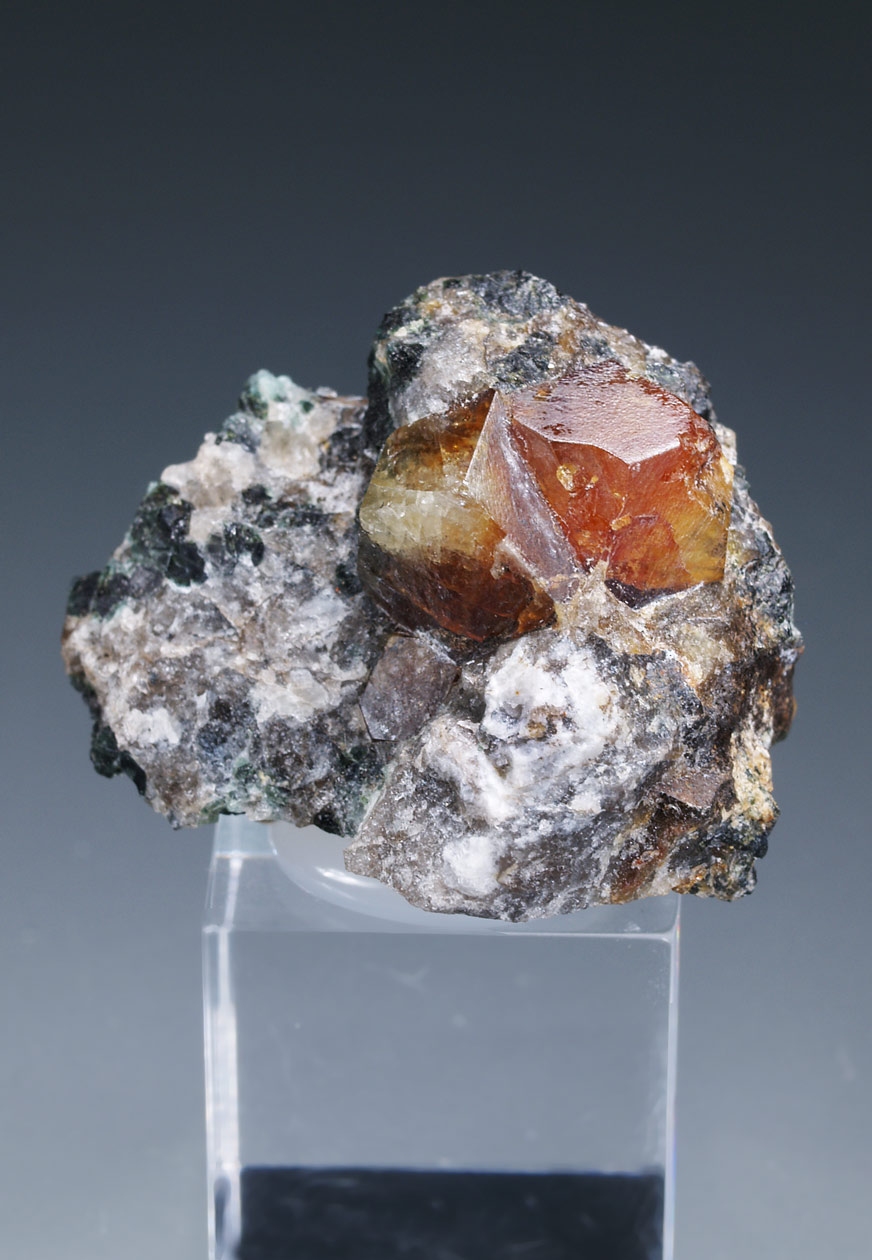
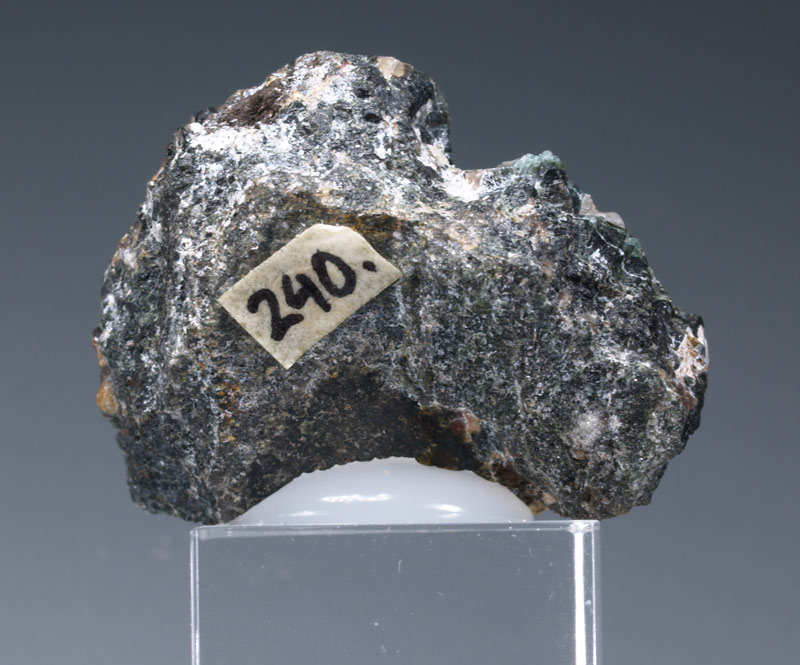
Group of good-sized, interpenetrated, and well-faceted londonite and rhodizite crystals, lustrous and arranged on the matrix. The difference between the two lies in their chemical composition: in londonite, cesium predominates over potassium. This specimen belongs from the first pieces brought from Madagascar in the 1990s and is from a locality situated 25 km S of the type locality for the species. With label #240.
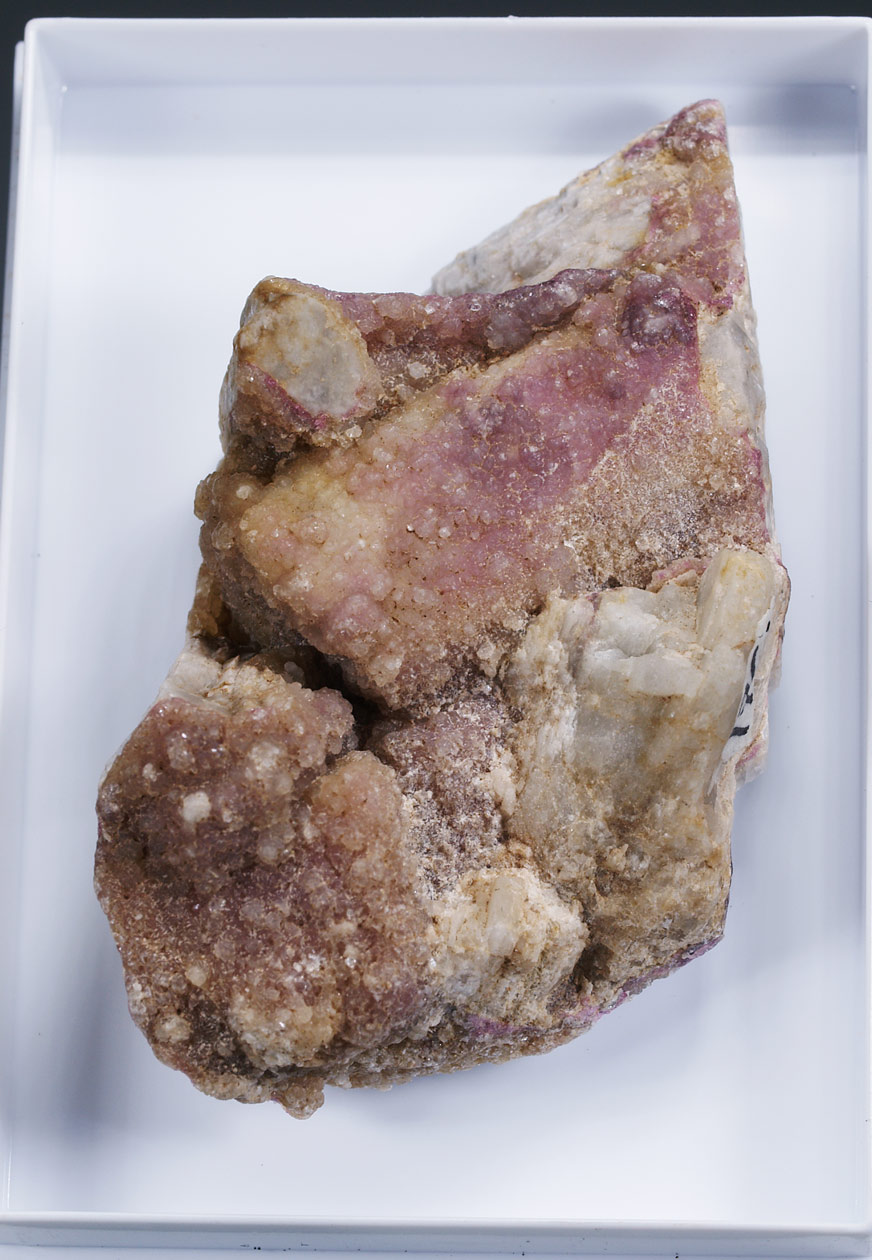
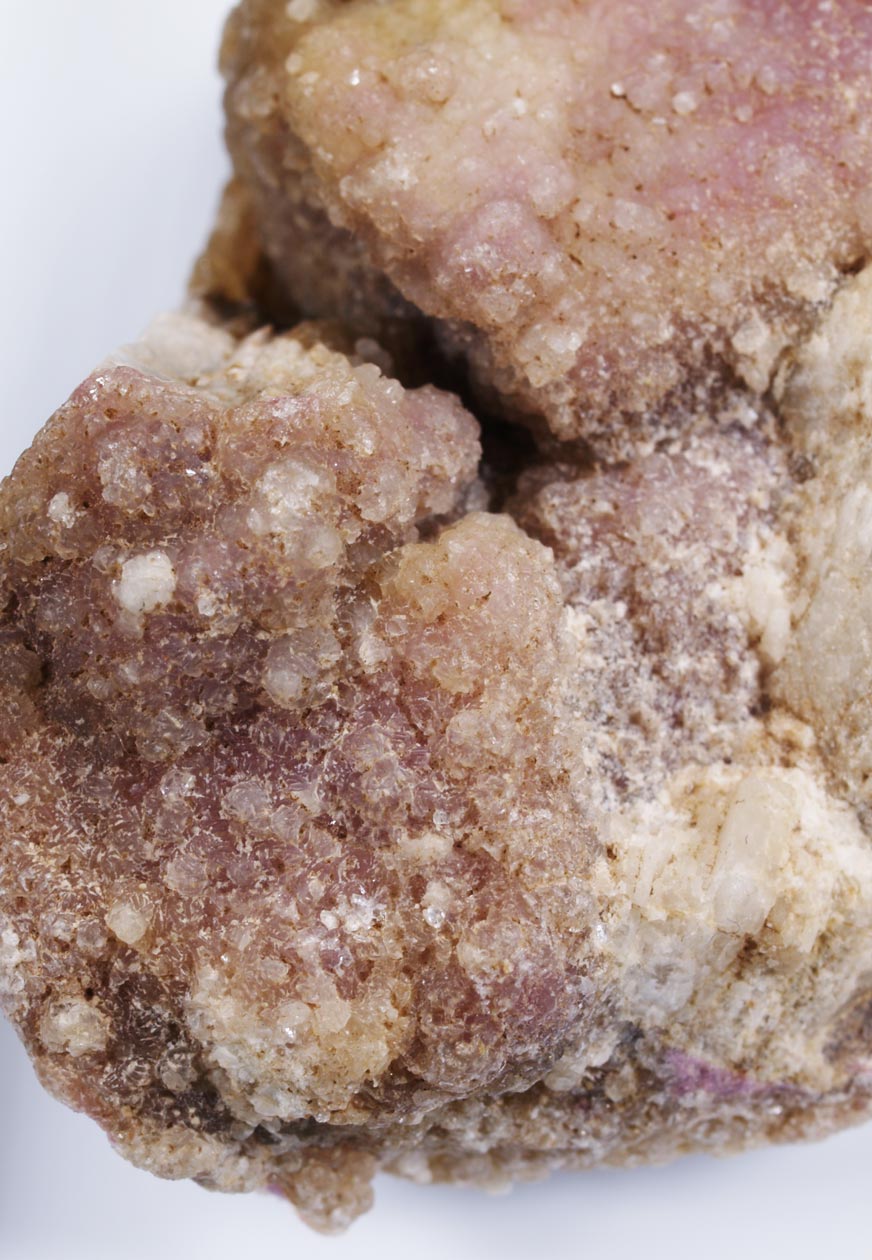
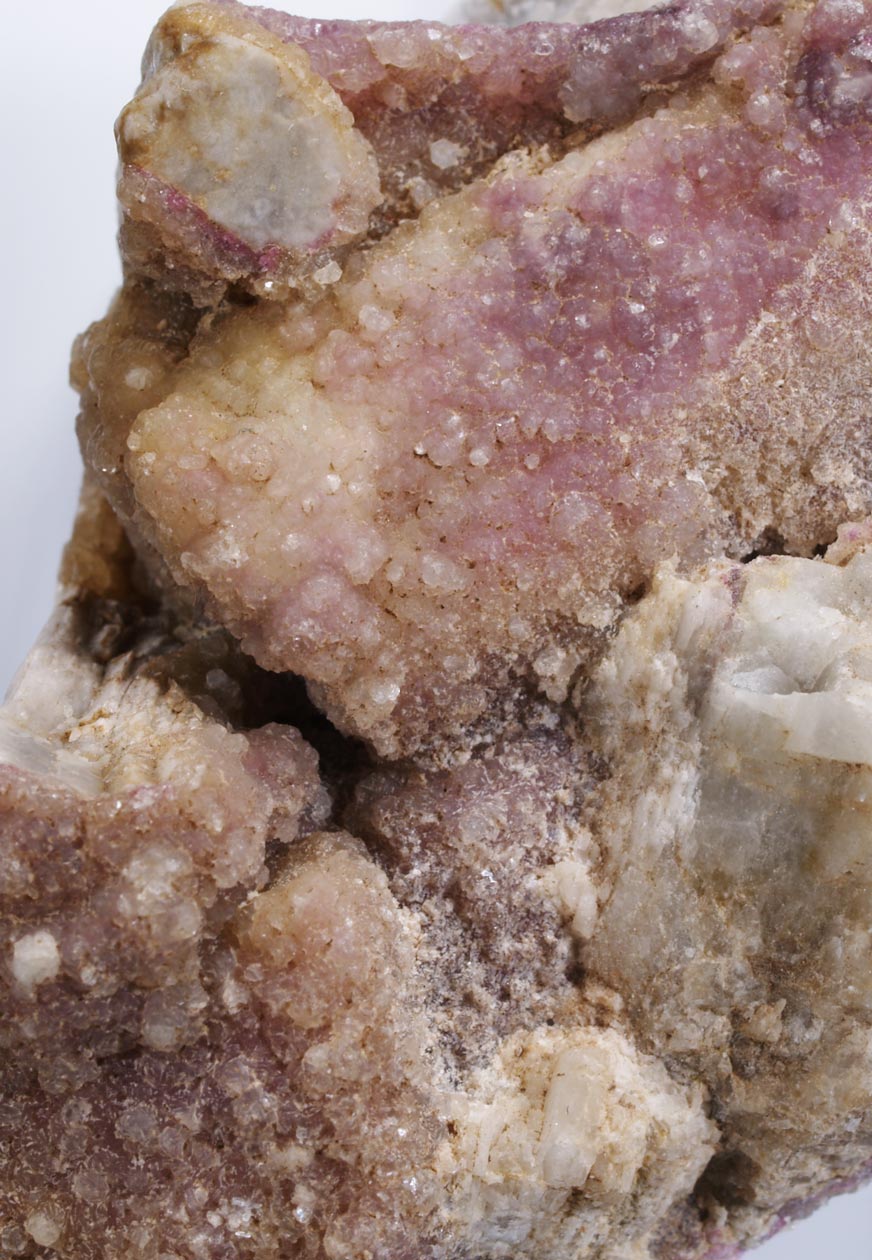
A fine specimen of this lithium-aluminium member of the kaolinite-serpentine group. This phyllosilicate occurs as off-white to pale yellow, fan-like lamellar aggregates and globular clusters of platy, pseudohexagonal crystals with a greasy lustre. On a microcline matrix. The piece comes from its type locality.
This pegmatite It is one of the most famous pegmatites in the Sahatany pegmatite field, but administratively, the locality is located just outside the border of the Vakinankaratra Region and the Antananarivo Province (where the Sahatany Valley and most of the other localities in the pegmatite field are located).
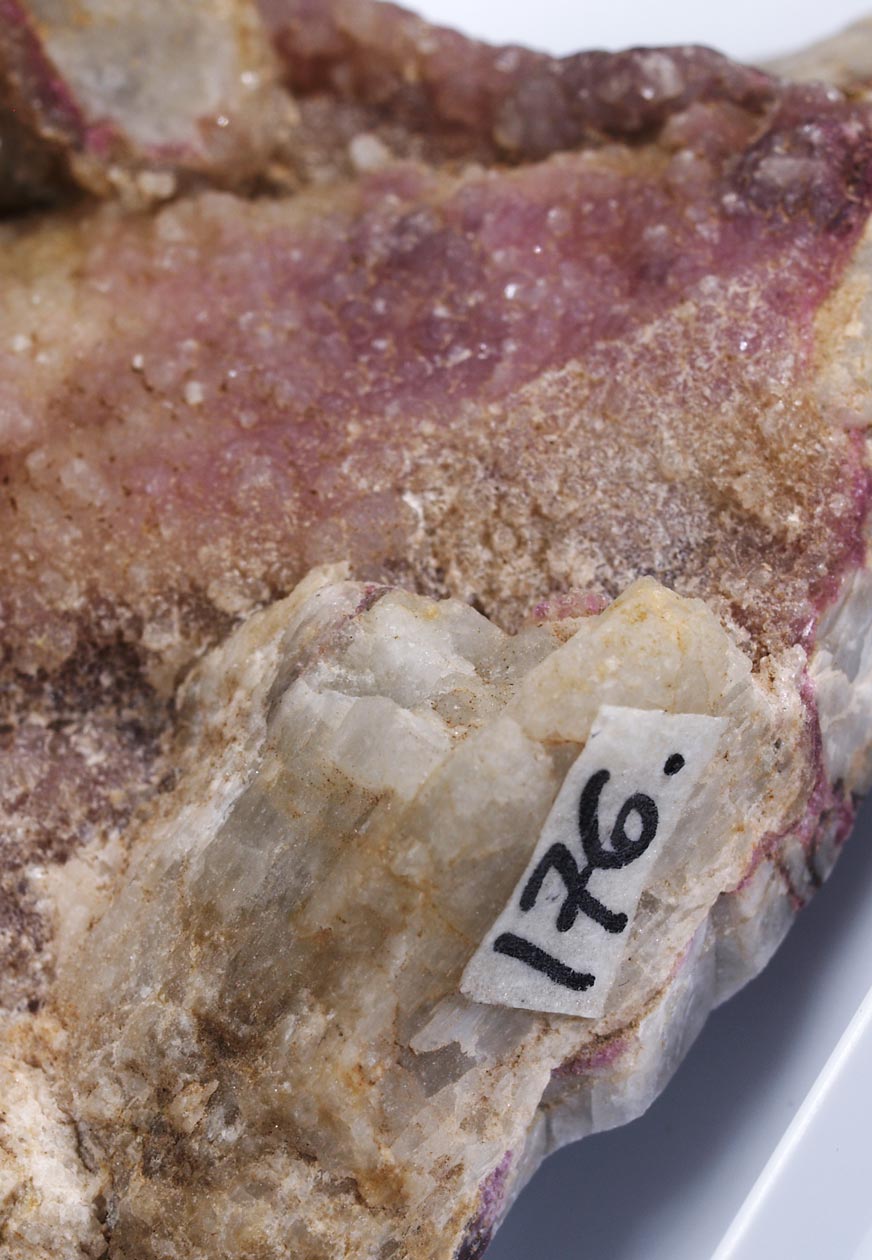
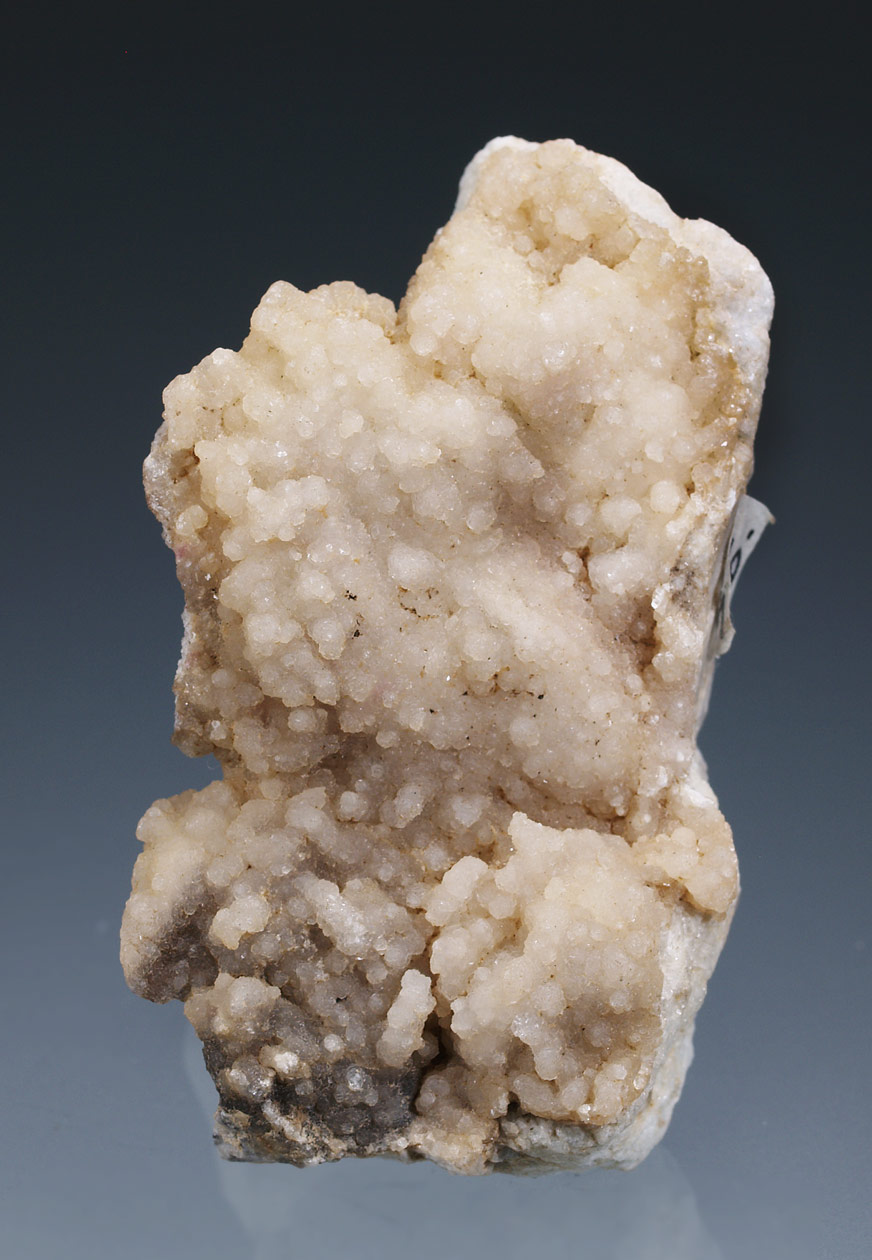
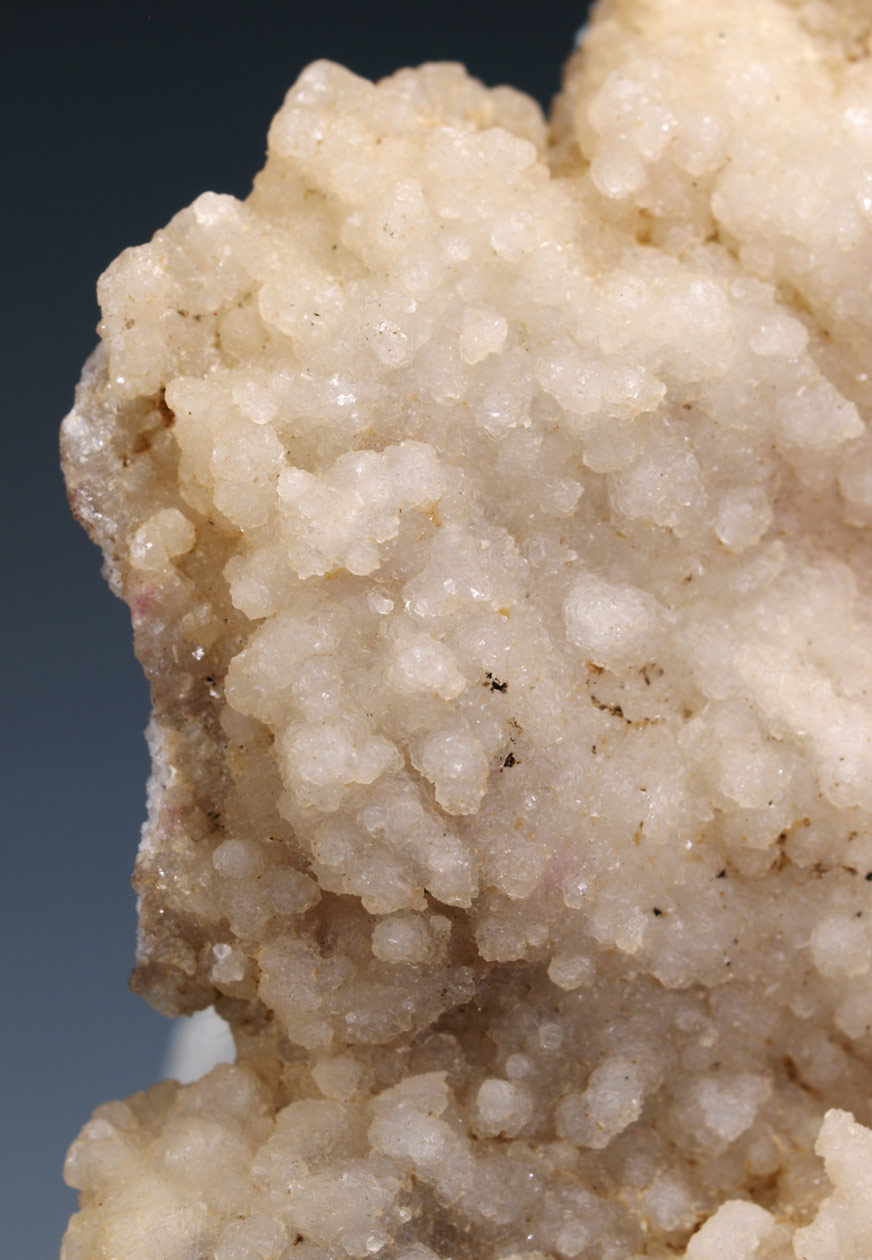
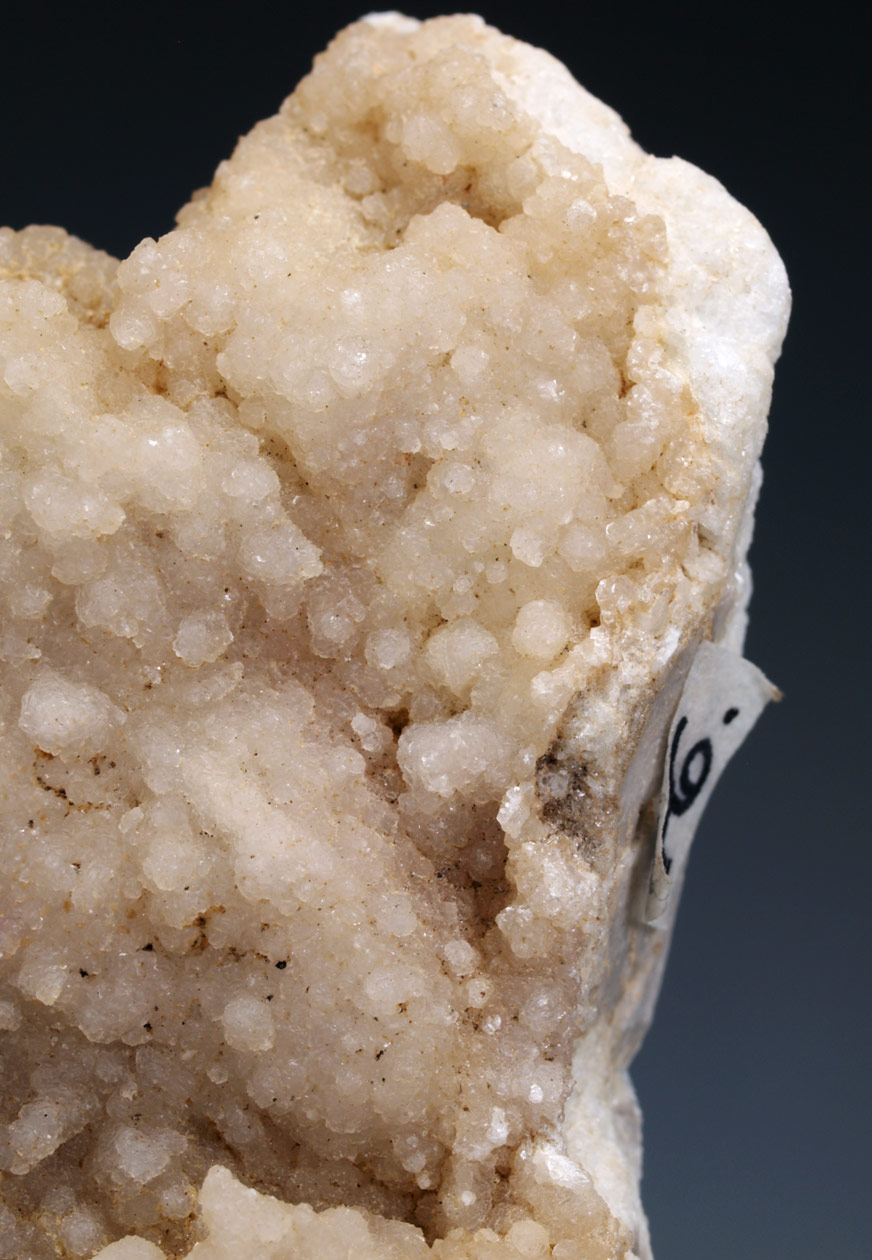
A fine specimen of this lithium-aluminium member of the kaolinite-serpentine group. This phyllosilicate occurs as off-white to pale yellow, fan-like lamellar aggregates and globular clusters of platy, pseudohexagonal crystals with a greasy lustre. On a microcline matrix. The piece comes from its type locality.
This pegmatite It is one of the most famous pegmatites in the Sahatany pegmatite field, but administratively, the locality is located just outside the border of the Vakinankaratra Region and the Antananarivo Province (where the Sahatany Valley and most of the other localities in the pegmatite field are located).
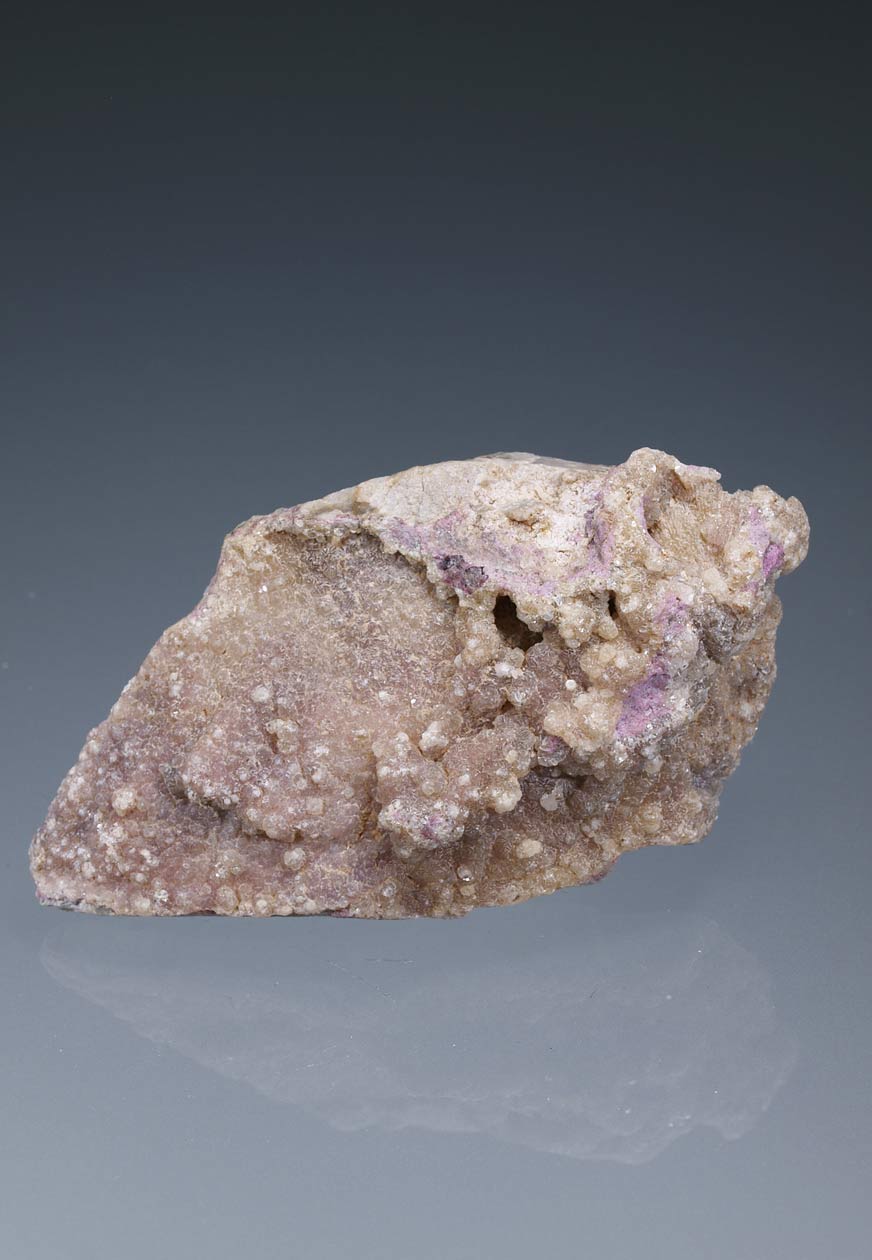
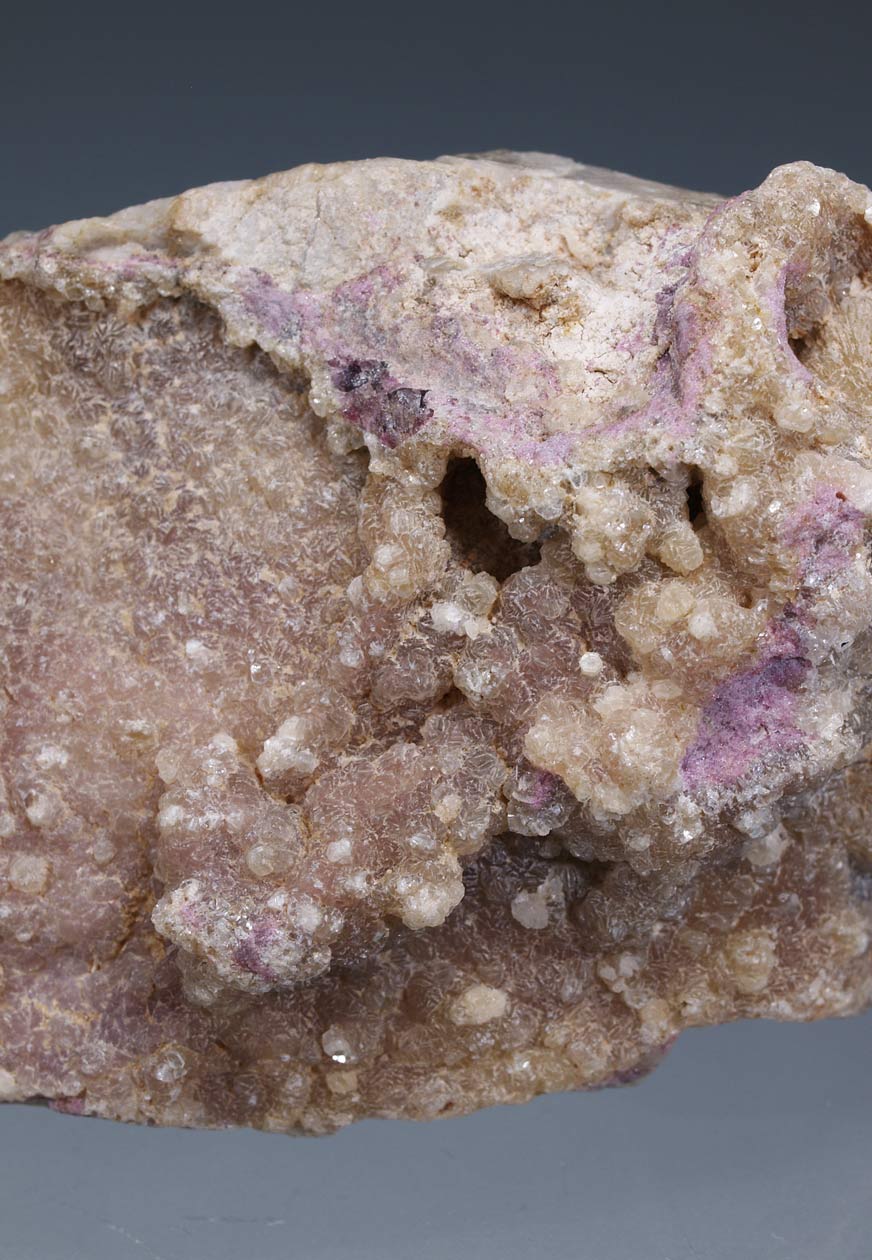
A fine specimen of this lithium-aluminium member of the kaolinite-serpentine group. This phyllosilicate occurs as off-white to pale yellow, fan-like lamellar aggregates and globular clusters of platy, pseudohexagonal crystals with a greasy lustre. On a microcline matrix. The piece comes from its type locality.
This pegmatite It is one of the most famous pegmatites in the Sahatany pegmatite field, but administratively, the locality is located just outside the border of the Vakinankaratra Region and the Antananarivo Province (where the Sahatany Valley and most of the other localities in the pegmatite field are located).
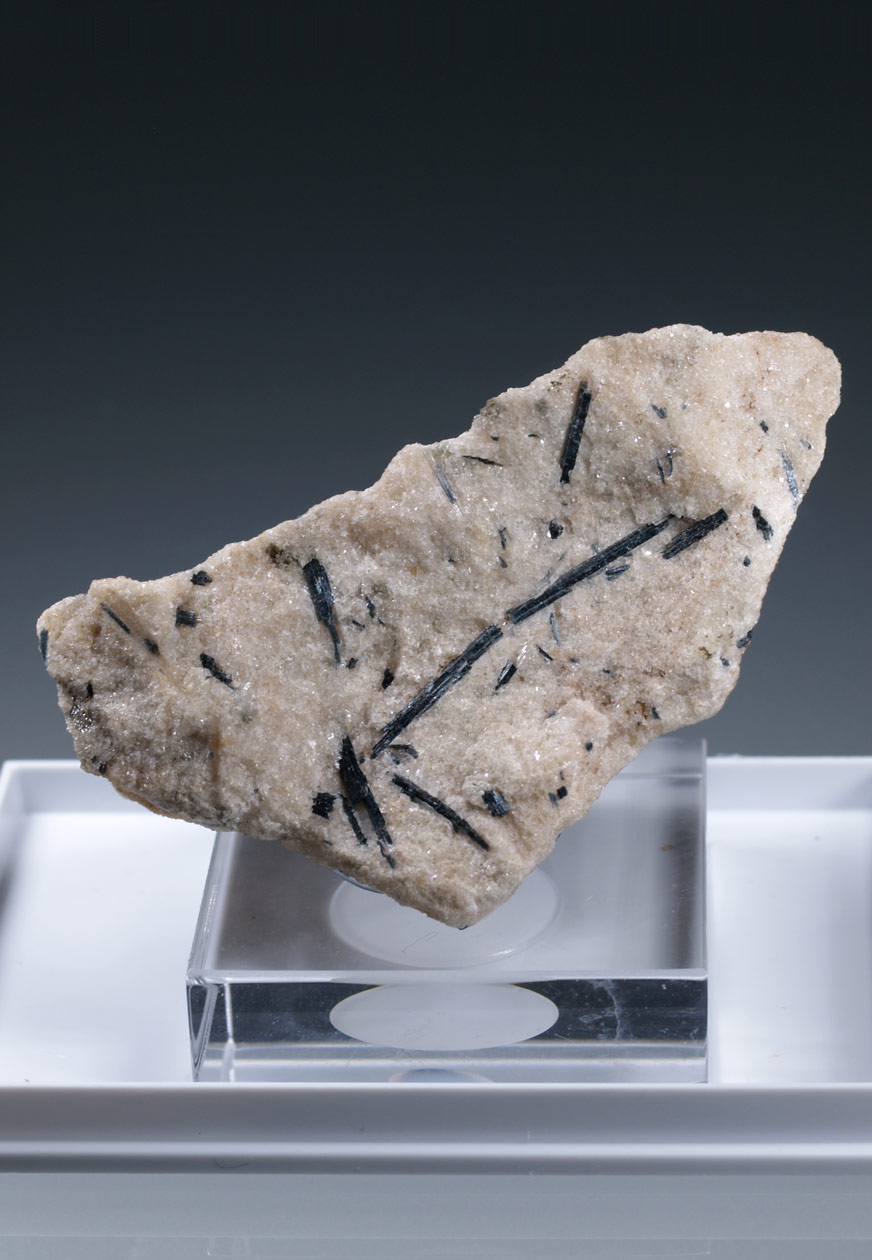
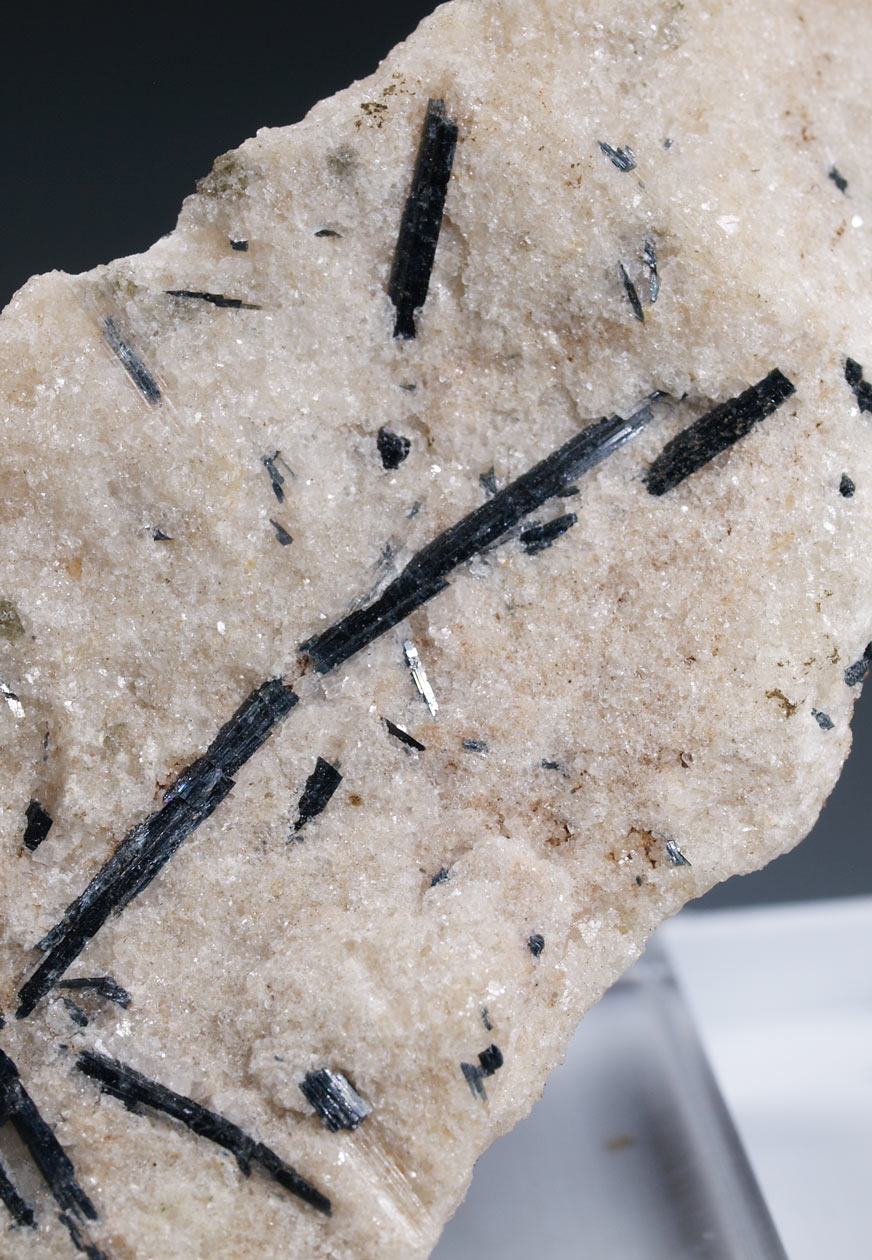
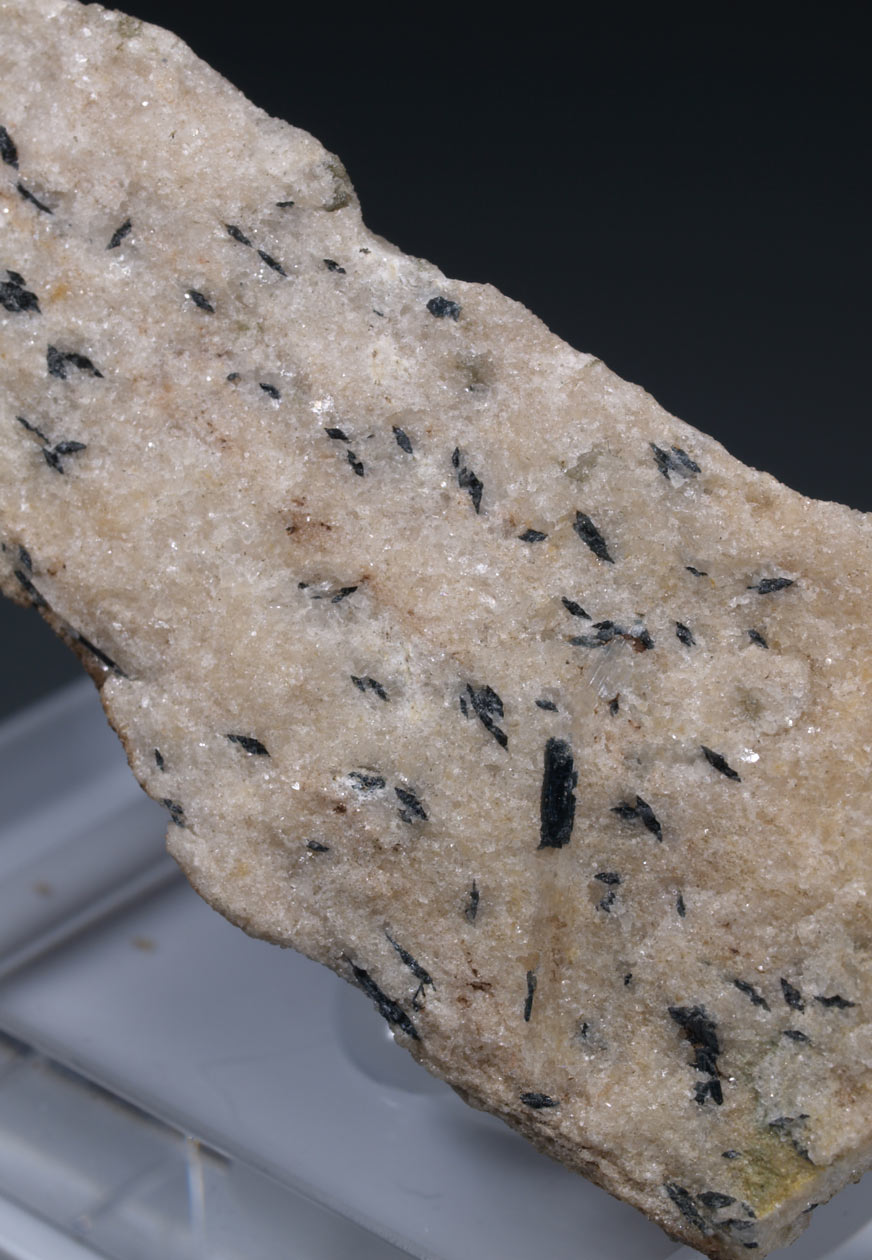
"Imerinite" is a name given by Lacroix (ca. 1913) to an amphibole supergroup member, ranging from blackish-blue to lavender-blue, which occurred as acicular crystals in a metamorphic limestone near Ambatoarina (Madagascar). Lacroix (following the amphibole nomenclature of the time) determined it to have an intermediate composition between richterite and glaucophane. He named it "imerinite" after the ancient Merina Kingdom on the high plateaus of Madagascar, Imerina.
The name was discredited in 1978, being regarded as a synonym of magnesio-arfvedsonite. Magnesio-arfvedsonite was later redefined/renamed by the IMA in 2014.
A specimen labeled "Imerinite, Imerina, Madagascar" consisting of deep blue to nearly black bladed single crystals embedded in dolomite, was analyzed by RRUFF and identified as ferri-winchite (RRUFF ID: R060038).
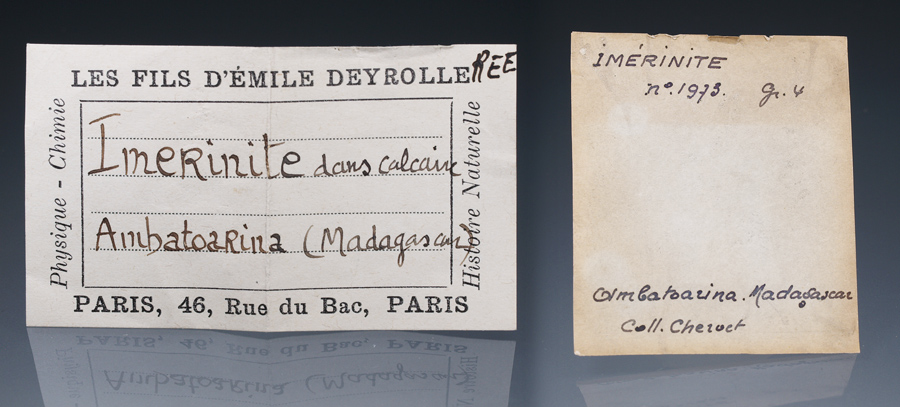
Adding further provenance and historical interest to this specimen, it is accompanied by two old labels: one from the renowned French natural history shop Deyrolle, and a handwritten one from the collection of Jean Chervet (1904–1962). Chervet served as head of the mineralogy department at the French Commissariat à l'Énergie Atomique (CEA) throughout the 1950s and early 1960s. He played a pivotal role in the survey and prospecting of uranium deposits in France and African territories such as Gabon and Madagascar. The mineral chervetite, discovered at the Mounana mine in Gabon and formally described in 1963, was named in his honor.