- Home About RM Minerals
- Virtual Photo Museum Blog RM Contact
- Microscopy and instruments How to Buy Disclaimer
Copyright 2010-2026
www.rosellminerals.com



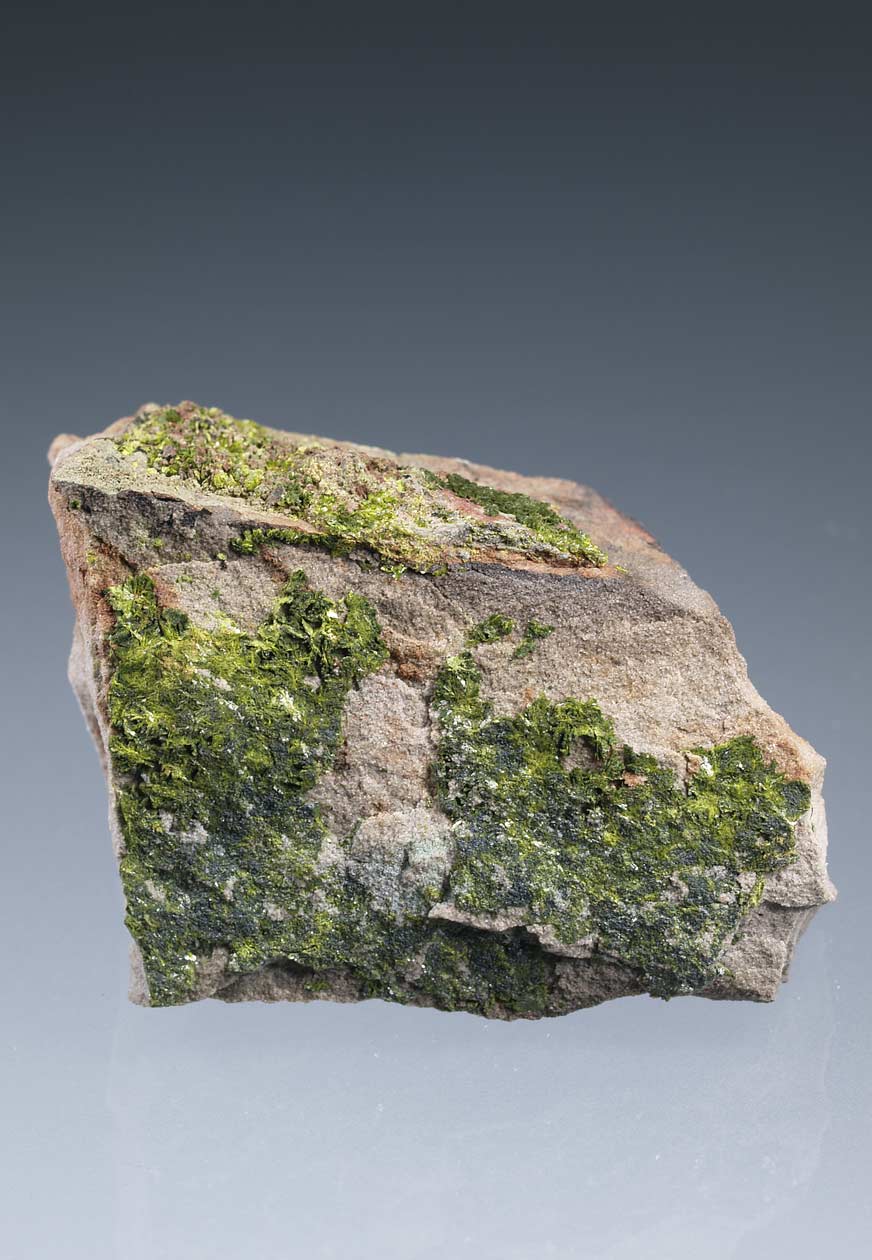
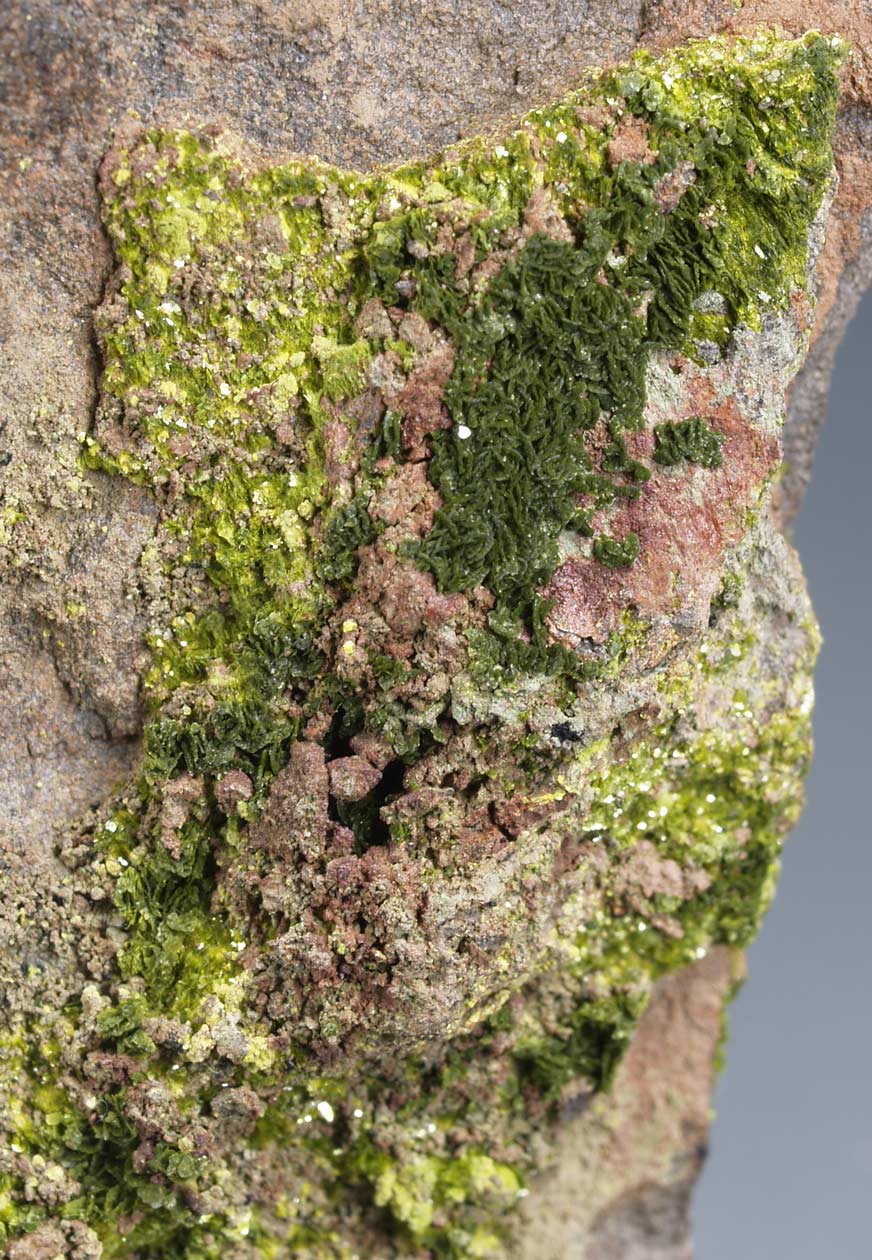
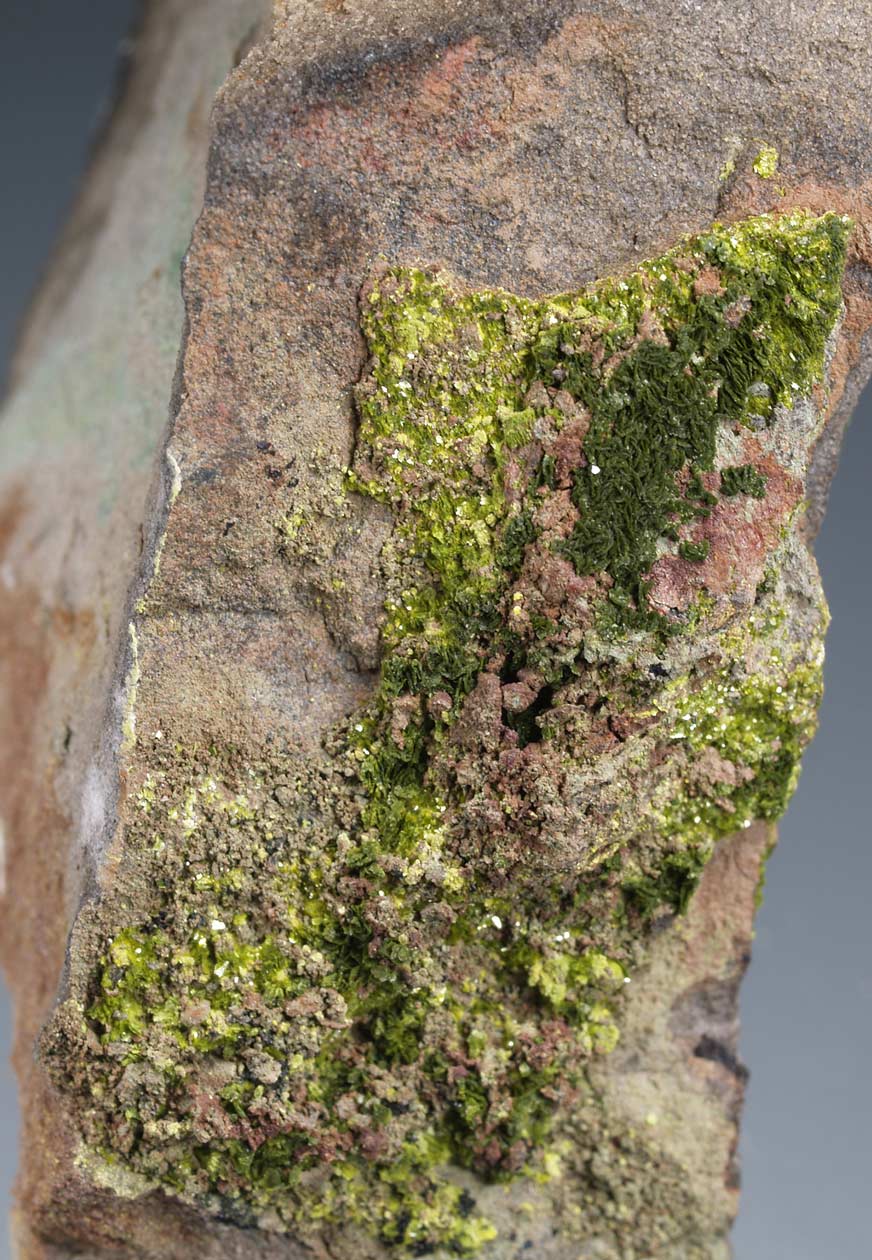
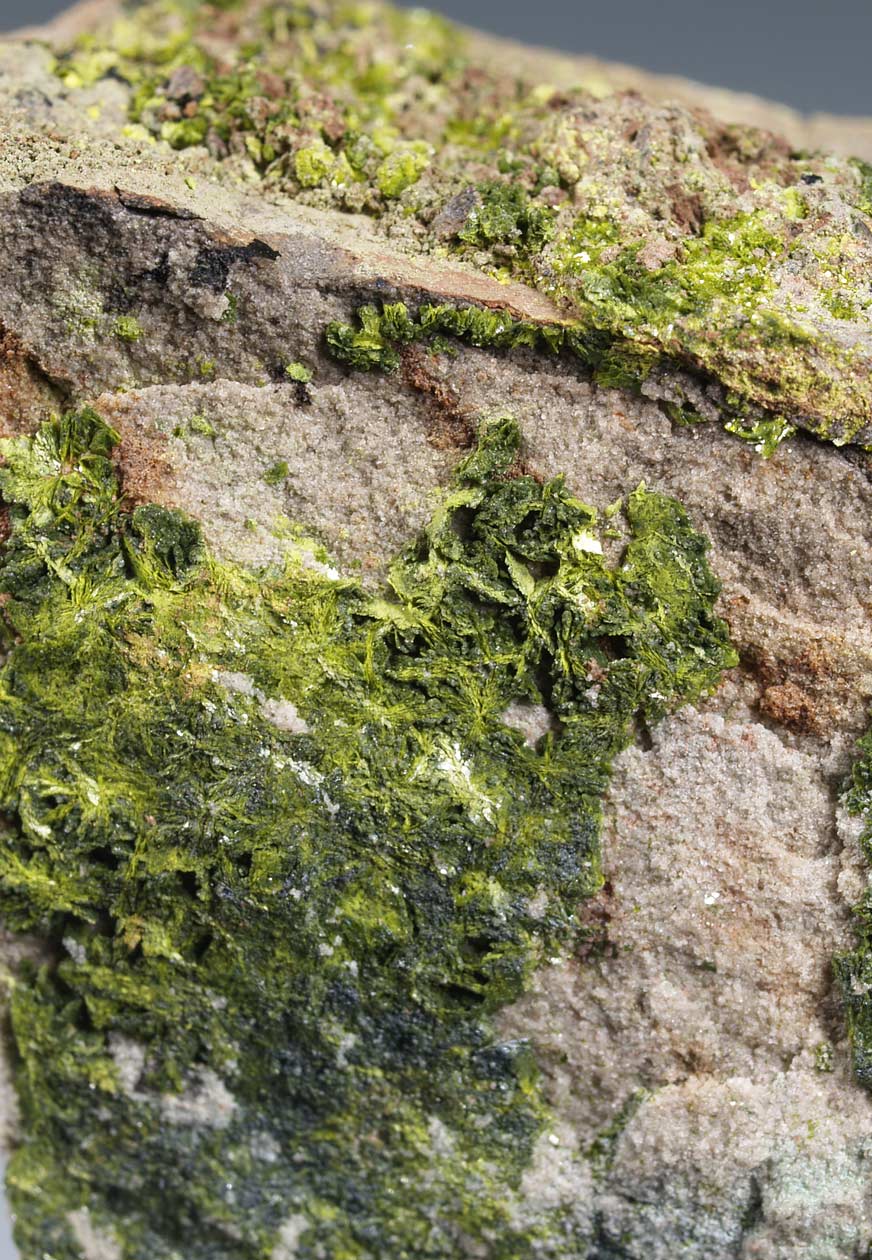
Druse of dark green tangeite crystals —a calcium copper hydroxyl vanadate—associated with lighter, yellowish-green volborthite crystals. The specimen exhibits slight radioactivity, likely due to the presence of carnotite and/or tyuyamunite within the sandstone matrix.
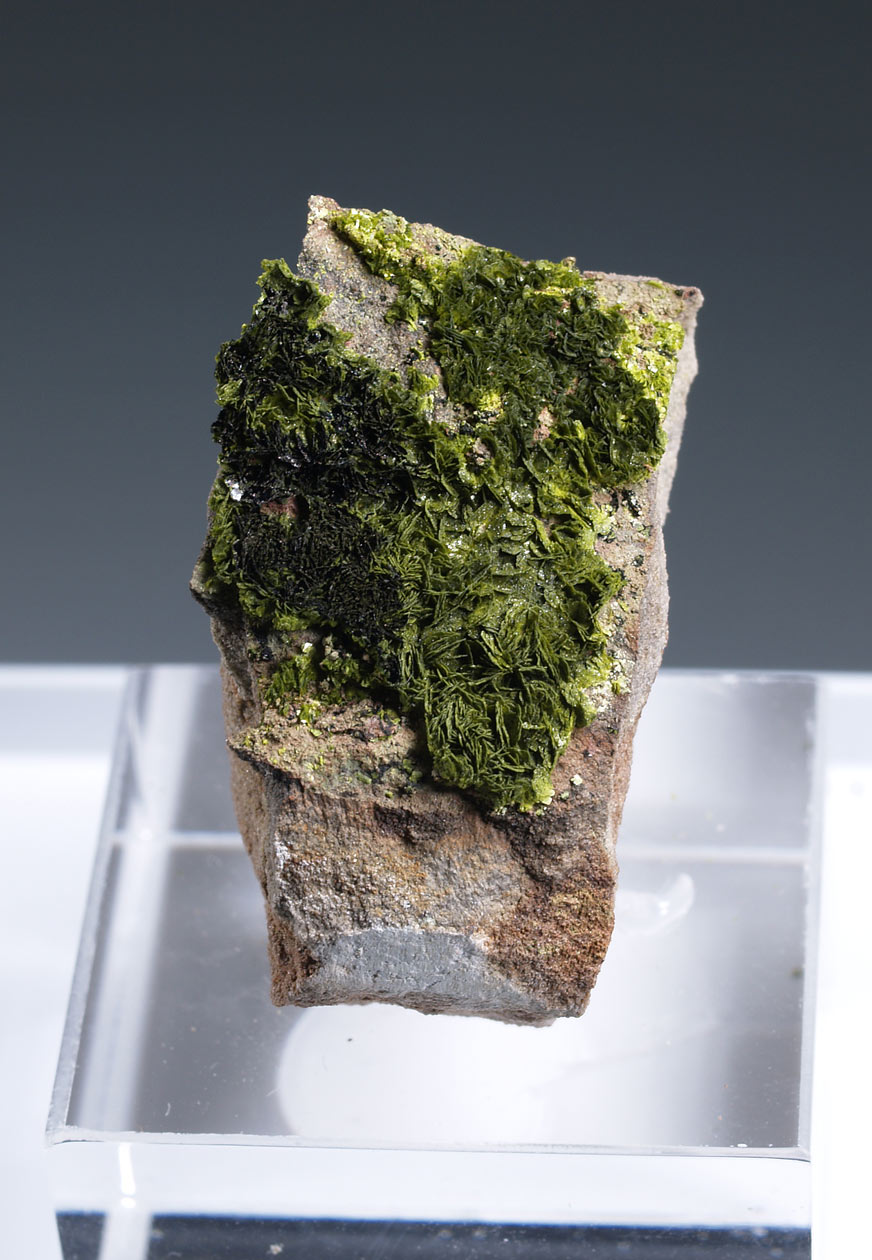
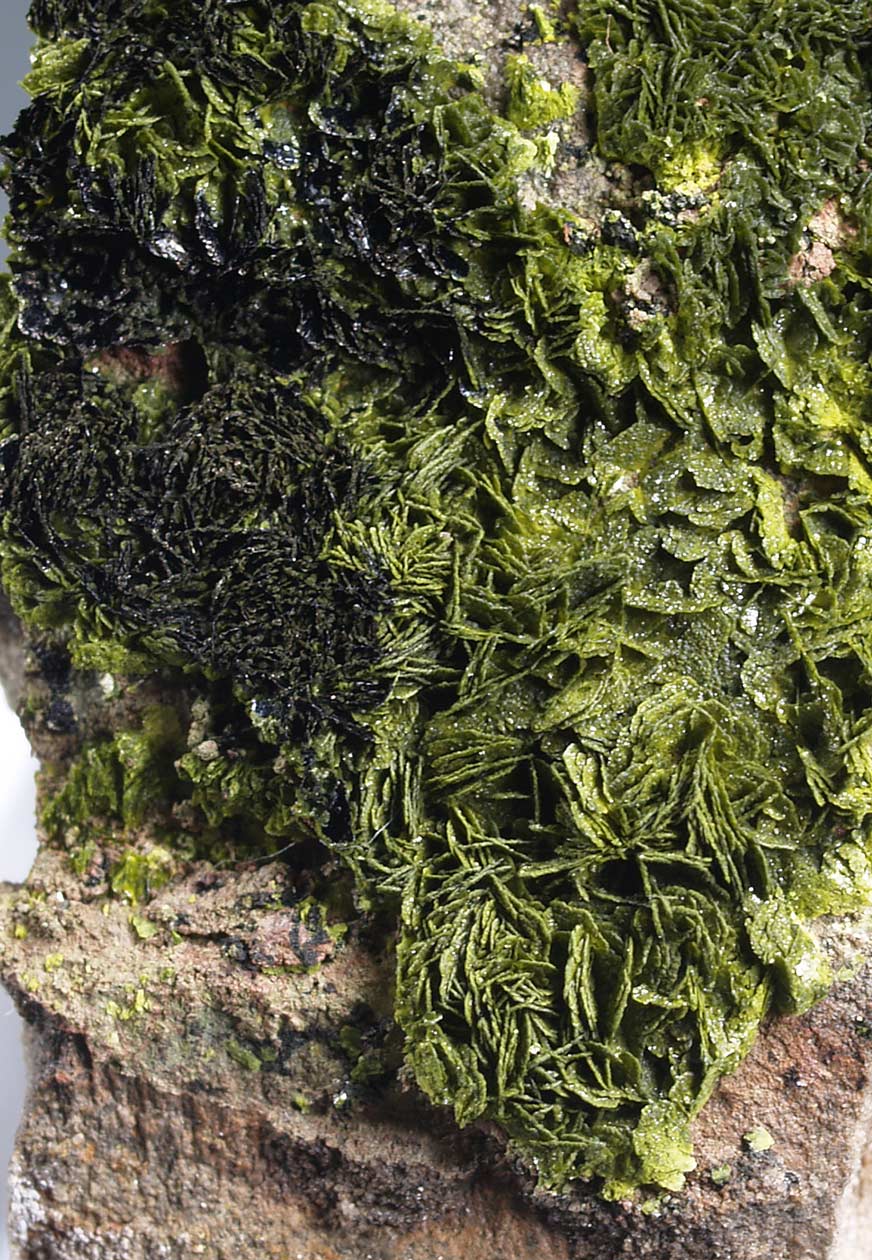
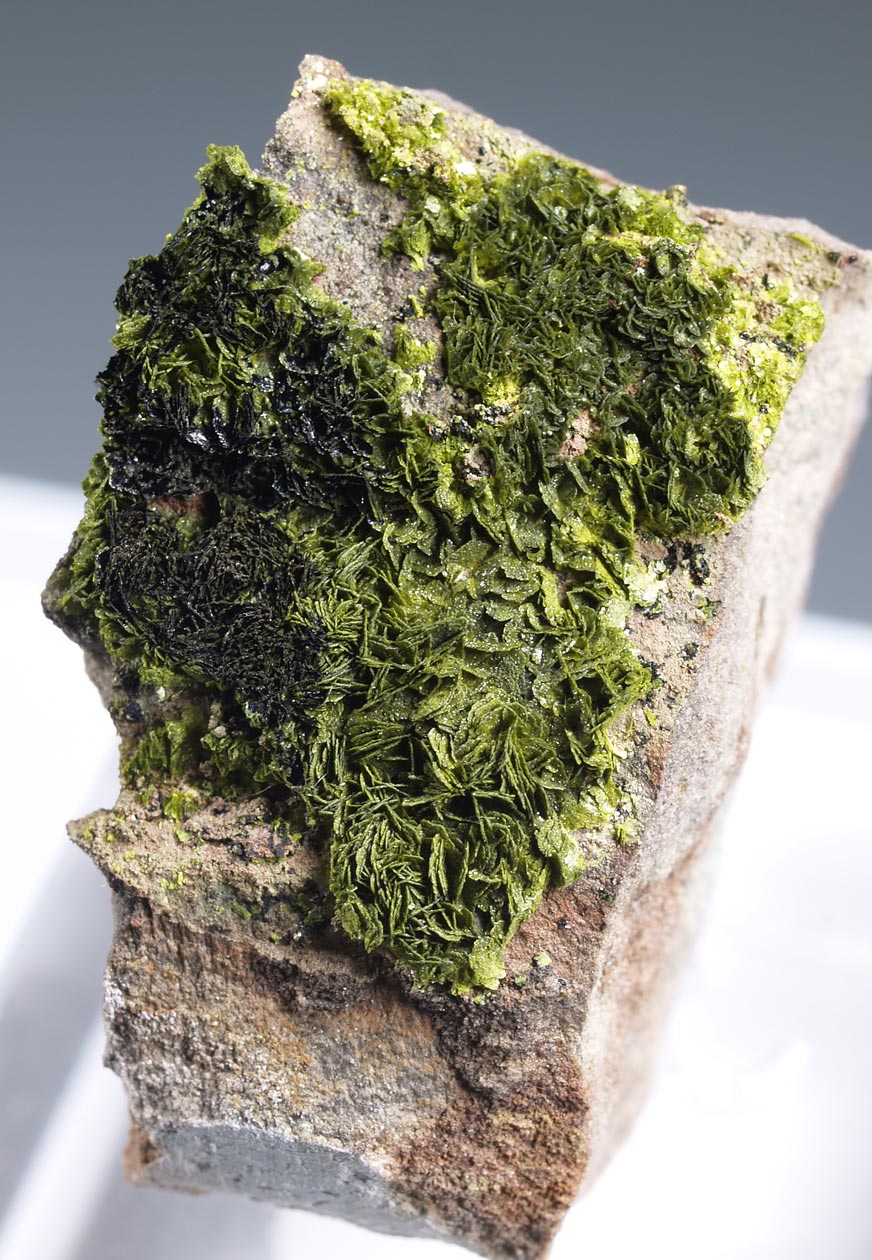
Vésigniéite is a rare barium copper hydroxyl vanadate, first discovered in Thuringia (Germany). It is named after Louis Vésignié (1870–1954), a French mineral collector and former president of the Mineralogical Society of France.
In this specimen, volborthite —occurring as light green tabular crystals— coexists with dark green vésigniéite. The sample exhibits slight radioactivity, likely due to the presence of vanadates such as tyuyamunite, Ca(UO₂)₂(VO₄)₂·5-8H₂O, or carnotite, K₂(UO₂)₂(VO₄)₂, in the matrix. Good crystal size for the species.
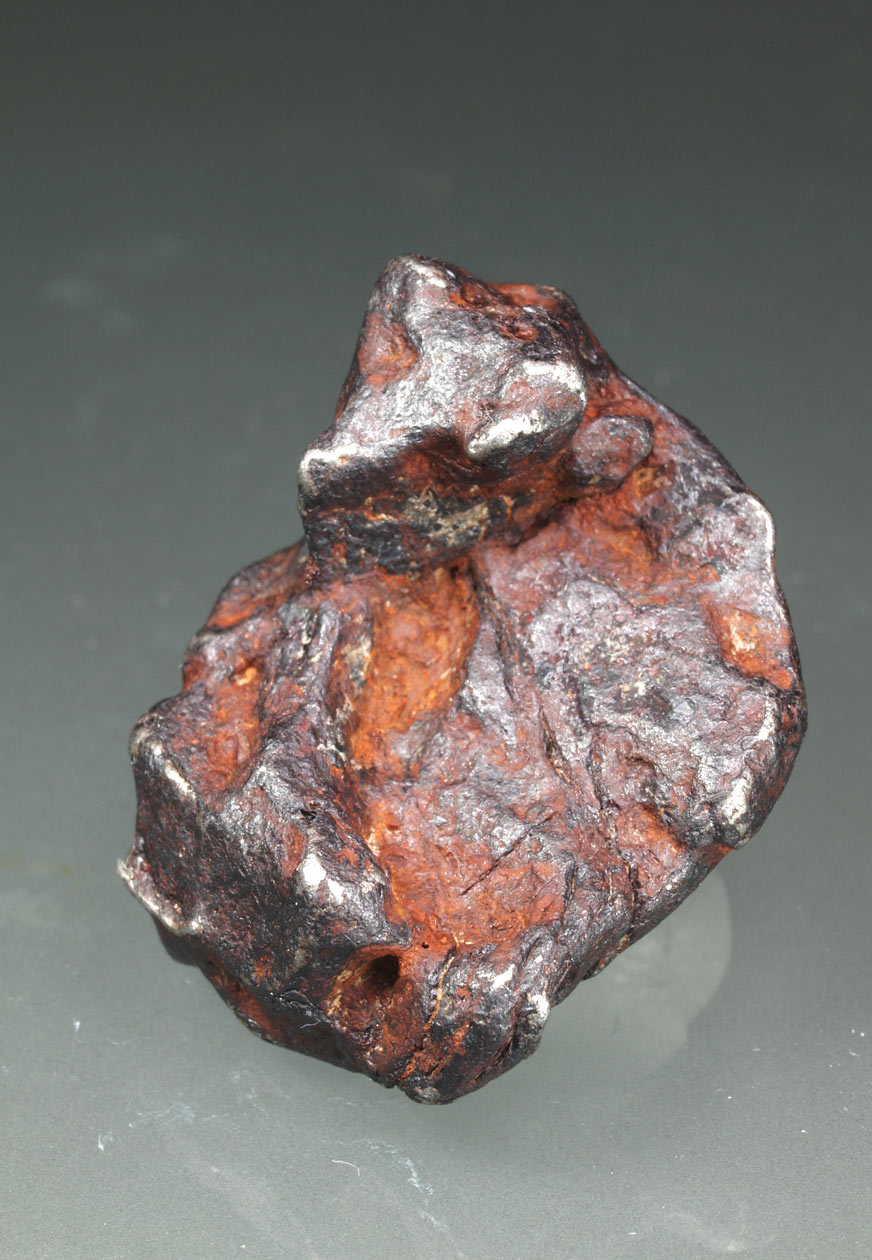
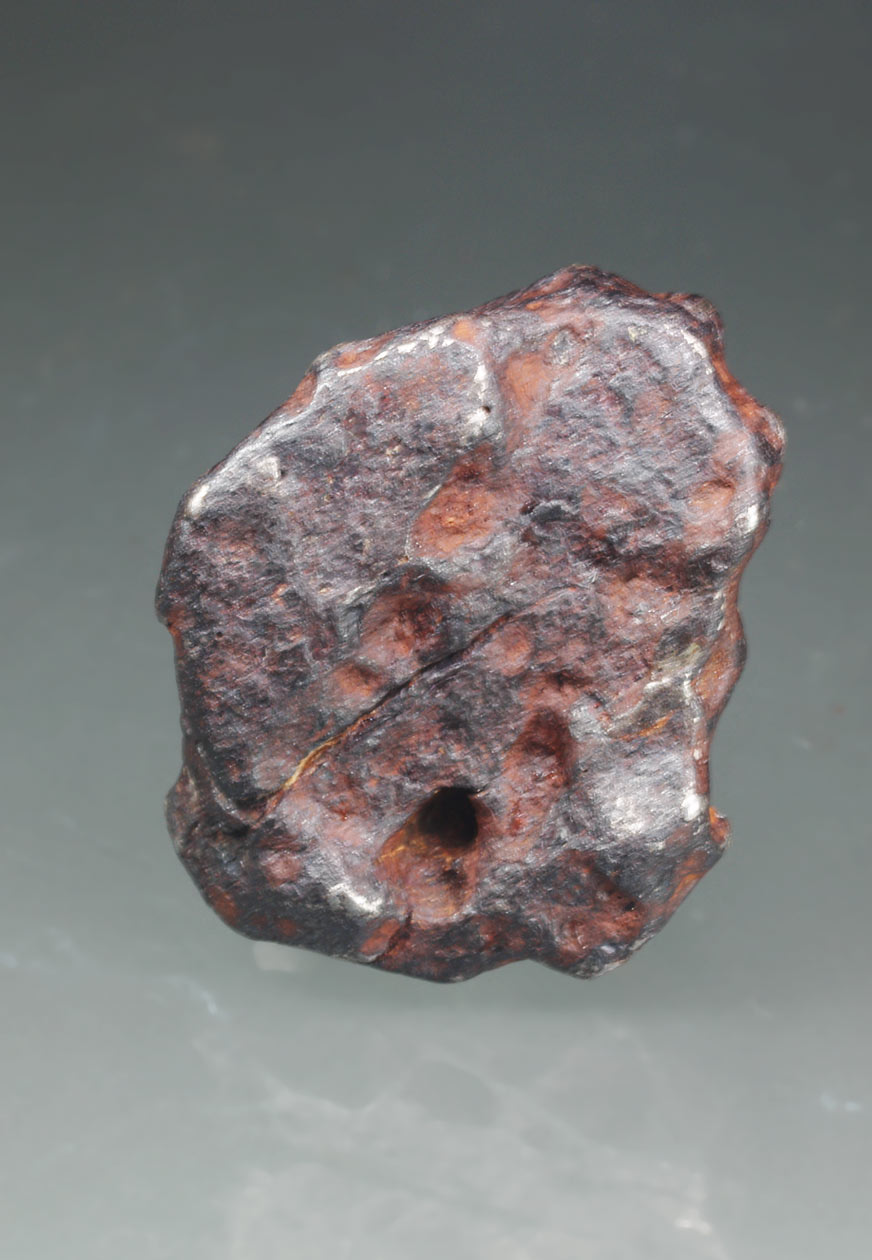
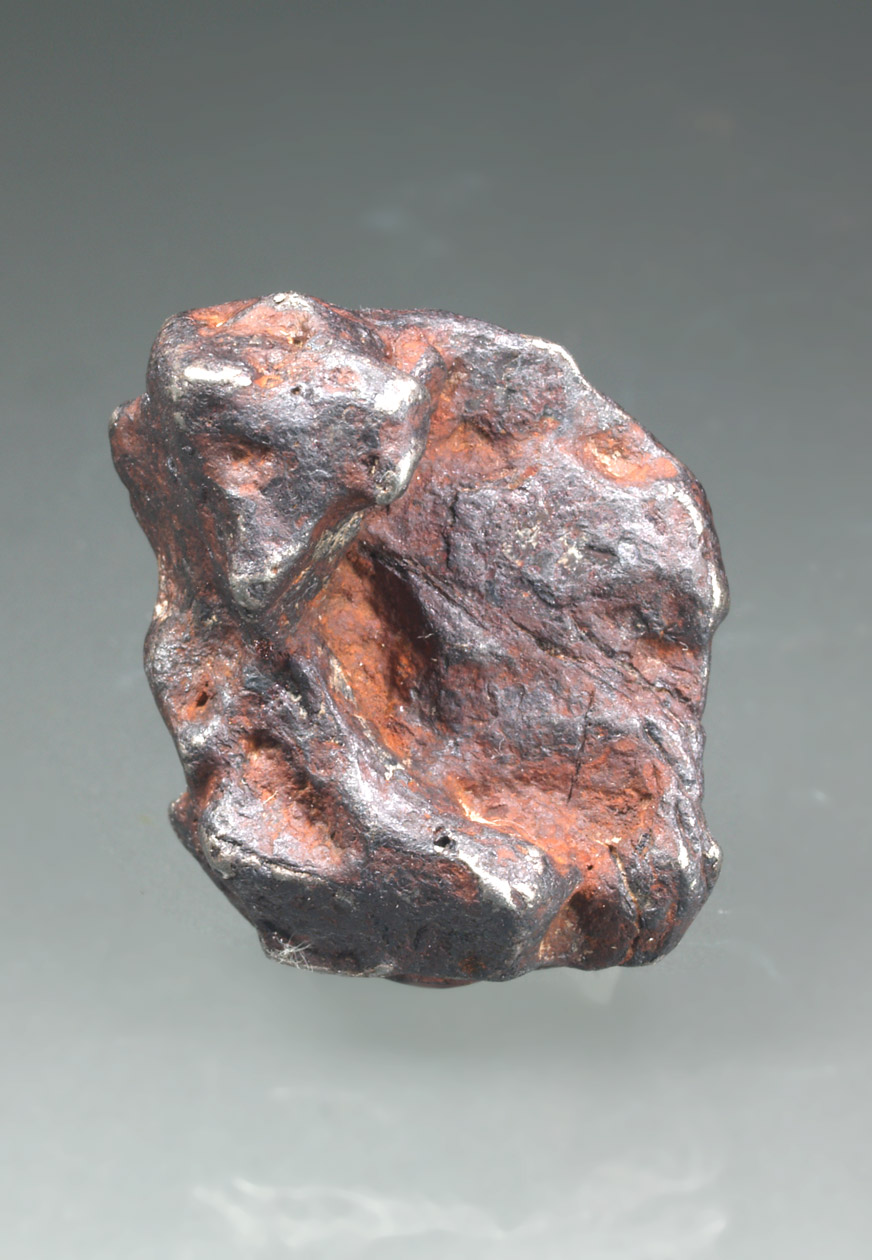
Good size sample of the meteoric impact that took place aproximately 49,000 years ago in this remote area of Arizona. The impact crater stands out, where more than 30 tons of material have been collected since was discovered in 1891. It is a metallic, iron-nickel meteorite, classified as coarse octahedrite. Contains taenite (Fe, Ni) and mostly iron, kamacite variety (Fe, Ni). Weight: 23 grams.