- Inicio Acerca de RM Minerales
- Galería de fotos Blog RM Contacto
- Microscopia e instrumentos Pedidos Aviso legal
Copyright 2010-2026
www.rosellminerals.com



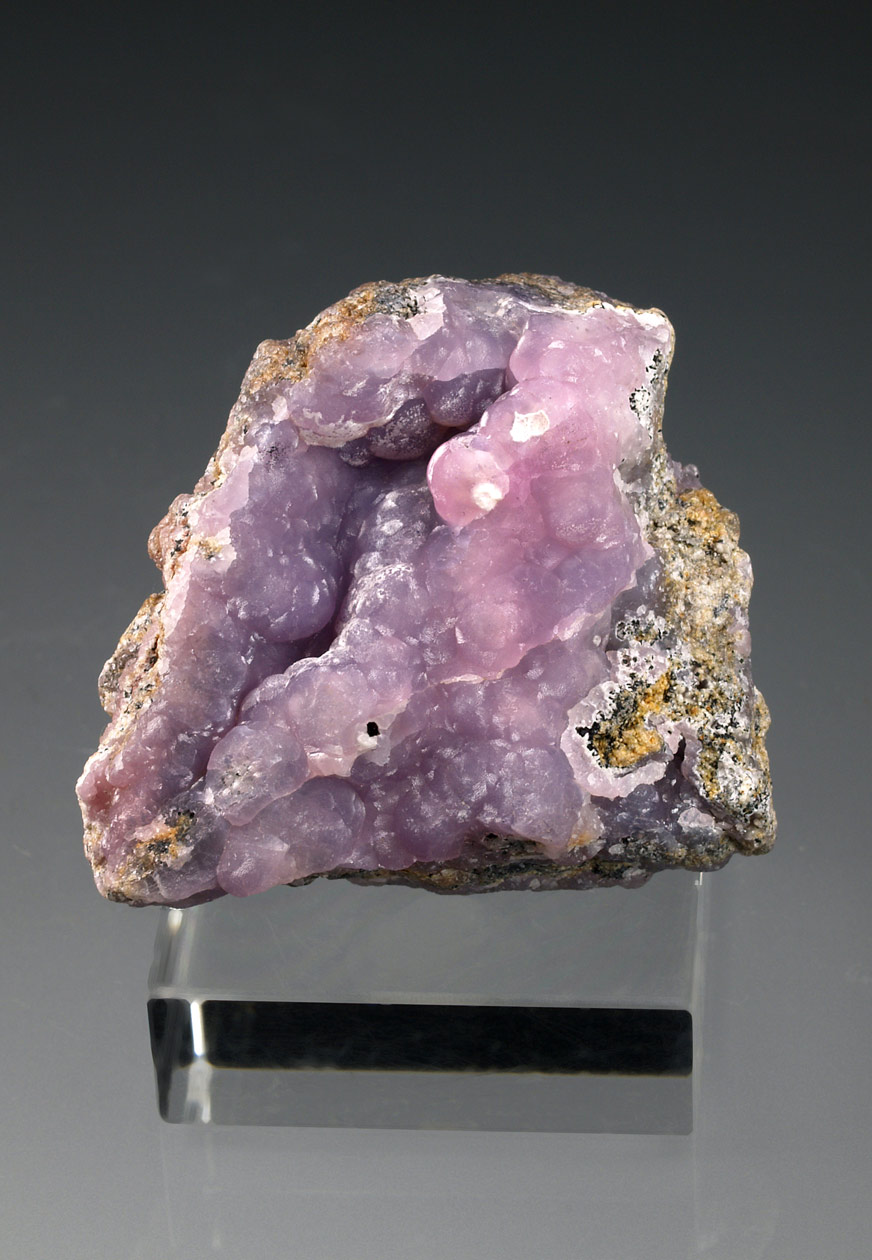
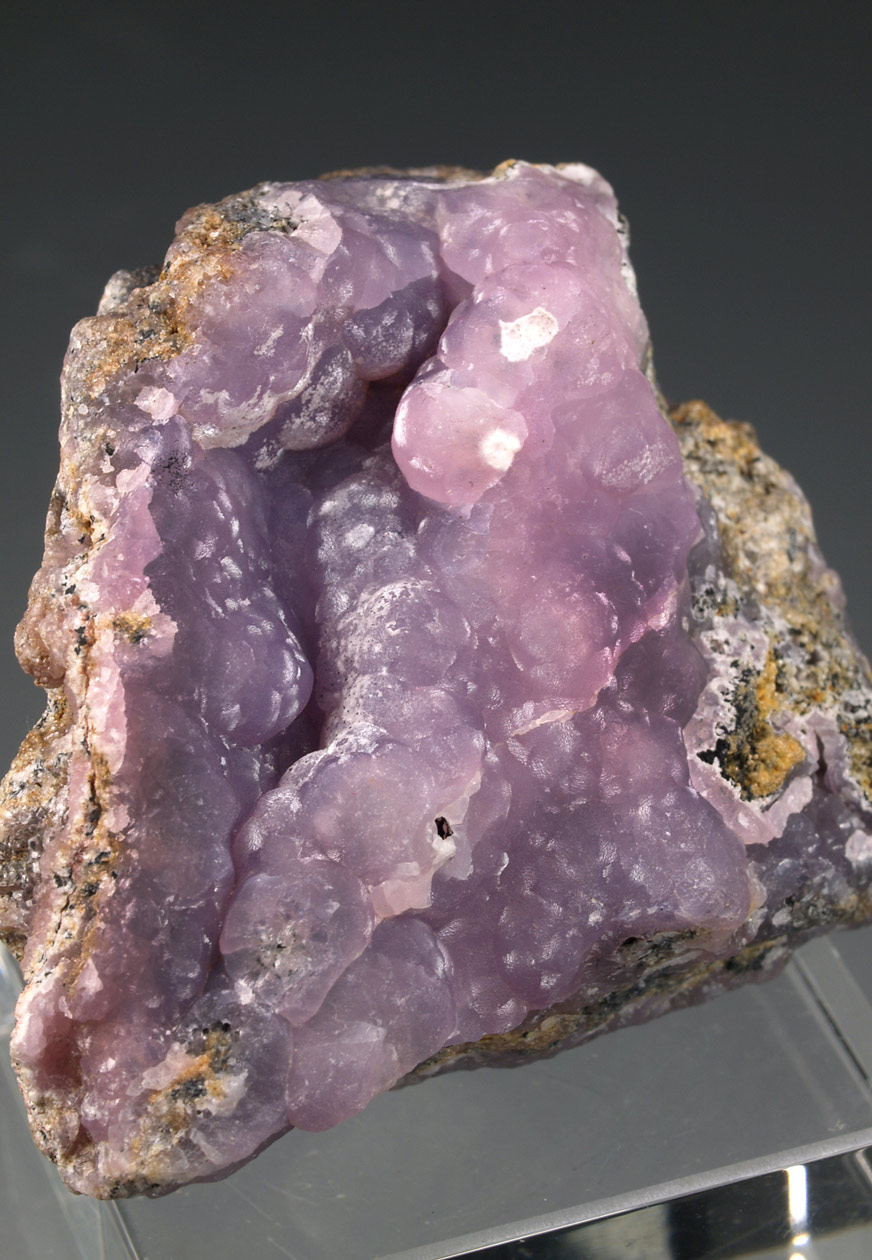
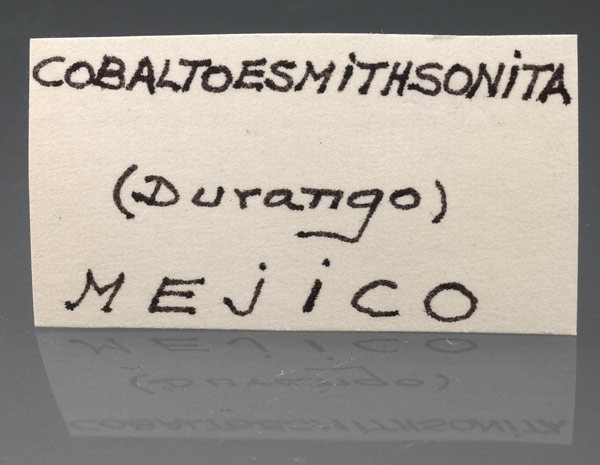
Ejemplar formado por una costra de smithsonita violeta, botrioidal, de rosa a lila, con brillo satinado y translúcida. Una muestra en miniatura de los antiguos ejemplares de la localidad clásica de Choix. Con etiqueta de la colección Trigo (Mataró) donde indica Durango y smithsonita cobaltífera. Pero la localidad es Choix.
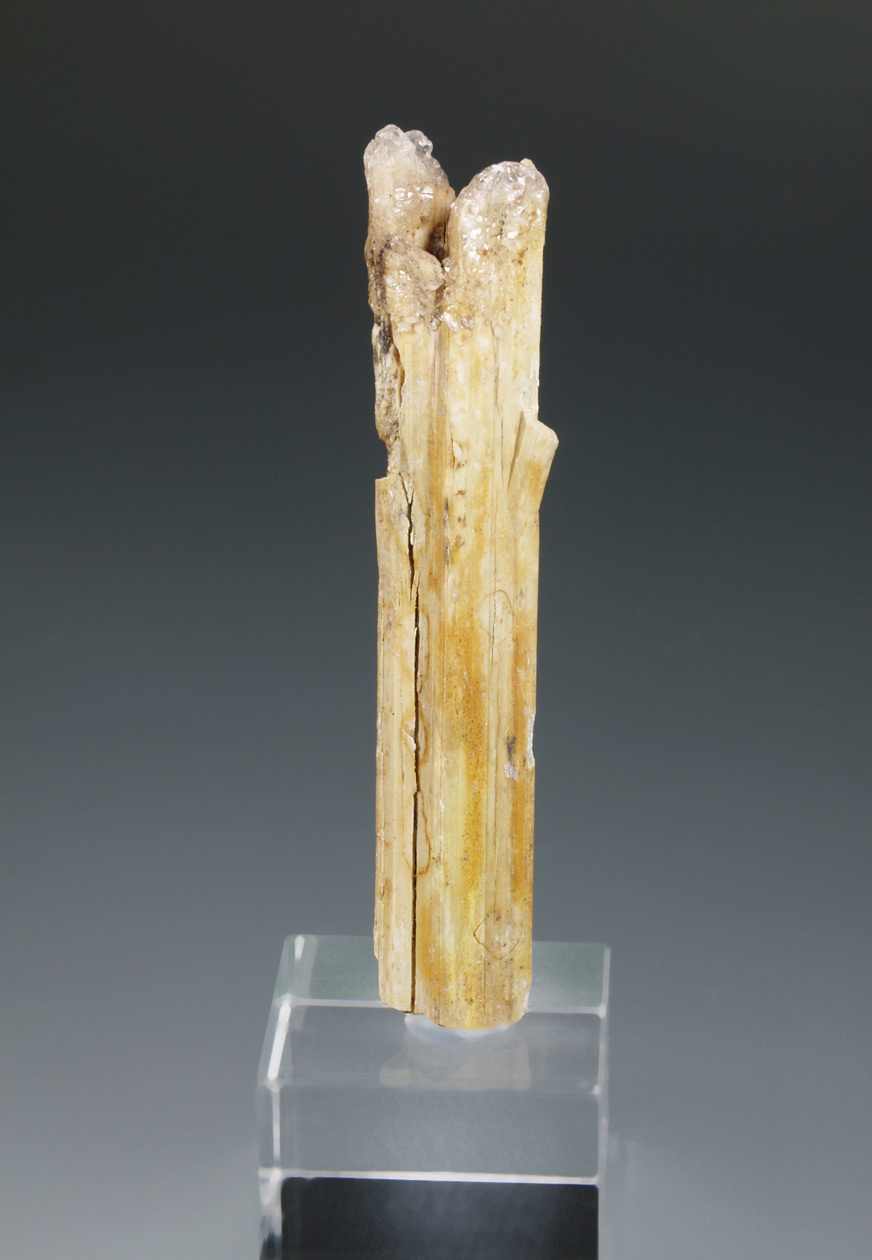
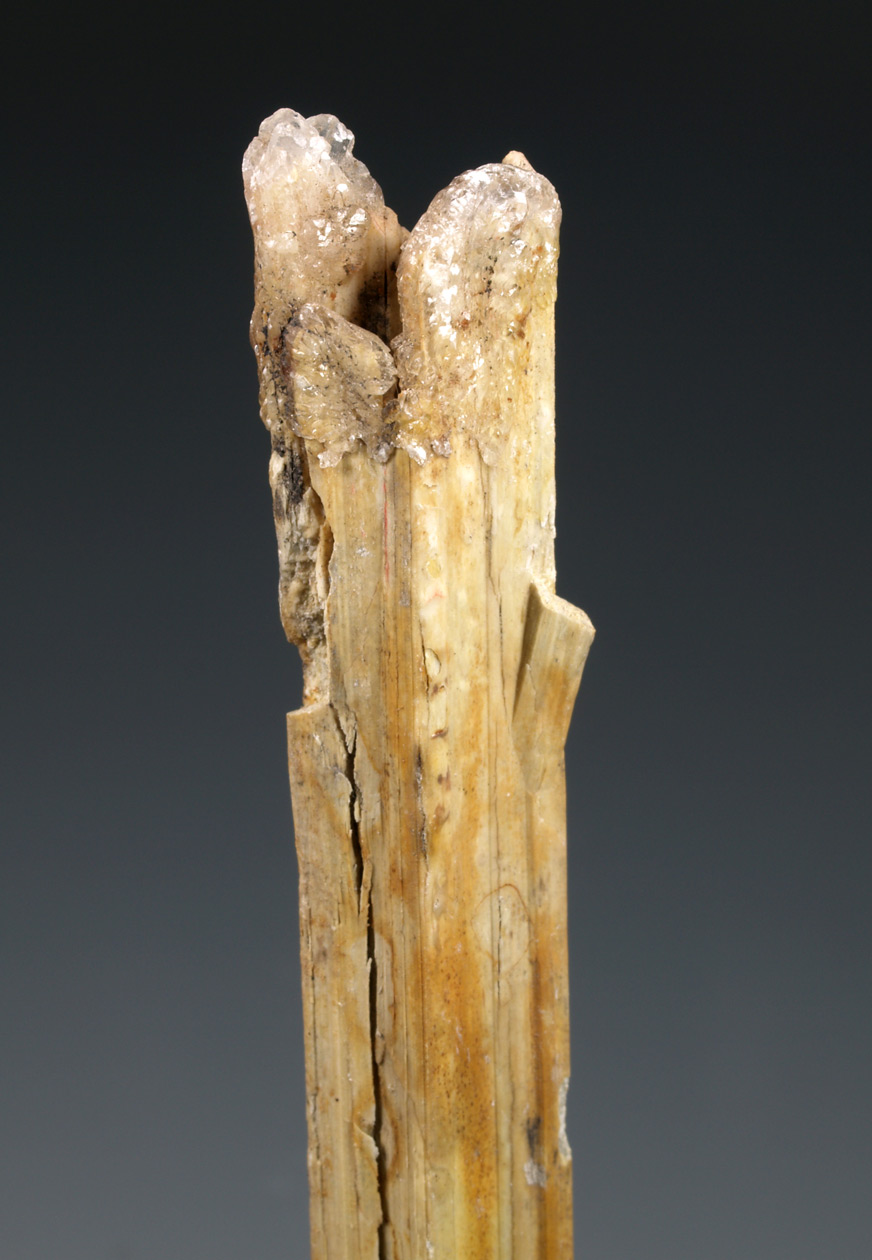
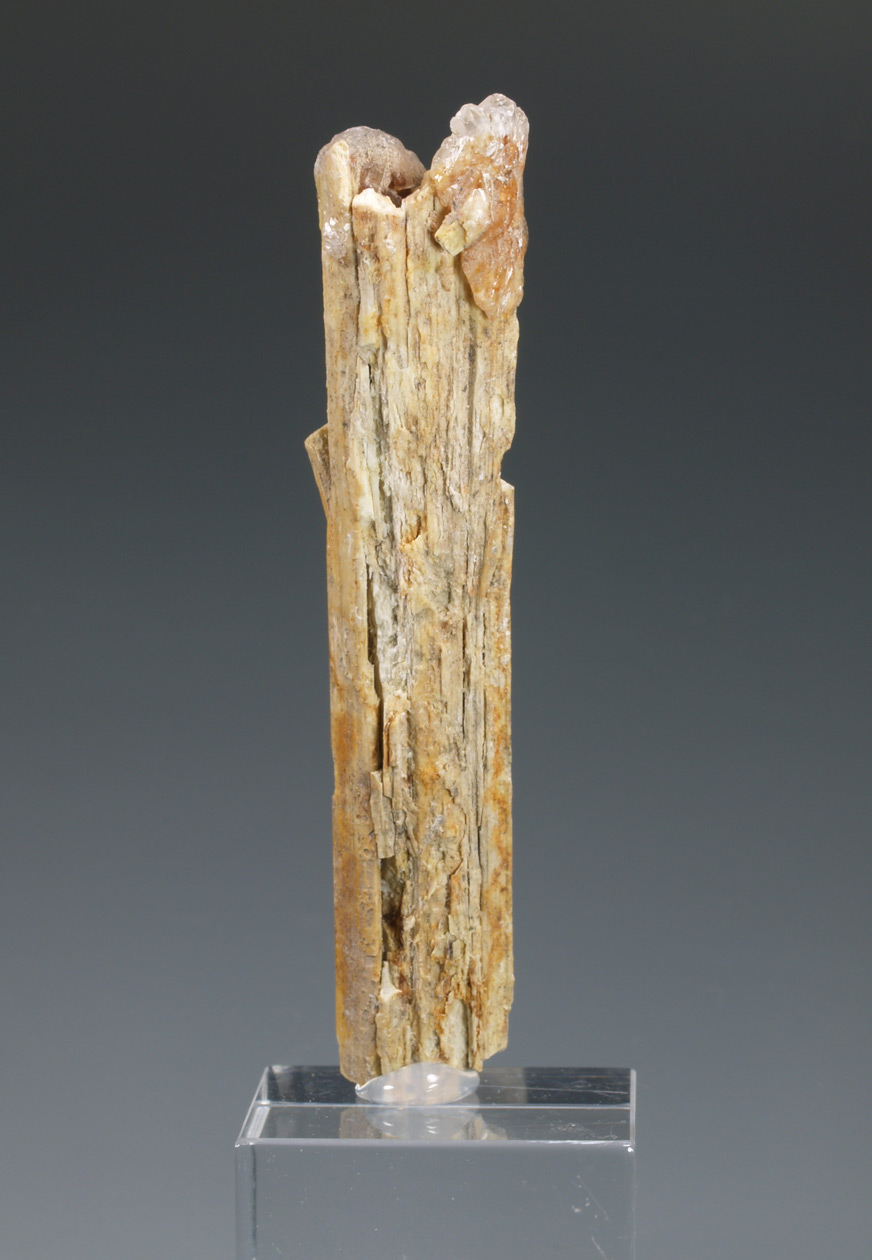
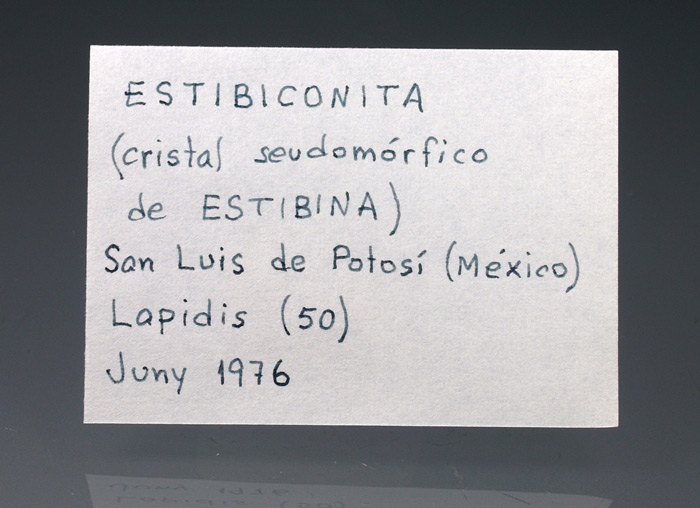
Ejemplar de estibiconita reemplazando totalmente de un cristal de estibnita, muy elongado, con terminaciones múltiples, parcialmente recubiertas de cristales escalenoédricos de calcita con crecimientos escalonados. Un clásico de la mineralogía mexicana. Procede de la colección Joan Astor (Barcelona) con etiqueta manuscrita y mecanografiada.
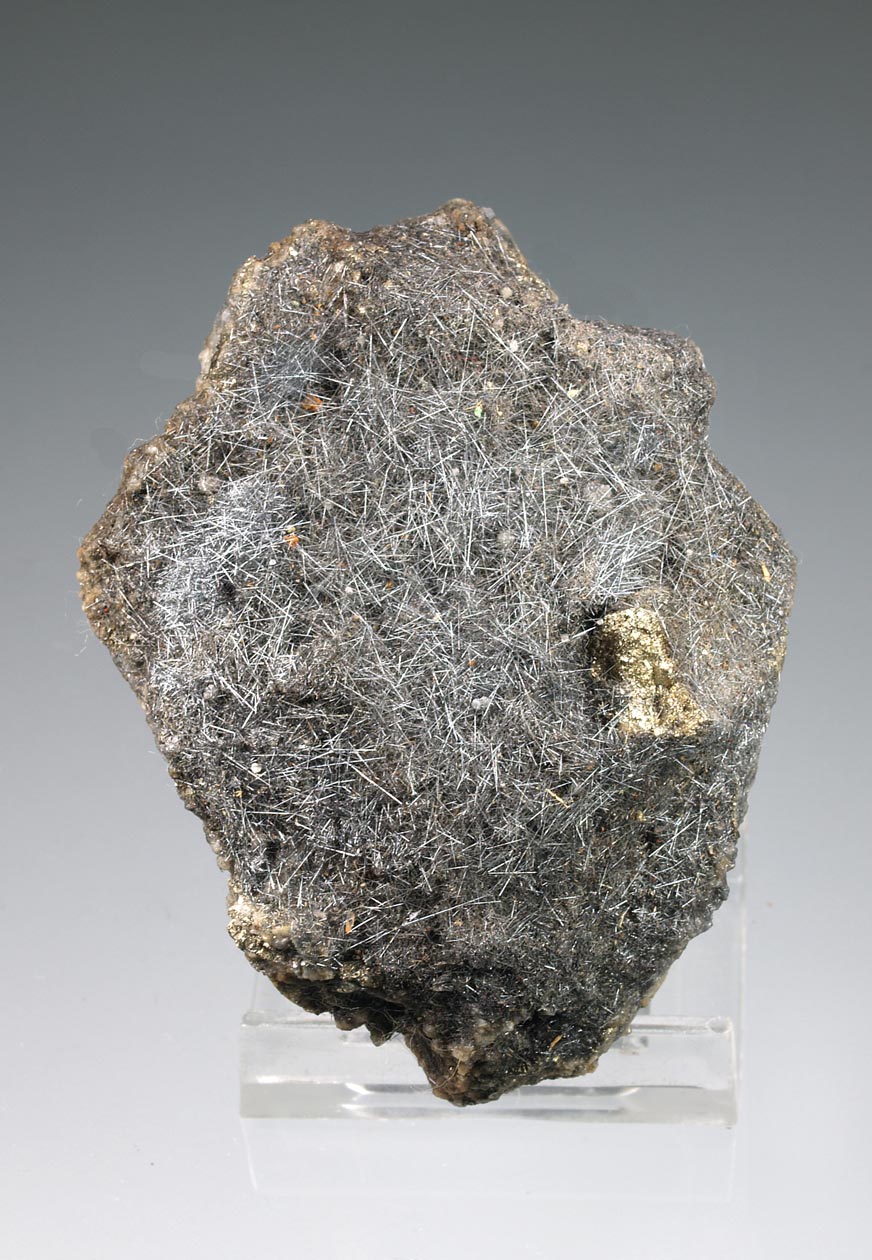
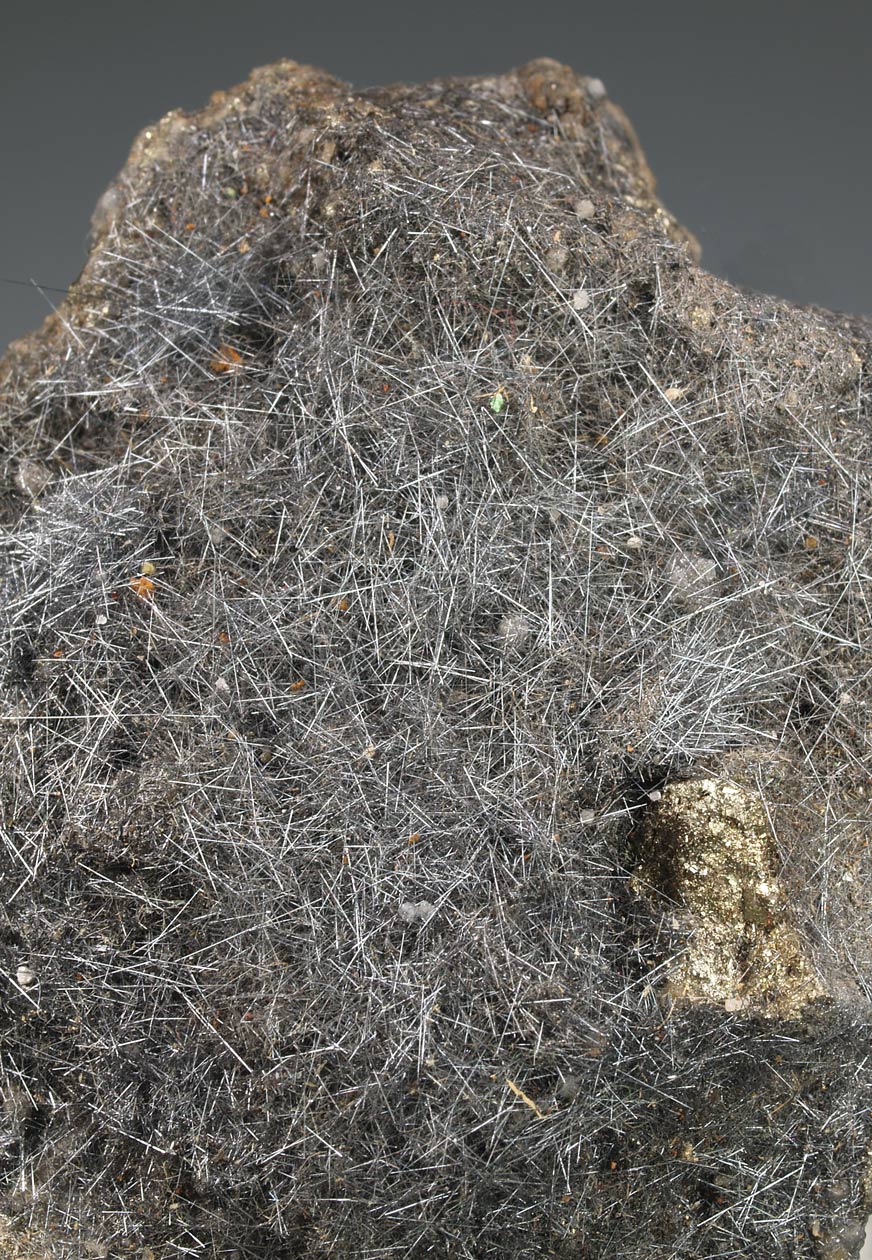
Una pieza muy antigua que nos muestra una matriz de cuarzo con carbonatos y cristales de pirita, recubierta de finas agujas de boulangerita. Muy brillantes y salpicadas de cristales de calcita o dolomita. La etiqueta original manuscrita de la colección Astor, de 1978, nos indica que procede de Concepción del Oro, pero creemos poder decir que es de la zona de Mazapil, población muy cercana a Concepción. En esos años, los temas geográficos no estaban tan determinados. Adquirida en la antigua también Casa Ferrer o Museu de l'Areny, en la Plaça Reial de Barcelona.
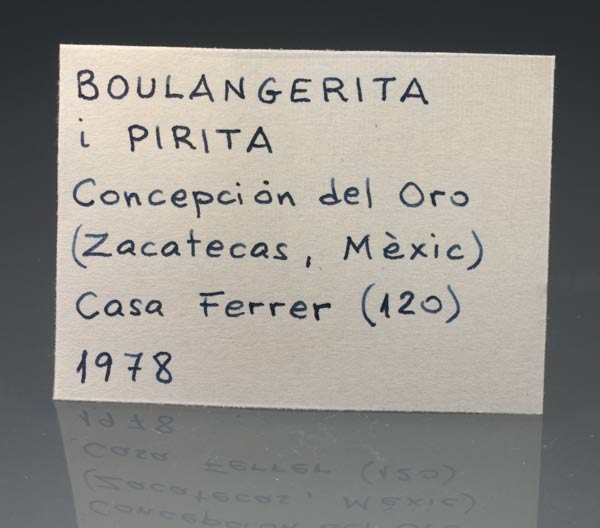
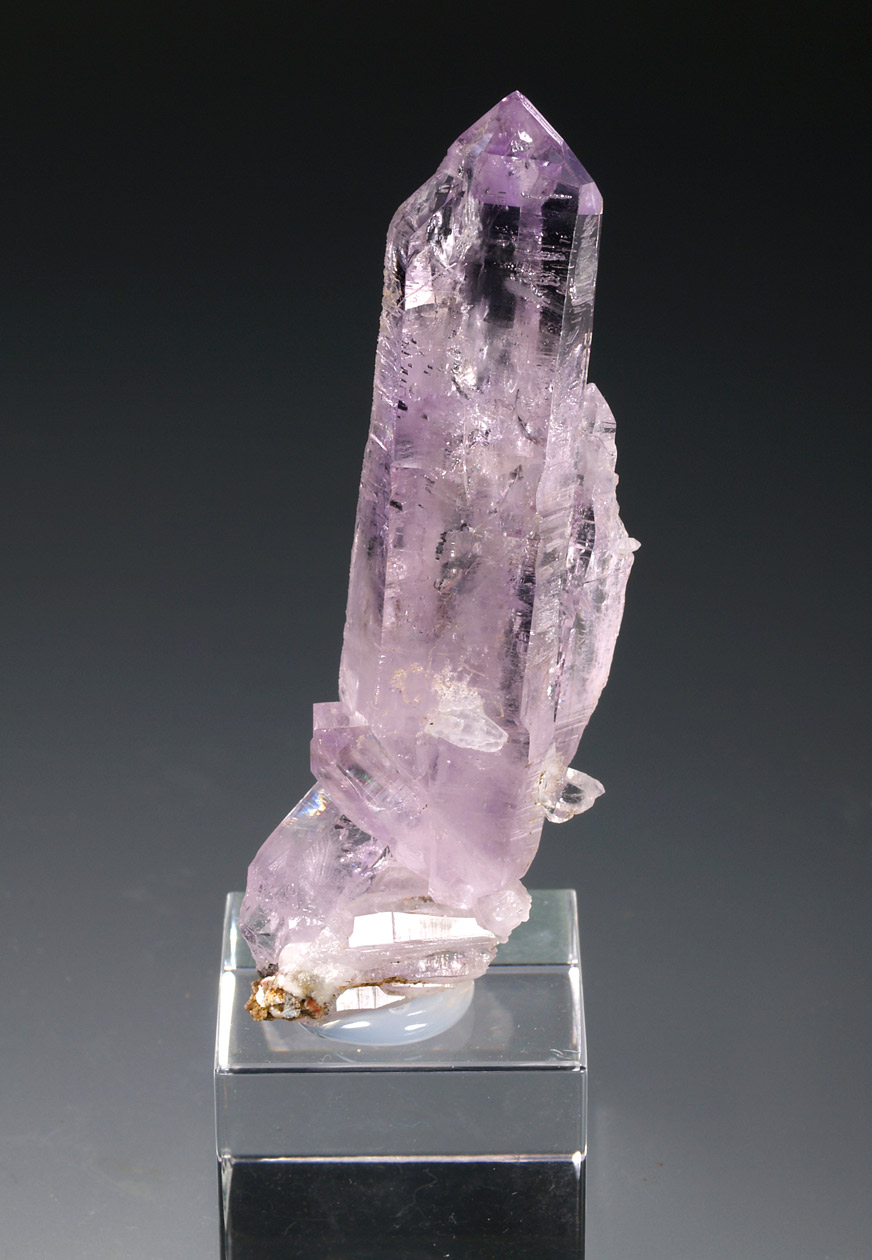
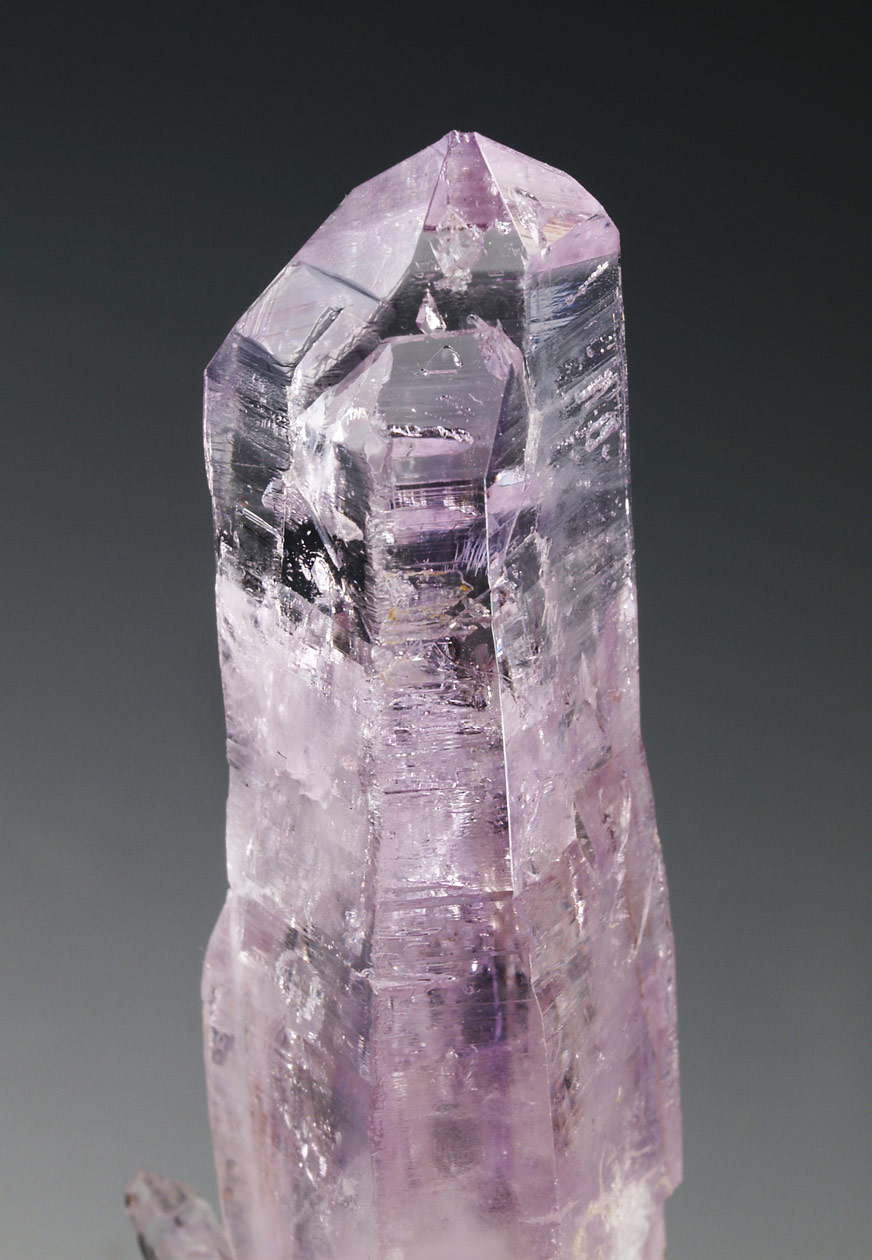
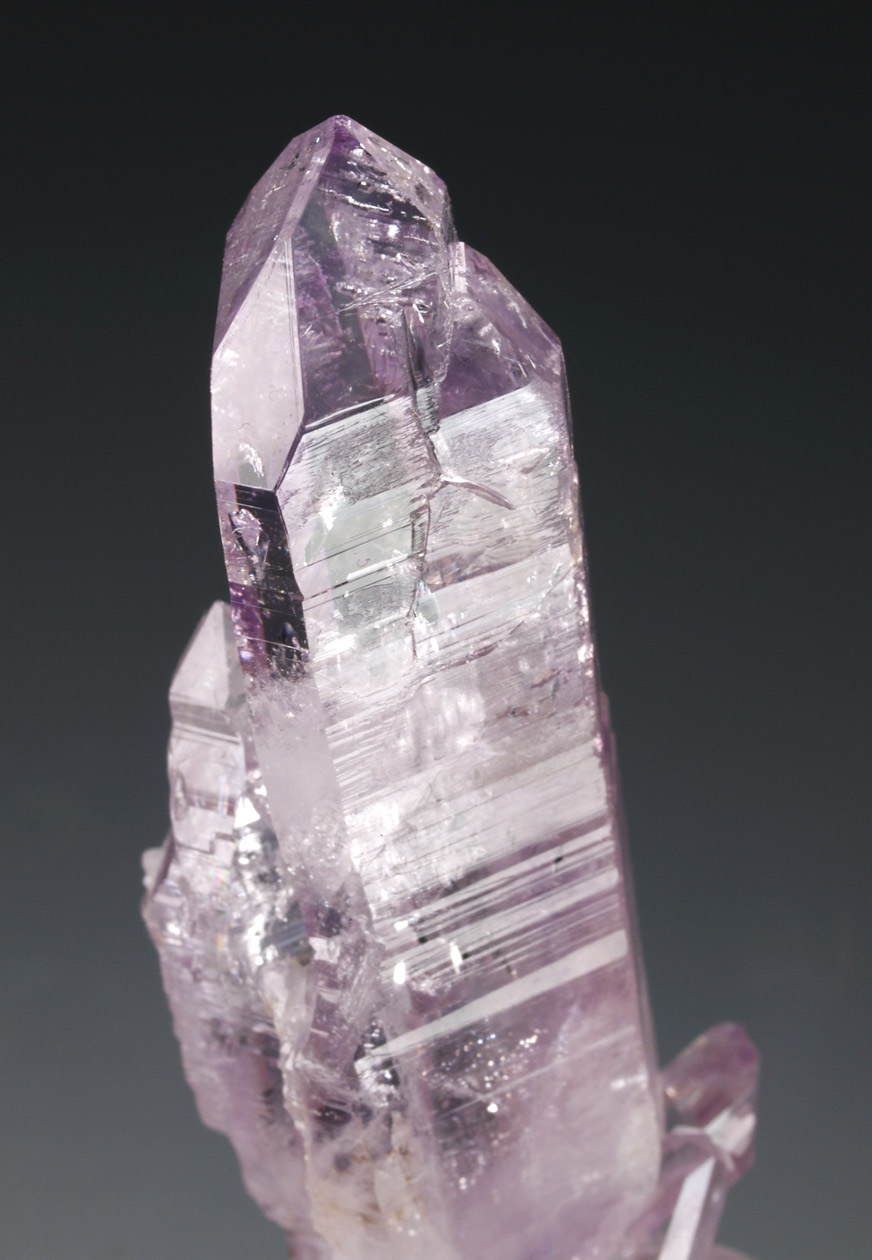
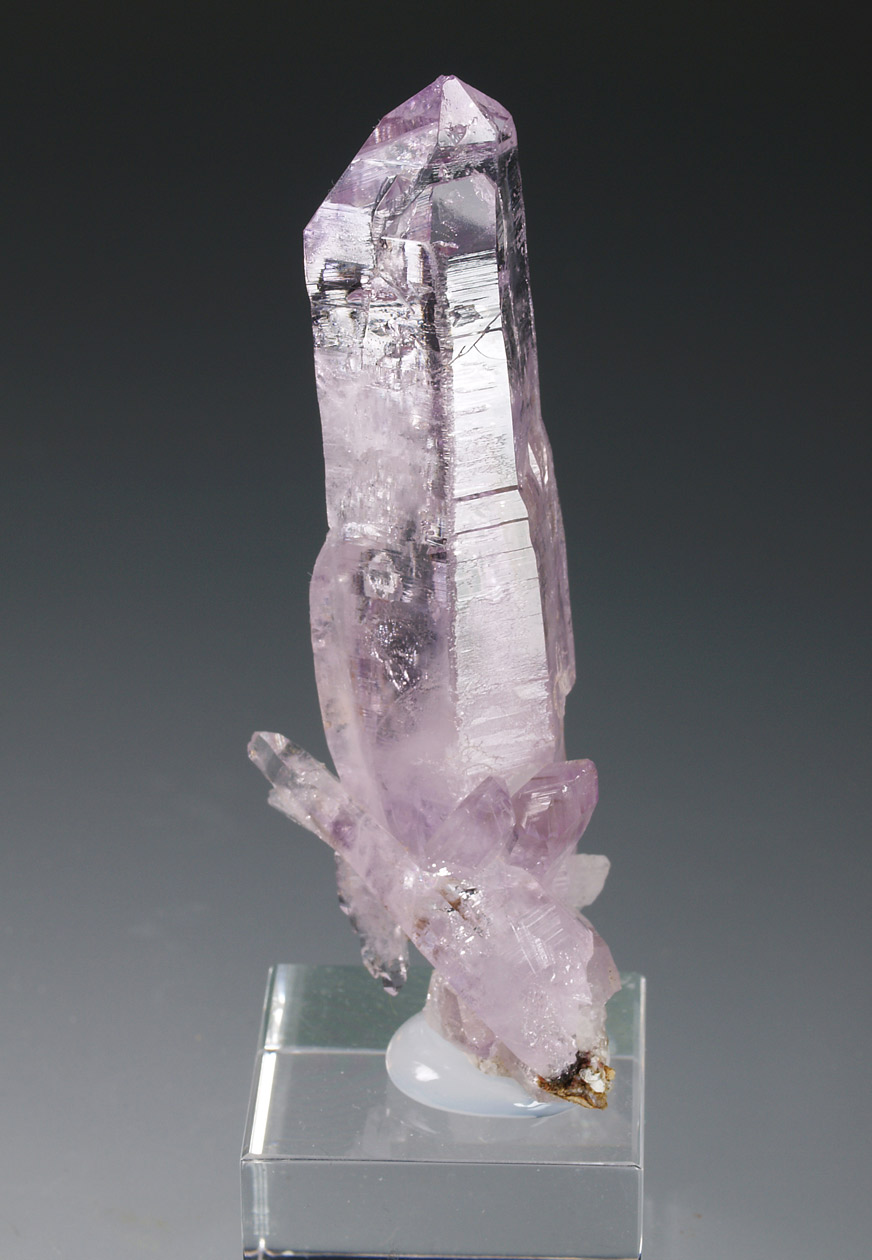
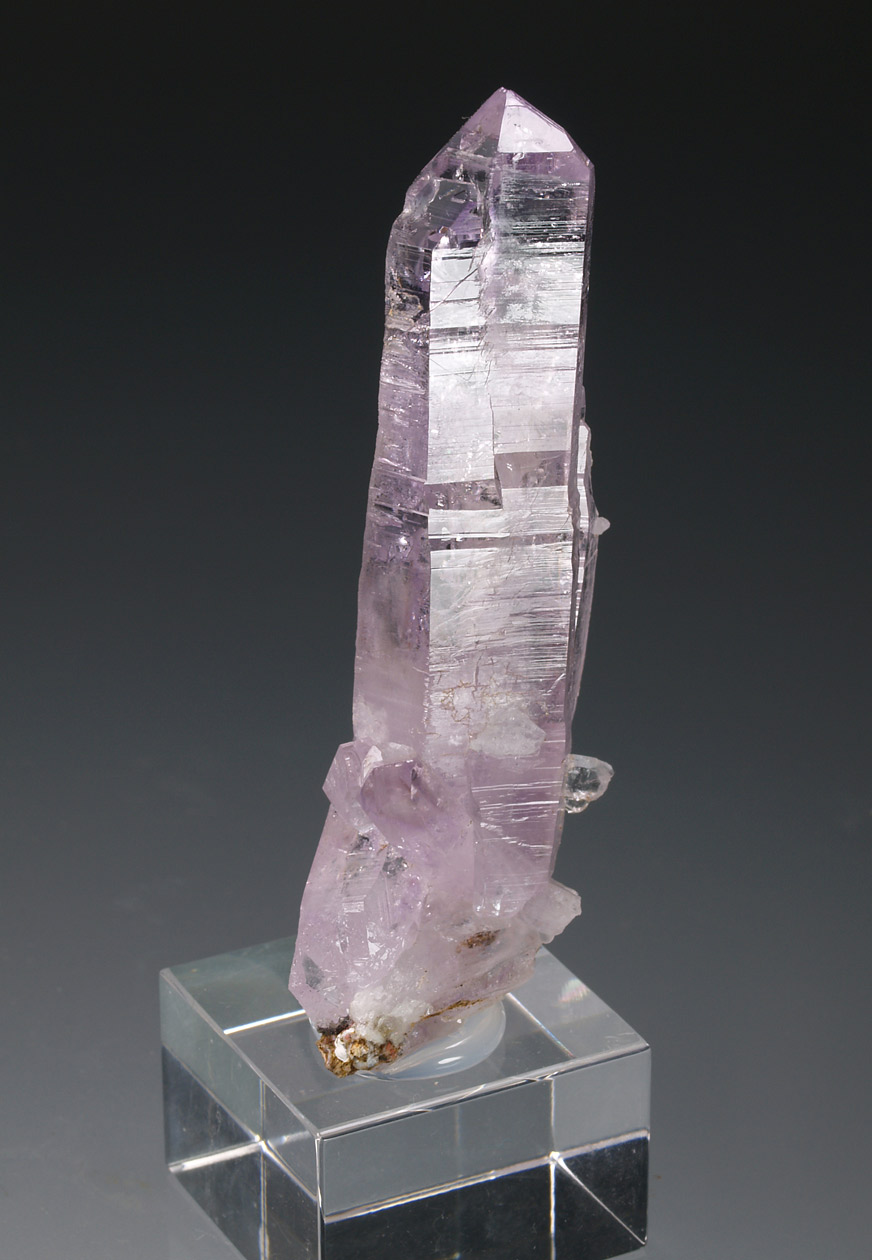
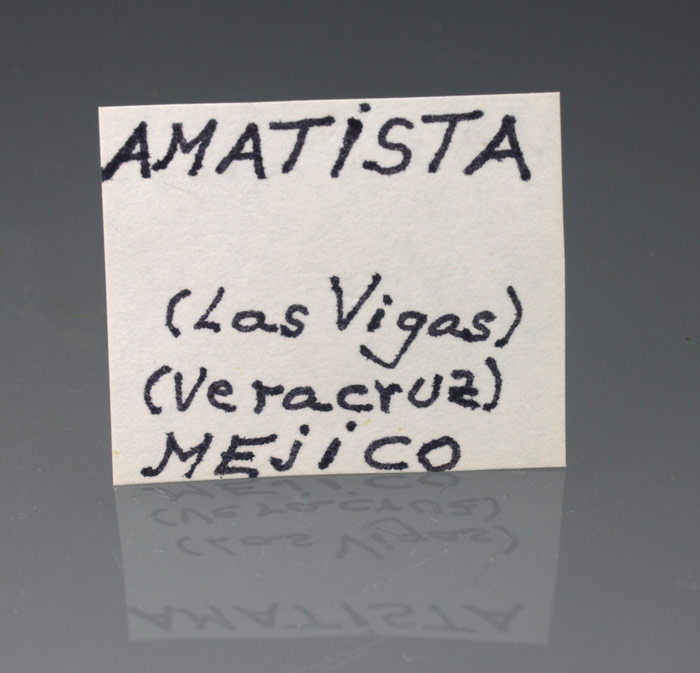
Grupo de cristales de cuarzo, de la variedad amatista, el principal muy elongado. Muy transparente, con caras y aristas definidas, y con un color púrpura suave y uniforme. De la colección Trigo, de Mataró, con su etiqueta manuscrita.
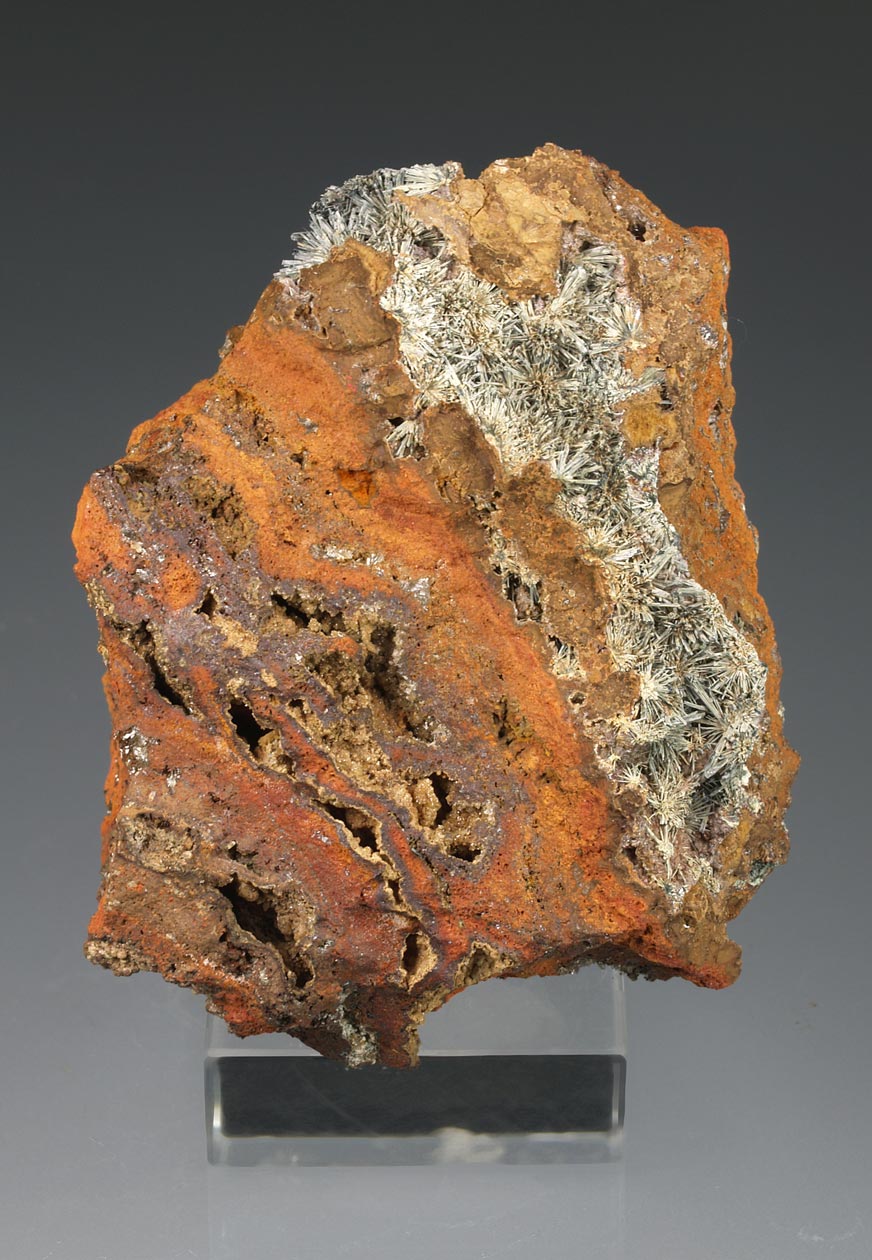
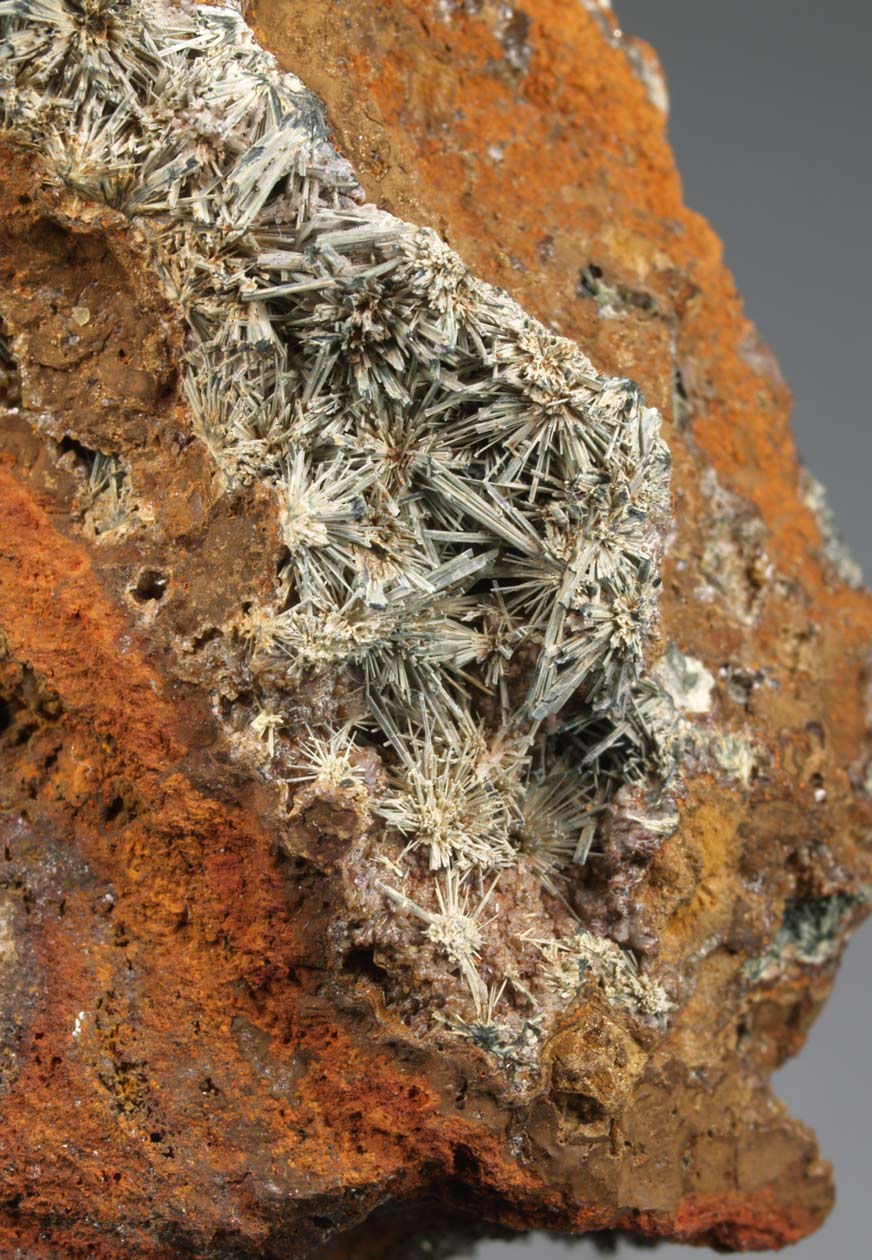
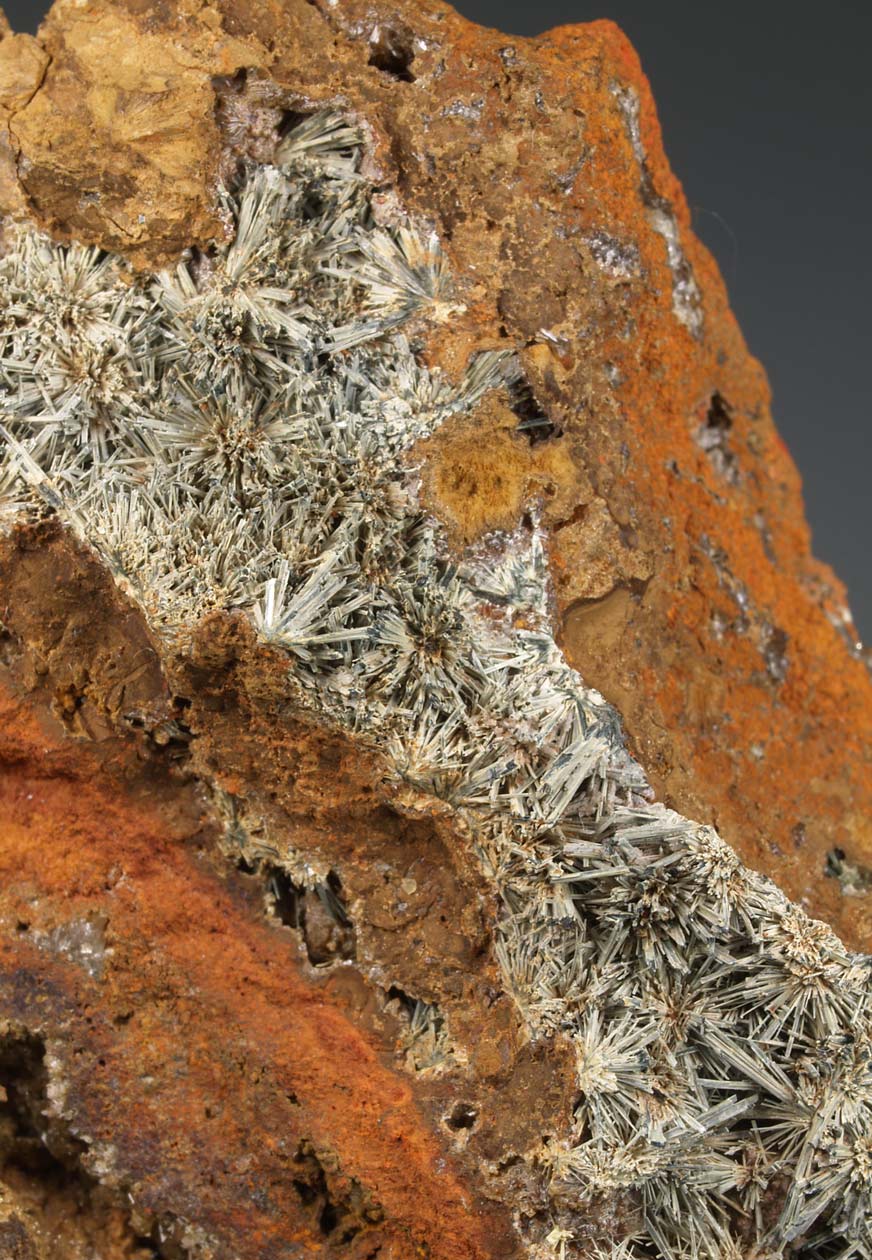
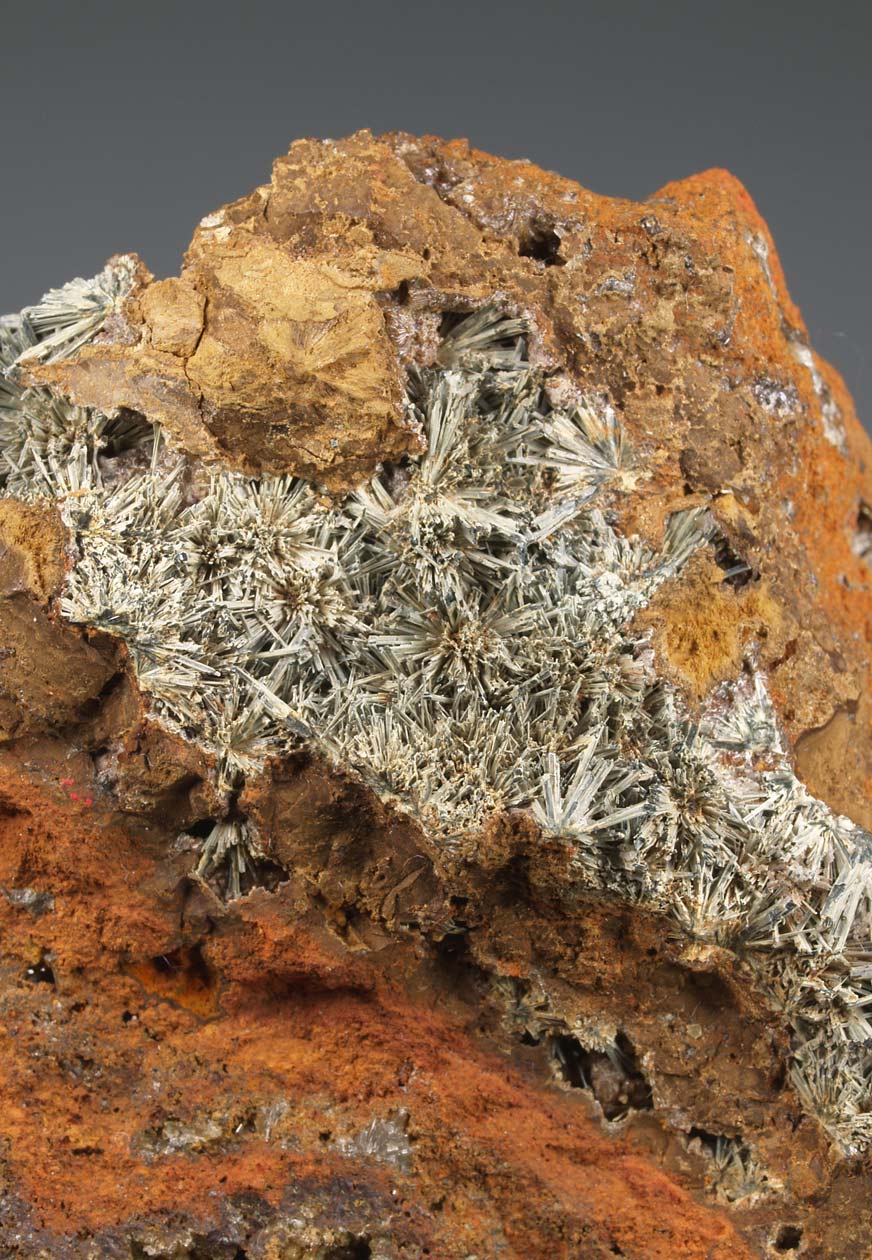
Rico ejemplar de parasimplesita de esta clásica mina mexicana. Numerosos agregados divergentes de cristales prismáticos y tabulares de parasimplesita, con un color verde claro en la superficie y un color verde muy oscuro, casi negro, en el interior. Se disponen en una matriz de goethita con cavidades tapizadas de pequeños cristales de arseniosiderita de color melado y de adamita. Procede de la colección Joan Astor (Barcelona), con etiqueta manuscrita y otra mecanografiada.
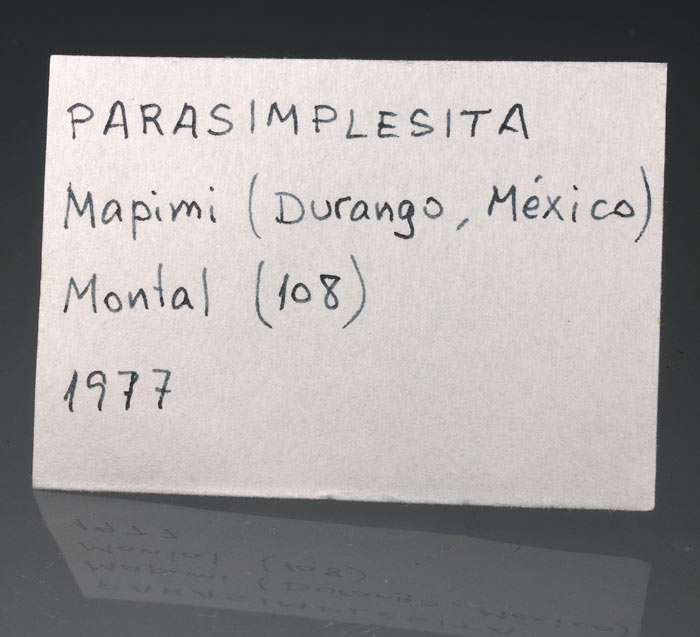
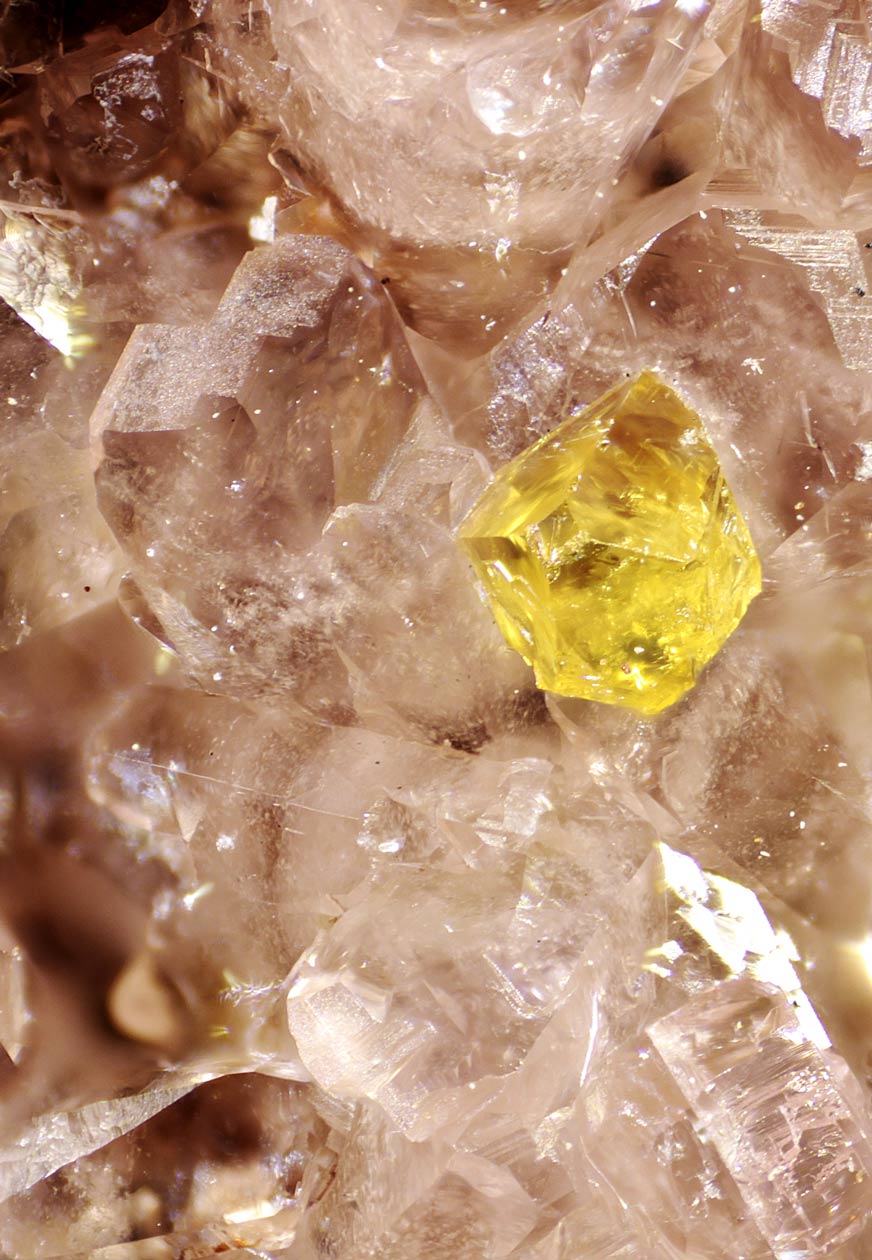
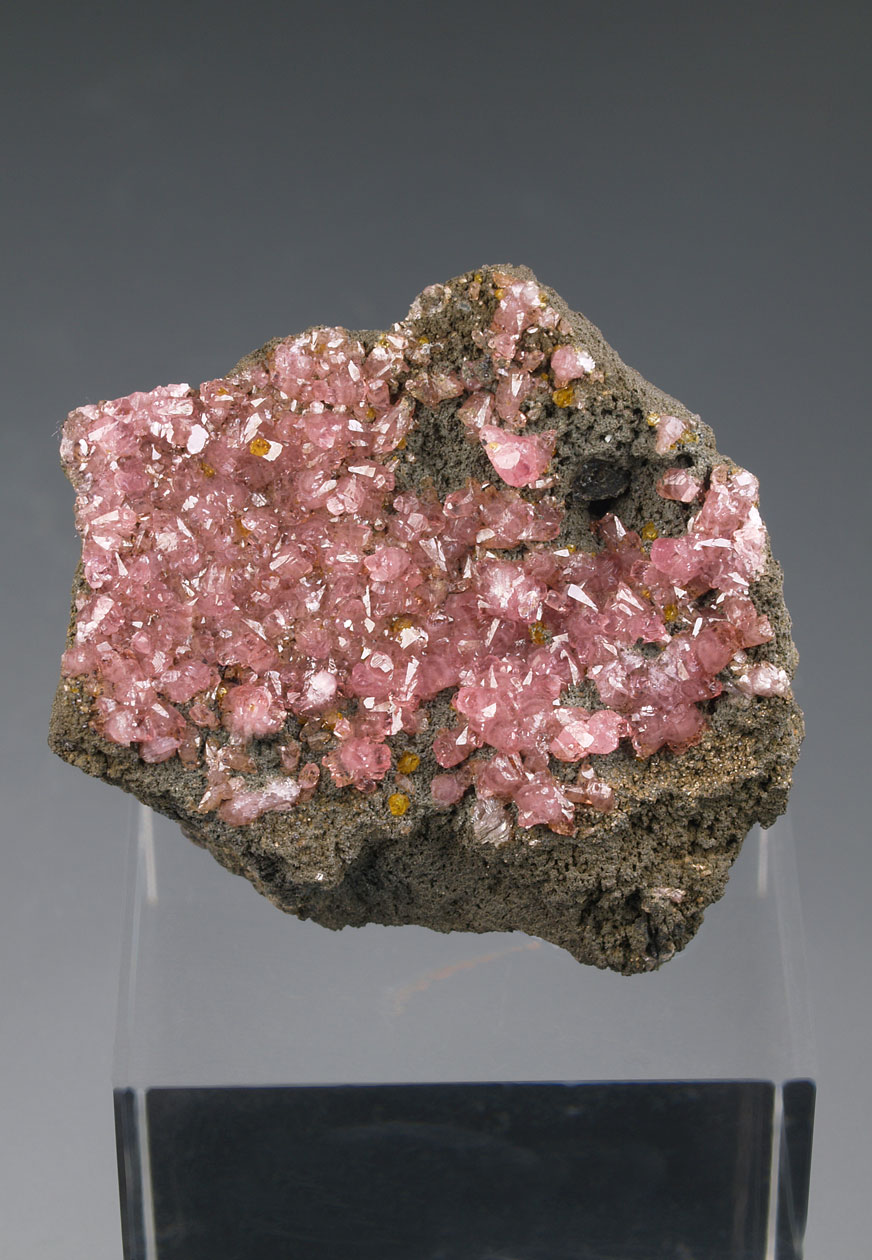
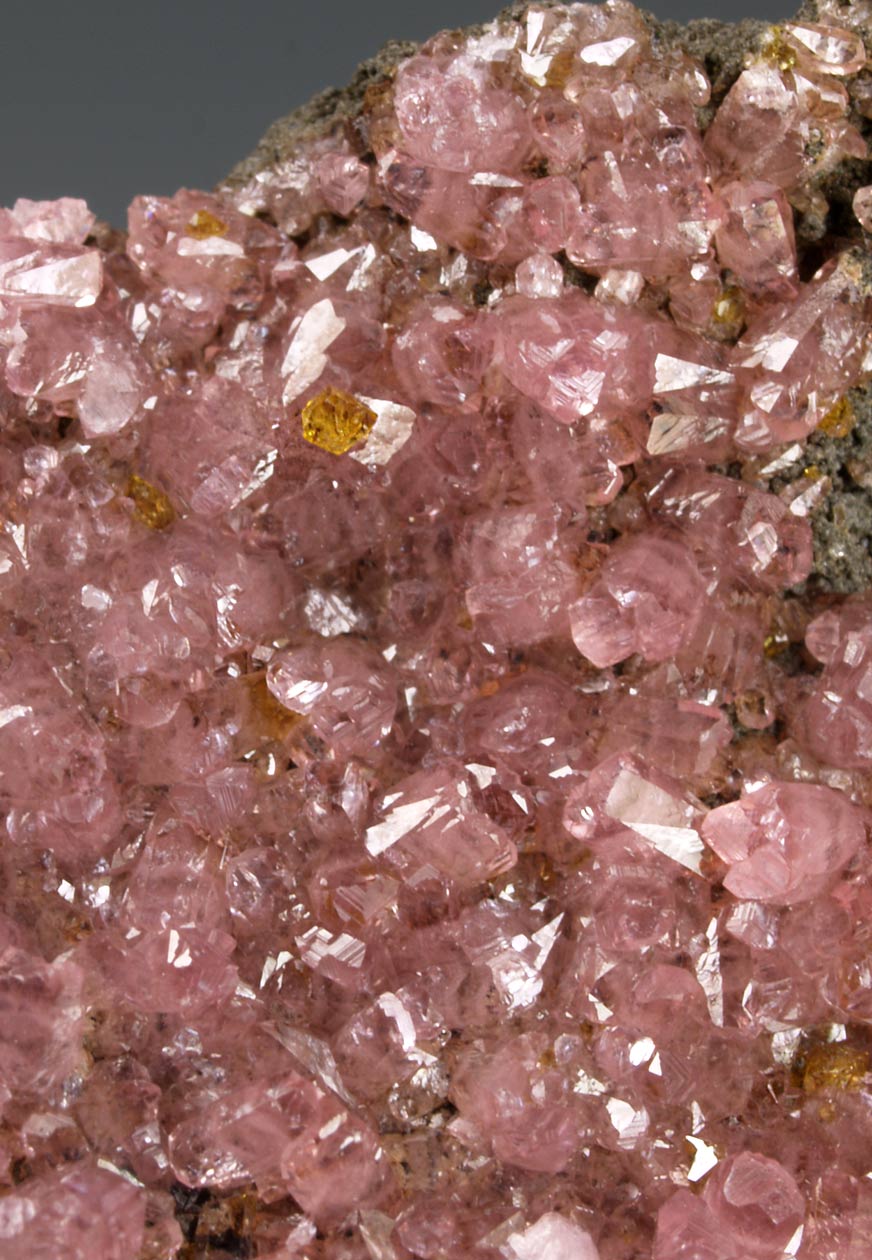
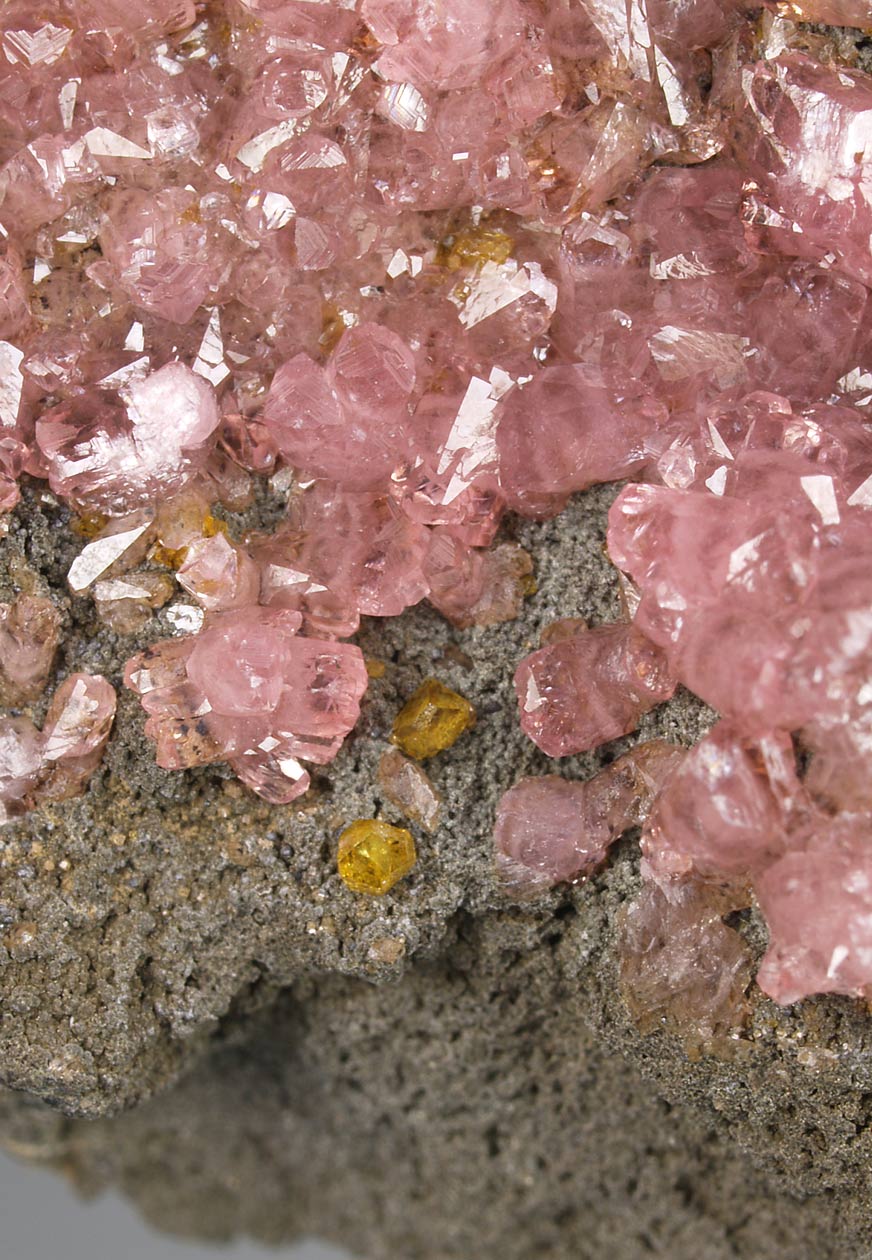
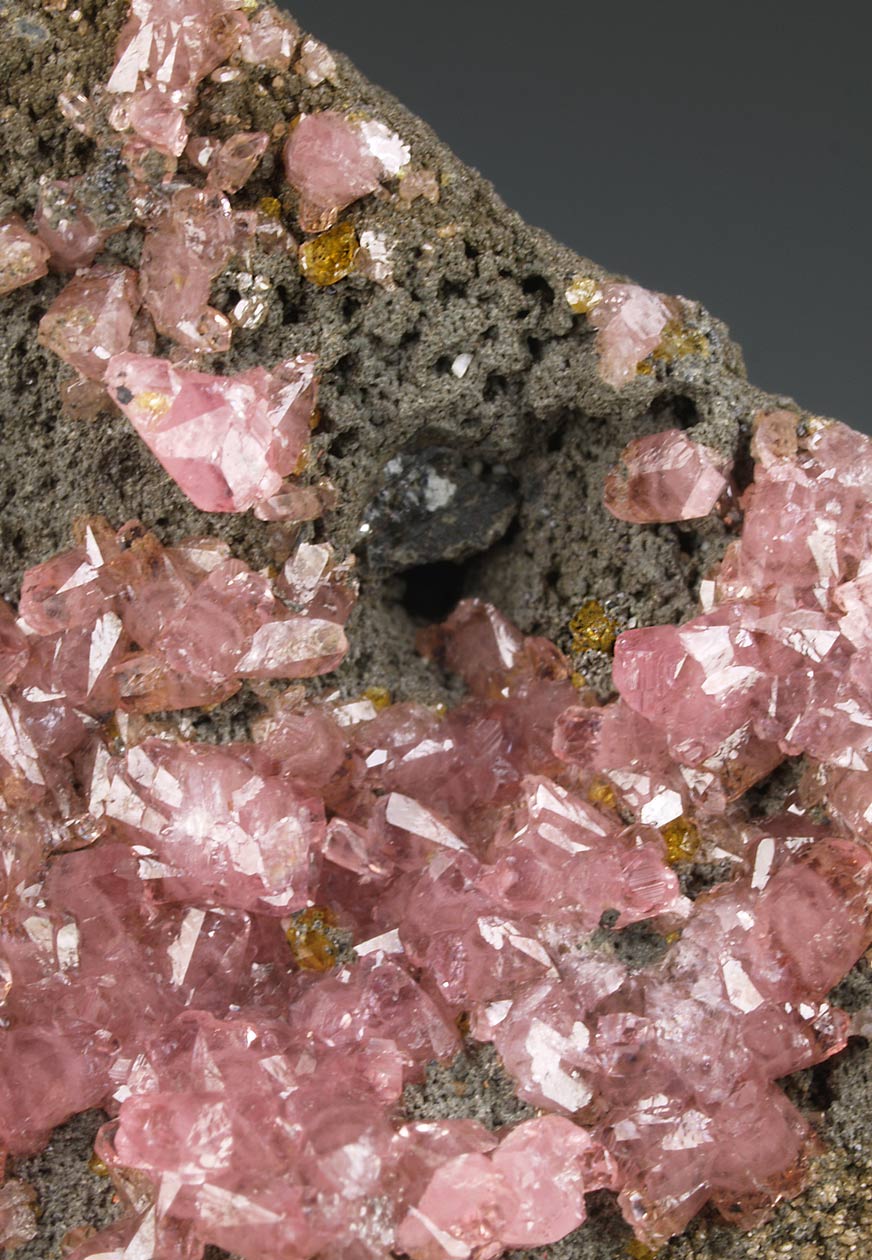
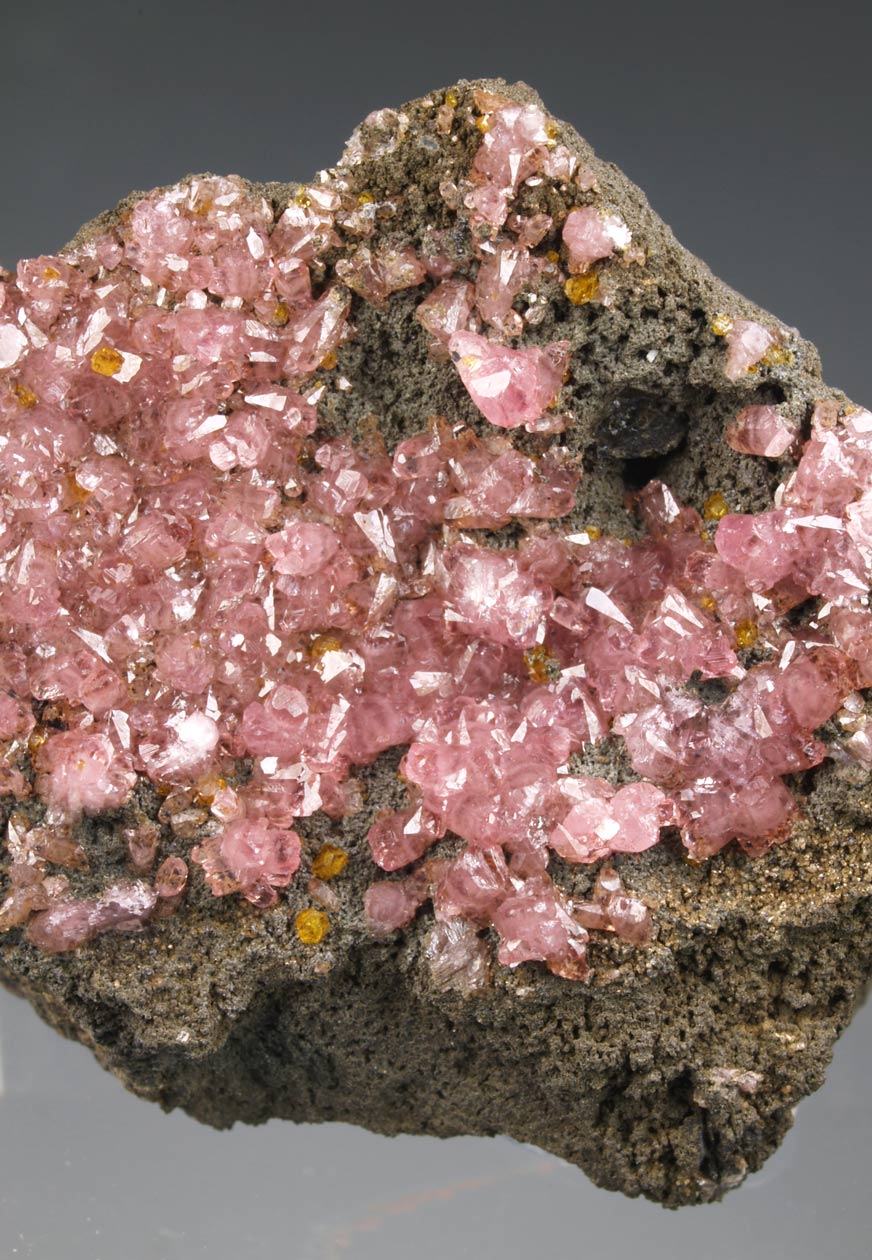
La natanita es un raro hidróxido de estaño y hierro. Se presenta como cristales octaédricos truncados en sus vértices por las caras del cubo. En este ejemplar podemos ver diversos cristales muy definidos, transparentes y de un intenso color amarillo. Destacan sobre una matriz con brillantes cristales de rodocrosita. Una pieza excepcional para la especie y la localidad.
Aunque los mejores ejemplares de natanita se han encontrado en la mina Potosí, la localidad tipo de la especie se halla en las antiguas repúblicas soviéticas de Kyrgyzstán y Tajikistán.
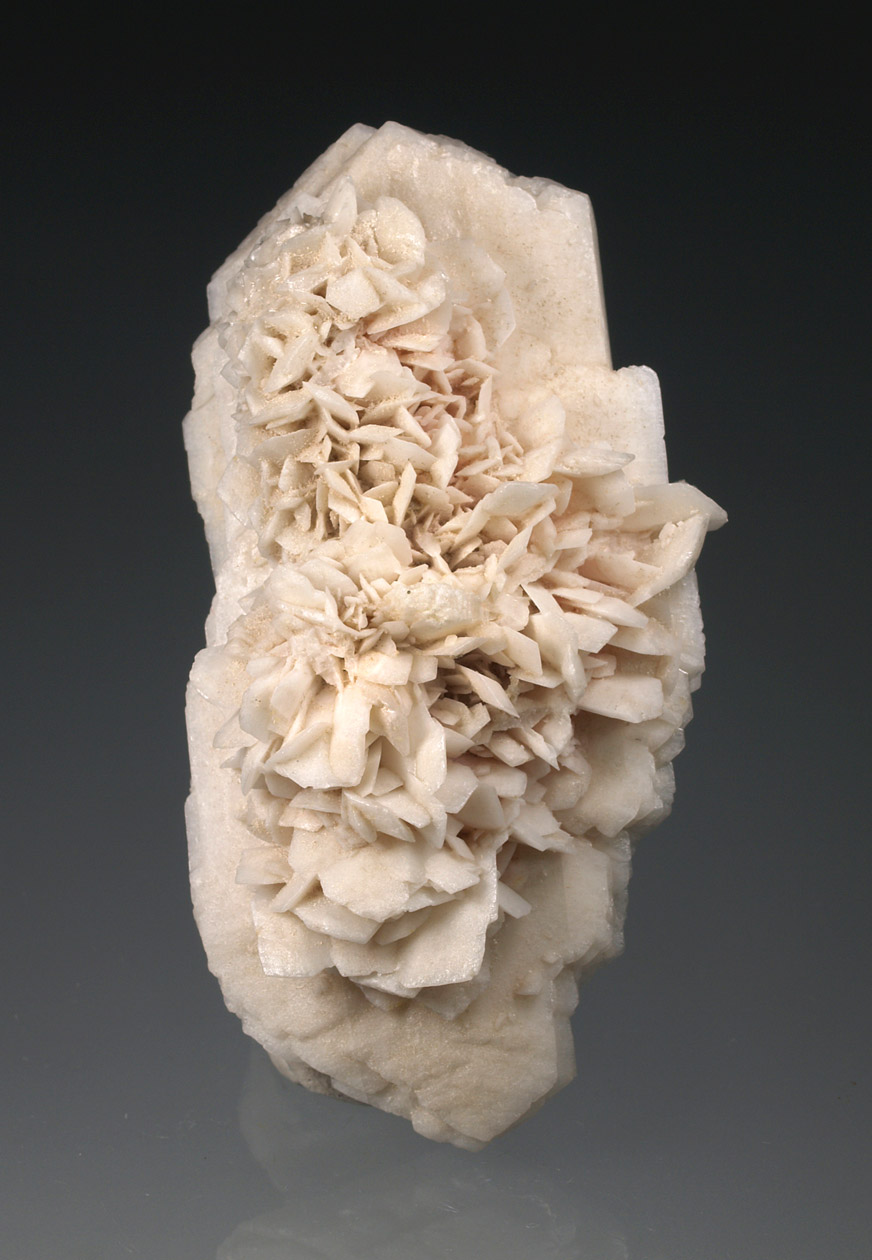
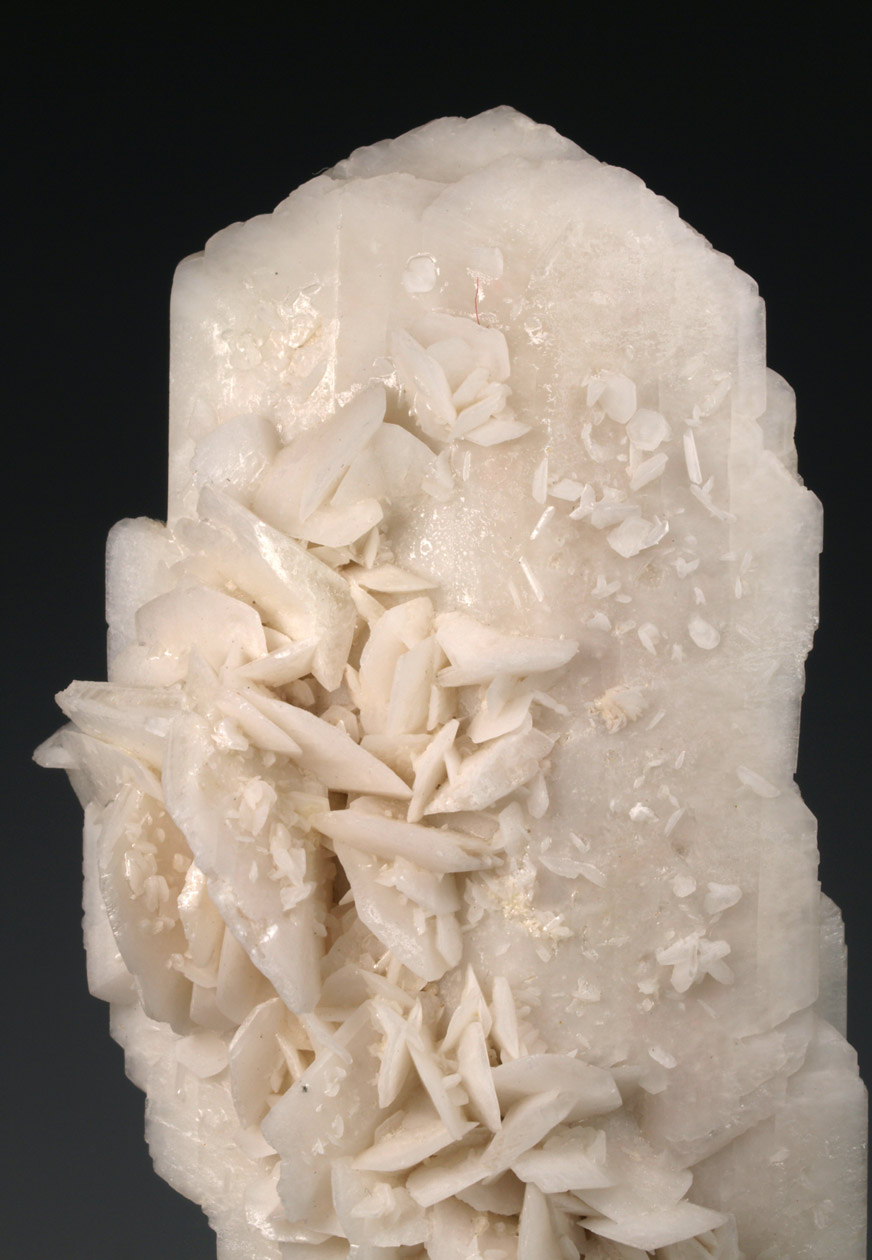
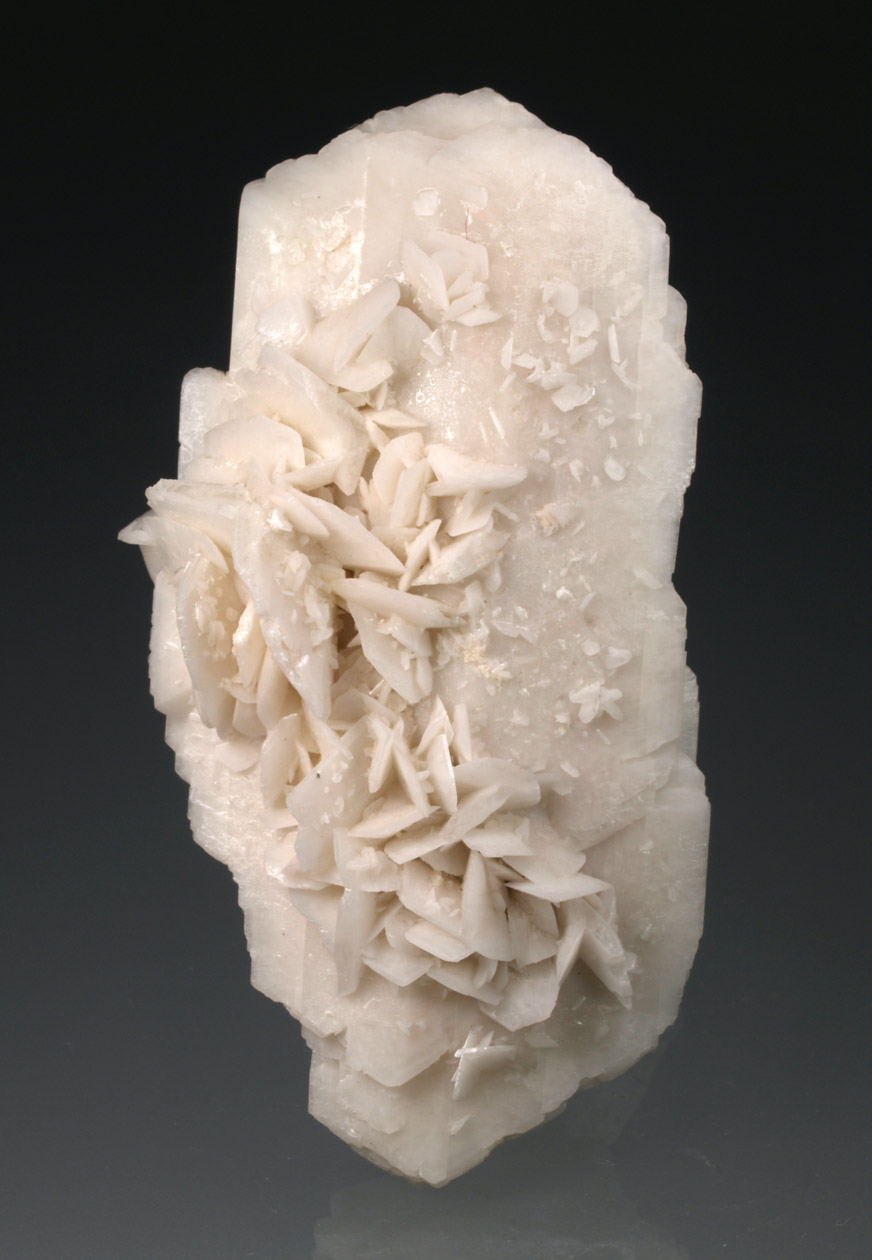
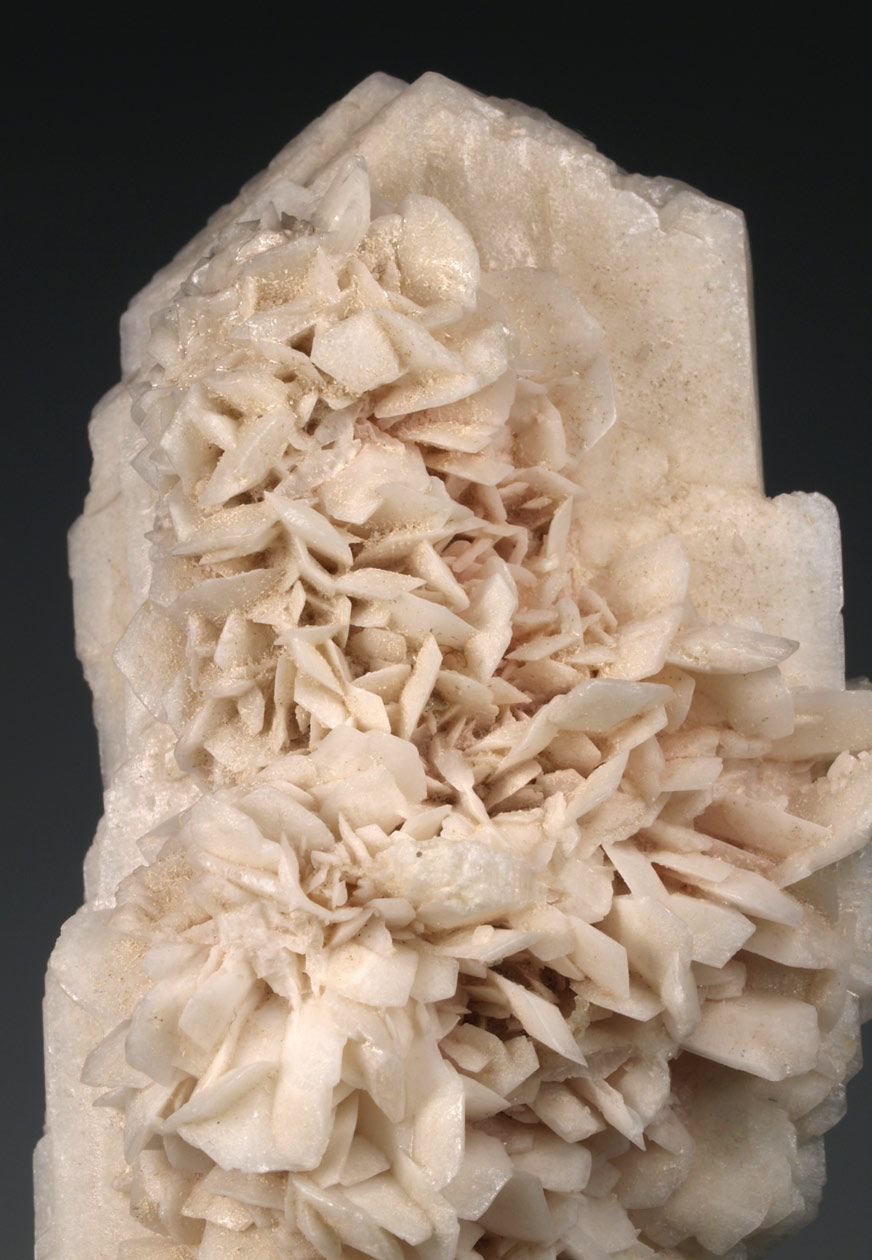
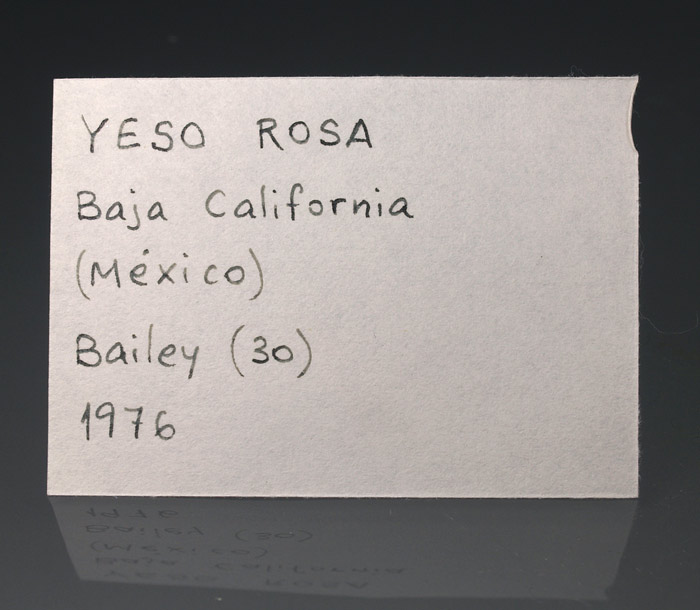
Este estético ejemplar flotante de yeso presenta una formas de roseta sobre unos cristales de mayor tamaño en crecimiento paralelo. Muy definidos, brillantes y con un delicado tono rosado aún visible. Estos ejemplares eran más rosados cuando se recogieron pero con el tiempo esa tonalidad se ha difuminado. Muy fluorescente, con tonos amarillos y anaranjados. La etiqueta indica que es de la Baja California mexicana, pero estoy seguro de que es de Guerrero Negro. Un magnífico ejemplar con muchos años. Procede de la colección Joan Astor (Barcelona), con etiqueta manuscrita y otra mecanografiada. Fue adquirida en 1976 a Bailey Minerals (Ángel Jesús Talabán García, Segovia 1942-Madrid 2007).
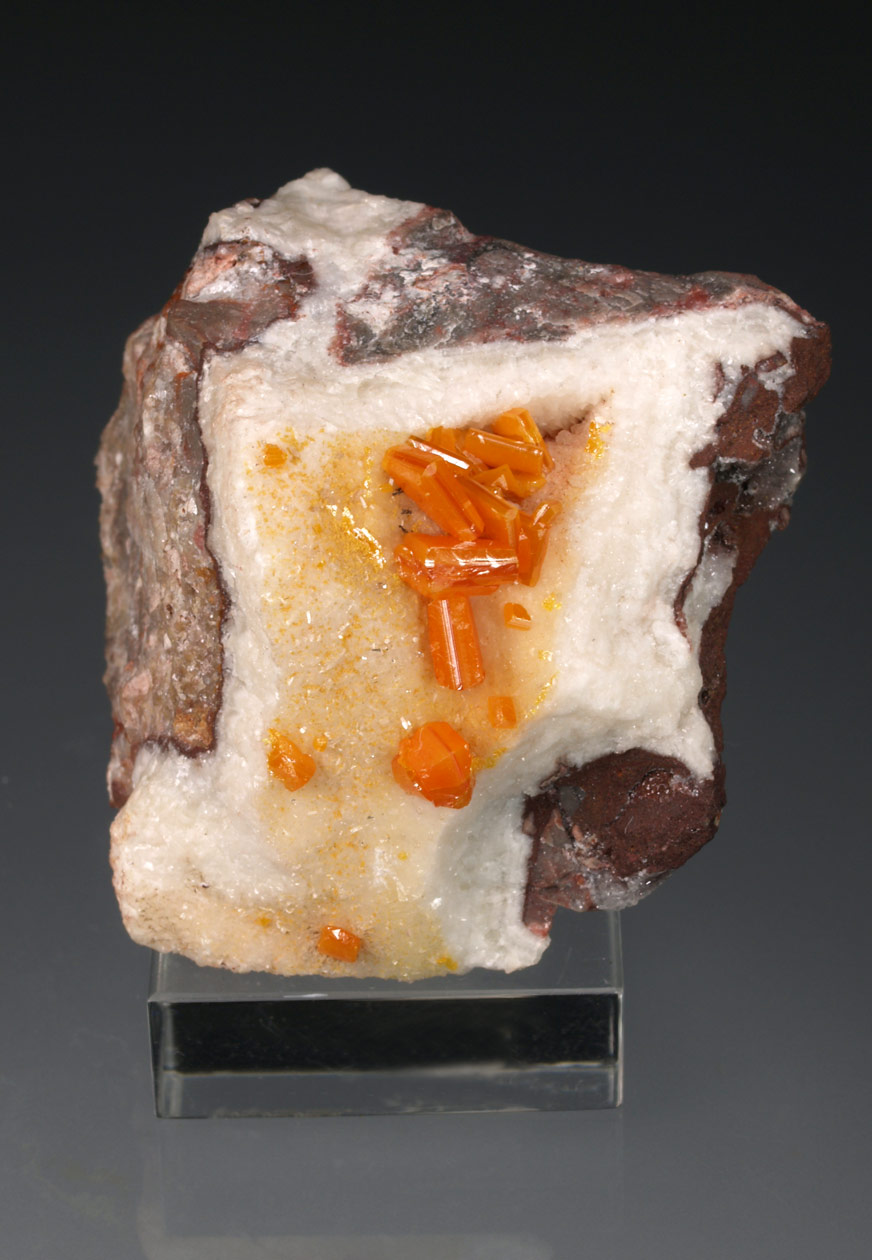
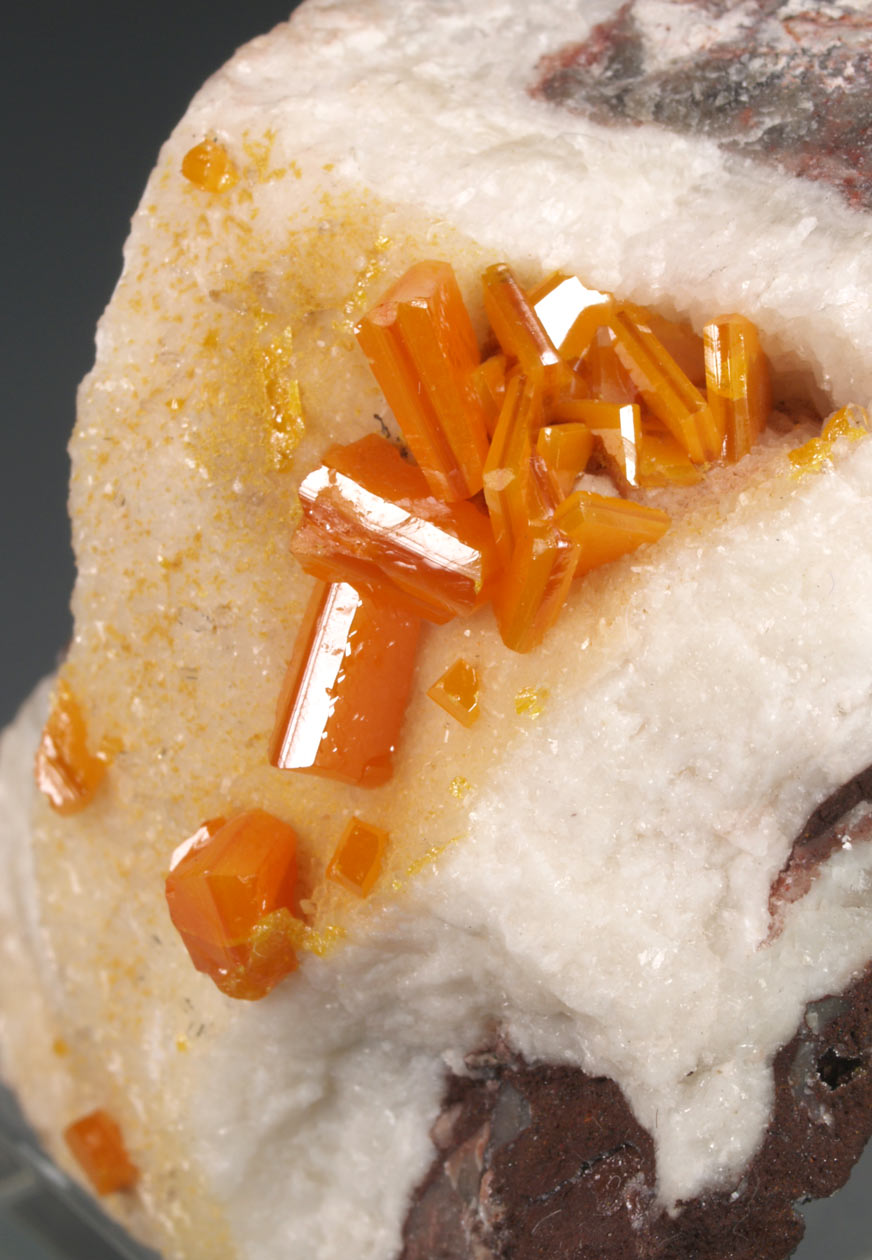
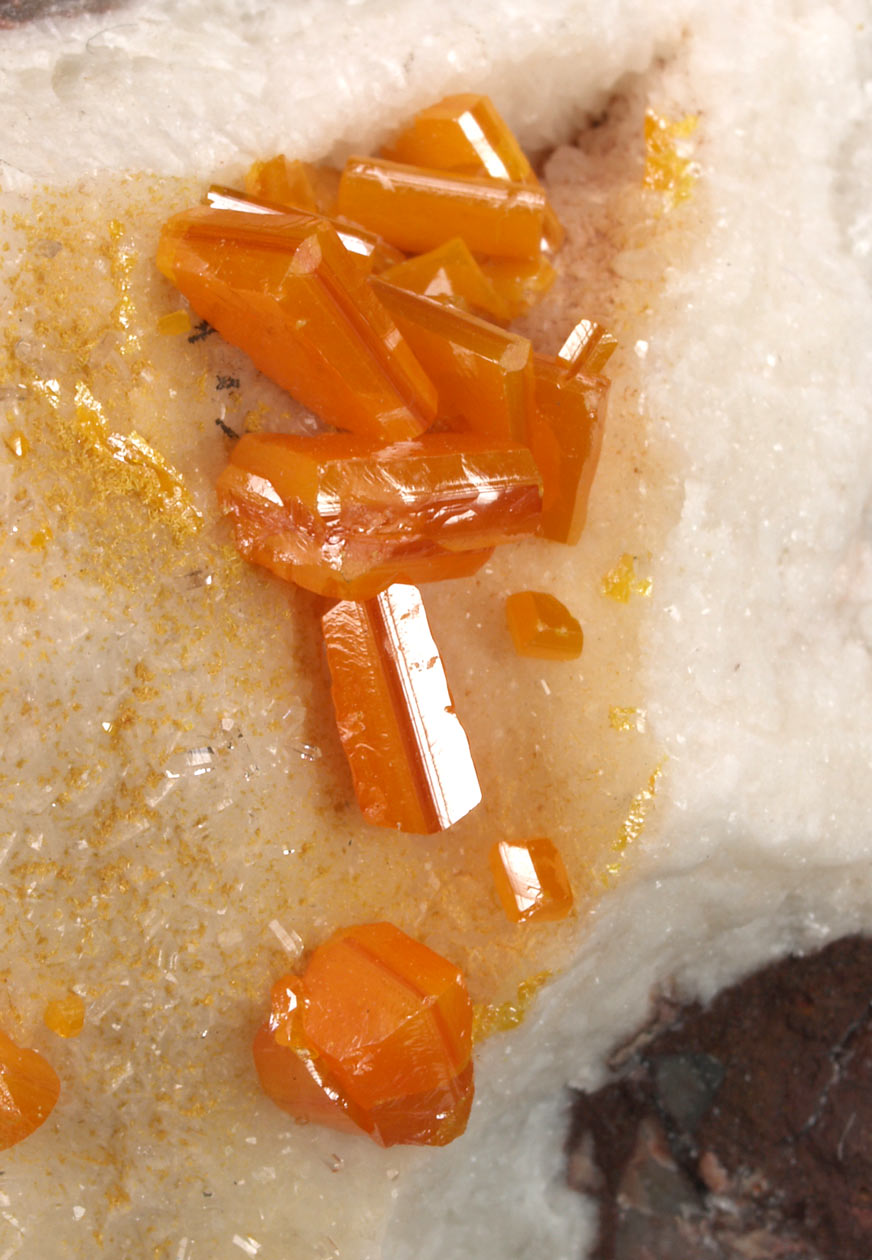
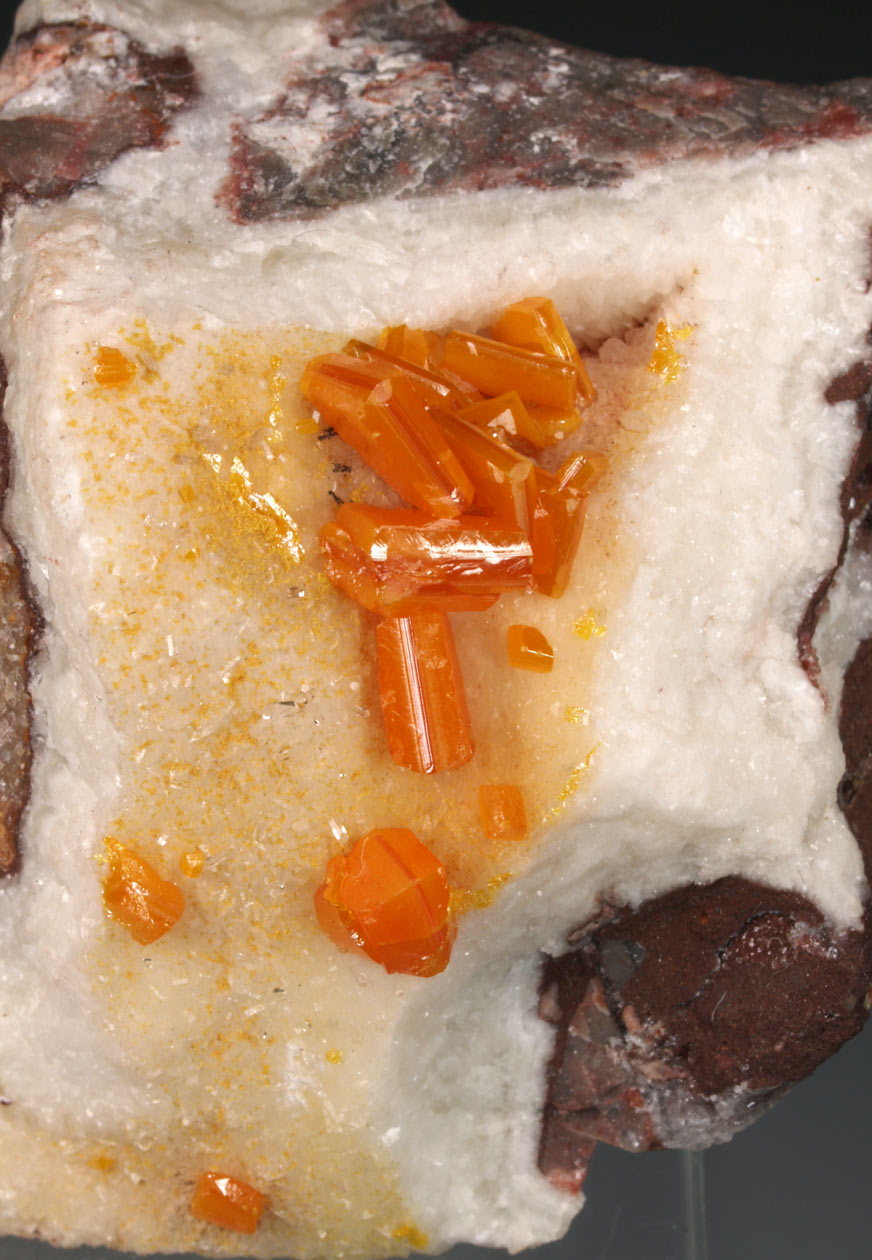
Grupo de cristales de wulfenita, muy brillantes, de intenso color, zonado. Destacan sobre una matriz de calcita. Procede de la colección Joan Astor (Barcelona), con etiqueta manuscrita y otra mecanografiada.
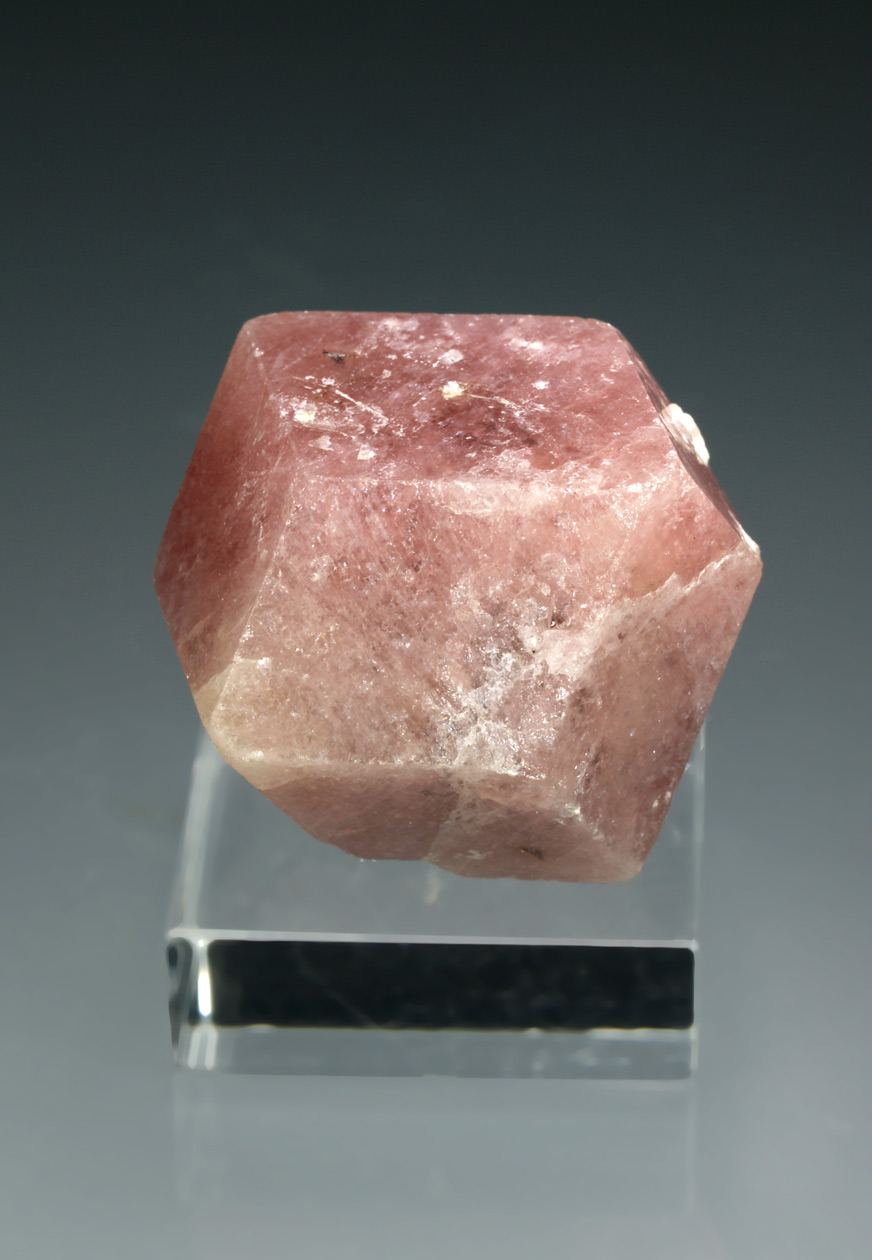
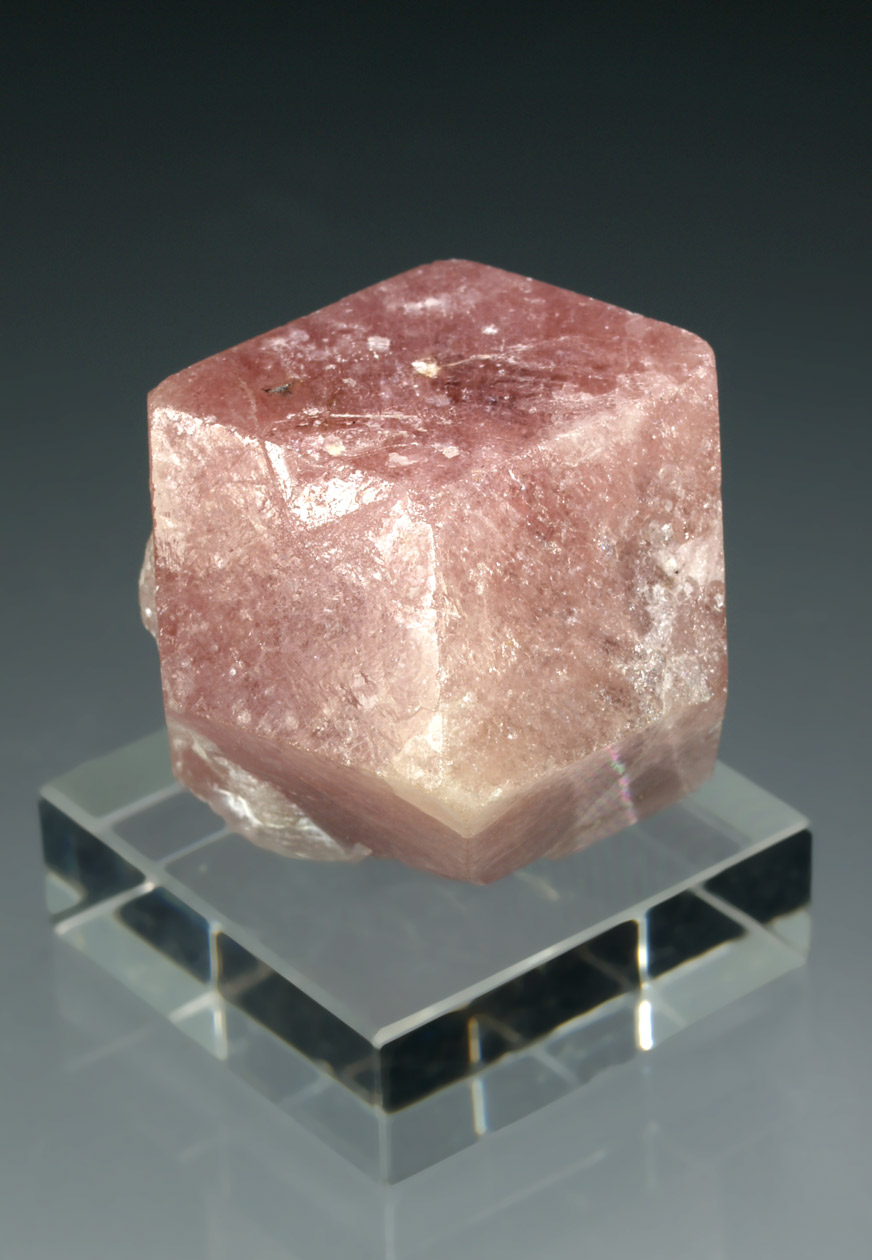
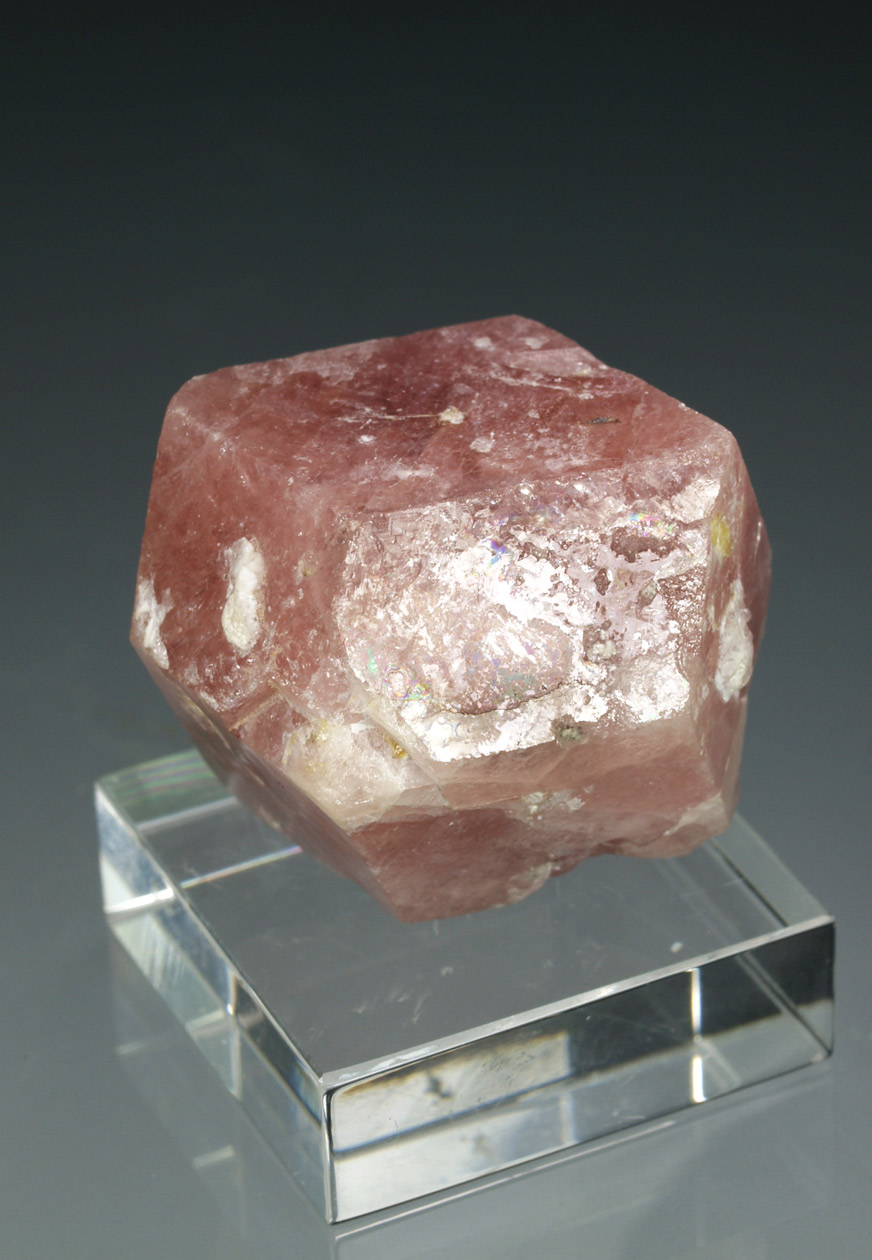
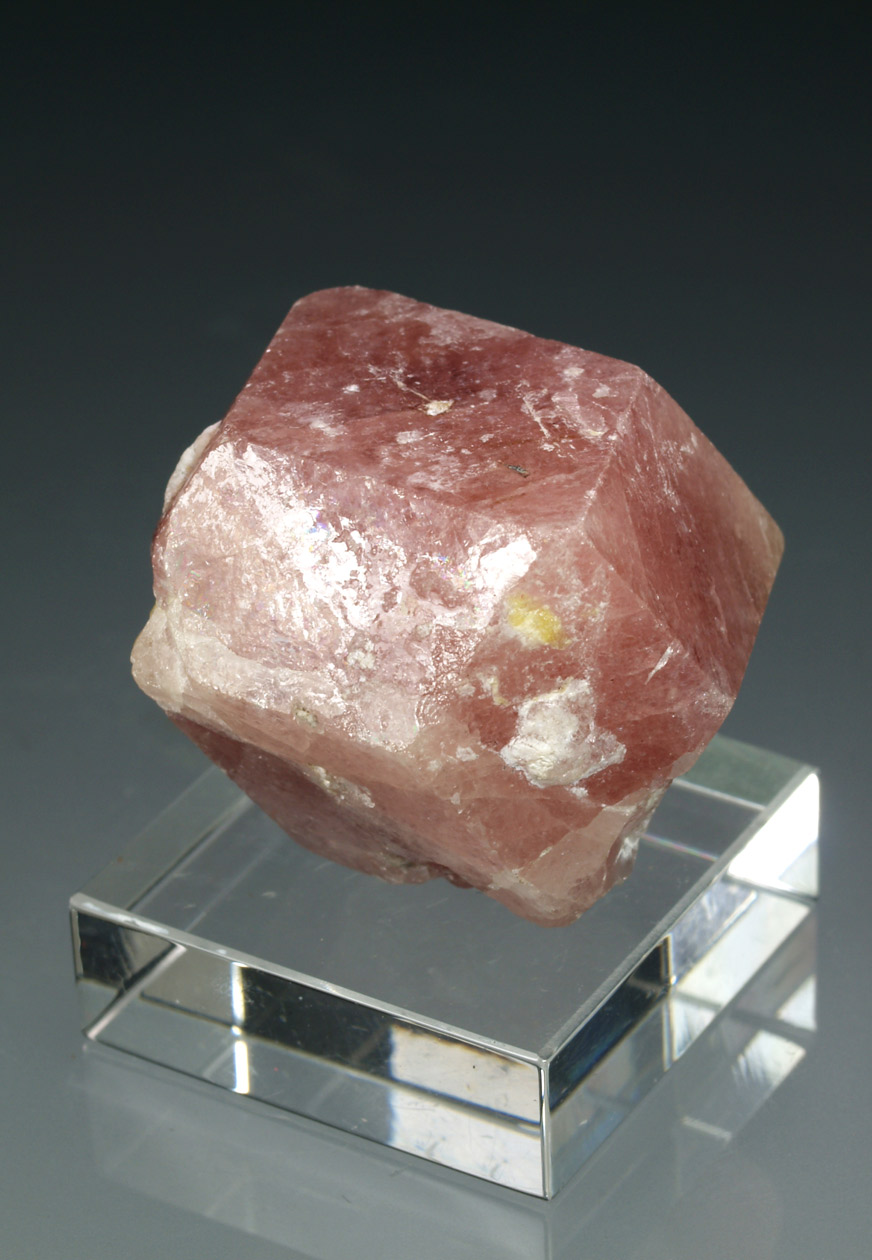
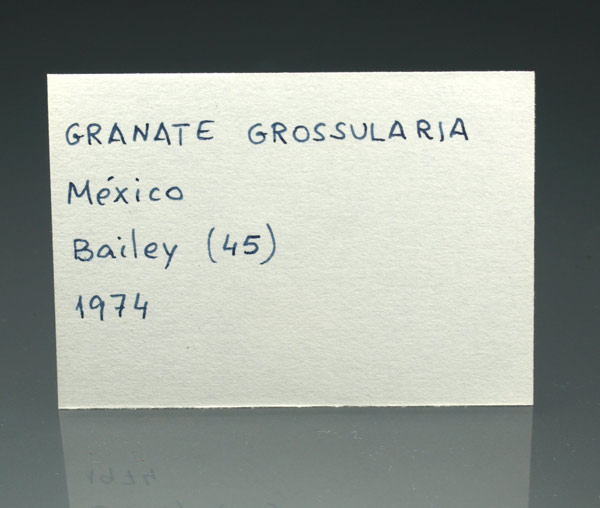
Cristal flotante de buen tamaño de grosularia, de color rosado, brillante (no muy habitual), con las caras del rombododecaedro muy definidas. Esta pieza procede de la colección de J. Astor, adquirida en 1974 a Bailey Minerals (Ángel Jesús Talabán García, Segovia 1942-Madrid 2007). Con etiquetas. Un clásico difícil de encontrar.
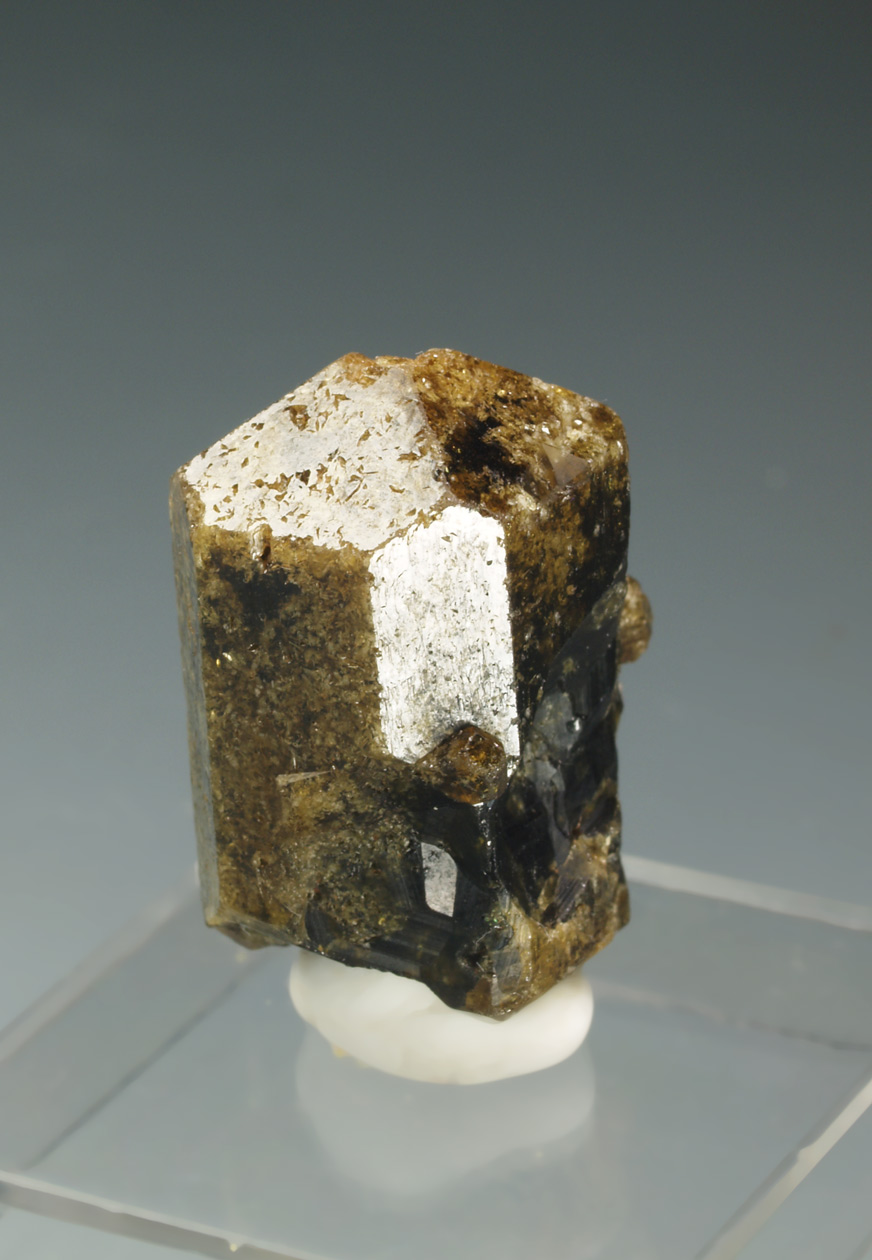
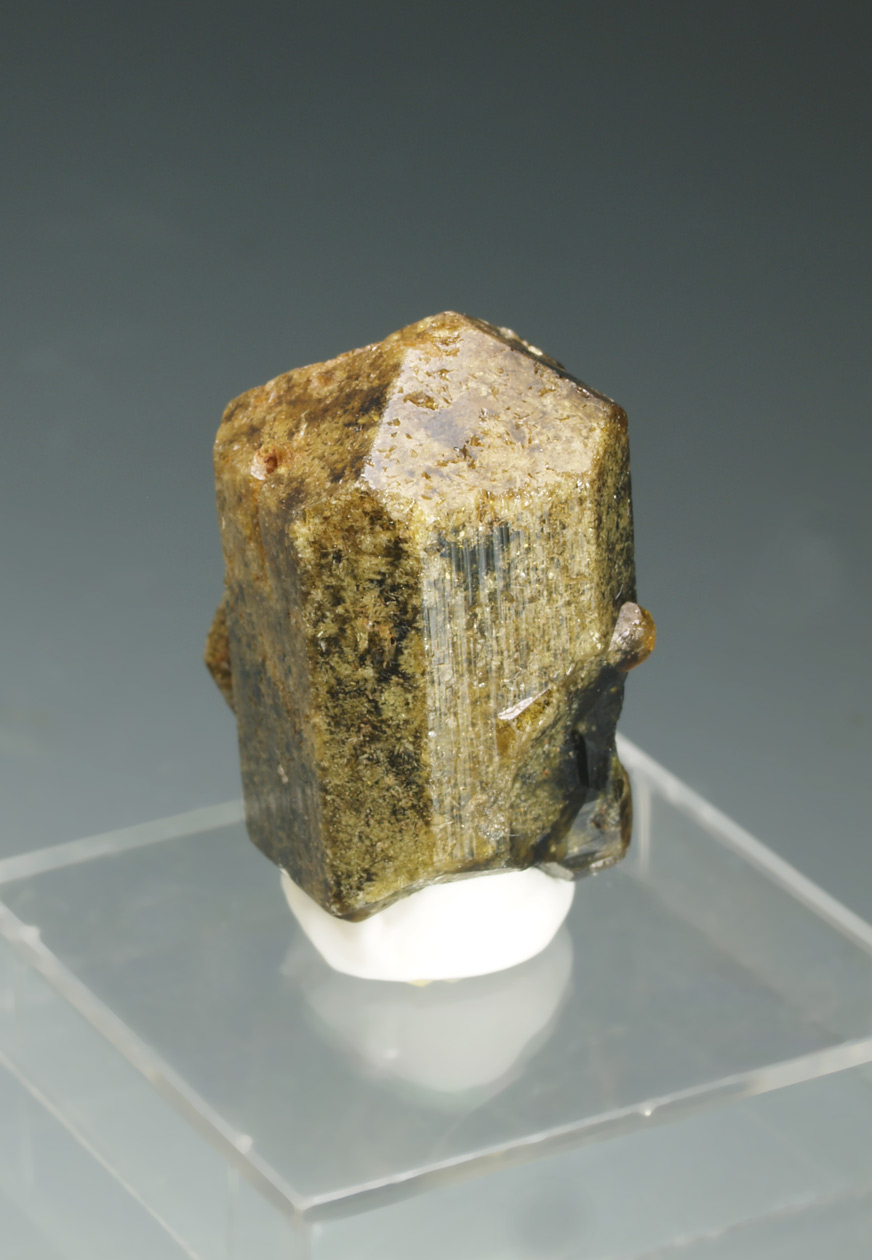
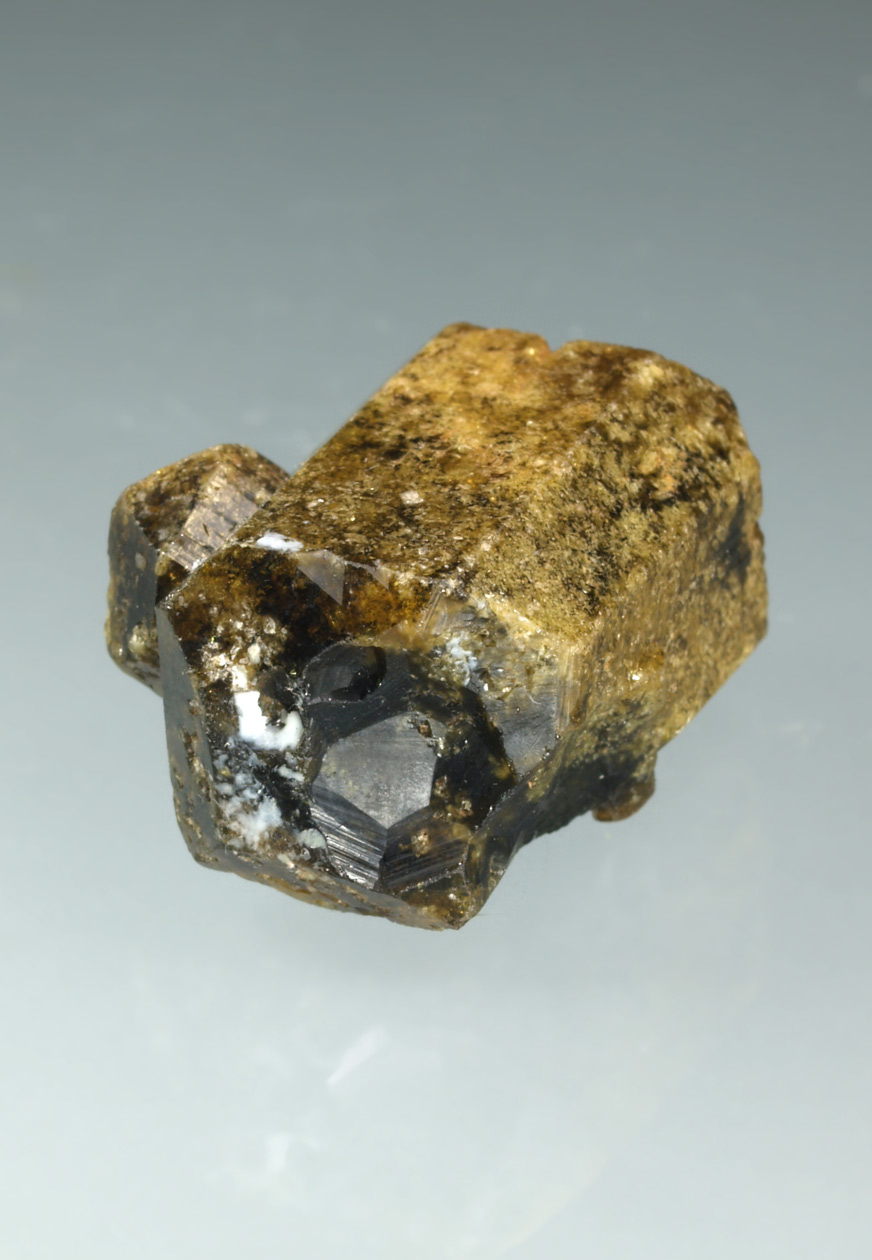
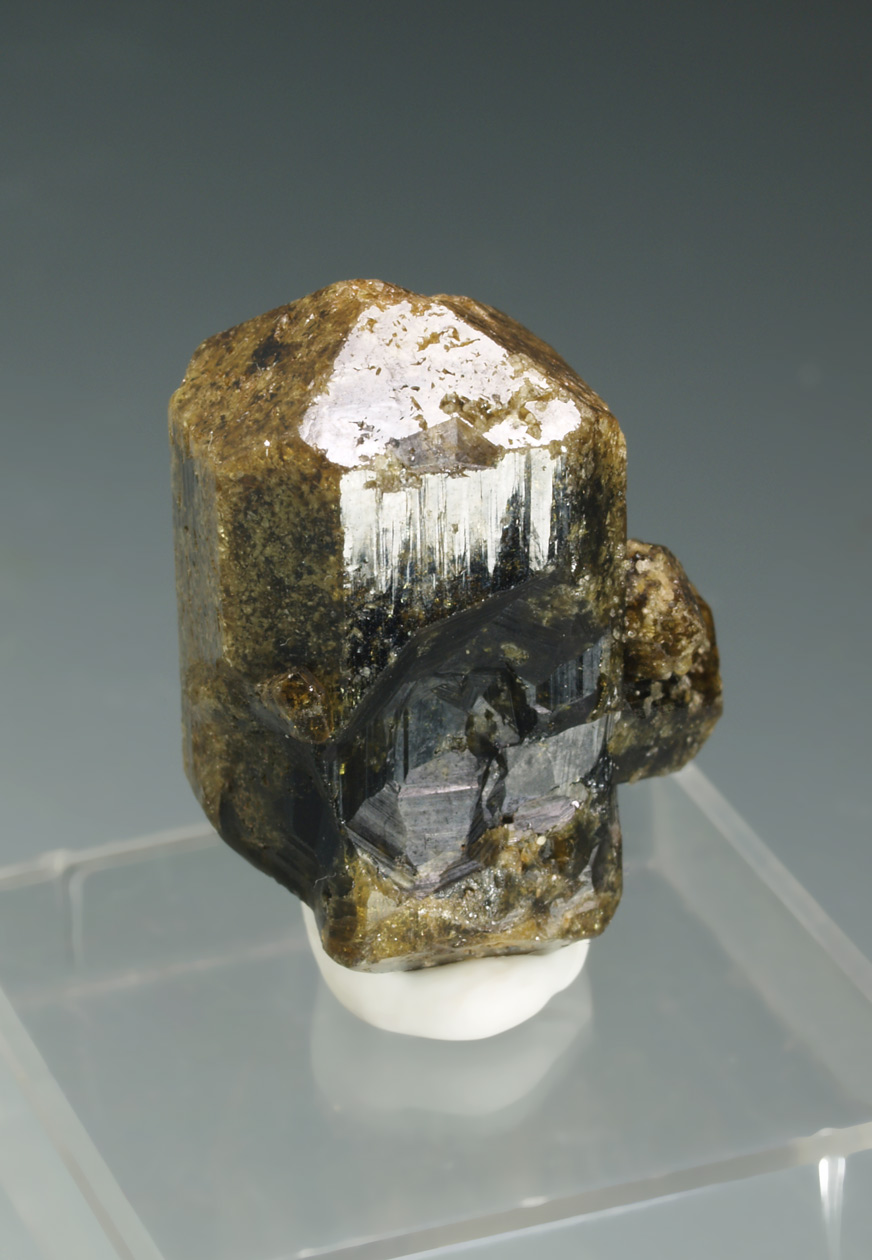
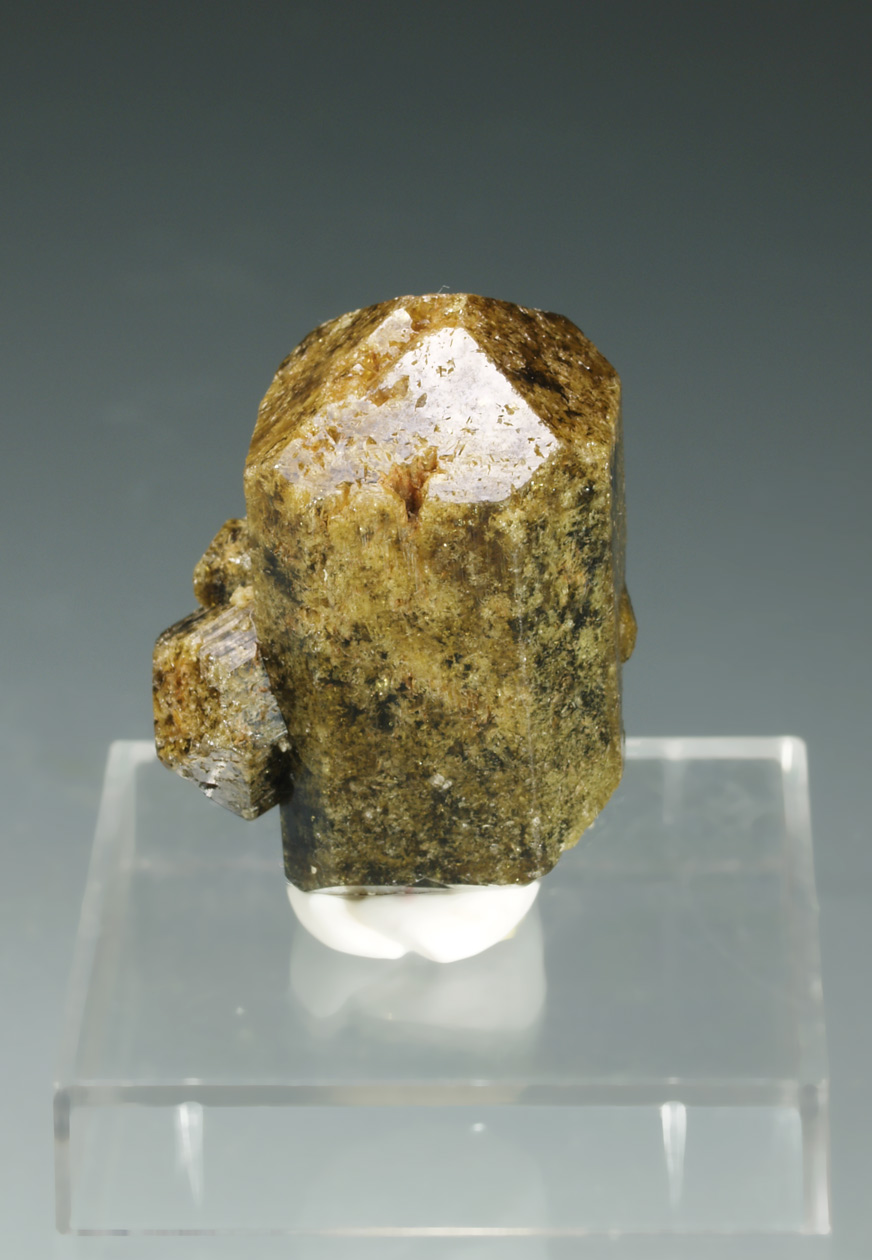
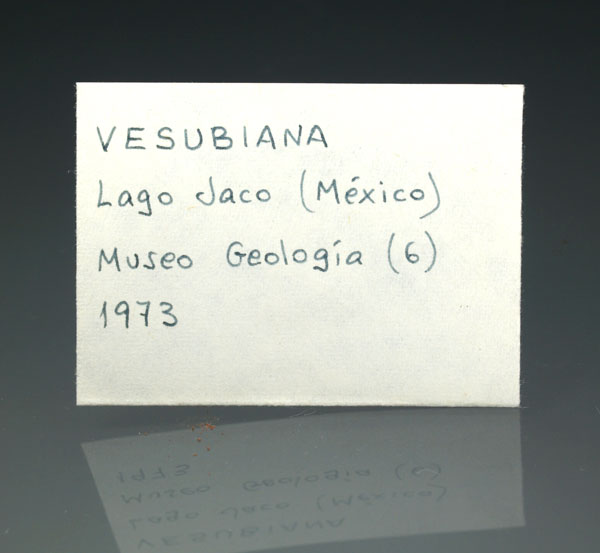
Cristal flotante de vesuvianita, con caras definidas, biterminado, de intenso color aceituna. Viene etiquetado como procedente del lago Jaco, aunque hay que decir que los granates y vesuvianitas atribuidos al lago Jaco proceden de la Sierra de Cruces (incorrectamente Sierra de la Cruz o Sierra de las Cruces) municipio Sierra Mojada, Coahuila, México. Adquirida por J. Astor en el Museo de Geología de Barcelona a principios de los 70, con etiquetas.
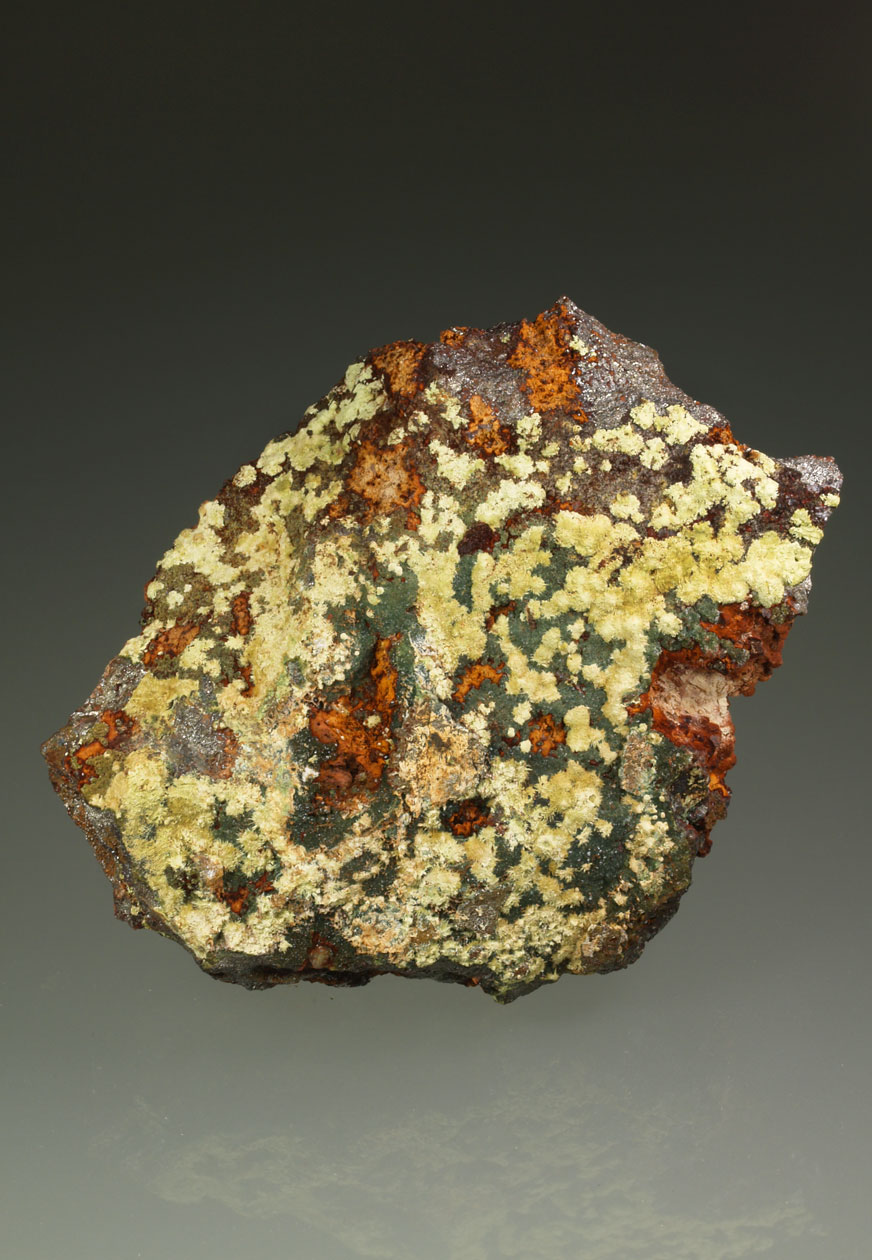
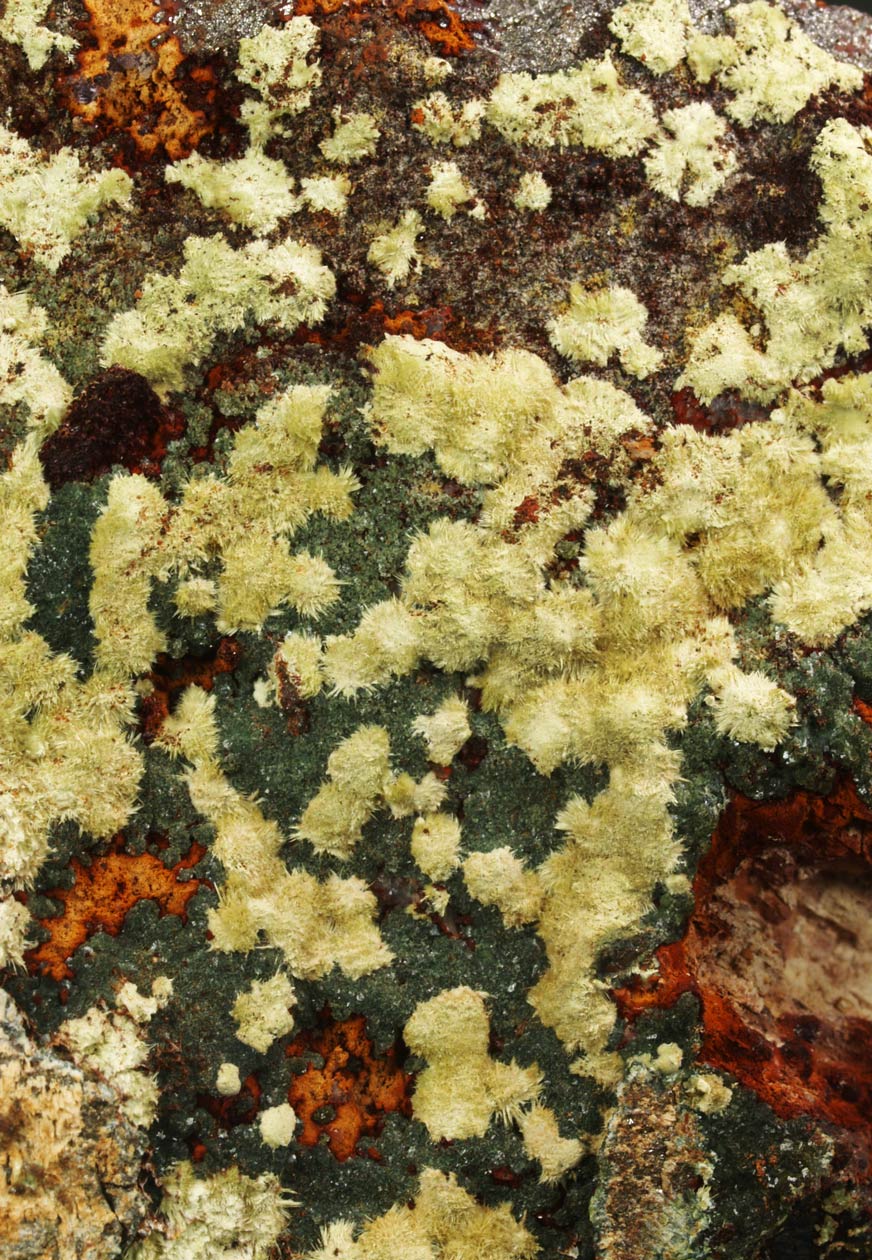
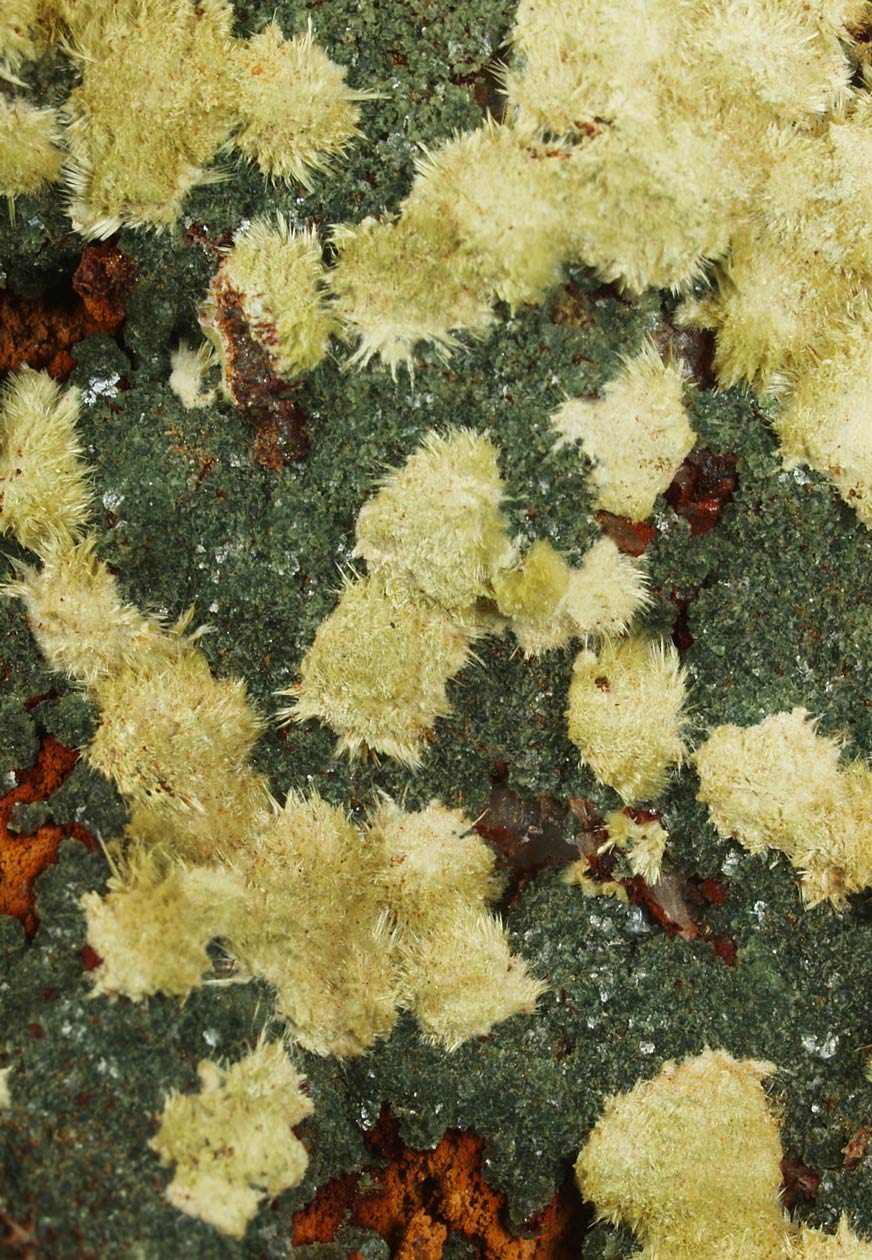
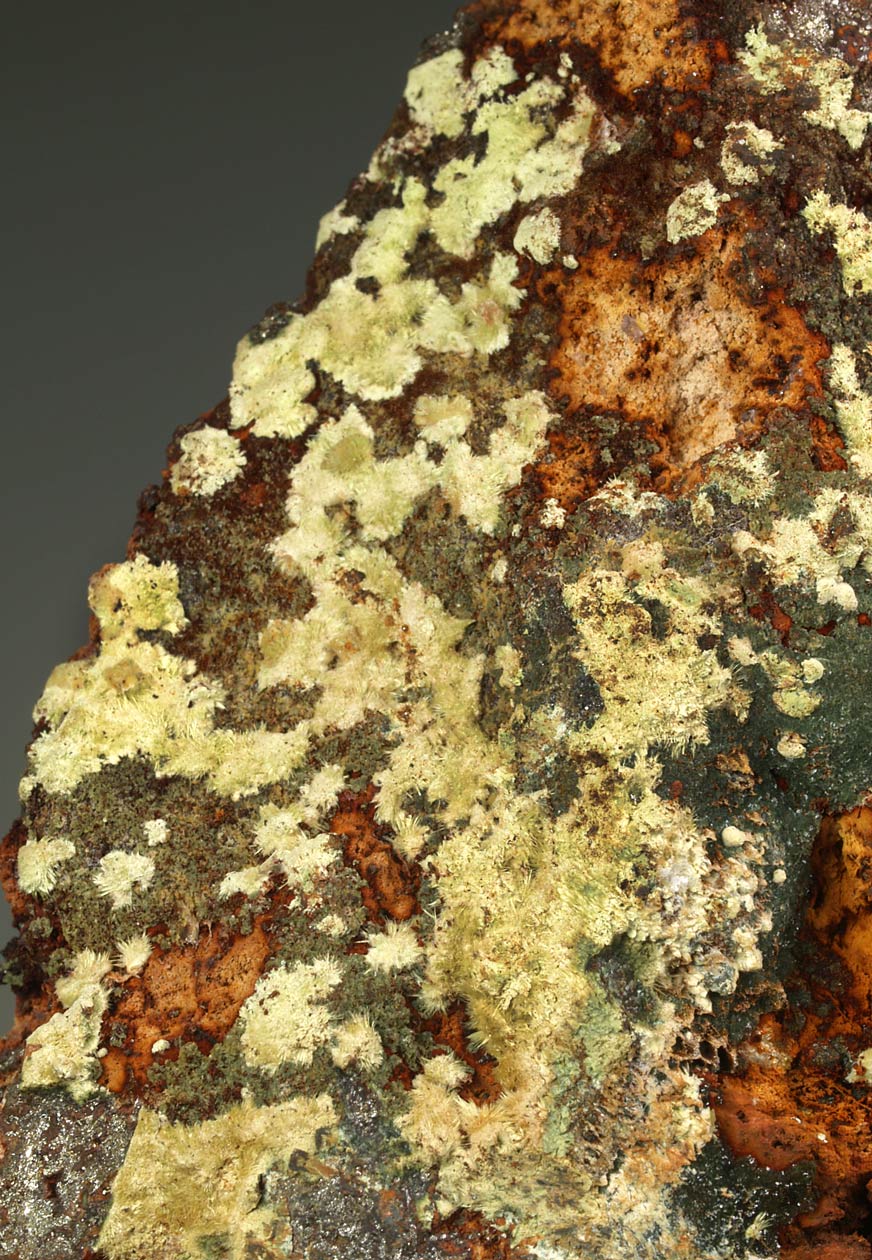
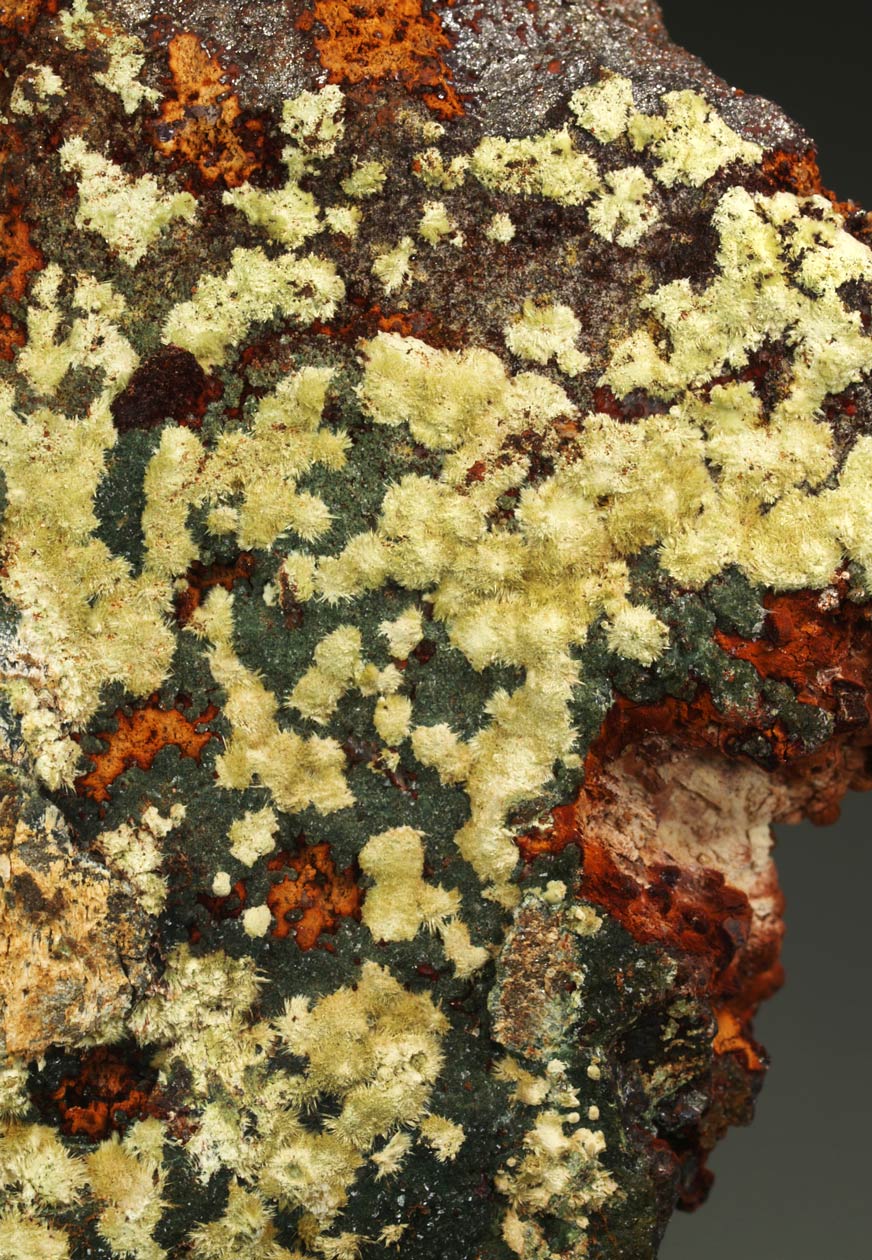
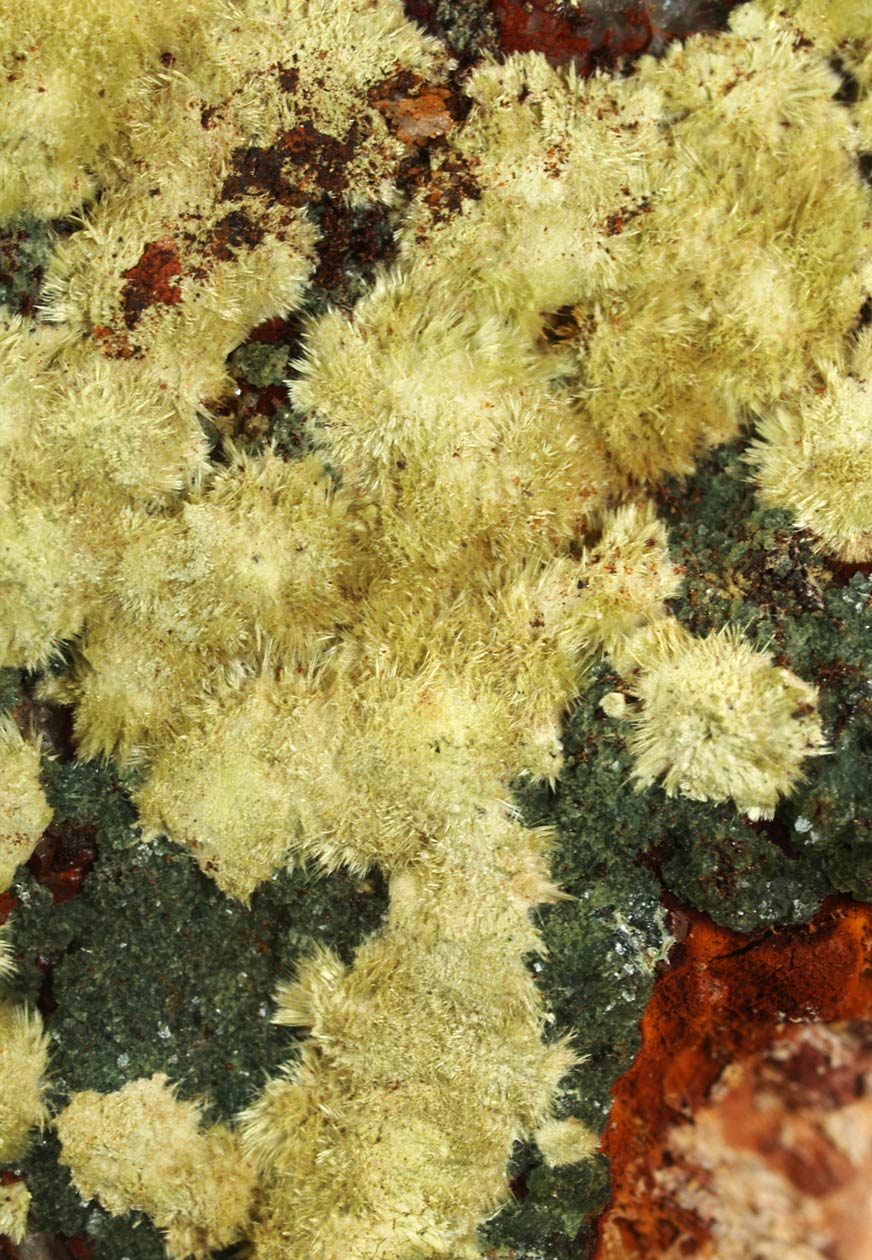
La ojuelaita es un muy raro arseniato de zinc y hierro que lleva el nombre de la mundialmente famosa mina Ojuela (México), su localidad tipo. La especie, que pertenece al grupo dela arthurita, fue aceptada por la IMA en 1982 y es isoestructural con la whitmoréita. Se encuentra en la zona de oxidación del yacimiento, asociada a escorodita, adamita y/o smithsonita.
En el artículo publicado por Cesbron, Romero y Williams [La mapimite et l'ojuélaïte, deux nouveaux arséniates hydratés de zinc et de fer de la mine Ojuela, Mapimi, Mexique. Bulletin de Minéralogie 104, 582-586. (1981)] se describen dos nuevos minerales, la mapimita y la ojuelaita. Los ejemplares estudiados se obtuvieron gracias al conocido mineralogista mexicano Don Manuel Romero.
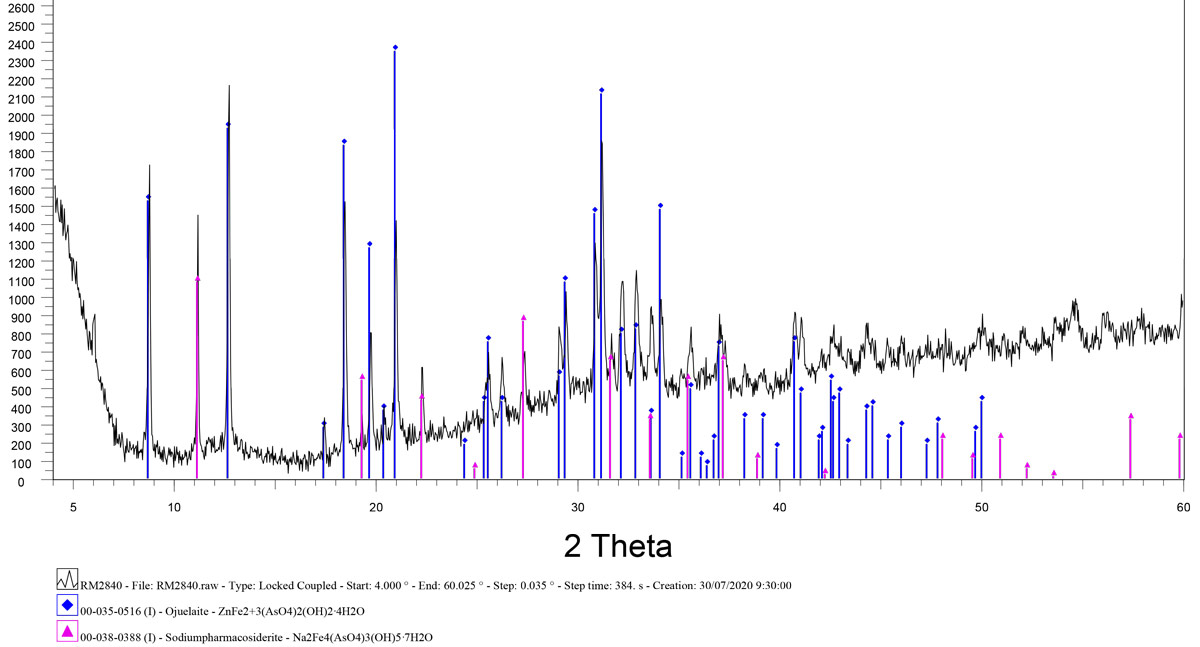
En este ejemplar se halla asociada a natrofarmacosiderita-farmacosiderita, tal como demuetsra la DRX que adjuntamos. La matriz de arsenopirita se halla parcialmente recubierta de agregados de cristales de natrofarmacosiderita-farmacosiderita, de color verde, brillantes y con formas cúbicas. La ojuelaita de este ejemplar se presenta como agregados fibrosos radiales, de brillo sedoso y color amarillo. Enviaremos los análisis al comprador. Procede de la colección de Marcus J. Origlieri.
Podemos decir que esta pieza se halla entre las mejores a nivel mundial para esta especie, por su tamaño (10x7cm), riqueza, estética y calidad.
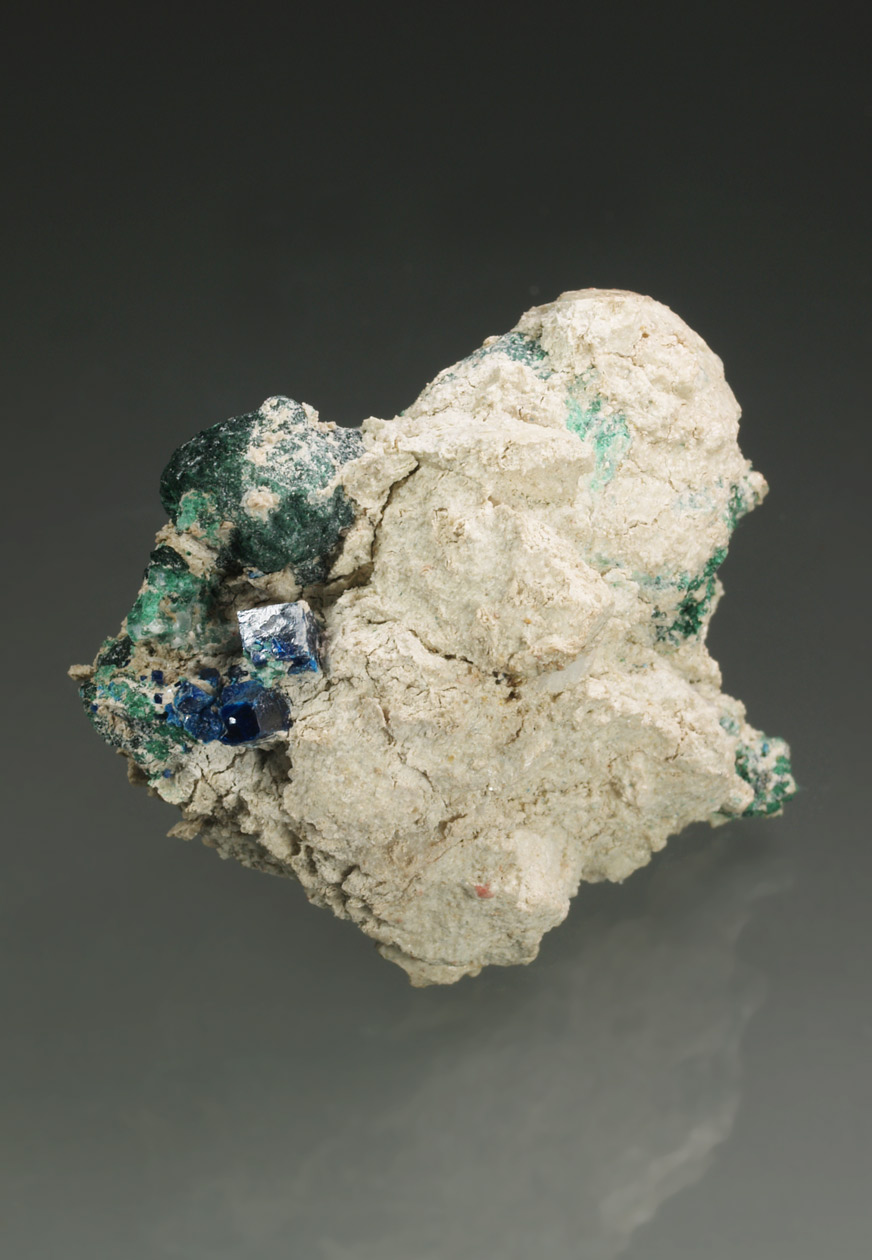
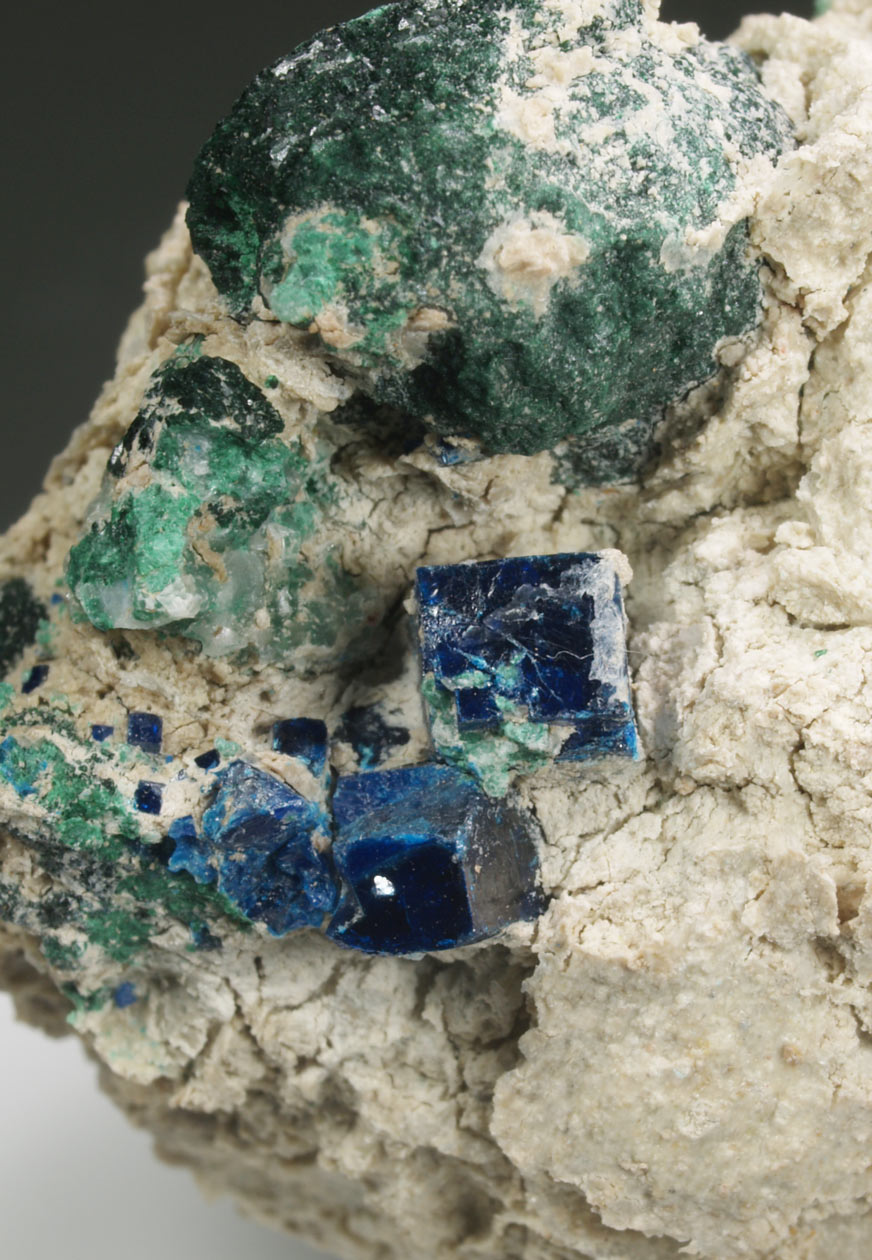
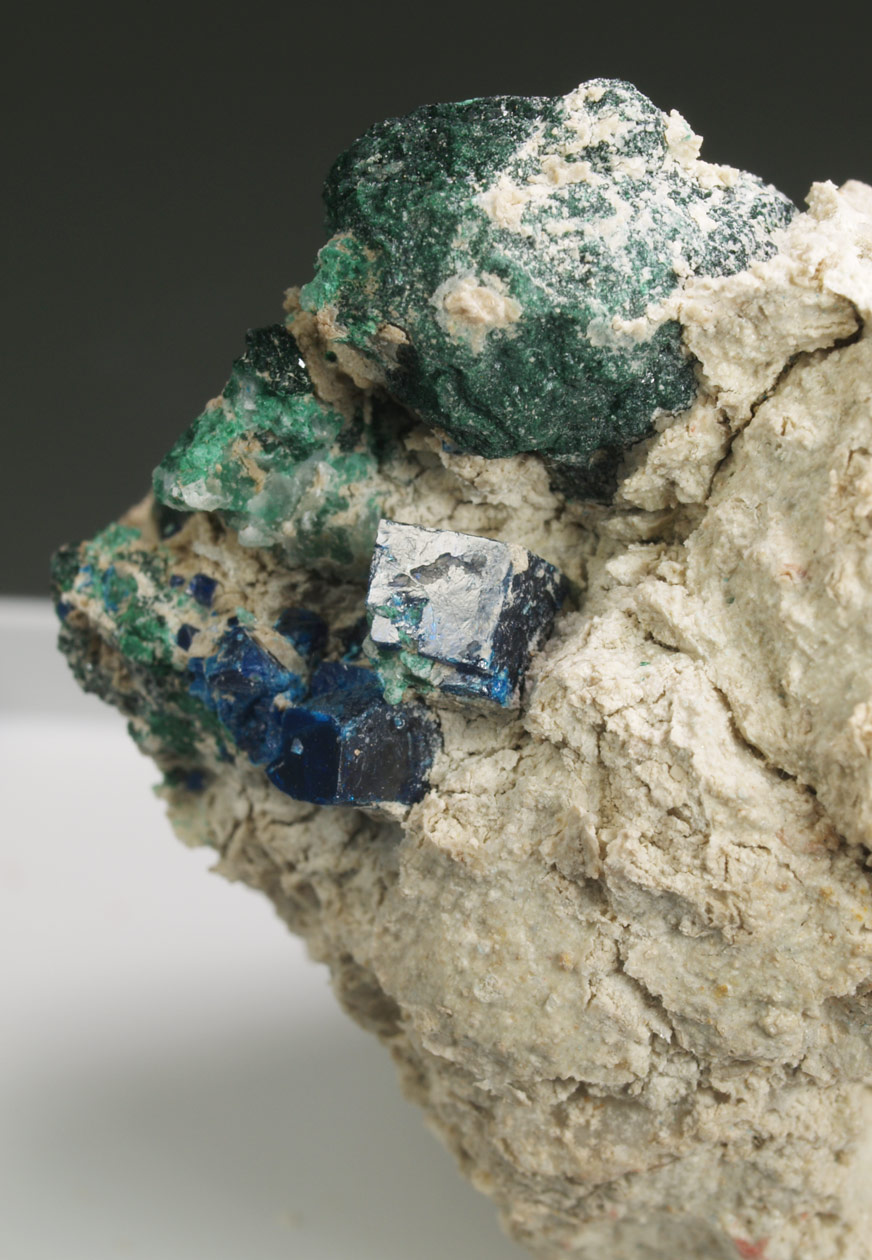
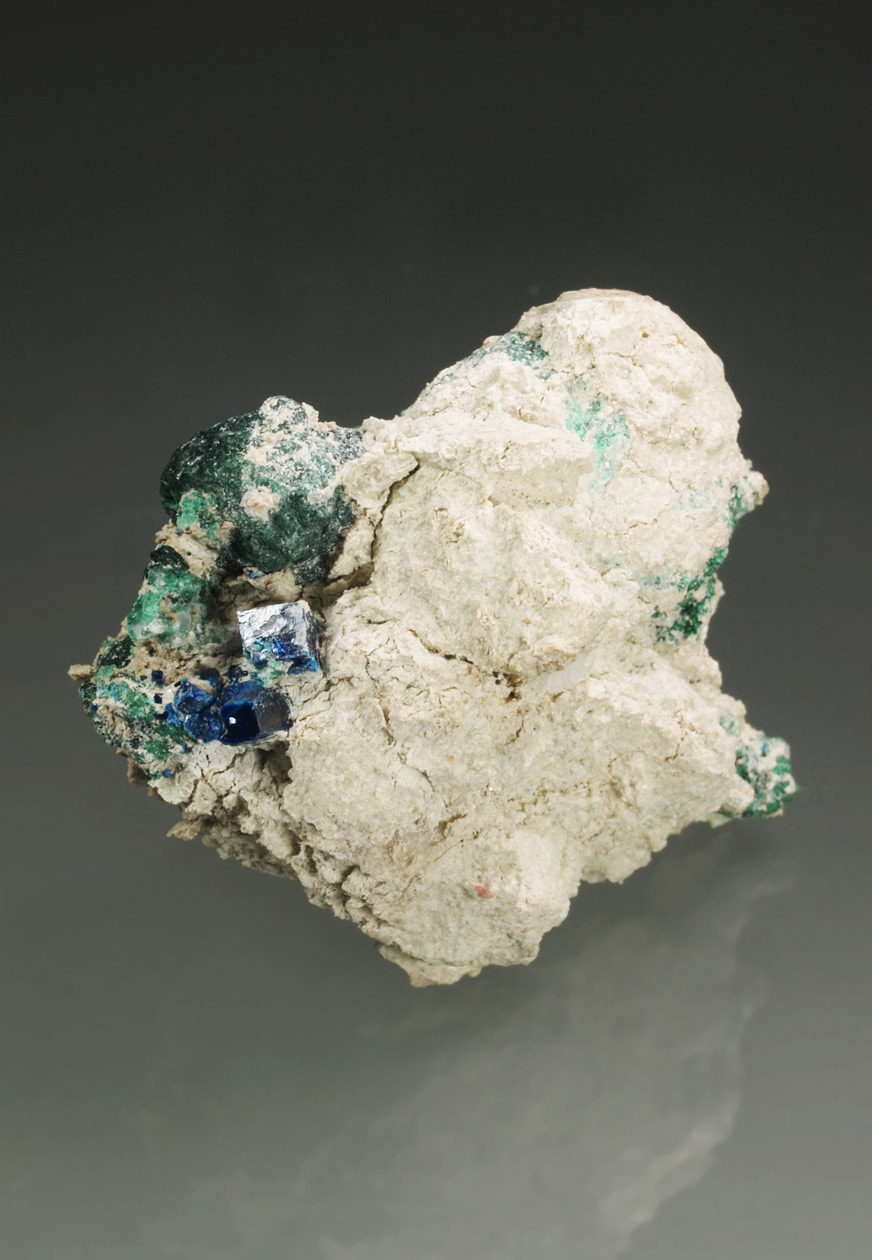
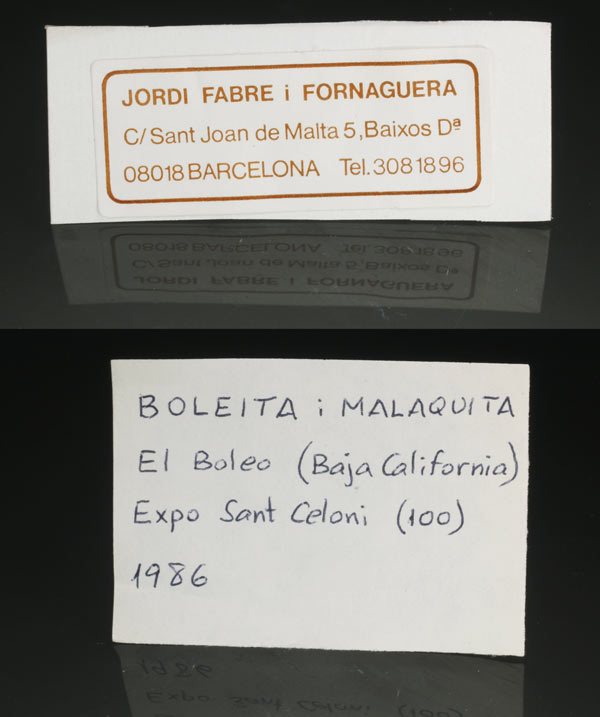
Antiguo ejemplar de boleíta que nos muestra un grupo de cristales, dos de ellos predominantes, con brillo e intenso color. Se acompañan en matriz con malaquita y atacamita. Este ejmplar fue adquirido por Joan Astor a Jordi Fabre en 1986. Conservamos las etiquetas de la colección Astor y la antigua de Jordi Fabre. De la localidad tipo.
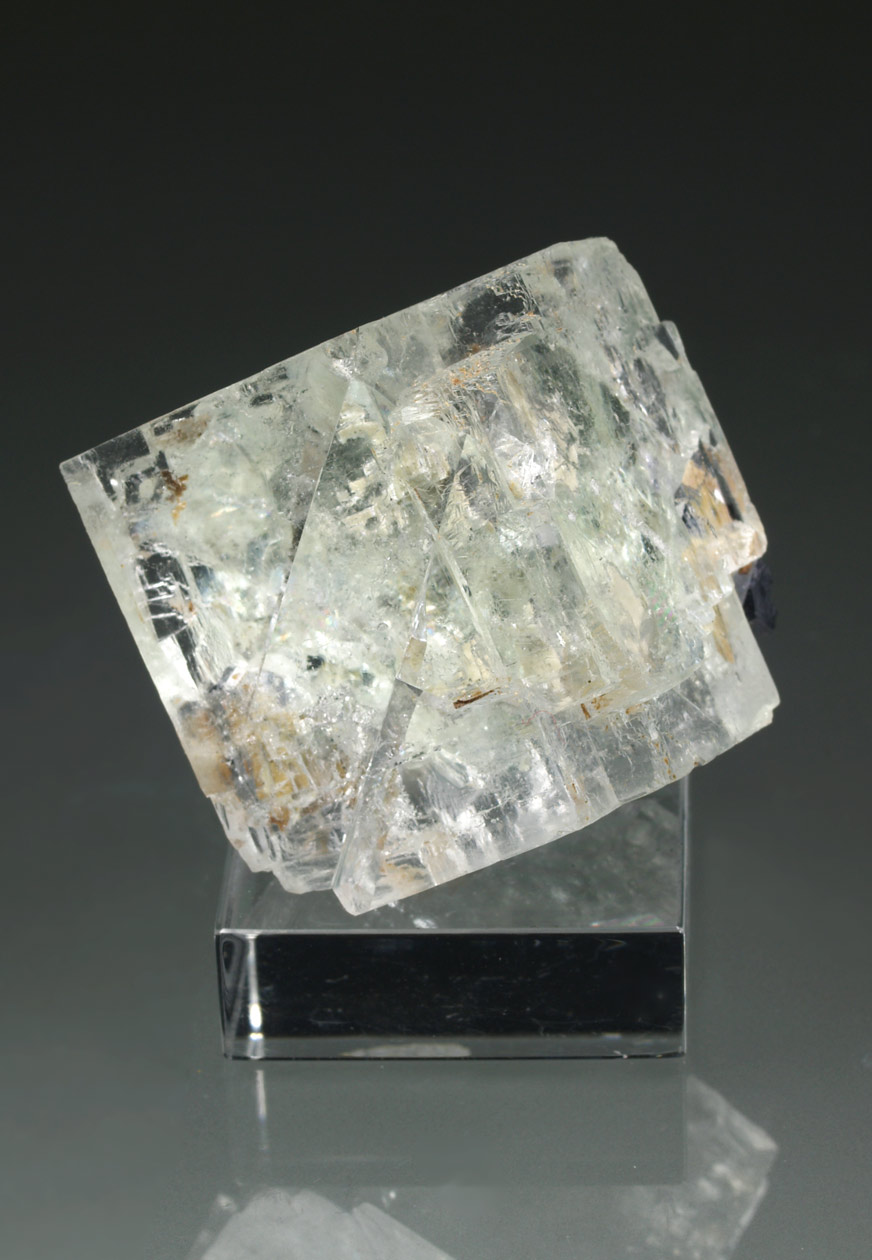
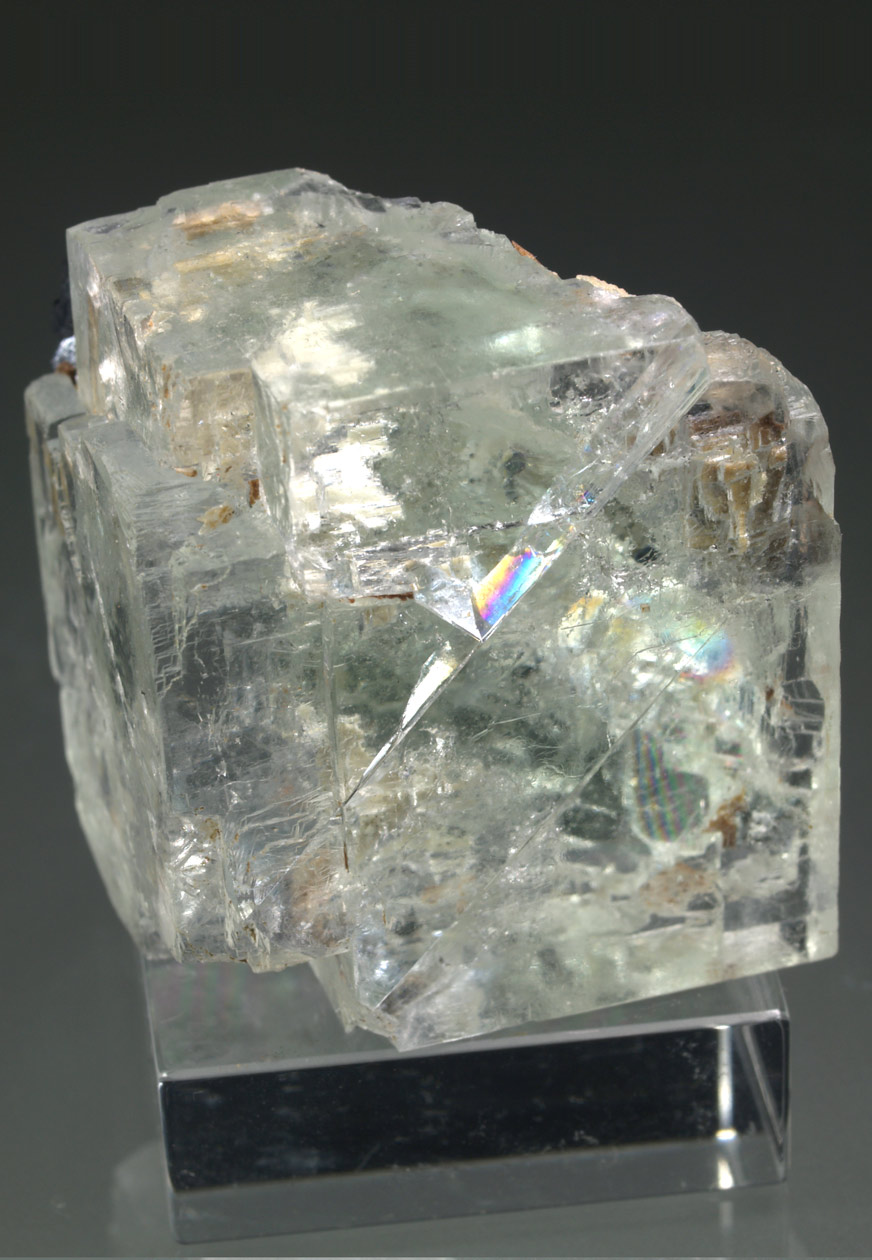
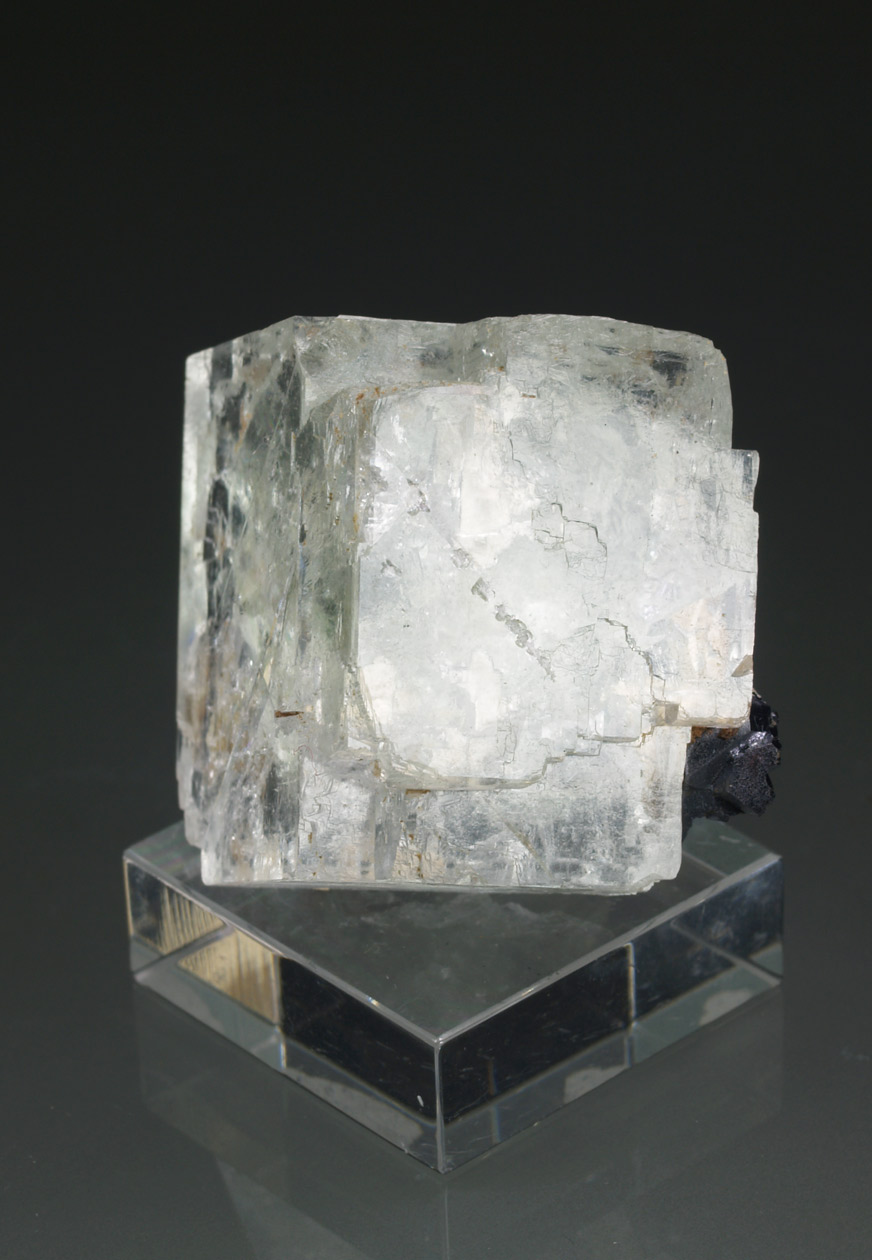
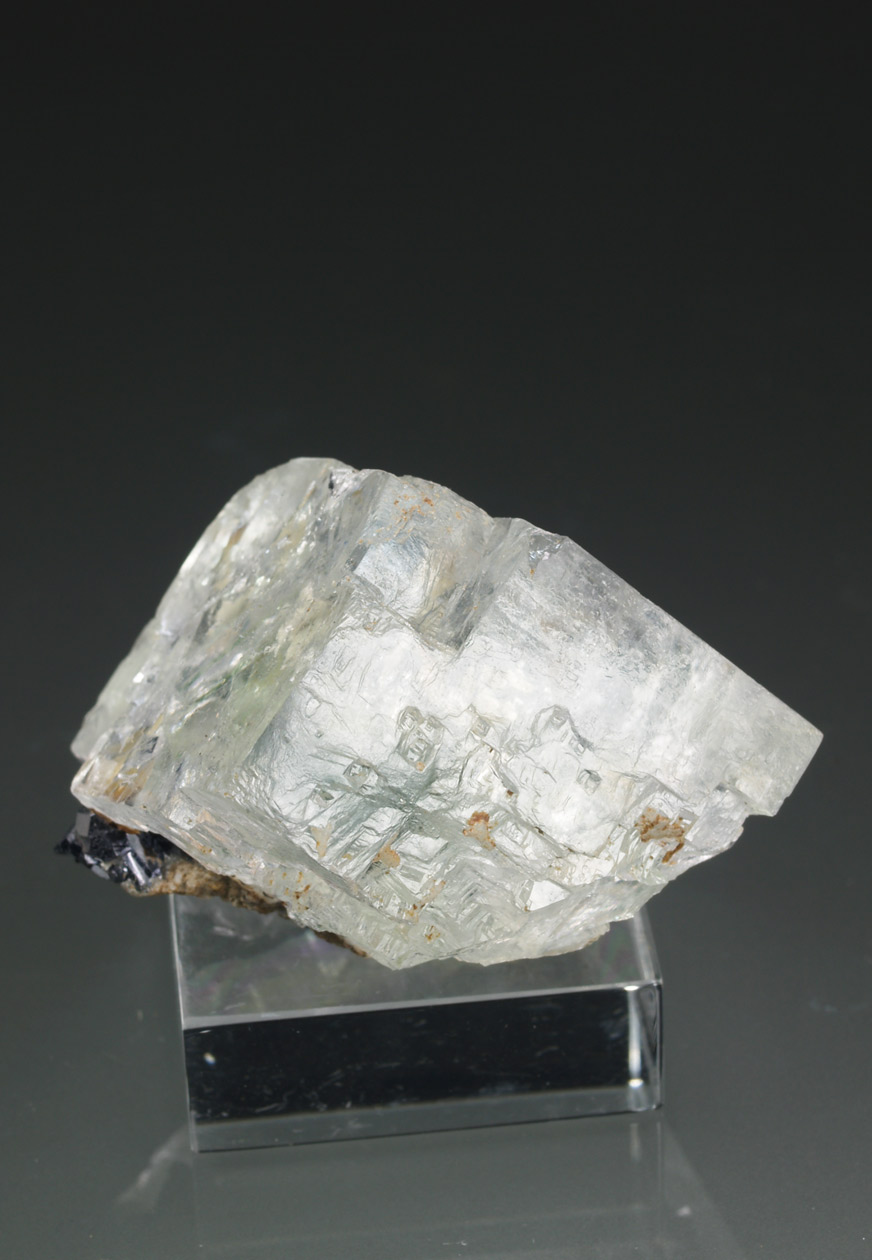
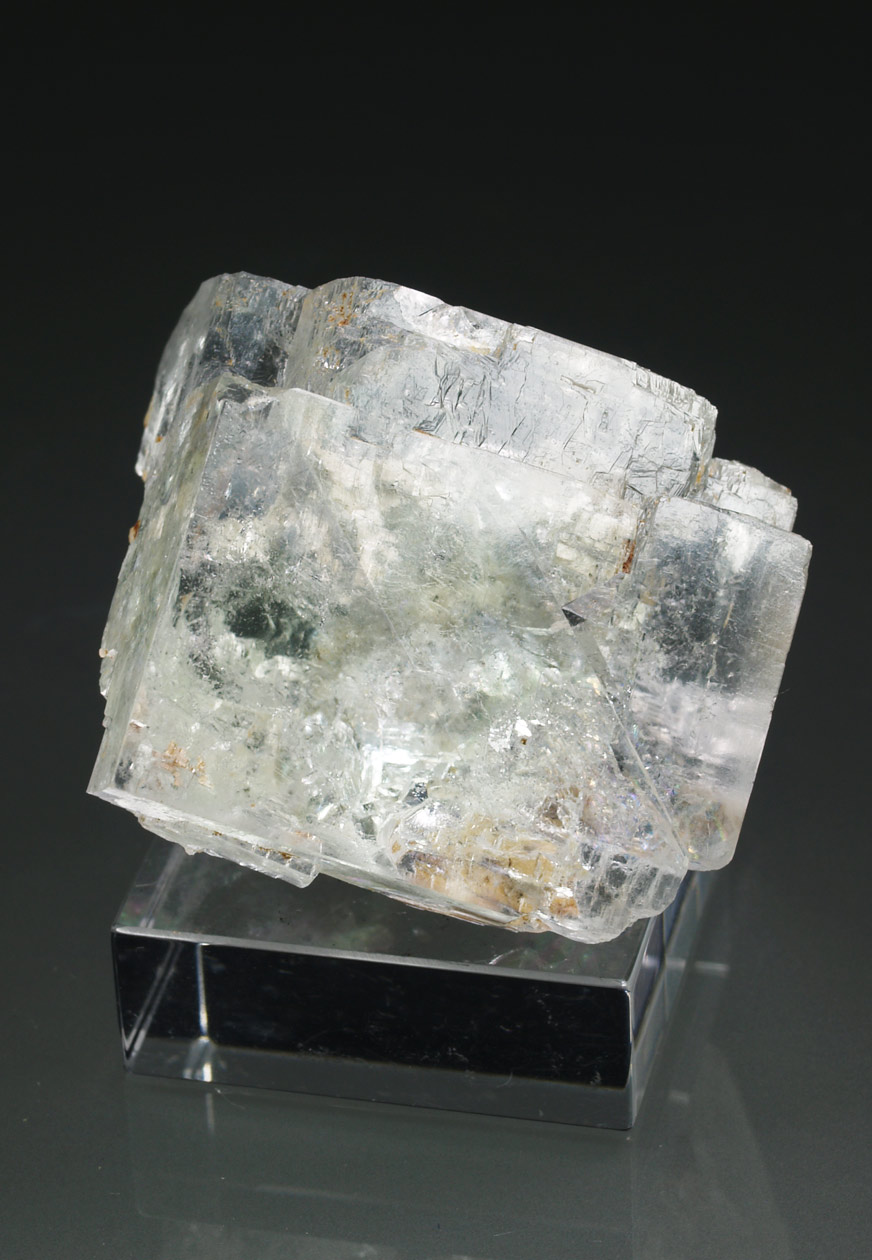
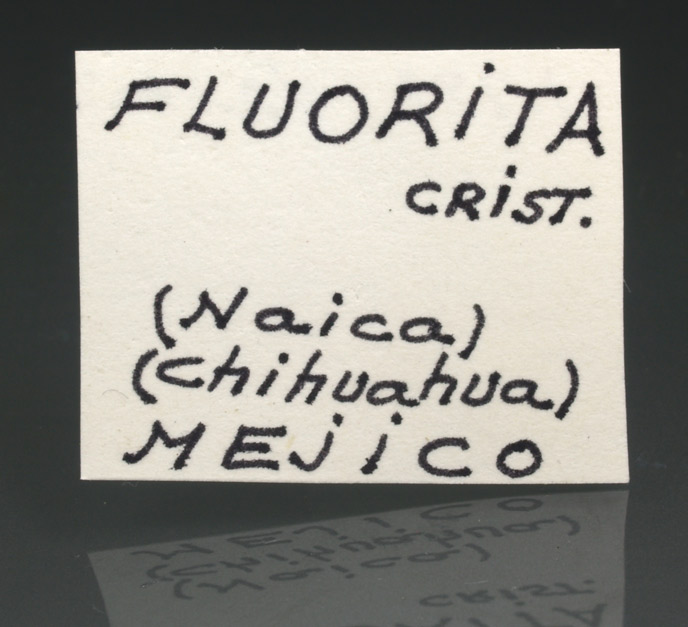
Grupo de cristales cúbicos de fluorita, muy transparentes y definidos, incoloros, brillantes y en crecimiento escalonado. Presenta cierats inclusiones muy curiosas. Muestra galena a corte de matriz.
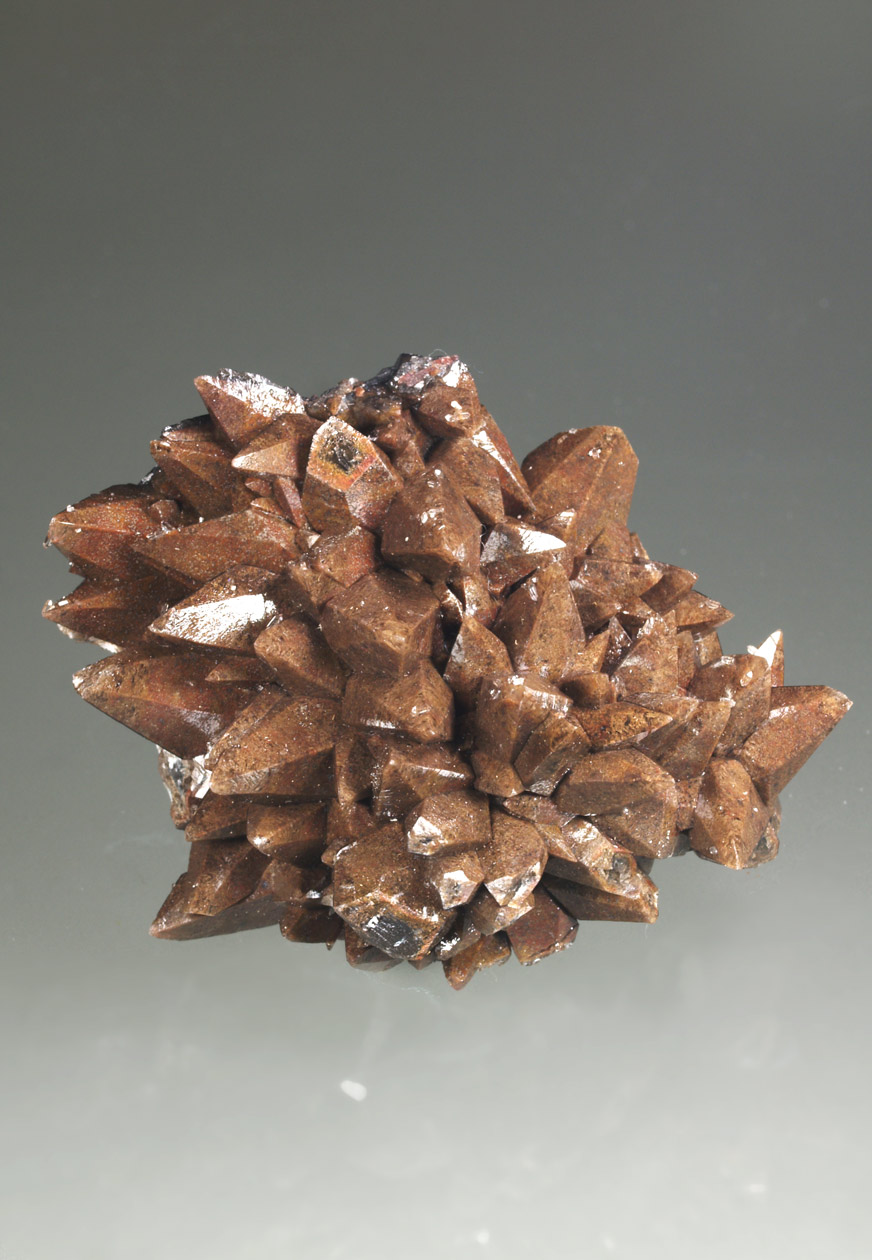
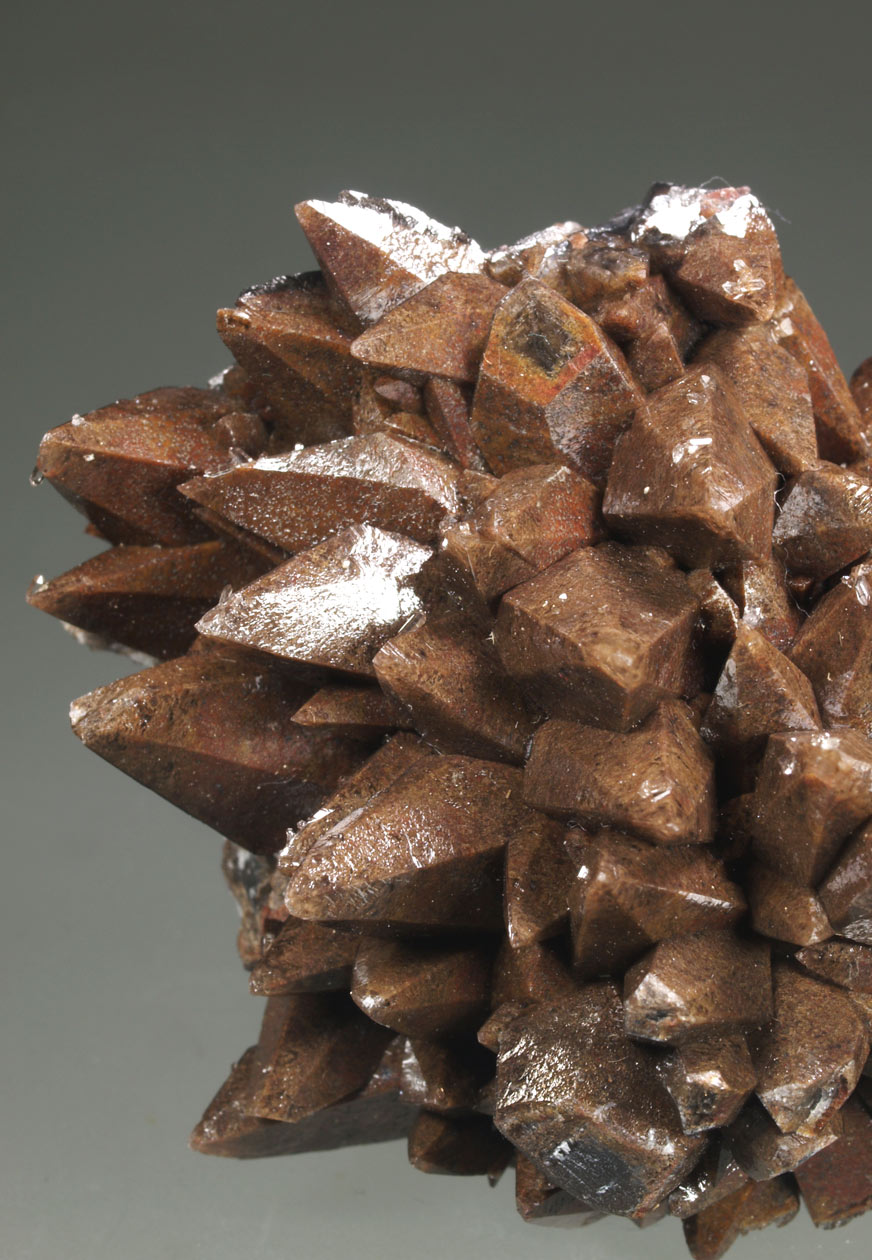
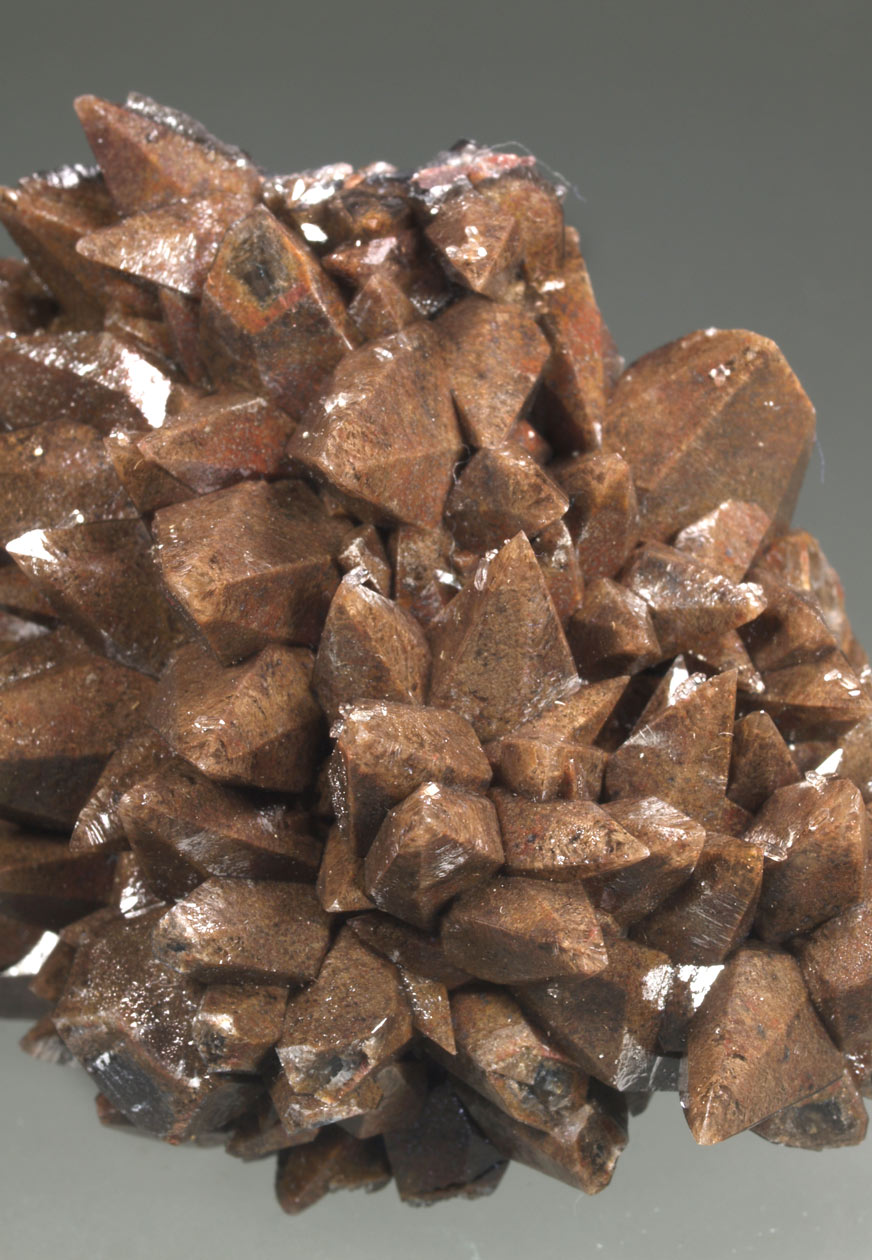
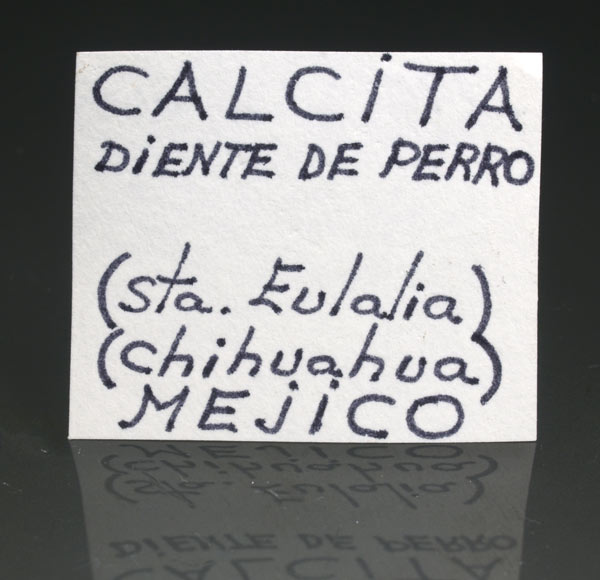
Grupo de cristales escalenoédricos de calcita, muy agudos, definidos y con un color marrón debido a inclusiones. Gracias a alguno de estos cristales que presenta exfioliación observamos que se ha formado en las etapas finales del crecimiento de los mismos. De la colección A. Trigo (Mataró).
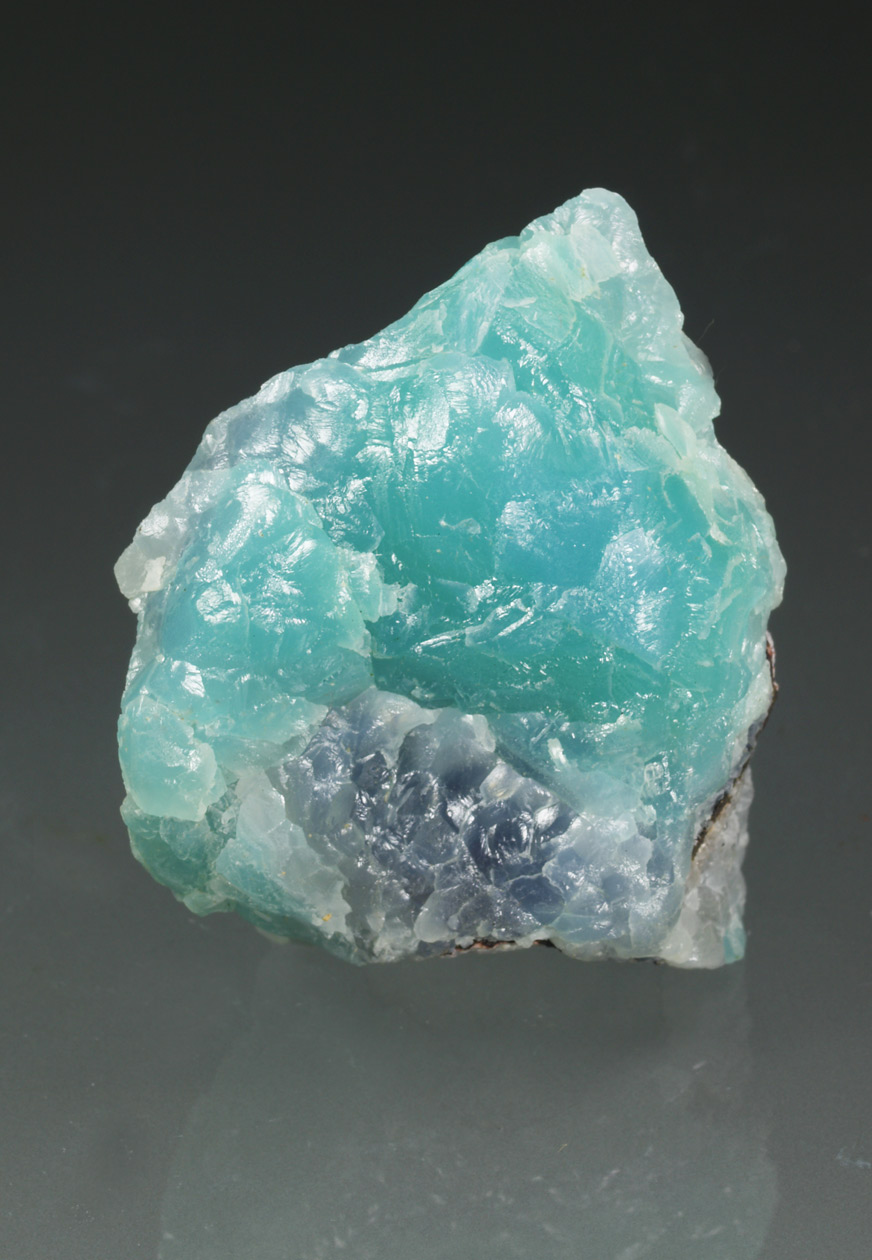
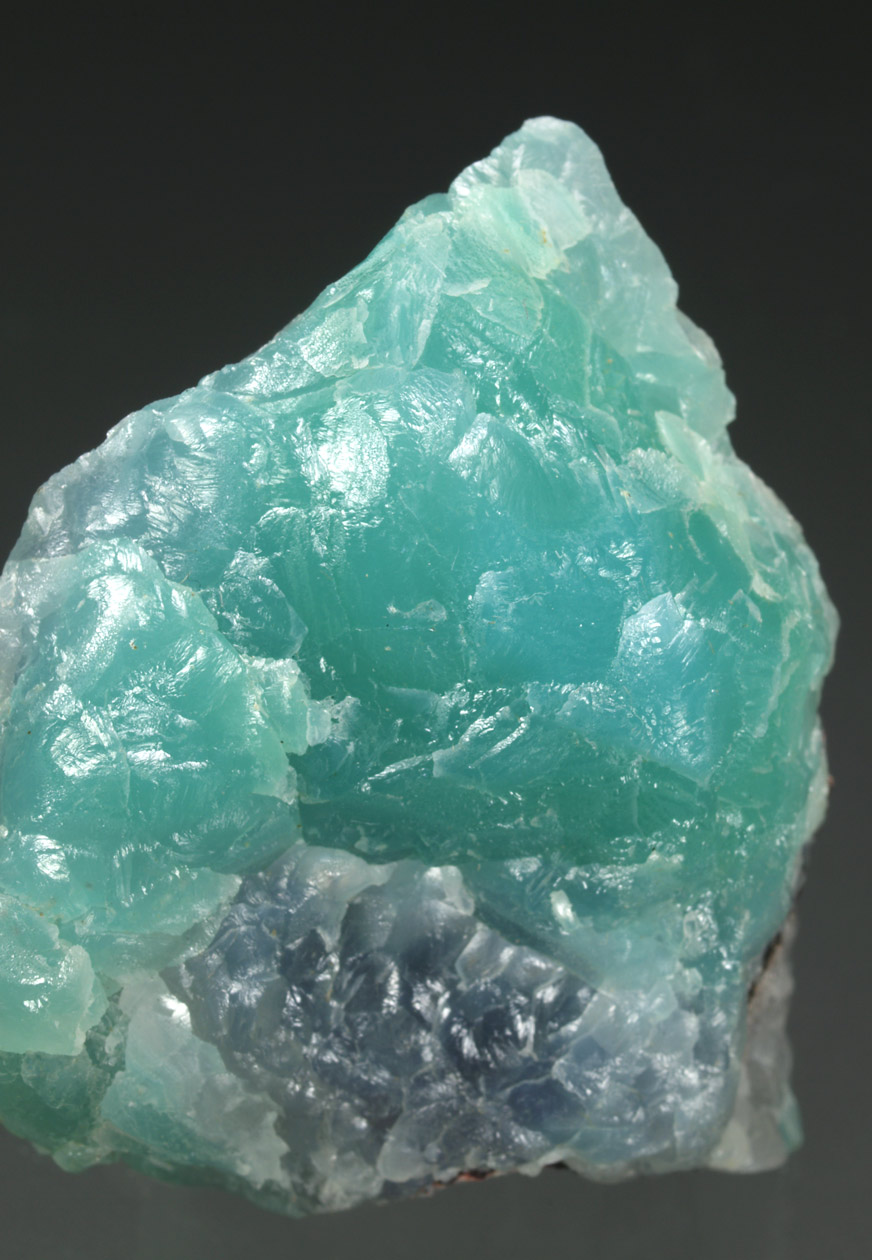
Pieza de smithsonita globular de un intenso color azul y buen brillo. La localidad de Choix produjo las mejores smithsonitas rosas y azules de México. De la colección de A. Trigo (Mataró).
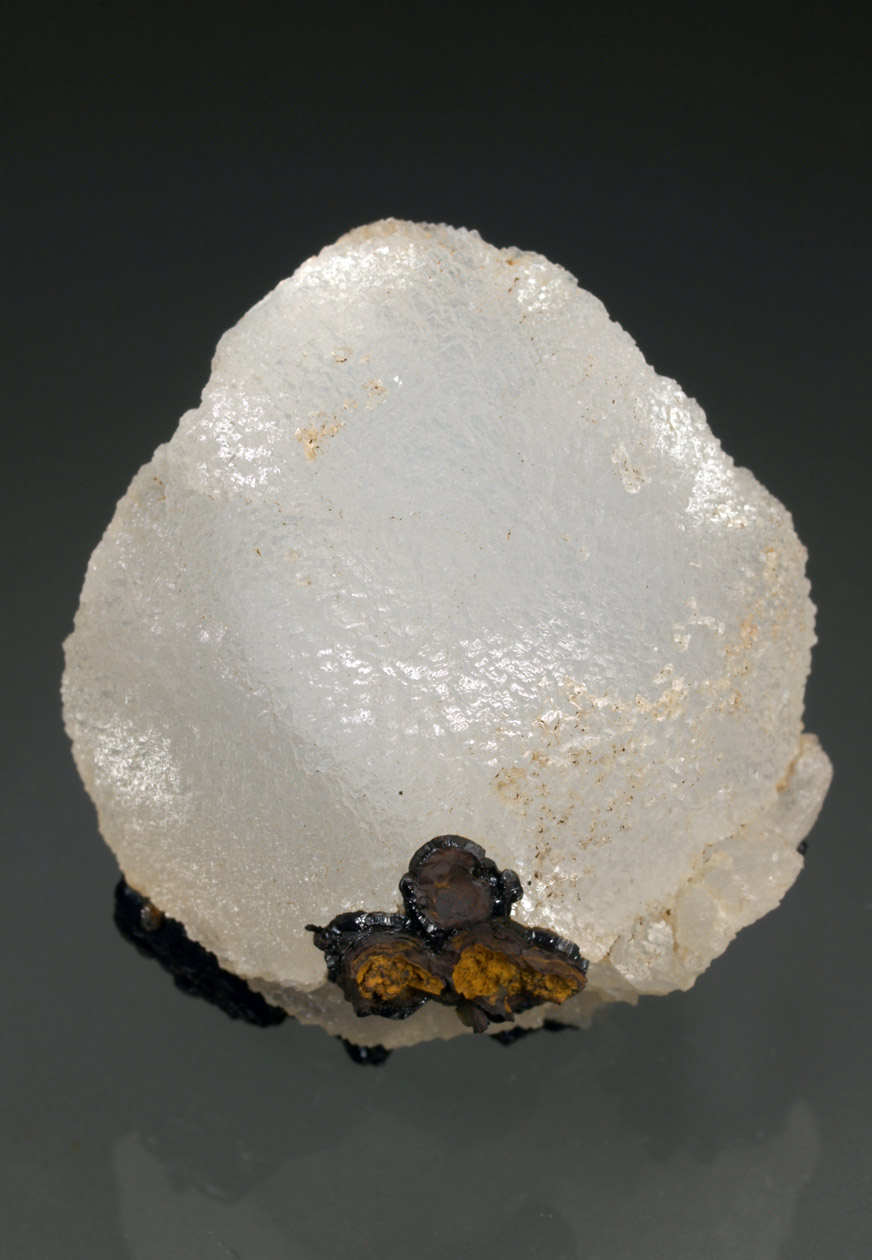
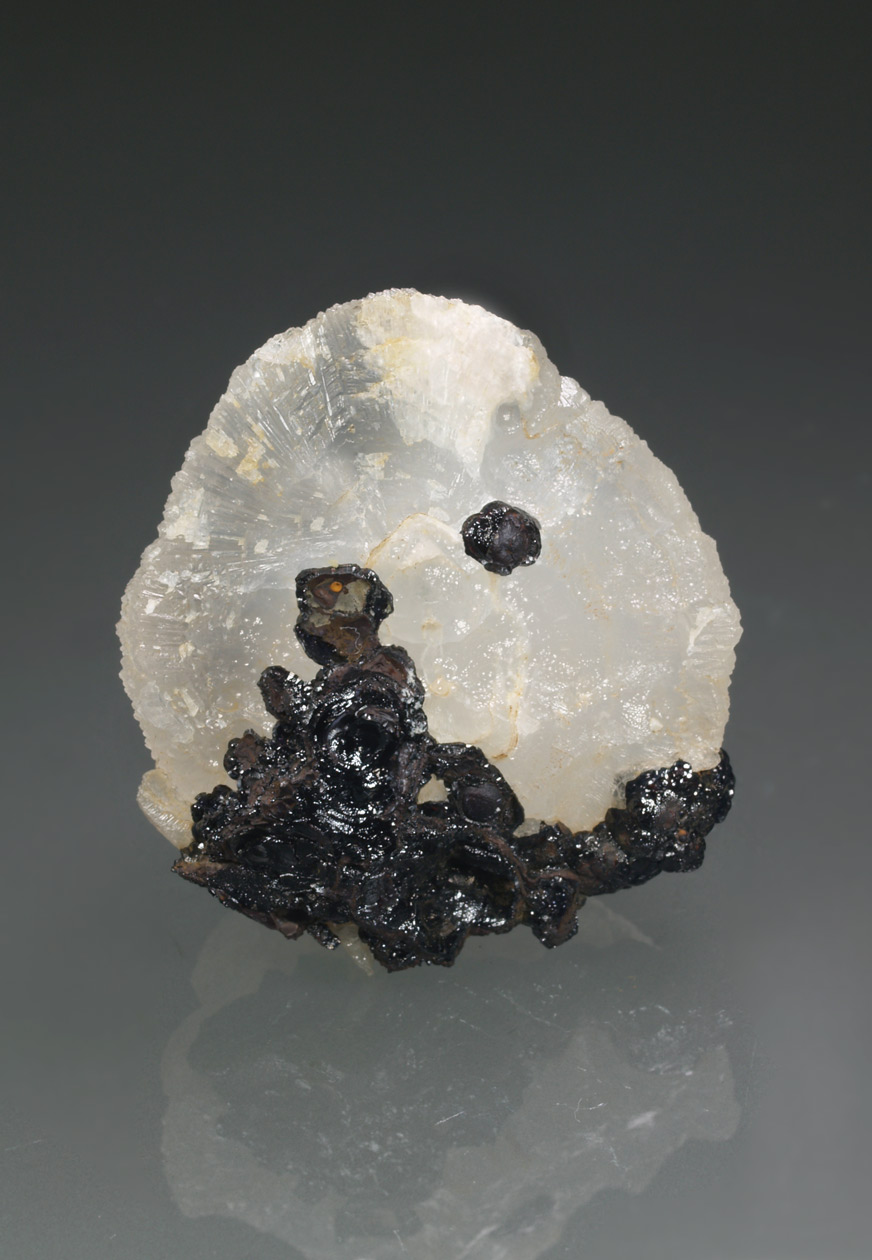
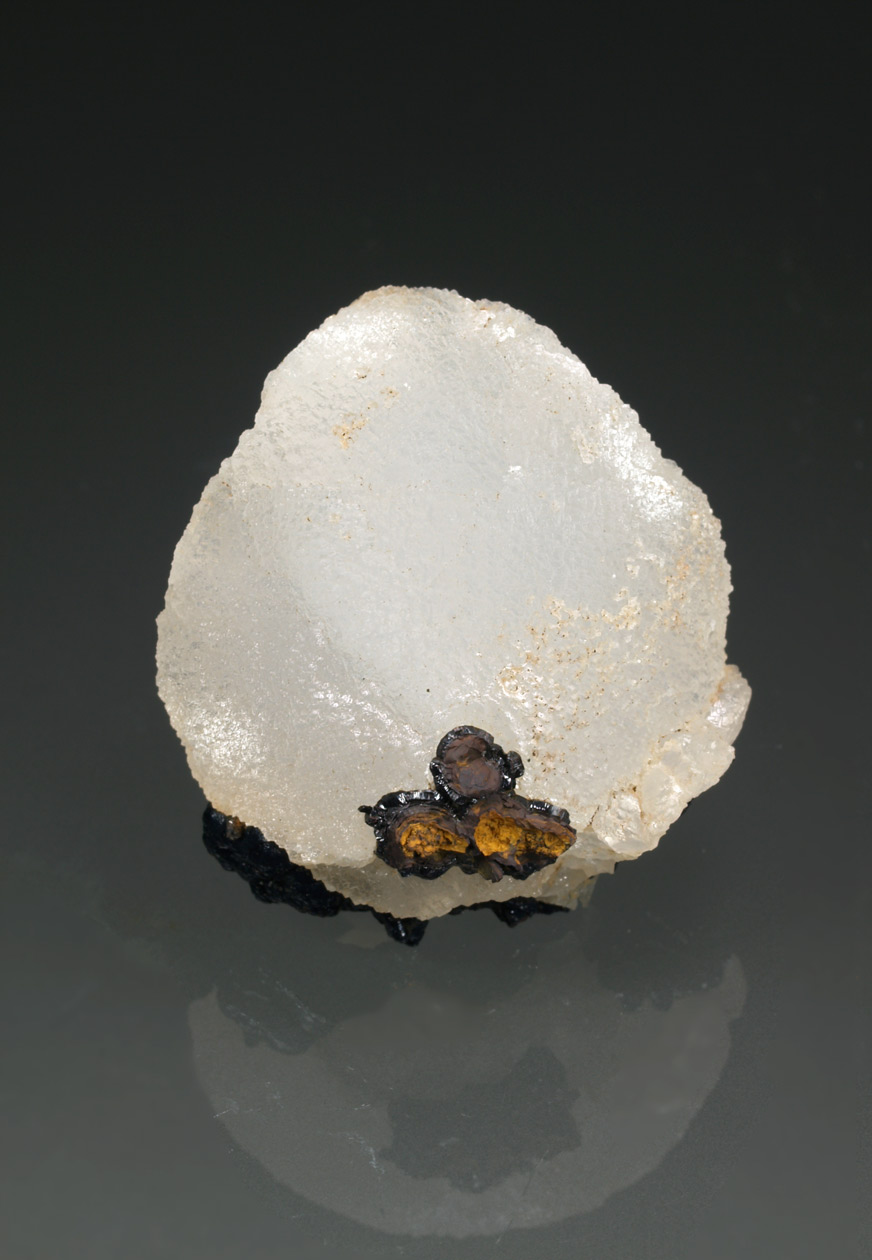
Agregado globular de buen tamaño de cristales de smithsonita. Muy brillante, translúcido y con algo de goethita a modo de matriz. De esta mina clásica mexicana. Procede de la colección A. Trigo (Mataró).
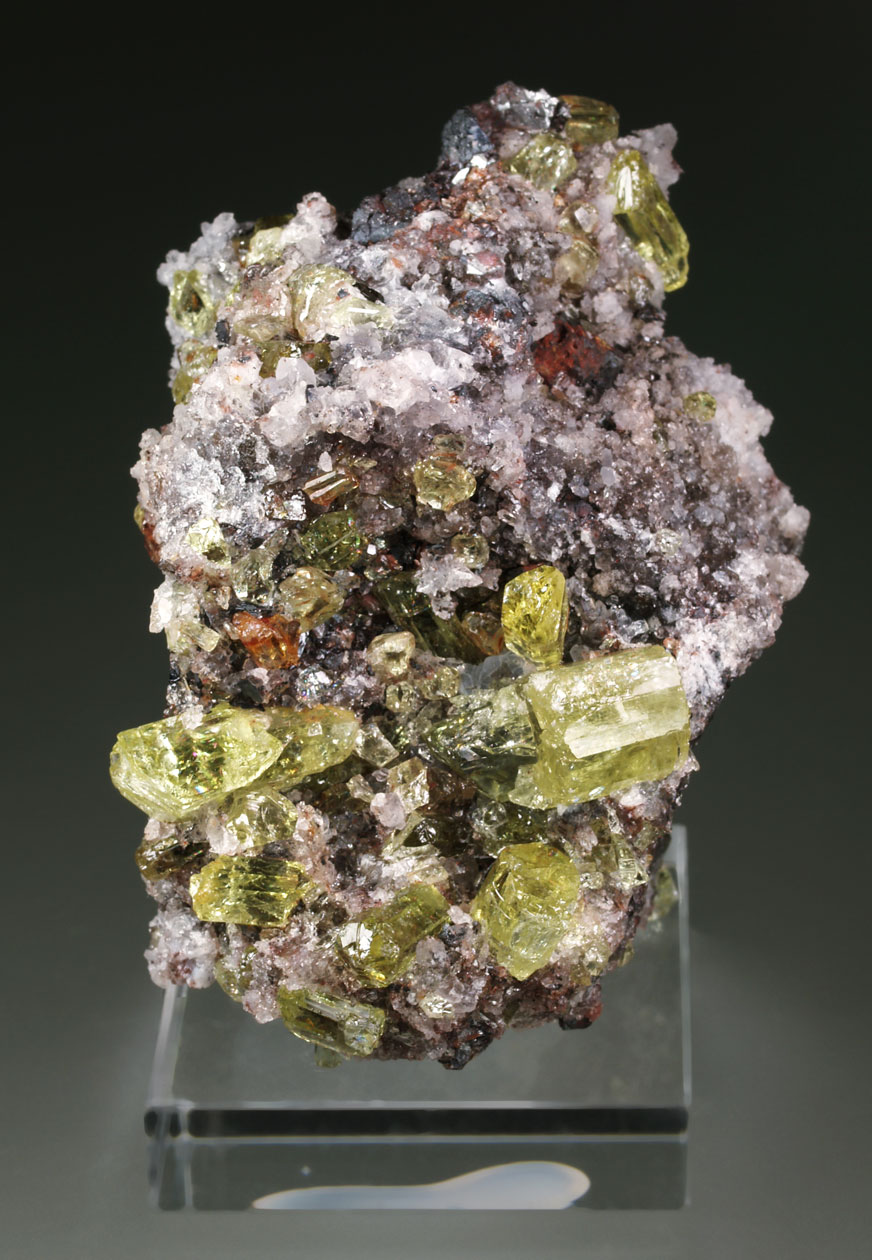
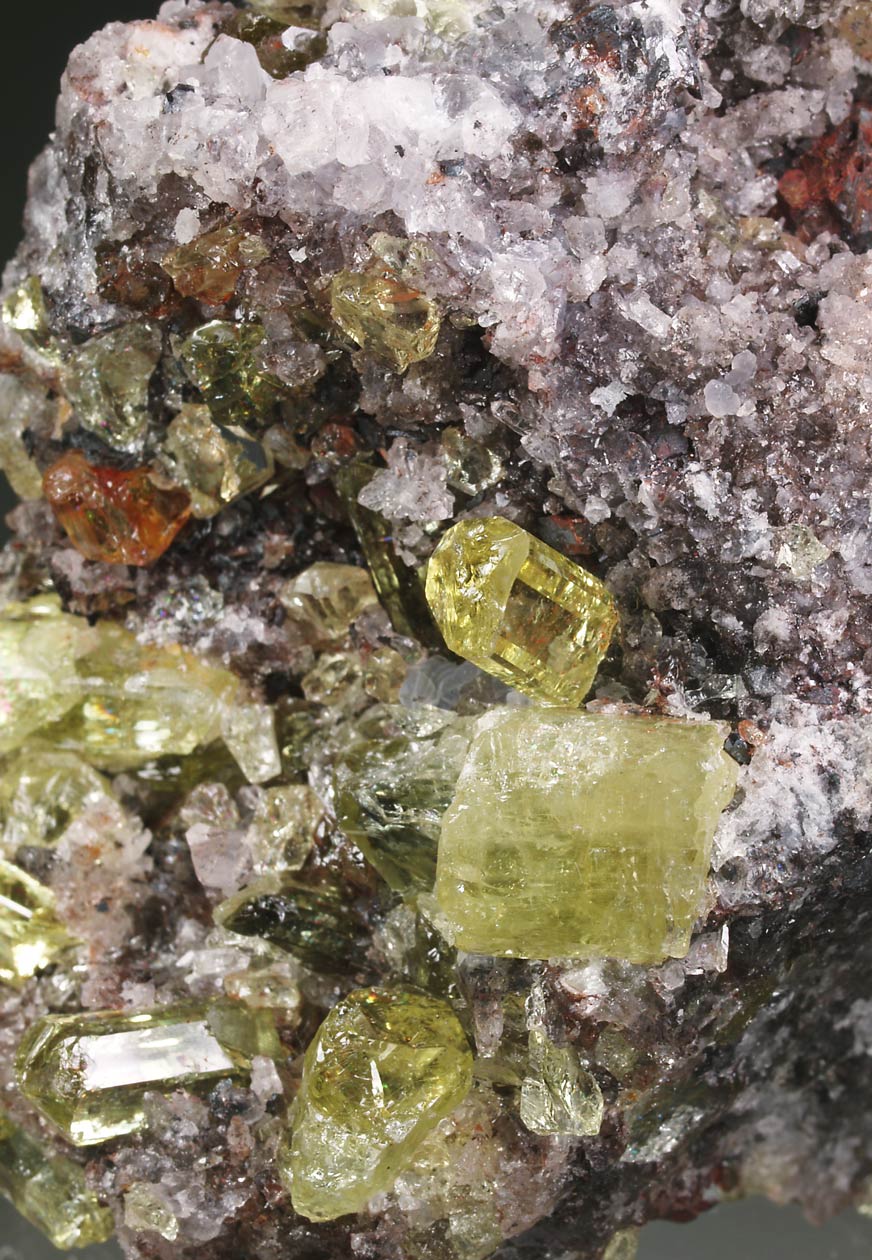
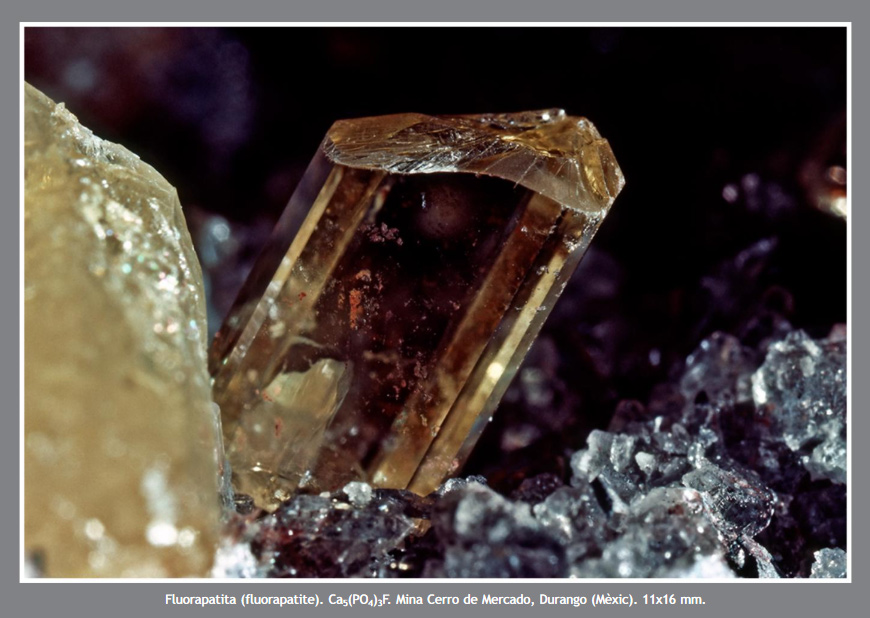
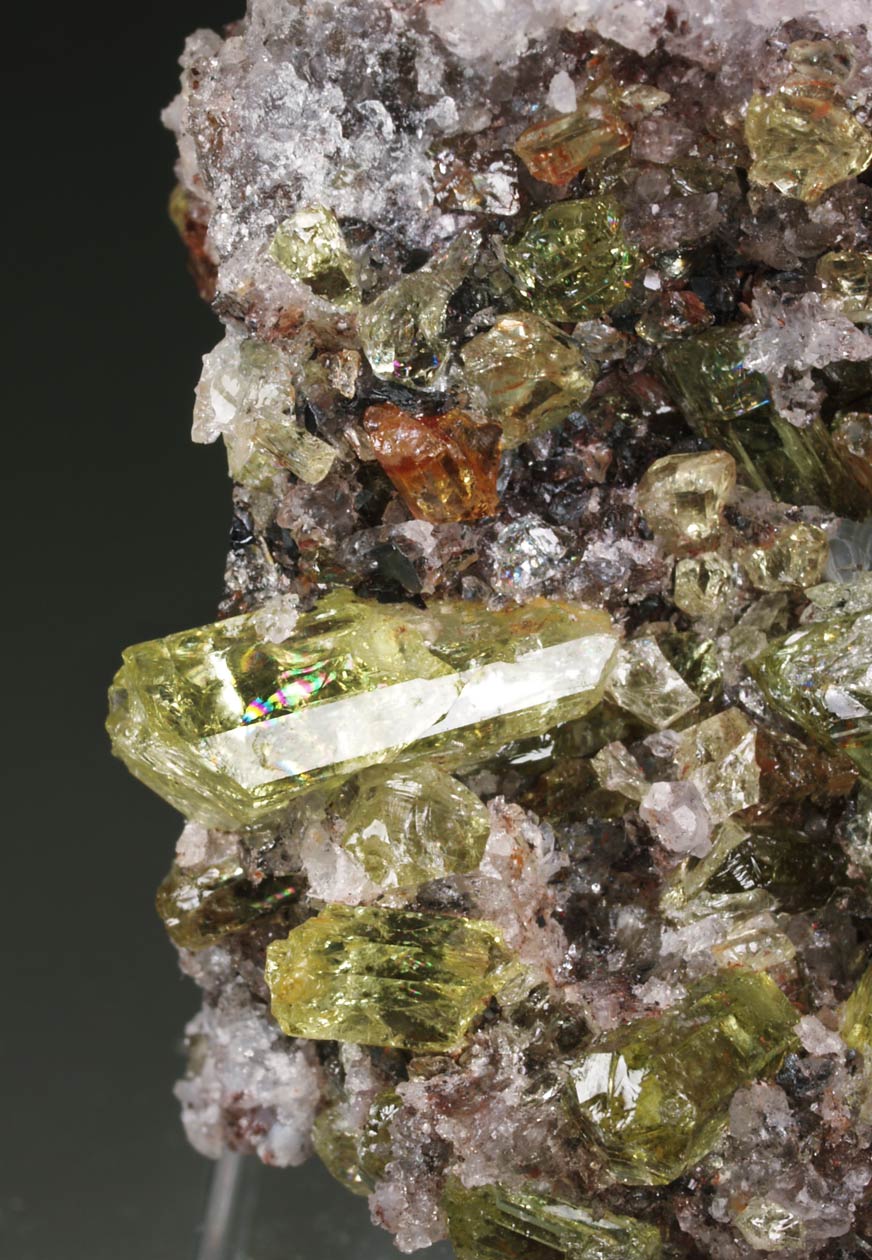
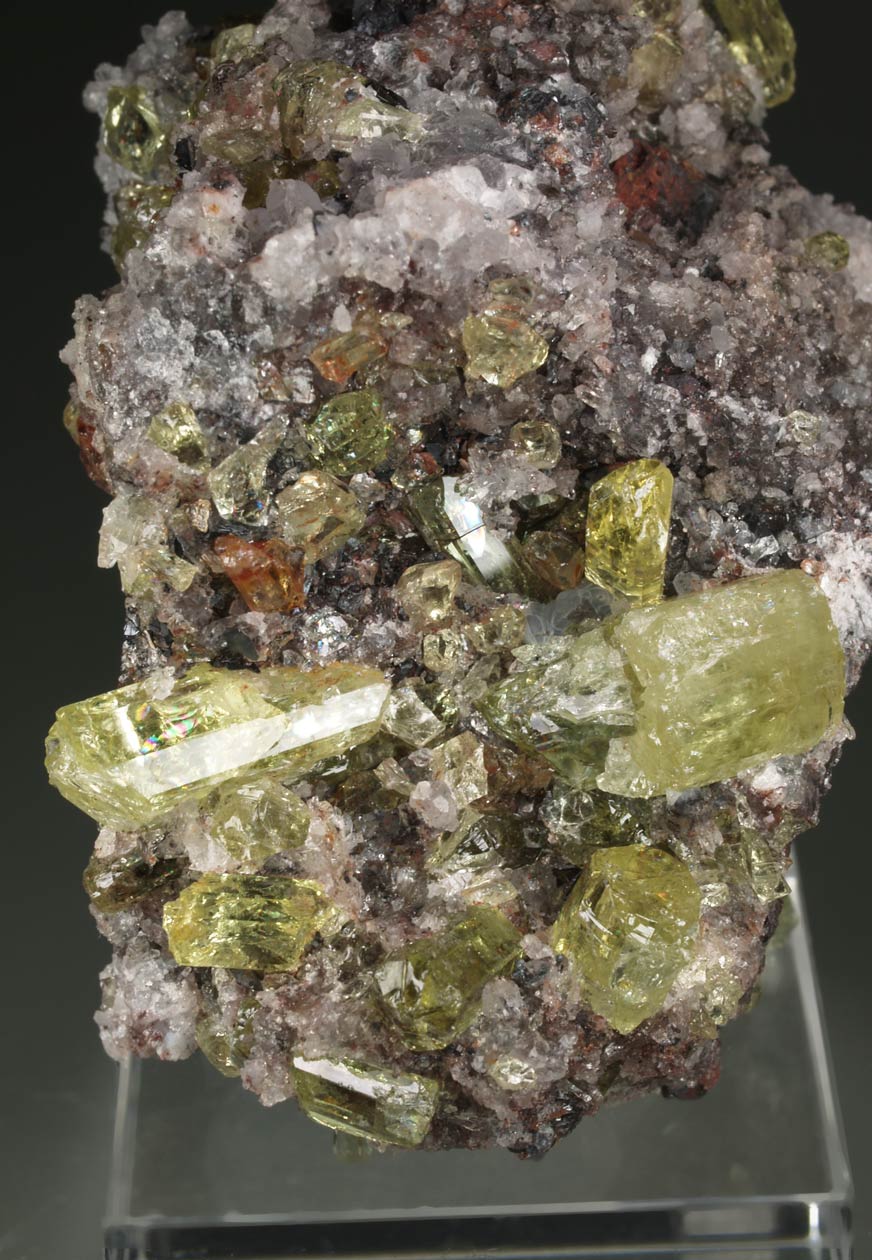
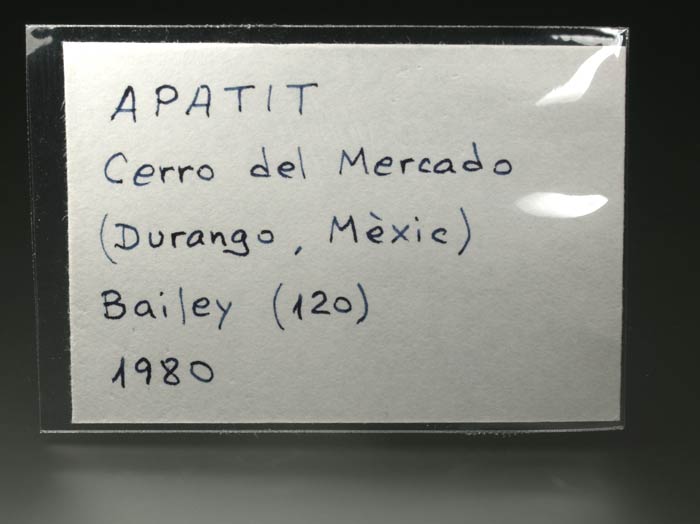
Grupo de cristales prismáticos de fluorapatito, con formas del prisma y de las bipirámides hexagonales. La transparencia y el brillo son excelentes y el color amarillo muy intenso. Este ejemplar está fotografiado en unos libros que Joan Astor publicó en issuu [online pág. 86]. Se acompaña en la matriz con agregados hialinos de ópalo. Fue adquirida en 1980 a Bailey Minerals (Ángel Jesús Talabán García, Segovia 1942-Madrid 2007). Una pieza muy estética y de buen tamaño.
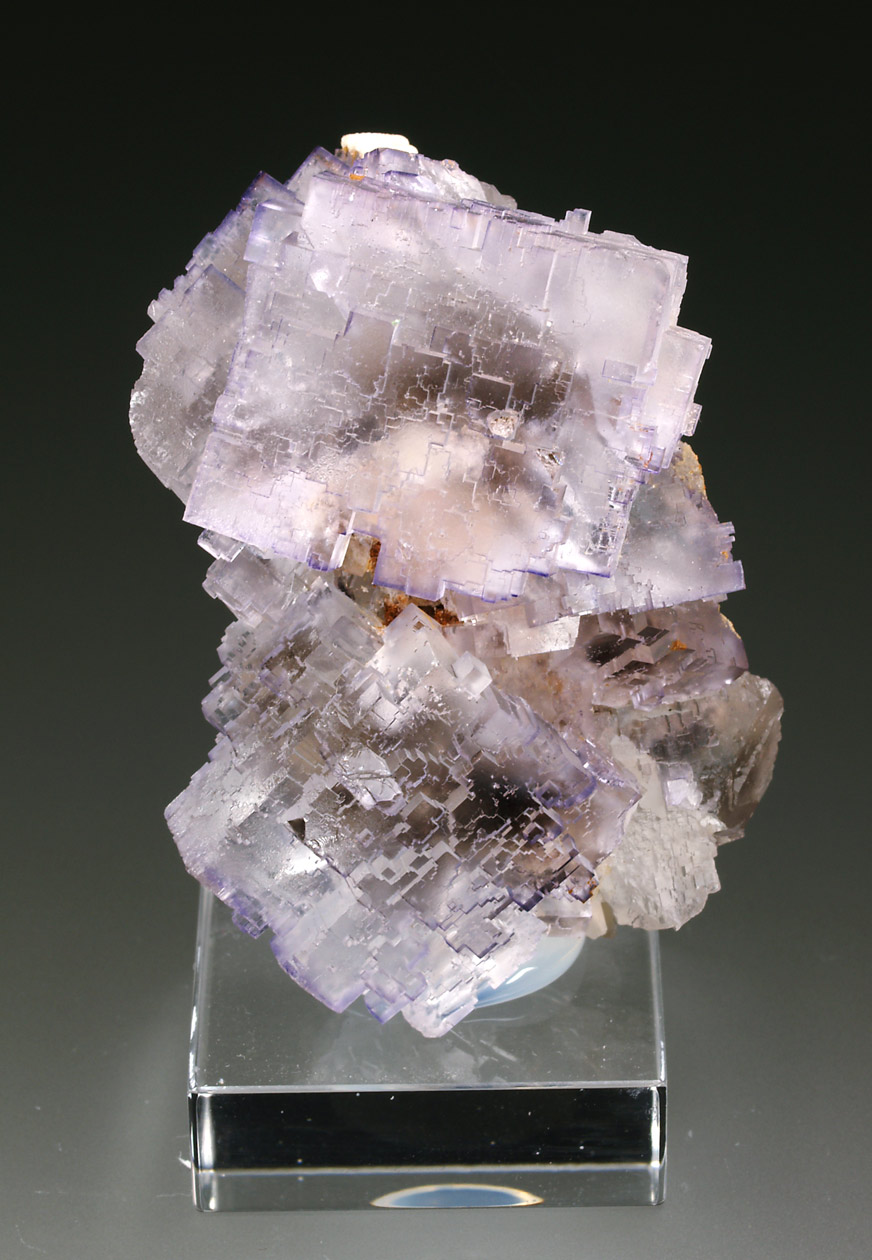
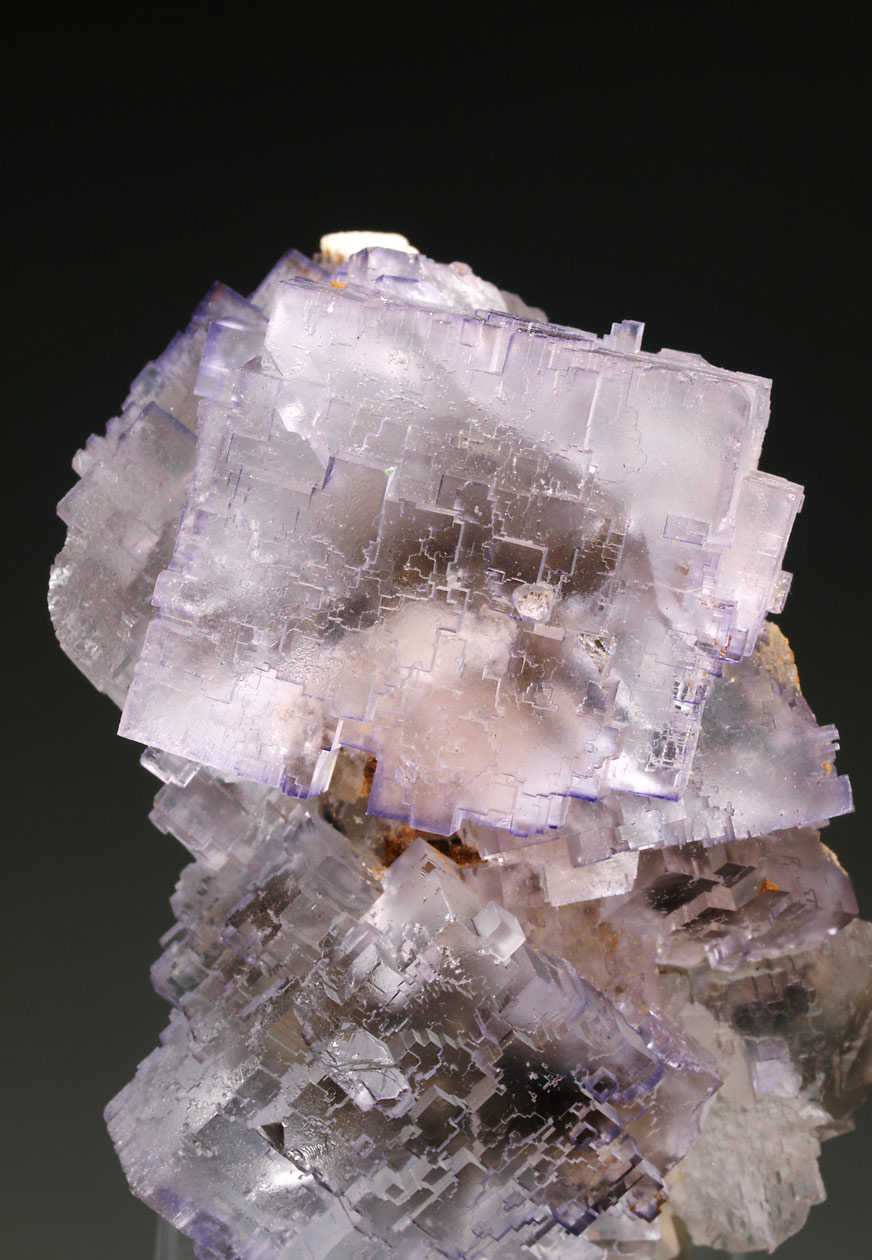
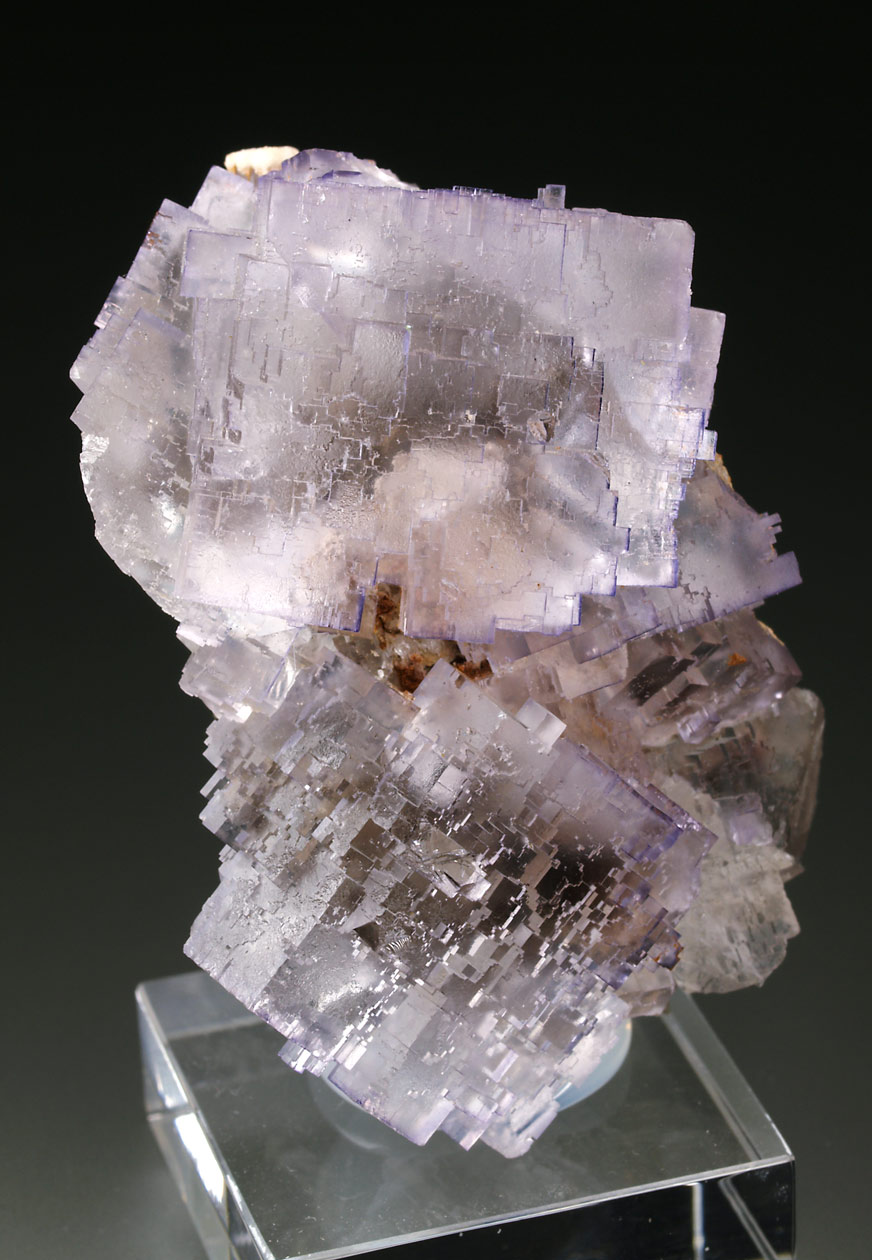
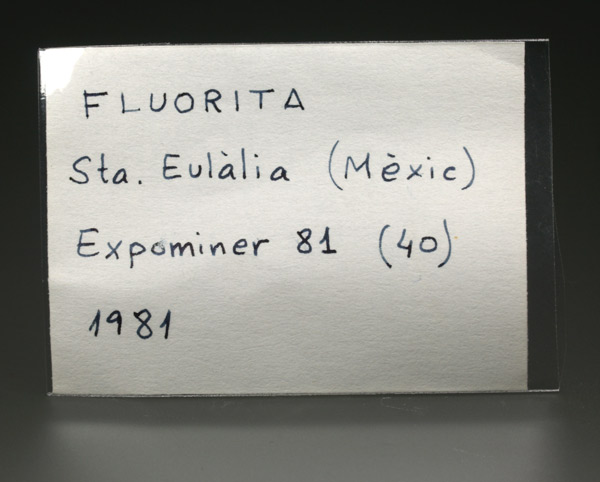
Ejemplar muy estético de fluorita. Nos muestra las formas del cubo, con crecimientos polisintéticos en las caras. El color de un delicado tono violeta, con zonación geométrica de color en las aristas, con un color más intenso. Excelente brillo, trasparencia y caras y arista muy definidas. Una pieza excepcional de Santa Eulalia y de la colección Joan Astor, adquirido por este gran fotógrafo y coleccionista barcelonés en la feria de EXPOMINER de 1981.
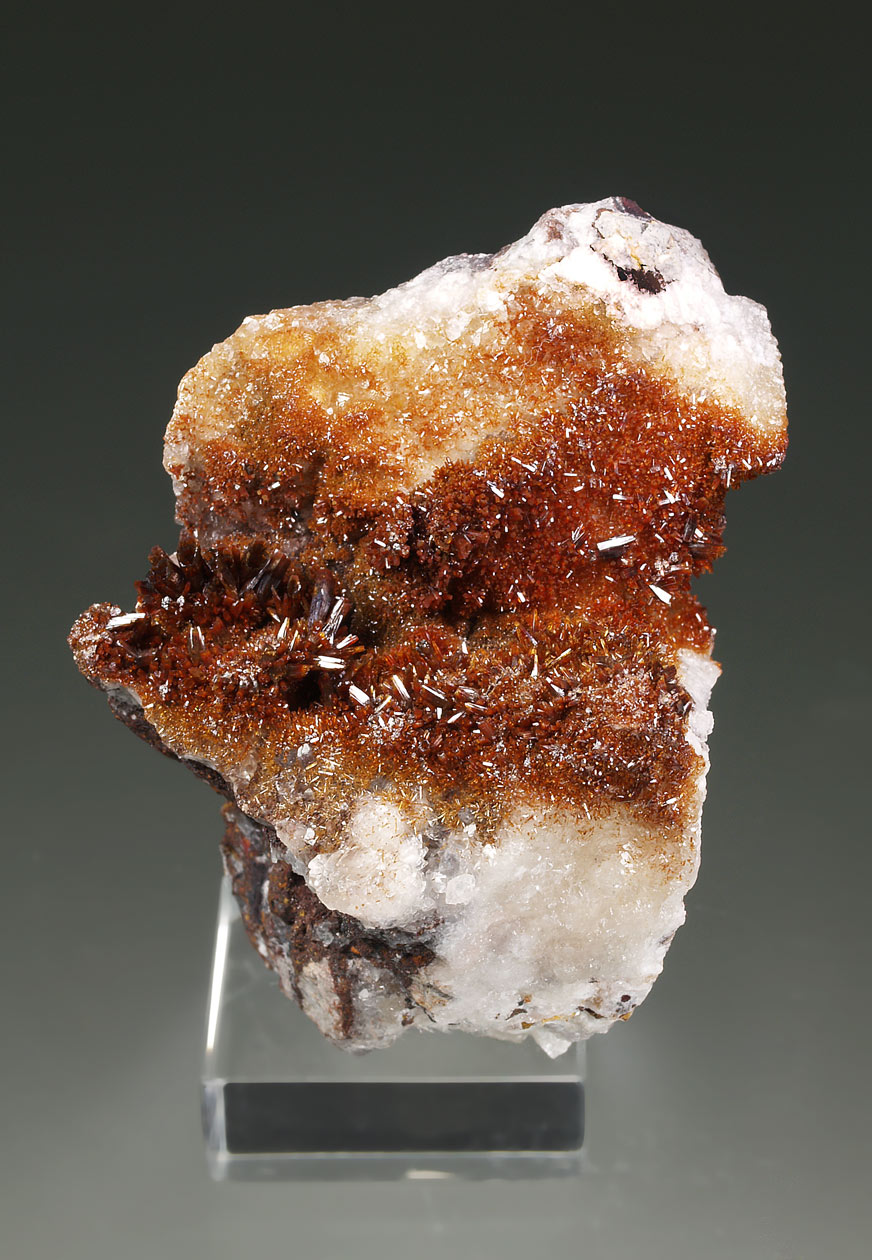
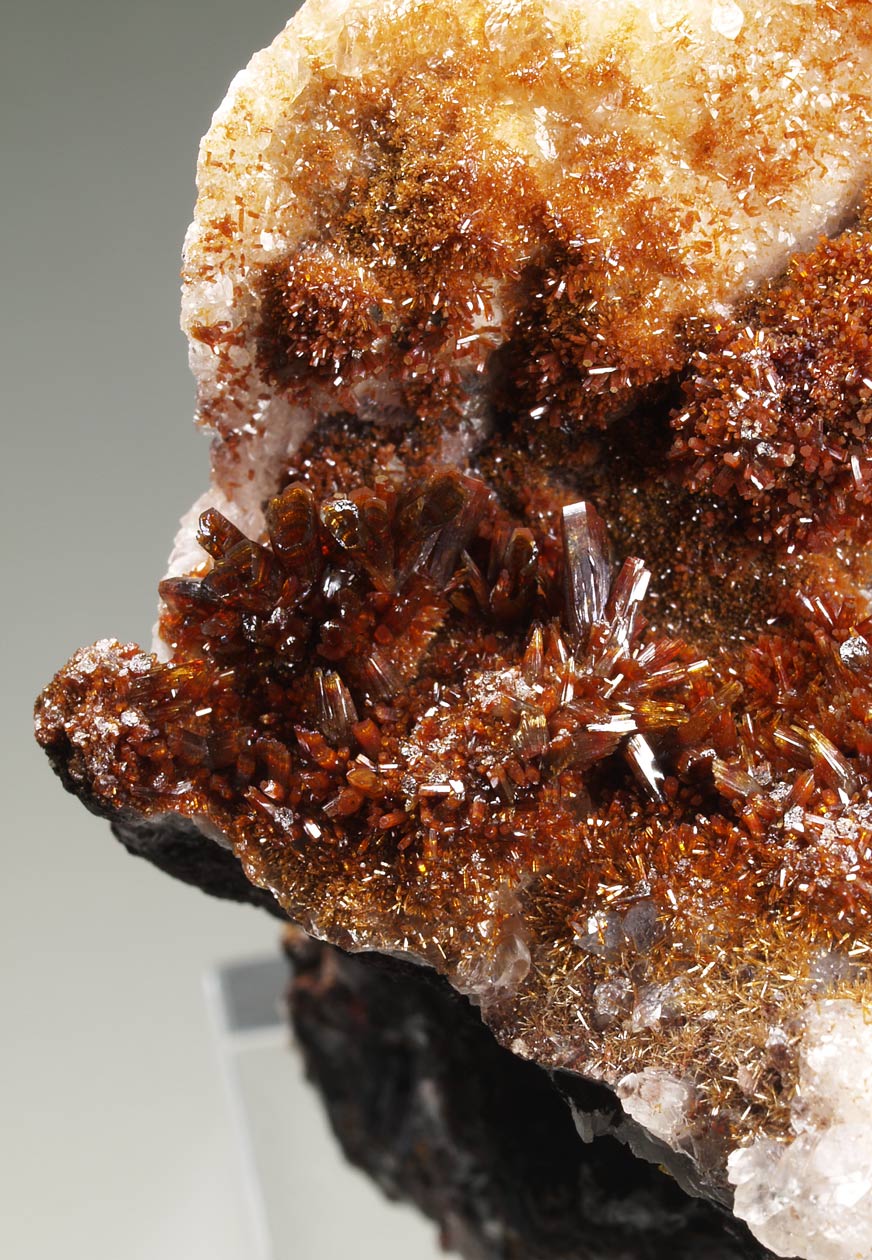
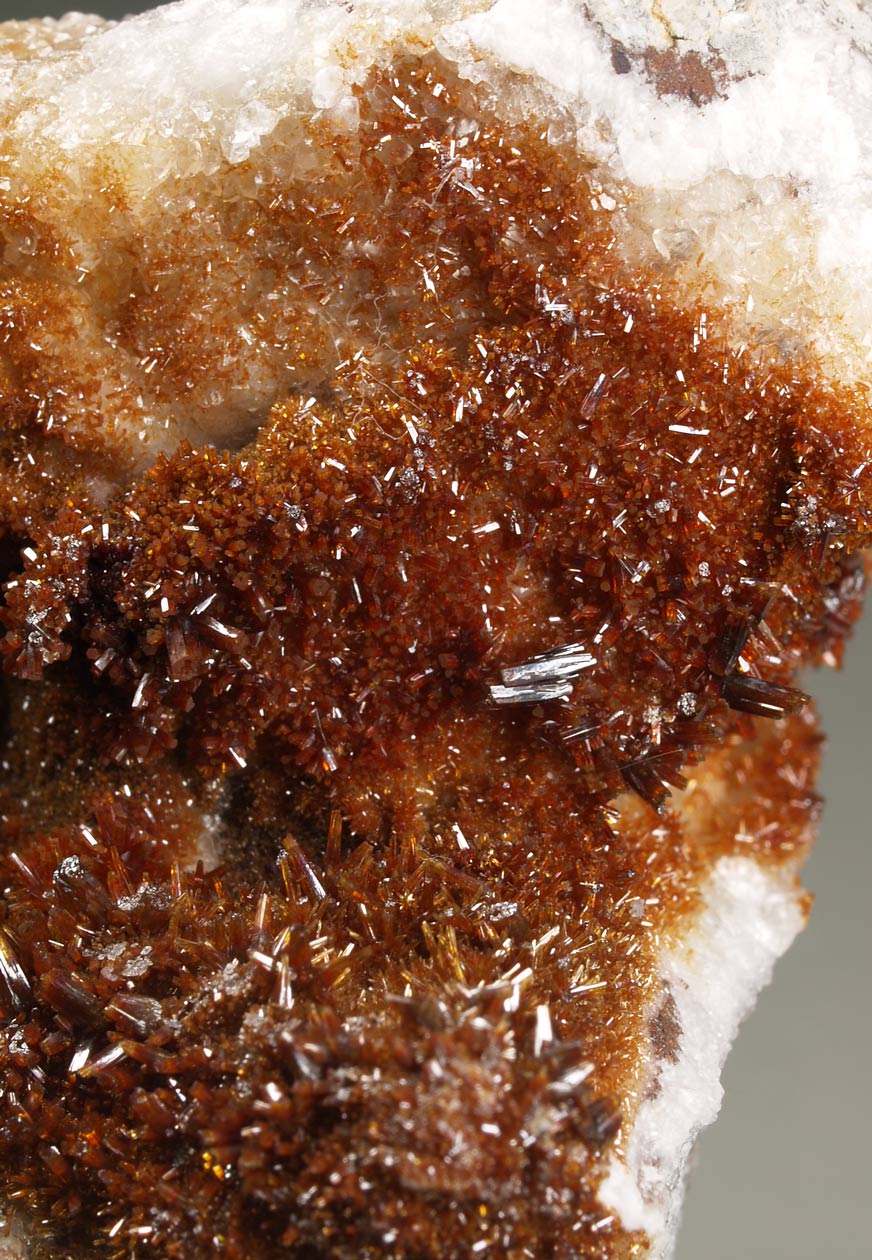
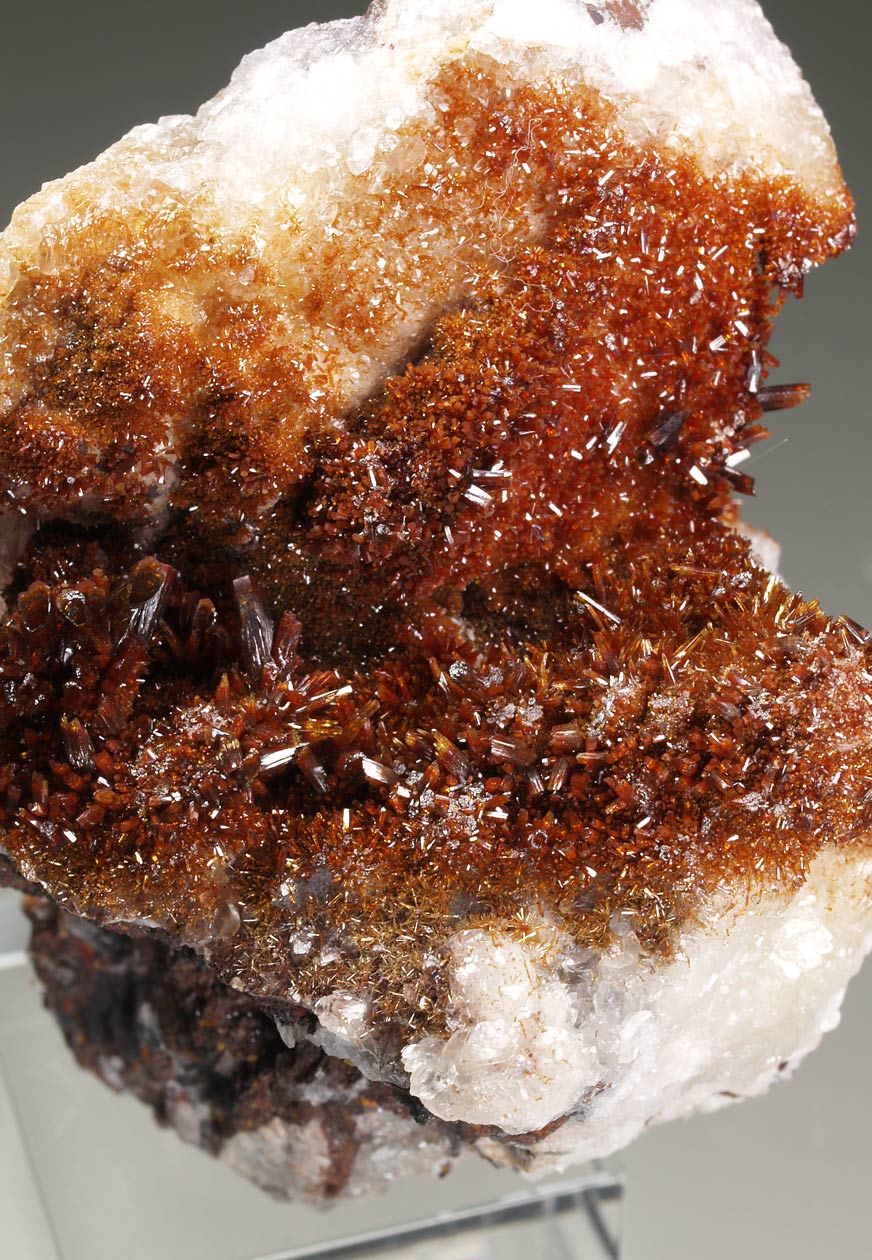
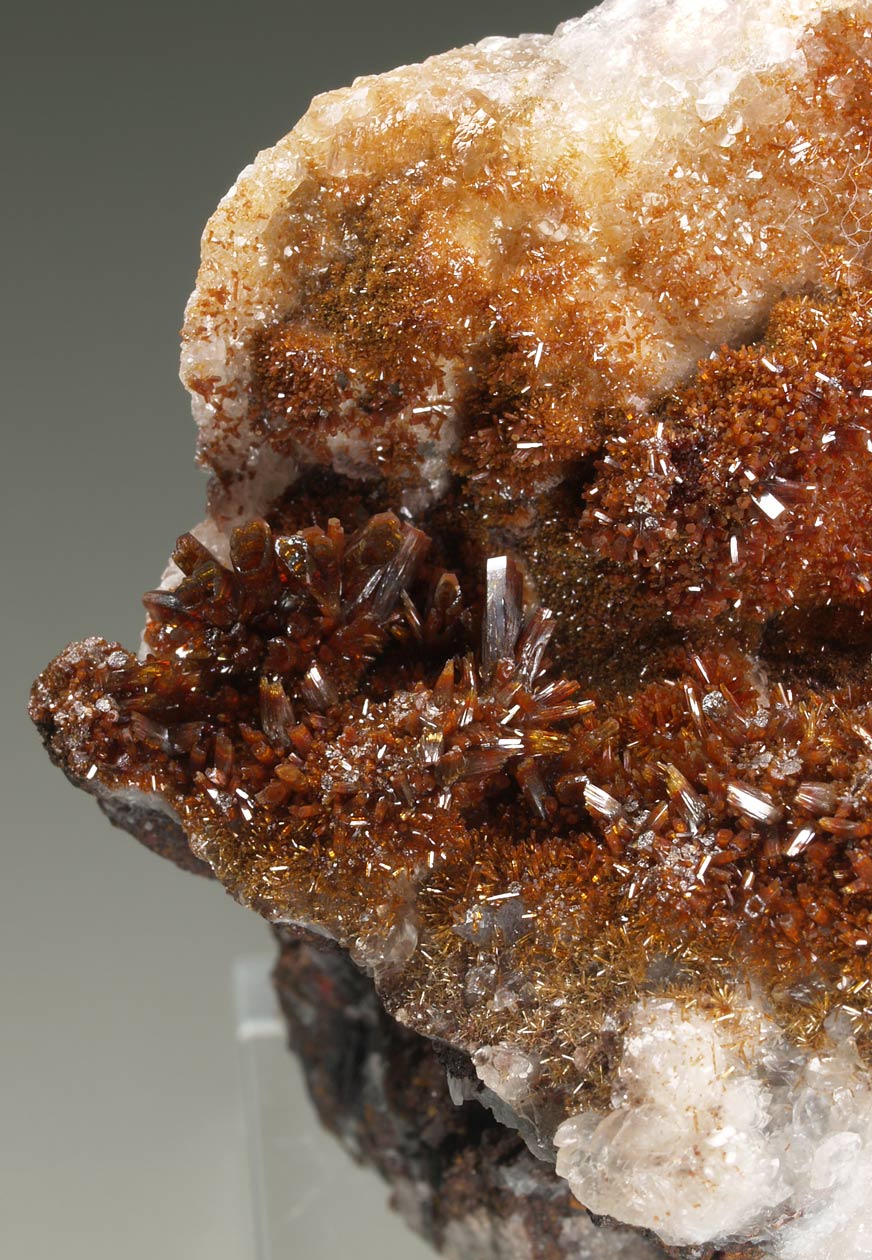
Vistoso ejemplar de cristales de vanadinita As, en agregados de cristales prismáticos hexagonales, con cavidades en tolva en las caras pinacoidales. Intenso brillo, color anaranjado a marrón, con zonación, cristales transparentes a translúcidos. Destacan sobre una matriz blanca de calcita. Un ejemplar excelente de esta mina mexicana.
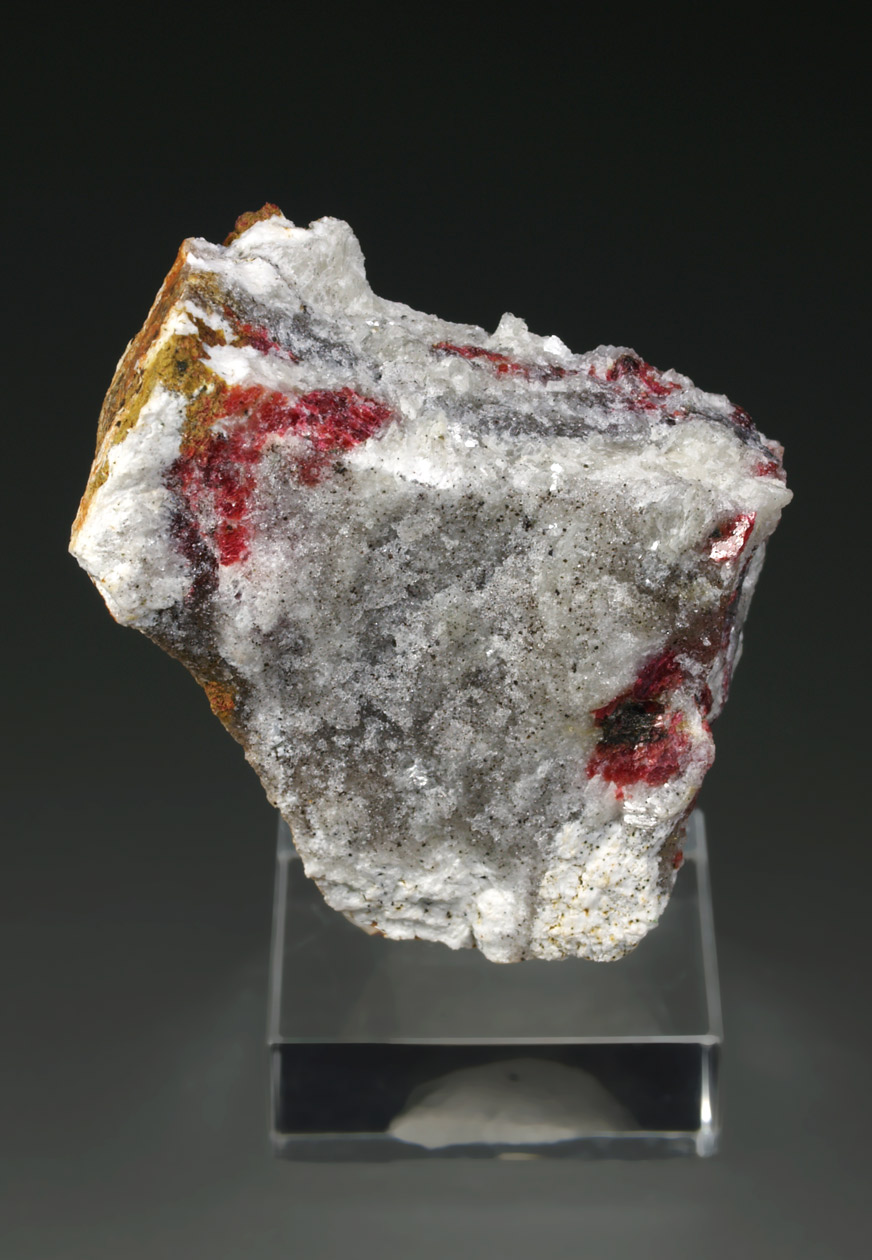
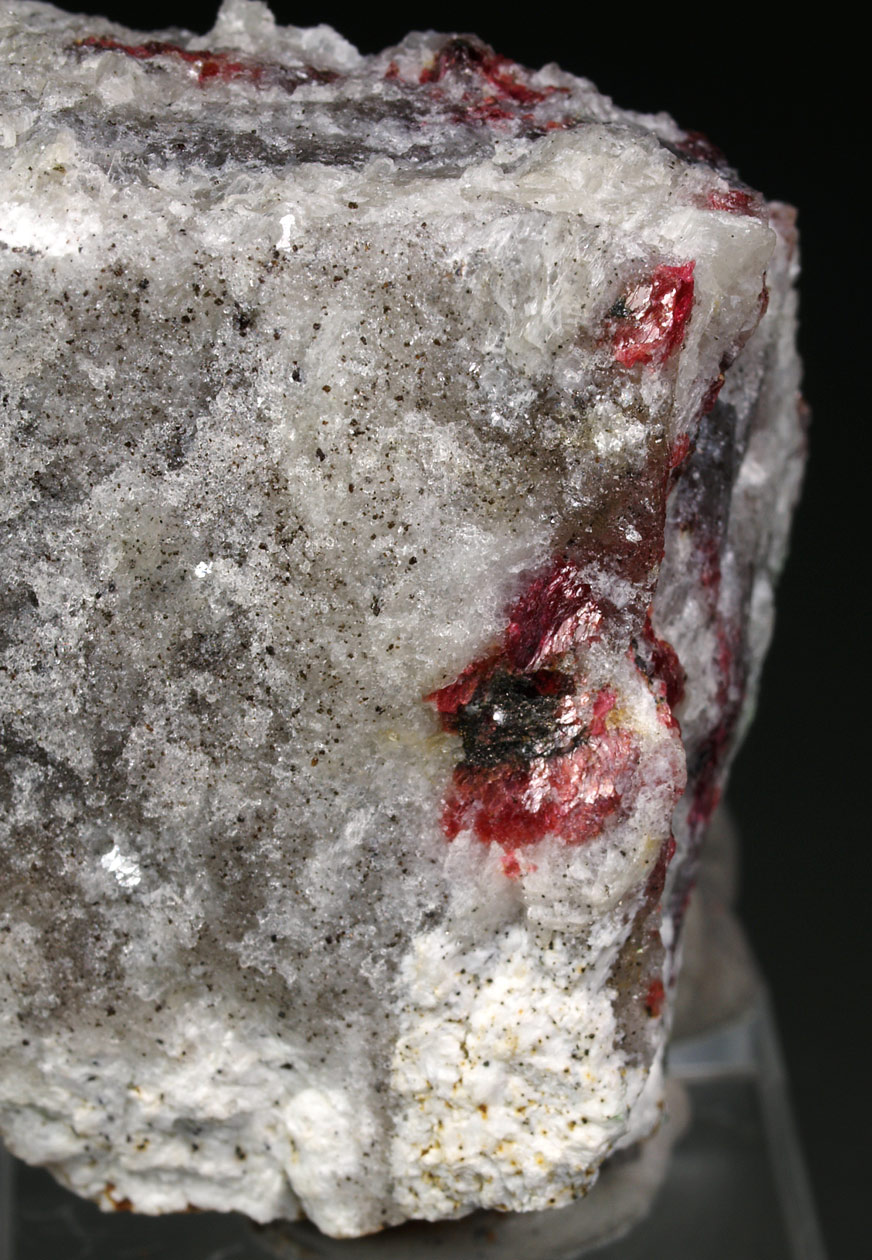
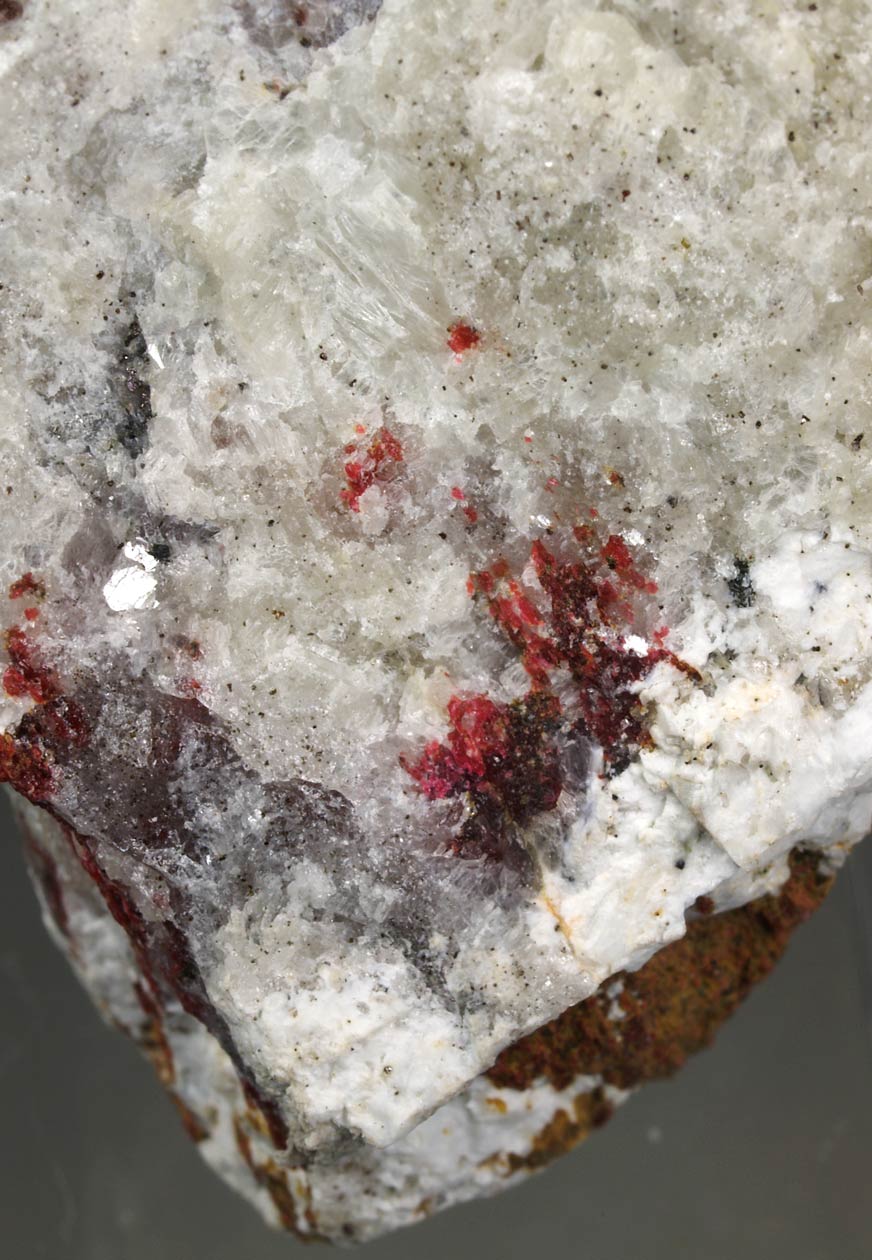
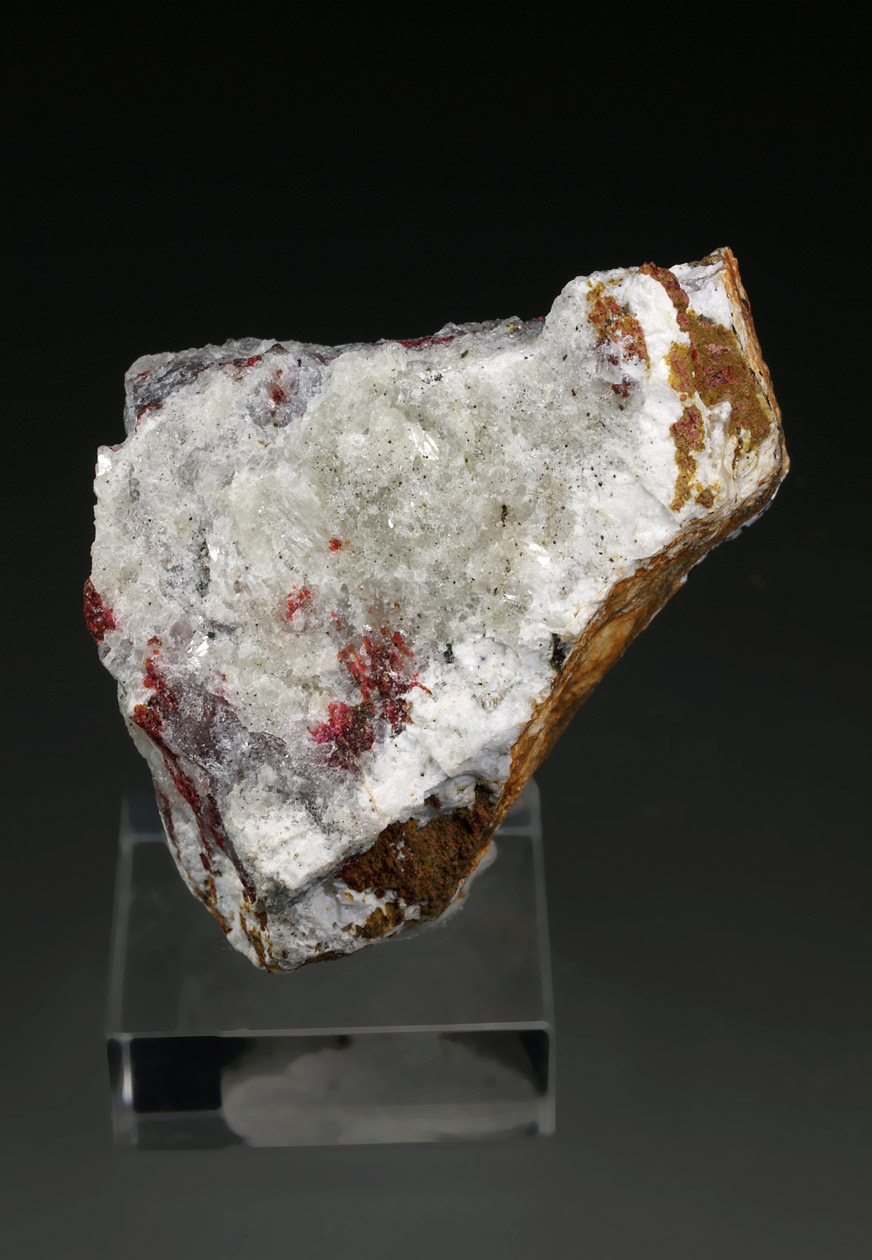
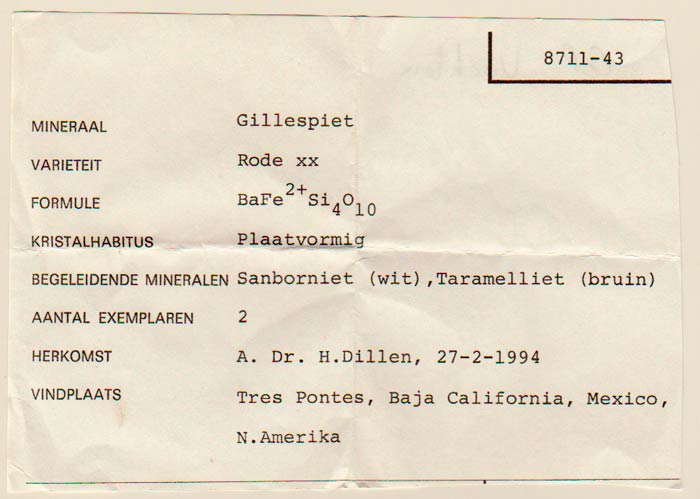
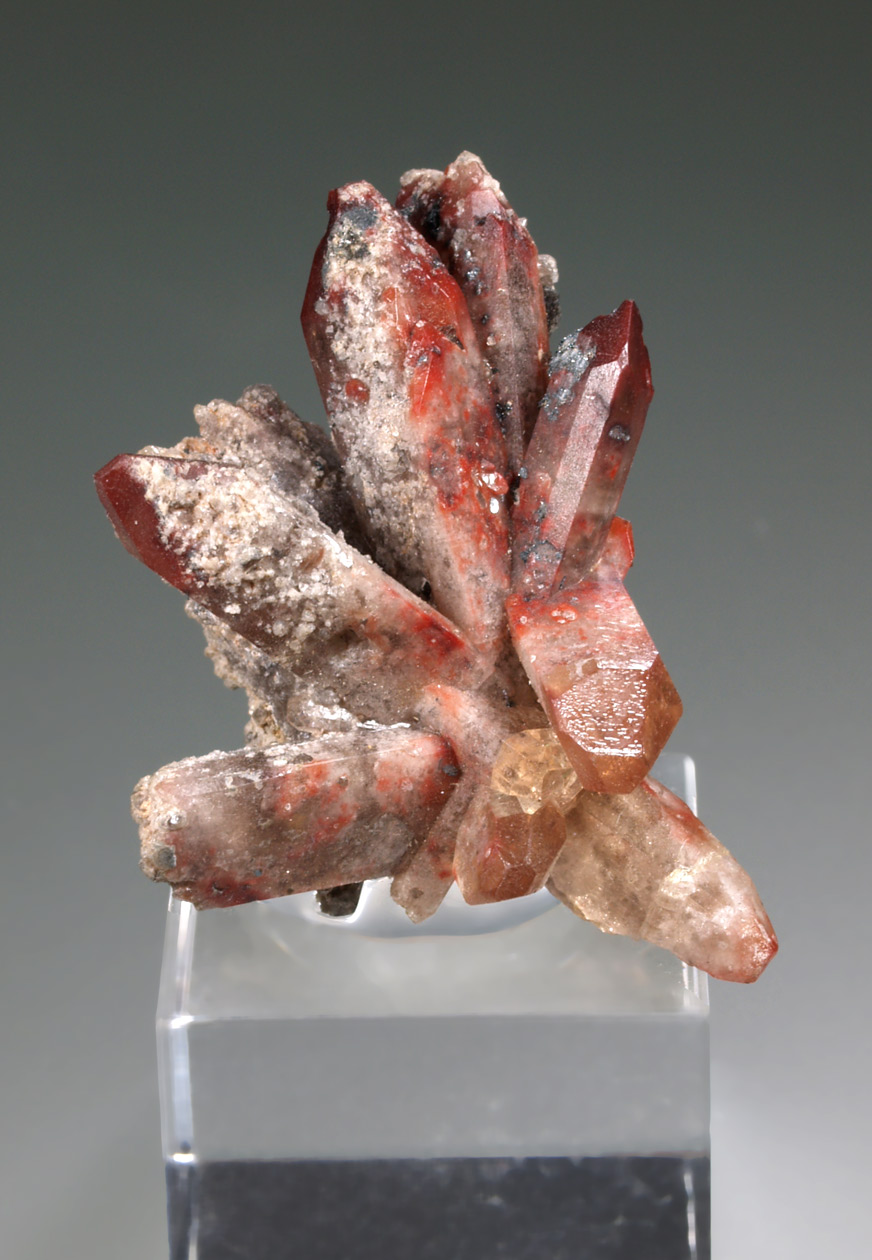
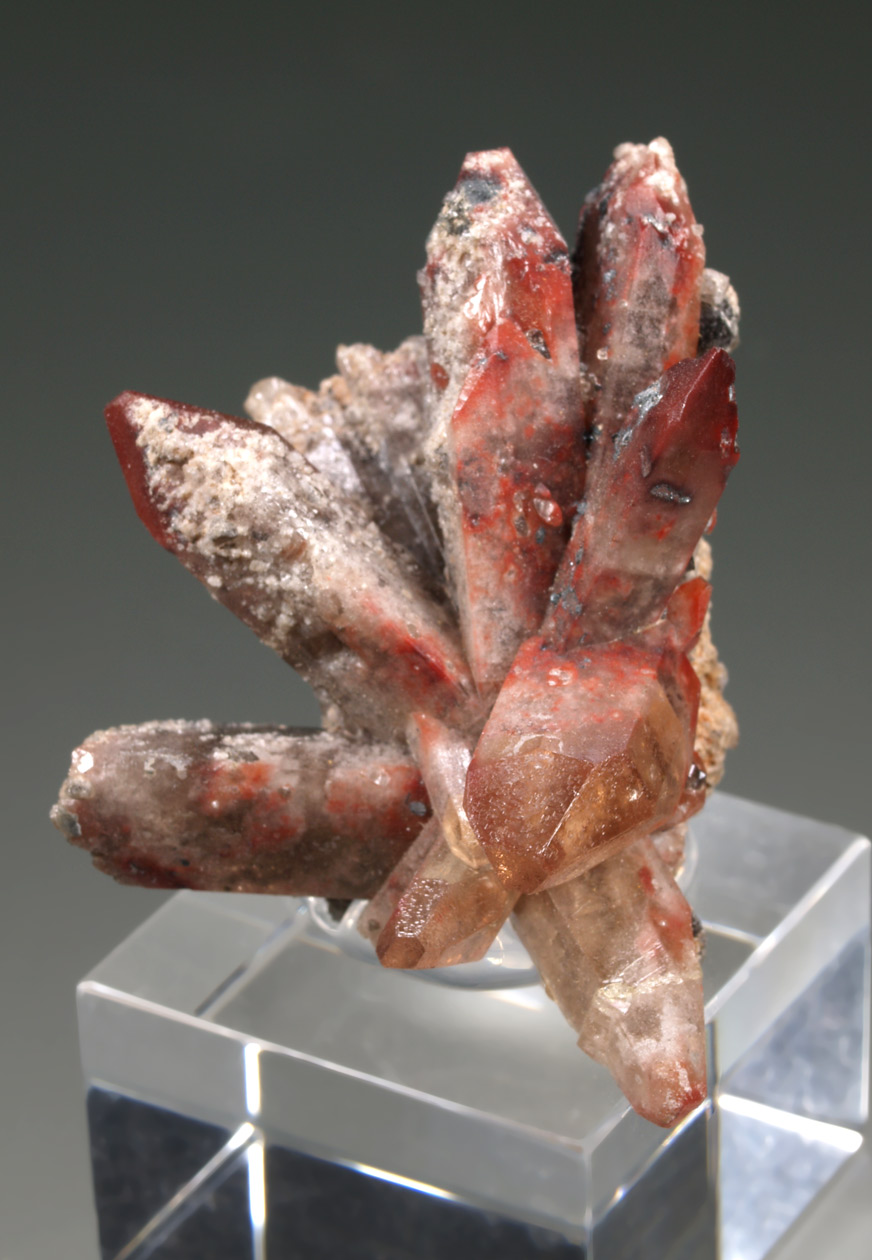
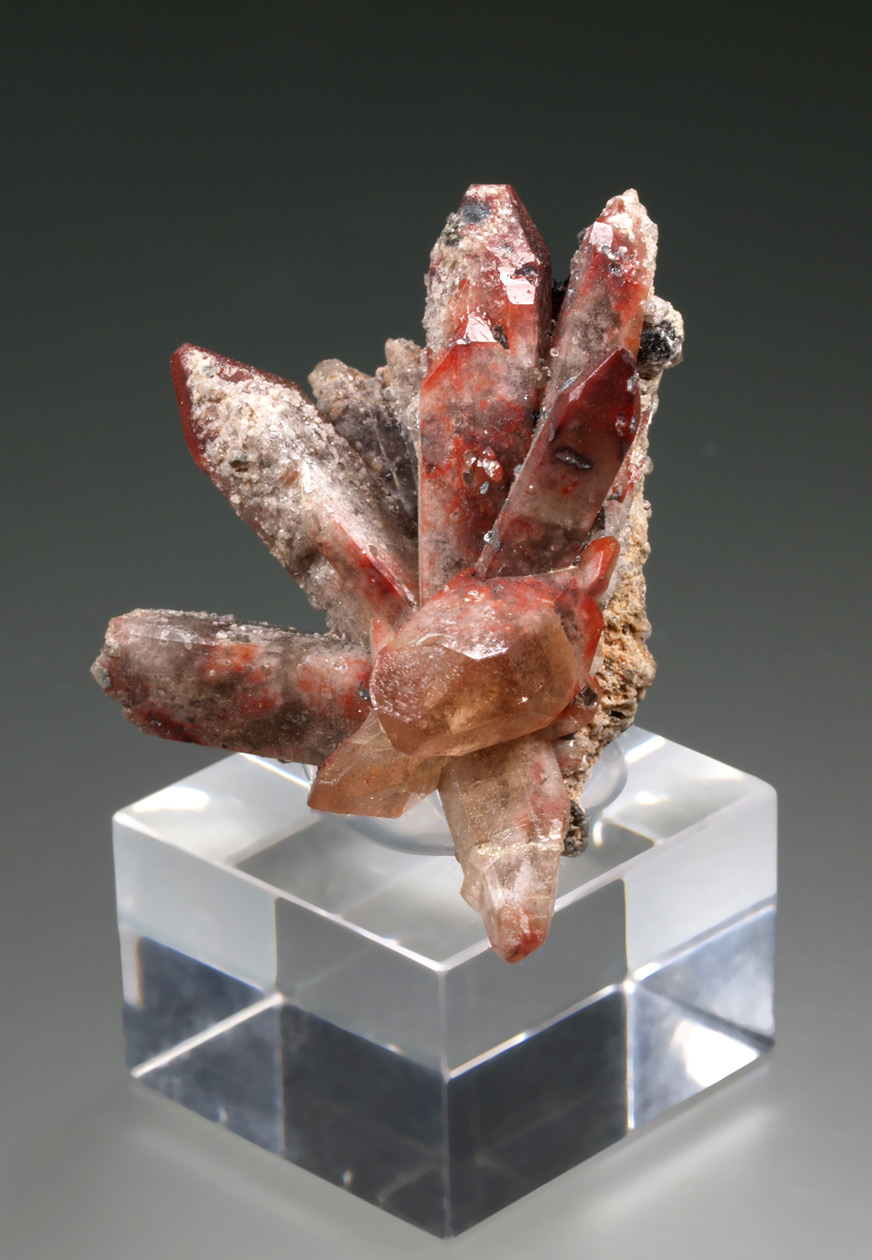
Finos agregados de gillespita brillante y translúcida, de color rojo fresa. En una matriz de sanbornita blanca que contrasta con el color. La gillespita es un raro filosilicato de bario y hierro. Esta es una pieza muy rica, colorida y excelente para la especie.
Grupo de cristales de topacio de buen tamaño, que combinan prismas verticales con caras bipiramidales, y pequeñas formas pinacoidales. Entre transparentes a translúcidos, con zonación de color entre las zonas internas y los extremos. En una matriz de roca volcánica con agregados de ópalo.
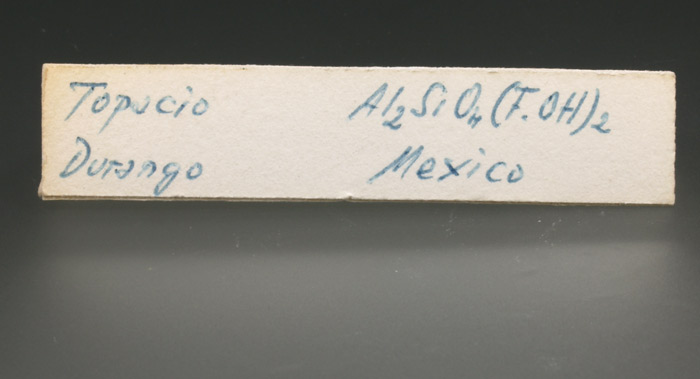
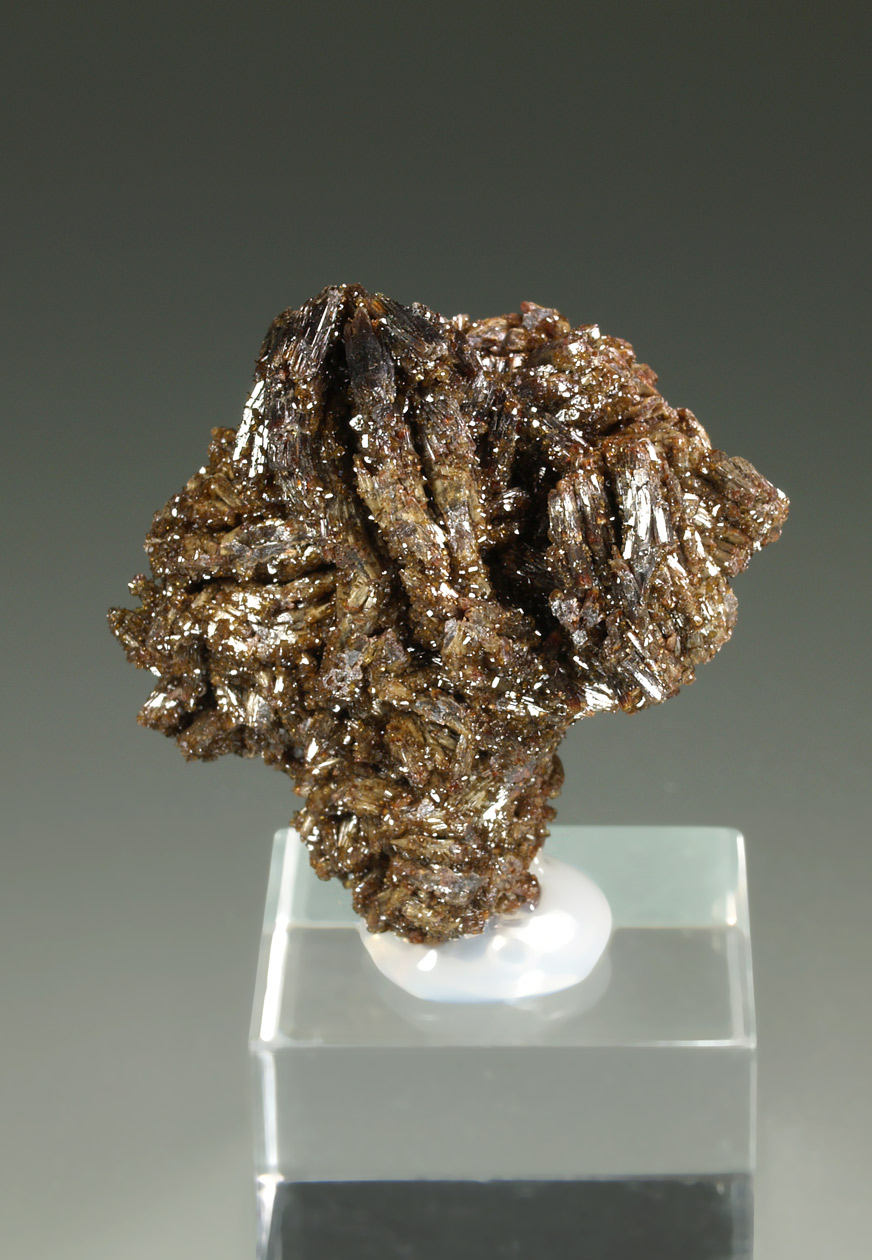
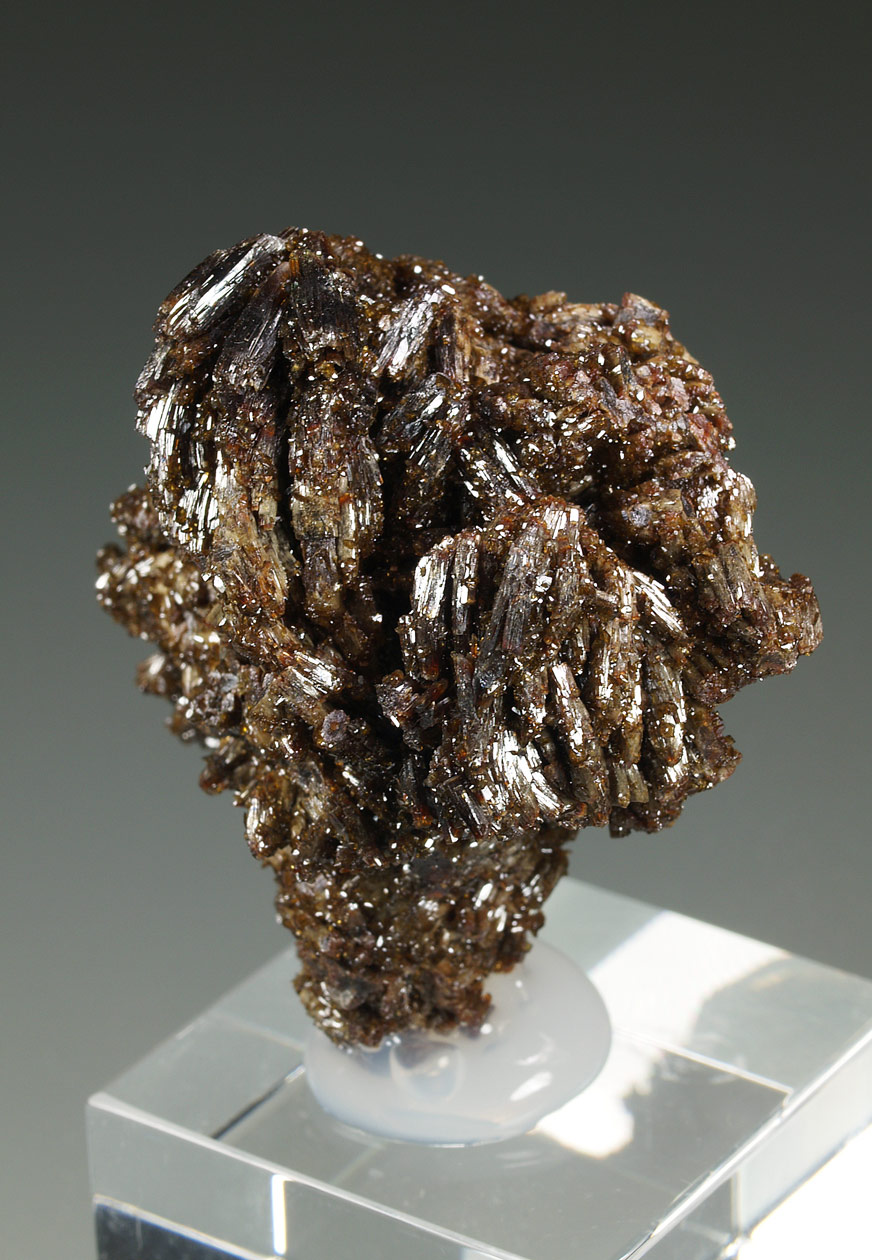
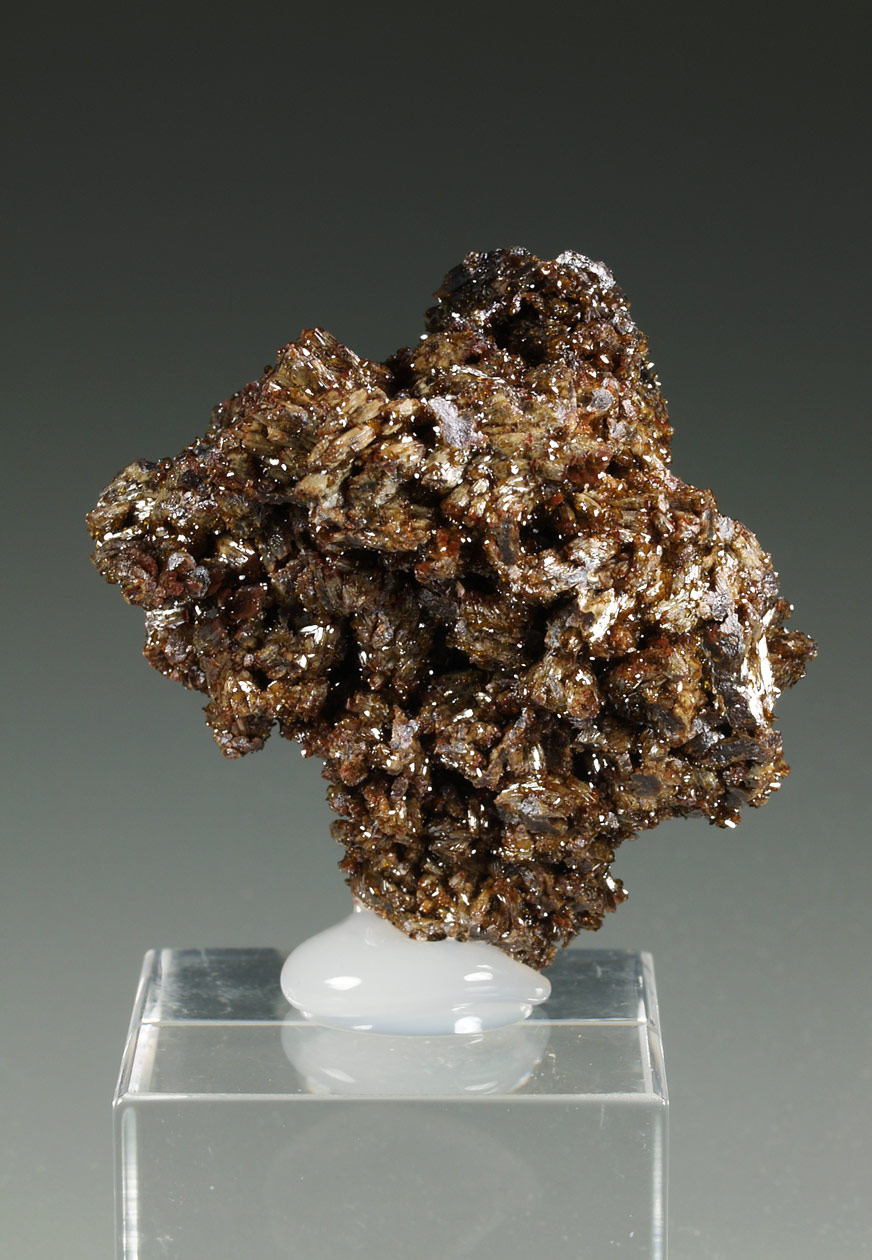
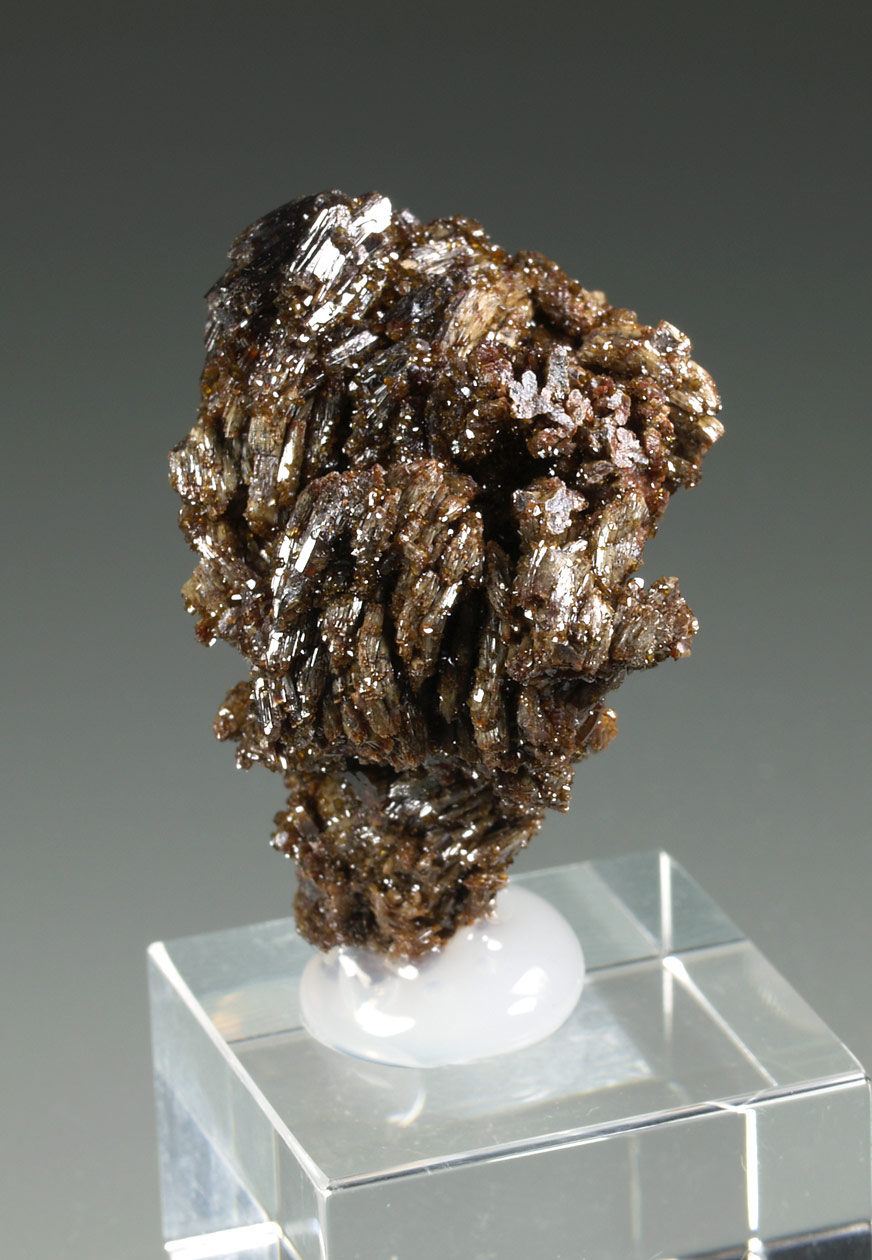
Nutrido grupo de cristales de vanadinita arsenical, definidos, con prismas de caras curvadas, abarrilados y muchos de ellos biterminados, con el color característico de esta variedad. Se observan dos generaciones de cristales, los de mayor tamaño con un tono pardo y opacos, sobre los que ha crecido una segunda generación de cristales melados transparentes, todos muy muy brillantes. Un placer bajo la lupa. Esta mina también es conocida como Apex.
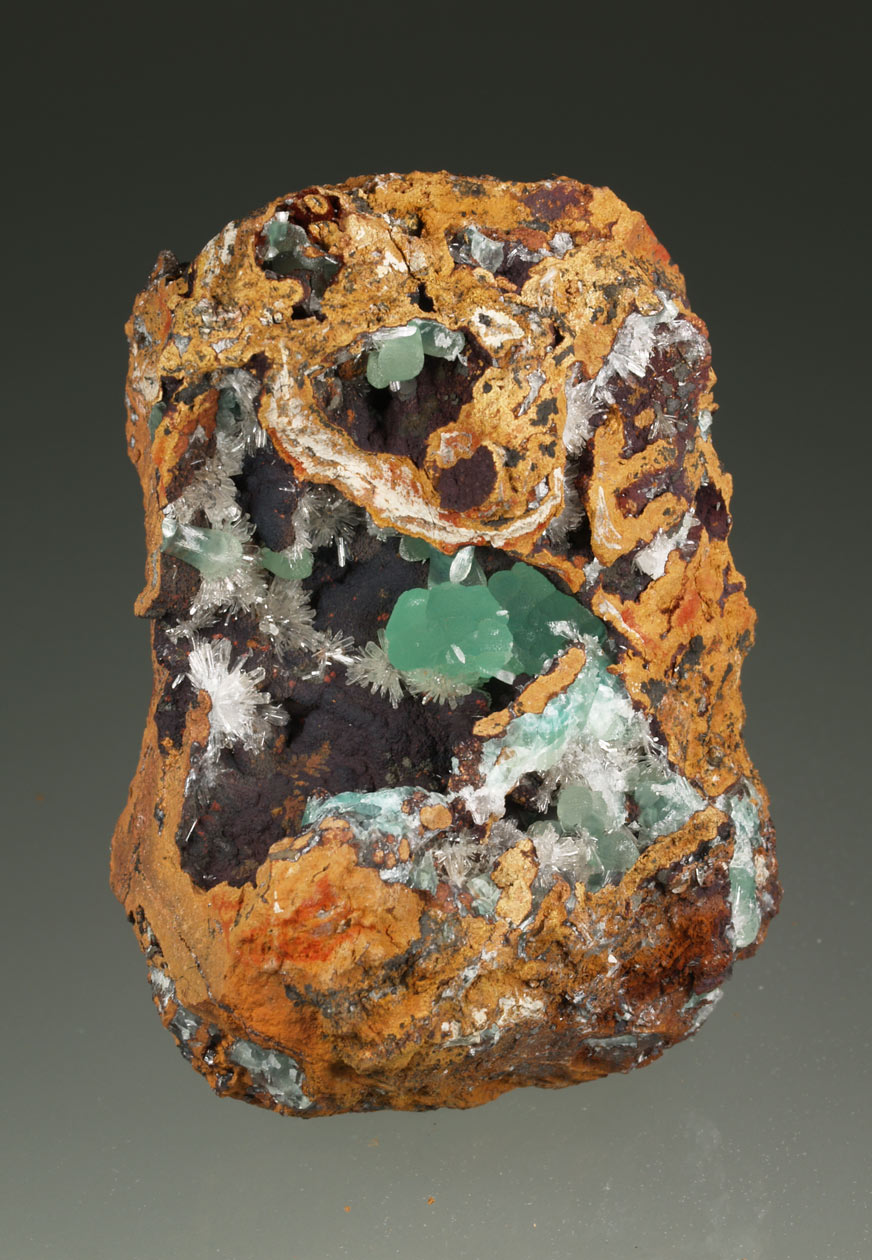
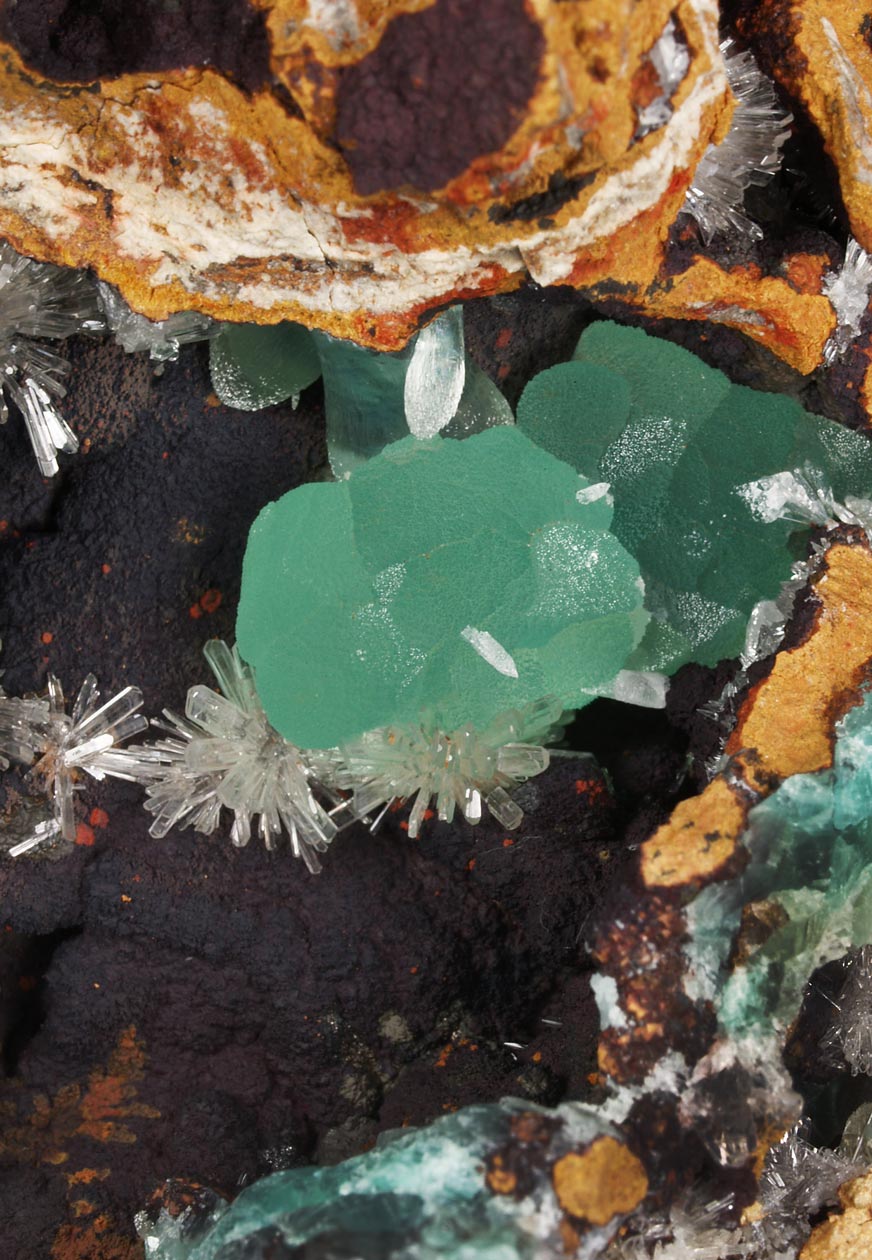
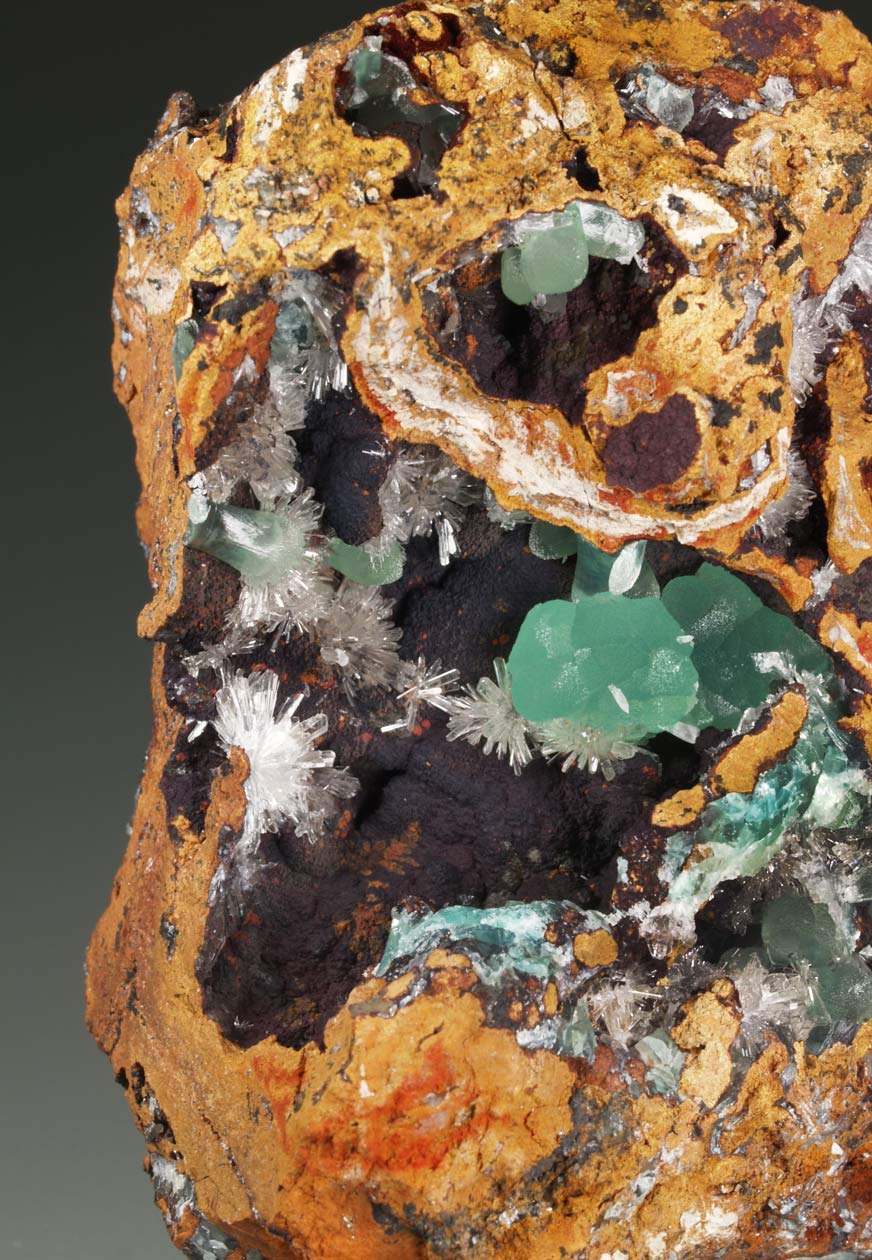
Estéticos agregados globulares de smithsonita, de intenso color verde, translúcidos, acompañados de cristales lanceolados y transparentes de hemimorfita. Se encuentran dentro de una cavidad en la matriz de goethita. Los ejemplares de smithsonita de esta mina mexicana son conocidos y apreciados por los coleccionistas. Proceden del nivel 8 de la mina.
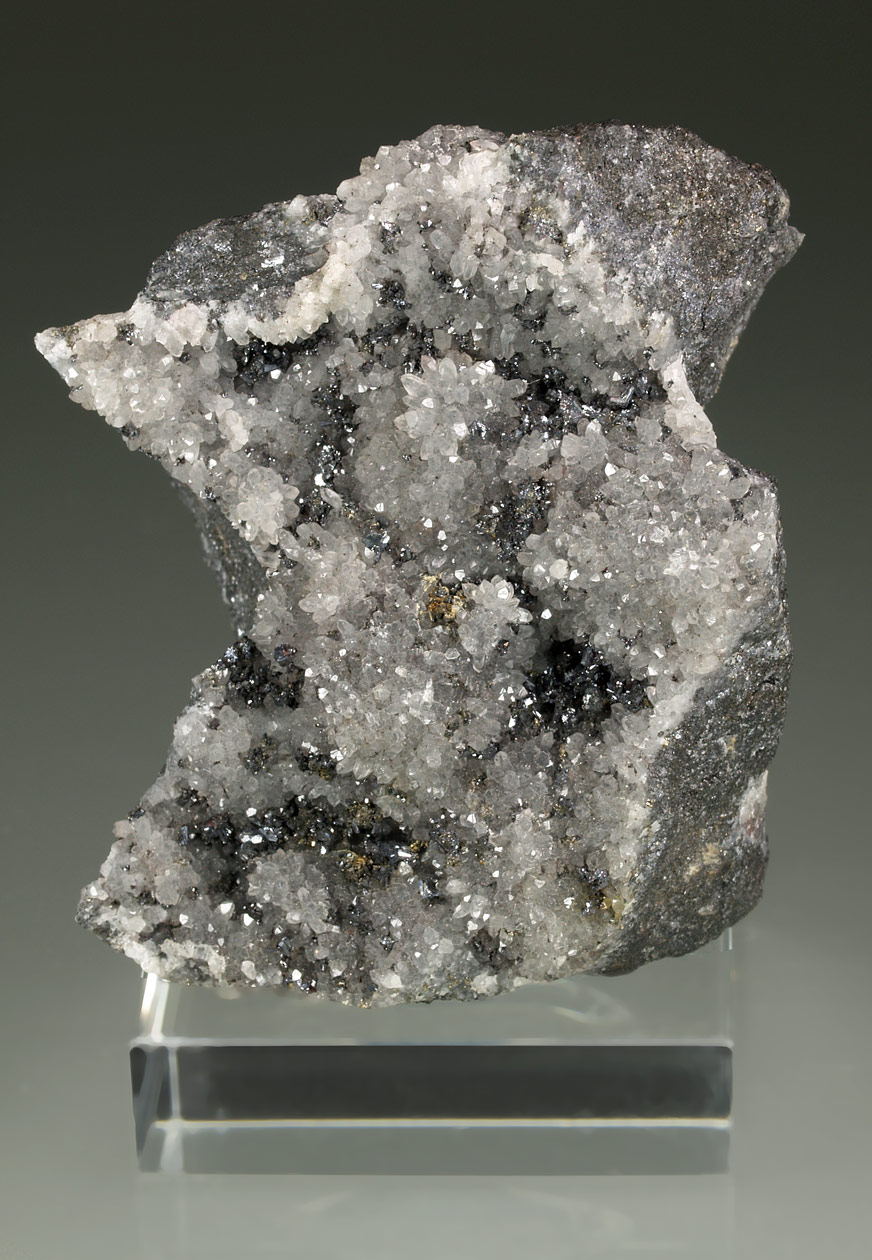
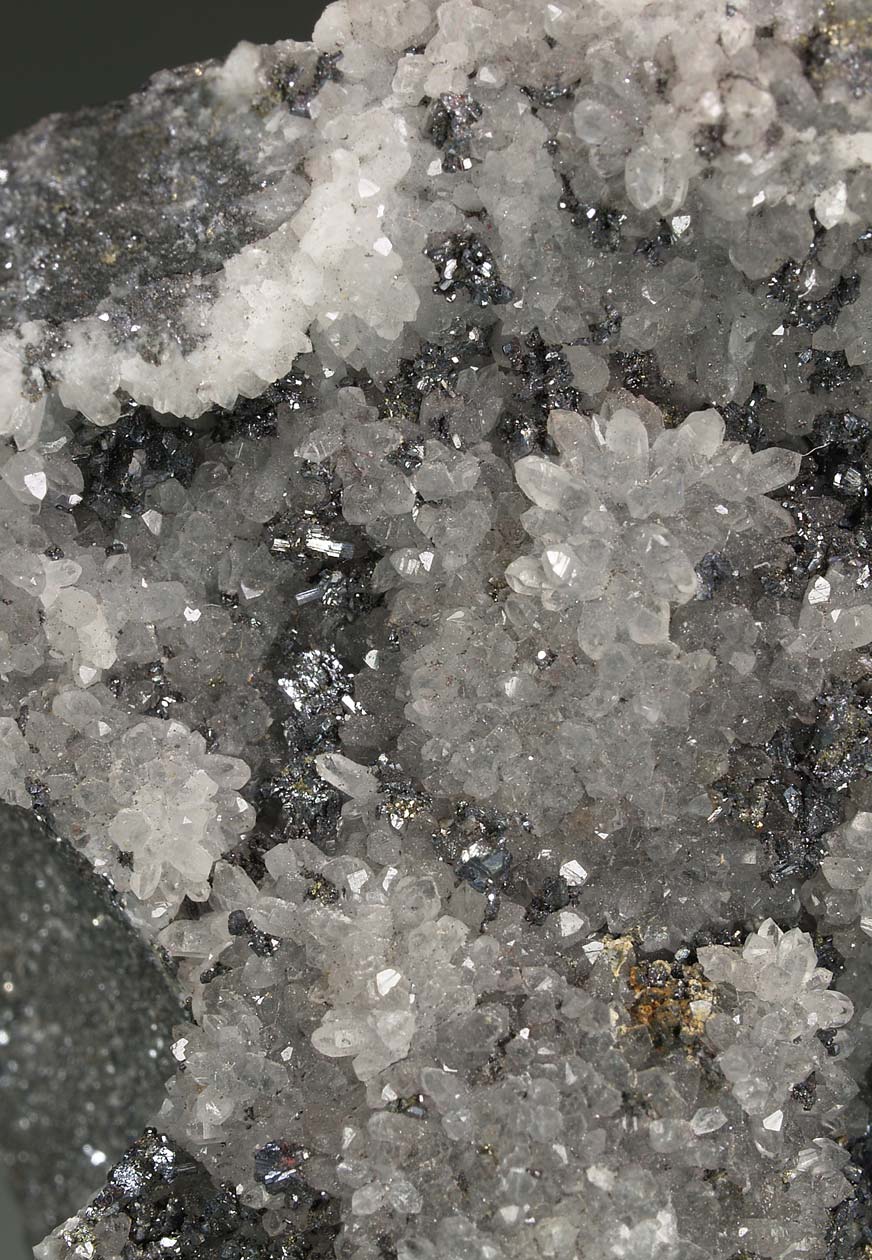
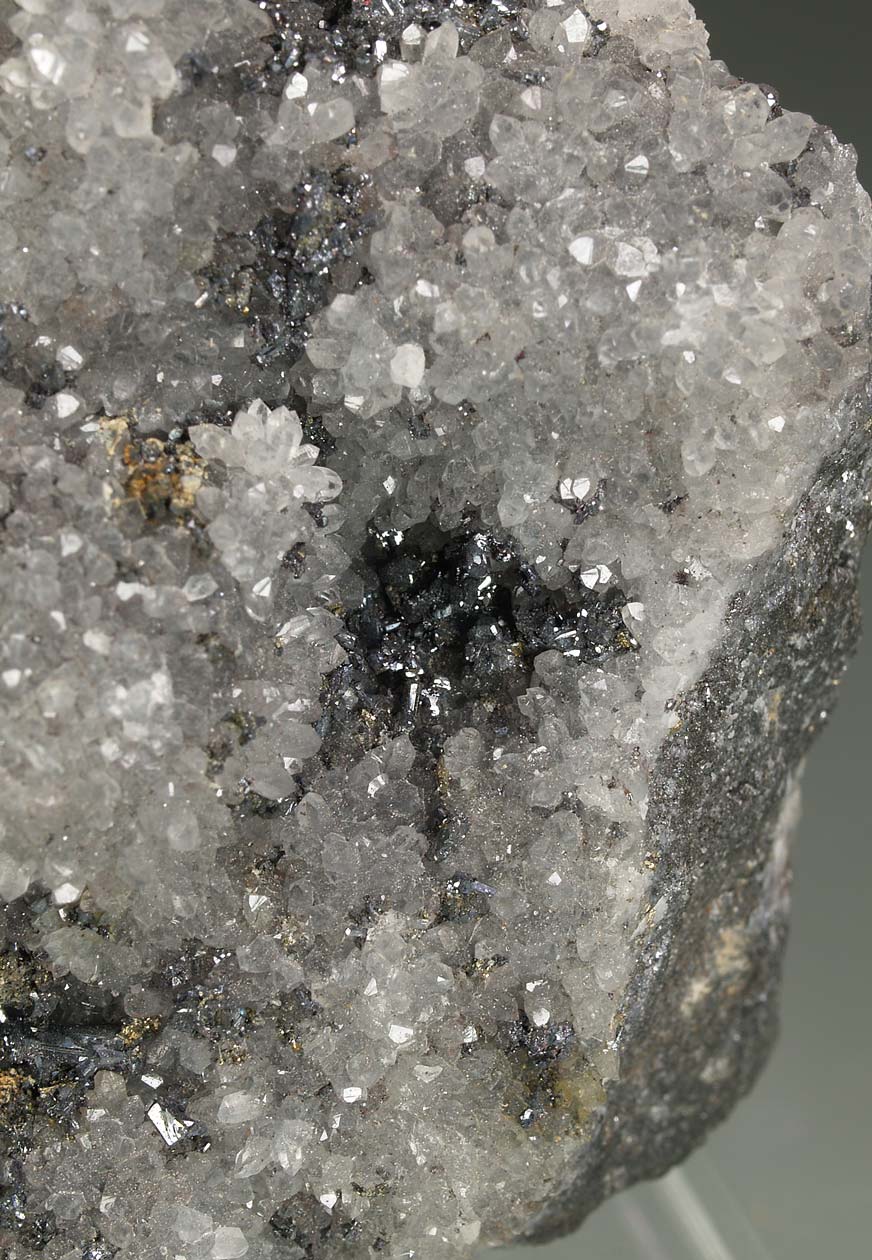
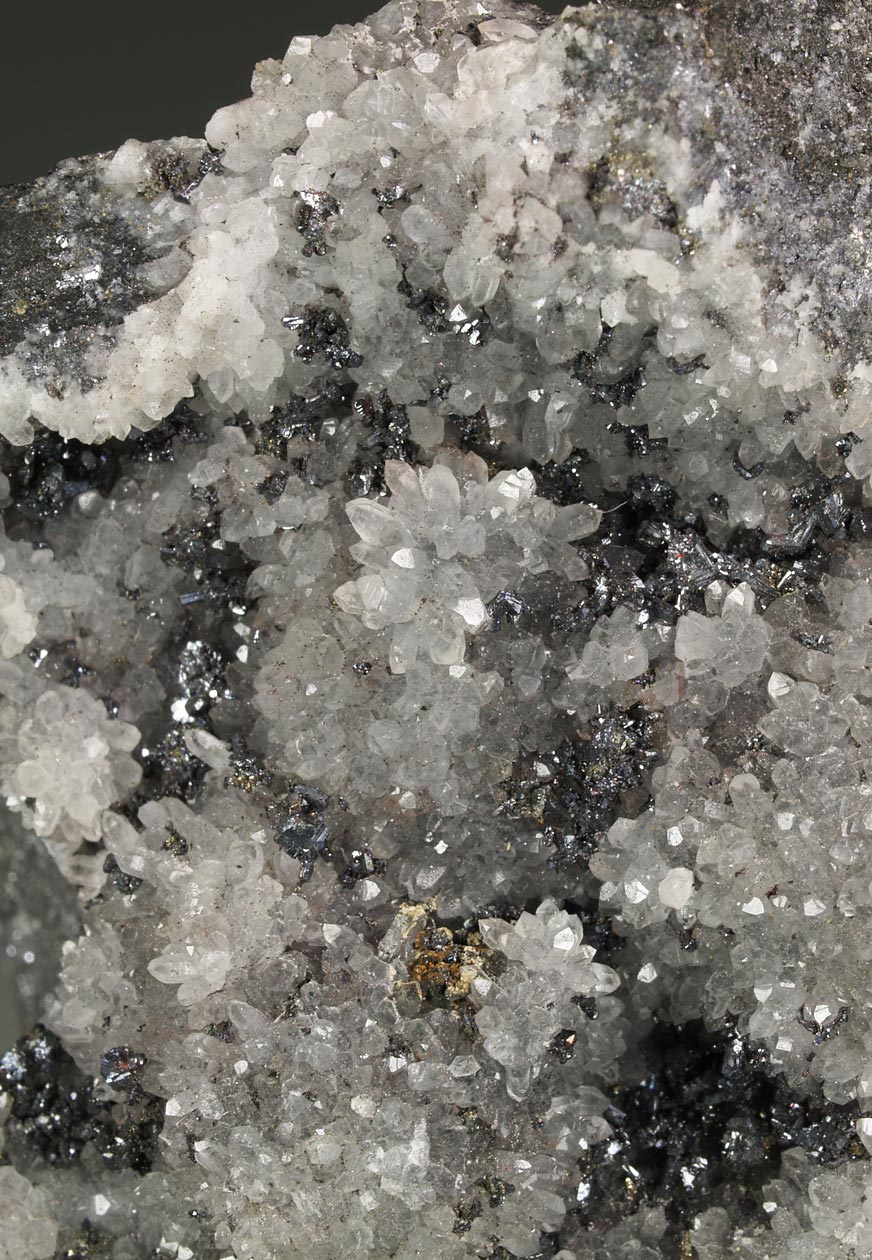
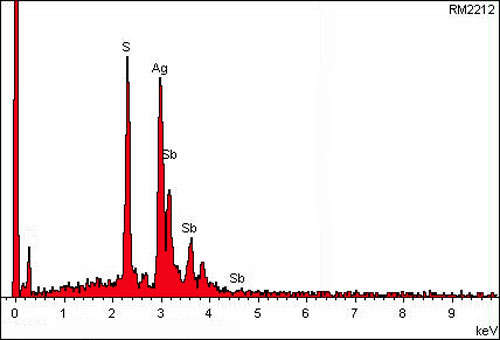
Excellente ejemplar formado por muy numerosos agregados de cristales de pirargirita. Intenso brillo, con transparencias rojas, en cristales ricos en caras. Hemos analizado algunos de los cristales y enviaremos los resultados al comprador. Para vitrina, pero también para observar bajo la lupa.
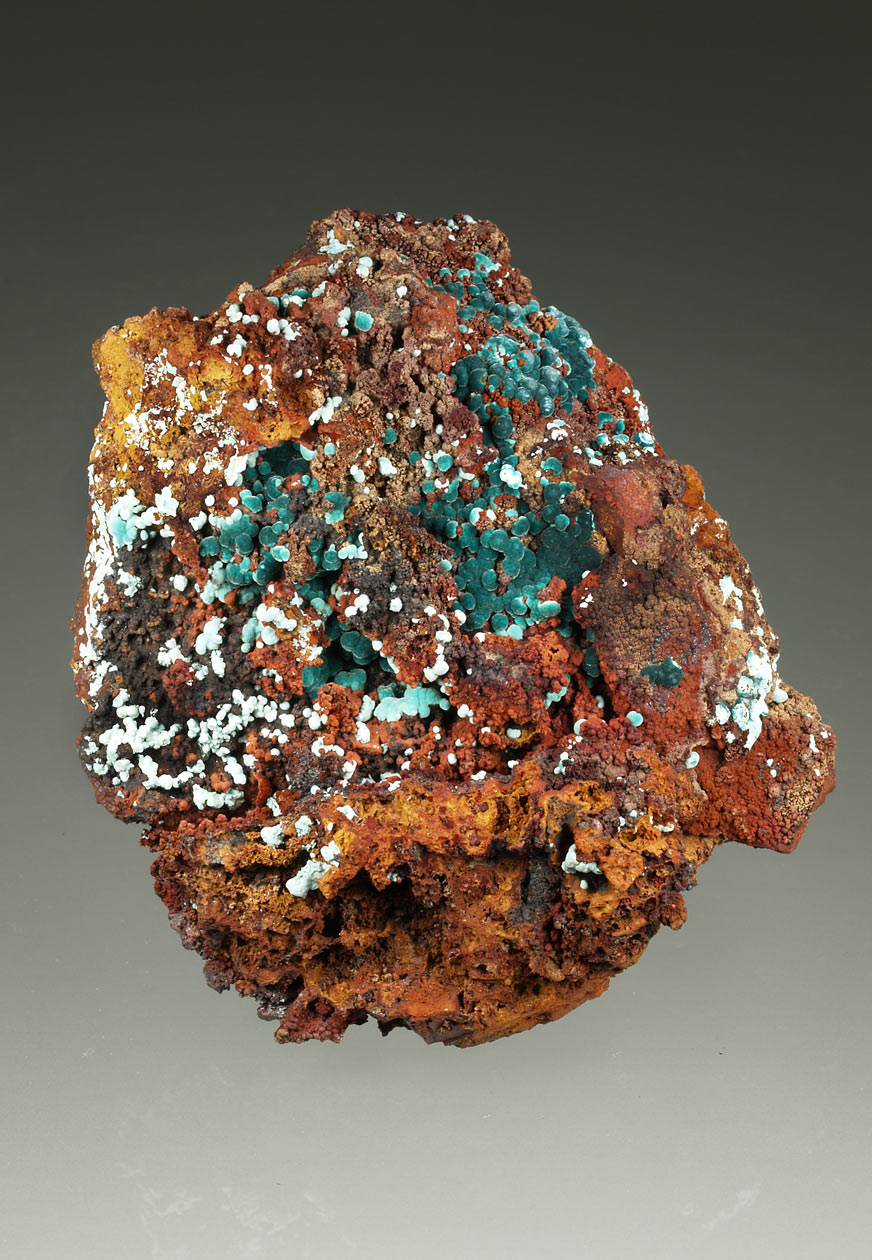
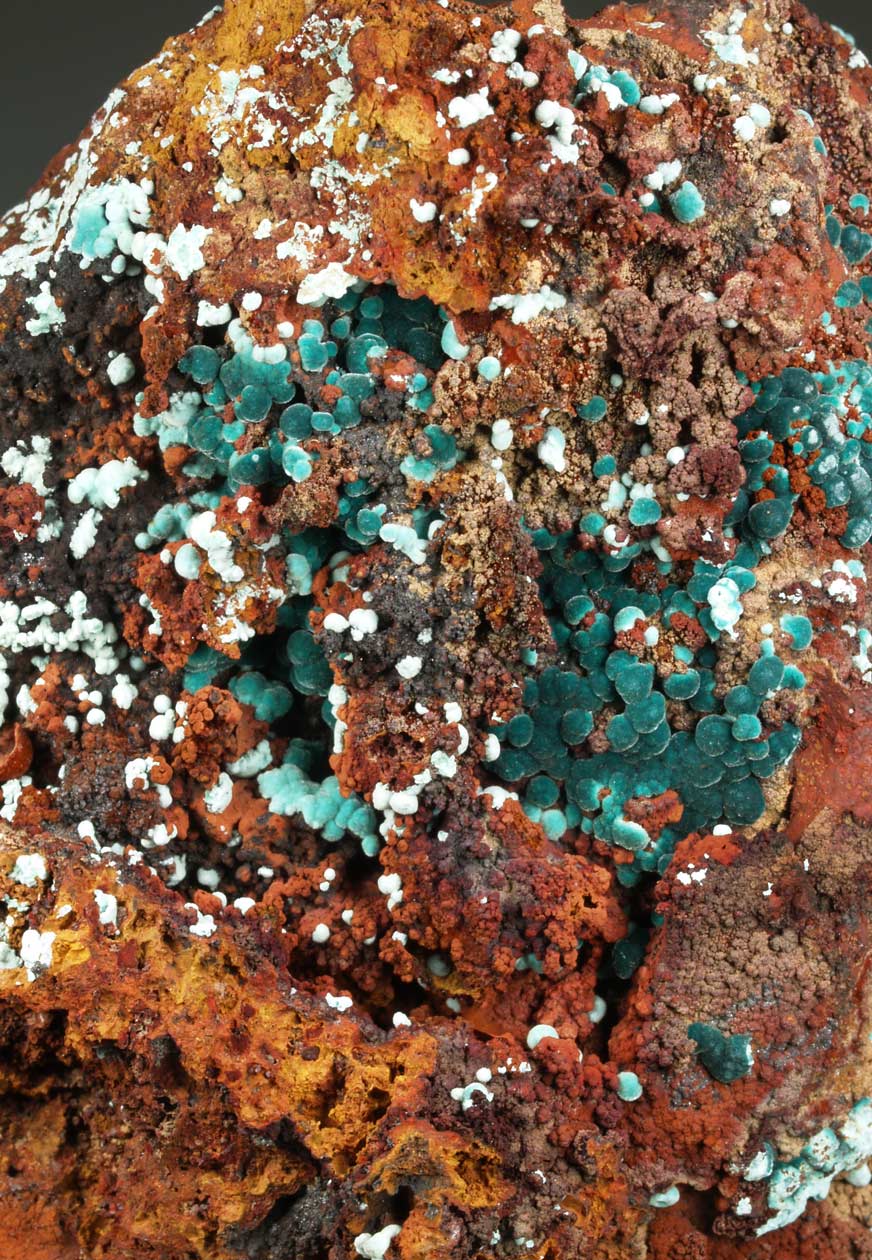
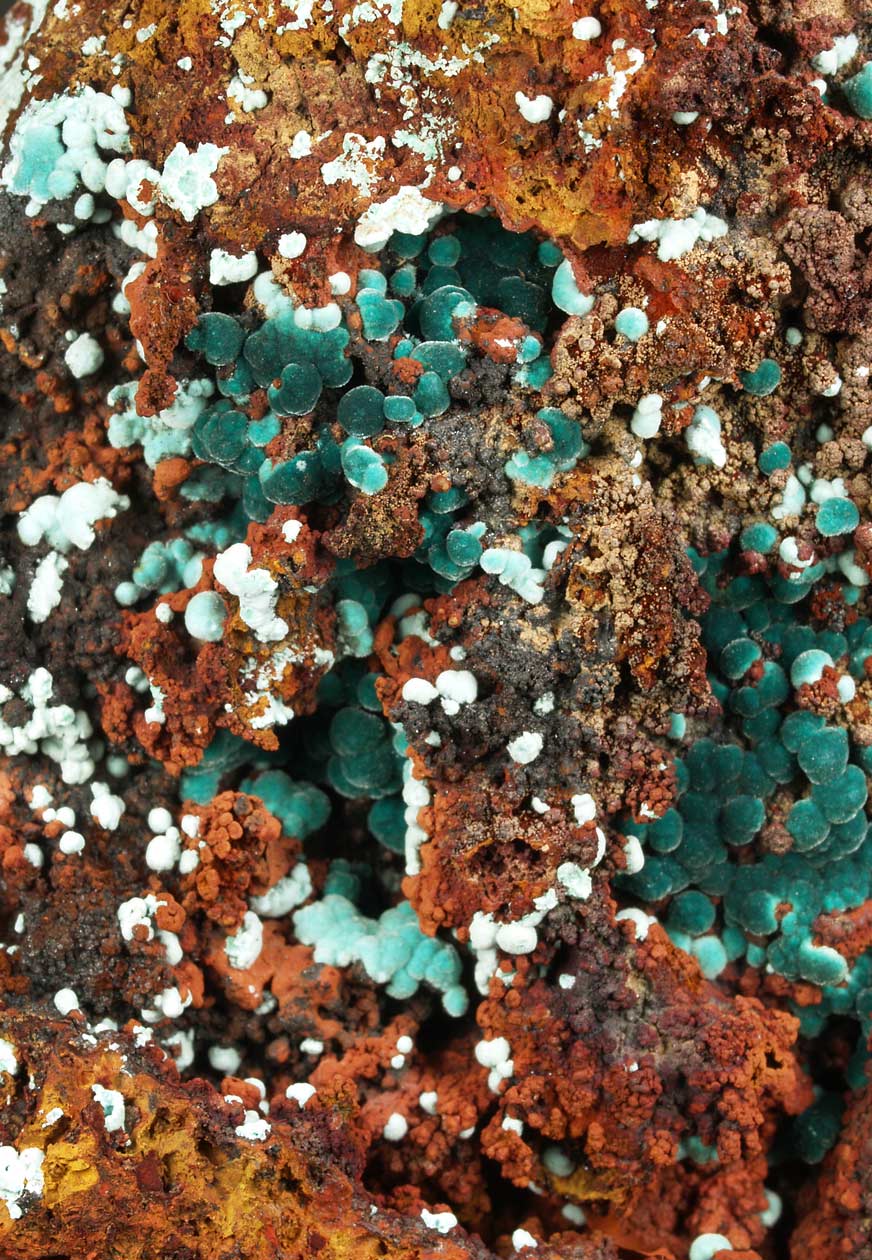
Agregados globulares formados por cristales aciculares de rosasita, con colores entre el verde oscuro y el verde azulado claro. Muy estéticos y dispuestos sobre una matriz de goethita. De esta clásica localidad mexicana.