- Home About RM Minerals
- Virtual Photo Museum Blog RM Contact
- Microscopy and instruments How to Buy Disclaimer
Copyright 2010-2026
www.rosellminerals.com



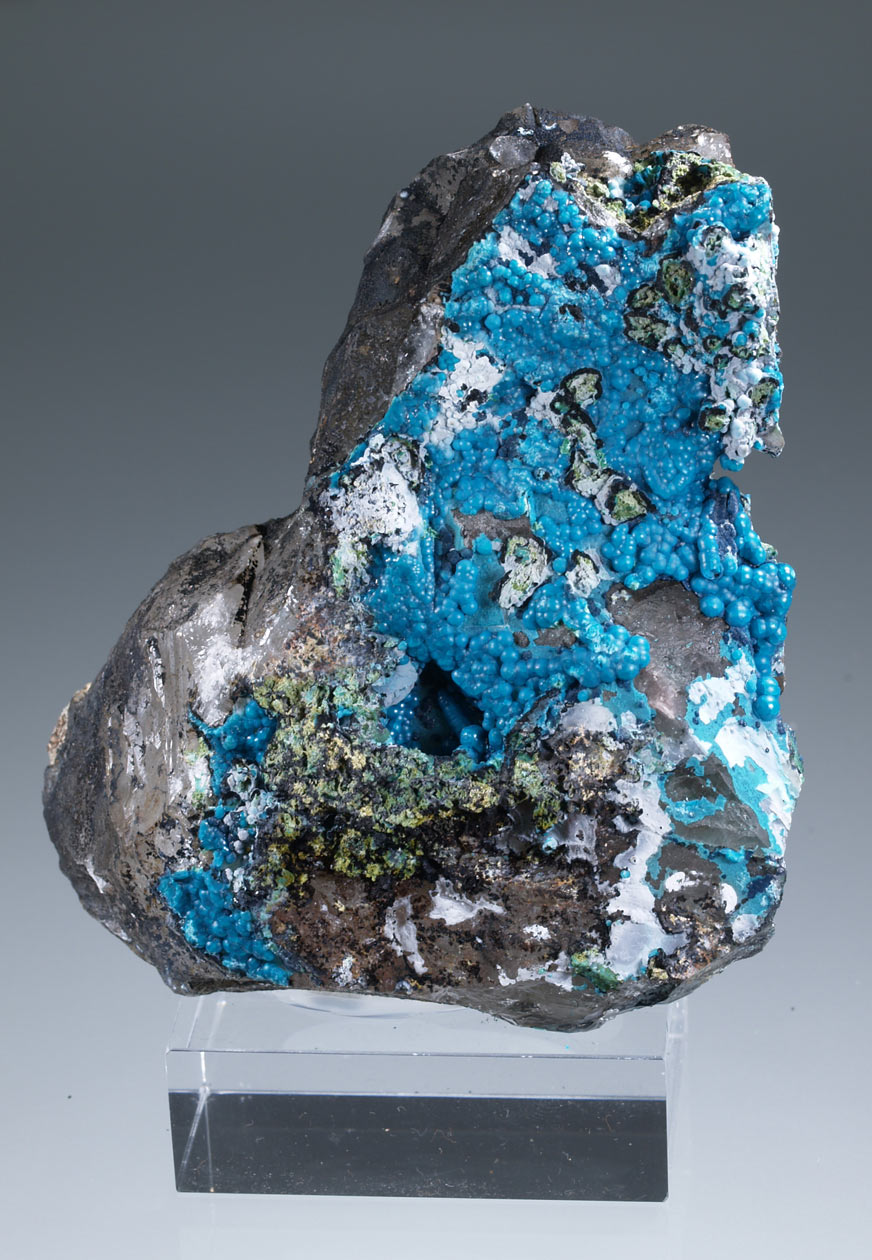
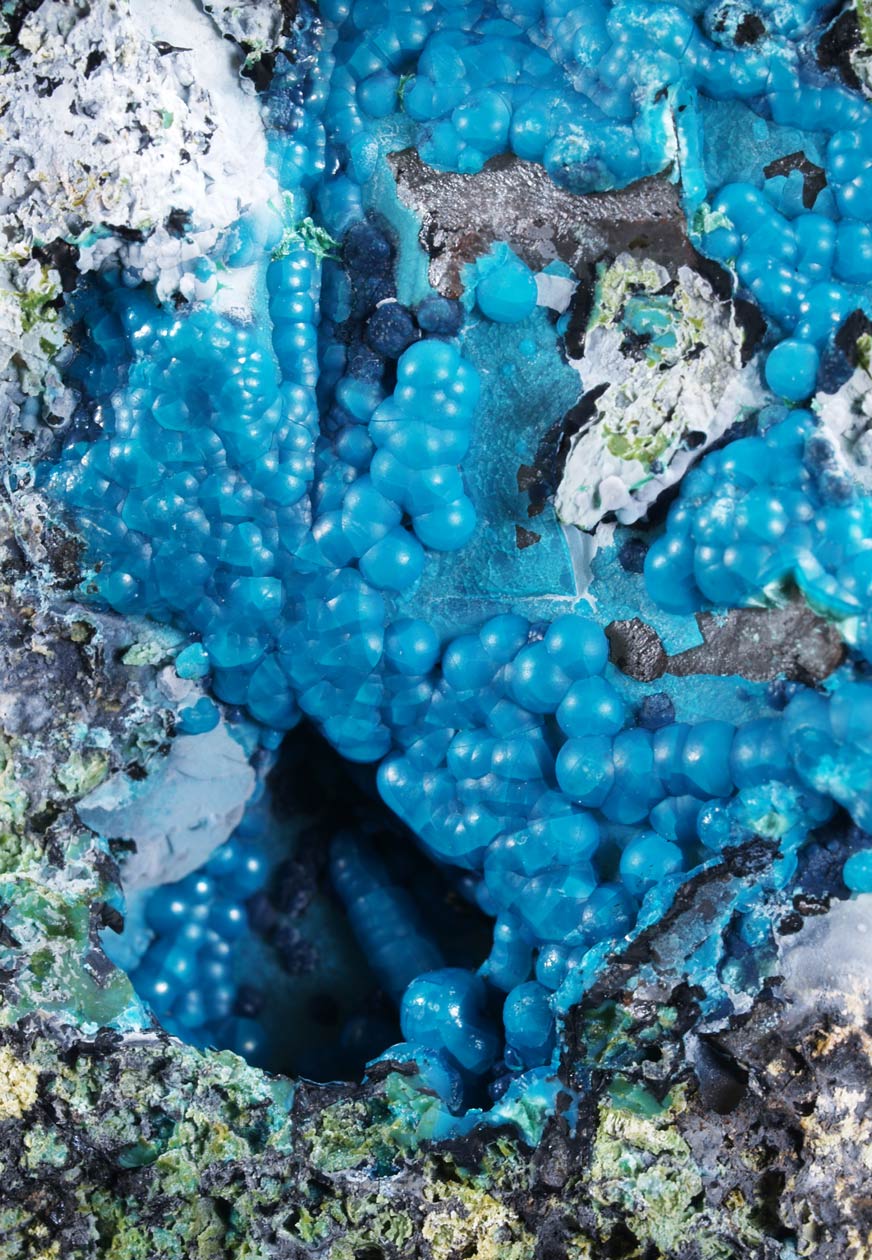
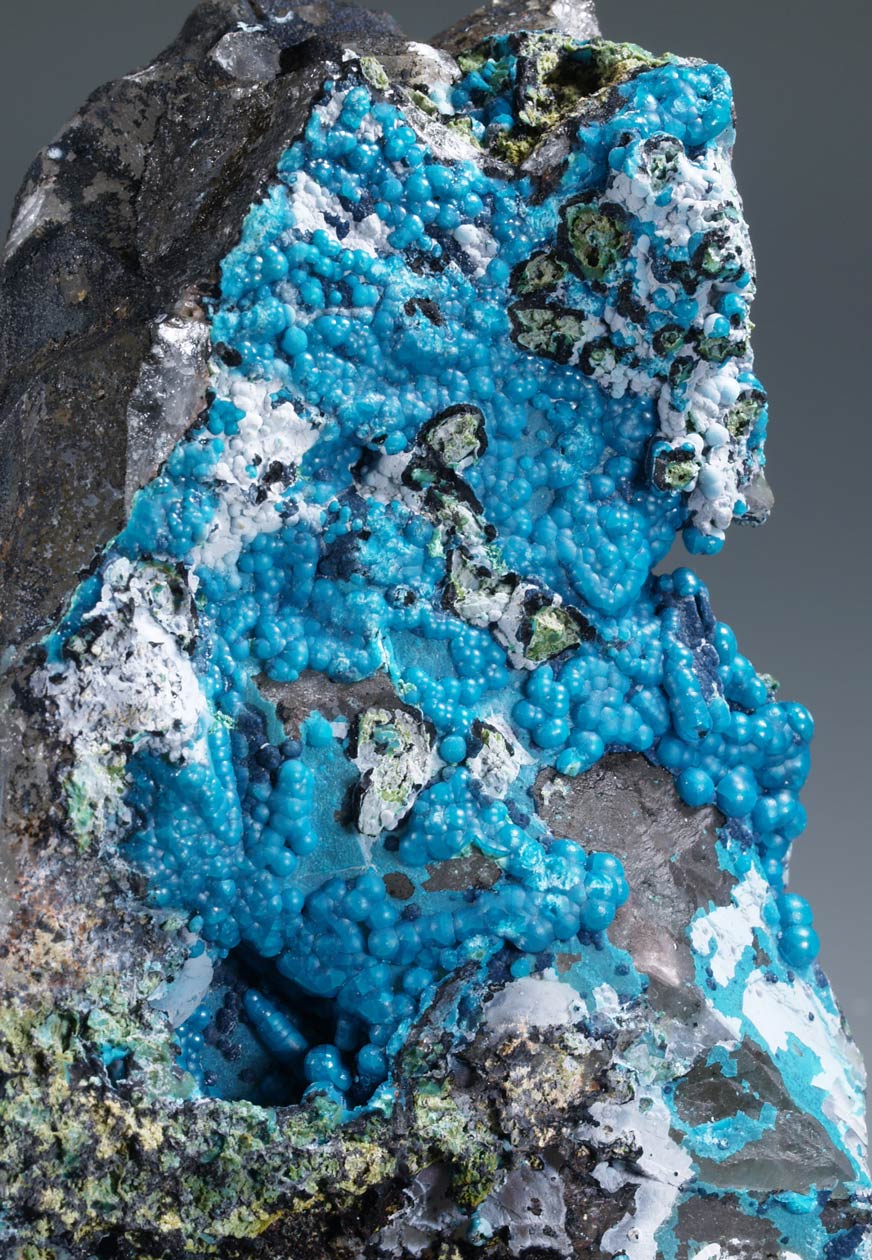
Good size specimen formed by numerous botryoidal aggregates of blue chrysocolla, scattered across a matrix primarily made of quartz. Underneath some of these bluish spheres, green radial aggregates corresponding to malachite. Tenorite is present as black globular aggregates. The contrast against the matrix is highly striking.
Although similar pieces initially circulated with erroneous labels attributing them to the Tentadora Mine (Pisco, Ica), the locality was subsequently corrected and confirmed by R. Lavinstky and U. Kolitsch as originating from the Julcani mining district (Huancavelica).
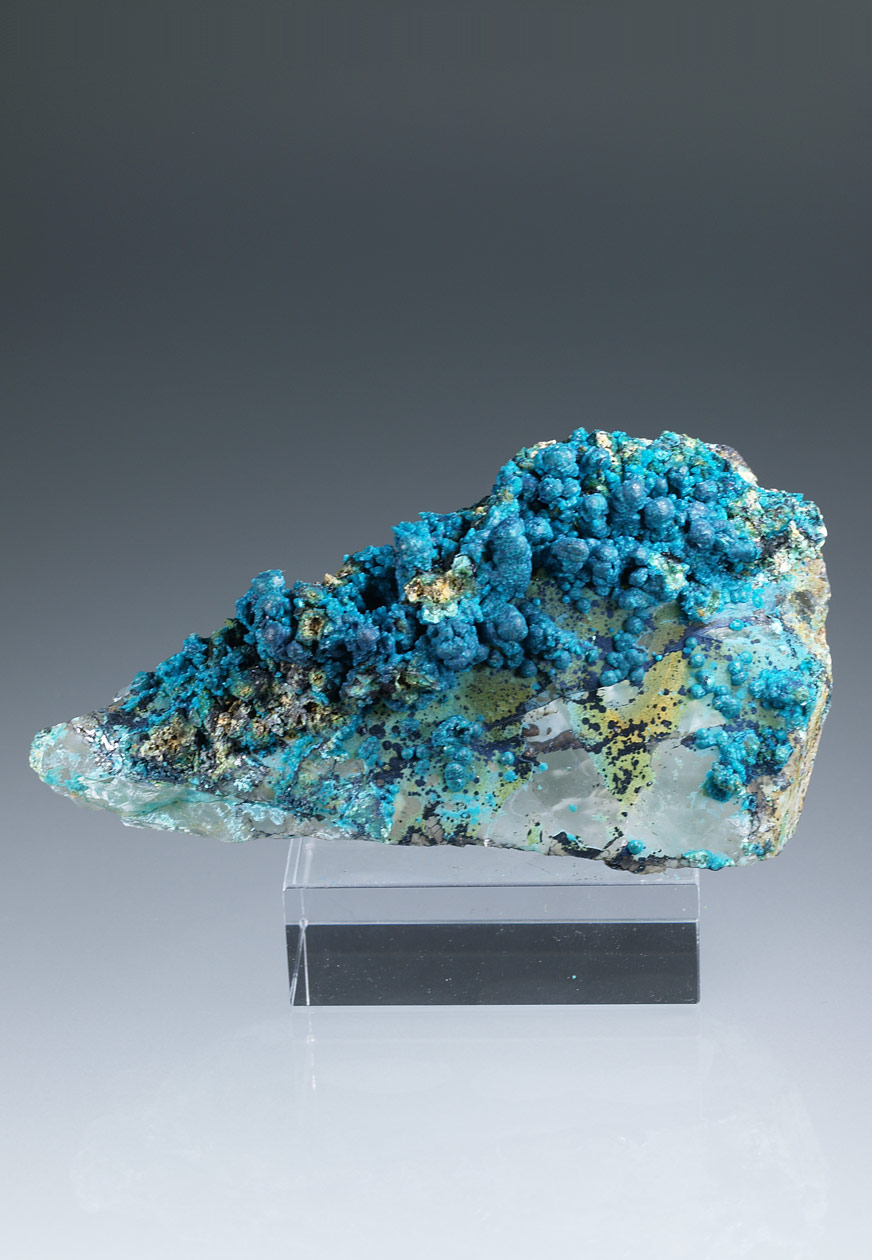
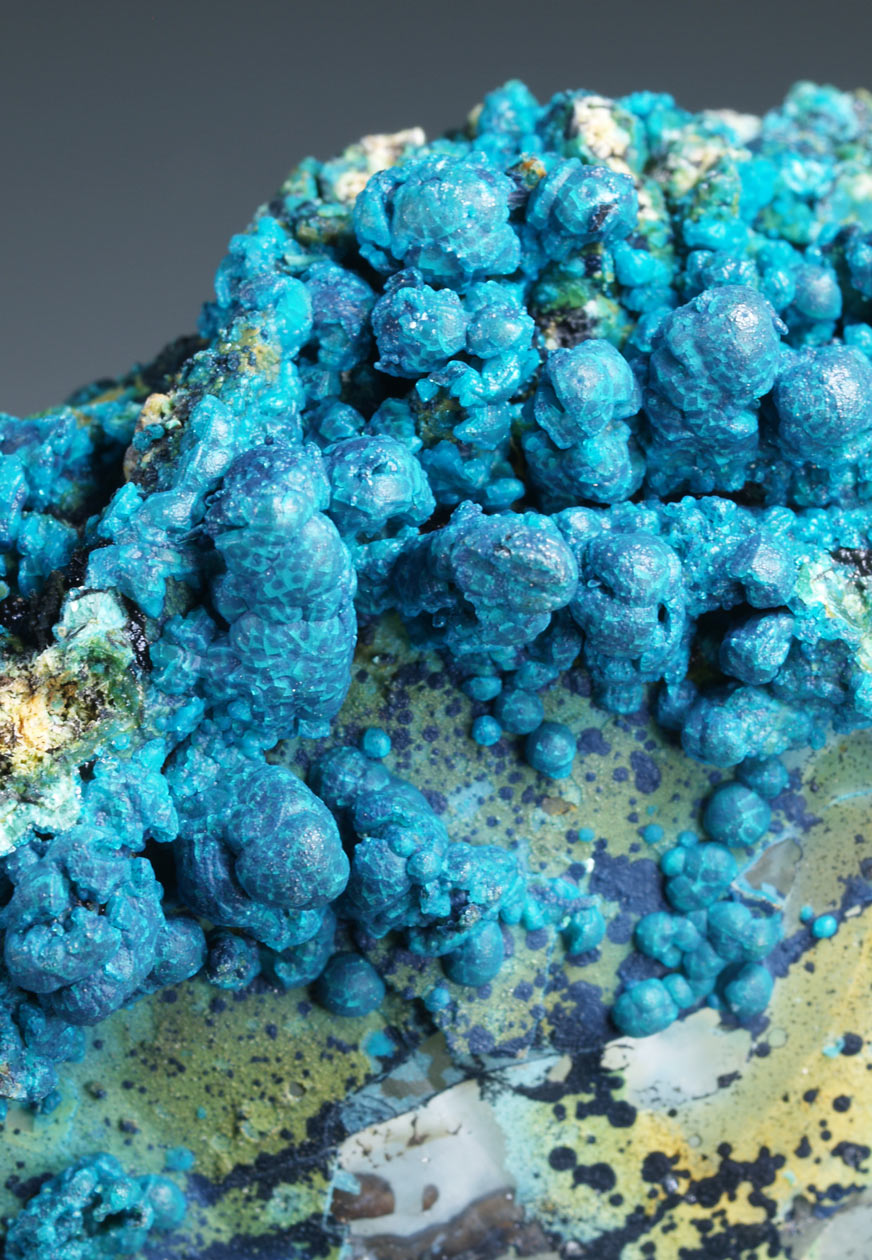
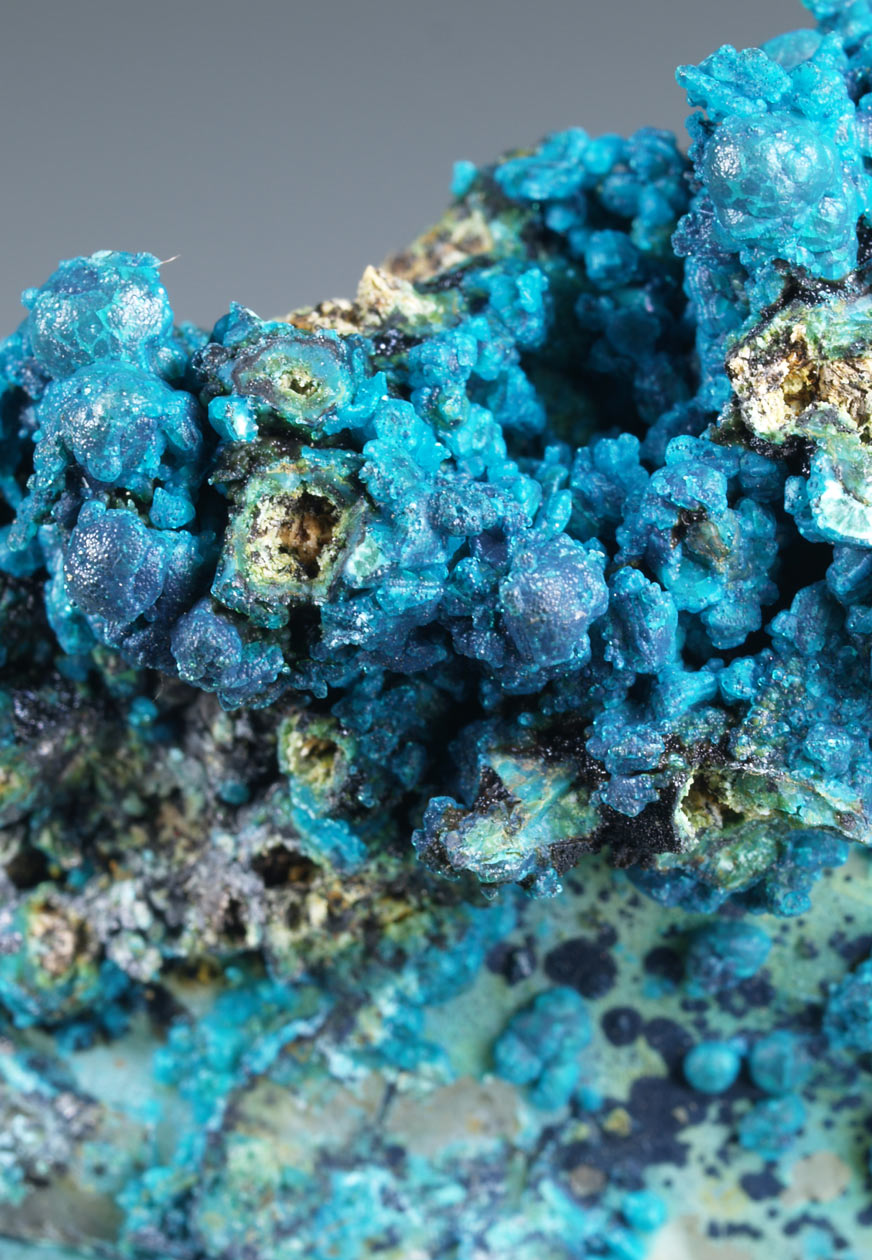
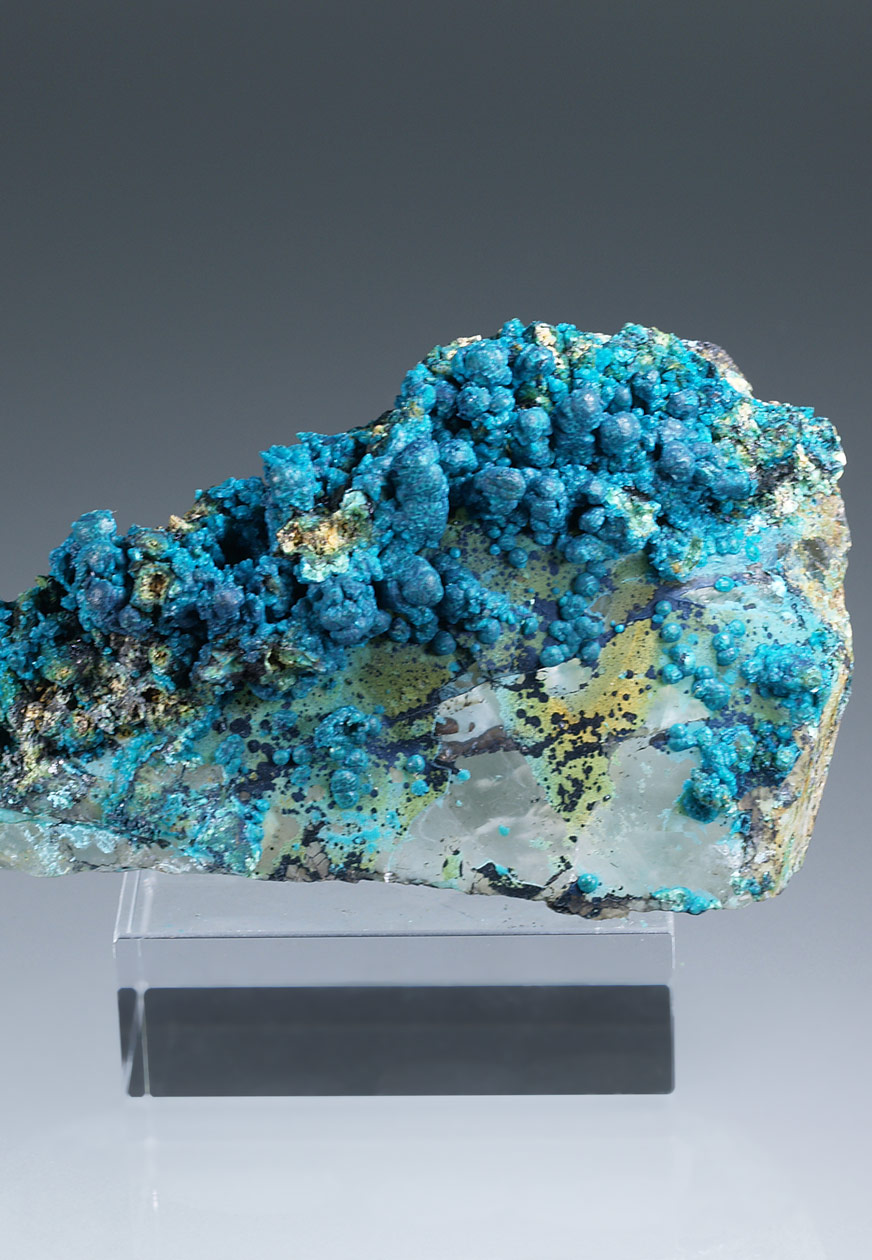
Very aesthetic specimen composed of numerous botryoidal aggregates of blue chrysocolla, scattered across a quartz matrix. With black brilliant globules of tenorite coated by chrysocolla. The contrast on the matrix is highly striking. Although similar pieces initially circulated with erroneous labels attributing them to the Tentadora Mine (Pisco, Ica), the locality was subsequently corrected and confirmed by R. Lavinstky and U. Kolitsch as originating from the Julcani mining district (Huancavelica).
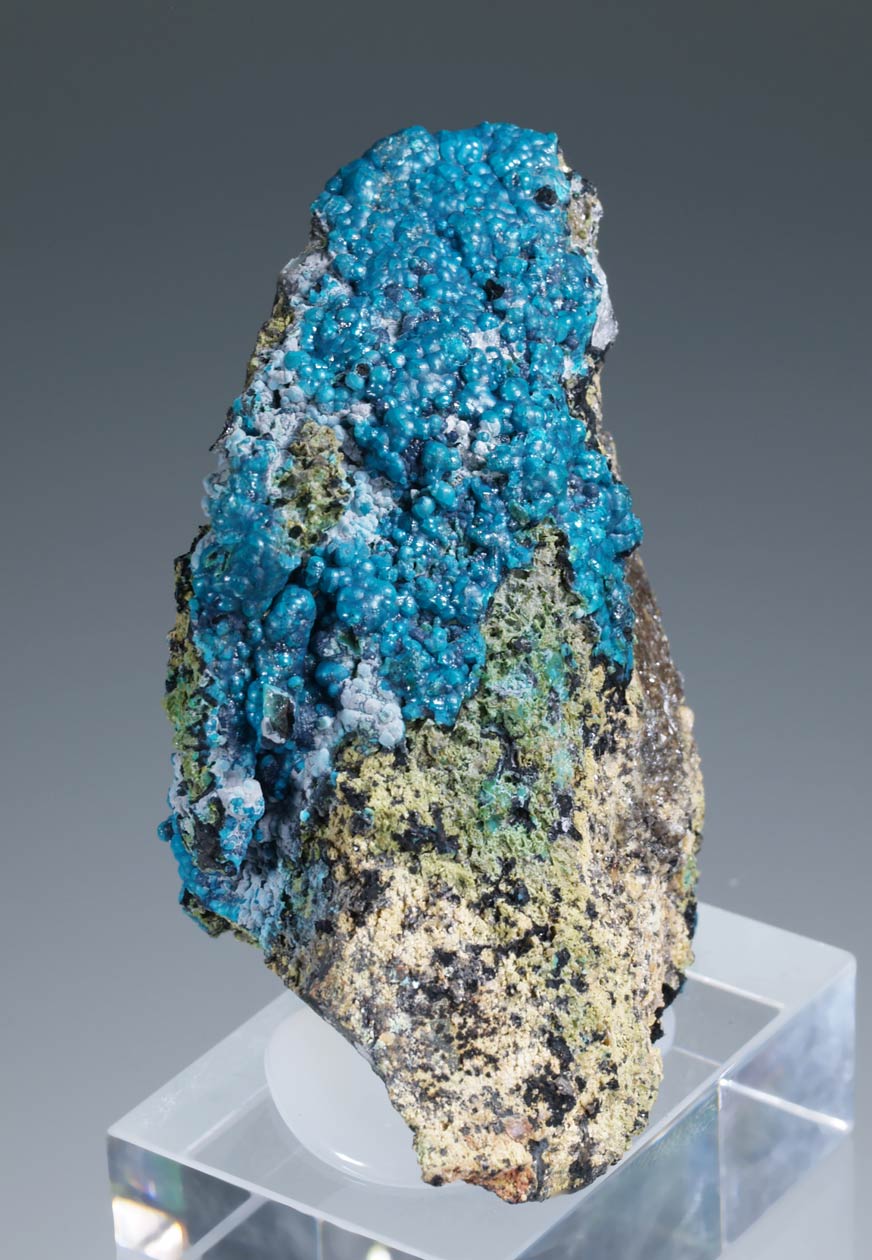
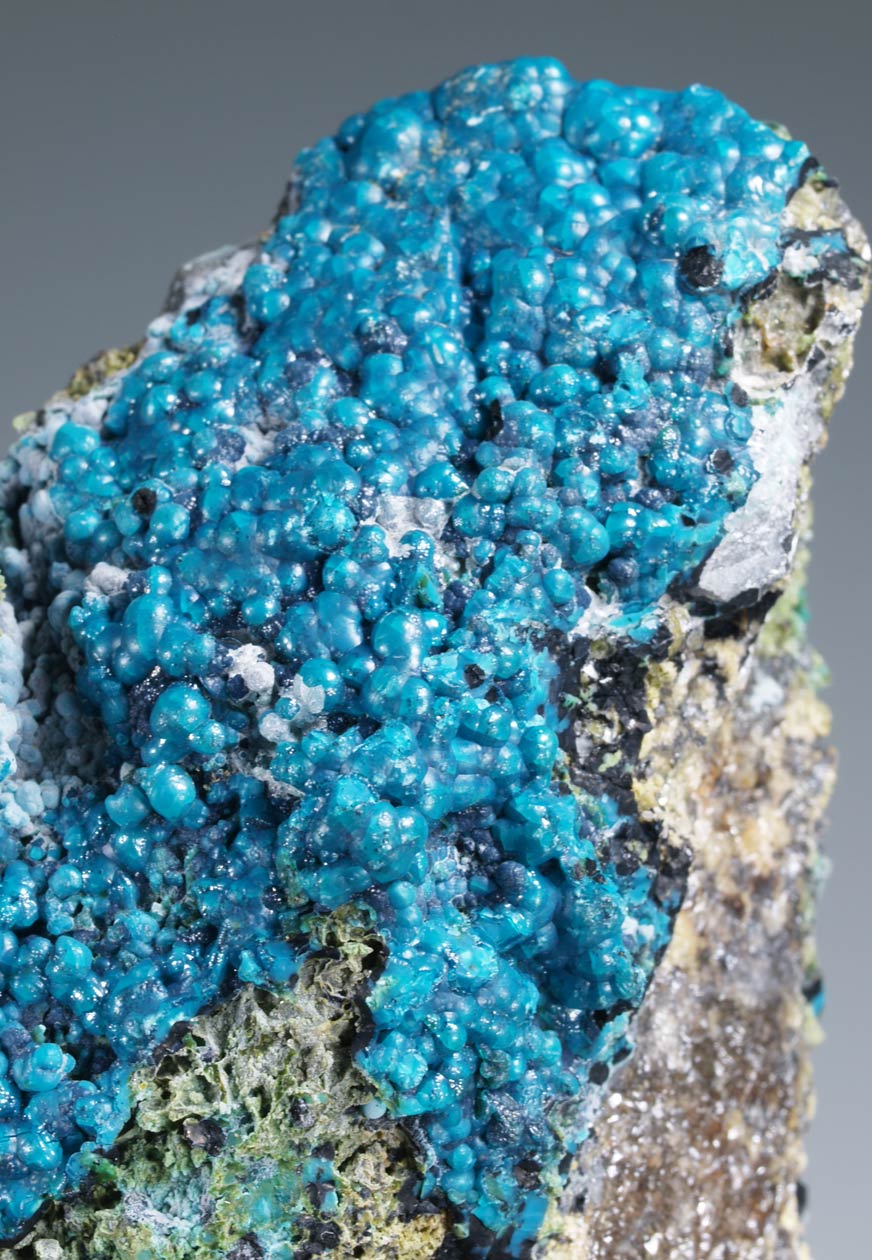
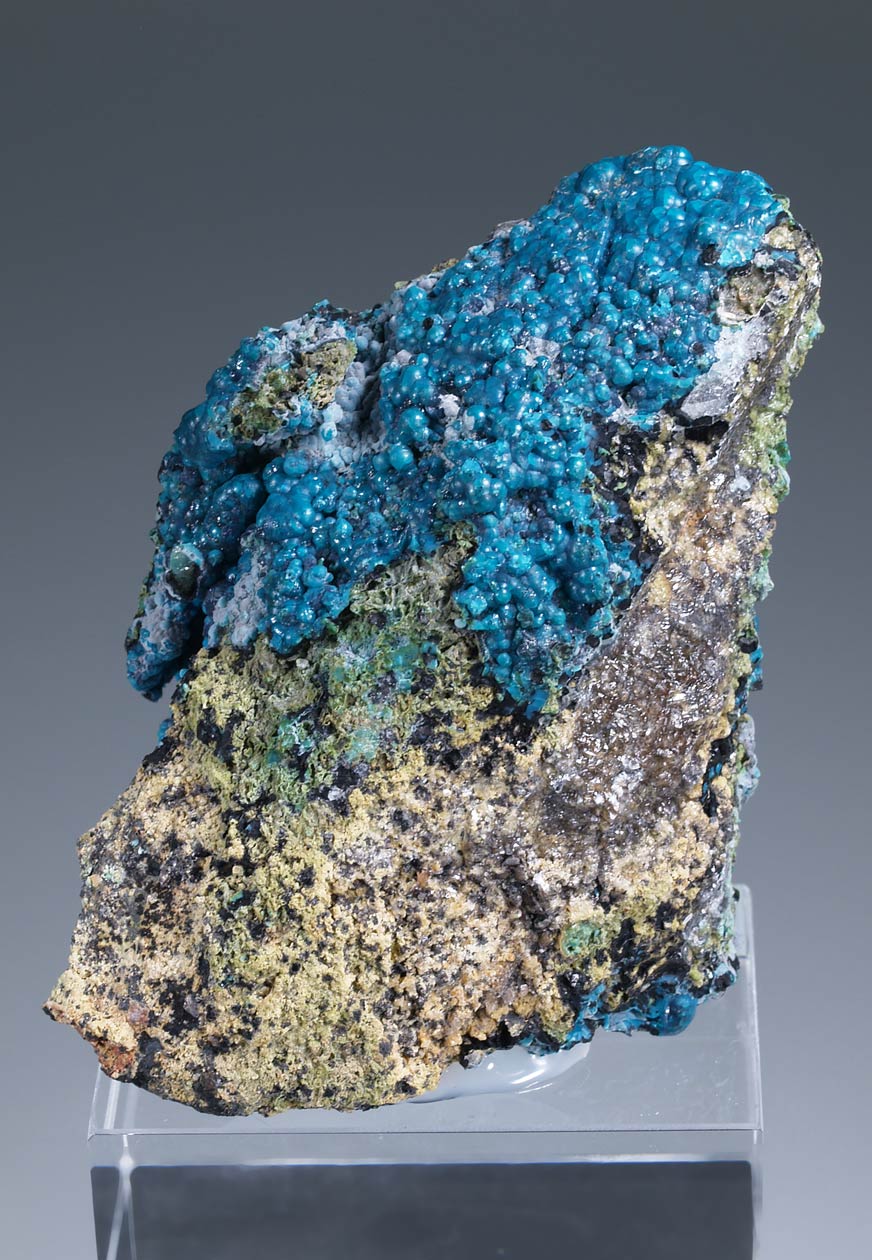
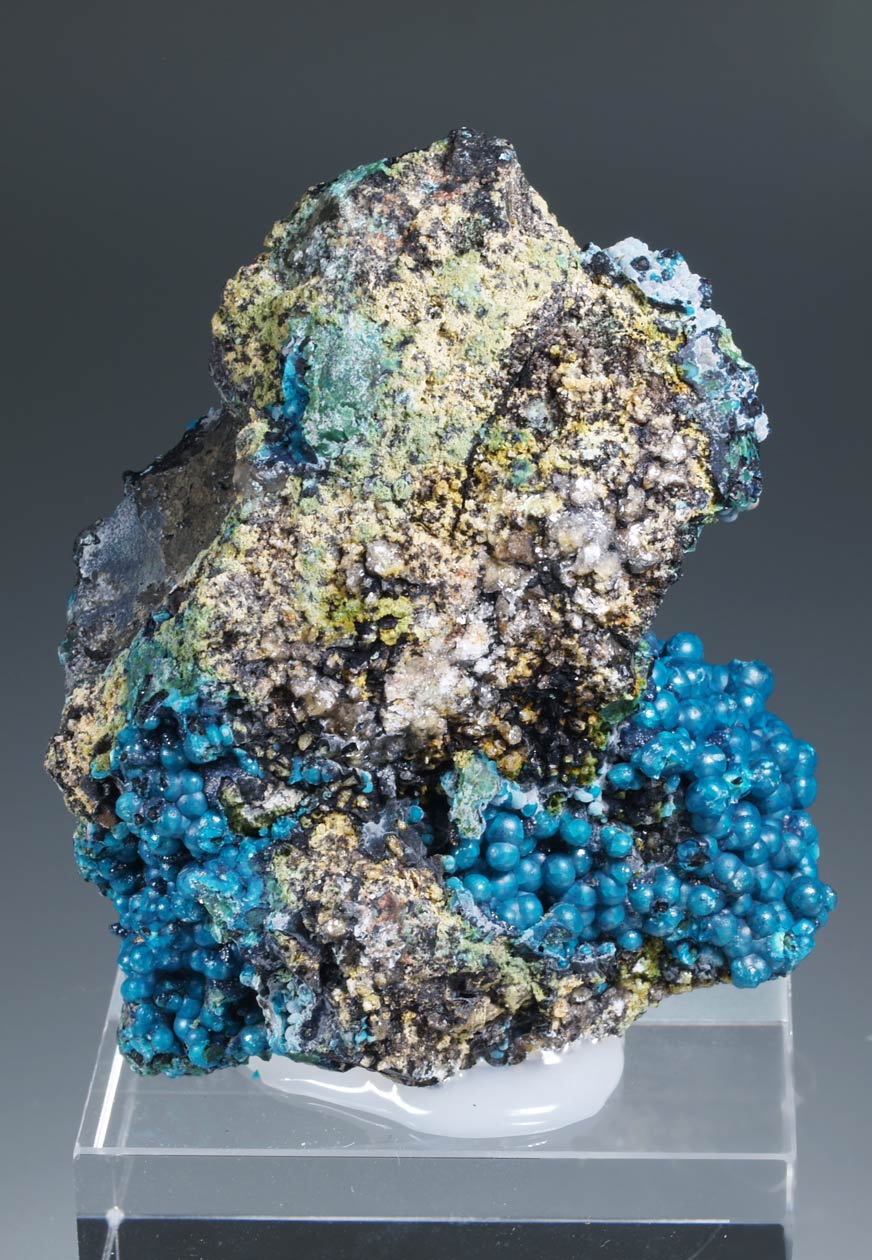
Very aesthetic specimen composed of numerous botryoidal aggregates of blue chrysocolla, scattered across a rocky matrix. Featuring green radial aggregates corresponding to malachite, along with black globules of tenorite coated by chrysocolla. The contrast on the matrix is highly striking.
Although similar pieces initially circulated with erroneous labels attributing them to the Tentadora Mine (Pisco, Ica), the locality was subsequently corrected and confirmed by R. Lavinstky and U. Kolitsch as originating from the Julcani mining district (Huancavelica).
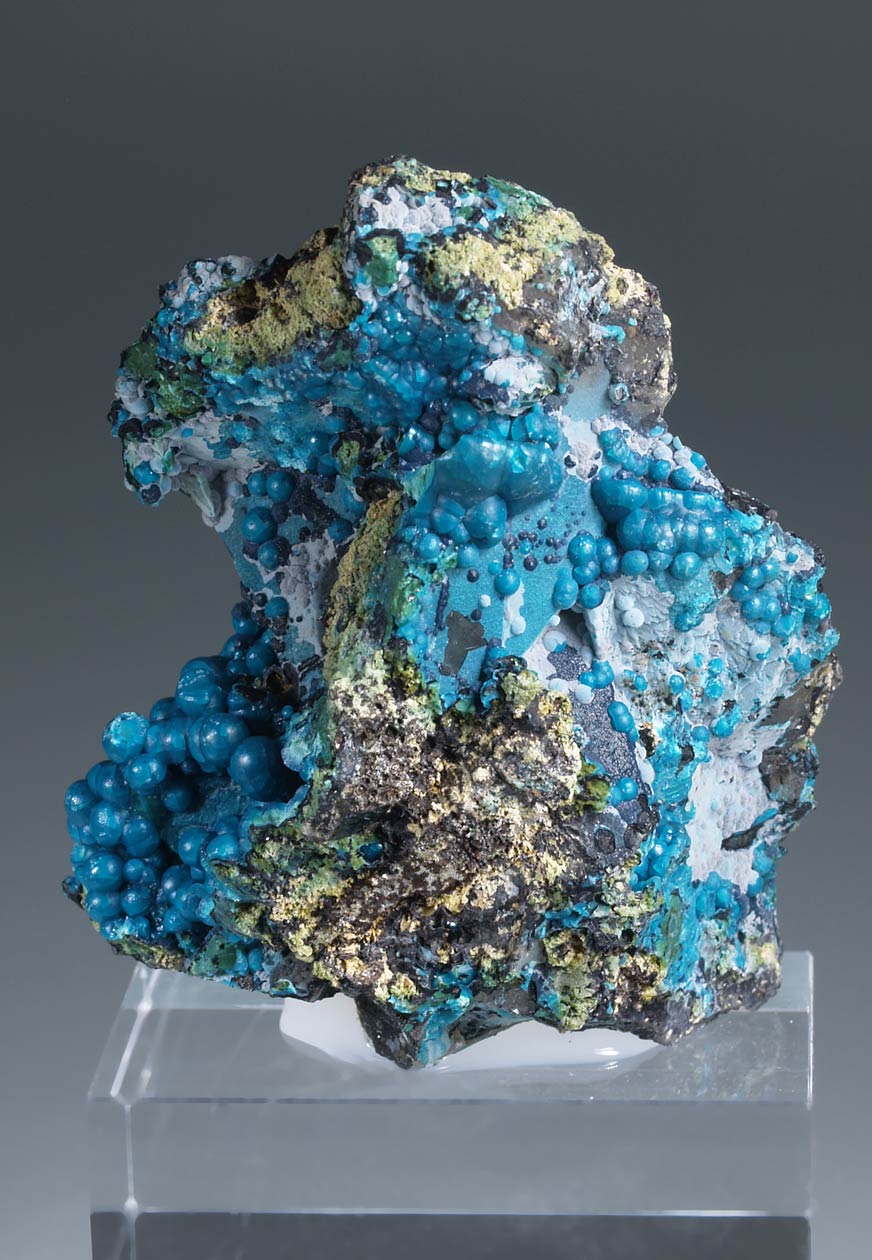
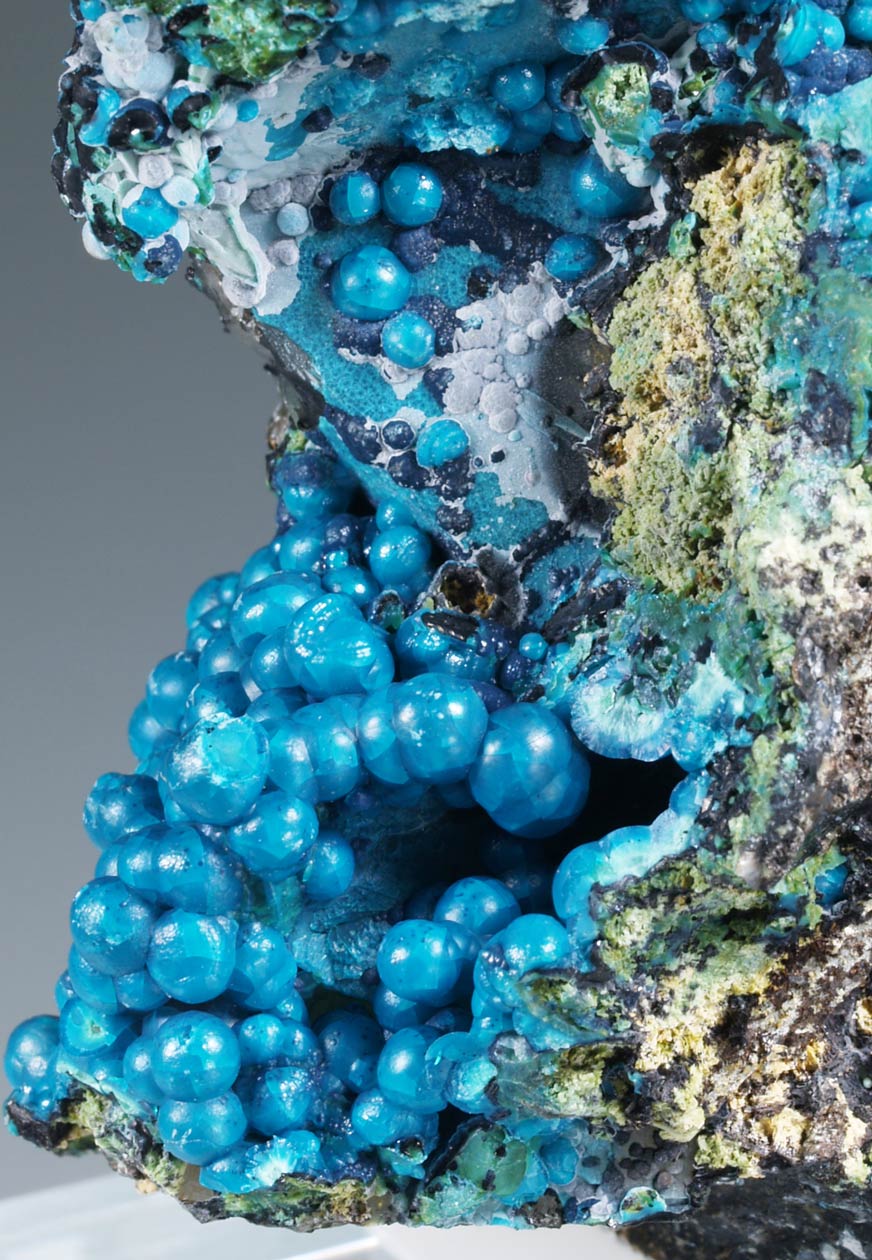
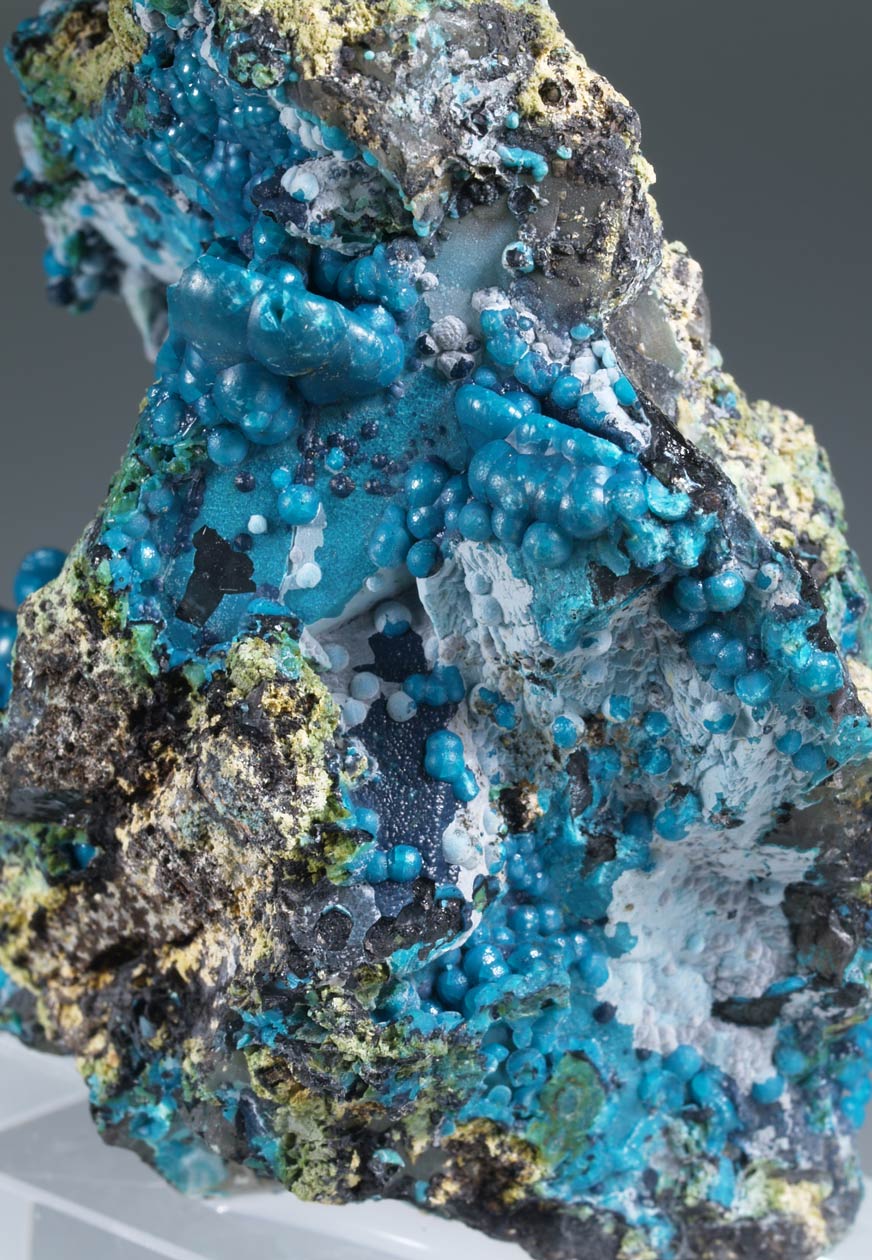
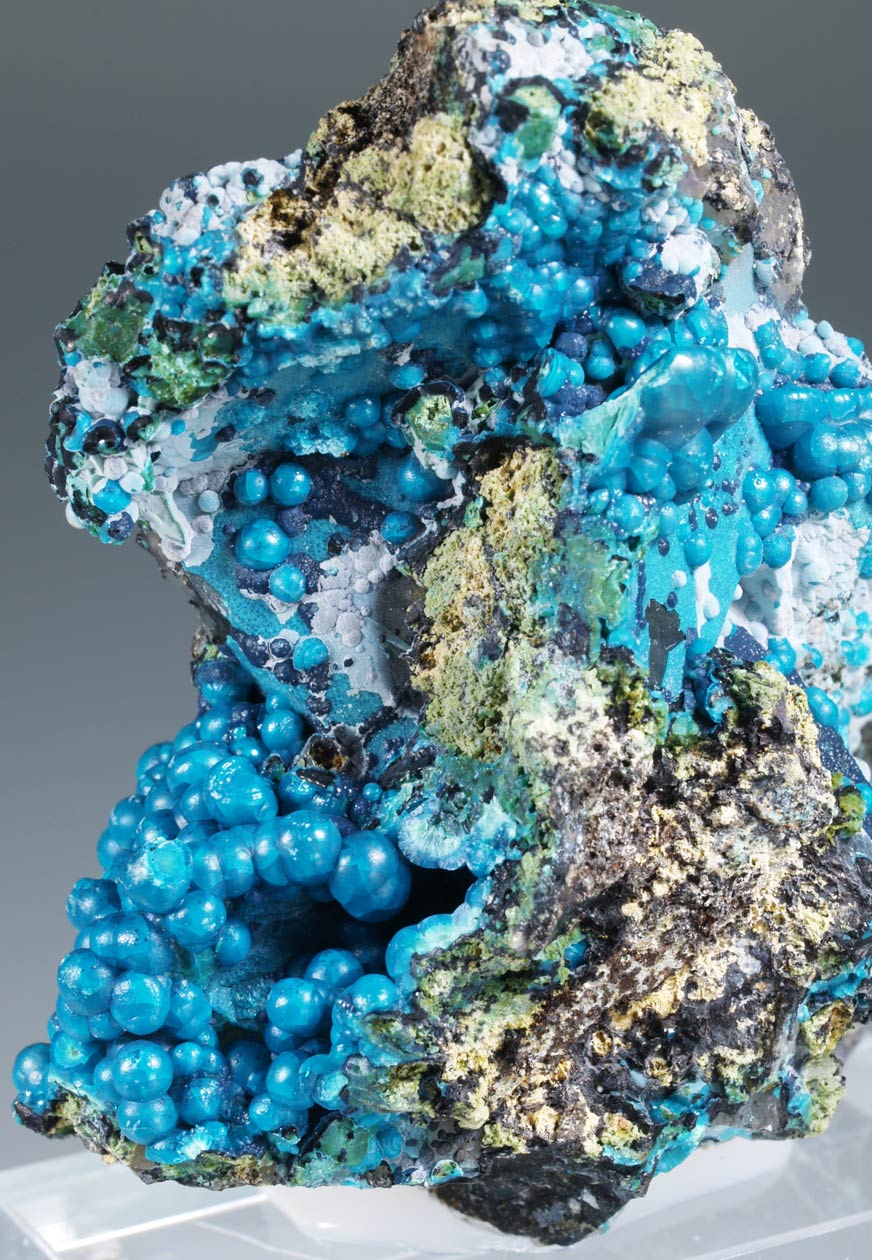
Very aesthetic specimen composed of numerous botryoidal aggregates of blue chrysocolla, scattered across a rocky matrix. Featuring green radial aggregates corresponding to malachite, along with black globules of tenorite coated by chrysocolla. The contrast on the matrix is highly striking.
Although similar pieces initially circulated with erroneous labels attributing them to the Tentadora Mine (Pisco, Ica), the locality was subsequently corrected and confirmed by R. Lavinstky and U. Kolitsch as originating from the Julcani mining district (Huancavelica).
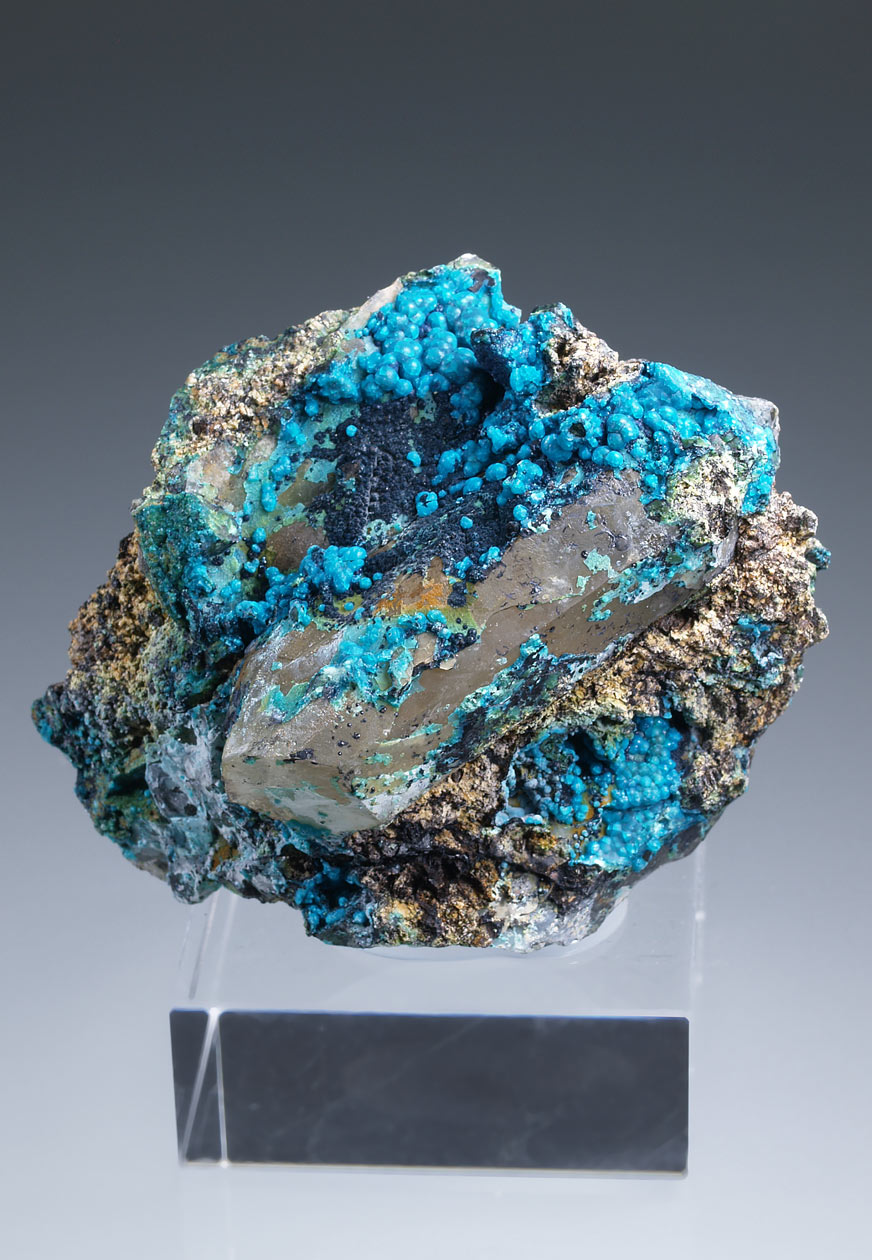
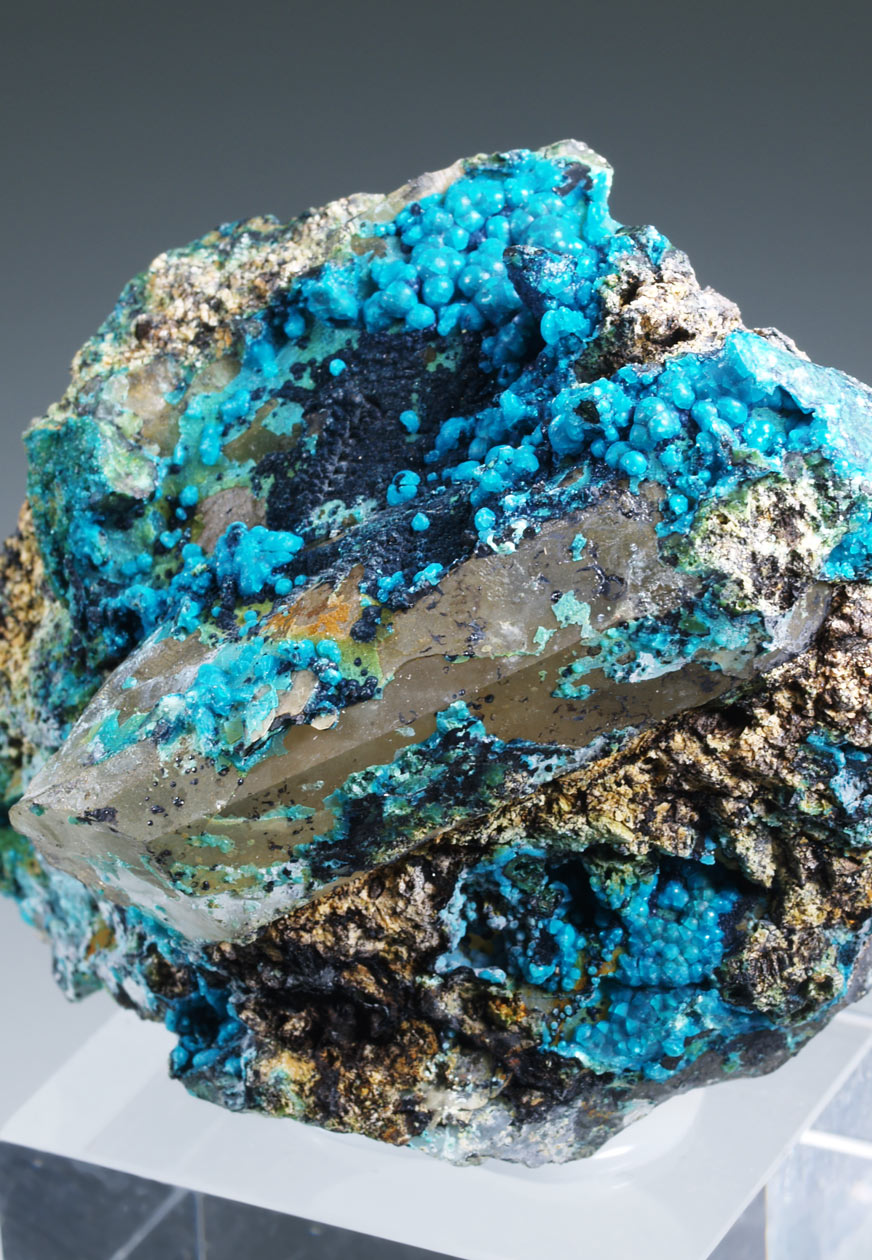
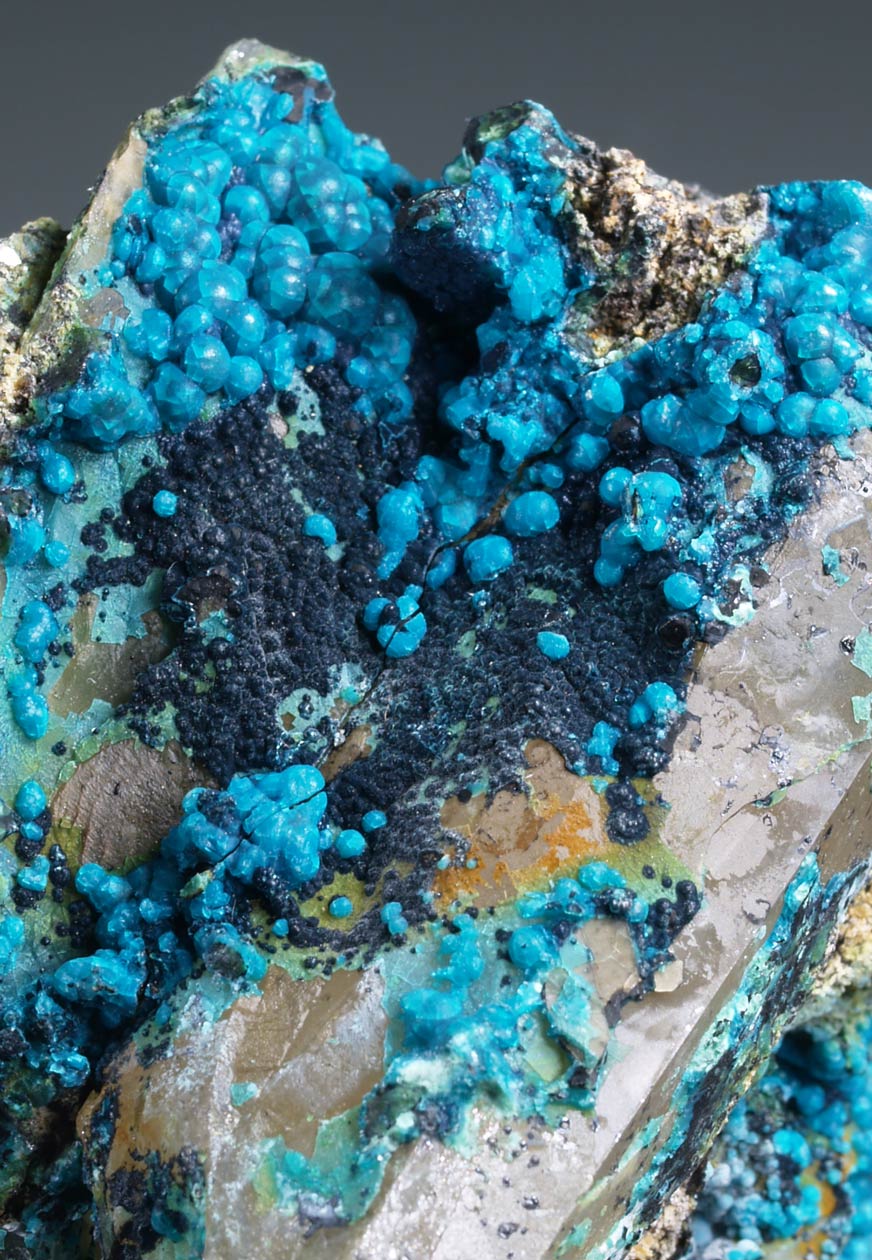
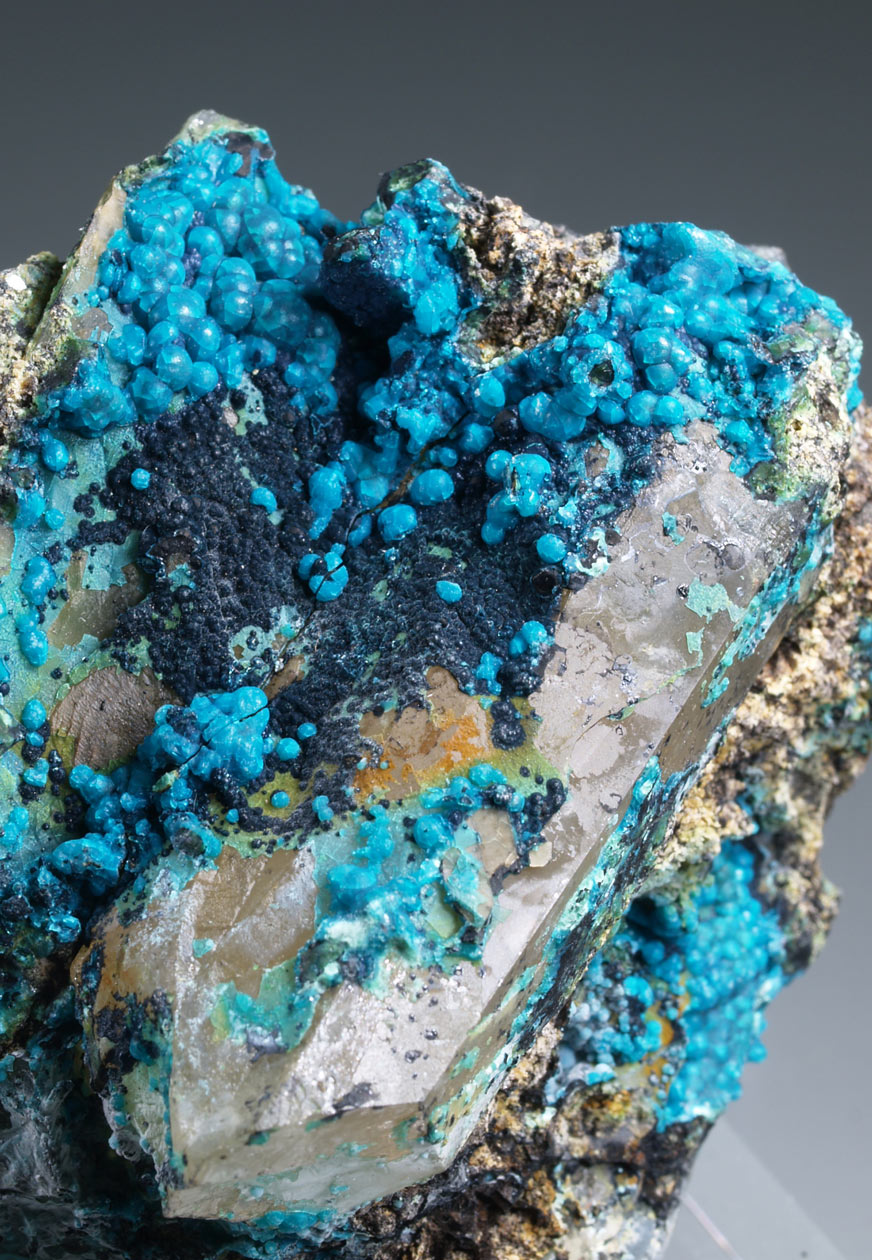
Very aesthetic specimen composed of numerous botryoidal aggregates of blue chrysocolla, scattered across a matrix primarily made of quartz, with a doubly terminated crystal. Featuring green radial aggregates corresponding to malachite, along with black globules of tenorite coated by chrysocolla. The contrast on the matrix is highly striking.
Although similar pieces initially circulated with erroneous labels attributing them to the Tentadora Mine (Pisco, Ica), the locality was subsequently corrected and confirmed by R. Lavinstky and U. Kolitsch as originating from the Julcani mining district (Huancavelica).
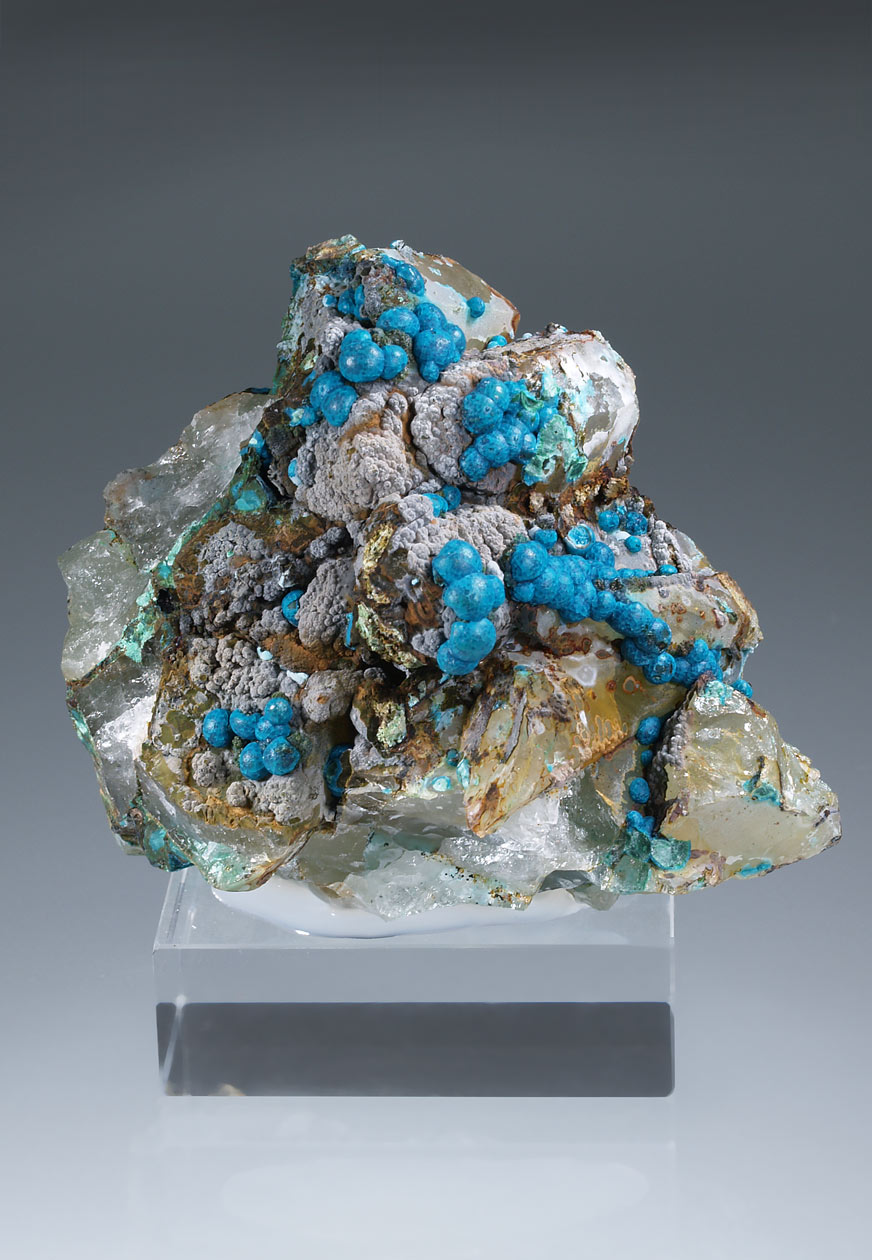
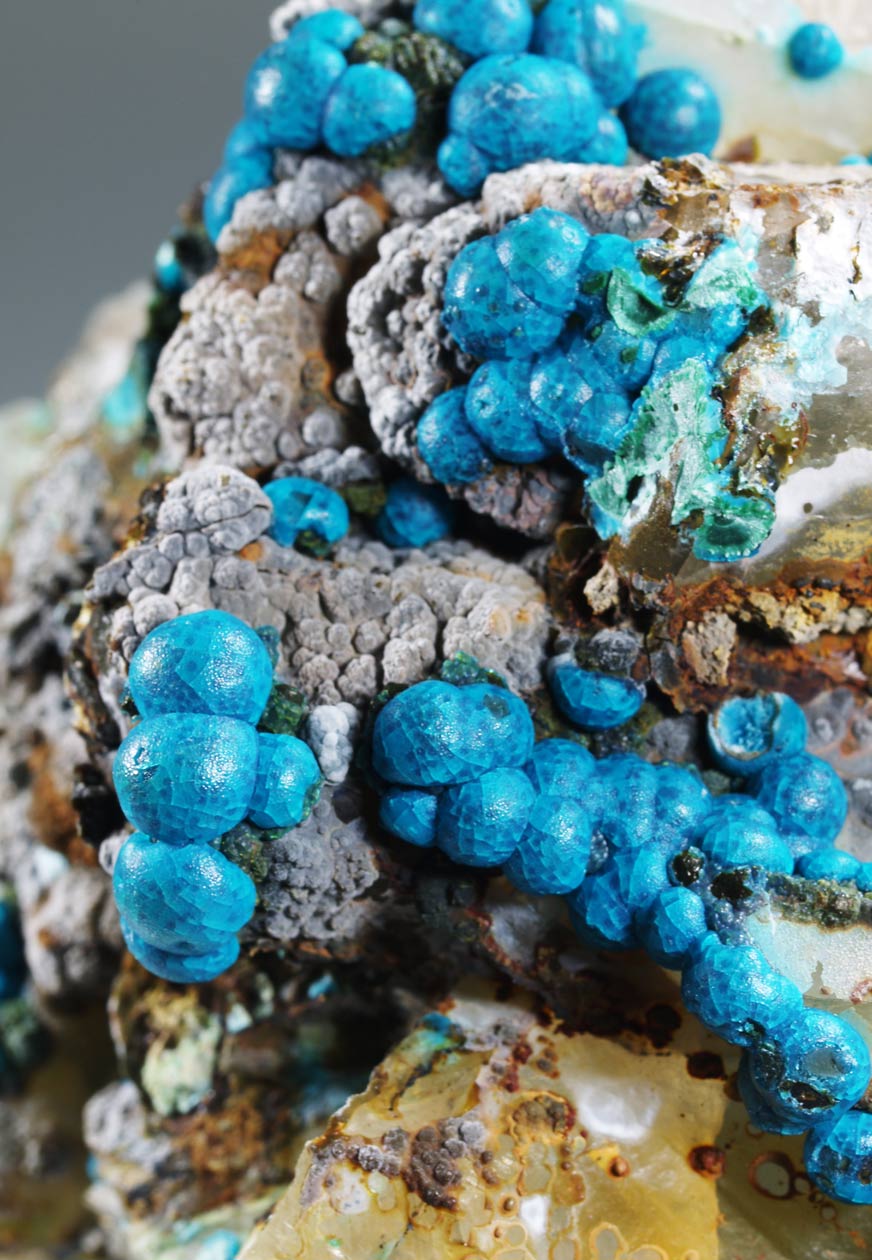
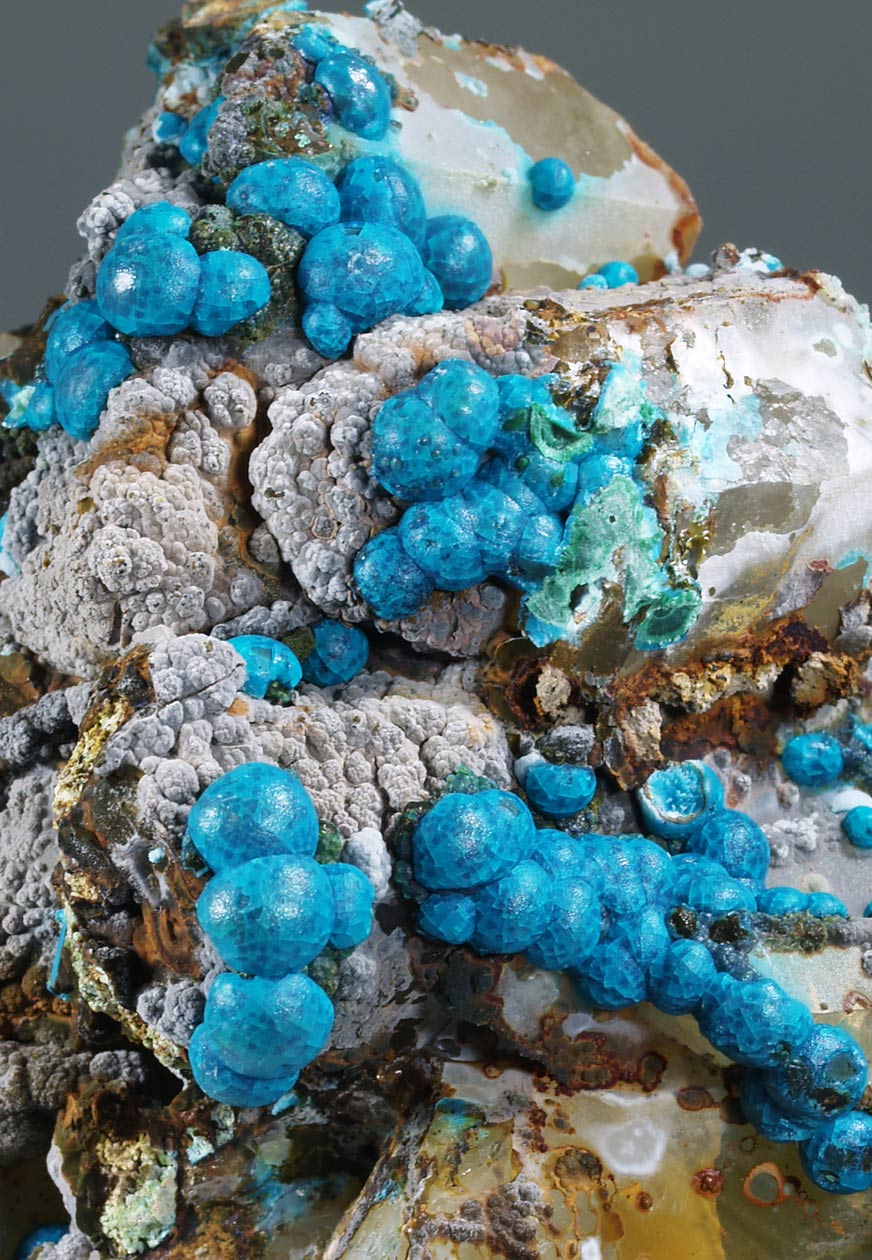
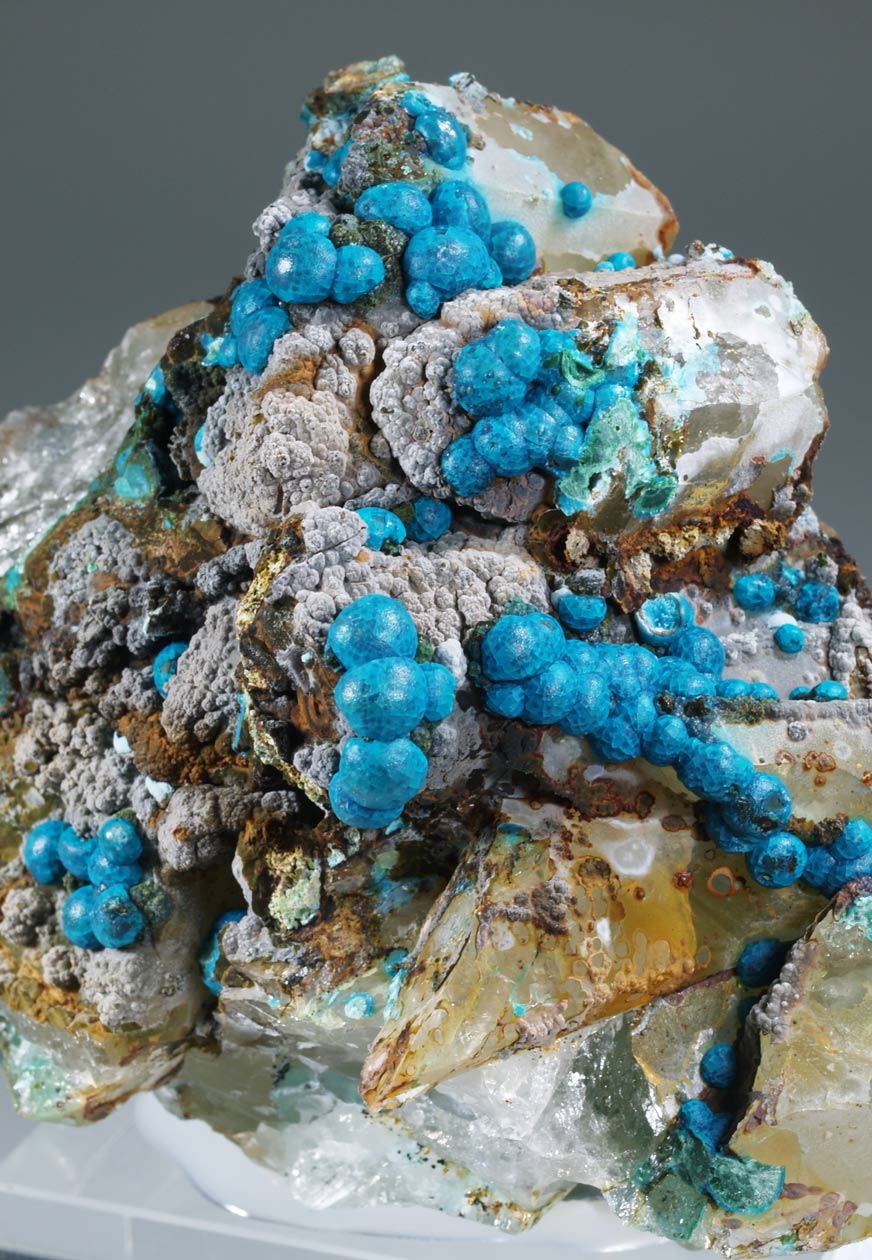
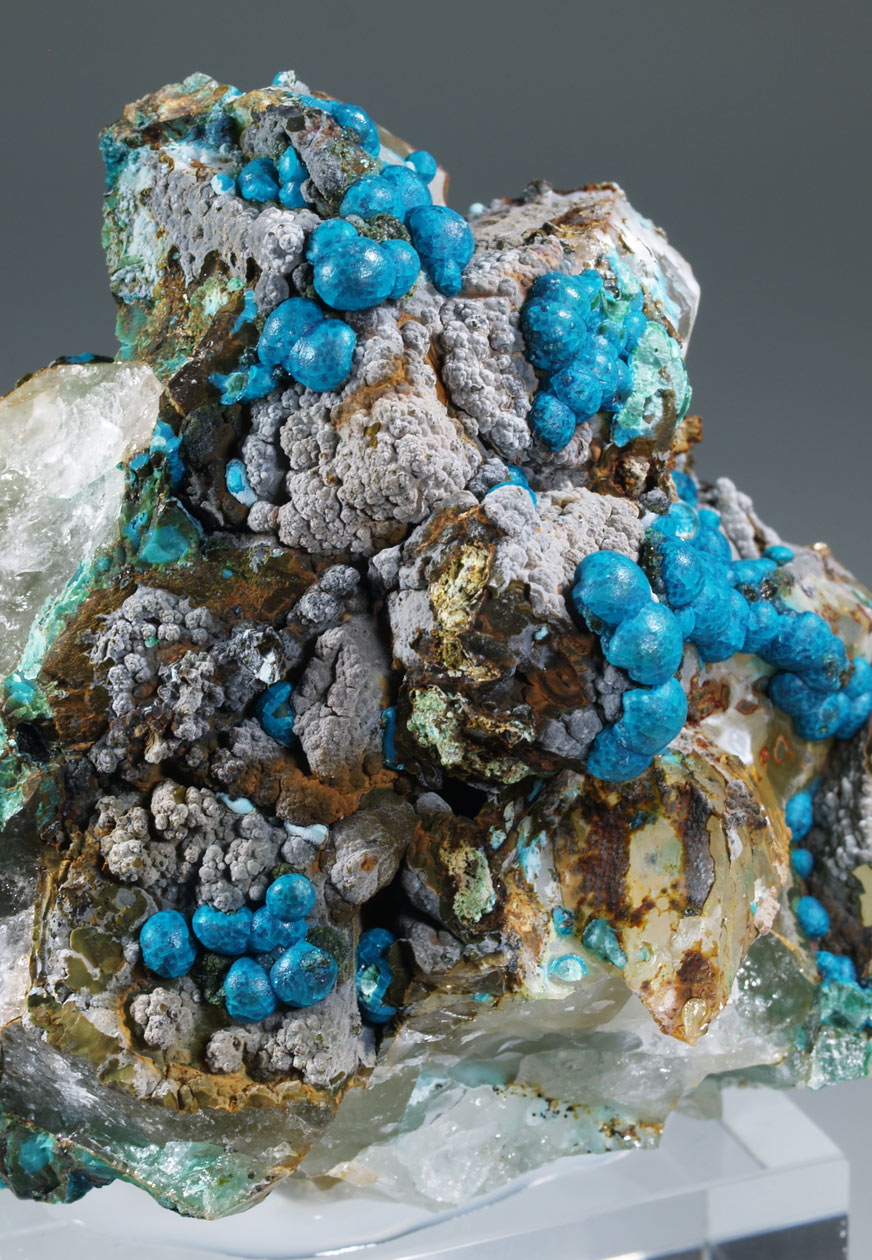
A highly aesthetic specimen composed of numerous blue botryoidal chrysocolla aggregates scattered across a quartz-rich matrix. Beneath several of these bluish spheres, radiating green sprays of malachite are clearly visible. It also features khaki-colored opaline masses with conchoidal fracture (inclusion-rich chrysocolla), providing striking contrast against the matrix.
Although similar pieces initially circulated with erroneous labels attributing them to the Tentadora Mine (Pisco, Ica), the locality was subsequently corrected and confirmed by R. Lavinstky and U. Kolitsch as originating from the Julcani mining district (Huancavelica).


This remarkable specimen shows a matrix formed by tabular barite crystals, partially covered with aggregates of tetrahedrite-(Zn) crystals, rich in Ag. With well-defined faces and edges, forming globular aggregates on the barite. A rarity.




This specimen was purchased at the Expominer fair (Barcelona) in 1985 from a dealer who brought Peruvian material. It was labeled as "enargite" from Huancavelica, a Peruvian mining region well known among mineral collectors. The specimen shows numerous crystals with a metallic luster, isolated or in groups, on a sulfide matrix (mainly pyrite). By observing them carefully and using a magnifying glass, we were able to see different crystalline forms that indicated the presence of various species. We proceeded to extract some crystals to study them.
SEM-EDS analysis indicated that elongated prismatic crystals with polysynthetic growths on the faces and hopper shapes (perimorphosis?) were a copper sulfoantimonide, with some bismuth and arsenic. This composition and its percentages correspond to chalcostibite, and the Bi would indicate the series with emplectite. Chalcostibite was confirmed by X-ray diffraction (XRD). An unusual species and less so for this Peruvian mine.
Other crystals showed prisms with faces striated and truncated by the pinacoid. Their analysis indicated that it was a copper-lead sulfoantimonide, with traces of Bi, consistent with twinned bournonite, a species also confirmed by XRD.
On the matrix we observe crystals with tetrahedron shapes, sometimes flattened. XRD indicated the presence of tetrahedrite. SEM-EDS analysis of small crystals associated with chalcostibite indicated that it could be tetrahedrite-(Zn), with possible argentotetrahedrite-(Zn). We will send labels and all the analysis reports to the buyer.


These specimens of Peruvian arsenopyrite stand out for their excellent luster and perfection of its crystals. With the camera I am not able to capture its real beauty. On a sulfide matrix we can enjoy hundreds of arsenopyrite crystals, prismatic, with defined terminal faces, rather than well-defined. They're accompanied by chalcopyrite crystals with dull luster, but gold tone, also well-defined and twinned. Brilliance and quality. Good sized specimen.


These specimens of Peruvian arsenopyrite stand out for their excellent luster and perfection of its crystals. With the camera I am not able to capture its real beauty. On a sulfide matrix we can enjoy hundreds of arsenopyrite crystals, prismatic, with defined terminal faces, rather than well-defined. They're accompanied by chalcopyrite crystals with luster and gold color, also well-defined and twinned. Brilliance and quality.


Very esthetic miniature formed by a group of quartz crystals covered by beveled cubic pyrite on which various tabular crystals of hübnerite stand out, well defined and with a very visible red transparence. Specimen from the Joan Astor collection, acquired in 1982 from Bailey Minerals (Ángel Jesús Talabán García, Segovia 1942-Madrid 2007).


These specimens of Peruvian arsenopyrite stand out for their excellent luster and perfection of its crystals. With the camera I am not able to capture its real beauty. On a sulfide matrix we can enjoy hundreds of arsenopyrite crystals, prismatic, with defined terminal faces, rather than well-defined. They're accompanied by chalcopyrite crystals with dull luster, but gold tone, also well-defined and twinned. Brilliance and quality. A novelty of Sainte-Marie-aux-Mines 2016.


These specimens of Peruvian arsenopyrite stand out for their excellent luster and perfection of its crystals. With the camera I am not able to capture its real beauty. On a sulfide matrix we can enjoy hundreds of arsenopyrite crystals, prismatic, with defined terminal faces, rather than well-defined. They're accompanied by chalcopyrite crystals with dull luster, but gold tone, also well-defined and twinned. Brilliance and quality. A novelty of Sainte-Marie-aux-Mines 2016.
In this sample we see aggregates of intense black color and metallic luster which analysis indicates that it is ferberite (with minor % Mn). Simply outstanding.


Aesthetic specimen of chalcopyrite, very brilliant, with defined but complex crystals, on which a well developed rhombohedral siderite have grown, interpenetrating and showing rough faces. They show a uniform honey color. These specimens on matrix are rarely seen in the market and stand out for their beauty and mineralogical interest.
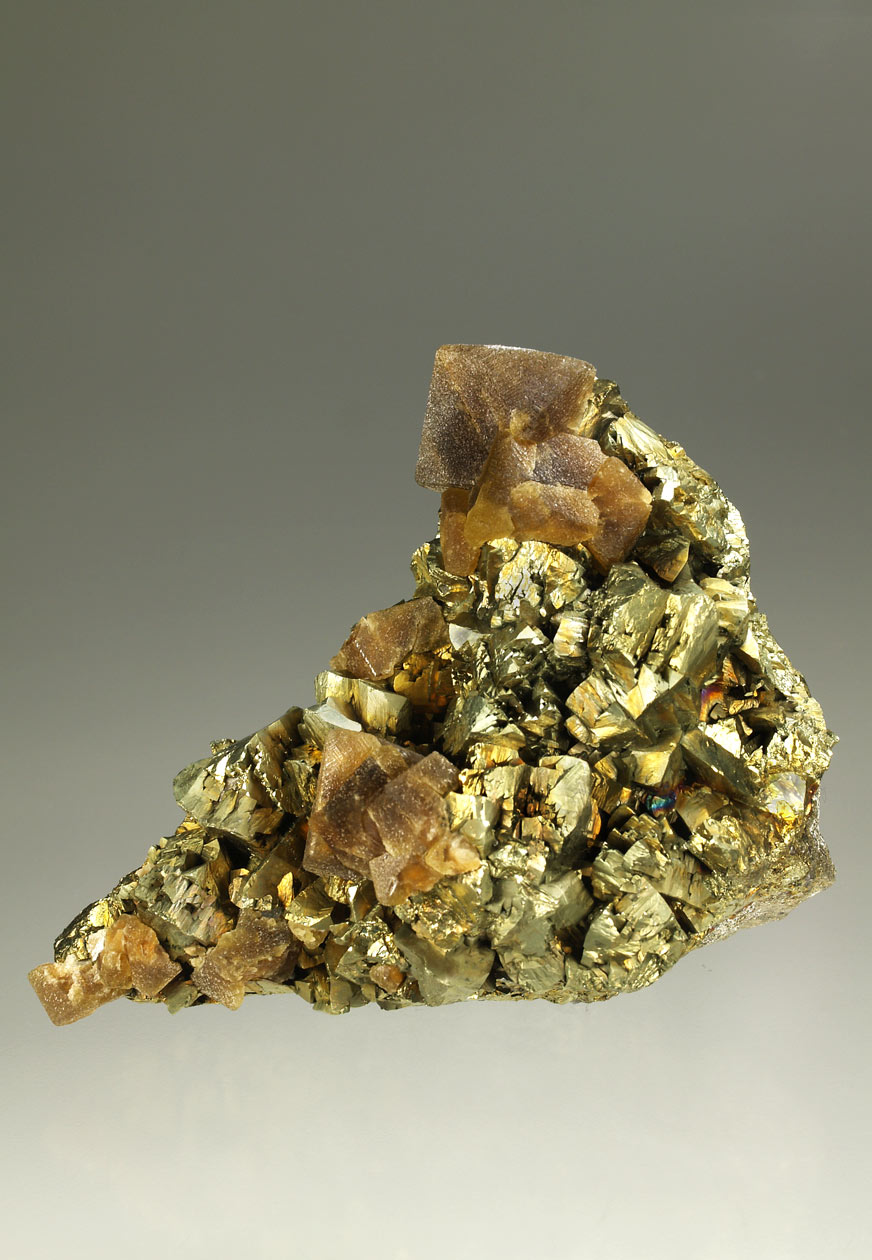
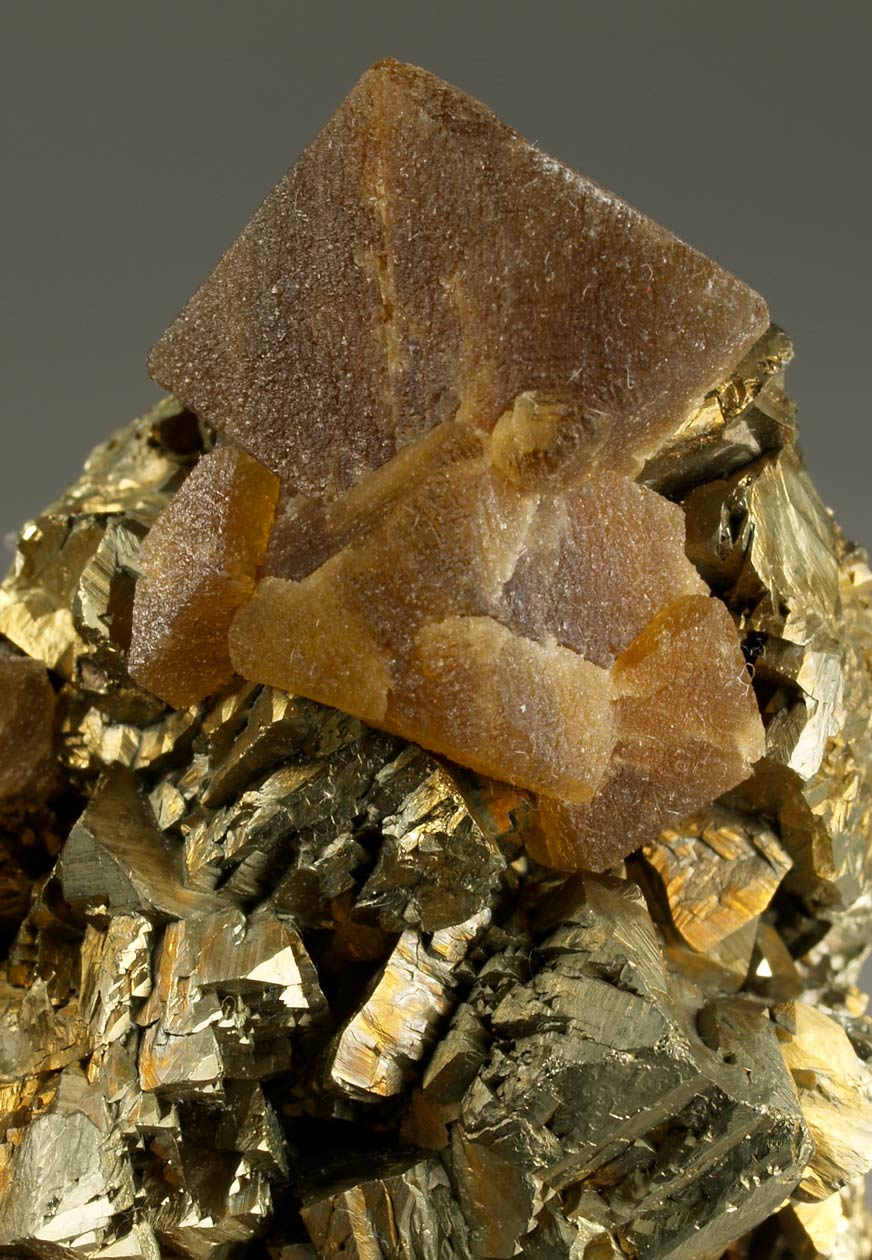
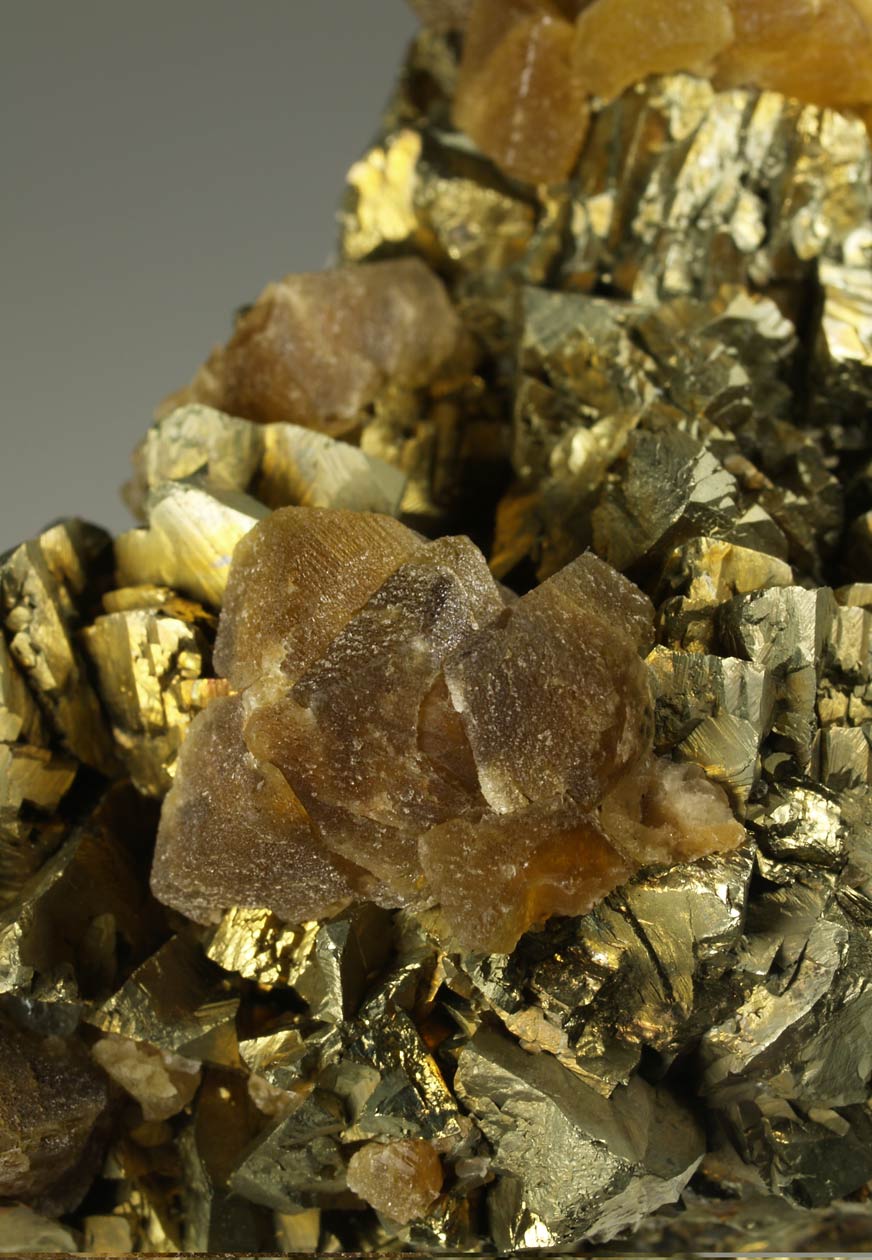
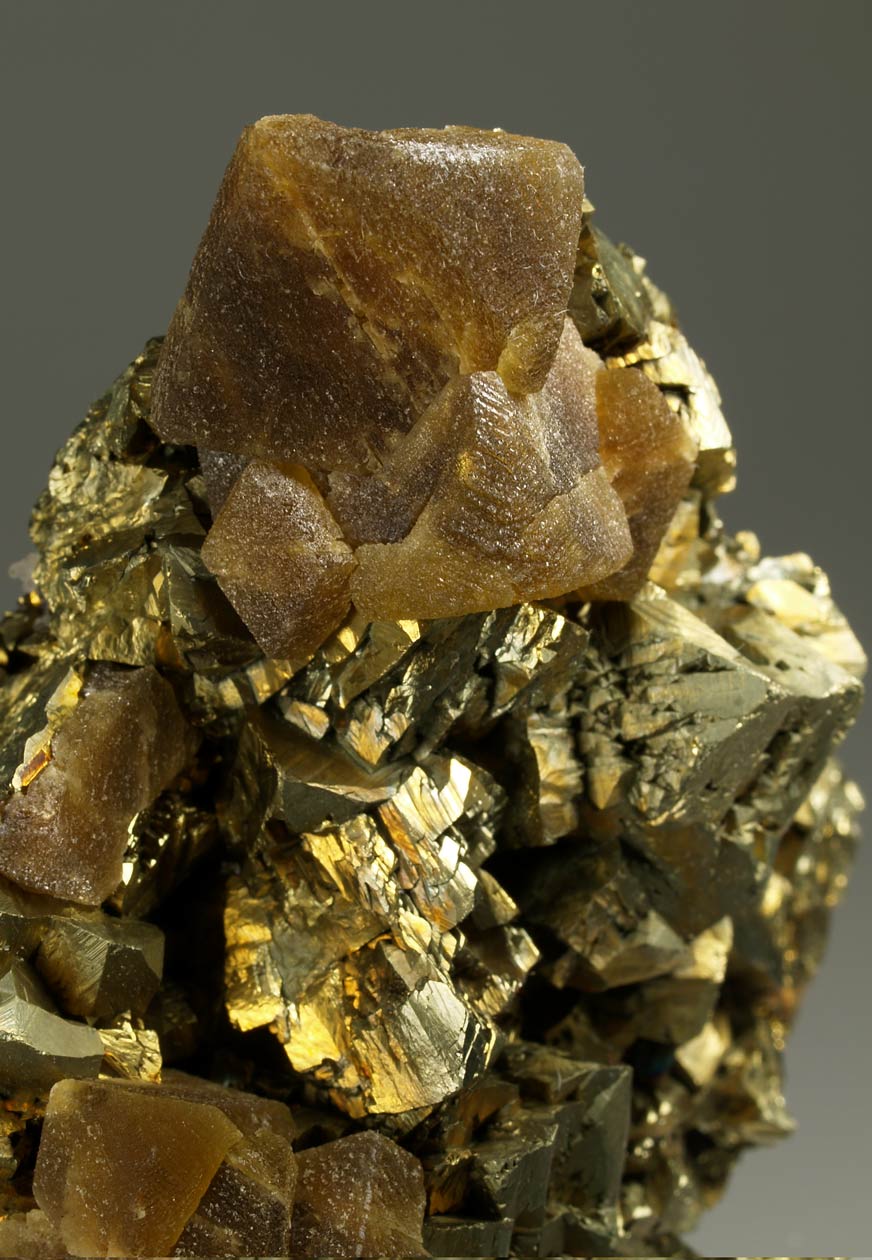
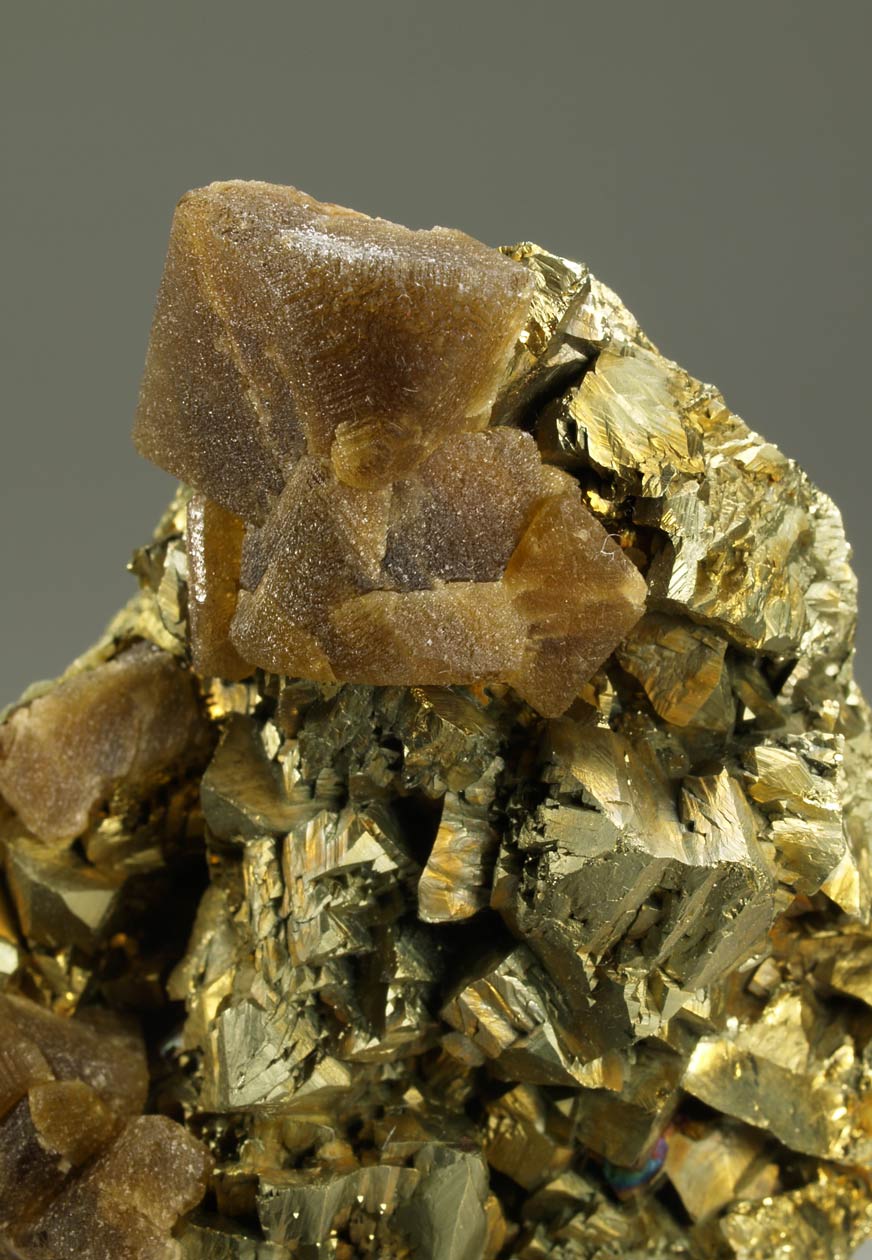
Aesthetic specimen of chalcopyrite, very brilliant, with defined but complex crystals, on which a well developed rhombohedral siderite have grown, interpenetrating and showing rough faces. They show a uniform honey color. These specimens on matrix are rarely seen in the market and stand out for their beauty and mineralogical interest.