- Home About RM Minerals
- Virtual Photo Museum Blog RM Contact
- Microscopy and instruments How to Buy Disclaimer
Copyright 2010-2026
www.rosellminerals.com



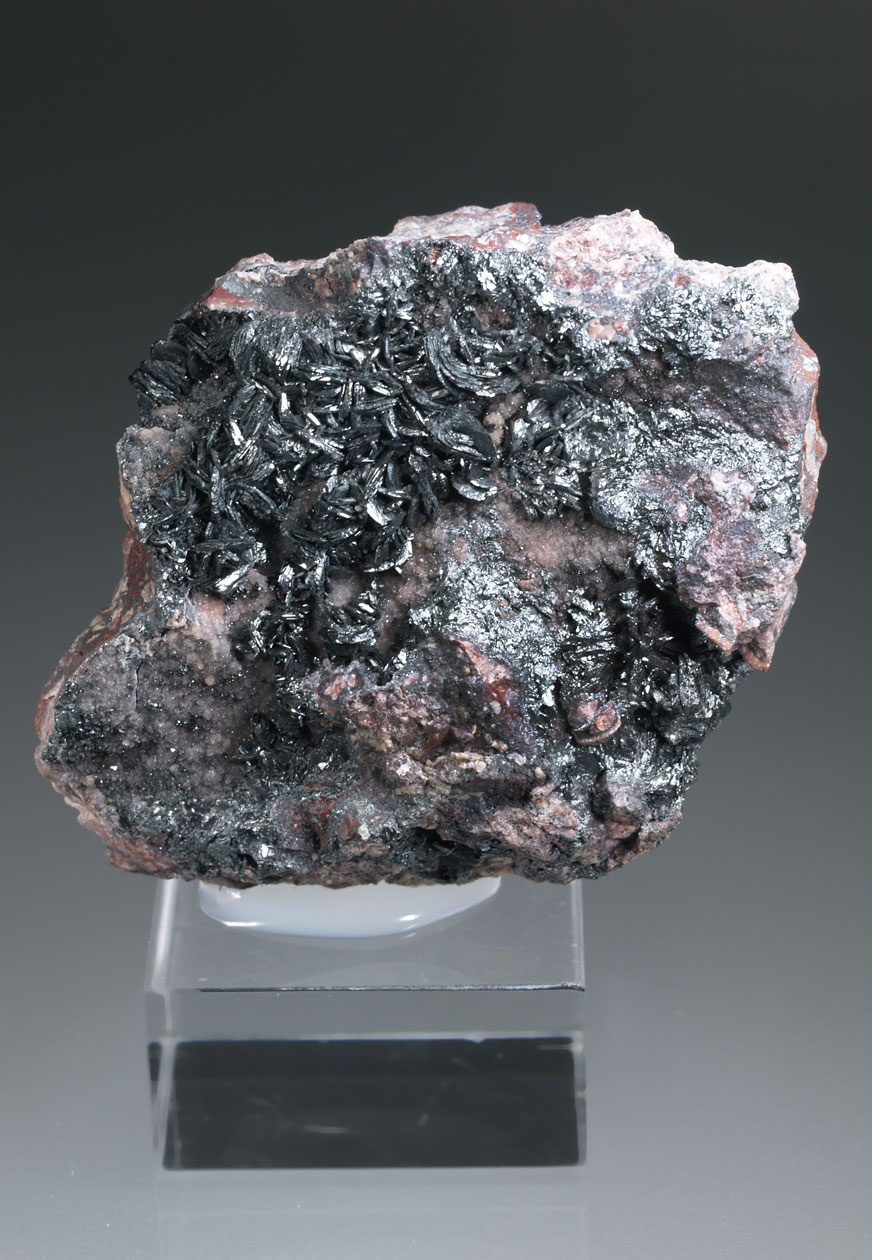
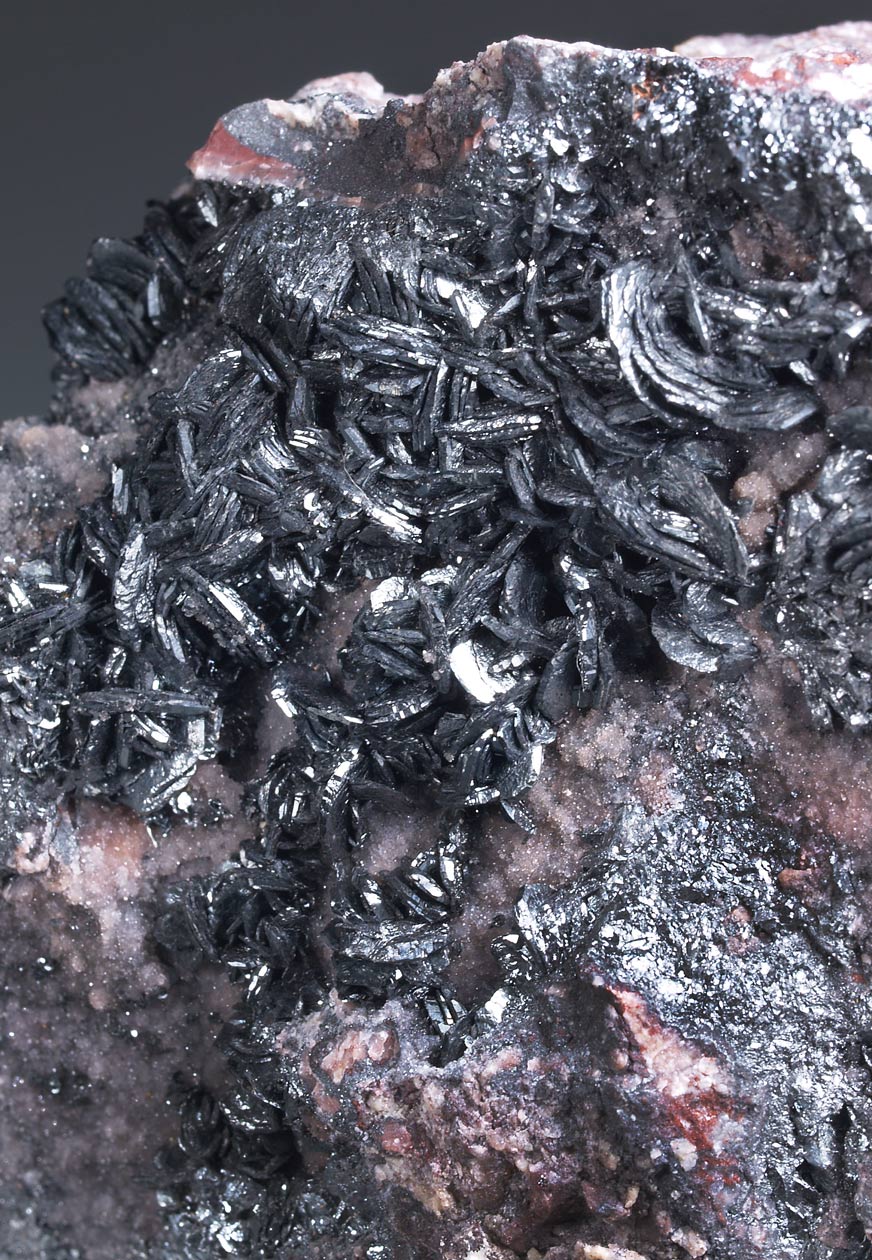
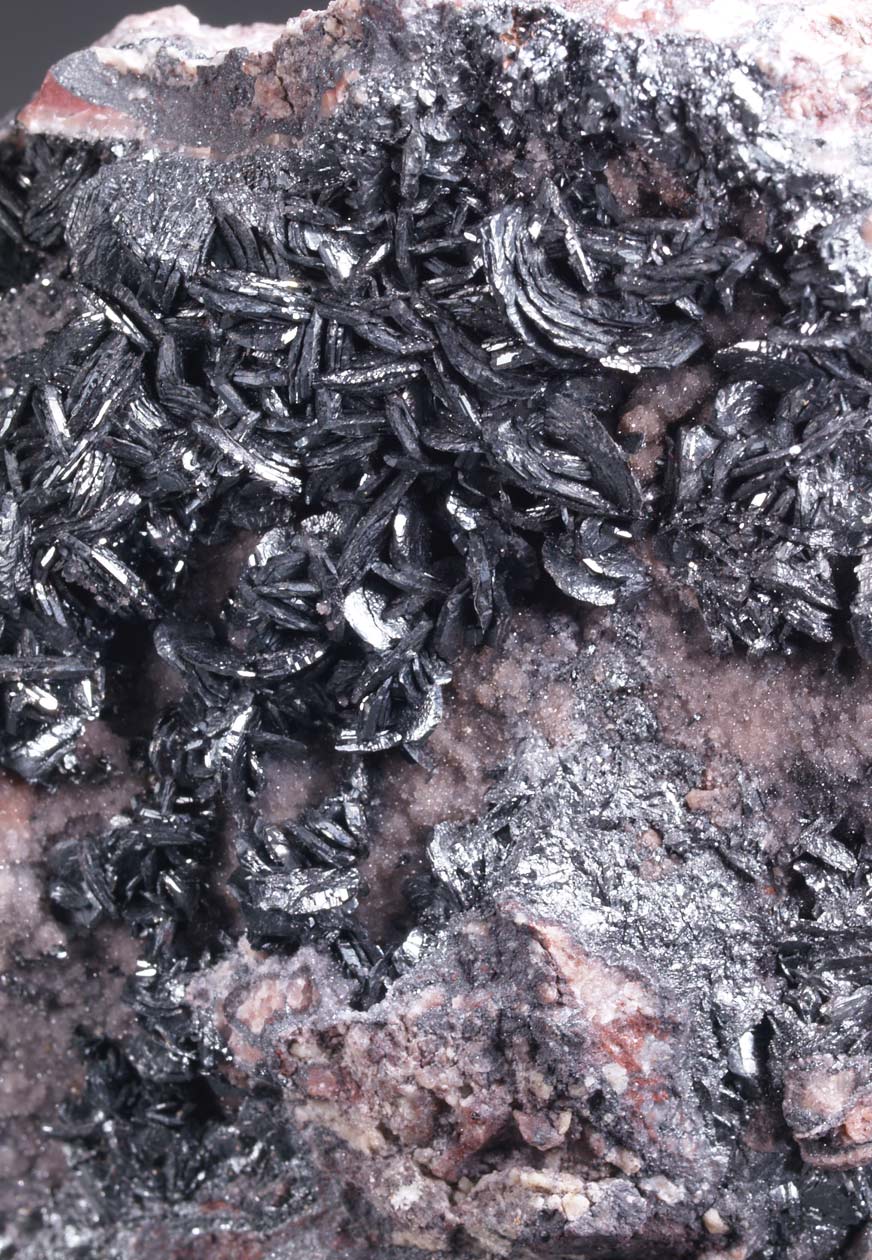
On a rock matrix, this specimen displays numerous hematite crystal aggregates forming aesthetic rosettes, highly lustrous, and with a characteristic metallic gray color. This specimen belonged to the German collector Uwe Janouch. This locality is formed by a quartz vein zone known for excellent and large tabular hematite crystals. For access to the area, one needs authorisation by AAMPEF (Association des Amateurs de Minéralogie et de Paléontologie de l'Est de la France).
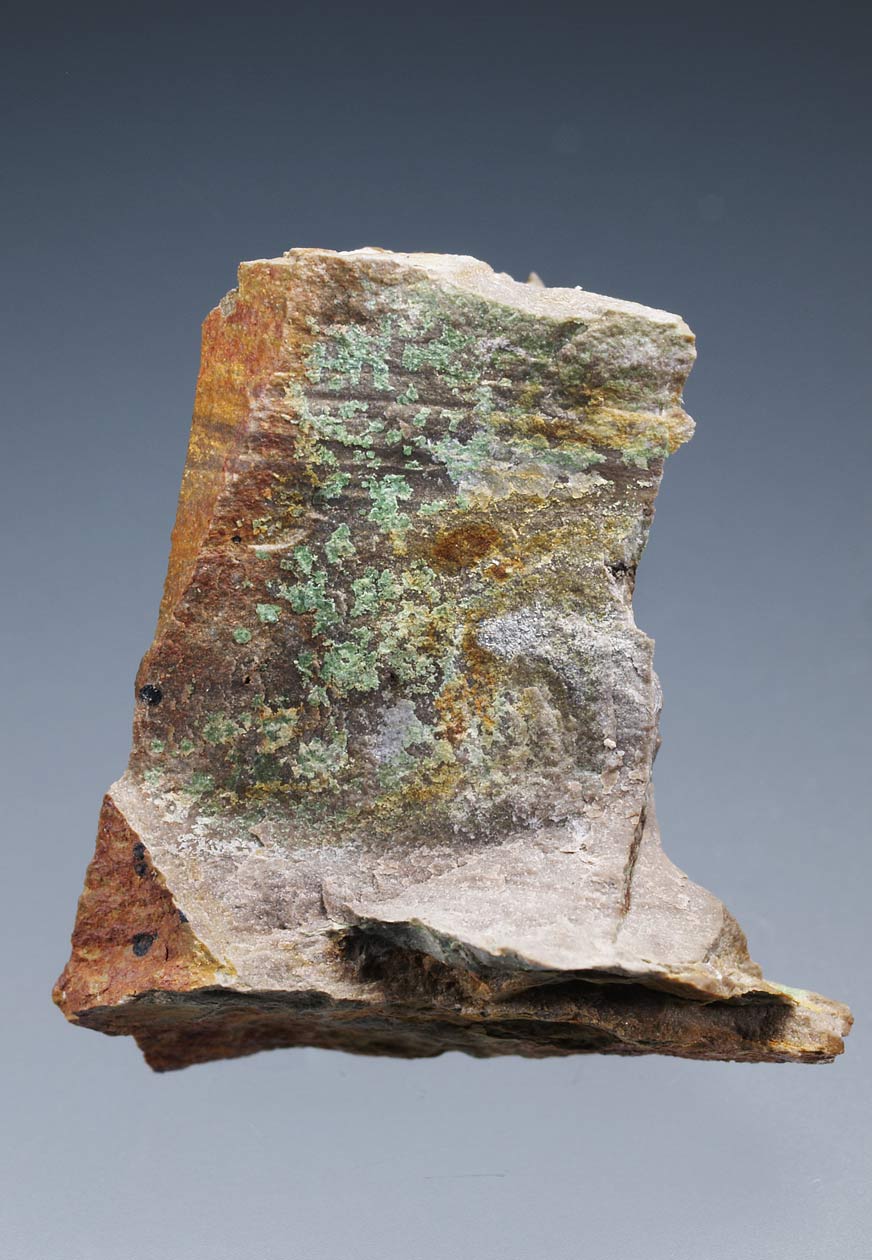
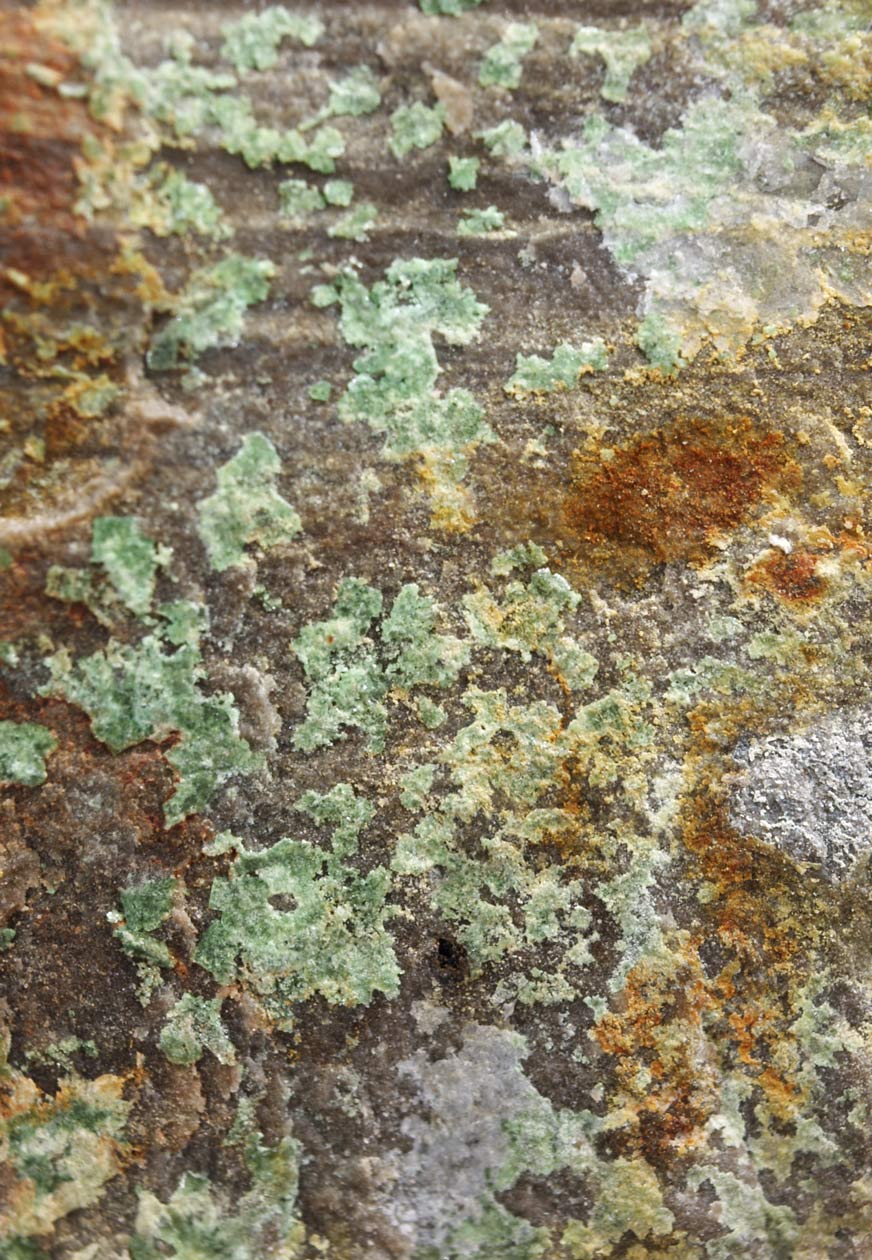
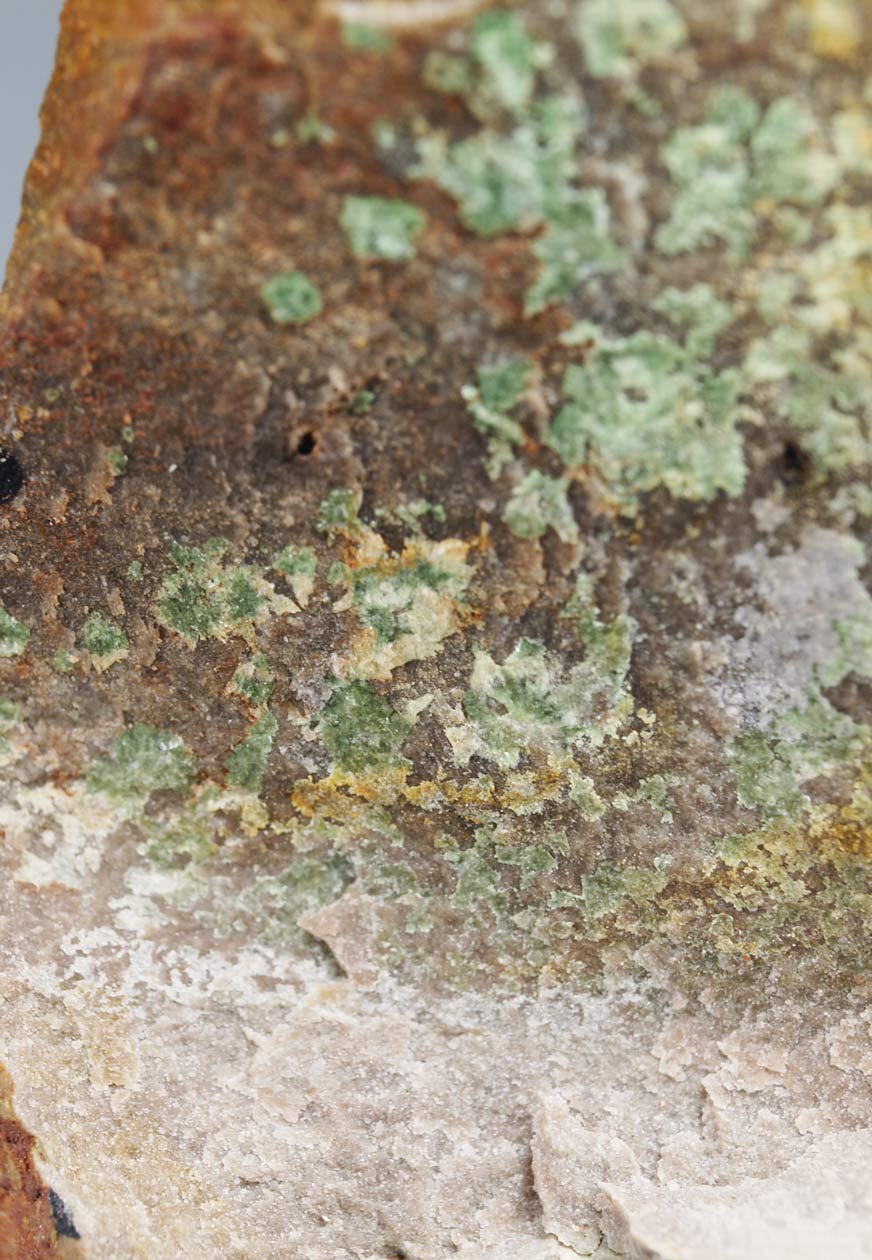
Aggregates of tabular crystals of abernathyite, a rare uranyl and potassium arsenate, exhibiting yellowish tones and surrounding a light green heinrichite core. Abernathyite belongs to the meta-autunite group. Chemically, it is the As analogue of meta-ankoleite.
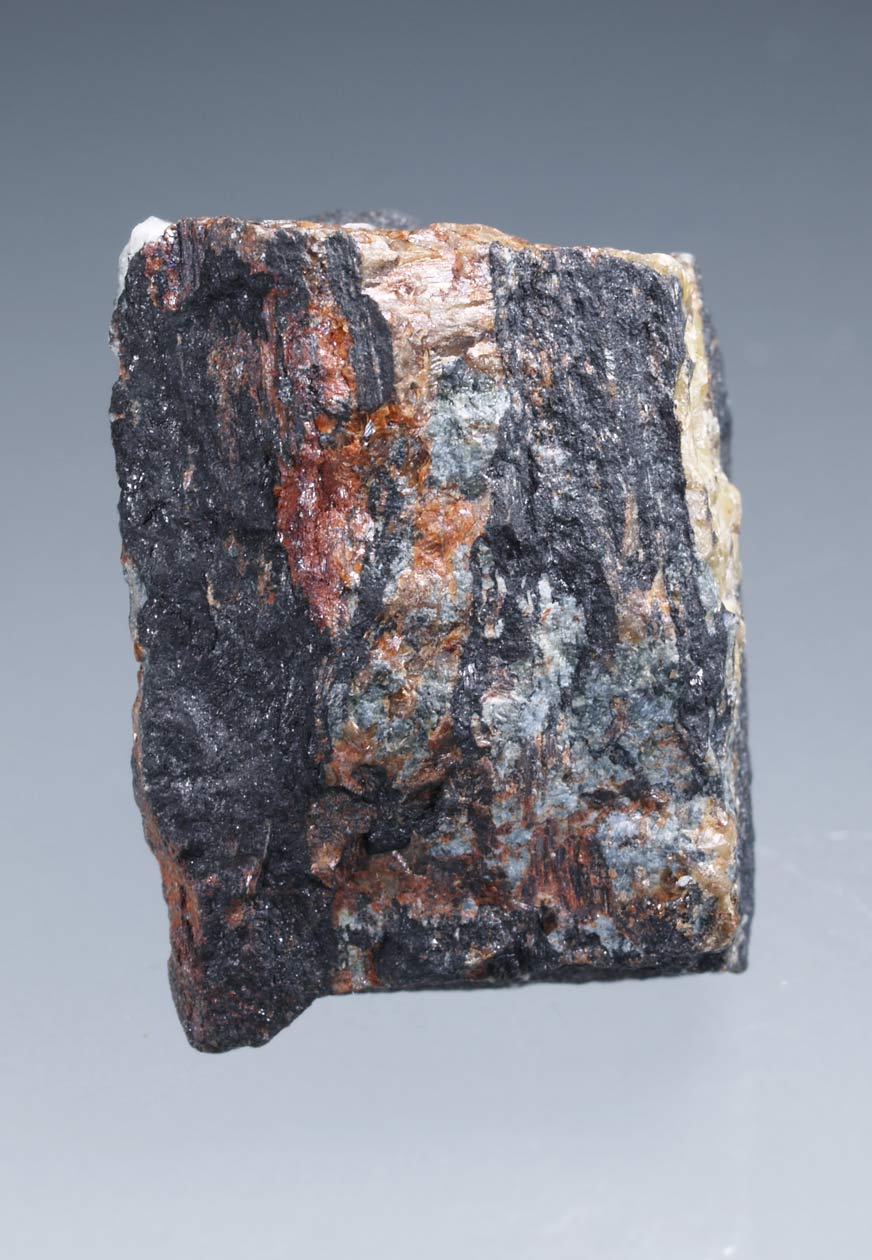
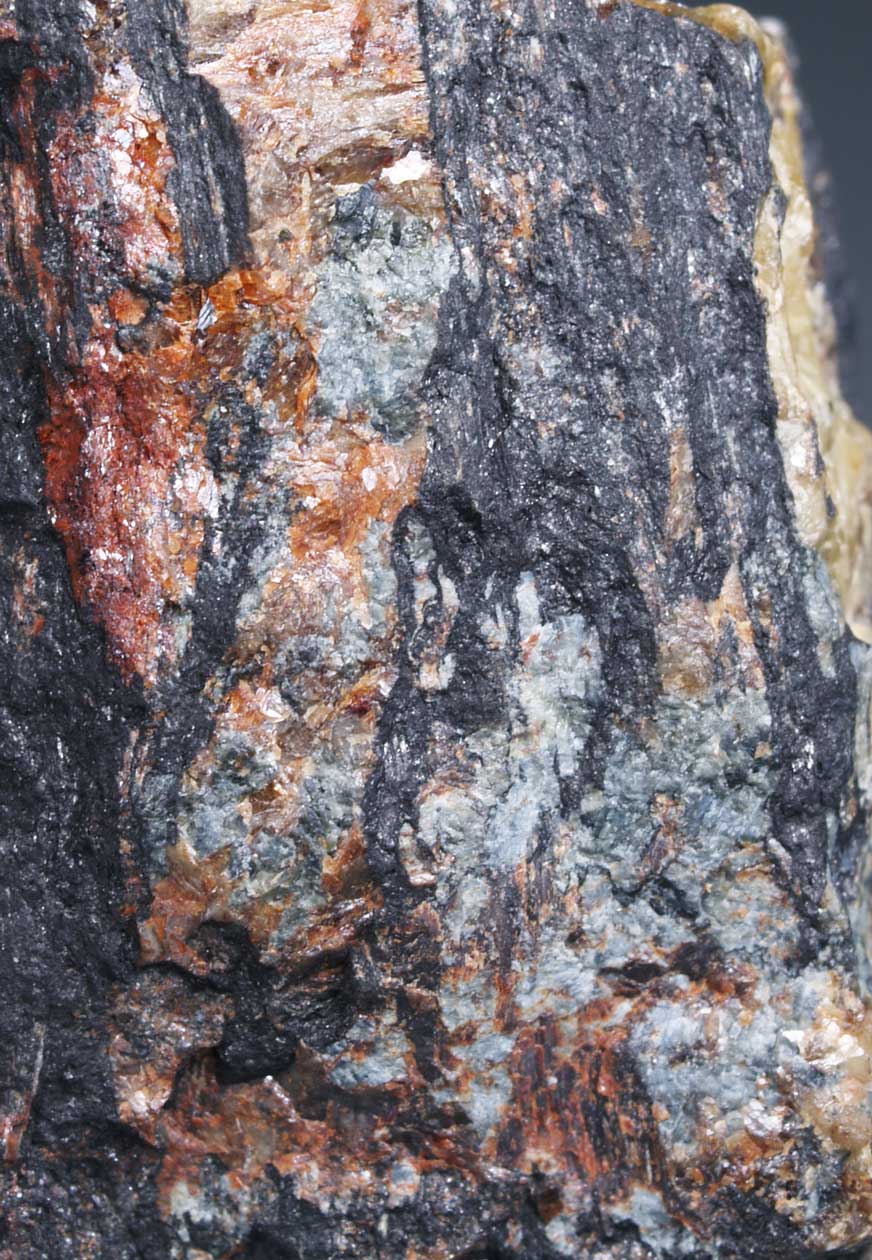
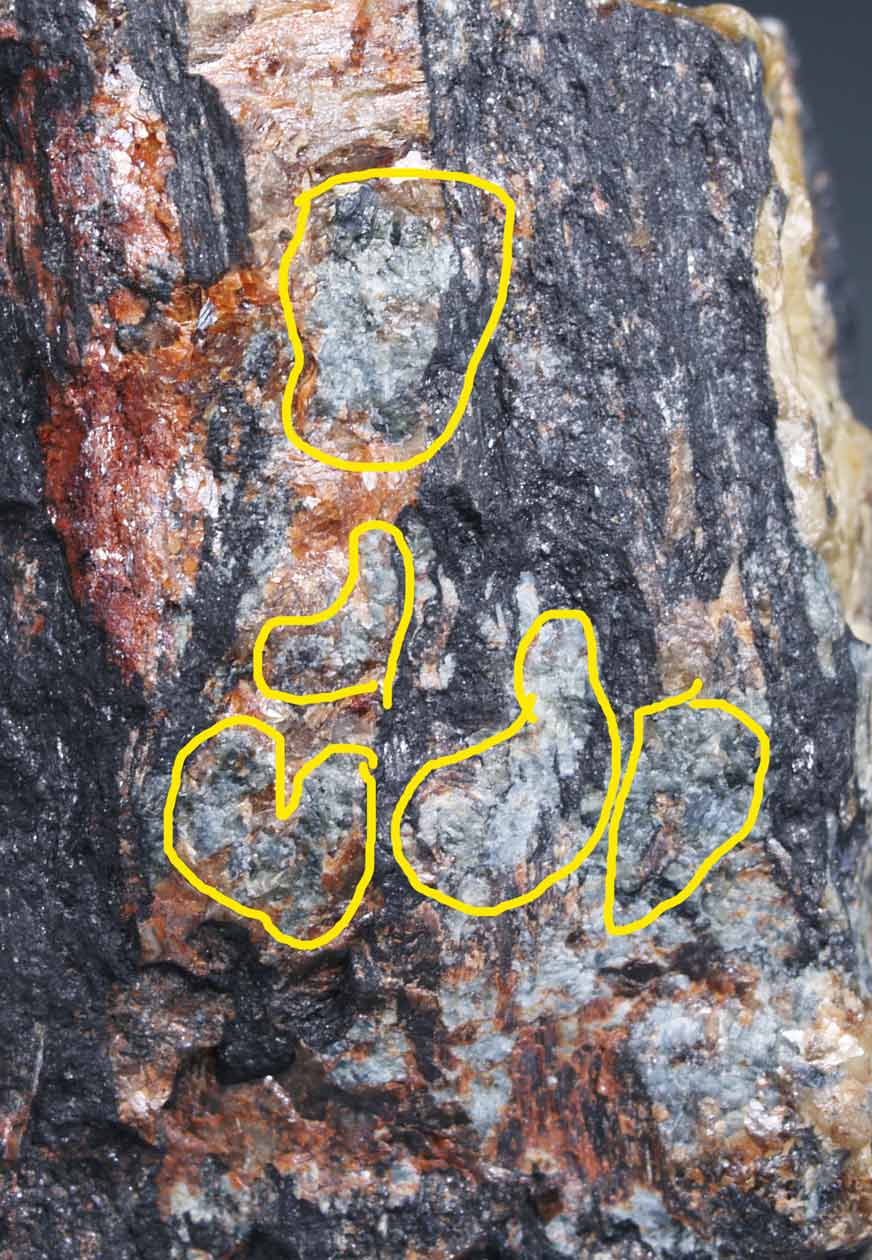
Lulzacite is a very rare complex strontium phosphate, found only in this French quarry and described in the year 2000. It is isotypic (similar to isostructural) with jamesite and désorite. Specimens are very difficult to find. Grayish-green nodules of lulzacite can be observed embedded in a matrix with quartz and siderite.
Jamesite: Pb₂Zn(Fe²⁺,Zn)₂Fe³⁺₄(AsO₄)₄(OH)₁₀
Désorite: Pb₂(Fe³⁺₆Zn)O₂(PO₄)₄(OH)₈


These specimens come from an old find in the Felhuns area, en Prada de Conflent. It was a skarn deposit where garnet veins appeared. Currently, it is completely prohibited to extract specimens, due, as is often the case, to the actions of irresponsible individuals who not only remove specimens but also damage the site. The crystals are dodecahedral, often beveled by the trapezohedron, very brilliant, with a very intense toasted honey color and some transparence. They have been analyzed, and the results indicate an andradite-grossular ratio of approximately 65-35% (RM333A analysis).


These specimens come from an old find in the Felhuns area, en Prada de Conflent. It was a skarn deposit where garnet veins appeared. Currently, it is completely prohibited to extract specimens, due, as is often the case, to the actions of irresponsible individuals who not only remove specimens but also damage the site. The crystals are dodecahedral, often beveled by the trapezohedron, very brilliant, with a very intense toasted honey color and some transparence. They have been analyzed, and the results indicate an andradite-grossular ratio of approximately 65-35% (RM333A analysis).


These specimens come from an old find in the Felhuns area, en Prada de Conflent. It was a skarn deposit where garnet veins appeared. Currently, it is completely prohibited to extract specimens, due, as is often the case, to the actions of irresponsible individuals who not only remove specimens but also damage the site. The crystals are dodecahedral, often beveled by the trapezohedron, very brilliant, with a very intense toasted honey color and some transparence. Sawed at the back. They have been analyzed, and the results indicate an andradite-grossular ratio of approximately 65-35% (RM333A analysis).


These specimens come from an old find in the Felhuns area, en Prada de Conflent. It was a skarn deposit where garnet veins appeared. Currently, it is completely prohibited to extract specimens, due, as is often the case, to the actions of irresponsible individuals who not only remove specimens but also damage the site. The crystals are dodecahedral, often beveled by the trapezohedron, very brilliant, with a very intense toasted honey color and some transparence. Sawed at the back. They have been analyzed, and the results indicate an andradite-grossular ratio of approximately 65-35% (RM333A analysis).


These specimens come from an old find in the Felhuns area, en Prada de Conflent. It was a skarn deposit where garnet veins appeared. Currently, it is completely prohibited to extract specimens, due, as is often the case, to the actions of irresponsible individuals who not only remove specimens but also damage the site. The crystals are dodecahedral, often beveled by the trapezohedron, very brilliant, with a very intense toasted honey color and some transparence. A floater. They have been analyzed, and the results indicate an andradite-grossular ratio of approximately 65-35% (RM333A analysis).


These specimens come from an old find in the Felhuns area, en Prada de Conflent. It was a skarn deposit where garnet veins appeared. Currently, it is completely prohibited to extract specimens, due, as is often the case, to the actions of irresponsible individuals who not only remove specimens but also damage the site. The crystals are dodecahedral, often beveled by the trapezohedron, very brilliant, with a very intense toasted honey color and some transparence. Sawed at the back. They have been analyzed, and the results indicate an andradite-grossular ratio of approximately 65-35% (RM333A analysis).


These specimens come from an old find in the Felhuns area, en Prada de Conflent. It was a skarn deposit where garnet veins appeared. Currently, it is completely prohibited to extract specimens, due, as is often the case, to the actions of irresponsible individuals who not only remove specimens but also damage the site. The crystals are dodecahedral, often beveled by the trapezohedron, very brilliant, with a very intense toasted honey color and some transparence. Sawed at the back. They have been analyzed, and the results indicate an andradite-grossular ratio of approximately 65-35% (RM333A analysis).


These specimens come from an old find in the Felhuns area, en Prada de Conflent. It was a skarn deposit where garnet veins appeared. Currently, it is completely prohibited to extract specimens, due, as is often the case, to the actions of irresponsible individuals who not only remove specimens but also damage the site. The crystals are dodecahedral, often beveled by the trapezohedron, very brilliant, with a very intense toasted honey color and some transparence. They have been analyzed, and the results indicate an andradite-grossular ratio of approximately 65-35% (RM333A analysis).


This is a group of interpenetrating tabular thick hematite crystals, bright and faceted. A rare specimen from this French mine not very known.


This specimen was thought as Bourg d'Oisans sample, although, based on its appearance and paragenesis, it is most likely one of the specimens from the La Gardette area, close to Bourg d'Oisans. It shows a rich group of very elongated, hyaline quartz crystals with the "dauphiné" habit. It is accompanied by various pyrite crystals. A highly aesthetic piece from a classic locality that should be a must-have in any collection.

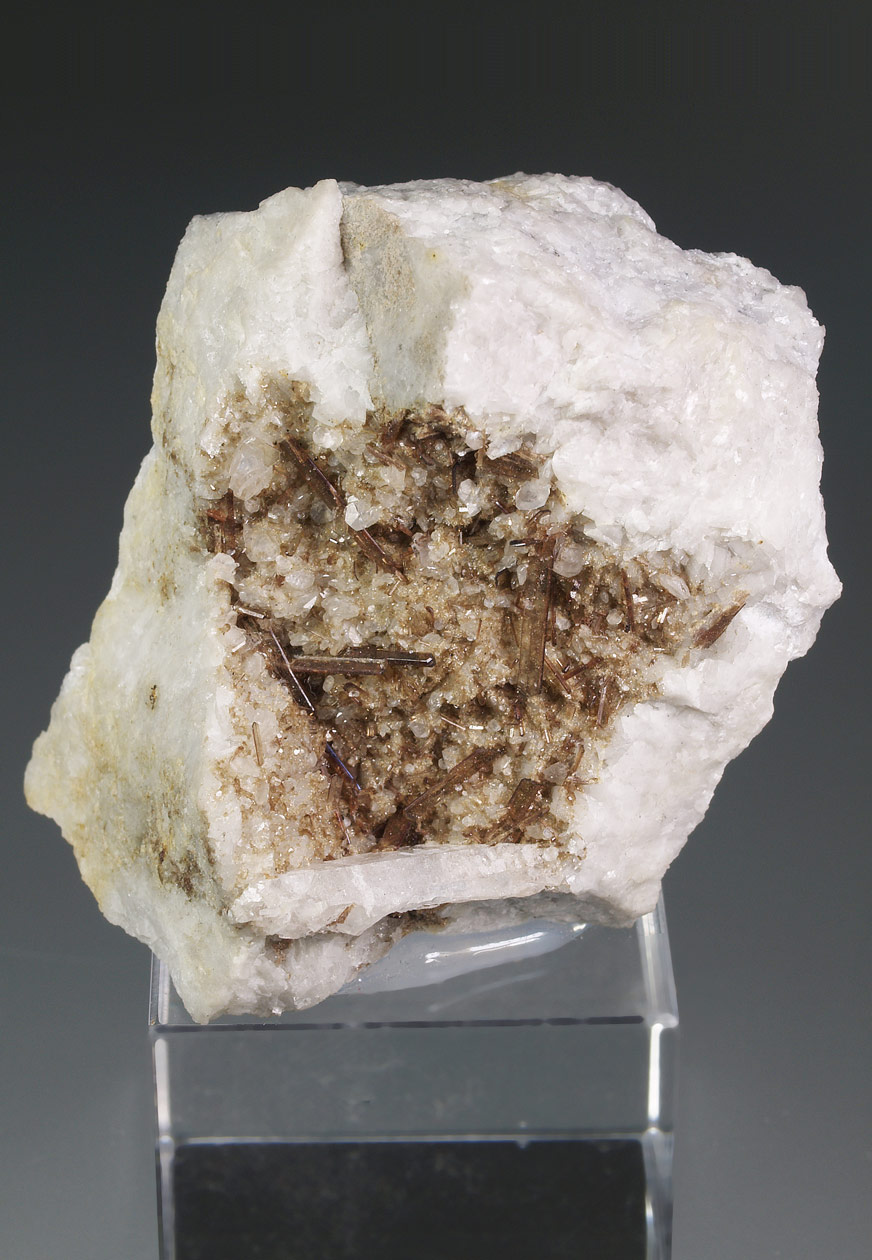
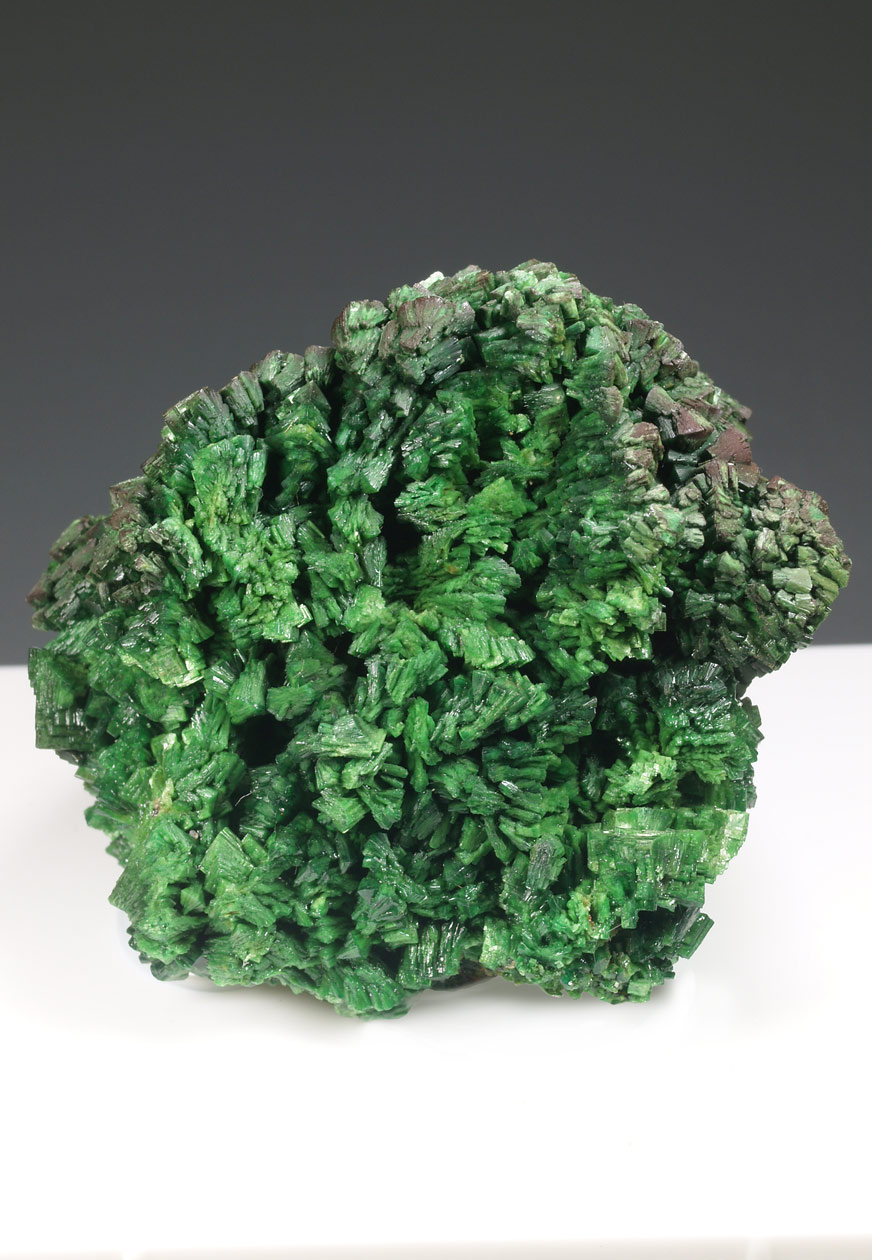
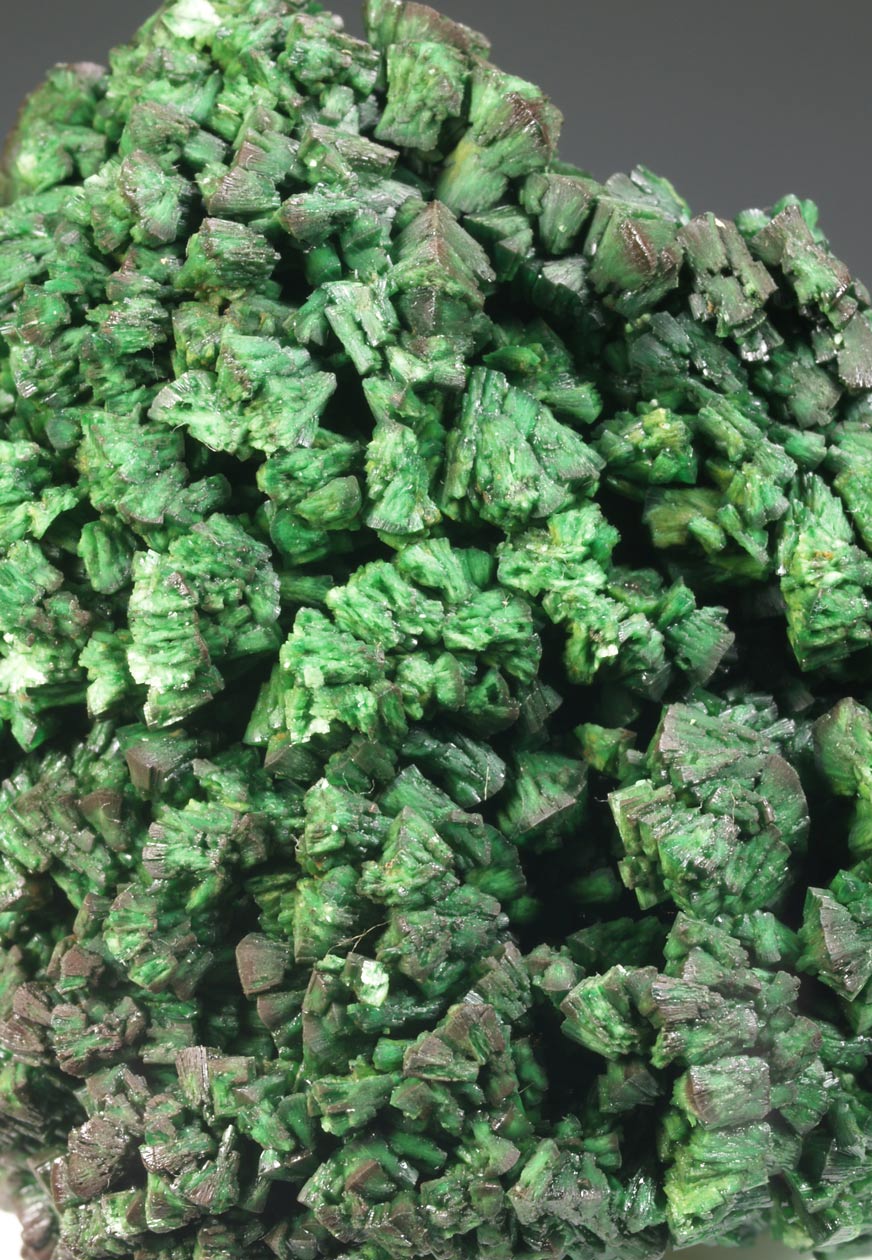
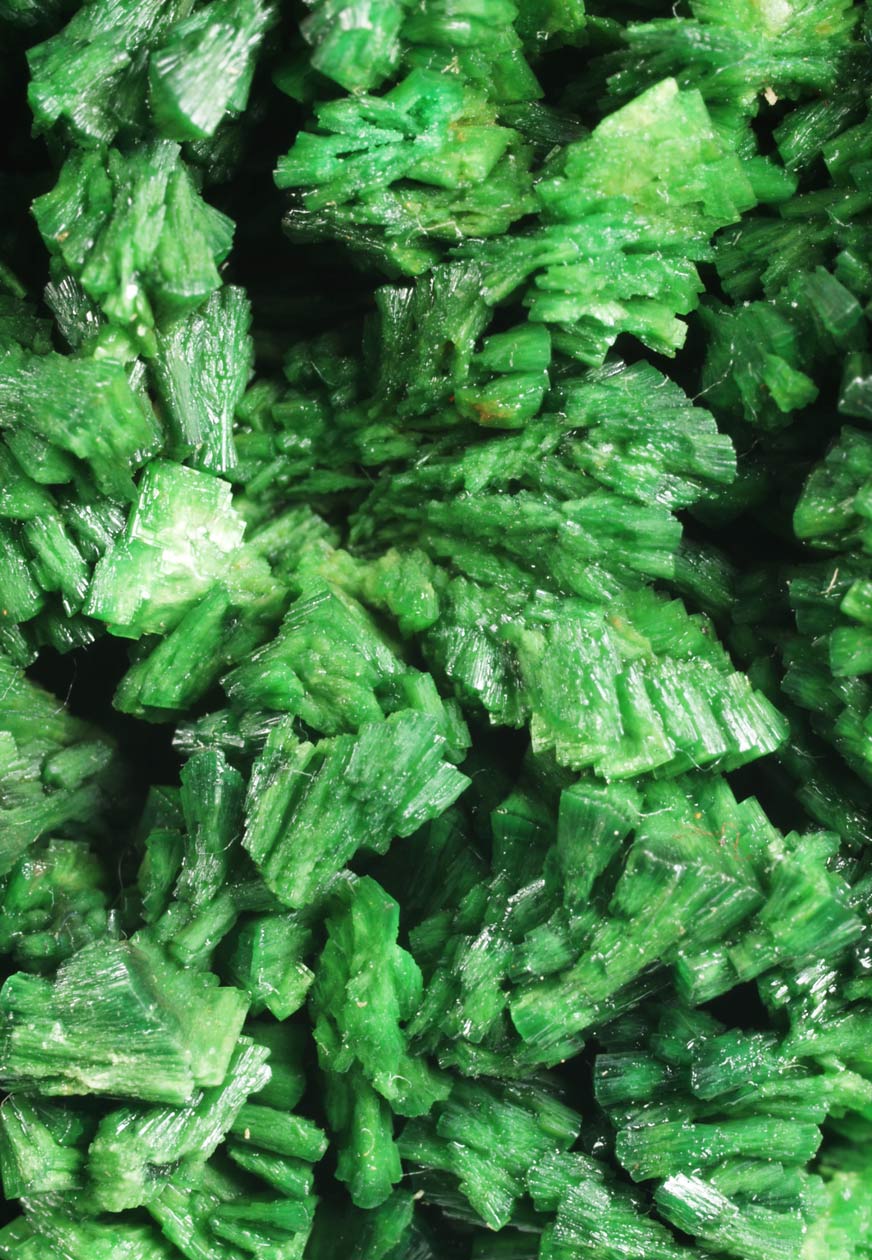
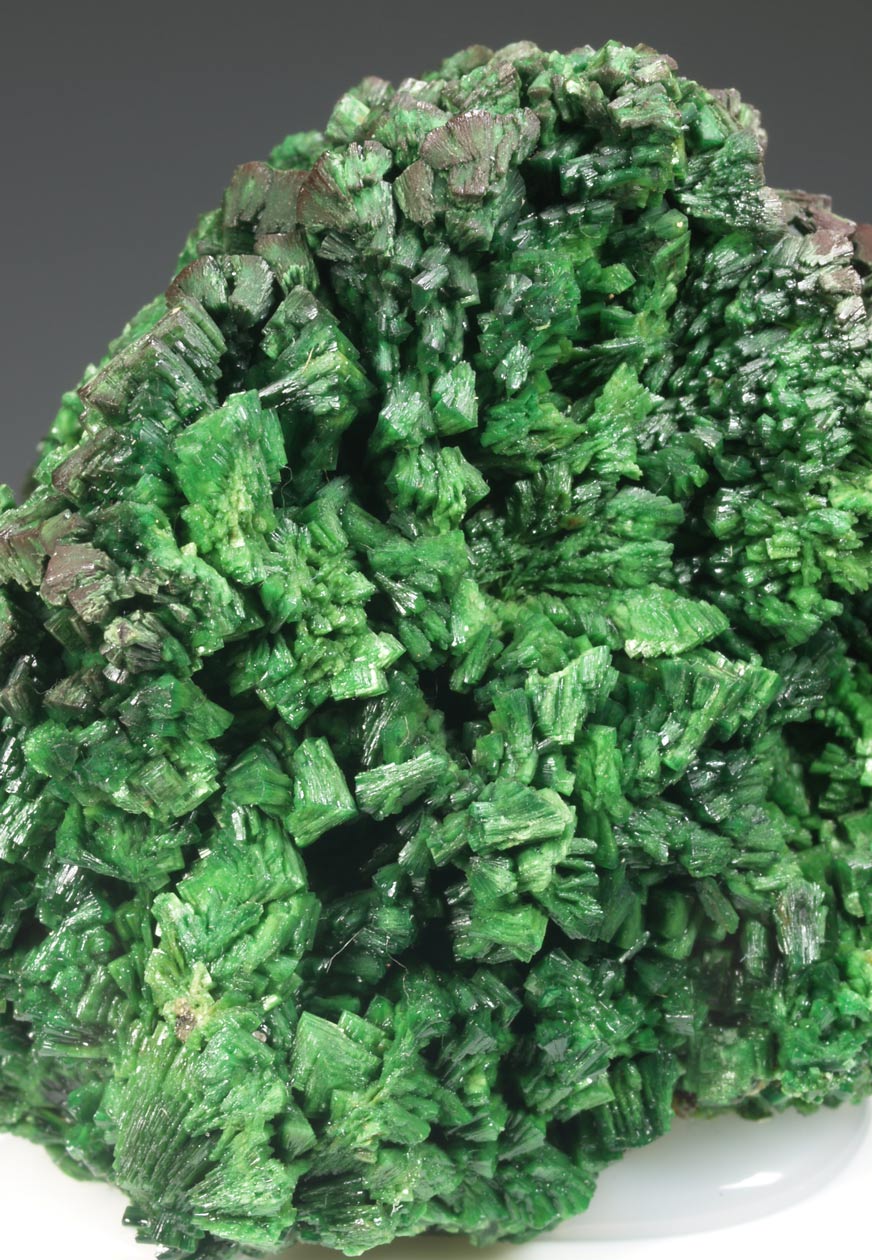
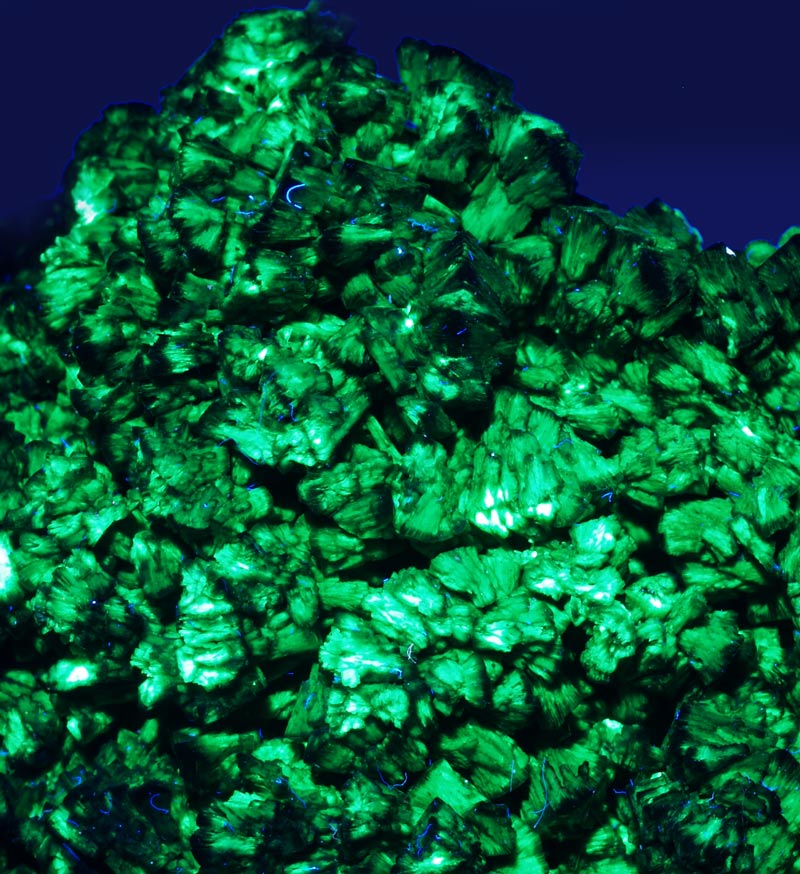
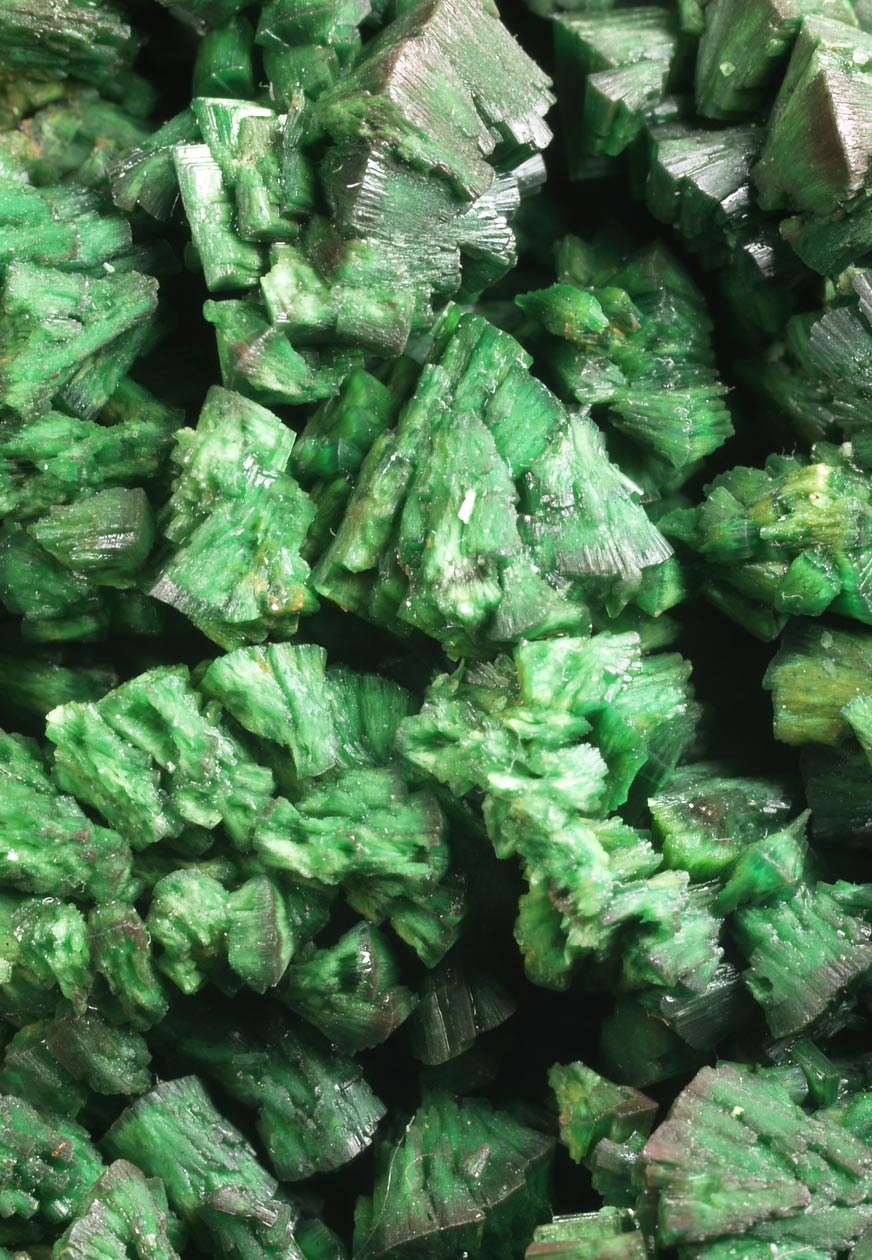
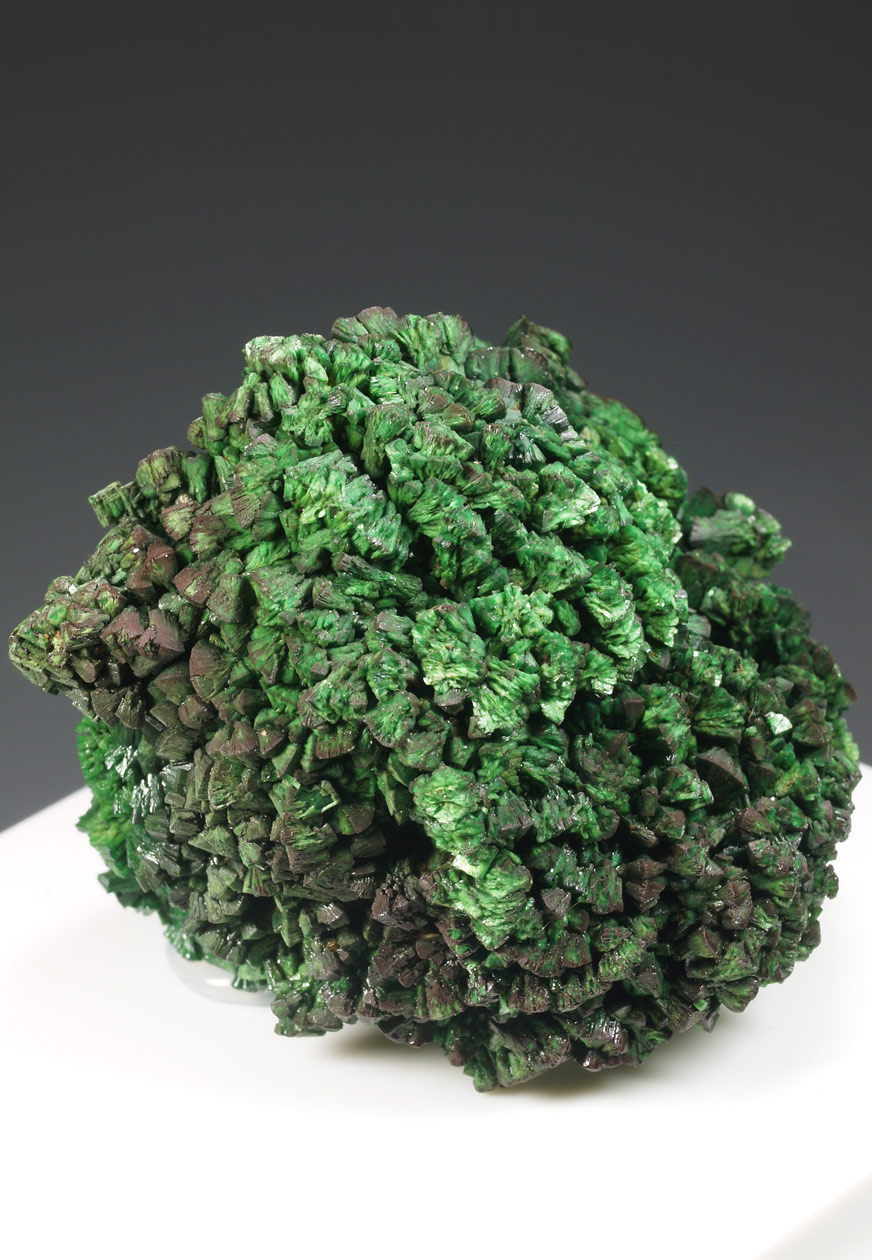
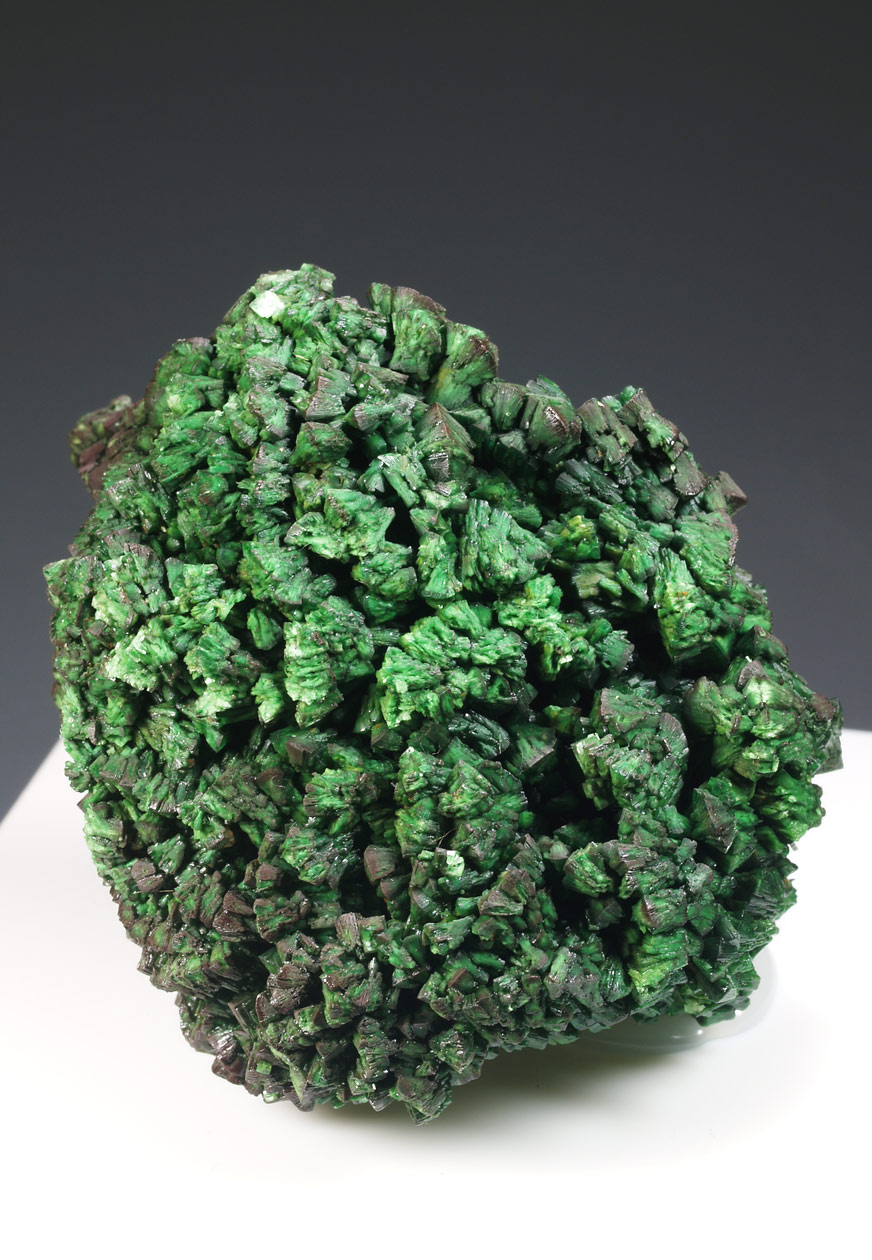
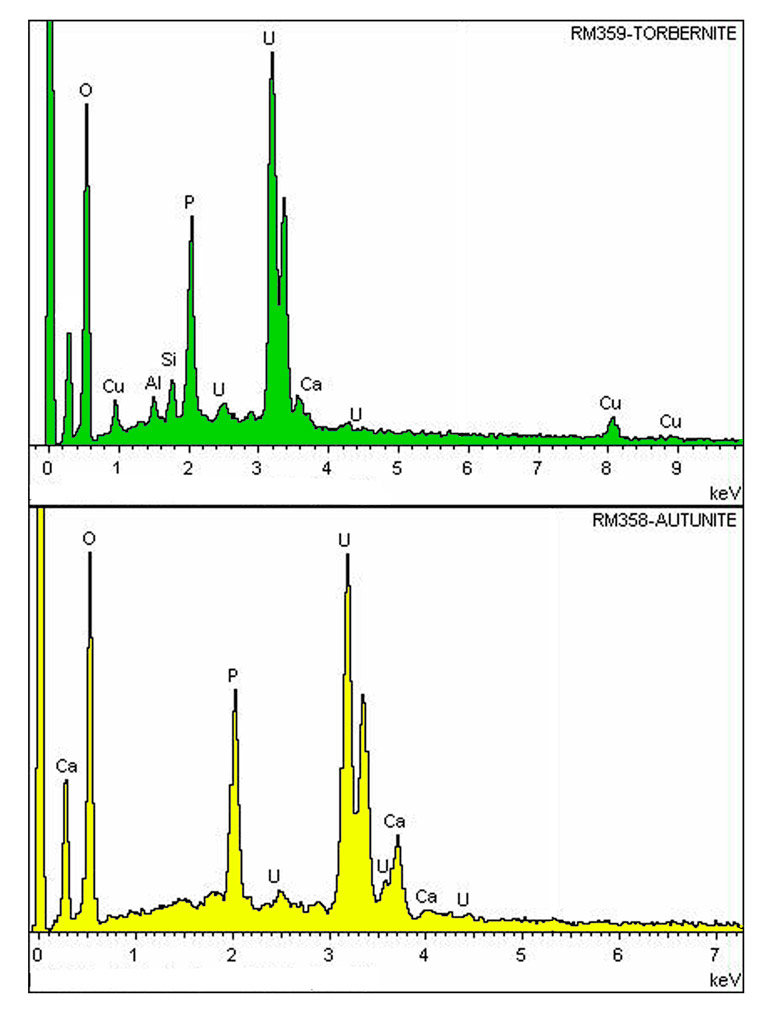
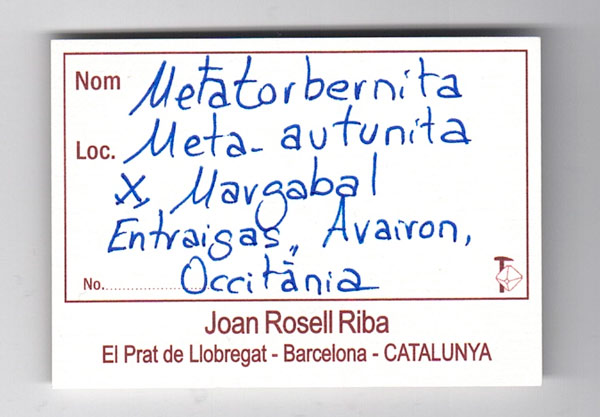
A very aesthetic specimen formed by a rich group of metatorbernite crystals. They present polysynthetic and echeloned growth of well-defined tetragonal crystals, with the characteristic green color. Under LW-UV we can observe the presence of a greenish-yellow fluorescence that indicates the presence of other species. SEM-EDS analysis have characterized this species as meta-autunite. We can say that the metatorbernite species is replacing the meta-autunite, as we can observe as a color gradation in some tabular crystals or in fresh fracture. We will send analysis to the buyer. This specimen come from late 90's finds in this classic French mine. Excol. A. Pouget, Excol Joan Rosell. The piece has a treatment that has kept it intact until today.
Both, meta-autunite and metatorbernite, are dehydrated phases of the autunite and torbernite. The loss of water molecules, those are present in the crystal structure of these species, is a common fact when the specimen is extracted from the mine.
Entraigas (Antraigas), Rodés, Avairon, Occitània, Entraigas, Rodés, Avairon, Occitània, França

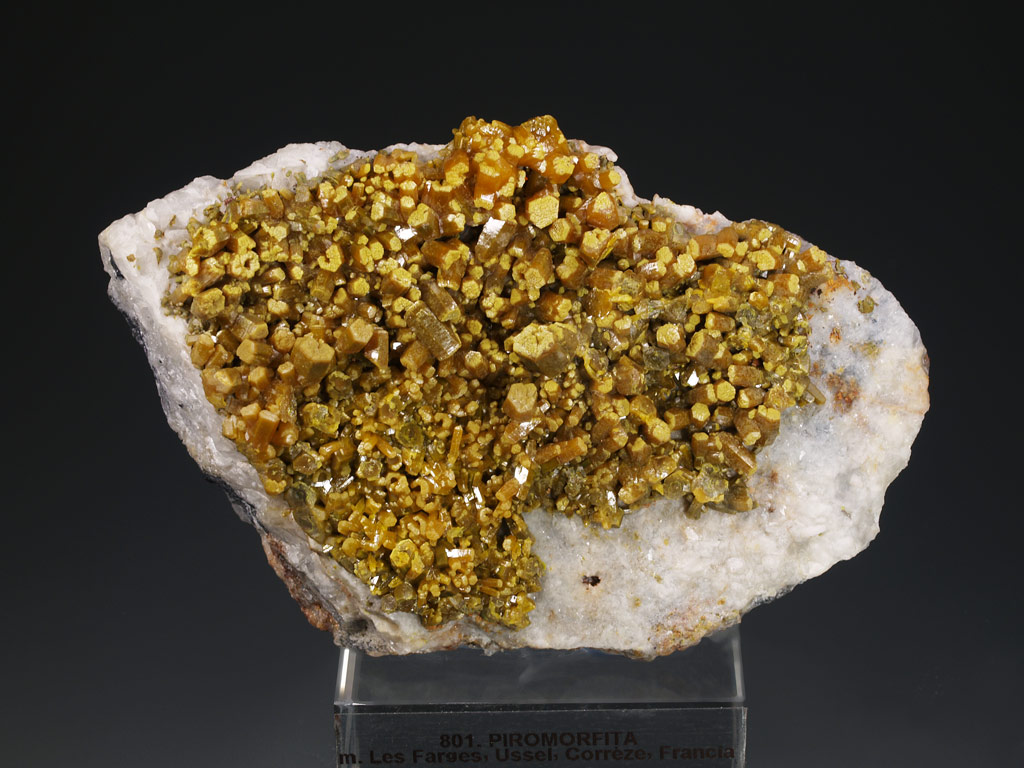
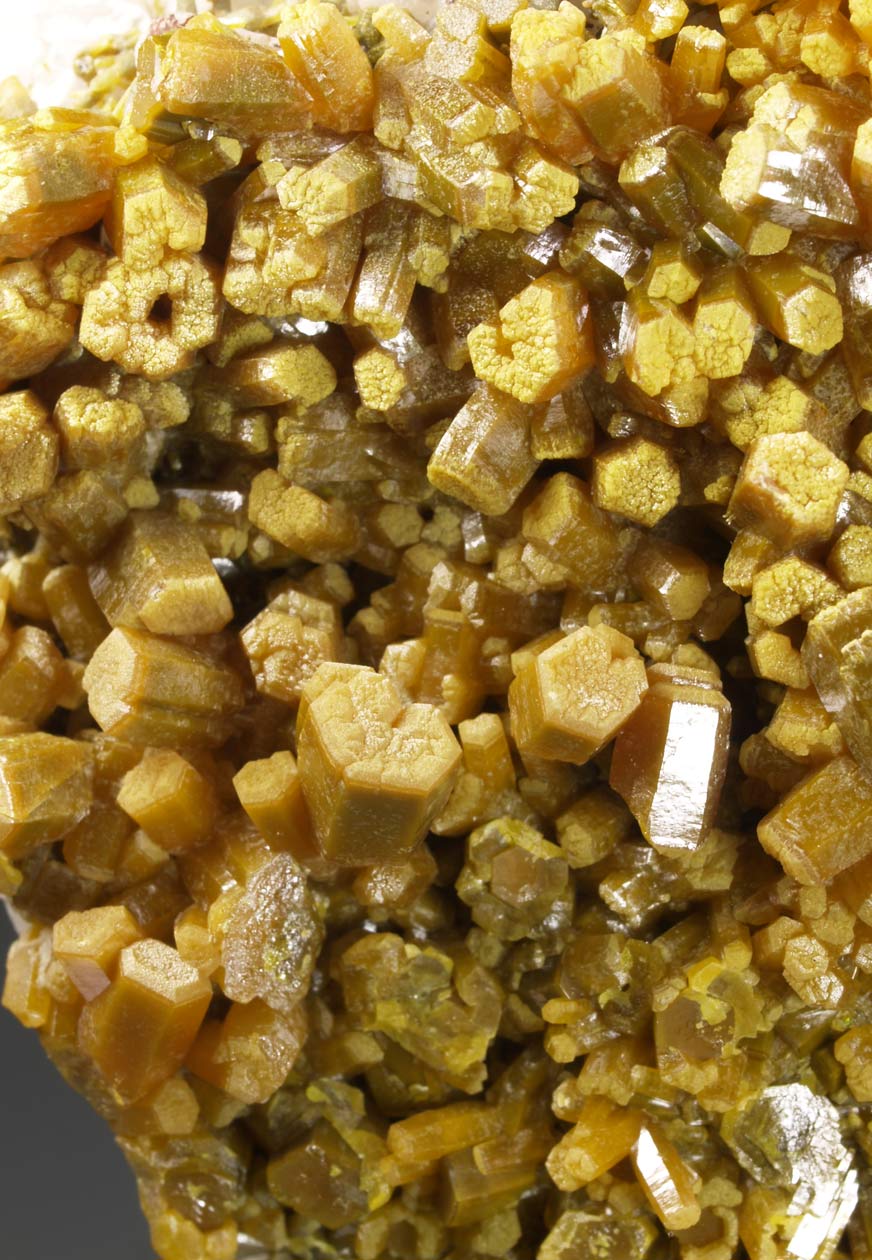
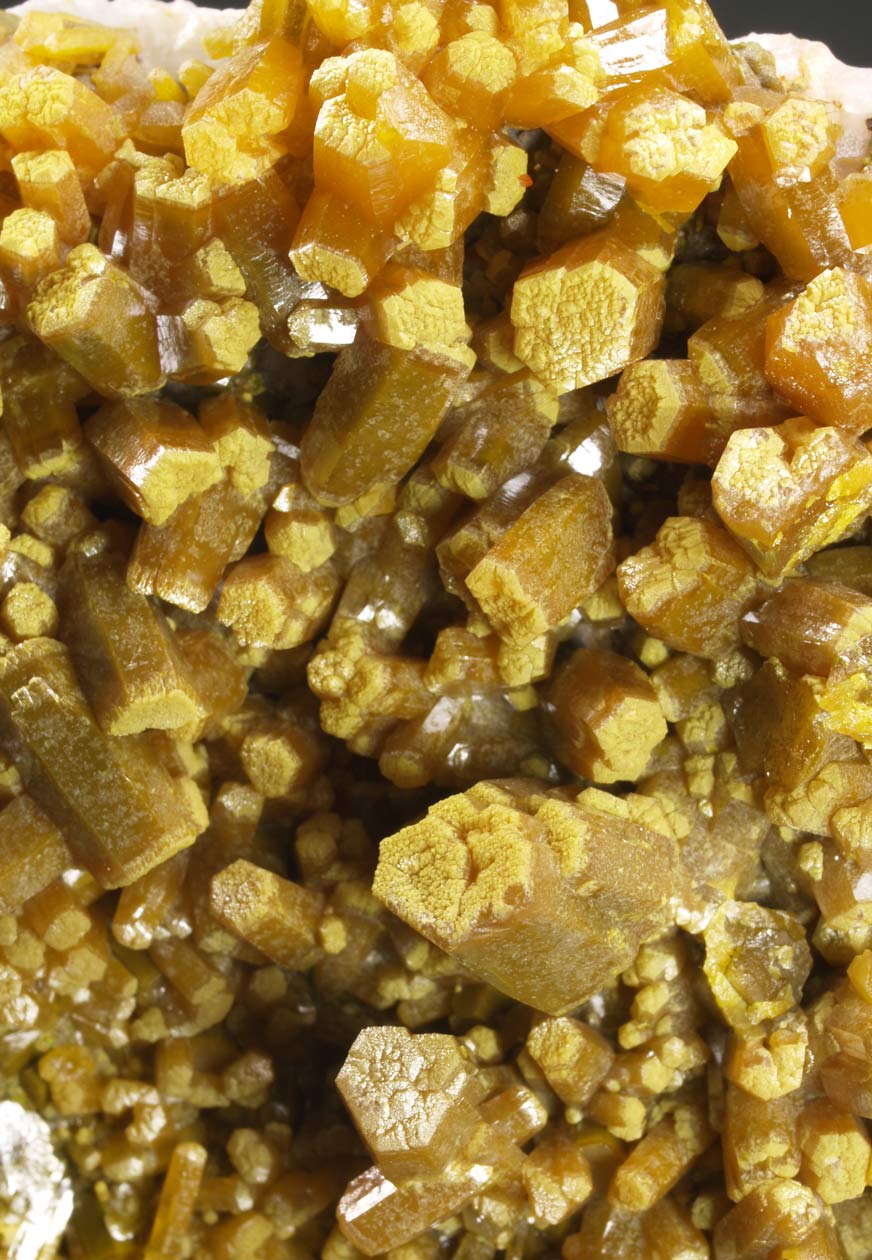
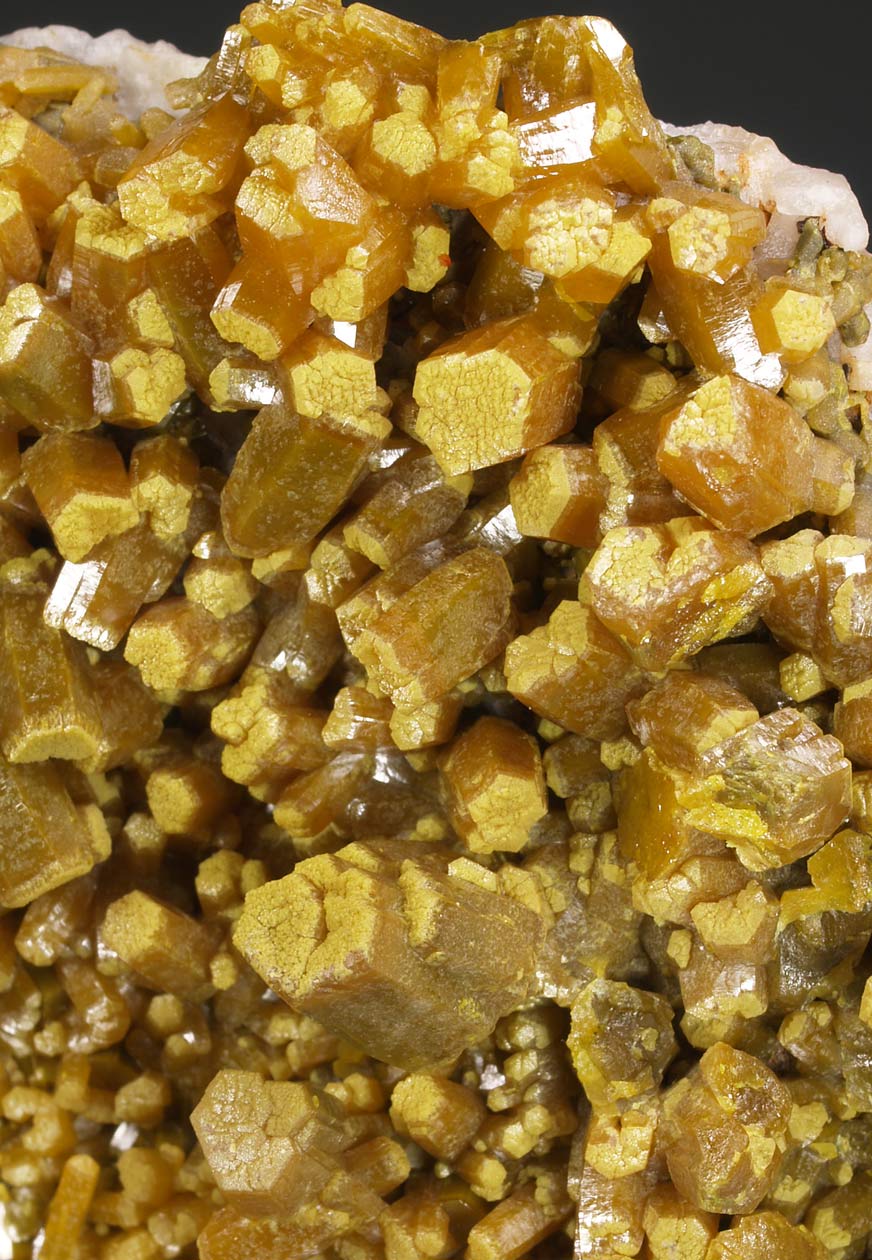
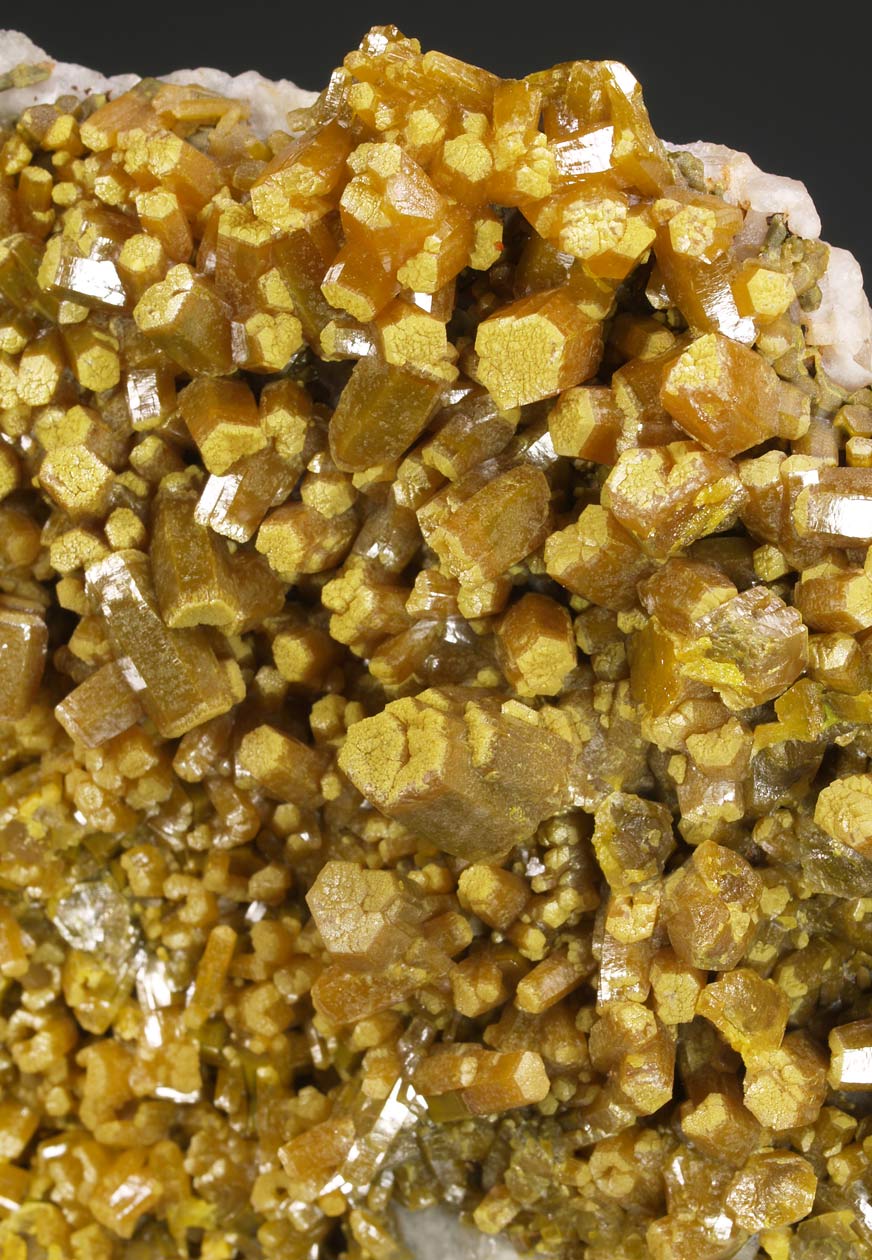
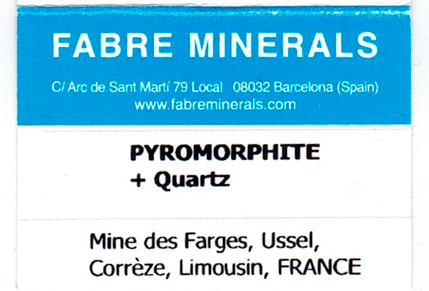
Amazing aggregate of prismatic pyromorphite crystals on a baryte matrix. Many of the crystals are doubly terminated and have a good size. They shows slightly curved faces and edges, are a very brilliant olive-green color on the prism with intense yellow tips. On a baryte matrix with galena (not in quartz as the label indicates). This shape is highly appreciated by collectors. This classic French specimen was purchased by a collector to Fabre Minerals.


Large group of bournonite crystals, brilliant, with complex and interpenetrated faces. They are accompanied by honey tone sphalerite crystals. The specimen is accompanied by a label that identifies it as from Saint-Laurent-Le-Minier (Sent Laurenç del Minièr), although it is more likely that it is from the Saguinede mine in Montdardier, very close to Saint-Laurent.


Druse of prismatic acicular pyromorphite crystals, transparent, shiny and with the characteristic green color. They are arranged on a quartz matrix. A very aesthetic piece from the Nicolau collection (Barcelona) and with a Joan Viñals label.


Dadsonite is a rare chloro-sulfoantimonide of lead, compositionally differing from boulangerite by this chlorine anion (1 atom of Cl for 60 atoms of S!). In the "bad-lands" area of Sant Ponç (or Saint-Pons) there are lenticular levels of siderite and calcite. The formation of this rare sulfosalt is based on the redissolution of other sulfosalts in the presence of chlorides.
The fine needles of dadsonite usually appear included in calcite, along with boulangerite. Once the calcite is removed by chemical processes, needles emerge in all their beauty. It can also be found forming radial aggregates in matrix cavities. The dadsonite from Sant Ponç can probably be considered among the best worldwide.
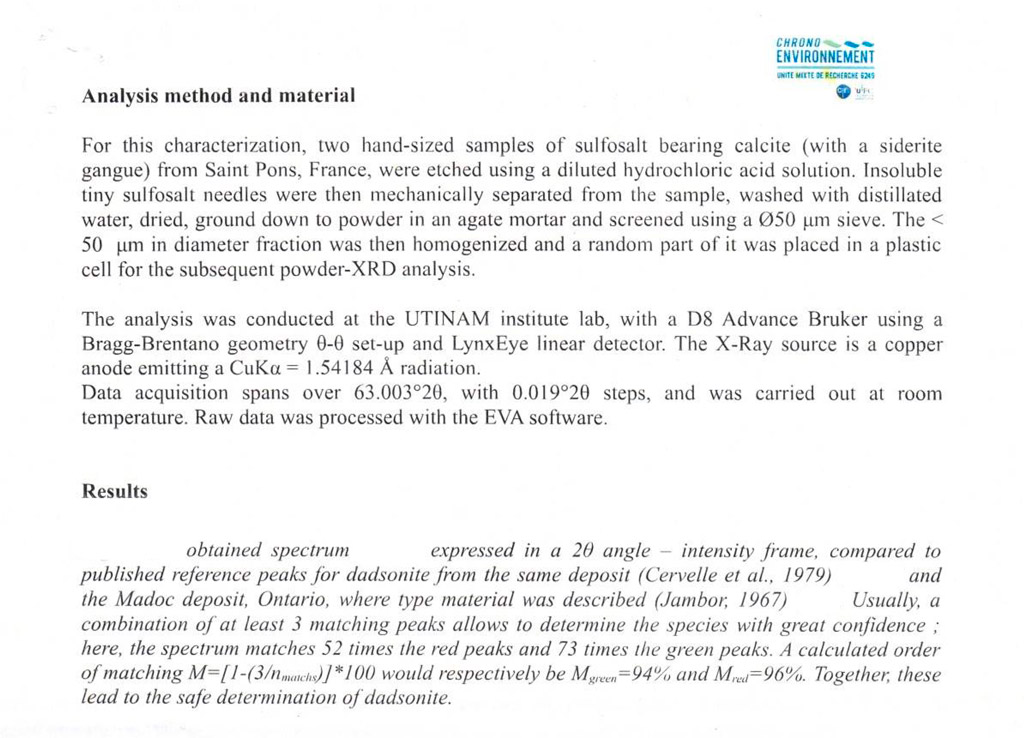


La dadsonita es un raro cloro-sulfoantimoniuro de plomo (1 átomo de cloro por cada 60 de azufre), composicionalmente difiere de la boulangerita por este anión de cloro. En la zona de las "bad-lands" de Sant Ponç (o Saint-Pons) se encuentran niveles lenticulares de siderita y calcita. La formación de esta rara sulfosal se basa en la redisolución de otras sulfosales en presencia de cloruros.
Las finas agujas de dadsonita suelen aparecen incluídas en calcita, junto con boulangerita. Una vez la calcita se elimina mediante procesos químicos als finas agujas afloran en toda su belleza. También se la puede encontrar formando agregados radiales en cavidades de la matriz. Probablemente, la dadsonita de Sant Ponç puede considerarse entre las mejores del mundo.


The allanite-(Ce) specimens from Trimouns are a classic of French mineralogy. It should be said that if these crystals are analyzed compositionally, a zoning with dissakisite-(Ce) is observed. Both species belong to the epidote group and are compositionally differentiated by the presence of Fe(II) (allanite) and Mg (the second). In this specimen we can observe several well-defined crystals of this mineral, one of them larger, which contrasts with the dolomite matrix.


These fluorite specimens from the classic Valzergues Fluorite mine, in France, are highly prized among collectors. This specimen shows a group of cubic crystals with a beautiful golden hue inside and a violet "phantom" zoned line following the edges. The front of the specimen is undamaged, the back shows contact with the vein wall from which it was removed, as is the case with all specimens from this mine. It fluoresces under ultraviolet (LW) light.


These fluorite specimens from the classic Valzergues Fluorite mine, in France, are highly prized among collectors. This specimen shows a group of cubic crystals with a beautiful golden hue inside and a violet "phantom" zoned line following the edges. The front of the specimen is undamaged, the back shows contact with the vein wall from which it was removed, as is the case with all specimens from this mine. It fluoresces under ultraviolet (LW) light.


A good quality cubic specimen of fluorite from the classic Yellow Vein in the Fluorite Mine, Valzergues, in France. The crystal shows a beautiful golden hue in the interior with a purple "phantom" zone line that immediately transitions into a blue-green color on the exterior faces. The front side of the specimen is in great shape, but it is contacted on the back where it was removed from the pocket wall. A very interesting piece since it shows an internal green reflection due to a planar fissure and that produces this strange effect. Fluorescent under LW-UL.
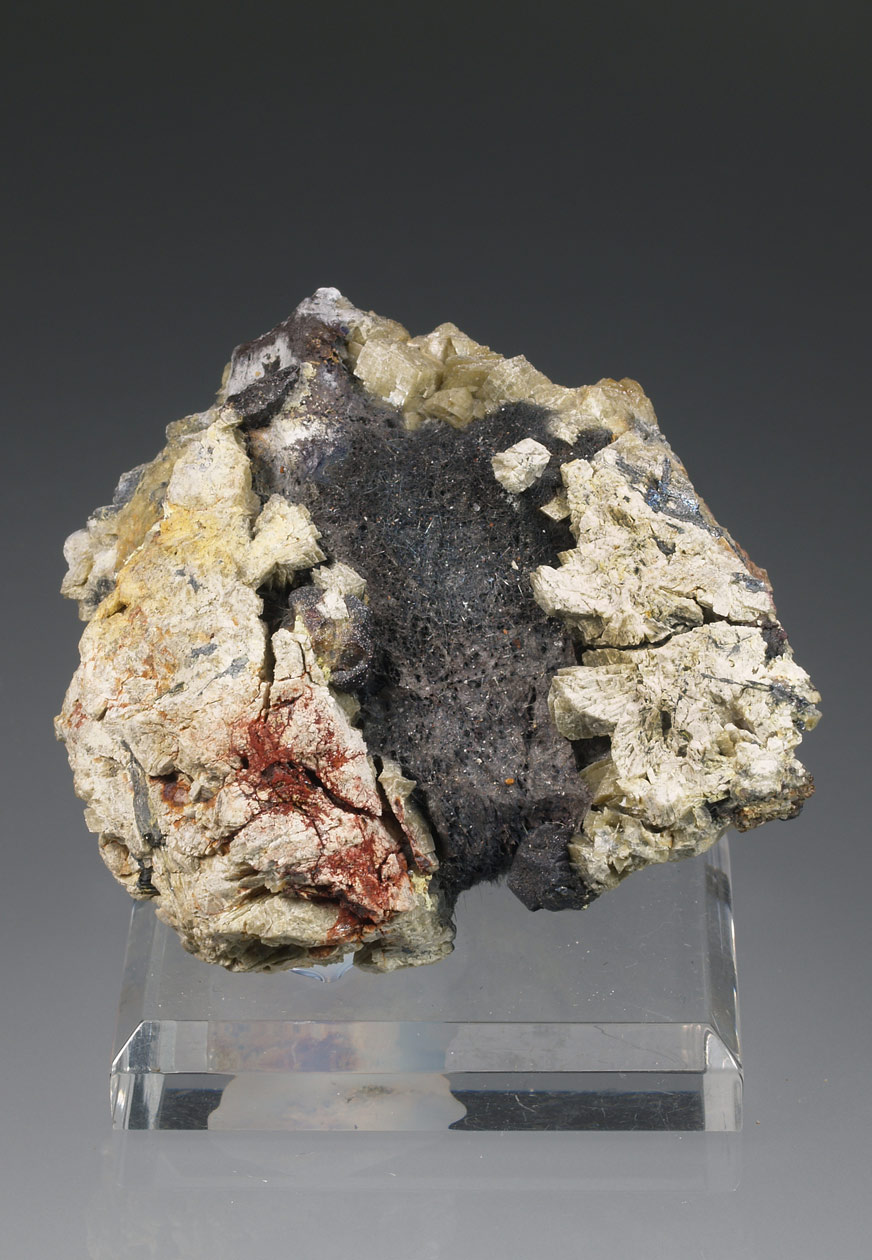
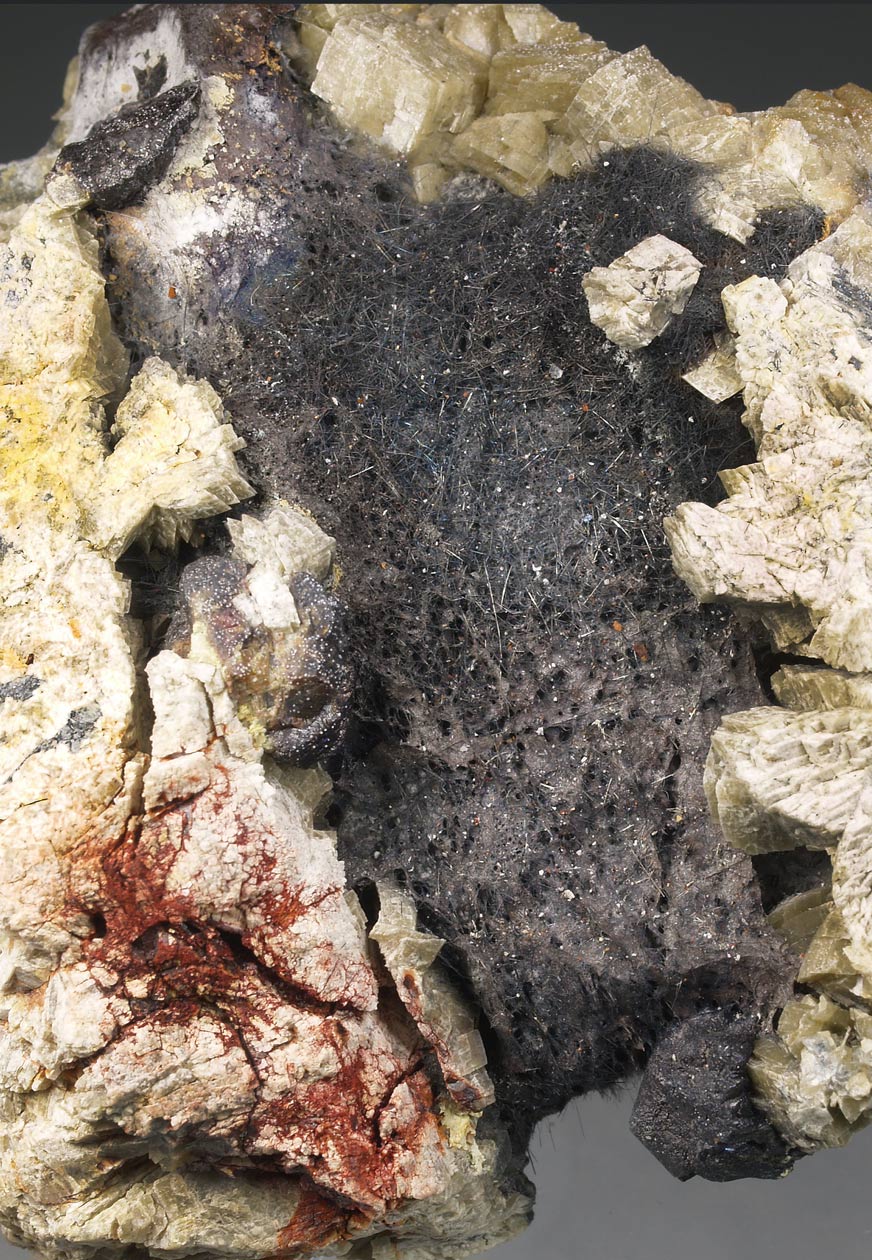
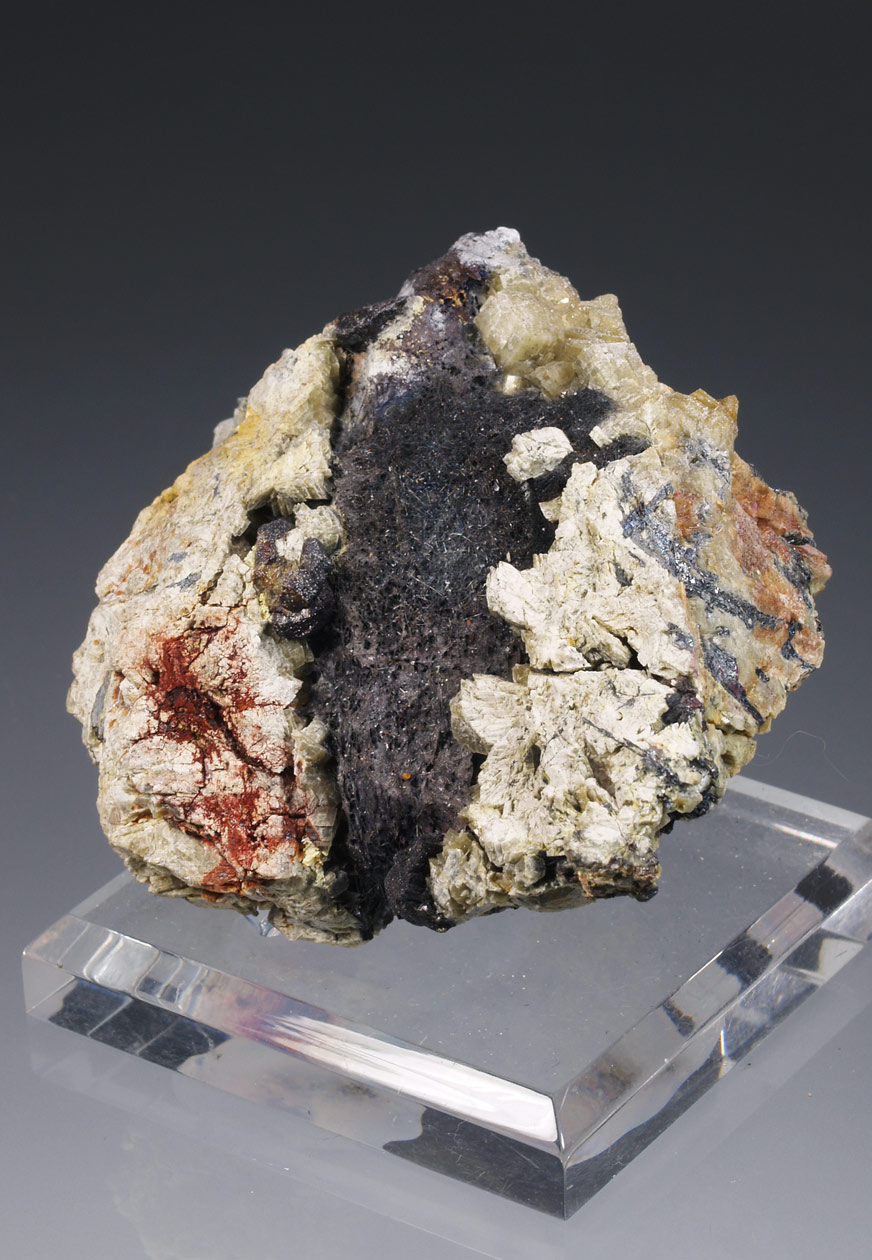
Dadsonite is a rare chloro-sulfoantimonide of lead, compositionally differing from boulangerite by this chlorine anion (1 atom of Cl for 60 atoms of S!). In the "bad-lands" area of Sant Ponç (or Saint-Pons) there are lenticular levels of siderite and calcite. The formation of this rare sulfosalt is based on the redissolution of other sulfosalts in the presence of chlorides.
The fine needles of dadsonite usually appear included in calcite, along with boulangerite. Once the calcite is removed by chemical processes, needles emerge in all their beauty. It can also be found forming radial aggregates in matrix cavities. The dadsonite from Sant Ponç can probably be considered among the best worldwide.